The first time I had a chance to make a noticeable impact on the Xbox Live Indie Game scene, it was during the 2011 Indie Game Summer Uprising event. I just didn’t play the part I had in mind. Perhaps my expectations were a little too high, because what followed was one bad review after another. I believe the term Cute Things Dying Violently developer Alex Jordan used was “assassinations.” He then went ahead and had a panic attack when his game was up for review. Okay, so the event wasn’t all that good, but there were a few shinning gems in it. Cute Things Dying Violently was pretty good, and so was online shooter Take Arms by Discord Games.
I met James Petruzzi through Twitter, and our relationship got off to a rocky start in the form of a shouting match between us. He didn’t like how rough I was being on his fellow Uprising comrades, and I didn’t like how crappy the games were so I was in a foul mood. Needless to say, I don’t think he liked me very much. However, we patched things up like two reasonably mature adults, and I think mutual respect for our roles in the community has been established.
I want to say this for everyone to see: of all Xbox Live Indie Game developers, the person I learned the most about game development from was James. Long-time readers will remember that in the early days of Indie Gamer Chick, my policy when it came to multiplayer was “online or nothing.” It’s one of the few positions I’ve backed away from since starting my site. This came about after I had a conversation with James that lasted several hours, in which he educated myself and my boyfriend Brian on just what kind of bullshit a developer has to go through to get Live multiplayer on their XBLIG. To say it was enlightening was an understatement. So when I noticed a recent trend of players and critics commenting on the lack of Live support for the format, and I knew just the guy who had to tell everyone exactly what is up. This is not your typical Tales from the Dev Side. It’s highly technical. It’s very complex. It’s HUGELY educational. Fans of the Xbox Live Indie Game community owe it to themselves to read this, just so they know what a developer goes through.
Although his Hidden in Plain Sight was not an overwhelming success on Xbox Live Indie Games, Adam Spragg still received near-universal kudos from critics for his efforts. Even my infamously cold heart warmed to it as I played with three interns who probably hate me and call me mean names behind my back. I’m betting on “Take-a-Bath-rine” although I won’t rule out “Catheterine.” If they had known my alias was “Kairi” I’m sure it would have been “Cry-ri.” Which is absurd. I beat them like 20 games to 1. If anything, I made them cry. Or maybe I’m being paranoid. They probably didn’t call me anything too mean. I can deal with Catheterine. I’ll call off the hits. Well, maybe. I’m guessing I won’t get my deposit back.
Okay, so maybe I don’t handle conflict (real or imagined) as well as I should. Adam views conflict differently. In this very philosophical installment, Adam shares his thoughts on how conflict is the chief reason for a game being fun. And you know what? I think he’s on to something.
Way back in November, I played a game that I called “one of the worst on XBLIG” and implied the developer had his head up his own ass.
Well, this is awkward. Because the developer of that game, Angry Zombie Ninja Cats, has taken me up on my open invite to Xbox Live Indie Game developers to do an editorial here at Indie Gamer Chick. And unlike his game, this isn’t the worst thing since Angry Zombie Ninja Führer. Actually, Mr. Shahed Chowdhuri has become a respected member of the Xbox community, possibly by forcing people to endorse him or he’ll subject them to more play-time with his game. I kid, I kid. Actually, like most XBLIG developers whose games I was, ahem, less than kind too, Mr. Chowdhuri was a good sport about things and vowed to do better next time. He also has some words of encouragement for would-be game developers.
When I came up with Tales from the Dev Side, I figured it would be a good way to solidify myself in the development community while also providing some entertaining insight to my readers. What I didn’t expect was thousands of page views and a reception so warm that it could double as an Easy Bake Oven. And it all started with Ian Stocker’s magnificent “Magic Seal Pelts” piece. It became easily the most popular, most linked to, most talked about article ever at Indie Gamer Chick. It also opened up the flood gates of developers changing their prices. We might never know if it was directly responsible for the recent change in price change policy for Xbox Live Indie Games, but I wouldn’t bet against it. Well, it’s been over a month and Ian is back to let us know how his pricing experiment played out.
Right before I posted my review of Plugemons: Part 1 last night, I sent out a preemptive apology to two guys in the XNA community who I have the utmost respect for. One is Jesse Chounard, the guy who developed Bluebones Curse and whose dog I had shot. The other is George Clingerman, an XNA MVP who is probably the most respected individual in the entire Xbox Live Indie Game community. Both these guys played a major role in educating me in the inner-workings of the community and gaining acceptance among Xbox Live Indie Game developers.
Both guys also really don’t like it when I go completely Lizzie Borden on games. I figured since the Plugemon review was my first really brutal one in a while, I should give them a preemptive heads up on it. I guess the result was George having this epiphany about what role I play in the development process. The end result was this episode of Tales from the Dev Side. I almost didn’t post it, because I felt maybe an article that was about me posted on my own site would come across as obnoxious.
Scott Tykoski’s Elfsquad7 was perhaps not the most commercially successful title released on Xbox Live Indie Games in 2011. However, I found the game to be charming, if a bit simplistic, and I’m kind of surprised the timely release did not have better sales over the holidays.
Despite dipping his toes in XBLIG, Scott is an honest-to-goodness professional game designer with a decade of game design under his belt. His Stardock games is famous for such PC titles as Sins of the Solar Empire, Galactic Civilizations, and the Political Machine. Okay, well the Political Machine isn’t exactly their calling card, but I liked it, damn it!
Scott eagerly jumped at the opportunity to do an editorial for my site. And then I took three weeks while I struggled to correctly format it. But it’s finally time to publish it. Developers have talked about pricing here. They’ve talked about standing out here. Yet, what could be more important to a game in our visually-minded society that what style of graphics you give it? In that spirit, Scott talks about graphics.
Like with previous Tales from the Dev sides, Scott has provided prizes for you, the readers. He’s really outdone himself, providing two IndieRoyale Xmas Bundle codes, which include the PC version of Scott’s Elfsquad7 game. Since tracking down who has retweeted articles is a bitch, the prizes will be handled differently this time. To win, reply to this article stating what graphic style you think is the most advantageous for potential Xbox Live Indie Game developers and why. One winner will be chosen by me, the other by Scott. Whoever makes the best case for their point will win. We’ll decide who wins on Friday, January 20, 2012. Be sure to include either a valid e-mail address or a link to your Twitter account when you reply.
Alex Jordan is celebrating his 28th birthday today. Now that I’ve opened up Indie Gamer Chick to developers to sound off on whatever is on their mind with the Xbox Live Indie Game community, Alex had to take me up on it. I admit, my advice to developers is not always helpful. I usually just say “don’t let your game suck” and “make sure you name it something that sticks out in a Google search.”
Alex is going to take it a step further. His game Cute Things Dying Violently was the best-selling title of the 2011 Indie Game Summer Uprising. With a name like that, it only had two options: XBLIG or Disney movie. His naming strategy worked, and Cute Things Dying Violently was the top-selling game of what was the biggest promotional event in Xbox Live Indie Game history. Of course, the largest revenue went to Train Frontier Express, which is mud in the eye of myself and Ian over the whole pricing thing. Either way, Alex has some helpful tips for your game to stand out.
Like Ian Stocker did with Escape Goat, Alex has also generously put up two copies of Cute Things Dying Violently that you can win by either retweeting this editorial or by following him on Twitter. Winners will be drawn on Wednesday, December 21. (I know it originally said December 14. That was an error on my part. Hopefully everyone is willing to cut me a little slack given the circumstances. These Tales from the Dev Side contests should run a week after the editorial is published.)
Right before a combination of epilepsy, gravity, and IKEA conspired to destroy my brain, I had touched off a debate on Xbox Live Indie Game pricing. It began with my review on Pingvinas and continued on with my editorial on pricing. This resulted in my biggest day for traffic ever, and some very awesome point and counter-point discussions in the comments section of those posts. Pretty damn civil ones too. I’m so proud of you guys.
Well, now Mr. Ian Stocker, the creator of Escape Goat, wants to weigh in. At first, Ian was supposed to offer a counter point to my theory on pricing. Then he changed his mind and sided with me. Sigh. Imagine if that happened all the time. If two guys were debating for the Presidency and all of a sudden one guy said “wow, shit, that other guy is totally right. Hey everyone, did you hear that? I totally agree with him. You should vote for him!”
Well either way, Ian’s article was both insightful and entertaining and the perfect way to kick off Tales from the Dev Side. Plus, we’re giving away two copies of Escape Goat. Read below for details.
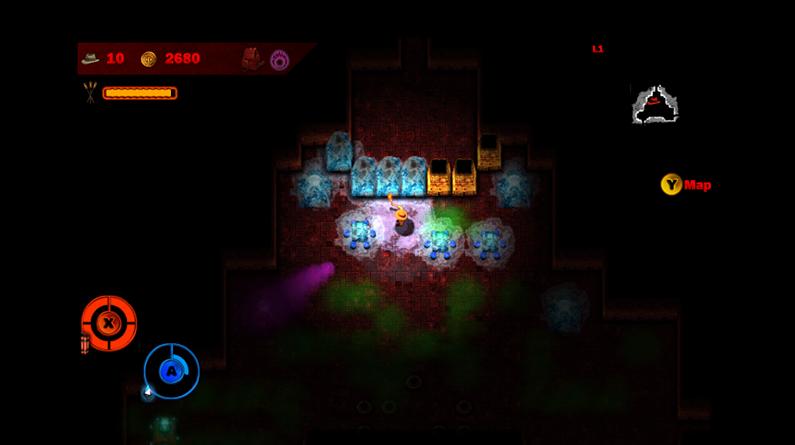
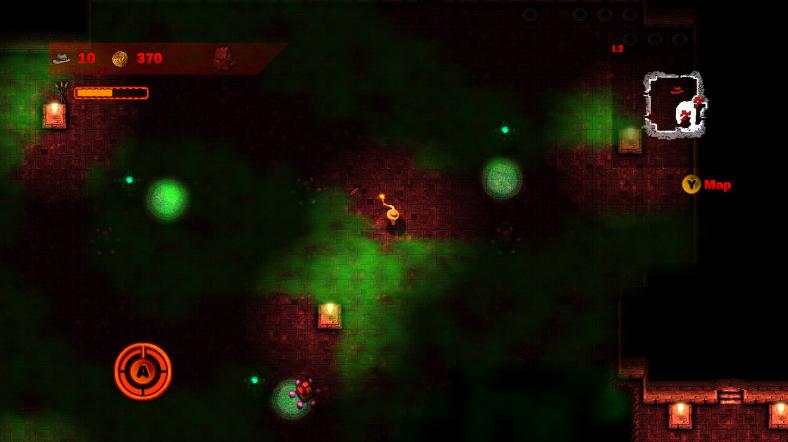
Zombies. Avatars. Punishment platformers. Twin stick shooters. Dating simulations. Wikipedia for Xbox. I’m sick of these kind of games. I want something different. So, like superheroes to the rescue come a trio of guys from Blazing Forge Games. Their entry in the Summer Indie Uprising is Redd: The Lost Temple. After ignoring my natural instinct to run away from any Texan, I decided to instead sit down with Nathan Smith and Josh Addison of Houston to discuss the development of this awesome looking top-down adventure game.
Kairi Vice: Upon viewing your trailer, my first thoughts were “Zombies Ate My Neighbors” followed by “Zelda dungeons.” Maybe even a little Bomberman too. Was that the vibe you were going for with Redd: The Lost Temple?
Nathan Smith: I feel our game is a cross between Zelda and Metal Gear Solid in a weird Indiana Jones style environment where magical items are the norm. It didn’t start out this way but that is what has evolved as we expanded Redd into an adventure game. We really wanted to get away from your typical hack and slash game and make it more about survival and being more diligent with your “attacks” a la MGS. Even though we were influenced by Zelda we definitely didn’t want to make a Zelda clone because what would be the point? We aren’t going to make a Zelda game better than Zelda! I could just go play the originals. As we expand the series further we have some really cool plans for Redd’s dynamite and several unique magical items as well as some awesome bosses so stay tuned!
Kairi Vice: Creating an enticing adventure is a huge undertaking. How challenging has the production of Redd been for you?
Nathan Smith: Very difficult, we’ve redesigned this game several times over the course of production. The biggest problem from a design standpoint is to make a game like this fun you need tons of features, a huge world to explore, and a solid enough story to convince players to keep playing. I can’t count how many times we had to step back and say “this game is missing _______, we need more ________.” The initial scope of the project was nowhere near what it turned out to be. The other problem we constantly faced was the limitations of 2D art. There is a lot we wanted to do as a 3D game (especially the size of enemies, bosses, and quality of animations) and about ¾ of the way through we almost decided to start over in 3D but decided against it.
Kairi Vice: I have to say, after countless platformers, puzzlers, and twin-stick shooters this is exactly the kind of game I’ve really been itching for on the indie marketplace. Do you feel Redd‘s chances for success hedge on player burnout of those over-saturated genres?
Nathan Smith: It’s great to hear that! We’re hoping this as well but I honestly can’t gage the indie market. There are some very unique aspects to Redd but it is still more traditional compared to what is usually out there on XBLIG. I do think Redd is better suited for a competition like the Indie Uprising where the objective is luring the XBLA crowd over to the indie side instead of trying to get noticed by a niche audience where quirky or odd games rule the day.
Kairi Vice: Redd started as a strategy game for Windows Phone 7 but the XBLIG build looks like an entirely different beast. Was this always planned or was Redd originally going to play more like its wireless namesake?
Nathan Smith: Our problem from day one at BFG has been we take a game idea and then expand it to the point that we can’t realistically start it with our current team size. Every project always ballooned into this massive multi-year thing from the design end and we had to shelve several projects for later. So we did a couple of smaller games as side projects like BlurBall and Redd: Mobile but when we decided to do a port of Redd to the Xbox it grew just like everything else. Our original intent was to make a XBLIG version of Redd using the same art and gameplay of the mobile version and adding a few features including multiplayer Bomberman style versus modes. In its current form the only thing that is the same are the Redd sprite sheets. That’s it! It is a completely different game in every way and much, MUCH bigger.
Kairi Vice: What is the most significant difference between building a game for phones vs. for the Xbox?
Nathan Smith: I’ll let Josh answer the technical side of things but for me personally making a console game just feels more exciting. It’s probably because I didn’t grow up playing games on a phone instead I held a controller with a TV in front of me. From an art standpoint the biggest difference for us was the smaller file sizes required for the phone.
Josh Addison: I would have to say hardware limitations. Besides a better CPU, GPU, and more memory on the Xbox, the use of a game controller had the largest factor in changing what we could do with Redd: The Lost Temple. Also, at the time we made Redd: Mobile we were not allowed to use custom shaders on WP7 which killed most of our ideas for the game.
Kairi Vice: A common problem with this type of game is having the difficulty curve suddenly become a straight vertical line pointing upwards with the words “FUCK OFF!!” on it. Metaphorically of course. What can you do to prevent this with Redd?
Nathan Smith: More play-testers! I’ve played this game so many times that it feels very easy to me. Then someone new sits down and they die 3 times in a room we could play blindfolded. Now, we want the game to be a challenge but in a, “Oh, I can get this!” kind of a way. The problem which you alluded to is transitioning between early game play and a very difficult last quarter of the game which we are still tweaking. I believe that when people finish Redd: The Lost Temple they will be very satisfied with the type of challenge we created.
Josh Addison: A lot of indie game developers start off by choosing an educated guess of difficulty and then slowly tighten the difficulty until it feels hard to them. This happens over several months. What the developer does not realize is that they have been constantly getting better at their own game. It is almost like the developer becomes a machine gear to playing their game. What we try to do to fix this is get playtesters who know nothing about our game and have them play it as we watch and take notes. We take those notes and make modifications to our game and repeat.
Kairi Vice: It seems almost criminal that a game with this much effort will be listed side-by-side with stuff like Why Did I Buy This? or anything else by Silver Dollar Games and other developers with half an ass and the brains to match. Do you think the XBLIG platform needs better quality control?
Nathan Smith: The obvious answer is yes, there needs to be some sort of quality control. Unfortunately I don’t see how that would be possible with the current set up from Microsoft. I think our best hope is to build quality control organically outside of the marketplace using events like the Indie Uprising that gives us more exposure, essentially creating a middle ground between Indie and Arcade.
Kairi Vice: What other games are you most interested in playing during the Uprising?
Nathan Smith: On an objective overview of the games there are several that look very good but they just aren’t my thing (I personally love strategy games like Civilization). However, I can see myself playing Take Arms the most out of all these titles.
Josh Addison: I enjoyed playing Take Arms, Tec 3001, and Doom & Destiny. I would like to try out Cell: Emergence to see what it is like.
Kairi Vice: Are there any games you think missed out on the top 25 cut that should have made it?
Nathan Smith: There were a few games that would have made it if they weren’t re-releases. I think once the Uprising becomes more established the stronger developers can plan their production schedules around specific times and problems like this will be less common.
Kairi Vice: What has been the biggest challenge developing with the XNA platform?
Josh Addison: I guess dealing with the Garbage Collector and its random collects, but that really doesn’t have a lot to do with XNA but more with C#. I personally feel that the XNA framework does a good job of giving me what I need but still leaving plenty of room for customization.
Kairi Vice: If you could change one thing about the XBLIG platform, what would it be?
Nathan Smith: We’ve already touched on this earlier and it would have to be quality control! Once people expect to see good games the barrier to buy is much lower. I’m less likely to buy something from a store that has a bad reputation even if it’s a lot cheaper. Once you have some sort of expectation of the quality available you get a completely different type of buyer looking at your games. The same person that won’t spend a dollar now to buy an indie game is spending $60 on another game because he is comfortable with the source of the game. I would love to see small teams actually make a living in the Indie market one day.
When I started Indie Gamer Chick I figured it would be a good hobby for me and a chance to check out some games that I might otherwise not have had a chance to play. Then I ended up being contacted by developers and being asked to interview studios who have their titles entered in the Summer Indie Uprising. I figured, why not? I mean I’ll talk to a few of them and it will be fun and leisurely and not at all stir up a shit-storm of controversy. After nearly thirty developers contacted me, I noticed that a lot of them (nearly one in three) felt that the legitimacy of the Uprising was questionable due to the inclusion of a game called Volchaos. Why the controversy? Because it’s designed by Kris Steele, who co-organizes the Uprising event.
At first I chalked it up to sour grapes, as many of those who contacted me had not made the top 25 cut. But the situation kept coming up. When Mr. Steele contacted me for an interview, I figured it would be in the public interest to ask him directly about this. And then I found out the whole situation was news to him. I would like say before posting the transcript that I do believe I came off a little aggressive in the interview but I found Mr. Steele to be a good sport about the whole thing, if a little cocky. I won’t know if Volchaos is worth the scorn until I play it when it is released next month, but following this interview my interest in playing it was genuinely lifted.
Volchaos designer Kris Steele
Kairi Vice: How many people are involved in the making of Volchaos?
Kris Steele: Fun Infused Games is officially a one man shop though I’ve come to grips with the fact that I cannot do music or artwork very well. Even though I’m primarily making the games and our only official employee, I’ve contracted out for all my music and much of the artwork on my games. I’ve also recently been working with another developer that is going to port my game Hypership to C++ and bring it to some new platforms like PC / Mac / and eventually iOS. Mostly me, but a few other very key contributors too.
Kairi Vice: Of the 25 games in the Summer Indie Uprising, to be perfectly blunt the one I have the least faith in is Volchaos. So my first question is, how is it going to surprise me?
Kris Steele: Platforming games have been huge for years.. Mario, Sonic, etc. Super Meat Boy was a massive success on XBLIG, I’d say of any game out there, Super Meat Boy is the closest comparison to Volchaos. I get that the retro styling isn’t everyone’s cup of tea and it may not look as impressive as some of the other Summer Uprising games, but Volchaos will stand solidly on its gameplay, challenge, and fun
Kairi Vice: Isn’t comparing your unreleased, über-generic looking title to Super Meat Boy a bit arrogant?
Kris Steele: Ouch, tough crowd. I guess a cowboy that looks like Chuck Norris in a volcano has been done to death already? Just kidding. Let me address this on two counts. First, most of the screen shots and videos you see now are the levels minus the extra background artwork, parallax layers, etc. I’ve been concentrating first on making the levels play well and only recently have I been going back to make them look good. I believe the final versions of the game will not come across as über-generic.
Second, let me clarify my Super Meat Boy comparison. I did not mean graphically at all, these are two distinctly different looking games. But in terms of how they play, they have a lot in common. Mostly small levels, fast paced gameplay, lots of dying, high difficulty level, great sense of accomplishment when you finally can beat those tough levels.
Kairi Vice: Here is some of the actual feedback I’ve received from other developers regarding Volchaos: “A joke.” “A farce.” “Volchaos‘ inclusion delegitimizes the event.” “It only got in because Kris organizes the uprising. There were many more deserving titles.” “If it makes the top 8 the whole Uprising concept is dead.” How do you respond to this?
Kris Steele: Volchaos is going through the exact same process as everyone else in the event, there is no special treatment. There are 70 developers that will be voting in those final 8 games plus a fan vote for 2 more. If my game gets in, it is because either the developers or fans voted it in, the same as every other title that gets in. I have done several playtests of Volchaos over several months and have received overwhelmingly positive responses to Volchaos. I am confident that it is a good, fun game worthy of standing alongside the other Uprising nominees. No one has said anything to me before like the comments you just presented. If someone has issue with my game being in the promotion, I would love to talk with them (email me at kris@funinfused.com). And if there are aspects of my game they do not like, I would love to hear about those too either via email or on my playtest forum thread so that I can do my best to improve and alleviate whatever those issues are.
Kairi Vice: Okay, last mean-spirited question that I feel like a total bitch for asking: the guy looks nothing like Chuck Norris. At all. And if it was Chuck Norris he wouldn’t be running from the lava. The lava would be running from him. Just saying. But really, the whole trailer and just screams “trying too hard” to piggy back on an internet meme. Are you afraid people are going to look at it more as a parody then a legitimate game?
Personally I think he looks more like Woody from Toy Story.
Kris Steele: When I asked my artist to create the character, I was looking for an adventuring type guy more in the vain of Indiana Jones. He did several mockups and changes based on my feedback and we ended up with the character we have now. It was only after I revealed the character and some early screen shots that other people (multiple people) started telling me he looked like Chuck Norris. The person that did the trailer for me happens to be one of those people who saw the resemblance and included a mention of that in the trailer. I thought it was a funny line.
One thing that Fun Infused Games always does is include humor in our games, that’s one of our trademarks, that’s one of the reasons our games are unique. I would say Volchaos is both a legitimate game and a parody. The game opens with a “Warning: Do Not try this at home” screen and each level is preceded by a light-hearted comic (one such comic has the main character proclaiming “My wife left me for a Walrus”). The fire death sequence is comical too as are a few of the enemies.
Kairi Vice: Wife left him for Michael Chiklis, huh? Harsh.
Kris Steele: The meaning of walrus is left open to interpretation. It could be a literal walrus too.
Kairi Vice: Again, Michael Chiklis springs to mind. But that’s neither here nor there. A platformer lives and dies based on how accurately the player can control the character. How fine tuned should players expect the controls to be for Volchaos?
Kris Steele: Getting the controls just right is tough but a huge priority for me. Great controls are one of the reasons games like Super Mario Brothers or Super Meat Boy excel while other platformers fall flat. I’ve put a lot of time and energy into listening to user’s feedback on how Volchaos controls and making adjustment on top of playing other platformers myself and adjusting based on those too. The early versions of Volchaos were much more floaty and much slower moving than the current one is for example, early testers were quick to point out those issues. I believe when gamers get the final version of Volchaos, they’ll be fighting with beating challenging levels, not with beating frustrating controls.
Kairi Vice: Was the Youtube trailer at a point in development where the jumping was more floaty?
Kris Steele: The notorious “Chuck Norris” trailer is pretty close to the current movement, so there is still some floaty left. The older versions of the game were much more floaty.
Kairi Vice: A common theme with my reviews and these so-called “Punishment Platformers” is that as the challenge ramps up, the game stops being fun. It’s not impossible for a game to avoid running out of fun before it runs out of game (see Aban Hawkins & the 1000 Spikes) but it’s easily the most common problem with the genre. How will Volchaos avoid falling into this trap?
Kris Steele: With Volchaos, we’re avoiding throwing everything at you all at once. The levels start off easy… a few pits to jump over, some lava to avoid. Then progressively new platforming elements are added. New enemies, moving platformers, keys to open locked areas, blocks that disintegrate under your feet, blocks that bounce you high into the air, etc. At no point will the levels go from being easy to impossible, it will be progressive. Each level also has a secondary goal, collect all the gems. This completely optional task, from the get go, will be challenging. Collecting all the gems will give more experienced players a challenge initially on the early levels and give novice players a reason to come back and replay those levels too. There will be some unlockables in the game the more levels you collect all the gems in.
Kairi Vice: You have four games currently in development. Some might accuse you of spreading yourself thin. How do you respond to this?
Kris Steele: At this moment, the only game I’m actively working on is Volchaos, as I want to make sure I can be ready for an August release date. I’ve back-burnered everything else. At other times though, I’ve definitely been working several projects at once. I believe this is beneficial though. While it does mean it takes longer for me to finish a game when that game isn’t getting 100% of my time, it also keeps me from getting burnt out on one particular game and gives me fresher eyes when I take a break and come back later. Nastier for instance is something I’m far along on but I haven’t worked on in quite a while. I’ve learned so much since putting it on hold about game design, player movement, etc that I’m confident when I do get back to it, Nastier will be a significantly better game for it.
Kairi Vice: Retro-style graphics are a perfect fit for the punishment-platformer genre. What were your inspirations for the graphical style of Volchaos?
Kris Steele: I’ve wanted to do a platforming game for a while, as those are the types of games that really got me into gaming, but I wanted to do something unique too. My previous release Hypership is pretty frantic, fast paced, and has been extremely well received by gamers. I wanted a way to tie that fast paced action into a more traditional platformer and thus the concept of being trapped in a volcano with rising lava was born. The pixel art style really came about because that’s the style of the platforming games I loved the most growing up. The game isn’t complex, you run and you jump and you collect items and avoid enemies… in a way, a more simple, old school art style seemed more fitting to this.
Kairi Vice: I’ve often said that anyone with a ROM editor can make a game that is excessively difficult, whereas it takes talent to make a game that has just the right difficulty from start to finish. Why go for the extreme difficulty when it’s often reflective of a game designer with no self-restraint?
Kris Steele: I think you’re right, anyone can do a hard game but Volchaos isn’t like one of those hacked Mario Brothers levels you see on YouTube. There aren’t any insanely difficult levels that are just one trap or obstacle after another. Levels are fun and interesting and unique, not just a mash of hard stuff. Most of the levels are challenging but not to a point of utter frustration. A lot of the reason I ultimately have made this a more difficult game is that by doing so, the sense of accomplishment is far greater when you do succeed.
Kairi Vice: I dunno, I felt pretty, um, something, when I beat Kirby’s Epic Yarn… okay point taken. What are the other games you’re most interested in from the Uprising?
Kris Steele: It’s unbelievable how many great games were submitted to the Uprising, when we started putting together this thing, I had no idea there would be so many. I don’t really want to play favorites and name any names while developer voting is still going on, but suffice to say, there are way more than 10 quality titles here. It’s an exciting time to be involved with Xbox Live Indie Games.
Kairi Vice: What’s the most challenging aspect of programming with XNA?
Kris Steele: I still struggle with the networking aspect of things, partly because I haven’t done much on that end and partly because it’s just plain hard. I’d love to have games with online play in them but I haven’t had the time or patience yet to really figure out how to do that right.
Kairi Vice: And finally, if you could change one aspect of the XBLIG platform, what would it be?
Kris Steele: I want more gamers to know we are here, only a fraction of Xbox users seem to know we exist. Too many good developers are leaving the platform because they made good games that get good ratings but that doesn’t translate into sales. There are a number of ways to do this but honestly adding Achievements to XBLIG would probably be the most effective. Give us those and the gamers will follow.
Kairi Vice: Thanks for you time. On a personal note, I will admit I was like “ugh, same old shit” when I saw the trailer to Volchaos, but you had many A answers and now I am genuinely interested in reviewing it when the time comes.


 RSS - Posts
You must be logged in to post a comment.