The World Really Isn’t Flat: Xbox Live Indie Games & Pricing
May 21, 2012 19 Comments
Believe it or not, there are people out there still who insist the Earth is flat. As in, they still exist. Today. In 2012. I’m not joking. They have a website and everything. This is not a tongue-in-cheek movement. These guys really, truly believe that the entire population of Earth has been bamboozled into believing the world is round. This an example of a phenomenon in society called “denialism.” Denialism is defined as a conscious rejection of an indisputable fact to avoid an uncomfortable truth.
Denialism is practiced among some Xbox Live Indie Game developers. They still cling to a belief that selling their games above the minimum price Microsoft requires is a viable strategy. Despite overwhelming evidence to the contrary, they truly believe that their game will be the exception to the reality of the marketplace. In essence, they are telling people that the world is flat, and they’re willing to throw themselves off the edge of the Earth to prove it.
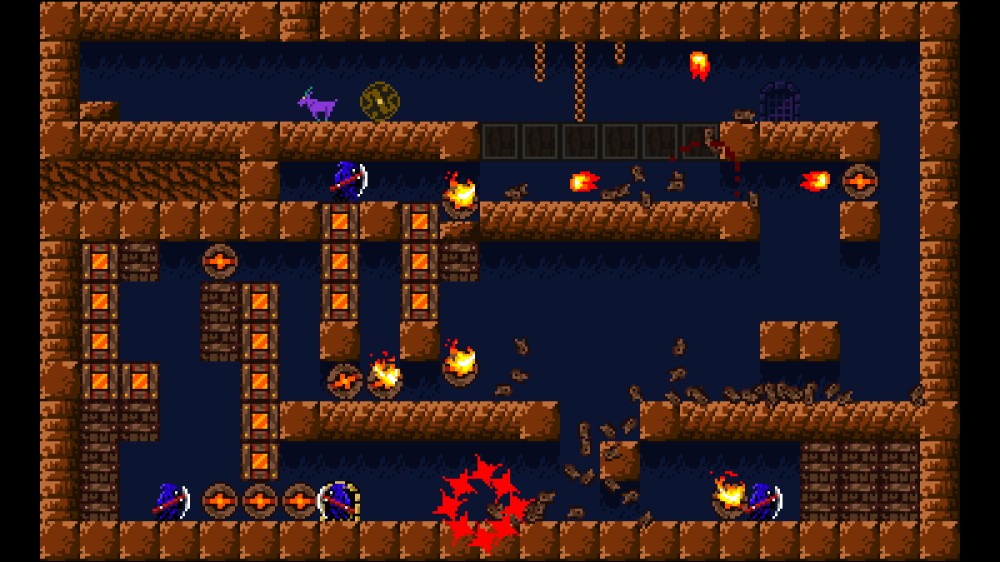
Imagine how Ian Stocker, creator of the sublime Escape Goat, felt when he discovered the world was not flat.
It was announced today that pricing policy has once again changed for Xbox Live Indie Games. As of this Wednesday, developers can change their prices once every seven days. The immediate reaction this? “Finally, we can have sales!” Oh dear.
Here is the reality that you, Xbox Live Indie Game developers, have been dealt. You have no marketplace share. You have less representation on the Xbox 360 dashboard than accessories for avatars. There is no tab that announces when an indie game’s price has been changed. There is no tab that announces when a game has been patched. XBLIG sites do less than a fraction of the traffic of mainstream gaming sites. In short, you probably have a better chance of being struck by lightning than having a hit Xbox Live Indie Game.
I’m going to pull a number completely out of my ass and guess that 99.9% of all XBLIG sales come from impulse buyers. People who have just a few spare points left and would rather have a game than a sombrero for their avatar. The games they purchase are selected directly from the dashboard, not from reading sites like mine. When they go to the marketplace, there are four tabs for indie games: sort by genre, sort by name, best-selling, and new releases. New releases and best-selling are the key here. This is where almost all decisions to buy an Xbox Live Indie Game are made. It’s not on Xbox.com, it’s not from Kotaku, and it’s not from Indie Gamer Chick. It’s on the dashboard. The point of sale. Xbox Live Indie Games are a pack of gum next to the cash register at a grocery store.
This is why temporary sales on Xbox Live Indie Games won’t work. Because most consumers don’t pay attention to the scene. They select games based off the available tabs on the dashboard, and that does not feature a “recent price drops” tab, at least for XBLIGs. It probably never will. Without that, a price drop means diddly squat to consumers. If they see a game that is 80MSP that normally sells for 240MSP, they don’t know they’re saving points. Consequently, they have no way of seeing if a game they were previously interested in has gone on sale, unless they gain that knowledge directly from the developer or from following the scene. As I’ve previously established, there’s very little interest from consumers in taking the time to do so. The scene is so small that calling it niche almost feels like a stretch. If you price at anything above what your minimum requirement is, you miss that one chance. If you’re lucky enough that someone takes the time to look at your game on the marketplace, it’s probably off of the new release tab. Once that 240MSP price tag is spotted by the consumer, your game’s hope of being purchased by that individual is likely gone. Forever. After all, you’re competing directly against hundreds of games that will price at 80MSP. Consumers get four screen shots and a brief description of the game to go off of. Maybe your 240MSP title is better than the three 80MSP titles that person has their eyes on. But is it one-for-the-price-of-three better, when you have so little info of the game there to base your decision on? I really hope this is sinking in.
“Hey wait, FortressCraft and TotalMiner has grossed over $1,000,000 and they’re priced at 240MSP! See, the world is flat! I told you so!” Um, no. The world you’re living in really is round. Those guys live in an entirely different universe altogether, where your laws of physics don’t apply to them. Which is ironic given that the physics in such games are typically way fucked up, but that’s beside the point. Minecraft just became the best-selling Xbox Live Arcade Game in record time. Before it came to the platform properly, the original PC game had spawned an entire cottage industry of clones, mods, and communities. It’s fair to say that the genre is trendy right now. The games that climbed the best-selling charts did so because there was an immediate demand for that type of game on a console. Period.
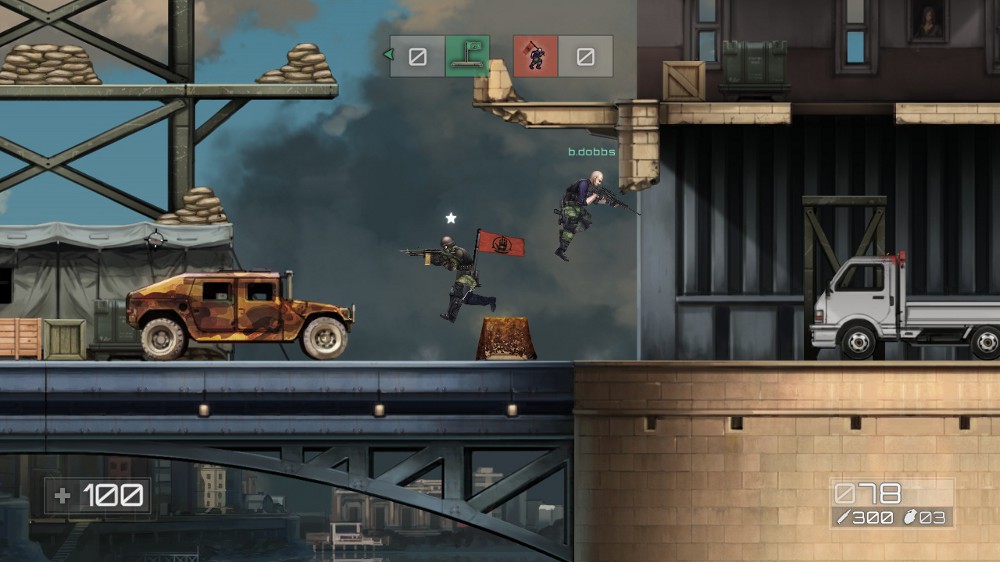
Pictured: A really good game that did not have tens of millions of people drooling over the prospect of it.
Of course, sometime soon one or both of those games will probably have a special one-week-only 80MSP sale, which will cause a spike in their sales figures, and this will be all the proof that XBLIG flat-Earthers need that sales can work. They’ll probably also point to games like Escape Goat and Take Arms, which started at 240MSP and then caught on fire after their prices dropped. But that’s also a little different, because both games dropped their price around the time that Microsoft’s original price-change policy went into effect. It got mainstream attention and larger sites covered it. Escape Goat and Take Arms happened to be two of the best games that took advantage of that, even though both games were small enough to have been priced at 80MSP from the get-go. Ask those guys what they would do. If they knew then what they know now, they would have priced their games at 80MSP. They’ve both said so on this very website and elsewhere. Hell, if some misguided developer had a wonderful game and plans to overprice it, they would probably get on their hands and knees and beg the person to reconsider. Why? Because they care about the community, and they know the reality they live in. It might not be fair or just, but it is the cards you’ve been dealt. You can keep trying to prove the world is flat, but the only thing that is going to fall off the face of the Earth is your game’s sales figures.






 Indie Gamer Chick
You must be logged in to post a comment.