Tales from the Dev Side: Greenlight, Red Light by Alex Jordan

Although I’ve sworn many times that Xbox Live Indie Games have a bright future, developers are treating the platform like a freshly pruned-by-iceberg Titanic.  For many, the brass ring for distribution is now Steam.  The problem with that is Steam is a tough nut to crack.  And then hope came in the form of Steam Greenlight.  But is it really hope, or is it all smoke and mirrors?  Cute Things Dying Violently developer and Greenlight hopeful Alex Jordan  has a few thoughts.

Greenlight, Red Light

by Alex Jordan

The life of an up-and-coming indie game developer sure is a great one. I mean, think of the perks!  Scant management, vast amounts of creative control, and great appreciation for the finer things in life, e.g. ramen noodles.

And, hey, there’s also the disproportionately huge share of revenue you command!  Unfortunately, 70% or 100% of shit is still shit (roughly “shi” if you’re using the 70% model, including the dot above the i, greedy bastards), so pretty much every last indie developer has had one nagging thing on their to-do list for the past four or five years: beg for distribution on Steam.  Because, let’s face it, it’d be super nice if people had actually heard about your game and maybe would deign to buy it.  If that were the case, you could consider quitting your day job, or at least consider having something for lunch other than rehydrated noodles in sodium water.

And because the only thing out there more in abundance than ramen noodles is desperate indie developers, the guys and gals at Valve who run Steam have had to fend off these Morlocks with a stick.

Pictured: Cute Things Dying Violently creator Alex Jordan and his fiancée.

For every indie game that manages to pass through the Pearly Gates, 100 get denied or ignored. Enter: Steam Greenlight, Valve’s way of saying, “Here! You look at shitty MS Paint art.  We’ll just sit here and make decorative pants out of $100 bills.”

Having had Cute Things Dying Violently rejected by Valve back in July, Greenlight (which was announced roughly three days after I got my rejection email) seemed like a juicy consolation prize.  A community indie games voting site for a large captive audience of Steam users, designed by a developer as canny and talented as Valve? Sign me up!

And I did. Pretty much the moment it went live, back on August 30.  And that’s when the horrible truth set in: Greenlight was. . . decent.  It wasn’t great, it wasn’t terrible, it was just. . . a filter.  Pure, exhausted convenience distilled into a website.

What’s Going Right?

My first 20 minutes with Greenlight were pretty blissful.  It was streamlined and easy to use, and I managed to register CTDV with trailer, screenshots, and description inside of ten minutes.  And pretty much the moment my page went live, the unique page views started pouring in.  The “large captive audience” I mentioned earlier is nothing to sneeze at.  Just by virtue of being on the platform, my game and others like it were getting a degree of attention that was unprecedented just hours earlier.

It’s also marvelously easy to provide feedback on games.  For each game page there’s an upvote button, a downvote button, and a Favorite button.  Additionally, Collections make it easier for third parties like gaming websites to promote a series of games.

What’s Going Wrong?

I’m not going to harp much on the reviewer’s experience, since most gaming journalism outfits have already beat me to it.  The short version is that discoverability is still a problem; talented developers with attractive games are unavoidably lumped together with complete crap; trying to cast several votes efficiently is a navigational cul-de-sac; and, unfortunately, the Greenlight community is full of slack-jawed retards.

“Gameplay looks like iphone appstore level trash” said Cletus Gumtooth of Pine Knot, Kentucky. Jed Toomanytoes of Camden, TN noted “looks like a boring, bad, lazy game thats just like a multitude of other terrible and boring games. also i want to fuk my sistah.”

How obnoxious can they be? Well, many of them didn’t know what Greenlight was for.  They thought it was a way to request their favorite AAA games getting on Steam as opposed to indie games.  Plenty of people who knew what the deal actually was were scarcely better, and each game’s comments thread began racking up scattershot feedback that many YouTube vets would cringe at.  One man’s Cthulhu Saves the World is another man’s crappy RPG Maker clone, and one man’s Cute Things Dying Violently is another man’s “stupid Flash game.”  Ouch.

I’m sure the majority of Steam accounts are held by lovely people, but you can only read so many variations on “Your game sucks” or “Get fucked m8” before the scales fall from your eyes.  After all, these are the people whose votes you need.

Oh my God, I turned out to be a politician anyway.

The Developer’s Experience

Anyway, such delicate interaction proved to be a wee bit of an eye-opener.  The rest of the developer experience on Greenlight isn’t much better.

The most notable aspect of the developer’s experience is one of confusion and withheld information.  Putting a game on Greenlight, with its studied silence from Valve and its schizophrenic community, is like being asked to stand in one place and alternatively receiving either kisses or kicks to the genitalia.

And those are the only two forms of feedback.  Initially, developers (and only developers) got to privately see their game’s percentage of upvotes to downvotes, but that disappeared after a few days when it became apparent to Valve that downvoting – either legitimate downvotes or those by trolls – served no other cause than to drag down a game’s up/down ratio.  Downvotes don’t subtract from upvotes, but, initially, we didn’t know that.  For reviewers, a downvote got the game off their to-review screen.  For developers, it was a sign of dislike for the game and perhaps even a negated upvote, as Valve hadn’t told us otherwise.  We got to suffer in silence for a few days, watching our numbers degrade, before Valve put us out of our misery and yanked that wonderful feature.

And then there’s the “% of Calculated Ratings So Far” bar that shows how far along your game is on upvotes before it gets submitted to Valve.  Well, the fine folks at Valve don’t quite know yet what level of participation the Greenlight community will have, so they’ve erred on the side of caution and set the number pretty damn high.  Even standout games on Greenlight like Project Zomboid have only gotten about 20% of the votes they need, while the rest of us plebes get to hang on to single digit approval percentages.  (Granted, it’s been less than a week, so take my whining with a grain of salt.)  And since developers don’t get to see how many upvotes their games have actually gotten, there’s nothing for us to extrapolate from.  We just get to sit, and wait.  And get kicked in the balls.

Hey, I’ve Done This Before. . .

Despite its shortcomings, Greenlight still presents a big opportunity for indie developers.  Whereas previously Valve would almost certainly take a look at your game and flat-out reject it in the same split second, now we have an opportunity to land a game on their laps with some sort of critical consensus and the understanding that Valve employees will review it with the time and attention it deserves.  Gone will be the days of instantaneous judgment leading to rejection and developer misery.

Thus, Greenlight becomes a plausible shortcut.  Sure, it’s an extra step in the process (you used to be able to just fill out a form on Valve’s website and send your game in), but if your game emerges intact on the other side, odds are you’ll soon be sitting pretty.
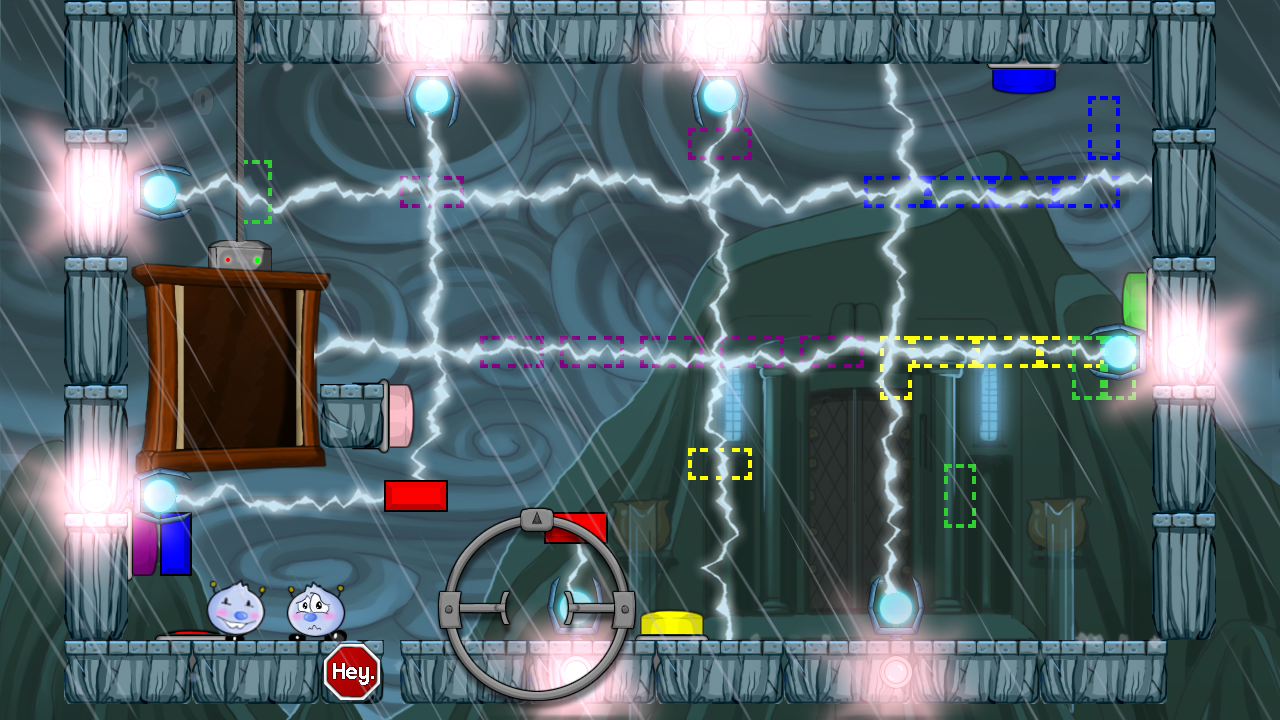
Cute Things Dying Violently has seen modest success on various platforms. Which is probably a good thing. If it did any better, you know a certain Silicon Valley mobile company would be right there with their “completely original” physics puzzler “Adorable Creatures Perishing Disturbingly.” Then they would probably sue him for stealing their idea before they thought of it.

But here’s the thing… Greenlight’s voting threshold and discoverability shortcomings mean that the developers still need to do quite a bit of hustle to gain attention and upvotes.  Which is. . . hey! I recognize that feeling!  That’s exasperation, having just realized that this is what we’ve always had to do, and will always have to do.  I don’t think any of us developers were naïve enough to think that Greenlight would be a straight ticket to success, but what we got instead was another chapter in the same story we’ve been reading for years upon years: capitalism is hard, and you gotta work for it, and in the end you still might get shafted for no fault of your own.

That means instead of spamming Kickstarter solicitation emails, now you’ll be spamming Greenlight solicitation emails.  (I’m sure gaming journos will be just as eager to read the latter!)  Developers will still be struggling to worm their way into bundles and promotions, desperate to practically give their game away just to get a little bit more recognition.  Networking will still be paramount and journalists will still need to be schmoozed at bars, but last I checked, I really like beer and I really like talking about myself, so that’s not a problem.

In the end, Greenlight represents yet another dance routine on the never-ending popularity contest that all obscure indie developers have to participate in.  It’s certainly not bad, and dare I say the vetting process still represents a good opportunity, it’s just that it’s underwhelming.  Greenlight’s another queue, another procedure, another form that needs to be filled out on the road to possible opportunity.

It is, in short, the perfect microcosm of the indie developer experience.  Does that look like a raw deal to you?   It shouldn’t.  It may seem like deferred, somewhat unlikely success, but it’s worth a shot, isn’t it?  If it wasn’t, we would’ve given up.  And judging by the growing number of games on Greenlight, that ain’t gonna happen.
Developer Interview: Count to a Billion

Count to a Billion is a bit of an anomaly in modern gaming.  It’s a pure button masher without apology.  Stand-alone button mashers have been a dead genre for decades.  Bringing out a new one in 2012 seemed almost brazen.  Developer RAWR! Interactive took it as a challenge to resurrect this style of game.  I spoke with their co-founder Mario Wunderlich about what went into creating Count to a Billion.

And yes, Count to a Billion is the official sponsor of the Leaderboard.  It doesn’t mean they’re getting all softball questions.  I enjoyed Count to a Billion, but I do have a bone or two to pick with it.

By the way, if you Tweet this interview, you’re entered into a chance to win a free copy of Count to a Billion.  Valid tweets must include the hashtag #IGCbillion fuck it, just tweet the damn interview.  We’ll be giving away not one, not two, but three copies!  Even if you can’t count to a billion, you can count to three.  Winners will be drawn on Saturday, September 1, 2012.

Kairi:  Button mashers are games that studios dress up and try to pretend they’re something else.  You guys outright embraced being a button masher and flaunt it.  How did this come about?

Mario: Count to a Billion, as a concept, was born from the desire to use the iPhone’s screen capabilities to the max. Most games use but 1 finger, sparingly, for everything. We wanted ta have players use all fingers (5 on iPhone, 10 on iPad) and do it in an intense fashion.

We worked it up from there to a pure button masher. There is no need for deceit, no need for disguise. We believe button mashers can be fun if the incentives and mechanics are well designed. And the iPhone/iPad screen is a perfect medium for it.

It is so simple, and yet it really is a lot of fun.  And exhausting.

By the way, the game was originally called Count to a Million… but we just kept escalating the game in intensity, and soon realized that big numbers accurately reflected this – and that’s how Count to a Billion came to be.

Kairi: It’s such a rarity that a game, even a small indie game, centers completely around button mashing.  I asked some gamers what was the last button masher they liked.  Most answered Track & Field, an early 80s arcade game that later got some home ports.  So it’s been a long time since this type of game resonated with gamers.  Why take the risk?

Mario: As a company, RAWR! Interactive’s vision is to explore new game mechanics for mobile platforms. Because of our vision, all our games will be risky investments by nature – but we think it’s well worth it, we might find something that players really love. Maybe it’s Count to a Billion, maybe it’ll be another game. But our mission is to find new ways to play with an iOS device.

With Count to a Billion, we wanted to get away from the super laid-back game mechanics that have been used over and over in 99% of mobile games – and explore intense game mechanisms. It this case, the intensity is quite physical. Sore arms. Numb fingers. And players have kept coming for more!

Kairi: The majority of gamers I know are super apprehensive about the potential of a button masher.  Straight honesty on my part: I thought Count to a Billion was going to suck.  I really did.  And in fact it’s very enjoyable.  So how do you go about convincing people that your button masher is different from any other button masher ever created?  Because, well, it is!

Mario: Thank you. And you’re right about that too. People have a preconceived notion of what a button masher is – the last one most gamers saw, like you noted, was probably in the 80s… and left it at that. So our job now is to show gamers what a button masher can be. It can be as fun and as involved as any other game.

So for Count to a Billion, making the game was just 50% of the journey. The other 50% is all about PR and marketing. And to keep on innovating. So yeah, Count to a Billion’s release was just the start – we have great new things planned for it. And we’re working around the clock in the hopes that it’ll be seen as more than just another “button masher.”

Kairi: As I touched on earlier, your game has no theme to it.  It’s just about smacking numbers.  Was there ever a point where you had something other than the minimalist look it has now?

Mario: The idea was always minimal, but making a game out of button mashing took a lot of experimenting. We went through 7 versions getting a feel of how best to get the gameplay mechanics, getting the look and feel right, creating a set of goals and achievements to give the game a sense of progress and of winning – it’s the details that make a game, and with a game as drastically different and minimalist as Count to a Billion, we really had to discover them from scratch.

Kairi: I’m ranked 53rd on the leaderboard, and I would be ranked better if it wasn’t for some of those damn sliders.  Especially the “C” slider.  The game is critically acclaimed, but also everyone is complaining about these.  How did this slip by?

Mario: Initially, we wanted the game to be not only fun, but also a tough, challenging experience. The “C” Slider is probably the toughest challenge in the game. After working on it for so long, however, we made the mistake of forgetting just how difficult some of these where. We even got used to the “quirks.” But we’ve listened to our players, and our next update addresses these.  The challenge will still remain, but it will be focused more on getting that high score, less on trying to avoid errors.

God Damn this fucking shape!! I officially declare war on all things that begin with the letter C! Well, except for things named Cathy. I can’t declare war on myself obviously, unless you count all the smoking and late nights spent watching Dana Carvey movies.

Kairi: The YouTube integration was a stroke of genius.  How come you guys didn’t include feature for tweeting scores?

Mario: Thanks! To be honest, we wanted to limit the number of options in exchange for a smoother User Experience. As part of this trade-off, we thought about all the available social options, and concluded that Facebook and YouTube where better platforms to brag about your skills. Twitter is a fantastic social tool, but unless you’re constantly tweeting or have a huge following, singled-out tweets simply won’t get noticed.  However, we listen to our users. If twitter is a big wish-list item for many, we’ll make room for it and include it.

Kairi: So far the game is doing well, at least critically.  Other than addressing complaints, do you have any features planned for addition?

Mario: We have many new features planned. This first release was just the beginning. One particular feature will be the addition of a 30 second blitz play-mode, where you’ll be able to create your own “decks” with challenges in a particular order so you can maximize your game. These are possible game-changers – but the core will always remain: intense tapping and sliding action for billions of points!

Kairi: Anything else you have to say to potential players who remain skeptical?

Mario: If playing an intense, challenging game that is quite different from anything else you’ve ever played isn’t enough, then how about trying to earn all 68 achievements!? And coming soon, we’ll have an in-game “store” where you’ll be able to trade in billions of points for cool, new playable stuff!

Check out Count to a Billion for sale now in the App Store.

FAQ: Sponsoring the Indie Gamer Chick Leaderboard

It’s once again time for me to update my FAQ, and with that comes a question that needs a full-sized post to answer.  So here it goes.  Once my site starting picking up viewers, I started getting questions about putting paid advertisements on my site.  I wasn’t thrilled with the idea.  I’m not interested at all in trying to make money off my site, because once that happens it becomes a job.  I don’t want this to ever feel like work.  This is my hobby, and I plan to keep it feeling that way.  But I had so many people asking, I figured I could do something good with it.  Brian came up with the idea of donating the money to charity.  Once I decided to expand the leaderboard from ten members to “every game that I liked to some degree get ranked” we finally had the perfect item to sponsor.  Literally as soon as I confirmed “IndieGamerChick.com now is taking sponsors” I had the position through October snatched up within a day.  It went that quick.

As such, I haven’t really laid out what I require from potential future sponsors, nor have I explained fully what sponsorship gets, and what limitations it comes with, or what the cost is, or the duration of it, or several handfuls of inquires that I get constantly.  Frequently asked questions, if you will.  So, let’s lay it out here.  If you’re looking for typical Indie Gamer Chick snark, you won’t get it here.  Probably.

UPDATED February 13, 2013 to include more up-to-date stats.

Q: What does it cost?

A: Whatever you’re willing to pay, but I’ve set the minimum at $50 for a three-month period.

Q: Can I pay for more than three months?

A: I’ll work it out case by case, but as a bonus, if nobody claims sponsorship following you, your sponsorship stays on until someone else takes your place.

Q: What are the charities you’re looking to support?

A: That would be Autism Speaks and Epilepsy Foundation (also known as the EFA).  I know both of these charities are legitimate and worthy organizations because I have personally benefited from both.  I was diagnosed at age four with atypical autism and I developed epilepsy when I was sixteen.  Both have clear agendas that are relatively politics-free (as much as any medical-based foundation can be I suppose) and aim to learn more about these conditions, develop treatments for them (the optimistic point of view), but most importantly to me, improve the quality of life for those who live with these conditions.

Q: Of course you had to pick two.

A: That’s not a question.

Q: Well which one do you prefer?

A: Either/or is fine with me.  Or you could be an incredibly cool suck-up and donate to both!

Q: If I donate to one of those charities so that I can get sponsorship, does that still make it tax-deductible?

A: Absolutely.

Q: How do I pay you?

A: You don’t.  Instead, you donate directly to one of the two charities above.  All you do is send me a screenshot (or a picture of) the receipt confirming a donation was made.  Remove any credit card or banking information from that (I don’t believe they include those), leaving only a name (or e-mail) and the date, plus their “thank you for donating” statement.  A picture of you giving the thumbs up with a printout of the statement works too.  Once I have it, you’re good to go.  Each site keeps its own information on how you get your tax deduction from it.  DO NOT just make a donation with the intent of a sponsorship without discussing it with me first.

Q: What else do I need to provide Indie Gamer Chick for sponsorship?

A: You need to provide the banner for the Leaderboard.  The banner should have “Indie Gamer Chick Leaderboard sponsored by” on the top, large enough to clearly be visible and read.  The rest of the space can be used to promote your product.  You also can provide any promotional codes if you want to use me to run contests.

Q: What kind of stuff can I advertise with my sponsorship?

A: Independent video games or studios would probably be a good idea.

Q: What won’t you allow to be sponsored?

A: Non-gaming related businesses, Ebay retailers, etc.  You also can’t use my site to promote your Kickstarter.  This is mostly because the word “Kickstarter” makes me throw up.  I’m Kickstarter Bulimic.

Q: Can we promote our Xbox Live Indie Game with it?  I mean, you are an Xbox Live Indie Game site.

A: Brian and myself have debated this for months and we still have no definitive answer. We’ll have to go on a case-by-case basis.  It will have to be a game already released, and one that has received a positive review on my site, and made the leaderboard.  Remember, this is sponsorship, not an endorsement.

Q: I’m not a game developer, but I have a gaming site/blog.  Can I sponsor using that?

A: Again, we’ll go case by case on this.  I think this would be fine.  It depends on the site.

Q: What does my sponsorship get me, besides advertising on your leaderboard?

A: Catherine (aka Indie Gamer Chick) will promote your game’s release via Twitter and Facebook, assuming it happens after your sponsorship starts.  She will play your game, and tweet about her experience if it is a positive experience.  Indie Gamer Chick will run contests to promote your games (you must supply your own prizes and assume all legal responsibility for those contests).  Finally, if you wish she can do a developer interview with you that will be published on IndieGamerChick.com.  Plus, Cathy is known to just randomly tweet about games.  Who knows, she might plug your game long after your sponsorship has ended, especially if she liked it.

Q: What don’t I get from my sponsorship?

A: Again, this isn’t a paid endorsement.  Sponsorship at IndieGamerChick.com does not guarantee your game will receive positive press from Cathy.  Even if you are a sponsor, if she thinks your game sucks, she’ll say so.  She also won’t plug your Kickstarter or any other fundraising efforts.  This also means you can’t comment on your Kickstarter if she interviews you.  A sponsor also has no say in my site’s content.

Q: I want to make sure I get my money’s worth, so how much traffic does IndieGamerChick.com get?

A: The amount varies day by day, but on average IndieGamerChick.com receives between 1,100 and 2000 unique hits daily.  According to Alexa.com, this makes IndieGamerChick.com the most read Xbox Live Indie Game website in the world.  As of February of 2013, Indie Gamer Chick has drawn over 500,000 page views since opening on July 1, 2011.  Below is a screen grab of my views breakdown taken February 13, 2013.

Damn groundhog didn't see its shadow. That's my excuse for the slow month.

Damn groundhog didn’t see its shadow. That’s my excuse for the slow month.

The amount of views the leaderboard itself pulls in fluctuates wildly.  The leaderboard is updated with every new Xbox Live Indie Game review, regardless of whether the game makes the board or not.  If a game makes the leaderboard, the review directs the person to the board to see where it has landed.  We also direct attention to the board on Twitter if a milestone is reached, such as a game landing a high ranking on the board.  Hard numbers are deceptive (over the first sixty days, the board pulled in 3,482 views, for an average of 58 views a day.  However, some days the board pulls in several hundred views.  It just depends on whether a game makes the board or not.  As of August 29, 2012, only 43.93% of all games reviewed made the leaderboard.  Also, the strength of a game’s review makes a difference.  Games that only get mildly positive reviews generally don’t create a lot of traffic for the board.  Whereas a game like Spyleaks, which I tweeted had been the first game since the board’s creation to make the top 25, generated several hundred views to see where it ranked.  When a game doesn’t make the board, the percent of games ranked is still updated, for those dorks that would be interested in that type of thing.  Like me.

Q: Do you have information on your readership demographics?

A: I have location information.  Everything else is an educated guess.  My typical regular reader (someone who checks in at least weekly) is an adult male age 18 to 40, with the average age being around 30.  My readers are typically “hardcore” gamers, almost all of whom own an Xbox 360, and the majority of whom also own a PlayStation 3 and play PC games.  My readers are also enthusiastic buyers who are genuinely looking for inexpensive indie games across a wide variety of platforms they can spend spare change on.  Below is a screencap of the views-by-country breakdown, taken between February 25, 2012 (the furthest back it was counted) and February 13, 2013.

Country Stats

Q: My product is for a system other than Xbox Live Indie Games.  Can Indie Gamer Chick start to cover more games from that platform to make sure that my sponsorship reaches the right target?

A: I do limited coverage of iOS, Xbox Live Arcade, and PlayStation Network games.  Indie Gamer Chick is just my hobby, and I don’t have enough time to fully cover all systems.  However, all my reviews, no matter what platform they’re for, on average generate the same amount of page views.  It’s a pretty safe assumption that my readers are gamers looking for indie games in general, and you’ll find them receptive towards games across all platforms.

Q: In previous sponsorships, has the banner generated clicks to the sponsor’s website?

A: Unfortunately, getting readers to click links is difficult.  Most of my readers who purchase games off a recommendation do so from the system’s dashboard, not from the marketplace.  Thus, it’s impossible to calculate how much “awareness” of a product or total sales are generated from IndieGamerChick.com.  What you just read is me dancing around the hard numbers.  Pretty slick, eh?  In truth, the average is 1 in 60 views results in a marketplace click for an Xbox Live Indie Game review.  For the Sponsorship banner, between July 1, 2012 (the day it went up) and August 29, 2012, the banner was clicked only 45 times.  However, the developers of Count to a Billion have told me they are very happy with their sponsorship, which created product awareness and, in their belief, generated sales of their game.  I asked Mario Wunderlich, developer of Count to a Billion, if he would like to offer a testimonial of his experience as a sponsor.  Here’s what he sent.

Kairi’s been very supportive and great to work with. Since we sponsored Indie Gamer Chick’s Leaderboard with our latest game, Count to a Billion, we’ve seen more than just website traffic from the Indie Gamer Chick. She’s been very supportive in ways I’d never imagined. It’s been great working with The Chick, and I’d do it again without a second thought.

Q: If we sponsor the leaderboard, can we also do a Tales from the Dev Side editorial?

A: You do not need to sponsor me to do a Tales from the Dev Side editorial.  It’s an open platform for anyone with topical or motivational subject matter to talk about.

Q: Alright, I’m in!  How do we start?

A: You can e-mail me or contact me on Twitter or Facebook and we can talk about what your plans are and how best I can help you.

Gaming Magazines

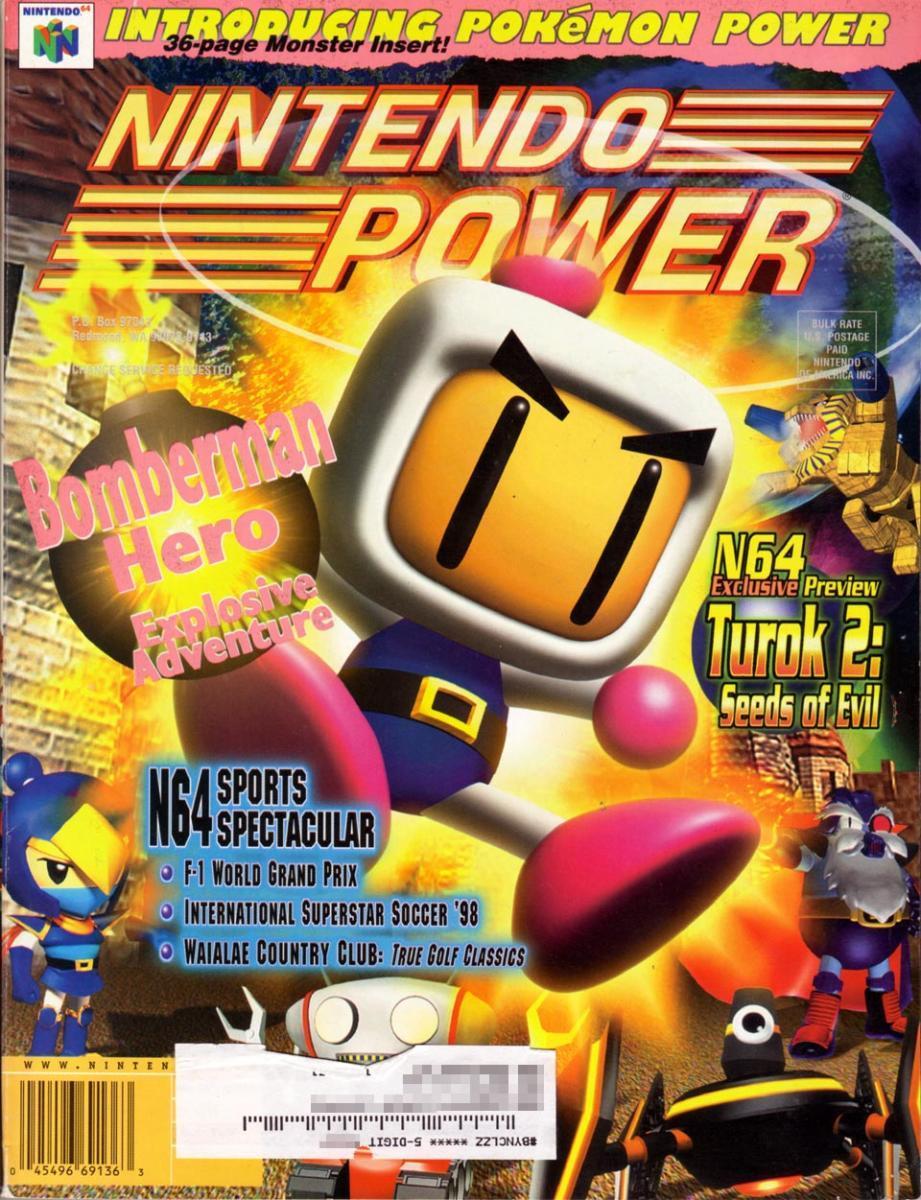
Back when I turned nine-years-old, the Birthday Badger was kind enough to bring me a Nintendo 64, along with Banjo Kazooie. Having fallen head-over-heels for the game while sampling a demo of it at Toys R Us, I just had to have it. And I got it, because I was (and still am) a spoiled rotten little brat. But the Birthday Badger still had some tricks up his sleeve, because I also got a strategy guide to Banjo and a subscription to Nintendo Power magazine. Oh, and a T-Shirt. I guess it was some kind of bundle the store my daddy bought the console from had to offer. Either way, I was the proud owner of an extremely wrinkly shirt and a Nintendo 64. I didn’t really put much thought into the Nintendo Power subscription until I got my first issue of that the following month. And then I did get it, and I didn’t care. Because I was already a subscriber of the Official PlayStation Magazine, and it had demo discs. Nintendo Power didn’t. It also offered nothing that I couldn’t find online. And it never did.

My first issue of Nintendo Power. It had the truly, truly awful Bomberman Hero as the cover game. It was an omen.

The recent news that Nintendo Power is ceasing publication has been met with universal sadness from bloggers and Twitterers. I’m not sure I’m capable of understanding it.  I didn’t grow up in an era where magazines were the only resource for getting news on gaming. GameSpot (or videogames.com as it was back then, at least if you wanted console news) and IGN were already up-and-running by time my gaming life began, plus dozens of other sites that offered breaking news and previews. Breaking news for a gaming magazine means you read it three months after it happened. Sometimes only two months later if the stars were lined up properly.

In a different era, I could understand why Nintendo Power, Gamepro, EGM, or other gaming magazines could be popular. But once the internet came around, wasn’t that the ball game? What could you get from those magazines at $6 an issue that you couldn’t get from the internet, for free? I guess the same argument applies to newspapers as well. I know that many people are leery (perhaps rightfully so) at the prospect of a world without newspapers, but that time is coming. It’s coming faster than you want.

But, this is about gaming magazines, and specifically Nintendo Power. Now even as a nine-year-old, I wouldn’t expect Nintendo to package a Nintendo 64 cartridge with every issue. That wouldn’t be cost efficient. But then, Nintendo consoles moved towards disc-based stuff. And yet, they still refused to get with the times and include the one feature they could do that websites couldn’t: demos. As a kid, every new issue of the official magazines for PlayStation, Dreamcast, and Xbox were practically events for me. And the demos actually worked towards selling me games that I probably wouldn’t have picked out of a line-up at Toys R Us if I had the choice. The Dreamcast magazine sold me on games like Chu Chu Rocket, Crazy Taxi, and Rush 2049. I played the demo of the stunt course on Rush 2049 so much that by time the game was released, I was already bored with it. That’s how much play value I got out of it. They also packed in a free “full” game, Sega Swirl, that I burned many hours playing against my father with. Without hyperbole, the Official Dreamcast Magazine was probably my favorite thing in the whole world.

And then the final issue hit. It had no demo disc. This was mostly because Sega had thrown in the towel for console development and had decided to quit supporting the Dreamcast. Still, not even getting a demo as a send off would be like not getting a final meal for an execution. Sure, by this point Xbox was on the horizon, and with it a new shiny magazine no doubt chalked full of demos. But at the time, I was inconsolable, like a friend had just died or something. No more Dreamcast demos. None. Gone.

Which brings me back to Nintendo Power. They never got with the times. No demos. Mediocre writing. Nintendo Power to me always felt more like a promotional brochure than a true, critically thinking publication. As a kid, that was fine with me. Gamepro was more or less the same way. Once I grew out of it, I only kept getting it because we never remembered to stop the auto-renewal of it. Incidentally, that’s the same reason I still get Highlights for Children.

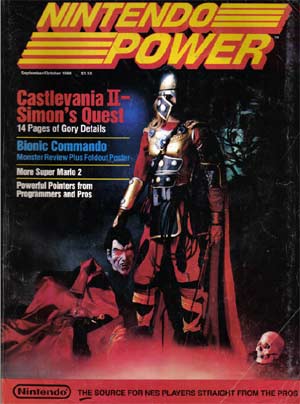
When news hit that Nintendo Power was toast, people started reminiscing about the good times, like when they got a free copy of Dragon Quest (or Dragon Warrior, because questing is for weirdos or something) just by subscribing to the magazine. Or about features and comics in the magazine that are no longer a part of it and haven’t been for decades, such as Howard & Nester. Or about the batshit insane covers some of the early issues had. Like this one.

Jesus Christ! I mean.. Jesus Christ! Isn’t this supposed to be a children’s magazine?? That shit is going to give me nightmares.

That’s just the second issue! I mean, good lord! I can’t believe it made it another twenty-four years after that. And yet, it survived. I wonder why other kiddie mags never tried the “scare the ever-loving shit out of them” approach.

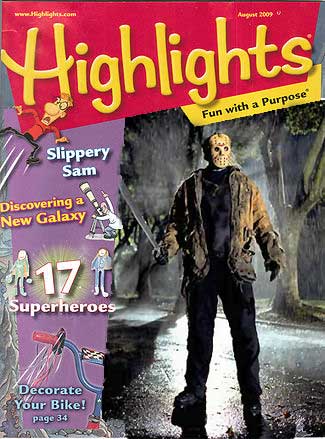
Turn to page 14 and try to find all nine dead teenagers in the hidden picture.  I would SO buy this issue.

Oddly enough, most of these things happened either before I was born or long before I was into gaming. To me, Nintendo Power was always that strange little magazine that I got for my birthday one year and it just kept coming, month after month, with stuff I had already read about online months earlier. The best stuff to come out of Nintendo Power was their strategy guides, but they discontinued them in 2007, with Prima Games taking over duties. Which was fine with me. The last time I really used a strategy guide was for Star Ocean: Till the End of Time. Fucking guide for that thing would rival mid-range city phone books in girth. But, by that point, GameFAQs had evolved to the point of being the more convenient means of getting help with a game.

Really, isn’t it just time to let this era go? Gamepro is dead. Nintendo Power is dead. EGM is back from the dead, but it’s not the same. Soon, all that will be left is, shudder, Game Informer, which I’m pretty sure you get a free subscription to just by parking your car at a GameStop. All the Nintendo Power stories I’ve been hearing are twenty or more years old. So it’s not really about the magazine, is it? It’s about nostalgia. So I pose this question: how does Nintendo Power shutting down affect your childhood memories of reading the magazine? People have taken my stance on this to mean that I’m against print media. I’m not really. I just don’t see what printed gaming magazines have to offer me. Crazy talk? No, paying $10 an issue to read shit I already know, now that is crazy talk.

A Quick Apology from Indie Gamer Chick

I would like to apologize to my readers and to Bryan Hendo, developer of Human Subject.  I think my job at Indie Gamer Chick is to properly articulate my feelings on a game, and I think my review Human Subject failed to meet that goal.  I think the review was too negative.  Mind you, every one of my critiques was valid and my true and honest opinion.  However, I don’t believe I focused enough on what I liked about the game.  Its clever level design, which I felt mostly focused on good, twitchy platforming.  I thought saying “I still mildly recommend the game” and placing it on my leaderboard would be enough.  However, most readers took away from my review that I hated Human Subject.  I didn’t.  And that’s a failure on my part.  So, to be clear, Human Subject is deeply flawed, but it’s still worth your 80 Points.  I don’t put anything on my leaderboard that isn’t fun, and I had fun with it.  That’s why I ranked it.  I had a similar problem with my review of Wizorb.  Perhaps in the future I need to reevaluate my reviews more carefully before I publish them.  I’m not proud of either review.  They were hatchet jobs, plain and simple, and that’s not what I’m here to do.

-Catherine


Indie Games Uprising III Interview: Sententia

It’s back!  Last year, the ten games of extreme varying quality (somewhere between sublime and subfeces) took part in what was the most promoted event in Xbox Live Indie Game history.  This year, nine new games are ready to show off what the platform is capable of.  It’s called the Indie Games Uprising III.  The man running it, 19-year-old Michael Hicks, has a game of his own in it: artsy platformer Sententia.  I talked with him about his game, the event, and what exactly “art house” gaming means.

Kairi: When I hear the term “art house style game”, I typically throw-up a little bit in my mouth.  What do you think the medical term for that is?

Michael Hicks: Ha! Well, I guess you could say I used that to rebel against “the man” or status quo. It’s kind of a vague term looking back at it now, but this game is extremely personal to me and marked a big change on my outlook towards game design. I wanted to be sure that when going into the game people would know that I attempted to make something more than a game about jumping over blocks and attacking enemies; there’s a ton of reasoning behind all of the design decisions… almost an unhealthy amount! I guess I was just worried people wouldn’t get me, so I decided to go all hippie hipster and call it an art game!

Kairi: When I watched the video for Sententia, it looked to me like a cross between a punisher and Scribblenauts.  What is the actual inspiration for the game?

Michael: You’re the first one to call it a punisher! The game is very challenging and ramps up fast – I don’t think that’s something people typically take away from the trailer. The gameplay wasn’t really inspired by a particular game, but you could say that it was inspired by the themes and messages I wanted to convey. The games that made me open my eyes were “Aether” by Edmund McMillen, “Gravitation” by Jason Rohrer, and “Braid” by Jon Blow. These games are very powerful, but they tell stories through basic gameplay interactions and themes, I wanted to try and experiment with what they pioneered. As I started to get more technical with the platform designs I did reference “Super Meat Boy” quite a bit, as the game is very challenging, but never felt frustrating (at least to me!).

Kairi: Your previous games have been space shooters, and now you’re doing a self-described “art” game.  You’ve started taking drugs, haven’t you?

Michael: No, never! It’s insane how many times I get asked this by people… it’s so weird that when people start to make more expressive things others instantly think they’ve turned to smoking weed or something!

Kairi: I’m actually kind of surprised by the lack of quote-unquote “experimental” games on XBLIG.  Why do you think developers don’t try to get weird when they create their games?

Michael: It’s really easy to just stick with what has already been proven to be successful, it takes some practice to really work the “originality muscle”, and I’m still trying to exercise it myself. It also takes some guts to make something super personal/deep/experimental and release it to a wide audience; I’m very terrified to release my own game, I think the closer it gets to the release date the more I am going to lose my mind.


Kairi: When you made your previous games, was there any off-the-wall weird shit that you thought to include but chickened out of?

Michael: I don’t think I’ve ever censored myself like that, but before “Sententia” I was going to make a game based around this joke rap project that my friend and I do on occasion. We started recording music for it back in High School as a way of making fun of pop culture. In this game you were going to drive around with a police officer collecting donuts while this song of ours played on the radio. Then I remembered that I’m in a position where the games I make can actually affect people’s lives and I wasn’t interested in committing career suicide.

Kairi: You pussy!

Michael: Hey, I thought it was the right thing to do!

Kairi: Okay, so now that you’ve finally manned up and are doing something off the beaten path, are you finding it difficult to implement your vision using the XNA framework?

Michael: Definitely not, I hope I never have to work with anything else. I really don’t care for C++ or any of the hardcore techie languages, even though I can use them. I love to program, and I’m glad I can do it… but I don’t like spending time doing all of the crap that those languages require when I could be doing more game specific type stuff.

Kairi: You’re the man in charge, more or less, of the third Uprising.  Are you fucking insane?

Michael: A lot of people think I am, that’s for sure! It’s really an honor to be involved like this, but it’s a huge responsibility; I want to make sure this is a promotion that people won’t forget.

Kairi: Some people, who shall remain nameless (ME!) thought the last Uprising was incredibly disappointing.  This year looks much more promising right from the start.  What do you say to those (ME!) that are skeptical about the quality of the games this time around?

Michael: Reception of indie games at this level is kind of a weird thing, you get such mixed reactions. Personally though, I am really excited for the line up this year… a lot of the games are very interesting. I’ve played most of the titles thoroughly, and I would definitely rank a good number of them in my “Favorite XBLIGs Ever” list.

Kairi: I noticed all the Uprising games are single player titles.  Is the irony that we’re doing an event where the community rises up together yet plays games alone lost on you?

Michael: Wow, that never dawned on me before! We tried to get a variety of games, but mainly we wanted to scout out some titles that we thought were great games.

Kairi: In closing, how do you feel the games of this Uprising stack up against the games of the previous two events?

Michael: The selection this year is totally different from last time I think. I would classify those games as more extroverted and these games as more introverted… maybe that makes no sense. Either way, we’ll just have to see what people say when all of this kicks off!

The Sequel Blues

We have been penalized by the lack of new consoles on the market. I understand the manufacturers don’t want them too often because it’s expensive, but it’s important for the entire industry to have new consoles because it helps creativity.

-Yves Guillemot, CEO of Ubisoft

I’m rarely stunned by the stupidity of words that come from the heads of major game studios, so I have to give Mr. Guillemot credit.  That was a remarkably dumb statement.  One that I wholeheartedly reject.  It was a defensive statement, for something that doesn’t need defending.

Gamers can be an irrational breed of people.  When they’re at their worst, gamers can be reactionary, twitchy, slobbering crybabies.  Or we can shorten that and call it “fanboys.”  I get it with kids.  Santa Claus brings Johnny an Xbox 360 for Christmas, while Bobby gets a PlayStation 3.  They’ll end up doing what kids do, arguing that their machine is the best.  But the bad ones, they’re the assholes who drag this argument out into adulthood.  They’re also the ones who bitch about console manufacturers who push non-gaming content, DLC, and especially sequels.

Minecraft 360 has sold over three million copies. Not bad for a dead platform.

I don’t get the argument against sequels.  Of all the truly stupid shit that gamers get angry over, the resentment of sequels is the one that baffles me the most.  I think many people forget that gaming is a business that exists to be profitable.  That might sound condescending, but it’s true.  When you bitch at developer for being too sequel heavy, you’re essentially telling them to not take the path of least resistance towards profitability, placing their company’s future at a greater risk.

Here’s my question: why does this make you, the angry gamer, so damn mad?  How in the blue fuck does Call of Battlewar Modern Reach 17 possibly affect you?  Other than the fact that you’ll be $60 less wealthy once it’s out because you know you’ll buy it.  Yes you will.

If sequels aren’t your thing, don’t get them!  Their existence doesn’t stop the influx of other purchasing options.  Gaming has entered a second Golden Age of creativity.  The advent of independent gaming, plus the roll out of digital distribution on consoles has opened the door to new and original properties that would never be given a green-light seven years ago.  In 2012, the major digital platforms on the PlayStation 3 and Xbox 360 have seen two record-shattering games be released: Journey and Minecraft 360.  Whether these games appeal to you directly or not is irrelevant.  It’s what they represent that is important.  They’re new properties (in Minecraft’s case, new to consoles) that destroys the notion of sequels drowning the industry.  The gaming landscape is full of titles like that.  Rarely does a month go by where there isn’t at least one, maybe two games on those platforms that I just have to try because they look so different.

Are we really ready to let go of the PlayStation 3 when such innovative, never before attempted ideas such as this one are on the verge of fulfillment?

That’s why I think Yves Guillemot’s comment pissed me off so much.  Because it was a pass-the-buck move for something that didn’t require defending or an explanation.  Anybody whinny enough to complain about sequels will never be satisfied with anything because they’re miserable human beings just looking for stuff to moan about.  You can’t please them, and it’s not even worth trying.  Whether they admit it or not, they buy all the mass-marketed stuff anyway.  They just have to try to be “cool” and reject sequels.  That makes them sound non-conformist.  I walked into a Gamestop once (bad decision, I admit.  I think I might have been under the influence of seizure medication) and saw what looked to be a half-man, half-manatee complaining about Crackdown 2 being a soulless cash-in that didn’t really try to be different.  And he said all this with a straight face while wearing a Gears of War 2 tee-shirt.  This is the type of moron you can’t win with.

Why try to justify yourself to these people?  Especially with outright bullshit, as is the case with Mr. Guillemot.  Saying “no no no no, it’s not OUR fault that we’re making sequels.  It’s their fault!  Sony’s and Microsoft’s!  Blame them!  We need new hardware or we simply can’t be original!”  Right.  Because launch-window games are known for their high-risk creative endeavors.  Of course they’re not.  New consoles bring with them 12 to 18 months worth of last-generation gameplay rehashes dressed-up with shiny graphics.  The Wii might have been an exception to that, just because it had that wacky new controller thing, but I don’t think anyone would try to argue the machine sparked a revolution of creativity.  It takes about two years for developers, even first party ones, to get over the learning curve of developing for a new platform.  While that is going on, they stick with what they know.

So Mr. Guillemot is wrong.  New consoles don’t breed creativity.  They might make a game producer’s imagination run wild with possibilities, but that doesn’t necessarily transition to the final product.  That’s why the truly neat stuff doesn’t hit until a console has been around a while.  A new concept, like Katamari Damacy, couldn’t have launched with the PlayStation 2.  Developers stick with what they know works, which is why Touch My Katamari launched with the Vita.

Spec Ops: The Line is technically a sequel, but it’s not really, because the series was never this bad ass.

And that’s why I don’t want this generation of consoles to end just yet.  Look at what the last 18 months have given us.  L.A. Noire.  Journey.  Bastion.  From Dust.  Fez.  Walking Dead.  Catherine.  Dragon’s Dogma.  I just finished Spec Ops: The Line, a game that is a sequel in name only, and I was blown away by its gutsy narrative.  You wouldn’t see anything like that christen a new platform.  You just wouldn’t.  Yea, this console generation has had an unusually long lifespan, but with promising new IPs like Watch Dogs or The Last of Us still on the horizon, why are we already writing a eulogy?  So I reject Mr. Guillemot’s assertion that developers need new consoles to be creative.  An especially hypocritical stance from the guy in charge of the publishing house that is bringing us the next big new IP, Watch Dogs.  According to him, they shouldn’t have even bothered, and instead of focused on the Wii U, which is the new platform his employees need or they just can’t think.  And what is this new platform in essence?  A screen that you have to flail around like you’re trying to swat a fly with it.  What is he doing with that?  ZombiU.  That’s his idea of innovation: holding a screen in front of another screen.  It would be like Firestone deciding the next generation of tires should be square-shaped.  Besides, my faith in that game is nil.  Ubisoft does launch titles about as well as buffaloes do deep-sea diving.  I remember Red Steel.

Sequels are not the problem with gaming.  I’m not even sure there is a problem with gaming right now.  We live in an era that features multiple thriving platforms, and hundreds (if not thousands) of games of all shapes, sizes, and costs that are released annually.  With so many options available to consumers, I simply don’t understand how so many gamers can be singing the Sequel Blues.  If all you can see is sequels, you need to get your eyes examined, because I do believe you’re more near-sighted than Mr. Magoo.

Tales from the Dev Side: Hooray for Us by Steve Smith

Forgive me guys.


Yo they’re Smith Bros.

Collecting Disorder’s their game.

Landed on my leaderboard

with minimal pain.

They were lended a hand,

when they got to XBLIG land.

Even if punishers are for fuckers,

I respect those limey Brothers!

UHHH!

Oh God, I’m so sorry.  Here, read Mr. Steve Smith’s Tales from the Dead Side.  I’m going to go flog myself.

Read more of this post

Name the Game Contest Winner

Last week I announced a contest.  Twas a fine contest, and many hearty laughs were had.  The object?  Come up with a name for this game.

Dozens of people submitted over a hundred possible names.  The judges mostly were in agreement.  Only one judge held out, and that would be Alan, just because he has to be different, which is why he’s British.  I hear it’s just a phase, and next he’ll be Irish or Scottish or Icelandic or something.  Ryan, Tim, Dave, and game creator Andreas all fell for one particular name so much they declared it the winner today and then proceeded to change the wording of it around.  But, it was the clear favorite (and also would have been my choice if I had been a judge), and so it gives me great pleasure to announce that the winner is:

@the_dudefather

You’ve won 1600 Microsoft Points, a free copy of the game, and your name in the credits.   And what will it be called?  Why, it will be titled Smooth Operators – Call Center Chaos.  Mr. DudeFather actually had the ordering of that in reverse.  He called it Call Center Chaos – Smooth Operators, but the judges liked it the other way around.  Andreas also wanted the Americanized version of the word “Center.”  Which is weird, because I thought Europeans were supposed to be super clingy to their spelling quirks (Alan throws his tea at me every time I spell “color” as “colour”), but I guess he wants to be more commercial.

We’re not done yet, because I was given two bonus copies of the game to give out.  Well, actually I was given one and Brian was given one.  Brian has selected Build-A-Corp by @sparkcloud87.  I’m not sure why, other than Brian’s eternal quest to remain somewhat boring.  No offense Sparky, but I thought the name was dull, but Brian liked how it summed the game up.  Personally, I preferred Case of the Mondays by @GaTechGrad, so I give my free copy to him.  Yea, it’s just a runner-up prize, which is like being rewarded for being the least sucky of all those that suck, but it’s a free game, so suck on, suckers!

Congratulations to DudeFather, the winner.  If you guys want to see more contests like this here, stay tuned.

Smooth Operators – Call Center Chaos is estimated to arrive in September.  I do like the name, even though it sounds like something that would star Quagmire.

Tales from the Dev Side: Redefining Indie Success by Shahed Chowdhuri

Back in March, I published what is probably the most optimistic edition of Tales from the Dev Side I have gotten yet. Mr. Shahed Chowdhuri is the developer of Angry Zombie Ninja Cats, a game that I boiled in oil back in November. He’s also the creator of the XBLIG Sales Data Analyzer, which has been well received among his peers. He’s also one of the most gosh-darned nice guys in the community, and his first editorial on here about gaining community acceptance was cited as being inspirational to newcomers on the Xbox Live Indie Game scene. Now, Mr. Shahed has a different, yet still insanely chirpy and upbeat message to share with everyone: success is what you make of it.

Read more of this post