Gaming Magazines

Back when I turned nine-years-old, the Birthday Badger was kind enough to bring me a Nintendo 64, along with Banjo Kazooie. Having fallen head-over-heels for the game while sampling a demo of it at Toys R Us, I just had to have it. And I got it, because I was (and still am) a spoiled rotten little brat. But the Birthday Badger still had some tricks up his sleeve, because I also got a strategy guide to Banjo and a subscription to Nintendo Power magazine. Oh, and a T-Shirt. I guess it was some kind of bundle the store my daddy bought the console from had to offer. Either way, I was the proud owner of an extremely wrinkly shirt and a Nintendo 64. I didn’t really put much thought into the Nintendo Power subscription until I got my first issue of that the following month. And then I did get it, and I didn’t care. Because I was already a subscriber of the Official PlayStation Magazine, and it had demo discs. Nintendo Power didn’t. It also offered nothing that I couldn’t find online. And it never did.
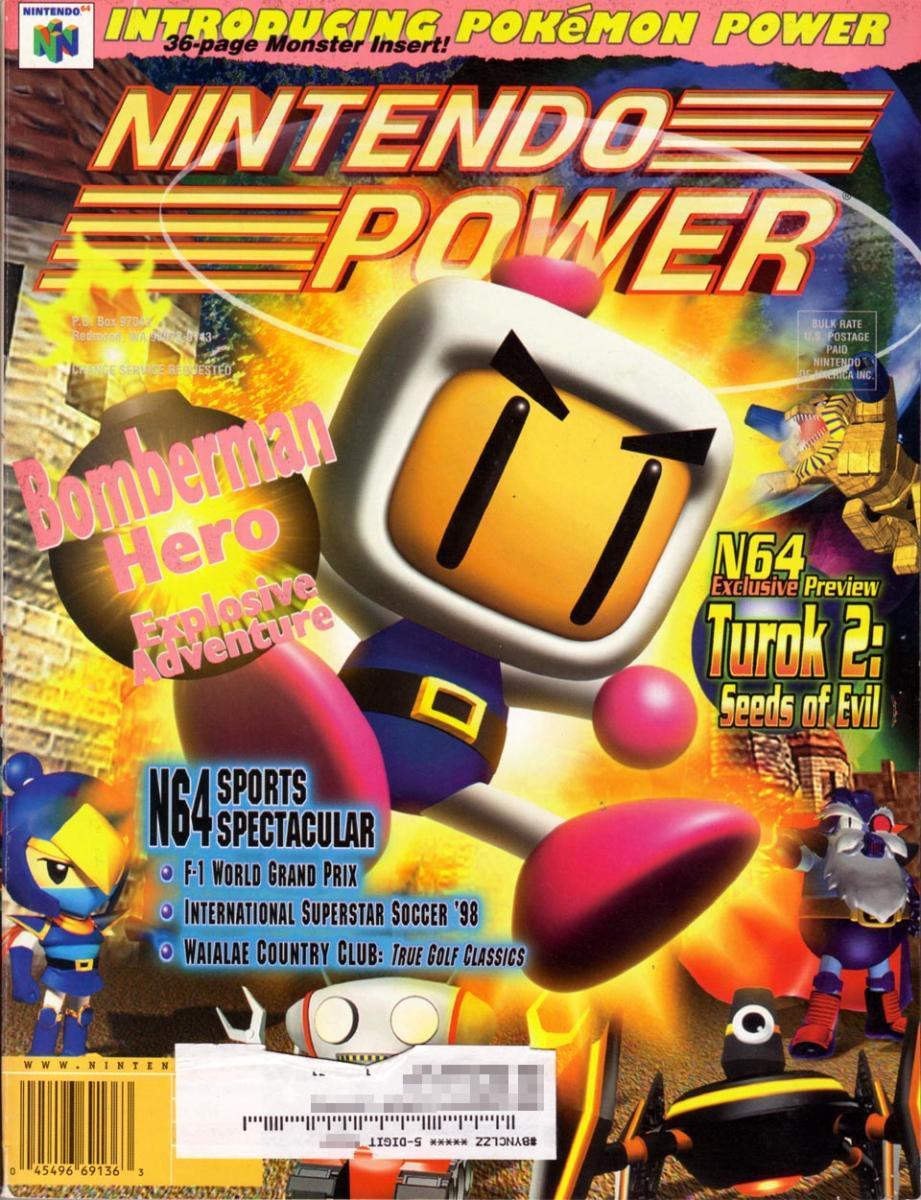
My first issue of Nintendo Power. It had the truly, truly awful Bomberman Hero as the cover game. It was an omen.

The recent news that Nintendo Power is ceasing publication has been met with universal sadness from bloggers and Twitterers. I’m not sure I’m capable of understanding it.  I didn’t grow up in an era where magazines were the only resource for getting news on gaming. GameSpot (or videogames.com as it was back then, at least if you wanted console news) and IGN were already up-and-running by time my gaming life began, plus dozens of other sites that offered breaking news and previews. Breaking news for a gaming magazine means you read it three months after it happened. Sometimes only two months later if the stars were lined up properly.

In a different era, I could understand why Nintendo Power, Gamepro, EGM, or other gaming magazines could be popular. But once the internet came around, wasn’t that the ball game? What could you get from those magazines at $6 an issue that you couldn’t get from the internet, for free? I guess the same argument applies to newspapers as well. I know that many people are leery (perhaps rightfully so) at the prospect of a world without newspapers, but that time is coming. It’s coming faster than you want.

But, this is about gaming magazines, and specifically Nintendo Power. Now even as a nine-year-old, I wouldn’t expect Nintendo to package a Nintendo 64 cartridge with every issue. That wouldn’t be cost efficient. But then, Nintendo consoles moved towards disc-based stuff. And yet, they still refused to get with the times and include the one feature they could do that websites couldn’t: demos. As a kid, every new issue of the official magazines for PlayStation, Dreamcast, and Xbox were practically events for me. And the demos actually worked towards selling me games that I probably wouldn’t have picked out of a line-up at Toys R Us if I had the choice. The Dreamcast magazine sold me on games like Chu Chu Rocket, Crazy Taxi, and Rush 2049. I played the demo of the stunt course on Rush 2049 so much that by time the game was released, I was already bored with it. That’s how much play value I got out of it. They also packed in a free “full” game, Sega Swirl, that I burned many hours playing against my father with. Without hyperbole, the Official Dreamcast Magazine was probably my favorite thing in the whole world.

And then the final issue hit. It had no demo disc. This was mostly because Sega had thrown in the towel for console development and had decided to quit supporting the Dreamcast. Still, not even getting a demo as a send off would be like not getting a final meal for an execution. Sure, by this point Xbox was on the horizon, and with it a new shiny magazine no doubt chalked full of demos. But at the time, I was inconsolable, like a friend had just died or something. No more Dreamcast demos. None. Gone.

Which brings me back to Nintendo Power. They never got with the times. No demos. Mediocre writing. Nintendo Power to me always felt more like a promotional brochure than a true, critically thinking publication. As a kid, that was fine with me. Gamepro was more or less the same way. Once I grew out of it, I only kept getting it because we never remembered to stop the auto-renewal of it. Incidentally, that’s the same reason I still get Highlights for Children.

When news hit that Nintendo Power was toast, people started reminiscing about the good times, like when they got a free copy of Dragon Quest (or Dragon Warrior, because questing is for weirdos or something) just by subscribing to the magazine. Or about features and comics in the magazine that are no longer a part of it and haven’t been for decades, such as Howard & Nester. Or about the batshit insane covers some of the early issues had. Like this one.
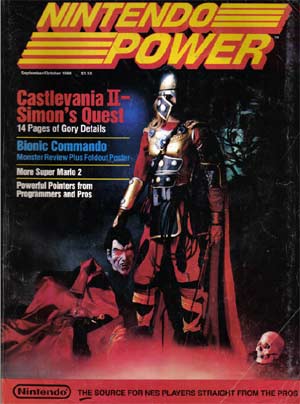
Jesus Christ! I mean.. Jesus Christ! Isn’t this supposed to be a children’s magazine?? That shit is going to give me nightmares.

That’s just the second issue! I mean, good lord! I can’t believe it made it another twenty-four years after that. And yet, it survived. I wonder why other kiddie mags never tried the “scare the ever-loving shit out of them” approach.
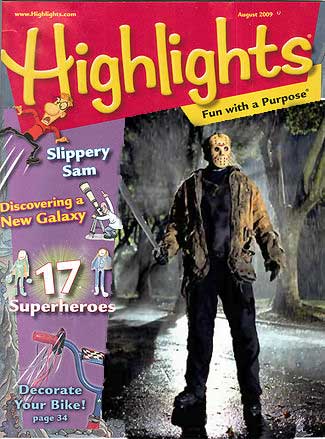
Turn to page 14 and try to find all nine dead teenagers in the hidden picture.  I would SO buy this issue.

Oddly enough, most of these things happened either before I was born or long before I was into gaming. To me, Nintendo Power was always that strange little magazine that I got for my birthday one year and it just kept coming, month after month, with stuff I had already read about online months earlier. The best stuff to come out of Nintendo Power was their strategy guides, but they discontinued them in 2007, with Prima Games taking over duties. Which was fine with me. The last time I really used a strategy guide was for Star Ocean: Till the End of Time. Fucking guide for that thing would rival mid-range city phone books in girth. But, by that point, GameFAQs had evolved to the point of being the more convenient means of getting help with a game.

Really, isn’t it just time to let this era go? Gamepro is dead. Nintendo Power is dead. EGM is back from the dead, but it’s not the same. Soon, all that will be left is, shudder, Game Informer, which I’m pretty sure you get a free subscription to just by parking your car at a GameStop. All the Nintendo Power stories I’ve been hearing are twenty or more years old. So it’s not really about the magazine, is it? It’s about nostalgia. So I pose this question: how does Nintendo Power shutting down affect your childhood memories of reading the magazine? People have taken my stance on this to mean that I’m against print media. I’m not really. I just don’t see what printed gaming magazines have to offer me. Crazy talk? No, paying $10 an issue to read shit I already know, now that is crazy talk.
Merger

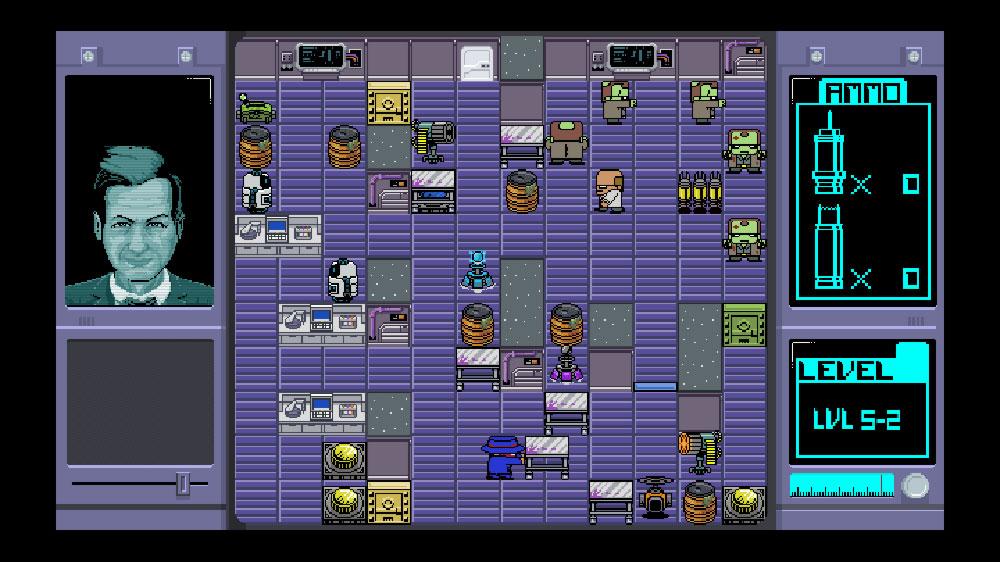
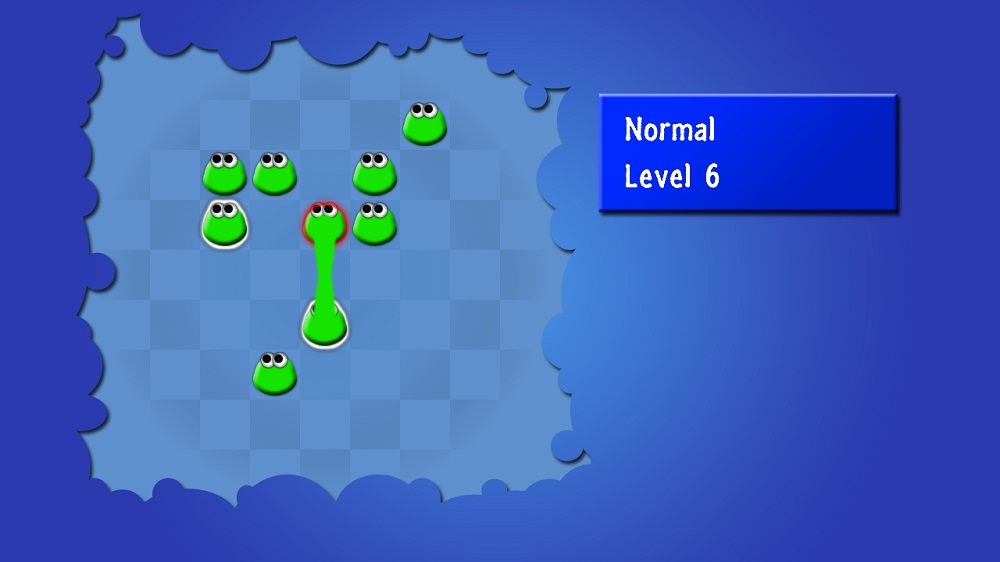
Just a quickie review here, as I don’t really have a ton to say about Merger.  It’s a grid-based puzzler where you have to merge slimeballs (that’s balls of slime, not lawyers) until only one remains.  The set-up is somewhat awkward and it takes a while to get the hang of what moves are allowed and what moves are not.  Some kind of visual tutorial would have gone a long ways towards fixing that, but instead all instructions are text-based.  This resulted in me not knowing whether or not to admit that, even after an hour of playing, I still wasn’t fully sure what the rules are.  But I decided not to admit that, because that would be embarrassing.

So, despite the fact that I fully had a grasp of the play mechanics, I wasn’t too excited by Merger.  I probably would like it more if I had, um, even better understanding of the mechanics.  Yea, that works.  But I didn’t.  Have a better grasp.  And yet I still managed to finish almost all of the 60 preset puzzles and play a couple 10,000+ point rounds of “endless” mode (which is just a few randomly generated puzzles that you tick off one at a time).

I can’t fully recommend Merger.  A better tutorial would help, but at best Merger could hope to be a somewhat dull puzzler that you’ll forget about as soon as you turn it off.   It’s crazy to say it, but the bar for what an XBLIG puzzler is capable of being is set pretty damn high.  Any new game on the platform will have to draw comparison to stuff like Escape Goat, Spyleaks, or even Asphalt Jungle 2.  By comparison to them, Merger is as boring as the World Series of Hopscotch.

Merger was developed by Fenrir Games

80 Microsoft Points said “it’s still a more successful merger than AOL and Time Warner” in the making of this review.

Imaginary

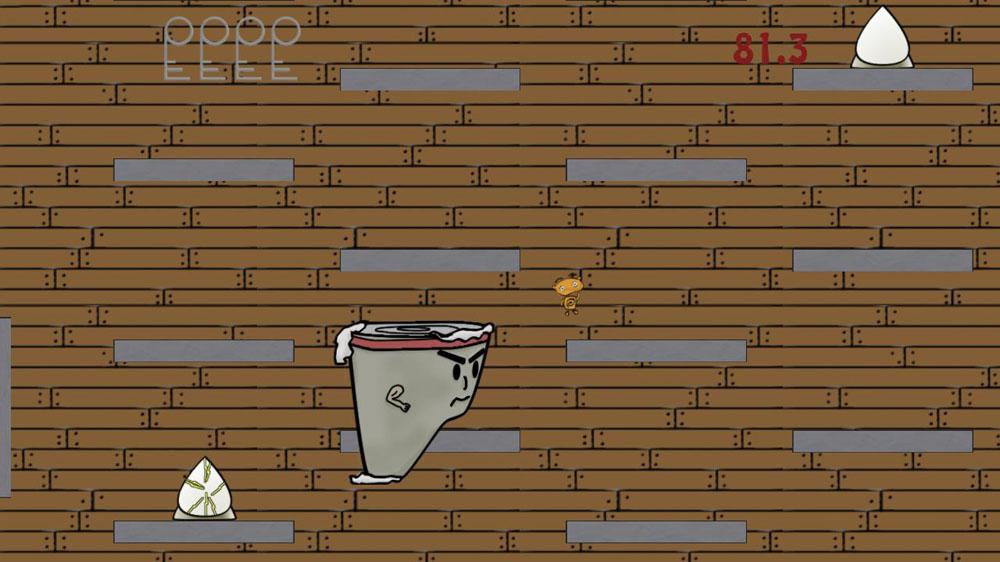
I guess Imaginary is supposed to be a representation of a child’s vivid imagination.  And so I must ask, where the fuck do the children who imagined this shit come from?  Crystal Lake?  You’re fighting giant spiders, disembodied legs (I think), and a giant fan/tornado monster thing.  Yeesh.  When I was a kid, I used to imagine being a Power Ranger, not what it was like to drop acid.  Then again, a giant/tornado monster thing sounds like exactly the type of thing the Rangers would fight, rendering my whole argument faulty.  Move along.

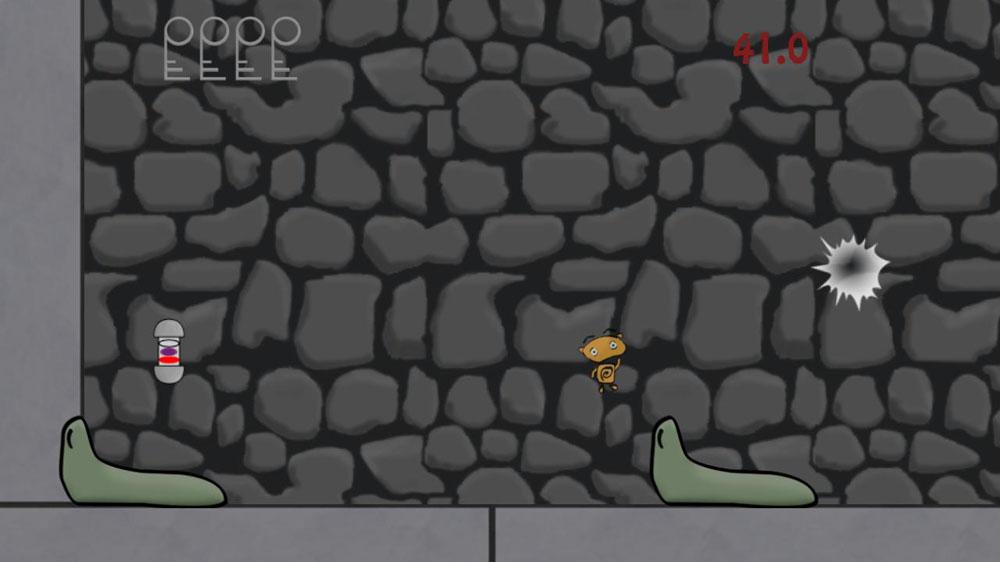
Nothing fixes a platform game with severe pacing issues like making the enemies slugs. Slugs: nature’s road runners. Well, unless you count real road runners I guess.

Imaginary is a platformer starring a little kid that had his brains removed and replaced with helium.  That’s the only way I can explain the ultra-floaty jumping physics, or the fact that he flies back the length of a football field if he takes damage.  Honestly, the controls are kind of crap but it never gets in the way of gameplay.  The deal breaker for Imaginary is it’s just not fun to play.  The only real hook is the ability to turn invisible if enemies are approaching.  I guess that means the developer was a big fan of the Tanooki Suit from Super Mario 3, only without the cool flying stuff.  Most of the game revolves around finding switches to open doors to collect keys.  To beat each stage, you must find all four keys hidden in it.  The alternate challenge is trying to stay awake.

I had a conversation the other day with the guy who created Super Amazing Wagon Adventure.  He asked me if there was any game that I wouldn’t review.  The answer is no.  He wanted to know if it was obviously a harmless one-man project that never had a chance of being good, if I would still be willing to say the game was no good.  Yes.  I bring that up because Imaginary strikes me as just that.  And while it’s not as terrible as some of the stuff I’ve played, it’s really just as boring as a game can possibly be.  The possible exception to that are the boss fights, but even they can drag on.  Like the Tornado/Fan thingie that I mentioned earlier.  You have to wait for it to hover next to one of two devices that you can activate to shock it.  However, the recharge rate for being able to fire those things is brutally slow, making the fight drag on a lot longer than it should.

The Tornado/Fan thing I was talking about. Brian thinks it looks more like a milkshake.

Ignoring the floaty physics, the biggest issue I have with Imaginary is the way you activate switches.  You do so by shooting little balls of light at objects.  Aiming these is almost impossible, so the only way to make sure they hit their target is to be right on top of it when you fire.  But, get this, if you use your ability to activate switches too much, too quickly, you die.  Why?  I don’t know.  Maybe because that made the game suck more and this feature was implemented while the developer was observing opposites day.

So it’s not as if you can just say the game is a victim of bland design and bad physics.  A lot of the ideas here are just not good ones when your goal should be “make a fun product.”  I gave up twelve levels into Imaginary.  The level design became more tedious, the stages started to center around hard-to-use trampoline-ball-things, and I had to admit that the previous hour and change had been among the worst I’ve had since starting this site.  I guess that means I can’t recommend spending your money, real or imaginary, on Imaginary.  Emphasis on imaginary.  I’m looking at you, Microsoft Points.

Imaginary was developed by Randomly Generated Games

80 Microsoft Points resent being called imaginary in the making of this review.  We are most certainly not imaginary.  We’re simply beings that are created by taking your cash and converting it into currency with no cash value.  What of it, bitch? 

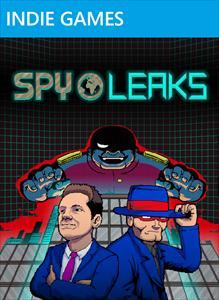
Spyleaks

Spyleaks is part Loloish puzzler, part space shooter.  Notice I didn’t say “a cross between” or “a mix of” because it’s not.  In each of the five worlds in the game, you play five puzzle stages, then a space shooter, and then finally a timed “run the gauntlet” puzzle.  It’s weird.  I like weird, but this is a different kind of weird.  Like someone making a peanut butter and cloves sandwich, where you wonder who in their right mind would see the potential in that combination.

I’ll ignore the storyline about the exploits of the greatest spy ever known.  Spies typically being people who can blend in.  The dude in this game has buck teeth that would draw the attention of Stevie Wonder, but he makes up for it with the ability to push safes as tall as he is with minimal effort.  Not only that, but he’s so stealthy about it that he can push a safe right in front of a guy who has his eyes wide open and go completely undetected.  Dude, you’re good.  James Bond bows at your feet.  Sigh.  Obviously I did anything but ignore the story.

Of course there are zombies.  If your game doesn’t include them, you have to pay the zombie tax.  Yep, there’s a zombie tax.

As far as gameplay, Spyleaks is very similar to the Adventures of Lolo, which is as of yet the only Virtual Console game I’ve reviewed here.  And the only reason I did so was because I played two XBLIG titles that were tributes to the series: Aesop’s Garden and Crystal Hunters.  For an obscure franchise that’s gotten pretty much no love from its developer in two decades, Lolo sure has spawned some amazing games on Xbox Live Indie Games.  Aesop’s Hunters and Crystal Gardens both made my big one-year anniversary Top 25 feature.  With credentials like that, there’s no way Spyleaks could be better than Aesop’s Crystal or Garden Hunters, right?

Wrong.  Spyleaks is the best of the bunch.  I’ll get to the incredibly out-of-place shooter sections later and focus on the 25 standard puzzles presented here.  Although the game closely reminded me of the three titles I spoke of above, Spyleaks changes the formula a lot.  Sure, you still shove crates, stun-lock enemies to use as crates, and ultimately try to open up an exit.  Where Spyleaks changes things up is with its button and gate system.  Levels typically have one or more different colored switches or buttons that you have to activate to proceed.  Those switches will activate corresponding gates.  It’s not an original feature by any means, but it adds to the complexity of the puzzles in the game.  If Aesop’s Garden was too hard for you, don’t even bother trying Spyleaks unless you want your head to explode.

Oh, and if your head is in danger of exploding but you think you ought to try the game anyway, be a chum and make sure you live stream it.  What can I say?  I’m a fan of spectacles.

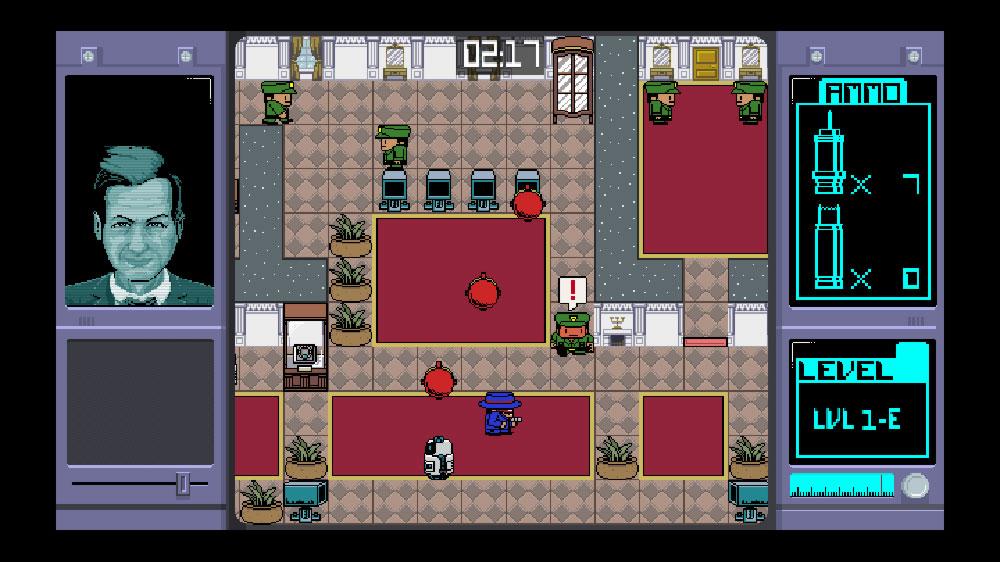
Stealth also factors in.  Some of the enemies are situated like guards who only give chase if you cross in front of them.  Whoever you’re spying on must be the most charitable mother fucker alive because he only seems to hire guards with severe visual impairments.  That’s mighty noble of him, and yet I would think a donation to the Schepens Eye Research Institute would probably be smarter, what with the fact that I can walk directly next to a guard and he won’t see me.  Now if you walk right in front of them, they start to give chase.  This mechanic is the basis for several of the timed “finale” puzzles that close each of the five game worlds.  I really enjoyed all of Spyleaks’ mind benders, but I really liked these ones.  They could have been the basis of an entire game on their own.

I’m not sure if the “!” symbol here indicates you’ve been spotted or if the guard broke wind.

Before this review turns into too much of a love-letter, I have some bones to pick with Spyleaks.  Stun-locking enemies is done by picking up tranquilizer darts (or anti-robot-shock-things if you’re shooting machines).  All movement in the game is done one full square at a time.  If you shoot an enemy while he’s moving into the square next to you, even if you shoot before he touches you, you die.  That’s bullshit.  Isn’t the time-honored tradition in these situations “tie goes to the runner”?  Thankfully, death here is treated with the dignity that typically befalls it, meaning your character does cartwheels in place and then shakes his head before flat-lining.  Same thing happened to my great-great-great-great grandfather right before he died of old age.  Cart-wheeled right on his death-bed did he.

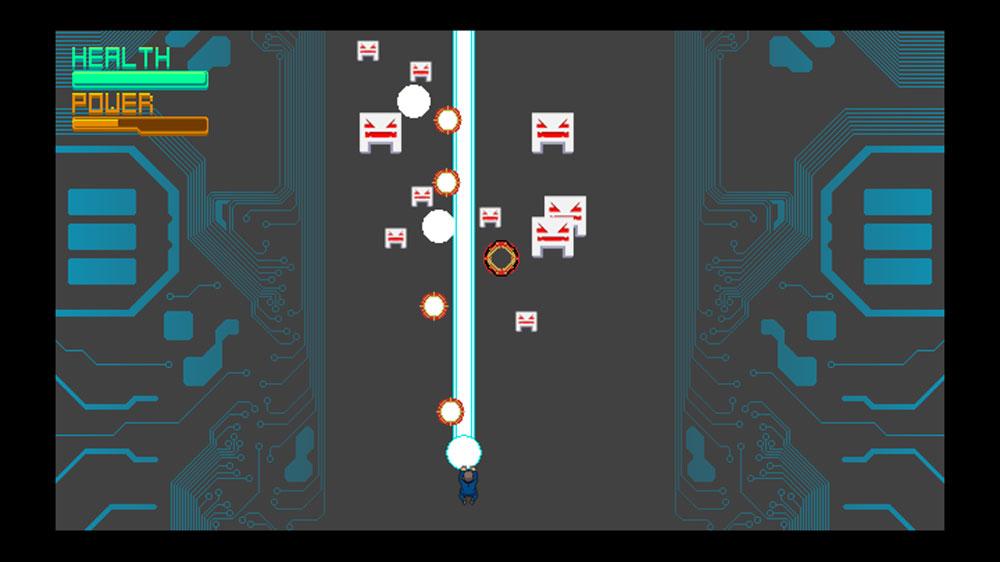
Thankfully, that’s the only complaint I have about Spyleaks. . . . . is what I would be saying if not for the space shooter stuff.  Allow me to brow-beat the developer for a few seconds: WHAT THE FUCK, DUDE?  It’s not that these sections play poorly.  They control fine, they’re handled well enough.  They’re not particularly exciting though, and if I want something to give me a break from the puzzles, I’ll take a break from the fucking game!  

I get it.  Puzzle games are a particularly tough sell on XBLIG, and not everyone wants them.  Let’s talk about a fictional, hypothetical XBLIG customer so as to not single anyone in particular out.  I’ll call him, oh, Dave Voyles.  Now let’s say Dave has rotted his brain out with too many rounds of Mega Man, coupled with all the head trauma he received as a young man banging his head into a wall when he had online games of NBA 2K1 all sewn up only to have the pathetic little shit he was playing against rage quit the game with 0:03 remaining on the clock, destroying is 35 point lead.  Remember, purely hypothetical.  So Dave’s fragile brain is no longer capable of doing puzzle games.  Yet, he’s fine with shooters.

Perhaps this was put in to prevent anyone from gaining intelligence through Spyleaks. Well, don’t worry. Any IQ points accumulated will quickly be vaporized by this shit.

Dave is NOT going to buy this puzzle game on the basis that it occasionally takes a break to play a two-minute long shooter.  He’s just not.  It’s a novel attempt at luring him in, but it’s not going to sell him.  Especially when there is no way he can experience the shooting sections in the eight minutes that is allotted for demos on XBLIG.

I’m not busting the developer’s chops for this, nor am I down-ranking his game in any way.  Spyleaks is amazing.  It’s one of 2012’s best Xbox Live Indie Games.  So intelligent, so beautifully crafted, and so infectious.  It’s also the perfect length (25 single-screen puzzles, 5 “beat the clock” puzzles, 5 brief shooting sections, and a finale) and doesn’t overstay its welcome.  Will it be accessible to people who hate the genre?  Probably not.  And no, the space stuff isn’t worth playing the puzzles to get to.  Sorry, I can’t get over it.  How is it possible that the first game to crack the Top 25 on my brand new leaderboard since its inception could have such a weird design choice in it?  I don’t get it.  Breaking up an original, highly intelligent puzzler with random bits of a shooter is like breaking up the monotony of life on the International Space Station by occasionally opening up the cabin doors.

Spyleaks was developed by HeartBit Interactive

80 Microsoft Points didn’t realize until just this very moment that this game was by the guys who did Doom & Destiny in the making of this review.  Not sure why they don’t have their own dedicated website though.

Spyleaks is ranked on the Indie Gamer Chick Leaderboard.  Click here to see where it landed.

A Quick Apology from Indie Gamer Chick

I would like to apologize to my readers and to Bryan Hendo, developer of Human Subject.  I think my job at Indie Gamer Chick is to properly articulate my feelings on a game, and I think my review Human Subject failed to meet that goal.  I think the review was too negative.  Mind you, every one of my critiques was valid and my true and honest opinion.  However, I don’t believe I focused enough on what I liked about the game.  Its clever level design, which I felt mostly focused on good, twitchy platforming.  I thought saying “I still mildly recommend the game” and placing it on my leaderboard would be enough.  However, most readers took away from my review that I hated Human Subject.  I didn’t.  And that’s a failure on my part.  So, to be clear, Human Subject is deeply flawed, but it’s still worth your 80 Points.  I don’t put anything on my leaderboard that isn’t fun, and I had fun with it.  That’s why I ranked it.  I had a similar problem with my review of Wizorb.  Perhaps in the future I need to reevaluate my reviews more carefully before I publish them.  I’m not proud of either review.  They were hatchet jobs, plain and simple, and that’s not what I’m here to do.
-Catherine


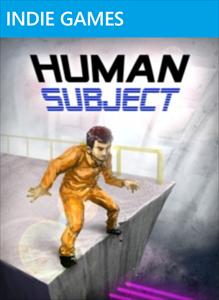
Human Subject

♫Oobie doobie do, I want to be like you.  I want to walk like you, talk like you too!♫

That’s from Disney’s Jungle Book, where King Louie sings to Mowgli about wanting to be like him.  I was reminded of that song when I played Human Subject.  Why?  Because it wants to be like Portal so bad that it feels like it could break out into that song at any given time.  The idea is you’re a dude who is kidnapped by Aliens and is being tested by them to see how easy the planet would be to conquer.  Maybe.  Or if the incredibly stupid twist-ending is to be believed, it’s something else.  The game is narrated by a computerized female voice that sounds just like GLaDOS in every way except the being funny part.  There are fourteen levels, and each level has an opening joke and a “you died, here’s a joke about that” joke.  So 28 jokes total.  Of those, I laughed at exactly one line in the game.  That’s a 3.57% success rate.  Probably better than Everybody Loves Raymond, but still not funny.

I’ve said it before and I’ll say it again: Portal has destroyed a generation creatively.  Before Portal, people had original ideas.  Now, any sci-fi themed game that aims to be humorous has to follow Portal’s lead like it’s playing Simon Says, and Human Subject does so with particular gusto.  It’s like they took Portal and broke it off into a checklist.  Sterile environment?  Check.  Silent protagonist is a test subject?  Check.  Dead-pan, off-screen, computerized female antagonist?  Check.  Portals?  Check.  Joke about a cake?  Sigh.  Check.

That fucking cake joke.  Guys, it wasn’t really that funny in Portal.  And it hasn’t been funny even once since Portal came out.  Not in any game.  Not in any web comic.  Not on any tee-shirt.  This is the third XBLIG I’ve played where I accurately predicted that there would be a cake joke.  That doesn’t make me a psychic.  You guys are just that predictable.  STOP WITH THE FUCKING CAKE JOKES!

And to ensure that you comply with this, I’ve hired Ving Rhames to enforce this rule.  If you make a cake joke in your game, Portal clone or otherwise, Ving will show up at your door and kneecap your mother with a pistol.  If you do not have a mother, IndieGamerChick.com offers its sincere condolences, and will kneecap someone else’s mother for your convenience.

By the way, none of this plot stuff leads anywhere.  The “twist” means dick shit and there is NO ENDING at all.  When you beat the last level, you’re immediately dumped to the title screen.  And the last level has nothing climatic about it.  It’s just another level.  It’s not even the hardest one in the game.  I’m not saying they were in the wrong by trying to have some kind of story, but don’t start one, completely change it three-quarters of the way through the game, and then end the game without any closure.  That’s pretty lousy storytelling.  Imagine if the Wizard of Oz ended with Dorothy killing the witch, and then the Tin Man turning to the camera and saying “Don’t worry, this is actually just a dream” followed by “THE END”.  Without the iconic “and you were there, and you were there” ending scene, that movie doesn’t go down as one of the all-time classics.  It just doesn’t.

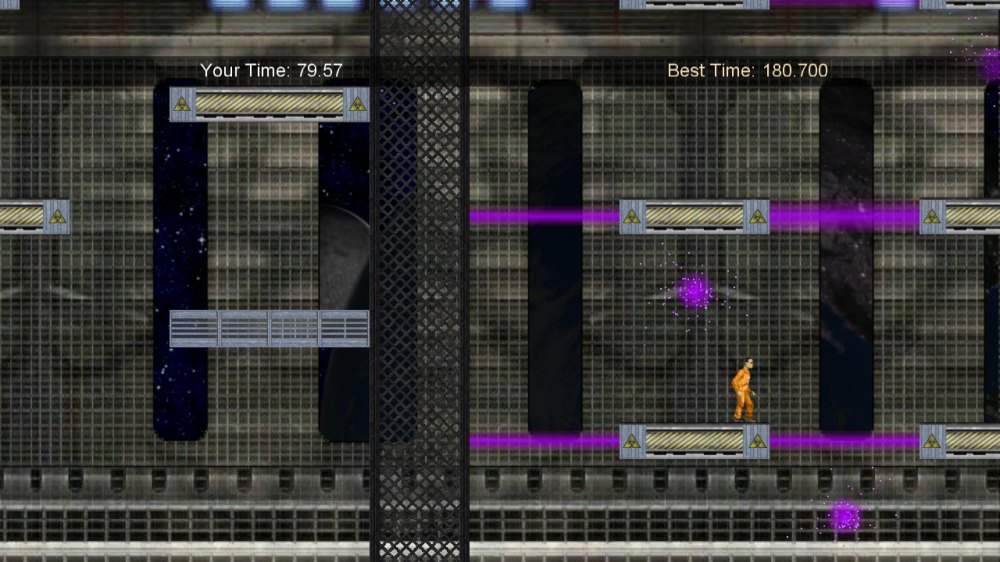
So what is the actual game like?  You run, you jump, and you occasionally hit a switch.  That’s it.  No ducking, no sliding, no wall-jumping, or any acrobatics at all.  Levels are mostly of the walk left until you reach the exit variety.  Occasionally, something will teleport you somewhere else, but that typically means the exit is somewhere else, restoring the status quo.  The hook is you can’t die.  Instead, you might hit an energy beam which teleports you backwards to various points in the stage.  Otherwise known as dying if this was any other game, but that’s Human Subject’s gimmick so I’ll roll with it.

Human Subject is not bad.  A lot of people would be thrilled to hear those words from me, but in this game’s case, it really could have been so much more.  Every good thing the game does is sunk by something incredibly stupid it does.  Level design is centered around precision platforming, not punishing platforming.  And then there are levels where you have to randomly guess which switches to hit, or which lasers to walk through that will help you progress instead of regress.  I just played a game that made a similar design mistake.  I don’t understand it.  Why would you take the time to map out so many well designed levels, and then throw in sections where you have to rely on just stupid luck?  You did everything smart up to that point.  Let’s put it this way: let’s say you’re using a Sat-Nav system, which 90% of the time tells you exactly what you want.  However, the other 10% of the time, the machine outright giggles at you and says “maybe it’s to the left, or maybe it’s to the right, or maybe it’s straight forward.  Good luck!”  You would rip the fucking box out of your car and back over it.  Human Subject was not a trial and error game, so why turn it into one?  Just a fucking dumb idea.

The controls are acceptable.  Mostly.  My biggest problem was the slightly unresponsive jumping.  My most common method of failure was running towards a ledge, hitting jump, and not having the guy jump fast enough and instead run off the platform to his doom.  Movement and jumping physics are fine, but that slight delay in jumping led to me swearing more than a sailor with his nutsack caught in a bear trap.  Also, on one level the frame rate dropped significantly, causing the game to stutter like it had just downed ten pots of black coffee.  It only happened once, but it was sure annoying when it was happening.

By far the most frustrating thing for me was the pace of the game is crippled by how slow the actual teleporting thing works.  When you miss a jump, or you intentionally hit a portal-beam-thingie as part of the level design, your dude doesn’t instantly reappear at the other side.  No, instead the game slowly crawls towards the respawn point.  This totally kills the pace of the game.  To Human Subject’s credit, the timer stops when this happens.  Oddly enough, the moving platforms don’t stop moving, which means the teleporting thing is happening in real-time.  This suggests that the aliens have perfected interstellar travel, but haven’t figured out how to send information electronically as fast as we’ve been doing since the 1830s.  They can fly thousands of light-years, but they can’t communicate faster than the speed of sound.  I’m suddenly not worried at all about being invaded by these things.  No matter what technology they have, if a two sentence phone call will take them five minutes to complete, I think we have the advantage.

The jumping thing, the slow-respawning thing, and the occasional random-chance thing really do sour the Human Subject experience.  Without them, it’s a pretty decent game.  I still mildly recommend it, but those three easily fixable hiccups really spoil it.  I don’t even care that the writing sucks and isn’t funny 96.43% of the time.  Good writing might make a game more memorable, but play mechanics are what make it worth your time.  If Portal was played straight, without the humor, it would have been as good a game as it turned out, but you might have forgotten it faster too.  The truth is, unless a game is centered around humor (like DLC Quest), writing is only icing on the.. cinnamon roll.  Back down, Ving.

EDIT: I feel this review failed to articulate that I did enjoy my time with Human Subject, flaws and all.  I issued an apology to Bryan Hendo and my readers here.

Human Subject was developed by Bryan Hendo

80 Microsoft Points said prefer their Brians to have an “I” in their name in the making of this review.

Human Subject is ranked on the Indie Gamer Chick Leaderboard.  Click here to see where it landed.

SPOILER! Highlight the invisible textSo the aliens are not planning to blow up the world.  Instead, you’re part of an alien reality show.  Whatever.  The good news is the developer clearly put more thought into the game than into the writing, because if the game was as bad as the writing it would be unplayable. END OF SPOILER!

Gameplay courtesy of Aaron The Splazer, the official best source of non-bullshit trailery gameplay footage of Xbox Live Indie Games on YouTube.

Dark Matter and Maze of Apes

Sorry that I haven’t been updating as frequently.  As it turns out, I have trouble getting motivated when my boyfriend is 2,398 miles away.  I blame his parents for choosing hurricanes over earthquakes.  It also doesn’t help that the last two XBLIGs I played are puzzlers, which I typically have difficulty writing about.  Logic puzzlers are niche enough without being put on a platform like XBLIG, where they’re only tolerated if they have a more actiony-bent to them, like Escape Goat.  Most of them probably don’t do well.  I don’t have sales figures, but I’m willing to bet a run-of-the-mill twin-stick zombie shooter sells a multiple of the copies that a really good logizzler like Alien Jelly does.  And yes, I just made up a word.  Logizzler.  I’ve almost gotten TwickS into the gaming lexicon, and I’m not stopping there.

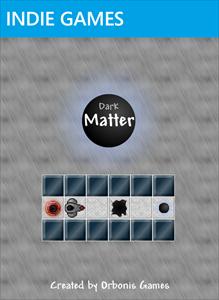
Oh thank God, THANK GOD, that they used one of their screenshots on the marketplace to show off the title screen. And there it is, so elaborate and awe-inspiring. If not for it this, I don’t think I would have purchased the game.

Instead of writing two reviews, I decided to merge recent XBLIG releases Dark Matter and Maze of Apes into a single piece.  It makes sense.  Both are grid-based puzzlers, or guzzlers as I call them.  And I somewhat enjoyed both, even thought I make no bones about it: they’re as dull as dish soap and will bore 90% of the gaming population to tears.  Hell, these type of games are up my alley and I was barely able to keep my eyelids open.

Part of that has to do with the fact that I played them all at once.  I’ve always had the most fun with these types of games when I play through them slowly.  Five or six levels at a whack, then a day or so break.  Since starting Indie Gamer Chick, games I plan on reviewing I typically try to get through as fast as I can, which might not be a good thing.  For puzzle games, that can be brutal, because it’s the same thing over and over again.  Some people like that.  Some people play through entire Sudoku books in a single sitting as well.  Weirdos for sure, but they’re out there.

Oh yea? Well WE can waste one of OUR screens on the title too. Right back at you, bitch!

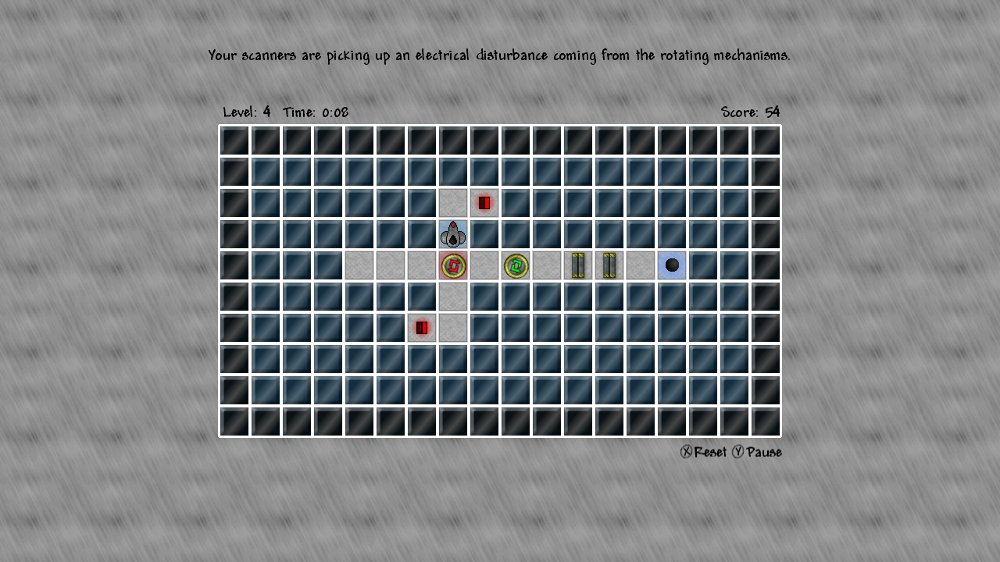
I’ll start with Dark Matter.  Here, you’re a space ship that’s running out of fuel and oh my God you don’t really need a story for this, just shut up and get me to the puzzles.  Dark Matter is an “open the exit” puzzler.  You steer your ship around, hitting switches, pushing boxes, avoiding gaps in the floor, etc.  Control at first seems a bit floaty, but you can quickly get used to it.  Dark Matter also has a couple of puzzles where the control scheme gets reversed, with up going down and down going up, cats and dogs living together, mass hysteria.  I’ll admit, it’s a bit gimmicky, but it does help to somewhat freshen up an otherwise dull game.  And if that doesn’t work, a rage-inducing brain fart of game design by the jerks at Orbonis will.

Some of the “puzzles” involve multiple switches.  Some of the switches help you, while others make the puzzle unsolvable.  The problem is, there’s no way to know which does which unless you hit them.  I’m sorry, but that is not a puzzle.  That’s a dick move.  Let’s say you give someone two identical boxes, one of which has a cake and one of which has a spring-loaded jar of flesh-eating ants.  The only way the person can get the cake is by pure chance, but if they pick the box with the cake, you don’t congratulate them on their power of deduction.  You curse the heavens that they had the luck to pick the cake box and ruin your planned YouTube video.  And that really irked the shit out of me about Dark Matter.  Because it’s an otherwise smart puzzler, only one with a really stupid play mechanic in it.  Yea, it’s kind of boring and needed anything to pull out all the stops to combat that, but having a GOTCHA! style trap in it does not make it less boring.  It just adds to the tedium, which is exactly what the game didn’t need.

Dark Matter, which should have been called “I Don’t Give a Ship” instead.

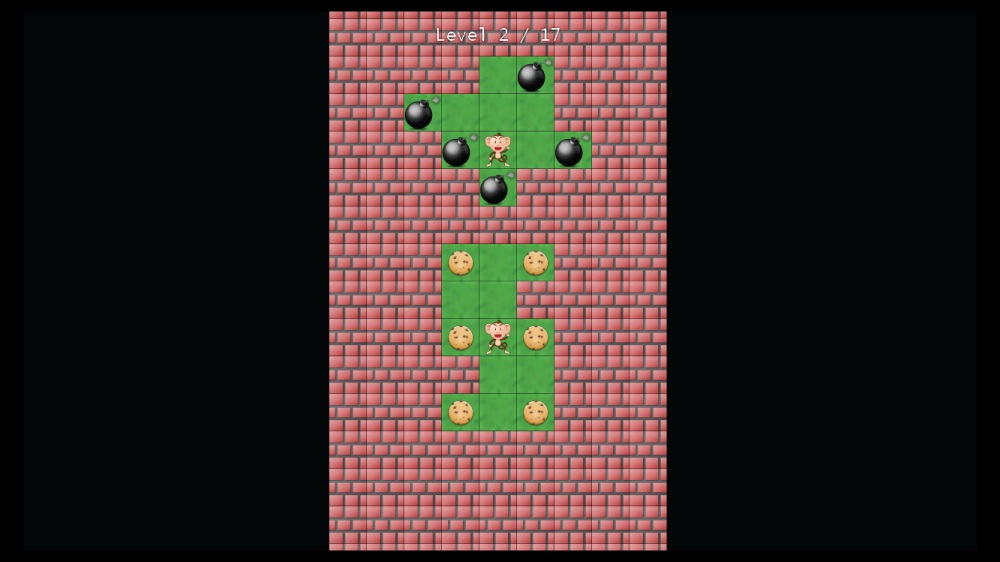
Maze of Apes is even more minimalist and snore-inducing than Dark Matter, but by no means a bad game.  This is one of those “Pick-up insignificant shit scattered on flimsy floor” puzzlers.  Or “PISS OFF” for short.  This type of game has been done a hundred zillion quadrillion gillion times (give or take), but Maze of Apes does make some effort to spice things up.  Some of the puzzles feature controlling more than one ape.  The stick moves both at the same time, so you have to figure out a way to steer both guys without killing or trapping one of them in a way where you can’t pick everything up.  Sadly, a lot of the levels don’t use this hook, and that’s a shame because that’s all Maze of Apes has going for it.  While the puzzles can be clever, they still are likely to give you a case of déjà vu, because there’s no way anyone over the age of 18 who has gamed for most of their life has not played something like this already.

Maze of Apes. Personally, I would have called it “Labyrinth of Monkeys”

Despite both games being about as exciting as picking lint out of your umbilicus, they are well made and fun if you’re into this sort of thing.  I give the edge to Maze of Apes.  Dark Matter has better art, more complex stages, and a wider variety of puzzles.  Maze of Apes looks and plays like a Windows 3.0 freeware game.  But Maze of Apes doesn’t have that fake-switch thing going for it, and Dark Matter does, so Maze of Apes wins by virtue of not being an asshole.  Which is probably how Obama is going to win in November.  Zing.

Dark Matter was developed by Orbonis

Maze of Apes was developed by Blanc Game Studio

80 Microsoft Points apiece said “oh come on, it’s just a joke.  Us Microsoft Points think both candidates are assholes” in the making of this review.

Dark Matter and Maze of Apes are ranked on the Indie Gamer Chick Leaderboard.  Click here to see where they landed.  The Leaderboard is sponsored by Count to a Billion, out now on iPhone

The 4th Wall

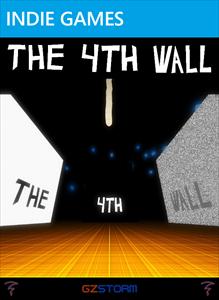
I don’t really know where to begin with The 4th Wall by GZ Storm.  I guess I should start by saying that I apparently was enjoying their previous game, The Vidiot Game, until it knocked me out with a seizure.  Just to be clear, I have epilepsy so such results will not be typical, but I honestly don’t remember playing the game at all.  Brian says I seemed to be having fun with it, which is weird because I don’t think there has been a single positive review of it.  Then again, I’m a sucker for Wario Ware style games.  It’s a shame, because I might have been able to figure out what to write about that game.  With GZ’s latest title, The 4th Wall, I’m truly stumped.

What can you say about this game?  It’s a first-person, exploration-based “adventure” thing.  It’s surreal.  It’s disorienting.  It features a thirty-foot long penis that hangs from the ceiling and seems to be dripping blood.

That only took over twenty takes to get right.

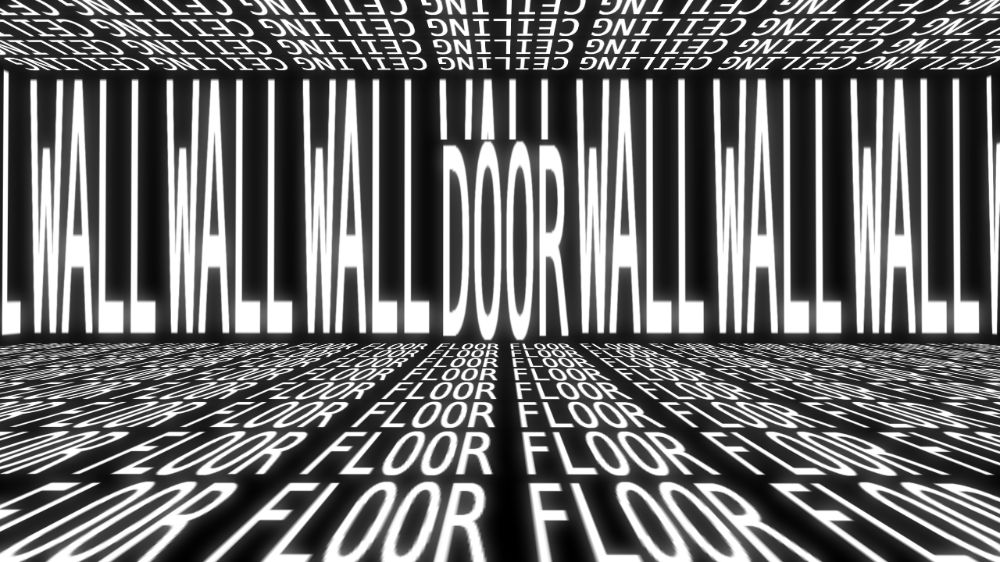
Is it fun?  Not really.  I was too busy being weirded out to have fun.  There is no plot or context for The 4th Wall.   You’re placed on a field that has a white wall, another wall made of static, and arrows on the floor that point you towards a room.  In that room, there’s a terrible high-pitched hum that made my dog walk out of the room.  You walk through a door that leads to an all-black room with various eyeballs looking around.  You see a white tunnel.  You head towards it.  Then you fall back to the starting field, which now features the aforementioned bleeding dick, plus an invisible black wall.  It took me a good half-hour of wandering around to figure out that the static wall now had a hidden door in it.  You walk through that, go through a maze, and then get dumped again back into the starting field.  You stand by the white wall and it causes the field to turn black-and-white.  You chase down a ball that’s bouncing around, touch it, and get dumped back to the starting field.  Then you let the dick bleed on you and the game is over.

You can’t see him, but presumably the person you play as has “ASSHOLE ASSHOLE ASSHOLE” written all over him.

What the FUCK was this supposed to be?  Not since I played Linger in Shadows on PlayStation Network has a game left me this perplexed.  I guess the fancy term would be “post-modern” which Moe Szyslak taught me means “weird for the sake of being weird.”  No matter what you call it, I can’t recommend The 4th Wall, the gaming version of walking into the middle of a storage park, then licking a toad and trying to find  your way out.  Enjoy.

The 4th Wall was developed by GZ Storm

80 Microsoft Points are not totally sure if this was a real game I played or if someone spiked my coffee while I was playing Sound Shapes in the making of this review.

Yes, I’ve told developers to “be weird.”  I guess I should have been more specific and added “but still coherent” to that. 

Indie Games Uprising III Interview: Sententia

It’s back!  Last year, the ten games of extreme varying quality (somewhere between sublime and subfeces) took part in what was the most promoted event in Xbox Live Indie Game history.  This year, nine new games are ready to show off what the platform is capable of.  It’s called the Indie Games Uprising III.  The man running it, 19-year-old Michael Hicks, has a game of his own in it: artsy platformer Sententia.  I talked with him about his game, the event, and what exactly “art house” gaming means.

Kairi: When I hear the term “art house style game”, I typically throw-up a little bit in my mouth.  What do you think the medical term for that is?

Michael Hicks: Ha! Well, I guess you could say I used that to rebel against “the man” or status quo. It’s kind of a vague term looking back at it now, but this game is extremely personal to me and marked a big change on my outlook towards game design. I wanted to be sure that when going into the game people would know that I attempted to make something more than a game about jumping over blocks and attacking enemies; there’s a ton of reasoning behind all of the design decisions… almost an unhealthy amount! I guess I was just worried people wouldn’t get me, so I decided to go all hippie hipster and call it an art game!

Kairi: When I watched the video for Sententia, it looked to me like a cross between a punisher and Scribblenauts.  What is the actual inspiration for the game?

Michael: You’re the first one to call it a punisher! The game is very challenging and ramps up fast – I don’t think that’s something people typically take away from the trailer. The gameplay wasn’t really inspired by a particular game, but you could say that it was inspired by the themes and messages I wanted to convey. The games that made me open my eyes were “Aether” by Edmund McMillen, “Gravitation” by Jason Rohrer, and “Braid” by Jon Blow. These games are very powerful, but they tell stories through basic gameplay interactions and themes, I wanted to try and experiment with what they pioneered. As I started to get more technical with the platform designs I did reference “Super Meat Boy” quite a bit, as the game is very challenging, but never felt frustrating (at least to me!).

Kairi: Your previous games have been space shooters, and now you’re doing a self-described “art” game.  You’ve started taking drugs, haven’t you?

Michael: No, never! It’s insane how many times I get asked this by people… it’s so weird that when people start to make more expressive things others instantly think they’ve turned to smoking weed or something!

Kairi: I’m actually kind of surprised by the lack of quote-unquote “experimental” games on XBLIG.  Why do you think developers don’t try to get weird when they create their games?

Michael: It’s really easy to just stick with what has already been proven to be successful, it takes some practice to really work the “originality muscle”, and I’m still trying to exercise it myself. It also takes some guts to make something super personal/deep/experimental and release it to a wide audience; I’m very terrified to release my own game, I think the closer it gets to the release date the more I am going to lose my mind.


Kairi: When you made your previous games, was there any off-the-wall weird shit that you thought to include but chickened out of?

Michael: I don’t think I’ve ever censored myself like that, but before “Sententia” I was going to make a game based around this joke rap project that my friend and I do on occasion. We started recording music for it back in High School as a way of making fun of pop culture. In this game you were going to drive around with a police officer collecting donuts while this song of ours played on the radio. Then I remembered that I’m in a position where the games I make can actually affect people’s lives and I wasn’t interested in committing career suicide.

Kairi: You pussy!

Michael: Hey, I thought it was the right thing to do!

Kairi: Okay, so now that you’ve finally manned up and are doing something off the beaten path, are you finding it difficult to implement your vision using the XNA framework?

Michael: Definitely not, I hope I never have to work with anything else. I really don’t care for C++ or any of the hardcore techie languages, even though I can use them. I love to program, and I’m glad I can do it… but I don’t like spending time doing all of the crap that those languages require when I could be doing more game specific type stuff.

Kairi: You’re the man in charge, more or less, of the third Uprising.  Are you fucking insane?

Michael: A lot of people think I am, that’s for sure! It’s really an honor to be involved like this, but it’s a huge responsibility; I want to make sure this is a promotion that people won’t forget.

Kairi: Some people, who shall remain nameless (ME!) thought the last Uprising was incredibly disappointing.  This year looks much more promising right from the start.  What do you say to those (ME!) that are skeptical about the quality of the games this time around?

Michael: Reception of indie games at this level is kind of a weird thing, you get such mixed reactions. Personally though, I am really excited for the line up this year… a lot of the games are very interesting. I’ve played most of the titles thoroughly, and I would definitely rank a good number of them in my “Favorite XBLIGs Ever” list.

Kairi: I noticed all the Uprising games are single player titles.  Is the irony that we’re doing an event where the community rises up together yet plays games alone lost on you?

Michael: Wow, that never dawned on me before! We tried to get a variety of games, but mainly we wanted to scout out some titles that we thought were great games.

Kairi: In closing, how do you feel the games of this Uprising stack up against the games of the previous two events?

Michael: The selection this year is totally different from last time I think. I would classify those games as more extroverted and these games as more introverted… maybe that makes no sense. Either way, we’ll just have to see what people say when all of this kicks off!

Deadlight

Don’t worry: spoilers are segregated from the main body of the review.  You’ll have ample warning to avoid them.

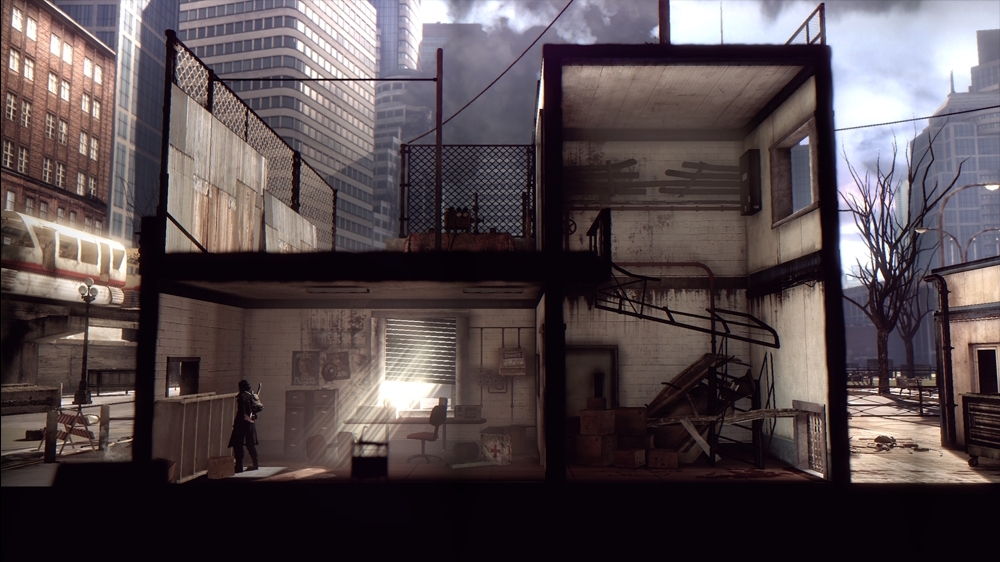
Randall Wayne believes the best way to survive a zombie apocalypse is to run in a straight line.  That’s the only way I can explain why he chooses to Rube-Goldberg his way up, over, and through buildings instead of walking around them.  Also, he’s a cold-hearted asshole with a voice that sounds like something spawned from a mating between whiskey and a power sander.  I call it the “Video Game Tough Guy Voice” because it’s essentially the same voice as Solid Snake or Master Chief or any other number of emotionally dead heroes.  He’s the star of Deadlight, the “highlight” of this year’s underwhelming Summer of Arcade lineup, and a game that is not worth the hype.

Dude even looks a little like Solid Snake, in both the gameplay silhouette and also in cut scenes.

In Deadlight, the most unlikely end-of-world scenario outside of “Donald Trump elected President” once again occurs: zombies!  Only they’re called “shadows” here because.. I’m not sure.  Maybe this version of 1986 exists in a parallel world where Night of the Living Dead, Dawn of the Dead, and Return of the Living Dead never happened, and thus nobody knows what a zombie is.  Presumably this means that Rob Zombie goes by some other spooky sounding name like, I dunno, it’s supposed to be 1986 so Rob Commie or something.    Either way, civilization somehow completely collapses when faced against the most easily disposable threat the world has ever seen.  Seriously, how DOES a zombie apocalypse work?  The ones in Deadlight are among the dumbest I’ve ever seen in a game.  They have absolutely no survival instinct, often walking straight off cliffs, or into electrical wires after watching other zombies fry themselves.  In order to take over the world, an animal would need to become an apex predator.  That means limited weaknesses, higher order of thinking, and genetic advantages.  The zombies in Deadlight have trouble understanding the concept of a staircase.  Even the Daleks figured that one out.

They can’t climb.  They can’t jump.  They can’t use weapons.  They’re easily distracted by whistling or car alarms.  Their only weapon is teeth.  How is it they manage to wipe out 99% of a race that is armed with Uzis, rocket launchers, or plain old human ingenuity?  Fuck you, that’s how.  Just shut up and play the game.

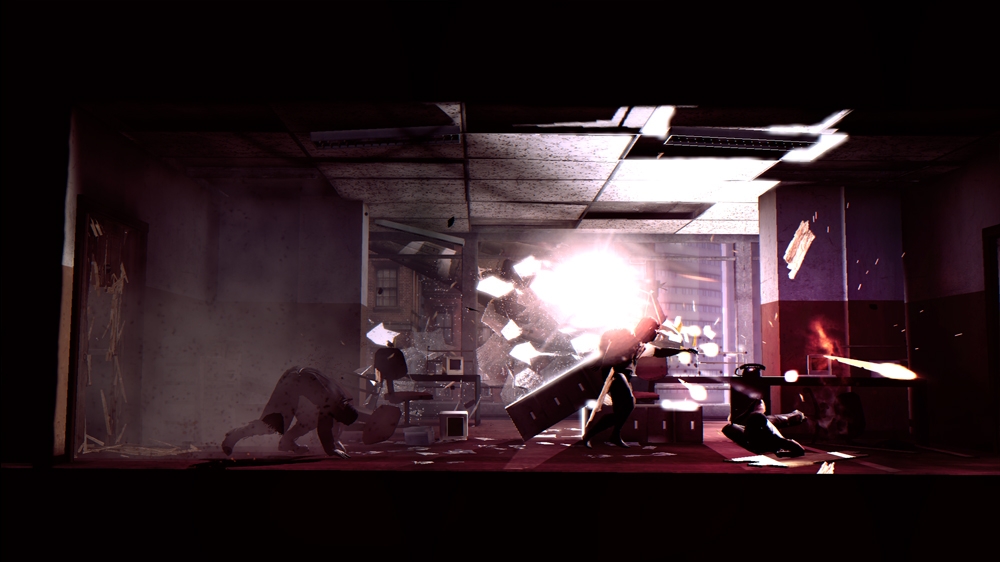
Think of Deadlight as Silent Hill meets the old school Prince of Persia.  You run, you jump, you climb, you hang, you activate switches, you shove boxes, and you fight with or flee from enemies.  Deadlight is a game where survival takes center stage over body count.  While you might at various times have guns or an axe to take on the undead, avoidance is encouraged.  That’s just as well.  Combat with the axe is slow and clunky.  Guns take too long to draw, and sometimes the aiming seems a bit off.  I swear there were times when I know I tagged a fucker square in the head, yet he would get back up and keep coming at me.  When zombies close in on you, you automatically take damage, but you still have to press B to shove off them.  If you’re on your last bit of health, there is no auto-damage, which negates the entire fucking point of having it in the first place.  There might as well not even be a life bar.  If a hoard of zombies closes in on you, it’s automatic death.  There’s various health pick-ups and stuff that will give you an extra bar of life, but why even bother?  There’s unlimited lives (as there should be) and tons of checkpoints.  It seems like a feature tacked on because this is how games are made despite not serving a purpose.

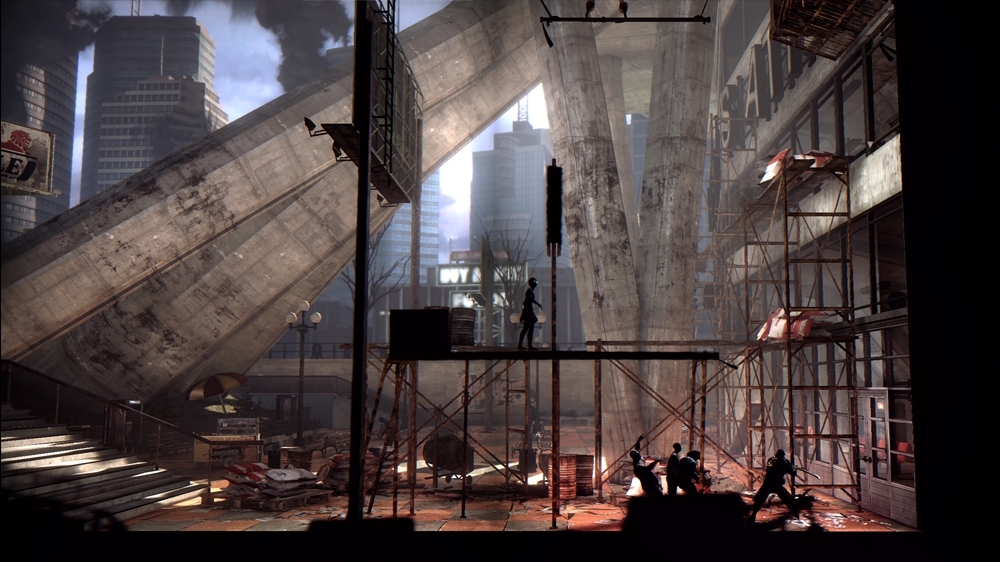
The graphics really are breathtaking at times. And then there are times when enemy limbs clip right through walls. That’s a real buzzkill.

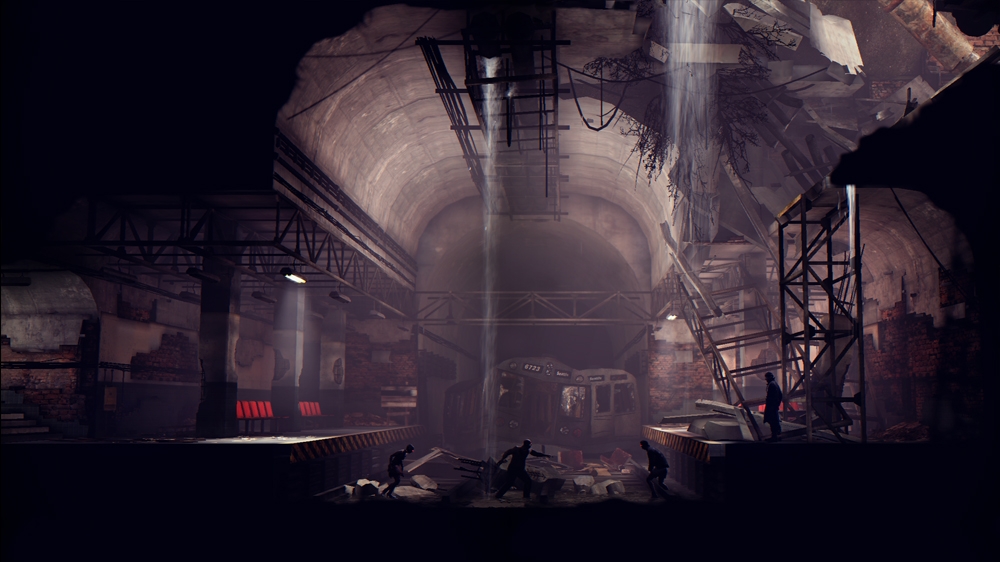
Let’s face it: the only thing Deadlight has going for it is the atmosphere.  It’s a creepy game, at least at the start.  While you’re scaling buildings, running through empty highways, and collecting your first hidden trinkets over the game’s opening hour, the experience is almost exhilarating.  And then things go to hell once you end up in an overly long sewer section where a guy named The Rat Man takes all your accumulated weapons.  At this point, hardly any zombies show up for over an hour and Deadlight becomes a punisher-platformer, destroying the entire mood of the game in one fell swoop.  Creepiness?  Gone.  Eagerness to proceed?  Gone.  Sense of tension?  Gone.  And Deadlight never recovers from it, even after you return to the streets, because the previous section was just that bad.  By time I was at the end, I was anxious for the game to be over with.

Part of that has to do with the controls being crap.  Deadlight seems to give you all the tools needed for the tasks at hand.  You can wall-jump, do a tuck-and-roll off high falls, or a diving roll through narrow pathways.  It sounds great, but the response time to all actions in the game suffer from a delay.  The possible exception to that is using the fire button when you use a gun, but even then something about it seems like it doesn’t fully work all the time.  Meanwhile, there are several sections of the game that require agility-based platforming, yet all movement is hampered by the unresponsive controls.  Is it impossible to beat?  No.  Actually, if not for control problems, it would probably be kind of easy.  But Deadlight doesn’t carry with it the feel of a trial-and-error platformer, yet that’s how the game ends up.

I would be remiss if I didn’t talk about the story.  Don’t worry, I’ll place all spoilers inside a special spoiler section, although I would caution readers to not read any comments below until you’ve finished the game, assuming you still plan on burning 1200MSP on this piece of shit.

The game stars a Canadian dude who seems a bit on the paranoid militant side.  When the zombies take over, his family disappears.  He joins up with a rag-tag group of survivors as they make their way to a “safe zone” in Seattle, WA.  The game opens with the group on the outskirts of Seattle, with Randy having just blown away a member of their party that has been infected.  Right from the game’s get-go, I didn’t like Randy too much.  He has no personality and a voice like a drunken frat boy trying to sound like Optimus Prime.  But, his story is an interesting one.  When you read his diary, you realize the dude had a few screws loose before the end of the world happened.  Once it got going, he really went off the deep end.  By the way, you pick up the missing pages of his diary throughout the game.  Of all the odd things that spoiled the mood for me, this one was the most obvious.  Why on Earth would pages of his missing diary be scattered all over a town he’s never been to?  The only explanation I can think of is there is no diary and he’s not actually finding pages, but just remembering events.  Kind of artsy-fartsy, but that is the only theory that can possibly work, so I’ll go with it.  Still, I wish they had thought of some other way to do it.  Warning, spoiler section ahead, sandwiched between the next two pictures.

Spoilers!

What the FUCK is up with that ending?  I had so many people building up the big “twist” and it turns out Randy had already capped his wife and daughter at the start of the apocalypse, and he simply forgot about it.  The way people were raving about it, I was expecting it to be something much more cerebral, like the whole thing being a delusion.  But no, it turns out that Randy is simply a forgetful idiot.  He didn’t turn the gun on himself because he only had two shells, and obviously he would need one for each person.  Um, no.  It’s a fucking 12-gauge shotgun, not a pea shooter.  You position your wife’s head against your daughter and you pull the trigger.  I’m pretty sure both would die from that.  Then you have one shell left all to yourself, because daddies always get the biggest portion at dinner.

Oh, and the chick you save at the end was another dumb bit.  They make it out like some kind of deep moment, but come on, we just fucking met her fifteen minutes beforehand.  Maybe Randy had known her for a while, but we didn’t!  Then, after building up an entire game about looking for lost love, they try to pass off Randy’s needless self-sacrifice as some kind of deep emotional moment.  First off, Randy didn’t save the chick.  He pushed her off the dock on what looked to be a wind-powered boat.  That’s not saving her.  That’s delaying a death sentence.  Let’s go over the possible things that can happen to this poor girl.

#1: The girl, who was screaming “I don’t want to be a monster” can have either the waters or the wind push her right back toward the dock.  Best case?  She’s zombie chow.  Worse case?  She becomes a zombie herself, which is exactly the thing she wants least.

#2: The group of humans that are being bastards apparently just for the sake of being bastards are STILL alive, STILL armed to the teeth, STILL have access to helicopters, are just yards away from you,  and are probably pretty pissed off at you for helping to fuck up their base.  If they catch poor Stella, which they will because they’re RIGHT FUCKING THERE, I’m guessing they’re going to do a whole lot worse than just kill her.

#3: Assuming the winds are friendly and none of the angry soldiers survive, she’s still stuck on a fucking boat, all alone, with no supplies and no weapons.  Never mind the fact that zombies have apparently conquered the whole fucking world, meaning there is no safe place to go.  Her options on the boat are starve to death or drown herself.  Don’t you just love happy endings like this?

Maybe Randy should have said “hey, there’s a batshit insane fucker living in the sewers in Seattle.  Try to make your way to him.  Sure, you’ll be eating rat meat until you finally lose the will to live, assuming you don’t die from all the booby traps he’s going to make you dance through for his own personal amusement, but at least you’ll be alive.”  But no, he pushes her out on a boat, stares down the hoard of zombies coming at him, credits.  Horrible ending.

End of Spoilers!

Honestly, Deadlight isn’t terrible by any means.  But the story loses its intrigue only a third of the way through, and ultimately has an unsatisfactory conclusion.  The voice acting is abysmal.  The characters are all twats.  The secondary enemies, a bunch of military dudes,  are one-dimensional cartoon villains.  Actually that’s not true, because even COBRA Command had more depth than these fuckers.  So while Deadlight is not that bad, it’s not that good either.  And it’s not worth the 2 gigs of space it takes up, or the 1200 Microsoft Points it costs.  You could get all of the top-ten games on my leaderboard for the same cost and still have 400 points to spare, and all ten of them are better games.

It felt like the developers had an awesome idea somewhere along the line, but couldn’t figure out how to stretch it out.  I like the idea of a 2D side-scroller/survival game set in a real American city.  Even if my good buddy Cyril at Defunct Games tells me that the city in Deadlight is most certainly not any Seattle he’s ever been to.  Duly noted.   But Deadlight just fails as a game due to not sticking hard enough to the premise of escaping zombies and trying to survive in a world crumbling around you.  The human enemies and the Rat Man section only served to take out the unnerving tension of the goings on.  I entered the game with genuine chills and exited with genuine apathy, because Deadlight is as shallow as a wading pool.  Which Randy would still manage to drown in, but that’s besides the point.

Deadlight was developed by Tequila Words

1200 Microsoft Points never did get the achievement for surviving a lethal fall by rolling through it because it never once was necessary in the making of this review.  I did get five achievements in five minutes, including one you get just for checking the online leaderboards.  I’m surprised they don’t hand out one just for reloading your gun.  Oh wait, they do that too.