SOPA

SOPA is a tactical strategy game in which you are tasked with protecting the intellectual properties of the entertainment industry.  Playing as an agent of the industry under the jurisdiction of SOPA (which no doubt stands for Supremely Oppressive Pricks & Assholes), you get to wield unprecedented power at your own discretion to help fight for the big guys and bring justice to the unwashed masses.
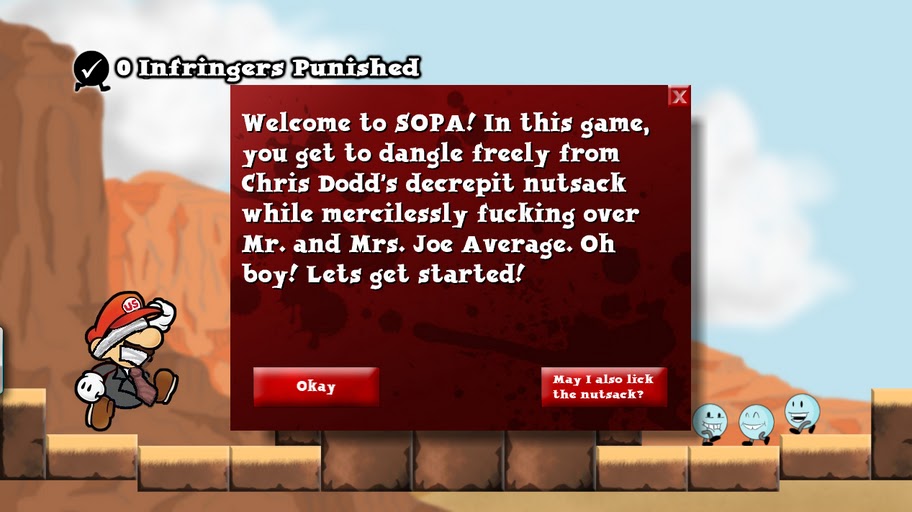
I normally try to keep my cards close to my chest when I write these reviews, but I can’t hold off any longer: I FUCKING LOVED THIS GAME!  Think of all the dick moves you’ve ever pulled playing Grand Theft Auto and multiply them by a jillion.  That’s how much fun you can have as an agent of SOPA.  For example, I was perusing YouTube when I came across a video uploaded by a fourteen year old.  It was a highlight reel of his best kills in Gears of War 3, set to the tune of “Let the Bodies Hit the Floor.”  Now, if this was a game like Saints Row, you cap the little bastard in the back of the head and T-Bag his corpse.  BOR-RING!  In SOPA, you sue the little kid into the stone age, file charges against his parents, have their internet access cut off, and collect damages from YouTube because it was all their fault to begin with.  With this level of loosely defined parameters, you have the freedom to pretty much destroy lives in ways you never could have imagined.

Bad controls have always been my biggest sticking point in a game.  Thankfully, SOPA gives you more control over non-player characters than any game ever has.  I remember playing Mercenaries 2 and watching the dimwitted NPCs fall to their deaths by walking off a four-foot high ledge.  You don’t have to worry about that here.   Rounding up people to interrogate them over illegally hosting a 60 second long MP3 copy of the Golden Girls’ theme has never been so intuitive or easy to accomplish.  And the tools you’re given are amazing too.  Wiretaps, bully lawyers (that is lawyers who are bullies, not lawyers for bullies, although I’m sure there is some cross-pollination), lobbyists, and all the power of the federal government are at your disposal.  I used to feel pretty damn empowered when I held the Spartan Laser in Halo, but that is absolutely nothing compared to how I felt with all of the power I wield in SOPA.

And if you thought the emotion technology used in L.A. Noire was impressive, you haven’t seen anything yet.  This one time I was busting a Captain Kirk fan site for using clips of Star Trek set to the tune of Bonnie Tyler’s “I Need A Hero.”  Not only was I able to tie the dude up in court for years, but I was able to go after every single person who had linked to his site in the process.  The dude had like 500 followers on Facebook!  It was like a genocide, only blood was replaced by tears, and that’s so much more evil and thus fun, wouldn’t you agree?  The look of terror on their faces and the tremble in their voices as they slowly realized that all the freedoms they had taken for granted were being extinguished is one of the most defining moments in a game I’ve ever had.

Not to mention all the employees of Facebook and all the internet service provider employees who I was able to put out of work because all these restrictions made their companies unprofitable.  It brought me a sense of satisfaction that all the nuns tied to the train tracks in Red Dead Redemption could never hope to equal.  Really, how can you go back to running over a Granny with a Buick in GTA when you can litigate a family into bankruptcy over having the theme from Days of Their Lives play in the background of a video of little Junior’s first steps?  Hey, you shouldn’t have uploaded it.  Not very smooth criminal of you.  By the way, using Smooth Criminal lands you five years in Gitmo so watch your step.
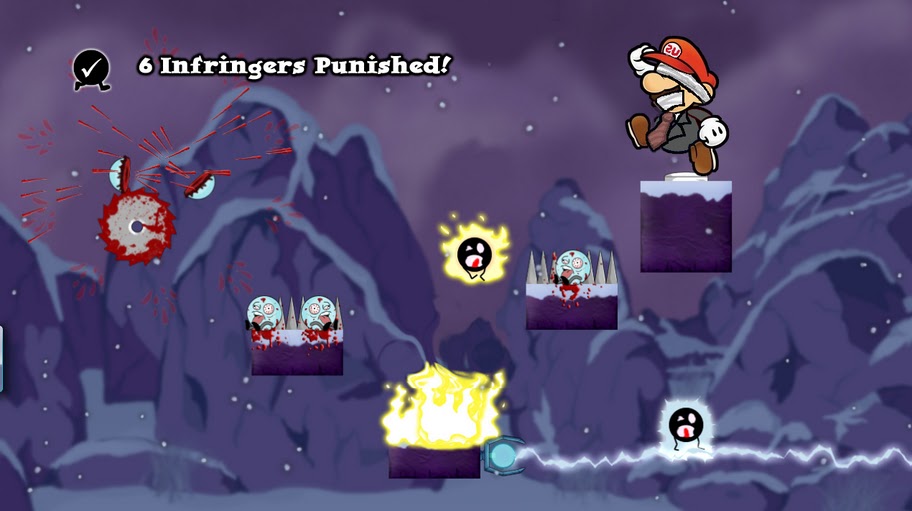
On-screen metaphors for what happens when you sue the shit out of a family making less than $40k a year.

Ultimately, your goal is to the destroy the entire internet.  Probably the biggest problem with SOPA is how easy that is.  If you’re the patient type, you can wait a few years, slowly conditioning the population to accept less and less accessibility to the internet they’ve grown so accustomed and dependent on.  And while I can see the merits of watching the people of 2022 fondly reminiscing about the time before SOPA where you could actually upload of a video of you singing the latest Lady Gaga song on your Facebook without having to lawyer-up, I simply don’t have the patience for that.  So I went all scorched Earth on the damn thing and just had Google shut down.  Hey, served them right for linking to a site that linked to a site that had a copy of the Adventures of Pluto Nash uploaded illegally to it.  This move destroyed the entire Silicon Valley economy, crippling America’s ability to stay ahead of the curve in the technology race and pretty much making us about as useless to the rest of the world as Segway access ramps.  I watched with satisfaction as the credits rolled on the game and nearly needed some, ahem, private time, as the final cut scene where Nigeria claimed a higher GNP average than the United States played out.

So overall, I heartily recommend SOPA to everyone reading this.  It does the wanton-destruction genre better than any sandbox game I’ve ever played, and it does it by a pretty big margin.  It’s the little things that make the big difference.  Sure, spraying shit on buildings in Saints Row is fun, but it can’t top watching the Feds break down the door of a sixteen year old girl who should have known better than to have downloaded that episode of Vampire Diaries.  Or busting that family for uploading a video of them singing Happy Birthday to their St. Bernard while you could clearly see the TV playing the latest episode of Family Guy in the corner of the screen.  For those of us who have always wanted the chance to know what it’s like to be truly merciless and cruel, this is the chance you’ve been waiting for.  And it’s all in the safety of a video game, where it can’t possibly ever happen in the real world.

Oh wait.  Fuck.

SOPA was developed by the United States Congress

240 Years of Freedom were flushed in the name of stopping six-year-olds from linking to unauthorized videos of Justin Bieber in the making of this review.

SOPA is not reality yet.  But unless something is done, it will be soon.  Do you really want the people who thought nine seasons of Roseanne were a good thing but fourteen episodes of Firefly was too much to decide what is right or wrong for the internet?  Visit StopAmericanCensorship to learn what you can do.

Special thanks to MasterBlud of Vintage Video Games TV for the trailer, Alex Jordan of Apathy Works for the screenshots, and Bill Stiernberg at Zeboyd Games for the cover art.
Lexiv

Being a boring person, I love Scrabble.  I play it with my boyfriend.  I play it online.  I play it on Xbox.  I play it on my iPhone.  I would even watch tournaments if they showed them on ESPN.  Sure, it’s not for everyone.  People who like exciting things or have lives usually avoid it.  Being an introvert, I’m just hard-wired to love this kind of thing.  So when I saw Lexiv, I nearly exploded excrement into my undergarments.  I mean, it’s Scrabble mixed with Sim City.  If they could have shoehorned Dungeons & Dragons in there somehow, it would have been the most introvertiest thing in human existence.

Not that I ever played Dungeons & Dragons.  I do have some dignity left.  Now if you’ll excuse me, I need to go change my underwear.

Where was I?

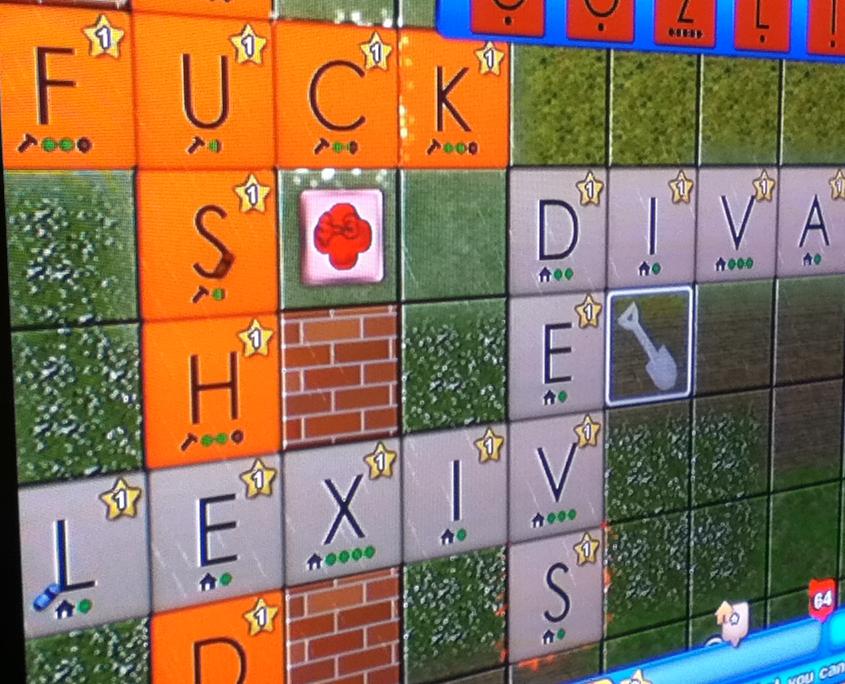
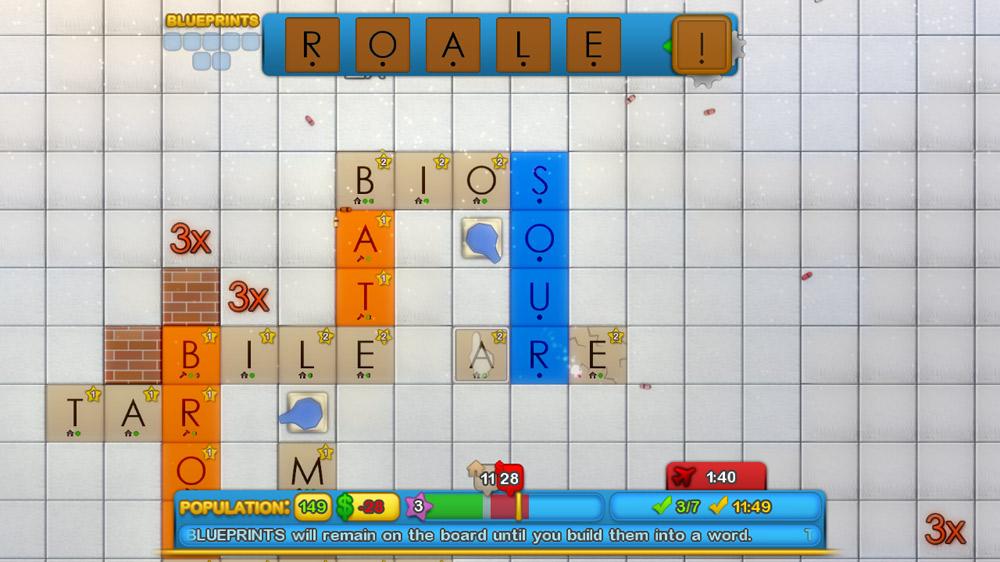
Lexiv.  So you’re given a rack of letters and you have to build words.  Those words make up a city.  Unlike Scrabble, parts of speech come into play.  Nouns act as residential zones for people to live in.  Verbs are the commercial zones where people work.  Adjectives and Adverbs boost the productivity of those zones.  Prepositions, Conjunctions, and Interjections all fall under the “Etc” category and act as wildcards that boost everything.  And there’s nobody reading this anymore, is there?  Bleepy bloopy blongo blooper.  Yep, you’re all gone.  Either that was enough to sell you on the game or you heard the term “parts of speech” and fell into a coma.  Sigh.

Well, I wish you had stuck around, because I do have to sort of pick the game apart now.  I really did have a good time with Lexiv, but it does need tweaking on several levels.  Just a quick annoyance to start with: I hate that the game makes the word “Lexiv” the starting point.  V is probably the most difficult letter to work with in Scrabble, or Book Worm, or various other word building games.  I’ve spoken with professional Scrabble players (yes, they exist) who would have no problem with the letter being removed from the game.  But in Lexiv, it’s the first thing you have to deal with, every single round.  That sucks.

The game also fundamentally stifles creativity by forcing you to quickly build specific word types.  You pretty much have to get a noun and a verb on the table right off the bat.  That especially sucks when you have a rack of letters that would allow you to play them all (bingo as it’s known in Scrabble), but you have no use currently for that type of word.  You also don’t instantly get the letters replaced for you.  You have to wait maybe several intervals before you will have a full rack.  There are boosts that can help with this.  When you reach level two, you get an item that allows you to trade your current rack of any size for a full rack of fresh letters.  You also later get the opportunity to buy letters to fill up your rack faster.  Of course, your city has to be cash-flow positive to get there, and that can be tricky.  In order to get resources up, you have to be able to boost the zones you have.  Simply put, in a game that is based mostly around the luck of the draw, it’s not always possible.

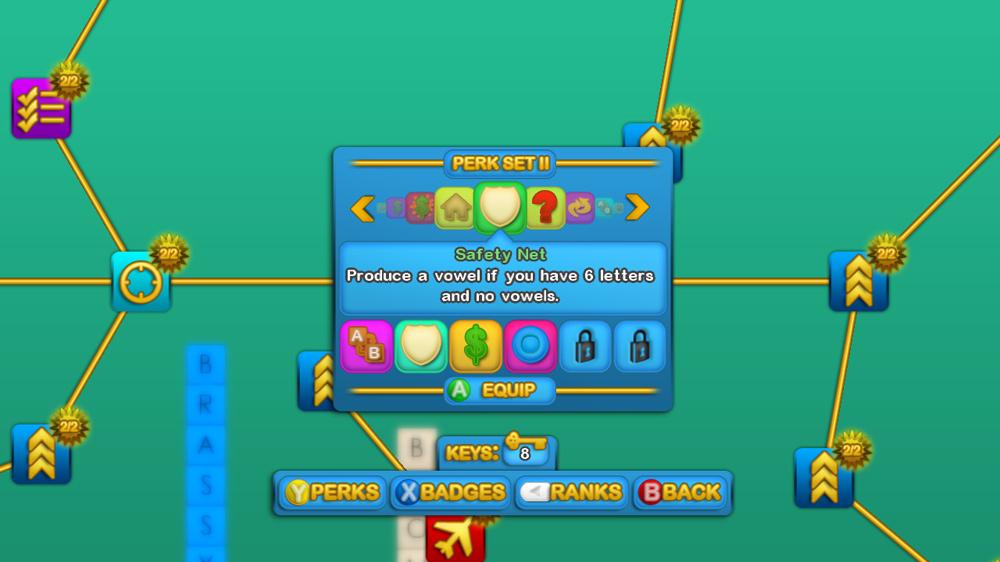
Leveling up does allow you to equip "perks" that speed up the gameplay, but they take too long to get.

There’s roughly 8 to 12 hours of missions to play through, some of which use conventional Sim City themes like city defense.  Others require you to build over specific spots on the board to win.  The variety is large enough to keep things fresh through-out the playtime.  Then again, if you are into this sort of thing you probably would never get bored anyway.  I am into this sort of thing, and I didn’t get bored.

I did run into a few technical issues.  And by a few, I mean so many that it basically leaves the game broken.  When saving to the hard drive, the game had a degree of skipiness that I have never experienced in a XBLIG before.  Sometimes a game occasionally stutters, like a CD with a scratch.  Lexiv plays more like a CD that has had industrial-grade sandpaper taken to it.  In the early stages, it’s annoying.  Just a few stages later, the game is completely unplayable.  The developer is aware of this issue and is working on a patch.  Until then, placing the game’s save file on your memory card seems to clear up the problem in its entirety.  I realize that is not an option for everyone.  If that’s the case, sorry, I have nothing for you except second-hand word that a patch is in the works.

The mechanics of the game are not completely solid.  Scrolling is overly difficult and losing the cursor is too easy.  There’s also a really annoying night-and-day cycle thingie that makes visibility of the board pretty difficult.  It’s among the dumbest ideas I’ve seen a good game have on this service.  What kind of fucking moron would say “hey everyone, let’s play Scrabble with the lights turned out!  No flashlights!  You won’t be able to see anything!  This will be fun!”  No, it will be absurd and stupid, just like this gameplay idea was, and you’ll delete him from your Rolodex just as soon as he leaves the room.  Finally, the dictionary they used sucked.  Just a few quickie examples: I was forced to play “oinking” as a noun, “whim” as a verb, and “techno” isn’t even a legal word despite having been sanctioned by Websters and Oxford for more than a decade.  It needs some oinking work.

I’ve been hard on Lexiv, so I should probably make it  more clear that I really, really liked this game.  It’s so original, yet such an obvious evolutionary step for the game of Scrabble that I’m actually surprised nothing like it has come along.  For all of its flaws, which are numerous, I feel the ground work for something exceptional has been laid here.  In fact, I think it’s developer really ought to tweak the rules to make it more in line with the actual Scrabble, then place a sales call to Hasbro and license the game to them.  I could see this taking off as a licensed product called “Scrabble Cities.”  No bullshit, I really could.  So if you purchase Lexiv, you’re buying into a game that is fun already, but has the potential to be so much more.  I liked it a lot, especially because I could swear the fucking game reads my mind.

Lexiv was developed by Andrew Gaubatz

240 Microsoft Points sunk my Scrabbleship in the making of this review.

Instead of a normal trailer, I’ve included the developer’s detailed walk-through of the gameplay mechanics, not all of which I covered in this review.  If you have eighteen minutes free, it’s worth a look.

Tales from the Dev Side: Kairi Vice is the Spawn of Satan by George Clingerman

Right before I posted my review of Plugemons: Part 1 last night, I sent out a preemptive apology to two guys in the XNA community who I have the utmost respect for.  One is Jesse Chounard, the guy who developed Bluebones Curse and whose dog I had shot.  The other is George Clingerman, an XNA MVP who is probably the most respected individual in the entire Xbox Live Indie Game community.  Both these guys played a major role in educating me in the inner-workings of the community and gaining acceptance among Xbox Live Indie Game developers.

Both guys also really don’t like it when I go completely Lizzie Borden on games.  I figured since the Plugemon review was my first really brutal one in a while, I should give them a preemptive heads up on it.  I guess the result was George having this epiphany about what role I play in the development process.  The end result was this episode of Tales from the Dev Side.  I almost didn’t post it, because I felt maybe an article that was about me posted on my own site would come across as obnoxious.

Then I remembered I am obnoxious.  Hit it!

Read more of this post

Plugemons: Part 1

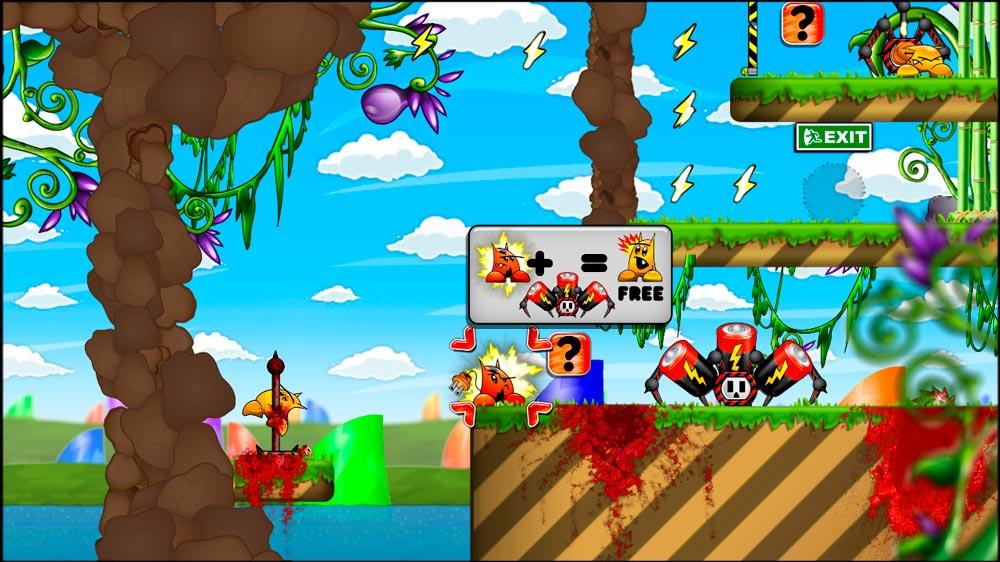
As is normal when an XBLIG game is horrible but pretty, I have to start my review of horrible game Plugemons: Part 1 by noting that this horrible game has beautiful graphics.  Really, really beautiful.  That gets you really far in gaming.  It’s the reason I skipped some other review requests and went straight to it.  My exact words to Brian when I saw this on the marketplace were “holy shit, look at this one!”  Even though my instinct told me that Xbox Live Indie Games with insanely good graphics are typically quite bad (Orbitron being one of the few exceptions), I latched onto it, like a sailor caught in the call of a Siren.  Within ten seconds of playing the game, I realized I’d been had.  Again.  Who would have ever thought the XBLIG marketplace could double as Sirenum scopuli?

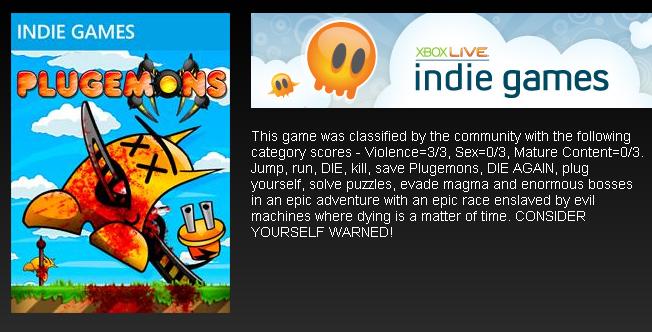
Plugemon is a puzzle game, not a platformer or a punisher.  This was a source of confusion for me.  You see, in Plugemon you jump from ledge to ledge, swing off of other ledges, jump on enemies heads, and try to acquire various lightning bolts scattered throughout stages like coins in a Mario game.  The game’s own description, presumably written by the Plugemon’s developer, doesn’t mention the word “puzzle” until it notes things like jumping, running, and dying a lot.

See?

So when I tweeted that the game sucked, the developer took exception to this and demanded an explanation.  I gave him a few.  “The controls are horrible and very unresponsive. Scrolling is jerky. There are issues with enemy visibility.”  Now, I expect a developer to defend their product.  It’s their baby after all.  What I normally don’t expect is for a developer to claim their product is something that it is not.  Which is what the Plugemon developer did.  He noted that the game is not a platformer, but a puzzler.

You can see why I’m so confused.  It’s true that a couple of the levels featured the ability to switch from your main character to other members of its species.  Using them, you hit switches.  That’s it.  There’s no real puzzle element that I noticed.  Granted, I only made it to world 1-8 before I finally quit because the game is an unplayable piece of shit, but still.  By the way, the switching element was only in half the stages to that point.  If you’re going to claim to be a puzzle game, step one should be having puzzles.  Instead, Plugemon has fetch quests.  You have to acquire a certain amount of red lightning bolts scattered throughout each stage to activate an exit portal.  This involves searching a level for them.  That’s not really a puzzle.  That’s just a typical convention of platforming games.

Regardless of what genre you call it, bad controls will ruin any game.  Plugemons: Part 1 has terrible play control.  Your guy moves like he just took a bath in honey.  His mobility is severely limited, and he’s not all that responsive to the directions you give him.  Despite being a puzzler that is barely a platformer at all, Plugemon primarily deals with jumping from platform to platform.  The jumping physics are completely broken.  Your character feels like he’s leaping through wet cement.  It’s slow and clumsy.  There’s also some sort of issue with landing.  Sometimes, I would land on the edge of a ledge and then slip off it for no apparent reason.  This happened a lot.  The only way to avoid it is to land dead center in the middle of the platform, but that’s not always an option.

Collision detection with the baddies is a problem too.  The main enemies are spider-like thingies that do electrical charges when you get near them.  This doesn’t actually seem to kill you as long as you land on them properly.  The problem is the actual spot to kill them is too small and more often than not, I would jump on them, only to miss that microscopic hit-point and die.  Later in the game, miniature spiders appear and they are damn near impossible to land on properly.

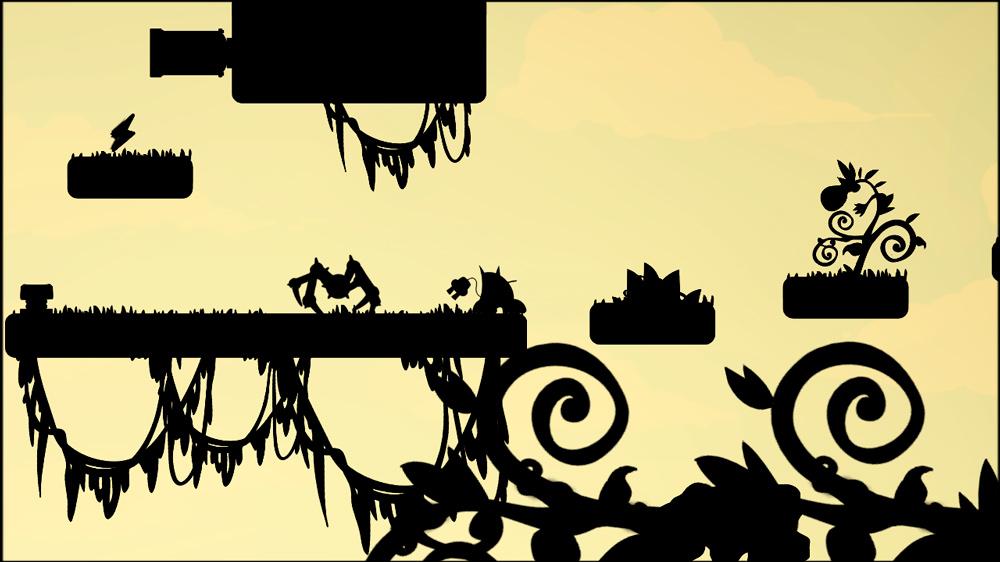
It’s such a shame because, once again, the game is really good-looking.  And the characters have an actual personality, unlike, say, Oozi.  But the game is unplayable because of both the control issues and the overall level design.  I finally quit on level 1-8.  The idea in it is the level is shrouded almost completely in darkness.  So you have to trial-and-error your way through it.  Which is kind of a far-fetched goal because you can’t see the springs you need to get to platforms, the cannons you need to get to others, the ledges you need to stand on, or any of the traps that can kill you.  This is “GOTCHA!” gameplay.  You walked into a spike that you couldn’t see.  GOTCHA!  You tried to walk to a platform and fell to your death.  GOTCHA!  You jump down off a cliff and into a buzzsaw hidden in total darkness.  GOTCHA!  You land on a platform and an invisible enemy kills you.  GOTCHA!

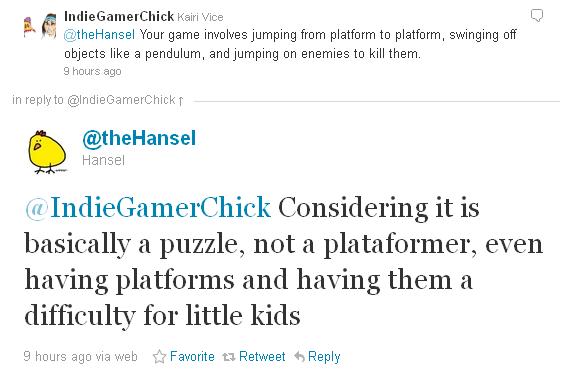
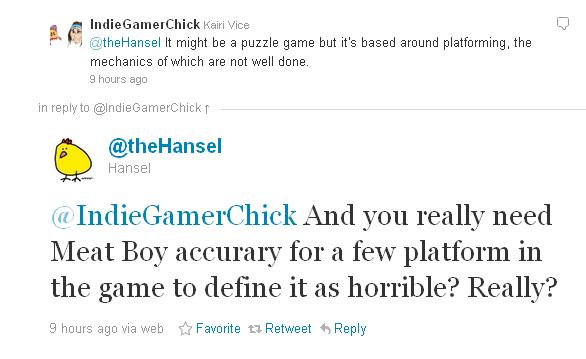
When the game’s own description notes you die a lot, you would be right to assume that the game tried to be a punisher.  The developer denied this, but there was a very telling moment in our little tweet-off.  When I brought up the bad play control, this is how they responded.

I never brought up Super Meat Boy.  Nor do I ever bring up Super Meat Boy when talking with developers of punishers.  It’s just not a game that I care to invoke.  It’s alright, if a tad bit overrated, but my experience playing it is not high on my cherished gaming memories list.  It just sort of exists.  Yet, whenever I bitch about a platforming game having shitty controls, as sure as the tide comes in, the developer will bring up Super Meat Boy.  The VolChaos guy did it too.  “Your game has shitty control.”  “Blah blah blah Super Meat Boy, blah blah blah, blah blah.”

Look, just because your game is hard to beat doesn’t make it Super Meat Boy.  In some cases, people think it’s a fair comparison just because of the difficulty level.  In the case of Plugemon, it’s clear they were actually trying to be close to Super Meat Boy.  Let’s review.  Advertising that you die a lot?  Check.  Levels shrouded in darkness?  Check.  A stage where you’re being chased by a giant-sized boss?  Check.  Buzzsaws as one of the primary obstacles?  Check.  Hey, I didn’t invite comparison.  They did.  I’m just pointing out the obvious.  The Twitter message is a classic example of projection.  I say the controls suck, they say I expected Super Meat Boy, a game that is nothing wink like the puzzle game nudge they made, elbow.

Insanely Shitty Shadow Planet

I do expect a game to control well though, and I could control Super Meat Boy, a far more complicated game.  In it, you had to wall jump, clear large gaps, and make precision landings on platforms.  I could do all that just fine.  In Plugemons: Part 1, it’s difficult to even leap a small gap, or correctly hit the weak spot of an enemy that’s pretty large in size.  Super Meat Boy also had smaller levels designed around its punisher style.  Here, the levels can be sprawling, yet there are no checkpoints.  If you die, you have to wait while the overly-long death animation takes over before respawning at the start of the level.  This is especially annoying in a game where most of your deaths are going to be the fault of the busted controls and not due to your lack of skills.

Overall, Plugemons: Part 1 is without any redeeming quality.  Yes, it’s pretty, which I’m sure will lead to some very thick people saying “it’s worth it just for the art.”  No it’s not.  What kind of simpleton plays games for their graphics anymore?  It’s 2012 for God’s sake!  Good graphics are everywhere.  If it’s worth it just for the graphics, that presumably that means you’re willing to pay a dollar to watch someone else play it.  Say, that gives me an idea.  Party at my house!  One dollar a head cover charge.  Watch me play this shitty game.  Bring your own beverages.  No fatties.

Oh yea, this is totally a puzzle game, not a punisher. The art work makes that very, very clear.

Plugemons: Part 1 was developed by Bionic Thumbs

80 Microsoft Points think those simpletons are the guys who run Dream Build Play in the making of this review.

By the way, how the fuck did Bionic Thumbs confuse their own game as being a puzzler?  They made a puzzler, Starzzle, and it was not bad. 

Sunny Seeds

One of the reasons I generally avoid doing iPhone reviews is because you never know what price a game will be from day-to-day.  I got Sunny Seeds for free today, but it’s one of those games that comes in both free and paid versions.  The one I got would normally cost you some form of money.  I’m not sure how much.  99 cents I’m guessing.  I probably would have never paid for it, but IGN put it in their daily update and I figured “why not?”  Even though I absolutely hate crossword puzzles, Sudoku, Minesweeper, and other math-based games.  It’s almost serendipity that I downloaded Sunny Seeds, because I fucking love it.

In Sunny Seeds, you have a grid of numbers that you have to clear.  You remove two numbers at a time.  To do so, the numbers have to be touching each other, or have no numbers between them.  They also have to either match each-other or add up to 10.  For example, you can clear 1 and 9, or 4 and 4, but not 6 and 5.

Wow, does that ever sound boring.  But it’s not.  It’s highly addictive and surprisingly rewarding.  In my first play-through, it took me nearly an hour to clear the board of numbers.  Once you’re past the learning curve, time will fly by while your brain progressively gets more wired to spot those matches.  You can also shuffle the numbers by rotating your iPhone 90° at a time, opening up new matches.  New tiles spawn every few seconds, but once you’ve eliminated a number completely from the board, it never returns.

Look, I get that nobody comes here expecting me to dish out verbal blowjobs to games, but I can’t really think of anything bad to say about Sunny Seeds.  As of this writing, you can still snag it for free off the App Store.  If it goes up to 99 cents, you should still grab it.  It’s a really good time passer.  I guess I can gripe about the name.  I don’t get why it’s called Sunny Seeds when it has nothing to do with suns, seedings, or any related images those two words might invoke.  That, or it’s a joke that is way over my head.  If it’s a gag, bad call.  Sunny Seeds is a great game, but it’s saddled with an absolutely horrible name.  Usually if a joke needs explaining, it’s not funny.  It’s what I call the “David Spade” rule.

Sunny Seeds was developed by Duksel

No money was spent sweeping the clouds away in the making of this review.

Lots of Guns

I’m so over these climber games that are saturating the market.  Maybe they fit in better on phones where they serve to kill five minutes while you’re waiting for a bank teller or the test results on if that really was blood in your stool or red dye from Christmas cookies.  But on a console?  They feel out-of-place.  Granted, most of the ones I’ve played for Indie Gamer Chick have each been successful in its own way.  There was Who Is God, which successfully married the genre to techno-style graphics and addictive online leaderboards.  There was Meep 2, which successfully made a child-friendly version of the genre for console players.  Finally, there was Niji, which was so bad that it successfully helps control the pet population by causing any puppies in the nearby vicinity to fall down dead.

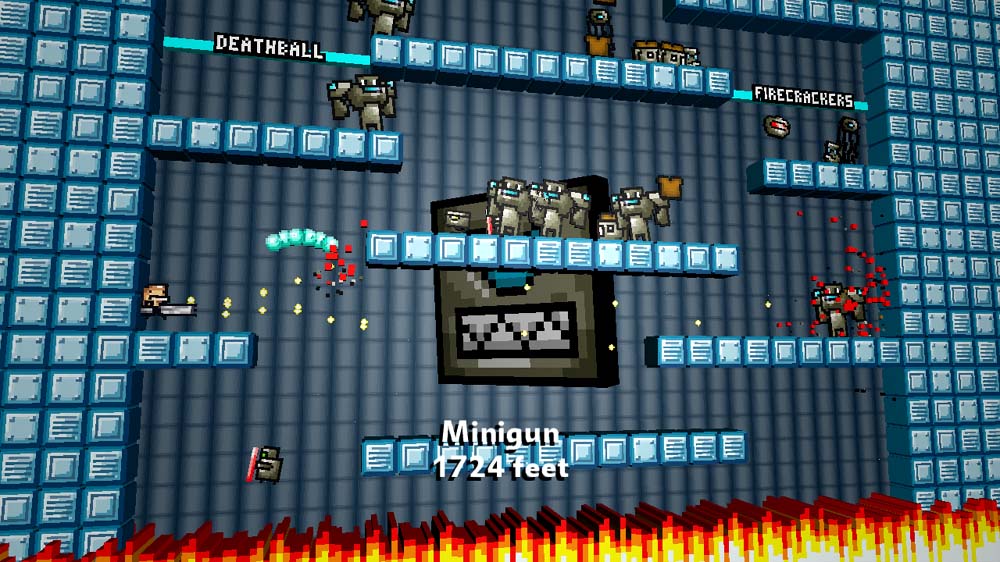
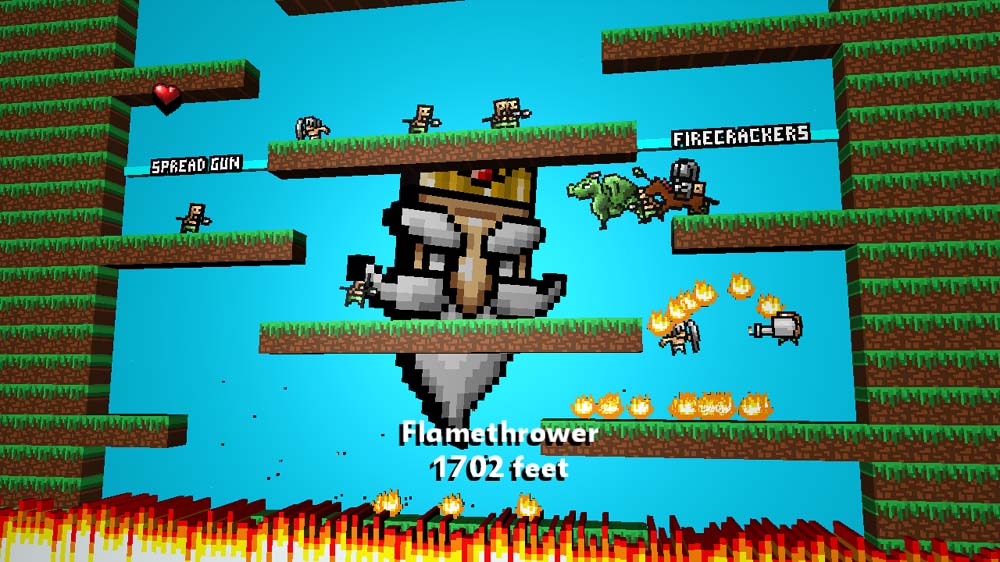
I think the major problem with them is they have a very short shelf life.  Even when they have online leaderboards, I’m not really compelled to go back and replay these titles.  But they’re fun for a day if nothing else, and Lots of Guns is no exception to that.  The gimmick here is that every 30 seconds, give or take, you reach a barrier that switches the type of gun you have.  As the title implies, there is a wide variety weapons, all with varying degrees of usefulness.  The guns are used to attack a large assortment of baddies who rain down from the top of the screen.  The actual tower you’re climbing is pretty straight forward: ledge in the middle, then two ledges on the side, then repeat.  There’s no variation on this, which is a bit of a downer because it quickens the game’s progression towards staleness even faster than what is normal for a climber.  It’s like the game has that disease from the movie Jack, only it’s funnier because Robin Williams isn’t in it.

Believe it or not, the pivoting camera actually does not distract from the game play at all.

There’s three modes here.  The first is climb as high as you can get.  The second is climb as high as you can get.  The third is climb as high as you can get.  Okay, so the second mode is the same as the first, only it’s called Auto-Scroll and the screen scrolls up automatically.  Which it actually does in the first mode too.  Yes, the game is faster in the second mode, but so what?  Why couldn’t mode one be called “easy” or “normal” and mode two be called “hard?”  This is an annoying trait I’ve noticed with indie developers of all walks.  They have to get cute when it comes to naming their game modes.  Don’t do this.  For every person who gets a very mild laugh out of it, there will be two players who never bother playing past the demo.  I get that your average indie developer prides himself on being a non-conforming, pretentious ass, but just think of how much non-conforming you can do in your day-to-day life if your game actually makes money.  Money does buy a lot of non-conformity.  I hear the FortressCraft guys don’t even need to shower anymore.

Oh, and the third mode is zombie mode.  Because, by fucking God almighty, every Xbox Live Indie Game has got to have zombies in it.  Zombie mode has nothing at all to do with zombies.  Here, you get no guns and only one life.  It’s the same assortment of enemies as before and the same sterile tower to climb.  I actually did have fun with this mode as well, but I had already tried the “no shooting” thing in the previous game.  Sometimes you’ll go stretches where the guns it gives you at random are not so useful.  After this happened to me a few times, I declared to Brian that I wouldn’t shoot the guns anymore because all they did was distract me.  This was followed about two seconds later by me saying “oooh, minigun” and abandoning that strategy.

Overall, Lots of Guns is fun while it lasts.  It’s got charming retro graphics and smooth play control.  However, it is lacking things that would extend it’s shelf life.  There’s no online leaderboards, no multiplayer options, and no incentive to keep playing after more than an hour.  I could see a reason to go on if the game guaranteed that you would only get the “fun” guns after having climbed so many feet, but that’s not the case.  When you reach the point where you switch guns, there’s always two options of which gun you will trade.  Sometimes it’s tough to choose, like picking between the awesome firecrackers or an automatic rocket launcher.  Other times, the game pulls a dick move by having one side be the wimpy handgun and the other side be the utterly useless landmines.  There is a third option: kill yourself and then respawn above the gun stations with whatever weapon you were carrying still in your possession.

Replace the generic king with the Burger King king and this could have been a horror game.

Maybe Stegersaurus thought the game would too easy if you got nothing but useful weapons late in the game.  My response would be this: who cares?  With no leaderboards or competitive multiplayer experience, it’s of no consequence to anyone if your character gets overpowered.  The game will stop being fun in about an hour anyway.  Loading a player up with power weapons might have extended that by an hour or two.  In the end, Lots of Guns is like a video game porno: you use it for ten minutes, have a lot of fun, and then regret spending your money on it immediately afterwards.

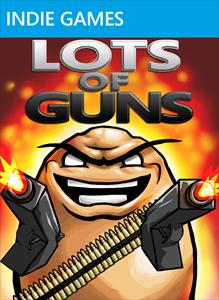
Absolutely horrible box art. It looks like someone crossed Rambo with Mr. Potato Head.

Lots of Guns was developed by Stegersaurus Games

80 Microsoft Points worked that porno reference in there just to annoy Steg in the making of this review.

Gameplay footage courtesy of AarontheSplazer

Tales from the Dev Side: You Gotta Have Style by Scott Tykoski

Scott Tykoski’s Elfsquad7 was perhaps not the most commercially successful title released on Xbox Live Indie Games in 2011.  However, I found the game to be charming, if a bit simplistic, and I’m kind of surprised the timely release did not have better sales over the holidays. 

Despite dipping his toes in XBLIG, Scott is an honest-to-goodness professional game designer with a decade of game design under his belt.  His Stardock games is famous for such PC titles as Sins of the Solar Empire, Galactic Civilizations, and the Political Machine.  Okay, well the Political Machine isn’t exactly their calling card, but I liked it, damn it!

Scott eagerly jumped at the opportunity to do an editorial for my site.  And then I took three weeks while I struggled to correctly format it.  But it’s finally time to publish it.  Developers have talked about pricing hereThey’ve talked about standing out here.  Yet, what could be more important to a game in our visually-minded society that what style of graphics you give it?  In that spirit, Scott talks about graphics. 

Like with previous Tales from the Dev sides, Scott has provided prizes for you, the readers.  He’s really outdone himself, providing two IndieRoyale Xmas Bundle codes, which include the PC version of Scott’s Elfsquad7 game.  Since tracking down who has retweeted articles is a bitch, the prizes will be handled differently this time.  To win, reply to this article stating what graphic style you think is the most advantageous for potential Xbox Live Indie Game developers and why.  One winner will be chosen by me, the other by Scott.  Whoever makes the best case for their point will win.  We’ll decide who wins on Friday, January 20, 2012.  Be sure to include either a valid e-mail address or a link to your Twitter account when you reply. 

Read more of this post

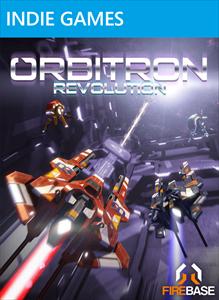
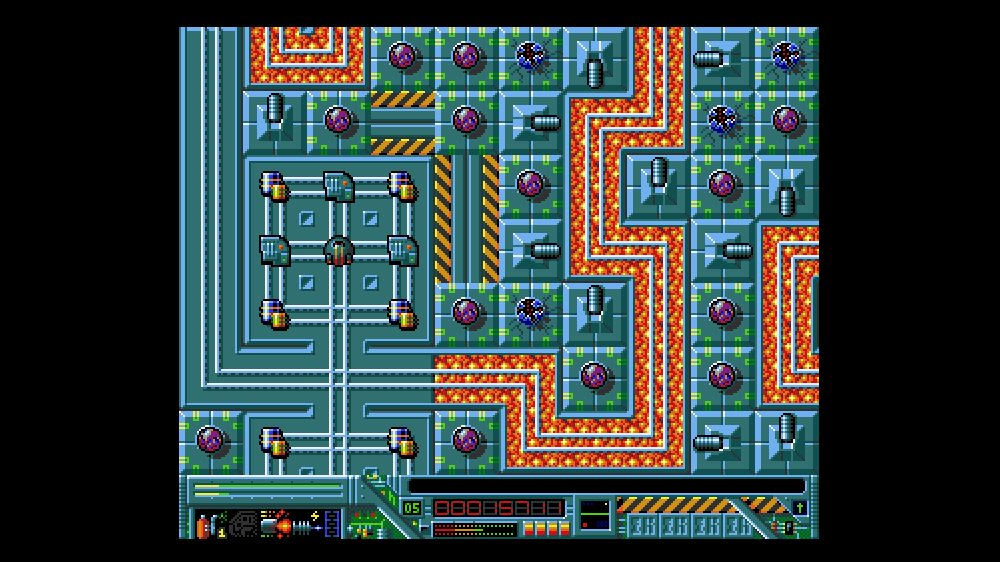
Orbitron: Revolution (Second Chance with the Chick)

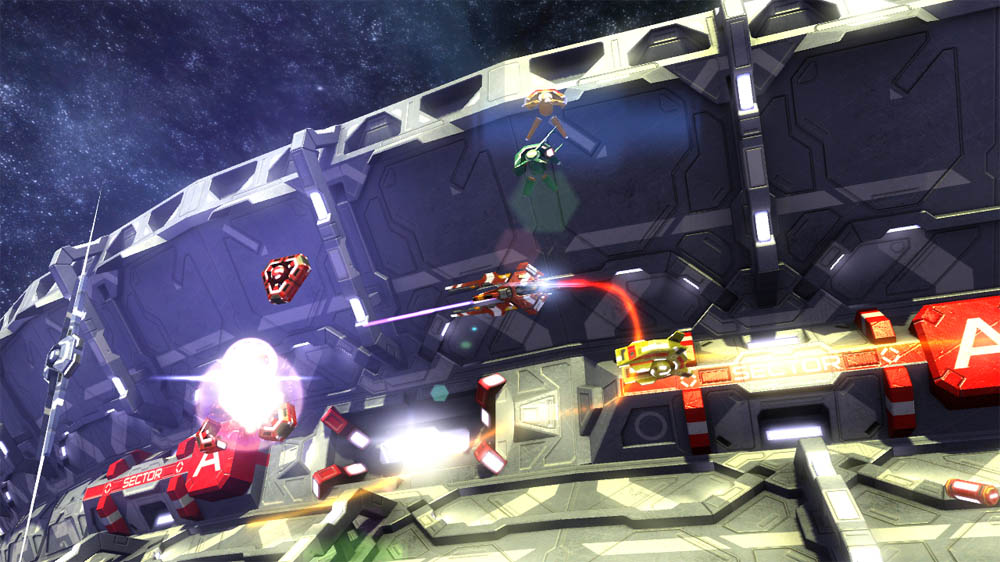
I enjoyed Orbitron: Revolution quite a bit when I played it last month.  I don’t really have a ton of things to talk about in this Second Chance with the Chick, because they really didn’t have all that much to fix.  My main issue was it was difficult to see some enemies because of over-reliance on bloom effects.

Jesus, Mary and Joseph, those are some pretty graphics.

They’re gone now.  You can see everything much more clearly.  A good game is now better.  Orbitron is now officially a leaderboard contender.  It will still continue to have crappy sales figures because 240MSP is too much for this game and most people won’t pay it.  End of story.

Why can’t every review be this easy?


Even the box art had bloom.

Orbitron: Revolution was developed by Firebase Industries

240 Microsoft Points burned the land and boiled the sea, you can’t take the sky from me in the making of this review. 

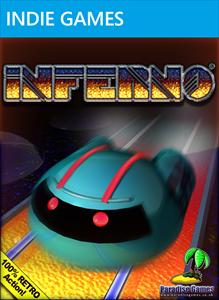
Inferno! (Second Chance with the Chick)

I have a couple of Second Chances to do today, so let’s get to them.  I reviewed Inferno! way back in August, and felt that it was a perfectly fine retro-themed game that had a few serious flaws in it.  You might want to read that post first before going any further.

So what has changed?  For starters, the ridiculous password system is fixed.  Now, you don’t need to ace an impossible bonus stage just to earn the right to continue.  It serves to take the aggravation factor almost completely out of the game.  Almost.  All the game play annoyances that were present before are still around.  Limited ammo in a game where sometimes there is no way to get to the exit without shooting an enemy.  The only other option is to suicide yourself into it and hope you have enough health to survive.  It’s also still difficult to control your ship, especially when you get speed-ups that were presumably put into the game to help, but only make things worse.  I tried to come up with a witty analogy for that, but completely failed.  Sorry.

Some other additions include a simplified first bonus stage and a few extra bonus stages thrown in elsewhere.  There’s also some trivial bug fixes for a few late-game issues, but I didn’t notice anything different.

The most important thing is the game has dropped in price from 240MSP to 80MSP.  That was my biggest problem with Inferno! and now that the price is more reasonable for the type of game offered here, I can give the game a more hearty recommendation.  The controls still piss me off so I’m still pinning its ribbon on with boogers and phlegm.  I do have the flu today, so the phlegm is a nice, bright yellow.  That’s extra festive!

Inferno! was developed by Archifishal Software

80 Microsoft Points fell into a burning ring of fire in the making of this review.

Well actually it was 240MSP for me, but if you buy it now for yourself it will only be 80. 

Video courtsey of Indies onPause.

Flick Home Run

So I go to work the other day and everyone at the office is talking about what their score is on some silly iPhone game called Flick Home Run.  The age range of people playing this game was kind of impressive.  My father, who is what I would call a causal gamer, is 63.  Along with him, two of my partners, Chris and Kevin were playing as well.  Chris is 43 and I think he has a console or two.  On the other hand, Kevin is 66 and in my four years working with him I’ve never heard him once talk about doing anything for recreation.  Side note: remind me to look into what brand of stick he has up his ass, so that I can invest in it.  It works well.

Yea! Fuck home run! Oh..

I’m not exactly a baseball fan, but I decided to give it a try.  As it turns out, Flick Home Run ! isn’t really about baseball.  It’s a casual game where a ball is pitched to you and you try to hit it out of the park.  Okay, that sounds exactly like a baseball game.  But there’s no base running, fielding, or any of that boring garbage.  I guess it’s like home run derby.  You put your finger on the left side of the screen and the ball gets pitched.  You then slide your finger at the ball in way you think will hit a homer.  You get points for every foot the ball travels, plus bonus points if it hits any balloons.  Instead of a set number of pitches, you have a lifebar that decreases with every pitch.  You get life back based on the distance you hit each ball.  You lose extra health if you swing and miss, or hit a foul ball, perhaps in tribute of the North Korean Olympic baseball team.

Each different kind of pitch is represented by a cutely drawn face.  You don’t know what kind of pitch is coming until it crosses a line on the screen.  Well actually, that’s not entirely true, but I think that’s what they were trying for.  Anyway, if you hit the ball before it crosses that line, it’s an automatic out and you lose health.  You can use a power-up to sneak a peek at the kind of pitch coming.  There are also special multiplier balls that get thrown at you randomly, which double or triple the value of your swing.

I had fun at first Flick Home Run, because it’s a very likable pick-up-and-play casual game.  But then little annoyances started to irk me.  As you play, you earn experience points.  When you level up, you can upgrade one of three things.  Naturally the game does not explain any of these three things in the slightest.  I hate it when games do that.  Flick Home Run actually has a pretty decent help screen that explains the various rules of the game in detail, except what each of the upgrades do.  The first one is power.  I guess that’s self-explanatory.  Muscle up and hit the balls further.  Which is fine, except the very first pitch I got the very first time I played the game, I knocked the ball out of the stadium and into the parking lot.  That’s actually not as far as you can hit it, but still, it seems like my finger was strong enough as it was.

The second upgrade purports to effect the bat’s accuracy.  I did upgrade this several times and noticed zero improvement in accuracy.  Actually, it kind of got worse.  I hardly ever hit a foul ball before I started upgrading this.  But then I noticed that the more I leveled accuracy up, the more foul balls I hit.  I found out that my father and Chris experienced the same thing, and apparently several others online have as well.  I think this officially makes this the worst upgrade in the history of gaming.

The third one makes more sense.  You get more peeks at the upcoming pitches.  You start with three, but you can get more.  It’s still not all that useful.  After you’ve played the game for a while you can tell what kind of pitch is coming at you by the way it starts and react accordingly.  Since your finger has to start in the same spot, there’s not a lot you can do.  After an hour or so I never needed to use the peek again.

I suspected early on that the game had more to do with luck than skill.  There seemed to be no solid method I could use to hit a home run.  I would slide my finger and whatever happened rarely seemed relevant to the placement of my finger on the screen or what angle I hit the ball on.  The only thing that seemed to change was leveling up slowed to a crawl.  As I already pointed out, that didn’t bug me too much because my upgrades either made no difference or made the game worse.  So I guess it’s fitting that the developer is charging people outrageous price of 99 cents to upgrade any one stat, or $9.99 to upgrade all three by five levels.  Out-fucking-rageous.  Overall, Flick Home Run was fun for a few minutes, but it quickly grew boring.  I can’t believe this game is currently sitting high on the best-sellers list.  Not that those are barometers for quality.  I mean, there’s a Transformers movie and two Pirates of the Caribbean movies on the all time highest grossing films list.  It’s enough to make you cry tears of blood, and I don’t think Kotex makes anything to help with that.

Flick Home Run was developed by Infinity Pocket

99 cents were busted for using finger steroids in the making of this review.