The 10 Biggest “Oopsies” in Gaming History: Part 2

Continuing from part one.

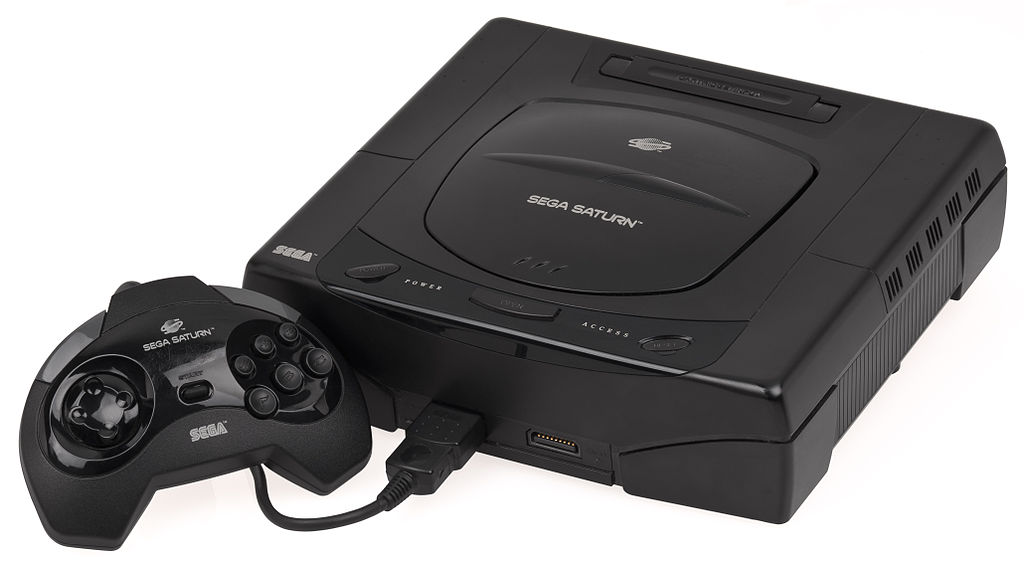
#5 – Sega’s 1995 E3 surprise launch of the Saturn.

The History: Although Sega’s Genesis (known as Mega Drive pretty much everywhere else) did pretty good in the United States, it was a colossal flop in Japan. Hell, remember the TurboGrafx-16? In Japan, it was called the PC Engine, and it outsold the Mega Drive there when they were both in the prime of their existence. Thus, I’m sure the reaction in Sega’s Japanese offices to Saturn’s launch in their country was pure euphoria. Selling for almost $500 in American dollars, their entire launch inventory was sold in just minutes. It had no bundled software, so you can throw another $85 on top of that for Virtua Fighter, which sold at a nearly 1 to 1 ratio with it. It was the best response consumers ever had to a new console from Sega. When Sony launched PlayStation a couple of weeks later, their best software (Namco’s Ridge Racer) was not exactly as desirable as Virtua Fighter, and the response was far more subdued. To prove their alpha-dog status, Sega held some of their inventory until the day PS1 launched, so that the two would be sold side-by-side. PS1 did not sell out, and Saturn did again. Sony’s board of directors wasn’t exactly confident in this whole gaming bullshit, and Sega looked like they were going to assure their quick exit from the scene when it launched in the United States on September 2, 1995.

The Oopsie: When Sega debuted the Saturn for the American press at the first E3 in 1995, they announced it would cost $399 (probably too expensive, but far less spendy than its Japanese counterpart). Oh, and it was out now. The console had shipped to four retailers that were seemingly chosen out of a hat. Babbages, Electronics Boutique, and Software Etc (now all collectively known as Gamestop) and Toys ‘R Us. Sega came across like the biggest pussies on the planet. It stunk of a desperation move, and they had no reason to be desperate. Sony’s limited track record in gaming was hardly successful. Before making their own console, Sony’s most acclaimed gaming achievement was publishing Mickey Mania, which had been developed by Traveller’s Tales. On the flip side, they also published games using the ESPN license. These were widely recognized as being among the worst sports games on the market. The press was skeptical of Sony’s chances. So were third parties, even with Sony’s ultra-modest $10 flat-royalty. By this point, the ripples from Nintendo’s choice to go with cartridges over CDs were being felt, and Sega had the inside track to land several huge houses exclusively. Saturn was utterly dominating PlayStation in Japan. If anything, it should have been Sony coming across as desperate and grasping at straws. With Nintendo having announced that Nintendo 64 wouldn’t launch in 1995 or even be shown off at the conference, this really should have been Sega’s coronation.
It's worth noting that Sega was handicapped by their Japanese offices in other ways. Like being told to remove the "Sega Scream" from their advertising. Why? Because it was considered undignified. I'm not kidding. Love it or hate it, that was one of the most successful marketing catchphrases of the 90s. But we wouldn't want to offend the corporate suits in Tokyo, would we?

It’s worth noting that Sega was handicapped by their Japanese offices in other ways. Like being told to remove the “Sega Scream” from their advertising. Why? Because it was considered undignified. I’m not kidding. Love it or hate it, that was one of the most successful marketing catchphrases of the 90s. But we wouldn’t want to offend the corporate suits in Tokyo, would we?

Instead, Sega’s showing at E3 in 1995 officially kicked off their downward spiral that ultimately knocked them out of the manufacturing business. And mind you, Sega had no way of knowing that Sony was going to drop their $299 bombshell moments later. For all they knew, they had every single imaginable advantage going into the show. I often asked myself “what were they thinking?” over the course of writing this feature. But for Sega’s early launch of Saturn, I asked it the most. It’s the only folly on the list where you simply can’t spin it in any way where it sounds remotely logical.

The Ramifications: Sega could have hired goons to take the stage and gun down those in attendance and done less damage. The four retailers Sega shipped the Saturn to hadn’t exactly been their most important partners with the Genesis. Kay*bee Toys, a powerhouse of retail during this era, had devoted a lot of their marketing and shelf space to Sega over the previous couple years. They responded to being cut-out of Saturn’s surprise launch by dropping Sega entirely. Walmart and Target wanted to renegotiate their agreement with Sega and put significantly more marketing effort into Nintendo’s products. Hell, Walmart even agreed to carry the Atari Jaguar, well past the point where it was a viable console, and guess whose shelf-space that ate into? Sega only sent out 30,000 units, which really hammers home how last-second and poorly thought-out the decision was. The 30,000 wasn’t enough to fill all the preorders at the locations that accepted them, and some of them didn’t even give what little qualities they received to the people who had reserved them. The press was offended. Retailers were offended. Third parties were offended. Consumers were offended. People credit Sony with making few mistakes in rolling out the PlayStation, but really, Sega made it easy for them. It opened doors for Sony, both to retail outlets and to third parties. Upon launch, Sony immediately took a lead on Saturn in the United States, secured exclusivity of Final Fantasy VII for Japan (which Sega was in contention to have themselves) to take the lead there, and never looked back. Today, Sega makes games for them. And it all started with the most ill-conceived surprise announcement in gaming history.

#4 – Nintendo double-crosses Sony over the Super Nintendo CD-ROM drive known as the Play Station.

The History: Back in 1988, when Nintendo was designing the Super Famicom, they struck up a working relationship with Sony. One of Sony’s lead engineers, a fellow by the name of Ken Kutaragi, had developed a high-performance, low-cost audio processor that was exactly what Nintendo was looking for. Sony wasn’t even aware he was working on the project. They had no interest in joining the highly competitive game industry, and were actually kind of pissed that one of their guys spent so much time and resources putting it together without their approval. If Nintendo hadn’t purchased it, he would have certainly been fired. Not only did Nintendo love it, but they were so impressed by Sony’s initiative that they hired them to develop a CD-ROM add-on for the SNES.

Here’s where it gets sketchy, and also gives me pause to think Nintendo must suck at making contracts for partnership. I mean, remember the fiasco where they almost signed over the rights for the NES to Atari without making sure Atari actually had to, you know, build and sell the damn thing? Well, this one is almost as bad. The deal they made gave Sony full control over all the software licensing and royalties for games on the CD format. So, in other words, Nintendo wouldn’t be able to power-trip over third parties like they had with the NES. No, in this case, it would be Sony doing that. While Nintendo would retain unlimited rights to make games themselves at a significantly smaller royalty rate, Sony would essentially own and control all aspects of the CD-ROM. Nintendo agreed to this because it was the only way Sony would agree to the project. Nintendo, knowing that Sega was working on a CD-ROM of their own, felt that they would give up claims of technological superiority over Sega as their customer base grew older and more sophisticated. They needed a CD-ROM drive, because it was as high-tech as electronics got at this point. The deal was struck and Sony began work on the project. At CES in 1991, at Sony’s lavish press conference, they unveiled the CD-ROM they had spent over two years working on: the Nintendo Play Station.

The Oopsie: The next day, Nintendo announced that they had a partner that would bring a CD add-on to the Super Nintendo: Phillips. Also known as Sony’s chief competitor in almost every facet of their business. Nintendo did not give any prior warning that they were doing this. As far as Sony knew, Nintendo was pleased with what they had done and their partnership would be long and prosperous. Nintendo’s announcement left them shell-shocked. The press was right there with them. Since Sony had focused so much time at their own conference on the Nintendo project and even showed off working hardware, people in attendance at Nintendo’s presser actually thought they had simply spoken the wrong company’s name by mistake. Several times.
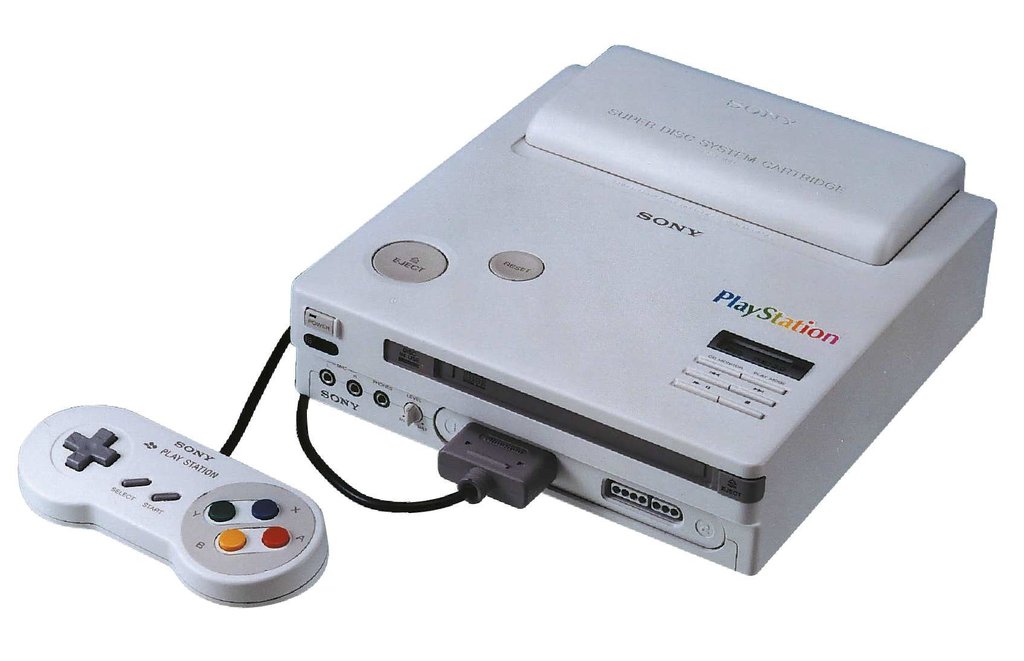
No vaporware has ever come at as high a cost.

No vaporware has ever come at as high a cost.

Sony was humiliated. Contrary to popular belief, they didn’t swear a blood-vendetta on the spot. In fact, once they went home and licked their wounds, they called Nintendo and re-entered negotiations. Presumably the call started out with “Yo bro, what the fuck?” In 1992, Nintendo and Sony agreed to new terms that reassigned all software and royalty rights back to Nintendo, but there was too much bitterness and it never completed due diligence. Sony’s board of directors, sick and tired of all this video game nonsense, overwhelmingly was ready to vote to abandon the project. However, Sony’s CEO, Norio Ohga, swayed the board to give this Kutaragi guy a chance to spin-off the Nintendo project as their own console. After deleting the space between “Play” and “Station”, Sony began the process of deleting Nintendo’s dominance over the industry.

The Ramifications: You’re living them right now. Because the world as you know it would not be the same if Sony never made a game machine of its own. Literally every single thing would be different. Despite what people think, the PlayStation wasn’t Sony’s revenge on Nintendo. Although I’m sure they were pleased once they took over the throne, the world just isn’t that black and white. The truth is, Ohga pushed forward on PlayStation because he had taken a shine to Kutaragi. Here was a guy who took it upon himself to do a high risk project that only had one specific customer in mind. A customer that they had never previously spoken to about selling any proprietary hardware to. Hell, Kutaragi didn’t know a single thing about the Super Famicom at the time he started creating what would end up being its audio system. He just assumed that Nintendo would make a next-gen platform at some point,  and if they did, hell, why not buy something from Sony for it? The fucking gall it took quite frankly impressed Ohga. It reminded him of himself at that age. The real irony is, if Nintendo had been aware that the audio processor they had purchased from Sony for the SNES was entirely conceived by Kutaragi, without any of his superiors knowledge or approval, they would have simply hired him themselves. Sony never would have gotten into the game business, and we wouldn’t recognize the world today.

So why didn’t I put this #1, like most of my friends thought it should be? Because I’m not entirely convinced Ohga wouldn’t have just said “you know what, fuck it, let’s just make our own console” with or without Nintendo’s double-cross. You’ll note that Nintendo never came out with a CD-ROM from Phillips either. Let’s say they never sign with Philips and stick it out with Sony. Who is to say the Nintendo Play Station ever sees a retail shelf in this alternate history? PlayStation doesn’t exist because Nintendo fucked them. PlayStation exists because a man named Ken Kutaragi enjoyed playing video games with his daughter so much that he wanted to be a part of them. It makes the Oopsie list because PlayStation could have been Nintendo’s, not because PlayStation exists at all.

#3 – Nintendo chooses cartridges over CDs for Nintendo 64.

The History: This one is a lot more cut and dry than previous blunders I’ve listed. Nintendo had failed to bring out the CD-ROM add-on for the SNES, and by 1994, was the only major game manufacturer without a disc-based game system. In 1993, they announced their next console, known then as “Project Reality”, would be built by the same engineers that designed the super computers that made the special effects in Jurassic Park possible. When Nintendo released the conceptional specs, their new game machine clearly was technologically superior to anything Sony, Sega, or 3DO had built. Third-parties salivated. It looked like Nintendo would continue to dominate the worldwide gaming industry.

The Oopsie: After spending a few months leaking new details of Project Reality every couple of weeks, Nintendo announced on May 5, 1994 that their next console would use cartridges instead of CDs. Third parties, even those close to Nintendo, were dumbstruck. By this point, Sony had circulated their licensing plank around the game industry: a flat royalty rate of $10 per game, with Sony eating the cost of manufacturing themselves. Nintendo, on the other hand, would have a scaled rate and would set manufacturing parameters on game size and minimum orders for each region that would directly eat into their partners profit margins. In other words, developing a 650MB game for Sony would cost a third-party not a single cent in manufacturing. Making an 8MB cartridge on Nintendo 64, on the other hand, would cost a third-party around $20. And mind you, that’s before Nintendo’s licensing royalty came out. If you were not a studio with deep pockets, the choice of which platform to develop for was suddenly a no-brainer.
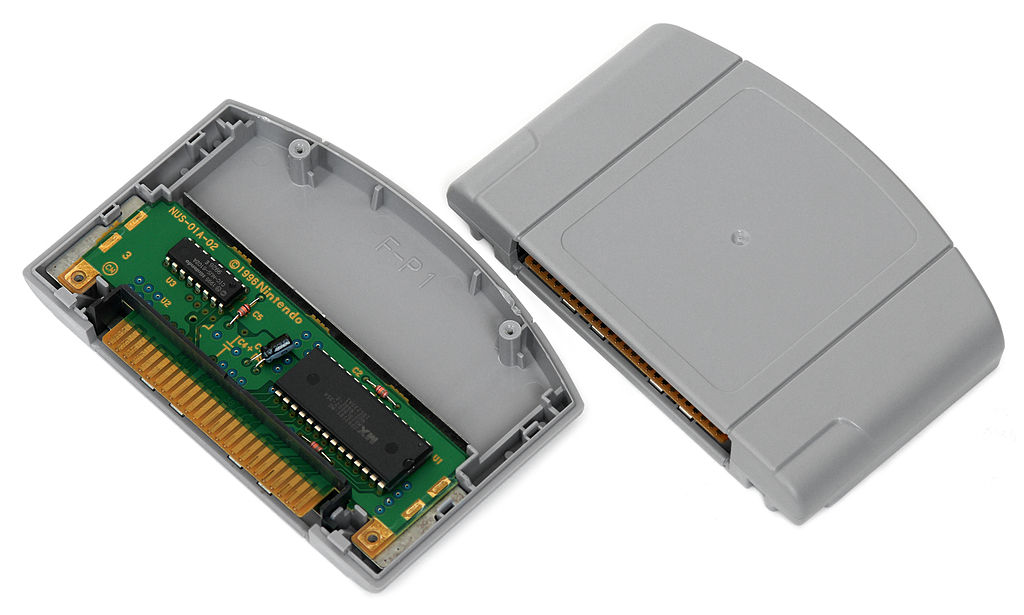
Cost of goods: $1 worth of plastic. $1.50 worth of silicon. Billions in industrial edge.

Cost of goods: $1 worth of plastic. $1.50 worth of silicon. Billions in industrial edge.

The speculation on why Nintendo chose carts includes many theories. Nintendo primarily said it was an issue of load times. In 1994, when the Nintendo 64 was being designed, load times for CD based games were brutal. Consumers were used to popping in a game, hitting the power button, and playing immediately. Nintendo felt that such load times were to blame for Sega CD’s mediocre sales. Privately, Nintendo president Hiroshi Yamauchi was not thrilled with the idea of Nintendo’s next platform being saturated by gimmicky full-motion-video titles, like what befell Sega CD, and thought going with cartridges would discourage it. The press speculated it was more about preventing piracy. In later years, Nintendo of America Chairman Howard Lincoln crowed that piracy on N64 was almost non-existent, while it was a major problem for Sony.

Most third parties, on the other hand, thought Nintendo had more sinister motivations. They believed Nintendo went with cartridges so that they could control the manufacturing and distribution of all the titles on their platform. Carts allowed Nintendo to hold all the cards. They could tell developers “you have to order X amount of cartridges at $X a pop or you can’t order at all.” This was a way of working around anti-trust issues that had landed Nintendo in court more than once over the previous two generations. Whether their speculation was accurate or not, it was being whispered. And, because the Nintendo 64 was now suddenly expensive to develop for, third parties began to rethink their business plans.

The Ramifications: Nintendo lost key third-party support to Sony, including iconic titles that ultimately gave them industrial leadership. Final Fantasy VII was suddenly a free agent. Square ultimately chose PlayStation after Sony offered to handle all the marketing for it internationally. Capcom abandoned plans to develop its remake of Famicom RPG/horror title Sweet Home for Project Reality, and instead made it for PlayStation and later Saturn as Biohazard in Japan and Resident Evil in the United States. Tekken, Ridge Racer, and Soul Edge, all by Namco, began life as projects for Nintendo’s new console, along with Rayman by Ubisoft and Tomb Raider by Eidos. Needless to say, these titles made a difference.

There were other issues. The extra cost of cartridges were passed on to consumers. Nintendo 64 games were typically more expensive than titles on PS1 or Saturn. Nintendo 64 still included memory cards, which was a little insulting.  One of the major advantages of carts is they can use battery back-up and eliminate the need for external memory. But it caused a slight increase in the manufacturing cost of the game, so Nintendo included memory cards as an option to drive those costs down. Mind you, this mostly benefited Nintendo. Third parties still had to assume the expensive manufacturing costs, and what little they did save was not passed onto consumers. Games that used the memory card, like the highly anticipated Turok: Dinosaur Hunter by Acclaim, didn’t retail for less than games that did use battery back-up.

Ultimately, you can sum up the ramifications just by the game count. There were over 1,300 games released for the PlayStation. There was just under 600 games released for the Sega Saturn. For the Nintendo 64? 387 games worldwide. Three-hundred and eighty-seven. Now, don’t get me wrong, some of those Nintendo 64 games were giants in the annals of gaming. But, the Nintendo 64 had image problems and ultimately was not the “cool” platform, like the PlayStation was. With cutesy titles like Mario 64 and Banjo Kazooie, Nintendo 64 couldn’t shake the image of being a children’s platform. If the N64 had been the exclusive home of games such as Resident Evil, Final Fantasy VII, and Tekken, it not only would have been able to overcome that issue, but Sony (whose board of directors never wanted to be in gaming in the first place) might not have stuck it out for another generation and beyond.
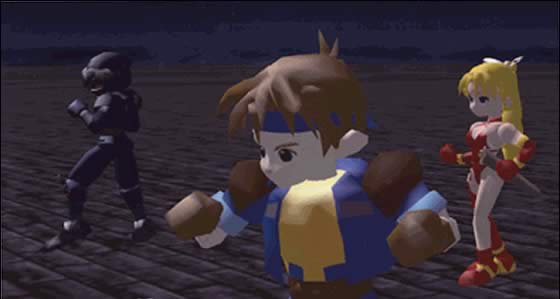
Then again, being on Nintendo platforms seems to have an uncanny ability to uncoolify just about anything. This is an actual screenshot of Final Fantasy VII from its days under Nintendo 64 development. As a friend told me, it looks very........... Nintendo.

Then again, being on Nintendo platforms seems to have an uncanny ability to uncoolify just about anything. This is an actual screenshot of a Final Fantasy concept from its days under Nintendo 64 development. As a friend told me, it looks very……….. Nintendo.

#2 – Atari’s inaccurate sales projections lead to the Great Video Game Crash.

The History: By 1982, Atari had become the most profitable company in the world, netting a $400,000,000 profit (after taxes, mind you). Atari alone accounted for 70% of the total operating profits in Warner Bros’ entire empire. In the weeks leading to Atari’s investor conference call in December, 1982, Warner executives had touted that Atari would post an increase of sales of 50% over the fourth quarter. Warner stock, and the stocks of every publicly traded company associated with video games, soared. Gaming looked unstoppable.

The Oopsie: The boasting of Warner executives was exaggerated. On December 7, 1982, Atari released their official projections for the 1982 holiday season: a 10% to 15% increase in sales. That’s right: games didn’t stop selling. They just didn’t sell at a fast-enough rate to satisfy speculators. Stock analysts were shocked, and they raced to see who could dump their shares the fastest.

The Ramifications: By the end of the day, Warner stock had fallen nearly seventeen points. Activision’s stock also tumbled. Mattel’s did. Coleco’s did. Newcomers to the scene Imagic, who were on the verge of having what was projected to be a very lucrative IPO, instead were cut off by banks and investors who stopped making payments to them (such actions are illegal now). Seed capital for gaming start-ups in the Silicon Valley evaporated overnight. Inventory managers working at major retail chains were told by corporate superiors that the ceiling on gaming had lowered and to reduce their orders for gaming related inventory. This came as a big surprise to them, since games were still generating the majority of their profits, and were one of the few “toy” related items that sold year-round. But they had their orders.
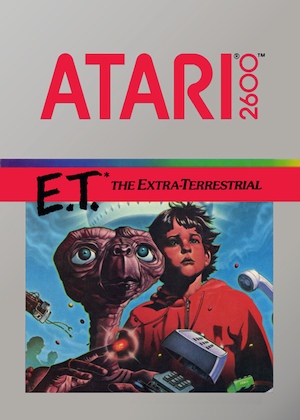
Pictured: something that gets too much credit for the industrial crash.

Pictured: something that gets too much credit for the industrial crash.

In short, the speculative bubble had burst and the video game industry had crashed. Despite what anyone says, poor quality games had little to do with it. The market was still growing. Sales were still increasing at a steady pace. It should be noted that in 1983, the year where the crash was at its most pronounced, video game sales were up over where they were the previous year. Seven-million consoles were sold in the United States in 1983 (not bad considering there were no new ones on the market), and 75 million cartridges were sold. That’s an increase of over 15 million from the year before. And only around 27% of them were sold below manufacturer’s suggest retail price, such as games on clearance sale. That’s only a couple of points higher than the industrial average today. In other words, games themselves didn’t die, just the money in games.

Don’t get me wrong. Crappy games didn’t help. But with only a few exceptions, the quality of the games wasn’t focused on. The media’s attention was squarely on the money. Stock speculators with itchy trigger fingers are what made the money disappear. A few days after Atari’s conference call, a scandal erupted when it was revealed that Atari president Ray Kassar had sold 5,000 shares of Warner stock just 23 minutes before the announcement was made. Kassar said he needed the money for another investment, only conceding that the timing was, quote, “unfortunate.” Yeah, I’ll say. When it came out that Kassar had committed insider trading, not only did Warner’s stock take another hit, but speculators further dumped shares of Mattel, Activision, and Coleco. Again. Kassar was somehow never charged for insider trading (even though what he sold was, adjusted for inflation, more money than what landed Martha Stewart in prison for the same thing), possibly because he returned all the money almost immediately after the report of his antics came out. Kassar claimed that if he was really bailing, he would have sold more shares. Critics accused him of selling the most he thought he could get away with without making waves. Whether his motivations were intentional or happenstance, it had a devastating effect on the entire industry.

Atari never once was profitable again under Warner Bros. Ray Kassar resigned in July, 1983. By then, Warner stock had been so decimated by Atari that they were targeted for a hostile takeover by Rupert Murdoch, owner of 20th Century Fox. To replace Kassar, Warner hired James Morgan, formerly of Phillip Morris, who had been instrumental in creating the Marlboro Man. He would later return to Phillip Morris and become their CEO, then claim that cigarettes were no more addictive than Gummy Bears. As a chain smoker myself, I agree with Mr. Morgan. Quitting is easy. I do it at least 60 times a day. Morgan only lasted ten months at Atari, long enough to slash their workforce by over 70%, consolidate their facilities from fifty buildings spread across the entire Silicon Valley down to four, and dump 20,000,000 units of inventory into the market for $2 a piece. However, when he submitted his budgets to Warner, the board unanimously vetoed them each time. They told Morgan that Atari would have to fund itself through its own profits, which were non-existent. In the second fiscal quarter of 1984, Atari lost $425,000,000 over a span of only three months. Warner finally gave up and sold the company to the recently beached Commodore founder Jack Tramiel for a stack of useless promissory notes that they never collected on. Between January of 1983 and July of 1984, Atari had lost over two billion dollars. All because of stock speculation, not because of Pac-Man or E.T.

This is James Morgan, the guy who led Atari for ten months. Doesn't he just look like the type of suit who would tell people with a straight face that smoking isn't deadly?

This is James Morgan, the guy who led Atari for ten months. Doesn’t he just look like the type of suit who would tell people with a straight face that smoking isn’t deadly?

#1 – Sega does not go with DVDs for Dreamcast.

The History: Sega, having blown the inside track on dominating the Japanese game market with Saturn, licked their wounds and went about creating a new, more powerful, infinitely more easy to develop for game console. The new system, known as Dreamcast, would be based around a custom version of Windows CE and use DirectX drivers. It was higher performance than anything on the market, and Sega adjusted its licensing plank to be more competitive with Sony’s. Everything looked amazing.

The Oopsie: At this time, it was known that Sony was also developing its next generation console, and that it would likely include a DVD drive and probably play movies. This was a very attractive feature. One that Dreamcast would not include. Instead, Sega developed a proprietary media format called GD-ROM. Although GD-ROMs could store much more data than a CD, they held significantly less than DVDs. More importantly, DVDs were an emerging format for movies, and destined to explode worldwide.

Yes, including a DVD drive in Dreamcast would have significantly raised its costs. But not as much as you would think. If Dreamcast had launched with a DVD drive of similar quality to the one included in PlayStation 2, and retailed for $299.99 instead of $199.99, Dreamcast would have lost less money per unit than Sony did a year later with the PS2. That’s because Dreacmast used cheaper, less sophisticated components than PS2. Unlike PS2, the majority of Dreamcast owners over the console’s first year were very enthusiastic software buyers. Sega could have quickly recouped its losses on hardware based on the rate of software sales they had. For PS2, its primary function for most of the world was a DVD player first and a game player second. The most popular piece of software sold with PS2 at the point of sale was the Keanu Reeves film The Matrix on DVD, in both the United States and Japan. For a very large portion of the world, the PlayStation 2 was the first DVD player they ever owned. It could have, no, should have, been Dreamcast.
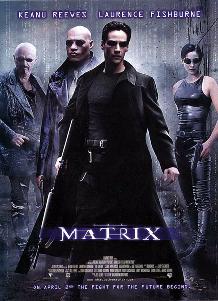
"I'm a killer app. Whoa."

“I’m a killer app. Whoa.”

It’s also worth mentioning that, although it was less expensive than DVDs, GD-ROMs were hardly cheap. They cost more to mint than CDs. Sega wanted a proprietary format to prevent piracy. The PlayStation 1 had a huge issue with that. Unfortunately for Sega, GD-ROMs were almost immediately cracked. Pirating of Dreamcast games began before the system even made it to America. GD-ROMs offered no advantage over CDs, besides the higher capacity that really didn’t help all that much. Sega didn’t go with DVDs because they were convinced a low retail point would give them the edge over PlayStation 2. PS2 was widely speculated to launch at $400 to $600, based on the costs of materials used in it. Sega thought they had learned their lesson with the Saturn. The problem was, the price tag wasn’t the only advantage Sony had over them. Sega didn’t realize that until it was too late.

The Ramifications: After the Japanese launch of Dreamcast, Sony announced the final specifications for PlayStation 2, including confirming the long-expected DVD drive. Dreamcast was now obsolete before it even launched in America. Sega’s only hope was to sell as many units as possible before PS2 launched, and hope like hell the its price tag would be as high-ticket as top analysts in the industry expected it to be. It wasn’t. When Sony announced the $299 price tag at E3 2000, it was all she wrote for Sega. People who had been saving for a DVD player (at a time when they were relatively expensive) now could save up for a PlayStation 2 instead. Despite Dreamcast having a fairly impressive game lineup, a PlayStation 2 simply got you more for your dollar.

I put this #1 because the other Oopsies on this list don’t necessarily turn out better if the company goes the other way. If THQ doesn’t make the uDraw, they still eventually go bankrupt. If PlayStation 3 launches at $400, Microsoft had enough high-profile games to still sell a LOT of Xbox 360s and probably lives to fight another day. If Atari comes to terms with Nintendo, the Famicom still does good enough in Japan for Nintendo to do follow-up console and presumably not make the same mistake it made before. If 3DO launches at $300, it still lacks a first party to make killer exclusive games that differentiate itself from its competition. If Atari doesn’t sit on millions of unsold Pac-Man and E.T. carts, mouthy Warner Bros. executives would still probably over-inflate sales projections and speculators would still have bailed, crashing the industry. If Sega doesn’t launch the Saturn early, they still have to compete using inferior hardware to Nintendo’s iconic first-party games and Sony’s ultra-aggressive licensing program. If Nintendo doesn’t double-cross Sony, it doesn’t necessarily mean Super Nintendo’s CD-ROM ever sees the light of day, and Sony likely still would have developed their own platform. If Nintendo chooses cartridges over CDs, Sony’s aggressive licensing program (and all the ill-will Nintendo had built up over the years) still makes PlayStation a more attractive platform for third parties. If Warner executives never open their yap, Wall Street analysts had projected Warner would post 30% increases for Atari and speculators would have bailed anyway.
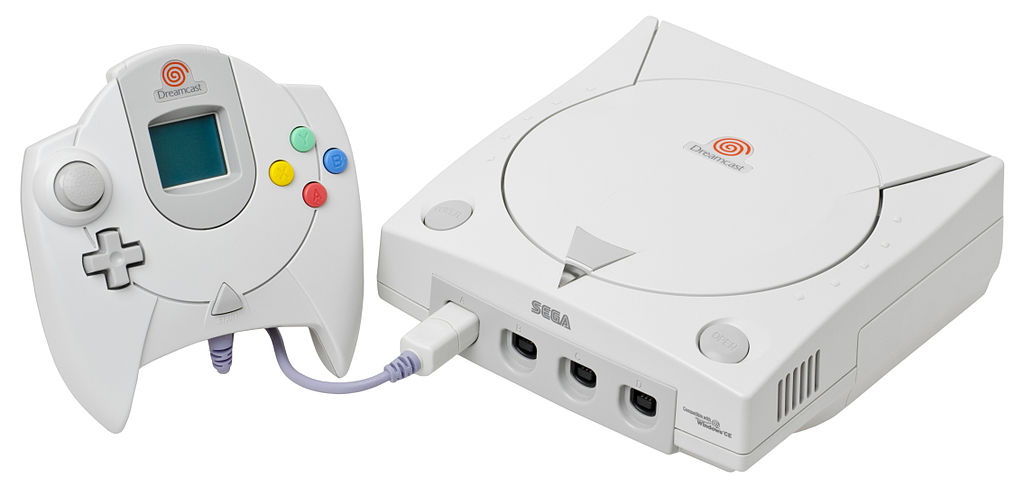
You'll note that Sega tried to distance themselves from the "Sega" name as much as possible, using minimum amount of branding when promoting Dreamcast. Even the jewel cases of the games typically didn't have the name "Sega" anywhere near "Dreamcast." It was so awkward.

You’ll note that Sega tried to distance themselves from the “Sega” name as much as possible, using minimum amount of branding when promoting Dreamcast. Even the jewel cases of the games typically didn’t have the name “Sega” anywhere near “Dreamcast.” It was so awkward.

Dreamcast lacking DVDs is the only “Oopsie” where you know, beyond a shadow of a doubt, that things would have been better for Sega if they had gone the other way. A Sega Dreamcast with a DVD player survives well beyond year two. A highly acclaimed system with one of the most diverse and fucking awesome lineup of first-party games of all-time? PlayStation 2, GameCube, and Xbox launching against a console with one of the highest software sales penetration rates ever? I weep for the incredible battle we all missed out on. The Dreamcast is probably my favorite game console of all time. And if it could have played Forrest Gump, it doesn’t die an early death. What can they say? Oopsie!
The 10 Biggest “Oopsies” in Gaming History: Part 1

Some of my readers are idiots. I mean, I love you all. I really do. But a lot of you guys have your heads so far up your ass that you could floss your teeth with your small intestines. Especially when you say stupid shit like this:

THE WII U IS THE BIGGEST DISASTER IN GAMING HISTORY!

Holy hyperbole, Batman! Have you ever looked into the history of gaming? Companies have made a lot of really stupid moves. I said I could come up with at least ten things worse than Wii U, and I think I have. And I’ll share them with you. Now, we don’t know what the long-term ramifications of Wii U will be. Maybe it will ultimately be the biggest blunder in gaming history. But it’s too soon to tell. With the ten examples I’ve come up with, we can definitively point to them and say “those mistakes had significant consequences.”

Here’s what DID NOT make the list.

Virtual Boy – Yes, it flopped. But Nintendo certainly did not over-manufacture it. And nobody can say they waited too long to pull the plug. It’s a black-eye on their record, but Nintendo has never come remotely close to giving up their title of most successful portable gaming developer. If Virtual Boy was in any way consequential, they would have.

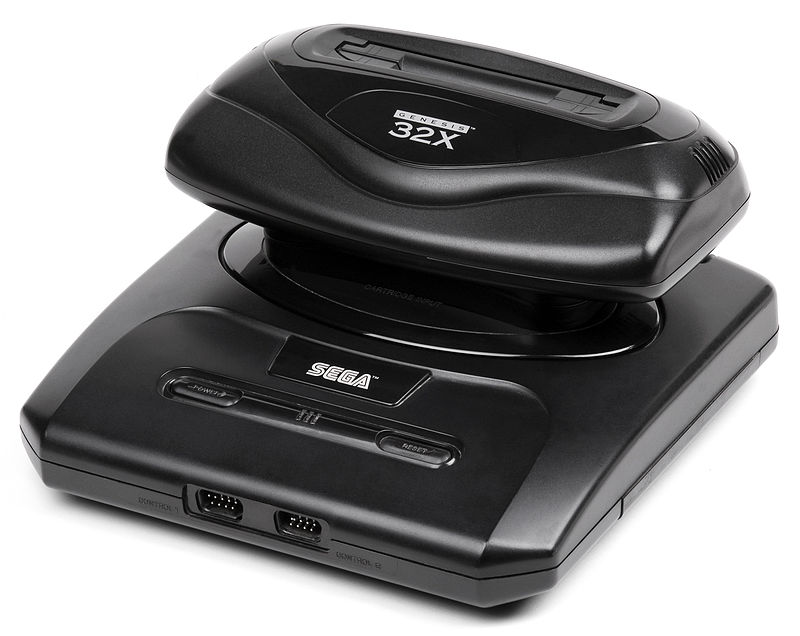
32X – 32X was bad, but it could have been a lot worse. Originally, it was going to be an entirely new console called “Genesis 2” with the only improvement being a slightly upgraded GPU that was capable of displaying more colors. Sega of America hated the idea and pushed for an add-on instead. It was over-priced ($179.99 at launch) and the games for it were mediocre (one title, Cosmic Carnage, was so bad that Sega’s development team circulated a petition to have it cancelled). Sega was also slightly dishonest, implying that a Genesis with 32X and Sega CD would be compatible with its upcoming Saturn console. When Trip Hawkins of EA and 3DO (more on that later) said it wouldn’t be, they said he didn’t know what he was talking about. But, of Sega’s MANY problems, this wasn’t that high on the list. Even when it was cleared out at $19.95, it wasn’t losing THAT much money (possibly even breaking even). Most of the money lost from 32X was the result of over-manufacturing software for it, and the ensuing inventory crush.

Shaped like a mushroom, in honor of the substance taken by the guys who built it.

Shaped like a mushroom, in honor of the substance taken by the guys who built it.

Microsoft Buys Rare – At the time, this sure seemed like one of the biggest coups in gaming history. Rare was fresh off creating some of the most iconic games for Nintendo 64. They were Nintendo’s single most important partner for the N64, and helped Nintendo cap off the SNES successfully with its Donkey Kong Country series. Ultimately though, it was inconsequential to Nintendo and fairly costly for Microsoft. Rare’s early efforts on Xbox flopped, and Microsoft ended up looking like they were sold a bill of goods. It’s widely believed that executives at Microsoft thought they were also acquiring the rights to Donkey Kong. I’m not sure how even the most dense person could not know it wouldn’t be part of the package, especially after going through the type of due diligence acquisitions like this are subject to, but that’s what people say. The Rare of today is, for all intents and purposes, a new studio completely different from the one Nintendo sold Microsoft. But it didn’t really hurt Microsoft, so it doesn’t belong on the list.

So what did make the list?

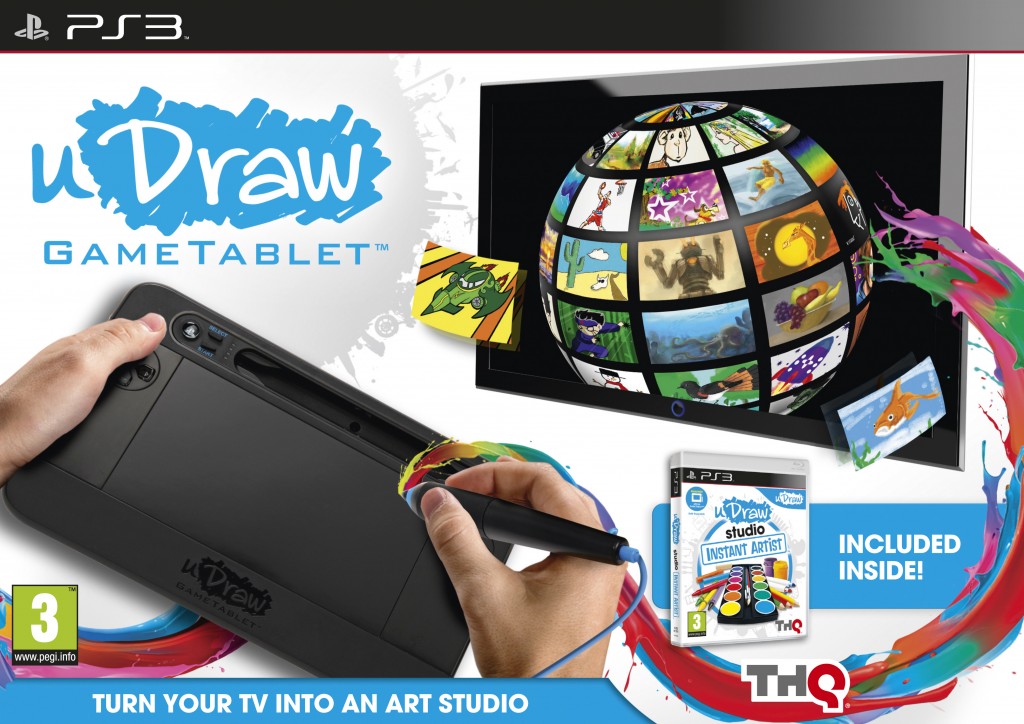
#10 – THQ over-manufactures the uDraw tablet, for the wrong platforms.

The History: THQ was a giant among third parties. They owned some of the most lucrative licenses in gaming. Nickelodeon. Pixar. WWE wrestling. All of them resulting in top-selling games. And, unlike Acclaim near the end of their existence, THQ’s games tended to be higher quality. And then they made uDraw.

The Oopsie: Let’s be clear about something: uDraw was a modest success on the Wii. At least the initial hardware bundle was. The software for it was never a big seller, in part because the games were a bit weak. I did have a uDraw and Pictionary for it, and my family enjoyed it quite a bit. However, I think convincing them to give Disney Princesses a try would have been a tough sell.

Having said that, THQ wanted to recoup their investment in the R&D for the project and decided to give it a kick at the can on Xbox 360 and PlayStation 3. Even though it just didn’t seem like the demographics would match up at all on those platforms. Although they only manufactured it for a relatively short period of time (four months), they ended up with over $100,000,000 in inventory crush, which might be the largest amount of crush any third-party game company has ever had. What the HELL were they thinking?

What a fiasco. Thankfully, no game company would ever be crazy enough again to release a gimmick tablet as a console controller with a silly "U" stuck in the title for no damn reason ever again.

What a fiasco. Thankfully, no game company would ever be crazy enough to release a gimmick tablet as a console controller with a silly “U” stuck in the title for no damn reason ever again.

The Ramifications: They went bankrupt. Now, I don’t mean to imply that the only thing THQ did wrong was uDraw. When a company the size of THQ goes bankrupt, it is never one thing. They had tons of issues on a managerial level. But there’s no denying that uDraw was the tipping point. It’s like how saying the Titanic sank because it hit an iceberg is grossly oversimplifying things. The ship couldn’t turn fast enough, was going too fast at the wrong time of day to be trying such speeds, at the wrong time of year, in the wrong part of the ocean, with not enough lookouts. Hitting the iceberg was practically inevitable. uDraw was THQ’s iceberg. At a time when the company’s financing was shaky at best, being stuck with over one-million units of relatively expensive dead inventory was simply too much to overcome. The way they were being managed, they were destined to sink anyway, but you sort of have to give credit to the iceberg.

#9 – PlayStation 3 launches at $599 (or $499).

The History: Sony had a very storied legacy of surprising the game industry by modestly pricing their hardware. In 1995, at the first E3, Sony shocked the world (especially Sega – more on them later) by announcing that PlayStation would retail for $299.99. In fact, “$299” was the entire speech given by Sony’s American president Steve Race at the show. It was, and probably still is, the biggest bombshell ever at E3. Analysts predicted that PS1 would retail for at least the same, but likely more, than the Sega Saturn’s $399 tag.

Fast forward to 2000. Everyone knew for sure that PlayStation 2 would have to retail for around $500. After all, it was a DVD player, at a time when those were still relatively new and expensive. Not only that, but it was a fucking super computer! George Lucas claimed it was more powerful than the computers used to create the special effects for Star Wars: Episode 1. When Sony announced they were once again launching at $299, it is said that Sega chairman Isao Okawa turned to his assistant and said “it’s over.” In 2006, at E3, people had come to expect the $299 price tag, no matter what analysts predicted. Or, at the very least, it would be priced to match the $399 Xbox 360.

The Oopsie: At E3 2006, Sony announced that PlayStation 3 would have two SKUs. One would include a 20GB HDD for $499, and one with a 60GB HDD for $600. On the bright side, they managed to shock the crowd at E3 again. But this time, it was for the wrong reasons.

"Wait, did they say $600?" "What? I didn't hear. I was too busy admiring the Spider-Man font. Classy shit that font is."

“Wait, did they say $600?” “What? I didn’t hear. I was too busy admiring the Spider-Man font. Classy shit that font is.”

The Ramifications: I had friends argue that the price ultimately didn’t matter. Sony is still around, and the PS4 is outselling the Xbox One. To which I say, tell Microsoft the PS3 launch price didn’t matter. To them, it was like a presidential pardon. Sony had dominated the previous two console generations, so much so that they knocked Sega out of the manufacturing business altogether. The absurdly high price tag on PS3 opened the door for Xbox 360 to ultimately outsell the PS3 (though it was very close, with just a couple million units separating them worldwide). This just a generation after the PS2 outsold the Xbox by over 130 million units. And let’s not forget Nintendo, who ultimately won the generation in terms of hardware by a comfortable margin (over 20 million units more than Xbox 360 and PS3). In the previous two generations, Sony’s consoles sold a quarter-of-a-billion units combined to Nintendo’s measly 55 million combined for Nintendo 64 and GameCube. Anyone who doesn’t think Sony’s price tag cost them a chance to put one or both of those players out of the market forever is kidding themselves.

#8 – Atari fails to come to terms with Nintendo for the rights to NES, then does it again with Sega years later.

The History: Nintendo had a tough time breaking into the US arcade market. And, when they did with Donkey Kong, they were immediately dragged into a lawsuit by Universal Studios. In 1983, the Nintendo’s Famicom console had taken Japan by storm. They knew it could be successful in the United States, but they had found the experience of handling everything themselves to be bothersome and infuriating. So they decided they would seek a partner. Internally, they briefly discussed going with Coleco, who they had licensed Donkey Kong to for the Colecovision’s launch. However, the lawsuit with Universal had soured them on that, as Coleco spinelessly settled without attempting to put up any fight, and they did so behind Nintendo’s back. So, Nintendo decided to offer the worldwide rights (excluding Japan) of the Famicom to Atari. After haggling for a couple of days in Japan, Atari’s lead attorney Skip Paul got the go-ahead from Ray Kassar (President of Atari) and Manny Gerard (President of Atari parent Warner Bros) to make the deal. The contracts were drawn up and the two companies entered due diligence.

The Oopsie: The deal never finalized. The first problem came at CES in 1983. Nintendo had sold the home computer rights for Donkey Kong to Atari, while Coleco owned the rights to Donkey Kong on cartridges. At that CES, Coleco debuted their pet project, the Adam home computer. And the key piece of software they demonstrated on it? Donkey Kong. Mind you, Coleco never cleared this with Nintendo. Atari felt double-crossed and was furious. Nintendo later strong-armed Coleco into cancelling the game, even though they had no leg to stand on. Games on Coleco Adam used cartridges, not floppy discs, which is all Atari had the rights to. However, other issues arose, especially when Nintendo discovered that Atari had misled them about developing a new system of their own (later released as the Atari 7800). Both sides walked away, the game industry crashed, Ray Kassar was fired, Atari was sold to Jack Tramiel, and Nintendo later released the Famicom in the United States on their own as the NES.

I almost included the Adam Computer on the list, since it pretty much killed Coleco. But really, Coleco was swallowed up by crash with everyone else. Adam could have shit jewel-encrusted geese that laid golden eggs and they still would have folded. Coleco's ultimate demise was due to over-manufacturing Cabbage Patch Kids long after the fad had ended, then overpaying to acquire Trivial Pursuit. But Adam certainly helped.

I almost included the Adam Computer on the list, since it pretty much killed Coleco. But really, Coleco was swallowed up by crash with everyone else. Adam could have shit jewel-encrusted geese that laid golden eggs and they still would have folded. Coleco’s ultimate demise was due to over-manufacturing Cabbage Patch Kids long after the fad had ended, then overpaying to acquire Trivial Pursuit. But Adam certainly helped.

The Ramifications: Nintendo would not exist as it does today if Atari had just stayed the course. Internally, Atari had no intention of ever marketing the Famicom as anything but a last resort. The deal they made with Nintendo included no provision of good faith. In other words, they were under no obligation to actually try to market the Famicom. Instead, they would push their own 7800 out and smother the Famicom globally. However, if the 7800 bombed, they would still have the rights to the Famicom and could use it as a lifeboat. Alas, it was not to be.

Amazingly, history repeated itself in 1988. Atari was a different company by then, owned by Commodore International founder Jack Tramiel. Atari was never as successful as it had previously been, but the Atari 7800 was hugely profitable for them and opened the Tramiels eyes to the video game market. However, they struggled to create a new generation console of their own. Sega, learning of this, offered them the worldwide (excluding Japan) rights to their 16bit Mega Drive console. This time, a deal was close to being completed but never entered due diligence. Every time Sega thought they were ready to draw up the contracts, Tramiel decided to change the terms again (something he was infamous for). The process dragged out so long that Sega started having second thoughts. Sega went out on their own and launched Mega Drive in the United States as the Genesis. The rest is history.

#7: The 3DO launches at $699.

History: The 3DO was developed by the same two people who designed the Atari Lynx. That probably should have been a clue that it wouldn’t turn out so well, but you couldn’t convince EA founder Trip Hawkins of that. He bought into the technology, then came up with a novel (and absurd, but still novel) way of marketing it: he would simply create a hardware standard and license it to other companies. Thus, there would be no “first party” games for 3DO, and multiple different manufactures all offering essentially the same console. Also, Trip’s license agreement stipulated that he would set the price.

The Oopsie: That price was $699, over four-times the price of its two main competitors, the Genesis and SNES. Hawkins was inspired by the Commodore 64’s $599 price tag. He figured, since the 3DO was more powerful than Commodore 64 (top-selling computer of all time), and could do more stuff, it should be priced higher. Why not? I guess he forgot that the Commodore 64 was a computer and the 3DO was a glorified video game machine. Mind you, the 3DO was mostly made out of cheap, off-the-shelf parts. In fact, expensive components (the same ones that would later be used in the PS1 and Nintendo 64 that allowed for higher polygon counts) were dropped from the initial design in order to keep the cost of manufacturing down. The 3DO could have sold at $300 or possibly even $200 and turned a profit. Again, the Commodore 64 (which could have been sold profitably at $100) inspired Hawkins. His inspiration was tragically misguided.

Also worth noting: the controller was just awful. Diagonal movement didn't work properly unless you loosened the screws on the back of it. They also only included three face buttons, and this is after fighting games forced a six-button standard.

Also worth noting: the controller was just awful. Diagonal movement didn’t work properly unless you loosened the screws on the back of it. They also only included three face buttons, and this is after fighting games forced a six-button standard.

The Ramifications: These days, the 3DO is looked back on as somewhat funny, somewhat sad footnote in gaming history. But before it launched? The hype on it was unreal, at least on the same level Xbox had when Microsoft entered the console business. Time Magazine named 3DO “Product of the Year” for God’s sake, the only pure gaming device to ever receive it. And the media had an infatuation with Trip Hawkins. People Magazine even named him to their annual 50 Most Beautiful People list. It was the first, and let’s face it, the only time the mainstream media was actively cheerleading a new game console. Yes, the lack of any first party software hurt, but if the system had been priced at $300, the 3DO almost certainly would have exploded. The landscape of gaming today would be unrecognizable. Greed is not good.

#6 – Atari rushes Pac-Man and E.T. into production, then over-manufactures them.

The History: The Atari 2600 was kind of a bust. And then Nolan Bushnell got beached by Warner Bros for calling a board meeting without Warner representation, Ray Kassar took over, licensed top arcade hit Space Invaders for the console, and sales exploded. By a stroke of luck, Atari already owned the home rights to all of Namco’s arcade games, and when Pac-Man became the new cock of the walk, Atari was elated.

The Oopsie: At the time the Atari 2600 port of Pac-Man went into production, developers hadn’t learned how to fully optimize the console. Tod Frye, a developer who wasn’t considered especially skilled among his colleagues, was selected by Kassar to deliver Pac-Man within the four-month deadline. His selection inspired huge jealousy among his co-workers, who circulated a memo asking “Why Frye?” He was paid a ten-cent royalty on every unit sold, which meant he stood to become a millionaire whether the game sucked or not. And suck it did. Pac-Man enthusiast and Atari marketing manager Frank Ballouz told Kassar that fans would hate Atari’s port and they should postpone it until it was better. Kassar ignored him and ordered twelve million copies to be manufactured. Just under ten million people owned Ataris at this point. Kassar figured that, like Space Invaders before it, people would purchase Ataris just to play Pac-Man. He was wrong.

To Kassar’s credit, he did learn his lesson, and Atari eased up on over-manufacturing games. That is, until E.T. That one wasn’t Kassar’s fault. Manny Gerard, president of Warner Bros, wanted to secure Steven Spielberg to produce movies for their studio, and thus, as an incentive to secure the director, included a deal to make a game based on E.T. For it, Spielberg netted $25,000,000, plus a hefty royalty. Under the terms Gerard secured, there was no way Atari could profit on the game. Kassar really got a shit deal. Gerard wanted Warner’s movies to do well, and screwed Atari over in the process, since they would end up posting a loss for the benefit of the unrelated movie division. Gerald also guaranteed Spielberg the game would be out by Christmas, giving Atari only five weeks to produce the game. Gerald then made Atari manufacture four million copies, without doing any market testing. I mean, it was a game based on the highest grossing movie of all time. What could go wrong?

Yeah.

Yeah.

The Ramifications: Atari sat on some of the largest quantities of inventory crush by volume in consumer electronics history. Both games sold very well, and if they hadn’t been over-manufactured, you would have to include them on any list of the most successful games ever, regardless of quality. In Pac-Man’s case, Atari probably did turn a profit on it despite of the crush. They paid Namco a very, very low royalty on it, and it did sell millions of copies. Its top consequence was it shook consumer confidence in Atari’s ability to have decent home translations. Space Invaders on the 2600 was a very close facsimile of the coin operated version. Pac-Man was like a bad bootleg.

In the case of E.T., Manny Gerard’s deal with Spielberg not only cost Atari millions in revenue due to inventory crush, but they also had to swallow Spielberg’s insane signing bonus. Warner as a whole ultimately made out pretty decent in the deal (which led to the production of the hit films Gremlins, the Color Purple, and The Goonies), while Atari got left holding the bag. These two games alone did not crash the industry, but they contributed to the action that actually did do the job. But that’s going to be covered in the next part.

Click Here Continue to Part 2

Policy Update: Review Copies for Multi-Platform Releases.

At Indie Gamer Chick, we pay for every game we review. Even when we take a review copy because the game is not on the market yet and the only way to access it is by accepting a token, we still pay for the game when it is released. This feature has been extremely well received by both indie developers and gamers. I truly feel it’s one of the main reasons why this blog is so popular. It makes us stand out in a crowded field. When I offered to wave the policy for Miko and Indie Family Man, they turned it down. Why? Because it’s what makes this site unique.

However, now that so many indies are being released on multiple platforms, it’s becoming expensive to cover some games. The policy needs to be updated in a more reasonable way. So, if developers wants a review to include details on every platform a game is on, we’re going to start accepting review copies. We will still purchase the game on the platform the game costs the most on, or whatever platform we intend to primarily use for our play-through. For all other platforms, we’ll ask for review copies.

In the past, we only accepted review copies if it was the only way to access a game before it’s release, or if the game had online multiplayer. For online games, the review copy was given to a friend so that we would have someone to play against. That person had little to no feedback in the review. Under our new policy, we might need more than one code for some platforms.

Because of this new policy, we can introduce two new features to Indie Gamer Chick.

Multi-Platform Comparison: If we strongly prefer one version over another, a sidebar will be placed in the review that will explain why. It might be because one version runs smoother, or because we thought a particular system’s controller made a game play better. We’ll also compare the different online experiences. If there’s not a significant difference between the platforms, it will be noted during the wrap-up, under the game’s price-line.

Review Updates: As of this writing, IndieGamerChick.com has reviews for 524 games. 488 from me and 36 from members of Indie Gamer Team. Most of those games are now available on multiple platforms. If developers would like, we can update those reviews to include thoughts on the game on other platforms. We will need review copies for this. If you want us to update the old review, hit us up on Twitter: Indie Gamer Chick, Miko (we really need a name for her), and Indie Family Man. We won’t turn away any requests for a multi-platform update, and this will not count as a game’s Second Chance.

We’re coming up on the third anniversary of Indie Gamer Chick. We’ll be celebrating in multiple ways. We’ll be introducing Miko’s Leaderboard. I’ll be updating my Top 25 Xbox Live Indie Games of All-Time feature. I’ll be bringing in more writers. And finally, there will be another Indie Gamer Chick Bundle at Indie Royale. It’s been our pleasure to serve indie game developers and indie game fans with our no-holds-barred approached to reviewing, and we look forward to many more. Much love to the entire community, and thank you for your continued support. Game on!

Indie Gaming Doom and Gloom

This article on Eurogamer by Christian Donlan is saying that we’re saturating the market with games, particularly on mobile and on digital distributors such as Steam. For every Flappy Bird there are a hundred clones. For every AAA game released on Steam, there are ten games that had no business being greenlit getting greenlit. We are heading for another video game crash.

The Atari version of Pac-Man is unquestionably more responsible for the great crash than E.T. It's also potentially lethal for Cathy thanks to the insane flickering.

The Atari version of Pac-Man is unquestionably more responsible for the great crash than E.T. It’s also potentially lethal for Cathy thanks to the insane flickering.

There certainly is no shortage of games these days. On May 1 and 2, 2014 alone, there were twenty-one indie games released on Steam and seven on Desura. We are living in a sea of virtual bliss. Back in the day, a shortage of games is something that Atari was trying to prevent and they made certain that they had a large library for their consumers. The problem though, was they went for quantity, not quality. With a glut of crapware, such as the infamous E.T., Atari did itself in as bad game after bad game was released. When nothing but shit is coming out, people see the pattern and they stop buying games.

A few things are different in this generation that differ from the era of the video game crash in the 80s, primarily, the internet. With 28 games released in only two days, one could argue that the same problem that plagued Atari is plaguing us again. However, is it such a bad thing? It’s been this way for some time and I don’t see any sign of a crash.

Thanks to the internet, we have ourselves multiple ways to talk to each other about what we’re playing, see what others are playing, and a number of outlets to purchase games from. We can now vote as a community as to which games are great and which games to avoid. Ranking systems which are player-driven in real time rather than making us wait for a monthly gaming magazine to give us review scores. We don’t have to wait for our neighbor down the street to save up the cash to gamble on a game that “sounds” cool. We can pull up a review in seconds, view clips on YouTube, and download a demo of the game.

Flappy Birds might suck, but and it might be getting cloned to death in the most pathetic gold rush in gaming history, but it is NOT going to crash the industry, people.

Flappy Bird might suck, but and it might be getting cloned to death in the most pathetic gold rush in gaming history, but it is NOT going to crash the industry, people.

App markets and digital game markets have been flooded with crap for years now and the industry hasn’t crashed. The best tend to rise through the ranks thanks to curation and a social community that ranks the best. With so many games though, I’d argue that it is possible, even with all of our tools to help good games succeed, that some may be overlooked. It’s harder to stand out with so many other games to compete for gamers’ attention.

Don’t stop trying though. Make a good product and do what you can to get your voice heard. Part of the reason I started game reviews is to help people out be it by pointing their game out, or giving my thoughts on improvements that could be made for their next game.

We are not heading into a crash and anyone who says to is fearmongering. We’re in a great era for indie gaming and in the gaming industry as a whole. Knock that shit off.

Note from Cathy: this is Miko’s first editorial at Indie Gamer Chick. I quite liked it! Be sure to give feedback and encouragement. Make sure you follow her on Twitter too

The Indie Gamer Chick Mailbag: April 21, 2014

I typically get a lot of questions on Twitter about random game stuff. Thoughts on the indie scene, on mainstream gaming, etc. I’m quickly learning that Twitter is a lousy place to answer any questions. It’s tough to explain complex opinions in 140 characters or less. So I figured I would start a mailbag feature. I announce it, and suddenly I go from getting questions every few minutes to getting no questions at all. Grumble. Well, a few guys did ask some stuff, so I’ll give the whole mailbag thing a try.

@LostScarf asks

Do you think Indie games would be more successful if they took the time to add Online Co-op, or it wouldn’t matter?

It depends on the game. Some titles really could have benefited from a more robust online experience. But there are roadblocks if you attempt it. On XBLIG, getting online working was overly difficult. Developers did not have access to Xbox Live when making games that would utilize Xbox Live. But even when you’re not developing for a system that actively seems to be trolling its own developers, optimizing an online co-op experience is extremely difficult. Especially if you give a shit about the emotional and psychological experience of your game. There’s almost no way to measure how effective your work is in those areas, especially if your concept involves two strangers working together. It’s a leap of faith.

Does it make a difference in a game’s sales? I’m not totally convinced. My favorite aspect of Terraria was playing it with Brian on two PS3s and two TVs. We also very much enjoyed sharing some of our extra plunder with my fans on Twitter. Hell, I met my best friend Bob that way. But, I was surprised to learn that most of the Terraria fans that follow me on Twitter never played it co-op at all. That’s not that uncommon with many indies that have an optional co-op mode. So I guess, unless a game is designed specifically with online co-op in mind, it won’t make a big enough difference that anyone should lose sleep over it.

@iilusionofchaos asks

If you could change one thing about your favorite game, what would it be?

My favorite game ever is WarioWare Inc.: Mega Microgame$ for Game Boy Advance. It just got re-released on Wii U’s Virtual Console. Easy answer here: I wish it had online leaderboards.

@TerrorSkwirl asks

Who/what do you think is the most well written character in recent memory?

Clem from Walking Dead. Her actions, speaking style, reactions to situations, and emotional state all feel like a real person. The strange thing is, there are a lot of secondary characters in the Walking Dead games that feel like lazy stereotypes, if not outright parodies. There’s just enough of those type of characters that you wouldn’t expect to see such an incredibly authentic character emerge. Clem is a real person in a real zombie apocalypse.

I’ll give a close second to Balloon from Doki-Doki Universe. Her undying love for protagonist QT3 was so moving and, again, authentic. Doki Doki was, as of yet, the only game I streamed my entire play-session on Twitch. I had some tough guys admit they were tearful as the ending between QT3 and Balloon played out. No violence. No cursing. No high-stakes. Just love and admiration between two friends, and it was more real than many of cinemas highest-paid actors are capable of delivering.

@Scott_A_Bennett asks

if you could only change one thing about the indie scene what would it be?

The perception that the community is too exclusive for newcomers to jump in. I think people expect the scene to be populated by anti-social, standoffish artsy types. They exist, but they’re very much the minority. The indie scene at large is so very welcoming and encouraging to newcomers. Hell, you don’t even have to be an active developer. I’ve never made a game, never will, and I have a site that, more often than not, doesn’t speak highly of the games I play. If the general perception of the indie scene were true, I would have been run out of town a week after I arrived. Instead, I’ve found an endless stream of new friends and fantastic relationships. And I’m certainly not alone in this type of experience with indies. That is the story that we need to make sure gets told. Unlike a lot of other things I wish would change, this one is very easily doable.

@Rabite890 asks

do you find the reports about the number of steam games that go unplayed/uninstalled to be as bad as some do?

Whenever I go grocery shopping, if I’m hungry when I go, you can bet the shopping cart is going to be overflowing full of all kinds of stuff I would normally not pick up. Then it will linger in our kitchen cabinets until it goes past the  expiration date.

That’s probably what happens with Steam, or hell, any platform when a sale hits. I have 217 PSN games on my PlayStation 3 and there’s at least 40 I’ve never booted up. I either got them with PlayStation Plus, or I bought them when they were on sale and just never got around to playing them. I do it on my Vita too, then the shitty, too small memory card fills up and I have to start deleting stuff. I can always redownload it any time, of course, but I probably won’t. It’s impulsive behavior from people with too much disposable income, but by no means indicative of any problem on the indie scene.

And finally, @Bonedwarf asks

I’ll give you a tough one. You can give 12 words of advice to all aspiring indie devs. What are they?

Nothing will go exactly as you envision, so be patient and humble.

(points at the screen and counts the words silently)

Damn, I’m good.

Well, I had fun doing this. If you guys had fun reading it, just send me a tweet with the hashtag #IGCMailbag and we’ll do it again. It will help keep the content on this site going when I’m post seizure and unable to get my game on.

Like my new logo? The gentleman who designed it, Kenneth Seward Jr., is for hire! Visit his site and check him out on Twitter. Reasonable rates, awesome work!

Still here? Cool. I have a new blog that will contain my non-gaming related ravings.


I Can’t See the Berries – Gaming with Color Blindness

Last year, I wrote about my experiences with epilepsy and gaming. The response from the gaming community was great, and it’s had an impact. Since I started Indie Gamer Chick, many Xbox Live Indie Games and assorted PC titles have started to include “effects switches” in games. And recently, Towerfall on PlayStation 4 became the first PlayStation Network title with “the switch.” I’ve had a lot of fun and done a lot of cool things through Indie Gamer Chick. Spreading awareness of gaming and epilepsy? That has probably been the most rewarding bonus. Something I never expected to influence.

Here’s the thing though: epilepsy is relatively rare. In developed nations, there’s between 4 to 10 cases for every 1,000 people. That’s not all that much. And of those people with epilepsy, only between 1 to 3 for every 100 have what’s called photosensitive epilepsy, also known as the kind that sucks if you’re a gamer. It’s also more commonly seen in girls than in guys. But it’s the thing I live with, so it’s kind of my pet cause.

But, most of my readers are guys. When I started to talk more often about the epilepsy thing, I had a lot of male readers say they know what having a health-imposed limitation is like. They have color blindness. Now granted, their condition is not actively trying to kill them (at least when they’re not at a four-way stop), but I was shocked by how common I heard it. I would venture a guess that, oh, 1 in 12 of my male readers have it. That’s probably because 1 in 12 men have some form of color blindness. I had no idea it was that common. That’s 8% of the male population. That’s a hell of a lot of people who struggle with this condition. And by the way, it’s a myth that girls can’t be colorblind. Around 1 in 200 are. Thankfully it seems to be the one medical problem I currently am not dealing with.

1 in 12.

Wow.

I can’t even imagine what it’s like. Thankfully, I don’t have to. I found someone to describe it to me. His name is Gordon Little, a network administrator from Newfoundland and a father of three. This is his story.

Oh, and please forgive his use of the Queen’s English. In America, we dropped the “u” from “color” thus making us 16% more efficient.

I Can’t See the Berries

by Gordon Little

During my childhood my mother would take myself and my twin brother out berry picking. Raspberries to be specific. Big red juicy things hanging out among the green leaves and stems. We each had a bucket and after an hour Mom would check our progress. Her bucket was full. My brother’s bucket was halfway full and his face told the story of berries that never made it into the bucket. My bucket though… my bucket was lucky to have 2 or 3 berries in it. “I can’t see the berries,” I would tell her. She’d point at a berry on the bush and like magic it would POOF into existence. She thought I was just lazy. I was a kid and I didn’t know what to think, except I hated berry picking.

For people like Gordon, you can forget about using radar in Crysis 2.

For people like Gordon, you can forget about using radar in Crysis 2.

Years later, myself and my brother had to get eyeglasses. One year the optometrist said “Have you ever been checked for colour blindness?” Nope. So he opens a flip book of strange coloured dots. “What do you see here?” Nothing. “And here?” A squiggly line. “Here?” Nothing again. “Are you sure you don’t see the number 13?” Nope. Nada. Zilch. The 13 was a berry and I couldn’t see it. It was unobtainable. “You have red-green colour deficiency.” My brother, you might ask, he did not. His colour vision was fine.

Red-green colour deficiency never really impacted my childhood. I had a NES, then a SNES, then a PC and video game life was good. When video game resolution and the ability to display colour increased, then the problems began. I could tell the difference between bright reds and greens, but it was more subtle shades and hues that caused problems.

The first time I played a game that I actually couldn’t play was a gem matching title like Bejeweled. All the gems were the same shape, just different colours. Ok. I can do this. Why won’t they join? Oh, two are green, one is yellow.

Real Time Strategy games can be great. Except when the units look 90% identical on both sides expect one has green shoulder pads and the other red. And the mini map doesn’t help either. It’s just a giant orgy of coloured dots and I can’t tell which are mine.

Turn Based Strategy and RPG games can be great. Except when the tiles change colour to indicate different things. Green means you can move here. Red means you’ll get attacked. Yellow means you MIGHT get attacked. All of that info is useless when you can’t tell which tile is which colour.

Like most of us, Gordon can't tell what's going on in Grotesque Tactics. Unlike the rest of us, he has an actual medical excuse.

Like most of us, Gordon can’t tell what’s going on in Grotesque Tactics. Unlike the rest of us, he has an actual medical excuse.

First Person Shooters are usually okay.  Except when part of the screen flashes red to indicate you were hit… somewhere… from behind?  The side?  Sometimes I don’t even notice it’s happening.

So what are some suggestions to developers to assist colour blind gamers? The number one suggestion is never (EVER) make colour the sole source of information for the player. There are lots of gem matching games out there, and most of them now have different shapes and symbols inside them to indicate which ones are which. You could take the colour out and still be able to play. For turn based / tactical / RPG don’t colour code the tiles on the ground, or if you do, put hit percentage numbers in the tiles for the player to see.

Every time a game uses colour as the sole provider of information you risk it being the berry in the bush. And I can’t see the berries.

Visit Gordon’s site.

There are several great developer tools available to simulate color blindness. Unreal Engine 4 has an excellent built-in color blindness simulator, under general/appearance/color. Photoshop has a more limited color blindness simulator, only covering the most common type, under view/proofing modes. Last is Color Oracle, a free piece of software for Mac / PC/ Linux that runs a single frame simulation on whatever is currently on your screen. Available from colororacle.org. For more information on how to design in a colorblind-friendly way, visit Game Accessibility Guidelines’ color-blindness page.

Indie Gamer Chick supports Game Accessibility Guidelines, a not-for-profit that provides free information for game developers on how to make their games more accessible to people with epilepsy, color blindness, and various other conditions. Support it. Use it. Live it.

UPDATE: Within two minutes of this being published, gamers and developers living with color blindness started to sound off. Here is ArcadeCraft’s developer:

Colorblind 3


PAX East 2014 Overview

PAX East 2014 is over and I’m beat. The four days of adrenaline kept me going without much food or sleep but now it’s time to recuperate. While I sniffle and hack away at my desk, recovering from PAX Plague, here are some previews and first impressions to a handful of the indie games that were there. I wish I could do a “Best of PAX” but there is no way that I was able to play everything that was shown. Maybe this time I’ll give out the, “Indie Gamer Chick: Not a Bad Build Out of the Relatively Few Games I Was Able to Play Because There Are So Many Here” Award.

Note, the following are not all-encompassing previews. They are synopses based on a very short amount of time with the games and there may be inaccuracies based on where the presenters decided to start the game or how much background to give me. (Case in point below, Flem would have appeared far different if I hadn’t asked for more info.)

Always Sometimes Monsters (by Vagabond Dog)

The feels, this game gave them to me. Here the player is asked to witness the results of their choices in life. In the demo I played, I played a man whose roommate wanted me to scope out his crush and see if there was any chance the guy he liked, liked him back. I don’t want to spoil what happens but what you decide to do once you do it changes how the game continues.

One of the more mentally deep games I played, this one promises to make you think.

Assault Android Cactus (by Witch Beam)

A dual-stick shooter that’s influenced by bullet hell games. In this 1-4 player game, you’re killing seemingly endless waves of monsters as you make your way through the end. You get to play as a number of cute androids, blasting the ever-living hell out of everything, trying to rack up combos and get the best grade you can. It’s fun and if you can get a few friends locally to play with you, it’s even more of a blast.

The three folks that I played this with kicked the crap out of it, allegedly the first folks of the con to beat the boss at the end.

Bik (by Zotnip Games)

A point-and-click adventure where you play a young boy who was abducted by aliens. Teaming up with some fellow mercenaries and other aliens met along the way, you go through a number of adventures before returning home. Inspired by the point-and-clicks of yore, their focus wasn’t on trying to make you wonder about all the ways you can’t Get Ye Flask and let you have fun experimenting different things. The game even auto-saves for you so you don’t have to worry about being unable to undo the horrible things you’ve accidentally done.

The demo had me set up in a spaceship as one of the aliens. There was a fire in the engine room and I had to save a crewman and stop the fire. It took me a few tries to complete the section for apparently turning off the air supply and killing us was not the immediate solution (I PUT THE FIRE OUT THOUGH!) and sticking a mop into the fire (don’t ask) didn’t do a thing.

Bounden (by Game Oven Studios)

While playing another game in the Indie Mini Booth, out of the corner of my eye I caught some folks making some strange motions while holding a phone between them. Intrigued, I dropped the controller and shoved everyone in my path out of my way.

This mobile game makes heavy use of the gyrometers within the phone to have you “dance” with a partner as you both hold onto the screen as you move together to move objects on the screen. It had us rocking the phone back and forth and even at one point, holding it overhead and twist in a ballet-like maneuver. It had me intrigued as a little party thing to share a fun experience with your friends.

Buddy and Me (by Sunbreak Games)

Adorable. You play a child who is racing through a dream world with his Never Ending Story-like pal named Buddy. It’s meant to be a non-stressful version of an endless runner where you can still “lose” easily but the pace isn’t too fast and you have the cutest imaginary friend to travel with you and help you out over some obstacles. I was able to play a preview of the new female character, which the dev says will be available soon to players in an upcoming update.

The dev tells me that the level generator determines your skill level as you play and makes things more or less difficult for you as you go (but still providing a challenge).

Darknet (by E McNeill)

I talked about this game a little in my “Oculus Rift: Second Impressions” article posted from the show floor (https://plus.google.com/115383603237792435980/posts/JttdvUQb8Pp).

This is a strategy/puzzler that makes use of the Oculus Rift to give you a virtual reality version of cyberspace akin to those of the 90s hacker movies. The goal is to hack into servers, break the security, and retrieve the data you’re after. Once you retrieve that data, your reward is money to buy various hacks (power-ups) to help you break into other systems.

It was one of two experiences I had with the Rift over the weekend and stood out as a one of the better examples of what it can do.

Delver’s Drop (by Pixelscopic)

This is a dungeon crawler which had its camera angle inspired by The Legend of Zelda: A Link to the Past. This build was a bit early and it was missing many of the game assets and enemies, leaving things a tad barren. The dev had to point me in the right direction a few times because I’m an explorer.

It has a number different characters, all which move and attack differently. I admit, in the short time I was able to devote to it, the “fluid” control and momentum felt clunky but it was by design as each character you can select plays with slight differences. I suspect that after a bit more time, the player gets used to it and it’s a non-issue.

Distance (by Refract Studios)

The only game on my list here that I didn’t get to play up front but I did get to chat with the dev at length while watching a few folks play. This is a survival racer heavily inspired by the racers of the late 90s (Rush, Extreme-G) where you speed through a high-tech city, avoiding obstacles on the track that trashes your car. The game is gorgeous and flashy and hits all the right buttons for this TRON-lover.

Interesting note, this game is based on another game of theirs they worked on while attending Digipen. Since it was a Digipen project, the school owns the game so they wanted to do with again under their own names.

Flem (by Henchman & Goon)

Walking by this display and seeing some folks play, my mind immediately went, “Super Meat Boy” clone and I almost kept walking. The crowd around the screen left and I was the only one there which inclined the presenters to ask if I wanted to play. I said sure and thought there may be there’s something here.

It started off just as I suspected. Difficult levels that try to kill you and you restart immediately to keep you going. The presenters (these gentlemen did not work on the game but were marketing students) were telling me about the game and it felt like they were describing Super Meat Boy. I don’t know if they hadn’t played it or not but I had the sense they didn’t know the comparison at all. It wasn’t until I had the chance to ask, “What makes this game differ from it? What makes it stand out?” That’s when I got it out of them.

A few stages in, you gain special powers that allow you such moves as to hover temporarily among a few other things. It requires a different kind of precision to finish a level than jumping, jumping, and more jumping. I asked if I could test out those special powers and they seemed surprised as if no one else had brought it up before me. They were right for at that point, the game changed and was much more fun.

I have a feeling that folks may pass this one up prematurely because of the initial few levels. Stick with it!

Future Unfolding (by Spaces of Play)

In a randomly created, gorgeously styled world, you are one person trying to find your way out of a forest. There are no weapons, no health bars, and no mana – you are one person who uses clues in the environment to find which way you need to go next. “Using” a pair of stones in the ground that don’t quite fit may open up a path in the forest. Connecting some unusual trees together may make bad creatures appear which give chase. You don’t know what’s going to happen until you experiment.

If you are one who loves exploration, keep your eye on this one.

Hand of Fate (by Defiant Dev)

This game weaves a tale like no other that I’ve seen before it. Using tarot cards, the story is told with randomized encounters and events based on your draw. Once a combat card is shown, your character slips into a battlefield in which you fight using a combat system that’s simple but fun as you get to not only punch and smash your way through enemies, but dodge their blows as well.

Over time and as you complete aspects of the game, you’re granted more cards that are shuffled into your deck. It all makes for a fun and random game each time you play.

This one is a bit on the expensive side for an indie game but it may very well be worth it once it’s released for PC and PS4.

High Strangeness (by Barnyard Intelligence Games)

Readers may soon be cluing in on a a weakness of mine. If your game reminds me of A Link to the Past, there’s a good chance I’m going to like the game. Harking back to the late 80s and early 90s, this game mixes up 8-bit and 16-bit, creating what they call a 12-bit experience. This adventure has players bouncing between the classic era and … slightly less classic era to solve puzzles and kill monsters. When you’re in the 8-bit world, enemies may not have complex attack patterns, but they hit harder. In the 16-bit world, game assets are more detailed so you can see where you need to place a certain object.

The Phantom P.I.: Mission Apparition (by Rocket5 Games)

Another game in the adorable category, you’re playing a ghost buster of sorts in a puzzle/adventure game which places you in a spooky, maze-like mansion to put an end to the chaos caused by the thief ghost, Baublebelly.

Along the way, you encounter traps and puzzles which you need to solve by collecting objects and using them at the right moment. You may need a fuse to activate a switch, or bucket of water to put out a fire.

All in all, it’s a cute little package that works well on a touch screen.

Revolution 60 (by Giant Spacekat)

Set in the future, our hero is tasked with trying to find out why a weapons platform has gone offline which sets you on a course of killing baddies and robots and all sorts of futuristic things. Combat is a mixture of quick-time events and tactics strategy and the narrative combines a choice system that determines the reactions your character has to certain situations. Our hero is this badass woman who stays calm under pressure and looks good doing it. Basically, it’s like playing a blonde version of me. Har. Har.

Normally, I hate quick-time events (QTE). I don’t find it enjoyable in the least when a game is prompting me to smash the hell out of X at just the right moment or move the joystick in just manner so sitting down to play Revolution 60, I was rather skeptical about what I was going to experience. It turns out that I now have an addendum to my hatred of QTE and that is, on touchscreen devices they make much more sense. Why is that? One thing I hate even more than QTE is trying to use controller-like controls on a touch screen and I’m so glad they didn’t do them here. QTEs fit well as they don’t require intense button smashing and still allowed me to enjoy the story.

I introduced myself at the Revolution 60 booth as Bri and the woman who I talked with made a comment about how great that was since their head was also named Bri (Brianna). Interesting fact, the team is entirely (or nearly so) women and I had the opportunity to see Brianna at a panel the shortly before playing the game (that’s me in the pink dress up front in a picture she took: https://twitter.com/Spacekatgal/status/455690195468554241/photo/1).

Rollers of the Realm (by Phantom Compass)

Obviously, these folks have some sort of randomizer for the folks behind Rollers of the Realm somehow got the combination of pinball and RPG. You know what? It’s fun! Set in a medieval world, the main character is a thief girl who is trying to make it on her own with her pet dog. The two, and lots of people you meet along the way, are represented in-game as pinballs, each with their own physics. The playfield is based on the location the storyline is in such as a village with people standing around, boxes to destroy, and more.

Sentris (by Timbre Interactive)

I suck at music. I have no rhythm and typically I couldn’t tell you who sings what. For example, if you know it, it took 20 years for me to be able to pass the Yoshi Island on Mario RPG before I finally “got” it. Always up for a challenge though, I walked up the Sentris booth and said, “Girl, I’m going to try your game. I’m going to suck and you’re going to pretend I’m doing well to help my ego.” (This conversation may have only taken place in my head.)

The playfield is sort of like an LP that spins constantly, playing a background song that you can affect by inserting colorful segments of different sizes into the playfield. Different beats and… other music words… (sorry, I told you I’m inept) begin with each additional segment, leaving you with a unique song that’s truly your own with each play.

Completing certain color matches, you “beat” each stage. That is a bit of a misnomer for you don’t actually beat anything, only move yourself to the next stage to create another musical wonder.

Vertiginous Golf (by Surprise Attack Games)

Long gone are the crazy golf games we used to have; Wicked 18, Kirby’s Dream Course, and so on. When I saw this steampunk-themed, mini golf game, I had to try it out. Given a steampunk controller to control the action, I was given a large number of obstacles to use and bounce off of and hazards to avoid in reaching the pin of each stage. The stages are large and have plenty of going on with plenty of ways to try to reach the end.

There was an Oculus Rift version of this game but it was not demo-ing when I had the opportunity to play.

We Are Doomed (by Caffeine Monster Software)

Another dual-stick shooter to add to the large volume of this type of game, but this one is really, really pretty with bright, vibrant colors that almost has a papercraft-type feel to it. It doesn’t add anything new to the genre but it is fun and doesn’t break the budget. Something about this title kept me interested longer than a lot of dual-stick shooters do.

Woah Dave! (by Gaijin Games)

I broke this game when I played it. Sorry Dant.

Unashamed to admit that it is heavily influenced by the classic Mario Bros. game and Joust, Woah Dave is a mash-up of the two where you are trying to destroy bat-like monsters that get really angry and when they touch the lava on the bottom of the screen. When they hit it, they jump back up to the top of the level, hoping to reach the lava so they can get more pissed. …or something. In any case, it’s fun. It doesn’t try to be anything more than a simple game that is enjoyable and it succeeds.

If you want to know any more about the above games, check out their pages in the associated links. PAX East was an amazing experience for me and if you haven’t been there before, I highly suggest going if you can. Thank you to everyone I got to talk with and meet. Our time was short but it was a blast.

One Million Views and Counting

Today, 963 days after I began this journey, Indie Gamer Chick passed one million lifetime views. It’s a milestone I never dreamed about when I started doing this stuff in July of 2011. I remember those first ten days where I was pulling in ten views a day. Then a single game developer contacted me, and I couldn’t believe it. Then someone noticed me on Google and told the Xbox Live Indie Game community. Before I knew it, people who had never heard of me wanted to talk to me just to talk to me. Developers of major triple-A titles that I grew up playing were following me on Twitter, asking me my opinions on gaming, telling their friends they had met me. What the heck is wrong with these people?

I’m going to level with you guys: I’ve lost my way, and I recognize that now. Indie Gamer Chick gained a following when my focus was on smaller indies on unappreciated platforms. For two years, my focus was on Xbox Live Indie Games, a platform where even developers who created really, really good games would be lucky if they made $1,000 on their art. I thought the way to grow Indie Gamer Chick was to spread out to larger titles. I wasn’t trying to sell you guys out. The XBLIG community had started to break apart, seeking fame and fortune on other platforms, and I was trying my luck at that too.

Although I will continue to keep my eye on bigger indies, reviewing the heavy-hitters of our community at least a couple of times a month, I’m going back to my roots. You’ll see a lot more reviews on platforms like Xbox Live Indie Games, Ouya, and PlayStation Mobile. And yes, I’m starting PC reviews in March, just as soon as my two new gaming computers are done being speced out.

Oh, and I assure you, this has nothing to do with indies taking forever to really lay stake to Xbox One, PlayStation 4, and Wii U. No sir.

The response over the last two and a half years from the community has been nothing short of miraculous. It’s changed my life in ways you can’t believe. It’s made my parents so very proud of me, and it’s given me a level of self-respect and confidence that I never knew I was capable of having. Saying “thank you” simply doesn’t sound strong enough for what I feel towards you all, but it will have to do. Thank you so very much. I love you all.

-Cathy

February 18, 2014.

The Indie Ego

The Wrong Image

Since starting Indie Gamer Chick on July 1, 2011, I’ve met literally thousands of people involved in indie game development. Typically, they are the coolest men and women on the planet. The type of people I would want to be friends with. Humble and grateful, eager to please and excited by the prospect of improvement. They strive to be better. They relish the thought of being the underdog. They wow me with their intelligence and awe me with their creativity. They inspire me to be better at what I do. And I’m not talking about two or three standouts. I’m talking the overwhelming majority of the community.

So, why does a perception that indies are aloof, pompous, self-indulgent, out-of-touch, thin-skinned, egotistical fart-sniffers exist?

Well, because a small handful of indie game developers are aloof, pompous, self-indulgent, out-of-touch, thin-skinned, egotistical fart sniffers. From my experience, they’re not at all representative of your typical indie dev. They represent a stereotype that I find damaging to the community I love, so I figure I should try to eliminate this mindset.

The first developer who contacted me was the developer of this, A Hard Game Without Zombies. My review was not a positive one. Developer MasterGroke took it with grace and humility. It was a sign of things to come. After 500 reviews, only five developers ever showed a lack of grace in handling it. Read the types of reviews I write and then ask yourself if the indie perception is accurate.

The first developer who contacted me was the creator of this, A Hard Game Without Zombies. My review was not a positive one. Developer MasterGroke took it with grace and humility. It was a sign of things to come. After 500 reviews, only five developers ever showed a lack of grace in handling it. Read the types of reviews I write and then ask yourself if the indie perception is accurate.

You Don’t Get Me

Any creative medium will attract personalities that have no concept of humility. It’s the nature of artistic expression. You see it in movies, television, stage, music, and modern art. Indies have been around since the dawn of games, but it’s only recently that mainstream attention and ease of distribution have become prevalent. So now, you see a lot more people with that artsy, pretentious, “nobody gets me” personality. Thanks to Indie Game: The Movie, many people believe the scene is dominated by this type of character.  It’s not. Most indie game developers are humble and friendly. I wish more people watching that had come away saying “man, those Super Meat Boy guys were awesome!” instead of focusing on the developers who were, for a lack of a better term, unlikable.

The indie scene has grown a few prominent stars. Some of them are, by most accounts, really cool guys. I’ve heard a lot of people tell me Minecraft creator Notch is a good dude. I’m pretty good friends with Thomas Was Alone developer Mike Bithell. He’s one of the nicest guys I know. As for Notch, while he might have eccentricities, he certainly doesn’t carry himself like he’s better than anyone or that people don’t fundamentally “get him” or his artistic vision.

There was some scuttlebutt over Braid when it was released. It was a hugely critically acclaimed game. It was probably my favorite indie that I had played before I was Indie Gamer Chick. But developer Jonathan Blow wasn’t happy with the feedback, because he felt reviewers and critics didn’t get what he was aiming for, either reading too much into it or not enough. Jonathan Blow does a lot of great things for indie developers and is a wonderful advocate for the community. Unfortunately, the way he handled the reception of Braid made him come across as incredibly pretentious. Because of his visibility, that’s done a lot of damage to the image of indie game developers.

People are going to have different interpretations of your work, reading into it all kinds of things you never imagined while you were developing it. Lord of the Rings creator J. R. R. Tolkien spent most of his twilight years shooting down any and all theories on what Lord of the Rings might be a social commentary on. Nuclear weapons? Class warfare? Race relations? He had none of that in mind. “I cordially dislike allegory in all its manifestations, and always have done so since I grew old and wary enough to detect its presence” he often said.

Sooooooo...... you're telling me Braid isn't an allegory for the East-Asian industrial revolution?

Sooooooo…… you’re telling me Braid isn’t an allegory for the East-Asian industrial revolution?

So when you put your work out there, be ready for people to not experience it exactly how you envisioned. When this happens, have a laugh over it. If their misinterpretation has had a positive effect on their life or outlook, why would you want to shoot that down? Most developers understand this. The few that don’t, that get very possessive of their vision, they’re the ones that bring the whole community down. I roll my eyes at a lot of attempts at gaming as art, but I’m just one person. I know people who were genuinely moved by Datura, which I hated. Many of my fans read a lot more into Limbo than I did, to the point that I went back to play it, actively searching for a way to see it the way they did. The thing is, they’re not wrong, and neither am I. Art interpretation is always in the eye of the beholder. As a developer, once your game is out on the market, you’re not the beholder anymore, and you have to accept that.

The Indie Bubble

Many of the more image-damaging indie developers live in what I call the “Indie Bubble.” It’s a bubble almost completely removed from the world you and I live in.  Where developers can imagine a world where their insecurities can be addressed without having to incorporate things like “reality” or “facts” into it. Unfortunately, the Indie Bubble still has access to Twitter or blogs, meaning their delusions get exposed to a group of people who live in what is known as the “real world.” And the people living in the real world are so not ready to play along with their fantasies.

Earlier this week, while discussing the economic problems of the Wii U (as I did two weeks ago in this editorial), a developer from within the Indie Bubble told me that indies could, no, WOULD, save the Wii U. I responded by saying that indies can’t move consoles. Indie Bubble developer responded by saying he knew people who had bought a Vita just for the indies on it. I responded by pointing out that the Vita isn’t exactly the most successful game machine out there. In fact, it’s doing quite poorly. More over, if indies could significantly move consoles, the Ouya would be a runaway success right now, instead of being, well, the Ouya.

Remind me: how is indie-centric console Ouya doing?

Remind me: how is indie-centric console Ouya doing?

The developer responded by saying I was coming across as anti-indie. Not because I said I hate indies, or that indies are crap, or that most indie games suck. No, I had committed the sin of being realistic. Also, it’s hard to convey exactly what I meant in 140 characters. Yes, there are people out there who will buy game machines just to play the indies. Most of these people stick to PCs, where the majority of high-quality indie games are at. On the console side of things, those who are primarily looking for indies will simply not be statistically significant. Anecdotal evidence of “I know people who bought a Vita just to play indies” doesn’t mean that’s how most of the world works. Especially when you and the people you hang out with are in the bubble.

Journey was probably the most critically acclaimed game of 2012. It’s my all-time favorite PlayStation 3 game. The most common response to my review of it was “man, I wish I had a PS3!” Not “I’m going to run out and buy a PS3.” Journey simply didn’t move consoles. It didn’t when it was bundled with Flower and Flow and released on disc. Indies just plain aren’t good at that. Blockbusters move consoles. Indies are a wonderful side dish. They serve to provide content that is not on-trend, so that gamers of all stripes have something for them on a gaming device. The indies that get promotional effort from the manufactures often tend to be released outside of peak-seasons, assuring top-quality content year-round. So indies serve a function. I would dare say, indies are essential to the modern console business model. There’s no need to boost your egos and placate your insecurities by making absurd claims like “indies move consoles.” That makes you sound like a lunatic.

Absurd claims are a running theme with the fringe Indie Bubble crowd. Another one I got this week was “all games come from indies.” I responded simply with “Madden?” The developer’s response: “Never heard of it.” That’s the Indie Bubble. And the Indie Bubble is the most dangerous thing the community’s image faces. “Never heard of it.” Oh please. See, there’s nothing wrong with being proud of being in the indie community. But when you’re not grounded in reality, it makes you tough to root for.

Just to quickly clear up the “all games come from indies thing”, the first video game console was developed and funded by a defense contractor. Video games evolved from people within the military industrial complex. The man behind it, Ralph Baer, was meticulous in his methods, making sure every little detail was profitable and patentable. When Atari came out with Pong, his company successfully sued Atari, who ended up a licensee. By signing the license, Atari assured that the military contractor would stomp their competition with great zeal, protecting their patent. Does this sound indie to you? Because it doesn’t to me. I bring this all up because, when I called out the theory that all games are inspired or come from indies for the bullshit that it is, they typically reach back to the origins of gaming, when a model railroad club designed the first PC game during recreational lab hours. If you have to reach that far back to make your point, you have a weak argument.

"I thought Braid was talkin' about me!"

“I thought Braid was talkin’ about me!”

The ultimate asinine statement is “Indies are the only REAL artists in gaming.” It’s a shitty attitude to have, and it completely undermines your own contributions to gaming, because it makes you guys look like beret-wearing. art-house assholes. The kind of people nobody likes, that nobody wants to see succeed. Chances are, if you work in the game industry, you’re a creative person. Even the most design-by-committee titles like Call of Duty or Gears of War are built by people who do their best to put their personal touch on their work. Indies have built an “us versus them” mentality that shouldn’t exist. You’re all artists. Don’t allow the freedom you have as an indie developer turn you into an elitist.

With Fans Like You..

Criticism is subjective, and not all my reviews are popular. A recent trend I’ve had to deal with is, when someone disagrees with one of my reviews, I’m called a “Call of Duty player.” For fans that have entered the Indie Bubble, this has become the ultimate insult. It’s like “Yo Momma” for people who love the scent of their own flatulence. This idea that people who play indies shouldn’t play mainstream games is so damaging to the community. Gaming is a big tent. Indie games should tackle issues that mainstream games can’t possibly do, but the community at large should be welcoming to gamers of all stripes. When the hardcore, indies-only crowd starts using games like Call of Duty or Gear of War or Halo as pejorative insults, they’re telling people “you’re not welcome at our party.” That’s bad for developers, because the hardcore fans are making their work less accessible. Would you want to be part of a community populated by people who regard the games that inspired you to buy your console with contempt? Of course, like developers, the majority of hardcore indie game fans are not assholes. They don’t consider the act of playing a game like Madden to be an affront to the scene. But for those in the bubble, they would rather see games sell less than have people like me, who enjoy all aspects of gaming, from being part of their community. When I reviewed NES Remix, someone outright called me an enemy of indie gaming. When I said that review brought all kinds of attention to my blog from non-indie fans, who then were exposed to an entire different crop of games as a result, the person responded with “I don’t care.”

Back in 2012, when Halo 4 was released, I spent a few weeks inviting my fans to play with me and my friends online. Those living in the Indie Bubble, especially non-developer indie fans, were hugely insulted that someone called “Indie Gamer Chick” would play such a game while actively promoting the scene. I have done similar events with indie games, and a big problem with those is getting participants. Indie games typically fill specific niches. When myself, my fellow XBLIG critics, and the developers at Milkstone Games had a little impromptu Little Racers STREET event, we had trouble filling all the spots. Even though we were actively giving away free copies of the game to get enough players in. When Brian and I were looking for fans of Terraria to trade items with, finding interested parties was shockingly difficult. For Halo, the moment I said “anyone want to play?” I had a queue that lasted for days. I was able to expose more people to indies just from the ease of access Halo offered than I would have literally handing out free copies of an indie game.

Little Racers STREET supports up to twelve players online. Even bribing people to play, we only had seven or eight at most at any given time.

Little Racers STREET supports up to twelve players online. Even bribing people to play, we only had seven or eight at most at any given time.

But, because I was preaching the gospel of indies from a Halo pulpit, I was the enemy. People were calling me things like “fraud” or “poser” simply because I was playing Halo. If there’s one thing I hope people take away from this piece, it’s that those inside the Indie Bubble don’t speak for the community. The majority of indie fans and developers are amazing people who welcome newcomers to the scene with open arms. It’s one of the few online communities where newcomers are so readily accepted. Those fans who want us filthy mainstream game players to stand clear? They’re not part of the indie community. They’re in their own world. The difference between their side and the side I’m on? My side wants them, and everyone, to be a part of our community. The more, the merrier. Indie fans who say things like “go play Call of Duty” are essentially telling the millions of Call of Duty players that them and their money are something indie developers can do without. On behalf of the indie developers who you did not consult when saying that, kindly shut the fuck up, please.

In Conclusion

There is no such thing as the “Indie Ego.” The majority of indie developers are down to Earth and humble, while indie fans are normal gamers just looking for ideas off the beaten path. I wish the perception of the scene was more in line with reality. Yes, some developers are egotists who insult fans, throw tantrums, and sniff their own farts. Yes, some indie fans are obnoxious, elitist, uptight dorks. But they are not the standard bearers for indies, and gamers need to know that.

Indie gaming doesn’t breed these kind of personalities. Some people are just born to be douchebags. While I was catching shit from those in the Indie Bubble, an indie music critic fan of mine told me “welcome to my world.” An independent film-maker friend of mine said “you could change “console” to “studio” and publish this as critique on the indie movie scene.”

A friend of mine took a look at an early draft of this editorial and hypothesized that success is a factor in “the Indie Ego” perception. It’s been known to change people. You’ll notice that a lot of the guys I would label as being type-A personality developers, IE the kind that are most in need of a good slap across the face, are the ones that are typically the most successful. It’s been suggested to me that my positive experience with the community is in large part because most of my developer friends haven’t had a large level of fame or recognition.

I don’t think its true. When you see a developer meltdown over a bad review or people talking shit on his game in the Steam forums, success has nothing to do with that. I’ve had developers who have never caught a whiff of success threaten me with lawsuits or try to organize a Reddit mob to “get me.” Some people are just not capable of handling the type of feedback you receive when you’re a creative person. That’s why some developers laugh and tell disarming jokes when they’re accused of being a hipster, while others declare that they’re cancelling their next game, like a bratty eight-year-old taking their ball and going home. It’s very unfortunate that, in such situations, the response from those outside the community is “well, that’s indies for you.”

No. The correct term is “that’s assholes for you.”

I heard someone say this week "I wish more developers were like (Thomas Was Alone creator) Mike Bithell." Um, dude. Most developers are. He's an amazing human being, like most indie devs. If most indies were more like Phil Fish, I wouldn't be doing this.

I heard someone say this week “I wish more developers were like (Thomas Was Alone creator) Mike Bithell.” Um, dude. Most developers are. He’s an amazing human being, like most indie devs. If most indies were more like Phil Fish, I wouldn’t be doing this. Hell, there wouldn’t be an indie scene.

So, if you’re a true fan of indies, make sure you set the record straight whenever you get the chance. Indies are not about elitism or self-glorification. They’re about freedom of creative expression. They’re about childhood dreams realized. Indies are community-oriented, helpful to a fault, and anxious to excite fans of all shapes and sizes. That is the real indie community, where you’ll find most fans and developers. Those other guys? They’re in the Indie Bubble. They might tell you they speak for the community, but they don’t. They claim to love indies, but their behavior does not show that. They insult those they perceive as “not indie enough.” They have no tolerance for anyone who doesn’t interpret their world view. And they willfully drive away new people from the scene. Guys, you’re not helping. I know you’re not capable of realizing that, but I figure I should try. Indies need a thriving, growing community to succeed. You guys are essentially advocating indie obsolesce. If you’re in the bubble, you need to quietly reflect on if that’s the community you want to be a part of. And while you reflect, crack a window or something, because the lack of oxygen in the bubble seems to be affecting your brains.

Wii Don’t Get U

Something disturbing happened to me recently: I started liking my Wii U.  Maybe it has something to do with it finally getting a couple of games I actually wanted to own.  No, Nintendo, I’m not really keen on paying $50 for a remake of Wind Waker that you vomited bloom on and called “HD.”  I don’t have anything against it, besides the fact that I already played it enough to get a 100% completion when I was thirteen-years-old and thus I had nothing left to get out of it.  Hey, if you’re a youngin’ and you’ve never played it, it’s totally worth $50.  It’s my favorite Zelda ever.  I just can’t understand why people who still own the GameCube original and have beaten it multiple times were drooling at the thought of ponying up $50 to buy it again.  The already-spectacular graphics are slightly better, but not another $50 better.  The biggest improvement in the game involved REMOVING content.  I don’t get it.

Not to mention that if your best game in your first year is a barely-upgraded port of a game ten years old, you're in big trouble.

Not to mention that if your best game in your first year is a barely upgraded port of a title ten years old, you’re in big trouble.

In fact, “I Don’t Get It” is a running theme with me and my ability to comprehend the Wii U.  I’m even more baffled (and somewhat terrified) by how their fans just absolutely will not give you an inch in regards to any flaw in the machine, or accept how damn gloomy the future of the system appears to be.  I’m certainly not relishing the idea of my Wii U dying an early death.  I look at a video game system as an investment, and with the Wii U, I’ve barely started to get my returns on it.  We’re just over a year into its life.  Consoles typically don’t hit their stride until year three, year four.  I still weep when I think about how the Dreamcast, as good as it was, never really had a “prime” during its existence.  In comparison, the Wii U has barely cleared the starting gate, in terms of realizing its potential.

With news that Nintendo slashed the console’s sales forecast by 69%, I’m sure there are people there who are asking “how could this happen?”  Even though, before it even launched, pretty much everyone that wasn’t a diehard Nintendo fanboy saw this coming.  There are so many factors on why it’s not taking off.  I have a few theories on this.

1. The Wii U is just plain not cool.  Mock all you want, but the original Wii was, for a time, very cool.  Stores could not keep it in stock.  Everyone wanted to play it.  It was hip and trendy, but simple enough so as not to intimidate anyone.  Coolness sells.  The iPad is not remotely the best tablet on the market, but it is very cool.  So if you have an iPad, you must be cool.  When the Wii came out, if you owned one, you were cool.  That’s not the case with the Wii U.  I’ve seen it myself.  We had some teenagers at our Christmas party this year.  When they saw I had an iPad, they thought I was cool.  When they saw I had both a PlayStation 4 and an Xbox One, they thought I was very cool.  When they saw I had a Wii U, they suddenly thought I was a dork with too much disposable income.

Tablets are a big deal now, but tablets are getting increasingly more thin and sleek.  Think of the iPad or the Samsung Galaxy.  In comparison, the Wii U looks like a Etch-a-Sketch that someone jammed buttons and analog sticks on.  A children’s toy, not something high-tech.  Then you get to the screen.  It’s not a bad screen by any means, but it simply is not as cool as your average tablet.  It looks older and outdated, like an early tablet.  I mean, it still uses a stylus for God’s sake.  Again, the Wii’s controllers, whether you liked them or not, stood out as sleek and novel.  The Wii U pad looks like a monstrosity.  Nintendo also dropped the ball by not redesigning secondary controllers, instead allowing you to carry over your old Wii remotes.  Economically, that made sense.  But it reenforced the perception that the Wii U was old and outdated before it even launched.

Then years ago, this would have been the single coolest thing in gaming history.  Now it's something that people shrug off and say "well, at least it's not Virtual Boy."

Ten years ago, this would have been the single coolest thing in gaming history. Now it’s something that people shrug off and say “well, at least it’s not Virtual Boy.”

2. The majority of the utterly insane, never-say-die, ignore all logic and defend Nintendo to the bitter end fanboys are around age 30 and over.  I get into it with them all the time on Twitter.  Although there are some my age, they’re nowhere near as loud, nor do they work as hard to twist logic and spin facts on the increasing amount of bad news related to the Wii U.  Do you wonder why that is?  Well, I have an answer.  My generation, which some call Millennials, have less brand loyalty than any generation that came before.  That is bad news for Nintendo.

Nintendo makes Nintendo-style games.  They control the most iconic franchises in gaming.  There’s no question that their quality of games are typically pretty high.  In the past, they could rely on their franchises and talent to create life-long loyal fans.  The fanboys that sometimes annoy me and sometimes amuse me probably got their start in gaming with an NES or an SNES.  Those fans stuck with Nintendo every step of the way, through good times and bad.  The Virtual Boy sold 140,000 units in the United States.  Who do you think bought those?  It’s the same way sports fans typically cheer for the local team.  It’s what they grew up with, and no matter where they go in life, they always stand by the home team.  If you had only an NES as a kid, Nintendo was your local team.

My generation doesn’t do that.  That probably has a lot of do with how the delivery of entertainment has evolved over the last thirty years.  If you only owned an NES, it didn’t have a lot of competition for your attention.  Maybe a handful of cable stations, Saturday morning cartoons, a comic or two once a month, head down to the video store to rent a VHS tape, or play with some He-Man action figures.  Today, game consoles compete with the internet, 500+ channel cable and satellite systems with DVR, Netflix, YouTube, smart phones, and tablets.  We’re a generation of instant-gratification, where nearly any form of entertainment we want can be accessed instantaneously.  So, because we grew up with so many sources of entertainment, we never formed loyalties to any one brand.

Now mind you, the brand loyalty effect is not exclusive to gaming.  It’s having a profound effect across the entire entertainment spectrum.  But it’s especially bad news for Nintendo.  They’ve sustained themselves for over twenty years on the loyal fanbase they created during the NES era.  NES children became N64 and GameCube adults, who continue to support the company to this day.  The same is not true of those reared on the Nintendo 64 or the GameCube.  Companies across the globe are scrambling to adjust their business models around this phenomena.  Nintendo is a company notoriously slow to adapt with the times.  They were the last company to jump into disc-based storage.  The last to embrace online gaming.  The last to include high-definition visuals.  Just going off their track record, I’m not betting they’ll be fast enough to adjust their marketing strategy to deal with this.

This is a prime example of what I mean.  Children of the NES era were so overcome with joy that they nearly died of a cerebral hemorrhage when Dr. Luigi was announced. People my age said "it's......... seriously, it's the same fucking game, only you throw two pills into the jar instead of one."  Then the fanboys were like "I KNOW, AWESOME RIGHT!  I HOPE IT COMES OUT ON 3DS SO I CAN PAY FOR IT TWICE!"

This is a prime example of what I mean. Children of the NES era were so overcome with joy that they nearly died of a cerebral hemorrhage when Dr. Luigi was announced. People my age said “it’s……… seriously, it’s the same fucking game, only you throw two pills into the jar instead of one.” Then the fanboys were like “I KNOW, AWESOME RIGHT! I HOPE IT COMES OUT ON 3DS SO I CAN PAY FOR IT TWICE!”

3. The Wii U is a confusing machine for the general populace.  I’ve seen it myself.  Let’s go back to that Christmas party earlier.  I was showing off all my game consoles to my colleagues and friends, most of whom are much, much older than me.  My Wii U game pad’s charging cradle is not situated by the console itself.  Nintendo has done well enough marketing it that my partners could identify the pad.  “That’s the Wii U, right?”  Then they looked at my various new consoles.  Xbox One.  PlayStation 4.  Even the Ouya.  Situated somewhere between them was a small, black disc drive that looked like it might be an external component of a PC.

“What’s that?”

“That’s the Wii U.”

“I thought that (pointing at the game pad) was the Wii U.”

“That’s the controller for it.  This is the console itself.”

“Oh, it’s one of those.

Presumably he meant a console.  And there in lies the problem: the people who primarily supported the Wii, your casual fanbase looking for a quick-fix good time with friends and family don’t understand what it is.  They think it’s a portable device.  Or possibly a very expensive accessory for the original Wii.  After all, it uses the same controls as the original.  And it mostly features the same franchises as seen on the original Wii.  If you don’t pay much attention, you might not realize what exactly the Wii U is.  I’ve seen it in person.

4. I hate to be one of those people who rags on a machine being underpowered, but the Wii U is too damn underpowered for third-parties to get behind.  There’s a myth that having less power makes a console less expensive to develop for.  That might be true, if you’re making an exclusive game for the platform.  But for blanket multi-platform releases, it’s a huge handicap that might make development for a console cost-prohibitive.  Don’t take my word for it.  Ask any third-party developer, and they’ll tell you that optimization for less powerful machines takes time and manpower, both of which are expensive.  If a developer targets a game for all the current generation systems, making a game play similar on the PS4 and Xbox One will be negligible.  Getting that same game to look and play as good on the Wii U will be difficult.  I’m not saying it can’t be done.  I’m saying it will eat up more company resources to get it done.  When a system is already floundering, they might just decide it’s not worth the risk.

Talk about the lack of third-party support of Wii U and, without fail, fanboys will wave Bayonetta 2 in your face like a prized bull.  Bayonetta was alright, maybe even good, but it didn't exactly light the world (or the sales charts) on fire. Going exclusive for Wii U, even if they're getting paid to do it, seems like suicide.  Platinum Games also did Mad World on the Wii, which only sold a little over 100,000 units.  They must be gluttons for punishment.

Talk about the lack of third-party support of Wii U and, without fail, fanboys will wave Bayonetta 2 in your face like a prized bull. Bayonetta was alright, maybe even good, but it didn’t exactly light the world (or the sales charts) on fire. Going exclusive for Wii U, even if they’re getting paid to do it, seems like suicide. Platinum Games also did Mad World on the Wii, which only sold a little over 100,000 units. They must be gluttons for punishment.

5. Nintendo bungled the launch badly.  Having two SKUs for the Wii U, the premium model and the basic model, was simply a bad idea.  The basic model, with a pitiful 8 GB of storage and no-game, seemed like a crummy value.  However, besides a pack-in game and a charging cradle, the Deluxe model wasn’t that much better.  Consumers are number oriented.  The basic model was $300 and the Deluxe model was $350.  Their competition at the time had packages available for the same price or less that offered 500 GB of storage space.  The best version of the Wii U offered a miserable 32 GB.  It gave the appearance that the Wii U offered little bang for your buck.

And then you get to the pack-in title for the Deluxe model: Nintendo Land.  I’m not knocking the quality of the game.  With four friends around, Nintendo Land is a very fun game.  But, it sucks to play by yourself.  In comparison, Wii Sports was also most potently entertaining with a group of people, but you could have nearly as much fun Wii golfing or Wii bowling by yourself.  Nintendo Land’s best games also require you to have the extra controls to play.  Wii Sports could be played hot-seat-style.  Out of the box, with only one controller, you could play Bowling and Golf.  You couldn’t play the other games, but they sucked anyway.

Really, the best option would have been to forgo the basic model, sell the Deluxe version only at a $300 cost, beef up the HDD to at least 100 GB to compete with Sony’s more base models that typically were around 120 GB, and put New Super Mario Bros. U as the pack-in.  It was Nintendo’s best-bet as a system-mover.  I’m confident that Nintendo Land by itself would have sold very good.  In fact, it probably would have sold more copies, because I think the Wii U with Super Mario U as the pack-in would have sold a lot more at launch.  Sure, they later did make a bundle that included Mario U and Luigi U, but by that point, the Wii U’s reputation was sealed.  The PS4 and XB1 were not too far off, and because there had been a drought of high-quality games in the months following launch, they lost any advantage they might have gotten by being first-to-market.  You only get one chance to make a first impression, and Nintendo showed up to the party wearing last season’s clothing and in need of a shower.

6. Why didn’t Nintendo design the system to be compatible with the 3DS?  The Wii U itself is basically just a giant DS.  They could have made it so the 3DS could act as extra controllers, which could have made for some very novel game concepts.  The type of wild, experimental stuff you saw on the GameCube with Final Fantasy Crystal Chronicles, Zelda Four Swords, and Pac-Man Vs.

Hey Nintendo, remember this?  How come, now that technology can do all these things wireless and seamlessly, do you not remember it?

Hey Nintendo, remember this? How come, now that technology can do all these things wireless and seamlessly, do you not remember it?

7. Nintendo really needs to handle the Virtual Console differently.  For many games on PlayStation Network, a single purchase nets you a copy of the game on all Sony platforms that support it.  When I cracked open my PS4 on launch day (in the 90 minutes I had before my system bricked and I had to send away for a new one), I immediately owned games like Flower or Sound Shapes for it.  I didn’t have to pay one extra cent for them.  I bought them on my PS3, and thus I had them on my PS4.  When I bought Doki Doki Universe for it, I owned it immediately on my PS3 and Vita as well.

Nintendo’s solution for those that spent oodles of money on Virtual Console stuff?  You can have the old versions of them on your Wii U through a convoluted transfer method, but they don’t work with the Wii U Game Pad.  If you want that, you have to pay extra.  Virtual Console purchases on Wii or Wii U also don’t carry over at all to the 3DS.  It makes them seem kind of like cheapskates and makes Sony look like they’re cooler people than Nintendo.  In the past, they got away with this, because their fans eagerly repurchased games even if they already owned every single version already out there.  Once again, it comes down to the new generation not having that same level of attachment to the company.  It’s yet another aspect of the Wii U that makes it appear to not be a good value for your investment.

The sad thing is, this isn’t Monday-morning quarterbacking here.  These points were stuff that everybody realized.  Everyone, it seems, except Nintendo.  I certainly don’t mean to imply that you won’t have fun with a Wii U.  After a slow start (Mario U not withstanding, I really did enjoy that game), there are a lot of really good games on the Wii U.  I had planned a PlayStation 4 versus Xbox One launch editorial, where the end would have me declare that if I was forced to choose one console to own right now, based on the library of games right now, with no consideration of future potential, I would have chosen the Wii U.  And I meant it.  As of this writing, it’s still true.  The best games available now for the current generation are mostly on it.  Nintendo even pulled a rabbit out of their hat late in the year with the surprise release of NES Remix, a game I absolutely adored.

NES Remix is something special. Marry me.

NES Remix is something special. Marry me.

But the future of the system looks pretty bleak, and I don’t know what can be done to turn the tide.  At one point, I figured Nintendo would hit the panic button, like they did with the 3DS.  A huge price slash, plus an apology-program like the 3DS Ambassador thing for those suckers that bought-in too early.  Now, I don’t even think that would help.  Nintendo’s loyal fans are in denial about it, but the numbers don’t lie.  Nintendo’s own forecast (which, like most companies, will always skew higher than realistic) called for nine-million units sold by 2014’s fiscal year, and instead they revised it to 2.8 million.  The PS4 and Xbox One are already primed to pass it, and already have in many regions.  It took the PS4 only 48 hours to pass the Wii U in the UK.

Going back to the Dreamcast, I want you to think about where it was at this point in its life-cycle.  The shadow of the PlayStation 2 hung over it like a terminal illness.  Yet, the Dreamcast was probably in a better position than the Wii U is today.  It had a more robust first-party library, and high-quality third-party support.  A year later, it was dead, and Sega was releasing games on other platforms.  I don’t think Nintendo will go out that way.  But the Wii U is not going to suddenly explode.  Even if they redesign the pad itself, to make it more in line with sleek and sexy tablets that they seemed to have had in mind in the first place, the system still has too many handicaps.  As a Wii U owner, I don’t want my system to go to the grave this early.  But all the best games are still somewhere off in the distance, and top-quality third-party games seem practically non-existent.  Right now, their big third-party exclusive is Bayonetta 2.  A sequel to a game that was decent at best, for a demographic that doesn’t seem in line with the Wii U at all.  Really, the fact that Bayonetta 2 is the biggest asset in their bullpen, doesn’t that really tell you everything you need to know?  Of course, their fans will disagree with me.  They’ll also disagree with the technology.  And the sales figures.  I just don’t get it.

Chick Speaks

Thank you everyone for your patience since the start of this month.  I’ve got about another month before I learn what my long-term medical situation will be.  I’m doing my best to keep gaming and trying to focus on working on Indie Gamer Chick, but it’s really tough.  My mind is wandering quite a bit.  I appreciate all the well-wishes and support.  I’ve had such an outpouring of it that I’m touched on a level I didn’t realize I could be.  I do love you all.  I don’t plan on going anywhere.