Peggle 2

Two things of significance happened in 2007 in the Vice household. #1, I turned eighteen. I could vote. I could smoke without breaking the law. I was also obligated to, you know, get a job and pay taxes and do adult types of shit. And #2, my family was held hostage for several months by a productivity terrorist dressed in bright, beautiful colors. The terrorist called itself “Peggle” and it not only enslaved me, but also my decidedly non-gamer parents. At least my Daddy had some experience with games, in that he bought all the new hip and trendy consoles when he was younger. He didn’t really play them all that much, but he had an Atari, Colecovision, NES, and SNES. My mother, on the other hand, was an unexpected victim. Before games on phones became prevalent, I had seen her play exactly two games. One was Wii Sports, and the other was Peggle. I can not stress enough how much time Peggle consumed amongst the three of us for around a four-month period. If it wasn’t eight hours a day at its peak, I’ll eat my hat.

Now that I’m a game critic, I think I have a better appreciation for what PopCap accomplished with Peggle. For all the moaning that gaming elitists do over “casual” games, I appreciate any title that can bring my whole family together. I fell in love with video games when I was seven years old, but gaming wasn’t an activity I shared with the people who I loved the most. So called “casual games”, which is a dirty word in many circles, are exactly the type of games I can share with them. So to snobs who hold their nose up at casuals, I offer you a hearty FUCK YOU, because I wouldn’t trade the memory of playing Peggle with my family for anything.
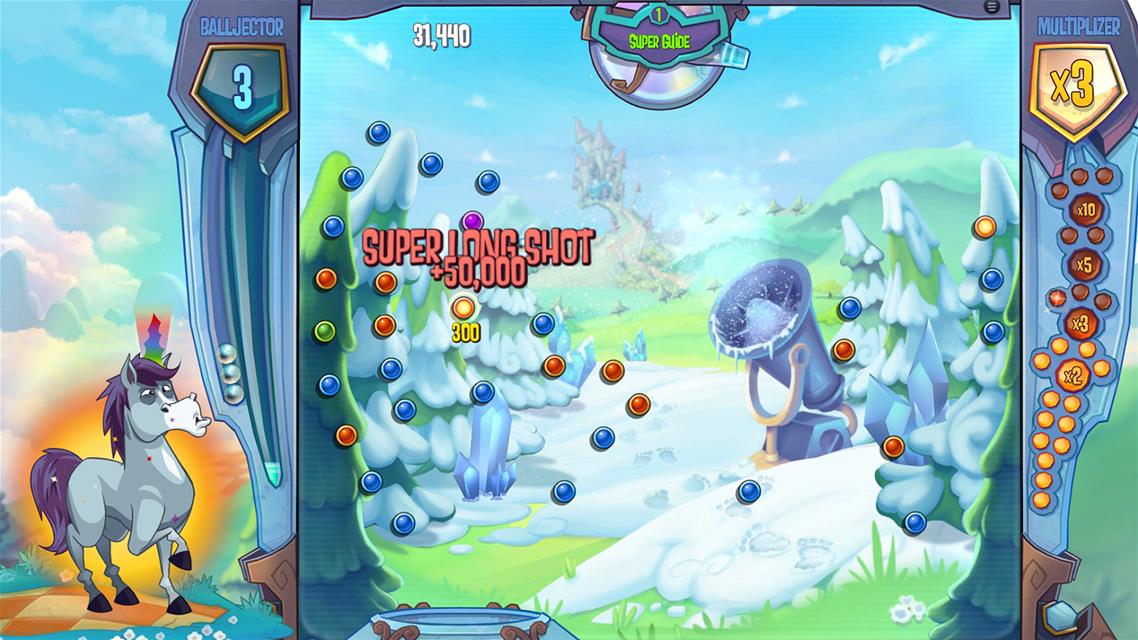
Same old Peggle.

Same old Peggle.

Having said that, wow, was Peggle 2 ever a let-down for me.

It’s not that Peggle 2 is a badly made game. The problem is, it’s the same fucking game as before. No new twists were added to the formula, beyond the special powers you gain from each world’s mascot. If they had done something more with the pegs, like added new ones that do weird, unexpected things when hit, it might have freshened up the experience. Instead, this feels more like an expansion pack than a sequel. But, they already did that with Peggle Nights. I didn’t get into that either. It’s safe to say, after our months-long bender of Peggle, I was burned out for life. Nothing short of a revolutionary gameplay mechanic could win me back.  Peggle 2 takes no risk, playing it safe and samey. As a result, over the five or so hours I spent playing it, I was never once having a good time. Not once. Not even for a second. It was all been there, done that, when is this going to feel like a sequel? The answer was never.

Some concepts were added to pad out the playtime. Each stage has three special objectives that you can complete to earn points. As of this writing, there’s no online leaderboards, which renders the point of points kind of moot, but I guess it was thoughtful. There’s also special “trial” stages where you’re tasked to do things like earn three bonus balls in a single shot. It sounds like it will be fun, but this is still Peggle.  It’s a game where randomness and luck are going to factor in more than any form of skill nine times out of ten. I found the trial stages to still be boring and repetitive, only with the additional strike of being too hard. There’s also online multiplayer battles, which again, are tough to love because the game is based around luck more than anything else. The same effect could basically be had if they had made Kinect Bingo the big digital launch title.
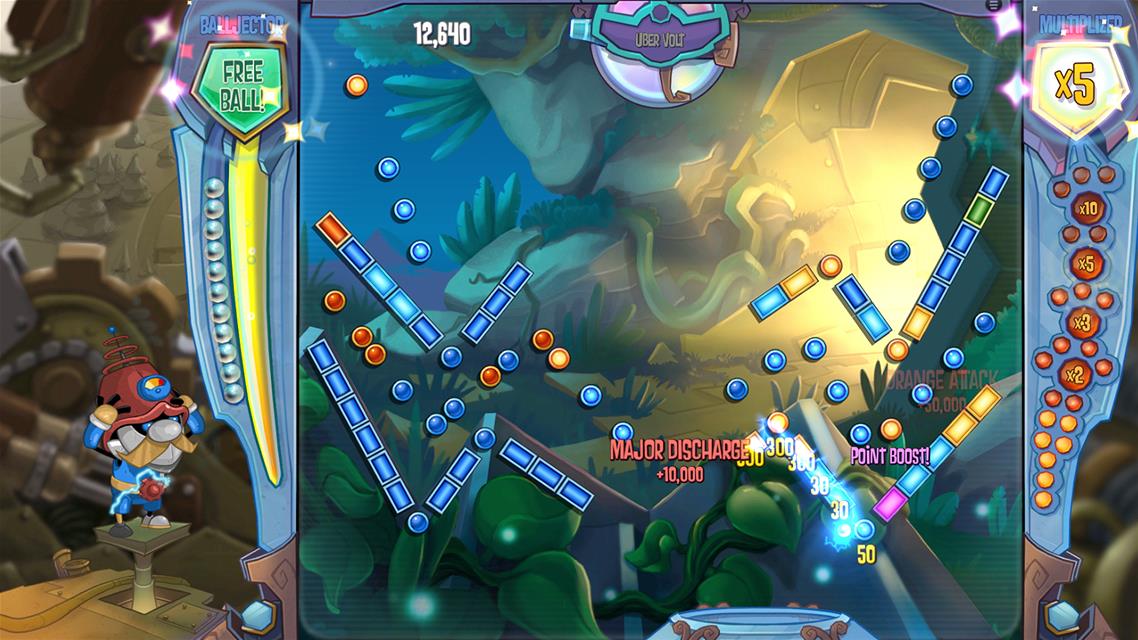
Yawn.

Yawn.

Also, a not-so-quick technical complaint: Peggle 2 way overuses the Xbone’s DVR function. In theory, it would be cool to have it record your coolest, high-scoring shots, so that the whole world can bask in your, let’s face it, dumb luck. But, in practice, the damn thing records every shot over a small threshold of points, so much so that barely a level passed without at least one shot on it being recorded. In five-hours of playing, I never once had a single shot I thought was worth saving, but there’s no option to set what level of scoring should and shouldn’t be saved. You also can’t turn off the DVR function for just Peggle 2. You have to turn it off for every game (at least as of this writing), or have it on for every game. I hope this isn’t a sign of things to come with the Xbox One’s DVR, but I fear it might be. They really do need to get on the ball about being able to turn it off and on for specific games. They also should try to figure out why some sessions had the achievement notifications pop up and others didn’t. I’m surprisingly fond of my Xbox One, but it is a buggy little bastard.

Do you know what’s most baffling to me about Peggle 2? That it’s an Xbox One exclusive. It just doesn’t seem like it fits with their image or their target demographic or any aspect at all, really. I’m sure Microsoft paid a king’s ransom for it, but I can’t help but wonder if PopCap (and corporate parent EA) lost out on a lot more money going this route. Peggle made its name by being on everything. It was on computers, phones, consoles, handhelds, microwaves, pacemakers, the works. I don’t know if I’m right. Who knows? I have no idea what kind of revenue Plants vs. Zombies 2 generated as a freemium iPhone game, but I do know they would have moved millions of copies at $20 a pop if it had been on PCs as well. I don’t know. Maybe EA doesn’t believe in PopCap themselves and this whole exclusivity bullshit with their marquee franchises is some kind of ploy to try to legitimize “casual” games as viable system-movers. First off, Nintendo already proved that they can back in 1989 with Tetris. Second, casual games are already legitimate to any gamer whose head isn’t stuck up their ass. But Peggle 2 doesn’t suck because it’s an Xbone exclusive. It sucks because I’ve already played it to death and it offered me nothing new. Just to make sure it wasn’t just me, I invited my parents in to play a few rounds with me. They still enjoyed it, though this time around they had no problem putting it down. Then my father asked me if people were seriously sinking $500 on a new platform just to play this, which I’ve really seen mention of on Twitter. I reminded him that if this had been 2007, he would have probably spent that for a sequel during our Peggle addiction period. “$500?  Psssh, I would have traded you for a sequel.” Gee, thanks Daddy.
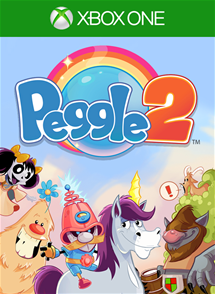
Peggle 2Peggle 2 was developed by PopCap Games

$11.99 noted that some people are complaining that the game is too short, so if you’re not burned out like me, you might not like that there are only five “masters” to beat and one final world in the making of this review.  Me? When those credits rolled, I felt like I had been paroled. 

Doki Doki Universe

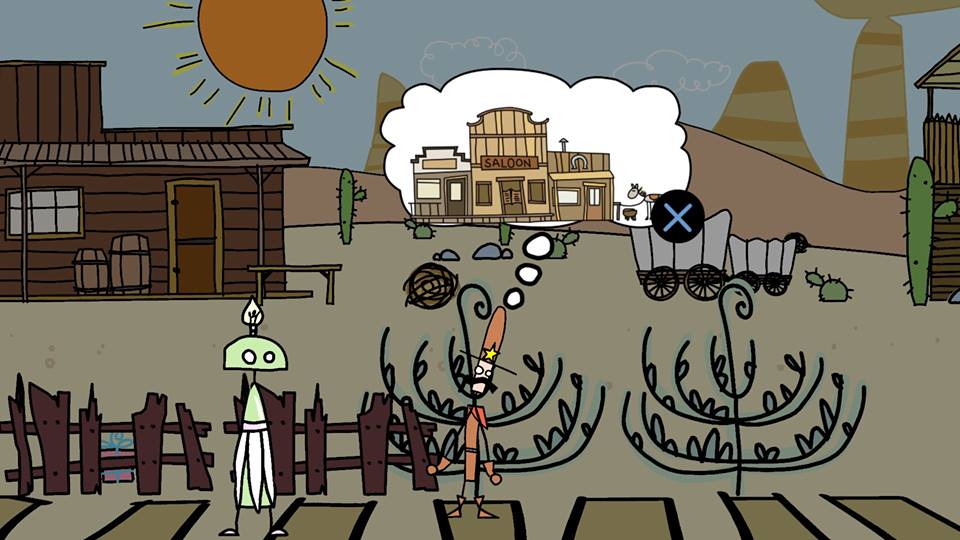
Doki Doki Universe comes from famed developer Greg Johnson. Owner of the most generic name in the universe that doesn’t contain “John” or “Smith” in it. I suppose that’s why his most famous title, ToeJam & Earl, is so outlandish. Somebody is overcompensating. But really, you can see the influence to a degree, along with the situational comedy of other titles he contributed to, such as Spore or the Sims 2. And, by situational comedy, I mean such events as adolescent, anamorphic sushi volunteering to be eaten alive by a nauseated sumo wrestler, or having to get a man turned into a toilet seat turned back human in time for his wedding. All this is presided over by a robot named QT3, who was abandoned by his family and set to be scrapped because he lacks humanity. However, if he can learn humanity from an alien named Jeff, he’ll be spared from the junkyard. Oh, and if you so desire, he can travel through space while ridding a giant mound of poo.

Eat Me

I typically only say this to haters.

Okay, so Doki Doki might pile on the “absurdity for the sake of absurdity” brand of humor a little too thick, but actually, it all is really quite sweet. Gameplay consists of choosing a planet to land on. Each planet has some human-condition theme to it. It might be jealousy. It might be bullying. I thought this was going to be obnoxiously heavy-handed. Instead, the over-the-top dialog and comical stupidity of it makes the delivery of the morality digestible. Basically, you’ll walk around the planet collecting “hidden” presents (that are often in plain sight) and conjuring up art-assets to solve the problems for each world’s residents. Every planet has a set number of tasks to complete. Once you finish those, you can go around trying to please or anger the population to earn more presents, which will either be experience points, new art assets to summon, or new decorations for your home planet. It’s sort of Scribblenauts, without the typing, done as a series of fetch-quests. But, unlike Scribblenauts, I found the whole thing really rewarding.

Doki Doki Universe plays out like a simplified personality tester. It’s not subtle about this at all. Sometimes, when making a decision, the game will declare in bold letters some attribute you have, based on your choice. If I told a rock that his name is Rock because he’s a rock, the game declared that I was a realist. What else are you going to name a Rock? Dwayne? Also, between planets, there are multiple little moons that feature a handful of questions that further test your personality. I tried to answer them as honestly as I could. After finishing each quiz (which are between 3 to 5 questions in length), the game will give you an assessment of your personality, and explanations for how they came to that conclusion. You can then return to your home planet to get a more thorough explanation that sums up all the questions you’ve answered. The game determined the following things about me, which I crossed-checked with friends and family to see how accurate they felt it was.

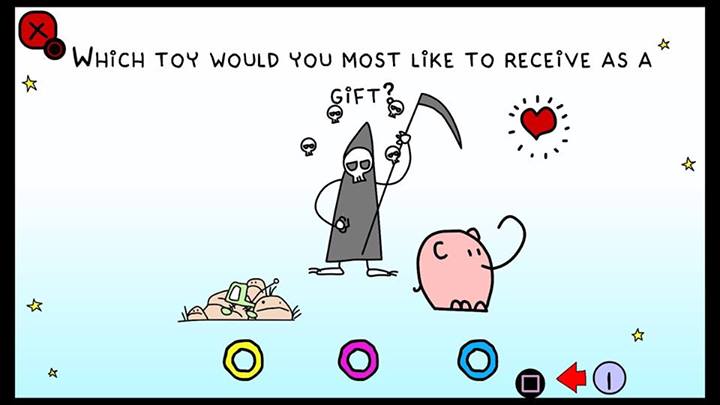
Sorry, no follow-up questions allowed.  Like I wasn't able to find out if the Grim Reaper toy had actual governance over the mortality of other toys or just make-believe powers.  So I chose the RC Car.

Sorry, no follow-up questions allowed. Like I wasn’t able to find out if the Grim Reaper toy had actual governance over the mortality of other toys or just make-believe powers. So I chose the elephant.

  • I enjoy wild and silly humor and visual comedy. 100% agreement.
  • I am a creator of art (not remotely accurate), and seek to enrich the world. The creator of art thing was debated upon. Is the stuff I write at Indie Gamer Chick a form of art? If the answer is no, the art thing is completely inaccurate. Everyone felt the enrich the world part was fair though.
  • I like stories set in the distant past or future. Change is exciting. Another direct hit.
  • In stories, I look for strong plot over emotion. We all agree, that’s not remotely accurate.
  • I search for beauty in the world around me. 100% agreement.
  • I have a good memory and I’m good at finishing things. My memory is great when it’s not messed up by having seizures. The finishing things part? I have like twenty reviews and editorials I’ve started but never finished here. I think that means “wrong.”
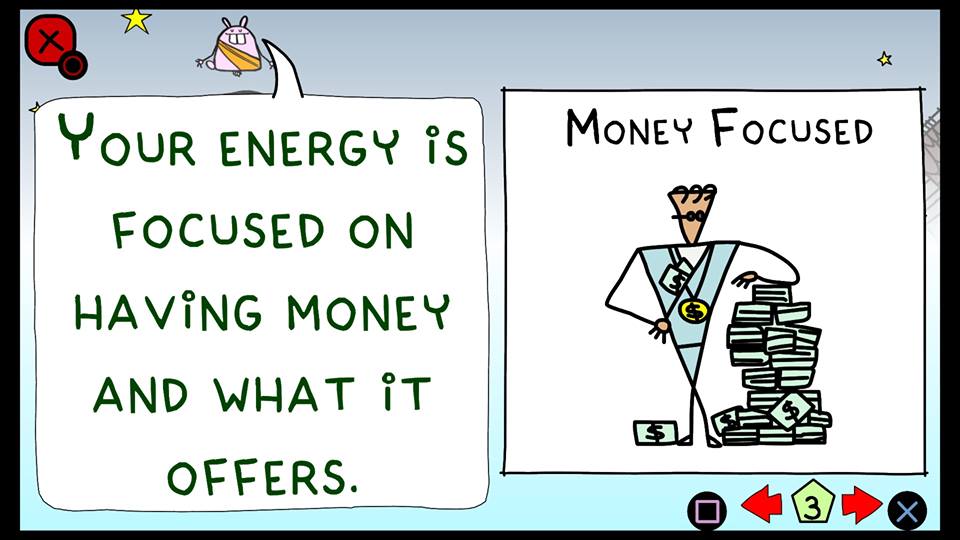
  • It also noted at various times that I’m motivated by money (check), have an excellent sense of rhythm (wrong), stand up for others (check) but never in a mean way (some XBLIG developers might disagree with that).
  • In total, we figured it was about 50% accurate.  Which at least beats my level of accuracy when playing Remote Viewer.

    In total, we figured it was about 50% accurate. Which at least beats my level of accuracy when playing Remote Viewer.

So basically horoscope-accurate. In fact, I’m sure the blind horoscope test will apply to pretty much anyone playing Doki Doki Universe. The blind horoscope test is where a room full of people are given the same horoscope, but told each person is getting a unique one based on their birthday. Typically, between 75% to 90% of the room will say the horoscope is “mostly” accurate in describing them. So while I was playing Doki Doki Universe, as my boyfriend watched, he often said “wow, scary accurate” to many things. When something is a hit, the reaction it generates is typically pleasure and awe, which causes your average person to not dwell upon the stuff that is grossly inaccurate. No, I’m not particularly artistic, nor am I rhythmic. But then again, I’m not sure if I expected different from a game that decided to test my personality by asking if I would wear an octopus as a hat. Which, for the record, I wouldn’t. A scarf? Maybe. But not a hat.

Beyond the personality crapola, my biggest complaint is that occasionally you’ll pick an item to conjure up for a local, but it will spit out an entirely different item and call it a “BACKFIRE!!” You can count on this happening at least once, maybe as much as four times, on a single planet. It doesn’t really impede progress, since you can’t game over, so it just because a brief, annoying waste of time that could quickly be overcome. It serves absolutely no point in the game (unless you believe my buddy Bob, who pointed out that sometimes you don’t always get what you want in life. Yea, but this isn’t life. It’s a fucking video game. Give me what I want). I also never really came remotely close to running out of the energy (called Dust-Bunnies) that you use to create the objects. In order to earn the trophy for using them all, I had to use the otherwise useless “find the hidden treasures” power about fifty times in a row. Doki Doki Universe is not a game you should approach if you’re looking for a challenge. I had Christmas presents that gave me a tougher time trying to open than Doki Doki gave me trying to get every trophy.

This is one of the DLC Levels. You can get all six extra planets for $3.98.  If you're into the personality tests, you can get all 24 extra of those for $2.98. The $24.99 "Limited Edition" pack is a total waste of money, with many of the features unrelated to actual gameplay.  Skip it, buy the extras separate.

This is one of the DLC Levels. You can get all six extra planets for $3.98. If you’re into the personality tests, you can get all 24 extra of those for $2.98. The $24.99 “Limited Edition” pack is a total waste of money, with many of the features unrelated to actual gameplay. Skip it, buy the extras separate.

But it was really fun. What I found most satisfying was the relationship between QT3 and a small red balloon on the home planet, which is actually named Balloon. It was the most genuine, heart-string-pulling gaming relationship I’ve seen in quite a while. Very moving, very loving, and it reduced more than one or two tough guys into blubbering crybabies. I was way more interested in what was going on between them than I was with QT3 and his girlfriend that shows up at the end. That whole bit reminded me of Snoopy Come Home, where everything revolved around Snoopy’s reunion with his previous owner, Lila, but when they finally met up it was still sweet, but kind of disappointing. Really, my biggest regret with Doki Doki Universe is that Balloon didn’t accompany QT3 on all his adventures.  Instead, you’re supposed to catch up between planets. I didn’t mind though. I loved the innocence of their dynamic. For a game with numerous shit jokes, it kept things between them pure, sort of like Christopher Robin and Winnie the Pooh, only without the mental illness overtones. So I really recommend Doki Doki Universe. It’s the first really good game available on PSN for PlayStation 4. Don’t worry, PS3 and Vita owners can play it as well. No having to sell a kidney on the black market to be able to play this one.

Doki Doki logoDoki Doki Universe was developed by HumanNature Studios

Seal of Approval Large$14.99 (plus $6.96 worth of DLC) also found out that this doesn’t make the most exciting game for live streaming in the making of this review.

Doki Doki Universe is Chick-Approved and Ranked (pretty dang high) on the Indie Gamer Chick Leaderboard.

NES Remix

No, it’s not an indie. But, I’m not exactly known as someone with a particular fondness for NES “classics” that grew stale before I was even born. When Nintendo surprised everyone Wednesday by debuting NES Remix and announcing it was out right now, it was bizarre. Almost as if they had no confidence in it. But, it looked vaguely like the 9-Volt stages in Wario Ware, which is pretty much my favorite game ever. And my Wii U was starting to get dusty again after I finished Super Mario 3D World. So, $15 later, I was going to see what this game Nintendo was so nervous about hyping for more than a few minutes was all about.

NES Remix is made up of micro-sections of sixteen early first-party NES games, most of which are no fucking good today and probably wouldn’t have been all that fun even back in the day. Look, I appreciate the historical significance of the original Donkey Kong, Super Mario, and Legend of Zelda. But the same franchises have been done better so many times since the 80s. To pretend otherwise seems kind of crazy. Meanwhile, the majority of the games in NES Remix really just aren’t any good at all. Baseball, Pinball, Tennis, Urban Champion, and Golf should be locked in a box and thrown in the middle of the ocean. And Ice Climber? I swear to God, I think it might legitimately be the worst game Nintendo ever made. Not only does it control like it was designed by someone who hates video games, but it also has a tendency to have players fall through the platforms because you’re “too close to the edge.” Even though you’re more than a full character-length on the platform. If there’s a worst first-party game Nintendo has ever put out, I haven’t played it.

Funny enough, it's actually easier to do the bouncy-turtles shell-lives trick in Super Mario 3D World.

Funny enough, it’s actually easier to do the bouncy-turtles shell-lives trick in Super Mario 3D World.

So, a collection of sixteen games that I either hate or am totally indifferent to? Games which have not been blessed with the gift of graceful aging? Games which I would never pay the price for off Nintendo’s Virtual Console if they were sold alone? Obviously, we’re talking a real game of the year contender, right?

Well, actually.. yeah.

NES Remix utterly owned me. I got it Wednesday morning, and I played it so much that I ran out the battery on my Wii U pad three times in a single day. Never mind how pitiful it is that a console could have the battery run out that much in a single day. I also will try not to focus too much on how there is absolutely no reason why NES Remix has to be exclusive to the Wii U, or that Nintendo unquestionably lost out on millions in revenue this week alone by not having a 3DS version launch alongside it. Okay, so that’s a lie. It’s kind of the elephant in the room and it requires scrutiny. Nintendo fanboys are saying it’s because Wii U needs exclusive software to justify owning it. That’s a fucking cop-out excuse if I’ve ever heard one. NES Remix is the perfect portable game. Pick-up-and-play mechanics, small goals, a large variety of gameplay styles, and no consequences if you think you have time to kill, turn on your device, then suddenly become busy and have to turn it off. Tethering this diamond to the Wii U would be like hiring Michael Jordan to be on your golf team. I’m sure he’s a damn fine golfer, probably better than your average schmo, but wouldn’t he be better suited on your basketball team? And NES Remix would be better suited on the 3DS. It just would be.

But, the decision was made, and NES Remix is slumming it on the wrong console. Fine. It doesn’t change the quality of the game at all. NES Remix is, as of this moment, the best digital-exclusive Nintendo has ever produced. Like Wario Ware, Nintendo has taken gameplay, stripped out most of the bullshit, then weaponized what was left into the most potently addictive micro-gaming chunks seen since, well, the original Wario Ware. This is gaming in its purest form.  Scoring and/or speed based, no frills, white-knuckle gaming. And I love it.

Sorry to disappoint white supremacists , but the game is called "Clu-Clu Land". With a "C". Just go back to playing Uncharted.

Sorry to disappoint white supremacists , but the game is called “Clu-Clu Land”. With a “C”. Just go back to playing Uncharted.

The NES games are divided into sections by game, which have anywhere between seven to over twenty levels per game, though I don’t believe every game has its own unique stage selection. Baseball, Tennis, Urban Champion, and Donkey Kong 3 seem to have drawn the short straw and don’t have their own sections, and that’s just fine with me. There’s also fifty “remix” stages that do something wacky with the gameplay or graphics, plus twenty-five “bonus stages” that seem more like deleted scenes, cut from the game for a reason. Each stage is scored on a scale from one-star to three-stars, plus if you do really good, a meaningless rainbow star thing appears that doesn’t seem to unlock anything.

The remix stages are treated like the meat of the game, but really, I enjoyed all the non-psychedelic challenges presented here. Stuff like trying to catch 1-up mushrooms in Super Mario, or fighting bosses in Legend of Zelda, one ten-second stage at a time, was hugely satisfying. It even managed to make games like Golf and Balloon Fight more than enjoyable, something I never imagined was possible. I knocked out most of those before I ever started on the Remix stages, which were often pretty cool too. You might have to play a full stage in Super Mario where the game auto-runs for you. As it turns out, Super Mario makes a great auto-runner. Who would have thunk it? Other challenges might be related to the presentation, like having the camera pull back, showing multiple, progressively smaller screens. When I played these stages, I would then look away from the Wii U pad, where my room now seemed to be pulling back and shrinking. It was trippy. And awesome.

Not all the remix stages were well conceived. A couple of them involve you playing Donkey Kong using Link. No, you can’t use your sword for some fucking stupid reason. Also, you can’t jump. Ever tried to beat the first stage in Donkey Kong without jumping? It’s way tougher than it sounds. You’re basically left up to the whims of fate, hoping against hope that the barrels don’t go down the ladders you’re about to cross, since you have no way of defending yourself or otherwise avoiding them. My gut instinct tells me they originally planned to let you use the sword for these sections (since it makes no fucking sense to have Link in Donkey Kong and not be able to swing your sword) but they couldn’t do it right (it’s really just a ROM hack, with Link painted over Mario), so they just left it the way it was. Of course, the whole ROM hack theory doesn’t explain why you can’t jump. Other ill-thought-out stages include Pinball (a crap game on its own, like most of the games in this collection) where the flippers are invisible, an Ice Climber stage where the only hook is the graphics become Game Boy-like (and this one screws up sometimes by having the mono-Gameboy sound be present during the NES part, and vice versa), or fighting “imposters” in Balloon fight that are the exact same enemies you already take on, re-skinned to look like you. Really, some of them are just plain lazy. But this is the same company that has put out roughly fifty-billion ports of the 75% complete NES version of Donkey Kong. I’m almost convinced that Nintendo is the Japanese word for half-assed.

The biggest problem with NES Remix is these are the exact same games that they’ve always been, only broken down into microscopic chunks. Although this makes some of the games more palatable, all their original control flaws are still present. I mentioned Ice Climber above, which is probably Nintendo’s most broken controlling game. But actually, the original Mario Bros. is nearly as crippled. The jumping physics are horrible, requiring you to build up momentum to make a jump. Only sometimes this doesn’t seem to work. Plus, landing on a platform above you requires you to land perfectly flush on it. If a micro-pixel isn’t on, you fall through the platform. In games scored entirely around timing, shit like this is fucking maddening. Additionally, Baseball, Tennis, and especially Clu Clu Land (my buddy Cyril’s choice for Nintendo’s worst first-party game) control the same as they always have: like shit.

One of the Zelda stages (not the one pictured) required me to use the candle to burn a tree down and reveal a hidden staircase. As God as my witness, I burned every God damned tree on the screen at least three times each and the staircase never appeared. I restarted the stage and the next time the very first tree I torched revealed the staircase. I'm not sure if it was a glitch or not. I never bothered to replay it after that. I had already ripped out enough of my hair by that point that my scalp was bleeding.

One of the Zelda stages (not the one pictured) required me to use the candle to burn a tree down and reveal a hidden staircase. As God as my witness, I burned every God damned tree on the screen at least three times each and the staircase never appeared. I restarted the stage and the next time the very first tree I torched revealed the staircase. I’m not sure if it was a glitch or not. I never bothered to replay it after that. I had already ripped out enough of my hair by that point that my scalp was bleeding.
Another issue, which is kind of minor, is that the difficulty of each challenge, in terms of what will give you a three-star rating and what won’t, varies wildly. In one of the Super Mario levels that is divided into three sub-stages, the object is to enter a warp pipe. The target time for three stars was 30 seconds. Getting this required near-perfect runs. I twice finished at 30.1 seconds because I had trouble lining up in the under-water pipe or something. Eventually, I did get the three-star rating I had coveted, clocking in at 29.6. No rainbow stars though, and I’ll be damned if I can guess where I could possibly make up the time for it. Edit: Oh my God, I am such a fucking idiot.  I thought I had attempted to enter all the pipes in the second stage. It turns out there was a much, much closer pipe I could have entered than the one I was going into. I just finished in 24 seconds and rainbowed. I suck. But then I would play multiple other stages where I could die three or four times and still score three-stars with rainbows even though my performance could best be summed up as “pitiful.” There was no consistency from one stage to the next, and it takes the oomph out of the sense of accomplishment I sometimes felt.

Despite those issues, NES Remix is honest-to-God my new favorite Wii U game. Certainly Nintendo’s best digital-exclusive in their history. I was utterly hooked for three solid days on it. It even did the impossible and made Urban Champion fun for like five seconds, which by my count, is three seconds longer than Wario Ware accomplished. (UPDATE: I hadn’t ever played Urban Champion by this point, and eventually gave it the IGC Seal of Approval. Go figure!) Although I have no fucking clu-clu why this is exclusive to Wii U, this is a must own. At least, I think it is. Opinions are hugely divided here. One trend I’ve noticed: older gamers that played the originals to death in the 80s seem to like this a lot less than myself and younger gamers have. I’m guessing if you’ve played the original Super Mario Bros. once a week for the last thirty years, you probably would be bored by some of the “challenges” here, like playing level 3-3 with all the platforms invisible. See though, I don’t have every nuisance of these games committed to memory, and probably for that reason, this could very well end up being my Game of the Year. So a word of advice to the younger Nintendo fanboys out there: don’t schedule a monthly play-through of New Super Mario Bros. or Pikmin 3, or else when Wii U Remix comes out in 2043 for the Nintendo Wii UeuPrince logo.svgmI3, you’ll be sorry.

NES Remix LogoNES Remix was developed by Nintendo

Seal of Approval Large$14.99 said “the game just fucking came out, so stop talking about sequels already you annoying fucking fanboys” in the making of this review.

NES Remix is Chick-Approved, but not remotely Leaderboard eligible (non-Indie)

ibb & obb

Do you know how long it’s been since I downloaded ibb & obb with the intent of reviewing it? 128 days. They even threw me a review code to pass out to a friend to test the online play. It’s not out of laziness that I haven’t gotten around to writing it up. It comes down to two things. First, the original build that released had some patchwork needed, and since my slate was full at the time, I let the developers fix it up before continuing further. And second, and certainly most importantly here: I couldn’t find a partner to play with, even after I handed out the code. Because apparently I have a bit of a temper about me and my partners didn’t appreciate being called idiots. Even my boyfriend. But, it’s not my fault. ibb & obb is a game designed to ruin relationships.

ibb & obb is a cooperative puzzle-platformer. Well, unless you’re talented enough to play solo by controlling Ibb with the left stick and Obb with the right stick. Freak. I don’t possess that talent, or any other coordination-based talent.  I can barely throw a robe on without breaking at least one bone in my body. Thus, I was forced to play with partners. The results were not pretty.

Do you know what I hate about the PS Store?  It often has either the trailer or pictures, but not both. In the case in Ibb and Obb, I had to swipe the pictures from Ibb and Obb's official site, which only had pics of the prototype.  Screw it.  Just look at the trailer below.

Do you know what I hate about the PS Store? It often has either the trailer or pictures, but not both. In the case in ibb & obb, I had to swipe the pictures from its official site, which only had pics of the prototype. Screw it. Just look at the trailer below.

Partner One: the Boyfriend

Our first attempt at playing ibb & obb came back in August. At first, we thought we would really dig the clever level design, which heavily stresses teamwork. Especially using each-other as platforms to reach higher plateaus. ibb & obb has a hard-on for that set-up. Of course, it also heavily leans on the “reverse-gravity, walk on the ceiling” school of platform design that I used to think was cute before I became Indie Gamer Chick. Since then, I’ve seen no less than twenty games attempt it, and it gets more annoying and unoriginal every time. Ibby Obby tries to at least mix it up by having the gravity stuff take place all over the map, often forcing you to use the gravity as a sort of springboard that you launch yourself to a higher platform with. And, for what it’s worth, Brian still thinks the level design is splendid. He just refuses to play with me. Because he doesn’t like being smacked in the head and called an imbecile when HE screws up jumps. I never screwed up jumps. Perfect jumping is one of my finer qualities, second only to my modesty.

ibb & obb demands utter perfection in the puzzlish jumps it presents you. There is nothing wrong with that kind of platform design, if the game’s controls are tight and responsive. ibb & obb does not possess those qualities. That, and that alone, kills it dead.  It’s just too damn frustrating how loose and slippery the controls are. Now, in the original build, the D-pad was completely unmapped, which meant you were stuck using the incredibly over-sensitive analog stick for all the movement. The patient team at Sparpweed Games, who I utterly respect the shit out of despite hating their game, promised they would use my early feedback. And they did. They added D-pad support, which made a world of difference, but the characters still slid a lot when moving and jumping. The looseness and imprecision of the controls was far and away the most challenging aspect of ibb & obb.

Even with the D-pad, we found it hard to line-up jumps, stack ourselves, or aim long-distance jumps without overshooting. If this had been a single-player game with only one character to worry about, I would have been frustrated to the point of meltdown. But ibb & obb is a cooperative game, which means you need precision of not just one, but two players. Both of whom need to play absolutely perfectly, especially in later stages. Every enemy is an instata-kill, and one player dying means both players have to start from the last checkpoint. Now granted, the checkpoints are very generously present, often immediately before each new “puzzle” in a stage. But when the loose controls result in puzzles that can take up to thirty minutes to clear, in part because coordinating two people to solve a puzzle is akin to learning a new dance from scratch, my frustration reached a level that I later learned is called “domestic violence.” Brian took it with good grace, because he’s that kind of guy (and also because I wear the pants in this relationship), but he’s not a regular gamer, or a puzzle person, or particularly smart. He also got sick of me saying he wasn’t particularly smart, then showed his intelligence by telling me to find someone else to play with.

The reverse gravity thing used to be novel. Now, it's almost a prerequisite if you want to make an indie platformer.

The reverse gravity thing used to be novel. Now, it’s almost a prerequisite if you want to make an indie platformer.

Partner Two: a friend I met through Indie Gamer Chick

A few weeks ago, I was bitching about the, ahem, quality of my partner on Twitter when a skilled platforming fan that I met through Indie Gamer Chick offered to play a bit with me. Mindful that I have difficulty communicating, we hooked up and attempted to play. This was a bit of a disaster, partially unrelated to the game itself.  I do have quirks related to my autism, one of which being I tend to talk over people during those times I can speak.  I try not to, but it’s tough. That annoyed him. He annoyed me by being non-stop sarcastic. Sarcasm is a tricky thing for me, because most of the time I’m incapable of recognizing it, even when it’s obvious. My brain processes information literally, like Drax only not as sexy. If I write sarcasm, I know my intent, but hearing it from others throws me off. And this dude could not grasp this concept. We got on each-others nerves.

Now thankfully, there is a communication-aid in the game that draws the pathway you’re trying to show by using the right analog stick. Sounds great, except even once you and the partner get done arguing over the solution, you still have to both be very precise with very imprecise controls. Again, the later levels leave little room for error, which meant both of us were screwing up. Like I did with Brian, we both laughed during the first few screw-ups. But once you’ve crossed a dozen between you (mostly via me, I admit), frustration and anger sets in. We did make progress, but the constant follies that were more on the shoddy controls than us were too much and we both agreed we weren’t having fun. And that if we had been sitting next to each-other with sharp objects, at least one of us would be dead.

Partner Three: The Business Partner, then his Kid

I don’t even remember what game it was, but last year my partner Christian dropped by my house to talk about something or another and we ended up playing a game I was reviewing for Indie Gamer Chick. We don’t exactly have the type of relationship outside of work where we just randomly game, so it was a cool bonding moment. Last week, Chris dropped by the house and I thought “hey, I should show him ibb & obb.” Chris had recently been playing New Super Mario Bros. Wii U with his son, age eight, so I figured I would show him an indie version of a platformer. It took me about ten seconds to realize he wouldn’t exactly be a premium playing partner. He literally couldn’t do such simple actions as jumping on top of me. So his kid Brent took over. An eight-year-old, mind you, who kept asking why the controls weren’t more Super Mario-like accurate. It made me wonder how high the ceiling for ibb & obb would have been if it had NSMB-levels of accuracy. Although Brent took direction relatively well, not to mention that ibb & obb sure looks like it would be aimed squarely at his age-range, it was too difficult for him. We then booted up Wii U and he proceeded to utterly humiliate me at Mario. Kid is going to be a pro someday.

Sorry guys, I had to make due with the pictures I had available. For what it's worth, the  whole game doesn't look like this.

Sorry guys, I had to make due with the pictures I had available. For what it’s worth, the whole game doesn’t look like this.

Partner Four: Daddy

So it’s come to this. By this point, I had tried ibb & obb multiple times with Brian, and a few times with various other people. I never really got over how loose and annoying the controls were. But, ibb & obb’s level design is undeniably clever. I get accused of quitting many games I play at IGC too early. Actually, often I quit and then while writing the review I go back and give it another shot, just because I don’t feel good about it otherwise. I try my best to be fair.  In that interest, I borrowed my father. Even he commented on how bland the game looked, and he was unaware that this had been a showcase title during Sony’s last Play event. Alas, my father is not a gamer. ibb & obb’s more challenging platform sections and loose controls require someone with experience, and my father is always the one holding everyone back when we play New Super Mario. He’s also probably reading this right now. Hi Daddy. Don’t worry, I didn’t tell anyone that you pronounce Mario “Merry-Oh.”

In conclusion, ibb & obb is a game that probably should have been a lot better than it turned out. I feel like Tim Russert, writing “CONTROL CONTROL CONTROL” on a marker-board, because that’s all that ibb & obb needed. The concept is as niche and indie as possible, and if you don’t have a partner, don’t bother even trying. But currently ibb & obb is free on PS+, and at that price, it’s probably worth looking at, just based on how good the intentions were here. A lot of thought was put into the puzzles, the level design, and the cooperative gimmick. But, I didn’t really like it. And maybe it’s not entirely on the controls. I love puzzle games, but puzzles to me are something I prefer to work out on my own. Portal is one of my all time favorite games, but even playing Portal 2’s coop with people who I genuinely love felt like I was having my space violated. And then you have the moments where ibb & obb is more about the platforming precision, almost like a punisher, where one or both players end up holding each-other back over multiple attempts. It’s not an experience that’s best shared, in my opinion. Little Big Planet kind of figured that out.  It’s not a game that, on its own, is especially difficult. But the more players you add, the greater the odds that someone is going to fuck up and force everyone to restart. Now imagine ramping the difficulty of level design on that up. It would be maddening. Combine that with the loosened controls, and any fun would have long been replaced by aggravation. ibb & obb has been critically popular (though I think the big-league critics give minimalistic indies a lot of leeway they otherwise wouldn’t), so maybe I’m in the minority here. Or maybe I would have enjoyed it more if I had personally been more skilled at it. I mean, I get that a lot, where people determine that the only explanation for my dislike of a game is that I must suck at all games. It’s a bullshit theory. I love Spelunky about as much as anyone reasonably could, and if I were any worse at that game, I would be able to use it to qualify for disability.

ibbibb & obb was developed by Sparpweed Games

$7.99 with PS+ discount (at the time I purchased, currently free with PS+) thought the name sounded like something that would be seen on Nickelodeon in the making of this review.

A review copy of ibb & obb was provided to Indie Gamer Chick. The copy played by Cathy was paid for by her with her own money. The review copy was passed on to a friend to test online play. That player had no feedback in this review.  For more on this policy, check our FAQ.

Iota

Protip: when naming your game, don’t give it a name that is just asking to be mocked.  Such is the case with Iota.  If I wanted to be an unoriginal wiseass, I could say “I didn’t like Iota one iota.”  But I’m above such laziness.

Well, then again, I’ve been updating only like once a week for a couple of months now.  So fuck it.  Laziness for the win.

I didn’t like Iota one iota.

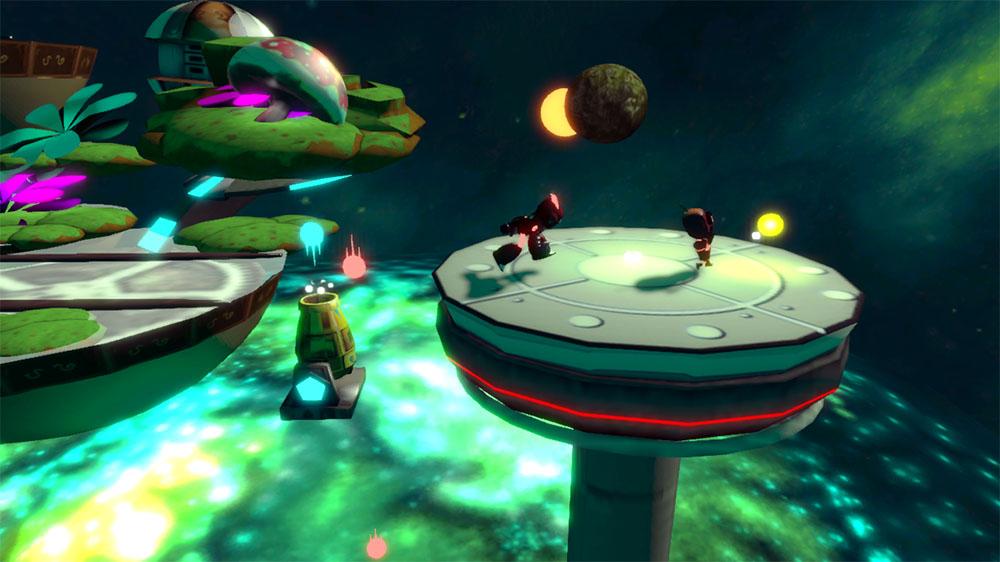
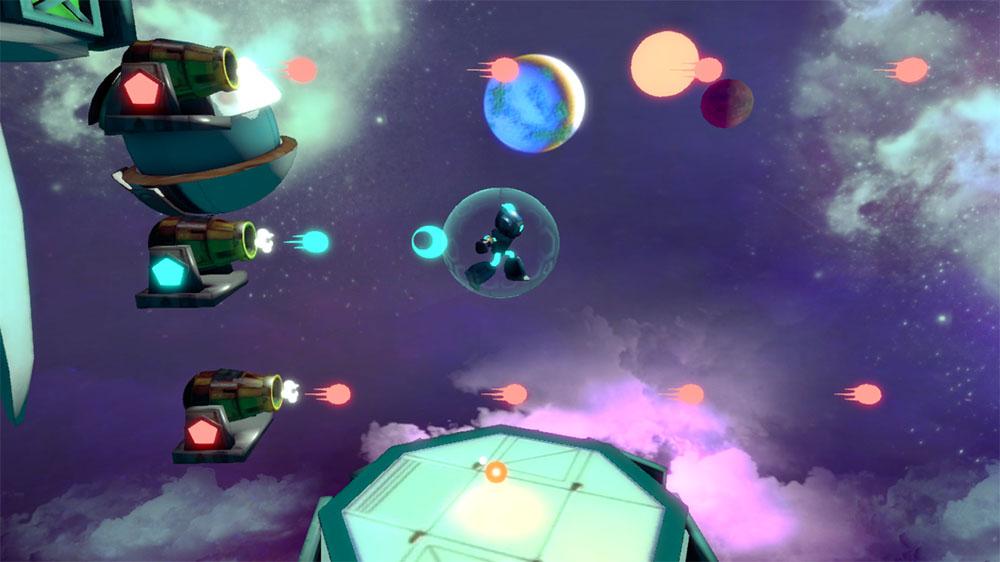
Iota looks really good.. for an XBLIG. But typically, really good XBLIGs would look merely decent on Sega Dreamcast.

Iota looks really good.. for an XBLIG. But typically, really good XBLIGs would look merely decent on Sega Dreamcast, which you’ll note is fifteen years old.

Iota is one of those XBLIGs that falls into the category of “looks too good.”  It’s the curse of the platform.  With only a few exceptions, the better an XBLIG looks, the worse it plays.  Iota looks pretty dang good, which means the curse is especially potent here.  The idea is you play as a robot that must go around stages collecting shiny balls of light.  Collecting all of them opens up a shinier ball of light, clearing the stage.  Oh, and the platforming is sort of like a stripped-down Outland, which itself could best be described as “Ikaruga with jumping.”

In the interest of fairness, I’ll disclose that I’m not wired to really like Iota all that much to begin with.  I don’t like bullet hells, and I don’t like platformers that drink the bullet-hell Kool-Aid.  But, in the case of Iota, the stuff I dislike the most has nothing to do with the bulletly hellness of it, and honestly the bullet-hell stuff isn’t even that bad, at least up to the point where I determined that I would never have fun with this and quit.  Quick: what’s the most important thing a precision-based platformer OR a bullet hell would need?  Tight controls, right?

Guess what Iota doesn’t have?

If Sega hit the Sake too much and made a platformer that controlled exactly like Sonic the Hedgehog, only heavier and starring Juggernaut from X-Men, that’s what Iota would feel like.  Starting movement is too slow, stopping isn’t instantaneous, jumping feels too heavy or sometimes just doesn’t respond in time at all.  In just the first three levels, I lost count of how many times I went to jump, hit the button long before I got to the cliff, and then watched as my character didn’t jump and plunged to his death.  If it was less than ten times, I’ll eat my hat.

I didn't like it, but it did help to pretend this was a modern ReBoot game :P

The 2.5D perspective also made calculating distances and heights annoying at times, but that’s hardly Iota’s biggest problem.

Another issue is the inconsistency of the color-swapping bullet hell gimmick.  You switch the robot from red to blue, which allows you to pass harmlessly through bullets.  Using the triggers as a sort of dash-attack, you can also knock out the enemies.  Except the game is a bit fickle about the timing of it.  Switching mostly allows you to instantaneously pass through the bullets with relative ease, but upon landing on the platform and dashing into the robot (which has to match your color in order to kill it), sometimes it would register me as still changing colors, resulting in a death.  I experimented with this a lot (probably more than any play-tester did, judging by how bad it is), and it was bizarre how the bullets could be passed through instantaneously, but there was a lag in using it to kill enemies.  I found out that the jumping and landing had nothing to do with the lag.  I could situation myself on a platform, wait for the robot to come at me, switch colors, to the point that my robot looked fully like he had switched, dash, and die because it thought I was still the wrong color.

Level design was nearly my biggest issue, which is really impressive considering that I only played four stages.  I don’t think the idea of collecting all the trinkets in a level to open up an exit works in a game like this.  Maybe it was worth experimenting to find out, but really, a game based around one-hit kills and a broken checkpoint system should have simply been about getting from point A to point B.  With all the backtracking, it bogs the game down, makes it less exciting.  And then there was the third level, which is almost entirely done in the dark.  It’s not a particularly hard stage, but because you have very limited visibility, you have to heel-toe it, nudging the stick one tiny bit at a time, like you’re masturbating the microscopic penis of a Ferrari owner.  It’s shameful that the developers didn’t recognize this as BORING design.  Because, above all else, your games should not bore.  Every other aspect of Iota has potential to be a pretty decent platformer.  But a stage like this, which can’t be played at a speed above molecular-degradation of an atom, never had potential to be anything but the most boring level in platform history.  It’s only purpose is now to point and it and say “for fuck’s sake, don’t ever make a stage like this” to other developers.

Although I found nothing to like about Iota, I don’t deny this could have been something good.  Certainly a foundation has been laid for something that could be entertaining.  But Iota put a premium on graphics, and didn’t focus on the stuff that really matters in a platformer of this sort, and the result is a game with limited value.  Tighter controls would have made a world of difference here.  And stuff like the all-dark level should have never entered into the thoughts of the developer.  Ten seconds of research would have shown that the number-one gripe of the vast majority of Spelunky player  are the dark stages, and in Iota, the visibility a player has is much worse.  Thus, Iota serves as a reminder that, with the freedom indie developers have, the flip side is you end up with level design such as this that nobody in their right fucking mind would attempt.  I absolutely can’t believe the developers didn’t second-guess some of the design choices here.  Ultimately, Iota’s only hope is to lure people in with its impressive graphics.  Except, Iota really only looks good for an XBLIG.  And that’s like saying melanoma looks good as far as cancer goes.

xboxboxartIota was developed by Cashie Brothers

$1 will be keeping an eye on the Cashie Brothers, as I suspect they’ll get things right in their next game in the making of this review.

Gameplay footage courtesy of Splazer Productions

Contrast

Do you know what the irony of Contrast is?  It became the replacement PlayStation Plus PS4 launch game when Driveclub didn’t make its deadline.  That makes me laugh, because there is no way that Driveclub could have been more unfinished than Contrast.  Here’s a game whose concept I loved before I even tried it, and even while I was playing it, I so wanted to love it.  And, in a sense, I did.  But, like someone with an elderly dog that keeps making a doodoo on the carpet, at some point you have to admit it’s over and put it down.

Really, there isn't a whole lot of contrast in contrast. Levels range from dank and dark to dank and dark.

Contrast at least fills the indie quota of being dark enough to cause clinical depression.

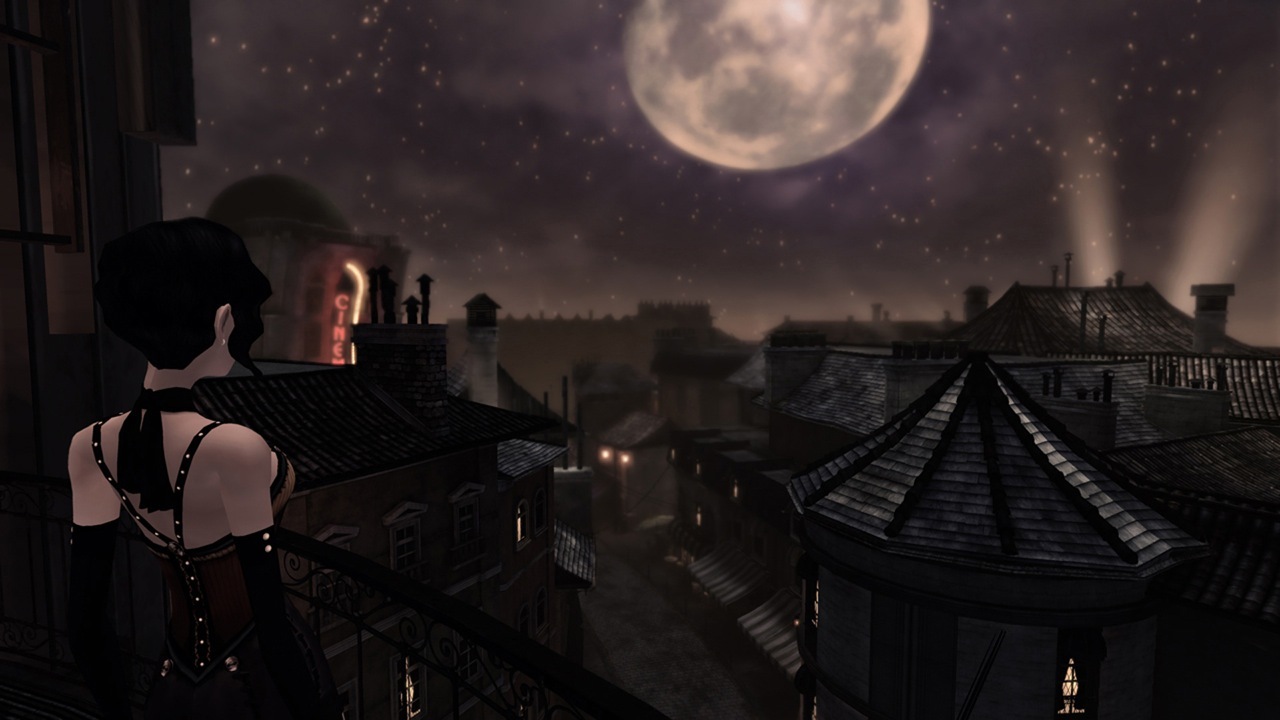
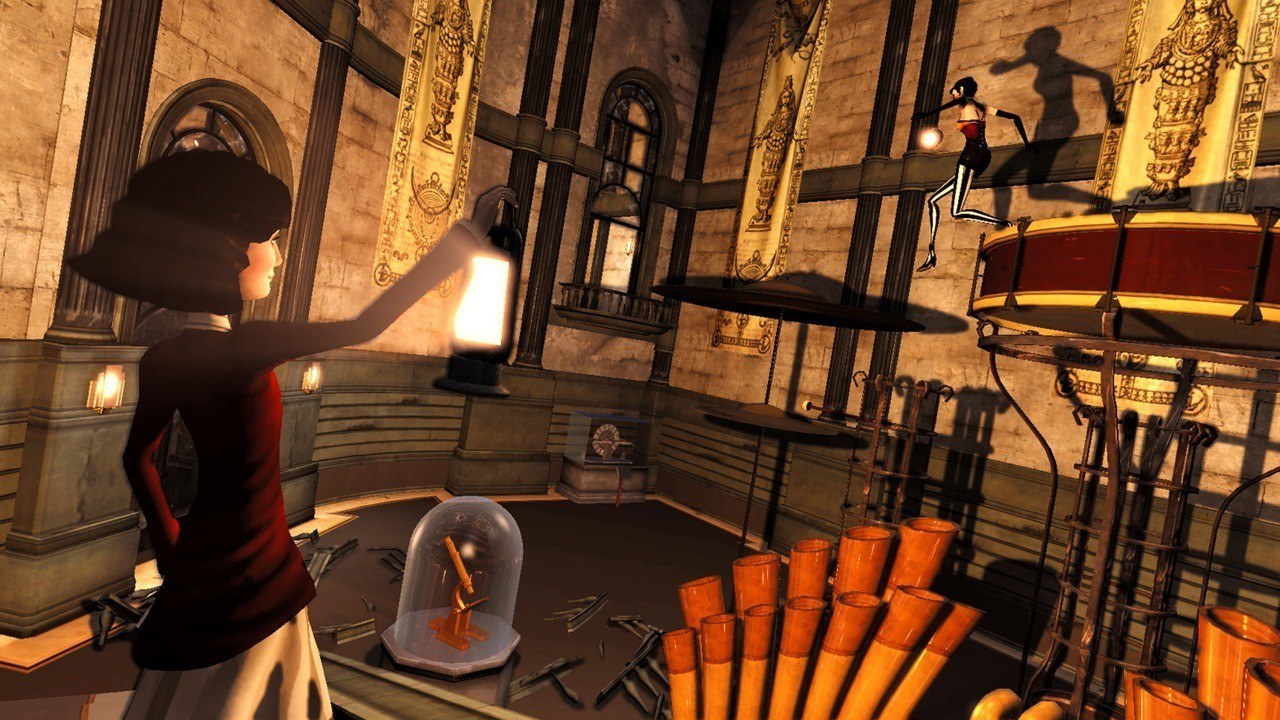
Contrast takes place in a stylized 1930s art-deco world.  The idea is you play as on over-imaginative young lady named Didi, who defies her mother’s wishes by sneaking out of the house and going on an adventure of sexual intrigue, betrayal, and discovery.  Honestly, I thought the story was heavy-handed and boring.  The setting did nothing for me, mostly owing to how damn empty and artificial it all seems.  Perhaps if the world had seemed more alive, I could have gotten into it.  But the world of Contrast seems so drab and lifeless, as if nothing fun or whimsical has ever graced it.  Which is really fucking bizarre because of how damn cool the hook is.

The idea is, gameplay can shift entirely into your shadow on a surface as long as there’s a light projecting it.  I love this idea, even if it’s so shamelessly convoluted in the ways they had to implement it.  I call this “Aquaman Syndrome” because it reminded me of how the Super Friends scriptwriters had to come up with the most roundabout ways imaginable to include Aquaman in the show, like having Lex Luthor steal the plans for a Doomsday Device that was hidden underneath a fish store.  So, you’ll spend a lot of time in Contrast moving light fixtures around, so as to make sure all the shadows cast are exactly the right height and right size that they can be platformed across.  Then you’ll spend the next three weeks readjusting them over and over again while cursing the Gods that Watch Dogs fell behind schedule and you’re stuck doing this instead.

I have no idea why, but at times this game made me think of Castlevania 64. For no reason at all, but that's what popped into my brain.

I have no idea why, but at times Contrast made me think of Castlevania 64. For no reason at all, but that’s what popped into my brain.

I can’t stress enough how tough it is to properly calculate where to line up those shadows when it’s up to you to project them.  Maybe it was just me, but I often could not get a feel for the sense of scale the game required.  It also doesn’t help that many of the puzzles are timed, with the shadows reverting back to their original positions if you don’t move quickly enough.  Early in the game, one of the puzzles took place in an enormous, sprawling room where I had to position lights, elevators, and platforms just right, or else I would have to go back and position them all again.  Gateways had similar puzzle designs, but at least there the controls were tight and objectives and end goals were more clear, thus making the complex puzzles boil down to simple reverse-engineering.  Here, I typically was never sure exactly where the final landing point was, and the controls were loose and sloppy at best.

I didn’t make it much further past that room at the hotel, in the first fucking chapter.  Yes, shameful as hell of me, I admit.  I should hang up my critic card and shoot myself or something.  But here’s the thing: Contrast is clearly not finished, and since it’s not, I don’t really feel under any obligation to complete the game myself.  It was not ready for prime time.  While running around, looking for things to dash into, I got stuck in walls no less than one hundred times over the course of a couple of hours of wandering around.  I honestly don’t remember any game where I clipped into walls even 10% as much as I did here.  More over, sometimes the glitches are just super random.  While running around a fire escape, she started jumping, without me pushing any buttons besides the control stick.  She just started springing up and down like she was busting for a piss while using a pogo stick.  Not only that, but she seemed to be jumping much higher than the natural jump mechanics allow for.  It’s one of the most randomly bizarre bugs I’ve ever come across.  It didn’t kill the game or impede my progress in any way, but just having it there made me feel like I was wasting my time at amateur hour.

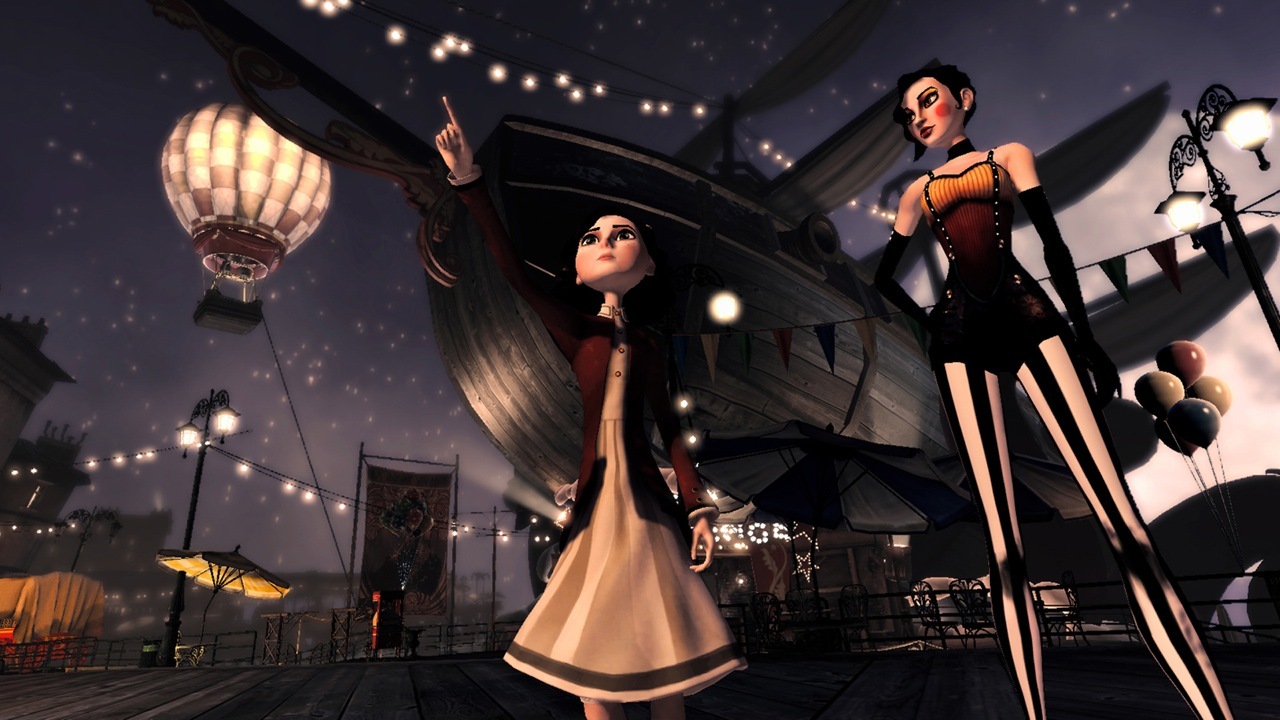
Apparently, nobody told her that only monkeys point.

Apparently, nobody told her that only monkeys point.

Plus, as a showcase game for PlayStation Plus and PS4, Contrast sure is ugly.  It would have been ugly on PS3.  It looks more like an early PS2 game, and not a good-looking one.  Completing the “just now released after twelve years in the can” feel of Contrast is an unstable camera and clippy character models.  There is nothing “next-gen” on display here.  I’m so disappointed because the gimmick was solid and the setting could have held a lot of promise, even if the Film Noir thing is getting dangerously close to over-saturated.  This was a weird one for me, because I loved it for the first hour or so, even if I spent a lot of that aimlessly wandering around the lifeless city.  But as I came to realize how unpolished Contrast was, my love quickly was replaced by loathing, and I suddenly noticed how broken so much of it is.  How the phasing into the walls was touchy, slow in response, and not suited for the types of quick-actions the game sometimes requires.  Or how sometimes I would have to stab the square button multiple times to activate a switch, even though I was lined-up correctly enough to have the context-sensitive “PRESS SQUARE YOU IDIOT!!” prompt on the screen.  Or how I spent more time bouncing off invisible walls than I did navigating successfully to the next area.  So sadly, I must ask Contrast to take a seat next to Mortal Kombat Gold, NFL Fever, and Evergrace in the “victims of a launch deadline rush” memorial wall.  Contrast wasn’t quite as dead on arrival as those titles, but the last rites have been administered and its time to go all Old Yeller on it.  Bang.  Tears.  Fade out.

ContrastContrast was developed by Compulsion Games

Contrast was free with PlayStation Plus, normally priced $14.99. 

Booyah for Ouya?

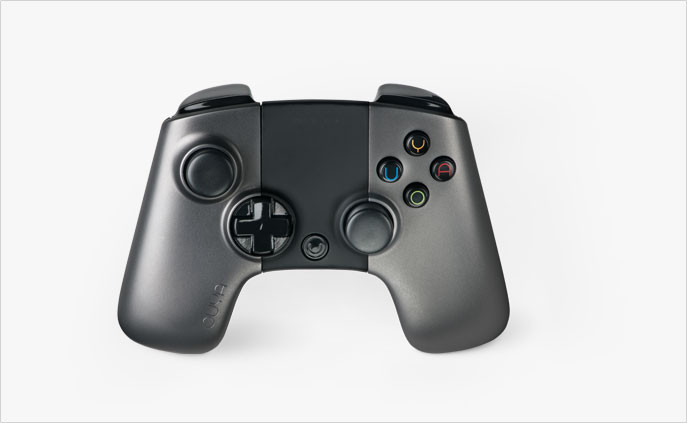
Let’s get one thing out of the way really quick: the Ouya controller is horrible. One of the worst gaming controllers I’ve ever encountered. Now granted, I wasn’t around for such unworkable inputs as the Intellivision pad, the Atari 5200 floppy stick, the Jaguar, etc. The closest thing I could compare the Ouya’s controller to is a generic plug-and-play controller I picked up from a Walgreens for under a dollar on clearance. Laggy. Unresponsive. Cheap-feeling. Tough to corner with. The bumpers are horrendous. And the way you put batteries in it is just fucking absurd. This controller SUCKS! There’s word going around that Ouya kiosks are being set up, and I can think of no quicker way to sink the system for good. If they don’t fix the controller, they’ll drive away more people than they’ll convince to purchase. Almost every game I tried out for it, I was immediately aggravated by. I almost wrote the machine off entirely.

And then I plugged in a PS3 controller. I swear to God, it became an entirely different experience. Games were suddenly playable on the damn thing. I can’t stress enough: as soon as convenient, dump the Ouya controller for a PS3 or Xbox pad. Then find the nearest hammer and take it to the Ouya pad, so as to never be tempted by it again. If a game comes out that doesn’t have alternative controller support? Fuck it. Not worth your time. Not that the PS3 support is perfect. I couldn’t turn the fucking controller off when I put the system to sleep. The option that says “turn off controller” in fact does not turn off the controller. The only way to turn it off was to physically unplug the Ouya. And not every game has support for it, despite the fact that developers told me including support is super easy. For a few games, the mapping seemed to either not work or be off in some way.

Fuck you.

Fuck you.

With the PS3 pad, my Ouya became a perfectly fine little Android-based gaming device. But the controller is hardly the only problem it has. The interface is missing a lot of key things that most consumers care about. Like, oh, THE FUCKING PRICE OF THE GAMES! There is no listing for the prices for anything on the market, or even on Ouya’s website. Instead, you have to download the demo for the game first. Only it’s not called a demo. It’s called a “free download.” Now, if you’re not familiar with the system, someone might think they’re pulling a bait and switch here. But this is also bad for people on a budget. Let’s say you only have $10 to spend. You can’t sort out anything that costs more. It’s something that dreamy-eyed idealists would probably think is a good idea. In practice, players are not going to wade through games of unknown price until they finally stumble upon one they can afford. They’ll just spend their budget on a different platform. This is yet another “what were they thinking?” moment, of which Ouya has plenty of.

It’s especially annoying for me because I don’t sample anything I intend to review at Indie Gamer Chick. I select games for review based on how they look and sound in concept, or maybe a trailer. That’s just my preferred style. It’s often not possible on Ouya. There’s too much emphasis on demos and not enough on sales. Another problem is there is no way to sort games by new releases. A lot of people, myself included, enjoy looking through new releases. The lack of such a tab really hurts the novelty of digital distribution, where any given day could be the day that a platform’s new best title hits. Instead, you have to poke around the genre tabs. If “what were they thinking?” is the number one running theme of the Ouya, inconvenience is the number two theme.

Again, I hate demos. But hey, when in Rome, do as the Romans do. So here are all the demos I downloaded, and my thoughts on them.

TowerfallTowerfall: By far the most talked about Ouya game. And naturally, I can’t play it. It’s not compatible with my epilepsy. Thankfully, the developers are talking about adding an effects switch for the PlayStation 4 port. Oddly enough, this is the second console I’ve gotten this month where the most hyped game was unplayable by me. I couldn’t play Resogun on PS4 for the same reason.

Amazing FrogAmazing Frog? The Hopping Dead: The idea is kind of like Pain for PS3 meets a sandbox game. Walking around a pretty decent sized world, you want to crash your frog into as many things in a single jump as possible. Nice concept, and the full single-player experience is mostly free. But Amazing Frog is hugely glitchy, which wrecked the experience for me. Scoring is based on how much shit you crash into before you stand yourself up. But, while you’re limp and rag-dolling around, you can still move pretty much indefinitely. Plus, there are lots of issues with clipping, slowdown, or your character just plain falling down as you move around, because it registers him as bumping into something. And why is the jumping so weak in this? You would think a game based around a frog character would at least let your initial jump be pretty high, but that’s just not the case. I wouldn’t consider spending a dime on this until it’s cleaned up.

GlobulousGlobulous: Globulous looks like a clone of unsung N64 gem Tetrisphere. There’s a game that nobody talks about today, and I have no idea why. I was very excited by this. But, after downloading it, I discovered the PS3 controller support is broken. None of the buttons work, just the sticks. Weirdly enough, if I also turn on a Ouya controller, the buttons on that work but not the movement. In theory, I could play it with my left hand controlling movement on the PS3 pad and the right hand controlling all the action on the Ouya pad. This seemed to be a bit sloppy though. Then again, the controls seem sloppy all around no matter which way you try to play it.  I didn’t get too deep, because the only option to play it without looking like a tool was to put down the PS3 controller and slum it with the Ouya pad. I wasn’t kidding earlier. I absolutely refuse to use the Ouya controller. No game is worth it.

RedRed: A really bland and basic twin-stick-shooter. I’ve played so many of these since starting IGC that, without a really novel hook, I can’t get into them. And this one’s starting gun requires you to repeatedly press the fire button instead of just shooting, which wears on your fingers quickly. Easy pass.

ittle Dewittle Dew: The winner of the “worst timing on Ouya” award goes to ittle Dew, a homage to classic 2D Zelda games. Which I unfortunately played right after starting A Link Between Worlds. It’s hard to get excited about this after playing the first real, authentic 2D Zelda since Minish Cap (the DS games don’t count. Zelda is not meant to be played with a plastic stick). Not that ittle Dew would be perfect if not for those circumstances. Even with a PS3 controller, the controls are sloppy and the combat is clumsy. I also didn’t love the hand-drawn graphics, but at least it seems to place an emphasis on puzzle design. I still would have probably bought it, but now that my Zelda itch has been scratched, I might not ever touch it again.

A Ride into the MountainsA Ride into the Mountains: I get flack sometimes for picking on free games. I don’t think I’m being a bitch about it, but often free games just plain aren’t fun or worth a look at. A Ride in the Mountains is totally free, and the concept of a chick on horseback shooting enemies with a bow & arrow is solid. But the aiming controls are horrible. This originally started out as an iPhone/Android game, meant to be played on a touch screen. The iPhone port was 99 cents, and I immediately recognized it as a superior game. In a game about aiming, ease of the aim mechanic is paramount, and the Ouya port just doesn’t have that. I might end up doing a full review of the phone game at some point. The Ouya version should be skipped.

ReaperReaper: Another theme of Ouya games are ones that show their mobile roots. Reaper is an action-RPG, one that handles some of the hacky-slashy button mashy stuff automatically. Unfortunately, not enough was done in porting this over to Ouya. All movement is so slow and floaty, it’s as if the game takes place underwater. This would probably be fine if playing on a flimsy, buttonless phone screen, but it doesn’t work well at all on a console. Of all the games I played that I disliked, this one probably has the most potential to be worthwhile in a short amount of time. But for now, it’s probably better off as a phone port.

SurvivalSurvival: The only buttons on the PS3 controller that worked were the shoulder buttons. This meant I would have to use the Ouya pad. No thanks. We need to get the Geneva Convention involved in this. Survival looked neat in a classic Atari game type of way, but I will never use the Ouya controller ever again. After asking developers I know, they agree that implementation of PS3 controller support is super easy. There really is no excuse.

Deep Dungeons of DoomDeep Dungeons of Doom: This was, as of yet, the only game reviewed by Indie Gamer Team member Michael. He was slightly leaned against purchase. Oddly enough, this was the first Ouya game I spent money on. It was fun, in a simple, stripped-down to bare essentials type of way. The give-and-take combat reminded me a little of Super Mario RPG mixed with Punch-Out, in that enemies telegraph their moves and the object is to memorize their patterns so that you can effectively dodge-and-counter. Of course, DDOD is a roguelike, and I get along with those like a chihuahua soaked in blood would get along with a school of piranhas. But I’m cautiously optimistic about its chances enough that I took a chance and bought it. Don’t get me wrong though: this is not going to be the killer app system mover Ouya needs. Just a solid title. Maybe.

MeltdownMeltdown: No, this is not a game based on my recent PS4 experience. It’s an isometric shooter-adventure. But, for whatever reason, the trigger buttons when using the PS3 controller did not seem to work. All the face buttons worked fine, as they are assigned to do, but the triggers, which you need to shoot with, did not work. I begrudgingly checked with the standard Ouya controller, just long enough to confirm the triggers on that worked. They did. I switched back to the PS3 controller, only to find that none of the buttons now worked. I turned the game off, turned it back on, and all the buttons worked fine, except the triggers again. An interesting looking game, but I am not going to play it with the Ouya pad.

Mystery CastleMystery Castle: By far the Ouya game with the highest Indie Gamer Chick Leaderboard potential, Mystery Castle is a Lolo-inspired puzzler. But it does so much more than Lolo, or really any other homage to Lolo I’ve played, and that includes some spectacular titles. Control is a little stiff, but that’s par for the course with this sub-genre. The demo includes 36 free levels, but what’s really bizarre is that, instead of having the first couple levels on each “world” be free, the lineup seems to be totally random, as if selected by lottery. I guess this is done to show how the difficulty progresses. This will probably be my first full Ouya review.

Yes, there are plenty of solid niche games for Ouya. But many of the system-exclusives are underwhelming or mediocre. The issues with alternate input are found across multiple titles. I initially had a more detailed feature planned here where I would advocate Ouya charging smaller royalties to developers in an attempt to lure in higher quality exclusives. But, the truth is, Ouya has almost no life left in it. Regretfully, I think the system is a failure. Yea, most consoles these days launch with underwhelming lineups. But the problems with Ouya run so much deeper. The controller issues are too great, the point of sale is to sloppy, and the business model isn’t set up for success. I’ve spoken with developers of solid titles that have moved around a dozen copies on the platform. A dozen.

When I think of Ouya, I’ll think of why I never was a fan of Kickstarter to begin with. Kickstarter is free money without discipline. It never asks of its pitchers to present a solid business plan. Ouya received 8.5 *million* dollars. That’s a lot of money to throw at a start-up with this kind of risk, especially when nobody bothered to ask them how they’re going to keep the company afloat once the well runs dry. Sure, they lured in a couple of Triple-A throw-away titles like Sonic 4 or a port of a remake of a Final Fantasy game that came out when I was less than a year old. Games that any rational person would recognize were sent out to die. Meanwhile, developers are being bled for a 30% royalty, which is the industrial average, on a console found hidden beneath the rack with PC gift cards at Target. You can’t charge industrial average when you have less than a 1% market share. You just can’t. The best the Ouya team could come up with was their ridiculous “Free the Games” fund, which demonstrated the lack of discipline their team has. Ouya is a microcosm of the game industry run amok. For all the talk of how evil console giants Sony, Microsoft, and Nintendo are, those dark-hearted policies of theirs assure a vital and thriving library and a platform for profitability. Gaming is a business. Someone should have reminded the Ouya team and their 8.5 million dollars worth of contributors about this a year ago.

Triviador fixed and Seal of Approval Reinstated

A quick update to Monday’s post about Triviador.  The developers of the game quickly got in touch with me and assured me that they would get to the bottom of the problem.  It would appear that they’ve fixed the majority of the problems and that Triviador is back to being the awesome Trivial Pursuit meets Risk game I fell in love with.  I re-award it my Seal of Approval and have re-ranked it on the Indie Gamer Chick Leaderboard.

IGC_ApprovedSee, the squeaky wheel gets the grease.

Triviador was developed by THX Games

Produce Wars

I’m an Angry Birds fan of sorts.  I admit, I lost interest with the Rio and Seasons editions, but they totally hooked me back in with the innovative Space and Star Wars versions.  Along with Mario Galaxy, they prove that when characters get over-saturated and boring, just fire their asses into space and wait for the cash to come rolling it.  It never fails.

Jason X

Okay, well, almost never.

Angry Birds is also probably the most knocked-off game of this century.  Anyone perusing the iOS or Android markets runs into one clone after another, none of which really aspire to do more than create marketplace confusion.  They can’t really claim to be the cheap, off-brand, dollar-store versions either.  Angry Birds is only a dollar per edition, or even has ad-supported free versions.  At least the XBLIG clones of Angry Birds, horrible as they can be, have the mandate of not having a full, cheap version on a console.  Seriously, $40 fucking dollars for Star Wars Angry Birds?  Are they high?  Hey Rovio, you’re supposed to light CIGARS with those stacks of $100 bills, not smoke the C-notes themselves.

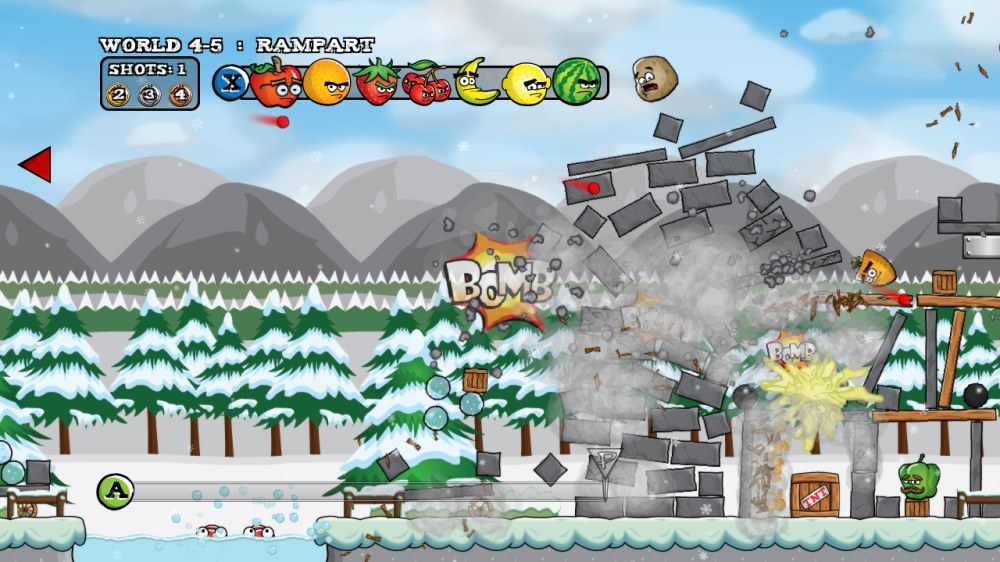
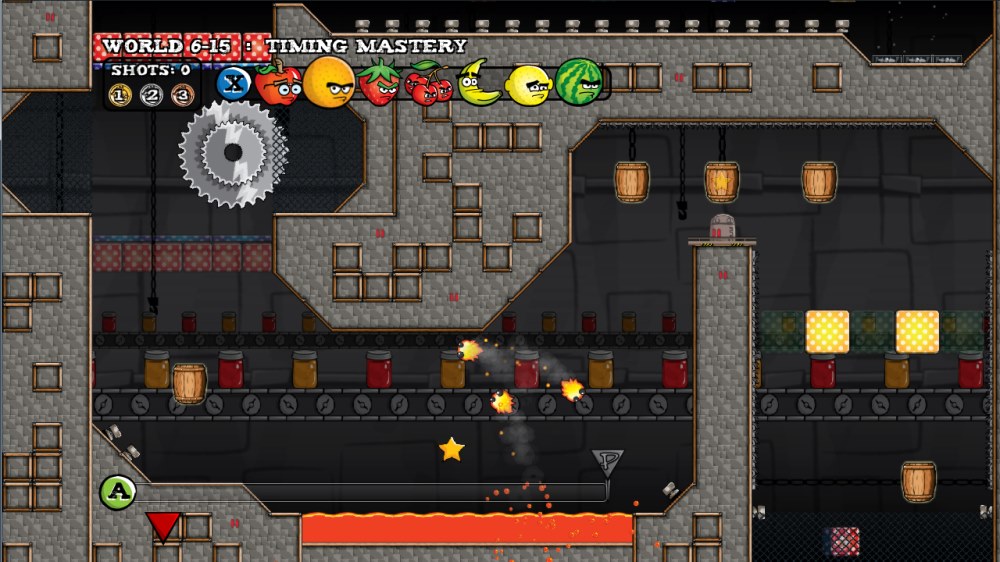
I would prefer someone take the basic concept behind Angry Birds and tweak it enough to make something original and compelling.  Early on in my Indie Gamer Chick existence, I discovered a wonderful title called Star Ninja that did just that.  It still holds up as one of my favorite XBLIGs.  And now we have Produce Wars.  On first look, anyone would mistake it for a bad Angry Birds clone with a different theme.  Sometimes it’s animals.  Sometimes it’s fish.  Here, it’s fruits and vegetables.  Yawn, right?  Actually, the game has a personality of its own.  Not amazingly so or anything, but at least an effort was made.  Still, I wasn’t expecting much from Produce Wars except a basic, been-there, done-that Angry Birds clone.

Wrong.

Though anyone looking at just screen shots wouldn't know that.

Though anyone looking at just screen shots wouldn’t know that.

Produce Wars combines Angry Birds’ flinger-gameplay with Donkey Kong Country style barrel-platforming.  And then the game gets meaner than the groundskeeper of the golf course next to me on employee happy-hour night.  Kidding, Harv.

There’s no question Produce Wars strives to be a more intelligent, difficult Angry Birds.  The problem is, Produce Wars is too intelligent for its own good.  Unlike the relatively straight-forward, knock-the-structures-over gameplay of Angry Birds, stages in Produce Wars can be complex and sprawling.  Although check-points are provided, Produce Wars has all the frustration and demoralization of the most brutal punisher-platformers.  It doesn’t take too long either.  The game jumps from a relatively simple opening tutorial to precision shooting and timing puzzles.  There is no difficulty curve.  There’s a difficulty corner.  One that bends straight up and reaches the heavens.

It’s still fun, but Produce Wars lacks that pick-up-and-play addictive quality that can lead to what is legally classified as a “gaming bender.”  I offer my kudos to the guys at Gigaloth for managing to almost completely eliminate the luck-aspect of the genre.  The levels are well laid out, thoughtful, and the solutions aren’t always self-evident, which is something I look for in a puzzler.  However, I’m not entire convinced that the genre lends itself to this type of gameplay.  I swayed back and forth between being awed by the intelligence of Produce Wars to being bored by the slowness and frustration of it.  Imagine if the best athlete in school was also the biggest egghead, and you showed up to watch him dunk basketballs.  At first, that’s what he’s doing, and everyone is amazed.  Then he takes the podium and starts lecturing on quantum physics, while all the doors and emergency exits get chained shut.  Sure, it’s still kind of interesting to hear, and occasionally he’ll pick up the ball and do a fabulous between-the-legs dunk out of nowhere, but it’s not what you were expecting when you showed up, and your only way out is for it to end, or for a fire to breakout in the gymnasium.

If more than 1% of all players stick around long enough to see this stage, I'll eat my hat.

If more than 1% of all players stick around long enough to see this stage, I’ll eat my hat.

That’s what Produce Wars is.  It’s original for sure, or at least the way it combines parts from other games is.  But it suffers from bad pacing issues and improper difficulty scaling, and even when it is fun (which can be quite often), it’s fun in a slow, methodical type of way.  Even the scoring and unlocking system feels a bit off.  Sometimes, you’ll reach a level where the stage’s star is unobtainable until later in the game when you unlock a different support character.  I’ve always felt games like this should not have levels that you can’t ace immediately.  Forcing a replay later just artificially pads the play-time, and Produce Wars certainly didn’t need that.  The game’s 100 stages will take you several hours to slog through, and by the end, it will have felt longer.  I still kind of liked it, but it felt like I should have liked it more.  Mechanically, everything works just fine, and the destruction-physics are easily the most accurate of their breed on XBLIG.  I really wish I could pin down why I didn’t fall in love with Produce Wars.  Some games can be well made and still a bit dull.  Maybe if it wasn’t so hair-pullingly evil in short-order, I could have fallen into a groove with it.  Many XBLIGs have difficulty nailing the learning curve, but Produce Wars is perhaps the most tragically off in that regard.  So yea, these fruits and veggies are a bit rotten, but they’re still fun to throw at stuff.

xboxboxartProduce Wars was developed by Gigaloth Games

IGC_Approved$1 thinks Watermelon tastes like lightly sugared water and tofu in the making of this review.

Produce Wars is Chick Approved and Ranked on the Indie Gamer Chick Leaderboard. Because I had fun 50.28% of the time with it. Yes, I counted. Okay, no I didn’t.

Triviador stripped of Indie Gamer Chick Seal of Approval

Update: Triviador is fixed and the Seal of Approval has been reinstated.

Well, this is a first.  Last month, I reviewed a really fun Facebook game called Triviador, which I awarded the Indie Gamer Chick Seal of Approval to.  I’ve never had to retract my Seal of Approval from a game after it won it.  Unfortunately, I have no choice but to do so with Triviador.  In November, the game received an update, taking it from its beta stage into a more polished, final version.

Unfortunately, the updated graphics are the only positive thing that came from the change over (and they’re not really that much better).  Triviador is so full of glitches now that unfair losses or cheap wins earned when another player gets dumped out of the game are sometimes more prevalent than a fully functional round.  The chief problem is disconnects.  Triviador frequently hangs up and disconnects players.  At least once every four games I was disconnected.  On games where it didn’t happen to me, it would typically happen to one of the other players, which eliminates the thrill of victory and the entire point of the game all at once.  This only happens during the fastest-finger tie-breaker questions, but it happens constantly.  This problem also doesn’t seem to discriminate between different operating systems or web browsers.  Often, the disconnects seem to be tied to using the premium boosters that you can either acquire through gameplay or purchase with real money.  I spent $9 to buy a stockpile of parrot and telescope boosters, but the game most frequently locks up when attempting to use those.  At the time I bought them, Triviador was stable and playable.  I wouldn’t have bought them in the game’s current state.  Nobody would have.

Such a shame.  Triviador was a wonderful game.  But the latest update is unstable.  In a game where experience points are based around winning streaks, making sure wins and losses are achieved via fair means is very important.  Unfortunately, those streaks are impossible to maintain because you’re unlikely to be able to play too many games before getting taken out via a disconnect.  For this reason, I have to strip Triviador of its Indie Gamer Chick Seal of Approval and remove it from the Leaderboard.  I have never seen a game so thoroughly ruined by an attempt at improving it in my life.