The Walking Dead: Episode 1 – A New Day

Warning: there will be major spoilers for the game in this review. Not for the TV show or the comic book, just the game. I figure everyone who reads me falls into two camps: those not interested in The Walking Dead at all, and those who already finished the game. But if you’re generally interested in the game and don’t wish to have this spoiled, I strongly advise you to read something else. If my personal recommendation is what hinges on your decision, I thought the first episode was just alright. Sorry if that’s not helpful.

Yea, yea. It’s not exactly an indie game. The thing is, I think I’ve found myself in a unique situation and I figured I should capitalize on it. According to my research, I’m the last standing regular gamer in North America who hasn’t watched The Walking Dead. That’s probably because my interest in zombies on film is nil. They’re all the same. Somehow a virus or bacteria spread by the bite of a slow-moving bipedal predator with no survival instincts causes the complete collapse of civilization in a matter of hours, leaving a rag-tag group of survivors to put aside their differences and struggle to stay alive. As far as end of world scenarios go, I just find it too implausible.

I don’t know how The Walking Dead television series (or the comic book, which the game is more directly based on) handles the initial outbreak, but the video game version makes the start of the apocalypse seem almost instantaneous. You’re a dude named Lee who is being transported to the state prison after being convicted of killing his best friend for sleeping with his wife. The game makes it pretty clear that you’re guilty of the crime, but the police officer who you chit-chat with in the opening minutes thinks you’re likely innocent, mostly because you didn’t deny that you did it. Well, um, that’s logical I suppose. Hey Brian, I don’t deny that I spread my ass cheeks and farted in your mouth while you slept.
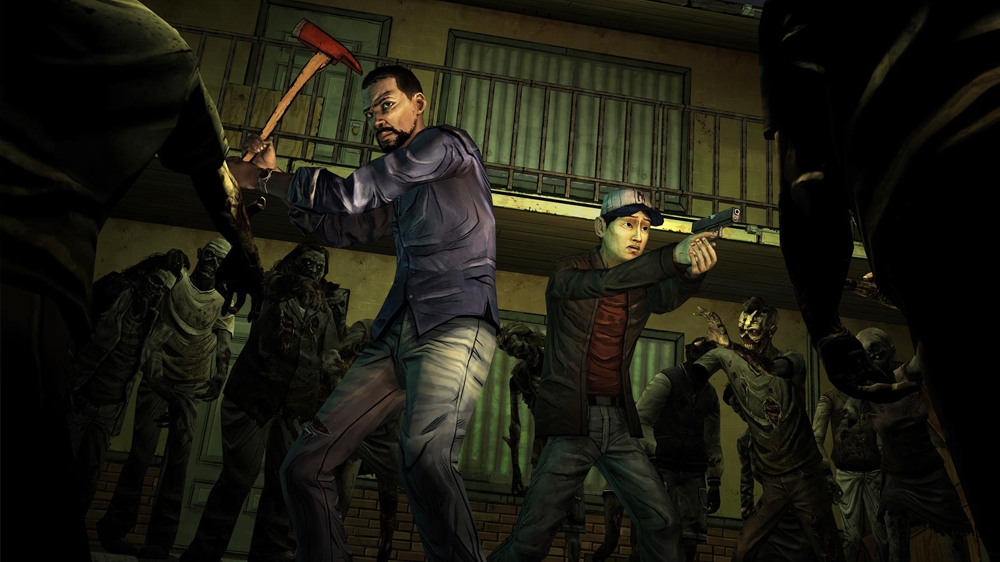
Why the fuck is Short Round in this game? Is this some kind of receipt against Lucasfilm for not granting Telltale an Indiana Jones license?

You end up hitting a zombie, crashing the car, mangling your leg, the cop somehow becomes zombified in process, and the game properly begins. A sign that I wasn’t going to like the protagonist very much becomes clear early on when you reach for a shotgun and fumble putting the shell in it. This wasn’t user error on my part. You actually fumble the shotgun shell. As it turns out, Lee is a total stumble-fuck. There’s at least three parts in the game where he gets knocked dizzy from hitting his head on something after being startled by a zombie. Fucking guy reminded me of Norberg from the Naked Gun.

Telltale Games has as a reputation as the best makers of adventure games these days. I’m not particularly a fan of the genre, so their stuff usually has to be pretty good for me to get into them. Lord knows I’ve tried. The problem with Telltale is they’re a farmhouse for fan-service type stuff, so chances are a person’s enjoyment of their titles will be directly in proportion to how much you like the source material. For example, I thought Tales of Monkey Island fucking sucked. I never previously played any of the Monkey Island games, which was apparently a requirement to enjoy these ones. Judging by the way fans of the series reacted, I expected something special. Ultimately, I thought the puzzles were lame and the jokes were not funny.

On the other hand, I enjoyed their take on Back to the Future. Even with some writing assistance from the creators of the movie franchise, I figured it would come across like glorified fan fiction. Nothing could have been further from the truth. But, and this is a big but, I liked the movies enough that any decent continuation of the series would have been welcome by me. If I found the source material to be just marginally entertaining, I don’t know if I would have liked it so much. If only I had such an example to go off of.

Oh snap. That’s right, Telltale also made Jurassic Park. Borderline entertaining popcorn flicks with enough plotholes to fill dinosaur DNA gene sequence gaps, but a truly horrible adventure game.

Given my track record with Telltale, I didn’t think I would enjoy Walking Dead at all. My general dislike of adventure games combined with my lack of interest in the source material certainly spelled doom for the fifteen combined hours the series will eat up of my time over the next five months. But actually, I kind of dug what Walking Dead had to offer. Sure, Lee is a completely uncharismatic, boring lump of a man. It doesn’t help that the voice actor sounded like he was so fucking bored while reading the lines that he might just release live scorpions into the recording booth to liven things up.

I’ve discussed my hatred of Lee with others that have played Walking Dead, and what cracks me up is how all the fanboys make excuses for him. More than one person has described him as “soft-spoken.” Which is a polite way of calling someone boring. First-hand experience talking. When I point out that he’s a klutz, people tell me that it’s how someone would realistically behave in such a situation. I thought we chucked realism out the door when we started talking about zombies, but fine. So let’s talk realism. The dude has a very broken leg to begin the game. He enters a house and slips a little on a puddle of blood. Then he gets attacked by a zombie. While he tries to escape, he slips again on the puddle of blood, hits his head on the counter, and would be fucking zombie chow by this point. Instead, you can kick at the zombie with your non-broken leg and finish her off with a hammer. Oddly enough, he never learns the from this experience. When a zombie shows up, chances are good Lee will be scooting his ass across the floor.

“Hey, wait a second!” cries the fanboys. “He has a broken leg! You can’t expect him to fight zombies standing on that!” Why not? He gets around just fine when zombies aren’t attacking. He doesn’t even really limp. You know what?  I don’t think it’s broken. I think the son of a bitch is milking it. Notice how it’s always somebody else doing the tough stuff when the zombies attack. I pull the same trick every time someone asks me to help them move stuff. “Oh, I would love to, but my old football knee is acting up.” Nobody says “why you lazy bitch!” At least at a volume higher than under their breath. I don’t deny Lee has a leg injury, but it only seems to bug him at the most convenient times. Well, unless the little girl he’s watching is being grabbed by a zombie.

Oh yes, the girl. Her name is Clementine. She has yellow eyes. So help me God, yellow eyes! Why didn’t anyone shoot her before the zombie apocalypse? If I give birth and the doctor says he or she has yellow eyes, I’m shoving it back up my uterus and taking a handful of morning-after pills. But she tags along and proves to be smarter than half of the adults, also known as “Steven Spielberg Syndrome.” As an example of what she’s up against intellectually, you meet a girl later in the game who is a good shot with a gun but can’t understand why a radio that has no batteries won’t turn on. She sits there fucking around with it, then you take it and discover it has no batteries. If ever there was a scene that called for the protagonist to absolutely bitch-slap the loving shit out a supporting character, this was it. Later, you find her the batteries and she puts them in backwards. You have to take the radio from her, turn the batteries around, and pull the antenna up. Unless an upcoming chapter explains that she recently underwent a full frontal lobotomy, I do believe that one scene completely destroyed any sense of credibility the writing built to that point.

I swear to God, if at any time over the next four chapters anyone makes a “my darlin’ Clementine” joke, I will fucking stab something small, cute, and furry.

Everyone is talking about the writing in this game like it was penned by Mario Puzo. I don’t get it. Maybe if you grade it on a curve, given how low the radio bit sunk the whole script, the rest of it seems sublime. But really, the cast is made up entirely of stock characters stumbling through one zombie cliché after another. I suppose the game did make a bold choice by having the star possess the agility of a drunken circus clown, but otherwise you have the gruff farmer, the asshole with a heart condition who makes people wait on him hand and foot, the loyal good ole boy and his wife, their hyperactive child with a decidedly trailer-trashy name (Duck. I’m not joking.), the tough as nails reporter chick with trust issues, etc, etc. I’m half shocked that at no point a shopaholic bimbo and a militaristic ex-jock didn’t show up, but I suppose we have four chapters left for that.

I did like the idea that, instead of playing off like a checklist of things to do, you get exactly one chance to make most of the decisions in the game, and the ramifications in conversations and actions will be felt in the upcoming chapters. You even get a couple of chances to decide if someone gets to live or die. At the end of the game, you are forced to choose between saving the reporter chick or a character named Doug. I liked Doug. He was helpful. He was nice. He rigged a universal remote to turn on televisions in an electronics store across the street from us as a zombie distraction. The chick couldn’t even grasp how batteries work. But, she had gun and Doug didn’t, so bye-bye Doug.

I suppose The Walking Dead must be pretty good as a game, because I’m very tempted to play through it again. I never do that, even if a game has multiple branching paths and endings. I’m actually curious how the game plays if I answer every question like I’m a total asshole. I do regret letting Doug die and I want to go back and save him. I’m a little curious if I can save the cop at the beginning of the game. I’m WAY curious if I can let Clementine die. Yes, the writing is mediocre, the voice acting is terrible, the plot is one giant cliché, I wish death on every character with as much hatred as my heart can muster, and I couldn’t give a squirt about the source material, but I still want to see what happens next. That has to count for something.

The Walking Dead: Episode 1 – A New Day was developed by Telltale Games

$19.99 was spent on a subscription to the series on PlayStation Network in the making of this review. Rats. I should have just bought it by the episode on Xbox Live because I just lost out on a chance to make a Microsoft Points joke. Silly me. Well, Sony hasn’t figured out how to properly set up their online store, so I’m linking to the Xbox version. 
Tales from the Dev Side: Why is Conflict Fun? by Adam Spragg

Although his Hidden in Plain Sight was not an overwhelming success on Xbox Live Indie Games, Adam Spragg still received near-universal kudos from critics for his efforts.  Even my infamously cold heart warmed to it as I played with three interns who probably hate me and call me mean names behind my back.  I’m betting on “Take-a-Bath-rine” although I won’t rule out “Catheterine.”  If they had known my alias was “Kairi” I’m sure it would have been “Cry-ri.”  Which is absurd.  I beat them like 20 games to 1.  If anything, I made them cry.  Or maybe I’m being paranoid.  They probably didn’t call me anything too mean.  I can deal with Catheterine.  I’ll call off the hits.  Well, maybe.  I’m guessing I won’t get my deposit back.

Okay, so maybe I don’t handle conflict (real or imagined) as well as I should.  Adam views conflict differently.  In this very philosophical installment, Adam shares his thoughts on how conflict is the chief reason for a game being fun.  And you know what?  I think he’s on to something.

Read more of this post

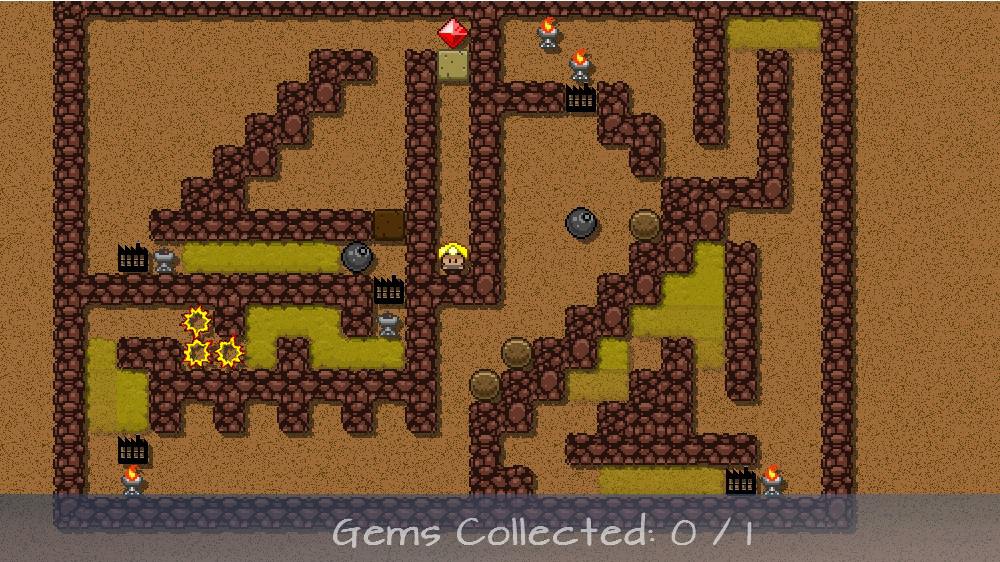
Gems N Rocks

Yesterday, I reviewed a Lode Runner clone.  Today, I review a Boulder Dash clone.  Both were early-80s computer titles that received dozens of remakes, re-skins, and ports over the years.  The difference?  I’ve never played Boulder Dash or any of its offspring.  It wasn’t even on my radar, mostly because I’ve never heard it described as a holy shit must-play industry altering super game.  It just sort of exists as one of those “did you ever play that one game” titles that gets brought up from time to time.  No matter the game, if the answer is “yes” the conversation likely ends on the spot.  If the answer is “no” the questioner usually follows up with “it was alright.”  Then the conversation ends.  Boulder Dash was one of those.

I’m kind of glad I’m going into Gems N Rocks with no experience of the franchise it’s bastardizing.  It means I’ll have no frame of reference for how the game should play and thus I’ll better be able to grasp if it can stand out on its own.

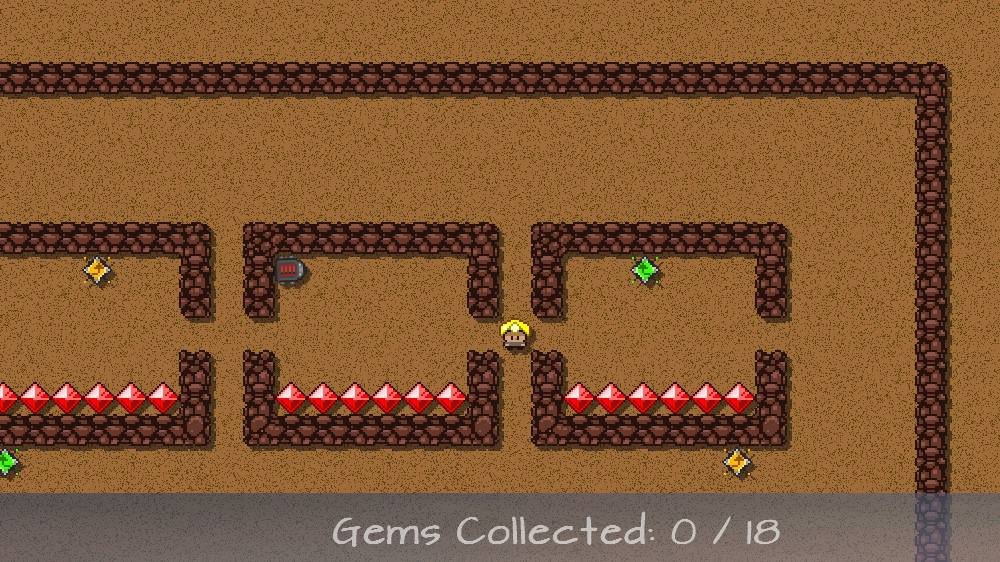
The idea is you’re a dude that has to mine for gems.  In each stage you must collect all the gems to win.  You excavate through stages like you’re Dig Dug, only instead of trying to drop rocks on dragons or balloons wearing goggles, you just have to avoid dropping them on yourself.  Whenever you dig around a boulder, it creates a cascade that takes it and all other boulders it’s holding in place with it.  This leads to hilarious situations where you can pin yourself in while collecting the last gem.  You still beat the stage, but if you’re like me and you dwell on these things, you realize your little miner dude is trapped and will slowly starve to death.  Life can be cruel.

There are forty stages here, unevenly divided into three categories.  There’s easy stages.  All you need to know about those is the very last one beats itself for you.  I guess for some developers “easy” is interpreted as “for the recently lobotomized.”  The medium and hard stages are often neither, with the solutions relatively straight forward and often based on some kind of “outrun the enemies” situation.  My favorite levels involved little heat-seeking robots that go all Terminator on your ass.  These are genuinely tense stages, made more so by how fucking horrible the controls in Gems N Rocks are.  Seriously, it’s as if the game comes bundled with an asshole that dips your controller in molasses between stages.  Movement is slow and sticky, and figuring out how to deal with it is literally the only thing that challenged me the entire game.

This is the stage that beats itself like a masochistic dominatrix.

I’m told that Gems N Rocks adds new concepts to the Boulder Dash formula like liquid puzzles based around water, bacteria, and mercury.  Again, I have no reference point to whether it’s an upgrade over the conventional design.  I will say that I would have probably enjoyed the game more if the controls were not so painfully unresponsive that my best strategy involved placing my control on a table and poking the direction I wanted to go on the D-Pad with my finger tip.  If the main challenge your game offers is fighting the controller, you should probably let it cook in development longer.

I never bothered with the included level editor, because I think those are for nerds, and I’m more of a dweeb.  Going off just the included levels, I honestly thought Gems N Rocks was mediocre, with the potential to be decent if the controls had been accurate.  When I brought up my concern to the developer, it took him by surprise, although he conceded that it was probably an example of him playing his own game so much that he never noticed there was a problem.  What he needed was a canary for his mine.  Someone like me, armed with a fork, sitting next to him while they played the game for the first time.  He would have known there was a problem when the fork became embedded in his temple.  Oddly enough, this is the absolute only way I would ever volunteer to test games myself, but nobody is willing to sign the liability waver.  Shame.  I think the Fork You method of testing could revolutionize Xbox Live Indie Games.

Gems N Rocks was developed by Fuzzy Duck Entertainment

80 Microsoft Points think Fuzzy Duck sounds like some kind of Kama Sutra thing in the making of this review.

Gameplay footage courtesy of

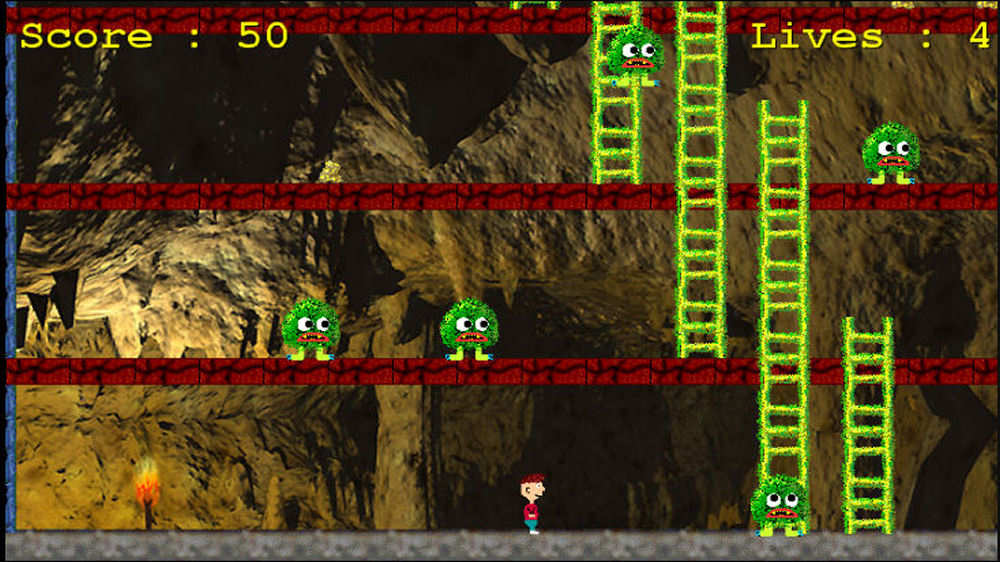
Gold Miner

Gold Miner is an attempt at cloning Lode Runner.  Fair enough.  Lode Runner is a cherished classic, although the reasons for that are completely lost on me.  I always  thought it was kind of dull.  It’s probably a generational thing.  Lode Runner came out approximately six years before I was born.  Maybe in those dark times, firing up Lode Runner on your Apple II beat adjusting the rabbit ears on your television set so that you could see the latest episode of A*Team.  I don’t know.  I do know that it’s one of those series that should be allowed a graceful retirement, instead of being dragged back out into a market it no longer has a place in.  Granted, I hear that all seven people who bought the Xbox Live Arcade remake of it thought it was just peachy.  And then there was the time they dressed it up in a costume and called it Panda Craze on DSi and PSP.  Same shit, different name, still fucking boring as hell.

Gold Miner plays like a Lode Runner clone that was made by someone who got all their information on the series second-hand.  And then programmed the game using just their feet.  While submerged underwater.  In a swimming pool filled with moonshine.  It’s bad.  You have to run around collecting gold while avoiding little bush monsters.  Once you get ten piles of it, the map restarts and you keep going.  You can cut a hole on a platform with the right trigger.  If an enemy falls in it, you can smack it three times to kill it.  You can jump with A, which is a much faster and easier way to avoid enemies.  There are no Lode Runner-style puzzles here.  Gold Miner is an endless arcade game.

And it’s terrible.  Really, truly awful.  The controls are slow, the jumping is floaty, there’s clipping issues, the sound effects sound like they were recorded using one of those teddy bears that you speak into, and it’s just soul-killingly boring.  I can sum up everything you need to know about how much testing went into Gold Miner with this: if you press the start button in the middle of a game, it takes you to a menu.  The menu has four options, including “new game” and “resume game.”  No matter which you choose, the game gets restarted.  Your score is lost, your lives are reset.  Disgraceful.  I only could stomach twenty minutes of Gold Miner, but with a fundamental mistake that big, I’m guessing that’s nineteen minutes longer than its own developer spent testing it.

Gold Miner was developed by Winsor Computing

80 Microsoft Points thought BurgerTime was the better game over Lode Runner in the making of this review.  I know, apples & oranges and all that. 

Gameplay footage courtesy of

Kickstarting and Screaming

Over the course of April, I have gotten a request to plug someone’s Kickstarter literally every day.  That’s not hyperbole.  Sometimes I get more than one a day.  As of yet, I haven’t plugged a single Kickstarter, and I probably never will.  At the rate I get requests for it, my site, or at minimum my Twitter account, would become a dedicated Kickstarter alert channel.  This has been going on pretty much non-stop since Double Fine Productions asked for $400,000 and received over three million dollars during their Kickstarter.  You can practically see every wannabe indie developer walking around with dollar signs in their eyes since that happened.  Before Double Fine’s, I hadn’t received a single request for one.  Since March, I’ve had over fifty.  Developers also aren’t afraid to hound you by sending you requests several times a week.  In my case, they start getting uppity with me if I don’t immediately tell my readers to spend their hard-earned money towards funding the hobby of someone else for little or no return.

Let’s get something straight here.  You are NOT Double Fine.  They were able to raise money because they have a long, proven track record with the genre they were raising funds for.  You are a person with an idea.  Maybe a good idea, but that doesn’t entitle you to free money to attempt to realize it.  People could confidently give cash to Double Fine, because they know something will come of it.  Meanwhile, there are developers who have a history of abandoning projects before completion who are asking for some shockingly large sums of money.

Having a Kickstarter for an Xbox Live Indie Game seems especially dim to me.  This is a platform where a game is lucky to make $1,000, yet some people ask for ten times that, or more.  And what do they offer back?  XBLIG developers only get 50 tokens to pass out, and they can’t purchase more.  So not everyone will get a copy of the game.  It kind of throws out the whole “Kickstarter as a pre-order outlet” theory I’ve heard a lot of this week.  Then again, who pre-orders a game for $10,000?  Because that’s what some of these developers ask for pledges of.  That’s assuming they can actually program a game while wearing their straight jacket.

Granted, I don't think I could resist pledging for a sequel to LaserCat.

I have viewed a ton of Kickstarters (and some planned ones), and I don’t deny that some people genuinely have the ability to pull off the games they so ambitiously panhandle for.  That’s why I’ve come up with a list of some handy-dandy tips to make your Kickstarter stand out.  No sarcasm here.  These are genuine pointers.

#1 – Have a track record to prove you have the talent needed to make a game.

If you’ve never made a game before, don’t bother with a Kickstarter.  Make a game first.  A good game.  Show us that you’re talented enough and creative enough to see a vision through.  Go through the same ups and downs that any novice developer experiences.  If you have no talent, no amount of money will change your ability to create a good game.  Maybe you’ll find out that developing games is not what you expected it to be and move on to something else.

#2 – Explain why you need the money.

Having a good idea for a game doesn’t entitle you to free money.  People should know exactly what the money is being spent on.  High end work station?  Better programs for graphics?  To pay a sound designer?  People should know.  Don’t be vague about it either.  Account for every single dollar you need, and explain exactly why you need it and why you can’t do it yourself.  Do you need to hire an artist?  Find the artist, get a price quote, then include that person’s portfolio and cost in your Kickstarter.  Generically saying “we need to hire a graphics guy” doesn’t work for me, because whose to say you won’t just keep the money yourself, or give it to a novice who is no more qualified to do it than you or I are?  I want to know who you’re hiring.  I should know.  It’s my money.  When I ask what you need it for, saying “because” is not a good way to win me over.  Which leads me into the next point..

#3 – Prove you have the discipline necessary to use Kickstarter wisely.

When I asked one gentleman why he needed his Kickstarter money, his answer was shocking in its glorious stupidity.  “I need it so I can quit my job and devote all my attention to my game.”  That is an actual answer I have gotten from a developer whose previous experience was a couple non-successful (but critically well-received) games.  I’ve said it before and I’ll say it again: a career in independent game development is a long shot at best, so don’t quit your day job.  If you start a Kickstarter so that you can, you’re basically turning yourself into a digital hobo.  Asking people to use money they worked for so that you don’t have to work and can devote all your time to what should be a hobby and nothing else is so incredibly brazen and stupid that I have to chalk it up to some kind of mental illness.  Maybe video games do rot your brain.

I’m not interested in paying you so that you don’t have to work.  If you’re bound and determined to go down this path, my tax dollars will already be footing your bill when your game inevitably busts and you end up on welfare in the coming months.  Ethically speaking, I think giving you a head start on that sends the wrong message.  I want my money to go to someone who has their priorities in life straight.  That generally means someone who makes rational decisions based on their desire to not be on food stamps.

Lack of discipline rears its head in other ways.  When someone opens a Kickstarter, then tweets about their week-long benders and the massive amount of weed they can smoke, I think to myself “so I have to sacrifice my money for you, but you don’t want to sacrifice anything for your own project.”  One person sent me a Kickstarter that was asking for $2,000.  On their Twitter, they talked about a surfboard they had their eye on.  One that costs, you guessed it, $2,000.  Now, I’m not suggesting the person would use the money from their Kickstarter to buy the surfboard.  I’m not saying they wouldn’t either.  What I am saying is the person made it clear, they WOULD be buying the surfboard, yet they wanted an additional $2,000 to fund their other hobby.  So what is getting the priority?  Will you be focusing on the game, the one you’re begging strangers for money so that you can develop it, or the one that benefits nobody but yourself?  If the person had said “I love surfing, but I’ll probably be spending my time this summer finishing my project” I might have taken them more seriously.

#4 – When writing your Kickstarter pitch, at least pretend to give a shit.

I’ve seen Kickstarters where the developer couldn’t bother to do a simple spell check, capitalize words, or use punctuation.  Never mind all the points listed above.  If you can’t even bother to make any effort when asking people for money, why would I think you would make any effort when it comes to the actual development part?  I would assume you’re going to half-ass it, just like you did with your pitch.

#5 – Don’t make your pitch sound like a threat.

One developer who sent me their Kickstarter had made a semi-successful PC game.  They had an idea for another project, but their Kickstarter sounded more like a hostage situation.  It took a pretty snotty tone, something along the lines of “My idea for my next game is blah blah blah, but if I don’t get X amount of dollars, I’m not even going to bother with it.  It’s not worth my time.”  Yea, that makes it sound like you really care about your idea and will make the best effort to do well with it.  I know some game developers pride themselves on being aloof and irreverent, but when you make like you’re holding a knife to the throat of your own concept, I sort of want to tell you to go fuck yourself.  Really, there are thousands of games released every year.  I don’t care if you don’t make your game.  I’ll just play something else.

#6 – Do something original.

This is the final point.  I don’t want to fund something that is a clone of something already out there.  Nor do I want to pay for something that uses RPG Maker or some other lazy game creation tool.  I want something original.  Something weird.  Something one-of-a-kind.  Or especially something risky.  After all, isn’t that why Double Fine had to resort to a Kickstarter?  These are the guys who made Psychonauts and Brutal Legend.  Regardless of whether you liked them or not, they were considered under-performing games, if not outright busts.  So the likelihood of them getting any publisher to stake them on a dead genre like point and click adventures was probably slim to none.

Pictured: the man responsible for me adding the word "Kickstarter" to my spam filter.

I do admire the shit out of Tim Schafer.  I’m not necessarily a fan of his games.  I never even played any of his point and click adventures.  Remember, I’m 22-years-old.  Which doesn’t excuse me for never having played Psychonauts either, but that’s beside the point.  I admire him for being an entrepreneur.  And for Stacking, which was so overlooked.  I also think he needs to tell novice developers that they aren’t him, and to stop with the unnecessary Kickstarters.  For those of you who genuinely have a reason to ask for crowd funding, the six tips above were for you.  For everyone else, before asking for money to create yet another zombie game, put in long hours and work to improve your development skills.  You’ll know you’re ready when your dream project is in fact not another zombie game.

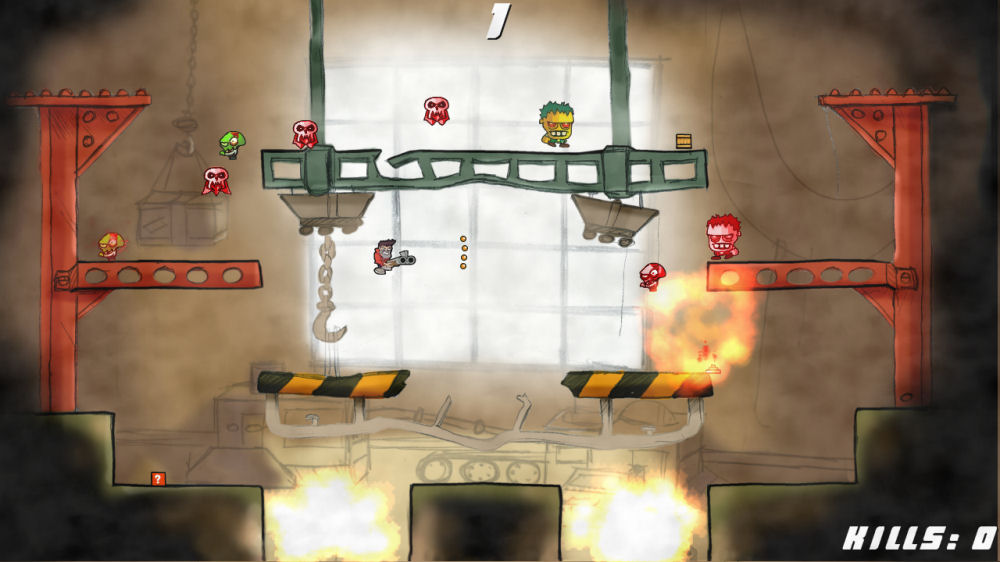
Insane Zombie Carnage

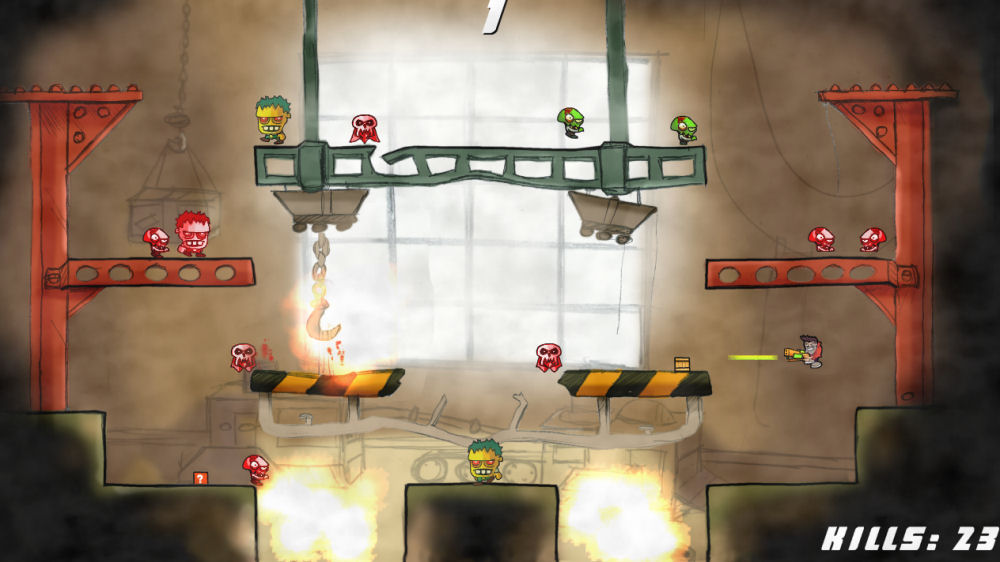
I don’t like to play iPhone or even iPad games with flimsy, fake control schemes.  I just can’t get the hang of virtual controls.  So I missed out on the Super Crate Box craze.  Well, if you can call it that.  Compared to other popular games like Draw Something, Cut the Rope, or Angry Birds, Super Crate Box is more like a mild rage than a craze.  I hadn’t given the game a second thought until Brian and I did Indies in Due Time a few weeks ago, where we previewed yet another fucking zombie game, Insane Zombie Carnage.  Several of my readers immediately recognized it as a Super Crate Box clone.  I didn’t, because I never played it.  So I went into Crazy Undead Bloodbath without any prejudice.  Except against people of all races and religions, but that’s unrelated to the game.

So the idea behind Super Zombie Box is zombies rain down and you have to shoot them while collecting crates.  Wooden crates contain weapons of varying usefulness while question mark crates alter the flow of the game.  Body count is irrelevant, and so are the question mark boxes.  The object of the game is to get as many of the wooden boxes as you can before dying.  You start with one stage and unlock alternative modes and levels based on how big a streak you can get.

So what did I think?  I played it for an hour and I would rather be dead than ever play it again.  What a boring concept.  Don’t get me wrong, if suicide was not an option, I would choose Insane Zombie Carnage over Super Crate Box, simply based on my hatred of iOS virtual controls.  Loony Brain-Muncher Brouhaha actually controls fairly decently, which shocked the fucking hell out of me.  Clones tend to skimp on such features as playability in favor of cha-chinging and rolling in the dough.  I do think it’s a touch on the sensitive side, and the collision detection seems a bit off as well.  I cut a few zombie encounters close but know I missed them and I still died.  If I had actually gave a shit about the game, I would have been pissed off about that.  But, by that point, I couldn’t have given two shits less about it.  Perhaps this was because of crates that spawn right under where the zombies drop in at, making them almost impossible to fetch.

I wasn’t a huge fan of Preposterous Poltergeist Pandemonium, but I’m sure there are some Super Crate Box fans out there who are happy to be able to play this on a console.  Even if it’s not even close to the same game.  It doesn’t have the same graphics style.  It doesn’t have that “world-wide community” feel that Super Crate Box has.  It doesn’t have the word “super” in it.  It seems more like it exists to rub in the fact that this is as close as you can get if you’re among the handful of losers out there that still haven’t been assimilated by the Apple Collective.  But again, I really liked this more than Super Crate Box.  Which is like saying I would prefer to have my head blown of with a bazooka than be slowly disembowed using a rusty, urine-soaked samurai sword.

EDIT: Super Crate Box apparently got its start as a PC game.  Um.  Yea.  Move along.  Please.  Pretty please.  With cherries on top?

Insane Zombie Carnage was developed by Geex

80 Microsoft Points says repetition is the heart of gaming, but that doesn’t mean it doesn’t suck 90% of the time in the making of this review.

Drive Fast Think Faster

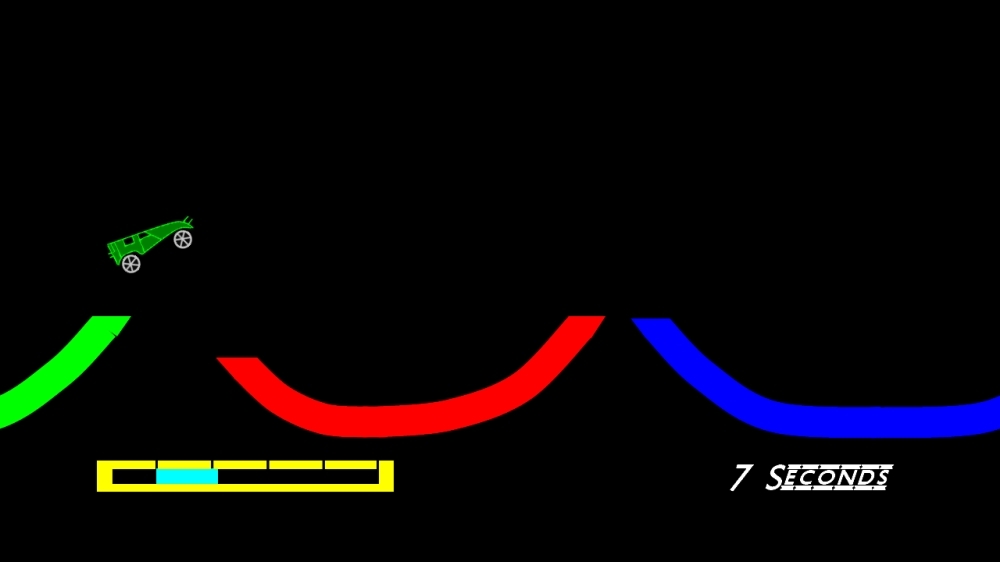
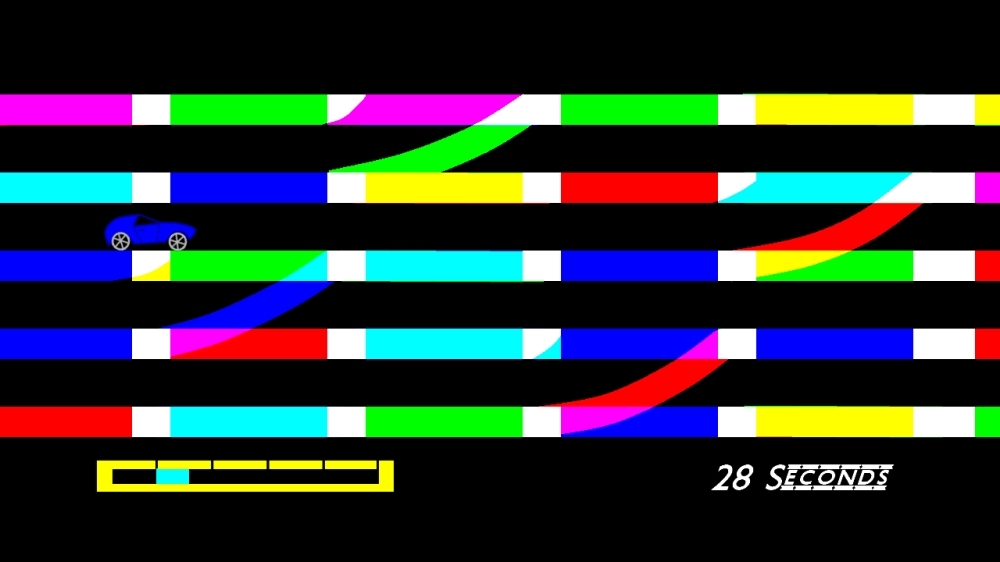
Drive Fast Think Faster was tragically born without a comma.  That’s just one of many birth defects that plague this reflex-tester.  The idea is you steer a car across a tie-dye stunt course, changing your car’s color to match whatever scheme the course is about to change to.  A changes it to green, B changes it to red, and X changes it to blue.  Y and Yellow is ignored, because fuck yellow.  Am I right?

Drive Fast is probably another example of a developer getting too good at their own game, because this thing is as hard as Jason Stackhouse after he overdosed on V.  On the first level, I got the fastest recorded time of anyone who has just finished one stage.  That’s pretty much as far as I’ll make it, because once I got to level two, the game required a level of reaction time that I simply don’t posses.  In theory, Think Faster is a color-matching game, like Guitar Hero.  In practice, you have to continuously hold the analog stick and fight the physics while matching colors.  I couldn’t do it.  I really did give it a shot, but the lack of checkpoints was too demoralizing.  If you fall through the course, you have to start the stage over from the beginning.  I have no clue how close I actually came to the finish line, but it might as well have been on the dark side of the moon.  After an hour of trying, I headed over to Xbox.com to grab the screenshots I would need for this review, saw the picture below, and decided to bail while I have some sanity left.

Annnnnnnnnnnnnnnnnnnnnnnnnnnnnnnnnnnnnnnnnnnnnnnnnnnnnnnnnnd fuck it, I quit.

I don’t know if Drive Fast Think Faster was intentionally designed to be a punisher.  Probably.  The second stage starts with a trial-and-errorish series of jumps that require more luck with the physics than actual skills, but this quickly changes to more high-speed color-matching crap that gets old fast.  So, no, I don’t like Drive Fast Think Faster.  I don’t want to make a cop-out “it just wasn’t for me” review, so I do declare that it can lock itself in a garage with the motor running and choke to death on its own multicolored exhaust.

Think Faster Drive Faster was developed by Zebra Games

80 Microsoft Points want to be able to buy just the lime-colored Skittles in the making of this review.

Hidden in Plain Sight

It’s still Thursday if you just woke up from a coma that you fell into on a Thursday. Or possibly a Wednesday if you think you just went to sleep for the night.

It’s taken me a while to get onto the Hidden in Plain Sight bandwagon. This can be attributed to the fact that I have no friends. Well, that’s not entirely true. I do have a limited number of chums and pals, but the problem is getting them to play an XBLIG with me.  Perhaps it has to do with my sales pitch. This usually consists of someone asking me what I think about XBLIGs, followed by me barely squeaking out “they’re alright.” Not exactly the most ringing endorsement, unless you know me. I can barely speak up when my clothes are on fire, so declaring something to be “alright” vocally might as well be myself writing the name of the game on a piece of paper and then dry humping it.

Local four-player is hard for me to put together. At least when it comes to XBLIGs. After months of waiting, I decided to resort of bribery. Thus, I took three interns at my office, promised them time off of work and pizza in exchange for playing a game with me. And wow, that didn’t sound so pitifully sad when I actually did it.

But really, three people who aren’t exactly buddies with me or with each-other seems like the perfect fit for a party game. I mean, if people can’t bond through video games, what the fuck can they bond through? Well, besides war, nuclear holocaust, and intense sexual lust. Having said that, you should have seen the looks on their faces when I told them the game we would be playing was an Xbox Live Indie Game. They didn’t know what that was, and all three guys do own Xbox 360s. I explained to them that it was a home-brew, made by a couple of novice game developers, and it costs $1 to purchase. I swear to God you could see them mentally calculating whether signing up for this was really better than spending the day filing papers.

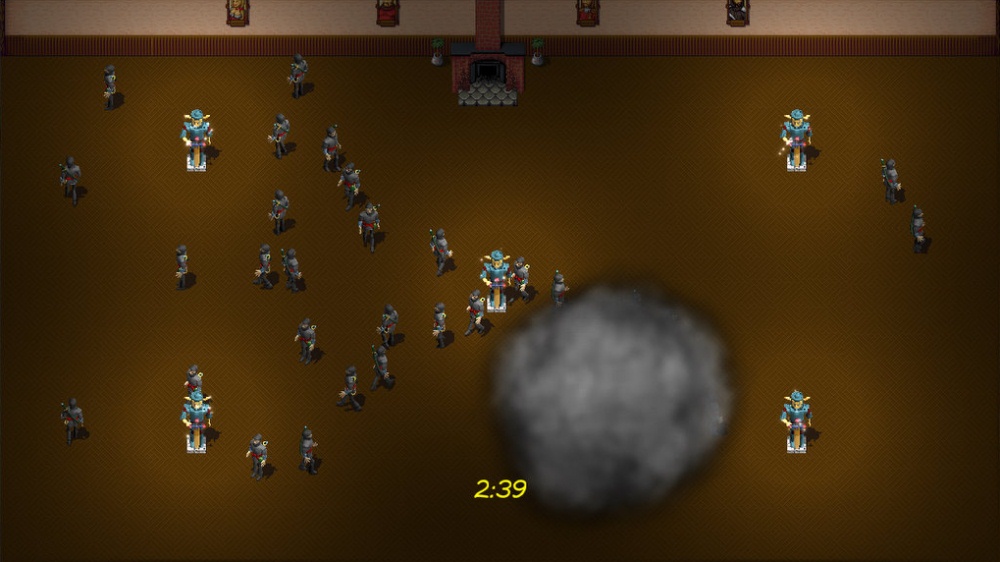
Their worries were for not. We had a grand ole’ time playing Hidden in Plain Sight. Well, we did when we played the first of five modes on it. It was called Ninja Party. You’re placed in a room with dozens of identical ninjas, with each player randomly being assigned to one. The first you have to do is figure out which one you are. Doing this requires a level of smoothness that a couple of the thickies working for me couldn’t grasp. They would start by spinning their control sticks around, making it obvious which ones they were.  Stanford education at work, folks. There’s two ways to win. First is murder all other players. Thanks to the spinning morons, I found this to be the easiest method. Alternatively, the first player to touch all five statues in any order wins the round. Once the interns figured out that spinning was not the best idea, I moved onto touching the statues to gain victory. At first, the interns smacked everything that moved, giving up their position and typically thinning their ranks out while I made a bee line from statue to statue. I soon noticed that the NPC ninjas did not change directions while they were moving. They walked in a straight line, paused, and then walked someplace else. The interns never caught on to this, and I used it to my advantage in the coming games.

We forgot about the smoke bombs until several rounds in. My theory is this has to do with living in California, where a person can’t smoke in their own office in a building that they own. Let freedom ring.

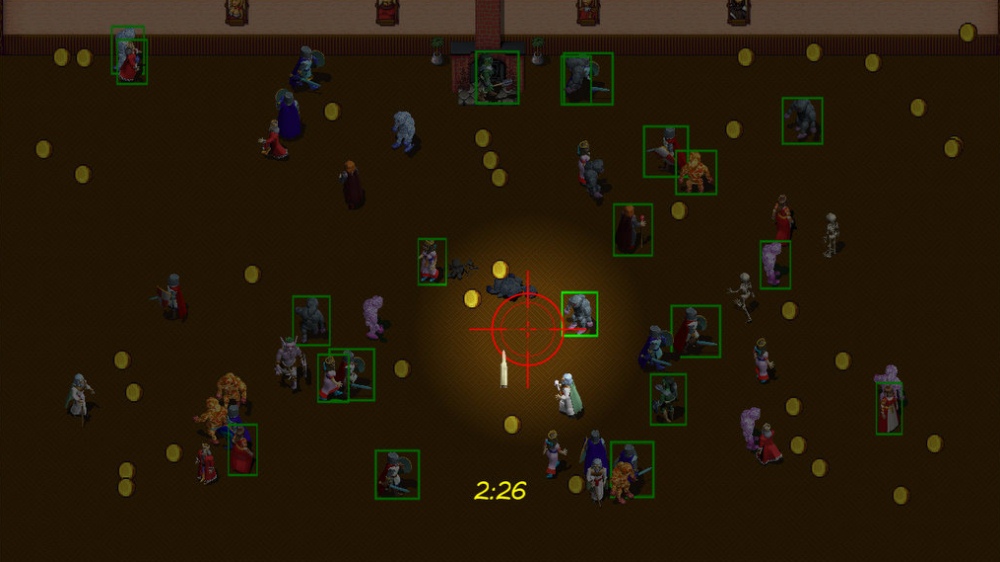
The second mode is called Catch a Thief, and without sounding too much like I’m bragging, I was a fucking Goddess at this one. The interns, not so much. In this mode, one or more players takes the role of a sniper, while everyone else has to play as thieves that walk over coins. Because their ability to pretend to be NPCs was lacking, I could take them 3 on 1 and win every time if I was the sniper. You only get three bullets, but all I had to do was keep a close eye on the way they walked. A straight line is hard to maintain, and even the slightest curvature of it was enough proof for me to go Lee Harvey Oswald on their asses. However, unlike the previous game, there really doesn’t feel like there’s a point to this one. The thieves have to collect coins. The snipers have to shoot the thieves. However, the sniper can only get three points, while the thieves can rack up a bunch of coins. So how do you decide who wins? And more importantly, why doesn’t the score carry over? Why doesn’t the game have a method of automatically cycling the various combinations of teams so that you can find out who an overall winner is? I mean, it would have been me regardless, but some people care about that stuff.

The third mode is Knights vs Ninjas. It’s like Ninja Party mode, only this time it’s a team game of defend the VIP. We played 2-v-2. The knights have to protect the royal family. The ninjas have to commit regicide. That is to say, they have to kill the royal family, not people named Reggie. We all found this mode to be pretty boring. Anyone the knights strike down remain dead, while anyone the ninjas strike down are only temporarily stunned. Games of this devolved into the two knights letting two members of the family die and protecting just one. They won every time. Boring.

Mode four is Death Race. This is sort of like the Game of Statues (that’s Red-Light, Green-Light for you east-coasters or so I’m told, or maybe not because Brian grew up in California and says that’s what they called it too. Whatever. Statues are more culturally enlightened), where players have to race to a finish line without giving up the fact that they are not an NPC. In this mode, you hold the A button down to walk and the Y button down to run. While doing this, you have a cross-hair with a single bullet that you can use to gun down any player you think is a real player. I had a lot of fun with this, but the interns got hung up on Ninja Party and wanted to go back to it. We didn’t even get to the final game, Assassin, because nobody wanted to play it.

I can say that we played Ninja Party for two thirty-minute spurts and had a really good time doing it. I’ve never really played anything like it, or Hidden in Plain Sight on a whole. This is exactly the type of original idea I started Indie Gamer Chick for. I do wish there was some kind of ongoing scoring system, but otherwise the game is good enough to be properly stolen by a major studio any time now. It is local-multiplayer only, which is a pretty big strike against it. Not everyone is a party animal. I did fit in well with the interns and I had a good time. Mostly because I won every game of Ninja Party except one, which an accounting major named Gavin stole from me. Coincidentally, Gavin just spun cleaning the bathrooms on the job wheel for Monday, which should be fun following my planned Sunday dinner of bean burritos and cabbage.

Hidden in Plain Sight was developed by Adam Spragg Games
Point of Sale: Steam, Xbox Live Indie Games

igc_approved1$1 doesn’t actually have a job wheel or make interns clean the toilets at work, so you can start breathing again, Gavin in the making of this review.
<— What the fuck is with that box art, Adam?

Unnecessary Violence

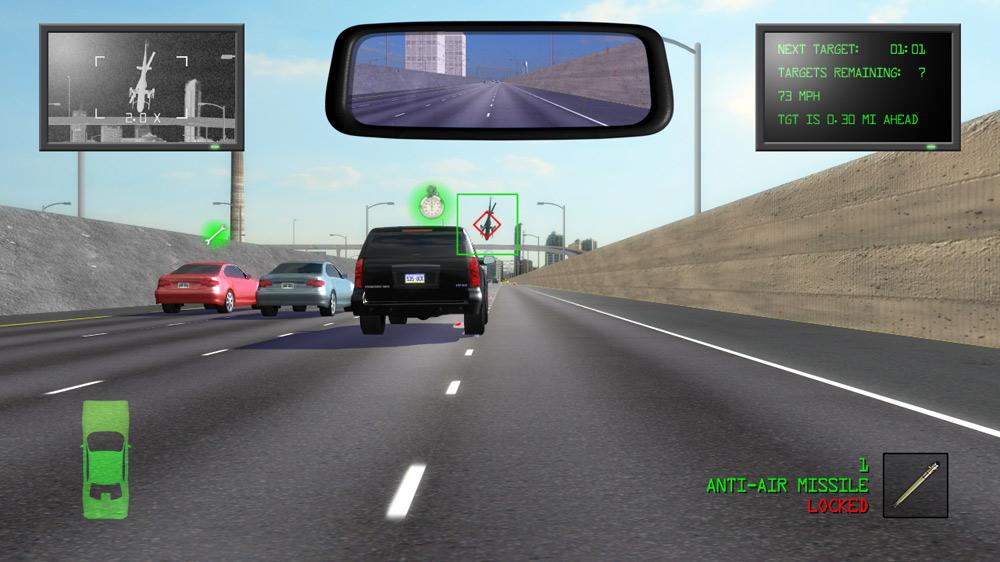
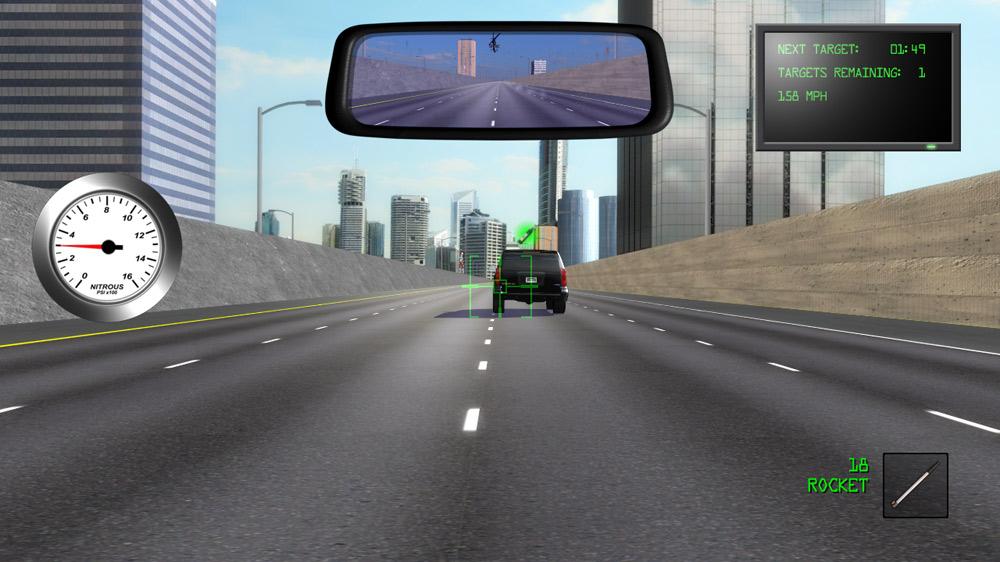
Unnecessary Violence is a car-combat game set on the largest stretch of straight road in the world, yet has the least diversity in vehicles.  I saw no ambulances, no motorcycles, no convertibles, and no buses.  Plenty of taxi cabs though.  Not sure why someone would be in a taxi on such a long stretch of road that has no turnoffs.  With the cost of taxis being what they are, you would think renting a car and taking it on this road would be cheaper.

I had a witty caption for this, but then I fell asleep while playing and forgot it.

The basic idea is you’re a car tricked out with various weapons.  You drive on a road, shooting at cars.  Then it tells you to shoot a specific car.  You shoot it, then shoot other cars until it tells you shoot a different specific car, rinse, repeat.  Sorry if that sounded unenthusiastic, but never before has an XBLIG with no major technical flaws gotten me so bored so quickly.  This is mostly on the fact that you’ve seen pretty much everything the game is about within the first five seconds of playtime.  The monotony wears thin quickly, and Unnecessary Violence does very little to change things up.

The weapon variety is lame.  You get a machine gun with no “oomph” to it that overheats if you use it for more than a few seconds.  You get rockets that take multiple shots to blow up a car.  If I have a rocket launcher and it takes two shots to blow up ANYTHING, I’m going to be oh so pissed at the asshole I bought it from.  Land mines are present.  I found them to be unsatisfactory, mostly because I want to actually see the shit I’m blowing up, not having to glance at the rear-view mirror.  Enemies have mines too, and they’re fucking impossible to avoid, because you’re traveling at high speeds.  There are anti-tank guns, which require you to carefully select your target, hard to do when you’re cruising at warp-speed and often rear-ending all other cars present.  There are anti-air missiles for helicopters that don’t show up until the third stage, at which point you’ll have quit and started a better game.  Finally, there’s nuclear weapons, which create a nifty explosion but otherwise I could not figure out what the fuck they’re useful for.  To activate them, you have to input a five-button code.  Again, this is while you’re in the middle of busy traffic, often pressed for time.  How could they fuck up the entire assortment of weapons in a car game?  Couldn’t they get just one right?

So bored. Please kill me. Make it stop.

By the end of the third stage, I decided I should either quit the game or kill myself.  I chose the former, obviously.  There’s just no variety in Unnecessary Violence.  Lots of weird stuff that I hated too.  Your car is able to set off a nuclear fucking explosion, but you can’t bump other cars off the road.  If you’re driving at 140 miles an hour and you bump into the back of a car, it doesn’t even nudge forward, yet it cuts your speed down to a snail’s pace.  You do have the ability to give yourself a nitrous boost, but it seems to do little more than give the appearance of moving faster.  The rate at which traffic appears while using it doesn’t seem significantly higher than it is when you’re just putting the regular pedal to the non-nitrous metal.

Despite having fairly decent graphics and control, Unnecessary Violence feels unfinished.  It’s one objective repeated in a loop in a way practically guaranteed to comatize anyone playing.  I almost wonder if the developers had more ambitious plans, but gave up once they had something vaguely resembling a decent video game running.  It needed something else to keep things fresh.  Instead, it just drags along like it’s got worms.

Unnecessary Violence was developed by Tackemon

80 Microsoft Points said you know the game is going to be bad when the FAQ is the most entertaining part of it in the making of this review.

Facebook, Twitter, Digg, and the rest.  Oh whom will be able to find me without my loyal readers forwarding me on them?  There be buttons below, and if you use them, a kingdom I shall grow. 

F*ck Nostalgia: Nintendo

July of 1998.  My parents take me to Toys “R” Us to scope out potential toys for my upcoming ninth birthday.  This included a trip down the video game aisle to see the latest and greatest PlayStation games.  At the age of seven, Santa Claus brought me my PlayStation, along with Crash Bandicoot.  Previously, my father had an NES and SNES that I occasionally played, but gaming was not a big deal to me.  That changed with the PlayStation.  Gaming became my favoritest thing in the whole wide world.  My forthcoming birthday would no doubt bring me to places I couldn’t even imagine.  What far out realms would my Sony device take me?

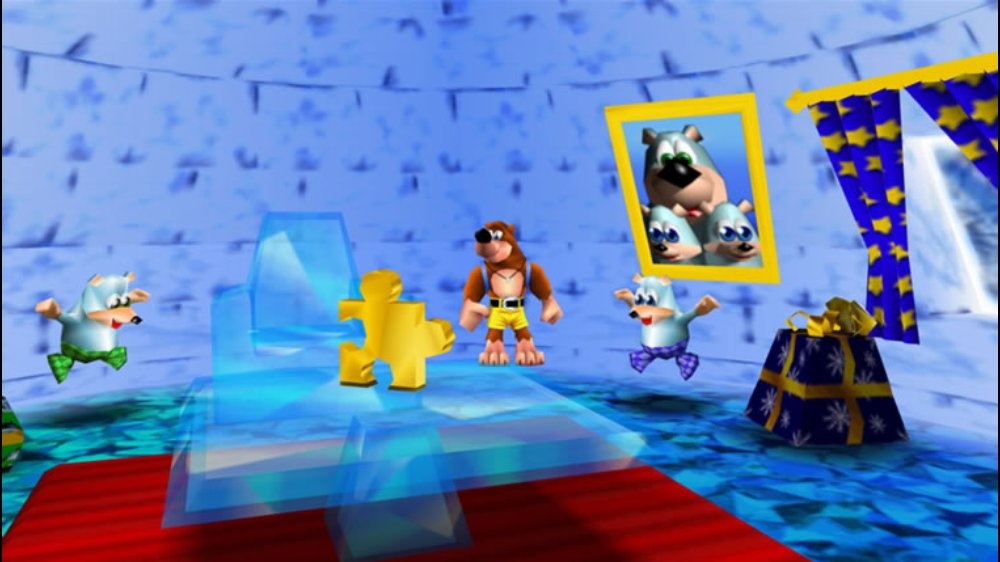
And then I saw Banjo-Kazooie on the Nintendo 64 demo display.  It looked way cooler than anything on PlayStation.  It had better graphics.  It had more stuff to do.  The worlds looked bigger.  I had to have it.  Low and behold, on July 11, Santa and the Easter Bunny gave word to their associate, the Birthday Badger, that I had been a good little girl and the Nintendo 64 arrived, complete with Banjo-Kazooie.  And I was totally hooked.  I became obsessed with finding every item that could be collected.  I spent the better part of two months doing it.  Then I beat it.  And I wasn’t happy about that.  In fact, I cried.

As a child, I wasn’t very expressive, and rarely emoted.  Crying was a super rare thing for me to do, and it broke my Mom and Dad’s hearts.  I remember my Father actually called the Nintendo consumer support number to find out when a sequel could be expected.  Mind you, this is only two months after the game came out.  Instead, we went to Software Etc. to find the closest Banjo substitute.  When we asked the clerk, he said that Banjo-Kazooie was really just a ripoff of Super Mario 64, and if I liked Banjo, I would love Mario.  What could go wrong?

Smaller levels.  Less to find.  Not as much stuff to collect.  Kind of easy.  Don’t get me wrong, still a great game.  But it was a huge letdown after Banjo.  If you ask people today which was the better game, they say Mario 64.  It wasn’t.  It was just the game they played first.  For most players, it was the first truly 3D game they played, and thus it created the best memories for them.  Some people actually have the audacity to call it the best 3D platformer to this day.  Really?  Over fifteen years later and the genre has never been done better?  That really makes you sound like you’re stuck in a time warp.

By the way, I treasure my memories of playing Banjo-Kazooie as a child, but I don't delude myself into saying it's a game that holds up to repeated play. I bought the Xbox Live Arcade port and immediately regretted the loss of $15. You know what? It's okay to say a game you loved from your childhood doesn't hold up today. If doing so spoils your memories of it, you probably know deep down you didn't like it as much as you thought.

Of the four branches of the Unholy Quartet of Gaming Nerds, Nintendo fanboys are probably the most docile these days.  That’s probably because it’s tough to be a cheerleader for a company that puts out systems named after the babytalk word for urination.  At the same time, they seem to suffer from Peter Pan Syndrome.  They never want to grow up.  They’re stuck playing reskinned, repackaged versions of the same games for their entire life.  If any deviation hits, the fans shit a collective brick.  Take Zelda, for example.  Ocarina of Time was brilliant.  Majora’s Mask was gutsy, but still kind of the same game.  Then came Wind Waker.  It was still the same game as the rest, but the graphics were changed to make it look like a living cartoon.  This was simply too much for the fanboys, who were left inconsolable by this besmirching of their manhood.  In fact, the first time I remember hearing the term “gay” used to describe something outside of San Francisco was someone talking about Wind Waker.  Right.  Obviously Nintendo’s plan was to demasculate the American dweeb population, setting the stage for Pearl Harbor II.

Nintendo wanted to try something different.  Probably because stamping out the same game year after year gets old.  But no, fanboys couldn’t handle it, so we returned to more of the same old shit with Twilight Princess.  Ocarina of Time was my first Zelda, so I didn’t have the 2D games as a reference point to chart the deterioration of the series.  Having said that, I was a veteran of three Zeldas by that point, and I got bored about halfway through Twilight Princess and never finished it.  It never at any point had me.  Ocarina of Time did.  Majora’s Mask did.  Wind Waker did.  All three of them had me from the very start.  Twilight Princess felt like an apology for Wind Waker, but I didn’t think Nintendo had anything to apologize for.  Just like that, Zelda wasn’t fun anymore.  Then they came out with Skyward Sword, which felt like it had less content than any previous 3D Zelda, and it had horrible, delayed, boring, exhausting motion control tacked on.  Different?   Yes.  Fun?  No.  Nintendo isn’t likely to experiment with actual gameplay anymore.  Different, less intuitive control inputs?  That’s fine.  As long as there’s an elf with a boomerang and a grappling hook, the fanboys won’t throw their first-born into a bonfire.

Skyward Sword felt like a step backwards.  Nintendo has become masters of that lately.  They brought out two 2D Super Mario games over the last generation, and they just set the internet abuzz with word that a game is coming called “Super Mario 4.”  I’m hearing things on Twitter like “finally!’ and “I always wanted a sequel to Super Mario Bros. 3.”  I guess Super Mario World, Super Mario World 2, Super Mario 64, Super Mario Sunshine, New Super Mario, New Super Mario Wii, Mario Galaxy, and Mario Galaxy 2 just weren’t sequelish enough for them and their lives have been incomplete ever since Bowser crashed through the last brick at the end of Mario 3.  Let’s talk about the New Super Mario games.  The ones with “new” in the title, named as such because adding a “4” would suggest some kind of advancement and “rehash” was frowned upon by the guys in marketing.  Nintendo had a chance to show they still had it.  In my opinion, they didn’t.

They should call the next Nintendo platform the "Nintendo Microwave" since all they'll use it for is rewarming old stuff.

I first really played the original Mario titles when they were ported to the Game Boy Advance and I thought they were just swell.  But there’s something very telling about the ordering of them that Nintendo chose.  They didn’t bring the games out in the order they were originally released.  First came Super Mario 2, then they went to Super Mario World, then Yoshi’s Island, then Super Mario Bros 3.  This is Nintendo admitting that they never did better than Mario 3.  That’s why they saved it for last.  So Nintendo has clearly stated what the benchmark is.  Then comes New Super Mario Bros. on the Nintendo DS.  Not only did it feel like a gigantic step backwards from any of the four games listed above, but the real kick is Nintendo didn’t even try to make it better.  They were content releasing a stripped down, bare bones, no frills Mario game.  Sure, a whole generation of fans never were exposed to Mario, but even the fanboys beat themselves blistered over it.  The Wii version was the same way.  Both these games felt like deleted scenes from good Mario games.  Fans reacted to these half-assed efforts the only way Nintendo fans can: they made them two of the best-selling games of all time.  Gimmie an N!  Gimmie an I!  Gimmie an N!  Gimmie a T!..

Nostalgia should have a place in gaming.  But a company shouldn’t be able to live in cruise control based solely on it.  Nintendo can though, and it does.  And the fanboys treat every new Nintendo release like a reunion.  Maybe I’m not wired to be able to understand this.  I crave new experiences.  I can’t believe anyone out there anxiously awaits the announcement of yet another fucking Mario Kart that changes nothing.  “Oooh, which obscure character will join the roster this year?  I bet it will be Pauline from Donkey Kong!”  For real, show of hands, who here got bored and never finished Skyward Sword?  Mario Galaxy 2?  Metroid Prime 3?  New Super Mario Bros. Wii?  And be totally honest with yourself.  Were you having fun, or telling yourself that you were?  I’m not anti-Nintendo based on some kind of bizarre principle.  My favorite system ever is still the Nintendo DS, which gave me the most new and original experiences of any platform in recent history.  You know what though?  Fuck Nintendo.  What have they done for me lately?