Xenominer

I’ve never played Minecraft.  Or FortressCraft.  Or CastleMiner.  Or any number of other voxel-type crafting games that are more trendy now than tramp stamps.  Incidentally, I don’t have a tramp stamp either.  I guess I’m not a very trendy person.  But, there’s no malice behind my ignorance of the crafting scene.  I just haven’t played it because it doesn’t look like something I would have fun with.  Yea, I started Indie Gamer Chick to have new experiences, but I was thinking more along the lines of games that simulate what it’s like to be a penguin in heat, or a game where you fling mashed potatoes at gophers.  Let this be said: if you hate something without playing it, you’re an idiot.  To all of you guys who denounce Minecraft, FortressCraft, CastleMiner, or any other crafting game that you haven’t even played, you’ve really lost the plot.  I know trying to appeal to the irrational core of gamers is silly, but I figure I should at least try.
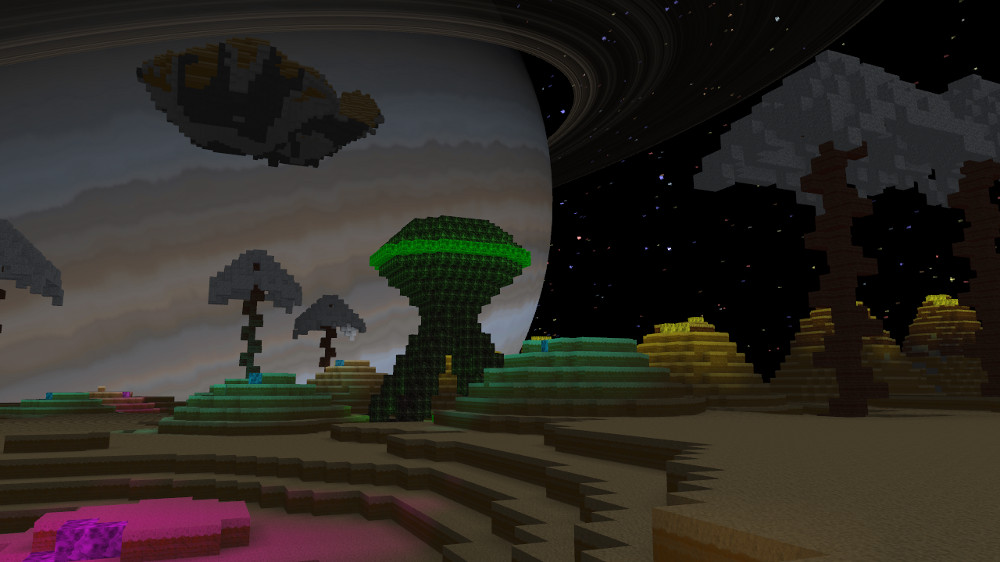
Obvious joke warning: Minecraft…..IN SPAAAAAAACCCEEEEEEEEEE!!!

I can’t compare Xenominer to something I haven’t played, so this final Uprising review will be somewhat unique.  I go into it with no preconceived notions of what to expect.  I have no bias acquired from the games it borrows elements from.  This is a slate so clean you could perform surgery on it.

So I started the game and went through a brief tutorial that made me suck up various blocks and then reposition them in the open world.  First thing I noticed: the graphics are clean.  Second thing: the jumping is really good.  Like, almost Metroid Prime good.  Third, the frame rate was really good.  Hey, this might not be so bad, I thought.  Then the game wanted me to suck up ice to replenish my dwindling oxygen.  This was a problem.  Although I got as far as “ice = shiny” I couldn’t actually tell the difference between an ice block and a crystal block.  Even with a TV large enough that it’s one of the seven wonders of the world, the text that identifies the blocks is practically microscopic.  It’s also written in an alpha-numeric font, which never looks good when it’s smaller than an ant’s penis.

Most of the HUD displays are too small, but I was able to suck up the ice and covert it to oxygen.  And then the sun went to rise up.  This causes radiation to rain down upon you.  The game warned me to take shelter.  So I dug myself down a few blocks and covered myself up with them.  I wasn’t sure how long to wait, and I didn’t want to press my eyeballs up against the TV to find out, so I undug myself and ended up irradiated.  So I redug myself and waited for the sun to pass.  Most games that makes you wait for stuff to happen are probably not going to win any Nobel Prizes for Fun.  I did attempt to pass the time by drilling deeper, but then my battery ran out of juice, and then I ran out of oxygen, and then I expired.  Sigh.

Upon respawning, the sun was still up and I instantly started taking damage.  I did survive and was tasked with building something that required copper.  I fucking turned over half the world looking for the shit, going through more oxygen tanks than a 70-year-old chain smoker.  After an hour (including more respawns) I had found the silicon I needed, but no copper.    Xenominer was unquestionably going to be a time sink.  I tend to view such games favorably.  Hell, there’s two time sinks on my top 10 list: Miner Dig Deep and Smooth Operators.  But I had fun with those.  Once I noticed how much time had passed versus the amount of fun I had up to that point (which would be none), I couldn’t hit the power button fast enough.  I’ve talked with other XBLIG reviewers and they agree: Xenominer doesn’t get you off to a quick enough start, like all great time sinks do.  Some more direction.  Just a big enough push to get you feeling like you’re actually accomplishing stuff.  But there is none.
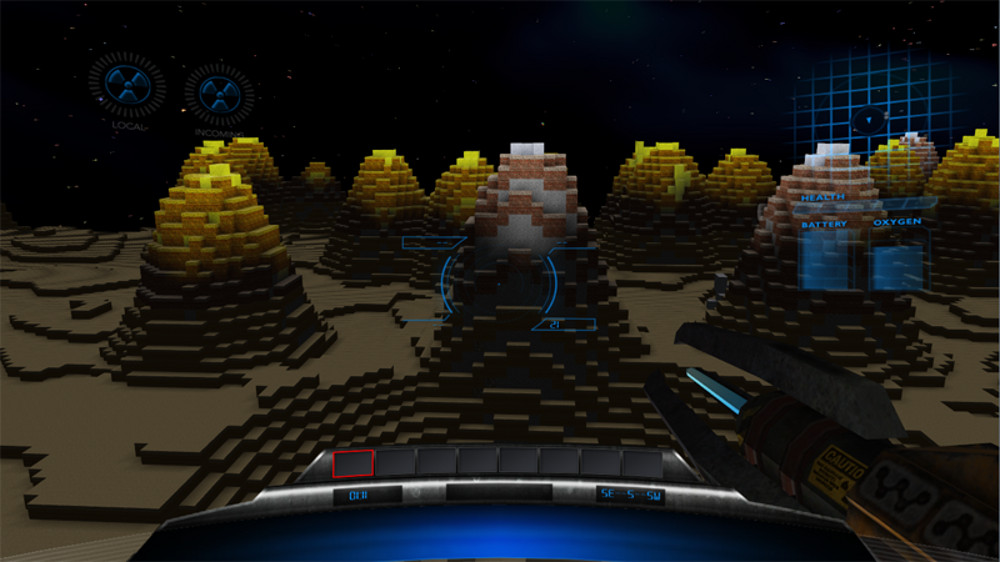
No, there’s no killer space bees or space ants. Too bad. That might have livened things up.

So my first real crafting game is in the books.  I didn’t really hate it, because it controlled really well (can’t stress enough how good the jumping physics feel) and the graphics held up.  Mostly.  Actually, the game starts skipping the more you walk around.  I wanted to test how bad it was, so I decided to walk in a straight line with a stopwatch and time how long it would take to start skipping.  Ready for this?  It took less than two seconds per a pause (the average was about 1.7 seconds) .  When the game freezes every two seconds, chances are it might not be quite done yet.  Maybe Xenominer is in an early beta stage, and something amazing will come of it.  I could see myself getting totally hooked into it, just like I did with Miner Dig Deep.  Xenominer’s biggest problem is that it has nothing to hook you in early.  If games are drugs, then picture Miner Dig Deep as heroin.  Every good drug pusher knows you have to hook ’em early, and that game does it.  Xenominer, on the other hand, doesn’t offer you the drug until it makes you watch a documentary on grass growing and the latest episode of the World Series of Paint Drying Watching.  Thanks, but I’ll just say no.
Xenominer was developed by Gristmill Studios

80 Microsoft Points said the Uprising had a 44.44% success rate at making the Leaderboard.  In other words, the promotion had the same success rate as any nine random XBLIGs would have had in the making of this review.
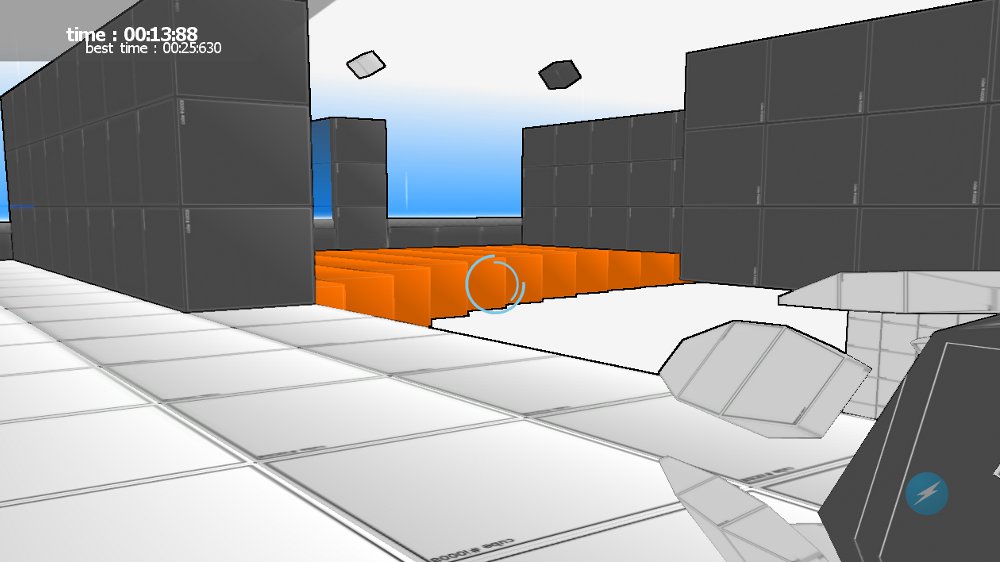

Pixel

Pixel is one of the worst names ever for an XBLIG.  Worse than Brand.  Well, probably not worse than Dark.  It doesn’t really fit with the theme of the game, and doesn’t give you a feel for what to expect.  It’s so lazy and so uninspired that, as a consumer, it makes me question whether any effort was spent making the game itself.  I mean, they phoned in the name, so it stands to reason that the game was equally half-assed.  That’s not the case with Pixel.  Despite being an ungodly piece of shit due to really horrible play control and one game-killing glitch that I couldn’t get past, there was obviously some effort made here.

I’ll step away from my typical smart-assed attitude here and make a heartfelt plea to the Xbox Live Indie Game development community.  You guys already struggle so much to get attention.  Why shoot yourself in the foot right out of the starting blocks by not trying to come up with a memorable name for your game?  Pixel is such a prime example.  It’s a 3D dexterity-shooting puzzler.  I would associate a name like Pixel with 2D sprite-based stuff.  I guess Pixel gets it from the fact that there are blocks.  Okie dokie.  I still don’t understand the logic in it, but then again, XBLIGers seem to operate on a plane of existence where logic doesn’t dare tread.  This is evidenced by the fact that so many developers determined that the best way to get attention for their new XBLIG was to launch it alongside the Uprising, even though every major XBLIG writer was committed to covering the games in the promotion.  They might as well of launched their game on a platform that works exclusively in igloos for as much attention as they ended up getting.

It looks like one of those ink-and-paint cheat modes from Turok: Dinosaur Hunter, does it not?

I guess I went so far off topic because I don’t really have a lot to say about Pixel.  I made it seven levels in before I got fed up with it.  The idea is you walk around a sterile, blocky 3D environment trying to reach a goal.  Right off the bat, the biggest problem becomes apparent: the control sucks.  Everything is too loose, causing your character to scoot along like he’s been lubricated in bacon grease.  I tried fixing this by adjusting the control stick sensitivity, but it only half-worked.  Turning around became slower, but sideways movement was still set to Warp 9 and could not be fixed.  The jumping was also unresponsive, with a noticeable delay.  When you have a game centered around precision movement, having less than precise controls is a good way to turn me (or pretty much any reasonable gamer) off.

I’ve put up with worse, but the final straw for me was a pretty noticeable glitch.  On the 7th level, there are these platforms with a red stem poking out of them, not unlike a dog’s wiener.  You shoot the red part, and the white blocks rise up around the red part, allowing you to hop to the next platform.  As established, the controls are utter shit, so messing up is not only possible, but it’s probably expected.  When you fall off the stage, you just fall back onto it, with the idea being that you’ll have a slower stage time.  Something I filed under things I don’t give a shit about.  However, once I respawned, I hopped back to the first platform and shot the red thing.  At this point, without any movement, I fell off the platform and went back to the start.  Huh.  And then it happened again.  And again.  As it turns out, this is a glitch, and you have to exit out of the stage and try again.  But if you screw up at any point in the stage, the glitch will activate again and you’ll have to once again exit the stage and restart it.  Yea, fuck that, I’m done.

Pixel was developed by Ratchet Game Studio

80 Microsoft Points took a 3 day weekend in a land where Minecraft clones don’t exist in the making of this review. 

Other Pixel reviews: Clearance Bin Review (who also noted the glitch), and hopefully more to come.

City Tuesday

Fourteen minutes, thirty-five seconds.  That’s the time it took me to beat City Tuesday, the game that I was looking.. forward..  whoa, Déjà vu.  Anyway, you go around, like, defusing bombs and stuff and I could have sworn I already did this review.

Wait, I know I did.  I thought it was too short and didn’t fulfill its promise of being something special.  I pointed out that the tutorial lasted twice as long as the actual meat of the game.  I bet any second now a screenshot will pop up saying how I hate branded screenshots.

I hate branded screenshots, but this will have to do.

See!  See!  I’m telling you guys, something fucked up is going on here.

Well, I stand by my belief that City Tuesday isn’t worth a dollar.  It’s a good idea that is unrealized.

City Tuesday was developed by Return to Adventure Mountain

80 Microsoft Points wrote this review from Punxsutawney, Pennsylvania.. oh shit.

Other City Tuesday Reviews: The Indie Ocean, Clearance Bin Review, and more to come.  I wonder if this happened to them too.

Well fuck.

Sigh.

Eleven minutes, eight seconds.  That’s the time it took me to beat City Tuesday, the game..

Serves you right for hating Apple Jack 1 & 2 ya stinkin’ bitch!

City Tuesday

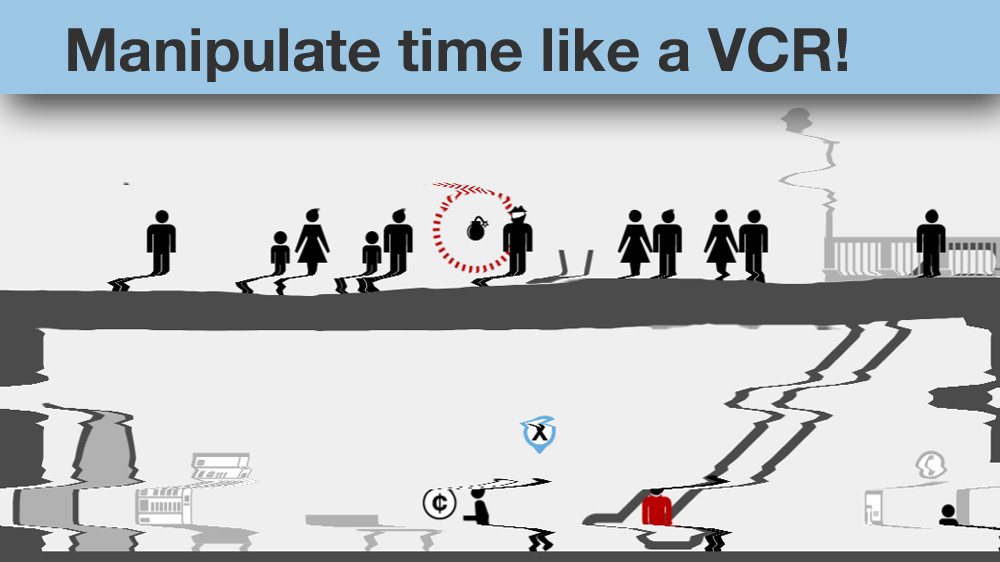
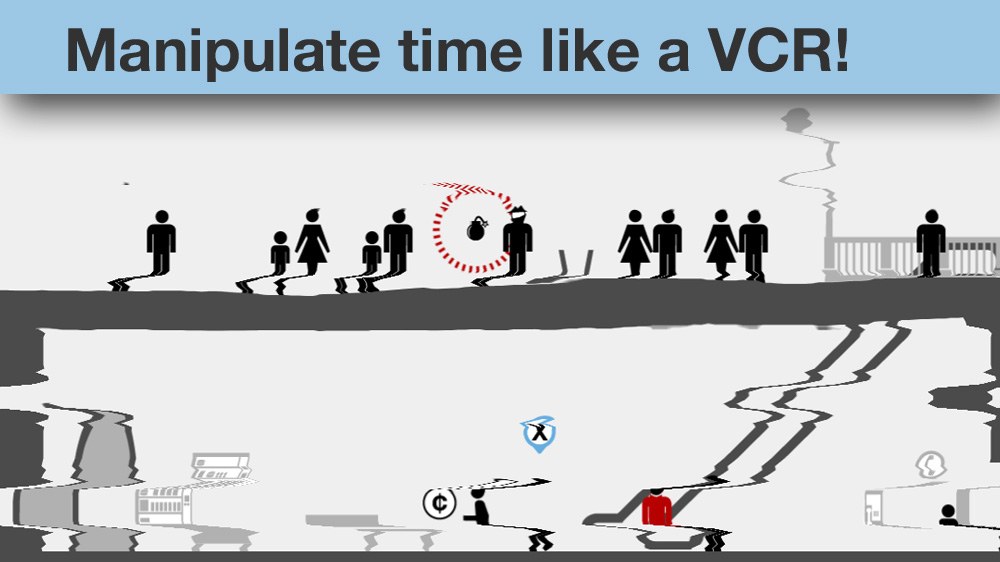
Eighteen minutes, fourteen seconds.  That’s the time it took me to beat City Tuesday, the game that I was looking most forward to during the Uprising.  Like my neighbor who entered her half rottweiler, half-some smaller terrier thing (they named it Crime, short for Crime Against Nature.  I’m not kidding) into the dog agility contest, I think my expectations were a tad bit too high.  The idea is you’re a dude who has five minutes to defuse various bombs that terrorists have scattered around a city.  The hook to that is you can repeat that five minutes as many times as you need to get all the bombs.  Whenever you rewind, everything unfolds exactly the way it did before, unless you manage to interfere.  Using this mechanic, you have to figure out ways to free yourself to snatch the bombs.

This sounds great, but I don’t feel the concept goes far enough.  The first ten minutes of City Tuesday is spent playing two glorified tutorial stages of the “throw the child in the water and see if it learns to tread water” variety.  To City Tuesday’s credit, it actually is designed in a way where you can figure stuff out on your own with minimal fuss.  There’s really not a lot to learn.  Pay attention to the dudes, follow their patterns, and figure out how to get to the bomb.

I hate branded screenshots, but this will have to do.

Once the game opens up into the more open-ended city, you have to follow multiple patterns and probably restart the day several times.  Restarting is handled by pausing the game and selecting it from a menu with no bells and whistles, a very unsatisfactory way of doing it.  Thankfully, you can also fast-forward by holding the right trigger.  There’s only a small handful of tasks to do here, followed by one final chase and platforming section.  Then the game is over.  Again, my one and only play-through took eighteen minutes to finish.

Is it worth a buck?  Well, no.  The opening tutorial levels (with the exception of a bit that involves a vending machine and payphone) offer none of the real meat that City Tuesday seemed to promise, yet they make up the largest chunk of the game.  The city section does offer those Groundhogs Day type of puzzles, but it feels more like a proof-of-concept design for a larger game than something fully realized.  Yea, sometimes a game can leave you wanting more in a good way.  City Tuesday didn’t do that for me.  I felt the game never even really warmed up.  The tasks you’re given in the city are still so fundamental in their simplicity that I didn’t feel like I had accomplished anything at all by solving them.  I love the concept of City Tuesday, but nothing here makes truly good use of it.  Such a shame.

City Tuesday was developed by Return to Adventure Mountain

80 Microsoft Points wrote this review from Punxsutawney, Pennsylvania in the making of this review.

Other City Tuesday Reviews: The Indie Ocean, Clearance Bin Review,  and more to come.

I got you Babe.

Entropy

Entropy received a Second Chance with the Chick.  Consider this the definitive review, but check here to see what they fixed.

Here’s irony for you: I played about half-way through Entropy yesterday.  Now, I know the game was making track of my progress, because at one point I left the game and checked the level-select on the menu.  I just wanted to know how far I had made it.  Then, I went back to the game.  I played for a while, got bored, hit Borderlands 2, and figured I would finish Entropy today.  Instead, I found that my save file was gone.  So a game called Entropy experienced entropy.  Awesome.  Thankfully not all games do what their names say.  Wargasm for example.  Shudder.

*Note: I’ve talked with many players and nobody else has had this happen, and in fact it didn’t happen to me when I tried to recreate it.  It’s unknown what happened, but this is not expected to be anywhere remotely a common issue. 

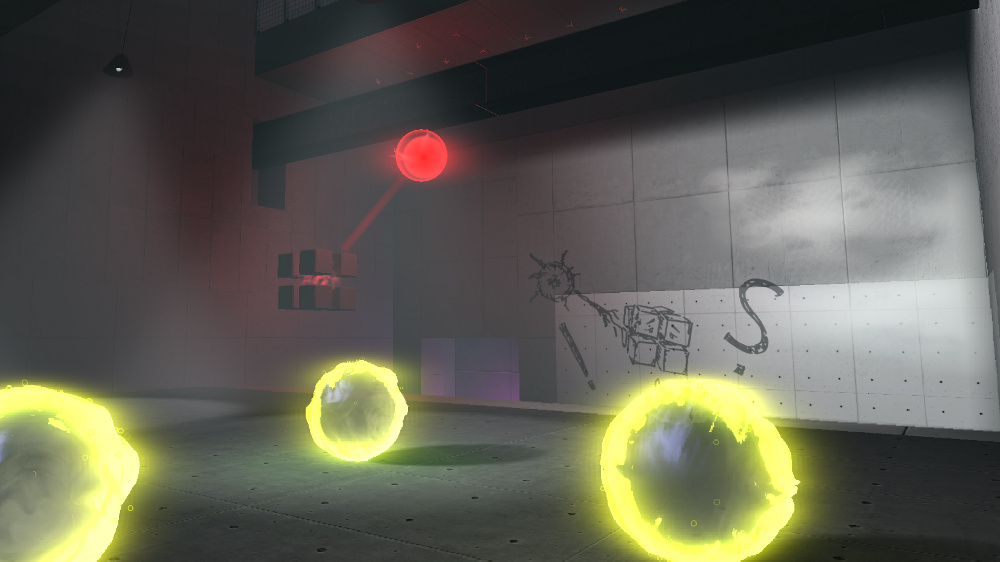
Hey look! Writing on the wall. Just like that one game!

Perhaps it was somewhat merciful that I lost my progress in Entropy.  I was downright bored by it just a few stages in.  Maybe I’ve over-loaded on puzzlers as of late.  More likely I’m just sick of test-chamber games that have the personality of a sea cucumber, which is the perfect way to describe Entropy.  The setting is so lifeless, grim, and dark that it’s exhausting to experience.  Games like this need something entertaining to drive the player forward.  So many games seem like they want to be Portal, yet their developers completely missed the point of why Portal turned out the way it did.  Portal was given personality out of necessity, because the game would have been tiring without it.  I think this is why so many players succumbed to Gateways!  As cool as the puzzles in that were, there was nothing but the promise of more puzzles to drive the game, with no reason for players to stick around and “see where they’re going with this.”

Entropy does have some kind of plot.  I guess.  But things are kept too abstract and minimalistic to get a feel for what’s going on.  You have no character yourself.  You’re just a camera that hovers five feet off the ground.  The antagonist is a pink ball of light that leads you around from room to room.  There’s no dialog, so all you get to go by is the rare pop-up hint, or a sketch on a wall that points you in the direction of a puzzle’s solution.  Forget about seeing where they’re going with this.  I don’t even know what they’re doing right now.

The hook of Entropy is that it’s a first person puzzler.  On XBLIG.  That’s pretty much it.  It doesn’t sound like much, until you remember that your average first-person XBLIG would qualify as the worst game ever played by your average gamer.  My expectations were set so low that Satan himself had to do the limbo under them.  I figured the controls would be unresponsive and the jumping mechanics would be crippled.  I was wrong about both.  Entropy actually handles reasonably well, and features the best first-person jumping physics on XBLIG.  Of course, that means absolutely squat.  It would be like being the best arm wrestler at the Center for Arthritis.

Entropy looks better in screens than it does in motion.

Unfortunately, the well done mechanics are let down by puzzles that are really a chore to solve.  Most of them revolve around pushing balls around a room.  There’s four kinds: rock, water, fire, and acid.  Your goal is typically to get these onto a scale that measures heat, pH levels, or weight.  Unfortunately, there’s no way to pick up a ball, so moving them around means clumsily shoving them around and hoping they don’t roll into a wall, off platforms, or into each-other in ways that cause them to vaporize.  It’s not totally broken, but the process is slow and clunky and makes you wish there was some other way.  I wouldn’t exactly sell my soul for the right to pick up the ball, but if I was negotiating it for a long and healthy life, I would have that thrown in.

The slowness factor really kills Entropy dead.  When a gun that sucks the orbs up in a bubble is added, it just further slogs down an already snail-like pace.  It’s kind of sad, because Entropy really is the best controlling first-person game on the platform.  It even looks good too, chugging frame rate not withstanding.  And I like how you can undo mistakes with a Prince of Persia style rewind.  It’s just too bad that the actual game here is just not fun.  Remember developers, that’s your ultimate goal: give players something entertaining to pass time.  A game should be at least as entertaining as throwing paper airplanes at the seniors waiting at the bus stop.

Oh don’t look at me like that.  It’s safe.  They’re seniors!  They all have glasses on!

Entropy was developed by Autotivity Games

80 Microsoft Points said the scoring for Airplaning Old People (aka Greatest GeneRAGEtion) is as follows: 1 point for making them flinch, 2 points if they look cross at you, 3 points if you get it stuck in their clothes or hair, 4 points if they threaten to get up at you, 5 points if they actually get up, or 10 points if you get a direct hit and they do nothing in the making of this review. 

Also reviewing Entropy: Clearance Bin Review and TheXBLIG.com

Gateways!

Update: Gateways now includes an easier mode that will still eat your ass for lunch.

Halfway through Gateways, I had it pegged as the new #1 game on my site, and that Escape Goat had been slain. No joke. It has the most awesome hook of any XBLIG to date (2D Portal, enough said), a developer with big time credentials (a game on XBLA and a game already on my leaderboard), amazing retro-graphics, and some of the most clever puzzles I’ve ever seen in any game. #1? It’s a lock.

Actually, describing Gateways as essentially being a 2D Portal is way over-simplifying things. Portal was never this smart, nor did it give you this many things to do. You had two portals and maybe a cube to drag along with you. Even Portal 2, with its tractor beams, gels, and variations of the companion cubes, can’t touch Gateways for literally mind-numbing complexity. Strange as this sounds, Gateways is actually too smart, to the point of turning off some of my Uprising comrades.

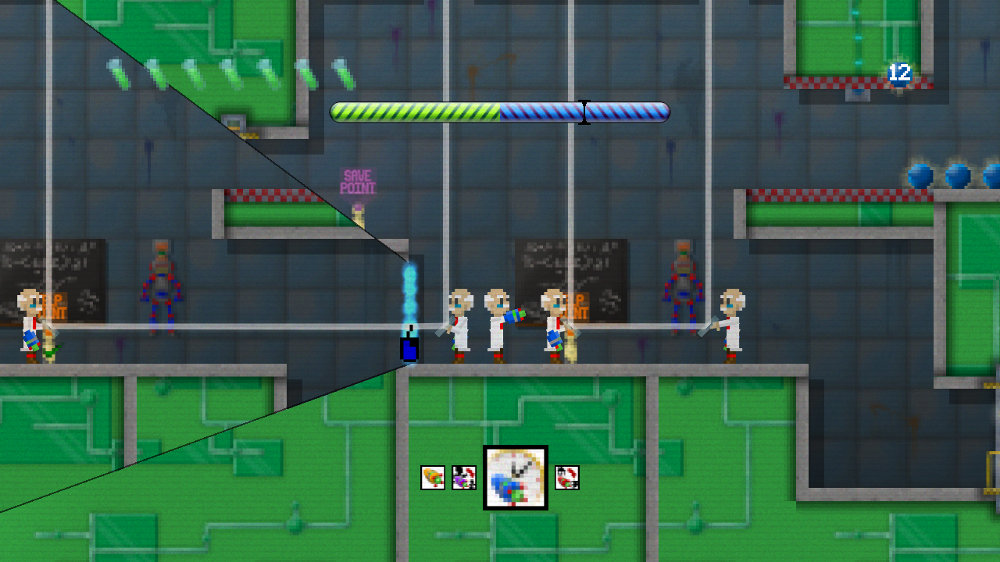
See, this is why I wouldn’t make a good time traveler. I would take a razor to my old self’s throat, just to see what happens.

Once again, a puzzle game on XBLIG made me question what I thought I knew about gaming. As a kid, I always figured puzzlers were the product of a publisher pulling an Arliss Loveless, kidnapping top eggheads from around the world and forcing them to create puzzles, for profit! But no, it turns out you don’t need shackles, chloroform, or threats of bodily harm to create puzzles, meaning those things can stay in the bedroom where they belong. One dude came up with all the puzzles in Gateways. One fucking dude, presumably with a brain that outweighs a Volkswagen Beetle.

Playing as a kooky scientist who is trying to return to his lab’s command center (why doesn’t he just have Zordon teleport him?), you have to search around for new portal guns and abilities. Gateways is laid out like a Metroidvania, meaning you’ll end up doing a lot of backtracking, retracking, and teleporting around the map. This could have been hugely risky, but Smudged Cat put a big “go here” arrow on the map that appears as soon as you clear the latest puzzle. Smart. However, I still found the design somewhat problematic. Although there are special shortcuts that open up as you make progress, I feel some kid of magical “return to the starting spot” item would have cut down on some of the tedium involved. That, or include the ability to warp at your will from save point to save point, like LaserCat did.

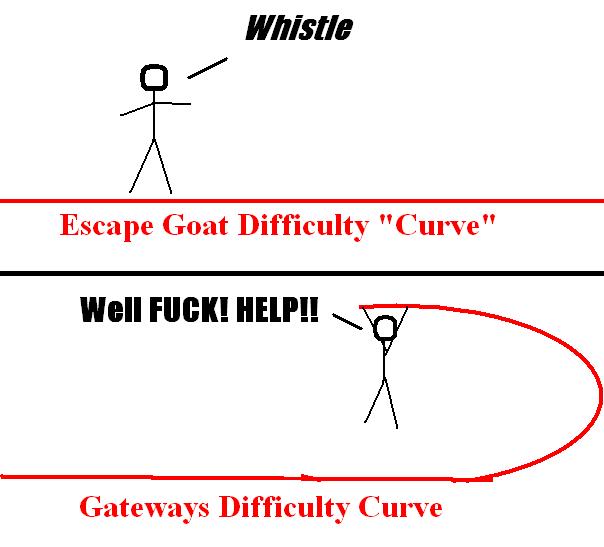
Which brings me to the puzzles. They’re genius, and this is commendable. But the difficulty of finishing them, ahem, scales. My biggest complaint with Escape Goat was that there was no difficulty curve. Because you could pick levels in any order, Mega Man-style, that game couldn’t escalate the puzzles and make them tougher as you went along.  Gateways has no such limitations. However, the curve of it was allowed to grow out of control. As a result, Gateways is possibly the most difficult platformer-puzzler in gaming history.

Things start out smoothly with the simple portal gun. It plays more or less exactly like a 2D Portal game. The first twist comes with the size portal thing, which allows you jump through one portal and come out the other end either larger or smaller. Sort of like Alice and Wonderland without having anything tell you “Eat me!” At this point, things are still pretty straight forward. And then comes the Time Travel gun. The idea behind it is you place one portal and then wait for some time to pass. Then, you place the second portal and hop through it. When you come out the other side, you travel back to that point, with your former self doing whatever it was you were doing while waiting for the time meter to fill. At this point, any sense of wonderment in the puzzles is replaced by conundrums designed to blow your cerebral cortex.

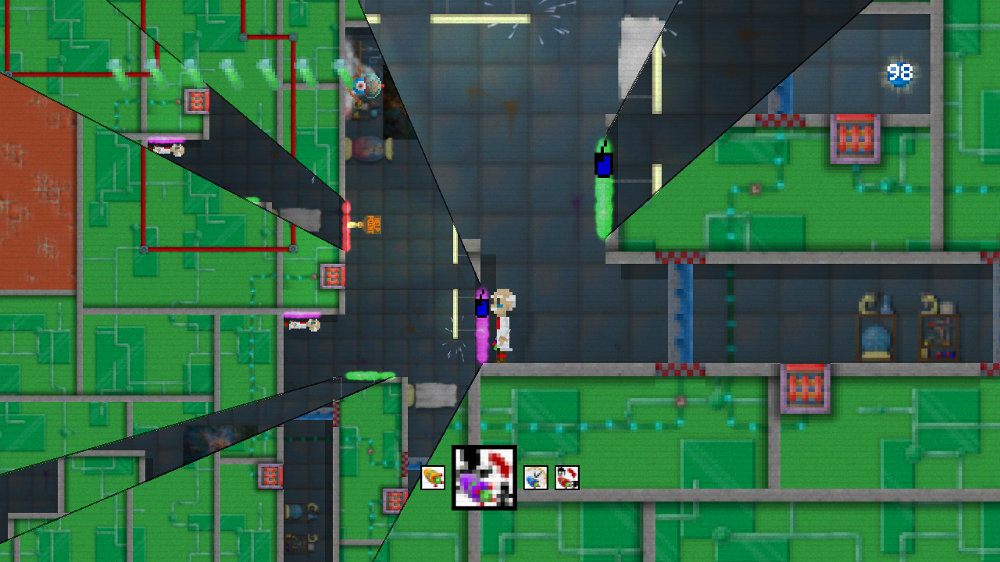
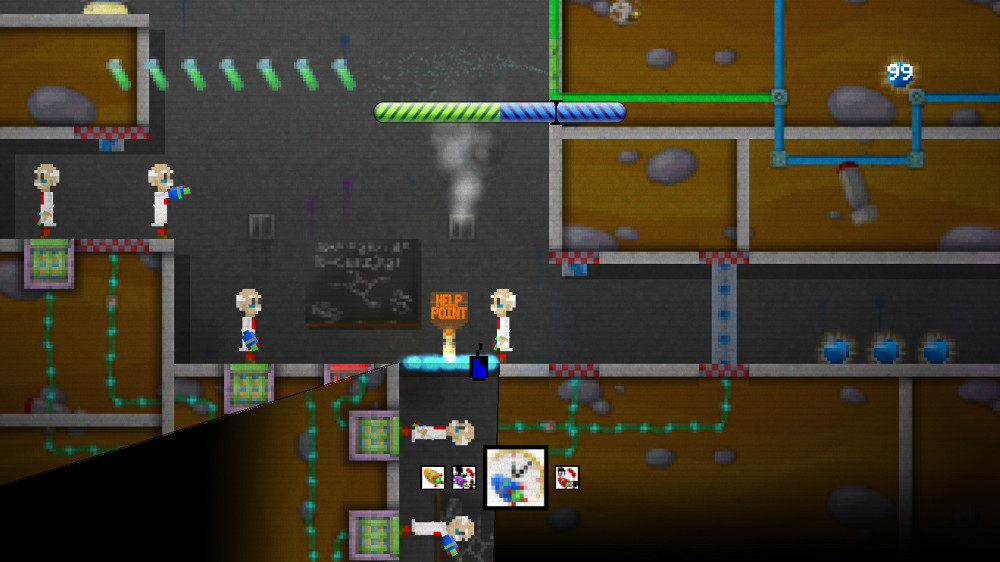
See this picture? You will be expected to recreate it at some point. If this doesn’t sound like something you think you are capable of doing, go try your hand at Diehard Dungeon. I’m not kidding. I can’t stress this enough: this game is fucking hard.  I showed this picture to Brian, Bryce, and Cameron, and the results weren’t pretty.  Brian walked out of the room, complaining of a headache.  Cameron buried his head in his lap and began to cry.  And poor Bryce keeled over dead.

Doc Brown would be thrilled with Gateways, which requires you to think 4th dimensionally. Once you’ve made “clones” of yourself, you have to use them to stand on switches and line up mirrors to deflect lasers, all within a small amount of time. Although you can get items that extend how long the time portal works, it never really eases up on the tension of getting everything absolutely fucking perfect, with no room for error. This is harder than it sounds, because moving from portal to portal is disorienting. Solving puzzles requires concentration, coordination, and cognitive thinking on a level no game in history has. That’s not hyperbole.

The first time I encountered a puzzle that used the time gun and required you to make clones of yourself that reflect a laser, I literally froze in my chair and processed the turn the game just made. Gateways wasn’t fucking around anymore. But the game wasn’t done. It added more abilities and guns. By the end of the game, puzzles require you to use multiple guns, time windows, and abilities. It’s so much to juggle that I sincerely doubt 99% of all people who play Gateways will ever actually finish it. Don’t believe me? Here’s a video of the solution to the final puzzle. Mind you, even with this video, people are having trouble finishing it. Don’t worry about spoilers either. There’s no possible way more than 5% of this will stick anyway.

I get a headache just from watching it. Now imagine trying to solve it yourself. Not just knowing the solution, but selecting the right guns, the angles of the mirror, lining them up correctly, paying attention to the orientation of the room, remembering where the already created clones will be standing, the locations of the switches and the lasers, what portals do what and lead where, and what order you’re supposed to do everything in. Hell, most people can’t stand on one foot and with their eyes closed.

Earlier puzzles offer a “help” system which really is just a “we’ll solve it for you” system. Throughout the game, you collect orbs. Every puzzle is marked with a “help” station that works in two parts. First, you have to pay five orbs just to see if you have the equipment necessary to finish it, even if you already know the answer. Then, if you get truly stuck, you can pay 40 orbs to have the game take over the control and finish the puzzle for you. I wasn’t a big fan of this set-up. I almost wish there had been some middle-ground option that steers you in the direction without outright playing the game for you. To solve some puzzles (including the final one), I cheated by putting numbered masking tape on my TV so that I would know where exactly to stand. Maybe something like that for 10 orbs would be preferable to having the game solve itself for you. Oh, and you can’t buy the solution to the final puzzle.

Needless to say, this difficulty spike makes Gateways a title that won’t be enjoyed by everyone. Or most people actually. I really, really enjoyed it, but I didn’t forget what it was. Or the many annoyances I experienced playing it. Not just the brain freezes, but little things. I found switching between the flashlight, mirror, and guns to be somewhat unintuitive, and that really makes the final few puzzles more annoying than they have to be. I found the flashlight stages aggravating. I don’t think the game really needed enemies at all, or dying, and these things could have probably been comfortably edited out. And I wish the game had a bit more personality. That’s really the difference between this and Portal: I wanted to solve the puzzles in Portal so that I could hear the next bit of hilarious dialog from GLaDOS or Cave Johnson. Gateways is played completely straight, and that’s really disappointing.

Brian wanted me to note that he did not find it difficult to cycle through the various items. Noted. Now I would like to note that he made it about 25% through the game before stopping and he never had to deal with the ultra complex stuff.

Right before publication, my buddy Tristan of Clearance Bin Review became the latest of many players I follow on Twitter that threw in the towel at some point on Gateways. I stuck it out, and I’m happy I did, but overall I believe Escape Goat is still the better game. It controls better, is more accessible to everyone, and has more personality. Gateways is hyper-intelligent, but that actually works against. It’s still, as of this writing, the second best game time I’ve ever had with an XBLIG, but such experiences will not be typical, so purchase at your own caution. You can’t possibly get a feel for how much grey matter this requires just from the demo. It catches you by surprise.

Let’s put it this way: imagine if every XBLIG had a human counterpart at a bar. Gateways would be the genius of the room who traps you in a corner, forgets who he’s talking to, and starts to practically speak in tongues. At first you feel like you’re privileged to be in the presence of such intelligence, but after an hour, with no end in sight, you start to look for any excuse to break up the conversation. By the way, Cute Things Dying Violently would be the frat boy making inappropriate dead-baby jokes, Don’t Die Dateless Dummy would be the slow, awkward kid who trips over his own tongue every time a cute girl walked into the room, and Sententia would be the guy who gets drunk, passes out, falls off the bar stool, and lands face-first into a puddle of his own vomit.

Gateways! was developed by Smudged Cat Games

240 Microsoft Points heard Raventhorne has been doing the Dance of Joy ever since Sententia came out, as it’s no longer the defacto “disappointing game in an XBLIG showcase promotion” poster child in the making of this review.
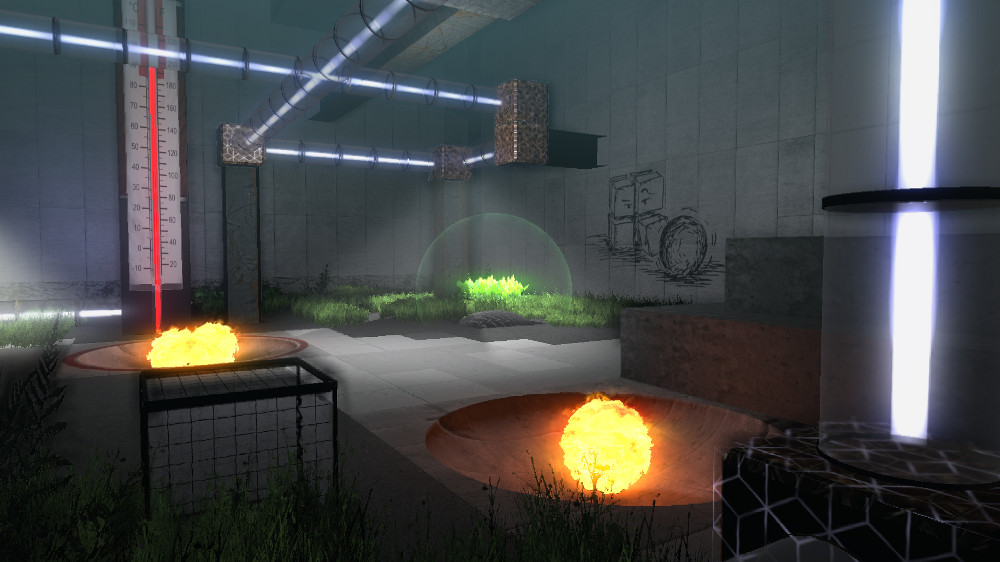
Gateways! is ranked on the Indie Gamer Chick Leaderboard.  Click here to see where it landed.

Gateways Reviews from the rest of the Uprising Crew: TheXBLIG.com and Clearance Bin Review

Sententia

As I noted in my review of qrth-phyl, I get called out a lot for picking on developers. I really try to avoid this and focus on the game, but sometimes my methodology on criticism can seem like I’m going after someone when I’m not. If I say a developer’s game sucks, it’s taken to mean I think the developer sucks. And if I’m especially harsh on a game, it’s thought that I need to lighten up and look for positive things to talk about and “quit being so personal.” It’s never personal. Ever. So hopefully I’ve cleared that all up and can now focus on writing a balanced review.

Sententia is the worst Xbox Live Indie Game of the year.

I spent a few hours slogging through it, including accidentally scrubbing my save file while attempting to show someone how the game began, which meant I got to start over. Of all the critics who are covering the Uprising, I’m pretty sure I made the least progress in the game. I know there are people who say that a review doesn’t count if you don’t finish the game. To that I say, unless it has a magical stop-being-crappy section, I don’t think there’s anything I can possibly miss discussing about it.

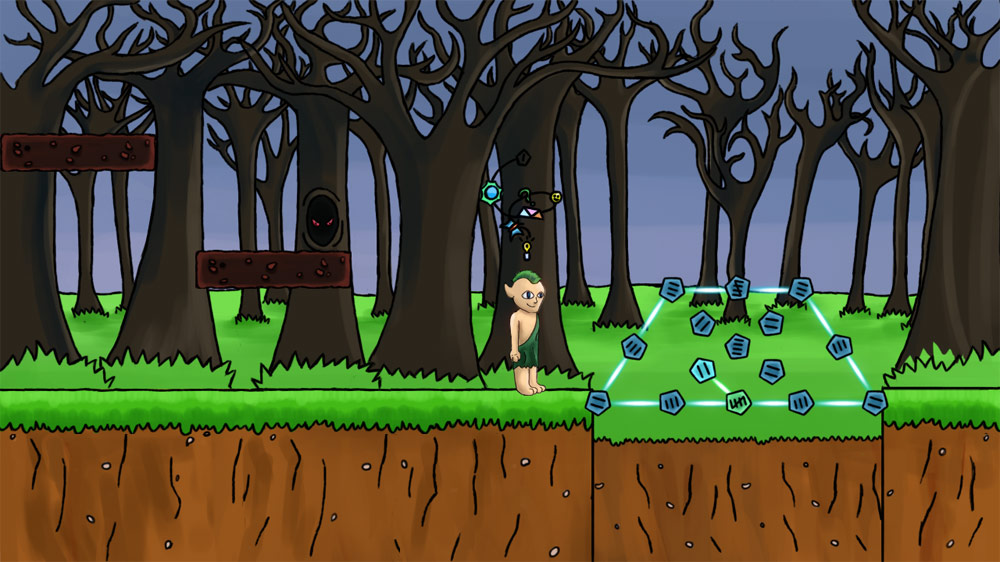
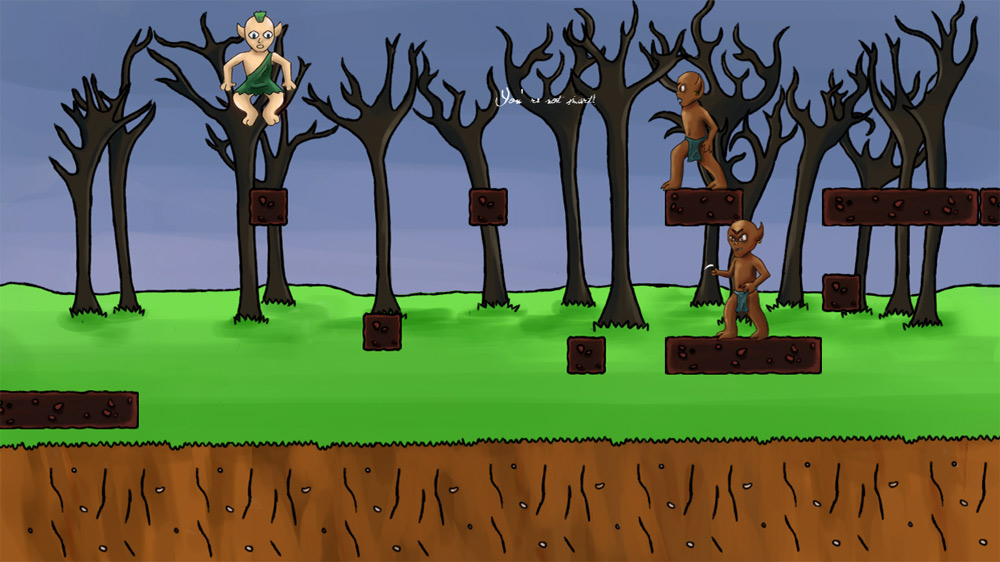
The idea is you’re some kind of demon monster thingie (I think) who is coming of age and learning to use magical connect-the-dots to um, do something. I honestly have no clue. Which is odd because there’s certainly enough writing that I would hope to grasp what is going on. Instead, a kid just kinda wanders off on the woods, sees giant-sized devil thingies, and doesn’t turn around and run home to his daddy.

Sententia describes itself as an art game in its marketplace blurb. I’m not a huge fan of games that label themselves as such, because most that do so use it as an all-purpose bullet-proof vest for criticism. It gives a developer or a game’s fans the ability to deflect any valid complaints by saying “it’s art house, it’s not for everyone.” I got this vibe when I interviewed Michael last month. I came away liking the guy and admiring his amazing effort in organizing the Uprising. I also looked at his game, compared it to the other eight games, and figured it didn’t belong. And it doesn’t.  I get no pleasure from saying that, but it’s true. It probably should have been the last game to release, so as to not taint the event.

Let’s picture non-regulars on the XBLIG scene catching wind of the Uprising through some of the big time coverage it has got. Sententia is the second game in the promotion, after the very good but also very weird qrth-phyl. Maybe qrth-phyl looked too weird to sample. Thus, Sententia becomes the first game that many people sample in this promotion that purports to show off the best XBLIG has to offer. Within fifteen minutes, everything wrong with Sententia becomes evident. Bad graphics. Annoying sound effects. Horrible play control. Sloppy interface. Bad writing. Cheap level design. Those people who think XBLIG is a joke and avoid the channel like the plague who decide to take a chance because of the hype say “this is the best Xbox Indies are capable of?” They don’t know that Sententia, and this will really sound harsh, only got in because it’s the game created by the guy who ran the promotion. So those people play this, are completely turned off by the scene, and they never come back.

And for the record, I feel like a total bitch for saying that.

Guys, next year I’m picking the order.  

Sententia’s hook is that you occasionally have to pause the game and do a connect-the-dots puzzle. Every dot has little slash-marks on it, signifying how many lines will extend from it. This is actually a cool idea for a standalone game, assuming it’s done right.  Sententia doesn’t do it right, mostly owing to the clumsy building interface. It’s slow-moving, awkward, and accident-prone. If you make a mistake, deleting a line can be an exercise in frustration. There were times where the cursor simply refused to highlight the line I wanted to delete. I had to delete all the other lines that it wanted to highlight instead before I could correct the mistake. There’s also no “clear-all, start over” button. So if you’ve totally cocked-up a puzzle (and you will do that a bunch, trust me), your punishment is to slowly clean up before starting over. I asked Michael if anyone had pointed this stuff out to him, and he said no, the play testing went well. So going off that, good job play testers! Given the nearly universal negative reaction to Sententia I’ve seen today, I can’t believe none of you thought “maybe I should say something.”

This is where I quit. The smaller, hard-to-see blocks in the center of the level drop quickly after you land on them. Because of the timing of the controls, you don’t have enough time to shoot the enemies or defend yourself in any way against them. It’s one of the most horribly conceived layouts I’ve ever seen in any game.

So the hook was botched. The rest of the game pretty much plays like a run-of-the-mill platformer, assuming the run was given to a recently lobotomized goldfish. The controls are horribly sluggish, with movement and jumping being slow. There’s a noticeable delay in responsiveness. So naturally the game has several sections that require timed-precision platforming with respawning enemies. The enemies are typically placed on narrow platforms, and will fire at you if you are on the same plane as them. Since you can’t jump and fire at the same time, you pretty much have no choice but to rely on luck and hope the game glitches out and the enemies get respawned on the wrong platform. That happens. And thankfully the enemies can’t possibly respawn on the wrong platform in a way that makes it impossible to proceed. Oh wait, that happens too. Don’t worry though, it won’t matter, because you’ll get stuck trying to walk past two respawning enemies on platforms that drop out from underneath you almost as soon as you step on them. Or “get as close to the edge as you can before jumping” platforms that are scattered all over the game. I honestly can’t come up with a single positive thing to say about the gameplay. It’s abysmal in every way a game can be.

I’m not sure how Sententia was released in the state it’s in, or how anyone, even the creator of the game, could be delusional enough to think this should have been included in an Xbox Live Indie Game showcase. A theory kicked to me on my Twitter feed is that Sententia made it in as a matter of convenience, because it was a game that was available and done. If that’s the case, I object to the use of the word “done.” Unless we’re using the “stick a fork in it, it’s done” context. Simply put, you don’t stick a game that is total and complete uncompromising and unapologetic garbage in a lineup of games designed to showcase the potential of a game platform on the grounds that there was nothing else available. It would be like not having enough food to cover a reception, so one lucky guest gets the honor of eating a plate full of shit. Again, not trying to pick on Michael Hicks. He’s a cool dude. But his game could very well be the worst game on the entire XBLIG platform, and should not have been used in a promotion designed to lure in new fans. Michael, I commend you for your efforts in the third Indie Games Uprising. You busted your ass hard for your fellow developers and you should be saluted for that. You spread the gospel of Xbox Live Indie Games like a modern-day John the Baptist. And, like John, your head ended up being served on a silver platter.

“Where the Mild Things Are”

Sententia was developed by MichaelArts

80 Microsoft Points had no fun writing any of the above in the making of this review. In fact, I feel pretty dang rotten about it. 
Also check out the reviews of Sententia from my associates at Indie Theory, Clearance Bin Review, TheXBLIG.com and more to come.

Volley

Xbox Live Indie games release in streaks.  Whole weeks will go by with nothing coming out.  Then Zeus will declare “unleash the Crapan!” and a flood of sewage-saturated indies will hit.  Honestly, it’s not that bad.  It’s just always a little overwhelming in a “where do I begin?” sort of way.  Starting with a game like Volley seems like a good warm-up act, until I remember that well-meaning, not at all horrible games that have little in the way of gameplay can be just as soul-crushing for me to write about as a terrible game is to play.

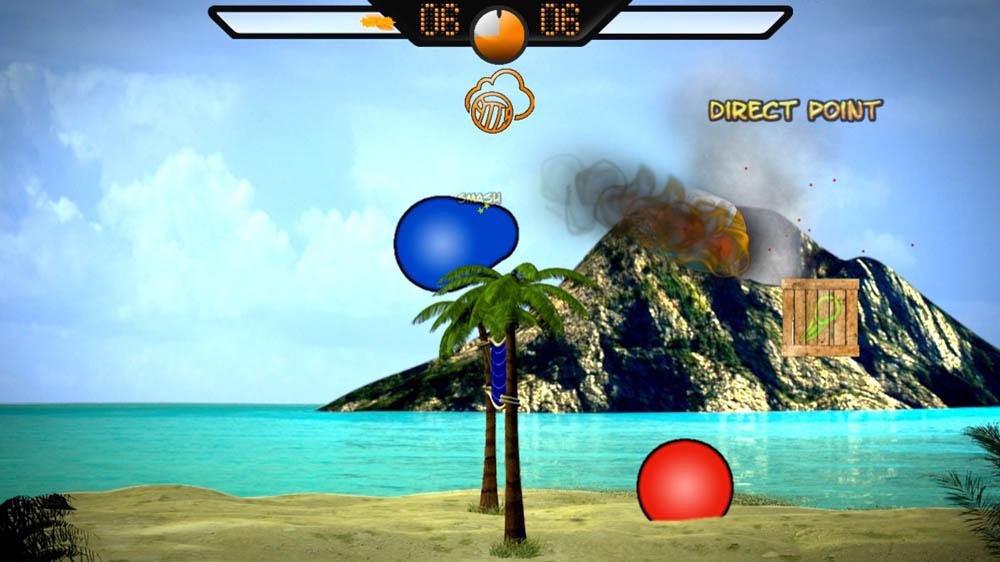
Volley is the second game I’ve played this week that was created by students, only these ones come from Munich.  Smart people they have in Munich.  They all speak German fluently.  Crazy impressive, huh?  Volley is similar to a previous XBLIG I encountered: Bug Ball, a game that both myself and Brian really enjoyed.  Volley tries to play like an evolved version of it.  There’s more power-ups and you’re given more control over the ball.  So how come I didn’t like it as much as Bug Ball?  Perhaps the games are too similar.  Both are 2D, arcade-oriented versions of volleyball.  Both are pretty heavy on the glitchy side.  Both can be played with up to four-players, although Volley skimps on online play in favor of not having online play.

What makes Volley different is you play as a circle that grows a bulge in it when you fiddle with the stick.  And I just realized that did not come out right.  I meant to say that if you tug on the right stick, it grows an erect extension that can be used for smacking the balls that come at it.  I mean, you know what?  Fuck it, here’s the trailer.

Okay, see what I’m talking about?  It does that.  But honestly, that appendage thing isn’t that big a deal, as most of the time we just jumped up and bopped the ball without swinging at it.  You can use it to create  a power shot, but none of us could quite get the hang of it.  The physics of using the bulge seem to be lacking a bit of oomph.  Speaking of oomphless stuff, the power-ups are mostly worthless.  All one of them does is turn the lights out, which might make a difference if all the players and the ball didn’t suddenly light up like they were dipped in plutonium.  Other times, it will put up little water-fall blocks that you have to hit the ball over or under.  Or it will put a bomb on the table.  No clue what the point of that is, since it never once detonated anywhere near a player.  Finally, it will sometimes drop multiple balls onto the table.  This is fine for 2 v 2 play, but one-on-one it’s simply a dick move because you can’t possibly keep both balls alive.

Even with all the problems, Volley is perfectly decent waste of a one dollar, provided you haven’t already played Bug Ball.  Volley did make me wonder if I would have liked it more if I hadn’t already played such a similar game.  Nah, I don’t think that’s the case.  Bug Ball was also slightly more fast paced, had a bigger variety of courts, and the grab-mechanics were more fun than the appendage thing that Volley has.  Yea, this is really unfair.  Volley is a pretty fun and should be rated on its own.  But I can’t.  This is like trying to decide if Zack or Cody is hotter.  An absurd debate, by the way.  It’s clearly Cody.

Volley was developed by Glassbox Games

IGC_Approved80 Microsoft Points sprained their wrist twice trying to play volleyball in the making of this review. 
Volley is ranked on the Indie Gamer Chick Leaderboard.  Click here to see where it landed.

Warp Shooter

To make a game that is a local-only four player top-down 2D arena shooter on a market like Xbox Live Indie Games takes guts.  That’s because you’re making a game with the full knowledge that it will be a tougher sell than a steak house in the middle of Mumbai.  I’ve played a few multiplayer-only games on XBLIG and they tend to range from solid hit to complete miss.  Nothing so far has really found the middle ground.  Well that’s over with, because Warp Shooter stubbornly refuses to be either awesome or horrible.

Warp Shooter is the product of a group of students from Indiana.  Their story is a fascinating one that will be told in an upcoming edition of Tales from the Dev Side.  This is the third student project I’ve reviewed, following Mr. Gravity and Heroes of Hat, both out of the University of Utah.  The relatively simple puzzler Mr. Gravity, despite becoming impossibly difficult in later stages, was good enough to make the leaderboard.  Heroes of Hat, a more ambitious title, was plagued with various technical glitches, unfair level design, and bad control.  Obviously simpler works better for students.

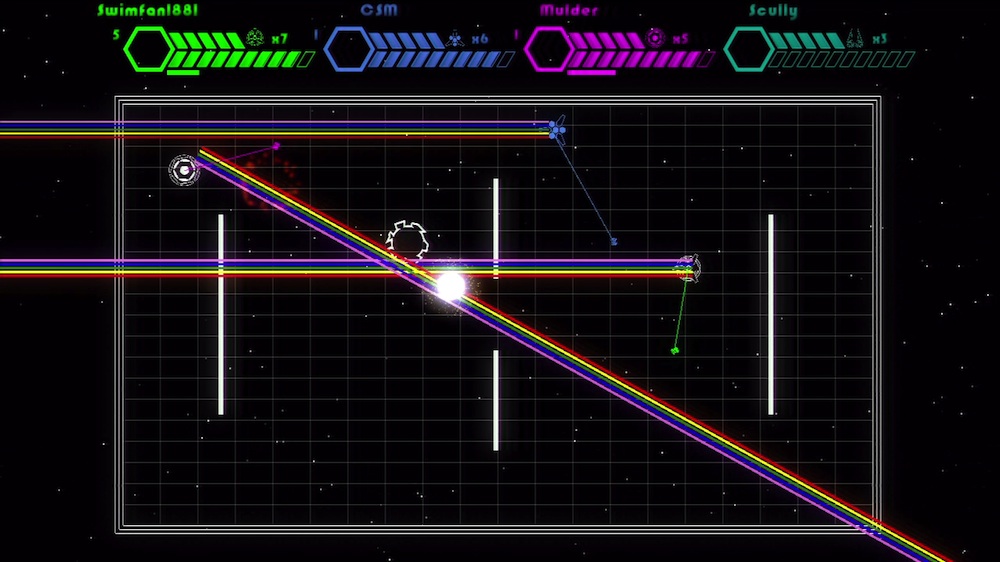
This is what happens when George Lucas runs out of ideas: Rainbow Brite joins the Rebel Alliance.

I guess that’s why it’s weird to see a relatively simple concept turned so overly complex.  Warp Shooter plays like a modernized version of Combat.  I gathered three amigos (sadly not THE Three Amigos, although I hear Martin Short is insatiable) and asked them kindly to help me with my latest review.  When they refused to do it out of kindness, I offered to bribe them.  Finally, I had my goons take their families hostage.  Hey, I have a duty here, and they were fucking with it.

Things got off to a slow start when nobody could figure out how to move.  There’s no tutorial, so the four of us fumbled around, doing our best to pretend like we knew what we were doing.  Most firing was done from a stationary position, until Chevy figured out that movement was done by pressing the right trigger while pointing the right stick in the direction you want to go.  Mind you, the right stick also controls your firing.  Thrust is limited, so you’re never in full control of your vehicle.  You do have the ability to aim a little dot thingy that causes damage to an opponent if it touches them, or you can warp to the spot the dot is on.  It’s supposed to provide an alternate means of movement, but it’s slow and clunky and it doesn’t provide the element of being unpredictable that other movement means has.  You can see where the person is warping to.  It’s like drawing a diagram for your enemies.  “I’ll be moving here.  Take aim and fire at your leisure.”  It would be like the army replacing fatigues with tee shirts supplied by Target.

The best party games tend to be self-explanatory.  Warp Shooter is regrettably missing that.  We never did get the hang of it, but after about twenty to thirty minutes, it did provide moderate fun.  The absurd amount of options provided assures that you would have to be actively trying to not have fun to, well, not have fun.  When we turned on three asteroids and death rays, we were whooping and laughing and high-fiving each other, even though we could barely move.  It was like watching the Narcoleptic Olympics.  I can barely squeeze out something resembling a recommendation for Warp Shooter, but chances are when it only makes the Leaderboard on the grounds that “well, it’s playable!” that’s a sign that maybe some aspects of the game should be rethought.  Starting with the movement controls.  I can’t imagine anything that is more awkward or dangerous to use.  Maybe a B-52 which has their weapons mapped to their intercom button.

Warp Shooter was developed by Hoosier Games

IGC_Approved80 Microsoft Points reserve the right to murder the next person from Indiana who uses a lame “Hoosier Daddy” joke in the making of this review.  I’m looking at you, Kenneth.
Warp Shooter is ranked on the Indie Gamer Chick Leaderboard.  Click here to see where it landed.

AvatAAAH!!!

I’m having trouble wrapping my head around how a game like AvatAAAH!!! comes into being.  It’s one of those games where the concept is too simplistic.  Don’t get me wrong: simplistic is good for gaming on a commercial scale.  It’s why Tetris was an international mega-hit the likes of which may never be seen again on this Earth, while Yoshi’s Cookie is all but forgotten.  My theory is the most successful games require the fewest words to explain.  Tetris can be summed up with “use blocks to build lines.”  Pong can be explained fully as “video table tennis.”  Angry Birds can be explained as “Knock over buildings to crush pigs.”

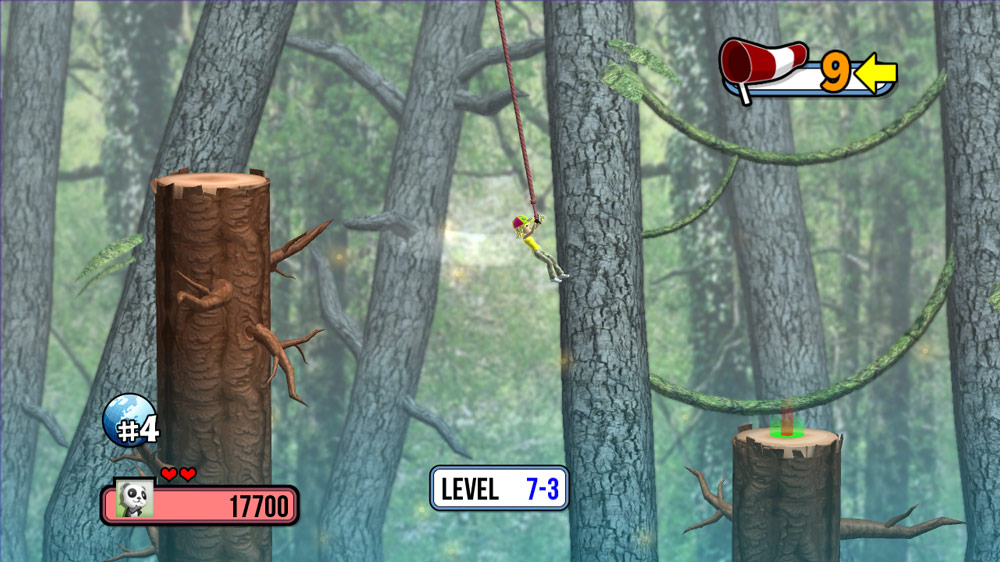
Get it?  Good.  Now watch as I burn down this theory and piss on its ashes.  AvatAAAH!!! can be explained as “let go of rope, land on platform.”  That fully explains the game, rules, and plot, and why the game sucks so hard that it could reverse the flow the of the tides with its sucking power.  You play as your avatar, you swing off a rope.  The rope sways back and forth without needing you to control it.  At the opportune time, you press A to let go of the rope in an attempt to land in the center of a stump below you.  Do this a few dozen times and that’s the game.

Really, a review of this is redundant. All you need is this screenshot and the trailer below to learn enough to know this game isn’t worth $1.

To be fair, AvatAAAH!!! throws twists at you in the form of altering the gravity physics or changing the size of the stump you’re landing on.  However, it doesn’t really make the game all that harder.  I was able to make it pretty dang far into the game and land a decent spot on the online leaderboard just by letting go of the rope at the very end of its swing.  I didn’t even need to wiggle the control stick to get “good” or “perfect” landings.  That’s really the problem here: AvatAAH!!! doesn’t ask enough of players.

But while the single player is minimalist, the multiplayer is just lazy.  All players swing at the same time, with the closest person to the bullseye getting points.  The only problem is it doesn’t really measure who is closest to the bullseye.  It just measures by zones.  Perfect, Good, OK, and Phew if you barely land on the stump are the only four scores.  That’s sooooo seven years ago.  The player who does the best gets a point, while the player who does the worst loses a point.  At least that’s how I think it goes.  But let’s say all players hit the large section that scores as “OK.”  And let’s say one player is clearly much more OK than everyone else on account of being closer to the center.  It doesn’t matter, because nobody gets a point.  Somehow, that just strikes me as lame.  It can also make games drag on and on, especially once players get the hang of the physics.  Even novice gamers can hit Good or Perfect with absurd consistency.  For what it’s worth, Brian didn’t have a problem with the scoring.  Brian also thinks Chronicles of Riddick was a good movie, so it shows how low his standards are.  Well, this is my obscure gaming blog and so I say that AvatAAAH! would have been better if it scored based on who actually got the closest to the bullseye, and that the game can feel free to tie the rope around its neck and swing away.

AvatAAAH! was developed by Milkstone Studios

80 Microsoft Points thought AvatAAAH! was the sound George Lucas made when he saw how much money Avatar grossed at the box office in the making of this review.