Aqualibrium

For the first few months of my site, my goal was to try to finish every game I played for review here.  I didn’t really take into account that most games I’ll be playing either won’t be very good or will be so insanely hard that any semblance of fun will have evaporated long before the game’s conclusion.  Some people say that means I lose integrity.  To which I say, fuck integrity.  I play games to have fun, not to not have fun.  If a video game can’t provide entertainment, what is it good for?  With that in mind, here’s my review of Aqualibrium, a game that I quit after only finishing four stages.  Oh, I tried to play it.  I spent well over an hour with it.  I gave up because I have no interest in playing a game that doesn’t seem to be finished.

The idea is really good.  You play as a dude with a jetpack and.. wait, you’re sold already?  See, that’s how good an idea it is.  I say jetpack and you’re already heading to the marketplace to pick it up.  Well actually, the idea is even better.  At the bottom of each level is a funnel.  You have to cause water to pour from various pipes down through the stage and into the funnel.  To do this, you have to remove blocks, place blocks, and strategically choose the best way to move the water.  This is a great concept for a game, way better and more ambitious than Archifishal Software’s previous effort, Inferno!  But once you actually start the game, it quickly becomes apparent how poorly executed this concept is.
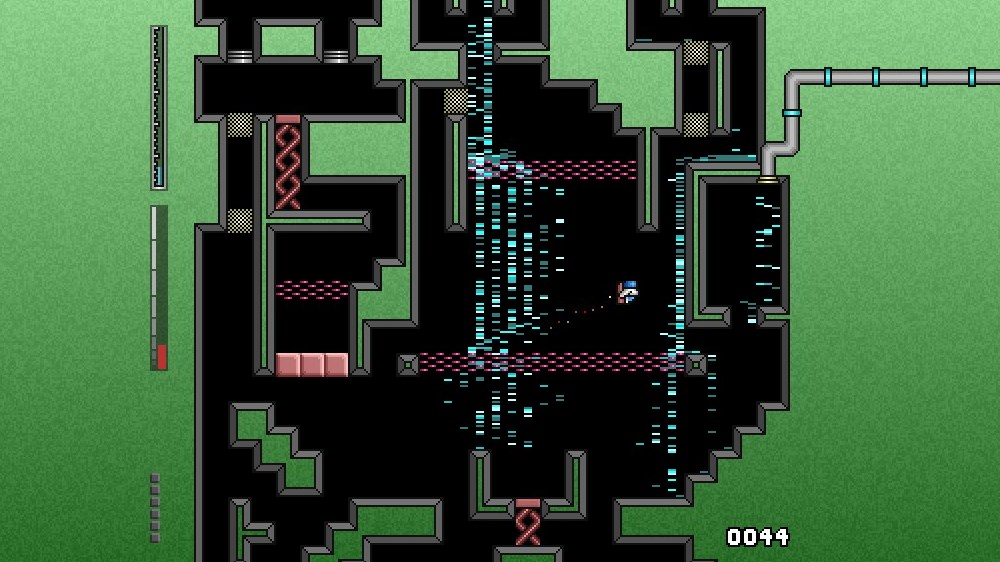
Let’s start with the controls.  They’re terrible.  Movement is super loose, making it almost impossible to accurately line up in a spot you want to be in without having to wiggle your dude back and forth.  The character’s speed is just too damn fast, among other things.  Oddly enough, you can hold the right bumper to make him move faster, which is pure insanity.  A self-destruct button would have probably been more useful.  Mind you, this is a game which demands precision movement.  If you walk over a block you’ve laid down, you automatically pick it back up.  Because the controls are so clumsy, you will inevitably pick up blocks on accident, causing water to flow the wrong direction.

If water spills outside of the funnel, a pressure meter fills up and you die.  This was really the only challenge the game needed.  Smart level design (and the stages are quite smart) is really all a logic puzzler needs.  Of course, those don’t really sell all too well, so Archifishal tried to spruce things up with enemies.  The enemy movement patterns are extremely annoying, in that they have no preset rhythm.  This typically led to them walking back and forth over the spot you must pass by, with no room to actually get past them.  They also don’t seem to react to what you’re doing, so you can’t manipulate them into going a different direction.  This is absolutely brain-dead game design, and it almost totally cripples Aqualibrium.

Mind you, you do get a gun at some point to fire at these guys.  I know it’s in the game somewhere because it showed me it in the tutorial.  But, you have to pick it up, and it’s not in every stage.  Why?  I don’t know.  Maybe because that would have been too fun.  Or too easy.  Yes, it’s probably another game where the developer lost track of reality after getting too good playing their own game.  I’m not sure why a game that is a puzzler has enemies that behave like you’re in a punisher.

The final nail in Aqualibrium’s coffin is the cannons.  They pop up in the fifth stage, and they are fucking brutal.  You have no life bar, so it’s one shot and you’re dead, and death means starting the stage over again.  The game doesn’t ease you into anything.  First stage with the damn things and, bam, cannons everywhere.  They only shoot when you try to pass them, so you have to “tempt them” and then dash after they shoot.  Not all of them shoot straight.  Some of them shoot in arches that seem to vary at random in trajectory.  Here’s the problem: the game then sets up the water in ways where you need to step in front of the cannons to place blocks.  Because the controls are so flaky, chances are high you will charge past the spot you need to be in to place the block.  If you need to stagger the blocks to aim the flow of the water, you’re also likely to accidentally pick up a block you already laid down.  Perhaps that block was also serving to shield you from the cannon.  Perhaps then you will get shot for the 400th piss-guzzling time.  Perhaps then you will realize you’re playing a game that wasn’t ready for the market.  Perhaps then you will weep for the $1 you just utterly murdered.
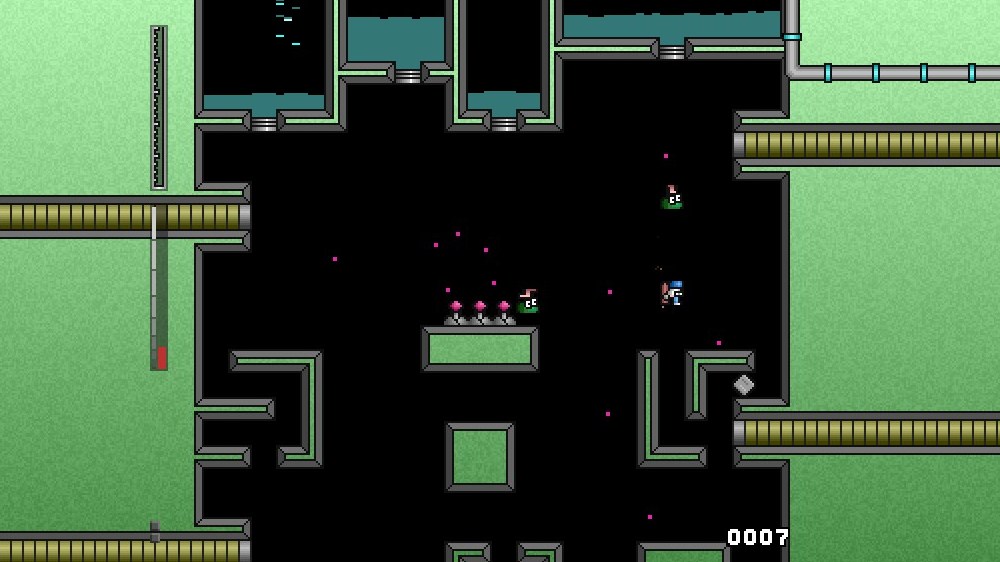
The pink things are the cannons. You will grow to hate them.

There’s a couple little problems too.  My TV is big enough to stand in for Jabba the Hutt’s dress form, but objects on-screen are still too small and not detailed enough.  Sometimes it’s hard to tell what is a gate that only you can walk past and what is a gate only an enemy can walk past.  They’re supposed to be distinctive based on color, but the colors are not bright and different enough.  I’m pretty sure I’m not color blind, and I’m pretty sure my television isn’t fading.  I know I’m not the only one who felt that way about the game either.  How did this thing make it this far along with so many problems?  I wasn’t aware XBLIG has a no-child-left-behind policy.  Not that it should have one.  If said child is born without working limbs, proper vision, or brain activity, that fucking kid needs to be left behind to ripen up a bit.

This is the second time in a week that I’ve played a game that is awesome in concept but miserable in execution.  Aqualibrium should have been fun.  It should have contended for the leaderboard.  But it wasn’t ready for the marketplace.  The controls are horrible.  The AI is too stupid.  The cannons are too unforgiving.  And because those three things are so bad, you can’t enjoy the puzzles, which again, seem pretty well constructed.  Aqualibrium suffers from an identity crisis.  It wants to be a puzzler, but it also wants to be a punisher, and on top of all that, it wants to be a bullet hell.  I don’t think those three genres are compatible.  You know, developers?  Prove me wrong on that.  I really do want you to.  I’m just saying it sounds like mixing oil and water.  And a lit match.
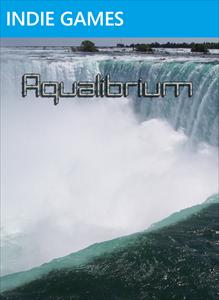
 

It’s too bad I, I mean the Microsoft Points, fucked up making that video or else I would have had room to rip on the cover art. I know the developer is capable of better, because the cover art for Inferno was well done. What happened to this game?

Aqualibrium was developed by Archifishal Software

80 Microsoft Points can’t really talk about being an idiot, because they filmed a video of Kairi trying to point out how the brain-dead enemies don’t move or give you room to get past certain sections.  Only they filmed her playing against the wrong enemies, ones that you can walk past without getting killed.  I’m not sure why those are in the game, other than as a waste of digital memory, but that’s not the point.  All the other enemies in the game behave the pretty much the same way and will stop and camp in front of places you need to walk past and you have no hope of getting between them.  But, the particular enemies we filmed her with are the exception to that.  And yes, she’s blaming the Microsoft Points on the mistake instead owning up to it herself.  What a bitch, in the making of this review. 
Dead Pixels (Second Chance with the Chick)

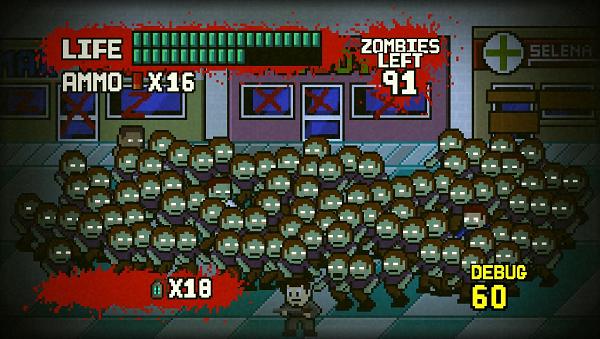
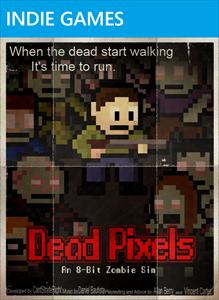
It’s been just over nine months since I reviewed Dead Pixels, the #2 game as of this writing on the Indie Gamer Chick Leaderboard, and the former king of the mountain.  Despite really enjoying my time with the game, I never really got around to playing the two extra modes that launched months after its release.  With less than two weeks to go before my first anniversary as Indie Gamer Chick, I figured I should finally take a look and see if the content would be enough to elevate Dead Pixels back into the #1 spot on the board.  Of course, my expectations that it might do just that were somewhat dashed by the developer outright telling me that it would not reclaim the spot.

You get more characters to choose from in The Solution, all of whom have been bad little boys. Lord knows that when you have an emergency situation, the only solution is to send in hardened criminals to do all the heroics. I know how it works. I saw Pitch Black too.

He wasn’t being coy.  In fact, he’s right.  The two new modes of Dead Pixels are swell extras, but they ultimately add nothing to the experience.  First up is The Solution.  It’s kind of like a survival mode, where you have to run X amount of streets (depending on the difficult level) and then back again.  You have even more limited resources, and the city is vacant so there are no humans to negotiate goods with.  You can still loot empty buildings for goods, but you don’t want to get bogged down by carrying too much weight.  I had that happen to me when I played the main quest, and I think I would have moved faster if I had waited for plate tectonics to push me to the goal.

I ended up carrying only the default shotgun, and only stocking up on shells for it.  If that doesn’t sound like the most exciting way to play the game, that’s because it wasn’t.  I ended up just holding down left and avoiding enemies.  This did come in handy on the final part of the “walk left” section of the game, when the lights started flickering on and off.  Due to my epilepsy, this was a high-risk section of the game for me to play.  I decided to walk up to the top of the screen, hold the stick left, and not do anything else.  Boring but effective, because it worked.  However, this mode proved to be dull, and not really worthy of the excellent main game.

Last Stand worked better.  It’s a wave shooter where you play as a couple of twats named Hurley and Nate (no joke) as they lock themselves in a mall with a bunch of zombies.  I doubt they would actually do something like that, because I know I wouldn’t do that.  Since they exist only to steal my ideas, their zombie plan would probably involve some kind of elaborate suicide, because that’s what I’m going to do.  If the zombies attack, I’m going to kiss the end of a shotgun that has bullets soaked in cyanide while wearing a vest made of dynamite and the timer set for five seconds from now.  I am taking NO chances of surviving the outbreak.  Among other things, I never see a working Taco Bell in these games or movies, and I will be damned if I’m going to live out the rest of my life without a Chulupa.

I ended up playing as Hurley. And no, that doesn’t mean I ended up with blisters on my hands and a craving for bacon. It’s just a game, not a transmorphic body swapping thingie.

So Last Stand.  The wave shooter part.  Well, you shoot a bunch of zombies and they drop money.  Then between waves you can upgrade your stats, buy different guns, more ammo, health kits, etc.  Every round the zombies grow in numbers.  That’s pretty much it.  This mode is more fun, but then again I’m predisposed to enjoying wave shooters, which is why such a game could overthrow Dead Pixels for the #1 spot on the leaderboard in the first place.  However, I didn’t love the wave shooting mode the way I did the main campaign.  Part of that is there’s no online leaderboards to show off how far you’ve made it.  But it’s mostly because I already got all the value out of Dead Pixels that I could.  The game rocked in single player mode, rocked harder in co-op (even if Brian didn’t like the game as much as me and thought I was out of my mind for putting it #1 in the first place), but its time has come and gone.  Dead Pixels is still an amazing game and will probably hold onto a high spot on the leaderboard for a long time to come, but I’ve moved on.  Granted, what I moved on to has been mostly inferior games, negating my point.  I’m just going to shut up now and leave this review.  Buh-Bye.

Dead Pixels was developed by CSR Studios

80 Microsoft Points have an alternative zombie plan, but it requires duct tape and a steamroller in the making of this review.
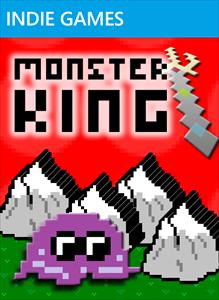
Monster King

Monster King is the second RPG that I’ve played this month that’s missing some key ingredients.  When the core mechanics of your game involve scrolling menus, you have to really jazz things with witty dialog, a compelling story, or charismatic characters.  If you have none of that, it’s like serving a customer a bowl of warm water and calling it the Soup of the Day.

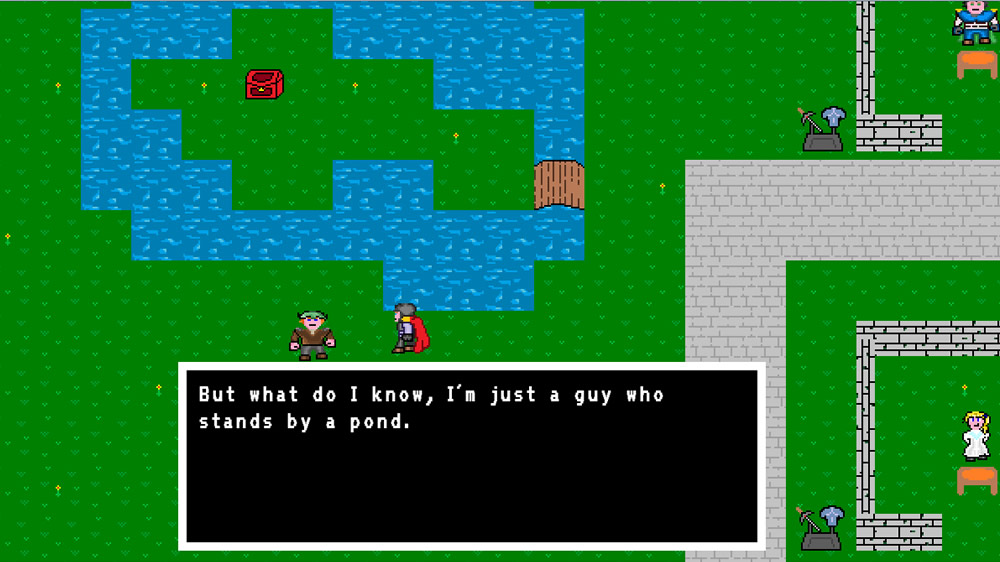
Today, I ordered a big bowl of Cream of Void because Monster King has the personality of a mannequin.  You play as a dude who has to, um, do something.  If it was explained, I forgot it.  Probably save the kingdom.  It’s always about one dude saving the kingdom.  Don’t these kingdoms ever have a standing army?  Here’s a thought: since in these classic RPGs, the “kingdom” usually consists of a dozen or so towns, each populated by between 4 and 10 people, why not just gather everyone up and move to a new kingdom?  One with better infrastructure, a standing army, and monsters not camping just outside the border of every town?  Come to think of it, why are there never monsters in the towns?  You’re a lone hero who is attempting to save the entire kingdom, armed to the teeth, and you still have to stock up on potions and regenerative magic.  The towns are populated by five idiots who say the same line of dialog every time you try to converse with them.  The monsters should be able to steamroll over them in like five seconds.  These games never make any sense.

It would have been cooler if he was standing by the dock of the bay, even though there’s nothing to do there either, besides watching the tide roll away.

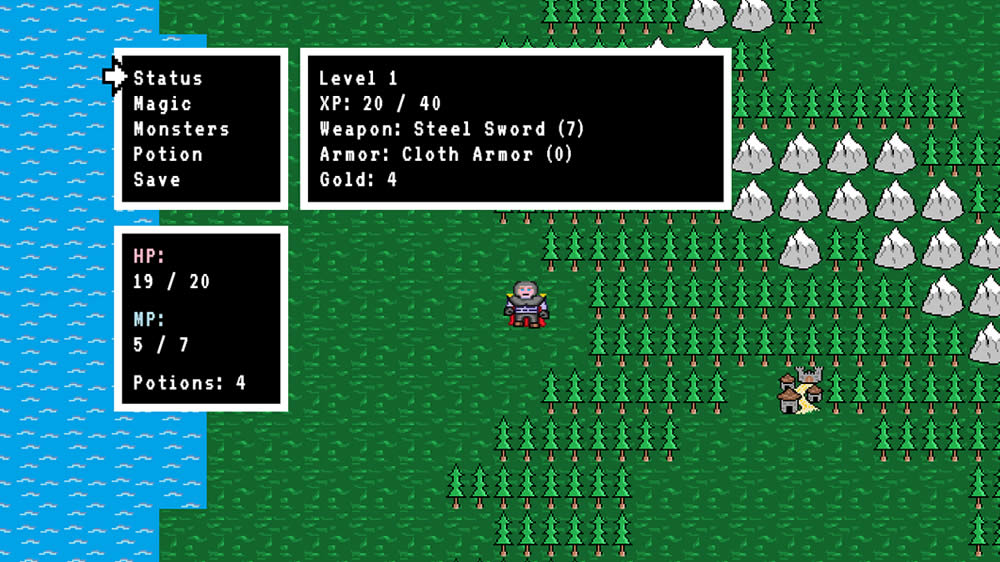
The hook of Monster King is that you can capture enemies when they’re weakened and then use them during battle.  It’s not exactly Pokemon, because you can only use each monster once during a battle.  However, the magic and monster system are basically the same idea.  Use fire against things made of wood, water against things made of fire, Bengay against things made of old people, etc.  Figuring out which enemies work on others is a little trickier, and most enemies pack a pretty decent punch, so you don’t have time to experiment.  Your defense never upgrades when you level up, probably to keep the game from getting too easy, so you have to camp out near towns so you can refill your health and magic points every-other battle.  Are we having fun yet?

Monster King does make an effort to have some form of humor in it, but it really doesn’t work all that well.  Here, humor comes in the form of jokes from the towns people.  The one that stuck with me is “people ask me if I’ve lived here my whole life.  I tell them no, not yet.”  That’s about as sophisticated as it gets.  For the most part, it’s just go to town, buy weapons, fight monsters, level up, slap yourself in the face to prevent yourself from falling asleep, explore caves, and fight bosses.  However, Monster King is more stripped down than Mortal Legacies in some other aspects.  Weapons and armor are automatically equipped, you can’t hock any old ones, and stores do not sell potions.  After playing for over an hour, I never found any item stronger than the standard potion, which can only be got out of treasure chests.  MP can only be restored by sleeping at an inn or leveling up.  Thus, the already boring gameplay is really taken to its most basic level of design.  I don’t get why people make games like this anymore.  This doesn’t feel like a game someone made because it was something they wanted to play.  It seems more like a game that someone made to see if they could.  That’s fine.  That’s how you learn.  But maybe it’s best to not attempt to sell that game.

Status? Sleepy, getting sleepier.

I was ready to write off Monster King as competent and functional, but as shallow as refrigerator condensation.  And then, it happened.  What happened?  Well, I was fighting snowmen and grinding up my XP.  I had just fought a boss, had leveled up a couple of times, bought some new armor, and was about to buy a new sword.  Then I got a message from a friend asking if I could check to see how much something on the Xbox marketplace cost.  I scooted over to the town, slept in the inn, saved the game, and turned it off.  I returned just a few minutes later and loaded up my game.  Only my game was from about twenty minutes before my last save, meaning I had to fight the boss again and make up for the five levels I had climbed and then lost.  I am not sure how this happened.  I typically save XBLIG files to my memory card.  Hang on, let me check and see if I accidentally saved it to the hard drive.

Nope.  No save file found on my hard drive.  Mind you, I’m hyper-compulsive about saving in games.  When I was a kid, I went a little too long between saves playing Kingdom Hearts, and a power-outage resulted in my first legitimate gaming rage moment.  My SpongeBob pillow suffered one lost limb and three stab wounds of unknown origin (pssss, it was from a nail file).  Since then, I’ve been vigilant about saving.  And so I did save after every level-up.  But, come to think of it, the game was a little weird about when the save happened more than the one time.  I did die after a battle or two.  Sometimes I would go back to my previous save spot, but more often I would go back further.  Obviously something is not working here.  Don’t get me wrong, I wouldn’t have recommended Monster King anyway.  Like Mortal Legacies, it seemed like a good first-attempt, but not a game I could recommend spending actual money on.  But, I’m sure there are people out there who are looking for bland, one-dimensional time wasters.  If that’s the case, and the save thing doesn’t discourage you, knock yourself out with Monster King.  Or, here’s a better idea: go see a fucking doctor because you obviously have no pulse.

Monster King was developed by NickB

80 Microsoft Points wondered why the tree that is brandishing a gun is called the “Tree Killer.”  Wouldn’t “Killer Tree” make more sense?  I mean, I guess it could be killing trees when it’s not attacking professional monster slayers like a dumbass.  But if that was the case, why does it have a gun?  Guns aren’t very effective at killing trees, unless it’s a gun that fires big bullets.  Like a cannon, but that really isn’t a gun.  It should have been brandishing a chainsaw, which would have been a good chance to add humor to the game.  I mean, a tree that uses a chainsaw?  Ironic comedy.  A tree with a gun?  Just weird.

Superdimension Iliad

Fuck Superdimension Iliad.  This game pisses me off, because it’s a really great idea.  You play a little Fez-looking thing that has to travel through all stages of gaming history, shooting at enemies Mega Man-style.  Apparently, you can even get weapons from beating bosses, just like in Mega Man.  Sounds great!  And it really does do a remarkable job of having graphics that invoke each era  you’re traveling through.  This should have been one of the best titles on Xbox Live Indie Games.  But it’s not, because the game’s difficulty reaches new levels of delusional expectations on players.

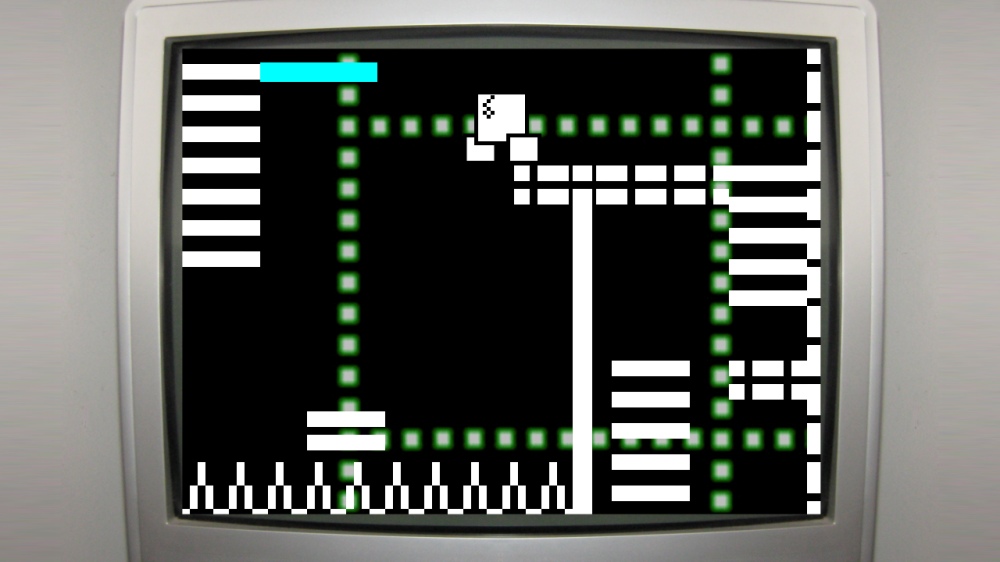
Behold, the only stage I could beat.

I only made it to the first branching path of the game.  Which is a nice way of saying that I beat the first level.  I then spent about an hour trying to get past either of the next stages, one of which is based on Atari graphics and the other Intellivision.  I really, really wanted to, because I wanted to see what would be next.  Again, the concept is fricken awesome.  But I couldn’t get past either of these stages.  There are too many enemies firing too many projectiles at you.  You have a health bar, but it fades quickly.  Enemy bullets move faster than you do, and you often don’t have enough space to avoid them, because if you jump over a bullet you’re probably going to come in direct contact with an enemy.  In the Atari stage, I was being bombarded on all sides by shots, plus a slow-moving dot that follows you around and is an instant-kill if it touches you.  The space you have to navigate this gauntlet is just a few character-lengths high.  If you stop moving, the dot will catch you.  Oh, and there’s also instant-kill landmines to jump over.  Does this sound fun to you?  It sounds like corporal punishment to me.

The Intellivision level (or is it Coleco?) is even worse.  After doing Mega Manish “hop on the disappearing blocks” for a few sections,  you end up in a meteor shower.  The meteors move faster than you do, plus there are these little instant-kill UFO thingies that move WAY faster than you.  They take more than one shot to kill, so by time you’ve put enough bullets into them, chances are they’re probably already celebrating over your corpse.  This is a game with difficulty so extreme that I seriously doubt anyone who play-tested it actually finished it.  Did the developer get too good at their own game and lose track of reality?

There’s more problems.  There’s a lives system in place and you only get three of them, upping the frustration factor to such a degree that NASA’s computers crashed trying to calculate it.  Check-points are too far apart.  And for some reason there’s a modern techno-soundtrack.  They nailed the graphics almost perfectly, and the sound effects are spot-on too, and then they ruined the illusion of it by sticking in a generic metal/techno soundtrack.  That would be like Eminem doing the soundtrack for Schindler’s List.

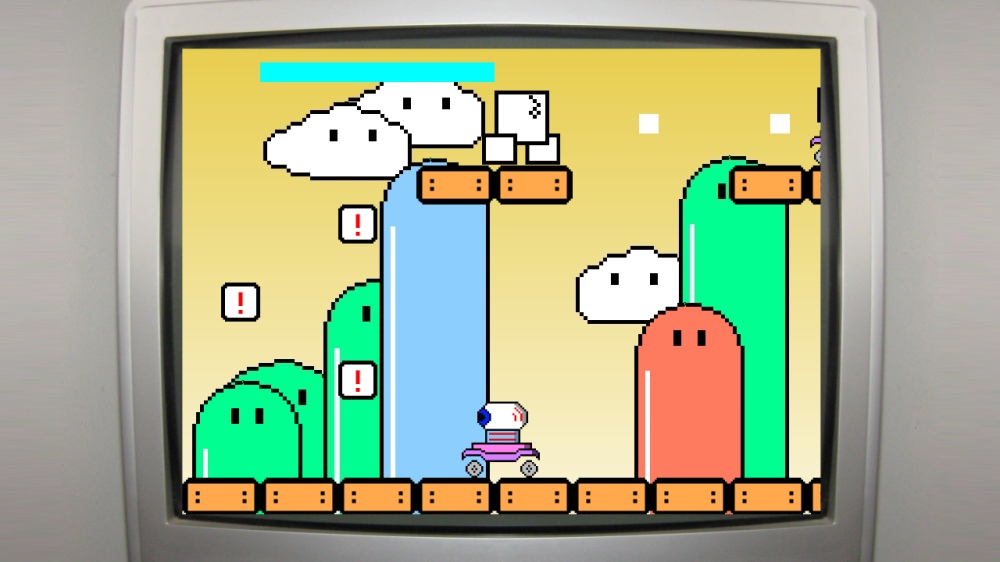
Boy, that stage inspired by Super Mario 3 sure looks fun. It’s too bad that the game is damn-near impossible and thus it’s unlikely most players will ever reach that far to appreciate it.

I’m so disappointed in Superdimension Iliad, because it really has a great idea.  It’s an idea I wanted to see through to the end.  If it had worked, it might have been one of the best games on the platform.  But it doesn’t work, and the only reason it doesn’t is because the developer wanted to make it as difficult as possible to enjoy his creation.  Imagine if the only way you could view the Sistine Chapel was to walk around on a floor covered in bear traps, because that’s what the developer did.  He murdered his own idea.  Bravo.

Superdimension Iliad was developed by We Love Hamsters Software

80 Microsoft Points couldn’t locate a trailer or the website for the developer in the making of this review. 
Apple Jack 2

It’s been almost a year since I played Apple Jack.  Judging by the reaction to my review of it, it would seem that was the most disagreeable of all my reviews.  That, or birds were turning into rocks and dive bombing my windows.  Do birds turn into rocks?  Either way, many people genuinely liked the game.  I didn’t.  I thought it was too hard, the levels too sprawling, and the design rather bland.  I didn’t hate it, but I certainly couldn’t endorse it.  At least not without a kickback from the guys who make high blood pressure medication.

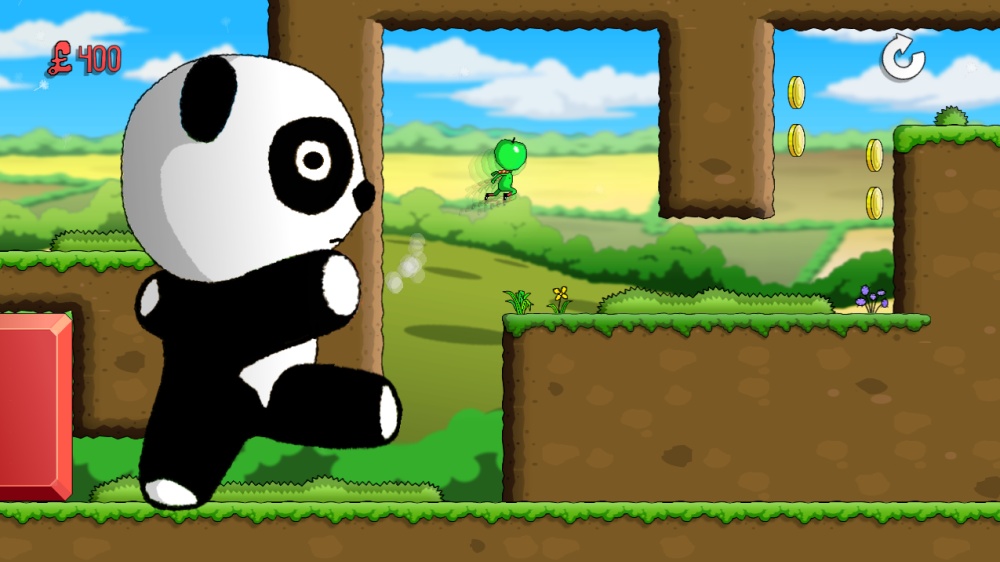
A Super Meat Boy like “run from the big baddie” chase, only your character is about half as agile. Yes, this game hates you.

Apple Jack 2 is now out.  Despite having a pretty good idea that I wouldn’t like the game too much, I have to admit I thought it looked pretty good.  Sure, it’s still a punisher, but there’s now a Prince of Persia (or Braid if you’re the artsy-fartsy type) style rewind feature for the hopeless stumblefuck gaming population.  The graphics look more colorful too.  What could go wrong?

Well, about that.  I guess I can say without reservation that Apple Jack 2 is a better game than the original.  But I still didn’t like it.  I still don’t get the appeal in punishers.  Even with adjustable difficulty levels, I found Apple Jack 2 to be fucking maddening.  The rewind function, which was put in place to give you chances to undo fuck-ups, mostly just increased the aggravation factor.  I often rewound missteps, only to immediately die because I didn’t let go of the button at the right time.  You can only use it every six seconds, so it doesn’t really work as the immortality-granting super power I was hoping it would be.  I guess the argument was supposed to be “we didn’t want to make it too easy.”  To which I counter back “there are adjustable difficult levels.  I picked the pussy mode.  Obviously I wanted immortality, you jerks!”

So I didn’t get to live forever.  Or for more than twenty seconds at a time on average.  What I did get to do was enjoy the significantly improved level design.  Oh, it’s not easier.  Don’t get me wrong.  The game wants you to feel humiliated at your ineptness.  But stages are much more clever this time around.  Some have you trying to get to an exit.  Some have you trying to kill enemies.  Some have you running from things.  Some have you on giant platforms that auto-scroll.  Every new stage seems to be original in concept and execution, which is a big departure over some of the monotone stages of the original.  Unfortunately, originality didn’t extend to the enemies.  You’re still fighting the same pandas, washing machines, eyeballs, owls, and little spiky thimble thingies from the first game.  The only major addition to the enemy roster (as far as I could tell, rage got the better of me about half-way through) is giant saw blades.  As a result, Apple Jack 2 feels more like Apple Jack 1.5.  More of an expansion rather than a continuation.  It’s weird because the box art is a homage to Super Mario Bros. 2, which was a huge departure from the original game.  Despite improvements, Apple Jack 2 is pretty much the same game as the original.

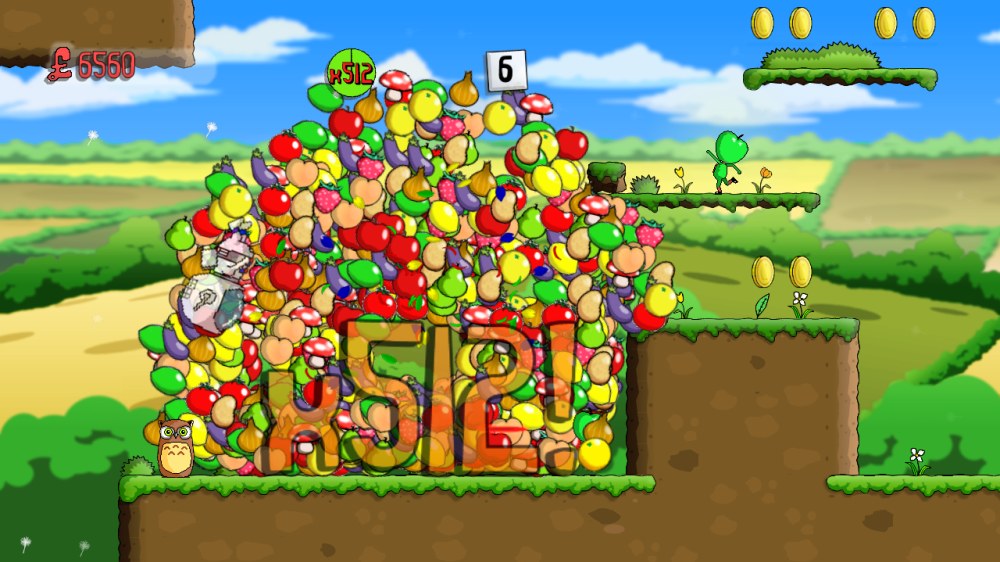
Another change: enemies drop fruit instead of coins now, no doubt some kind of anti-capitalism subtext.

It’s a shame, because I think the developer has got to be oozing talent out his rear end.  The graphics, sound, music, and level design all suggest that.  I just don’t want a game that cheerfully holds my head underwater.  Some people do.  Weird people, sure, but they’re out there.  I do question if the market for these games is as big as people make it out to be. There have been punishers that are huge hits, but how often do those pop up?  Of the 90 top-selling XBLIGs as of this writing, only two are punishers: the Impossible Game and the Impossible Game Level Pack.  The market is trying to tell you developers something.  If you weren’t so busy dumping salt on slugs and blowing up frogs with firecrackers you would have noticed by now.

Apple Jack 2 was developed by My Owl Software

80 Microsoft Points said to debate which of the remaining 88 games are also punishers in the comments section in the making of this review. 
 

SHOOTING CHICKENS Brutal Suckers

From the guys who brought you The Houchi Play (shudder) comes a game about shooting chickens, hence the title.  The game is also unreasonably difficult, again hence the title.  And actually it sucks too, hence the title.  Fuck it, my job is done.

SHOOTING CHICKENS Brutal Suckers was developed by Kohei

80 Microsoft Points said wait, that’s not enough?  Fine.

So the idea is you’re this chick with a shotgun who has to run through levels blowing away poultry.  Why?  I don’t know.  Maybe KFC fucked up her order and gave her coleslaw instead of baked beans, and the only appropriate course of action she could take was hunting their product to extinction.  Either way, she has a gun and the chickens are chickens.  In theory, this is hardly a fair fight.

The graphics are actually pretty decent.

Theories can be a fickle thing.  The chickens prove to be a little overwhelming.  This is a war of attrition, where your only resource is patience and the chickens have numbers to spare.  My “not a fair fight” theory was correct.  I was just wrong about which side had the advantage.  The chickens smother you in brutal numbers, sometimes on both sides, and you simply cannot avoid taking damage.  Health fills are scarce, weapon pick-ups have very limited ammo, and grenades are sparse as well.  You do get unlimited bullets with the shotty, but it’s not much help when enemies go from not being on-screen to causing you damage in a fraction of a second.

I struggled for over an hour just to reach the first checkpoint on the first stage.  After a while I started to question whether it was the game’s fault or mine own.  Maybe it was mine.  Maybe I was sick.  Maybe it was bird flu.  Get it?  Sigh.  I’m so sorry.

I did get to the first check point, but after a few tries I couldn’t make it to the next one.  What happened?  Chicks.  As in baby chickens.  Tiny little things only a couple pixels tall.  They take THREE point-blank shotgun blasts to kill, and they can absolutely gang-bang you while you try to hit them.  Mind you, most of the enemies in this game are ready for shaking and baking after only one shot.  Why are babies the toughest, and the most resilient?  Is this some kind of pro-life metaphor?  If so, it doesn’t work.  Hey, I don’t like the idea of abortions either, but if something is shot from a distance of one inch in the head with a shotgun and it doesn’t die, we’re no longer talking about God’s will.  In fact, I believe that would be the work of Satan, and you should call an exorcist.

Nope, never made it this far.

I was kind of hoping that SHOOTING CHICKENS would be more like Bird Assassin.  Just a run and spray shooter with an insane body count.  Although it has the body count, it lacks in the fun factor.  It has decent graphics and the controls work.  In fact, I like how it has the control scheme at the bottom of the screen so that you don’t have to pause the game if you want to know how to do something.  That’s smart design.  I just wish they had toned down the difficulty.  It’s inaccessible, to the point of being a bullet hell with chickens replacing artillery.  You can try to have fun with it, but you’ll just end up running around like a chicken with its head cut off.  What?  Oh come on, that wasn’t so bad.

SHOOTING CHICKENS Brutal Suckers was developed by Kohei

80 Microsoft Points used to think Popcorn Chicken was made from baby chickens in the making of this review.
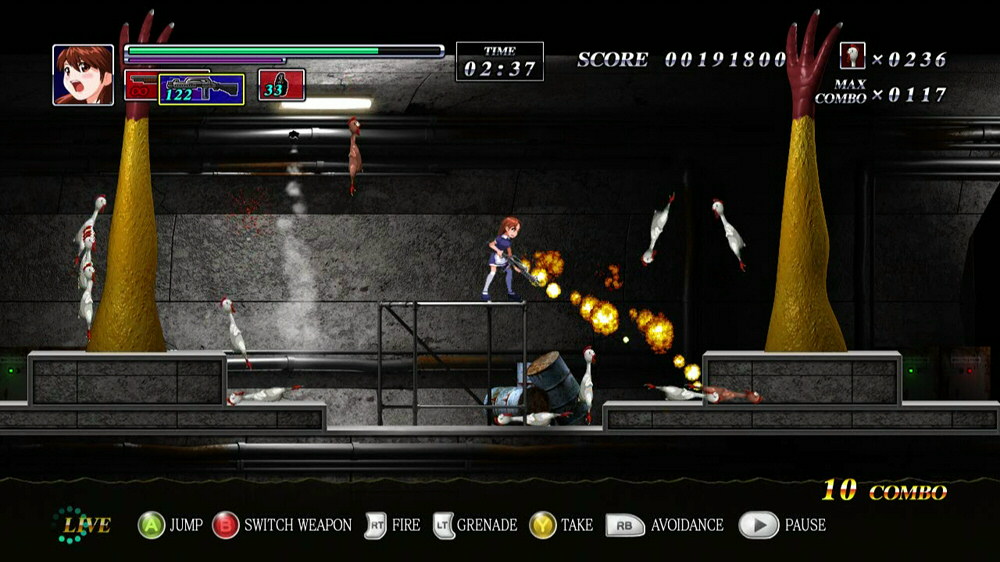
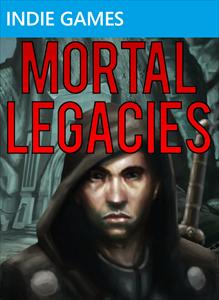
Mortal Legacies

When I first heard the name “Mortal Legacies” I thought it sounded like someone left out the word “Kombat” on an iPhone port of the series.  I mean, doesn’t Mortal Kombat Legacies sound like a crappy iPhone version of Mortal Kombat?  It does to me.  Something that uses digital controls and plays like shit.  Well, Mortal Legacies isn’t an iPhone version of Mortal Kombat.  It does play like shit though.

Okay, so the term “play like shit” is a bit harsh.  Utterly pointless, clunky, and containing less personality than a sea sponge is probably a better description for Mortal Legacies.  It’s a traditional turn-based RPG, where you play as a dude who has to kill a demon and return the king’s crown to him.  Why?  I don’t know.  Mortal Legacies does a decent job of recreating early 16-bit era graphics, but skimped out on stuff like storyline, characterization, and any sense of urgency to the situation.  Let’s face it, straight-laced RPGs are fucking boring as hell.  The only reason to play them is if they contain an absolute dynamite storyline that can keep you from zoning out while you navigate menus.  The guys at Zeboyd realized this, which is why they took copious amounts of laughing gas when it was time to write the batshit insane scripts for their games, or at least that’s my theory.

Okay, early-early-early 16-Bit era. I’m talking Beta stage here, people.

Mortal Legacies has five characters that join your party, but none of them have any back story, or even dialog beyond an introductory sentence.  Characters in towns typically speak only one fragmented sentence at you.  With no story and no characters, what is the point?  Maybe this was a learning-curve game for the developer, who frequently posts here as Ivatrix.  Cool dude he is.  But he has a long ways to go as a game developer.  Ignoring the lack of narrative, Mortal Legacies has all kinds of mechanical problems.  First of all, it’s a time-honored tradition in RPGs that you press A to talk to someone.  Here, you just walk up to them.  Early on, this created annoying situations where I missed dialog from my mother that I couldn’t repeat.  Maybe I missed something that would give the main protagonist something resembling a personality.  Probably not, at least outside of being a pussy-whipped momma’s boy.

Leveling up is fairly easy in Mortal Legacies.  I was easily able to max out all the stats of my party on normal difficulty in fairly short order.  It helps that you get experience points for completing objectives, like for example, talking to your mother.  You level up for that.  I’m not joking.  If that’s too easy for you, you can fight in random battles.  However, enemies shit out so much XP and Gold that they might as well shove a spigot in their ass and call themselves a tap.

You use gold to buy items, even though enemies hemorrhage those as well.  Chances are you’ll never actually need to buy any potions, so you can save up all your money for weapons and armor.  Equipping them is a bit tricky.  The menus are unintuitive, slow, and clunky, but thankfully the game only lasts a little over an hour so you won’t have to deal with them for too long.  Then again, there really is no reason to play Mortal Legacies.  When I say it has nothing to offer, I’m not being coy.  It literally has nothing to offer.  If this was Ivatrix’s babysteps into game development, bravo for the effort.  It’s too bad he missed the first lesson of RPG creation: have a fucking plot.  Do you know what you call an RPG that doesn’t have a plot?  That’s right: Final Fantasy XIII.

Mortal Legacies was developed by IvatrixGames

80 Microsoft Points said this should have been the ironic theme song of Mortal Legacies in the making of this review. 
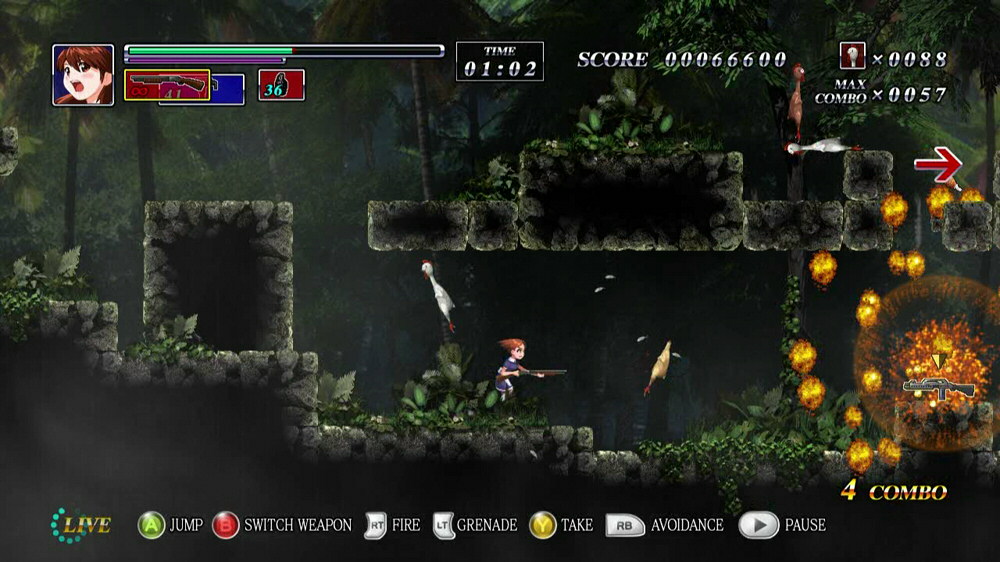
A Pixel Escape

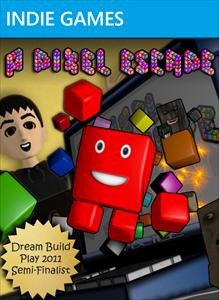
There’s nothing wrong with ambition, and there’s especially nothing wrong with trying to be original.  However, in the land of video games, you have to tread lightly.  Not every idea is capable of working, no matter how ambitious or original.  For example, A Pixel Escape combines puzzle-platforming with first-person gameplay.  Despite moderately decent graphics, the result is the biggest disaster in “it sounded good on paper” since the Lakers landed Steve Nash and Dwight Howard.

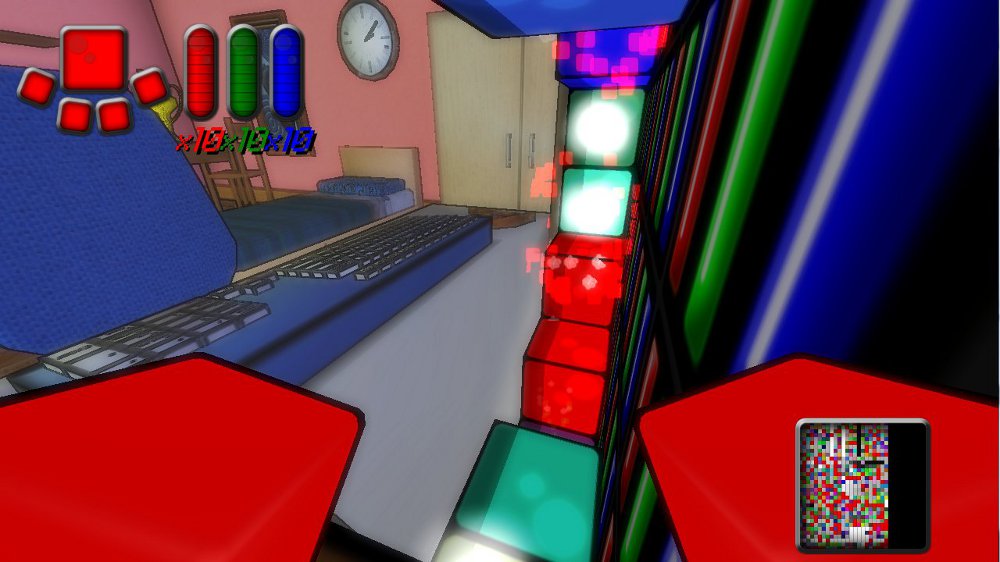
The idea is you’re a single pixel trying to escape from a monitor.  Gameplay takes place on an entirely 2D plane, but you control the pixel from a first person view.  This was not a good idea.  Movement feels loose, jumping feels imprecise, and judging distance can be tricky.  Overshooting and undershooting platforms is a common hazard, and the landing is slippery enough that sometimes you can hit your target and still coast off it and into your doom.  I have never been a fan of first person platforming, because even fully funded major studios can’t seem to get it right.  A Pixel Escape feels like the Frankensteined version of all previous attempts.

Unfortunately, bad play control isn’t the only problem with A Pixel Escape.  The game has a problem with being overly complex.  There’s thirteen different colors you can change into.  You can create blocks with each color or use a color-specific super power.  This gives you dozens of different things you have to keep track of over the course of a game.  Brevity would have served this game well.  The developer should have limited the amount of colors to four, chose the best powers to center puzzles around, and refined the way those powers were used.  Having so many powers all at once makes the game feel overwhelming.  It doesn’t help that activating powers is clunky as hell.  You have to hold both triggers to use block related powers, Y to use the power on yourself, I think one of the bumpers to pitch the powers out, you have to click the left stick to change the map, X knocks on the glass, just one trigger to throw a punch at enemies.. you know what?  Thank Jesus Christ Almighty that XBLIG developers aren’t given Kinect support, or the guys behind this game would have probably made you hop up and down on one leg while doing all of this.

If that doesn’t sound bad enough, just wait, because there’s more.  Every power you use takes up Red-Green-Blue energy.  You have to constantly keep your source of this replenished.  Every color tells you how many points of each prime color is required to activate it.  If you fuck up just once, chances are it will necessitate a level restart.  With the controls as poor as they are, requiring this level of perfection is guaranteed to raise your frustration level through the roof.  The only way to refill the R-G-B energy is to destroy blocks.  However, doing so causes darkness to appear where the block was destroyed.  If that happens, enemies start to spawn in.  The enemies tend to move faster than you do, and they hone in on you like flies on shit, quickly draining away your health.  Your only defense against them is a clumsy punch that seems a bit hard to line up.  Granted, the enemies aren’t overall too bad.  Most of the your deaths will come from missteps in platforming, but with all the crap this game makes you go through, this bit seemed a little like overkill.

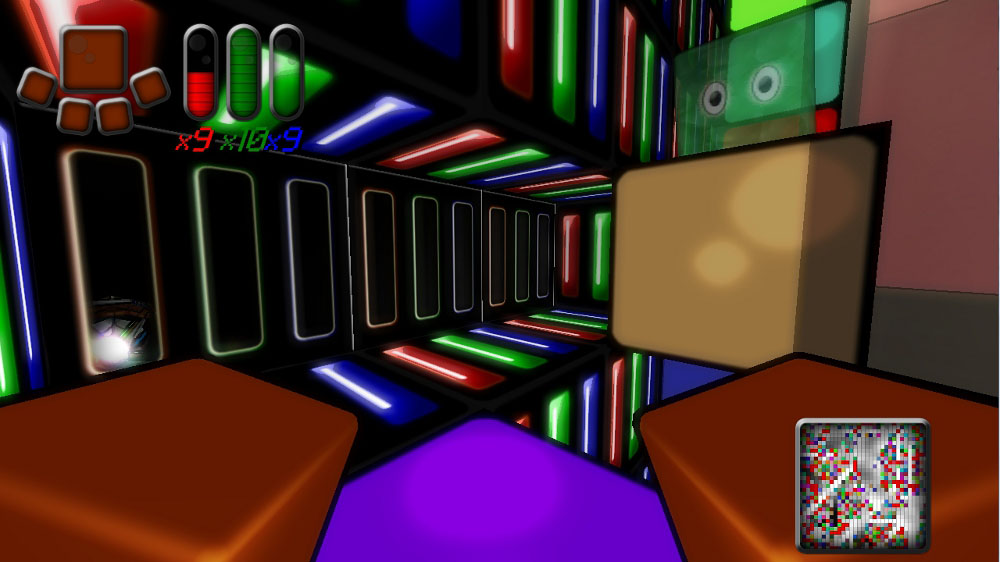
This shot comes later in the game. Not sure if you can go deeper or not. I actually gave up playing the tutorial, tried the main puzzle mode, quit that due to flaky controls, and then got a third Code-3 game crash. I took it as a sign to walk away. FYI, the developers are working on the crash issues. Not sure how they’re going to fix everything else, but I’m keeping the faith.

If something about A Pixel Escape could go wrong, it probably did.  Even with all the large problems above, it’s the little things that really drive a stake through it.  Some of the colors look too much alike, like Red and Orange.  Or the fact that the exit isn’t more clearly marked on the map.  In order to find out where it is, you have to knock on the glass and wait for the computer user to tell you which direction to head.  Why?  It’s cutesy, but it makes the game less fun.  Besides the fact that the graphics are not horrible, I can’t think of anything nice to say about A Pixel Escape.  Somewhere in here is the germ of a really cool game.  The idea of a pixel trying to escape a TV is solid, but the execution of this concept was completely botched.  It’s a shame because I really wanted to love A Pixel Escape.  I actually feel that it wanted to love me back, but could only express that by giving me half-eaten chocolates and kisses that tasted like an acidic fart.

A Pixel Escape was developed by Kunga Brothers

80 Microsoft Points said “oh well, still better than anything shown at E3” in the making of this review.  I bet that one gets quoted out of context.

Minigame Marathon

I seem to have given many of my readers the wrong impression about me.  Believe it or not, I’m not here to trounce bad games.  My goal should be the goal of any game critic: find the good stuff.  Admittedly, that can be hard on Xbox Live Indie Games, but there is plenty of good stuff to be had if you look.  Take Minigame Marathon.  These days, whenever I hear the word “Minigame” I think of a Wii and go into convulsions.

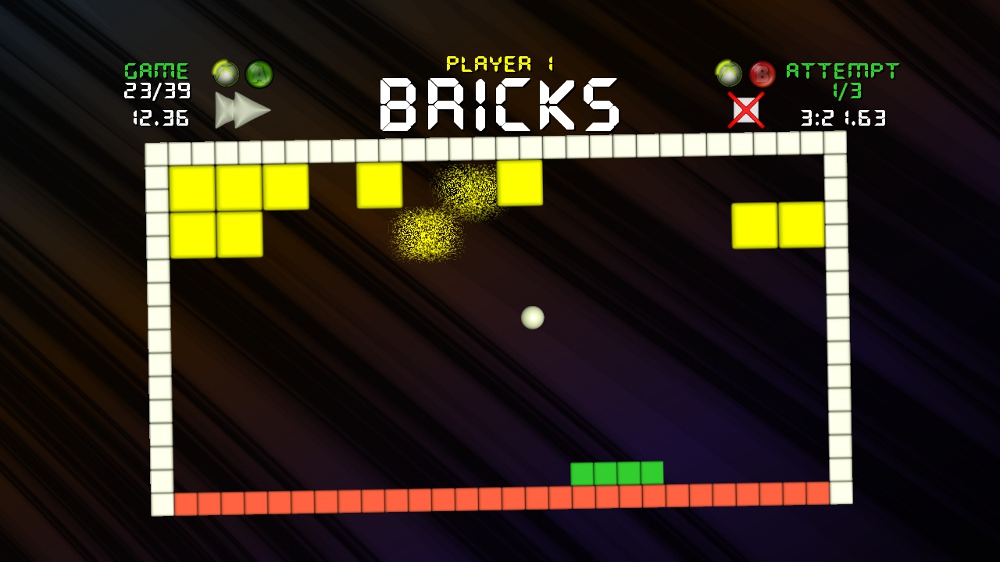
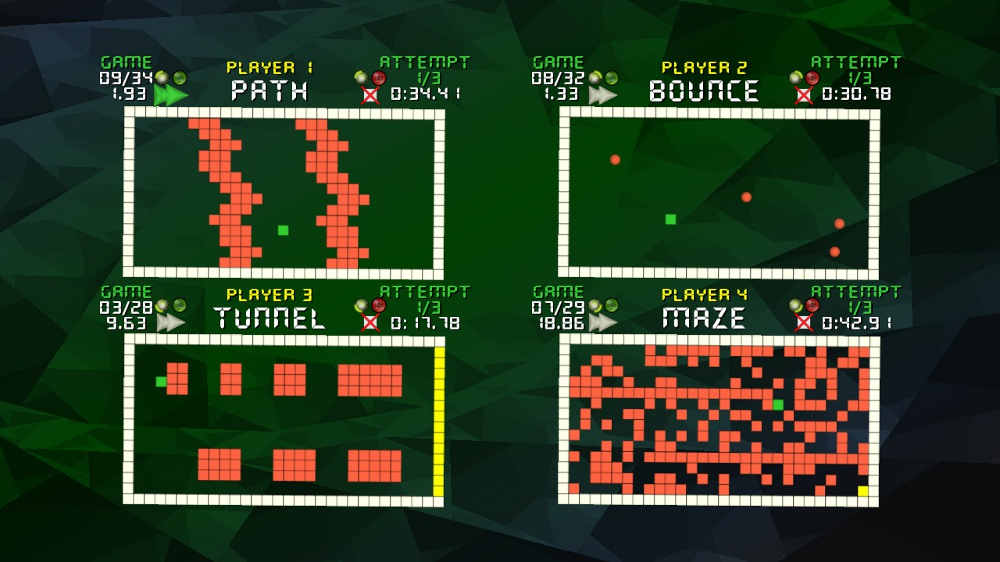
Alas, I had nothing to fear from Minigame Marathon.  The concept is simple: take 26 small game types, string them together, and time how long it takes you to complete them all.  And guess what?  It’s fun and addictive!  Many of the games are modeled after classics such as Pong, Frogger, Snake, or Breakout.  Others involve simple tasks like staying inside a box, hoping across platforms, or collecting coins.  The game uses an easy-to-decipher color system.  You’re green.  Anything yellow is good.  Anything red is bad.  It gives all games an immediate pick-up-and-play quality that is often not found in XBLIGs.

Last Mother Fucking Brick Syndrome is back and trying to cost me the #1 spot on the high score leaderboards.

There are four difficulty levels to choose from, plus you can select whether or not you want to play the games in random order or not.  Each game starts with a brief explanation.  The timer only runs when a game is in progress, so these won’t slow you up too much.  I do wish that it gave you the option to turn off the help-screens once you had a feel for all the games included, but it’s not a deal breaker.  You get three attempts at each game.  If you fail at a game, you have to wait until you’ve finished all other games before getting another crack at the stuff you died on.  Again, it’s a smart design, and super addictive to boot.  About an hour into my play session, I declared to Brian that, to my shock and his, Minigame Marathon was in contention for a spot on the Indie Gamer Chick leaderboard.  If only the multiplayer could hold up.

Sadly, it doesn’t.  Minigame Marathon’s only option is split-screen local multiplayer, which requires the games to be shrunk to fit each box.  On some of the games, that’s fine.  But in stuff like Maze or Mine, which involves navigating tight spaces (especially on high difficulties), seeing which way to move is extremely tough.  I have a television  large enough to double as God’s surfboard and it still wasn’t enough for many of the games, crippling the fun.  Considering that the previous game by his developer was Avatar Grand Prix 2, which had a pretty decent and robust online mode to it, this feels even more like lost potential.

By time a four-player session has ended, your eyes will be permanently disfigured into a squint. Just tell people you were swimming in a pool with too much chlorine in it.

In the nit-picky department, I wish the controls had been a lot tighter, and also I think some of the games are downright impossible on the high difficulty levels.  In “split” you have to avoid touching walls while the room you’re in continuously divides into smaller sections.  Your character does not stop moving, so it requires you to press left and right repeatedly, in fast order, or die.  The problem is there’s a slight delay in the game’s reaction that makes timing this much harder than it sounds.  My gut tells me that the developer probably tested this using a keyboard instead of a wireless Xbox controller, which I hear is actually a common problem during development.  I’m not sure why developers wouldn’t test their game using the controller everyone will play it with.  It makes no sense to me.  It would be like training a Formula 1 driver by making him ride a Spider-Man Power Wheel.

Even with all the faults, I had a great time playing Minigame Marathon.  It reminded me a lot of Nintendo’s Wario Ware series.  Instead of trying to do something too ambitious, the guys at Battenberg Software took the concept of “keep it simple” by using old, worn game types and practically weaponized their addictive potential.  Games that last ten seconds?  Not fun.  Making you play all those games in a row for a high score?  Digital heroin.

Minigame Marathon was developed by Battenberg Software

igc_approved180 Microsoft Points are the girl living next door in the haunted mansion, so you better learn her name because it’s Kai-ri in the making of this review.
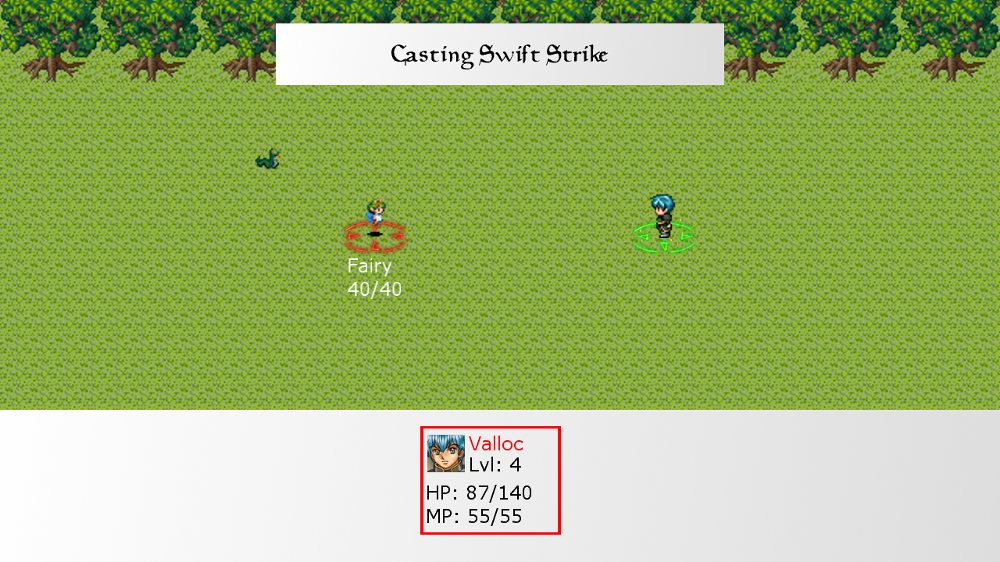
Microbial

Microbial is a dexterity tester that fans of 48 Chambers who recently huffed paint fumes will find familiar.  When I originally learned of that title through Indies in Due Time, my biggest concern was that it would control like arse with difficulty centered around fighting the control stick.  That never happened.  48 Chambers handles about as well as any similar game could.  If you want to know how bad it could have been, try Microbial, because it handles like you’re playing it during a gas leak.  No, I’m not entirely sure what that would be like.  Brian is even more befuddled than I am about it.  I imagine it would be comically (or tragically) bad.

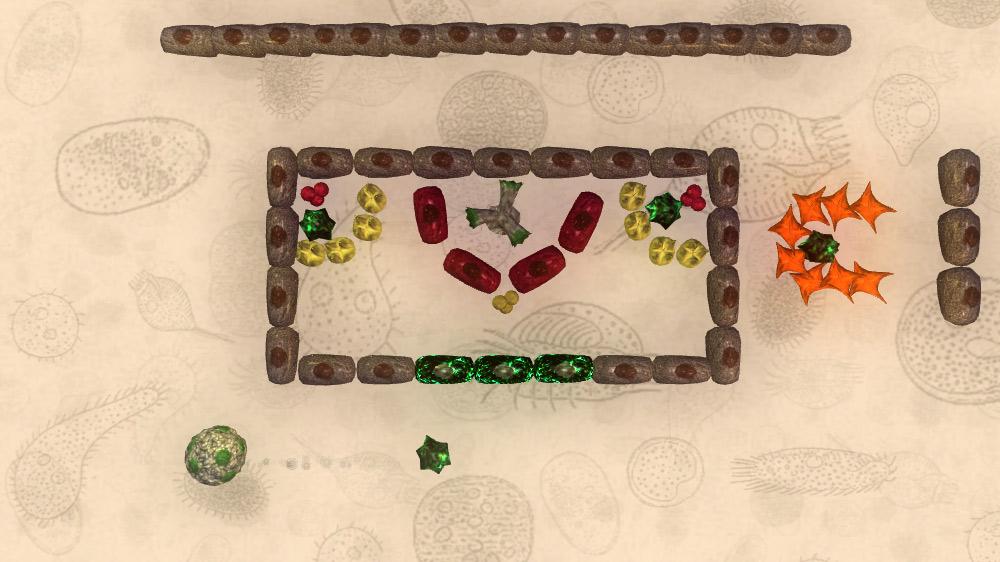
You play as a white blood cell that has to navigate its way past viruses to cure a tumor.  Well, that does make this game somewhat topical.  Along the way, you pick up items that allow you to break through walls, or red blood cells as they’re called in the game, even if they look like Jolly Ranchers.  The majority of the levels are spent running from viruses that lock onto you and chase you around.  Unfortunately, they do their job a little too well, and they happen to be situated in levels designed to favor them.  Since they start moving as soon as a level fades in, you have no time to get a lay of the land and chart a path or build a strategy.  By time I was fifteen boards in, Microbial was downright sadistic in its design.

But, as annoying as the stages can be, play control is what sinks Microbial for good.  Movement physics try to have realistic inertia, but it makes changing direction or inching through close quarters to be slippery and slow.  You know those annoying stages they have in every single Mario game that are set on ice, causing you to slip and slide around?  I hate those stages.   In fact, I don’t know anyone who likes them.  My theory is that they put them into the games to avoid winning a Nobel Prize for Awesomeness and thus being forced to deliver a speech in front of scientists and smart people and shit.  Well, Microbial controls like one of those Nobel-proof ice stages.  It feels like you’re controlling a hockey puck by remote control, which I suppose is what you’re doing.  I guess the real question is “does that sound like fun?”  It doesn’t to me.

There’s a few other little annoyances in Microbial.  If you collect an item, you lose all your built up momentum and have to slowly start to move again, which is really aggravating when you have dozens of enemies chasing you.  The environment isn’t always stable either.  There were a few times where I was hugging the wall as I moved and ended up getting stuck in it.  Ultimately, I just played a game like this that had much more sound level design, better controls, and better graphics.   Maybe Microbial would have seemed much cooler if I had played it before I played 48 Chambers.  I doubt it though. Bad is bad no matter when you play it.  Even with decent controls, the level design is too damn cruel to leave much room for fun.  If Microbial were a person, it would be one of those creepy kids that was reared from the age of four on Friday the 13th movies and only laughs when he’s pulling the wings off of bugs.  I suppose that makes the developer the shell-shocked parent who people say “well, he did the best he could, but some things are just born bad.”

Microbial was developed by Net-Savant

80 Microsoft Points think Microbial was meant to be played with a mouse in the making of this review.
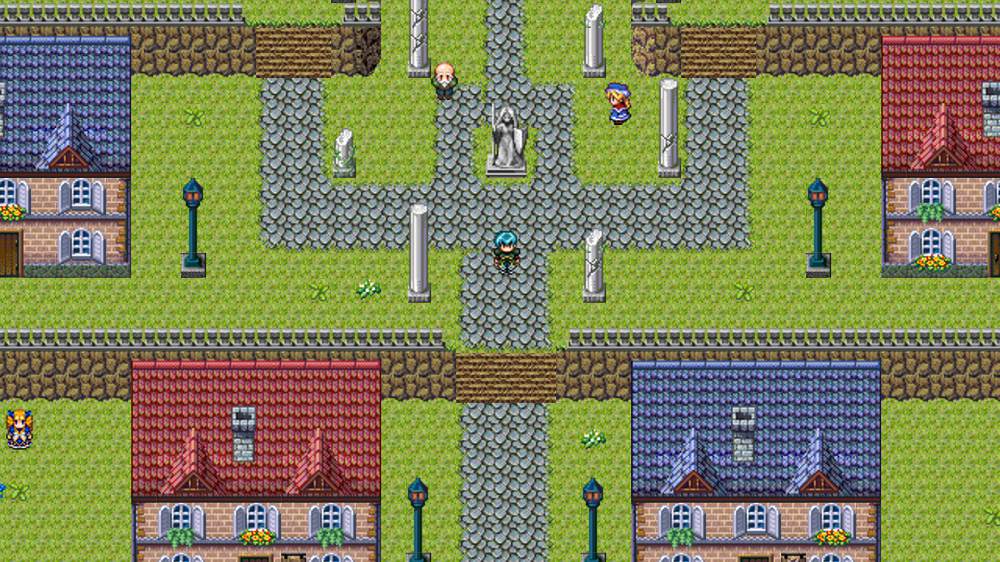
No trailer could be found, or game play footage for that matter.  Where the F is my man Aaron the Splazer at?