Wright Brothers’ Mysteries

Oh my God.

Oh.

My.

GOD!!

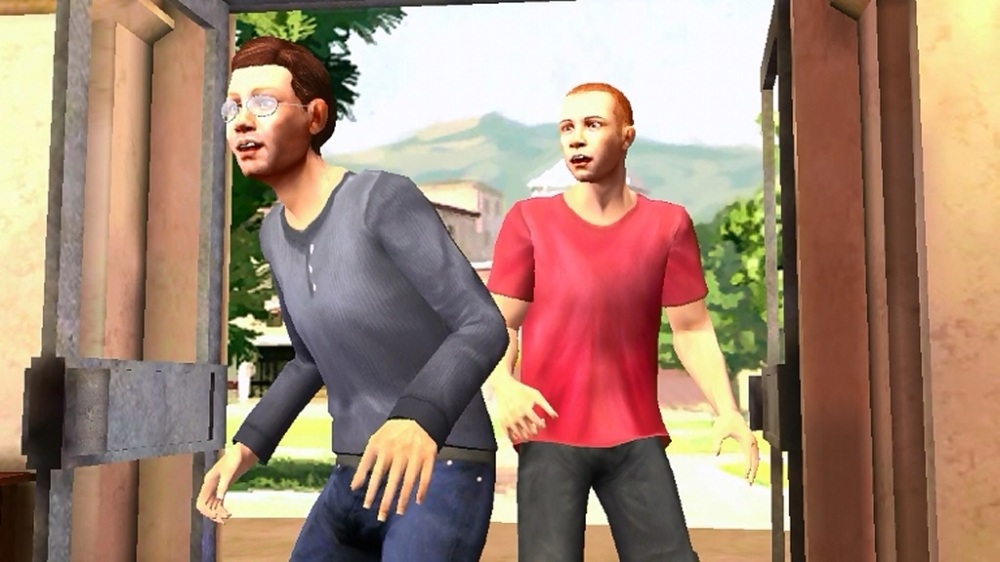
I can’t believe I live in a world where Wright Brothers’ Mysteries exists.  It’s bad.  Bad bad.  Endearingly bad, yes, but endearingly bad is still bad.  Devoid of anything positive to say about any aspect of it’s design.  Hell, there’s really not a whole lot of game here.  Watch cut scenes that were apparently made using The Movies (the opening credits show the intro to The Movies), maybe answer a question about that scene, do the occasional amateurish quick-time-event, and that’s it.  Fifteen minutes tops.  Fifteen unintentionally hilarious, flat-out fucking weird minutes.  Surreal in ways I’ve only heard in descriptions of drug intoxication.

The sad part is, if I squint just a little bit, the dude on the right looks kind of like my boyfriend.

The sad part is, if I squint just a little bit, the dude on the right looks kind of like my boyfriend.

The story?  Incomprehensible.  The dialog?  So disjointed and unnatural that it’s practically alien.  The voice acting?  Awful accents, unemotional tones, and delivery so bad that it sounds like it was pieced together with a sound board.  The game?  There is no game.  Two quick-time events, one of which involves picking a lock and the other which necessitates restarting a heart.  That’s really the extend of any “game” function.  Otherwise, you get to watch horrible cut scenes play out.  I spent the first couple minutes rolling my eyes.

And then the Ninja showed up, and I started laughing.

I didn’t stop laughing for ten minutes.  Every single word spoken, every terribly choreographed fight scene where continuity changes from camera angle to camera angle, and just the overall awfulness of the whole mess.  Wright Brothers’ Mysteries made me fall to the floor in a rolling laughter that made my sides hurt and tears run down my cheeks.  I’ve never laughed harder at any game.  Not in a good way, mind you.  Wright Brothers’ Mysteries is the brand new Worst Game I’ve ever played in my entire life.  It’s awful.  But hypnotically so.  I can’t really say you should buy it.  There’s already videos on YouTube that show you the full game, like this one.  It’s just awful.  I don’t know how far unintentional comedy goes towards redeeming something this bad.  I guess that’s in the eye of the beholder.  For me, Wright Brothers’ Mysteries made me laugh until I was clutching my sides and my stomach in agony, not to mention the headache.  I could have probably been trampled by a marching band made entirely of tuba players and walked away in better shape.

xboxboxartWright Brothers’ Mysteries was developed by Archor Games

80 Microsoft Points honestly aren’t sure if this game wasn’t some gigantic gag against the entire XBLIG scene in the making of this review.

Voxel Runner

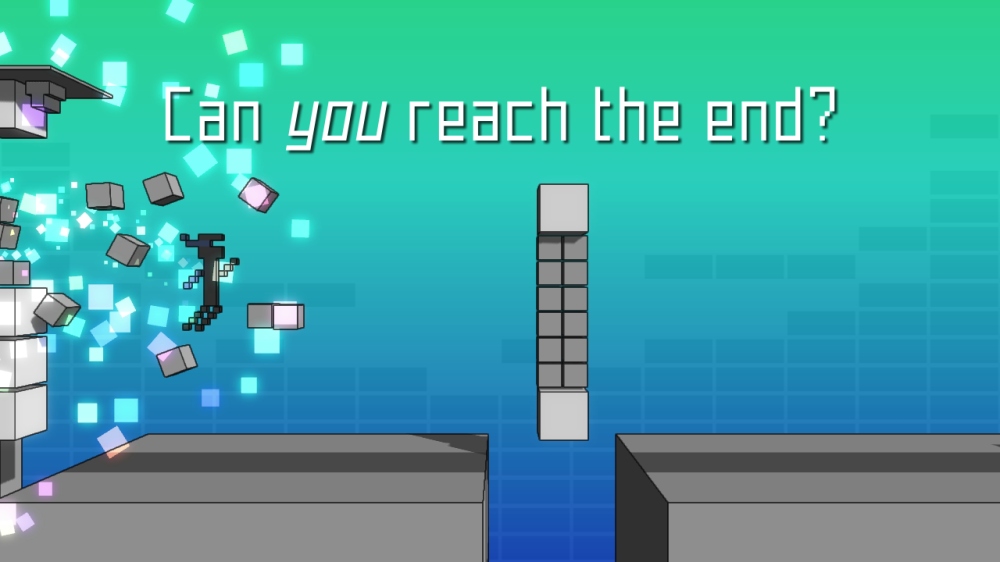
“Foul!” cried the gaming community.  “Someone made an off-brand, generic version of Bit.Trip 2 and released it right before Bit.Trip 2 came out.  A pox on their house!”  You see the same venom directed towards developers of Minecraft clones, or guys like Milkstone when they release cheap XBLIG clones of popular hits like Slender or Binding of Isaac.  The weird thing is, the gaming community seems to treat this phenomenon like it’s exclusive to them.  Um, The Asylum anyone?  Mock if you will, but they’ve made over fifty movies and never once lost money on a production.  They’ve proven that, if profitability is all you desire, clones made without the slightest tinge of shame are the surest fire bet to get there.

Yes.

Yes.

Voxel Runner sounds like it would be The Asylum’s port of a video game, does it not?  None of that coy “Sushi Castle” type of shit like Milkstone does.  “Voxel Runner!  Done!”  The funny thing is, everyone assumed that the game would be shit, myself included.  Timely release.  Blatant clone.  How could it be good?  Surprise, it is good.  Well, good seems maybe too generous.  How does decent sound?  I’ll go with decent.

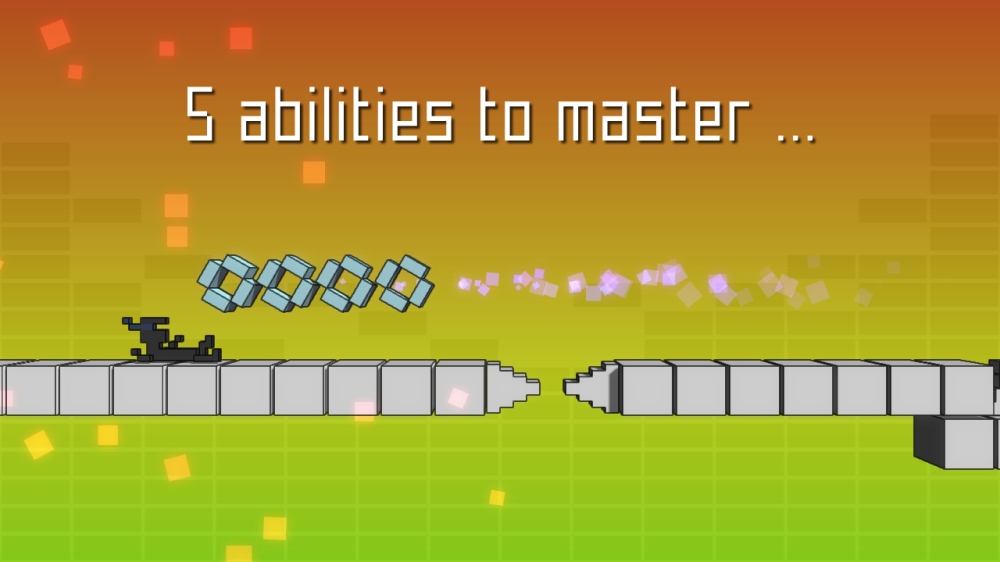
Actually, Voxel Runner felt more like The Impossible Game, at least to me.  Maybe it was the art style, the pace, the spikes, or the constant deaths.  While the game offers more complex maneuvers (swiped liberally from Bit.Trip Runner) than simply jumping, it just felt like a memory-tester where you have a minimal chance of success on your first run through.  However, I did beat level 22 on my first attempt.  That was the only such level I was able to do that, but it felt fantastic.  It doesn’t matter if I failed 531 other times.  For a few seconds, I was an invincible destroyer of games.

Yes, because "ducking" is one of the most notoriously difficult to master moves in game history.  It makes Zangief's spinning piledriver look like child's play.

Yes, because “ducking” is one of the most notoriously difficult to master moves in game history. It makes Zangief’s spinning piledriver look like child’s play.

This is a weird one to write-up.  Everything about Voxel Runner is decent.  Not great.  Not memorable.  I played this three days ago and I barely remember any critiques I had.  It’s possible I didn’t have any.  Well, there was one: the controls are slightly unresponsive at times, which resulted in about 10% of my total failures.  Otherwise, there’s really not a lot to cover here.  Voxel Runner is a shameless rip-off of a popular franchise, but it doesn’t suck.  If that’s all the developer was trying for, congratulations Captain Ambitious.  Take a seat in the dollar store hall of fame, next to a bin of movies starring Lorenzo Lamas and a can of expired off-brand chicken noodle soup.

xboxboxartVoxel Runner was developed by Dizzy Pixels Ltd.

Seal of Approval Large80 Microsoft Points look forward to future productions from Dizzy Pixels, such as Super Italian Brothers, Sonny the Hedgehog, and Street Brawler II in the making of this review. 

Voxel Runner is Chick Approved.. don’t look at me like that, it doesn’t suck, I swear.. and is ranked on the Indie Gamer Chick LeaderboardSeriously, stop looking at me.

Voxel Runner is also available for Desura for $2.99.  This version is unverified by Indie Gamer Chick.

Bit.Trip Presents Runner 2: Future Legend of Rhythm Alien

First off, I have to ask what is up with that name?  Or Wii U eShop names in general it would seem.  When I picked up Bit.Trip Runner 2, I also picked up a title on sale called “Mighty Switch Force! Hyper Drive Edition.”  If one didn’t know better, they would think the eShop was compensating for a lack of girth.  The Wii U has only been out for a little while, but it the gap between releases that have looked like something I would want to play has been demoralizing.  And no, I wasn’t interested in The Cave.  Thank God for my lack of interest.  I didn’t buy it on Wii U and now I get it free this month on PlayStation Plus.  Life is sweet.  Probably would have been sweeter if I had held out for the PSN version of Bit.Trip 2 and gotten the 20% discount.

In case you haven’t noticed, I’m stalling my announcement that I haven’t actually played any games in the Bit.Trip series.  Yea, yea, I know.  What can I say?  They’re billed as “rhythm games.”  Not exactly my favorite genre.  The whole Caribbean Beats thing seems to have skipped a generation.  Possibly two generations if my parents are any indication.  I’m honestly not sure if what they do is considered dancing or some new form of mixed martial arts where the object is to break your opponent’s foot.  As it turns out, you don’t really need have a song in your heart to enjoy Bit.Trip Runner 2.  Weird that they would market it that way.  You would think they wouldn’t want to turn off people who couldn’t possible give a shit less about rhythm games.

Don't worry, a little Lyclear will take care of that.

Don’t worry, a little Lyclear will take care of that.

The idea is you’re Commander Video, a dude running in a straight line, collecting gold bars and avoiding enemies.  All stages have a set musical beat, but I typically played Runner 2 muted and I still had a pretty good time with it.  Relying completely on visual cues, I was still able to play the fairly well.  It helps that the controls are responsive and the graphics are mostly clear.  There are some times that enemies seem to bleed into the background.  Playing on a big screen doesn’t help, either.  Having your television on is completely unnecessary.  It’s yet another Wii U game that tethers you to your living room for no fucking reason at all.  If only Nintendo had put out a cheaper, more portable gaming console with a similar button layout.  I know, keep dreaming the dream, Catherine.

Every single complaint I have about Bit.Trip is tied to how shitty the Wii U Game Pad is.  I know Nintendo fanboys are still trying to convince themselves that something good might come from this mess, but come on guys.  This console is an unmitigated piece of shit.  I’ll ignore how slow it is, or how menus have load times, or how fucking cumbersome the controller is.  Why is the button layout for Bit.Trip 2 so random?  B is the jump button.  That’s just weird.  And it gets annoying too.  Everyone always reaches for the jump button to navigate menus.  Of course, B is typically “exit menu.”  Bit.Trip runner chose not to be different here.  Thus, after beating a level, I would inevitably push the wrong button and exit out of the level select screen.  A quick survey of people who bought this confirms that EVERYONE did it at least a few times.  Perhaps this is some social experiment where the guys at Gaijin Games are trying to make the entire gaming populace act like morons.  Too late guys!  Microsoft already did that.  They called it Xbox Live.

Seriously though, the layout is just not comfortable early on.  You do get used to it, I suppose.  Of course, they say people who get their arms blown off get used to that eventually too.  It doesn’t mean I’m going to play chicken with a live grenade.  Ignoring all that bullshit, the levels are well designed and the difficulty seems pretty well paced.  Bit.Trip 2 gives you a lot of different moves to memorize and perform.  I figured it would be too much to juggle.  It’s not.  In fact, I was so successful at adapting that I would sometimes, rarely, finish a stage on my first try without dying.  Not a huge accomplishment for most, granted.  For me?  I felt world conqueringly amazing.

Then I would press the wrong button and exit the stage select screen.  Those moments never last.

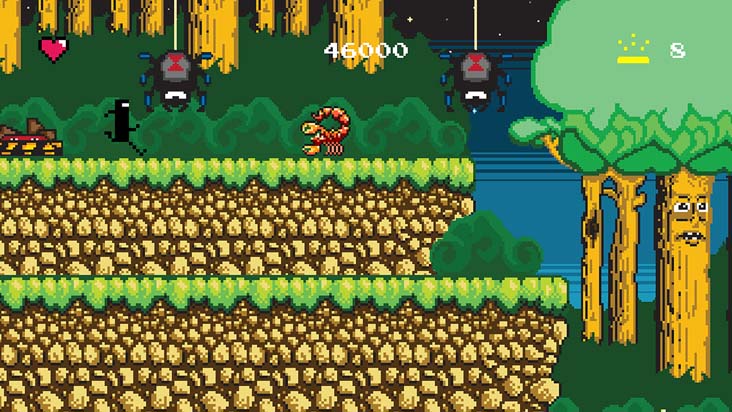
I thought this was a screenshot of Adventure Island when I first saw it.  No joke.

I thought this was a screenshot of Adventure Island when I first saw it. No joke.

So yea, I recommend Bit.Trip Runner 2.  It’s fun, and it’s as good an excuse as any to prevent dust from collecting on your shiny new Nintendo console.  My biggest complaint about Bit.Trip is that Wii U is the wrong machine for it.  I never wanted to play more than thirty minutes of Bit.Trip at a time before walking away.  Not in a bad way.  I just noticed after extended play-sessions that the amount of fucking up I was doing would climb dramatically.  I finished it in short bursts and enjoyed the game much more thoroughly.  I even tried to replay some of the levels to get perfect scores.  Games like this are perfectly tailored for portable devices.  There’s really no reason why I should have been shackled to a fifteen-foot radius around my television set.  The 3DS is right fucking there, and Bit.Trip doesn’t seem so graphically intensive that it just had to be done on a state of the art console like the Wii U.  And no, I couldn’t type the end of that last sentence with a straight face.

Bit Trip logoIGC_ApprovedBit.Trip Presents Runner 2: Future Legend of Rhythm Alien was developed by Gaijin Games

$14.99 is proud of Gaijin Games for resisting the urge to have a stage set to the tune of the theme from Chariots of Fire in the making of this review.

Bit.Trip Runner 2 is Chick Approved.  Stay tuned tomorrow for my review of the off-brand, generic XBLIG version, Voxel Runner.

Tales from the Dev Side: Screw XNA

The last month on the XBLIG scene has been an interesting one.  Since word broke that XNA would be phased out, I’ve been witness to public mourning, disbelief, and nostalgia.  XNA created a community out of dreamers, some of whom wonder where their future will be.  Others have been looking to the future.  At Indie Gamer Chick, we’ve had the guys behind MonoGame offer their version of a lifeboat to the marooned XNA development community.  This was followed up by a pitch that Unity is the way to go.  DJ Arcas, the man behind the million dollar-generating FortressCraft, is throwing his hat into the Unity ring.  And, almost uniquely among his fellow XNA developers, he’s not exactly grieving for the loss of the platform.

Screw XNA

by DJ Arcas

I’ve been programming for a very long time, and almost all of it was writing games. I cut my teeth on BASIC, went onto compiled Basic, learned Pascal, then started to use x86 assembler, to squeeze every erg of performance out of my games. Mind you, that was on a 486.  There wasn’t a great deal of performance in there! That was the way you had to do it; you sacrificed a control, flexibility and development pace, but gained a lot of performance. That was 1992.

When I professionally entered the industry, it was during the death-throes of the PS1, and the rise of the PS2. For the PS2, everyone was using the new-fangled C++. Many of the old-hands decried the use of this language – “It’s too slow!”. And, in a way, they were correct.

Poorly written, massively-inherited C++ is slower than a sloth covered in treacle. Well-written C++ has a tiny margin of difference. The real difference, of course, is how much you can achieve in the same time frame. We never went back, by the way. C++ stayed. Admittedly, you had to change the way you worked; you gained a lot of flexibility and control, but you were sacrificing performance. Still, the Xbox was a 700mhz machine, and we needed a game written in one year, not three!

I first saw XNA during the development of Burnout 3; there was an amazing demo doing the round, showing a car crashing into a wall at high-speed and crumpling. We were impressed, but dismissed it, as it was a PC-only technology. Microsoft promised Xbox, PS2 and GameCube versions. They never appeared, however.

I started with XNA shortly after the launch of XNA for XBLIG, or “Community Games” as it was called back then.  Can you believe it?  It took me seven days from first getting my hands on XNA, to my game being available for download on XBLIG. FallDown, it was called. I believe it was the 74th game on the service.

screen1

This is FallDown. Rats. I was hoping it would involve Michael Douglas somehow.

From then on, I reveled in C#; whilst I had to use the much sleeker, yet clunkier, C++ at work, at home I could write code at a rate five to ten times quicker than I could at work. C# allows you to create working systems much quicker, but at a slight cost in CPU time. You gained a lot of flexibility and power, but you had to work the way that C# wanted you to. Sound familiar? Of course, there was no way that a AAA studio was going to consider using C# on a AAA game. It’s far too slow, surely? The fact that you could write the same game in half the time; or a game that’s twice as good in the same time; never seemed to cross anyone’s mind.

I released many XNA games onto XBLIG, eleven in total. Some did very well (FortressCraft), and some did very badly (Steam Heroes). But each game was a step forwards; I took what I’d learned in the previous games, and applied it to the next one. Particle engines were written. Wrappers for physics. New and improved shaders. But these things took time, so much time, and weren’t always optimal. For instance, in FortressCraft, I developed a way of drawing meshes on the GPU, as opposed to uploading them at render time; many hundreds of times faster. If I’d known that whilst writing Stunning Stunts, I would have released a much better looking game; or the same game in a shorter time frame. Who knows how much better things might have gotten if I’d spent another four years working with XNA?

And now we move onto the end of XNA. What’s next? Quite unsurprisingly, many people are sticking with what they know, and are moving onto MonoGame, which is basically XNA all over again. When asked why, well, anything more advanced would be slower, wouldn’t it? and you’d lose control, and would have to do it the way they told you? All these things, sound awfully familiar to my ears…

Always been one to try out adventurous new things (You should see the bottom drawer in my bedroom!), I decided, at the end of last year, to try this new-fangled Unity everyone had been going on about. It had just gained Linux support, and was destroying the competition in the mobile arena.

Five days later, AndyRoo and I had put together an underwater deathmatch game, in steam-punk, animated submarines, where you could fire physics-based torpedos through thick foliage, and dive in and out of shipwrecks, in a game that has full configurable controls, massively scalable detail, and would ‘just work’ on almost every platform under the sun.
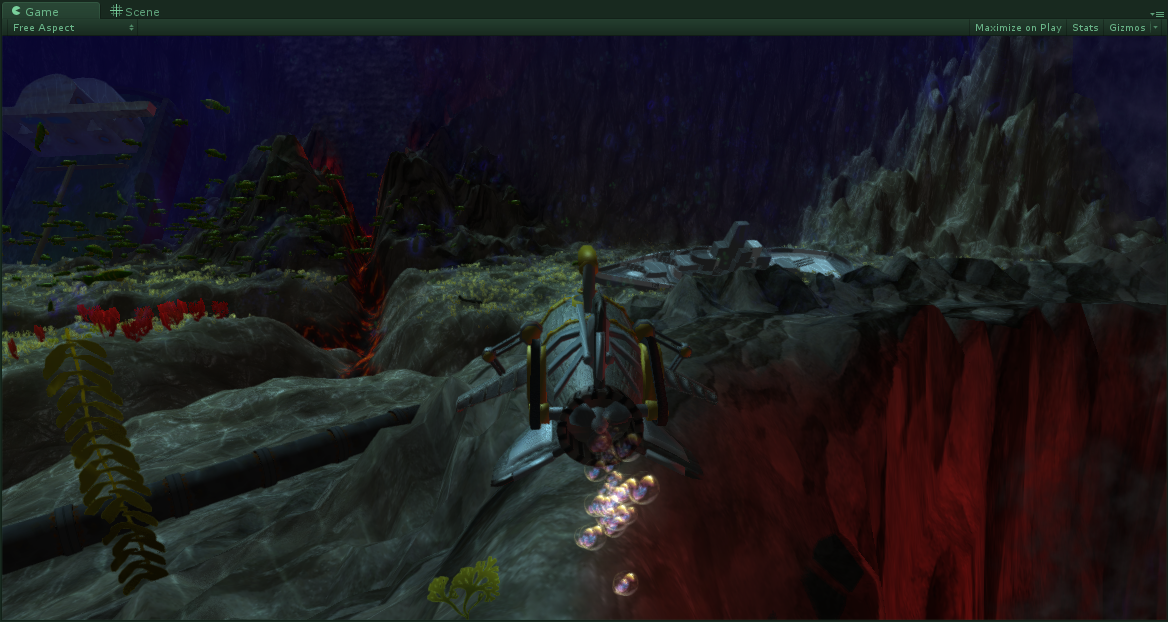
Now. let’s just write that again. I wrote a game with the approximate gameplay complexity of Doom, with substantially better graphics, in 5 days flat, in an engine I had never seen before.

Now, XNA could most certainly have done that, barring the multiplatform stuff (MonoGame solves that tho), but I really can’t begin to imagine the timeframe it would have taken me write it. And in that timeframe, who knows what Unity would have added? Having a tech team of a few hundred people writing amazing new features for you really does help you stay on the cutting edge!

The real beauty of Unity, to my mind, is that you can try out advanced tech, and see if it fits your game. For instance, should your game have edge detection? In XNA, you’re looking at a few days of different ways of writing the shader, considering normal or luminance-based edge detection, optimizing, and then deciding that, actually, it looks crap.

In Unity, you simply drag the shader onto the camera, and comes fully configurable.. It comes with dozens of shaders like this, allowing you to quickly prototype up how it should look.

So you’re talking about several days of work, played off against several seconds. I already know where my vote is heading…

This is the usual point where people leap in and go “AH HAH! Whilst Unity is better for prototyping, it’s no quicker for writing a full game!”

This sort of comment is really self-evidently false; if you have a fixed timeframe in both systems, you’ll either finish in a 20th of the time in Unity, or end up making something substantially better looking in Unity. The fact that, in Unity, everything inherits from a generic object, meaning you can manipulate everything quickly; re-use of scripts, code and objects in Unity is truly incredible; from having actually used both systems, I can say that writing gameplay in Unity is much, much faster. I’ve never heard this from anyone who has ACTUALLY used both XNA and Unity, mind you.

“Oh, but it’s slower!”

True! Unity is slower. Is a LOT slower? No. A few percent, perhaps. Are you confident that your cascading shadow engine, which you wrote from scratch, is faster than Unity’s one? I wouldn’t be. Will your physics engine be faster than PhysX? Almost definitely not. Will you be able to optimised your graphics engine for the iPhone better than the Unity guys did? No chance.

“Ah, but once you try to do something Unity doesn’t want you to, it’s way easier in an API like XNA!”

I’m glad to say this isn’t true. If you try to do something Unity doesn’t want you to, you end up in exactly the same boat as you’re in with XNA; having to write it yourself, and wishing it was already written for you. You can even interface with C++ DLLs, meaning that, WORST CASE, it takes exactly the same amount of time.

That’s what really does it for me; if I want to mess about with their state-of-the-art lighting engine, I can. I don’t have to spend 3 years writing it first. If I decide that I need to implement some new, hitherto unheard of technique in my game, then that will take the same amount of time; but every other facet of my game will be done faster.

But I think the main thing I love about Unity is that if you make a variable public, a designer can then edit that from the WYSIWYG interface. That right there is a mountain of work in XNA.

For me, it boils down to a simple choice. Do you want to write a good game, or a good engine? FortressCraft was, really, a good engine, designed with the future in mind, and the much more complicated and in-depth Chapter 2.

But I managed to write this in 4 weeks:
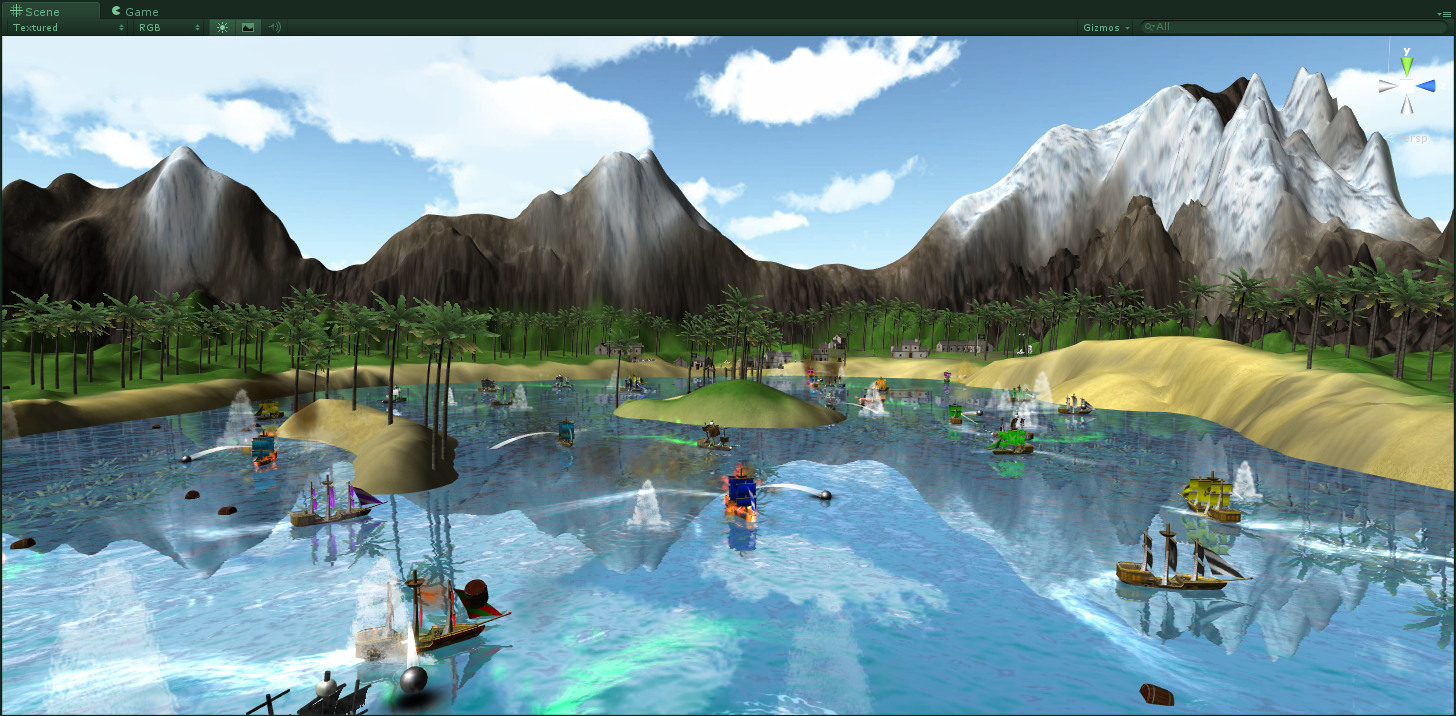
And this in a few days :
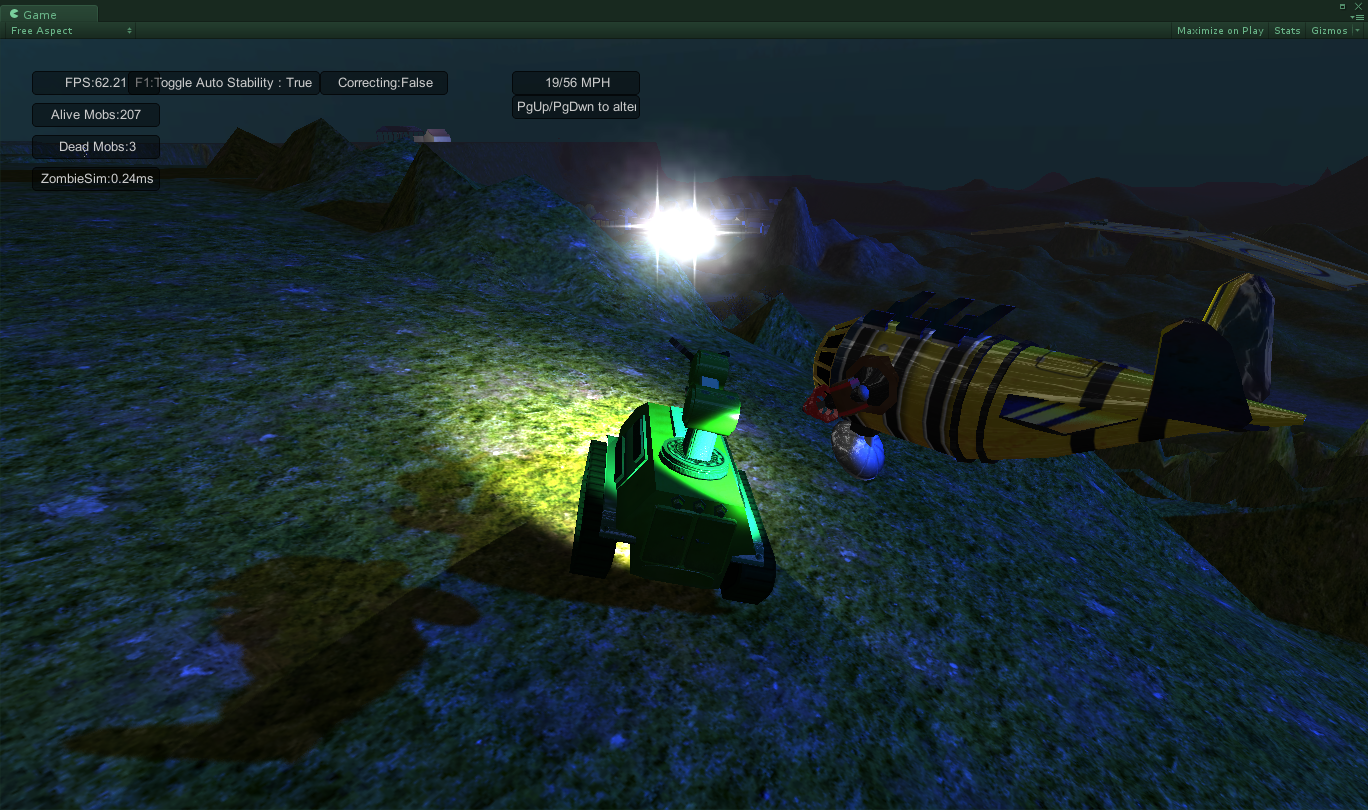
Why would I want to order a bunch of parts from a garage, when I could pay someone to fix my car for me? Fixing your own car only has 2 real reasons; either you love it, or you’re trying to save money. If your goal is to have a car to actually drive on the road, you’d pick the garage option every time.

And that right there is the only – only – advantage I can see that XNA/MonoGame has over Unity. It’s free. (as the old adage goes, anything free is worth what you paid for it). Mind you, Unity has a free version; you miss out a bunch of the extras, but you can decide it’s for you (Slender was written using Unity Free, for instance)

If your game isn’t going to make $1,500, then Unity Free or MonoGame might be more suited for you. Go for it. Great stuff was written using free tools. But if they don’t work, or you need help? There’s almost  no support for free software, and you need to rely on the community.

If you want to spend a huge amount of your available dev time re-inventing the wheel, go with XNA. Go with MonoGame. Enjoy scratching your head about calculating tangents for reflections, wondering how cascading shadows work, and if you should implement A* or Dijkstra’s for route-finding. Me, I’ll be busy getting on with writing the game.

Fuck XNA. Long live the future.
Marble Masters: The Pit

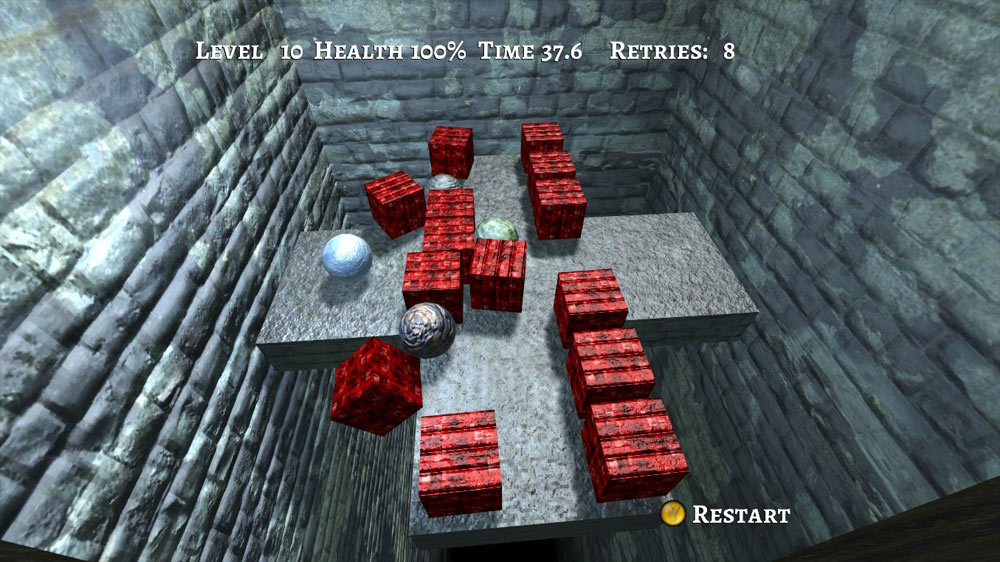
You’re a ball.  You try to shove other balls into a pit.  Marble Masters: The Pit isn’t completely original.  I played a similar minigame in the original Mario Party.  Plus I vaguely recall there was something kind of sort of like it on Wii Fit.  But this is the first full game centered around the idea, and I had my doubts as to whether they could stretch it out for 50 levels.  Things started easy enough.  There were a few holes in the ground and balls located conveniently next to them.  “Okay, well this won’t hold my interest too long.”

I have to say, it looks quite dull in screenshots.  But give it a chance. It's a pretty fun, fast-paced hour-and-a-half.

I have to say, it looks quite dull in screenshots. But give it a chance. It’s a pretty fun, fast-paced hour-and-a-half.

Then the balls came to life.  Well, “life” being relative, as the AI in Marble Masters is clinically brain-dead.  The enemy balls will roll at you in a straight line, even if there’s a pit between you and them.  They have no survival instinct at all.  The developer might as well have dressed them up like they were zombie balls.  Hell, that probably would have been worth at least an extra 500 downloads.  Still, it was something unexpected.  There’s no way that could extend the shelf life though.  Oh wait, now there’s no pits, and instead you have to get the balls to break against spikes.  Oh wait again, now the spikes are chasing you like the balls were.  Well I’ll be damned, they did stretch it out to fifty levels without feeling padded.  Call me William Kemmler because I’m genuinely shocked.

Marble Masters is one of those rare instances of a game pacing itself perfectly.  There’s enough twists to hold a player’s attention for the maximum two hours it would take to complete.  It’s not without some huge flaws though.  The difficulty curve tends to spike up and down.  Even late in the game, there were levels that took me twenty or more tries to finish, which were immediately followed with stages that I completed without any fuss on my first attempt.  So the difficulty is inconsistent, but not as much as the gravity.  The physics engine in the game is all sorts of fucked up.  Sometimes it feels entirely too heavy.  Sometimes it feels like you’re doing battle on the surface of the moon.  This leads to some nifty glitches, like the times I collided with an enemy and we both slowly floated up and out of the map.  Maybe the balls passed away and they went up to heaven.  My dog Spot can relate.

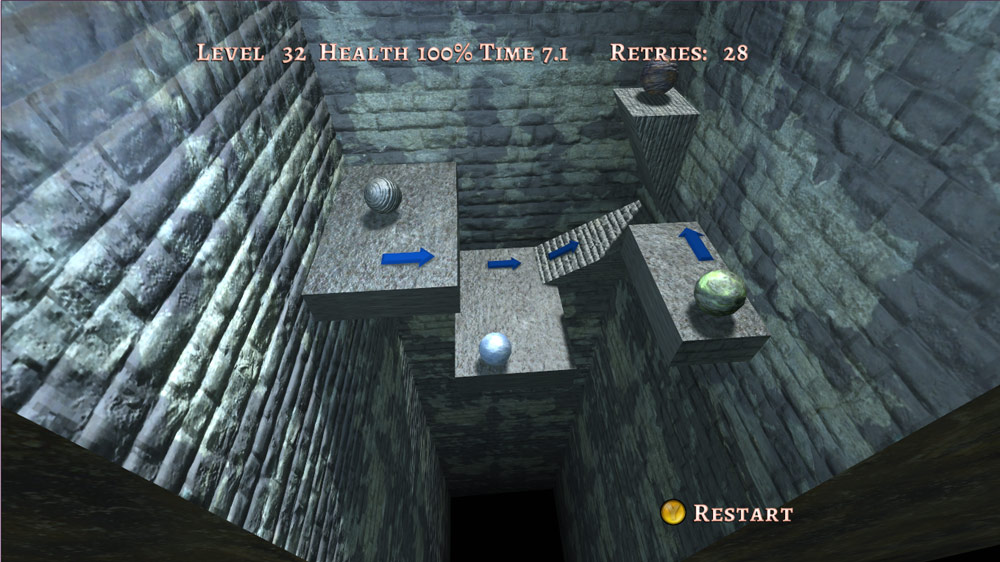
A lot of the gravity problems came in levels with the arrows, which have wind-tunnel like things that push you around.

A lot of the gravity problems came in levels with the arrows, which are wind-tunnel like things that push you around.

Of course, the glitches worked to my advantage as much as they screwed me over.  They’re never so prevalent that you’ll rely on them to complete stages.  They’re happy accidents when they work for you, and swear-generating events when they cause you to unfairly die.  Then again, maybe I’m focusing on physics stability a little too much.  It reality, the gravity reached insane weirdness maybe 10% of the time.  It never feels completely right, but you learn to live with it.  Best of all, right as the game seems like it might be ready to run out of ideas, it ends.  I’ve seen a lot of games that don’t have that kind of restraint.  So yea, I really enjoyed Marble Masters: The Pit.  It’s an original idea executed relatively well.  The gravity sucks, but gravity seems to have it in for me anyway, always making me trip and shit.  No, it’s not my fault.  It’s gravity’s.  Look at it, just existing there, smug force of nature, thinking it’s holding the world together.  Who needs it?  Well I dontja;utiqjgqghakl;nag

DAMN YOU GRAVITY!  I hate you!  I don’t care if you make YouTube worthwhile!

xboxboxartMarble Masters: The Pit was developed by Polyart

80 Microsoft Points look forward to such sequels as Marble Masters: Bell Tower, Marble Masters: The Armory, and Marble Masters: Shang Tsung’s Throne Room in the making of this review.

IGC_ApprovedMarble Masters: The Pit is Chick Approved and ranked on the Indie Gamer Chick: Leaderboard, now sponsored by Smooth Operators: Call Center Chaos.  If you combined the two, it would be called Marble Operators, which sounds a little pornographic.  I bet Team Shuriken is working on it.

Oh, and I don’t actually have a dog named Spot.  Her name is Cherry, and she’s upset that she gets no love at this blog.  Hopefully this shout-out is enough to get her to stop pissing in my shoes while I sleep. 

Castle Invasion, Life of Pixel (Second Chance with the Chick), and Super Skull Smash GO!

I figured it’s time for another kick at the PlayStation Mobile can.  While my previous efforts to didn’t turn up any original games that I could point to and say “see, PlayStation Mobile is off to a decent start”, I figure it’s worth a second look.  At least it would be, if games weren’t priced like this.

PSM Store 2

Or like this.

PSM Store 3

Or this.

PSM Store 1

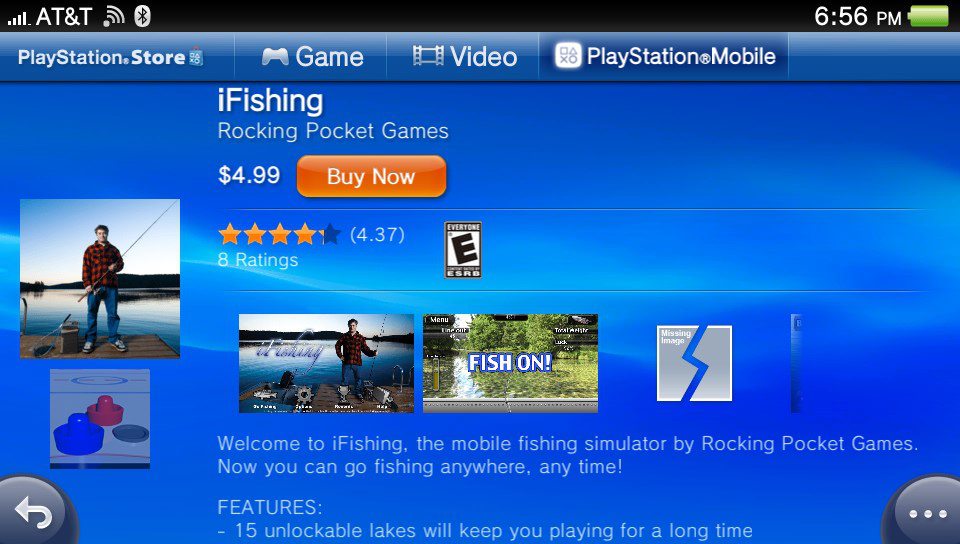
Okay.  Just to be clear, you guys want people to actually buy your games, right?  And you also realize that you’re on PlayStation Vita, where a PlayStation Plus subscription can net you AAA games for free?  Or where standard discounts can get you some really great games for around that price?  Hell, you’re also competing directly with Android phones, where you can get some of the best games of this generation for $0.99 or less.  You should make some effort to be competitive.  You already have no demos, making your games high-risk to consumers.  Why make them so out-of-bounds high risk that nobody in their right mind would take a chance on them?  I would gladly fork over $3 for what looks like an FMV fishing game, because that sort of quirky weird shit is right up my ally.  $5?  That would be a tough sell for actual fans of FMV fishing games, which is a large and robust fanbase to alienate.

So instead, I grabbed Castle Invasion for a measly 49 cents.  And I definitely got what I paid for.  Simple concept: shoot dudes before they reach the castle wall.  Gallery shooters like this are a bit relicy (that’s a word as of right now), but I figure there’s all kinds of neat twists developers can slap on them.  Not here.  Dudes run at you, and you shoot them.  Stronger dudes run at you.  You shoot them.  Faster dudes run at you.  You shoot them.  Sometimes you use arrows, sometimes you use spears that can penetrate multiple enemies, but otherwise it’s the same shit over and over again and it’s boring.  Not only that, but it had a tendency to crash.  Spring for the extra penny and sink your money in a gumball.  The flavor will last about 90 seconds, which makes that a longer-term investment than Castle Invasion.

Castle Invasion. The most excited thing since buttered toast.  Which I don't find to be particularly exciting.

Castle Invasion. The most excited thing since buttered toast. Which I don’t find to be particularly exciting.

Up next was Life of Pixel ($1.99), which has been patched.  I played it last month, and found the graphics to be authentic, but the control was sketchy and the level design focused a little too much on leap-of-faith gameplay.  That’s mostly fixed now.  Controls are silky smooth, double jumping never failed, the frame-rate never dropped, and some of those leaps-of-faith are now a thing of memory.  Some.  There were a few sections of the game where you simply have to leap blindly and hope for the best.  Some call this “trial and error.”  Bullshit.  The “trial” part suggests you have a fighting chance.  Blind luck is not a fighting chance.  It’s fucking blind luck, and there’s still a lot of it in Life of Pixel.  I call this “gotcha gameplay.”  And I’m sick of it.  It pops up too much on the indie scene.  Yea, I know games used to be like this, but that doesn’t mean they still have to be.  And I’ve got a solution.

I’ve arranged for every indie development kit, across all platforms, to come bundled with a man named Roberto.  Now, Roberto will pretty much stay out of your way.  Just leave some bread and something to drink out for him, but otherwise you shouldn’t notice him.  Unless you start to put “GOTCHA!” moments into your game.  Unavoidable deaths, blind leaps, hidden traps that are impossible to see or avoid, etc.  When you attempt this, Roberto will come out of hiding, place a pot on your head, and bang the pot sixteen times with a five-pound, stainless-steel soup ladle.  After this, he’ll remove the pot, look you in your now vacant, concussed eyes, and scream “GOTCHA!”  Then he’ll slink back into the shadows and allow you to undo the mess you just made of your game.  I think this idea is a good one.

I fucking HATED HATED HATED this level of Life of Pixel, which featured more blind jumps than Lighthouse International's annual hurdles race.

I fucking HATED HATED HATED this level of Life of Pixel, which featured more blind jumps than LensCrafter’s annual hurdles race.

Despite Life of Pixel being my inspiration for the Roberto Policy, I have to say that the game is vastly improved.  By that, I mean it’s playable, and hey, even a little fun.  They even included a soundtrack that, gasp, somewhat matches the classic gaming eras that were the inspiration in the first place.  I mean, it was downright boneheaded to not include such soundtracks in the first place, but I’ll let it slide.  I did just give the team at Super Icon  multiple instances of brain damage by testing the Roberto Policy on them.  They deserve a break.  They also deserve an Indie Gamer Chick Seal of Approval.  They took a shitty, broken game and made it fun.  That’s a sign of a developer with true talent, and I salute them for it.

Roberto, pot their head one last time.  Just out of principle for making me eat my words.

Finally, Super Skull Smash GO!  It’s a retro-style puzzle-platformer that was priced at $3.29 last week, but it’s down to $2.79 this week.  Is that a good price for it?  Hmmmmm not really.  I can get better games on my iPhone or on XBLIG that offer more play value at half the price.  Is it a bad game?  Not at all.  You play as a dude who has to hop on skeletons, grab their skulls, and smash them against a giant, golden cross.  Glad to see Yale’s fraternal initiation turn into a full-fledged video game.

Super Skull Smash GO

I would call the graphics fossilized, but considering Super Skull Smash GO! stars a bunch of skeletons, I’m guessing that was the point.

Despite the primitive graphics, Super Skull Smash GO! is a fairly clever puzzler that keeps throwing new twists in until the end.  Having said that, the collision detection is too sensitive, and the jumping physics are a little heavy.  By far the biggest thing I had to struggle with was jumping through narrow corridors and repeatedly fucking up because the spot you can jump from or to is so small and unforgiving.  Plus, lining up a skull to throw at just the right height can also be troublesome.  The game seems to have issues with following parameters.  I’m not going to be too hard on it for that.  I can relate.  I have the ankle monitor to prove it.

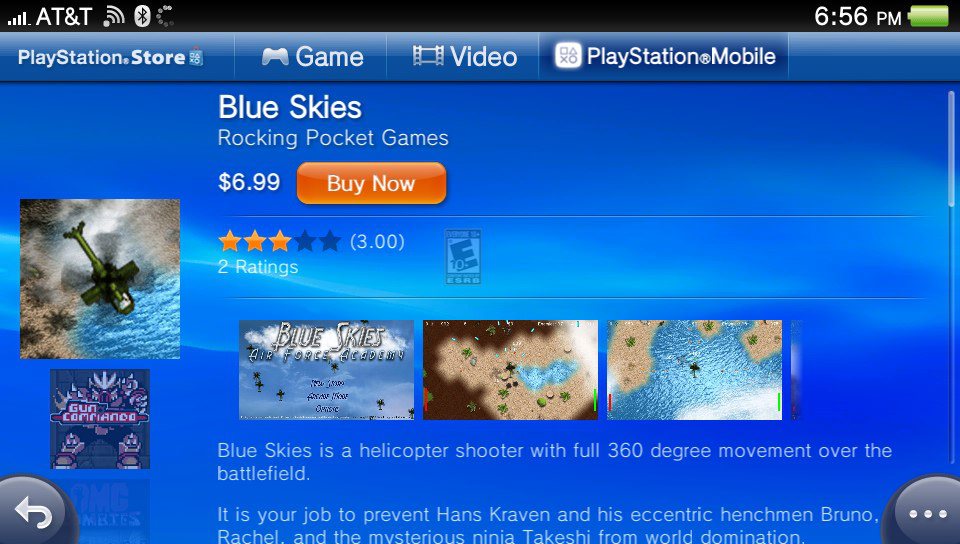
I still recommend it, because it’s a fun little game with puzzle design unlike anything I’ve ever played.  And hey, I’ve now found two original PlayStation Mobile games that are priced to afford and worth your time to play.  It’s a step in the right direction.  I do wish developers would be smarter about how they market their games.  That overhead airplane fighter game thing above, Blue Skies.  For all I know, it might be a good game.  It looks like it’s based on some classic games that a lot of people would be interested in.  You know, the type of games you can routinely buy on platforms like PSN, XBLA, and Virtual Console for under $7?  This is one of those “what were they thinking?” moments.  Without the benefit of demos (and hell, most PSM games don’t even bother with trailers on YouTube), all PSM games are a risk to consumers.  How many people will take a $7 for one game risk when the same $7 can net them multiple games, some of which they’re bound to like.  I got two pretty decent games in Super Skull Smash GO! and Life of Pixel for $5.28.  That’s $1.71 less than the risk of buying Blue Skies and hating it.  Fuck that.  That kind of money buys a lot of gumballs.

Super Skull Smash GO! and Life of Pixel are Chick Approved

IGC_Approved

Tales from the Dev Side: Unity in a Splintered Industry

As word hit that XNA was being faded out, non-developer me was curious where else the community that I’ve downright fallen for with would turn to next to create the games I both love and loath.  And the community has responded.  First, the guys at MonoGame hit me up with a semi-well-received, semi-controversial editorial touting their platform as the next big thing.  While a direct response to that from the mad bastard behind FortressCraft is still coming, industry veteran-turned-indie Scott Tykoski wanted his chance to sing the praises of Unity.  As always, I understand almost none of this.  But Scott’s a gifted writer and not prone to panic, so you should give him a read.

UNITY IN A SPLINTERED INDUSTRY

by Scott Tykoski

As the death knell rings for XNA and my Xbox Indie pals pay their respects on twitter, a question hangs in the air – “Where do we go next?”

And by we I mean the group of developers that got excited at XNA as an inexpensive multi-platform solution. We bet YEARS of development energy on a system that looked so promising, yet let us down in so many ways.

“Where do we go next, now that XNA is dead?”

We also have to deal with the “gold-rush” mentality that has come along with the mobile gaming boom. Indie/Hobbyist game developers are everywhere, and worse, most of them are making very similar games (take hit game, change the theme, rinse, repeat), intensifying player dissatisfaction with titles that don’t push any significant boundaries.

“Where do we go next, now that the world is oversaturated in unsatisfying games?”

And heres another challenge to overcome: our industry is undergoing HUGE, seemingly random marketplace shifts. Phones streaming games to tvs. Consoles putting games on the backburner to focus on movies and television.

“Where do we go next when there are so many platforms and nothing is certain?”

The honest answer? We go away. We give up and we move on.

Goodbye, friends.


UH…WE’RE NOT REALLY SCREWED, RIGHT?
No, sorry, I’m kidding…we’re totally fine. 🙂

Actually, being in the Indie gaming scene has never been more exciting – even with app stores overflowing with crappy titles (we’ve fought that battle before, right XBLIG guys?). You see, every studio – from the one-man operations to the largest gaming conglomerates – is facing the exact same conundrum: “What platforms do we focus or development energy on?”

This universal need for multi-platform tools means we now live in an ecosystem ripe with ‘Make Once – Play Everywhere’ solutions. Unreal for the big spenders. Adobe Air for the Flash experts. Gamemaker Studio, GameSalad, Stencyl, & Construct for folks unfamiliar with code. And of course the mega-versatile MonoGame for anyone fully invested in XNA (Rest In Peace, sweet prince).

But while all these solutions have their disadvantages, be it price or flexibility, one toolset has them beat on all counts: UNITY.

What once was a fun little tool for prototyping, Unity (now at v4.0) has matured to the point where you can make some pretty amazing games, like the beautiful Kentucky Route Zero or the 4x Epic Endless Space.

Kentucky Route Zero

With Unity, developers can now rest assured that core engine systems are covered and they can focus on the most important task: DESIGNING A GREAT GAME!

But first..

THE BASICS OF UNITY
At its core, Unity is a 3d game engine where the developer can script using C# or go straight into scene creation using the fully featured editor, which feels a lot like using 3DMax or Maya (where you move game objects around in 3S space). While it may seem daunting at first, the toolset gives a great entry point for either artists or developers to start working on their game.

While the amazing editor would be reason alone to use Unity, the real selling point is the admirable cut of its cross-platform jib (ie: it can export games for every friggin’ platform). Titles for PC, XBox360, Wii, Web, Android, and iOS have all been made and released using the Unity, proving itself on multiple devices many times over.

It should also be noted that you can make a Ouya game RIGHT NOW using Unity. That’s pretty amazing cross-platform support, if I do say so myself.  Which I do.  Obviously.

SO MUCH 3D GOODNESS
While modeling, texturing, and animation have to be done in a traditional 3D program (3DMax, Maya, Blender, etc), Unity does all the heavy lifting when it comes to importing and rendering those assets. Lighting, post processing, shadows, and animation are all available out of the box.

I remember trying to get a distance blur effect hooked up for battles in Galactic Civilizations II but it was a huge pain and never happened. In Unity.. it’s as simple as dragging a effect script onto the camera object. Most effects are drag-and-drop ready…it’s simple to the point of sickening.

And lets talk for a bit about asset pipelines. The amount of raw data that goes into defining meshes, bones, UVs, and animations is staggering, and have given rise to third-party frameworks that manage this deluge of data. The fact that Unity makes the asset import and management process a two click process is a testament to the overall ease-of-use the editor provides.

THE JOYS OF C#
Anyone familiar with XNA is also familiar with the beautiful C# coding language. I won’t pimp that here, but Unity uses it, and it’s awesome.

Coding is as simple as writing your code, making a few public variables to use as dials, then attaching that script to your game objects. Those variables can then be tweaked in the editor, so writing modular code is buttery smooth.

The editor also has its own scripting API, so you can easily extend the editing tools as necessary.

THE ASSET STORE
Another notch on Unity’s belt comes in the ‘Asset Store’, where you can buy or sell anything game related.

Lets say you want a ‘Plants vs Zombies’ look to your game and need to animate several of 2D characters. You can go into a separate 3D program, rig and bind 2D planes, export the data, then use a 3D animation object to render your characters. OR you can purchase SmoothMoves, an in-editor 2D animation solution for 75$.

It’s the best 75 bucks you’ll ever spend, I assure you.

Chances are, if you need a game-related subsystem, someone already has a solution available on the asset store: just purchase, plug, and play!

NOW FOR THE BAD NEWS
Instead of a proper point-counterpoint, I decided to bottle up ALL the negative stuff to dump on you at the end. I know…I’m an a-hole.

First and foremost, the cost. Good news here is that a free version can be used by most Indies. Once you start making more than $100,000 a year, however, it’s time to go PRO, which will cost you $1500. Exporting features come in the form of add-ons, so exporting to iOS from the free version will run you $400, from PRO it’ll cost $1500.

Unfortunately, all the R&D testing I did was with a PRO version with a PRO iOS exporter, so some of my exuberance may come from using a super-slick $3000 version. You can dig around in the Unity Store to get some charts comparing features of the different versions.

Also, debugging was a bit more painful than in XNA and traditional IDEs. My testing of the tool was mostly on the art side, however, with a full-time developer testing out the coding front, so my pains could have simply been lack of experience. My fear is that you’ll be spending more time with print statements and less time with breakpoints.

Another issue, for those of us that love our retro graphics,the 3D environment can make 2D game creation tricky. It’s doable, but definitely less intuitive than making a proper 3D game.

The biggest drawback to Unity – as with any third-party engine – is the lack of control you have on the last 10%. You’ll always encounter areas where you want the engine to do something that’s just not possible (for one reason or another). While the main 90% will be smooth sailing, compromising on the last 10% of your vision may be too steep a price.

UNITY & MAKING GAMES WORTH PLAYING
So I started this editorial with that stupid ‘we should give up’ gag. It was mostly for fun, but there’s a legitimate feeling of helplessness that comes when your platform of choice is discontinued. There were too many crunch weeks spent on games using XNA to shrug it off as a necessary loss.

And while it sucks to see an amazing framework put to pasture, we are now drowning in possible alternatives. Alternatives that not only allow you target multiple platforms, but that alleviate the burden of creating the subsystems that your game will depend upon.

It’s for the sake of quality gameplay that I fully endorse Unity, and really any 3rd party engine. The overwhelming majority of your audience could care less about the underlying engine.. all they want is a new experience, something that’s not ‘Angry Birds with Zombies’.

Creativity on the Indie scene is a talk best left for another time , but always remember: originality is your key competitive advantage over the AAA studios. Use it! The less time you’re making engine systems that never excite the player, the more time you can devote to making original gameplay systems that will excite yourself, the player, and perhaps even our entire industry.

Procrastinating Squirrel (Updated)

Procrastinating Squirrel put up a fight when I first downloaded it.  From the moment I booted it up, the game started skipping like a DVD that got into a fight with a belt sander.  Thus it was rendered completely unplayable.  I made a video so that others could feel my pain.

After publishing the original piece, I got word from a few players that they didn’t have problems.  Curious, I switched consoles, then switched which storage device I was saving my progress to.  While it didn’t run perfectly, the experience was vastly improved and thus I could write a full and proper review.  Of course, in a way I already did that.  Procrastinating Squirrel is essentially Miner Dig Deep, only not as deep.  Miner Dig Shallow perhaps?  Miner Dig Less Deep?  Miner Scratch the Surface?

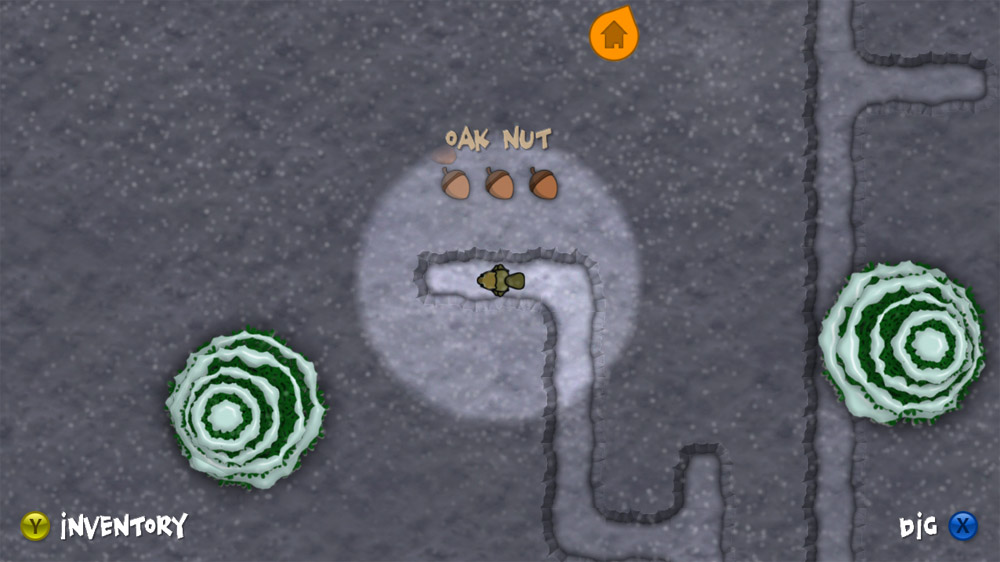
Oak Nuts.  It's what you call crazy people that live in Oakland.

Oak Nuts. It’s what you call crazy people that live in Oakland.

How about Toddlers Dig Deep?  Because this stripped down version of one of my former Top-10 XBLIGs is pretty much that.  Miner Dig Deep, sans strategy or most dangers.  Fewer upgrades.  Fewer things to mine.  The boulders are still there and can still cause you to scream curse words you forgot you knew, but that’s the only thing that can kill you.  There’s no need to worry about digging too many tunnels that could cave in, because the game is presented from a top-down view.  That’s the one advantage Squirrel has over Miner: you can mine in any direction.  Every other aspect is less than what is already offered in Miner Dig Deep.  There’s no positive outlook on that.  People who haven’t played Miner would be better served skipping this and playing that.  People who have played Miner can only find Squirrel to be an inferior, watered-down clone.  I kept waiting for the game to present some kind of hook to change things up, and finished it still waiting.  While I still was practically hypnotized by the prospect of digging up new materials, those moments are few and far between.  It even ends significantly faster than Miner Dig Deep.  Miner Dig Deep left me wanting more.  Procrastinating Squirrel left me disappointed, and recommending it would be nuts.

Thirty minutes staring at the screen and that’s the best pun I could figure to go out on.  I knew I should have written this sooner, instead of waiting for the Oscars to end.  That’s what I get for procrastinating.

xboxboxartProcrastinating Squirrel was developed by Daivuk

80 Microsoft Points wondered why every single pet squirrel is named “Penny” in the making of this review?

Pester

I suck at space shooters.  I’ve spent the last two years establishing this fact on this very blog.  While I try to claim neutrality towards all genres, that’s obviously a bit of a stretch.  Some I like more than others, with shmups typically being “the others.”  I’ve just never been able to get into them.  Which kind of sucks for the hard-working XBLIG community, because even ones that earn near universal praise (like Aeternum) don’t do anything for me.  It seems like the best they can hope for out of me is “I wouldn’t rather be dead than play this.”

Am I the only one who thinks that bullet hell screens always look like those abstract painting made by just splattering a blank canvas with paint?

Am I the only one who thinks that bullet hell screens always look like those abstract painting made by just splattering a blank canvas with paint?

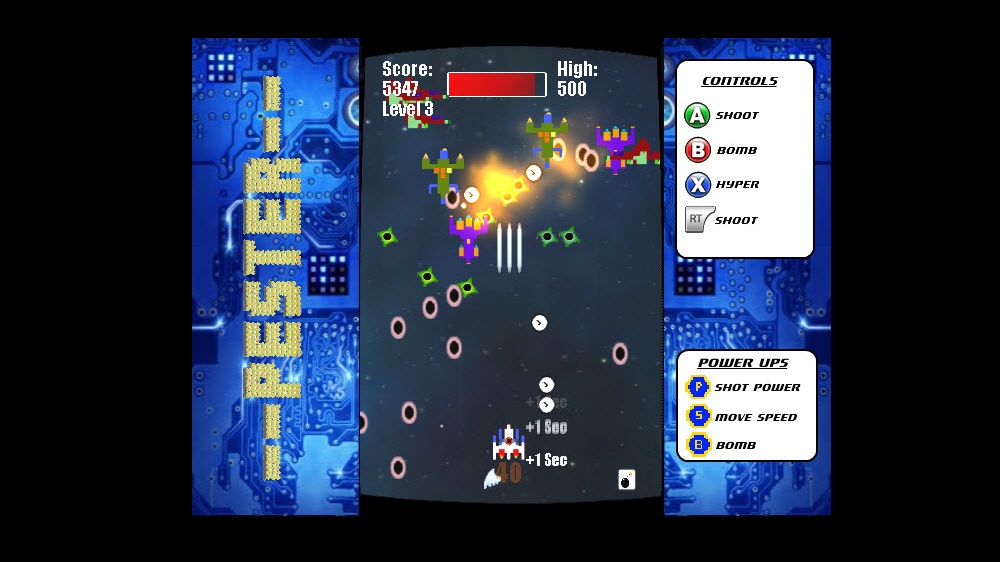
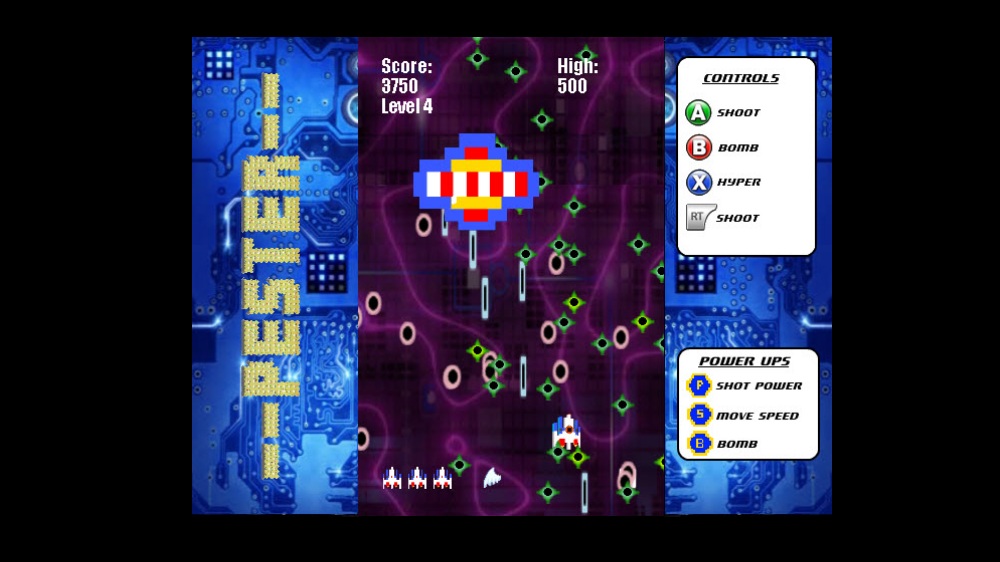
On that note, I wouldn’t rather be dead than play Pester.  Congratulations to the team at Flump Studios for doing as good as you could do with this genre in relationship to me.  I was able to get through the full hour Brian forces me to play these games (“out of fairness” he says, the goody two-shoes prick) without wondering if I’ll be locked up in the nuthouse for choosing to hurl myself through a plate-glass window to get out of it.  And, while I wasn’t like wowed by the experience or anything, I wasn’t bored.  It’s nothing new though.  You’re a ship.  There are enemies.  Enemies fire a whole lot of bullets at you, and you fire a whole lot of bullets back.  I’ve always kind of wondered about the economics of bullet hells.  Presumably if enemies are firing plasma rounds at you with projectiles the size of small ships, that stuff has got to cost money.  You would think they would fire a little more accurately.  Conserve ammo, instead of seeing you, going crazy, and firing bullets in every direction including behind them.  Or hell, since we’re dealing futuristic space warfare, you would think an enemy force that can employ thousands of ships to take out one single rinky-dinky little adversary could figure out how to do weapons that instantaneously destroy whatever they’re targeting the moment the fire button is pressed without giving them a chance to dodge out-of-the-way.  What kind of morons do they have running these evil empires?

Anyway, it’s basic space shooter shit with some neat graphic filters added, and not a whole lot more.  I played for a while and realized quickly that I was every bit as shitty at playing Pester as I am at every other game of this godforsaken genre.  But the screen wasn’t so spammed with bullets that it was demoralizing or anything.  Then something funny happened.  At one point, I turned to Brian and said “honestly, I’m not having a blast or anything, but there’s nothing really wrong with this one.”  Within ten seconds of me saying this, the game decided to give me stuff to complain about.   I’m not saying this for comic effect.  This really happened.  First, I was fighting a boss that throws giant swords at you and died.  That’s not the bad part.  The bad part is when I blinked back into existence, the game spawned one of the sword bullets into the same space I respawned into and insta-killed me.  The sword wasn’t there at that moment. It just appeared.  A bizarre glitch I’m guessing, but it’s so weird that it happened right after I told my boyfriend I had nothing to complain about.  As if the game heard me and said “nothing to complain about?  Bitch, I’ll give you something to complain about.”

And Pester kept being a shithead to me after that.  I played three straight rounds where the game never once spawned an upgrade for my ship’s guns.  It spawned plenty of speed-ups and bombs, but no gun upgrades.  It was fucking strange, because they had been plentiful before.  Not that it really mattered.  Gun upgrades or not, I still made it about the same length as I always did, which was between wave 7 and wave 10.  Yea, I really suck at this shit.  So I booted up Tempus mode, where lives are replaced by time.  When you shoot enemies, instead of them dropping coins, they drop clocks that add one second to a timer.  When you die, you lose ten seconds.  The game goes until you run out of time.  Okay, fine.  Question: where the fuck is the timer?  I couldn’t see it.  Otherwise, it’s the same game with the same enemy layouts.  You can also adjust the difficulty, and add extra challenges if you’re a masochist, like controlling two ships at once.  I didn’t try it myself.  I barely have the coordination to tie my shoelaces without breaking my neck in the process.  I don’t need a game to tell me I’m an embarrassment to humanity.  I already know it.

A spaceship that fires globs of space jizz on you. Sure. Why not?

A spaceship that fires globs of space jizz on you. Sure. Why not?

Really, Pester isn’t bad or anything.  And the sword bit I mentioned above was a one-off thing.  I guess I kind of, sort of recommend it.  A little bit.  I’m not sure if that’s because I genuinely enjoyed it based on merit, or if I genuinely enjoyed it because Brian got such amusement out of my pitiful lack of shmup talent.  Either way, I had something vaguely resembling a good time playing it, and had the sense to turn it off before I got bored.  Having said that, it’s not an ambitious title.  This shit has been done before and Pester offers nothing new.  Nothing.  At best, it shows competence in making a functioning, mildly entertaining game that closely resembles about a thousand other games.  I’m not against playing them, but I want to see a different angle on them.  There’s got to be a wealth of unexplored twists for bullet hells.  I mean come on, you guys are indie developers.  You’re supposed to buck the norm.  Be weird for the sake of being weird.  Dance to the beat of a different drummer.  When games like this fill out the cliché checklist with such determination, it’s kind of sad.  Not as sad as watching me play games like this must be, but still pretty sad.

xboxboxartIGC_ApprovedPester was developed by Flump Studios

80 Microsoft Points made a fortune selling ammunition to an evil galactic empire in the making of this review. 

Pester is Chick Approved and ranked on the Indie Gamer Chick Leaderboard.  Barely.  

Ascent of Kings

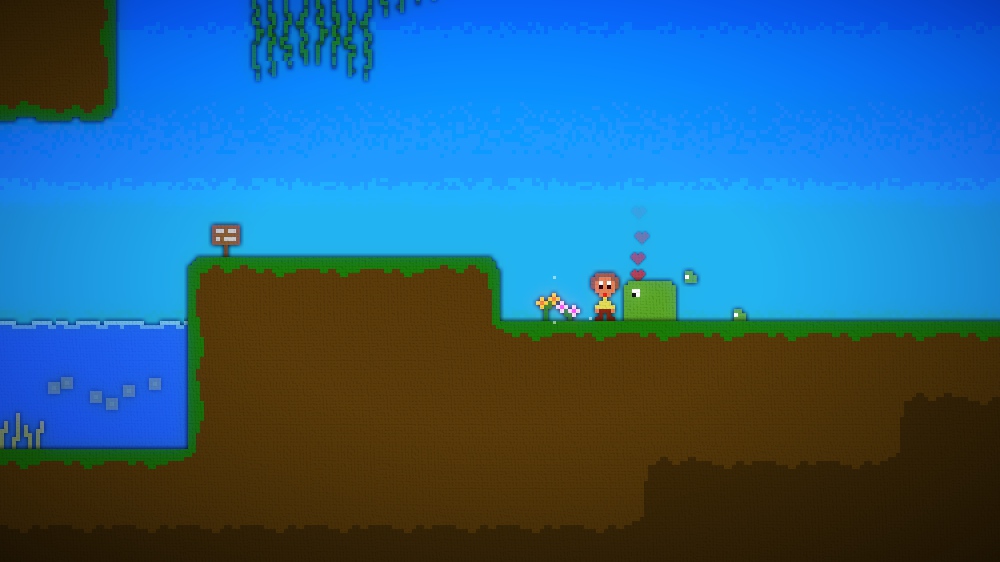
Ascent of the Kings comes from the developer of Quiet, Please!, the 2D platforming/point-and-click mash-up I played last April.  The fingerprints of the developer are all over this one too.  Same art style, same silliness, and same bite-sized game length.  It took me just over thirty-minutes to beat Quiet, Please!  For Ascent of Kings, which is a Metroidvania type of platformer, it took me about twenty minutes to become king and another twenty-five minutes to find all 12 hidden shrines.  So, forty-five minutes total of gameplay.  At this pace, Nostatic Software’s next game might stretch to a full hour.  Not that it needs to.  I’ve enjoyed games that lasted as little as ten minutes.  It’s crazy how spending 600 days immersed in the indie gaming scene alters your perception on how long a game should be.  I’m fairly certain I’m now in a state of mind where I could approve a game that lasts one minute, as long as it’s the best damn one minute I’ve had since I lost my virginity.

A Boy and his Blob?

A Boy and his Blob?

So the idea is, the king has died, and in order to determine the new king, all possible suitors (which seems to consist of four brothers that live in a small cottage, still better than what England faces sometime in the next twenty years) have to hop around on platforms and reach a small shrine that bestows upon that person the power to rule.  The father of these kids, apparently a bit of a dick, only gives each of the older brothers one special tool that can help them reach the summit and become king.  But their hearts don’t seem quite into it.  They pull such bullshit excuses as “ouch, sprained my wrist” or “twisted my ankle” like they’re trying to get out of jury duty.  The youngest brother, aka you, collects their tools, allowing him to double jump, climb vines, and fire slingshots.  You know, the kind of tools found in a real world monarchy litmus test.  Psssssh, diplomacy?  Economics?  Fuck that shit.  That’s for democracies.

As a game, what can I say?  It’s alright.  The movement physics are a bit loose and the double-jump sometimes didn’t seem to work.  Level design is very basic, no frills, no surprises.  There’s one section that features a timed jumping puzzle, and I hate that if I get to the top and screw up, I have to wait any amount of time before hitting the button to start over.  But, the game is so brief that you can’t really get bored with it, and it ends long before any amount of frustration over the various control foibles can settle in.  I guess what I’m trying to say is I had a decent enough time playing Ascent of Kings to say it’s worth a buck.  It’s not the most enthusiastic recommendation, but hey, it’s not the most ambitious game!  One hand washes the other!

xboxboxartIGC_ApprovedAscent of Kings was developed by Nostatic Software

80 Microsoft Points were joking about the one minute thing.  Brian has way more stamina than that in the making of this review.

Ascent of Kings is Chick Approved and has ascended the Indie Gamer Chick Leaderboard.