Tales from the Dev Side: How Xbox Live Indie Games Prepare You for a Career in Game Development

How Xbox Live Indie Games Prepare You for a Career in Game Development

By Roby Atadero

You often hear about professional game developers leaving the industry and choosing to work on indie titles instead. Don’t let that fool you into thinking indie games are only meaningful for people getting out of the commercial industry. You can break into the industry by working on indie games too.  Indie titles not only give a creative and relaxing outlet for industry vets but, they can also prepare you for a full-time job at a professional game studio if you have never worked at one. Sure, working on a small mobile game or a web game is great and all, but, it pales in comparison to having worked on an XBLIG when it comes to getting a job as a full-time traditional (console) game developer.

My buddy, Andy, and I started working on our indie game, Spoids, in 2010. At the time, he was finishing up school and I was working as a Java programmer for a small company. After working on this XBLIG (Spoids) for a little over a year, Andy eventually got a job as a Network Administrator / Tools Programmer and I finally got a job as a Gameplay Programmer at a professional development studio.

Now it wasn’t as simple and easy as it sounds. I had applied for game development jobs throughout the years with no success. I had a Computer Science degree and had worked on lots of little PC game demos. However, it wasn’t until I was just about done with Spoids when I was actually able to start getting phone interviews at studios I was applying to. Before then, it always ended in an automated email saying the position was filled without having spoken or hearing from anyone at these companies.

So what made the difference? I had worked on an XBLIG with as high production values as we could muster during our free time.  I’m not saying you have to make the next big viral indie game or something super innovative. Just work on something that requires some challenge and do a solid job at it. Make sure to finish it all the way to the end and polish it up as much as possible. The more well done it is, the better chance that professional developers will think you are capable of joining their team. Don’t just get a proof of concept game going and stop halfway. The majority of the game development battle is in that last 20% of completion. You’d be surprised how many people who work on game projects as a hobby never actually finish a game to shippable quality.

UncompletedProjects

How Working on an XBLIG Prepares You as a Co-Worker

You can be the smartest, most talented indie developer out there but, if you can’t connect with your co-workers in their other fields, then it’s going to be a nightmare for both sides when it comes to working on a professional team.

So before we continue, let’s look at a quick overview of the various disciplines involved in game development:

  • Programmers – Make the game work. Give content developers the tools they need.
  • Producers – Keep the project scope manageable, decide what everyone works on.
  • Designers – Make the game fun, place all the content.
  • Audio – Make the game sound good.
  • Artists – Make the game look good.
  • Quality Assurance / Testers – Make sure everything looks and works properly.

There is a lot more to each of these disciplines but, this should give you a rough idea of what each sub-team deals with. So, what does all of this have to deal with how XBLIGs prepare you for a career in game development? Everything.

Usually teams that work on XBLIGs are pretty small (1 to 5 people). That means most of those people have to deal with things that aren’t their forte. Sure, you have your dedicated programmers or your dedicated artists but, chances are everyone had some kind of involvement with designing the game, the layout of the levels, tracking and fixing bugs, dealing with audio, keeping the project moving, balancing, etc.  Dabbling in each of these areas lets you see the challenges and issues that arise in those fields when it comes to developing a game.  This becomes more helpful than you think when you work on a full professional team.

No, you likely won’t be crossing boundaries much in a professional studio like you do working on an indie game. However, you can level a lot more with the other fields and work together to find solutions since you can see things from their point of view.

For example, if you are a programmer at an industry studio after having worked on an XBLIG, you can likely level with, understand, and communicate better with the designers you work with. Or you are more likely to sympathize with the people who work on audio and be able to develop the right tools they need to more easily get their job done. Why? Because you had to walk in their shoes a little bit while you worked on an XBLIG.  You probably didn’t thoroughly enjoy dealing with something on your indie game whether it was design, audio, art, etc. But seeing how those assets are created and the challenges these people face everyday allows you to better understand their issues and work better with them.

People in one discipline can easily start to become jaded towards those in other disciplines. So it doesn’t take much to start to feel a little irritated over time when you are getting work requests that you feel are “stupid” from the workers in the other fields.

DeveloperViewsSo again, getting to walk in their shoes for a little bit can really open your eyes and show you the walls they run into everyday. They have a hard job too.  Doing what you can to help make their lives easier will make you more desirable as a co-worker.

How It Helps Getting a Job

Game companies get tons of resumes every day.  The more high-profile the company, the more they get. And we’re not talking about two or three every day; we’re talking about tens to hundreds. As much as career guides and counselors preach resume format or getting good grades, the single biggest thing you can have is to show you have actually worked on and finished a game or a mod.  And if you have actually released something, then you’re definitely going to get put in the consideration plate over other applicants.  Not only that, but showing you have worked on a game for a console will garner even more attention since there are more technical limitations with a console than with computers.

Now, a lot of these points so far can be made for working on any kind of indie game, not just an XBLIG. However, the key aspect to what makes working on XBLIGs compelling is that they are made on one of the major home consoles. This is where you gain a lot of knowledge that you wouldn’t get working simply on PC or mobile indie games.

Technical Challenges That Cross Over

There are a different set of challenges, certifications, and considerations to take into account when it comes to working on console games as opposed to a strictly computer or mobile games. Let’s look at a few:

Memory

Memory is very precious on consoles whereas today’s PCs have oodles of memory to use. Because of this, worrying about too much memory usage on a PC isn’t usually a big problem. But on consoles, that is not the case. You have to be a bit more cautious of your memory usage. This includes XBLIGS.  Being able to manage your memory usage is a good skill to have going into a professional studio. It is a constant limitation everyone deals with from the programmers to all the content creators. If you’re not cognizant of how much memory you are using when developing something at a professional studio, many upset faces will follow you. And if you are lucky, they won’t beat you up when you walk down the dark hallway.

Certifications

When a game is released on the PC, it doesn’t have as many rules to adhere to as a console game would. This is because console makers like Microsoft, Sony, and Nintendo make sure there are certain standards that are adhered to before you can ship a game on their consoles. XBLIGs are no different.  Microsoft tells their peer reviewers that Xbox indie games must pass ALL of the certification requirements they have outlined. One example of an everyday console certification requirement is keeping your important game information inside the “safe zone”.

A lot of TV’s actually don’t show the entire image that is projected to the screen. When it comes to 720p/1080i HDTVs or old CRT TVs, a handful of the screen around the edges isn’t actually shown. Thus, important game elements shouldn’t be displayed on the direct edges of the screen space. Otherwise, they might get cut off.  Typically, you want to keep a five percent border on each side of your screen free of anything important the gamer would need to see. Thus, the inner 90% of your screen space is called your “safe zone”.

SafeZoneThis isn’t only done in games; it is done for TV shows too. For example, ESPN keeps all their text information within the inside 90% of the broadcasted screen space (the safe zone).  The image below shows their text information not going to the edge of the screen and keeping a nice five percent border on each side.

ESPNNow, PC games don’t have to deal with this. Computer monitors will show the entire screen space. Thus, they can render important parts of the game on the very edge of the screen if they want to. So, if you ever ship an XBLIG, this is an issue you will be dealing with while developing your game.

Now, there are a myriad of other certification requirements to deal with on consoles: minimum font sizes, allowing the primary player to play off of any connected controller, being able to select any storage device, being able to handle a hard drive being pulled out during save/load, using player profile settings for default control schemes, pausing the game when a controller becomes unplugged or their batteries die, maximum load times allowed, etc.

Each of these issues has to be addressed when it comes to professional console games as well as XBLIG titles. So, if you ever finish and ship an XBLIG, you will likely have dealt with all of the above, and thus be better prepared for this in the professional scene. A lot of these can be annoying and frustrating when you first learn that you have to deal with them. You’re better off getting annoyed by these on your own personal projects first and not later at a professional company.

Cross-Platform Development

One of the last big things that you can gain from working on XBLIGs is that you will get better at cross-platform development. Chances are you will have the game working on both Xbox and PC. In fact, you may even do the majority of your testing with your PC build. And since you need the game to run on both systems, you will want your game to be easy to develop and maintain for both systems. Thus, you will need to exercise good programming and abstraction strategies as you go so both builds share as much of the game code as possible. If you have done nothing but PC games and have constantly used the same third-party software, you will likely not be very prepared at writing well abstracted and managed code. Heck, you will probably hate yourself the first time you try to port your game to a different platform once you’ve finished it.

It is not simple to work on a game that needs to work well with an Xbox controller, mouse and keyboard, TV’s, monitors, the Xbox’s specific hardware, any random amount of hardware configurations from a consumer PC , etc. This is not something that comes naturally as you learn the basics of development. You only get better at this from repetition and learning from mistakes. XBLIG’s present a great situation for getting better at and perfecting your cross-platform development abilities. It’s quite an important skill for professional studios, who a good number of them work on games that run on the major consoles as well as PCs.

Just Make An XBLIG Already

In short, working on and finishing an indie game lets you see how each of the major disciplines work together to make a finished product. But working on a console game, like an XBLIG, let’s you see and learn a lot more of what AAA studios have to deal with on a daily basis. These skills will not only make you more appealing to hiring managers at studios, but it will just make you a better developer overall. Is the XBLIG platform fading into the sunset? Yes. Are there easier frameworks to start writing a game on such as Unity? Sure. But, there aren’t really any other cheap and easy ways to ship a game on one of the major consoles besides the Xbox 360. So, go ahead and try making an XBLIG; you’d be surprised where it takes you. Heck, it took me finishing Spoids to have what I needed to finally break into the industry. The same might happen for you.

Roby is currently working on South Park: The Stick of Truth.  Make sure to check out SpoidsIt’s Chick-Approved.  

White Noise Online

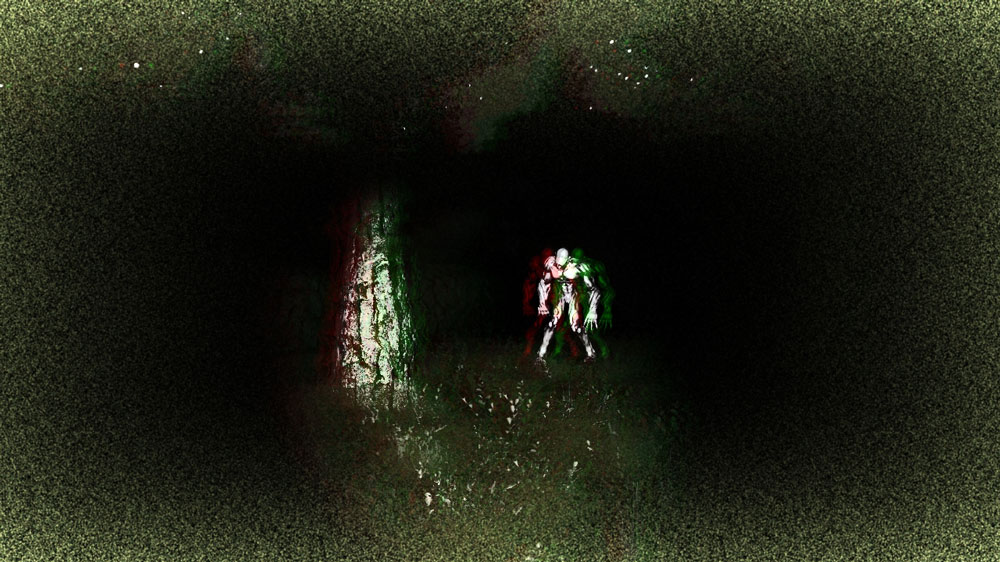
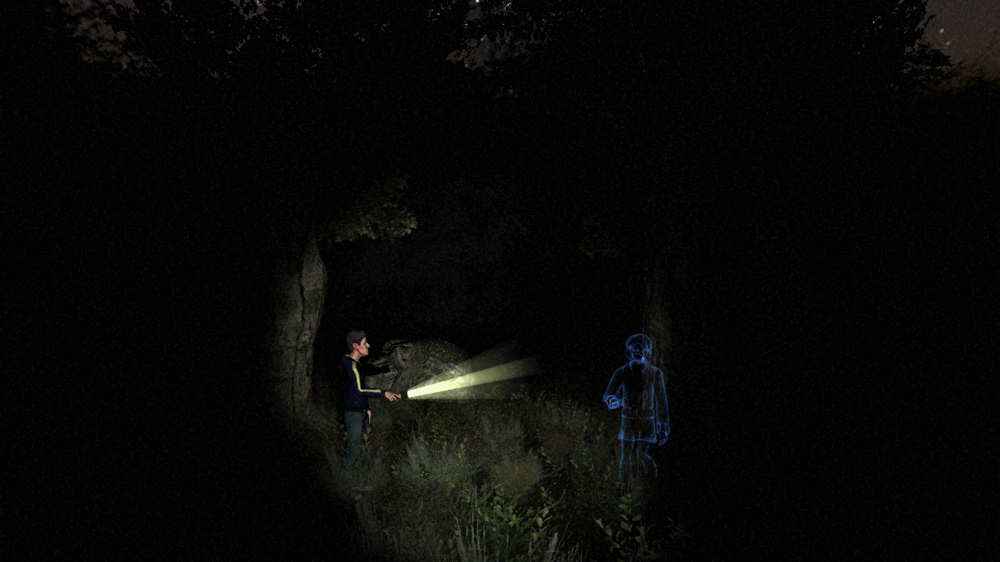
Whoa, Déjà vu.  I’m pretty sure I played something like White Noise Online two days ago, only much more inferior.  White Noise Online itself is a direct clone of a popular iPhone game called “Slender” just like The Monastery was.  I haven’t played Slender myself, nor do I plan on it.  I use my phone for casual, pick-up-and-play fare, not survival horror.  If I wanted to be creeped out using my iPhone, I would give my number to that janitor who stares at my tits every time he sees me.  I guess this whole “walk around looking for stuff with a flashlight and try not to randomly run into a monster” thing is a fad now.  Sort of like how there’s too many horror movies based around found footage.  The weird thing is, I don’t know anyone who actually likes those movies.  And I can’t find anyone who can explain to me why White Noise or Slender is actually a good game.  Scary?  Maybe.  Fun?  Not in the slightest bit.

Anyone looking to make a quick buck could try selling this picture to Weekly World News.

Anyone looking to make a quick buck could try selling this picture to Weekly World News.

I think a better term would be “spooky.”  The concept for White Noise is you have to walk around looking for tape recorders of your buddies.  The ones that were violently murdered.  I wonder whose bright idea it was to go looking for them this way.

“Hey Bob, we’re going to go find out what happened to our friends!.”

“I’m down with that.  I’ll meet you in the morning.”

“What do you mean, morning?  We’re going tonight.  Preferably after midnight.”

“And why are we doing that?”

“Because this can’t wait any longer!”

“But it will be more difficult to see what we’re doing and where we’re going and besides that, our friends were splatter-killed.  They found Jimmy’s insides scattered throughout a tree.  The cops thought it was morbid Christmas decorations!”

“But we have to get to the bottom of this and find out what happened to them!”

“We can find out in the morning, with less risk of dying.”

“But if we die, we’ll know what killed them!”

“But we’ll be dead!”

“And then the mystery will be solved!”

“Are you suicidal?”

“A little bit.”

“I told you not to buy shares in Facebook!”

So yea.  You wander around, looking for these recorders.  When you get close to one, you can hear white noise, which is better than no indicator at all.  However, once you pick up a recorder, it’s tough to make out exactly what is being said.  It sounds like the drive-thru from Hell.  Eventually, an evil monster thing that looks like a demented Zora from the Zelda series will spot you.  Or more accurately, you’ll spot it.  At this point, it’s pretty hard to survive.  You can run for it, but even when I selected a character with high evasion points, I still never lasted more than a minute after encountering it.  When you have no warning, no method of fighting back, and extremely low odds of not dying once found, it saps the entertainment value from the experience, because death isn’t a question of if but when.

Like zoinks, Scooby, I bet old man Withers is behind this!

Like zoinks, Scooby, I bet old man Withers is behind this!

As is the norm with a game from Milkstone, the graphics and audio are superb.  As a horror game, the mood is perfectly set, with unnerving audio and an eerie fog that sometimes looks like it might be a monster or a ghost or something.  The thought of that is much scarier than any actual frights White Noise Online offers.  For fans of this schlock, I’m sorry but I just don’t get it.  The whole “being stalked by a baddie in the dark” thing just doesn’t interest me in the slightest bit.  So, despite a genuinely spooky atmosphere, I really hated White Noise Online.  It’s just not a fun or entertaining game.  It’s tough to get goosebumps when the core gameplay involves aimless wandering and no actual means to escape the enemy trying to kill you.  It’s just plain boring.

The best scary games are a blend of good play mechanics and atmosphere.  Eternal Darkness probably terrified me more than anything I can remember, but I wouldn’t have bothered with it if it wasn’t also a joy to play.  The same goes for Fatal Frame 2 or Silent Hill 2.  They’re not perfect, mind you.  Those Silent Hill games could be as clumsy as a drunken rhinoceros turned loose in a china shop.  But they offered gameplay other than “walk around in the dark.”  White Noise has no puzzles, no combat, and the exploration sucks because everything looks samey enough to make navigation confusing and tedious.  Obviously there is a market for this, given the success of Slender, and the fact that my best pal Tim the Toolman Hurley seemed to have enjoyed what White Noise was pitching.  For me?  I want games with a good story and good play mechanics.  But, if I can only have one of those, I would take the play mechanics.  Why?  Because games are things you play with.   Movies are things you watch.  I know David Cage missed that memo, but you indie guys are supposed to be smarter than that.

xboxboxartWhite Noise Online was developed by Milkstone Studios

80 Microsoft Points didn’t play with the online mode.  If the mechanics were more or less the same as the single player mode, the only difference would be getting bored with friends instead of getting bored with myself in the making of this review.

The Monastery

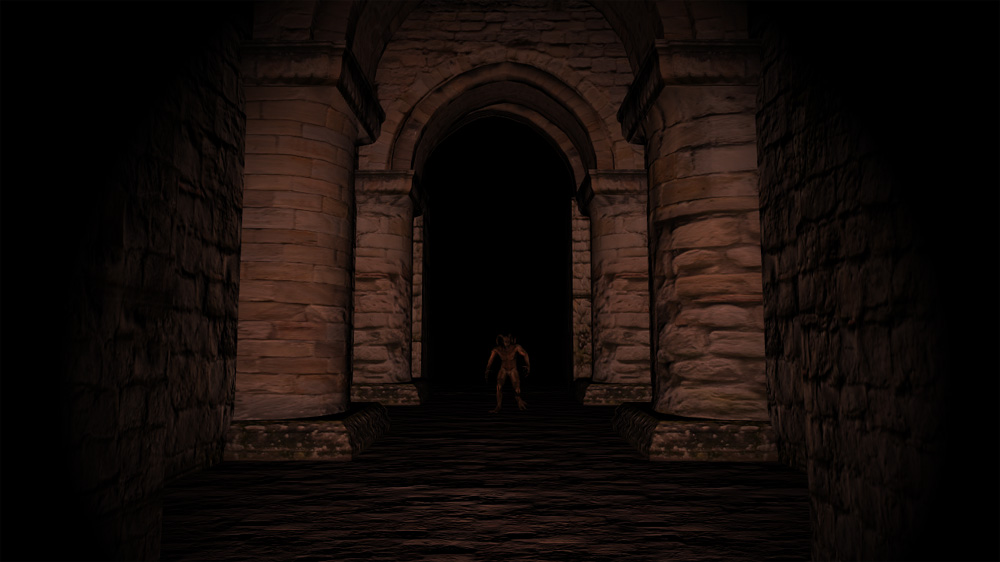
Yea, I know.  The game is called “the monastery” in one of those strange cases where capitalization is denied.  There’s irony in that, because the developers didn’t capitalize on solid 3D graphics to create something worth playing.  The Monastery is just plain boring.  Now if the guys at Rendercode Games were aiming to create an authentic wandering around simulator, mission accomplished.

Make no mistake, the visuals could have been spooky. But the scariest thing about The Monastery is just how boring it is.

Make no mistake, the visuals could have been spooky. But the scariest thing about The Monastery is just how boring it is.

The idea is you’re stumbling through the ruins of an ancient monastery looking for ten over-sized bibles.  In about an hour of gameplay, the most I could ever locate in a single play-session was one.  Maybe I could have found more, but roughly 90 seconds into every game, an enemy would spot me.  Once they’ve done that, they give chase endlessly.  There’s no attacking, so fighting back is out of the question.  As far as I can tell, there really is no rhyme or reason to avoiding the monster.  Hypothetically, you could just hold the run button (and there is never a time when you won’t want to be running, because the normal walking speed is snail-glued-to-a-sloth-slow), but that defeats the whole point of a game based around exploration.  If you can’t stop to look around every once in a while, what you’re really playing is a one-sided game of Tag where you never get to be “it.”

So what else can I say?  It’s bad.  Don’t buy it.  I can’t say too much else, other than I hope the developer does something better with the pretty decent looking graphics engine they used.  The Monastery is a scary game that’s not scary.  Yes, it looks cool.  It probably looks even cooler in the dark.  Of course, so does radium, but I wouldn’t recommend you get near it.

xboxboxartThe Monastery was developed by Rendercode Games

80 Microsoft Points stood shaking their fist defiantly at XBLIG devs threatening them to not actually make a game of video tag in the making of this review.  Seriously, it’s a game that requires the ability to run and touch other people.  This does not need to be digitized. 

Naoki Tales

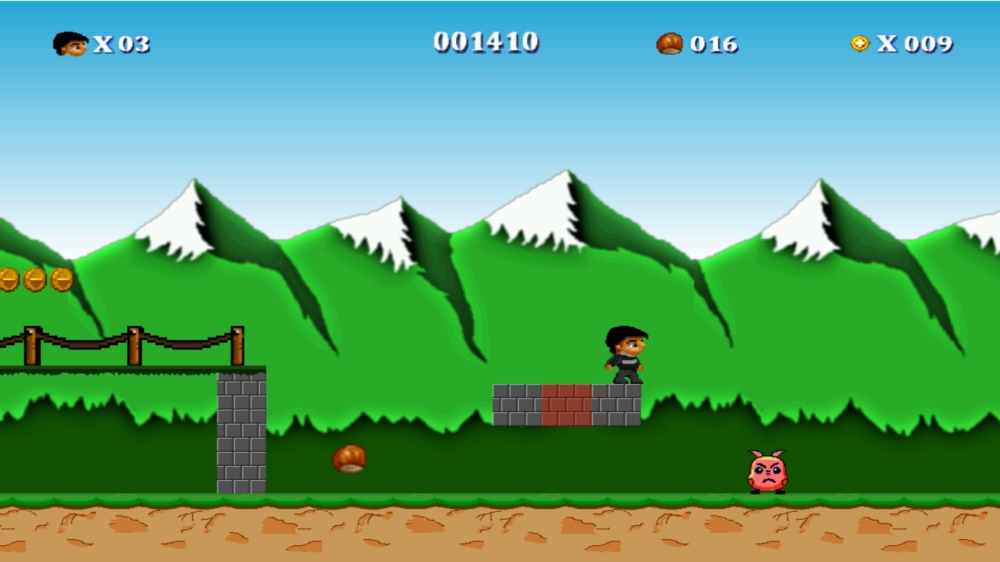
I started Indie Gamer Chick looking for weird, exotic, experimental game types.  But, every once in a while I just want a platformer.  That doesn’t mean it has to be a generic, lifeless one.  The formula is so established that developers are almost forced to tinker with it, lest the game be skewered for being unambitious.  That’s kind of the case with Naoki Tales.  It’s so straight forward and unoriginal that you almost wonder who this was ultimately designed to appeal towards.  Modern platforming fans will quickly get bored by the bare-bones, basic gameplay.  Classic platforming fans will ultimately compare this to their childhood favorites, which at best can invoke dormant memories of long forgotten also-rans of the genre.  They might be pleasant memories, sure.   It might even cause random “Naoki Tales is not bad” tweets on Twitter.  But it won’t be something people pester others to play.  I’ve spent so much time trying to sell people on playing We Are Cubes that a friend threatened to re-purpose my ovaries as organic earmuffs if I didn’t shut up about it.

Break bricks. Stomp on baddies. Yawn.

Break bricks. Stomp on baddies. Yawn.

By the way, I’m not trying to suggest that Naoki Tales is a bad game.  It’s not.  The controls are pretty decent, the graphics clean and distinctive, and the level design is not incompetent.  Having said that, I did not enjoy my time with it at all.  Not even a smidge.  It’s just so damn dull and basic that I found nothing to keep me interested.  The only reason I trudged through to the end is the game is as easy as a bowel movement after an all-night Taco Bell bender.

I’m also not saying the game lacks questionable design decisions.  Things like “why can I jump on pigs and cats but not birds?  Shouldn’t birds have, like, softer, more squishable bones?”  Granted, there are way fewer birds than other enemies, so maybe the damage you take is to your soul, because the birds are endangered or something.  That doesn’t explain why it’s kosher to throw what I think are mushrooms at them.  Mushrooms which are so plentiful that there really was no point in making you pick them up along the levels, because you’ll never come close to running out.  And then there are annoying levels where you have to retrieve a key on one end of a stage, walk all the way back to the beginning to activate something, and then walk all the way back again.  Thankfully this form of level design isn’t used extensively, but it just adds to the problem of not doing enough to be fun.  Naoki Tales is one of those rarities on XBLIG that works fine, looks good enough, but just isn’t that fun, and fun is all that matters.

xboxboxartNaoki Tales was developed by 3T Games

80 Microsoft Points said “this game would have been popular with Mario-deprived children in the 80s” in the making of this review.

Video Footage courtesy of Aaron the Splazer

Zombie Estate 2

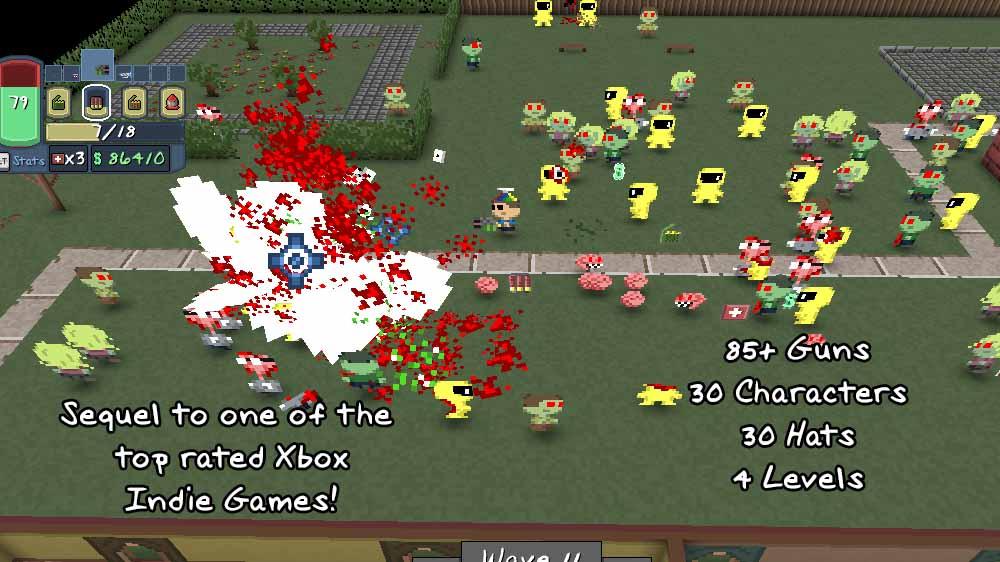
Sigh.  You know, despite having played literally dozens of games just like this, when I saw screens for Zombie Estate 2, I got excited.  I know that I sometimes bitch about being fatigued by the endless zombie games on XBLIG, or the endless twin-stick shooters, or especially combinations of the two.  But, just the prospect of a decent one gets me excited.  Yea yea, I’m supposed to be too hip for this kind of stuff and not admit what I just said.  It would be like admitting that I’m a fan of nose-picking.  Which I’m not, even though there are few things in life quite as satisfying as picking your nose.  Especially when you get a particularly stubborn booger that’s lodged way up there.  When you finally yank it out, it’s practically nirvana.

I’m guessing all those invites I get to gaming conferences just dried up.  It’s just as well.

It didn’t take too long into Zombie Estate 2 to realize the game would have big, big problems.  Not among them are the graphics, which offer some charming 2D visuals.  Can’t get enough of those.  Okay, so the text is too small, which is about as common a problem as you’ll find on the XBLIG scene.  My television is so big that God had to first move it out of the way before creating light, and yet I practically had to sit on top of the screen to make out some of the words.  Still, games with graphics that do this good a job of putting a modern twist on blocky, low-resolution 80s pixel art are typically pretty high in quality.  Maybe Zombie Estate 2 would be no different, but it has one very glaring issue: the difficulty is so intensely out-of-bounds past the point of reality that it simply can’t be enjoyed.

There are a ton of goodies to unlock in Zombie Estate 2.  I just wish the game you have to play to unlock them was fun.  It's just frustrating.

There are a ton of goodies to unlock in Zombie Estate 2. I just wish the game you have to play to unlock them was fun. It’s just frustrating.

ZE2 is a wave-shooter with enemies that are spongy and move much faster than you.  And it’s not just a few zombies either.  It’s having large portions of the screen saturated with the fucking things.  The game doesn’t send out just enough zombies to make up the wave.  Oh no.  Let’s say that the object of a level is to kill 100 zombies, and you have 99 killed.  How many zombies would you expect there to be on the screen?  Just one, right?  Try dozens.  All of which are grouped together.  When you kill the last one, the rest just vanish into thin air.  This gives you a chance to pick up those items.  Unless they’re about to blink out of existence themselves, which they do too quickly.

In order to better fight off the hoards, you can buy new weapons or upgrade existing ones.  Sounds, great, except picking up item drops (such as money) is a chore itself.  When you kill a zombie, chances are it’s part of the pack that’s closing in on you.  As soon as it drops something, whatever it is gets immediately covered up by dozens of enemies.  Your character sucks up items, but the range and speed it does so is so negligible that it might as well not do that.  And besides all that, enemies rarely drop valuable money or health packs.  Mostly, they drop ammo.  This would be fine, except they mostly seemed to drop ammo for guns I didn’t have.  It’s around this point that you realize if there’s such thing as a game that is an asshole for the sake of being an asshole, it’s Zombie Estate 2.  It’s not lovable or fun to be around, nor does it make any effort at doing so.

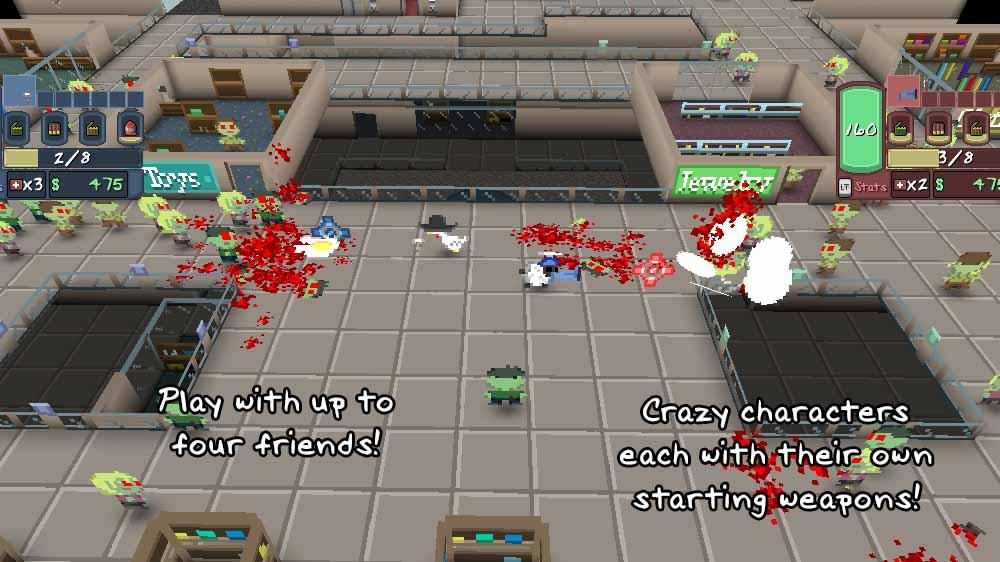
I played with one friend, but we quickly grew tired of the spongy enemy spam that made item-drops unobtainable.  Not alone either.  People on Twitter are alerting me that with four players they couldn't make it past the fifth wave either.

I played with one friend, but we quickly grew tired of the spongy enemy spam that made item-drops unobtainable. Not alone either. People on Twitter are alerting me that with four players they couldn’t make progress either.

Over the course of 48 hours, I played Zombie Estate 2 three separate times, and ended each session in utter frustration.  How can a game with all the fundamental mechanics for a pretty good time be so thoroughly destroyed by reckless design?  For God’s sake, there are fire enemies that can spawn right on top of you with no warning right in the middle of the fucking map!  No matter how much I bobbed and weaved around the level, they would appear on me, and I would start to lose health.  What the fuck, Zombie Estate 2?  Were you abused as a child?  Mind you, this is on the easiest difficulty setting.  You can go ahead and call me a shitty gamer too.  I think if I’m defined as being a bitch because I don’t think you should have a game where enemies randomly spawn on top of you, I can live with the label.  Or the tired “you just suck at games” label that is the be all, end all excuse horrible game enthusiasts throw at me when I say “this game is not worth buying.”  And Zombie Estate 2 is not worth buying.  Too difficult.  Too concerned with making the game excruciating instead of entertaining.  It resists being fun.  It looks like it will be good, and it sounds like it will be good, but it just is not good.  It’s the Kwame Brown of video games.

xboxboxartZombie Estate 2 was developed by, um, some guys that made a game called Zombie Estate 2.

80 Microsoft Points figure it’s yet another case of a developer getting to good at their own game but didn’t mention it in the body of the review because they don’t want to sound like a broken record in the making of this review.  Seriously though, why is the game so fucking impossible on casual mode?  And why do the flame guys spawn on top of you?  And why doesn’t the game drop more money?  These questions should probably be answered since they all make the game less fun than it can be.  Games are supposed to be fun, right?  If not fun, entertaining.  Difficult can be fun.  Unfairly difficult never is.

Ultimate Dodgeball, Avatars on the Edge, and Terranon Worlds

I’m probably not the best person to review today’s games, all of which have multiplayer in mind.  Even though I’m building up a base of friends (hey Bryce, Cameron, and Syd!), it’s not as if I have access to them at all times.  And then, when I actually do, XBLIGs are rarely high on their itinerary.  Even when I know an Xbox Indie is top quality, it’s tough to sell to them that our limited time together should be spent playing it instead of the latest mainstream title.  It’s like inviting people over for steak and lobster dinner, then trying to convince them to eat McDonalds instead.  Sure, McDonalds is occasionally delicious, but the steak and lobster is right there and the more sure-fire bet.

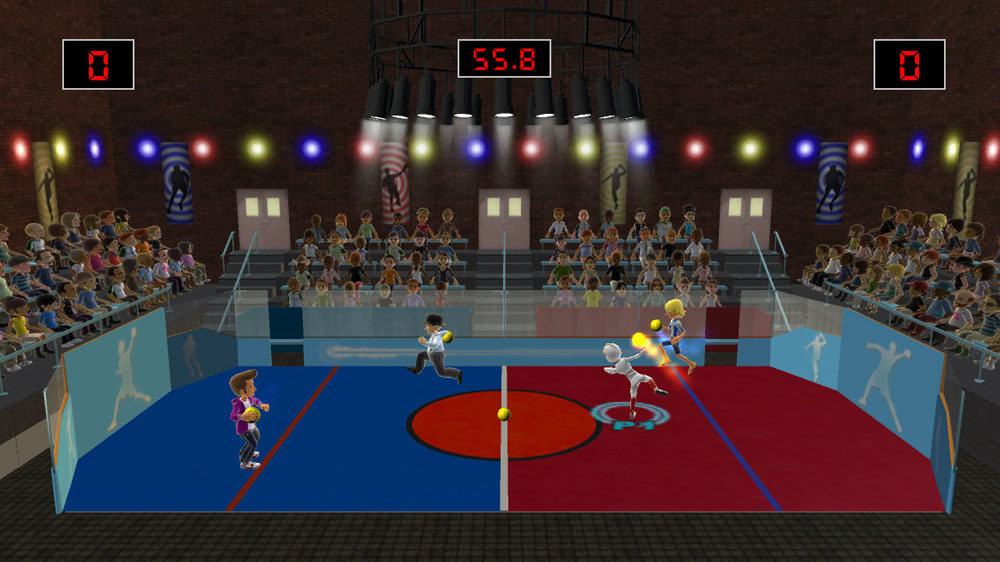
First up is Ultimate Dodgeball, which is a more or less straight telling of the actual sport.  And that’s the biggest problem with it.  Dodgeball doesn’t really lend itself well to video games on its own.  Without having over-the-top wackiness sprinkled on, such as the case in the still-popular-to-this-day (though I don’t understand why myself) Super Dodgeball.  Ultimate does have some power shots and special moves, but as a digital sport, it’s light on the excitement and gets old quickly.

Yep, that's Dodgeball. Look at it, all Dodgebally.

Yep, that’s Dodgeball. Look at it, all Dodgebally.

IGC_ApprovedDon’t get me wrong.  Ultimate Dodgeball is fundamentally a well made game, with intuitive controls.  Except when it came to catching the balls, which neither myself nor my playing partner (hey Cameron!) could get the hang of even after hours of practice.  There’s online play as well, which is the reason why this review is delayed by several months, as the original build was not stable.  All problems with it seem to be fixed, and we were able to enjoy a few rounds.  While it can be fun, it just doesn’t have staying power.  I guess I’m leaning towards a tepid recommendation.  But really, this game doesn’t need to exist.  I think there are much better options for games on Xbox 360 where the object is to launch projectiles at enemies to, ahem, eliminate them.

xboxboxartUltimate Dodgeball was developed by K-Dog Games (80 Microsoft Points miss the Dodgeball league they had on Gameshow Network).

Ultimate Dodgeball is Chick Approved and ranked on the Indie Gamer Chick Leaderboard.

A review copy was provided to Indie Gamer Chick for the purposes of testing out online multiplayer.  The copy played by the Chick was paid for with her money.  The review copy was given to a friend who had no feedback in this review.  Consult the FAQ for how review copies work at Indie Gamer Chick. 

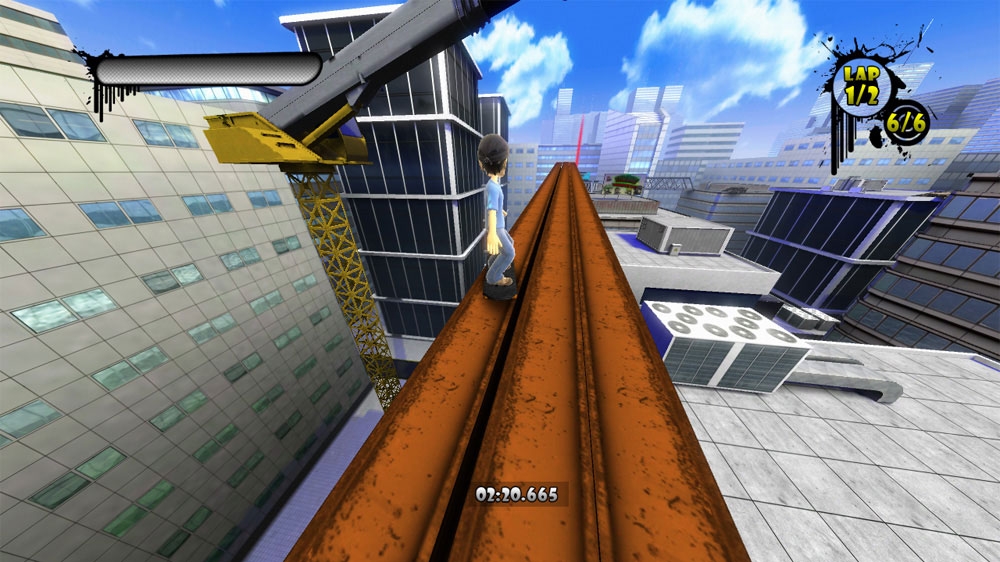
Next up is Avatars on the Edge, which is sort of a skateboarding-race game that feels like a bad Mario Kart clone.  This is one of those titles where you play it and feel like the potential for something a cut above average has been laid, but it’s not ready for primetime yet.  The biggest problem is that the track layouts are confusing.  Avatars on the Edge does an admirable job of giving you a sense of speed, but you often have no idea which way you’re supposed to go.  The only help the game offers is a red beacon, but otherwise you have to trial-and-error your way through each course, which is not the type of gameplay I’m looking for in a racer.  Even worse is the insane requirements to unlock each new stage.  You have to hit a target time in order to progress, but those times are too short, probably from the developers being too good at their own game and not realizing that the rest of us haven’t spent our lives practicing at it.

Props to the team behind this for the graphics and frame-rate, which only had a few brief hiccups.  However, some of the courses look awful, with too much blacks and not enough texture.  Gives the game an unfinished look.

Props to the team behind this for the graphics and frame-rate, which only had a few brief hiccups. However, some of the courses look awful, with too much blacks and not enough texture. Gives the game an unfinished look.

Avatars on the Edge also has problems with fairness.  I played an online race set on a monorail track.  Because your character moves so fast and the controls are so loose, making narrow turns and taking sharp corners is frustrating.  Still, I was doing pretty well on this particular race.  Then the train came around again.  The strip you have on the side of the track is far too thin and leaves no margin for error, and thus I got smacked by the train.  But then, when I respawned, the train was still there and I got splattered again the very moment I came back.  Hmmph.  Finally, I respawn for the second time in a row, only it put my character on the edge of a cliff, and there was no way I could correct it, leading to me dying for the third time in just a few seconds.  That whole sequence pretty much sums up everything wrong with Avatars on the Edge.  Crappy stage layouts, overly difficult requirements placed on players, and unfair mechanics.  With a lot of patchwork, something good might come of it someday, but for now, this game sucks.

xboxboxart3Avatars on the Edge was developed by Mancebo Games (80 Microsoft Points liked this much more than their previous effort, the very dull Zombies Ruined My Day)

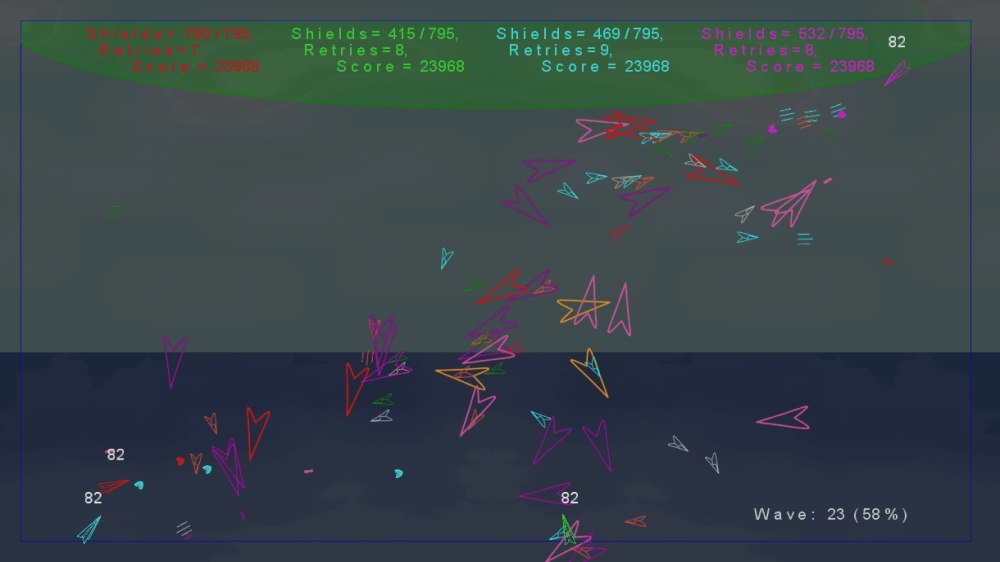
Finally, Terranon Worlds.  It’s the first game I’ve played on XBLIG that uses Asteroid style controls, which I’ve never been a fan of.  I think gaming has come a long ways since 1979.  Since that time, there’s been an amazing innovation called a “joystick” that allows for more precision movements.  Here, the stick is used just to aim you, while you have to manually fire thrusters.  I didn’t make it too far into Terranon Worlds though.  The enemies are too small, your are bullets too slow, and aiming is too imprecise.  Worst yet, the amount of enemies ramps up so quickly and they’re so picture perfect in their movements and aiming that the game quickly becomes unreasonable.

Plus, the upgradable stat thing is bungled horribly.  The worst part is how you have a limit on how many bullets you can fire at once.  This was an utterly awful idea given the sheer volume of enemies, and how tough it is to line up an accurate shot.  You have to spend the majority of the game running away from enemies while you wait for your bullets to refill.  You can upgrade these things, but the game becomes too overwhelming before you have enough points to put an acceptable amount of muscle in them.  Having said that, there’s a “free mode” where you get a ton of money right out of the starting gate to upgrade stats, and I still never found the gun was well done, even fully pumped up.  At best, I didn’t have to worry about my bullets running out.  Shooting was still too difficult because the enemies are too small and too fast.  I don’t know if multiplayer takes the ease off either, because nobody was willing to dive into this with me.  Can’t say I blame them.  If I got swimming through raw sewage, come out smelling like shit and complaining about how nasty it was, it’s hard to convince people to join you the next time.

Well, at least the enemies look like they get bigger.  Wait, why did the game start out with the smaller, harder to shoot enemies?  Shouldn't the bigger ones that make easier targets have been the tutorial-level baddies?

Well, at least the enemies look like they get bigger. Wait, why did the game start out with the smaller, harder to shoot enemies? Shouldn’t the bigger ones that make easier targets have been the tutorial-level baddies?

While I dig Terranon Worlds’ neo-retro vibe, it just isn’t fun.  Some older concepts can be done today with modern sensibilities and become spectacular.  Look at We Are Cubes.  Look at Orbitron.  Look at Minigame Marathon.  These are games that take tired ideas and make them work again.  You can’t just dig up antiquated game mechanics, throw upgradable stats in, and expect it to still be relevant in today’s climate.  The developer of Terranon Worlds did that, and his game suffers for it.  He should have asked himself what could be improved with the original formula.  The tiny enemies, for example.  I always hated picking off the last tiny fragments in Asteroids.  Some kind of aiming bar, or cross-hairs, or homing shots might have improved that.  Instead, you have to watch while your bullets miss and the enemies leave you no room for second chances.  That’s what frustrates me about Terranon Worlds.  The formula wasn’t worked with enough to make it palatable.  Also known as Pepsi Next Syndrome.

xboxboxart2Terranon Worlds was developed by Snargosoft (80 Microsoft Points think whatever chances that Asteroids movie had of being made were probably sunk by Battleship in the making of this review).

Avatar Trials: Ninja Uprising

Avatar Trials: Ninja Uprising is another University of Utah student game.  It’s really hard to believe it comes from the same pool of classmates that ultimately gave us Magnetic By Nature, one of the year’s best and most refreshing games.  Avatar Trials is one of this year’s worst XBLIGs, and one of those rare games where my biggest challenge with it is trying to find anything positive to say about it.  After having a few days to think about it, I couldn’t come up with a single nice thing to comment on.  Avatar Trials is without merit in every way possible.

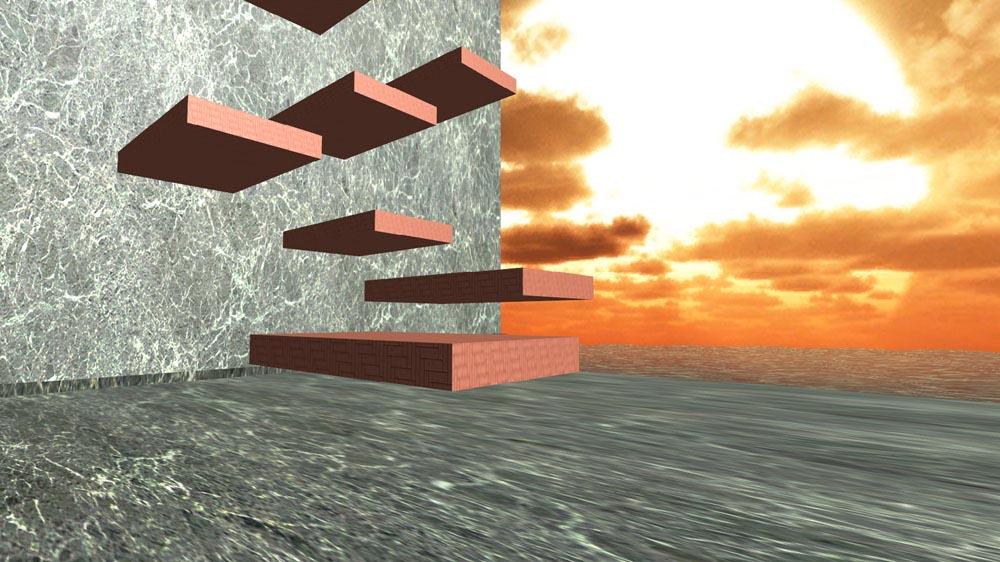
Starting with the graphics.  Not only are they ugly, but they get in the way of gameplay.  Because of the colors selected for backgrounds, it causes severe problems in judging distance between platforms.  As a result, Avatar Trials comes across like an evil eye exam developed by an unscrupulous optometrist who wants to pad his wallet by making every patient he sees think they’re going blind.  Combine this with one of the most spastic, uncooperative cameras I’ve encountered in years.  At the most inappropriate times, it will swing around and zoom in on a wall.   Not even a pretty wall, either.  I mean, if it was a close-up of the Great Wall of China or the Wailing Wall in Jerusalem, I could understand why the camera would focus on it.  It would be pretty fucking cool to see.  These walls?  They look like someone threw a box of crayons and a blank piece of paper into a cement mixer and scanned the results into the game.

None of the screen shots from Avatar Trials selected from the market seem to show actual gameplay.  Just shots of the map.

None of the screen shots from Avatar Trials selected for the market seem to show actual gameplay. Just shots of the map.

These problems might be worth looking past if the controls were well done.  However, movement is extremely loose and jumping is too floaty.  In a game where judging distance is already an issue, having anything less than pin-point precision in movement would be a fatal blow.  That’s the case here.  Platforms will be overshot even when you feel you’re being conservative in jumping.  Or sometimes you’ll get right up to a ledge and leap for it, only to completely short what looked like a small distance.  Plus, the that damn camera never stops being a bastard, so sometimes you’ll make a straight across jump only for the camera to swing wildly to the side, throwing off your angles and causing you to fall to the ground, or sometimes to your death.  And, if you manage to somehow get past all these issues without swearing off games in disgust, Avatar Trials will throw some nifty glitches at you.  The most common one seems to getting stuck hanging on walls that aren’t there.  It happened to me several times, and apparently it happened to Timothy H. Hurley Esq. as well.  But, I have Hurlmeister topped, because sometimes when I was hanging on the invisible wall, I would let go and get stuck, or outright fall through the world geometry.  I’ve played some truly inept 3D games on XBLIG, but I can’t think of one that is this bad on this many levels.

Look, it’s a student project.  I get it.  And believe me, I get no pleasure pulling this thing apart like a vulture does with carrion.  But, Avatar Trials: Ninja Uprising was dead on arrival and my job is to explain why.  Also, regardless of whether this is a student project or not, it’s also a commercial game that costs real money for people to own.  Maybe I expected too much from this, on the grounds that it comes from students who apparently took the same courses as the team behind the increasingly better looking Magnetic By Nature.  I’m not sure why the quality is so low that it can only be reached by submarine.  I would think maybe the team behind this partied too hard and studied too little, but we’re talking about the University of Utah here.  I think their idea of a party is sneaking a caffeinated beverage into the dorms.  Perhaps I’m completely wrong about the intentions though.  Maybe the assignment was to create the most broken, unplayable game possible, and then after it was released, fix it.  If so, A+ on the effort for part one.  Having said that, I would sooner believe the Titanic could be seaworthy again before anything could be salvaged from Avatar Trials.

xboxboxartAvatar Trials was developed by Stunt Bear Games

80 Microsoft Points noted that all the students and educators involved in the University of Utah’s Entertainment Arts and Engineering program have been class acts and are deserving of encouragement and support in the making of this review.  Just don’t buy this fucking game.

Wii U Panorama View and Wii U Virtual Console

Okay, so this is about as far removed from indies as I am from a Grammy, but considering how much I’ve “attacked” the Wii U here (reviewed two games for it, awarded both my seal of quality. God, what bitch I am) I figured I owed this to Nintendo fanboys. Yes, the Wii U finally isn’t totally embarrassing from a technical standpoint. By that, I mean load times no longer rival death row in terms of agonizing waits. Only took five months too! I would sarcastically say Christmas came early this year, but considering that the Wii U launched too early, I think that joke would be hateful and inappropriate and I won’t go there. You probably shouldn’t either.

With this new system update (that I began when I started playing Magnetic By Nature, and which was still going by time I finished that game) comes two new features that were anticipated, one of which is shockingly cool and the other of which is unsurprisingly horrid. The cool one is Wii U Panorama View, which is the closest I’ve seen a gaming console come towards offering an amusement park ride experience at home. It’s an on-the-rails interactive movie experience thing where the Wii U Gamepad acts a view-master. There’s no real game here. Really, the Panorama View is a glorified tech demo, albeit it a pretty cool one. Myself (and my boyfriend especially) were skeptical about how good it would look. In fact, when watching the movies, you can barely see the “seams” where the video was patched together. Video quality is decent. Not HD by any means, but not grainy or choppy either! Although sometimes it does have a strange, unnatural “rounded” look that slightly takes you out of the experience, these moments are brief.

Not only should this have launched with the console, but Nintendo probably should have used this as the showcase technology at Wii U kiosks.  It has an undeniable "cool factor" that the console was sorely lacking.

Not only should this have launched with the console, but Nintendo probably should have used this as the showcase technology at Wii U kiosks. It has an undeniable “cool factor” that the console was sorely lacking.

Cool as these can be, they should have been bundled with the hardware, free of charge. Why? Because the subject matter of the films is really boring. The tour of Kyoto takes place on a rickshaw and is a bare-bones gander of the back streets of the city. Anything interesting to look at is glimpsed only from a distance. The “Bird’s Eye View” video follows a gyro-copter around some random countryside. This segment was clearly trying to ape the sound and feel of the Disney’s California Adventure signature ride Soarin’ Over California. But whereas that video captured the majestic beauty of my home state with such flare and grace that it brings any proud Californian to tears, Bird’s Eye View is just fucking dull as hell. But hey, it’s never been cooler to look at a parking lot using a game console!

There’s a double-decker bus tour of London that works better than the Kyoto tour on the grounds that you can see more of the sights of the city. Although, having visited there once before, I can tell you that the experience isn’t as cool as the real thing. Of course, this method of touring has the benefit of not having to eat food so greasy that any visiting American has to legally opt out of medicare. Finally, there’s a Carnival parade from Rio de Janeiro that is probably the highlight of the video packages. If you buy just one of these as a tech demo to show off your Wii U to friends, get this one. It will still ultimately leave users saying “wait, that’s it?” when it ends, but I found that every person I showed these to, no matter what video, was grinning the entire time. The older people, especially. My parents (aged 63 and 44) were dazzled by these videos, and even my crotchety godfather A.J., who said “I don’t want to play no Nintendo game” was awed by the Carnival parade.

The real question is, when is this awesome feature going to be put to better use? I would love to see a real filmmaker (someone with IMAX experience, or as a long shot, someone like James Cameron) take a crack at making a movie using this. The obvious money-maker would be a tour of Disneyland. Imagine being able to ride Pirates of the Caribbean and taking in all the sights of the attraction from the comfort of your own couch. If they put out a video of that with a cost of, say, $9.99 attached to it, I would think they would have a major hit on their hands. For now, the four videos they made do a better job of showing off the technology than showing the potential for this as a cool home video medium. But seriously, Wii owners should buy at least one of these. Trust me, it will become the go-to “check out what my Wii U can do” software, like bowling was for the original Wii.

And then there’s the debut of the Wii U’s Virtual Console. A joyless, insulting debut with not a highlight to be found. Of the eight titles selected to christen this farce, all of them can already be found on the original Wii, and half of them were part of the Game Boy Advance e-Reader lineup. I can’t believe that even the most drooling shit-for-brains Nintendo fanboy isn’t starting to lose patience with them at this point. What can anyone get excited about with these eight games? Balloon Fight was mediocre at best. Ice Climber can’t even say that. Donkey Kong Jr. has been ported so many times to so many platforms that I strongly doubt there’s anyone left who actually wants it that doesn’t already own it. The same could be said about Super Mario World. This was a launch game for the SNES back in 1991. I first played it on Game Boy Advance in 2002. That’s really the theme here, isn’t it? These eight titles have nearly 100 existing ports between them already out on the market. There are fewer versions of Star Wars in existence. When you’re making George Lucas look good, you probably should rethink things.

PETA's favorite game.

PETA’s favorite game.

I know what you’re thinking: “there she goes again on her stupid, hateful, anti-retro, anti-Nintendo tirades. Snore.” Of course, anyone paying attention would note that Nintendo is just as responsible for my love of games as any console manufacturer. Probably more so than Sony or Microsoft. I even enjoyed the original Wii for what it was. I also got mileage out of the Virtual Console. On average, my typical reader is ten years older than me. That doesn’t sound too big, but in reality, that represents a titanic gap in gaming history. Someone 33 years of age probably got their start with Atari, Coleco, or the NES. I’m 23, which means I got my start with the original PlayStation and Nintendo 64. So, for me, Virtual Console represented a chance to play many iconic games without having to find a dusty old console and cartridges to blow in.

But, for whatever reason, the Wii’s Virtual Console didn’t have a whole lot of games that appealed to me. Don’t get me wrong, there were some absolutely amazing titles. In particular, I loved Super Mario RPG: Legend of the Seven Stars. It was so radically different from the types of Mario RPGs I grew up with, like Paper Mario or the Mario & Luigi titles. However, Nintendo seemed overall apathetic about the Virtual Console, and they’ve done nothing over the last three years to make me feel otherwise. Look at the 3DS lineup. They haven’t ported a new Game Boy game since January. The only Game Boy Advance games they put out were exclusive to those suckers that bought a 3DS before there was any reason to actually own one. There has been only one Game Boy Color game released this year, and it’s one of those River King fishing RPGs. Mostly, Nintendo is just regurgitating the same tired NES releases. Can’t really blame them. One quivering Nintendo fan on my Twitter feed proudly boasted about how this became the sixth time he has bought Super Mario World. I don’t get this mentality at all. It’s not the same as going to the show to see a movie more than once. When you own a game, you presumably should own it indefinitely. Why would you need six versions of the same fucking game? Another dude also rebought Super Mario World, complaining that he should have gotten it for free. You’re supposed to throw rotten fruit at people, not money.

Quite frankly, the Game Boy Advance version is better.

Quite frankly, the Game Boy Advance version is better.

I own a Wii U and a pair of 3DSs. These are not the traits of someone who hates a company. But Nintendo isn’t exactly inspiring confidence that these purchases will be good long-term investments. Nintendo’s decision to bail on their E3 presser is a bit startling. The Wii U is off to a slow start. The biggest release since launch was Lego City, which after all the hype, turned out to be pretty much the exact same game as every other Lego title, only it took place in a sandbox and didn’t have a license attached to it. eShop titles have been scarce. There’s no “new” titles coming in the near future to Virtual Console, with only a vague “it’s coming” in relation to Earthbound. The next big Nintendo release is Game & Wario, which is getting a decent response. That hits June 23. After that, the next Nintendo release (and the only reason to own a Nintendo console is for Nintendo releases) is Pikmin 3, due to hit August 4. Those two games are the only Nintendo-developed disc releases since launch. When Pikmin 3 releases, it will have been 246 days since the Wii U launched. So am I a Nintendo hater? No. I’m just disappointed that the best software Nintendo has given us since launch is a video of Carnival.

Magnetic By Nature

Update: Magnetic By Nature recieved a Second Chance with the Chick.  Click here for my continued thoughts on it.  In short: the framerate issues were fixed. 

Magnetic By Nature is the latest game from students attending the University of Utah.  I know what you’re thinking.  “Hey, wait a second.  What do people from Utah know about having fun?  Didn’t they ban their only form of that in the 40s?”  Actually, inappropriate polygamy jokes aside, they know plenty about fun.  Atari founder Nolan Bushnell discovered the medium of games as a student at the University of Utah.  So in essence, we owe the gaming industry as it exists today to their beautiful, boring, Pac-10 devaluing institution.  It makes me happy that the science of creating games is taught there to this day.  It would be wrong otherwise, like if Harvard stopped teaching law, or Fresno State stopped teaching binge drinking.

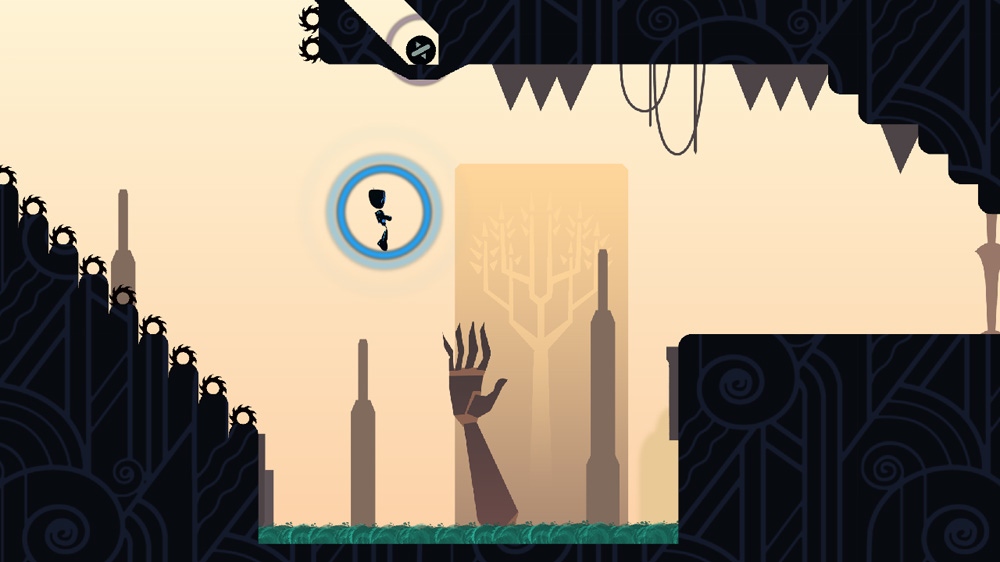
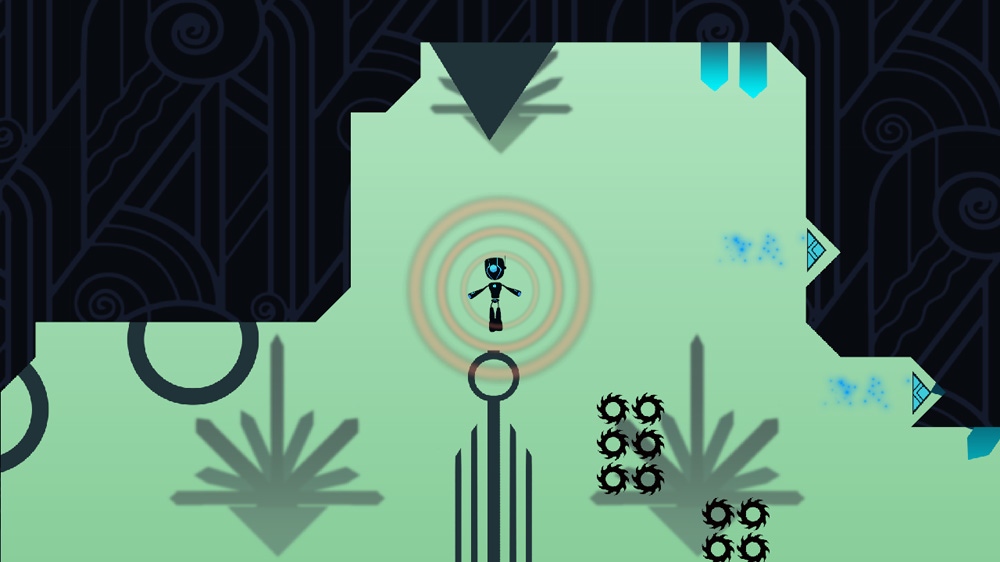
In M-B-N, you play as a robot who has to make his way across levels by using magnetic powers.  I played a game with a similar hook last year, the beautiful but frustrating to the point of not being so fun Lumi.  Magnetic features more intuitive controls and faster-paced gameplay than that disappointing Dream-Build-Play winner.  I actually expected nothing more than a glorified sampler here, because the team behind it is actively using crowd funding to prepare a larger PC release.  Combine that with the XBLIG version coming in at 80MSP and featuring the subtitle “Awakening.”  Which, by the way, is about as unimaginative a subtitle as you can get.  I look forward to the sequel, which will no doubt be called “The Return.”  Or, if they’re feeling frisky, “The Revenge.”

Show of hands: who is sick of games wit the Limbo-like silhouette thing? Let's see, 1, 2, 3, 4..

Show of hands: who is sick of games with the Limbo/Insanely Twisted Shadow Planet-like silhouette thing? Let’s see, 1, 2, 3, 4..

Anyway, the XBLIG version of Magnetic most definitely does not feel like a sampler, even if the devs say that’s what it is.  You’ll get a complete experience that will take about sixty to ninety minutes to complete.  Levels range from dexterity-based platforming challenges to physics-based puzzles, the latter of which there aren’t nearly enough of.  Mostly, the game centers around precision flinging of the protagonist.  And it really is flinging.  Even by time the game ended, I had never gotten fully used to the physics, or had a comfortable feel for trajectories and speed.  In essence, your character is a guided missile and you’ll often feel a sense of luck rather than accomplishment when clearing a tricky stage.  In many games, that would be annoying.  In M-B-N, it seems fitting.  I had a little magnet play set when I was a kid and I remember how tough it was to push stuff across a table in a straight line using them.  I thought of that while playing this game.  It gives it an authentic feel.  By the way, I had that magnet set for about a week, but then Daddy took it away after I showed him the pretty rainbow I made on the television using it.  True story.

But, other control issues rear their ugly head.  Movement without the magnets feels too touchy.  Sometimes this combines with the magnetic gimmick to cause extra frustration, like a stage with a moving magnet and increasingly narrow rows of spikes that requires you to simultaneously feather the joystick and the magnetic circle.  But at least stages like that are manageable.  A pair of auto-scrolling stages with a deadly beam of light that I called the Kill You Bar were bungled about as bad as they could have been, simply due to the bar moving too fast.  I’m also of the belief that these stages were in the wrong order.  The last one of these was a brainless trial-and-error reflex tester.  The first auto-scroll stage seemed to combine the best ideas of the game’s physics and had a climatic feel to it.  In fact, it probably could have been the final stage of the whole game.  Sadly, both these sections (the second one especially), were hampered by frame rate hiccups that seemed to get worse the more times you died. The lag became so bad that it rendered Magnetic By Nature completely broken.  Then something weird happened.  I found out that if you hit restart and have the game reload the level instead of just respawning after death, the lag becomes tolerable and I was able to finish the stage.  It’s still inexcusable to exist like this, but the game is strong enough that you’ll want to finish.

..1,947,685, 1,947,686, 1,947,687, 1,947,688.. you know what, I think they get the picture.

..1,947,685, 1,947,686, 1,947,687, 1,947,688.. you know what, I think they get the picture.

On the bright side, the developers are aware of a couple of the more frustrating issues and are working on fixes.  But even before they’re done, Magnetic By Nature is a surprisingly solid game.  I’ve played several student projects since starting Indie Gamer Chick, and while some have been decent enough, none have outright impressed me.  Magnetic By Nature does.  I guess the reason for my surprise was, despite a cool looking trailer, I had low expectations going in.  Physics puzzlers on XBLIG are typically disasters.  Plus, I’m completely burned out on the whole silhouette-hero in a dark world thing, which is about as common a feature among indie platformers these days as the ability to jump.  But I had no need to worry.  Magnetic By Nature, despite problems, is genuinely fun and refreshing and you should expect to enjoy it.  Bravo University of Utah guys and gals who made this and carry the legacy of the founding fathers of the gaming industry.  But please, for God’s sake, stick with making games.  Don’t open a chain of arcade-pizzerias with singing rats and shitty food.  That’s a legacy you can live without.

xboxboxartMagnetic By Nature was developed by Tripleslash Studios

80 Microsoft Points wonder why so many former Utes end up stinking up the sporting scene where I live in the making of this review.

Magnetic By Nature is Chick Approved and ranked on the Indie Gamer Chick Leaderboard.  The presence of University of Utah in the Pac-12 is most certainly not Chick Approved.

Thomas Was Alone (and Benjamin’s Flight DLC)

Early on in Thomas Was Alone, I really didn’t get the hype for it. “THIS is the game all the cool kids are talking about?” I tweeted, somewhat baffled. I mean, don’t get me wrong. The game was alright. But my fans had been trumpeting this one since it launched on PC last summer, promising me that it was a platformer unlike anything I’ve played before. To a degree, they were right. You just can’t tell right away. Thomas Was Alone is one of those slow-starters that wakes up at seven but doesn’t get out of bed until eight.

At heart, Thomas Was Alone is a minimalist platform-puzzler with the hook being an eccentric storyline that gives personality to the squares and rectangles you control. Again, it’s something that didn’t grab me at first. It came across as artsy-fartsy, bordering on pretentious. But, about a third of the way through, it started to grow on me. Who would have guessed that it was possible to give such distinct traits to fundamental shapes, with no animation sprites or anything resembling humanity? It does it so well that I would think one could consider Thomas a candidate for strongest writing of the year. But I have to disqualify it for that, on account of a couple groan-inducing references to the Cake is a Lie and the Arrow to the Knee. God damn it so much. Is there some kind of code on the indie development scene that I’m not aware of? Like a secret handshake or something? Two guys go up to each other at a developer conference, lock pinkys, touch ring-fingers with the other hand, say “The Cake is a Lie!” and then fall down laughing until it hurts because that will NEVER EVER grow old or stop being funny ever no matter what? Well it’s not funny and it hasn’t been for years. No matter how many ways you guys try to make it work, it never does. You’ve beaten this dead horse into dust, and now you’re just beating your fist on the blood-soaked ground underneath it. STOP IT!!

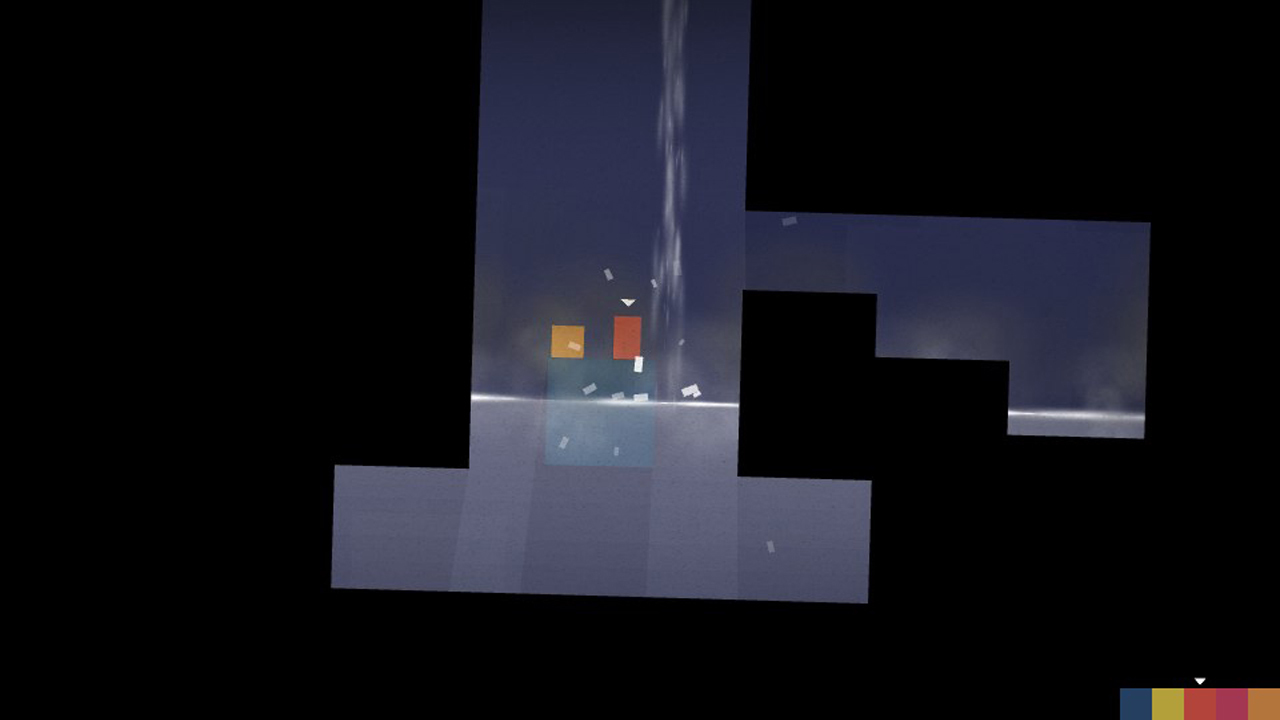
I think everyone's favorite character is Claire, the big blue block with delusions of grandeur.  I would love to get more of her story.

I think everyone’s favorite character is Claire, the big blue block with delusions of grandeur. I would love to get more of her story.

Anyway, mostly strong writing. However, it ended without giving me a sense of closure for the characters that I had grown fond of, or anything resembling a satisfactory conclusion for the overall story. It just sort of ends. And don’t look for the DLC to provide the comfort of an ending either, because it doesn’t. I guess Thomas Was Alone’s finale is supposed to be open to interpretation or something, but I was left disappointed.

You know what?  I don’t play platformers for their stories. If they’re decent or better, that’s just a bonus. For this genre, gameplay is king. In which case, Thomas Was Alone is at best a knight, bordering on a rook. After a mind-numbingly dull start, the level design picks up momentum about one-third of the way in. By time you’ve reached the finish line, you’ll have played some of the most inspired levels seen in platforming in a long while. But, the ratio of slog-to-awesome is not so great. A good portion of levels revolve around stacking your characters in a way to make a staircase for the less jumpy in your squad. A handful of these would have been just fine. But sometimes you’ll have to build the exact same staircase five or more times in a single level. It’s tedious busy-work that needlessly cramps the game’s whimsical style.

When Thomas Was Alone’s level design is good, it’s really good. So good that my ear-to-ear grin was in place because of just how clever a world was designed and not because of the narration. Quite frankly, after a way-too-long tutorial sequence with levels and platforming so basic that it makes Atari-era stuff like Pitfall! look advanced, I wasn’t expecting it to be as good as it was. Then I would be hit with some pretty ingenious stages that involve timing, precision platforming, and thinking outside-the-box. I loved these moments. I’ve always said I’ll take those “ta-da!” moments in puzzlers over the best headshots in shooters or game-winning shots in sports games. Thomas doesn’t provide a lot of those moments, but when it does, it’s special.

My only possible complaint about the controls (outside of the DLC pack) is switching between the characters always felt a bit cumbersome. I'm not sure if the Vita handles this with touch-controls, but if it doesn't, that would be quite a good idea.

My only possible complaint about the controls (outside of the DLC pack) is switching between the characters always felt a bit cumbersome. I’m not sure if the Vita handles this with touch-controls, but if it doesn’t, that would be a good idea.

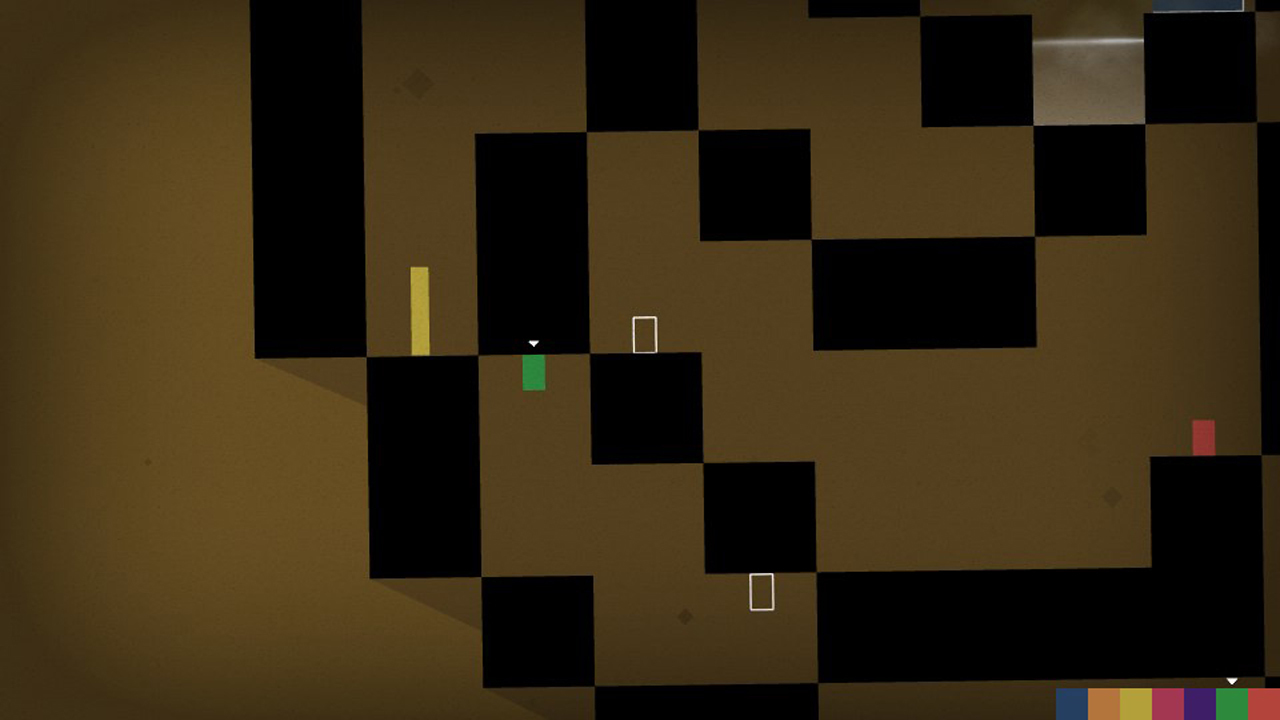
Don’t worry, puzzle haters. There is nothing here that will bend your brain or make you have to consult GameFAQs. At most, Thomas will ask of you to apply some forward thinking and course plotting. Most of the puzzles revolve around what order you guide the blocks to the goal of each stages. Victory is achieved through having all blocks in their unique exit doors at the same time. Once you have a feel for the abilities and limitations of each block, figuring how to get them to the doors comes naturally. Actually, it almost becomes instinctual. It’s so rare that a puzzle-platformer does that to me that I can’t help but be impressed. It also helps that the controls are smooth and the main game never asks more of a player than can be reasonably expected. I don’t consider myself especially skilled at platformers, but I must be getting better. I figure I died probably around a dozen times over the course of the game’s one-hundred levels. Thomas Was Alone gives a trophy out for dying 100 times, but by time I had finished the game, I still hadn’t earned it. I’m pretty proud of that.

I’m not here to give the game an undeserved blowjob though. There’s plenty of problems with it. I’ve described some above, but the one that gets me the most is the difficulty curve. Or lack thereof. Other critics have noted how perfect the curve is. It makes me wonder if they played the same game as me. Even late in Thomas Was Alone, I encountered stages that offered no challenge at all to finish. The sixth world (really the seventh world, since the world numbering starts in the zeros) especially stands out. I wasn’t timing it, but it probably took between ten to fifteen minutes to complete while possessing the most basic and dull stages since the opening tutorial. Just weird that this would pop-up over half-way through. But stages like this are all over the place. I guess the excuse for these (and the overly long fish-in-barrel stages that start this thing) is they’re there as place-holders to drive the story. Well that’s a shitty excuse. A platformer should never let proper storytelling get in the way of proper pacing. People probably should buy the game for the game. I mean, it’s a pretty good game. So while I enjoyed the story, I almost resent the fact that the vastly superior gameplay was in part sacrificed for it. The result is a curve that appeared to be drawn by someone laying in a hammock during an earthquake.

After finishing the final stage, you’re treated to an extremely brief ending, and then the credits roll.  I was disappointed not just by the ending but by the last level.  Thomas Was Alone goes out with a whimper instead of a bang, which left me wanting more.  After stewing on it overnight, I decided to grab the overpriced DLC pack.  My intent was to get my craving for more Thomas out of my system.  Mission accomplished, but not in the way I intended.

The DLC levels are so horrible and mismatched with the main body of the game that I actively questioned whether developer Mike Bithell had entered his emo phase in life when he designed them. Thomas Was Alone was a quirky logic-puzzle-platformer. The DLC levels alternate between back-to-basics platforming (that you have to pay extra to suffer through) and punisher-stages designed with nothing else in mind than a huge body count. What a stupid decision on developer’s part. These levels do not remotely have the almost childish innocence the main game does. It’s also the first time the controls didn’t feel right. Benjamin, the star of the DLC, possess a jet pack, but the only use they could come up with for it was navigating narrow corridors of spikes. The controls here are so touchy and the margin for error so low that any possible fun that could be had gives way to frustration and boredom. Benjamin’s Flight has twenty stages, and while the cutesy story is present, I can honestly say that I didn’t find one single stage of this pack to be worth paying any amount of money for. It might be the worst level pack I’ve ever purchased. I just don’t get why the tone changed so much. It would be like announcing that they’re going to make a new Dark Knight movie, only this one will be a buddy comedy and Batman is being recast as Adam Sandler.

Submitted for your consideration: level 11.6 of the DLC.  I nominate this for "worst stage in a good game" ever created.  It's repetitive and insanely long for what it offers.  Like the rest of the pack, it adds no value to the overall game.

Submitted for your consideration: level 11.6 of the DLC. I nominate this for “worst stage in a good game.”  It’s repetitive and insanely long for what it offers. Like the rest of the pack, it adds no value to the overall game.

So here’s where I stand: Thomas Was Alone is pretty decent, but it takes a while to get that way. I wish the developer had focused more on ingenuity. When the levels in Thomas are clever, it’s one of the best of its breed to come out in a while. There’s just enough meat here to call it a must-buy. At the same time, the story ultimately left me feeling unsatisfied, and the game only has enough “this is amazing!” moments that it ultimately feels under-realized. You can’t count on the DLC to drown-out those thoughts, because it feels rushed and sort of half-assed. So different from the feel of the main quest that I was a little surprised to learn they came from the same guy who had awed me just yesterday. If I had my way, Thomas Was Alone would be alone, because I would bury that DLC in the desert next to unsold Atari carts.

Thomas LogoThomas Was Alone was developed by Mike Bithell

IGC_Approved$7.99 with PlayStation Plus discount (normally priced $9.99) plus $3.49 (Benjamin’s Flight DLC) said “hey now, Red Kryptonite has caused all sorts of problems, so don’t go there” in the making of this review.

Thomas Was Alone is Chick Approved, but for God’s sake, skip the DLC unless it’s free. And even then, you’re not missing anything by ignoring it.