Magicians & Looters

UPDATE: Magicians & Looters received a Second Chance with the Chick. To say it improved the game is an understatement. I now consider this to be the best Xbox Live Indie Game ever made. Click here for my updated thoughts.

Welcome to the wonderful world of Xbox Live Indie Games, where expectations are so low that there’s not sufficient clearance for microbes to hang themselves from it.  Because of this, sometimes games that are just not that good end up getting elevated beyond their actual value.  Take Magicians & Looters.  Here’s a really ambitious first effort by a group of developers with not a whole lot of experience, and it’s not terrible.  It also has, for my money, the best comedic writing ever seen on an XBLIG.

M&L is a Metroidvania.  I fucking love those, but XBLIG hasn’t been the best source for them.  LaserCat is my favorite.  It was the original #1 game on the old, ten-games-only Leaderboard.   But it’s a different breed of Metroidvania.  There’s no combat in it, only avoidance.  It’s also easier than boxing a newborn paraplegic orangutang .  But that was pretty much the cream of the crop.  Other attempts were nowhere near as successful.  There was Astroman, a Metroid-inspired adventure that came very close to hitting the mark, but wasn’t quite there.  Still, this is probably the genre that, if done right, I like the most.
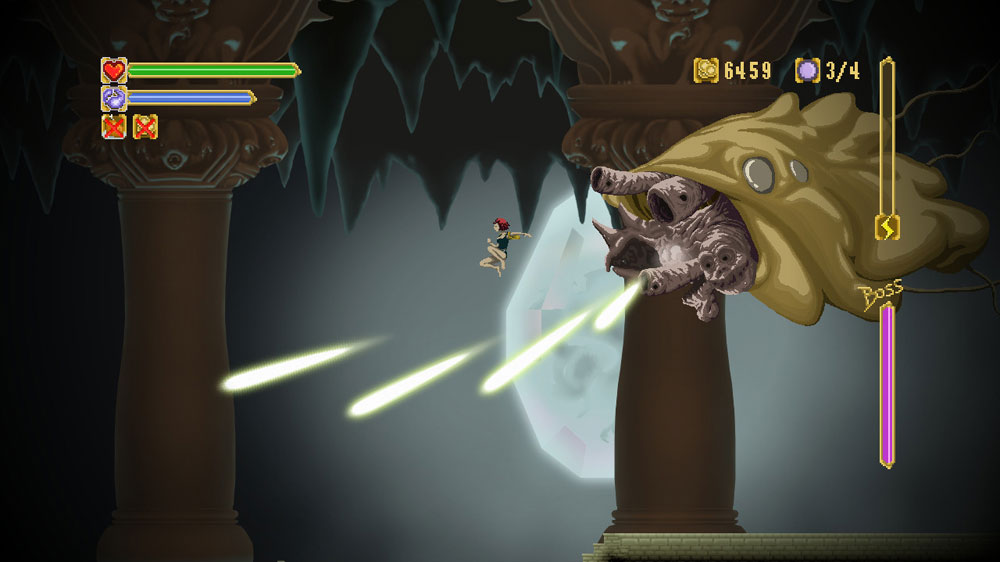
Mom?

Mom?

I try not to get hyped for games, and I certainly try to avoid hearing what my fellow XBLIG critics think of a game that I intend to play.  Unfortunately, becoming good friends with them means sometimes you hear things.  Like, say, Tim Hurley putting Magicians & Looters at #5 on his Leaderboard.  Or Jed Presscott calling this game “better than Symphony of the Night.

Hahahahahaha…………. no.

To get the good out of the way first: Magicians & Looters isn’t broken or glitchy or likely to physically materialize like that spooky chick from The Ring and murder you after seven days.  In fact, all the ingredients seem to be here, fully functional, and primed to present one of the best values a game could have.  But, for me at least, it just never came together.  By far the best aspect of Magicians & Looters is the writing.  The story is a sort of spoof of Harry Potter.  You play as three teenagers enrolled in a wizard’s school.  It gets overrun by evildoers and you must band together and save the day.  They’re also all, to put it politely, type-A personalities.  They spew out non-stop sarcasm, have endless disdain for one-another, and almost seem to speak in the language of a sitcom.  I always hate games like that.  It’s one of the things that turned me off of musical RPG Sequence.  Here?  It works.  Even better, the jokes don’t rely on referential humor.  No callbacks to bad game dialog.  No “remember that movie you’ve seen?  We’ve seen it too, and we’ll demonstrate that by quoting it verbatim, but you should laugh because we’re going to do it in an unexpected way” type of stuff.  Hell, they don’t even directly reference Harry Potter, and the game is a send-up of it.  I mean, damn.  Standing ovation right here.

The sharp writing is the ONLY thing that kept me playing, though.  Mechanically speaking, I just found Magicians & Looters to be boring.  Mostly because of the combat.  I give them props for wanting to do something different.  Here, touching enemies doesn’t inflict damage on you.  Everything is handled by actual hand-to-hand fighting.  You attack a few times, then hold block, wait for them to miss, and then continue on.  That sounds great, but there’s a reason why 2D games typically don’t do that: because it’s slow and it makes combat a plodding chore.  Of course, there’s no real reason to fight enemies.  The leveling-up system is handled entirely by finding hidden trinkets, which was another dumb idea.  For almost any game, combat will stagnate after X amount of hours.  The grind of leveling up could very well be the only thing that keeps your average player from just running past enemies.  In M&L, they do drop money that you can use to buy better weapons, but progress on that is too slow as well.

The main hook is switching between three characters, each with their own unique abilities.  Unfortunately, this also is bungled, because two of the characters (the guy and one of the girls) are too slow.  For a game that already has severe pacing issues, this one really got to me.  Most of the time, I wanted to be playing as the near-naked chick, who was faster in movement and could jump significantly higher than the other two.  But she was especially crappy at combat.  So, you have to switch between the three to open up the map, but playing as the other chick, who was so slow that I was wondering if she had Lou Gehrig’s disease, was torturous.  Also, in order to switch characters, you need to go back to a save-station.  They’re liberally scattered throughout the world, but the needless backtracking when a Castlevania III like on-the-fly switcheroo would have been so much more preferable and obvious just adds to the dullness factor.
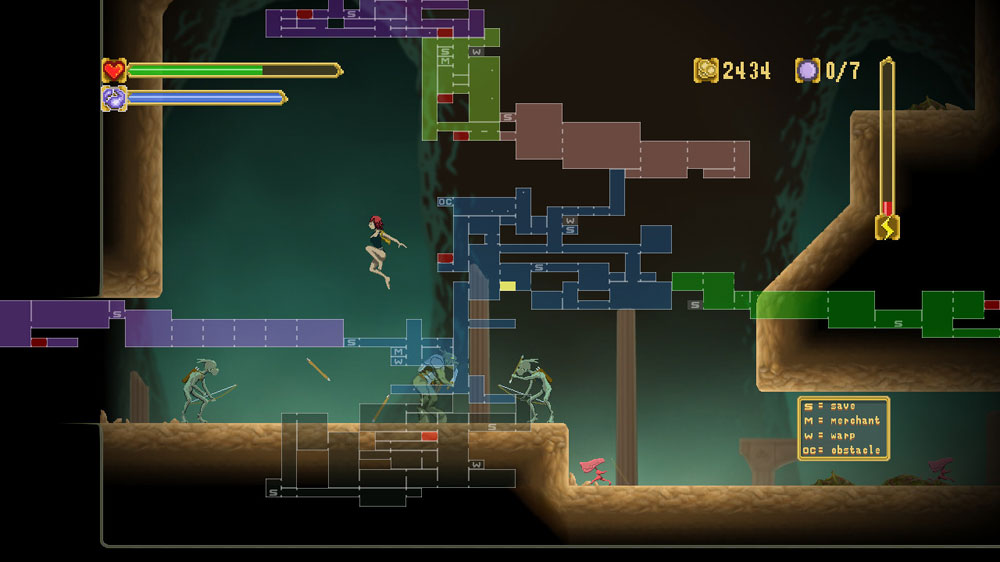
Again, the game has all the right parts of a good Metroidvania, such as a very well done map. Unfortunately, being fun just didn't make the cut.  I think this is mostly on the dull combat.  For everything it borrowed from Symphony of the Night, the thing it needed the most was pushed aside in favor of something slower and blander.  If it had been remotely close to Symphony of the Night's combat?  Probably a top-5 XBLIG game.

Again, the game has all the right parts of a good Metroidvania, such as a very well done map. Unfortunately, being fun just didn’t make the cut. I think this is mostly on the dull combat. For everything it borrowed from Symphony of the Night, the thing it needed the most was pushed aside in favor of something slower and blander. If it had been remotely close to Symphony of the Night’s combat? Probably a top-5 XBLIG game.

My dislike for M&L has nothing to do with the hype I got from my buddies.  If anything, I spent more time with it than I would done with any other game because I was trying to find the game they both loved so much.  If you hear something unequivocally called better than one of the best games ever made, it catches your attention.  I also wasn’t looking for reasons why it’s not.  That’s what lifeless fanboys do.  No, I wanted to see what they saw.  I looked hard for it.  Instead, I found dull combat, bland level layouts, and just an overall slowness that I couldn’t get into.  I tip my hat to the guys at Morgopolis Studios.  I typically discourage first efforts from being this ambitious.  Ambition wasn’t what went wrong with Magicians & Looters.  Truth be told, it’s a well designed game.  Results will not be typical, I guess, considering that my colleagues are shaking their fist in anger that it’s a digital-download game and not on disc, meaning there is no hole for (remaining review censored by Brian for the sake of Cathy’s parents.  I don’t want them to know I taught her what THAT is)
xboxboxartMagicians & Looters was developed by Morgopolis Studios

$1 (still censored.  Sorry folks.  Her filth bled into the money joke) in the making of this review. 
Name the Game Contest II Winner

I have a winner to announce for the Name the Game Contest.  The winner of which will receive some free Microsoft bucks and his name in the game.  We could have given away an iPhone or something, but considering how most of you guys totally phoned in your attempts at winning with some of the least inspired names this side of John Smith, obviously a phone would have been unnecessary.  First though, I’ll announce what didn’t win.  If you’re one of these not-a-winners, you’ve won a free copy of the game when it comes out.

Jed Pressgrove of Fate of the Game‘s favorite name was Expendable Creatures by Mr. Benn Akaishi.

Cyril Lachel of Defunct Games‘ favorite name was The Second Mouse by some dude named Matthew.

Bob Reinhard of Low on Life’s favorite name was Petfall! by Lee Maynor

Tim Hurley of TheXBLIG.com‘s favorite name was Treasurecide by Kirsty Watkinson

None of those won, because not one other judge liked any of the other judge’s top picks.  However, one name was liked enough to merit a mention from each of the judges, and thus it won.

So to Mike at Misty Day Games, creators of the absolutely atrocious The Last Fortune on XBLIG, congratulations for winning something at Indie Gamer Chick.  No, it wasn’t my Seal of Approval.  But, considering that my Seal of Approval probably isn’t good enough to earn an extra $20 in sales, it’s more valuable.  You won the Name the Game Contest.  And thus this game

Shall be known hence forth as:

The Useful Dead

Cue the Jerry Garcia music.  Thanks to all those who participated, and good luck in finding the other half of your asses.

Oh, and in closing, if I ever run another contest on Indie Gamer Chick again, feel free to hang me upside-down from my toes and beat me to death with boards that have rusty nails in them.

Spelunky (Vita)

I had a love-hate relationship with Spelunky.  I loved it.  It hated me.  It screwed my attempts at progress every step of the way.  Like the time I had built up ten hearts and much of the best equipment of the game, only to have a spider set off a dart trap which blew up a crate which caused a shopkeeper to declare me a terrorist, leading to me getting spotted and murdered by someone in his union on the next stage.  Spelunky is full of stories like that.  Speak to anyone who has put more than an hour into it and I’m sure you’ll hear tales of how the game fucked them over in ways both infuriating and hilarious.

Despite being pitiful at Spelunky, I still enjoy it.  It’s one of those very rare punishers that gets it right.  Yet, it’s been a while since I’ve played it.  The reason being that its novelty wore thin after about a week.  When I found myself with time to kill, something always seemed like a better option than Spelunky.  Thus, it went on to collect virtual dust inside my Xbox’s memory.  And then came Spelunky on Vita.

And yes, the damsels are back. Apparently this has been the source of controversy, the theory being that having girls in need of rescuing somehow reinforces negative stereotypes. That's a thing right now because the game collective hive mind mentality tells us that, while games most certainly DO NOT cause violent behavor under any circumstance and anyone who says otherwise is an out of touch old person like a politican or a lawyer or something, games most certainly can and do lead to sexism. And also lucrative Kickstarter campaigns.

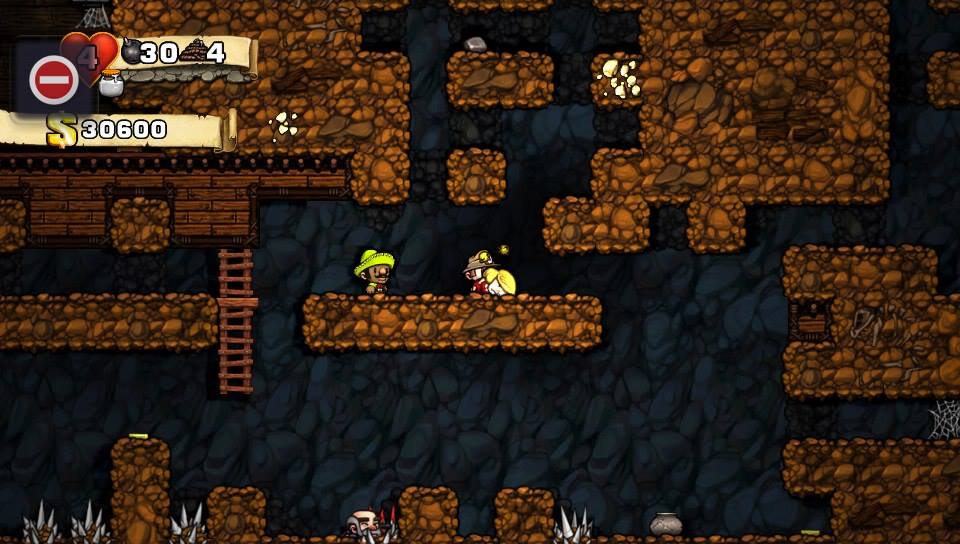
And yes, the damsels are back. Apparently this has been the source of controversy, the theory being that having girls in need of rescuing somehow reinforces negative stereotypes. That’s a thing right now because the game collective hive mind mentality tells us that, while games most certainly DO NOT cause violent behavior under any circumstance and anyone who says otherwise is an out of touch old person like a politician or a lawyer or something, games most certainly can and do lead to sexism. And also lucrative Kickstarter campaigns. Anyway, that’s me rescuing the damsel after having just rescued the Mexican from a trapped coffin, because that’s what heroes do.  And no, I did not kill the shopkeeper.  He killed himself after I accidentally destroyed his shop with a giant boulder.  I also accidentally destroyed the alter that I was going to sacrifice both the damsel and the Mexican on. Which I admit, is slightly less heroic. Unless you’re a Pagan.

First off, you should know that I almost never pay for a game more than once.  There are Nintendo fanboys who could recreate one of those jetpack things they use over water using just their erect penises and the semen they generate from the prospect of Wind Waker HD.  I don’t get it.  I (or more accurately my parents since I was 13 when it originally came out) already paid $50 for it once upon a time, and I sure as fuck ain’t paying another $50 for the same game I already played ten years ago.  Typically, any time I replay the same game a year or more after the fact, I don’t like it as much.  I got Shadow of the Colossus HD for Christmas in 2011 (with overrated Ico stuck to it like a fucking tumor), and cringed.  A well-intentioned Christmas present for sure, but I knew something that my boyfriend and father did not: you see things replaying a game that you didn’t notice in your joy-filled delirium the first time around.  Consequently, I had trouble understanding what it was I saw in Shadow the first time around, and that’s a game I truly loved.  So for a game like Spelunky, putting up extra $11.99 (God bless PlayStation Plus) for something that I mostly just tolerated seemed like madness.

Spelunky on Vita is pretty much identical to its console big brothers.  Same graphics.  Same controls.  And every rage-filled gripe I had about it before is still there and still has the potential to make my blood boil.  Stuff like:

-Why the FUCK is the randomly generated layout so God Damned unfair sometimes?  They’ll put the golden idol right next to a store, guaranteeing that you will piss off the shopkeeper if you attempt to steal it.  Which of course means every future shopkeeper will try to murder you.

-While we’re on the subject, why is the shopkeeper so easy to set off?  I’ve played Spelunky enough that at least three times I’ve been going about my business only to have “TERRORIST!” pop up on-screen, usually when I’m not even fucking aware that there was a shop nearby.  This is also why the game desperately needs a replay/video sharing function.  I want to know what random, whacky series of events got me framed for descration of the store.

-Why do dark rooms exist?  As if Spelunky wasn’t difficult enough to work with, the game has to randomly turn off the lights?  Does anyone else get the impression that if Spelunky existed as a corporeal child, it would pull the wings off flies and blow up frogs with firecrackers?

-Why isn’t there an extreme pussy mode for people like me that tosses the whole roguelike bullshit aside in favor of getting to retain items?

-Why the fuck do ice levels still exist in games?  I thought we all collectively agreed that they should be abolished back in 1998?

Spelunky has ice stages with bad control. OF COURSE IT DOES!

Spelunky has ice stages with bad control. OF COURSE IT DOES!

-Why the hell doesn’t House immediately talk to Wilson whenever someone coughing up a liver gets wheeled into Princeton-Plainsboro?  They could talk about the weather or Cuddy’s breasts, or whatever until he has his epiphany. It should only take twenty minutes at most and would save a lot of lives and money.  Sorry, I was just seeing if you were paying attention.

-Why isn’t there more uniformity in the game?  Randomly generated maps.  FINE!  But shouldn’t certain stages always have stuff in them?  The alter, or the idol, or a secret door to the Black Market seem like they should always be hidden in a specific level, not possibly in the next one.  The same goes for special events like the one that opens up the alien ship, which I actually stumbled upon on accident.  Sure, it makes events like this special.  On the other hand, it makes actually trying to get them tedious.

So I wasn’t planning on buying Spelunky on my Vita.  Then I was talked into it by my readers, and thank God for that.  Spelunky, our little hateful bundle of joy, has found its home.  It’s tailor-made for a portable console, where you can pick up and play it with no pressure to perform well.  Spelunky is the perfect portable platformer.  Pick it up when you have five to ten minutes to spare.  Die a couple of times.  When you need to do something, you can easily put it down (especially if you already binge-played it last year and are somewhat burned out on it).  But when you have plenty of time on hand, you can put in extended sessions and maybe make a little progress.  You know, before the fates of the game conspire to fuck you over.

I knew I liked Spelunky.  I just didn’t know how much I liked it until the time came to rank it on the IGC Leaderboard.  Well, I can say without hesitation, I like Spelunky on Vita more.  In fact, I would be shocked if I ever touch it on XBLA again.  Hell, I didn’t even bother downloading the PS3 version that came with this.  Fuck that, why would I?  The Vita version is everything you should want in a portable game.  It doesn’t require a huge time investment, but is addictive enough that you can play it until the battery is drained.  Beautiful graphics.  Tight control (and actually, I found some of the annoying items that screw up the controls, like the climbing glove, to be slightly less annoying on Vita), and plenty of replay value.  I’ll probably never be good at Spelunky, but that’s fine.  It’s nice to know that it’s right there in my purse, ready to kick my ass during every smoke break and trip to the bathroom.  If you haven’t already got it, and you’re one of the six people beside me that bought a Vita, it’s a must own.

imageSpelunky was developed by Mossmouth

IGC_Approved$14.99 (I paid $11.99 with PS+) never once looked at a game and said “you have to rescue a girl in this game.  It’s so right. Me and my vagina are useless” in the making of this review. 
Spelunky is Chick-Approved and ranked on the Indie Gamer Chick LeaderBoardConsider the PS3/XBLA versions also Chick Approved, and drop their rank about 30 to 40 spots below the Vita version. 

Papers, Please

For Cathy’s Review, CLICK HERE!

There’s a John Steinbeck novel titled The Winter of Our Discontent that reminds me a great deal of Lucas Pope’s Papers, Please. That title is borrowed from a line in a Shakespeare play about an abysmal king, Richard III, who was about as immoral as immoral can get. After playing this game for several hours, I now have a newfound appreciation for just what that line means; the whole of this interactive experience is a “winter of discontent” to be sure, and begs the question: Is it possible to be a good man in a thoroughly corrupt society? From my experience here the answer is a resounding, “Nyet, comrade.”

PapersPleaseLogo-569x313

The title screen reminds me of the C64 classic, Raid Over Moscow. I wonder if that was intentional?

Set in the winter of 1982 against the bleak, grey backdrop of the fictional Communist nation of Arstotzka, the player is cast in the role of a “lucky” lottery winner who wins a job in the big city as an Immigration Inspector on the newly opened Arstotzkian border. It’s your job to inspect the various documents that people present to you to cross that border. If their documents pass muster, they can enter glorious Arstotzka. If not, you can send them packing back to wherever it is they came from. The more people you process in a typical work day, the more money you get. The more money you get, the more “luxuries” (e.g. food, heat and medicine) you can provide for your family, who always seem to be either sick, cold or hungry.

This is where the true madness and/or genius of Papers, Please sets in. Each day, you are saddled with new regulations and requirements that slow down the immigration process because you need to scrutinize each and every shred of information for inconsistencies. When that process is slowed down, you don’t make a great deal of money because you aren’t processing enough immigrants. When you don’t make a great deal of money, you can’t afford the things your family needs and then they’ll start dropping like flies.

Of course, various factions and individuals will offer you money to help their cause or look the other way when shady things are going down, but accepting those kinds of bribes have consequences and soon, the agents of the Arstotzkian government will be visiting you at work with rather pointed questions to ask.

Those stampers make an awesomely satisfying "KA-CHHUNK!" sound when you use them.

Those stampers make an awesomely satisfying “KA-CHHUNK!” sound when you use them.

And this is where my major issue with this game arises: Does what I described above sound like fun to anyone? I’m certain the dictionary definition of “fun” doesn’t include words like immigrationpassportgovernment officials or border in that definition. Of course, there have been morality choices in games before, but none have seemed as “real” or consequential (at least to me) as they do in Papers, Please. I mean, if I made a decision that pissed off Jack in Mass Effect 2, she doesn’t want to be my pal, and then she ultimately dies at the end of the game because of that, should I be upset? I can tell you right now that I didn’t shed a tear because it’s just a game … and she was a temperamental pain in the dick anyway.

What it boils down to, I suppose, is that Papers, Please blurred the line between a fictional game world and reality a little too well for my liking. Making the decisions this game forced me to make made me uncomfortable … perhaps because I remember the Cold War tales of Communist woe all too well and never was (and never will be, unfortunately) the commander of a kick-ass spaceship.

When it comes to overall presentation, I would swear this was a game that I was playing on a Commodore Amiga (or some other computer of that era) emulator. Of course, I know differently, but the graphics and overall gameplay definitely have that late ’80s, early ’90s vibe going on. And I don’t mean that in a negative way; I personally dig games with a distinctly retro vibe, but gamers of the last couple generations may not get it and be put off by that. Something else that should be mentioned regarding the presentation in Papers, Please is the music, especially the theme song, which is a crushingly sad tune, like something ripped from a Kafka-esque nightmare. I don’t know if it has a title, but I took to calling it “The Dirge of Endless Oppression.” It’s not particularly bad; it’s just goddamn depressing.

I have no mouth, yet I must scream...

I have no mouth, yet I must scream…

I played Papers, Please for about 10 hours and I, for the life of me, could not get a “good” ending. I was always going to debtors prison, getting arrested for other infractions, or my whole family was dying on me because I couldn’t consistently feed them, keep the heat on or get them medicine. And maybe that’s the point here. The point being that there are no good endings in this life…it’s just a relentless winter of discontent. I know that’s a very desolate outlook on things in general, but that’s the mindset this game put me in and, in case I haven’t made that clear, I don’t really like that. Ultimately, I play video games to have fun and escape the trials and tribulations of real life for a few hours. Being cast in the role of an early 80’s, Soviet Bloc immigration official is not my idea of a cracking good time.

Don’t get me wrong, I think Papers, Please is an important game, much like Gone Home, and it’s one that I think everyone should at least try because it does break some new ground in terms of game mechanics and narrative structure. It reminds me of some of the movies I had to watch while taking film theory courses in college: interesting in a classroom environment because you are seeing and learning different things, but not something I would seek out and enjoy on my own time.

If you think of Papers, Please as this generation’s Oregon Trail, but with intensely depressing Communist bureaucracy in the place of dysentery, you’ll do just fine. People should play this game more for its educational and historical value, but since many of today’s gamers don’t have the perspective someone of my age and/or generation has, they may enjoy it simply as a piece of entertainment, whereas I have a rather difficult time doing that. As an extension of those thoughts, I think both Papers, Please and Gone Home should be shown to all the asinine, irresponsible media types who constantly assail video games as over-indulgent, blood-spattered-kill-festivals, to let them see (and hopefully understand) that there are thought-provoking games out there. Alas, these thought-provoking games never have the marketing budgets that the over-indulgent, blood-spattered-kill-festival games have, so they tend to fly under the radar of the general public, which is obviously unfortunate for all of us who love and cherish the gaming lifestyle.

pp11Papers, Please was developed by Lucas Pope.

This game cost $9.99 in American swine dollars; I wonder what that works out to in rubles, comrade?

Papers, Please is available on Steam.igg 2

Papers, Please is Indie Gamer Guy approved and now hold the fifth spot on the Leaderboard.

Follow the Indie Gamer Guy on Twitter.

Indie Gamer Chick goes Multi-Platform

After two years with a very fine-point focus on Xbox Live Indie Games, Indie Gamer Chick is now shifting towards coverage of indies across all platforms.  You’ve probably noticed that the amount of games being covered from PlayStation Network and Xbox Live Arcade has increased lately.  The reason for that is simple: the sun is setting on XBLIGs, and the community that has graciously supported me over the last couple years has started to move on to other avenues of indie distribution.  Thus, the community that existed when I started this blog in July of 2011 is being absorbed by the overall indie community.  It makes no sense to stick by one platform anymore. 

This doesn’t mean coverage of XBLIGs is stopping here.  In fact, XBLIGs will probably occupy most of my time over the coming months.  But we’re also on the verge of two new consoles being released, each of which will have some form of open publishing for indie developers.  Probably.  Not to mention Nintendo is also joining the self-publishing bandwagon.  I mean, they’ve been saying they’re doing that for months and yet their Wii U eShop is still a wasteland of moldy virtual console titles and little else.  But, I’m sure a new breed of indies will arrive soon.  Maybe.  Fingers crossed.

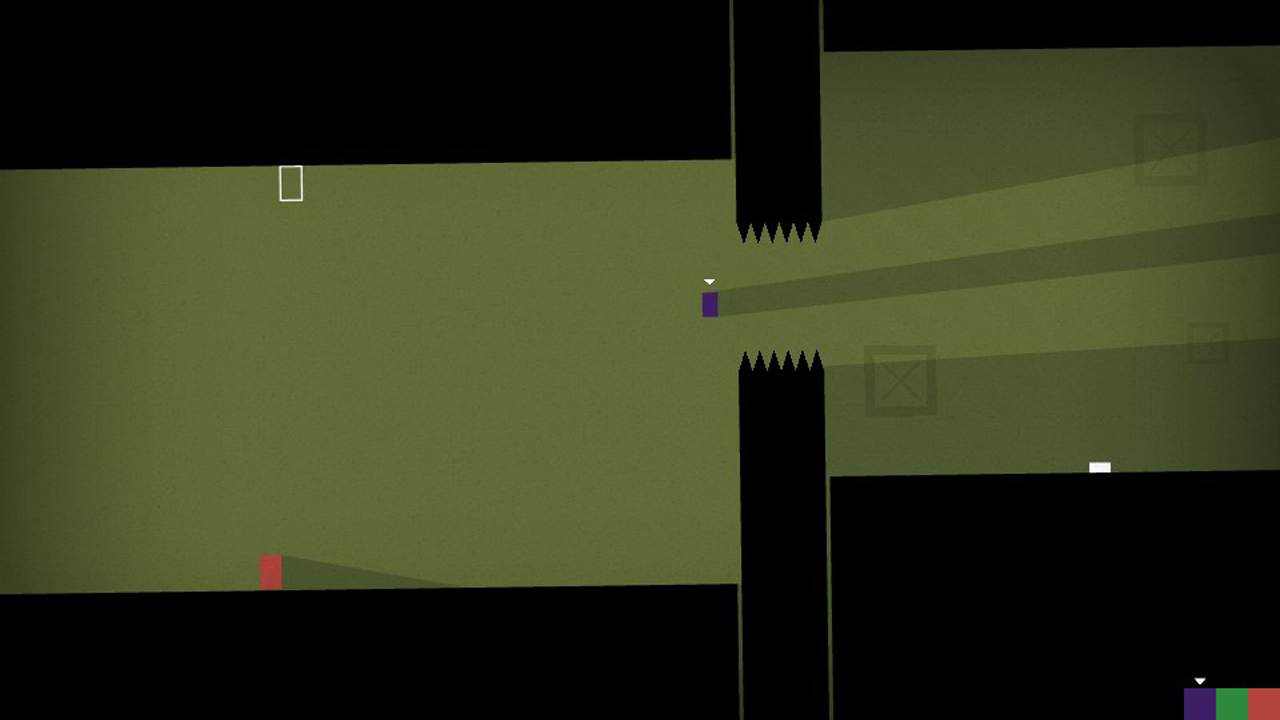
Thomas Was Alone finally hits the Leaderboard.

Thomas Was Alone finally hits the Leaderboard, where ironically it won’t be alone.

The biggest change to Indie Gamer Chick is the Leaderboard, which is now multi-platform.  I’ve known this changeover was coming for a while, and I’ve spent the last several months agonizing over how to handle games that straddle the line on whether they’re “indie” or not.  I certainly don’t want to rank a game by a well-funded, multinational company against a garage-shop project made by two people.  It simply wouldn’t be fair. 

But, where do you draw the line?  What makes a game indie and another not?  Even developers are confused by the issue.  Is it the size of the studio?  Their funding?  What about how long they’ve been around?  Have they done larger licensed properties?  If they get distribution through a publisher, how much creative control (if any) do they give up to that publisher?  Often, there’s going to be a lot more questions than answers.  For example, how do you define Tokyo Jungle?  Sony owns the IP and their Japan Studio was involved in the development in some capacity.  However, a studio called Cripsy’s (founded in 2007 by a group of gamers with no development experience) created the concept and handled most of the development side of things.  And Toyko Jungle only came about after a series of failed pitches for other concepts to Sony.  It would seem Sony had minimal creative feedback in Tokyo Jungle, except in areas related to promotional material.  Hell, they barely managed to secure a US release, because Sony believed the game was too niche for us filthy American swine.

Tokyo Jungle – Indie or Not?

Thankfully, I don’t have to answer that.  I didn’t review it, and I don’t plan on it.  But I did review several games where that line isn’t so clear.  What would you call Worms: Revolution?  It was developed by Team17, who has been around since 1990.  They’re independent in the sense that they’re not owned by a major gaming company or a multinational conglomerate.   But they also have a staff of 75 people, and let’s face it, Worms is a hugely established gaming property.  Bordering on iconic. 

Worms: Revolution – Indie or Not Indie?

Worms, eh?  Never heard of it.  Must be one of those newfangled Indiana games I keep hearing about.

Worms, eh? Never heard of it. Must be one of those newfangled Indiana games I keep hearing about.

After months of debating, Brian and I both agreed that they weren’t “indie” in the sense that we’re aiming for.  Then again, we’re not sure what we’re aiming for.  Indie is becoming less a culture and more of a marketing term.  We’re having trouble finding where the indie line is, let alone what falls on each side of it.  Thatgamecompany had the might of Sony’s marketing machine to push Journey into the realm of success.  But Sony had no creative feedback in Journey, and at the time it was made, Thatgamecompany only had nine employees. 

Journey: Indie or Not Indie?

I went with indie.  In fact, I put it #1 on the Leaderboard.  I loved that game.  But, since Journey came out, Thatgamecompany has raised millions in venture capital and seen their games released on a compilation disc.  I doubt I would classify any future games by them as indie.  I’m not ruling it out either.  I’ll have to wait and see. 

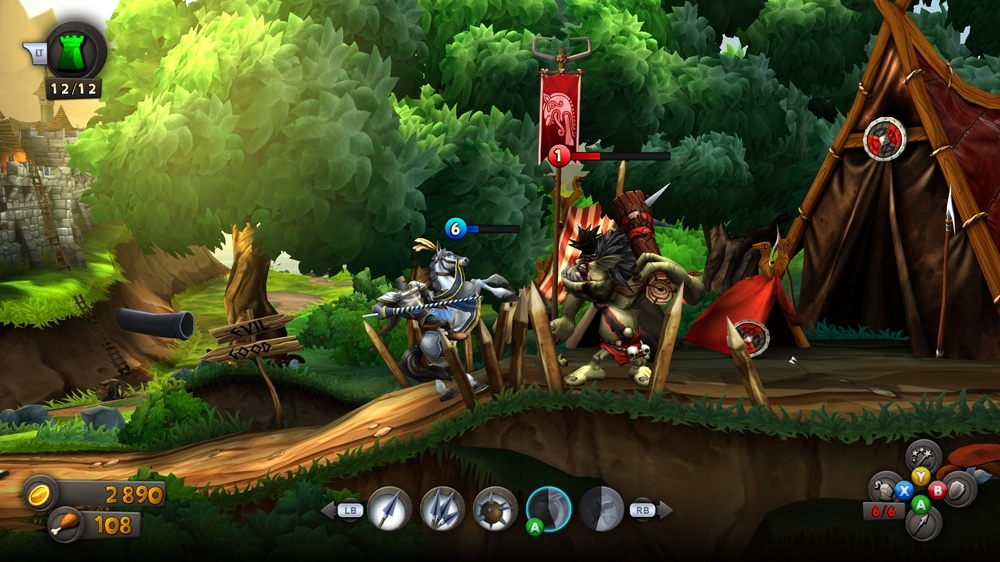
The game that gave us the toughest time to sort out was CastleStorm.  Zen Studios, like Team 17, is independent in the sense that they aren’t owned or anchored by any major publisher.  But, according to Wikipedia, they employ between 50 to 100 people, most of which are in Budapest (according to Mel Kirk, their American arm employs three people in California).  Most importantly, they have worked on such major properties as Ghostbusters, Marvel and Star Wars.

Mel Kirk of Zen Studios defines his company as indie.  He told me:

In my opinion (and in short), an independent developer is someone or ‘a group’ who control their own destiny. They do not have to answer to marketing, executives, publishers, etc. The developers themselves are 100% in control of the creative vision, all aspects of development and publishing, marketing, public relations, etc. That means indie devs can be 2 man teams or even 80 people – as long as they are in 100% control of the game and are there is no outside influence impacting development.

Fair enough.  But, let’s face it, they wouldn’t have had full creative control on many of their projects, even if the Disney people didn’t exercise it.  If they included a special table in Star Wars Pinball that showed Jar Jar Binks getting sucked off by Han Solo, Disney would have beat them to death with a plastic lightsaber and fed their remains to George Lucas.  Then again, unless you’re publishing a game yourself on PC, you’re never going to have full creative control.  Steam and the various console publishers will keep certain subjects taboo and never back down on those.

Forget about Jar Jar and Han.  Sucking off wouldn't be allowed in CastleStorm either. There is NO SUCH THING as full creative control for console-based indies. You'll always have some kind of rule hanging over you.

Forget about Jar Jar and Han. Sucking off wouldn’t be allowed in CastleStorm either. There is NO SUCH THING as full creative control for console-based indies. You’ll always have some kind of rule hanging over you.

Anyway, despite having to concede that CastleStorm was fully conceived internally with no outside funding or influence, we ultimately didn’t call Zen Studios “indie” in the sense that their games should be stacked against the Thomas Was Alones or Escape Goats of the world.  It somehow didn’t seem fair.  And that’s probably how I’ll ultimately decide what gets filed under indie and what doesn’t.  The label of “indie” is too abstract to draw up specific lines for.  A studio could be staffed by thousands of first time developers on a shoe string budget and no contacts to guarantee funding or success.  On the flip side, if Shigeru Miyamoto or John Romero started a small three-man operation, you probably wouldn’t call their efforts “indie” no matter the game’s size or scope or budget.  That’s what I’ll have in mind when it comes time to decide whether a game gets ranked or not.  I’ve spent the last six months trying to find “the indie line” and have come to the conclusion that there’s no such thing. 

Decimation X3

I wasn’t happy with my previous review of Decimation X3, and the developers weren’t either, so I 86ed it and decided to start again.  Why didn’t the developers like it?  Well, because I accused the game of being a Space Invaders Extreme clone.  No no no, they said.  I have it all wrong.  It’s not a Space Invaders Extreme clone.  It’s a re-imagining of a remake of a clone of Space Invaders, or something like that.  Also, they created the original “extreme” Space Invaders game back in 1996 when I was seven years old and not actually playing games.  Ohhhhhhh.  And if you hand out that link to every single person who purchases the game, all confusion that the very good game you guys made is actually based off a completely different game and not the one people would reasonably assume it was based off of will be cleared up.  It also took them two years to request that clarification, right in the middle of the busiest week I ever had at Indie Gamer Chick.  I really love Matthew and Jason Doucette, but at the same time I wonder if they’re not one “H” away from having the most appropriate last name in human history.

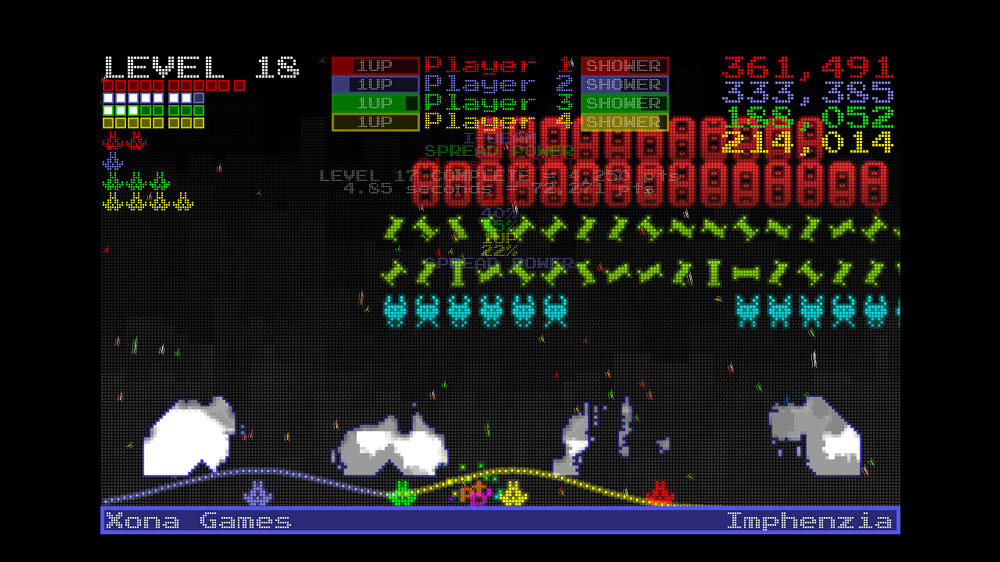
So I played their not-a-ripoff-of-Space Invaders Extreme-that-any-reasonable-person-who-doesn’t-read-every-blog-post-by-them-would-assume-is-a-ripoff-even-though-they-actually-invented-that-idea and, surprise, I still dug the shit out of it.  Decimation X3 is a seriously good game.  It’s basically Space Invaders, only its a lot faster, has fancier graphics, lots of fire power, and bosses.  You know, sort of like NO CATHY DO NOT POKE THEM WITH A STICK LIKE THAT!  They’re Canadians.  That means they’re probably armed to the teeth with hockey sticks and moose.

From this, you can tell that I was clearly off my rocker for assuming this game was an attempt at doing a $1 XBLIG version of Space Invaders Extreme. What was I thinking?

From this, you can tell that I was clearly mentally ill for assuming this game was an attempt at doing a $1 XBLIG version of Space Invaders Extreme and not a revamped version of a remake of a clone of Space Invaders. I should also be able to figure out just from playing the game that these guys invented the concept of an extreme version of Space Invaders.

Anyway, yeah, fun game.  It supports four players, it has no online leaderboards, and the amount of bullets enemies fire becomes fucking absurd about ten minutes into it.  Oddly enough, despite being atrocious at bullet hells, I was able to play Decimation X3 relatively well, with tons of near-misses even when there didn’t seem to be enough room to squeeze through the rain of enemy fire.  Either I’ve gotten a lot better at these types of games or Decimation X3 has some of the most forgiving collision detection ever.  I vote for option A.

It’s been a while since I played Decimation X3.  I didn’t even really get a lot of multiplayer time with it the first time around.  I had enough of a good time with just that part to move Decimation X3 from #64 on the Leaderboard to #38.  That’s the biggest jump ever made.  And they’re getting that because their game is genuinely good.  Not because I called their game a clone or a ripoff of another game.  Maybe the term I should have used was “heavily inspired by.”  Though seriously, if you guys think the average gamer will see this trailer:

And not assume you guys were taking inspiration from something other than the games you were actually trying to get inspiration from, I don’t know what to tell you.  I’d never heard of you guys before Indie Gamer Chick.  I doubt 99.99999999% of gamers have heard of you.  They’re not going to know you guys came up with the idea of an extreme Space Invaders.  Besides that point, your Space Invaders ’97 doesn’t look like Space Invaders Extreme, and Decimation X3 does.  It’s not the same game, but people see it that way.  It’s like hearing Sony say “Super Smash Bros?  Never heard of it!  PlayStation All Stars was totally our idea!”

xboxboxartDecimation X3 was developed by Xona Games

$1 Probably should poke anyone with a stick that can solve Rubik’s Cubes like this in the making of this review.

Decimation X3 is Chick Approved and ranked on the Indie Gamer Chick Leaderboard.

Magic Racing Rally

I don’t mind racing video games, but I’m bored silly by any real form of automotive racing.  So naturally, I ended up with a boyfriend that’s a gibbering, foaming-at-the-mouth Formula One fan.  Magic Racing GP 2 was made for him, not me.  It was a game with old-school top-down gameplay, and that’s fine.  Where the game made itself inaccessible to me was in the insane attention to detail of the nuances of racing.  You had to calculate and adjust for every thing, right down to the types of wheels used.  Yea, not for me.  Then again, Brian and his F1-loving friends liked the concept more than the execution.  The controls were pretty rough for GP 2.  If they had been smoother, I think Brian and Bryce would still be playing it to this day.  Hell, I think a lot of people would have.  It had such raving devotion to the simulation aspect of F1 that I think people might have used it as an honest-to-God league, in the same way people set up Madden leagues or even Tecmo Bowl.

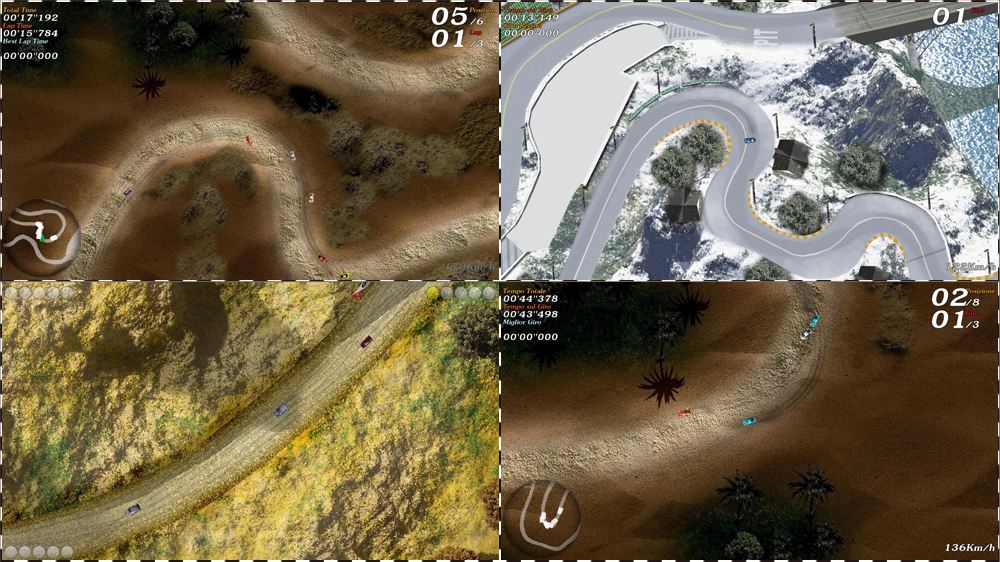
This is one of those games that looks better in screens than it does in motion.

This is one of those games that looks better in screens than it does in motion.

Magic Racing Rally is a much more simple game.  There’s still a wide variety of race classes and cars (based on real cars but with thinly veiled name changes) with different attributes, but it’s nowhere near as terrifying for non-fans of the sport.  Also, the controls seem more manageable.  But, I was still quite bored by it.  Mechanically, it’s just too basic.  From a graphical point of view, it reminds me of one of those preschool race car toys with the magnets.  Just a static screen with the cars and the skid marks they leave behind being the only moving parts.  It’s quite low tech and not very stimulating, even though the courses are well designed.  Hell, some of the courses are downright beautiful, but when you superimpose a little eight-bit car on them, it kind of looks silly.

The big draw of Magic Racing Rally is the sixteen-player online racing.  Giggle snort chuckle ha.  Look, kudos to them for thinking to include support for sixteen players, but you’re more likely to see Sasquatch rollerblading on UFOs before you find sixteen players at the same time.  The best I could do was three players.  Unfortunately, even with what felt like better controls, all of us kept crashing into the walls repeatedly.  Only on the slowest class were we able to come somewhat close to staying on the road.  Otherwise, it was like trying to trace a doodle in the middle of an earthquake.  I’m sure with patience and practice, I probably could have gotten the hang of it, but I was not engaged enough to want to get good at it.  I hate doing this, but I wasn’t Magic Racing Rally’s target audience.  I think fans of rally racing might enjoy it, assuming that any of the dozens currently available titles from that genre no longer “do it” for them.  The weird part is, the racing was never the best part about their original game.  It was the simulation aspect.  With that significantly toned down, I wonder who this was made for?  I didn’t really like it, and actually Bryce didn’t like it either, and he’s into this kind of stuff.  Oddly enough, as intimidated as I was about Magic Racing GP2, I think that was the better game.  The marginally better controls don’t make up for the lack of customization.  I do think the audience of devoted GP2 fans might enjoy this, but otherwise, this race is permanently stuck in a yellow flag.

xboxboxartMagic Racing Rally was developed by Magic Studios

$1 said “Rest in Peace, Microsoft Points jokes” in the making of this review

A review copy of Magic Rally Racing was provided by Magic Studios to Indie Gamer Chick.  The copy played by Cathy was paid for by her with her own money. The review copy was given to a friend to test online play with her.  That had minimal feedback in this review.  For more on this policy, consult the FAQ.

Gameplay footage via Splazer Productions

Dots

Having epilepsy sucks.  Between Jerry and I, we rolled off eight straight days of new reviews here, a new record for Indie Gamer Chick.  Then I got absolutely obliterated over the weekend by a spell, and wasn’t fully recovered by time the next spell hit on Wednesday.  I’ve had no coordination.  I’ve been sleeping a ton (cause for alarm for anyone who knows me).  I almost checked myself into the hospital under suspicion of brain damage after finding myself enjoying Duck Dynasty.

Mostly, I was pissed at not being able to play the games I planned on doing for Indie Gamer Chick.  Then I realized that I had been spending my recovery putting a sickening amount of time into a simple, addictive little iPhone game called Dots.  Before I get to the game itself, I have to browbeat the developers for a bit.  Dots?  Seriously?  You put all that effort into making a really fun game and Dots was the best you could come up with?  It’s appropriate the game is on mobile because you guys totally phoned it in with that name.

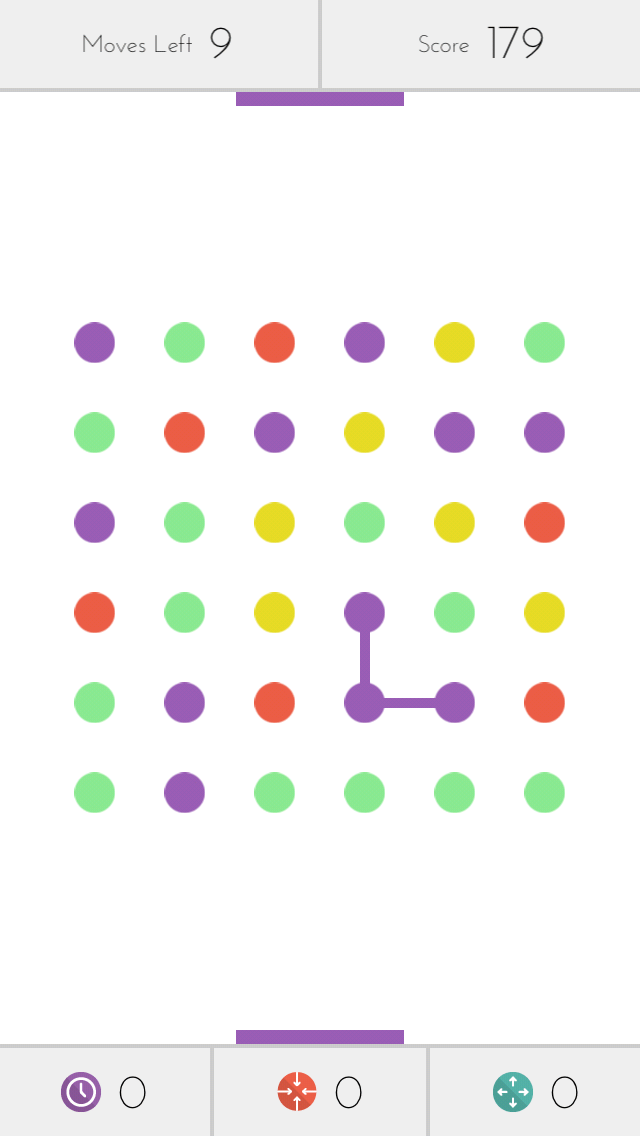
Connect the dots. Nanna nanna nah. Connect the dots. Nanna nanna nah.

Connect the dots. Nanna nanna nah. Connect the dots. Nanna nanna nah.

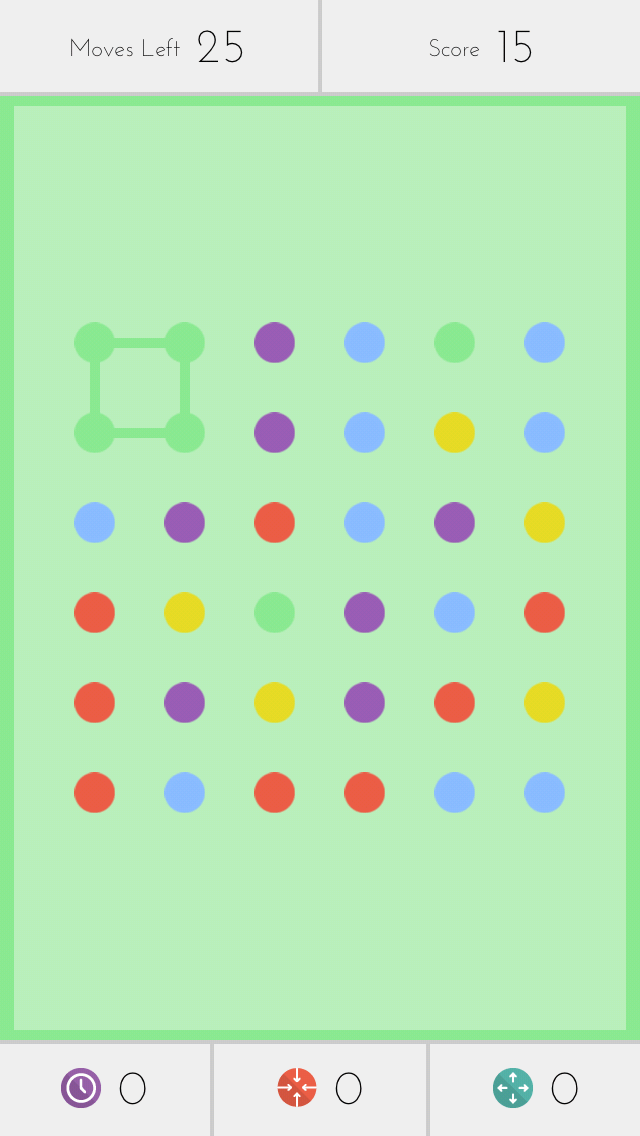
So the basic idea is you have a 6×6 grid of colorful dots that you have to link together to score points.  If you are able to link colors in the shape of a box, it clears all of that color (and any extra dots trapped inside the box).  There are two modes: one where you have sixty seconds and one where you have thirty moves.  Like Bejeweled and its ilk, Dots relies as much on luck of the draw as on anything resembling skill or cognitive thinking.  Because of that, it’s not deeply rewarding.  I look at those pricks on the high score board and think, nay, KNOW that they not only used all the premium boosters, but still have the luckiest board to work with you could hope for.  When it comes to randomness in games, I’m not lucky.  The only time I beat the odds is when doing so works against my favor.  If I was to play Russian Roulette with a special revolver that had 10,000 chambers, one of which was loaded, I guarantee you that Jerry would be writing my obituary.

So why have I been hooked on a game that is based almost entirely on luck?  I can’t even really explain it.  Dots is almost hypnotic in its simplistic pleasure.  Part of it is the sound effects.  The chimes that grow louder as you string together longer lines, which creates a soothing STOP LAUGHING AT ME!  I’m serious!  This is like getting a sensual massage in your ears.  Plus, I kept playing hoping for that off-off-off chance of me getting onto the global leaderboard.  Actually, these guys could really suck people in by making a separate leaderboard for games where no boosters were used.  Of course, doing so would probably discourage people from buying the boosters, but still.  You can grind up money to spend on the bonuses, two of which can be used once each per game.  Add extra time (or five extra moves in 30 move mode) and clear all dots of a color are pretty effective, but the clear-all color booster is very spendy.  There’s also a booster that allows you to remove a single dot from the grid, which might open up a run of square-making.  None of them are necessary to enjoy the game.  In fact, it was days before I used my first one.  But, you probably do need them to have any remote hope in Hell of making the Leaderboards.  Again, there should have been more.

IMG_0139I’ve been stuck at my house for almost a week now.  In that time, I’ve been a bump on a log, watching marathons of House or Dexter with my boyfriend.  But, I suspect that Dots is the perfect “play it while waiting in line” game.  That’s what mobile games should be about.  Hypothetically, that’s what the best handheld games should be too.  Sure, epic RPGs have a place on your Vitas and 3DSs, but what about games that take advantage of the best thing handhelds exist for: killing time when you’re waiting for shit away from home?  Phones have completely conquered that market.

It’s a shame that Nintendo and Sony have given up so much ground to the cellular industry in the time-wasting department.  Games like Dots, not to mention abysmal sales of really good pieces of hardware like Vita, make me wonder why they even bother anymore.  The Vita and 3DS are essentially hand-held versions of recent consoles, and their libraries reflect that.  Maybe the era of the dedicated handheld gaming device really is over.  I mean, yeah, it’s cool that you can play Ocarina of Time while waiting for the bus.  But you have to spend $40 for that, not to mention buying an expensive piece of hardware that really doesn’t have any other functions to do so.  Meanwhile, the device I play Dots on can also play movies, Netflix, anything off my DirecTV, and music.  I can use it as a GPS, as a calculator, as a camera that doesn’t take crappy low-resolution pictures.  I check my stocks on it, or the weather, or movie showtimes.  I can tweet from it, or update my Facebook, or browse the internet.  I can send text messages and emails, or unlock my car door with it.  Oh, and make phones calls too.  Really, Nintendo and Sony, no matter how cool the technology in your gaming devices are, they’re still mechanical relics from a bygone era.  I would tell you to get with the times, but Sony is charging an arm and a leg for a couple measly gigs worth of memory cards and Nintendo is.. well.. Nintendo.  The times are not something they’re going to be getting with anytime soon.

DotsSeal of Approval LargeDots was developed by Betaworks

Dots is Free to Play, and Chick-Approved

Gone Home

I recall seeing a trailer for Gone Home a few months ago and I thought then that it looked pretty damn cool. I filed it away in the ol’ memory banks, thinking that I wanted to play it when it eventually came out. Well, to my surprise it came out earlier this week and people have been raving about it. After playing it myself, I believe those raves are justified…to a point.

Meet the Greenbriar's. They have some skeletons hiding in their collective closets for sure.

Meet the Greenbriar’s. They have some skeletons hiding in their collective closets for sure.

I believe that more entirely narrative driven games where there are no weapons and no one dies like Gone Home need to exist if video games are to evolve, transcend and flourish as an artistic medium. One of the better comic book writers of the last couple decades, Kurt Busiek, was quoted as saying in regard to superhero comics, “As I see it the superhero genre is like a big field and we’ve built up this gigantic city in one tiny corner. Every now and then some visionary guy drives out of the city and goes off in a different direction, and everybody goes, ‘Look, look…you can do that,’ and then they drive in straight line right after him. I think the lesson that we need to learn from the likes of Watchmen, Dark Knight Returns, Animal Man and the Lee and Kirby Fantastic Four, isn’t to say, ‘Look, there’s a new direction that can work,’ it’s to go off and find your own direction. We should try to explore as much of this big field as we can, instead of building another little suburb and then overbuilding it until nobody wants to live there either.” Just change what Kurt is saying about superhero comics to video games and you’ll get what I’m driving at here. Video games are becoming much like superhero comics: Stale. Boring. Overblown. Been there and done that. The AAA studios are overbuilding in the action/shooter genre. Even the indies are overbuilding in the puzzle/platformer and retro RPG genres. (Fuck, if I see one more goddamn indie puzzle/platformer somebody’s gonna get cut. No joke.) Even though I have some issues with Gone Home, I totally dig that it’s driving out of the overbuilt city and breaking interesting, new ground elsewhere. The entirety of the video game industry needs to wholeheartedly support and embrace games like this if it ever wants to be taken seriously.

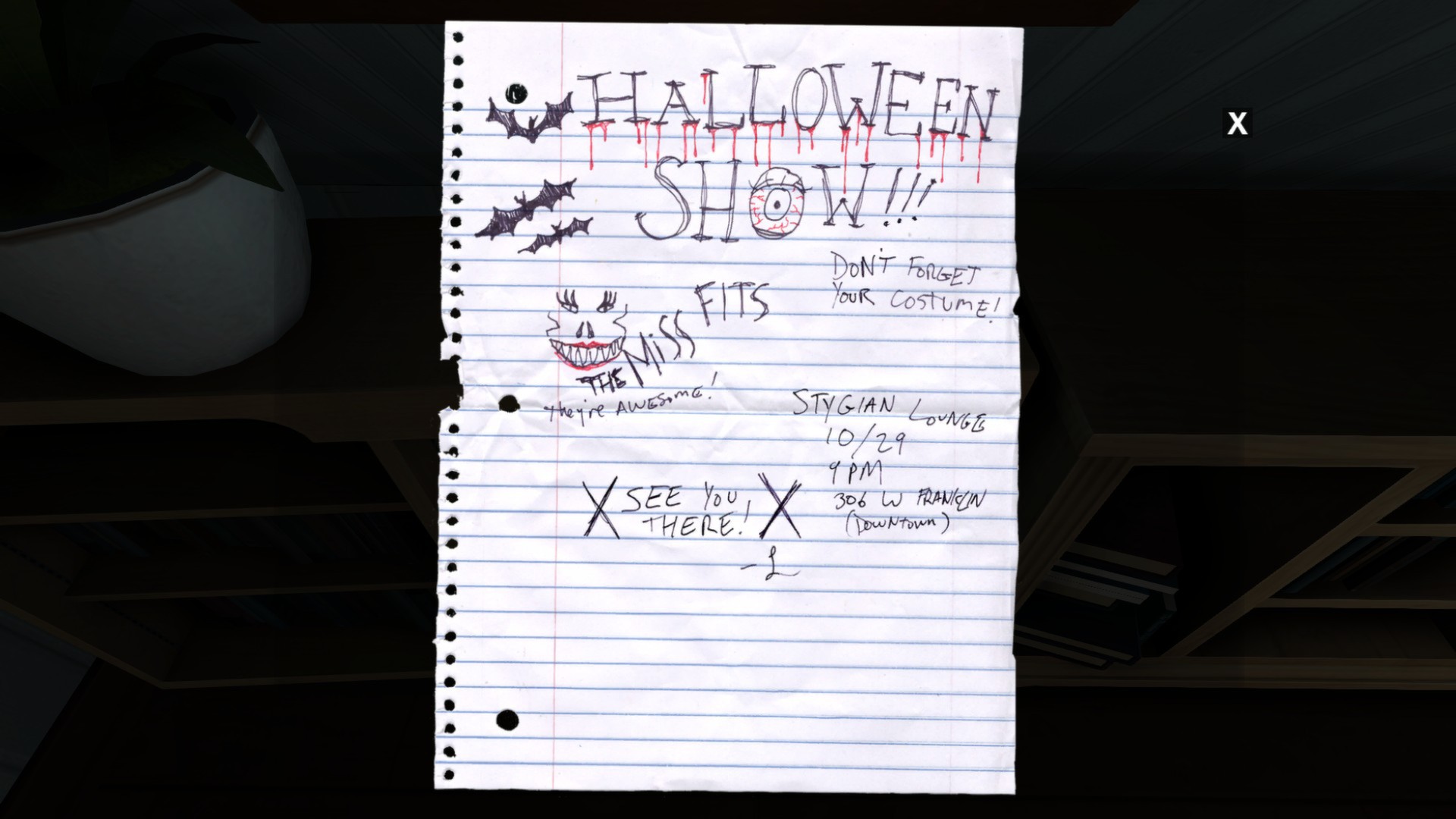
OK, OK…I’ll step down from my soap box now and get down to the nitty gritty. Gone Home is essentially a first-person, point-and-click adventure/mystery game, which you can control with a gamepad or the keyboard and mouse, and it is set in the year 1995. You play as Kaitlin Greenbriar, a 20-year-old woman returning home from a year abroad in Europe; although she’s returning to a house that she herself has never lived in. While she was away, her father inherited a spooky old mansion from his (possibly) insane uncle and the Greenbriar family (the father, Terrance, the mother, Jan, and kid sister, Samantha) now reside in this manse. There’s a cryptic letter from Sam attached to the front door which essentially tells you that no one is home, but not why no one is home. It’s now your task to investigate the house to find out where everybody is and just what the hell has been going on with your family for the past year.

Teenage shenanigans. Check...

Teenage shenanigans. Check…

As you slowly explore the imposing and graphically well-rendered house, you begin to piece together (by basically being a big ol’ snoop) the tumultuous events of the last year. You are also treated to narrated snippets from Sam’s journals (wonderfully voiced by Sarah Robertson) when you come across a relevant item or clue. Gone Home does a great job in giving you an almost voyeuristic peek into the Greenbriar’s somewhat dysfunctional lives. It also excels at setting up and adding tension (via various “red herrings”) to the overall mystery. But, where it shines the most is when it makes you feel like you’ve time-warped back to 1995. This is achieved through various pop culture references and household minutia. Case(s) in point, you come across several, fictional Super Nintendo cartridges in Sam’s bedroom and scores of VHS tapes in the family TV room with familiar movie titles I couldn’t help but smile at because I had a lot of the same damn movies recorded onto VHS tapes back in the day.

Where Gone Home falters in my estimation is in two rather large areas. First and foremost, the ending just lacked any real emotional punch for me. I was let down. I was 90% sure on how it was going to end and I really wanted and/or needed something with a little more resonance or grit to it as the ending here. Maybe that was part of it, that about half way through I pretty much knew how this was going to end (even though the aforementioned “red herrings” are flying at you fast and thick by then) and I was let down that it wasn’t something different? I’m not sure, really, all I know is that I had a pervasive sense of “meh” as the game concluded. I could say a great deal more about the ending of Gone Home here, but then I would have to tread into “spoiler” territory, so a longer, commentary piece on this game’s ending may be in order somewhere down the line.

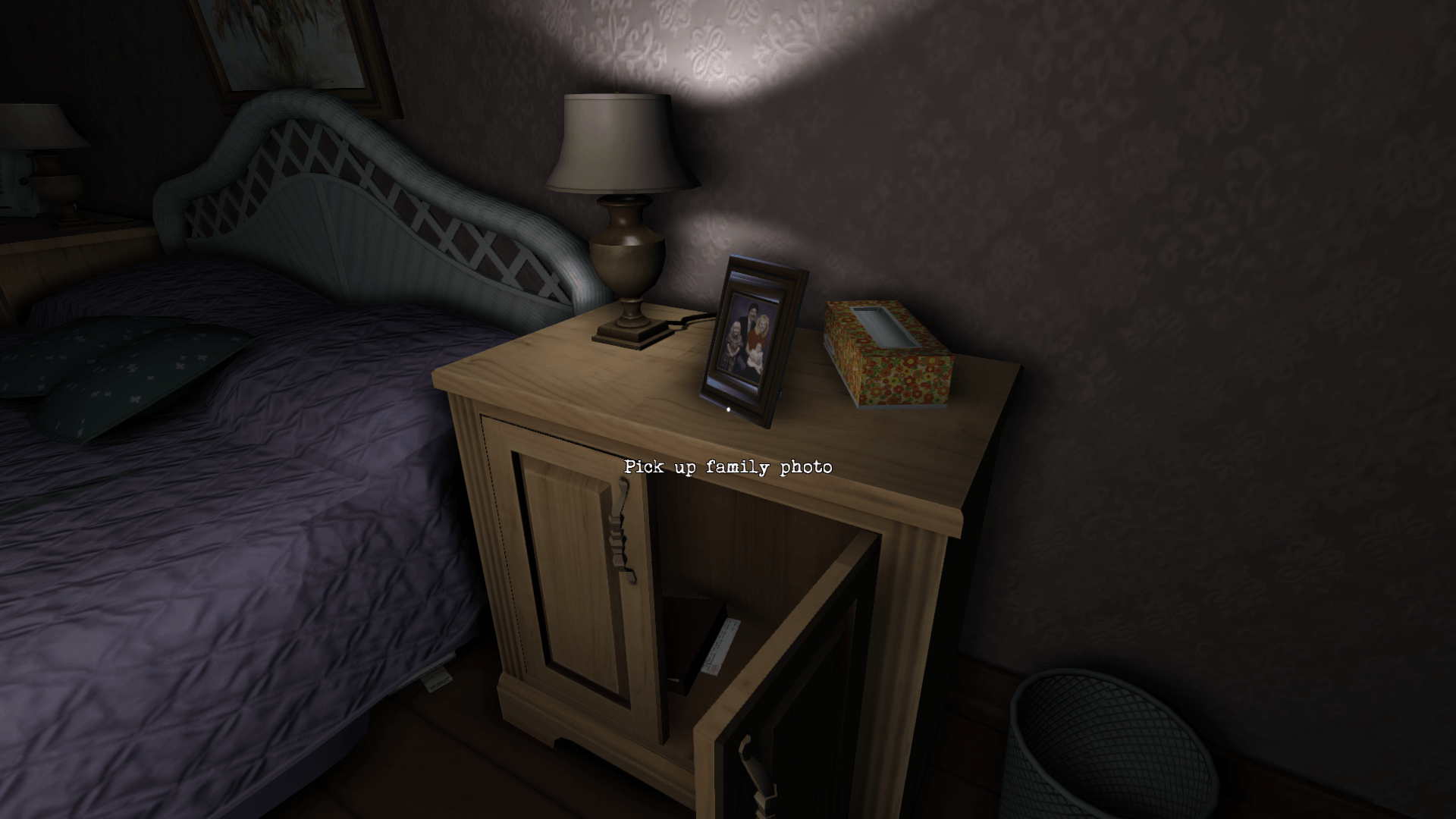
Another family portrait? Hmmm...

Another family portrait? Hmmm…

Secondly, I completed Gone Home in about three and half hours and that’s only because I took my time and explored every nook and cranny of the house. That’s too goddamn short for a $20 game that realistically has no possibility for a sequel, DLC, multiplayer or any additional content whatsoever. This game should have been priced in the $5-$10 range. Pricing a three hour game at $20 is fucking outrageous and whoever decided on that price-point should be ashamed of themselves.

That being said, Gone Home is an important game and one that you should definitely play. I’m certainly smitten with it, but I’m not in love with it as several other critics seem to be. The narrative (up until the ending) is excellent, as is the time capsule, 90’s atmosphere. It’s hard to capture how it makes you feel in words; it’s really something you should experience rather than have me, or any other journalist/reviewer, explain to you.  So, go download a copy and live through the Kaitlin Greenbriar homecoming experience for yourself. You’ll be a better person for it.

gh3Gone Home was developed by The Fullbright Company.

At $19.99, Gone Home costs waaaaay too much for a three hour game with little to no re-playability.

Gone Home is available on Steam.

Gone Home is Indie Gamer Guy Approved and now holds the fourth spot on the Leaderboard.igg 2

Follow the Indie Gamer Guy on Twitter.

The Last Fortune

Lots of XBLIGs look like they’ll be fun.  Then you play them, and they make you actively question whether the concept of fun is something you’ve been hallucinating this whole time.  That’s what The Last Fortune made me ponder.  I took a peek at the screen shots of it and thought it looked kind of like Wonder Boy in Monster Land, a retro gem that I picked up for $1 on PSN that was just swell.  Then I picked up Dragons Curse (which I guess is Wonder Boy 3, or possibly 4.. then again, I’m not sure which one Monster Land is either) on Wii’s Virtual Console and thought that was even better, until I hit a brick wall about halfway through and gave up in shame.  Still, fun series  It’s about time someone tried to make a tribute for them on XBLIG.  It’s just too bad this one turned out a bit warped.

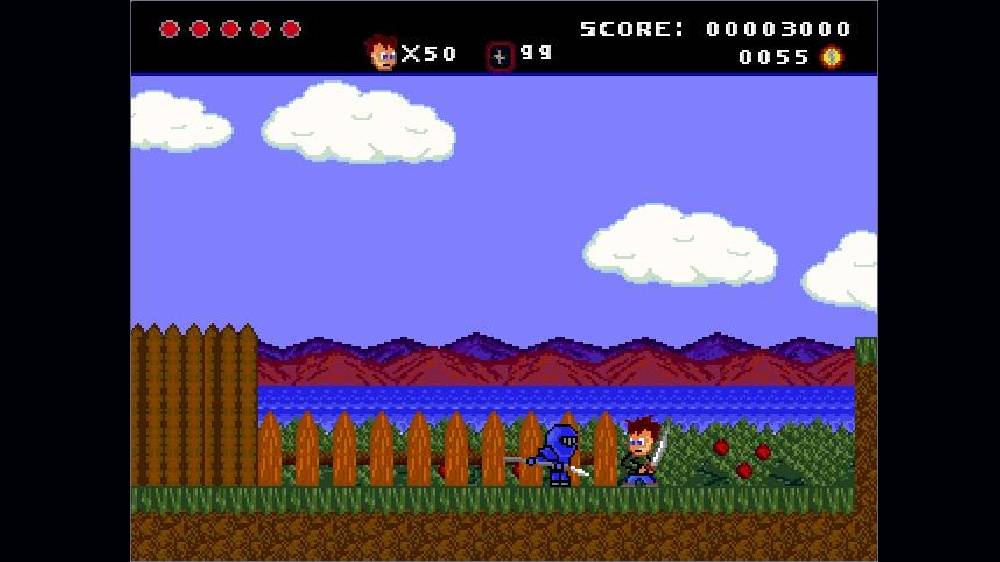
It really does have a bit of a Sega Master System look to it.  There was no problem with the graphics, besides item pick-ups being too small and samey.

It really does have a bit of a Sega Master System look to it. There was no problem with the graphics, besides item pick-ups being too small and samey.

The game starts with a village full of peaceable folks getting ransacked by evil doers that burn it to the ground.  Choosing to play as either a boy or a girl from the village, you seek out revenge.  Because the language of the option menu suggested that The Last Fortune might be, ahem, difficult, I decided to forgo the medium setting (my typical starting point for most reviews here) and play on casual.  But even on sissy mode, I still had a tough time with Last Fortune, because the mechanics of the game kind of suck.  Like the developers fundamentally had a good idea of what to do, but didn’t take the time to polish anything up.  The controls have issues with unresponsiveness, which makes movement a chore, especially when you get to sections of the game with long jumps and an emphasis on platforming.  I was practically praying that the game wouldn’t go nutso with jumping elements.  So naturally, there’s a boss fight that takes place during a vertical auto-scrolling section.  It’s like being on an airplane that just lost an engine, so you pray for safety and get rewarded by having a wing break off.

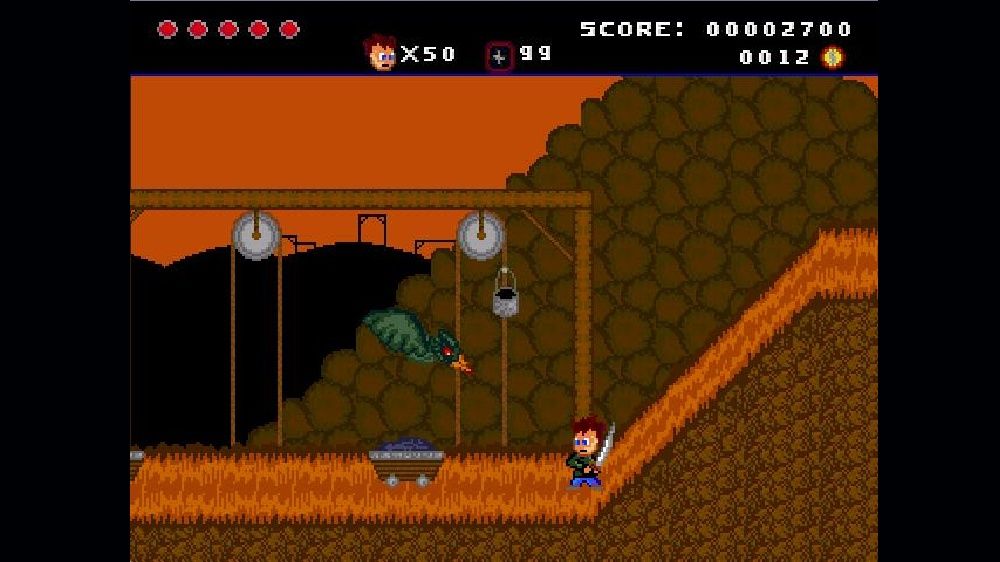
The Last Fortune simply doesn’t do a whole lot to entertain.  Progression is straight forward.  Get from point A to point B while stabbing everything in-between.  Combat is the focus of Last Fortune, which is unfortunate (pun fully intended) because the combat is shit.  The range of your attack is limited, and thus you’ll have to do most of your fighting up close.  You have no dodge, counterattack, or block.  Thus, most of the time you’ll be forced to trade damage with the enemy in a way that gets downright maddening later in the game.  I especially hated these giant red knights that looked more like a spartan from Halo brandishing a Halloween novelty sword.  You have to get too close to attack them, and they’re spongy enough and fast enough that you will take damage.  Well, unless you unload your special moves on them, assuming you have a good one.  For some reason, you can only have one type of spell at a time.  The item-picks for these are tough to distinguish from one-another, even if you’re on a TV big enough to double as an ark with two of every creature.  You can buy a charge attack that shoots a Zelda-ish beam across the room, but it’s as weak as a watered down Martini.  All the purchasable upgrades are overpriced and money is scarce even if you go out of your way to slay every enemy.  Plus, you can only access the store between levels, which are too long and boring for anyone to reasonably endure.

The Last Fortune was only one dodge or block move away from being a decent game. Alas, it was not to be.

The Last Fortune was only one dodge or block move away from being a decent game. Alas, it was not to be, making all combat an exercise in frustration and annoyance. The only way to safely fight these flying bastards is to hit once, run away, and wait for another opening. Also known as Zzzzzzword Play.

There’s just no hook to keep you going.  In fact, the game seems to go out of its way to make you want to quit.  The asinine continue system forces you to spend your coins (which again, you aren’t provided enough of to make shopping enjoyable) to continue from the beginning of whatever stage you’re on.  To salt the wounds, you have to pay extra to start midway through the stage.  Lives systems are obsolete anyway.  A continue system this punishing for a game that isn’t very fun to begin with will not add incentive or replay value to it.  It will just make people quit and find something better to play.

That’s what aggravated me the most about Last Fortune.  It looks good enough that obvious care was put into it.  The developers just forgot to bring the fun.  Gameplay is bare-bones.  Enemies are cheap.  Damage is often unavoidable.  The level design is basic and boring.  The dialog is soul-crushingly long and dull.  I truly believe the building blocks for a good game are somewhere in this mess, but Last Fortune never puts it together.  It’s like the developers were given multiple paths for each mechanic: the fun way and the boring way.  They fully intended to go down the fun way, but couldn’t read the map properly and ended up in the boring capital of the world.  And that’s a shame.  Bad game or not, nobody should be stuck in Sacramento.

xboxboxartThe Last Fortune was developed by Misty Day Games

80 Microsoft Points have friends that live in Roseville, which is right next to Sacramento and thus is a like a satellite of boredom in the making of this review. 
Gameplay footage courtesy of Splazer Productions