Eyes
Platform: Arcade
Developed by Digitrex Techstar
Published by Rock-Ola (US) Zaccaria (Europe)
First Released in 1982 NEVER BEEN RE-RELEASED
You can practically feel the cynicism during the planning session. “Pac-Man is popular. What’s Pac-Man? A mouth! Well, what else is on a face that we can turn into our popular game?” “A NOSE!” “A nose, Greg? Goddamn, a f*cking nose? You’re fired! Anyone else?” “Uh.. eyes?” “EYES! Make a game where an eye eats things!” “Eyes don’t eat. They see.” “THEN MAKE A GAME WHERE EYES SEE THINGS! JEEZ LOUISE DO I HAVE TO SPELL IT OUT FOR YOU?”
Eyes holds a minor significance in my life as the first ever game I remember playing on MAME. The name stuck out to me. Some companies went all out with catchy names that grabbed your attention. Q*Bert. Zaxxon. Even Centipede, which is actually a real thing, still pops on a game list. This has none of that. EYES. It’s practically like saying “yep. Just ‘Eyes!’ Deal with it!” In a sense, it stood out by not standing out. Published by Rock-Ola, the famous jukebox manufacturer that’s still around to this day (they turn a century old in 2027) and developed by Digitrex Techstar, I initially pegged Eyes as a soulless Pac-Man coattail rider. But, I was wrong. Actually, it’s not even really a maze chase. I mean, it wants to be one, I think, but actually It’s a run-of-the-mill tank game, and not a very good one.
I’m the eye at the bottom of the screen.
Eyes features eight screens but really only one single maze where you have to fire projectiles from your eye to both kill enemies and also collect.. or possibly destroy, it’s not clear.. the things in the mazes. Like Pac-Man, the object is to collect all the objects. You’re not just being chased, as the other eyes shoot at you. Your projectiles are unlimited and travel the full length of the screen but disappear if they hit something. Likewise, the enemies can and will shoot the full length of the screen as well. Once you clear the 8th stage, that level seems to repeat forever. There’s undoubtedly something here that makes you want to enjoy it even if it does feel like it’s trying a little too hard to be 80s arcade quirky. The problem is, it’s just not fun.
The fact that you can fire more than one projectile at a time seemed nice until I realized what the developers must have: the game would be impossible after a certain point without it.
The biggest issue is that the “maze” just isn’t that interesting, seemingly tailored for neither excising chasing nor exciting tank combat. Once enemies become more aggressive and fire on you faster, you have no choice but to play conservatively and squeeze out distance between you and the baddies, usually one row at a time. By the sixth level, gameplay in Eyes is reduced down to bobbing back and forth like you’re doing the hokey pokey, waiting for enemies to peak around the corner and tagging them in the split second they’re exposed, before they’ll turn the corner and shoot you. Ironically for a game called EYES, enemies don’t blink when they respawn, and they will fire immediately upon spawning. Each enemy spawns in a specific location and always respawns there a second or two after you shoot them, but since they all look the same, the main challenge becomes keeping track of which is which and where they’ll respawn. Does that sound fun? Cuz it ain’t.
This slideshow requires JavaScript.
The one remarkable thing about Eyes is that, despite using the same maze with the same target locations and the same enemy starting points, it doesn’t feel like it’s only one maze. That’s probably because the scaling is so badly handled. The first four levels or so are too easy, while level five is the only one that has a nice balance to it. From the sixth level onward, it’s all wiggling back and forth, all the time. Since your projectiles and enemy projectiles don’t cancel each-other out, you’re left with no choice but to camp and wait. The enemies realize this too because eventually they’ll just sit on the other side of a wall YOU’RE parking on and wait as well. I suppose in that sense, Eyes is one of the first cover-based shooters in gaming history. But it’s dull and the scoring balance isn’t very rewarding and there’s just no tension to it. It’s a slog. One of those games lost to history because it wasn’t all that good in the first place. Certainly nowhere near the worst arcaders. God, no. Actually, I think there’s potential here, but Eyes can’t decide if it’s trying to be a thrilling maze chase or an intense tank combat game. Maybe you can do both, but not this way. Verdict: NO!
I avoided using the following cliches: if looks could kill, the eyes have it, the eyes are windows to the soul, eye-eye captain, and so-forth. You’re welcome.
Colored Effects
Platforms: Nintendo Switch, Steam
Developed by TacSou
Published by Flynn’s Arcade
The graphics are nice, clean, and distinctive. TacSou never put the trees in locations that would be distracting. It’s a game that allows you to process everything quickly with no visual loudness.
I’ve had a bitch of a time trying to write this review for Colored Effects, an indie puzzler where you have to dip your character in superpower-granting paints in order to solve logic puzzles. I’ve not been struggling because Colored Effects is bad or boring or anything scandalous like that. Actually, it’s really good. I can’t stress enough how good the controls are. Colored Effects has accurate, intuitive movement physics, effortless jumping physics, and some of the best box-shoving mechanics I’ve seen (with one tiny but annoying exception, see the next caption). Seriously, I hope developer TacSou wrote down the recipe for this (I assume video games are made with recipes) because the controls are gosh darned perfect.
This is the one and only exception to the controls/movement being flawless. Here, a box I wanted to fall through a trapdoor when I activated a lever didn’t fall, instead defiantly balancing on a single pixel. Take that, Newton!
The color concept works great, and it’s largely because of those intuitive controls. You can only be one color at a time, and each color has unique special abilities. Green allows you to clone yourself and claim a carbon tax credit. Yellow gives you a dash move and grants you immunity from Green Lantern’s ring. Turning red lets you throw fireballs and gives you dictatorial authority over all other Power Rangers (unless it’s the Alien Rangers or Time Force squad, where you’re relegated to field command). Purple allows you to warp just far enough to pass through nearby walls and also will make televangelists speculate as to whether you’re supposed to be “the gay one” or not. Dipping yourself in blue gives you a double jump and also assures you’re a shoe-in to win California’s electoral votes. There’s almost no learning curve to any of the superpowers and their limitations. The clones of yourself are lifeless blocks that vanish if you leave the bubble surrounding them. The warping ability is the neatest, because when you’re choosing the direction to warp, the game doesn’t pause, so you can be hovering mid-air. Yes, this is worked into the level design, too! These are really basic platforming/puzzling tropes, but they’re used so cleverly.
There’s a few technical annoyances. There’s checkpoint billboards you can use. See the box with the little character below the two switches on the left of the picture? That’s it, and it’s 100% optional to activate. They’re much appreciated, but they also come with a monkey’s paw-like glitchy drawback. Sometimes I’d activate them only to realize I’d made the wrong move, so I’d pause the game and restart the whole level from scratch. Then I’d go about puzzling, realize I’d made another mistake and hit the quick restart button, which should start the whole level over, right? Only, it wouldn’t. The game would revert back to the previous checkpoint I’d already deliberately erased, which meant I had to pause the game and click the restart level option again. That happened constantly and it was so annoying.
And the puzzles are fun little test chambers that mostly accomplish what I call “The Big Overwhelm.” That’s my term for levels so big and vast and multifaceted that the first time you see the layout, you think “there’s no way I’ll ever make sense of it.” Which is awesome, by the way. The Big Overwhelm is the secret sauce that makes classic puzzlers Portal and Baba is You work. I dare say no logic puzzler can be great without it. Not every level of Colored Effects pulls it off. In general, any puzzle game can usually be sussed out by figuring out what the final move of a level is and reverse-engineering it from there. Well, quite a few stages in Colored Effects suffer from “First Move Syndrome” where a puzzle is too easy because the first move is so obvious that the rest of the design logic instantly reveals itself. Even late in the game this happens. Scaling is super hard to do in a puzzler. You can add extra steps or red herrings till the cows come home, but it’s just so hard to gauge what is going to throw someone off. Scratching your head is an entirely personal experience, and unless a developer is able to use something along the lines of focus testing to reorder levels based on average completion times, you’re going to end up with a difficulty curve that looks like the recordings of a seismograph. It’s kind of inevitable.
This was really the only boss I enjoyed fighting because it was the only one that felt like a PUZZLE in this PUZZLE GAME that ended when you solved the PUZZLE instead of having to redo certain steps because it’s a boss and bosses are supposed to have “hit points.” This boss requires you to actually stop and think. Good stuff.
TacSou’s concept was you’d earn new colors by fighting bosses. Solid idea if the boss battles are true to the rest of the game. But, only the one I pictured above accomplishes that, while the rest don’t feel right for this game at all. And the pacing is truly strange. Colored Effects has 40 levels. Which levels have the bosses? 2, 6, 10, 14, and 40. Yes, really! You go from three levels and a boss fight to a twenty-five level gap between them. And I’m not complaining, by the way, because the levels are fun and the bosses, well, aren’t. The final boss has roughly fifty-thousand goddamned different phases (but who’s counting?) and goes on FOREVER because each color has its own segment, and it never feels puzzley. Not for a single second. Mind you, there are no enemies in the puzzle stages, yet you have to fight airplanes shooting bullet hell-ish projectiles at you to finish the game, and it’s so out of place. None of the bosses are bad in the traditional sense. It’s only by virtue of how wrong they are for Colored Effects that they’re unwelcome speed bumps, with that one exception above. And that one exception is why I can’t overlook this, because TacSou proved they COULD make bosses that combined genuine logic puzzle goodness with traditional game bosses. The rest are so cookie cutter they feel like any generic platformer’s bosses. Shame, because this is NOT a generic game!
In the first few levels, you have to collect gems that open gates to the room exit. Then, Colored Effects adds a twist. Some of the levels require you to reach the exit once with each color available, at which point you come out the starting door and have to do it again as a different color. Once you’ve gone through the door in a color, it’s checked off, but you can’t go through the exit as that color again. It works and it’s unique, but these also tended to be the puzzles that were easiest because either the first move or the last move you’d make became too obvious. Oh, and if you’re curious what color blind mode looks like, here it is.
80% of the bosses being lame aside, Colored Effects is a very good puzzler. I really don’t have too many notes on the puzzle logic itself, because movement and the box shoving physics are so accurate that you don’t even stress them. There’s no pixel-perfect jumping required. I can only think of one single level where I felt the timing of activating switches and special moves at the correct moments was so precise that novice gamers might struggle with performing it even if they figure out the solution. No, this is actually nearly perfect as far as this genre goes because the movement/timing is so fine tuned that it really becomes your wits versus the puzzle design, and the controller isn’t a factor at all. And they’re really good puzzles too. You don’t have to be a brain surgeon to enjoy Colored Effects. In many ways, it’s the ideal Nintendo Switch puzzler. The toughest part of Colored Effects for me was writing this review, really. What can I say? It’s hard to write about a game that does so little wrong. Verdict: YES!
Colored Effects is Chick-Approved and ranked on the Indie Gamer Chick Leaderboard.
$3.99 (Normally $4.99) were dipped in brown paint and rolled in bread crumbs in the making of this review.
A Review Copy of Colored Effects was supplied by Flynn’s Arcade. Upon release, a copy of it was purchased by a member of the Vice Family. Two, in fact! I bought my nephew one, too. Hopefully he can put down Fortnite long enough to try it.
Mario & Wario Platform: Super Famicom
First Released August 27, 1993
Directed by Satoshi Tajiri Developed by Game Freak Published by Nintendo Exclusively Uses SNES Mouse NEVER BEEN RE-RELEASED Listing at Mario Wiki
This slideshow requires JavaScript.
Now that Devil World finally got a US release, the question is “what is the biggest Nintendo-published game to never get a US release?” Obviously most Nintendo fans would say “Mother 3.” But, I’m going to disagree. The thing is, that’s not really among the A-lister Nintendo franchises. Not like, say, Mario. And there is a Mario game that never came out in the United States. Not just any Mario game, either. It’s a one-of-a-kind Mario game from the creator of Pokemon. AND it utilizes the SNES Mouse. It’s called Mario & Wario, and it never saw the light of day outside of Japan. It has been referenced a few times, especially in the Smash Bros. series, but otherwise, it’s a non-entity in Nintendo’s library. It’s also likely to never be re-released again. Well, assuming Nintendo doesn’t do some kind of NES-Mini type of plug-and-play with the SNES Mouse for Mario Paint. Which, jeez, that sounds like a license to print money to me. If they did that, maybe they would include Mario & Wario with it. It’s not like there’s a need for Nintendo to create an English translation. All the text and even the logo for Mario & Wario are in English. Even though the game’s code includes a Japanese logo. The theory is that Nintendo accidentally manufactured and shipped the version meant for America to Japan. See kids, even the big boys make mistakes.
For this play session, I used Mario exclusively. I strongly advise anyone playing this to do the same thing. The princess is far too slow, eliminating what little excitement Mario & Wario has, and Yoshi is impossibly fast. It’s not like this is a typical mouse cursor you’re using. Especially for the smaller blocks, I had difficulty lining up Wanda to work her magic. I should also note that I have tremors these days, and by that, I mean my hands shake. I don’t have giant mutant worms attacking me. Almost every death I suffered was the result of clicking errors on my part, but your mileage may vary how much that factors in.
Mario & Wario is sort of like a more fast-paced, proactive, action-based version of Lemmings. Wario swoops over Mario at the start of every world and drops some form of a bucket on his head. You take control of his guardian fairy/glorified cursor, Wanda, who has to clear a path for Mario to reach Luigi. If you tap Mario directly, he changes directions, but otherwise all the interaction is with the stages themselves. There’s a wide variety of blocks that you have to click. Some of them stay on the screen until you click them again. Some are already on the screen and clicking them permanently removes them. Some run on a short timer before vanishing. Others work like switches and clicking one removes all of that variety while activating another color of blocks. There’s also tons of ladders that Mario will always take if he steps on them. Finally, there’s a small handful of enemies, some of which you can kill by clicking, while others you have to work around while making sure Mario avoids them.
These bats, for example, can be clicked four times when they’re perched or once individually when they take flight.
The actual “puzzle design” of Mario & Wario takes quite a while to find its footing. At the start of every level, you’re allowed to scroll around and get a lay of the land. It seems like most of the levels are straight-forward, with the path Mario needs to take already laid out, and you simply act as a caregiver. Assuming the level is maze-like, victory usually comes down to determining what is the final ladder and/or spring you need to use to reach Luigi and reverse-engineering from there. It takes a LONG time for the game to reach the point where I’d consider it to be genuinely challenging. You can play any of the game’s first eight worlds in any order you want, which is an ominous sign for the lack of difficulty scaling. There’s ten levels per world, and once you clear the first eighty levels, you have to play through two more worlds to finish the game.
I found it amusing that the bucket falls off Mario’s head when he falls. Really, Wanda could shove him out of the way at this point and the level would be solved. While I’m on the subject, Wanda’s magic wand can make blocks appear and disappear and can defeat enemies. Why doesn’t she just make the bucket disappear?
It’s not until the ninth and tenth world that truly meaty puzzles come into play, though some of those levels are annoying. There’s stages that have a glue-like substance that you slowly walk through, and you have to click the blocks to turn them over. They’re smaller blocks, and the small blocks in general are the hardest to do, so I hated those. I also wasn’t a fan of the levels where you just slap Mario back and forth like he’s in some kind of frat initiation as you wait for the obstacle to move out of the way. Mario & Wario mostly isn’t a puzzle game in the Baba is You sense. It’s not even really Lemmings-like, even though everyone lazily uses that comparison, myself included. It’s just the easiest comparison. In the entire 80 levels before the final two worlds, maybe a half-dozen stages required me to stop for even a moment and think about what moves I’d need to make. Maybe. It would have required more if I actually went for the four stars in every stage, but those only grant you an extra life. I didn’t need that many lives even when I made multiple clicking errors. It wasn’t until world seven that I died twice on any level, and I never died more than twice before world nine. I also never timed-out once over the entire 100 stages, though I had a couple close calls.
Given the locations of the stars, I get the impression that, at one point in development, they were essential towards beating the stage. The “puzzle” elements of Mario & Wario are more often than not designed around THEIR placement. The typical path to victory is too much of a cinch. If you factor in the stars, suddenly the game seems more elegantly planned. But, they’re just for 1ups. The game doesn’t even track how many stars you collect in each stage after the fact. A modern game would allow you to replay every level and go for perfect scores. On the off-off-off chance Mario & Wario is ever remade, I’m sure the game would be like that, where it charts how many stars you collect each level.
I wouldn’t go so far as to call Mario & Wario a dull concept, because I did enjoy the game enough to play it from start to finish. It’s just not a thrilling experience. Especially early levels. World 1 is so bare bones it doesn’t even feature the stars at all. The opening stages of each new world are glorified tutorials that introduce whatever new element that world introduces. There’s cannons that you can click to change their direction, but you can also click their projectiles to eliminate them. Or perhaps there’s indestructible spiky balls that you have to dodge. But, once you have your path laid out, it’s rare that you have to stress obstacles that might interfere with that. Genuine excitement doesn’t really show up until you’re over eighty levels in. EIGHTY! Holy crap. That’s a lot of slogging through okay-but-mundane levels while waiting to get to the really good stuff.
This specific sequence here was the one that gave me the most problems. To beat it, you have to time when the spiked balls are inside the timed block. BUT, you also have to keep Mario close enough to the edge that he starts to fall before the block vanishes and releases the spiked ball you trap. Mario doesn’t just fall off ledges instantly. Players are given a tiny grace period where he hangs over the edge before falling. Without this grace period, Mario & Wario would be next to impossible.
Mario & Wario isn’t the most brainy of puzzle games. It’s more about staying calm and thinking on your feet. You can’t make any moves outside of the present screen you’re on, but for the most part, they didn’t incorporate that into the puzzle design. Only two or three levels are dependent on you making a move that won’t factor in until later in the level. The most notable one is level 8-10. On it, you start the stage next to a ladder. Below you are two fireballs, and if you don’t close them in immediately, you won’t be able to beat the stage after you spend quite a bit of time making your way to the exit. That’s really the only stage where victory is determined the moment you start the level. On one hand, that means there are no GOTCHAs in the game. On the other hand, there’s no real challenge, either. It’s the least bold possible design they could have done for a game like this.
And really, once you click these two squares, the rest of the level is a lay-up.
Had I played Mario & Wario outside of an emulator, I don’t think I would have liked it as much. There’s no save files, so the entire game must be beaten all at once. I wasn’t limited to beating in a single sitting thanks to save states. Even then, I almost stopped playing when I realized I’d have to redo all the early world that I already played once in 2020. They’re too easy, and the novelty of playing a lost Mario game had long run its course for me. Thankfully, I didn’t play deep last time. The promise of unseen levels was enough to get me to put the time into Mario & Wario. This go around, I beat the whole game. I’d say a little over half the levels are, while not exciting, certainly compelling enough that Mario & Wario holds up slightly more than it would have just as a historic curio.
The last twenty levels are genuinely hard. I wish there had been more stages like this, because I had such a fun time figuring them out. I also started losing lives, but by this point I had built-up close to thirty of them, so there wasn’t any tension.
You would think Nintendo would have done something with Mario & Wario by now. It has one of the finest pedigrees in gaming, and Nintendo has a touchscreen console that would work perfect with this type of gameplay. They’re remaking Mario vs. Donkey Kong, but a Mario & Wario remake would make even more sense, wouldn’t it? It has that tantalizing “forbidden fruit” aura about it. An unreleased-in-America game that utilizes unconventional controls and has gameplay unlike anything else in the entire franchise. Oh, and it was almost even weirder. Mario & Wario was originally conceived as a Super Scope game. Yes, really! The stumbling bucket-headed gameplay was still there, along with creating a path for Mario to reach Luigi, but you’d also fire nets at the screen to capture enemies.
Despite the name of the game, there’s no direct encounter with Wario except during bonus levels, where you click-mash Wario for bonus coins. There’s no final boss battle. The game just ends after 100 stages. By that point, you should be more than ready to be done with it. A little bit of Mario & Wario goes a long way. It must have been MADDENING to play this without saving.
The only reason Game Freak moved away from making this a light gun game was because TVs were getting bigger and the Super Scope was losing its universal compatibility. Frankly, it’s a miracle Mario & Wario exists at all, as it seems like it came close to being cancelled altogether, instead of just cancelled globally. It’s not clear why this never came out in the United States. It got previews in magazines like Nintendo Power and the SNES Mouse was in more homes than the Super Scope, which got four or five exclusive games. Maybe it was because Mario and Wario barely matter in a game called Mario & Wario. Or maybe because they felt American fans associated Mario with action games, and Mario & Wario is a mild-at-best puzzler. A fun one, but certainly not a great one. Mario & Wario is just alright. Even though it has gameplay merit, really, the curio factor is the main reason anyone would want to play this in 2023. Yet, the formula this created seems like it has potential to live-on. Will the SNES game ever be re-released? Probably not. Will Mario & Wario be remade as a touchscreen game? I wouldn’t bet against it. Verdict: YES! Check out my review of Mario Clash for the Virtual Boy!
Of all the licensed games I’ve done up to this point, Moonwalker is by far the longest of long-shots for a modern re-release. Sega can’t even get the estate of Micheal Jackson to come to the table over Sonic The Hedgehog 3’s soundtrack. I thought maybe there was residual postmortem bad blood, since Jackson apparently wasn’t happy with how his arrangements for Sonic 3 sounded on the Genesis. But, that obviously isn’t the hold-up. Jackson later voiced himself in the Space Channel 5 franchise, so clearly no bridges were burned. The real question is “how much could his estate possibly want for chiptunes?” It’s not like this is a previously unreleased Beatles track we’re talking about. It’s a series of harmonious bloops and bleeps that sound sort of like his famous songs. If anything, people hearing them might be inclined to spend money on the real songs. The “arrangements” featured in the video games have zero value to the estate. Again, we’re talking about bloops and bleeps here.
Let me address the planet-sized elephant in the room. No, not that one. NO, not that one either. I’m talking about the lack of Thriller. Even deep into the production of Moonwalker, the designers were under the impression they could use the iconic song and created levels tailored to it. However, they were later informed that only songs personally written by Jackson himself were available. And thus, all three games have graveyard scenes without what is arguably the most popular Michael Jackson song backing the action. It is SO unavoidably awkward, especially since the fully-charged magic dance attack in the graveyard level clearly has the dance moves from Thriller. I don’t listen to Jackson’s songs and even I think this is lame as f*ck.
Good bloops and bleeps, mind you. My mother, a fan of Jackson’s work, could identify what each song was supposed to be in the arcade and Genesis versions. But, that also means they’re good enough to assure Moonwalker will likely never see the light of day again. The closest we came to a re-release was in 2011, when Sega submitted a version of Moonwalker for PEGI rating on the Wii’s Virtual Console, but nothing came of it (it’s unclear which version, but I’m guessing the Genesis one). Presumably it was done by mistake. It happens. No matter what you think of Michael Jackson, this much is clear: he loved video games and was proud of his work with Sega. It’s not like the games paint him in a bad light, and it’s also not like someone would buy this in lieu of a CD. Nobody on this planet is going to say “well, I was going to buy a collection of Michael Jackson songs, but I bought this video game that has electronic beeps arranged in a way that sounds kind of like his songs, so I’m covered!” Can we please do the right thing here and come to the table like grown-ups? Because these games are worth a look today, in 2023. Especially the arcade version. On with the reviews!
Michael Jackson’s Moonwalker Platform: Arcade – Sega System 18 Developed by Sega and Triumph First Released July 20, 1990 NEVER BEEN RE-RELEASED
This should be a joke. A borderline parody. But, it’s actually a very good game.
I played the arcade version of Moonwalker after playing the two console versions, but chronologically, this was released first. And now, I’m wondering if the more bland and basic Genesis/Master System versions soiled the reputation of the coin-op. Seriously, why does Moonwalker never come up in conversations about the best licensed arcaders? THIS IS GREAT! I don’t even normally like isometric games. In fact, I kind of hate them. I always get discombobulated trying to walk in a straight line when I play them, and that’s not even the most annoying aspect of the game. Moonwalker features this strange pseudo-auto-scrolling gameplay that makes it feel like you’re getting the bum’s rush through the set-pieces. But, actually, it’s about thirty to forty minutes of perfectly-paced non-stop action.
I have no clue why, but the first level of the game lasts roughly one minute and consists of a single street corner. It’s not as if the game is so complex it requires a tutorial stage, but that’s sort of what it feels like.
It’s probably best to think of Moonwalker as a close cousin to Altered Beast. The same type of slow-scrolling, hoard-smacking fisticuffs, only played from a different angle, with only one button for all striking moves. Gosh, that actually sounds like my idea of the fourth circle of hell. So, you can imagine my surprise that the smile never vanished from my face during my first session with Moonwalker. Part of that is that the enemies aren’t completely brainless. There’s a fairly nice variety of them to smash, and you’re always given enough room to dodge out of the way of their shockingly elegant attack formations. You can also charge-up your attack, though this was the one weakness of the game’s combat. It’s too hard to aim the charged up shots if you move around before unleashing them. In general, you’ll spend most of the time blasting enemies with energy directly with your hand. Most baddies only take two hits to kill, and the levels go by quickly. One or two of the robots were a bit spongy, but not in a deal breaker sort of way.
If you’re turning around while you attack, you do this little spin-attack. So the one-button aspect of the combat is deceptive, because there’s a little hint of nuance to it.
I know what you’re thinking. “Where the heck is she getting an Altered Beast comparison out of that?” It’s because you transform near the end of each stage. For you children of the 2000s, Michael Jackson famously had a chimpanzee named Bubbles that he took everywhere he went. Bubbles shows up where you’re next to the boss for each area. Touching him transforms you into MECHA JACKSON! (imagine a Godzilla roar here for full effect). At this point, you get projectiles and your charge-shot becomes a pair of missiles. This is where the run ‘n gun gameplay takes over, though the “run” part is misleading, since you still move around the screen at the same pace, and usually there’s not too many basic enemies to wax before you encounter the boss. As much as I enjoyed the shooting combat, the bosses are the game’s weak link. They’re generic robotic contraptions that feel like they belong to another game. Not boring to fight, mind you. But they often feel out of place with the set pieces.
This slideshow requires JavaScript.
The most memorable aspect of Moonwalker are the bombs. You get one per life and some of the children you rescue will grant you additional ones. When you activate them, all the enemies on the screen join you in a dance number. Even the robotic enemies (including the robotic dogs) do it, and when the dance ends, they all die. While it’s disappointing that you’ll briefly turn back into the human MJ when you activate a bomb as Mecha Jackson, it’s SO SATISFYING to use the dance move. It gives the whole game a music video vibe, and it does a better job of it than the more choreographed Genesis Moonwalker. In the arcade game, I found myself timing it when enemies were standing on the perfect spot to make it look like a performance. I wanted to do it that way. It made the experience more fun.
This slideshow requires JavaScript.
Okay, so Moonwalker isn’t the deepest game. But, it is the ideal early 90s arcade experience. A simple action concept with easy-to-understand combat that’s polished to a mirror shine. From a gameplay perspective, the only real “hole” is that the enemy themes don’t always feel like they belong. When your main gameplay issues are slight thematic inconsistencies, you probably have a very good title. You couldn’t make a game like Moonwalker today. It’s too simple. Too short. Too limited. People wouldn’t stand for it. Yet, it’s telling that I, a total non-fan of Michael Jackson, could walk away as satisfied as I ever have been by a game of this type. Even without the novelty of Michael Jackson being the star, Moonwalker is worth the forty-five minutes max it takes to play-through. A perfect example of how to do a licensed arcade game, and especially a game that is really a vehicle for one specific celebrity. I honestly can’t imagine any game could do better at that, really. Verdict: YES!
Michael Jackson’s Moonwalker Platform: Sega Genesis Developed by Sega First Released August 24, 1990 NEVER BEEN RE-RELEASED
And you thought the stairs in Castlevania games were frustrating. Holy crap, it’s INSANE how hard it is to just begin the process of walking up a flight of stairs in this game.
Going a completely different direction, the Genesis version of Moonwalker uses a heavily modified version of the engine that powered Genesis launch-window title Revenge of Shinobi. Whereas rescuing children is a side task in the coin-op, this time around, finding hidden children is the entire object. You play fifteen stages of opening every door, window, car trunk, etc, until you find X amount of kids. At this point, all enemies completely vanish and Bubbles the Chimp appears and points you in the direction of the “boss” encounter. It makes the Genesis take on Moonwalker a much slower experience, and one that’s absurdly repetitive.
This slideshow requires JavaScript.
I know this is the oddest observation possible about Moonwalker, but the first thing that stuck out to me is the movement of the sprites. The tall, slender characters move around with this spooky fluidity to their locomotion. It’s both unnervingly unnatural and oddly hypnotic. It also looks remarkably like prime-era Michael Jackson’s dancing, which I guess is the point. It’s just a shame the actual combat doesn’t feel more dance-like. While the Genesis game retains the blue “energy” that Michael Jackson emits when he throws punches and kicks, this time around, there’s no OOMPH to it. His standard ground-based attack is the weakest-feeling kick this side of Taito’s Superman coin-op. Part of the lack of weight and gravity comes from the fact that the kick has incredible range, at least if you have enough health to give Michael his magic powers. The more health you have, the more range the fairy dust or whatever it is he sprays from his limbs reaches. In practice, it looks exactly like he stepped in a puddle and is kicking the water off his shoes. WELL, THAT’S WHAT IT LOOKS LIKE!
Actually, it looks more like snowflakes, and it spreads out, too. You can barely see it in this picture, but the fairy dust I kicked out is about to kill this dog. It’s quite a ways from me, too, so it’s pretty powerful.
There’s more than just kicking and punching, but it comes at a cost. Holding the A button down makes Michael spin, which causes damage to anything that touches you, but your health starts to drain. If you hold the spin move for a second or so before letting go, Michael throws his hat, which is an instakill on almost anything it touches. If this had a lot of range, or didn’t cost health, it’d be a fun attack. It has a bit more OOMPH than the fairy dust attacks have. Hell, this should have been the game’s basic attack, but it’s not. It costs health to use, it takes time to activate, AND, unlike the fairy dust, it doesn’t spread out. I never found a single usage for it where I wasn’t better off using the kick. Life is plentiful in Moonwalker. Every kid restores health, so you should always have close to a fully-charged magic kick. The hat is WORTHLESS! Here’s the exact same location from the above picture, only using the hat.
Not only is the hat going right over the damned pooch, but it ate-up health AND takes longer to perform. The guy above me had time to get away while I spun-up the attack. One of gaming’s most worthless moves.
Now, I made a major boo-boo the first time I played Moonwalker. I didn’t know about the all-powerful fully-charged magic attack. It takes literally half a full life bar to unleash and causes all the enemies on the screen to join you in a dance number, just like in the arcade game. My first time playing the Genny Moonwalker, I didn’t want to drain my health and I found the hat-toss to be worthless, so I stayed away from the magic attack. I only discovered the dance-off thanks to my play-through of the Master System game. The magic dance is especially useful for clearing the level “bosses.” They’re usually not bosses in the “big boss” sense, but rather massive waves of basic enemies. When you perform the move correctly and the screen is full enough of bad guys, it does succeed in making Moonwalker feel like a music-based action game. Unlike the arcade game, enemies actually line-up next to Michael to make the dance look more authentic. So, there’s that. Of course, it doesn’t always work, either. For example, the storm troopers in level 2-2 just run away when you begin to dance, and other bosses might be damaged, but not die.
This slideshow requires JavaScript.
Moonwalker’s main objective is also the game’s fatal flaw: finding the children in each stage becomes dull after a while. If there were visual clues or some kind of logical way of sussing-out their location, it would be one thing. OR, alternatively, if their locations were randomly generated. Then I could live with the mechanic. But, besides the near-certainty that the upper corners will be hiding spots for them, it’s really just blind searching the first time around, and it grows old quickly. There’s not a whole lot to break up the monotony. The level design doesn’t really become interesting until you reach a laboratory in the very last game world, where there’s teleporters that make the levels a maze. That’s so much better than the world before that, which features caves that you had to go inside of to rescue the kids. Since the majority of the caves are empty BUT you also have to make your way back to the door, it feels more like additional busy work. Moonwalker already suffers from too much busy work just by having to manually walk to the area of the map you fight the boss in. The Sega Master System version cuts that aspect from the game and is better off for it.
The labs are fun levels. Walking through empty stages while Bubbles points you towards the area of the map that doubles as the boss chamber? Not so much.
I really do think the “hide and go seek” gameplay could work if it was only used for one of the three levels in each world. If they had come up with some kind of other gimmick for the rest of the stages, I think Moonwalker would have been a much better game. Actually, they DID come up with a better gimmick. At the tail of my first play-through, I turned into a robot and had to clear dozens of enemies with laser beams. I thought “why wasn’t there more of THAT in the game?” Especially after I played the arcade game, where each level closes with MECHA MICHAEL. Well, it turns out, there’s actually a way to do that in other stages if you correctly pick the right child to rescue first. There’s no way of knowing without consulting a guide which child. I didn’t even know this was possible until my mother, a huge Michael Jackson fan, discovered it in level 3-3. Picking the completely arbitrary correct child makes a blue star fall from the sky, and you turn into a robot who can shoot lasers and missiles. It sounds delightful, but during the 30 or so seconds it lasts, you can’t perform the search behind graves or bushes for the kids. It brings the actual objective to a screeching halt. That’s NOT what I meant, game!
This slideshow requires JavaScript.
Then, after fifteen levels of side-scrolling, glorified item fetching gameplay, Moonwalker on the Genesis turns into a stripped-down Star Raiders knock-off for about a minute or two where you fight Joe f’n Pesci. HUH? What? And he doesn’t even have a baseball bat? Boooooo! Oh, and this whole sequence is jarring and terrible and should never have closed the game. Couldn’t they have just had one single normal boss fight? The game comes close a few times, especially in the graveyard. There’s a section where two zombies throw their torsos at you, and that was the only point where I actually died fighting a boss. The Star Raiders section provides no sense of closure. It doesn’t “feel” climatic. It’s so lame.
This slideshow requires JavaScript.
I don’t know what to make of Moonwalker. You can tell really quickly that the main reason it exists is to showcase the technical superiority of the Sega Genesis over Nintendo’s NES. And it is impressive for a 1990 game. Especially when the screen fills-up with enemies. Moonwalker just lacks the excitement or structure of a truly great action game. On the other hand, some of the set pieces are fun (especially the graveyard and lab stages) and it’s still a short game, overall. It should take the average gamer today under two hours to finish. What I found to be the most telling thing about Moonwalker is that my non-gamer mother, a huge Michael Jackson fan, preferred the Genesis version to the arcade one. She played through the whole thing and enjoyed it thoroughly (until she got to the spaceship finale, which I had to beat for her). Yep, that says it all: the Genesis game is made to be accessible to everyone, whereas the coin-op is clearly more tailored to what a hardcore gaming fan would enjoy.
Moonwalker’s biggest gameplay issue is the CONSTANT whammies you find in the search for the kids. Being the scoundrel that I am, I used the emulator to bypass a lot of them. Especially in the fourth level, where I’d rewind to avoid entering empty caves. This was probably the game I cheated most playing in 2023. Moonwalker fans, before you clutch your pearls, you might want to wait and see what the end result of that cheating was.
I can’t review from the perspective of my mother. I will say she was blown-away by Moonwalker on the Genesis. She had genuine regret she never played this before I did this review. The question for me is “did I have more fun than not?” The answer is yes, but there’s an asterisk attached to that. I confess that I used cheating to cut out a lot of the bad aspects of Moonwalker. I found it easier to rewind the whammies (or empty caves in the fourth level) than to live with the consequences. Had I not done that, I think I would have given up on Moonwalker during that god awful 4th level. Being able to undo the busy work of manually walking out of the cave saved it for me. So, I’m going to give Moonwalker a YES! because I do believe it’s worth looking at in the 2020s. Not just as a historical curio, either. There’s genuine gameplay merit to had. But, if I didn’t have rewind or save states, I’d likely have scored this a NO! since the emulator itself made the game more fun than it would have been playing on an authentic Genesis cartridge. Make no mistake: Moonwalker was never fated to age well. So, the fact that what’s still here is actually playable and even enjoyable in the 2020s is remarkable. Verdict: YES!
Michael Jackson’s Moonwalker Platform: Sega Master System Developed by Arc System Works Published by Sega First Released August 24, 1990 NEVER BEEN RE-RELEASED
This slideshow requires JavaScript.
The 8bit Sega Master System Moonwalker was so close to defeating its Genesis big brother that it could taste victory. It features the same “glorified hide-and-go-seek” objective with finding children as the Genesis version and carries over all the set pieces from that game. However, to make up for the hardware limitations, there’s some big changes. Some are very positive. The fairy dust nonsense that took the OOMPH out of the combat? That’s gone. The biggest change is, this time, your kicks and punches have to physically connect to enemies to defeat them. As a fan of video game violence, I appreciated that very much, and Moonwalker SMS was just getting started. The hat throwing? That’s now a power-up you can use for the remainder of a level when you find a Michael Jackson doll while searching for the children. Oh, and it costs no health to use it. Nice. Last but not least: having to manually walk to the area of the map that’s meant to be the boss chamber? That’s thankfully gone. When you rescue the final kid, Joe Pesci taunts you, and you just magically teleport to the boss chamber. These are all positive changes.
Even the laboratory level feels a lot more maze-like. Easily the strongest level in any of the Moonwalker games. That includes the coin-op too. Yes, really! I know, right?
But, the downgrades let the air out of everything. The “boss” fights are limited by the power of the Master System’s hardware. So, at most, only two guys will fight you at any one time. I never had to use the magical dance-off move, since boss battles devolved into me walking left and smacking one guy, then walking right and smacking the next one, then repeating that process until the game told me I’d won the fight. It wasn’t fun to use the dance off move anyway, since the enemies don’t dance with you. Instead, the rest of the screen fades out while you dance all alone. Awful. Moonwalker makes the same mistake so many bad Sega Master System games did: trying to replicate gameplay done on superior hardware, instead of keeping true to the spirit of that gameplay in a way that plays to the system’s strengths, like Castle of Illusion did.
Womp womp.
Even with all those problems, I was so close to going YES! on 8bit Moonwalker. I can’t stress enough how well done the three lab levels were. The best levels in the entire franchise, easily. And then.. it happened. Remember how the Genesis game ends in a bad Star Raiders knock-off? Well, the Master System version ends differently too, but there’s no space battle. Instead, it ends with something that feels like the over-the-shoulder sequences in Contra. You transform into MECHA JACKSON and have to kill roughly four trillion soldiers, give or take. It feels out of place and wrong. I was like “okay, interesting way to end the game that has no connection to the previous fifteen levels of mind-numbing tedium, but whatever.” Honestly, this wasn’t god awful or anything. It just felt like it belonged to another game. BUT HEY, the 16bit version ended in a similar disconnected way, and I said YES! to it, right? Well, 8bit Moonwalker wasn’t done trolling me yet.
This one wasn’t TOO bad.
There is one final “boss” battle, and it might be the worst element of any retro game I’ve done up to this point. It’s yet another Contra-like sequence, only this time you take the form of a spaceship. There’s four cannons that open their hatches and fire at you, and you have to destroy them. That sounds reasonable, right? What if I told you the hatches open for only a split second? And what if I told you the projectiles they shoot lock onto you? Sometimes for the entire length of the screen. I have no idea how anyone could have ever finished this sequence without extreme amounts of cheating, because it took me FOREVER just to find an angle where the cannon lasers would barely miss me. Even when this happened, remember, the hatches only open for a fraction of a second. That meant I had to move off the safe spot I’d barely been able to find in order to cause damage to the cannons, which take multiple hits to kill and fire the most accurate heat-seeking shots in gaming history. This sequence burned through any good will the Sega Master System version of Moonwalker earned.
This slideshow requires JavaScript.
Not that it was AMAZING up to that point. I mean, it was good enough that I felt retroactively happy for children of 1990 who had the Masters System and couldn’t upgrade to the Genesis. It almost pulled off a convincing impression, too. Well, so much for that. It’s such a sloppy, nonsensical way to end the game. It feels completely unrelated to all the action that happened up to this point. I suppose I could say that SMS Moonwalker is worth playing if you quit as soon as you beat the last normal level, but then I remembered how bored I was making my way through the parking garage or the caves. Unlike the Genesis version, this barely held my attention, even with arguably better combat. The biggest problem is there’s just not enough combat. The hardware limitations mean that you usually only fight one person at a time. It’s not enough to be fun. 8bit Moonwalker is a blander version of a game that’s already toying with blandness. Verdict: IT’S BAD! IT’S BAD! IT KNOWS IT (THAT’S A NO!)
ActRaiser Platform: Super Nintendo Entertainment System Developed by Quintet Published by Enix First Released December 16, 1990 NO MODERN RE-RELEASE Terribly Remade as ActRaiser Renaissance in 2021
The last thing a person sees when their parachute doesn’t open.
ActRaiser was one of those games that came up so often in gaming magazines that, when it was released to the Wii’s Virtual Console in 2007, I had to jump at it. The funny thing is, ActRaiser was just a little younger than me and sniffing its second decade by that point, and it was still a one-of-a-kind experience. Actually, it still kind of is. That includes the sequel, which decided to remove the God-like aspects of the original game. I can’t imagine why it isn’t as beloved as this original SNES launch-window game. Nobody learned their lesson, which is why a horrible remake came out in 2021 that added tower defense elements that nobody in their right mind wanted or asked for. And now, playing ActRaiser 33 years after its release, it’s now glaringly obvious it’s a glorified tech demo to show off the capabilities of the new console. That’s not a knock, by the way. Super Castlevania IV and Super Mario World are in the same boat. I like them just fine, and I like ActRaiser too. It’s also a little overrated. Sorry, but it is!
You have to admire God’s determination to follow the rules of etiquette and use both hands on His broadsword, even when He’s leaping. Makes sense why He’d follow such gentlemanly rules. He invented them, after all!
ActRaiser is a roughly 50-50 split of sword-and-sorcery platforming and a stripped-down SimCity/Populous-like world builder. Most people remember it for the action parts, which are sort of like Ghouls ‘n Ghosts, only much easier (unless you’re playing the INSANELY hard Japanese version) and with less stuff to do. This is the third time I’ve played ActRaiser, and one aspect of it that struck me is how fast the levels go. It always caught me off-guard when the boss’s health meter would appear. “Wait? Already?” And that’s fine, by the way, because the combat is as basic as it gets. There’s no finesse to it. None. Despite the controls being pretty good (if slightly stiff), there’s no pizazz to it. You can’t block. You can’t swing the sword upward. There’s no sub-weapons besides bomb-like magic spells, some of which aren’t all that effective. The SNES is a six button controller. Half those buttons go unused. The fact that nobody would accuse ActRaiser of being a button masher is impressive.. because it kind of is one. Especially the boss fights.
And actually, the bosses don’t really hide their mashy nature. They have huge lifebars, but you’re not expected to dodge their attacks, so you would think they have the advantage. Instead, the battles are about getting three or four licks in for every tick of damage they give you. For a legendary game, ActRaiser sure has inelegant combat.
On the other hand, the action stages contain no filler and it genuinely feels like, once they ran out of ideas for each set-piece, they wrapped it up. That’s always preferable to padding a stage for arbitrary reasons. As basic as the action is, it never lasts long enough to get boring. There’s also a hidden complexity, in that you’re incentivized to fully explore the levels and not ignore enemies. In fact, you should slay everything in sight. That’s because every 50 points you score in the action stages increases the potential population of the town by one citizen. Of course, since you score points by the amount of health and lives you have (and lives reset between levels even if you get 1ups), you might not want to just hack and slash with reckless regard on every boss.
The longest level is this climb up a frozen tree.. at least that’s what I think it is. You have to ride these bubbles up to the top. It reminded me of Wizards & Warriors. Say, there’s a review I ought to do one of these days.
I didn’t even know there was a connection between scoring and population until I’d already passed the first two stages, which are the hardest to achieve a maximum population for. Go figure. Since the RPG-like leveling-up system that grants you extra health and extra God-power points in the simulations is based on reaching population benchmarks, points actually matter. Hey, I appreciate that scoring isn’t just included because it’s 1990 and the grown-ups making the games know that kids like to get high scores. I also appreciate that the game is nonlinear. At least to a certain extent. Your ability to visit each land is tied to how leveled-up you are. This was the first time I played the stages in a mixed-up order. It didn’t really make that much of a difference, but I’m big on players having as much flexibility as possible to create their own strategies.
This slideshow requires JavaScript.
The main highlight of ActRaiser’s action scenes are the thirteen boss fights. They’re a fun hodgepodge of different world mythologies. A centaur. A minotaur. Dragons. King Tut.. for some reason. Come to think of it, that’s not really a myth. Just some poor kid who was so inbred he had a cleft palate, a clubbed foot, and a curved spine and lived a life of constant, agonizing pain (it’s not like they had Vicodin back then) before dying of malaria at the age of 18. Shit, no wonder he’s aligned himself with Satan to do battle with the personalization of God.
Hell, why bother with the sword? You could probably kill him by coughing in his direction.
While I enjoyed the bosses, they weren’t so good that I was happy when the game ends not with one final level, but with a boss rush. Not all twelve previous bosses, mind you. Just half of them. Specifically, the second bosses in each stage. Well, that sucks, especially since the back-bosses tend to be the least entertaining ones to do battle with. Again, the problem is, without any advanced moves, fights tend to devolve into just spamming attacks and counting on the fact that you’ll score more hits. That’s not just the way I played it, either. I don’t see how else you’re expected to do it. It’s almost comical how sloppy these encounters are. It’s odd that they work so well. Again, it’s the pacing. One or two bosses might take a while to beat (typically the ones that linger near the top of the screen), but otherwise, ActRaiser cuts a blistering pace.
This slideshow requires JavaScript.
For the final boss rush, you don’t get health refills OR bomb refills between battles. Thankfully, if you die, you get to continue from the last boss you were facing (but you don’t get your bombs back). It’s still a lazy and underwhelming way to end the game. I suspect this choice was made because the last boss is also the lamest one and someone at Quintet figured that part out. Dammit so much. I hate it when good games fall on their face at the end. Oh well, I had a good time regardless. Unrefined as the combat is, there’s no sword-swinging platformer that feels quite like ActRaiser, and the dazzling set-pieces filled with original enemies seals it. Imperfect, but a lot of fun. VERDICT: Wait, ain’t I forgetting something?
Oh, right.
ActRaiser’s simulation side feels more like a cousin of Animal Crossing than it does SimCity. As God, your main job is really just to clear debris and point which direction you want people to build each town. Since this is supposed to be an action game, you still fight monsters in the simulation. You have a flimsy bow and arrow, and golly, does it feel out of place. The monsters, which only come in four different forms (bats, blue devils, red devils, and giant skulls) will kidnap village people or burn their houses down, and having to fight them when you’re trying to focus on clearing rocks or sand or marsh feels like busy work. Your ultimate goal is to aim the building paths in the direction of the four monster lairs and let the people seal them up for you. In the entire game, only one time are you given a tool that can seal-up a monster lair the people can’t possible hope to reach. I’d almost prefer if you gained the ability to destroy every lair manually. To the game’s credit, every single time the people reach another lair, it’s so satisfying to see them do their little ritual and make the thing vanish.
If the people can do this but the angel can’t, then really, what does GOD need you for?
Occasionally, the people will pray to you for a specific thing. The leaders of one village have an adventurous son, Teddy. You have to locate the little bastard on the map and bring a loaf of bread to him. LATER ON, when the village decides to draw lots to decide who will be sacrificed to a local monster, the leaders are fine with the concept. Well, until Teddy draws one of the short straws. Oh, THEN they pray to you to intervene. Of course that’s how they’d be. They’re religious! And this exposes the limitations of ActRaiser, because I personally knocked down every house in that village in response to this and they never once grasped that I was pissed at them. I’m GOD, you f’n morons! What are you doing sacrificing yourselves to anyone BUT ME? I didn’t want to save Teddy, but if I had to, I should have had the right to give him and his family the plague. I’m vengeful, angry God over here and I can’t even inflict a hangnail on them? What kind of sissified deity am I? I should have the ability to rain stones on them to show my displeasure. Have horrible boils erupt on their skin and.. you know, actually now I’m starting to see why they decided to take their chances with the monster.
You get the occasional mission, like this dead guy in the middle of the third stage. First, you have to clear the sand using rain. Then, you have to guide their construction in his direction. When they find the corpse, your civilization discovers music. In the town next to them, people are turning evil or something, and you have to take the music from this town over to them to get them to stop being hateful towards each-other. I was just burning their houses down.
The closest you can come to an old testament style God is the fact that you need to knock down the old homes so they have to rebuild new, higher capacity ones. See, every time you seal one of the first three monster lairs in an area, the “civilization level” for that town goes up. Which just means the buildings look more sophisticated and start containing more people. And yes, you’ll want to actively destroy the old houses, since there’s a limit to how many buildings can be on the screen. Once you get to a high enough level, you’ll want to use an earthquake, which breaks all the Level 1 – 2 houses while leaving the max level 3 homes standing. Oh, and you’ll want to be careful planning the paths. You want to minimize the bridges in the first two levels, since nobody lives on them, but they count as structures. I didn’t know this, and I ended up maxing-out twelve people short of reaching the highest possible level.
Not that I missed that last bar or two of life during the final boss battle, but I still wanted to get a 100% completion and came 12 people short. Maybe next time.
I actually really enjoyed the simulation side of ActRaiser. Simple and limited as it is, it’s just so dang charming. Just its existence alone is enough to make me giggle. Like seriously, who saw the potential to combine THOSE action stages with THIS God sim? It’s absurd. They don’t even pair that well together, either. I can totally understand why someone at Enix would be like “maybe lose the sim parts” for the sequel. Yet, I can’t think of a better example of complete gameplay dissonance working like ActRaiser manages to pull off. Two completely incompatible gameplay types that most certainly are NOT working together in harmony, and yet, the end result is the rare bonafide gaming legend that holds up to the test of time. It’s not as good as you remember. The action is even more rudimentary than the simulation side of things. But, ActRaiser’s two gameplay styles are incompatible, and it still works. A game oozing with religious themes made me a believer, because ActRaiser not being an unmitigated disaster is proof that miracles are real. Verdict: YES!
Wacky Races
Platform: Nintendo Entertainment System
Developed by Atlus
First Released December 25, 1991 NEVER BEEN RE-RELEASED
Good sprite work. Weird subject matter.
Like Yo! Noid from earlier this week, the protagonist of the NES Wacky Races is miscast. I’ve never actually seen a single episode of the show. I wouldn’t even be born until 21 years after it debuted, and they weren’t showing reruns of it when I was in my cartoon-watching prime. Or, if they were, I wasn’t really interested in old cartoons. But, even I know that Muttley is (along with Dick Dastardly) unambiguously the villain of Wacky Races. Oh, and don’t take it personally, Hanna-Barbera fans. I never watched the Flintstones, either. I also never watched the Jetsons. I was bored silly by Scooby-Doo, and I still am. The one and only Hanna-Barbera series I did enjoy was Laff-A-Lympics, but that’s NOT Muttley in that show. It’s Mumbly, a clone of Muttley created because, apparently, another company co-owned Wacky Races. Not just any company, but one that created game shows (Hollywood Squares being their most famous one). Wacky Races was created to be a game show/cartoon hybrid where children would wager on who would win each race. Then some executive came to their senses and said “we’re doing a sort of child-friendly sports gambling show?” The game show segment was dropped, but they liked all the concepts for the characters and turned it into its own cartoon that wouldn’t introduce children to the fun of sports betting. And, 23 years later, that cartoon was turned into a generic NES game. BUT, a pretty good one. At least for the younger set.
I appreciate that all the levels have different themes. They didn’t phone-in the graphics at all. Now, the level layouts? Well..
There’s ZERO racing in Wacky Racers. Strange as this sounds, the NES game is a totally pedestrian platformer. Taking the role of Muttley, you make your way through ten stages, collecting bones and gems. There’s no real twist in the formula, either. The only non-platforming stage is a swimming level that’s every bit as cinchy as the rest of the game. Wacky Races might be the most easy game of its type on the NES. I only lost one life the entire time, and it was to a cheaply placed enemy that sprang-up over an instakill pit. That enemy could have gotten me twenty-five more times and I would have still beaten Wacky Racers with plenty of lives to spare. I’ll say this about it: it would make for an ideal first platforming game for young children. Like, ages 6 to 8. Wacky Races controls great, it has some fun character designs, and it’s EASY.
I don’t know why Atlus didn’t just give you the ability to pick any of the ten levels, since the stages aren’t necessarily thematically connected. Instead, it divides the game into three.. um.. circuits? But, each level with the circuit feels like its own self-contained stage, with its own theme. Each of the ten stages ends in a boss fight as well. There’s no finale after you beat all the stages on the map. Once you’ve cleared the final level, no matter which one it is, the credits roll. Oh, and it lets you know that all of your plans were foiled and Dirk lost the race. Heh. That made me laugh. It’d be like defeating Bowser only for the game to reveal Peach had taken a restraining order out on Mario.
The power-up system is the only slightly atypical bump in the road. When the game first starts, Muttley can only do a bite move that has a limited range. He also only has three hit points and he can’t do a Racoon Mario-like floating move. To change this, you have to collect bones. Just one is enough to move the item cursor in the status bar. It looks like this:
The first item is the bomb that has a limited range and takes a while to throw. The second is a bark that travels nearly the full length of the screen. The third is the Racoon Mario-like “pump the jump button to slowly float downward” thing, and the final item is life. Both the weapons and the life are absurdly overpowered. The bones are EVERYWHERE in the stages, so it only takes about halfway through the first stage to fully charge-up Muttley with the bark, six health, and the floater. In theory, the weapons would work better if they were a limited-usage situation. 20 seconds. 30 seconds. Maybe as low as 15. Nope. Once you activate them, they’re yours until you die. And you won’t die a whole lot. This is especially true thanks to how the hearts work. You can add three hearts to your total every 4th bone you pick up. After that, every time you activate the heart, you get a FULL health refill every time you activate it. Once I picked-up on the fact that every boss chamber has a bone in it, I’d leave the meter on the third slot, then grab the bone in the boss chamber and move the meter over to the health refill. I’d essentially have eleven hits to take down the bosses. If the heart refilled one point at a time, Wacky Races would certainly be one of the best and most balanced platformers on the NES. Instead, it’s like baby’s first platformer, and it has NO tension or stakes.
I only used the bombs once, and that’s when I died on this level. They suck. Stick with the bark.
But, as a leisurely, completely forgettable jaunt through average-but-quality platforming stages and tropes, Atlus could have done a lot worse. The levels are basic, but occasionally the developers got weird. My old arch nemesis, slippery ice levels, makes an appearance. But, after you get past the first section of that stage, the ice vanishes and suddenly the level is made entirely of clouds that act like trampolines. So, you spend an extended section of Wacky Races bouncing off everything like Muttley both did an entire mountain of cocaine and drank about fifty Red Bulls. Sadly, that’s the only section of the game that really goes off the beaten-path of platforming cliches. Hell, even the clouds are pretty cliche-y.
This slideshow requires JavaScript.
The hypothetical other hook for Wacky Races would be the ten boss battles against the other stars of the TV show. They’re all here, along with their vehicles. But, none of them have their own unique personalities. In fact, they all feel kind of samey. They’re generic bosses that follow predictable attack patterns as they hop around their chambers spitting nearly identical projectiles at you. Besides some of them being in the correct settings, there’s no connection at all to the TV show, in attitude or behavior. For example: on the TV show, one of the characters has a car that transforms into anything that moves. That doesn’t happen in the game. It doesn’t transform at all, in fact. There’s no haunted house trope for the spooky Gruesome Twosome, and the army guys aren’t in an army-themed level. Really, these could have been any characters from any game. There is literally nothing about Wacky Racers that makes it feel connected to the show besides how the sprites are drawn. Again though, besides the fact that all the bosses are spongy as all hell (and one of them is fought on quicksand, which was REALLY annoying), they’re fun battles! I guess!
This slideshow requires JavaScript.
This game could have been any property and it’d make as much sense. The more I learned about the TV show, the more I became convinced that Atlus had already created a ten level template for a generic licensed game, and Wacky Races just happened to be the property they were able to get. It sounds like a recipe for disaster, but actually, it’s a pretty decent little NES game. It’s not AMAZING or anything, but the controls are damn near perfect, the level design is alright, and the whole thing only takes about an hour to finish. At the same time, there’s absolutely nothing memorable about it besides the fact that it’s underrated. I first played it back in June of 2020 and I literally remembered NOTHING about it except that I wondered why it wasn’t a more popular game. As I replayed it, what made me shake my head in disbelief most was the fact that, generic as it is, nothing about Wacky Races was phoned-in. The sheer variety of set pieces and enemies is gobsmacking for this type of game from this era on this console. Look at all the different facades they created:
This slideshow requires JavaScript.
And it ultimately won me over. Given the complete lack of connection to the TV series, Wacky Races for the NES should come across as really cynical, and it doesn’t. It’s damn charming. Yea, it’s too easy, but I’m of the opinion that it’s always preferable for a game to be too easy than too hard, because at least everyone can experience it that way. Wacky Races is ACHING for adjustable difficulty. It wouldn’t be hard to turn this into one of the best games on the NES. It just needs the item system readjusted. Or, alternatively, just reduce the amount of bones and 1ups (which are literally just laying around levels) in the stages. Oh, it would still be totally generic and completely unrelated to the cartoon series, but it would also be among the best platform games on a console defined by platform games. Wacky Races might not be the most shiny hidden gem, but it sparkles nonetheless. Verdict: YES!
Yo! Noid
aka Kamen no Ninja Hanamaru
Developed by Now Production
Published by Capcom (US) Namco (JP)
Platform: Nintendo Entertainment System
First Released March 16, 1990 (JP) November 22, 1990 (US) NEVER BEEN RE-RELEASED
This slideshow requires JavaScript.
I miss real pizza. I can’t eat it anymore thanks to a Celiac diagnosis. I hadn’t really liked Pizza Hut since I was a little kid, but I’d seriously consider chewing off my own pinky toe if I thought it’d let me eat Pizza Hut again. Never really liked Domino’s, though, and I completely missed the Noid’s time frame. By the time my memories started forming, it had already been phased out as their mascot. It became one of those Simpsons’ gags that grown-ups had to explain to me. I’d seen a few gaming magazines of my era make fun of the concept of a Noid video game. It is absurd. It also makes no sense to have the Noid as a hero. The whole point of The Noid is it was supposed to mess with their guaranteed 30 minute-or-less delivery. The character is antagonistic towards the consumption of Domino’s Pizza. It would be like making the Allstate Mayhem character the protagonist of a game today where it stops catastrophes from happening. I don’t think you understand what the character represents, dummies. Even worse is having your mascot in a game where things are constantly going tits-up. Like this section in the first f’n level.
This slideshow requires JavaScript.
The first level has rising and lowering platforms throughout it. It’s a bold choice for an opening stage. But, when those platforms are safe to step on doesn’t logically match the graphics. Clearly visible, non-hydrated platforms are still instakills unless you let them get a lot more clearance than anyone’s rational common sense would dictate. If you can see the thing you’re walking on, why would water that doesn’t even come up to your ankles be fatal? It’s pretty remarkable how quickly Yo! Noid completely squanders having a non-conventional introduction, and an ominous sign of things to come. Collision is an issue throughout Yo! Noid, but in fairness, it works both ways. You have a yo-yo for a weapon, and coming close enough to enemies works towards damaging them. Of course, most enemies take TONS of hits to actually slay. This will become especially annoying once you start the second level, which is your typical NES slippery ice level. Excuse me, please. I need to go scream.
I might as well mention the Famicom original here. It’s mostly the same game with the same layout, only the graphics and enemies look different. Also, instead of throwing a yo-yo at enemies, you sic what looks like a pigeon on them. As much as I love using a yo-yo, throwing a live animal at baddies is so much more spiteful that I prefer it.
Do you know what’s especially insane about Yo! Noid? Once you get past the first two levels, it almost becomes a good game. It’s like all their will to experiment was used up in the first three stages. In the third level, you ride around on a skateboard, and the game becomes a sort of fast paced hop-and-bop game where you jump on enemies. BUT, just jumping on top of them won’t work, and often will leave you dead. You have to sort of hit them at an angle with the underside of the board, but it’s really fickle about it. I found aiming with the back wheels worked best. It’s a one-hit death game, so you don’t want combat to ever feel inconsistent, but in the skateboarding and flying stages, you don’t get your yo-yo/pigeon. Every time Yo! Noid felt like it was close to becoming a good game, something would always draw it backwards into mediocrity.
I’ll say this about the US version: it’s so bonkers with the character designs that I figured they must be hold-overs from the Japanese version. But, in fact, that wasn’t the case. Like, in the ice level, a guy throws a curling stone at you. That’s NOT in the Japanese version.
There’s a couple levels where you fly through the sky, and one where you stomp around on a pogo stick that’s apparently called a “pizza crusher” according to the box art. But the problem is, the level layouts are never really clever, and too often rely on last-pixel-jumping. Those are NEVER fun, and I struggle to imagine what goes through a developer’s head with them. Do they think it’s more exciting? Because it ain’t. It’s just cheap, and if your collision detection is even a little problematic, it turns the platforming into random guesswork. While Yo! Noid has decent enough graphics and genuinely charming sprite work, it’s the levels that ruin the experience. It’s the strangest thing, because the game gets all the original, memorable aspects out of the way right off the bat and the rest of the game is as generic as it gets. The only other really memorable set-piece is a couple flying stages where you die one second into the level if you don’t start mashing the jump button. Because of course they’d design it that way.
The green boxes that spit-up enemies are lethal to the touch, even when they’re not shooting baddies out. They also take roughly twenty trillion hits to defeat, give or take. This is where you’ll want to have a screen-clearing super item, which is what that meter next to the score is for. Hey, SCORE IS FOR! That rhymes!
And then there’s what I thought were fun mini-games, but actually, they’re supposed to be the game’s boss fights. You have to challenge other Noids to pizza eating contests every other level. You and the boss each have a series of cards that have various amounts of pizza on them. The boss ALWAYS goes first and picks at random. You then get to select any card you want. If it’s the same amount, nothing happens. If one is higher than the other, the person with the highest amount eats the leftover amount of pizzas. So, if the boss picks a 1 and I pick a 3, I eat two pizzas. Each of you has a set amount of pizzas they need to eat to win, with you needing much less than the boss does at first, but with every new contest you encounter, the amount goes up, and so do the numbers on the boss’s cards.
The boss usually has several high-value cards, while you have more 1s and 2s.
Now, there’s a catch. Scattered throughout the levels are items you use in these duels that can double or even triple the amount of pizzas you play on them, along with hot sauce that subtracts 5 points from the boss’s total AFTER they’ve scored a round victory, OR a pepper shaker that simply blocks the card from working before they score. The problem is the valuable items that double/triple your totals or negate the Boss Noid’s cards are often hidden in completely abstract areas on the map. Like this:
This slideshow requires JavaScript.
So what WOULD be a good idea instead turns the entire experience into the player hopping around, throwing their weapon non-stop while they look for the items that could be literally anywhere, with no rhyme or reason to their locations. And you’ll NEED those items too, because at the end of the game, the bosses have cards that have values as high as 6 while you’re stuck with the highest value being 4.
Your numbers are 1 – 4. So yea, you’ll want as many items as you can find.
And by the way, that there? That’s the last boss. I didn’t even realize that until I won the battle and got the game’s ending. I admit, I enjoyed the card game encounters, but not in the same way I enjoy a typical boss fight. I really thought these were fun mini-games, not the crux of the entire experience. I never lost any of the duels, either. The closest I came was finding myself in a situation where it was impossible for me to eat all the pizzas on my meter, so all I could do was hope for a draw. On what I thought would be the final turn, I failed at that. The opponent took the lead by a single pizza and I thought the game was over. But then something happened: because the opponent Noid was out of cards, even though they were winning, I won the match. Most of the battles I was able to prevent the boss from scoring a single point, but now that I think about it: the bosses require so many pizzas to eat (they ALWAYS need a full 18 point meter, but you don’t) that you could probably easily run them out of cards with no effort no matter how lucky/unlucky they are. It was one final “meh” to cap off what is peak NES licensed mediocrity. Credit where it’s due: this IS a Domino’s game! Verdict: NO!
I could have said “avoid the Noid!” too but it was too easy.
Super Castlevania IV aka Akumajō Dracula Platform: Super Nintendo Entertainment System First Released October 31, 1991 Directed by Masahiro Ueno Developed by Konami Included in Castlevania Anniversary Collection
“Alright, I’ll knock this f*cking thing down.. AGAIN.. but YOU peasants have to build a strip mall on the foundation when I finish! Next time Dracula comes back, he’ll have to deal with a Kinko’s in his courtyard!” “HAH, JOKE’S ON YOU, SIMON! KINKO’S NO LONGER EXISTS! IT’S FED-EX OFFICE NOW!” “Fed-Ex? Shit.. that’s pretty evil. YOU WIN THIS ROUND, DRACULA!”
Maybe it’s just me, but when I play Super Castlevania IV, I never can shake the “this is just a glorified tech demo” feeling. This was made by an entirely different team from the developers responsible for the NES series, and you can tell. Castlevania IV’s team was apparently chosen specifically to squeeze the most potential out of the brand new Super NES. Frankly, it’s a miracle it’s as good as it is. I actually played it before I played Castlevania III: Dracula’s Curse, and once I had played both, I originally held Super Castlevania IV in higher esteem. These days, it’s no contest: Dracula’s Curse is the one and only linear Castlevania that can stake a claim as the best Castlevania game, even when compared to the Metroidvanias. (UPDATE: Wrong, Cathy of the past! Rondo of Blood can as well!) Meanwhile, Super Castlevania IV’s tech demo nature stands out more and more every time I play it. That, and it’s kind of easy, and Castlevania games should NEVER be easy.
Given that Konami did the Goonies games, it’s entirely possible Mikey is fighting the Blues Brothers a few miles to the left of Simon here.
Why’s it so easy? Well, I have a theory, and I might as well get that out of the way first. Okay, here’s my bonkers conspiracy theory: I think Super Castlevania IV didn’t originally have eight-way whipping until after they finished the level layouts and enemy placement. I’ve scoured the interwebs looking for verification on this, and the only details I could find is that they wanted the whip to do things on the Super NES it couldn’t do on the NES. Eight-way whipping, and presumably the whip-flicking, was originally something the development team wanted for Castlevania 1, but the NES couldn’t handle it. In an interview with Retro Gamer, director Masahiro Ueno notes that development started while Castlevania III was still being worked on, and that frequent tinkering and reworking was done. That really ought to shoot down my theory, since they could fix any issues eight-way would cause. However, if you look at the enemy placement, it sure seems like it’s optimized specifically for the old way. The “you can only whip straight ahead of you” way. From the placement of staircases to the distance between you and the enemies, it feels like the nerfy “any direction” method was something that was added with very little consideration for the difficulty.
And you thought the sub-weapons nerfed the game before. Here, I’m literally draping a motionless chain over an enemy and defeating it. It would be like being able to stop the forces of evil from entering your house by hanging a dog’s leash over the door.
Now, while I’m sure philosophers will tell you the most heroic thing a hero can do is avoid confrontation, this is a video game, and the first 16-bit entry in a franchise renowned for its high difficulty. If not for the ghosts and undead minions, Castlevania IV would be almost kiddie. It’s not as if you can only avoid directly facing enemies once in a while. It happens constantly, and it’s even worse because of the introduction of the wrist-flick. With it, needing to expertly time whipping the projectiles enemies spit out is gone. Just hold the magic whip out and it acts as a shield. Weaker enemies don’t require you to crack them with precision. Just hold out the magic whip and let them fly into it. If an enemy is below you, just drape the magic whip over them from a higher platform. It does less damage, so it’ll take longer than normal attacks, but they’ll die just the same. It’s one of those “sounds good on paper, not as good in practice” situations, and I think it and the eight-way was a last-second addition. My ultimate proof: every single boss seems to have been based around being able to attack them straight-ahead, not from an angle. There’s even platforms tailored around it and their weak points. I think I’m onto something.
This slideshow requires JavaScript.
I have no issue with the concept of Simon being able to attack in all directions. In fact, I rather like it. It feels great, too! It’s very intuitive and easy to get the hang of. But, you need to build the game around it, and Castlevania IV rarely feels like the levels were optimized for the eight-way attacks. Especially the vertical usage. By that, I mean where it feels like they specifically created a situation where you’re reacting to something above you. In fact, after a stretch in the first level, it almost never happens. If you’re going to include eight directions to attack, you need to incentivize it by including eight directions of immediate danger. They didn’t do that nearly enough. The eight-way whip is mostly useful as a preemptive assault against enemies who currently pose no direct threat to you. And, thanks to your limitless 8-way attack, they never will.
This is the section I’m talking about. These enemies drop on you from above. There’s not a lot of this in the game.
This creates what I call the CV4 Paradox. The CV4 Paradox states that, if your basic attack can reach in all directions, the more complex the level design is, the less exciting the game could be. It’s counterintuitive, but think about it: it’s only when Super Castlevania IV reverts to back-to-basics Castlevania 1-style straight corridors that you really have to directly confront a large portion of the enemies. So, when the level is laid out like these screens:
This slideshow requires JavaScript.
As basic and bland as they are, you’re in immediate danger. It has to be dealt with right now, or else. That’s the whole point of being an action game. Those are the exciting parts! But, anything more complicated than a straight corridor, and you can circumvent the action, and thus eliminate the excitement. So, in a game with all-directional attacks such as Super Castlevania IV, if you layout your levels like this:
This slideshow requires JavaScript.
Well, then you, the game designer, have to do other things with the enemies to make them a threat now and not later. Give them projectiles, or some kind of shield. SOMETHING! Otherwise, you’ve basically given the player a free pass. Castlevania IV is missing that extra step. Too many enemies are reduced to being nothing more than cannon fodder. While you can defeat out-of-reach enemies with the right weapon in other Castlevania games, it costs you something. There’s limitations to it. There’s essentially no limitations to your whip in Castlevania IV. You are at an incredible advantage over the baddies. Frankly, it’s only by virtue of the established Castlevania weapon, the whip, being so damn satisfying to use that Castlevania IV doesn’t become dull. That, and the set pieces are (mostly) good enough to carry the load.
Despite Mode 7 and other famous SNES effects being old hat by the time I came of age, I can still be impressed by the graphics of Super Nintendo games. But, I don’t think what Castlevania IV did worked so much for me. The big technical showpieces really haven’t aged very well. I’m sure this chandelier was breathtaking once upon a time. But thirty-two years later? Not so much. The weird spinning tunnel thing also did nothing for me. The only room that really works is the rotating room where you hang by your whip, and it barely lasts a minute.
It speaks to how dazzling the tour through Dracula’s crib is that Super Castlevania IV isn’t boring. Canonically, it’s a pseudo-remake of the original game, but it feels more like a re-imagining where everything has been scaled-up. Simon’s sprite is bigger. Enemies are bigger. The levels are bigger. The bosses are bigger. The world is much more alive. There’s entire new set-pieces and boss concepts too. Given how much easier the game is, it almost feels like a guided tour through a haunted house attraction, complete with dancing ghosts that you have to battle against. There’s a spooky library with paintings that follow you. There’s a creepy dungeon with pools of blood (well, it’s blood in the Japanese version). One stage even takes place in Dracula’s vault, and to complete the immersion, you collect TONS of treasure bags in it.
The treasure chests even chime when you step off them. I love how they had to animate transparent ghosts to float over the action. It’s a haunted vault. Otherwise, you might feel like you’re playing Duck Tales.
It’s not entirely the fault of the eight-way whip that Castlevania IV is easier. It controls like a dream. Stairs? No problem. Cracking the whip every which way? Easy peasy. When Castlevania IV introduces the ability to use the whip to swing across platforms, it’s incredible how instantly intuitive it is. In fact, all of the movement in the game is, including the fixed-jumping. The only time Castlevania IV really finds its teeth is at the very tail-end of the adventure. Right before you reach the final four bosses (yes, FOUR bosses end the game, back-to-back-to-back-to-back), there’s a section with fast moving platforms and GOTCHA-style instakill spiked ceilings. There’s nothing quite like it in the game up to this point, so it’s a bit of a dick move.
I suppose it does try to do “on the fly education” of players by having the platforms sort of zig-zag and exit stage-right off the screen, but the instakill finale still rubbed me the wrong way.
I suspect that the game had a lot more content that didn’t make it past the drawing board. It’s so strange that it ends with four consecutive, unrelated boss fights. I don’t mean four different forms, either. Oh no. You fight what I originally thought was a remix of the suit of armor from earlier but is really the debut of Castlevania staple Slogra. Then you walk a little bit and fight a gargoyle. Then you walk a little bit and fight the Grim Reaper, and then you climb a staircase and fight Dracula, with no basic enemies in-between. It’s a strange way to cap off the game. Also, the underwhelming battle with Dracula only has one form. When he’s down to his final few ticks of health, his face does become skeletal, but the fight continues on as it had before, with you having to smack him in the head as he teleports, attacks, then teleports again. When the action pauses for Drac to power-up and “lose his face” he doesn’t even get his health back, and you’re only a few hits away from total victory. Compared to the dramatic changes he underwent in Castlevania I and III, it’s such a letdown.
This slideshow requires JavaScript.
Okay, so Super Castlevania IV is too easy and it ends with a whimper instead of a bang. But, I’ve gone back to it a few times since first picking it up on my Wii’s Virtual Console in 2006, and I never get bored with it. With the exception of one level (the caves, which I just never liked that setting in games), I know I’ll always have fun with SCV4 whenever I turn it on. I like the haunted house comparison, because I enjoy the journey for the sights and the sounds in the same way I enjoy walking through a well done haunted house. Of course, that means I’m admitting it’s something more than raw gameplay keeping it afloat. It’s nearly a perfect marriage of set pieces and gameplay, but despite all the ingredients being there, it falls well short of perfection.
It’s so nice of Castlevania, and by that I mean the physical castle itself, to wait for Simon to make his way to a scenic vista before crumbling. Downright courteous of it.
Unlike Castlevania III, I do find myself saying “I could swear I used to like this more” every single time I play through it. It’s one of those games where the basic action is done so well that it’s always enjoyable. But, while you can’t help but like it, you’ll always wish it did more. It’s not really that scary, either. The creature sprites just aren’t as creepy as they were on the NES. It’s that rare game I like where I have to concede that something is horribly off about it. The most telling thing about Castlevania IV is that it’s in the running for having the distinction of being “the weird one” among the games on Nintendo consoles. Mind you, that’s a series that includes Simon’s Quest. Of course, Simon’s Quest still has the basic core Castlevania action as it always was. Super Castlevania IV is like playing the NES games in God Mode. Hey, God Mode can be fun, but it’s empty calories gaming. Eventually, you’ll want something juicier you can sink your teeth into. Verdict: YES!
Castlevania III: Dracula’s Curse aka Akumajō Densetsu Platform: Nintendo Entertainment System Released December 22, 1989
Directed by Hitoshi Akamatsu
Developed by Konami Included in Castlevania Anniversary Collection
So much for basic, straight-line corridors.
While I hold the original Castlevania near and dear to my heart, there’s no doubt about it that Castlevania III: Dracula’s Curse is the superior game. Even Netflix seems to agree. The animated series is (loosely) based on it. While I still prefer my Vanias to have the Metroid prefix attached to them, among the linear Castlevania games, this is my favorite. I first played it on the Wii when I was 20, and to say I was blown away would be an understatement. After the abomination that was Castlevania II: Simon’s Quest, this feels like the ultimate make-good. The formula Konami used was simple: take the original game, remove the conservative level design, add three playable characters and annoying branching paths and you’ve got yourself the best game on the Nintendo Entertainment System. One that is radically different between regions. They went a little overboard there. Like, I get that they had to remove the boobs from Medusa and the statues, because children might be traumatized or something, but they literally removed the.. I dunno what this is supposed to be. The holy presence of Jesus?
NES Version
Famicom Version
The changes aren’t just cosmetic. Few video games have as significant regional differences as Castlevania III does. From the amount of channels the music features to the way damage is handled to how effective characters are to the overall difficulty, the alterations between the original 1989 Famicom release and the 1990 international release are.. well, game changing. The Cutting Room Floor, one of my favorite gaming reference sites and a place you absolutely should bookmark, needed to dedicate an entire page just to Castlevania III’s regional differences. The change that has the biggest impact is in Grant Danasty, the first character you can get to join your party. He’s a speedy little bastard who can jump really high and stick to walls. He can even crawl across ceilings. It’s like playing Castlevania with Spider-Man. In the United States version, Grant’s biggest drawback is his weapon. It’s a little flimsy knife that isn’t very satisfactory to use, and you can also only get two subweapons: throwing knives and axes. In Japan, that’s not the case. Grant’s main weapon IS the throwing knife, and it doesn’t even cost hearts to use it.
While Grant and Alucard can both circumvent large sections of the game, you have to turn into a bat with Alucard to do it, and that costs hearts. It’s free with Grant. In this picture, keeping Grant instead of swapping him for Sypha is rewarded with the ability to skip two rooms and go straight to the boss on the haunted ship level. I actually really admire that they went all-out with adding shortcuts, ledges, and free-lives in all subsequent levels specifically tailored for his abilities.
I seem to be one of the few people who enjoys the more difficult American version, but it’s not by a very big margin. Actually, the best possible version of Castlevania III doesn’t exist, and instead is somewhere between the two versions. In the US, the amount of damage you take depends on what level you’re on. The Japanese version is more nuanced. Each enemy has its own unique damage, and even their projectiles have unique damage values. In the US, you’ll take two ticks of damage in the first level when anything hits you. For the same level in the Famicom port, you’ll take three damage from direct contact with a skeleton and two damage from the bones it throws at you. Baddies gain a point of damage once you reach the final three levels, and I like that way better. It’s more immersive. I could be cool and say “not that Dracula’s Curse needs help with immersion with how excellent the graphics and gameplay are!” but actually, I think games should take every step they can towards immersion. Especially if there’s no drawback to it, and there’s really no reason they should have changed it.
One of the most memorable changes is the removal of the “GOTCHA BAT” in the home stretch before you reach the final battle with Dracula. It’s one of the cheapest enemy placements in the entire Castlevania franchise, but that was actually added exclusively for us Americans.
On the other hand, in the American release, some boss arenas were altered to be tougher, typically by removing “space spots.” Bosses in the NES Castlevania games being the cheesable little kittens they are, I like that. Additionally, some bosses were beefed up in other ways. The Leviathans spit two small fireballs in Japan, but three large ones in the US. The twin dragons can aim their fire up and down. I don’t want to get too deep into the weeds with different editions, but Castlevania III is the rare 8-bit game with profound differences that’s actually good enough to immediately replay through just to enjoy the sight-seeing. It’s like the NES version of a spot-the-difference puzzle.
This slideshow requires JavaScript.
When you play a complete cycle of Castlevania III, you’ll travel through ten levels. But, the game actually contains fifteen total levels. You’re ultimately given three potential pathways to take. Though not labeled as such, each path is tailored to be a specific difficulty. The “easy-medium-hard” road, if you will. The path for Sypha is the “easy way” while Grant path is the “medium way” and the path where you go to fetch Alucard is the “hard way.” No matter which path you take, you’re in for a treat. No NES game does settings better. No NES game gives the impression you’re actually traversing a vast, vibrant world better. The graphics are absolutely gobsmacking at times, and this was still in the era where Castlevania was meant to be.. you know.. scary! I should note here that I used a ROM hack that removes the branching paths and gives you a complete 15 level quest. You can get Castlevania III: Dracula’s Curse – Linear Edition right here. It also speeds up the swapping between characters, which is a flow-breaking in either region. Without the hack, switching characters is so slow that sometimes I’d not switch to a more optimized character just because I didn’t want to break-up the action for a few seconds.
Alucard can jump higher than Trevor and turn into a bat, which absolutely drains hearts like crazy in the US version. On the Famicom, it doesn’t drain quite as quickly. Still, Alucard is easily my least favorite character. His attack is weak as hell.
My biggest knock on Castlevania 1 is the ultra-conservative level design. There’s nothing conservative about Castlevania III’s level design. While the graphics are dazzling and the set pieces are memorable, it’s the layouts that shine brightest. The ideal marriage of platforming hijinks and intense action. Mostly. There’s some truly putrid sections to Castlevania III that I want to skewer. Castlevania III is a white-knuckle gothic horror action game, and yet multiple times it wants players to just stand around waiting for something to happen. You’re not even doing anything fun, like fighting bad guys. You’re just waiting, and depending on who your partner is, sometimes the wait is agonizing. Like in this room:
Or this room:
Or this room:
Or, worst of all, THIS room:
That last one is especially annoying. Dodging blocks that rain from the ceiling really isn’t exactly exciting, and it’s not like the door is RIGHT THERE above you. It’s quite a ways up. Now, if you have Grant, you can reach the exit faster. If you have Alucard, you can turn into a bat and fly up to the stairway, but if you get hit by a block, you’re probably going to be dead. See, once you scroll upward, the previous area ceases to exist, because VIDEO GAME LOGIC! I found out the hard way that this means the blocks that rain and form the pillars you need to reach the exit no longer have anything to rain onto. If you scroll the stacks too high, you can’t finish the level. Like this:
The exit is on the far left side of the screen. I’m dead here.
Let me be clear: I like that they experimented with level design. I said that Castlevania’s level design wasn’t bold. And it wasn’t, but it was perfect. Of course it was. They knew they’d nailed one thing and one thing only: the combat. So, they focused the majority of their efforts on optimizing the levels towards fighting bad guys, limiting the platforming and environmental shenanigans to a few brief sections. Well, they couldn’t do that again. Perfection was off the table, because they absolutely had to get creative with what the engine could do. Some of their choices just didn’t work. The melting blocks are a great example. In that level, they divided the stage in half, with an upper and lower path. In theory, players who wait for the blocks to open up the lower path should be rewarded with an easier route. Instead, both routes are pretty pedestrian the first time.
And the paths merge soon after anyway. It’s such an underwhelming difference between the upper and lower portions that I feel like the whole thing was just a massive waste of time. Wouldn’t it have been much cooler if it branched off into two completely different areas? If you’re going to make players wait as long as they have to for the bottom pathway to open up, you have to make it worth the wait. Castlevania III didn’t.
See what I mean? After waiting for the blocks to melt the path to the lower door, the two pathways converge almost immediately anyway. What you can’t see is that I killed the same enemy that’s seen below, too. Given how incredible the level design typically is, I know they’re better than this.
You know what? Given how exemplary the rest of the game is, I’m going to say that the developers were entitled to the occasional level design brain fart. Less excusable is how the stairs are harder to use in this edition of Castlevania than any other one. Being able to “bind yourself” to the stairs has an unresponsiveness to it. I’ve reached the phase of my gaming existence where I can beat the original Castlevania without losing a single life. I’m a long way away from that in Castlevania III. I thought I’d had a one-death run on it, but I now realize I probably did rewind the occasional “just walk off a ledge when I was trying to take the stairs” moment that. Even after years of playing this, I still do nearly every single session.
As far as I can tell, this is the only “last pixel” jump in the entire game, and it’s not even that as long as you’re using Grant. However, without Grant, it’s a pain in the ass to judge.
Stairway from hell issues not withstanding, most of Castlevania III’s experimenting succeeds. It starts right off the bat with a climb up through a church. Curse wastes no time in letting players know things will be different. There’s going to be vertical levels and lots of jumps. It’s not inconceivable that you could die from an errant bat knocking you back. That’s literally right as the game starts, too. Branching paths and multiple characters aren’t the only concept introduced. Auto-scrolling makes its Castlevania debut, though every instance of it is a vertical section. A couple are smooth scrolling, and you die from both being too far up on the screen (as in you’re above where your life bar is), but also from falling to where a ground hasn’t appeared yet. VIDEO GAME LOGIC! I’ve never been a big fan of auto-scrolling in general. I mean, what is the malevolent entity that is causing you to die when the screen automatically scrolls? At least in Castlevania, you can imagine it’s something awful. Especially when the game introduces what I’ve termed “slam-scrolling.” It looks like this:
I’ve never seen auto-scrolling like that before, but I’ll be damned if it isn’t an absolute thrill. It’s great! Sure, the Castlevania tropes are all here. Even a souped-up version of the original first level from Castlevania 1, complete with music, shows up late in the game. The optional second level sees you climb up a gigantic clock tower, THEN after you rescue Grant Danasty, you have to climb back down it, and it’s such a thrill. So are the collapsing floors, clock pendulums, tilting platforms, and gigantic gears. The one set piece that doesn’t work.. well, it really doesn’t work. Like the original Castlevania, the spiked presses have badly done collision detection, but this is historically bad.
It took me quite a while to find the max distance your sprite can be from the spiked presses. This is the exact moment I died. Look at how far my head is from the press. I like to use the “against instinct” rule for determining how bad collision detection is. I understand that some wiggle room is required for these older games, but if the collision detection stretches beyond what your instinct would tell you is safe, you have a problem. That is WELL past what anyone would instinctively believe is a safe distance based on your sprite size. If this is the best they could do, then the presses should have been removed from the game. And, unlike Castlevania 1, they show up multiple times. On the plus side, you can stand on them this time.
That’s the thing about Castlevania III: whereas the first game was nearly perfect in what it could do, this one is so far removed from perfection that it couldn’t see perfection with a pair of binoculars. The wall clinging controls with Grant are so unintuitive that using them is actually kind of dangerous if you’re hanging over a pit. Alucard’s bat form handles so poorly that I almost never used it. And then there’s Sypha, who’s magic balls are so insanely overpowered that, if not for the sloppy stair controls, they might as well run the credits when you pick them up. I’m kidding. Actually, this is a pretty difficult game. Among other things, the bosses aren’t all cheesable this time around. While a triple-shot holy water can take the first and second bosses down in a single second, others require a little more finesse. The final battle against Dracula is probably one of the better ones in the entire franchise, and this time around, there’s three forms instead of two. Overall, if you replay the game with every path (or you play the Linear ROM hack) there’s 27 bosses. Well, if you count multiple forms and the constant repeats that occur. Some of the battles are pretty intense, too.
This slideshow requires JavaScript.
Besides those annoying melty rooms and falling block sections, the action is non-stop. And really, it’s only cheesable on the basis of experience. Anyone who has somehow not played this yet won’t be able to just waltz through it. There’s a massive variety of enemies that take a while to get a feel for. Mastering the four player characters takes time, and some of the sections are absolutely brutal. The vertical stages are some of the toughest I’ve ever experienced, based around both enemies who fly in curves and towers that shoot projectiles. And, since you spend most of the time on stairs, the towers aren’t that easy to kill. Well, depending on your load-out. Sypha with her magic balls kind of nerfs them. Even nerfed, if one shot gets you and you’re on the edge of a platform, you’re probably going to die from the knock-back.
Yea, I won’t be acing this game any time soon.
For all of its shortcomings, Castlevania III: Dracula’s Curse is my favorite NES game. I’ve played through it around a dozen times now, including three in a row for this review, and I still never get bored with it. It nails the look and feel of a lot of my favorite gaming tropes. I absolutely love the fact that the game feels like an actual tour through a cursed countryside on your way to the castle occupied by embodiment of all that is evil. And basic Castlevania action is almost always satisfying on its own. The “Vampire Killer” whip has to be one of the greatest weapons in gaming history. It’s just so dang fun to snap endless undead baddies with it. Oddly enough, what’s scariest of all about Castlevania III is that it doesn’t even come close to being flawless. The places where it can be improved-upon are self-evident. Oh, and I wish you could have more than one extra character. I think that’s why I enjoyed Bloodstained: Curse of the Moon so much: because it’s a game that built upon the groundwork laid here. Yet, I can’t help but wonder if the greatest 2D action game that will ever be made isn’t buried in the original Castlevania III: Dracula’s Curse, waiting to come out. Maybe one of these days, it’ll happen. Verdict: YES!
Castlevania aka Akumajō Dracula Platform: Nintendo Entertainment System Developed by Konami First Released September 26, 1986 Included in Castlevania Anniversary Collection
“EXCUSE ME! If you have a moment, I’d like to talk to you about our lord and savior, Jesus Christ! Hello? Anyone there? I’ll just leave this pamphlet here and come back tomorrow!”
My history with the original NES Castlevania is a personal one. I first experienced it in the mid-2000s, in the form of the Game Boy Advance NES classics re-release that I fished out of a sales bin. By that point, I’d played Symphony of the Night, Circle of the Moon, Harmony of Dissonance, and Aria of Sorrow. All games I absolutely loved, that I would have easily called some of my favorite games. Then, a few months after Aria released, I was critically injured in a life-altering car accident. The epilepsy I would develop at 16 stems from the head trauma sustained on that day. I’m lucky to be alive, frankly, but the injuries were pretty bad. It would be months before I could even hold silverware. The accident happened in November, 2003, but I didn’t really start gaming again until early 2005, after making my first genuine attempt late in the Summer of 2004 and finding that, while my right hand was healing nicely, my left hand just didn’t want to cooperate. The biggest problem was just holding the controller. My left hand was so badly damaged that its pinky has a permanent crook in it that still causes me controller-holding issues to this day, along with constant numbness in my fingertips. Early-on, action games were out of the question. When I finally started going again, my hands would cramp and/or fatigue really easily. Physical therapy helped, but I kind of figured video games were the physical therapy.
The most underrated aspect of Castlevania, IMO, is that it’s a milestone in settings and set-pieces. Like right here, where the location of the final battle with Dracula can be seen off in the distance. Even better is this comes at roughly the halfway point of the game. Video games didn’t typically do one-time backgrounds just for the sake of world building in 1986. Ultimately, a game designer is trying to create the illusion of an entire world out of a series of 1s and 0s. Castlevania’s world is more real than just about any franchise that got its start on the NES, including Super Mario, Zelda, and Metroid. It’s head-and-shoulders above them, in fact.
And then I got that original generation Castlevania, and Cathy got her groove back. By time I slew Dracula, a couple days had passed, and it felt like I’d gotten gaming back pretty much as I had it before. It was the perfect game for that, because it has some of the most pure, refined action on the NES. Nothing too advanced. No insurmountable odds. With two or three very rough exceptions, the OG Castlevania is action-platforming boiled down to its most base components. Castlevania isn’t as bold as you would think, mostly utilizing basic level design mentality. It’s mostly made up of straight corridors where enemy placement is 98% of the challenge. It’s why brief sections where the environment poses a threat stand out. Like the section pictured here:
The flying Medusa heads only happen when you beat the game. And this is rough spot #1, because the collision on these is piss poor. Given how polished the rest of the game is, it’s kind of stunning how badly done it is. EVEN WORSE is that they didn’t improve it all that much in Castlevania 3 years later. Anyway..
Those three spiked presses are an iconic section of the game (granted, for all the wrong reasons) and they last, oh, maybe five seconds? And then they never show up again! Those are the only three instakill presses in the entire game. It’s kind of astonishing how restrained Castlevania is, but thank god for it, given how bad the collision for this section is. Later, a section underground where you have to hop across moving platforms to avoid falling down an instakill moat? Again, it lasts a few seconds, and then nothing like that shows up again, but that section is also pretty rough. It’s almost as if they realized the polish wasn’t coming along, so they stuck to the basics that they knew they were getting correct. You can see this when you compare those brief moments to the extended sections where the level design is just a straight line with maybe a couple blocks of debris or a split-level with staircases, and the gameplay is genuinely perfect. Honestly, it also kind of helps to make Castlevania feel like an actual castle, doesn’t it? Like, how many spiked presses does one Count need to own? Three feels more practical and ergonomic.
Castlevania is loaded with these hidden point secrets. Even though points are worthless without online leaderboards, I have to admit that every new time I’ve found one, I’ve squealed with delight. Is there a platform somewhere for no reason? There’s a good chance it’s to reveal one of these hidden treasures. Though not all of them are available in the first quest. The Gradius-based Moai statue can only be found after beating the game.
Castlevania’s levels are divided into “stages” marked by doors. The stages really mark the respawn points if you die, so I’m going off the overall levels. If there was an “Opening Level Hall of Fame” Castlevania would make it on the first ballot. An absolute masterclass in easing players into the game’s universe that never overwhelms but also never condescends. Whip the candles. Whip enemies. Climb stairs. Throw your sub-weapons. Basic stuff the instruction book covers, and with enemies that have generally basic attack patterns. The most common enemy, the ghouls, charge straight ahead. The bats fly at you in a slight wave pattern, and the panthers lounge before dashing at you. The most challenging of the first level’s basic enemies are the fishmen, who launch out of the water, but even then, they’re slow to react and allow players time to defeat them before they spit projectiles at you.
You’ll also notice their placement is spot-on. There’s no cheap shots in the first level. Having this small section in the water prepares you for a later, more dangerous encounter over a large section of water.
The choice and location of the enemies in Level 1 makes for a good confidence builder, but it also helps you to figure out the key to survival in Castlevania. There’s hidden stuff in the walls. How will players figure this out? In the very first instance of the health-restoring food hidden in the walls, the game has you encounter a bat that you can’t avoid. When you inevitably whip at it, you’re going to bust through the wall and reveal the food. By the way, this was one of the very few Angry Video Game Nerd lines that actually made me laugh. I chortled when he said the food must be “dirty.” Yea, food found randomly in a crumbling wall in a centuries-old castle owned by the embodiment of all that is evil having dirt on it would be my chief concern too.
This slideshow requires JavaScript.
It’s notable that the first level only has TWO jumps over pits, in the cellar with the fishmen. While later Castlevanias would balance jumping with combat, the original game very much is focused on fighting baddies. I counted out the jumps in the first five levels. There’s approximately two dozen where there’s a risk of dying directly due to the jumps, some of which are optional. And really, that’s through four levels, because the fifth level has NONE. Not a single jump over a pit. Wow! So, really, the first stage gets you where you really need: ready to whip a whole lot of enemies. Yet, as basic as it is, the setting is especially spooky. Tattered curtains and holes in walls. It’s creepy. Then, you see a giant bat hanging from the ceiling. Is it the Count already? Nope, but it is a pretty good first boss and the perfect cap to the perfect level. Yep, perfect. This is right up there with 1-1 in Super Mario Bros., the fight against Glass Joe in Punch-Out!!, and yes, even Green Hill Act 1 in Sonic The Hedgehog. First levels don’t get better, folks.
If you have the axe, this fight is a cinch. Especially with the first double shot in the game hidden right there. But, if you use the whip, it’s a much more intense and satisfying battle. You know, I don’t think I ever tried fighting Castlevania’s bosses without sub-weapons. You can tell they weren’t really made to be fought with the whip. Depending on where it lingers, you might have to wait for it to dive down and attack you to get your licks in.
Besides the spike presses, I don’t think there’s a single moment that Castlevania doesn’t prepare you for. Well, except maybe the Medusa heads. They fly in a giant sine wave pattern and are among the most annoying enemies in gaming history. If you think they’re bad now, try playing the second quest after you beat the game. “How do we make this harder? F*ck it! Just add Medusa heads!” This is also the introduction to one of Castlevania’s most quirky features: the ability to use being damaged to circumvent large sections of the stage. You see, Castlevania’s most notorious feature is the violent knock-back that happens when you take any damage. Well, at least when you’re not walking on the stairs. It can turn a flesh wound into an instakill down a pit. BUT, if you time it right, you can use it to do the world’s most masochist double jump, and in certain areas of the stage, it allows you to circumvent areas of the game. It’s rarely useful, at least in Castlevania I, but there’s a spot or two it works on. I imagine speed runners must love the Castlevania games. Hell, I’m not a speed runner and I was giddy when I pulled this move off for the first time, especially since there’s a health refill in the very next room.
This slideshow requires JavaScript.
The second level is also the introduction to the “any monsters will do” mismatch of cultures that makes Castlevania, well, Castlevania! The second boss is Medusa, who has absolutely nothing to do with vampire mythos, Transylvania, or gothic horror. It’s a Greek myth about a woman who had sex with a God, pissing off another God who decided to punish her for the nerve of having a little cuddle. Eventually mummies, the Grim Reaper, and even f’n Frankenstein show up. Why would Frankenstein be in a game set in 1691? Frankenstein takes place in the 1700s! And why the hell would he fight for Dracula? He wouldn’t be swearing his hatred for humanity for a few decades at the very least. Castlevania is like Monster Squad, only theoretically loonier, yet done without the satire or 80s stereotypes. It’s played with absolute sincerity, and it’s kind of scary.
I kind of like that she’s just a disembodied head. So this is post-Perseus Medusa. On the downside, she doesn’t even turn you to stone.. at least in this version.
In terms of gameplay, my biggest question is simple: are the sub-weapons overpowered? Actually, I think they are. With the right load-out, many enemies are reduced to little more than cannon fodder. The solution is simple: either the sub-weapons should cost more hearts or the game should give you less hearts. Only the stopwatch costs more than one heart to use, at a whopping five for five seconds worth of freezing enemies. Meanwhile, the easy-to-use boomerang, holy water, and axe cost you 1 heart each and they shred enemies and bosses, especially if you have the double/triple shot. The opening giant f’n bat? Four seconds with the axe. Medusa? I once took her down in three seconds with a triple boomerang (though I wonder now if I had it set to easy mode, because jeez, that looked pretty quick). And look at how you can fight the mummies with the holy water!
This slideshow requires JavaScript.
But, even if you don’t have a safe spot, you don’t need it. The holy water burns and stun-locks every boss, except Dracula’s first form, which is only vulnerable on its head. If you can pick-up holy water, you don’t need to spam it, like you do with the axe or boomerang. You need only to learn how to time it right. Now, granted, you have to actually not die, and you have to avoid grabbing any other weapon by accident. Assuming you do die, you’re still not totally screwed. If you’re not in the final stretch before the boss and you have the time to build up hearts, you can quickly get the double shot/triple shot back. There’s a trick to it that doesn’t require you to find these items in the walls. Every ten kills (including projectiles) with a sub weapon nets you the double shot/triple shot. If your aim is true, that means you only need ten hearts to net you the double shot and twenty to earn you the triple. With the exception of the final level, you should be able to do it quickly. Here I am with the triple shot knife right in the first section of the first stage, though I should note the double/triple shot dropped from candles, not baddies.
Granted, I had to grind-up hearts, but I’ll be damned.. it works!
Despite its reputation, Castlevania isn’t that difficult, at least through the first five stages. I never feel like the odds are overwhelming against you, and the enemies, even the Medusa heads and hunchbacks, have easy-to-grasp patterns and predictable placement. Castlevania 1 is a very clockable game. Maybe it’s hard the first time, but it’s easy to learn and satisfying to master. NOT difficult to master, but satisfying. For this review, I ran through the game three times. In my run on the Japanese version, I played terribly in the fourth stage, with only two ticks of health left going into Frankenstein’s Monster. Having two ticks of health left is basically saying “one more hit and you’re dead.” But Frankie and the hunchback that sat on his shoulder didn’t even get a chance to move thanks to my triple-shot holy water. That was around the time I realized “um.. I haven’t died yet.” And that brings me back to the whole “personal journey” Castlevania has been a part of.
“Oh well, it beats being played by Robert De Niro.”
In 2005, a full six years before I started Indie Gamer Chick, I didn’t know Castlevania was the perfect action game to help me build my timing and my confidence back. I thought I was just going to play it for an hour or two and put it back in my case. I’m lucky, really. Retro gaming wouldn’t be on my radar for well over a decade after I picked it up. If it hadn’t been on clearance, I don’t think I’d have bought it. My curiosity as to what it would be like could best be described as mild. I never imagined it would be such a milestone game for me that I end up going back to it from time to time. Replaying Castlevania as an adult really started four years ago, with Castlevania Anniversary Collection. I still enjoyed it just fine, but by that point, I’d played the superior Castlevania III, which I not only liked more, but I considered to be the best NES game ever made. And Super Castlevania IV, nerfed as it is, is a damn good time. Both those were, you know, IN THAT COLLECTION! Castlevania 1? A slightly-overrated game with only six levels that’s mostly straight corridors? Why, that one is downright fuddy duddy.
I used to quake in my booties over the stairs. Not so much anymore, though I imagine that’ll change for Castlevania III.
It wasn’t until I replayed the game when they added Japanese ROMs to Anniversary Collection that I came to admire the fact that Castlevania 1 laid out the perfect foundation for a game franchise in a measly six levels of action. By this point, I found myself replaying it pretty frequently, usually as an excuse to review other things Castlevania-related. I reviewed a series of ROM hacks based on it (read that HERE). Or, hey, I got a TurboGrafx 16 mini and it has Rondo of Blood? Well hell, I might as well bust-out Castlevania 1 again! Along the way, I noticed something: I was getting pretty dang good at it. Slowly but surely, I phased out using save states and rewinding, and the next thing I know, I’m beating the game without cheating every single time. I’d only done that once before, back when I was 15 years old and recovering from that f’n accident, but this was different. Because not only had I beat it without cheating, but the first time I did it in my modern IGC existence, I only died once!
Why would the Grim Reaper work for Dracula? Shouldn’t it be the other way around? Yea, I’m sure this is “explained” and then retconned and explained in another way but, yea, no. It’s the goddamned Grim Reaper! Dracula should be working for it. OR, maybe he does. Maybe Drac got Simon Belmont’s post-it note. Now there’s an obscure reference.
The idea that I could beat Castlevania without losing even one life seemed far-fetched back when I first played the game in 2005. It’s got a reputation, and even at my best, I was never that good. After I had another single-death run last year, it didn’t seem so far-fetched anymore. Part of it is memorization. I know which candles NOT to whip mid-air that would take away my weapon. I know that the triple holy water and not the triple boomerang is the key to making the game absurdly cheesable. I know where the enemies are going to be coming from and can avoid being knocked backwards into a pit. My second one-death run’s one fatality was in the dumbest possible spot. This one:
See that little hole between me and the stairs and the skeleton? Yea, well, I didn’t.
On the plus side, I would never forget that hole was there ever again. Really, as long as you practice with the holy water, don’t take any candles that are a risk of death by falling, memorize where the enemies are going to be during the pits (which there aren’t as many pits as you’d think) you can do it too! Getting deep without dying in Castlevania isn’t that hard. Sacrilege, I know, but I’m NOT a professional gamer. Not even close. But, I realized a couple years ago that acing Castlevania didn’t feel as unfathomably out of reach like it would for my other favorite NES games such as Life Force or Contra. I knew I could do it. Long before I was making single-death runs in Castlevania, I was so proud of myself for not taking any damage in the “Infamous Hallway” that leads to the Grim Reaper on my first time playing it on Anniversary Collection. Now, I can do that every single time. It’s not that tough, actually. My mistake was relying on the boomerangs. My logic seemed sound: they travel nearly the full length of the screen AND then come back, dealing double the damage. But, the knights can shield the boomerangs, and bosses aren’t permanently stun-locked by them. They have no defense against the holy water. These days, I have that hallway down to a science. It’s easy once you figure out how to rush and manipulate the enemies.
It’s not until the final level that Castlevania truly becomes a monster. Few NES games build up to a perfect crescendo quite like it. The funny thing is, it’s BY FAR the shortest level. It’s not even close, actually. But, the challenge is incredible. The giant f’n bat that’s the first boss? The final level starts with a broken bridge that has five of them! And it’s not like they nerfed them for this section. They take as many hits as before, and you don’t have the hearts to just spam them with sub-weapons. That’s why I did the most heroic thing I could do: I legged it.
This slideshow requires JavaScript.
Then, after a brief encounter with some bone-throwing skeletons, you move onto a section that features the hawks dropping hunchbacks on you. The game fed you these before as you navigated a literal straight line with no jumps. This time around, it’s easily the most difficult section of the entire game. That includes all the bosses. This brief section contains huge staircases, tight jumps, close quarters, all made significantly harder by the fact that the walls are designed to allow the hunchbacks to jump up from below you, with no means to stop them. This is the final stretch before Dracula, and it’s brutal.
I had a rough guesstimate on how many hearts I’d need to beat Dracula, and I knew how many hearts were available in his arena. Once I knew I had enough, I botled the exit.
It was when I managed to make it through that section with full life that I realized “holy crap! I’M GOING TO DO IT! I’M GOING TO ACE THE GAME!” Then I almost blew it against Dracula, who has two forms, the first of which is only vulnerable in the head and can’t be stun-locked by the holy water. After starting out hot, I blew three consecutive attacks from him. I was down to one final hit when I took his head off. At which point, like so many other bosses, his final form I could stun lock by timing my tossing of the holy water. Not too fast. Not too slow. A nice steady pace and he was toast, and I’d done it. And it feels so good.
This slideshow requires JavaScript.
I can’t imagine what Castlevania must have been like for first-time players in the mid-to-late 80s. It had to have been mind blowing how immersive it is. It looks better than any NES game released up to this point. It sounds better. It controls better. As far as games with fixed-jumping goes, it’s very intuitive. Dare I say, the best fixed-jumping on the NES. It’s a charmer, too. The fact that it’s got Dracula, Frankenstein, mummies, Medusa, skeletons, etc, yet it plays them completely sincerely, tongue never in cheek? I mean, come on. It’ll charm the socks right off you! That uniqueness is lost in 2023. Hell, some of their Frankenstein designs in the years since have been embarrassing, and the series took a hard turn into the cheesy territory when Dracula started to monologue on what exactly a man is. I think part of why the original Castlevania holds up pretty dang well is because it has such sincerity. There’s nothing pandering or cynical about it. Well, at least until those end credits. Golly, those were an ominous sign. But, otherwise, Castlevania holds up to the test of time.
This slideshow requires JavaScript.
But, what truly makes it timeless, at least for me, is the fact that it’s a “hard” game that’s easy to commit to memory, learn the patterns for, and ultimately overcome and triumph in ways I never thought possible. It’s not even the best Castlevania on the NES, but it is the closest to actual gaming perfection. I think if I put in the type of time and effort I have for games like Dead Cells or Cuphead, I really think I could eventually do a no-hit run on it. What once felt impossibly out of reach now feels like it’s doable. It’s not as if I had to practice at Castlevania for years to get good enough to run through it in a single life. I’ve played it sporadically-at-best since 2019, and ultimately, it was just knowing what item to use (triple holy water, not triple boomerang) and memorizing which candles NOT to whip that put me over the top. Taking no hits will require more time and patience, and there’s sections I’ve never played perfectly. I’m worried about the Grim Reaper. I’m worried about that final stretch before Dracula. I’m worried about Dracula himself. But, impossible? I don’t think so. Do you know what the best thing I can say about Castlevania is? It’s a game that was released a little less than three years before I was born, and I’m sitting here legitimately contemplating whether I could play it perfectly or not, and there’s only one thing I know for sure: I wouldn’t be bored trying. Verdict: YES!
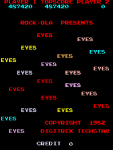 Eyes
Eyes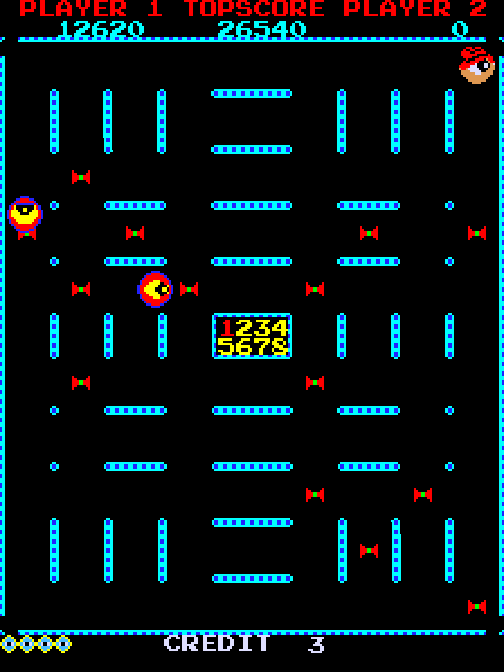
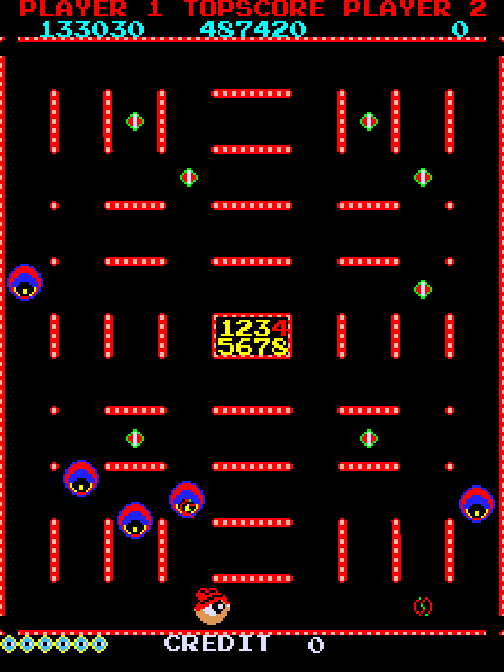
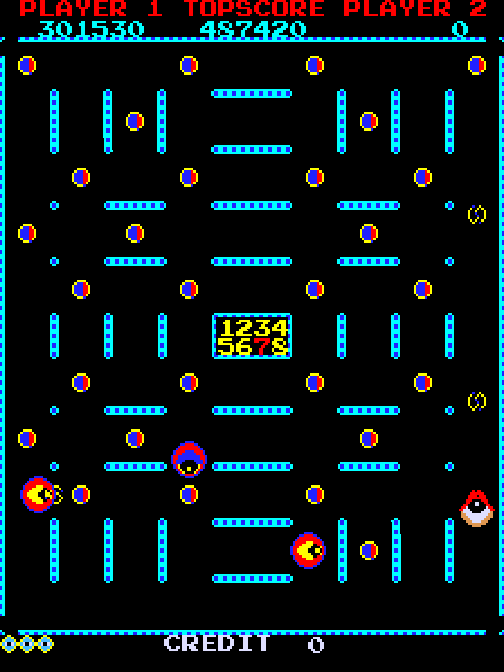
 Colored Effects
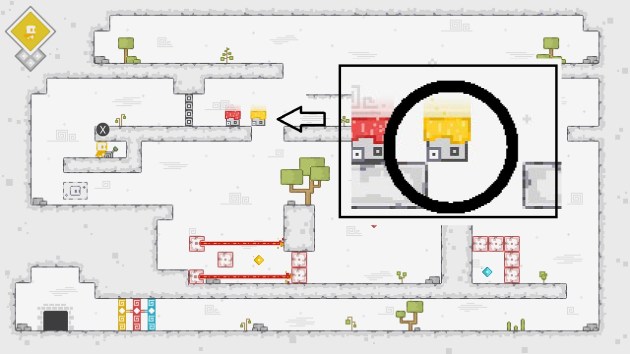
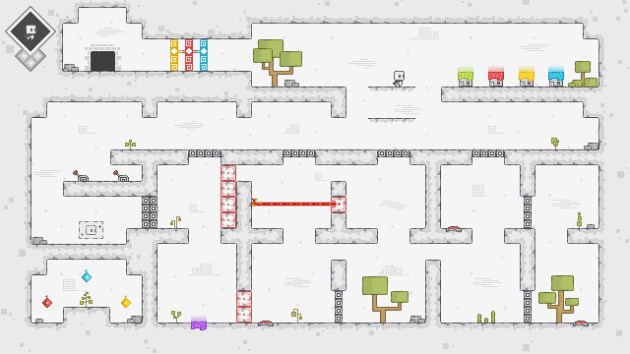

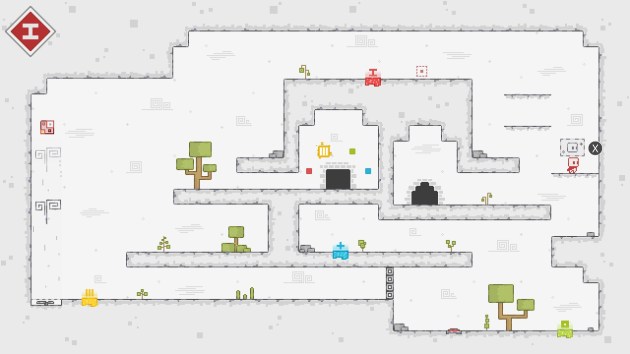
 80% of the bosses being lame aside, Colored Effects is a very good puzzler. I really don’t have too many notes on the puzzle logic itself, because movement and the box shoving physics are so accurate that you don’t even stress them. There’s no pixel-perfect jumping required. I can only think of one single level where I felt the timing of activating switches and special moves at the correct moments was so precise that novice gamers might struggle with performing it even if they figure out the solution. No, this is actually nearly perfect as far as this genre goes because the movement/timing is so fine tuned that it really becomes your wits versus the puzzle design, and the controller isn’t a factor at all. And they’re really good puzzles too. You don’t have to be a brain surgeon to enjoy Colored Effects. In many ways, it’s the ideal Nintendo Switch puzzler. The toughest part of Colored Effects for me was writing this review, really. What can I say? It’s hard to write about a game that does so little wrong.
 Mario & Wario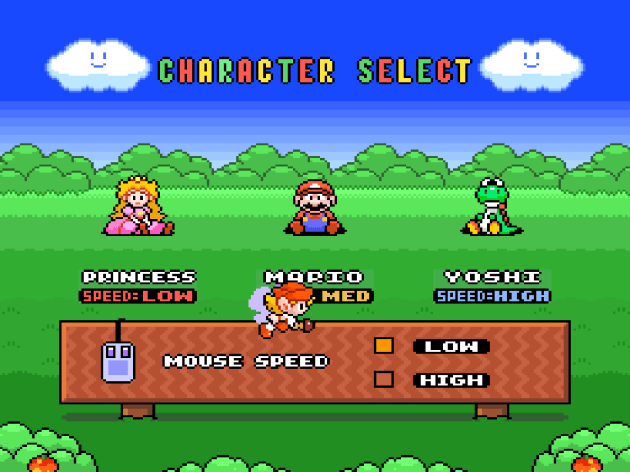


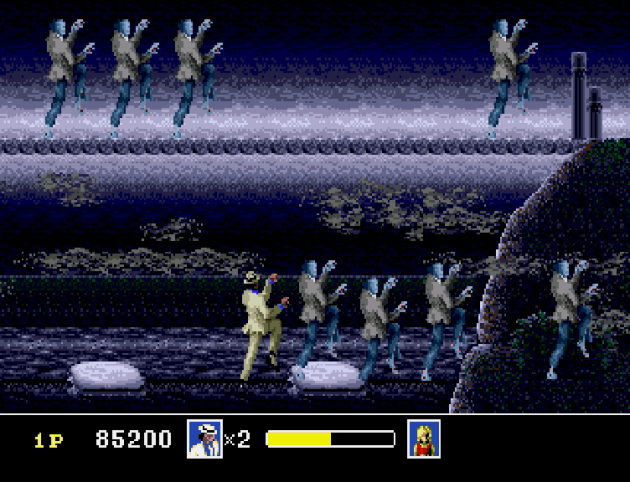
 Michael Jackson’s Moonwalker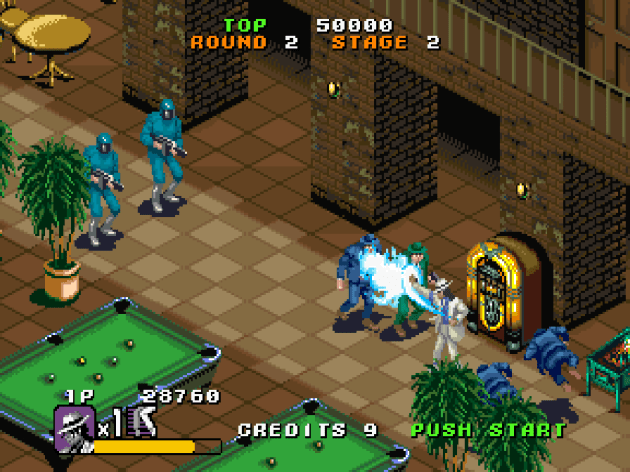


 Michael Jackson’s Moonwalker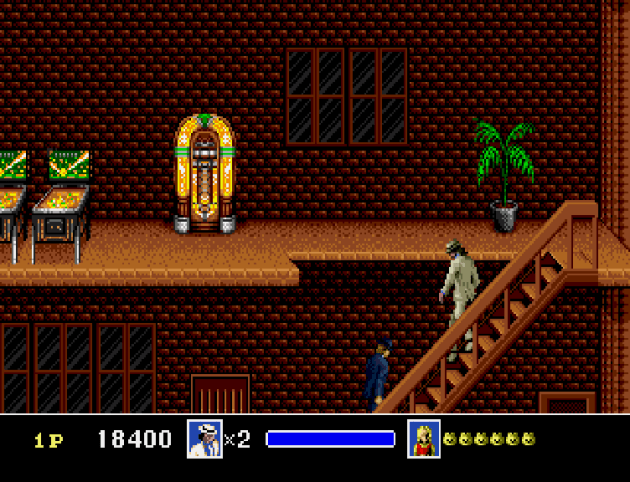


 Michael Jackson’s Moonwalker
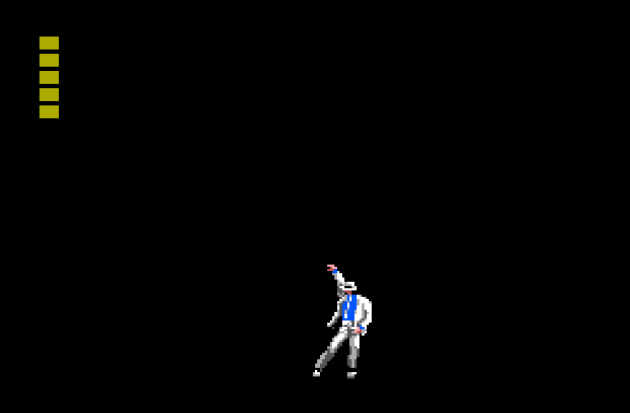
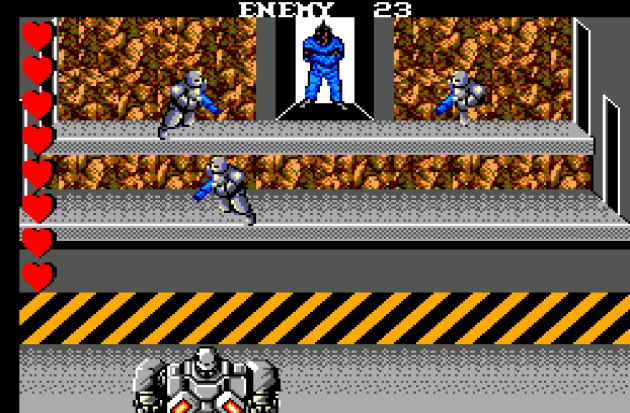
 ActRaiser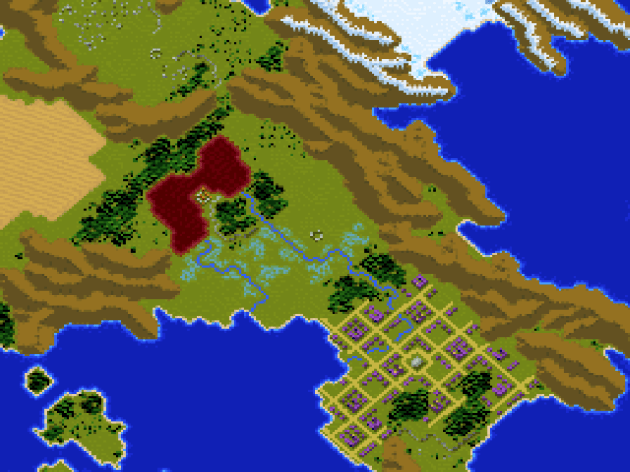

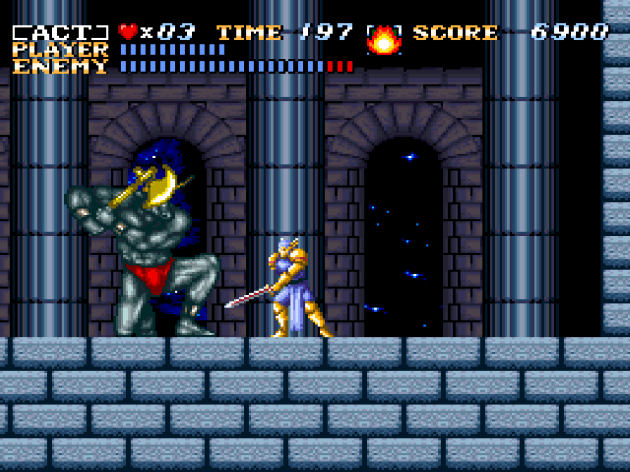
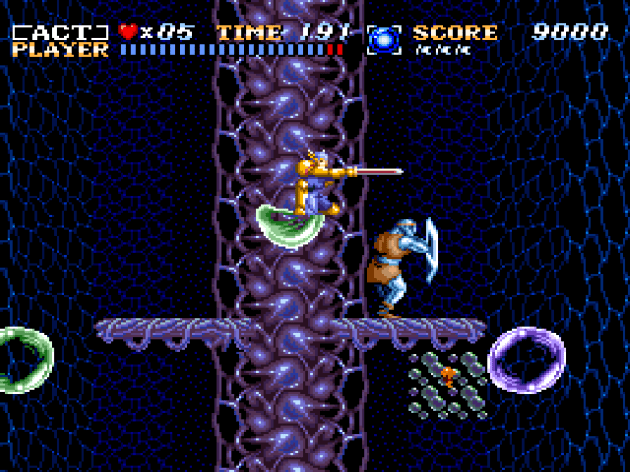

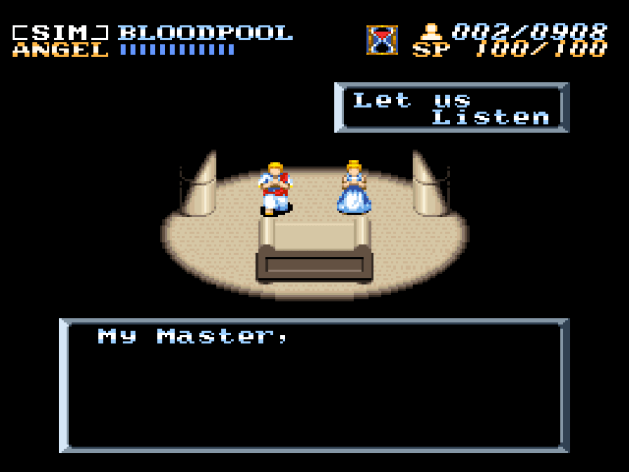
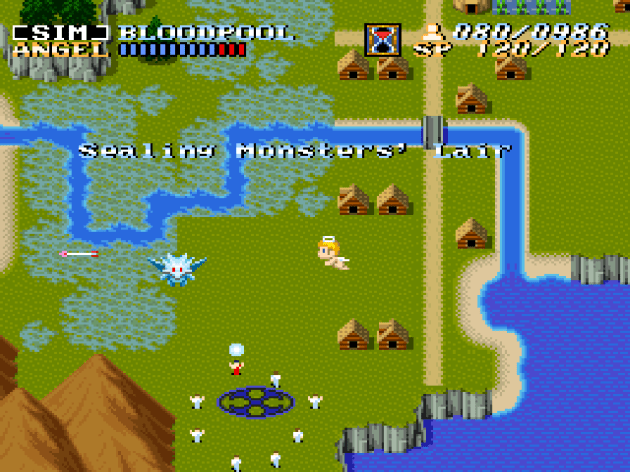


 Wacky Races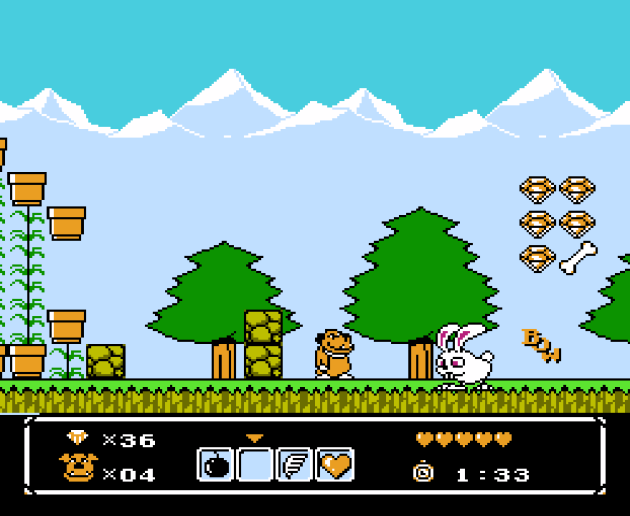


 Yo! Noid


 Super Castlevania IV

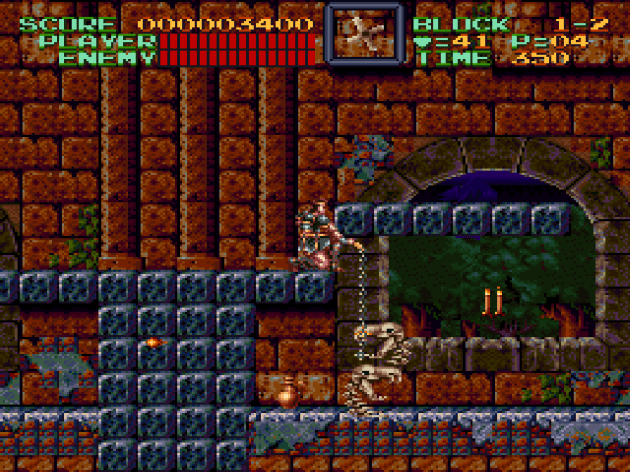
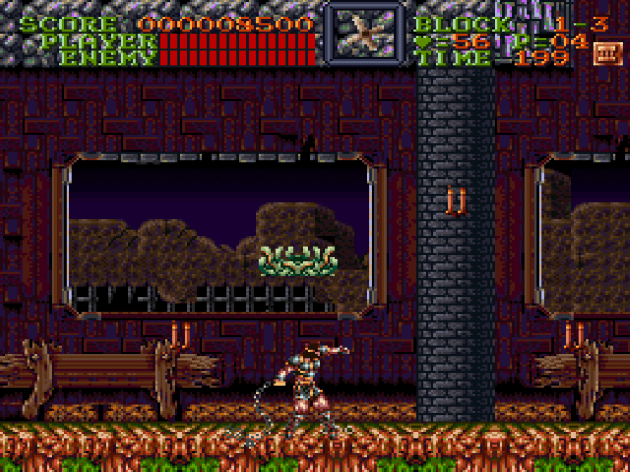

 Castlevania III: Dracula’s Curse




 Castlevania





 Indie Gamer Chick
You must be logged in to post a comment.