Brand

Brand.

Brand.

Braaaaaaaaaaaannnnnnnddddddd.

Nope.  The name doesn’t work.  It doesn’t sound like a video game.  It sounds like a breakfast cereal, and a bland one at that.  The type that you would need to add copious amounts of sugar to just to choke down.  When you can name your game anything that your imagination can come up with and Brand is the best you can do, what does that say about the developer?  It’s not one of those catchy one-word names that you can get away with, like Halo or Infamous.  Brand.  Seriously, the name of the game is Brand.  What were they thinking?

“Brand thought Braid” says Brian.  Excuse me while I untie my tongue.

Brand is a hack-and-slash platformer where you try to upgrade your starting sword to make it “fit for a king.”  Once you’ve done this fifteen times (or sixteen, whatever) you move on to a final battle.  There are nine ways to upgrade the sword, and you can do each upgrade up to five times.  To get an upgrade, you select what one you’re going for, and then you’re sent off on a fetch-quest in one of three locations.  Once you’ve met the terms of the quest, you open up an exit portal and wait five seconds, then return to the shop and activate it.

It sounds like a solid idea, and if it worked it would have been fun.  But it doesn’t work.  I put eight hours into Brand yesterday and I can honestly say it’s one of the worst games I’ve played on Xbox Live Indie Games.  Wholly and entirely without any redeeming value whatsoever.

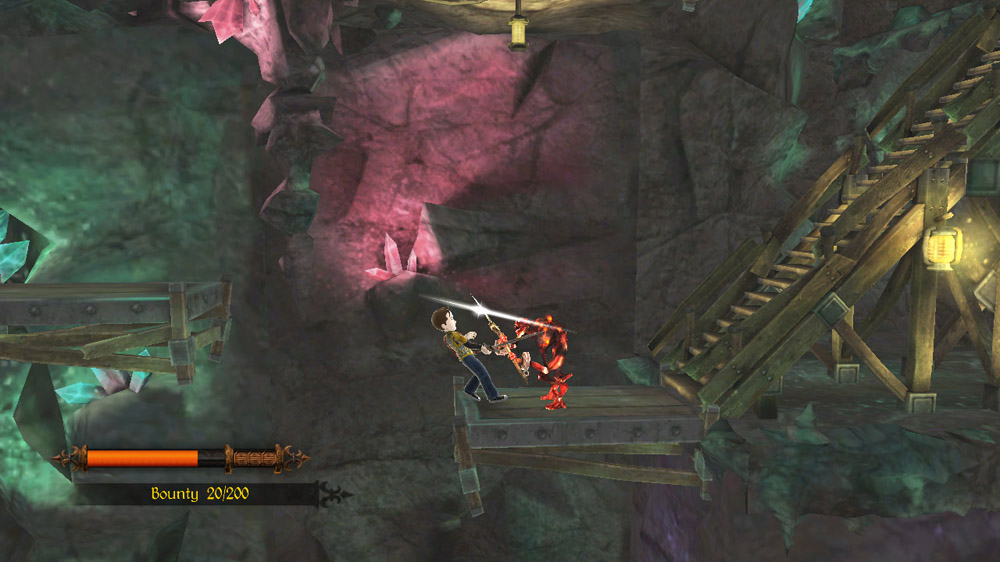
Let’s start with the first thing people talk about with Brand: the graphics.  They seem really good.  Certainly a couple notches above what people expect from an XBLIG.  But really, what do those good graphics get you?  In Brand, there’s only four enemy types.  Those four creatures are the same in every one of the three levels.  Nine Dots Studio didn’t even bother re-skinning the enemies to match the theme of each stage.  Variety is achieved through palette-swapping, with the stronger enemies usually signified by darker colors, resulting in the characters lacking distinguishing features.  The spitting frog-monster thingies are particularly pitiful in design.  It looks like someone just vomited out a puddle of sprites on a screen and said “good enough!”  If it seems petty of me to call out one creature type, I’ll remind you that creature represents 25% of the monsters you fight.  Great graphics?  Not when the character design is that bad.
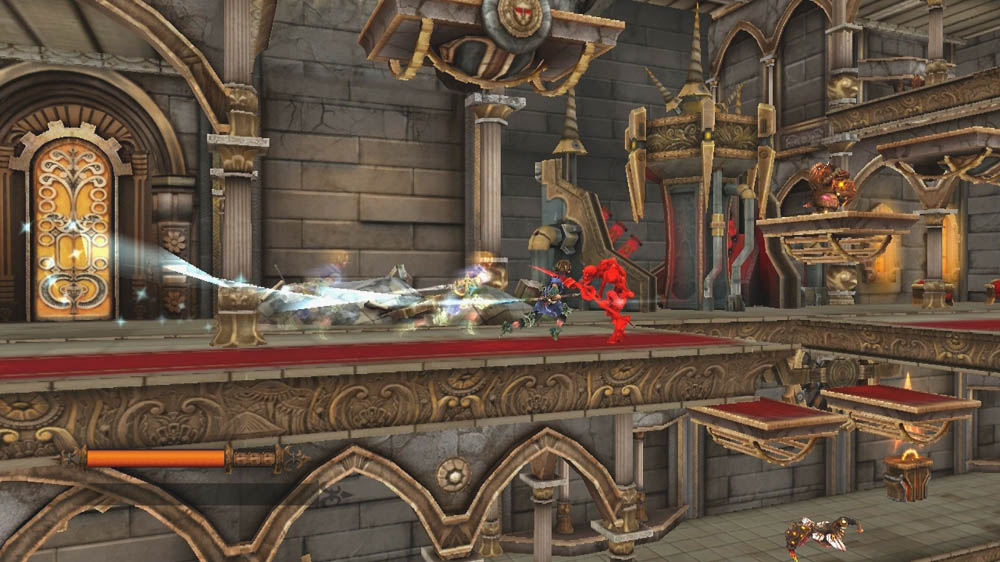
Oooh, pretty! I can't make out anything, but damn!

Ironically, it’s the backgrounds that stand out the most.  They’re rendered beautifully and would work at setting the mood for the title.  They would, if they didn’t come with a tradeoff in performance.  The game has major issues with lag.  Especially the Castle, which scrolls very jerkily, like a first-generation Playstation 1 game.  These also are probably the contributing factor in the brutal load times throughout the game.  I actually used a stopwatch to time them.  It takes 52.2 seconds for the Mine stage to load.  If you die in the level and want to restart, the total time it will take is a 1 minute, 16 seconds.  For a 2D side-scrolling indie game.  The other two levels are worse, both taking over a minute to load, and about a minute and-a-half to reload if you die.  It’s not unlikely you’ll spend over an hour waiting for stuff to load up, in a game that should only take a couple of hours to beat.  It’s outrageous.

Once you’re actually playing the game, things go downhill quickly.  Combat is relatively simple: X is weak attack, Y is strong attack, B you’ll never ever ever ever ever ever use (it’s a useless dash attack) and A jumps.  Allegedly there are combos, but you’re not told what they are and I couldn’t figure out how to activate any.  The one or two times I thought I had done one, they didn’t really do any damage so I didn’t bother experimenting further.

Not doing any damage to baddies was a recurring theme throughout Brand.  Of the fifteen (or sixteen, whatever) upgrades you have to do, I “refined” my sword four times and strengthened it three times.  I also gave it the ability to poison, I made it so a magical light sword thingie would poke out my back allowing me to fight creatures behind me, and I added a fire wave to it and upgraded that a couple of times.  The end result?  The starter enemies might die in one hit, but everything else remained damage sponges.  Mind you, the entire game is about upgrading your offense.  There’s no defensive upgrades at all.  Yet, even once I had done the fifteen (or sixteen, whatever) upgrades and was dumped into the final stage, I felt like I had made no progress.  My dude was still a total pussy and my sword couldn’t cut butter.

Part of it seems to be a result of the game just ignoring your actions.  Direct combat seems to work best, in that about half of your attacks will result in damage.  On the other hand, the upgraded effects do not want to work at all and will fight you every step of the way.  As I noted, I got the fire sword thingie and then upgraded it once.  I then watched as I would send a colossal wave of fire at an enemy and have it pass right through him, doing no damage at all.  I know it didn’t because the enemy didn’t do it’s damage-indication flash.  I wish I could say this was an uncommon occurrence, but actually it got so bad that I started keeping count of how many attacks a single enemy could fail to take.  Around three seemed about average.  Ten wasn’t all that rare.  The most was this one mid-level wasp that was all alone in a normal room with no walls, barriers, or anything else in the way.  I was swinging the sword close enough that in theory the sword itself would do damage, but if that failed the fire would get it as the wasp was dead center in the wave.  Total swings before it registered damage for the first time?  Twenty-fucking-two times.
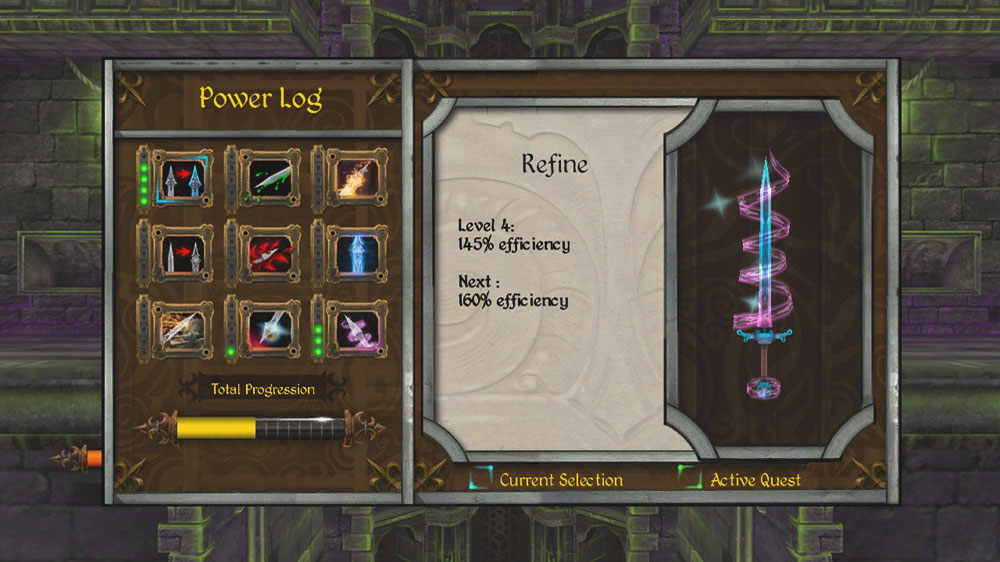
In order: useless, useless, useless, useless, useless, useless, useless, useless, and useless.

Again, there’s no defensive upgrades in the game.  Well, there is one.  It makes it so you damage a creature you block.  Sounds great!  Sure, the block doesn’t even work on anything past entry-level enemies, but at least you’ll be dealing them damage back!  Yea, about that.  If you get this upgrade and use it too much, it kills you.  No really, you die from it.  And once you have it, you can’t turn it off.  Thus, you’ll be unable to defend yourself throughout levels for the rest of the game.  Given the fact that harder enemies attack faster, cause more damage, and gang up on you, you’re already screwed without the block “upgrade.”  With it, you might as well take your sword and commit Seppuku.  Although if you could actually do that, it would probably take the game five or six tries before registering it.  You can’t increase your lifebar, armor, speed, or jumping ability.  I guess Brand wanted to prove that a good defense is a strong offense.  It’s too bad a strong offense is not an option.

Once you’ve made the last upgrades to your character, you enter the final stage.  Hopefully your sword will be strong enough -snicker- because you’re entering the arena.  You know those stages in Zelda games where you fall down a hole and then you have to fight every single enemy in the game?  Yea, that’s what this is.  You fight a wave of ten or so guys off, all attacking your literally defenseless ass all at once.  If you kill them, a door unlocks, you fall down a hole, and you repeat the process.  There’s no situational health refills.  It seems like one random enemy in each stage will restore a sliver of your bar, so naturally it was always the first enemy I killed each time.  Hell, I can’t say with 100% certainty that there is a random enemy giving away a teeny tiny scrap of health each floor.  I cleared whole rooms out and was always left with a micro-fraction of health left.  I tried beating this for an hour yesterday and another thirty minutes today, never actually making it past the fourth wave.  Perhaps I didn’t upgrade my sword correctly.
Yes, Brand has avatar support. No, I have no fucking clue why this was added instead of fixing the game.

Apparently there is some kind of boss monster at the end of it.  I never found out for myself.  The thing is, I’m guessing that the giant scorpion-dog thingies that were scattered throughout the normal stages are in the Arena and I just hadn’t reached them yet.  If they are, I want to go on the record of saying the game is probably impossible.  I encountered several of those fucking things throughout the game and I only managed to kill one.  They have four attacks, three of which are maybe-unblockable quick strikes that drain your health faster than smoking the exhaust pipe of a bus.  If you manage to get close enough to start swinging, they take dozens of shots before they die.  The mere threat of them was enough to make me realize playing the arena wasn’t worth it, because unless the game ends with you shoving the sword through the throat of the king, then deleting Brand from your hard drive and replacing it with a better game, it’s just not worth the effort.

I could go on about the play control (meh) or the jumping (bleech) or the fact that the price of Brand is going to be raised to 240MSP in 90 days (a proclamation so fucking arrogant the developer ought to be flogged just for thinking about it) but I think I’ve said enough.  If anything I’ve said about this game sounds like something you want to play, have at it, you fucking weirdo.  I’ll close by going back to the graphics, because once again the usual gang of idiots are saying “it’s worth it just for the graphics!”  Quite frankly, I don’t think the graphics are that good.  But let’s say they were.  I think saying gameplay doesn’t matter if the art is good is kind of a hypocritical stance from a community that complains about everything done by guys like Silver Dollar who phone-in nearly every title they release.  How come it’s not okay for them to release busted, broken games with limited play mechanics, but a game like Brand can be nearly unplayable and still get you XBLIGers to stock up on tissues and baby lotion?  I don’t get it.  It would be like only being able to enter the Louvre if the curator gets to cockslap you across the face while the janitor shoves his mop up your ass.
Brand was developed by Nine Dot Studios

80 Microsoft Points said “yes, mop side first” in the making of this review.
Tales from the Dev Side: Last of the Seal Pelts by Ian Stocker

When I came up with Tales from the Dev Side, I figured it would be a good way to solidify myself in the development community while also providing some entertaining insight to my readers.  What I didn’t expect was thousands of page views and a reception so warm that it could double as an Easy Bake Oven.  And it all started with Ian Stocker’s magnificent “Magic Seal Pelts” piece.  It became easily the most popular, most linked to, most talked about article ever at Indie Gamer Chick.  It also opened up the flood gates of developers changing their prices.  We might never know if it was directly responsible for the recent change in price change policy for Xbox Live Indie Games, but I wouldn’t bet against it.  Well, it’s been over a month and Ian is back to let us know how his pricing experiment played out.

Read more of this post

The Chick’s Monthly Top 10 Update: January 2012

I probably shouldn’t call this a monthly update, since I didn’t do one in December.  It wasn’t out of laziness or forgetfulness either.  The truth is, nothing made the leaderboard in December.  We all knew that it would come to the point where a month or more would pass between new games being added, and so it shouldn’t have come as a surprise to anyone.

Having said that, there is not one but two new additions to the leaderboard this month.  Well, I guess that’s technically not true because one of them is a former leaderboard occupant that fell off the list and is now back on it.  So what are they?

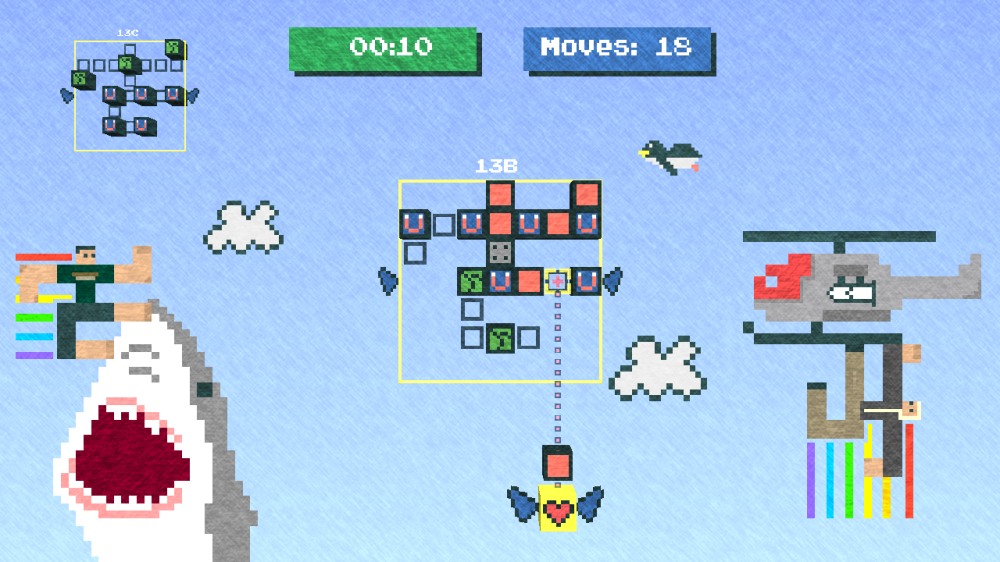
The new #8 game is Pixel Blocked!  It occupied the #9 spot from August 1 to September 1, way back when Indie Gamer Chick first opened.  In the six months that passed since I first reviewed it, multiple games have joined and fallen off the list.  It says a lot that a game that hit so early in the life of the leaderboard could find its way back on the list after a five month lull.

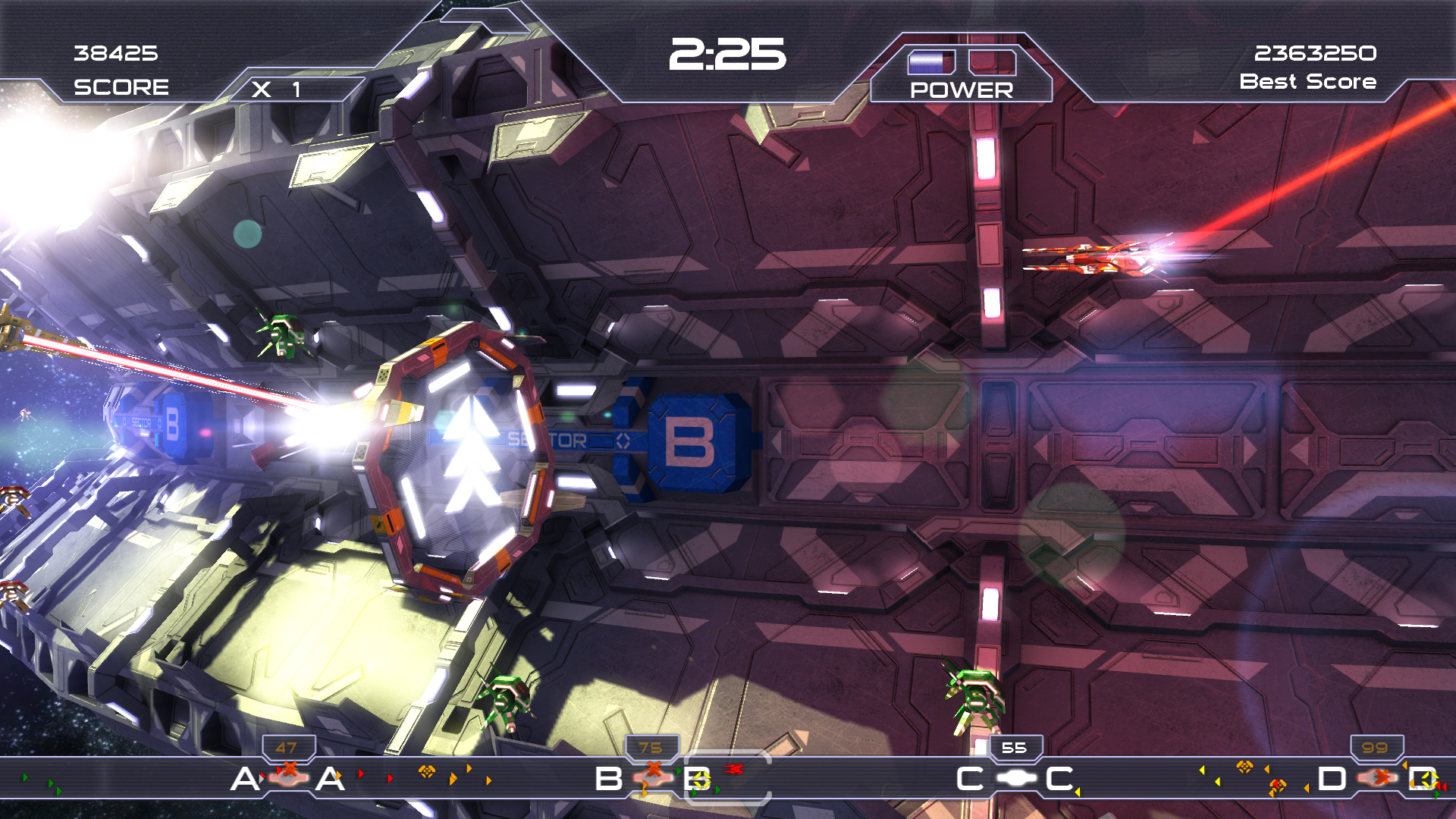
This drops Blocks That Matter down to the #9 spot.  Meanwhile, Orbitron: Revolution has become the new #10 game.  The glitzy shooter was cut from the same cloth as Defender, but features the same timed-frenzy feel of Pac-Man Championship Edition.  The developers recently had a promotion where they tried to entice people to buy the game with all proceeds going to charity, and still only sold under $50 worth of it.  Hopefully a price drop will come and cause a sales spike.  If not, there’s always a PC port that will run in glorious 1080p.

Drool.

In the “close but no cigar” category, I really, really considered Avatar Grand Prix 2 for a spot on the list.  This awesome clone of Mario Kart nailed most of the fundamentals and also included online play and leaderboards.  Ultimately, it came down to the track design.  Most of them were just too dang short.  Also up for consideration was Lexiv, the Sim City-Scrabble hybrid that was a bit too glitchy, but ultimately rejected because the game starts you off with the letter “V” no matter what.  Petty on my part for sure, but as any word game fan will tell you, completely justified.

Since I skipped December, I figure I should bring up the game from that month that came the closest to making the list: Alien Jelly.  I really enjoyed its wacky “cube puzzle as told by Tim Burton” feel, but I’ve played dozens of games like this over the current console generation, and there’s nothing particularly special or memorable about its gameplay.  But it’s a good game and it’s worth your dough.

And of course, it’s time to say goodbye to the two games that got bumped from the leaderboard: Flight Adventure 2 and Johnny Platform Saves Christmas.  And by “goodbye” I mean “if you haven’t already bought them, they are still worth your money.”  So go get them.  Now.

And thus ends January.  Hopefully February will be an awesome month at Indie Gamer Chick.  The site will reach 100,000 hits sometime early in the month (currently sitting on 96,572 at publication time), an event that will be commemorated with the most requested review I get.  Can’t promise the review will be, ahem, crafted well, so please don’t storm my, cough, fortress if it sucks.

Very subtle.

Oh don’t worry Kairi. If you hate it, you only alienate a million fans.

The first sequel to a Tales from the Dev Side will be posted tomorrow.  Ian Stocker’s first editorial, “Magical Seal Pelts” was one of the most read and retweeted articles ever at Indie Gamer Chick.  Ian is back to update everyone on how his pricing experiment worked.  Last time, he announced the price drop of his popular SoulCaster series.  This time, well, you’ll see.

And I’ll be reviewing the Simpsons Arcade Game, coming February 6 to Playstation Network.  Why?  Well, I’ve never actually played it.  But I know enough to know that the game fucking sucks.  If it really is the old Teenage Mutant Ninja Turtles game with a Simpsons reskinning, yea, it sucks, and you should know better to be excited for it.  Then again, I should know better than to think you would know better.  Anyway, I haven’t taken the piss out of a sacred cow since December, and like Bart Simpson himself says, don’t have a sacred cow, man.

Pixel Blocked! (Second Chance with the Chick)

It’s been exactly six months since I first reviewed Pixel Blocked! I thought it was essentially the basis of a good puzzle game that was in dire need of some tender loving care. Well, developer Daniel Truong took that to heart. He started taking it out to fancy restaurants and spas, writing it mushy love letters, and buying it expensive shiny jewelry. And then I said “no you idiot, I meant fix the fucking problems with it.” “Oh” responded Danny.

Just so I’m clear, I really liked Pixel Blocked the first time around. Hell, it was an original occupant on the leaderboard here. But I couldn’t ignore the numerous design flaws that held it back. Patches were promised and Danny went back to the drawing board. How did he do? Well, let’s take a look.

Graphics are nice and spiced up, but fuck graphics. This chick only cares about game play.

Original Problem: The reward system was broken due to way out-of-bounds minimum requirements.

Current Build: The reward system has been drastically overhauled. Now you’re scored on the classic Gold-Silver-Bronze system. Having said that, getting a gold on the time attack mode is still a total bitch. Pixel Blocked is a logic puzzler, so the speed fits in like Colonel Sanders taking a job at Weight Watchers.

Original Problem: The game was too easy on account of having missiles at your disposal to clear away bad shots.

Current Build: There are no missiles. At all. And this works just fine for me, because if they had been around I wouldn’t have been able to resist the temptation to use them. When it came to them, I was like an alcoholic whose only hope for salvation is removing every outlet of liquor from my entire life.

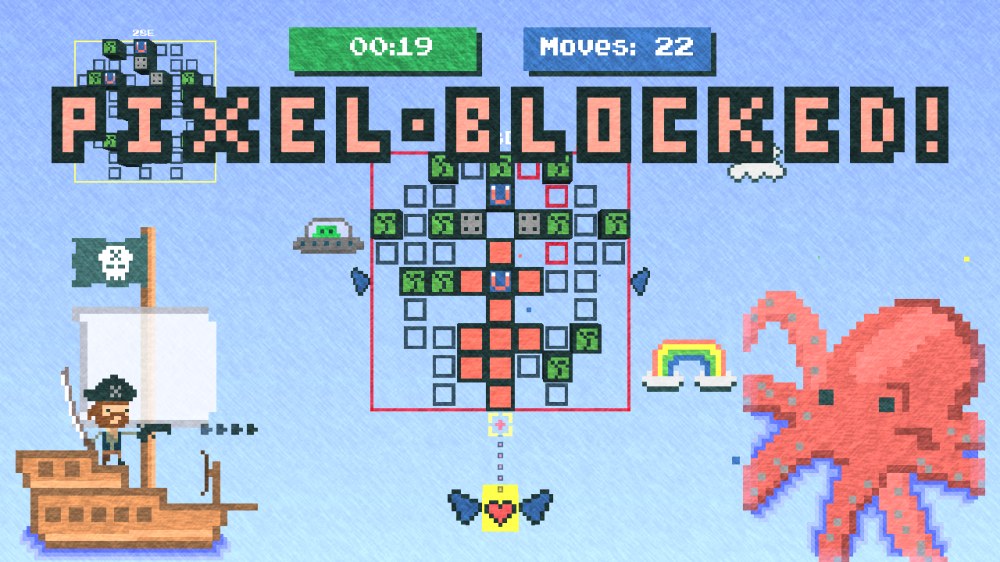
Consequently, now if you fuck up you do have to start the whole puzzle over again. How do you know if you’ve fucked up? It’s simple: any time you make a wrong move, the game makes a sarcastic quip at you followed by the words PIXEL BLOCKED! It’s actually pretty motivational. I only wish there had been a wider variety of quips, or maybe the ability to customize them. I think I would have taken my time and not fucked up as much if the game told me “Wow, you’re getting dumber Cathy.  Also, you’re putting on weight and your hair is ugly. PIXEL BLOCKED!”

“Wow, what an amazing fuck-up you are. PIXEL BLOCKED!”

Original Problem: The cursor had visibility issues.

Current Build: You can see it.

Original Problem: If you rotated the board after firing a shot, it would result in misfires as the blocks traveled too slowly.

Current Build: This got fixed too, so a block will go exactly where you meant it to go whether you rotate the board or not.

So as you can see, every major complaint about Pixel Blocked has been fixed. The result is a game that has completely shed its indie feel. Pixel Blocked plays like a polished title by a major studio. It makes me wonder if Mr. Truong isn’t essentially slumming-it by keeping this title on Xbox Live Indie Games and Windows Phone. Pixel Blocked is a game that’s ready for prime time. Sure, taking away the missiles left me gibbering in the corner and possibly in need of an intervention, but that’s fine. Once I got over my dependency I took the game in stride and was able to have an even better time. I never thought a game would fall off the leaderboard and then manage to climb back on, but Pixel Blocked has done that, so come back to Indie Gamer Chick on February 1. What are you waiting for? You should grab it now before Danny is turning tricks for Nintendo, learning first hand how the concept for Kirby came about.

Pixel Blocked! was developed by Daniel Turong
Point of Sale: Itch.io

igc_approved180 Microsoft Points said “also your eyes are too close together and you smell a cross between a chimpanzee and a bucket of sweat, PIXEL BLOCKED!” in the making of this review.
Avatar Grand Prix 2

And so we conclude this ill-conceived theme week, but at least I’m playing a game that tries to ape something released in my lifetime.  Out Run and Super Sprint both hit in 1986.  At the time, I was too busy not existing to be a fan of those.  On the other hand, Super Mario Kart was released in 1992, meaning I had been upgraded from non-existent to existent by way of parental fucking.  Crudeness aside, my first gaming memory is playing Super Mario Kart with my friend Meagan at the ripe old age of around fourish, so the series has always held a special place in my cold little heart.  It’s also probably why I’ve never cared too much for kart racing clones.

When I was a kid, I was a huge Crash Bandicoot fan, but I always thought his kart racers were kind of stupid.  It was around this time that the word “generic” entered my vocabulary, because that pretty much describes every kart racer that doesn’t star Mario.  I got a Nintendo 64 for my ninth birthday in July of 1998, along with Mario Kart 64 and Diddy Kong Racing.  I loved Mario Kart and absolutely hated Diddy Kong Racing.  It was so boring, and its cast of characters so cookie cutter.  Who the FUCK was Tip Top the Turtle and why the fuck should I care about him?  By the way, it was around this age that I first learned what soap tastes like.

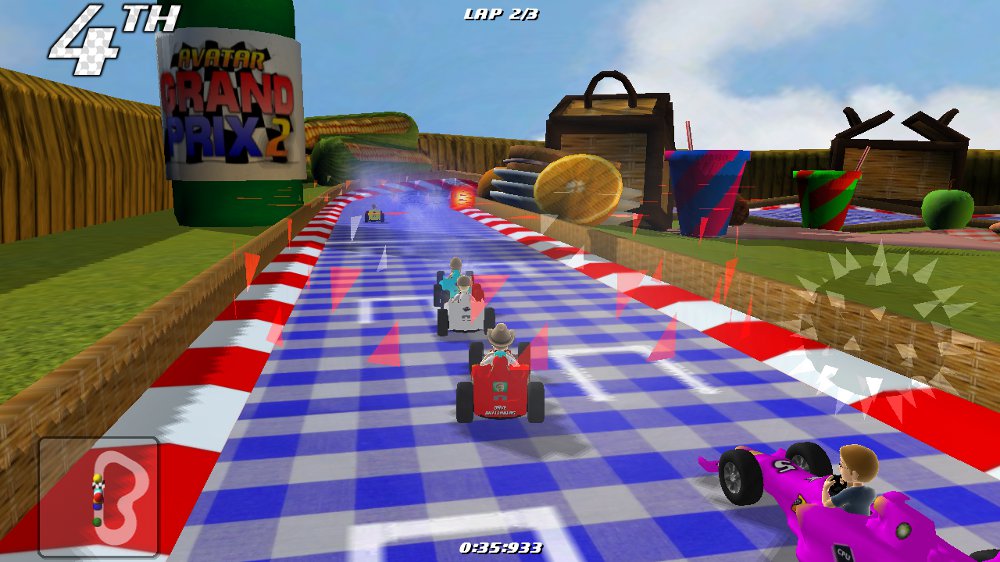
I haven’t played a Mario Kart clone yet on XBLIG, but there are quite a few.  Avatar Grand Prix 2 hit and I figured since I was going to do this silly race week shit, I might as well make it the grand finale.  I had my expectations set a bit low, because the screenshots looked a little on the bland side and, well, it’s an avatar game.  Those are usually underwhelming at best and skull-fuckingly horrible at worst.  So it surprises me to say this and you should be surprised to hear that Avatar Grand Prix 2 is actually a pretty good game.

It doesn’t look like much in screen shots, but the graphics of Avatar Grand Prix 2 are pretty solid.

Obviously the idea is “it’s like Mario Kart, but it has your Xbox avatar” and that creates a possible problem right off the bat.  There is a time-honored tradition in racing games.  There’s the fast cars with the shitty acceleration.  There’s the slow cars that handle the best.  And there’s the middle car that’s average in every category.  That gets chucked in the dumpster here.  There’s no karts to select from, so everyone has equal footing.  On one hand, I kind of see the advantage of that.  You won’t have four people fighting over who gets to be Wario, because we all know that Wario is the shits.  On the other hand, not having a kart with stats that cater to your skills as a gamer kind of blows.

Thankfully the handling is pretty decent.  Well, most of the time.  Avatar Grand Prix 2 is easy enough that it has a good pick-up-and-play quality about it.  The accelerator is mapped to the right trigger, and breaking/drifting is set to the left one.  The learning curve for this is fairly small, so you should be able to easily handle corners.  I figured since most Xbox Live Indie Games put as much stock in good play control as the village whore puts in monogamy, the game would handle like shit.  I was proven wrong.  And then I crashed into a wall for the first time.  This was immediately followed by me bouncing off that wall into the opposite wall.  What started as a game of kart racing turned into a game of Pong with me as the ball.

Playing through the game on the 50cc setting, this wasn’t a huge problem.  No, it became a huge problem once I started using the higher speed classes.  On 150cc, the game is significantly faster, and cornering becomes more of a reflex tester.  Hitting a wall on this setting was akin to hitting a bumper in pinball.  My kart was suddenly getting bounced from left to right for nearly the length of a full lap before I was able to correct myself.  And by the time I did, I was usually primed to hit another wall and watch the walls go all Venus Williams on my ass again.  It wasn’t just me either, because both Brian’s roomie Bryce and some random dude online were having problems with the walls as well.

There’s twelve tracks, each with four possible variations.  For the most part, they’re well designed and the variety present is pretty good.  However, they are way too short.  Without exaggeration, you can complete three laps on some courses in just over twenty seconds.  The longest any three-lap race took me was about a minute-and-a-half, which is ridiculously short.  I would have way preferred less tracks that were more substantial in length.   In the single-player grand prix mode, races only have three laps, plus one “qualifying lap” which feels out-of-place, especially when it can begin and end faster than it takes to finish taking a piss.

Once you go online, the options pick up quite a bit.  Races can last as much as 50 laps, which will still only take you about five to ten minutes, depending on what track you select.  Regardless, kart racing is always fun with more people and Avatar Grand Prix 2 is no exception.  I do wish the weapon selection was better.  Some of the items are downright worthless, like one that makes you invisible to other drivers.  In theory, that would be a good thing.  The problem is, it also makes your kart invisible to you.  Sure, the camera still centers on your kart, but not being able to see exactly where you are is not a good thing.  There’s also a force-field weapon that Bryce used while I was right on his tail.  It resulted in my kart being propelled way out in front of his, giving me the win for that track.  Not helpful for Bryce, but hilariously awesome for me.  Of course, if the shoe had been on the other foot, I would probably be getting booked on murder charges by now.

A few other glitches reared their ugly head.  The worst one caused myself, Bryce, and other players to be signed out of Xbox Live.  It happened to me more than once, and I would have to quit out of the game and sign back in for online features to work.  There were also instances of us getting stuck in the walls, which actually proved to be more annoying than the whole bouncy thing.

So yes, I have a lot of bad things to say about Avatar Grand Prix 2.  But I say them out of love, because I had a really good time playing it.  For all it’s faults, a lot fun can be had with AGP2.  Sure, it needs some patchwork to get rid of the wall recoil and a few other niggling little annoyances, but mechanics  here are really solid.  I’ve played a lot of crappy Mario Kart clones over the years, and screenshots of this were enough to set off alarms.  My worries were unfounded, and Avatar Grand Prix 2 is worth your money.  Thus concludes race week at Indie Gamer Chick.  If I ever talk about doing something like this again, you have my permission to spray saline in my mouth, tie a fork in it, and then shove me into a wall socket.

Avatar Grand Prix 2 was developed by Battenberg Software

80 Microsoft Points has never seen anyone actually pick Luigi in any Mario Kart game in the making of this review.
A review copy of Avatar Grand Prix 2 was provided by Battenberg Software to Indie Gamer Chick.  The copy played by Kairi was purchased by her with her own Microsoft Points.  The review code was given to someone else to provide her with a proper online experience.  That person was not involved at all in the writing or editing of this review.  For more information on this policy, please consult the Indie Gamer Chick FAQ

Magic Racing GP 2

Update: Magic Racing GP 2 is now 80 Microsoft Points.

Well, this was quite stupid of me.  Three racing games recently hit Xbox Live Indie Games, so I said “Hey, I’ll do a racing theme week!  Sure, I don’t normally play racing games, or at least ones that don’t involve throwing turtle shells at other drivers, but that’s the point of my site!”  It seemed like a good idea, especially after I had such an easy time doing a review for Ocean Drive Challenge.  The next game on the list was Magic Racing GP 2, which looked like little more than a glorified Super Sprint clone.  How hard could it possibly be to write about?

Having spent the last hour cowering in the fetal position, mumbling to myself “I don’t understand this at all” I guess the answer is pretty fucking hard.

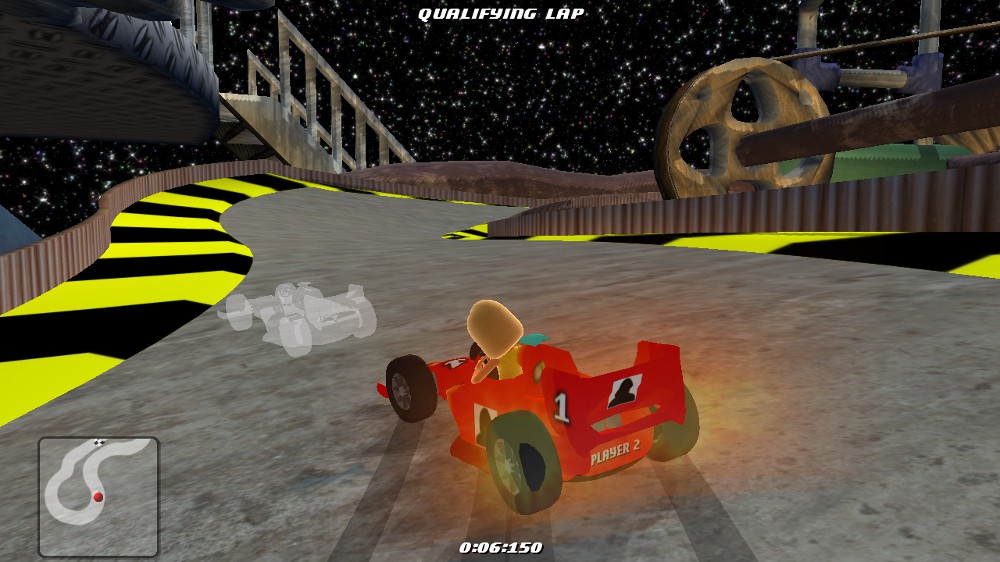
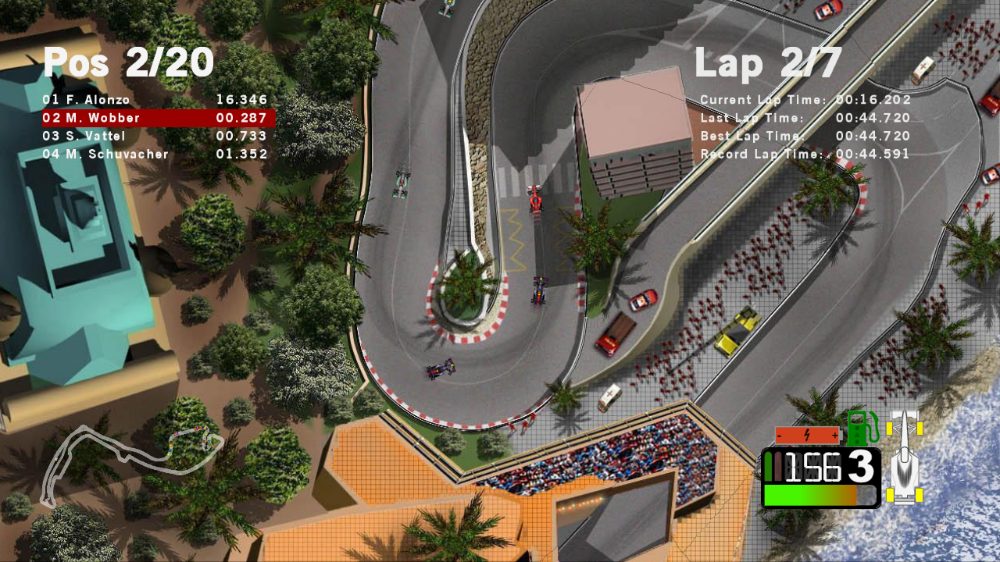
Magic Racing GP 2 does have gameplay similar to Super Sprint or Super Off Road, but that’s where any resemblance ends.  The developers were aiming for a more authentic simulation feel, and their dedication to this is admirable.  First things first, if you’re not a Formula One fan, you might as well stop reading this right now.  I feel like a party crasher because I’m clearly not someone who should be playing this particular type of game.  It would be like asking a Hindu for proper ways to cook a steak.

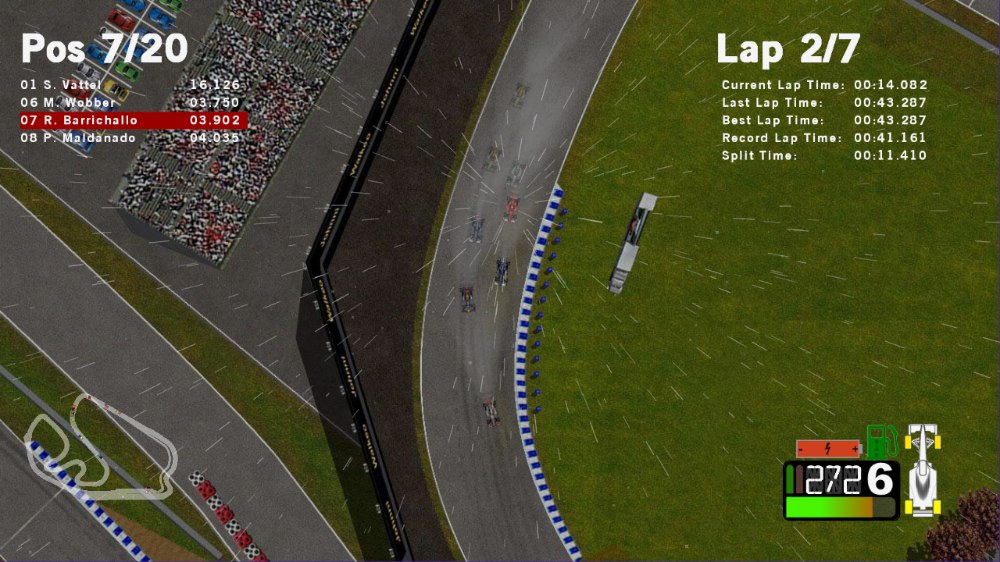
Focusing on gameplay, I found MRGP2 to control pretty much just like the arcade ports of Super Sprint or Super Off Road that I played on the Midway Treasures series.  The thing is, I could never handle those games, and I couldn’t handle Magic Racing GP 2 either.  At least at first.  Even after putting thirty minutes into it, I was still crashing into barriers, cutting corners, and getting a speed penalty for driving too fast through the pit.  I did have a breakthrough after about an hour of gameplay and could, more or less, keep my car on the track.  At least when doing practice laps.  In the game’s season mode, where you have to deal with other cars and weather conditions, the control constantly locked up on me, not in a glitchy way, but as if I had actually stalled the car.  This is probably because I have no fucking clue what different types of tires do, or how to “use the weather” or various other idiosyncrasies that Formula One fans would know.

Magic Racing GP 2 is a F1 fan service that aims for the type of crowd that insists they would rather play Tecmo Bowl over the latest Madden entry.  Gameplay is old school, yet the amount of modes is impressive and the level of customization offered is pretty intimidating.  There are dozens of drivers to choose from, all based on real F1 stars.  There is an option to edit their name, so Sebastian Vettel doesn’t have to be stuck with the more wanky moniker of “Sebastiano Vartel.”  Every other aspect of F1 is present here as well, from well-known venues to the scoring system to the team system.  Sure, you’ll want to change “Renalot” and “Mercides” to their proper names.  Or you can do what I did and give them more catchy ones, like “Hippo Riders” and “Skid Marks.”  There’s also 16-player online play, but I would guess that you’re more likely to see a Yeti figure skating with Jimmy Hoffa before you actually manage to get a full lineup of players together for it.

I can’t really tell you whether or not Magic Racing GP 2 is a good game.  The best I can do is make the following observations.  First, it’s not newbie friendly.  The game assumes you know the ins and outs of Formula One, because there is little in the way of help or instructions for you.  Second, the amount of ambition on display here is highly commendable.  The fake versions of real drivers, real teams, and real tracks easily impressed my Formula One loving boyfriend, so it hits the right cord with the type of crowd it’s aiming for.  Third, the game is playable, probably more so if you’re familiar and skilled at the classic racing titles that it builds off of.  So if you’re into this sort of stuff, Magic Racing GP 2 is the game for you.  If you’re not, for God’s sake do not buy this game.  I have never been into car racing and I can’t see myself ever getting into it.  Besides, if I want to watch cars driving really fast, all I have to do is hop over to Oakland and pull up a lawn chair to watch Formula 510, featuring the biggest stars in drug dealing hauling ass in their blinged out Cadillacs while the boys in blue give chase.  Sponsored by Krispy Kreme.

Magic Racing GP 2 was developed by Magic Studio

240 Microsoft Points played Magic Racing GP 2 by Magic Studio while wearing a Magic Johnson jersey at Magic Mountain in the making of this review. 
What’s the Score?

I’m currently writing an FAQ for this site, and one of my answers ran so long I figured I would just break it off into its own editorial.  The most common question I get is, well, actually it’s “Are you really a girl?”  The answer is yes.  At least it was the last time I checked. Hang on, I need to consult a diagram.

I guess that’s what it looks like. Yep, still a girl.

Now then, the second most common question I get is “why aren’t there any review scores here?”  I get this one daily and it comes in a wide range of variations.  “How come there’s no score?”  “These aren’t really reviews.  Reviews have scores.”  “I can’t tell how good a game is because you didn’t give it a score!”  I even get the occasional developer asking me to make an exception and assign their game a score.  I usually respond with “fine, it’s a 2 out of 10” regardless of the game’s quality because that number is every bit as meaningless to me as an 8 would be.

When I play a video game, my brain does a lot of things.  It thinks about how the graphics look, how the game controls, whether the overall execution is good, and most importantly, whether or not I’m having fun.  The one thing it doesn’t do is spit out some arbitrary number that is the sum of all those thoughts.  Simply put, I think review scores are total bullshit.  I don’t think any game can be broken down into a simple number.  Many sites try to do this and the results are usually baffling to me.  A reviewer can spend pages upon pages ripping a game a new asshole and then close the review by giving a game a 4 out of 5, or a 9 out of 10, or seven thumbs up, or 11 gold stars.

I think people tend to skip through reviews on professional sites and go straight to the final score.  I know this is probably true because I’ve been guilty of it from time to time.  But the result is writers all become interchangeable and devoid of any real personality.  The only way my site can grow in readership is if my writing is good enough to leave an impression on the readers.  If they’re skipping what I write and going straight to a meaningless number, I can’t do that.   When you read one of my reviews, you actually get to learn about the game and maybe decide for yourself whether you want to play it.  If you care about my opinion on a game, it’s usually not too hard to decipher how I felt about it.  A number would actually help nobody, because it doesn’t explain how I felt about a game, or why I felt the way I did.

And really, aren’t scores just flame baiting?  Affirmation that your favorite game is exactly as good as you think it is?  The way gamers act about scores, you would think they were handed down unto the people on stone tablets from Mount Sinai.  It’s just a fucking number, people.  When Uncharted 3 was reviewed by IGN, it immediately resulted in two warring factions of dweebs taking turns shouting “I told you so!” or “What a bunch of bullshit!” at each other for days.  Mind you, the fucking game hadn’t even come out yet.  Not one person involved in this desecration of the human species had played it themselves.  Yet within seconds of the review going live, before anyone could have possibly had the time to actually read the damn thing, the fighting was on.  The Sony fanboys were rubbing it in the faces of Microsoft fanboys, who were decrying it as IGN’s official jump-the-shark moment. Not one person involved actually knew anything about the game or how the writer came to that conclusion, and they probably never will.

World peace? Hell, we’re ready to shed blood over pre-release game reviews.

Sure, fanboyism played a part in that, but that situation wouldn’t have happened if IGN had the balls to shit-can the whole fucking rating system and just let people figure out for themselves whether the writer actually liked the game or not.  So where are the benefits?  Consumers become less likely to know if there are aspects of the game that cater to their tastes or not.  Developers are less likely to learn what could be improved about their game.  I suppose it might in some way benefit me.  I could get listed on Metacritic or get the arbitrary number posted on a developer’s website.  You know, assuming it’s a good number.

By the way, this isn’t exclusive to the world of video games.  Just read any reviews of TV shows on IGN.  Even if an episode is a stinker that the writer clearly didn’t like at all, it usually still gets some kind of highish-sounding number.  Here’s an example.  Read the review carefully.  It sure as hell to me sounds like Ramsey Isler thought the episode completely sucked.  Yet he gave it a 5.5 out of a possible 10.  I actually read through it trying to figure out where those 5.5 points came from.  Going off his writing, I couldn’t find them anywhere.  Maybe one or two points tops, but 5.5 points came out of someone who wrote that?  What the fuck?

Doesn’t that make him kind of lose his credibility a bit?  To spend all that time writing about something only to then throw out a seemingly random number is kind of silly.  But he did it, and so do lots of critics.  Well I don’t really want to do that.  At best, a score would leave most people with a vague understanding of how I felt about a game.  I could give something a 10 out of 10, but maybe the reasons I got that number are things you wouldn’t like about the game.  Or maybe a game I give a 1 out of 10 to had aspects I hated that you normally love.  If you look at a number, you don’t get that information.  So in a nutshell, that’s why I don’t have scores.

Oh, and because I shamelessly ripoff Yahtzee.

Ocean Drive Challenge

I should probably preface this review by noting that I don’t have my drivers license.  Apparently the state of California thinks that I would be a danger to others on the account of my epilepsy.  And yet they still let Mel Gibson drive.  Hmmph.  Well, no matter.  I can still play racing games.  I play them very poorly, but I can still play them!  Over the next three reviews, I’ll be taking a look at some recent racing titles to hit Xbox Live Indie Games.  It might sound redundant to do three like-minded games, but actually all three are very different.  This is because all three picked an entirely different series to shameless copy, or “pay homage to” if you’re all googly-eyed nostalgic for this sort of stuff.

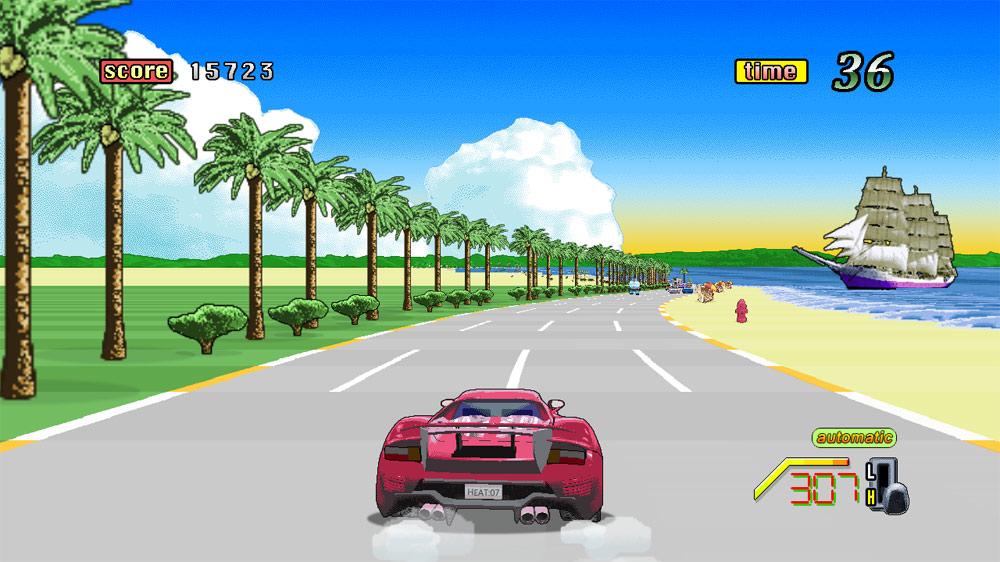
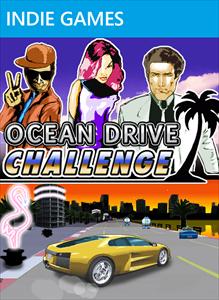
The first one is Ocean Drive Challenge.  It’s a street-racer that borrows from the Sega classic Out Run in the same way that a pick pocket borrows from you.  You choose one of three cars and try to get from point A to point B before time runs out.  That’s pretty much it.  Honestly, the game is a fairly good tribute if you’re into this sort of thing.  It’s not uncommon for an XBLIG clone of a cherished 80s coin-op to be kind of shit, but Ocean Drive Challenge really is pretty damn close to Out Run.  The cars handle the same way, the sense of speed is about the same, and the graphics are light and cartoony.  You even select what kind of music you want playing before the race begins.

All the annoyances of Out Run are here too.  Like being stuck on a two-lane stretch of road and having the left lane contain a gas tanker and the right lane be occupied by a comatose grandmother.  Or the cars interpreting your control movements as polite suggestions that can be gracefully ignored.  There’s also no modes of play besides the main arcade race.  It’s probably beatable but I was never good at these sort of games and could only make it halfway through the course.  Whether you call it Out Run or San Francisco Rush or Cruis’n USA, the time you get back for clearing a checkpoint never seems like it’s enough, at least for me.

Really though, there’s not a whole lot I can complain about here.  I can’t even bitch about this being a game that only nostalgic cocknuggets could find delight in, because it’s actually a well made game.  The cocknugget crowd that sometimes has to shut down parts of their brain to convince themselves that a bad clone is just like the childhood game they remember will probably have their heads explode when they play Ocean Drive Challenge, because it really IS just like the childhood game they remember.  Having said that, if you’re a really big fan of Out Run, why would you need this game?  Wouldn’t you already own it?  Maybe as part of a compilation disc, or on an emulator, or maybe you own the actual arcade cabinet.  Ocean Drive Challenge is close enough to Out Run to be impressive, but also close enough to be useless.  It actually makes me wonder what exactly the developer was thinking.  Making a really accurate clone of a twenty-five year old arcade game on an entirely different platform using completely different tools does take a lot of skill.  Imagine if they had taken that skill and applied it to a new concept.  The results could have been really amazing.  Instead, they did the video game equivalent of spending six years at MIT just to take a job in photocopy machine repair.

Ocean Drive Challenge was developed by need1D

80 Microsoft Points once caused a seven-car, multiple-fatality pileup on a slot car racing track in the making of this review. 
Hollow Grounds

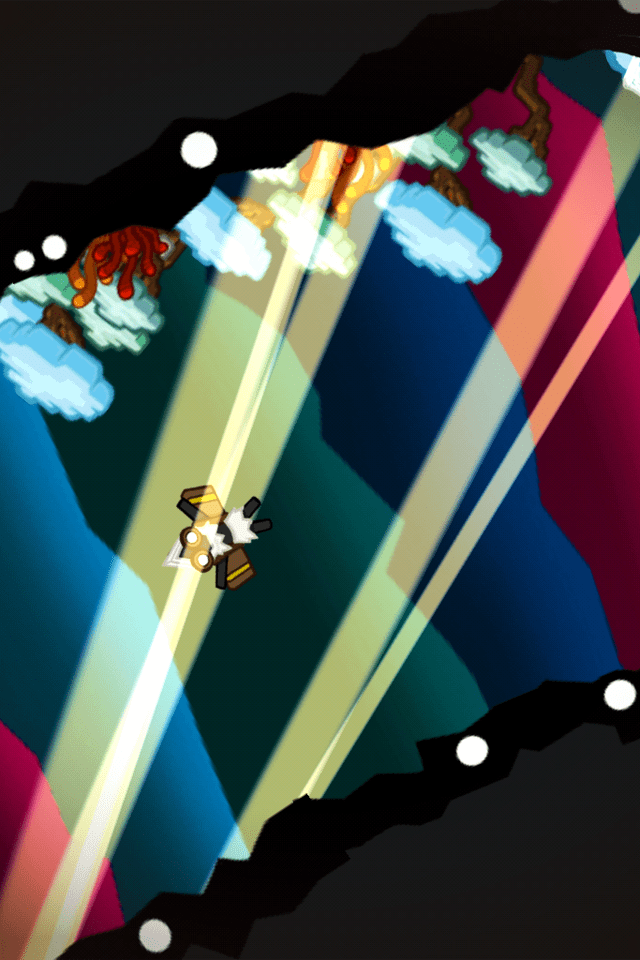
Hollow Grounds is about a suicidal cartographer who decides the best way to map the interior of the planet is to dive head-first down it.  This is one of those iPhone that controls entirely using the gyroscopic technology.  To play, you have to spin your iPhone around to steer him through a series of 25 caves.  To pass a cave, you have to meet minimum requirements associated with speed, item collection, and super special item collection.  Well, allegedly.  There were a few times that I barely picked up any items, missed all the super gems, and spent the majority of the stage braining myself against the wall and I still would get a passing grade.  In fact, through the first 14 stages I only failed once and that’s because I paused the game.  As it turns out, pausing doesn’t really stop the action.  It just slows it down.  I don’t know if this is supposed to be a hidden cheat or just a programming brain fart.

Actually, Hollow Grounds is full of cerebral flatulence.  The game is all about quick reflexes, and yet there are stars scattered throughout the stage that you are encouraged to get.  Your dude travels fairly fast, so missing some of them is inevitable.  The only way to overcome this is memorizing the stage, but that will probably be tricky on account of all the stages looking nearly identical.  All you have to go by is the occasional light beam, but in over an hour of play time I swear I never really noticed them on account of my dude free-falling a couple hundred miles an hour.

The level design also gets a little far-fetched around the 15th cave.  Before this, I was barely able to keep up with the sharp bends on the track.  Starting in level 15 it has you doing loopity-loops and figure-eights.  Given the speed your guy falls, I swear this is less a game and more like a conspiracy from Apple to cause you to drop and break your phone.  The game expects every one of its players to have the dexterity of one of those greasy Italian guys who spin pizza dough on their finger tips.

I admit, I did have a teeny tiny bit of fun with Hollow Grounds, but it needs a lot of work.  I know the idea is the game is set in a cave, but the drab visuals were kind of downer, and the game speed is way too fast for what it expects of you as the player.  I think children are more likely to be amused by the spinning stuff, so if you have kids and a desire for a crack across your iPhone screen, give Hollow Grounds a chance.  It will be a good way to soften them up to the idea of a hollow Earth.  That way, when you go to feed them to the Morlocks, they won’t suspect a thing.

Hollow Grounds was developed by Full! Color! Planet!

99¢ fed their sister to a CHUD in the making of this review.
The Cusp: January 2012

The Cusp is a monthly highlighting of three Xbox Live Indie Games that came up just short of the leaderboard here at Indie Gamer Chick.

Welcome to the first installment of The Cusp!  For the last few months, Brian and I have kicked around the idea that there should be some “runner-up” list to complement the Leaderboard.  We implemented the first idea, that former Leaderboard games should receive recognition, and while this idea has worked, maybe it’s not enough.

So we came up with The Cusp.  Three games that will be featured over a 30 day period on the sidebar here, and a post explaining why they made it.  Or almost made it, depending on how you look at things.  In addition, The Cusp gives the developers of the selected games a chance to talk about their game and their plans for the future.

In the future, The Cusp will likely include monthly themes, like three games of the same genre or maybe even same developer.  The one thing every game featured on the Cusp will have in common is they are all good games that are worth your money.  If you missed them before, don’t miss out on them again.

For this opening month, we went with a variety pack.  Three games with absolutely nothing in common except the fact that they went overlooked, both at this site and on the marketplace as a whole.  I would also like to point out that the inclusion of a game by Bionic Thumbs has nothing to do with paying them back for trashing their recent game Plugemons: Part 1.  The Cusp has been in the works for a while and Starzzle was always one of the games that I had planned to include.

Read more of this post