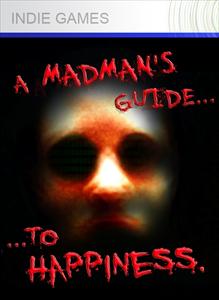
A Madman’s Guide To Happiness.

Trying to keep regular updates on my site can be a bit of a bitch at times.  Clearing 200+ reviews in under a year was probably not the best idea, because finding time to keep up that established pace can be trying.  I had to put a slight delay on my planned massacre of Sonic The Hedgehog 4, and here it is, 11:00PM and I still haven’t done a review today.  Thank Christ for Xbox Live Indie Games, where titles that can be beaten in five minutes or less are as abundant as McDonalds, although not nearly as healthy for you.

Well, it is Thursday, and thus it’s time for a Katch-Up.  I had been given a heads-up that A Madman’s Guide To Happiness was short, shitty, and insane enough for me to get a good review out of it.  Well, they got two out of the three right.  I wouldn’t go so far as to say it’s shitty.  That’s mostly because it doesn’t last long enough to leave any impression on me at all, really.  I hate to call any game I play a Mulligan, but Jesus, five minutes isn’t a lot to go on.

Are there any annoying kids in your life that you never want to have to speak to again? Show them that picture, tell them you turn into that whenever there’s a full moon, and you won’t have that problem ever again.

The basic idea is you’re reading the computer of some psychotic dude who sets up a couple of puzzles for you to solve.  And by puzzles, I mean stuff that seems like it was copied straight out of Highlights for Children that had its innocence stripped away by being forced to watch Nicolas Cage’s snuff film collection.  Basic math questions, a trick-question style riddle, and even one of those “count the triangles pictured, but don’t forget that small triangles make big ones” things.  It’s as if John Wayne Gacy was forced to repeat the first grade.

Between all these brain teasers that are about as stimulating as a medically induced coma, you get to read these rambling, incoherent ravings by the titular madman.  I have to say, at first I figured the game was trying to be weird for the sake of being weird, but actually I was sort of taken in by the creepiness of it all, the same way I was with Silver Dollar Games’ Fatal Seduction.  I became a little invested in it.  And then it ended in roughly half the time my average bowel movement takes.  The really weird part?  Like a good bowel movement, it was oddly satisfying.  I don’t know if that makes it worth the $1 it costs, but hell, people pay more than that for X-Lax.  Sometimes you just need a nice, satisfying dump.

A Madman’s Guide to Happiness was developed by Jaded Horizon

80 Microsoft Points honestly, truly cannot believe I ended up liking this weird ass piece of shit enough to give it a positive review in the making of this review.

Pendulous

I’m sure there are games out there similar to Pendulous, where the idea is to swing from pendulum to pendulum trying to reach a goal in the shortest time possible.  I already had someone tell me that it’s not all that different from Jungle Hunt, a game I never played.  Jungle Hunt was a product of the Golden Age of Arcades, circa 1982.  I’m a product of unprotected sex, circa 1988.  However, as it turns out, Jungle Hunt is included in Tatio Legends for the original Xbox, which I actually own.  So I fired it up and discovered that the person was totally wrong.  Well, that was a waste of an opening paragraph.

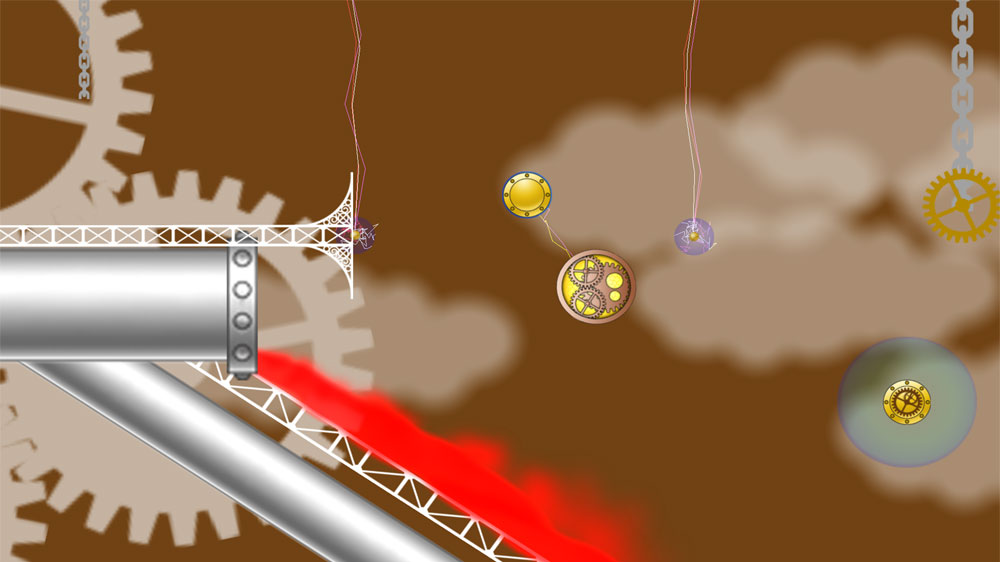
The idea is you swing from spot to spot as a little cog thing, latching onto the nearest swing-point automatically.  Using the left and right triggers (or the stick if you’re an idiot, more on that later), you build up momentum to launch yourself to the next spot.  As you progress through the meager fourteen stages, various traps and obstacles pop up, including one annoying section featuring a red gunky sludge stuff that seemed to bubble up at random and was the only bit of  true frustration in the game.  Well, that and the fact that the developers made a liar out of me.

Dear Datura loving twats: that shit was NOT art. Now THIS is art.

When I reviewed Cuddle Bear, I noted that I would immediately discontinue playing any game at the first instance of a leap-of-faith moment.  So naturally Pendulous was full of those types of moments.  Only I didn’t quit the game.  I kept going.  And thus I’m a big liar.  At least my excuse is good one: Pendulous is a really well done game.  The problem is, there was no need to map the swinging mechanics to both the sticks and the trigger buttons.  The triggers work just fine, so the stick should have been used to move the camera.  There’s just too many spots where you can’t see the next object you’re swinging to.  Or traps that move up and down are off-screen, so you can’t possibly calculate when the appropriate time to jump is.  This was probably related to the porting of this game over from Windows Phone, which the developer noted to me had been the cause of a few issues.

This is where being The Chick is tough, because I have to say something that is probably devastating for a developer to hear: this game was so good that it had a spot on the leaderboard all locked up.  I really loved it.  This is exactly the kind of original, quirky type of game I expected to find in the XBLIG channel when I started this site, and it’s worth your money right now.  The length of the game didn’t bother me at all.  Fourteen quickie stages that are sublime (plus another 14 mirrored ones, snore)  is preferable to a four-hour game that struggles to tread water.  But that damn camera issue was like the iceberg to Pendulous’ Titanic.  Its chances were sunk.  All is not lost.  They already planned to add more levels, and Do Better Games are aware of my concerns, because I sent them a singing telegram.  Only I misread the job description.  It was actually a singeing telegram, who knocked on their door and proceeded to set himself on fire.

Well, they got the message.  The game needs a camera, and then they need to issue what could be the most important Second Chance with the Chick challenge in the history of this site.  They would probably get to it sooner, but because of my screw-up, they first have to clean up a hell of a mess on their porch.

Pendulous was developed by Do Better Games

80 Microsoft Points noted Polish is a nationality, not a race, so that technically makes me xenophobic, not racist, in the making of this review.

You can also read my buddy Hurley’s review at Gear-Fish for this very title.

SEAL Team 12

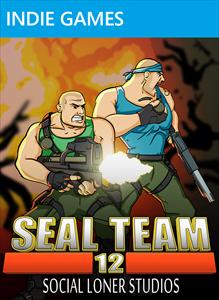
SEAL Team 12 comes to us via Social Loner Studios, the nutjobs behind the hilariously absurd Bird Assassin.  I have to admit, I didn’t think SEAL would be any good.  I think my exact words to Brian were “oh great, another TwickS on XBLIG that tries to ape some 80s shooter I never played.”   Plus it was overpriced at 240 Microsoft Points, because some developers hold on to their belief that their game will sell despite that price point.  It’s kind of cute in a demented “twenty-year-old still believes in Santa Claus” kind of way.

So I was pleasantly surprised to find SEAL Team 12 to be a pretty decent game.  The idea is the world is being threatened by the Guardians Of Devastation, or GOD for short.  Ah, I see what you did there, Social Loner Studios.  Actually, Stevie Wonder can see what you did there on account of the joke being run into the ground about half-way through the game.  Sure, there’s enough anti-GOD puns to make Christopher Hitchens’ corpse obtain the rare status of “double rigor” if you catch my drift, but damn do they lay it on a little too thick.  The rest of the humor mostly works.  Every stage begins with an NPC character (that is wearing a red-shirt for double the geek points) being killed by whatever is the newest enemy added to the game.  This actually caused me to laugh out loud a few times.  The only time it fell flat was when the dead man walking was named Kenny.  I accurately predicted a horrible “oh my God, they killed Kenny” joke, and then watched in disgust as the prophecy was fulfilled.  Jesus Christ, people!  When the guys who created the joke realize it’s not funny anymore and drop it, maybe it’s time to get a fucking clue.

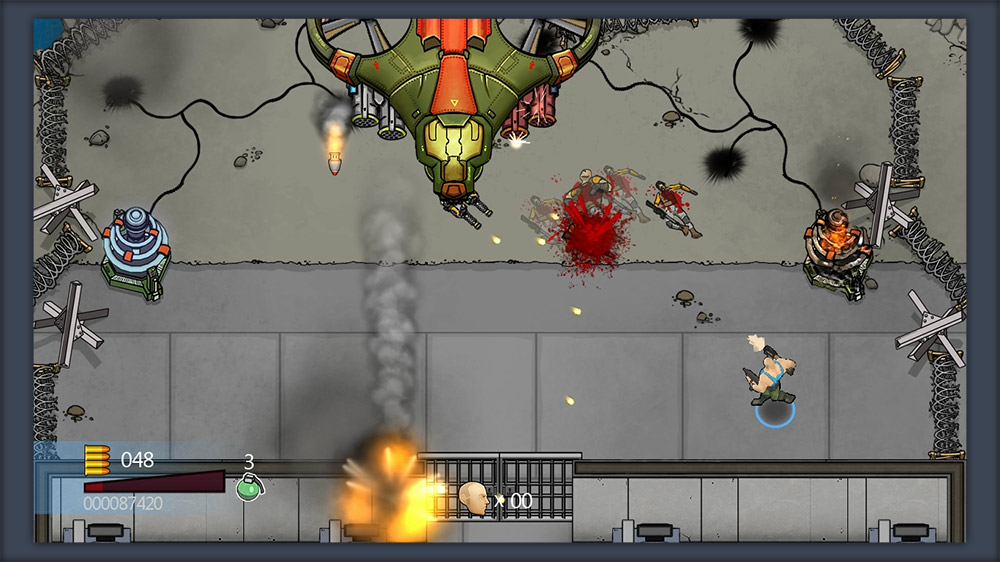
The game itself is a typical Commando-style “walk upwards, kill dudes, walk upwards a little more, kill more dudes” twin-stick shooter .  If this was done straight-laced, it would have been boring.  Thankfully, the game has what so many XBLIGs don’t: personality.  The witty dialog that opens every stage, the moments where you see enemy conversations, and the well done cast of characters.  Considering that the genre couldn’t possibly be more tired if it took an entire bottle of Valium, the effort to dress it up is admirable.  When you strip away all the ascetics, SEAL Team 12 is as generic as it gets.  Walk, shoot, throw grenades, pick up weapons, occasionally hop in a tank, fight a few bosses, end credits.  Quite frankly, everyone should approach a game like this with skepticism.

And it’s not like what is here is done perfectly either.  There are a few problems.  The weapon selection is limited and clichéd.  All weapon pick-ups are done via duel-wielding, mapped to the left trigger to fire, while your right hand always retains the default machine gun.  The setup works, but there’s not enough weapon drops, and what is here is limited.  Some of the guns, particularly the flame-thrower, are worthless.  You get an unlimited amount of normal grenades, but you can’t stack any special ones you pick up.  Given how outlandish the plot and characters were, they should have gone nuts with the variety of guns.  But they didn’t, and the game suffers a lot for it.

A bigger problem is the game becomes a bit of a bullet-hell in the final stages.  Let’s be clear about something:  bullet-hells work in space-shooters when you’re a nimble ship and the battlefield leaves plenty of room to maneuver.  They tend not to work if you’re a clunky, slow-moving steroid freak that has various obstacles you have to walk around.  The game got so ridiculous at the end that we had to swallow our pride and set the difficulty to easy.  Shameful for sure.  Not as shameful as, say, announcing a fake contest for a popular new release on Twitter, then creating a fake account designed to be the “winner” five minutes after you announce the contest.  Then retweeting posts from people your original account follows to pad things out.  And not remembering to try to type different than you typically do.  Or even more brazenly, only retweeting one person’s “wow, I’m so excited, I hope I win!” tweet out of the dozens you receive from gullible people who think you actually have something to give away, and having it be from the fake account you just made five minutes after your fake contest began, making the fix so obvious that a person could accurately predict to multiple witnesses the outcome of the “drawing” for the second straight contest you’ve held.  I mean, theoretically, if your contest was a real random drawing, nobody could possibly predict the outcome of the winner once, never mind twice in a row.  Finally, as soon as your fake contest is over, you never Tweet from that fake account again, just to finally and officially confirm what an oblivious loser you are for thinking nobody would catch on.  Hypothetically speaking, of course.

Despite a few hang-ups, SEAL Team 12 is really well done. Yea, it offers nothing new as a game, but it’s still fun.  In fact, I’m kind of surprised at how well it works in both single player and co-op.  Yea, the price point is kind of stupid.  Sure, some of the jokes fall flat.  You know, Social Loner Studios have been off my radar, but they’re actually 2 for 2 here at Indie Gamer Chick.  But, they haven’t made a leaderboard contender yet.  They probably have the talent to do so, so I’ll be keeping an eye on them.  Well, I’m also doing that because I think they’re fucking insane and might kill and eat me if I turn my back on them.

SEAL Team 12 was developed by Social Loner Studios

IGC_Approved240 Microsoft Points noted that nobody’s fake contest was mentioned in particular, so if you think I’m talking about you, that really says more about you than me in the making of this review.

SEAL Team 12 is also available for PC on Desura for $2.99.  This version is unverified by Indie Gamer Chick.  The XBLIG version is Chick Approved and Ranked on the Indie Gamer Chick Leaderboard.

Curse of the Crescent Isle

Do you know what the key to critical acclaim is on Xbox Live Indie Games?  No, it’s not having a good game.  Don’t be silly.  It’s having a retro-style graphics and gameplay that borrows mechanics from a popular 80s NES hit.  If you have that, you have a game that will have more praise dumped on it than a parrot that sings Let the Bodies Hit the Floor.  Which is ironic given that most of these new-retro titles just poorly mimic the classics the same way a parrot mimics a song.  Sometimes praise is deserved.  Stuff like Escape Goat or Aesop’s Garden comes to mind.  Most of the time, the end result is cute and charming but ultimately just kind of exists as a weird novelty.

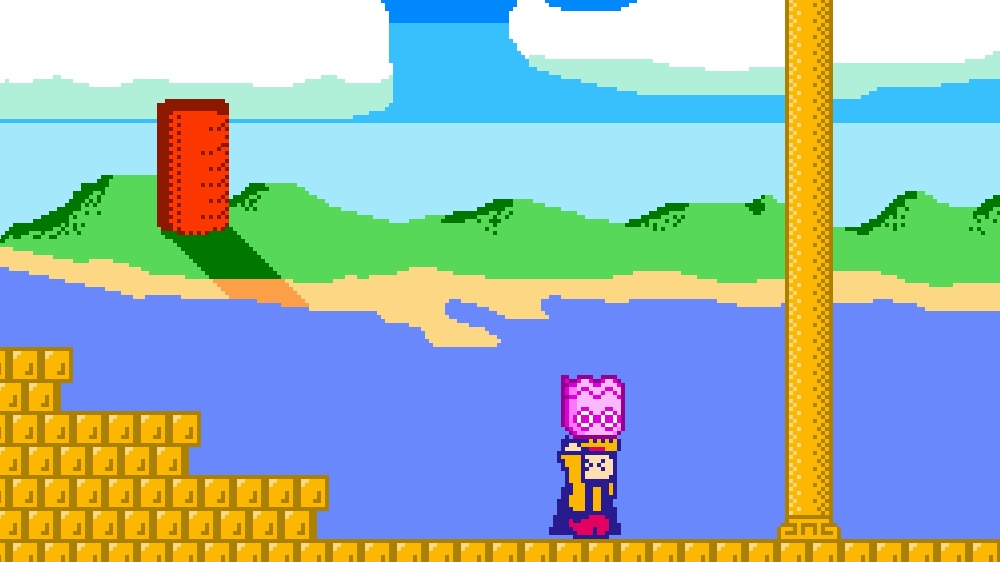
Take today’s Katch-Up game, Curse of the Crescent Isle.  It has pretty good NES style graphics without the slightest taint of anything modern to ruin the effect.  The story is appropriately insane.  You take the role of a King who has to save the people of his land from a, um, something or another that has turned them into, some.. things.  Honestly, I’m not sure what the fuck happened, but who cares?  I couldn’t figure out why anything happened to anyone in any 8-bit game, so why should I expect to start now?  It’s all about the gameplay, which is modeled after the platforming and lifting mechanics of Super Mario Bros. 2.  Only here, the enemies you pick up can be used as tools.  It’s a sensible evolution on the established concept.

It’s hard to lift with your knees when all you have is a beet-red anus for legs.

Here’s the problem: the game sucks.  Allow me to elaborate.  Super Mario 2 overall controlled decently, as long as you picked the right character.  I never used Mario, because his jumping was too weak.  I stuck with Luigi, who wasn’t quite as pitifully slow as the Princess, but could also jump higher and further than her.  In a game that is all about jumping, it made sense to me.  Unfortunately, Crescent Isle is all about jumping too, but you’re stuck with someone who controls like Mario did.  Oddly enough, the gravity feels strong, but the controls overall feel way too loose.  I can’t tell you how many times I would jump for a vine, grab it, but then coast straight off the side of it.  It was like the King lubed his hands up with Vaseline before jumping.

The biggest issue with Crescent Isle is how badly implemented the mechanics are.  The control scheme is very clunky.  You pick up enemies with the X, but you also use X to switch between lifting them over your head or putting them below your feet.  You jump with A and throw with B.  It’s messy and never feels intuitive.  There’s also problems with the physics of lifting and throwing.  Enemies can’t really die.  If you throw them into each-other, it just knocks one out.  Once they hit each-other, they ricochet back and typically cause damage if they float anywhere close to you.

The only thing Crescent Isle does well is puzzles.  There are some clever ones that make neat use of the enemies’ skills.  Sadly, the impact of those puzzles is lost due to the lack of check-points combined with the horrible play control.  And that’s not even taking into account when the game glitches out on you.  During the second stage, there are puzzles that require you to use an ice monster to freeze fireballs shot out of a pipe, then use them as stepping-stones.  It was clever the first time they used it.  After a dozen times, it was tedious and lame.  Especially since the fireballs sometimes would just go away instead of staying in place as a block.  Or there was the time that I froze a fireball, it disappeared, and the pipe never spit out another one.  I was stuck there, and that fucking sucks.  Sure, you can pause the game and restart the level, but it had taken me around ten minutes to get to that point.  And that was just that one attempt, not counting all the lives I lost trying to get there before that.  The puzzles lose their zing when the game’s lack of debugging causes you to replay them over and over again.  Hell, I lost count of how many times an enemy pushed me through a solid wall and to my death.  No wait, I didn’t.  It was ELEVEN FUCKING TIMES!

Why does the King always look like he’s constipated?

Ultimately, Curse of the Crescent Isle just isn’t that fun.  The controls are bad, the levels are too sprawling, and the concept is just kind of boring.  Of course, Crescent Isle has 8-bit style graphics and is almost kind of like Super Mario 2, so it got critical acclaim.  When I read how this was received by other critics, I was kind of flabbergasted.  You know, there was another 8-bit clone of Super Mario 2 once upon a time.  It was called Bible Adventures.  I never played it, but I certainly know of its reputation.  I have a theory that if that game came out today and was on Xbox Live Indie Games, it would be considered really good.  Why?  Because it meets all the criteria for critical acclaim on the platform.  8-bit?  Check.  Clone of a flagship title?  Check.  Actually fun?  Who cares?  Oh, don’t scoff!  You know I’m right.

Curse of the Crescent Isle was developed by Adam the Otaku

80 Microsoft Points never played Duck Tales on the NES so I can’t accurately compare this to that in the making of this review.

Droppin’ Ballz

Droppin’ Ballz is one of those “fall as far as you can” games.  My gut tells me it was designed with tilt-controls in mind.  Because Microsoft opted to not go with a motion-controller like everyone and their mom and instead decided to create a device that plays like Minority Report as invented by the chronically unambitious, Ballz is stuck using the trigger buttons instead.  I guess this control scheme works, but it never feels quite right.   My biggest complaint, that the game moves too slowly, is easily corrected by adjusting the difficulty.  The game is set to easy on default, but it’s only really tolerable on normal or higher.  And that’s assuming you play the game on its classic mode, where you just fall from one platform to another.  I was ready to write off Droppin’ Ballz as just another phone-style faller that has no place on a console.

I think the developers were droppin’ something, but it wasn’t ballz.

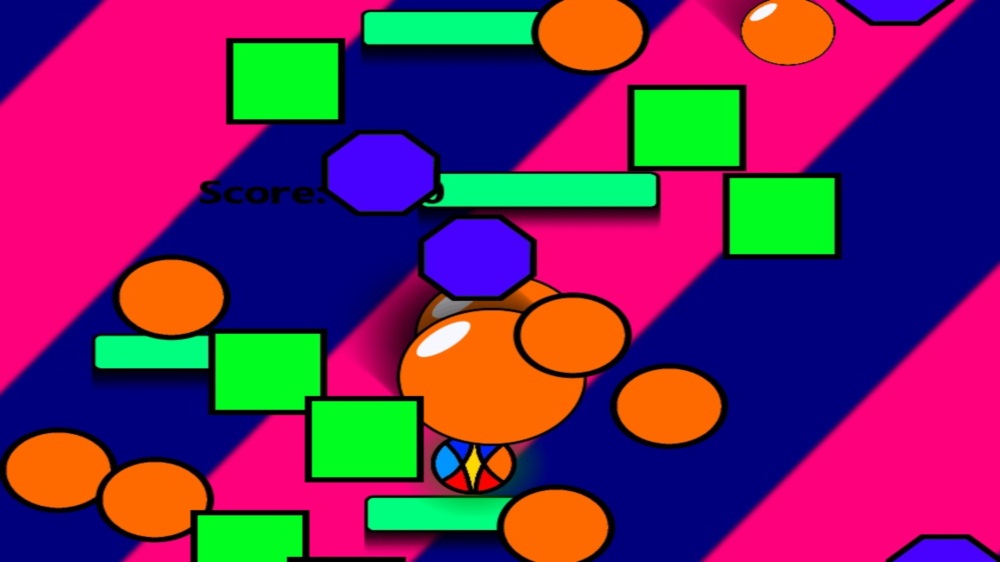
And then I tried Fever mode, which feels like you’re falling through the rabbit hole from Alice in Wonderland, only without having to drop acid.  Actually, I imagine if you dropped acid while playing this, it would be pretty fucking bad ass, but probably a little too difficult to play.  The idea is still  the same: fall from platform to platform, try to not miss the platforms, and try not to land on the black platforms.  Only in this mode, the background changes color and tries to distract you, plus there are perspective-altering “power-ups” that shift what angle you view the game from.  This is what the whole game should have been like.  It’s as if developers flipped a coin to decide if they would go the generic route or the trippin’ on mushrooms route, and the coin fell down a sewer grate.  And they couldn’t flip another because then they wouldn’t have enough change left to get a Mountain Dew, so they said “fuck it” and continued working on the inferior classic mode as well.

I actually did like Droppin’ Ballz, but I have a tough time recommending it.  There’s no online leaderboards, so there’s really no point in playing it.  Hell, even the local leaderboards are all kinds of fucked up.  In theory, there should be six boards: one for each game mode on each difficulty level.  The point values increase on the higher difficulty stages, so ranking a game played on the tedious easy mode over the medium mode is silly.  But that’s how it’s done in Droppin’ Ballz.  Even worse, it ranks games played in Classic mode against games played in the wacky Fever mode, which makes no sense at all.  I guess Fever Mode is good for a twenty-minute distraction and priced accordingly, so I do mildly recommend it.  I would rather see this game on iPhone, with online leaderboards.  I could see it being a big, word-of-mouth hit on there.  It would be a perfect fit on a platform developed by an acid-dropping, corporate hippie.  They could rename it “Jobs Ball.”

Droppin’ Ballz was developed by He-3 Software

80 Microsoft Points heard Hurley gave his hopes up when he heard that there was a way to make your balls drop for just 80MSP in the making of this review.

Gameplay footage courtesy of

Cuddle Bear

Cuddle Bear received a Second Chance with the Chick. Vast improvements have changed it from one of the worst games ever made to merely terrible. I kid. It’s not really that bad anymore.  Read the new review.

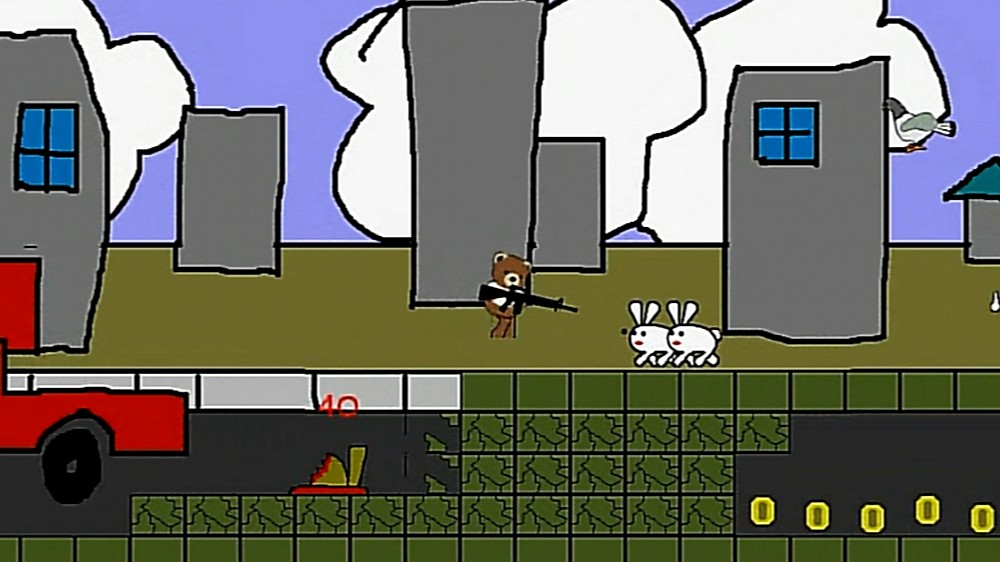
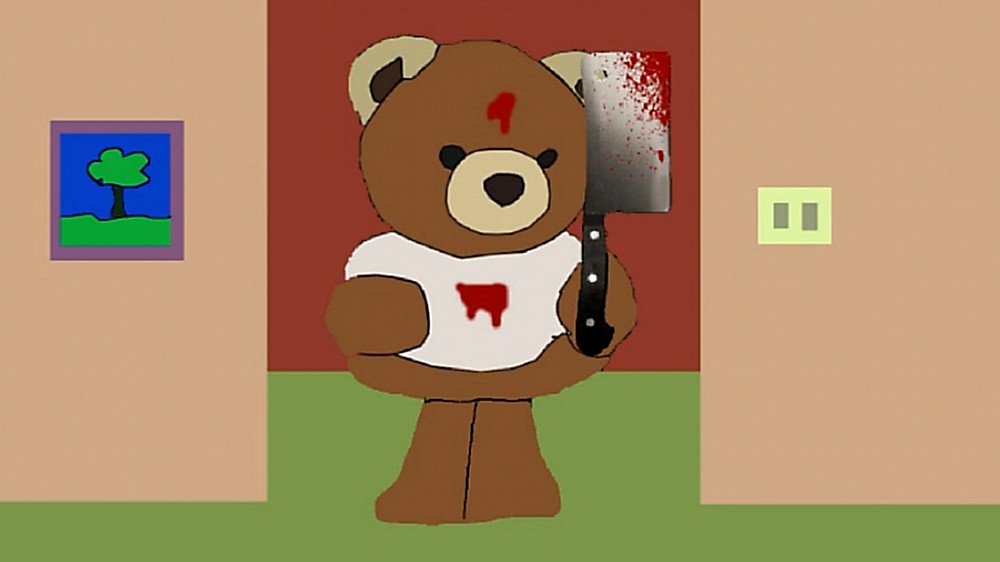
In order for Cuddle Bear to be as bad as it looks, it would have to walk around kicking puppies and luring children into discarded refrigerators. I’m not sure if it does those things, but I can’t swear it doesn’t. This is one of the worst Xbox Live Indie Games of the year. It didn’t start that bad. You play as a psychotic teddy bear that goes around killing various bugs and animals. You’re armed with a gun, you have the ability to buy more guns, and levels are usually filled with plenty of God’s creatures for you to gleefully murder.

No really, that is what the game looks like.

The first world, set inside a house, is actually not too bad. Yes, the MS Paint graphics are embarrassing, the amusement level of the sound effects gets old fast, and the floaty jumping I just fucking knew would be problematic later, but it was still kind of cute in a “oh, look at the three-legged kitten” kind of way. And then I got to the suburb level, where the game took a turn for the worst. The platforming started to rely heavily on leap-of-faith gameplay. You know what I’m talking about. It’s where you have to jump to a platform you can’t see, possibly into enemies that you can’t defend yourself against. Some levels from that point on are completely centered around that concept. You jump, wait for the platform to appear, see an enemy next to the ledge, hit the enemy, recoil hugely off it, and fall to your death. Or even worse, you don’t die, fall to the ground, and have to walk all the way back to the start of the level to try again. At this point, if I had a button in front of me that would have detonated the developer’s head, I can’t say I wouldn’t have pushed it. Actually, I probably would have had someone else push it for me. Never hurts to have a second set of fingerprints on head-popping buttons.

I’m not sure how a game gets made in this day and age with gameplay like this. Did nobody play this far and tell the developer “you know, this is kind of just a series of dick moves that isn’t fun in the slightest bit?” I’m guessing not. It sucks that it falls to me to tell the developer that Cuddle Bear is just a series of dick moves that isn’t fun in the slightest bit. At least the leap of faith stuff isn’t the only thing to complain about. The graphics are shitty, but the game somehow still comes in at 241.5MB, necessitating an insulting 240 Microsoft Point price tag. Truth be told, that’s probably a good thing. It means nobody is likely to waste any time or money on this piece of shit. The enemies end up being bullet sponges, it takes too long to upgrade guns, and the game is kind of too long and samey for what it has to offer. I was getting bored with it long before I was getting angry at it.

Pictured: Cuddle Bear after he murdered fun itself.

Cuddle Bear isn’t the first title here that featured leap-of-faith platforming, but it will be the last one that I make any effort to finish. If developers don’t want to put in any effort into their level designs, I’m not going to make any effort to play them. I did excuse the first couple dozen instances of blind jumping in Cuddle Bear, but it became apparent during the second beach level that I was wasting my time. Nothing good had come of the game by this point. It was just getting worse and worse. This kind of stuff worked in old school games where the enemies didn’t spawn until you reached the point they were meant to appear. In this game, and many other XBLIGs for that matter, the enemies are just there, walking back and forth. You can’t prevent them from being close enough to the ledge, and thus all platforming is left completely to chance. I find it odd that the developer requested I review this game. Maybe he wasn’t aware how bad it was.  Well, hopefully he knows now.  If not, I’m not sure how else to say it.  I could sing it.

Beneath the knees, hopefully nobody pees.

He’ll slurp and gag and gargle the sea.

Because that’s the day the Cuddle Bear sucked a big dick.

Cuddle Bear was developed by Happy Sock Entertainment

240 Microsoft Points read that the developer has Cuddle Bear 2 planned, says this is confirmation of the existence of evil in the making of this review.

Little Monsters

I loves me some physics-based puzzlers.  That’s why you won’t catch me bitching about what Angry Birds has done to the iOS market.  I couldn’t be happier.  It’s a genre that lends itself perfectly to killing time.  If I’m stuck waiting for something, I can spend five minutes with it or an hour, being able to jump in and out without consequence.  That’s why I don’t think the genre works well for consoles.  It lacks that “killing time” feel.  There’s a big difference between playing Angry Birds while waiting at the doctor’s office and playing Angry Birds on your couch.  The only time I get bored playing these games is when I have nothing to do.

By the way, that has nothing to do with why I don’t like Little Monsters.  I don’t because the game sucks.  But if it had been good, that would be the excuse of why I didn’t recommend it more.  Figured it would be fair to let you know that.

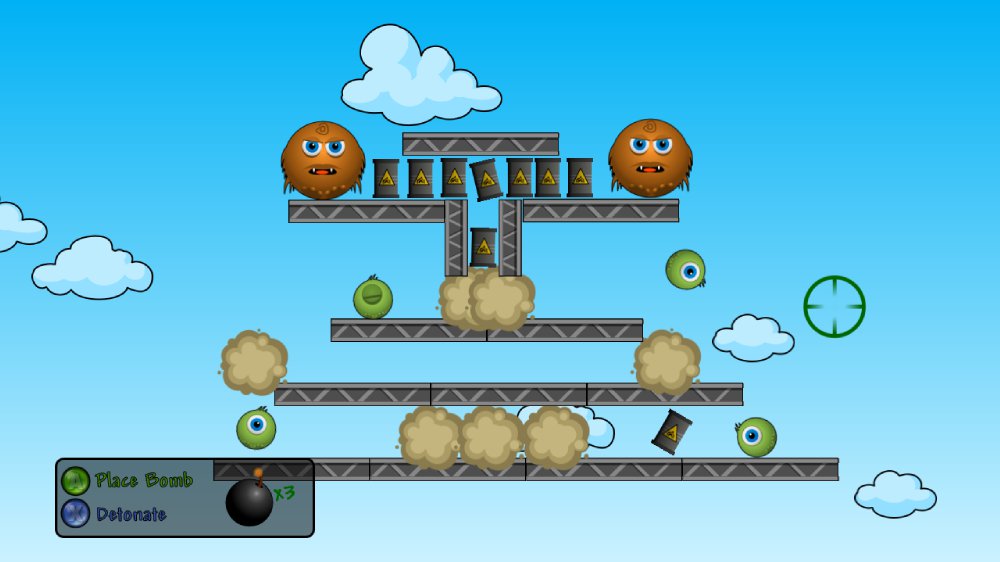
In Little Monsters, you’re given a limited number of bombs in each stage to blast all enemies off the their platforms and into oblivion.  There’s a variety of enemies, some of which jump, some of which are heavy, some of which float in the air, and some of which melt ice blocks and detonate explosives.  They’re used in clever ways through-out all 30 puzzles included.  The game scores on a 3-star system, much like Angry Birds.  The fewer bombs you use, the more stars you get.  The concept is solid.  The execution is so not solid it’s practically vapor.

Having bad physics in a physics-based puzzler is like entering a horse into a drag race with a Ferrari.  You’re just asking to be destroyed.  In Little Monsters, the enemies are round in shape and roll when they get moved.  Sometimes they would be rolling at a pretty decent speed, with nothing in their way, and just come to a complete stop for no reason.  This was especially a problem with the big monsters.  For no reason, they would stop on the edge of a cliff, stop in the middle of a platform, or once even briefly while rolling down a slope, negating all momentum it had built up.  It was weird and hugely annoying.  I can’t tell you how many times I had a stage beaten only to see the physics crap out and enemies stop moving for no reason. Oddly enough, this never seemed to happen with the “cute monster” that you have to avoid killing.  By God, if anything came remotely close to it, it seemed to scoot its ass off a cliff like it thought it was starring in Lemmings.

Maybe the big dudes lactate super glue. That sounds like something a monster would do.

The bombs aren’t accurate either.  It feels like something is off in the collision detection, or there’s an issue with the gravity.  I would set bombs on the bouncing enemies, wait for them to line up, and detonate, only for the bomb to not even budge them.  This happens way too often.  There are a few stages that involve timing, but whether the bomb would actually work the way it’s supposed to was never consistent from one attempt to the next.  It’s never fun to have to replay levels when you know the solution but have to wait until the game is willing to behave correctly.

The bombs also lack “oomph” to them.  From one stage to the next, the strength of their blasts never feels uniform.  These problems all add up to a game that feels like it’s still in the Beta stage of development.  Maybe something good can come of it, but by time it does, people will have given up and Little Monsters will lose its potential audience.  Think of every sad picture you’ve seen of a premature baby being hooked to life support, with tubes and wires all over its body.  That’s what a developer does to its own game when it releases it too soon.  Little Monsters is that sad, premature baby.  All the potential in the world, but barely a fighting chance of survival.  Again, I love this genre.  I love it.  But Little Monsters has about as much stability as a bridge being suspended by twine.

Little Monsters was developed by WhiteHawk Games

80 Microsoft Points said naming a game after a movie starring Howie Mandel was probably a sign it would be no good in the making of this review.

Dot Dash: episode 1

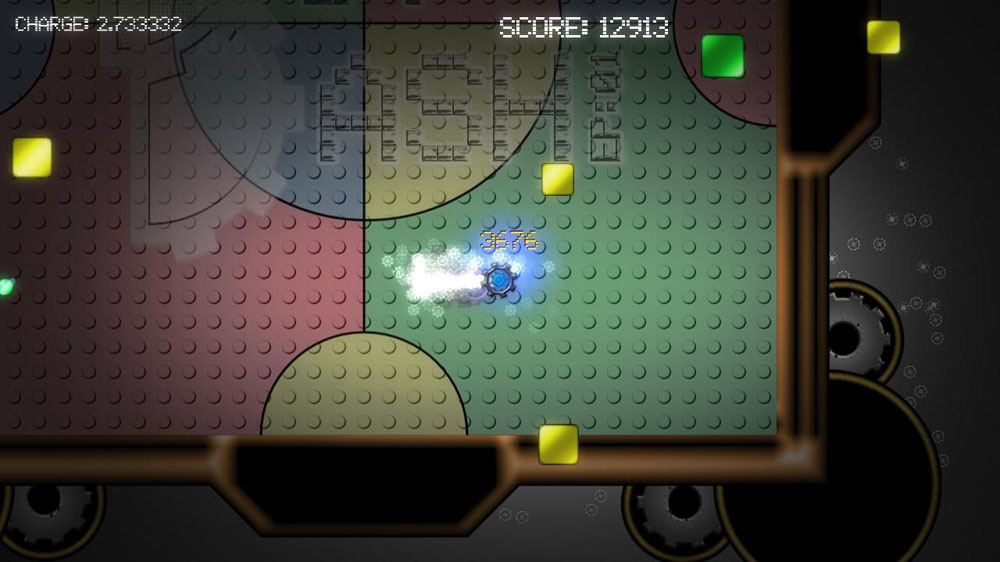
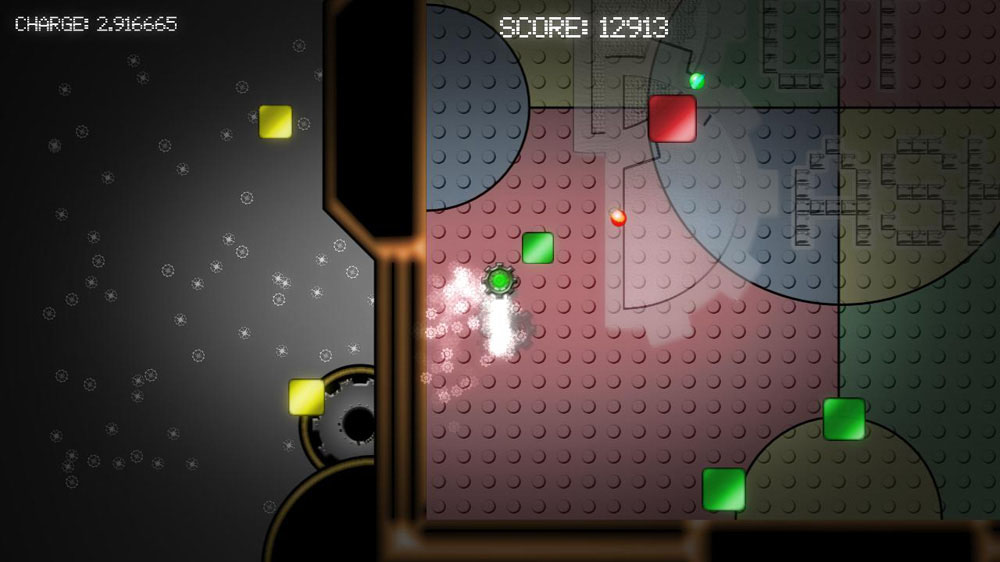
I’ve been stoked to play Dot Dash: episode 1 since last month when it was previewed in the return edition of Indies in Due Time.  Unfortunately, sometimes I psych myself up a little too hard before a game.  I was convinced that I would adore Dot Dash, as long as it got the controls right.  Despite somewhat succeeding there, I really am hard pressed to give Dot Dash a recommendation.  This is a tough one for me, because I really did have fun, but this game has more problems than an algebra text-book.

The idea is you’re a little wheel-thingie that has to avoid blocks that come at you from all sides.  In Marathon mode, if you touch a colored orb, you gain the temporary ability to absorb blocks of that color, for points.  Your goal is to score as many points as you can.  This is the only color-matching mode, but it’s also probably the most fun.   Time Extension is the second mode.  Grabbing colored orbs is replaced with avoiding the blocks altogether and looking for orbs that extend the time you have remaining.  Finally, there is Zone mode.  Here, a scoring zone randomly teleports around the play field and  you have to stay inside of it to rack up points.

All three modes are fun enough, but my desire to keep playing them was dulled once the problems with the game became more clear.  Fairness is the chief complaint I have.  Blocks and orbs spawn randomly, sometimes creating no-win situations and making Dot Dash require a little too much luck to truly be a game of skill.  During my best rounds of Marathon, I would get into a wonderful groove and show escape skills that would make Houdini proud.  Then the game would throw out a dick move by having blocks come at me from all sides with no space to escape.  This happens way too much, and it owes to the random nature of the blocks.  Dot Dash has to have a random algorithm.  I mean, it would suck if it didn’t have one.  But it has to be random in a smart way, and this is where the developers failed.  There’s no fail-safe that prevents inescapable situations.  At first, it was just annoying.  When I was closing in on a two million point game, only to be surrounded by blocks with the only gaps being smaller than my wheel, I let out what could only be described as a primal scream.  It was so loud that my parents assumed I was becoming a werewolf and shot at me with a silver bullet, but missed and hit my friend instead.  Thankfully she was a werewolf, because the silver bullet did kill her.  Huh, Hortense was a werewolf.  Who knew?

A totally different, but hugely annoying problem was highlighted in Time Extension and Zones, and funny enough, it’s something that’s meant to help.  It’s the speed-up orb.  In theory, it gives you the speed necessary to outrun the blocks.  In reality, it destroys the accuracy of the controls and makes you extremely more likely to run into a block.  In Zone, it’s worse because it makes lining up in the zone overly difficult, especially the smaller ones.   I played Dot Dash for over an hour and at no point was the speed-up ever useful.  Not even once.  And the game gets a little too generous with spitting them out.  Any game where you try to avoid getting power-ups like they’re the plague has serious problems.

As the blocks zoom by faster, you don’t always have a way of avoiding them.  It also doesn’t help that they’re not distinctive enough from the time extender orbs.   Let’s say you’re poisoned and you have five seconds to choose an antidote.  You’re given five options and told that the white ones will kill you faster, while the white one with the black stripe will save your life.  Choosing the correct one probably isn’t as easy as you think it sounds, especially when you’re under pressure and can only focus on so many separate things at once.  Chances are you’re going to be as dead as the dodo, just like I would be.

The pictures are a little misleading, because at times the entire screen seems to be filled with blocks. I did sometimes question the legitimacy of the game’s randomness. In Marathon mode, I swear most of the time the game would put only one color orb out, then throw at you nothing but blocks of the other three colors. This happened almost every time.

There’s a few minor annoyances.  The background is colorful, but it can get in the way.  I almost wish it had been shades of gray.  The blocks are colorful enough that it would be a neat visual contrast.  There’s also no online leaderboards, which is the type of thing that can make or break any score-based arcade game.  Ultimately, the biggest problem is the game just doesn’t play fair.  I don’t mean to sound like a crybaby, but when I die in a game, I want it to be because I fucked up, not because the game throws something at you that is impossible to avoid.  I have no problem with luck factoring into a game, but I would rather such situations only be to your benefit.  Bad luck in games is only good for making me want to play something else.

I still do very meekly recommend Dot Dash: episode 1 because it is genuinely fun.  But it has the potential to be so much better.  With the right adjustments, it could be something special.  As it stands, you might enjoy it, but it might give you as much trouble as my parents are having trying to fit Hortense into the crawl space.

Dot Dash: episode 1 was developed by Drop Dead Interactive

80 Microsoft Points said this shit happens every full moon and we’re running out of  space in the crawl space in the making of this review.

Adventures of Lolo, Aesop’s Garden, and Crystal Hunters

Update: Crystal Hunters is now 80 Microsoft Points.

For the first time, I’m doing a multi-review with games from different developers. This is because both of today’s titles, Aesop’s Garden and Crystal Hunters, are new takes on a classic NES game called The Adventures of Lolo, a game 82 days older than me. It actually was released on the Wii’s Virtual Console back in 2007, but I was in the middle of a World of Warcraft bender that year and missed it. I’ve dealt with a lot of clones over the last month, and my attempt at playing a game that I had no reference point on (Boulder Dash clone Gems N Rocks) left me feeling a bit weird. Yes, I do believe a game should be able to stand on its own, but if a game sets out to pay tribute to a classic, you should also measure it against the original. Was True Grit a fantastic movie because it was a remake, or in spite of it? Would anyone have known how truly awful Tim Burton’s Planet of the Apes was without the Charlton Heston original? Would New Coke have caught on if people didn’t have the classic formula to compare it to?

In that spirit, let’s compare these three games.

Concept

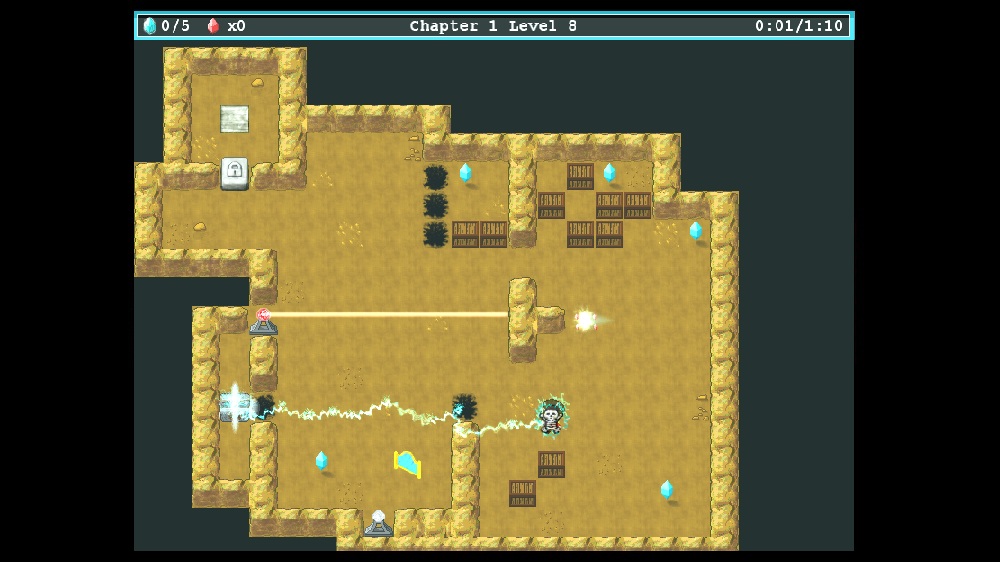
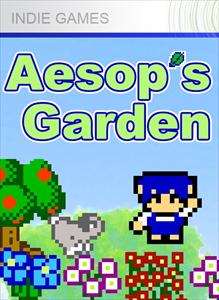
All three games are action-logic puzzlers where you must collect a set number of things in a room that open an exit. In Lolo, it’s hearts. In Aesop, it’s weeds. In Crystal Hunters, it’s crystals. In Lolo and Crystal, the items are in plain sight, and it’s up to you to figure out how to safely reach them. In Aesop, the weeds have not yet sprouted. You have to first turn on a sprinkler. This is because the rival of the main character wanted to ruin his chances of winning some kind of gardening contest, so he went around planting weeds. Good lord, that’s spiteful. I mean, it could have been more so. The guy could have salted the ground so that nothing would ever grow back. Besides that, there’s 50 levels in this game, so how big exactly is this plot of property that Aesop has? It’s hard to feel bad for the guy when he owns so much land that you can almost call it a kingdom. At least it beats “guy just wants to get a lot of crystals” or “monster kidnaps girlfriend, presumably so he can fuck her.” What do all these evil monsters want with princesses? With all the inbreeding that takes place among royalty, they can’t be THAT good in the sack.

Aesop’s Garden

Game Play

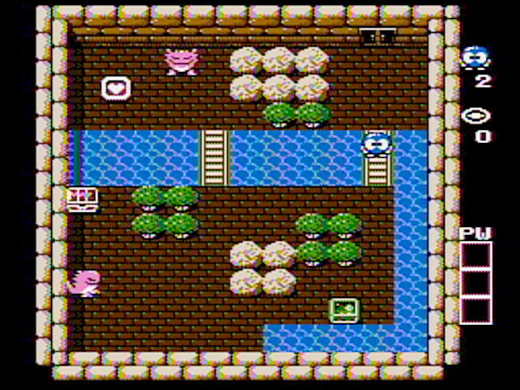
Lolo and its offspring play like more actiony-versions of Sokoban, the crate-shoving puzzle genre that has been reviewed a few times here at Indie Gamer Chick with titles such as Puzzled Rabbit or HACOTAMA. The difference in these games are the addition of enemies, firepower, and environment-based puzzles. In Lolo, there’s a handful of enemies that are all carefully integrated into each level. Some of them chase you, some of them shoot fireballs at you, and others remain stationary but kill you if you cross their path. These are called “Medusas” and they are also found in both Aesop’s Garden and Crystal Hunters, albeit as scarecrows and evil treasure-chest-things that zap you like you’re a Nazi watching the opening of the Ark of the Convenient.

In Lolo, you often have to use enemies to your advantage. In some rooms, the hearts you collect give you two shots. If you shoot an enemy, it turns into an egg for a few moments. You can then shove it into place and use it as a block, or push it in the water and use it as a temporary bridge. If you shoot an enemy a second time, it dies, but it will respawn. In other rooms, you might collect the ability to create a bridge or smash a rock. Aesop’s Garden has a feature similar to the hammer.  At the halfway point in the game, carrots are introduced to summon hungry rabbits that destroy all walls in whatever line you’re standing in.

Both Lolo and Aesop’s Garden rely much more on trial and error than Crystal Hunters. In that game, crystals that give you shots are red instead of blue. In Lolo, only some hearts give you shots, and there is nothing that distinguishes them from normal hearts. In Aesop, you’re never sure where exactly weeds will sprout up. It’s never too annoying, and both games allow you to commit suicide with the select button if you fuck up. If you die in Crystal, it doesn’t take you back to the beginning of the stage, but rather to the last point you were safe, which is a cool feature. It would have come in handy in Lolo and Aesop for sure. Fuck ups there usually resulted in me dropping cyanide. Lame. If I was the hero in a puzzle game and I had to kill myself, I would totally go with seppuku.
Adventures of Lolo

Playability

This is where all three games stumble, as the control is not so smooth in any title. It’s never bad enough to be a deal breaker, but it will lead to some very aggravating moments. Lolo probably plays the best, which is appropriate given that it’s the only game that was made by professionals. Still, the controls in it felt a little loose. Whether I was using a standard Wii remote or the classic controller, I would often push blocks one half-space too far, necessitating a suicide. This led to me heel-toeing it one tap of the D-Pad at a time whenever I moved a block around. This wasn’t always an option. If you’re moving an egg, you only have a few seconds before it hatches and whatever enemy you’re pushing is frozen in place. Or maybe you’re being chased that by an enemy. Or both. In the later stages, the game demands precision movement from a controller that is anything but precise.

Aesop’s Garden is even worse. The controls feel very loose, which is partially to blame on the crappy D-Pad of the Xbox. Using the stick is no use, because it doesn’t have proper analog control. I have the silver, transforming D-Pad and even it wasn’t satisfactory. This led to multiple instances of steering off from a straight line and into the path of a scarecrow, shoving blocks to far, or in boss fights, steering myself right into the path of a projectile. It never felt quite right, and that did hurt the game.

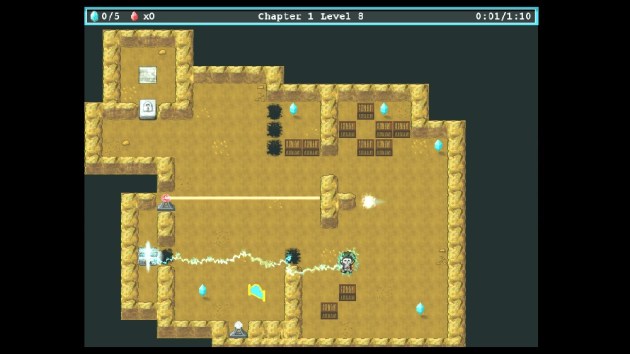
Crystal Hunters is hurt by the game’s lack of movement parameters. In Lolo and Aesop, you move one half-space at a time, using the background to guide you. In Crystal Hunters, it’s not always clear how far you’re moving, because the game doesn’t have a “grid” feel to it like the other two do. The background doesn’t draw out spaces for you, so you’re kind of left to your own judgement, which can often be unreliable. I ended up going back to the heel-toe method of block shoving, but like Lolo, that’s not always an option here either. Sometimes enemies will be chasing you, or sometimes you’ll be moving a tree-stump and have to rush it to the spot it belongs in before it puts its roots down. In the later stages, this can be maddening. The lack of parameters also gets annoying as more Wind Waker-like light beam reflecting puzzles are incorporated, all of which require nothing short of perfect movement from an imperfect control scheme.

Puzzle Design

If there was one word I could use to describe all three games, it would be “smart.” In the case of Lolo, it’s a game made by Hal studios, the guys who later went on to make the Kirby series, Earthbound, and Smash Bros. They obviously have their shit together. Aesop’s Garden and Crystal Hunters were developed by amateur game designers, so you wouldn’t expect such a degree of sophistication from them. Then again, I wouldn’t have expected that from games like Alien Jelly or Escape Goat either. It never fails to surprise me how clever some Xbox Live Indie Game developers can be. Both games have absolutely stellar puzzle design, so much so that it actually rivals the game that inspired them. At times, they can feel a bit sprawling, especially Crystal Hunters, but it never feels like busy work. The only game I can toss a complaint at is Aesop’s Garden, which throws boss fights into the mix that are annoying, given the crappy control scheme.

What I love best about any puzzle game is that “ta da!” moment where, after staring at the screen for ten minutes, you finally figure out the solution. The difficulty of all three games here ramps up as you go along (something that Indie Gamer Chick favorite Escape Goat doesn’t do), which leads to many of those moments. I crave those like a junkie craves smack. They top an awesome headshot in a shooter, a come-from-behind victory in a sports game, or a leveling-up victory in an RPG. For my money, nothing else in gaming tops that feeling of achievement.
Crystal Hunters

Conclusion

I know a lot of readers come here for the spectacle of a bad game getting trashed by me. I realize this wasn’t my funniest of reviews, but don’t worry, I’m sure a crappy zombie game can’t be too far off in the distance. If you come here looking to read about good games, I’ve got three right here for you. At 22 years of age, I missed the NES era and never had a chance to play Lolo. If you’re around my age, you probably missed it too. Or maybe you were one of those weird families that owned a Sega Master System instead of an NES. Either way, it’s worth your $5. For fans of the game already out there, don’t go back and replay it. Nothing about it has changed in the 23 years since its release. But, there are two brand new Xbox Live Indie Games that will satisfy your Lolo-cravings. Both Aesop’s Garden and Crystal Hunters are what you’re looking for, and they’re a bargain and $3 a pop. Yea, I probably could nit-pick them a little more. Like how Crystal Hunters has a completely needless time-system tacked on, presumably to add replay value. Why did they even bother? The fun in these games comes from solving a puzzle and moving on to the next. Once it’s solved, it’s done. You don’t expect replay from crossword puzzle books, so why should you expect replay from a logic puzzle in a video game? Just finish it and be happy. Yea, the controls are crippled, but you feel like a genius, so who cares? It’s just like being Stephen Hawking!

Aesop’s Garden was developed by Excalibur Studios

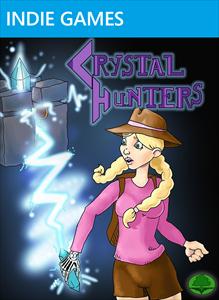
Crystal Hunters was developed by DreamRoot Studios

The Adventures of Lolo was developed by HAL Laboratory

500 Wii Points (Adventures of Lolo) and 240 Microsoft Points apiece (Aesop’s Garden and Crystal Hunters) had to remind Kairi that getting frustrated and banging her head the coffee table was probably not the best way to keep the amount of brain cells needed to play these games in the making of this review.
Honey Badger – Slayer of Memes

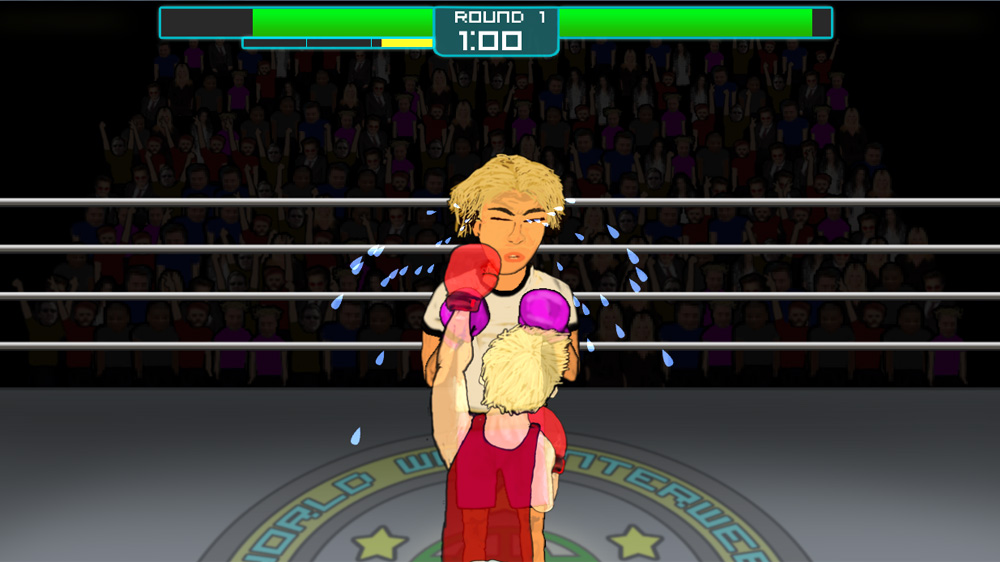
Some XBLIGs should probably only exist as free browser-based flash games.  Honey Badger – Slayer of Memes is such a game.  It’s a fairly low-quality Punch-Out!! clone with the gimmick of being able to beat-up a handful of internet running gags.  This leads to problem #1: none of the jokes in here are funny anymore.  You can usually tell when something stops being funny because they make an episode of South Park about it.  This leaves Honey Badger to stand on its own as a game, which it simply can’t do.  Problems #2 through #891 are easy to figure out during the first fight: the game sucks.

Wow, it's the Leave Britney Alone thing. That NEVER gets old.

I’m a huge Punch-Out!! fan.  I would assume anyone who would attempt to clone it must be a fan too, but Honey Badger completely misses the point of the series.  Punch-Out!! is all about pattern recognition and quick reaction times.  Your opponent telegraphs a move in a variety of different ways.  You dodge it, then lay into your stun-locked opponent.  Honey Badger has none of that.  Your opponents don’t really telegraph moves, they’re not stun-locked when you dodge a punch, and there really is no method to the madness.  Just mash buttons, hope something lands, and pray like hell the game doesn’t get unfair later on.  Which it does.  I beat the Leave Britney Alone and Tron dudes pretty easily.  Then I ended up against a parody of the Star Wars Light Saber kid.  He just spins around, randomly jabbing at you.  If there was any pattern to it or hint of when he would stop spinning and swing at you, I couldn’t catch it.  He blocked nearly every punch I threw, and I couldn’t block his because it’s impossible to see them coming.

I didn’t really care to keep trying either.  The graphics are okayish and some of the sound effects are mildly amusing, but otherwise this game is horrible.  The controls are unresponsive, especially dodging.  There’s a noticeable delay in it, which would have been annoying if it was useful.  Since you can’t predict when a punch is coming, what use is it?  Then again, why bother blocking?  It doesn’t work either.  I went to block punches, held my gloves up, and the opponent’s punch would still seem to cause as much damage.  Ultimately, this feels like a joke game that would be free on Adult Swim’s website.  And not a very good one.  If you want to talk about memes, you might as well call this One Cup: The Game, because all it will do is feed you shit.

Honey Badger – Slayer of Memes was developed by Dream Wagon

80 Microsoft Points actually wouldn’t mind playing a GOOD clone of Punch-Out!! given that Nintendo only releases a new one every 10 years in the making of this review.