R.B.I. Baseball aka Pro Baseball: Family Stadium Platform: Nintendo Entertainment System/Famicom First Released December 10, 1986 Designed by Yoshihiro Kishimoto Developed by Namco Published in North America by Tengen NO MODERN RELEASE (?)
Licenses: Major League Baseball Player’s Association
If you have a runner on third in a non-bases-loaded situation, you can EASILY turn what should be routine outs into hits. Runners go automatically in RBI Baseball for any contact with the ball, even obvious pop flies. But if it’s a short hit into the infield, the CPU will throw to home for the tag out the runner heading for home plate. If you turn the third base runner back to third, the catcher will try to chase you down instead of throwing you out, allowing the batter to reach first.
If my verdicts were based on historical significance, R.B.I. Baseball’s YES! would be as easy to award as a game like Super Mario Bros. or Legend of Zelda. There’s a reason this spawned a tentpole franchise that lives on to this day, at least in Japan. In 1986, if you had a home console, there were only two games to compare it to. Nintendo’s 1983 Baseball and the 1985 Sega Mark III game Great Baseball that had a nearly identical gameplay concept to Nintendo’s Baseball, only with significantly less personality (the US version of Great Baseball would add a picture/batter duel similar to Bases Loaded but that didn’t come out until after Famista). These weren’t alone, as Hardball on the C64 and World Series Baseball for Intellivision also tried to build around the pitcher/batter duel. None of those games felt like they got enough of the core basics right. Family Stadium/R.B.I. Baseball mostly does.
Not trying for realistic graphics certainly freed the developers to focus on what was important.
Family Stadium’s pitcher/batter duel dynamic that uses a split screen to show first and third base was revolutionary. Okay, so the characters all look very cartoony, but the gameplay is unmistakably compelling. There’s a sense of depth that’s impressive for the time period. Unlike Nintendo’s Baseball, you have to do more than just get the ball over the plate on a pitch. Balls can also be called if a pitch is below the strike zone. Okay, so it’s not THAT complex. It’s either strike or it rolls across the plate with no middle ground as far as I could tell, but hey, they were getting there. You can even substitute pitchers, as well. Batting is even better, as there’s a lot of room in the batter’s box, with a nice PING to connected swings. Initially, I thought home runs were too easy to come by as I blasted four long balls in my first ever full game. But then the next two games, I didn’t hit a single one. Actually, it was kind of five home runs in that first game because this happened:
Yeah, time for the bad news: for as big a leap forward as R.B.I. Baseball makes, it’s also highly exploitable and pretty janky. For whatever reason, the CPU fielder there simply could not pick up the ball and didn’t attempt another angle. Since the ball isn’t touching the wall, I assume the fielder is just not programmed to take any route but the closest line, only the angle of the wall prevented him from being able to reach it and he got caught in a chase cycle (a fan on Facebook confirmed this happens enough to be a known glitch, along with another janky thing I never witnessed). For what it’s worth, I hit a dinger with the next batter, so those bases were getting cleared either way. At least that glitch only happened once. More problematic was that it only took me halfway through the first game to clock the batting. Over the course of three games, I hit twenty-nine doubles and a whopping fourteen triples. FOURTEEN! Only one of those fourteen felt like it would have been a real life triple. The reason is simple: the base runners are too fast while fielders and their throws are too slow.
What you’re seeing right here is an error, which happens at random. It never happened to me but it happened at least once a game to my opponents. The first time it happened I didn’t realize it COULD happen and rounded first base during the fly ball, so even though the guy dropped it, he picked me off at second.
So R.B.I. Baseball is unmistakably baseball, but it’s not INTELLIGENT baseball. Things like every runner going on every hit is especially annoying because you have to manually retreat them. But, once I got a feel for it and realized what an enormous advantage the runners had, I won the next two games via mercy. Hell, the second game ended in the fifth inning. After I got the hang of pitching and proper defense (I allowed a lot of hits off what I think were likely playable fly balls) well, there was nothing left for R.B.I. Baseball to offer me. The last game was a shut out. In only three games, I knew how to cheese the offense to the point that I don’t think I could lose a game of this. I could see how Family Stadium was a big deal in 1986. No doubt about it, this is the foundation for video baseball from here on. The measuring stick, at least until the polygon era. But once you know how to really play R.B.I. Baseball, it’s too easy. At least now I’m genuinely excited for the rest of the Famista franchise. Verdict: NO! Final Score 1 (US): Cathy 15, CPU 7 (Home Runs: Cathy 4, CPU 3) BOX SCORE
Final Score 2 (US): Cathy 21, CPU 5 – Mercy Called in the 5th (Home Runs: Cathy 0, CPU 3) BOX SCORE
Final Score 3 (JP): Cathy 15, CPU 0 – Mercy Called in the 7th (Home Runs: Cathy 2, CPU 0) BOX SCORE
It’s always a thrill for me to have someone who found a Definitive Review looking for reviews of the big, famous games they already knew about, only to find out about hidden gems they overlooked that get lumped into the feature. That’s what makes the Definitive Review format fun for me. Today, I’m doing something a little different. Usually, under-the-radar games have to find their way into my Definitive Reviews by being paired with more famous games, but today, the big game in this feature is, itself, one of those under-the-radar games, at least to people my age. I’m guessing most of my older readers are probably familiar with Irem’s Kid Niki: Radical Ninja. It started as a coin-op but was much more known as a very early NES release by Data East in the United States (1987). Even with an Arcade Archives release, it’s a non-entity today that gets name dropped occasionally when talking about NES hidden gems. What its fans might not know is that it got a whopping three sequels that never came out in America. You might have played one and not even realized it, as one of these games was re-sprited as a Mario game for bootleg NES and Famicom carts.
You don’t know the bird was killed there! Maybe there’s a female bird on the other side of that room and that’s cupid’s arrow!
Today, I’m playing all five games in the Kid Niki franchise except the Commodore 64 and Apple II ports of the coin-op. And, because it’s fun for me, and also because I know Irem’s publishing partners at ININ Games read Indie Gamer Chick, I’m doing this using the imaginary retro collection format. So, I want you to pretend I’m reviewing a compilation of five games called Kid Niki: Radical Collection that my team believes would retail for between $19.99 and $29.99. Assuming ININ Games used the same emulator features they included in their 2024 re-release of Parasol Stars for the TurboGrafx-16, the emulator would earn Kid Niki: Radical Collection $10 in bonus value, which is my mandatory bonus for any fully stacked emulator in a retro set. That means these games have to earn between $10 and $20 in value to combine with the emulator and make Kid Niki: Radical Collection a worthy purchase, and that’s assuming no other special features are added that would earn bonus value. Let’s see how it goes!
GAME REVIEWS
For those not familiar with my way of thinking of how retro games should be reviewed, I take NO historical context into account. I don’t care how important a game was to the industry, because that doesn’t make a game worth playing today. The test of time is the cruelest test of all, but every video game must face it. I might not be here if not for Pong’s success, but I wouldn’t want to play it today. Not when there’s better options. Therefore, when I review retro games, every game gets either a YES! or a NO!
YES! means the game is still fun and has actual gameplay value when played today and is worth seeking out.
NO! means the game didn’t age gracefully and is not worth seeking out, and certainly not worth spending money on.
Kid Niki: Radical Ninja aka Kaiketsu Yancha Maru Platform: Arcade Released in 1986 Developed by Irem Sold Separately as Part of Arcade Archives Read the Original IGC Review
My previous experience with Kid Niki, reviewed way back when my YES!/NO! system wasn’t even in place yet, left me pretty unimpressed. But, that was played with the limited-in-features Arcade Archives emulator that didn’t offer rewind and had save states that required me to quit all the way back to the title screen. Not the Kid Niki title screen, but Arcade Archives one. Since Kid Niki undergoes a dramatic difficulty spike the last couple levels well beyond my talent, I was curious if the game would be more pleasant with instantaneous emulator cheating features. Now, those features can’t change things like bland level design or remove the frustration of one of the most unfair, money grubbing finales in gaming history. Rewind and save states aren’t a cure-all. With that said, Kid Niki certainly benefits from these features and turned what I thought was a rubber stamp NO! into a much more complicated review.
The entire franchise you’re about to read about is only happening because of how damn satisfying the primary attack is. Which is going to make the fifth and final game in this feature an especially baffling experience. I still can’t believe they didn’t realize that.
The best thing Kid Niki has going for it, besides mostly sublime boss battles, is one of the all-time delightful 8-bit attacks. Instead of slashing a sword in front of you, you sort of spin it. I don’t know quite how the physics are supposed to work, but since basic enemies take one hit to kill and go flying with a satisfying pop, it’s kind of unforgettable. Instead of calling this the generic sounding Kid Niki, they should have named this The Adventures of Katana Twirly. Normally, this would be the type of attack that makes you want to slay every enemy, but two things prevent this. First, the timer counts down too quickly, and even if you don’t come close to timing out, you get more points for finishing with five or more minutes on the clock. Second: the screen can become completely flooded with enemies. Too many enemies for Katana Twirly to deal with, and sometimes they’ll keep spawning until you move.
You’ll notice Twirly’s hairdos aren’t the same in every pic. For screenshots of the coin-op, if he’s got messy hair culminating in a rat tail, like in this picture, the screenshot is of the US version. If he’s got a topknot (a “Chonmage” in Japan) it’s the Japanese version. The other major change is the Japanese original has no checkpoints. If you die, you have to start the level all over. Since a couple of the bosses are brutal, that’s too big a punishment. None of the differences are present in the Famicom/NES game.
You’re also armed with a decent jump that can clear most enemies, so when the playfield becomes flooded with too many baddies to deal with, legging is sometimes an option. Not always. Like in this shot:
You can see more enemies beginning to spawn in the right corner. Yes, they’ll come down in a virtual waterfall of enemies like you see on the left.
You’re going to need to inch forward to get these guys to stop spawning, because they come in at an angle that forces combat instead of avoidance. But in later levels, where bosses might require more time to fight, stopping to turn around and smack guys will just eat up time, especially since they’ll just keep spawning behind you. So in the next picture, it makes more sense to just ignore what’s behind you if it’s not a direct threat.
One other difference: the masked baddies have “angry eyes” in the Japanese version, whereas they look closer to Shy Guys in the US version.
Now, while I personally wasn’t trying to get a high score (what’s the point? I was cheating like I was Derrick Rose facing my SATs), I found myself just trying to save as much time as possible because I wanted to see if I could get the maximum end of level bonus. But even when I tried to rush through stages, I found myself wondering if it was even possible. Even cheating, I couldn’t so much as get the second tier bonus on some of the later stages, and I wasn’t close at all to the max bonus. So, while the combat is cathartic, and there’s even bonus points for wiping out full formations of enemies, there’s also an inelegance to Kid Niki that’s undeniable.
There’s two power-ups, one of which gives you a projectile that looks like your sword. The other is this shield that spins relatively slowly around you but does make progress easier. Both items are used pretty sparingly and wear off eventually.
I admit that I was a little too hard on the level design in my previous review. It doesn’t matter if they have bland platforming layouts because it’s the enemy attack patterns and formations that the design logic is based around. This is a combat-focused game that can do platforming but isn’t really a platformer. Good thing too, because the jumping isn’t perfect. Turning around to face the other direction mid-air isn’t possible. Once your feet leave the ground, if an enemy is behind you, you can’t do anything about it until you land. The Famicom/NES version, up next, isn’t built the same way and offers much, much more flexible combat. Of course, being the NES, there’s also a LOT less enemies and much fewer situations where I would have liked to turn around mid-air. That would have been SO valuable in this version. Alas.
This is the first video game boss who spends the fight, I kid you not, scratching his ass. This isn’t one of those Ring King “it only looks naughty” situations. He’s no-doubt-about-it got an itchy anus. Which explains why he’s so grouchy! By the way, the word he’s spitting at you apparently has no English equivalent but according to Cutting Room Floor, it’s a word that’s used to scold practitioners of Zen. I wonder if Phil Jackson ever screamed it in the middle of a game? That’s TWO Chicago Bulls references in one review, by the way. I do myself proud sometimes.
The coin-op version of Kid Niki is one of those games that proves the value of a great emulator. Katana Twirly goes from relatively easy to learn and clock to absolutely maddening, with minimal middle ground. The curve is so steep that they could name a street in San Francisco after it, and it all finishes with a level that has seemingly random, ultra-fast moving bubbles rise up from the ground. It’s one hit deaths, and because of that, it really feels like the dirtiest of dirty pool.
I had to replay this a dozen or so times in the US version. Weirdly, in the hypothetically harder Japanese version, I got a favorable pattern of bubbles for this segment and aced it. I would have been proud of myself if I hadn’t instead died by shorting jumps I’d already safely made several times before.
And even after you get past the random bubbles, you’re still not done. The last attack pattern of the last boss becomes downright frustrating since he won’t open up and become vulnerable until you retreat to the other side of the screen, giving him a chance to blow his hard-to-avoid columns of fire at you. I guess their heart was in the right place, since they made a cheese-proof boss. But they kind of shot the moon and went too far in the other direction.
You can see my sword is not in my hand. This is the novel mechanic that I’d never seen before Kid Niki. During boss battles, every time you successfully land a shot, your sword goes flying out of your hands and you have to retrieve it. It’s really clever, actually. A great idea that is successfully executed in six out of the eight boss fights. Hell, the sixth boss is even built around the retrieval part of this element. I just don’t like it for the final boss, which I feel is just too unfair and brutal.
I’m standing by my NO! verdict for the Arcade Archives release, but using my preferred emulator, yep, I’m flipping my verdict to a solid YES! But, that’s a YES! is dependent on the emulator because it just becomes too demoralizing without it. With it, Kid Niki actually is a pretty dang decent coin-op experience. Like so many classic 80s games, I’d love to play a version of this that drops limited lives in favor of unlimited lives and a death counter. If ININ and Irem wanted to do a collection of Kid Niki games today, they should consider reworking it with that style. Make it cheating proof and put up a leaderboard for fewest deaths in a run. Don’t forget the toggles, too, since there’s dip switch settings that adjust the difficulty. Mind you, all my whining about difficulty was done on the lowest setting. Granted, most arcade games are still brutal on low settings, but that’s because they need to kick you off to earn money.
I love the art direction. Like this? It looks exactly like how Japanese mythology depicts demon insects. Those big, vacant, nightmare fuel eyes? I couldn’t wait to be done with this boss. It’s a good fight, though. You have to cut it to the bone, segment by segment, before you can kill the head.
By the way, I easily died over fifty times playing the US version, but that was cut nearly in half in the “harder” Japanese version that I played afterward. Emulator cheating helps you to get good. I wasn’t born able to have a no-death run through Castlevania. I got to that point by using rewind and save states, until one day I realized I just didn’t need them anymore. I did the same thing, only faster, with Adventure Island this year. They’re cheating features, but they’re also training tools. Instead of having to work your way back to the sections that kill you, rewind or even quick save/quick load allows you to examine the segments of levels closely and instantly. In just one pitifully played full game run through Kid Niki where I cheated like crazy, I learned enough to cut my deaths in half for the next run. If I stuck with Kid Niki, I think in a few days I might even be able to do a no-game over-run. It’s the ultimate trainer. Basically gaming steroids, only without wrecking your heart and sex organs. Well, maybe your sex organs but that will happen for non-chemical reasons. Verdict: YES! **FLIP** $5 in value added to Kid Niki: Radical Collection + $1 bonus for having both US and Japanese ROMs.
Kid Niki: Radical Ninja aka Kaiketsu Yancha Maru Platform: Nintendo Entertainment System Released in October 2, 1987 Developed by TOSE Published by Irem NEVER BEEN RE-RELEASED
The third boss is one of those bosses that breaks into smaller monsters until you eliminate them entirely. In the coin-op, this doesn’t happen if you hit this boss from behind. In the home version, she just breaks apart. Even worse: as far as I can tell, you can’t be killed by the smallest size in the NES version, which you absolutely could in the arcade game. I know, because I died from them more than once. If you look closely in this picture, you can see that my sprite is almost completely engulfing one of the enemies. I’m not cheating or using a code here. It just can’t hurt you. This happens a lot in Kid Niki, but the opposite is also true: some things kill you that aren’t even a little close to you. This has HORRIBLE collision detection, and it does ruin the game.
With a subtitle like “Radical Ninja” you would think Kid Niki would be riding Teenage Mutant Ninja Turtles’ coattails. But Kid Niki in the United States predates the debut of the TMNT cartoon and toy line by a couple months. I can’t help but wonder if it released a year too soon, because it’s not a hugely known game. Long before I was doing retro game reviews, it was easy to notice that a handful of NES games came up as “hidden gems” more than others. Guardian Legend. Adventure of Lolo. Little Nemo the Dream Master. Those games come up so often it’s safe to say they’re not really “hidden” gems. They’re literally famous. Kid Niki doesn’t come up as much as those, so it still has that “forgotten” shine to it, but when it does come up, people tend to LOVE it. And I don’t get it, because this is a rough, borderline broken game. What do I mean? See this picture:
I survived that full-on contact with the enemy and walked right on past them.
Well, in this pic, they actually walked past me, but I did test it with me moving past them too.
Now here’s the same location, same enemies, but I’m a little bit further to the left when contact was made. Like a half step to the left. It killed me.
Here’s me, well away from the sprites of the projectiles thrown by the fifth boss, dying anyway.
Or how about having your forward momentum halted mid-jump? It happens constantly, I assume a byproduct of sloppy coding to the scrolling. In this clip, I’m holding left the entire time, but I just hit a wall that stops me from moving forward. You can see when I jump back to the platform, it doesn’t happen again. However, when I rewind to the original jump, the invisible wall stops me again. I’ve never seen anything like this in a game before.
And that even happens when you’re running along the ground. It only happens for a split second, but it absolutely does take away from the experience. You can see it happen in this clip:
It’s a damn shame that Kid Niki on the NES is so badly coded, because a lot of the charm of the coin-op did carry over. The well done graphics? Sometimes. Like, this looks pretty good:
This? Not so good. In fact, yikes!
The sprites are fine, but the setting really is just nothing. It’s like I suddenly fell into an Atari 2600 game. Now mind you, the very next screen over has a very impressive looking statue.
That looks great, especially for the time! I don’t know what happened to those backgrounds. I’d swear that’s a placeholder that they ran out of time for. And I know they’re capable of better, because some of the areas are REALLY close to the arcade. Take a look at this, and by the way, I have a white uniform on in the NES pic because of a power-up:
Arcade
NES
That’s pretty dang close, right? Now, gameplay is king and the NO! I’m going to be giving the NES version of Kid Niki has nothing to do with a small section of one level looking like sh*t. But I can’t help but wonder if that one “oh my God, what the f*ck?” section is indicative of a rushed game. Whoever coded this seemed satisfied with the sword attack and neglected several other areas. There’s no excuse for a game where mountains look that good to have a section of the game that looks like this:
BTW I’m running in place there. It’s one of those invisible walls.
The only aspect of Kid Niki’s home port that’s outstanding is the sword mechanic. It works better than in the coin-op since you can turn around mid-air and attack on both sides in a single jump. But everything else about Kid Niki, right down to the act of moving, is, at best, haphazard. At worst, it’s outright broken. That’s before I even talk about the gameplay concessions that had to be made for the home port. In the coin-op, the second boss has a deceptively dangerous attack pattern that requires you to jump over him to get a clean shot off. That’s completely gone in the NES game. He’s very vulnerable from the front, and as a result, I was able to beat him in a matter of seconds.
Arcade
NES/Famicom
Again, sometimes the nerfing works to the game’s benefit. The last level is MUCH more fair, and that’s a good thing. The random bubbles are slowed down just enough to make them an exciting obstacle to dodge while you fight the final boss. If this had more consistent collision detection, for all its problems, I would have given it a YES! without a second thought. The combat is that satisfying and the bosses, wimpy as they are compared to the coin-op, are still fun and unique. They even added some bonus stages into the game. Okay, so they’re hidden in arbitrary spots and I have no idea how anyone ever found them, but it’s the thought that counts.
Even the bonus stages aren’t free passes. Some of the eggs are whammies that spawn these creepy-ass bugs, and some give you extra lives.
But I can’t get over how badly developed this port is. It really feels like no bug testing was done. It’s the total lack of consistency that frustrates me. Some things can kill you when they’re not even close. Other things that should kill you, hey, sometimes you can just pass safely right through them. Horrible. I can totally understand why Kid Niki found itself as one of those beloved hidden gems. I wouldn’t consider the twirly sword attack to be equally as good as, say, Simon Belmont’s whip. But it’s not too far removed from it, either. If this had been a game I played early in my life, I don’t think I would have noticed all the glitches and momentum stoppages, or if I did, I wouldn’t have cared. But if the NES version of Kid Niki were to be in a modern collection, I would actually suggest they give it a tune-up. There’s a good game here, but I don’t think Kid Niki on the Famicom got the time or care it deserved in development. Is it worth fixing? Yep. Will it be? Probably not. Verdict: NO! And no bonus value would be added for having both the US and Japanese ROMs.
Ganso!! Yancha-Maru Platform: Game Boy Released July 11, 1991 Developed by Tamtex Published by Irem Never Released Outside of Japan NO MODERN RELEASE
You have to break blocks a lot in the Game Boy title. I wish it had a nicer crunch to it.
This Japanese exclusive first sequel to Kid Niki, released on my 2nd birthday, comes from the developers of the disastrous sequel to Kung-Fu, Spartan X2 for the Famicom. That was one of the worst games I’ve ever reviewed (it’s second from the bottom in Kung Fu Master: The Definitive Review), so my expectations for this were just about as low as you can get. I was worried for nothing, as Ganso!! Yancha-Maru is a genuinely solid little Game Boy action game that Americans absolutely should have gotten. It has a bigger cast of basic enemies and a much bigger emphasis on platforming than the previous game, but retains Katana Twirly’s primary attack. Unlike Kid Niki, navigation matters a great deal here, especially in the later half of the game, when retracting/expanding platforms and spinning platforms are introduced.
The little two block platforms above me shift from horizontal to vertical.
Despite the smaller screen size, the level design emerges as a genuine highlight. Levels might even split into upper and lower pathways, one of which will have more enemies than the other. Or maybe you’ll encounter a section that requires fast reflexes to smash through blocks before a platform underneath you retracts. All this while the game keeps a fairly consistent clip of combat. None of the collision problems that plagued the NES game get in the way here. Hell, three out of the four bosses are an improvement even though the “deflected sword” mechanic is gone. That’s a remarkable achievement! The first boss can be cheesed in just a matter of seconds, but future bosses require you to face their attack patterns and score hits when you can. I can’t stress enough: this is a pretty well done game.
The third boss drops these rocks that you have to kill, then it only allows you to score one hit per pass.
Unlike the previous Kid Niki coin-op and its NES port, Ganso!! Yancha-Maru is a pretty easy game. I only died three times, once to a boss, and twice to pits. The items from the previous game return here, but on the Game Boy, I found the projectile had a very limited usefulness. How limited? ONCE per a full run through the game, so twice overall, did I actually use the projectile to kill an enemy on the other side of the screen. The playfield is just too small for it to be effective, and even when you hold it, the enemies are usually right next to you and would die from the sword anyway. They probably should have come up with something else. There’s some weird decisions, like the “B” item you collect that unlocks the end of stage “BONUS ROOM” could have been hidden in a block, but instead it just floats onto the screen when you reach the end of a level. It’s basically automatic to get.
Those clouds with faces all shoot projectiles upward.
Admittedly, I lost interest in clearing every block or going for every hidden room. The blocks take too long to crumble and don’t offer a satisfying enough crunch to justify slowing the game down as much as I did in the early levels. But the combat more than makes up for it, and when the blocks are utilized as part of the challenge instead of something to smash for fun, it’s usually well done. Ganso!! Yancha-Maru isn’t a masterpiece by any means. It’s just a good, solid action game that probably could have found an audience in the United States. I’m going to guess the NES Kid Niki didn’t do too hot in sales, because I can’t figure out any other reason why such a quality, on-trend (at least in 1991) game would be skipped over. Probably the best thing I could say about the Game Boy version of Kid Niki: it was at this point I realized doing this Definitive Review wasn’t a waste of time. There’s SOMETHING here. See, everything about July 11 is awesome! Verdict: YES! $5 in value added to Kid Niki: Radical Collection
Kaiketsu Yancha Maru 2: Karakuri Land Platform: Famicom Released August 30, 1991 Developed by Irem Never Released Outside of Japan NEVER BEEN RE-RELEASED
Kid Niki 2 has an overworld map, but it doesn’t benefit from it. This is the level you’re placed onto for the map at the start of a new game, and it’s themed around everything being miniaturized. That’s a mid-game trope, and makes ZERO sense for an opening level. It doesn’t have to be the starting point, but who is going to click anything else? Totally nonsensical design. I know people liked Super Mario 3 but not every game requires an overworld map.
The first of two Famicom-exclusive sequels to Kid Niki, Yancha Maru 2 gives the graphics a super-deformed makeover and adds a slew of new abilities. In addition to now being able to swing your sword above or do a downward strike while jumping, you can find items that grant you the ability to temporarily transform into three animals. While transforming into an elephant was an idea decades ahead of its time, I didn’t really find a use for it. On the other hand, there’s plenty of times I had to use the ability to transform into a frog or a hawk to navigate levels. You can’t attack with either and both come with major control issues. The frog moves too loosely and the hawk flies too heavily, but they’re used sparingly to great effect. Since there’s a few areas where they’re necessary to make progress, I sort of think they shouldn’t take points to use, especially since I didn’t want to be them when I didn’t have to be, but otherwise, it’s a nice idea that works wonderfully.
The frog can jump up and reach that extra life, or extra-life like thing.
Now here’s the bad news: even though the animation for the twirly sword attack is basically unchanged, poor sound design and tacky enemy sprites make it feel flimsy and lightweight here. That nice crunchiness to it is gone. Now it’s safe to say Kid Niki 2 is much more platforming-focused than the previous NES game, but there’s still a wide variety of enemies and bosses. It’s just such a shame that it’s no longer fun to fight basic baddies anymore. Some of the designs are downright silly, like miniature enemies in the first stage in the game, which made me giggle with embarrassment. The bosses are fairly generic too.
This is grasping at straws for boss ideas.
And the sequel is a MUCH easier game. Not quite as easy as the Game Boy title, but pretty easy. It’ll take you maybe twenty-to-thirty minutes to finish and offers zero replay value because it’s just kind of bland, but in a way that’s at least worth a look once. For the first time, Kid Niki offers hit points to start every level, which allowed me to cheese nearly every boss in the game. I won most boss fights with a single hit point left, but the fights themselves lasted around ten seconds. I can’t remember a single basic enemy that posed a threat. The only time I died was in the “maze” level, and my death came via lethal moving blocks. When tiny, half-the-size-of-you moving blocks are a bigger threat than even the last boss, the game might have a big problem.
The final level is a brief boss rush made up of a few bosses from the first game, including Death Breath, seen here.
And yet, I didn’t get bored in my first run through Kid Niki 2. Oh, I was ready to be done about a minute into my second playthrough. Again, once you finish this, it has nothing left to offer. So, I guess I understand why this wasn’t released as Kid Niki 2 in America. See though, that’s the beauty of a retro collection. Yancha Maru 2 can’t really stand on its own, unless you can get it for $2, which is the value I’m giving it. But as a +1 for a retro set? Yeah, it’s going to be fine. The coin-op and Game Boy title together will justify the set’s existence, and this is a nice little bonus. I don’t know why they didn’t do better with the combat, which was the main thing Kid Niki had going for it, but the level design is fine and the animal power-ups are cool.
You have to whack bells with your sword to gain power-up points and free-lives. As you can see, the sword sprite is basically unchanged, and that’s the right call. The next sequel didn’t make that call, and it just plain doesn’t feel like a Kid Niki sequel because of it. And I have no idea if that’s supposed to be real Hershey product placement or not.
There’s a couple other power-ups, including the ability to fire a large energy wave that you will need to use a couple times and an overpowered shield that wrecks the already easy to fight baddies. I’m not going to argue that Kid Niki 2 is a lost treasure or that Americans missed out on a big game. This is pretty dang bland, but it controls fine, has decent level design, and doesn’t require a massive time investment to experience. Games can be bland and still be a net gain, in the right circumstances. Retro collections need games like Kid Niki 2. Little twenty-to-thirty minute time wasters that aren’t the main attraction, but worth a look nonetheless. Verdict: YES! $2 in value added to Kid Niki: Radical Collection
Kaiketsu Yancha Maru 3: Taiketsu! Zouringen Platform: Famicom Released March 30, 1993 Developed by Micronics Published by Irem Never Released Outside of Japan NEVER BEEN RE-RELEASED
Spoiler: Dr. Wily is the last boss. Okay, it’s NOT Dr. Wily and this is not Mega Man, but it’s trying so desperately to be. It’s really sad, actually. It’s so flagrantly, shamelessly copying the gameplay that it kind of feels a little childish.
Wow. Okay, so, this is a Kid Niki sequel in name only, and a game you might have already played. This is more famous for being a bootleg, specifically a ROM hacked bootleg called Super Mario 14. It’s a genuinely baffling choice to turn this into a Mario hack when it’s a direct rip off of Mega Man. I really wasn’t being sarcastic in the above picture. This wants to be Mega Man with some lite ninja-like flipping, and it is, but in a way that fails like few games have ever failed. Katana Twirly is dead, and in his place is a dude with a stick who fires a little sonic energy wave at enemies, making this a platform-shooter, just like Mega Man. The bosses are mostly fought in basic, square-shaped chambers, just like Mega Man, and have attack patterns just like Mega Man’s bosses. Here’s some examples: Fire Man, Water Man, Wood Man, and, uh, Music Tornado Man, I guess? The last one shoots music notes but also turns into a tornado.
Pathetic! PA-THETIC! And it’s not even a good rip-off. This is the Asylum version of a Mega Man game: same premise, but none of the good parts. The #1 thing that made Mega Man famous and stick out from countless hop ‘n pop games, IE stealing items from bosses? Kid Niki 3 doesn’t do that. Instead, the main hook is it rips off the pogo-stick from DuckTales along with the worst wall jump I’ve experienced in quite a while. You have to sword-strike the wall, then jump, but it’s really sluggish. All the movement is clunky, and the frame rate is REALLY bad. The game feels like it’s constantly chugging, which really makes no sense. The graphics and sound are just not good enough to justify how badly the game performs from a technical point of view.
It’s not going to be a total wash, either. There’s moments I would have been inclined to like, like this maze based around these tracks. There’s some good ideas in here, but they’re dead on arrival with these controls and combat design.
Yancha Maru 3 is made by notorious NES developer Micronics, who made such “classics” as Super Pitfall! and the NES ports of 1942, Ghosts ‘n Goblins, Ikari Warriors, and more. It explains a lot, because this is really badly made. The level design is almost entirely based around the wall jump, but in a way where it’s deliberately barely working at all because that would be more challenging. It’s certainly not intuitive, even though it should be. The wall-jump is a fixed jump that gives you the same distance every time. Yet, I never got a feel for it. It wasn’t ninja-like, that’s for sure. It’s like the polar opposite of 2024 NES indie Storied Sword, which had one of the greatest 8-bit wall jumps ever. When you take away the responsiveness, you get Kid Niki 3, where even late in the game, I found myself needing multiple attempts to do even the most basic wall jump sequences. My body’s responsiveness is suspect these days, so I had to have the kids test it to make sure it wasn’t me. They couldn’t get a feel for it either.
Fittingly, the best aspects of Kid Niki 3 are the ones that aren’t a Mega Man rip-off. The main progression is done by finding keys to open locked doors. It’s not the worst idea, and thankfully there’s only a couple spots where you have to travel far away from a locked door. But with the poor physics and uninspired, lightweight shooting combat, it doesn’t matter because it’s just not a very fun game to play. Sometimes, the levels would have risen to the level of good IF the mechanics had been faster paced and more responsive. There’s set-pieces in Kid Niki 3, including paddling a boat up a waterfall that work as intended.
The frustrating thing is, Kid Niki 3 does the type stuff you want a game to do: break up the core gameplay with fresh-but-suitable one-off mechanics. Like paddling this boat up a waterfall. That’s fine! It works as a set-piece. This part is okay, and it’s welcome because the core gameplay is so boring that anything is better in comparison.
But then there’s some of the worst swimming mechanics on God’s Green Earth and horribly scaled boss fights. Seriously, the first boss was so much harder than any of the bosses that followed except the very last one. The levels themselves have a difficulty curve that resembles a heart monitor. It occurs to me that Micronics seems to understand what goes into a game, but not the why part. There’s no other way to explain how bad the game scales, or controls, or why the basic enemies just aren’t fun to face-off against. It’s like they played Mega Man games and enjoyed Mega Man games, but never asked themselves why they were having so much fun. So something like this:
Works pretty good, because it’s hard to screw up the classic circular platform. Hell, that chained platform to the left of me is a great idea. You have to whack it with your stick to get it moving. But then you have this game’s version of the Sniper Joes from Mega Man, and they have a quirky sprite of a mouse hiding in a freezer with a tommy gun. Adorkable, except you can’t kill them, or at least, I was never able to. Once you realize that, and players are just avoiding them, well the charm isn’t just lowered, but lost altogether. Do you know why *I* think Mega Man games lasted through the ages? It’s not just the bosses. Every game has bosses, and in the case of Mega Man games, especially on the NES, most of them are beaten in just a couple seconds, if that, assuming you have the right weapon. No, I think the secret sauce with Mega Is that the combat is always so goddamned satisfying that you want to shoot everything you can. It’s rare in those games that avoiding enemies is preferable. Enemies have nice sound design and a cathartic crunching pop when you finally kill them. This game has none of that.
I think that’s why Kaiketsu Yancha Maru 3 felt like such a childish effort at copying Mega Man. It does everything that Mega Man does, only with none of the stuff that made Mega Man stand out in the first place, in basically every single aspect, mechanically and aesthetically The graphics are ugly, especially the character sprites. The gameplay is choppy. The controls are unresponsive. The settings are boring. The sound design is lacking entirely. It made me appreciate how Mega Man games manage to be greater than the sum of their highly polished parts. This is so much less. The previous game was bland, but bland within the acceptable parameters of decency. This is bland to the point of exhausting. Even if the mechanics had been perfect, I still think it would have gotten a NO! Kid Niki 3 is a game based around dull level design, boring settings, and derivative gameplay that’s occasionally interrupted by an idea so good that you’ll wish it was in a better game.
This is a post-SNES release, too. Look how damn bland that looks. And it really is. There’s a couple moments that are handled cleverly, but for the most part, level layouts are just arbitrary and ho-hum. I still say that the early SNES era was also a secret golden age for the NES/Famicom, but this is not an example of that.
I have no idea why Irem agreed to allow Micronics of all studios to make a sequel to Kid Niki in the first place, but why make it nothing at all like Kid Niki? Presumably, a franchise that lasts long enough to get a fourth new game like this has to be pretty successful on some level, right? It doesn’t take a rocket scientist to figure out the series made it to this game being commissioned based entirely on the satisfying Katana Twirly mechanics. So why the hell would you do something as foolhardy as removing that attack entirely? Because that’s ALL Kid Niki really had going for it. I assume they figured if Doki Doki Panic can be repackaged as Super Mario Bros. 2 and still be a runaway success, they could do something similar with Kid Niki. That makes no sense, though, because they allowed Mario to be different right out of the starting gate. As the second game, really it just showed that Mario could be anything. Same with Zelda II, for that matter. But with Kid Niki, they had multiple games that established what the combat should look like. Not that keeping it would make a difference in this game. This has so many more problems. What irks me is Irem allowed a perfectly good B-list franchise to be killed off here, in a game that doesn’t resemble the franchise. It would be like if the Mario franchise died after Mario is Missing was released. Verdict: NO!
FINAL TOTAL
YES!: 3 NO!: 2 Total Game Value: $12 Bonus Value: $1 Projected Price: $19.99 to $29.99 Final Value with Fully Loaded Emulator/Bonuses: $23
Kid Niki: Radical Collection did make it over the low-end price hurdle, but it’s going to be close. Anything less than the $10 bonus that comes with a fully-loaded emulator and it’s unlikely that including basic bonus features like boxes, instruction books, or ads would make up the missing value. It would require extensive, Digital Eclipse-like behind the scenes interviews, and Kid Niki isn’t ever going to get THAT kind of collection. But I’m not worried about the emulator. ININ proved to me with their IGC-approved Parasol Stars release they’re more than capable of going all-out with that. The same emulator used in that release wins Kid Niki: Radical Collection a YES! But they also can’t lose a single YES! game except maybe Kid Niki 2. Drop the Game Boy title from the lineup? There’s close to zero chance the bonus features can make up for the missing $5. Or if they use the basic Arcade Archives style emulator for the coin-op, that game drops to a NO! and the set can’t win. Since I know they’re reading, hey ININ gang, you should do this set, but you absolutely cannot half-ass it. You need to have cheating options up the wazoo. You need extra features, and you need a sick emulator. But I have faith in you.
Lunar Pool aka Lunar Ball (JP) Platform: Nintendo Entertainment System First Released December 5, 1985 Directed by Masamitsu Niitani Developed by Compile Published by FCI (US) Pony Canyon (JP) NO MODERN RELEASE (?)
This is one of those games where the entire concept just takes a single screenshot and the words “do you get it?” to comprehend.
Do you know what’s weird about Lunar Pool, a game that’s basically “what if there was a billiards version of miniature golf?” It’s not part of a retro collection (as of this writing at least), but I kept thinking “this would be the absolute perfect +1 for any retro compilation.” When I think of the make-up of a retro gaming collection, I usually focus on anchor games. The stars. The games that justify the purchase price. But just as important are the middle games, because those are the ones that either inflict or relieve a sense of buyer’s remorse. They also make a terrific barometer to explain the quality of a game even if it’s not in a collection. With that said, if Lunar Pool is the absolute best game in a collection of ten games? It’d almost certainly be a pretty weak set. But if Lunar Pool is the fourth best game in that ten game collection, that set is in fantastic shape! Lunar Pool is the ultimate middle of the road game, and it’s impossible to not have your socks charmed right off to the point that you’ll be cupping your eyes to block the sun and staring at the sky as the socks drift off into the horizon. Bye-bye, socks! Lunar Pool set you free!
The amount of pockets and even the size of the pockets will change, but there’s no complicated draining physics. When a ball sprite barely crosses the threshold of a pocket sprite, it’s a sink. That works for the cue ball too, and if you scratch, you lose a life.
The idea is there’s sixty total tables where you have to use a cursor to aim a cue ball and pocket a series of six to seven pool balls that have set starting positions, often arranged in a way where you can suss out the logic of how you ought to shoot them in sequential order for maximum points and achieve a “perfect” round. You DO NOT need to sink the balls sequentially to clear the round or even to achieve an end-of-level “perfect” bonus score. You simply have to pocket them. A perfect round is awarded for never failing to sink at least one ball every shot, and there’s extra points for pocketing balls in the correct order. As noted in the above caption, the act of sinking is uncomplicated. Sprite-to-sprite is a sink. Like, this is as close as you can get to a pocket and not sink.
The black ball is the cue ball. It’s black in some of the pictures or blue, gray, or white in others because it’s blinking. The crosshair is on the three ball in this picture. The crosshair can be extended or retracted pretty far, but there’s no guide between it and the cue ball. I found myself pushing it in and out just to make sure nothing was obscuring shots or that the cue ball wasn’t clipping corners. It’s pretty accurate, too. I don’t really remember any shot where I was iffy on if the cue ball might graze a wall or another ball where it actually happened. Given the era and limitations, this is really pretty good as far as NES collision detection goes. So good that when my dad and I finished a multiplayer round, he asked if the guy behind this ever did a pinball game on the NES. Nope.
Besides the scoring system Lunar Pool has three elements that make a challenge out of this concept. The first is that you have lives, like any video game from this era. But, since you can select any of the sixty levels from the title screen, having a lives system is really only useful for determining whether or not you get to keep your dignity. Or, if you’re like me and use rewind and save states liberally, lose your shame. Element #2 is that you can’t go more than three shots without making a pocket. If you do, or if you scratch, you lose a life. Losing a life does not reset the table to the start of the level. If you scratch, the table will be reset to where everything was when you made the shot that scratched. The final element of challenge is that you don’t manually adjust the strength of your shots. Only the angles. Unlike, say, a bowling game or a golf game, the meter for the strength of your shot never stops going. No clicking to confirm, which greatly speeds up the gameplay.
Lunar Pool doesn’t require a complicated review, because everything I just said is really all there is to it. Besides some maddeningly tough level design, it doesn’t do anything wrong. If you want, you can even adjust the friction of the table. It defaults to “32” on a scale of, I sh*t you not, 255. Under this scale, a “1” in friction would be akin to playing pool on a table made of ice with ice balls, AND EVEN THAT doesn’t do it justice because balls don’t really lose inertia when they hit a wall. That’s what friction-free means, and when I hit a ball on the first table, which is the only stage where it’s a real pool set-up with a triangle (albeit only six balls) it took over a minute for the last two balls to stop moving. Even if you scratch, you still have to wait for all the balls to settle down, at least with a full power shot. Meanwhile, 255 is more like playing pool if the balls were weighed down. Dad said it felt like pool with lead novelty pool ball-shaped fishing lures. Here’s what a full power break did there.
Neither of the extremes are much fun, but it might be amusing to try less extremes. I don’t know for sure. I was satisfied with the default settings and thought Lunar Pool was pretty dang good. Normally, I’m not the biggest fan of “wacky sports” as a genre. Hell, I don’t even like miniature golf in real life, really. I don’t know what to say about that, but my family claims it “tracks” whatever the f*ck that’s supposed to mean (I don’t know why that bothered me so much). “Wacky Sports” usually feel like half-baked tech demos or mini-games. Whether you call it Lunar Pool or Lunar Ball, this is a title that is a lot of fun with the added bonus of not being a major time investment. It’s literally pick-up-and-play thanks to the level select. It doesn’t save high scores, so I didn’t take them too seriously. A modern game like this with online scores could be sick.
While running the table is great, sometimes you’ll find yourself in a position where you need to lay-up, like here.
My father and I had quite the debate on whether the allowance of three shots to sink a single ball before you lose a life in single player was too much. Originally, Dad advocated that it should have been two, which would have been more in line with the concept of laying up in miniature golf. I swayed him that what Lunar Ball should have done is add a difficulty toggle based entirely around how many shots you get to pocket a ball before losing a life. Four shots for easy, three for normal, two for hard, one for extra hard. I’m fine with how the meter works since I suspect it’s not really there to add challenge but rather just expedite the need to adjust your shot and then confirm before shooting.
Some of the later stages are downright cruel. Probably the biggest problem with Lunar Pool isn’t so much a problem as it is a quirk of actual pool. I’m talking of course about having balls too close to the wall. It’s easier to dislodge them with other target balls than the cue ball itself, which will sometimes just ricochet like you hit a wall instead of a ball, just like real pool.
Lunar Pool would be a great B-lister for any collection. It is not a game meant to stick with you. It’s a time waster, but a damn good one. Nintendo should seriously try to score this for Switch Online. One final thought: this concept has legs. If some indie developer out there has a physics engine, play this, and let your imagination run free. Okay, so a game published by one of Japan’s biggest telecoms isn’t exactly indie, but that’s the thing about being indie: it’s often less an exact science and more of a spiritual state. Verdict: YES!
Baseball Platform: Nintendo Entertainment System/Famicom Released December 7, 1983 Designed by Shigeru Miyamoto Developed by Nintendo Available with Switch Online Subscription (Standard)
Arcade Archives: Vs. Baseball Platform: Nintendo Switch Original Platform: Arcade Released June 19, 2020 Arcade Release: April, 1984 Originally Developed by Nintendo Re-Release Published by Hamster $7.99 struck out in the making of this review.
No infield fly rule. That’s just peachy.
“Seriously, Cathy?” Yep, seriously. Hey, I’m sporty! And by that I mean I watch sports. Play? Hah. I actually had to stop and think if I’ve even run once in the entire 21st century. Running? That sh*t looks positively exhausting! I used to golf. You know, the sport where you’re allowed to bypass the overwhelming majority of the “moving around” part of the game and instead drive a motorized carriage right up to the ball. Or, if you’re especially lazy, pay someone to drive the cart for you (thumbs up). Really, I’m only doing Nintendo’s 1983 baseball game because it was designed by Big Shiggy Style and it’s probably his worst game ever. I mean, it has to be, right? I’ve heard people say Baseball was good for its time. Was it, though? I wouldn’t be born for another five-and-a-half years after it came out so I’m just guessing over here, but I can’t imagine people in 1983 would be fine with how this plays. This is pretty frick’n horrendous.
Exclusively on the coin-op, the defense changes camera angles. The NES/Famicom version doesn’t do this. BTW, this is the only game I won of Vs. Baseball. Every time I scored a run, the next batter the CPU got immediately hit a dinger on the first playable pitch I gave. Okay, not every time but it felt like it.
The one thing that kinda, sorta feels okay..ish? The batting. It’s fine, really! I’m guessing the majority of video baseball games from the golden age focused on batting, and I could see how maybe in 1983, this felt like a close approximation of America’s pastime. You can scoot around the batter’s box and there’s a nice crack when you make contact. It feels appropriately impactful. So, that’s nice. Nothing else is even in the ballpark, though. Like base running? The AI runners are woefully stupid and heavily unresponsive. See these two screenshots where I got what should be an extra bases hit? Well, for whatever reason, even after the ball hit the ground, the runners tagged back to the bases during a live ball then sat there and stared like dumb sh*ts while the fielder limped to the ball, ignoring my “RUN MOTHER F*CKERS!” command that I was giving the entire time. What should have scored the runner on second base ended up instead being a double play for the other team. If players pulled that sh*t in real life, any manger would have rushed the field and murdered them with a bat. No jury would convict them.
Another example of the brain dead base running: if there’s a man on first and second and the batter hits a ball that IMMEDIATELY touches the ground in front of home plate, the runners will tag-up before running. This is a force-out situation, so why the goddamn f*ck is the first instinct of the runners to tag-up before they start to run to the next base? It’s not humanly possible to react fast enough to give the command not to do this. This is basic, BASIC baseball stuff that has to work every single time, and it doesn’t. I don’t even know why they bothered with running controls because, half the time, the runners don’t listen. They certainly don’t when it comes to sending them to specific bases. They seemed more likely to listen when I gave the “all runners advance” sign. Even then, OBVIOUS ROUTINE doubles and even triples were ignored by the base runners, or even worse: they’d literally run the other way, back to the base they were on and tag up first. Mother f*cker, it’s a base hit! RUN! Little kids playing tee-ball aren’t this inept at the sport! By the way, the CPU opponent’s runners DO NOT have this base running problem. They know when it’s safe to run. That proves it can be done, even in 1983.
There’s no cap on the amount of times the CPU can attempt to pick-off a guy on base, even if you’re not doing anything. I literally pressed no buttons, but it’s baseball and guys step off the base. You would think the arcade game would have a peppier speed, but actually, I think Vs. Baseball tries to pick off runners even more. How many times in a row? I counted nine consecutive attempts four separate times. That’s nine times where not a single button was pressed but the CPU did something besides throw the next pitch. You know Hamster, maybe you shouldn’t have included the five minute caravan mode. It’s not really suitable for it.
What’s with the points you see on the Vs. Baseball screenshots? It’s how the game decides when a player needs to pay to continue. You don’t get a full game per quarter, but instead of having you pay every three innings (which would make sense) every single action in the game (except an attempt at a pick-off) eats up points, on both offense and defense. Are you playing defense and throwing a ball to a base to prevent advancement? That’ll cost you points. On offense and swinging the bat? That takes points too. Foul balls? Yep, both offensively and defensively. So does running the bases, while you get 30 points back for scoring a runner. Then again, you lose a lot more than 30 points when the other team hits a bomb out of the park. I gave up a two-run homer and it deducted 90 points.
There’s no license but the uniforms actually match the colors of six MLB teams (NES) or six Japanese baseball teams (Famicom), including the Chunichi Dragons, who I recognize from Mr. Baseball, a genuinely underrated sports film. If you can find it, check it out. The funny thing is, I don’t LOVE baseball (it’s fine) but I love baseball movies. I’ve lost count of how many times I’ve told people that the ending of A League of Their Own makes zero sense. The climatic game, I mean. There’s two outs, two on, and up to the plate steps Dotty Henson, the best hitter in the league. Yeah, she gets walked. 100% of the time, especially since the Peaches’ second best hitter, Marla Hooch, got married and didn’t play in the post season. They needed to create a situation where Dotty’s sister Kit, the plucky pitcher who got traded from the Peaches, almost gave up the game to her sister. But having Dotty blast an empty-bases homer would have been better than what they actually did, because what they wrote, simply put, would NEVER HAPPEN! Dotty would never ever ever get pitched to in that situation. They would have juiced the bases to create a force-out situation at every corner. I might have wrote this review just to have an excuse to talk about that on my blog.
If you were playing this on a real cabinet, it would take about a dollar to finish, and after a certain benchmark, the points go away and it lets you finish the game. To put it in perspective how STUPID this system is, right before going to press I played one last game using Arcade Archives’ Hi-Score mode (default settings, no pausing allowed, cheating impossible). On the literal first pitch I was given, I hit an inside-the-park home run. I might have scored a run, but I still had less points (238) than I started with (250) when the first batter stepped up to the plate. Dumb.
Note: In this clip of the inside-the-park homer, you can also see the lengthy pauses at each base. I’m LITERALLY giving the go sign the entire time. The runner should never have stopped! I was waving them forward right from the start!
While the base running and unresponsiveness is enough to assure a NO! by itself, the defense would have earned it too. All the fielding is done automatically. All you have to do is throw the ball. That’s fine with me, actually. I did the same thing when I played Ken Griffey Slugfest on my N64 as a kid. But, because the field is built to scale, the fielders run like they have each foot caught in a bear trap. Okay, I get it. They’re trying to simulate their approximate location if it were a full-sized baseball diamond. I’d be fine with that if the defense was reliable. It’s not. The defense’s judgement in general is pretty bad, so even something as routine as a pop fly could be dropped. The foul line is especially dangerous, as players often have to move up and and down to line up with the ball. This is where the slow speed of the fielding really screws you. However, unlike base running, this one works both ways. The CPU drops fly balls all the time too, and when it happens, it’s almost like they lose track of where the ball is in the sky. At least the pitching is fine. There’s four pitches, all controlled with the d-pad, though I couldn’t get screwballs across the plate. I’d prefer a little more room to mess with the ball, but eh, the base running is what kills Baseball. The runners are constantly tagging-up when they don’t need to, and there is literally no basis for this in baseball. I’ve never seen any game at any level that looks like this. They could have done better, even in 1983.
For whatever reason, I hit a LOT more home runs in Vs. Baseball than I did standard NES/Famicom Baseball.
Okay, so this review MIGHT seem silly to have done. But $7.99 is not an insignificant amount of money. You can buy a LOT of games for under $8 on the eShop these days. If Hamster had bundled it with Tennis, Soccer, and maybe even Golf, that would be one thing. $8 for THIS? And one of the special modes doesn’t REALLY work because the CPU might guzzle most of the five minutes trying to catch a runner stealing. You can’t stop the runners from getting leads, so there’s really no way to prevent getting caught in an agonizing cycle of pick off attempts. Both it and hi-score mode are certainly luck-based. It’s kind of nauseating. I know that the real goal with Baseball was simply to look and play better than any home video baseball did in 1983. Okay, MAYBE mission accomplished there. For that reason, some would say it’s unfair to call this Miyamoto’s worst game. It’s not an invalid argument. And for what it’s worth, I’m not calling this Nintendo’s worst game. The batting works fine. That raises it just out of the WOAT discussion all by itself. I’d rather play THIS than Ice Climber.
In Vs. Baseball, getting beaned is labeled “DEAD.” Jeez, how hard was that ball thrown? Only one person has ever been killed by getting hit by a pitch in major league history. His name was Ray Chapman. I can’t believe I know that guy’s name off the top of my head but I can’t tell you any of my nieces or nephew’s middle names.
The only reason I think Baseball is fair game in the “worst Nintendo game” discussion is because Nintendo keeps re-releasing it, which is a constant reminder that this is a BAD game of video baseball. Slow. Unresponsive. The behavior from the CPU fielding or base running doesn’t resemble what you expect from people who are in baseball uniforms. That’s what kills it for me. I might have joked about it earlier, but all my longtime readers know I legitimately love sports. The reason is simple: I love seeing athletes compete at the highest level. For whatever reason, it captures my imagination. That’s why, for me to really enjoy video sports, I need the fundamentals perfect. The GAME doesn’t have to be perfect, but the basics do. There’s no fantasy without that. No immersion. With Nintendo’s famous Baseball? I can’t suspend my disbelief, unless I’m pretending this is a celebrity softball game played with a three drink minimum. Hell, even then I think the players ought to be able to tell the difference between a line drive base hit and a pop fly. Verdict: NO! and NO!
The Legend of Zelda: The Wind Waker Platform: Nintendo GameCube Released December 13, 2002 (Japan) March 23, 2003 (US) Directed by Eiji Aonuma Developed by Nintendo Available with Switch Online Expansion Pack EXCLUSIVELY on Switch 2 Listing at Zelda Wiki
I had my family convinced that was my mascot. They were VERY impressed, until I couldn’t stop giggling and they realized I was having fun. “I’ve been bitching this whole time about how it wouldn’t have killed them to fix this stuff and you think they went in and put Sweetie in a 2003 video game?”
Dear Nintendo fans: please put down your pitchforks and torches and rest assured I’m giving Wind Waker a YES! When it’s fun, it’s really fun. Okay?
I’m trying to preemptively calm down the superfans so that, when I say “I seem to remember Wind Waker being better than it actually is” they don’t tar and feather me. I like it. It’s fun. It’s just far from perfect. It’s definitely a noteworthy release, as Wind Waker ended up with more perfect scores than Nadia Comăneci (I promise you, that’s A LOT of perfect scores), including the fourth ever perfect score from Famitsu. It’s also probably Nintendo’s most controversial game ever, at least pre-release. For my younger fans who have no clue what I’m talking about, everything I’m about to tell you, as stupid and trivial as it sounds, I promise you is 100% real. It all started when the Nintendo GameCube’s graphics technology was first shown off in August of 2000 at an event called Space World. This sizzle reel included a very brief clip of Link fighting Ganon that looked like the logical evolution of the graphical style seen in Ocarina of Time and Majora’s Mask.
These days, we dismissively call a lot of games “tech demos” but what you’re seeing above is a legitimate industry tech demo, and nothing more. It wasn’t an announcement of a new Zelda game. It wasn’t even a real video game. It was a pre-rendered example of what graphics on GameCube would look like, but it got fans excited. I had just turned 11 the previous month and I was one of them. Ocarina of Time was one of my favorite games. In fact, I loved OOT so much that I was begging my parents to let me import a copy of Majora’s Mask from Japan because the thought of waiting six extra months to play it was agonizing (Majora’s Mask came out in April, 2000 in Japan and October, 2000 in the US). They said no, by the way. I was spoiled, but not to the point that they gave into my every whim. They wanted to teach me patience, but I think they just didn’t love me enough. (sniffle) Anyway, when I saw the Space World footage, I was chomping at the bit just like everyone else. Sure, I thought the GameCube was f*cking dumb looking, and I still do. Sorry, Nintendo fans. And then there was Nintendo’s decision not to use DVDs and instead go with these little baby-sized “optic discs.” You’d swear Nintendo had entered into some kind of Brewster’s Millions-like “lose money deliberately” pact. You think I’m joking. I’m not. At 2001’s Space World event, the first OFFICIAL trailer for the next Zelda game was shown. Did they announce a new Zelda game that looks like the tech demo above? Nope. They showed the world this trailer:
And the gaming community lost its f*cking mind. Infamously, the above trailer was mockingly called “Cel-Da” because it was one of the first games to use the new-at-the-time (well, to gaming at least) cel shading technique. I wasn’t one of the angry people. I was more baffled than anything else. The GameCube already looked so damn weird compared to the PS2 or the newly announced Microsoft Xbox, which also looked kind of dorky itself but the graphics and tech and the emphasis on out of the box online play (which didn’t end up happening until a year after it launched) was enough to get anyone hyped. My reaction to the above trailer was “jeez, Nintendo just has to be weird, don’t they?” The whole thing made it feel like they were pissy that they’d lost industrial leadership to Sony and their response was to lean even heavier into changing their core franchises. The big three for GameCube turned Metroid from a 2D Japanese game into a first person shooter developed by an American company, sent Mario on a quest to clean up toxic waste with a giant hose strapped to his back, and turned Zelda into a cartoon. Everyone groaned, then all three games turned out to be REALLY fun anyway. It’s almost like Nintendo is good at this game making thing. But in 2001? It kind of felt like they were self-destructing out of sheer spite.
The Great Sea and the sailing mechanics were part of the plan long before Wind Waker utilized cel-shading. I can’t help but wonder if they switched the art style out of fear that previous experiences with water in a certain Ocarina of Time dungeon, ahem, traumatized their users.
Again, I wasn’t among the people who were angry, but I do admit it sucked the hype out of me to some degree. As a 12 to 13 year old kid, I wasn’t anti-cel shading, but it sure didn’t get me excited, either. Not like I had been for Majora’s Mask. Then I actually played the game, and now I kind of wish they did more games that look like this. I mean, ones that don’t see you controlling Link with a touch screen and a stylus. I think blowback on Wind Waker (hah, no pun intended) is the reason why cel-shading isn’t more common today, and I’ll never forgive the crybabies over it because I love cel-shading today. Too many games look samey, but cel-shaded graphics allow more personality and individualism without that creepy uncanny valley vibe that trying for realistic graphics causes. Imagine what a Zelda game developed from scratch using this style of art could look like today. Also, cel-shaded graphics hold up better to the ravages of time, which is why Wind Waker looks great for its age. The puzzle solving and combat holds up too, which is why it pains me to say that I had less fun than I figured I would have playing Wind Waker in 2025. I remembered it as my absolute favorite Zelda game. I certainly would not grant it that title today.
It’s okay, fanboys. We’ll get through this! Look at how much that Re-Dead loves Link! I love you THAT much!
And it’s not that I remembered Wind Waker as a flawless experience. I specifically remember being annoyed as a kid about how long it takes for the game to feel like it “gets going.” More specifically, I remember being so bored playing the Forsaken Fortress sequence that I was legitimately worried that the game would be no good. The structure of it doesn’t work at all, as you’re introduced to the sword, have to train with the old man using it, rescue Tetra from Bokoblins, leave on a pirate ship to the Fortress, train on swinging mechanics in the pirate ship, and after all that, the game has you drop your sword and play poorly-designed, sloppily implemented stealth mechanics that cause the game to slow to a crawl if that crawl was done by someone who had both hands freshly severed.
I think Wind Waker has the new record for the amount of times I said “what were they thinking?” about any one game. I know that I keep finding new record holders for that, but I expect Wind Waker to hold the record for a while. Sorry StarTropics, but you’re no longer the “absolute stupidest good game ever made.” Wind Waker is stupid to the point of being in a vegetative state, and not just at the start of the game. For all its virtues, Wind Waker is practically a parade of baffling, nonsensical design and/or outright bad ideas. Ignore how bad the stealth mechanics work: this whole level is BORING. Dull level layout, too.
I remembered ALL of that, and it was just as miserable to play in 2025 as it was in 2003. But, what I didn’t remember is that, even after suffering through all that, you still haven’t “opened up” the game and aren’t free to explore the Great Sea. When you sail, you’re given very strict limitations on where you can go, and you’re given the bum’s rush to Dragon Roost Island for the first proper level in the game, then the bum’s rush to the Forbidden Woods to play the second proper level in the game, and then the game tucks you in at night and reads you a bedtime story, and THEN you get to go out in to the world and explore. I often roll my eyes at people who whine about how games hold your hands too tight these days, but in retrospect, Wind Waker holds your hand until your hand is purple and has that annoying pins and needles feeling.
The whole sequence of getting the third and final pearl and opening up the Tower of the Gods is a massive letdown. Would an actual level for the third pearl have really been asking too much?
Annoyingly, after you do this, there’s only really three normal dungeons left in the entire game. Oh, there’s still lots to do, including a ton of repetitive “dungeons full of monsters that you clear out one room at a time with no puzzles or brain power needed” sequences. But the satisfying dungeons? There’s five. Hope you like them, because when they’re done, the peak fun is done too. Plus, your wallet is capped at a pitiful 200 bucks, which I had maxed out before I even reached the first proper dungeon with NOTHING to spend my money on. I found myself buying everything I could and still maxing-out my wallet in record time. They later increased the starting wallet capacity to 500 on Wii U, but again, that doesn’t help me or anyone playing on our Switch 2. Besides, I would have capped out the 500 starting wallet in just a few more minutes, anyway. You have to wait until later to increase to the 1,000 and 5,000 wallets, and that wait is maddening. I dare say they should have just started the game with the full 5,000 capacity or even higher. But that leads to an even bigger problem: Rupees are too abundant in Wind Waker while things to do with those rupees, well, aren’t.
These all went to waste. If this were real life, it’d be all the eShop sales where I loaded up on games that I never even boot up. I used to make fun of people who watched QVC or Home Shopping Network and ordered sh*t from home. Then I became old enough to have my own credit cards right around the time game consoles started having shops built right into them. I assure you, I’m ashamed of myself. Oh, I’m still going to keep buying games I never play and justifying it by saying I’m supporting devs.
Sail between any two islands and you’re bound to see enough light rings to dredge-up hundreds of bucks. It’s a mechanic that should have been killed on the drawing board and seems to only be there in order to make sure players are educated on how to use the grappling hook for the tedious task of fishing out the booty of forty-one treasure charts, eight Triforce pieces, the rewards from slaying six giant squids, and spoils of two specific warships out of dozens upon dozens in the Great Sea, both of which are located in arbitrary places, one of which leaves a Triforce Chart and one of which has a Piece of Heart. I was stunned to find out, just now, that 148 of the light rings are actually in preset locations and don’t come back. Because literally every trip between islands, it felt like I was passing by and hoisting up anywhere between two to six or seven new ones in each sector, every single time. A few of the ones at night respawn during full moons, but if there’s anything special about them, I never noticed. Except for the light rings caused by slaying giant squids or two specific warships, they always had either 20 or 50 bucks in them. In a game where you get money and supplies just for cutting grass, the light rings steal the uniqueness of the treasure charts. There’s just too much stuff to pull up from the ocean floor.
I only have one verified phobia: thalassophobia, or “fear of open water” which, despite being one of the most common phobias, the science is still out on. There’s multiple theories on it, the most common of which speculates that it’s likely connected to a broader “fear of the unknown” that’s the root of many phobias. The theory goes that, since you can’t visualize something unknown, our brains will latch onto the closest approximation of something we associate with the unknown as a visual reference and then install an intense sense of fear in it regardless of risk or rationality. For some people, that will create their fear of the dark, or others fear of strangers. For those with thalassophobia, it’s theorized that, thanks to folklore and religious iconography (like Noah’s Ark), history (like the sinking of the Titanic), urban legends (like the Bermuda Triangle) and pop culture (like Jaws) even those who aren’t close to an ocean or have no reason to fear water will still develop the phobia because we’ve been told the ocean is scary our whole lives. It makes for the easiest visual metaphor for the scariness of the unknown because a vast open ocean is where ships and planes disappear, never to be seen again, and besides, the water could have anything underneath it. Of all the theories, that sounds right to me, since one of my most common nightmares is being attacked by sea monsters. Despite playing video games in the comfort of my home, open water in games can f*ck with me pretty bad. Perhaps because of the cel shading, Wind Waker wasn’t as bad for me as, say, a couple of the bosses in Shadow of the Colossus, but there are some pants-wetting moments, specifically the giant squids. Wind Waker has six of them and, once they’re dead, they don’t come back. You can see where they are by using seagulls flying around in a circle. I intended to methodically stake them out, but instead, I hit not one, not two, but THREE giant squids by accident, startling the sh*t out of me when it happened. Funny enough, I won all six battles on my first attempt because the boomerang is too overpowered. The sharks were a lot more problematic than the squids were. If I could change one thing about the combat, it’d be eliminating every hit of damage you take on the boat being so violent it knocks you into the water. Seriously, EVERY TIME you have to climb back in, often just to get knocked right back into the sea. I think it has to be the “knock back” with the longest recovery time in gaming.
Granted, you won’t be able to do much with most islands until after you finish the Forsaken Fortress for the second time and have your first encounter with Ganon. Except, I thought the point of Zelda games was that you come across things that you know will make sense later, but you can’t do anything with them now so you put a pin in them. Wind Waker sets this up a lot, but because the game takes so damn long to open up, those moments feel like they still happen on an anal schedule instead of organically. In theory, Wind Waker should have a heavy emphasis on exploration of a vast, big sea. In practice, for the first several hours of gameplay, it feels like you’re shackled to a preset pathway. In fairness, it does feel like a defining moment when you realize the entire world is opened up to you. But that comes at the expense of a childlike sense of discovery and wonder. Compare this to my first Zelda, Ocarina of Time, where SO MUCH of the world opens up after the first level. Seriously, in 1998, I went several days between entering the first dungeon and the second. Well, that’s out of the question here.
You have to retrieve three pearls to raise the Tower of the Gods. The first two you earn from dungeons. The third one? Instead of a dungeon, you’re given the runaround on the great sea. This giant angler fish is supposed to be on one island but is instead hiding behind a solid rock wall on your native island. This whole sequence is how the game gives you bombs as an item instead of a plant that you pluck from the ground, and ultimately it’s Wind Waker’s way of letting you know that the map is now open for exploration. But it completely let the wind out of my sail to realize there was no dungeon and I just had the Macguffin now.
I also remembered Wind Waker as being much bigger than it is. As gigantic as the Great Sea is, there’s only five traditional Zelda-style dungeons: Dragon Roost Cavern, Forbidden Woods, Tower of the Gods, Earth Temple, and Wind Temple. Don’t get me wrong: they’re strong dungeons, with the Earth Temple being the best in the game. It’s just not enough. I suppose the Forsaken Fortress can be counted as a “dungeon” but by the time you actually get to play it properly with a sword, I was more than ready to be moving on to the next part of the game, and I groaned when I had to return to it later. Finally, I thought Ganon’s Tower had exceptionally uninspired design. It’s basically a boss rush of some of the previous bosses, where each boss chamber (which is done in black and white) is preceded by a short room that has the type of puzzle you would see from that stage. Imagine if every TV show’s season finale spent the first thirty minutes with a clip show and then the final ten minutes were the actual new content. That’s how Wind Waker actually ends, and Ganon is probably the dullest boss in the game, so the ending sucks just as much as the opening does.
Not only are the boss rush bosses now in black and white, but the game strips you of all items that you didn’t have up to the point when you first encountered them. When you enter the chambers, all the items (except bottles) are removed from your loadout and you have to reassign them. Then, after beating the bosses, when you return to the hub of the level, you have to re-reassign each item to each button again.
So the structure of Wind Waker is pretty weak, and so are many aspects of the open exploration. Players are incentivized to do battle against a series of platforms that are scattered throughout the Great Sea. A lot of these have cannons on the side, and taking out those cannons can be a chore, especially since getting the camera to even find an angle to see what you’re shooting at isn’t even always possible. Plus the seas might be choppy AND you’re being shot back at. For all the time and effort you have to put into taking these things out, the rewards are often a slap in the face. A golden feather, a skull necklace, or a joy pendant, all of which are things you can get by hitting an enemy one time with the grappling hook. There’s a single platform in the entire world that has a valuable Piece of Heart. It should be a joy to systematically take these things out, but instead, it’s reduced to busy work.
F*ck you, Wind Waker. F*CK YOU!
This is not an optimized world, and going off the list of fixes from the Wii U game that I never played, it would appear they didn’t fix that for the remaster. There’s so many things they could have done with the chests on the platforms that would have made them worth the effort. Here’s a thought: ditch the light rings that are so common that you’d swear they’re randomly generated and put that money on the platforms instead. Also, they could have had a lot fewer treasure charts that lead to the silver rupees worth 200 bucks. They overdid the silver rupees to such a degree that I stopped caring about recovering the items seen in the Treasure Charts altogether. I hit up a list of which charts pointed towards a Piece of Heart and went after them, and only them. Like so many other things about Wind Waker, mechanics that should have been a defining highlight are reduced to a commonplace chore long before the credits roll. What Wind Waker needed was someone above Aonuma to tell him “no. Don’t do that.”
I found myself massively over-bidding on the auction just to dump money.
What’s really f*cking infuriating about it all is there’s not enough ways to spend money until late in the game. But then, out of nowhere, there’s a dramatic spike in the need for money. The trading sequence Piece of the Heart takes around 600 to 700 rupees to complete and the Triforce charts take 3,184 rupees to translate. That sounds like a lot, but in this game, if you don’t stop every two seconds to pull up another light ring (which my father really wanted to do even if we had a maxed-out wallet), it really isn’t. At the point where I struck the killing blow on Ganon to end the game, I was holding 2,721 rupees that were functionally useless. It didn’t have to be this way. There’s a lot of stuff that they could have sold in stores like charts, bottles, etc. Only a single store in the entire game has high-priced items, and once they’re gone, that’s it. The three items being sold (a bottle, a Piece of Heart, and a treasure chart that leads you to another Piece of Heart) will run you 2,350 bucks. I’m fine with the price, but those types of prices SHOULD be a big deal that you work hard for, and they’re not. I haven’t even mentioned all the money you get out of pots or killing enemies. “Are you made of money?” In Wind Waker, yeah, you might be.
The first few “beams of light” that indicate the location of a treasure chart item had me excited. It’s damning that they lose their luster because money is so easy to come by that scooping up 200 dollars from the sea floor isn’t remotely a big deal. Out of the 41 treasure charts in the game, 11 point to a Piece of Heart and a f*cking insane 24 of them have the 200 value silver rupee. Others might have useless special charts that tell you, for example, how many Pieces of Heart each sector of the game has, except it doesn’t really act as a check list and doesn’t cross out if you found every one. There’s 44 total Pieces of Heart in the game, so having a built in checklist instead of having to use an online guide would have been nice. Same with the platform chart or submarine chart, which doesn’t tell you which ones you’ve cleared out. Meanwhile, I didn’t get the Octo Chart or the Great Fairy Chart until after I’d already found every one of those. You know, maybe you should have, I dunno, SOLD THEM IN A STORE?! The fact that it’s even possible to fish them out of the sea after they have any usefulness is just frustrating.
And while I’m whining about things I didn’t like, I encountered a ton of glitches playing Wind Waker, some of which are likely caused by an unstable GameCube emulator utilized by the Switch 2. The Link model vibrated in nearly every cutscene in the game, like he was experiencing a specifically vindictive and isolated earthquake localized entirely underneath his feet, and that was SO distracting and SO annoying, but at least it didn’t break the game, which I did more than once. I had multiple instances in treasure chambers or submarines where I had to exit and come back and start over because enemies that were supposed to spawn didn’t, thus ending the sequence before I could complete it. I’ve narrowed it down to two specific types of enemies as the likely culprits for why this kept happening. These things called Miniblins that are dead-ringers for Stitch and the infamous recurring Zelda baddies Wizzrobes, which now look like toucans for some reason, were ALWAYS involved in rooms where I was locked-out of being able to finish the stage. Of course, that was nothing compared to the soft lock that happened after I beat the second boss. Apparently I was in the exact wrong part of the room to strike the killing blow because the game would not load the dialog and was froze permanently on this screen:
I hadn’t been using the original save system and was relying on using save states to eliminate having to restart rooms with tricky jumps. Had I not laid down a save state about fifteen minutes before reaching the boss chamber, the game would have been over since I couldn’t even pause at this point. This was frozen-frozen, and that meant I had to replay the last few rooms and the second boss. Needless to say, I was laying down save states constantly after this boss. I recommend anyone else playing this on their $499.99 Switch 2 do the same and spread those save states out using all four save slots since it doesn’t seem out the realm of possibility that the “enemies fail to spawn” glitch I talked about above could happen in a locked room, leaving you with no possibility to unlock the room. Another glitch was this treasure chest next to a submarine was placed in a way that I could not open it. Had there not been a submarine there for me to enter and exit, I would have had to leave the entire sector and return to it in order to open the chest. Now granted, the chest was one of those nothingburger chests that I was whining about, but again, if it could happen in this spot, presumably it could happen anywhere.
On the left is the chest that didn’t open. On the right is the same chest, only now it was positioned further from the edge. I was able to open it now.
Chest would not open.
Chest opened now.
My final pet peeve with Wind Waker is that I feel the combat relies too heavily on the fog of war to create artificial difficulty. The Wizzrobes use this tactic constantly, because the main challenge in rooms where they team up with other enemies is just getting your targeting system to lock on to them. The Darknuts also use this when they appear in large groups. The giant worm that you fight in the Wind Temple had a similar structure, as my only issue with fighting it was, instead of locking onto its weak spot, which you have to shoot with the hookshot, the targeting system would instead lock-on to its babies, which spawn endlessly. Sometimes they really screw with you by adding the annoying-ass Miniblins into the battle, and since there’s an unlimited supply of them, it assures that you’ll lock onto them instead of the stuff that’s actually a danger to your health.
No, I don’t want to hit this thing. I want to hit the thing birthing that thing.
I’ve just done a LOT of bitching about Wind Waker. It’s safe to say that, following my 2003 play session of it, my brain deleted a lot more negative aspects of it than it did positive ones. I really always looked back on this as a mostly flawless game, at least once you get past the Forsaken Fortress at the start. Replaying it now over two decades later, jeez, Wind Waker is a deeply flawed experience, isn’t it? But, the thing is, all my positive memories of it were also accurate. Despite a problematic camera and the worthless “tornado spin” attack that leaves you dizzy for far too long, I enjoyed the sword combat of this Zelda more than any other game in the series, easily. I don’t care if the parry is overpowered (and it is). I liked using it! I liked snacking a Moblin in the noggin with a boomerang and then snagging its skull necklace with the grappling hook. I liked taking aim with my bow and shooting a Peahat out the air from the other side of a room. I never backed away from any fight because the fights were just so fun that I couldn’t say “no” to them.
Only a Zelda game could have a sequence where you briefly take control of a seagull that’s getting chased by a vulture and have it successfully be a heart-pounding moment.
I’m sure Nintendo fans will be furious at me for spending most of this review sh*ting on Wind Waker instead of showering it with praise, but I did actually 100% the game. Well, not counting the Nintendo Gallery which takes too long to open up and too much busy work to complete. Instead of figurines, why not just do something simpler, like a photo album? But in terms of ITEMS, I got everything, something I didn’t do in 2003. Yes, I even got the blue gels, though I think I did that one the first time too, or at least enough to craft the blue medicine. In my original playthrough when I was 13, there were two specific Pieces of Heart I know for sure I never got. I never finished the trading sequence, which is a lot different from other Zelda games. It’s confusing and clunky. This time, I did get every item out of it which culminates in a Piece of Heart. Finally, I never did the notorious “water every plant in twenty minutes” thing. I tried it once as a kid, but when I realized that you had to do all eight within the time limit, I said “I don’t need that last heart to beat the game.” This time, I did it, and I finished with plenty of time to spare, too. Worth the effort? Not really, but there’s a strong chance I’m never going to play Wind Waker again so I wanted to be able to say I did it.
On the Wii U version, the time limit is increased to thirty minutes AND you can get a faster sail. That’s great! Happy for you Wii U owners. But, say it with me: THAT DOESN’T HELP SWITCH 2 OWNERS!
There’s just so much to like about Wind Waker. Tetra is my favorite version of Zelda, and she’s so spunky that I kind of wish they’d give her a game. I don’t mean Navi Trackers, either, which we never got in the US anyway (and it required four players who each owned a Game Boy Advance and a Gamecube to GBA cord to play anyway). I mean give her a game where you go on treasure hunts! Speaking of which, how come, in a game with pirates, there’s no buried treasure on the islands? What could have been really interesting is pirate maps where X marks the spot and you have to suss out which map is to which island based on landmarks. Again, there’s so much left on the table that I hate that Wind Waker didn’t get a direct sequel. And no, the DS games don’t count. I tried them, besides the fact that they use touch controls, I thought the game structure with a central dungeon you have to continuously return to is lame. So in my book, Wind Waker was a one and done, and despite my whining, it will always hold a special place in my heart. Maybe a year from now, I won’t remember all the stuff I hated. It already happened to me once, so maybe I’ll still think of Wind Waker as the game where I was smiling ear-to-ear doing this:
I’ve noticed that, when it comes to key games of my youth, replaying them for the first time as an adult years later always makes the flaws stand out that much more. My sister got me the Metroid Prime remaster for my birthday last year. I started it and restarted it three times in the thirteen months that have followed and I still have never even finished the first level. It was a game I couldn’t put down at the age of 13, and now at 35 to 36, I can’t even pick the damn thing up. Maybe it speaks to the quality of Wind Waker that it wasn’t like that at all. Instead, I flew through the game in a week, whereas I think I spent close to a month with it the first time around. When I was in the dungeons, or exploring a new sector for the first time, I was having fun. The light-reflecting puzzles that a lot of people hate? I think they’re genius, especially that last one that takes a while to finish. Okay, so the ending where Link says “see ya, wouldn’t want to be ya” to his sister is a big downer. Maybe it was payback against the fans for the backlash to the graphics style. Or maybe they were just bitter that they ran out of memory to hide about five thousand more silver rupees. Verdict: YES!
Apparently the entire ending is actually a video file that’s not rendered live in the game’s code, and they didn’t bother up-scaling it so it looks very blurry. The ending is a punch in the gut anyway so it’s probably best to just imagine that Link realized his little island was awesome and Tetra is an obvious sociopath. In my head canon, I assume her pirate crew actually know that she’s Princess Zelda and are just going along with her desire to be a pirate because it’s amusing.
The Legend of Zelda aka Zelda no Densetsu: The Hyrule Fantasy (Japan) Platform: Nintendo Entertainment System, Famicom Disk System First Released February 21, 1986 Directed by Shigeru Miyamoto and Takashi Tezuka Developed by Nintendo Available with Switch Online Subscription (Standard) Listing at Zelda Wiki
There should be a law that any game where you swing a sword must have a multi-headed dragon. Actually I’m fine with that law being for any video game. Madden would be at least 3% better if a multi-headed dragon interrupted field goal attempts, with the percentage going up depending on the number of heads, naturally.
For this review, I played Legend of Zelda between sessions of Legend of Zelda: The Wind Waker on my Switch 2, and two things stuck out to me. The first is that I couldn’t forget that the gap between Zelda 1 and Wind Waker is five years shorter than the gap between Wind Waker and right now, today. That’s insane! Like, where did my youth go? Wind Waker released when I was 13 and it was one of those benchmark games of my childhood. I was a HUGE Ocarina of Time and Majora’s Mask fan and I couldn’t wait for Wind Waker. I didn’t give a squirt if they changed the graphics style because *I* thought it looked really cool and was confident I would love the game, and I did. But the 2D Zeldas seemed different enough that they might as well have been a separate series to me. At the age of 13, the first Zelda game was so old and primitive that it might as well have happened in the stone age. Like so many Nintendo milestones, I didn’t play it until years later when it was on a GBA cart. You can imagine my surprise that I really enjoyed it a lot. Zelda 1 is right up there with Super Mario 2 and Castlevania as far as NES games I’ve played the most times.
From the time I launched IGC in 2011 and continuing to the present day, the average age of my readers is around ten years older than me. It’s actually closer to seven-to-eight years older now, but amazingly, even though I’m now 36 years old, they’re still older than me. Well, this summer I’ve done a ton of games from the childhoods of my readers, with only WarioWare being a pivotal game of my own youth, and I don’t think anyone would call that a major milestone game. So, one of my next reviews will be for Wind Waker, which I first played at the age of 13, because MY childhood matters too, dammit! By the way, I used to make fun of people who used their shiny new $500 game consoles to play retro games and now I’m one of them. Remember kids, you will grow up to be that which you mock now, so try to mock lovingly. You’ll feel like less of a horse’s ass in the future.
The second thing that stood out was how, of all the NES games that serve as launching points for franchises, the first game in the Legend of Zelda series is easily the title that aged the best. Playing it now, in 2025, I admit I was a little surprised by how much of the core Zelda formula has remained unchanged from this first game. The overworld format with distinct areas like lakes, deserts, graveyards, coastlines, forests, mountains, rivers, etc? It all started here. Really, the only major area not debuting is any form of a town. The dungeon format is in the same boat. The map, compass, enemy pacing, and goal of finding the key items and slaying a boss to collect the macguffin? It all started here too. A lot of the enemies that would be Zelda staples are introduced here, as well. Mummies? Here. The centaurs that are major characters in Breath of the Wild? They debuted all the way back here. So did Octoroks, Moblins, Zoras, Tektites, Wizzrobes, and Darknuts. Some have evolved more than others, so maybe the roster isn’t as close to modern counterparts as, say, a Mario game, but they all feel kin to their modern counterparts. For a series as complex as Zelda, that’s pretty remarkable.
Actually, the weakest enemy to battle with in all of the original Zelda is easily Ganon himself. The gimmick with him is he becomes invisible and teleports around the room, and the only way to beat him is to just mash the attack at NOTHING and hope he eventually teleports his intestines into your sword, then after the fourth hit (assuming you have the magic sword), you have to finish him off with a silver arrow. That part is fine, especially since the silver arrow is hidden within the final dungeon itself. But the fight up until the killing blow? What were they thinking? Who the hell wants a final boss that’s beaten by stabbing blindly at air? Ganon, as generically evil as he is, is still one of my favorite gaming villains and he would eventually go on to become a great final boss (Ganon > Ganondorf IMO, the human version of him is TOO generic), but his debut is one of the very worst boss battles Nintendo ever did. Actually, I think it might be at the bottom. A terrible idea executed horribly.
I played both the first and second quests of Zelda 1 for this review, and in the case of the second quest, I had never played it past a few minutes. It really was like a brand new experience, and it was refreshing given what happened in the first game. In the first quest, I had doubled my hearts from three to six and acquired every item you could get out of the overworld or purchase in shops (except the Magic Sword and two heart containers) before I ever played the first dungeon. You can’t exactly tackle the levels in ANY order because one requires the raft to reach and others require the ladder to win (assuming you’re not using glitches), but there’s still a lack of tightness of design. Really, the modern Zelda format as seen in Breath of the Wild and Tears of the Kingdom feels closer to this original game than the Zeldas of my childhood, in that both lean into a sense of overwhelming vastness.
LOOK AT THAT ARTWORK! I want an anime that looks like that! Now, I grew up in the tail-end of the instruction book era, BUT I STILL READ THEM! Instruction books have since gone the way of corded controllers and game rentals. Mention instruction books to my nieces and nephew and they’ll sort of cock their heads to the side and say “in….truck…..shun…… books? What’s a book?” Kids these days, I swear to God. But I checked and if you bought this game for the NES back in the day, the book would give you pointers to get to the first level and then a map of where the second level was, but THAT WAS IT. While researching this feature, I also found out that Nintendo published a pocket-sized guide to Zelda called “Tips & Tactics” that also says “instruction book” on it. I’m not sure if this was sold separately, bundled with the game, or originally sold separately but then bundled with later pressings. If you had Tips & Tactics, let me know in the comments! I want to hear if you remember how you got it! I’ve mostly heard from readers that they got their Zelda maps from Nintendo Power or the precursor to Nintendo Power, the Nintendo Fun Club Newsletter. So, I went through those. The third issue of the newsletter has a complete overworld map and maps for the first four levels. The fourth issue has a guide to the bosses. NOTHING offered a complete walkthrough, though the first issue of Nintendo Power did include complete maps for the second quest’s first six levels and the overworld. If you truly got stuck, you had to call a 900 number to have someone walk you through it. “What’s a 900 number?” Kids these days.
On the other hand, nobody can bitch about Zelda 1 getting off to a slow start. My Wind Waker review will probably contain a lot of complaining about how damn long it takes for the game to feel like you’ve actually finished the tutorial section and are now playing the game properly. Seriously, it could take hours. Zelda 1 just kind of drops you off into the world with no real direction on what to do or where to go. In the above caption, you can see the lengths gamers had to go to in order to find help with Zelda. If you didn’t have access to those things, well, you’re on your own. I only played the first quest as well as I did because this was like the fourth or fifth time I beat the game. The first time? Oh, it’s overwhelming. But, that loose structure also opens up the possibility to make a mockery of the developer’s intent.
In the Famicom Disk original build of Zelda, you can use this heart container, combined with the whistle, to max out your health early. By blowing the whistling and summoning the whirlwind while standing next to this heart, you’ll collect it, but when you return, it’ll be back. I SHOULD have played the FDS build but instead I played the US game, where the only glitch I activated was the famous Level 1 door glitch.
This especially extends to the dungeons. You can purchase keys for locked doors within the dungeons in the overworld’s shops. That’s weird enough on its own since the dungeons provide more than enough keys that nobody should have to search too far to find one, which was a mechanic MY era’s Zeldas leaned heavily into. In playing Wind Waker, I realized the small keys play a larger role in maintaining the game’s tempo than I initially realized. When you get a key in that game, or any of the future Zelda games, it’s a MOMENT. That is not the case in Zelda 1 at all. The original game might have incentivized exploration, but it didn’t put a premium on maximizing the real estate. You actually don’t need to fully explore the overworld OR the dungeons. When I did the second quest, I realized there were large parts of the game, especially in the upper left-hand corner of the overworld’s map, that I had never been to in any of my previous play sessions.
Amazing how many icons of the franchise are in Zelda 1 and FEEL like prototypes for the ones I played as a kid. Gohma, who is the first boss in both Ocarina of Time and Wind Waker, debuted in Zelda 1 and is probably the scariest villain. A gigantic one-eyed crab that spits fireballs? Jeez, that’s nightmare fuel.
The keys show off this haphazard use of space the most. By the second level of the first quest, there are so many alternative routes within dungeons that you can completely circumvent MOST of the locked doors. As a result, I had collected so many keys that went unused that I decided to not grab the magic key in Level 8. I had eighteen keys going into Death Mountain and was curious if I could still beat Death Mountain, and if so, how many would I have when I rescued Zelda? Would I need to use ten keys? Five? Would I finish with a dozen keys? Because surely Death Mountain won’t drop keys when a magical unlock-all key is one of level eight’s items. Well, to my surprise Death Mountain also drops normal keys, and like any other level, it had pathways I didn’t need to take. I ended up finishing +1 over what I had when I entered the level and beat Zelda with nineteen total unused keys (having bought none in stores). It’s safe to say that what evolved in Zelda wasn’t so much the sublime combat or the format as it was the tightness of design.
Zelda is probably wondering who the f*ck is this locksmith that rescued her. I assume the keys in the shop thing was some kind of holdover from an earlier build that was put into the game as a means to prevent a soft-lock if a player (1) used every key as soon as they found it and (2) picked the wrong sequence of locked doors. Perhaps at some point, it was possible to pick the wrong door to unlock and end up with no option but the shop. But given the layouts of the final game, with the sheer amount of destructible walls, I can’t imagine it’s possible to do that now. Even if you somehow found yourself stuck or missing a key, it’d be quicker and cheaper to grind Moblins until one drops a bomb pick-up than it would be to spend $100 on a key.
Don’t get me wrong: most of Zelda’s play mechanics hold up to the test of time. It might have the best offensive mechanics in the entire NES library. The sword is VERY satisfying and the concept that it shoots a laser out when you have full health is both bonkers and inspired. Unlike the majority of classic gaming tropes where you say to yourself “someone WOULD have come up with something like this eventually” I don’t think the laser-shooting sword is the type of idea that was inevitable, you know? And honestly, I still think the NES version of it is the best one in the franchise. It’s kind of weak in future games, but here, it feels powerful and cathartic, with perfect sound design and that little explosion it makes at the end being the chef’s kiss.
In the second quest, these things that you can grease with one arrow show up long before you get the bow. In the Famicom Disk version, you can blow into the microphone to kill them. In Zelda’s second quest, you have to just hack at them with a sword for a few hours until they croak. HAVE FUN!
To go with the excellent sword, the enemies are generally well made. Probably the best roster of enemies of any early NES game, if not the best overall roster on the entire platform. Given the limitations and the overall experimental nature of the game, the cast is HUGE, but the enemies do feel distinct. Okay, so the mummies are kind of just the skeletons with more hit points (well, at least until the second quest) and the bosses are a little too cinchy. Actually, with the exception of the multi-headed dragon, I found the Wizzrobes and Darknuts to be worse to deal with than ANY boss. Like, they certainly overuse the dinosaurs and the four-headed Manhandla. Uh, this thing:
Overused or not, one-shotting it with a bomb is one of those “stand up and cheer!” moments.
But they utilize the enemies in a way that gives both the dungeons and especially the overworld personality. Zoras always show up in the water to give those areas a sense of menace. The moblins rule the forests, while the centaurs control the mountains, and the spider-like Tektites only appear where it’s rocky. Forty years later and Hyrule STILL feels like a real, living world because of where they put the enemies. It’s just so smart. The Legend of Zelda’s offensive game gives you everything you would want in combat with no real downside besides not getting the best out of the roster of enemies (see the below caption). Nearly forty years later and the combat STILL isn’t boring. What else can you say at that point?
I don’t think they maximized the potential of the roster at all. There’s a lot of repeat bosses, some of which are just baffling. The dragon that’s at the end of the first level also shows up as the boss of the seventh level, but without being buffed-up. By that point, he might die in two shots. Why not replace him with one of these things, called Patras, that are only found in Death Mountain? I get that they wanted that level to feel climatic by having some dangerous creatures, but the Patra feels like a boss. Hell, there’s even two types of them, one of which has the orbiting eyeballs curve differently. There’s also fast moving, dangerous worms called Lanmolas that feel like bosses that are exclusive to Death Mountain. If I didn’t know better, I’d swear that they intended for these creatures to show up earlier and then lost their nerve because they didn’t want the game to be too hard.
However, Zelda’s defensive game isn’t as strong. It feels arbitrary when the magic shield works or not. Like, it’ll shield you from the blasts of the Zoras in the water but not from identical looking blasts from bosses. So frustrating, especially since hearing that PING of a shot successfully deflected is just delightful. Also, the difficulty scaling is pretty bad in general. Level seven could have easily been level three for how much of a cinch it is. I assume they placed it near the end on the assumption players would be hard up for the cash to buy the enemy bait since it’s the only time you NEED it in the first quest. Meanwhile, levels five and six feel like they could be bumped up a slot or two.
“Hey bats, if you have a moment I’d like to have a word with you about our lord and savior Jesus Christ.” “Ugh, someone hit me with a boomerang, already.“
They also ran out of ideas for useful items to fill out the stages. The magic wand and book are just about the most useless items in any Zelda game. One of those “sh*t, we gotta put SOMETHING here for the players to find!” And there were other options. Hide the letter to the lady in a level! Hide the arrows! Hide the ability to carry bombs in a level! Hide the power bracelet in a level! That one really befuddles me. It’s found in some arbitrary spot on the map under one of the statues that comes to life in both quests. It’s so subdued for such an important item. Except, it’s not really important. All the power bracelet does is make it so you can shove rocks that reveal warp zones, at least in the first quest. They could have changed it so you need the bracelet to shove anything in the overworld, making it essential towards getting the magic sword out of the graveyard. My point is, they had better options and the wand sucks. But Legend of Zelda doesn’t suck. It’s one of the best 8 bit games ever, to this day.
The second quest doesn’t f*ck around. Yes, you permanently lose a heart container if you choose the first option.
Even with the rough pacing, sloppy difficulty scaling, and somewhat underwhelming boss roster, it goes without saying that Zelda is a masterpiece that leaves the test of time laying dead with a sword through its heart. There’s nothing I can say that you’ve not already heard before, and the world certainly wasn’t aching to hear what Cathy Vice thinks of the first Zelda game. Finding something unique to talk about was tricky. And then I beat the game, saw that Link was now holding up a sword, and I remembered that Zelda had a second quest that rearranged a lot of the locations and order of the items and upped the difficulty. This is so underplayed that the famous wiki Zelda Dungeon doesn’t even have a walkthrough for it. Until I started this review, I genuinely don’t remember hearing anyone really talk about the meat of the second quest in features or casual conversation. Even the GOAT of NES coverage, Jeremy Parish, pretty much glosses over it. So let’s talk about it!
Famously, you can also enter “ZELDA” as your name and skip right to the second quest. If you’ve never done it, trust me, it’s worth a look.
The second quest of Zelda is a completely different beast. Of the nine dungeons, only the first one remains in the same location. The other eight? They’re somewhere out in the world. Good luck! Some are where dungeons were already previously located, though in different orders. Level four in the first quest is still a dungeon, only now it’s level five. Other levels are in such arbitrary locations that I would never have found them without a guide. Level eight especially is insanely well hidden. The starting sword, white sword, a couple of the heart containers (including the ladder one and the raft one), the bracelet, and some of the burnable bushes are the same. But, the item order is totally different. The bow? You don’t get it until the fifth level. The whistle you normally got in the fifth level? It’s now in the second level, and there’s a LOT more hidden stuff to uncover with it in the overworld, in places you wouldn’t normally think to look. You don’t even get the ladder until the sixth level, and it’s impossible to grind-up heart containers and get the white sword before you start gathering the Triforce pieces.
Even the letter from the old lady that you need to buy medicine isn’t found until VERY late in the game. It was literally the last thing I found before entering the new Death Mountain. In the first quest, it’s in the above door, but it ain’t there anymore. Instead, this is just a shop now. I did manage to grind up enough money to get the Blue Ring before playing the first stage. The shop that sells it I found by accident, as it had previously been a location of a high-yielding coin drop.
And then there’s the dungeons, which have an entirely different vibe to them. They’re MUCH more maze-like this time and some are pretty hard to find their way through. That’s not just because a lot of them put tougher enemies much earlier than you previously encountered them, either. It’s how you find your way through them. Instead of just having a ton of bombable walls (dear auto-correct: bombable is a word, dagnabit), you might have to just walk THROUGH the walls, like this:
The design logic dives really hard into the invisible doors. In fact, a key item is hidden in one of the levels BEHIND the Triforce piece. The second quest’s progression is based more around confusing players after the first quest and having no real rules or flow to the progress, though it mostly works. Mostly, but the level design itself can be problematic. The layouts of the first five stages spell out the word E-A-L-D-Z. I have no clue why the letters are not in the correct order. I assume they were at some point in development and it was changed due to the difficulty, but either way, the third level, the “L” is probably the single worst dungeon in the entire history of the franchise. Hell, it doesn’t even climax with a boss battle. You know those things that throw boomerangs? The big finale to the third stage is a room full of them.
The locked door? It’s the Triforce room. Yes, really! The room on the right directly across from the Triforce room on the map contains the blue boomerang, and you have to use the enemy bait to get it. So these things are the bosses. They’re not even the tougher blue versions! I thought this was supposed to be the harder second quest?! She said after already dying once.
Okay, so when the second quest is bad, it’s REALLY bad, but it never gets worse than that third stage. Other levels have several clever twists to them. The skeletons? Their swords shoot lasers now, just like Link’s does when you have full health. Full sized bosses appear more frequently in dungeons (in fairness, that happened in the first quest too, but not to this degree). There’s red herring keys laying around that there’s hypothetically no way to get since you won’t have the ladder yet. I mean, unless you return to the dungeon at some later point in the game to collect them. It feels like the second quest’s main objective is to trick players and take away any sense of predictability. Some of the staircases might send you to a room that doesn’t have a return staircase, and it becomes easy to get lost or go around in circles.
The “staircase drops you off in a room without a return staircase” gag that I found hugely annoying is paid off in a big way during the game’s climax. It’s actually the key to solving Death Mountain in the second quest.
While some aspects of the second quest can be taken out of order (for example, I beat level four before level three), it’s a lot harder to cheese by getting the sword upgrades or other key items before the game wants you to have them. It wasn’t long into the second quest that I started to wonder if some of the locations and dungeons were actually the original concepts for the main quest that were moved to the bonus after-game content because they were too hard. Like the mechanic with the bubbles in the caption below? That just feels like something that was meant to be in the game all along. It’s too elaborate to have been an afterthought. The same with the walking through the walls bit. While the Z-E-L-D-A shaped dungeons probably weren’t part of the main design, I think most of the gameplay mechanics from the second quest likely were. Maybe. The story behind the second quest is kind of one of those “spilled mold into bacteria and it killed” moments.
Like (like) I’m pretty sure I can’t reach this key yet. I think they did these things to send players on wild goose chases.
Because of how the memory on the NES worked, all the Zelda maps had to be made to fit like a jigsaw puzzle on a grid, and the second quest only exists because Takashi Tezuka only used up half the available space for the nine dungeons of the first quest. Okay, fine. It was a happy accident. But I’m still willing to bet that they used the opportunity to dump gameplay ideas that were deemed “too hard” and deleted from the original build back into the game. These are just too elaborate, too thoughtful, and dare I say it, too elegant to have been throwaway bonuses that only happened because someone only used up half the memory they were supposed to.
The biggest change to the monsters is with the bubbles. In the first quest, if you touch a bubble, you temporarily lose your sword. In the second quest, bubbles come in three colors: the normal ones that shift between red and blue that temporarily take away the sword are still around. But now, there’s also ones that are always red and ones that are always blue. The always-blue ones are harmless and have no negative effect on Link besides causing him to recoil as if he’s taking damage. The always-red bubbles are by far the most dangerous and annoying things in the entire game. If you touch one, you lose your sword permanently until you do any one of the following things: (1) touch a blue bubble (2) visit a fairy fountain, and yes, the effect will linger even if you leave a dungeon (3) use a potion or (4) get a Triforce piece. This isn’t a rare thing, either. Many rooms will have multiple red bubbles and a single blue bubble, while others might have quite a journey between rooms that have red bubbles and rooms that have the blue bubbles you need to regain your sword. There’s a couple REALLY annoying rooms full of red bubbles where you have to hug the wall and there’s no room to dodge in any direction. Since the bubbles have no preset attack pattern and can change direction without any warning, they’re very, very dangerous.
And it’s not a throwaway bonus. In the second quest, there’s an undeniable method to the madness that should make it a stronger experience for veterans of the franchise. I’m SO happy I finally played it. Again, nobody needs me of all people to recommend playing one of the most famous games ever made. BUT, I suspect a lot of my readers have never tried Legend of Zelda’s second quest. It’s not just more of the same. There’s hints of that, but what the second quest really has going for it is that sense that the gameplay is what Zelda 1 would have been like all along if they didn’t have to consider how new this whole idea was. Because there had never been a game like Legend of Zelda (well, except Tower of Druaga, the NES version of which I reviewed for Namco Museum Archives Volume 1), I’m guessing they had to significantly tone back aspects of it. The speed of the darknuts. The red/blue bubbles. The skeletons shooting swords. I suspect that somewhere between the first and second quests is the definitive version Big Shiggy Style and Tezuka WOULD have made if they weren’t breaking new ground. And I think you’ll get that vibe too if you give it a try. Verdict: YES!
Zoda’s Revenge: StarTropics II Platform: Nintendo Entertainment System Released March, 1994 Directed by Genyo Takeda and Makoto Wada Developed by Nintendo NO MODERN RELEASE
It took me this long, roughly two minutes into starting a new game, to realize I was not going to be having any fun. While this isn’t REALLY a random encounter into a mini-dungeon, it’s structured to make you think it is. It’s the first of many terrible ideas in this terrible, terrible game.
Oh my God. Okay, so the first StarTropics isn’t exactly a masterpiece. After all, I called it “the absolute stupidest good game ever made” so it’s not like I was expecting to be blown away by a sequel. I didn’t even want the clunky mechanics to be fixed. I got used to them, and there’s basically no game like the first StarTropics. I didn’t mind awkwardly hopping across tiles or having too stiff of movement and rigid turning. At least it played completely uniquely. I would have settled for a glorified expansion pack with more levels, bosses, and less busy work. Well, they did try to fix the mechanics, and the end result is Zoda’s Revenge: StarTropics II is the embodiment of the “broke, or made better?” joke from the Simpsons. This might be the worst Nintendo-developed game ever made. At the very least, I have to believe it’s their worst sequel, and I do mean EVER. I hope so, at least. I mean, how could they have ever done worse than this?
This got me all excited thinking Zoda’s Revenge would take a break and let me ride the Haunted Mansion, but nope.
I bought StarTropics II for Virtual Console ten years ago and I never finished it. I’m not even sure I beat the Egypt stage, which is only the second level. I had no desire to go on, because everything I enjoyed about the first game is gone here. Just gone-gone, and other aspects that I didn’t enjoy so much have been made worse. The satisfying yo-yo combat? Gone, replaced with generic throwing weapons that have no speed or range. As if that’s not bad enough, the enemies seem to have had their sponginess bumped-up. Maybe it just feels like it because the combat is so much slower. Whatever the reason, the combat is NEVER fun in StarTropics II. It’s a slog. Really boring boss fights too, as none of them have the personality of the original game’s bosses.
F*cking end me.
The tile-based jumping is also gone. In this game, you can just walk across the tiles. They tried to give the level design a greater sense of exploration, including more levels with multiple floors, like in Zelda games. Except it just didn’t work for me because the themes, enemies, and mechanics aren’t as fun. Like, people who are playing a sequel presumably liked the first game, right? So why is the tile triggering mechanic from the first game no longer here? Were people complaining about that? Because if people are complaining about a primary gameplay mechanic, maybe that’s a sign you shouldn’t do a sequel at all. In Zoda’s Revenge, when a block is a switch, it blinks when you walk on it, letting you know that you have to hop on it. If it’s supposed to help open a door or a chest, it’ll make a question mark ball appear instead of leaving a footprint on the tile and causing a button to rise up somewhere else. It’s such a massive downgrade that it almost feels like the first game’s way of doing the tiles and switches is the updated sequel-like way of handling it.
The developers did attempt to change-up the combat by giving you a psychic lightning ball. A couple enemies, including the ones pictured above, can be harmed only by it. But, while you can fire it faster, until you get the final upgrade late in the game, it’s limited in range just like the throwing weapons. Also, the wide variety of exotic special items from the first game are gone here, and the one that makes a return appearance has its range also limited. God forbid anyone have any fun with this game.
The exotic tropical setting? That’s gone too, at least until the final level which is just the exact same cave that made up the first level from the original game. Literally the same map and everything. The rest of the game has a time travel theme where you meet such famous historic figures as Leonardo da Vinci, Cleopatra, Sherlock Holmes, and King Arthur. Wait, what? And, like so many time travel-themed games, it doesn’t really matter because the action segments do such a poor job of making you believe you’re in a different time period, especially when so many enemies keep showing up in each era. You’re looking for magical Tetris blocks, and, SPOILER, when you beat the game, the alien kids you rescued in the first game are reunited with their father, then peace-out and leave for their home planet without saying goodbye to the villagers who have taken care of them for the last year. Little pointy-eared twerps. Not that I cared or anything but, jeez, what a downer of an ending.
NOTE: MICA AND THE UNGRATEFUL ALIEN TWERPS DIED ON THE WAY BACK TO THEIR HOME PLANET!
But what really sucks about StarTropics II is they completely wrecked the already janky movement physics. They tried to smooth out the stiffness, but all they did was make it easier to walk into enemies. Since ranged weapons don’t show up until the very end, this is a big problem. You can move while you jump now as well, but that REALLY crashes the gameplay. If not for the ability to rewind, I would have certainly eaten a game over from botching even the most basic jumps over pits. Or, if not that, accidentally jumping into pits while fighting enemies and bosses.
The differences in elevation actually create this really unintuitive optical illusion for jumping. It’s hard to explain but it feels like they didn’t properly express how high you are and what that means for the rest of the room.
You see, height matters a lot in StarTropics II for both platforming and enemy attack patterns. Some rooms have elevated platforms, and many enemies and even at least one boss battle require you to jump to damage them. That would be fine with the old StarTropics I physics, where you can’t jump forward unless you’re jumping to a tile or across a pit. In StarTropics II, you can move while you jump anywhere, but you can’t aim at them without also moving. That’s kind of a problem when you surround the player with instakill pits or water, and I died a ton from trying to aim at enemies with my short-range weapons and accidentally falling to my death. In exchange for all that, you can move diagonally now. Oooh, diagonal.
A whopping three boss fights take place on these automatic movement arrows. These specific ones move really fast, and your attack sprite just barely reaches the center of the screen where the boss is. The end result is one of the very worst boss fights in any Nintendo-developed game.
To make matters even worse, with the new movement style comes a much heavier emphasis on platforming. I’m not the biggest fan of top-down platforming in general, and that’s assuming the game controls well. StarTropics II, you know, doesn’t. Since jumping and collision detection is so hard to judge in Zoda’s Revenge, leaning into obstacles based around jumping with moving platforms or disappearing platforms was a recipe for disaster. Oh, and sometimes the ledges will have an invisible wall to stop you from simply walking off the side and to your death, but sometimes it doesn’t. The original StarTropics had some timing-based stuff like hopping over knives sticking out of the ground or cannonballs, but it feels like they tailored the challenge to the limitations of the physics. With Zoda’s Revenge, I get the impression they eventually just sort of shrugged and said “meh, good enough” even though it wasn’t.
It really feels like I cleared it but whatever.
As a result of all the changes, Zoda’s Revenge doesn’t really feel like a sequel so much as a really bad rip-off of StarTropics made by a completely different team. That’s sad, because it’s from the same director and artists. It’s COMPLETELY lacking in charm, and even the busy work is worse than ever. I’m pretty sure the reason I quit the first time was because a gigantic blind maze happens in the middle of the Egypt level. You have to climb these towers to get a peak of the layout, but the actual navigating has to be done without seeing the walls. Okay, that doesn’t sound too bad if they don’t overdo it. But then it keeps going and refuses to stop. The one improvement over the original: you no longer have to talk to everyone to open up the actual levels. I guess they were as bored with that as I was.
Also that monkey is later revealed to be Merlin the wizard. I wish I was joking.
So the enemies are dull, the boss fights are charmless, the movement parameters are all screwed up, there’s too many basic square-shaped rooms with no frills in them, the level structure is bad, and the time travel theme is a total bust. It can’t get any worse, right? I mean, it’s not like right before the big final climax, there’s a full-roster boss rush, RIGHT? Of course there is.
At least now you have a ranged weapon for them. The last one isn’t a previous boss but rather Zoda’s head lice. Oh, but it’s evil head lice that unlocks the final battle.
For all of its many, many problems, at least StarTropics felt like it came from a place of inspiration. Zoda’s Revenge doesn’t. Zoda’s Revenge was the final NES-exclusive game developed by Nintendo. Now I’ve played several post-SNES releases for the NES that were so good that I’ve suggested the NES had a secret golden age that nobody talks about. This includes a decent Flintstones game and an even better sequel, a genuinely underrated Jetsons game, a Wacky Races platformer that should make for an excellent children’s game, a DuckTales sequel that I feel easily tops the original and might be the most underrated NES game ever, the long awaited NES port of Bonk’s Adventure, and the third and best Adventure Island game. Other companies weren’t phoning-in the NES’ swan song, so it’s just such a heartbreaker that the series finale of the NES that was made by Nintendo themselves (I’m not counting Wario Woods since that was also on the SNES) sucks so very, very much.
The last form of Zoda, who now looks more like Zorak from Space Ghost, also looks like he’s taking a wiz in the middle of our battle to the death.
It feels like someone at Nintendo said “there’s still millions of NES owners in America who would buy new software for it instead of SNES games. Who wants to make the last original NES game?” and everyone said “NOT IT!” until Genyo Takeda was the only one left. This was HIS last directed game, by the way. He’s the genius behind Mike Tyson’s Punch-Out!! and he also made the original StarTropics. The first StarTropics was created to appeal to American gamers and never got a global release until Virtual Console came around. Hell, it’s still never gotten ANY Japanese release to this very day, even via Switch Online. Because the Macguffins are Tetris blocks and the final cinematic involves the chief of C-Island assembling them via playing Tetris, I’m guessing they can’t re-release this on Switch Online. That’s fine, by the way, because this is NOT a sequel to StarTropics. It’s barely a shadow of it. It’s fitting that the ending of Zoda’s Revenge is such a downer. It’s art imitating life. Or, wait, is it the other way around? Verdict: NO!
Wario Land: Super Mario Land 3 Platform: Game Boy First Released January 21, 1994 Directed by Hiroji Kiyotake and Takehiko Hosokawa Developed by Nintendo NO MODERN RELEASE* Listing on Mario Wiki
*I made a mistake when I first published this and said Wario Land is on Switch Online. It is not.
From here out, if there’s an option to do color versions of classic Game Boy titles (meaning more than just four Super Game Boy-like colors), I’m taking it. If home developers are going to go to all the trouble of colorizing these games, at least one person with a semi-big review platform should acknowledge them. All the color screenshots in this feature are from Wario Land: Super Mario Land 3 Color Edition by korxo, who did a very good job given the limitations. Link to the Patch
The fire attack and the dash attacks don’t show up all too well in screenshots. Thankfully, I barely used the dragon hat.
Okay, I’m pretty sure this is the last game that’s officially part of the Super Mario franchise’s 8 bit and 16 bit era that I haven’t reviewed. Like Yoshi’s Island, it’s only technically part of the Super Mario franchise thanks to a subtitle and really exists to act as the starting point for its own spinoff franchise. As of this writing, there’s been eight Wario Land games (assuming you count Wario World for GameCube and Wario: Master of Disguise for Nintendo DS as “Wario Land” games, and I do), and it all started here with a game that built to the strengths of the Game Boy. It’s certainly not Mario-like. Wario Land is actually more of the spiritual successor to the legacy of Doki Doki Panic and later Super Mario Bros. 2. It’s a much, much slower action game with a focus on exploration. There’s no B-running and no fast reaction times required. Even when you’re being stalked by a killer Thwomp, the tempo is kept pretty low and the focus is on creating tension, not panic.
Actually, it does the “chase” gimmick twice, with the second time turning the Thwomp into a boat at the end.
Which isn’t to say there’s no action in Wario Land. Wario’s tackle is satisfying enough, and it’s always fun to pick up a downed enemy and throw them off their perch and to their death, hopefully involving lava. If it worked perfectly, the combat would be S-tier for 8-bits, but that’s not the case. Wario is one of the first 2D retro games I’ve reviewed where the physics are wonky to the point of being genuinely unpredictable, mostly thanks to the level layouts. If you attempt to pick up an enemy with any structure nearby, whatever you’re carrying will be knocked out of your hand, and the enemy might instead shuffle around like they’re square dancing upside-down around your sprite. There’s a roughness to Wario Land that’s obvious right from the start and sticks around until the bitter end.
This is not a traditional hop ‘n squash game. I took more damage fighting the most basic enemies than I did in all other Mario games in this marathon combined. I don’t know if a single goomba so much as nibbled at the tip of my boots in the Mario games, but these little things called Pirate Gooms got me several times. Usually because they recovered right as I was reaching them. I may or may not have lost lives to them as well. (cough) Hey, it wasn’t MY fault. It was the physics. I swear.
Thankfully, the combat takes a deep back seat to stellar level design, but even that has this undeniable roughness to it. Wario Land has one of the strangest progression structures I’ve encountered, as some early levels have multiple exits and branching paths, one of which leads to an entirely different game world that’s otherwise inaccessible. Hell, the very first level in the game takes place on a beach, and the level’s format changes after you beat the first game world and the tide comes in. It’s a great idea that had me so pumped-up to see what other wacky changes would happen to the game world.
And then, after the 23rd of 40 stages, the “multiple exits” concept is abandoned completely, never to return. In total, only five stages have hidden exits. Imagine if Super Mario World didn’t have any key holes after the halfway point. Well, Wario Land actually does that, and it’s so goddamn weird for it. The idea of changing world maps is also largely abandoned, as I’m pretty sure there’s only one instance of it with any consequence after the secret exits stop. A lot of games give off the impression of having more ambitious plans that were left on the drawing board, but with Wario Land, I really think that might be what happened. The only way I can make sense of the structure is that they ran out of time and had to delete multiple exits and possibly stages when the time came to code the game, only many earlier ones had to be left in because they stuck a game world off in the corner, where nothing else on the map can logically reach it, and there was nowhere else to hide the treasures within.
Unlike Mario World, the keys that unlock the fifteen hidden treasures are often placed away from the skull doors that hold them. Sometimes, they’re on the total opposite end of the level, and carrying the keys from Point A to Point B is a pain in the ass. In a good way, I mean. Thankfully, the keys don’t vanish if you scroll them off screen, and you can also use them to kill enemies.
The good news is that hidden doors aren’t the main thing you’re searching for in Wario Land. What you’re really trying to do is accumulate money to buy a bigger house than Mario lives in after Wario’s attempt to claim squatter’s rights in Super Mario Land 2 didn’t work out. The plan is to steal back a gold statue of Princess Peach that was stolen by Captain Syrup, the ruler of Brown Sugar Pirates (why is it always food-based names? Does Nintendo not feed their developers? It would explain a lot!). Surprisingly for a Nintendo game, Wario doesn’t intend to fetch the statue in order to court Peach. Oh no. Wario might be a greedy Mario doppelgänger, but he’s a greedy Mario doppelgänger who follows the golden rule: don’t stick your d*ck in crazy, and when the ruler of a country commissions a golden statue of themselves, it’s a safe bet they’re f*cking nuts. Go ahead and cringe, but Wario played Super Princess Peach. He knows what’s up. So he plans on ransoming the statue to raise funds to buy a castle. It’s the most petty reason to go on a harrowing adventure, and it ends with Mario stealing the statue anyway.
As luck would have it, the final boss is a genie and, once Wario has won the fight, he gets to make a wish. He probably should have made it “I hope that my action-adventure franchise doesn’t completely evaporate by the 2010s” but I’m getting ahead of myself. Because the absolute monarchy of the Mushroom Kingdom is so capitalist that even a genie needs to get a bag, to make Wario’s wish come true, you need to accumulate as much money as possible. The hidden treasures are given value in coins after you beat the genie, and I’m fairly certain that if you find all fifteen of them (and complete all forty courses as well), you will max out the coin bank and get the best ending, which is Wario getting his own planet.
Update: WRONG, you will need about 10K in coins plus the fifteen treasures plus have an all-clear for the forty courses to get Planet Wario.
Mario would later top this by getting his own galaxy. Always a bridesmaid, huh Wario?
Finding the treasures IS hugely satisfying because the game doesn’t tell you where they are. While the five stages with hidden exits are marked on the overworld map, there’s no indicators for which levels have treasures (something Virtual Boy Wario Land did). The only thing you can really use to help is the fact that the fifteen treasures have spots sequentially on the scoreboard. So if you’re missing the “G” treasure, it’s going to be found in one of the levels between where you found treasures “F” and “H.” I love this, and the only thing I wish for is that, once you found the treasures, the game told you what stages you found them in. I also wish Nintendo would build a much bigger game based around this idea. I found MOST of the treasures on my first playthrough, but the act of getting them was rarely a layup. In fact, the second-to-last one I could not find for the life of me.
When you do find the treasures, it’s a moment. It never feels anything short of great.
As a proof of concept first attempt at a new franchise, Wario Land holds up shockingly well. I don’t think it will be for everyone. The slow movement will be a major turnoff for a lot of players, as will be the clunky mechanics. It also has some exceptionally weak bosses. At one point during a boss fight, I was dodging attacks and hunkering down for a typical “three hits and your dead” type of battle. But after a few passes, nothing was happening, so I charged at the boss and it worked. When he was stunned, I picked him up and threw him in the lava and the fight was over. Curiosity got the better of me so I rewound the fight and this time, I charged as soon as I could. It worked.
Even with satisfying combat, I wouldn’t recommend playing Wario Land specifically for it. It’s just not polished enough for that. From an action perspective, it’s for sure the roughest 2D combat I can remember Nintendo doing, including Kid Icarus. But as a true treasure hunt game, I was constantly surprised by how much fun I was having. Wario Land has NO bad levels among the forty total courses, which is nothing short of remarkable given the limitations of the Game Boy. And, as I said, even the basic enemies can pose a threat, so you can’t sleepwalk through it like you can the Virtual Boy sequel that was the only Wario Land I really ever played through all the way. Okay, so the difficulty is largely thanks to the janky physics and stiff jumping, but it’s charming even when it feels like it doesn’t work the way the developers intended.
The later levels that take on maze-like characteristics are so strong that I wouldn’t have minded if EVERY level had been that way. They basically did have that mentality for the sequels.
I’m sure a lot of people will say Virtual Boy Wario Land is the superior game, but I’m not going there. Both games are vastly underrated, but once you stack the eagle helmet and dragon helmet in VB Wario Land, it’s all over but the shouting. The game becomes too damn easy, and that broke my immersion a lot more than the eye-melting red and black visuals did. While there’s a few pits that I feel are too touchy and the collision is never as good as you want it to be, Wario Land: Super Mario Land 3 never allows you to go on cruise control. It’s an imperfect build of the perfect 8-bit mix of platforming, action, and exploration. But even the imperfection feels like it fits Wario like a glove. What other character could get away with a game that feels this unfinished? I assume since it was 1994, they thought the Game Boy was near the end of its life cycle and they had to rush it out. Hah. Verdict: YES!
Donkey Kong Country aka Super Donkey Kong (Japan) Platform: Super Nintendo Entertainment System First Released November 18, 1994 Directed by Tim Stamper and Chris Stamper Developed by Rare Ltd. Published by Nintendo Available with Switch Online Subscription (Standard) Listing at Mario Wiki
Well, um, the rain still looks like rain! Or oatmeal. It kind of looks like oatmeal. But RAINING oatmeal.
I swear to God that I didn’t deliberately review this back-to-back with Super Mario Land 2 because both games were more focused on looking pretty than being mind-blowing from a gameplay perspective. Actually, I thought Donkey Kong Country had a much better chance of scoring a YES! than Super Mario Land 2 because it would still have the horsepower to pull off clever level design. And sometimes it does! Like, take a look at this:
Oof, that does not look beautiful. I bet it did in 1994, and that’s literally the only time it had to. No matter what anyone thinks, even Nintendo games (or games Nintendo paid to have made, as is the case with DKC) are ONLY made to appeal to gamers at the time of release, and if they happen to be valuable as catalog titles later, that’s just a bonus. I know people want to believe the mighty Nintendo plays 4D chess and has this big roadmap of when catalog titles will be worth money again, but they don’t. Nobody does. That’s why gaming licensing planks are so very, very one-sided and sh*tty.
You have to hit those STOP/GO barrels to freeze the red-eyed enemies, which turn into stones. You never know how much time you get for each barrel, and they staged the level in a way where the last few only give you a split second. It’s quite exciting, and the enemies are creepy enough. I just wish there were more stages that made me sit-up like that, but that wasn’t the point of Donkey Kong Country. It was made only to be 1994’s big smash hit, and if it’s worth some scratch in the 2020s, hey, lucky us. So when people say “Donkey Kong Country doesn’t hold up” it’s okay to say “well duh!” It accomplished exactly what it set out to do in 1994: curb stomp the 3DO into oblivion while keeping Nintendo fans on the hook while they got the platform that would come to be known as Nintendo 64 ready. “Holding up to the test of time” was not on the agenda.
You can’t say that they overplayed level gimmicks. Despite the fact that the STOP/GO barrels had legs as a gimmick, they only show up in that one level. These parrots only show up once too, though they’ll be featured characters in the sequel.
So in a sense, it’s kind of remarkable that any aspect of DKC holds up at all. I think my frustration with Donkey Kong Country is that it doesn’t feel like it squeezed all the potential out of the gameplay concepts it has. Maybe they were saving-up for the inevitable sequel, but I dunno. I’m a big fan of leaving it all on the court, and Rare sure as hell didn’t do that. It’s actually one of the most conservative games I’ve reviewed lately. As a franchise builder, few first steps are rarely this enticing and leave you wanting more in a bad way. Maybe any more bold ideas were canned for being too difficult when they were trying to make a game to appeal to everyone, including very young gamers, whom I’m guessing will like DKC in 2025 more than I did. I hate to guess on these things, but Donkey Kong Country seems like a great starting title for introducing young children to platforming. From what I can remember about the sequels’ difficulty, I’m guessing I won’t be able to say that about them.
Then again, there’s moments that feel like the bottom of the barrel is being scrapped. No pun intended, but this evil barrel is my least favorite boss trope: fighting the same regular enemies you’ve been killing en masse this whole time.
Even the Stampers recognized the game was too easy, but I think that could have been fixed by adding a difficulty toggle. A hard mode wouldn’t have been too hard. Just remove a lot of the DK barrels from stages. I took plenty of damage playing DKC, but I never had to wait more than a few seconds to undo that, so there was no tension. Still, the addition of Diddy Kong was probably the smartest move. What Donkey Kong Country really does right is removing hit points in favor of having two different characters, and whoever you’re playing as is lost when you get hit, at least until you find the next DK barrel two seconds later. Being able to swap between two characters who have different skills was also inspired. Diddy Kong can cartwheel through enemies and seems to have more hangtime when you cartwheel off a ledge before he has to jump. Plus he carries barrels in front of him, which makes it easier to uncover hidden doors. Meanwhile, with Donkey Kong you can do such tactics as tagging Diddy so you can use him instead. Again, a great idea that would be utilized better in the sequels. Are you noticing a theme here?
The only time I used Donkey Kong was when I was afraid of losing Diddy. It became clear really quickly why he’s not playable in the first two sequels.
Unlike Super Mario Land 2 which, besides having a lot of pointless bonus levels, really did nothing wrong besides having too basic of level design, Donkey Kong Country did PLENTY to leave me terminally annoyed. The methodology of 100%ing the game (or 101%ing because ain’t that quirky?) is strange. Every level has K-O-N-G tokens to find, some of which are so well hidden that I couldn’t find them. Sounds great, except they don’t contribute to the final completion percentage. Instead, acing the game only requires finding every bonus room. Probably not the best way to do it since there’s too many of them and they completely bust the game’s flow. My favorite levels were usually the ones that back-loaded the bonus rooms near the end of the stages. Those tended to have above-average level design. Hell, I normally hate swimming stages, but at least none of those have bonus rooms, so they were some of the better levels.
I found myself carrying barrels and walking up against walls because I was more focused on getting 100% than I was just enjoying the boilerplate, paint-by-numbers level design.
What wrecks the game’s tempo even worse than the bonus rooms are the animal tokens. No matter what you’re doing or where you are in a stage, once you collect the third and final token of any set, you drop what you’re doing and enter that specific animal’s bonus stage. It would make so much more sense to instead bank the reward until after you beat the level. That’s a time honored gaming tradition, right? But no, it’s an interruption, and not always (or ever) a welcome one. The levels take a while to finish, and it gets worse, because sometimes after the round is finished, it takes you quite far back in the level you were playing. Maybe even to the start of the stage.
Okay, so the animal bonus rounds are fun. Well, until you have 99 lives. Then they become annoying.
I did end up 101%ing Donkey Kong Country, but the irony is, I probably would have enjoyed my time with the game a lot more if I hadn’t bothered. I mean, not enough to give Donkey Kong Country a YES!, but it would have been a lot closer. I found myself deliberately avoiding animal tokens and losing the bonus rounds as soon as they started just to make them go faster. When just the act of finding the rooms is all you need, why bother? DKC is a game where lives are so plentiful that you’ll almost certainly not game over even if you struggle with some later stages. That’s a big if, by the way. The only stage I died more than twice on was the second mine cart stage, which shows up pretty late in the game. And it’s not that I never enjoyed the exploration aspect. Actually, I was happy that, if you miss a bonus room and have to replay the level, you don’t have to finish it to get credit for the stuff you missed. As soon as you locate the bonus rooms you missed, you can pause the game and press select and return to the map with full credit.
If the game had required all the letters, I would still be playing DKC, but it didn’t, and instead I’m trying to finish up this review as fast as I can.
There are a handful of gimmicky levels to keep the experience somewhat fresh, like the above screenshot. That treadmill runs on fuel barrels that you have to collect, and it kept my attention for the full length of the stage. The mine cart stages are some of the stronger auto-scrolling types of levels I’ve experienced, and a stage where you slide up and down ropes automatically actually provided a solid, enjoyable challenge. I’d say around a third of Donkey Kong Country holds up and remains clever today. But two-thirds of the game is too basic to hold up to the test of time. You never quite shake the proof-of-concept feeling when playing it, and that makes sense because the gameplay isn’t what they had to get working. Nintendo paid for a game that looked high tech enough to buy them time for the Nintendo 64. Donkey Kong Country for the third best-selling SNES game, so they got it. But being more bold and experimental with the level design? That came later, with the sequels.
Donkey Kong Country’s bosses are all dull, but King K. Rool takes the cake. His arena is much bigger than the screen, and his attack pattern is basically adding one pass across the full length of the arena after every hit. So when he drops cannonballs across the screen, instead of an exciting pattern like dodging them for several seconds, the cannonballs drop one at a time across the length of the screen. It’s the most unimaginative way of handling any boss, let alone a final one.
As a prototype for better games to come, Donkey Kong Country is a good start. It’s never BAD from a level design point of view and the barrels that you fire out of are fun enough, though not quite barrels of fun. The controls are pretty good, and it’s easy to get a feel for how long you can roll or cartwheel off a platform and float in the air before you have to jump. But the level themes are basic and dull and there’s not a big enough cast of enemies. The bosses are REALLY bad, too, and since they take even longer to fight than enemies in Mario games, they come across as punishment for finishing a world instead of a reward.
The barrels are certainly a great idea and probably the one aspect of Donkey Kong Country that I feel they didn’t hold back on. They got every molecule of gameplay out of them without being boring. I really think they’re why this ended up such a potent franchise.
The test of time is cruel, and no games have a tougher time facing that test than games based around cutting edge graphics first and gameplay second. Since the graphics were the main selling point, I figure I should mention I thought the game was pretty damn ugly. The character models are fine, I guess, but the architecture is really rough, with backgrounds often looking like Sega CD levels of splotchy. The funny thing is, after Donkey Kong Country became the last big mega hit for the SNES, Nintendo would have given anything to have Yoshi’s Island look like this game, and the only reason it didn’t happen is because it was too far in development to change the entire art direction. That’s kind of hilarious, because Yoshi’s Island still looks good in 2025 including all its cutting edge special effects. Donkey Kong Country, well, doesn’t. These days, DKC is just another middle of the road SNES platformer that looked better in 1994 than other middle of the road platformers, but it did leave a franchise with much better games in its wake, so it has that going for it. Take that, Plok. Verdict: NO! But I want to talk about one last thing.
Donkey Kong Country: Competition Cartridge
My best score for Competition Cartridge. I couldn’t find what the highest scores were but there’s people who have scores in the 3,000s. Most of my runs also ended around the same spot, too.
There’s a version of Donkey Kong Country that acts as a spiritual successor to the 1990 Nintendo World Championships cartridge (which I reviewed in Tetris Forever: The Definitive Review’s bonus section). It’s really well made, too and actually the one aspect of Donkey Kong Country that unambiguously holds up. The timer stops during all transitions. There’s no overworld map, so finishing one stage takes you automatically to the next. They even redid what’s inside the bonus rooms to make the scoring for entering those rooms more logical, and the scoring system is, you know, fine. I actually had a lot more fun playing this than I did in anything in Nintendo World Championships: NES Edition. It’s fast-paced and genuinely exciting. So, why isn’t THIS on Switch Online? Unless Blockbuster Video’s IP holders also hold the publishing rights (don’t rule this out) I can’t think of any good reason. If you get a chance it’s worth checking out, though it’s probably not worth the $5,000 it fetches on Ebay. Verdict for Donkey Kong Country: Competition Edition: YES!
Super Mario Land 2: 6 Golden Coins Platform: Game Boy First Released October 21, 1992 Directed by Hiroji Kiyotake and Takehiko Hosokawa Developed by Nintendo Available with Switch Online Subscription (Standard) Listing at Mario Wiki Color screenshots are from Super Mario Land 2 DX by toruzz Link to the Patch
I really don’t think it’s Mario or Zelda or Kirby or Samus Aran that prove Nintendo is the Death Star of video games. It’s Wario. You know, the throwaway final boss in a Super Mario Bros. spin-off that went on to star in twenty games where his name appears in the title, and that’s not even considering that he’s one of the most popular characters in Mario Kart. Hell, Wario can even lay claim to being the star of a killer app for an entire video game platform. Okay, so it’s Virtual Boy, but it still counts. Meanwhile, Wart is like “f*cking seriously?”
I can’t imagine how mind-blowing seeing Super Mario Land 2 must have been in 1992. Mario as a Game Boy franchise went from looking like this:
To looking like this:
Cool. Nintendo set out to give players the Super Mario World experience on the Game Boy. A task that was basically impossible, but they really did give it the old college try. I suppose that’s why Mario Land 2 is maybe the weirdest game in the entire “Super Mario” franchise. Most of the rogues gallery are one-off enemies that don’t really feel like Mario baddies. This even includes things like pigs with cannons for snouts, a Kid Dracula-like vampire that shoots bats at Mario, and Jason Voorhees-like evil hockey masks complete with a f*cking knife sticking out of them. Seriously, what?
6 Golden Coins feels like it has just enough Mario staples like the mushrooms and fire flowers, Goombas and Koopa Troopas, or the right kind of destructible blocks to pass as a Mario game and not some kind of weird ROM hack. I assume this was done because turning a popular colorized 16-bit game into an 8-bit black and white game was too tall an order. If they copied too many enemies, then all they would be making is a much, much lesser version of the game everyone really liked. Which is sort of what they ended up with anyway, but I do kind of understand why they created such a large roster of new enemies and locations. Probably the best thing I can say about Mario Land 2 is it still feels pretty fresh. Instead of the typical hill stages, fire stages, ice stages, etc, you go into outer space, a graveyard, or a giant mechanical statue that Mario built to honor himself, I guess.
For seemingly no reason, here’s a stage where the ground is shaped like LEGO. It doesn’t do anything different. It’s just a floor, but, look, it’s shaped like LEGO (or Nintendo’s LEGO knock-off)!
So, uh, this is the one that gets me assassinated but I didn’t really like Mario Land 2 at all. I didn’t hate it or anything. It controls fine and has decent jumping physics, but I was just really bored playing it. I imagine a child in 1992 would be more than satisfied with this brisk, easy-going Mario game that looks great but had its potential held back by the Game Boy’s hardware limitations. While the enemy sprites might look original, they couldn’t really do anything creative with their placement or have too many on screen at once. Hell, the hockey masks are just normal Goombas that look different when you get right down to it. Granted, most enemies in Super Mario games are cannon fodder, but these ones are especially easy to deal with. Some of the indestructible underwater ones had a tight squeeze to avoid, but otherwise, there’s just not enough threats in Mario Land 2. The bosses are all pretty weak too.
Tatanga, the final boss from Mario Land 1, was the second boss I faced and the first enemy that damaged me at all. About three seconds after he got me with one of his projectiles, I nailed all three hits against him in a row because they didn’t give him hardly any invincibility frames. He basically reverse-stomped himself into my feet.
If the level design was amazing, that wouldn’t be a problem. But despite the original backdrops, I found myself listless playing the stages. Even the ones structured like mazes are too basic for their own good, and the act of exploring isn’t very rewarding because so many of the unlockable bonus stages feel samey. Only one of them provides any reward besides just an extra stage for the sake of an extra stage, and that’s a shortcut in the Macro Zone that skips two of the levels and takes you straight to the zone’s final stage. Okay, so it was cute that the moon got pissed off at me for getting the Space Zone’s bonus level, but the novelty wore off when I had to actually play the stage and it was just more of the same. I don’t mind the level count, but the bonus levels need a reason to exist. Hell, there’s even a random level in the map, the “Scenic Course” that just sort of is there for no reason besides “why not?” It does nothing. It unlocks nothing. It’s pointless. I think Nintendo was capable of better than that by 1992.
Hey, don’t look at me like that! You’re the one that only has two levels.
So, yeah, I’m not a fan of Super Mario Land 2. The rabbit ears aren’t a very fun power-up (they’re basically the racoon tail without the soaring through the sky part), the game is far too easy, and things like how carrying a turtle shell is done by balancing it on your head because they couldn’t squeeze in an animation of Mario carrying the shell thanks to the hardware limits made me cringe instead of smirk. Really, the only purpose Mario Land 2 serves today is being a reminder that ALL games are a product of their time. Most of Nintendo’s catalog holds up remarkably well to the test of time. It’s their most astonishing achievement. But the Game Boy wasn’t ever really meant to do that. It was designed to provide a lower cost portable experience that was good enough for the standards of over three decades ago.
You know, having the Three Little Pigs would have been a cute idea if I hadn’t already fought a completely different species of pig that shoots cannonballs at me. Do YOU guys shoot cannonballs? No? Then how come that thing wasn’t the boss and you are?
I actually tried to do this review back in January, when I reviewed Super Mario Land, but I got bored pretty quickly and shut it off. I gave the original game a YES! because, rough as it is, it’s a unique Mario experience unlike any other Super Mario game before or since, something you can’t really say about Mario Land 2. The two games have a lot in common. Like 6 Golden Coins, Mario Land 1 has unique-to-it locations, enemies, and themes. I guess I just like the idea of Mario exploring Ancient Egypt, Easter Island, and a world based on Chinese folklore more than lock blocks or a graveyard. But it’s not just that. Mario Land 1 feels like a one-off Mario gameplay experience. Mario Land 2’s gameplay is just the best approximation of Mario World they could muster within the limits of the Game Boy. An impressive engineering feat? Sure.
The level design just never rises above being okay. I’m happy I waited until after playing every other 80s and 90s Super Mario game to do 6 Golden Coins, because it really aged the worst out of any other game in the series. It just offers so very little that holds up. All that it really has left is a lot of personality, but hell, every Mario game has that, don’t you think?
Fated to age well? Nope, and that’s okay, because it worked for the kids of 1992. I’m happy for them. It’s just not 1992 anymore, and from the moment I booted up Mario Land 2, I couldn’t wait to be done with it. God, I really hope they don’t remake this one. Oh, Nintendo will eventually, but when it happens, I hope it’s a full reimagining with new level design and power-ups that keeps the basic frame work. The idea of Mario Land 2 is fine, but it’s a product of its time, and that product is about thirty years past its expiration date. Thanks for giving us Wario, though. I do like Wario. Verdict: NO!
 R.B.I. Baseball


 Kid Niki: Radical Ninja
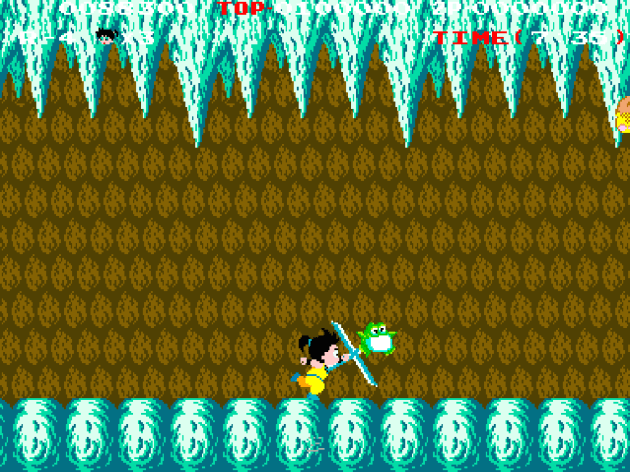
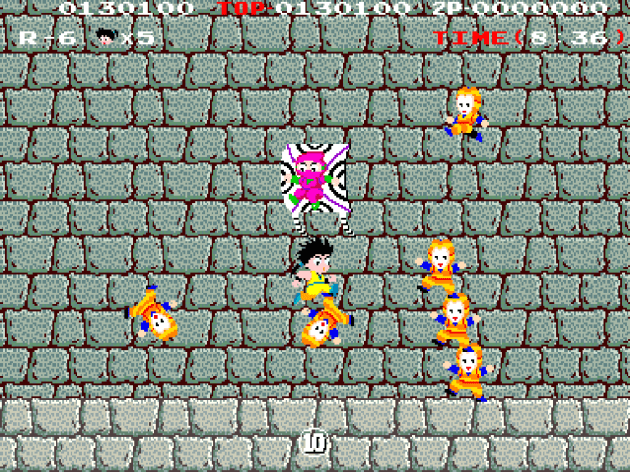


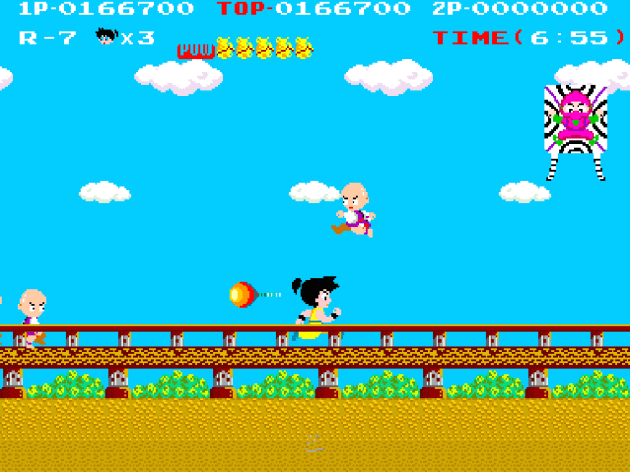
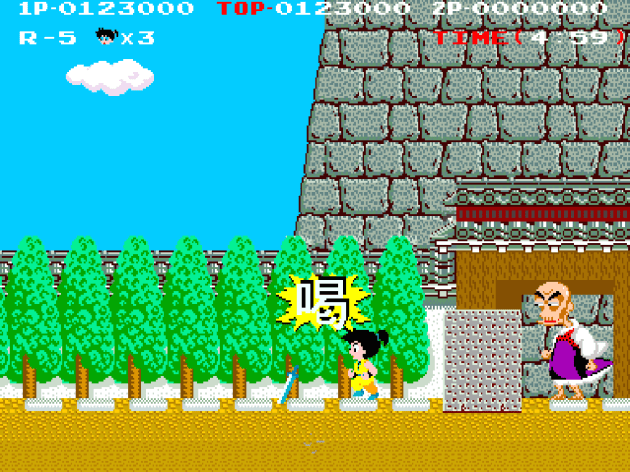


 Kid Niki: Radical Ninja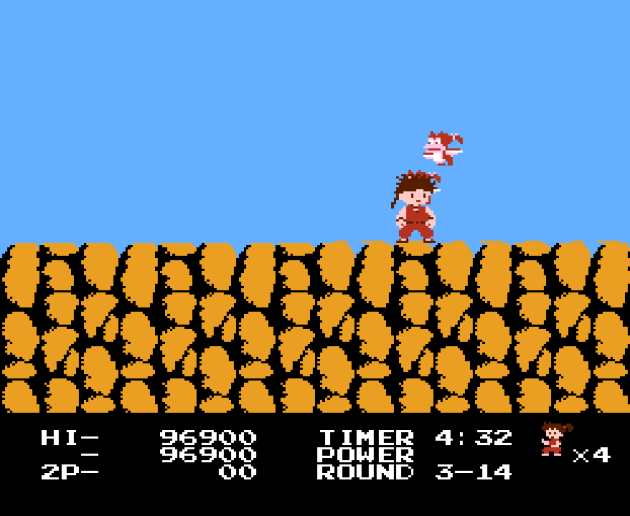


 Ganso!! Yancha-Maru
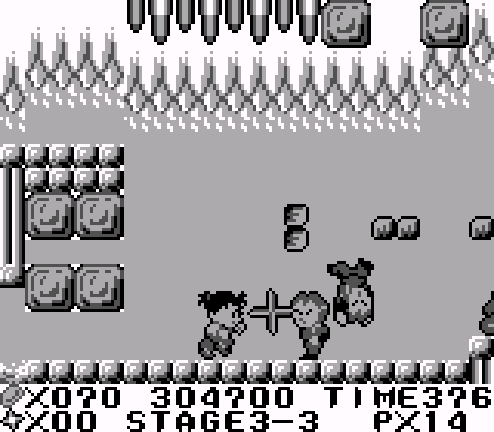
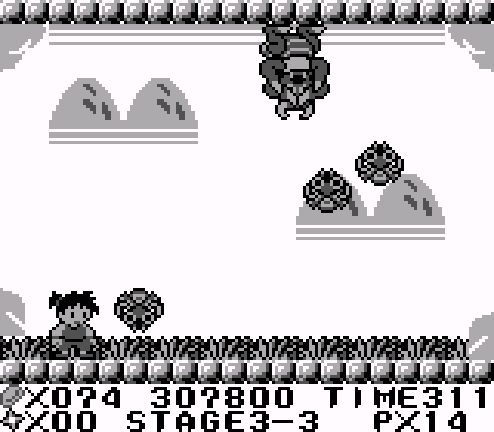

 Kaiketsu Yancha Maru 2: Karakuri Land

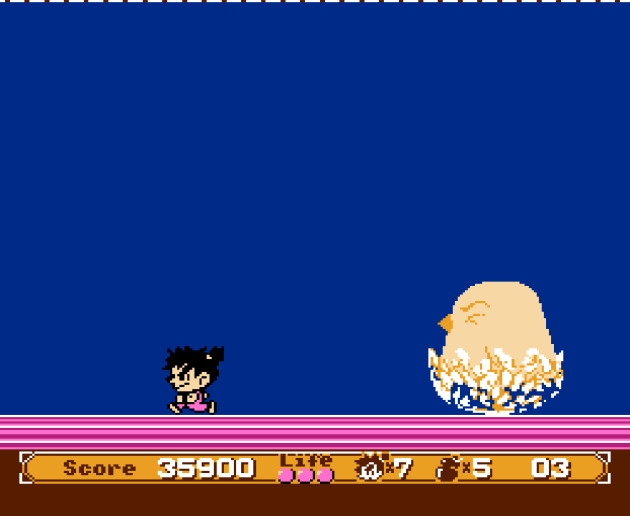
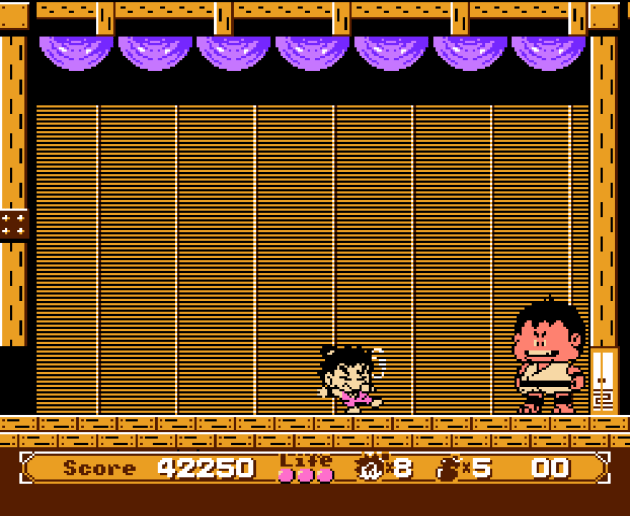

 Kaiketsu Yancha Maru 3: Taiketsu! Zouringen


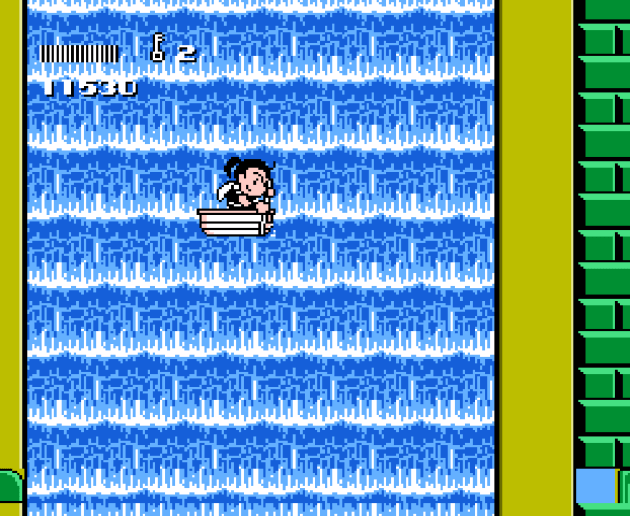
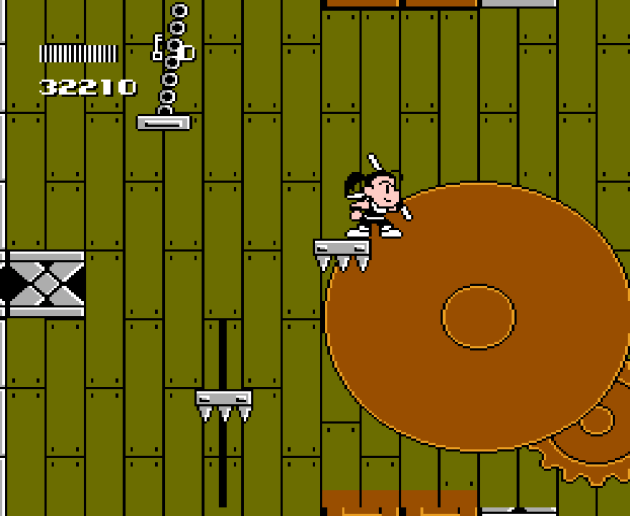


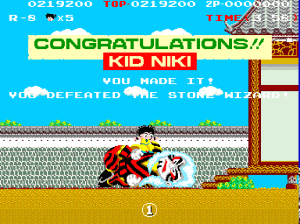 YES
YES Lunar Pool


 Baseball
 Arcade Archives: Vs. Baseball


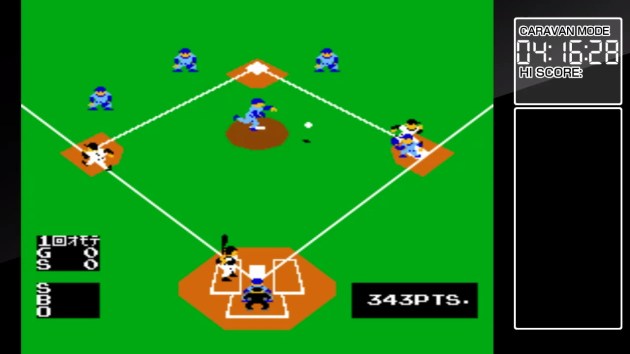
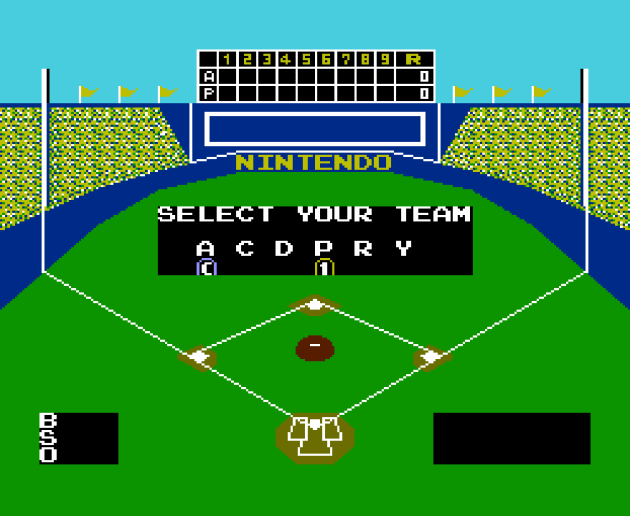
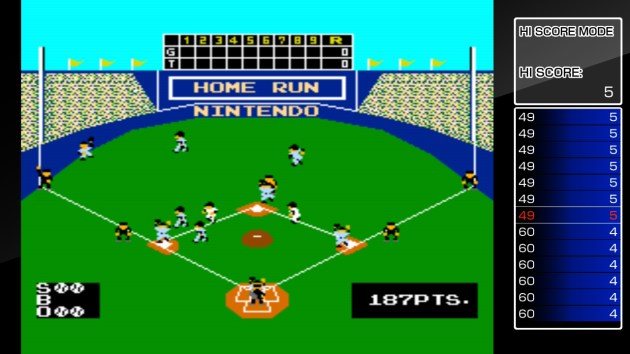
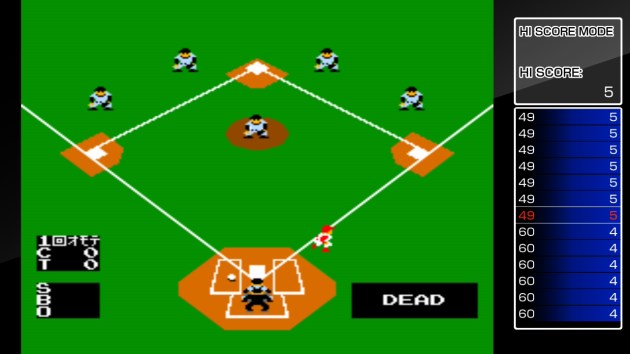
 The Legend of Zelda: The Wind Waker


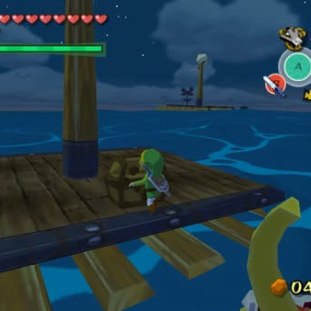


 The Legend of Zelda


 Zoda’s Revenge: StarTropics II


 Wario Land: Super Mario Land 3


 Donkey Kong Country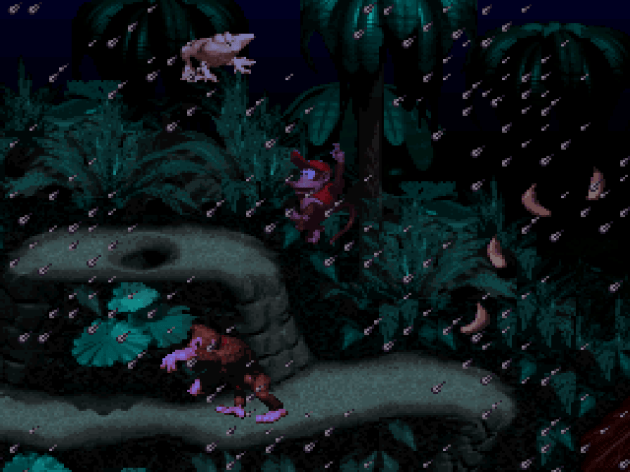
 Super Mario Land 2: 6 Golden Coins




 Indie Gamer Chick


You must be logged in to post a comment.