Cuphead: The Definitive Review – Part Two

Welcome back to Indie Gamer Chick completely losing her mind and deep-diving a game that she already reviewed three previous times! In part one of this feature, I reviewed Inkwell Isle I. If Cuphead scaled properly from there, I think it’d be talked about as one of the greatest video games ever made. But, it’s not in that discussion, even among some of its biggest fans. Why? Well, the big problems start in the game’s second world.

INKWELL ISLE II

RUN & GUN #3: Funhouse Frazzle
STATED INSPIRATIONS: Castle of Illusion Starring Mickey Mouse, Dynamite Headdy, M.C. Escher, Salvador Dali, The Cabinet of Dr. Caligari (1920)
IGC LIKES: One of the best “anti-gravity” stages in gaming history.
IGC DISLIKES: Perhaps leans too heavily into trial-and-error gameplay.

Both of Cuphead’s second world Run & Gun stages feel like they could be final levels in other games. The monstrously difficult Funhouse Frazzle is overwhelming when you first enter it. I’m a huge fan of anti-gravity platforming. In fact, I selected XBLIG all-star Antipole to be included in the 2013 Indie Gamer Chick Bundle for Indie Royale. Cuphead takes gravity-swapping to an extreme, but it’s still a LOT of fun!

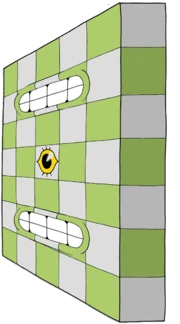
Right at the start of the level, you’re given a warning to switch gravity now, or be run over by a parade of cars that’s far too long to simply leap over. You have to parry the switches, and there’s this weird little delay that follows as the gravity changes. A wall is launching these traffic jams at you, and you’ll have to swap back and forth between the floor and ceiling before you get a chance to attack it. It’s one of the most intimidating intros to any stage I’ve ever experienced. At this point, Cuphead is done easing you into bosses or stages. And remember, there’s no simple mode for any of the Run & Gun levels. It makes me wonder if perhaps they should have been a little more gentle in introducing the anti-gravity mechanics.

I haven’t talked about the different guns in the game yet. The more toxic element of Cuphead’s fanbase shames players for using the heat-seeking bullets, but I find they work really well for some bosses and pretty much all the Run & Gun stages. They do the least damage of all the bullets, but for sections like the wall above, you’ll regret not having them equipped. They free players to focus on avoiding the various objects and projectiles being thrown at them. Meanwhile, I never used the charge gun once during my entire Cuphead run. I used the Spread/Roundabouts for all but a handful of bosses, while on levels I’d usually do spread/seekers. As for the special items, I’ll get to that in Part Four, but let’s just say that once you have smoke dash, you might as well ignore all other non-guns.


The majority of my lost lives in Funhouse Frazzle were the result of the brutal introduction to the stage. Once you get past that initial section, the rest of the level plays out in a way that’s almost conservative, at least as far as Cuphead goes. From here out, the challenge comes from simply picking the right spots to swap back to either the floor or the ceiling and making sure to clear the gaps while you’re at it. You don’t even have to engage the tuba guys pictured here, even without the heat seeking guns. Just avoid their blasts, clear one final wall, and you’re good to go. Funhouse Frazzle does lack in big-time set pieces, but as a concept-type stage, it’s unforgettable and one of the best Run & Gun segments in Cuphead!

RUN & GUN #4: Funfair Fever
STATED INSPIRATIONS: Ringling Bros. Circus posters, the Super Mario franchise.
IGC LIKES: Excellent series of set-pieces and high-concept platforming sections.
IGC DISLIKES: The final section of the stage goes a bit too long.

The best of the six traditional levels of Cuphead, Funfair Fever is an absolute delight to play and experience. Like the best levels in any game, it combines a series of memorable set-pieces with a scaling challenge, pitch-perfect timing and placement of enemies and obstacles, all while squeezing as many possible tropes out of the theme as possible. Unfortunately, it does slip a little towards the end, but it still pulls off being the most consistently dazzling of Cuphead’s limited traditional jaunts. Level designers of the world: take notes. This is the good stuff.

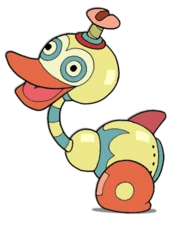
The level starts with a sentient trampoline running back and forth, which you must use to bounce over walls and avoid, or possibly parry off-of, balloons. There’s a risk/reward element to the balloons: if you ignore the non-parriable ones, they’ll float by you. If one is in your way, you can shoot it, but doing so unleashes a hail of bullets that might be even tougher to avoid. There is one issue: the trampoline is shown to have teeth jetting out of the side, or possible spikes. Either/or, but regardless of what they are, they’re drawn in a way to signify something sharp and dangerous, which suggests you MUST keep from touching the sides of the trampoline. In fact, doing so doesn’t damage you, but rather just launches you into the air. This might still result in damage if there’s a balloon overhead, but why include those teeth at all if they don’t hurt you? It’s so misleading, especially in a game meant to be ultra-difficult, where everything hurts you. This won’t be the last time this becomes an issue.
This slideshow requires JavaScript.

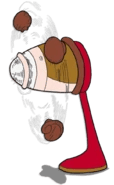
Next is the truly inspired dunk tank section. You navigate a series of platforms, each of which is attached to a target. Along the way, you hit walls of toys that must be shot until they stop refilling. The catch is the final wall is shooting balls this entire time that will drop the platforms upon hitting the targets. It requires quick reflexes, precision platforming, and use of your dash to get past this part of Funfair Fever. Some of the balls can be parried, but otherwise, you have to keep track of the placement of the projectiles and plot which platforms will be safe. Every part of this is well done. They even wisely made the final wall not be unbearably spongy. This is an area so inspired that I wish they’d made a boss battle based around it.

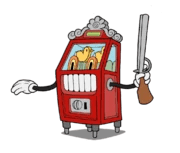
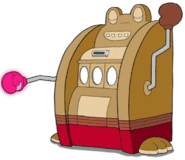
Along the way, you’ll have to face a magician that’s a direct-tribute to Magikoopa from Super Mario World, along with clowns balancing on balls that are pretty easy to get past. This leads to the first of two mini-bosses: a sentient 30s midway-style arcade machine. So cool. This actually makes me wish Cuphead had taken a crack at vintage pinball machines. I bet they could have come up with some imaginative designs (fans of pinball, check out The Pinball Chick!). Anyway, the machine fires off a shotgun that causes duck targets to rain from the sky. The battlefield for this fight is cramped by a previous wall you had to scale over. It’s really well done. Another mini-boss I wish had been turned into a full boss.

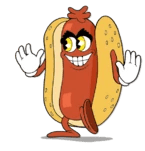
Finally, the stage ends with a bit of a whimper as you scale a few platforms and then make your way across a series of platforms where every-other one moves up and down. You have to shoot down sentient pretzels (truly the most evil of all snack items) and avoid squirts of ketchup, mustard, and relish that look suspiciously like the flames of an iconic game boss. Indeed, the giant hot dog is a direct tribute to Bowser from the original 1985 Super Mario Bros, only there’s no axe to kill it. Instead, you have to ping it until it dies. This whole section goes on forever, and while it’s intense at first, by time you fight the hotdog, it’s long since stopped being white-knuckle and just became an overly long slog. Cut it by a third and it’d been an satisfying cap to one of the best levels in the history of video games.

BOSS #6: Baroness Von Bon Bon in “Sugarland Shimmy”
STATED INSPIRATIONS: The Cookie Carnival (1935), Somewhere in Dreamland (1936), Moose Hunters (1937), Kirby’s Dreamland, Castle of Illusion Starring Mickey Mouse, Candy Land
IGC LIKES: Tons of eye-candy. Hah, get it?
IGC DISLIKES: One of the most RNG-heavy battles in Cuphead, and not in a good way. Absolutely should have been a world three boss.

One of my biggest complaints about Cuphead is how Studio MDHR completely, totally screwed up the difficulty scaling. There’s two world two bosses that belong in world three, which is incredibly fitting as there’s two world three bosses that really are easy enough to have been world two bosses. Baroness Von Bon Bon (named after Baron Von Blubba, the time-out skeleton from Bubble Bobble) absolutely should have been a battle that happens much later in Cuphead. She’s one of the most difficult bosses in the entire game. Being the 6th boss is ridiculously under-valuing how damn hard (and miserable) battling her is. It’s inexcusable, and the poor placement makes her one of the worst fights in the game.

PHASE ONE THROUGH THREE – CANDY MINIONS: The fight with Baroness Von Bon Bon opens with three randomly-selected mini-bosses, one of which doesn’t ever appear in simple mode. The order will be different every fight. What’s really bothersome about this arrangement is the five bosses are most certainly not equally difficult. A few are much easier than others, and one in particular is significantly more difficult. On top of all this, environmental elements get added with each passing boss. The second phase adds small, easy-to-miss jellybean soldiers running across floor, some of which can be parried. The third phase adds the Baroness firing a slow-moving trio of clouds at you, the pink-portion of which can be parried, though I have no clue why they bothered with that since it’s nearly impossible to pull off without taking damage. Depending on the order of minions you get, the hazards of the arena can easily become too much to keep-up with. They went so far overboard with this fight that it’s almost shocking.

I’ve decided to breakdown the mini-bosses in the order of least difficult to most difficult.

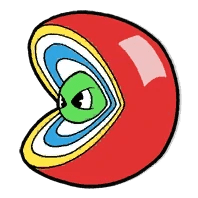
LORD GOB-PACKER: The Pac-Man-like evil gobstopper is easily the simplest-to-defeat of the Von Bon Bon’s five mini-bosses. It slowly stalks you around with one of its children (two in expert mode and none in simple mode) not far behind. Even if you’re not using the smoke dash, it’s just a matter of keeping a distance on it and firing upon it whenever you can. Seekers or Roundabouts are especially effective for this battle. You can breathe a sigh of relief if you draw the jawbreaker.

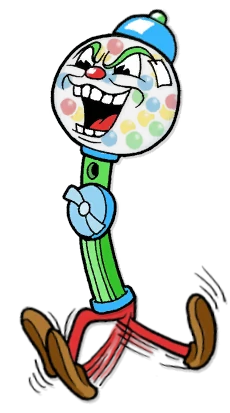
SARGENT GUMBO GUMBULL: A close second place for “easiest Von Bon Bon mini-boss” that only loses by virtue of it actually becoming a really hard fight if you draw him third on regular. He has the simplest pattern of all the candy mini-bosses, mindlessly running back and forth. If you don’t have the smoke dash equipped.. seriously, go get enough coins to buy it and put it on. I can’t imagine fighting this thing without it, since it allows you to pass from one side to the other without taking damage. On simple mode, you can easily leap over it with the platform. On any other mode, it rains gumball continuously on you. The biggest factor for why this becomes a difficult fight is the sheer amount of projectiles it spews becomes especially overwhelming in phases two and three, when you’re having to watch out for the hard-to-spot jellybeans.

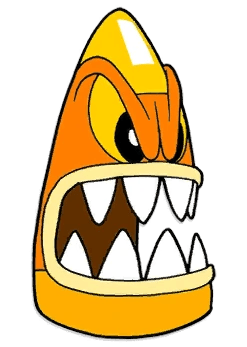
KERNEL VON POP: Nobody likes candy corn, so it’s fitting that it’s the middle-of-the-pack mini-boss here, neither desirable nor frustrating to get. It sticks to the edges and occasionally cuts up and down the middle of the screen. You simply have to avoid it and the tiny, slow-moving corns it drops. It’s not exactly difficult to avoid, and I’m only putting it ahead of the gumball machine because it moves faster and has a slightly more randomized pattern. If players remember to avoid the center of the screen when it’s moving along the top, they should be fine.
This slideshow requires JavaScript.

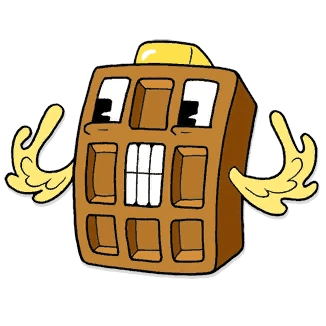
SIR WAFFINGTON III: I spent the longest time calling this the “chocolate bar” but no, it’s supposed to be a waffle. That’s butter its wings are made of, not filling squirting out (that’s what he said!). Either way, this battle has teeth. It flies in a somewhat unpredictable pattern, and occasionally breaks apart into eight pieces that fly out before returning to the mouth. This is the definitive “crowding your space” mini-boss, since I often found myself pinned against a wall when it began to launch its attack. Even if you get cramped, you can avoid the pieces individually, but it requires absolute precision timing. As tough as this is, it’s also the best, most-balanced of the five mini-bosses.

SIMPLY OFF-PUTTING: This portion of the fight is missing if you choose simple mode. Though this is a rare instance where you’re better off.
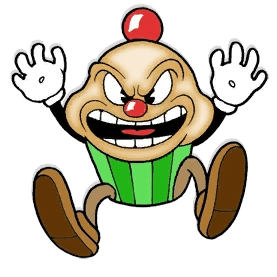
MUFFSKY CHERNIKOV: The only of the five mini-bosses that never appears in simple, and there’s a reason for that. Beating this cupcake is no piece of.. um.. some kind of easily obtainable frosted snack item. In fact, I’d actually make an argument that Muffsky here is the single most difficult phase in all of Cuphead that isn’t a secret phase. Far worse than anything any other boss throws at you, including King Dice or the Devil, with only Djimmi’s optional secret phase being harder. I’ve only successfully defeated it twice, ever. Once was during my fight against it on Xbox One that ended in total victory. This mini-boss leaps around the stage at fast velocities before attempting to butt-stop you. When it lands on the ground, not only is it seemingly invulnerable to your shots, but it creates tidal waves of cream that make the floor deadly. The waves are so low in visibility (in a stage that already has frustratingly small, deadly elements running across the floor) that they’re hard to track and easy to miss. You have to jump to avoid them, which puts you right in the path of the cupcake, who flings himself back up, often right in your direction. I hate this boss. It’s so imbalanced. I don’t know what they were thinking, but the little shockwaves of icing went too far.

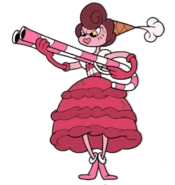
PHASE FOUR (SIMPLE) – CUP HUNT: The Baroness has two completely different ending phases, depending on which difficulty you’re playing. In simple mode, after dispatching the final mini-boss, she pops out from behind her castle and begins firing clouds at you, the pink portion of which you can score a parry off of. While this is going on, the jellybeans are still running across the floor. It’s not an incredibly complex fight, but I found it to still be very difficult, even for a “simple” mode. This is one of those fights where equipping the spread gun bites you in the ass, since it requires you get close enough for the shorter-ranged bullets to hit. The clouds can be shot down, but it takes several hits to do so, and being in close proximity might not leave you with enough time. The only way I could successfully beat this phase was to throw on the Seeker and cheese it by standing back and letting the bullets slowly ping her to death. It’s especially frustrating because the bullets chase down her bullets and the jellybeans too. But, I went ahead and played ten complete rounds against the Baroness on simple. The “stand back and shoot the seeker” method carried a 100% success rate with absolutely no effort needed. That officially qualifies as cheese in my book.

SIMPLY OFF-PUTTING: This portion of the fight is missing if you choose simple mode.
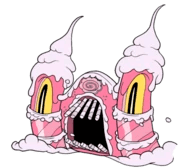
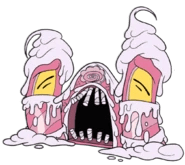
PHASE FOUR (REGULAR) – HOLY CRAP, NOW THE CASTLE IS CHASING ME: If you’re playing on regular or expert, upon beating the third mini-boss, the castle comes to life and starts chasing you. Suddenly, this boss fight becomes an auto-scroller where you must keep running left while avoiding obstacles and still figure out a way to shoot the Baroness. The creepy bitch THROWS HER HEAD OFF at you, which heat-seeks you for a bit before pausing to linger and block your movement before heat-seeking you again. Oh, and the the castle itself spits out giant peppermints, but at least you can parry off those. This whole section is far too spongy and goes on so long that it renders what should be a memorable “holy shit!” moment into a fight that’s actually a little boring. A miserable conclusion to one of the poorest-balanced bosses in the entire game.


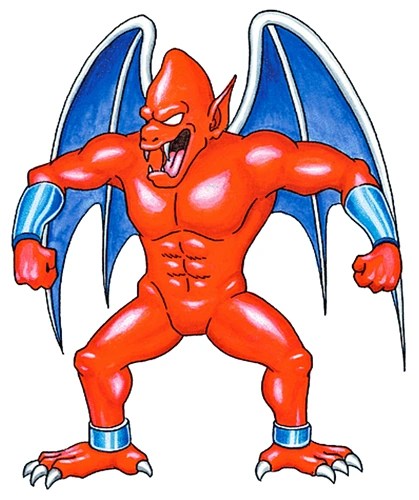
FOOD FOR THOUGHT: How the hell did this make it past play-testers in one of the most extensively play-tested indie games ever made? Seriously, I know the team at Cuphead is capable of better. NO, I’ll take it a step further: I know they’re smarter than this. I know they are because, throughout the entire game, they deleted several concepts that were speced-out and often even programmed because they knew it threw the balance off. Apparently, even this fight had some major deleted content, including having the jellybeans begin jumping (oh FUCK OFF for even thinking about that!) and a sixth mini-boss that would have paid tribute to the red arremers from Ghosts ‘n Goblins (these things). How could they show restraint in keeping those things out of this battle but still manage to make such a frustrating fight? To put it in perspective, I’ve beaten Cuphead twice now, and the only boss I died fighting more times than the Baroness is Rumor Honeybottoms from Inkwell Isle III. In fact, I’ve actually have lost more lives to the Candy Bitch over my two full play-throughs of Cuphead than I have to King Dice and the Devil COMBINED! Yet, this is considered the first boss of the second world? No. Just…………………………………. no.
BOSS #7: Beppi the Clown in “Carnival Kerfuffle”
STATED INSPIRATIONS: He Who Gets Slapped (1924), Beetlejuice (1988), Super Mario World, Dynamite Dux, Koko the Clown
IGC LIKES: A memorable boss fight with four distinct stages.
IGC DISLIKES: One of the most cheesable stages, especially with the spread gun.
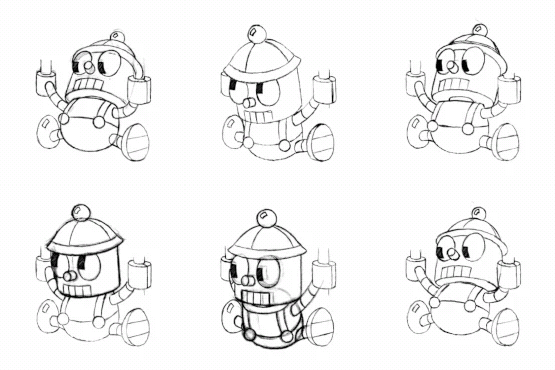
One of the iconic fights of Cuphead, the crew at Studio MDHR struggled with the design of Beppi more than most of the game’s cast of characters. In fact, the Art of Cuphead shows several possible designs that range from traditional terrifying clowns to slightly more terrifying clowns to “what the HELL is that?” surreal clowns (also terrifying). This is one of the few fights in Cuphead where every phase is a distinct form with unique attacks and play styles. Is Beppi fun to fight? Yes, but some weirdly exploitable portions of the game make it too easy to cheese as well.

PHASE ONE – BUMPER? I BARELY KNEW HER!: This is one of the most invasive phases of any boss battle in Cuphead. Beppi shuffles along in a bumper car, but the way he does it is so erratic that you can’t ever get a comfortable feel for safe distance. When you think he can’t scoot any further, he does. When you think he’s going backwards, he goes forward. Eventually, he’ll zoom forward and you have to jump over him, but while you do this, there’s shooting gallery duck targets passing above you that are lethal to the touch. Some of these can be parried, and all of them only take a single hit to render safe. This is actually one of the more intense opening phases of any boss in Cuphead. Even in replaying it, I was caught off-guard by how hard to clock this whole sequence is.
This slideshow requires JavaScript.

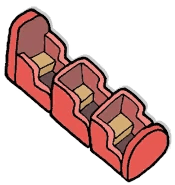
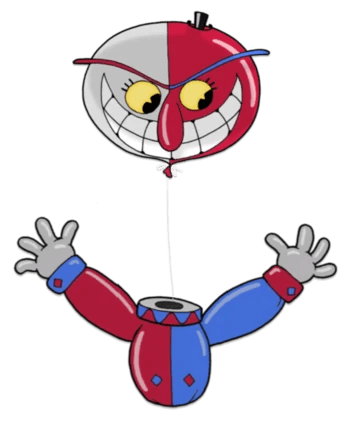
PHASE TWO – BALLOON FIGHT: Beppi becomes a giant balloon animal machine that unleashes dogs upon you, some of which can be parried. This would be one of the easiest phases of the game, if not for the fact that a roller coaster becomes part of the fight at this point. You can parry off the nose of the front of the coaster, but you still have to dodge seats occupied by crash test dummies. Weirdly, the back of the coaster looks like it would also be lethal to the touch, as its covered in spikes. But, it doesn’t hurt you. DON’T DRAW SPIKES IF THEY’RE NOT GOING TO HURT YOU! This is real basic game design stuff, people!
This slideshow requires JavaScript.

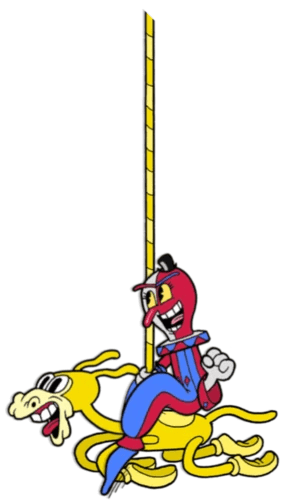
PHASE THREE – A HORSE OF A DIFFERENT COLOR: Bring on the cheese! If luck is on your side, you can park yourself right under Beppi and unload bullets directly into him with minimal fuss. There’s two attacks here: if the horse is green, it’ll cough up horseshoes that travel in a sine curve at you. This usually includes one that can be parried. If the horse is yellow, a fast moving row of shoes will shoot out, stop, then drop straight down, leaving a small safe zone for you to avoid them. The roller coaster remains active for the entire fight, but you can see when it’s coming if you watch for it to climb up the hill in the background. Just stand under the horse and pump it with bullets. This is one of the easiest and most embarrassing phases in all of Cuphead.

This slideshow requires JavaScript.

PHASE FOUR – CAROUSEL OF DEATH: One of the most visually striking finales of Cuphead, the carosuel is also surprisingly difficult. Even if you are using spread and cheese it by using your special attack in the center, which results in all eight bullets immediately registering a hit, the carousel is spongy enough that it takes quite a while to beat it. The roller coaster goes significantly faster this phase, so much so you’re really only safe by leaping across the chairs. But, Beppi also spits out baseball-throwing penguins (a nod to the Chargin’ Chucks from Super Mario World), which prevents you from getting into a rhythm on the swings. I can’t imagine how hard this would have been without the cheese of the spread shot. Compared to the previous two phases, this is maddeningly difficult, and also epic as all hell. One of the great finishes to a battle in the game. If only they were all this amazing.

FOOD FOR THOUGHT: This is a boss that Studio MDHR had to work quite a bit on before they got it to the point that they liked the look, personality, and set-pieces. For all the numerous problems Cuphead has, they never settled for “eh, good enough” when it came to their character design. Even if it caused delays in getting into the meat of programming, they kept experimenting with the appearance until they got it where they LOVED it. Beppi is the prime example of that, and the final result is an unforgettable boss. There’s a lesson to be learned there for indie developers: the game itself might not come out the way you want it to, but it’s going to be your name on it. Work it until you’re VERY happy with the end product. If you’re settling for “that’s fine, I guess” it’s time to rethink things.

BOSS #8: Djimmi the Great in “Pyramid Peril”
STATED INSPIRATIONS: Darkstalkers of all games (the sarcophagus section), any game where you fight an evil version of yourself.
IGC LIKES: The best of the shmup levels, and one of the most memorable boss fights in gaming history, with five distinct phases (the most in the game).
IGC DISLIKES: RNG luck rears its ugly head again. And my sister beat this on regular on her very first try ever, which is SO annoying because I’ll never hear the end of that.

The battle with the genie is probably the best stage from a technical standpoint in all of Cuphead. While I’m not sure it’s the most fun to do battle with (honestly, I don’t have a favorite boss) and perhaps goes a little too long, Pyramid Peril is the complete Cuphead package. The artistry on display here, from the character design to the memorable set-pieces, the music, and even the background combine to form a truly wonderful experience.. provided you get the right RNG. And you don’t just totally cheese several of the phases. Or you don’t attempt to beat the nigh impossible secret fifth phase. Okay, wow, Djimmi has a lot of “ifs” doesn’t he?
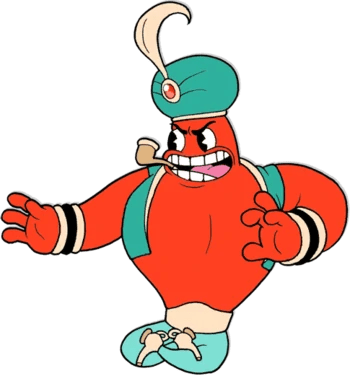
This slideshow requires JavaScript.

PHASE ONE – TREASURE TRACKERS: The genie unleashes one of three random attack styles on you. Such as the worst random elements of Cuphead, these three patterns are not equally difficult. The swords are the most desirable in my opinion. They’re the largest and easiest to to avoid, as they come out and take a formation before heat-seeking in your direction. Another wave has the chest simply spam the screen with small pieces of junk, some of which can be parried, though the pieces might be too far away and with too much clutter between you and them to reach. Finally, miniature cat sarcophagi open to reveal heat-seeking cat scarabs, one or more of which will be parriable. The junk/cat waves are very problematic in how much crowding they feature and how much luck you need to even be granted a clear path. I’ve seen professional players have perfect runs ruined during these phases (granted, on expert. Still counts..)

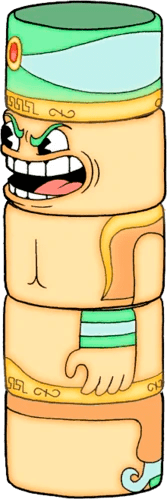
PHASE TWO – PUNCTURE THE PILLARS: This is where the genius of Cuphead’s design really shines. You’re still fighting a boss here, yet the stage transitions to a vintage shmup area where you have to shoot your way through walls. Only the bricks with faces can be destroyed, and you also have to dodge bouncing spinning blades while you do it. The faces, still being part of the boss, count towards damage, so if you use bombs, the overkill damage carries over to the main fight. If there’s a column with two faces and you blow them both up, you essentially do double the damage to Djimmi for that section. This allowed me to beat the third phase in literally five seconds yesterday. Whoa! Hey everybody, look at me! I’m a speed runner! Next thing you know, I’m going to be mainlining Red Bull and hocking shitty gaming equipment from a shady sponsor on Twitch.
This slideshow requires JavaScript.

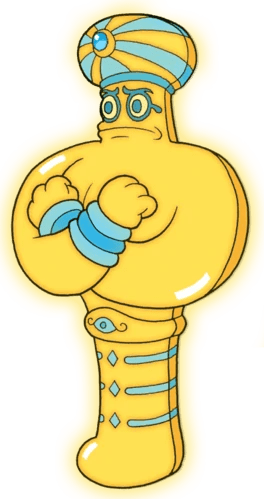
PHASE THREE – SAR-COUGH-AND-CUSS: If you don’t totally cheese your way past this phase, you can cheese it in other ways. A series of mummy-ghosts will float out at three different speeds while Djimmi is now basically a formless slug who occasionally shoots out bullets shaped like Saturn that are actually his eyeballs, because gross. You can switch from bullets to bombs, linger towards the top of the screen relatively close to Djimmi and cheese your way through this phase without taking damage.. sometimes. I’ve heard some players can pull this off 100% of the time, but I take damage every 3rd or 4th attempt at it, which still means this is a safe and effective strategy in at least two-thirds of the runs. I think it’s a matter of whether you get in the right rhythm for when the mummies spawn versus when you’re actually firing the next bomb. If not for this trick, this wave would be really hard, but the trick is there, so it ain’t.
This slideshow requires JavaScript.

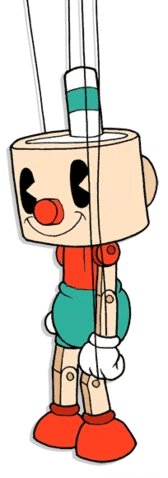
PHASE FOUR – CUPPET: Cuppet is certainly one of the more memorable encounters in the entire game, so much so that I sorta hope it returns for a traditional platforming-based boss fight in the DLC. Hell, that would be an interesting DLC pack, no? Take the five shmup bosses and turn them into platform encounters, and maybe remix a few of the traditional bosses as shmups? That idea is all yours, Studio MDHR. Anyway, the ability to totally screw with the Djimmi ends here. Cuppet shoots you with bullets, some of which can be parried, and all the while the genie’s hat floats aimlessly around, causing crowding issues and occasionally unleashes waves of bullets. The fight gets surprisingly intense here, as you always feel like you have very little room to maneuver. The intensity combined with the menacing laugh of Djimmi when Cuppet starts firing at you assures this is a phase you’ll never forget.

SIMPLY OFF-PUTTING: This portion of the fight is missing if you choose simple mode.
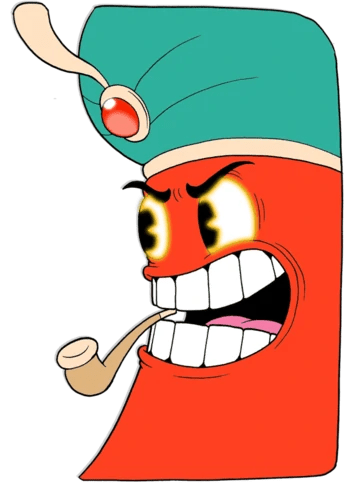
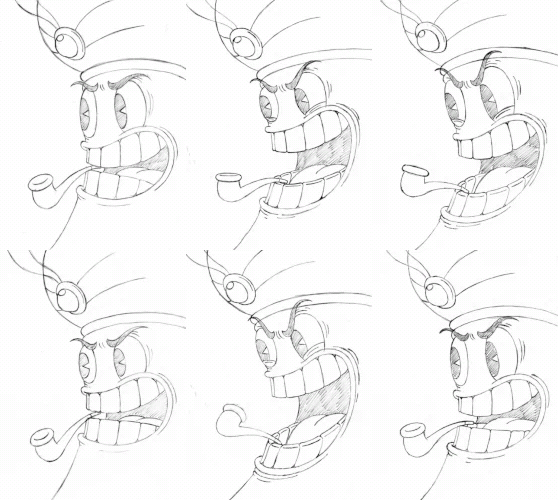
PHASE FIVE – YEA, HE’S HUGE NOW: The final phase of Djimmi is almost as visually striking as the Hilda’s moon phase, but this is a lot more difficult, as the genie spawns three Illuminati-style pyramids that unleash deadly waves across the screen. It’s a solid concept, but problems abound. One issue is that Djimmi fires an almost-invisible series of ring-bullets. Why did they make them so transparent? I didn’t even realize what was pinging me at first on a multi-thousand-dollar 4K TV when playing on Xbox. The first time I actually beat Cuphead, it took me several rounds before I even realized I was being shot during this section. In a game that put such a high premium on mind-blowing visuals, it’s jaw-droppingly stupid to have any projectile (in a goddamned shmup stage nonetheless!) be so transparent that you can easily miss it in the heat of battle. Once I knew what to look for, it’s a matter of sticking to the center, avoiding the death rays, and hurling as many torpedoes as I can charge-up at it. Thankfully, this phase is over quickly.
This slideshow requires JavaScript.

SECRET PHASE FIVE – I REALLY SHOULDN’T HAVE DONE THAT: If, during the transition between the third and fourth stages, you shrink down to the smaller plane as Djimmi scans you to find the inspiration for Cuppet, you’ll actually skip the fourth phase entirely and go directly to finale, only with a twist: a miniature Cuppet will now clog up the center of the ring of pyramids. You know, that area where you were relatively safe when you beat this without the secret phase? Not only does he clog it up, but he fires bullets in addition to all the other attacks of phase five. It turns a fairly balanced finale into likely the hardest phase in all of Cuphead. Every-other bullet fired by the mini-Cuppet is parriable, though in almost thirty attempts, neither Angela nor myself could score a single, solitary parry off this. There’s no comfort zone and every single area you can maneuver is now a tight squeeze. I’m not ashamed to admit: I couldn’t beat the secret phase. It’s a nice bonus though. You know, if you’re a masochist.

FOOD FOR THOUGHT: I didn’t realize how deeply flawed Djimmi was until I really dove deep into the nuts and bolts of this battle. Pyramid Peril has more problems than an algebra quiz. Yet, it’s a sequence nobody who plays it will ever forget. A big part of that is Studio MDHR’s imaginative “anything goes” attitude with characters and phases. But, I have to also call attention to the incredible backgrounds of all the Cuphead battles. The battle with Djimmi is a tribute to the 1930s Fleischer Studios “setback” backdrops for their Popeye cartoons. They could have easily cheated and did the thing in CGI, but instead, they used real models and photographed them just like artists from nearly a century ago did. A lot of things frustrate me about Cuphead, especially the snotty attitude of gating via the easier difficulty that’s just about as shittiest a thing I’ve seen a developer do in my ten years of IGC. But, I admire the fact that nobody at Studio MDHR took any shortcuts making Cuphead, when they could have in multiple different ways. It’s commendable, even if the studio is populated with more dicks than the national convention for the American Association for the Advancement of Persons Named Richard (the AAAPNR, annual dues are $75 and include a quarterly newsletter, though it’s mostly full of dicks too).

BOSS #9: Wally Warbles in “Aviary Action”
STATED INSPIRATIONS: Popeye the Sailor Meets Sindbad the Sailor (1936), Yoshi’s Island, Earthworm Jim
IGC LIKES: The most conventional of the five shmup levels, until it’s suddenly not. Absolutely twisted finale. Fine-tuned difficulty balance.
IGC DISLIKES: Final phase, twisted as it is, also totally ruins a great level.

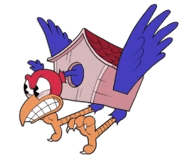
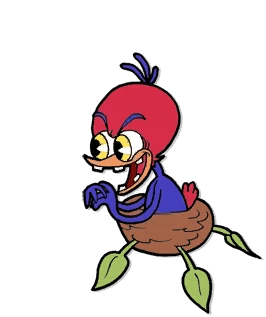
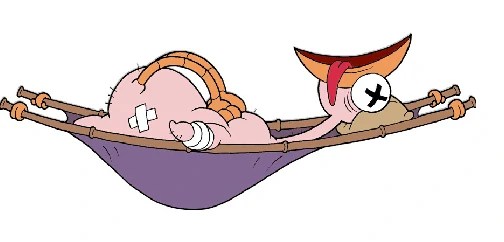
One of the stranger levels in all of Cuphead. Apparently, one of the least memorable too. Nobody talks about Wally Warbles, and this in spite of the battle having some damn shocking macabre imagery and an up-tempo theme that includes a sample from Ride of the Valkyries.The fight literally ends with two EMT birds salting and peppering Wally’s possibly dead body, an unforgettable visual, yet this isn’t one of the top discussion points of Cuphead. What happened here? Maybe it’s too traditional, until it’s suddenly not.
This slideshow requires JavaScript.

PHASE ONE – SCRAMBLED EGGS: Wally usually starts by shooting comically large bullets from his fingers before he starts coughing up eggs. The eggs have to be dodged from the front and back, as they break into three smaller portions against the wall. Oh, and during the first two phases, chicks (as in baby birds, not me) fly across the screen with goddamned nails tied to them. Seriously, this is one twisted stage. It’s also as conventional as a shmup gets. Though it never feels like it, I suspect that’s why Wally is one of the “forgotten” Cuphead bosses. If, during this phase, you replaced Cuphead with a spaceship and Wally with a.. er.. larger spaceship.. would you even think of this as a Cuphead boss? Perhaps this was too conservative and Studio MDHR should have focused on more character gags. I dunno.

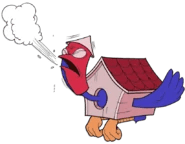
PHASE TWO – PULLET HELL: I’m far too proud of that pun. Give me a moment to pat myself on the back. (ahhh, that’s the good stuff) So, yea, after X amount of shots, Wally loses his shit and starts spamming the screen with feathers. As far as lazy bullet hells go, this isn’t bad. No, I can’t explain why this is okay while in Part 3 of this review I’m going to absolutely skewer Dr. Kahl’s Robot for doing the same thing. Well, maybe I can? #1: this is more creative. Dr. Kahl’s Robot involves the mad doctor simply hold up a diamond that generates the bullets. This is a bird that’s so angry it’s shaking all its feathers off at you. That’s more in the spirit of this battle than the Dr. Kahl setup-payoff is. #2: They’re also larger and easier to dodge bullets. #3: The section doesn’t go on as long. The bullet hell in Dr. Kahl’s stage goes for nearly half the battle. So long that it stops being intense and simply gets boring. #4: The lazy bullet hell (and let’s face it, this shit IS lazy) isn’t the finale to Wally’s battle. Dr. Kahl’s is, and combined with the length of the spamming, it makes winning feel less victorious and more a sense of relief that it’s finally over. That’s why it’s not fun there but it is here. Okay, so I could explain why it works here. The best bits in games are the ones that are in service to the setting and characters.
This slideshow requires JavaScript.

PHASE THREE – WILLY WARBLES: God, this thing is so creepy. But, again, the conventional shmup design of having a shield around the enemy and having to carefully aim to get your shots in works so well here. Not only that, but as the eggs spread outwards and you have to weave your way in and out of the shield, it NEVER stops feeling intense and awesome. I also like that all of his shots can be parried, though at no point in Cuphead did I have more instances where I both scored a parry AND took damage than during this phase. It’s so weird. How is that even happening? Shouldn’t the act of being shot be the end of the bullet, thus no parry, or the act of scoring the parry also be the end of the bullet? One or the other, gang. I’m going to guess this is a glitch that never got patched out, but it happened several times.
This slideshow requires JavaScript.

PHASE FOUR – THAT’S SO DARK IT LEAKS HAWKING RADIATION: (rubs eyes) Yea, so a mangled Wally is being stretchered out by two EMT birds, and the level totally shits the bed here in terms of feeling fair. Wally, the two EMTs, and even Wally’s heart are shooting you, but there’s little room to maneuver and get your attacks in. It’s the issue with the giant moon in Hilda’s stage, amplified: you have to spend forever getting back to this section only to quickly die over and over again trying to figure out where the bullets are coming from and how you can dodge them. But this time, there’s an even larger variety of attacks. Heck, I often took damage that I didn’t even know where it came from. Every time I’ve beaten Wally, I felt like I got lucky that I didn’t die right before the final point of damage came in. It seems like it’s meant to be a finale that forces the use of bombs, but perhaps they would have been better off limiting the final phase to Wally’s coughing-up of his own bullet-spitting heart and having players shoot it while dodging the pills from the EMTs without all the other crap. The heart gag is brilliant and original! The whole phase should have been built around it!

FOOD FOR THOUGHT: Yea, Cuphead has an issue with closing the deal on their fights, but I appreciate the anything-goes attitude. As far as visual gags go, seeing the EMT birds begin seasoning Wally is so damn funny that I almost forgive how sour a note the fight ends on. One of the amazing things about Cuphead nobody talks about is how smart the decision was to have fights end with a boxing bell and the dramatic “A KNOCKOUT!” graphic instead of having a typical gaming death animation. I mean, those happen too, but the moment you win is a MOMENT, and Cuphead does that moment even better than Shadow of the Colossus.

BOSS #10: Grim Matchstick in “Fiery Frolic”
STATED INSPIRATIONS: Mega Man 2, Contra III: The Alien Wars, Woos Whoopee (1930), Mickey’s Fire Brigade (1935)
IGC LIKES: Fun personality? Eh, screw it: there’s nothing redeeming about this fight.
IGC DISLIKES: Randomized platforms. The fact that I had several rounds that only had two chances to parry.

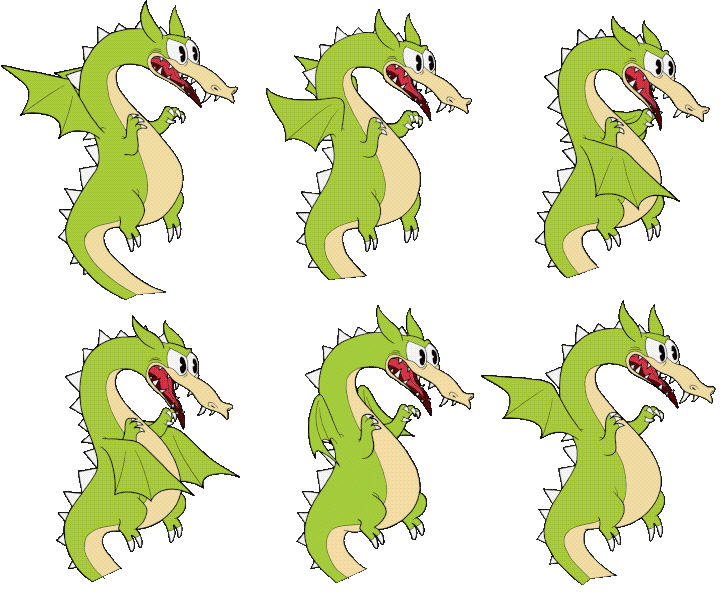
The other boss that’s so hard that it should have been moved to world three, and in my opinion, one of the worst bosses in all of Cuphead. An auto-scrolling nightmare with totally randomized attacks and more issues than Time Magazine. It’s not merely a slog to fight, but I think it’s just really badly done overall. In order to get high grades at the end of fights, one of the conditions is that you must score three separate parries over the course of the match. But, I had multiple battles with Grim (named after Snow White animator Grim Natwick) where only two chances for a parry ever happened over the course of the fight. You can’t do that, Studio MDHR. If parries are so fucking important, you have to give players more chances at them. There should be something parriable every round. Inexcusable. This boss is total crap.
This slideshow requires JavaScript.

PHASE ONE – HOW EXACTLY IS THIS A “FROLIC” HMMM?: This miserable battle opens with Grim shooting laser eyes at you. This could be the only part in the entire match where you have a chance to score parries, BUT, he might only shoot the lasers twice at you. From there, he’ll spit meteors at you and jab his tail up into the playfield. After this, what he does is randomized, and it leaves open the possibility he’ll never fire the lasers again and stick to the meteors. Even though one of the conditions for a perfect score is scoring three parries, it’s not even that rare for a match with Grim to only have the two parriable shots fired. I had several times where I played good (well, good for me) but I’d been at a disadvantage in the score because the game never presented me with the opportunity for the final parry I needed. It pisses me off so much because I actually cared this time whether or not I got high scores on the bosses (my mission this session of Cuphead was to score at least an A- on every battle). And there were multiple other instances where they could have very easily programmed other parry opportunities in phases two and three. What an absolute brain fart on their part. The randomized platforms also often have unfair alignments, and the stage moves just fast enough that you can be absolutely screwed.

PHASE TWO – MATCHSTICK MARCH: This WOULD be the most interesting part of the battle, since there’s nothing quite like it in any other game, but again, it’s a pain in the ass because of those randomized platforms. The flames marching across the bottom will periodically fling themselves up at you. They could have easily made the occasional one pink. I mean, it would make total logical sense and reward fast-reflexes. Not sure how that didn’t happen, especially since you could totally be fucked on your grading after the first phase. Seriously, I’m not letting it go. It makes me mad. Anyway, this is probably the best part of the fight, since I’ve never experienced this type of action in any game. It’s inspired. I wish the rest of the fight hadn’t been completely unlikable.

This slideshow requires JavaScript.

PHASE THREE – HEY, WHERE DID THOSE OTHER HEADS COME FROM?: Grim is now three-headed and constantly spits fireballs at you. The fireballs break into four directions if you accidentally shoot them, which is sort of inevitable. After a while, the middle head will throw on a mask and spit a flame across the middle of the screen, and I’m sure it’s because I suck at video games but I never saw this coming. A big reason for that is this phase takes place in a really dark lightning storm, and since you have to focus completely on making your jumps, you can’t really pay attention. The first few times you fight Grim, it feels like a GOTCHA! but at this point I’ve come to expect that shit from this fight. The third world somehow opens with an even worse battle, which is the only thing that keeps Grim Matchstick from being the bottom of the barrel of Cuphead’s otherwise epic bosses. And again, any of those bullets Grim fired could have easily been a parry chance. Grrrrr. SERIOUSLY HOW DID THEY FUCK THIS UP SO BADLY?

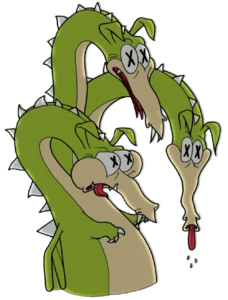
FOOD FOR THOUGHT: In theory, the only way to 100% for sure prevent the Grim Matchstick battle from shorting you on enough parries to earn a perfect score is to deliberately play poorly until the third parry is earned. Um, yea. When was the last time a truly great action game penalized players for excelling? The obvious answer is to not force players to score parries, but I actually like that idea. I just think, for something that they put such a high premium on, they really needed to include more chances at them. Not just in this fight, but several others. The good news is, this could easily be fixed with a patch. I mean, the overall fight can’t. It’s boring and bad as a concept, except the second phase. But, at least they can take away the frustration of playing perfectly and still only getting an A instead of an A+ because the damn dragon only shot twice at you instead of three times.

Click here for Part 3 of Cuphead: The Definitive Review! I head to the biggest world in the game: Inkwell Isle III, where I’ll face two more Run & Gun stages and seven bosses.

Cuphead: The Definitive Review – Part One

“Four times? You’re reviewing Cuphead a fourth time? Are you whoring for page views or something?” #1: Yes. Always. #2: in nearly 4,000 days as Indie Gamer Chick, with over six-hundred indies reviewed, there had been only one game I got wrong that I flipped my review status on without a single patch being applied: Terraria, which I did almost immediately. That one was easy to flip. I was annoyed by all the glitches. I was annoyed by the crashes and lagging while playing multiplayer. Then, as soon as I hit publish on the review, Brian and I turned it back on to “finish our projects” and “get it out of my system.” Twenty hours of playing Terraria later, we both realized that I might need to rethink things, and I did.

Cuphead is now the second time I admit I got a review wrong. Which is really fucking sad when you think about it since I wrote THREE previous reviews of it.

I needed a little more than a couple days to flip on Cuphead, a game that I thought I detested. In fact, took me four years to realize I never hated it so much as I hated the unfair aspects (that are REALLY in the game) that mostly happen late in the game and thus feel fresh when the time comes to do the writing. That and the fact that the final world is gated from players who choose the simple option the developers included. If Cuphead hadn’t told me “not good enough” when I got to the end with having finished all the bosses on simple, I probably wouldn’t have touched it again, given it Approved Status, and moved on.

But, I was a little.. a lot.. okay, extremely pissed that a tentpole indie game locked people out of the ending (and loads of other content). I rejected the universal argument of the developers and its superfans that “Cuphead couldn’t have an easy mode! It would have gone against the spirit of the game!” That’s seriously dumbest argument I’ve ever experienced as IGC. Cuphead DOES have an easy mode! Saying the easy mode for the bosses of the first three worlds should lock you out of the finale would be like arguing a car can’t have breaks because that prevents it from moving forward, which is all a car is supposed to do. Well, that’s just a stupid way of thinking, but locking players out of the finale of Cuphead is arguing that it only exists to create an extreme challenge. That the tribute to golden age cartoons, incredible attention to detail, and masterful direction are completely meaningless because the only point of Cuphead is to be hard. They probably didn’t mean to make that point, but by using difficulty to gate-off large amounts of content and thus defining Cuphead by its difficulty, Studio MDHR chose to make every other aspect but the difficulty of the game completely meaningless. Uh, Whoops?

My first time playing Cuphead, I beat all the bosses on SIMPLE. I didn’t consider myself especially skilled enough to beat the game on the game’s terms. The second time, I didn’t even try. The third time, I did beat Cuphead, and I admitted I’d gotten a lot wrong. I conceded that I really liked the shmup levels, and those moments of victory after suffering through dozens of defeats were some damn-potent happy thoughts. But, I still insisted I didn’t like the game. And, at the point I walked away from it after the end credits rolled, I believed that was true. Even when I ended up having talks with friends where they noticed I had a warmness about it I previously lacked. Then, my kid sister/future Spielberg-of-her-generation Angela, in the middle of a 30s/40s animation kick, picked up Cuphead last week to take a look at how a modern tribute to that style would work. I don’t watch the “video game awards” or whatever the fuck they’re called on TV, so I asked “hey, whatever happened to Cuphead’s DLC?” on Twitter. Everyone replied that Cuphead’s DLC had been dated finally literally the night before. June 30, 2022. Wait, that’s Indie Gamer Chick’s 11th Anniversary! I watched the trailer, and I became excited. And then this conversation happened in my head:

Me: Wait, why I am excited for Cuphead?

Brain: Because you love Cuphead, you fucking idiot.

Me: I…….. do love Cuphead! Oh. My. GOD!! I love Cuphead! Wait, I do? That can’t be right!

So, I loaded Cuphead up on my Nintendo Switch this time (the previous three sessions having taken place on my Xbox One) and set a new goal: instead of simply beating the Devil, I would get at least an A- on every boss AND collect every coin in the game, thus requiring me to beat all six Run & Gun levels as well. This time, I knew what to expect. All the surprises were gone. I’d gotten good at Cuphead, and with or without the Jiffy Pop hands that my Parkinson’s disease is starting to cause, by God, I’m going to beat this fucker good this time. How’d that go?

Well, if I’m doing another Cuphead review, I’m doing the most in-depth review on the game ever written, so that I never have to do another write-up about Cuphead ever again.. until the DLC launches.

Nobody can complain this time. I scored a 100%!

I’m breaking it into four parts. One for each world in the game.

INKWELL ISLE I

RUN & GUN #1: Forest Follies
STATED INSPIRATION: Contra III, Gunstar Heroes, and Donkey Kong Country
IGC LIKES: Simple layout, clear targets.
IGC DISLIKES: Lack of big set-pieces.

Forest Follies, the first Run & Gun stage, will never get credit for being one of the all-time great opening levels in video games. That’s a shame, because it is an all-timer, yet nobody talks about it. A big reason for that is people think of Cuphead primarily as a boss rush game. The six “normal” levels are treated as after-thoughts in the game itself, and thus fans do as well. That’s borderline tragic, because all six levels are rich in gameplay and properly pay tribute to genre-defining titles like Gunstar Heroes and Contra. I’m a big fan of those games, and I think that’s a big part of why I was so drawn to the Cuphead’s Run & Gun stages, even when I wasn’t admitting to myself I loved the overall game.

Like any great intro level, Forest Follies is the perfect introduction to Cuphead’s platform-and-spray mechanics. The enemies are basic and can be clipped with a single bullet. The coins are easy enough to fetch. The parriable objects are practically set-up for you to bounce off. All set in a gorgeous level that feels like you’re taking-on actual cartoon characters from the golden age of animation. It’s one of the few times you can assign the word “basic” to Cuphead, but this is a basic level. Just, one done really well.

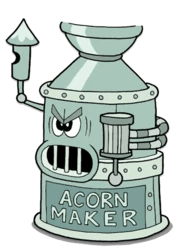
Each of the Run & Gun stages has at least one distinct “mini-boss” that makes you sort of wish they’d expanded it into a full boss fight. The acorn maker is the only one in Forest Follies, and one of the few in Cuphead’s Run & Gun stages that doesn’t feel like an event. It feels like a wall (Cuphead is full of those too) that you shoot through. This is as big a “set piece” as Forest Follies has, and if it’d been a little more epic, I think Cuphead’s intro stage would have to be in the discussion for best video game levels of all-time. It’s certainly among the best intro levels, even if nobody will call it that.

RUN & GUN #2: Treetop Trouble
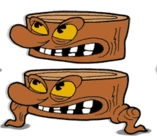
STATED INSPIRATION: Ghouls ‘n Ghosts, Mickey’s Garden (1935)
IGC LIKES: How perfectly the developers captured the spirit of their targeted inspiration: Ghouls ‘n Ghosts. The final platforming stretch and the battle with the giant beetle are among the best platforming sections in all of Cuphead.
IGC DISLIKES: The climbing section is a slog. The randomized lady bugs are annoying.

The second level is where Cuphead’s Run & Gun stages get teeth. From here out, the Run & Gun stages are all essentially as difficult as late-game levels in other titles.

Dealing with the woodpeckers would be tough enough without these lady bugs bouncing around. The randomness of which ones can be parried is especially annoying given that there’s a coin that can only be gotten via a parry. It’s one of those things that is wonderful in theory, but in practice, they really needed to rig the RNG so that there is one pink bug constantly bouncing around where the coin is. The stage is challenging enough without having a chance of missing the coin.

The climbing section goes too long and is made a bit annoying by how spongy the enemies are. You can forgo finesse by equipping the heat seeker. The trees soak up too many bullets no matter what you use, so you might as well cheese the whole thing. The left-right-left style of climbing gets pretty old. This is one of the weaker segments in all of Cuphead’s traditional stages.

Then, inspiration hits. Hopping across the leafs that are being held up by bugs makes you think they’re going to sink under your weight. Instead, semi-random fireballs kill the bugs, which make the platforms drop out under you. This is the type of memorable twist on traditional platforming that can only really work this well in a game that puts such a high premium on art and style. It’s really something special.

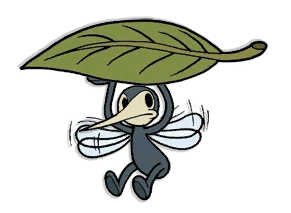
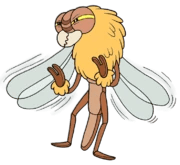
Finally, the mini-boss, a giant dragonfly, really hits all the marks of what you’d want in a battle that caps off this section (and indeed, the whole level). Unlike the climbing section, you absolutely need finesse and precision here, and the result is one of the most memorable and satisfying bosses in any platforming-shooter. In fact, like many of the best platforming sections, this part was so good it probably could have been turned into a full-on boss battle for the main game. If you could somehow combine this boss with Forest Follies, you’d have one of the great stages in gaming history.

BOSS #1: Goopy Le Grande in “Ruse of an Ooze”

STATED INSPIRATIONS: Dragon Quest, Balloon Land (1935)
IGC LIKES: Imaginative battle that encapsulates everything magical about Cuphead.
IGC DISLIKES: That I fought this boss second instead of first.

I’m using the incredible book The Art of Cuphead for discussing the order of the bosses. In ten years, I’ve never recommended any book on gaming more, at least until my own book comes out. Yes, I’m writing a book. It’s titled Indie Gamer Chick: Everything I Learned Telling People Their Games Suck, and it’s coming out in 2023. Anyway, while I fought the Root Pack first, this was meant to be the first boss. I think of them as co-first bosses. The Root Pack all remain stationary and fire projectiles at you. Goopy has no projectiles and instead educates players on a moving target.

PHASE ONE – LITTLE GOOPY: Goopy bounces around and occasionally throws a giant, inflated punch that you can easily duck under. It’s a really simple attack pattern that eases players into the boss battles. Combined with the Root Pack, these fights are probably as good a job at introducing players to the world and concept of Cuphead as possible. I really can think of no flaws with these encounters. With first bosses, keep it simple, stupid.

Goopy blinks before throwing his big knock-out punch, just like Mike Tyson in Punch-Out!! This was supposed to originally be a series of punches, just like in Punch-Out!!, but it had to be cut. However, they kept the famous “Tyson Blinks at 1:30 telegraph” in the game.

PHASE TWO – BIG GOOPY: After a few hits, in a homage to A Boy and His Blob, Goopy flips a jellybean in his mouth and becomes huge. The fight is still the same basic concept: let him jump over you, duck to avoid his punch. Everything is heavily telegraphed, so there’s no GOTCHA type gameplay. The genius of this fight is it gives the illusion of being more difficult, while in reality, it’s just mildly changing-up its attack pattern but uses the medium and art style to make the change-over spectacular looking.

SIMPLY OFF-PUTTING: This portion of the fight is missing if you choose simple mode. The battle ends with phase two. Besides the fact that players are gated out of the final world, the worst issue with simple mode is it gates players out of entire sections of fights. That’s strange to me, because it’s not like they couldn’t make adjustments to make these phases easier. The ways it could have been done are self-evident. That’s one thing I hate about Cuphead that I’m not letting go of: it doesn’t merely tell players who are of lower skill levels that they suck, but also they’re not even deserving of seeing some of the great set pieces in the game. It’s such a snotty, elitist attitude towards game development. They can use the excuse that it doesn’t “hold your hand” or “games in MY day” were like this. Yea, well lots of stuff was different IN YOUR DAY, but we ain’t in that day anymore. Difficulty is an accessibility issue, and it’s unethical to gate large portions of your game out for those who can’t handle higher difficulties in a game that ALREADY HAS ADJUSTABLE DIFFICULTY! Sorry, it’s just a dick move, and if you didn’t want people playing on lesser difficulties, you should have not included it at all. Welcome to the 2020s, where if you don’t give a shit about less-abled people, or in the case of Cuphead, you punish them for taking advantage of the options YOU included, you will be called out for being the complete assholes that you apparently are.

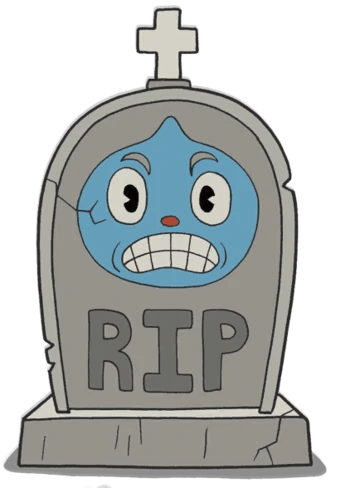
PHASE THREE – GOOPY’S TOMBSTONE: This is one of the best end-of-encounter forms in Cuphead. You’re still following the same basic principle of something moving back and forth, only now, instead of it being lethal to the touch, there’s timed attacks to avoid. Originally, this was going to feature two of the little blue goopies from Forest Follies. Smart move taking them out, as it would have massively thrown-off the difficulty scaling. This is one of the few instances where the team at Studio MDHR got a boss fight absolutely perfect.

FOOD FOR THOUGHT: Apparently, Goopie is the boss that changed the most from the concept phase. In early trailers, you could see Cuphead battling two at once. Other ideas that didn’t make the cut were Goopie using Rock-Paper-Scissors-based attacks, and a closer tribute to the Tyson fight from Punch-Out!! than what remained in the game. The developers had to give up a lot of ideas, but the restraint they showed is something a lot of first timers wouldn’t do. It’s really remarkable.

BOSS #2: The Root Pack in “Botanic Panic”
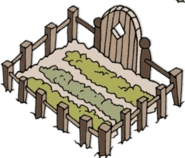
STATED INSPIRATIONS: Woody Woodpecker, The Jungle Book (1967)
IGC LIKES: The perfect introductory boss. The idea of secret phases within boss battles.
IGC DISLIKES: That there’s not more secret phases in Cuphead. Sal and Ollie are kind of forgettable in their designs, especially compared to the ultra-creepy Chauncey the carrot.

Really, this is the first boss in Cuphead, and the team couldn’t have possibly done better. Who says perfection is unobtainable? Okay, so it’s not TOTALLY perfect, as I’ll get into below, but seriously, this is an all-time first (or second) boss. The stated goal was that every phase would train players in an essential aspect of controlling Cuphead. In your typical game, this is done through seasoning the first level with elements. “Hey look, there’s a block with a question mark on it. Perhaps you should jump up and hit it!” It’s game design 101. Then, for bosses, you apply what you learned in the levels in battling them. But, in Cuphead, it’s assumed most players will battle the bosses first. Educating players in the heat of combat is harder than you think. It’s truly astonishing Studio MDHR created a boss that retains just enough of that Cuphead challenge while also functioning perfectly as Cuphead’s instruction manual.

PHASE ONE – SAL SPUDDER: All three Root Pack characters remain stationary, and you simply have to ping at them while dodging their attacks. For Sal, it’s jumping over four projectiles while he attacks (three in simple mode). The last one is always a worm that can be parried. There’s three cycles of increasing velocity, to give players a chance to get a sense of Cuphead’s hangtime and get into a rhythm for how to jump over projectiles. Besides maybe randomizing the order of which projectile can be parried, I can’t think of anything that they could have done better here.

SIMPLY OFF-PUTTING: This portion of the fight is missing if you choose simple mode. Because why would players who need an easier experience need to learn to dodge left and right?

PHASE TWO – OLLIE BULB: From jumping over projectiles to avoiding them by left to right movement. This is also the first example of giving players a tight squeeze to deal with, which will be a common theme throughout the game. I do have a major knock on this fight: the pink teardrops come in too fast to parry, even on Normal mode. I think I successfully did it once in all my attempts. Of course, if you beat Sal too fast or missed one of his worms, this is your last chance to get the three parries you need to get a perfect score.

“What part of this was inspired by the Jungle Book?” The carrot’s eyes. I’m not pulling that out of my ass. The Art of Cuphead book specifically says it was inspired by Kaa the snake. Which technically means it could have also been Hiss from Disney’s Robin Hood as well!

PHASE THREE – CHAUNCEY CHANTENAY: This is one creepy boss. While the other two Root Pack members are kind of forgettable, nobody will ever forget the creepy design of the finale of this encounter. This section is designed to get players used to the idea of multiple different types of projectiles coming at you at the same time AND firing while still moving. It’s really well done and makes for a truly exciting climax to one of the best intro bosses in gaming history. Of course, it could have played out very different. Then, the game was patched and suddenly it could play out very different!

SECRET PHASE THREE – CHAUNCEY CHANTENAY & HORACE RADICHE: Horace was one of the final attacks that was speced-out and deleted before the game went gold, and was so close to complete that Studio MDHR could patch it back in. So they did. If you do not shoot Ollie during his phase, he’ll vanish without crying, essentially skipping that entire phase. Doing this causes Horace Radish to spawn during the finale phase. He’s basically a homing top that you must jump over while also avoiding all of Chauncey’s attacks. It’s not a huge difference, but it makes the fight a more true “sum of all parts” finale.

FOOD FOR THOUGHT (HAH, NO PUN INTENDED!): Even though I’m flipping Cuphead’s ultimate verdict and conceding it’s one of the best video games ever made, indie or otherwise, I have a LOT of things to complain about, hence this comprehensive review being done so I never have to talk about the game again.. until the DLC hits on June 30. But, one aspect of Cuphead I don’t take any major issue with is The Root Pack. My one knock on it: that I think the pink teardrops during Ollie’s phase should have come in at lower speeds to make scoring a parry more reasonable. Otherwise, this is basically the perfect first boss for this kind of game. They nailed it! Maybe I’d make Horace a permanent addition to the third phase since he completes the “educate players” angle of the fight, but I’m happy they patched him in and won’t complain. Hell, the time between the main release and the DLC gives me hope even more deleted content will be re-added to the game. The Root Pack has another deleted member: Beetrice Lutz, who would throw her children at Cuphead. Come on, you gotta put that back in!

This slideshow requires JavaScript.

BOSS #3: Ribby and Croaks in “Clip Joint Calamity”
STATED INSPIRATION: Street Fighter (franchise)
IGC LIKES: Most of the attacks and phases are fine-tuned and well balanced.
IGC DISLIKES: The final phase too heavily factors in RNG luck.

Cuphead changed a lot during its conception, and no fight exemplifies this more. Originally, every boss would have seen Cuphead fight it with different types of attacks. They wisely abandoned this for the sake of uniformity. Had they gone through with that plan, this fight would have been VERY different. Originally, lifebars would drop down on the fight and it would have felt much closer to the series they were paying tribute to with this battle: Street Fighter. Walking away from those plans didn’t hurt Clip Joint Calamity, but other issues cropped up that I can sink my critic teeth into. It’s a memorable fight, but also the first one where I can really get into the meat of the issues that keep Cuphead out of the conversation of “best game ever made.”

This slideshow requires JavaScript.

PHASE ONE – BATTLE TOADS: The two characters alternate fire attacks. Ribby (the shorter, plumper one) shoots Ryu style fireballs, some of which can be parried. Croaks spits a series of fireflies that drift down at you. The fireballs must be avoided (or parried) but the fireflies are easily dispatched with a few bullets. In fact, they have four hit-points no matter which difficulty you play. When you get enough damage, this is one of the bosses where the transition between phases can still hurt you: the pair split apart, and Ribby must be lept over to avoid damage. Pretty basic stuff, nothing too intense.

PHASE TWO – FAN OF FROGS: Croaks turns into a fan and blows you towards Ribby, who claps energy balls that bounce towards you. It’s one of the easier attacks to avoid in Cuphead, The weird thing is, in simple mode (and Expert), the fireball attack from the previous phase also becomes part of this phase. Either way, it’s not too difficult to get the hang of the timing, even when you’re being pushed left by the current from the fan.

This slideshow requires JavaScript.

PHASE THREE – CUPHEAD, YOU IGNORANT SLOT: For the first time in Cuphead, RNG luck overrides player skill. After having to dodge the machine spitting a few coins at you, the handle lowers and can be pulled by performing a parry on it, which starts the reels. The slot machine features three attack waves that are determined by a pull of the handle. The three waves are NOT equally difficult. The more desirable one is getting three snake heads (I thought they were frogs), which creates a series of platforms that must be jumped on. In regular mode, getting the timing down for these is a cinch (in expert difficulty, I kept messing it up). The other two modes are butt-clenching madness. Spin three tigers and the machine spits out a series of platforms that have balls bouncing up and down that must be jumped through. If three bulls are spun, the platforms will float in the middle of the screen with pillars of fire that randomly will go either above or below the platform. Oh, and the sides of all these “chips” are lethal.

FOOD FOR THOUGHT: I get that it’s a slot machine and it’s supposed to be random, but maybe for the sake of difficulty and consistency, they should have gone with the illusion of randomness while rigging the machine so a player experiences every wave. The really weird thing is, when I beat Cuphead the first time, I never got a “desirable” series of chips during the final wave. Then, when playing on Switch for this review, I got a double snake-head, which led to a fast knockout and a perfect score. Even weirder: when I went back to get media of the other waves, I kept getting the snake heads, to the point that I wondered if the Switch version removed other waves. I got a lot of crap from the “git gud” crowd with Cuphead, but it’s telling to me that so many bosses can be beaten by gittin’ lucky instead. For a game defined by extreme difficulty, how tightly designed can it really be when you can have entire runs determined by random chance?

BOSS #4: Hilda Berg in “Threatenin’ Zeppelin”
STATED INSPIRATION: Alex Kidd in Miracle World, Contra: Hard Crops
IGC LIKES: Wonderful introduction to the shmup fights. The RNG factors are well balanced and equally difficult.
IGC DISLIKES: There’s no reason to hold-off on giving players bombs until Inkwell II.

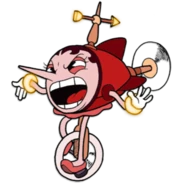
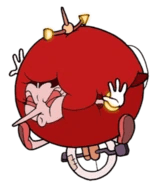
Cuphead including shmup levels was jarring as hell to me at first. It’s one of those genres that I didn’t realize how much I loved when I first reviewed Cuphead. It felt like a party crasher. I later came to realize the shmup levels are the most consistently solid and balanced stages in the game. And also I’m apparently really good at shmups, as I could take these down with the fewest attempts. It all starts with Hilda Berg, whose design came from a power-up in the game Alex Kidd in Miracle World of all things.
This slideshow requires JavaScript.

PHASES ONE, THREE, AND FIVE – BLIMP CHICK: Throughout the fight, tiny Zepplins will fly in and shoot projectiles at you. Blue ones fire single shots, every fourth of which will be a pink bullet you can parry. Green ones shoot four bullets. The zepplins can be shot down easily, but players might be better served avoiding them and their bullets to focus on shooting the boss. Hilda herself will laugh at you, with giant HA bullets flying at a high velocity. She’ll also eventually generate a large tornado at you. When you’ve done enough damage, she’ll launch herself at you, leaving behind a sequence of stars that transitions to the second and fourth phases of the fight.

This slideshow requires JavaScript.

PHASES TWO AND FOUR – WHAT’S YOUR SIGN?: Once Hilda floats through the cloud of stars, she’ll transform into one of three constellations. In simple mode, the order will always be Taurus in the second phase, then Gemini in the fourth. In expert, it will always be Gemini in the second phase, then Sagittarius in the fourth. Weirdly, standard mode is where random chance factors in, with Taurus always being the second phase, but the fourth phase could be either of the other two forms. Remarkably, Gemini and Sagittarius are well balanced, which eliminates the RNG factor during the battle. It’s why I can’t excuse Cuphead when luck and desirability of other random phases factors into other battles: because I know Studio MDHR is capable of balance.

This slideshow requires JavaScript.

PHASE SIX – CURSE OF THE MOON: One of the most scary and imaginative character designs in Cuphead, the giant moon is an unforgettable finale to the first shmup level. It’s also one of those moments where trial-and-error will inevitably factor in. When the face is inside the moon, you’ll have to simply avoid a series of stars that fly across the screen (some of which can be parried). When the face opens up, the space you can work with is cut in half and a parade of UFOs will march across the top of the screen. Keeping yourself in front or behind the lethal beams of the UFOs has a huge learning curve to it. For most players, they’ll make it to this final phase and perish several times before they get it right. It’s a bit frustrating, since this is by far the best portion of the entire battle, and getting there can be a slog after a while.


FOOD FOR THOUGHT: This is one of those stages where I wonder if the developers wouldn’t have been better off creating a separate “checkpoint” mode. As I’ve said in previous reviews, gamers are great at rising to the challenge if that’s what they’re into. I’ve seen people who beat games blindfolded, for God’s sake. But in longer stages like this, where the difficulty escalates to a massive degree during the end sequence, it turns a great game into a bit of a slog as you inch back towards the section that keeps owning you. Yea, we get it: difficulty is the point. But sometimes that backfires and turns something amazing into something tedious. Checkpoints do not hurt Cuphead’s integrity in any fashion. All the lack of them does is gate out lesser skilled players and make it clear: you’re not welcome here. It’s so mean-spirited.

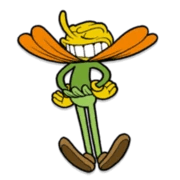
BOSS #5: Cagney Carnation in “Floral Fury”
STATED INSPIRATIONS: Aztec Adventure, Ghostbusters (Genesis), Swing You Sinners! (1930), Flowers and Trees (1932)
IGC LIKES: A perfect finale to Inkwell Isle I and one of the great boss fights in gaming history.
IGC DISLIKES: I’m not a jazz person and I can’t believe THIS is the theme that made it into Smash Bros. Ugh.

One of THE icons of Cuphead, the battle with Cagney Carnation was heavily inspired by several plant-based bosses in gaming history. It’s more than simply the juxtaposition of a cute, wholesome flower that suddenly screams at you and then looks like the most evil thing that ever eviled. It’s a boss that checks every box of the Cuphead experience: crowded, relentless, and maybe just a little too reliant on RNG luck. Unlike a lot of bosses, Cagney really only has two phases. But, the variety of attacks in the first phase makes it one of the more intense battles in all of Cuphead. Hell, in around fifty attempts at beating it on expert mode, I only made it to the second phase twice. Twice! They might have gone a little over-board.

This slideshow requires JavaScript.

PHASE ONE – I’M PRETTY SURE CARNATIONS ARE A DIFFERENT SPECIES: No matter the difficulty, RNG factors heavily into the battle. When he becomes a machine gun that fires seeds into the air, one of the seeds is capable of scoring a parry on. Whether or not you’ll have a safe chance at scoring that parry is total random chance based on where it’ll fall or if other hazards have already spawned that will prevent it. Another luck-based attack is Cagney’s full-screen stretch. If he does this across the bottom lane, you should have a few moments to cleanly, safely plug away bullets without having to move a muscle. It’s still safe even if he chooses the top lane, which requires you to duck below it. But, this attack might not even happen at all. I had several battles where he never fired it once.

This slideshow requires JavaScript.

PHASE TWO – SERIOUSLY, THAT’S CLEARLY NOT A CARNATION: RNG factors into the second phase as well. At the start of this portion of the fight, the bottom channel become deadly, and the fight moves completely to the three floating platforms. Cagney only has two attacks here: spitting projectiles and having spikes emerge from the three platforms. The projectiles are easy enough to avoid, and occasionally one will be pink and thus able to score a parry on. The spikes are problematic. He targets two at a time, and you only have a brief moment to get to the safe platform. Where RNG truly factors in is if you’re already on the correct platform. Especially if you’re using the spread gun and on the front platform. It’s essentially giving players an extended period of not having to do anything. Almost all my most successful runs against Cagney involved the sheer dumb luck of not having to dodge the spikes. For a game that demands players “git gud” it’s stunning how often players are able to walk away saying how lucky they got. But, for all my bitching here, this was seriously one of THE great matches in Cuphead. Bravo, Studio MDHR!

FOOD FOR THOUGHT: This is another boss that went through tons of changes over the course of development. This includes concepts like having all the seeds be parriable. I wish I could try that version of the fight. In fact, Cuphead was demoed several times over the course of its development at trade shows like E3, and I’d love to have access to those early demos. Maybe Studio MDHR should consider doing a collector’s edition of Cuphead that includes all the deleted content in playable form. They’re the developers of a game that has become a source of inspiration for a new generation of developers, and having access to those early builds would be very educational.

Click here for Cuphead: The Definitive Review – Part Two, where I’ll venture into Inkwell Isle II. The overwhelming majority of Cuphead owners never make it past this world. Why is that? I have the answers.

Shadow of the Colossus: Slaying the Test of Time

Most of this is spoiler-free. There’s a spoiler section I marked-off.

I don’t think it’s particularly mind-blowing to call Shadow of the Colossus the greatest video game ever made. It’s been called as much by people much better at this stuff than myself. Having just replayed it for a fourth time, I’m now totally comfortable saying that, yes, Shadow of the Colossus has no peer in gaming. It’s the GOAT: the greatest of all-time. It checks every box. It scratches every itch. Some titles do aspects of gaming better, but no game does so much of everything as well as Shadow of the Colossus. Is it my favorite game? Probably not, as Shadow of the Colossus didn’t tunnel into the pleasure center of my brain quite as much as my replay of Super Mario Odyssey did earlier this year. But, I think what Mario Odyssey accomplished (the ultimate perfecting of 3D mascot platforming) was much less significant than what Shadow of the Colossus has done: absolutely murder the test of time. Don’t get me wrong: I can totally get how someone would not like SOTC at all. A game that boils down to riding around a vast, barren map to fight giants in a series of jumping puzzles is not going to fire everyone up. I’ll even take it a step further: the concept of Shadow of the Colossus sounds boring.

WELL, IT DOES!

The PlayStation 4 re-release includes “filters” that allow you to do things like change the game to a nighttime setting. It’s smoke and mirrors as you’ve really just changed the shading and color palette, but it does undoubtedly make for some epic horse rides.

Take literally any flagship game, remove all enemies and goals and leave only the levels and bosses, and what would you have? Imagine the first Legend of Zelda on the NES. Now, twist the game by giving Link the sword AND the bow with unlimited arrows to start. Now take Hyrule, the exact same map and all nine dungeons, and then remove EVERYTHING from it. All traps. All keys. All enemies. All items. All locked doors but the entrance to Death Mountain. Make it so any place unreachable without items is now reachable via, say, a land-bridge or something. All hidden paths to bosses are also removed and replaced with a direct path, so you’re not warping around the dungeons but rather walking through a series of rooms until you reach the boss chamber. Thus, the only thing left in this new Legend of Zelda are the bosses in front of the rooms with each-Triforce piece. Any bosses that previously needed another weapon now can be beaten by the sword. Arrows can damage them, but the final blow must be struck with the sword. Oh, and the sword beam is also removed. Once you beat a boss and collect the Triforce piece, you’re returned to the starting screen where you got the sword & bow.

Are you picturing all this?

Good. Now, go get all eight Triforce pieces and rescue Princess Zelda from Ganon.

Does this game sound like something that would be fun to do?

In my youth, I never cared for sightseeing. Now that I’m in my 30s, I find myself taking time to just stare at things. I think that’s a big reason why my 4th replay of Shadow of the Colossus felt so grand.

Well, that’s the pitch Shadow of the Colossus makes to players. It sounds terminally boring. It’s Punch-Out if you had to walk around an empty city for five-to-twenty minutes between every fight (that won’t be the only time I compare Shadow of the Colossus to this). I don’t think I’d like Punch-Out if you had to do that. I’d certainly not go back to it just for fun. So, yea, Shadow of the Colossus is a weird pitch to gamers right out of the gate. Not only that, but the pitch comes with expressions and terminology that make it sound like some fart-sniffing art house thing.

“IT’S ABSTRACT!”

“IT’S SYMBOLIC!”

“IT’S MINIMALIST!”

“IT’S OPEN TO INTERPRETATION!”

These are things a lot of people do not like and want no part of. And no, it’s not just jock-sniffing dude-bros who scoff at that type of thing. There’s people who spend their whole lives grinding through Final Fantasy games or Zelda or Skyrim or any other big tentpole release who are simply not interested in “art house” games. Pitching them on the merits of such a title’s gameplay is particularly tough. Trust me. I’ve spent nearly three years now telling anyone who will listen that Gris, an artsy-fartsy indie that’s actually about overcoming grief and is just a touch pretentious about it, is also a truly fantastic platforming experience with rock-solid controls and outstanding level design (well, if you ignore the first level). Some people are just not interested in taking the risk because it looks like and sounds like something that would bore them. In the case of Shadow of the Colossus, it’s not so much the gameplay of fighting the Colossi that sounds boring. It’s how you experience it. The world of the Forbidden Lands is also given no backstory beyond being “cursed” and is filled with temples and glyphs in a language created for the game that means nothing. A lot of people just want a story and a game to go along with it. Remove the mysticism, spooky made-up language, and empty world and you’ve got Cuphead: a boss rush where a deity tells you to go fight larger enemies sold on the merits of its cutting edge graphics that is still never going to appeal as widely as a “mainstream game” but people just have to try it out. Nobody has to try Shadow of the Colossus. If anything, it’s almost unapproachable.

Well, I’m going to try. This is my pitch to those who have been holding out on playing Shadow of the Colossus.

#1: SHADOW OF THE COLOSSUS IS *SO* SCARY

The Forbidden Lands of Shadow of the Colossus are my choice for the greatest world in any video game, with Legend of Zelda: Wind Waker a very distant second. It’s a world that’s so ancient that it’s actually primordial, but NEVER alien.

In “What Makes Horror Horrifying?” author Elizabeth Barrette postulates that horror is dependent on our evolutionary fight-or-flight response. The setting of Shadow of the Colossus assures you’re consistently in that state of mind. It has pitch-perfect timing of when to take the camera away from the player and show off the architecture of the area you just entered and let you know that you’ve arrived in the lair of a Colossus. You’re given a spooky musical cue that’s every bit as beautiful as it is foreboding. By time the beast has appeared, the player will have already been so affected just by the suspense that you’re going to need a moment to gather your wits.. a moment Shadow of the Colossus will rarely give you. It’s something Nemesis from Resident Evil 3 wanted to accomplish but never quite achieved, and yet, a game that nobody would ever call a horror game perfected that sensation to a science.

Shadow of the Colossus will be even more scary for those people with more specific phobias. My irrational fear is of large bodies of water and sea monsters, called THALASSOPHOBIA. Shadow of the Colossus exploits this to perfection with a boss that I dreaded fighting so much I found myself staring at the water for a couple minutes, knowing that a battle would commence as soon as I jumped in. A battle I’d fought three times previous, that had no surprises left to offer. This fight is that scary for me.

It’s a misnomer to say the world of Shadow of the Colossus is totally empty. There’s some scattered wildlife, including lizards, birds, butterflies, etc. Sure, the game is devoid of big game animals (it wouldn’t have killed them to throw a few deer or bears or something into the mix), but the world feels occupied by more than just the Colossi. It creates this eerie unease that feels straight out of Silent Hill. Like any horror game, the first time you play Shadow of the Colossus will always be the most potently spooky. Until the moment the camera is taken from you, you never know when you might be entering the arena of a Colossi. Often, you’re clearly shown the battlefield ahead of time (which is also a clever way of letting players know they didn’t take a wrong turn on their way there), and it’s framed as ominous as possible. In fact, the best music in the game, in my opinion, are always the pieces of music that accompany those cut-aways that show off the lairs. Although the battle rarely begins when you’re not expecting it, it’s often more suspenseful than most games I’ve played that are actually designed to be scary. The gaming embodiment of Alfred Hitchcock’s famous Bomb Theory. You can startle anyone for a quick jump scare, but suspense creates fear that lingers. I don’t know if Shadow of the Colossus is as suspenseful as the commonly held champion of gaming suspense: Silent Hill 2. But, that it’s even up for debate is a truly remarkable achievement for a game in this genre.

In reality, the 6th Colossus is one of the easier battles in the game. Yet, everything that goes into the battle makes it absolutely pants-wetting. The setting is so dark and ominous. The speed at which it moves is a touch faster than any previous Colossi. The camera pulls away to show that it’s closing in on you, which is one of the only times in any game I’ll allow cinematic design over game design. You’ll almost certainly have had a moment where you came inches from being splattered by its club. Again, the battle itself is among the most simple in the game, which is great! It proves it’s not what you do, but how you do it. Shadow of the Colossus is a great roadmap for aspiring developers everywhere.

Without ever once claiming so, Shadow of the Colossus is a legitimate contender of the scariest game ever made. More than once I screamed out-loud when I thought I had distance between me and whatever I was battling, only to see its weapon crash down upon me. Most impressively: none of the scares or tension rely on the story itself. You might find the god Dormin to be creepy, or be unnerved by “hero” Wander’s slow transformation into something other-humanly, but neither of those aspects come even come close to the chilling sensation of just swimming in a lake while a bird-like Colossus is perched in the background.. simply.. watching.. you. Even the one Colossus that doesn’t attack you, a different majestic flying creature that’s actually the largest in the entire game, moves with this ethereal locomotion that is so creepy that you’re certain to get goosebumps.

The second of the two “small” colossi is actually one of the scarier bosses. Instead of Hitchcock, it feels more like Leatherface or Jason Voorhees. It just doesn’t let-up, and the thrill of being chased by it as you desperately seek high ground NEVER cools-off for the entire opening-sequence of what is surprisingly a prolonged battle.

Then, you have the battles themselves. The imagery is often overwhelming and terrifying. This giant thing is lumbering towards you, and you’re so very, very small. If you find yourself directly next to one, you can literally feel the weight of its feet as they lift in preparation to crush you. At their core, action games are based around overwhelming odds, but no game makes you feel out-matched and under-powered like Shadow of the Colossus. Of course, once you figure out how to slay the beast, the opposite is true: you feel powerful and strong. This is accomplished without gaining stronger items, or being told by the game how you’re the hero of destiny. It’s simply a feeling of empowerment that overcomes you. That’s you’ve survived the horror, and it’s more satisfying than any actual survival horror game has ever been for me, let alone any action game.

Wow.

Shout out to the soundtrack. It’s not just the greatest in gaming history, but the greatest soundtrack EVER, period. The closest any movie comes to topping it is the original Star Wars.

#2: SHADOW OF THE COLOSSUS IS *SO* VIOLENT

As a fan and practitioner of violence, I love video game violence. It’s just so much more.. legal. You’d think a game that involves stabbing the majority of your enemies in the head and then watching their life essence spurt out, Kill Bill-style would widely be considered among the most viscerally violent games ever. But nobody talks about how incredibly violent Shadow of the Colossus is. I’ve never been a person who did the whole sitcom-style “Body English” when I play games, where you pantomime the movement of the controller. BUT, when I play Shadow of the Colossus, I’m letting out barbarian-like screams every time I thrust the sword into the craniums of my enemies. I’m not even sure why I’m doing it, except that I’m so immersed that I just instinctively yell. But, I’m not alone. Lots of people have that reaction playing Shadow of the Colossus. It’s so violent that it’s almost primal.

But, violence alone would get boring. Hey look, I love what Mortal Kombat has become. It puts a smile on my face that MK is now so grotesque that it makes even the most hard-assed among us become physically ill. But that’s violence that’s cartoonish. I mean seriously, when Cassie Cage knocks a person’s jaw off and then takes a selfie with it, you half expect Porky Pig to pop up and say THAT’S ALL, FOLKS! (Hey, Warner does own Mortal Kombat, so this might actually happen at some point!) After a while, it’s just kind of silly. I mean seriously, who gives a shit if Johnny Cage turns the corpse of his opponent into a ventriloquist dummy in a game where the non-fatality X-Ray moves would, in fact, kill you in several different ways. Cathartic? Maybe. Pointless? Oh yeah.

I don’t feel bad about killing Colossus #11, AKA this pathetic little thing. Even though it’s the only Colossi that literally cowers in fear away from the player at times. I found myself shouting “FUCK YOU FOR BEING SO SMALL AND DISAPPOINTING!” as I put my sword through its heart. I have a theory that I haven’t heard anywhere else: that Colossi #11 and #14 (the other smaller Colossus) was originally going to be a single battle where you fought both at the same time. Then, one of the many deleted Colossi that went far into development got removed at the last second and they needed to split the two up to keep the battle count at sixteen. My evidence: (1) they’re roughly the same size. (2) They look very similar. (3) The code name for the 14th Colossus was “Cerberus” which is the mythical multi-headed dog. #14 is NOT multi-headed, but maybe it metaphorically would have been if I’m right. The evidence against: (1) It has never come up after all these years despite tons of behind-the-scenes information about SOTC being put out there. If it were true, it sure seems like the type of thing they’d want people to know. (2) There actually was going to be a few other smaller Colossi that also got deleted. I’m still sorta leaning towards this originally being one fight against two Colossi, on the basis that it’s the only boss archetype the game is lacking. EDIT: Well, except fighting a clone of yourself.

In Shadow of the Colossus, the violence is nauseating for different reasons. You’re invading the space of creatures that want nothing to do with you, and you’re systematically ending their lives. Even fans of the game feel unclean when they hunt down what is basically a harmless cross between a flying serpent and a whale, shoot its air-sacks out one at a time, then mount it and begin stabbing it to death. The entire time, this creature never fights back. It has no attack. It’d be like if someone made a realistic whaling simulator, complete with old-timey harpoons. I don’t think I’d want to play that game. If the beasts of Shadow of the Colossus were more life-like, I think it’d have a lot less fans just because of how brutal the act of slaying is. You’re not performing cartoonish fatalities. You’re violently murdering things that have done you no wrong. Since that’s the object of the game, you’d think it’d be a massive turnoff. But, actually, it’s really thought-provoking. The symbolism of Wander being stripped of his humanity as he continues to slay these majestic beasts is among the most powerful metaphors any game has ever had. That image doesn’t work if Shadow of the Colossus isn’t amazingly, breathtakingly violent. And I mean that in a good way. Yet, nobody thinks of it as a violent game, and I think that should be a bigger part of the discussion.

#3: SHADOW OF THE COLOSSUS ISN’T *THAT* UNIQUE OR WEIRD

Some people hear things like “minimalist story” and or “art” and think Shadow of the Colossus is so outside their wheelhouse that they could never get into it. That’s one of the more common complaints I hear. While that might still be true of you no matter what, let me postulate that Shadow of the Colossus is about as old-school-arcadey as any major sword-based action game has been in this century. You could skip every single cut-scene and still appreciate how stunning and rewarding the gameplay is.

Some of the boss fights, majestic as they can be, are downright cliched. “Welp, we’re fighting bosses. Gotta have one or two in the water. Gotta have one or two in the air. Gotta have a giant turtle. Gotta have a giant lizard that walks on walls..” I’m genuinely stunned there’s not one giant crab monster to be found. There would have been a giant spider, but it got deleted.

I’m not the first person to notice that the closest one-to-one analog with SOTC is Nintendo’s Punch-Out!! series. The comparison is much closer than it would seem. You’re a smaller person fighting a series of larger opponents. The entire object of the game is to study your opponent’s patterns and search for an opening to counter-attack. It’s not just a cutesy comparison, either. They really feel like very, very close cousins. The first time you take down any fighter/Colossi, it feels like a major accomplishment. As you get deeper in the game, the opponents become craftier and you have to rethink everything you think you know works. The final fights feature enemies so overwhelmingly destructive and seemingly invincible that you’re left feeling genuinely hopeless, to the point that any progress, even the act of just avoiding being damaged, feels like an accomplishment. While I’m not totally sure taking down the final Colossi in Shadow of the Colossus is as big a “HOLY SHIT, I DID IT!” moment as taking down Mike Tyson/Mr. Dream for the first time (but it’s certainly a bigger moment than beating Nick Bruiser from Super Punch-Out!! or Mr. Sandman from Punch-Out!! on the Wii), that final moment of world-conquering disbelief is almost unique to Shadow of the Colossus/Punch-Out. Not a “hooray, I beat the game!” moment, but rather “I can’t believe I did it!”

And after the game, you open up a time attack mode that eventually opens your eyes to different methods and strategies you’d never even thought of in the heat of those original battles. If Nintendo and Sony ever patch up their differences, I’d love to see a crossover game, where Little Mac scales Colossi and punches them to death. And let Wander stab Super Macho Man in the head with a sword while you’re at it, fellas.

And, as far as minimalism goes, um.. didn’t most of you come from a generation where stories in games were absurdly simple? Giant Turtle Dragon kidnaps princess. Go save princess. Swine Wizard steals triangle and the princess. Seek another triangle so you can save the princess. I kind of love Shadow of the Colossus because it’s not bogged down in plot. It’s not a Final Fantasy or Metal Gear Solid exposition dumpathon. The storytelling of Shadow of the Colossus is so incredibly grounded in classical gaming storytelling that it’s curiously refreshing. After the opening cut-scene, there’s like three extremely short interludes between being given your next assignment of living mountain to slay, and you lose nothing by skipping them. The majority of the story is given at the start and during the nearly half-hour ending sequence (that includes the post-game credits). As a storyteller, Shadow of the Colossus is practically 8-bit.

#4: THE STORY OF SHADOW OF THE COLOSSUS IS *NOT* OPEN TO INTERPRETATION (UNLESS YOU REALLY NEED IT TO BE FOR SOME WEIRD REASON)

**SPOILER WARNING**

This is probably going to be the most controversial point, but the story of Shadow of the Colossus is not as abstract as people make it out to be. While some aspects of character backgrounds aren’t spelled out, the plot, the morals, and especially the ending really aren’t open to interpretation. You’ll find people digging so much deeper than they need to, maybe because they don’t like the implications of the ending. But what it all means couldn’t be more clear:

  • Wander had some form of love for Mono. Their relationship or background together is inconsequential. Shadow of the Colossus never says they’re an item. He could be some nobody who was creeping on her and being rejected by her right up until she died. Or he could be her boyfriend. Or he could be her brother and they’re doing the Targaryen Mambo for all we know. It doesn’t matter. What matters is he’s a character so overwhelmed with grief that it makes him a useful idiot for the fallen god Dormin.
  • Wander explicitly knows everything he is doing is wrong, immoral, and in defiance of the laws of man and nature. Dormin even laughs at how brazen Wander is in his wish to restore Mono. And, during the ending, Lord Emon, who is some kind of leader in Wander’s society, says “so it was you after all” (who took the sword), which spells out as clear as possible that Wander had been warned against all of this. Yes, Emon says Wander has no idea what he’s done, but he still was strictly forbidden from doing anything to begin with.
  • Mono was sacrificed for a “cursed future.” Some especially dense people take “sacrificed” to mean any number of things that are basically the opposite of, you know, being sacrificed! “She may have been sick! That’s kind of like being cursed!” Yea. Uh huh. In a game with a cursed land, and a cursed God, and a hero who becomes progressively more monstrous in appearance.. CURSED if you will.. the girl might have been put to death because she caught chicken pox or something. Christ, some people are so thick that it hurts.
  • Dormin speaks with both a male and female voice throughout the game, until it takes control of Wander’s body. At this point, only the male voice speaks. The female voice is never heard again.
  • This one is the ballgame for interpretation in my opinion: when Mono wakes up, she’s not surprised to be alive, nor is she frightened, scared, or disoriented. She’s not surprised to see Agro the horse. She’s not surprised by her surroundings, and this is a game where the reactions to everything are made explicit. Even characters who show up for like five minutes during the ending are able to emote at what they see. This is called attention to specifically: people react to things in Shadow of the Colossus! Mono coming back from the dead in a strange place she’s never been to after being killed by her own people invokes absolutely no reaction. Weird that.

Yea, yea, the ending originally was going to have her touch the horse and have all the memories of Wander’s battles with the Colossi implanted into her.. which makes no goddamn sense since the horse wasn’t there for eleven of the sixteen fights, but whatever. Deleted scenes aren’t canon, and if you want proof, why are there only sixteen broken idols instead of twenty-six, since there’s at least ten deleted Colossi.

  • The only part of the Shrine of Worship she glances at is the hole in the ceiling that Dormin communicated to Wander through.
  • She’s really not surprised to find a goddamned horned baby in the well. She calmly walks over to it and picks up the unholy abomination, barely even examines it, and continues up to the secret garden. I think any rational person would make the surprised Pikachu face for at least a second or two. Nope, it’s almost like she knew the baby would be there.
  • Her and Agro then calmly walk up the ramp around the well and through a door that was inaccessible to the player-controlled Wander, then scale another ramp and enter a peaceful garden that provides plenty of food and friendly, delicious wildlife to last a lifetime. None of this is a surprise at all to her. She walks in like she owns the joint. Which she does, because it’s her shrine made to worship her.

I’m poo-pooing attempts at fan theories that fly in the face of the evidence you’re given, BUT, there’s for sure lots of symbolism in Shadow of the Colossus. Agro’s forehead has a mark that’s a perfect outline of the sigil that Wander wears on his cape, the same sigil that is the weak point of the Colossi. And lots of little details, like how when the statues blow up after each Colossus is defeated, their heads always remain perfectly intact, perhaps symbolizing how futile your efforts really are. In the words of a critic much better than me, you might not have noticed these things.. but your brain did.

So, yea, that’s not Mono anymore. It’s Dormin, or at least the feminine side of Dormin, holding the first horned child in the line that will eventually lead to the events of Ico. Now, whether or not she’s also the evil queen at the end of Ico is left open to the imagination. Well, no, it’s really not. Seriously, how is this even a debate?

“Wow, there’s a baby with horns now, and that’s it, the game is over. I wonder if this is somehow connected to the director’s only prior game, Ico? You know, the one with the boy named Ico who had horns on his head? Horns that are in the exact same position, coming out the side of the head, as the horns on this baby? And that game had an immortal evil queen who is basically a shadow by the point you fight her.. CURSED if you will.. and if that’s true that means this is a prequel, which would explain the CURSED FUTURE prophecy that was the thing that kicked off the plot of the entire game. Oh, and she had shadows for minions and is practically made of shadows herself and there were shadows in this game that were controlled by Dormin at the start of the game and shadows that were surrounding Wander at the end of this game and he becomes a giant shadow and the giant shadow identifies itself as Dormin but only using the male voice when it previously spoke with a male and female voice at the same time. COULD IT BE A PREQUEL TO ICO? I need a few hours to wonder if there’s some kind of connection or if this is a separate universe, and I need that long because I’m dimwitted.

Nah, I have to be open to the possibility that there might not be any connection between this game and the only other game that the same director did even though a baby with horns is an incredibly specific thing to visually end the game on, especially when it never factored into the entire story leading up to the ending sequence, where Wander now also has horns on his head that are called specific attention to, meaning the entire point of the fucking story I was just playing through was the birth of a horned baby in this game by a director who only had one previous game and that game was about a child with goddamned horns on his head. The director had literally infinite options of what Dormin/Wander being sucked into the well could leave behind, and the director’s choice was to leave a baby in the well with horns just like the hero of his one and only previous game to be the ending.. the whole point everything was leading up to.. of his second game. I’m an incredibly stupid person and also slow but I desperately need people to think I’m more clever than I am. I needed time to think really hard in my thinkin’ chair, and after careful consideration, I’ve decided it could be a coincidence and it’s all open to interpretation, because I’m as thick as a concrete milkshake. Derpdederpderp.”

Christ. This is how people can be presented with mountains of evidence on the moon landing and still believe it was a hoax. I can’t help but laugh that an attempt at throwing fans of Ico a bone by making a game that is so clearly a prequel didn’t work because fans of Ico have their interpreter heads so far up their interpreter asses that they feel they have to interpret differently the very thing they clamored so much. One of those situations where people shot the moon and became so invested in the idea of symbolism and “minimalism” that they became stupid for it. It’s actually hilarious!

**END OF SPOILERS**

MUST GO FASTER!!

Where else does all this “open to interpretation” shit come from? Well, I have a theory. I honestly think it’s because some really misguided people have heard that “all art is open to interpretation.” Shadow of the Colossus is the follow-up to Ico, a game that had a lot less story than Shadow of the Colossus. THAT is a game that actually does require a lot of filling-in-the-gaps via head-canon, and it’s also a game that people said was art house. Then comes the director’s next game, where enough specific information was given to players that a clear story with a very clear ending that goes far beyond a winking reference is released, but it’s the same art style and the same “less is more” approach to development. So, it’s another game that’s “art house” and since these window-lickers read somewhere once that “art is open to interpretation” they think they need to “interpret” the meaning of the story when it’s blasted right in their witless faces: the director had made only two games, and both had a very uniquely-specific visual. Because director Fumito Ueda didn’t put a giant neon arrow with the words DO YOU GET IT? at the end, people label it “open to interpretation.” And since “all art is open to interpretation” and they desperately need to be able to call Shadow of the Colossus, first and foremost, “art”, if it’s not open to interpretation, why, that must mean it’s not really art, right?

If a game needs to be “art” to be special, I hate to break this to the “open to interpretation” crowd, but Shadow of the Colossus is fucked. Why? Because ALL VIDEO GAMES ARE ART! Even the ones you don’t like. Shadow of the Colossus might be damn beautiful to look at, but it’s hardly unique. Seriously, there’s lots of great looking games. There’s lots of games with unique graphical styles. Having little dialog and most of the story unfold visually instead of with words is not something unique about it. It’s perfectly okay to say Shadow of the Colossus is art. It certainly is. But, its greatness is in what it accomplishes, not something as superficially shallow as “it’s art!”

I interpret this as a prequel to Chibi Robo. Seriously, this boss looks like the malformed ancestor of Chibi-Robo. CAN’T BE UNSEEN! YOU’RE WELCOME!

#5: I WAS WRONG ABOUT SHADOW OF THE COLOSSUS. SO VERY, *VERY* WRONG

From the time I first finished Shadow of the Colossus at the age of 16, I firmly believed the game had nothing left to offer me. I’ve never been one of those people who replays games endlessly. In fact, until recently, I never replayed linear games at all. Scoring-driven arcade type stuff? Sure. Games based around levels and plot and surprises? I never saw the point. Games aren’t the same as movies. They’re a time commitment that you have to pay attention to. In 2012, on this very blog, I named Shadow of the Colossus one of my ten favorite games ever, while also noting I wouldn’t ever play it again. This was a couple years after the PS3 re-release that came bundled with Ico. I was 23-years-old when I wrote that and the idea that I would ever become a nostalgic-type was unfathomable to me then. In the nine years since I wrote that, I’ve replayed Shadow of the Colossus twice. We all make liars out of our younger selves, don’t we?

The me that existed in 2010 would never believe the me of 2021 would begin playing fifth run through Shadow of the Colossus immediately after finishing my fourth run, but that’s what I’ve been doing all week.

But, it was a safe bet at the time. My second play-through of Shadow of the Colossus lacked the elements that made it so memorable. The sense of dread when I entered new lairs. The sense of wonder when I’d see a new Colossus for the first time (or, in the case of the two small-fry Colossi, seething disappointment). The sense of accomplishment when I figured out how to slay each one. Replacing the sense of awe was a magnifying glass focused on the many, many problems Shadow of the Colossus has. The controls, no matter what scheme you use, are unintuitive and often frustrating. The AI for horsey Agro leaves a lot to be desired, especially for how much she factors into a couple of the battles. Colossi battles can be less epic and more an exercise in frustration in how much they shake you off. And finally, once you no longer have any surprises left from the appearances of the Colossi, some of them just plain suck. Or, if not full-on suckage, they’re not “epic enough.” Like, the gecko Colossi, Kuromori, feels like it’d be the boss in the Zelda dungeon where you get the bow & arrow from the big chest. It wasn’t that the game wasn’t fun anymore, but rather the best thing it had to offer, the joy of discovery, was gone. My 2018 replaying of the PlayStation 4 remaster seemed to reaffirm that: still great, but the thrill was gone.

The first time I played Shadow of the Colossus, I was absolutely terrified to swim from the shore to the ramp of the third boss. That sensation is never coming back.. unless they do a proper sequel, or a remake that adds all the deleted bosses they wanted. Originally, there were going to be 48 Colossi, which got whittled down over and over until there were sixteen. I’m hoping the PS4 port is the final one that doesn’t add deleted content back into the game.

Then, something weird happened: I got an itch to play Shadow of the Colossus following my review of the dumpster fire that was Drizzlepath: Deja Vu. My Dad and kid sister had played Shadow together earlier this year, without any guidance or hints from me, and I got to see that sense of discovery and splendor in someone else. It was kind of magical to see. Of course, that could never happen to me again. Not with this game. But, when I started playing it, this time with the mindset of “I know what to expect, I’ve been down this path before, so this is just a visit to an old friend”, I found myself once again dazzled. That incredible music. Those awe-inspiring vistas. That eeriness of the architecture. It ALL got me again. Even the sense of dread when I found myself ready to jump in a lake that I knew had a sea monster in it, or the spectacle of Colossi who can’t even fit on screen no matter how much distance you get from them. It got me. It got me good.

It felt like I’d come home.

No, the fear factor will never be as strong as it was before. Hell, I can even jump in the lakes with the sea monster Colossi now without taking a few minutes to shit my pants first. Colossus #15, pictured here, was once a battle so overwhelming that it took me over an hour to figure out. Now, I can take this thing down in a few minutes without breaking a sweat. And yet, I’m still having fun. That means something.

And so it was, at long last, that I discovered that the greatness in Shadow of the Colossus isn’t a one-and-done experience. I came to terms with how the controls, far from perfect, nonetheless allowed the job to be done. I accepted that a horse wouldn’t exactly be a cunning strategist in the heat of battle. I allowed myself to forgive the 11th Colossi for being such a massive disappointment, mostly because I got to enjoy the act of stabbing it right through its disappointing little heart. Sure, no replay will ever top that first time you finally scaled the sixteenth colossus and gave it the old ancient sword lobotomy. But.. what game is that true of? I’ve thought a lot about that this week, and I’m kind of miffed at myself. I was calling out Shadow of the Colossus specifically for a thing every game is actually guilty of. What I blamed it for doing in 2010 I’d never blame any game for today. I guess that’s part of growing-up. In fact, Shadow of the Colossus, even if you never scratch far past the surface, withstands the test of time better than almost any game of its kind out there. It’s really something special.

“Uh, hey Dormin, she’s starting to have a little funky smell about her. Could you maybe stop the rigor mortis from setting in? While we’re on the subject, she’s not going to try to eat my brains when she comes back from the dead, right? RIGHT? Dormin? Why are you snickering, Dormin?”

Best of all, if you want it to be deeper, it can be. That’s where the true greatness of Shadow of the Colossus lies: it’s a fill-in-the-blank game. It’s whatever you need it to be. Seriously, it does everything short of Colossi Basketball. If you want intrigue, mystery, and mythology, it’s all here. A truly chilling horror experience? Shadow of the Colossus certainly qualifies. A sword and archery adventure for the ages? Yep, that too. A fuck-around sandbox with tons of stuff to do and see? Actually, yea, and in fact it does that even better than I figured. Do you like geocaching? Do you like hunting games? Do you like treasure hunts? The extra features (white-tailed lizards, fruit, and the new-to-the-PS4-version “enlightenment” coins) cover ALL those too! Shadow of the Colossus is a white knuckle adventure AND a resourceful action-puzzler. Or do you want arcade-like challenges within a specific time limit? Yea, the time attack covers you there. All of this in a game that’s both decidedly modern while also feeling remarkable retro in how it’s framed. It’s this incredible series of juxtapositions, all in a game that nobody in human history has ever defended the rough control scheme of. Shadow of the Colossus SHOULD be boring. It SHOULD have aged badly. It should not be incredible after sixteen years.

Instead, it’s the greatest of all-time. At least that’s my interpretation of it.

Drizzlepath: Deja Vu (Review)

Drizzlepath: Deja Vu is the new champion of awful. The absolute worst game I’ve ever played in my entire life. It’s been a while since I reviewed anything that left me with nothing positive to say. It’s been so long that I forgot what that feels like. I’m confused. I’m sort of angry. I’m checking to make sure I didn’t have a psychotic episode and imagine the game. I pinched myself. I pinched others. I sawed off my pinky toe.. actually that one was just for fun. But really, this was such a waste of time. Not even that much time either. It takes well under an hour to finish Drizzlepath: Deja Vu, but it feels longer. It’s unreal how bad this game is. It’s so pretentious and unlikable in every way that you’d swear it’s deliberate. But, at least I can try to turn this into a positive and get my thoughts out on how, yes, Walking Simulators can be fantastic. You know, with actual effort.

I envy that ram, for it knows not the pain of playing Drizzlepath.

The insane thing is, this is the 4th game in a series. I’d not known that if my readers hadn’t alerted me. You’d think after four games, they’d know what they’re doing. The game starts with you being dropped in water, at which point, you walk in a relatively straight line until you have to double back a bit and turn a different direction. Then something kills you. Then you start at a different scene, and five minutes or so later you’re given one final thought on the meaning of life, and the game ends. There’s no action button and almost no interactive elements besides tiny visual gags that set-off the main hook of the game: “deep” philosophical commentary that comes across like you’re being stalked by a 14-year-old who actually knows dick shit but fancies themselves to be “worldly” and “enlightened.” On Switch, the commentary sounds like it’s coming through a microphone purchased at a dollar store, which tracks with everything else about the port. On other platforms, Drizzlepath: Deja Vu has one thing going for it: it’s nice looking. On Switch? It looks like a Wii game, and not even a good one. The audio and visuals are some of the worst I’ve seen. Here’s a pivotal scene from the Steam version:

ss_eba39d35510bb154067d22109decf9bb7da9ea9f.1920x1080

And as close as I could get to the same scene on Switch:

THAT is fucking embarrassing.

Now, normally I don’t give two squirts about presentation because gameplay is king, but with Drizzlepath: Deja Vu, that’s all it could potentially have going for it. There’s no gameplay! You walk down a path that’s walled-off. I managed to kill myself once by walking off a narrow walkway, but otherwise, there’s no puzzles or truly interactive elements. The full-of-itself commentary will play if you walk past certain moments. Like you might see a cabin and a shadowy figure standing in the door of it, and then that person slams the door before you get close. Early on, a character runs away from you. There’s animals, some of whom run from you, and others just sort of stand around. Sometimes a bird will fly overhead and the camera will auto-pan up to highlight them. Finally, a demon rushes you and the screen goes black before you begin a brief final sequence. But you don’t do anything with any of those things. You just observe and listen to the most droning commentary I’ve heard as IGC. Everything you need to know can be summed up by the fact that, instead of an action button, there’s a button that walks in a straight line for you. Yes, they actually added cruise control to a game!

The giant archer in the background has no connection to any other visuals or the glorified fortune-cookie commentary. Apparently Drizzlepath: Deja Vu is the 4th game in the series, and according to the Steam store page, it features nods to the previous three games in the franchise. Who knows if this or the other “WTF?” moments are those nods. They’re just random, confusing shit that show up and do nothing. What a truly unlikable game.

Ideally, a walking simulator makes the world compelling and interesting, or gives you some overarching point to it all. After all, people walk to GO PLACES and DO THINGS, so if you’re making a game that removes the entire reason we, as a species, walk, you’re just being lazy. It’s so unimaginative to just have you walk and “appreciate visuals” while hiding behind the pretense that it’s “okay, because it’s supposed to be relaxing.” Yea, but don’t we play games to relax in general? Isn’t that our escape from the real world, however you define it? If I want to veg out, I don’t just stare at a screen saver. I throw on Tetris, or I’ll even pop in Dead Cells for a run or two. But, you can make a breezy, low-thrills walking simulator WHILE STILL HAVING SHIT TO DO IN IT! Look at The Vanishing of Ethan Carter. It’s 99% walking, but at least you have destinations and stuff to do at those places. For those developers who make games like this, that really are just “hey, look at this stuff”,  be honest: you intended to do more and just can’t be bothered. It’s okay. HEY, listen.. it’s okay. Shhhhhh. I’m lazy too.

This burger embryo basically ignores your existence. At one point, there was a deer (I think it was a deer) that ran away from me, which is the closest any of the wildlife comes to actually interacting with you.

A great walking simulator is not just a nature hike that’s occasionally (in the case of DP-DV, rarely) interrupted by weird things photo-bombing the scenery. You’re trying to create the illusion of freedom, so as to immerse the person in the world you’ve created. If you don’t have immersion, you don’t have shit. But, right at the start of Drizzlepath: Deja Vu, the illusion is broken when you encounter a look-out tower with an open door, but you can’t actually go up inside it because there’s a platform seven inches off the ground that you can’t step up on. I tried, and I tried, and I tried. I kept checking and rechecking the control menu to make sure I didn’t miss a jump or action button. I didn’t. Nope, it’s just something you can’t enter. This is it:

Now, being the thorough person I am, I checked to make sure I understood how walking works, just in case I’ve been wrong all these years. Experts agreed with me that, indeed, it involves lifting one leg and moving it forward before planting the foot attached to the bottom of the leg somewhere in front of you, so as to create a forward motion before lifting-up the other leg and also moving it forward, and the process repeats from there. This is how walking works, and it’s dependent on picking your feet up and off the ground. If you don’t pick your feet up, that’s a different thing entirely, with a completely different name. Sometimes it’s called shuffling your feet. Now, in this WALKING SIMULATOR, you are apparently not moving your legs up off the ground, because I could not enter this tower. The gate for the tower is a platform that’s barely elevated above the surface you’re standing on. So, what is being simulated in Drizzlepath: Deja Vu? Because it’s sure as hell not walking!

I want to do a satire of this game where I question how many tampons you’d need to clean up the blood rain. By the way, while this seems like it might be a cool visual, on Switch? Yea, not so much. Click here to see what it looked like when I played it. Warning: cringe-inducing deep commentary about the rat race included.

With no point, no action, and not even gorgeous visuals in the port I played, the only thing a “game” like this could have going for it is immersion. But that tower and that tiny step that you can’t take immediately took a torch to any potential I had to be immersed. From there out, it was just walking forward, occasionally being confused when random shit like miniature UFO balls show up, and then being left dumbstruck by the philosophical ramblings that are so arrogant and pretentious that they made me angry. The Nintendo store page says “you’ll take the role of a nameless man climbing towards a mountaintop in search of answers. Witness events as you explore, each gradually adding to the larger existential narrative..”

Here’s some examples of this, and you might want to set some easy listening in the background to soften your soul in preparation to receive this deep wisdom. Ready? Here we go..

“We may choose to see the world in black and white. Yet, it is anything but!“

Mind. Blown! You’re so right!

“All live and die in cages of our own design!“

That is some deep thinking, man! You must have access to the GOOD weed to put that so elegantly!

“They say up to 60% of the human body is composed of water. Perhaps this is what draws us so frequently in its direction!“

Dude…………….. DUDE! Duuuuude. Dude.

This has been Deep Thoughts with Jack Handey!

This whole thing is supposed to be “surreal or ominous” according to the Switch store page. It really just comes across like a student film by the kid in the class everyone else hopes they don’t get partnered with.

Actually, those are just the opening parts of these long-winded diatribes that are the most completely meaningless philosophical musings I’ve heard in any game. There’s no deeper meaning to be gleamed from this crap. It’s the most base and shallow philosophy. Someone who thinks they’re a free-thinker, man, but really just regurgitates stuff they’ve heard that they know is wise, even if they don’t totally understand it. With no context and little, if any, over-arching tie to the actual in-game happenings, it really just comes across as someone who thinks they’re smarter than you talking down to you.

In reality, Drizzlepath: Deja Vu completely betrays the concept that the game is about exploring existentialism. I’m going to guess they don’t even get what that should be about. If the developer understood it at all, the game would challenge cookie-cutter philosophy instead of just blankly stating it. Instead of the commentary reminding people the world isn’t black and white, existentialism would flip the script. Any well-adjusted adult knows the world is shades of grey, and existentialism would force you to say “am I totally sure about that. Oh God, WHAT IF I’M WRONG?” It’s about reflection and questioning, not reinforcing. But, who needs that shit? Just spew puddle-deep thoughts that make you think you sound smart, package it in the most lazy game imaginable, and put it on everyone else to find meaning in a product you couldn’t even be bothered to create meaning for. The only thing deep about Drizzlepath: Deja Vu is how full of shit it is.

Drizzlepath: Deja Vu was developed by Tonguç Bodur
Point of Sale: Nintendo Switch, Steam, PlayStation 4/5, Xbox

$5.59 (normally $6.99) can spit deeper than this is the making of this review.


Worse Than Death (Review)

I’m not a horror person in general. I don’t watch scary movies. I don’t play scary games. I’ve never locked myself in a bathroom and chanted BLOODY MARY. I’ve never bungee jumped. I know people say “that’s not horror.” WHY ISN’T IT? You’re tying a rope around your feet and throwing yourself off a tall structure. If the point is to be scary, isn’t that horror? If you want an extreme sport, go play hockey using samurai swords and a puck that’s on fire. Bungee jumping is horror: a simulation of something that should kill you, only you walk away without the dying part. And it’s not for me. None of it is. Maybe I was traumatized by walking past those creepy-ass Scary Stories to Tell in the Dark covers in book stores as a child, but I just never got into the genre.

FFJtY9uUUAAJXh-

Worse Than Death mixes comic-style art with neo-retro pixel art. It’s a bit jarring. I never really felt like either style was specifically in service to the game. It’s just how it looks. That’s fine, I guess. I normally hate it, but I’ll let it slide this time.

There’s always exceptions, but it’s certainly not something I seek out or get excited about at all. But, as Indie Gamer Chick, I feel it’s important to wet my whistle in as many areas of gaming as possible. I’ve actually bought tons of indie horror titles over the years. Most of them I don’t even remember the names of, let alone ever get around to playing. In those rare instances where I do, they have to live on their gameplay or storytelling merits, and most are utterly forgettable. I have a hunch I probably won’t forget Worse Than Death, but for the wrong reasons. It’s one of those games where you think you get the twist ahead of time, and then when you realize you’re wrong and the game goes in a completely off-its-nut direction, you can’t help but laugh.

The inspection screens always use the comic book art style. I suppose that was out of necessity, because these screens would be incomprehensible pixelated vomit puddles with the large-dot, faceless characters. Still, it makes me wonder if the whole game should have been done like this. It’s perfectly good comic book artwork. I’d buy a graphic novel by this artist.

In Worse Than Death, a pair of besties arrive at their ten year high school reunion. You’re Holly, and you’re trying to convince your BFF, a Fonz-lookalike named Flynn (I typed THE Flynn, which he should totally roll with), to attend the reunion party. He doesn’t want to because everyone is a bit pissed that he wrapped his car around a tree and killed the their friend, Grace. Yea, that’s just the sort of thing people hate. I don’t even get why you’d bother to show up if you’re a known pariah. Like, these things ARE optional, you know? I’m not exactly an expert on high school politics or dynamics. I was home-schooled. I kind of wish I hadn’t been. I would have gone to school with future NBA star Jeremy Lin if I had attended, and he would have no doubt fallen in love with me. I shit you not, I could be Mrs. Lin right now! Well, actually, probably not, as the minute he signed with the Houston Rockets would have been the moment I’d of filed for divorce. Anyway, among the things I do know about high school is that class reunions aren’t legally binding. If two people didn’t want to go, I can’t imagine why they would. “So the plot can happen” is basically the answer, though there is a kinda, sorta unseen force that seems to have pulled them there, maybe?

Thankfully, the developer didn’t skimp on sound design. Eerie songs and spooky sound effects play throughout Worse Than Death. Channel your inner SNES fandom and PLAY IT LOUD!

Anyway, supernatural shit starts happening and bodies start piling-up, as bodies tend to do. I kinda figured this was going to be the “everyone is already dead and this is purgatory and/or hell” trope. It’s not, and which is the only spoiler I’m going to do. I’ll just say that the plot goes so far off the rails that you question if it ever belonged on the rails in the first place. By the final third of the game, and especially the ending, the story is absolute bat shit on a stick, and not necessarily in a good way. The more that was revealed, the less tense the atmosphere got, which made the jump scares less effective and everyone’s motives less consequential. People keep dying, but it never feels like it matters. It’s supposed to be about secrets and the damage they do, but the back stories are kept too vague, to the point that the destructiveness of those secrets feels somewhere off in the background. By the end game, Worse Than Death had long since ceased being tense or frightening and had just become silly. I went from totally on the edge of my seat to giggling at what a train wreck the whole thing had become.

Of the three hours and change we spent playing this, probably twenty or so minutes was spent trying to figure this fucking thing out. My sister, Angela, finally got it after she took a bathroom break that mysteriously required her to take her tablet and ask what the name of the game was again. Funny how that worked out. This “puzzle” was clunky as all fuck and probably should have been explained better.

So, I must have hated it right? Well.. no. While I feel Worse Than Death ultimately failed to deliver on the promise the opening chapters had, to the point that the end game felt like it was satirizing its own story by time the end credits roll, I still never lost interest in seeing where this was all going. It helps that the writing is razor-sharp throughout. Developer Benjamin Rivers clearly has a gift for making compelling characters and creating dialog that feels almost always authentic. Some of the tropes, like the school bitch or the aggressive bully, feel forced and unnatural. But the relationship between Holly and Flynn feels totally real and affectionate, with the slightest hint of apprehension (which, by the way, the end-game makes sense of with the only aspect of the story where the payoff DID work, and there’s even an after-the-credits gag that put a smile on my face). Maybe the plot is completely off its rocker, but the characters made me and my entire family stick it out for the full three hours or so of gameplay. That was nice.

Worse Than Death’s #1 survival mechanic is waiting in the background while specters walk back and forth, a mechanic that loses its zing a bit when you’re often straight-up told you “feel cold” when they’re around. Plus, a lot of levels have places you can hide but no ghosts, which sort of spoils that later chapters will have the ghosts appear in those rooms.

Well.. maybe gameplay is too strong a word. In fact, you don’t encounter your first puzzle element until the second chapter of the game, and that element is simply finding a code for a door lock. Mostly, the game consists of story bits, exploring relatively small areas for clues, and finding keys or passcodes to open doors. There’s a handful of almost-Escape Room-like puzzles, but don’t buy this game for the problem-solving elements as they’re very basic overall. The survival-horror part of the game is handled better. You’re given not-so-subtle warnings when a danger element is approaching and must either hide in the background or make a run for it. These encounters are constant, but I never actually died from them. There were moments where I got particularly bold (IE impatient) and legged it, only to see a ghost was right there, but still managed to live. It never completely stops being tense, but as a horror experience, Worse Than Death was a lot better when it relied on atmosphere and jump scares. The game might have been better served removing all the hiding stuff completely.

I struggled with the ultimate verdict on Worse Than Death more than most games. To its credit, I was never bored playing it, except with the radio puzzle where we had it on the right channel but didn’t realize we apparently had to flip the switch up and down, and one brief spot where we got lost late in the game that was actually on me. Otherwise, the writing is always compelling. The characters are realistic enough to grow attached to. It does mistake “startle” for “scare” far too much, but what survival horror game doesn’t? It’s so much better when you’re walking by a mirror only to see a shadowy figure run across the reflection. THAT’S the type of horror it does best, and should have stuck to it. After the first hour, I would have bet the farm I was going to award Worse Than Death my Seal of Approval on the characters and atmosphere alone. I mean, yea, it’s weird that the character has to describe the details of seeing a dead body that’s hanging from the ceiling (“OH GOD, HER EYES JUST KEEP STARING OUT!”) because the chosen graphical style isn’t very good at showing off small details, but it’s still always eerie.

That’s a dog? Was its cause of death “infection by The Thing?”

But, that damn direction it took. I sat at my keyboard for ten minutes looking for the right words, and all I could do was make a “mmmmph” sound. I was so ready to feel an uneasy dread going into the finale, and instead I was just giggling by the end. Even worse, I was doing so at the game and not with it, because the ending is so sincere that it makes my heart hurt that it didn’t work for me. A bad ending normally doesn’t sink a video game, but in the case of Worse Than Death, it absolutely needed an incredible payoff. A mystery killer is great! Worse Than Death felt almost like I Know What You Did Last Summer, easily the most underrated horror movie that came out in the wake of Scream. Even if the game did silly things like instant-cure headache medicine (yea, because that’s how pills works, right!) or ghosts that come dangerously close to feeling Scooby-Doo like. I could forgive all that, because it sure seemed like everything was building to a great ending. Then the ending happened, and it sucked, and it retroactively made everything before it feel like a waste of time. It’s so jaw-droppingly whackadoodle that, after getting over the initial shock, we all just started laughing. It was such gloriously awful shit.

So, I can’t really recommend Worse Than Death. Granted, I’m one of the last people who anyone should go to for advice on which horror games to purchase. But, if you’re a non-fan like me, I feel safe in saying that Worse Than Death is not going to be an exception. Either way, I’m totally going to check out other games by Benjamin Rivers. No question he has a gift for dialog and atmosphere. Paying it off? Well.. to be determined. What about all the successful jump scares in the game, you ask? So what? I can do that too. Give me a pack of balloons and a thumbtack and I can startle my family every time with minimum effort, but that hardly makes me Stephen King.

Worse Than Death was developed by Benjamin Rivers
Point of Sale: Nintendo Switch, PlayStation 4, Xbox One, Steam

$1.99 (normally $9.99) wasn’t really worse than death in the making of this review.

Angry Video Game Nerd 1 & 2 Deluxe (Review)

I’ve never been the biggest Angry Video Game Nerd fan. It’s nothing personal or anything. It’s one of those YouTube shows that caters to people born before me who also realized that some games suck (“wait, I thought it was just me who hated Back to the Future on the NES!”) who also never grew out of singing the Diarrhea Song (“When you’re sliding into first and you feel a sudden burst..”). Which is not to say I’ve never found AVGN funny. Just mostly unfunny. He cusses a lot and makes poop jokes. Which, yea, I do that too, but at least I try to be clever about it. He just strings them together like a third grader filling in every blank in his Mad Libs book with the word “shit.” The majority of AVGN bits and jokes seem to have never evolved past the idea that fecal matter is the single most hilarious thing ever. It’s funny because it’s poop, and poop is funny all by itself. It’s not for me. I’m more of a fan of crotch shots and casual murder, as long as effort is put into both. And murder by crotch shot? It’s why I can’t play as Cassie Cage in Mortal Kombat XI unless I’m prepared to spend the next hour getting stains out of the couch.

Oh, and diarrhea. The Angry Video Game Nerd has a HUGE fascination with diarrhea. Also known as that thing that kills millions of people every year, especially children. You know, as Indie Gamer Chick, I only pretend to be a psychopath. If you think diarrhea is funny, you might actually be one. Seriously, who snickers at the idea of shitting yourself to death? I can’t believe I, of all people, am saying this, but hey James Rolfe and crew: grow the fuck up. How about a good faith effort towards removing that gag from your show, and maybe kick a few bucks to Doctors Without Borders? I’ll do it too, just to show there’s no hard feelings. I just don’t find that particular running gag to be funny. It’s the drizzling shits. Hopefully it’ll be gone by time #3 comes out.

Really, the Nerd’s best bits are the ones that have a set-up and pay off, like actually landing the plane in Top Gun using the Power Glove. If the show could pull off gags like that more often, I’d of actually become a fan. Instead of being someone who, once every 18 months, remembers the show exists at 3AM when I get sick of binge-watching VFX Artists React. At least James Rolfe seems like he’s a nice guy. As opposed to your average YouTube star, almost all of whom come across like complete fucking tools. Like, you know, basically everyone else who appears on the Cinemassacre channel. I’m sure they’re nice too, but if I had to fill a roster of the All-Youtube-Douchebag Olympics, I’d probably just use them and Channel Awesome’s staff and call it a day.

Apparently, most people didn’t get the Captain N joke here. Meanwhile, I was born exactly 60 days before the first episode of Captain N aired on NBC and *I* got the joke. I’m not sure what is more sad: that the intended audience didn’t get it or that I’ve watched enough Captain N in the last couple years to understand it. BTW, Captain N debuted September 9, 1989, which means it debuted in North America exactly ten years to the day that the Sega Dreamcast did. How’s that for useless trivia?

I figure I should have prefaced this review with that fact that I’m not a big AVGN fan. That’s actually really important to note, because I really, really liked the revamped Angry Video Game Nerd I & II Deluxe. I know I’m late to the party here, but the thing is, the original builds of these games were not exactly compatible with my photosensitive epilepsy. Then, developer FreakZone Games met me, and we’ve been good friends ever since. Oh right, disclosure: I’m friends with FreakZone Games, or Sam as I know him. He even hid my mascot in his latest game, which I keep calling Spitball Sparky. That is, in fact, NOT the name of his new game. It’s “Spectacular Sparky.” Spitball Sparky is a Game & Watch knock-off of Breakout. Anyway, Sam’s my buddy. BUT, he’s the kind of guy who would never want to be friends with someone who would spare his feelings when reviewing his work. That’s probably why he’s so good at what he does. Good thing, because I have a lot of mean things to say about these games. They’re great, but hardly perfect.

This is Spectacular Sparky, one of two major 2021 indie releases hid Sweetie in them as nods to me. She’s in Axiom Verge 2 too. I don’t really have a joke to go with that. It’s nice that my work meant something to devs that are so talented. Plus, let’s face it: Sweetie is cool! I owe her.. like.. 70% of my success. 75%. Somewhere in that ballpark.

For a while, it seemed unlikely that the AVGN games would ever get a re-release due to tricky rights issues, but once that changed, FreakZone added options to make the games playable for people like me. The original was so flashy that my Twitter followers were blowing up my inbox warning me away from the game. I’m fond of Neo Retro games and AVGN was on my radar as a potential IGC review. Here we are, nearly a decade later, and I’m finally playing it. Incredibly, it still looks amazing. I’ve seen games that had six-figure Kickstarter campaigns that don’t look, sound, or play anywhere near as nice as these do, yet Sam put this whole thing together for under the price of a budget car. Seriously, Sam could have bought a Mitsubishi Mirage or made this game. They cost roughly the same. Wow.

Seriously, I can’t stress enough how gosh-darn beautiful these games are. The second one especially left me gobsmacked several times. THIS is how you do neo-retro: dress the game in pixel art, but go completely bonkers with the tools that actual retro developers would have sold their first-born to have access to.

The original build of AVGN Adventure was notable for its extreme difficulty and lack of options. The most common complaint was centered around “Death Blocks” that resulted in your instant kill if you touched them, sort of like Legos on bare feet. In the revamped AVGN Adventure, there’s now a whopping SIX difficulty settings, and while you can play the original build if you’re sick in the head, there’s now modes that scale back the Death Blocks. I made a good faith effort to beat the game on Normal mode (which is #2 of the six difficulty settings) and couldn’t make progress. But, on “Easy”, the game still has teeth and pretty sizable difficulty but becomes.. gasp.. FUN! Actually, really fun. INSANELY fun even! One of the best games I’ve played as IGC. It’s almost like when you leave an absurdly talented developer to their own devices, they end up making a great game. Who’d of thunk?

Lazy movie quotes and tons of swearing without even the faintest hint of cleverness. Yep, this really is an Angry Video Game Nerd game.

You don’t have to be a Nerd fan to appreciate how good AVGN 1 is. You don’t need to get the references from the show. You don’t need to get the references to classic games. In fact, this feels less like an AVGN release and more like an M-Rated Captain N: The Game Master game. Which, according to many of my readers, was their dream game as children. I’m not just being nice here: the opening cinematic and the stage-select screen are based on the opening credits from that “classic” 1989 animated series and you play as a protagonist who uses an NES Zapper for a weapon and plays through recognizable-but-completely-wrong video game zones.

Only rarely over the course of both games, at least on Easy mode (and “easy” is relative, as I died over 300 times between the two games) did the game become so difficult that it was demoralizing. The stages based on sci-fi stuff in AVGN II had the action grind to a halt. The shit thing is, they probably also use the most imaginative portals in a game since.. well.. since Portal! But, you’re forced to heel-toe your way through them, and it’s just not that fun. That part and one section of the Virtual Boy area were the closest I came to quitting AVGN at any point. Once the action got going again, I immediately remembered why I was so smitten with these games.

There’s a Castlevania stage, a Mario stage, a Mega Man stage, with winking nods to dozens of famous games along the way. There’s even an entire stage dedicated to Atari’s pornography games, and when I say “dedicated to” I mean THE ACTUAL SPRITES FROM BEAT ‘EM AND EAT ‘EM ARE IN THIS GAME! Do I think Sam took that stage too far? Yes. I don’t think there’s anything funny about Custer’s Revenge, a game that’s about rape, but that’s the final boss of the stage. I had to do the parent thing and say “I’m not mad at you so much as I’m disappointed in you” and hope it cut him to the bone as much as it did when I was a kid and my parents said it to me. I mean, my parents still say it to me. Pretty much every day, and for different reasons. For me, it’s just white noise at this point, so hopefully Sam has been otherwise decent.

Yea yea. Whatever. I grew up in the Bay Area. We call this shit “Tuesday.”

Functionally, the games are platform-shooters that feel closer to Mega Man if the Blue Bomber got over his crippling arthritis and was able to lift his arm up. You run, you jump, you shoot, and you precision-platform your way around enemies and traps. This was probably the smart way to go, though I’m a little surprised that FreakZone didn’t change the weapon to suit each stage’s theme. A whip for the Castlevania stage. A different kind of whip for the Beat ‘Em and Eat ‘Em stage. I’ll wait for that image to be cleansed from your soul. Are you good? Okay, moving on..

Enemies explode like meat piñatas, their organs often left rolling around the ground in a way that seems tailored to leave me sitting in a puddle of my own joy goop.

The action is really well done. The enemies are NEVER too spongy, and thus the two games (especially the first one) cut blistering paces. There’s also various limited-use weapons scattered around, which are probably the biggest flaw in the game. AVGN 1 & 2 are still punishers when you get down to it. You have unlimited lives and the finale screen of each title ends with a total death counter. So, why would you lose the temporary weapons between each death? That’s not fun! A couple of them, like the Glitch Gremlin or Super Mega Death Christ, I never once successfully used outside of the tutorial level. Oh, I would have, but I always died from spikes, pits, or death blocks before I got to a section where they were useful. Or, because you can only carry one item at a time, I might have accidentally replaced Jesus with a beer keg, like many in the south do today. If you kept items after dying, or if the weapon/area items were kept separately, it’d been so much more fun. AVGN 1 & 2 handle items the way someone who gives you something and then takes it back. What’s that called again? Oh right.. an asshole.

On the plus side, I finally played a decent indie game with Jesus in it. I’ve had a lot of bad experiences (see my reviews of Fist of Jesus and Save Jesus).

The disastrous use of secondary weapons are probably the biggest flaw, but they’re hardly alone. You also lose multi-shot upgrades if you take a single hit. It’s such a tease. There’s some minor control issues unique to both games. The learning curve for the relatively loose jumping will have you falling to your death several times early in AVGN 1. By time you start the sequel, you should be at peace with the handling, but it’s always going to be a bit off-feeling. In the sequel, an item caused me the most trouble. ASSimilation (seriously, that’s the name) has permanent upgrades. One of them is a Nintendo Power Pad that you use as a cape. But, I found the cape absolutely fucked me when I attempted to wall-jump (an ability exclusive to the sequel), and there’s no way to disable it. Once you acquire an upgrade, it’s on, period. Even worse, I never found a single instance where the cape was useful. It’s the leaky silicon breast implant of game upgrades: fun to look at, but dangerous to your health.

The second game also includes worlds themed around other Cinemassacre productions like Monster Madness and Board James. If you’re not a diehard fan of those things, you’ll wonder why a game about a video game critic has you dodging Hungry Hungry Hippos and fighting Mr. Bucket. Having said that, the Monster Madness stages were truly stunning to both play and just admire. AVGN 2 might be the best looking neo-retro indie ever.

The weird thing is, Sam assured me that I’d like AVGN 2 even more. He was wrong. The second game builds off the first with the same look, mechanics, and physics, but adds a Mario 3-like map, unlockable special moves, and feels closer to a direct-homage to classic “bad games” than the first one did. While it’s a fine game (seriously, these are both great efforts), I felt the first AVGN had bolder level design, better action, and some of the best pacing I’ve experienced in any punisher. Seriously, I’d tell any aspiring developer that if they intend to include checkpoints in their game, play AVGN 1 on easy mode. The checkpoints are perfectly spaced, something the sequel fell well short of. Even the set-pieces in the first game are more memorable. Seriously, how can you top riding a flaming Jaws? Maybe if it had chainsaws for teeth or something. Actually, dibs on that idea.

The second game features regular encounters with “Fred Fucks”, which is based on a gag credit from the NES Castlevania. Yes, they stretched a joke that lasted about a second in one Nerd review into a mini-boss you have to fight like six times in a game. Seriously though, how else do you make a game based on someone who plays bad games?

It’s one of the most remarkable things I’ve seen in my ten years of doing game reviews. Here you have a pair of games from the same series. They now even have the same engine with the same play mechanics, same controls, same type of action, same characters, and same overall theme. The sequel adds special moves that weren’t part of the first game, but otherwise, these two games should feel very similar. But, that’s all superficial. Scratch below the surface and I found Angry Video Game Nerd Adventures to be a much more white-knuckle, tense, twitchy action-platformer. ASSimilation instead feels more like it’s built around themes and high-concept satire. That stuff is there in the original, but it always takes a backseat to the gameplay. So, yea, the first game is better. By quite a margin, too.

I think a big reason why Sam and me hit it off as friends so much is that we have very similar taste in games. When it comes to 2D run-jump-spray titles, we like tight action and big, grandiose set pieces. AVGN has some truly spectacular set pieces, and even the lesser ones are still memorable.

Don’t mistake that for saying one game is weak. This has to be one of the greatest gaming two-packs ever made. Both games feel like proper loving tributes to gaming’s past, and for fans of the Nerd’s show, you’ll have lots of Memberberries. Hell, even being a non-fan myself, I still remember the bit in his Ninja Turtles review where he tried to make a jump, only to discover you’re supposed to just walk-across a gap. That’s here, and I checked: yes, if you jump, you fall through. That’s the good stuff, there. Sure, the language is 4th grade playground levels of juvenile (perfectly aware of the hypocrisy, you’re welcome) and the gags don’t land nearly as much as the game wishes they did (though there’s one laugh-out-loud moment with a boss in Nerd 2 that had me wiping tears), but as video games? These are outstanding efforts! The first game NEVER gets boring. The second game does cross the line a few times with moments that are so unfair that they become tedious and sloggy. But, those moments only stand out because they’re so rare. In a just world, these games would be remembered as all-time top indie titles.

After finishing both games (a 100% completion is not required), you open up a bonus world with three new levels and a boss fight. Instead of being a tacked-on throwaway extra, these are actually some of the strongest levels in the entire set. Even better: all three levels are distinct. The first one is like a highlight reel of the best nail-biting platform sections. The second level (pictured above) is a concept stage where you must avoid a speeding truck, and the third stage is a maze-like tower that utilizes wrapping-around the screen. If that’s how the Nerd’s 2D adventures end, it’s a hell of a swan song.

They’re not considered among the all-time elite indies, and that’s tragic. Angry Video Game Nerd Adventures (and the sequel to a much smaller degree) is proof that you only get one chance to make a good first impression. It’s a game crucified by its 2013 reputation. The AVGN Adventures included in the two-in-one-pack you can buy now is so radically improved that it might as well be a whole new experience. One that has been toned back enough that you can actually appreciate the sublime level design, excellent enemy balance, spectacular boss fights, and that PERFECT pacing. I can’t stress enough how I’m going to be pointing out this game to newbie developers for generations to come as an example of how to space your checkpoints absolutely dead-on balls perfect. When a game has reached that level where I’m going to be citing it as the ideal standard of what new devs should aspire to, that’s rare. So, for those of you who hated this in 2013 based solely on the difficulty, give it another shot. If you just hate the Angry Video Game Nerd, nothing I can say will matter. That’s another reason I’m guessing this hasn’t taken the world by storm. When you base a game on a YouTube personality who has one very specific formula that they haven’t evolved in over a decade, and a polarizing figure at that, it’s basically impossible to market a game on the game’s merits. It’s not like the trailer will say “the games are still fun to experience, unlike new episodes of the Angry Video Game Nerd!”

Angry Video Game Nerd I & II Deluxe was developed by FreakZone Games
Point of Sale: Nintendo Switch, Xbox One, PlayStation 4, Steam

$11.99 (normally $14.99) had her nerd immersion broke ever since Rolfe got that midlife crisis/wannabe badass tattoo in the making of this review.

The Angry Video Game Nerd I & II Deluxe is Chick-Approved and ranked on the Indie Gamer Chick Leaderboard.

Astro Aqua Kitty (Review)

I liked the original Aqua Kitty, but being a fan of Defender, I was predisposed to liking a competently made tribute to it. ASTRO Aqua Kitty isn’t Defender-like at all. While it retains the look of the original, it’s now a linear shmup-adventure based around exploration, fetch quests, and survival. It’s hard to fit Astro into one category, or even two, that fully satisfies as a descriptor of what exactly to expect. Fitting for a game about a cat, it just does it its own thing. For a sequel to a game that aspired for little more than updating a Golden Age of Arcades classic for modern players, that’s bold. Having said that, it’s easier to pitch the original Aqua Kitty to players. “Did you like Defender? Cool. Here’s a modern version of it given a cute-em-up makeover and contemporary play mechanics.” That’s going to be a game people either want or they don’t. I think Astro Aqua Kitty casts a wider net, but ironically, it’ll be a tougher sell. I’m going to do my best.

When Astro Aqua Kitty shows its claws, it’s an absolute joy to play.

Astro Aqua Kitty kind of feels like a Metroidvania, but it’s not. It’s broken up into absolutely MASSIVE stages that present a variety of objectives for you. Most of these come down to “retrieve person and/or object and deliver to spot on map” type of shenanigans. Along the way, you’ll face swarms of enemies, often so many that the screen temporarily fills up with enough projectiles to make it feel like you’ve slipped into a bullet hell. The pacing can be stop-and-go, as enemies don’t FULLY respawn once you’ve cleared out part of the map. An indicator you’re on the right track is usually running into another big action beat. The lack of respawning is probably to prevent grinding. Yes, grinding. I should mention that there’s RPG mechanics in this. See, I told you it’s hard to pinpoint exactly what Astro Aqua Kitty is.

Astro has a relatively simple XP system, but that system combines with a large amount of weapons, items, and variables to create one of the deepest and most rewarding loadout systems I’ve played as IGC. It’s staggering how much variety there is, and how gosh-darn fun it is to experiment and find uses for the various weapons. Two guns can be equipped at once, but they consume various degrees of energy or bullets. The guns themselves have levels and different attributes. You might have, for example, two versions of the basic pea shooter that are both a level 8. But, one might provide a boost in your shield, while the other provides boosts for energy consumption and regeneration. Guns can’t be leveled up. Instead, you purchase them from save stations or, more rarely, collect them from fallen enemies or chests. This applies to passive items too, which might make torpedoes turn sharper, increase chances of critical hits, or add value to the gems you need to buy more weapons and upgrades.

I spy with my little eye: a smiley face.

I do take issue with the pacing of leveling-up. Especially early in the game, where you might gain three levels in a matter of minutes, then go an hour or longer before leveling up again. There’s also a degree of RNG luck in what items are sold in stores and what their boosts are. The item that increases the value of gems was the most desirable, as you can upgrade your ship’s attributes with each new level, but I was stuck with a level 5 “gem cutter” from the second world until midway through the fourth world. That, and sometimes I just didn’t like the guns. I’ve never liked mines in ANY game, and here I found them particularly useless. The sonic wave gun I liked a lot, but it’s practically worthless against many enemies. You’re limited to sixteen spaces to make due with weapons AND items. You can have four items equipped at once, but especially against bosses, you’ll want a completely different set equipped than you would during normal questing. But sometimes, you just plain won’t have a satisfactory assortment. Is that on the game or on me for playing like an idiot? I don’t know, but I know it IS possible to find yourself in that position. I did a couple times.

You’d think combing fetch quests with shmups is a recipe for disaster. It worked for me, but I could understand why people think the game leans a little too hard into it.

Complaints aside, the XP system keeps the game fresh. That’s a good thing, because the set pieces don’t. The underwater setting makes levels feel kind of samey, at least for the first few hours. It’s not until level four that you FEEL like you’re in a different ocean on a different planet. That’s fine, I guess. You play games like this for the action, not for a tour. The enemies are distinctive enough to be a tick above generic. The bosses, on the other hands, will stick with you. They’re longish, frustrating, but unquestionably exhilarating to do battle with. I had an uncanny knack for having the wrong loadout going into them, but you can swap guns on the fly and experiment, and there’s always a save station right before them in case you die. Plus tons of others spread across the levels that the cowardly among us (ahem) will inevitably dash back and forth to after every teeny tiny bit of progress. Of course, there were also times I went large stretches without remembering to just tap the shoulder button once to save at the station. I don’t know why it didn’t just auto save whenever you opened the stores at the stations, but my own scatterbrainness screwed me over a couple times.

I fully admit that Tikipod might have gone a bit overboard with some bosses. You’re usually dealing them plus stationary projectile firing things that respawn if you kill them. I usually was on the last bit of my health when I’d finally win. BUT, I did first-try a couple bosses. Just be warned: they get TRULY ridiculous as the game goes on. Not for the faint of heart.

Astro Aqua Kitty won’t convert anyone not into space shooting, so if that’s never been your thing, I can’t imagine you’ll have fun at all with it. For everyone else, there’s enough twists in the formula to make Astro Aqua Kitty feel fresh. I really enjoyed it a lot, both in short bursts and in extended sit-downs. Even things I’d expect to hate weren’t an issue for me. I’ve NEVER liked having to press a button to change directions in a shmup, but it never bothered me here. The controls, the movement, everything, felt smooth and natural. The variety of characters at the start assure you can play in a way tailored to your strengths. Maybe the missions feel a bit repetitive. Then again, I suppose there’s only so many types of missions you can do in a game like this. But, don’t mistake being repetitive for being boring. I was never bored with Astro Aqua Kitty, and for its genre, you can’t really ask for more. It’s the cat’s meow.

Astro Aqua Kitty was developed by Tikipod Ltd.
Point of Sale: Nintendo Switch, PlayStation 4/Vita, and Steam (Coming June 3, 2021)

$14.99 laid a dead mouse on my chest in the making of this review.

Astro Aqua Kitty is Chick-Approved and ranked on the Indie Gamer Chick Leaderboard

An early review copy of Astro Aqua Kitty was provided to Indie Gamer Chick. Upon its release, Cathy paid for a copy of the game for a friend. All games reviewed at Indie Gamer Chick are paid for.

Pushy and Pully in Blockland (Review)

Ask twenty retro gamers what 80s/90s game Pushy and Pully in Blockland looks like and you’re just as likely to get twenty different answers. It does mimicry of that early 90s arcade look and sound and feel better than the overwhelming majority of neo-retro games do. The allegory I can come up with is being impressed hearing an impressionist do a ton of different voices that sound like they should be accurate even if you’re not quite sure who exactly is being impersonated. A single player or co-op action-puzzler where you shove three different block types into enemies to kill them. It’s like Bubble Bobble or Dig Dug where the levels end once all the enemies are cleared. There’s fifty levels, five of which are boss fights that range from “extremely satisfying” to “I’m going to tie the developers to a chair and make them watch as I turn their pets into foie gras” maddening. There’s also five “puzzle rooms” though honestly one of them isn’t really a “puzzle” at all and the only four’s puzzle-logic is destroyed completely in the co-op mode.

At this point, we’re used to neo-retro indies looking good. So I think it’s saying something that I was very impressed that there was no “seams” to Pushy and Pully’s appearance. Even the best pixelated games usually have something off about their look and sound that gives away you’re playing a modern game. Not this time, and that’s a good thing.

We sort of figured that, in co-op, one player would push and the other would pull. Because without it, the name “Pully” in Pushy and Pully makes no sense. But if there’s a “pull” mechanic I never figured it out. Perhaps it was part of the game sometime, but was ditched along the way. Sort of like “Micro” part of “Microsoft” which, these days, is actually very big. Either way, Pushy and not-Pulling Pully is all pushing, all the time. The single-screen levels have a variety of blocks scattered about them that you use to take out enemies. You can only push one block at at time, so if you push a block that’s directly next to another, you destroy it. Whatever blocks are on the screen for each stage are what you have to work with. Except for boss battles, you don’t get more, though this only really factored into “puzzle stages” and one level (shown in the tweet below) for me where I actually ran out. There’s a problem: there’s no “suicide” button. So, if you do run out of options, you have to walk into an enemy or their projectiles. That’s of very minor concern, as Pushy & Pully is one of the most polished, professional games of its breed.

It’s absolutely uncanny how well this game is made.. for the most part. The controls are rock-solid. The simple mechanics offer exactly enough variety to never get boring, and the game ends when those ideas we do get are stretched to their fullest potential. It’s a short one. In fact, there’s an achievement for beating the game in under an hour. But that’s actually fine. It contributes to that authentic “previously undiscovered” arcade experience the gang at Resistance Studio was aiming for. It’s not exactly perfect. The variety of enemies leaves a bit to be desired, the difficulty curve spikes violently after a relatively breezy first couple worlds, and I sort of wish there were more blocks. There’s three types, but only two of them create power-ups you can use when you match three-or-more. There’s also no advantage for matching 4 or 5 blocks. It doesn’t make the weapons more powerful, nor do you get more than one weapon. On the plus side, this leaves their options wide-open for potential DLC or a sequels.

These flowers are absolute bastards. Trust me.

The biggest flaws really come down to being married to the era. A lives system is especially pointless. On Xbox One, the game already incentivizes not dying with achievement points, which is absolutely the way to use lives in the modern age. It’s especially annoying in co-op, because if one player game-overs faster than the other player, they have to wait to for their partner to game-over before they get to play again. I played with my sister Angela, who is literally just starting her gaming life. She died quickly getting the hang of things, which left me to pretty-much clear the first world out on my own. That’s not exactly a system set up for harmonious family-fun. It’s at this point she wants to point out she ended up with a higher score than me when we beat the game and struck the final killing blow on the last boss while I was dead. You know, the polite thing would be to not rub it in, Angela.

Co-op is fun, but it also completely negates the challenge of puzzle levels. In co-op, players can act as stoppers for the boxes. This is awesome and, if you work well with your partner (we didn’t), you can probably beat levels easier than we did. But, the consequence is that the elaborate solutions for “puzzle rooms” can be ignored in favor of just having your partner stand in the right place. A solution that requires planning and problem solving can be circumvented completely. And hell, while we’re on the subject, there’s only five such rooms, one of which isn’t even remotely a puzzle at all but rather just a regular level, while the four “true” puzzle levels break the flow of the game horribly. Either do an arcade action-puzzler or a logical puzzler. Don’t mix both together. Not that the puzzles are bad in single-player, but if you’re going to do that, do two different modes where the arcadey stuff and brain bender stuff is kept separately.

Pushy and Pully is actually fantastic and I do recommend it. As I said, the mechanics we’re given feel like they were used to their fullest potential, a rare achievement indeed. But, I also feel that the idea of Pushy and Pully didn’t quite live up to its fullest potential. It seems like you should be able to do more with the shoving and block-matching thing. Plus, the difficulty spike that begins with the 4th boss provided my kid sister with multiple chances to learn proper cussing and controller-throwing-pantomiming. The last boss, especially, took us an hour to beat, has far too-short a time limit, and often instakilled us in ways that we genuinely feel were unavoidable. The polish that carried the game up to this point feels gone and we came very close to rage quitting. Mind you, the blocks (including unpushable X blocks) spawn randomly during boss battles. With a short time limit, we were often presented with situations where the boss wasn’t open for attack, as that short timer counted down. There were also so many cheap deaths that survival often felt random. When Angela got lucky and struck the killing blow, she was barely excited enough to run and tell our parents that she totally pwned me. But, everything up to that point never got boring. In fact, Pushy and Pully is a LOT of fun. I’m not sure I totally buy the “better in co-op.” It’s not better or worse. It’s fun solo or with someone to play with. Even if the last boss can shove it.

See what I did there? Shove it? It’s a game about shoving blocks.

Pushy and Pully in Blockland was developed by Resistance Studio
Point of Sale: Xbox One, Steam, PS4 (Coming Soon), Nintendo Switch (Coming Soon)

$9.99 pushed on a pull door in the making of this review.

Pushy and Pully in Blockland is Chick-Approved and ranked on the Indie Gamer Chick Leaderboard

The Pinball Chick: Williams Pinball Volume 5 (Pinball FX 3 Review)

Zen Studios is running out of Williams/Bally dot matrix display tables they can convert for Pinball FX 3. At least without paying license fees. In fact, following the release of Williams Pinball Volume 5, they’re down to three such tables: WHO Dunnit, Jack*Bot, and Cactus Canyon. Of course, if they can tap into the extensive Williams/Bally alpha-numeric display library, they’ll have a LOT more classic pinball machines to pool from. Or if more people buy these sets enough to justify the licensing costs, so we can get Twilight Zone, Addams Family, and more. I expect we’ll probably soon be paying $14.99 for sets of three, or $4.99 for individually-released licensed tables. Honestly, as long as we get them, I don’t care how it happens. The really strange thing is how there’s seemingly no rhyme or reason to which tables Zen packs together. Two of today’s three tables are the works of John Popadiuk. Want to hear a joke? What do pinball fans who give thousands of dollars to garage engineers for custom pinball tables and get shafted desire to do? Pop a dick. Hah, get it? Wacka Wacka Wacka!

You ain’t never had a fiend like me. Yes, fiend, because I’ll steal more balls than Ralph’s Discount Pet Neutering.

Anyway, Zen could have just as easily swapped out No Good Gofers for Theatre of Magic in Volume 3 and made Volume 5 the three most famous works of Popadiuk. It’d made total sense. But, instead we get Pat Lawlor’s odd-ball (possibly half-assed) golf table thrown in with Cirqus Voltaire and Tales of the Arabian Nights. Besides the Universal Monsters pack, it seems like the three tables in Volumes 1 – 4 were paired at random. Though, to Zen’s ultimate credit, all four sets up to this point have been worth the $9.99 purchase price. It should be no surprise that Volume 5 joins their company. Not only that, but it becomes the second set of three tables where all three scored a “good” or better rating from me, putting the price per a quality table at $3.33. Only Volume 1 can also say that. Initially, I had Arabian Nights slightly over-rated, which made the debate on whether Volume 5 or Volume 1 was the better set an actual debate. Then I dropped the ranking of Arabian Nights from “Great” to “Good” and ended the debate. Volume 5 is the second best set, even if it’s lacking a masterpiece-caliber table. It’s just a sure-fire bet. You’re bound to feel you got your money’s worth, no matter your taste in pins. Just have your high blood pressure medication nearby for Tales of the Arabian Nights.

So, I guess since I’m here to review tables, there’s really not much more to talk about. Except one thing: Zen Studios actually sent me codes for all three console platforms. And, since I’m in a household that (1) never learned to share and (2) is overflowing with people gaga for pinball, fuck it, I used all three (to account for my “pay for everything” rule, my Dad bought Volume 5 on his Switch out of pocket. He’s my Dad. It counts). And it got me thinking: what console has the best set-up to play video pinball?

It needs to be said: No Good Gofers is Pat Lawlor’s ugliest table. It lacks the intimidating beauty of his other work.

Well, duh..  Switch. You can play in Tate Mode using it, which works wonderfully but completely changes the look and feel of the tables. It’s almost like using an entirely different pinball engine. If you have the Flip Grip, it’s even better. But, even if you don’t, you can lay the Switch on your lap or on your bed and play it that way, hunched over it like a vulture. Even if you ignore Tate Mode, the Switch’s Joycons allow you to space your arms out like a real pinball machine. You’re never going to come closer to replicating an authentic pinball feel with a standard game console. You’re just not. The real debate was between the PlayStation 4’s Dualshock 4 and the Xbox One controller. It wasn’t even close there either: I preferred the elegant triggers of the PlayStation 4 to the Xbox One. Make no mistake: if you own all three consoles, the Switch is the biggest no-brainer of the three platforms. Also, if you happen to own a Switch Lite, I’d consider it dead last. Its less than satisfactory shoulder buttons are not suitable for pinball (or driving for that matter.. I can’t imagine playing Mario Kart on a Lite now). But, regardless of your platform, Pinball FX 3 is tons of fun and very playable. With Williams Pinball Volume 5, they have another winner.

Be sure to read the full Pinball Chick: Williams Pinball (Pinball FX 3) review, which I’ve updated to rank these three tables alongside the fifteen previous ones. Where did they land? See for yourself!

Pinball FX 3: Williams Pinball Volume 5 was developed by Zen Studios
Point of Sale: Switch, Xbox One, PlayStation 4, Steam

$9.99 looks forward to having Who Dunnit in Volume 6 in the making of this review.

Williams Pinball Volume 5 is Chick-Approved and will be ranked on the upcoming Pinball Chick Leaderboard.


Table Rating Index

Pinball FX 3: Williams Pinball Volume 5 ($9.99)
Total Tables: 3
Great: 2
Good: 1
Total Quality Tables: 3
Price per Quality Table: $3.33

The Good

#3: Tales of the Arabian Nights
Featured in Williams Pinball Volume 5
Designed by John Popadiuk, 1996
Speed: Average
Difficulty: Above Average
Modes: Above Average

Every single primary angle has a high degree of risk. There’s not a lot of tables that can say that.

John Popadiuk’s most difficult table by a long shot, Tales of the Arabian Nights shirks the idea of calculated risk entirely. Both primary targets of the table are high-risk shots that spoon-feed the drain and necessitate quick tilting reflexes to truly master. Frankly, I never could get the hang of tilting. As a result, I probably said either “are you fucking kidding me?” or simply moaned in agony dozens of times while playing Arabian Nights. It’s just too damn hard a table to truly be great. That you can’t even shoot main targets without risking the ball draining out can cause great rounds to end suddenly and very, very painfully. Arabian Nights is probably the most difficult good table of all the Pinball FX3 William recreations. That difficulty is not tempered with reasonable scoring balance. Don’t get me wrong: it’s fun to get tons of spins of the lamp, which can end up racking up massive points. The problem is you really can just fap about shooting at the lamp if you can charge its value up enough. The bumpers, ramps, and other shots don’t pay off enough. Tales has horrible scoring balance issues. Not as bad as Theatre of Magic, but then again, it’s not as fun either.

And, frankly, I think it needs a little more time to cook. On a real Arabian Nights table, the magnetic field in front of the genie really shouldn’t lead to an instakill drain-out on players. In the Pinball FX3 version, you have about a 10% chance of a houseball when activating any mode. That number seems to increase when you begin multiball, as over half the time, at least one of the three balls (usually the first one) was unplayable upon being served. That’s especially damning on a table with an already extremely hungry drain and no ball-save for multiball. Arabian Nights also features some tight squeezes among its very cluttered layout. Shots based around using the lower portion of the flippers are among the most difficult shots of the solid-state era. And, again, they don’t really pay off enough to justify it. Arabian Nights is a legendary table, and while it still can be fun (and potentially more fun if the magnetic stuff is stabilized), the prohibitive difficulty muffles the enjoyment. Sometimes legends don’t live up to their reputation. Tales of the Arabian Nights is that type of legend.

Great

#2: Cirqus Voltaire
Featured in Williams Pinball: Volume 5
Designed by John Popadiuk, 1997
Speed: Below Average
Difficulty: Above Average
Modes: Average

“Let’s give the most expensive table ever a generic circus theme. And we’ll have the bonus points be themed like judges giving scores like in the Olympics, because we don’t know what a circus is. CAN YOU BELIEVE THE PINBALL DIVISION IS LOSING MILLIONS FOR MIDWAY?”

When you play the work of John Popadiuk, you could totally understand why silverball enthusiasts would give him money to make a limited edition table.. and then be crushed it didn’t live up to their expectations (and what they got wasn’t remotely close to finished) because it turns out it’s hard to build and release tables when you don’t have a big ass company like Midway actually supplying materials and facilities for it and a continuing paycheck depends on you actually finishing your work. I get it. Dude made some amazing tables when he worked for Midway, parent of Williams/Bally. Theatre of Magic, World Cup Soccer, Tales from Arabian Nights. All ambitious, and often wonderful pins. He even got tapped to do one of the holographic tables in the Pinball 2000 line: Star Wars Episode One. A case could be made that it was him, and not Pat Lawlor (or Brian Eddy, though I think he’s out of the running by virtue of only having three tables), who was the greatest pinball craftsman at the end of the arcade era of pinball.

Personally, I prefer the white-knuckle challenge of Lawlor’s work or the sheer elegance of Eddy’s catalog to the kooky mad scientist vibe I get from Popadiuk. But, gun to head, if I had to convince a non-pinhead that there’s more to pinball than meets the eye, I’d probably use Popa’s work first. And with Cirqus Voltaire, you can totally see (1) why he’s so cherished and (2) why Williams cratered around this time. Adjusted for inflation, Cirqus Voltaire is the most expensive traditional pinball table designed to be routed (earn quarters) ever made. But, like so many post-Addams Family tables, it was prone to breaking down, and OUT OF ORDER signs earn no money. I’ve encountered exactly two Cirqus Voltaire machines in the wilds of the San Francisco Bay Area in my lifetime. Both were unplugged and wearing such signs.

I have to believe Cirqus Voltaire originally started life under a different theme. My Dad said he heard it was originally going to be themed around the 1996 Olympics and the Ringmaster would be Izzy, the Atlanta Games mascot. But, I couldn’t find a single thing on that on Google. All I know is the Ringmaster toy IS memorable, but still somehow generic. How is that even possible?

That’s why you have to love Pinball FX3, and really the entire digital conversion revolution as a whole. While Cirqus Volatire is THE dream table many fans of silverball would love to own for real in their homes, it’s also a massive investment. In near-mint condition, CV will run you over $10,000, and if you lack engineering skills, you’ll be spending even more due to issues with the Ringmaster toy breaking down. Which it will. I imagine many a pinball dream has turned into a nightmare with a Cirqus Voltaire investment. It’s why owning Pinball FX3 makes sense to even the most starry-eyed would be pinball owner. 98.5% of the fun, only that missing 1.5% means you won’t ever spend hours giving a deep cleaning and waxing to a table, nor will you start banging your head on the glass when an inevitable mechanical failure happens.

Speaking of which, like many late Williams tables, Cirqus is based around a primary toy target. In this case a green Ringmaster that, I swear to God, looks just like Flabber from Big Bad Beetleborgs. If you use the enhanced visuals, you’ll have the theme song to the song stuck in your head. Unlike Attack from Mars or Medieval Madness, the Ringmaster is off-center with a short orbit behind it. In theory, it should make for a faster-running experience. Instead, the opposite is true: Cirqus Voltaire is actually a slow, deliberate table based around simple angles and lots of multiball modes. And, it’s fun. There’s some weirdness I don’t get. The large ball on the left of the table feels gimmicky and just clutters an otherwise immaculate playfield. Of all Popa’s work, this one feels the least wacky and most simple. Like the rest of his resume, there’s also scoring balance issues that are further compounded by Pinball FX3’s boosts. But, really great table. One of the better recreations in Pinball FX3.

#1: No Good Gofers
Featured in Williams Pinball FX3 Volume 5
Designed by Pat Lawlor, 1997
Speed: Above Average
Difficulty: Above Average
Modes: Average

Why not just spring for the Caddyshack license? It couldn’t have cost THAT much by 1997?

Pat Lawlor’s work isn’t exactly known for being newcomer friendly. No Good Gofers, his final table of the arcade era of pinball, is one of his more difficult tables, but also feels like his least inspired work as well. The whole situation is bizarre, because both Gottlieb and Williams made extremely similar tables based on golf that had gophers because they were trying to stoke a Candyshack vibe. No Good Gofers came out four years after Gottlieb’s Tee’d Off and is clearly the better table in every single way. But still, I get a strange “this isn’t really what I want to be doing” vibe from Gofers. Lawlor was coming off Safecracker, which had been designed to be based on the board game Monopoly until Williams dropped the license and he had to switch the theme around at the last second. I always got the feeling Gofers was a rebound table, like he was coming off the disappointment of Safecracker being unpopular with operators and not resembling his original Monopoly vision and his heart wasn’t into it. Plus, there’s been a persistent rumor (completely unverified) that Gofers originally had a large, animatronic gopher toy in the center that was vetoed halfway through development as a cost-cutting measure. If true, that means he dealt with two straight tables that got the screws put to them by Williams.

Whether it’s true or not, No Good Gofers is still a really fun table. Maddening, like any Lawlor pin tends to be, but fun nonetheless. It’s probably one of his faster tables, as evidenced by a VKU throwing the ball at the flippers like a baseball pitcher. But, the absurdity that a golf-based table would play very fast actually works. Even better, the difficulty is tempered with a lot of safeguards to assure fairness. Gofers has one of the more generous kickbacks of the late Williams era and frequent ball save activation. It’s a hard table that goes out of its way to be enjoyable, which is, frankly, the hallmark of Lawlor’s body of work. Well, that and modes. Lots and lots of modes. Do you know what the problem is when you make extremely mode-heavy tables? All but a small handful of them tend to make you wish you were playing the more scoring-heavy ones. It throws an otherwise balanced table’s scoring out of whack. This is further compounded by Pinball FX3’s scoring and mulitball boosts. It’s also one of his least pretty tables, in terms of layout and placement. Gofers is a lot of fun, but it also feels slightly phoned in and an underwhelming swan song for Lawlor. He was supposed to have the first of the holographic Pinball 2000 tables, but his Magic Blocks project was cancelled to devote resources to Revenge from Mars and Star Wars: Episode One. The man deserved to go out on a higher note than Gofers.

IGC Retro Odyssey: Disney Classic Games – Aladdin and Lion King (Review)

As someone who grew up with no nostalgia for any of the games featured here, I think maybe today’s gamers need a review like this. Because Aladdin (Genesis) and Lion King (SNES/Genesis) are not great games. But a lot of gamers from the 90s remember them as such. Kinda. I mean, the #1 memory of Lion King seems to be of children unable to beat it, even on easy mode. And really, that’s such a common story for so many licensed games of the era (especially on SNES it would seem) that I don’t really find it all that interesting. Aladdin has a little bit more going for it, but that’s by virtue of what’s not included in this package: the Super NES version. Oddly enough, I have played that one extensively. It was one of a handful of SNES titles we had in my house that I could go back to after 1996, when Santa Claus brought me a PlayStation and planted the seeds for my gaming life. In fact, it was probably my favorite of those. Besides Zombies Ate My Neighbors, which I didn’t like so much as seven-year-old me was *terrified* of that game and would play it while peeking out from under many, many blankets. Hey Konami, I have five or six excellent indie devs on standby to bring that series back. Call me!

So, Genesis Aladdin. It’s weird. Whereas the Capcom Aladdin for the House of N featured traditional hop-‘n-bop type of gameplay and was based around jumping on enemies and swinging off pegs, the Genny Aladdin opts for sword-based combat, and it looks great. Nice use of colors. Good animation. But, even the “final cut” version (which is the ONLY version you should play, take my word for it) has flimsy combat and confusing platforms. It’s often not clear what you can jump on, or how far platforms go. I had to turn to Twitter once because I couldn’t figure out how to outrun a boulder. It turns out, I was jumping too soon. You’ll forgive me, but where I come from, when the game shows the platform has ended, I don’t assume I can keep running past it before jumping. I’m weird like that. People say they could still see the platform. Let me ask you something: do you?

The issue here is that the shading for the rock changes but it does so in a way where it’s abrupt and you can’t tell it’s one continuous platform. Dumb.

See?! That’s ridiculous. But that kind of design is all over Genesis Aladdin. Now, I’ll concede that the game had a short, very rushed development cycle. Fun story on that: it was originally going to be made by BlueSky Software. There’s an irony there: BlueSky was who Sega gave the Joe Montana football series to after their original choice, a company called Mediagenic (who was the linear continuation of the Atari 2600 era Activision) lied to Sega about the progress they’d been making on the game. Sega had Electronic Arts finish the first Montana game while actively searching for who would do the remaining games on Montana’s contract, and BlueSky got the call. Years later, Disney and Sega were so unimpressed with BlueSky’s work on Aladdin that they turned to Virgin Games with 99 days to go before the game had to be finalized in order to be manufactured and ready to launch alongside the VHS release of the Aladdin film. Why? Because 10,000,000 flyers for the game had already been printed and would be included with the home release of the Aladdin movie.

The fun continues with the Montana story: EA was launching their first Genesis Madden game ON THE SAME DAY as the game Sega had hired them to make to compete with their own product. While that didn’t end up happening and Joe Montana instead came out a month later, you still have to think about it: it’d be like McDonalds paying Burger King to open a location next to theirs. But EA wanted a good relationship with Sega so they decided to make a more casual, arcade-style football game with Montana to counter their more simulation-like Madden title. But, get this: the Montana game they made in short order (around four months) was universally regarded at EA as more fun than their own Madden game, so right before they sent it back to Sega, they deliberately went back and made Joe Montana Football worse. Golly, the 16-Bit era produced some insane stories.

So yea, Aladdin had the development cycle from hell. But, I can’t factor that in to the review because it doesn’t make the game more fun. Just more technically impressive. Plus, that boulder thing above is just the tip of the iceberg. Unavoidable projectiles come from off-screen. Enemy placement can result in seemingly unavoidable damage. And then there’s the combat. The primary cited difference between the SNES and Genesis Aladdins is the Genny game is based on sword combat. My major combat pet peeve.. beyond controlling well, at least.. is that combat in games has to feel like there’s real world weight in it. I put so much stock into this that I gave Urban Champion, one of the most hated Nintendo games ever, my Seal of Approval, because I had fun throwing punches that felt like they were connecting. My expectations were high for Aladdin’s sword combat. It’s the third best selling Genesis game ever. For real. Only Sonic 1 & 2 sold more. It more than doubled the SNES version in sales. This HAD to be awesome, right? And then I swung the sword at an enemy, and nothing happened. I swung a bit more, and the enemy disappeared. Womp womp.

I think the main problem with it is there seems to be a system where enemies “open themselves to attack” that you have to wait for. But the problem is the enemy character models and stances they show don’t appear defensive in nature. They just look like cartoon characters sneering or looking left to right. There are statues that attack you that you can swing away at, but you can only actually hit them if they’re in the act of throwing something at you, and there’s nothing that really shows this. Because when they’re just standing there, it’s not like they look like they’re guarding at you or anything. And when you do defeat them, again, it’s like you wave a sword in front of you and they just sort of disappear into a puff of smoke. I’m not saying I want or expect blood & guts in a Disney game. But you don’t need those things to have combat feel like physical, living beings swinging sharpened metal at each-other. Hell, look at the original 1987 Legend of Zelda. When you hit an enemy there, it feels like you’re hitting SOMETHING. It doesn’t feel like you’re hitting anything in Genesis Aladdin, but merely doing a magic trick that blinks an enemy out of existence.

The real reason the Genesis version outsold the SNES version 2 to 1: no monsters that suck your brains out with their dicks. Nintendo sanitized everything back then.

Aladdin didn’t “do it” for me, and that’s a shame because there’s some nice level design elements and I happen to be a fan of the movie. I literally can’t believe that this was part of the “Genesis v SNES” debate. The only plausible explanation is that Genny Aladdin owners never played Capcom’s take. The single worst 16-bit sword combat I’ve ever seen, boring bosses (seriously, the boss fights are just awful), frustrating platform identification. Virgin’s Aladdin is pretty horrible. It still has fans, and frankly, those fans have made me repeat the line “have you played it lately?” more than any retro game I’ve ever done as Indie Gamer Chick. I don’t get it at all. This was a terrible game.

Meanwhile, I wasn’t familiar with Lion King at all. Like Aladdin, it had a short, cash-in development cycle. Its main claim to fame is that the character sprites were all done by “real artists” at Disney. Instead of those lowly video game artists. That this was apparently used for marketing reeks of elitism within the entertainment industry. Like video game artists had no clue what they were doing and to make sure they didn’t totally embarrass the integrity of the brand, the REAL artists of Disney made sure to do the heavy lifting for them. Weird, they didn’t do Aladdin and yet Aladdin looked like Aladdin. Amazing how that worked. And the really funny thing about it all is that they don’t look any better or worse than you’d expect. I mean.. it looks like Simba to me. I wish I had something more interesting to say about Lion Kong besides bitching about their marketing angle, but it’s just so damn bland. The primary novelty (besides playing as a lion) is a ROAR mechanic, which really only stun-locks enemies and takes too long to charge up. I found the Roar to be so worthless after the first stage that it was almost a detriment to use it because of how long it takes to activate. It really doesn’t help that, in later levels, enemies are so spongy that it feels like they’re taking pity on you when you finally beat them. Oddly enough, my favorite part of the entire game was a maze of monkeys that throw you around like the barrels in Donkey Kong Country. Apparently everyone but me hates this part. I liked it! I wish they’d build an entire game around it!

The only part of Lion King that I found truly offensive was this waterfall section. An overly tall climbing section that took me a solid half-hour to finish, even with rewinding. Now granted, my reaction time isn’t great while I recover from recent health issues, but I don’t think that factored in given how much pain my older Twitter fans underwent just from their memories of this section.

Lion King never truly shits the bed (except the above waterfall) but it’s rarely better than bland and boring either. And it makes many the same mistakes that Aladdin does, like taking unavoidable damage from enemy placement or from having projectiles fall from the ceiling so fast you can’t avoid them. Truth be told, I haven’t ran into too many people who fondly remember Lion King. It’s just not good. I don’t believe reviews should award actual points towards a recommendation for extra circumstances, since those don’t make the final product any more or less fun. But I think it deserves at least some respect.. from a safe distance away from actually playing the games.. for what it achieves. The team that made it only had roughly a week to draw up a gameplay concept, pitch it, and then around six months to develop a fully fleshed-out game. Yeah, a short development cycle that banks on name recognition is cynical, but that’s not on the actual game makers, because what’s here is playable. Of course, they took the safe route and didn’t get ambitious like Howard Scott Warshaw did with ET on the Atari 2600. That’s why I believe Lion King was doomed from the start, no matter who drew the sprites for it.

There are things that frustrate me Disney Classic Games. Why did it crash so much when I took media using my Switch? Why weren’t more Virgin Interactive Disney games included? Hell, why wasn’t Jungle Book included? It was made by Virgin Interactive and critically acclaimed. Uh, which is sort of the situation these two games were in, come to think of it. Because these were, and still are, pretty popular. I’ve said dozens of variations of “Aladdin sucks” on Twitter and gotten dozens of “no it doesn’t” variations back. But I’m not here to change anyone’s mind. Well, I guess “have you played it lately?” is doing that, but that’s not the point. Frankly, these might have been good for their time (except the Game Boy versions. I can’t imagine those were ever considered good). The really weird thing is the Final Cut version of Genny Aladdin doesn’t represent a later patched version of the cart, but rather a brand new version that re-balances combat damage (but doesn’t add weight to it) and smooths out scrolling, but doesn’t fix the biggest problems, like platform visibility. Had it not been for the package having Infinity Gauntlet of Emulation features like rewind or save states, I’d certainly not finished either game. I wouldn’t have had the patience.

The Game Boy/Super Game Boy (?) versions included are both among the worst games I’ve ever played in my life. Sluggish, unresponsive, and terrible in every single way imaginable. Chalk this up to them, instead of doing their own thing, trying to be shot-for-shot remakes of their 16-bit cousins with the same combat and same level design. What a dumb idea.

At this point, I do want to give a massive shout-out for Disney Classic Games featuring the coolest feature in all of retro gaming: like SNK 40th Anniversary Collection, there’s full play-through videos of some of the games, which you can pause at any time and take over the controls from that point in the video. This needs to be in EVERY retro gaming package. Among other things, when I’m wrapping up my reviews, it allows me quick access to go back and replay sections like the Scar battle at the end of Lion King to figure out if he was overly spongy or if I could beat him in mere seconds. The answer? Mere seconds. That feature saves me from sounding like an idiot more than my family hovering over me saying “don’t say that, check it again first” does.

The only thing I found of value in the set was the extensive making-of featurettes. And, surprise, they’re really nice to watch! Well, except the Lion King Breakfast, which is basically like a mini E3 style press conference just for the game, though it does make for an effective sleeping aid. Still, everyone involved is passionate about their work and excited to tell people about how these games came together. I hate that I didn’t like their games because they all seem so gosh darn nice and accomplished a lot for games with development cycles straight out of nightmares. But sadly, I do. Aladdin is bad. Lion King is bad. The Game Boy versions (which, to be fair, are included as bonuses) are among the worst games I’ve ever played. I do think there’s value in Aladdin for game developers, but for all the wrong reasons. Lion King offers no thrills and is so vanilla that it’s almost a chore to play, but in a completely competent way. Gaming history fans will appreciate the behind-the-scenes stuff (though it looks like most of it has been uploaded to YouTube) but it’s hardly worth buying a pack of two mediocre-at-best games to get them. And yes, I did test these games on the target age range and, in fairness, the kids (age 13 and 9) enjoyed Aladdin more than me. Lion King they were pretty much as bored as I was. That to me sums up the legacy of these titles.

Aladdin: still good for kids, badly aged, needs more work.
Lion King: never had a chance at being good. Flawed from the start. Sort of like the live action Lion King, only this didn’t gross 1.6 billion dollars.

Total Games: We’re calling it 4 (Final Cut Genesis Aladdin, Game Boy Aladdin, SNES/Genesis Lion King, Game Boy Lion King)
IGC Approved Goal: 2
IGC Approved: 0
**SET FAILS**

Disney Classic Games: Aladdin and The Lion King were published by Disney Entertainment
Point of Sale: Nintendo Switch, Xbox One, PlayStation 4, Steam

$29.99 are working on their roar in the making of this review.

A review copy was supplied by Disney Interactive. A physical cart was purchased so that money was paid for the game.