December 28, 2021
by Indie Gamer Chick
 Welcome back to the fourth annual Indie Gamer Chick Cuphead Review. Thankfully, the worst is mostly over. There’s three bosses in Cuphead I consider to be actively “bad” and you’ve already fought two of them. Upon finishing the second world, you still have nine bosses (one of whom is actually ten separate mini-bosses) and two really good Run & Gun stages. Of what remains, I only consider one lone boss to be actively bad, and another to be one that starts well enough but ends with a colossal “meh” that sours the whole experience. The rest is pretty fun. So actually, the really good stuff in Cuphead starts in..
Inkwell Isle III

RUN & GUN #5: Perilous Piers
STATED INSPIRATION: Small Fry (1939), Educated Fish (1937)
IGC LIKES: Very imaginative take on the seaside trope.
IGC DISLIKES: Extreme difficulty.
For my money, the toughest of Cuphead’s traditional levels. When I look back on my time with it, or watch clips of myself beating it, I think to myself “how did I ever struggle so much with Perilous Piers?” But, when I went back to get extra media for this review, the stage absolutely laid waste to me. Again. Without exaggeration, I lost more lives playing this level than all other levels in Cuphead combined. This is one tough stage.

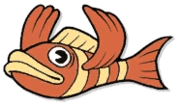
 Through most of the level, flying fish randomly pass across the screen, some of which can be parried. This is one of those stages where Seeker is SO helpful. On the other hand, the little barnacles that spit out spiky balls remind me of the stumps from Treetop Trouble: too spongy, even if you’re using more powerful weapons. They’re not even that difficult to dodge, so it’s just needless busy work. If they’re spongy so that you can’t just sit back and ping them to death without having to deal with the spikes, it begs the question “why even make them destructible at all?” It makes more sense to have them be fixtures that you have to time to avoid.
This slideshow requires JavaScript.
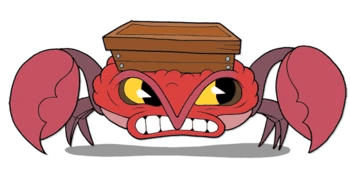
 One of the most memorable set-pieces from Cuphead’s traditional levels are the giant crabs that you hop across. Remarkable that a game based almost entirely around boss fights managed to avoid the trope of fighting a giant crab. These indestructible decapods are the closest you get to that. What I really love about the crabs is this is one of the set pieces they absolutely nailed the pacing on. This segment doesn’t go on forever and it’s probably simplest and easiest part of the whole stage. Hop-on, admire the visuals, switch crabs a couple times, grab the coin, and move on. Quick and fun, just the way I likes it!
This slideshow requires JavaScript.
 This is where Perilous Piers gets teeth. You have to work your way across a series of platforms and hanging crates, often by parrying off buoys (some of which are so far away you have to mid-air dash at them) while avoiding a giant lobster that claps lightning at you. Why lightning? Wouldn’t just splashing water at you make more sense? This section and the next are what destroyed me during my run. I easily lost more lives here than I did against more than half the bosses. It looks so unassuming, and when I recapped what it consists of, it seems like this shouldn’t have kicked my ass to the degree it did. But, trust me, this is about as brutal as Cuphead gets. BUT, it never gets boring, even in failure. Nicely done, MDHR.
This slideshow requires JavaScript.
Finally, you hop across a series of tentacles holding up platforms, then ride a giant octopus to the finish line. If only it were as simple as that sentence. The octopus has a gem attached to its head, and there’s a series of rocks in the way of your path to the goal. You have to parry the gem to get the octopus to blow up the rocks, and all the while, shrimp are being launched at you (some of which can be parried) and an oyster is shooting bubbles at you from behind. Again, it doesn’t sound too bad, but it’s so much to keep up with. You can’t just continuously parry the gem, as it only activates when nearby a rock. You’re auto-scrolling right this entire time, with projectiles coming from both sides, while trying to keep the Octopus from crashing and sinking. A fitting conclusion to a level I think I lost more lives to than any other video game level. I liked Inkwell 2’s R&G stages more, but this wasn’t bad at all.

RUN & GUN #6: Rugged Ridge
STATED INSPIRATION: Aztec Adventure, Contra III: The Alien Wars, Castlevania (Franchise), Giantland (1933), Popeye the Sailor Meets Sindbad the Sailor (1936)
IGC LIKES: The most visually striking of the six traditional levels.
IGC DISLIKES: Heavy reliance on trial-and-error “one more step per life” gameplay.
During this last session, I realized I never played Rugged Ridge in any of my three previous times picking up Cuphead. I have no idea how I missed it the first few times around, since I very much preferred the Run & Gun stages to the bosses (and, in many ways, still do). But, having now played through it twice, it turns out I was missing out on the weakest of the six traditional stages. Though, weak for Cuphead is still pretty good.

 I feel Rugged Ridge is too much of a “trial and error” stage. Die, make it past the thing that killed you, die. Rinse. Repeat. You start by battling mountain goats that throw boomerang-like pickaxes at you, all while standing on giant scales. I never found out if the scales can kill you if you stand on them too long. Let me check..
(Public domain music plays).
Nope. The scales apparently only exist to throw you off balance while you battle these goats. Well, that explains it, since I certainly would have been killed by them if they were lethal. I mean, everything else killed me. I got my revenge though: I broke this level somehow.
This slideshow requires JavaScript.
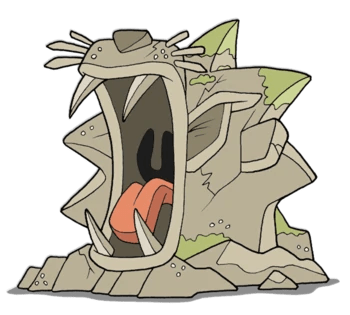
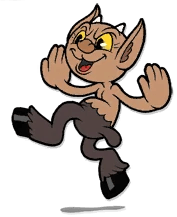
 There’s a couple of these mountain lions.. in this case, lions made out of pieces of mountain.. that blow you backwards and take forever to destroy. One of them is positioned next to a pit, the other placed in a courtyard designed to push you backwards into fast-spawning Satyrs. I’ve never been a fan of “wind” in games (it was my one major knock on Gris, so much so that my entire intro in that review is dedicated to how much I hate it). This is the nit-pickiest complaint in this entire feature, but I hated these mountain lions. They’re not particularly challenging, soak up bullets, and can feel free to blow me in a way besides the way they actually do.

Speaking of coins, I kind of like that once the coins are gotten, they’re gotten. If you missed any, they’ll be the only ones left when you replay it. There’s forty total coins. Thirty are in stages, one you get in the game’s tutorial, four are hidden throughout Cuphead’s overworld and five are given to you by NPCs. My only complaint is I wish there was more emphasis on hidden coins. There’s not a whole lot of excuses to explore the overworld.

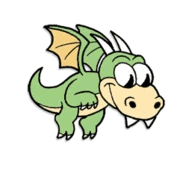
 In an apparent effort to squeeze every possible gaming trope into Cuphead, there’s an elevator where you fight an ever-spawning army of mud monsters and little baby dragons that The Art of Cuphead suggests have a tie to Grim Matchstick. Well, yea, I could tell. These are your only chances at a parry in the stage. Every other bullet they fire is parriable, but it requires you to not shoot the dragons. If you do, you’ll miss out on your three required parries. What is it with Studio MDHR and limited parry chances involving dragons? Is this some kind of in-joke? Also, I had the biggest bitch of a time grabbing the coin that was along this path, and when I finally got it, I felt like an idiot because it’s actually absurdly easy. This whole section is fine. Difficult, but not too difficult.
This slideshow requires JavaScript.
 If you have the spread gun equipped, you can cheese the next section. Walls pop up (they’re apparently another homage to Contra III), but walking next to them and blasting them at point-blank range will kill them before they have a chance to shoot at you. You’ll want to do this, because the little drops of oil they spit out are hard to dodge. In addition to these and the other mountain lion, these Satyrs shoot up out of the ground, then dash off to the left or right. If it’s the left, chances are you’re already in front of them and they pose no threat. But, they’re easily dispatched even if they head in your direction. It’s almost like they gave you a free pass for this section. I remember thinking “huh, that’s ominous.”

Oh shit.

Allegedly, the earring tips off some relation to Brineybeard. Cousins, perhaps?
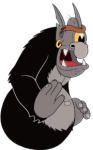 In direct tribute to the Mecha Dragon from the first part of Wily’s Castle in Mega Man 2, you now race a cyclops to the finish line of Rugged Ridge. You have to make harrowing jumps across narrow platforms (some of which are orbited by indestructible flames) while avoiding contact with the one-eyed beast. The platforms are placed for maximum challenge, and the flames are placed in exactly the way you’d expect the world’s biggest dickhead to place them. I’d be very impressed if someone aced the Cyclops chase on their first attempt. God, I wish this was a boss, but in fact, this is the lone “mini-boss” in Cuphead you don’t kill. It’s simply a chase, and when you cross the finish line, you’ve finished the last of Cuphead’s platforming stages. Well, assuming you do this one last, which is a big assumption since, if you play the stages in the order you pass them on the map, this unlocks before Perilous Piers. Eh, play this last and end the Cuphead’s Run & Gun experience on the perfect note for the stages: exciting, memorable, and wishing the mini-bosses were full bosses.

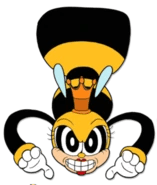
BOSS #11: Rumor Honeybottoms in “Honeycomb Herald”
STATED INSPIRATION: Honey Woman (the unused Mega Man 9 boss that became Hornet Man), Darkstalkers, Ants in the Pants (1940), Mr. Bug Goes to Town (1941), Cobweb Hotel (1936)
IGC LIKES: That I never have to play this boss ever again now.
IGC DISLIKES: Every aspect of this part of the game. It’s the worst boss in Cuphead.
 This is it. The boss I needed the most lives to defeat. One that took me five hours to beat during this session of Cuphead. What’s insane is, after beating Rumor Honeybottoms and only scoring a B+, I had to continue to fight it to reach my “A- minimum” goal on every boss.. and immediately won a second fight. Only, I got a B+ again. I lost the next attempt, but finally got past it with my desired A-. In theory, that means I “got good” at Rumor, since I won 3 out of 4 matches. In my authority as someone who can say they’ve won four times against her on Regular mode: Rumor Honeybottoms is the most boring boss in the entire game, and the most unfair.

 PHASE ONE – SECURITY BEE: The Rumor Honeybottoms fight presumably takes place immediately following the Grim Matchstick fight. That was a horizontal auto-scrolling battle. This one is a vertical auto-scroller, but with the same basic set of problems. The randomized platforms can absolutely screw you. In theory, they should keep you thinking on your feet. In reality: this is pretty much the most cramped battle in the entire game, which would make this difficult enough if it weren’t scrolling. But, the battle starts harmlessly enough. The idea of the security bee goes with the “bees as booming 9 to 5 business culture” that falls totally flat as this is one fight so busy you can’t take in the background. You have to focus on the platforms, since huge gaps in them will often appear, and all over. The gaps can even be in the dead center. Security Bee throws bombs that explode into six spikes. Half the spikes can be parried, but you have very limited space to do so. Worker bees also float by with suitcases, but they’re easily dispatched. This isn’t the worst part of the worst fight, so enjoy it while it lasts.
This slideshow requires JavaScript.
 PHASE TWO – A WHOLE LOT OF BEE S: Phase two has the queen attack you three different cycles. Which attack goes first is random, but the attacks will always follow the cycle’s order from there.
- MISSILES: Rumor appears in the center of the screen and her head falls to the bottom, like a wrecking ball. She then spits missiles at you that zoom around half the screen in an S or Z pattern. It’s the hardest to clock and the attack that the randomized platforms can.. and will.. absolutely screw you the most on. I hated this attack. I hate this boss.

The randomized platforms can leave some downright absurd patterns. Look at how few are on Cuphead’s side of the screen in this shot. A massive gap between the player and the next platform above them, plus missing platforms on the side. It takes away the glory of finally winning when victory often comes down to getting favorable RNG lottery odds.
 SPHERE: Rumor conjures a pair of pink energy balls that can be parried off of. This is the easiest of the three to avoid and a quick way to charge your cards.
- TRIANGLE: Rumor will create triangles that always spawn right on top of where you’re standing and force you to move right away, or else suffer damage. The triangles then spit parriable bullets. Again, sounds great, until you realize this is the most difficult layout for parries in the entire game. Sometimes you’ll go to score one only to instead land on a platform and take damage. Plus, since rumor is taking up space, your ability to dodge out of the triangles is limited, especially if the Honeycomb Lottery from Hell decides to not spawn platforms to jump to. What a miserable stage.

Not exactly the most tightly designed boss in any form or fashion. When given a favorable order of attack cycles, speed runners can easily knock out Rumor before she can even transition to the final phase. Although exceptionally skilled players can phase-jump multiple bosses in Cuphead, Rumor is the only character that many novice players have, by total luck, managed to score a victory before the final phase starts. Hell, even *I’ve* had moments where I died during the second phase and my jaw dropped as I see I’m actually, technically, well over halfway through the final phase before she even turns into the airplane. Yikes!
 E
E very aspect of the actual battle with Rumor is made completely unfun and tedious by the randomized platforms. You can’t really form a strategy, since it’s practically inevitable the floors will suddenly stop spawning near you. It’s like the match with Grim Matchstick on steroids. There’s nothing entertaining about it. Since this is the last major instance of auto-scrolling, I’m going to say that I hope they avoid this in the DLC. I’m certain Studio MDHR had the best of intentions with this setup, but it doesn’t work. It’s not the fun kind of difficult. It’s just frustration with no redeeming value. You don’t feel joy when you beat Matchstick or Rumor. You feel relief. Oddly, the majority of Cuphead never feels like a traditional punisher. This isn’t Super Meat Boy. This isn’t 1001 Spikes. It’s not Celeste. This might be the most notable accomplishment of Cuphead that nobody talks about: it defies the sub-genre it technically belongs to. Cuphead is a punisher that never feels like a punisher. EXCEPT for the Matchstick and Rumor fights. Those are punishers, and not the fun ones. All pain and no pleasure, like one of those days where your dominatrix’s heart isn’t into it. Not that I would know anything about that…………WHAT?
This slideshow requires JavaScript.
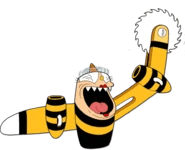
 PHASE THREE – GET IT? SHE’S A B-52 NOW! IT’S FUNNY BECAUSE SHE’S A BEE!: What should be an epic final form still doesn’t land at all because the fight still sucks. And that’s not even getting into how inelegant this battle is. Rumor’s bullshit sawblade attack is one of the biggest GOTCHA!s in the game, since there is absolutely NO WAY to see it coming the first time around. Or, several times after, really. It’s not set-up with a proper telegraph (and there’s NO point in doing this kind of game without a telegraph), it fully extends too quickly, and it covers over half the screen. It’s just a dick move, the shitty icing on the most disgusting cake in all of Cuphead. And this is all in addition to the still randomized platforms. I died just as much falling to the bottom of the screen as I did from the saw. The one shining light is this phase should go quickly, as you can ping a lot of damage off phase three while you’re still in phase two. Congrats, you’ve made it past the worst boss in a good game I’ve ever played. This was the absolute rancid shits. The worst they could have done. Ugh, horrible!

 FOOD FOR THOUGHT: Rumor Honeybottoms is the one boss in Cuphead where I think the difficulty is ALWAYS of the “this is just frustrating” type. Even Grim Matchstick, as terrible as he is, has the parade phase, which is unlike any phase in any boss I’ve played, and totally in service to the character. Rumor is interesting and ALWAYS frustrating. That’s not a good thing, because that’s the type of difficulty that gets boring the fastest. In gaming, ideally you want to challenge players in a way where they think they’re getting closer, and where the body count isn’t the point, but rather surviving the stuff that keeps killing you. With Rumor, it feels like the body count is the point. Where every aspect of the challenge was designed by the world’s biggest dickhead. You never think “ugh, just one more time” with Rumor. You think “OH CHRIST I HAVE TO KEEP GOING AND I WANT IT TO BE OVER!” But, the good news, dear reader: this is it. She’s the last of the “bad” parts of Cuphead. Even the most annoying of the bosses still to come don’t override the fun factor.. well, except the ending to Dr. Kahl’s Robot.

BOSS #12: Captain Brineybeard in “Shootin ‘n Lootin”
STATED INSPIRATION: Bluto, Felix the Cat in “The Goose Who Laid the Golden Egg” (1936), King Neptune (1932)
IGC LIKES: Squint and you’ll swear you’re playing a Popeye game and not.. uh.. THAT Popeye game.
IGC DISLIKES: This really should have been a world two boss at the very least, or even the final boss of Inkwell Isle I.
 Another iconic fight, and in my opinion, one that should have been in world two. I don’t know how they came up with the order for Cuphead’s bosses, but it’s all wrong. Like, hugely, historically wrong. The story I hear constantly (literally just heard it again as I’m typing this) is players hitting a wall in world two and throwing in the towel. If Studio MDHR had moved Baroness Von Bon Bon and Grim Matchstick to late in world three, while moving Brineybeard and Werner Werman to much sooner, I think a lot more players would have stuck it out to the end of Cuphead. Few owners of this game have actually beat it.
 In fact, I’ll take it a step further: Brineybeard’s placement is significantly out of whack. He should have been the final boss of world one. It’s inevitable that a game based entirely around bosses would have a few scaling issues, but the degree of which Studio MDHR bungled it is stunning. “But if a boss made them quit, doesn’t it stand to reason they’d of quit at that boss no matter what world it was in?” NO! That’s just wrong. You expect any game to get harder as you go along, and people are a lot more likely to press on through difficulty if the end of the game is in sight. But, fighting extremely difficult bosses before the mid-point of the game is demoralizing and makes you fear how bad things will get. Yes, there’s going to be players who freak into acing difficult fights (my sister beat Djimmi on her very first try, and I beat King Dice the first time I ever reached him when I first beat Cuphead in 2019 DESPITE horribly shitting the bed in the battle), but on the whole, most players seem to agree that Brineybeard is too easy.

 PHASE ONE – KILL HIM MR. TAKO!: What makes the battle with the pirate stereotype interesting is you have to shoot up at him. There’s no elevated platforms, so you’re forced to either hold down your aim-lock and fire diagonally, or jump A LOT, which is probably what makes this battle feel longer than it actually is. Briney will start every fight by firing bullets out of his octopus. Some of these are parriable, and in fact, there’s no boss that you can charge up your special attack faster on. Of course, you have to watch out for the ever-present
  barrel during this match, which crashes down on you whenever you pass under it. The barrel sticks around for the duration of the entire fight. The octopus gun stops when you reach the final phase. This is the only non-shmup fight where I could fire off three fully-charged super weapons over the course of the battle, mostly owing to these bullets. Even on expert mode, I could do it.
This slideshow requires JavaScript.
 PHASE TWO AND THREE- UNLEASH THE KRAKEN.. AND SEADOGS.. AND THE SHARK: After pinging enough damage off Brineybeard, he’ll start to summon various sea creatures to lend whatever qualifies as their hands. The seadogs jump onto the right side of the dock and quickly scuttle to the left, but can be killed easily with a few bullets
  (apparently their collars are a tribute to the Sega Master System title My Hero). The giant squid pops up in the center of the screen and inks the camera so you can’t see what’s going on, but he’s also easily dispatched with bullets. Finally a shark will dive onto the dock from the left side of the screen, but you get ample warning it’s coming. This phase goes on for quite a while, and seeing multiple of the same attack isn’t rare. After a little bit, a third phase will start which adds the boat spitting out cannonballs across dock. In Simple Mode, this IS the first phase, before Brineybeard starts shooting you with the octopus. It’s weird how different the simple and regular phases can be handled. Just wait until the next boss. I’m extremely impressed by the balance in the random difficulty. This might be the most evenly balanced any set of randomized attacks are in the entire game.
This slideshow requires JavaScript.
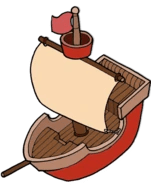
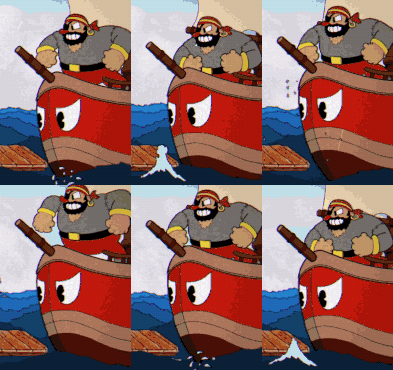
 PHASE FOUR- BOATY McBOATFACE: Eventually, the boat will have all it can stands and it can stands no more. It pops up (if you watch closely, you can see Brineybeard go flying into the water in the background) and reveals it’s a whale-like monster. It shoots fireballs at you that loop from right to left. After a bit, it charges up a gigantic beam that holds on the screen for a while. Remember, the overhead barrel is active this whole time and can still crash down on you. But, the catch is this is one of the few “super shot” attacks by a boss that can be parried. If your timing is true, you can bounce across this beam and charge-up a super shot. The ship’s uvula is the weak point, and it makes for a cartoonishly delightful finale to one of my favorite Cuphead bosses. Studio MDHR were wise to focus on this encounter during the marketing.

 FOOD FOR THOUGHT: Brineybeard was one of the characters that got the lion’s share of pre-release footage and hype. So, I find it kind of bizarre that the actual fight happens so uneventfully, early in world three. It doesn’t feel like a battle that should take this long to get to. It’s not an event by time you reach it. It’s just another boss to check off. That’s a shame, because Briney is a treat to fight and the ship losing its shit is one of the great moments of the entire game. Again, I haven’t the faintest clue how they determined which bosses go where, but besides the first two and final two bosses, they got it all wrong. If the first world ended with the captain, or the second world opened with him, I think a lot of Cuphead quitters would have pressed-on. After a boat flings its captain off and has its uvula shoot lasers at you, who knows what they’ll come up with next? It makes you wonder if Studio MDHR had any clue at all or if they’re the biggest hacks who lucked into an amazing project since George Lucas. I guess we’ll find out with the DLC, but so help me god, if they changed it so Brineybeard shot first.. well, I can’t be held responsible for my actions.

BOSS #13: Werner Werman in “Murine Corps”
STATED INSPIRATION: The Barnyard Battle (1929) Mickey’s Rival (1936)
IGC LIKES: One of the more visually striking and twisted finales of any boss in Cuphead.
IGC DISLIKES: Uh.. why is the simple mode arguably harder than regular mode?
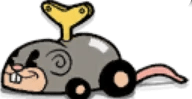
 Yea, you heard me: for whatever reason, Werner Werman is possibly more difficult to beat in simple mode than it is in regular mode. As a reminder, like most other bosses in Cuphead, simple mode is missing the entire final phase, because players who use the easy mode developers chose to include must be punished for doing so. Only, the second phase of Werner is actually a lot tougher on simple than it is on regular. It’s so weird! Even worse: Werner is among the cinchiest bosses in all of Cuphead and very easily should have been a World One boss. Maybe. Actually, I got a mixed reaction to this when I posted it on Twitter, with several friends and followers saying they had a bitch of a time beating the rat.
This slideshow requires JavaScript.
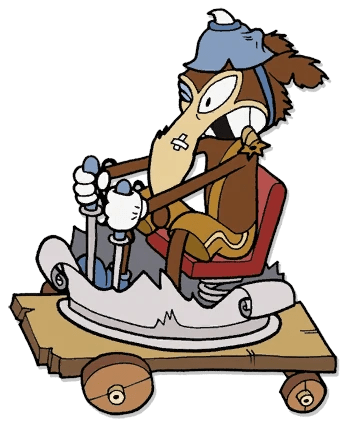
 PHASE ONE – CAN OF WORMS: Werner scoots back and forth in his tomato can tank while either firing bombs at you or catapulting junk at you. The bombs must be avoided completely, and when they hit the ground, they explode in fire trails that go left and right. The catapult offer two projectiles that can be parried, though the position of the parriable objects is randomized. Eventually, he’ll fling two springboards out that you must parry to launch yourself off of in order to avoid his charge. This phase is so simple and basic, even on regular mode, that I can’t believe this is a world three boss.
This slideshow requires JavaScript.
 PHASE TWO (SIMPLE) – THIS IS EASIER?: Actually, once you get the pattern down, it’s not so bad. Werner emerges from his tank with a cherry picker and two flame throwers attached to it, and now the walls are lined with sharp bottle caps. In simple mode, Werner moves up and down AND left and right while firing bursts of flames. You have to time when to switch between the upper and lower platforms. When Werner is shooting along the top platform, you can actually stand on his vehicle and fire up into him. This is one of the fights that took me the longest time to beat on simple, but when the time came to fight him on regular, I shredded him.

 PHASE TWO (REGULAR/EXPERT) – NO, THIS IS EASIER: For whatever reason, Werner doesn’t move left and right in regular mode. Instead, he remains in the center of the screen and rises up and down while firing his torch across the top and bottom platforms. The “added challenge” is that the bottle caps on the walls activate and randomly stretch out. There’s apparently no logic that dictates which caps are the ones that extend. I’ve had entire battles go where one never even came close to me. The balance is totally out of whack.
This slideshow requires JavaScript.
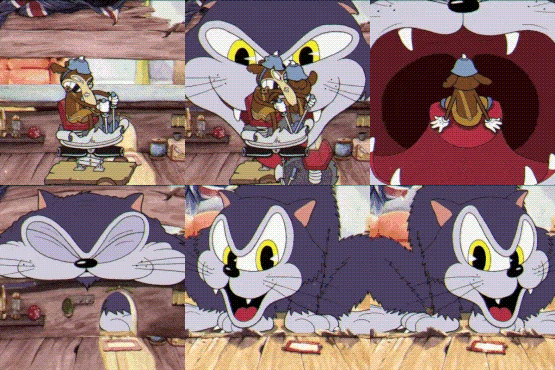
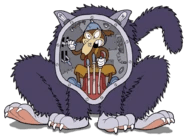
 PHASE THREE – KATZENWAGEN: The menacing cat that you’ve seen periodically peeking in on the battle emerges and swallows Werner, and begins probably the easiest final phase since the first two bosses. The cat will swipe with either its left or right paw, but you have more than enough time to dodge out of the way. Every time he swipes, the banging of the paw causes pieces of debris to rain down from the ceiling left to right or vice-versa. After a while, he’ll also unleash the ghosts of mice, who shoot balls of energy at you that split into two when they hit the floor, though most of their initial shots can be parried. Fitting for a a battle with a rat, this is one of the most cheeable battles in Cuphead. If you have spread equipped, you’re really golden, as you can simply jump in front of the cat’s face and fire your super shot, and all eight bullets will score an immediate hit. I’ve taken the cat down in just a few seconds several times. Even on expert, it’s absurdly easy. Maybe the easiest finale in Cuphead, actually. Visually, it’s among the most amazing, but it’s so easy that it’s probably the biggest letdown in Cuphead.

 FOOD FOR THOUGHT: I’m as far removed from “professional” gaming skills as possible, but even I can consistently beat Werner’s second and third stages combined in under thirty seconds with no effort. Thus you have a world three boss that could have been one of the first three bosses. Don’t get me wrong: it’s the last time a boss is this big a push-over, but I firmly the reject the notion that it’s okay to insert a cinch battle as a cool-down late in the game. If people need breaks, the last time I checked, game controllers have a big ole pause button right in the middle.

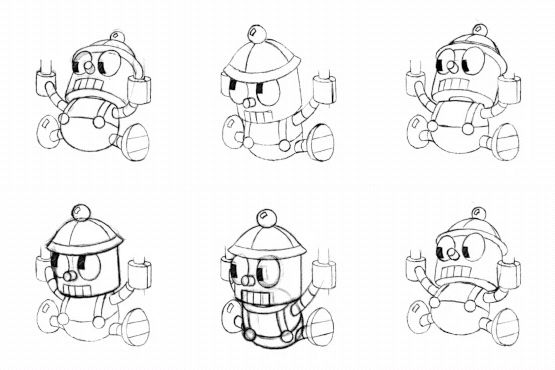
BOSS #14: Dr. Kahl’s Robot in “Junkyard Jive”
STATED INSPIRATION: Dr. Wily (Mega Man), Dr. Robotnik (Sonic The Hedgehog), Gunstar Heroes, Mickey’s Mechanical Man (1933), Modern Inventions (1937)
IGC LIKES: The concept of systematically shooting down a boss, part by part.
IGC DISLIKES: That the battle ends on the laziest idea in the entire game.
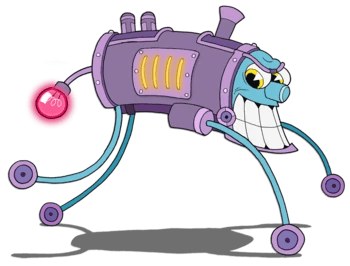
 Far and away the boss that most of my readers cite as the hardest (and worst) in the entire game, this shmup battle is infamous for having one of THE “what were they thinking?” moments in all of Cuphead. I seem to be better at shmups than I realized (to my credit, I have beat Ikaruga without cheating, though that was nearly twenty years ago), and in my first time actually beating Cuphead, I only needed six attempts to take down the Robot, which was the last contract I needed. This time around, I fared a little worse, but still won the battle after only eight attempts. But, if you’re not wired for shmups? Yea, this is going to be brutal.

I put in far too much effort trying to get a quality shot of all three weapons firing at once.
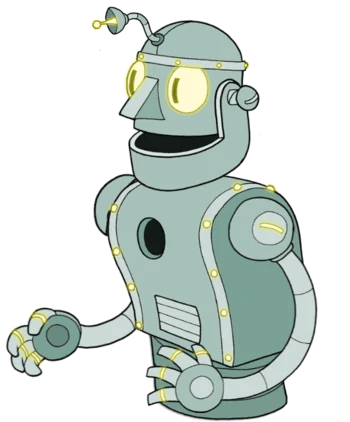
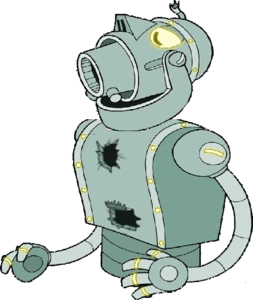
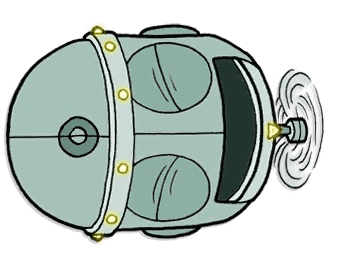
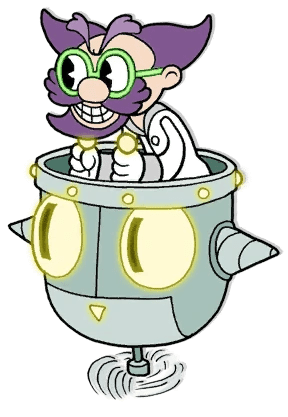
 PHASE ONE – PIECE BY PIECE: Dr. Kahl’s Robot (which I erroneously credited as being inspired by a Superman cartoon, something the Art of Cuphead never mentions) starts by forcing players to destroy three sections of the body, with three completely different attack points that all fire independently of each-other. Each segment introduces a different “penalty attack” for blowing up. This boss is going to shit the bed like it’s on an all Metamucil diet, but let it be said, the shmup boss with the worst idea in Cuphead also has the best idea in Cuphead. Perhaps Studio MDHR practices video feng shei or something.

 THE HEAD: The robot fires a laser from an antenna on its head that lingers on the screen for a while and takes up a TON of real estate, thus limiting your ability to dodge other attacks. I strongly suggest focusing your efforts on destroying this first. Upon its destruction, the robot will start firing a spread of nuts, bolts, and screws at plays until the phase ends.

 THE BELLY: The robot unleashes a wave of four drones that fly back and forth around the screen in an S pattern. As soon as you blow up the head, head to the bottom and blow this up. After being destroyed, it’ll unleash gigantic bombs that, when you shoot them down, still blow-up in still-deadly explosions that must be avoided. Keep a distance and you’ll be fine.


 THE CHEST: Leave this alone until you have to blow it up, as it provides players with a means to charge their power shot. It unleashes slow moving drones that can be disabled with a quick parry. Even if they fire their full-screen vertical laser beams, you can still disable them with the parry. The “penalty” for blowing up the dock these launch from is the Robot starts using its hands, either by thrusting them from the left side of the screen (then shooting bullets as they retract) or using a magnet that draws players towards it. You really don’t want this happening while you fight the rest of the robot, and by saving it for last, you should only have to deal with it once. Blowing up the chest last also puts you in the position for the final portion of the phase. Believe it or not, you just finished the easy part.
This slideshow requires JavaScript.
THE HEART: After all three sections are blown up, the heart will pop out of the chest cavity. Fire at it while dodging the three penalty attacks until it’s dead. Phase over, and if you’re playing on simple, level over.
This slideshow requires JavaScript.
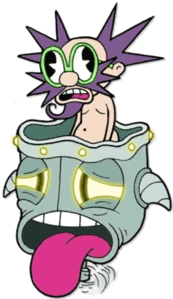
 PHASE TWO – USE YOUR HEAD: The robot’s head flies off and will pass back and forth until you shoot it down. It’s one of the shortest boss phases in Cuphead (by design instead of by cheesing transition between phases like other bosses). While it can be a pain in the ass if you try to shoot it down normally, there’s an easier solution. By the end of the first phase, you should have a fully-charged power shot. Save it for this phase, position yourself directly across from the head as soon as you blow up the heart, and when the head launches, activate the big bomb. While it won’t take the head down instantly, you’ll only need a few more bullets to end the fun of Dr. Kahl’s robot and enter the worst phase in the entire game. Oh, and the belly torpedoes from earlier keep flying in at a faster rate. Do what I said and they’ll stop too.
This slideshow requires JavaScript.
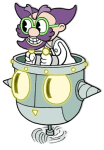 PHASE THREE – YEA THEY COMPLETELY RAN OUT OF IDEAS: Welcome to the moment where Cuphead’s design team gave up. The finale of Dr. Kahl, now riding the robot’s head in a homage to Dr. Wily, is him holding up diamonds, which spam the screen with bullets. Why diamonds? Unclear. This is a lazy bullet hell with emphasis on HELL. There’s two attack patterns, but the concept is the same: move out of the way of bullets (some of which can be parried, though it’s random chance if you’ll be able to reach them or not) and electrified walls that you must quickly avoid, or else they will cut off your path (oh and you can’t shoot through them). This section is over half this battle. It doesn’t really change-up. It’s just a spam of bullets, a brief break as he switch diamonds, then another spam of bullets, all while avoiding walls. Seriously, this is the end of the battle, and it goes on (in my best Smalls voice)..

 It’s sooooooooooooo boring. Do you mean to tell me the same team who came up with some of the most imaginative and inspired character designs, bosses, and attack patterns in the entire history of the medium couldn’t think of a better thing to do with a goddamned giant robot? Hell, this could have been fine, even as a finale, if it went, like, fifteen seconds. One burst with the blue diamond, two bursts with the red diamond. But OVER HALF THE BATTLE? Fuck off. It’s one of those things where it goes so long that it becomes boring and you just want it to be over, and then it goes even further past that and you actively begin to hate the entire battle for making you do this. Plus, there’s not a lot of room to maneuver AND there’s the occasional foreground elements that block your view and make it even harder to follow the bullets. I’ll actually defend the opening segments of Junkyard Jive. It’s an inspired idea and an incredible visual. Maybe my favorite design of any boss in the game. But this back end of the battle sours the fight and the whole game something awful. Not only is it not fun, but it just makes players angry. What were they thinking?

 FOOD FOR THOUGHT: I’ve not met a whole lot of fans of the giant robot fight. I can’t imagine I’m alone in thinking the opening section is among the most clever uses of the shmup mechanics as any in Cuphead, but the only thing people talk about with the Dr. Kahl fight is the pain. The finale is supposed to be a tribute to chaos emeralds in Sonic The Hedgehog. I guess I’m not versed in Sonic lore, but I can’t remember which game in the franchise featured Dr. Robotnik lazily spamming the screen with bullets. I have a hunch there was supposed to be more to the battle than what happened, but this is one of the few parts of Cuphead that has no “deleted scenes” that I could find info on. I can’t help but wonder if the final phase was meant to be shorter and they padded it out. Either way, congratulations: the worst of Cuphead is over. What’s left might still be difficult, but never to the point that it feels uninspired, lazy, or boring. I hate Dr. Kahl’s finale, especially because I know Studio MDHR is capable of better.

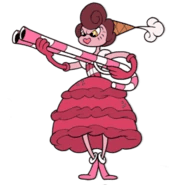
BOSS #15: Cala Maria in “High Seas Hi-Jinx”
STATED INSPIRATION: Olive Oyl, Betty Boop, Moth and the Flame (1938), The Rescuers (1977)
IGC LIKES: One of the more fun shmup stages.
IGC DISLIKES: Even professionals hate the randomized nature of this stage.
Apparently, Cala Maria is the level that Cuphead pros.. not an occupation I imagine pays well.. dread most. If you don’t have to worry about making “perfect runs” you won’t find High Seas Hi-Jinx as annoying as they do (apparently it was even worse before the 1.1.3 update, where you had far fewer parry chances). In fact, the concept, the huge variety of attacks, and overall character design are downright inspired. I don’t really have a exact favorite battle, but Cala ranks near the top of my list. A great way to end the shmup stuff.

 PHASE ONE – THE (NOT SO) LITTLE MERMAID: Cala Maria, who can only be shot in the head, has completely randomized attacks that are stackable with each-other. I’d like to note that this is another one of those “see, they CAN balance the difficulty for randomized attacks” situations that makes it so I can’t give those bosses where there’s highly-desirable random attack cycles a free pass. Of the six ways Cala can hurt you, only one combo is really of the “aww shit” variety. That ain’t bad.
 GHOST PIRATES: Cala burps out three ghosts that home-in on you and dart in a very fast straight line once they finish emerging. By itself, this isn’t bad. When combined with other attacks? It’s among the hardest attacks to dodge in all of Cuphead. It’s absolutely uncanny how often I had perfect runs ruined by this. Far more than the stun-locking fuckery to come.
This slideshow requires JavaScript.
 GIANT FISH: Cala sinks under the water, and when she returns, she’ll have one of two fish. If she has a yellow fish, she’ll shoot an electrified dolphin that heat-seeks you and lingers on the screen for quite a while. If she has a red fish, she’ll shoot a series three of spreading shots at you, some of which can be parried. After each fish attack is completed, it’ll wiggle loose and return to the water, causing you damage if it makes contact on the way down. Red fish give you chances to charge cards, so maybe they’re too desirable, but both are tough.
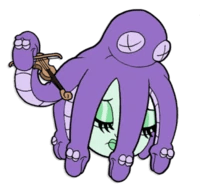
 SQUIRTY McSQUIRTER: Yes, that’s it name. I didn’t know that when I made the Boaty McBoatface reference above. Anyway, it’s a sea horse.. in this case a normal horse that hangs out in the sea, who follows underneath you and squirts a stream of water that’s harmless by itself but it pushes you up into whatever other attack she has going. If you randomly draw the combination of Squirty and the Ghost Pirates, you’re in big trouble.
 BOMBSHELL BARRY: A turtle that fires off bombs that explode into shrapnel in eight directions. Despite the fact that this thing’s attacks hurt you and the horse’s doesn’t, I’d much rather draw Barry over Squirty. It’s worth noting that both can be killed, though you have to take your focus off Cala Maria in order to do it. For Barry, it’s not worth it. For Squirty, you might want to at least think about swapping to bombs and taking it out.
 THE PUFFER GANG: Cala Maria raises an army of puffer fish that float vertically. At least some of these things can be parried. I don’t know what the RNG odds are, but this is the only one of her attacks that seemed like it happened every single match against her.
This slideshow requires JavaScript.
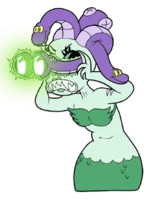
 PHASE TWO – SHE DIDN’T EVEN HAVE TO BOINK POSEIDON IN ATHENA’S TEMPLE: Two eels do a stranger danger thing to Maria, and she turns into Medusa. The previously nuanced fight becomes really simple at this point: an army of eels spam the screen with bullets, some of which can be parried. The eels actually can be shot down, but I’ve found it to be neither helpful nor detrimental to do so. Just keep focusing on her head. The difficulty isn’t merely the bullets, but the fact that she can now turn you to stone, and as it fills the entire screen, there’s no way to avoid it. She’ll fire off this once before the eels start shooting to give you a heads-up she can do this now, and you have to button mash to revert back to normal. The first time I played this, I was so pissed that they chose to do this, but I can clear it without taking damage a lot easier than I can dealing with the seahorse from earlier.

SIMPLY OFF-PUTTING: This portion of the fight is missing if you choose simple mode.
 PHASE THREE – BRING ME THE HEAD OF MEDUSA: This is where they might have taken the whole “turn to stone” angle a little too far. After you cause enough damage, Cala’s head will break off from the body and enter a narrow tunnel. Despite what you’d think from the NES Teenage Mutant Ninja Turtles, the coral lining the tunnel is not lethal to the touch, but you must still avoid the walls themselves. Maria will now drop little skull bubbles and continue to stun-lock you. There’s also spiky barriers that you have to avoid. The bubbles and the barriers would be challenging enough, but getting stun-locked (which seems to be 100% unavoidable) forces you to quickly hit 22 input commands (that’s what the Cuphead wiki says) before you unfreeze. A memorable conclusion, but one that can be randomly unfair. That’s why this is among the least favorite battles among pros.

 FOOD FOR THOUGHT: Besides a couple mini-bosses during King Dice’s stage, this is it for the shmup portion of Cuphead. In total, there’s five of these levels, all which are, for better and for worst, among the most unforgettable moments in the entire game. All of them have some high-quality aspects. When I first played Cuphead, I was totally baffled by their inclusion. I fully admit that I went into the game with the wrong mindset. I thought I was signing up for Contra/Gunstar like shenanigans. Shmups are one of those genres that I rarely seek out, but when done right, I have an amazing time. In my ongoing #IGCvSNES initiative, I have three Parodius games ranked in the top 25. As of this writing, I’ve played nearly 200 games for that project, so yea, I really like a well-done shmup, especially when they defy convention with original ideas. Cuphead brought the goods there, and then some. I’d be willing to pay $59.99 for a Cuphead sequel/spin-off that was composed of 15 to 20 levels of this type of action. It’d be first in line, and I’d be as excited as I’ve ever been.

BOSS #16: Sally Stageplay in “Dramatic Fanatic”
STATED INSPIRATION: Samurai Showdown III, Final Fantasy VI
IGC LIKES: One of the most non-conformist boss concepts I’ve ever experienced.
IGC DISLIKES: One of those “middle of the pack” fights where the execution isn’t anywhere near as brilliant as the concept.
 Sally is probably the highest-concept boss of Cuphead. A drama queen.. literally.. whose battle is represented as a complete life-of play. A wedding (which can end tragically if you play it right), a family, and the afterlife. While the actual mechanics of the battle with Sally are among the most conventional in all of Cuphead, it’s how it’s presented that makes it unforgettable. While this plays like any boss in any game, it never feels it.
This slideshow requires JavaScript.
 PHASE ONE – WEDDING DAY: Despite her smaller stature, Sally might be the most space-invasive boss in all of Cuphead. In phase one, her primary attacks are to do twirling jump kicks at you, or to teleport and crash down on top of you. Additionally, she’ll jump up in the air and throw a fan that sticks in the ground, further cutting off your space. Finally, she’ll blow kisses at you, which are a chance at a parry. While she seems easy, she has an uncanny knack for hitting exactly the right move when you make the wrong move.
This slideshow requires JavaScript.
 SECRET PATH – WEDDING CRASHER: Till death do you part, indeed. Sally is the final boss (at least as of this writing) who has a secret path. When she blows the kisses at you, you can you parry off the hearts and onto one of the two cherubs on the side, which will lower and signal you did it correctly with a subtle chime. Do it to both and the chandelier will crash down on Sally’s husband at the alter, killing him. A weird glitch (maybe it’s not a glitch?) I discovered right before publishing this review is that, if you cause enough damage to Sally after you activate the final cherub but before she teleports to go mourn her husband, you will actually skip the entire second phase and go straight to phase three.
This slideshow requires JavaScript.
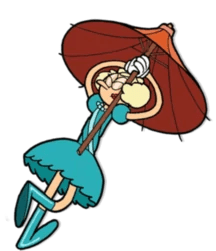
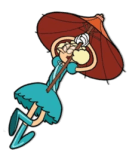 PHASE TWO – LIVING THE LIFE: In the normal pathway, you transition to Sally’s house, where she continues to throw jump kicks or stick her fan in the ground. The kisses are gone now, and in their place, she opens her umbrella and drops remote-controlled mice that run across the ground, up the wall, and across the ceiling, at which
  point they’ll drop down on you once you cross their path. This whole time, her unholy offspring will drop bottles out the windows. Weirdly, there’s no ways to score a parry during this portion of the battle. In the SECRET PATH version of phase two, Sally apparently turns to religion to cope with her dead husband and the phase transitions to a nursery. The battle plays out the same, but the baby with the bottle is replaced with a nun who throws crosses in your direction, every-other of which can be parried. No matter which path you choose, you will ALWAYS be cramped this phase.
This slideshow requires JavaScript.
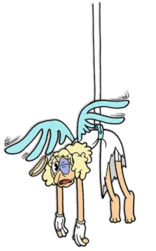
 PHASE THREE – ACTING GODDESS: The only time in Cuphead where the art style changes, this as an apparent tribute to rare stop-motion films of the 1930s. Sally lowers from the ceiling dressed as a goddess. In the normal path, she has three attacks. In one, a meteor lowers from the ceiling. It’s not very hard to miss, and upon shooting it, it opens to reveal a parriable star. She can also call a tidal wave, and if you don’t have the smoke dash equipped, you’ll need to use the meteor’s star to parry over it. Finally, she’ll call lightning down, which comes in groups of two, three, or four. If you took the SECRET PATH, this is one of the spongiest battles in all of Cuphead. I believe all the hit points you skipped in the first path carry over here, where the husband joins her, eating grapes like Caeser while her unborn child utilizes a new attack: rolling fireballs at you.

SIMPLY OFF-PUTTING: This portion of the fight is missing if you choose simple mode.
 PHASE FOUR – JUST CALL ME ANGEL OF MOURNING: Sally takes a bow in one of the most difficult short phases in the game. Her parasol acts as a heat-seeking top that you have to constantly jump over, and all the while, an angelic Sally flies overhead, pumping her fists in gratitude while the audience throws roses that are lethal to Cuphead’s touch, though some can be parried. This phase is the same whether or not you took the secret path, but the background characters change. A pretty underwhelming conclusion to one of the more conservative, traditional-feeling battles in all of Cuphead. But one with no respect for personal space at all.
This slideshow requires JavaScript.
 FOOD FOR THOUGHT: The entire Sally Stagehand sequence is one of my go-to examples for dressing-up something that feels sort of “been there, done that” otherwise. Sally is that rare Cuphead boss that feels like she could be a boss in any other game, at least based on how she fights you. But, they took her attack cycles and staged them (no pun intended) in a way that makes a pretty run-of-the-mill fight still an unforgettable experience. It’s something a lot of developers need to think about when creating their games. Not everything you do has to be original from a video game aspect to still leave a lasting impression if you implement it creatively.

BOSS #17: Phantom Express in “Railroad Wrath”
STATED INSPIRATION: Final Fantasy VI, Pan’s Labyrinth (2006), Lonesome Ghosts (1937), The Skeleton Dance (1929), The Skeleton Frolic (1937) Swing You Sinners! (1930)
IGC LIKES: The eerie, macabre tribute to a time when cartoons were out of fucks to give when it came time to “think of the children.”
IGC DISLIKES: That I said I didn’t have a favorite battle. Upon reflection, actually, I think this might be my favorite.
 As a kid, I had a VHS recording of a special called “Disney’s Halloween Treat” that I pretty much wore out. At a certain point, they stopped airing it on TV, even though it was basically the greatest clip show in TV history. My point is, while I’m not particularly a fangirl of the era of cartoons Cuphead pays tribute to, I do happen to have much love for the shorts that aspired to scare. Phantom Express is a loving tribute to that, and in my opinion, the best stage in Cuphead. There, I said it. What’s really weird about that is, each of these mini-bosses that makes up this stage are extremely basic, consisting of one attack each (except the finale, which has two), like they’re made to prep you for the fight against King Dice.

 PHASE ONE – THE BLIND SPECTER: This whole battle is fought on a train car with two switches you can can parry to switch between three positions on the track: left, center, and right. But, you’re not the only one who can activate them. Railroad Wrath’s first two phases have a squadron of jack-o-lanterns that fly by and drop bricks on
  the switches, which could lead to you being maneuvered directly into taking damage. The bricks can be parried as well, which you can use defensively, or you can shoot down the pumpkins. Sometimes, you might even use the pumpkins and their bricks to switch your position so that you can focus on whatever mini-boss you’re shooting. This all starts with the Blind Specter. Apparently inspired by the hand demon thingy from Pan’s Labyrinth, the Specter bounces eyeballs at you. The eyes can be shot as well. It’s a pretty spongy opening, but it’s a suitable intro.

 PHASE TWO – THE CONDUCTOR: God, this game is gorgeous. I’ve said it before, but has there ever been a more fun game to watch than Cuphead? Hell, give Studio MDHR Dragon’s Lair and see what they do with that. Anyway, the Conductor will always start in the center car and slam his massive hands down. From there, the head will move around randomly (though never in the same car twice in a row). Despite the girth of his hands, even if you’re not under the head, there’s actually a safe spot on the rail car no matter what position you’re in. I’ve had entire fights against this thing without ever paying any heed to what position on the track I’m sitting on. What a bonehead.

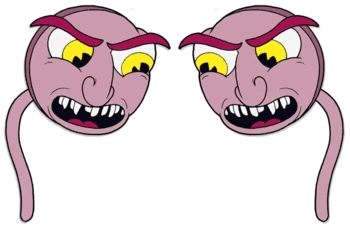
 PHASE THREE – THE LOLLIPOP GHOULS: I’m not sure what lollipops have to do with the theme, but they sure look like monsters straight out of a 1930s horror cartoon so I’ll zip my lips. This time, there’s one situated to the left and right, and randomly, one of them will fire a gigantic blast of electricity across to the center car and back. Even if you’re under the one that’s about to fire, you can stay safe by staying close to the wall (as seen in the above picture). For this phase, the jack-o-lanterns are replaced with ghosts that heat-seek you. When you
  shoot them down, they drop pink skulls that can be parried, but also activate the rail car’s controls. It’s a lot to keep up with. I find the seekers useful for this battle, even if they do less damage. Use the other gun for whatever Lollipop you’re under, then switch to seekers to ping the other from a safe distance, and to also knock out the ghosts before they get too close. Fun fact: the twins are the boss that underwent the fewest changes from conception to release. They were happy with the design from the start, and rightfully so.

SIMPLY OFF-PUTTING: This portion of the fight is missing if you choose simple mode.
 PHASE FOUR – OFF THE RAILS: The damn train starts running for it, which seems like it would be slower than, you know, going like a train. This is one of the more fun final phases, though frustrating too as there’s some minor visibility issues due to the speed of the action (huh, I guess it is faster). You have to parry off the train’s tail to open its firebox, which shows the train’s exposed heart. This is another battle I found the seekers to be preferable, as the heart is quite high off the ground, the train doesn’t remain stationary and readjusting your position for a clean shot is frustrating. Jumping to reach it is also often impossible. The Seeker was MADE to fight this train. But, the nose shoots rings of fire that have to be jumped over if they land on the tracks. Also, when the firebox is open, it rains fire down upon you. The only thing keeping this entire fight from being *perfect* is how tough it is to see both these attacks in the heat of battle (pun intended if you laughed).

 FOOD FOR THOUGHT: Probably the best thing I can say about Cuphead is that it has actually stoked my interest (waits…….. moving on) in the source material that inspired these incredible characters. Not just the Phantom Express, but the whole cast of Cuphead. They’re all so vivid and, exaggerated as they are, they feel alive and playful. Perhaps that’s Cuphead’s greatest success. It’s astonishing how fast this game is becoming a major media property. There’s even going to be a Cuphead show on Netflix. I hope when this is all said and done, Studio MDHR doesn’t forget where its bread is buttered. I absolutely think they should keep this style, make it their studio signature, but explore other characters and genres.
Once upon a time, I never thought I’d make it past this point in Cuphead. But, when I finally did it, it was one of the most rewarding experiences of my gaming life. I even had to wipe tears. That was 2019. Here I am, closing out 2021 with the most in-depth review I’ve ever done. CLICK HERE for the final part of Cuphead: The Definitive Review
Like this:
Like Loading...


 Centipede: Recharged is Chick-Approved
 Centipede Recharged was developed by Adamvision Games (Published by Atari)


 Bad Caterpillar is Chick-Approved
 Bad Caterpillar was developed Fun Infused Games


 Praey for the Gods was developed by No Matter Studios
 Point of Sale:


 From Below was developed by Matt Hughson
 From Below is Chick-Approved and ranked on the


 Find Me was developed by (deep breath) Girls Make Games,
  Point of Sale:

























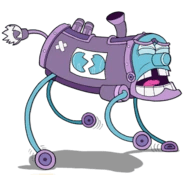




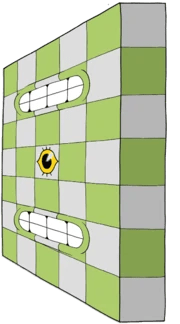

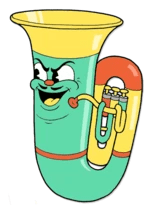


















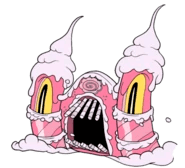

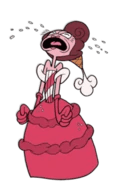
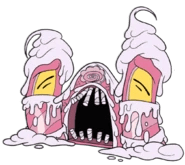

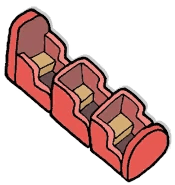



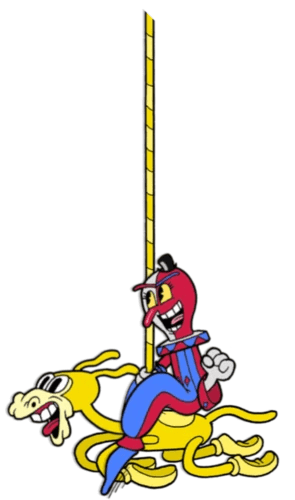
 PHASE FOUR – CAROUSEL OF DEATH: One of the most visually striking finales of Cuphead, the carosuel is also surprisingly difficult. Even if you are using spread and cheese it by using your special attack in the center, which results in all eight bullets immediately registering a hit, the carousel is spongy enough that it takes quite a while to beat it. The roller coaster goes significantly faster this phase, so much so you’re really only safe by leaping across the chairs. But, Beppi also spits out baseball-throwing penguins (a nod to the Chargin’ Chucks from Super Mario World), which prevents you from getting into a rhythm on the swings. I can’t imagine how hard this would have been without the cheese of the spread shot. Compared to the previous two phases, this is maddeningly difficult, and also epic as all hell. One of the great finishes to a battle in the game. If only they were all this amazing.




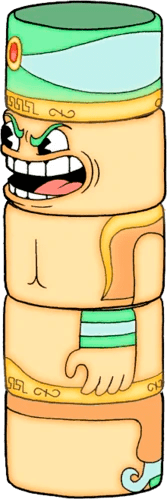
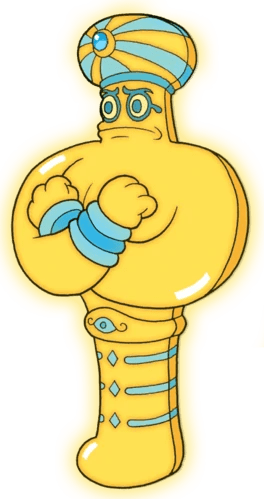
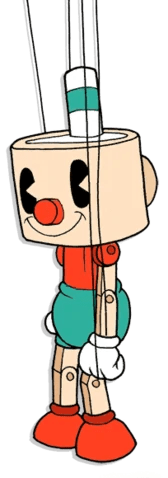






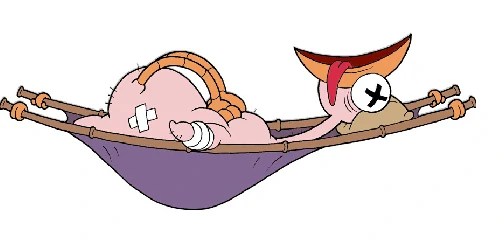

 FOOD FOR THOUGHT: Yea, Cuphead has an issue with closing the deal on their fights, but I appreciate the anything-goes attitude. As far as visual gags go, seeing the EMT birds begin seasoning Wally is so damn funny that I almost forgive how sour a note the fight ends on. One of the amazing things about Cuphead nobody talks about is how smart the decision was to have fights end with a boxing bell and the dramatic “A KNOCKOUT!” graphic instead of having a typical gaming death animation. I mean, those happen too, but the moment you win is a MOMENT, and Cuphead does that moment even better than
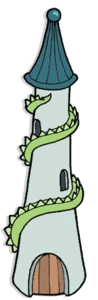
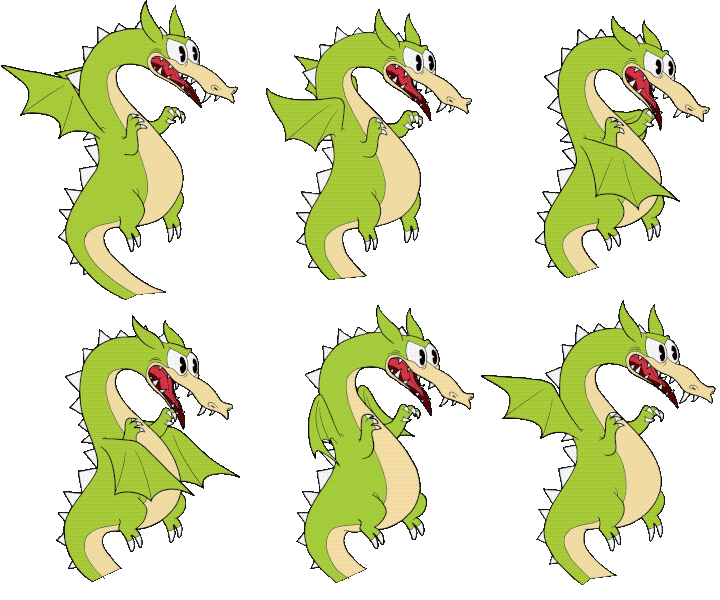

 PHASE TWO – MATCHSTICK MARCH: This WOULD be the most interesting part of the battle, since there’s nothing quite like it in any other game, but again, it’s a pain in the ass because of those randomized platforms. The flames marching across the bottom will periodically fling themselves up at you. They could have easily made the occasional one pink. I mean, it would make total logical sense and reward fast-reflexes. Not sure how that didn’t happen, especially since you could totally be fucked on your grading after the first phase. Seriously, I’m not letting it go. It makes me mad. Anyway, this is probably the best part of the fight, since I’ve never experienced this type of action in any game. It’s inspired. I wish the rest of the fight hadn’t been completely unlikable.
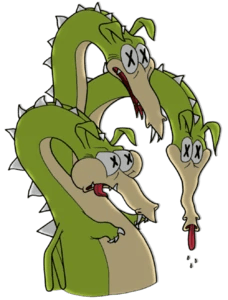
 PHASE THREE – HEY, WHERE DID THOSE OTHER HEADS COME FROM?: Grim is now three-headed and constantly spits fireballs at you. The fireballs break into four directions if you accidentally shoot them, which is sort of inevitable. After a while, the middle head will throw on a mask and spit a flame across the middle of the screen, and I’m sure it’s because I suck at video games but I never saw this coming. A big reason for that is this phase takes place in a really dark lightning storm, and since you have to focus completely on making your jumps, you can’t really pay attention. The first few times you fight Grim, it feels like a GOTCHA! but at this point I’ve come to expect that shit from this fight. The third world somehow opens with an even worse battle, which is the only thing that keeps Grim Matchstick from being the bottom of the barrel of Cuphead’s otherwise epic bosses. And again, any of those bullets Grim fired could have easily been a parry chance. Grrrrr. SERIOUSLY HOW DID THEY FUCK THIS UP SO BADLY?


 RUN & GUN #1: Forest Follies



 RUN & GUN #2: Treetop Trouble







 BOSS #1: Goopy Le Grande in “Ruse of an Ooze”






 BOSS #2: The Root Pack in “Botanic Panic”










 BOSS #3: Ribby and Croaks in “Clip Joint Calamity”
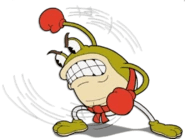

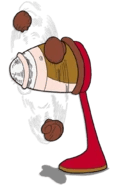


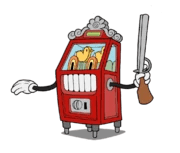
 FOOD FOR THOUGHT: I get that it’s a slot machine and it’s supposed to be random, but maybe for the sake of difficulty and consistency, they should have gone with the illusion of randomness while rigging the machine so a player experiences every wave. The really weird thing is, when I beat Cuphead the first time, I never got a “desirable” series of chips during the final wave. Then, when playing on Switch for this review, I got a double snake-head, which led to a fast knockout and a perfect score. Even weirder: when I went back to get media of the other waves, I kept getting the snake heads, to the point that I wondered if the Switch version removed other waves. I got a lot of crap from the “git gud” crowd with Cuphead, but it’s telling to me that so many bosses can be beaten by gittin’ lucky instead. For a game defined by extreme difficulty, how tightly designed can it really be when you can have entire runs determined by random chance?
 BOSS #4: Hilda Berg in “Threatenin’ Zeppelin”
 Cuphead including shmup levels was jarring as hell to me at first. It’s one of those genres that I didn’t realize how much I loved when I first reviewed Cuphead. It felt like a party crasher. I later came to realize the shmup levels are the most consistently solid and balanced stages in the game. And also I’m apparently really good at shmups, as I could take these down with the fewest attempts. It all starts with Hilda Berg, whose design came from a power-up in the game Alex Kidd in Miracle World of all things.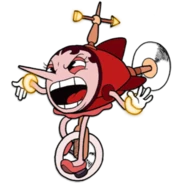
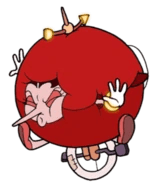
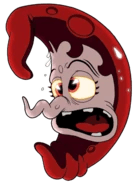
 PHASE SIX – CURSE OF THE MOON: One of the most scary and imaginative character designs in Cuphead, the giant moon is an unforgettable finale to the first shmup level. It’s also one of those moments where trial-and-error will inevitably factor in. When the face is inside the moon, you’ll have to simply avoid a series of stars that fly across the screen (some of which can be parried). When the face opens up, the space you can work with is cut in half and a parade of UFOs will march across the top of the screen. Keeping yourself in front or behind the lethal beams of the UFOs has a huge learning curve to it. For most players, they’ll make it to this final phase and perish several times before they get it right. It’s a bit frustrating, since this is by far the best portion of the entire battle, and getting there can be a slog after a while.
 BOSS #5: Cagney Carnation in “Floral Fury”
 One of THE icons of Cuphead, the battle with Cagney Carnation was heavily inspired by several plant-based bosses in gaming history. It’s more than simply the juxtaposition of a cute, wholesome flower that suddenly screams at you and then looks like the most evil thing that ever eviled. It’s a boss that checks every box of the Cuphead experience: crowded, relentless, and maybe just a little too reliant on RNG luck. Unlike a lot of bosses, Cagney really only has two phases. But, the variety of attacks in the first phase makes it one of the more intense battles in all of Cuphead. Hell, in around fifty attempts at beating it on expert mode, I only made it to the second phase twice. Twice! They might have gone a little over-board.
 PHASE ONE – I’M PRETTY SURE CARNATIONS ARE A DIFFERENT SPECIES: No matter the difficulty, RNG factors heavily into the battle. When he becomes a machine gun that fires seeds into the air, one of the seeds is capable of scoring a parry on. Whether or not you’ll have a safe chance at scoring that parry is total random chance based on where it’ll fall or if other hazards have already spawned that will prevent it. Another luck-based attack is Cagney’s full-screen stretch. If he does this across the bottom lane, you should have a few moments to cleanly, safely plug away bullets without having to move a muscle. It’s still safe even if he chooses the top lane, which requires you to duck below it. But, this attack might not even happen at all. I had several battles where he never fired it once.




 Cape’s Escape Games are developed by Alignment Sharp


 Drizzlepath: Deja Vu was developed by Tonguç Bodur
 RSS - Posts
You must be logged in to post a comment.