Cuphead: The Definitive Review – Part Two
December 26, 2021 5 Comments
Welcome back to Indie Gamer Chick completely losing her mind and deep-diving a game that she already reviewed three previous times! In part one of this feature, I reviewed Inkwell Isle I. If Cuphead scaled properly from there, I think it’d be talked about as one of the greatest video games ever made. But, it’s not in that discussion, even among some of its biggest fans. Why? Well, the big problems start in the game’s second world.
INKWELL ISLE II

RUN & GUN #3: Funhouse Frazzle
STATED INSPIRATIONS: Castle of Illusion Starring Mickey Mouse, Dynamite Headdy, M.C. Escher, Salvador Dali, The Cabinet of Dr. Caligari (1920)
IGC LIKES: One of the best “anti-gravity” stages in gaming history.
IGC DISLIKES: Perhaps leans too heavily into trial-and-error gameplay.
Both of Cuphead’s second world Run & Gun stages feel like they could be final levels in other games. The monstrously difficult Funhouse Frazzle is overwhelming when you first enter it. I’m a huge fan of anti-gravity platforming. In fact, I selected XBLIG all-star Antipole to be included in the 2013 Indie Gamer Chick Bundle for Indie Royale. Cuphead takes gravity-swapping to an extreme, but it’s still a LOT of fun!

 Right at the start of the level, you’re given a warning to switch gravity now, or be run over by a parade of cars that’s far too long to simply leap over. You have to parry the switches, and there’s this weird little delay that follows as the gravity changes. A wall is launching these traffic jams at you, and you’ll have to swap back and forth between the floor and ceiling before you get a chance to attack it. It’s one of the most intimidating intros to any stage I’ve ever experienced. At this point, Cuphead is done easing you into bosses or stages. And remember, there’s no simple mode for any of the Run & Gun levels. It makes me wonder if perhaps they should have been a little more gentle in introducing the anti-gravity mechanics.

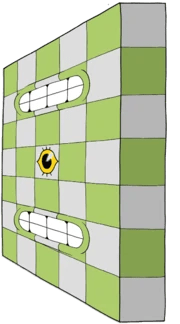 I haven’t talked about the different guns in the game yet. The more toxic element of Cuphead’s fanbase shames players for using the heat-seeking bullets, but I find they work really well for some bosses and pretty much all the Run & Gun stages. They do the least damage of all the bullets, but for sections like the wall above, you’ll regret not having them equipped. They free players to focus on avoiding the various objects and projectiles being thrown at them. Meanwhile, I never used the charge gun once during my entire Cuphead run. I used the Spread/Roundabouts for all but a handful of bosses, while on levels I’d usually do spread/seekers. As for the special items, I’ll get to that in Part Four, but let’s just say that once you have smoke dash, you might as well ignore all other non-guns.

 The majority of my lost lives in Funhouse Frazzle were the result of the brutal introduction to the stage. Once you get past that initial section, the rest of the level plays out in a way that’s almost conservative, at least as far as Cuphead goes. From here out, the challenge comes from simply picking the right spots to swap back to either the floor or the ceiling and making sure to clear the gaps while you’re at it. You don’t even have to engage the tuba guys pictured here, even without the heat seeking guns. Just avoid their blasts, clear one final wall, and you’re good to go. Funhouse Frazzle does lack in big-time set pieces, but as a concept-type stage, it’s unforgettable and one of the best Run & Gun segments in Cuphead!

RUN & GUN #4: Funfair Fever
STATED INSPIRATIONS: Ringling Bros. Circus posters, the Super Mario franchise.
IGC LIKES: Excellent series of set-pieces and high-concept platforming sections.
IGC DISLIKES: The final section of the stage goes a bit too long.
The best of the six traditional levels of Cuphead, Funfair Fever is an absolute delight to play and experience. Like the best levels in any game, it combines a series of memorable set-pieces with a scaling challenge, pitch-perfect timing and placement of enemies and obstacles, all while squeezing as many possible tropes out of the theme as possible. Unfortunately, it does slip a little towards the end, but it still pulls off being the most consistently dazzling of Cuphead’s limited traditional jaunts. Level designers of the world: take notes. This is the good stuff.

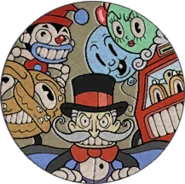 The level starts with a sentient trampoline running back and forth, which you must use to bounce over walls and avoid, or possibly parry off-of, balloons. There’s a risk/reward element to the balloons: if you ignore the non-parriable ones, they’ll float by you. If one is in your way, you can shoot it, but doing so unleashes a hail of bullets that might be even tougher to avoid. There is one issue: the trampoline is shown to have teeth jetting out of the side, or possible spikes. Either/or, but regardless of what they are, they’re drawn in a way to signify something sharp and dangerous, which suggests you MUST keep from touching the sides of the trampoline. In fact, doing so doesn’t damage you, but rather just launches you into the air. This might still result in damage if there’s a balloon overhead, but why include those teeth at all if they don’t hurt you? It’s so misleading, especially in a game meant to be ultra-difficult, where everything hurts you. This won’t be the last time this becomes an issue.
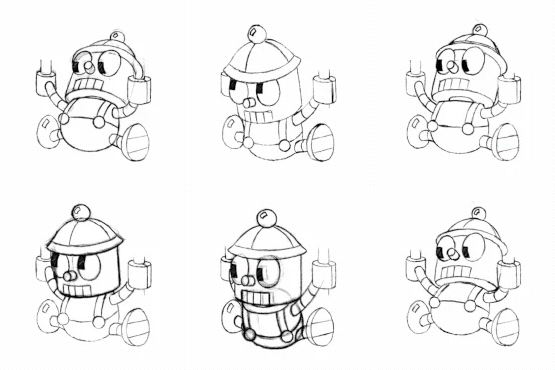 Next is the truly inspired dunk tank section. You navigate a series of platforms, each of which is attached to a target. Along the way, you hit walls of toys that must be shot until they stop refilling. The catch is the final wall is shooting balls this entire time that will drop the platforms upon hitting the targets. It requires quick reflexes, precision platforming, and use of your dash to get past this part of Funfair Fever. Some of the balls can be parried, but otherwise, you have to keep track of the placement of the projectiles and plot which platforms will be safe. Every part of this is well done. They even wisely made the final wall not be unbearably spongy. This is an area so inspired that I wish they’d made a boss battle based around it.

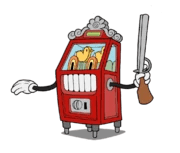 Along the way, you’ll have to face a magician that’s a direct-tribute to Magikoopa from Super Mario World, along with clowns balancing on balls that are pretty easy to get past. This leads to the first of two mini-bosses: a sentient 30s midway-style arcade machine. So cool. This actually makes me wish Cuphead had taken a crack at vintage pinball machines. I bet they could have come up with some imaginative designs (fans of pinball, check out The Pinball Chick!). Anyway, the machine fires off a shotgun that causes duck targets to rain from the sky. The battlefield for this fight is cramped by a previous wall you had to scale over. It’s really well done. Another mini-boss I wish had been turned into a full boss.

 Finally, the stage ends with a bit of a whimper as you scale a few platforms and then make your way across a series of platforms where every-other one moves up and down. You have to shoot down sentient pretzels (truly the most evil of all snack items) and avoid squirts of ketchup, mustard, and relish that look suspiciously like the flames of an iconic game boss. Indeed, the giant hot dog is a direct tribute to Bowser from the original 1985 Super Mario Bros, only there’s no axe to kill it. Instead, you have to ping it until it dies. This whole section goes on forever, and while it’s intense at first, by time you fight the hotdog, it’s long since stopped being white-knuckle and just became an overly long slog. Cut it by a third and it’d been an satisfying cap to one of the best levels in the history of video games.

BOSS #6: Baroness Von Bon Bon in “Sugarland Shimmy”
STATED INSPIRATIONS: The Cookie Carnival (1935), Somewhere in Dreamland (1936), Moose Hunters (1937), Kirby’s Dreamland, Castle of Illusion Starring Mickey Mouse, Candy Land
IGC LIKES: Tons of eye-candy. Hah, get it?
IGC DISLIKES: One of the most RNG-heavy battles in Cuphead, and not in a good way. Absolutely should have been a world three boss.
 One of my biggest complaints about Cuphead is how Studio MDHR completely, totally screwed up the difficulty scaling. There’s two world two bosses that belong in world three, which is incredibly fitting as there’s two world three bosses that really are easy enough to have been world two bosses. Baroness Von Bon Bon (named after Baron Von Blubba, the time-out skeleton from Bubble Bobble) absolutely should have been a battle that happens much later in Cuphead. She’s one of the most difficult bosses in the entire game. Being the 6th boss is ridiculously under-valuing how damn hard (and miserable) battling her is. It’s inexcusable, and the poor placement makes her one of the worst fights in the game.

 PHASE ONE THROUGH THREE – CANDY MINIONS: The fight with Baroness Von Bon Bon opens with three randomly-selected mini-bosses, one of which doesn’t ever appear in simple mode. The order will be different every fight. What’s really bothersome about this arrangement is the five bosses are most certainly not equally difficult. A few are much easier than others, and one in particular is significantly more difficult. On top of all this, environmental elements get added with each passing boss. The second phase adds small, easy-to-miss jellybean soldiers running across floor, some of which can be parried. The third phase adds the Baroness firing a slow-moving trio of clouds at you, the pink-portion of which can be parried, though I have no clue why they bothered with that since it’s nearly impossible to pull off without taking damage. Depending on the order of minions you get, the hazards of the arena can easily become too much to keep-up with. They went so far overboard with this fight that it’s almost shocking.
I’ve decided to breakdown the mini-bosses in the order of least difficult to most difficult.

 LORD GOB-PACKER: The Pac-Man-like evil gobstopper is easily the simplest-to-defeat of the Von Bon Bon’s five mini-bosses. It slowly stalks you around with one of its children (two in expert mode and none in simple mode) not far behind. Even if you’re not using the smoke dash, it’s just a matter of keeping a distance on it and firing upon it whenever you can. Seekers or Roundabouts are especially effective for this battle. You can breathe a sigh of relief if you draw the jawbreaker.

 SARGENT GUMBO GUMBULL: A close second place for “easiest Von Bon Bon mini-boss” that only loses by virtue of it actually becoming a really hard fight if you draw him third on regular. He has the simplest pattern of all the candy mini-bosses, mindlessly running back and forth. If you don’t have the smoke dash equipped.. seriously, go get enough coins to buy it and put it on. I can’t imagine fighting this thing without it, since it allows you to pass from one side to the other without taking damage. On simple mode, you can easily leap over it with the platform. On any other mode, it rains gumball continuously on you. The biggest factor for why this becomes a difficult fight is the sheer amount of projectiles it spews becomes especially overwhelming in phases two and three, when you’re having to watch out for the hard-to-spot jellybeans.

 KERNEL VON POP: Nobody likes candy corn, so it’s fitting that it’s the middle-of-the-pack mini-boss here, neither desirable nor frustrating to get. It sticks to the edges and occasionally cuts up and down the middle of the screen. You simply have to avoid it and the tiny, slow-moving corns it drops. It’s not exactly difficult to avoid, and I’m only putting it ahead of the gumball machine because it moves faster and has a slightly more randomized pattern. If players remember to avoid the center of the screen when it’s moving along the top, they should be fine.
 SIR WAFFINGTON III: I spent the longest time calling this the “chocolate bar” but no, it’s supposed to be a waffle. That’s butter its wings are made of, not filling squirting out (that’s what he said!). Either way, this battle has teeth. It flies in a somewhat unpredictable pattern, and occasionally breaks apart into eight pieces that fly out before returning to the mouth. This is the definitive “crowding your space” mini-boss, since I often found myself pinned against a wall when it began to launch its attack. Even if you get cramped, you can avoid the pieces individually, but it requires absolute precision timing. As tough as this is, it’s also the best, most-balanced of the five mini-bosses.

SIMPLY OFF-PUTTING: This portion of the fight is missing if you choose simple mode. Though this is a rare instance where you’re better off.
 MUFFSKY CHERNIKOV: The only of the five mini-bosses that never appears in simple, and there’s a reason for that. Beating this cupcake is no piece of.. um.. some kind of easily obtainable frosted snack item. In fact, I’d actually make an argument that Muffsky here is the single most difficult phase in all of Cuphead that isn’t a secret phase. Far worse than anything any other boss throws at you, including King Dice or the Devil, with only Djimmi’s optional secret phase being harder. I’ve only successfully defeated it twice, ever. Once was during my fight against it on Xbox One that ended in total victory. This mini-boss leaps around the stage at fast velocities before attempting to butt-stop you. When it lands on the ground, not only is it seemingly invulnerable to your shots, but it creates tidal waves of cream that make the floor deadly. The waves are so low in visibility (in a stage that already has frustratingly small, deadly elements running across the floor) that they’re hard to track and easy to miss. You have to jump to avoid them, which puts you right in the path of the cupcake, who flings himself back up, often right in your direction. I hate this boss. It’s so imbalanced. I don’t know what they were thinking, but the little shockwaves of icing went too far.

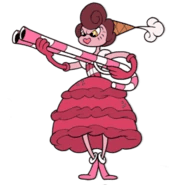 PHASE FOUR (SIMPLE) – CUP HUNT: The Baroness has two completely different ending phases, depending on which difficulty you’re playing. In simple mode, after dispatching the final mini-boss, she pops out from behind her castle and begins firing clouds at you, the pink portion of which you can score a parry off of. While this is going on, the jellybeans are still running across the floor. It’s not an incredibly complex fight, but I found it to still be very difficult, even for a “simple” mode. This is one of those fights where equipping the spread gun bites you in the ass, since it requires you get close enough for the shorter-ranged bullets to hit. The clouds can be shot down, but it takes several hits to do so, and being in close proximity might not leave you with enough time. The only way I could successfully beat this phase was to throw on the Seeker and cheese it by standing back and letting the bullets slowly ping her to death. It’s especially frustrating because the bullets chase down her bullets and the jellybeans too. But, I went ahead and played ten complete rounds against the Baroness on simple. The “stand back and shoot the seeker” method carried a 100% success rate with absolutely no effort needed. That officially qualifies as cheese in my book.

SIMPLY OFF-PUTTING: This portion of the fight is missing if you choose simple mode.
 PHASE FOUR (REGULAR) – HOLY CRAP, NOW THE CASTLE IS CHASING ME: If you’re playing on regular or expert, upon beating the third mini-boss, the castle comes to life and starts chasing you. Suddenly, this boss fight becomes an auto-scroller where you must keep running left while avoiding obstacles and still figure out a way to shoot the Baroness. The creepy bitch THROWS HER HEAD OFF at you, which heat-seeks you for a bit before pausing to linger and block your movement before heat-seeking you again. Oh, and the the castle itself spits out giant peppermints, but at least you can parry off those. This whole section is far too spongy and goes on so long that it renders what should be a memorable “holy shit!” moment into a fight that’s actually a little boring. A miserable conclusion to one of the poorest-balanced bosses in the entire game.

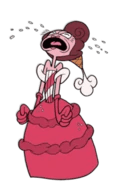 FOOD FOR THOUGHT: How the hell did this make it past play-testers in one of the most extensively play-tested indie games ever made? Seriously, I know the team at Cuphead is capable of better. NO, I’ll take it a step further: I know they’re smarter than this. I know they are because, throughout the entire game, they deleted several concepts that were speced-out and often even programmed because they knew it threw the balance off. Apparently, even this fight had some major deleted content, including having the jellybeans begin jumping (oh FUCK OFF for even thinking about that!) and a sixth mini-boss that would have paid tribute to the red arremers from Ghosts ‘n Goblins (these things). How could
  they show restraint in keeping those things out of this battle but still manage to make such a frustrating fight? To put it in perspective, I’ve beaten Cuphead twice now, and the only boss I died fighting more times than the Baroness is Rumor Honeybottoms from Inkwell Isle III. In fact, I’ve actually have lost more lives to the Candy Bitch over my two full play-throughs of Cuphead than I have to King Dice and the Devil COMBINED! Yet, this is considered the first boss of the second world? No. Just…………………………………. no.

BOSS #7: Beppi the Clown in “Carnival Kerfuffle”
STATED INSPIRATIONS: He Who Gets Slapped (1924), Beetlejuice (1988), Super Mario World, Dynamite Dux, Koko the Clown
IGC LIKES: A memorable boss fight with four distinct stages.
IGC DISLIKES: One of the most cheesable stages, especially with the spread gun.
 One of the iconic fights of Cuphead, the crew at Studio MDHR struggled with the design of Beppi more than most of the game’s cast of characters. In fact, the Art of Cuphead shows several possible designs that range from traditional terrifying clowns to slightly more terrifying clowns to “what the HELL is that?” surreal clowns (also terrifying). This is one of the few fights in Cuphead where every phase is a distinct form with unique attacks and play styles. Is Beppi fun to fight? Yes, but some weirdly exploitable portions of the game make it too easy to cheese as well.

 PHASE ONE – BUMPER? I BARELY KNEW HER!: This is one of the most invasive phases of any boss battle in Cuphead. Beppi shuffles along in a bumper car, but the way he does it is so erratic that you can’t ever get a comfortable feel for safe distance. When you think he can’t scoot any further, he does. When you think he’s going backwards, he goes forward. Eventually, he’ll zoom forward and you have to jump over him, but while you do this, there’s shooting gallery duck targets passing above you that are lethal to the touch. Some of these can be parried, and all of them only take a single hit to render safe. This is actually one of the more intense opening phases of any boss in Cuphead. Even in replaying it, I was caught off-guard by how hard to clock this whole sequence is.
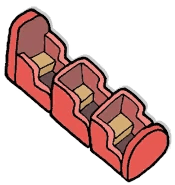
 PHASE TWO – BALLOON FIGHT: Beppi becomes a giant balloon animal machine that unleashes dogs upon you, some of which can be parried. This would be one of the easiest phases of the game, if not for the fact that a roller coaster becomes part of the fight at this point. You can parry off the nose of the front of the coaster, but you still have to dodge seats occupied by crash test dummies. Weirdly, the back of the coaster looks like it would also be lethal to the touch, as its covered in spikes. But, it doesn’t hurt you. DON’T DRAW SPIKES IF THEY’RE NOT GOING TO HURT YOU! This is real basic game design stuff, people!
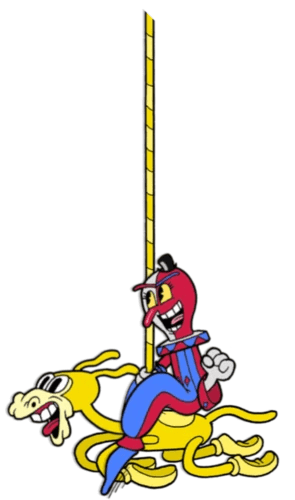 PHASE THREE – A HORSE OF A DIFFERENT COLOR: Bring on the cheese! If luck is on your side, you can park yourself right under Beppi and unload bullets directly into him with minimal fuss. There’s two attacks here: if the horse is green, it’ll cough up horseshoes that travel in a sine curve at you. This usually includes one that can be parried. If the horse is yellow, a fast moving row of shoes will shoot out, stop, then drop straight down, leaving a small safe zone for you to avoid them. The roller coaster remains active for the entire fight, but you can see when it’s coming if you watch for it to climb up the hill in the background. Just stand under the horse and pump it with bullets. This is one of the easiest and most embarrassing phases in all of Cuphead.
 PHASE FOUR – CAROUSEL OF DEATH: One of the most visually striking finales of Cuphead, the carosuel is also surprisingly difficult. Even if you are using spread and cheese it by using your special attack in the center, which results in all eight bullets immediately registering a hit, the carousel is spongy enough that it takes quite a while to beat it. The roller coaster goes significantly faster this phase, so much so you’re really only safe by leaping across the chairs. But, Beppi also spits out baseball-throwing penguins (a nod to the Chargin’ Chucks from Super Mario World), which prevents you from getting into a rhythm on the swings. I can’t imagine how hard this would have been without the cheese of the spread shot. Compared to the previous two phases, this is maddeningly difficult, and also epic as all hell. One of the great finishes to a battle in the game. If only they were all this amazing.

 FOOD FOR THOUGHT: This is a boss that Studio MDHR had to work quite a bit on before they got it to the point that they liked the look, personality, and set-pieces. For all the numerous problems Cuphead has, they never settled for “eh, good enough” when it came to their character design. Even if it caused delays in getting into the meat of programming, they kept experimenting with the appearance until they got it where they LOVED it. Beppi is the prime example of that, and the final result is an unforgettable boss. There’s a lesson to be learned there for indie developers: the game itself might not come out the way you want it to, but it’s going to be your name on it. Work it until you’re VERY happy with the end product. If you’re settling for “that’s fine, I guess” it’s time to rethink things.

BOSS #8: Djimmi the Great in “Pyramid Peril”
STATED INSPIRATIONS: Darkstalkers of all games (the sarcophagus section), any game where you fight an evil version of yourself.
IGC LIKES: The best of the shmup levels, and one of the most memorable boss fights in gaming history, with five distinct phases (the most in the game).
IGC DISLIKES: RNG luck rears its ugly head again. And my sister beat this on regular on her very first try ever, which is SO annoying because I’ll never hear the end of that.
 The battle with the genie is probably the best stage from a technical standpoint in all of Cuphead. While I’m not sure it’s the most fun to do battle with (honestly, I don’t have a favorite boss) and perhaps goes a little too long, Pyramid Peril is the complete Cuphead package. The artistry on display here, from the character design to the memorable set-pieces, the music, and even the background combine to form a truly wonderful experience.. provided you get the right RNG. And you don’t just totally cheese several of the phases. Or you don’t attempt to beat the nigh impossible secret fifth phase. Okay, wow, Djimmi has a lot of “ifs” doesn’t he?
 PHASE ONE – TREASURE TRACKERS: The genie unleashes one of three random attack styles on you. Such as the worst random elements of Cuphead, these three patterns are not equally difficult. The swords are the most desirable in my opinion. They’re the largest and easiest to to avoid, as they come out and take a formation before heat-seeking in your direction. Another wave has the chest simply spam the screen with small pieces of junk, some of which can be parried, though the pieces might be too far away and with too much clutter between you and them to reach. Finally, miniature cat sarcophagi open to reveal heat-seeking cat scarabs, one or more of which will be parriable. The junk/cat waves are very problematic in how much crowding they feature and how much luck you need to even be granted a clear path. I’ve seen professional players have perfect runs ruined during these phases (granted, on expert. Still counts..)

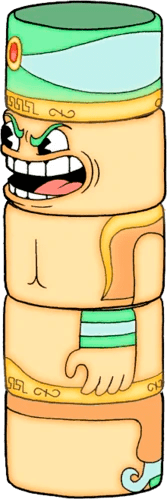 PHASE TWO – PUNCTURE THE PILLARS: This is where the genius of Cuphead’s design really shines. You’re still fighting a boss here, yet the stage transitions to a vintage shmup area where you have to shoot your way through walls. Only the bricks with faces can be destroyed, and you also have to dodge bouncing spinning blades while you do it. The faces, still being part of the boss, count towards damage, so if you use bombs, the overkill damage carries over to the main fight. If there’s a column with two faces and you blow them both up, you essentially do double the damage to Djimmi for that section. This allowed me to beat the third phase in literally five seconds yesterday. Whoa! Hey everybody, look at me! I’m a speed runner! Next thing you know, I’m going to be mainlining Red Bull and hocking shitty gaming equipment from a shady sponsor on Twitch.
 PHASE THREE – SAR-COUGH-AND-CUSS: If you don’t totally cheese your way past this phase, you can cheese it in other ways. A series of mummy-ghosts will float out at three different speeds while Djimmi is now basically a formless slug who occasionally shoots out bullets shaped like Saturn that are actually his eyeballs, because gross. You can switch from bullets to bombs, linger towards the top of the screen relatively close to Djimmi and cheese your way through this phase without taking damage.. sometimes. I’ve heard some players can pull this off 100% of the time, but I take damage every 3rd or 4th attempt at it, which still means this is a safe and effective strategy in at least two-thirds of the runs. I think it’s a matter of whether you get in the right rhythm for when the mummies spawn versus when you’re actually firing the next bomb. If not for this trick, this wave would be really hard, but the trick is there, so it ain’t.
 PHASE FOUR – CUPPET: Cuppet is certainly one of the more memorable encounters in the entire game, so much so that I sorta hope it returns for a traditional platforming-based boss fight in the DLC. Hell, that would be an interesting DLC pack, no? Take the five shmup bosses and turn them into platform encounters, and maybe remix a few of the traditional bosses as shmups? That idea is all yours, Studio MDHR. Anyway, the ability to totally screw with the Djimmi ends here. Cuppet shoots you with bullets, some of which can be parried, and all the while the genie’s hat floats aimlessly around, causing crowding issues and occasionally unleashes waves of bullets. The fight gets surprisingly intense here, as you always feel like you have very little room to maneuver. The intensity combined with the menacing laugh of Djimmi when Cuppet starts firing at you assures this is a phase you’ll never forget.

SIMPLY OFF-PUTTING: This portion of the fight is missing if you choose simple mode.
 PHASE FIVE – YEA, HE’S HUGE NOW: The final phase of Djimmi is almost as visually striking as the Hilda’s moon phase, but this is a lot more difficult, as the genie spawns three Illuminati-style pyramids that unleash deadly waves across the screen. It’s a solid concept, but problems abound. One issue is that Djimmi fires an almost-invisible series of ring-bullets. Why did they make them so transparent? I didn’t even realize what was pinging me at first on a multi-thousand-dollar 4K TV when playing on Xbox. The first time I actually beat Cuphead, it took me several rounds before I even realized I was being shot during this section. In a game that put such a high premium on mind-blowing visuals, it’s jaw-droppingly stupid to have any projectile (in a goddamned shmup stage nonetheless!) be so transparent that you can easily miss it in the heat of battle. Once I knew what to look for, it’s a matter of sticking to the center, avoiding the death rays, and hurling as many torpedoes as I can charge-up at it. Thankfully, this phase is over quickly.
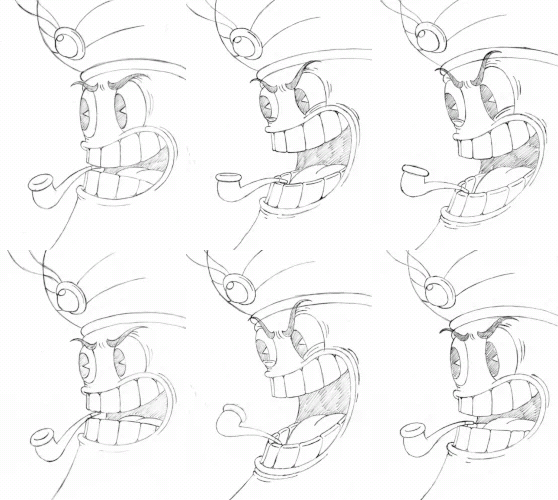 SECRET PHASE FIVE – I REALLY SHOULDN’T HAVE DONE THAT: If, during the transition between the third and fourth stages, you shrink down to the smaller plane as Djimmi scans you to find the inspiration for Cuppet, you’ll actually skip the fourth phase entirely and go directly to finale, only with a twist: a miniature Cuppet will now clog up the center of the ring of pyramids. You know, that area where you were relatively safe when you beat this without the secret phase? Not only does he clog it up, but he fires bullets in addition to all the other attacks of phase five. It turns a fairly balanced finale into likely the hardest phase in all of Cuphead. Every-other bullet fired by the mini-Cuppet is parriable, though in almost thirty attempts, neither Angela nor myself could score a single, solitary parry off this. There’s no comfort zone and every single area you can maneuver is now a tight squeeze. I’m not ashamed to admit: I couldn’t beat the secret phase. It’s a nice bonus though. You know, if you’re a masochist.

 FOOD FOR THOUGHT: I didn’t realize how deeply flawed Djimmi was until I really dove deep into the nuts and bolts of this battle. Pyramid Peril has more problems than an algebra quiz. Yet, it’s a sequence nobody who plays it will ever forget. A big part of that is Studio MDHR’s imaginative “anything goes” attitude with characters and phases. But, I have to also call attention to the incredible backgrounds of all the Cuphead battles. The battle with Djimmi is a tribute to the 1930s Fleischer Studios “setback” backdrops for their Popeye cartoons. They could have easily cheated and did the thing in CGI, but instead, they used real models and photographed them just like artists from nearly a century ago did. A lot of things frustrate me about Cuphead, especially the snotty attitude of gating via the easier difficulty that’s just about as shittiest a thing I’ve seen a developer do in my ten years of IGC. But, I admire the fact that nobody at Studio MDHR took any shortcuts making Cuphead, when they could have in multiple different ways. It’s commendable, even if the studio is populated with more dicks than the national convention for the American Association for the Advancement of Persons Named Richard (the AAAPNR, annual dues are $75 and include a quarterly newsletter, though it’s mostly full of dicks too).

BOSS #9: Wally Warbles in “Aviary Action”
STATED INSPIRATIONS: Popeye the Sailor Meets Sindbad the Sailor (1936), Yoshi’s Island, Earthworm Jim
IGC LIKES: The most conventional of the five shmup levels, until it’s suddenly not. Absolutely twisted finale. Fine-tuned difficulty balance.
IGC DISLIKES: Final phase, twisted as it is, also totally ruins a great level.
 One of the stranger levels in all of Cuphead. Apparently, one of the least memorable too. Nobody talks about Wally Warbles, and this in spite of the battle having some damn shocking macabre imagery and an up-tempo theme that includes a sample from Ride of the Valkyries.The fight literally ends with two EMT birds salting and peppering Wally’s possibly dead body, an unforgettable visual, yet this isn’t one of the top discussion points of Cuphead. What happened here? Maybe it’s too traditional, until it’s suddenly not.
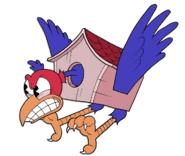 PHASE ONE – SCRAMBLED EGGS: Wally usually starts by shooting comically large bullets from his fingers before he starts coughing up eggs. The eggs have to be dodged from the front and back, as they break into three smaller portions against the wall. Oh, and during the first two phases, chicks (as in baby birds, not me) fly across the screen with goddamned nails tied to them. Seriously, this is one twisted stage. It’s also as conventional as a shmup gets. Though it never feels like it, I suspect that’s why Wally is one of the “forgotten” Cuphead bosses. If, during this phase, you replaced Cuphead with a spaceship and Wally with a.. er.. larger spaceship.. would you even think of this as a Cuphead boss? Perhaps this was too conservative and Studio MDHR should have focused on more character gags. I dunno.

 PHASE TWO – PULLET HELL: I’m far too proud of that pun. Give me a moment to pat myself on the back. (ahhh, that’s the good stuff) So, yea, after X amount of shots, Wally loses his shit and starts spamming the screen with feathers. As far as lazy bullet hells go, this isn’t bad. No, I can’t explain why this is okay while in Part 3 of this review I’m going to absolutely skewer Dr. Kahl’s Robot for doing the same thing. Well, maybe I can? #1: this is more creative. Dr. Kahl’s Robot involves the mad doctor simply hold up a diamond that generates the bullets. This is a bird that’s so angry it’s shaking all its feathers off at you. That’s more in the spirit of this battle than the Dr. Kahl setup-payoff is. #2: They’re also larger and easier to dodge bullets. #3: The section doesn’t go on as long. The bullet hell in Dr. Kahl’s stage goes for nearly half the battle. So long that it stops being intense and simply gets boring. #4: The lazy bullet hell (and let’s face it, this shit IS lazy) isn’t the finale to Wally’s battle. Dr. Kahl’s is, and combined with the length of the spamming, it makes winning feel less victorious and more a sense of relief that it’s finally over. That’s why it’s not fun there but it is here. Okay, so I could explain why it works here. The best bits in games are the ones that are in service to the setting and characters.
 PHASE THREE – WILLY WARBLES: God, this thing is so creepy. But, again, the conventional shmup design of having a shield around the enemy and having to carefully aim to get your shots in works so well here. Not only that, but as the eggs spread outwards and you have to weave your way in and out of the shield, it NEVER stops feeling intense and awesome. I also like that all of his shots can be parried, though at no point in Cuphead did I have more instances where I both scored a parry AND took damage than during this phase. It’s so weird. How is that even happening? Shouldn’t the act of being shot be the end of the bullet, thus no parry, or the act of scoring the parry also be the end of the bullet? One or the other, gang. I’m going to guess this is a glitch that never got patched out, but it happened several times.
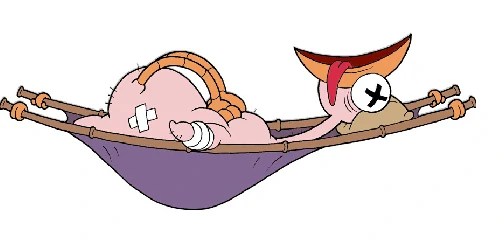 PHASE FOUR – THAT’S SO DARK IT LEAKS HAWKING RADIATION: (rubs eyes) Yea, so a mangled Wally is being stretchered out by two EMT birds, and the level totally shits the bed here in terms of feeling fair. Wally, the two EMTs, and even Wally’s heart are shooting you, but there’s little room to maneuver and get your attacks in. It’s the issue with the giant moon in Hilda’s stage, amplified: you have to spend forever getting back to this section only to quickly die over and over again trying to figure out where the bullets are coming from and how you can dodge them. But this time, there’s an even larger variety of attacks. Heck, I often took damage that I didn’t even know where it came from. Every time I’ve beaten Wally, I felt like I got lucky that I didn’t die right before the final point of damage came in. It seems like it’s meant to be a finale that forces the use of bombs, but perhaps they would have been better off limiting the final phase to Wally’s coughing-up of his own bullet-spitting heart and having players shoot it while dodging the pills from the EMTs without all the other crap. The heart gag is brilliant and original! The whole phase should have been built around it!

 FOOD FOR THOUGHT: Yea, Cuphead has an issue with closing the deal on their fights, but I appreciate the anything-goes attitude. As far as visual gags go, seeing the EMT birds begin seasoning Wally is so damn funny that I almost forgive how sour a note the fight ends on. One of the amazing things about Cuphead nobody talks about is how smart the decision was to have fights end with a boxing bell and the dramatic “A KNOCKOUT!” graphic instead of having a typical gaming death animation. I mean, those happen too, but the moment you win is a MOMENT, and Cuphead does that moment even better than Shadow of the Colossus.

BOSS #10: Grim Matchstick in “Fiery Frolic”
STATED INSPIRATIONS: Mega Man 2, Contra III: The Alien Wars, Woos Whoopee (1930), Mickey’s Fire Brigade (1935)
IGC LIKES: Fun personality? Eh, screw it: there’s nothing redeeming about this fight.
IGC DISLIKES: Randomized platforms. The fact that I had several rounds that only had two chances to parry.
 The other boss that’s so hard that it should have been moved to world three, and in my opinion, one of the worst bosses in all of Cuphead. An auto-scrolling nightmare with totally randomized attacks and more issues than Time Magazine. It’s not merely a slog to fight, but I think it’s just really badly done overall. In order to get high grades at the end of fights, one of the conditions is that you must score three separate parries over the course of the match. But, I had multiple battles with Grim (named after Snow White animator Grim Natwick) where only two chances for a parry ever happened over the course of the fight. You can’t do that, Studio MDHR. If parries are so fucking important, you have to give players more chances at them. There should be something parriable every round. Inexcusable. This boss is total crap.
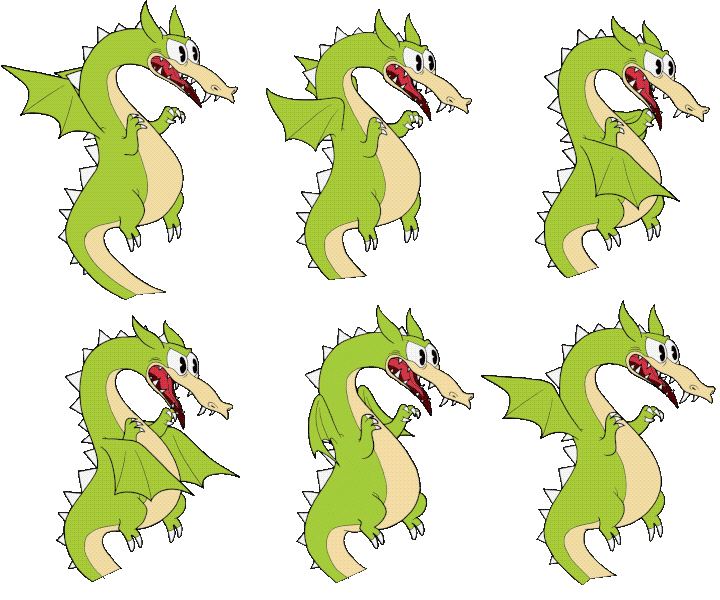 PHASE ONE – HOW EXACTLY IS THIS A “FROLIC” HMMM?: This miserable battle opens with Grim shooting laser eyes at you. This could be the only part in the entire match where you have a chance to score parries, BUT, he might only shoot the lasers twice at you. From there, he’ll spit meteors at you and jab his tail up into the playfield. After this, what he does is randomized, and it leaves open the possibility he’ll never fire the lasers again and stick to the meteors. Even though one of the conditions for a perfect score is scoring three parries, it’s not even that rare for a match with Grim to only have the two parriable shots fired. I had several times where I played good (well, good for me) but I’d been at a disadvantage in the score because the game never presented me with the opportunity for the final parry I needed. It pisses me off so much because I actually cared this time whether or not I got high scores on the bosses (my mission this session of Cuphead was to score at least an A- on every battle). And there were multiple other instances where they could have very easily programmed other parry opportunities in phases two and three. What an absolute brain fart on their part. The randomized platforms also often have unfair alignments, and the stage moves just fast enough that you can be absolutely screwed.

 PHASE TWO – MATCHSTICK MARCH: This WOULD be the most interesting part of the battle, since there’s nothing quite like it in any other game, but again, it’s a pain in the ass because of those randomized platforms. The flames marching across the bottom will periodically fling themselves up at you. They could have easily made the occasional one pink. I mean, it would make total logical sense and reward fast-reflexes. Not sure how that didn’t happen, especially since you could totally be fucked on your grading after the first phase. Seriously, I’m not letting it go. It makes me mad. Anyway, this is probably the best part of the fight, since I’ve never experienced this type of action in any game. It’s inspired. I wish the rest of the fight hadn’t been completely unlikable.
 PHASE THREE – HEY, WHERE DID THOSE OTHER HEADS COME FROM?: Grim is now three-headed and constantly spits fireballs at you. The fireballs break into four directions if you accidentally shoot them, which is sort of inevitable. After a while, the middle head will throw on a mask and spit a flame across the middle of the screen, and I’m sure it’s because I suck at video games but I never saw this coming. A big reason for that is this phase takes place in a really dark lightning storm, and since you have to focus completely on making your jumps, you can’t really pay attention. The first few times you fight Grim, it feels like a GOTCHA! but at this point I’ve come to expect that shit from this fight. The third world somehow opens with an even worse battle, which is the only thing that keeps Grim Matchstick from being the bottom of the barrel of Cuphead’s otherwise epic bosses. And again, any of those bullets Grim fired could have easily been a parry chance. Grrrrr. SERIOUSLY HOW DID THEY FUCK THIS UP SO BADLY?

 FOOD FOR THOUGHT: In theory, the only way to 100% for sure prevent the Grim Matchstick battle from shorting you on enough parries to earn a perfect score is to deliberately play poorly until the third parry is earned. Um, yea. When was the last time a truly great action game penalized players for excelling? The obvious answer is to not force players to score parries, but I actually like that idea. I just think, for something that they put such a high premium on, they really needed to include more chances at them. Not just in this fight, but several others. The good news is, this could easily be fixed with a patch. I mean, the overall fight can’t. It’s boring and bad as a concept, except the second phase. But, at least they can take away the frustration of playing perfectly and still only getting an A instead of an A+ because the damn dragon only shot twice at you instead of three times.
Click here for Part 3 of Cuphead: The Definitive Review! I head to the biggest world in the game: Inkwell Isle III, where I’ll face two more Run & Gun stages and seven bosses.


 RUN & GUN #1: Forest Follies



 RUN & GUN #2: Treetop Trouble






 BOSS #1: Goopy Le Grande in “Ruse of an Ooze”








 BOSS #2: The Root Pack in “Botanic Panic”










 BOSS #3: Ribby and Croaks in “Clip Joint Calamity”



 FOOD FOR THOUGHT: I get that it’s a slot machine and it’s supposed to be random, but maybe for the sake of difficulty and consistency, they should have gone with the illusion of randomness while rigging the machine so a player experiences every wave. The really weird thing is, when I beat Cuphead the first time, I never got a “desirable” series of chips during the final wave. Then, when playing on Switch for this review, I got a double snake-head, which led to a fast knockout and a perfect score. Even weirder: when I went back to get media of the other waves, I kept getting the snake heads, to the point that I wondered if the Switch version removed other waves. I got a lot of crap from the “git gud” crowd with Cuphead, but it’s telling to me that so many bosses can be beaten by gittin’ lucky instead. For a game defined by extreme difficulty, how tightly designed can it really be when you can have entire runs determined by random chance?
 BOSS #4: Hilda Berg in “Threatenin’ Zeppelin”
 Cuphead including shmup levels was jarring as hell to me at first. It’s one of those genres that I didn’t realize how much I loved when I first reviewed Cuphead. It felt like a party crasher. I later came to realize the shmup levels are the most consistently solid and balanced stages in the game. And also I’m apparently really good at shmups, as I could take these down with the fewest attempts. It all starts with Hilda Berg, whose design came from a power-up in the game Alex Kidd in Miracle World of all things.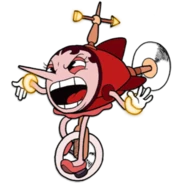
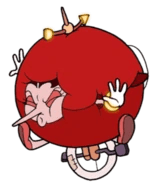
 PHASE SIX – CURSE OF THE MOON: One of the most scary and imaginative character designs in Cuphead, the giant moon is an unforgettable finale to the first shmup level. It’s also one of those moments where trial-and-error will inevitably factor in. When the face is inside the moon, you’ll have to simply avoid a series of stars that fly across the screen (some of which can be parried). When the face opens up, the space you can work with is cut in half and a parade of UFOs will march across the top of the screen. Keeping yourself in front or behind the lethal beams of the UFOs has a huge learning curve to it. For most players, they’ll make it to this final phase and perish several times before they get it right. It’s a bit frustrating, since this is by far the best portion of the entire battle, and getting there can be a slog after a while.
 BOSS #5: Cagney Carnation in “Floral Fury”
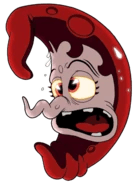
 One of THE icons of Cuphead, the battle with Cagney Carnation was heavily inspired by several plant-based bosses in gaming history. It’s more than simply the juxtaposition of a cute, wholesome flower that suddenly screams at you and then looks like the most evil thing that ever eviled. It’s a boss that checks every box of the Cuphead experience: crowded, relentless, and maybe just a little too reliant on RNG luck. Unlike a lot of bosses, Cagney really only has two phases. But, the variety of attacks in the first phase makes it one of the more intense battles in all of Cuphead. Hell, in around fifty attempts at beating it on expert mode, I only made it to the second phase twice. Twice! They might have gone a little over-board.
 PHASE ONE – I’M PRETTY SURE CARNATIONS ARE A DIFFERENT SPECIES: No matter the difficulty, RNG factors heavily into the battle. When he becomes a machine gun that fires seeds into the air, one of the seeds is capable of scoring a parry on. Whether or not you’ll have a safe chance at scoring that parry is total random chance based on where it’ll fall or if other hazards have already spawned that will prevent it. Another luck-based attack is Cagney’s full-screen stretch. If he does this across the bottom lane, you should have a few moments to cleanly, safely plug away bullets without having to move a muscle. It’s still safe even if he chooses the top lane, which requires you to duck below it. But, this attack might not even happen at all. I had several battles where he never fired it once.




 Cape’s Escape Games are developed by Alignment Sharp


 Drizzlepath: Deja Vu was developed by Tonguç Bodur


 Worse Than Death was developed by Benjamin Rivers


 Angry Video Game Nerd I & II Deluxe was developed by FreakZone Games


 Save Me Mr. Tako: Definitive Edition was developed by Christophe Galati


 Pushy and Pully in Blockland was developed by Resistance Studio
 RSS - Posts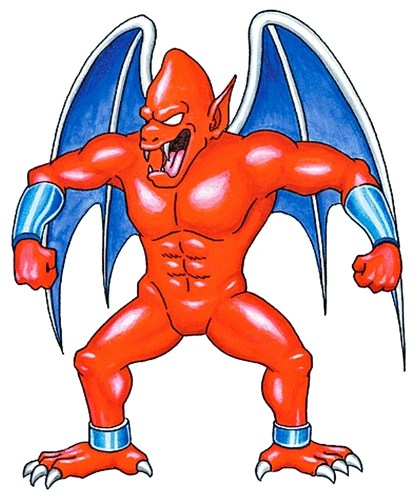
You must be logged in to post a comment.