Castlevania Chronicles (PlayStation Review)

Castlevania Chronicles
aka Akumajō Dracula

Platform: PlayStation
Released May 24, 2001
Directed by Masayuki Umasaki
Developed by Konami
NO MODERN RELEASE*

*Castlevania Chronicles appears to be fully delisted from all global PlayStation platforms, but I was unable to confirm this.

Hey, if the Simpsons can get away with Halloween in November, why can’t I?

I nearly did Castlevania Chronicles for Halloween, but I lost interest thinking it was little more than a remake of the first game. Hey, I have much love in my heart for the first Castlevania, but I’ve already reviewed it, so I chose to do Dracula X instead. Besides, I didn’t even have a PlayStation emulator up and running, so all I had was my Vita, wherever the hell it is. I bought Chronicles (or got it with PS+, I don’t remember which) but I don’t remember ever booting it up. Well, Chronicles has a lot in common with Dracula X. They’re both remakes of the original Castlevania. I know that Dracula X is supposed to technically be an alternative take on Rondo of Blood, but I mean.. come on. It’s a back-to-basics Castlevania, only with new level design and “fancy” graphics that are actually pretty damn bland. That sentence is about Dracula X, but it PERFECTLY describes Chronicles, except the bland part. This isn’t just a graphical overhaul along the lines of what Super Mario All-Stars did for the NES Mario games. This has new set pieces, new bosses, removes other bosses (or demotes them to one-off mini-bosses), and features seven entirely (or almost entirely) new levels. And that’s a real pain in my ass because I thought this would be a fun little quickie review to buy me time while I work on the bonus reviews for Tetris Forever: The Definitive Review and it turns out this is a whole new game that I’ve never played before. Well f*ck.

There’s something about fighting a normal Merlin-like wizard that feels completely out of place in a Castlevania game. This is like the type of boss you’d expect in one of the Game Boy Castlevanias, and in fact, this is apparently the same boss from Belmont’s Revenge. Hell, the thing in the center of the screen, which is just an attack by the wizard, should have been the boss.

Actually, it’s worse than that, because this game was first released in July of 1993 for the Sharp X68000 exclusively in Japan as Akumajō Dracula. Castlevania Chronicles is a remake/reimagining of a remake/reimagining of a game that’s then re-remade/re-reimagined a third time. You can play the “original” game from 1993, which I was certain was going to be a beat-for-beat remake of Castlevania 1. It’s not. Then you can play “Arrangement” which I figured would change up the level design. It doesn’t. Both games are, more or less, the same game, though Arrangement’s difficulty is rebalanced. The only other difference is your character’s appearance and the final boss’s appearance. They didn’t even change the backgrounds. Here’s nearly the same screenshot above, only it’s taken in the “normal” mode.

I played this version first, by the way.

Only a few special effects have been added. The giant bat you fight at the end of the first level plays identically, but now it has a spooky motion blur when it moves. I mean, sometimes, but not all the time. Oooooh. The arrange mode is a lot easier, too, though I’d be hard-pressed to explain why. The original game ate me for lunch so badly that I opted to play with save states instead of lives, but I ran through Arrange mode only losing one life the entire time. Maybe I was taking less damage, but if that’s the case, the effect is so subtle I didn’t instinctively notice. Apparently this mode has adjustable difficulty, but I have more Tetris to play and I really thought I was playing a remake of Castlevania 1 that I could knock out in a few hours, so I never experimented with the difficulty settings. Whatever was the default is what I played on. I know that I unlocked concept art when I finished, and there’s also an interview with producer Koji Igarashi, making this one of the first games with DVD-like extras (Digital Eclipse was doing this too with their Arcade’s Greatest Hits line).

If you think this is grainy, try imagining it on the Sega CD.

Only the first level and the final battle with Dracula resembles the original Castlevania, but besides those, only tiny chunks of stages show up. The “Infamous Hallway” leading to the Grim Reaper fight is here, only it takes place in front of a crumbling mural and other spooky paintings. Fun fact: the mural can be any of the four seasons, depending on the X68000’s internal clock. The original PlayStation doesn’t have a clock, but a code can change the date, which changes the mural. The section of the final level where you have to jump over pits while fighting and/or avoiding multiple giant bats that you fought as the first boss? That’s here. And.. actually, that’s about it. In fact, all the other levels feel completely different from the original game, and so do the bosses except Dracula. Medusa is no longer just a giant head. The mummies are gone completely. Frankenstein is a one-off set-piece mini-boss (I wanted to see how many hyphens I could get in a row). The Grim Reaper is a total push-over, and Dracula isn’t far behind him. Hell, the holy water isn’t the be-all, end-all to beat the game anymore. The boomerang is much more effective than it ever has been, as it does more damage than the whip, easily.

Calling “The Creature” a mini-boss is a little unfair. He might not have a life bar or the boss music, but he IS a boss that takes about the same hits (or maybe just a little less) than a normal boss. The timing of when the electrodes wake him up is totally off, though. You don’t see it come to life, but otherwise, this is functionally a mid-level boss battle that’s more exciting and intense than a couple of the real bosses, even including the Grim Reaper. There’s other mini-boss set-pieces. A stained-glass window shatters and comes to life, Young Sherlock-style (it’s so close that it’s a safe bet the producers of Chronicles were big fans of the film), and you fight a giant skeletal spider at one point.

The biggest problem with Chronicles is it has a massive tone problem. Yes, Castlevania is inherently silly, but what I think makes the original games work is they never say “oh, we know it’s ridiculous.” All those early games, including Super Castlevania IV, are totally sincere, so what should be an absurd farce actually does become genuinely scary at times. Castlevania never gets enough credit for that, but all that crap is out the window in Castlevania Chronicles. At one point you enter.. um.. what the hell is this?

Dracula’s day care center? I guess? A gigantic play room that sees you fighting dolls and toy soldiers. Dolls can be creepy, and the dolls in Chronicles are actually some of the tougher normal baddies to deal with in the entire game. But, stylistically, it didn’t work the way they dressed it up. It feels like a satire of Castlevania, but this isn’t the only part like that. In the second-to-last level, my jaw literally dropped when skeleton jump ropes appeared. Not just skeleton jump ropes, but DOUBLE DUTCH-STYLE skeleton jump ropes. Maybe these would have been fun and frisky set pieces for the early parts of the game, but they come in the last third of Chronicles, and they’re just too absurd to hold the mood Castlevania aims for. What was the pitch meeting the monsters made to Dracula for the jump rope? “Okay, we know that the Belmonts have defeated us for, like, century after century, but hear us out! We have a plan that will surely prevent this Simon character from ever making it to you. You know how nobody likes exercise, right? Well, what if..”

This was apparently not a fever dream I had. I double-checked and everything! This is real! That or I just uploaded a picture of a blank screen and my readers are checking with friends to make sure I’m okay.

If I didn’t know better, I’d think this game came out in the 2020s. It’s Castlevania based around subversion of expectations. Like you know the first piece of meat you find in the first Castlevania game? I gave that a whole paragraph in the Castlevania review because it was the perfect example of how to educate a player. They put a bat in front of it in order to assure players whipped the wall, revealing the meat and showing that Castlevania is a game with breakable walls. Well, that wall is back in Chronicles, only when you whip the wall, this happens now:

Since it’s hard to see them, yes, those are the jumping men. An endless stream of them, and that’s not an exaggeration. Tons of them keep spilling out until you leave the room.

That’s just a dick move extraordinaire right there. What’s frustrating about stuff like that is Castlevania Chronicles is, more often than not, pretty dang clever with its level design. This isn’t a half-hearted assortment of platforms and staircases, like Dracula X. Chronicles is solid from start to finish. I just beat it twice, and I could have kept going and challenged the time attack modes (unlocked after beating Arrangement) without being bored. It’s certainly not perfect. The difficulty curve is all over the place and some needless last pixel jumps somewhat spoil the fun. The new bosses are a little on the generic side, with the exception of the best werewolf fight in Castlevania. It takes place in front of a clock, and it actually throws the numbers off the face of the clock at you, then grabs the minute hand and uses it as a melee weapon when it’s down to its final ticks of health.

The remake of the original final battle with Dracula includes no real surprises, which was a bit disappointing. Hell, the final form doesn’t even have a different sprite in Arrangement, like the first does. However, I love how big the boss is, so I’ll let it slide.

I won’t say that Chronicles has a bad reputation, as contemporary reviews I think were more middling thanks to the timing of release. People wanted new in 2001, not old. The PlayStation 2 was already out by the time Chronicles was released, and the GameCube and Xbox were literally just about to come out, but Castlevania wasn’t so old that it qualified as “retro.” Had this come out today, in 2024, I honestly think it’d get 9s and 10s from critics. Instead of a “bad reputation” I’d argue that Chronicles has the WRONG reputation. It’s just not a remake, period, end of story. Try to imagine it as the REAL Castlevania II that happened just before Dracula’s Curse. On those terms, Chronicles is actually kind of the perfect sequel.

It also makes a lot of bone-headed decisions, like having the skeleton spider, a one-off set piece, be obscured by the status bar. We might reach the remake singularity, but screw it: someone really ought to remake this again, because this is easily the most underrated of the linear Castlevanias.

If this had an entirely different first level, they could have done exactly that, retconning Simon’s Quest out of existence and substituting Chronicles as “Castlevania II: Simon’s Chronicles” or something like that. There’s more levels (eight instead of six), better combat (you can whip downward and down-diagonal when you jump) and bigger set-pieces, but there’s still a direct line between the first game and this one. A subtly of evolution that makes it succeed in a way the Dracula X could never have hoped for. I wanted a little review to buy me time while I work on Tetris, and instead, I found one of my favorite Castlevania games. Chronicles isn’t just underrated, but CRIMINALLY underrated, and worth a look, even if it’s too silly for its own good.
Verdict: YES!

THE INDIE GAMER CHICK CASTLEVANIA REVIEW SERIES
 Castlevania (NES) Dracula’s Curse (NES) Adventure (GB) Belmont’s Revenge (GB)
Super Castlevania IV (SNES) Dracula X (SNES) Rondo of Blood (SuperCD²)
Chronicles (PSX) Circle of the Moon (GBA)  Kid Dracula (NES) Kid Dracula (GB)
ROM Hacks (NES)
Konami Wai Wai World (NES) Wai Wai World 2: SOS!! Parsley Jō (NES)

What I’m Playing #21 – Henk Rogers and The Hair of Extreme Distraction

Banzai Run has been confirmed as the next Williams table for Pinball FX. With this announcement, every Pat Lawlor table from the arcade era of pinball is now in Pinball FX. There’s still one table left to be announced, and the only hint is it’s from 1989. No other hints were given and if I were to spoil it, Zen Studios would no doubt call the POLICE on me, but that’s fine, hopefully we don’t have to wait 2000 years for the PARTY (monsters) to start. I know I’m doing a scattershot of potential table teases. What can I say? I’m a BAD CAT. So, what am I playing?

GODDAMNIT LET ME YANK THAT F*CKING THING OUT!

Oh, for the want of a pair of tweezers. I’m totally digging Tetris Forever except for one hugely distracting lip hair on Henk Rogers. It’s like gravity reversed on his face, but only for one specific hair follicle. I’m told a patch is coming to fix this, and they hired the same guys who took out Superman’s mustache in the Justice League movie so you know that no expense is being spared.

“Tell me Henk.. do you tweeze? Well you will!”

Otherwise, yea, Tetris Forever is fantastic. Mostly. The lack of English ROM translations is a pain in the ass, especially for the included game of Go by Bullet-Proof Software. It’s called Igo: Kyū Roban Taikyoku, and I hope you know how to play Go and/or read fluent Japanese. If neither of those apply to you, this is not going to help you learn the game.

It’s hard to say I’m disappointed because there’s 18 games, but this is one of those bad habits I don’t want Digital Eclipse/Atari to get too deeply into. Up to this point, language barriers haven’t factored into any of the games in the Gold Master Series. That’s certainly not the case with Igo: Kyū Roban Taikyoku. Even a totally unnecessary +1 to a game collection becomes a drag on the whole package if it feels like the extra effort wasn’t there. Part of me wonders if the language barrier is why Black Onyx wasn’t included. I’m grateful it wasn’t. The time I could spend doing a JRPG I can instead put towards the growing list of bonus reviews I’m including. So, I’m going to go until this Tuesday, a week after Tetris Forever was released. If I have more time, more bonus games will be added. Remember, I can’t include EVERY version of Tetris, including your favorites. In addition to the eighteen games included Tetris Forever, all of which get a full review, here are the twelve bonus reviews included in Tetris Forever: The Definitive Review.

Tetris
Platform: Arcade
Released December, 1988
Developed by Sega
NO MODERN RE-RELEASE*
*The version in the Genesis Mini doesn’t count.

Tetris
Platform: Nintendo Entertainment System
Released May, 1989
Designed by Ed Logg
Developed by Tengen (Atari Games)
NEVER BEEN RE-RELEASED

Tetris
Platform: Game Boy
Released June 14, 1989
Designed by Masao Yamamoto
Developed by Nintendo
Included with Nintendo Online Subscription (Standard)

Tetris
Platform: Nintendo Entertainment System
Released December, 1989
Developed by Nintendo
Included with Nintendo Online Subscription (Standard)

Hatris
Platform: PC Engine
Released May 24, 1991
Developed by Micro Cabin
Never Released Outside of Japan

NEVER BEEN RE-RELEASED

Tetris 2
Platform: Super Nintendo Entertainment System
Released July 8, 1994
Directed by Masao Yamamoto & Hitoshi Yamagami
Developed by Tose
Published by Nintendo
NEVER BEEN RE-RELEASED

Tetris & Dr. Mario
Platform: Super Nintendo Entertainment System
Released December 30, 1994
Developed by Nintendo
NEVER BEEN RE-RELEASED

V-Tetris
Platform: Virtual Boy
Released August 25, 1995
Directed by Norifumi Hara
Developed by Locomotive
Published by Bullet-Proof Software
Never Released Outside of Japan
NEVER BEEN RE-RELEASED

3D-Tetris
Platform: Virtual Boy
Released March 22, 1996
Developed by T&E Soft
Published by Nintendo
NEVER BEEN RE-RELEASED

Tetrisphere
Platform: Nintendo 64
Released August 11, 1997
Designed by Steve Shatford
Developed by H2O Entertainment
Published by Nintendo
NEVER BEEN RE-RELEASED

Magical Tetris Challenge
Platform: Nintendo 64
Released November 20, 1998
Directed by Hidemaro Fujibayashi
Published by Capcom
NEVER BEEN RE-RELEASED

Hexic HD
Platform: Xbox 360
Released November 22, 2005
Designed by Alexey Pajitnov
Published by Microsoft

What I’m Playing Right Now #15 – with bonus Texas Chainsaw Massacre 2600 Review!

So, I really wanted a bigger game than Castlevania II: Belmont’s Revenge up today, and if I do manage to get Dracula X up for Halloween THE DAY and not the time frame, I’ll be cutting it close. This will be the final Castlevania game I do in 2024. It’s telling how prolific the series is that I’m not even close to running out of Castlevania games on classic platforms for future Halloweens. By the way, I’m also late when it comes to Camp Bloodbrook. Our review will be added to the Pinball M guide within the next week. We just haven’t had a chance for the whole family to sit down with it.

So, what AM I playing?

Dracula X is not well loved and, from what I can gather, is considered both a poor remake of Rondo of Blood AND a massive step backwards from Super Castlevania IV. I get the contemporary hate for it, but time has only been kind to Dracula X. No longer bound by any comparison to any other Castlevania, it really does stand tall on its own. And I also get how someone who is a big fan of previous Castlevanias could not love it. That review is NEXT at IGC, unless you count this bonus review of Texas Chainsaw Massacre for the Atari 2600! Happy Halloween!

Texas Chainsaw Massacre
Platform: Atari 2600
Year: 1983
Designed by Ed Salvo
Published by Wizard Video Games

Hell, the chainsaw looks more pornographic than the actual Atari pornographic games.

After playing the historically maligned but actually not THAT bad Halloween in The Games They Couldn’t Include – Part Two, I figured maybe history did Texas Chainsaw Massacre dirty too. It didn’t. While I ultimately didn’t give Halloween a YES!, it was clearly a cut above most Atari games and even had an eeriness to it that nobody should still have expected in the 2020s. It felt true to the movie, in a way few Atari 2600 games manage to pull off. Wait.. I am sure I wanted to give it a NO!, right? It’d be helpful to me, dear reader, if you just imagined me looking up at the ceiling in solemn contemplation right now. Are you doing it? No you’re not. I can wait all day. Okay, good. Yea, no, Michael Myers was too easy to learn to cheese and it took the guts right out of the game. BUT, the premise was solid. You can’t say that about Chainsaw. Here, you play as the villain. Why they would do this is beyond me. If you’re the killer, there’s no tension. The horror element is gone. So is basically any gameplay. You walk back and forth, avoiding anything on the screen while you chainsaw people. There’s no gore. They just turn upside-down. When you run out of gas, you lose a life. You get extra gas every 5,000 points. This barely qualifies as a game at all. It doesn’t even have novelty value. It’s like the most basic, lazy idea. The sh*t thing is, I know Ed Salvo was better than this, but this was flawed from the start.
Verdict: NO!

What I’m Playing Right Now #13 – Mighty Taito Tetris Rangers Starring Kid Dracula

It seems like November/December is going to be one of those times when tons of stuff I plan on covering releases all at once. The next update to Atari 50 is going to hit. Tetris Forever is going to launch in two weeks and I’m doing it. Taito Milestones 3 has been dated for early December, as has the new Power Rangers game from Digital Eclipse. Good lord, I’m going to be swamped.

Of course, I’ve reviewed all the classic games that bore the name “Mighty Morphin Power Rangers” plus the two Super Sentai games that came before them. I just missed that review beating the announcement for Rita’s Rewind, and the truth is, that review had an audience of one: Digital Eclipse. I’m friends with most of their producers, and I have much love for them. They’re me. They’re gamers, and it’s so easy to get along with someone that you can connect with on that level. But, when the time comes to do game reviews, that friendship sh*t is out the window. But, I have faith. The benchmark for being THE BEST Power Rangers game is very, very small, but Digital Eclipse doesn’t aim for “good enough.” They clearly understand that this is a maligned franchise full of lazy, half-assed cash grabs, and they have a fanbase starving for the first unambiguously good Rangers game (don’t tell me the fighting game is. I played it. I was bored.)

I really don’t know if I’ll ever get around to doing the rest of the Power Rangers games. They’re not better. They really are all middle-of-the-road at best, and there’s SO MANY games I want to cover.

How many media properties have had dozens of games and not a single stand out in the pile? Has any media property EVER had so many games that were mediocre or worse without at least one game that everyone can point at and say “at least we got that one”? Or, to put it another way, if my analytics are any indication, the main lure of Power Rangers: The Definitive Review was the Sega CD review. The one EVERYONE knows is a trash fire. Y’all are weird, but I love you for it. So, it’s not like Digital Eclipse has a tall mountain to climb, but I have confidence they’ll knock it out of the park. This will be one of the first non-compilations I’ve reviewed of theirs. I think the only other one I’ve reviewed is Alice in Wonderland, which turns 25 next year. I really hope that Digital Eclipse, Nintendo, and Disney can work things out so that game can get a re-release.

Taito Milestones 3 hits at the same time. Jeez. The time hasn’t even arrived yet and I’m feeling the crunch of all these games I planned on reviewing hitting at the same time. Now, last time around, my review copy of Taito Milestones 2 came pretty early, but I was still late because I was completely unfamiliar with the included games. That won’t be the case with Volume 3. My readers seem more interested in this collection than they do Tetris Forever, which really speaks to how beloved Bubble Bobble, Rainbow Islands, and the Rastan games are. Actually, going off feedback, it sure seems like people are a lot more interested in how my Rastan reviews will go than the Bubble Bobble franchise. I’m especially proud of my Taito Milestone reviews. Here’s Volume 1 (with Elevator Action and Qix) and Volume 2 (with NewZealand Story and Liquid Kids). My review copy could arrive any time now.

I’m really hoping Tetris Forever won’t require 60+ hours of gameplay to review. I haven’t used emulators to “cheat” on any compilation I know is coming. Not Atari. Not Taito, and Not Tetris Forever. Man, it was tempting with Tetris, but I want to be icy cold going into it, and I only checked the lineup so that I could decide which games to use in BONUS REVIEWS that will be a staple of the Gold Master Definitive Reviews from here on out. In addition to the Tetris games included, I’m adding a small handful of extra reviews that go after the main feature. I did this with Making of Karateka, where I also included reviews of the NES and Game Boy versions of Karateka that I’m guessing they wouldn’t have included even if they could have. In the case of Tetris, there’s a lot of games they couldn’t use because of, let’s face it, Nintendo. There’s so many options for me to go with, so I decided to limit myself to five. Or six, since one of those will include two versions.

This slideshow requires JavaScript.

  • Tetris (Tengen – NES)
  • Tetris (Game Boy)
  • Tetris DX (Game Boy Color)
  • Tetrisphere (Nintendo 64)
  • Magical Tetris Challenge (Nintendo 64 & Game Boy Color)

MY EYES! THE GOGGLES DO NOTHING!

The one that came the closest to making the cut? The Virtual Boy version. And it wasn’t because it was frying my eyeballs. It was just not that interesting. With all five versions above, it’s not just the gameplay that interests me. Tetris should be, in my opinion, fascinating to discuss. Few games have a mystique to them like Tetris does, and any game that loses that isn’t worthy of the discussion. This won’t be the first Tetris review I’ve done. I reviewed Tetris 99 back in the day. I basically had to since it owned my life for a few weeks in 2019. I pulled off a few miracle comebacks, like this one below. I also had a rare “no badges” win. Meaning I made the final two without ever knocking a single person out, so the person I was up against had all the attack power of all 97 other players, and I still won anyway. So, I think I was pretty good at it. I was also so addicted to it that I had to delete it from my Switch.

I also reviewed an indie version of Tetris called From Below that I’m completely heartbroken isn’t in Tetris Forever. It’s Tetris set during a giant squid attack. One tiny change yields HUGE gameplay results.

So, what AM I playing?

475 lines, 698,026 points on Tetris DX.

I did that today. And I think that’s pretty impressive for THE MOST RIGGED TETRIS GAME EVER dagnabbit. Yep, I stand by that, and I’ll talk about it in the Tetris Forever review. It’s weird they couldn’t get the Game Boy games since it’s basically the most famous version of Tetris. Yea, yea, I have to get back to Castlevania, but I realized I’m running out of time to do the bonus reviews for Tetris Forever as well.

The Kid Dracula Famicom review will hit in a couple hours, followed by more Castlevania goodness. I’ll be looking at the other two Game Boy releases, Dracula X for the SNES, and the MSX game before Halloween.

What Am I Playing Right Now #10

Hey everyone. I want to once again say THANK YOU for following me at Indie Gamer Chick. You’ve made this week awesome. Thanks for everyone sharing links to my latest reviews on social media. Closing any social media is tough because you’ve all been so good to me for over thirteen years now. It means THE WORLD to me that you stuck around anyway. And it’s worked out great for me because I’ve been a lot more productive here. I have some FUN projects I’m working on. Contra Force’s review will probably hit Monday, and then Contra III: The Alien Wars. I know that’s the one everyone wants. Sega fans, you’re not left out. I’m doing Hard Corps too. I will have some scary games for Halloween too. Well, Castlevania. I dunno how scary that is to you. I’m doing the family thing this weekend. It’s one of those pinball-centric weekends in the Vice Household. So, what AM I playing?

Pinball

That’s the AtGames Legends Pinball Micro. This last Christmas, myself, Angela, and Sasha each got one from Santa Claus. Or a fat man who dressed like Santa but looked suspiciously like my father. Weird. It’s long overdue we look at some of the exclusive tables that can only be found if you own one of the now army of Legends Pinball models. I suspect in the near future we’ll finally take the plunge on one of the 4K models. When they first launched, flipper lag was brutal, and frankly, you never know if that will get fixed or not. Well, a lot of people insist it’s been fixed. People I trust. AtGames has multiple models and I think it’s likely we’ll be picking one in the near future. You can only play Zen Studios’ output on 4K, so for god’s sake, please don’t buy the standard “HD” tables thinking Zen’s work will eventually find its way to them. It won’t. Ever. BUT, here’s some good news: Zaccaria Pinball is on there. Magic Pixel’s engine for Zaccaria Pinball is Oscar and Dave’s favorite pinball physics engine. Yes, it’s basically the same as the versions of Zaccaria for Nintendo Switch, Xbox, and Steam, only with a lot fewer options but a REAL pinball feel, with a table that you lean over. The lack of bells & whistles is slightly disheartening. As far as we can tell, you can’t do five ball games or change the rules. No special challenges either. It’s just one single build of each table. That’s FINE, by the way, because they’re optimized for the digital pins. Aerobatics shoots just like a real table, with the exception of a teeny tiny stutter at the start of the first ball of each game. I have no clue why it does that.

We keep our pinball ratings sheets live for everyone to view, even when it’s a work on progress. I’ve added a tab for this Legends Pinball Micro project, if you want to keep up with us, or if you want to see our ratings for other platforms like Zaccaria. We know that many of my readers are casual pinball fans who still would like some form of pinball in their family rooms/man caves. Sasha and myself are working to get short-form reviews of all 50 tables that are built in to every Micro PLUS the AtGames exclusive tables with themes like Dr. Seuss, Natural History, and Taito.

Because Zaccaria’s pins, along with 21 tables created by Farsight Studios’ for their Pinball Arcade (which are the built-in tables for the full-sized Legends HD Pinball) are nearly identical to the tables from the Console/PC versions, we’re using the existing ratings for Pinball Chick team members Jordi and Dave (aka Dave Sanders, creator of Alien and Full Throttle for Heighway) for this project, BUT, they don’t own an AtGames device. They’re in Europe, so I’m not even sure if it’s an option where they live. The Vice Familiy ratings will ONLY be from AtGames devices, and we’ve started the review process. We hope to have it done very soon, for those who actually considering it for the holiday season. The Legends Pinball Micro retails for about $500 shipped, and it goes on sale all the time. It’s only $400 right now on Amazon. Here’s a sneak peak of the review, the first alphabetically. The picture is from Zaccaria Pinball but it’s literally the same table.

Aerobatics
Type: EM
Set: Zaccaria Pinball Pack 1
FREE WITH EVERY LEGENDS PINBALL MICRO

Based on “Aerobatics” by Zaccaria (1977)
Vice Versus Winner: Sasha (9,065,700 – “KID”)

We LOVE Aerobatics in the Vice Household. Don’t think of this as a typical EM. It’s more like a high-concept early Solid State. This has some very unusual game flow, with two spinners that feed a saucer, which in turn lights targets on the playfield or advances the bonus. The inlanes are semi-open and a ball is capable of rolling up them and out of play. To make up for this, both outlanes are easily lit, and if the ball falls down a lit outlane, you get an extra ball. Not only that, but every outlane has a puncher’s chance of bouncing back into play, something you can affect directly with a well-timed nudge. Aerobatics can get repetitive, no doubt. Our duels usually devolve into who can get the most extra balls, but it’s every bit as exciting as it is strange. This is the only Zaccaria I’ve given MASTERPIECE status to for a reason. In my opinion, this was their finest hour and one of the most underrated pins ever.
Cathy: MASTERPIECE (5 out of 5)
Angela: GREAT (4 out of 5)
Oscar: GREAT
Sasha: GREAT
Jordi: GOOD* (3 out of 5)
Dave: MASTERPIECE*
Scoring Average: 4.16CERTIFIED EXCELLENT
*Played on Zaccaria Pinball for Consoles/PC

What Am I Playing Right Now #09

I’m not out of the 8-bit Contra woods yet. In fact, I have two Game Boy games (one of which is Super Game Boy enabled) and the Contra that isn’t a Contra in Contra Force left. I can’t believe the Sega Master System didn’t get its own Contra, or even a port of the NES/arcade ones. So, that puts me three games away from Contra III on the Super NES. Actually, two games away. Yes, I’ll do it before the Game Boy port. No, I’m not doing the Game Boy Advance version. In fact, it’s unlikely I’ll ever review many Game Boy Advance versions of SNES games here at IGC. It just doesn’t interest me as much, with one obvious exception: the Super Mario Advance series. If I ever review the NES Mario games, I’m far more likely to do the GBA versions. Besides, I have a lot of other older games to play. Like Konami’s Metamorphic Force, which just released to Arcade Archives. I think it’s the first ever release of this game. I might do that.

That’s Haunted Halloween from my friends at Retrotainment games. They offered me a demo of this, but I have a strict “no demo” policy and so I’ll wait for the finished game. For your consideration, here’s their (already funded) Kickstarter campaign. If you want the NES cart and not just the ROM, that’s where you get it. I don’t want to know very much about the game. I didn’t even watch the trailer above. I’m going to review this when it comes out, and I want to be ice cold for it. But, they’re good folk. So, what AM I playing?

WXTA0683

Nope.

I have a busy IGC/TPC weekend. Contra Force is next. We’re delaying Camp Bloodbrook coverage, at least for Pinball FX. It’s not ready. I assume the mode start isn’t meant to drop balls between the flippers to the degree it does. This is not “challenge.” This is just awful design, BUT, it doesn’t happen on “normal physics” so we assume this isn’t meant to happen. The problem is, we don’t happen to like the normal physics either. Our options are (A) review now and give it straight scores of THE PITS because none of us can have fun with a table where the mode start might qualify as the worst pinball shot of the year or (B) assume the table is broken but it will be fixed. We’re going with option B for now. In attempting to duel on “realistic” physics we had a Vice Family first: everyone tilted at least once. This weekend, we’re going to play on Pinball M and might have to split the review, assuming it works on M. Also, Princess Bride was patched extensively, including fixing some houseball issues. So we’ll be playing that.

This slideshow requires JavaScript.

And, we’re going to look at some of the tables exclusive to AtGames Legends and Legends4K tables. Now, almost all Zen tables will eventually be on the digital pinball machines built and sold by AtGames (UPDATE: I meant ONLY the 4K tables. Zen’s tables will NEVER be on the standard Legends Pinball or the Legends Pinball Micro), but the magicians behind Zaccaria Pinball have AtGames exclusive tables, including ones based on Taito games. The Taito pins are mostly tables inspired by classic 70s and 80s pins. For example, the table based on Elevator Action above is actually a reworking of the 1984 Gottlieb (Mylstar) classic Alien Star. Sasha, heir apparent to IGC, wants to work on these with me. Let’s do it! And hey.. wait.. if Zen is working with AtGames and Magic Pixel are working with AtGames.. does this mean older Williams/Bally pins could possibly hit? Throw us a bone, gang! Surely the two companies can come to some kind of arrangement.

Blade (Pinball FX Table Review)

Blade
First Released December 8, 2010
Main Platform: Pinball FX
Switch Platform: Pinball FX
Designed by Imre “Emeric” Szigeti
Set: Marvel Pinball Collection 1 ($23.99)
Links: Strategy GuidePinball FX Wiki

Oddly enough, only a handful of the Marvel pins actually attempt to feel like they’re tied to comic books. You’d think Blade would be one of those that didn’t, but it’s really second only to Spider-Man in creating that comic-like energy using fonts and key art. We really like how this looks.

Blade does two things really well. First, it’s a pretty good tribute to early-to-mid 90s William/Bally tables. A clean, simple layout that flows really nice. Second, as stated above, this is a no doubt about it COMIC BOOK pin in the same way that Ed Kryinski’s Incredible Hulk (1979 Gottlieb) and Amazing Spider-Man (1980 Gottlieb) were. Blade isn’t anywhere near as good as Zen’s take on Spidey, but it’s a damn good table. Modes zip right on by after a couple shots, instead of the typical Zen grind. A novel monetary system allows you to buy a variety of upgrades, like kickbacks and extended ball save for the cowardly, or high-yielding scoring opportunities. Oh, and this could have easily been Castlevania II: Simon’s Quest Pinball. The table shifts from day to night and back again, with modes and bonuses exclusive to each. This could have come across as gimmicky, but it actually does work thanks to balancing what is and isn’t available during each cycle.

Signature Feature – Day/Night Cycles: All the missions (main modes) must be done during night by shooting the Lawlor Trail between the flippers, which is a shockingly tough shot. Night also has some of the best hurry-ups in Pinball FX, where you have to shoot specific lanes to slay vampires for money. The shop where you spend that money is only open during the day, along with the path to the valuable items. Our main knock with the day/night concept is that the clock for it is on the left slingshot. It would have been really great to have a separate ticking clock somewhere. Make it optional if people are afraid about ruining the purity of the visuals.

Blade’s layout looks conservative, but actually, it’s one of the more elegant and deceptively complex shooters we’ve seen from Zen. And that’s just the layout! The rules are very ambitious, with RPG-like mechanics such as stamina, money, upgrades, and collecting items. You build your Stamina (and avoid shots that drain it) so that you get more time to complete the modes. If there’s a problem with Blade, it’s that it’s the rare Zen table that doesn’t quite have enough shots. What shots are here are perfectly fine, but it can wear thin in extended play. It’s also very conservative in scoring, but without any of the balance that type of scoresheet requires. It makes Blade a table where shooting combos is just as exciting as making jackpots, which might not necessarily be a good thing because it means excitement doesn’t build. It’s incidental, and that’s before I get to an absurdly overpowered scoring device so wildly imbalanced that it broke my father and has me cracking up. It’s a whole new level of badly balanced.

Signature Element – Citadel: This mini-table is where you collect the items. This is one of those kinds where you have to poke the ball off the correct rail. It’s the second one from the bottom that you want to light (which is done via the spinner), though it’s also that item which completely throws Blade’s scoring balance out of whack. You’ll see why..

During a day cycle, the path between the flippers will take you to the Citadel instead of the mode start. Trust me, you’ll want to go here first. There’s four total items. One adds 100 points to every score, which is basically worthless. One cuts the cost of items in half, while one cuts the amount of mode start targets you need to hit in half. Those two are good ideas. The fourth and final item, Azu’s Belt, doubles all scoring permanently. Wow. Yea, that’s insane and I have no way to spin that where it makes any sense. It badly hurts Blade’s flexibility, because the only logical strategy to start the game is work towards getting the belt as soon as possible. I don’t think it’s a deal breaker, but it does sting quite a bit. While I think this does a better job than most at ambitious RPG-like gameplay, I kinda wish they’d just stuck with the old school gameplay with new-school surroundings layout. It’s one of my favorite designs, but Blade throws a lot at you and the results are more mixed than a table that shoots this well should be.
Special Consideration – Nintendo Switch: On Switch, Blade has orbits aimed straight at the drain, which doesn’t happen in the Primary Pinball FX builds. They need to fix this, since you need to hit those shots sometimes. Until then, we consider the Switch version to be OUT OF ORDER
Cathy: GREAT (4 out of 5)
Angela: GREAT
Oscar: GOOD (3 out of 5)
Jordi: GREAT
Sasha: GOOD
Primary Scoring Average: 3.6 📜CERTIFIED EXCELLENT📜
Some review copies were provided in this review, others were paid for.

Q-Yo Blaster

Shmups aren’t normally my thing. Well, I say that at least. Upon reflection, I realize they’re in the same category as tower defense games. I say they do nothing for me and typically don’t seek them out. But, if I find myself playing a good one, I get sucked into the experience as much as any title from a preferred genre of mine. And, let’s face it, if you absolutely need to scratch that white-knuckle action itch but don’t have a lot of time to invest, a shmup is probably the best bet. It’s one of the few genres that can get away with a game that’s done in under thirty-minutes. As it should be. Imagine if Gradius was a ten hour long game. It’d suck. You’d be in physical pain by time it was over. Thirty minutes is perfect. It’s not even enough time for the logic center of your brain to say “just because we see the game from a side-perspective doesn’t mean it’s really taking place on a single line of existence that both the good guys and bad guys agreed to stay glued to with all their bullets traveling along that same line, right? Because wouldn’t it make more sense if a slow moving bullet was coming at you in a bullet-hell to just side-step it, move a little to the left or right, instead of up or down into the path of more bullets? 2D games make no sense, yo!”

Of course, you can say that about any 2D game. Moving on..

The game looks like a fever dream and a bad acid trip made horrible, disgusting love and this was the end result.

A session with Q-Yo Blaster can be finished in around thirty minutes. Knowing that, and seeing its gorgeous cartoonish visuals, you might mistake it for the type of shmup that’s all style and no substance. But this is a deceptively deep shooter. For starters, you have three different character types to choose from: Endurance, Damage, or a balance of both. There’s sixteen total characters to choose from, each with unique stats and an options. Sixteen! And trust me, playing as each feels just barely different enough that replaying the 30-minute quest doesn’t start to get stale. Plus, there’s multiple different play modes, with some items and weapons only available in higher difficulty levels.

Actually, that bit is sort of a dick move. There’s really no reason why weapons like the drone, laser or homing missiles should be excluded from easy mode. It’s like telling a person incapable of playing on higher difficulties that their dripping pussy ass deserves to have less fun. I don’t get it. Presumably a person playing on easy would be more likely to recommend the game to others and help developers sell more copies if they’re not gated off from having as much fun as everyone else. Developers who choose to gate based on difficulty really seem like they forfeit the right to bitch if their game doesn’t sell. Don’t get me wrong, I had a lot of fun with Q-Yo Blaster and it’s going to be an IGC Top 50 game as of this writing. But I’ve never understood why the 2D shooter genre specifically does this type of stuff habitually: stripping out phases or weapons or bosses or ending. Is it because games like Contra III did it back in the day? Is it a way of pandering to hardcore genre fans, saying “look, we don’t want the casuals leeching off our coolness any more than you do, so we’re going to keep them from getting to play with the coolest toys.” I don’t know. I do know that your Cupheads or your Q-Yo Blasters would do better if people of all skill levels felt equally welcome, and they don’t.

See the weird octopus vagina thing in the dead center of the screen behind everything else? The one labeled “blood?” Yea, that’s not a boss. While you shoot at enemies, every bullet that hits fills up another charge meter. When that one fills up, it automatically unleashes some kind of super attack that clears the area and does low-to-moderate damage on bosses. It’s a neat idea, but it’s hard to really harness the potential of it because, being a shmup, there’s already so much shit you have to keep track without having another meter to keep glancing at. I wish the game let you manually use it when the bar fills up instead of auto-firing. About a third of the time, the thing would go off while I was clearing the last enemy on the screen.

Having said all that, Q-Yo Blaster’s thirty-minute quest, even with the cooler weapons gated off, is pretty engrossing. There’s a bonkers story tying all the animated cliches together, but it’s overly long and very poorly translated, with tons of grammar errors. Skip it and just pretend you’re in a game where Roger Rabbit’s Toontown is being invaded by insects. Levels can be very short (the first level barely lasts 30 seconds before you fight the first boss), but the variety rarely lacks and most of the bosses are memorable and fun to do battle with. If this were a basic, no-frills shooter, the setting and character design alone would make it stand out in a crowded field. And then it would disappoint, because nobody should want a bland game just because it’s pretty to look at. Then again, people do accept blandness as long as it’s pleasant on the eyes. It’s how Paul Walker and Jessica Biel became stars.

But Q-Yo adds strategic elements like the ability to collect “pulses.” Activating them turns all the enemy bullets on-screen into collectable energy that you can use to charge your own super weapon. It’s a fun concept that doubles as both a planned attack and an emergency get-out-of-dodge button. Plus, while you can select between using a mega laser or a shield as your super weapon on the character select screen, using the mega laser also will clear any bullets directly in the line of the blast, effectively making it a shield. You’ll need this for certain boss fights, especially on the normal difficulty. You get upgrades between each stage, but I wish those upgrades allowed things like increasing the amount of pulses you can collect. The upgrades all work, but they don’t make you feel like you’re gaining significant power. They’re small edges that you might not even notice are happening, like increasing your own bullet speed. With some characters that increase is so slight that it practically makes no difference. Also, you can choose to get a 1up between each stage, but you get a ton of continues on both easy and normal, so really the 1up is every bit as stupid a choice as taking the potion over an extra heart container from the old lady in the original Legend of Zelda.

While the power shots are visually impressive, I wish they felt more powerful than they actually are. The noise it makes sounds less like unleashing a devastating blast of energy upon your enemies and more like the type of noise a cheesy 70s sci-fi movie would use to signify characters hanging-up on a telecall.

Ignoring the easy/normal crap, the biggest problem with Q-Yo Blaster is the game sorta chugs in terms of performance. It’s hard to explain, really. The best way I can describe it is if you’ve ever tried to put an emulator on a computer or game device not powerful quite enough to run the games for it. Q-Yo Blaster on Switch feels like a Super Nintendo game being emulated at around 90% efficiency. It works, though sometimes the frame-rate stutters (rarely in the middle of action, though it did happen once or twice) and the game never feels smooth. Thankfully, responsiveness doesn’t take a hit. The controls are fine-tuned and apparently compensate for the engine’s short-comings. Still, while Q-Yo Blaster never crashed on me, it always feels like the game is barely holding together and could shit the bed at any moment. I can’t remember the last time I played a game so good that felt so rough. Q-Yo Blaster is a finished, completed game, but it also feels like a proof-of-concept prototype with its short levels and choppy animation. It’s the damnedest thing. It’s so jarring that I wonder if it was done deliberately. Odd stylistic choice if so, but then again there’s people that think girls want to sleep with guys that have a pierced cock. We don’t. Gross.

This is your brain on drugs.

Take all this with a grain of salt because I’m not an expert on this genre by any means, but I had a lot of fun with Q-Yo Blaster. Accessible even to non-fans, quick-enough that it doesn’t leave time to get old, complex enough that genre veterans should still get value out of it, and loaded with enough characters and modes that you get value for your purchase, thirty-minute length or not. This is a very good game. But, I worry about it. It’s been out for a while, yet nobody is really talking about it. It had a successful Kickstarter campaign, but it wasn’t a big campaign so nobody really knows about it anymore. It offers a 50% discount if you own any other game by publisher Forever Entertainment (which, if you’re a Switch owner, is pretty likely. They’re one of those companies that does blow-out $1-or-under deals on their mountain of titles all the time), but you wouldn’t know by going to Nintendo.com because the store page only mentions it when you’re on the actual eShop on your Switch. It’s one of those games that’s destined to win my “You Heartless Bastards Award” in the next few years. Q-Yo needs word of mouth, but I’d never heard of it until the moment I bought it while randomly browsing the eShop. It’s worth checking out and you totally should. Even before I moved up difficulties and discovered easy mode gated out weapons, I was having fun. After that, I was just having fun while being slightly annoyed, like having sex in a room full of house flies.

Q-Yo Blaster was developed by Team Robot Black Hat
Point of Sale: Nintendo Switch, Steam

$4.99 (normally $9.99) wore the black hat in the making of this review.

Q-Yo Blaster is Chick Approved and ranked on the Indie Gamer Chick Leaderboard


Cuphead (Second Chance with the Chick)

UPDATE: Since posting this review, I’ve beaten Cuphead and written a third and final review of it. Click here for my final thoughts on the game. But keep reading this because beating the game didn’t change my opinion all that much.

UPDATE #2: AND THEN I played it a fourth time and realized I was wrong all along. You know what? Enjoy the full Indie Gamer Chick v Cuphead journey. I sure did. Click HERE for the absolute final review.. until the DLC.

Nobody wants to be that one person who isn’t having fun at the party. It’s awkward. People stare. They wonder what the fuck is wrong with you? Can’t you see how much fun everyone is having? But that’s me with Cuphead. I think it’s boring. Sure looks pretty though. I reviewed it a year ago and you would swear I’d gone door-to-door and sodomized every Xbox fan’s dog while making their grandmothers watch by the way people reacted to my opinion of it. The cries of “how dare you review it when you didn’t even really finish it” rang through the land. Which I think is bullshit. Hey, *I* paid for my copy, fellow critics. Did you? If you buy a gallon of dish soap from Costco, are you not allowed to complain about the shoddy quality of it until you’ve emptied the entire container in a futile attempt to get that last bit of crusty shit off every plate in your sink? Of course not. And besides, as I took delight in pointing out, I made it further than 95% of Cuphead owners did at the time I threw in the towel. That number has since climbed to a whopping 88% of people who didn’t make it as far as I did. Apparently the 12% of those who outlasted me were all game critics. I’m sure.

It still boggles my mind that, in a game that so closely resembles vintage 40s cartoons, the story is laid out in static screenshots. How come nobody else finds that weird? It’d be like doing a tribute to Mr. Rodgers Neighborhood on the back of packs of cigarettes.

Anyway, as a responsible game critic, I do have to take into consideration things like if patches have fixed titles I previously disliked. And Cuphead has been patched a few times to clean up stuff like timing or glitches. Though fans of the game who understood why people like me wouldn’t like it did point out to me that the patchwork was so minuscule and insignificant that it couldn’t possibly change my opinion. And they were right, but I wasn’t happy with the original review, because it left some stuff out that I feel I probably should have talked about. So, let’s get this over with, shall we?

Gun to head, I’d probably name Cuphead as the best looking game ever. Any game, indie or otherwise. And I don’t take that lightly, even if I think it’s 2018 and we probably should be over graphics by this point. I’m not going to claim that I grew up some kind of vintage animation superfan or anything like that. I didn’t. I was a huge Superman fan growing up and loved the 1940s Fleischer Studios Superman shorts (there’s an awesome YouTube video on their significance to film history here, you actually owe lightsaber battles to them), and they’re one of the major studios that Cuphead drew inspiration from. Normally, I find referential nostalgia to be obnoxious (unless I’m doing it, YEA FOR HYPOCRISY!) but in the case of Cuphead, where so much effort was put into it, you can’t help but admire it. This wasn’t just assembling voxels in a way that looks vaguely like KITT from Knight Rider. This is authenticity in a way that nobody would reasonably expect from any game, except maybe South Park where the style isn’t hard to replicate.

This is a direct-tribute to “The Mechanical Monsters“, the second Superman short. Probably the best thing I can say about Cuphead is if I saw this screenshot ten years ago, I would never have guessed it was from a video game. Well, assuming the game stuff in the bottom corner wasn’t there.

That’s why I don’t understand why the decision was made to make Cuphead so prohibitively difficult. Some of the best character designs are gated-off unless you can beat all the bosses on “normal” difficulty. Here “normal” is in the sense of “I would normally expect it to be hard to swim across the Pacific Ocean.” I struggled enough trying to beat some of the bosses on the easy difficulty and they expect me to beat the same boss with extra phases added to it just to be able to see all the content in a game I already fucking paid for? After all the work I put into getting as far as I did (and I did beat all the bosses in worlds 1 – 3), having the game tell me I didn’t do it good enough was frankly a slap in the face. Like the break-dancing maneuver where you spin on your erect penis, it’s a dick move.

Weirdly enough, my favorite parts of Cuphead, the Contra-esq “run and gun” stages, don’t have optional difficulties. They start off fine, but they become maddening too. As in they make you angry. They don’t turn you into a perpetually sweaty ex-Raiders coach. Well, actually some of them might. But here’s what I don’t understand: they do have optional challenges. You can get an achievement by not killing anything in them, for example. So why didn’t they just apply that kind of design logic to the larger game and let people make their own challenges? This is an Xbox exclusive. USE THE ACHIEVEMENTS! Give someone who beat all the levels on one difficulty an achievement and let people who didn’t go that far enter the last level of the game. We’re not talking ONE boss people who could only beat the game on easy miss-out on battling. They miss eleven boss fights. ELEVEN! That’s one more than the first two (out of three total) worlds have combined! Having an extra final boss fight for a hard mode is acceptable and commonplace in gaming. Cuphead locks players out of nearly 40% of the content if they don’t have the ability to beat the game on the developer’s terms. So why even offer easy modes if you’re going to be that big a prick about it? That sort of makes me think the Moldenhauer brothers are pretentious fucking assholes.

Gamers are really cool about doing hard stuff if that’s what they’re into. Speed-running has become its own thing that people take notice of. We have an odd admiration for people who can beat games with their feet or holding the controller upside-down. Developers, you can cater to the insane-hardcore crowd and the people who just want a solid ten hours for their $20 investment. You shouldn’t want to lock anyone out. Especially a game like Cuphead, that put so much effort into the audio-visual presentation. Why divide people into two different groups and say “this is for THIS group, and not that group”? There’s something kind of heartbreaking about Cuphead. That it’s something that should be admired by everyone, but actually only a small niche of gamers will ever truly enjoy it to its fullest potential. That’s actually tragic. I don’t have a joke to go with that. It makes me legitimately sad.

While the side-scrolling stuff were my favorite parts of Cuphead, they were also far too difficult for me in most cases. And again, I just don’t get why this was a shooter at all. It’s based around the Golden Age of animation, where slapstick was king. There’s NO slapstick in the gameplay of Cuphead. Just shoot, then shoot some more, and then shoot even more. It’d be like doing a tribute to Prince without having any of his music. It seems like nobody would think to do that, and yet, here we are.

I played Cuphead again this week, hoping to figure out why everyone at the party was having such a good time. And I did like it slightly more. This was mostly because my long-time friend Brad Gallaway suggested I take one of my hair ties and use it to hold the right trigger down, thus keeping the game perpetually firing without having to use my finger. It works, and it removes the physical pain I felt last year when I played through it. I put a few hours into my replay of Cuphead and was actually able to type this without pausing every few minutes to ice my hands. It’s the first time since the Atari 5200 where a rubber band is the best accessory in gaming (there’s like ten people in the world who will laugh at that joke, but trust me, they’re howling right now). But it begs the question: why didn’t Cuphead just include that in the first place? Hell, firing isn’t even mapped to the most obvious button. You have to do it yourself. It’s one of those things that made me once again step back and ask “who exactly was Cuphead made for?”

The answer was apparently “for the guys who made it.” And that’s fine, by the way. Chad and Jared Moldenhauer got to do what very few people get to do: they made their dream game. If anyone else happened to like that game, hey, awesome. If not? Meh, they still got to live their dream and nobody can ever take that away from them. Cuphead is one of those rare games that I really kind of hate, but at the same time, I admire the shit out of it. When I play it, I can almost picture how it came about in my head. “Nobody remembers the levels in Gradius or Life Force or R-Type. They only remember the bosses. Well fuck it, we’ll have side-scrolling shmup stuff in here but ONLY the bosses. I mean, why not?” And, yea, actually that isn’t the worst idea when I think about it. If people will only remember certain aspects about a game as the years pass and the game fades into memory, why not just build a game around those things? Cuphead is memorable. I’ll give it that. Nobody who plays it will ever forget it. Its characters are like a 1940s cartoon, grainy filter and everything, as animated by someone sleepwalking through a fever-dream. There’s not a single boss that feels like they phoned it in. A lot of games that are prohibitively difficult feel lazy or under-developed. Not Cuphead. You really walk away from it feeling like the game turned out exactly as it was intended.

And that’s why I hate it. I was bored so much by the endless replaying of boss fights without checkpoints that gets tedious. The controls are mostly tight and responsive (assuming you remap most of the buttons) but I could never get the timing for the parry down. And the item you can buy that automates the parry takes the spot that could be used for the invisibility-dash, which you absolutely DO need (all the pros use it from what I can tell), which is a shit move by the developers. Why not just let people equip all the items available? Why have to choose? Why are so many enemies in the run & gun stages bullet sponges? Ones that don’t have to be, either. Those tree stumps that are stacked like totem poles aren’t exactly a challenge, but the amount of bullets they soak up just kills the pace of the stage dead. That happens a lot in what limited amount of levels there are. Why bother when those stages are treated like an afterthought anyway? Eh, you know what? Fuck Cuphead. I just didn’t have fun playing it. It’s not really meant to be fun, apparently.

Every single boss is unique and memorable in their design. The sheer creativity on display, even when a character is based partially on something, is astonishing. Beppi The Clown is based on Koko the Clown from old Betty Boop cartoons. Only if Koko had taken lysergic acid first.

Honestly, I think a lot of people who say they like it really didn’t either. I think people claim to like it so they don’t become that person that isn’t having fun at the party. The achievement percentages for the game back me up that. As of this writing, only 12.36% of all Cuphead owners on Xbox One have beaten every boss on Inkwell III on any difficulty. That’s as far as I made it, by the way. That’s not even the final level of the game. That’s as far as you can go without beating all the bosses on the “normal” (IE quite hard) difficulty. Compare that to Dead Cells, another game noted for high difficulty that came out nearly a year after Cuphead, where just over 14% of all people have beaten the final boss on any difficulty. So, more people have beaten all of Dead Cells in a lot less time than Cuphead has had people beat two-thirds of it over the course of its first year of release. 56% of Dead Cells players have beaten the 2nd boss, about two-thirds through a run of it. For Cuphead, only 21.56% of players have beat all the bosses in the game’s second world on any difficulty. So again, I question whether everyone who claims to love the game really does love it as much as they say they do. When almost 80% of all players aren’t even making it half-way through the game, really, how much fun can they be having?

Dead Cells became my choice for the best indie game I’ve ever played, and that’s despite the fact that I hate roguelikes and I don’t understand why some games don’t have adjustable difficulty just for the sake of making sure EVERYONE can admire your work. So actually, it’s kind of lazy on my part to say Cuphead “isn’t for me.” I actually don’t think it’s a well designed game. For Cuphead, the entertainment value is based entirely on the sense of relief felt when you finally clear a boss after your fiftieth-bleeping-attempt. And yea, those feelings are legitimate. When you spend an hour memorizing the attack patterns of a boss, come so close to beating it only to come up short and see that you were a fraction of a second away from victory, then FINALLY hit your stride, it’s going to feel good when you beat it. Well, no shit. For those who say “DON’T YOU FUCKING GET IT? THAT’S THE POINT!”, my question is “why can’t everything that leads up to that moment be fun too?” Because it is for games like Super Meat Boy, Spelunky, or Dead Cells. Yea they’re frustrating as all fuck, but the difficulty never supersedes the fun to the point of becoming demoralizing. Hell, dying can be entertaining in some games. There’s nothing fun about dying in Cuphead. It just means you have to start all the way over again, doing that thing that wasn’t fun to begin with. Besides the side-scrolling levels, I didn’t have fun with Cuphead at all. It’s all pain and no pleasure besides “well, finally beat that one. Yea?” And that makes me question whether Cuphead is a work of art or not. I somehow doubt da Vinci only showed off his paintings to those who allowed him to beat the shit out of them first.

Cuphead was developed by StudioMDHR Entertainment
Point of Sale: Xbox One, Steam

$19.99 noted IGC won’t be buying the DLC unless MDHR opens up the final bosses to those who only beat the world 1 – 3 bosses on easy so they can play all the content they already fucking paid for in the making of this review. Oh and making a boss named “Chef Saltshaker” to mock those who had the gall to say this $20 game they paid for is too hard? Yea, not giving people the stuff they paid for is hilarious guys. Keep it up.

The VideoKid

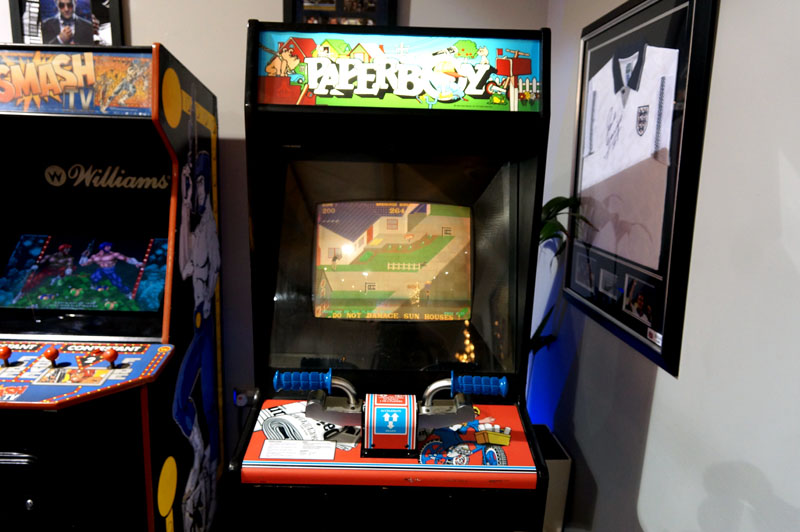
Paperboy isn’t exactly a game I hold up as one of the all-timers. My first experience with it was actually the worst you can possibly imagine: the Nintendo 64 follow-up. That version is so obscure and forgotten most people I’ve met aren’t even aware that a 3D Paperboy exists. It does, and it’s awful. So honestly, The VideoKid had nowhere to go but up. As bad as The VideoKid is.. and it’s horrible.. it’s genuinely better and less broken than an actual, official Paperboy release. So it has that going for it. Which is like telling a diabetic “we have to amputate your left leg, but hey, this will bring you under 300lbs, so there’s that!”

Later, I got to play both a port of the arcade game via Midway Arcade Treasures on the GameCube, and the real McCoy arcade version, complete with handlebars. I thought both were shit. The isometric view. The unfair enemies. The fact that aiming and timing is so unforgiving. It’s one of those games that I think people like the gimmick more than the gameplay. I’ve also noticed that most people who file away fond memories of it primarily played the arcade version, which at least had a unique control method (because what child of the 80s ever had the rare opportunity to wrap their hands around bicycle handlebars? Only at arcades could they experience such a far-fetched fantasy), whereas people whose experience is limited to the NES or PC ports of it tend to agree with me that it was always kind of shit. Still, it’s a franchise that IS remembered, and that’s the key to stoking that sweet, sweet nostalgia fire. Eventually, someone will make the definitive Paperboy indie tribute.

This isn’t that game.

I won’t lie: The VideoKid started behind the eight ball with me. I’m not nostalgic for Paperboy, or anything really. The “anything really” especially hurts VideoKid, which relies fully on the player being one of those people who find references to things you’ve heard of to be comedy gold all by itself. And I can honestly say that I’ve never seen a game take that to such an absurd degree. Even though there’s only one randomly-generated level in VideoKid, there has to be over a hundred mostly 80s pop-culture references that hit one after another. This is the shotgun blast to the face method of reference-based humor.

Kirk & Spock examining a red-shirt before being beamed away. I too remember Star Trek. Ecto-1. I too remember Ghostbusters. Michael Jackson dressed all in white, spinning around. I too remember Smooth Criminal. Tony Montana pulling out a tommy gun and saying “say hello to my little friend!” I too remember Scarface. “He’s Heating UP and “He’s on Fire!” I too remember NBA Jam (which is from the 90s and makes no sense in a game that is a tribute to the 80s). The Mystery Machine being chased by a ghost. I too remember Scooby-Doo. Rambo. I too remember Rambo. Johnny-5 being chased by an Indian scientist. I too remember Short Circuit. The time-traveling DeLorean. I too remember Back to the Future.

Everything I said above? That all happened in a span of less than 30 seconds. Here’s the clip.

Big Bird. Fraggle Rock (or they might be Gummy Bears). Thundercats. He-Man riding Battle Cat. Clark Griswold’s Family Truckster complete with dog tied to bumper running behind. Reference, reference, reference. A conveyor belt of references. No context. No effort made past the character models. Just “hey, you know that thing you know about? I too know about that thing you know about, and I put it in my game so that you know that I know about that thing you know about.”

And for a lot of people, that’s all you need to make them happy. I don’t get it myself. The “pop” part of “pop-culture” stands for “popular.” For a thing to be part of pop-culture, it has to be seen by a lot of people and make enough of an impact that it becomes part of the public consciousness and thus will be remembered by the collective masses and cement its place in culture for generations yet to come. Pop(ular)-Culture. Get it?

So, when you see Optimus Prime show up in a random video game, it shouldn’t really mean anything to me or you, or anyone. Transformers is very well-known and has been a major part of pop-culture for three decades now. That’s why it had multiple cartoons, a line of toys, and then long after the height of its original popularity had passed, was able to be adapted into a multi-billion dollar movie franchise. Of course people have heard of Optimus Prime. If VideoKid wanted to impress me, it should have had cameos by Armed Force fighting Saw Boss or a sign welcoming you to Eerie, Indiana (pop: 16661). Something obscure, you know.

Maybe if The VideoKid had done something clever with these references, it’d mean something. Michael Jackson throws a golden coin to you, which lights you up. Or you ride next to the bike that’s transporting ET and suddenly you start to fly. Something more interactive that actually utilizes the references. But other than being able to do things like knock Care Bears/Fraggles/California Raisins/Alvin & the Chipmunks off a park bench or make a car fall on Homer Simpson (complete with D’OH sound that actually sounds nothing like Homer), the references really just sort of pass by and serve as distractions. Things to avoid running into. You don’t get to collect them as trophies or stickers or anything noteworthy. You just see them. Well, I’ve seen all these things before. Lots of times. So I don’t get the appeal in having them here. They don’t do anything.

I don’t know what it says about me, that a dog being dragged to its death is the one pop-culture reference that made me crack a smile, but this really is the only one that came close to making me laugh. What can I say? The song “Holiday Road” immediately popped into my head and I started to mentally ask myself whether Clark Griswold left the dog tied to the bumper intentionally or not. To this day, I think he did. He later took a theme park hostage at gunpoint and then had a nervous breakdown on Christmas Eve, which inspired his mentally ill cousin-in-law to kidnap his boss and hold him to ransom for a bonus. He’s a psychopath. I half expected him to be in prison for a killing spree as a throwaway joke in the Vacation remake, but that would have been too clever.

So, for me at least, VideoKid had to stand on its own gameplay merits. And honestly, I don’t think the foundation is inherently flawed. VideoKid takes place entirely within three lanes of action, with left and right moving you instantly from one to the other. I think this is a solid idea that could, presumably, fix a lot of the issues I had with Paperboy. In the original, it’s never entirely clear which trajectory to take to avoid enemies. By limiting the action to three channels, a player should be able to instinctively learn patterns and have strategies for avoiding obstacles be self-evident. It’s a more streamlined gameplay mechanic that should make VideoKid less frustrating.

But sadly, the lack of polish takes things a few steps backwards, then cuts off those feet to assure no more forward momentum will be had. Collision detection is spotty and inconsistent. Sometimes I’d hop on a car and score points. Other times it would seem like I had timed it right but still die anyway. Sometimes I’d get the power lace shoes from Back to the Future II, which lets you jump high in the air, but those seemed to turn the collision detection into random chance, where I’d die if I landed on a car or a bench (and other times I’d score points like normal). And the horrible play control just compounds the issues. Sometimes, after landing a large trick (which is done by hoping from obstacle to obstacle) the player would land and then be unable to move at all, no matter how much I pushed left or right. Other times I’d be going along not pushing any buttons when my character would veer left or right into a car without me pressing anything. Maybe it was a really delayed response to a button press. I don’t know, but in this clip, I didn’t press left at all and I still moved left into a car and died. And yes, I was using the D-Pad, not the analog stick.

This is developer Pixel Trip Studio’s first game, and it shows. Often, first time developers are so anxious to get their game published that they under-test it. I think that’s the case here. The VideoKid is clearly not finished. I bought the Xbox One version, which doesn’t have menus, doesn’t have options, and doesn’t even have a way to quit the game without using the guide button and going through the Xbox dashboard to close it. Perhaps because of that, it doesn’t properly keep track of your stats. Sometimes it would say I had delivered six tapes (after hours of gameplay), game-overed once, and only earned $0.02. Other times it would go up, but never in a way that was accurate to my actual playing. And while the game has tons of unlockables, if I quit out of VideoKid and then went back to it, sometimes (but not all the time) all the stuff I had just unlocked (or some of the stuff) would become locked again. That is not what you call buggy, people. That is broken.

I’ve played way worse first-efforts by developers. I don’t even think The VideoKid would rank in the bottom five of those. But it’s certainly one of the most unfinished games to find its way to the marketplace in 2018. And it just does lots of other bad stuff. It eliminates the challenge of Paperboy by giving you an unlimited amount of video tapes to throw at mailboxes and does not penalize you for missing or causing property damage, thus eliminating all semblance of finesse or strategy. And when you make more than two deliveries in a row (which is, you know, the main object of the fucking game), it spams the (already cluttered) screen with a giant notification. When you’re dealing with a glitchy, overly-sensitive-controlling game that takes place from an isometric point of view, the last thing on your mind should be making it even harder for the player to see what they’re doing.

Down in front!

So yea, The VideoKid is really horrible. No, I didn’t beat it. I got 90% finished a few times but was killed by Biff Tannen throwing something at me. If you’re one of those types that thinks people shouldn’t share their opinions on a game they bought unless they finished it, I’d like to point out that the developer is on the record saying HE only beat it once himself.

So really, I only beat it one less time than the game’s own developer did. I don’t know if he meant once on Xbox One or once ever. Because The VideoKid is on multiple different platforms, and considering all the really damning bugs and glitches, it seems like he probably should have played it a lot more than he apparently did before releasing it. I try not to review the developer, but I’m frustrated because there’s potential here for something satisfying. And not satisfying because I too have watched cartoons and movies and remember popular characters from them. The VideoKid didn’t need to be this bad. And it looks a small cut above your typical voxel game and effort was put into it. I’m guessing Pixel Trip Studios has talent. But the indie game market really shouldn’t become Mario Maker, where all that’s required to upload a game is to beat it yourself one time. The VideoKid costs $4.99. That buys you a LOT of really good indie games these days. Maybe even more than one for that price. Fans of the game think I’m being too hard on it. So what if it’s a little buggy? Look, there’s Lion-O! I too remember Thundercats!

Hey, there he is. Oh thank God, he didn’t get Mandela Effected out of existence.

Well so do I, and I wasn’t even born until the original series had been off the air for a year. But a game reminding you that Thundercats is a thing and they too have heard of it shouldn’t be a proper substitute for polish or refinement. If someone buys something expecting it to work and it doesn’t, they’re not assholes just because the broken product has Inspector Gadget in it. We’ve had video games for over fifty years now. If we’ve reached the point where people’s standards are too high for expecting a game to properly keep track of your score or progress without shitting the bed, what incentive do developers have to get better? Why should the next generation of indies put in effort at all? Just blast players with context-free pop-culture references and phone it in, and nostalgia-drunk fanboys will defend you to their dying breath. The VideoKid is critically acclaimed and very popular on social media and it shouldn’t be, because it’s unfinished and genuinely terrible.

And I’m not pissed that it’s bad. I’m an indie game critic. If I can’t handle bad games I should just quit now. I’m pissed because people have decided that being broken doesn’t matter as long as the game speaks in 80s memes to you, and anyone who feels otherwise has a stick up their ass. This is not a path we want to go down as a community. Do we really want a future where most games, indie or otherwise, habitually release too early, full bugs, in dire need of play-testing that they never received, and.. uh.. shit. Hold on, I really need to think this argument through more.

The VideoKid was developed by Pixel Trip Studios
Point of Sale: Xbox One, Nintendo Switch, Steam

$4.99 are ♪ driving down on a highway, and my wheels are spinning fast. I’ve been driving now for a long long time, and soon I will be there. KEEP ON ROLLING! KEEP ON ROLLING! There’s no turning back I’m going all the wayyyyyyyy aay aay aay! ♪ in the making of this review.

Now THAT’S how you use a reference.