LCDs of the 1980s Part IX: RetroFab-ulous!

Merry LChristmasD! Someone named Itizso put up a massive library of LCD games on Itch.io. And, it includes the ones everyone has been waiting for. For some reason. Let’s rip this band-aid off and review.. well, the whole thing. Hell, the guy worked hard. Someone ought to, because these aren’t merely ports. He also created enhanced versions that add color to them. All you have to do is press TAB, and they usually look great. It’s a nice touch. The games include controller support and ALL of them include the packaging and instruction books. In fact, he’s only adding games he can find complete packaging/instructions for, it would seem. For Part IX, I’m doing the non-Game & Watch titles. Part X is tomorrow, and I think it’ll have a Game & Watch title or two in it. Or all of them. Every single one. But, that’s tomorrow.

The addition of the authentic instruction books is just the bee’s knees. The effort here is awe-inspiring. I’m so delighted. Thank you to Aros Games & Stuff for pointing me towards this. And ruining my week.

If you enjoy this feature, how about donating your LCDs to him? Or, you can also provide him with high-resolution scans of instruction books/boxes so that he can add even more games and preserve them for generations untold. When you look at the Handheld Museum’s list of games, it’s staggering how many LCDs haven’t been preserved or converted online. This is my 9th LCD feature, and I’m closing in 200 games, and that barely skims the surface. The effort is certainly worth it. LCD Games of the 1980s is one of the most popular features at Indie Gamer Chick. The interest is out there. Another place I’ve been able to find games is Madrigal’s Simulators. And we’ve all seen Nintendo’s Game & Watch Gallery franchise, which has been popular enough to have multiple installments. LCD games are the junk food of video games, but hey, junk food is awesome!

Itizso is constantly adding even more games. He says at least one a week. Awesome. As of the time I type this, Zelda for Game & Watch is coming. Hell, he added Tetris Jr., an unreleased prototype of what would have been the final Game & Watch. Stay tuned for Part X, coming tomorrow, for more on that.

So, thanks to EVERYONE who has ever translated an LCD game digitally for giving me one of my most popular features. I want to thank my good friend Danny Lingman, who collects LCDs. He was more familiar with the original devices than I could ever hope to be. He took time out of his schedule to test for me to make extra sure that these played accurately to the originals. There were some minor appearance issues (especially with the cabinets) but gameplay is king and these were accurate. Thank you, future Dr. Danny! And, of course, thanks to Itizso, who worked his butt off and made this feature possible. I might not have loved every single game, but that’s not on Itizso. He didn’t design the games. What he did was an absolutely amazing job translating them for this format. Really, my only BIG complaint is that, as far as I can tell, you can’t map PAUSE to the controller, or even the keyboard. I could only pause with the mouse. Fingers crossed for a future update. I could remap buttons, and that’s what’s most important. Good job, Itizso! On with the reviews, and I included screenshots of the enhanced versions. I mean, he went to all the trouble of making them, so I might as well have!

REVIEWS

For those not familiar with my way of thinking of how retro games should be reviewed, I take NO historical context into account. I don’t care how important a game was to the industry, because that doesn’t make a game worth playing today. The test of time is the cruelest test of all, but every video game must face it. I might not be here if not for Pong’s success, but I wouldn’t want to play it today. Not when there’s better options. Therefore, when I review retro games, every game gets either a YES! or a NO!

YES! means the game is still fun and has actual gameplay value when played today and is worth seeking out.

NO! means the game didn’t age gracefully and is not worth seeking out, and certainly not worth spending money on.

AIRPORT PANIC!!
Bandai Double Panel Series (1982)
Gameplay Type: Cross-the-Road/Gallery Shooter
Listing at Handheld Museum

This slideshow requires JavaScript.

Airport Panic is notable for two reasons. First off, it’s solar-powered, like pocket calculators of the era were. I’m kind of surprised more LCD games of the 1980s weren’t. You’d think Nintendo would be all over that. Second, it’s one of nine LCDs by Bandai that utilizes two LCD panels laid on top of each-other, which allows for two completely different scenes. If you played this on an actual LCD, it’d even have depth and simulate 3D. That’s lost in translation, and all that’s left is a cross-the-road game and one of the worst gallery shooters I’ve ever played. The first screen is a poor man’s Frogger where you avoid traffic and dynamite thrown by a hijacker as you shimmy from the lower-left corner to the upper-right corner. After you do this three times, you move to the inside of the plane, where shooting takes over. You and the hijacker fire the slowest bullets in video game history. It’s like shooting glaciers at each-other, but it’s so much worse than that. Between you and the bad guy are seated passengers who, seemingly at random, will stand-up and take the bullets, costing you points. Honestly, I think you should GET points for shooting them. First off, who would stand up in the middle of a gunfight? Clearly these people want to die. Second, even if they didn’t want to die, if you stand up while two people are shooting at each-other above where you’re seated, you’re officially too stupid to live. The cop should switch sides and agree that this is an airplane full of people in desperate need of culling. And you have to shoot the hijacker TEN TIMES. You only had to cross the road three times. The speedier Game 2 inches towards tolerable, but the passengers sink the game for me.
Verdict: NO!

ASTERIX: HUNT FOR BOARS!!
Ludotronic & Vtech – Sporty Time & Fun (1984)
Gameplay Type: Spinning-Plate – Catcher
Listing at Handheld Museum

This slideshow requires JavaScript.

A three-channel spinning plate game that quickly becomes seemingly impossible. Obelix throws what I’m almost certain is toupées at you, and you just walk into their channel. The impossibility comes from when the game gains speed and he drops one on the left side and then the right side, or vice-versa. I know my reaction time isn’t what it used to be, but the reaction time it’s asking for is literally a fraction of a second. And the problem happens regardless of which mode you play. It just happens faster in the B mode. If you could wrap-around the other side of the screen, Asterix would be playable. And also bland and uninspired, but playable nonetheless. And to think, this is a necklace? It’d be deliberately putting a “KICK ME” sign on. Only, it would presumably be on your front, and that seems like a bad idea. I wish this was competent but bland, because then I could have called this Asterix: Hunt for the BORES! Hey, the low hanging fruit is often the most delicious.
Verdict: NO!

AUTO RACE!!
Mattel Electronics – LED Handheld (1976)
Gameplay Type: Cross-the-Road
Listing at the Handheld Museum

This slideshow requires JavaScript.

Behold: HISTORY! The first ever fully electronic handheld video game. Well, the first one released commercially. Utilizing focus testing, Mattel created a variety of “blank” units that had what limited gameplay could be done using strips of LEDs, then asked those in the tests what sports the LED strips most resembled. A unit that played something vaguely resembling Football won out. Auto Racing came in second, but was chosen for the launch for unknown reasons. With Sears believing the primitive devices would flop, they only asked for a small initial order of Auto Racing and Football. Of course, these went on to sell so much that Mattel decided to create Mattel Electronics and enter the video game business. Auto Race has a whopping 512 bytes of programming code which took 18 months to finish. To put it in perspective, the photographs of that 512 byte game shown in the above slideshow each contain around 90,000 bytes of data. So, if you link 175 units of Auto Race together and perform space magic on them, you can display one picture of Auto Race! Does it play well? IT’S THE FIRST HANDHELD ELECTRONIC GAME! It ain’t gonna be awesome nearly fifty years later. The idea is you have to make your way to the top of the screen four times before the timer reaches 99. You get pushed down every time you collide with another dot. Reach the top four times and the timer stops. My best time was 67 seconds. It’s remarkable that I’ve played worse games, because this is as primitive as it gets.
Verdict: NO!

BARTMAN: AVENGER OF EVIL!!
Acclaim Entertainment (1991)
Gameplay Type: Cross-the-Road – Combat
Listing at Handheld Museum
Previously Featured in LCD Games II

This slideshow requires JavaScript.

I put more time into Bartman this go-around, and I still didn’t enjoy it. You start at the top of the screen, where Nelson throws walnuts at you. You have to wait for three pieces of Bartman’s costume to appear next to him. When you get all three, the action automatically moves to the bottom of the screen, where Santa’s Little Helper occasionally hands you apples. You have to move up directly next to Nelson and hit him in the face with ten of them while jumping over the watermelons and apples he throws back at you. I’m pretty sure Bartman is genuinely random, since there were moments where Nelson threw both an apple and a watermelon. I’m not entirely sure the situation was survivable. On the other hand, one time I parked right next to Nelson on the top screen, and he never threw a walnut that would hit me. I just had to wait for the three items to spawn. It even took a while, but it was like the game was stuck in a “long throw” sequence. It’s as if there was no finesse programmed into Bartman, almost like it was rushed to the market to strike while the Simpsons iron was hot. It’s not like the show will still be on the air, making new episodes 32 years later or anything and someone will be reviewing games made to distract kids for 5 minutes at best.
Verdict: NO!

BASEBALL!!
ENGINE ROOM!!
VTech Explorer Series (1984)
Gameplay Type: Spinning Plate – Catcher
Previously Featured in LCD Games VII

This slideshow requires JavaScript.

Sigh. Doing the entire RetroFab collection has drawbacks, as I don’t really have a lot to add to Baseball or Engine Room. These are as basic as games can get, and I’ve already f’n done them. Three channels of catching objects. Baseball throws curve balls, but it’s not like there’s complex animation to judge. There’s only three possible locations those balls can end up. In the B-Game, the curve balls can change at the last second, but it’s not hard to judge. Engine Room is slightly more complex than I gave credit to last time, as you can earn 50 bonus points in the B-Game by pressing RIGHT against the right wall when your friend shows up with a tray of food. There’s an actual risk/reward factor there, so it’s something. Otherwise, the hook of these LCDs was the built in compass and flashlight. Presumably, there’s some 45 year old out there who got lost in the woods and was saved because they kept their trusty Game & Watch knock-off on them at all times. THIS COULD HAVE ACTUALLY HAPPENED! It’s telling how bad VTech was at creating games that the best aspect of these releases was allowing users to see photons in the dark.
Verdict: NO! and NO!

BLOCK BUSTER!!
Milton Bradley Microvision (1979)
Gameplay Type: Brick Breaker
Microvision Listing at Wikipedia
Game Listing at Handheld Museum

Man, this feature is FULL of history. This is the very first handheld with interchangeable cartridges. Love the name, too.

I laughed my ass off reading about the creation of the Microvision. All the problems this thing encountered reads like a satire. The actual device had a small LCD screen but no microprocessor. Those are contained on the carts themselves, which also would have button overlays for the base unit’s 12-button keypad. They couldn’t get enough units of the microprocessors they intended to use, so they switched to a more primitive chip that required less batteries. Thus, some units have an empty battery chamber that’s supposed to be the “spare battery holder.” Not so funny is how badly these things break down. Because the LCD screens weren’t properly sealed, the liquid crystal is prone to leaking. They also didn’t build in any protection from static electricity, so even an amount of static so small a human wouldn’t feel it would be enough to short it out. The rubber membrane over the keypad would stretch and tear easily, as well. This thing was a disaster, folks. The sad thing is, it seemed like it had potential to make pretty decent (if primitive) games. Note that I didn’t say “it had decent but primitive games.” Just the potential.

One of the most common problems with LCD games is the lack of any sense of motion. Microvision has motion blur! I can’t stress enough how much I appreciate that.

Block Buster is a Breakout knock-off through and through. I was actually impressed that it included motion blurring, making it easier to get a feel for the speed and trajectory. Of course, movement accuracy is a big issue. I figured having the actual paddle controller that was built into the Microvision would make a difference, but according to a few reviewers (including this very comprehensive one.. golly, that Pinball game sounds awful) it wasn’t as precise as a game like this requires. What’s really interesting is you can volley the ball completely vertically by hitting the center of the paddle. Once you hit this shot, you can clear that entire stack of bricks by standing still. Logically, the paddle should always be an even number of segments, so that the ball is always ricocheting at an angle, which requires you to stay on your toes and move. There is a harder option that’s only two segments wide, but with it, accuracy is an even bigger issue. I’m sure this was cool to have in 1979.. before it started breaking, I mean.. but this was always fated to age badly. It’s worth playing for a minute or two as a historic curio, but in terms of gameplay, it’s just not fun.
Verdict: NO!

CATCH A COKE!!
Bandai Electronics (1983)
Gameplay Type: Spinning Plate – Catcher
Listing at Handheld Museum

This slideshow requires JavaScript.

This is neat. Catch a Coke was not sold commercially. Instead, this was a prize for vendors who sold Coca-Cola products, with gameplay that copies previous Bandai games. It’s also one of the hardest LCDs of this type I’ve played. A monkey throws cans of delicious, refreshing Coca-Cola™ across four possible channels and you have to catch them. Instead of having a fixed number of misses, below you are a series of platforms that disappear when you suffer a miss. If a second miss happens over the now destroyed platform, the game ends. Even in the A-Mode, all my games ended in the 240 – 300 range, or roughly 24 – 30 catches. By that point, the monkey is throwing so many cans at once that I’m almost certain the game reaches the point where catching ALL of them is impossible. It’s not enough to reach the space the can is on before it hits the ground. You must actually get the can while it’s still where your hands are. Once it’s past that, it’s going to be a miss. Maybe the games were made deliberately short because, get this: some genius decided to market test installing a giant version of this exact game in Coca-Cola vending machines. You know, those machines where you put your money in and less than three seconds later, you get your soda? A person actually got paid to think that it would be a good idea to install a game that lasts longer than 3 seconds into such a machine, and they weren’t fired the moment they suggested it. It makes me wonder if there was more than one form of Coke in their boardroom.
Verdict: NO!

CAVEMAN!!
Tomy Electronics (1983)
Gameplay Type: Cross-the-Road – Combative
Listing at Handheld Museum

Is that blood? I think it’s blood! Is this the first video game with blood?

I’d heard of Caveman from a few of my readers, and they insisted it was among the best LCDs out there. Hell though, I’ve heard that about other LCDs and they didn’t live up to the hype. You can imagine my surprise that Caveman actually does. It’s one of the best of its breed, with deceptively complex gameplay. Playing as a caveman, you have to knock out a dinosaur by throwing an ax at its head. Then, while it’s loopy, you have to grab an egg from underneath its feet and bring it to a pedestal. BUT, you haven’t scored yet. That doesn’t happen until you bring another egg, at which point the previous egg is banked and scores 50 points. There’s actually a reason for the delay: a pterodactyl (called a “dragon” in the instruction manual) might swoop down and take the egg off the pedestal. The dragon won’t swoop down if you’re directly next to the egg, and you can also kill it for 10 points a pop. In the higher difficulty, you have to manually collect an ax every time you throw one, and there’s two dragons right from the start. In both modes, eventually, a volcano will start erupting rocks down on you.

This was also released by Tandy/Radio Shack.

It’s a lot to keep track of, but I’ll be damned if it isn’t one of the finest examples of LCD gameplay ever. It’s not one endless chain of walking back and forth. You have to make a move for the egg, or else it’ll hatch and you’ll miss your opportunity and have to wait for another egg to roll underneath the dinosaur. You don’t just instantly collect an egg when you touch it, either. You have to wait for it to start blinking, as if you’re handling it carefully. It’s kind of immersive! How many LCDs can claim that? It’s rare that any game from this era goes to so many lengths to have a sense of immersion about it. It’s unexpected, but in the case of Caveman, it’s also really fun. My one complaint is the A mode takes a while to ramp-up, while the B Mode is so challenging that scoring even a single egg feels like an accomplishment. The A mode, slow riser that it is, stands tall as one of the best of its breed in gaming history.
Verdict: YES!

DENNIS THE MENACE!!
Tiger Electronics (1993)
Gameplay Type: Dodger

Well, on the plus side, this has some nice line art.

Dennis the Menace is a typical Tiger Electronics snoozer. You have to ride a bike while dodging various obstacles, and after scoring over 1,000 points doing this, a timed sequence starts where you have to pick up a slingshot and an aspirin into Mr. Wilson’s mouth. I had to use my PS5 controller since I had trouble with the keyboard on this one. Not that it would have mattered. The bike sequence takes FOREVER, and at one point, I was literally reaching down to pick up the slingshot and it was like the game refused to register it until I took a hit. Weird. This might actually be broken. I did manage to get to the second stage, where the teeter-totters on the side of the road are replaced by Margaret chasing you down. Logically, wouldn’t “catching you” mean you crashed your bike into her? You get six lives, which is the most I’ve ever seen in a game like this, but the lives become moot when you get to shooting sections. Those run on a 30 second timer and are an automatic all-lives-lost game over if you fail them. Are you f’n kidding me? In the history of bad Tiger LCDs, this is one of them.
Verdict: NO!

DONKEY KONG!!
Coleco Mini-Arcade (1982)
Gameplay Type: Cross-the-Road
Listing at Handheld Museum
Previously Featured in LCD Games I

This slideshow requires JavaScript.

The second ever LCD I reviewed, and the first one that actually made me feel sorry for children of the 1980s. This version of Donkey Kong is housed in a gorgeous arcade cabinet, and it came packaged in a box that proclaimed “PLAYS AND SOUNDS LIKE THE DONKEY KONG ARCADE GAME!” Well, that’s a lie. The closest this comes to being true is a few of the bleeps and bloops sound like the victory/death noises from the coin-op. But, the gameplay is closer to one of those bad Donkey Kong knock-offs. The gravest inauthentic gameplay element: the hammer does nothing except earn points, like the umbrella/handbag/hat in the coin-op. You can’t smash the barrels or the fireballs. While it does include the rivet stage, there were times I died on that level where I’m not entirely sure how it happened unless you die from jumping when a fireball is on the platform above you. Jumping at an angle is a pain in the ass to begin with, since you have to hit the direction and then jump a split second afterwards, but the timing never feels consistent. And since fireballs tend to camp along the ladders/rivets, I often ended up losing via timing-out. It’s not like I expected an LCD from 1982 to be a very close approximation to Donkey Kong, but this isn’t even in the ballpark. At least I never have to play it again, now. Watch, Nintendo will end up putting this in a Game & Watch Gallery. Oof.
Verdict: NO!

EXPLORERS OF SPACE!!
Elektronika (1989)
Gameplay Type: Spinning Plate
Previously Featured in LCD Games VII

This slideshow requires JavaScript.

This cold war era clone of Nintendo’s famous Egg (which itself was reskinned as Mickey Mouse, or was it vice-versa?) is one I couldn’t make any progress on. When two missiles would fire close to the same time, as soon as I stopped one, the other would immediately cause a miss. I thought “well, maybe I’m misjudging which is the closest one.” But, when I went against my instincts, I just suffered a miss faster. This was one of the few times where I drafted my family to attempt to play the game while I watched. They had the same thing happen, where even quick reflexes couldn’t possibly stop a miss from happening. I don’t recall every USSR clone of Egg being impossible to play, but this one sure seems like it is.
Verdict: NO!

FROGGER!!
Coleco Mini-Arcade (1981)
Gameplay Type: Cross-the-Road
Listing at Handheld Museum
Previously Featured in LCD Games IV

This slideshow requires JavaScript.

Frogger is in the upper-echelon of LCD games. For a brief window of time, I even considered it to be the best LCD. In the time since, a small handful of games have moved in front of it, but that doesn’t change the fact that Frogger is the safest bet. Having now played and reviewed the Atari 2600 ports in-depth, really, the LCD version doesn’t have that much less animation than the VCS version has. Hell, on the Atari consoles, movement is instantaneous, with NO animation between the spaces. It’s very LCD-like. The Frogger formula just plain lends itself perfectly to LCD games. Oh, it’s so not perfect though. It’s that second row of turtles that are the turd in the punch bowl. Without any animation, there’s no cue when they’ll submerge. All you have to go off of is that the turtles tend to dive at about the halfway point of the screen. It’s best to hug the right wall and wait to time a quick double hop across. Otherwise, this IS Frogger. It’s only missing a single channel of car traffic, but all five river channels are present. Whoa! Coleco’s Frogger is a bonafide, genuine, certified contender for the greatest LCD ever made.
Verdict: YES!

FROGGER!!
Nelsonic Game Watch (1983)
Gameplay Type: Cross-the-Road
Listing at Handheld Museum

This slideshow requires JavaScript.

I’m now convinced that it’s impossible to screw-up Frogger. Well, unless you’re the Atari 5200. Apparently, as long as you don’t need to press a button to confirm your intent to press another button, Frogger is bulletproof as a concept. This version, built into a wristwatch, is the most stripped-down port of Frogger I’ve ever played in my entire life. The arcade game has four channels of car traffic and five channels of river. This version has only two channels of car traffic, two channels of river, and three glory holes (that’s what you call them, right?) instead of five. And yet, even truncated by over half, it still feels like Frogger. That is absolutely beyond belief. Hell, when the turtles submerge, they even blink first as a warning, a kindness the superior Coleco version doesn’t offer. It comes dangerously close to being too chopped-up. Five channels of action isn’t much, but at the same time, it lends the game an almost bonus round quality. A faster pace that works for it. Further proof that Frogger was made for LCDs.
Verdict: YES!

GARFIELD!!
Konami (1991)
Gameplay Type: Spinning-Plate
Listing at Handheld Museum
Previously Featured in LCD Games V

This slideshow requires JavaScript.

I’d previously played Garfield last July, and I didn’t like it much. I’m flipping on that, as well. In Garfield, you have to dodge various debris being thrown at you and eat enough lasagna to power-up your super jump to leap up to Odie. The more progress you make, the more crap gets thrown at you. While it does become overwhelming, once I learned all the idiosyncrasies of the game, I found I really enjoyed it. Like the fact that you can jump the full length of the screen before landing made dodging so much easier. You can also quickly undo any damage you take by eating the various chicken pieces that Odie tosses down at you. Konami has proven to be one of the better makers of LCDs, having scored YES! verdicts with Blades of Steel and Double Dribble. Now, I find myself flipping on Garfield. It has nothing to do with the fact that, in addition to the typical Retrofab graphics, the extra EXTRA mile was taken by having a full 3D version that literally pops out of the screen. It was cool and unexpected, but it’s still the same gameplay and it has to survive on THOSE merits. And, I got it wrong. Garfield absolutely does.
Verdict: YES! **FLIP**

LAS VEGAS!!
Bandai Electronics (1981)
Gameplay Type: Spinning Plate – Catcher
Listing at Handheld Museum
Previously Featured in LCD Games VII

This slideshow requires JavaScript.

Las Vegas is another game that’s more complicated than I previously gave it credit for, but not by much. There’s three channels that have various degenerate gamblers letting money slip right past them that you have to catch. It’s the most basic, boring of spinning plate games, but there actually is a teeny tiny twist. Every 1,000 points, you get to play a slot machine for more points. You even control when the reels stop. If you match three numbers, you score bonus points. Three 1s nets you 100 points. Three 3s score 200 points, and three 7s score a jackpot of 500 points. The instructions say you get to spin again if you get a jackpot, but I only matched 1s once and I got to spin again. Maybe it was because I was playing Game B when I did it. I don’t know. The idea of earning spins at the slot could have been good if it actually was tied to the three channels you’re juggling, but it’s totally separate from theirs. Right idea. Wrong implementation.
Verdict: NO!

MIND BOGGLER!!
Mattel Electronics (1978)
Gameplay Type: Logic Puzzle
Listing at Handheld Museum

This slideshow requires JavaScript.

Mind Boggler is a variation of the classic code-breaking game Mastermind. The computer randomly generates a 3 to 5 digit code, and you have to try and decode what it is in as few attempts as possible. You enter a sequence of numbers (0 – 9) and the game will tell you how many are correct but in the wrong space (a hit), and how many are correct and in the right space (a sink), but you don’t know which numbers are which. This is one of the worst versions of Mastermind I’ve ever played, and one that feels incomplete. That speaker you see on it? It does NOTHING. There’s no noise or sound effects at all. I know that’s an odd complaint from someone who gets scorn for mostly playing games with the sound turned off, but I offer it as proof of the game’s unfinished and/or rushed nature. The most damning aspect of all is that the device doesn’t keep score of how many moves you need to win. YOU are expected to do that, manually. The original packaging even had a score pad for it. It could have just as easily displayed that in the hit/sink columns. I suppose that this technically accomplishes being Mastermind-like. As a reminder: in 1978, if you only owned the board game, you couldn’t play it by yourself. You could with Mind Boggler, but in the most dull and uninspired way possible.
Verdict: NO!

MISSILE ATTACK!!
Mattel Electronics (1977)
Reskinned as BATTLESTAR GALACTICA: SPACE ALERT!! (1977)
Gameplay Type: Shooting

This slideshow requires JavaScript.

Compared to Missile Attack/Battlestar Galactica, Mattel’s Auto Race looks like Tears of the Kingdom. A very early three channel shooter with targets that move too fast for me. I know my reaction time isn’t what it used to be, but this is truly ridiculous. It’s made even more ridiculous by the scoring. The higher on the screen the LED strip representing your shot meets the LED strips representing incoming missile, the higher you score. But with missiles that come in this fast, with no area above the playfield or warning when or where a missile is coming in. Allegedly, there’s a pattern to the madness, but what does it matter? I’ve lined up shots and had the targets instead switch lanes. Other times, it fires two missiles at once. Folks, I’ve been doing these LCD reviews for a while now and this is the worst of these games I’ve ever played. I don’t know if it’s deliberate or not, but the Battlestar Galactica version is slower and more manageable. It doesn’t matter. When I die and go to hell, this is the game Satan is going to hand me, then he’s going to hover over me and tell me to git gud.
Verdict: NO!

PAC-MAN!!
Coleco Mini-Arcade (1981)
Gameplay Type: Maze Chase
Listing at Handheld Museum
Previously Featured in LCD Games IV

This slideshow requires JavaScript.

When I first did Pac-Man, it controlled badly, and now I think it’s safe to say it’s not just me. Even the best possible translation of it still is just not responsive. I tried using a controller. I tried using a keyboard. I tried sacrificing a virgin to the god of video games. None of them worked particularly well. In the above slideshow is a pic where I highlighted the four problematic points. Each are openings in the maze where I wanted to change directions and it was a coin flip as to whether the game would let me or not. It wasn’t just me and my increasingly crappy reaction times, either. I tested on everyone in my family, and they weren’t able to consistently corner, either. Such a shame, because Coleco’s take on Pac-Man offers what I believe is the first-of-its-kind co-op Pac-Man. But the maze is badly designed and not optimized for the capabilities of the technology.
Verdict: NO!

PETER PAN & THE PIRATES!!
aka FOX’S PETER PAN & THE PIRATES!!

Tiger Electronics (1991)
Gameplay Type: Combative

This slideshow requires JavaScript.

What the hell kind of game is this? I’m not being a smart ass here: this is like a baby’s toy where it’s actually harder to die than it is to defeat the whole game. I played this a couple times and I was like “am I missing something?” Here’s what you do: clank swords upwards. Then clank swords downward. Repeat this until the pirate falls into the water. If there’s a pirate hanging from a rope above you, you press the fly button, then clank when the sword is up (it’s never down when they hang from the ropes) until the pirate disappears. If you fall into the water, don’t worry. Even if the crocodile is right there, you don’t die. Just press fly quickly, or at your own leisure. Either/or.

As bad as this is, if it had Tim Curry’s voice sample, I’d have flipped my vote to a YES! Everything’s better with Tim Curry! I’ve watched the movie Congo fifty times when most people haven’t sat through it once. Why? Tim Curry.

Eventually, Captain Hook will appear. Clank up, clank down, rinse, repeat until he falls in the water. There’s four “levels” which require additional clanks in order to win, but they don’t do anything different. Look, sword clashing is awesome, but you can’t have that be the whole game, even on an LCD. You need that one finishing move to make it work. Yes, I’m advocating for a stabbing move in a children’s LCD based on a children’s cartoon inspired by a children’s storybook. I vaguely remember Peter Pan & The Pirates from Fox Family reruns, and while it didn’t interest me (besides Tim M. F.’ing Curry as the voice of Captain Hook) I’m almost certain it’s not a toddler’s show, but this is a toddler’s game. Actually, no. This isn’t a handheld game. It’s an electronic fidget spinner.
Verdict: NO!

THE SIMPSONS: BART SIMPSON’S CUPCAKE CRISIS!!
Acclaim Entertainment (1990)
Gameplay Type: Spinning-Plate – Juggler
Listing at Handheld Museum

This slideshow requires JavaScript.

Huh. I really didn’t think I’d like any of the Simpsons LCDs, so you can imagine my surprise with this one. I’ve played a LOT of LCD games at this point, and I can’t think of any higher praise for one based on a licensed property than saying “this could have been a Nintendo Game & Watch.” Cupcake Crisis has that G&W vibe. Maggie throws cupcakes and Bart has to catch them. There’s a couple catches.. no pun intended. The first is he can only carry five cupcakes at a time. Marge pokes her head out the door to the left for you to bank the ones you’ve caught. The more cupcakes on the plate, the higher you score. As this happens, Homer will call for a couch gag. You must sit down before Lisa does, or you die. The faster you sit, the more points you score (400 points for sitting as soon as Homer does). Maggie will also throw her pacifier for bonus points. You get a free life and level up for scoring 10,000 points. I liked Cupcake Crisis, but it is a bit too easy, even the faster Game B. Really, as long as you’re not greedy, you could easily put up monster scores. It’ll just take a lot longer. But as a risk/reward type of juggler game, Cupcake Crisis is one of the best licensed LCDs I’ve played. Again, very Nintendo-like.
Verdict: YES!

SKY ATTACK!!
Tomytronics 3-D (1983)
Gameplay Type: Shooter
Listing at Handheld Museum
Tomytronic 3D Wikipedia Listing

This slideshow requires JavaScript.

“The charm is lost” has never applied more than to the two Tomy-Tronics 3D games adapted for Retrofab. There’s actual historical significance to these things. In real life, you’d stick your head into this paleolithic Virtual Boy and the graphics of this boring, uninspired game would look three-dimensional. This was the first ever dedicated 3D video game device. Weeeeee. This is a basic shooter with zero stakes because there’s no penalty for missing enemies. Well, as long as you don’t get shot, and it’s not that hard to avoid getting shot. There’s a bonus round after 100 points that goes too fast. The best thing I can say about Sky Attack is that there’s actual OOMPH to shooting baddies. Instead of just disappearing from the screen, they actually drew in very satisfactory explosion art. That’s nice. I just wish it had been done for a better game. Sky Attack is as basic and boring as LCD gaming gets. Though, let it be said, the Retrofab enhanced graphics are really nicely done.
Verdict: NO!

STAR TREK PHASER STRIKE!!
Milton Bradley Microvision (1979)
Gameplay Type: Shooting Gallery
Listing at Handheld Museum

This slideshow requires JavaScript.

Oh my god. OH MY GOD. Wow. I’m beginning to think they might have started production on this Microvision thing without having any ideas for quality, worthwhile games to make for it. In Phaser Strike, targets float by and you shoot them. You can shoot from the sides, if you so wish, but I never found that preferable to shooting straight from the center. This doesn’t even feel like a real game. It feels like a 1950S proof of concept for a video game. Tying the Star Trek license to THIS feels cynical and sleazy. You can make the targets smaller, and you can make them go faster, and you can adjust how many targets there are (though only one appears at a time) but this is primitive even by the standards of the era. Sessions of Phaser Strike last, oh, about 10 seconds. This is the absolute bottom of the barrel and I feel so sorry for Microvision owners that this was the type of game they had to play. Pocket calculators have roughly as much gameplay.
Verdict: NO!

TEENAGE MUTANT NINJA TURTLES!!
Konami (1989)
Gameplay Type: Cross the Road – Combative
Listing at Handheld Museum

This slideshow requires JavaScript.

From the time I started doing these LCD reviews, two games came up more than any other. One is the Game & Watch version of Super Mario Bros. The other is this. Super Mario is coming tomorrow, and spoiler: it’s a NO! and Nintendo fans are weird for liking it. As for Ninja Turtles.. f’n really? This is the game that you insisted you knew was better than typical LCDs? It’s maybe more ambitious, but not by much. Like Bartman by Acclaim, this makes the mistake of trying to replicate the Nintendo Game & Watch feel on a single screen, leading to the action being too cramped. Granted, Konami had bigger screens and smaller sprites than Nintendo did, but not so much you can do two gameplay concepts on one screen. On the top half, you just jump over spiked balls while whacking at enemies to the left and right of you. Boring. But, after you score 100 points, you get to enter the LCD version of the damned dam stage from the NES Ninja Turtles. Kill me. What happens next depends on if you’re playing Game #1 or Games #2/#3. In Game #1, you just have to avoid one spinning trap and one electric beam, get a key, then avoid both things a second time on the return. Then you have to rescue April, and then you repeat it until.. no, wait, the game just ends.

Mode 2 and 3 is basically the same, only you have to make multiple laps to blow up the tube April is trapped in.

It’s funny that it was Super Mario and TMNT that my readers kept bringing up, because rotating sticks factor-in heavily for both games. It’s a classic game trope, but they sort of rely on the ability to see motion in order to work. Mario did the better job by having one stick that rotates four ways in a straight line. Turtles has a two-sided stick that rotates at an angle. Bad idea. There’s only three animation cells (made of six total segments). It’s just not enough, and the speed of rotation feels like a clock that has a broken seconds-hand. What a dumb idea for an LCD. I got to the point where I could beat Game 1 every time, but the one and only time I actually finished Game 2, it sort of felt like a fluke. And there’s a ten second underwater timer in Games 2 and 3. And the electric thing. And the timing for none of it makes logical sense. Maybe I suck at video games or something but I finished mode 2 exactly once and I’m not even sure how I did it. There has to be better Ninja Turtles LCDs than this. There’s several more, one of which is a basketball game. I’m going to guess it’s probably a re-themed version of Double Dribble’s LCD. If I’m right, the good news is at least one of these games will get a YES! Oh, not this one. I think this was horrible.
Verdict: NO!

THUNDERING TURBO!!
Tomytronic 3-D (1983)
Gameplay Type: Racing
Listing at Handheld Museum

This slideshow requires JavaScript.

I admit that, following Sky Attack, my expectations for Thundering Turbo were just about as low as they’ve ever been for any game I’ve ever reviewed. You can imagine my complete shock when Thundering Turbo turned out more than halfway decent. I’ve been doing these LCD reviews for a while now, and this is the first time I actually felt motivated to show off a game to friends and family. I did that for one simple reason: because I couldn’t believe it. I was so surprised by how much I enjoyed this that I was convinced I was misjudging it based on my low expectations. So, just to be extra sure, I went back and played it a second time before hitting publish on this very feature. I didn’t get it wrong: this is really good for an LCD. There’s strategy, timing, patience, risk/reward factors, and even a genuine sense of movement and speed.

I searched high and low trying to find out how much these things cost in 1983 and eventually did find them via a Montgomery Ward Christmas catalog from 1983. The price? $29.99 (about $90 – $95 in today’s money).

Really, you can call this “Traffic Jam: The Game” and it works. Races last 100 seconds, and each lane has a specific speed for the enemy cars tied to it. The right lane is slow, the left lane is fast, and the center lane is somewhere between. You have to use this to open up a clearing for you to pass cars. You get three lives per race (it resets between each race) and I found myself actually caring about what my score was. Even without the 3D to lift it up, at least Thundering Turbo has an interesting scoring system. It’s one of the few LCDs where you lose points sometimes. The scoring system sees you get one point for every car you pass, but you LOSE a point if you get passed. This is also one of those rare times where I don’t feel bad for kids of the early 80s who got this from Santa Claus on Christmas morning. This is genuinely a very good game, and one that I sorta want to try in 3D. Even if I can’t imagine how uncomfortable it must be to play a video game built into a pair of cheap plastic binoculars.
Verdict: YES!

TOP GUN!!
Konami (1989)
Gameplay Type: Shooting Gallery
Listing at Handheld Museum

This slideshow requires JavaScript.

Okay, so Ninja Turtles stunk, but Konami is still an elite LCD developer. Top Gun is close to being pretty dang good. A shooting gallery with a 3 x 3 grid of channels where you have to shoot down a variety of targets. The instructions mention waiting for targets to “blink” but I noticed no such thing. It only takes a couple games to clock the trajectories of the various targets. I was really enjoying it, but I was also confused. Even as I got good enough to the point that I wasn’t missing any targets in the open two stages, I noticed my health was ticking down. Okay, that’s weird. Well, it turns out your health will tick away regardless of perfect play anyway, rendering all the combat worthless until the final stretch of 30 seconds or so of the 90 second long stages. Mind you, that last stage is pretty fast and brutal. I’m not entirely sure why they made it like that. So are the ticks of health fuel or damage to the plane? Both? Whatever. As annoying as it was, I had fun. Imagine that: a child in 1989 who got a cheap Top Gun LCD was better off than a child in 1989 who got Top Gun for their NES. God, I love LCD games sometimes.
Verdict: YES!

TOUCH ME!!
Atari (1978)
Gameplay Type: Memory
Listing at Handheld Museum
Included in Atari 50

Simon looks very 70s. Say what you will about Touch Me’s handheld, but it looks much more modern.

I’m not so much into the memory test games, and really, Touch Me is as basic as it gets. The main “add one” mode has been done a million times. Follow a sequence of lights. One more light is added to the end of each sequence. There’s a two player game and a four player game. There’s even instructions for a three player game that you start by deliberately allowing the first “player” to fail. Okay, that’s funny that they spelled it out like that. The story behind this game is so much more fascinating, as Touch Me was originally a 1974 coin-op. Ralph Baer, inventor of the Magnavox Odyssey, had been involved in a few patent lawsuits against Atari. After Baer’s company sued Atari for patent infringement, Baer copied one of Nolan’s designs. Baer freely admitted this, a story I read in The Ultimate History of Video Games. Baer saw Touch Me at a trade show and thought it was a great idea, so he copied it. He made his own design as a game that started life under the title “Follow Me” but was ultimately named “Simon.”  Baer, who again, had been involved in litigation against Atari for taking their inventions, justified it by saying Nolan Bushnell and Atari didn’t have a patent. That’s kind of awful, isn’t it? Now, to Baer’s credit, he created a digital bugle for Simon, choosing the bugle because it’s one of the few instruments where its four main notes sound harmonious no matter what order they’re played in. As he noted, many people play Simon by ear. Mind you, Touch Me’s buttons make different noises too and can also be played blindfolded, by ear. Sigh, even the story of Touch Me isn’t that fun. It’s just depressing. It sure beats playing Touch Me or Simon, though.
Verdict: NO!

TRON!!
Tomy Electronics (1982)
Gameplay Type: Arcade
Listing at Handheld Museum

Light Cycle Stage.

When I previously did Tron in the very first LCD games, I admit, I didn’t play very far into it. Not only did I have trouble controlling it, but the game kept crashing. Even when it didn’t, I couldn’t beat the AI opponent at all. The RetroFab version is more stable, and nowhere near as brutally difficult. Actually, it goes the opposite direction: the light cycle portion might be too easy. In fact, I found that if I just drove around in the light cycle portion of the stage and kept away, eventually the game would blink, indicating the computer opponent had crashed into me off-screen. And then I found out that Tron isn’t just a clone of Snake. This game has LEVELS and other gameplay types.

This slideshow requires JavaScript.

The second game is Discs of Tron. You and the computer opponent throw a disc back and forth. Each of you have four hit points. This took me a while to get the hang of because my instinct kept telling me the “catch point” where you intercept the disc is, you know, the spot where my character is physically standing. But, it’s not. It’s the spot in front of your guy. My brain refused to accept this and kept moving one extra space anticipating my guy was going to miss the disc, because logically he was going to. Eventually, I got the hang of this to the point that I could beat it every time, but it took a while. The final game is battling the MCP. You throw a disc to open up a hole, then you have to throw a second time and get the disc in the hole. Your “life” from the previous stage carries over to this level and acts as a timer. On the plus side, you only need one single disc to get in to win. Then, the game repeats. The Light Cycle and MCP stages are boring. They’d been better off focusing on making a better Discs of Tron game. I’m happy I redid Tron because it certainly was very ambitious for this era and it deserved better than what I gave it in the first LCD review. But, it’s still not fun.
Verdict: NO!

WILDFIRE!!
Parker Bros. (1979)
Gameplay Type: Pinball
Listing at Handheld Museum

There’s only 41 ball positions, which IS a lot for the era, but for pinball? Not so much.

This was a very bad idea. This is basically what Mattel did with their electronic games and LED lights, only attempting to do pinball. Pinball requires motion and physics and this has none of them. Just getting the logical timing of when to hit the ball is counter-intuitive, but then predicting where the ball will go is a nightmare. Really, it’s not even pinball. It’s a LED light-reflex tester when the ball is over one of the “flipper” sections. You can’t flip too fast or be wrong, either. Flip twice in one second and you get a tilt. The more times you hit a ball in one turn, the faster it goes. The timing does seem to matter in affecting which direction the “ball” flies off, but because there’s only one ball light per flipper light, it’s not like you can deliberately aim it. I was most impressed that there was something resembling a plunger and it does matter how long you hold it down before releasing. They tried SO HARD with this, and I feel awful that I hated playing it. And now I’m truly dreading how bad Nintendo’s Game & Watch Pinball will be.
Verdict: NO!

CONTINUE ON TO LCD GAMES X:
GAME & WATCH: THE DEFINITIVE REVIEW
IN-DEPTH REVIEWS FOR EVERY GAME & WATCH

Teenage Mutant Ninja Turtles: The Cowabunga Collection – The Definitive Review (Complete 13 Game Review + Ranking)

Well, everyone liked the Capcom Arcade 2nd Stadium review, and the “definitive review” format has been getting praised. At long last, I finally got the retro collection review style correct. I’ve tried a few styles, but this one seems to be catching on. And what do you know? The perfect collection to test the format out just released.

Teenage Mutant Ninja Turtles: The Cowabunga Collection is a set of thirteen games released between 1989 and 1993. Well, actually, it’s nine different games. You get both the 1989 Konami coin-op Teenage Mutant Ninja Turtles and the NES conversion Teenage Mutant Ninja Turtles II: The Arcade Game. Turtles in Time includes both the SNES and Coin-Op versions, and then there’s THREE versions of Teenage Mutant Ninja Turtles: Tournament Fighters (NES, SNES, and Genesis). So, nine “base” games with four variations are part of this set, right? Actually, it’s even more complicated than that. Hyperstone Heist for the Sega Genesis is really more of a shortened remix of the two arcade games that eliminates the most satisfying attack (throwing the enemies at the screen) from Turtles in Time. And the three Tournament Fighters games are all made by different development teams and aren’t merely variations of one game. While the base concept, a Street Fighter type of game with Ninja Turtles characters remains the same, each of the three games were made by different teams at Konami. They use different engines. They have different rosters. It’s three completely different games that merit their own separate review. Thus, there’s really only two games that are truly variations of the same exact game, and that’s Turtles II for the NES and Turtles IV for the SNES. Like I said, this is a great game to test the Definitive Review format.

Look, Ma! No hands!

The set retails for $39.99. I feel that $4.99 is a fair price for a good retro game from this set, so the target is to score eight YES! verdicts, right? Well, not so fast. Unlike Capcom Arcade 2nd Stadium, The Cowabunga Collection features a wealth of bonus material. I don’t mean like instructions on how to play the games or a couple common emulation features. In my opinion, retro sets have no excuse to not have detailed instructions on how to play the games along with the ability to use save states or rewind. But, Cowabunga Collection goes above and beyond what you’d expect in this type of retro game collection, and thus, I have to put a value on the extras.

EMULATION EXTRAS

Cowabunga Collection features save states and rewind, which are such must-haves that I’m just as likely to penalize a retro collection these days for not including them. That alone would have been enough to satisfy me, even if you can only rewind 30 seconds of gameplay. In my opinion, a minute or longer is optimal. But, they did what they needed to do, and that should have been enough. But the masters of retro gaming, Digital Eclipse, took it a step further with the greatest feature in the history of emulation. Those who remember me drooling over SNK 40th Anniversary Collection’s “watch a full gameplay video that you can stop at any time and join the game at that exact moment” will be happy to hear that feature returns for Cowabunga Collection. I know that it’s actually not that big a deal because of how emulation works, but it’s not as common a feature as I wish it was. To me, it’s practically witchcraft.

Watch the video, which is a perfect no-hit run no matter which game you play. Hit the PLAY GAME button at any time and you take control from there. It’s awesome. I love it.

It came in handy when I played the 1989 NES Teenage Mutant Ninja Turtles and went to upload media right before I started the infamous underwater sequence. After I finished uploading, I was horrified to see that the game didn’t pause from me using the system guide button. Seriously, I was actually close to penalizing the set for that. Dear game makers: whenever the guide button on any console is hit, pausing the game should be a gimmie. Anyway, I put myself in a position where there wasn’t enough time left for me to beat the stage. But, I was able to use the video to return to that exact spot, like nothing happened. Actually, I was in better shape because the video is a perfect run of the game, with no damage taken. All thirteen games include the video play-through with jump-in ability, and that alone is worthy of a bonus, but we’re just getting started.

While the removal of flicker and slowdown doesn’t save the NES version of Teenage Mutant Ninja Turtles from the NO! pile, I’ll note that I played the Technodrome battle with the slowdown/flicker turned on and it was unplayable. I’m VERY happy Digital Eclipse did the right thing and gave people the ability to turn them off. Hell, in my opinion, THAT should have been the default setting and turning them back on should have been the thing that was optional.

In addition to having both the Japanese and US ROMs, all thirteen games have optional “enhancements” of various quality. They’re usually based around cheat codes that required button inputs, and how useful they are isn’t consistent. The NES TMNT offers flicker reduction and slowdown reduction. Neither are 100% perfect, but playing with them turned off, you can easily notice the difference. Turtles 1 is a game that spams the screen with enemies, and bosses like the Technodrome basically have slowdown going non-stop, which also makes the controls less responsive. You can eliminate those issues now in the first TMNT plus the other two NES games. Turtles 2 and 3 on the NES offer other options too, like extra or infinite lives and easier menu navigation. The arcade games offer both “God Mode” (invincibility and one-hit kills) and “Nightmare Mode” (lots more enemies). Turning both God Mode and Nightmare mode on DO make for quite the satisfying brawling experience. The Game Boy games are the least consistent. The first one offers only the ability to practice the bonus game. The second gives you the option for infinite lives and to change which level you start on. The third one offers you only the ability to turn-on a better map. Sure, I wish they had really amazing options for every game, but there’s something helpful that improves the overall quality of every game at least a little bit. Oh, and there’s online play for the two arcade games, Hyperstone Heist on the Genesis, and the SNES version of Tournament Fighters. For all the added emulation extras, I’m crediting $10 to Cowabunga Collection.

EXTRA MEDIA FEATURES

Any licensed game that’s not TMNT-related that appeared alongside a Ninja Turtles game in advertisements is treated like it’s in the witness protection program. Oh and since the LCD games are shown here, WHY DIDN’T WE GET THOSE AS A SUPER DUPER SPECIAL THROWN-IN BONUS? Would have been nice. I did a seven part LCD review series, 100+ games, but apparently nobody emulated the TMNT ones.

There’s a lot of extras in Cowabunga Collection. Hell, there’s so many that Digital Eclipse included the ability to search them in the menu. Dang. There’s boxes and manuals for all the home games from North America and Japan. Regardless of what console you’re on, you’ll see the Nintendo branding and seal of quality in all its glory, along with Sega’s branding on the Genesis game. They even have the arcade schematics too. There’s tons of ads from magazines and catalogs. Those can be weird, because if a Ninja Turtles game shared the space with another game from another IP, the other IP’s game is removed by blacking it out. Also included is every single cover for six different eras of Ninja Turtles comic books and still shots from four different Ninja Turtles TV shows (no Power Rangers crossover, sadly). There’s complete soundtracks and strategy guides for the games, and I actually did use it to help me finish the first NES game. There’s behind-the-scenes documents, and this is where the really good stuff is. Included in this section is stuff the IP’s “style guide” which is what IP holders send to licensees to show them how the characters MUST be drawn. Finally, there’s design documents for seven of the home games that show you concept art, portraits, sprites, storyboards, etc. If you can’t read Japanese, you’ll need to turn on the captions, and I’m not sure why translations weren’t set as a default but I’m happy they’re there. I spent over an hour sorting through the extras and never got bored. For all the media extra features, I’m crediting $10 to Cowabunga Collection.

THE ULTIMATE VERDICT ON THE COLLECTION

Really, only three of the games NEED the built-in strategy guide: Teenage Mutant Ninja Turtles (NES), Radical Rescue (Game Boy, map shown in pic) and the SNES Tournament Fighters (to learn the special moves). But, I’m happy the maps were there. They really went all-out on this set.

Even though I’ve played most of the games in this set before, and in some cases, had already given my complete thoughts on them, I gave all thirteen games a fully clean slate. Only the Cowabunga Collection version of the included games counts for this feature. For those not familiar with my way of thinking of how retro games should be reviewed, I take NO historical context into account. I don’t care how important a game was to the industry, because that doesn’t make a game worth playing today. The test of time is the cruelest test of all, but every video game must face it. I might not be here if not for Space Invaders’ success, but I wouldn’t want to play it today. Not when there’s better options. Therefore, when I review retro games, every game gets either a YES! or a NO!

YES! means the game is still fun and has actual gameplay value when played today and is worth seeking out.

NO! means the game didn’t age gracefully and is not worth seeking out, and certainly not worth spending money on.

With $20 in credit earned and the value of a good retro Ninja Turtles game fixed at $4.99, Teenage Mutant Ninja Turtles: The Cowabunga Collection needs to score four YES! votes to win my seal of approval.

YES!: 5
NO!: 8

indie-gamer-chick-approvedTeenage Mutant Ninja Turtles: The Cowabunga Collection is Chick-Approved. Having an official re-release of Turtles in Time for the SNES is a pretty amazing thing, but this collection has a few surprises as well. I didn’t expect to like the original arcade game, and in fact, I enjoyed my time with it a lot. I didn’t expect to like any of the Game Boy games, but two of them were acceptable time wasters. I certainly didn’t expect to enjoy the two hours I spent with Manhattan Project for the NES, yet here we are. Five totally solid Turtles games, emulated to perfection, plus a whole lot of bonus material, makes this a set worthy of purchase.

FINAL RANKINGS

How I determined the rankings is simple: I took the full list of games, then I said “I’m forced to play one game. Pick the one I could play the most and not get bored with.” That goes on top of the list. Then I repeat the question again with the remaining games over and over until the list is complete. Based on that simple criteria, here are the final rankings. Games above the Terminator Line received a YES! Games below it received a NO!

  1. Teenage Mutant Ninja Turtles IV: Turtles in Time (SNES)
  2. Teenage Mutant Ninja Turtles III: The Manhattan Project (NES)
  3. Teenage Mutant Ninja Turtles (Arcade)
  4. Teenage Mutant Ninja Turtles III: Radical Rescue (Game Boy)
  5. Teenage Mutant Ninja Turtles: Fall of the Foot Clan (Game Boy)
    **TERMINATOR LINE**
  6. Teenage Mutant Ninja Turtles: Tournament Fighters (SNES)
  7. Teenage Mutant Ninja Turtles II: The Arcade Game (NES)
  8. Teenage Mutant Ninja Turtles: Turtles in Time (Arcade)
  9. Teenage Mutant Ninja Turtles: The Hyperstone Heist (Genesis)
  10. Teenage Mutant Ninja Turtles (NES)
  11. Teenage Mutant Ninja Turtles: Tournament Fighters (NES)
  12. Teenage Mutant Ninja Turtles II: Back from the Sewers (Game Boy)
  13. Teenage Mutant Ninja Turtles: Tournament Fighters (Genesis)

GAME REVIEWS

Teenage Mutant Ninja Turtles
for Nintendo Entertainment System
Released June 25, 1989

One of my major annoyances with TMNT-NES is how enemies spawn. In this screen, you can see the playfield is spammed with enemies to such a degree that there’s basically no way you won’t take damage. Enemies respawn if you walk off the screen too, which is common on the NES, but TMNT-NES is really weird about how scrolling works, so backing up to have room to fight might scroll the screen more and cause the enemy to respawn before you’ve even killed the original.

By far the most interesting game in Cowabunga Collection is the very first Ninja Turtles game. Don’t mistake that for being “good.” It’s not. TMNT-NES is a complete disaster. But, it’s a compelling disaster. I’ll give it that. Basically, everything that can go wrong does go wrong here. The most important thing is that it feels nothing at all like a Ninja Turtles game. Even with the Turtles and their signature weapons. Even with Bebop, Rocksteady, the Technodrome, and Shredder. I first played Ninja Turtles a couple years ago when I ran through almost the entire NES library, and I walked away with a niggling suspicion that this started development as a completely different game that was converted into TMNT as soon as Konami got the license so they could strike while the IP was red-hot. Apparently, it’s not true. There was no asset flipping or sprites from unused games. They just rushed this through and came up with enemies as fast as possible on the assumption that the Ninja Turtles fad could burn out at any moment. The hurried development shows. The complete lack of polish and unrelenting swarms of enemies that would normally make the NES chug like a freshman at homecoming are things that should never have made it to the final product. The Cowabunga Collection version of TMNT can muffle the slowdown and non-stop flicker (there IS still a bit of both, but nowhere near as noticeable now) but that only makes the terrible design choices of TMNT stand out more.

The Giant Mouser and the Technodrome are the only two boss fights that feel “epic.” The rest feel like fights against normal enemies. If anything, the Mouser fight feels like it’s straight out of Contra.

What annoys me most about TMNT-NES is that there’s a great game buried within this dumpster fire. Not MISSING from the game, but already in the game. Well, actually, this could have used a lot better level design in general, but the basic concept of how the levels work is very solid. I like the idea of traversing an overworld and searching sewers and buildings for the correct pathway to the end of each stage. New York City is maze-like, after all, so why not take advantage of that? I like that part. It’s the only good idea the game had, and even then they bungled it by having too many dead-ends and “red herring” buildings. Sure, there’s pizzas or items in them, but the way enemies respawn often isn’t designed with moving forward and backwards through the levels in mind. Often, you’re better off just running for it and not engaging the enemies at all. If not for the abysmal collision detection.. which is seriously among the worst in the history of video games.. the combat would be pretty satisfying. At least when you use Donatello. His staff is slow but has the most reach and causes the most damage. That’s right: getting poked with a large wooden stick is more lethal in the world of Ninja Turtles than being stabbed or sliced with sharp, pointy metal. If you think of this as Donatello: The Video Game, it works a lot better. With practice, you can even use his unique striking style to damage enemies behind you. Donatello is the man, and I only used the other Turtles if I had acquired a subweapon using them or if I didn’t want to take damage with Donatello. Hell, unless you have the other three Turtles loaded down with sub-weapons, the second-to-last boss, the Technodrome, is pretty much impossible to beat without him. You can’t disable the electric fork in the front with anyone else’s weapon. They don’t have enough range. What was Konami thinking when they green-lit this?

Oh you bastard. You bastard. There’s nothing I can say that others haven’t already said about the infamous underwater sequence. It’s every bit as bad as its reputation suggests. For my money, it’s the worst level in the history of video games. Not even the Speed Bike stage on Battletoads is this bad, because at least there the controls and collision aren’t awful. When you finish this review, go watch this video that explains how the awful collision ruins this stage. It’s truly jaw-dropping how badly coded this game is. You didn’t expect that from Konami games of this era. They were only months away from releasing Castlevania III in Japan when this came out, a contender for the best game on the NES.

For a set that’s loaded with extras, I’m a little more than ticked off that it was never explained anywhere in the game (the original instruction manual or Cowabunga Collection’s built-in strategy guide) that each turtle actually has unique special attributes. Leonardo does the least damage, unless his health falls below four bars, at which point it doubles. Because that’s how swords would work, or something. Raphael has the fastest weapons in the game but can’t do a down-thrust. Michelangelo can’t attack downward either and he has poor range, but like Leonardo, his attack power doubles when he’s under four bars of health. I feel like this is one of the great missed opportunities of the NES era. This isn’t a side-scrolling beat-em-up. It’s a full-fledged platforming adventure with labyrinthine levels. Assigning more unique abilities to each Turtle could have made for a more strategic, enticing game. But that’s not what Konami did. There’s really never a point when you’ll want to use a Turtle besides Donny, and that’s especially damning. Honestly, it feels like everything was put into making level one good, so that kids would rent it and pester their parents to buy it. Pretty much the whole game from level two onward becomes so unfair that I actively wonder why Ghosts ‘n Goblins became the poster child for mean-spirited game design when TMNT outsold it 3 to 1 and is nearly as unfair. For all the crap the dam level gets, that final stretch before you get to Shredder is straight-up bullshit. Then again, most TMNT owners never made it past level three from what I can gather, and 99.9% certainly never made it past the Technodrome.

This slideshow requires JavaScript.

After level one, there’s just nothing really enjoyable left to do because TMNT-NES loses all semblance of balance. The enemies can be spongy, cheap, and too quick to respawn. Most of them have literally nothing to do with the Teenage Mutant Ninja Turtles franchise and feel like they’re unused character sprites from horror games or sci-fi games. Not badly designed or ugly character models, but I can’t imagine a child in 1989 understood at all why their TMNT game felt almost nothing like the show or movie or comic they fell in love with. I’m not even a Turtles fan myself, as it had already kind of dried out by time I was the right age for it, and even I’m like “what the hell are all these monsters from?” The answer is not from THE Ninja Turtles franchise. Hell, the Giant Mouser feels like a Contra boss. Speaking of bosses: after a couple hours worth of cheap enemy placement, swarming bosses, and unavoidable damage, I entered the final room with Shredder and beat him without cheating in ten seconds without taking a single hit of damage. If there had been someone in the room with me who had a trumpet, they would have played WOMP WOMP at that moment. Despite all the problems I have with Ninja Turtles, I feel like there really is a potentially great game here. While it never feels like a TMNT game, it always feels distinctly NES Konami-like. If you altered some jumps, tightened the collision detection, eliminated the time limit and changed how swimming works in the underwater area, adjusted the respawning, and gave the empty buildings an actual purpose besides being a wild goose chase for players, TMNT could have been one of THE greats on NES. Of course, what I just said is basically “if you change the whole game, it could have been a masterpiece!” By the way, this was the best-selling 3rd Party NES game of all-time. Go figure, right?
Verdict: NO!
Cowabunga Collection Ranking: #10 of 13

Teenage Mutant Ninja Turtles
for Arcades
Released October 11, 1989

This came out exactly two months after I was born. There’s actually no value to that useless fact, but I figured I would share it.

Being a weirdo, I played the NES port before playing the arcade game. I’m famously not a fan of the Simpsons arcade game, and I thought I wasn’t of the TMNT arcade game. It makes sense, right? Same development team. Same engine. Same sense that the game was rushed to the market to strike while the iron was hot. Now, I’m racking my brain trying to figure out if I ever played the arcade game before. I’m not entirely sure I have, because I had a pretty good time with it. In stark contrast to the slow, plodding, extremely stripped-down NES game that somehow earned a reputation as a really good port, I actually really enjoyed my time playing Teenage Mutant Ninja Turtles: The Arcade Game. A big part of that is that it breezes right on by at an astonishingly fast pace. Compared with the NES port, where after about twenty minutes, I felt like I was going to burst into tears every time I realized I wasn’t on the last level.

Yea yea, you’re supposed to play this multiplayer. Well, my family enjoyed doing the recent indie Shredder’s Revenge with me (yes, it’s an indie) getting them to play retro games is like pulling teeth.

The arcade game has only two major flaws. The first is that the handful of flying enemies feel like they have inaccurate collision boxes compared to the plane of existence you stand on. Lining yourself up to damage them is extremely frustrating. The fight with Baxter Stockman is particularly annoying, and after throwing drop kicks from every angle and hitting around one out of six times, the game gave me a mercy ruling and he just flew away. Wow. Thankfully, the issue with flyers isn’t a deal breaker. The bigger problem with TMNT Arcade is there’s very limited OOMPH! to the fight. Your attacks feel kind of weightless, and that drops this out of the realm of “best brawlers” because you need that sense of violence for immersion. So, it’s remarkable that I still had a good time.

The only truly putrid element of TMNT Arcade is the Baxter Stockman fight. It’s not just lining up to score a hit that’s a pain in the ass. He drops too many mousers, which require you to button mash to escape. It’s a terrible arena for the battle too. I hated everything about this fight. The only thing the NES port did better was this part.

But, I never got bored with the gameplay. Konami stretched a lot satisfying combat out of two button gameplay. Satisfying enough, in fact, that I opted not to simply spam the special attack that kills foot soldiers in one hit. This is before those type of attacks came at the price of a sliver of health, but I enjoyed using my basic attacks, and often did. That’s something that’s completely gone from the NES game. The moments where the bad guys attack from every angle don’t even frustrate, because it feels true to the spirit of the property. As far as licensed games from this era go, the original arcade TMNT has to be among the best at making the game feel like the IP. The bosses, especially early ones, aren’t the total sponges. TMNT Arcade’s bosses are basically the prototype for the “Konami Style Brawler Boss” that I adore. The last couple do get borderline spongy, but it feels climatic. Shredder’s one-hit instakill felt a bit “quick! Wring every last quarter out of the little bastards” cynical, but otherwise, I had a lot of fun with the 1989 TMNT arcade game, and I didn’t expect to at all.
Verdict: YES!
Cowabunga Collection Ranking: #3 of 13

Teenage Mutant Ninja Turtles II: The Arcade Game
for the Nintendo Entertainment System
Released December 14, 1990

The Shredder fight is especially tedious. He clones himself, and you can only tell which is the real one by knocking his helmet off. At this point, the fake one usually hangs out close by the real one so that you accidently kill it, at which point another spawns. Oh and the instakill death ray is bullshit. At least here, it’s doesn’t feel like it’s trying to squeeze as many last-second quarters out of players as possible, I guess. Oh, and play the JP version if you insist on playing this, where the dropkick causes as much damage as the special attack, and the SP attack is easier to do.

Calling the NES port of the arcade Ninja Turtles “boring” is sacrilege to an entire generation that came before me, but I’ll proudly wear the blasphemer tag before I say anything nice about Teenage Mutant Ninja Turtles II: The Arcade Game. It’s boring. Like, really boring. This is NOT a good port of the arcade game. I was stunned when I played the arcade game after playing this and saw how many more moves just hitting the attack button could do. In addition to the normal attack, Donatello could lift enemies up over his head and throw them, a fairly satisfying move. That’s gone here. In fact, I didn’t want to use basic attacks at all because the enemies tended to counter attack them too quickly. That left only two other options: the lone type of drop kick you get (the arcade version gives multiple) and the power attack that kills all the foot soldiers in one hit. Levels take a lot longer to slog through, and to really add insult to injury, they added two more levels that have some fairly cheap GOTCHA! type of hits. They also changed the fight against both Bebop & Rocksteady to a fight against the fly version of Baxter. Okay, fine, there IS one positive thing I can say: it’s easier to kill flying enemies in this version, but that’s on account of some very generous collision with them. TMNT 2-NES has overall bad collision detection, spongier bosses, and levels so long they could be called eras. You kids from generations before were far too easy to impress, because they turned a fun, fast-paced romp into a slow, plodding, padded slog.
Verdict: NO!
Cowabunga Collection Ranking: #7 of 13

Teenage Mutant Ninja Turtles: Fall of the Foot Clan
for the Game Boy
Released August, 1990

I genuinely go into all these games with as open a mind as humanly possible. Having said that, I’m floored I gave a YES! to Fall of the Foot Clan. I figured the second and third Game Boy TMNT games had a shot, but that there was no way in hell a first-gen GB game that was likely rushed through development as fast as possible to cash-in on the Ninja Turtle craze before it stopped being profitable had any chance of being fun.

Fall of the Foot Clan is a pleasant surprise on the same level as when you put your pants on and find a dollar bill in one of the pockets that you didn’t know was there. It’s not exactly cause for celebration but it’ll put a smile on your face. This early Game Boy release is one of the stronger third party GB titles from that early period, easily out-classing Konami’s first attempt at a Castlevania for Game Boy. It’s not exactly the most ambitious title. In fact, it’s so generic that they could have made this any IP and it would have felt the same. The Turtles have no variation between them besides how their weapons look, at least from what I can tell, and it’s not like the Game Boy can show the different colored masks. The gameplay is as basic as it gets. You walk right and enemies jump onto the screen and you whack them with your weapon. Occasionally you have to jump, but mostly, you just walk right. There’s no power-ups besides life-restoring pizzas. There’s an awful lack of variety in both enemies and the way they attack. Fall of the Foot Clan’s gameplay is as shallow as a mud puddle. Honestly, the levels often feel like LCD type action games with better animation.

What gave me the LCD vibe is how the enemies tend to attack in the exact same way. Foot soldiers jump in from the left and the right, slightly out of sync, so that you can smack one, then turn around and smack the other. This attack pattern is repeated almost non-stop throughout the game. Little robot enemies will buzz across the top before lowering down so you can smack them. You’re moving right. You’re jumping over gaps. You’re changing levels. But, the same attack pattern with the same enemies repeats over and over. I’ve never seen a non-LCD action game that mimics the LCD spinning-plate-style like this before.

But, I never got bored with it! It helps that the action is pretty much non-stop, plus this became the first TMNT home game with accurate collision detection. Enemies drop pizza slices in regular intervals, and if you want a little variety, you have an unlimited supply of ninja stars to throw at enemies when you duck, though they do less damage than your sword and I never really needed them. Fall of the Foot Clan is super easy and goes by quick, barely taking thirty minutes to complete the five-level quest on your first play-through. I was stunned that I even lost one life, which happened when I fought Shredder at the end of level four, which was the literally the only part of the game that felt like there was any type of nuanced challenge besides just full-speed-ahead attack. Has Fall of the Foot Clan aged well? Oh god, no. Is it still somewhat fun? Yea. This might be the worst retro game I’ve ever given a YES! to, but I never got bored and wanted to finish it. That counts for something.
Verdict: YES!
Cowabunga Collection Ranking: #5 of 13

Teenage Mutant Ninja Turtles: Turtles in Time
for Arcades
Released March, 1991

A major, game-defining aspect of Turtles in Time on the SNES is how easy it is to pull off the two special moves (throw at the camera and the repeating slam). The arcade game feels like it picks random times to work. Even the “hit both buttons to do a special attack that takes a tick of life off” move is SIGNIFICANTLY harder to do in the arcade version. It’s just not a fun game.

Before playing Cowabunga Collection, I’d already had plenty of experience with Turtles in Time. I had it when it was given a terrible facelift and called Re-Shelled back in the day. Years later, I ran through the SNES game during #IGCvSNES. There was this interesting phenomena while I did the SNES game: a lot of people noted that it far out-classed the arcade counterpart. Now, there’s people who insist the NES port of the original arcade game is better because it has (checks notes) two extra levels. Allow me to wave my hands around my head while saying OOOOOOH sarcastically. They couldn’t have been more wrong, of course. TMNT II: The Arcade Game on NES is terrible. But, when I started Cowabunga Collection, I once again started catching word that Turtles in Time was inferior in arcades. This time around, the buzz was spot-on. If anything, people understated just how bad Turtles in Time arcade is. It has better animation than the SNES game, and it’s also absolutely horrible.

When it comes to arcade games, there’s a difference between “fair hard” and “borderline scam hard.” Turtles in Time has so many cheap shots or enemies that interrupt your attacks that it feels like a scam. Yea, that’s the accurate term. If one of those redemption games that spits out ticket is rigged specifically to make players think they have a better chance to win than they really have, we call that a scam, right? Why not do the same for arcade video games, since the ultimate goal (trick players into paying real money to play) is the same? Turtles in Time has one goal and one only: suck quarters. The faster players die, the better. When you don’t have to put quarters into the game anymore, all it has left is to suck.

This might be Konami’s worst arcade game of the 90s. Talk about a major downgrade from the previous game. The play control often feels unresponsive. As a result, there’s NO oomph. Seriously, this might be the least OOMPHful 90s brawler. The violence feels like feathers doing karate moves on cotton balls. Pulling off the cool special moves is nearly impossible to clock. The swarming enemies interrupt your combos like it ain’t no thing. There is a slightly better variety in enemies in the arcade (and the annoying shield-wielding foot soldiers aren’t that bad here) but with combat that isn’t satisfying at all, what’s the point? The same issues with airborne enemies from the first arcade game return here, along with other issues with what plane you’re on. The out-of-sync enemy attacks that often don’t let you get-up was the final straw for me. Actually, it was the final straw twice, which shouldn’t even be possible! Cowabunga Collection’s “Nightmare Mode” stacked with “God Mode” made Turtles in Time fun. For a while. Then I got to the Neo Night Riders stage and the flying foot soldiers used their guns out of sync, so not only could I not fight back, but I couldn’t even get up. It’s amazing that they turned this piece of crap into what might be the best brawler on the SNES, but this feels like a prototype that wasn’t finished. It does have value as a case study for OOMPH, because the SNES version actually has it.
Verdict: NO!
Cowabunga Collection Ranking: #8 of 13

Teenage Mutant Ninja Turtles II: Back from the Sewers
for Game Boy
Released December 1, 1991

Apologists for the game note that the perfect no-hits run in the video shows you don’t have to heel-toe it. I am so sick of the speed run argument when I complain about a game with pacing issues. The argument is essentially “if you spend enough time to become an expert at a game that already bores you, you can beat it faster.” Well, yeah. That’s usually how it works. But why would anyone want to become an expert at a game they find boring in the first place? There’s like a million games out there. I have better options than a 1991 Game Boy product tie-in that zero effort was put into to actually be fun.

They had more than a year of extra time to work on Back from the Sewers. So, how is it so similar to Fall of the Foot Clan? Actually, change that. How come it’s worse than Fall of the Foot Clan? I’m not going to call Back from the Sewers unplayable. It’s even worse than that. You CAN beat it, but in order to do so, you’re forced to play the game in the most cautionary, plodding, opposite of fun manner I’ve ever seen in any “action” game. Take the same basic enemy attack patterns from the first Game Boy game.. and I mean the EXACT SAME ATTACK PATTERNS, only with different character sprites. Now, have that sequence of attacks happen every time you scroll the screen a half step forward. On “normal” difficulty, the game spawns an absolutely comical amount of enemies that you have to whack with your comically short weapon, then take a step forward and repeat the process. The first game felt like an LCD game that with the limited amount of attack patterns that repeated throughout the game. Well, if that was a Game & Watch, this would be the B mode. The same game, only with the patterns happening at a faster rate. More ambitious level design based on zig-zagging through buildings or aircraft is undermined by enemies or turrets that fire so fast you’re basically forced to take damage. Who on earth wants to play a game where the only way to play well is to essentially crawl your way through it? Back from the Sewers? I think not. This belongs back IN the sewers, because it’s crap.
Verdict: NO!
Cowabunga Collection Ranking: #12 of 13

Teenage Mutant Ninja Turtles III: The Manhattan Project
for the Nintendo Entertainment System
Released February 1, 1992

I’ll get my only knock with Manhattan Project’s controls out of the way: it’s too easy to do the life-draining special move. I know that in previous games I complained that it’s too hard, but here I often went to jump to do a drop kick and ended up doing my special move instead. If I hadn’t had infinite lives on, I’d of game-overed just from accidental special move usage alone.

Dinosaurs do not show up at any point at all in this game. Absolutely shameful cover art. Reprehensible, really. If this was a new release, I’d give this a NO! on principle.

To say that I was completely taken by surprise by Teenage Mutant Ninja Turtles III on the NES is an understatement. Here’s what I knew going into it. (1) It used a modified version of the Turtles II: The Arcade Game’s engine, and I hated that game. (2) It’s still the NES, so gameplay is limited to two buttons and stuff that can be done with 8 bits of horsepower. (3) The full-length gameplay video included was nearly two hours long. I could barely keep my eyes from glazing-over playing TMNT II: The Arcade Game and this was over twenty minutes longer. (4) It had a reputation for being insanely difficult. The most frequent thing I heard from players was that it starts fun but finishes with a thud because of prohibitive difficulty. Granted, they likely didn’t have access to the infinite lives that Cowabunga Collection allows you to apply. (5) Konami opted to save a few bucks by not going with the same special chip they used to make Dracula’s Curse possible. Of course, this set allows you to turn off flicker/slowdown inherit to the NES, but the point is TMNT 3 didn’t aspire to max-out the NES’s 1991/92 potential. That’s five completely valid red flags. For those reasons, I’d been dreading the time I’d have to spend with the Manhattan Project more than any other game in the set.

Given the limitations of the fighting engine and the 8-bit console, they kind of got the bosses perfect. This was especially surprising given how boring the bosses in TMNT II were. A big part of that is none of the bosses in Manhattan Project are too spongy. Just when you think they’re about to get boring, the blinking starts, meaning they’re almost dead. Each has a unique style and twist. Most importantly, they’re all fun to battle. Every single one, which is a feat no Turtles game, NOT EVEN SHREDDER’S REVENGE, has pulled off. Only this late-stage NES game. Well done! Outstanding! And one of the most unexpected, delightful surprises of my now five-year-long retro gaming adventures.

My fears were unfounded. Teenage Mutant Ninja Turtles III: The Manhattan Project was pretty awesome. It cleans up most of the things that killed TMNT II on the NES. Collision detection, first and foremost, is completely fixed. There was a couple weird instances involving Michelangelo where his weapon actually had more range than the graphics let on (specifically the “lift over head” move) but those were limited to him. Beyond that, this has some of the best combat collision of any game of this type on the NES. The controls are much more responsive too, and it makes the combat a lot more satisfactory. Plus, this time around, each turtle has their own unique special move. Raphael, who I usually avoid because of his teeny tiny weapons, actually has the best special move by far, a torpedo-like headbutt, and thus he became my primary character. Michelangelo, another turtle I usually avoid using, has a neat handspring kick that, with proper timing, can cause two hits for the price of one. Of course, they fixed the issue with the power moves coming at no cost. This time, whether you hit the move or not, using the special moves takes a tick of health off, and the game is ultra-stingy with the life-refilling pizza so you’ll want to space the special moves out. But, once you get down to your final sliver health, you get unlimited special moves, and with Raph especially, I was spamming them like crazy.

This slideshow requires JavaScript.

Manhattan Project feels like it squeezes as much content out of the formula as two button gameplay on an eight bit console allows. Right up to the eighth and final level, it’s still introducing new enemies. The variety of foot soldiers rivals Shredder’s Revenge, a game released 30 years later. This is a seriously impressive effort. There’s even some unique stage ideas, like an area taking place on a conveyor belt where you have to brawl while jumping over lasers (or not jumping sometimes). I think it went a bit too long. Six levels that had mid-bosses would have worked a lot better, and in fact, the best levels were the ones that had mid-bosses. Two hours is a lot of time to spend with a beat ’em up this limited, though it never becomes fully boring. That’s probably because, unlike Turtles II, TMNT III feels like a labor of love. As for the notorious difficulty, well, some people say that you’re not really beating a game if you cheat and use infinite lives or save states or rewinding. I say, if that’s the only way a game can be enjoyable, so be it. Besides, it’s a brawler and even with one added basic move and unique super moves, it’s still gameplay as shallow as your mother in law’s contempt for you. It’s supposed to be cathartic. Yea, I’m happy I can beat Double Dragon NES if I really put my heart in it, but that also kind of nullifies the fun. You have to buckle down and play efficiently, even if it’s not as fun that way. Without the pressure of playing the game well, I could enjoy TMNT 3 just fine. I could use the basic moves, which are actually FUN to use this time, something the first arcade adaption on the NES completely failed at. Seriously, it’s a chore using the basic moves in TMNT 2, and they don’t feel rewarding when they land. That’s fixed. It’s all fixed. This is as good as an arcade brawler on the NES can be, and kudos to them for pulling it off. Surprise: TMNT 3 is quite fun.
Verdict: YES!
Cowabunga Collection Ranking: #2 of 13
Winner: Biggest Surprise of the Set

Teenage Mutant Ninja Turtles IV: Turtles in Time
for the Super Nintendo Entertainment System
Released August 15, 1992

I think this is my favorite boss in any side-scrolling brawler ever made. Someone at Konami must have realized it was just so satisfying to throw foot soldiers at the screen, so they made it a lot easier to pull off on the SNES, then built a boss fight around it. It’ll take something spectacular to top this battle.

Now this is more like it. Despite the arcade game having more fluid animation and sharper graphics, the Super NES version is better in every imaginable way. It controls better. It sounds better (well, okay fine, it doesn’t have most of the arcade’s voice samples or the Pizza Power rap during the attract screen). It plays better. It’s a kinder, gentler lover, like I imagine Shredder really is deep down♥. Turtles in Time on the SNES is a nearly non-stop joy to experience. The feathery, weightless combat of the arcade is replaced with weighty crunches, bone-breaking slams, and weapons that feel like they would actually hurt to get struck by. Whereas the added levels were not to the benefit of the NES game, which was already thin on gameplay and terminally slow, the added content here is welcome. There’s four new bosses and all of them fun to battle. Levels have either been added or heavily altered, including turning the two “surfing” levels into bonus stages, but ones that still have bosses. The Super NES has a lot of great arcade ports, but few actually improve on the coin-op. Turtles in Time MURDERS its arcade counterpart and was likely the best home-to-arcade port until SoulCalibur in 1999.

A bizarre extra feature exclusive to this port is the time trial mode. There’s three “courses” that take bite-sized segments from the main game, called “laps” here and times how long you take to beat all the enemies. It’s weirdly slow, as you spend as much time waiting for the next lap to finally load as you do actually “racing” the timer. It’s not the worst idea but the execution is frustrating because of the agonizing wait between laps.

Do you know what my only semi-real problem with Turtles in Time is? I object to the name. Really, the “time travel” aspect barely works. Going back to fight foot soldiers in the dinosaur era? Nice. But the train you’re on could be a train from any time period. Same with the pirate ship. Same with the Technodrome, for that matter. Hell, you have to finish about a third of the game before you even start “traveling through time.” So, yea, the time travel stuff outside of the dinosaur stage and the hoverboard stage is weak sauce. Everything else is superb. A big part of that is the OOMPH (my pet term for violence in a video game feeling like it has real, impactful weight to it) is wonderful. When you hit a strike in Turtles in Time, it feels like it inflicts pain. Which it probably doesn’t because you’re mostly fighting robots but my point still stands. In the arcades, it’s like paper dolls fighting. On the SNES, when you grab an enemy by the limb and start slamming them back and forth on the concrete like Hulk does to Loki in Avengers, it might be my favorite brawling game move EVER. It’s just so damn cathartic, especially when you clear out a screen full of enemies while doing it.

Turning Neo Night Riders into a Mode 7 showcase was another smart move. You’ve already done one “Sewer Surfing” stage. In arcades, it’s just more of the same, and futuristic facade feels paper-thin. On the Super NES, the Mode 7 graphics make it feel fresh and kind of novel. The weird thing about Mode 7 is it shouldn’t impress at all in 2022, but it always makes me sit up and take notice whenever I’m playing any SNES game.

The sound design factors into it, but the controls being a lot more responsive than they are in arcades is the real difference maker. That fluid animation that does look so good in arcades seems to also be why doing combos, getting attacks interrupted, and general unresponsiveness is present. On the SNES, it feels like when you give the command to crush an enemy, it’s done. I could almost do the “slam on the concrete” move at will (which really helps in the time trial mode) and when I needed throw enemies at the screen, I could always do so with minimal effort. Of course, unlike the NES arcade game, just using basic attacks is actually satisfying as well. So is the running shoulder block that makes for the perfect set-up for the concrete slamming. Turtles in Time’s move-set is relatively limited, but what moves you have are very satisfying. My wish list would only include more satisfying/effective aerial attacks.

The OOMPH isn’t quite as good against bosses, but hell, even the best Capcom brawlers where you could practically feel the bones shatter also struggled with that too. Boss OOMPH is a tricky balancing act because if you get it wrong, you make the enemy look weak and it takes the stakes out of the fight. One thing Turtles does get right is having all the bosses feel like they’re different. They require different patterns to defeat. You can’t just spam attacks. I like that.

Well, if I’m going to get nit-picky, I guess I wish there was a bigger variety of enemies. It’s mostly just foot soldiers of various colors/weapons. The second most common enemies are these stone guys that aren’t as fun to fight, as when you try to slam them, you just sort of toss them like a sack of potatoes. Rarely, mousers or these giant alien-looking things show up. My hunch is the dev team focused all their energy on the bosses, which was probably wise. The variety of bosses is spectacular and they all feel different, but I’m bummed becuase Turtles in Time was maybe five or six basic enemies away from being the undisputed best brawler of its era. Of course, everything I feel is missing was actually done with the recent Shredder’s Revenge, and probably the best thing I can say about Turtles in Time on the SNES is it set the bar that game had to clear very high indeed. Turtles in Time might not be the best Ninja Turtles game anymore, but that it held that title for twenty years and barely showed any wear from the test of time is a testament to what Konami accomplished here. The SNES port is a truly amazing piece of software and I’m so happy I got to play through it a second time. Let’s leave it here and not re-re-remake it, please. I’d rather have Shredder’s Revenge 2.
Verdict: YES!
Ranking: #1 of 13 **BEST IN SET**

Teenage Mutant Ninja Turtles: The Hyperstone Heist
for Sega Genesis
Released December 11, 1992

They took the Krang Fight from Neo Night Riders in Turtles in Time, same attack patterns, and made him a boss without the cool futuristic facade or the hoverboards. Like so many things with Hyperstone Heist, it feels stripped-down.

I legitimately can’t believe there’s any debate on which is the superior 16-bit home TMNT arcade game. A lot of people seem to really like Hyperstone Heist. I’ve never seen a game this terrible that has so many people falling over to apologize or make excuses for it, or even call it good. I mean legitimate PASSION from fans who stand by Hyperstone Heist as one of the best, if not THE best, TMNT games ever made. YIKES! I’m not just talking fanboys either, but professional game critics! Hyperstone Heist has made lists like “The 20 Best Genesis Games.” I checked, there’s at least twenty-one Genesis games, which means they’re not awarding this by default. They’ll say “the graphics and sound are better!” Who cares? Turtles in Time in the arcade looks a LOT better than the SNES game, especially the fluid, cartoony animation. But, the gameplay is worse, so the SNES game is better. That’s just how it is. If you value a game having better animation or sound at the cost of gameplay, my reviews are not for you. And while we’re at it, what people consider “better” with Hyperstone Heist is very debatable.

I was already miserable playing Hyperstone Heist for reasons I’m going to get into right about now, but at least I wasn’t completely demoralized. Then a boss showed up I already beat, and I was only on the fourth stage. “Uh oh” I thought, a chill coming over me. Then, after beating Leatherhead for the second time, Rocksteady showed up, and I just felt completely dejected. A goddamned boss rush. And since there had only been three bosses up to that point, it was one of the most pathetic boss rushes I’ve ever seen. Unbelievable. Then it ended with the Baxter Stockman fight from the original TMNT arcade game. Hey, wait.. Rocksteady is in the game but Bebop isn’t? That’s like Simon without Garfunkel! ♫GENESIS DOES! YOU CAN’T DO THIS ON NINTENDO (unless it involves a mutant warthog)!♫

A lot of people lead off with “the music is better!” I’ve never understood why anyone would go to music before gameplay, but fine, let’s start with the music. The Wikipedia page describes Hyperstone Heist as having the same music as other TMNT games, only faster. The faster part I’m not entirely sure was deliberate. It has the same music tracks from previous Turtles arcade games, only they’re sped-up. The thing is, the voices of the Turtles when they die (“ohh, shell-shocked!”) sound like Alvin and the Chipmunks, because they’re ALSO sped up. Then you realize the various bonks and baps from the combat also sound kinda similar, but weirdly so, and it’s because they’re the same sound effects sped-up too. Why would you speed up the sound effects too? That makes no sense at all, unless they just screwed up the soundtrack and sound effects and decided to call it a feature instead of a bug. It must work because people cite the soundtrack as a reason this is better than the SNES counterpart that has more levels, more bosses, more moves, more set-pieces, better play control that makes pulling off advanced moves easier, and has heroes that don’t sound like they’re on an all-helium diet.

The Sega Genesis version of TMNT has only five levels and six bosses, three of which you have to fight twice, BUT HEY, it has one boss.. ONE SINGLE, SOLITARY BOSS.. that’s not in any other Turtles game. You can practically see the Genesis fanboys showering themselves with confetti while singing “GENESIS DOES WHAT NINTENDON’T!”

But, it’s the claim that Hyperstone Heist has “more aggressive AI” that I object to the most. Apparently it was Konami’s “selling point” for the game. “More aggressive AI” in this case is the most meaningless buzzword on the Genesis since “Blast Processing™©™®™.” But, people fell for it. Reviewers at the time noted the AI was “more aggressive.” The Wikipedia page notes it. People telling me I’m wrong about Hyperstone Heist have said it to me. I don’t know where this “more aggressive” shit comes from, because when *I* played Hyperstone Heist on Normal Difficulty, the enemies kept backing away from me when I walked towards them. They would back all the way to the far-far-far edge of the screen, so much they often weren’t on the screen at all, before they finally stood still long enough for me to kill them. Of course, that means when I hit my strikes, I could only hear that I was doing it and didn’t get the satisfaction of seeing the enemies die. This was consistent from the start of the game until the end. One of my biggest issues with the beat ’em up genre in general is the action too often migrates to the edges of the playfield, but Hyperstone takes it to a new extreme. “Well Cathy, enemies in a real fight WOULD back away from you!” OH FOR THE LOVE OF GOD, IT’S A VIDEO GAME! In real life, a fire breathing, princess-kidnapping turtle dragon wouldn’t choose to make its final stand on a bridge with an axe that the hero could use to drop it into a lake of fire, either, but in the make-believe world of video games, it’d be weird if it didn’t! And it’s weird that so much action in Hyperstone Heist is against enemies you can’t see!

Might as well have put a giant Pizza Hut advertisement in the the center of the screen. It wouldn’t have blocked the action at all.

I think by “aggressive” fans of the game mean the enemies are complete back-fighting, sucker-punching cowards. The overwhelming majority of enemies don’t swarm you. They sort of fall back, and they only move in to attack when your back is turned to them and you start swinging your weapon to the other side. They also have pitch-perfect timing on counter-attacks. But, combat mostly consists of chasing enemies to the edge of the screen for the kill. Many of the enemies are straight-up programmed to just sit on those edges and throw their projectiles in preset intervals. For a game that’s allegedly “faster-paced”, you sure do take FOREVER to get up when you get knocked down. The dramatic knockdown-rolling-sit-up animation is agonizing every time it happens, and most of the time, the enemies begin their attack animation with perfect timing so that you’re going to get hit again at the very nanosecond you make it to your feet. I don’t care how much fans of this game regurgitate Konami’s 1992 marketing of Hyperstone Heist as “more aggressive” and “faster-paced” because the actual gameplay unfolds a lot slower. It’s stop-and-go gameplay on steroids, and thanks to Cowabunga Collection, you can play this side-by-side with Turtles in Time on the SNES and see that it’s actually the SNES game that’s “fast paced” and has more aggressive enemies, because they don’t run away from you like complete lilly-livered yellow-bellied scaredy-cats. Isn’t the point of a brawler being fed an army of cannon fodder to punch?

The only nice thing I can say about Hyperstone Heist is it had the most playable version of this Baxter Stockman battle. So hey, +1 for having the best version of my least favorite boss from the original arcade game.

While I’m at it, where is all this other “better gameplay” at? You can’t throw the enemies at the screen, which is one of the most satisfying moves from Turtles in Time. It’s much harder to pull off the “slam enemies into concrete” move, and the other foot soldiers you hit doing it take less damage. Your own life bar can be drained too quickly, as the amount of damage caused by environmental traps or even by random hits from bosses or foot soldiers often is several of your health points. The OOMPH isn’t as good as the SNES game. It has less than half the bosses the SNES game does at 13 to 6. If you object to me counting the fights against Bebop & Rocksteady as two different bosses, and the same for Tokka & Rahzar, the tally is still 11 to 6, a not unsubstantial gap, and the SNES game didn’t make you replay bosses you already beat. “The stages are longer!” Yea, but they don’t do anything. They’re not fun set-pieces at all. I was excited for a “haunted ship” because those can be cool, but it had nothing haunted about it. It was just decrepit. Going off this game’s definition of haunted, my Mom is becoming haunted. So, where’s this better game play? Oh, because the dash button is separate? Well dip me in shit and roll me in bread crumbs, Genesis wins! ♫GENESIS DOES! YOU CAN’T DO THIS ON NINTENDO! GENESIS DOES!♫

This slideshow requires JavaScript.

When presented side-by-side against the SNES Turtles in Time, I can’t understand why anyone would say Hyperstone Heist is the better game, unless they NEED Hyperstone Heist to be better because they still base their self-esteem on the fact that, thirty years ago, Sega successfully marketed their console to them better than Nintendo did (or their parents saved some money buying a Genesis instead of an SNES and then gaslit the kid into believing they really wanted a Genesis all along). Well, sorry Genny fans. The Genesis library beat the SNES library in many ways, but Hyperstone Heist isn’t just bad compared to Turtles in Time. In fact, on its own, compared to no other game, Hyperstone Heist is just boring. An already short game that feels very heavily padded, with bad enemy AI, a limited moveset, and dull set-pieces. But hey, you were told thirty years ago it was faster-paced than other Turtles games and had “more aggressive” AI, even though the AI clearly spends much of the time backing away from the fighting, and who are you going to believe? The best marketing teams money can buy or your lying eyes?
Verdict: NO!
Cowabunga Collection Ranking: #9 of 13

Teenage Mutant Ninja Turtles III: Radical Rescue
for Game Boy
Released November 25, 1993

Each of the Turtles has a super power that lets you access a previously unacceptable area. For some reason, Leonardo’s is turning into a drill.

Metroidvanias are my favorite genre, and I’m one of those people that has very little problem with short games. The next IGC review will be an indie NES Metroidvania that takes only a few minutes to complete, and I consider it a perfect game in the sense that the only complaint about it is its ultra-short length, which isn’t really a complaint. I’d rather play twenty to thirty minutes of absolute perfection than two hours of great or six hours of good. Perfection is so much rarer. So, I have no problem with the smallish map and brief runtime of Radical Rescue. Even if you get lost, it probably should only take you under two hours to finish, but that’s fine. I wouldn’t want to be stuck with this game longer. It’s a pretty decent, if basic, Metroidvania that has a major issue with enemy placement and boss fights. This is one of those games where the developers fine-tuned the enemy placement specifically for cheap-shots and unavoidable damage. It happens non-stop throughout the runtime, and it’s such a shame because otherwise Radical Rescue might have become my go-to game for baby’s first Metroidvania.

I have a big problem with the bosses. They don’t quite telegraph their moves enough to give you time to dodge, and man, do they blink a LONG time when you hit them.

The game only has a couple environments that are as bland and flavorless as it gets, and it doesn’t really do a great job of teasing “you’re in a place that you can’t access.. yet, hint hint” that Metroidvanias are ideally built around. But, they actually did a good job of building around starting with Michelangelo and needing to rescue the other turtles. The concept of beating bosses for keys to jail cells works wonderfully. Each of the Turtles has a unique ability required for exploration, which is exactly what I wanted TMNT-NES to do, and I’m gratified that I was right to say it needed it. The boss fights are super annoying. I’ve never seen a game of this type that had the bosses blink with invincibility after taking damage as painfully long as Radical Rescue does. Thankfully, with the glory of save states, you can replay them with no penalty (use the save states over rewinding. Each boss takes a minute or two to beat). Ultimately, the #1 thing I want from a Metroidvania is a good map, and Radical Rescue has a very good map with a nice path to victory that requires the exact right amount of backtracking (or lack thereof) that never becomes annoying. I just wish this had been on a platform like the NES, Genesis, or SNES instead.
Verdict: YES!
Cowabunga Collection Ranking: #4 of 13

Teenage Mutant Ninja Turtles: Tournament Fighters
for Sega Genesis, Super Nintendo Entertainment System, and Game Boy
Released September 4, 1993 (SNES/Genesis) February 1994 (NES)

They all have such boring rosters. Oh, and the Genesis version (pictured here) is the only game in all of TMNT Cowabunga Collection that features Casey Jones. That’s an absolute travesty.

I don’t really have a ton to say about the three TMNT Tournament Fighter games. I’ll start by noting the Genesis game is basically unplayable. Of the three buttons they had available, one is used for taunting, which is just stupid. The fighting mechanics are extremely bland and even on the lowest setting, I couldn’t beat the enemy AI. It’s easily the worst game in Cowabunga Collection. If I gave a hypothetical “so bad that it occupies multiple spots in the rankings” for the Genesis version, Back from the Sewers on the Game Boy would be #12, then there would be five to six gaps and the Genesis Tournament Fighters would be #17 or #18. Absolutely abysmal. And you know that Digital Eclipse must have agreed. This is literally the only game in the entire collection that doesn’t have a section in the set’s built-in strategy guide.

It looks like Raph is kneeing Leo in his nardos here.

The NES game is actually better, but still not fun at all. It feels exactly like one of those modern “demakes” that you’ll see indie developers come up with as a cutesy novelty. You can only choose to use the Turtles in the one player mode, and once again, the AI is just too dang good. The big difference in this one is a dodgeball will occasionally be dropped onto the playfield for the players to use. The only nice thing I can say about the NES game is that I’d rather play it than Back from the Sewers on Game Boy.

I don’t understand the whole “Cyber Shredder” thing. That’s what he’s called in Radical Rescue too. Does he have online sex or something. Because I’d totally cyber with him. Damnit, I can change him!

Really, the SNES game is the only one of interest. Four button gameplay for heavy and light punches and kicks, so at least the action has substance and nuance to it besides button mashing. The OOMPH! is decent, there’s a nice variety of special moves, and the super move meter that penalizes usage of the block was ahead of its time and inspired. So, why didn’t I like it? Honestly, this felt to me like one of the more bland entries in SNK’s fighting game franchise. Besides Shredder and the Turtles, I didn’t recognize any of the characters, and the only fun character to play as is Shredder. The weird game show-like theme between stages threw me off, and frankly, I didn’t think the fighting was all that. It felt like they aimed for competent more than spectacular. I think a modern Turtles fighting game with cel-shaded graphics could be interesting, but for its time, this was just a wannabe Street Fighter that might have worked for kids in 1993 who recognized the characters. For a non-TMNT fan in 2022, this wasn’t for me.
Verdict: NO!, NO!, and NO!
Cowabunga Collection Rankings
SNES: #6 of 13 **BEST OF THE WORST**
NES: #11 of 13
Genesis: #13 of 13

A review copy for Teenage Mutant Ninja Turtles: The Cowabunga Collection was provided by Konami for this feature.

Teenage Mutant Ninja Turtles: Shredder’s Revenge (Review)

What’s an indie game?

It’s the most common question I’ve been asked over the last eleven years. Here’s my new answer: a game that’s not a AAA game.

I couldn’t find any place else to place this food for thought, but Teenage Mutant Ninja Turtles is *quintessentially* an indie franchise. From its origin as an underground comic to today’s game. I mean, the 1990 motion picture was, for nearly a full decade, the highest-grossing independent film of all-time (finally knocked-out by the Blair Witch Project in 1999). “What’s an independent film?” Good question. Here are some indie flicks Turtles did better than at the box office: Terminator. Texas Chainsaw Massacre. Evil Dead. Lost in Translation (Angela’s personal favorite movie). “THOSE AREN’T ALL INDIE FILMS!” Well, you say “tomato..” That’s kind of the point of this review.

I’m not being cagey. The thing is, there’s no such thing as an indie game, even though there’s obviously such a thing as an indie game. It’s something that makes perfect sense, as long as you don’t actually try to define it. It’s like how there’s really no such thing as a continent. I mean, why does Asia and Europe, a massive, continuous strip of land, count as two? Why does Australia count as one but Greenland doesn’t? Because a continent is something we just made up that’s a completely arbitrary definition. And we made up the concept of an indie game. In reality, your independence to make a project is completely arbitrary, which is demonstrated by this actual conversation that took place this week with a longtime follower of mine.

“Teenage Mutant Ninja Turtles: Shredder’s Revenge SHOULD NOT count as an indie game.”

Why not? Both the studio and the publisher meet the criteria. They’re small, self-funded, and even DotEmu’s parent Focus Entertainment isn’t THAT big. Plus, my moles within the project tell me that TMNT’s IP holders Viacom and TMNT’s IP gatekeepers Nickelodeon shot down NO ideas. They had full creative control.

“No they didn’t.”

Yes, they did! The game we got is basically exactly what they pitched.

“Could they have done a cut scene where the Turtles walk in on April O’Neal having a threesome with Shredder and Casey Jones while Splitter sits in the corner jerking off? No? Then they didn’t have creative control!”

That wouldn’t be true to the spirit of their concept at all. Why would they want to put that in the game?

“Why WOULDN’T they want to?”

He’s got a point. How else are we going to figure out if my suspicion that Shredder’s a kind, gentle lover is true or not? I mean, it’s obviously true. He made an army of robots to keep him company. That means the bad boy stuff is just an act and, deep down, he’s actually sensitive. We can change him, girls!

At this point, with the thought of Splinter jerking off now stuck in my head, I walked away. I don’t think my brain was ready for this. It took me hours and several jars of petroleum jelly before I was able to win the conversation.. really there were NO winners at all with this whole sorry mess.. by noting that no game on any console is truly “independent” of any and all limitations. You can view this many ways, but an obvious example is that none of the Big Three of Nintendo/Microsoft/Sony allow games that get slapped with the ESRB’s dreaded Adults-Only rating on their consoles. Even if DotEmu AND Tribute Games AND Nickelodeon AND Viacom all wanted that threesome cut scene, it wouldn’t have happened in a million years anyway.

Despite only being spiritually related to the Konami games, there’s callbacks aplenty! Like, the opening stage from Turtles in Time was “Big Apple: 3AM” and now it’s Big Apple, 3PM. Insert Captain America from Avengers “I UNDERSTOOD THAT REFERENCE!” here.

No, Shredder’s Revenge is indie because it’s exactly the game a fan of the 1989 arcade game would have made if they had the tools and ability Tribute Games had. I’ve been on a brawler kick as of late, and I think one of the unsung keys to the genre being modern and relevant goes beyond expanded move-sets and upgrades and replay incentives. No, I think there’s a key that people don’t talk about: PERSONALITY! Sight gags and visual jokes, and a vibe of “isn’t this all silly?” because it kind of is. Well, no brawler ever feels as self-aware as Shredder’s Revenge. The thing about that is, every gag feels like something that anyone would laugh about while playing the original game. “Wouldn’t it be funny if a foot soldier was behind the counter, like they’re working. But, it’s obviously not working, because the disguise is terrible, because it still looks exactly like the exact same soldiers we’ve been wasting for decades now?”

The story mode for Shredder’s Revenge is loaded with “secrets” and by secrets I mean we just found all the hidden fetch quest stuff laying around on our first play-through and only had to replay one level once to get something we missed. It’s like an Easter Egg hunt for the world’s most dim-witted kids.

This is the Ninja Turtles fan game that isn’t a fan game, and it’s everything you’d want in a TMNT game and more. It’s something that only could be indie, because when AAAs do fan service, it always feels like the laziest chumming of the waters. “DID YOU KNOW IF YOU LISTEN CLOSELY, YOU CAN HEAR A VOICE FROM THE STAR WARS CLONE WARS CARTOON CALL OUT TO REY IN RISE OF THE SKYWALKER?” Pandering. Patronizing. Like I said, chumming the waters. It takes no effort or no creativity at all to pull off. Calling that “fan service” is fucking insulting, because there’s no work involved. It’s SELF service, because it only works if the person watching makes it work.

The boss fights are the most perfect element of the game. They’re all fun EXCEPT the last one, which is both a let down as a concept and the only fight that I considered to be kind of boring. SPOILER: it’s Super Shredder again. FUN FACT: in the Secret of the Ooze movie, Super Shredder was played by future professional wrestling world champion “Big Sexy” Kevin Nash. DID YOU EVER REALIZE: That Shredder handly defeats the Turtles in combat but still basically kills himself in both Turtles movies? It’d be like if Lex Luthor defeated Superman in back-to-back movies only for both films to end with Lex turning himself into prison afterwards. Kind of anti-climatic, Lex!

Shredder’s Revenge is the way fan service should work: with craftsmanship and a methodology that assures the service feels fresh to those it caters to. DotEmu could have just as easily did a ROM hack of Turtles in Time, like they did for Wonder Boy: The Dragon’s Trap that turns pixel art into cel animation, while also bringing back the original cartoon cast (like they really did with Shredder’s Revenge) and it would have still been celebrated by Teenage Mutant Ninja Turtle fans. But, that would have only been fresh for those who hadn’t played the original 1992 game. No, this required effort, and a vision, and the determination to do right by fans and not just make them smile for one brief, fleeting second as they say “wow, that sounded like Samuel L. Jackson calling out to Rey! He was Mace Windu! That’s a Star Wars Jedi! I know Star Wars!” Cool. Wouldn’t it have been a lot cooler to see all those Force Ghosts help? But, that would have been a LOT of work, and required direction and set-up and.. eh, fuck it, why bother if people are going to squeal just hearing his voice? I mean, that’s the attitude, right? Why bother? Well, Tribute Games bothered, because they actually care about their work.

I know the #1 appeal in my reviews is when I go full-on scathing, but I just don’t have anything major to complain about with Shredder’s Revenge. Excellent play control. Fun graphics. Rockin’ soundtrack. It had a few glitches, including one that stun-locked my turtle in his damage animation mid-air, but I hear that’s going to be patched-out. So, yea, nothing to complain about. Okay, maybe the voice work from the original cast feels a LITTLE phoned-in, but otherwise, this is kind of the perfect retro revival.

No, Disney could never have done TMNT: Shredder’s Revenge. Nobody could have, except indie developers. Someone who approached this project and this IP with the attitude of “we could get away with the barest minimum of effort, but we’re not going there. We’re all-in!” I can talk about how, for two incredible hours, my sister, my father, and myself cheered, and giggled, and laughed, and screamed, and slapped celebratory high-fives as we made our way through the game’s story mode. I could mention that I’m not remotely a TMNT fan, grew up after its popularity had long since declined, but I was having a jolly old time alongside two people that knew even less about the franchise than me, so really, this game works FOR EVERYONE. I could talk about all the added moves that assures you never get bored with the combat, or how this is the very best example of Konami-style beat-em-up bosses EVER done. But, everyone else is talking about those things, and the incredible personality, and all the sight gags, and all the extra added content to pad out the run time for those who want more than two hours for their $24.99 (I finished the story mode perfectly satisfied and have no intention to go back, unless DLC hits).

Instead, on this, the first day of my eleventh year reviewing indie games, I just wanted to use this review to say Teenage Mutant Ninja Turtles: Shredder’s Revenge is a shining example of what the indie game development community can do with long dormant game franchises. And just think.. the best is still yet to come!

Teenage Mutant Ninja Turtles: Shredder’s Revenge is Chick-Approved
Leaderboard Ranking: #6 of 301
Top 99.1 Percentile of All 631 IGC Indie Reviews
Top 98 Percentile of All 301 IGC-Approved Indie Games
*Rankings based on time of publication. Check the Leaderboard for updated standings.

Teenage Mutant Ninja Turtles: Shredder’s Revenge was developed by Tribute Games
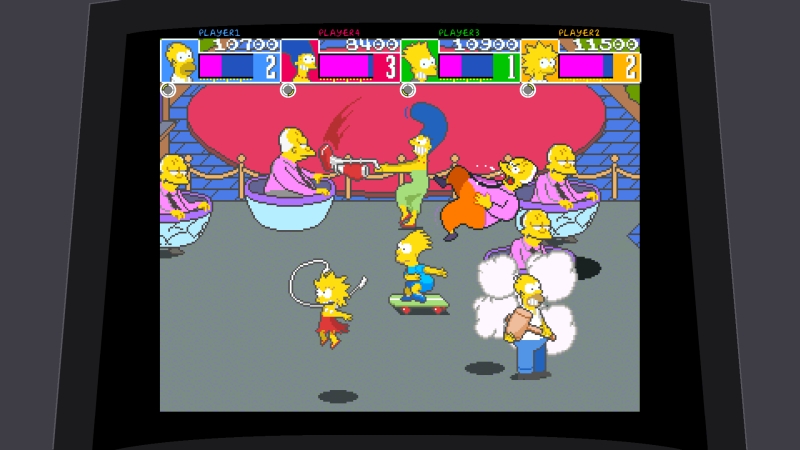
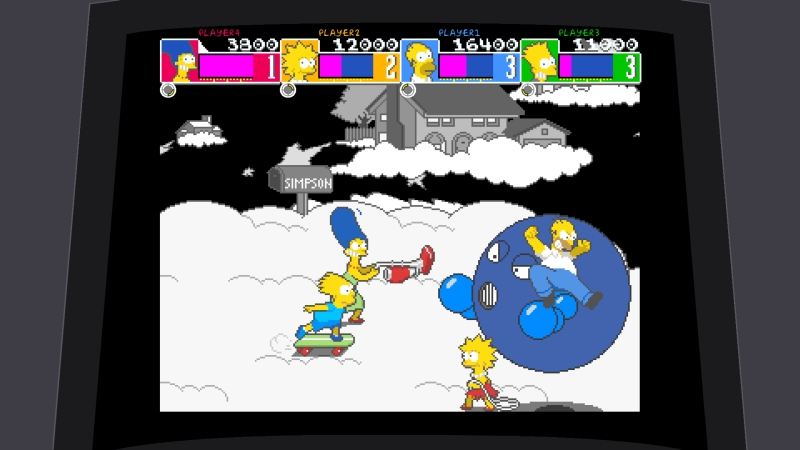
Point of Sale: Nintendo Switch, PlayStation, Xbox, Steam

$22.49 (normally $24.99) did ten back flips in the making of this review. GO NINJA GO NINJA GO!

THANK YOU ALL FOR ELEVEN INCREDIBLE YEARS! Here’s to the next eleven!

The Simpsons Arcade Game

Bart’s shirt is the wrong color. Sideshow Bob helps him instead of tries to kill him. 99.9% of all the characters established in the canon don’t show up. All the enemies are completely generic characters. None of the bosses outside of Mr. Burns and Smithers are from the TV series. The whole game is just a reskinned version of Teenage Mutant Ninja Turtles that some guys at Konami probably threw together in a weekend. Ladies and Gentlemen, I give you the best Simpsons game ever. Only it’s not. It fucking sucks, but you should already know that.

And yes, I’m aware that the wrestler guy that’s the first boss was actually from the episode where Bart tries to jump Springfield Gorge on his skateboard. The bear doesn’t count, because it’s actually just one of the generic guys in a bear suit. I’m also aware that the game originally came out in 1991 and that I shouldn’t be so nit-picky about those things. To that I say this: fuck you. The Simpsons Arcade Game is a fossil that should have been left in the tar pits of non-release obscurity.

Remember that episode where the family started brawling with quintuplet accountants riding teacups?

Don’t look at me that way. I’m not attacking your childhood or raping your memories. That’s a George Lucas move. I’m not even saying the Simpsons was a bad game for back in the day. Hey, it was either play the Simpsons Arcade or, like, go outside and exercise or something. Psssh, what kind of loser would do that?

What I am saying is maybe those memories are better left where they are. The Simpsons Arcade Game, much like Ninja Turtles or X-Men, has not exactly aged well. Let’s face it, it’s a relic. And not one of those good, Sean Connery type ones. As much as the concept of it baffles me, I can almost understand going back and playing stuff like Final Fantasy VII for the twentieth time. I think there should be mandatory castration for anyone who does so (not that they’ll ever actually use those parts, but you can never be too cautious), but I can almost understand it. But an arcade brawler that was, quite frankly, a lazily produced reskin of an existing game designed to sucker lunch money out of children?  Why would you want to go back and play that?

And yet, since the announcement of it a few weeks ago, teenagers of the early 90s are going gaga. I had never actually played the Simpsons Arcade Game, outside of one attempt at a Pizza Hut when I was like six years old. The joystick was broken and I couldn’t move to the right, which is one of only two requirements the game actually has. I got my quarter back and thought nothing of it until I heard the announcement. I planned to ignore it, but it came free with a Playstation Plus account and I’ve never turned down a chance to troll you retro nerds before, so why start now?

I think the appeal in the Simpsons Arcade Game is the same as Sonic CD: it was the “lost game” in the series. It never got a home console port due to some licensing issues and thus it became a legend. As teenagers grew older and their minds became more polluted with various drugs, alcohol, children of their own, and all the Simpsons gaming crapola that has come out since then, those memories of the Simpsons Arcade Game became pretty fuckin’ sweet.

Remember that episode where the Simpsons dropped acid and fought a giant bowling ball?

I promise you, the Simpsons Arcade Game is not as good as you remember it. I know this because I’ve yet to hear a single person tell me that Teenage Mutant Ninja Turtles: Reshelled was as good as they remember it. And at least that one had updated its graphics. They couldn’t even bother with that here. This is a lazy port of a lazy game, and you can tell it was produced early in the show’s run. The character models are way off, the voices are off, and the game is forced to use so many generic characters because the cast of millions the show currently uses wasn’t established yet.

So here’s a wild idea: if they had the rights to make this game, why couldn’t they have produced an updated port to go with it? Leave the original game intact so that people could see how horrible it is, and then throw them something newer, using all the crazy space-age technology that leprechauns have given us over the last twenty years?

Actually, EA did a port of the Simpsons Arcade Game for iOS. I have it, and I tried to play through it, but it’s fucking impossible. This is mostly due to the fact that it uses one of those God-awful fake joysticks-and-button layouts that is about as accurate as a dart player that injected his hands with Novocaine. But imagine if they had ported that over to consoles. I mean, that game actually has characters from the series. You fight Chief Wiggum, Mayor Quimby, and various other fan favorites. It might not be the exact same game as your childhood fantasy, but it actually might be better. You know, if you could control it.

Or, even better, build an entirely new game modeled after the original arcade title, but replace all the generic baddies with random characters from the series that you fight only once, locations based on the series that actually look like they might have appeared on the series (Moe’s Tavern is a quarter-mile long casino. Who knew?), and add some modern twists. Use Castle Crashers as the basis for it. Leveling up, a variety of weapons, branched paths, hidden items, and so on, and so on. Why settle for something that was designed to steal your money as a child? Don’t you deserve better? Well, no. I suppose you don’t. If you actually gave away $10 for this piece of shit, ay caramba, there is no helping you.

The Simpsons Arcade Game was developed by Konami

Going off the math of how many free games and discounts I’ve gotten with my Playstation Plus account, approximately $0.38 was spent playing Teenage Reskinned Ninja Simpsons in the making of this review. TOO MUCH!

The Simpsons Arcade for iOS was developed by EA and costs $0.99. For God’s sake, do not buy it.