Parasol Stars: The Story of Bubble Bobble III (Review)

Parasol Stars: The Story of Bubble Bobble III
Platforms: Nintendo Switch, Xbox, PlayStation

Original Platform: TurboGrafx-16
Released February 15, 1991
Designed by Kataru Uchimura
Developed by Taito
Re-Release Port by
Ratalaika Games
$9.99 opened an umbrella indoors in the making of this review.

Unlike Bubble Bobble, this isn’t a split decision based on co-op. But seriously, if you get a chance, play this co-op.

One part I missed in the Rainbow Islands review (as featured in Taito Milestones 3: The Definitive Review) is how it really doesn’t feel all that much like a sequel. The Bubble Bobble connection feels forced. Something added after the fact, even if that’s not the case. It doesn’t have enemy-based end-goals and it doesn’t even have co-op. Weirdly, the shoe item, AKA the thing that I hated, is the one and only aspect that feels tied to the first game. But, in the case of Parasol Stars, it’s unambiguously a Bubble Bobble sequel/spin-off. We’re back to room-based, enemy-eliminating gameplay and it’s actually really good. Before I get to the gameplay, the package by ININ and Ratalaika is pretty dang solid, with five out of the six gems in the Infinity Gauntlet of Emulation. The only thing missing is a full tool-assisted gameplay video with optional jump-in. Every other feature is there. Button mapping? Check. Save states? Six slots available (though no quick save/quick load). Rewind? Yep. Hell, Parasol Stars includes some of the more impressive screen filter options I’ve seen. I don’t award “bonus value” for single reviews, but I would be VERY happy with these options if I saw them in a compilation. There’s also an Arcade Archives-like online scoring mode that prevents cheating. I’m 22nd in the world as of this writing. Go me.

There’s also a few quality of life features (which I consider “hardware enhancements, the 5th gem), including cheat toggles and a “fix” for the umbrella. If you play with the toggle off and hold the umbrella out, you walk backwards instead of turning around. It’s much more difficult than it sounds because it’s not really intuitive. An outstretched umbrella basically acts as a shield, and if you’re playing a game and something is shooting you from behind, it’s not instinctive to let go of the button, turn around, then push the button again. I tried Parasol Stars the original way back when the TurboGrafx-16 Mini came out (has it really already been almost five years? Jeez!) and it really is unintuitive. Good call, everyone involved in this release.

I only have one question: where’s the instruction book? This is a pretty abstract game, especially getting the secret doors if you want to play without the cheat codes on, but as far as I could tell, there’s no instruction manual. Again, I don’t do bonus value for single releases, but this is the type of oversight that would earn a game a fine that negates probably around half the bonus value. I can’t stress this enough to developers of commercial emulation releases: DO NOT assume we can find the stuff online! EVER! Neither of my two go-to sites for this type of thing, GameFAQs and StrategyWiki, had anything substantive on the TurboGrafx-16 build of Parasol Stars featured in this release.

And there’s extensive cheat codes. When I played with Angela, I used infinite lives and automatically getting the doors. We weren’t looking for a challenge. We already knew we’d mostly be throwing each-other with the umbrellas. That’s challenge enough. And I didn’t use multi-jump out of respect for Rainbow Islands, which I murdered with it.

So, in Parasol Stars, the object is to use your umbrella to defeat enemies, and as silly as it sounds, it’s one of the most versatile gaming weapons ever created. Like Bubble Bobble, defeating enemies is a two-step process. First, you must stun them, then you can either pick them up and throw them to ultimately defeat them, or throw other enemies into them for more points. Smaller enemies can be stunned directly with the umbrella, but there’s a wide variety of larger enemies (including an entire world based around them) that need to be defeated either by throwing multiple enemies at them or by using special bubbles. Oh, and in co-op, if there’s no downed enemy to use as your projectile, you can always use the other player.

This slideshow requires JavaScript.

And, I’m still not done with the umbrella’s abilities. As I said earlier, it acts as a shield, but it also slows your fall in the classic gaming tradition. But, the main thing you need to learn to do is catch little droplets that appear on most of the stages. You need five droplets to create a giant bubble that provides an extra weapon. There’s four, three of which are the old school Bubble Bobble elemental bubbles of fire (that sticks to the floor), water (that cascades down the playfield and sweeps up everything in its path) and lightning (which travels in a straight line across the full length of the playfield). A new element, the star, sends a spiral of death out that’s hard to aim but it takes care of enemies all over the screen and is a little too overpowered in my opinion. In addition to all that, the droplets themselves can be used as weapons. And I haven’t even mentioned all the level-clearing items. Parasol Stars is one of the most flexible combative games ever made. None of that would matter if the combat was no fun, but actually, I liked it so much more than Bubble Bobble, and by a big margin.

The new addition to the formula is enemies that generate other enemies. By the way, this was the level that took Angela and me the longest to defeat, and our accidental ruining of each-other’s attacks was only half the reason.

Parasol Stars just plays better in every way, and I think that’s largely because it’s not an arcade game. It didn’t have to ever be cruel just for the sake of making money. Which isn’t to say that it’s sunshine and hugs. Like Bubble Bobble, some stages are based around figuring out how to reach certain enemies at all, let alone kill them. But, I think the formula works a little better here as the environments of Parasol Stars usually offer many more options, or if not options, clues to the solutions. The most I ever got frustrated was when sometimes the drips of the power bubbles just stopped, seemingly for no reason. I think it was because too many drips were lingering that hadn’t been picked-up. Other times, Parasol Stars becomes absurdly busy, with so much stuff on the screen that it’s hard to keep track of. As more and more enemies start firing projectiles, it can become almost like a mosh pit of a game. Absolute chaos, but it never stops being fun.

Bosses all play out similar to the Super Drunk battle at the end of Bubble Bobble. Hell, Super Drunk is a boss in this game. Grab a bottle to grant you the ability to generate the elemental bubbles. Since you’re not blowing bubbles, you have to hold the umbrella up, which magically conjures the droplets. You can either charge-up for the full elemental attack or you can just throw the droplets themselves. Really, either way works. I don’t think the difficulty of the bosses scales right, and some of them are really tough (and seem like they take more hits than others) but they’re all fun to do battle with, and that’s all I ever cared about.

In the original Bubble Bobble, co-op was transformative, turning a mediocre and over-aggressive experience into a much more enjoyable one. What makes Parasol Stars unique is the game was already a good one, but the co-op is still transformative in a different way. This time around, most of the levels are bigger than the screen itself. But, Parasol Stars is not a split-screen game. Moreover, no one player is “the main player” that controls how or when the screen scrolls. Whoever moves to the edges first scrolls the screen. But, the level design presents roughly the same kind of challenges (only significantly toned-back) as Bubble Bobble, with the same “hold the button to hop on the droplets” gameplay as the first. Oh, and this time you can use each-other as platforms. This turns Parasol Stars into a game where communication and teamwork is absolutely required, especially late in levels. You can be cutthroat with each-other if you wish, but it won’t get you anywhere. On the other hand, having two players flinging enemies often results in levels being beaten without even realizing it. Several times we had to work together to scroll the screen only to see that the enemies were already knocked-out and waiting to be finished-off.

I didn’t remember to get a picture of a level that was bigger than the screen that we got the bottle on. Maybe because we lost and who needs the reminder?

Unlike Bubble Bobble, Parasol Stars’ chaotic nature makes the whole experience inelegant. Even when you really try to work well together, there’s no way of assuring that you can’t interfere with each-other’s work. You can accidentally shoot a player with an item, which will knock the droplets off their umbrella. You can accidentally prevent them from climbing by hitting them with your umbrella. In the heat of battle, you can accidentally stop someone who’s trying to collect an item that will clear the screen. Like my sister did to me. Many, many times, in fact. This wasn’t a situation like Vs. Balloon Fight where we were deliberately betraying each-other. It’s just a very intense action game. It doesn’t look like it, but it doesn’t take long for the screen to become totally full of items, enemies, and droplets. “Move towards me” must have been shouted dozens of times in the hour or so it took us to beat it.

Which isn’t to say we didn’t work well together. For a non-regular gamer, Angela’s score isn’t too far below mine, and we were able to quickly do things like have her help me bounce up to get this bomb here with minimal attempts needed.

That picture there tells you everything you need to know about Parasol Stars. Much like Bubble Bobble, the fact that the non-hardcore gamers in my family could pick-up and play this game, even with its plethora of offensive options, says it all! Maybe we wouldn’t have had as much fun if eating game overs was on the table, but that’s why they put those cheat options as toggles to begin with. They also included options to forgo needing the secret items to get the doors at the end of stages, and I’m all for that. Angela and I played a full session of Parasol Stars and finished it in roughly the same time or maybe even a little sooner than we did Bubble Bobble, and we had a great time. Again.

I’ve decided not to do the European exclusive NES port of Parasol Stars. Oof.

And we both agreed that Parasol Stars stood head and shoulders above Bubble Bobble. Seriously, it’s going to be difficult for the other games in this franchise to defeat it. As much fun as I had playing with my family and especially Angela, Bubble Bobble has some bullsh*t level design that occasionally leads to moments where the fun is gone and frustration and/or annoyance is all there is. But that’s almost never the case with Parasol Stars. Even the tricky stages are typically exciting until you clear them. This is a game that makes very few mistakes, and a game that shines whether you play solo or with friends and family. Parasol Stars is the first Bubble Bobble game I outright love.
Verdict: YES!

Save Me Mr. Tako Definitive Edition

Technically, this could be a Second Chance with the Chick review. I reviewed Mr. Tako back in 2019, noting I didn’t care for the difficulty, the lives system, etc. In fairness, I didn’t have nostalgia for the Game Boy, which is as close to a prerequisite for enjoying Mr. Tako as it gets. As far as difficulty and other technical issues go, developer Christophe Galati was game, and in fact, he did patchwork on Steam. Unfortunately, his publisher on Switch, who I won’t even give the dignity of naming, just wouldn’t cooperate. Having gotten to know Chris, he got a raw deal. What really sucks is there’s no way of getting those adopters of Mr. Tako this port for free. I like Chris. A lot. He’s a good guy. I admire that he persevered through a nauseating situation to get his work out there at its maximum potential.

This dialog from Mr. Tako became absurdly meta.

Now, having said that, my #1 problem with Save Me Mr. Tako was always that I was never this game’s target audience to begin with. That’s totally out of Chris’ hands. I’m just not nostalgic for the Game Boy. I don’t see how anyone can be. Such nostalgic feelings would be no different than someone being nostalgic for.. I dunno.. rabbit ears on a television. Why would you long to go back to that today? It doesn’t seem convenient, and the picture quality was never as good, and sometimes you’d probably have to get up and adjust the damn things. Imagine someone wishing they could tune-in Netflix using rabbit ears. That’d be so dumb! Why would you want that, Dad? What is wrong with you?!

Sorry, that was awkward.

Well, how come that’s dumb, but reminiscing about the Game Boy, to the point you’d crave a new game that looks like a Game Boy game isn’t? The Game Boy looks the way it does because it was cheap, could run on batteries without sapping them, but was still a major step above the previous option for handheld gaming, which was either Game & Watch or typing swear words into a calculator. Unlike something like, say, the NES or Super NES, where you can do a lot with the limited color palette and sprite-sizes, the Game Boy is just always ugly. Even a game like this, which if it had come out in the 90s, would have been in the upper-echelon of Game Boy games, in both graphics and gameplay. Yea, Mr. Tako is an amazing achievement: a modern indie stylized like a retro game with almost no seams of modern stitching, and it’s even fun. But I’d rather it look like almost any other platform. I can’t get over it.

There’s tons of different four-color palettes you can use. Why not just do the Super Game Boy thing and have a customize option? On a side note, thank you for including photosensitive options. Always classy.

Which is not to say you can’t appreciate Mr. Tako as a game without the four-color thing getting in the way. Mr. Tako is still potentially one of THE all-time great indie mascots, but like Pikachu before him, he has to get his adorable ass out of Game Boy Land and into something more flattering for his personality. Then again, Save Me Mr. Tako goes to some wickedly dark places. The parents of Mr. Tako, the former King & Queen lived happily ever after. No wait, they fucked and died, like all Octopi do. None of that cutesy Disney crap. Octopus die after mating, and by god, that’s going in the game!

I get why they’re there and I know that other players like them more than me, but I sort of wish none of the human-based levels existed. I always winced when they came up. I didn’t like a single one, but again, that’s just me. I thought they were always boring.

Actually, “by God, that’s going in the game!” seems to have been the motto for developing Save Me Mr. Tako: Definitive Edition. There’s a jaw-dropping FIFTY power-ups. Fifty! In a weird way, I kind of admire that Chris didn’t say “I’ll save that one for the sequel!” at any point. But for a mascot platformer, it’s kind of overkill. You can reload your hat at any midway checkpoint, but realistically, you’ll only have one or two that you actually like to use. There’s also fifty stages, a few of which are inspired, but most of which are plain at best, if not outright tedious. Christophe suffers from Peter Jackson syndrome: he desperately needed an editor. Rework the fifty levels down to eight worlds of four stages each, with all the best bits from the stages deleted used to extend the good/average levels. When Mr. Tako is good, it’s a lot of fun. But it gets samey and sloggy, and for what? So a sales blurb can say fifty stages? If nobody is raving about the level design, it doesn’t matter. Give me thirty-two good levels to fifty mostly dull ones any day.

I decided a few weeks ago I’d save this for my 10th Anniversary review. Then I went down my timeline to fetch the media for this review, since I hadn’t added that, and I realized “oh shit, I only uploaded videos. Well, that’s okay, the video are still.. on.. my Switch.. wait, didn’t I clean all my media out a few weeks.. ago?” 😦 Well, fudge.

But, Mr. Tako actually is an overall net-positive this time. Part of that is the difficulty is adjustable and therefore more reasonable this time around. It allows you to appreciate the absolutely batshit raving story about a war between humans and octopus, which is so gosh-dang charming and melodramatic that you have to admire it. At times, the story interruptions can get a bit annoying, and the limited Game Boy appearance can make telling some characters apart a bit harder than it needed to be, but I was genuinely invested in where this was all going. Funny enough, as nutty as the story is, it’s also thoughtful and at times sentimental and sweet. I didn’t really care for the human leads as much, be it their arc in the storyline or playing as them at various times in the game, but I appreciated that gameplay was used to drive the narrative. It’s the rare mascot platformer where the story matters.

The boomerang was my go-to weapon. There’s a sword as well, but it has no oomph to it.

So, they added hit points and now a game I barely didn’t like is one I barely liked. Yes, Mr. Tako is fun. It needed less levels with more going on, and less power-ups with the filler cut and the best stuff refined to a mirror-shine. For all the baffling choices made, Mr. Tako still manages to pull-off a worthwhile platforming adventure. That doesn’t exactly sound like a ringing endorsement, but it’s still an endorsement. Oh, I’m all-in on Mr. Tako as the next big indie franchise. I hope it can find its audience this time. And, if not, maybe next time! Assuming the Game Boy stuff is exchanged for 16-bit aesthetics. It’s kind of funny: ten years ago today, I posted my very first review. The Cathy who wrote THAT review didn’t get nostalgic for anything. The Cathy of 2021 says things like “do you know what I could go for today? Super Mario Sunshine! You know, that game I liked when I was twelve!” Maybe if I’d grown-up with the original Game Boy, I’d been a lot more enthusiastic about a game looking this way. Then again, I did grow up with a Nintendo 64, but if an indie developer made a game that looked like that, I’d dunk their nut sack in teriyaki sauce and let my dog eat their balls off.

Save Me Mr. Tako: Definitive Edition was developed by Christophe Galati
Point of Sale: Nintendo Switch, Steam

$14.99 wiped tears away and thanked everyone for ten amazing years in the making of this review.

Save Me Mr. Tako: Definitive Edition is Chick-Approved and ranked on the Indie Gamer Chick Leaderboard

Safety First (Review)

Alright everyone, pack it in. Cancel your ongoing projects. Indie gaming’s highest peak has been reached. There’s now a game on the Nintendo Switch marketplace where a stick figure pees on things. Including other stick figures. Everything that comes after this will pale in comparison on the grounds that it’s not a game about stick figures giving golden showers to each other. Meanwhile, that sound you hear coming from the east is Hiroshi Yamauchi spinning circles in his grave.

They’re trying to cover for the whole “it’s a guy peeing” thing by saying it’s a robot repairing electric cables using magical yellow repair liquid. Which is like a cop getting caught with prostitutes saying that he’s working undercover to bust them. Also I have to censor the dick. Sorry, rules are rules. I can talk about dicks until I’m blue in the face. I can describe the things I’ve done with dicks in ways that’ll assure my parents will never look at their little girl the same way again. But I can’t show them.

I’m normally not a fan of the whole rag-doll physics stuff. I never fell under the siren call of QWOP or Octodad. Games that offer all the fun of being drunk, only without the fun of being drunk. I’m almost positive that line came across the way I heard it in my head. What I mean is that I’m such a play-control supremacist that the thought of games that are based around unintuitive controls I find repulsive. In Safety First, an actual game for the Nintendo Switch, you control only the legs of a stick figure using the analog sticks, while the rest of the body is dead weight. Under this premise, your goal is to position your stick figure’s stick-cock to take aim and, well, pee on targets.

Never mind Yamauchi spinning in his grave. He’s doing full backflips in it.

It’s *so stupid* and so immature. But it’s also kind of fun. Of course, a lot of the humor is based around the console we’re playing on. If Safety First was on Xbox One, I honestly don’t know if I would have laughed as hard as I did. Probably not. I thought I was better than this, but I’d be lying if I said I didn’t find it funny that I was playing a game with stages that require you to pee on someone’s head between play sessions of wholesome Yoshi’s Crafted World. I mean, come on! That is objectively hilarious. The company that once willfully risked industry leadership by turning blood into sweat for Mortal Kombat now prominently has a game with stick figures peeing to solve puzzles on its marketplace. This is not a drill, people! The Bulletin of the Atomic Scientists played a round of Safety First and moved the Doomsday Clock to one minute before midnight!

I was going to use a pic of the golden shower stage, but honestly I’d have to cover all the fun stuff with Sweeties so here’s this pic where you can’t even see the dick instead.

But, a big part of why I was able to find Safety First humorous is because it’s at least playable and decent enough. If it’d been unplayable, I think I would have actually found it cynical and offensive. Like, the stick figure dick and piss stuff would have been a crutch to hide faulty, lazy game design. That’s not exactly the case, but almost. Just enough to make me wonder if they didn’t phone it in a bit. A big problem is the stick figure is so fragile that the Knicks are planning to offer it a max contract. If you pull the legs too far apart, or if the limp upper-body sways the wrong way, the appendages get severed and you have to start the stage over. The physics seem a bit unstable, and there were times where I would barely lift a leg to aim my stick dick at one of the targets only to have the leg suddenly go flying off for a death. Or sometimes while moving, the torso would tip over and completely snap with a spurt of red blood (oh yes, it’s TOTALLY a robot), like watching a horrible limbo bar accident. Sure, I giggled like a childish twat almost every single time it happened, but it got less funny on stages where I needed twenty or more tries. The physics are just too unforgiving too often. Plus, there’s limited drips of pee per stage and no quick reset button. You’re forced to rip your legs apart in order to start over. Also, congratulations to me for using the word “limp” earlier without tying it to the stick figure dick. I’m glad I’m here.

Safety First has a “drunken, swearing German” mode where the ground sways and your piss is brown. Oh and I’m pretty sure they replaced the normal stick figure head with a silhouette of David Hasselhoff’s head. I have no words.

But, it’s fun regardless. The stages have enough variety that Safety First never gets boring. Similar to puzzle games like SpellKeeper (of which I’m sure its developer will just LOVE being mentioned in the same breath as this dandy), Safety First is best to whip out when you have a few minutes to kill. There’s no commitment really needed. Hell, it’s even fun in failure, which is rare for a puzzler. AND it has novelty value. Tell someone you’re playing a game on your Nintendo where you pee on targets, or possible go the full urolagnia monty, and soak in the faces of those listening. I did it. It’s priceless. Of course, there’s the lingering fear that someone in Kyoto will find out about Safety First and get pissed about it. We’re laughing now, but if that comes to pass, urine trouble, indies!

Safety First was developed by JCO (published by Headup Games)

Point of Sale: Switch, Steam

$2.99 said it’s probably not as funny on Steam in the making of this review.
Safety First is Chick Approved and ranked on the Indie Gamer Chick Leaderboard. Yeah this is my jump the shark moment.

IGC on Gaming: April 17, 2017

So I haven’t been updating a ton lately. That’s mostly due to health issues. I do have a lot of games in my queue to review, including sequels to high-ranking IGC Leaderboard titles such as Bleed 2 and Gunmetal Arcadia. Look for reviews of them soon. By soon I mean 2017. Keeping my window for it wide.

Indie Gamer Chick has primarily been a review site since its launch in July of 2011, but being unable to write as many reviews as I wish I could has left me in a predicament. Thankfully, I’ve built up a decent following in the last five years and those people, for whatever reason, care about my thoughts on other gaming related news. So, why not turn it into a regular column? Let’s hit it.

Is 2017 going to be the best year in gaming?

Resident Evil 7.

Legend of Zelda: Breath of the Wild.

Nier: Automata.

Persona 5.

In a weaker year (think 2014, where the pretty good but unspectacular Shadow of Mordor ran away with nearly every Game of the Year award), any of these four games would have swept the competition and walked away with game of the year. It’s April. We’re not even a third of the way through the year and there are four games that are in the hunt. After playing Breath of the Wild, I would have bet it would cruise to a sweep next January. But, within weeks, Persona 5 and Automata hit, both of which I liked more.

It got me thinking: it’s April and we’re already debating among multiple titles for the year’s best, not to mention one wildly disappointing would-be contender (Mass Effect: Andromeda). These discussions are usually reserved for the Christmas season, yet children aren’t even on summer vacation yet.

Is 2017 set to be the greatest in gaming history?

Honest question: if this had been called anything BUT Resident Evil 7, would people have reacted differently to it? It’s really good, yet a lot of people I talk to need a lot of convincing to even try it on the basis of “meh, another Resident Evil.” They could have called it Spooky Creepy Scary Horror House 2017 and lured in more people.

Maybe I’m overrating Resident Evil 7 (to my credit, I’m not even a real fan of the series and liked #4 only), and maybe Pesrona 5 doesn’t have the type of wide appeal that Zelda does. But it’s already a debate. When was the last time we could even talk about a year in gaming at this time of the year? Before we’ve had this year’s E3, before many of the big holiday tent-pole games even have release dates, if nothing else came out at all in 2017. Wow. By any standard, this would have to be considered an amazing year from an artistic standpoint.

Still to come in 2017 is the sequel to what I consider the best game ever made (not my favorite game, just the best game), Red Dead Redemption. The first Mario game that has stoked my imagination since Mario Galaxy hits the Switch this year. Sony is giving one of my favorite unsung gems, LocoRoco, another kick at the can in 2017. It’s almost hard to believe that at least one more spectacular game could hit this year, let alone many. I think 2017 will be a year gamers will talk about for years to come.

Switch Thoughts

It’s alright.

NES Classic

Nintendo finally released hardware that became the most in-demand retail item they’ve had in generations. No, not the Switch. Everyone knows that I’m “anti-nostalgia”, which isn’t remotely correct. If you’re going to do nostalgia, something like the NES Classic is fine with me. And Nintendo seemingly struck gold with the Classic. Stores couldn’t keep it in stock, or the extra-controllers for it. After failing to capture any mainstream love with the Wii U, or outright being antagonistic towards their own fanbase with their anti-YouTube attitude, Nintendo finally came out with a product that serviced their fanbase and became desirable to casual gamers.

Naturally, they cancelled it after only five months of production.

A friend of a friend is a regional inventory manager for a top big-box chain. He informed me that department managers got more inquiries about NES Classic availability than any other product in the consumer-electronics department, starting months before the release and continuing well after the Switch. Consumers wanted this product. They wanted it badly, if prices on Ebay are used as a barometer. Discontinuing the unit when so little demand for it was met is the latest in a long series of middle fingers Nintendo has given to fans and non-fans alike. And, it would seem, Nintendo has finally gone too far. This is one “fuck off and die” that even the most rabid fanboys are feeling the sting of.

Mind you, I’ve met people who got copyright-striked on YouTube by Nintendo for videos that were gushing love letters to the company. Some of who tearfully apologized for overstepping their fandom and having the fucking gall to show footage of their beloved Nintendo franchises. Nintendo stomped them for being fans, and they thanked Nintendo for setting them straight. They accepted that. At that point, I would think nothing short of Nintendo sending people to burn their house down would make them realize how much contempt they are held in, and how ungrateful Nintendo is for their patronage.

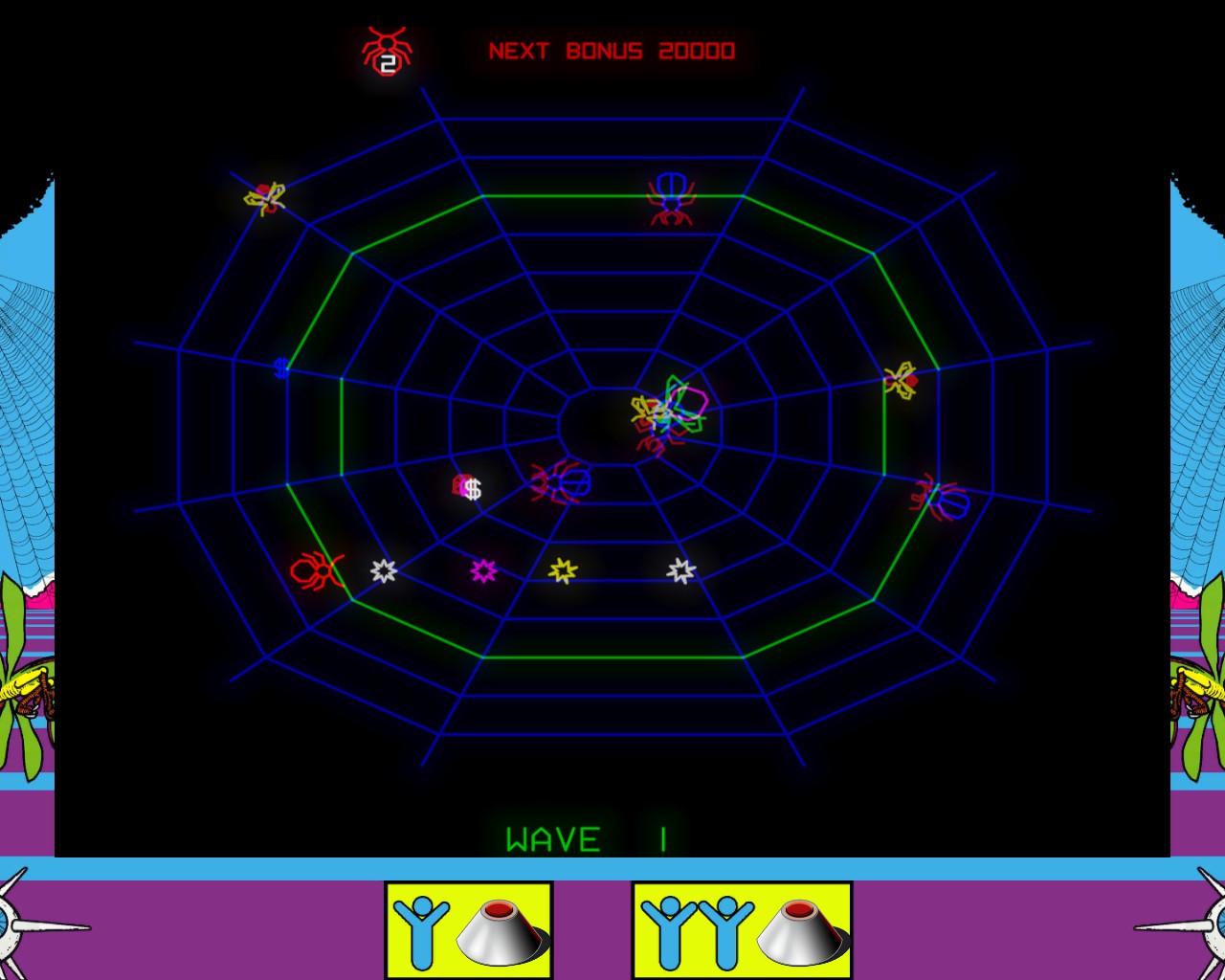
Nintendo didn’t allow their sales force to accept pre-orders for the Classic, leaving them to base their inventory order on how similar platforms like the Atari Flashback were received. So, here’s a picture of Black Widow on Atari Vault, mostly because I don’t want to post a picture of a Nintendo character and get sued.

Those fans, the ones who were unable to get their hands on an NES Classic, are not happy campers today.

Sure, it’s kind of amusing that the thing that made them realize Nintendo isn’t their bestie isn’t having them say “the money your videos earn really belongs to us because you showed a clip of our product”, but rather Nintendo saying “yea, we don’t care if you wanted to give us money, we don’t want your money for this product anymore.” But, the cancellation of the NES Classic is indicative of a greater problem: Nintendo doesn’t do fan service anymore. Oh sure, they’ll bring out franchise titles Mario Kart or Zelda. I’m sure a new Smash Bros is in the works that will license a couple of third-party mascots and get the diehards lining up. But that’s not performing a service for their fans. That’s just products.

As recent as a decade ago, Nintendo bent over backwards for their fans. They put out relatively high-risk franchise revivals like Kid Icarus or Punch-Out!! They had their wonderful Nintendo reward system that let people register their games for free Nintendo swag or sometimes even games. It would be hard to believe Nintendo would release a product like the NES Classic and then pull the plug after meeting less than 10% of the demand for it. And it has nothing to do with them not wanting to compete with their own Switch console. The two products were not in competition with each-other. Non-gamers who grew up in the 80s were chomping at the bit to snag the Classic as much as the slobbering fanboys. It was simply a matter of stores couldn’t keep it in stock. With Father’s Day fast approaching and a product tailor-made for such a holiday, Nintendo simply saying “no” to more inventory is kind of shocking. I was never a fan of Iwata’s business sense, but even I can’t believe he would say no to mountains of cash with relatively little overhead that the Classic presented. A feel-good product that stood to introduce a new generation of gamers to the titles that made them synonymous with gaming. Nintendo took that, and managed to turn it into the latest in a long series of dick moves. Unreal.

Q&A with my Readers

We’ll close this experiment with some Q&A from Twitter.

@religiousgames asks: “How do you know if a game is indie?

After five years, I still don’t really have a clear definition for what makes a game indie or not. Self-funded? That would exclude games that used Kickstarter or Sony’s Pub Fund, so that can’t be it. Self-published? That would exclude games by small studios who were found by houses like Adult Swim Games, so that can’t be it. In general, I use the definition “games made by small studios without creative interference by AAA publishers.” But even that won’t be universally true. Hell, I still get people to this day questioning whether I should count 2012’s Journey as an indie or not. Ultimately, it’ll be up to you to decide what you consider to be “independent.”

@iamtenith asks “What is the most common mistake you see in many indie games?

Proper difficulty curve, easily. Most indie developers forget that they, themselves, are the best player at their own game. They struggle to get proper testers, or they handle their testers incorrectly, and ramp up their game’s difficulty to challenge themselves and not everyone else. In some cases, they’ll get good testers but then hover over them and explain to them how to finish parts of their games. Sometimes I’ll announce I’m reviewing a game and the developer will tweet or email me to offer help to make sure I don’t get stuck. Unless they plan to include a clone of themselves with every copy of their game, they really shouldn’t offer help to reviewers. If you feel the need to talk someone through parts of your game, you really need to go back and fix it, because it’s broken.

@riobux asks “What singular thing in a game trailer can deflate your enthusiasm and interest in a title like a needle through a blown-up condom?

I actually don’t base my purchasing decisions on trailers, so I wouldn’t be a good person to ask. Everyone will mention showing cut-scenes without gameplay footage. I was going to, but then I remember that Grand Theft Auto III’s ads when I was a kid were among the most effective commercials in gaming history and they had nearly zero gameplay footage.

For indies, an over-inflated sense of importance is always annoying. If you’re a no-name developer on their first game, you seriously do not need to release multiple teaser-trailers, then primary trailers, then final trailer, then DLC trailers. No, seriously, do not. You need one trailer a minute-or-less in length that addresses what genre the game is and what the game’s audience is. If you present your trailer properly, games sell themselves. The worst thing you can do is leave it too ambiguous when nobody knows who you are or what you’re working on. You only get one chance to make a good first impression.

From the Team

William reviewed Bleed 2 and Butcher

Marc explained how a company can own the video game rights to the word “Super”.

For more features, be sure to check out IndieGamerTeam.com, a place where my friends post reviews and editorials. They’re already better at this shit than me.

We’re currently preparing for the follow-up to #IndieXmas on social media, tentatively titled #IGCParty. It will take place July 10 – 14, with ten featured games and thousands of free games being handed out on Twitter. Stay tuned.