The Rocky Horror Show Game Platforms: Nintendo Switch, PlayStation, Steam Released October 20, 2024 Developed by Freakzone Games $9.99 kept incorrectly adding the word “Picture” in the making of this review. It’s JUST “The Rocky Horror Show Video Game.”
The Nintendo Switch version was played for this review.
OH MY GOD! It’s…..It’s….. It’s the villain from Congo! Get ’em away from me! Yuck! I hated that f*cking movie!
In the interest of full disclosure, I’m friends with Freakzone Games, which is one guy: Sam. Now, I never factor friendships into the verdicts of my reviews, but I figure you should know that I like Sam as a person and as a game maker, in that order. That’s in contrast to the 1975 motion picture The Rocky Horror Picture Show, which I don’t like at all. It bores me, but it’s nothing personal. I just don’t like musicals. I usually don’t watch them unless they involve Disney animation or, more rarely, giant carnivorous plants and evil dentists. Now I’m from a family of cinephiles and the lone hold out in my family for Rocky Horror fandom, so it’s not like I’m unfamiliar with it. Rocky Horror Picture Show for me is in the same boat as other “cult” movies like The Room or Manos: Hands of Fate (ironically another flick that Freakzone adapted) in that I have tried so many times to sit all the way through it and have never come close to finishing the film in a single sitting. It’s not for me, which in theory means the game isn’t for me, right? Well, it’s not that simple. Even if you’re not a fan, I can explain why you’ll want to keep reading with a single screenshot. This one:
Actually, change that, because I meant “it’s actually a satire of games using a Rocky Horror foundation.” Don’t mistake this for Castlevania because it doesn’t play anything like any of those games. The gameplay is more like the Sega Master System/Game Gear classics starring Mickey Mouse that I genuinely think are some of the best 8-bit games ever. Specifically the 8-bit Castle of Illusion and Land of Illusion games (Legend of Illusion sucks) where you pick up crates that can be thrown at enemies or stacked for platforming. Take that gameplay concept and turn it into a death-count punisher and you have The Rocky Horror Show Video Game. The best thing I can say about Rocky Horror is that it confirmed to me that throwing crates at things is just about the most satisfying attack method a 2D platformer can have. It’s hard to screw up, and Sam didn’t. It controls great too. The two biggest things that he had to get right, action and play control, he nailed.
I died about, oh, one microsecond after this picture was taken.
The gameplay is little more than a skeleton for plenty of saucy humor and a satire on classic gaming at large. Yep, like his (fantastic) Angry Video Game Nerd games (has it really already been four years since I reviewed those?), Sam used Rocky Horror to poke those precious, precious memberberries with a stick. The Rocky Horror Show Video Game is overflowing with gags and direct homages on video games and game design. It apparently even kind of takes shots at the culture surrounding the Rocky Horror film. Sometimes it’s really subtle. I’m tone deaf so take this with a grain of salt, but I could swear I heard a tiny riff from the soundtrack of the Capcom NES classic Chip ‘n Dale: Rescue Rangers at one point.
There’s six of those disco balls in the game, which I think can become permanently out of reach if you die trying to get the crates to build a ladder to them. I got 3 out of 6 in my two sessions.
Now any satire like this is ultimately going to devolve into “hey, you know that thing you know about? I too know about that thing you know about and I made reference to it in my thing!” Sam isn’t THAT lazy about it and puts a small little twist on his references, but they are still just references at the end of the day. If you’re someone who laughs at those types of jokes without fail, you’ll probably like Rocky Horror even more than I did. That stuff doesn’t really land with me, but that’s kind of liberating because it allows me to focus on JUST the gameplay. For the Rocky Horror references, my sister Angela, a fan of Rocky Horror, was kind enough to watch me play and, while she had a valid criticism that I’ll get to later, she said that fans of the film will recognize lines, and the timing and delivery of the Rocky Horror-related humor was, more or less, on par with the film. Now whether fans of the film would want to play a punisher-platformer is another matter altogether. Angela was stunned by the genre. She thought the game would resemble something like Undertale, which would lend itself more to the film. “I don’t want to play a hard game where I’ll die a lot. I want a Rocky Horror video game experience. I won’t be able to finish this!”
I’m pretty sure there’s only three basic enemy types: the skeletons pictured here, brains that float at you, and ghosts that have what I assume is a famous scream from a sound library. It’s not a very big variety which is a bit of a bummer since the combat is satisfying.
As a raw video game, Rocky Horror is good but not great. It’s not at all gripping like the Angry Video Game Nerd 1 & 2 Deluxe was. The gameplay and level settings are too repetitive for that. Unlike AVGN, I really think the license here was too limiting for anything really imaginative. This is a standard point-A to point-B game with no items to find. There are health upgrades but they’re literally given to you at the start of stages or during one boss sequence. Only one boss is really played differently from the others, as it’s done like an avoider (this was the joke that landed best with Angela, though she missed the Donkey Kong joke that was attached to it). There’s no lives and no fail conditions. You can’t game over, so if you die, you restart from a nearby checkpoint, and the game is VERY generous with checkpoints. Rinse and repeat until you defeat Tim Curry three times and the credits roll.
After beating the game once, you unlock “new game plus” which pays homage to the midnight screening culture of Rocky Horror where people dress up and scream things at the screen. As far as gags go, I suppose this is a pretty fitting one. If you’re into that sort of thing. Angela suggested a “fill in your own dialog” option to be a true tribute to this culture.
My biggest knock easily is that the game gets off to a slow start. The structure of the film had to be obeyed, so the game starts with one character (representing two characters) hopping through some shockingly bland level design. That part had me very worried. The twist is that Rocky Horror has three playable characters, but while the gameplay is identical with all three, you’ll eventually replay some of the levels you already experienced, only with additional obstacles or enemies. For what it’s worth, that opening level that I thought was BORING actually becomes a very good stage when you factor-in all the stuff that will eventually be added to the replay later on with a different character. But this also means Freakzone Games sacrificed the first level to this concept. You can’t do that sh*t! The first level IS your first impression, and if it’s too bland, it could be the only impression you ever make. There’s nothing stopping a player from turning off the game and never turning it back on.
Sam, do you see me making games? No? Then DON’T DO MY JOB FOR ME! You stay in your lane, and I’ll stay in mine.
It’s also a really short game. Like, you should be able to finish your first play session in a couple hours at most, even if you die a lot, with a lot of that time eaten up by unskippable cut scenes. I died over 100 times and I still finished it in less time than it took to watch three episodes of Welcome to Derry, aka “why did we pass on Stranger Things?” Most of the level design comes down to stacking blocks to jump over walls or reach staircases or timing-based traps. Most of the obstacles aren’t enemies but rather spikes. Spiky balls that appear and disappear. Bigger spiky balls that fall from the ceiling when you get near them. The bosses are Mario 2/Castle of Illusion “throw the crates at the thing until you win” fights. Boilerplate stuff, but well-made boilerplate stuff. Seriously, if you want a perfectly decent platformer that costs $10 or less and will eat up three hours or less of your life (in theory I bet a person could beat this in an hour on their first try if they play well enough), this isn’t a bad choice for that just on its gameplay merits. The Rocky Horror theme or video game parodies that didn’t land with me could be the icing on the cake for you.
The other big “obstacle” is limiting the visibility to a spotlight that follows the player. I’ve never been a fan of this, but it’s fine here. It didn’t change my mind about this overused and overrated trope. It’s okay, or more accurately, tolerable in Rocky Horror.
Did I have fun? Yes, and since this wasn’t made for me, I guess that speaks volumes to how good Sam is at this, right? That’s assuming my original “not made for me” hypothesis is correct. But what would a Rocky Horror fan say about this? “I don’t get it,” said Angela. “Rocky Horror is defined by being a musical. Making a game that’s anything BUT a musical means it’s not really Rocky Horror, is it? It’s just something that looks like Rocky Horror.” But Angela isn’t a gamer and has no real vested interest in gaming history or culture. And NOW I get it. I was wrong about not being this game’s target audience. I either am or I’m a generation shy of that audience. What Sam did here isn’t made for Rocky Horror fans first and foremost. It’s a game for people like me who wonder “whose bright idea was it to make a Back to the Future NES game? That doesn’t work as an action game! It’s a f*cking fantasy romance! The structure is complete f*cking wrong for the type of game they made!”
And that’s really the thing about the Rocky Horror game. These sprites could have been for anything, for any movie license, and the same applies for the video game reference jokes that were made. The same jokes could have been made if this was a platformer based on It’s A Wonderful Life or Earth vs. The Flying Saucers. Why not? The sprites just happen to look like Rocky Horror sprites because that’s the license Sam was using. I did have fun. I really did. But the actual gameplay of The Rocky Horror Show Video Game is as generic as it gets. Sorry, Sam. I hope you know I love you. Seriously folks, Angela and me have been working on a superhero TV show concept for years now, and if it were to actually get made as a TV show and we were to ever license it for THIS type of platform game (even though it wouldn’t work as that but this is a hypothetical), Sam would not only be my first choice for developer, but he would be my only choice. If we offer him the license to make our superhero show as this type of platforming game and he says no, the game doesn’t happen. Ever. That’s how much stock I put in his ability.
The joke is that if they had made a Rocky Horror game in 1988 to 1991 at the peak of the NES, it’d be like this, only without the swearing and innuendos. As a quick aside, I hate it when games like this cuss. I know that sounds weird coming from me, but it breaks my immersion that I’m playing a lost game from that era. Either way, Rocky Horror doesn’t fit the platforming genre at all. THAT’S THE JOKE. The fact that a decent game is attached to that joke is just a bonus. Rocky Horror didn’t sell well, but I think it could be rescued because point-of-sale eShops are not the way to sell this thing. What Sam and his partners on this project need to do is find a publishing partner who will distribute physical copies of this in places like Spirit Halloween or Spencer’s Gifts. Spencer’s actually has a board game section with satires like Tipsy Land (a drinking game version of Candy Land). Why not video game satires? At least, that’s how you land casual fans. For everyone else? Yeah, it’s going to be problematic.
I didn’t want to spoil this but I think I have to. The opening dialog is framed like Legend of Zelda, right down to the music sounding just similar enough to fire-up your memberberries. It’s well done. I think people who see THIS would immediately get “oh, this isn’t a Rocky Horror game. It’s a game satire with a Rocky Horror theme.” But it doesn’t mean squat if you can’t even get the target audience to view a trailer or click the eShop page. Even media coverage won’t make a difference with non-fans because, AGAIN, the non-fan still has to click through and stay focused long enough to find out IT’S NOT JUST ROCKY HORROR GAME! I don’t know how you do that. A different logo maybe? Maybe it can’t be done.
So like, how do you get the word out on games like this? How do you get someone who would like this type of parody but not a Rocky Horror game to click the game’s page on an eShop? How do you get someone who isn’t a Rocky Horror fan to click a trailer? Because, gang, those are the questions that need answers if we want this to be a viable genre, and I think we do, right? More importantly, if you want rights holders to famous non-gaming IPs to give small developers like Sam these big licenses to work with, SOMEONE has to figure out the answer to that, because I really want more indie devs to land these famous licenses. I want stuff like this to keep coming out. But if I hadn’t been friends with Sam, I’d never even given this game a second thought. A license by itself is only going to appeal to the fans of the license. That’s why you get the f*cking license in the first place, right? But, depending on the license, it can be just as much a barrier to your target audience as it is an attraction. With all due respect Sam, it’s not up to me or anyone in gaming media to get the word out that Rocky Horror isn’t ROCKY HORROR in capital letters. You have to do that……… somehow. How? I dunno. Hey, you’re the one who wanted this license. You figure it out.
I hope what I wrote about the game doesn’t make it sound bland or anything. When Rocky Horror finds its teeth, it’s a damn solid platformer. It’s not amazing, but it’s not average, either. Especially the home stretch with the wheelchair guy. FYI, it controls exactly the same. There’s no skidding or anything like that. It’s just a different sprite, but the challenge is pretty high once he shows up, and I enjoyed it very much. Sometimes I just want a simple, stupid, no frills platformer that controls perfectly, you know?
Every single maker of games who nabs a famous but audience-specific license, from AAAs to small indie studios, is going to face the same “getting the word out that our game is actually FOR EVERYONE” problem. The recent Garbage Pail Kids game certainly struggled with that. I have no idea how well GPK sold, but I don’t think it did great, even though it’s a very good video game. I LOVED IT, and I’m not a fan at all of Garbage Pail Kids as a franchise. For the studio and publishers behind Garbage Pail Kids, that sounds like a dream scenario, doesn’t it? Even a non-fan loved it! But the truth is, if I had not been a game critic, I would have never played Garbage Pail Kids. Judging by how the review has done, I don’t think many non-GPK fans have read it, either. I only started playing it because I thought I could get interesting content out of it. I had no clue how much I would like it. Maybe they’re proud I liked it and gave it a glowing review, but 99.99% of your audience isn’t making content. They just want a fun game for their money, and maybe your license isn’t the blessing you thought it was. How do you get someone who thinks Garbage Pail Kids are stupid but loves NES platformers to play a really well made NES platformer with a GPK license? Good question, and I don’t have the answer.
Same with Rocky Horror. If Sam and I hadn’t been friends for over a decade (he even put an IGC easter egg in his Spectacular Sparky game), I wouldn’t have played it. I had fun with these games, so presumably gamers like me, and I consider myself the average gamer, would enjoy them too regardless of their love or hate of the IP. I feel horrible that this didn’t find its audience, because I know that the potential pool of satisfied customers is massive. A solidly designed platform game? Excellent play control? Fantastic chiptune soundtrack (UPDATE: Angela could easily recognize several chiptune renditions of film’s songs, which this review originally mentioned but I accidentally cut that line. My bad!). Decent enough combat (wish there had been a bigger variety of it). Good challenge? Doesn’t wear out its welcome? Yeah, this is a good, solid game. I don’t even mind the length since the amount of obstacles and enemies is so limited. If he wasn’t going to add more, I’m happy he didn’t just keep recycling for the sake of padding the playtime. The worst thing I could say about Rocky Horror is that it’s a bit of a slow riser, which hurts a little since it’s such a short game, but that’s not a deal breaker. I liked this regardless of the license, but that might not be the win for Sam that it sounds like on paper. The license doesn’t target everyone, does it? It targets Rocky Horror fans. A movie famous for taking a long time to find its audience and not doing well upon release. I’m guessing Sam wasn’t aiming for THIS direct of a tribute. Verdict: YES!
Hey gang! I wanted to provide a quick update since it’ll be a few more days, maybe a week, before the next IGC review is posted, but it’s going to be a big one. I’m currently working on Llamasoft: The Jeff Minter Story – The Definitive Review. It’ll contain full reviews for all forty-two games in the collection plus my review of the documentary and emulators. This review is over five-hundred days in the making since I started it in May of 2024 and abandoned it, but those completed reviews were still there, and now I’m finishing it. I’m happy I am, because Gridrunner? Ah, so good. No seriously, guys, SO GOOD. But I still have over two-dozen games left to play and write-up. It’s slow going because Jeff’s games often have hidden layers of complexity and nuances that take a while to get a feel for. But it’s great! I’d never played Gridrunner or Mutant Camels or any of his stuff besides Tempest 2000, even though I’ve known Jeff for a while. So this has been fun and I’m happy to finally knock this set out. After experiencing Gridrunner, safe to say this $30 set is cruising to one of the easiest overall YES! verdicts I’ve given. The documentary portion is probably the smallest of the Gold Master series so far, but it’s solid.
There’s an alternative universe where Jeff instead wrote down “Alpacas!” And that’s literally the only difference between that universe and ours as far as I could tell. Somehow, the company is still called Llamasoft too. Weird, right? Like, as far as alternative realities go, pretty disappointing, really. Oh and they spell “Tuesday” differently. It’s “Twosdays” there. So Jeff wrote “ALPACAS!” and Tuesdays are “Twosdays” and that’s it. No different world leaders or anything. Finland wasn’t wiped out by a zombie virus, at least in that universe. The one I was at before that? Well, I mean, I don’t want to think about it, but this last one still had Starbucks on every corner. F*cking Golden State Warriors are having a disappointing season there too. Even the coffee tastes the same, and coffee always tastes different in alternative realities, but not this one. I was there. Hardly worth the trip through time and space.
After I finish Llamasoft, I’m honestly not sure what comes next. BUT, it’s the holiday season and in recent years I try to have special features that feel like celebrations of gaming. Back in 2022, someone told me that Atari 50: The Games They Couldn’t Include made for great airplane reading during his holiday travels. Made my day, totally, and I’ve heard similar stories from other holiday features, like Game & Watch: The Definitive Review. I f*cking hate boring airplane rides, so the idea that someone wasn’t bored because of my work? God, that made my year. Well, I mean, what was left of it. A week or so was made, but it was MADE dammit. I’ve been really proud of my holiday features too. They’ve been some of the work I’ve been the most proud of, and I want to keep being proud of them, but that requires games that capture my imagination. Last year I had Light Guns and Tetris Forever. This year it’s Llamasoft and whatever comes next. I really want to do Atari 50 (especially since Part One, with all the new games or modern takes on old games, has been up for a while) but I’m going to guess knocking out all 160 retro games in Atari 50 and its DLC sets isn’t going to be possible in the time span I have. I do have other Definitive Review options, including some oddball choices like SNK 40th Anniversary, which I have covered at IGC but not as a full fledged Definitive Review. Gosh, I should have saved Konami SHMUPs for Christmas. Alas.
If I do SNK 40th, I would probably throw in at least some reviews of the games mentioned in that collection’s timeline that weren’t actually included as playable games in the set, such as Vanguard II.
I have Marvel vs. Capcom Collection. I could do the original Capcom Arcade Stadium since my Definitive Review for 2nd Stadium is one of my most popular features ever. I could grab the new Mortal Kombat set. I’m open to ideas. There’s so many collections out there that I could cover. For the first time in a couple years, I don’t have a Taito Milestones set to do at this time of year so my schedule is open. Or, I can do a make believe set. In 2025 I’ve done Kung Fu Master and games inspired by it, I’ve done Adventure Island, and I even did Kid Niki of all things. I could do something like that with another forgotten franchise. Or I can go back to knocking out Nintendo classics just so I have those reviews up for reference for the under the radar stuff. I’m open to ideas. One idea that’s likely a non-starter is a follow up to 2024’s light gun feature as I need the stars to align perfectly to have my family there to play it with me and I can’t guarantee it. But if I were to do it, would you rather have Sega Light Phaser for the Master System or classic coin-op light gun games?
Colecovision: The Definitive Review could be fun.
In 2026, I’m hoping for a lot more inspiring sets. I’m guessing an Intellivision collection is coming from Digital Eclipse and Atari, but I’m only guessing. I would REALLY hope for a modern release of Activision Anthology, only using the Gold Master format with interviews from the people who were there. I’ll even settle for a hefty ($30 or more) update to Atari 50 for it. It fits, right? Or a modern Midway Arcade Treasures. My dream Gold Master release is Dragon’s Lair, even though I already have a review up for Dragon’s Lair Trilogy. But we don’t have a collection for Dragon’s Lair that has all the important behind the scenes features, and I can’t imagine a game that would have more interesting details. I want that, and more importantly, I think gaming needs it, but the window for it is closing. It’s a morbid thing to think about, but it has to be said that a lot of golden age developers are getting up there in age and when they’re gone, that’s it. The window is closed forever on hearing their stories directly from them. This is why I’m hoping other companies get their rears in gear and do their retro sets using similar formats to Digital Eclipse, with interviews and behind the scenes stuff. Look, collections are great, but if you really want to erase the cynical cash grab vibe that can come with them, you need those extra features. That extra effort shows it’s a labor of love first and a money-making venture second, which ironically probably will make more money. Dear publishers: I’m on your side here. I’m your target audience, a totally average gamer. If that’s what I’m into, it’s what everyone is into. We’re looking for inspirational stories, and the golden age of games are full of those stories.
Castlevania Legends Platform: Game Boy – Super Game Boy Enhanced Released November 27, 1997 Directed by Kouki Yamashita Developed by Konami Available with Switch Online Subscription (Standard)
There’s a couple spots in the game where you get locked in a room and have to defeat waves of enemies until they stop spawning. Then, late in the game, there’s a spot where you’re frozen in place and have to defend yourself from ghosts. At least they tried to find ways to freshen the experience.
My 2025 Halloween Castlevania marathon has been full of “weird ones.” Simon’s Quest, Vampire Killer, and Haunted Castle? Pretty weird. Legends isn’t really “weird” in the same way previous Game Boy titles Castlevania: The Adventure and Castlevania II: Belmont’s Revenge were, though it maintains a lot of the gameplay. The ropes are back. The big upgrade for the whip being a fireball projectile is back. There’s a lack of skeletons. But, of the three Game Boy titles, this one seems like it’s trying the hardest (and failing, but trying nonetheless) to feel like the console games. They wanted this so much that this was set up to be the ultimate origin story. The game’s heroine, Sonia Belmont, is implied to be the mother of Castlevania III hero Trevor Belmont. If you get the best ending, it’s also kind of implied Alucard is his father, which makes Dracula’s Curse really awkward, doesn’t it? Well, thank GOD that they erased that idea from existence and declared Legends to be non-canon. We wouldn’t want to spoil the integrity of a franchise that features skeletons doing double-dutch jump roping, would we?
“One potato! Two potato! Three potato! Four! Simon’s great-great grandmother was a filthy whore! Five potato! Six potato! Seven potato! Eight! Alucard slept with Sonia after their date! Nine potato! Ten potato! Eleven potato! Twelve! Now Belmont blood is tainted and you’re stuck in helloooo operator! We’re playing Simon’s game! He’s stuck fighting us because of Sonia’s secret shame!”
Actually, maybe the weirdest part of Legends was that it was one of the most negatively-received Castlevanias upon its release. It had FAR worse reviews than Adventure got upon its release, which blows me away. Seriously, if I was put on the spot to name the worst games I’ve ever played in my life, Castlevania Adventure would be one of the first titles to pop into my head. So Legends feels like it got hosed, because honestly it’s not that bad. It’s SLOW in terms of movement, but lots of Game Boy action games feature slow movement, presumably to accommodate the blur factor of the Game Boy screen. But, action isn’t about raw speed. It’s about tempo, and I think Legends maintains a fairly consistent tempo of quality combat and quality platforming, even if it botches most of the Castlevania elements, and it does. But hey, the whip feels pretty good, and they packed a lot of fun layouts, enemies, and boss battles into this thing. Then they sort of screwed it up, but not in a way that completely ruins things.
So long, ropes. We hardly knew thee. Legends added moving ropes, but they’re not as exciting as you would hope because they’re too short to really be anything but transportation.
In a truly bizarre decision, Legends doesn’t have any subweapon pick-ups. Instead, you get subweapons after beating bosses and can select which one you want to use, Mega Man-style. Okay, that doesn’t sound too bad, except only one of the standard Castlevania subweapons was used in this game: the stopwatch. And it’s not even presented like a stopwatch. For some reason, it’s a tornado. I’m not sure why a tornado would freeze all non-boss enemies. Either way, you get the stopwatch from the first boss. Then the second boss is a full life refill for only twenty hearts. This in a game where, if you have a full whip upgrade, candles only contain either hearts or, occasionally, health refills. You’re practically picking hearts out from the webbing between your toes in Castlevania Legends. The only way it could be worse is if they made the third item essentially be a cross and work to clear the screen of the bats that become annoying. You see where this is going.
Those had been bats a second earlier.
Now, that bomb is relatively expensive at five hearts and it only does as much damage as the fireball your whip throws, which is half-as-strong as a direct hit with the whip. So it’s not like you can just plow through levels with it because it can’t one-shot anything stronger than a bat. But the bats were one of the main challenge elements, and they’re rendered completely toothless by this upgrade. To really make it obvious how little they thought this whole thing out, the fourth item you get is a weak-ass projectile that seems like it does as much damage as a fully-upgraded whip’s projectile. It’s a little wider than that fireball and only costs one heart to use, but if you’re going to do that, you might as well use the whip and enjoy the satisfaction of one of gaming’s best weapons, right? I never found a good usage for it. So like, why wasn’t THAT the first thing you get? The scaling is all wrong.
This WOULD have been the part where I died if not for the health refill subweapon. Seriously, this was the toughest boss in the game, easily, and it exists in a goddamned bonus stage hidden in the fifth and final level.
And where the hell are the traditional Castlevania subweapons? There’s no axe, knife, boomerang, or holy water. Don’t tell me the Game Boy couldn’t handle them, because they were in the previous Game Boy title (depending on which region you played). Well, their sprites are in this game, but not as items you use. Instead, Legends has hidden them as magical trinkets, one per stage, and if you find all five, you get the fifth subweapon. I should note that the way they’re hidden isn’t very satisfying, as each stage has a few forks in the road, and the hidden item is just in one of the forks. There’s no way to logic out which one. Presumably this whole idea is in there to add replay value, but it’s not creative. I would have rather hidden them in walls along a strictly linear route that was more optimized.
Exploration is great, but there has to be logic behind it, even if I think the level design is good. Legends has probably the strongest level design of the three Game Boy titles, but I’d still call Belmont’s Revenge the best of the trilogy because of the subweapons.
Is finding all five hidden trinkets worth the effort? Well, in addition to getting a better ending that was so nonsensical they struck it and the entire game from the canon, you get a fifth subweapon that might as well give you a free pass to the last boss. Remember how I said the bomb can’t one-shot anything bigger than a bat? The final item is a screen-clearing bomb that takes out everything but Dracula himself for the same cost as the previous bomb: five hearts. Yep, it makes the home stretch before you reach the final boss a cakewalk. So none of the subweapons are particularly satisfying to use. I have no clue what they were thinking with any of this. It’s not imaginative and it’s not fun. The whole system adds nothing to the game at all and feels like it belongs to another property entirely. The funny thing is, the subweapons were always kind of nerfy to Castlevania, and getting rid of them could be a positive thing if what replaces them is more balanced. Replacing boomerangs and axes with any-time-you-need-it full health refills and screen-clearing bombs isn’t exactly balanced, is it?
Honestly, the graphics ain’t half bad, but I still think Belmont’s Revenge looks nicer.
BUT, for what it’s worth, I felt Legends had pretty dang decent level layouts and enjoyable enough boss battles that made Castlevania Legends worth playing at least once. I expected so much worse based on its reputation, and now I’m sitting here puzzled because it’s not a bad game. As of this writing, it’s part of the Switch Online lineup, and if you’ve skipped it because of its critical reception, yeah, take a chance on Legends. It’ll take you a little under an hour to finish, and it’s fine. Just don’t expect one of the stronger Castlevania games, because Legends feels more like a ripoff of Castlevania most of the time.
(shudder) It even gets creepy, something the other two Game Boy Castlevanias didn’t come close to doing.
Really, this feels like its closest kin is Haunted Castle because a lot of the enemy attack patterns are based on crowding you and keeping the combat at closed quarters. Bats and spirits attack in a way where they swoop in from above you. This makes scratching-out distance to get your attack off without taking damage the primary challenge. I hated that for Haunted Castle, but it feels like it works here because there’s a sense of claustrophobia. Otherwise, besides the whip and candles, it never really feels like it belongs in the franchise. But, if you imagine Legends not as an actual Castlevania game but rather as a Castlevania-inspired action tribute that had no clue how to implement subweapons, it’s fine. Really, Castlevania Legends only sucks in comparison to its console big brothers. But so what? What halfway decent Game Boy title that’s part of a legendary action franchise is that not true of? Verdict: YES!
Dracula never got over losing to Wolverine in the first X-Men movie.
Awww, Trevor Belmont was adorable. Who’s the little vampire killer? You are!
Haunted Castle aka Akumajou Dracula Platform: Arcade First Released December 26, 1987 Designed by Masaaki Kukino Developed by Konami Sold Separately via Arcade Archives
“I’m almost certain you don’t understand how flashing works.” By the way, his actual boss sprite looks nothing like this.
Sigh. Alright, let’s get this over with. Rip the bandage off. Pop this pimple. Yank out this white hair. You see, I just realized I’m only a few games away from having reviews posted for every 80s and 90s Castlevania game (not counting threeLCDgames or the cancelled Game.Com game, even though I have the ROM for it). I want to achieve that, but that means I have to actually sit down and review Haunted Castle, and it’s not exactly bad in a way that’s all that interesting. Hell, it doesn’t even have the benefit of being the worst Castlevania game. That honor goes to Castlevania Adventure on the Game Boy (which is technically called THE Castlevania Adventure), and I’d rather be stuck with Haunted Castle than that game. Don’t mistake that as a complement, though I do genuinely have a couple small complements to make in this game that my friend Dave speculates only exists because Konami was pissy of having to cut Nintendo in on a third of Vs. Castlevania’s profits (which I intended to also review but it wasn’t so interesting I could get a whole review out of it).
“Oh, real mature, Cathy!”
First Complement: the soundtrack is really good. Second Complement: some of the settings and enemy sprites aren’t too bad. Really! There’s a convincing fog effect. The game’s version of “The Creature” is probably the closest it ever looked to being like the famous version of the Universal Studios Frankenstein.
Even if it’s a boring boss fight. Then again ALL of Haunted Castle’s bosses are boring.
There’s a genuinely spooky haunted dining room, complete with dinner and kitchen utensils attacking you. A graveyard catches fire and it looks threatening and/or menacing. While MOST of the settings are boring, it’s not all boring. And even when the settings are at their most lifeless, heck, I’ve still seen a lot worse than Haunted Castle’s tour offers. Granted, Simon’s sprite is distracting and his walking animation doesn’t feel confident or heroic. A lot of the sprite work is solid, but others are laughably pathetic. Like, look at this screenshot of blue-haired He-Man battling sawed-off Benjamin Franklin:
It’s supposed to be the fleamen/hunchbacks, but it looks EXACTLY like Ben Franklin. Then again, they did find over 1,200 pieces of human skeletons in Benjamin Franklin’s home. I suppose we can’t completely rule out that he worked for Dracula and was possibly performing a ritual to bring him back in the Americas in the 1700s. If you’re reading this Konami, there’s your plot for the next Castlevania right there!
And now I’m out of nice things to say about Haunted Castle. No shortage of bad things to say, though to be honest, my heart isn’t even into that. It’s just not a very interesting game. The thing that stinks the most is probably the collision detection. Your hit box is just a square that feels much larger than you are, and then enemy attack patterns are tailored to take advantage of the wonky collision box. When it comes to enemies, their collision is much more sprite-accurate, so bats and projectiles require direct hits to kill. They also like to have enemies such as zombies or mummies spawn right next to you, and since ducking or jumping still feature a massive hit box, evasive maneuvers are too hard to pull off and defense is NEVER intuitive.
Platforming is kept to a bare minimum, which didn’t bother me. Most of the arcade barbarian subgenre of the late 80s had roughly the same amount of jumping and moving platforms. If nothing else, Haunted Castle’s maps are boilerplate. That’s all the proof you need that it’s the action that fails this game, not the settings.
So, for example, the mummies begin firing projectiles as soon as they finish spawning. They take multiple hits to kill, AND AGAIN, your box is massive. It’s not a guaranteed life loss, but the resulting gameplay isn’t fun because you’re reacting in anticipation of what this means for your collision box, and not the enemy itself. That’s TERRIBLE for immersion, and action games that aren’t immersive are in bad, bad shape regardless of anything else the game does right. It’s like starting a footrace by immediately stepping on a rusty nail. Even turning around to scratch-out enough distance to avoid their attacks, or to counterattack something else chasing you, usually isn’t effective because of how cramped everything is. Haunted Castle is remarkable because it does NOTHING right as an action game.
These things are an example of the developers crossing the line into full-on trollish design. You kill a skeleton and it turns into these ghosts that are too fast moving and too spongy to slay. Your only option is to start backing away as soon as you strike the killing blow on the skeleton and then duck out of the way of the glorified torpedo it launches at you. This isn’t actually a bad idea in a vacuum. If Haunted Castle had a larger variety of enemies, set-pieces or even styles of layout, this might actually be a great idea for a danger element, especially if you fine tune the layout based around the fact that this will happen. But given the flat, uninteresting layouts and overall lack of satisfying combat, these instead come across as the developer trolling for the sake of it.
It’s an example of counter-optimization, as your attacks are not suitable at all for closed-quarters combat, and almost all the basic enemies are fine-tuned specifically to crowd you and be just above or just below your attack box. The developers did such a good job of crafting and polishing the trollishness that there’s really no excuse for any bad aspect of Haunted Castle. It is polished, but not in a way that’s done for the benefit of entertainment. It’s a quarter-sucker, and nothing more. This was pretty foolish too, because somewhere along the way, they forgot that games that aren’t fun don’t suck as many quarters. Haunted Castle’s fixation on near-miss combat just makes it boring to the point of exhaustion. Even challenging arcade games need to be give-and-take, but this just takes. It skews too heavily in favor of the enemies. Because of that, literally everything else about the game would have to be amazing just to make Haunted Castle rise to the level of overall mediocrity.
It’s worth noting I played two versions of Haunted Castle (out of five total) for this feature, the ones known as VERSION N, which is the initial Japanese release, and VERSION M, which is the second North American ROM and the one notorious for its hard difficulty. Regardless of which version you play, the lack of intuitive collision detection is always the worst problem. I assure you in this shot, my sprite wasn’t anywhere near those fireballs or the bat. You can feel the difference regardless of the difficulty toggles by paying attention to the bats. Version M’s bats attack in a much more cruel, hard to avoid way.
Unfortunately, the rest of the game’s design is just really dull. Now I’m not expecting complicated or even ambitious level design from a coin-op, and I can put up with a game based around mostly flat corridors. Hell, I gave YES! verdicts to Rastan Saga and Cadash in Taito Milestones 3: The Definitive Review. Haunted Castle isn’t that different from those games, with its large sprites and flat, straight-line corridors, minimum jumping, and heavy combat focus. They’re all members of the same graduating class, more or less. But Taito’s beefy action arcaders had a better sense of timing and spacing with their straight line corridors, and even at their most unfair, they never felt as unfair as Haunted Castle. Those games have problems. LOTS of problems. But they also remembered to maintain the sense of entertainment that’s part of that agreement players have with coin-ops. You’re paying to have a good time, after all. Haunted Castle forgot the good time part. I think the design team assumed the settings and connection to the popular Famicom/NES game would be enough by itself to keep players pumping cash, and obviously myself and a lot of critics over the years think they were just plain wrong.
In the opening cutscene, Dracula was white, had jet black hair, and was clean shaven. Now he has green skin, gray hair, and wears a Vincent Price mustache. Simon, you know it gives me no pleasure to say this, but you have to consider the possibility that your new wife did this to him. And he has superpowers! You don’t, so imagine what she’ll do to you! Maybe you should just let her finish him off, because the dude looks downright sickly.
If Simon’s Quest is Exhibit A in the case of Konami not having a clue what they had with Castlevania, then Haunted Castle is clearly Exhibit B. I really think I’m on to something here. It’s not hard to imagine that Konami likely mistook Castlevania’s appeal as being ONLY tied to the superficial elements like the castle or Simon or Dracula and not to the fine-tuned, satisfying combat and heavily optimized level layouts. So perhaps the most positive thing I can say about Haunted Castle is the same thing I said about Simon’s Quest: they needed these failures to point them in the right direction.
This final lead-up to the Dracula fight is so embarrassing. It’s just a typical collapsing bridge sequence, maybe the longest example of this trope ever done in a game like this. You cannot stop to fight all the bats that are spaced out along the way and eventually have to accept a few life slaps. The collapsing bridge trope ALWAYS gets my heart racing, and it’s a damning indictment of how bad Haunted Castle is that it takes one of my favorite gimmicks and runs it into the ground so badly that it becomes boring AND THEN IT STILL KEEPS GOING! By the way, this is the ENTIRE final level of the game. It screams “we have no clue how to feel climatic!”
Haunted House might not be fun, then or now, but in a morbid way, we still owe it a lot. It showed Konami that Castlevania as a theme can’t work as an empty shell. That’s a lesson a lot of franchise owners never got. Sometimes it takes learning what a franchise shouldn’t be to realize what it can be. Or to put it another way, Konami had a red hot property Castlevania, and it’s a good thing they burned themselves on it a couple times very early in its existence, but in ways that didn’t damage the brand overall. I think that’s what allowed Castlevania to become one of the most consistently good franchises in gaming. It’s something like, say, Tomb Raider never got. Then when Tomb Raider suffered its first critical and commercial failures, those failures did real, lasting damage to the Tomb Raider brand. Castlevania’s early failures, on the other hand, were pretty much inconsequential to the brand, yet valuable lessons were still learned from a purely gameplay point of view. That’s why Haunted Castle is kind of a lucky break for gamers, because it allowed the owners of Castlevania to touch the stove while nobody was looking and say “yep, don’t want to do that again!” Verdict: NO!
Castlevania II: Simon’s Quest aka Dorakyura II: Noroi no Fūin Platform: Nintendo Entertainment System, Famicom Disk System Released August 28, 1987 (FDS) November 24, 1988 (NES) Directed by Hitoshi Akamatsu Developed by Konami Included in Castlevania Anniversary Collection
If you’re saying “hey, wait a second, I don’t remember that map in the game” I would advise you to read past my verdict as I talk about quality of life ROM hacks, including the one I used for this review.
Disclaimer: I used a quality of life ROM hack for this review, but one that I feel didn’t fundamentally change the developer’s intent. There was no rebalancing of the experience system or the rate of hearts being dropped, no enemy rebalancing, no level design changes, and no changes to the items. The big changes were quicker day/night transitions, a better translated script, and more invincibility frames when you get hit. For the full review on the ROM hack I used, “Castlevania II English Re-translation (+Map)” by bisqwit, keep reading past my main verdict. NOTHING in the ROM hack I used changes how I feel about this game, so this is my definitive review of Castlevania II: Simon’s Quest, a game I’ve been putting off reviewing for two years.
Castlevania II has some of the worst Metroidvania-style maps in gaming history. Just totally nonsensical design that neither lends itself particularly well to exploration or action. There’s moments like this, where the path branches out into two paths that will eventually merge anyway, and the commonplace enemies just shamble back and forth instead of having enemies tailored to this area of the game.
Put yourself in the shoes of director Hitoshi Akamatsu and the team behind Simon’s Quest. When the original Castlevania was nearing completion, they must have had some idea that they just created an absolute masterpiece and legitimate contender for the best game on the Famicom/NES up to that point. Not only that, but in Castlevania, they had a game with obvious global appeal and sequel potential up the wazoo. A game that lends itself specifically to sequels from a development point of view, since Castlevania is a LOT simpler than most people realize on face value. It nailed the theme, combat, item design, enemy design, and enemy placement (a seriously underrated factor towards any game’s masterpiece status), but it also features level design that’s actually fairly conservative. Hell, there’s a stage that doesn’t even have a single pit to jump over. The boldest it gets is in the final stage, which is by far the shortest. So they left a LOT of room to grow while staying within a traditional linear format.
Later, you get Dracula’s ring. I wasn’t sure if I was trying to slay him or marry him.
While I admire this sequel’s ambition, it feels like it tries to be too big for its own britches. Simon’s Quest is a very early, very primitive example of a Metroidvania. The irony is, it would be the franchise’s next attempt at this formula that would cement the “Vania” part of the genre’s name with Symphony of the Night. That tells you everything you need to know about how successful Simon’s Quest was despite the fact that it predates Symphony of the Night by just under a full decade. I’m sure they made this game with the best of intentions, but it’s actually remarkable how the direct sequel to Castlevania, a game that got pretty much everything right, manages to get nothing right from a gameplay perspective. It strips out everything that made the first game fun EXCEPT the theme and the most basic combat. It’s fascinating for sure, and it’s also got fans out there which (shrug) I mean, everything has fans. Joe Dirt had enough fans that Crackle did a f*cking sequel to it. What I don’t get is how someone who loved the first game can feel any connection between the two games that isn’t purely superficial.
This is the type of confusing thing that doesn’t bother me. When this came out, especially in the United States, the poor translation made some of the items confusing on how they worked. That sucks and I feel sorry for gamers back then, but it’s not 1988 anymore. There’s strategy guides, like the one I used that’s so useful I got the best ending on my first attempt, though I admit I used rewind to undo false floor GOTCHA traps. But hell, even emulator-based cheating shows that players have plenty of options for solutions if they get stuck or jerked around by the game design. The question I’m asking with this review is “how good is Simon’s Quest when you strip away all the bullsh*t and get down to the nitty gritty gameplay?”
And I’m not even talking about the infamous mistranslated script with its obscure hints, or the agonizingly slow transition from day to night that interrupts gameplay. I just played a version of Simon’s Quest without those things. Once upon a time, they might have been a problem, but after playing through this twice for this feature without those factors, I’ve come to the conclusion they were never *THE* problem. And the Metroidvania formula obviously isn’t a bad idea since the franchise would get its second wind via that genre in the 90s and 2000s. The problem is there’s a total lack of polish to Castlevania II that’s likely the result of a very short development cycle. This was released less than a year after the first game, which is insane given the scope and ambition they had for Simon’s Quest. Instead of just making your way from Point A to Point B, you now have to do things like kneel at a lake while possessing a specific color crystal ball, which will cause the screen to lower and reveal a hidden pathway. Re-read that last sentence. Doesn’t that sound like a game that took at least a year-and-a-half to develop, and not a matter of months?
I won’t claim there’s NO satisfaction in seeing this happen. It’s a cool reveal! I just wish they’d taken their time with the entire quest. You can’t do a 100 meter dash with a game this ambitious!
The rush job explains the total lack of polish and lack of fine-tuned enemy attack patterns and placement. The result is Simon’s Quest is a game with no tempo or flow to it. This can also largely be blamed on the Metroidvania format, which they clearly didn’t know how to build around. For example, the leveling-up system is based not on killing enemies but picking up the hearts they drop. The problem is enemies don’t always drop hearts. While I have no objection to using RNG for currency or item drops, I don’t like the idea of experience points being all-or-nothing RNG random chance. It’s bad game design to leave luck up to heaven. It really doesn’t help that the variety of enemies doesn’t work in a Metroidvania. With one or two small exceptions, none of the enemies feel particularly optimized for the environments they’re placed in. The enemies feel completely arbitrary and often don’t feel like there was much consideration for logic in their design, locations, or attack patterns. Too many just kind of shamble back and forth. The only time I ever felt a sense of danger in the entire game were a few moving block jumps.
Near the end of the game, I was still only up to level three even though I slayed every enemy that I crossed paths with. This meant enemies were especially spongy. As a result, I found myself grinding on these guys, who had high full-heart payouts, to get my level up, and in doing so, I almost cost myself the perfect ending. I beat Dracula as a level 5 (max is 6) on the seventh day/night cycle, which is the very last one that scores you a perfect ending. By the way, that shield I’m holding is actually Dracula’s rib. Of all the bones in the human body, that would not be my first choice for a shield, but I never found Dracula’s hip. Sasha the Kid: “maybe they meant it’s his RIB CAGE and they screwed that up too.” Okay, I can buy that.
What’s strange is that the XP system actually does have a thoughtfulness that’s designed to eliminate the potential for screw grinding. Once you beat enemies in a certain section, they won’t fill up your XP anymore regardless of whether they drop hearts. You have to be near where the next mansion is at, or maybe even inside the next mansion. Also, enemies you’ve already fought become stronger as the game goes along. These are positive ideas, but the cast of enemies just aren’t as fun to battle in these environments. Maybe if they had cut and pasted the entire Castlevania 1 combat system it could have worked, but they didn’t. The whip is back, and although it’s still kind of satisfying, it doesn’t feel quite as impactful as Castlevania 1 or Castlevania III’s whip cracks. Complementary sub-weapons like the axe or boomerang are gone completely, while the holy water loses its combat effectiveness and becomes actively annoying thanks to being so heavily incorporated into the exploration elements. Only the dagger really carried over from the first game, and that’s by far the item I enjoy using the least in Castlevania games. Go figure, right?
One of the new items, the diamond, is just really weak and lacking in the satisfaction of unleashing boomerangs or the axe. It just sort of bounces around. Meanwhile, the sacred fire is overpowered as f*ck. I beat the game with it.
But I think it’s really the level design that drops Simon’s Quest into gaming’s sewer. These are boring maps, and without the pitch perfect enemy placement of Castlevania 1, the sense of claustrophobia the first game had is completely missing. I didn’t really mind the confusing navigation or the backtracking so much. If you use the most optimized game route (I used StrategyWiki to guide my way) there’s really only one MAJOR instance of backtracking and a couple small ones. That’s not too bad for the Metroidvania genre at this stage of its existence. Okay, so I can’t imagine trying to figure any of this stuff out without a guide or a ROM that told me the name of the location I was at, but the days where gamers have to do this stuff blindly are a thing of the past. The problem is there’s only a small handful of sections where I sat up in my chair and said “now this kind of feels like the original game” like seen in the screenshot below.
I won’t say Castlevania II NEVER feels like Castlevania I. Right here, there’s something about the timing of when these fishmen pop out that makes me feel like I’m finally, at long last, playing a sequel and not a spin-off. And yes, since I couldn’t find any other place to talk about it, shout-out to the historically awesome soundtrack. One of the best on the NES. But I don’t play games to listen to music. I play games to play games. Good music can only make a good game better, but it can’t make a bad game better. At least that’s how I feel.
The object of Simon’s Quest is to navigate your way to five mansions to locate body parts of Dracula. Or four body parts and his bling since the last thing you get is the “ring of Dracula” though as Sasha the Kid pointed at, maybe the ring is attached to his severed finger. This actually isn’t a bad idea (I mean the mansions, not Dracula’s finger being stuck in a ring, which is gross, Sasha) but the execution is beyond pathetic. I’m guessing they were aiming for Zelda or Kid Icarus-like dungeon mazes, but they all look basically the same with slightly different colors. There’s also only six total enemies that you’ll ever see in the mansions, not counting the two, yes, TWO bosses total that appear before you fight Dracula. The main two enemies you’ll encounter are skeleton knights and knight-knights, which are functionally the same in that they just sort of patrol back and forth. Two enemies, spiders and slime blobs, appear in the overworld. There’s also hopping devils that shoot projectiles and run of the mill Castlevania bats. That’s the entire roster of mansion enemies. I think that by itself assured the mansions would get old fast and Simon’s Quest would get a NO!
It’s safe to say the primary strategy used by the skeletons and knights in the mansions is to force players to walk into them on the stairs. That’s so unimaginative and boring, which is totally in contrast to, again, everything the first game did. Castlevania I *did* use this concept, but it had more going for it. Castlevania II just keeps leaning heavier and heavier into it. Mind you, Castlevania staples like mummies, ghosts, and the Medusa heads are in this game, but not in the mansions.
Because of the low variety of enemies and the lack of architecture to make one mansion stand apart from the other, they don’t feel like events. Hell, the mansions have absolutely no personality at all. I was F*CKING PUMPED every single time I reached the front gate of a new one. The entrances look like you’re doing something big and important.
No notes. Okay, well, maybe a note. They needed a sign to tell you the name of the place, and maybe they could have done a little more to make the fences look unique.
But the contents inside let me down every single time. They’re complete f*cking slogs to work your way through. Beating a dungeon in Legend of Zelda feels like a big deal. Beating mansions in Simon’s Quest feels like busy work. You’ve got a sacred flame, Simon. Just burn the f*cking building down and grab the bag with the relic in it. It’s not like there’s anything else to do inside of them! Okay, so you have to find and purchase an oak stake to collect the relic, but even that is botched. Even though you can only carry one oak stake at a time, you can prepay for the next mansion’s stake after collecting the relic. The stakes should have been like the big keys in Zelda, IE unique to each mansion. Even if you pretend like that’s the case, the locations of where the stakes are purchased inside the mansions have no sense of discovery about them. They’re usually in arbitrary spots, with only one or two placed in a way that makes it feel like consideration was given towards incentivizing exploration.
This is a great example of Castlevania II’s development team not understanding how to handle progress. The above screenshot shows me getting the flame whip, which is the best weapon in the game and the final upgrade of the whip. This should be a huge, huge moment that’s built towards. There should be a boss fight attached to it, or a quest to retrieve macguffins associated with it, or hell, at this point I would settle for making it the most expensive item in the game since there’s really not a whole ton of sh*t to buy. Something, anything to make the morning star feel like a big deal. There’s none of that! It’s a free upgrade that’s just in the middle of an arbitrary spot. The best thing I can say is the backdrop is unique, but so what? It’s nuts that the people who did such a great job pacing Castlevania 1, to the point that it feels like it was calculated by f*cking NASA, didn’t understand how to present or pace these moments. And don’t tell me it’s because they swapped genres, because big moments in games should have an intuitive lead-up to them. You don’t just spring them on players like this. You build suspense. It’s storytelling 101.
For the most part, mansions are built around sprawling, dull layouts that rely on placing enemies at the top of staircases in a way where you have to wait a long time for them to move out of the way, or false floors. Castlevania II has an obsession with false floors. The only way to really tell if a floor is fake or not is to throw holy water at the ground (you have an unlimited supply of it) and if it goes through the floor, you know to jump over that spot. This is unjustifiable. I swear to you that I hate going back to this point over and over, but the first Castlevania cut a tempo like few games ever did, and here’s the sequel telling players to heel-toe it while gingerly throwing water at the ground like the flower girl dropping pedals at a wedding. It’s unimaginable that they believed this was an effective way to build upon Castlevania’s foundation. And it’s not like the level layouts would be fun without this. In the second mansion, “Rover Mansion”, the level is basically divided into two sides, and the side you start on has NOTHING in it. Okay, so I need to use a map that I’m borrowing from StrategyWiki that was originally created by Procyon. I added the arrow and circle.
Rover Mansion. Not pictured is Fido Mansion and Spot Mansion.
You start Rover Mansion in the bottom left hand corner, where the base of the arrow is. Everything in the circle is a gigantic, winding dead end. The idea is supposed to be that players will eventually discover a false wall. Except, as far as I can tell, there’s no practical clue towards this. I went through every bit of dialog in the game and nothing points towards this. It has to be discovered completely organically by throwing holy water at every solid surface until the player sees one of the jars pass through it. I have NO objection to that, besides the fact that it sounds kind of boring on its face value. What I do object to is the entire circled area in the above map serving ZERO PURPOSE! It’s there only for the sake of a wild goose chase, and that’s just NEVER fun in video games. Granted, they might not have realized that in 1987 and it took games like Simon’s Quest to make that a hard rule, but again, this is the same dev team who, with Castlevania 1, optimized a conservative layout like few games ever have, AND THIS IS WHAT THEY CAME UP WITH? This is some of the least optimized map design in the history of the medium. It’s a bad use of real estate, and inexcusable given what they did with so little in Castlevania 1.
The wall behind me is the false wall in question that’s the key to solving this level. It won’t be the last usage of this gag, but this is by far the least optimized version of it, because it renders half of a level completely pointless.
You can’t even say that sending a player off in a dead end adds to the replay value because it eats up time and could cost players the best ending. Time stops ticking in the mansions. There’s plenty of things that COULD have been done with that area. Why not locate the seller of the oak stake up in there? Why not hide the sacred flame, located in an arbitrary spot on the overworld map, in the furthest dead-end of that area? Why not stick a clue to the false wall being a thing up in there? EVEN IF that would have been bungled in the translation, the dev team isn’t responsible for that. What they are responsible for is a nonsense map, but Castlevania II: Simon’s Quest is full of those. What’s becoming apparent is they fundamentally didn’t have a good game plan for creating this interconnected world or building an exploration-based experience. Simon’s Quest isn’t lacking for big events. Things like lowering the lake with the crystal, or summoning a whirlwind to teleport you to a previously inaccessible point of the graveyard absolutely work as big moments. It’s all the sh*t in between that fails as an action game and an adventure game.
Okay, so kneeling for several seconds is not a great means of activation. With events like this, I prefer a single press of the button, which is intuitive, to any form of delayed activation, which isn’t. But the whirlwind does show that they understood, at least on some level, the importance of a big, sprawling adventure having great big “ta-dah!” moments. That’s why I can’t excuse any of the mistakes. They weren’t completely clueless. If they were, this wouldn’t even have been in the game.
And to really hammer home how unprepared and misguided Simon’s Quest is, look no further than the lack of bosses. The first Castlevania was defined by its boss encounters. Even the MSX game was. Simon’s Quest, before Dracula, has two bosses, which appear in the 3rd and 5th mansions. Yep, you have to wait until the game is nearly halfway done before you even encounter your first boss. Presumably they based that on Metroid only having two bosses before Mother Brain. Except, I think the designers of Castlevania 1 should have known better and understood the importance of boss fights and building up to them. TWO bosses? Are you f*cking kidding me? And they’re not even good bosses. One of them is the Grim Reaper, who is the FIRST BOSS IN THE GAME! You don’t even fight him, the actual first boss, until the third goddamned mansion, and he’s a total sponge. The second boss is a spooky mask that’s apparently supposed to be the Castlevania debut of Carmilla. That should be a big deal, except it doesn’t look or feel like Carmilla, or even the skull version of Carmilla that would really debut in Rondo of Blood.
I don’t know if it’s THE worst Grim Reaper fight, but it’s up there for sure.
It floors me that they didn’t recognize the role boss fights played in the original game. And it gets even worse, because they’re not even really framed like bosses. They just appear in the room before the room with the Dracula relic. You can walk right past them since the door isn’t locked. Hell, the music doesn’t even change. There’s no showmanship to them at all. They even respawn after you collect the relic, like basic enemies do! It’s beyond belief that this is what they came up with. In this relatively massive game, THREE bosses, two of which aren’t even given music, and one of which (Reapy McReapface) is basically entirely optional? Because you can beat the game without killing the Grim Reaper. Carmilla has to be beaten because she holds a cross that gates off the entrance to Castlevania itself.
The sad part? This is probably THE highlight of the entire game.
Only the final boss is given the proper weight of a boss fight, but even Dracula himself isn’t very fun to battle. First off, he looks like the Grim Reaper instead of Dracula. Even the kids even said it when I said “hey, who wants to see me fight Dracula?” Second: he’s boring looking in general, but then again, a lot of the enemy sprites are. Third, he’s the easiest Dracula fight in the franchise’s history. I stun-locked him almost immediately with the magic flame sub-weapon and the game ended seconds later. I’ve been saying for a long time that bosses are the metronome of gaming. Simon’s Quest is the proof, because this is a game that feels like it never keeps a beat. In terms of raw gameplay, it’s not close to the worst NES game, but I still would like to nominate it for consideration anyway. They laid the perfect foundation for a sequel and squandered it. Unlike other bad games, they had every reason to do better and no excuses for how bad this is. And it’s HORRIBLE!
“You now possess Dracula’s maidenhead.”
Castlevania II misses the point of the first game so badly that I have to figure this is in the same boat as Super Pac-Man. When you read interviews with Pac-Man creator Tōru Iwatani, it’s plainly obvious he didn’t even understand why Pac-Man was a big hit and chalked it up to “people like to eat” even though there were plenty of other games where you eat stuff. He fixated on “eating is the attraction” for the first two sequels, Super Pac-Man and Pac & Pal and they bombed badly because they featured boring mazes that were unoptimized for chasing and turning the tables (Ms. Pac-Man was made by someone else). It wasn’t until Pac-Mania years later that he seemed to finally realize eating dots was just a means to an end and it’s the chase and the pitch-perfect way of turning-the-tables that made Pac-Man blow up. I assume that’s what happened here as well. I’m guessing Konami and Akamatsu fundamentally didn’t understand what they’d accomplished with the original Castlevania. They probably chalked it up to the whip or the undead setting, but those were a means to an end. Castlevania was a masterpiece because it featured precisely fine-tuned, elegant action that was paced perfectly. All of that is gone here. Castlevania II has no polish and features maps and a game flow that doesn’t seem particularly well thought-out. It could have been salvaged, but they didn’t have time! They wanted to get this out ASAP. My theory is that Simon’s Quest is a victim of gold rush mentality.
You’ll notice a LOT of flat ground in these screenshots. Now, Castlevania 1 is a game that I’ve probably played more than any other NES game and it has a lot more of these straight corridors than people realize, but it can get away with it by utilizing a linear format with PERFECTLY placed enemies, which is to say nothing of the haunted house setting doing a lot of the heavy lifting and the boss fights to serve as checkpoints. You can’t get away with that type of design in a Metroidvania, and especially one that didn’t care one iota about boss fights. The result is a mostly boring landscape to travel.
I get it, by the way and can even see where they’re coming from. You have to consider the circumstances. Konami probably wanted to quickly establish a flagship franchise on the smoking-hot Famicom/NES, which was a new type of cultural touchstone that gamers of 2025 can’t really appreciate. Like, we saw the launch of the Switch 2 this year, right? Now imagine if Switch 2 completely pulled video games from the brink of death to become the single hottest consumer electronics item in the two biggest global markets for consumer electronics and there was a gap of major “brand names” associated with software for the platform. Brand names in this case being franchises. Now finally, I want you to imagine if the Switch 2 launch was as successful as it was (apparently historically successful), only without any established franchises and every hit game being the first game ever in that series. It’s hard to imagine, right? But that’s basically the situation Konami found themselves in with Castlevania.
Simon’s Quest shares blood with The Maze of Galious, a Famicom exclusive they developed which I will review sometime soon at IGC. I have no clue if it’s good or not, but while finishing editing this review, it occurred to me that Konami did do an unsung Metroidvania that I enjoy very much: Goonies II, which ironically I also reviewed (sort of) using a quality of life ROM hack. A full, stand-alone Goonies II review is also coming to IGC because I really want to try to get it re-released. I think it’s fantastic and one of the NES’ most underrated games. It also released half-a-year before Castlevania II did, which shows there’s no excuses for how badly done Simon’s Quest is since Konami knew what a good non-linear platform adventure should look like.
And again, they *had* to know Castlevania was their best piece of software by a country mile up to that point and that it had “marquee franchise” written all over it. So I totally understand the sense of urgency they must have felt to quickly, unequivocally establish the franchise as a brand name that consumers would associate with the world’s hottest brand. Hell, they probably felt being #2 to Super Mario Bros. in terms of direct association with the Famicom/NES was on the table, because it probably was. I don’t think Castlevania was ever that. If you’re an older reader of mine who grew up and went to school in the 1980s and early 90s, I’d LOVE for you to leave a comment and let me know how big Castlevania was among you and your friends in terms of status. Because I think that’s what happened here, and their plan didn’t fail, whether I liked Simon’s Quest or not. It was released just weeks after Super Mario Bros. 2 and sold pretty well, and Castlevania is a famous gaming franchise in the 2020s even with children who haven’t seen brand new Castlevania games in their gaming lives. Simon’s Quest played a part in that. And I’m not naive. I know Dracula’s Curse, my favorite NES game, was as good as it was because they had to make up for Simon’s Quest. We don’t get Castlevania III as good as it is if they don’t completely, utterly, epically, stupendously f*ck up Castlevania II first. So if nothing else, thanks for that, Simon’s Quest! Verdict: NO!
If it was *me* bringing Dracula back to life by assembling his dismembered body, including his heart, I think I would take a sh*t in Dracula’s heart before I started the re-assembly ritual. It’d be messy and gross, especially in the centuries before wet wipes were invented, but it’d be worth it. Then he comes back to life and is like “I, Dracula, prince of darkness, have returned! I vill now conquer zee world using my army of….. vhat are snickering at? Vhat’s so funny, Simon? Vhat, do I have a booger in my nose? And vhy is my chest so lumpy? Vait….. Oh no! Vhat have you done?! YOU SICK SON OF A VITCH!”
BONUS: QUALITY OF LIFE ROM HACK REVIEW
I already knew I hated Simon’s Quest going into this review. I’d tried playing it multiple times for an IGC review, and I just hate the f*cking game. But, it’s one of my most requested reviews, and it is Halloween and it’s tradition for me to do Castlevania games for Halloween. If I MUST do Castlevania II: Simon’s Quest, I wanted to be able to examine the game at its peak potential, which meant utilizing a ROM hack. The problem is, there were SO MANY quality of life ROM hacks for Simon’s Quest to choose. It has to be one of the biggest bad games that people have tried to fix, and the volume of ROM hacks is pretty overwhelming to sort through. I wish I had time to review them all because I know how hard the ROM hacking community works, so I’m going to encourage everyone to check out ROMHacking.Net’s Castlevania II page. I went through the list and selected “Castlevania II English Re-translation (+Map)” by bisqwit. I chose it because bisqwit’s translation is cited at places like StrategyWiki and the Castlevania Wiki, and because his version of the game seemed to include the most quality of life upgrades while staying truest to the original intent (IE not improving heart drops, rebalancing enemies).
Bisqwit’s effort not only includes the map above and better translations of the text, but a fully done original prologue. Holy smokes! This goes so far above and beyond the call of duty that I kind of want to give bisqwit a hug, but hopefully being featured in one of my most requested reviews will suffice.
I intended for this to be my definitive Simon’s Quest review and the last time I ever play Simon’s Quest unless Konami puts out an official remake. So please keep in mind that the NO! verdict was not for Bisqwit’s ROM hack. He did a fantastic job improving a game that is, simply put, terrible and I’m bestowing an honorary YES! verdict to his work. If you’re a fan of Simon’s Quest, you’re weird, and also you really should check it out, along with other quality of life efforts for Castlevania II. By the way, I salute the entire ROM hacking community for their hard work. I seriously love and admire all of you and wish that more gaming media covered your work, but as long as I’m around, I intend to use my platform to spotlight your work. So, what made this version of Simon’s Quest different? The biggest change is the transition from day to night is instantaneous. Here’s what it (and the map) look like:
He also added more invincibility frames (what I normally call “blinking”) and the ability to jump off stairs but I didn’t even realize that and never used it until after I’d already beaten the game. Those are the only real efforts towards rebalancing I believe bisqwit did, and he also added a save system to replace the password system. Finally, the dialog is properly translated. Apparently some characters are meant to lie to Simon and provide red herrings that aren’t helpful to players, and I have no problem with bisqwit not changing that. He stayed true to the developer’s intent, whether that intent was stupid or not. The clue books you find in the mansions are much more clear, and you can go back and re-read them in the menu. Even the sign posts are better handled. Here’s some examples of the new dialog, which is based directly on the original Japanese text:
I’m grateful for his effort, because it confirmed to me that my problems with Simon’s Quest are related to nonsensical level design and terrible pacing that goes far beyond a slow transition from day to night. The version I played altered NONE of the level design, enemy difficulty, heart drop rates, experience system, etc. I’m confident that nothing I covered in the main review is going to be different whether you play the normal retail version of Castlevania II: Simon’s Quest or the version I played. So what’s here WAS my definitive review, and I’m glad to finally be done with it. This game sucks, but bisqwit’s effort does not. Thank you again bisqwit for your effort! YES! to your patch, even if the game itself is still a NO! And seriously, compilations need to do things like this. There is nothing inherently sacred about old versions of games and including OPTIONAL quality of life fixes is ALWAYS worth the effort, even if the game isn’t that much better for it.
Castlevania: Bloodlines aka Castlevania: The Next Generation (Europe) aka Vampire Killer (Japan) Platform: Sega Genesis Released March 17, 1994 Designed by Teisaku Seki Developed by Konami Available with a Switch Online Expansion Pack Subscription
To be honest, I’m surprised the enemies don’t mistake you as an ally. John Morris is built like one of those flea men wished upon a star and became a real boy.
This is my fifteenth review related to Castlevania, and hell, that doesn’t even count all the games inspired by it, for better (like Bloodstained: Curse of the Moon) and for worse (like Master of Darkness). Yet, I don’t think I’m close to running out of things to say about one of my all-time favorite action franchises. Good thing, because I’m not really close to running out of Castlevania games to review, either. And it IS an action franchise, or at least that’s why I’m into it. The awesome undead settings and bonkers mythos is just a bonus, because it’s the combat and the pace and the often clever enemy design and placement that keeps me coming back. I love the whip, and the boomerang and holy water and axe and the predictability of it. This is a strange thing to say about a game where you fight skeletons and the Grim Reaper itself, but Castlevania reminds me of slipping on my robe fresh out of the dryer. It’s comfort, in gaming form. I wanted to note that because Bloodlines is probably the most traditional and conservative Castlevania that also counts as “one of the weird ones.”
Boy, did I lose my sh*t on this part, because my up-to-this-point perfect run ended because I went right instead of left before the screen scrolled up enough to show me I was going the wrong way. I’m certain that I’ve played Bloodlines all the way through because I remembered certain aspects of the Grim Reaper and Dracula battles, but for the life of me I couldn’t remember any of the levels, even though there’s a couple spots that seem memorable. I’ll chalk it up to the bug zapper in my head.
Unique to the franchise, at least at the time this came out, is that this Castlevania was set in the 20th century, with the idea being that a witch accidentally re-alived Elizabeth Bartley, who is based on Elizabeth Báthory, who probably did kill a lot of people but the tales are largely exaggerated. No, she didn’t bathe in the blood of people to stay young, which does NOTHING for your looks anyway and makes you stink of iron for about a week though don’t ask how I know that. Those stories were first reported well over a century after the fact. There’s a modern effort to prove she was framed and the victim of a politically motivated smear campaign, but all the evidence says she killed between 30 and 300 girls, for which her reward is being the Lenny Luthor to Dracula’s Lex in the Genesis version of Castlevania. Which proves there’s no divine justice because a crime like that warrants being the second-to-last boss of Castlevania Adventure for the Game Boy.
Only the fourth level feels like it builds upon the war setting, and it does this by leaning into the camouflage colors, putting up some chain link fences and donning the skeletons in army helmets. Meh.
Why all this REALLY matters is because Bloodlines is set during World War I and has far and away the most unhinged story of the franchise. Get this: according to Bloodlines, it was actually Bartley who assassinated Franz Ferdinand using sorcery and started the Great War so she can use all the souls collected from the casualties of the war to bring back Dracula. Talk about devotion. All that effort to bring back one evil guy with an uncanny knack for coming back from the dead only to immediately die again at the hands of a family armed with what is really just enchanted cow hide on a stick when you stop and think about it.
Bartley also doubles as one of the most boring Castlevania bosses ever. You just smack her back and forth before her magic balls ripen.
Like so many other ideas in the franchise, the World War I setting sounds exciting, but doesn’t really amount to all that much. Only the fourth level, which has a couple steel drums laying around, reminded me “oh right, this is a 20th century setting.” Not that you should ever play Castlevania for the story because it’s too silly to take all that seriously. But I guess I was hoping for something like the Grim Reaper driving a tank or Frankenstein (excuse me, “The Creature”) in a biplane. It feels like a missed opportunity, and it’s not like this game was afraid to embrace the comically absurd silliness. One of the bosses is a downright playful set of sentient gears that I’d swear is more like a boss from a Toy Story game.
It’s a hard boss to get a good screenshot of, but this is the Pixar-like boss and you can sort of make out its body in this shot. It’s very animated and has a playful personality too. I actually felt bad killing it, so naturally the game makes you do it a second time during the home stretch. Now whether or not a boss that can be described as “whimsical” belongs in a game where a woman starts a war that killed twenty million people to bring her cousin back from the dead is another matter. Hey Thanos, if Lady Death spurns your wooing, I know someone who would probably be into you!
So ignore the theme, because this is a mostly boilerplate Castlevania with six levels, but a lot more bosses than levels. And I say “mostly boilerplate” because when this Castlevania experiments for one section of the final level, it’s completely out of its mind. I don’t even know how to describe the pictures you’re about to see, except to say I thought my emulator might have been broken at first.
In a nutshell, the screen is divided into three horizontal slices that aren’t in sync with each-other. The best I can describe it is like playing Castlevania in a fun house mirror, and it’s VERY confusing and disorienting, and I sort of like it and I sort of think it’s the worst idea ever. It’s rare that something is both those things, and I think the problem is it’s just not staged right. It doesn’t work as a set-piece because it’s in the room right from the start, so it feels like a glitch, when what they were REALLY aiming for, I think, is for it to sort of feel like a prototype for Eternal Darkness’ insanity effects. This really needed a graphic of Bartley casting a spell after the room starts to show what is happening. The same with the upside-down room that follows. It’s not the same as the famous “slam scrolling” from Dracula’s Curse, because that’s a very intuitive set-piece. This looks like something is wrong with your television in a bad way. It’s a magic act with only “the turn” and no “pledge” or “prestige.” So what should be a dazzling set-piece is reduced to confusion.
What’s especially frustrating about how badly they bungled those “magic trick” rooms is that they’d already shown they knew how to set up a high concept set-piece (well, for Castlevania) in this very game. I really thought this whole sequence was fantastic, and it’s staged correctly. There’s a lead-up with these blocks that’s a typical Castlevania style challenge and kind of mundane, then it starts raining these blocks, and it does it in a way that keeps you on your toes AND you don’t know where they’re going with it. The sequence then stops and returns back to normalcy in the same room. That’s how you do it! You have to lull a player into those types of gags. You can’t just do it willy nilly.
Is Bloodlines a good Castlevania game? Sure. It does Castlevania mostly right with few surprises, but few mistakes as well. Okay, so the Grim Reaper/Bartley fights were disasters. Actually, let’s just call level six a disaster saved by a decent Dracula fight, even if they gave Dracula’s final form the world’s most menacing vagina. SERIOUSLY WHY DID THEY DESIGN HIS CROTCH TO LOOK THAT WAY?! THEY EVEN GAVE IT LIPS, FOR F*CK’S SAKE!!
Probably literally for f*ck’s sake. I’d say “a little penicillin will clear up whatever form of demonic clap that is” but he was raised from the dead about a decade too early.
And there’s a second character, Eric, who uses “Alucard’s Spear” and he’s just not as fun to use. The stick has less OOMPH to it, so the combat’s satisfaction is significantly, dare I say catastrophically, muted. Thankfully he’s completely optional and I think a single run through the game with main character John Morris should be enough for any fan, though Eric’s addition did require one brief branching path that feels like a last-second band-aid more than something that was planned out. John Morris (son of Quincy Morris of the Dracula novel’s fame) can swing with his whip, something I didn’t realize until I reached this section where I reached a gigantic, unjumpable gap and was like “how the hell do you get past this?”
Answer: this way.
Meanwhile, Eric can do the Super Mario 2 charge jump thing, but the charge jump thing doesn’t move Eric horizontally. It’s basically only good for jumping directly above you, though you can jump VERY high with it and even bypass entire sections of the game with it. Of course, since you can’t swing and you can’t move horizontally, Eric can’t get past the room in the above screenshot, so what to do? Well, in the room BEFORE that room, you have to spring-jump up a series of slanted platforms.
Eric often looks more like an exotic dancer than a hero, not that there’s anything wrong with that. Hell, I feel like someone should stick a $20 in his underwear. This is seriously the most erotic review I’ve ever had.
I wish they had optimized the game JUST for John Morris, because they clearly didn’t. The whip swinging goes largely underutilized presumably to accommodate Eric. It’s like, if you go to all the trouble of programming a whip swing, you want a lot more than one or two notable usages out of it, right? I got a LOT more usage out of Eric’s exotic super jump. Like, these rooms with gigantic clock gears that are one of my favorite Castlevania tropes? Yeah, they’re a little on the janky side in Bloodlines and I had trouble working them with John Morris. But Eric could just circumvent it by springing up to the target platform and ignoring the gears entirely.
Did I have fun? Sure. Do I get why this is so beloved? Uh…….. Kind of? Hell, my friend Matthew calls it his favorite Castlevania (well, “arguably” his favorite which I think means “I know, I know, but..”) and that made me stop and think how this ended up THAT. I think a lot of it, along with the idea that Bloodlines is one of the “weird ones” is tied to this being the first Castlevania for a non-Nintendo platform (if you don’t count MSX or Haunted Castle in the arcades). By the time I got deeply into gaming in 1998, the idea that Nintendo and Sega were at war seemed downright quaint, but now that I’ve got amazing friends who big parts of Sega during the SNES/Genesis war, I do get it, because I know how proud they were to land Castlevania. How earned it felt for them. Castlevania was a huge prize for Sega to nab, and for a lot of gamers, this was their first Castlevania. I’m sure to Nintendo, it felt like a shot across their bow. None of that matters in 2025 though. Bloodlines is not a great Castlevania game, and it’s not even a weird one. A deeply flawed one? Sure. But it’s also a good one. No arguments there. Verdict: YES!
If you live in Europe, this didn’t happen and so you should be cool and not read the following joke. I won’t be held responsible for warping your brain. If you live in the US, proceed. Ahem. “What the Red Cross does with their blood overstock.” Really, I feel Europeans probably could have read that and lived otherwise normal lives. Censorship is weird.
It’s always a thrill for me to have someone who found a Definitive Review looking for reviews of the big, famous games they already knew about, only to find out about hidden gems they overlooked that get lumped into the feature. That’s what makes the Definitive Review format fun for me. Today, I’m doing something a little different. Usually, under-the-radar games have to find their way into my Definitive Reviews by being paired with more famous games, but today, the big game in this feature is, itself, one of those under-the-radar games, at least to people my age. I’m guessing most of my older readers are probably familiar with Irem’s Kid Niki: Radical Ninja. It started as a coin-op but was much more known as a very early NES release by Data East in the United States (1987). Even with an Arcade Archives release, it’s a non-entity today that gets name dropped occasionally when talking about NES hidden gems. What its fans might not know is that it got a whopping three sequels that never came out in America. You might have played one and not even realized it, as one of these games was re-sprited as a Mario game for bootleg NES and Famicom carts.
You don’t know the bird was killed there! Maybe there’s a female bird on the other side of that room and that’s cupid’s arrow!
Today, I’m playing all five games in the Kid Niki franchise except the Commodore 64 and Apple II ports of the coin-op. And, because it’s fun for me, and also because I know Irem’s publishing partners at ININ Games read Indie Gamer Chick, I’m doing this using the imaginary retro collection format. So, I want you to pretend I’m reviewing a compilation of five games called Kid Niki: Radical Collection that my team believes would retail for between $19.99 and $29.99. Assuming ININ Games used the same emulator features they included in their 2024 re-release of Parasol Stars for the TurboGrafx-16, the emulator would earn Kid Niki: Radical Collection $10 in bonus value, which is my mandatory bonus for any fully stacked emulator in a retro set. That means these games have to earn between $10 and $20 in value to combine with the emulator and make Kid Niki: Radical Collection a worthy purchase, and that’s assuming no other special features are added that would earn bonus value. Let’s see how it goes!
GAME REVIEWS
For those not familiar with my way of thinking of how retro games should be reviewed, I take NO historical context into account. I don’t care how important a game was to the industry, because that doesn’t make a game worth playing today. The test of time is the cruelest test of all, but every video game must face it. I might not be here if not for Pong’s success, but I wouldn’t want to play it today. Not when there’s better options. Therefore, when I review retro games, every game gets either a YES! or a NO!
YES! means the game is still fun and has actual gameplay value when played today and is worth seeking out.
NO! means the game didn’t age gracefully and is not worth seeking out, and certainly not worth spending money on.
Kid Niki: Radical Ninja aka Kaiketsu Yancha Maru Platform: Arcade Released in 1986 Developed by Irem Sold Separately as Part of Arcade Archives Read the Original IGC Review
My previous experience with Kid Niki, reviewed way back when my YES!/NO! system wasn’t even in place yet, left me pretty unimpressed. But, that was played with the limited-in-features Arcade Archives emulator that didn’t offer rewind and had save states that required me to quit all the way back to the title screen. Not the Kid Niki title screen, but Arcade Archives one. Since Kid Niki undergoes a dramatic difficulty spike the last couple levels well beyond my talent, I was curious if the game would be more pleasant with instantaneous emulator cheating features. Now, those features can’t change things like bland level design or remove the frustration of one of the most unfair, money grubbing finales in gaming history. Rewind and save states aren’t a cure-all. With that said, Kid Niki certainly benefits from these features and turned what I thought was a rubber stamp NO! into a much more complicated review.
The entire franchise you’re about to read about is only happening because of how damn satisfying the primary attack is. Which is going to make the fifth and final game in this feature an especially baffling experience. I still can’t believe they didn’t realize that.
The best thing Kid Niki has going for it, besides mostly sublime boss battles, is one of the all-time delightful 8-bit attacks. Instead of slashing a sword in front of you, you sort of spin it. I don’t know quite how the physics are supposed to work, but since basic enemies take one hit to kill and go flying with a satisfying pop, it’s kind of unforgettable. Instead of calling this the generic sounding Kid Niki, they should have named this The Adventures of Katana Twirly. Normally, this would be the type of attack that makes you want to slay every enemy, but two things prevent this. First, the timer counts down too quickly, and even if you don’t come close to timing out, you get more points for finishing with five or more minutes on the clock. Second: the screen can become completely flooded with enemies. Too many enemies for Katana Twirly to deal with, and sometimes they’ll keep spawning until you move.
You’ll notice Twirly’s hairdos aren’t the same in every pic. For screenshots of the coin-op, if he’s got messy hair culminating in a rat tail, like in this picture, the screenshot is of the US version. If he’s got a topknot (a “Chonmage” in Japan) it’s the Japanese version. The other major change is the Japanese original has no checkpoints. If you die, you have to start the level all over. Since a couple of the bosses are brutal, that’s too big a punishment. None of the differences are present in the Famicom/NES game.
You’re also armed with a decent jump that can clear most enemies, so when the playfield becomes flooded with too many baddies to deal with, legging is sometimes an option. Not always. Like in this shot:
You can see more enemies beginning to spawn in the right corner. Yes, they’ll come down in a virtual waterfall of enemies like you see on the left.
You’re going to need to inch forward to get these guys to stop spawning, because they come in at an angle that forces combat instead of avoidance. But in later levels, where bosses might require more time to fight, stopping to turn around and smack guys will just eat up time, especially since they’ll just keep spawning behind you. So in the next picture, it makes more sense to just ignore what’s behind you if it’s not a direct threat.
One other difference: the masked baddies have “angry eyes” in the Japanese version, whereas they look closer to Shy Guys in the US version.
Now, while I personally wasn’t trying to get a high score (what’s the point? I was cheating like I was Derrick Rose facing my SATs), I found myself just trying to save as much time as possible because I wanted to see if I could get the maximum end of level bonus. But even when I tried to rush through stages, I found myself wondering if it was even possible. Even cheating, I couldn’t so much as get the second tier bonus on some of the later stages, and I wasn’t close at all to the max bonus. So, while the combat is cathartic, and there’s even bonus points for wiping out full formations of enemies, there’s also an inelegance to Kid Niki that’s undeniable.
There’s two power-ups, one of which gives you a projectile that looks like your sword. The other is this shield that spins relatively slowly around you but does make progress easier. Both items are used pretty sparingly and wear off eventually.
I admit that I was a little too hard on the level design in my previous review. It doesn’t matter if they have bland platforming layouts because it’s the enemy attack patterns and formations that the design logic is based around. This is a combat-focused game that can do platforming but isn’t really a platformer. Good thing too, because the jumping isn’t perfect. Turning around to face the other direction mid-air isn’t possible. Once your feet leave the ground, if an enemy is behind you, you can’t do anything about it until you land. The Famicom/NES version, up next, isn’t built the same way and offers much, much more flexible combat. Of course, being the NES, there’s also a LOT less enemies and much fewer situations where I would have liked to turn around mid-air. That would have been SO valuable in this version. Alas.
This is the first video game boss who spends the fight, I kid you not, scratching his ass. This isn’t one of those Ring King “it only looks naughty” situations. He’s no-doubt-about-it got an itchy anus. Which explains why he’s so grouchy! By the way, the word he’s spitting at you apparently has no English equivalent but according to Cutting Room Floor, it’s a word that’s used to scold practitioners of Zen. I wonder if Phil Jackson ever screamed it in the middle of a game? That’s TWO Chicago Bulls references in one review, by the way. I do myself proud sometimes.
The coin-op version of Kid Niki is one of those games that proves the value of a great emulator. Katana Twirly goes from relatively easy to learn and clock to absolutely maddening, with minimal middle ground. The curve is so steep that they could name a street in San Francisco after it, and it all finishes with a level that has seemingly random, ultra-fast moving bubbles rise up from the ground. It’s one hit deaths, and because of that, it really feels like the dirtiest of dirty pool.
I had to replay this a dozen or so times in the US version. Weirdly, in the hypothetically harder Japanese version, I got a favorable pattern of bubbles for this segment and aced it. I would have been proud of myself if I hadn’t instead died by shorting jumps I’d already safely made several times before.
And even after you get past the random bubbles, you’re still not done. The last attack pattern of the last boss becomes downright frustrating since he won’t open up and become vulnerable until you retreat to the other side of the screen, giving him a chance to blow his hard-to-avoid columns of fire at you. I guess their heart was in the right place, since they made a cheese-proof boss. But they kind of shot the moon and went too far in the other direction.
You can see my sword is not in my hand. This is the novel mechanic that I’d never seen before Kid Niki. During boss battles, every time you successfully land a shot, your sword goes flying out of your hands and you have to retrieve it. It’s really clever, actually. A great idea that is successfully executed in six out of the eight boss fights. Hell, the sixth boss is even built around the retrieval part of this element. I just don’t like it for the final boss, which I feel is just too unfair and brutal.
I’m standing by my NO! verdict for the Arcade Archives release, but using my preferred emulator, yep, I’m flipping my verdict to a solid YES! But, that’s a YES! is dependent on the emulator because it just becomes too demoralizing without it. With it, Kid Niki actually is a pretty dang decent coin-op experience. Like so many classic 80s games, I’d love to play a version of this that drops limited lives in favor of unlimited lives and a death counter. If ININ and Irem wanted to do a collection of Kid Niki games today, they should consider reworking it with that style. Make it cheating proof and put up a leaderboard for fewest deaths in a run. Don’t forget the toggles, too, since there’s dip switch settings that adjust the difficulty. Mind you, all my whining about difficulty was done on the lowest setting. Granted, most arcade games are still brutal on low settings, but that’s because they need to kick you off to earn money.
I love the art direction. Like this? It looks exactly like how Japanese mythology depicts demon insects. Those big, vacant, nightmare fuel eyes? I couldn’t wait to be done with this boss. It’s a good fight, though. You have to cut it to the bone, segment by segment, before you can kill the head.
By the way, I easily died over fifty times playing the US version, but that was cut nearly in half in the “harder” Japanese version that I played afterward. Emulator cheating helps you to get good. I wasn’t born able to have a no-death run through Castlevania. I got to that point by using rewind and save states, until one day I realized I just didn’t need them anymore. I did the same thing, only faster, with Adventure Island this year. They’re cheating features, but they’re also training tools. Instead of having to work your way back to the sections that kill you, rewind or even quick save/quick load allows you to examine the segments of levels closely and instantly. In just one pitifully played full game run through Kid Niki where I cheated like crazy, I learned enough to cut my deaths in half for the next run. If I stuck with Kid Niki, I think in a few days I might even be able to do a no-game over-run. It’s the ultimate trainer. Basically gaming steroids, only without wrecking your heart and sex organs. Well, maybe your sex organs but that will happen for non-chemical reasons. Verdict: YES! **FLIP** $5 in value added to Kid Niki: Radical Collection + $1 bonus for having both US and Japanese ROMs.
Kid Niki: Radical Ninja aka Kaiketsu Yancha Maru Platform: Nintendo Entertainment System Released in October 2, 1987 Developed by TOSE Published by Irem NEVER BEEN RE-RELEASED
The third boss is one of those bosses that breaks into smaller monsters until you eliminate them entirely. In the coin-op, this doesn’t happen if you hit this boss from behind. In the home version, she just breaks apart. Even worse: as far as I can tell, you can’t be killed by the smallest size in the NES version, which you absolutely could in the arcade game. I know, because I died from them more than once. If you look closely in this picture, you can see that my sprite is almost completely engulfing one of the enemies. I’m not cheating or using a code here. It just can’t hurt you. This happens a lot in Kid Niki, but the opposite is also true: some things kill you that aren’t even a little close to you. This has HORRIBLE collision detection, and it does ruin the game.
With a subtitle like “Radical Ninja” you would think Kid Niki would be riding Teenage Mutant Ninja Turtles’ coattails. But Kid Niki in the United States predates the debut of the TMNT cartoon and toy line by a couple months. I can’t help but wonder if it released a year too soon, because it’s not a hugely known game. Long before I was doing retro game reviews, it was easy to notice that a handful of NES games came up as “hidden gems” more than others. Guardian Legend. Adventure of Lolo. Little Nemo the Dream Master. Those games come up so often it’s safe to say they’re not really “hidden” gems. They’re literally famous. Kid Niki doesn’t come up as much as those, so it still has that “forgotten” shine to it, but when it does come up, people tend to LOVE it. And I don’t get it, because this is a rough, borderline broken game. What do I mean? See this picture:
I survived that full-on contact with the enemy and walked right on past them.
Well, in this pic, they actually walked past me, but I did test it with me moving past them too.
Now here’s the same location, same enemies, but I’m a little bit further to the left when contact was made. Like a half step to the left. It killed me.
Here’s me, well away from the sprites of the projectiles thrown by the fifth boss, dying anyway.
Or how about having your forward momentum halted mid-jump? It happens constantly, I assume a byproduct of sloppy coding to the scrolling. In this clip, I’m holding left the entire time, but I just hit a wall that stops me from moving forward. You can see when I jump back to the platform, it doesn’t happen again. However, when I rewind to the original jump, the invisible wall stops me again. I’ve never seen anything like this in a game before.
And that even happens when you’re running along the ground. It only happens for a split second, but it absolutely does take away from the experience. You can see it happen in this clip:
It’s a damn shame that Kid Niki on the NES is so badly coded, because a lot of the charm of the coin-op did carry over. The well done graphics? Sometimes. Like, this looks pretty good:
This? Not so good. In fact, yikes!
The sprites are fine, but the setting really is just nothing. It’s like I suddenly fell into an Atari 2600 game. Now mind you, the very next screen over has a very impressive looking statue.
That looks great, especially for the time! I don’t know what happened to those backgrounds. I’d swear that’s a placeholder that they ran out of time for. And I know they’re capable of better, because some of the areas are REALLY close to the arcade. Take a look at this, and by the way, I have a white uniform on in the NES pic because of a power-up:
Arcade
NES
That’s pretty dang close, right? Now, gameplay is king and the NO! I’m going to be giving the NES version of Kid Niki has nothing to do with a small section of one level looking like sh*t. But I can’t help but wonder if that one “oh my God, what the f*ck?” section is indicative of a rushed game. Whoever coded this seemed satisfied with the sword attack and neglected several other areas. There’s no excuse for a game where mountains look that good to have a section of the game that looks like this:
BTW I’m running in place there. It’s one of those invisible walls.
The only aspect of Kid Niki’s home port that’s outstanding is the sword mechanic. It works better than in the coin-op since you can turn around mid-air and attack on both sides in a single jump. But everything else about Kid Niki, right down to the act of moving, is, at best, haphazard. At worst, it’s outright broken. That’s before I even talk about the gameplay concessions that had to be made for the home port. In the coin-op, the second boss has a deceptively dangerous attack pattern that requires you to jump over him to get a clean shot off. That’s completely gone in the NES game. He’s very vulnerable from the front, and as a result, I was able to beat him in a matter of seconds.
Arcade
NES/Famicom
Again, sometimes the nerfing works to the game’s benefit. The last level is MUCH more fair, and that’s a good thing. The random bubbles are slowed down just enough to make them an exciting obstacle to dodge while you fight the final boss. If this had more consistent collision detection, for all its problems, I would have given it a YES! without a second thought. The combat is that satisfying and the bosses, wimpy as they are compared to the coin-op, are still fun and unique. They even added some bonus stages into the game. Okay, so they’re hidden in arbitrary spots and I have no idea how anyone ever found them, but it’s the thought that counts.
Even the bonus stages aren’t free passes. Some of the eggs are whammies that spawn these creepy-ass bugs, and some give you extra lives.
But I can’t get over how badly developed this port is. It really feels like no bug testing was done. It’s the total lack of consistency that frustrates me. Some things can kill you when they’re not even close. Other things that should kill you, hey, sometimes you can just pass safely right through them. Horrible. I can totally understand why Kid Niki found itself as one of those beloved hidden gems. I wouldn’t consider the twirly sword attack to be equally as good as, say, Simon Belmont’s whip. But it’s not too far removed from it, either. If this had been a game I played early in my life, I don’t think I would have noticed all the glitches and momentum stoppages, or if I did, I wouldn’t have cared. But if the NES version of Kid Niki were to be in a modern collection, I would actually suggest they give it a tune-up. There’s a good game here, but I don’t think Kid Niki on the Famicom got the time or care it deserved in development. Is it worth fixing? Yep. Will it be? Probably not. Verdict: NO! And no bonus value would be added for having both the US and Japanese ROMs.
Ganso!! Yancha-Maru Platform: Game Boy Released July 11, 1991 Developed by Tamtex Published by Irem Never Released Outside of Japan NO MODERN RELEASE
You have to break blocks a lot in the Game Boy title. I wish it had a nicer crunch to it.
This Japanese exclusive first sequel to Kid Niki, released on my 2nd birthday, comes from the developers of the disastrous sequel to Kung-Fu, Spartan X2 for the Famicom. That was one of the worst games I’ve ever reviewed (it’s second from the bottom in Kung Fu Master: The Definitive Review), so my expectations for this were just about as low as you can get. I was worried for nothing, as Ganso!! Yancha-Maru is a genuinely solid little Game Boy action game that Americans absolutely should have gotten. It has a bigger cast of basic enemies and a much bigger emphasis on platforming than the previous game, but retains Katana Twirly’s primary attack. Unlike Kid Niki, navigation matters a great deal here, especially in the later half of the game, when retracting/expanding platforms and spinning platforms are introduced.
The little two block platforms above me shift from horizontal to vertical.
Despite the smaller screen size, the level design emerges as a genuine highlight. Levels might even split into upper and lower pathways, one of which will have more enemies than the other. Or maybe you’ll encounter a section that requires fast reflexes to smash through blocks before a platform underneath you retracts. All this while the game keeps a fairly consistent clip of combat. None of the collision problems that plagued the NES game get in the way here. Hell, three out of the four bosses are an improvement even though the “deflected sword” mechanic is gone. That’s a remarkable achievement! The first boss can be cheesed in just a matter of seconds, but future bosses require you to face their attack patterns and score hits when you can. I can’t stress enough: this is a pretty well done game.
The third boss drops these rocks that you have to kill, then it only allows you to score one hit per pass.
Unlike the previous Kid Niki coin-op and its NES port, Ganso!! Yancha-Maru is a pretty easy game. I only died three times, once to a boss, and twice to pits. The items from the previous game return here, but on the Game Boy, I found the projectile had a very limited usefulness. How limited? ONCE per a full run through the game, so twice overall, did I actually use the projectile to kill an enemy on the other side of the screen. The playfield is just too small for it to be effective, and even when you hold it, the enemies are usually right next to you and would die from the sword anyway. They probably should have come up with something else. There’s some weird decisions, like the “B” item you collect that unlocks the end of stage “BONUS ROOM” could have been hidden in a block, but instead it just floats onto the screen when you reach the end of a level. It’s basically automatic to get.
Those clouds with faces all shoot projectiles upward.
Admittedly, I lost interest in clearing every block or going for every hidden room. The blocks take too long to crumble and don’t offer a satisfying enough crunch to justify slowing the game down as much as I did in the early levels. But the combat more than makes up for it, and when the blocks are utilized as part of the challenge instead of something to smash for fun, it’s usually well done. Ganso!! Yancha-Maru isn’t a masterpiece by any means. It’s just a good, solid action game that probably could have found an audience in the United States. I’m going to guess the NES Kid Niki didn’t do too hot in sales, because I can’t figure out any other reason why such a quality, on-trend (at least in 1991) game would be skipped over. Probably the best thing I could say about the Game Boy version of Kid Niki: it was at this point I realized doing this Definitive Review wasn’t a waste of time. There’s SOMETHING here. See, everything about July 11 is awesome! Verdict: YES! $5 in value added to Kid Niki: Radical Collection
Kaiketsu Yancha Maru 2: Karakuri Land Platform: Famicom Released August 30, 1991 Developed by Irem Never Released Outside of Japan NEVER BEEN RE-RELEASED
Kid Niki 2 has an overworld map, but it doesn’t benefit from it. This is the level you’re placed onto for the map at the start of a new game, and it’s themed around everything being miniaturized. That’s a mid-game trope, and makes ZERO sense for an opening level. It doesn’t have to be the starting point, but who is going to click anything else? Totally nonsensical design. I know people liked Super Mario 3 but not every game requires an overworld map.
The first of two Famicom-exclusive sequels to Kid Niki, Yancha Maru 2 gives the graphics a super-deformed makeover and adds a slew of new abilities. In addition to now being able to swing your sword above or do a downward strike while jumping, you can find items that grant you the ability to temporarily transform into three animals. While transforming into an elephant was an idea decades ahead of its time, I didn’t really find a use for it. On the other hand, there’s plenty of times I had to use the ability to transform into a frog or a hawk to navigate levels. You can’t attack with either and both come with major control issues. The frog moves too loosely and the hawk flies too heavily, but they’re used sparingly to great effect. Since there’s a few areas where they’re necessary to make progress, I sort of think they shouldn’t take points to use, especially since I didn’t want to be them when I didn’t have to be, but otherwise, it’s a nice idea that works wonderfully.
The frog can jump up and reach that extra life, or extra-life like thing.
Now here’s the bad news: even though the animation for the twirly sword attack is basically unchanged, poor sound design and tacky enemy sprites make it feel flimsy and lightweight here. That nice crunchiness to it is gone. Now it’s safe to say Kid Niki 2 is much more platforming-focused than the previous NES game, but there’s still a wide variety of enemies and bosses. It’s just such a shame that it’s no longer fun to fight basic baddies anymore. Some of the designs are downright silly, like miniature enemies in the first stage in the game, which made me giggle with embarrassment. The bosses are fairly generic too.
This is grasping at straws for boss ideas.
And the sequel is a MUCH easier game. Not quite as easy as the Game Boy title, but pretty easy. It’ll take you maybe twenty-to-thirty minutes to finish and offers zero replay value because it’s just kind of bland, but in a way that’s at least worth a look once. For the first time, Kid Niki offers hit points to start every level, which allowed me to cheese nearly every boss in the game. I won most boss fights with a single hit point left, but the fights themselves lasted around ten seconds. I can’t remember a single basic enemy that posed a threat. The only time I died was in the “maze” level, and my death came via lethal moving blocks. When tiny, half-the-size-of-you moving blocks are a bigger threat than even the last boss, the game might have a big problem.
The final level is a brief boss rush made up of a few bosses from the first game, including Death Breath, seen here.
And yet, I didn’t get bored in my first run through Kid Niki 2. Oh, I was ready to be done about a minute into my second playthrough. Again, once you finish this, it has nothing left to offer. So, I guess I understand why this wasn’t released as Kid Niki 2 in America. See though, that’s the beauty of a retro collection. Yancha Maru 2 can’t really stand on its own, unless you can get it for $2, which is the value I’m giving it. But as a +1 for a retro set? Yeah, it’s going to be fine. The coin-op and Game Boy title together will justify the set’s existence, and this is a nice little bonus. I don’t know why they didn’t do better with the combat, which was the main thing Kid Niki had going for it, but the level design is fine and the animal power-ups are cool.
You have to whack bells with your sword to gain power-up points and free-lives. As you can see, the sword sprite is basically unchanged, and that’s the right call. The next sequel didn’t make that call, and it just plain doesn’t feel like a Kid Niki sequel because of it. And I have no idea if that’s supposed to be real Hershey product placement or not.
There’s a couple other power-ups, including the ability to fire a large energy wave that you will need to use a couple times and an overpowered shield that wrecks the already easy to fight baddies. I’m not going to argue that Kid Niki 2 is a lost treasure or that Americans missed out on a big game. This is pretty dang bland, but it controls fine, has decent level design, and doesn’t require a massive time investment to experience. Games can be bland and still be a net gain, in the right circumstances. Retro collections need games like Kid Niki 2. Little twenty-to-thirty minute time wasters that aren’t the main attraction, but worth a look nonetheless. Verdict: YES! $2 in value added to Kid Niki: Radical Collection
Kaiketsu Yancha Maru 3: Taiketsu! Zouringen Platform: Famicom Released March 30, 1993 Developed by Micronics Published by Irem Never Released Outside of Japan NEVER BEEN RE-RELEASED
Spoiler: Dr. Wily is the last boss. Okay, it’s NOT Dr. Wily and this is not Mega Man, but it’s trying so desperately to be. It’s really sad, actually. It’s so flagrantly, shamelessly copying the gameplay that it kind of feels a little childish.
Wow. Okay, so, this is a Kid Niki sequel in name only, and a game you might have already played. This is more famous for being a bootleg, specifically a ROM hacked bootleg called Super Mario 14. It’s a genuinely baffling choice to turn this into a Mario hack when it’s a direct rip off of Mega Man. I really wasn’t being sarcastic in the above picture. This wants to be Mega Man with some lite ninja-like flipping, and it is, but in a way that fails like few games have ever failed. Katana Twirly is dead, and in his place is a dude with a stick who fires a little sonic energy wave at enemies, making this a platform-shooter, just like Mega Man. The bosses are mostly fought in basic, square-shaped chambers, just like Mega Man, and have attack patterns just like Mega Man’s bosses. Here’s some examples: Fire Man, Water Man, Wood Man, and, uh, Music Tornado Man, I guess? The last one shoots music notes but also turns into a tornado.
Pathetic! PA-THETIC! And it’s not even a good rip-off. This is the Asylum version of a Mega Man game: same premise, but none of the good parts. The #1 thing that made Mega Man famous and stick out from countless hop ‘n pop games, IE stealing items from bosses? Kid Niki 3 doesn’t do that. Instead, the main hook is it rips off the pogo-stick from DuckTales along with the worst wall jump I’ve experienced in quite a while. You have to sword-strike the wall, then jump, but it’s really sluggish. All the movement is clunky, and the frame rate is REALLY bad. The game feels like it’s constantly chugging, which really makes no sense. The graphics and sound are just not good enough to justify how badly the game performs from a technical point of view.
It’s not going to be a total wash, either. There’s moments I would have been inclined to like, like this maze based around these tracks. There’s some good ideas in here, but they’re dead on arrival with these controls and combat design.
Yancha Maru 3 is made by notorious NES developer Micronics, who made such “classics” as Super Pitfall! and the NES ports of 1942, Ghosts ‘n Goblins, Ikari Warriors, and more. It explains a lot, because this is really badly made. The level design is almost entirely based around the wall jump, but in a way where it’s deliberately barely working at all because that would be more challenging. It’s certainly not intuitive, even though it should be. The wall-jump is a fixed jump that gives you the same distance every time. Yet, I never got a feel for it. It wasn’t ninja-like, that’s for sure. It’s like the polar opposite of 2024 NES indie Storied Sword, which had one of the greatest 8-bit wall jumps ever. When you take away the responsiveness, you get Kid Niki 3, where even late in the game, I found myself needing multiple attempts to do even the most basic wall jump sequences. My body’s responsiveness is suspect these days, so I had to have the kids test it to make sure it wasn’t me. They couldn’t get a feel for it either.
Fittingly, the best aspects of Kid Niki 3 are the ones that aren’t a Mega Man rip-off. The main progression is done by finding keys to open locked doors. It’s not the worst idea, and thankfully there’s only a couple spots where you have to travel far away from a locked door. But with the poor physics and uninspired, lightweight shooting combat, it doesn’t matter because it’s just not a very fun game to play. Sometimes, the levels would have risen to the level of good IF the mechanics had been faster paced and more responsive. There’s set-pieces in Kid Niki 3, including paddling a boat up a waterfall that work as intended.
The frustrating thing is, Kid Niki 3 does the type stuff you want a game to do: break up the core gameplay with fresh-but-suitable one-off mechanics. Like paddling this boat up a waterfall. That’s fine! It works as a set-piece. This part is okay, and it’s welcome because the core gameplay is so boring that anything is better in comparison.
But then there’s some of the worst swimming mechanics on God’s Green Earth and horribly scaled boss fights. Seriously, the first boss was so much harder than any of the bosses that followed except the very last one. The levels themselves have a difficulty curve that resembles a heart monitor. It occurs to me that Micronics seems to understand what goes into a game, but not the why part. There’s no other way to explain how bad the game scales, or controls, or why the basic enemies just aren’t fun to face-off against. It’s like they played Mega Man games and enjoyed Mega Man games, but never asked themselves why they were having so much fun. So something like this:
Works pretty good, because it’s hard to screw up the classic circular platform. Hell, that chained platform to the left of me is a great idea. You have to whack it with your stick to get it moving. But then you have this game’s version of the Sniper Joes from Mega Man, and they have a quirky sprite of a mouse hiding in a freezer with a tommy gun. Adorkable, except you can’t kill them, or at least, I was never able to. Once you realize that, and players are just avoiding them, well the charm isn’t just lowered, but lost altogether. Do you know why *I* think Mega Man games lasted through the ages? It’s not just the bosses. Every game has bosses, and in the case of Mega Man games, especially on the NES, most of them are beaten in just a couple seconds, if that, assuming you have the right weapon. No, I think the secret sauce with Mega Is that the combat is always so goddamned satisfying that you want to shoot everything you can. It’s rare in those games that avoiding enemies is preferable. Enemies have nice sound design and a cathartic crunching pop when you finally kill them. This game has none of that.
I think that’s why Kaiketsu Yancha Maru 3 felt like such a childish effort at copying Mega Man. It does everything that Mega Man does, only with none of the stuff that made Mega Man stand out in the first place, in basically every single aspect, mechanically and aesthetically The graphics are ugly, especially the character sprites. The gameplay is choppy. The controls are unresponsive. The settings are boring. The sound design is lacking entirely. It made me appreciate how Mega Man games manage to be greater than the sum of their highly polished parts. This is so much less. The previous game was bland, but bland within the acceptable parameters of decency. This is bland to the point of exhausting. Even if the mechanics had been perfect, I still think it would have gotten a NO! Kid Niki 3 is a game based around dull level design, boring settings, and derivative gameplay that’s occasionally interrupted by an idea so good that you’ll wish it was in a better game.
This is a post-SNES release, too. Look how damn bland that looks. And it really is. There’s a couple moments that are handled cleverly, but for the most part, level layouts are just arbitrary and ho-hum. I still say that the early SNES era was also a secret golden age for the NES/Famicom, but this is not an example of that.
I have no idea why Irem agreed to allow Micronics of all studios to make a sequel to Kid Niki in the first place, but why make it nothing at all like Kid Niki? Presumably, a franchise that lasts long enough to get a fourth new game like this has to be pretty successful on some level, right? It doesn’t take a rocket scientist to figure out the series made it to this game being commissioned based entirely on the satisfying Katana Twirly mechanics. So why the hell would you do something as foolhardy as removing that attack entirely? Because that’s ALL Kid Niki really had going for it. I assume they figured if Doki Doki Panic can be repackaged as Super Mario Bros. 2 and still be a runaway success, they could do something similar with Kid Niki. That makes no sense, though, because they allowed Mario to be different right out of the starting gate. As the second game, really it just showed that Mario could be anything. Same with Zelda II, for that matter. But with Kid Niki, they had multiple games that established what the combat should look like. Not that keeping it would make a difference in this game. This has so many more problems. What irks me is Irem allowed a perfectly good B-list franchise to be killed off here, in a game that doesn’t resemble the franchise. It would be like if the Mario franchise died after Mario is Missing was released. Verdict: NO!
FINAL TOTAL
YES!: 3 NO!: 2 Total Game Value: $12 Bonus Value: $1 Projected Price: $19.99 to $29.99 Final Value with Fully Loaded Emulator/Bonuses: $23
Kid Niki: Radical Collection did make it over the low-end price hurdle, but it’s going to be close. Anything less than the $10 bonus that comes with a fully-loaded emulator and it’s unlikely that including basic bonus features like boxes, instruction books, or ads would make up the missing value. It would require extensive, Digital Eclipse-like behind the scenes interviews, and Kid Niki isn’t ever going to get THAT kind of collection. But I’m not worried about the emulator. ININ proved to me with their IGC-approved Parasol Stars release they’re more than capable of going all-out with that. The same emulator used in that release wins Kid Niki: Radical Collection a YES! But they also can’t lose a single YES! game except maybe Kid Niki 2. Drop the Game Boy title from the lineup? There’s close to zero chance the bonus features can make up for the missing $5. Or if they use the basic Arcade Archives style emulator for the coin-op, that game drops to a NO! and the set can’t win. Since I know they’re reading, hey ININ gang, you should do this set, but you absolutely cannot half-ass it. You need to have cheating options up the wazoo. You need extra features, and you need a sick emulator. But I have faith in you.
Zoda’s Revenge: StarTropics II Platform: Nintendo Entertainment System Released March, 1994 Directed by Genyo Takeda and Makoto Wada Developed by Nintendo NO MODERN RELEASE
It took me this long, roughly two minutes into starting a new game, to realize I was not going to be having any fun. While this isn’t REALLY a random encounter into a mini-dungeon, it’s structured to make you think it is. It’s the first of many terrible ideas in this terrible, terrible game.
Oh my God. Okay, so the first StarTropics isn’t exactly a masterpiece. After all, I called it “the absolute stupidest good game ever made” so it’s not like I was expecting to be blown away by a sequel. I didn’t even want the clunky mechanics to be fixed. I got used to them, and there’s basically no game like the first StarTropics. I didn’t mind awkwardly hopping across tiles or having too stiff of movement and rigid turning. At least it played completely uniquely. I would have settled for a glorified expansion pack with more levels, bosses, and less busy work. Well, they did try to fix the mechanics, and the end result is Zoda’s Revenge: StarTropics II is the embodiment of the “broke, or made better?” joke from the Simpsons. This might be the worst Nintendo-developed game ever made. At the very least, I have to believe it’s their worst sequel, and I do mean EVER. I hope so, at least. I mean, how could they have ever done worse than this?
This got me all excited thinking Zoda’s Revenge would take a break and let me ride the Haunted Mansion, but nope.
I bought StarTropics II for Virtual Console ten years ago and I never finished it. I’m not even sure I beat the Egypt stage, which is only the second level. I had no desire to go on, because everything I enjoyed about the first game is gone here. Just gone-gone, and other aspects that I didn’t enjoy so much have been made worse. The satisfying yo-yo combat? Gone, replaced with generic throwing weapons that have no speed or range. As if that’s not bad enough, the enemies seem to have had their sponginess bumped-up. Maybe it just feels like it because the combat is so much slower. Whatever the reason, the combat is NEVER fun in StarTropics II. It’s a slog. Really boring boss fights too, as none of them have the personality of the original game’s bosses.
F*cking end me.
The tile-based jumping is also gone. In this game, you can just walk across the tiles. They tried to give the level design a greater sense of exploration, including more levels with multiple floors, like in Zelda games. Except it just didn’t work for me because the themes, enemies, and mechanics aren’t as fun. Like, people who are playing a sequel presumably liked the first game, right? So why is the tile triggering mechanic from the first game no longer here? Were people complaining about that? Because if people are complaining about a primary gameplay mechanic, maybe that’s a sign you shouldn’t do a sequel at all. In Zoda’s Revenge, when a block is a switch, it blinks when you walk on it, letting you know that you have to hop on it. If it’s supposed to help open a door or a chest, it’ll make a question mark ball appear instead of leaving a footprint on the tile and causing a button to rise up somewhere else. It’s such a massive downgrade that it almost feels like the first game’s way of doing the tiles and switches is the updated sequel-like way of handling it.
The developers did attempt to change-up the combat by giving you a psychic lightning ball. A couple enemies, including the ones pictured above, can be harmed only by it. But, while you can fire it faster, until you get the final upgrade late in the game, it’s limited in range just like the throwing weapons. Also, the wide variety of exotic special items from the first game are gone here, and the one that makes a return appearance has its range also limited. God forbid anyone have any fun with this game.
The exotic tropical setting? That’s gone too, at least until the final level which is just the exact same cave that made up the first level from the original game. Literally the same map and everything. The rest of the game has a time travel theme where you meet such famous historic figures as Leonardo da Vinci, Cleopatra, Sherlock Holmes, and King Arthur. Wait, what? And, like so many time travel-themed games, it doesn’t really matter because the action segments do such a poor job of making you believe you’re in a different time period, especially when so many enemies keep showing up in each era. You’re looking for magical Tetris blocks, and, SPOILER, when you beat the game, the alien kids you rescued in the first game are reunited with their father, then peace-out and leave for their home planet without saying goodbye to the villagers who have taken care of them for the last year. Little pointy-eared twerps. Not that I cared or anything but, jeez, what a downer of an ending.
NOTE: MICA AND THE UNGRATEFUL ALIEN TWERPS DIED ON THE WAY BACK TO THEIR HOME PLANET!
But what really sucks about StarTropics II is they completely wrecked the already janky movement physics. They tried to smooth out the stiffness, but all they did was make it easier to walk into enemies. Since ranged weapons don’t show up until the very end, this is a big problem. You can move while you jump now as well, but that REALLY crashes the gameplay. If not for the ability to rewind, I would have certainly eaten a game over from botching even the most basic jumps over pits. Or, if not that, accidentally jumping into pits while fighting enemies and bosses.
The differences in elevation actually create this really unintuitive optical illusion for jumping. It’s hard to explain but it feels like they didn’t properly express how high you are and what that means for the rest of the room.
You see, height matters a lot in StarTropics II for both platforming and enemy attack patterns. Some rooms have elevated platforms, and many enemies and even at least one boss battle require you to jump to damage them. That would be fine with the old StarTropics I physics, where you can’t jump forward unless you’re jumping to a tile or across a pit. In StarTropics II, you can move while you jump anywhere, but you can’t aim at them without also moving. That’s kind of a problem when you surround the player with instakill pits or water, and I died a ton from trying to aim at enemies with my short-range weapons and accidentally falling to my death. In exchange for all that, you can move diagonally now. Oooh, diagonal.
A whopping three boss fights take place on these automatic movement arrows. These specific ones move really fast, and your attack sprite just barely reaches the center of the screen where the boss is. The end result is one of the very worst boss fights in any Nintendo-developed game.
To make matters even worse, with the new movement style comes a much heavier emphasis on platforming. I’m not the biggest fan of top-down platforming in general, and that’s assuming the game controls well. StarTropics II, you know, doesn’t. Since jumping and collision detection is so hard to judge in Zoda’s Revenge, leaning into obstacles based around jumping with moving platforms or disappearing platforms was a recipe for disaster. Oh, and sometimes the ledges will have an invisible wall to stop you from simply walking off the side and to your death, but sometimes it doesn’t. The original StarTropics had some timing-based stuff like hopping over knives sticking out of the ground or cannonballs, but it feels like they tailored the challenge to the limitations of the physics. With Zoda’s Revenge, I get the impression they eventually just sort of shrugged and said “meh, good enough” even though it wasn’t.
It really feels like I cleared it but whatever.
As a result of all the changes, Zoda’s Revenge doesn’t really feel like a sequel so much as a really bad rip-off of StarTropics made by a completely different team. That’s sad, because it’s from the same director and artists. It’s COMPLETELY lacking in charm, and even the busy work is worse than ever. I’m pretty sure the reason I quit the first time was because a gigantic blind maze happens in the middle of the Egypt level. You have to climb these towers to get a peak of the layout, but the actual navigating has to be done without seeing the walls. Okay, that doesn’t sound too bad if they don’t overdo it. But then it keeps going and refuses to stop. The one improvement over the original: you no longer have to talk to everyone to open up the actual levels. I guess they were as bored with that as I was.
Also that monkey is later revealed to be Merlin the wizard. I wish I was joking.
So the enemies are dull, the boss fights are charmless, the movement parameters are all screwed up, there’s too many basic square-shaped rooms with no frills in them, the level structure is bad, and the time travel theme is a total bust. It can’t get any worse, right? I mean, it’s not like right before the big final climax, there’s a full-roster boss rush, RIGHT? Of course there is.
At least now you have a ranged weapon for them. The last one isn’t a previous boss but rather Zoda’s head lice. Oh, but it’s evil head lice that unlocks the final battle.
For all of its many, many problems, at least StarTropics felt like it came from a place of inspiration. Zoda’s Revenge doesn’t. Zoda’s Revenge was the final NES-exclusive game developed by Nintendo. Now I’ve played several post-SNES releases for the NES that were so good that I’ve suggested the NES had a secret golden age that nobody talks about. This includes a decent Flintstones game and an even better sequel, a genuinely underrated Jetsons game, a Wacky Races platformer that should make for an excellent children’s game, a DuckTales sequel that I feel easily tops the original and might be the most underrated NES game ever, the long awaited NES port of Bonk’s Adventure, and the third and best Adventure Island game. Other companies weren’t phoning-in the NES’ swan song, so it’s just such a heartbreaker that the series finale of the NES that was made by Nintendo themselves (I’m not counting Wario Woods since that was also on the SNES) sucks so very, very much.
The last form of Zoda, who now looks more like Zorak from Space Ghost, also looks like he’s taking a wiz in the middle of our battle to the death.
It feels like someone at Nintendo said “there’s still millions of NES owners in America who would buy new software for it instead of SNES games. Who wants to make the last original NES game?” and everyone said “NOT IT!” until Genyo Takeda was the only one left. This was HIS last directed game, by the way. He’s the genius behind Mike Tyson’s Punch-Out!! and he also made the original StarTropics. The first StarTropics was created to appeal to American gamers and never got a global release until Virtual Console came around. Hell, it’s still never gotten ANY Japanese release to this very day, even via Switch Online. Because the Macguffins are Tetris blocks and the final cinematic involves the chief of C-Island assembling them via playing Tetris, I’m guessing they can’t re-release this on Switch Online. That’s fine, by the way, because this is NOT a sequel to StarTropics. It’s barely a shadow of it. It’s fitting that the ending of Zoda’s Revenge is such a downer. It’s art imitating life. Or, wait, is it the other way around? Verdict: NO!
Super Mario World 2: Yoshi’s Island Platform: Super Nintendo Entertainment System First Released August 5, 1995 Directed by Takashi Tezuka and Hideki Konno and Shigefumi Hino AND Toshihiko Nakago Jeez, anyone else? No? Okay then. Developed by Nintendo Available with Switch Online Subscription (Standard) Listing on Mario Wiki
The phrase “oh baby” has more than one meaning with Yoshi’s Island, though for the purposes of this review, you can safely assume my “oh baby!” is in reference to how overjoyed I am to have changed my mind about reviewing this because OH BABY! What a masterpiece! By the way, like Super Mario 3, my first experience with Yoshi’s Island was on the Game Boy Advance, which has significant changes. Consider this review MOSTLY for the SNES version since I didn’t want to 100% it twice for this review. This is NOT a game you breeze through.
There’s an urban legend that Big Shiggy Style and Takashi Tezuka were ordered to make Yoshi’s Island look like the recently released “hi-tech” Donkey Kong Country, and in a fit of rebellion, they instead told their team to lean extra-extra hard into the crayon look, which got approved by Nintendo. According to the legend, Miyamoto also said Donkey Kong Country was a mediocre game in an interview he did side-by-side with Rare Ltd. founders Chris & Tim Stamper and was generally butt hurt by Donkey Kong Country’s success because it meant that all gamers cared about was pretty graphics. I’d read it myself in a book, but people I trust on the subject say it never happened. Well, the interview didn’t happen at least. As far as the graphics go, to me it sounds like someone higher-up at Nintendo merely floated the question “could you make this look more like Donkey Kong Country?” in the same way you might ask a cop if there’s any way out of a speeding ticket. In other words, they knew it was a long shot but felt they had to ask because it’d make the game more commercial or trendy. Nothing wrong with asking, but Yoshi’s Island was so far into development that it was too late to turn around.
Probably the best animation frames for any 16-bit platformer. Yoshi’s Island isn’t entirely just fun because of personality and charm, but it sure helps.
What it wasn’t too late for was to exaggerate the hand-drawn look. Talk about lucky timing. I don’t know how well the Donkey Kong Country games have aged from a gameplay perspective. I guess I should find out, hint hint. In the looks department, there’s no denying those games have a waxy appearance that doesn’t necessarily feel timeless. Yoshi’s Island is still a damn pretty game to look at even thirty years later. And it DID have a few technical achievements to marvel at. This is especially true of the bosses thanks to the Super FX 2 chip. Instead of doing the traditional “it’s really the background done in a way to make it feel like a sprite” trick, the tech had reached the point where you could do very large enemy sprites, or in the case of Mario World 2, make it appear normal-sized enemies were being transformed into gigantic ones. The twelve big-bosses of Super Mario World 2: Yoshi’s Island are some of the best in ANY game that wears the Mario label. The best boss fights shouldn’t just be challenging, but so fun that they feel like rewards for reaching progress benchmarks, and Yoshi’s Island NAILS IT!
I’m f*cked. Want to know the really embarrassing part? This is a rematch of a fight I already won because I didn’t get a red coin at some point.
But the bosses are hardly the only highlight. Yoshi’s Island features forty-eight stages spread over six worlds, plus each world has an additional level if you finish all eight of its levels with a 100% completion. To do this, you have to get five flowers and twenty red coins in each stage and then cross the finish line (or beat the boss) with all thirty stars still intact. By the way, this is a lot tougher than most modern games because all three extra goals have to be done at once, since the 100% completion is done as an end-of-level score and not as a checklist to finish whenever. If you take even a single tick of damage fighting a boss, you’ll either have to charge-up an egg so that it drops stars or start the fight over.
While exploring the levels and making progress is much slower than most Mario games, the tempo of action happenings is downright frantic and requires quick reflexes.
Finding the flowers/coins isn’t just a formality, either. They require a full exploration of the level, and some are VERY cleverly hidden. Even early in the game, I had to replay some levels to find stuff I missed. They’re not all just laying around like modern Mario games tend to do, and the hunt for them actually enhanced the game in a way that 100%ing other games in this Mario marathon I’ve been on has been. It’s certainly easier to find the red coins on the original console version of Yoshi’s Island. I was startled when I found out that, when you play the SNES version, you can actually see which coins are the red coins. They have a subtle but noticeable tint to them that wasn’t present on the Game Boy Advance port, where you have to use a magnifying glass item to make them pop out. That item is still in the SNES game, but it’s mostly useful for not having to look too hard, and for revealing hidden question mark clouds. In the two screenshots below, there’s two red coins. In the heat of battle, it can be tough to spot.
Acing every level also unlocks unlimited cracks at the end of level bonus rounds, which allows you to stockpile items. I don’t know why they did it THAT way when it makes way more sense to unlock the bonus rounds when you 100% the extra stages since those tend to be really hard. It’s also worth noting that the SNES and GBA games have different extra stages. You’ll forgive me for going off memory on the GBA versions because I figured I’d play Yoshi’s Island for a day and instead I needed three days and in the ballpark of a one hundred lives to get 100% without cheating. Some of the flowers and red coins are pains in the ass to get, but for what it’s worth, both versions have really fun bonus stages. It’s certainly worth the effort.
Before starting this review, I could have sworn that I 100%ed this on the GBA, but now I’m pretty sure I didn’t. Either way, I just 100%ed without cheating. You know, I never 100%ed Super Mario Sunshine either. Oh, and I use control scheme #2, which is where you hold the fire button to begin the aiming cursor and release to fire. I think it’s better for jumping shots.
There’s two major things that stand out to me about Yoshi’s Island. The first is that this game sort of proves the point I made when I reviewed Super Mario Bros. Wonder: you don’t need a busy-work map for a platformer if it comes at the cost of difficulty scaling. Yoshi’s Island has a relatively bland level select screen with linear progression and no branching paths. The extra stages are just that: extras. You can also replay beaten stages as many times as you want if you miss any coins or flowers, but otherwise, it’s a straight line from level 1 – 1 to level 6 – 8. Remarkably, Yoshi’s Island does a REALLY good job of scaling, to the point that I think that it’s worthy of study by would-be platform game designers. Weirdly, the only stand-out scaling problems were with the extra stages. Extra 1 and Extra 2 were far and away harder than the extra stages that followed, especially the second. Meanwhile, I beat the sixth and final extra stage with a 100 score on my first try.
YOU SON OF A BITCH!!
The second thing is that Nintendo clearly went all-in on the idea that each stage has to have its own unique vibe and personality, with plenty of set pieces that are either limited or even one-off. Even late into the game, new enemies are introduced and sometimes get entire levels built around them. You might be racing a gigantic chain chomp, inflating a gigantic balloon that you then ride, or pushing a boulder through a large portion of the map, and even if you’ve seen those mechanics before, they almost always figured out a way to make them fresh again for the next encounter.
I normally hate snow/ice levels, but they’re really well done in Yoshi’s Island. There’s a memorable skiing segment, and even the ski-lifts themselves feature some of the best moving platform design I’ve seen in 16-bits.
The game also tested the limits of its own mechanics many times by using enemy attack formations or their raw physics to introduce new gameplay concepts. Here’s an example late in the game: there’s a flower walled-off in a way where you can’t reach it, and a bandit inside the chamber with it. In order to get the flower, you have to lure the bandit over to the flippers to open them, then time it so you shoot an egg (or watermelon seed) when they open. It’s such a small thing, but there’s PLENTY of examples of how they used the enemies fourth-dimensionally for a lack of a better term.
Now, unlike Mario 3, these are not bite-sized levels. Yoshi’s Island’s stages are pretty damn big, at least relative to other games in the series up to the point this came out. The “bag of potato chips” rule is out because, if a level doesn’t work for you, you’re not seconds away from a new experience. You’re a few minutes, or more since the game actually is pretty difficult. Yoshi’s Island certainly has a slower pace than Mario 3, World, or Wonder, and in fact, I’d say they probably could have cut the level count from eight per world to six. Not that there’s two stinkers per world, because I’d dare to say there’s no “bad” levels in Yoshi’s Island. It’s because the level “types” tend to be stretched thin. In particular, the castle levels, at times, come dangerously close to feeling interchangeable. Okay, so that’s not a big deal, right? The airships were the same way in Mario 3 but there’s still unique and memorable moments in them. Sure, but when a developer is close to perfection, I kind of wish they’d go for it. Perfection is so rare, and Yoshi was within sniffing distance of it.
Yes, yes, we all laughed when Yoshi got stoned. But for all we know, that poor red Yoshi then had to spend 28 days in rehab and several months in a sober living home. #FuzziesAreGatewayDrugs
Not that Yoshi’s Island would be perfect without the vague sense of padding. The physics with Mario’s bubble can be a little unpredictable at times. At one point I shorted a jump over the big blue mouth monster, but even though I was well above the water, SOMEHOW Mario ended up under the platform I was on and in the water, like he flew the opposite direction I was hit from. Then the water monster blocked me from all directions and I didn’t have an egg. Then on top of all that, I screwed up the last-second rescue when I took damage again. I tried to rewind to get a clip of it (I laid that life down afterward so it doesn’t count as cheating) and I wasn’t able to recreate it when I tried from every angle. While experimenting after I finished the game, I realized that I might have shot Mario with an egg at the very moment I lost him while trying to shoot the monster. The egg would knock the bubble low immediately and would combine with the normal knocked-off physics to send him well out of reach. There were several “WTF” instances with the physics. The only reason I didn’t lose more lives is because I used the star items at the last second if I was on death’s door.
The word “pissed” doesn’t really do it justice.
The word “pissed” doesn’t really do it justice.
The word “pissed” doesn’t really do it justice.
But the level padding and the bubble physics are VERY minor complaints. Yoshi’s Island really is a fantastic video game. The use of the eggs as projectiles is so well done, and it’s especially satisfying to treat the level layouts like a billiard table and hit off-the-wall shots. The level design is consistently clever throughout. Yoshi’s Island also has a very large, very memorable roster of basic enemies, most of which are squeezed for every drop of gameplay they could get, including gimmicks with the movement physics that you just know they didn’t intend at first. This feels like a game where the people making it were saying to each-other “hey, look what I found out you can do!” a lot. Like Mario Wonder, nearly every square inch of Yoshi’s Island feels like a labor of love. There’s NOTHING cynical about Yoshi’s Island. Which is funny because half of the four directors split for Mario 64 in the middle of development. From everything I’ve read about this game, it sure seems like Nintendo didn’t have high hopes for Yoshi’s Island. And it’s one of the best games Nintendo ever made, go figure.
“Baby Mario, I failed you.” “Well Cathy, maybe you’ll be reincarnated as SOMEONE WHO CAN SHOOT STRAIGHT!”
If Yoshi’s Island counts as a “Super Mario” game (it really shouldn’t) then it’s in the discussion for the 2D G.O.A.T. of the franchise. Win or lose, there’s a legitimate case to be made that it’s better than Mario Wonder. I’d even concede the action is better, and I like a LOT of action with my platforming, but it’s also no slouch in the “games as a unique experience” category. Finally, I’d say Yoshi’s Island probably offers players more flexibility to create their own strategies with the combat, and there’s plenty of situations where using your banked items is mighty tempting. It helps that the egg-aiming, which could have turned out complicated and unwieldy in the wrong developer’s hands, is actually intuitive and easy to get the hang of.
Besides the helicopter, I didn’t love any of the Yoshi vehicles. The train was my least favorite because there’s just no excitement to it, which hurt because Yoshi’s Island is a game that usually stays pretty exciting at all other times. I hated the sub too, especially the insane recovery time when you take damage with it, but at least there’s combat and a sense of urgency. The trains don’t even successfully pull that off even with a time limit.
I’m still leaning towards Mario Wonder, which controls better, cuts a better pace, and has far more big-scale stand-out moments. Yoshi’s Island makes the most with its base engine, but Mario Wonder practically lives off the beaten path and doesn’t have to obey its engine. Again, win or lose, we have to debate it even though it’s not really a Mario game. Yoshi’s Island is a game so good it forces the debate, and it forces itself into the Mario discussion whether it makes sense or not. You know, I think that should count for something! How many games can you honestly say force themselves into the GOAT debate for a franchise they don’t even really belong to? It’s maybe a one-off achievement. If you find that whole “is it or is it not a Mario game” debate silly, first off, (blows raspberry) and second, FINE. How about “Yoshi’s Island is in the debate for best overall SNES game” and it has a VERY strong case.
“Okay, NEW PLAN! Everyone gather around. You too, chain chomps! Okay, my plan is a bit out there, but hear me out: what if, in all future encounters with Yoshi, we just make the courses and mechanics he has to travel to save the day so uninspired and boring that nobody will bother to finish the games? CAN’T LOSE TO YOSHI IF THE PLAYERS GET BORED AND QUIT!”
There’s also a sadness to Yoshi’s Island, because it’s not a real Mario game. It’s only in the debate because of the “Super Mario World 2” part, but really this is the launching point of a franchise that, frankly, has not blown my socks off. My first Yoshi game was Yoshi’s Story, which was the first game I got after Ocarina of Time. Okay, that’s a tough act to follow, but Yoshi’s Story was a game that I did not like at all as a 9 to 10 year old child. It felt like a baby’s game, and was one of the first games that made me realize not every first party Nintendo game would be one I would enjoy. It’s like the gaming version of finding out Santa isn’t real. Later, the Nintendo DS and 3DS games were VERY bland, and the two console games, Wooly World and Crafted World were just sort of okay. Thirty years later and Yoshi’s Island is the one franchise-launcher in the Nintendo catalog that still stands tall as the best game in a franchise that’s had a lot of games. Maybe retro fans will celebrate that fact, but I won’t. I think celebrating a great game for being a great game is awesome. It’s what I love most about doing this blog. But I also hate the idea that a thirty year old game might never be topped. That’s not an achievement. That’s a tragedy. Verdict: YES!
Super Mario Advance 4: Super Mario Bros. 3 Platform: Game Boy Advance First Released July 11, 2003 (my 14th birthday!) Directed by Hiroyuki Kimura Developed by Nintendo Available with a Switch Online Expansion Pack Subscription Listing at Mario Wiki
After not having that tough a time playing Lost Levels, I got swallowed by a goddamn fish three times.
Super Mario Bros. 3 is one of the most celebrated video games ever, and one of the most studied. If you have twenty minutes to spare, well, please keep reading because I work really hard on these things. BUT if you have forty minutes, after me, go read everything Cutting Room Floor has on Mario 3 because it’s fascinating. The amount of drawing-board content that made it into the final game’s code rivals the volume of deleted content you’d see in something like a modern Grand Theft Auto game. It’s also the final console-based Super Mario game to first release before I was born. More importantly for the sake of this feature, Mario 3 is a game that I tend not to like anywhere near as much as my older readers, and I swear to God, it’s not just for the sake of being contrarian. Who would actually say something that’s good isn’t just to be a prick? Well, that’s not my argument with Mario 3 anyway. I like it a lot! I just don’t love it.
In the making of this review, I 100%ed Mario Advance 4. No levels were skipped. No P-Wings were used. I didn’t use rewind to cheat and I never laid down a single save state. I also got every Advance Coin and e-Coin out of the 38 E-Reader levels. Then I replayed probably 25% of the core levels to figure out why I was just not digging them as much as my older readers. The answer involves one-of-a-kind circumstances that can never be replicated along with a dash of science! And if you’re looking at the above picture and saying “hold on, what?” and you’re a Switch online expansion pack subscriber, stop reading now, pick up your Switch, open up Mario Advance 4 and go play the E-Reader levels. It’s cool. I already got your click. It might screw up my “average read time” though so just leave the window open. Thanks.
I can’t appreciate the level of anticipation that gamers of the 1980s went through in the lead-up to Mario 3’s release. I mean, of course there were games I looked forward to as a child, but Mario 3 was arguably the last major game to come out before anything resembling a console war was happening. It’s a situation that will likely never be replicated. The Genesis didn’t really blow up until 1991, so Nintendo stood alone and Mario 3 was the single biggest title that kids wanted. For anyone my age, go back to your childhood and think of the game you wanted the most, and now imagine it was the ONLY game in town, with McDonald’s Happy Meal toys and a cartoon series and motion picture tied into the advertising campaign. Yeah, this will never happen again.
I swear there will be a game review here. Eventually. But this stuff is important to the review I’m going with, trust me.
Super Mario Bros. 3 came out in North America a whopping 477 days AFTER the Famicom release. Publicly, Nintendo blames a ROM shortage, but I think there’s more to it. Oh, I’m sure there was some ROM manufacturing hiccup, but I think they took advantage of it because they didn’t want Mario 3 to cannibalize Game Boy sales. It was their first non-NES device that was released around the time Mario 3 was originally penciled-in and they sort of needed it to do really good to prove they weren’t a flash in the pan. Maybe selling millions of copies of Mario 3 AND millions of Game Boys in 1989 would have been a flex, but who knows? Maybe it could have gone the other way. Gaming had already crashed once, and asking for Mario 3 undermined the Game Boy’s pitch. This is still firmly the “most children’s bedrooms didn’t have a TV” era, and Nintendo’s pitch to parents was “buy your child a Game Boy and get the living room TV back!” But if children in 1989 were asked “it’s either a Game Boy or Mario 3, so take your pick” I think they pick Mario 3, don’t you? Hell, the most famous Mario 3 ad doesn’t show a single f*cking second of gameplay. That’s how hyped the game was, and if Nintendo forced a competition between their own products, I think Mario 3 would have left Game Boy in a smoking crater. Why even create the possibility for that scenario if you don’t need to?
Well, clearly they didn’t need to. Assuming I’m right, sitting from my comfortable distance decades later, I kind believe they were vindicated for the choice to delay. Game Boy was a big hit and Super Mario Land is one of the biggest sellers ever. So was Super Mario Bros. 3 for that matter. The extra time allowed Nintendo to go hard on the Mario 3 advertising with a media blitz that included a Happy Meal promotion at McDonald’s and a cartoon series that was so popular that reruns were still on TV when I was a child. I thought it was completely unwatchable when I was 6 years old and I think it’s still unwatchable now that I’m about to turn 36 years old. Okay, TECHNICALLY the Adventures of Super Mario Bros. 3 aired after the game released, something I wish I had checked on before I watched the entire f*cking series, all twenty-six 10-minute-long shorts, for this feature. Here’s my review: Oh God, the Koopa Kids (who are all the wrong names for some reason, WTF is that about?) are a parody of Ninja Turtles. HAH, because they’re turtles! Someone got paid to make that connection. Oh God, Milli Vanilli is on the show. That sounds like I’m making a joke but I’m not. That’s really them. Oh God, Luigi’s a dog now. Is that a thing they planned for the game?
Nope, this doesn’t work for me. I need someone to take a drill to my head and get it out. I’m not kidding. It feels like The Adventures of Super Mario Bros. 3 is digging at my skull from the inside. Get it out. GET IT OUT! GET IT OUT! GET IT OUT! GET IT OUUUUUUUUUUUUUUUT!
Most famously of all, Mario 3 was the climax of a feature length Nintendo/Universal Studios advertisement called The Wizard, which was released in theaters two months before Mario 3’s US debut. No need to drill this one out of my head. My film buff sister and her pretentious friends (sorry, sis) watched it during a “bad movie marathon” last year and honestly they didn’t think it was bad enough to be included, because it’s not so much “bad” as it is “completely shameless, cynical, and/or soulless.” Even though I was there ruining the experience for them by pointing out that not a single one of the video game scenes in that movie makes a lick of sense. Somehow Jimmy got 50,000 points on Double Dragon in approximately thirty seconds. I tried this myself, syncing Double Dragon for the NES with the scene in the movie. In my best run, my score from the opening cinematic (seen in the movie) until the time Fred Savage says “50,000?!” was 2,050 points.
I guess that’s why Jimmy is the Wizard and I’m not.
That’s even giving me a full extra second or two since Fred Savage needed a moment to process that his brother is obviously a legitimate wizard. As in a practitioner of sorcery and/or witchcraft who clearly possesses the Time Gem, and possibly all the other Infinity Gems which he used not wipe out half of all life in the universe but instead change the scoresheet for Double Dragon so that every landed shot scores about 4,000 points, give or take. Diabolic. Hey, it’s either that or there was a cigarette burn on the screen right where the score is displayed that looked like the number 50,000. What? It could happen! The Wizard is the definitive “kids’ product made by people cashing in on a kids’ trend who aren’t interested in figuring out why the popular thing is popular.” And it’s really bad about it, too. Even Roger Ebert said he knew that the shots of Teenage Mutant Ninja Turtles that were purported to be of the third stage were only the first stage while Gene Siskel recognized that nobody who made this loved the games featured. It’s THAT obvious, even to a non-gamer. But ask gamers at the time if they remember that part, and they don’t. They remember this:
Even though that scene makes no sense either. Why would they be scoring points as soon as the host said “GO!” How would Jimmy even know the warp whistle is there? Why would warping boost his points? Shouldn’t he be scoring no points while he f*cks around with the warp whistle, and how did he even know how to activate it in the first place? Why would losing a life cost you points? If Jimmy lost so many points, how did he still win when Lucas is the only one on stage who never died? This thing has more plot holes in the big finale than all of Season 8 of Game of Thrones. I take back what I said about the Wizard, because it’s so much worse than simply being disinterested in what kids are into. It’s a movie made by people who think kids are stupid. Not that it matters. It more than doubled its modest $6 million budget at the box office, and that’s before you consider that normal Hollywood metrics don’t apply since the movie was not meant as a normal movie but as a feature length advertisement heavily subsidized by outside forces. Hell, even the finale I’m pretty sure was partially subsidized by the state of California for a sh*thole roadside attraction, the Cabazon Dinosaurs. I went there as a kid before it was turned into a creationist museum (I just found out it’s back to being a run of the mill tourist trap), and remember it had an intense musty smell.
Pictured above: how this review is going. But I do have a point: I want you to consider everything I talked about above. Prerelease circumstances that have never, and will never, be replicated. I think that’s part of the reason why Super Mario Bros. 3 is a huge deal to my older readers and not so much to my generation. I’ve met plenty of people who have it on their short list of “greatest video games of all-time.” I’m so sorry to my 40-something to 50-something readers, but I’ve never really understood it, because I don’t think Super Mario Bros. 3 should even be in the GOAT conversation. It’s fine. The flying racoon idea (with tail-whip attack) was inspired. Some of the levels are truly breath-taking. The enemy design especially never gets the credit it deserves. I think the roster of basic enemies is even better than Mario 2’s. Super Mario Bros. 3 is a solidly good game. Maybe even a great game. Maybe, as in I wouldn’t passionately argue against someone who wants to call it “great.” BUT, I do have a case to make against its greatness.
One of my biggest problems is that I think the Koopalings are boring bosses. They’re not that different from the Boom Booms in the fortresses (which I also think suck, they’re too easy to cheese). In fact, only this one pictured here feels different from the other six. Before fans get mad at me, I didn’t think they were particularly strong in Super Mario World either. Want to know the best appearance by the Koopa Kids? It’s EASILY Yoshi’s Safari (as seen in my Definitive Review of Nintendo light gun games), where each of them feels unique. Ironically, the game where you point a f*cking bazooka at them is the only one where they don’t feel like cannon fodder.
Mario 3’s base game only has a couple stages I’d consider to be particularly strong. Don’t read that as “she’s saying the levels suck” because I’m not. My attitude towards the base game in general is “it’s fine” and when it comes to the level design I’m going to stick with “it’s fine.” Except, you know, when it’s not. It just often feels like there’s no good incentives to explore the levels. Take level 2 – 1 for example. They built these two massive hollow structures that you literally walk over the top of. You can go inside them and collect an extra life and some coins. Except extra lives are plentiful and coins just aren’t enough of a reward. This is just bad risk/reward design and a poor use of real estate, and if this were ANY game but Super Mario Bros. 3, I think people would universally say this is nonsensical design.
As punishment for nonsensical design on the part of designers, I made Mario, their bread and butter, wear the Tanooki suit in the scorching-hot desert environment. You made me do this, Nintendo.
But that kind of head-scratching design is all over Super Mario Bros. 3. Even in levels that are fun to explore. You’ll notice that I didn’t say the structures themselves are stupid or anything because I’m not sh*ting on them. Their shapes are perfectly logical platforming game layouts. Good enemy placement on the inside. Not so much the roofs, which are, you know, the parts you have to actually walk across to get to the end of the stage, which is right there past the second structure. Hell, the second one didn’t even have a single enemy on its roof. But I think the little jumping flames inside the structures are quality enemies and a credible threat to Mario. There’s just not a good reason to go inside of them. This could have easily been fixed by creating some kind of circumstance that necessitates going through structures. A key. A switch. Anything besides a nominal reward with no risk/reward balance consideration.
The one thing about Mario 3 that I just plain do not like are the maps. I think the whole map system is TERRIBLE. Bypassing levels. Confusing pipes. The airships flying off to other parts of the map and creating busy work, especially if you went for a 100% like I did. Shouldn’t scoring a 100% in the world before you enter the castle just automatically anchor the airship so you don’t have to play fetch every single time you die on the stage?
But the thing that bothers me most about Mario 3, and this will annoy my older readers quite a bit I imagine: I think it’s too conservative. Like, the Tanooki suit can make invisible things visible, including platforms and doors. You can do a LOT with that idea, but they really didn’t. There’s only a small handful of uses for it, most of them quite subtle, and none of which made me sit up in my chair. The Hammer Bros. suit can kill enemies other suits can’t, but they never once built a stage specifically tailored to that strength. I hate to keep using the same argument, but if ANY OTHER GAME had an item like the Hammer Bros. suit and never once worked up the courage to make a level where it’s a necessity instead of a luxury item, I think the average gamer would question why they bothered. And you know they’re capable of better since they certainly did a good job building reasons to use Racoon Mario or even Frog Mario.
No complaints about the Frog Suit. It’s the one element of Super Mario Bros. 3 where the risk/reward factors are given proper balance. Okay, so the maps could have used much more clear indicators of what stages have practical usages for it.
Now, in fairness, Mario 3 does offer plenty of highlights. World 1, as in every single stage in Grass Land, is one of the most downright scientifically perfect opening sequences ever in any platform game. The absolute perfect education for everything to come. Along with Mario 1’s World 1, these stages could be the whole curriculum of game design school for how to introduce mechanics into your game. After World 1, the level design keeps up a consistent drip of uniqueness, including several one-off moments. You don’t expect that from a 1988 game. The most famous is, of course, the shoe. Hey, who doesn’t love the shoe? I mean, it would probably be lame as hell if it was just a regular roster item, but it ain’t! It just shows up in a seemingly random World 5 stage (specifically 5 – 3), gives you a short playground that takes under two minutes to beat even if you f*ck around, and then it’s taken away from you and never shows up again until it had its mystique utterly shat upon by about fifty-thousand uncreative people in Mario Maker.
It’s just so random, you know? “Hey, for this level, ride a shoe!” In fairness, if the shoe had been an option in World 7, you might as well gather the kids around and tell them that World 7 is going to a farm upstate where it’ll get to run around free and happy with all the other worlds.
That’s the thing though. For all my bitching, the bite-sized level format also kind of makes the game bullet-proof. Even when Mario 3 is outright bad, and on rare occasions it is, it’s still okay because, barring a loss of life, you’re two minutes or less away from something that’s different. Well, besides those damn airships, all of which felt interchangeable except the first one (again, perfectly balanced like everything else in World 1) and the last one (the series of speedy ones in World 8). I’m really not a fan of auto-scrolling in platforming games and I didn’t enjoy the airship concept at all. Otherwise, nobody can accuse the levels in Super Mario 3 of feeling samey. There’s clearly an effort being made to give stages individual personalities, unique game design goals, and their own one of a kind “vibe” for lack of a better term.
While World 1 might be “perfect” my favorite world, except for that busy-work-inducing map, is World 7. Something about it just worked for me.
That’s the ground Mario 3 really broke, and it’s VERY modern in that regard. A rapid-fire series of unique platforming challenges that hit one after another, with tonal whiplash that would leave you in a neck brace if it were any genre but a 2D platformer. That individualism overrides the actual gameplay content. While I might be very frustrated by how de-emphasized exploration is, I’m also picking nits with full knowledge that’s NOT the point. Mario 3 isn’t a five course meal. It’s a bag of potato chips. That’s not an insult, by the way. Who doesn’t pig out on potato chips? You can’t just stop at one! That’s the point! It’s why I don’t really think there were any truly stand-out “holy crap that level was amazing” moments in Mario 3. Instead, it just maintained a consistent tempo of quality stages, and I kept reaching into the bag to have another, and another, and another. If you want gourmet food, you want to play Super Mario World, where Nintendo applied the lessons they learned making Mario 3 to make much more logically-sound levels that have exploration highly incentivized.
Or you can play the E-Reader levels.
Yep, that’s the cape from Mario World. Yep, this is still Mario 3.
If you’re a Nintendo Switch Online expansion pack subscriber, you can play the E-Reader stages in Super Mario Advance 4, and trust me, they’re absolutely f*cking phenomenal. Well, 33 out of 38 of them, since the first five are just remakes of Mario 1’s World 1 and Level 2 – 2 because of-f*cking-course they would do that. If you want those to be fun, you have to make your own fun. I just flew around with the Mario World cape dive-bombing enemies out of spite. F*ck them.
Goomba: “Yep, this is going to hurt.”
Now don’t expect all of the E-Reader levels to offer some kind of hardcore white knuckle challenge. All of them have some kind of gimmick and several of them are just plain silly. But, they all remember to have fun. Okay, so maybe it IS a cinch to use the sticky blocks to run around a track. You just hold the B-button and forward on the D-Pad and watch the game beat itself with minimum effort, but that’s not the WHOLE stage. It’s there because that’s fun, and that should be all that matters. Even the weakest of the E-Reader stages are so damn charming in how out of f*cks they are about presenting any resistance when they could just have some toy for you to play with that they shoot the moon and becomes genius. Like at one point, a Boomerang Bros. shows up and he has a blue boomerang that, once you kill him, you get to pick up and throw at the next enemy. It happens once and never again and I LOVED IT!
I hope I didn’t just imply that some of the stages aren’t pretty tough, because THEY ARE. Most are middle of the road in terms of difficulty, but when the E-Reader levels show their teeth, they REALLY show their teeth.
Plus, nobody can accuse THESE levels of not wringing every drop of gameplay out of their real estate. The best way I can describe these stages is that they do for Super Mario Bros. 3 what the Special Zone stages in Super Mario World did for that game. This is the culmination of everything that has been learned by those who worked on these games saying “okay, let’s really show ’em what this engine can do.” As a result, the rough sloppiness of Mario 3’s level design is completely gone in these stages, replaced with fine-tuned level themes that very specifically require the players to explore. In fact, my absolute favorite levels of the core game, the ones that are mazes, are the main style of game in the E-Reader stages.
Oh it’s not just the items from Mario World that show up.
And even the gimmicky levels, like ones with timers so short that you only have 20 seconds, give players an actual reason to explore: the Advance Coins and the rarer e-Coins. I have no f*cking clue why these weren’t added to the core Mario Advance 4 game. Assuming they placed the coins in the right locations, and I have no reason to believe they wouldn’t have, it would have been transformative. I was constantly saying “what the f*ck was the point of having that entire section there?” That would have been off the table, but they didn’t do that and that’s pretty heartbreaking. When I did Mario Advance last week, I didn’t go for 100% of the post-game Yoshi Eggs. But, had they done the same kind of post-game bonus with Mario 3, I would still be playing Super Mario Advance 4 instead of writing this. I would have gone for 100% in the eighty-eight core levels just like I did with the thirty-eight E-Reader levels.
Oh, these stages are so good. They actually created space for 72 such stages. I wonder if, somewhere in the bowels of Nintendo’s archives, there’s even more of these waiting to be released.
That’s why, while I’m so happy I finally played Super Mario Bros. 3 for an IGC review, I also walk away feeling that it’s maybe the most overrated “all-time great” in terms of its actual content. It’s fine, but almost all my happiest moments came from playing the E-Reader levels. They felt more like the type of stages I would see in a Mario game from MY lifetime. I still think the core game isn’t as good as Mario 2 or Mario World. Not even close, and some of the ROM hacks I’ve played of Mario 3 annihilate it completely. So, why do older people tend to put this on such a pedestal? Is it really “you had to be there?” Well, yeah, but it’s much more complicated.
Okay, there’s SOME sloppiness. The Big Boo from Mario World returns a couple times in the E-Reader levels, but because you don’t have the ability to kick things upward in Mario 3’s engine like you can in Mario World, the fight is kind of janky.
I can’t imagine how big the leap from Super Mario Bros. 1 to Super Mario Bros. 3 must have felt for my older readers. Literally, I cannot, because there’s no comparison to anything in my gaming lifetime, especially since I just missed the jump from 2D to 3D. My gaming lifetime started in 1996, with the PS1, and really took off in 1998, when I got my Nintendo 64. If my parents had let me play Grand Theft Auto, then the jump from GTA 2 to GTA 3 would have been the Mario 1 to Mario 3 killer, but I was 10 and then 12 years old when those games came out and I wasn’t allowed to play them. My parents were afraid if I played the wrong kind of games, I’d become a cynical, foul-mouthed deviant. The results speak for themselves. Anyway, from a game design evolution point of view, I experienced a series of incremental steps forward. That’s kind of crazy when you think about how close I was to the dawn of games. I was only a decade late. Maybe a decade-and-a-half, but either way, I pretty much missed the age of big progress in game design entirely. And if you don’t think I’m so jealous of my older readers that they got to experience one gigantic leap forward after another that I want to swap their shoes with mouse traps, you’re wrong. You f*ckers were spoiled!
My favorite levels were almost always the fortresses. Anything that REQUIRED exploration and experimentation in Mario 3 was usually elite level design that holds up to the test of time.
But I also think those leaps might have made games seem better than they were. I’m not condescending my older readers, either. There’s actual science on this, and with games that make those gigantic leaps forward like Super Mario Bros. 3, it’s deeper than the simple nostalgia science of “Mario 3 is your favorite game because you played it as a child and didn’t have the burdens of adulthood weighing you down.” Oh no, it’s actually even more potent than that. Since the leap between Mario 1 and Mario 3 was so huge, it’s safe to say that Mario 3 was practically a whole new experience unlike anything you had experienced before. Agreed? Good. Well, get this: new experiences cause your brain to literally trip a sort of circuit breaker and go into a “recording” mode. And, of course, it does this with the brain’s favorite chemical: dopamine, which makes you even happier, which lights up even more neurons and gets them ready to record, which releases more dopamine, and so forth, and so forth. There’s actually a reason your brain is doing all this, too. Your brain is putting itself in a state for memories to form easier and last longer because it’s now operating under the assumption this new activity that you’re enjoying is one you will do again, so whatever you’re doing now, you’ll need to clearly remember what you did and how you did it so you can do it even better next time. Neat, huh? But consequently, anything similar that follows will lose that sense of “newness” so it won’t trigger the same reaction in your brain, and so you can NEVER replicate it. If you played Mario 3 when it was new in 1990, maybe that’s actually why nothing has felt quite as fun as it since. Your brain was literally configuring itself for almost all video games based on your experience playing Mario 3, and to assure that, it made you drunk on happiness. People my age aren’t looking down on you. We’re in the same boat with different games. For me, it was Banjo-Kazooie, Ocarina of Time, and Goldeneye.
The hammer suit in Super Mario Bros. 3 has to be one of the most overpowered items ever in a Mario game. It’s ridiculously effective, taking out too many otherwise impervious enemies like the ghosts and thwomps and dry bones. They can even kill Bowser directly. I imagine this is why it’s not until the last third of the game that you can get it “naturally.” I got my first hammer suit at the end of world six in this play session. Fun fact: if you don’t count Mario Maker games, the hammer suit is the only item in the Mario 3 to never be reissued in future Mario games. It’s the Black Lotus of Mario items.
Well, unfortunately for Super Mario Bros. 3, I had played games like Mario 3 before I played it. I even played Mario World before I played Mario 3. That’s why it felt like a step backwards. I can’t stress enough that I’m not hating on Mario 3. The base game, all by itself, is fine. I’d even give it the title of “Mario game with the best first world and best final world.” World 8 not only feels fantastic, but genuinely climatic. That’s harder to do than you would think. It’s a milestone in terms of scope and roster of characters. It shouldn’t just be studied by would-be game makers for introductory stages, but also for basic enemy design. It might be the most up-tempo 8-bit action game EVER. Needless to say, it would get a YES! even without the bonus E-Reader content. It’s kind of impossible to not like it. Also, nothing I can say is going to take away from Mario 3’s place in history. It’s in Cooperstown. Its star is on the Walk of Fame. Even among legends, it’s a big deal.
Seriously, even the flying beetles get an unforgettable bonus stage. By the way, the E-Reader content is now 22 years old. I really think Nintendo is sitting on a winning lottery ticket with bonus content for older games. The engines themselves are so flexible that Nintendo could make 33 of some of the best Mario stages ever decades after the fact. So, why quit at all? Seriously, if Nintendo announced tomorrow that they were putting out an expansion pack for Legend of Zelda: A Link to the Past that added eight full-sized dungeons at a cost of $29.99, how many copies does the DLC pack sell? 500,000? A million? Two million? More? They could also use development of new content for old games as a way to train a new generation of designers on how to make “Nintendo-style” games, because that’s an art form I NEVER want to see lost, but it could happen. Big Shiggy Style, Tezuka, and the rest are aging-out. They’re not going to live forever, and neither are the people they already trained. But these older games are a proven stepping stone in learning how to make not just great video games, but timeless masterpieces. Such DLC will not eat into the profit of new games. Nobody is going to buy Link to the Past DLC in lieu of Breath of the Wild 3. They’ll buy both. It’s what Nintendo fans do, and they know that. New content for old games would ensure a brighter future for all of us. I want my nieces and nephew to have the quality of Nintendo games I have now when they’re senior citizens. Well, the best school for game design is the Nintendo catalog itself. By the way, a lot of people still think I’m a Nintendo hater. Do I really sound like one? Seriously?
Super Mario Bros. 3 is also a game where you can clearly feel the designer learning curve, and hell, I’d say it’s more obvious than even the original Super Mario Bros and probably the single roughest mainline “Super Mario” game ever made. They didn’t know exactly what they were doing yet, but they were getting better. You can even feel the progress as the game goes along with strong worlds like 5 and 7, and 8 really feeling like they’re putting it together and starting to get weird and experimental. And yet, you can also feel where they used the brakes just a little too much. So, I really hope my older readers aren’t offended when I say you probably liked Mario 3 more than “modern crap” because you were still developing as a person. But, here’s why that’s okay: because everything I dislike about Super Mario Bros. 3 is a result of the people who made it still developing as game designers. It’s Nintendo’s adolescence at its peak, where you can see that they’re going to go on to do some spectacular things, after they get done sprouting peach fuzz and popping zits. Verdict: YES!
 The Rocky Horror Show Game


 Same with Rocky Horror. If Sam and I hadn’t been friends for over a decade (he even put an IGC easter egg in his Spectacular Sparky game), I wouldn’t have played it. I had fun with these games, so presumably gamers like me, and I consider myself the average gamer, would enjoy them too regardless of their love or hate of the IP. I feel horrible that this didn’t find its audience, because I know that the potential pool of satisfied customers is massive. A solidly designed platform game? Excellent play control? Fantastic chiptune soundtrack (UPDATE: Angela could easily recognize several chiptune renditions of film’s songs, which this review originally mentioned but I accidentally cut that line. My bad!). Decent enough combat (wish there had been a bigger variety of it). Good challenge? Doesn’t wear out its welcome? Yeah, this is a good, solid game. I don’t even mind the length since the amount of obstacles and enemies is so limited. If he wasn’t going to add more, I’m happy he didn’t just keep recycling for the sake of padding the playtime. The worst thing I could say about Rocky Horror is that it’s a bit of a slow riser, which hurts a little since it’s such a short game, but that’s not a deal breaker. I liked this regardless of the license, but that might not be the win for Sam that it sounds like on paper. The license doesn’t target everyone, does it? It targets Rocky Horror fans. A movie famous for taking a long time to find its audience and not doing well upon release. I’m guessing Sam wasn’t aiming for THIS direct of a tribute.


 Castlevania Legends


 Haunted Castle


 Castlevania II: Simon’s Quest


 Castlevania: Bloodlines


 Kid Niki: Radical Ninja


 Kid Niki: Radical Ninja


 Ganso!! Yancha-Maru


 Kaiketsu Yancha Maru 2: Karakuri Land


 Kaiketsu Yancha Maru 3: Taiketsu! Zouringen


 YES
YES Zoda’s Revenge: StarTropics II


 Super Mario World 2: Yoshi’s Island
 First Released August 5, 1995


 Super Mario Advance 4: Super Mario Bros. 3


 RSS - Posts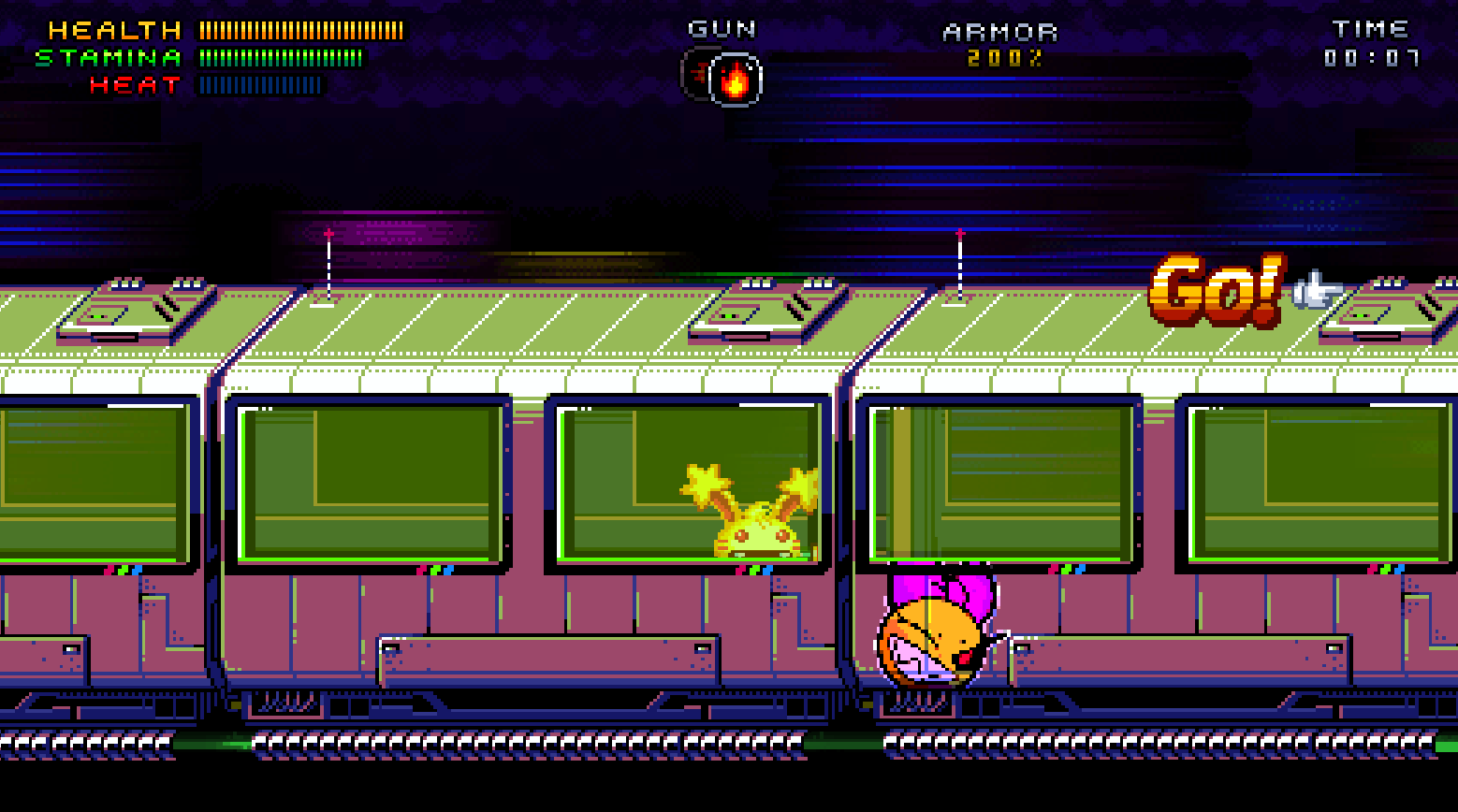

You must be logged in to post a comment.