Irem’s Kid Niki aka Yancha Maru: The Definitive Review – Full Reviews of All 5 Games Starring the “Radical Ninja” for Arcade, NES, and Game Boy
September 22, 2025 3 Comments

It’s always a thrill for me to have someone who found a Definitive Review looking for reviews of the big, famous games they already knew about, only to find out about hidden gems they overlooked that get lumped into the feature. That’s what makes the Definitive Review format fun for me. Today, I’m doing something a little different. Usually, under-the-radar games have to find their way into my Definitive Reviews by being paired with more famous games, but today, the big game in this feature is, itself, one of those under-the-radar games, at least to people my age. I’m guessing most of my older readers are probably familiar with Irem’s Kid Niki: Radical Ninja. It started as a coin-op but was much more known as a very early NES release by Data East in the United States (1987). Even with an Arcade Archives release, it’s a non-entity today that gets name dropped occasionally when talking about NES hidden gems. What its fans might not know is that it got a whopping three sequels that never came out in America. You might have played one and not even realized it, as one of these games was re-sprited as a Mario game for bootleg NES and Famicom carts.

You don’t know the bird was killed there! Maybe there’s a female bird on the other side of that room and that’s cupid’s arrow!
Today, I’m playing all five games in the Kid Niki franchise except the Commodore 64 and Apple II ports of the coin-op. And, because it’s fun for me, and also because I know Irem’s publishing partners at ININ Games read Indie Gamer Chick, I’m doing this using the imaginary retro collection format. So, I want you to pretend I’m reviewing a compilation of five games called Kid Niki: Radical Collection that my team believes would retail for between $19.99 and $29.99. Assuming ININ Games used the same emulator features they included in their 2024 re-release of Parasol Stars for the TurboGrafx-16, the emulator would earn Kid Niki: Radical Collection $10 in bonus value, which is my mandatory bonus for any fully stacked emulator in a retro set. That means these games have to earn between $10 and $20 in value to combine with the emulator and make Kid Niki: Radical Collection a worthy purchase, and that’s assuming no other special features are added that would earn bonus value. Let’s see how it goes!
GAME REVIEWS
For those not familiar with my way of thinking of how retro games should be reviewed, I take NO historical context into account. I don’t care how important a game was to the industry, because that doesn’t make a game worth playing today. The test of time is the cruelest test of all, but every video game must face it. I might not be here if not for Pong’s success, but I wouldn’t want to play it today. Not when there’s better options. Therefore, when I review retro games, every game gets either a YES! or a NO!
YES! means the game is still fun and has actual gameplay value when played today and is worth seeking out.
NO! means the game didn’t age gracefully and is not worth seeking out, and certainly not worth spending money on.
 Kid Niki: Radical Ninja
aka Kaiketsu Yancha Maru
Platform: Arcade
Released in 1986
Developed by Irem
Sold Separately as Part of Arcade Archives
Read the Original IGC Review

Kid Niki’s bosses are imaginative. “Death Breath” here is like fighting a Garbage Pail Kid version of that guy from Big Trouble in Little China.
My previous experience with Kid Niki, reviewed way back when my YES!/NO! system wasn’t even in place yet, left me pretty unimpressed. But, that was played with the limited-in-features Arcade Archives emulator that didn’t offer rewind and had save states that required me to quit all the way back to the title screen. Not the Kid Niki title screen, but Arcade Archives one. Since Kid Niki undergoes a dramatic difficulty spike the last couple levels well beyond my talent, I was curious if the game would be more pleasant with instantaneous emulator cheating features. Now, those features can’t change things like bland level design or remove the frustration of one of the most unfair, money grubbing finales in gaming history. Rewind and save states aren’t a cure-all. With that said, Kid Niki certainly benefits from these features and turned what I thought was a rubber stamp NO! into a much more complicated review.
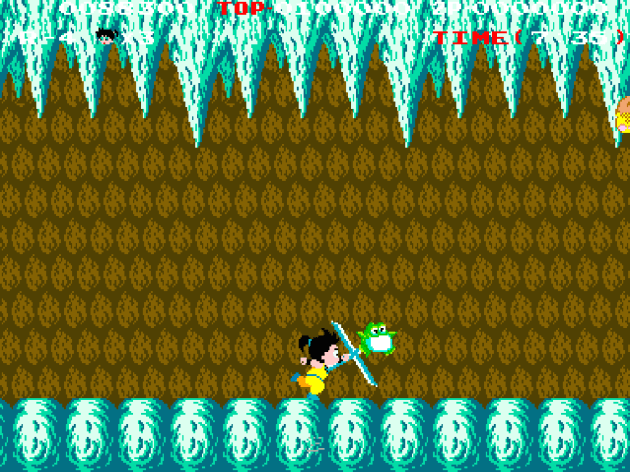
The entire franchise you’re about to read about is only happening because of how damn satisfying the primary attack is. Which is going to make the fifth and final game in this feature an especially baffling experience. I still can’t believe they didn’t realize that.
The best thing Kid Niki has going for it, besides mostly sublime boss battles, is one of the all-time delightful 8-bit attacks. Instead of slashing a sword in front of you, you sort of spin it. I don’t know quite how the physics are supposed to work, but since basic enemies take one hit to kill and go flying with a satisfying pop, it’s kind of unforgettable. Instead of calling this the generic sounding Kid Niki, they should have named this The Adventures of Katana Twirly. Normally, this would be the type of attack that makes you want to slay every enemy, but two things prevent this. First, the timer counts down too quickly, and even if you don’t come close to timing out, you get more points for finishing with five or more minutes on the clock. Second: the screen can become completely flooded with enemies. Too many enemies for Katana Twirly to deal with, and sometimes they’ll keep spawning until you move.
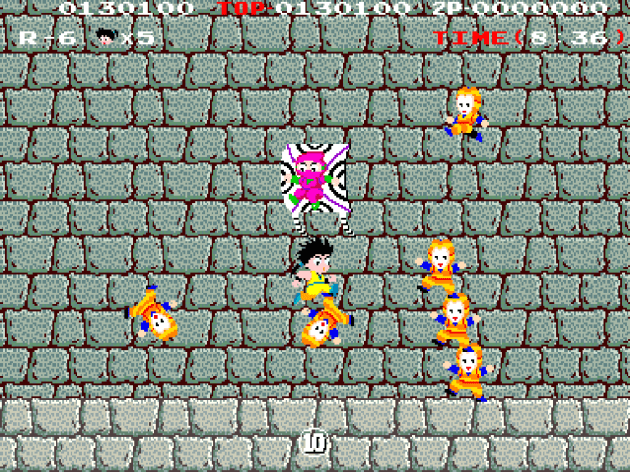
You’ll notice Twirly’s hairdos aren’t the same in every pic. For screenshots of the coin-op, if he’s got messy hair culminating in a rat tail, like in this picture, the screenshot is of the US version. If he’s got a topknot (a “Chonmage” in Japan) it’s the Japanese version. The other major change is the Japanese original has no checkpoints. If you die, you have to start the level all over. Since a couple of the bosses are brutal, that’s too big a punishment. None of the differences are present in the Famicom/NES game.
You’re also armed with a decent jump that can clear most enemies, so when the playfield becomes flooded with too many baddies to deal with, legging is sometimes an option. Not always. Like in this shot:

You can see more enemies beginning to spawn in the right corner. Yes, they’ll come down in a virtual waterfall of enemies like you see on the left.
You’re going to need to inch forward to get these guys to stop spawning, because they come in at an angle that forces combat instead of avoidance. But in later levels, where bosses might require more time to fight, stopping to turn around and smack guys will just eat up time, especially since they’ll just keep spawning behind you. So in the next picture, it makes more sense to just ignore what’s behind you if it’s not a direct threat.

One other difference: the masked baddies have “angry eyes” in the Japanese version, whereas they look closer to Shy Guys in the US version.
Now, while I personally wasn’t trying to get a high score (what’s the point? I was cheating like I was Derrick Rose facing my SATs), I found myself just trying to save as much time as possible because I wanted to see if I could get the maximum end of level bonus. But even when I tried to rush through stages, I found myself wondering if it was even possible. Even cheating, I couldn’t so much as get the second tier bonus on some of the later stages, and I wasn’t close at all to the max bonus. So, while the combat is cathartic, and there’s even bonus points for wiping out full formations of enemies, there’s also an inelegance to Kid Niki that’s undeniable.
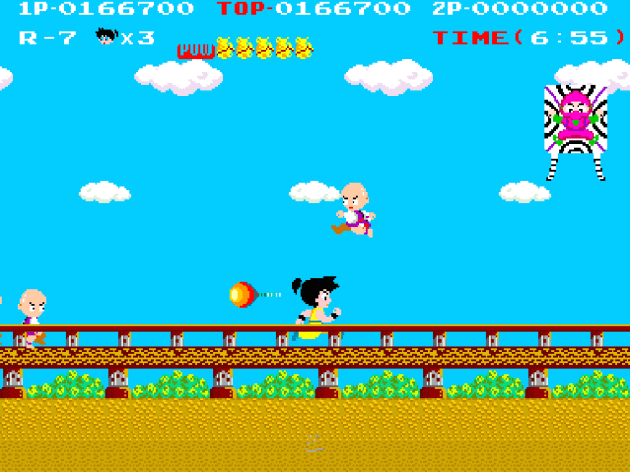
There’s two power-ups, one of which gives you a projectile that looks like your sword. The other is this shield that spins relatively slowly around you but does make progress easier. Both items are used pretty sparingly and wear off eventually.
I admit that I was a little too hard on the level design in my previous review. It doesn’t matter if they have bland platforming layouts because it’s the enemy attack patterns and formations that the design logic is based around. This is a combat-focused game that can do platforming but isn’t really a platformer. Good thing too, because the jumping isn’t perfect. Turning around to face the other direction mid-air isn’t possible. Once your feet leave the ground, if an enemy is behind you, you can’t do anything about it until you land. The Famicom/NES version, up next, isn’t built the same way and offers much, much more flexible combat. Of course, being the NES, there’s also a LOT less enemies and much fewer situations where I would have liked to turn around mid-air. That would have been SO valuable in this version. Alas.
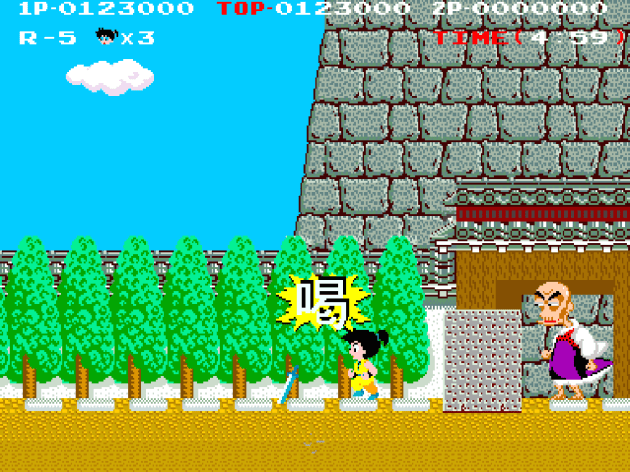
This is the first video game boss who spends the fight, I kid you not, scratching his ass. This isn’t one of those Ring King “it only looks naughty” situations. He’s no-doubt-about-it got an itchy anus. Which explains why he’s so grouchy! By the way, the word he’s spitting at you apparently has no English equivalent but according to Cutting Room Floor, it’s a word that’s used to scold practitioners of Zen. I wonder if Phil Jackson ever screamed it in the middle of a game? That’s TWO Chicago Bulls references in one review, by the way. I do myself proud sometimes.
The coin-op version of Kid Niki is one of those games that proves the value of a great emulator. Katana Twirly goes from relatively easy to learn and clock to absolutely maddening, with minimal middle ground. The curve is so steep that they could name a street in San Francisco after it, and it all finishes with a level that has seemingly random, ultra-fast moving bubbles rise up from the ground. It’s one hit deaths, and because of that, it really feels like the dirtiest of dirty pool.

I had to replay this a dozen or so times in the US version. Weirdly, in the hypothetically harder Japanese version, I got a favorable pattern of bubbles for this segment and aced it. I would have been proud of myself if I hadn’t instead died by shorting jumps I’d already safely made several times before.
And even after you get past the random bubbles, you’re still not done. The last attack pattern of the last boss becomes downright frustrating since he won’t open up and become vulnerable until you retreat to the other side of the screen, giving him a chance to blow his hard-to-avoid columns of fire at you. I guess their heart was in the right place, since they made a cheese-proof boss. But they kind of shot the moon and went too far in the other direction.

You can see my sword is not in my hand. This is the novel mechanic that I’d never seen before Kid Niki. During boss battles, every time you successfully land a shot, your sword goes flying out of your hands and you have to retrieve it. It’s really clever, actually. A great idea that is successfully executed in six out of the eight boss fights. Hell, the sixth boss is even built around the retrieval part of this element. I just don’t like it for the final boss, which I feel is just too unfair and brutal.
I’m standing by my NO! verdict for the Arcade Archives release, but using my preferred emulator, yep, I’m flipping my verdict to a solid YES! But, that’s a YES! is dependent on the emulator because it just becomes too demoralizing without it. With it, Kid Niki actually is a pretty dang decent coin-op experience. Like so many classic 80s games, I’d love to play a version of this that drops limited lives in favor of unlimited lives and a death counter. If ININ and Irem wanted to do a collection of Kid Niki games today, they should consider reworking it with that style. Make it cheating proof and put up a leaderboard for fewest deaths in a run. Don’t forget the toggles, too, since there’s dip switch settings that adjust the difficulty. Mind you, all my whining about difficulty was done on the lowest setting. Granted, most arcade games are still brutal on low settings, but that’s because they need to kick you off to earn money.

I love the art direction. Like this? It looks exactly like how Japanese mythology depicts demon insects. Those big, vacant, nightmare fuel eyes? I couldn’t wait to be done with this boss. It’s a good fight, though. You have to cut it to the bone, segment by segment, before you can kill the head.
By the way, I easily died over fifty times playing the US version, but that was cut nearly in half in the “harder” Japanese version that I played afterward. Emulator cheating helps you to get good. I wasn’t born able to have a no-death run through Castlevania. I got to that point by using rewind and save states, until one day I realized I just didn’t need them anymore. I did the same thing, only faster, with Adventure Island this year. They’re cheating features, but they’re also training tools. Instead of having to work your way back to the sections that kill you, rewind or even quick save/quick load allows you to examine the segments of levels closely and instantly. In just one pitifully played full game run through Kid Niki where I cheated like crazy, I learned enough to cut my deaths in half for the next run. If I stuck with Kid Niki, I think in a few days I might even be able to do a no-game over-run. It’s the ultimate trainer. Basically gaming steroids, only without wrecking your heart and sex organs. Well, maybe your sex organs but that will happen for non-chemical reasons.
Verdict: YES! **FLIP** $5 in value added to Kid Niki: Radical Collection + $1 bonus for having both US and Japanese ROMs.
 Kid Niki: Radical Ninja
aka Kaiketsu Yancha Maru
Platform: Nintendo Entertainment System
Released in October 2, 1987
Developed by TOSE
Published by Irem
NEVER BEEN RE-RELEASED
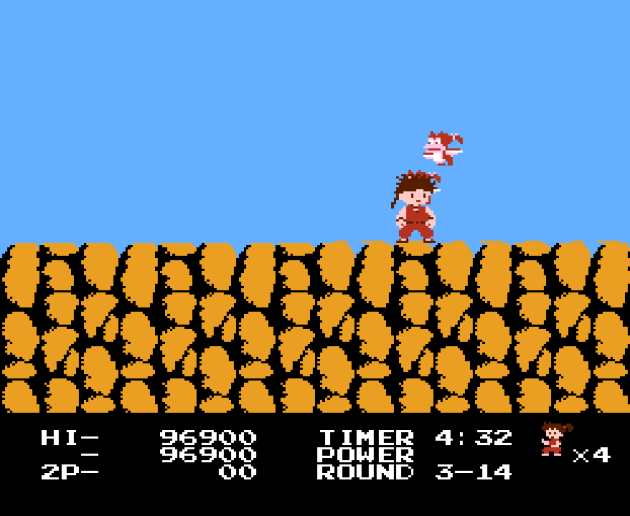
The third boss is one of those bosses that breaks into smaller monsters until you eliminate them entirely. In the coin-op, this doesn’t happen if you hit this boss from behind. In the home version, she just breaks apart. Even worse: as far as I can tell, you can’t be killed by the smallest size in the NES version, which you absolutely could in the arcade game. I know, because I died from them more than once. If you look closely in this picture, you can see that my sprite is almost completely engulfing one of the enemies. I’m not cheating or using a code here. It just can’t hurt you. This happens a lot in Kid Niki, but the opposite is also true: some things kill you that aren’t even a little close to you. This has HORRIBLE collision detection, and it does ruin the game.
With a subtitle like “Radical Ninja” you would think Kid Niki would be riding Teenage Mutant Ninja Turtles’ coattails. But Kid Niki in the United States predates the debut of the TMNT cartoon and toy line by a couple months. I can’t help but wonder if it released a year too soon, because it’s not a hugely known game. Long before I was doing retro game reviews, it was easy to notice that a handful of NES games came up as “hidden gems” more than others. Guardian Legend. Adventure of Lolo. Little Nemo the Dream Master. Those games come up so often it’s safe to say they’re not really “hidden” gems. They’re literally famous. Kid Niki doesn’t come up as much as those, so it still has that “forgotten” shine to it, but when it does come up, people tend to LOVE it. And I don’t get it, because this is a rough, borderline broken game. What do I mean? See this picture:

I survived that full-on contact with the enemy and walked right on past them.

Well, in this pic, they actually walked past me, but I did test it with me moving past them too.
Now here’s the same location, same enemies, but I’m a little bit further to the left when contact was made. Like a half step to the left. It killed me.


Here’s me, well away from the sprites of the projectiles thrown by the fifth boss, dying anyway.
Or how about having your forward momentum halted mid-jump? It happens constantly, I assume a byproduct of sloppy coding to the scrolling. In this clip, I’m holding left the entire time, but I just hit a wall that stops me from moving forward. You can see when I jump back to the platform, it doesn’t happen again. However, when I rewind to the original jump, the invisible wall stops me again. I’ve never seen anything like this in a game before.
And that even happens when you’re running along the ground. It only happens for a split second, but it absolutely does take away from the experience. You can see it happen in this clip:
It’s a damn shame that Kid Niki on the NES is so badly coded, because a lot of the charm of the coin-op did carry over. The well done graphics? Sometimes. Like, this looks pretty good:

This? Not so good. In fact, yikes!

The sprites are fine, but the setting really is just nothing. It’s like I suddenly fell into an Atari 2600 game. Now mind you, the very next screen over has a very impressive looking statue.

That looks great, especially for the time! I don’t know what happened to those backgrounds. I’d swear that’s a placeholder that they ran out of time for. And I know they’re capable of better, because some of the areas are REALLY close to the arcade. Take a look at this, and by the way, I have a white uniform on in the NES pic because of a power-up:


That’s pretty dang close, right? Now, gameplay is king and the NO! I’m going to be giving the NES version of Kid Niki has nothing to do with a small section of one level looking like sh*t. But I can’t help but wonder if that one “oh my God, what the f*ck?” section is indicative of a rushed game. Whoever coded this seemed satisfied with the sword attack and neglected several other areas. There’s no excuse for a game where mountains look that good to have a section of the game that looks like this:

BTW I’m running in place there. It’s one of those invisible walls.
The only aspect of Kid Niki’s home port that’s outstanding is the sword mechanic. It works better than in the coin-op since you can turn around mid-air and attack on both sides in a single jump. But everything else about Kid Niki, right down to the act of moving, is, at best, haphazard. At worst, it’s outright broken. That’s before I even talk about the gameplay concessions that had to be made for the home port. In the coin-op, the second boss has a deceptively dangerous attack pattern that requires you to jump over him to get a clean shot off. That’s completely gone in the NES game. He’s very vulnerable from the front, and as a result, I was able to beat him in a matter of seconds.


Again, sometimes the nerfing works to the game’s benefit. The last level is MUCH more fair, and that’s a good thing. The random bubbles are slowed down just enough to make them an exciting obstacle to dodge while you fight the final boss. If this had more consistent collision detection, for all its problems, I would have given it a YES! without a second thought. The combat is that satisfying and the bosses, wimpy as they are compared to the coin-op, are still fun and unique. They even added some bonus stages into the game. Okay, so they’re hidden in arbitrary spots and I have no idea how anyone ever found them, but it’s the thought that counts.

Even the bonus stages aren’t free passes. Some of the eggs are whammies that spawn these creepy-ass bugs, and some give you extra lives.
But I can’t get over how badly developed this port is. It really feels like no bug testing was done. It’s the total lack of consistency that frustrates me. Some things can kill you when they’re not even close. Other things that should kill you, hey, sometimes you can just pass safely right through them. Horrible. I can totally understand why Kid Niki found itself as one of those beloved hidden gems. I wouldn’t consider the twirly sword attack to be equally as good as, say, Simon Belmont’s whip. But it’s not too far removed from it, either. If this had been a game I played early in my life, I don’t think I would have noticed all the glitches and momentum stoppages, or if I did, I wouldn’t have cared. But if the NES version of Kid Niki were to be in a modern collection, I would actually suggest they give it a tune-up. There’s a good game here, but I don’t think Kid Niki on the Famicom got the time or care it deserved in development. Is it worth fixing? Yep. Will it be? Probably not.
Verdict: NO! And no bonus value would be added for having both the US and Japanese ROMs.
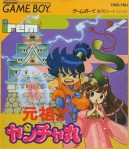 Ganso!! Yancha-Maru
Platform: Game Boy
Released July 11, 1991
Developed by Tamtex
Published by Irem
Never Released Outside of Japan
NO MODERN RELEASE

You have to break blocks a lot in the Game Boy title. I wish it had a nicer crunch to it.
This Japanese exclusive first sequel to Kid Niki, released on my 2nd birthday, comes from the developers of the disastrous sequel to Kung-Fu, Spartan X2 for the Famicom. That was one of the worst games I’ve ever reviewed (it’s second from the bottom in Kung Fu Master: The Definitive Review), so my expectations for this were just about as low as you can get. I was worried for nothing, as Ganso!! Yancha-Maru is a genuinely solid little Game Boy action game that Americans absolutely should have gotten. It has a bigger cast of basic enemies and a much bigger emphasis on platforming than the previous game, but retains Katana Twirly’s primary attack. Unlike Kid Niki, navigation matters a great deal here, especially in the later half of the game, when retracting/expanding platforms and spinning platforms are introduced.
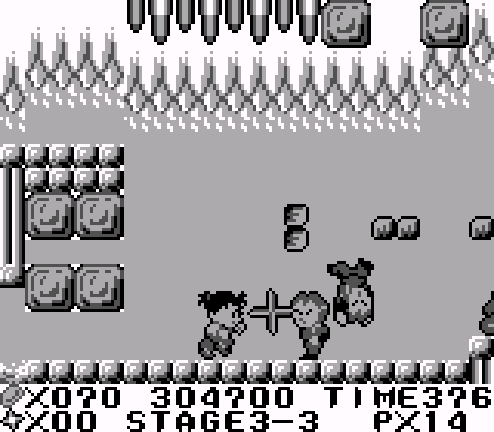
The little two block platforms above me shift from horizontal to vertical.
Despite the smaller screen size, the level design emerges as a genuine highlight. Levels might even split into upper and lower pathways, one of which will have more enemies than the other. Or maybe you’ll encounter a section that requires fast reflexes to smash through blocks before a platform underneath you retracts. All this while the game keeps a fairly consistent clip of combat. None of the collision problems that plagued the NES game get in the way here. Hell, three out of the four bosses are an improvement even though the “deflected sword” mechanic is gone. That’s a remarkable achievement! The first boss can be cheesed in just a matter of seconds, but future bosses require you to face their attack patterns and score hits when you can. I can’t stress enough: this is a pretty well done game.
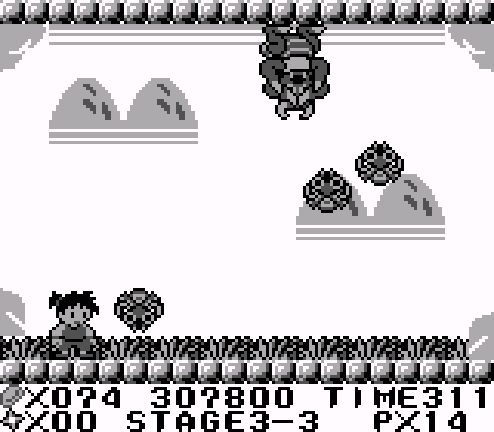
The third boss drops these rocks that you have to kill, then it only allows you to score one hit per pass.
Unlike the previous Kid Niki coin-op and its NES port, Ganso!! Yancha-Maru is a pretty easy game. I only died three times, once to a boss, and twice to pits. The items from the previous game return here, but on the Game Boy, I found the projectile had a very limited usefulness. How limited? ONCE per a full run through the game, so twice overall, did I actually use the projectile to kill an enemy on the other side of the screen. The playfield is just too small for it to be effective, and even when you hold it, the enemies are usually right next to you and would die from the sword anyway. They probably should have come up with something else. There’s some weird decisions, like the “B” item you collect that unlocks the end of stage “BONUS ROOM” could have been hidden in a block, but instead it just floats onto the screen when you reach the end of a level. It’s basically automatic to get.

Those clouds with faces all shoot projectiles upward.
Admittedly, I lost interest in clearing every block or going for every hidden room. The blocks take too long to crumble and don’t offer a satisfying enough crunch to justify slowing the game down as much as I did in the early levels. But the combat more than makes up for it, and when the blocks are utilized as part of the challenge instead of something to smash for fun, it’s usually well done. Ganso!! Yancha-Maru isn’t a masterpiece by any means. It’s just a good, solid action game that probably could have found an audience in the United States. I’m going to guess the NES Kid Niki didn’t do too hot in sales, because I can’t figure out any other reason why such a quality, on-trend (at least in 1991) game would be skipped over. Probably the best thing I could say about the Game Boy version of Kid Niki: it was at this point I realized doing this Definitive Review wasn’t a waste of time. There’s SOMETHING here. See, everything about July 11 is awesome!
Verdict: YES! $5 in value added to Kid Niki: Radical Collection
 Kaiketsu Yancha Maru 2: Karakuri Land
Platform: Famicom
Released August 30, 1991
Developed by Irem
Never Released Outside of Japan
NEVER BEEN RE-RELEASED

Kid Niki 2 has an overworld map, but it doesn’t benefit from it. This is the level you’re placed onto for the map at the start of a new game, and it’s themed around everything being miniaturized. That’s a mid-game trope, and makes ZERO sense for an opening level. It doesn’t have to be the starting point, but who is going to click anything else? Totally nonsensical design. I know people liked Super Mario 3 but not every game requires an overworld map.
The first of two Famicom-exclusive sequels to Kid Niki, Yancha Maru 2 gives the graphics a super-deformed makeover and adds a slew of new abilities. In addition to now being able to swing your sword above or do a downward strike while jumping, you can find items that grant you the ability to temporarily transform into three animals. While transforming into an elephant was an idea decades ahead of its time, I didn’t really find a use for it. On the other hand, there’s plenty of times I had to use the ability to transform into a frog or a hawk to navigate levels. You can’t attack with either and both come with major control issues. The frog moves too loosely and the hawk flies too heavily, but they’re used sparingly to great effect. Since there’s a few areas where they’re necessary to make progress, I sort of think they shouldn’t take points to use, especially since I didn’t want to be them when I didn’t have to be, but otherwise, it’s a nice idea that works wonderfully.

The frog can jump up and reach that extra life, or extra-life like thing.
Now here’s the bad news: even though the animation for the twirly sword attack is basically unchanged, poor sound design and tacky enemy sprites make it feel flimsy and lightweight here. That nice crunchiness to it is gone. Now it’s safe to say Kid Niki 2 is much more platforming-focused than the previous NES game, but there’s still a wide variety of enemies and bosses. It’s just such a shame that it’s no longer fun to fight basic baddies anymore. Some of the designs are downright silly, like miniature enemies in the first stage in the game, which made me giggle with embarrassment. The bosses are fairly generic too.
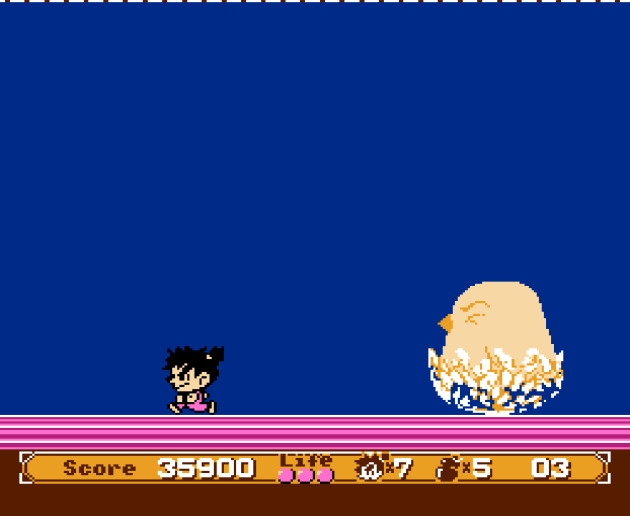
This is grasping at straws for boss ideas.
And the sequel is a MUCH easier game. Not quite as easy as the Game Boy title, but pretty easy. It’ll take you maybe twenty-to-thirty minutes to finish and offers zero replay value because it’s just kind of bland, but in a way that’s at least worth a look once. For the first time, Kid Niki offers hit points to start every level, which allowed me to cheese nearly every boss in the game. I won most boss fights with a single hit point left, but the fights themselves lasted around ten seconds. I can’t remember a single basic enemy that posed a threat. The only time I died was in the “maze” level, and my death came via lethal moving blocks. When tiny, half-the-size-of-you moving blocks are a bigger threat than even the last boss, the game might have a big problem.
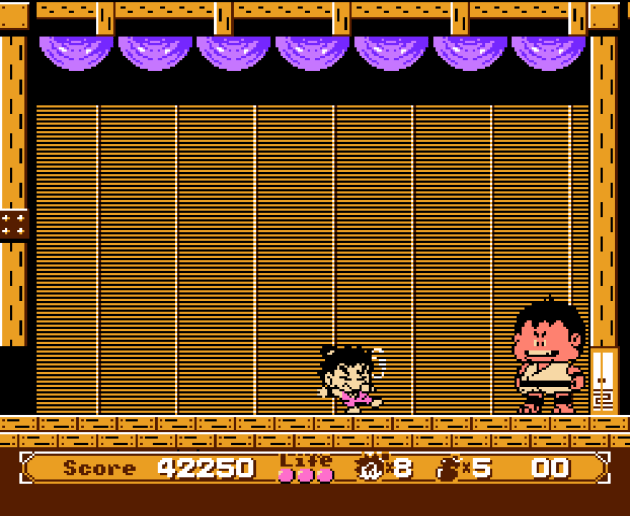
The final level is a brief boss rush made up of a few bosses from the first game, including Death Breath, seen here.
And yet, I didn’t get bored in my first run through Kid Niki 2. Oh, I was ready to be done about a minute into my second playthrough. Again, once you finish this, it has nothing left to offer. So, I guess I understand why this wasn’t released as Kid Niki 2 in America. See though, that’s the beauty of a retro collection. Yancha Maru 2 can’t really stand on its own, unless you can get it for $2, which is the value I’m giving it. But as a +1 for a retro set? Yeah, it’s going to be fine. The coin-op and Game Boy title together will justify the set’s existence, and this is a nice little bonus. I don’t know why they didn’t do better with the combat, which was the main thing Kid Niki had going for it, but the level design is fine and the animal power-ups are cool.

You have to whack bells with your sword to gain power-up points and free-lives. As you can see, the sword sprite is basically unchanged, and that’s the right call. The next sequel didn’t make that call, and it just plain doesn’t feel like a Kid Niki sequel because of it. And I have no idea if that’s supposed to be real Hershey product placement or not.
There’s a couple other power-ups, including the ability to fire a large energy wave that you will need to use a couple times and an overpowered shield that wrecks the already easy to fight baddies. I’m not going to argue that Kid Niki 2 is a lost treasure or that Americans missed out on a big game. This is pretty dang bland, but it controls fine, has decent level design, and doesn’t require a massive time investment to experience. Games can be bland and still be a net gain, in the right circumstances. Retro collections need games like Kid Niki 2. Little twenty-to-thirty minute time wasters that aren’t the main attraction, but worth a look nonetheless.
Verdict: YES! $2 in value added to Kid Niki: Radical Collection
 Kaiketsu Yancha Maru 3: Taiketsu! Zouringen
Platform: Famicom
Released March 30, 1993
Developed by Micronics
Published by Irem
Never Released Outside of Japan
NEVER BEEN RE-RELEASED

Spoiler: Dr. Wily is the last boss. Okay, it’s NOT Dr. Wily and this is not Mega Man, but it’s trying so desperately to be. It’s really sad, actually. It’s so flagrantly, shamelessly copying the gameplay that it kind of feels a little childish.
Wow. Okay, so, this is a Kid Niki sequel in name only, and a game you might have already played. This is more famous for being a bootleg, specifically a ROM hacked bootleg called Super Mario 14. It’s a genuinely baffling choice to turn this into a Mario hack when it’s a direct rip off of Mega Man. I really wasn’t being sarcastic in the above picture. This wants to be Mega Man with some lite ninja-like flipping, and it is, but in a way that fails like few games have ever failed. Katana Twirly is dead, and in his place is a dude with a stick who fires a little sonic energy wave at enemies, making this a platform-shooter, just like Mega Man. The bosses are mostly fought in basic, square-shaped chambers, just like Mega Man, and have attack patterns just like Mega Man’s bosses. Here’s some examples: Fire Man, Water Man, Wood Man, and, uh, Music Tornado Man, I guess? The last one shoots music notes but also turns into a tornado.


Pathetic! PA-THETIC! And it’s not even a good rip-off. This is the Asylum version of a Mega Man game: same premise, but none of the good parts. The #1 thing that made Mega Man famous and stick out from countless hop ‘n pop games, IE stealing items from bosses? Kid Niki 3 doesn’t do that. Instead, the main hook is it rips off the pogo-stick from DuckTales along with the worst wall jump I’ve experienced in quite a while. You have to sword-strike the wall, then jump, but it’s really sluggish. All the movement is clunky, and the frame rate is REALLY bad. The game feels like it’s constantly chugging, which really makes no sense. The graphics and sound are just not good enough to justify how badly the game performs from a technical point of view.

It’s not going to be a total wash, either. There’s moments I would have been inclined to like, like this maze based around these tracks. There’s some good ideas in here, but they’re dead on arrival with these controls and combat design.
Yancha Maru 3 is made by notorious NES developer Micronics, who made such “classics” as Super Pitfall! and the NES ports of 1942, Ghosts ‘n Goblins, Ikari Warriors, and more. It explains a lot, because this is really badly made. The level design is almost entirely based around the wall jump, but in a way where it’s deliberately barely working at all because that would be more challenging. It’s certainly not intuitive, even though it should be. The wall-jump is a fixed jump that gives you the same distance every time. Yet, I never got a feel for it. It wasn’t ninja-like, that’s for sure. It’s like the polar opposite of 2024 NES indie Storied Sword, which had one of the greatest 8-bit wall jumps ever. When you take away the responsiveness, you get Kid Niki 3, where even late in the game, I found myself needing multiple attempts to do even the most basic wall jump sequences. My body’s responsiveness is suspect these days, so I had to have the kids test it to make sure it wasn’t me. They couldn’t get a feel for it either.


Fittingly, the best aspects of Kid Niki 3 are the ones that aren’t a Mega Man rip-off. The main progression is done by finding keys to open locked doors. It’s not the worst idea, and thankfully there’s only a couple spots where you have to travel far away from a locked door. But with the poor physics and uninspired, lightweight shooting combat, it doesn’t matter because it’s just not a very fun game to play. Sometimes, the levels would have risen to the level of good IF the mechanics had been faster paced and more responsive. There’s set-pieces in Kid Niki 3, including paddling a boat up a waterfall that work as intended.
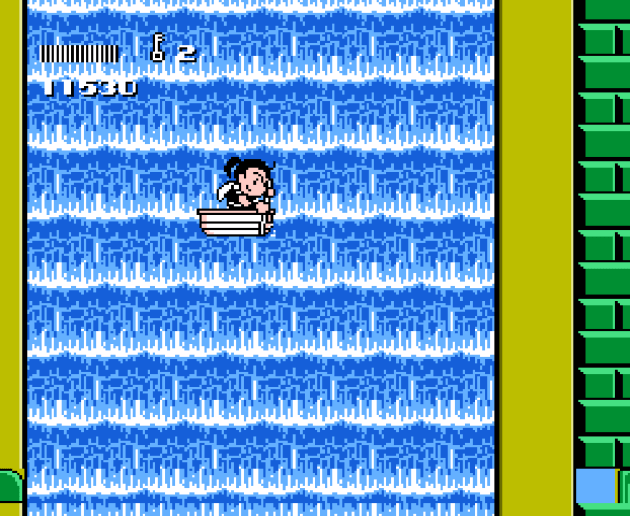
The frustrating thing is, Kid Niki 3 does the type stuff you want a game to do: break up the core gameplay with fresh-but-suitable one-off mechanics. Like paddling this boat up a waterfall. That’s fine! It works as a set-piece. This part is okay, and it’s welcome because the core gameplay is so boring that anything is better in comparison.
But then there’s some of the worst swimming mechanics on God’s Green Earth and horribly scaled boss fights. Seriously, the first boss was so much harder than any of the bosses that followed except the very last one. The levels themselves have a difficulty curve that resembles a heart monitor. It occurs to me that Micronics seems to understand what goes into a game, but not the why part. There’s no other way to explain how bad the game scales, or controls, or why the basic enemies just aren’t fun to face-off against. It’s like they played Mega Man games and enjoyed Mega Man games, but never asked themselves why they were having so much fun. So something like this:
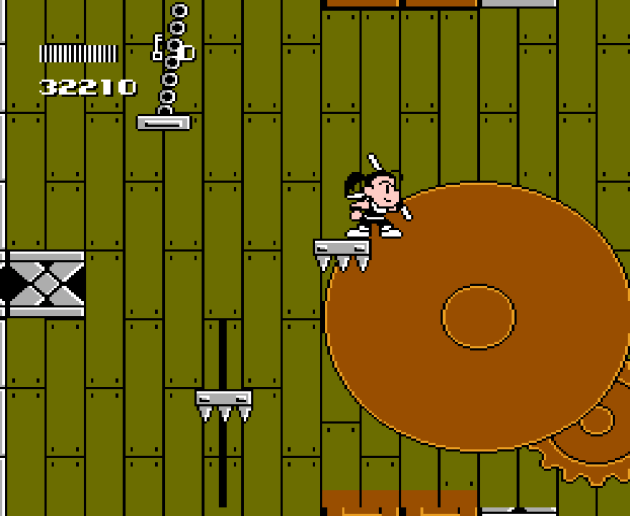
Works pretty good, because it’s hard to screw up the classic circular platform. Hell, that chained platform to the left of me is a great idea. You have to whack it with your stick to get it moving. But then you have this game’s version of the Sniper Joes from Mega Man, and they have a quirky sprite of a mouse hiding in a freezer with a tommy gun. Adorkable, except you can’t kill them, or at least, I was never able to. Once you realize that, and players are just avoiding them, well the charm isn’t just lowered, but lost altogether. Do you know why *I* think Mega Man games lasted through the ages? It’s not just the bosses. Every game has bosses, and in the case of Mega Man games, especially on the NES, most of them are beaten in just a couple seconds, if that, assuming you have the right weapon. No, I think the secret sauce with Mega Is that the combat is always so goddamned satisfying that you want to shoot everything you can. It’s rare in those games that avoiding enemies is preferable. Enemies have nice sound design and a cathartic crunching pop when you finally kill them. This game has none of that.


I think that’s why Kaiketsu Yancha Maru 3 felt like such a childish effort at copying Mega Man. It does everything that Mega Man does, only with none of the stuff that made Mega Man stand out in the first place, in basically every single aspect, mechanically and aesthetically The graphics are ugly, especially the character sprites. The gameplay is choppy. The controls are unresponsive. The settings are boring. The sound design is lacking entirely. It made me appreciate how Mega Man games manage to be greater than the sum of their highly polished parts. This is so much less. The previous game was bland, but bland within the acceptable parameters of decency. This is bland to the point of exhausting. Even if the mechanics had been perfect, I still think it would have gotten a NO! Kid Niki 3 is a game based around dull level design, boring settings, and derivative gameplay that’s occasionally interrupted by an idea so good that you’ll wish it was in a better game.

This is a post-SNES release, too. Look how damn bland that looks. And it really is. There’s a couple moments that are handled cleverly, but for the most part, level layouts are just arbitrary and ho-hum. I still say that the early SNES era was also a secret golden age for the NES/Famicom, but this is not an example of that.
I have no idea why Irem agreed to allow Micronics of all studios to make a sequel to Kid Niki in the first place, but why make it nothing at all like Kid Niki? Presumably, a franchise that lasts long enough to get a fourth new game like this has to be pretty successful on some level, right? It doesn’t take a rocket scientist to figure out the series made it to this game being commissioned based entirely on the satisfying Katana Twirly mechanics. So why the hell would you do something as foolhardy as removing that attack entirely? Because that’s ALL Kid Niki really had going for it. I assume they figured if Doki Doki Panic can be repackaged as Super Mario Bros. 2 and still be a runaway success, they could do something similar with Kid Niki. That makes no sense, though, because they allowed Mario to be different right out of the starting gate. As the second game, really it just showed that Mario could be anything. Same with Zelda II, for that matter. But with Kid Niki, they had multiple games that established what the combat should look like. Not that keeping it would make a difference in this game. This has so many more problems. What irks me is Irem allowed a perfectly good B-list franchise to be killed off here, in a game that doesn’t resemble the franchise. It would be like if the Mario franchise died after Mario is Missing was released.
Verdict: NO!
FINAL TOTAL
 YES!: 3
NO!: 2
Total Game Value: $12
Bonus Value: $1
Projected Price: $19.99 to $29.99
Final Value with Fully Loaded Emulator/Bonuses: $23
Kid Niki: Radical Collection did make it over the low-end price hurdle, but it’s going to be close. Anything less than the $10 bonus that comes with a fully-loaded emulator and it’s unlikely that including basic bonus features like boxes, instruction books, or ads would make up the missing value. It would require extensive, Digital Eclipse-like behind the scenes interviews, and Kid Niki isn’t ever going to get THAT kind of collection. But I’m not worried about the emulator. ININ proved to me with their IGC-approved Parasol Stars release they’re more than capable of going all-out with that. The same emulator used in that release wins Kid Niki: Radical Collection a YES! But they also can’t lose a single YES! game except maybe Kid Niki 2. Drop the Game Boy title from the lineup? There’s close to zero chance the bonus features can make up for the missing $5. Or if they use the basic Arcade Archives style emulator for the coin-op, that game drops to a NO! and the set can’t win. Since I know they’re reading, hey ININ gang, you should do this set, but you absolutely cannot half-ass it. You need to have cheating options up the wazoo. You need extra features, and you need a sick emulator. But I have faith in you.

 Indie Gamer Chick
You must be logged in to post a comment.