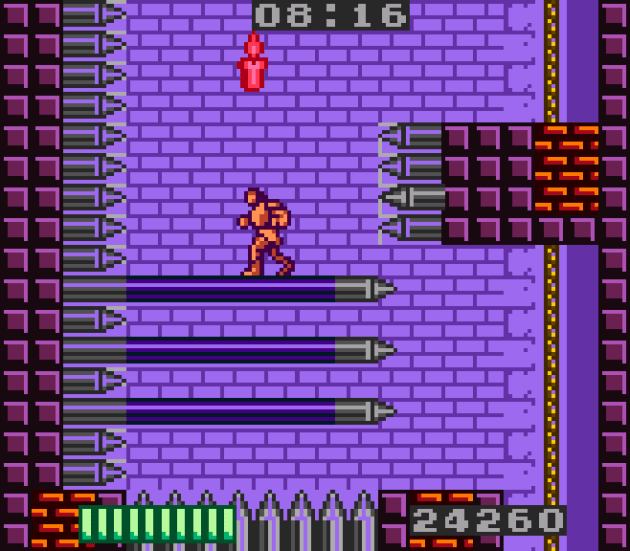
Castlevania Legends (Game Boy Review)

Castlevania Legends
Platform: Game Boy – Super Game Boy Enhanced
Released November 27, 1997
Directed by Kouki Yamashita
Developed by Konami
Available with Switch Online Subscription (Standard)

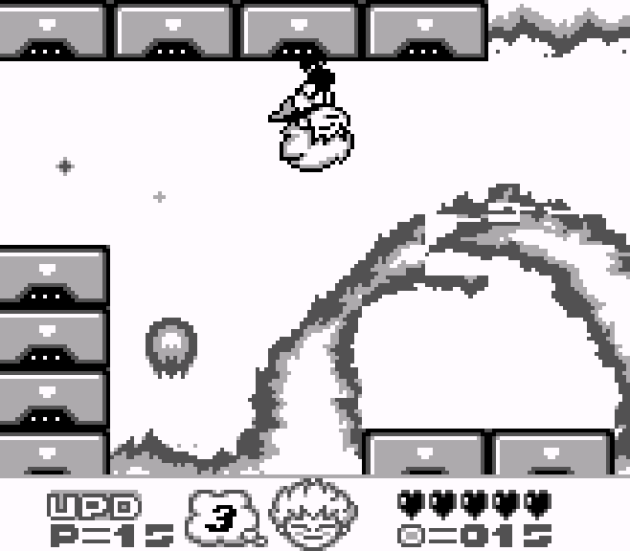
There’s a couple spots in the game where you get locked in a room and have to defeat waves of enemies until they stop spawning. Then, late in the game, there’s a spot where you’re frozen in place and have to defend yourself from ghosts. At least they tried to find ways to freshen the experience.

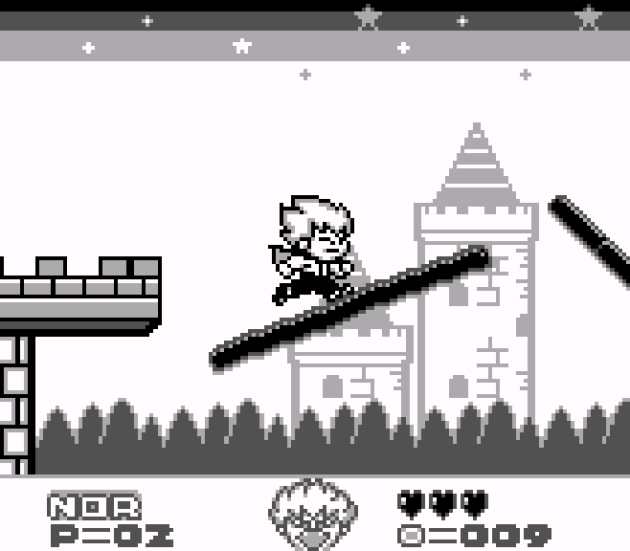
My 2025 Halloween Castlevania marathon has been full of “weird ones.” Simon’s Quest, Vampire Killer, and Haunted Castle? Pretty weird. Legends isn’t really “weird” in the same way previous Game Boy titles Castlevania: The Adventure and Castlevania II: Belmont’s Revenge were, though it maintains a lot of the gameplay. The ropes are back. The big upgrade for the whip being a fireball projectile is back. There’s a lack of skeletons. But, of the three Game Boy titles, this one seems like it’s trying the hardest (and failing, but trying nonetheless) to feel like the console games. They wanted this so much that this was set up to be the ultimate origin story. The game’s heroine, Sonia Belmont, is implied to be the mother of Castlevania III hero Trevor Belmont. If you get the best ending, it’s also kind of implied Alucard is his father, which makes Dracula’s Curse really awkward, doesn’t it? Well, thank GOD that they erased that idea from existence and declared Legends to be non-canon. We wouldn’t want to spoil the integrity of a franchise that features skeletons doing double-dutch jump roping, would we?

“One potato! Two potato! Three potato! Four! Simon’s great-great grandmother was a filthy whore! Five potato! Six potato! Seven potato! Eight! Alucard slept with Sonia after their date! Nine potato! Ten potato! Eleven potato! Twelve! Now Belmont blood is tainted and you’re stuck in helloooo operator! We’re playing Simon’s game! He’s stuck fighting us because of Sonia’s secret shame!”

Actually, maybe the weirdest part of Legends was that it was one of the most negatively-received Castlevanias upon its release. It had FAR worse reviews than Adventure got upon its release, which blows me away. Seriously, if I was put on the spot to name the worst games I’ve ever played in my life, Castlevania Adventure would be one of the first titles to pop into my head. So Legends feels like it got hosed, because honestly it’s not that bad. It’s SLOW in terms of movement, but lots of Game Boy action games feature slow movement, presumably to accommodate the blur factor of the Game Boy screen. But, action isn’t about raw speed. It’s about tempo, and I think Legends maintains a fairly consistent tempo of quality combat and quality platforming, even if it botches most of the Castlevania elements, and it does. But hey, the whip feels pretty good, and they packed a lot of fun layouts, enemies, and boss battles into this thing. Then they sort of screwed it up, but not in a way that completely ruins things.
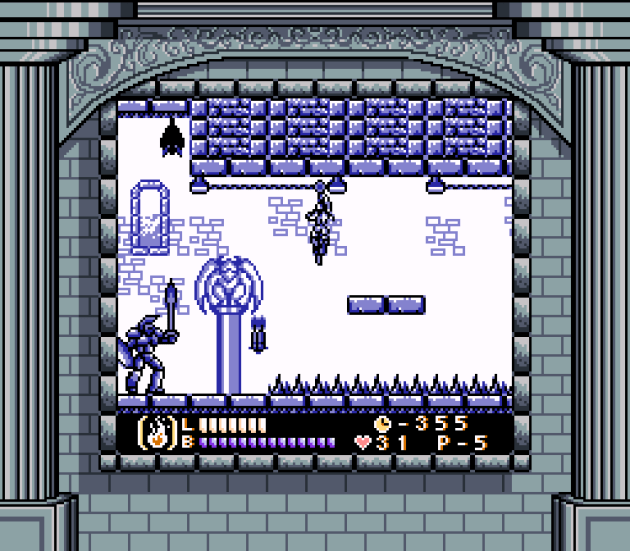
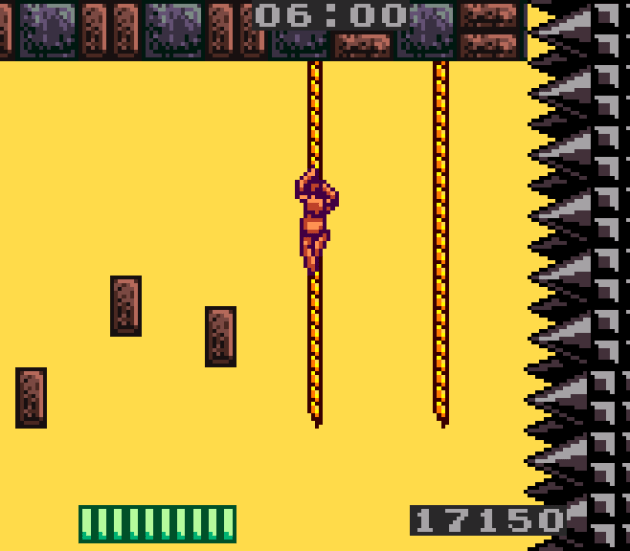
So long, ropes. We hardly knew thee. Legends added moving ropes, but they’re not as exciting as you would hope because they’re too short to really be anything but transportation.

In a truly bizarre decision, Legends doesn’t have any subweapon pick-ups. Instead, you get subweapons after beating bosses and can select which one you want to use, Mega Man-style. Okay, that doesn’t sound too bad, except only one of the standard Castlevania subweapons was used in this game: the stopwatch. And it’s not even presented like a stopwatch. For some reason, it’s a tornado. I’m not sure why a tornado would freeze all non-boss enemies. Either way, you get the stopwatch from the first boss. Then the second boss is a full life refill for only twenty hearts. This in a game where, if you have a full whip upgrade, candles only contain either hearts or, occasionally, health refills. You’re practically picking hearts out from the webbing between your toes in Castlevania Legends. The only way it could be worse is if they made the third item essentially be a cross and work to clear the screen of the bats that become annoying. You see where this is going.
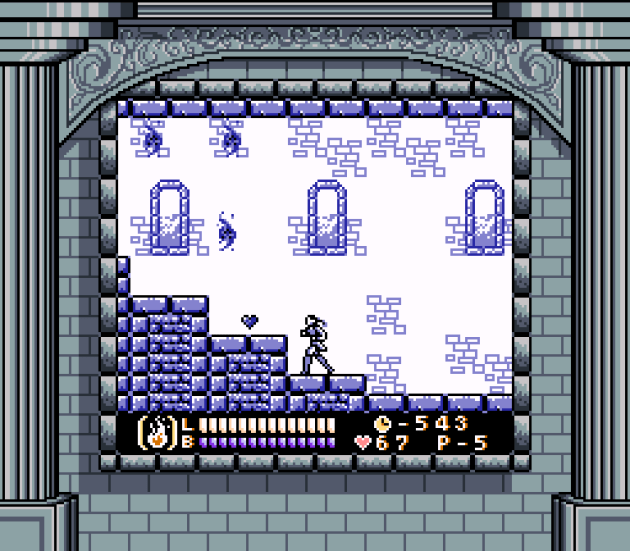
Those had been bats a second earlier.

Now, that bomb is relatively expensive at five hearts and it only does as much damage as the fireball your whip throws, which is half-as-strong as a direct hit with the whip. So it’s not like you can just plow through levels with it because it can’t one-shot anything stronger than a bat. But the bats were one of the main challenge elements, and they’re rendered completely toothless by this upgrade. To really make it obvious how little they thought this whole thing out, the fourth item you get is a weak-ass projectile that seems like it does as much damage as a fully-upgraded whip’s projectile. It’s a little wider than that fireball and only costs one heart to use, but if you’re going to do that, you might as well use the whip and enjoy the satisfaction of one of gaming’s best weapons, right? I never found a good usage for it. So like, why wasn’t THAT the first thing you get? The scaling is all wrong.
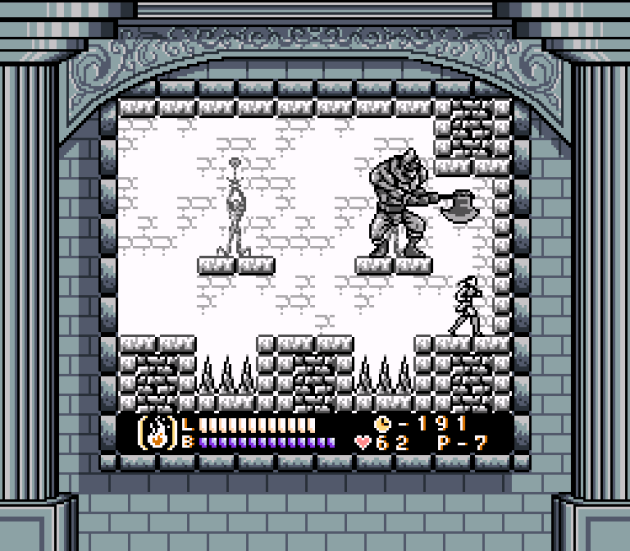
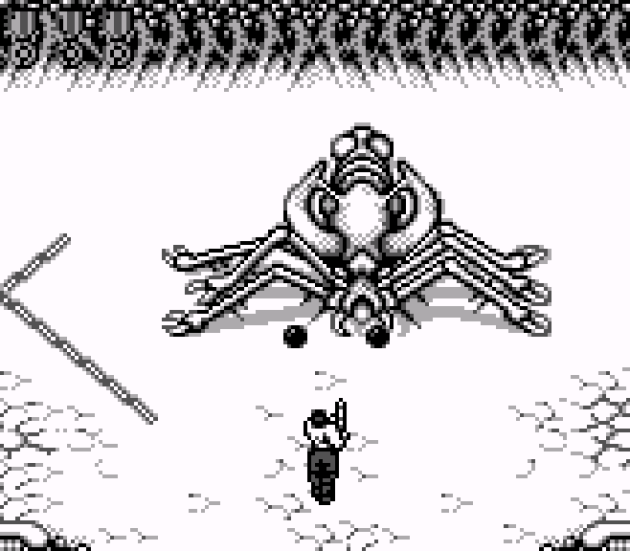
This WOULD have been the part where I died if not for the health refill subweapon. Seriously, this was the toughest boss in the game, easily, and it exists in a goddamned bonus stage hidden in the fifth and final level.

And where the hell are the traditional Castlevania subweapons? There’s no axe, knife, boomerang, or holy water. Don’t tell me the Game Boy couldn’t handle them, because they were in the previous Game Boy title (depending on which region you played). Well, their sprites are in this game, but not as items you use. Instead, Legends has hidden them as magical trinkets, one per stage, and if you find all five, you get the fifth subweapon. I should note that the way they’re hidden isn’t very satisfying, as each stage has a few forks in the road, and the hidden item is just in one of the forks. There’s no way to logic out which one. Presumably this whole idea is in there to add replay value, but it’s not creative. I would have rather hidden them in walls along a strictly linear route that was more optimized.
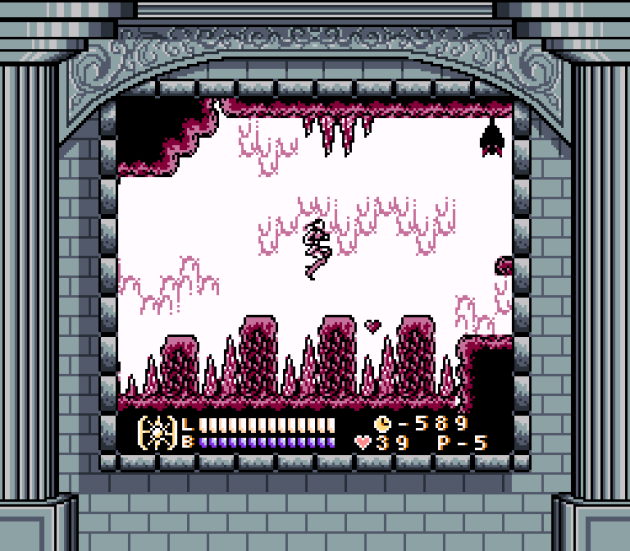
Exploration is great, but there has to be logic behind it, even if I think the level design is good. Legends has probably the strongest level design of the three Game Boy titles, but I’d still call Belmont’s Revenge the best of the trilogy because of the subweapons.

Is finding all five hidden trinkets worth the effort? Well, in addition to getting a better ending that was so nonsensical they struck it and the entire game from the canon, you get a fifth subweapon that might as well give you a free pass to the last boss. Remember how I said the bomb can’t one-shot anything bigger than a bat? The final item is a screen-clearing bomb that takes out everything but Dracula himself for the same cost as the previous bomb: five hearts. Yep, it makes the home stretch before you reach the final boss a cakewalk. So none of the subweapons are particularly satisfying to use. I have no clue what they were thinking with any of this. It’s not imaginative and it’s not fun. The whole system adds nothing to the game at all and feels like it belongs to another property entirely. The funny thing is, the subweapons were always kind of nerfy to Castlevania, and getting rid of them could be a positive thing if what replaces them is more balanced. Replacing boomerangs and axes with any-time-you-need-it full health refills and screen-clearing bombs isn’t exactly balanced, is it?
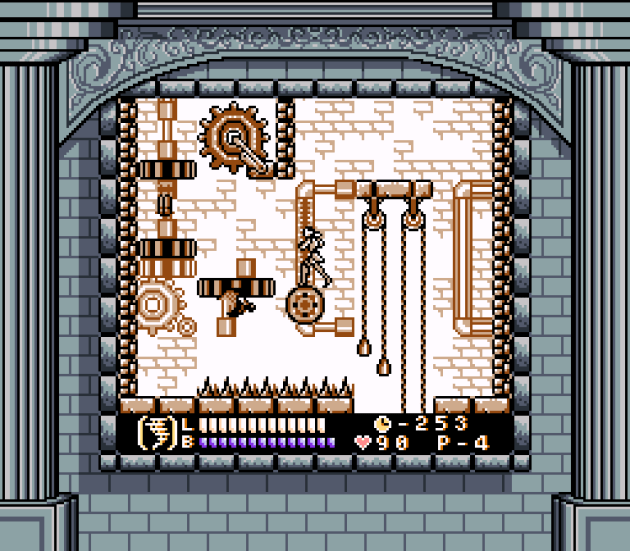
Honestly, the graphics ain’t half bad, but I still think Belmont’s Revenge looks nicer.

BUT, for what it’s worth, I felt Legends had pretty dang decent level layouts and enjoyable enough boss battles that made Castlevania Legends worth playing at least once. I expected so much worse based on its reputation, and now I’m sitting here puzzled because it’s not a bad game. As of this writing, it’s part of the Switch Online lineup, and if you’ve skipped it because of its critical reception, yeah, take a chance on Legends. It’ll take you a little under an hour to finish, and it’s fine. Just don’t expect one of the stronger Castlevania games, because Legends feels more like a ripoff of Castlevania most of the time.
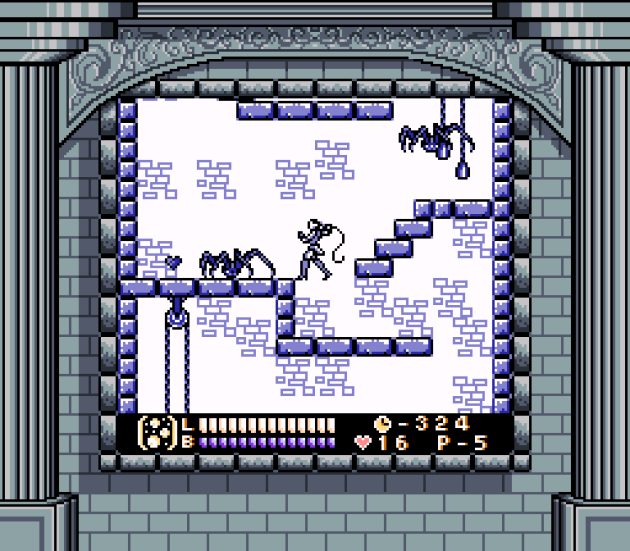
(shudder) It even gets creepy, something the other two Game Boy Castlevanias didn’t come close to doing.

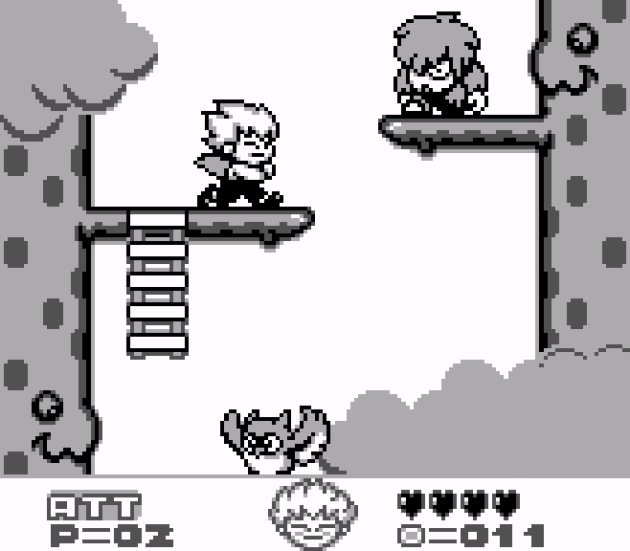
Really, this feels like its closest kin is Haunted Castle because a lot of the enemy attack patterns are based on crowding you and keeping the combat at closed quarters. Bats and spirits attack in a way where they swoop in from above you. This makes scratching-out distance to get your attack off without taking damage the primary challenge. I hated that for Haunted Castle, but it feels like it works here because there’s a sense of claustrophobia. Otherwise, besides the whip and candles, it never really feels like it belongs in the franchise. But, if you imagine Legends not as an actual Castlevania game but rather as a Castlevania-inspired action tribute that had no clue how to implement subweapons, it’s fine. Really, Castlevania Legends only sucks in comparison to its console big brothers. But so what? What halfway decent Game Boy title that’s part of a legendary action franchise is that not true of?
Verdict: YES!
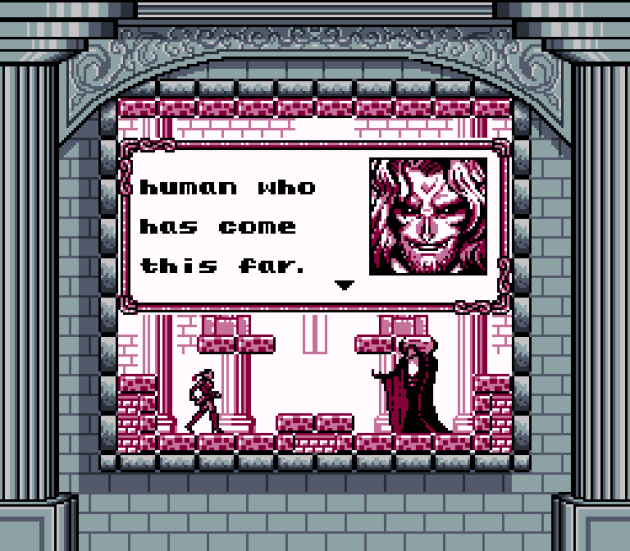
Dracula never got over losing to Wolverine in the first X-Men movie.
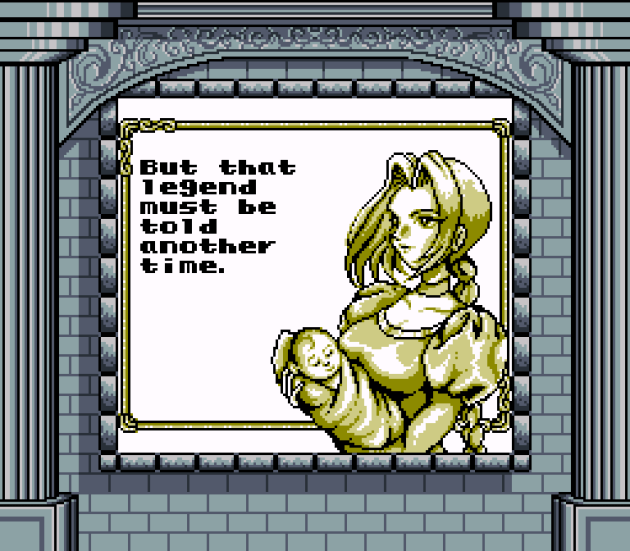
Awww, Trevor Belmont was adorable. Who’s the little vampire killer? You are!
Super Mario Land and Super Mario Land DX (Game Boy/Game Boy Color Reviews)

Super Mario Land
Platform: Game Boy
First Released April 21, 1989
Directed by Satoru Okada
Developed by Nintendo
Included with Switch Online Subscription (Standard)
Listing at Mario Wiki

I used the “Game Boy Pocket” screen filter in the NSO Game Boy app.

2025 is just starting and I’ve got Nintendo launch games on my brain. I can’t imagine why. Now that I’ve reviewed the Game Boy Tetris in Tetris Forever: The Definitive Review, I wanted to look at the road not traveled. The game that was developed to be the pack-in for the Game Boy, until Henk Rogers and Bullet-Proof Software convinced Nintendo that Mario Land would make Game Boy a children’s product, while Tetris would make Game Boy an EVERYONE product. The end result? Tetris became a global mega hit, Game Boy went from black and white curio to genuine gaming powerhouse, and Mario Land did okay. And by “okay” I mean it’s the #2 selling original black and white Game Boy title that wasn’t a pack-in (only Pokemon Red/Blue/Yellow’s combined sales are greater).

To the game’s credit, especially since the guys behind it weren’t exactly Nintendo’s varsity team, it looks great given the limitations. Nowhere near as silly as the Game Boy version of Batman: The Video Game looked.

In fact, Super Mario Land outsold Super Mario Bros. 3. Yep, really! It’s astonishing, isn’t it? This little, unassuming tech demo, the first Super Mario game made without Shiggy’s involvement, defeated a game that many would consider to have been the most anticipated sequel in gaming history, and certainly a game that actively reigns as one of the most cherished and beloved video games ever made. Is it really all those things just because it wasn’t packed-in with the Game Boy? I mean, duh, along with coming out the day Game Boy did as well. Mario Land is fine, but it’s not amazing. It’s not even so good that being one of the best selling games of all-time makes any sense outside the context of being a launch title for a relatively cheap, yet scorching-hot platform. I’d love to see what the attach rate was for the Game Boy and Mario Land through the first two years of Game Boy’s existence. It had to be in the high 90 percentile. It’s a strange game for someone of my era to look back on, because Mario Land is incredibly weak compared to other Super Mario games. Yet, I honestly don’t remember meeting anyone who was around for the Game Boy launch who had anything but glowing memories of it. Mario Land is as beloved as any other 80s Mario title. And it’s SO WEIRD.

I accidentally beat the third boss in about a second, before I even realized I was fighting a boss. Just one running jump, then walking off a platform onto a switch was all it took. I had been prepared to whine about this more, until I remembered that the Bowser encounters in the original Super Mario Bros. ended when you hit a switch at the end and weren’t exactly epics.

Mario Land is certainly the jankiest Super Mario game. It’s the movement physics that threw me off. There’s absolutely no sense of inertia at all. Whether running or landing from a jump, Mario stops on a dime. Hell, he stops on the rivets at the edge of the dime. You would think this would make platforming much easier, since it turns every jump from a calculated, athletic type of action that has to account for momentum into just a matter of raw distance. But, you do have to continue to hold the movement, because you can stop in mid-air too. My brain couldn’t adjust to this, I died just as much from screwing up otherwise basic jumps as I did misjudging enemies. I’m not trying to sound like an amazing gamer or anything, but I suffered the type of deaths playing Mario Land that I haven’t had playing a 2D platformer in a LONG time. I’m talking about screwing up some very basic stuff, and I felt so awkward when it happened. Like “jeez, I know that was on me, too. Yeesh.”

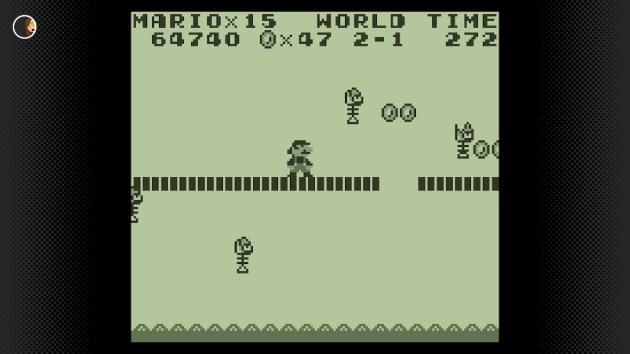
On the other hand, the lack of weight and momentum does make any interval-based enemies easier to get past. No worries about skidding INTO these fish. There’s no skidding! So, the physics engine isn’t totally challenge-creating. It’s just as often challenge reducing. Compare this game to the Cheep Cheep bridges in Super Mario 1, such as level 2-3. It’s not just that they fly out from the ground from underneath you, but it’s just as much your own momentum that makes those some of the hardest sections in Mario games. But, if the levels based around Cheep-Cheeps controlled like Mario Land does, I don’t think they’d be that hard at all.

Presumably, the lack of sliding was done to accommodate the motion blur issues in the early Game Boy screen. It’s also safe to assume that the length of the game was based around being a fraction of the OG Game Boy’s battery life, since there’s no means of saving. Not that you need it, as at only ten standard levels and two shmup levels, Super Mario Land is the shortest of any Super Mario game (at least when playing EVERY level, start-to-finish). Should take you 45 minutes, tops. When I first played Mario Land years ago, I didn’t like it at all. Now, eh, it’s fine. The ten normal Mario-style levels are decent enough. They’re a few steps above “basic” Super Mario gameplay, with things like hidden elevators or invisible floors that don’t really do all that much, but are fun to discover. And yet, outside of the question mark blocks and general hop ‘n bop gameplay, it never feels entirely like a Mario game. It feels like a Mario knock-off. But, like, a really decent, really flagrant knock-off.

You get to where I am by an invisible floor. If you’re not Little Mario, you have to deliberately take a hit, or you can’t go this way and have to fight the robots directly. There’s a couple areas like that in Mario Land.

I have two big problems with Mario Land. While I enjoyed the shmup stages well enough (hey, I like shmups!), ending the game on one was a massive downer. But, all credit where it’s due: this is the rare “let’s add a shmup to a platformer” game where the shump section doesn’t feel completely divorced from the rest of the game. They do a good job of making it feel like it’s the same character in the same world. The other big problem is the game is just too easy. Despite some pretty humiliating deaths, I never had to sweat a game over because there’s too many coins, extra lives, and short-cuts. I won’t say that it crosses the line or anything, because I did lose like six or seven lives along the way, including four to the final boss, but I still finished with around two dozen lives to spare. And when I threw on toruzz’s excellent Super Mario Land DX ROM (review up next), I finished the game with 58 lives. FIFTY-EIGHT! There’s only twelve levels, for Christ’s sake!

I don’t think ending a Mario game with a shmup boss is the wisest choice, but apparently this was the original intent by Miyamoto, who wanted something like this to be the finale for the original Super Mario Bros.

The best thing I can compare Mario Land to is watching the first season of The Simpsons. Everything is alright and certainly the product you’re familiar with, yet somehow also somehow so horribly wrong that it’s kind of a little spooky for it. Weirdly, it’s for the same reasons as the Simpsons, too: everything is off-model, including the locations, and very against the established canon. In the case of Mario Land, it’s full of one-off settings and enemies that never showed up in the franchise again and often feel like they belong to an entirely different franchise. Hell, the first three bosses can be defeated in the same way you beat Bowser in Super Mario 1, AND EVEN THEN, it never feels like they’re Mario villains, and the last boss sure as sh*t doesn’t. But ultimately, Mario Land doesn’t last long enough to bore, or even really to frustrate. I imagine a child in 1989 was probably thrilled that they had something that was a LOT better than the Super Mario Game & Watch for a portable Mario experience.

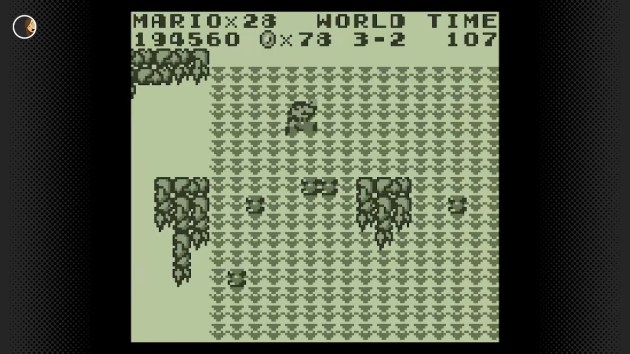
The most remarkable aspect of the game is it actually does make you feel like you’re in different worlds instead of against a static screen. It’s immersive, and in a way that holds up well in 2025. I didn’t expect that at all.

I played Mario Land twice in black & white and twice on DX (coming up), and I never shook the feeling that I was playing a glorified tech demo. That’s not necessarily a bad thing. It’s the reality of a launch title. When I look back on those Mario games that served as springboards for new platforms, most are pretty rough. Even Super Mario 64 feels like the whole engine could collapse at any time. Which makes sense, because they had to cut a ton of content from the game to make the release date, and even then, Miyamoto kept asking for more time to polish it, until Nintendo President Hiroshi Yamauchi told him the game was good enough. What strikes me most about Mario Land is, yea, it’s only twelve levels long, but there ain’t a stinker in the bunch. Every level is solid. Hell, you can’t even say that about every level in New Super Mario Bros. U Deluxe’s first world. So, maybe Super Mario Land hasn’t aged particularly gracefully in terms of its build. This is the roughest game in the entire franchise, and really there’s nothing even close to it in that regard. But, they still managed to show that the Mario formula is so airtight that it’s almost impossible to screw-up. Mario Land is solid, and as the Grand Marshal of the Game Boy, it’s hard to imagine getting the platform off to a better start.
Verdict: YES!

Super Mario Land DX
Platform: Game Boy Color
Latest Release: April 20, 2022
Unauthorized ROM Hack of Super Mario Land
Developed by toruzz

Link to Patch at ROMHacking.net
I use THIS tool to apply patches.

Super Mario Land DX isn’t merely a colorization of Mario Land, but that part certainly stands out the most. I’d previously played toruzz’s colored version of Super Mario Land 2 (which I will do a review for both the original and the DX version at some point in 2025), but Mario Land DX is equally impressive. The new sprites for Mario and enemies look great, and the whole game POPS as it never has before. It’s so visually pleasing that you really wish Nintendo would just buy this build and make it official. It’s beautiful, and Mario games should be beautiful, right? Plus the notorious slowdown in the hard mode (IE the replay of the game after you beat it) is gone too. I’m pretty sure the version on Nintendo Switch Online also corrects the slowdown issue but don’t quote me on that.

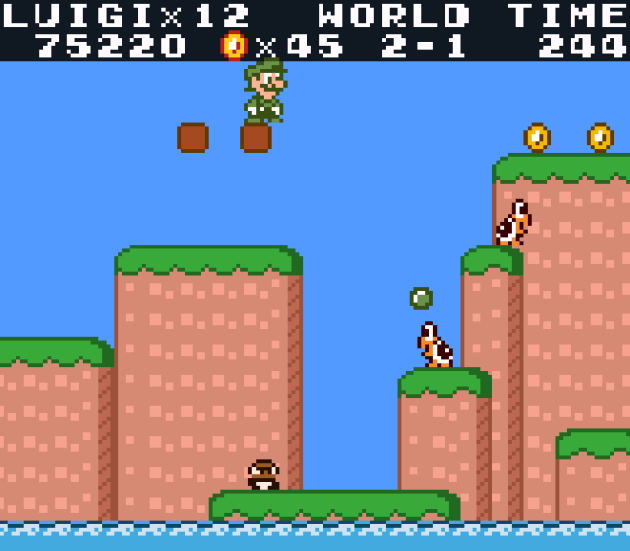
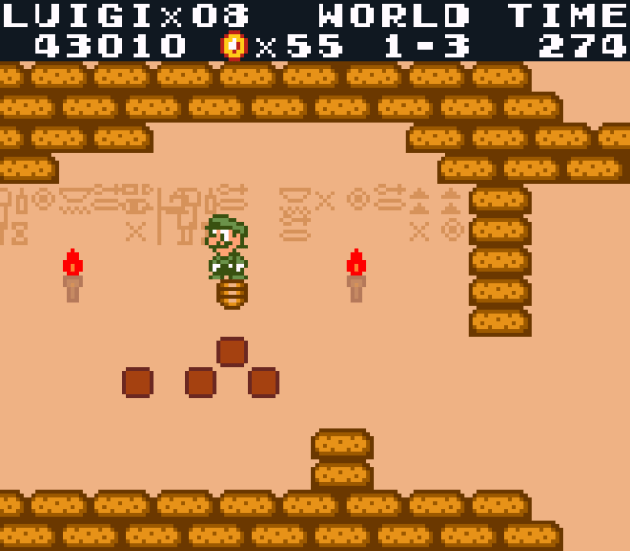
Yep, that’s Luigi. Yep, he controls kinda like you think he will. No, it’s not as cool as it sounds.

Mario Land DX’s big-big-big addition is Luigi, which is done in the same style as Luigi in the Japanese version of Super Mario Bros. 2 (aka The Lost Levels). He moves looser and jumps higher. However, it’s just not as fun as it sounds. I think it’s too loose. It’s probably best to think of Luigi as “Mario Land if the controls weren’t as good.” Unlike Mario, Luigi does have a little momentum. It makes lining up with the tiny blocks pretty hard. There’s a few sections in the game where you can smash a block between other blocks to reveal a hidden elevator. It’s insane how long it took me to line up Luigi to get that. I also went back to skidding off platforms. Yea, I wasn’t building up 50 lives in this run. Nope, not happening. With Mario’s platform games, for me, what makes them stand out in the genre is precision controls and precision movement. Mario took off as a franchise because, above all else, they control the best. Turn those controls rotten and Mario games wouldn’t be the biggest franchise in the genre. There’s a reason why Alex Kidd isn’t an icon, folks. 

This took FOREVER for me to get.

I’d only recommend the Luigi quest if you’re a REALLY big fan of Super Mario Land and want to experience it in a new way. I’ve never been a fan of games that use deliberately bad (or if not bad, difficult) controls for challenge. This is NOT made for me. But, it’s super easy to recommend Super Mario Land DX to anyone who wants to dip their toes in the wonderful world of ROM hacks because, golly, what an effort. And if you like color but really hate the new sprites (and some people do), you can toggle them off. There’s a few ROM hacks out there that change the levels, but I really sort of get the impression that the original design team already wrung every single drop of gameplay out of the limited Super Mario Land engine. I don’t really want to play more levels of it, especially when the only option left is to become trollish with the stage design. What toruzz has done here is EXACTLY what I want, and all I want, from a Mario Land ROM hack. Good job.
Verdict: YES!

Kid Dracula (Game Boy Review)

Kid Dracula CoverKid Dracula
aka Akumajō Supesharu: Boku Dorakyura-kun
Platform: Game Boy
Released January 3, 1993
Designed by Yukari Hayano
Developed by Konami
NEVER BEEN RE-RELEASED*

*Okay, TECHNICALLY Kid Dracula did sort of get re-released once. In 2000, Kid Dracula was added to Japan’s Nintendo Power flash cartridge service. So it really should be classified as NO MODERN RELEASE.

Is it a remake, a reboot, or a sequel? “Yes.”

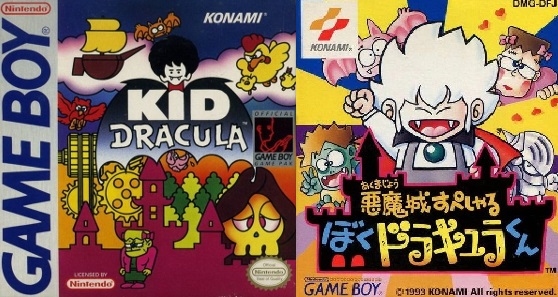
I just reviewed the Famicom-exclusive Kid Dracula. I almost skipped reviewing the Game Boy version after my experience playing the original for the review didn’t live up to my memories of playing it in 2019, with Castlevania Anniversary Collection. I’m happy I didn’t skip it, because it sure was an interesting game. This is the only Kid Dracula that the whole world got. But, even with the global release, this was it. The end of Kid Dracula as a franchise. Why is that? Well, I’m guessing most people never bothered trying this, and it’s not hard to figure out why. Kid Dracula suffers from what I like to call “Avenging Spirit Syndrome.” A quality Game Boy release that they put about two seconds worth of effort for the box art on, so nobody bought it. Have a look.

Are you f*cking kidding me? Go through all the effort of developing and manufacturing a game only to have the box art look like how it does on the left. Compare that to the visually striking Japanese cover art that looks like a game that actual effort was put into. We’re a shallow species, and when people see a cover that’s phoned-in, they assume the game is too. That’s not unreasonable, by the way, so do not half ass your cover art. Shameful. Absolutely shameful.

Box art has nothing to do with gameplay, of course, but it really pisses me off because I’m almost certain that cover art drove a stake in the heart of Kid Dracula as a franchise. The Game Boy version, which is part remake, part sequel, slays the NES original while also making some bonkers mistakes. Honestly, the box art tracks, because there were some infuriating decisions made when developing Kid Dracula. Like, hey, who wants post-stage mini-games with so much text that it takes forever just to get to them? Seriously, these are supposed to be the fun little side-game stuff, but the game won’t sh*t the f*ck up and just keeps going and going and going and GOD DAMMIT WHY IS THIS GAME SO F*CKING INFURIATING IN SO MANY NON-ESSENTIAL WAYS?!

If a mini-game requires this much text to explain, maybe you shouldn’t f*cking include it in a Game Boy game! This particular mini-game is basically the Game & Watch disaster “Judge.” AKA the Game & Watch I ranked 51st out of 52 possible games. After painfully explaining the rules to rock-paper-scissors a half-sentence at a time (because that’s all they could fit in the teeny tiny text box), the rules KEPT GOING. You see, it’s not enough just to have the correct throw. No, if you get the right throw, you also have to press a button to club your opponent over the head. If you throw the wrong thing, you can also block. If you hit your opponent when you lost or had a tie, you get a foul. Sometimes, the opponent blocks you, causing this trash fire to drag on even more. You have to get five hits to your opponent’s two, including fouls. This is supposed to be the fun side distraction?

I’ve never seen a platform game from this era with as much downtime as Kid Dracula on the Game Boy has. The levels aren’t that much longer than the time it takes for you to (1) see the cutscene after beating the boss (2) see the new power you earned. Steps 1 & 2 are the only ones you can skip if you want extra lives (3) go through the “welcome to the bonus round” text. At this point, you can opt out of steps 4 through 11, BUT, if you need lives (4) see the text that painfully explains to you every single time what four games could potentially happen based on which crystal ball will have which bonus game (5) the animation that shuffles the crystal balls, which takes a while but goes slow enough that you can clock it (6) you have to choose one of the four crystal balls (7) the idiot telling you what mini-game was selected (8) the introduction and rules to the mini-game (9) actually playing the mini-game, some of which are timed, and some of which can hypothetically go on forever (10) the post-game wrap-up telling you what you won or didn’t win (11) then being sent BACK to the post-stage menu where it takes two screens to say the words “what would you like (next screen) this time?” and if you have enough coins to play again, you have to repeat steps 4 through 11 (12) seeing a completely pointless and non-interactive map screen. THEN you get to actually play Kid Dracula again. Un-f*cking-real! Below is a slideshow of all the screens it takes to get through steps 3 through 7, and that’s not even close to the whole process of getting back to the game!

This slideshow requires JavaScript.

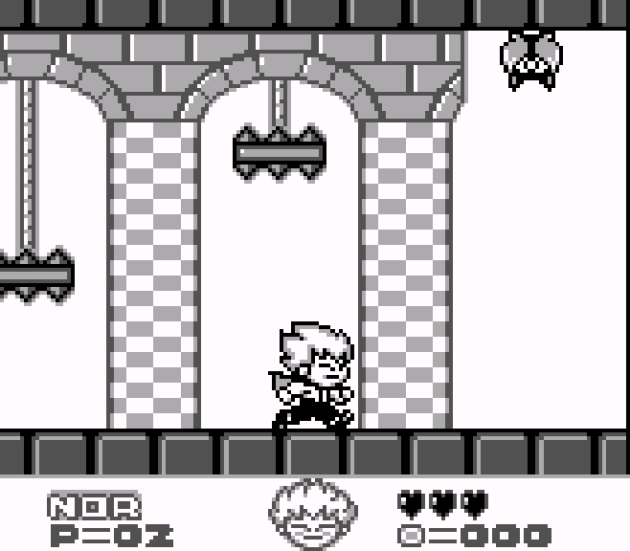
The worst part about all of that is Kid Dracula is a mostly really good game. Right from the start, you can use the “change into a bat” ability, and you get the walk-on-the-ceiling power-up early too. Instead of large stages, Kid Dracula is mostly broken-up into bite-size chunks, complete with an animation when you reach the end of one. Many levels and set pieces from the original game also return. The extended “bullet train” roller coaster sequence is back. The ship is back. The vertical jumping sequence up a narrow tube is back. The speed, jumping and movement physics from the Famicom game are mostly intact. Many bosses return too. This is probably 55% – 60% remake. However, there’s enough surprises for people who already played the first game to not get bored replaying the same stages and bosses in the black & white version. Hell, the first boss had a gag that made me literally laugh out loud. Don’t worry, I won’t spoil it.

And that’s not to say the levels are a complete retread. The first stage, once again a homage to Castlevania, has this brief section with tilting platforms. Kid Dracula does just enough to remain fresh, at least when it wants to be a platform game instead of the world’s most agonizingly slow mini-game collection.

The same combat that I found to be underwhelming in the Famicom original is back and more-or-less unchanged. Enemies can sometimes be too spongy and your attacks are never as good as you wish they were. The ice attack (and in fact, the entire ice stage) is gone, and in its place is a powerful short-range attack where you make three bats fly in a circle around you that sacrifices range too much. Later in the game, it surprised me by awarding me to two new powers instead of just one when I finished a stage. In addition to the bomb, I got an umbrella that can be used to shield you from some bullets and environmental hazards. It can also instakill some smaller enemies just by walking into them, but it doesn’t destroy them. It just sort of rudely causes them to fall off the screen. This version of Kid Dracula leans much more heavily into tight squeezes, spiky floors/ceilings, and timing-based platforming than the Famicom game. But, that’s for sure a plus in a game where the combat is still pretty ho-hum. I don’t think I’d describe the original Kid Dracula as “exciting” but the Game Boy version certainly is.

Oh hey, this looks familiar.

The bomb attack from the Famicom returns, only this time, it’s also used to break through walls, and this leads to the worst part of the platforming aspect of the game. I bet anyone who has already played this knows what part I’m about to talk about. Near the end of Kid Dracula, there’s moving walls where you have to charge-up a bomb (which is done by holding the B button) and use it to ping one single block of this moving wall at a time. The catch is, when the holes you’ve made scroll off the screen, they’re gone forever. Because you have to hold the button to charge, and because the bombs only destroy a single block with no splash damage and you’re two blocks tall, you have a VERY small window from which to get through the walls before your progress is lost and you have to start over. It took me quite a while to make my way through this small section. One wall is hard enough to get through, but then you have to get through two, and then three. It took me so long that my hands were hurting from this one area alone, and then a boss fight happens that involves a similar play mechanic. This idea should have been killed on the drawing board OR the bomb should have done two blocks of damage. By the way, the initial bullet that blows up is really tiny and you’re going to need to jump too, so timing and aiming this is pretty tricky.

This slideshow requires JavaScript.

Kid Dracula on the Game Boy is deeply flawed in many ways. I have no clue what they were thinking with some aspects of it. It’s often so obviously ill-suited for a handheld device. There’s no saving, either. Passwords only. Now granted, if not for the downtime, this could probably be finished in about thirty minutes to forty-five minutes for a first time player. So what? It’s Game Boy! None of that matters to me in 2024. If this gets a re-release, I’m far more likely to play it on my TV than I am as a handheld. For all its flaws, Kid Dracula is clearly one of the best original Game Boy releases. The boss fights that nearly sank the Famicom game ended up being the element that had me convinced this is the better Kid Dracula game. Don’t get me wrong. The combat is still middling, but the OOMPH that I felt was missing from the TV version is here, along with added gags that land much more frequently. The best bosses from the NES game are here. The bad ones are either improved or removed.

The new stages are easily better than the ones they replaced. The ice stage was awful on the NES. The challenge was based entirely around sliding to your death. The forest works better.

Kid Dracula for the Game Boy deserved to be a hit, warts and all. It does an even better job of telling jokes and being a satire than the NES game did. The personality is dialed-up, but it never comes across as trying too hard. The quiz boss from the Famicom is gone, which tells me they figured out that it didn’t work as they intended. I assume they were aiming for Mel Brooks “going off the rails” type of subversion, but it didn’t land because it wasn’t funny. What would have made more sense was to swap to an entirely different gameplay style. ANYTHING but a quiz. A tennis game would have been funny. Or hell, Kid Dracula slaps on a pair of ice skates and a game of Blades of Steel breaks out. That’s a joke. A quiz isn’t, because it’s not a Konami thing. Thankfully, there’s nothing remotely like that on the Game Boy. There’s so many twists that I didn’t expect, especially with how the boss fights play out, that I just shook my head in disbelief. They really did a great job of subversion of expectations. On a Game Boy game! Whoa!

This was a boss in the first game. It’s a set-piece in the second. So nice.

Sure, they had more time and a few years to reflect on the original, but still, it’s the Game Boy. I didn’t expect them to trounce the NES version to the degree this does. Kid Dracula is one of the most underrated games on the entire platform, even if the post-level mini-game crap is annoying. Nice job on the cover art, gang. Bravo. You screwed us all out of a franchise. This is one of those ideas that Konami should get an indie dev to revitalize. Parodius too. Gaming has caught up to the idea of tongue-in-cheek games. Every Mario RPG is basically Nintendo roasting itself. Konami was light-years ahead of their time, and now, they’re so far behind the times that it’s actually just kind of sad. So, I’ll leave you with thought: it only takes one game to change that. Dracula arises once a century, and hey, there hasn’t been a new Kid Dracula release in the 21st century. I’m just sayin’.
Verdict: YES!

THE INDIE GAMER CHICK CASTLEVANIA REVIEW SERIES
 Castlevania (NES) Dracula’s Curse (NES) Adventure (GB) Belmont’s Revenge (GB)
Super Castlevania IV (SNES) Dracula X (SNES) Rondo of Blood (SuperCD²)
Chronicles (PSX) Circle of the Moon (GBA)  Kid Dracula (NES) Kid Dracula (GB)
ROM Hacks (NES)
Konami Wai Wai World (NES) Wai Wai World 2: SOS!! Parsley Jō (NES)

Operation C and The Castlevania Adventure (Game Boy Reviews)

Operation C
aka Contra in Japan
aka Probotector in Europe
Platform: Game Boy/Game Boy Color
First Released January 8, 1991
Designed by Toru Hagihara & Yukari Hayano

Developed by Konami
Included in Konami GB Collection Vol 1
Included in Contra Anniversary Collection

The Castlevania Adventure
Platform: Game Boy/Game Boy Color
First Released October 27, 1989

Designed by Masato Maegawa & Yoshiaki Yamada
Developed by Konami
Included in Konami GB Collection Vol 1
Included in Castlevania Anniversary Collection

In terms of graphics, this is one of the first great looking Game Boy games.

“Operation C? That’s a funny way of spelling Contra Force, Cathy.” Yea, here’s the thing: I haven’t posted a new review in a few days, but I’m also not ready to finish writing-up Contra Force. It’s one of those games that requires multiple play-throughs and lots of note taking. It’s bad, but not in a simple way. It’s both “complicated bad” and “bad, but in a way that could have just as easily been really good” and reviewing games that fit both those bills is easily the hardest part of what I do. Since I want to keep the content drip coming, I need a game that’s “uncomplicated good.” Thankfully, the Contra franchise is full of those, so the marathon continues uninterrupted. Except, it’s Halloween week, so I need to transition smoothly to Halloween-appropriate games. Well, again, that’s easy. Because these games complement each-other for all the wrong reasons. Operation C really proves how good the Contra formula is. Even with the game chopped-down to five levels, only three of which are side-scrollers, by golly, it’s still Contra. If amputated, colorless, laser-less Contra is still a good game, it’s a safe bet that we should be talking about this as one of the greatest classic gaming franchises of all-time.

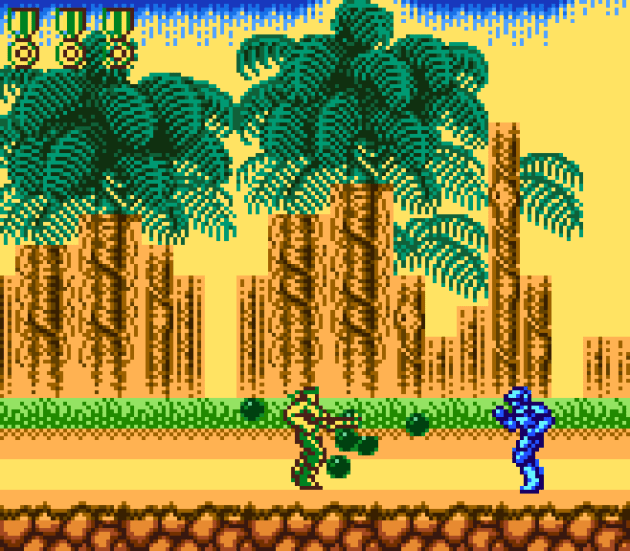
How about it? A boss in the top-down levels that’s better than 90% of the top-down stuff from Super C? Yea, this slaps.

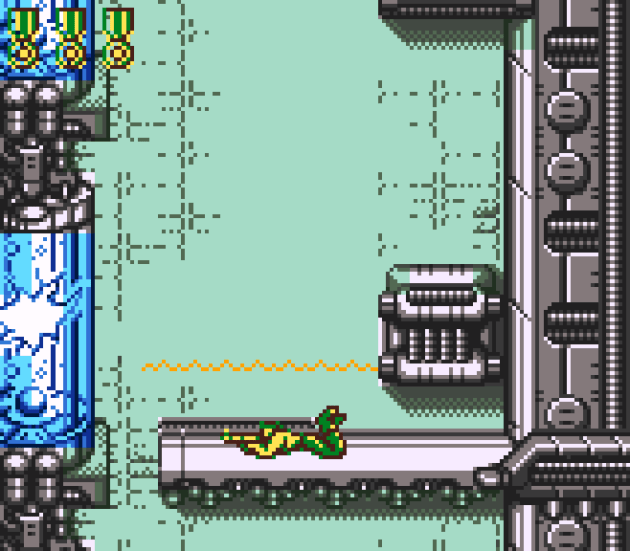
There’s not a ton to say about Operation C, but getting the obvious out of the way first: it’s probably the easiest Contra. I only died once in my warm-up game, making it all the way to the elevator section of the final level when, what is and isn’t a safe distance between you electric gates that come out of platforms isn’t clear. I think the problem is the beams squiggle but their collision boxes are one straight line. In my second playthrough, I aced the game without dying. I didn’t bother to do the “can I beat it without autofire” test because my hands are killing me. Too much pinball. Oh, and at this point, I should note that the second play-through was on the Game Boy Color-enhanced European exclusive release Konami GB Collection Volume 1, which has some ugly ass use of color.

Think that’s bad? You might want to put on sunglasses for this next one.

What’s especially weird is that the collection still uses the Probotector name, but unlike the original European version of Operation C, it just stuck with the Contra characters instead of re-spriting them as robots.

Yea, that’s pretty bad. Still not as bad as Castlevania’s logo looking like it’s ready to suit-up for the Los Angeles Lakers, but I’m getting ahead of myself. Operation C isn’t just missing levels. The machine gun is gone. The laser is gone. Even the rapid fire and invincibility are gone. There’s only three guns, one of which is new and one of which is changed. The spread gun starts with three bullets but, if you collect a second spread item, it becomes five. I’m pretty sure it’s the only one of the three that upgrades like that. The flamethrower is like the flamethrower from Super C, only it can’t be charged-up. A brand new gun, the homing gun, manages to nerf Operation C even more than spread. You fire heat-seeking bullets that seem to always pick the optimal enemy. Overpowered? Sure. The most overpowered gun in the franchise so far. But, at least it’s fun to use.

Can’t stress enough: the top-down levels have made the jump from “elephant in the room” to “legitimate highlight.”

Really, the best thing I can say about Operation C is that, like the two NES games, the designers were wise enough to optimize for FUN instead of blow-harded challenge. The game might be too easy, but I just played through it twice and I wasn’t even a tiny bit bored. Hell, the top-down levels are stronger than Super C’s. Most of the bosses are pretty fun to fight. The final two bosses, a generic tall alien that flies and a tube with some kind of alien that doesn’t even fight back or have any offensive move close the game, and I wasn’t a big fan. Too generic. The jumping is also harder to clock than the NES games, but Operation C is still probably one of the better NES-to-Game Boy efforts. It feels like a smaller, black & white version of the console games everyone loved. You can’t say the same about the first Castlevania release on the Game Boy.

Oof. When players are more scared of having to start over than they are of the settings, you’re doing Castlevania wrong.

Since it’s Halloween time, it’s time for me to move off the Contra marathon for the rest of the week and hit up Castlevania for the second straight year, and there’s enough classic Castlevanias for me to make this an annual tradition for a few years at least. Nice. Not so nice is starting 2024’s Halloween run off with THIS. Now granted, The Castlevania Adventure released over a year before Operation C. Konami had a lot more time to familiarize themselves with the Game Boy to assure their Game Boy Contra felt like a Contra game. In the United States, Castlevania Adventure was released only ten days before the first Christmas of my lifetime. By the time this thing had to go to manufacturing, Konami probably had an inkling that the previously snickered-at Game Boy was going to be a massive hit and the most desired gift for their target audience of 1989’s holiday season. Well, what kid wouldn’t want a handheld Castlevania? Even if what the series was hadn’t exactly been established. This beat Dracula’s Curse to the market in Japan by a couple months, so technically, the series up to this point was the NES game, the wonky and weird RPG-like Simon’s Quest, the exploration-based Vampire Killer for the MSX, and the unimaginable trash fire that is the arcade Castlevania spin-off/remake known as Haunted Castle.

What WOULD be the best idea in the game, hidden rooms like the one I’m going into here, is significantly muted by the total lack of non-whip weapons. They’re rooms with life refills and maybe a 1up. Whoopie.

So, saying that Castlevania Adventure does a poor job of being a Castlevania game isn’t entirely fair. What WAS Castlevania in 1989? Arguably, the only unifying aspects are the whip, a gothic horror tone, and Dracula. Hey, those are in this game! Good job. And yet, there’s something sinister about Castlevania Adventure, because it sure looks like it’s going to be fun in screenshots. Hell, I’d go so far as to say it looks great! Arguably the best looking Game Boy release of its first year. But, that becomes cruel, because playing Castlevania Adventure is the pits. Christopher Belmont must be one arthritic mother f*cker because he moves like his limbs are full of sand. Castlevania Adventure’s movement speed is roughly on par with any other game’s speed on levels where you get stuck waist-high in water or quicksand. That’s when the game is moving full speed. Castlevania Adventure frequently suffers from bouts of slowdown. This often happens while you’re in the middle of jumping. That’s sort of a big deal when the designers decided to make the #1 method of difficulty last pixel jumps and single-block-wide platforms.

This would have been the most clever bit in the game. There’s giant eyeballs that, when whipped, explode like seen here. Okay, neat, except they lead to more last pixel jumps. It’s not a last-pixel jump to jump over them, so I opted to do that. As if to troll me, it started sending two out. You’re not exactly nimble with the jumps, so I had no choice but to whip them. And it made the above gaps in the platform. Oh, and this was a dead end too. Yea, there’s a level with dead ends. I hate this game.

I have no doubt that Castlevania Adventure is the worst game in the series. I’ve played Haunted Castle, and miserable as that game is, at least it’s not as sluggish or boring as this. Even the exciting parts are ruined by going too long. After about one-third of the third level, the game becomes an auto-scrolling race against a rising spiked floor. This goes on FOREVER, and even after reaching the top, the race isn’t over. Then you have to race against the right wall moving in at you. It actually was very exciting.. for about a minute. But then it just kept going until it was exhausting, and then kept going even further until all the joy of surviving had been sapped from it, and it was STILL GOING. It also didn’t help that in the Konami GB Collection version I played, the same ugly banana yellow background from Operation C had returned.

Seriously, why? Who thought this was a good idea?

I think it was probably a good decision to review Operation C and the Castlevania Adventure as a pair, because I walked away with the impression that Castlevania had to die so that Operation C could live. Everything that you could possibly complain about with one is fixed in the other. I don’t expect the Game Boy to have peppy, fast-paced games, and Operation C isn’t. But, compared to a lot of 1989 – 1992 games, it stands out among action games for coming the closest to an NES-like pace. Castlevania Adventure only has four levels, but it feels much longer, and not in a good way. There’s almost no strategy or individualism to the game because there’s no sub-weapons. It’s just a matter of getting from point A to point B, and the only aid you get along the way is a fully upgraded whip can shoot a fireball that literally bounces harmlessly off the first boss. The bosses in Operation C are big and enjoyable to fight, even if they’re easy. The bosses in Castlevania Adventure, easily the highlight of the game, are average-at-best, and some are smaller than you are.

This slideshow requires JavaScript.

Sometimes I play black & white Game Boy icons and think to myself “I’m so lucky I grew up with the Game Boy Color.” By that point, most studios knew how to build fun games tailored to its strengths. But, that was happening long before I got my first Game Boy. Even the Jetsons Game Boy title was really well done. I wonder how much of my own impression of Game Boy was soured by having bad luck with the black & white games I got to play before I started running through retro games on this blog? One of the first was Castlevania Adventure, and I hated it. I hated its sloth-like pace. I hated its jumping. I hated the level design. It might not be the worst game ever made, but it’s one of the most unlikable. Even if you pretend it’s not a Castlevania game, it doesn’t work as an action game. It’s too slow and clunky to be white-knuckle. It’s just a really awful game.

The final level, which was easily the best, was also the only one that didn’t feel like time itself started ticking slower. It rises to the level of “okay.” The problem is you have to play three of the most boring levels in video game history to experience it.

In the case of Operation C, I don’t think a kid would have much regrets with it. It looks like Contra. It plays like Contra. It has all the tropes of Contra. With Castlevania, I think I would question whether this series is for me or not. It seems like it would make any car trip or down time feel longer. It comes across like a bad knock-off of Castlevania. It doesn’t even have skeletons to fight. The enemies are dull. The lack of sub-weapons assures there’s nothing to break-up the tedium. The bosses are too easy, at least until Dracula shows up and hovers above instakill spikes. But the platforming is so heavy feeling. It’s like you have sandbags tied to you, and the whole game is based around how crappy that is to play. Amazingly, another trick they use is having platforms fall quickly underneath you, which is dirty pool given that the controls are unresponsive. Castlevania Adventure IS fine tuned, but not in a way you want from a game. They built terrible movement and jumping physics, then tailored the game around that instead of fixing the damn movement. And yea, sinister is the right word, because you wouldn’t know this from a screenshot. It looks like Castlevania. But it ain’t. It’s an official off-brand Castlevania, and one of the worst games I’ve ever played.
Operation C Verdict: YES!
The Castlevania Adventure Verdict: NO!

THE INDIE GAMER CHICK CASTLEVANIA REVIEW SERIES
 Castlevania (NES) Dracula’s Curse (NES) Adventure (GB) Belmont’s Revenge (GB)
Super Castlevania IV (SNES) Dracula X (SNES) Rondo of Blood (SuperCD²)
Chronicles (PSX) Circle of the Moon (GBA)  Kid Dracula (NES) Kid Dracula (GB)
ROM Hacks (NES)
Konami Wai Wai World (NES) Wai Wai World 2: SOS!! Parsley Jō (NES)