Alice in Wonderland (Game Boy Color Review)
June 26, 2024 6 Comments
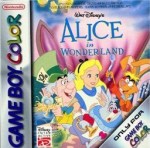 Alice in Wonderland
Platform: Game Boy Color
First Released October 4, 2000
Directed by Mike Mika
Developed by Digital Eclipse
Published by Nintendo
NEVER BEEN RE-RELEASED

8-bits have never looked more gorgeous.
Last year, when I reviewed the NES classic Mickey Mousecapade, I speculated that the US version removed the Alice in Wonderland theme that was the entire point of the original Japanese build because Capcom was afraid it would alienate boys, who wouldn’t want to play a game based around a “girl’s movie.” As shallow and cynical as that is, that was the only way I could spin the decision to re-sprite the game that made any logical sense. I mention that because my parents bought 11 year old me Alice in Wonderland to play during a plane ride because they thought I might want a “girl’s game” for a change. Mind you, at the time this came out, I’d been on a months-long Perfect Dark bender and was going through a “too cool for ‘kiddie’ games” phase. I was dumbfounded at my parents, but not over the girl’s game bit. “This isn’t a girls game. It’s a little kid’s game” I said before I even played it. Apparently they bought it based on a newspaper review, and I’m ashamed today that I didn’t appreciate how lucky I was to have parents who just randomly bought games for me all the time. But, I brought it along on the trip, and lo and behold, it made the plane ride breeze right on by. Alice in Wonderland is not a little kid’s game, and it ultimately became one of my favorite portable games from this era. Thanks, Mom and Dad.

Okay, this is incredibly nit-picky, but I hated how, when you collect every star in a stage, it pauses the action to inform you that, yes, that’s all the stars. A counter and a sound effect would have been preferable. It even does it mid-jump. So annoying.
At the age of 11, I didn’t give a sh*t about a game’s development. There was only one exception: I trusted games published by Nintendo, which is probably the only reason I gave Alice a try in the first place. Today, Alice in Wonderland’s pedigree is genuinely jaw-dropping. Developed by Digital Eclipse, with art assets from Disney, then published by Nintendo themselves as a first-party release. Ho. Ly. Crap. Shouldn’t this have been a major deal, especially with these graphics? This has to be one the best looking 8-bit games ever. Of all-time. Like seriously, this is NOT a Nintendo 3DS game, but its side-scrolling platform sections often have a VERY convincing sense of depth to the graphics. It’s like an optical illusion. Sadly, GBC Alice in Wonderland is a total non-entity. GameFAQs doesn’t have a single guide for it. StrategyWiki doesn’t even have a page for it, nor does Cutting Room Floor. How many Nintendo-published games have absolutely no clout today? It has to be a very short list, and I doubt any game on such a list is as good as Alice in Wonderland. Seriously gang, this is a winner.

Hell, it even looks like Mickey Mousecapade’s first level. Then I remember that Mickey Mousecapade is based on Alice in Wonderland and, actually, the look is straight from the movie.
Don’t mistake Alice in Wonderland for a pure platformer. Barely a little over half the game is platforming segments, but actually, Alice sort of defies genres in general. There’s multiple top-down sections, including foot-races with the White Rabbit, a section that mimics the movie’s bottle scene that was a major pain in the ass for me to complete as a child, a section where you chase down the Dormouse, one where you paint the roses red, and you even duel with the Queen of Hearts in a game of croquet. Sure, some liberties had to be taken to make this work as a video game, but it’s astonishing how well Alice in Wonderland does at feeling like a product tie-in. It really captures all the big set pieces in the movie. Admittedly, the degree of success varies. I didn’t happen to think the croquet section was any good, and I was really disappointed when the game ended with a massive wave of enemies instead of a proper boss. But, hey, you can only be truly disappointed by a game ending on a whimper if the lead-up to that was spectacular, and Alice really is a special game.

You get unlimited lives when you die, which you will, as the races against the White Rabbit come down to a three-way multiple choice based on luck. Mind you, I don’t think the rabbit itself ever goes the correct way at first, so it’s not like this is impossibly hard, but I don’t think there’s any way to logic-out which way is the “right way.” Thankfully, emulation allows you to quickly restart if you need it. Lately, I’ve done a lot of games that probably weren’t good in their day, but are made better through emulation. Alice in Wonderland was already an elite Game Boy Color title. Emulation puts it in the top 10 discussion.
I doubt there’s been many Nintendo-published games that feel as “indie” as Alice in Wonderland, for better and for worse. The platforming does have an inelegance to it. While movement is accurate, I wouldn’t exactly call the jumping intuitive. Alice leans heavily on B-running and jumping, but I never got comfortable with the limitations of my jumps, IE which leaps were and weren’t “makeable.” This is amplified by the fact that you can short jumps and still successfully land on the platform when the game gives you a tiny boost to complete the jump when a platform is involved. This is especially noticeable with moving platforms, and especially-especially noticeable when you’re trying to land a jump while tiny. It almost feels like the game is taking pity on you when you get that little upsy-daisy, though I suppose I’m grateful it’s there since it helps assure the platforming cuts a relatively frisky pace. The level design is maze-like but never too repetitive or stagnant. At its worst, sometimes it’s dull to wait for moving platforms. But, I’m happy with the focus on exploration over combat, and the levels mostly feel unique throughout.

The Brush Dog sequences are the only ones that feel kind of samey. Also note that even though my sprite is clearly touching the star, I’m not getting it here. Collision detection is certainly Alice’s weak link.
Alice in Wonderland does the bit where you can grow and shrink in size by eating mushrooms. What’s neat is the mushrooms are fixtures that almost instantly grow-back, which is incorporated into the level design. Sometimes you’ll want to immediately redo the mushroom and change back. It never exactly feels puzzley, but there’s a method to the level logic that keeps you on your toes. My biggest knock on the game is that the collision detection has a big learning curve to it. The action is entirely traditional hop-on-head type of combat, even in the top down sections. It’s easy enough on the standard platforming bits, but the top-down is very problematic. It never felt quite accurate or intuitive for me. I almost wish that you had a weapon for the top-down sections. Any kind of melee weapon, really. That and the fact that the game doesn’t take a count of how many of the eight teapots hidden in the game you’ve found. I have no idea what they do. If they unlock something, apparently I’ve never found it.

You just avoid the Tweedle Twins in their top-down maze. You’ll get to kill them as side-scrolling bosses after this. Later in the game, you can hop on the card soldiers. Or, just avoid them, since combat doesn’t reward anything and there’s no risk of damaging yourself.
What I enjoyed most about Alice in Wonderland is the unconventional structure. The middle of the game has a hub world that works like a giant fetch quest with multiple branching paths that seem like you can take them in any order. BUT, it’s not actually non-linear, as you find items in certain sections that unlock your ability to make progress in others, and so forth, and so forth. This could have been annoying, but actually, you can’t make it that deep in the stages if you don’t have the right item, and once you reach the locked-out point, if you don’t have the right item the game ejects you back to the hub anyway. When the level order reveals itself, it’s genuinely satisfying. And, since the game is following the beats from the movie, nearly every level feels like a new set piece. Because of that, the game retains a freshness that few games maintain as long as Alice in Wonderland does. The best comparison I could make is to imagine a Capcom NES Disney game (DuckTales, for example), only with the premium movement animation and cinematic flair of Karateka or Prince of Persia.

You even give up control of Alice at one point for this completely different style of platforming unlike anything I’ve ever seen. Here, you have to physically set up a ladder, climb it, then pull it up before a bird knocks it down to the bottom of the screen. THANK GOD for emulation, where I don’t have to redo this from the start if I screw up. Interestingly, you can’t jump at all during this section, but the game specifically tells you that “leaps of faith” are necessary. They then tailored the level design in a way that complements that, where there’s a logic to knowing when and where to just walk off the edge while holding right.
I do think that the game could have used more boss fights, since the ones included are all enjoyable enough. BASIC, but enjoyable. Yet, there’s no battle with the unlikable walrus, or the caterpillar, or its butterfly form. You never directly attack the Queen of Hearts. Alice doesn’t in the movie, BUT, she doesn’t attack the Mad Hatter or the Tweedle Twins either, and they’re bosses here. What gives? Even a game with an unconventional structure still needs climatic chapter breaks for the sense of progression. I’ve always looked at bosses as the metronome that sets a game’s tempo. Not having enough somewhat throws off the pace and certainly lessens the sense of accomplishment, even though Alice in Wonderland is a short game either way. First timers should only need two or three hours, and I only needed barely an hour even though I haven’t played this in over twenty years. Thankfully, the slower parts of the game never get boring because they’re usually fresh, with some of them having original ideas I’ve never seen before in games. This really does feel like a one-off. One of the most indie-feeling AAAs I’ve ever experienced.
Next year, 2025, will mark the 25th anniversary of Alice in Wonderland’s release. I sure hope those who own the rights to it are paying attention. It got some critical acclaim back in the day, but I’m guessing it didn’t get a whole lot of sales. I think the marketplace of the 2020s is vastly different from the marketplace of the holiday 2000 season, when this came out. I have to believe that this truly ambitious Game Boy Color experience still could get its due as one of THE greats on the platform. I’d love to see a special edition of this. Maybe it could be bundled with the other Digital Eclipse Disney games like 101 Dalmatians and Tarzan, and packed with behind the scenes stuff. Or heck, imagine what the technology of today could do with this. I’m thinking of a Wonder Boy: The Dragon’s Trap-like remake that simply paints over the already gobsmacking graphics with cel-shaded graphics. That’ll never happen, but I do hope some kind of re-release does take place. Alice in Wonderland isn’t a perfect game. It’s rough at times and it always feels like it could use just a little bit more polish, but for a one-of-a-kind Disney game experience, it’s truly breathtaking. I can’t help but laugh, because the movie this is based on was Walt Disney’s least favorite Disney animated feature. He said Alice in Wonderland “had no heart.” Tell that to Digital Eclipse, because their Alice in Wonderland game is nothing but heart.
Verdict: YES!

 Indie Gamer Chick
You must be logged in to post a comment.