Magnetic By Nature and Sherbet Thieves (Second Chance with the Chick)

Good news: these next two games made the Indie Gamer Chick Leaderboard.

Bad news: they were already on it.

Good news: both games moved up the board!

Bad news: Actually, there’s nothing but good news left!

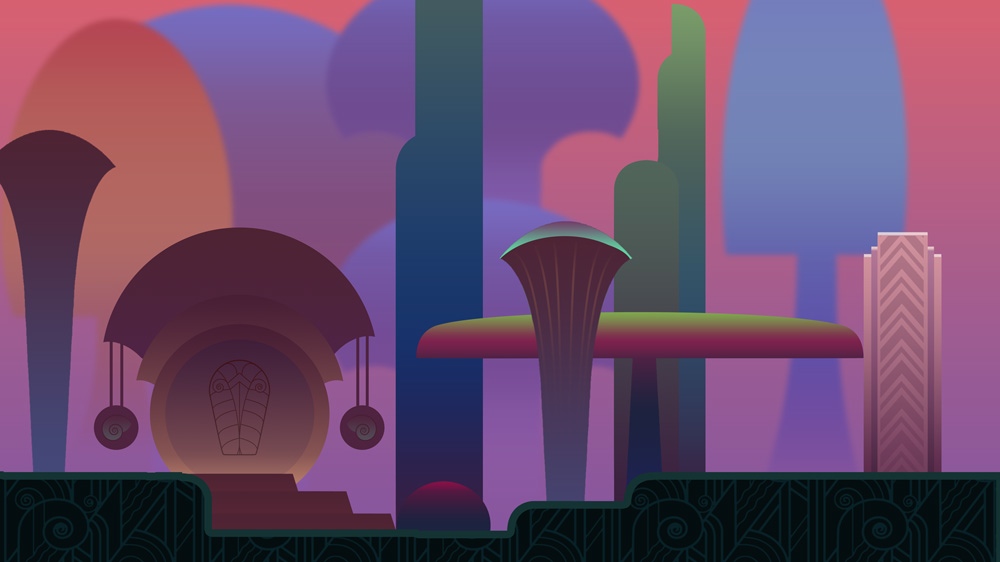
Still not completely sold on Magnetic By Nature's art-style, but it has gotten critical acclaim elsewhere. Guess I'll hop on the band wagon and give them a quote for their next crowd-funding effort.  Ahem.  "Magnetic By Nature is Art-Decoriffic!" I'm such a sell-out.

Still not completely sold on Magnetic By Nature’s art-style, but it has gotten critical acclaim elsewhere. Guess I’ll hop on the band wagon and give them a quote for their next crowd-funding effort. Ahem. “Magnetic By Nature is Art-Decoriffic!” I’m such a sell-out.

Last month, I checked out student project Magnetic By Nature and enjoyed it well enough, even though the game had severe frame-rate issues.  I just played through it once again, and the skipping is almost completely eliminated.  Without it, you get to appreciate this smooth, very well conceived physics-platformer.  Sure, I do wish it had more emphasis on physics-based puzzles.  And sure, the controls still never become fully intuitive, but that’s the nature of the magnetic-based physics.  They’re magnetic-by-nature if you will.  Yuk yuk.

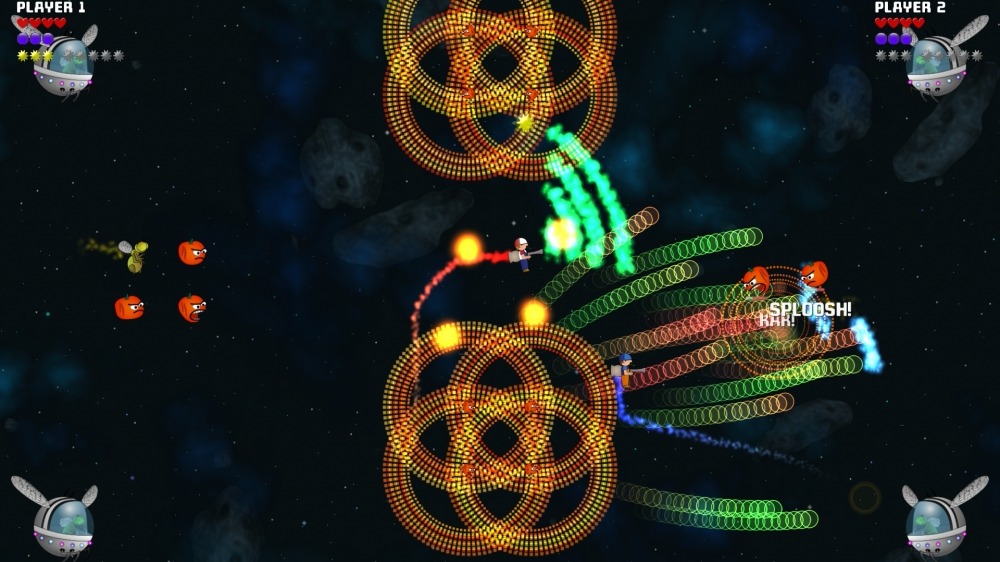
Like many twin stick shooters, you can't tell what's going on in Sherbet Thieves just from screen shots.

Like many twin stick shooters, you can’t tell what’s going on in Sherbet Thieves just from screen shots.

Okay, so Magnetic By Nature didn’t have a whole lot to improve upon.  I can’t say the same for Sherbet Thieves, which just broke the record for longest gap between my original review and my Second Chance, at nearly twenty months.  In that time, the game’s been overhauled with new levels, better balanced difficulty, smarter stage design, and a well-implemented unlimited mode.  So what was already a pretty decent (if not memorable) title is now one of the better twin-stick shooters on the XBLIG platform.  If you forgot it before, don’t forget it now.  It’s a keeper.

I’m really puzzled as to why more developers don’t take me up on Second Chances with the Chick.  Almost every game sees improved standings over their previous review.  The best part about being an XBLIG critic is seeing so many developers hone their craft and improve upon the skills they’ve built.  Really, there is no better way to witness evolution in action.  Well, except by watching nature videos of the mudskipper.

Oh look.  Tee hee, there is goes, thumbing its nose at creationists.

IGC_ApprovedMagnetic By Nature was developed by Tripleslash Studios

Sherbet Thieves was developed by Bang Zero Bang

80 Microsoft Points each will be posting a special feature on the five games most in need of a Second Chance with the Chick in the making of this review.

Magnetic By Nature jumped five positions over its previous Leaderboard standing, while Sherbet Thieves jumped an amazing 16 spots.  Head over to the board to see where they landed.  Both games are Chick-Approved.

Bug Zapper and Hop Til You Drop

Update: Hop Til You Drop received a Second Chance with the Chick.  It is now Chick-Approved and ranked on the Indie Gamer Chick LeaderboardClick here for my continued thoughts on it.

Here are two games that seem like good ideas, but the execution is just a bit off, resulting in the losing streak the Leaderboard has been on continuing.  First off is Bug Zapper, which comes from the developer of previous Leaderboard title Zomp 3 (#84 as of this writing).  This time, instead of a Lolo-esq puzzler, Chris Skelly went for the good-old-boy pasttime of bug zapping, with the idea being you’re the one insect who is immune to the hypnotic glow of electric death device.  Thus, you have to prevent your fellow pests from going towards the light.  This is hilariously done by beating them to a bloody pulp.  As far as solutions to potential problems go, that’s pretty fucking awesome.  It would be like helping a coke head stay sober by breaking his nose.

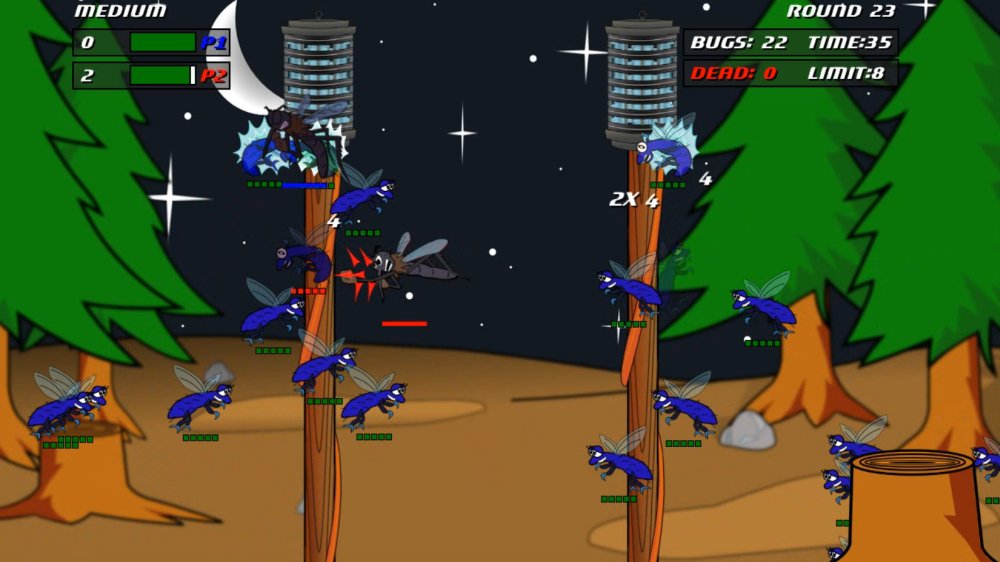
Bug Zapper gives you a lot to keep up with, and in its present form, it really is too much.

Bug Zapper gives you a lot to keep up with, and in its present form, it really is too much.

As far as game concepts go, it’s actually pretty good.  Bug Zapper also features upgradable stats and a wide variety of bugs to smack down.  So what’s the problem?  Well, I had two major problems.  The first was I couldn’t get the hang of the throw controls.  Bug Zapper heavily relies on throwing bugs into each other in order to rack up combos that build your special moves meter, but even with lots of practice, I had just as good a chance of throwing a rescued bug into the zapper as I did into another bug.  This is because the swarms of bugs heading for the zapper is utterly relentless and you have to keep moving nonstop to have a chance to prevent them from dying.  More control over what directions the bug could be thrown would help, because throwing at angles was imprecise.

A more troubling problem is the fact that the player can completely ruin the ability to throw bugs by picking the wrong upgrades.  You can upgrade the strength of your punching and of your throwing.  In order to throw a bug, you must weaken their health past a certain point, depending on how many times you’ve upgraded your throw.  However, it is possible for you to have a punch so powerful that bugs are knocked out before being weak enough to throw.  Since many of the stages later in the game rely on this ability, the result is you have to grind upgrade points to strengthen your throw.  It really saps the fun out of it, because grinding doesn’t really fit well with this style of game.  There’s a few other smaller issues dealing with the difficulty levels (consider “Medium” to be hard and “Easy” to be medium) and collision detection (it’s too easy to accidentally get zapped by the zapper), but there’s a real game here.  It just needs a tiny amount of work to fix the pacing issues.

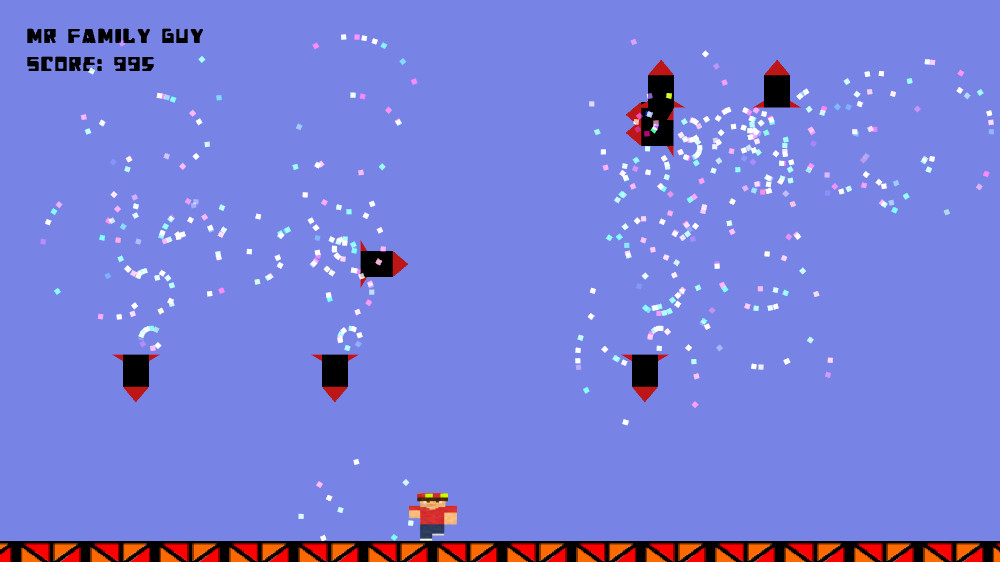
Screen from Hop Til You Drop.  Not a fan of the background changing colors here either, but I didn't play the game long enough to grow what was certain to be a hatred for it.

Screen from Hop Til You Drop. Not a fan of the background changing colors here either, but I didn’t play the game long enough to grow what was certain to be a hatred for it.

Speaking of pacing problems, I didn’t get very far into Hop Til You Drop at all.  Why?  Well, the concept is decent enough, I guess.  You’re a dude who has to hop around a room collecting coins.  The hook is, when you hop, the gravity switches and you end up walking on the ceiling, then back on the floor, etc, etc.  Meanwhile, the game randomly spawns a huge number of traps that try to kill you.  Just get as many coins as you can before dying.  Simple enough.  Hey, I’m into games based on high scores, even if they tend to suffer without online leaderboards, which I don’t believe Hop Til You Drop has.  No, here’s my problem: rounds in Hop Til You Drop can be very, very short.  That’s fine, if it’s done right.  However, once you die, you have to first view a screen that gives you your stats for this last game.  Then you have to go to main menu.  Then you have to select your character again.  There is no quick-load to start playing again, so you’ll spend as much or more time in menus then you will playing the game.  Fuck.  That.  Jesus Farting Christ, hasn’t the developer ever played a fucking good punisher before?  In the good ones, you die and BAM you’re playing again.  There is no break.  That’s how they become addictive, because they cater to that “just one more try” mentality.  Hop Til You Drop openly fights it, and that’s why it sucks.  The game itself is probably good enough to make the board, but I would rather give myself a swirly then play it again in its present state.

xboxboxart1xboxboxartBug Zapper was developed by Chris Skelly

Hop Til You Drop was developed by Chris Outen

80 Microsoft Points said guys named Chris must have problems getting proper playtesters in the making of this review.  It’s because guys named Chris are too sweet for their own good.  Think about it.  Do you know a Chris in your life?  I bet you can walk all over him. 

FortressCraft and CastleMinerZ

There were two reasons I’ve avoided the whole Minecraft craze and most of the clones that have followed in its wake.  I figured I would either not get into them, or I would get too into them.  I decided temperance was the best solution.  Then again, I wasn’t expecting hundreds of requests for these reviews.  Requests that come from people who already own and are fans of these games.  I’m not sure why they want to know what I think, especially if they already like them.  I guess my opinion is just that cool.

Well, while I certainly won’t argue that they’re badly made games (they’re not), I now have the verification I need that this genre isn’t for me.  Probably.  I mean, I couldn’t get as deep as I wanted in either of them due to my epilepsy, but I think I played enough to get the gist of it.  I’ll start with FortressCraft.

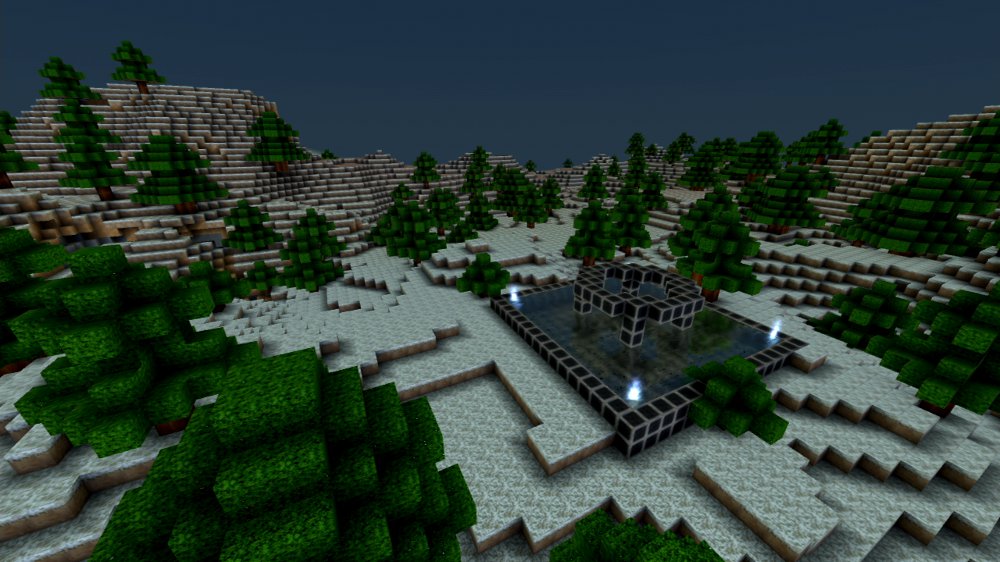
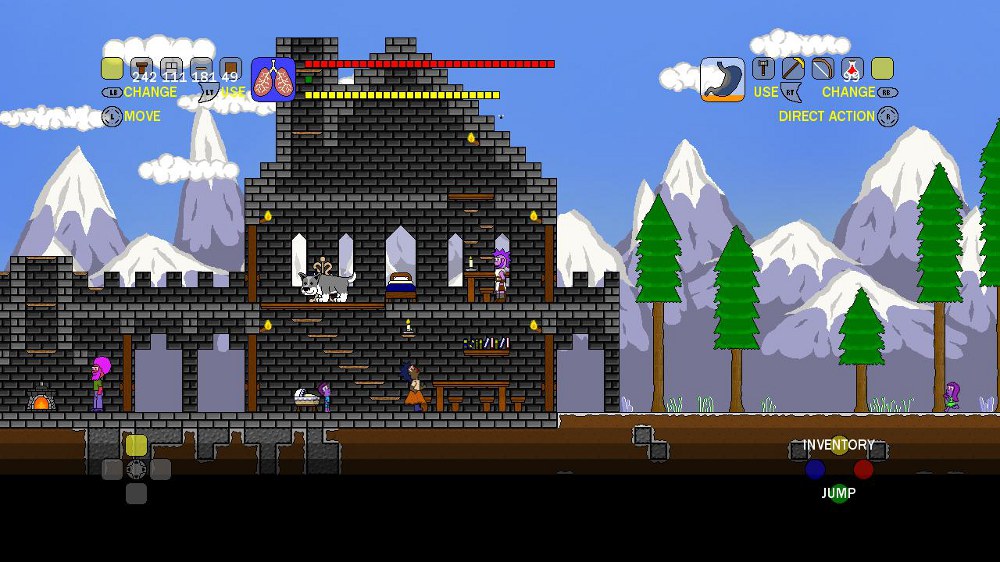
xboxboxartYou know how there are people who will get a set of Legos and come up with the craziest contraptions on their own?  Yea, I’m not one of those people.  When I was a kid, I would get a set of Legos, whip out the instructions, follow them to the T, and once completed, never touch that set again.  I just don’t have the imagination to take a set designed for, say, Indiana Jones, and create my own Starship Enterprise from it.  I’m just as bad at playing sandbox games.  I need a specific goal when I play.  FortressCraft has no goal.  If you’re the creative type, hell, it’s probably exactly what you’re after.  I tried to set a project for myself: a giant version of my Sweetie character.  The little angry yellow-faced monster thing in my logo.  But the monument never quite came out looking the way I envisioned.

Give me the world to mess around with and I couldn't come up with anything to do.

Give me the world to mess around with and I couldn’t come up with anything to do.

I also had issues with the speed of building.  This won’t be typical for most people.  Unfortunately, the little ray-gun building thing that allows for faster construction is also what nearly triggered my epilepsy.   So I was stuck using the slow-as-constipated-shit pick-axe.  I don’t think it would have mattered either way.  If you like to build voxel-style and want a clean slate to do it with, FortressCraft might be for you.  For me?  Not so much.  This is a Lego set without my instructions.  It leaves me like a flock of sheep without a border collie: utterly useless.

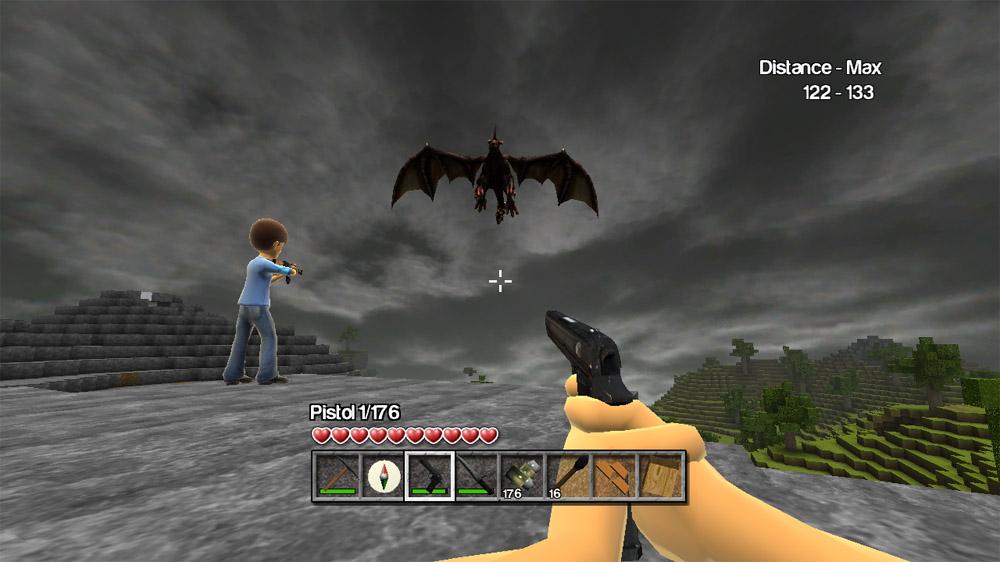
xboxboxart1CastleMinerZ has more of a point.  There’s zombies.  I mean, hey, zombies!  Who doesn’t love zombies?  I’m fucking shocked that General Mills hasn’t added a zombie to their Monster Cereal lineup.  Probably something that would taste like a blander version of Cap’n Crunch, only with stale marshmallows.  Yea, I’m stalling.  The truth is, whereas I could avoid having a seizure by not firing the build gun in FortressCraft, there was no way to avoid my personal epilepsy trigger in CastleMinerZ.  There’s a lightning effect that seems to go off fairly regularly in the background.  Thus, I was limited to smaller, shorter sessions.  But even without the lightning stuff, I wouldn’t have been able to get into this.  I’m not into the concept of zombies or voxel building.  Getting into something that centered around both would probably be a sort of miracle.

I did almost get into a game mode that requires you to run as far away from your spawning point as possible.  Unfortunately, in order to play this successfully, you typically have to be able to look up, so as to see and shoot the zombies.  Looking up wasn’t really an option for me, unless I wanted to do my best impression of someone holding onto an electric fence.  What would have helped was some kind of radar, so that I could tell where the zombies were spawning in at.  However, what little I did monkey around with in the zombie shooting department slightly disappointed me, as it felt like there was no “oomph” to capping the undead.  There’s so many games that involve shooting zombies, I’m really to the point where the act of killing them has to be satisfying in and of itself.  Otherwise, it’s just as stimulating as shooting those mechanical ducks at the carnival.

I saw more dragons in five minutes of CastleMinerZ than eleven hours (at least that's what it felt like) of watching The Hobbit.

I saw more dragons in five minutes of CastleMinerZ than eleven hours (at least that’s what it felt like) of watching The Hobbit.

If you’re into building stuff, you can do that too in CastleMinerZ.  I couldn’t.  Again, I tried to create Sweetie, and again it came across looking like a smiley face with two pink horns sticking out of its head.  Then again, my logo isn’t exactly the most complex thing in the world and I can’t draw it on paper either.  I think games like this or FortressCraft or Minecraft are probably designed with artistic types in mind.  I’m certainly not that.  Even in Terraria, I did NONE of the building when I played our main world with Brian.  When I made my own world, the building were really just boxes with doors that took minimal effort to make.  If you’re a into building stuff, you might like these games.  They seem to play pretty well from a technical standpoint.  I can’t compare them to Minecraft, but the graphics were crisp, the framerate was consistent (though CastleMiner had the occasional hiccup), and the controls are accurate.  I guess.  But I’m certainly not among this game’s target demographic, and my opinion shouldn’t factor into your purchase of either of these titles.  I’m not really great at building things.  Except animosity among Shenmue fans.

FortressCraft was developed by Projector Games (240 Microsoft Points asked if the whole “world is cooking” thing is what Al Gore warned us about).

CastleMiner Z was developed by DigitalDNA Games (80 Microsoft Points have a boyfriend who is PISSED about the Hobbit joke)

Please note: I know that for some people, the whole epilepsy and games thing is a sensitive subject and they get very vocal about how games don’t cater to their needs.  For me, my doctor has made it perfectly clear to me: playing games is a risk, period.  I can alleviate some of those risks through proper lighting, distance, and medication, yes.  But, if a game gives me a seizure, it’s my fault, not the developer’s.  If you have a preexisting condition such as me, I sympathize with you, but I also ask you to assume personal responsibility.  I don’t expect developers to cater to my relatively rare condition, and you certainly shouldn’t DEMAND it like I’ve seen some people do.  I’ve found that in my nearly two years of being Indie Gamer Chick, developers want to learn about my condition.  I’m guessing they do that because I’m cool about it, and assume all the risk myself.  So while I couldn’t fully play a game like CastleMinerZ, that’s my circumstance.  If you’re an asshole to developers, you’re not helping.  They’re eager to be educated, not yelled at.  I generally start by pointing them in the direction of the Epilepsy Foundation.  But seriously, just be cool and you’ll find they’re receptive.  Indies especially.

Looking to the Future

We’re less than two months away from Indie Gamer Chick turning two-years-old.  Which is ironic, because according to father, I often have the table manners of a two-year-old.  But seriously, two years already?  Time flies when you’re having fun.  Given how bad the lineup of games I’ve recently tackled has been, that explains why this last month has felt like a fucking crawl.  Still, to all those doomsayers out there who won’t shut up about how XBLIGs are dead and nothing good is coming on the horizon, kindly shut the fuck up.  Quality takes time, and there are plenty of very good-looking games still to come.

A dungeon crawler done right warms my heart, so I have my fingers crossed from the upcoming Tales of Descent.

A dungeon crawler done right warms my heart, so I have my fingers crossed from the upcoming Tales of Descent.

Xbox Live Indie Games were relegated to black sheep status from the get-go.  But, while some developers can lean towards the whiny side over that, most have shown perseverance and dedication to honing their skills on the platform in a way that inspires me to be better at what I do.  A lot of people who follow the XBLIG scene tout the passion of its developers.  I’ve never been a big fan of flogging passion, because everyone who makes games generally has a passion for what they do.  When they don’t talk about passion, they’ll talk about the ingenuity, the creativity, or the resourcefulness.  You know what?  XBLIG developers have all of that and more, but there’s one aspect that always gets overlooked, and I’m sick of that.

Talent.

That’s right.  Talent.  Look at what this community has accomplished, with minimal resources.  Hundreds of games ranging from pretty decent to absolutely spectacular.  That doesn’t happen by luck.  I’ve always been of the belief that talent and aptitude for game development isn’t something you can learn.  You have to inherently have it.  It can be refined.  It can be built upon.  But it can’t be grown from nothing.  Talent is instinctual.  That’s why I love XBLIG.  Because so much untapped talent has converged in this one centralized location.  Some times the talent doesn’t even result in a good game.  A lot of developers are still not far into the learning curve of game development.  Yet, you can still see talent.  It’s there, and it’s starting to bubble to the surface.   And the best part is you can also see the desire to improve.  To make something transcendent.  It’s those dreams that give me goosebumps when I think of what the future of gaming in my life will hold.

On Tuesday, we’ll learn about the next generation Xbox.  Soon, XBLIGs as they exist today will be a thing of the past.  But the skills and dreams this new generation of game developers have acquired?  They’ll carry on to the future.  With that in mind, I want to hear from you, the Xbox Live Indie Game development community, about the games you’re going to make.  I want to hear how you’ll apply the skills you acquired making games for XBLIG in the future.  I want to hear how you learned from your mistakes and successes.  Last year, for the first anniversary of Indie Gamer Chick, I looked at where you were now.  This year, I want to look at where you’re going.  A future that is as bright as you want it to be.

Wyv and Keep is still coming to XBLIG.

Wyv and Keep is still coming to XBLIG, and it looks damn good.

This is a community-wide Tales from the Dev Side special that is open to every XBLIG developer, whether I’ve covered their games or not.  Well, unless you responded to my review that noted your game crashed by saying I lied about your game crashing and that I was on crack, then later admitted your game did crash but refused to apologize.  Call me petty, but I really don’t give a shit what such a person plans to do in the future.  Hypothetically speaking, of course.

There are some rules to this.

#1: No bitching or whining about how shitty Microsoft treated XBLIG.  We’ve all heard it, and I’m bored with it.  This is to be a mushy, optimistic piece, not a score-settler.

#2: You have to have a game published.  Again, it doesn’t matter if I covered your game, but I want to hear from people who went through the full experience of creating, publishing, and getting feedback on their title.

#3:  Feel free to attack me if you feel it’s justified, but there is to be no complaining about other developers or their games, the peer-review process, or other game critics.

#4: I must have something to link to for your name.  Either your website, your Twitter, or the link to your game on the marketplace.

Sound good?  Okay, here’s what I need from you: a paragraph or two (under 300 words) details what you’re going to be up to next.  With the exception of linking to your Kickstarters or other crowd-funding activities, I want to plug the ever-loving shit out of your upcoming projects.  So send me links to YouTube footage, your development blogs, your Steam Greenlight pages.  Talk about what platforms you’re targeting.  Talk about why you want to make this particular project.  I want to hear your hopes, your dreams, and your aspirations.  We all do.  If XBLIG is going out, let’s turn out the lights in style.  So do you want to participate?  Write it up, and e-mail it to me before July 1st with the subject “My Future in Game Development.”  Make sure to include all the proper links.  Don’t worry about putting it in a word file, spell checking, or grammar.   I’ll take care of it.  If you have art assets, you can provide those.  YouTube videos won’t be embedded directly for the benefit of page load times, but I will link them in.  Remember: these projects don’t have to be for XBLIG.  PC, Ouya, PSM, or anything else is fine.  I just want to know where you’re going from here.

Finally, while I’m excited to glimpse into your future, I’m also interested in what you’ve got out right now.  This is an open offer for anyone that has a game ranked on the Indie Gamer Chick Leaderboard: if your game exists on other platforms, send me the links and base prices and I’ll update my old reviews to include links to those other versions.  You guys really do deserve more attention than you get.  If your game isn’t taking on XBLIG, maybe it will take on something else.  There are games on my leaderboard that have sold under 100 copies.  No need to make a joke about it, because that just plain sucks.  Promoting your outside-of-XBLIG projects is something that is, quite frankly, long overdue here at Indie Gamer Chick.  Sorry it took me this long to figure that out.

Dinora

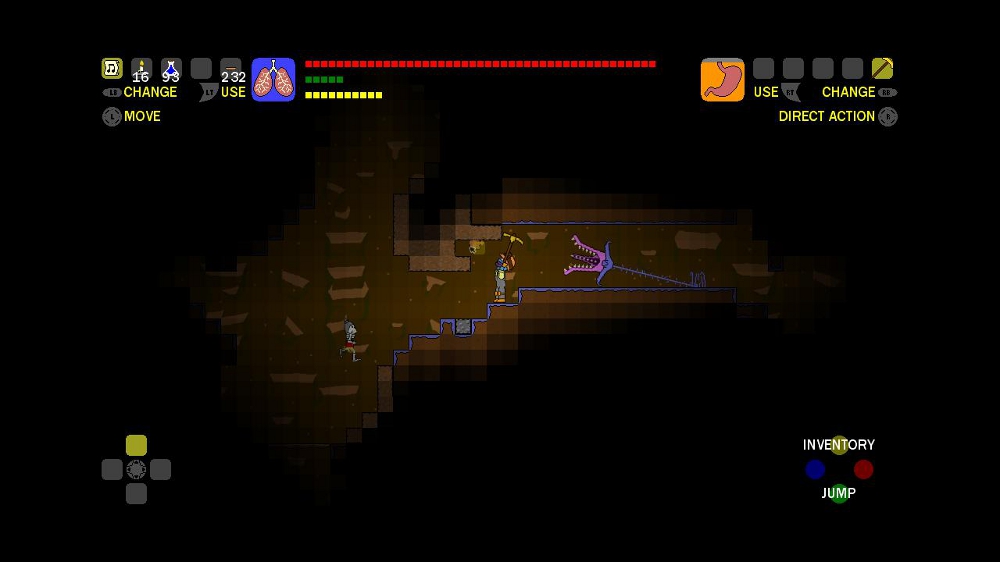
Dinora bears a strong resemblance to Terraria, the sleeper-hit that’s climbing up the charts on XBLA, and of which I reviewed the PSN version.  As a reminder of what I felt of Terraria, I was annoyed by its numerous game-killing glitches, then went on to lose 50+ hours to a borderline-addiction to it.  So, I guess you can say I’m a fan of it.  Oh, I’m done with it.  For reals this time.  I swear.  No really.  Stop looking at me like that.  Look, Brian and me went to play it a little more and the glitches they patched out were replaced by even worse glitches that made half the world invisible to me.  So seriously, I’m over it.  It’s out of my system.  Had a good time while it lasted, but the thrill is gone.

At least until they patch it some more.

And possibly a reunion if they do DLC for it.

Never did kill that wall of flesh either.

You know, we had just started doing plumbing the last time we played it.  There are lots of unexplored uses for that.

NO, STOP CATHY!  Remember that 12 step program.

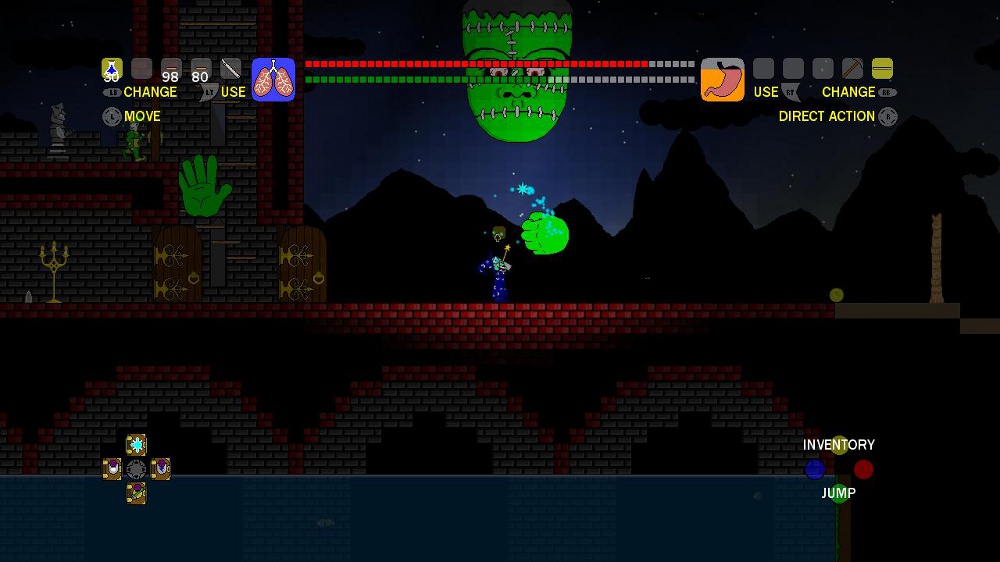
Hey look, it's a giant disembodied head that attacks you with it's two disembodied hands. Just like in Terraria!

Hey look, it’s a giant disembodied head that attacks you with its two disembodied hands. Just like in Terraria!

Of course, if you can’t get Terraria out of your system, there’s always Dinora on XBLIG for 80 Microsoft Points.  It will either curb your Terraria addiction or give you nuclear-level cravings for it.  Feast or famine.  For me?  It really did help to strengthen my resolve to never play Terraria again.  Which impressed the hell out of Brian, who has since gone on a quest looking for the Dinora-equivalent of something to help me quit smoking.  He’s wasting his time, since that’s probably lung cancer.

When I said Dinora had a resemblance to Terraria, I wasn’t being coy.  It looks just like a cheap, unrefined, non-pixel-art version of it.  But endearingly so, like when a kindergartener draws a picture of his family.  Sure, it’s crude, but hey look, it’s your family!  Not sure why the dog looks like a shark, but whatever.  And that’s Dinora: looks the part, if the part was left out in the sun too long.  And guess what?  It plays the part too!  Well, kind of.  I suppose it’s like if you had a friend who got sucked into a jet engine and his broken body was held together by staples and kept alive using a machine.  It’s still your friend, but not really.  And that’s Dinora: like Terraria on life support.

Everything bad about Dinora I can explain using something as simple as a door.  In Terraria, you have to build a shelter to stay safe at night for when the monsters come out.  This involves putting up walls, then covering the back wall, and finally sticking a door to enter through.  This is typically the first thing you do when you turn the game on.  Dinora does the same thing, only it does it badly.  In order to place a door in Dinora, you must have four spaces of clearance, plus solid blocks above and below you.  Okay, that door is just way too big, but it gets worse, because you can’t actually reach five blocks above you to place a block to hold the door.  Thus you’re required to build a staircase to create enough clearance to have room for the door.  Sure, you could just have your house dip slightly underground, but what if I don’t want that?  I mean, it’s unsanitary!  It’s so badly handled and stinks of careless design that it makes me sad.  I really loved Terraria, and I would be totally game to enjoy a clone of it that offers more features.  The problem here is that Dinora does everything Terraria does, only it does it worse.  So who cares about the new features?

Correction: Apparently you can adjust the building reach in the options menu.  I’m not sure why the default is so low, nor would I have thought to check to see if you can adjust reach.  I still think Dinora is bad though, for many more reasons.

If I seem like I'm being too harsh on Dinora, I'll remind you that Terraria was developed by two guys using XNA.  Two guys whose brains I assure you are no bigger than yours or mine or the guys who made Dinora.  But Dinora looks so much worse than Terraria, in addition to sounding worse, playing worse, and lacking the multiplayer aspect.  What makes me shake my head in disappointment is that to make a knock-off that is this close to the original in so many aspects took actual talent, I think.  I just wish they had applied that talent to something original.  I hope these guys gut it out and make something quirky, weird, and new.  Something not done before.

If I seem like I’m being too harsh on Dinora, I’ll remind you that Terraria was developed by two guys using XNA. Two guys whose brains I assure you are no bigger than yours or mine or the guys who made Dinora. But Dinora looks so much worse than Terraria, in addition to sounding worse, playing worse, and lacking the multiplayer aspect. What makes me shake my head in disappointment is that to make a knock-off that is this close to the original in so many aspects took actual talent, I think. I just wish they had applied that talent to something original. I hope these guys gut it out and make something quirky, weird, and new. Something not done before.

The enemies look lame, and on the default difficulty, they utterly swarm you.  Pretty spongy, too.  Your character moves too slow, jumps to shallowly, and is pretty much useless.  At least as the class I picked: a miner.  This multiple-character types function seems like it would work better when playing in a party.  When I played Terraria, Brian and I divided responsibilities.  He built our shelter and tunneled to hell, while I mined for precious metals and fought bosses.  There’s no multiplayer in any form for Dinora, which sucks because that’s the hook that kept me coming back to the original.  The enjoyment of playing it with the man that I love.  Left on my own, the world was quite boring and I just wished I could play it with Brian.

The controls are much clunkier as well, though this stems from the best of intentions.  You can now equip stuff to both hands, with the left and right triggers and bumpers used to scroll through items.  Great theory in concept, but it turns an already unwieldy design into a digital form of patting your head and rubbing your belly at the same time.  Even the most staunch fans of Terraria on consoles will probably admit that the controls were anything but intuitive.  Could they have been done better?  I don’t know.  But at least with Dinora, now we can point to something and say “but it could have been a lot worse.  See?”

Alan with the Tea said it best to me: they tried to do what Terraria took years to perfect in short order. Or, at the very least, the game gives that perception. For all I know, they've been working on Dinora for years. I sure hope not.

Alan with the Tea said it best to me: they tried to do what Terraria took years to perfect in short order. Or, at the very least, the game gives that perception. For all I know, they’ve been working on Dinora for years. I sure hope not.

Dinora comes from the root of Dinah, a Hebrew name meaning “justified.”  That’s ironic, because I honestly can’t justify the existence of Dinora.  It’s just one bad issue after another.  While it does aim to add complexity to the Terraria formula, adding new minerals to mine and giving you new tasks to keep up with, it ultimately feels like a really bad, hastily made knock-off.  Terraria is a game that’s been being developed and refined for years now.  I certainly don’t expect the level of sophistication it has in an XBLIG clone.  But this doesn’t even come close to offering the satisfaction of that one.  Even if I had never played Terraria before, I wouldn’t have liked Dinora.  The bad movement parameters that need way more thought put into them, and the overall shoddiness of the control design need way more time in the cooker.  Is there a good game buried in here somewhere?  Sure, I suppose.  If you ignore every single major flaw, of which there are numerous.  But, if you strip away all of those, you’re left with a game that is already out and available for this platform.  The Minecraft clones on XBLIG came out before the real Minecraft hit the console, which makes their existence mean something.  Dinora is a poor-man’s Terraria and simply can’t escape that shadow.  So what do you do if you only have $1 and want to experience what all the hype is about?  Well, you probably should try to remember how you got that $1 in the first place and just repeat the process fourteen times.

xboxboxartDinora was developed by Neuron Vexx

80 Microsoft Points appreciate that the guys at Neuron Vexx warned me about the ultra flashy company splash screen in the making of this review.  Of course, my attention span is roughly that of a Cocker Spaniel, so I promptly forgot the warning and I nearly had a seizure when I booted it up in the making of this review.  Actually, I did that twice.  Why?  Because I’m a fucking moron.  That’s why.

Tales from the Dev Side: How Xbox Live Indie Games Prepare You for a Career in Game Development

How Xbox Live Indie Games Prepare You for a Career in Game Development

By Roby Atadero

You often hear about professional game developers leaving the industry and choosing to work on indie titles instead. Don’t let that fool you into thinking indie games are only meaningful for people getting out of the commercial industry. You can break into the industry by working on indie games too.  Indie titles not only give a creative and relaxing outlet for industry vets but, they can also prepare you for a full-time job at a professional game studio if you have never worked at one. Sure, working on a small mobile game or a web game is great and all, but, it pales in comparison to having worked on an XBLIG when it comes to getting a job as a full-time traditional (console) game developer.

My buddy, Andy, and I started working on our indie game, Spoids, in 2010. At the time, he was finishing up school and I was working as a Java programmer for a small company. After working on this XBLIG (Spoids) for a little over a year, Andy eventually got a job as a Network Administrator / Tools Programmer and I finally got a job as a Gameplay Programmer at a professional development studio.

Now it wasn’t as simple and easy as it sounds. I had applied for game development jobs throughout the years with no success. I had a Computer Science degree and had worked on lots of little PC game demos. However, it wasn’t until I was just about done with Spoids when I was actually able to start getting phone interviews at studios I was applying to. Before then, it always ended in an automated email saying the position was filled without having spoken or hearing from anyone at these companies.

So what made the difference? I had worked on an XBLIG with as high production values as we could muster during our free time.  I’m not saying you have to make the next big viral indie game or something super innovative. Just work on something that requires some challenge and do a solid job at it. Make sure to finish it all the way to the end and polish it up as much as possible. The more well done it is, the better chance that professional developers will think you are capable of joining their team. Don’t just get a proof of concept game going and stop halfway. The majority of the game development battle is in that last 20% of completion. You’d be surprised how many people who work on game projects as a hobby never actually finish a game to shippable quality.

UncompletedProjects

How Working on an XBLIG Prepares You as a Co-Worker

You can be the smartest, most talented indie developer out there but, if you can’t connect with your co-workers in their other fields, then it’s going to be a nightmare for both sides when it comes to working on a professional team.

So before we continue, let’s look at a quick overview of the various disciplines involved in game development:

  • Programmers – Make the game work. Give content developers the tools they need.
  • Producers – Keep the project scope manageable, decide what everyone works on.
  • Designers – Make the game fun, place all the content.
  • Audio – Make the game sound good.
  • Artists – Make the game look good.
  • Quality Assurance / Testers – Make sure everything looks and works properly.

There is a lot more to each of these disciplines but, this should give you a rough idea of what each sub-team deals with. So, what does all of this have to deal with how XBLIGs prepare you for a career in game development? Everything.

Usually teams that work on XBLIGs are pretty small (1 to 5 people). That means most of those people have to deal with things that aren’t their forte. Sure, you have your dedicated programmers or your dedicated artists but, chances are everyone had some kind of involvement with designing the game, the layout of the levels, tracking and fixing bugs, dealing with audio, keeping the project moving, balancing, etc.  Dabbling in each of these areas lets you see the challenges and issues that arise in those fields when it comes to developing a game.  This becomes more helpful than you think when you work on a full professional team.

No, you likely won’t be crossing boundaries much in a professional studio like you do working on an indie game. However, you can level a lot more with the other fields and work together to find solutions since you can see things from their point of view.

For example, if you are a programmer at an industry studio after having worked on an XBLIG, you can likely level with, understand, and communicate better with the designers you work with. Or you are more likely to sympathize with the people who work on audio and be able to develop the right tools they need to more easily get their job done. Why? Because you had to walk in their shoes a little bit while you worked on an XBLIG.  You probably didn’t thoroughly enjoy dealing with something on your indie game whether it was design, audio, art, etc. But seeing how those assets are created and the challenges these people face everyday allows you to better understand their issues and work better with them.

People in one discipline can easily start to become jaded towards those in other disciplines. So it doesn’t take much to start to feel a little irritated over time when you are getting work requests that you feel are “stupid” from the workers in the other fields.

DeveloperViewsSo again, getting to walk in their shoes for a little bit can really open your eyes and show you the walls they run into everyday. They have a hard job too.  Doing what you can to help make their lives easier will make you more desirable as a co-worker.

How It Helps Getting a Job

Game companies get tons of resumes every day.  The more high-profile the company, the more they get. And we’re not talking about two or three every day; we’re talking about tens to hundreds. As much as career guides and counselors preach resume format or getting good grades, the single biggest thing you can have is to show you have actually worked on and finished a game or a mod.  And if you have actually released something, then you’re definitely going to get put in the consideration plate over other applicants.  Not only that, but showing you have worked on a game for a console will garner even more attention since there are more technical limitations with a console than with computers.

Now, a lot of these points so far can be made for working on any kind of indie game, not just an XBLIG. However, the key aspect to what makes working on XBLIGs compelling is that they are made on one of the major home consoles. This is where you gain a lot of knowledge that you wouldn’t get working simply on PC or mobile indie games.

Technical Challenges That Cross Over

There are a different set of challenges, certifications, and considerations to take into account when it comes to working on console games as opposed to a strictly computer or mobile games. Let’s look at a few:

Memory

Memory is very precious on consoles whereas today’s PCs have oodles of memory to use. Because of this, worrying about too much memory usage on a PC isn’t usually a big problem. But on consoles, that is not the case. You have to be a bit more cautious of your memory usage. This includes XBLIGS.  Being able to manage your memory usage is a good skill to have going into a professional studio. It is a constant limitation everyone deals with from the programmers to all the content creators. If you’re not cognizant of how much memory you are using when developing something at a professional studio, many upset faces will follow you. And if you are lucky, they won’t beat you up when you walk down the dark hallway.

Certifications

When a game is released on the PC, it doesn’t have as many rules to adhere to as a console game would. This is because console makers like Microsoft, Sony, and Nintendo make sure there are certain standards that are adhered to before you can ship a game on their consoles. XBLIGs are no different.  Microsoft tells their peer reviewers that Xbox indie games must pass ALL of the certification requirements they have outlined. One example of an everyday console certification requirement is keeping your important game information inside the “safe zone”.

A lot of TV’s actually don’t show the entire image that is projected to the screen. When it comes to 720p/1080i HDTVs or old CRT TVs, a handful of the screen around the edges isn’t actually shown. Thus, important game elements shouldn’t be displayed on the direct edges of the screen space. Otherwise, they might get cut off.  Typically, you want to keep a five percent border on each side of your screen free of anything important the gamer would need to see. Thus, the inner 90% of your screen space is called your “safe zone”.

SafeZoneThis isn’t only done in games; it is done for TV shows too. For example, ESPN keeps all their text information within the inside 90% of the broadcasted screen space (the safe zone).  The image below shows their text information not going to the edge of the screen and keeping a nice five percent border on each side.

ESPNNow, PC games don’t have to deal with this. Computer monitors will show the entire screen space. Thus, they can render important parts of the game on the very edge of the screen if they want to. So, if you ever ship an XBLIG, this is an issue you will be dealing with while developing your game.

Now, there are a myriad of other certification requirements to deal with on consoles: minimum font sizes, allowing the primary player to play off of any connected controller, being able to select any storage device, being able to handle a hard drive being pulled out during save/load, using player profile settings for default control schemes, pausing the game when a controller becomes unplugged or their batteries die, maximum load times allowed, etc.

Each of these issues has to be addressed when it comes to professional console games as well as XBLIG titles. So, if you ever finish and ship an XBLIG, you will likely have dealt with all of the above, and thus be better prepared for this in the professional scene. A lot of these can be annoying and frustrating when you first learn that you have to deal with them. You’re better off getting annoyed by these on your own personal projects first and not later at a professional company.

Cross-Platform Development

One of the last big things that you can gain from working on XBLIGs is that you will get better at cross-platform development. Chances are you will have the game working on both Xbox and PC. In fact, you may even do the majority of your testing with your PC build. And since you need the game to run on both systems, you will want your game to be easy to develop and maintain for both systems. Thus, you will need to exercise good programming and abstraction strategies as you go so both builds share as much of the game code as possible. If you have done nothing but PC games and have constantly used the same third-party software, you will likely not be very prepared at writing well abstracted and managed code. Heck, you will probably hate yourself the first time you try to port your game to a different platform once you’ve finished it.

It is not simple to work on a game that needs to work well with an Xbox controller, mouse and keyboard, TV’s, monitors, the Xbox’s specific hardware, any random amount of hardware configurations from a consumer PC , etc. This is not something that comes naturally as you learn the basics of development. You only get better at this from repetition and learning from mistakes. XBLIG’s present a great situation for getting better at and perfecting your cross-platform development abilities. It’s quite an important skill for professional studios, who a good number of them work on games that run on the major consoles as well as PCs.

Just Make An XBLIG Already

In short, working on and finishing an indie game lets you see how each of the major disciplines work together to make a finished product. But working on a console game, like an XBLIG, let’s you see and learn a lot more of what AAA studios have to deal with on a daily basis. These skills will not only make you more appealing to hiring managers at studios, but it will just make you a better developer overall. Is the XBLIG platform fading into the sunset? Yes. Are there easier frameworks to start writing a game on such as Unity? Sure. But, there aren’t really any other cheap and easy ways to ship a game on one of the major consoles besides the Xbox 360. So, go ahead and try making an XBLIG; you’d be surprised where it takes you. Heck, it took me finishing Spoids to have what I needed to finally break into the industry. The same might happen for you.

Roby is currently working on South Park: The Stick of Truth.  Make sure to check out SpoidsIt’s Chick-Approved.  

White Noise Online

Whoa, Déjà vu.  I’m pretty sure I played something like White Noise Online two days ago, only much more inferior.  White Noise Online itself is a direct clone of a popular iPhone game called “Slender” just like The Monastery was.  I haven’t played Slender myself, nor do I plan on it.  I use my phone for casual, pick-up-and-play fare, not survival horror.  If I wanted to be creeped out using my iPhone, I would give my number to that janitor who stares at my tits every time he sees me.  I guess this whole “walk around looking for stuff with a flashlight and try not to randomly run into a monster” thing is a fad now.  Sort of like how there’s too many horror movies based around found footage.  The weird thing is, I don’t know anyone who actually likes those movies.  And I can’t find anyone who can explain to me why White Noise or Slender is actually a good game.  Scary?  Maybe.  Fun?  Not in the slightest bit.

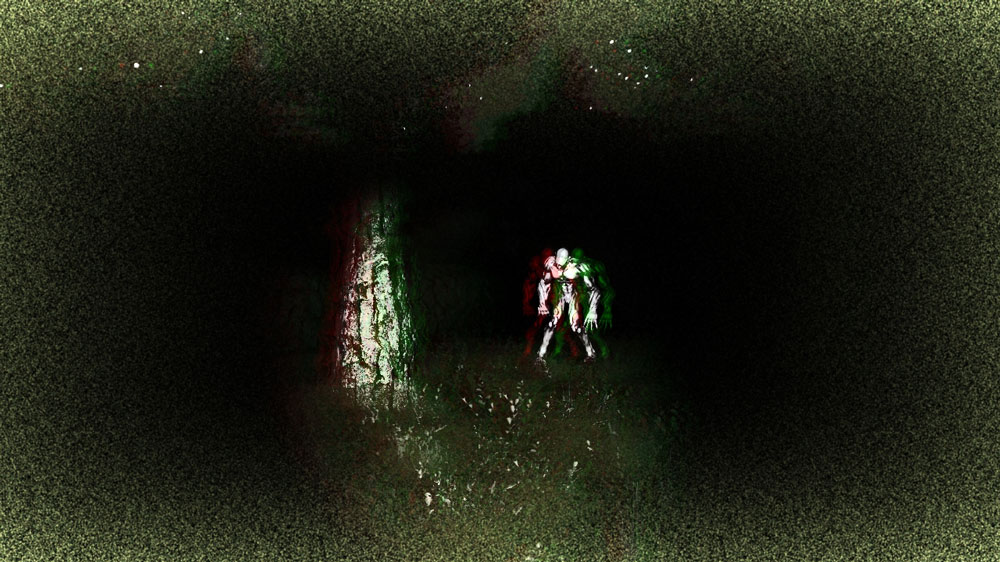
Anyone looking to make a quick buck could try selling this picture to Weekly World News.

Anyone looking to make a quick buck could try selling this picture to Weekly World News.

I think a better term would be “spooky.”  The concept for White Noise is you have to walk around looking for tape recorders of your buddies.  The ones that were violently murdered.  I wonder whose bright idea it was to go looking for them this way.

“Hey Bob, we’re going to go find out what happened to our friends!.”

“I’m down with that.  I’ll meet you in the morning.”

“What do you mean, morning?  We’re going tonight.  Preferably after midnight.”

“And why are we doing that?”

“Because this can’t wait any longer!”

“But it will be more difficult to see what we’re doing and where we’re going and besides that, our friends were splatter-killed.  They found Jimmy’s insides scattered throughout a tree.  The cops thought it was morbid Christmas decorations!”

“But we have to get to the bottom of this and find out what happened to them!”

“We can find out in the morning, with less risk of dying.”

“But if we die, we’ll know what killed them!”

“But we’ll be dead!”

“And then the mystery will be solved!”

“Are you suicidal?”

“A little bit.”

“I told you not to buy shares in Facebook!”

So yea.  You wander around, looking for these recorders.  When you get close to one, you can hear white noise, which is better than no indicator at all.  However, once you pick up a recorder, it’s tough to make out exactly what is being said.  It sounds like the drive-thru from Hell.  Eventually, an evil monster thing that looks like a demented Zora from the Zelda series will spot you.  Or more accurately, you’ll spot it.  At this point, it’s pretty hard to survive.  You can run for it, but even when I selected a character with high evasion points, I still never lasted more than a minute after encountering it.  When you have no warning, no method of fighting back, and extremely low odds of not dying once found, it saps the entertainment value from the experience, because death isn’t a question of if but when.

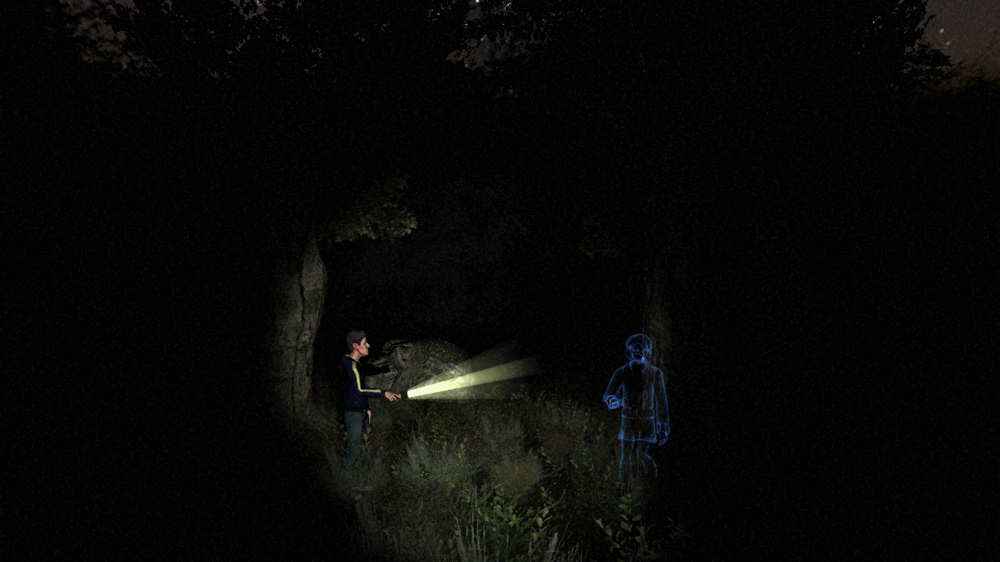
Like zoinks, Scooby, I bet old man Withers is behind this!

Like zoinks, Scooby, I bet old man Withers is behind this!

As is the norm with a game from Milkstone, the graphics and audio are superb.  As a horror game, the mood is perfectly set, with unnerving audio and an eerie fog that sometimes looks like it might be a monster or a ghost or something.  The thought of that is much scarier than any actual frights White Noise Online offers.  For fans of this schlock, I’m sorry but I just don’t get it.  The whole “being stalked by a baddie in the dark” thing just doesn’t interest me in the slightest bit.  So, despite a genuinely spooky atmosphere, I really hated White Noise Online.  It’s just not a fun or entertaining game.  It’s tough to get goosebumps when the core gameplay involves aimless wandering and no actual means to escape the enemy trying to kill you.  It’s just plain boring.

The best scary games are a blend of good play mechanics and atmosphere.  Eternal Darkness probably terrified me more than anything I can remember, but I wouldn’t have bothered with it if it wasn’t also a joy to play.  The same goes for Fatal Frame 2 or Silent Hill 2.  They’re not perfect, mind you.  Those Silent Hill games could be as clumsy as a drunken rhinoceros turned loose in a china shop.  But they offered gameplay other than “walk around in the dark.”  White Noise has no puzzles, no combat, and the exploration sucks because everything looks samey enough to make navigation confusing and tedious.  Obviously there is a market for this, given the success of Slender, and the fact that my best pal Tim the Toolman Hurley seemed to have enjoyed what White Noise was pitching.  For me?  I want games with a good story and good play mechanics.  But, if I can only have one of those, I would take the play mechanics.  Why?  Because games are things you play with.   Movies are things you watch.  I know David Cage missed that memo, but you indie guys are supposed to be smarter than that.

xboxboxartWhite Noise Online was developed by Milkstone Studios

80 Microsoft Points didn’t play with the online mode.  If the mechanics were more or less the same as the single player mode, the only difference would be getting bored with friends instead of getting bored with myself in the making of this review.

The Monastery

Yea, I know.  The game is called “the monastery” in one of those strange cases where capitalization is denied.  There’s irony in that, because the developers didn’t capitalize on solid 3D graphics to create something worth playing.  The Monastery is just plain boring.  Now if the guys at Rendercode Games were aiming to create an authentic wandering around simulator, mission accomplished.

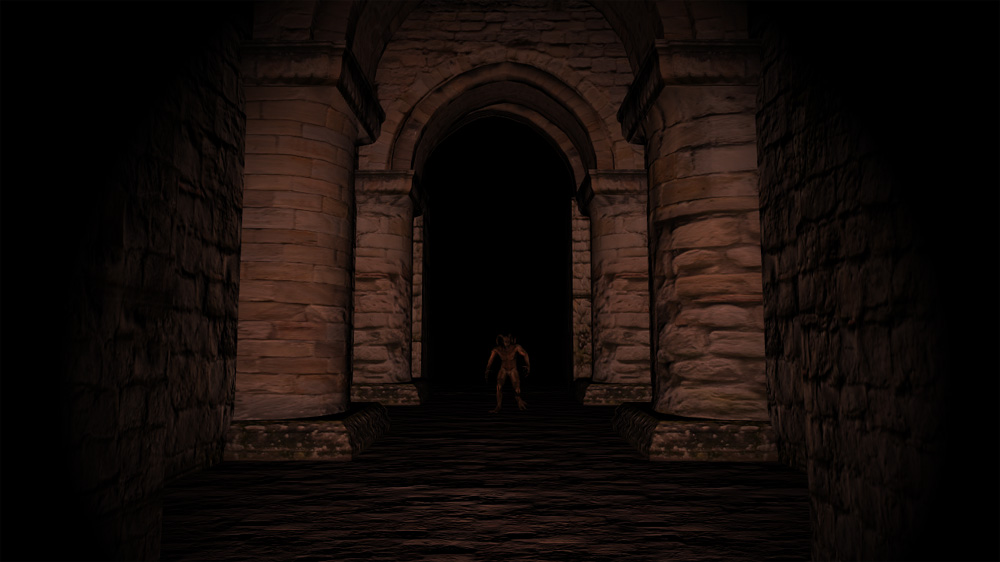
Make no mistake, the visuals could have been spooky. But the scariest thing about The Monastery is just how boring it is.

Make no mistake, the visuals could have been spooky. But the scariest thing about The Monastery is just how boring it is.

The idea is you’re stumbling through the ruins of an ancient monastery looking for ten over-sized bibles.  In about an hour of gameplay, the most I could ever locate in a single play-session was one.  Maybe I could have found more, but roughly 90 seconds into every game, an enemy would spot me.  Once they’ve done that, they give chase endlessly.  There’s no attacking, so fighting back is out of the question.  As far as I can tell, there really is no rhyme or reason to avoiding the monster.  Hypothetically, you could just hold the run button (and there is never a time when you won’t want to be running, because the normal walking speed is snail-glued-to-a-sloth-slow), but that defeats the whole point of a game based around exploration.  If you can’t stop to look around every once in a while, what you’re really playing is a one-sided game of Tag where you never get to be “it.”

So what else can I say?  It’s bad.  Don’t buy it.  I can’t say too much else, other than I hope the developer does something better with the pretty decent looking graphics engine they used.  The Monastery is a scary game that’s not scary.  Yes, it looks cool.  It probably looks even cooler in the dark.  Of course, so does radium, but I wouldn’t recommend you get near it.

xboxboxartThe Monastery was developed by Rendercode Games

80 Microsoft Points stood shaking their fist defiantly at XBLIG devs threatening them to not actually make a game of video tag in the making of this review.  Seriously, it’s a game that requires the ability to run and touch other people.  This does not need to be digitized. 

Naoki Tales

I started Indie Gamer Chick looking for weird, exotic, experimental game types.  But, every once in a while I just want a platformer.  That doesn’t mean it has to be a generic, lifeless one.  The formula is so established that developers are almost forced to tinker with it, lest the game be skewered for being unambitious.  That’s kind of the case with Naoki Tales.  It’s so straight forward and unoriginal that you almost wonder who this was ultimately designed to appeal towards.  Modern platforming fans will quickly get bored by the bare-bones, basic gameplay.  Classic platforming fans will ultimately compare this to their childhood favorites, which at best can invoke dormant memories of long forgotten also-rans of the genre.  They might be pleasant memories, sure.   It might even cause random “Naoki Tales is not bad” tweets on Twitter.  But it won’t be something people pester others to play.  I’ve spent so much time trying to sell people on playing We Are Cubes that a friend threatened to re-purpose my ovaries as organic earmuffs if I didn’t shut up about it.

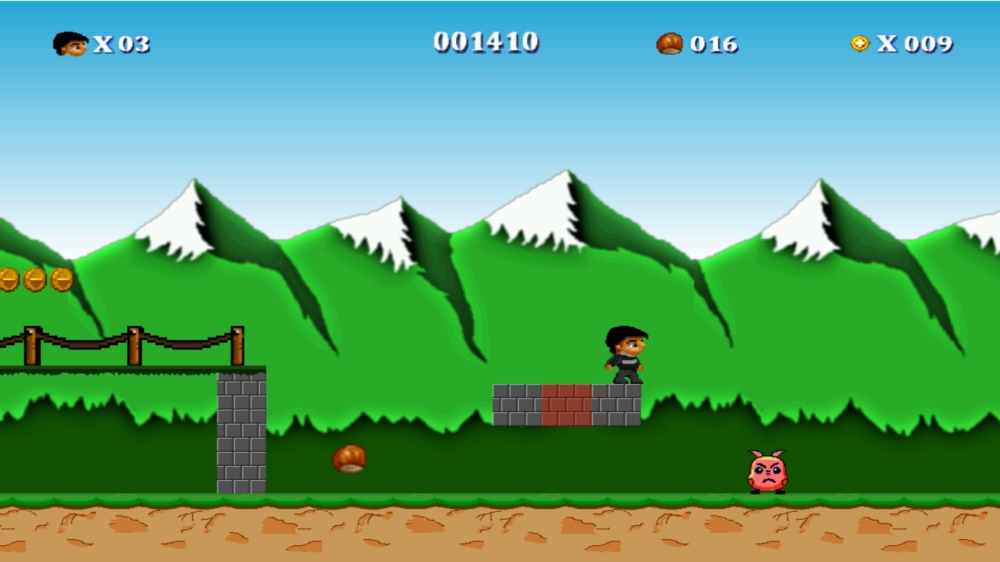
Break bricks. Stomp on baddies. Yawn.

Break bricks. Stomp on baddies. Yawn.

By the way, I’m not trying to suggest that Naoki Tales is a bad game.  It’s not.  The controls are pretty decent, the graphics clean and distinctive, and the level design is not incompetent.  Having said that, I did not enjoy my time with it at all.  Not even a smidge.  It’s just so damn dull and basic that I found nothing to keep me interested.  The only reason I trudged through to the end is the game is as easy as a bowel movement after an all-night Taco Bell bender.

I’m also not saying the game lacks questionable design decisions.  Things like “why can I jump on pigs and cats but not birds?  Shouldn’t birds have, like, softer, more squishable bones?”  Granted, there are way fewer birds than other enemies, so maybe the damage you take is to your soul, because the birds are endangered or something.  That doesn’t explain why it’s kosher to throw what I think are mushrooms at them.  Mushrooms which are so plentiful that there really was no point in making you pick them up along the levels, because you’ll never come close to running out.  And then there are annoying levels where you have to retrieve a key on one end of a stage, walk all the way back to the beginning to activate something, and then walk all the way back again.  Thankfully this form of level design isn’t used extensively, but it just adds to the problem of not doing enough to be fun.  Naoki Tales is one of those rarities on XBLIG that works fine, looks good enough, but just isn’t that fun, and fun is all that matters.

xboxboxartNaoki Tales was developed by 3T Games

80 Microsoft Points said “this game would have been popular with Mario-deprived children in the 80s” in the making of this review.

Video Footage courtesy of Aaron the Splazer

Zombie Estate 2

Sigh.  You know, despite having played literally dozens of games just like this, when I saw screens for Zombie Estate 2, I got excited.  I know that I sometimes bitch about being fatigued by the endless zombie games on XBLIG, or the endless twin-stick shooters, or especially combinations of the two.  But, just the prospect of a decent one gets me excited.  Yea yea, I’m supposed to be too hip for this kind of stuff and not admit what I just said.  It would be like admitting that I’m a fan of nose-picking.  Which I’m not, even though there are few things in life quite as satisfying as picking your nose.  Especially when you get a particularly stubborn booger that’s lodged way up there.  When you finally yank it out, it’s practically nirvana.

I’m guessing all those invites I get to gaming conferences just dried up.  It’s just as well.

It didn’t take too long into Zombie Estate 2 to realize the game would have big, big problems.  Not among them are the graphics, which offer some charming 2D visuals.  Can’t get enough of those.  Okay, so the text is too small, which is about as common a problem as you’ll find on the XBLIG scene.  My television is so big that God had to first move it out of the way before creating light, and yet I practically had to sit on top of the screen to make out some of the words.  Still, games with graphics that do this good a job of putting a modern twist on blocky, low-resolution 80s pixel art are typically pretty high in quality.  Maybe Zombie Estate 2 would be no different, but it has one very glaring issue: the difficulty is so intensely out-of-bounds past the point of reality that it simply can’t be enjoyed.

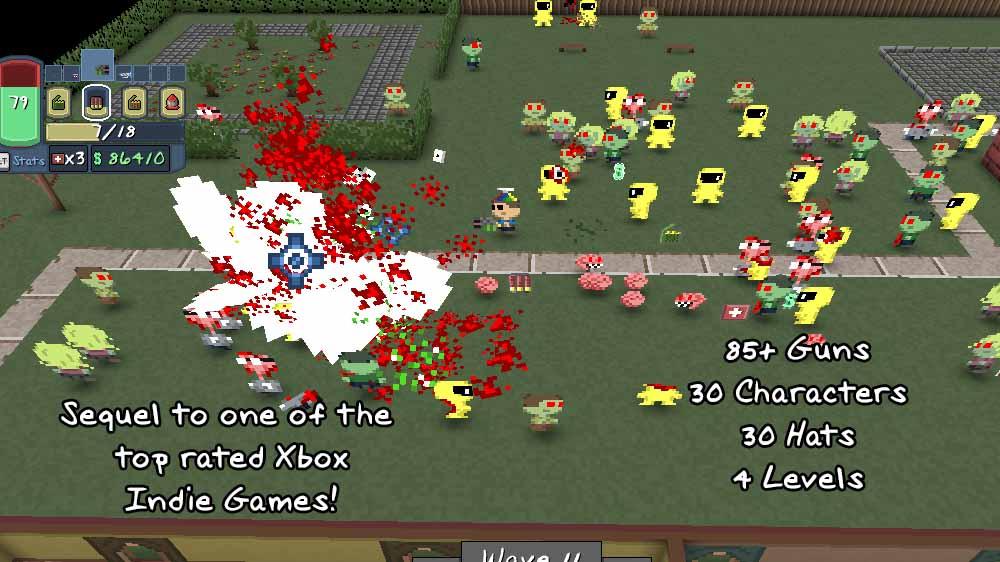
There are a ton of goodies to unlock in Zombie Estate 2.  I just wish the game you have to play to unlock them was fun.  It's just frustrating.

There are a ton of goodies to unlock in Zombie Estate 2. I just wish the game you have to play to unlock them was fun. It’s just frustrating.

ZE2 is a wave-shooter with enemies that are spongy and move much faster than you.  And it’s not just a few zombies either.  It’s having large portions of the screen saturated with the fucking things.  The game doesn’t send out just enough zombies to make up the wave.  Oh no.  Let’s say that the object of a level is to kill 100 zombies, and you have 99 killed.  How many zombies would you expect there to be on the screen?  Just one, right?  Try dozens.  All of which are grouped together.  When you kill the last one, the rest just vanish into thin air.  This gives you a chance to pick up those items.  Unless they’re about to blink out of existence themselves, which they do too quickly.

In order to better fight off the hoards, you can buy new weapons or upgrade existing ones.  Sounds, great, except picking up item drops (such as money) is a chore itself.  When you kill a zombie, chances are it’s part of the pack that’s closing in on you.  As soon as it drops something, whatever it is gets immediately covered up by dozens of enemies.  Your character sucks up items, but the range and speed it does so is so negligible that it might as well not do that.  And besides all that, enemies rarely drop valuable money or health packs.  Mostly, they drop ammo.  This would be fine, except they mostly seemed to drop ammo for guns I didn’t have.  It’s around this point that you realize if there’s such thing as a game that is an asshole for the sake of being an asshole, it’s Zombie Estate 2.  It’s not lovable or fun to be around, nor does it make any effort at doing so.

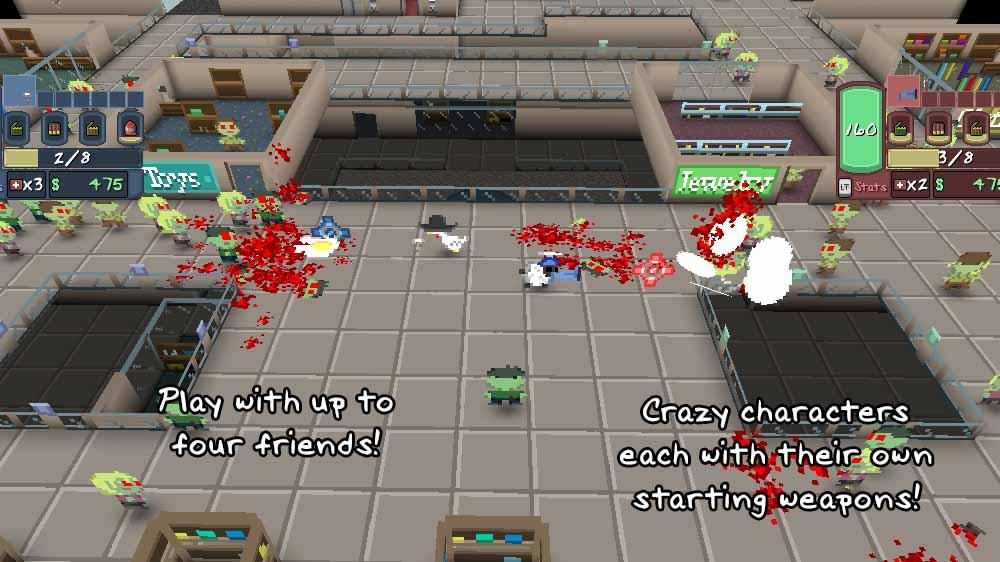
I played with one friend, but we quickly grew tired of the spongy enemy spam that made item-drops unobtainable.  Not alone either.  People on Twitter are alerting me that with four players they couldn't make it past the fifth wave either.

I played with one friend, but we quickly grew tired of the spongy enemy spam that made item-drops unobtainable. Not alone either. People on Twitter are alerting me that with four players they couldn’t make progress either.

Over the course of 48 hours, I played Zombie Estate 2 three separate times, and ended each session in utter frustration.  How can a game with all the fundamental mechanics for a pretty good time be so thoroughly destroyed by reckless design?  For God’s sake, there are fire enemies that can spawn right on top of you with no warning right in the middle of the fucking map!  No matter how much I bobbed and weaved around the level, they would appear on me, and I would start to lose health.  What the fuck, Zombie Estate 2?  Were you abused as a child?  Mind you, this is on the easiest difficulty setting.  You can go ahead and call me a shitty gamer too.  I think if I’m defined as being a bitch because I don’t think you should have a game where enemies randomly spawn on top of you, I can live with the label.  Or the tired “you just suck at games” label that is the be all, end all excuse horrible game enthusiasts throw at me when I say “this game is not worth buying.”  And Zombie Estate 2 is not worth buying.  Too difficult.  Too concerned with making the game excruciating instead of entertaining.  It resists being fun.  It looks like it will be good, and it sounds like it will be good, but it just is not good.  It’s the Kwame Brown of video games.

xboxboxartZombie Estate 2 was developed by, um, some guys that made a game called Zombie Estate 2.

80 Microsoft Points figure it’s yet another case of a developer getting to good at their own game but didn’t mention it in the body of the review because they don’t want to sound like a broken record in the making of this review.  Seriously though, why is the game so fucking impossible on casual mode?  And why do the flame guys spawn on top of you?  And why doesn’t the game drop more money?  These questions should probably be answered since they all make the game less fun than it can be.  Games are supposed to be fun, right?  If not fun, entertaining.  Difficult can be fun.  Unfairly difficult never is.