The Difficulty Gateway

I usually say that I feel my reviews as Indie Gamer Chick represent the average gamer, but the truth is I’m probably above-average in skill-level for most genres. Some, like puzzlers, I chew through so easily that I usually hand games off to my family to make sure they’re not too easy for normies. But being a fairly hardcore gamer since the age of nine and being a game critic is a tough balancing act. One that doesn’t get discussed enough, because we’re all probably better at games than Fred and Ethel shopping for something on payday to kill a weekend with on their dusty Xbox One. When a game doesn’t have adjustable skill-levels, challenge is hard to quantify on your own. You’re playing the game based on decades of experience, and can only assume how others will take it. Even if you have friends or family to observe, it’s not like you’ve been studying them in a laboratory your entire life and can fully approximate the ceiling of their ability.

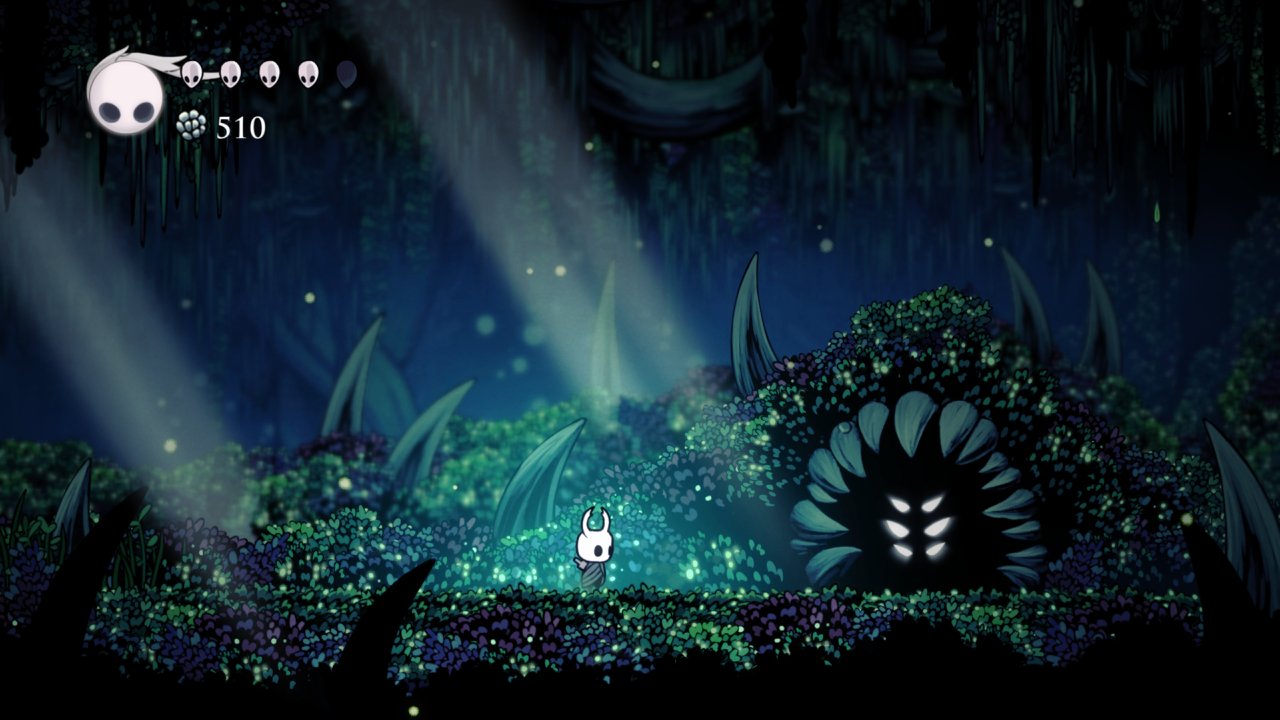
Of course, being a game critic, if I’m not being told that the only reason I didn’t like a game is because I wasn’t “objective enough”, the most common thing I’m told is that I just suck at games. I didn’t like Cuphead, ergo I suck at games. I didn’t like Hollow Knight, ergo I suck at games. I didn’t like Hotline Miami, ergo I suck at games.

Ah yes, Battletoads. A game so fondly remembered that it could go completely dormant for twenty years because it was so prohibitively difficult that very, very few would ever remember it as an all-time great.

I don’t think I suck at games. Maybe some games. Like fighting games aren’t my thing, and an early running gag at Indie Gamer Chick was me noting that I couldn’t ever get the hang of throwing a Dragon Punch with Ken or Ryu (I’m proud to report I can now, suck it Kris & Jesse). It doesn’t mean I don’t like fighting games though. I got Mortal Kombat XL for Christmas and took delight in violence so awesome that it would make even the most dead-inside grizzled veteran become physically ill. But something like Cuphead? I actually don’t think I was that bad at it. I got all the contracts (IE I beat all the bosses on the standard insanely crazy hard difficulty) for the first world and beat all the bosses on the lowest difficulty for the first three worlds, something nearly 90% of all Cuphead owners either couldn’t do or couldn’t be bothered to do. As for Hollow Knight, I’ve heard fans of the game tell me how hard a boss was that I downed without breaking a sweat. I wasn’t dying all that much while playing it and only once did I die without retrieving the shit I dropped, thus losing it.

By the way, I sucked at Spelunky. I really sucked at Kingdom. They’re both IGC all-timers. Trust me, if talent was required for me to enjoy something, I wouldn’t have any hobbies at all.

I’m not a fan of the notion that games are supposed to be hard to prevent undesirables from playing them, or any game. That the measure of a true gamer is being able to finish these hard games. What an absurd notion this is. It’s snobbery of the lowest order. For games like Cuphead, I’ve come up with the phrase “prohibitively difficult” to describe them. I think Cuphead crosses the line where even above-average players will be gated-off from large sections of content without any hope of ever being good enough to reach them. And for those who say “practice harder”, this isn’t an activity where increasing your skill level will lead to greater things in life. It’s a video game. I’m not going to put in eight hours of practice a day just so I can fight a giant animated stack of poker chips.

By the way, Cuphead wiki, this is based on Amarillo Slim. Only the Babe Ruth of Poker. “Duhhhh, we think it’s based on poker. You can tell by the chips.” Good lord, you people need to get out of the house sometime.

Far be it from me to tell anyone how to make their games. If you feel your dream project should only be able to be finished by 2% of all gamers, so be it. But, maybe you should consider telling your fans to stop calling those who can’t beat it a bunch of pussies. I’ve seen players far above my skill level who enjoy quality run-and-spray games walk away broken and shaken from Cuphead, wondering if their skills are depleting as they grow increasingly decrepit or if it’s the game. It’s the game.

And what’s the point of gating, anyway? Contra is an all-time classic, and one of my personal favorite NES games. It’s kind of a travesty that it wasn’t part of the NES Classic. Instead, we got inferior sequel Super C instead. Contra is hard, but it has the most famous means of overcoming that difficulty in the history of gaming: the Konami Code. If that wasn’t in the game, nobody would talk about Contra today. The Heart of Contra wouldn’t be one of the most legendary bosses of all time. It’d just be one of those NES games people say “cool, I remember it. It was hard” and then talk like blowhards about how games were better back in the day while reminiscing about all the titles they never got around to beating.

Has it ever been confirmed this is actually supposed to be a heart and not, you know, the Gonads of Contra?

So how is someone like me, an above average player, supposed to quantify the value of a game that didn’t just destroy me, but destroyed even better players I know? Indies are dependent on word of mouth, and “this game left me blistered and defeated” isn’t exactly a ringing endorsement to your average gamer. A critic isn’t an asshole for telling people the game is too hard to recommend, nor are they a pussy. You’re who gated the game off. And for what? So a small percentage of players who will never help you move a single unit outside their clubhouse can have a secret handshake “we’re the only real gamers” crowing moment? If they tell you that you’re selling out for including adjustable difficulty, you tell them to pony up a few hundred thousand dollars so your kids can go to college. I’m sure they’ll get right on that.

Today Gamers #DiscoverIndies

Today is the first #DiscoverIndies Friday. The idea is, on the first Friday of every month in 2019, gamers from all walks of life should find a single indie game they’ve never heard of before, play it, and report back on it. The response so far as been incredible. Overwhelming really, and I wanted to share it with everyone!

Thank you to the entire gaming community for participating. I’ve been Indie Gamer Chick for 7 1/2 years and I’ve seen so many games that were wonderful but never found their audiences. We could never hope to lift all of them up, but if everyone participates once a month, we can rescue a lot of great titles from obscurity. #DiscoverIndies is an investment in our futures as gamers. And here’s what you came up with.

Read more of this post

Ask the Chick (Issue #2)

It’s the eve of the first #DiscoverIndies Friday. No biggie, just the culmination of my entire Indie Gamer Chick career. I’ve puked roughly seven times today.

So let’s get to the questions.

http://twitter.com/darkmikasonfire/status/1080788243149246464

Any Kingdom Hearts game. The second one especially was so top-heavy in its own mythology and the first game ended in a cliffhanger, so I was kind of stunned that the sequel had closure. Yet, having played through most games in the series, I still can’t fully explain what exactly the goal of the Heartless was. It’s just nonsensical tripe. But the gameplay is fun and Sora is relatable.

Indie games? Limbo’s ending left me shaking my head wondering how so many people read so much into it when it’s kept so deliberately abstract. I liked playing Limbo, and that sequence with the spider is a first-ballot candidate in the Opening Level Hall of Fame, but ending left me wondering what the point was.

If you mean linear, story-based games and separate play-sessions (I made 200+ runs through Dead Cells but that was over one month-long binge), I’ve played all the way through Shadow of the Colossus four times. The first play-through was probably an all-time top five games experience for me. It was incredible. Every subsequent time, not so much. The flaws started to stick out more and more. I recently played the PS4 remake and I still think it’s an all-timer, but there’s a lot of questionable decisions and some of the bosses are very underwhelming to the point that they feel more like they were a “we gotta make deadline” inclusions more than being included on merit. There’s two in the game that are barely bigger than the horse, for fuck’s sake.

I don’t replay a ton of games. There’s so many games out there and every single replay is time I’m spending not playing something new to me. I look at my gaming existence as an ongoing quest to play the best game I’ll ever play in my life. I’m 29-years-old, and I hope I haven’t already played that game. But if I keep playing the same games over and over again, it will limit the time I have to find that game. I’ve met people who have proudly told me they play Chrono Trigger or Final Fantasy VII once a month, EVERY MONTH, and always will because they know 100% for sure they’ll never ever ever ever play a better game. To me, that’s a sign of insecurity. I want to find a game I’ll like more than my favorite game ever, because that game obviously must be spectacular.

The biggest? Yes. The best? I think it gave up that title sometime in 2017. It’s just too damn much work now to sift through new releases. It’s maddening how fast games release on Steam, with no curation. I know people are fans of achievements and Steam cards, but games that exist only to exploit those, have no effort behind them, and only serve to dump 300+ achievements on players in as little time as possible are like a form of cancer that’s rendered shopping on the platform an excruciating experience. PlayStation 4 is just as bad with shit like Emerald Shores or Unknown City. Games that have made some very talented developers who can’t get listing physically ill. Right now, the market I like the most is Xbox One’s. It’s not perfect, but it doesn’t feel like a dumping ground. Every platform needs reform, but Xbox needs it the least.

But, my little birds tell me that reform is coming to Steam and PlayStation 4 in 2019, and talks of making sure Switch doesn’t go too far off the rails are taking place. Wish I could go into details but everything is preliminary right now. This stuff doesn’t happen overnight, everyone.

As far as taking Steam’s spot, a 90%+ market share is tough to crack. I used to be of the belief that you would have to chip away at it one tiny chunk at a time, but obviously I was wrong about that. Every market that’s gone that route has failed. I can admit when I’m wrong, and I was wrong about this. So really. If someone is going to shake up the landscape, they’re probably going to need such a momentous send-off that it immediately takes a 10% or better chunk. That doesn’t sound like a lot, but trust me, that would be unprecedented.

Can it be done?

No, it can’t be. Prove me wrong, competitors. I’m rooting for you.

http://twitter.com/connectd86/status/1080998902650757121

The Super NES. I have most of the classic mini consoles and tons of compilations of classic games, and the SNES lineup is the best top-to-bottom with the fewest stinkers. Games for the SNES just plain aged better than NES, N64, Genesis, or PlayStation One games. The worst game in the collection, Star Fox 2, was a game so horrible Nintendo shit-canned it twice in two different eras before finally sticking it on the SNES Classic as a tacky promotional gimmick. I’ve been doing this IGC Retro Blitz thing for a month now and the best classic game collection, and it’s not even close really, is the SNES Classic. Just the lineup of it alone could probably get me through the next decade if that’s all I had to play. But if you throw in the rest of the SNES lineup, I’d be able to make it for life.

I look at something like Keep Talking and Nobody Explodes more like a board game than a video game. It’s actually really clever and when I finally put enough time into it for a full review, I can’t imagine it won’t be on the IGC Leaderboard Top 10. I also like what it represents: that making a game doesn’t begin and end with a series of 1s and 0s. That you can take it outside the box and create a simple, coherent, insanely fun title that isn’t limited to just a screen.

Otherwise, it depends on what you mean by “media.” Does Amiibo count? Skylanders? You know who would have been all over that kind of shit once upon a time? Young me. I would absolutely have been someone who pestered their parents for the latest Amiibos or Lego Dimensions sets. I only currently own one Amiibo, and it’s a still-boxed Shovel Knight I got from a friend at Nintendo as a gift. Adult-me just doesn’t have the time to bother with that stuff. I want to just sit down and play games. Young me? My parents would have been screaming at me 24/7 because they’d been stepping on them constantly.

http://twitter.com/Blindimpulse/status/1080995946572451840

My Dad is one of those older people that wants to be “hip” and “with it” and so when the media would hype the latest game console, in the time before I was around, he’d buy it and play with it for a few hours, and after that it’d only get used if they had guests come over. So when I was born, we actually had things like an NES and an SNES, but I never really got into them. My parents tell me the first game they remember me playing that I turned on and played by myself was Super Mario Kart, but I certainly wasn’t “hooked” by the experience. We had Zombies Ate my Neighbors and I remember playing it while hiding under the blankets. It’s not even a scary game, but five-year-old me probably thought it was.

When I was seven, my parents were shopping and there was a kiosk for PlayStation, and it had Crash Bandicoot. I started playing it, and it became the thing I wanted most for Christmas. That’s what made me truly interested in games. But the game that solidified gaming for me for life was Banjo-Kazooie. I played it on a kiosk again (hey, those things work game companies, you should bring them back!) and I really wanted it. And so on my 9th Birthday, July 11, 1998, my parents got me a Nintendo 64 with Banjo, and on that day I truly became a gamer. From that point onward, that’s all I wanted to do with all my free time.

In late June of 2011, the summer gaming drought was happening. I was browsing my Xbox 360 collection when I came across the game Breath of Death VII, which I had previously purchased. Brian asked me what it was. I told him “it’s an Xbox Live Indie Game. Anyone can make and publish games for Xbox and they go into a separate section of the store.” I hadn’t looked at those games in a long time, so I went to the XBLIG section of the market and there were TONS of games, many of which looked cool. I wanted to know which games were the good ones, but when I went to check reviews, we noticed that basically every site that covered XBLIGs gave every game a recommendation and said almost nothing critical about them.

My family had been pestering me that I needed a hobby, something creative, and suggested I take up blogging. Brian said “that’s it. That’s what you blog about. These Xbox indie games.” I opened Indie Gamer Chick on July 1, 2011, ten days before my 22nd birthday. By August 1, 2011, it was the most read XBLIG site in the world.

The funny part is, I definitely had no right to call myself “Indie Gamer Chick” at the time. I wasn’t an indie enthusiast. I hope in the seven-and-a-half years since, I’ve earned the name.

That anyone read me. When I cleared ten page views on the third day, we couldn’t believe it. But then the XBLIG development community found me and at first they were kind of mortified. I mean, my reviews weren’t very nice, and even with games I liked, I pointed out the flaws in them. Devs weren’t used to that. But, they ultimately embraced me, and I somehow became part of their community. That’s the part that shocked me. I never set out to be a community leader. It wasn’t something in the cards for me. That the community essentially chose me for that role? Humbling beyond belief. I hope I did right by them. I gave them everything I had. I miss them. I miss XBLIG.

Yes. I think we’re way overdue for this. But, after Hot Coffee, which could have been a fantastic chance for the game industry to, at long last, grow the fuck up, I don’t think it’ll happen anytime soon. The biggest issue is getting distribution of course. Someone could try to make a truly adult-only game for a major console, but they’ll certainly get rejected for listing from any of the big three. If they did get approval, the game would almost certainly never get listing in their digital markets and be relegated to physical copies in adult fun-time stores.

The bigger question is “is there even a market for this?” There was a cottage industry of pornography games for the Atari 2600 that were about as erotic as your grandma in the shower, but only one of them sold “well” (50,000 units) and that’s because it became the center of a media storm that made it 10x more desirable to try from a counter-culture point of view. That game involved raping a bound-and-gagged Native American. Something tells me that wouldn’t fly today.

But a well-made game that involves graphic depictions of sex? Something classy? It’s basically impossible to gauge because there’s no precedent for it on consoles. It would be a huge risk to whoever undertook the production of it. I believe there’s no reason to not have thing already be a thing in gaming, but whether it ever will happen? Honestly, I can’t see it because there’s just too many barriers of entry. The big chastity belt of gaming.

Bad controls for platformers for me. I’ve always been of the belief that good controls don’t make a game, but bad controls will absolutely break a game. As for RPGs, ones where grinding isn’t fun. Some people believe that, by definition, grinding has to be a chore. I’ve never believed that. I’ve played plenty of games where the act of grinding up resources can be every bit as fun as opening up the storyline.

Revertia (Review)

Anyone who thinks I’m just looking for attention when I don’t like games like Hollow Knight or Cuphead, you really should go look at how many puzzle games I review. It’s a lot. And trust me, I don’t do it for the page views. Even when I covered one that paid homage to 80s slasher films, where you solved puzzles by splatter-killing teenagers, nobody read it. But remember, puzzle games are people too.

Well, actually no I guess. They’re games, not people.

So uh..

Yea, I bought this game for my Switch called Revertia. It’s a platform-puzzler (a pluzzleformer? Admit it, that has a ring to it) with the hook being the “action” is based around the 1880s board game Reversi. Which you might also know as “Othello” if you bought it in the United States or Japan, because that’s the name Milton Bradley released it under. Fun fact: you owe your Nintendo Switch, and actually the video game industry as a whole, to Othello. Because Hiroshi Yamauchi was a personal fan of the game and one of the reasons Nintendo got into the home video game market is because Yamauchi was convinced a video game version of it, which would eliminate the slowness of playing with physical chips, would be a big hit. So first they made an arcade game for parlors in Japan, and then transferred it to a stand-alone home console. I personally think Othello is boring as fuck, but hey, thanks Othello!

I grew up in a different era but I still love the clunkiness of those old-timey stand alone consoles. They look so 1930’s idea of futuristic.

But, while I’m not a fan of the classic board game, the novel idea of turning its play mechanics into a platformer certainly caught my attention. It sounds inspired. The idea is basically if you turn a block black, if there’s another black block in the same line as it, all the blocks between them will also turn black. If you turn it back to white, they’ll all turn white again. If an enemy is in the path of the blocks being changed, it dies. It’s simple, like the board game. Here, the black blocks can be used as platforms to jump on, and the object is simply to get to the door. It sounds like a cool idea.

But, Revertia is, without hyperbole, the easiest puzzler I’ve ever played in seven years being Indie Gamer Chick. The thirty levels you’re given here are so toothless that I rechecked the title’s marketplace page to make sure I didn’t accidentally buy a game that was designed specifically for young children. That’s not a joke or something I added to this review for comic effect. I really did, because it was so absurdly easy. Apparently Revertia wasn’t made specifically for a young age set. But that’s the only group I think would get enjoyment out of it. I’d say beating stages in it is like shooting ducks in a barrel, but in this case the ducks are dying from self-inflicted gunshots.

I suspect this is one of those instances where the developer planned out elaborate steps that a player would go through to beat stages. But even deep into the thirty stages I was able to clear stages in a matter of seconds with literally no challenge by just placing one or two blocks and having a clear path to the door. It almost felt like the game was still trying to do tutorial things for most of the levels, with maybe two or three stages at most necessitating me to stop, scope out my surroundings, and then start to make my way to the door. ONE stage out of thirty I died on because I made a mistake plotting my course, and two other times I died because the controls are a bit unresponsive and it took me too long to highlight which block I wanted to change colors. One challenging level in thirty, and it wasn’t even the last level. I’ve been more puzzled by how to open shipping containers than I was at any point in Revertia. It does keep track of how many moves you’ve taken per stage (but doesn’t tell you the MINIMUM number of moves needed, which defeats the point) and the time you’ve taken, but without online leaderboards, what’s the point?

I didn’t like the game due to the utter lack of challenge, but I’ve always dug the “drawn with a pen” look. I wish more developers would do it. Just not too much you know. If it becomes over-saturated, I don’t want to get blamed for it.

Let’s not completely poo-poo the idea though. While Revertia completely fails to challenge, I think there’s a good idea in here somewhere. I’ve always dug the “make your own platforms” puzzle platform thing, like Solomon’s Key or Escape Goat. Revertia just really needed more time to cook. It feels like it was rushed out the door. I hope PLiCy continues to develop stages for it. The Revertia you can buy on Switch right now feels like a really good proof of concept that should never have been released in the state it’s in. It needs the controls smoothed out and the challenge significantly ramped-up. I do believe this is a good idea for a game, but a good idea doesn’t become a good reality unless you take the time to refine it. So I issue this challenge to PLiCy: take one year to build this game back up with new, more challenging stages and more responsive controls. The idea is a winner. The current product? Not so much.

Revertia was developed by PLiCy
Point of Sale: Nintendo Switch

$4.99 hope the developer REVERSIes this review with some new levels that challenge in the making of this review.

Ask the Chick (Issue #1)

So, I foolishly declared I’d post content every day at IGC in 2019. And then the bug zapper in my head went off for the first day in 2019. Yep.

But thankfully my fans were there to bail me out with a simple new feature: Ask the Chick. Where I’ll answer your gaming questions, indie or otherwise. And man, did they come through with some good ones. Like this one..

Basically, the new regime that took over Konami looked at their books for all outstanding projects and saw what Hideo was cooking up. It was Metal Gear Solid V (set to release very shortly when this all went down) and Silent Hills. Both were over-budget and behind schedule. So they looked into the books for the past few console generations and noticed all his games had gone over-budget. The Konami of old had essentially given him a blank-check to make games because he had a tendency to make hits. The new management didn’t give a fuck about any of that and decided they would hold him accountable to budgets for the first time in his career, and he didn’t like that.

You see, there’s this metric that many big businesses use called EBITDA. It stands for “Earnings Before Interest, Taxes, Depreciation and Amortization.” In layman’s terms: it’s the metric used to gauge how well an aspect or holding of a business performs. And many companies simply do not give a shit about anything BUT a holding’s EBITDA. If you looked at Hideo’s track record and saw one project after another going over-budget, some wildly over-budget, if you’re EBITDA-oriented, you’re going to shit in your pants a little. So the new regime basically said “you will stick to a budget or we will cancel your projects.” And he said “okay, fuck this, I’m out of here.” Had he not quit, he’d probably been fired or demoted and stripped of what control he did have over his projects if he had gone even a dime over-budget or fallen behind schedule.

Would *I* have done it? I don’t know how I would have handled it long-term. I personally see no problem holding someone to a budget. That’s what a responsible business does. That he had been in the industry for so long and had never once been held accountable for the budgets he should have been managing was straight-up irresponsible. Those in charge of him should never have let that go on as long as it did. I’ve always been of the belief that you can’t give a creative person a blank check. They’ll feed like a goldfish until they pop with it. Konami did with Kojima for decades, and sometimes that hurt them.

Having said that, if a person is used to one way of doing things for years, and that person is essentially the face of your company, the smart thing to do is EASE him into the new standard. Provide him with the tools and resources to become responsible for a budget. Kojima was loyal to the brand and so you give him a decade to adjust to the new reality. And then if it’s still not working, then you let him go for cause. I know people hate it when I talk about stuff like this and side with the companies, but sometimes you have to. Sometimes it’s the right call. Sometimes it’s the only call.

But short-term, you HAD to let him finish the shit he was already working on. Silent Hills was arguably the most-hyped Konami project since.. well.. probably since Metal Gear Solid way back on the original PlayStation. It was a sure-fire, can’t miss mega-hit in the making based on the buzz alone. Millions had already been spent on its production. And it probably had the most famous game teaser of all-time already creating a tsunami of anticipation. Letting that get cancelled.. even thinking about it.. given how far along it was, even if considerable delays were on tap, was stupid. If it had been a situation like Star Fox 2 or Mega Man Legends 3, where the game got shit-canned because they realized it wasn’t fun, that’d be one thing. But everything I’ve heard from insiders tells me this could have been an all-timer. It’s a shitty thing to have happened and it’s unreal that it played out the way it did. It was short-sighted and kind of power-trippy, and we all lost out because of it.

So, to answer your question: he was going to be held to a budget for the first time ever and didn’t like the idea of it. Konami was completely in the right to want to move in that direction but wrong in how they handled implementing it. I side with Kojima based on the fact that the most responsible thing for the company would have been to stay the course on the existing projects and begin the process of breaking him into working within a budget beginning with Survive, and they were unwilling to.

For many reasons..

-They’re direct competition. Let’s say an indie developer makes a free-to-play flash game with a popular IP that’s meaty, lengthy, and well produced. It’s a totally bullshit reason and I’ve never seen a shred of proof this has ever happened in the history of EVER, but it’s a stated reason. In theory, it might be harder to convince consumers aware of the game to buy future official installments of the franchise if there’s well made, free games that are so well done they could be mistaken as official games. Speaking of which..

-Sometimes they’re so well made that people could mistake them for official games by the company who owns the IP. This one is actually more valid than the idea of “competition” and is why you’ll see Paramount be very stingy with stuff like Star Trek Fan projects. Even with a disclaimer, it’s not kosher to make something so close to the authentic game that it creates market confusion as to whether or not it is an official release, free or not.

-The IP holders are responsible for maintaining the integrity of their characters. So if you have a game which features Mario doing unwholesome things, Nintendo aren’t being assholes by telling the creator to take it down. It’s their property. They have the right to tell you that.

I’ve played fan games that use popular IPs. Some of them are so well made that it breaks my heart because I know what’s eventually going to happen to them. Be smart, guys. Focus that talent on creating original characters and IPs of your own, and maybe you’ll find success instead of a giant foot coming down from the sky to squash you.

Are polygons? Pixel art is fine, and I’ve often told readers that authentic-feeling retro mimicry is harder to pull off than most people realize. I’d like to see devs take games in more original directions, but sometimes players do want a no-frills neo-retro platformer with authentic 8/16bit art. The only time I’m against it is when it’s used cynically, meaning it’s the hook of the game on its own. It’s true that it’s not special to have 80’s-looking games anymore, but I don’t get the outcry of “over-saturation” when it’s a form of art that’s quintessentially video-gamey. The same people complaining should actually take comfort in the fact that 10-year-olds today cherish games with that style of graphics in ways beyond ironically-so.

http://twitter.com/TheOriginalXbox/status/1080276764356763648

Well, I don’t think the platform people choose for #DiscoverIndies matters, and in fact we encourage people to use their personal favorite gaming platform’s marketplace because we want to maximize the potential for enjoyment. Just the process of browsing to choose your game should be enough to open any gamer’s eyes to just how vast the indie market is on each platform. This will be remembered as the Golden Age of Indie Gaming. We’re living in it right now. And this Friday, when gamers start to #DiscoverIndies, they’ll also discover just how many options there are they never knew existed. It’s exciting.

What is the hardest platform for indies? Steam. New games release on Steam at such a fast-paced clip that you could be knocked-off the first page of the new-release list within hours of your game’s debut. That first page used to be so important, and now it’s a crap shoot. A game would be lucky to be on it for 24 hours. I once heard that the average gamer spends 20 seconds on a Kickstarter game’s campaign page. Twenty seconds. I don’t have numbers for how long the average gamer browses marketplaces, but you probably have only a matter of seconds to get someone’s attention, and if your game releases at 10AM and is already on page four of the new releases by dinner time, you’re going to struggle. Steam needs reform. Desperately. And Nintendo should watch what’s happened to developers there, because by the middle of 2019, the Switch could be in such a position itself.

PROMOTE THEIR GAMES! Far too many developers rely on the hope that high-follower content creators will stumble upon their work. In seven years, I could count on one hand the amount of times I’ve seen that happen, and even then it might not make a difference. Once upon a time, I was considered a very big deal on the XBLIG scene, but I reviewed fantastic games and sang their praises at the top of my lungs and those devs still abandoned gaming because nobody bought their work.

Developers have got to be proactive in getting their games attention. “If you build it, they will come” is a shitty catchphrase from an overrated movie and not remotely based on reality. You have to seek out and find your audience. They’re unlikely to find you. There’s just too much competition, and you’re a needle in a haystack.

Developers can also oversell their games too much. Trailers should be under a minute and focus on the game’s unique gameplay mechanics. I can’t stress the “unique mechanics” part enough. They’re the selling point of your game. What makes you stand out in a very, very crowded field. Don’t hide it. Don’t be coy with it. Show it off, because without it you’ll just be one of thousands of nameless, faceless indies who never found their audiences.

#DiscoverIndies

On Friday, January 4th, a new concept for trying to help spread awareness of under-the-radar indie games will get its first run, and it has the full backing of IndieCade.

I call it #DiscoverIndies
DvoSiBsX0AAup73

#DiscoverIndies

The idea is simple: on first Friday of every month in 2019, gamers of all stripes will be encouraged to purchase a single indie game that they’ve never heard of before. It can be on any platform, any genre, or any price (including free-to-play), as long as they’ve never previously heard of it.

You then play that game and report back on how much (or how little) you enjoyed it on social media using the hashtag #DiscoverIndies, including screenshots and clips if possible. You can also stream the game, blog on it, do video essays on it, or review it. As long as you give the game a moment that it might otherwise have never gotten.

The hope is that people will see the activity from the event, see games that are enticing to them that they’ve also never heard of, and maybe inspire them to also purchase that game. While you are discovering games through the campaign, others will also get to share in your discovery, ultimately giving these games a chance to find their elusive audience.

I’ve been a member of the indie game community for seven years, and trust me when I say that most developers never find their audiences. Lack of fanbase should not be mistaken for lack of talent. I’ve played outstanding games from nameless, faceless developers who will never see their characters become Funko figures. If we, as a community, can make #DiscoverIndies a cool, trendy activity to participate in once a month, this could give them a shot at success on the level they’ve only dreamed of.

How do I participate?

On the first Friday of every month, go to the marketplace of your favorite gaming platform and just browse. You can use whatever filters you feel necessary to narrow your options. Just keep browsing until a game stands out to you that you’ve never heard of before that you would want to play. Buy it, play it, report back on it on social media using the hashtag #DiscoverIndies. It’s that simple.

A good idea is to start with the game’s title screen, include the platform you bought it on and the price you paid for it. If you have the time, check to see if you can find the developer’s handle and include it.

And then just play the game. Put a quality amount of time into it. When moments pop-out to you, take a screenshot or clip (these functions are built into all current game consoles and Steam) and then upload them to your social media (preferably Twitter). Make sure to include the #DiscoverIndies hashtag, so that others can see the game you played while browsing the tag.

Can I choose a game I already know about?

Then you’re not really discovering a game, are you? The discovery process is what makes this work and assures that the initiative doesn’t devolve into gamers promoting the same small handful of games. And so we ask participants to choose games they’ve never played so that they are the ones making the discovery, and let others share in your sense of discovery. While many of you feel that Undertale, Hollow Knight, Dead Cells, or Celeste deserve bigger audiences, the truth is they do have followings already. The goal of #DiscoverIndies is to help those games and developers that have little-to-no following.

But what if the game I already know about is under-the-radar?

We’re going to assume you’ve already been singing the praises of it and those who follow you should already have heard about the game from you, hence the need to pick a game you’ve never heard of before. If that’s not the case, why have you been keeping this hidden gem you’ve previously discovered to yourself? 99.99% of all indie games are fully dependent on word-of-mouth to find their audiences, so if you’ve already found a game and haven’t done your part to spread the word of the game, you can’t really call yourself a fan of it, can you?

How do I find the game?

You browse the marketplace pages of your favorite platforms and keep looking until a game catches your attention that you think you’ll have a good time on Friday with. Check to make sure it’s not published by a AAA studio, and if it’s not, grab it.

Use whatever criteria you need. To really make it fun, wait until the day of the event to shop for the game, and go off your first, visceral instinct.

What if I can’t afford to buy a game?

Steam has a WONDERFUL collection of free-to-play indie games by hungry developers looking to find their audiences. Check them out! There’s a very wide variety, including games that should be compatible with even low-end computers.

I’m gaming media. Can I do the #DiscoverIndies work before each Friday and then post the work on the day of the event?

Absolutely. If you’re going to go more in-depth with the game you select and need time to produce the content so that it’ll be ready for each #DiscoverIndies Friday, by all means do what you need to do to participate to the best of your ability.

Can the game be older or does it have to be a recent release?

You can choose any indie game released at any time. Every game deserves a chance to find its audience. As long as it’s under the radar and you’ve never heard of it, by all means choose it.

#DiscoverIndies Dates

January 4, 2019
February 1, 2019
March 1, 2019
April 5, 2019
May 3, 2019
June 7, 2019
July 5, 2019
August 2, 2019
September 6, 2019
October 4, 2019
November 1, 2019
December 6, 2019

Logo by Gordon Little

Arcade Archives: Punch-Out!! and Vs. Super Mario Bros (and NES Super Mario Bros)

Ugh. So yea, these aren’t indies. But I’m currently on a harrowing journey of self-discovery as I delve into the games that existed before my time. And it seems like the arcade is as good a place to start as any. You’ve probably seen those Arcade Archives releases on Switch and wondered if they were any good or not. I mean, for the price of $7.99 for old games, they probably should be, don’t you think? Hell, for that price you wouldn’t be out of line to expect the games to also suck you off. I selected one and chose Punch-Out because I’m such a fan of the series. Ready to have your mind blown? I think it’s probably my personal favorite Nintendo franchise. Yep, I went there.

For the second game, I narrowed it down to four options and let my readers choose. They chose Vs. Super Mario Bros.

What did I ever do to them?

Bull. Shit. There is *no way* someone can score that many points in five minutes in Super Mario 1.

First thing’s first: developer hamster has created a fairly minimal package here. Compared to other retro games I’ll be tackling over the rest of 2018, what you get when you purchase Arcade Archives leaves a lot to be desired. You get the main game and, in the two I bought, a “caravan mode” which is really just a five-minute scoring competition with online leaderboards. I was *blown away* by how far out of my reach the scores were. I’m guessing cheating was involved for the top scores because I can’t for the life of me imagine that you can legitimately score 1.7 million points in Super Mario in five minutes (and the timer doesn’t pause between levels or entering the pipe for level 1 -2). For Punch-Out, I didn’t even do particularly well and finished in the top 200. Oh yea, a top 200 finish for a game that is absolutely fucking shitty.

I don’t often get to use the term “disgusted” with how a game makes me feel, but I am fucking livid at how bad the arcade Punch-Out is on Switch. If I didn’t know this was the original Punch-Out that spawned the console franchise, I would swear it’s a bootleg. The dodge/counter mechanics I love barely seem to have showed up at all, replaced with a mostly mindless button masher. One that I couldn’t finish. Arcade Archives: Punch-Out!! is barely playable, with possibly the least responsive controls I’ve ever encountered. I’m not exaggerating when I say I would often press a button to punch four times before a punch was actually thrown. The lag is especially noticeable with the blocking move, which is done by raising your gloves up and down. Well, sometimes the gloves needed a couple of seconds before doing the moving. Same with dodging left and right. It’s safe to say Punch-Out!! is kinda busted.

There’s two screens because Punch-Out!! was created as a means to dump excess monitors. Anyway, this is Kid Quick, but really your toughest opponent will be “Button Slow.” Just take my word for it.

I can only review the version I paid for, and so I can’t find a better version and say the game is great. Having said that, I went to watch a YouTube video to figure out what I was doing wrong and noticed some major differences between the version I paid for on Switch and videos seemingly taken from MAME or via Direct-Feed from an authentic coin-op. Most noticeable was on the videos, the referee counted slowly, whereas on the version I was playing, the count was *really* fast no matter if I changed the game’s timer to slow or fast or whatever. I happen to have a pretty sick MAME machine, so I busted it out and booted up Punch-Out!!. It made me realize most of my struggles on Switch were probably the result of bad emulation. On Switch, I couldn’t get past Pizza Pasta, the fifth (of only six) fighters even with the game set to “easy”. On my MAME? Without changing any default settings, I beat the game on my first attempt. It was night-and-day how much more responsive the controls were, and it made beating the back-three fighters (Kid Quick, Pizza Pasta, and Mr. Sandman) kind of easy. On Switch, I most often lost to Kid Quick by running out of time, because it’s hard to beat a guy who moves quickly when button response time is slow.

By the way, if you’re curious, I wouldn’t give Punch-Out!! my Seal of Approval even with it working. All the stuff console fans associate with Punch-Out!!’s play mechanics are missing. It really just does feel like a button masher, nothing more. But it still sucks that the emulation is as crap as it is. And, given how short Punch-Out!! is in the arcade (six fighters? Are you shitting me?) it really wouldn’t have killed them to have included both the arcade version of Super Punch-Out!! (which includes five more opponents) and Nintendo’s Punch-Out!! spin-off Arm Wrestling (which includes a cameo by Bald Bull) to give players some value for their money. I’d call Punch-Out a rip-off, but then I played Vs. Super Mario Bros. and learned what having a bonfire with your cash is really like.

I never came remotely close to beating Pizza Pasta and I still put up a respectable score. Though I should point out that everyone is placed in the same rankings even if you change the setting to “easy” and the timer to “slow” which seems kinda weird to me.

Vs. Super Mario Bros. was designed to capitalize on the success of the NES game and starts off just like the home version does. But then it slowly starts to warp with remixed levels designed for absurd difficulty. I’ve been told to think of Vs. Super Mario as being somewhere between NES Mario 1 and the Japanese Super Mario 2, which became known as the Lost Levels in the US. And yea, that’s probably a good comparison. Vs. Mario isn’t as insanely unfair in its level design, but there are tons of blind jumps and single-space ledges you have to jump to and from. It’s ridiculous, almost as if it were a modified version of a classic game designed not to be fun but to steal quarters from children one by one. Oh wait..

And it actually controls like ass. Now I’ve always been of the opinion that the original Super Mario was slippery, but Vs. Super Mario Bros. takes that to a new level. Movement feels imprecise and unrefined. It’s very subtle but it’s there and noticeably different from the NES version. I know this because I booted up four different versions of it, for Wii U, for the NES Classic, from the Switch Online’s NES program, and from an actual, authentic NES that we even had to blow on the cartridge to get to work. In all four of those versions, movement was consistent (which actually shows just how good Nintendo can emulate the NES). For Vs. Super Mario? Movement was *this close* to being like the others, but just enough off to be directly tied to a few deaths, especially with precision jumping and those aforementioned single-space ledges. I had my family play it too just to make sure it wasn’t just me. It wasn’t just me. Though about half my family said they felt it played better on MAME, while myself and a few others felt the MAME version and the version on Switch using Hamster’s emulator felt identical. We all agreed that the NES versions control better though. And if you knew my family, you’d know we can barely agree on what time to eat dinner, let alone how accurately a game controls. So there’s that.

A lot of the tweaks are subtle in the early stages. In later stages, levels are lifted directly from Super Mario 2 in Japan. Levels made when Miyamoto was on his man-period or something because the game was so prohibitively hard that Nintendo of America asked for a different game.

By the way, while sitting to do this review, it came to my realization that I had never purchased any version of the original Super Mario Bros. before. I was born in 1989 and by the time I started playing games, Mario had come a long way. I think my first time actually sitting down and trying to play Super Mario 1 was on Animal Crossing for the GameCube. This apparently comes as something of a shock to my older readers who hold the title in reverence, but I didn’t like it. I had better Mario options by the time I started playing games. I already owned and finished Super Mario Advance 1 & 2 by the time I unlocked (via Action Replay cheatery) Super Mario for Animal Crossing. And I didn’t see what all the fuss was about. It didn’t hold my attention at all. Which, granted I have a short attention span. It took me four days just to finish this sentence.

So actually, Vs. Super Mario Bros was the first time I bought any version of Super Mario Bros. out-of-pocket (UPDATE: actually my parents bought me Super Mario Bros. Deluxe for the Game Boy Color but I had totally forgotten about it, and I never finished it until 2025). I think the one on my Wii U I just got somehow, because I never would have bought it. Not even for a dollar. Some of my fans are aghast that when I finished the Switch Online version of Mario 1 this morning, it was the first time I had ever beaten Super Mario Bros. (By the way, I did it without using save-states!) Some people can’t comprehend that I, a relatively famous indie gaming personality, had never finished what is probably the most iconic video game. But I hadn’t, because it was a “before my time” game. Over the last 72 hours, I’ve had people tell me they’ve legitimately lost respect for me and my opinions on games because I never beat Mario 1, or that all my previous reviews were now invalidated in their mind’s eye. Nobody I respected, thankfully. And besides, I can now say I’ve beaten Mario 1. And hell, I even did the Minus World trick afterwards for good measure. Oddly enough, I don’t feel like my gaming life has been altered now. I’m still the same person I was before. I just have beaten Super Mario Bros. now. I don’t feel particularly validated. Should I be glowing or something? Will I get a membership card in the mail? Will someone show up and teach me the secret gamer handshake?

I don’t get it. Because at no point did I ever say any of them were stupid for liking Mario 1, nor did I take away from what Super Mario Bros. accomplished in 1985. Like everyone else, I probably owe my gaming existence to it. What I’m am saying is that I can’t play the game under the context of it being a new, fresh idea. Because it wasn’t for me. Based on the games I played before I played this, Super Mario had no reverence to me from a gameplay perspective. Controls are sloppy. Level design is basic. Not a lot of strategy really. And those opinions in no way take away from how important the game was for history. But saying Super Mario Bros. is the best game ever or still as good today as it was in 1985 is every bit as absurd as the AFI naming Snow White the greatest animated film of all time. Which they did. That’s why they had to quit making those AFI 100 Years, 100 Films specials. Because nobody can take anyone who would say Snow White has never been topped and is still the best animated picture ever seriously or respect what they think about movies. And honestly, if you’ve played games for the last thirty years and still think Mario 1 is every single bit as fun today as it was when it first came out and the BEST GAME EVER MADE, I respect your belief as much as I respect a Flat-Earther’s belief. Which is to say, not at all.

And that’s basically how I feel about Super Mario Bros. Being important to gaming history isn’t the same as being fun to play in 2018. And Super Mario Bros. isn’t fun to play in 2018. At least for me.

Anyway, Vs. Super Mario Bros sucks and I think even the most drunk-on-nostalgia fanboy would be insane to shell out $7.99 for it or any Arcade Archive title. They might be the worst values in all of gaming. For an extra $12 you can subscribe to Nintendo’s online service for a year, get a better version of Super Mario and a lot of other games. Including Mario 3, which withstands the test of time better and is still genuinely fun today. I paid $8 a pop for these and honestly I might as well have wiped my ass with the bills instead.

Arcade Archives: Punch-Out!! and Arcade Archives: Vs. Super Mario Bros. were developed by Hamster
Point of Sale: Punch-Out!!, Vs. Super Mario Bros.

$7.99 each said “great bitching! You’re an up-and-coming critic!” in the making of this review.

Hollow Knight: Voidheart Edition

During my Cuphead re-review, I noted that nobody wants to be the one person not having fun at a party.

Taking that a step further, you especially don’t want to be that person because some assholes will swear you’re only not having fun for the sake of being contrarian. But that happens a lot. If you’re a moderately popular and influential critic and you’re not enjoying an overwhelmingly popular indie darling, fans of the game will believe the only rational explanation is you’re intentionally not liking it for the sake of being different. Trust me when I say, it’s not worth it. And besides, I bought Hollow Knight three times: twice for me (first on Steam, then on Xbox One), and once for my friend William. This wasn’t Press X to Not Die, which cost a couple of bucks and I could send it to friends as a sadistic joke. I wanted to like it. I wanted to love it. I didn’t want to be that person at the party.

But I am yet again. I actually sort of hate Hollow Knight. And not just in a “not for me” type of way. I don’t think it’s a well made game.

I laughed far more at making this than anyone in their right mind should have. What can I say? When you sit on the bench to save, it kept making me think of that Klay Thompson meme. I love that meme. When we eventually build a Klay Thompson statue outside the Chase Center, I want him to be posed like he is in that meme.

Let’s strip out all the (insanely gorgeous) art and (not really all that clever) writing and talk about the thing that should matter most in a game: the gameplay. The thing I take issue with for Hollow Knight is how it seems to be made specifically to be less fun than it can be.. nay.. SHOULD be. As if the developer was given an option for every aspect: the fun way and the not fun way. And then chose the not fun way because that would be bold and dark. See though, I’ve always felt the graphics and character design should be the primary thing that sets the mood. If you need to make the gameplay less fun to make things feel bleak, you’re doing it wrong.

I’m curious if they mistook “bleak” for “slow”. Upgrades take so long to unlock that by time you get them, it’s no longer an exciting development. It feels like it’s overdue. I didn’t get the ability to wall-jump until over ten hours into the game, and I didn’t get my first upgrade to my standard weapon until eleven hours in. In that time I also added only one single hit point to the initial five you start with, and one “notch” (giving me four total) to apply “badges” which provide things like showing where the fuck you are on the map. Oh, and you can only switch between the badges at the save points. Why? How is that in keeping true to the atmosphere? What about applying a badge to your armor requires the specific act of sitting on a park bench? Maybe I’m spoiled by games that thrive on making the player feel like they’re getting stronger as the adventure unfolds, but I just felt like Hollow Knight deliberately kept me in purgatory.

Fans built this up acquiring this to me so much. I was like “what is this super magical item they keep hyping that will completely change how I feel about this pretentious piece of shit?” A wall jump? A FUCKING WALL JUMP!? You mean that thing that’s been in games for thirty fucking years?

Every aspect of the design is focused on maintaining the slow pace. The map is sprawling, but you don’t get it all at once. You have to locate this person in each different section of the game who will sell it to you and then separately buy from his wife the ability to see the things on the map that you’ve already passed by. In theory that means the guy making the map is better at adventuring than the hero is, since he’s ahead of you and apparently making progress without a hitch. That stuff always breaks my immersion. It’d be like if Sean Bean was giving his “one doesn’t simply walk into Mordor” speech when suddenly a traveling salesman walks by and says “oh actually, you do. Here, I made a map of it. Let me offer you travel tips..”

Thankfully you only have to buy the map icons once for each type of thing, but like everything else in Hollow Knight, it grounds the proceedings into a monotonous slog that feels more like a series of busy-work for the sake of busy-work chores rather than some kind of epic quest. “Slog” really is the perfect word for Hollow Knight. Save-stations are kept to a minimum and spread really far apart, but you’re forced to constantly dash back and forth to them in order to change your badge loadout. Items are relatively expensive while enemies drop relatively few coins to shop with, forcing you to grind if you want to get the stuff that should be for free anyway. Most of the other items offer no descriptions as to what exactly they do and players were reporting to me they were actually finishing Hollow Knight without ever using them or figuring out what exactly they did. There’s really not a lot of games where you can play for an hour and feel like you’ve accomplished nothing in them. Hollow Knight is uniquely like that. It’s the anti-exhilaration Metroidvania.

On the positive side of things, combat was kind of nice. I’m big on swinging a sword feeling like there’s a weight behind it and combat being more than just an animation of a stick moving out and an enemy blinking to indicate damage or vanishing to indicate death. It’s really cool that the dead husks of your vanquished foes remain (until you walk far enough away at least). But there’s not a whole lot of variety to the action. There’s only one weapon, a “nail” that is functionally a sword. When you upgrade it, you don’t get new moves or anything, at least at the point where I was too bored to press-on. There’s no secondary weapons for you to equip, and all the upgrade does is add one extra point of damage. When you’re playing a long game that feels even longer and you only get one real weapon to use with the only moves being swing it horizontally or swing it vertically if you’re attacking upward, it gets redundant no matter how meaty the hits feel. I did get a Ryu and Ken style fireball, but that takes magic points to use and can’t be aimed upward, making it less useful in general than the starting weapon. Variety is the spice of life. For Hollow Knight, all I was left with was lots and lots of salt.

All credit to Hollow Knight: it’s pretty. But it’s 2018. These days it’s more notable if a game is ugly.

Honestly, that was my whole problem with Hollow Knight: it’s boring. There’s just not enough stuff to do in it. It feels like it has all the ingredients to not bore, but then those were spread so thin for the sake of padding the length that all the fun was pushed out. It doesn’t help that the level design is overly basic, like something out of a first-generation Metroidvania. “Wait a second, didn’t you just like Chasm?” Yes I did. What’s the difference? In the time it took me to upgrade my weapon for the first time, add a single point of health, and a single notch for my badges, I had beaten Chasm. Plus, you know, it had a variety of weapons and items and stuff. It wasn’t just the same shit over and over again. It’s not just what a game is, but how that game plays out. Hollow Knight forces a ton of backtracking and grinding, but doesn’t make those things fun or easier. You mostly have the same stuff you started the game with. It gets old. And sorry if I keep harping on this, but it genuinely feels like the developers were more concerned with being emo or dark than they were with making a fun game. Would it really have ruined the bleakness if they gave the protagonist a slingshot or boomerang or something to make it so you’re not just doing the same sword strikes against the same enemies for 30 to 60 fucking hours? Or given more special moves that required less magic. Or let you get more magic. In 12 hours I got one piece of the “vase” or whatever that gives you more magic. That meant I still had to find two more before I got more magic. I got one-third of that upgrade in twelve hours. And the one I did get I bought in the shop. Part of the fun in Metroidvanias is finding stuff. The world of Hollow Knight feels like I did after 12 hours with it: empty inside.

I didn’t finish Hollow Knight. I probably didn’t come close. I did put twenty-hours combined into it with the best hopes and intentions. The first time was back in 2017 on Steam. I bought a copy for Will too, and with my best friend playing alongside me, we set out to see what the hype was all about. We were both excited to get on the Hollow Knight bandwagon. After a few hours, I felt weird. Because I wasn’t having fun at all. When I found out Will wasn’t either, I just found something else to play. I occasionally booted it up again thinking “maybe I was just having an off-day”, before finding myself quickly bored again by the same sword and same enemies and the same dull levels, eventually putting eight hours into the thing. Clearly it wasn’t an off-day thing. I figured maybe it was because a computer isn’t a good home for a Metroidvania, so when I saw Hollow Knight: Voidheart Edition discounted on Xbox One, I thought “okay, maybe I’ll finally see what all the fans see in it.”

Maybe the oh-so-subtle symbolism is why this game has so many people blown away who can’t exactly articulate what it is that has them sucked in to the experience. I’m just saying, there’s a LOT of it in Swallow Knight.. I mean Hollow Knight.

Nope, I didn’t. I still don’t. I tweeted basically the entire time, showing my progress. For the first hour or two, it was fine. It was almost fun in a tutorial type of way. But then I started to wonder out loud when the game would start to, you know, wow me. The entire time, fans of Hollow Knight were assuring me “you’re about to get to the good stuff” or “you’re about to open up the game.” And then it didn’t happen. They kept promising, I’d get to the spot they were talking about or get the upgrade that they swore would change how I felt about the game, and then it didn’t, and then they promised me the really good stuff was “still coming.” Finally I caught on that I’d never get to the “good stuff” because there is no good stuff. Hollow Knight is a very basic Metroidvania with its only remarkable hook being that if you die you lose all your money, but if you go back to where you died you can get the money back. You know, that thing other games have been doing all decade.

Otherwise, Hollow Knight is stuck in early 90s 2D adventure mentality, but people will give it a pass because it’s “deep”. And you know it’s “deep” because it has a pretty art-house decor. Who cares? The first time a stage made me sit up in my chair, I was ten hours in. And even that didn’t last. Maybe I quit right before I got to “the good stuff.” I don’t know. I don’t really care. It shouldn’t take that long to get to the part that’s entertaining in the entertainment product. And if someone still thinks I sought out to find things to dislike about Hollow Knight for the sake of being different, do you really think I needed over $30 and twenty-combined hours to do that? Because I didn’t.

I wanted to have fun at the party. It turns out the party kind of sucked. Like one of those ones where you find out it’s not really a party and they’re going to try to get you to buy a timeshare. They already fed you, so it seems rude to get up and walk out right away. You start checking your watch to make like you have something better to do later. But really, you’re trying to figure out if you should leave before he hands out the brochures or wait until afterwards so you can show it to your family and laugh with them. That’s what the Hollow Knight experience was for me: being trapped at a timeshare party. Hell, come to think of it, I think I’d like that party more anyway. At least I’d get fed.

Hollow Knight: Voidheart Edition was developed by Team Cherry
Point of Sale: Steam, Xbox One, Nintendo Switch, PlayStation 4

$9.89 (Steam) and $11.99 (Xbox One) (Normally $14.99) thinks Voidheart sounds like a Care Bears villain in the making of this review.

Three Fourths Home Extended Edition (Short Subject Saturdays)

I’m not really a text-based adventure type of chick. It’s one of those things I just don’t get. It doesn’t seem to take advantage of the medium. But I was really, really surprised to see one on the Switch marketplace that actually straight-up says it’s a short-subject game. I have a feature called Short Subject Saturdays.. cue the graphic..
And and the game was on sale so I figured “why not?”

Then I played it. Well, “play” is a generous term here. You’re a girl in a car driving home in a blinding rainstorm while talking on the phone to your family. That’s the entire game. And, presumably for the sake of immersion, you have to hold the right trigger down the entire.. fucking.. time. If you do not, the car stops and the dialog will not advance forward. Apparently Kelly’s cellphone is being powered directly by the gas pedal of the car. It has to be on the list of the dumbest ideas for a gameplay mechanic I’ve seen in my entire life. My amigo Brad Gallaway of GameCritics.com suggested I use the same rubber-band trick I used with Cuphead, but it’s harder to do so on the Nintendo Switch. So my right index finger (which is still sore, I’m not even exaggerating) and I are currently not on speaking terms, and that’s a shame because there’s a Parks & Rec marathon on and plump Chris Pratt gets me wet.

The main game is around 20 – 30 minutes long. The extra stuff is another 15 minutes or so. It feels longer.

A text-based game has to have sharp writing and something intriguing about it to make the experience worth your while. The point-of-view character is Kelly, a mid-20-something who just moved back home after some sort of falling out with her boyfriend. Her Mom is an overbearing bitch. Her Dad is an off-his-nut alcoholic who apparently had a leg amputated following some sort of farming accident. Her brother is a self-indulgent twat who writes sloggy fan-fiction (clearly this was the author insertion character). Unfortunately, the game is framed as being a casual phone call with your family. The one and only positive thing I can say about Three Fourths Home (I refuse to enable to their bad grammar by not capitalizing the title) is that the dialog often does feel like real inane banter between a daughter and her cunt mother, stumblefuck father, and douchebag brother. But, that’s kind of the problem: they’re fucking boring. The stuff that IS interesting, like why Kelly moved back home and what caused her family to leave the farm she was visiting for old time’s sake, is kept somewhere in the background. Instead, topics center around a swear jar and your brother reading his shitty short story to you (how meta). There’s a ton of filler that doesn’t seem to go anywhere. You don’t really get any closure on the family situation because, as you make your way home from a drive out in the boonies, a tornado warning hits. There’s also an epilogue that feels more like a prologue, but it doesn’t really help either.

Apparently the story unfolds differently depending on how you answer the questions, but the thing is I’m not really willing to go back and sit through this literally-physically-painful-to-play text adventure because (1) it was boring the first time and (2) I’d be afraid I’d answer the stuff wrong and get the same exact ending I already got which sucked and offers no closure. There’s no obvious spot where the story could branch, or why it would branch. It reminds me of #Wargames, where the challenge is entirely based around not nodding off and you have no clue where to press what to change the story you already snored through before. Really, Three Fourths Home would have made a better short film. As a video game, because of the R button requirement, it might be the worst game I’ve ever played. It’s that boring and that badly designed.

The extended stuff pushes the envelope by letting you walk left OR right. Thankfully moving is optional.

It’s also an epilepsy risk because the game takes place in a lightning storm (though I’ll defend the developer’s decision on this one since it’s sort of is necessary for some of the symbolism and disabling it would go against their creative vision). It’s not badly written. Again, it feels kind of real. But real-schmeal. Three Fourths Home is a fucking bore. I literally can’t believe in 2015 people were throwing this piece of shit Game of the Year nominations and 10 out of 10s. How? Why? Is this one of those “I better pretend I liked this or people will think I’m not indie enough” things like with Proteus? Lately people have accused me of being too wishy-washy with some of the games I haven’t liked. How’s this for wishy-washy: Three Fourths Home Extended Edition is overwrought pretentious tripe with all the depth of an evaporated puddle of piss.

Three Fourths Home was developed by Bracket Games
Point of Sale: Switch, Steam, Xbox One, PS4, Vita

$2.24 (normally $8.99.. FUCKING OUTRAGEOUS! I feel sorry for anyone who bought this thinking it would be something else) sent this game to the cornfield in the making of this review.

Chime Sharp

It’s nuts to think Chime is nearly a decade old. It came out so long ago that I can safely use the term “back in the day” to describe when I first purchased it on Xbox Live Arcade. At the time it had one of those feel-good “X amount of the purchase price will be donated to charity” attachments. Later, I somehow ended up with a copy on my PlayStation 3 as well, though for the life of me I’m not sure how it got there. Possibly it was a PlayStation Plus freebie or discount. It’s also on my iPhone. And iPad. And PlayStation 4. And my Xbox One. And now, with Chime Sharp, it’s on my Steam account as well. Seriously, where the fuck did I get all these? I’ve caught fewer colds over the last decade than I’ve acquired copies of Chime.

If you’re not familiar with the concept, the formula is basically Tetris + Luminies – tension = Chime. You get a grid to place various shapes of blocks on that you have to arrange in 3×3 or larger “quads”. When a quad is formed, a meter starts to fill up inside it. You can keep adding blocks around it to make it bigger. Once the meter is all filled up, the size is locked in and the blocks are deleted the next time the pace ticker scrolls by. It aims to be a kinder, gentler action-puzzler that’s more relaxing than its sweaty-palms forefathers. And it succeeds. Mostly.

In 2018, I must have made over a hundred attempts at beating the “Strike” mode for Steve Reich’s stage. I don’t think I could complete it if I had a thousand years.

For the sake of fairness, I went back and played the PS3 port, Chime Mega Super Deluxe 5000 HD Turbo Special Edition or some such shit. I would have tried the XBLA original, but I mean, come on. It’s 2018. My last Xbox 360 (I went through four of the fucking things) Red Ring of Deathed about two years ago. Possibly from old age, or possibly from an oscillating fan blowing mildly cooled air in its general direction. We may never know. Anyway, having already put a few hours into Chime Sharp, I was pretty impressed at how far along its come. The presentation for Sharp is so much sleeker and modern. Chime on PS3 isn’t that old, but it looks positively ancient compared to what the game is now. If you care about that sort of thing, and you really shouldn’t because it’s a block-puzzler for cripe’s sake, Chime Sharp is positively dazzling to watch.

Except when it’s not. Did you buy those special sunglasses to view last year’s eclipse? Well, I hope you didn’t throw them out. Go grab them, put them on, and take a look at this level.

I’m not sure what the fuck they were thinking with the color scheme here. I honestly can’t remember playing any game at IGC that literally made my eyes hurt until now. On my first play through of it, I didn’t get enough coverage to make it to the next stage and I might as well of cried because my eyes were already pouring tears. That’s not an exaggeration. By time I completed the second, thankfully more successful attempt, my eyes hurt. Badly. And the pain lingered quite a while afterwards. It felt like I had looked into the sun. Hey Chime developers, I like your game. But for fuck’s sake, change the color scheme of this stage. The next level was gaudy too, though that might have been my fault since I only waited an hour after finishing the nuclear explosion pictured above.

Take my word for it, turn on color blind mode, where all the blocks are orange and blue regardless of the level you’re on. It’s a really useful mode to have, because after playing it without it turned on, you might end up color-blind. And possibly blind-blind as well. But, even that’s not perfect, because the wrap-ups after each stage ignore the option and revert back to digitally pepper-spraying your retinas. Like so.

On the plus side, it makes it hard to see how badly I did. So, uh, I guess thanks Chime devs for sparing my ego?

I should probably point out that Chime is technically supposed to be a music-based game, where each block you put down somehow alters the soundtrack. The thing is, a quirk of my autism is a condition called Amusia. Which, despite what it sounds like, doesn’t mean I find stuff amusing that I shouldn’t. I don’t, for example, laugh at Big Bang Theory. Because Big Bang Theory is not funny. If you do laugh at it, consult your own doctor, because something is wrong with your brain. I’m not sure what it’s called, but it’s not Amusia. Amusia is clinical tone deafness, and in my case, music can even make me physically ill sometimes (though that usually only applies to pop music and not symphonic stuff). That’s why I rarely talk about it here at Indie Gamer Chick. Maybe that makes Chime an odd choice to review. But, maybe it speaks volumes to the core gameplay’s quality that I’m not a music person and was perfectly satisfied. Come to think of it, I was the same way with Lumines too. You people get too worked up over music anyway. Like when idiots refuse to watch Married with Children on syndication because it doesn’t have the Frank Sinatra theme during the opening credits. Even though literally nothing else about the show is different. I don’t get it.

I don’t have a ton to say about Chime Sharp. I appreciate the additional modes and challenges, all of which are just different scoring variations of the same core gameplay. I really only wanted to do this review to get Chime on the Leaderboard. It’s been one of my go-to “I desperately need to calm down” games for years. While I joke about not being sure how I came upon so many different versions of it, the truth is Chime is the closest any “action-puzzler” has come to reaching that Tetris-level “sure-fire bet” when you simply need to get your game on and need something that will draw you in. Chime is a peanut butter & jelly sandwich. It gets the job done, fills you up, and lets you go about your life. I’m not good enough at it to chase records. I’m not bad enough at it to have my blood pressure spike. It’s a spa-treatment of a game. Granted, one that might occasionally mace your eyeballs.

Chime Sharp was developed by Zoë Mode
Point of Sale: Steam, PlayStation 4, Xbox One (No Vita version? Really?)

$9.99 actually started writing this review back in February and never finished it but wants to get content up daily so here we are in the making of this review.

Chime Sharp is Chick Approved and ranked on the Indie Gamer Chick Leaderboard. You can safely consider all ports of Chime to be covered by this review, but if possible, get Chime Sharp.