Castlevania: Bloodlines aka Castlevania: The Next Generation (Europe) aka Vampire Killer (Japan) Platform: Sega Genesis Released March 17, 1994 Designed by Teisaku Seki Developed by Konami Available with a Switch Online Expansion Pack Subscription
To be honest, I’m surprised the enemies don’t mistake you as an ally. John Morris is built like one of those flea men wished upon a star and became a real boy.
This is my fifteenth review related to Castlevania, and hell, that doesn’t even count all the games inspired by it, for better (like Bloodstained: Curse of the Moon) and for worse (like Master of Darkness). Yet, I don’t think I’m close to running out of things to say about one of my all-time favorite action franchises. Good thing, because I’m not really close to running out of Castlevania games to review, either. And it IS an action franchise, or at least that’s why I’m into it. The awesome undead settings and bonkers mythos is just a bonus, because it’s the combat and the pace and the often clever enemy design and placement that keeps me coming back. I love the whip, and the boomerang and holy water and axe and the predictability of it. This is a strange thing to say about a game where you fight skeletons and the Grim Reaper itself, but Castlevania reminds me of slipping on my robe fresh out of the dryer. It’s comfort, in gaming form. I wanted to note that because Bloodlines is probably the most traditional and conservative Castlevania that also counts as “one of the weird ones.”
Boy, did I lose my sh*t on this part, because my up-to-this-point perfect run ended because I went right instead of left before the screen scrolled up enough to show me I was going the wrong way. I’m certain that I’ve played Bloodlines all the way through because I remembered certain aspects of the Grim Reaper and Dracula battles, but for the life of me I couldn’t remember any of the levels, even though there’s a couple spots that seem memorable. I’ll chalk it up to the bug zapper in my head.
Unique to the franchise, at least at the time this came out, is that this Castlevania was set in the 20th century, with the idea being that a witch accidentally re-alived Elizabeth Bartley, who is based on Elizabeth Báthory, who probably did kill a lot of people but the tales are largely exaggerated. No, she didn’t bathe in the blood of people to stay young, which does NOTHING for your looks anyway and makes you stink of iron for about a week though don’t ask how I know that. Those stories were first reported well over a century after the fact. There’s a modern effort to prove she was framed and the victim of a politically motivated smear campaign, but all the evidence says she killed between 30 and 300 girls, for which her reward is being the Lenny Luthor to Dracula’s Lex in the Genesis version of Castlevania. Which proves there’s no divine justice because a crime like that warrants being the second-to-last boss of Castlevania Adventure for the Game Boy.
Only the fourth level feels like it builds upon the war setting, and it does this by leaning into the camouflage colors, putting up some chain link fences and donning the skeletons in army helmets. Meh.
Why all this REALLY matters is because Bloodlines is set during World War I and has far and away the most unhinged story of the franchise. Get this: according to Bloodlines, it was actually Bartley who assassinated Franz Ferdinand using sorcery and started the Great War so she can use all the souls collected from the casualties of the war to bring back Dracula. Talk about devotion. All that effort to bring back one evil guy with an uncanny knack for coming back from the dead only to immediately die again at the hands of a family armed with what is really just enchanted cow hide on a stick when you stop and think about it.
Bartley also doubles as one of the most boring Castlevania bosses ever. You just smack her back and forth before her magic balls ripen.
Like so many other ideas in the franchise, the World War I setting sounds exciting, but doesn’t really amount to all that much. Only the fourth level, which has a couple steel drums laying around, reminded me “oh right, this is a 20th century setting.” Not that you should ever play Castlevania for the story because it’s too silly to take all that seriously. But I guess I was hoping for something like the Grim Reaper driving a tank or Frankenstein (excuse me, “The Creature”) in a biplane. It feels like a missed opportunity, and it’s not like this game was afraid to embrace the comically absurd silliness. One of the bosses is a downright playful set of sentient gears that I’d swear is more like a boss from a Toy Story game.
It’s a hard boss to get a good screenshot of, but this is the Pixar-like boss and you can sort of make out its body in this shot. It’s very animated and has a playful personality too. I actually felt bad killing it, so naturally the game makes you do it a second time during the home stretch. Now whether or not a boss that can be described as “whimsical” belongs in a game where a woman starts a war that killed twenty million people to bring her cousin back from the dead is another matter. Hey Thanos, if Lady Death spurns your wooing, I know someone who would probably be into you!
So ignore the theme, because this is a mostly boilerplate Castlevania with six levels, but a lot more bosses than levels. And I say “mostly boilerplate” because when this Castlevania experiments for one section of the final level, it’s completely out of its mind. I don’t even know how to describe the pictures you’re about to see, except to say I thought my emulator might have been broken at first.
In a nutshell, the screen is divided into three horizontal slices that aren’t in sync with each-other. The best I can describe it is like playing Castlevania in a fun house mirror, and it’s VERY confusing and disorienting, and I sort of like it and I sort of think it’s the worst idea ever. It’s rare that something is both those things, and I think the problem is it’s just not staged right. It doesn’t work as a set-piece because it’s in the room right from the start, so it feels like a glitch, when what they were REALLY aiming for, I think, is for it to sort of feel like a prototype for Eternal Darkness’ insanity effects. This really needed a graphic of Bartley casting a spell after the room starts to show what is happening. The same with the upside-down room that follows. It’s not the same as the famous “slam scrolling” from Dracula’s Curse, because that’s a very intuitive set-piece. This looks like something is wrong with your television in a bad way. It’s a magic act with only “the turn” and no “pledge” or “prestige.” So what should be a dazzling set-piece is reduced to confusion.
What’s especially frustrating about how badly they bungled those “magic trick” rooms is that they’d already shown they knew how to set up a high concept set-piece (well, for Castlevania) in this very game. I really thought this whole sequence was fantastic, and it’s staged correctly. There’s a lead-up with these blocks that’s a typical Castlevania style challenge and kind of mundane, then it starts raining these blocks, and it does it in a way that keeps you on your toes AND you don’t know where they’re going with it. The sequence then stops and returns back to normalcy in the same room. That’s how you do it! You have to lull a player into those types of gags. You can’t just do it willy nilly.
Is Bloodlines a good Castlevania game? Sure. It does Castlevania mostly right with few surprises, but few mistakes as well. Okay, so the Grim Reaper/Bartley fights were disasters. Actually, let’s just call level six a disaster saved by a decent Dracula fight, even if they gave Dracula’s final form the world’s most menacing vagina. SERIOUSLY WHY DID THEY DESIGN HIS CROTCH TO LOOK THAT WAY?! THEY EVEN GAVE IT LIPS, FOR F*CK’S SAKE!!
Probably literally for f*ck’s sake. I’d say “a little penicillin will clear up whatever form of demonic clap that is” but he was raised from the dead about a decade too early.
And there’s a second character, Eric, who uses “Alucard’s Spear” and he’s just not as fun to use. The stick has less OOMPH to it, so the combat’s satisfaction is significantly, dare I say catastrophically, muted. Thankfully he’s completely optional and I think a single run through the game with main character John Morris should be enough for any fan, though Eric’s addition did require one brief branching path that feels like a last-second band-aid more than something that was planned out. John Morris (son of Quincy Morris of the Dracula novel’s fame) can swing with his whip, something I didn’t realize until I reached this section where I reached a gigantic, unjumpable gap and was like “how the hell do you get past this?”
Answer: this way.
Meanwhile, Eric can do the Super Mario 2 charge jump thing, but the charge jump thing doesn’t move Eric horizontally. It’s basically only good for jumping directly above you, though you can jump VERY high with it and even bypass entire sections of the game with it. Of course, since you can’t swing and you can’t move horizontally, Eric can’t get past the room in the above screenshot, so what to do? Well, in the room BEFORE that room, you have to spring-jump up a series of slanted platforms.
Eric often looks more like an exotic dancer than a hero, not that there’s anything wrong with that. Hell, I feel like someone should stick a $20 in his underwear. This is seriously the most erotic review I’ve ever had.
I wish they had optimized the game JUST for John Morris, because they clearly didn’t. The whip swinging goes largely underutilized presumably to accommodate Eric. It’s like, if you go to all the trouble of programming a whip swing, you want a lot more than one or two notable usages out of it, right? I got a LOT more usage out of Eric’s exotic super jump. Like, these rooms with gigantic clock gears that are one of my favorite Castlevania tropes? Yeah, they’re a little on the janky side in Bloodlines and I had trouble working them with John Morris. But Eric could just circumvent it by springing up to the target platform and ignoring the gears entirely.
Did I have fun? Sure. Do I get why this is so beloved? Uh…….. Kind of? Hell, my friend Matthew calls it his favorite Castlevania (well, “arguably” his favorite which I think means “I know, I know, but..”) and that made me stop and think how this ended up THAT. I think a lot of it, along with the idea that Bloodlines is one of the “weird ones” is tied to this being the first Castlevania for a non-Nintendo platform (if you don’t count MSX or Haunted Castle in the arcades). By the time I got deeply into gaming in 1998, the idea that Nintendo and Sega were at war seemed downright quaint, but now that I’ve got amazing friends who big parts of Sega during the SNES/Genesis war, I do get it, because I know how proud they were to land Castlevania. How earned it felt for them. Castlevania was a huge prize for Sega to nab, and for a lot of gamers, this was their first Castlevania. I’m sure to Nintendo, it felt like a shot across their bow. None of that matters in 2025 though. Bloodlines is not a great Castlevania game, and it’s not even a weird one. A deeply flawed one? Sure. But it’s also a good one. No arguments there. Verdict: YES!
If you live in Europe, this didn’t happen and so you should be cool and not read the following joke. I won’t be held responsible for warping your brain. If you live in the US, proceed. Ahem. “What the Red Cross does with their blood overstock.” Really, I feel Europeans probably could have read that and lived otherwise normal lives. Censorship is weird.
Kyuukyoku Harikiri Stadium* Platform: Nintendo Entertainment System Released June 28, 1988 Developed by Taito Never Released Outside of Japan NEVER BEEN RE-RELEASED
*This review includes ROM update Kyuukyoku Harikiri Stadium: ’88 Senshu Shin Data Version (Released Dec. 16, 1988 exclusively in Japan)
This is the home run derby and it’s, you know, bland. I don’t get video home run derbies. Home Run Derbies are fun to watch, and only exactly once a year and not a single derby more. I’d rather the players save it for the all-star game anyway, which are so fun that, to this day, my father bitches about missing the 1989 All-Star Game. Without fail, every summer when the All-Star Game comes around, he’ll look at me and say “you just HAD to be born right then!” Yep, I was born the day of the 1989 All-Star Game. A lot of All-Star games happen on my birthday, which is cool but still not as cool as the human resistance being set to achieve victory over Skynet on what will be my 40th birthday in the Terminator franchise.
The first Japanese baseball exclusive where I was legitimately perplexed as to why nobody licensed this for a US release. Kyuukyoku Harikiri Stadium, which I’ll refer to as KHS for my own sanity, is a quality baseball video game. What’s astonishing is that this was the launching point in the Harisuta franchise, which was probably the #2 baseball franchise (behind Namco’s Family Stadium) in Japan and certainly one of the bigger Japanese-exclusive Nintendo franchises. There are a LOT of these games, and there’s a reason for that. KHS has a very solid baseball engine, albeit a slower paced one. The slow pace isn’t GENUINELY slow, but rather calculated to accommodate the dimensions of the field or distance between bases. Like Nintendo’s Baseball, KHS attempts to account for things like the relative size of the playfield and the distance between bases when determining how fast players should move. This is NOT a high-energy game. Then again, it’s baseball so that should track, right?
Even with slow outfielder speed, the base runners don’t seem to move at the same speed, so making outfield throw-outs IS possible if the ball is hit where you could expect to be able to make a throw in real life baseball. The closer the ball is hit to the infield, the less 1-to-1 the scale accuracy feels. I’m guessing that Taito had to choose between fine tuning the infield or outfield and decided to go with outfield. If you have to do one or the other, I’d say they made the right call because if you flipped it around, you’d probably be able to run-up the score much, much more easily, which makes it feel less like real baseball.
However, unlike Nintendo’s game, Taito did a much better job with the timing. So while defenders and their throws are slow, the resulting game play feels accurate to how real baseball should work. IE balls hit to specific locations in the field should result in the same amount of bases you would expect real life baseballs hit at those angles to generate. It’s well done, but not perfect. I think batters can beat out just a little too many infield hits. And I mean just a little. Otherwise, this is the first game in this entire feature where it feels like consideration for fielding was given a premium over the pitcher/batter duel. My second game went all the way to the ninth inning without a single run scored by me or the CPU, and that was the result of well adjusted defensive gameplay. Trust me, it sure as hell wasn’t from the pitching!
There’s no complicated pitches. Like so many early baseball games, you manually apply the curve yourself. Also fast balls are incredibly rare. I never quite learned how to do them.
So yeah, the pitching feels almost cricket-like in its delivery and, instead, the game relies on making most hits playable by the defense. This is a very true to baseball way of handling things, by the way. This is a sport where a player who fails only 66% of the time at the bat is likely to make an all-star team. I didn’t even hit my first in-game home run until the top of the 9th inning in my second full game. The defense uses a hybrid system similar to Bases Loaded, only without the speed boost when you take manual control. You WILL want to take manual control anyway. The system is more about getting defenders ready for the players, not about doing the heavy lifting for you. Most fly outs you’ll have to grab yourself. But, I mean, it works! After giving up two runs in my practice session, my first two real games were shut-outs and that was based entirely on how intuitive fielding is.
Okay, so there’s the occasional brain dead moment that would result in the summary execution of the player by their teammates and possibly fans if it were a home game. The left fielder gets the ball, throws to second to make the force out. It’s going to be close, but then the shortstop ends up inside the throwing angle and HE catches the ball instead right next to the base, preventing the out. If a shortstop did this in real life, he would be treated to the world’s first act of involuntary sodomy with a baseball bat committed on live television. You know who I would feel for in that situation? The stadium’s organ player. Do you play the theme to Jaws or Baby Elephant Walk? Do you start playing BEFORE the bat is inserted or after the tears start flowing?
Since I’m focusing on single player experiences, the key addition to Taito’s take on the sport is a smarter CPU. It knows how to turn double plays, hit relay men, and make the throw to prevent extra bases. It also occasionally does the RBI Baseball “protect home when there’s an easy out at first” thing. It’s rare, but it happens, and it kills the immersion. I’m going to guess that none of these early 8-bit games will be able to perfectly keep up the fantasy for an entire nine inning stretch, so all I can hope for is as few bumps in the road as possible. But for what it’s worth, this feels like a step-forward, and the only reason I’m not calling it the best NES baseball game yet is because Bases Loaded’s duel is just much more versatile.
The sprites for snagging line-drives are great. I mean, if you imagine there’s angels in the outfield, and in the infield too!
Taito’s KHS isn’t amazing or anything. The pitcher/batter duel is very generic and uninspired while also likely being clockable. I played four full games (one of which was for the updated cart) and I think if I kept playing just a couple more games longer, I probably would have reached the point of being able to turn the offense into an unrealistic freak show. But, I did have fun with my time with it. Beware, though: the season mode has upgradable stats. In a game where I already held the CPU to an under one-run-a-game scoring average over four games, I think it might be possible to turn the game into a mockery of the sport. BUT, if you want to have fun for an hour playing an old timey video baseball game that you’ve probably never played before, I find it unlikely a baseball fan wouldn’t have fun playing this. I seriously can’t wait to play the rest of these and see where they take the franchise from here. Verdict: YES!
As I continue to cannibalize the aborted Baseball Games for NES/Famicom: The Definitive Review, I’ve reached the two games that were so putrid that they’re genuinely contenders for the worst video games I’ve ever played. Not sports games. Not NES games. The worst video games, period. Baseball bat wielded by Jose Canseco to my head? I’d probably say Exciting Baseball is the worst of the two and likely the very worst video game I’ve ever played in my life. Now, I didn’t go through the extra features too much, but come on. Who gives a f*ck if you can customize rosters when the actual baseball mechanics are THIS BAD?!
The tagline “no matter who wins, we lose” was already taken by Alien v Predator.
But really, both these games far exceed the lows of previous “worst NES games I’ve reviewed” like Blues Brothers, Hudson Hawk, Zoda’s Revenge: StarTropics II, Back to the Future, Defenders of Dynatron City and Cheetahmen (which I lumped together because they’re just about the most soulless, cynical games ever made), Wolverine, and the reigning kings of awful, Where’s Waldo and Fox’s Peter Pan & The Pirates: The Revenge of Captain Hook. The fact that not one, but two baseball games (released back-to-back nonetheless) are worse than Where’s Waldo or Peter Pan & The Pirates was almost beyond belief. The only positive thing I can say about today’s baseball games is that I genuinely don’t think I’ll ever play worse NES games. I think these will be as bad as it ever gets. It just doesn’t seem physically possible to be worse. So, I hope you enjoy this feature, because I sure as hell didn’t!
Exciting Baseball Platform: Famicom Disk System Released December 8, 1987 Designed by Konami Never Released Outside of Japan NEVER BEEN RE-RELEASED
You can see in this picture that this routine pop fly, which had quite a bit of airtime to it (enough to count a few Mississippis before it landed) could have easily been caught by the second baseman. He could have reached out his arm and got it. At the maximum, he might have needed to take a step backwards. Now look closely at first base, because I retreated my base runners. This was a double play at second and third. I only have one out. Even though it lands outside the infield, this is still by definition an infield fly, which is one of the most misunderstood rules in the sport. The “infield” part actually refers to the PLAYER and not the location or trajectory of the fly ball. The actual definition, even in Japanese baseball, is “catchable by an infielder with ordinary effort.” There is no doubt about it that the second baseman could have moved a step back to catch that ball. This is not a nothingburger, folks. The infield fly rule exists because baseball really, really sucks without it.
The Konami “Exciting Sports” franchise got five releases in Japan for baseball, billiards, boxing, soccer, and basketball. Only one of those came out in the United States, as “Exciting Basket” is better known globally as the famous gold standard of video basketball: Double Dribble. That got me really excited, no pun intended. Double Dribble? People loved Double Dribble, right? It was the first console simulation of basketball that felt authentically like basketball. Yeah, well, I should have known there was a reason why nobody licensed a finished Famicom baseball game when the NES started picking up steam in 1988. Exciting Baseball was the first Nintendo baseball release with a competitive edge based around extra features. The big one is the ability to edit rosters. Instead of taking the expensive Nippon Professional Baseball licenses, it just created generic teams that are fully editable, right down to the team name. While it would probably take players hours and hours to fill in all the names, it also means rosters could be updated year-to-year. That should only be considered a positive if the game is fun. This is the polar opposite of fun.
This was a line drive that just landed. Balls can come to a dead stop on a dime in this game. PHYSICS!
Exciting Baseball is, simply put, a TERRIBLE game of baseball. Far worse than Nintendo’s version from years earlier and one of the worst video games I’ve ever played in my entire life. It’s bad, folks. I’m talking swinging and missing pitches, only for the umpire to call it a “ball” levels of bad. Yep, that really happened quite a lot, meaning that the hypothetical advantage of fast balls and change-ups is lost. The window to make the call isn’t long enough, so any delayed reaction to swinging (meaning not simply swinging at the wrong angle) will be called a ball instead of a strike because the umpire has a faster reaction time than the human player doing the swinging late does. I never imagined a game could get THAT part so wrong. We’re not talking about missing the infield fly rule here (though it doesn’t have that, either). A swing and a miss IS A STRIKE! If you can’t get that right, what the F*CK are you doing making a video baseball game? It happens at the end of this 29 second clip.
That by itself makes Exciting Baseball a contender for the worst sports game ever made, but I’m just getting started. The base running responsiveness will make you long for Nintendo’s 1983 game, because these players DON’T LISTEN TO YOU. If you give the run signal it could be three or four seconds before they actually start moving. This meant any shot that would be a double in any normal circumstance instead became a single, and that any fly ball I hit with runners on base was almost certain to be a double play. Well, provided it was in the outfield. Infield? That’s another story. The basemen, as far as I could tell, don’t move on defense. Additionally, CPU infielders are seemingly confused by pop flies, so stuff like this happens:
LOOK AT THAT! That was not a one off instance, either. The CPU defense will do everything in its power to give you the win. The only infielder who caught hit balls was the catcher, who ended an astonishing amount of at-bats by catching foul tips. Unlike a lot of problems in baseball video games, this wasn’t a two-way problem. I had no trouble fielding in the infield. Outfielders also occasionally get hung up, though. Like, this happened a couple times every game:
With so many terrible things going wrong, we have to start talking about Exciting Baseball as a legitimate “worst video game ever made” contender. It’s actually pretty embarrassing given the studio involved. This isn’t some nobody that threw this thing out there. It’s f*cking Konami, for God’s sake! Exciting Baseball released over a year after Castlevania. They knew how to make quality games by this point, and yet, they made a woefully inept baseball game here, and an UGLY one at that. The sprites and models are really bad. When you catch fly balls, it almost looks like you’re catching them with your ass (meaning the body part, not the fielders, though if they’re in this game they’re probably asses in the figurative sense). Then, in my second game, I got hit by over ten pitches. Here’s me getting hit by a pitch with consecutive batters in the first inning.
With the next batter, I got a base hit that should have been an out at second base but the CPU threw to third instead. The next batter after that, now with the bases juiced?
Bases Loaded Plunk.
And the batter after that?
Bases Loaded Plunk 2: The Secret of the Ooze
Base hit after that, and then I swear I’m not kidding, the ball was thrown right at my head BUT THIS TIME it went through my head. Twice.
Maybe there’s a hard cap on how many times you can be smacked by a pitch, because several more pitches went through my batter. That was fine. I ended up going up 13 to zip in the first inning, including some bases loaded walks besides the plunks. I didn’t score any runs in the second inning, and to celebrate, at the start of the third inning…… you know where this is going.
First pitch. Does the other team have money on me or something?
The fourth inning also started with getting hit on consecutive pitches. And the sixth inning. And the seventh. I mean seriously, if a game had this many bean balls, there would be a riot. Ultimately though, it feels appropriate for this game of baseball. Besides giving players a LOT of control over the curve of the ball, the pitching is too limited, and the pitcher/batting duel is too clockable. It’s a REALLY choppy game too, lacking the smooth scrolling that both RBI Baseball and Bases Loaded featured. Exciting Baseball looks and feels like a game from a previous generation console. Had this gotten an American release, I sincerely think it’d be remembered today as one of the worst sports games ever made and possibly one of the worst video games ever made. Howard Scott Warshaw should use it in defense of E.T. “Oh you think I made the worst video game ever, do you? Well at least *I* know that when you swing at a ball and miss, it’s a f*cking strike!” Verdict: NO!
Major League Baseball Platform: Nintendo Entertainment System Released April, 1988 Developed by Atlus Published by LJN Never Released Outside of North America NEVER BEEN RE-RELEASED
Little infield tap. Easiest play ever to first base, right? Nope. The CPU threw to third and everyone was safe. Sigh.
In the World Series of Bad Baseball Video Games, Konami’s Exciting Baseball is facing LJN’s Major League Baseball for the World Championship of Awfulness. I dare say that this game has even more problems than Konami’s retched title and it’s only by virtue of knowing that swinging and missing counts as a strike that MLB is better overall. But, it’s sadly very close, as this is yet another contender for worst video game ever made. The AI doesn’t know how to play baseball. In a baseball game! In a Major League Baseball game! The CPU doesn’t try to throw out runners who get caught trying for extra bases, so there’s no penalty at all for exploring the option. Or hell, why just let the runner make it to first base? The following tactic works every single goddamned time. Here’s me, advancing the runner from first to second after allowing a significant amount of time for the play to die down. It goes completely unchallenged:
I should have probably warned you to mute your device first. This sounds like the soundtrack for a guided tour of Hell itself.
Anyway, once you understand that the basics of the sport are the foundation of the fantasy, it doesn’t take long to understand why this is so bad. It’s IMPOSSIBLE to get immersed in Major League Baseball. It might have the team names (no player names, just numbers because it lacked the player’s union license) but nobody can suspend their disbelief and make believe that gameplay like seen in that video is authentic professional baseball players having another day on the job at the ballpark. Nobody is going to sit there and watch a guy run to second. And that’s hardly the only example. I smacked multiple catchable fly balls that the AI didn’t even move on until the ball hit the ground, and it never once attempted a double play when that was a possibility. In fairness, that’s probably because double plays don’t seem possible. Thrown balls don’t travel fast enough. For every routine double play in any normal baseball game, I converted maybe 1 out of 8. Maybe.
This is a weirdly common problem with NES/Famicom baseball games I’ve played so far: tagging the bases with the ball doesn’t cause an out. Your fielders have to tag the player directly. Weird.
It’s one of those things you never really think about: the speed of runners and thrown balls, and the dimensions of the field. These should be the things that, ideally, you wouldn’t even notice. In Major League Baseball, they’re ruinous. The traveling speed of thrown balls especially. Routine doubles? Hell, they’re triples in this game. In the time that a ball is thrown by an outfielder, you have more than enough time to round second base and make it to third before the ball even arrives in the second baseman’s glove. I did this multiple times. Amazingly, the ball kept landing in the same small handful of spots in the field so I had plenty of time to get this down to a science.
While MLB’s CPU doesn’t know how to play baseball, in fairness, it doesn’t seem to know the rules of baseball to begin with. There’s no infield flies, and fair balls are called foul. Ones that aren’t really even close calls. Like, look at this little dink along the third base line. The shadow is in. The ball lands literally right next to third base on the positive side. I’m grateful because this would have been a force out for me, but come on!
Even if you had a real life opponent, there’s no way to overcome the technical shortcomings of Major League Baseball. Base runners are too fast for ball movement this slow, thus runs are just too easy to come by, and thus games drag on without any excitement. The Pitcher/Batter duel is too limited to overcome that. From a gameplay perspective, it feels very similar to the Konami game’s set-up, only with less direct control over the curve of the ball. I gave up three home runs because there really aren’t many pitching options.
It’s like an uglier version of RBI Baseball, isn’t it?
As for batting, in my only full game (I intended to review 40+ baseball games, but I did put at least 20 minutes practice into every game before starting the full game), I had eight home runs, including a whopping three grand slams. Hell, I even had a grand slam during the twenty-minute warm-up period. The weird thing is, graphically it looks more like RBI Baseball/Family Stadium, but in terms of gameplay Major League Baseball sure seems to build off the fundamental gameplay style of the horrible Konami game that came directly before it. It’s especially noticeable in the batting/pitching. Really, the most notable thing about MLB is that, in 1990, a 9 year old boy sued Nintendo, LJN, and the real Major League Baseball over it because it didn’t have player names and wasn’t up to date. The case was dismissed. Nobody won with Major League Baseball. Verdict: NO!
I had planned to do Baseball Games for NES & Famicom: The Definitive Review and made it ten reviews into a 40+ game feature when, frankly, it just became kind of exhausting. I do plan on finishing a lot of the games featured, but the reviews that are finished are going to be posted as normal reviews. I’ve already done the Nintendo version of Baseball, but all my Definitive Reviews have re-reviews, and Nintendo Baseball was no exception. And I was REALLY happy with the re-review, so why let it go to waste? So, following my review of Bases Loaded, be sure to check out that re-review. It’s all-new. I hope everyone enjoys!
I laid down a sacrifice bunt here. You can CLEARLY see the runner beat the ball to second base with time to spare, but the umpire called this an out. And you can’t even coldcock them.
Golly, my decision on Bases Loaded was a tough one. I don’t even know why I’m surprised. There were a whopping FOUR games in the Bases Loaded series on the NES alone. You don’t get THAT many sequels unless the original game had a solid foundation to build off of, right? And Bases Loaded is solid. In fact, I thought it was a much better simulation of baseball than the more iconic RBI Baseball. It’s certainly smarter, at least from player behavior. Defensive is handled semi-automatically, so routine situations like most pop flies allow you to just sit back and enjoy seeing the fielder catch the ball. However, you can take control at any time, and fielders move faster if you directly control them. If it’s questionable whether or not a fly ball is playable, you probably should be proactive in going for it, and you HAVE to go for any balls hopping along the ground. I like that method for hybrid defense, though. It keeps you honest. The way defense is handled here will be the gold standard for all future baseball game reviews, actually.
It didn’t take me very long in RBI Baseball to realize how easy it was to manipulate the CPU into chasing down a runner instead of getting the automatic out. You can’t do that in Bases Loaded. Here, the third baseman and catcher have caught my runner in a routine trap play. It’s not EXACTLY like real life baseball since the two defenders don’t (can’t) close the gap. They just throw back and forth until they get you from a stationary position. But, if it’s possible to fool them or inch your way back to the safety of the base, I never got the timing of it right. I tried, too. The next logical evolution of this leap forward is the defenders closing the space, so I’ll be on the lookout for that.
Why I’m struggling with my verdict is because my stated rule for earning a YES! is “I have to like a game more than I dislike it.” For everyone who thinks I’m an ogre, I really think I have the lowest hurdle of any “major” publication to get over. I just want to have more fun than not! And I DID have more fun than not with Bases Loaded. I really enjoyed the pitcher/batter duel, which I know Jaleco took inspiration from Intellivision’s World Series Baseball (1983) and Accolade’s Hardball! (1985). The pitcher is essentially given an invisible tic-tac-toe grid to throw at, and the batter has to swing at the square the pitcher selects. It’s really well done. I loved it, except I wish there was a little less delay between the moment of impact and the transition to running/defense. But the system feels true to the psychology of the pitcher/batter dynamic. It also highlights the problem with Bases Loaded. In this screenshot, taken a single frame before the umpire makes his call, you can see the pitched ball is literally encompassing my stance. It looks like a white wristwatch on the batter.
That was called a strike. So was this one:
This is the first game in this feature where you can’t move around the batter’s box. The pitcher can adjust their position, but not the batter, and there were plenty of high pitches that were called strikes that were, ahem, suspect. I rewound and examined a few, and even attempted to swing at them, where I literally don’t think I could have done anything to hit them. I know that you’re supposed to actually watch the catcher’s mitt and not the ball (the mitt is actually just floating there like it’s being held by a g-g-g-ghost!), but even then, it still didn’t always seem to match. But that’s nowhere near as frustrating as some of the basic baseball rules that Bases Loaded doesn’t have right. In real baseball, if the ball bounces inside the diamond but clears first base OUTSIDE the diamond in foul territory, the hit is a foul ball and a strike. This is an INCREDIBLY important rule because hits down the foul line are almost always doubles or more, since defenders are not in position to make a play. The rules are rules for reasons. With that said, take a look:
That’s actually me hitting, but with these baseball games, bad programming works both ways. In my first game, a similar occurrence happened with me on defense. In the clip, you can clearly see this is a foul ball. There’s no doubt about it: the shadow is on the wrong side of first base. I didn’t even bother to run because I was waiting for the pitcher/batter duel to restart and was caught off guard when the fielder was chasing the ball down. Since it happened twice, it’s not a fluke. It’s a thing. Even worse is how much extra time defenders have to make outs when runners sure look like they’re safe. In fact, the act of a runner sliding into base seems to add more time to reaching base than it shaves off, which defeats the point of sliding at all, right? Over three games and a twenty minute warm-up, I never saw a single runner who slid into base actually be called safe when an attempt at a play was made even if they CLEARLY beat the throw. Again, this is me playing defense turning a fly-out into a double play. The runner on second had to return to second. They slide in and beat my throw but are called out. I rewind to show you what being called safe looks like.
Basically, the person sliding has to also then stand up on the base for it to count as safe. Which would, you know, negate the whole point of sliding into a base in the first place. This applies to home plate as well. This time, it’s me getting thrown out. You can see, without a shadow of a doubt, I’m scoring here. I beat the throw and touched home plate, then the person catches the ball, then I’m called out, then I’m given the electric chair for the murder of the umpire. Okay, not that last one, only because I suppose Jaleco had to save something for the sequel.
At first I thought “well, maybe they programmed umpires to make mistakes.” I hate it when sports games do that (unless they make it a toggle you can turn on and off), but that’s not the case in Bases Loaded anyway. This is what happens whenever a player slides. It’s very frustrating, and the only silver lining is that no advantage is given since this type of thing happens consistently. My anger is more about the loss of immersion. For all the sh*t we give umpires, none are THIS bad, and so these simple baseball rules and standards not being correctly implemented screws with my suspension of disbelief, thus breaking the golden rule: all sports games ARE fantasy games. The fantasy is you’re playing the sport at a professional level. For the fantasy to work, the rules and behavior have to resemble the real rules of the sport. I can’t make believe that if the game is calling foul balls as fair, balls as strikes, or calling players who beat the throw to a base “out.” The shame is, Bases Loaded gets more right than any baseball game before it.
SPLIT DECISION – Moero!! Pro Yakyuu (JP)
When I threw my first pitch in the Japanese version and saw that the pitcher I’d picked was throwing a SUBMARINE, I was so overjoyed that I was practically doing cartwheels. Non-baseball fans will recognize the submarine from the Brad Pitt flick Moneyball, where Pitcher Chad Bradford’s “defect” was that he “throws funny.” I don’t even remember if they identified “funny” as “the submarine” which literally every single baseball fan knows about, but that’s what it was. There’s nothing funny about the submarine though. Ask any player if they would want to face a submarine thrower who has a change-up in their arsenal and they’ll tell you “no way!” Especially if it’s a same-side batter (IE a right-handed pitcher going against a right-handed batter). The amazing thing about Bases Loaded is that they animated the delivery of the submarine nearly flawlessly, and it legitimately creates the timing-based optical illusion the pitch is intended to create. It’s not 100% perfect. I imagine it wasn’t possible to create the “sink” that the real life submarine relies on with these physics, but the illusion of the delivery is convincing.
Unlike RBI Baseball, these aren’t characters that look like Fisher-Price figures. They LOOK like human baseball players, and they even have personality. Bases Loaded features a wide variety of batting stances and pitching animations that make the roster look and feel like a team of ballplayers and not toys. The US version controls really well. So, I want to give Bases Loaded a YES!, but I kind of want to give it a NO! too. Why not both? I have a valid excuse to, as well. For the Japanese version, I couldn’t get base runners to retreat on fly balls, leading to double plays galore. The runners wanted to go and all my instruction to return to base did was make them freeze-up on the baseline. It happened EVERY SINGLE TIME, and I couldn’t figure out why. I checked my settings and nothing was wrong. This didn’t happen on the US build, so I’m giving the Japanese build a NO! Also, this is nitpicky but the Japanese version is missing a lot of key sound effects that make it feel unfinished. Verdict: NO! but this review is not over.
Interesting choice of uniform colors, Jaleco. What’s this team’s name? The Jaybirds?
SPLIT DECISION – BASES LOADED (US)
For the US version, there’s no getting around the issues with sliding into base or the rules not being correct. Bases Loaded’s numerous problems are unavoidable and maddening. But, I don’t think they ruin the experience. They’re blips on an otherwise pretty dang fun game of baseball. The battle/pitcher dynamic is much harder to clock than previous games. You have to work for runs in Bases Loaded. I even lost a game for the first time in this feature, and the games I won were all by a single run. In order to win, I had to use actual baseball tactics. I stole a base at one point. I sacrificed with a bunt. It DOES make the fantasy real, with the occasional sh*ting of the bed. If my review criteria were based only on games not needing a change of bed sheets, Bases Loaded would be a NO! and that would be all there is to it. But I don’t review that way. I just want to have fun, and Bases Loaded’s actual baseball mechanics are solid and the batting/pitching/running system is hard to clock and not so easy to learn to cheese that it can be done near-instantly. I had fun. I cursed a blue streak. Well goddammit, one of those things should be more important than the other, shouldn’t it? Verdict: YES! Final Score 1 (US): Cathy 5, CPU 6 (Home Runs: Cathy 1, CPU 3) BOX SCORE Final Score 2 (JP): Cathy 5, CPU 4 (Home Runs: Cathy 3, CPU 2) BOX SCORE Final Score 3 (US): Cathy 6, CPU 5 (Home Runs: Cathy 3, CPU 2) BOX SCORE
Baseball Platform: Famicom Disk System (Famicom and NES) Famicom Build Released December 7, 1983 Designed by Shigeru Miyamoto Developed by Nintendo Available with Switch Online Subscription (Standard) Read the Original IGC Review
I just reviewed the Nintendo version of Baseball, which inspired this feature. But, as always with Definitive Reviews, every previously reviewed game gets a new play session for me to look for new talking points for a fresh review. So what if I cancelled the feature? I did this re-review and I’m posting it. This time, I played the FDS build and I swear the fielders had a full frontal lobotomy. In the first inning my defense let slow moving grounders go right between their legs. This culminated with the CPU hitting a three-run inside the park homer for what should have been a routine ground-out while I watched in stupefied awe. If you’re going to have automatic defense, it has to be good, you know?
Nice hustle. Not.
Re-reading the first review, I don’t think I stressed enough how ineffective Baseball’s defense algorithm is. Fielders don’t really move diagonally and they rarely take the most efficient straight line path to the ball. Especially the outfielders, as sometimes two will run to one ball and then suddenly the closest one to the ball will stop chasing it and just sit there and stare at it like the thing just pulled a gun on them. In these three screenshots, pics 1 & 2 show the center fielder chasing the ball that’s clearly in his defensive territory. After the ball hits the wall (the ball originally touched down inside the diamond, mind you) he still goes for the play, but in pic 3, he’s now just watching while the right fielder runs for the ball even though he’s clearly not closer. There’s NOTHING you can do about this! It’s all automatic! All you do is wait to throw the ball.
Now that might have screwed me, but it works both ways. Here’s the CPU’s shortstop running away from a little blooper I hit to left field. If you’re not a baseball person (and if that’s the case, seriously, thanks for reading this) I can’t stress enough this is the most trained defensive angle in the sport, by far. If you watch practice at any level, little league to pros, this is the type of hit that fielders are given to warm-up with. It’s THAT routine. The shortstop had actually started in position to make the play, but it’s like their ability to predict where the ball is going for anything but a pop fly is broken. As if the players are running to where the ball will ultimately end up when it comes to a rest and not where it will be in a few frames relative to its position NOW, because it sure looks like the shortstop could have moved one direction, grabbed it, and prevented extra bases. Instead, he moved away from the ball’s trajectory (Pic 2). It then slowly rolled up into left field, including past the fielder until three f*cking players converged on it. Look where the ball lands (Pic 1), look where the shortstop was, and look where the play was ultimately made at (Pic 3). It’s like they based the AI on those children in little league who’re afraid of the ball. Again, players are totally helpless to prevent this. A semi-automatic scheme (like the upcoming Bases Loaded has) would have prevented this.
There’s no adjustable difficulty, either, and I have to assume there’s some kind of switch the CPU throws where they put on their rally caps and will light you up. BUT, even that works two ways. I noticed during this session and the session I put in for the original review that both myself and the CPU tended to get specific styles of hits in clusters. We’d trade the occasional one run inning, but then suddenly, BAM, one extra-bases shot after another for a massive scoring spurt. As soon as I noticed this phenomena, I even began to recognize rally innings were in progress as they were just starting, and I was almost always right. There’s also a few eye-opening quirks that don’t feel like a coincidence. In my full game, I hit six home runs. Four out of those six happened immediately after the pitcher threw a ball. In my sole grand slam hit during the original review, I remember it happened after watching a ball because my father said “see, the game rewarded you for a good eye.” (shrug) Maybe he was right.
Ultimately, I go back to what I seek out: just the basics. If the basics are good enough, I can make believe I’m playing real professional baseball. Sometimes there’s a moment that’ll make me tilt my head like I just saw something that looks borderline realistic. For example, pitchers can’t just throw smoke the entire game. There’s a noticeable cool down for the fastest fastballs, so you’ll lose them and regain them throughout the game. It almost feels like phantom calls to the bullpen are happening. As for play-making, both me and the CPU successfully sacrificed to get a runner from first base to second, and it looked just like the real thing when it happened. Too bad second base doesn’t feel like scoring position, which takes all the urgency out of trying to reach it and negates the value of bunts. Over both play sessions, none of my attempts at a sacrifice fly worked. The ball travels too quickly and base runners are too slow and too unresponsive to pull it off. Finally, the game doesn’t tell you how many hits you got in the box score. Nit picky, I know, but NOW I think I’ve covered everything. Hey, thanks for helping launch the NES in North America, Baseball. But I’m happy I never have to play you again. Verdict: NO! Final Score (Only Game): Cathy 16, CPU 6 (Home Runs: Cathy 6, CPU 2) BOX SCORE
R.B.I. Baseball aka Pro Baseball: Family Stadium Platform: Nintendo Entertainment System/Famicom First Released December 10, 1986 Designed by Yoshihiro Kishimoto Developed by Namco Published in North America by Tengen NO MODERN RELEASE (?)
Licenses: Major League Baseball Player’s Association
If you have a runner on third in a non-bases-loaded situation, you can EASILY turn what should be routine outs into hits. Runners go automatically in RBI Baseball for any contact with the ball, even obvious pop flies. But if it’s a short hit into the infield, the CPU will throw to home for the tag out the runner heading for home plate. If you turn the third base runner back to third, the catcher will try to chase you down instead of throwing you out, allowing the batter to reach first.
If my verdicts were based on historical significance, R.B.I. Baseball’s YES! would be as easy to award as a game like Super Mario Bros. or Legend of Zelda. There’s a reason this spawned a tentpole franchise that lives on to this day, at least in Japan. In 1986, if you had a home console, there were only two games to compare it to. Nintendo’s 1983 Baseball and the 1985 Sega Mark III game Great Baseball that had a nearly identical gameplay concept to Nintendo’s Baseball, only with significantly less personality (the US version of Great Baseball would add a picture/batter duel similar to Bases Loaded but that didn’t come out until after Famista). These weren’t alone, as Hardball on the C64 and World Series Baseball for Intellivision also tried to build around the pitcher/batter duel. None of those games felt like they got enough of the core basics right. Family Stadium/R.B.I. Baseball mostly does.
Not trying for realistic graphics certainly freed the developers to focus on what was important.
Family Stadium’s pitcher/batter duel dynamic that uses a split screen to show first and third base was revolutionary. Okay, so the characters all look very cartoony, but the gameplay is unmistakably compelling. There’s a sense of depth that’s impressive for the time period. Unlike Nintendo’s Baseball, you have to do more than just get the ball over the plate on a pitch. Balls can also be called if a pitch is below the strike zone. Okay, so it’s not THAT complex. It’s either strike or it rolls across the plate with no middle ground as far as I could tell, but hey, they were getting there. You can even substitute pitchers, as well. Batting is even better, as there’s a lot of room in the batter’s box, with a nice PING to connected swings. Initially, I thought home runs were too easy to come by as I blasted four long balls in my first ever full game. But then the next two games, I didn’t hit a single one. Actually, it was kind of five home runs in that first game because this happened:
Yeah, time for the bad news: for as big a leap forward as R.B.I. Baseball makes, it’s also highly exploitable and pretty janky. For whatever reason, the CPU fielder there simply could not pick up the ball and didn’t attempt another angle. Since the ball isn’t touching the wall, I assume the fielder is just not programmed to take any route but the closest line, only the angle of the wall prevented him from being able to reach it and he got caught in a chase cycle (a fan on Facebook confirmed this happens enough to be a known glitch, along with another janky thing I never witnessed). For what it’s worth, I hit a dinger with the next batter, so those bases were getting cleared either way. At least that glitch only happened once. More problematic was that it only took me halfway through the first game to clock the batting. Over the course of three games, I hit twenty-nine doubles and a whopping fourteen triples. FOURTEEN! Only one of those fourteen felt like it would have been a real life triple. The reason is simple: the base runners are too fast while fielders and their throws are too slow.
What you’re seeing right here is an error, which happens at random. It never happened to me but it happened at least once a game to my opponents. The first time it happened I didn’t realize it COULD happen and rounded first base during the fly ball, so even though the guy dropped it, he picked me off at second.
So R.B.I. Baseball is unmistakably baseball, but it’s not INTELLIGENT baseball. Things like every runner going on every hit is especially annoying because you have to manually retreat them. But, once I got a feel for it and realized what an enormous advantage the runners had, I won the next two games via mercy. Hell, the second game ended in the fifth inning. After I got the hang of pitching and proper defense (I allowed a lot of hits off what I think were likely playable fly balls) well, there was nothing left for R.B.I. Baseball to offer me. The last game was a shut out. In only three games, I knew how to cheese the offense to the point that I don’t think I could lose a game of this. I could see how Family Stadium was a big deal in 1986. No doubt about it, this is the foundation for video baseball from here on. The measuring stick, at least until the polygon era. But once you know how to really play R.B.I. Baseball, it’s too easy. At least now I’m genuinely excited for the rest of the Famista franchise. Verdict: NO! Final Score 1 (US): Cathy 15, CPU 7 (Home Runs: Cathy 4, CPU 3) BOX SCORE
Final Score 2 (US): Cathy 21, CPU 5 – Mercy Called in the 5th (Home Runs: Cathy 0, CPU 3) BOX SCORE
Final Score 3 (JP): Cathy 15, CPU 0 – Mercy Called in the 7th (Home Runs: Cathy 2, CPU 0) BOX SCORE
Donkey Kong Bananza Platform: Nintendo Switch 2 Released July 17, 2025 Directed by Wataru Tanaka and Kazuya Takahashi Developed by Nintendo $69.99 (normally $79.99) chopped down a mountain with the edge of my hand in the making of this review.
This is more like a whiny blog post than a normal review but I just put about two weeks into Donkey Kong Bananza and I’m not happy with the last third or so of the game. I spent two-thirds of Donkey Kong Bananza thinking it would go down as one of my favorite games ever, and it’s certainly not. Given how many total hours of euphoria Bananza gave me, I have to give it a YES! For a platformer, I don’t think a horrible final five or so hours should be capable of flipping the verdict of an amazing twenty-to-thirty hours of a rough but highly-entertaining experience. With that said, I’m really unhappy with the last several levels of Bananza, and there’s no way to explain it without spoiling it, so be warned.
THIS IS NOT A SPOILER-FREE REVIEW! I’m awarding Bananza a YES! verdict. That’s because there’s far more good than bad in this game. But I also HATED the last third of Bananza, and I explain why. And there will be spoilers!
I can’t remember being so frustrated with a game I loved before. Not even Wind Waker.
The above screenshot was a really bad sign of how things would end for Donkey Kong Bananza. In one of the worst boss designs I can remember, you have to manually travel between several past worlds just to smack main baddie “Void Kong” a few times in each world. And when I say “manually” I mean you have to chase Void Kong, smacking him and then chase him more because he runs away and his primary attack is to put crap between you and him. After you chase him and smack him enough times, a cut scene happens and he warps to a prior stage. You then have to go to the warp gong, hit it, then go to the next level the Void Kong is in. Repeat doing this until it tells you that you don’t have to anymore.
Imagine this in ANY OTHER game. Imagine you’re fighting the 5th boss in Legend of Zelda, only after getting a couple smacks on him, he teleports to the middle of the 4th dungeon, where you have to make your way to him and smack him a couple times, then he teleports to the 3rd dungeon, THEN BACK to the 5th dungeon. I don’t give a flying f*ck if you can just walk out of the dungeon and blow the warp whistle to cut down on the travel. It’s still a horrible, HORRIBLE idea, and yet it’s here and a major part of this game. I literally cannot believe anyone gave Bananza a perfect score unless you somehow teleported this game to 2001 and showed it to someone who was disappointed with GameCube’s launch lineup.
It’s a complete slog and a bore that grinds the game to a screeching halt. You have to chase him through the Junction Layer (“Layers” are levels), then chase him through the Hilltop Layer, then chase him through the Lagoon Layer, and then BACK to the Junction Layer. It’s not fun AT ALL. It’s not exciting AT ALL. It’s not satisfying to make progress AT ALL. I don’t remember a single boss fight that was transformed into unbearable busywork quite like this. It’s such an overindulgent idea that it should have been rejected out of hand when it was pitched. Yet, here it is, in the final game. Up to this point, I was head over heels for Donkey Kong Bananza. It’s the sequel to Super Mario Odyssey I’ve been waiting almost eight years for, and that’s not hyperbole. The game did recover after this sequence, but it would eventually crater for good, a solid five or so hours before the actual ending.
This should have been the best level in the game, but some REALLY broken gameplay mechanics put the screws to that. You know, this burger reminds me of something but at this time I can’t recall what.
Mario Odyssey leapfrogged the first WarioWare to become my all-time favorite video game. Okay, the fact that Odyssey and WarioWare are my two favorite games probably speaks volumes about my attention span but I don’t care. I couldn’t put Odyssey down and, as long as it didn’t involve a jump rope, I never got bored with it. I even beat it a second time last year. I found every Moon, in every stage, and all the post game stuff, TWICE. I would have totally bought Odyssey DLC if it had been offered. I was good to go for weeks or even months after I finished it, both times. And there are no words to describe how overjoyed I was that Bananza’s hunt for bananas and fossils is exactly like the moons and purple coins in Odyssey. Like, 90% like it. The fossils are based around the Terraria-like digging, but the SEARCH for them is identical. It’s a direct Super Mario Odyssey sequel in everything but the name. EVEN WITH THE NEW GAMEPLAY MECHANICS, it’s Super Mario Odyssey 2, or like amazing DLC for Odyssey that grants you a new character in Donkey Kong. The logic of the level design is the same. The amount of moons/bananas is basically the same, and the variety of ways to find them has a very similar vibe. Some are just laying around, others are bought, and some you have to go hell and back to get. Again, it’s a direct sequel with a new character. Period.
My strategy was basically to beat the stages, then systematically knock-out the bananas and fossils that I missed. As you can see, there’s a LOT of stuff all over. This is just one part of a bigger map, mind you. The main levels have multiple “layers” that each have their own challenges.
And I was in love. This felt like it justified my Switch 2 purchase by itself. No joke. I got so much value out of Bananza that I have to give it a YES! because the amount of quality gaming hours I experienced far exceeded the bad parts. And that’s why I was so frustrated by the last few levels of Bananza. The last “real” level that’s Odyssey-like is basically broken, and after that, the game just f*cking refuses to end. The fun is barely visible in the rear view mirror by that point. The last couple levels, especially, are boring settings and broken mechanics.The difficulty spikes dramatically while also slowing down because the game leans extra-heavily into knocking you off the stage. When that happens it takes away a balloon (balloons are so common that you dig them up even after you reach the max 99, which is crap) and returns you to the start of the sequence you were on. It’s a very slow mechanic because you have to fall all the way to the bottom of whatever pit you’re on, so it’s like if you were playing Castlevania and the legendary knock-back of that game took five to ten seconds to recover and start moving again. Maybe even longer.
This is near the start of the second-to-last level. There’s two levels in a row that are fake-out last levels before you get the proper final part of the game. You can punch through that concrete with the Gorilla Bananza but it’s slow. Everything about the last three or so hours of Bananza is slow.
I’m fine with the recovery time punishment when it’s my fault. If I’m walking around, trashing a level and I screw up and fall off the side of a wall or tunnel through a mountain into oblivion, fine. A long recovery time is a good incentive to not do that again. But I object to the enemy design deliberately going for the knock-back, because now you’re in the action part of the game and not the exploration part. Okay, it’s technically accurate that allowing an enemy to hit me is also my fault, but apples and oranges, because having such a long recovery time in the thick of battle is boring. It’s like the development team forgot that we’re playing video games specifically to not be bored, but the game’s sudden obsession over the final four levels with going for the over-the-ledge knockouts is beyond the pale. And suddenly all the mechanical foibles I had been overlooking for a couple weeks weren’t nothingburgers anymore.
This part specifically, which is the home stretch for the second or third fake-out final boss fight, placing you on this moving platform where you really can’t stop moving AND puts enemies that knock you out quite high up. Not only do you have to wait to fall all the way but it sends you all the way back to the start of this segment.
As much as I enjoyed DKB, it was never a perfect game. It has one of the worst cameras Nintendo has done since the GameCube era, back when 3D games were brand new and game makers were still figuring that stuff out. I assume it’s based on the “almost every solid surface can be destroyed” element. The camera is NOT suitable for it, as it’s often hard to find a good angle to do what you want to do. But then there’s other janky things. Many of the power-ups have multiple actions mapped to a single button. Tap the button to do one thing, hold it for the other, and it’s badly programmed, as regardless of what you INTEND to do, tap or hold, the game will do the opposite. It never gets better, either, and so even against the final-final-final-final-final boss (yes, all those finals make sense), I would need multiple attempts to perform the action I intended to do because the game doesn’t (can’t?) wait to see if I was holding or tapping the button. Which seems like it defeats the point of making it like that to begin with.
The elephant’s ability to slurp things up, especially when you level up those abilities, is so overpowered that it probably should have been saved for post game content. I mean, I LOVED it, but it also basically marked the end of “elegant” exploration in Bananza.
Whether you’re powered-up or not, the act of aiming a pile of terrain you’re holding, which pulls the game into a third-person view with a crosshair, fails constantly. Sometimes it will just plain not work the first attempt, or second, or third. Maybe it’ll throw the piece away, which means you have to scoop-up more. Since you probably NEED this mechanic to work when you’re trying to use it, especially if it’s during combat, it’s a pretty damning thing to happen as often as it does. The animal power-ups fail just as often. The elephant has two powers, the first of which is the ability to vacuum up the terrain. It’s ridiculously overpowered and will probably force you to reset the terrain on stages multiple times because you can render areas impassable, and I loved it. Except you do the vacuum by holding the button down, and often, instead of doing that, it will instead create a boulder out of the stuff stored in its trunk, which is done by tapping the button. And again, sometimes it’ll flip. Plus, you can combine those problems with the failure to register that you want to aim and throw the boulders you make, because that happens too. This game is a Russian nesting doll of mechanical failures.
When you actually get to the third-person crosshairs, it’s pretty accurate. Also, is it just me or does that spot of terrain look like the Prince from Katamari?
By far the most unreliable power-ups were the snake’s double jump and the gorilla’s charge punch. The snake is one of those “always hopping” mechanics that Nintendo keeps going back to, like in Mario Wonder, and it’s NEVER fun and they will NEVER get the message on that and stop including it. It’s so unimaginative to begin with, but unlike Mario Wonder, it’s not really optional for large stretches of Bananza. You even have to fight a boss as the snake. The snake can also cause slow motion by holding a button down, but once again, sometimes it just doesn’t work the first couple attempts, and I often needed multiple attempts to do a simple double jump up a straight wall. What’s crazy is that, when you’re able to free-climb on a surface, it’s like a Spider-Man game that controls perfectly. It’s only when it does anything but the basic Donkey Kong moves that the game becomes janky.
I lost count of how many times I tried to ride up a wind current as the ostrich and fell right off it because it’s not intuitive to jump first to use a flying button. It really doesn’t help that the move the button does when you’re not mid-air is useless. I never found a use for rolling as the ostrich. It’s a waste of a button.
All these issues make Donkey Kong Bananza probably the worst controlling 3D platformer Nintendo has done in several generations. By far the worst of any game I actually overall enjoyed. The Gorilla Bananza power-up, which is like a beefy version of Donkey Kong, has a charge punch. Just hold the B-button down and he’ll blink and then you can throw a punch for more damage. Except half the time, it doesn’t do it. It does something else. I don’t even know what, but not the charge punch. Even late in the game, when I was trying to charge-up the punch, I’d have to press and hold it again maybe two or three times before it worked. It really felt like maxing-out the upgrades for it didn’t help or maybe even made it more prone to failure. I know video game fans don’t like to wait for anything, but Bananza would have been so much better with another year or so of polish. There are dozens of moments, if not hundreds, where the game feels like a rough prototype. And the controls aren’t even as rough as some of the mechanics. Take the muck, for example. See this?
That ooze stuff is supposed to be like slug slime. That hole only opened up after two or three hits that seemingly did nothing.
It’s called “muck” and the final proper, Mario Odyssey-like level is themed around a theme park that got covered in it. It’s kind of like Mario Sunshine, except instead of having an easy-to-refill hose to wash it off, you have to pick up piles of salt and throw it at the muck, which will clear a tiny amount of it. You have to do this one pile at a time. That would be bad enough if it worked, but it doesn’t. Even no-questions-asked direct hits don’t always work. I don’t know if it’s because there’s a microscopic piece of debris in the way. I think that’s what has to be happening. Maybe they shouldn’t have been as stingy as they are with how much muck a handful of salt can clear. For muck without an enemy in it, one pile doesn’t do a lot. On its face value, it slows the game to a crawl IF it worked 100% as intended, and would have been a bad idea on its own. But it’s like the Nintendo Switch 2 can’t handle the idea of this pile of salt you pick up disintegrating into thousands of particles that evaporate the muck. If ANYTHING is in front of it, the whole pile you threw is lost. This was especially problematic with fossils that were embedded in it. Even trying to throw around the fossil and carve it out would just leave the damn thing suspended in air. I can’t believe they included this whole mechanic in the game. (shrug) It doesn’t work! I don’t know how else to say it! It doesn’t f*cking work, at least good enough to be used as much as it is.
That’s assuming the salt even gets picked up. There were a few times where I was standing over it and somehow picked up dirt instead.
Enemies and bosses can be the same way, too. Larger ones are covered in layers of one of the materials that you can dig through (usually whichever material dominates the level layout) and if you throw something at them, it’s never consistent from one throw to the next how much shield you’ll peel off. Sometimes a direct hit goes right through them and removes their shield, and other times it might just make a tiny little dent in it. There were a lot of instances where their shields would be incredibly misshapen from all the crap I’d thrown at them, but they were still alive and attacking because the direct hits weren’t registering the full damage to the “suit” the skeleton underneath it was wearing. It’s a very janky, inconsistent game that, frankly, often makes the Switch 2 feel less powerful. Like, in 2025, it kind of feels like this texture-based gameplay should be further along than this.
This mini-game in the Canyon Layer where you have to kill 10 Squeeloids is the ideal way to grind the maximum two hundred or so bananas that you can purchase for 100 coins + 300 gold. I didn’t know there was a cap and spent a long time grinding on it, since you can just hit “restart” after everything is dead (any coins you don’t collect will be automatically given to you after the last one dies). Also, notice there’s two records in this screenshot? This is also the ideal room to get the records really fast. I went from missing 100 or so to having everything in about thirty minutes. It’s “Canyon Layer Banana #11: Exploding Pork Platoon.” It’s super easy, too. Sometimes you can clear the whole screen in a single punch that causes a very satisfying chain reaction Later in the game, you get a costume that increases coin drops by over 40%. You can get 25 or more coins per round, which takes under fifteen seconds to finish.
And then there’s the finale. After chasing around Void Kong and his minions the entire game, and Void Kong is NEVER a satisfactory boss to battle with, at least compared to the massive bosses that buffer him, something weird happens. The game has a proper, satisfying enough ending, and even made me laugh. Donkey Kong gets trapped in the purple crap, and it’s pretty funny looking. My brain played the sad version “Frosty the Snowman” and I was in tears, howling with laughter.
But then Pauline sings him free, and that’s a good, proper ending to the game. It’s how the game started. First Pauline was covered in the purple crap during the tutorial stage, then DK was, and now they know their power and their wish can come true. Void Kong is defeated, peace and returns to the layers, and we reached the Infinity Banana, which grants wishes to whoever gets to it. It’s the Triforce of bananas, apparently. Those last couple hours were pretty bad, but overall, Donkey Kong Bananza was a really fun game.
But then this happens.
Excuse me, what?
What the f*ck? Yeah, the “Root” exists but the thing you think was the root was King K. Rool’s tummy. This wasn’t set up at all leading up to this. What follows is another level that sucks and is nothing like the Mario Odyssey-like adventure I had loved for the first couple dozen hours of gameplay. Also, now the big enemies that once had skeletons inside them are housing the Kremlings inside of them instead.
And then you eventually find King K. Rool and the Banana of Destiny and you fight. Well, the best thing I can say about the King K. Rool battle is that it’s a much better fight than I expected. I think the last boss in Donkey Kong Country is a BORING boss fight (frankly none of the bosses in Donkey Kong Country 1 are fun) but this time, he’s a proper big boss, unlike the lame Void Kong battles. It’s one of those “knock the thing they shoot back at them” fights. And hey, I got one last reminder that the Gorilla Bananza’s charge punch, which is the only thing that will knock his cannonballs back at him, just f*cking refuses to activate half the time, so that was nice. One final reminder that this is the least polished major Nintendo game in decades.
But then you win that battle, get the Root, and the game IS over. Pauline wished to return to the surface. Donkey Kong wished for bananas. Awesome. The game is finally over! It sucks that they added one terrible level to an already sloggy ending sequence, but it’s finally done. You have the Banana Root or whatever and you make your wish, the Banana Root blows its load and launches you and her up to the surface. Roll the credits. I mean, surely they’re not going to do the fake end credits thing like in Donkey Kong Country and then have the game continue even further.
Oh no.
My God. Okay, so after an extended cut scene that is clearly the ending, somehow King K. Rool shoots up this banana geyser you’ve been riding to the surface and ANOTHER final battle happens. Each of these final battles has been little more than a reminder of how haphazard DKB’s gameplay is. In this battle, you have to pick up chunks of the geyser and throw them at King K. Rool. You hold down the “grab a chunk” button” to bring up cross hairs to aim, assuming it works. It often doesn’t, like every other mechanic in the game. Sometimes I just couldn’t get the aiming crosshairs to work. Also, this is a battle that goes for the “make you fall off the edge and use a balloon” knock-outs. Awesome.
Thankfully, after five or six hits, King K. Rool is defeated FOR GOOD THIS TIME and…… wait, after all that, HE gets the Banana Root and it instantly gives him his wish to take over New Donk City? MOTHER F*CKER are you kidding me? How come MY wishes don’t work as fast as his? I think this root is evil!
And there’s even a new title screen!
I wanted to cry. And it’s YET ANOTHER terrible stage. It’s short at least, but actually, it’s also the worst part of the entire game because it’s got fast-rising, instakill lava. No time to enjoy the level design. Run for it, or you will die and have to start over from the last barrel you reached. Also there’s thorns and life-sucking hot rocks everywhere and enemies are still going for that one-shot knockout. It’s just the worst. And then, after all that, it’s essentially the same “knock the cannonballs back at King K. Rool” battle as before, only he uses the Banana Root to make him look like this:
Goddammit, Mom! What did I tell you about giving your likeness to Nintendo?!
Right before I finished this boss, I had to pause the game to ask “what the hell am I doing?” Seriously! I hadn’t had even a tiny amount of fun with Donkey Kong Bananza in several hours at this point. Everything I’d loved about the level design and themes and exploration had long since ended, yet the game just refused to stop. I was happy fighting the main villains, but then suddenly Nintendo lost their nerve to not get drunk on nostalgia and switched out the new cast for the old cast. It’s Avengers: Doomsday a year ahead of schedule! So, back to the same old boss Donkey Kong has been fighting for decades, and they didn’t even give him good levels. One of the DLC packs is apparently based on Donkey Kong Country. Why wasn’t THAT the final level? If you’re going to bring back King K. Rool, put him in the Donkey Kong Country level! F*cking lame. At least this time, it was the real ending. You beat King K. Rool, Pauline says she’ll learn to keep the beat without DK beating his chest, and he returns back to his world. Yes! The credits! It’s finally over!
“Three months later…”
Nope. I’m good.
This was one of the most negative reviews I’ve done, but I promise that I had a ton of fun with this.
Okay, so I’m disappointed that Donkey Kong Bananza had a terrible end game. I figured it would be like Mario Odyssey where I’d be joyously knocking out the much harder post-game content, but nah, I’m okay with never playing this again. Hell, I didn’t even pick up the post-game banana. That was my middle finger to a game that forgot that it’s supposed to be fun. All my interest in the post-game content or the DLC was reduced to zilch by one terrible level after another to close out what had been an overall rough but amazing game. Again, by raw ratio of good-to-bad, Donkey Kong Bananza is an automatic YES! Maybe if DKB had been a heavily story-based game, like an RPG, bungling the finale like this could ruin the overall game. But it’s a platformer, and most of the levels were huge, heavy in content, and pretty damn fun. Even the ice level had some damn clever stuff in it.
I liked the whole “singing to undo the purple stuff” mechanics. If anything, I think it’s a little under utilized. There’s no boss that you beat by singing. You might activate a battle with Pauline’s tune, but her singing is set up to be magical. Why not have some enemies that you strip their shield by singing at them. Not that this game needs more actions mapped to one button.
There’s a million reviews out there that talk about the positive aspects of Donkey Kong Bananza, so I’ll sum up my experience by noting that, by my count, there’s eighteen levels in the standard game, assuming New Donk City counts as a level. After being pretty dang bored with opening tutorial stage (Ingot Isle), which has a bland mine setting and doesn’t feature the geocaching-like search for bananas and fossils that I would become addicted to, the next eleven levels, starting with “Lagoon Layer” and ending with “Racing Layer” were the Mario Odyssey sequel I’d waited nearly a decade for. Not all of those are full-sized levels, but it doesn’t matter. For all the camera sloppiness, clunky controls, and mechanical failures, I’d LOVED Donkey Kong Bananza and was making an effort to get every single banana and every single fossil, because it was bliss and possibly my favorite game of the last five years. Other than that sprawling Void Kong fight, it’s a damn fun, damn charming game for that eleven level stretch.
Okay, the racing Diddy and Dixie Kong thing was lame as f*ck. I didn’t like how it controlled at all. BUT, I also won the first and only race I needed to get the banana and open up the next stage. Unlike the ending, the racing segment didn’t overstay its welcome. I’m guessing the post-game content hid a ton of bananas
The game didn’t really start to get bad until after the racing level, the “Radiance Layer” which became the point where I was ready for the game to start wrapping-up. The snake mechanic was introduced and was horrible. There’s large segments where you have to pick up blocks made of light that quickly fade away. It just wasn’t a very fun level at all, at least until the home stretch. Then the “Groove Layer” takes away your ability to transform and the digging/exploration is largely removed. It’s a HORRIBLY boring level, and that was pretty much the end of Donkey Kong Bananza as a good game. The next level, the Feast Layer, is the salt-on-muck level that, frankly, I think is terrible. It’s tragic, too, because Feast Layer’s level design was outstanding. It could have been the best level in the game if the salt/muck mechanics worked, but they don’t. That wouldn’t matter if the level design didn’t rely so heavily on eliminating that muck, but it’s literally the main hook of the stage, and it’s so bad that I can’t believe this was released in this state. There’s nothing worse than picking up a clump of salt, aiming carefully, hitting the muck you were aiming for DEAD ON and having f*cking nothing happen. Thus the potential best stage in the game is rendered not even fun at all.
This is so clever. You have to destroy a block in one place to teleport it to another. Several levels later, out of nowhere, Bananza includes THREE mini-games where you have to create a pathway for falling ice cubes using this “hit a block in one place and it goes to another place” gameplay, and I loved it.
The two full-sized levels that followed were boring, and the New Donk City finale with the rising lava was even worse. In a game based around exploration and discovery, they close things out with a fast-moving instakill sprint. A completely nonsensical idea barely less silly than ending Legend of Zelda with a game of football. But, none of the bad stuff undoes everything that came before it. I paid $70 for this. Did I get $70 worth of entertainment? Easily. And I’m not even mad that the game didn’t end sooner. I’m not arrogant enough to think that most fans won’t disagree with me. They’ll probably LOVE the entire King K. Rool sequence, and I’m happy for them. Hell, I envy them, because my Donkey Kong Bananza experience went from being certain I still had weeks worth of post-game content I’d be eating up to deleting Bananza from my Switch 2 while my sister played “Grounds for Divorce” by Elbow. Verdict: YES!
Froooosty the snowman……………. what’s wrong with me? It doesn’t even look like Frosty!
It’s always a thrill for me to have someone who found a Definitive Review looking for reviews of the big, famous games they already knew about, only to find out about hidden gems they overlooked that get lumped into the feature. That’s what makes the Definitive Review format fun for me. Today, I’m doing something a little different. Usually, under-the-radar games have to find their way into my Definitive Reviews by being paired with more famous games, but today, the big game in this feature is, itself, one of those under-the-radar games, at least to people my age. I’m guessing most of my older readers are probably familiar with Irem’s Kid Niki: Radical Ninja. It started as a coin-op but was much more known as a very early NES release by Data East in the United States (1987). Even with an Arcade Archives release, it’s a non-entity today that gets name dropped occasionally when talking about NES hidden gems. What its fans might not know is that it got a whopping three sequels that never came out in America. You might have played one and not even realized it, as one of these games was re-sprited as a Mario game for bootleg NES and Famicom carts.
You don’t know the bird was killed there! Maybe there’s a female bird on the other side of that room and that’s cupid’s arrow!
Today, I’m playing all five games in the Kid Niki franchise except the Commodore 64 and Apple II ports of the coin-op. And, because it’s fun for me, and also because I know Irem’s publishing partners at ININ Games read Indie Gamer Chick, I’m doing this using the imaginary retro collection format. So, I want you to pretend I’m reviewing a compilation of five games called Kid Niki: Radical Collection that my team believes would retail for between $19.99 and $29.99. Assuming ININ Games used the same emulator features they included in their 2024 re-release of Parasol Stars for the TurboGrafx-16, the emulator would earn Kid Niki: Radical Collection $10 in bonus value, which is my mandatory bonus for any fully stacked emulator in a retro set. That means these games have to earn between $10 and $20 in value to combine with the emulator and make Kid Niki: Radical Collection a worthy purchase, and that’s assuming no other special features are added that would earn bonus value. Let’s see how it goes!
GAME REVIEWS
For those not familiar with my way of thinking of how retro games should be reviewed, I take NO historical context into account. I don’t care how important a game was to the industry, because that doesn’t make a game worth playing today. The test of time is the cruelest test of all, but every video game must face it. I might not be here if not for Pong’s success, but I wouldn’t want to play it today. Not when there’s better options. Therefore, when I review retro games, every game gets either a YES! or a NO!
YES! means the game is still fun and has actual gameplay value when played today and is worth seeking out.
NO! means the game didn’t age gracefully and is not worth seeking out, and certainly not worth spending money on.
Kid Niki: Radical Ninja aka Kaiketsu Yancha Maru Platform: Arcade Released in 1986 Developed by Irem Sold Separately as Part of Arcade Archives Read the Original IGC Review
My previous experience with Kid Niki, reviewed way back when my YES!/NO! system wasn’t even in place yet, left me pretty unimpressed. But, that was played with the limited-in-features Arcade Archives emulator that didn’t offer rewind and had save states that required me to quit all the way back to the title screen. Not the Kid Niki title screen, but Arcade Archives one. Since Kid Niki undergoes a dramatic difficulty spike the last couple levels well beyond my talent, I was curious if the game would be more pleasant with instantaneous emulator cheating features. Now, those features can’t change things like bland level design or remove the frustration of one of the most unfair, money grubbing finales in gaming history. Rewind and save states aren’t a cure-all. With that said, Kid Niki certainly benefits from these features and turned what I thought was a rubber stamp NO! into a much more complicated review.
The entire franchise you’re about to read about is only happening because of how damn satisfying the primary attack is. Which is going to make the fifth and final game in this feature an especially baffling experience. I still can’t believe they didn’t realize that.
The best thing Kid Niki has going for it, besides mostly sublime boss battles, is one of the all-time delightful 8-bit attacks. Instead of slashing a sword in front of you, you sort of spin it. I don’t know quite how the physics are supposed to work, but since basic enemies take one hit to kill and go flying with a satisfying pop, it’s kind of unforgettable. Instead of calling this the generic sounding Kid Niki, they should have named this The Adventures of Katana Twirly. Normally, this would be the type of attack that makes you want to slay every enemy, but two things prevent this. First, the timer counts down too quickly, and even if you don’t come close to timing out, you get more points for finishing with five or more minutes on the clock. Second: the screen can become completely flooded with enemies. Too many enemies for Katana Twirly to deal with, and sometimes they’ll keep spawning until you move.
You’ll notice Twirly’s hairdos aren’t the same in every pic. For screenshots of the coin-op, if he’s got messy hair culminating in a rat tail, like in this picture, the screenshot is of the US version. If he’s got a topknot (a “Chonmage” in Japan) it’s the Japanese version. The other major change is the Japanese original has no checkpoints. If you die, you have to start the level all over. Since a couple of the bosses are brutal, that’s too big a punishment. None of the differences are present in the Famicom/NES game.
You’re also armed with a decent jump that can clear most enemies, so when the playfield becomes flooded with too many baddies to deal with, legging is sometimes an option. Not always. Like in this shot:
You can see more enemies beginning to spawn in the right corner. Yes, they’ll come down in a virtual waterfall of enemies like you see on the left.
You’re going to need to inch forward to get these guys to stop spawning, because they come in at an angle that forces combat instead of avoidance. But in later levels, where bosses might require more time to fight, stopping to turn around and smack guys will just eat up time, especially since they’ll just keep spawning behind you. So in the next picture, it makes more sense to just ignore what’s behind you if it’s not a direct threat.
One other difference: the masked baddies have “angry eyes” in the Japanese version, whereas they look closer to Shy Guys in the US version.
Now, while I personally wasn’t trying to get a high score (what’s the point? I was cheating like I was Derrick Rose facing my SATs), I found myself just trying to save as much time as possible because I wanted to see if I could get the maximum end of level bonus. But even when I tried to rush through stages, I found myself wondering if it was even possible. Even cheating, I couldn’t so much as get the second tier bonus on some of the later stages, and I wasn’t close at all to the max bonus. So, while the combat is cathartic, and there’s even bonus points for wiping out full formations of enemies, there’s also an inelegance to Kid Niki that’s undeniable.
There’s two power-ups, one of which gives you a projectile that looks like your sword. The other is this shield that spins relatively slowly around you but does make progress easier. Both items are used pretty sparingly and wear off eventually.
I admit that I was a little too hard on the level design in my previous review. It doesn’t matter if they have bland platforming layouts because it’s the enemy attack patterns and formations that the design logic is based around. This is a combat-focused game that can do platforming but isn’t really a platformer. Good thing too, because the jumping isn’t perfect. Turning around to face the other direction mid-air isn’t possible. Once your feet leave the ground, if an enemy is behind you, you can’t do anything about it until you land. The Famicom/NES version, up next, isn’t built the same way and offers much, much more flexible combat. Of course, being the NES, there’s also a LOT less enemies and much fewer situations where I would have liked to turn around mid-air. That would have been SO valuable in this version. Alas.
This is the first video game boss who spends the fight, I kid you not, scratching his ass. This isn’t one of those Ring King “it only looks naughty” situations. He’s no-doubt-about-it got an itchy anus. Which explains why he’s so grouchy! By the way, the word he’s spitting at you apparently has no English equivalent but according to Cutting Room Floor, it’s a word that’s used to scold practitioners of Zen. I wonder if Phil Jackson ever screamed it in the middle of a game? That’s TWO Chicago Bulls references in one review, by the way. I do myself proud sometimes.
The coin-op version of Kid Niki is one of those games that proves the value of a great emulator. Katana Twirly goes from relatively easy to learn and clock to absolutely maddening, with minimal middle ground. The curve is so steep that they could name a street in San Francisco after it, and it all finishes with a level that has seemingly random, ultra-fast moving bubbles rise up from the ground. It’s one hit deaths, and because of that, it really feels like the dirtiest of dirty pool.
I had to replay this a dozen or so times in the US version. Weirdly, in the hypothetically harder Japanese version, I got a favorable pattern of bubbles for this segment and aced it. I would have been proud of myself if I hadn’t instead died by shorting jumps I’d already safely made several times before.
And even after you get past the random bubbles, you’re still not done. The last attack pattern of the last boss becomes downright frustrating since he won’t open up and become vulnerable until you retreat to the other side of the screen, giving him a chance to blow his hard-to-avoid columns of fire at you. I guess their heart was in the right place, since they made a cheese-proof boss. But they kind of shot the moon and went too far in the other direction.
You can see my sword is not in my hand. This is the novel mechanic that I’d never seen before Kid Niki. During boss battles, every time you successfully land a shot, your sword goes flying out of your hands and you have to retrieve it. It’s really clever, actually. A great idea that is successfully executed in six out of the eight boss fights. Hell, the sixth boss is even built around the retrieval part of this element. I just don’t like it for the final boss, which I feel is just too unfair and brutal.
I’m standing by my NO! verdict for the Arcade Archives release, but using my preferred emulator, yep, I’m flipping my verdict to a solid YES! But, that’s a YES! is dependent on the emulator because it just becomes too demoralizing without it. With it, Kid Niki actually is a pretty dang decent coin-op experience. Like so many classic 80s games, I’d love to play a version of this that drops limited lives in favor of unlimited lives and a death counter. If ININ and Irem wanted to do a collection of Kid Niki games today, they should consider reworking it with that style. Make it cheating proof and put up a leaderboard for fewest deaths in a run. Don’t forget the toggles, too, since there’s dip switch settings that adjust the difficulty. Mind you, all my whining about difficulty was done on the lowest setting. Granted, most arcade games are still brutal on low settings, but that’s because they need to kick you off to earn money.
I love the art direction. Like this? It looks exactly like how Japanese mythology depicts demon insects. Those big, vacant, nightmare fuel eyes? I couldn’t wait to be done with this boss. It’s a good fight, though. You have to cut it to the bone, segment by segment, before you can kill the head.
By the way, I easily died over fifty times playing the US version, but that was cut nearly in half in the “harder” Japanese version that I played afterward. Emulator cheating helps you to get good. I wasn’t born able to have a no-death run through Castlevania. I got to that point by using rewind and save states, until one day I realized I just didn’t need them anymore. I did the same thing, only faster, with Adventure Island this year. They’re cheating features, but they’re also training tools. Instead of having to work your way back to the sections that kill you, rewind or even quick save/quick load allows you to examine the segments of levels closely and instantly. In just one pitifully played full game run through Kid Niki where I cheated like crazy, I learned enough to cut my deaths in half for the next run. If I stuck with Kid Niki, I think in a few days I might even be able to do a no-game over-run. It’s the ultimate trainer. Basically gaming steroids, only without wrecking your heart and sex organs. Well, maybe your sex organs but that will happen for non-chemical reasons. Verdict: YES! **FLIP** $5 in value added to Kid Niki: Radical Collection + $1 bonus for having both US and Japanese ROMs.
Kid Niki: Radical Ninja aka Kaiketsu Yancha Maru Platform: Nintendo Entertainment System Released in October 2, 1987 Developed by TOSE Published by Irem NEVER BEEN RE-RELEASED
The third boss is one of those bosses that breaks into smaller monsters until you eliminate them entirely. In the coin-op, this doesn’t happen if you hit this boss from behind. In the home version, she just breaks apart. Even worse: as far as I can tell, you can’t be killed by the smallest size in the NES version, which you absolutely could in the arcade game. I know, because I died from them more than once. If you look closely in this picture, you can see that my sprite is almost completely engulfing one of the enemies. I’m not cheating or using a code here. It just can’t hurt you. This happens a lot in Kid Niki, but the opposite is also true: some things kill you that aren’t even a little close to you. This has HORRIBLE collision detection, and it does ruin the game.
With a subtitle like “Radical Ninja” you would think Kid Niki would be riding Teenage Mutant Ninja Turtles’ coattails. But Kid Niki in the United States predates the debut of the TMNT cartoon and toy line by a couple months. I can’t help but wonder if it released a year too soon, because it’s not a hugely known game. Long before I was doing retro game reviews, it was easy to notice that a handful of NES games came up as “hidden gems” more than others. Guardian Legend. Adventure of Lolo. Little Nemo the Dream Master. Those games come up so often it’s safe to say they’re not really “hidden” gems. They’re literally famous. Kid Niki doesn’t come up as much as those, so it still has that “forgotten” shine to it, but when it does come up, people tend to LOVE it. And I don’t get it, because this is a rough, borderline broken game. What do I mean? See this picture:
I survived that full-on contact with the enemy and walked right on past them.
Well, in this pic, they actually walked past me, but I did test it with me moving past them too.
Now here’s the same location, same enemies, but I’m a little bit further to the left when contact was made. Like a half step to the left. It killed me.
Here’s me, well away from the sprites of the projectiles thrown by the fifth boss, dying anyway.
Or how about having your forward momentum halted mid-jump? It happens constantly, I assume a byproduct of sloppy coding to the scrolling. In this clip, I’m holding left the entire time, but I just hit a wall that stops me from moving forward. You can see when I jump back to the platform, it doesn’t happen again. However, when I rewind to the original jump, the invisible wall stops me again. I’ve never seen anything like this in a game before.
And that even happens when you’re running along the ground. It only happens for a split second, but it absolutely does take away from the experience. You can see it happen in this clip:
It’s a damn shame that Kid Niki on the NES is so badly coded, because a lot of the charm of the coin-op did carry over. The well done graphics? Sometimes. Like, this looks pretty good:
This? Not so good. In fact, yikes!
The sprites are fine, but the setting really is just nothing. It’s like I suddenly fell into an Atari 2600 game. Now mind you, the very next screen over has a very impressive looking statue.
That looks great, especially for the time! I don’t know what happened to those backgrounds. I’d swear that’s a placeholder that they ran out of time for. And I know they’re capable of better, because some of the areas are REALLY close to the arcade. Take a look at this, and by the way, I have a white uniform on in the NES pic because of a power-up:
Arcade
NES
That’s pretty dang close, right? Now, gameplay is king and the NO! I’m going to be giving the NES version of Kid Niki has nothing to do with a small section of one level looking like sh*t. But I can’t help but wonder if that one “oh my God, what the f*ck?” section is indicative of a rushed game. Whoever coded this seemed satisfied with the sword attack and neglected several other areas. There’s no excuse for a game where mountains look that good to have a section of the game that looks like this:
BTW I’m running in place there. It’s one of those invisible walls.
The only aspect of Kid Niki’s home port that’s outstanding is the sword mechanic. It works better than in the coin-op since you can turn around mid-air and attack on both sides in a single jump. But everything else about Kid Niki, right down to the act of moving, is, at best, haphazard. At worst, it’s outright broken. That’s before I even talk about the gameplay concessions that had to be made for the home port. In the coin-op, the second boss has a deceptively dangerous attack pattern that requires you to jump over him to get a clean shot off. That’s completely gone in the NES game. He’s very vulnerable from the front, and as a result, I was able to beat him in a matter of seconds.
Arcade
NES/Famicom
Again, sometimes the nerfing works to the game’s benefit. The last level is MUCH more fair, and that’s a good thing. The random bubbles are slowed down just enough to make them an exciting obstacle to dodge while you fight the final boss. If this had more consistent collision detection, for all its problems, I would have given it a YES! without a second thought. The combat is that satisfying and the bosses, wimpy as they are compared to the coin-op, are still fun and unique. They even added some bonus stages into the game. Okay, so they’re hidden in arbitrary spots and I have no idea how anyone ever found them, but it’s the thought that counts.
Even the bonus stages aren’t free passes. Some of the eggs are whammies that spawn these creepy-ass bugs, and some give you extra lives.
But I can’t get over how badly developed this port is. It really feels like no bug testing was done. It’s the total lack of consistency that frustrates me. Some things can kill you when they’re not even close. Other things that should kill you, hey, sometimes you can just pass safely right through them. Horrible. I can totally understand why Kid Niki found itself as one of those beloved hidden gems. I wouldn’t consider the twirly sword attack to be equally as good as, say, Simon Belmont’s whip. But it’s not too far removed from it, either. If this had been a game I played early in my life, I don’t think I would have noticed all the glitches and momentum stoppages, or if I did, I wouldn’t have cared. But if the NES version of Kid Niki were to be in a modern collection, I would actually suggest they give it a tune-up. There’s a good game here, but I don’t think Kid Niki on the Famicom got the time or care it deserved in development. Is it worth fixing? Yep. Will it be? Probably not. Verdict: NO! And no bonus value would be added for having both the US and Japanese ROMs.
Ganso!! Yancha-Maru Platform: Game Boy Released July 11, 1991 Developed by Tamtex Published by Irem Never Released Outside of Japan NO MODERN RELEASE
You have to break blocks a lot in the Game Boy title. I wish it had a nicer crunch to it.
This Japanese exclusive first sequel to Kid Niki, released on my 2nd birthday, comes from the developers of the disastrous sequel to Kung-Fu, Spartan X2 for the Famicom. That was one of the worst games I’ve ever reviewed (it’s second from the bottom in Kung Fu Master: The Definitive Review), so my expectations for this were just about as low as you can get. I was worried for nothing, as Ganso!! Yancha-Maru is a genuinely solid little Game Boy action game that Americans absolutely should have gotten. It has a bigger cast of basic enemies and a much bigger emphasis on platforming than the previous game, but retains Katana Twirly’s primary attack. Unlike Kid Niki, navigation matters a great deal here, especially in the later half of the game, when retracting/expanding platforms and spinning platforms are introduced.
The little two block platforms above me shift from horizontal to vertical.
Despite the smaller screen size, the level design emerges as a genuine highlight. Levels might even split into upper and lower pathways, one of which will have more enemies than the other. Or maybe you’ll encounter a section that requires fast reflexes to smash through blocks before a platform underneath you retracts. All this while the game keeps a fairly consistent clip of combat. None of the collision problems that plagued the NES game get in the way here. Hell, three out of the four bosses are an improvement even though the “deflected sword” mechanic is gone. That’s a remarkable achievement! The first boss can be cheesed in just a matter of seconds, but future bosses require you to face their attack patterns and score hits when you can. I can’t stress enough: this is a pretty well done game.
The third boss drops these rocks that you have to kill, then it only allows you to score one hit per pass.
Unlike the previous Kid Niki coin-op and its NES port, Ganso!! Yancha-Maru is a pretty easy game. I only died three times, once to a boss, and twice to pits. The items from the previous game return here, but on the Game Boy, I found the projectile had a very limited usefulness. How limited? ONCE per a full run through the game, so twice overall, did I actually use the projectile to kill an enemy on the other side of the screen. The playfield is just too small for it to be effective, and even when you hold it, the enemies are usually right next to you and would die from the sword anyway. They probably should have come up with something else. There’s some weird decisions, like the “B” item you collect that unlocks the end of stage “BONUS ROOM” could have been hidden in a block, but instead it just floats onto the screen when you reach the end of a level. It’s basically automatic to get.
Those clouds with faces all shoot projectiles upward.
Admittedly, I lost interest in clearing every block or going for every hidden room. The blocks take too long to crumble and don’t offer a satisfying enough crunch to justify slowing the game down as much as I did in the early levels. But the combat more than makes up for it, and when the blocks are utilized as part of the challenge instead of something to smash for fun, it’s usually well done. Ganso!! Yancha-Maru isn’t a masterpiece by any means. It’s just a good, solid action game that probably could have found an audience in the United States. I’m going to guess the NES Kid Niki didn’t do too hot in sales, because I can’t figure out any other reason why such a quality, on-trend (at least in 1991) game would be skipped over. Probably the best thing I could say about the Game Boy version of Kid Niki: it was at this point I realized doing this Definitive Review wasn’t a waste of time. There’s SOMETHING here. See, everything about July 11 is awesome! Verdict: YES! $5 in value added to Kid Niki: Radical Collection
Kaiketsu Yancha Maru 2: Karakuri Land Platform: Famicom Released August 30, 1991 Developed by Irem Never Released Outside of Japan NEVER BEEN RE-RELEASED
Kid Niki 2 has an overworld map, but it doesn’t benefit from it. This is the level you’re placed onto for the map at the start of a new game, and it’s themed around everything being miniaturized. That’s a mid-game trope, and makes ZERO sense for an opening level. It doesn’t have to be the starting point, but who is going to click anything else? Totally nonsensical design. I know people liked Super Mario 3 but not every game requires an overworld map.
The first of two Famicom-exclusive sequels to Kid Niki, Yancha Maru 2 gives the graphics a super-deformed makeover and adds a slew of new abilities. In addition to now being able to swing your sword above or do a downward strike while jumping, you can find items that grant you the ability to temporarily transform into three animals. While transforming into an elephant was an idea decades ahead of its time, I didn’t really find a use for it. On the other hand, there’s plenty of times I had to use the ability to transform into a frog or a hawk to navigate levels. You can’t attack with either and both come with major control issues. The frog moves too loosely and the hawk flies too heavily, but they’re used sparingly to great effect. Since there’s a few areas where they’re necessary to make progress, I sort of think they shouldn’t take points to use, especially since I didn’t want to be them when I didn’t have to be, but otherwise, it’s a nice idea that works wonderfully.
The frog can jump up and reach that extra life, or extra-life like thing.
Now here’s the bad news: even though the animation for the twirly sword attack is basically unchanged, poor sound design and tacky enemy sprites make it feel flimsy and lightweight here. That nice crunchiness to it is gone. Now it’s safe to say Kid Niki 2 is much more platforming-focused than the previous NES game, but there’s still a wide variety of enemies and bosses. It’s just such a shame that it’s no longer fun to fight basic baddies anymore. Some of the designs are downright silly, like miniature enemies in the first stage in the game, which made me giggle with embarrassment. The bosses are fairly generic too.
This is grasping at straws for boss ideas.
And the sequel is a MUCH easier game. Not quite as easy as the Game Boy title, but pretty easy. It’ll take you maybe twenty-to-thirty minutes to finish and offers zero replay value because it’s just kind of bland, but in a way that’s at least worth a look once. For the first time, Kid Niki offers hit points to start every level, which allowed me to cheese nearly every boss in the game. I won most boss fights with a single hit point left, but the fights themselves lasted around ten seconds. I can’t remember a single basic enemy that posed a threat. The only time I died was in the “maze” level, and my death came via lethal moving blocks. When tiny, half-the-size-of-you moving blocks are a bigger threat than even the last boss, the game might have a big problem.
The final level is a brief boss rush made up of a few bosses from the first game, including Death Breath, seen here.
And yet, I didn’t get bored in my first run through Kid Niki 2. Oh, I was ready to be done about a minute into my second playthrough. Again, once you finish this, it has nothing left to offer. So, I guess I understand why this wasn’t released as Kid Niki 2 in America. See though, that’s the beauty of a retro collection. Yancha Maru 2 can’t really stand on its own, unless you can get it for $2, which is the value I’m giving it. But as a +1 for a retro set? Yeah, it’s going to be fine. The coin-op and Game Boy title together will justify the set’s existence, and this is a nice little bonus. I don’t know why they didn’t do better with the combat, which was the main thing Kid Niki had going for it, but the level design is fine and the animal power-ups are cool.
You have to whack bells with your sword to gain power-up points and free-lives. As you can see, the sword sprite is basically unchanged, and that’s the right call. The next sequel didn’t make that call, and it just plain doesn’t feel like a Kid Niki sequel because of it. And I have no idea if that’s supposed to be real Hershey product placement or not.
There’s a couple other power-ups, including the ability to fire a large energy wave that you will need to use a couple times and an overpowered shield that wrecks the already easy to fight baddies. I’m not going to argue that Kid Niki 2 is a lost treasure or that Americans missed out on a big game. This is pretty dang bland, but it controls fine, has decent level design, and doesn’t require a massive time investment to experience. Games can be bland and still be a net gain, in the right circumstances. Retro collections need games like Kid Niki 2. Little twenty-to-thirty minute time wasters that aren’t the main attraction, but worth a look nonetheless. Verdict: YES! $2 in value added to Kid Niki: Radical Collection
Kaiketsu Yancha Maru 3: Taiketsu! Zouringen Platform: Famicom Released March 30, 1993 Developed by Micronics Published by Irem Never Released Outside of Japan NEVER BEEN RE-RELEASED
Spoiler: Dr. Wily is the last boss. Okay, it’s NOT Dr. Wily and this is not Mega Man, but it’s trying so desperately to be. It’s really sad, actually. It’s so flagrantly, shamelessly copying the gameplay that it kind of feels a little childish.
Wow. Okay, so, this is a Kid Niki sequel in name only, and a game you might have already played. This is more famous for being a bootleg, specifically a ROM hacked bootleg called Super Mario 14. It’s a genuinely baffling choice to turn this into a Mario hack when it’s a direct rip off of Mega Man. I really wasn’t being sarcastic in the above picture. This wants to be Mega Man with some lite ninja-like flipping, and it is, but in a way that fails like few games have ever failed. Katana Twirly is dead, and in his place is a dude with a stick who fires a little sonic energy wave at enemies, making this a platform-shooter, just like Mega Man. The bosses are mostly fought in basic, square-shaped chambers, just like Mega Man, and have attack patterns just like Mega Man’s bosses. Here’s some examples: Fire Man, Water Man, Wood Man, and, uh, Music Tornado Man, I guess? The last one shoots music notes but also turns into a tornado.
Pathetic! PA-THETIC! And it’s not even a good rip-off. This is the Asylum version of a Mega Man game: same premise, but none of the good parts. The #1 thing that made Mega Man famous and stick out from countless hop ‘n pop games, IE stealing items from bosses? Kid Niki 3 doesn’t do that. Instead, the main hook is it rips off the pogo-stick from DuckTales along with the worst wall jump I’ve experienced in quite a while. You have to sword-strike the wall, then jump, but it’s really sluggish. All the movement is clunky, and the frame rate is REALLY bad. The game feels like it’s constantly chugging, which really makes no sense. The graphics and sound are just not good enough to justify how badly the game performs from a technical point of view.
It’s not going to be a total wash, either. There’s moments I would have been inclined to like, like this maze based around these tracks. There’s some good ideas in here, but they’re dead on arrival with these controls and combat design.
Yancha Maru 3 is made by notorious NES developer Micronics, who made such “classics” as Super Pitfall! and the NES ports of 1942, Ghosts ‘n Goblins, Ikari Warriors, and more. It explains a lot, because this is really badly made. The level design is almost entirely based around the wall jump, but in a way where it’s deliberately barely working at all because that would be more challenging. It’s certainly not intuitive, even though it should be. The wall-jump is a fixed jump that gives you the same distance every time. Yet, I never got a feel for it. It wasn’t ninja-like, that’s for sure. It’s like the polar opposite of 2024 NES indie Storied Sword, which had one of the greatest 8-bit wall jumps ever. When you take away the responsiveness, you get Kid Niki 3, where even late in the game, I found myself needing multiple attempts to do even the most basic wall jump sequences. My body’s responsiveness is suspect these days, so I had to have the kids test it to make sure it wasn’t me. They couldn’t get a feel for it either.
Fittingly, the best aspects of Kid Niki 3 are the ones that aren’t a Mega Man rip-off. The main progression is done by finding keys to open locked doors. It’s not the worst idea, and thankfully there’s only a couple spots where you have to travel far away from a locked door. But with the poor physics and uninspired, lightweight shooting combat, it doesn’t matter because it’s just not a very fun game to play. Sometimes, the levels would have risen to the level of good IF the mechanics had been faster paced and more responsive. There’s set-pieces in Kid Niki 3, including paddling a boat up a waterfall that work as intended.
The frustrating thing is, Kid Niki 3 does the type stuff you want a game to do: break up the core gameplay with fresh-but-suitable one-off mechanics. Like paddling this boat up a waterfall. That’s fine! It works as a set-piece. This part is okay, and it’s welcome because the core gameplay is so boring that anything is better in comparison.
But then there’s some of the worst swimming mechanics on God’s Green Earth and horribly scaled boss fights. Seriously, the first boss was so much harder than any of the bosses that followed except the very last one. The levels themselves have a difficulty curve that resembles a heart monitor. It occurs to me that Micronics seems to understand what goes into a game, but not the why part. There’s no other way to explain how bad the game scales, or controls, or why the basic enemies just aren’t fun to face-off against. It’s like they played Mega Man games and enjoyed Mega Man games, but never asked themselves why they were having so much fun. So something like this:
Works pretty good, because it’s hard to screw up the classic circular platform. Hell, that chained platform to the left of me is a great idea. You have to whack it with your stick to get it moving. But then you have this game’s version of the Sniper Joes from Mega Man, and they have a quirky sprite of a mouse hiding in a freezer with a tommy gun. Adorkable, except you can’t kill them, or at least, I was never able to. Once you realize that, and players are just avoiding them, well the charm isn’t just lowered, but lost altogether. Do you know why *I* think Mega Man games lasted through the ages? It’s not just the bosses. Every game has bosses, and in the case of Mega Man games, especially on the NES, most of them are beaten in just a couple seconds, if that, assuming you have the right weapon. No, I think the secret sauce with Mega Is that the combat is always so goddamned satisfying that you want to shoot everything you can. It’s rare in those games that avoiding enemies is preferable. Enemies have nice sound design and a cathartic crunching pop when you finally kill them. This game has none of that.
I think that’s why Kaiketsu Yancha Maru 3 felt like such a childish effort at copying Mega Man. It does everything that Mega Man does, only with none of the stuff that made Mega Man stand out in the first place, in basically every single aspect, mechanically and aesthetically The graphics are ugly, especially the character sprites. The gameplay is choppy. The controls are unresponsive. The settings are boring. The sound design is lacking entirely. It made me appreciate how Mega Man games manage to be greater than the sum of their highly polished parts. This is so much less. The previous game was bland, but bland within the acceptable parameters of decency. This is bland to the point of exhausting. Even if the mechanics had been perfect, I still think it would have gotten a NO! Kid Niki 3 is a game based around dull level design, boring settings, and derivative gameplay that’s occasionally interrupted by an idea so good that you’ll wish it was in a better game.
This is a post-SNES release, too. Look how damn bland that looks. And it really is. There’s a couple moments that are handled cleverly, but for the most part, level layouts are just arbitrary and ho-hum. I still say that the early SNES era was also a secret golden age for the NES/Famicom, but this is not an example of that.
I have no idea why Irem agreed to allow Micronics of all studios to make a sequel to Kid Niki in the first place, but why make it nothing at all like Kid Niki? Presumably, a franchise that lasts long enough to get a fourth new game like this has to be pretty successful on some level, right? It doesn’t take a rocket scientist to figure out the series made it to this game being commissioned based entirely on the satisfying Katana Twirly mechanics. So why the hell would you do something as foolhardy as removing that attack entirely? Because that’s ALL Kid Niki really had going for it. I assume they figured if Doki Doki Panic can be repackaged as Super Mario Bros. 2 and still be a runaway success, they could do something similar with Kid Niki. That makes no sense, though, because they allowed Mario to be different right out of the starting gate. As the second game, really it just showed that Mario could be anything. Same with Zelda II, for that matter. But with Kid Niki, they had multiple games that established what the combat should look like. Not that keeping it would make a difference in this game. This has so many more problems. What irks me is Irem allowed a perfectly good B-list franchise to be killed off here, in a game that doesn’t resemble the franchise. It would be like if the Mario franchise died after Mario is Missing was released. Verdict: NO!
FINAL TOTAL
YES!: 3 NO!: 2 Total Game Value: $12 Bonus Value: $1 Projected Price: $19.99 to $29.99 Final Value with Fully Loaded Emulator/Bonuses: $23
Kid Niki: Radical Collection did make it over the low-end price hurdle, but it’s going to be close. Anything less than the $10 bonus that comes with a fully-loaded emulator and it’s unlikely that including basic bonus features like boxes, instruction books, or ads would make up the missing value. It would require extensive, Digital Eclipse-like behind the scenes interviews, and Kid Niki isn’t ever going to get THAT kind of collection. But I’m not worried about the emulator. ININ proved to me with their IGC-approved Parasol Stars release they’re more than capable of going all-out with that. The same emulator used in that release wins Kid Niki: Radical Collection a YES! But they also can’t lose a single YES! game except maybe Kid Niki 2. Drop the Game Boy title from the lineup? There’s close to zero chance the bonus features can make up for the missing $5. Or if they use the basic Arcade Archives style emulator for the coin-op, that game drops to a NO! and the set can’t win. Since I know they’re reading, hey ININ gang, you should do this set, but you absolutely cannot half-ass it. You need to have cheating options up the wazoo. You need extra features, and you need a sick emulator. But I have faith in you.
Lunar Pool aka Lunar Ball (JP) Platform: Nintendo Entertainment System First Released December 5, 1985 Directed by Masamitsu Niitani Developed by Compile Published by FCI (US) Pony Canyon (JP) NO MODERN RELEASE (?)
This is one of those games where the entire concept just takes a single screenshot and the words “do you get it?” to comprehend.
Do you know what’s weird about Lunar Pool, a game that’s basically “what if there was a billiards version of miniature golf?” It’s not part of a retro collection (as of this writing at least), but I kept thinking “this would be the absolute perfect +1 for any retro compilation.” When I think of the make-up of a retro gaming collection, I usually focus on anchor games. The stars. The games that justify the purchase price. But just as important are the middle games, because those are the ones that either inflict or relieve a sense of buyer’s remorse. They also make a terrific barometer to explain the quality of a game even if it’s not in a collection. With that said, if Lunar Pool is the absolute best game in a collection of ten games? It’d almost certainly be a pretty weak set. But if Lunar Pool is the fourth best game in that ten game collection, that set is in fantastic shape! Lunar Pool is the ultimate middle of the road game, and it’s impossible to not have your socks charmed right off to the point that you’ll be cupping your eyes to block the sun and staring at the sky as the socks drift off into the horizon. Bye-bye, socks! Lunar Pool set you free!
The amount of pockets and even the size of the pockets will change, but there’s no complicated draining physics. When a ball sprite barely crosses the threshold of a pocket sprite, it’s a sink. That works for the cue ball too, and if you scratch, you lose a life.
The idea is there’s sixty total tables where you have to use a cursor to aim a cue ball and pocket a series of six to seven pool balls that have set starting positions, often arranged in a way where you can suss out the logic of how you ought to shoot them in sequential order for maximum points and achieve a “perfect” round. You DO NOT need to sink the balls sequentially to clear the round or even to achieve an end-of-level “perfect” bonus score. You simply have to pocket them. A perfect round is awarded for never failing to sink at least one ball every shot, and there’s extra points for pocketing balls in the correct order. As noted in the above caption, the act of sinking is uncomplicated. Sprite-to-sprite is a sink. Like, this is as close as you can get to a pocket and not sink.
The black ball is the cue ball. It’s black in some of the pictures or blue, gray, or white in others because it’s blinking. The crosshair is on the three ball in this picture. The crosshair can be extended or retracted pretty far, but there’s no guide between it and the cue ball. I found myself pushing it in and out just to make sure nothing was obscuring shots or that the cue ball wasn’t clipping corners. It’s pretty accurate, too. I don’t really remember any shot where I was iffy on if the cue ball might graze a wall or another ball where it actually happened. Given the era and limitations, this is really pretty good as far as NES collision detection goes. So good that when my dad and I finished a multiplayer round, he asked if the guy behind this ever did a pinball game on the NES. Nope.
Besides the scoring system Lunar Pool has three elements that make a challenge out of this concept. The first is that you have lives, like any video game from this era. But, since you can select any of the sixty levels from the title screen, having a lives system is really only useful for determining whether or not you get to keep your dignity. Or, if you’re like me and use rewind and save states liberally, lose your shame. Element #2 is that you can’t go more than three shots without making a pocket. If you do, or if you scratch, you lose a life. Losing a life does not reset the table to the start of the level. If you scratch, the table will be reset to where everything was when you made the shot that scratched. The final element of challenge is that you don’t manually adjust the strength of your shots. Only the angles. Unlike, say, a bowling game or a golf game, the meter for the strength of your shot never stops going. No clicking to confirm, which greatly speeds up the gameplay.
Lunar Pool doesn’t require a complicated review, because everything I just said is really all there is to it. Besides some maddeningly tough level design, it doesn’t do anything wrong. If you want, you can even adjust the friction of the table. It defaults to “32” on a scale of, I sh*t you not, 255. Under this scale, a “1” in friction would be akin to playing pool on a table made of ice with ice balls, AND EVEN THAT doesn’t do it justice because balls don’t really lose inertia when they hit a wall. That’s what friction-free means, and when I hit a ball on the first table, which is the only stage where it’s a real pool set-up with a triangle (albeit only six balls) it took over a minute for the last two balls to stop moving. Even if you scratch, you still have to wait for all the balls to settle down, at least with a full power shot. Meanwhile, 255 is more like playing pool if the balls were weighed down. Dad said it felt like pool with lead novelty pool ball-shaped fishing lures. Here’s what a full power break did there.
Neither of the extremes are much fun, but it might be amusing to try less extremes. I don’t know for sure. I was satisfied with the default settings and thought Lunar Pool was pretty dang good. Normally, I’m not the biggest fan of “wacky sports” as a genre. Hell, I don’t even like miniature golf in real life, really. I don’t know what to say about that, but my family claims it “tracks” whatever the f*ck that’s supposed to mean (I don’t know why that bothered me so much). “Wacky Sports” usually feel like half-baked tech demos or mini-games. Whether you call it Lunar Pool or Lunar Ball, this is a title that is a lot of fun with the added bonus of not being a major time investment. It’s literally pick-up-and-play thanks to the level select. It doesn’t save high scores, so I didn’t take them too seriously. A modern game like this with online scores could be sick.
While running the table is great, sometimes you’ll find yourself in a position where you need to lay-up, like here.
My father and I had quite the debate on whether the allowance of three shots to sink a single ball before you lose a life in single player was too much. Originally, Dad advocated that it should have been two, which would have been more in line with the concept of laying up in miniature golf. I swayed him that what Lunar Ball should have done is add a difficulty toggle based entirely around how many shots you get to pocket a ball before losing a life. Four shots for easy, three for normal, two for hard, one for extra hard. I’m fine with how the meter works since I suspect it’s not really there to add challenge but rather just expedite the need to adjust your shot and then confirm before shooting.
Some of the later stages are downright cruel. Probably the biggest problem with Lunar Pool isn’t so much a problem as it is a quirk of actual pool. I’m talking of course about having balls too close to the wall. It’s easier to dislodge them with other target balls than the cue ball itself, which will sometimes just ricochet like you hit a wall instead of a ball, just like real pool.
Lunar Pool would be a great B-lister for any collection. It is not a game meant to stick with you. It’s a time waster, but a damn good one. Nintendo should seriously try to score this for Switch Online. One final thought: this concept has legs. If some indie developer out there has a physics engine, play this, and let your imagination run free. Okay, so a game published by one of Japan’s biggest telecoms isn’t exactly indie, but that’s the thing about being indie: it’s often less an exact science and more of a spiritual state. Verdict: YES!
Baseball Platform: Nintendo Entertainment System/Famicom Released December 7, 1983 Designed by Shigeru Miyamoto Developed by Nintendo Available with Switch Online Subscription (Standard)
Arcade Archives: Vs. Baseball Platform: Nintendo Switch Original Platform: Arcade Released June 19, 2020 Arcade Release: April, 1984 Originally Developed by Nintendo Re-Release Published by Hamster $7.99 struck out in the making of this review.
No infield fly rule. That’s just peachy.
“Seriously, Cathy?” Yep, seriously. Hey, I’m sporty! And by that I mean I watch sports. Play? Hah. I actually had to stop and think if I’ve even run once in the entire 21st century. Running? That sh*t looks positively exhausting! I used to golf. You know, the sport where you’re allowed to bypass the overwhelming majority of the “moving around” part of the game and instead drive a motorized carriage right up to the ball. Or, if you’re especially lazy, pay someone to drive the cart for you (thumbs up). Really, I’m only doing Nintendo’s 1983 baseball game because it was designed by Big Shiggy Style and it’s probably his worst game ever. I mean, it has to be, right? I’ve heard people say Baseball was good for its time. Was it, though? I wouldn’t be born for another five-and-a-half years after it came out so I’m just guessing over here, but I can’t imagine people in 1983 would be fine with how this plays. This is pretty frick’n horrendous.
Exclusively on the coin-op, the defense changes camera angles. The NES/Famicom version doesn’t do this. BTW, this is the only game I won of Vs. Baseball. Every time I scored a run, the next batter the CPU got immediately hit a dinger on the first playable pitch I gave. Okay, not every time but it felt like it.
The one thing that kinda, sorta feels okay..ish? The batting. It’s fine, really! I’m guessing the majority of video baseball games from the golden age focused on batting, and I could see how maybe in 1983, this felt like a close approximation of America’s pastime. You can scoot around the batter’s box and there’s a nice crack when you make contact. It feels appropriately impactful. So, that’s nice. Nothing else is even in the ballpark, though. Like base running? The AI runners are woefully stupid and heavily unresponsive. See these two screenshots where I got what should be an extra bases hit? Well, for whatever reason, even after the ball hit the ground, the runners tagged back to the bases during a live ball then sat there and stared like dumb sh*ts while the fielder limped to the ball, ignoring my “RUN MOTHER F*CKERS!” command that I was giving the entire time. What should have scored the runner on second base ended up instead being a double play for the other team. If players pulled that sh*t in real life, any manger would have rushed the field and murdered them with a bat. No jury would convict them.
Another example of the brain dead base running: if there’s a man on first and second and the batter hits a ball that IMMEDIATELY touches the ground in front of home plate, the runners will tag-up before running. This is a force-out situation, so why the goddamn f*ck is the first instinct of the runners to tag-up before they start to run to the next base? It’s not humanly possible to react fast enough to give the command not to do this. This is basic, BASIC baseball stuff that has to work every single time, and it doesn’t. I don’t even know why they bothered with running controls because, half the time, the runners don’t listen. They certainly don’t when it comes to sending them to specific bases. They seemed more likely to listen when I gave the “all runners advance” sign. Even then, OBVIOUS ROUTINE doubles and even triples were ignored by the base runners, or even worse: they’d literally run the other way, back to the base they were on and tag up first. Mother f*cker, it’s a base hit! RUN! Little kids playing tee-ball aren’t this inept at the sport! By the way, the CPU opponent’s runners DO NOT have this base running problem. They know when it’s safe to run. That proves it can be done, even in 1983.
There’s no cap on the amount of times the CPU can attempt to pick-off a guy on base, even if you’re not doing anything. I literally pressed no buttons, but it’s baseball and guys step off the base. You would think the arcade game would have a peppier speed, but actually, I think Vs. Baseball tries to pick off runners even more. How many times in a row? I counted nine consecutive attempts four separate times. That’s nine times where not a single button was pressed but the CPU did something besides throw the next pitch. You know Hamster, maybe you shouldn’t have included the five minute caravan mode. It’s not really suitable for it.
What’s with the points you see on the Vs. Baseball screenshots? It’s how the game decides when a player needs to pay to continue. You don’t get a full game per quarter, but instead of having you pay every three innings (which would make sense) every single action in the game (except an attempt at a pick-off) eats up points, on both offense and defense. Are you playing defense and throwing a ball to a base to prevent advancement? That’ll cost you points. On offense and swinging the bat? That takes points too. Foul balls? Yep, both offensively and defensively. So does running the bases, while you get 30 points back for scoring a runner. Then again, you lose a lot more than 30 points when the other team hits a bomb out of the park. I gave up a two-run homer and it deducted 90 points.
There’s no license but the uniforms actually match the colors of six MLB teams (NES) or six Japanese baseball teams (Famicom), including the Chunichi Dragons, who I recognize from Mr. Baseball, a genuinely underrated sports film. If you can find it, check it out. The funny thing is, I don’t LOVE baseball (it’s fine) but I love baseball movies. I’ve lost count of how many times I’ve told people that the ending of A League of Their Own makes zero sense. The climatic game, I mean. There’s two outs, two on, and up to the plate steps Dotty Henson, the best hitter in the league. Yeah, she gets walked. 100% of the time, especially since the Peaches’ second best hitter, Marla Hooch, got married and didn’t play in the post season. They needed to create a situation where Dotty’s sister Kit, the plucky pitcher who got traded from the Peaches, almost gave up the game to her sister. But having Dotty blast an empty-bases homer would have been better than what they actually did, because what they wrote, simply put, would NEVER HAPPEN! Dotty would never ever ever get pitched to in that situation. They would have juiced the bases to create a force-out situation at every corner. I might have wrote this review just to have an excuse to talk about that on my blog.
If you were playing this on a real cabinet, it would take about a dollar to finish, and after a certain benchmark, the points go away and it lets you finish the game. To put it in perspective how STUPID this system is, right before going to press I played one last game using Arcade Archives’ Hi-Score mode (default settings, no pausing allowed, cheating impossible). On the literal first pitch I was given, I hit an inside-the-park home run. I might have scored a run, but I still had less points (238) than I started with (250) when the first batter stepped up to the plate. Dumb.
Note: In this clip of the inside-the-park homer, you can also see the lengthy pauses at each base. I’m LITERALLY giving the go sign the entire time. The runner should never have stopped! I was waving them forward right from the start!
While the base running and unresponsiveness is enough to assure a NO! by itself, the defense would have earned it too. All the fielding is done automatically. All you have to do is throw the ball. That’s fine with me, actually. I did the same thing when I played Ken Griffey Slugfest on my N64 as a kid. But, because the field is built to scale, the fielders run like they have each foot caught in a bear trap. Okay, I get it. They’re trying to simulate their approximate location if it were a full-sized baseball diamond. I’d be fine with that if the defense was reliable. It’s not. The defense’s judgement in general is pretty bad, so even something as routine as a pop fly could be dropped. The foul line is especially dangerous, as players often have to move up and and down to line up with the ball. This is where the slow speed of the fielding really screws you. However, unlike base running, this one works both ways. The CPU drops fly balls all the time too, and when it happens, it’s almost like they lose track of where the ball is in the sky. At least the pitching is fine. There’s four pitches, all controlled with the d-pad, though I couldn’t get screwballs across the plate. I’d prefer a little more room to mess with the ball, but eh, the base running is what kills Baseball. The runners are constantly tagging-up when they don’t need to, and there is literally no basis for this in baseball. I’ve never seen any game at any level that looks like this. They could have done better, even in 1983.
For whatever reason, I hit a LOT more home runs in Vs. Baseball than I did standard NES/Famicom Baseball.
Okay, so this review MIGHT seem silly to have done. But $7.99 is not an insignificant amount of money. You can buy a LOT of games for under $8 on the eShop these days. If Hamster had bundled it with Tennis, Soccer, and maybe even Golf, that would be one thing. $8 for THIS? And one of the special modes doesn’t REALLY work because the CPU might guzzle most of the five minutes trying to catch a runner stealing. You can’t stop the runners from getting leads, so there’s really no way to prevent getting caught in an agonizing cycle of pick off attempts. Both it and hi-score mode are certainly luck-based. It’s kind of nauseating. I know that the real goal with Baseball was simply to look and play better than any home video baseball did in 1983. Okay, MAYBE mission accomplished there. For that reason, some would say it’s unfair to call this Miyamoto’s worst game. It’s not an invalid argument. And for what it’s worth, I’m not calling this Nintendo’s worst game. The batting works fine. That raises it just out of the WOAT discussion all by itself. I’d rather play THIS than Ice Climber.
In Vs. Baseball, getting beaned is labeled “DEAD.” Jeez, how hard was that ball thrown? Only one person has ever been killed by getting hit by a pitch in major league history. His name was Ray Chapman. I can’t believe I know that guy’s name off the top of my head but I can’t tell you any of my nieces or nephew’s middle names.
The only reason I think Baseball is fair game in the “worst Nintendo game” discussion is because Nintendo keeps re-releasing it, which is a constant reminder that this is a BAD game of video baseball. Slow. Unresponsive. The behavior from the CPU fielding or base running doesn’t resemble what you expect from people who are in baseball uniforms. That’s what kills it for me. I might have joked about it earlier, but all my longtime readers know I legitimately love sports. The reason is simple: I love seeing athletes compete at the highest level. For whatever reason, it captures my imagination. That’s why, for me to really enjoy video sports, I need the fundamentals perfect. The GAME doesn’t have to be perfect, but the basics do. There’s no fantasy without that. No immersion. With Nintendo’s famous Baseball? I can’t suspend my disbelief, unless I’m pretending this is a celebrity softball game played with a three drink minimum. Hell, even then I think the players ought to be able to tell the difference between a line drive base hit and a pop fly. Verdict: NO! and NO!
The Legend of Zelda: The Wind Waker Platform: Nintendo GameCube Released December 13, 2002 (Japan) March 23, 2003 (US) Directed by Eiji Aonuma Developed by Nintendo Available with Switch Online Expansion Pack EXCLUSIVELY on Switch 2 Listing at Zelda Wiki
I had my family convinced that was my mascot. They were VERY impressed, until I couldn’t stop giggling and they realized I was having fun. “I’ve been bitching this whole time about how it wouldn’t have killed them to fix this stuff and you think they went in and put Sweetie in a 2003 video game?”
Dear Nintendo fans: please put down your pitchforks and torches and rest assured I’m giving Wind Waker a YES! When it’s fun, it’s really fun. Okay?
I’m trying to preemptively calm down the superfans so that, when I say “I seem to remember Wind Waker being better than it actually is” they don’t tar and feather me. I like it. It’s fun. It’s just far from perfect. It’s definitely a noteworthy release, as Wind Waker ended up with more perfect scores than Nadia Comăneci (I promise you, that’s A LOT of perfect scores), including the fourth ever perfect score from Famitsu. It’s also probably Nintendo’s most controversial game ever, at least pre-release. For my younger fans who have no clue what I’m talking about, everything I’m about to tell you, as stupid and trivial as it sounds, I promise you is 100% real. It all started when the Nintendo GameCube’s graphics technology was first shown off in August of 2000 at an event called Space World. This sizzle reel included a very brief clip of Link fighting Ganon that looked like the logical evolution of the graphical style seen in Ocarina of Time and Majora’s Mask.
These days, we dismissively call a lot of games “tech demos” but what you’re seeing above is a legitimate industry tech demo, and nothing more. It wasn’t an announcement of a new Zelda game. It wasn’t even a real video game. It was a pre-rendered example of what graphics on GameCube would look like, but it got fans excited. I had just turned 11 the previous month and I was one of them. Ocarina of Time was one of my favorite games. In fact, I loved OOT so much that I was begging my parents to let me import a copy of Majora’s Mask from Japan because the thought of waiting six extra months to play it was agonizing (Majora’s Mask came out in April, 2000 in Japan and October, 2000 in the US). They said no, by the way. I was spoiled, but not to the point that they gave into my every whim. They wanted to teach me patience, but I think they just didn’t love me enough. (sniffle) Anyway, when I saw the Space World footage, I was chomping at the bit just like everyone else. Sure, I thought the GameCube was f*cking dumb looking, and I still do. Sorry, Nintendo fans. And then there was Nintendo’s decision not to use DVDs and instead go with these little baby-sized “optic discs.” You’d swear Nintendo had entered into some kind of Brewster’s Millions-like “lose money deliberately” pact. You think I’m joking. I’m not. At 2001’s Space World event, the first OFFICIAL trailer for the next Zelda game was shown. Did they announce a new Zelda game that looks like the tech demo above? Nope. They showed the world this trailer:
And the gaming community lost its f*cking mind. Infamously, the above trailer was mockingly called “Cel-Da” because it was one of the first games to use the new-at-the-time (well, to gaming at least) cel shading technique. I wasn’t one of the angry people. I was more baffled than anything else. The GameCube already looked so damn weird compared to the PS2 or the newly announced Microsoft Xbox, which also looked kind of dorky itself but the graphics and tech and the emphasis on out of the box online play (which didn’t end up happening until a year after it launched) was enough to get anyone hyped. My reaction to the above trailer was “jeez, Nintendo just has to be weird, don’t they?” The whole thing made it feel like they were pissy that they’d lost industrial leadership to Sony and their response was to lean even heavier into changing their core franchises. The big three for GameCube turned Metroid from a 2D Japanese game into a first person shooter developed by an American company, sent Mario on a quest to clean up toxic waste with a giant hose strapped to his back, and turned Zelda into a cartoon. Everyone groaned, then all three games turned out to be REALLY fun anyway. It’s almost like Nintendo is good at this game making thing. But in 2001? It kind of felt like they were self-destructing out of sheer spite.
The Great Sea and the sailing mechanics were part of the plan long before Wind Waker utilized cel-shading. I can’t help but wonder if they switched the art style out of fear that previous experiences with water in a certain Ocarina of Time dungeon, ahem, traumatized their users.
Again, I wasn’t among the people who were angry, but I do admit it sucked the hype out of me to some degree. As a 12 to 13 year old kid, I wasn’t anti-cel shading, but it sure didn’t get me excited, either. Not like I had been for Majora’s Mask. Then I actually played the game, and now I kind of wish they did more games that look like this. I mean, ones that don’t see you controlling Link with a touch screen and a stylus. I think blowback on Wind Waker (hah, no pun intended) is the reason why cel-shading isn’t more common today, and I’ll never forgive the crybabies over it because I love cel-shading today. Too many games look samey, but cel-shaded graphics allow more personality and individualism without that creepy uncanny valley vibe that trying for realistic graphics causes. Imagine what a Zelda game developed from scratch using this style of art could look like today. Also, cel-shaded graphics hold up better to the ravages of time, which is why Wind Waker looks great for its age. The puzzle solving and combat holds up too, which is why it pains me to say that I had less fun than I figured I would have playing Wind Waker in 2025. I remembered it as my absolute favorite Zelda game. I certainly would not grant it that title today.
It’s okay, fanboys. We’ll get through this! Look at how much that Re-Dead loves Link! I love you THAT much!
And it’s not that I remembered Wind Waker as a flawless experience. I specifically remember being annoyed as a kid about how long it takes for the game to feel like it “gets going.” More specifically, I remember being so bored playing the Forsaken Fortress sequence that I was legitimately worried that the game would be no good. The structure of it doesn’t work at all, as you’re introduced to the sword, have to train with the old man using it, rescue Tetra from Bokoblins, leave on a pirate ship to the Fortress, train on swinging mechanics in the pirate ship, and after all that, the game has you drop your sword and play poorly-designed, sloppily implemented stealth mechanics that cause the game to slow to a crawl if that crawl was done by someone who had both hands freshly severed.
I think Wind Waker has the new record for the amount of times I said “what were they thinking?” about any one game. I know that I keep finding new record holders for that, but I expect Wind Waker to hold the record for a while. Sorry StarTropics, but you’re no longer the “absolute stupidest good game ever made.” Wind Waker is stupid to the point of being in a vegetative state, and not just at the start of the game. For all its virtues, Wind Waker is practically a parade of baffling, nonsensical design and/or outright bad ideas. Ignore how bad the stealth mechanics work: this whole level is BORING. Dull level layout, too.
I remembered ALL of that, and it was just as miserable to play in 2025 as it was in 2003. But, what I didn’t remember is that, even after suffering through all that, you still haven’t “opened up” the game and aren’t free to explore the Great Sea. When you sail, you’re given very strict limitations on where you can go, and you’re given the bum’s rush to Dragon Roost Island for the first proper level in the game, then the bum’s rush to the Forbidden Woods to play the second proper level in the game, and then the game tucks you in at night and reads you a bedtime story, and THEN you get to go out in to the world and explore. I often roll my eyes at people who whine about how games hold your hands too tight these days, but in retrospect, Wind Waker holds your hand until your hand is purple and has that annoying pins and needles feeling.
The whole sequence of getting the third and final pearl and opening up the Tower of the Gods is a massive letdown. Would an actual level for the third pearl have really been asking too much?
Annoyingly, after you do this, there’s only really three normal dungeons left in the entire game. Oh, there’s still lots to do, including a ton of repetitive “dungeons full of monsters that you clear out one room at a time with no puzzles or brain power needed” sequences. But the satisfying dungeons? There’s five. Hope you like them, because when they’re done, the peak fun is done too. Plus, your wallet is capped at a pitiful 200 bucks, which I had maxed out before I even reached the first proper dungeon with NOTHING to spend my money on. I found myself buying everything I could and still maxing-out my wallet in record time. They later increased the starting wallet capacity to 500 on Wii U, but again, that doesn’t help me or anyone playing on our Switch 2. Besides, I would have capped out the 500 starting wallet in just a few more minutes, anyway. You have to wait until later to increase to the 1,000 and 5,000 wallets, and that wait is maddening. I dare say they should have just started the game with the full 5,000 capacity or even higher. But that leads to an even bigger problem: Rupees are too abundant in Wind Waker while things to do with those rupees, well, aren’t.
These all went to waste. If this were real life, it’d be all the eShop sales where I loaded up on games that I never even boot up. I used to make fun of people who watched QVC or Home Shopping Network and ordered sh*t from home. Then I became old enough to have my own credit cards right around the time game consoles started having shops built right into them. I assure you, I’m ashamed of myself. Oh, I’m still going to keep buying games I never play and justifying it by saying I’m supporting devs.
Sail between any two islands and you’re bound to see enough light rings to dredge-up hundreds of bucks. It’s a mechanic that should have been killed on the drawing board and seems to only be there in order to make sure players are educated on how to use the grappling hook for the tedious task of fishing out the booty of forty-one treasure charts, eight Triforce pieces, the rewards from slaying six giant squids, and spoils of two specific warships out of dozens upon dozens in the Great Sea, both of which are located in arbitrary places, one of which leaves a Triforce Chart and one of which has a Piece of Heart. I was stunned to find out, just now, that 148 of the light rings are actually in preset locations and don’t come back. Because literally every trip between islands, it felt like I was passing by and hoisting up anywhere between two to six or seven new ones in each sector, every single time. A few of the ones at night respawn during full moons, but if there’s anything special about them, I never noticed. Except for the light rings caused by slaying giant squids or two specific warships, they always had either 20 or 50 bucks in them. In a game where you get money and supplies just for cutting grass, the light rings steal the uniqueness of the treasure charts. There’s just too much stuff to pull up from the ocean floor.
I only have one verified phobia: thalassophobia, or “fear of open water” which, despite being one of the most common phobias, the science is still out on. There’s multiple theories on it, the most common of which speculates that it’s likely connected to a broader “fear of the unknown” that’s the root of many phobias. The theory goes that, since you can’t visualize something unknown, our brains will latch onto the closest approximation of something we associate with the unknown as a visual reference and then install an intense sense of fear in it regardless of risk or rationality. For some people, that will create their fear of the dark, or others fear of strangers. For those with thalassophobia, it’s theorized that, thanks to folklore and religious iconography (like Noah’s Ark), history (like the sinking of the Titanic), urban legends (like the Bermuda Triangle) and pop culture (like Jaws) even those who aren’t close to an ocean or have no reason to fear water will still develop the phobia because we’ve been told the ocean is scary our whole lives. It makes for the easiest visual metaphor for the scariness of the unknown because a vast open ocean is where ships and planes disappear, never to be seen again, and besides, the water could have anything underneath it. Of all the theories, that sounds right to me, since one of my most common nightmares is being attacked by sea monsters. Despite playing video games in the comfort of my home, open water in games can f*ck with me pretty bad. Perhaps because of the cel shading, Wind Waker wasn’t as bad for me as, say, a couple of the bosses in Shadow of the Colossus, but there are some pants-wetting moments, specifically the giant squids. Wind Waker has six of them and, once they’re dead, they don’t come back. You can see where they are by using seagulls flying around in a circle. I intended to methodically stake them out, but instead, I hit not one, not two, but THREE giant squids by accident, startling the sh*t out of me when it happened. Funny enough, I won all six battles on my first attempt because the boomerang is too overpowered. The sharks were a lot more problematic than the squids were. If I could change one thing about the combat, it’d be eliminating every hit of damage you take on the boat being so violent it knocks you into the water. Seriously, EVERY TIME you have to climb back in, often just to get knocked right back into the sea. I think it has to be the “knock back” with the longest recovery time in gaming.
Granted, you won’t be able to do much with most islands until after you finish the Forsaken Fortress for the second time and have your first encounter with Ganon. Except, I thought the point of Zelda games was that you come across things that you know will make sense later, but you can’t do anything with them now so you put a pin in them. Wind Waker sets this up a lot, but because the game takes so damn long to open up, those moments feel like they still happen on an anal schedule instead of organically. In theory, Wind Waker should have a heavy emphasis on exploration of a vast, big sea. In practice, for the first several hours of gameplay, it feels like you’re shackled to a preset pathway. In fairness, it does feel like a defining moment when you realize the entire world is opened up to you. But that comes at the expense of a childlike sense of discovery and wonder. Compare this to my first Zelda, Ocarina of Time, where SO MUCH of the world opens up after the first level. Seriously, in 1998, I went several days between entering the first dungeon and the second. Well, that’s out of the question here.
You have to retrieve three pearls to raise the Tower of the Gods. The first two you earn from dungeons. The third one? Instead of a dungeon, you’re given the runaround on the great sea. This giant angler fish is supposed to be on one island but is instead hiding behind a solid rock wall on your native island. This whole sequence is how the game gives you bombs as an item instead of a plant that you pluck from the ground, and ultimately it’s Wind Waker’s way of letting you know that the map is now open for exploration. But it completely let the wind out of my sail to realize there was no dungeon and I just had the Macguffin now.
I also remembered Wind Waker as being much bigger than it is. As gigantic as the Great Sea is, there’s only five traditional Zelda-style dungeons: Dragon Roost Cavern, Forbidden Woods, Tower of the Gods, Earth Temple, and Wind Temple. Don’t get me wrong: they’re strong dungeons, with the Earth Temple being the best in the game. It’s just not enough. I suppose the Forsaken Fortress can be counted as a “dungeon” but by the time you actually get to play it properly with a sword, I was more than ready to be moving on to the next part of the game, and I groaned when I had to return to it later. Finally, I thought Ganon’s Tower had exceptionally uninspired design. It’s basically a boss rush of some of the previous bosses, where each boss chamber (which is done in black and white) is preceded by a short room that has the type of puzzle you would see from that stage. Imagine if every TV show’s season finale spent the first thirty minutes with a clip show and then the final ten minutes were the actual new content. That’s how Wind Waker actually ends, and Ganon is probably the dullest boss in the game, so the ending sucks just as much as the opening does.
Not only are the boss rush bosses now in black and white, but the game strips you of all items that you didn’t have up to the point when you first encountered them. When you enter the chambers, all the items (except bottles) are removed from your loadout and you have to reassign them. Then, after beating the bosses, when you return to the hub of the level, you have to re-reassign each item to each button again.
So the structure of Wind Waker is pretty weak, and so are many aspects of the open exploration. Players are incentivized to do battle against a series of platforms that are scattered throughout the Great Sea. A lot of these have cannons on the side, and taking out those cannons can be a chore, especially since getting the camera to even find an angle to see what you’re shooting at isn’t even always possible. Plus the seas might be choppy AND you’re being shot back at. For all the time and effort you have to put into taking these things out, the rewards are often a slap in the face. A golden feather, a skull necklace, or a joy pendant, all of which are things you can get by hitting an enemy one time with the grappling hook. There’s a single platform in the entire world that has a valuable Piece of Heart. It should be a joy to systematically take these things out, but instead, it’s reduced to busy work.
F*ck you, Wind Waker. F*CK YOU!
This is not an optimized world, and going off the list of fixes from the Wii U game that I never played, it would appear they didn’t fix that for the remaster. There’s so many things they could have done with the chests on the platforms that would have made them worth the effort. Here’s a thought: ditch the light rings that are so common that you’d swear they’re randomly generated and put that money on the platforms instead. Also, they could have had a lot fewer treasure charts that lead to the silver rupees worth 200 bucks. They overdid the silver rupees to such a degree that I stopped caring about recovering the items seen in the Treasure Charts altogether. I hit up a list of which charts pointed towards a Piece of Heart and went after them, and only them. Like so many other things about Wind Waker, mechanics that should have been a defining highlight are reduced to a commonplace chore long before the credits roll. What Wind Waker needed was someone above Aonuma to tell him “no. Don’t do that.”
I found myself massively over-bidding on the auction just to dump money.
What’s really f*cking infuriating about it all is there’s not enough ways to spend money until late in the game. But then, out of nowhere, there’s a dramatic spike in the need for money. The trading sequence Piece of the Heart takes around 600 to 700 rupees to complete and the Triforce charts take 3,184 rupees to translate. That sounds like a lot, but in this game, if you don’t stop every two seconds to pull up another light ring (which my father really wanted to do even if we had a maxed-out wallet), it really isn’t. At the point where I struck the killing blow on Ganon to end the game, I was holding 2,721 rupees that were functionally useless. It didn’t have to be this way. There’s a lot of stuff that they could have sold in stores like charts, bottles, etc. Only a single store in the entire game has high-priced items, and once they’re gone, that’s it. The three items being sold (a bottle, a Piece of Heart, and a treasure chart that leads you to another Piece of Heart) will run you 2,350 bucks. I’m fine with the price, but those types of prices SHOULD be a big deal that you work hard for, and they’re not. I haven’t even mentioned all the money you get out of pots or killing enemies. “Are you made of money?” In Wind Waker, yeah, you might be.
The first few “beams of light” that indicate the location of a treasure chart item had me excited. It’s damning that they lose their luster because money is so easy to come by that scooping up 200 dollars from the sea floor isn’t remotely a big deal. Out of the 41 treasure charts in the game, 11 point to a Piece of Heart and a f*cking insane 24 of them have the 200 value silver rupee. Others might have useless special charts that tell you, for example, how many Pieces of Heart each sector of the game has, except it doesn’t really act as a check list and doesn’t cross out if you found every one. There’s 44 total Pieces of Heart in the game, so having a built in checklist instead of having to use an online guide would have been nice. Same with the platform chart or submarine chart, which doesn’t tell you which ones you’ve cleared out. Meanwhile, I didn’t get the Octo Chart or the Great Fairy Chart until after I’d already found every one of those. You know, maybe you should have, I dunno, SOLD THEM IN A STORE?! The fact that it’s even possible to fish them out of the sea after they have any usefulness is just frustrating.
And while I’m whining about things I didn’t like, I encountered a ton of glitches playing Wind Waker, some of which are likely caused by an unstable GameCube emulator utilized by the Switch 2. The Link model vibrated in nearly every cutscene in the game, like he was experiencing a specifically vindictive and isolated earthquake localized entirely underneath his feet, and that was SO distracting and SO annoying, but at least it didn’t break the game, which I did more than once. I had multiple instances in treasure chambers or submarines where I had to exit and come back and start over because enemies that were supposed to spawn didn’t, thus ending the sequence before I could complete it. I’ve narrowed it down to two specific types of enemies as the likely culprits for why this kept happening. These things called Miniblins that are dead-ringers for Stitch and the infamous recurring Zelda baddies Wizzrobes, which now look like toucans for some reason, were ALWAYS involved in rooms where I was locked-out of being able to finish the stage. Of course, that was nothing compared to the soft lock that happened after I beat the second boss. Apparently I was in the exact wrong part of the room to strike the killing blow because the game would not load the dialog and was froze permanently on this screen:
I hadn’t been using the original save system and was relying on using save states to eliminate having to restart rooms with tricky jumps. Had I not laid down a save state about fifteen minutes before reaching the boss chamber, the game would have been over since I couldn’t even pause at this point. This was frozen-frozen, and that meant I had to replay the last few rooms and the second boss. Needless to say, I was laying down save states constantly after this boss. I recommend anyone else playing this on their $499.99 Switch 2 do the same and spread those save states out using all four save slots since it doesn’t seem out the realm of possibility that the “enemies fail to spawn” glitch I talked about above could happen in a locked room, leaving you with no possibility to unlock the room. Another glitch was this treasure chest next to a submarine was placed in a way that I could not open it. Had there not been a submarine there for me to enter and exit, I would have had to leave the entire sector and return to it in order to open the chest. Now granted, the chest was one of those nothingburger chests that I was whining about, but again, if it could happen in this spot, presumably it could happen anywhere.
On the left is the chest that didn’t open. On the right is the same chest, only now it was positioned further from the edge. I was able to open it now.
Chest would not open.
Chest opened now.
My final pet peeve with Wind Waker is that I feel the combat relies too heavily on the fog of war to create artificial difficulty. The Wizzrobes use this tactic constantly, because the main challenge in rooms where they team up with other enemies is just getting your targeting system to lock on to them. The Darknuts also use this when they appear in large groups. The giant worm that you fight in the Wind Temple had a similar structure, as my only issue with fighting it was, instead of locking onto its weak spot, which you have to shoot with the hookshot, the targeting system would instead lock-on to its babies, which spawn endlessly. Sometimes they really screw with you by adding the annoying-ass Miniblins into the battle, and since there’s an unlimited supply of them, it assures that you’ll lock onto them instead of the stuff that’s actually a danger to your health.
No, I don’t want to hit this thing. I want to hit the thing birthing that thing.
I’ve just done a LOT of bitching about Wind Waker. It’s safe to say that, following my 2003 play session of it, my brain deleted a lot more negative aspects of it than it did positive ones. I really always looked back on this as a mostly flawless game, at least once you get past the Forsaken Fortress at the start. Replaying it now over two decades later, jeez, Wind Waker is a deeply flawed experience, isn’t it? But, the thing is, all my positive memories of it were also accurate. Despite a problematic camera and the worthless “tornado spin” attack that leaves you dizzy for far too long, I enjoyed the sword combat of this Zelda more than any other game in the series, easily. I don’t care if the parry is overpowered (and it is). I liked using it! I liked snacking a Moblin in the noggin with a boomerang and then snagging its skull necklace with the grappling hook. I liked taking aim with my bow and shooting a Peahat out the air from the other side of a room. I never backed away from any fight because the fights were just so fun that I couldn’t say “no” to them.
Only a Zelda game could have a sequence where you briefly take control of a seagull that’s getting chased by a vulture and have it successfully be a heart-pounding moment.
I’m sure Nintendo fans will be furious at me for spending most of this review sh*ting on Wind Waker instead of showering it with praise, but I did actually 100% the game. Well, not counting the Nintendo Gallery which takes too long to open up and too much busy work to complete. Instead of figurines, why not just do something simpler, like a photo album? But in terms of ITEMS, I got everything, something I didn’t do in 2003. Yes, I even got the blue gels, though I think I did that one the first time too, or at least enough to craft the blue medicine. In my original playthrough when I was 13, there were two specific Pieces of Heart I know for sure I never got. I never finished the trading sequence, which is a lot different from other Zelda games. It’s confusing and clunky. This time, I did get every item out of it which culminates in a Piece of Heart. Finally, I never did the notorious “water every plant in twenty minutes” thing. I tried it once as a kid, but when I realized that you had to do all eight within the time limit, I said “I don’t need that last heart to beat the game.” This time, I did it, and I finished with plenty of time to spare, too. Worth the effort? Not really, but there’s a strong chance I’m never going to play Wind Waker again so I wanted to be able to say I did it.
On the Wii U version, the time limit is increased to thirty minutes AND you can get a faster sail. That’s great! Happy for you Wii U owners. But, say it with me: THAT DOESN’T HELP SWITCH 2 OWNERS!
There’s just so much to like about Wind Waker. Tetra is my favorite version of Zelda, and she’s so spunky that I kind of wish they’d give her a game. I don’t mean Navi Trackers, either, which we never got in the US anyway (and it required four players who each owned a Game Boy Advance and a Gamecube to GBA cord to play anyway). I mean give her a game where you go on treasure hunts! Speaking of which, how come, in a game with pirates, there’s no buried treasure on the islands? What could have been really interesting is pirate maps where X marks the spot and you have to suss out which map is to which island based on landmarks. Again, there’s so much left on the table that I hate that Wind Waker didn’t get a direct sequel. And no, the DS games don’t count. I tried them, besides the fact that they use touch controls, I thought the game structure with a central dungeon you have to continuously return to is lame. So in my book, Wind Waker was a one and done, and despite my whining, it will always hold a special place in my heart. Maybe a year from now, I won’t remember all the stuff I hated. It already happened to me once, so maybe I’ll still think of Wind Waker as the game where I was smiling ear-to-ear doing this:
I’ve noticed that, when it comes to key games of my youth, replaying them for the first time as an adult years later always makes the flaws stand out that much more. My sister got me the Metroid Prime remaster for my birthday last year. I started it and restarted it three times in the thirteen months that have followed and I still have never even finished the first level. It was a game I couldn’t put down at the age of 13, and now at 35 to 36, I can’t even pick the damn thing up. Maybe it speaks to the quality of Wind Waker that it wasn’t like that at all. Instead, I flew through the game in a week, whereas I think I spent close to a month with it the first time around. When I was in the dungeons, or exploring a new sector for the first time, I was having fun. The light-reflecting puzzles that a lot of people hate? I think they’re genius, especially that last one that takes a while to finish. Okay, so the ending where Link says “see ya, wouldn’t want to be ya” to his sister is a big downer. Maybe it was payback against the fans for the backlash to the graphics style. Or maybe they were just bitter that they ran out of memory to hide about five thousand more silver rupees. Verdict: YES!
Apparently the entire ending is actually a video file that’s not rendered live in the game’s code, and they didn’t bother up-scaling it so it looks very blurry. The ending is a punch in the gut anyway so it’s probably best to just imagine that Link realized his little island was awesome and Tetra is an obvious sociopath. In my head canon, I assume her pirate crew actually know that she’s Princess Zelda and are just going along with her desire to be a pirate because it’s amusing.
 Castlevania: Bloodlines


 Kyuukyoku Harikiri Stadium*


 Exciting Baseball


 Major League Baseball


 Bases Loaded


 Baseball


 R.B.I. Baseball


 Donkey Kong Bananza


 Kid Niki: Radical Ninja


 Kid Niki: Radical Ninja


 Ganso!! Yancha-Maru


 Kaiketsu Yancha Maru 2: Karakuri Land


 Kaiketsu Yancha Maru 3: Taiketsu! Zouringen


 YES
YES Lunar Pool


 Baseball
 Arcade Archives: Vs. Baseball


 The Legend of Zelda: The Wind Waker


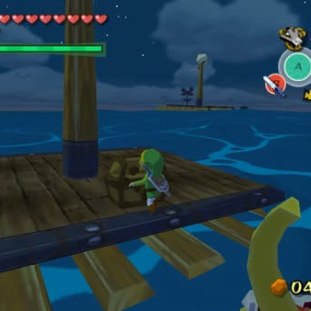


 RSS - Posts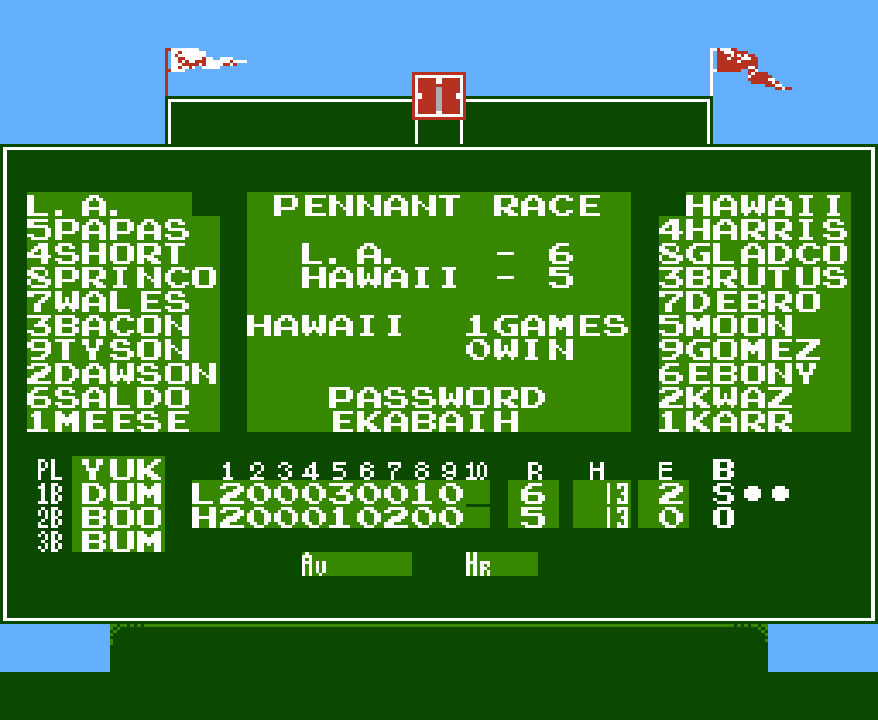
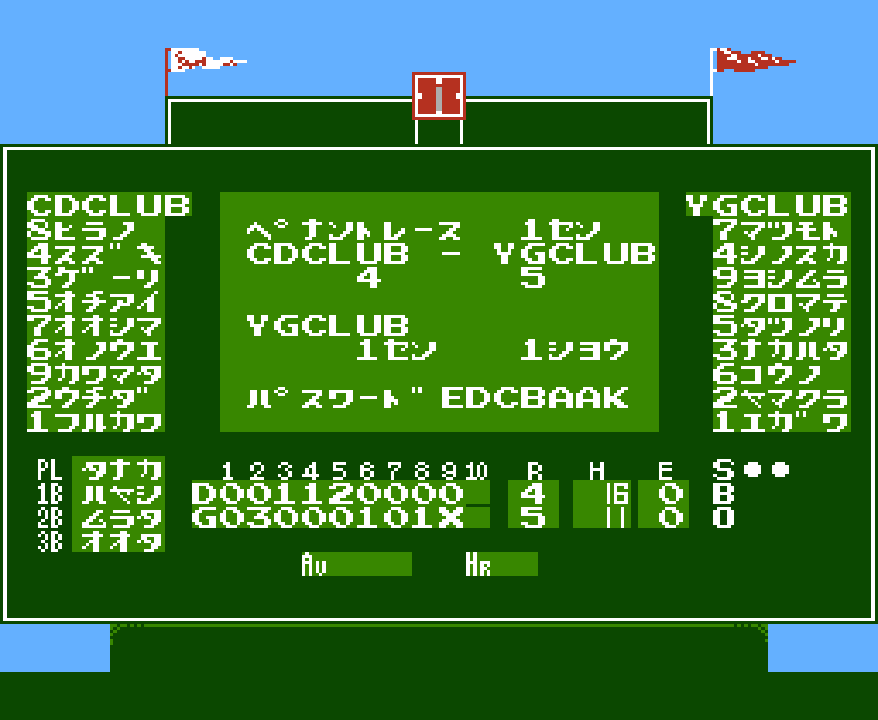
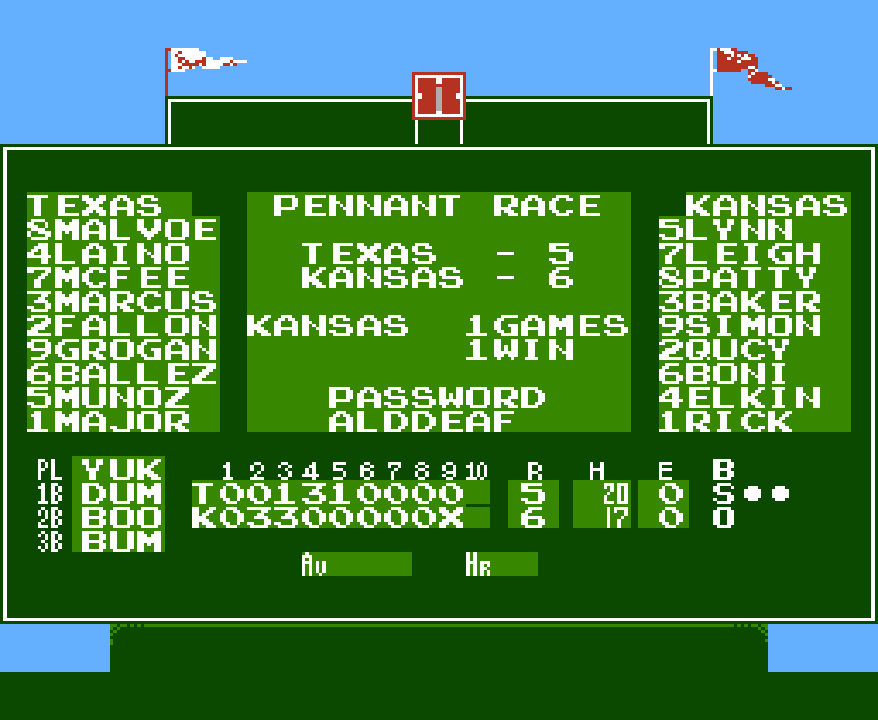
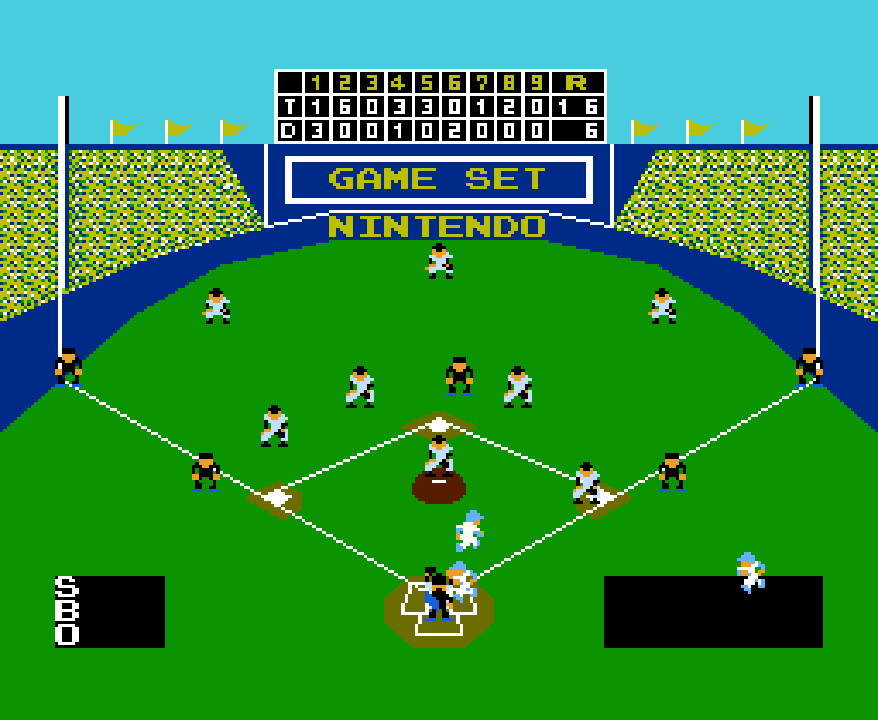


You must be logged in to post a comment.