
I love Pac-Man. I didn’t as a kid. I completely missed the entire Pac-Man craze. The Pac-Man games of MY childhood were either generic platformers like Pac-Man World, or throwbacks like Ms. Pac-Man Maze Madness that weren’t necessarily aimed at me. These days, I would list the original alongside such titles as Portal and Tetris as a literally perfect game. I’ve spent a great deal of time during my 12th year as Indie Gamer Chick trying to find a better understanding of why Pac-Man stands head-and-shoulders above all other maze chase games. That’s why I’m celebrating my 13th Anniversary by going through the history of Pac-Man. My concept here was simple: “What if there was an Atari 50-like collection for Pac-Man and its various ports?” So, I went through as many versions of Pac-Man and its sequels and spin-offs from the Golden Age as I could find. If I’ve already reviewed them, I redid them. This is my 13th Anniversary feature, and I wanted to make it special. Thank YOU, all of you, for 13 awesome years. If you want to read my old Pac-Reviews, they’re listed below. For this feature, I’m reviewing the games Namco isn’t including, can’t include, or won’t include in their various compilations. This excludes Arcade1Up, who does include Ms. Pac-Man quite a bit. And make sure to also check out my past reviews of Pac-Man games:
GAME REVIEWS

Quickie Review – Sega Master System’s Ms. Pac-Man: While it has all the new levels that Tengen’s NES port has, I didn’t like the graphics or the action pausing for a second when you get a power pellet. I have no clue why they felt the need to be fancy, but this version didn’t “do it” for me. Verdict: NO!
For those not familiar with my way of thinking of how retro games should be reviewed, I take NO historical context into account. I don’t care how important a game was to the industry, because that doesn’t make a game worth playing today. The test of time is the cruelest test of all, but every video game must face it. I might not be here if not for Pong’s success, but I wouldn’t want to play it today. Not when there’s better options. Therefore, when I review retro games, every game gets either a YES! or a NO!
YES! means the game is still fun and has actual gameplay value when played today and is worth seeking out.
NO! means the game didn’t age gracefully and is not worth seeking out, and certainly not worth spending money on.
For the Pac-Man games with mazes bigger than the screen, I did my best to stitch together full maps for your viewing pleasure. Since the Wikis don’t have them, if y’all want to use mine for those resources, be my guest!
ARCADE REVIEWS
 Ms. Pac-Man
Platform: Arcade
Released in February, 1982
Designed by Steve Golson
Developed by General Computer
Published by Midway
Available on Steam, Xbox, PlayStation
This slideshow requires JavaScript.
It goes without saying that Ms. Pac-Man is one of the most important games in the history of the medium. It’s arguably the benchmark by which all video game sequels are measured by, which is especially funny considering that it started life as an unauthorized ROM hack of Pac-Man. I’m going to avoid talking about all the legal stuff related to Ms. Pac-Man, except to say “how sad is it that there’s enough for it to get its own page at the Pac-Man Wiki?” I’d prefer to focus on the game itself. From the time I was a kid, I couldn’t believe that the original Pac-Man as a game held any relevance. One maze versus four? Then my sister pointed out that I wouldn’t say a pinball table playing that one specific game over and over was a negative, and she was right. So, these days, I appreciate Pac-Man’s accomplishments much more, but I figured I still preferred Ms. Pac-Man just because it has four mazes, all four of which are exciting in their own right. I think the greatest strength of General Computer was their uncanny knack for making levels that were optimized for close calls and hold-your-breath moments. The first maze is probably the weakest in terms of heart-pounding sections, and even it has one spot (the top center section) that always gets my adrenaline pumping.
This slideshow requires JavaScript.
The biggest strengths from the original Pac-Man maze return: there’s no unreasonable turns and plenty of nail-biting straightaways. With that said, after the first maze, the remaining three are some of the most intense in the maze chase genre. This is owed largely to the U-shaped bends in them that offer only one way of escaping and usually must be cleared all at once. The one in the second maze hangs over the ghost house, but the entrances are angled away from it. In the fourth maze, the bend is shorter, but the entrances are straight below the ghost house AND there’s two other pathways that feed them. You can’t rely on the tunnels to save your ass anymore. The most understated change from the original game is that, after only three levels (not cycles or mazes.. LEVELS), the ghosts no longer slow down once they enter the tunnels. Thus, you now have to rely on precision turns to shake your tails. Thankfully, General Computer seems to have understood that they had to make up for what they took away. Since the ghosts take corners slower than you do, the mazes are designed with cornering and turns in mind.
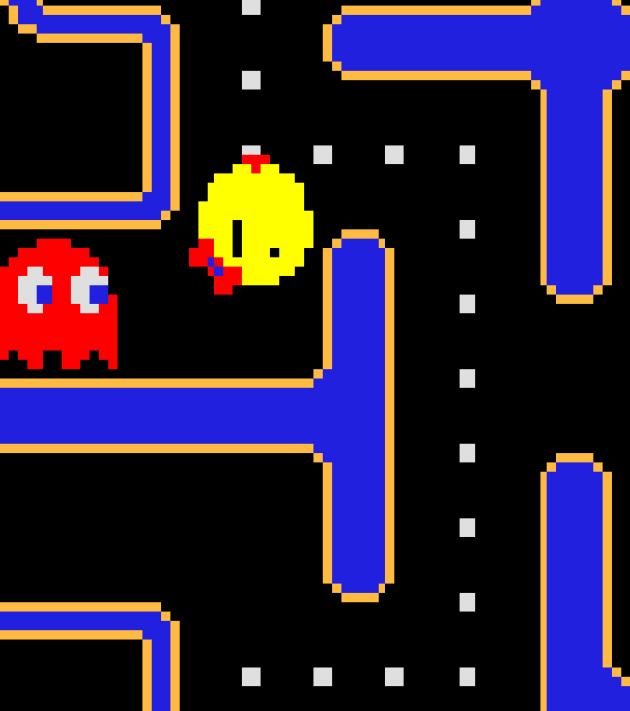
I don’t mean to imply the tunnels are completely worthless. Obviously you still have to use them, and if anything, they’re more exciting now.
It also doesn’t help that there’s no SCATTER and CHASE this go around. While the ghosts still retain their original attack methods, this time two of the ghosts (Blinky and Pinky) will just go off in random directions to start while Inky and Sue (replacing Clyde as the orange ghost) will go to a corner before permanently entering their attack formation. There’s no blind alleys in Ms. Pac-Man, so there’s no place to hide. Also, now the ghosts will just change directions on a dime, which is a dick move that I can’t justify. I’ve gotten pretty dang good at anticipating when Inky, Pinky, or Sue won’t simply turn a corner and catch me, but I just couldn’t get a feel for when the ghosts will all change direction. I think at this point, that accounts for 9 out of 10 of my lives lost, and it felt like rotten luck when it happened. That’s something I never could have appreciated before I took the time to become a halfway decent Pac-Man player: original Pac-Man, for all its disadvantages against Ms. Pac-Man, is a more precise game. Ms. Pac-Man leaves skilled players at the mercy of random chance. “Catherine, if this was a pinball table, you’d sh*t all over it for that” my father said, and he’s right. I might love Ms. Pac-Man’s gameplay, but this is a deeply flawed game in ways I never realized.
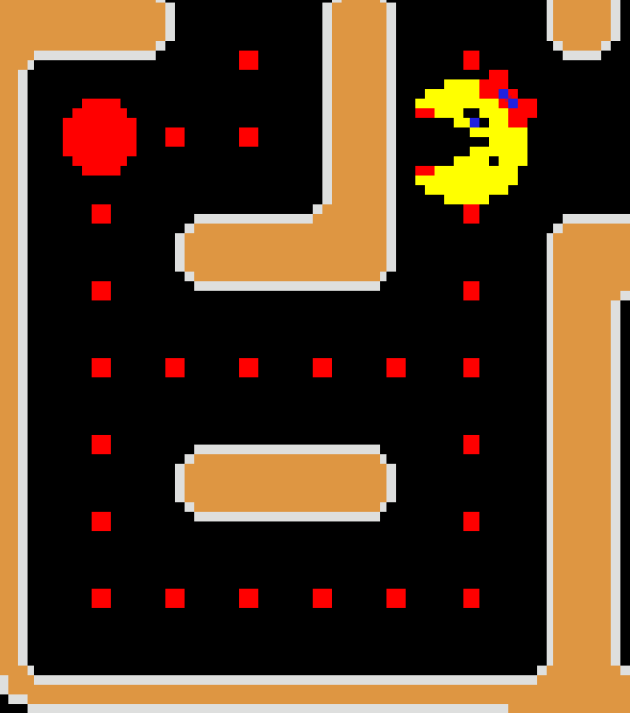
Weirdly, the hardest maze isn’t the 4th. I think it’s the 3rd, and that’s largely because of what I’ve dubbed the “killing cages.” This pattern is in both lower corners, and they’re vicious. What’s even worse is there’s a bigger trap in this stage, BUT, you start directly above it, so it makes sense to do that first. I really do think this maze should have come last. Swap three and four and the difficulty scales perfectly.
Once you’ve cycled through all seven fruits, the game randomly chooses which two you get each stage after, and I think that was a big mistake. The fruits are NOT balanced, and the gap between the 100 points you get for a cherry versus the 5,000 you get for a banana is pretty significant. By the point the bananas are an item, it’s a godsend when I’m able to chomp three out of four ghosts, scoring 1,400 points. The banana by itself scores 800 points more than chomping nine ghosts with three power pellets. The banana by itself scores 2,000 points more than a perfect 4-chomp power pellet. It scores more than double what getting TWO of the next highest-value fruit, the pear, nets you. Hell, if you play good enough, you’ll reach a point where you can’t even chomp ghosts anymore. They’re not even vulnerable for one-millionth of a second. All the power pellets do is make them reverse direction. When you reach that point, all that matters is your high score. When the game throws you only cherries or the 200 point strawberries, it’s maddening beyond imagination.
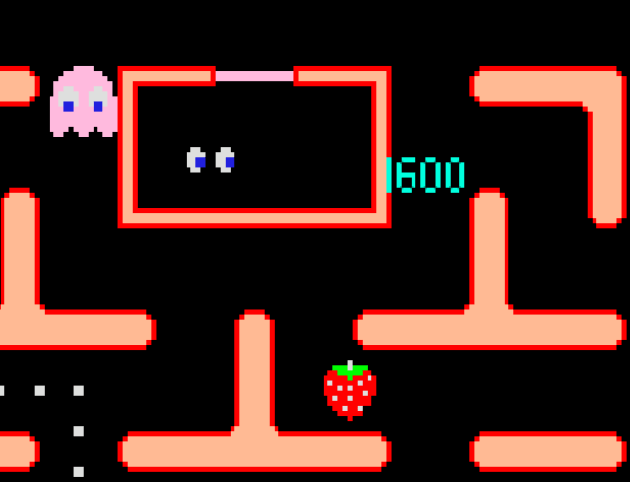
For its many issues, nothing quite beats the satisfaction of a four-ghost chomp in a Pac-Man game.
I never thought I would be good enough to care about any of this type of stuff. Well, now I’m pretty decent at Pac-Man games, and I found myself screaming in agony every time I saw a cherry, strawberry, orange, or pretzel start to hop out of the tunnel. Even the apple sucks. I mean, 1,000 points is nice, but a banana is five times that value. If they didn’t want to unbalance the scoring, perhaps they could have unleashed all seven fruits over the course of the stage? Eat one, the next one gets spit out. OR, create a chain. Eat the cherry, and the next fruit is a strawberry, then an orange, and a pretzel, and so forth. Miss one, and the cycle resets. THAT would have made logical sense, added stakes to the fruits, and increased the game’s overall excitement ten-fold. Alas, I can only review the product I have. Is Ms. Pac-Man a more fun game than the original? Yes and no. For gameplay, Ms. Pac-Man is often more intense. Those mazes are works of art and the chase is arguably more exciting than Pac-Man. But mechanically? I think the original game is the stronger test of your Pac-skills. Ironically, getting good at Ms. Pac-Man makes it a worse experience. Has any game EVER been in that position? Still fun? Sure. An all-time classic? Now I’m not so sure.
Verdict: YES!
 Jr. Pac-Man
Platform: Arcade
Released in 1983
Designed by Tim Hoskins
Developed by General Computer
Published by Bally Midway
NO MODERN RE-RELEASE
Read the full Indie Gamer Chick Review
This slideshow requires JavaScript.
It’s been nearly a year since I gushed all over Jr. Pac-Man, but now that I’ve really put the time in to memorize the personalities of the ghost monsters and drill their behavior into my muscle memory, I was curious if my opinions on Junior’s maze layouts would change. Now that I have a full understanding of the gameplay beyond casual Pac-Man fandom, yea, I can see how purists wouldn’t dig Jr. Pac-Man’s mazes. Many feature very long walled-off sections that you can practically call “tunnels” because of how long you have to travel before reaching a junction. If you know how to manipulate the ghosts into entering those, it’s easy enough to avoid them. They mostly have enough bends that you can build up distance to win a foot race, but it’s never as fun or exciting as you would hope. The 4th, 6th, and 7th mazes suffer from that design. There’s also a haphazardness to it. Lucky me: during this play session, I chomped Blinky in the exact right spot on the 4th maze for his eyes to get caught in one of the roundabouts at the top. He circled it for so long I literally cleared out the entire right half of the maze without the toughest ghost following me.

That’s the earthly remains of Blinky. I chomped him quite early when I ventured to the right side of the maze, and he ended up getting lost spinning around that one post so much that I was able to empty the entire half before he unstuck himself. Which he eventually did when I scrolled left to begin the other half the maze. Screwing up Blinky also screws up Inky.
While I must concede that the mazes aren’t necessarily optimized for the most exciting gameplay Pac-Man can offer, Jr. Pac-Man does make up for it in other areas. I assumed the large straightaways and long “tunnels” the walls form are only intense depending on whether or not a toy has transformed the dots into mega dots. Unlike Pac-Man and Ms. Pac-Man, Jr. Pac-Man keeps spitting out toys until all the energizers are eaten. Remember: if the toy reaches its target power pellet, it destroys it. Those power pellets are pretty important in the last few stages. At first, I wasn’t sure if it really did “buy back” the lost intensity of the close calls. Maybe it doesn’t completely make-up for it, but it does add a different kind of excitement. In later levels you don’t necessarily want an entire area of the screen littered with mega dots, since they slow you down significantly. That’s where the hidden brilliance of Jr. Pac-Man revealed itself.
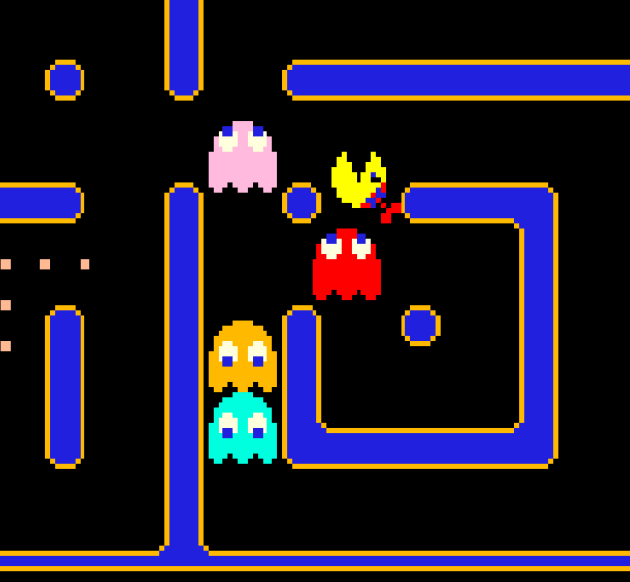
I still haven’t really found a strategy for the 7th maze’s “super killing cages” that works consistently, though I did survive this particular round.
Most of my complaints about the maze design happen after the first three levels. It just so happens those first three are the most “traditional” of the seven Jr. Pac-Man levels, and in my opinion, they’re very strongly designed. The mazes with longer straightaways, longer tunnels, or in the case of level five, the short walls with lots of access points for both you and the ghosts, happen around the time the game speeds up and the energizers start losing their potency. In other words, those are the mazes that are built around the effects of the toys on the dots, plus the prospect of the toys blowing up the valuable power pellets. All credit to General Computer: they were all-in for tailoring Jr. Pac-Man towards the new gameplay additions, and if they didn’t work out as planned, come what may. Is it completely successful? Nah, which is why I can totally understand now why someone who loved Pac-Man and Ms. Pac-Man wouldn’t necessarily love Junior, along with the fact that the mazes take quite a while to clear out. Often the final few dots take quite a bit of work to get to. But, I still love Junior, warts and all, and consider it one of the golden age’s most underrated games. Will someone at Namco work this crap out so we can celebrate this game today?
Verdict: YES!
 Professor Pac-Man
Platform: Arcade
Released August 12, 1983
Programmed by Rick Frankel
Developed by Dave Nutting Associates
Published by Bally Midway
NEVER BEEN RE-RELEASED
Read the full Indie Gamer Chick Review
This slideshow requires JavaScript.
Professor Pac-Man is the historic curio to end all historic curios. The rarest Pac-Man coin op at only 400 units produced, three-quarters of which were returned and converted into Pac-Land. I’ve already reviewed it, but any collection of Pac-Man that wants to be all-encompassing has to figure out a way to include this. If you think the Professor is weird, it could have ended up even weirder. Professor Pac-Man was the idea of legendary game magazine editor Ed Adlum and a guy named Johnny Lott who was the (checks notes) uh.. the world champion of Foosball? What the f*ck? And yea, that’s apparently all true, though their vision isn’t remotely close to the final product. The original concept was that players would navigate a Pac-Man maze and need to answer trivia questions when they reached the energizers, but Nutting didn’t incorporate that at all. Given how bad their own Pac-Man game was (Baby Pac-Man), that’s probably a good call, though they never told Adlum or Lott that they were axing the maze. Either way, Professor Pac-Man is a historically vilified game, but don’t listen to anyone who says it’s crap. It’s an ahead-of-its-time brain training type of game, and it’s wonderfully well done and a favorite in my house to play on a game night. If this ever shows up on a legit classic collection, you know that collection is going all-out.
Verdict: YES!
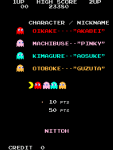 Hangly-Man
aka Popeye-Man
Platform: Arcade
Unauthorized ROM Hack of Pac-Man
Designed by Igurekku
Released in 1981
NEVER BEEN RE-RELEASED
This slideshow requires JavaScript.
I can’t believe Namco sued anyone over this. They should have found the developers and sent them a fruit basket instead. Namco looks like geniuses compared to what the developers of Hangly-Man came up with. There’s two mazes in this famous unauthorized bootleg of Pac-Man, one of which isn’t a maze at all. Indeed, this is one of the first versions of Pac-Man that removed the walls from the game. The first maze offers free-roaming sections around the tunnels, while the second maze just plain removes all the walls completely. Pac-Man is not designed for wall-free gameplay. It becomes significantly harder to control, for one thing. But, on the other hand, the ghosts are a lot less threatening. Even the relentless Blinky doesn’t know what to do with himself. Removing the walls is one of those things that sounds good on paper, but in reality, it’s just not very fun. Also, on the level WITH the maze, the power pill might make the walls invisible. It’s so unimaginative. Hangly-Man isn’t exciting at all. The chase has no stakes. Playing this feels like playing a bad Pac-Man bootleg, because that’s exactly what this is.
Verdict: NO!
 Piranha
Platform: Arcade
Unauthorized ROM Hack of Pac-Man
Released in 1981
Published by U.S. Billiards
NEVER BEEN RE-RELEASED*
(*Yes, multicades might have this. That’s not what I mean.)
This slideshow requires JavaScript.
Whereas Hangly-Man had one wall-free map, Piranha has only one map, and it’s wall-free and somehow even worse. I have no idea why so many would-be cash-ins of Pac-Man decided getting rid of walls was the key to standing out. It completely ruins the gameplay, since the chase element relies almost entirely on walls to, you know, WORK! Without walls, the ghosts in this (f*ck it, I’m not calling them squids) make a beeline for you and stay on your tail until you go through a tunnel or until the game switches between SCATTER and CHASE. The designers added a tunnel to the top and bottom, but apparently you can only use it once per stage. In the original build, where the ghosts look like the Pac-Man ghosts with tentacles, the scoring is more or less the same as Pac-Man. The values are significantly increased in the final build, but that’s not an improvement. It turns out, Pac-Man is actually really, really hard to control without walls. If there was a Pac-Man version of Mario Maker, it would be flooded with levels like this, made by unimaginative 5 year olds. I didn’t think it could get worse than Hangly-Man. I stand corrected.
Verdict: NO!
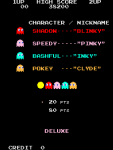
New Puck-X
Platform: Arcade
Unauthorized ROM Hack of Pac-Man
Released in the 1980s
NEVER BEEN RE-RELEASED
This slideshow requires JavaScript.
New Puck-X, AKA “Bumpy Six-Tunneled Pac-Man” is the first bootleg I’ve played so far with actual gameplay merits that need to be discussed, which is probably a positive thing since many bootlegs recycle this specific maze design. The developers opted for subtle changes. Probably the most notable is actually the scoring changes. Dots are worth double, at 20 points, while power pellets are 80. Chomping doesn’t score more, but the Cherry is 500 points, Strawberries 700, Oranges 1,000, Apples 2,000, and Grapes 3,000, and after that, everything scores 5,000. In other words, you’re scoring faster, which means the free life at 10,000 you have to be exceptionally bad to miss. And then there’s the changes to the layout. The most prominent feature is the addition of central bulges in the walls at the top and bottom of the maze.
This slideshow requires JavaScript.
The bulges require you to do a little shimmy to get past and remove two of the four long straightaways in the maze. The other two are still there, sorta, but they’re now physically closer to the ghost house. Real estate previously used by the tunnel on the far left and right sides is now part of the maze. To make up for the shorter tunnel, there’s now three tunnels on each side of the screen. I like that more thought was given to the new layout instead of lazily saying “let’s just remove the walls!” With that said, I’m not a fan of New Puck-X’s maze. It’s not a total wash, as the bump essentially “keeps you honest’ instead of allowing you to go on cruise control for entire sections. But the ghosts are easier to confuse with all the tunnels and there’s an overall inelegance to the whole thing. It’s certainly not harder. I put up 80K in my first game. I think this is getting on the right track, but it sacrifices too much tension.
Verdict: NO!
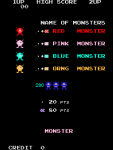 Joyman
Platform: Arcade
Unauthorized ROM Hack of Pac-Man
Released in the 1980s
NEVER BEEN RE-RELEASED
This slideshow requires JavaScript.
Joyman is yet another clone that changes the graphics, but to this one’s credit, it didn’t fundamentally wreck the entire concept by removing walls. In fact, it went the opposite direction: it has too many walls. Quick: what’s missing from Joyman’s maze? Turns. What do you need in order to scratch out distance between you and the ghosts in later rounds? Turns. You can see how this would be a problem. At first, I didn’t think Joyman was notable enough to merit inclusion in this feature, but it actually does have a totally unique gameplay quirk. A weird one, but one that made me sit up in my chair and pay attention. There’s five main “sticks” that run down the center of the stage that make up the maze, as each stick is broken-up by having dots in them. BUT, if you lose a life, the walls close in any gaps where you collected the dots. Yes, really! It looks like this:
This slideshow requires JavaScript.
Now THAT is an interesting twist I wouldn’t mind seeing explored more, as it creates an extra incentive to stay alive. Dying creates extra-long straightaways and makes eking-out distance that much tougher. That’s not the worst idea I’ve seen. The problem is, this specific shaped maze isn’t very good to begin with. It doesn’t inherently lend itself to close calls or near-misses, which is what this genre absolutely needs to thrive. So, while I’ll grant Joyman the title of “best bootleg I reviewed in Pac Man Museum: The Games They Couldn’t (or Wouldn’t) Include” (which doesn’t count Taxman since it eventually went legit), it’s still not a good game. Like, at all. This is a horrible maze. But, I wouldn’t mind seeing more of this idea if someone else wanted to tinker with it. I think it has legs.
Verdict: NO!
 Streaking
Platform: Arcade
Unauthorized ROM Hack of Pac-Man
Developed by Shoei
Released in 1982-83
NEVER BEEN RE-RELEASED
This slideshow requires JavaScript.
Apparently (in)famous for appearing in the 1983 teen sex comedy Joysticks, Streaking isn’t a bootleg in the traditional sense. It took the code of Pac-Man and turned it into an entirely new game with new gameplay mechanics. Despite what the name implies, I don’t think there’s any scandalous nudity in Streaking. I didn’t even have to censor the game, like I figured I would. The object is actually to put your clothes on while four identical cops chase you. Twice a stage, an article of clothing will appear at the top of the screen which permanently changes your character sprite, as you put on every article you collect and eventually kind of look kind of like Princess Zelda. Shouldn’t a game called “Streaking” be the other way, with you progressively taking OFF your clothes? I’m not bothered at all by Streaking’s premise, but the gameplay is awful.

(Shrugs) It looks like she’s wearing underwear to me. BUT, just to be on the safe side, I did censor this picture, removing two dots from the character sprite that implied I was wrong. Hey, they could have been to create a sense of depth!
This is yet another Pac-Man knock-off that decided the way to stand out was to do away with those pesky walls, removing all semblance of movement accuracy. If that’s not bad enough, the chasers become too smart after a while, but it’s impossible to shake them without also collecting the dots. You lose a life if you go too long without picking anything up, a mechanic represented by an “endurance meter” at the top. There’s also no way to fight back in this one. The power pellets have been replaced by single-use warp dots that send you to the opposite corner. Of the three bootlegs I played that removed the walls, Streaking is probably the best. At least it feels original and incorporates the items into the gameplay. But this is a terrible game. And also not as naughty as it sounds. Unless that was a tan line. It might have been a tan line.
Verdict: NO!

Ms. Pac-Man Plus
Platform: Arcade
Released in 1983 (?)
ROM Hack of Unknown Origin
Possibly Developed by Bally Midway, or not.
NEVER BEEN RE-RELEASED
This slideshow requires JavaScript.
Nobody knows the story on Ms. Pac-Man Plus. Was it an official ROM hack, or a bootleg? Images of its gameplay have shown up in official Namco documentation, but that could have been a mistake (or an employee going out in a blaze of glory). If I had to guess, I’m betting on this being an unofficial ROM hack. It’s VERY glitchy, among other things. The fruit often goes right through the walls, and in the first three levels, I saw the ghosts slow down without entering the tunnel more than once. I also activated the “pass through the ghosts” glitch that exists in all versions of Pac-Man (it has to do with the tiles) on nearly every level. I think someone just changed the levels around for fun. There’s a million Super Mario ROM hacks out there, so why not arguably the most famous coin-op ever? Ms. Pac-Man Plus is really just a level hack, too, and not a very good one.

Notice the distance between Blinky (the red one) and me. I didn’t do anything special. He just can’t keep up on this map. There’s too many straightaways.
The only maze that feels true to the spirit of the original Pac-Man or General Computer’s efforts is the fourth one. With the exception of the entrance to the tunnel being gated to the point of being nearly worthless, it’s the only one that feels like it could be legit. The other three fundamentally don’t get what makes Pac-Man work. The second maze, especially. It’s so easy to lose Blinky in it, because it’s basically all straightaways, and since he’s targeting YOUR tile, by time he adjusts to you, he’s already committed to a path you might not necessarily be taking, one that leads him far away from you. Maze #3 feels like any generic Pac-Man rip-off, and the first maze is just awful. So, 25% of the mazes are worthwhile, but you have to play through the other 75% to reach it. That would be a NO! But, I think anyone making a maze chase should study this, because there’s actually valuable lessons in why Pac-Man and Ms. Pac-Man’s mazes work to be found in playing these mazes that absolutely do not work.
Verdict: NO!
CONSOLE AND HANDHELD REVIEWS
 Pac-Man
Platform: Atari 2600
Released March 16, 1982
Designed by Todd Frye
Published by Atari
NEVER BEEN RE-RELEASED
This slideshow requires JavaScript.
I’ve already reviewed Pac-Man 2600 in Atari 50: The Games They Couldn’t Include, but I was curious if the year-and-a-half worth of experience playing Pac-Man games would have given me new appreciation for the VCS experience. It didn’t. This time, I tried Game 6, which has a fast-moving Pac-Man and fast-moving ghosts, with the difficulty toggled to “Difficulty A.” This is considered the maximum level, and all the problems were still there. The tunnel is almost worthless. The ghosts tend to cluster up. The flicker. The sound effects. The lack of personality. The boring layout. I will give the VCS port one nod, and one only: the scoring is more balanced, with the emphasis on getting chomps and not the “vitamin” that serves as the lone item. I like that, because it tilts the entire scoring flow towards aggression, instead of having this one item be the source of most points. The ghosts are worth 20, 40, 80, and 160 points. The vitamin is always 100, and the dots are only a single point each. It just works better, in my opinion.

Collision is so horrible in Pac-Man 2600. Here, my entire character was engulfing the power-pellet and I still died from a ghost that wasn’t even really above me yet. The whole engine that this runs on is sloppy and wrong. The feel doesn’t come close.
But the maze itself is just awful. The elegant layout of the arcade game is reduced to what feels like a hallway sandwiched between a series of chambers on each end. In fact, that’s exactly what they are: four identical chambers to each side, and that’s where the ghosts finally spread out when they exit the ghost houses. Since the ghosts don’t have their arcade personalities, their attacks are either “chase directly” or “wander aimlessly.” I think two are programmed to chase at all times but I couldn’t find confirmation on that. This is one of the worst maze chase engines ever made. The ghosts have much more “reach” than the ghosts in Pac-Man traditionally have. In the arcade, you can use turning corners to save you. Turning kills you in this version because you stick out too far and the collision is unforgiving. Pac-Man 2600 never had a chance to be good, but that’s mostly based on who was in charge at the time it was developed.
Verdict: NO!
 Pac-Man
Platform: Apple ][
Released June 18, 1982
Designed by Brian Fitzgerald
Published by Atarisoft
NEVER BEEN RE-RELEASED
This slideshow requires JavaScript.
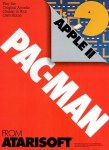
Admittedly, I had a LOT of trouble playing the Apple version of Pac-Man. At first, I was unable to remap it and was stuck using the left and right arrows to move left and right. So far, so good, but the problem came in vertical movement. A is UP and Z is DOWN. My brain just plain didn’t want to play along with that. I spent a lot of time trying to adjust to the controls, but I only cleared the first maze once. Eventually we got it (it literally gives you the option for “custom keyboard” at the start Cathy, you idiot), and I was able to appreciate what this port accomplished. Arcade-accurate maze? Check. SCATTER/CHASE? Check. Ghost personalities/attack formations? Check, though that one has an asterisk, as the colors aren’t remotely accurate, and once again, my brain had to adjust to this version. But hell, even the blind alleys are in this port. This is a truly remarkable effort. One of the best home ports of any game from this era I’ve played.
This slideshow requires JavaScript.
With that said, I’ve spent the last year wiring my brain to know how each color ghost behaves, and I could not rewire myself to adjust to these color ghosts. Still, I can’t stress enough how in awe I am of this port. You don’t expect so many idiosyncrasies to carry over from the coin-op. What’s really interesting is this game originally released as a Pac-Man bootleg called “Taxman.” Atari initially sued over it, and yea, I could see why. Taxman’s designer, Brian Fitzgerald, made all their efforts look like cheap imitators. With all their resources, they were completely stomped by just some guy. Atari wised-up and opted to just buy Taxman, change the title, character names, and cut scenes, then release it as their own product. Odds of that happening today? Anyway, I’m seriously happy for Apple owners that they had arguably the best home version of Pac-Man.
Verdict: YES!
 Pac-Man
Platform: Atari 5200
Released in 1982
Designed by James Andreasen
Published by Atari
NEVER BEEN RE-RELEASED
This slideshow requires JavaScript.
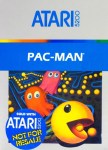
I bet you think redoing all these old versions of Pac-Man was a waste of time, but I’m doing it for a reason. When I included the Atari 5200 version of Pac-Man in Atari 50: The Games They Couldn’t Include, I hadn’t put a solid year of gameplay into Pac-Man. Now that I know the idiosyncrasies, I have to concede I got it wrong. Granted, I would rather play Pac-Man using my feet than use the non-self-centering analog stick the Atari 5200 used, but that’s no concern today. Pac-Man 5200 is actually a fantastic effort. While the stretched maze looks silly, most of the idiosyncrasies from the coin-op are here. Both sets of blind alleys work, and ghost personalities are here, as is SCATTER/CHASE. Inky being a sickly green is weird, but the ghost behavior feels very arcade true. Even the timing of the power pellets is spot-on. After the second intermission, the pellets gain a little time before they start to dramatically shrink, just like in the arcade. I’m not saying the port is perfect. The actual movement timing always feels different than the coin-op, and even without the notorious 5200 joystick, the controls are probably the most problematic outside of the Atari 2600 version. Still, I’m not afraid to admit when I’m wrong about a game, and I got the 5200 port wrong.
Verdict: YES! **FLIP**
 Ms. Pac-Man
Platform: Atari 2600
Released in 1983
Designed by Mike Horowitz and Josh Littlefield
Developed by General Computer
Published by Atari
NEVER BEEN RE-RELEASED
This slideshow requires JavaScript.
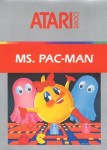
Originally, I wasn’t going to redo Ms. Pac-Man or Jr. Pac-Man since I gave both games a YES! the first time around. But then curiosity got the better of me when I realized the ghosts were color-coded and I didn’t know if they programmed in their arcade personalities. The answer is “sort of, eventually? I guess?” Blinky started chasing me directly on the first stage.. for about two seconds. Then, he just wandered off, along with the other ghosts. I did notice that Blinky started the next three stages VERY aggressive, to the point that I had to immediately grab a power pellet. If I didn’t know better, I’d swear he was starting the levels in his famous “Cruise Elroy” state because he was corning even faster than me. But after chomping him once, he’d return back to aimless wandering for most of the remaining stage. I was deliberately not getting the dots to see how they would react, but it was as if the ghosts were stuck in a permanent SCATTER mode. Mind you, arcade Ms. Pac-Man doesn’t have SCATTER/CHASE, but this 2600 version clearly does, and in fact, SCATTER seems to activate quite a lot.

The ghosts are apparently stoned or something because I’m over here, and they’re way the f*ck over there, doing victory laps or something.
For the first three or four boards, I was worried that I got it wrong about Ms. Pac-Man 2600. That it really only gave the appearance of a more arcade-like experience, but with none of the gameplay chops. Since the original Pac-Man set the bar so low, really, the look mattered a hell of a lot more than the gameplay, right? Well, good news: Ms. Pac-Man VCS is just a slow riser. It takes about five or six levels before the game really starts to show its teeth. Blinky gains a ton of speed and then the game seems to permanently attempt to run a “divide and conquer” strategy. I imagine the constant use of SCATTER is to make up for a smaller playfield with less turns and fewer dots. Without SCATTER, this would devolve into Baby Pac-Man’s busted gameplay of ghosts being too aggressive.
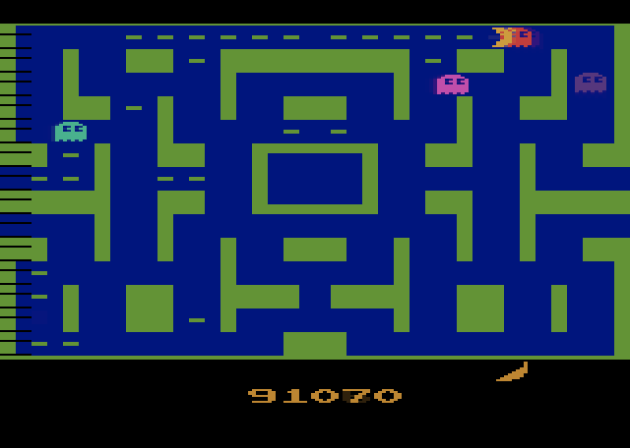
My best no-cheating game.
The other ghosts seem to have something resembling their personalities. Usually when Blinky “made his move” chances are it was in conjunction with Inky, which feels legit to the arcade, and so is Clyde/Sue being off in their own world. Pinky is the one I couldn’t figure out. It doesn’t feel like they captured its behavior at all. So, it’s not really Ms. Pac-Man, but it’s not exactly Pac-Man either. It’s somewhere between the two. Given the limitations of the hardware, the four mazes they conjured up mostly feel like they invoke the spirit of the Ms. Pac-Man coin op. Like, hey, the fourth maze’s T-shaped double tunnel is here and nearly as heart-pounding as the original. That’s very impressive! On the flip side, they didn’t even bother trying to replicate the third maze and instead came up with something original that feels like a better version of the maze used in Atari’s 2600 Pac-Man, with chambers moved to the top of the playfield. This time, it works wonderfully. So, while this might not be an accurate port of Ms. Pac-Man, I feel that Ms. Pac-Man 2600 stands tall and proud as its own separate game. Under the circumstances, with the pressure of having to save Atari’s reputation after the original Pac-Man, they did a very good job.
Verdict: YES!
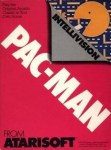 Pac-Man
Platform: Intellivision
Released in 1983
Designed by Mike Winans
Published by Atarisoft
NEVER BEEN RE-RELEASED
This slideshow requires JavaScript.
There’s three major problems with the Intellivision port of Pac-Man. The first is the game releases the ghosts one at a time on every stage. The second is that the power pellets take too long to shrink in duration, and the third is there’s just not enough dots on the screen. You see where this is going. It didn’t take me long to realize the duration of FRIGHTENED mode created a circuit of immunity where I could pretty much clear the board with minimal effort. Maybe I wasn’t scoring a ton of points, but even that didn’t last long once I got to the levels with the 5,000 key item. Don’t get me wrong: this is a better game than the Atari 2600 version of Pac-Man, but it’s the Intellivision. It’d be weird if that wasn’t the case. And there’s some impressive elements to this port. It has a form of SCATTER/CHASE and something resembling the arcade personalities of the ghost monsters. It even has the cut-scenes. But, this version of Pac-Man is ruined by the small maze, which is too toothless and too clockable. I imagine children of the 80s got bored quickly with this one.
Verdict: NO!
 Ms. Pac-Man
Platform: Atari 5200
Released in 1983
Designed by Mike Horowitz
Developed by General Computer
Published by Atari
NEVER BEEN RE-RELEASED
This slideshow requires JavaScript.
This was the final review I wrote for this feature, and I can safely say no other version of Ms. Pac-Man hits the gas pedal quite like the Atari 5200 version does. On the fourth maze, it suddenly gains a massive speed boost, giving the game an entirely different feel. This version of Ms. Pac-Man is weird in general, as eating the dots slows you down in a way that reminded me more of Jr. Pac-Man’s mega dots. I didn’t necessarily like it before, but I have to admit, now that I understand the ghost behavior, I didn’t hate it as much as I did the first time. The 5200 Ms. Pac-Man is remarkably true to the arcade game and I can honestly say I liked this version more than the 7800 port made years later. And yet, I still don’t like 5200 Ms. Pac-Man. The speeds are all wrong. The ghost movement speed. YOUR movement speed. You slow down too much when eating. A few idiosyncrasies are wrong here, too. The ghosts continue to slow down in the tunnels after the third level (a lot of Ms. ports get this wrong) and the timing of the power-pellets feels off. So close, yet so far away.
Verdict: NO!
 Ms. Pac-Man
Platform: MS DOS
Released in 1984
Published by Atarisoft
NEVER BEEN RE-RELEASED
This slideshow requires JavaScript.
It’s nothing short of breathtaking that, in a feature that includes a review of the Atari 2600 version of Pac-Man and a couple ports of Super Pac-Man, none of them have the title of “worst game.” That dishonor goes to the MS DOS build of Ms. Pac-Man. This is absolutely unplayable. You have to time when to make turns, because if you press UP before you get to the junction, you turn around instead. So, for example, if you’re moving left, and a ghost is behind you, and you want to escape at the junction that you’re about to reach and press UP in anticipation of it, you will in fact turn around and run into the ghost because your entire body hasn’t reached the intersection yet.

This was the end of my best game. It took me nearly an hour to get to the third f’n screen. For this, I was home free, only I pecked at the buttons too soon three times in a row and steered myself right into a pack of ghosts.
Now, I checked and made sure my fingers weren’t actually pressing the wrong keys, and they weren’t. I used the game’s option to remap the keys to other buttons just to make sure the gameplay was as bad as I thought it was and it wasn’t just my arrow keys taking an early retirement. It wasn’t. That’s really how the game plays. It’s actually kind of amazing how inept it is. EVERYONE plays Pac-Man by using the walls as guiders. Try that here, and you will u-turn. It makes no logical sense at all. Why would pressing UP to a character who is moving LEFT make them turn RIGHT? Pitiful. Absolutely pitiful. So, I played it the game’s way and kept my fingers far away from the keys, pecking at the buttons when the time came to move. While I died less quickly, the thing is, any Pac-Man game is a game of quick turns, and this game simply does not allow it. So, congratulations to Ms. Pac-Man for MS DOS. I bestow upon you the title of worst video game Pac-Man. Far worse than even the LCDs.
Verdict: NO!
 Super Pac-Man
Platform: Atari 5200
Unreleased Completed (?) Prototype
Designed by Landon Dyer
Non Publisher: Atari
This slideshow requires JavaScript.
I now actively question whether this prototype is truly finished or not. There’s multiple signs that it’s not really ready for prime time. For starters, it has the most inaccurate ghost behavior of any game in this feature. The ghosts barely chase you at all and seem to wander aimlessly for the most part, as if they’re patrolling specific sections of the map. I watched as one circled the upper left power pellet’s chamber like it was a treadmill. And they look weird as they do it. Their movement in general has this spooky wobbliness to it. The ghosts also take FOREVER to leave the ghost house after being chomped. It was rare I was able to get a four-ghost chomp even with the turbo of Super Pac-Man. Speaking of which, you can’t use the super pellets to cheese this version. They wear off quickly after the first stage, and power pellets wear off even quicker right from the start. With them, you’re lucky if you get two or three seconds.

You’ll note that I chomped those ghosts when the map was half full.
Strangely, all these inconsistencies from the coin-op fail upwards to make this version of Super Pac-Man arguably the best version of a terrible game. I certainly can’t just phone-in a 100K game. Not with power-ups this flaccid. After just a few levels, the super pellets wear off so quickly that I don’t think they’re useful at all. Without them, I had to go around and get the keys like some kind of peasant, and it actually gave the game a sense of tension and difficulty. Oh, it’s still a NO!, but this totally wrong version of Super Pac-Man was challenging enough and tension-filled enough that I had to at least stop and think about it. If the ghosts didn’t linger in the ghost house as long as they did, I might have been inclined to give this the mildest YES! Maybe. I can’t know for sure. But that I even had to consider it really says how bad Super Pac-Man is. What is perhaps the best version of it fundamentally doesn’t play right.
Verdict: NO!
 Jr. Pac-Man
Platform: Atari 5200
Unreleased Completed Prototype
Designed by Mike Horowitz
Non Publisher: Atari
This slideshow requires JavaScript.
Much like the coin-op, I’ve already publicly drooled all over this tragically cancelled port of Jr. Pac-Man. The title of best Atari 5200 game I’ve played comes down to one of two possible contenders, and since Jr. Pac-Man never came out and Gremlins did, Gremlins pretty much wins by default. Or does it? While I think the ghosts are mostly correct in this port (though Pinky chases directly quite a lot, too) and Jr. Pac-Man does an incredible job of mimicking the coin-op, the size of the maps don’t match. The squashed-for-television mazes have a lot fewer dots, which matters a great deal in the later stages. I don’t think the speed was perfectly adjusted to make up for it, and it leads to the Jr. Pac 5200 gaining significant challenge. I have a much tougher time clearing out final dots in the 5200 build than I do the coin-op, and I lost a LOT more power pellets too. It makes perfect sense! Less dots means less travel time for the toys, and again, the speed doesn’t feel right. This matters more than I realized. Good news, Gremlins: you’re now alone as the best 5200 game. Here’s why:

Do you know what that is? Well, I’ll tell you what it is: a soft-lock! If you die while a toy is blowing up a power-pellet, the game is over. The game will leave a scar of the power pellet on the screen as if it’s still there and needs to be collected. Except, you can’t collect it. It got blown up. You can pass over it all you want, or even throw another life away, and it’ll still be there. I can’t really complain about this in a never released prototype, and presumably this bug would have been squashed had the game finished production. But, it really sucks, and it’s so much worse than it sounds. This is a pretty hard game already. I think it’s much harder than the coin-op. When the toys reach the power pellets, the explosion animation goes on for quite a while in this version, and you MUST stay alive the whole time it’s happening, even if you have five lives to spare. Even though I’m a big fan of rewind and save states, I don’t use them in games like this. It sort of defeats the point of a score-driven game to cheat. So you can look at it two ways: either it adds additional tension to an already very intense game, or it’s broken. Oh, I still love it, but in the unlikely event this ever ends up in a collection, it will need some work first.
Verdict: YES!
 Pac-Man
Platform: Colecovision
Unreleased Completed Prototype
Non-Publisher: Atari
This slideshow requires JavaScript.
Go figure the best Pac-Man of the pre-NES consoles never came out. It’s long rumored that Atari put the screws to this specific port because it was too good, making their own Atari 5200 look bad in comparison. I could believe it. What first jumped out at me is how smooth this version is. Pac-Man glides in it, and it’s kind of hypnotic to see. I assume the movement looks the way it does because the maze is stretched out. The maze is fairly close to the coin-op in terms of shape and spirit, and on the medium difficulty at least, the game suddenly goes bonkers at level three. The tempo steps-up, and the Colecovision port becomes one of the fastest versions of Pac-Man I’ve played. Best of all is I couldn’t clock the game instantly like I’ve been able to with other ports. SCATTER/CHASE is here, as are the ghost monster attack patterns. Unlike many ports, this one seems to scale correctly, at least if you play on the second of three difficulty levels. Also, this means absolutely nothing in the grand scheme of things, but when chomped ghosts return to the ghost house, you actually see their uniforms reappear before they return to the playfield. It looks like they’re beamed-on, Star Trek style. It’s really cool to watch. You know what? I loved this port. It’s a fun version of Pac-Man, and that’s all I really want. If we ever do get an all-encompassing history of Pac-Man collection (and Namco would probably need Atari and Digital Eclipse to put it together), I hope they remember this version.
Verdict: YES!
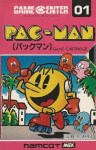 Pac-Man
Platform: MSX
Released January 18, 1984
Published by Namco
NEVER BEEN RE-RELEASED
This slideshow requires JavaScript.
I almost skipped the MSX build of Pac-Man, but I’m happy I didn’t. It looks close to the famous NES build, but it doesn’t play the same. It’s notable that this is the first Pac-Man that uses the reduced-aspect ratio that has the proper maze shape and structure from the coin-op, only with fewer dots. That’s really the only positive thing I can say about this port. This is easily the slowest version of Pac-Man in this feature, and that saps all the enjoyment out of the game. This is especially noticeable when you eat a power pellet. The ghosts lose all their speed, as if you’ve kneecapped them. The ghosts also don’t seem to behave coin-op-accurate either. While SCATTER/CHASE is here, the ghosts seem to enter SCATTER more frequently. Maybe they kept the intervals without accounting for the slower speed? Since the Colecovision version was never released, I’d have to declare this the third best pre-NES version of Pac-Man I’ve played, but even with better graphics, the gameplay is light years behind how good the Apple II version or even the Atari 5200 version felt.
Verdict: NO!
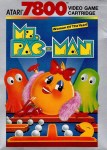 Ms. Pac-Man
Platform: Atari 7800
Released May, 1986
Published by Atari
NEVER BEEN RE-RELEASED
This slideshow requires JavaScript.
Atari fans will hate me for this, but I wasn’t feeling the 7800 version of Ms. Pac-Man. I found the controls to generally be unresponsive and struggled to corner properly many times. On the plus side, I never just clipped right through a ghost without dying. I did once pass through the cherry without collecting it, but otherwise, this version seems like it works. It just takes a LOT longer to get used to the controls. This became especially pronounced when I was chomping following an energizer, as if the chomp happened at a junction, I often missed the turn I wanted to take. I assume the ghosts and the “randomizer” of the fruits are programmed differently too, as I died a lot less in the third maze’s “killing cages” and put up a shockingly high score thanks to getting more than the expected average of bananas. This is one of those situations where I’m sure owners at the time of release were happy with this build, which has arcade-accurate mazes with minimal stretch or squashing. But this is a build that also didn’t age as gracefully as others.
Verdict: NO!
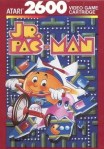 Jr. Pac-Man
Platform: Atari 2600
Released October, 1986
Designed by Ava-Robin Cohen
Published by Atari
NEVER BEEN RE-RELEASED
This slideshow requires JavaScript.
Well, I redid Ms. Pac-Man 2600 to see if they got the ghost personalities right, so I suppose I have to redo Jr. too. Man, am I happy I did. Unlike Ms. Pac-Man, there’s no question the established ghost behaviors from the coin-ops are here. It gives Jr. Pac-Man an authentic Pac-Man feel that neither of the other two 2600 Pac-games have. On a console where maze chases became the dominant genre, Jr. Pac-Man is head and shoulders above the others for intense, exciting chasing with plenty of near-misses. It helps that the mazes are easily the best on the Atari 2600. Instead of scrolling horizontally, the 2600 version of Jr. Pac-Man opted to score vertically. I think this was a much wiser decision. The playfield feels more claustrophobic, lending itself better to the whole point of a maze chase: that closed-in feeling that the coin-op mostly lacks.

It does do a good job of replicating the mega dots, given the limitations.
What I found especially impressive is that, despite the mazes being vertical, they accurately replicate the type of challenges and design elements that the coin-op has. The 4th maze’s vertical slashes. The 6th maze’s goal posts. The 7th maze’s super killing cages. They’re ALL here, and they work almost as well as they do in the coin op, especially when you factor in the toys converting standard dots into mega dots. The only catch is that the speed isn’t the same. It’s much easier to outrun Blinky in a foot race, even if you’re eating standard dots, than in the coin-op. I don’t think that wrecks the game at all, as it remains fairly white-knuckle throughout. The only real downside is that the last few dots on each board might take even longer to squeeze out enough distance to collect than on the coin-op. It’s harder to shake your tails on the vertical mazes.

The real tragedy is this didn’t get released until well after the prime of the Atari 2600. The game itself was completed in 1984 but not released until 1986 thanks to Jack Tramiel ordering a halt to all video game production. This is one of many games that sat in a warehouse to die on the vine.
But, the brilliance of 2600 Jr. Pac-Man is that I never found any point where the scrolling caused me to be trapped when I committed to one pathway only for the ghost off-screen to choose that direction. As far as I can tell, everything is measured out perfectly to assure the game remains fair. I can’t say enough good things about Jr. Pac-Man. In many ways, it’s better than the coin-op. It proved to me that vertical scrolling clearly works better for all the things that make a maze chase great. Jr. Pac-Man stands tall as not only the best of the Atari 2600 Pac-Man games, but it actually has a legitimate case for “best Atari 2600 game.” It’s true, and I’m honestly struggling to think of any game that plays better on the VCS than it. Jr. Pac-Man has never gotten its due historically, but the 2600 version really deserves a better reputation than it has.
Verdict: YES!
 Jr. Pac-Man
Platform: MS DOS
Released in 1988
Designed by Chris Graham
Developed by Beam Software
Published by Thunder Mountain
NEVER BEEN RE-RELEASED
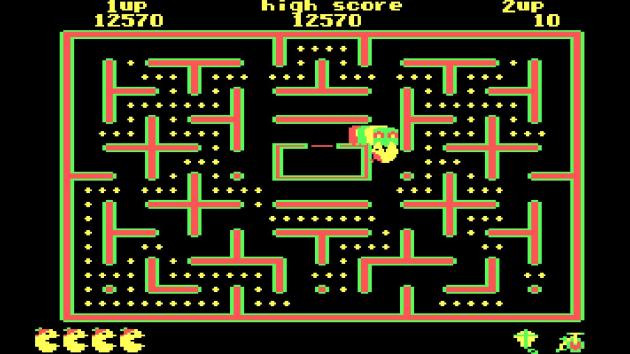
Hmmph. Also note my father’s previous life was 10 points. Yes, he died after one dot. It happens a lot in Jr. Pac-Man on MS DOS if you’re not ready to start moving.
When you start any life or new maze of Jr. Pac-Man on the MS DOS, I suggest you move left. If you move right, you’ll immediately die from the four ghosts pouring out the ghost house. That’s one of many, MANY problems with this build. You’ll note that you can see the entire maze. The scrolling that defined the coin-op has been removed entirely from this build. Not that it would have extended the length of the game. You zip around really fast. So fast, actually, that eating the mega dots left behind from the items doesn’t factor in, as I don’t think you slow down at all. To the designer’s credit, something resembling the ghost personalities seems to have been included in this port, but I can’t tell which ghost is which. Partially because two of them are the same color, partially because you zoom around at ludicrous speed, and mostly because the ghosts take FOREVER to return to the ghost house and don’t enter FRIGHTENED mode when they’re inside of it. That last part is the worst, as I ended up losing the value for over half the power pellets because the ghosts were busy putting their clothes back on. On the fourth maze, I ate a ghost at the start, and when I almost had the entire maze cleared, it was still spinning around looking for the ghost house.
This slideshow requires JavaScript.
What sealed the NO! for me is the fact that you can eat a power pellet and still die via the ghost you’re racing with towards it. Yep. Multiple times I ate one, the ghost that’s next to the pellet turned into its FRIGHTENED sprite, and then I died because the game hadn’t registered that it was FRIGHTENED yet. I’m not talking about a coin-flip tie at the power pellet. I’m talking about CLEARLY beating the ghost to the power pellet, seeing it change modes, and still dying. Even worse is the fact that, when this happens (and it happens A LOT), since you, you know, ATE THE POWER PELLET, it’s gone for your next life. This completely ruins the game, especially in later levels. Think about it: eventually the power pellets wear off quickly, right? So, how do you maximize using them? Wait until the last moment to eat them. Well, that doesn’t work in this game, because if you grab one then immediately eat a ghost, you still die. I don’t expect a one-man project made for under-powered PCs to be arcade perfect, but I don’t think it’s asking for the world that they actually play logically. Oof. Horrible!
Verdict: NO!
 Pac-Land
Platform: MSX
Released in 1988
Developed by Grandslam
NEVER BEEN RE-RELEASED
This slideshow requires JavaScript.
I take back every mean thing I said about Pac-Land on the Famicom. This game, which came out three years after that version, is one of the worst games I’ve ever played. ALL the charm from the arcade original is gone. The best thing I can say about it is that D-Pad controls are here. Good move. But, the levels are barren and boring. There’s no scrolling, so the stages load one screen at a time, even though you still have to account for what’s on the next screen. If there’s a hydrant close to the edge of the screen that you can’t see, you have to jump into the next screen. For the most part, you’re walking in a straight line, jumping over fire hydrants, and waiting for enemies to cheap shot you. Unlike the coin-op, you can’t touch enemies at all, so when the cars show up, you don’t survive when you jump on top of them. And this version of Pac-Land LOVES to have the cars spawn when you’re at the edge of the screen. The only way to see them coming is to play an already slow game slower and wait for them to spawn. Outstanding!
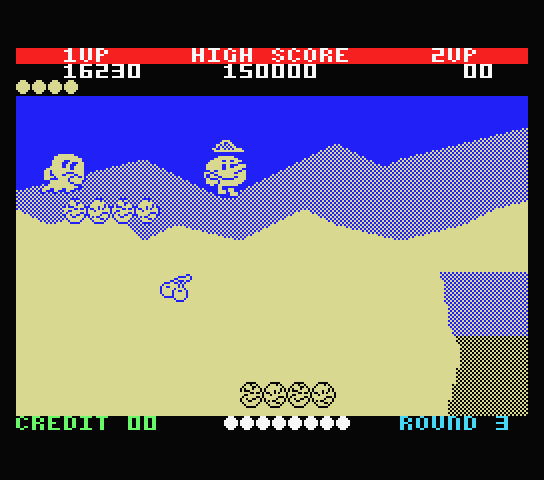
That “jumping onto the next screen” applies to the moving platforms. If you just walk onto a screen, you might die.
Sue, who acts as the pacemaker of the coin-op, is right on your tail at all times. She literally spawns within a half second of you entering the screen, and she trails close behind you throughout. If there’s anything hidden behind fire hydrants or stumps, I don’t see how she makes it possible to uncover them. I checked the ones near power pellets and they never moved, so I’m guessing there’s very little hidden stuff in the game, if anything is hidden at all. In addition to the ugly, UGLY graphics, the collision is pretty bad, as you can’t just hop over cars, but you have to comfortably clear them. Their collision boxes seem rectangular, so that’s a problem. The game’s go-to move for “challenge” is having both a car and an airplane come out, where you have to tightly jump between them. I didn’t get far in Pac-Land. I couldn’t figure out how to get past the springboard. I spent a solid fifteen minutes wiggling the control stick, pumping the jump button, and nothing worked. You jump high off power pellets, and there IS a power pellet there, but even grabbing it first, I couldn’t figure out how to do the “sky pump” move. It took me nearly an hour just to get to the third level with all the cheap deaths and crappy collision. Something tells me I’m not missing the “good parts.” MSX fans deserved better.
Verdict: NO!
 Super Pac-Man
Platform: MS DOS
Released in 1989
Designed by Chris Graham
Developed by Beam Software
Published by Thunder Mountain
NEVER BEEN RE-RELEASED
This slideshow requires JavaScript.
If you had a personal computer in 1989 and really wanted to play Super Pac-Man for whatever weird reason, this port by Thunder Mountain does a much better job of replicating its gameplay than they did with Jr. Pac-Man. It features a completely accurate maze, which is rare enough in Pac-ports. It actually made me wonder if the reason Namco replaced the dots with gigantic fruits was to make it easier for home ports to not have to remove collectables from the game. Anyway, it’s here, along with the bonus stages and cut scenes. The yellow-green-red graphics are ugly, but it looks like Super Pac-Man. Sadly this is still a deeply flawed port. Like Jr. Pac-Man, it plays far too fast. You practically move in full character lengths with every frame of animation, so going from one side of the board to the other takes maybe two seconds.

Oh joy, I beat the bonus stage early. Now I get to watch the timer run out at its normal speed.
The super pellets last too long even as you get deeper into the game. Once I got the hang of the poor controls, the game became a race between me and the ghosts to the first super pellet. If I could get it, the level was over as long as I didn’t immediately eat the second super pellet. I never figured out if the turbo boost is in this port, not that you need it, as the gameplay speed is already set to “unwieldy”. I could barely steer at the normal speed. Also, this is a minor annoyance but when you complete the bonus stage, you have to wait for the timer to run out, at its normal countdown speed, before you continue. If you finish the bonus round really fast, that miserable timer takes a while for it to tick-off. I never figured out if there’s a way to speed it up. Super Pac-Man is a terrible game to begin with. My choice for the worst Namco-developed Pac-game of this era. Any port that aspires to be arcade-accurate has zero chance of getting a YES! anyway, but for what it’s worth, this port would have gotten a NO! even if I was a Super-Pac super-fan.
Verdict: NO!
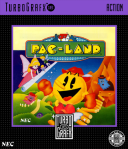 Pac-Land
Platform: TurboGrafx-16
Released June 1, 1989
Designed by Yoshihiro Kishimoto
Published by Namco & NEC
NEVER BEEN RE-RELEASED
This slideshow requires JavaScript.
I boiled the Famicom version of Pac-Land in oil, and I’ve never been a fan of the game in general. Imagine my surprise that I enjoyed playing the TG16 port. It helps that you can choose to play it by either tapping buttons, like the coin-op, or using the D-Pad, like good boys and girls get to do if they go to heaven. If that was the only change, I don’t think I’d been inclined to give Pac-Land a YES! But, the difficulty and movement seems to have been re-balanced in general. I’ve played other versions with D-Pad control, including another port for the Atari Lynx (still to come), and there’s always a pronounced sluggishness to Pac-Land. While that’s not completely gone, this feels like the most responsive version of the game I’ve played. A lot of the cheap enemy placement has been removed too. There was only one moment in the entire game where I felt pushing back on a fire hydrant that unlocked that stage’s helmet was impossible due to having too much enemy interference. At no point was one of the springboards blocked by a ghost, and in general, this feels like a kinder, gentler Pac-Land.

Jumping and movement still has this weird momentum about it, but I was able to adjust to it without fumbling with the controller itself.
Don’t get me wrong: Pac-Land on the TurboGrafx/PC Engine isn’t amazing or anything, but this is my favorite version of the game, easily. Purists will say that the lack of parallax scrolling hurts. I say it’s a positive, because there’s no foreground to block the view. Fans of the Famicom game will say most of the hidden features that made that version stand out are missing. Again, I think that’s a positive. Pac-Land might be a little too difficult to serve as baby’s first platformer, but it was a big hit with the children in my house, who loved the cheerful personality. At the same time, it feels antiquated compared to other platformers from this era. The shame is, the level design has to remain simple and straightforward to accommodate a control scheme that nobody in their right mind would choose to use. They should have redone the entire game, adding more jumping challenges and power pellet moments. And the springboards can still go f*ck themselves.

Which isn’t to say there isn’t hidden stuff. At one point, I got an item that.. uh.. turned me upside down AND allowed me to moonwalk? The f*ck? Earlier, I got an item that simply had me moonwalking, though it didn’t reverse the controls at all. Pac-Land is weird, yo.
By far my favorite levels were the castle stages, where you have to pick-up keys to unlock gates. But even those lack in pizazz. The great irony of Pac-Land is it beat Super Mario Bros. to the market (the coin-op, I mean), but by time a halfway decent home port of it was released, Super Mario Bros. 3 was about to come out in the United States, and hell, the original Super Mario Bros. offered a lot more fun and challenge than this did. Pac-Land’s only remaining advantage is the graphics. This looks and feels cartoony. But it’s far too subdued. There’s not enough power pellets to chomp the ghosts, which is, you know, the fun stuff! Hell, the power pellets most often show up when no ghosts are on screen. You have to scroll around to get them to spawn. More often than not, they’re right next to the stage’s goal, so you don’t even get to chomp all the ones around. It’s so frustrating. With that said, someone alert Myra, because it’s a miracle! I’m giving Pac-Land a YES!, because I played through the whole game and enjoyed the experience. It wasn’t amazing, but it was a perfectly fine way to burn an hour.
Verdict: YES!
 Pac-Man
Ms. Pac-Man
Platform: Game Boy
Pac-Man Released November 16, 1990
Ms. Pac-Man Released in 1993
Published by Namco
Both Re-Released in “Special Color Editions” in 1999 for Game Boy Color
NO MODERN RE-RELEASE
This slideshow requires JavaScript.
I figured a black and white Pac-Man would use some form of shading to distinguish the ghost monsters from each-other. After all, their color-coding is sort of essential to playing Pac-Man at a high level. But, Game Boy Pac-Man doesn’t do that. You sort of have to guess which ghost is which. I held my breath many times hoping the ghost approaching me from one side was Pinky so I could do the whole “play chicken” thing with him. Also, the maze scrolls, so you never know exactly where the ghosts are, which can be frustrating when you’re eating a power pellet. Well, it turns out, after I wrote most of this review, I found out there IS a full-screen view, though you have to select it ahead of time and can’t swap between views once you choose.
This slideshow requires JavaScript.
Well, that sucks. I didn’t know that when I first played it, but honestly, I’d chosen to play the scrolling version after about five seconds of playing the full screen anyway. That version is unplayable, with unresponsiveness for tight turns and cornering. Stick with the scrolling, which is what interested me in this port to begin with. Weirdly, the scrolling doesn’t make the game more challenging. Actually, I scored higher on this one than any standard-scoring Pac-Man in this feature. All the tricks from the arcade are turbo-charged here. The SCATTER part of SCATTER/CHASE seems to last a lot longer, and it’s easier to out-run the ghosts in general. If you can lure them into the tunnels, they take FOREVER to get out, which becomes especially valuable in later stages. Most importantly, the power pellets last much, MUCH longer, allowing you to munch, MUNCH longer. Heh, sorry. My friends bet me I wouldn’t use that line.
This slideshow requires JavaScript.
The end result is the easiest version of Pac-Man I’ve ever played. On only my fourth game, I scored over 130K, more than I typically score in a five life version of the arcade game. It’s also one the glitchiest Pac-Men around. I passed right through ghosts on multiple occasions, including times when I’d eaten a power pellet and was attempting to devour one. While this hypothetically happens in all standard versions of Pac-Man, I set a new record for it playing this. The “Special Color Edition” seems to be more stable, but I still had moments of passing through the ghosts. I’m not so sure what’s so special about having color, but that version also includes Pac-Attack if you’re into that game. I’m not, nor am I into Super Pac-Man, which comes with the Special Color Edition of Ms. Pac-Man, but I do need to talk about it.

That’s adorable.
Super Pac-Man gets all the idiosyncrasies from the coin-op right, like the timing of movement, eyeballs turning into edible ghosts before they return to the ghost house, etc. The problem with this port is how jarring the camera shift when you take the tunnels is, and how it’s much more dangerous to take a tunnel in Super Pac-Man without being able to see the other side. You simply don’t have enough time to turn around. So, you have to play the mini-graphics version, which I have to concede plays better than the mini-screen versions of the other games, but you can barely see the gates. Super Pac-Man sucks either way, so it’s not like I was going to be happy either way, but I can’t imagine a Super Pac-Man fan loved this port, since the close-up graphics version has one big gameplay aspect that simply doesn’t work when you can’t see the whole screen. As for the other three games, I imagine if it was 1990 and you wanted a pretty decent version of Pac-Man for the Game Boy, you were more than satisfied with Namco’s efforts for both of these ports. They’re honestly not bad, even if they’re as slow as evaporation and lack color. I still can’t get over that. Hell, couldn’t they have slapped letters on the ghosts? Literally any solution BUT nothing? Anyway, these aren’t awful but they only have value today as historic curios.
Verdict: NO!
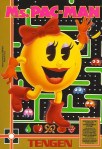 Ms. Pac-Man
Platform: Nintendo Entertainment System
Released in 1990
Designed by Franz Lanzinger
Developed by Tengen (Atari Games)
NEVER BEEN RE-RELEASED

I never once felt the scrolling got in the way of the action. This is SO well done.
Holy smokes! This is NOT a port of the coin-op. I mean, that’s there if you want it. All four mazes are faithfully recreated and require minimum vertical scrolling to work. The scrolling assures an accurate maze, and since it’s kept to a minimum, unlike the Game Boy version, I feel not seeing everything at once isn’t as much of a deal breaker now. The famous “boost” version of the game where Ms. Pac-Man moves at a bonkers speed is included as a toggle. It gets even better, as it can be on permanently, or mapped to a button as a situational boost. There’s even adjustable difficulty. The most noticeable difference is that the game ends. Once you’ve finished 32 mazes, you get an ending. It doesn’t just go on forever. This is a truly outstanding port that’s good enough to earn a solid YES! on its own. But, the four mazes are just the start of a monster-sized Ms. Pac-Man release. There’s three other game modes that have brand new maps. Because of scrolling, I had to stitch these screens together.
This slideshow requires JavaScript.
Tengen really did go all-out on their Ms. Pac-Man port, adding over two-dozen new mazes of varying quality. If you want to see most of them, choose STRANGE for the maze selection. Some are inspired. Most aren’t very good. It pains me to say this, but for all their effort, none of the new mazes really feel “professionally designed.” It always feels kind of like you’re playing a ROM hack. It basically is. Often, the designs are so haphazardly done that, when you chomp the ghosts, their eyeballs get stuck spinning in circles and never return to the ghost house. In other stages, there’s so many straightaways that it’s easy to gain distance from the ghosts. And frankly, those are some of the better traits. Like so many designers, Tengen threw in a few levels that are partially or even completely missing walls. If you play with the TURBO function permanently activated, the wall-free levels are nearly unplayable, so you’ll want to play it where that ability is button-controlled. Okay, so this wasn’t as cool as I hoped, but as a package, this is genuinely amazing. There’s a completely different NES version of Ms. Pac-Man, this one developed by Namco, that had the same idea. Beating this version will be a tall task.
Verdict: YES!
 Ms. Pac-Man
Platform: Nintendo Entertainment System
Released October, 1993
Designed by Naoki Higashio
Published by Namco
NEVER BEEN RE-RELEASED
This slideshow requires JavaScript.
F*cking wow. Three years after Atari Games, under their Tengen label, created one of the greatest home-to-arcade ports on the NES, Namco decided they needed their own version. Why they didn’t just buy Atari Games’ is beyond me. Look at this sad, pitiful excuse for a port. Slow, clunky, and missing some of the key idiosyncrasies from the coin-op. The ghosts enter SCATTER/CHASE like in Pac-Man and still slow down when they go through tunnels after the third level. I threw on the HARD mode thinking the game would find its teeth, but it didn’t. The intense “killing cages” of the third level were completely nerfed on either difficulty. This feels like a bad clone of Ms. Pac-Man and not an official product. On the plus side, Namco did add four mazes, but you have to play through a full arcade level cycle to get to the new stages PLUS an additional cycle of the third maze before the four new maps show up. When one finally did, I let out a cheer. Then the stage was awful and I let out a groan. And then, after only one play of it, the game went back to recycling the fourth maze. I had to play that level three times to get another new level.
This slideshow requires JavaScript.
The sheer amount of work required to experience the new elements the Namco build of Ms. Pac-Man isn’t worth it. It’s ridiculous. Three of the four new mazes are typical ROM-hacky stuff I’ve come to expect, with the only surprise being they didn’t go for a wall-free level. However, I will concede the second new maze is actually a quality Pac-Man maze that offers plenty of exciting chase moments without being loaded with unreasonable turns or excruciating long straightaways. The first of the four reminds me of the map from Sega/Gremlin’s Head On, which I experienced on the Sega SG-1000. Wasn’t fun then. Isn’t fun now. So, this is one of the worst versions of Ms. Pac-Man out there. How could it get more insulting? What if I told you that Namco originally built thirteen new stages, but deleted nine of them from the final game? Because they totally did. The maps are actually still in the game code and accessible via a Game Genie. Or, I could just use a ROM hack called Ms. Pac-Man: The Lost Levels by samus12345. Sigh. I suppose I should play them as well. It turns out, I could have just played the new stages using this instead of working for them.
This slideshow requires JavaScript.
Apparently the thirteenth and final new maze, which isn’t included in the above slideshow as it’s not included in the ROM hack, is an empty room with no walls (because of f*cking course they would do that) with dots that spell out “MS. PAC MAN.” It’s also not hard to see why the 6th maze was deleted (yikes), but the others aren’t that good either. The one thing that I will concede I found interesting was these stages include the first asymmetrical Pac-Man mazes I’ve ever played. That’s something I wouldn’t mind seeing explored more. But the eight deleted mazes are too full of long straightaways. Instead of adding tension, they remove it, as it’s not that hard to give yourself a clear pathway through them. Alternatively, it’s too easy to fool the ghosts into taking them and increasing your distance. The Pac-Man formula requires precisely measured walls, turns, bends, and straightaways to create exciting chase scenarios. These had none of that. I suppose they fit. Namco should really be ashamed of this whole effort, deleted levels and all. An ugly, awful port of a wonderful game. PATHETIC!
Verdict: NO!
 Ms. Pac-Man
Platform: Atari Lynx
Released in 1990
Designed by Jerome Strach & Eric Ginner
NEVER BEEN RE-RELEASED
This slideshow requires JavaScript.
The best thing I can say about the Atari Lynx port of Ms. Pac-Man is that it knows what it’s doing. Unlike the Game Boy builds of Pac-Man and Ms. Pac-Man, which have far too much scrolling, the Lynx just said “screw it! Micro Ms. Pac-Man ahoy!” It plays well enough, I guess. The weird addition is “lightning bolts” that are said to appear under the ghost house. Except, I never saw a single one the entire time I played, nor did an item ever become one. Oh, they’re in the game for sure. I know because you can use a cheat code to give them to you (simply pause the game and input OPTION ONE, A, then OPTION ONE). Would have been neat if they actually did spawn every round. There were also supposed to be extra stages, but I played through all four level’s cycles, then two full more cycles of levels 3 and 4 when they repeated. If new levels didn’t show up by that point, it ain’t worth getting them. In the Game Boy/Lynx war, I think I’d be inclined to give the edge to the Lynx, even though the graphics aren’t gorgeous. Both games play rather slow, but at least the Lynx has the color graphics. But, like the Game Boy releases, this really only has curiosity value these days.
Verdict: NO!
 Pac-Man
Ms. Pac-Man
Platform: Game Gear
Pac-Man Released January 29, 1991
Ms. Pac-Man Released in 1993
Published by Namco
NEVER BEEN RE-RELEASED
This slideshow requires JavaScript.
Pac-Man on the Game Gear uses the same style of gameplay as the Game Boy, only it’s in color. It’s basically the same game, right down to having to choose which type of view you want: smooshed, or scrolling. I only played this port because I wanted to experience scrolling with color. Except, this version seems to have re-timed the power pellets so they don’t last forever. Actually, the scrolling version feels very arcade-true. All the idiosyncrasies of the coin-op are along for the ride, and while it does seem like power pellets last a tiny bit longer, it’s not so much more that it feels like a new version of Pac-Man, like the original Game Boy port does. Meanwhile, the 1993 Game Gear release of Ms. Pac-Man is the little sister of Namco’s NES port. The mazes are the wrong colors and the gameplay feels slower and clunkier. I wouldn’t recommend playing either game in the full-screen view, as I found the controls to be generally unresponsive. Especially when you’ve eaten a power pellet. I don’t think I missed more turns on any version I played than I did in the Game Gear Pac-Man’s full screen build. But, the scrolling version feels kind of perfect. Sadly, Ms. Pac-Man retains that “really lazy and badly made bootleg” vibe the NES version had.
Pac-Man Verdict: YES!
Ms. Pac-Man Verdict: NO!
 Ms. Pac-Man
Platform: Sega Genesis, Super NES
Genesis Version Released July, 1991
SNES Version Released September, 1996
Designed by Stéphane Leblanc
Published by Tengen (Atari Games), Williams
NEVER BEEN RE-RELEASED
This slideshow requires JavaScript.
Take Tengen’s sublime NES Ms. Pac-Man, with all of its newly-designed maps, then spruce-up the graphics and you have the 16-bit builds of Ms. Pac-Man. The Sega Master System build did that too, but that version is an unmitigated disaster. Ugly graphics and a pause when the game transitions to FRIGHTENED mode for the ghosts when you eat a power pellet. I admit, I was worried about the Genesis port, but my fears were for naught. Ms. Pac-Man on the Genesis is every bit as good as the NES build. Actually, I think I might give the edge to the Genesis. Something about it feels fresh. I think the controls when you activate the turbo boost are more accurate on the Genesis. Okay, so the graphics are a bit tacky, but otherwise, Genesis owners who wanted some maze-chase goodness were in for a treat. They could lay claim to having the best version of Ms. Pac-Man. Well, maybe. I suppose the Super NES still has a chance to win that. (Plays the SNES version) It’s exactly the same. Well, that was easy. So, if you have the option, either 16-bit port of Ms. Pac-Man stands tall as the best game in this entire feature.
Verdict: YES!
 Pac-Land
Platform: Atari Lynx
Released in 1991
Designed by Joel Seider
Published by Atari
NEVER BEEN RE-RELEASED
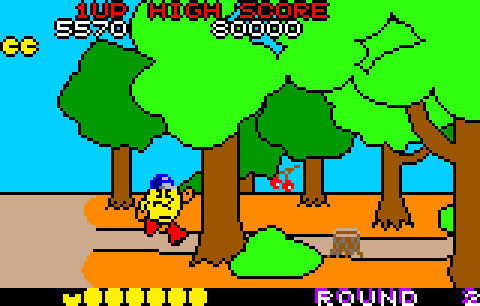
Hey look! Parallax scrolling! I wouldn’t consider that a good thing.
Whereas the TurboGrafx-16 version of Pac-Land just barely won me over, the Atari Lynx version didn’t even come close to a YES! Not even in the ballpark. Like the TG16 port, D-Pad controls are here. Unlike the TG16 build, movement is extremely sluggish. In areas where I had to plot out my jumping, I almost always needed multiple attempts to do it. The typical coin-op cheap enemy placement is back, even though it feels like there’s less enemies in general. Yet, when they do show up, they’re often positioned for maximum pain. If there’s a springboard, there’s probably an enemy lurking near it. Plus, there’s tons of little annoyances, like the view being blocked by trees in the foreground. Hey, it’s neat that the Lynx has parallax scrolling, but I want to be able to see what I’m doing.
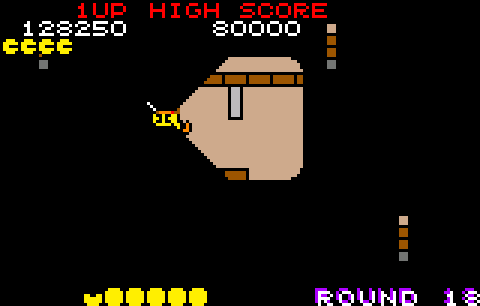
Hey, speaking of which..
There were a couple twists, the first of which is I found a warp zone in the second level that skipped me several stages. I’m pretty sure I pushed on most of the objects in the TG-16 build, but I never warped. Later, one of the castle stages that I enjoy, with the lock and keys, went dark. You only can see a little bit in front of the direction Pac-Man’s facing. I don’t know if this is new to the Lynx build or if this was in the coin-op, but this didn’t happen on the TurboGrafx build. But, that’s it for the nice aspects. The rest of the game is, at best, a huge bore. Like the nearly completely empty return trip that made up Round 20, where the level went on FOREVER with an empty, flat walkway occasionally interrupted by a puddle. It was like three times the length of a normal level. I timed-out, and thank god that doesn’t kill you. I would have been furious.
This slideshow requires JavaScript.
In general, I think these versions of Pac-Land are vastly improved by having save states and rewind. But, I didn’t need those for the TurboGrafx-16 build. Besides, emulation cheating can’t fix a game that has large stretches of emptiness. While the graphics are admirably bright and colorful, Pac-Land on the Lynx just plain isn’t that fun. I can’t imagine anyone ever beat this in the days before emulation. Some of the jumps are insanely unforgiving, and the collision isn’t that good. There’s sections with longs that you have to hop across, but you basically have to aim for the dead center of them. Any other spot and you’re dead in the water. You can’t really try to turn around, either, because you’ll inevitably step off the log. So, while I admire the effort here, and seriously, this murders the Famicom version, Lynx Pac-Land isn’t very good.
Verdict: NO!
 Pac-Mania
Platform: MSX
Released March 28, 1989
Designed by Shaun Hollingworth and Peter Harrap
Published by Namco
NEVER BEEN RE-RELEASED

It looks the part. When you don’t see it moving.
The MSX Pac-Mania is one of those situations where the spirit was willing but the flesh was weak. The scrolling is anything but smooth. Instead, it feels like the game loads in slices. It was almost heartbreaking to see, since the graphics are so well done. Even worse, the gameplay takes place in a tiny box surrounded by a gigantic border. So, there’s no way I had fun, right? Actually, as badly as the MSX version of Pac-Mania chugs, the gameplay is as solid as it gets. You’d think the controls would be unresponsive and the jumping would be hard to judge thanks to the stop-motion-like scrolling. But, that’s not the case at all. I felt all the movement and jumping was well done. I could even pull-off moves like jumping into a small gap between two ghosts, and it was nearly as exciting as in the coin-op. Realistically, there’s no reason to include the MSX build of Pac-Mania in a hypothetical future Pac-Collection. But, I think it’s worthy of inclusion because it’s proof that amazing gameplay and accurate movement can overcome severe hardware limitations. It might not play smoothly, but it plays well.
Verdict: YES!
 Pac-Mania
Platform: Nintendo Entertainment System
Released in 1991
Designed by Marco Herrera
Published by Tengen (Atari Games)
NEVER BEEN RE-RELEASED
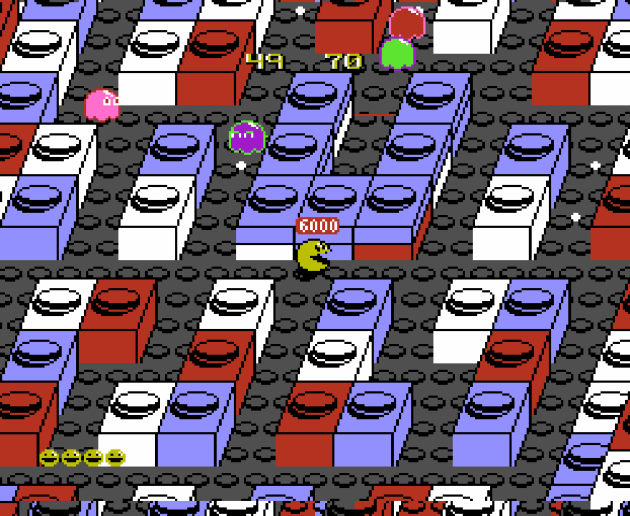
Oh baby! This is FANTASTIC!
OH MY GOD! When you beat the first wave of all four stages of Tengen’s Pac-Mania, something happens. The game loses its frickin mind and speeds up. I wondered if I had somehow gotten the green speed-up power pellet in the last level and not realized it. Nope, because soon after, I got a green pellet and I was moving even faster. “Did this happen in the coin-op and I somehow didn’t notice?” Needless to say, I was very happy playing the NES version of Pac-Mania. By the time this was developed, Atari Games and Nintendo were doing battle in court, so Pac-Mania saw limited distribution. That’s a crime against gaming. It’s one of the best controlling versions of the game, with some of the best graphics on the NES. In some ways, I like it even more than the coin-op.
This slideshow requires JavaScript.
In terms of gameplay, despite the technical limitations, very few sacrifices had to be made to gameplay. If anything, I think it’s easier to recognize the high-jumping ghosts, since they’re black in this version instead of a murky gray (on a game with washed-out graphics to begin with), while the lower-jumping green versions are brighter and stand out more. The biggest difference is in the difficulty. The NES version feels much easier. Ghosts tend to clump-up less, and because of the fast movement and responsive controls, the power pellets are much more effective on the NES. But, that’s a positive change in my opinion. While the faster speed combined with the green power pellet can lead to chaotic movement (the only time I lost a life was when I was green-pilled), it’s just a more fun experience. As much as I love the coin-op Pac-Mania, I think the NES version is better. There, I said it.
Verdict: YES!
 Pac-Mania
Platform: Sega Master System
Released in 1991
Published by TecMagik
NEVER BEEN RE-RELEASED
This slideshow requires JavaScript.
Do you know how bad you have to be to be a bad version of Pac-Mania? After the MSX port, which felt like it was barely working and had scrolling about as smooth as Captain Crunch, I figured the gameplay was so good that it had to be bullet-proof. Screw up the speed and the gameplay is still good. Screw up the scale and the gameplay is still good. Well, the Sega Master System version of Pac-Mania screws up both the scale and the speed. The levels feel positively MASSIVE, which is probably owed to the movement speed. The gap between each dot feels too wide. At first, I thought it would lend a uniqueness to the game. It practically felt like Pac-Man taking place inside a canyon, and I’m not even kidding. But, I noticed that I was going huge gaps between seeing any ghosts. That was red flag number one. Then, after the first wave of four mazes, the difficulty scaled up. The game-changing speed boost of the NES doesn’t really happen here. The pace does go up, but the enemies start to cheat, and the gameplay completely craters.
This slideshow requires JavaScript.
So, how does one ruin one of the all-time great maze chases in Pac-Mania? Well, apparently whoever made Pac-Mania must have been really high on female empowerment, because Sue is insanely, game-breakingly overpowered. She’s allowed to do u-turns. Try to jump over her and she’ll just turn around, often being right underneath you. Yep, that’ll do it. Actually, most of the ghosts seem to also be able to do u-turns, but by time I reached this point in the game, the only ghosts I ever saw were Sue and the jumpers. Sue moves ultra-fast. MUCH faster than you do, even if you power-up. Chomp her as far away as you can get from the ghost house and she’ll still return to your position almost instantly. It completely ruins Pac-Mania, because while YOU’RE moving at a normal speed, she’s like Usain Bolt. Faster than any ghost I’ve seen in any Pac-Man game ever.
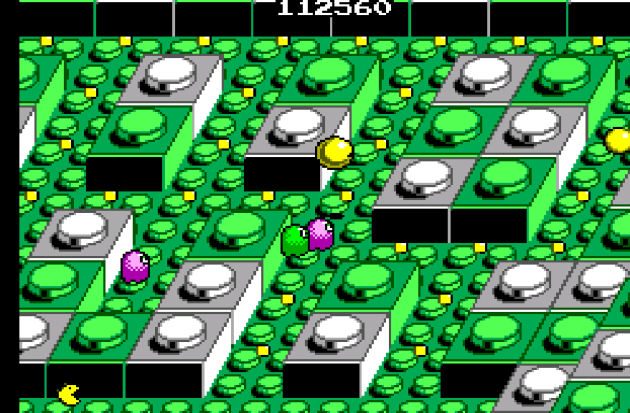
I tried to avoid cheating as much as I could in this feature, but curiosity got the better of me and I decided to try to rewind my way through this. Even with rewind, I don’t see any possibility for survival in this stage. The enemies ALL move faster than you, and when you try to jump over them, they do a u-turn and catch you when you land. This is broken.
Before this started, to be honest, I wasn’t loving Pac-Mania on the Master System. It cuts too slow a pace, and the jumping physics are nowhere near as useful. The enemy design sealed its fate in the NO! pile. It’s also probably the emptiest Pac-Man game. I never got a single max-value chomp, even when I tried to string combos together in the early stages. The ghosts just spread out too much in the early stages, before they absolutely swarm you at the speed of light in later stages. And then there’s little annoyances. The green power pellet wears off whether you eat a power pellet or not, and I’m pretty sure there’s only like three colors of ghosts. This doesn’t feel like an adaptation made by someone who had a lot of love for the coin-op original. However, I do think there’s value for game developers to see where a great game can go bad.
Verdict: NO!
 Pac-Mania
Platform: Sega Genesis
Released in 1991
Designed by Arti Haroutunian
Published by Tengen (Atari Games)
NEVER BEEN RE-RELEASED
This slideshow requires JavaScript.
Weirdly, even the mighty Sega Genesis wasn’t able to defeat the NES version of Pac-Mania, even though it was published by Tengen. Don’t get me wrong: the Genny build of Pac-Mania is fine. Instead of waiting for a cycle of levels before speeding-up your movement, this allows you to turn it on from the start. In fact, it’s set up the same way as Tengen’s Ms. Pac-Man games, where you can turn it on permanently or make it a toggle. If you choose toggle, holding the C button sprints you, while pressing A turns it on/off without the need to hold. I love it. What I don’t love is how my favorite idiosyncrasy from the coin-op no longer works: the crush technique. On the coin-op and NES versions, jumping on a power pellet instantly puts the ghosts in FRIGHTENED mode, whether they’re standing on the power pellet or not. The old school yard “tie goes to the runner” rule. And like a know-it-all in the school yard, the Genesis version is like “um, wait, you’re in the air. The ghosts are the runners.” So, attempt the crush move and you die. “Hey, YOU said tie goes to the runner!” That I did. That’s not the sole reason I prefer the NES version, but it ranks. While it might not be my favorite Pac-Mania, it’s still Pac-Mania, and I really enjoyed it on the Genesis, warts and all.
Verdict: YES!
 Pac-Man: Arcade Enhanced
Platform: Atari 2600
Released April, 2011
Unauthorized Remake
Developed by Rob Kudla
This slideshow requires JavaScript.
All props to Rob Kudla, the late Kurt Howe, and all other developers who put in the work for this fun project. “What if Atari had made a good version of Pac-Man for the Atari 2600?” It’d look something like this. All four ghost colors are represented here, and even though there’s often flicker, there isn’t always. That’s a treat by itself. I do admit frustration in what the options are. There’s a lot of them, but I couldn’t find anything resembling an instruction manual for what the various toggles do. The game at Internet Archive says there’s four mazes, but I didn’t find those either. So, I played through several modes (and several different versions of this game), and I found that the ghosts have SCATTER/CHASE modes and Blinky chases you well. There is a prominent exploit, at least in the version I played, where I could pass right through a ghost consistently when it and I were cornering. There’s also weirdly the ability to turbo-boost your movement by holding the button down. I’m not sure why that’s in there but it basically nerfs the difficulty and led to my father swatting at my hand when he caught me using it. In terms of gameplay value, of course there’s better versions of Pac-Man. But as a novelty, this actually makes a charming and wonderful “what if?” and an all-encompassing Pac-Collection absolutely needs it. This is a labor of love.
Verdict: YES!
 Baby Pac-Man
Platform: Atari 7800
Released April, 2018 (?)
Designed by Bob Decrescenzo
Unauthorized Port of the 1982 Pinball-Game Hybrid
This slideshow requires JavaScript.
I feel like congratulations are in order here, because developer Bob Decrescenzo has done the unthinkable: made Baby Pac-Man fun. A big misnomer about this god awful piece of crap of a pinball-video game hybrid pin is that it was a big flop financially, or perhaps some kind of absurd rarity along the lines of Professor Pac-Man. Disregarding the quality of the game, Baby Pac-Man was neither a bust nor is it particularly rare. Ever heard of the pinball tables Attack From Mars? Theatre of Magic? Elvira and the Party Monsters? Black Knight 2000? Medieval Madness? Tales of the Arabian Nights? Sure you have. They’re all really famous pins, and Baby Pac-Man out-sold every single table I just listed. All of them. 7,000 units might not sound like a lot, but as far as coin-ops go, it’s not even in the neighborhood of scarce. While finding ones in working condition might require a little bit of time, if you have the money and really want to own this disaster, you should be able to find one.
This slideshow requires JavaScript.
Oh, I’m sure it lost money. General Computer, claiming they created the concept of a Pac-Family, sued Midway over Baby Pac-Man, and they won. Also, the game is terrible. I want you to keep in mind that all the horrible things I’m about to say about Baby Pac-Man don’t reflect Mr. Decrescenzo’s efforts. Seriously, this is a fantastic port of a terrible game. Baby Pac-Man is one of the worst pinball layouts ever made combined with the absolute worst arcade version of Pac-Man, where the ghosts have no intelligence, none of the grace of SCATTER/CHASE, and they can even do u-turns. They don’t even have unique personalities. They all have one attack pattern, and one only: you. The only difference is in their speed, but that varying speed and the fact that they hone-in on your current tile means they will always divide and conquer at every junction. Your only possible means of winning is to build up your tunnel-speed on the pinball playfield and swap between the two, working the dots very.. very.. slooooowly. It’s unplayable and absolutely shameful that it was allowed to be released in the state it’s in.
Right on!
How can it possibly get a YES!? “Fixing the AI ought to help.” Yep, he added a toggle that lets you change the brain dead ghosts to the traditional SCATTER/CHASE, Blinky-Pinky-Inky-Clyde attack pattern ghosts. It works great, and Dave Nutting seems to have fallen ass-backwards into having three decent (if unspectacular) mazes that work so much better with the ghosts fixed. Okay, so it’s a little extreme that two of the three mazes have the same corners as Ms. Pac-Man’s third maze, the elements I called “killing cages” but at least they’re more open in this version. Now, the big twist is that there’s no energizers at the start of the game. You have to earn them on the pinball half of the game, along with the ability to zoom through the tunnel super-fast. So, in order to be a successful port of Baby Pac-Man, the simulation of the real-life pinball aspect has to be good. On the Atari 7800. There’s no way, right?
Yes way.
Bob Decrescenzo should be especially proud of the pinball portion of his game. Given the limitations, he has created a very good 8-bit pinball simulator. Life-like? Of course not. But are you able to aim? Yep. Can you trap with both flippers? Yep. Do dead flips work? Yep. I’m insanely impressed. I’ve played a lot of 8-bit pinball simulators, and this is hands-down the best one. Actually, an upcoming review is going to cover 8-bit conversions of real life pinball tables such as the NES version of Pin⋅Bot and High Speed. I’d be happy if they were this accurate. Now, with that said, Baby Pac-Man’s pinball side of the equation is almost as bad as the original coin-op’s game of Pac-Man was. The playfield is too cramped and the most important targets are directly above the flipper gap: the drop targets that eventually activate the energizers. They’re just poorly placed, and besides them, all you really have to shoot is the two spinners. Shooting the left one increases the value of the bonus fruits, while shooting the right one increases how fast you go through the tunnel.
Yep, the scoop animations are here too.
For what it’s worth, I think the video version plays better than the real life one, which is designed for short balls. In fact, Baby Pac-Man in general is designed with very short games in mind. Kill players quickly, so that they have to get off the machine or put more money in. Clearly Bob Decrescenzo wanted players to actually enjoy Baby Pac-Man. I imagine he must love the game, because what he’s done here is truly special. While it’s not life-like, the ball bounces and doesn’t have that “living ball” feel that I normally hate about old timey video pinball. It even has an effective nudge. If Bob doesn’t make more video pinball, the world is missing out. He’s also a jerk for putting me in this position. How do I rate an amazing conversion of such a bad game? Well, I can’t justify the unbalanced scoring of Baby Pac-Man, but in terms of playability? WOW! This is one of the best “homebrews” (I hate that term) I’ve ever played. A truly astonishing effort that should be celebrated by gamers everywhere. You know what? I had fun. Lots of fun, actually. This doesn’t just have value as a novelty. It’s genuinely good. It feels like the right game to end this feature on.
Verdict: YES!
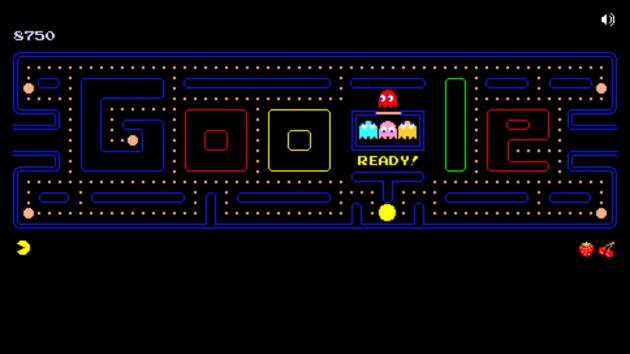
“DO THE GOOGLE DOODLE!” Okay. The Google Doodle Pac-Man is a cute novelty, I guess, but as a Pac-Man maze? It’s pretty horrible, actually. It’s too big, for one thing, which makes maximizing the power pellets tricky. There’s not enough gaps or turns to be able to scratch out distance between you and the ghosts. The massive straightaways become problematic as you advance. It’s f’n glitchy too. I passed right through one of the ghosts at one point, and the turning bug couldn’t explain it. It was on one of the many extended straightaways. It’s awesome that Pac-Man is so iconic that it became one of the most famous Google Doodles of all time, but in terms of its gameplay merit? I’d give it a NO!
 The Addams Family


 Cathy: MASTERPIECE – GREAT on Nintendo Switch
 Pac-Mania



 Alice in Wonderland


 The Texas Chainsaw Massacre




 Michael Jordan: Chaos in the Windy City




 Goliath Depot


 Goliath Depot did a good enough job that I think your typical neo-arcade fan would enjoy it. It’s not brainless, that’s for sure. I can’t remember any arcade platformer where I had to stop and think about my next move more than this one. I’m THERE for a sequel, because Vidvad Games proved they have the chops. But, I’d tell them the same thing I tell every developer: bring your best stuff early in a game. Even if there were only 4 reverse gravity stages in the game (and there really are), I’d not have been able to put Goliath Depot down once I saw them. Nothing about those early levels stood out. They were fun, but do you know how many fun games are out there? The stuff that would have had me losing my mind trying to convince people to buy this don’t show up until the literal end of the game. To be clear: I liked Goliath Depot. You should try it, especially if this genre is your jam. I also don’t think this came close to realizing its fullest potential.
  Legend of Illusion


 Land of Illusion Starring Mickey Mouse


 World of Illusion Starring Mickey Mouse and Donald Duck



 Indie Gamer Chick
You must be logged in to post a comment.