Spoids

Spoids received a Second Chance with the Chick, which corrected many issues with the game, resulting in it getting the Indie Gamer Chick Seal of Approval.  For my continued thoughts on the game, read it as well

Update: Spoids now costs 80 Microsoft Points.

If someone asked me what my favorite genres are, I probably wouldn’t think of tower defense.  That’s kind of odd, because it’s not uncommon for me to like the tower defense games I play.  It’s actually funny.  When the time comes to rattle off my favorite games, stuff like Plants vs. Zombies, GemCraft, PixelJunk Monsters, Crystal Defenders, or Ninjatown probably wouldn’t warrant a mention.  Yet all the games I just listed have likely stolen more life from me than smoking has.  I can’t put my finger on why this niche genre doesn’t hold a special place in my heart.  Perhaps it has to do with these games having a drop-off point where they stop feeling fun and begin feeling more like a time sink.  It’s the same reason why MMOs like World of Warcraft or Phantasy Star Online also wouldn’t make the short list of most amazing games I ever played despite investing years of my life playing them.

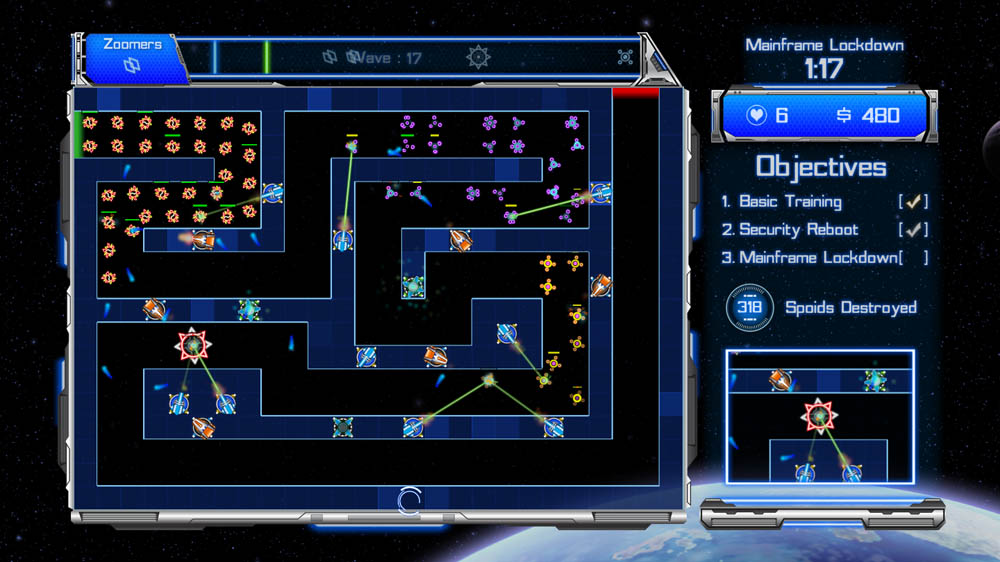
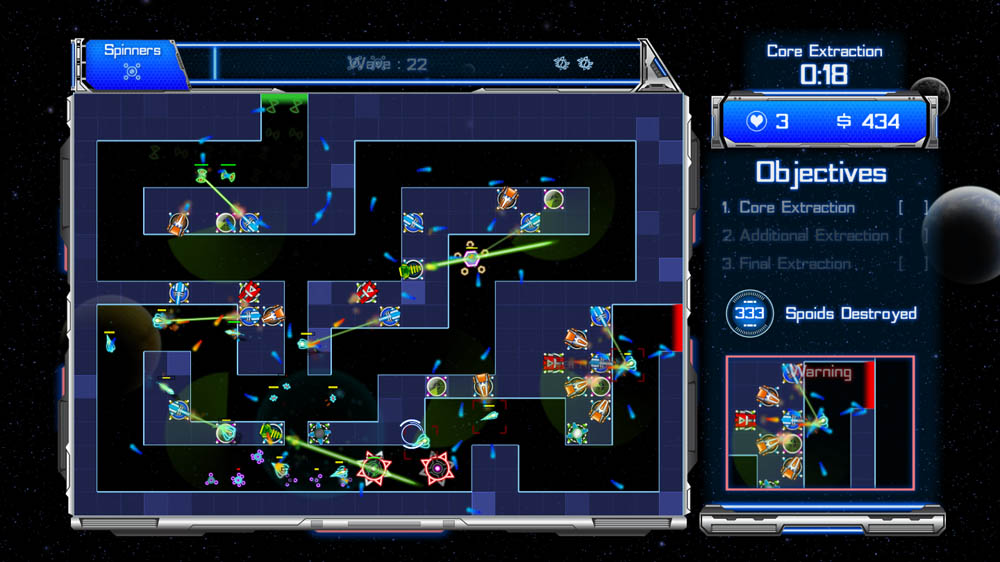
One of four screenshots chosen by AirWave Games to showcase their game on the Xbox Live Indie Game marketplace. And thank God. I was worried this would be one of those titlescreenless games for a second there.

I’m not sure that’s it though.  Because I’m typically satisfied when I finish a tower defense title.  And not just in a “thank God I don’t have to play any more of that” type of way.  Oh, that factors in a little bit.  Among other things, it’s typically around that time that my brain starts to remember to do important things like doing my job and taking a shower.  But it’s bizarre, don’t you think?  It’s almost like upon completion of a tower defense game, my brain immediately deletes any record of me having fun.  Some kind of survival mechanism, no doubt.

Spoids is the first traditional tower defense game I’ve reviewed thus far.  I’ve done hybrids like XBLA’s Dungeon Defenders, action-bent ones like Video Wars, and whatever the fuck you would classify The Cannon under.  Oddly enough, the two XBLIGs were leaderboard games and Dungeon Defenders was one of my favorite games of 2011.  I honestly don’t know why this isn’t one of my favorite genres.  I’m starting to think I might be unconsciously racist against it.  Maybe that’s why I was so apprehensive to review Spoids.  It’s one of those games.

Spoids has a nifty presentation and semi decent voice acting (which might be a problem for other reasons, more on that later), but this is really a plain-Jane, no frills, utterly generic tower defense game.  It’s kind of fun too.  Unfortunately, the balancing in difficulty is a bit off, and by “a bit” I really mean “there is no balance at all.”

There’s eight levels in Spoids, so the game is pretty short.  It’s single player only, so the only replay value comes in the form of medals.  Every stage is graded on the platinum-gold-silver-bronze scale and is based on various benchmarks the game sets for you.  Each objective is clearly spelled out, but usually comes down to staying alive for X amount of time and/or not taking damage.  This is a problem.  I totally aced the first stage and figured I was going to be gung-ho to rip Spoids to shreds in about an hour.  Nope.
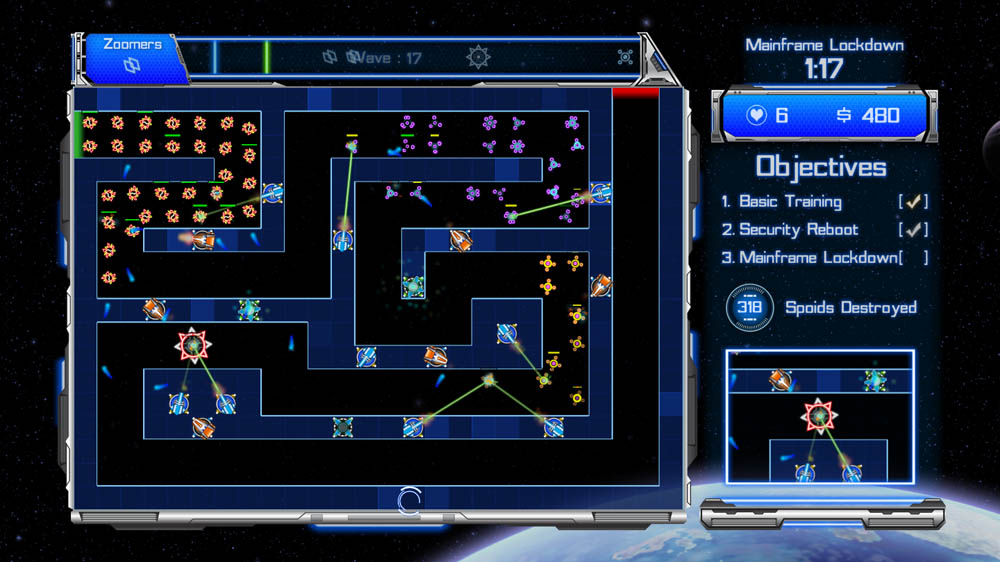
It’s rare that I talk to my fellow critics about a game before I write my own review, but in the case of Spoids, I talked to my amigo Tim Hurley of Gear-Fish, who did a review of this a few days ago.  Like me, he didn’t score many medals outside of bronzes.  He also didn’t finish the game.  As it turns out, I actually made it further than he did.  What it comes down to is the speed of which enemies hit is much faster than you can reasonably be expected to build your defenses.  You only get extra money based on the enemies you kill, so you’re very limited in what you can do to defend yourself.  You can set turrets to attack specific enemy types, or fire on them based on parameters that you set, but otherwise the scope of what you can do is limited.  In later stages, where there are multiple enemy entrance points and various channels for them to deviate from, I tried and tried and tried to do anything to score better than a bronze medal and couldn’t do it.  I’m convinced that it’s probably impossible sans one specific method which the developers themselves figured out in development.

Spoids was the straw that broke the camel’s back and inspired my recent editorial on game difficulty.  As maddeningly tough as stages 4 through 7 were, at least I was able to beat them (after multiple attempts with each), albeit in the most minimum way possible.  Stage 8’s only goal is “fend off the entire attack.”  Couldn’t do it.  Spoids has several enemies that you have to build specific towers to fend off.  There’s invisible enemies that phase in and out.  You need to build radar towers to make them visible.  However, these have a limited range (I swear it seemed more limited by game’s end) and cost money that can’t be spent on things that actually attack.  Likewise, waves of flying enemies come in that are only vulnerable to missile towers, which don’t attack anything else.  The thing is, the missile towers kind of suck at their job, so you need to build a lot of them.  But, they cost way too much money given that they can only attack one enemy type that appears only sporadically.  Yet, even when caking half the screen in them on level 8, the flyers still got by.  I shit you not.

There’s also carrier enemies that are total bullet sponges.  Even when putting up the most powerful turrets, along with stuff to slow them down (which you can’t really afford on stage 8 given all the other shit you need to be doing), they take an absurd amount of hits to destroy.  And once they die, they unleash fast-as-hell enemies that skate right past your defense and lead to your failure.  You have to juggle all of this.  I never came remotely close, and I probably tried no less than fifty times using no less than fifty different combinations of defense.  Again, I’m sure someone on the development team beat this (at least I sure hope they did) but literally nobody I talked to this week about the game (six people, including Tim) could.
Despite having fun, I can’t recommend Spoids in its present state, because I believe in a fair fight and I don’t believe you get one with it.  I do have to note, before hitting the brick wall at the very end of the game, I did have fun.  I think.  Again, my brain deletes all memories of joy related to tower defense titles.  But I have found various post-it-notes scattered throughout my house saying “Spoids is fun.  Don’t forget.”  Yes, it is fun.  It’s also infuriating and maybe even impossible.  You know what?  I want them to fix the issues and I want to do a Second Chance With the Chick on this game.  It’s very rare I say that in a review, but it’s true.

Oh, and in closing, the Spoids is 240 Microsoft Points, which is overpriced in my opinion.  Of course, their hands were tied because it came in at 200MB.  The cut off for 80 Space Bucks is 150MB.  Which leads me to ask this question: where the fuck is all that 200MB going?  Maybe in voice overs.  It has those.  They’re nicely done, but totally unnecessary.  Otherwise, the graphics are kind of simple.  Not horrible, but not exactly cutting edge or anything.  I can’t tell you what I thought about the music because I typically play games with the sound muted.  I like to hear myself think.  But seriously, what happened to this game?  How did it balloon to 200MB?  Why is it so fucking hard?  And why am I tempted to go take another crack at it?  It’s got some Spoiding to do.

See, I did a Ricky Ricardo thing there.  He was Cuban, like me.  Also, not funny.

Spoids was developed by AirWave Games

IGC_Approved240 Microsoft Points have a father who thinks doing the Ricky Ricardo “Lucy, I’m Home” voice every single time he gets home never gets old and is WRONG in the making of this review. 

Spoids is also available on Desura for $2.99.  This version is unverified by Indie Gamer Chick.  The XBLIG version is Chick-Approved and ranked on the Indie Gamer Chick Leaderboard.
An Untitled Soapbox on Game Difficulty

I want to once against note before I begin this monologue that I’m not a game developer.  I’m just a chick who plays games.  Because of this, I’m not sure how well any advice I offer towards the process of development will be received.  That’s especially true when you consider that I haven’t been involved in Xbox Live Indie Games for a full year yet.  However, I have something I think needs to be said and I have reviewed nearly 200 XBLIGs.  That’s probably more than most developers have played.  So I feel somewhat qualified to offer you advice in the politest way possible.  Let’s see, how should I start this?

You guys are stupid dickweeds.

That’s usually what I think when I play a game where the difficulty curve spikes straight up out of nowhere like it just popped some digital Viagra.  I won’t go so far as to say it’s the biggest problem on Xbox Live Indie Games, but it is the one that has ruined the most good games.  This also isn’t a plea to dumb down your titles.  I like a challenge as much as anyone.  But I like a fair challenge, one that I feel tests me on the level of which I have progressed.  Often, XBLIGs play out at a rate equal to instructing a child on proper cap-gun safety, then shipping them off do front-line infantry duty in Baghdad.

Games should challenge a player.  A game that is too easy has to be exceptional to leave an impression on the player.  On the flip side of that, a game that is too hard is more than likely to leave impressions on a player.  And also the player’s controller, couch, television, walls, etc.  Now granted, some gamers want that.  But those that do have a genre all to their own for that.  This isn’t an editorial on punishers.  I’ll leave them out of it.  This is about any average game where a developer loses track of reality.

Lumi's difficulty curve could be more accurately described as a straight horizontal line immediately followed by a straight vertical line, and it ruined the game.

I’ve spoken with many guys on the XBLIG scene, and we all agree that developers often forget that they are the best player at their own game.  What happens is they play the game themselves hundreds of times, to the point where they know every little nuance about it.  They know the best ways to defeat enemies, the best angles to clear jumps, the best places to camp, or the best places to situate your defenses.  In no time at all, the game suddenly seems too easy.  The worried developer tries to correct this by beefing up the difficulty in a way to challenge themselves.  As a result, the finished project is an impenetrable mess fueled by swearing and rage quits.  The perplexed developer doesn’t realize this, because they could still beat the game, so everyone else should be able to as well.

Of course, the developer forgot that they were making a game to challenge everyone.  That’s really what it boils down to.  They created a game that was challenging for them but not impossible.  By time the game enters peer testing and peer-review, the developer is (perhaps rightfully) full of pride.  After all, they just made their very own video game.  Unfortunately, the resulting ego trip usually makes them oblivious to real concerns of difficulty that are brought up.

From what I’ve gathered from my time on the scene, there seems to be three types of peer-review testers in existence.  The first is the genuine tester who will play a title all the way through and give honest feedback.  The second is the cheerleader.  These are the guys who are just a little too in love with the scene and treat every game they come across like the mother of a spoiled child with a sense of entitlement.  They offer no constructive criticism, because that might hurt someone’s feelings.  Chances are they probably don’t even play a game all the way through to begin with, and if they dislike it, they’ll still slap on the pom-poms and congratulate you for whatever miniscule thing they can come up with.  “Way to not misspell the title of your game.  Man, XBLIG’s fucking rule!”  The third is the kickback reviewer.  They also probably don’t play games all the way through, nor do they offer any feedback.  They’re simply trying to pass games so that when their title is up for review, they can get it passed with minimum resistance.

The next-to-be-reviewed Spoids is a genuinely fun game that morphs into a lump of digital hatred for humanity in its final act.

So basically, two-thirds of peer-reviewers out there don’t actually do any work.  If someone with real concern over a game’s difficulty says something, the developer ignores it.  After all, nobody else said anything, and they were still able to beat their own game.  Maybe the guy who said the game is too hard simply has no skills.  I’m guessing there is also the occasional tester that’s too embarrassed to admit they found a game overly hard.  Guys, don’t worry about it.  I admitted I couldn’t throw a Dragon Punch in Street Fighter II and was able to weather the gentle barbs that followed.

Dragon Punch? Ha Ha!

Developers often don’t realize how difficult their games are.  It comes down to play testing for this to sort itself out.  It also comes down to expecting straight-forward honesty in the process.  Do your due-diligence in the testing process.  How reliable are the testers you’re getting?  If they lean too much towards the cheerleader set, make note of it, and don’t look to them for the real answers to the questions you should be asking.  Stuff like “is my game too difficult?” or “do the controls feel right?”  Don’t rely on just your fellow developers either.  Bring your friends into it, and be clear to them that they can’t possibly hurt your feelings if they think your game sucks.  Even if that’s not true.  I concede that getting people outside of the scene to play an XBLIG is tough.  But hell, you’ve already spent X amount of dollars.  What’s spending $20 more on a pizza and some soda?  Gather your friends.  Gather their friends.  And when they play the game, keep your mouth shut and your eyes open.  Don’t offer any tips or pointers.  If possible, don’t even tell them that it’s your game.  Just watch it play out.  You’re about to find out exactly how good it is.

There are some developers out there who truly don’t give a shit what anyone has to say and want no feedback outside of kudos and congratulations.  There’s no point in reaching out to them, because there is no helping them.  This goes out to everyone else: you can do better.  You deserve better too.  Developers need to ask for blunt honesty before their game goes on the marketplace, because the last thing they want is to hear it first from me.

See those buttons below that allow you share this review with the world?  If you enjoy my stuff, do me a favor and use them.

Without Escape

I really, truly don’t get the appeal in point and click games.  I’ve seen my father, a fairly jovial individual if there ever was one, lose his shit and degenerate into a snarling, swearing madman whenever he can’t find his car keys.  Somehow, the old man always misplaces them and it drives him crazy.  Point and Clickers are the video game version of “where the fuck are my keys?”  A scavenger hunt where you go from room to room looking for trinket A that goes into hole B based on the always batshit insane logic of the developer.

Without Escape cranks the nutbar meter up all the way to raving lunatic with some of its logic.  You play as a dude who wakes up in his house and everyone is gone.  It tries to present itself like one of those “escape the room” games, but it fails.  It feels like any other Plicker game, right down to the stupid “pick up the items and use them in ways you would never actually use them” idea.  I’ll give you some examples.  In one scene, there’s something shiny in a toilet, but the dude refuses to put his hand in it.  Right, because when you’re in a situation where you’re alone and terrified, you’re really worried about getting a little shit on your hands.  If I’m in the dude’s situation, shit is already in my pants by this point and probably trickling down my legs, so what does it matter?

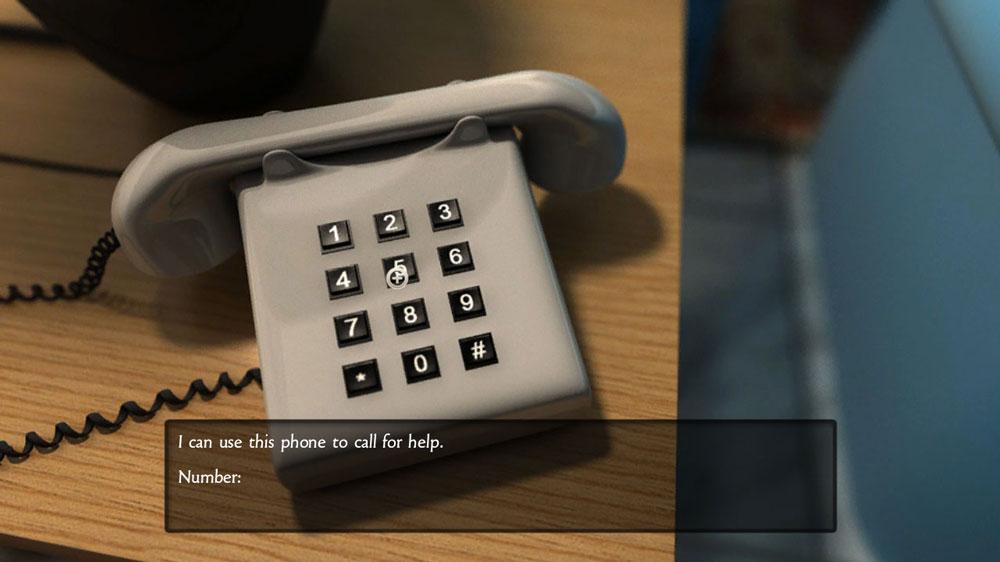
What's the number for Ghost Busters again?

But no, Mr. Prissy wants to avoid the poop in the toilet in his own bathroom (which means it’s probably his own) and needs something to reach down and get it.  Now despite being in his house, with all his belongings, he has no idea where anything he could use to get this is.  Off the top of my head, I could rattle of multiple things I could use to fish a key out of a toilet.  Right next to the bathroom is his closet, which I’m guessing has a coat hanger in it.  Just bend the coat hanger into a fishing hook and not only do you have a way to retrieve the key, but you also have an emergency abortion kit if the need ever arises.

Oh wait, the closet door is locked.  And we’re also too much of a sissy to kick the door open.  Or any door, for that matter.  Why does nobody ever kick open doors in these games?  They search around for a key that they need to accomplish some important task when their foot and the laws of physics are right there the whole fucking time!  Hell, if someone really is fucking with you, kicking doors open might be a good way to show them who the boss is.  But no, he doesn’t want to hire someone out to fix the door, so he searches around for something he can use.  And what does he find?  A sweater.  No really, that’s what you use.  He wraps his arm in a sweater to grab the key.  The character even notes that it doesn’t work all that well.  Mind you, there’s a shower curtain right fucking there next to fucking toilet!  Shower curtains being things that repel water.  I’ve worn sweaters and I live in the San Francisco Bay Area.  I promise you, they do everything BUT repel water.

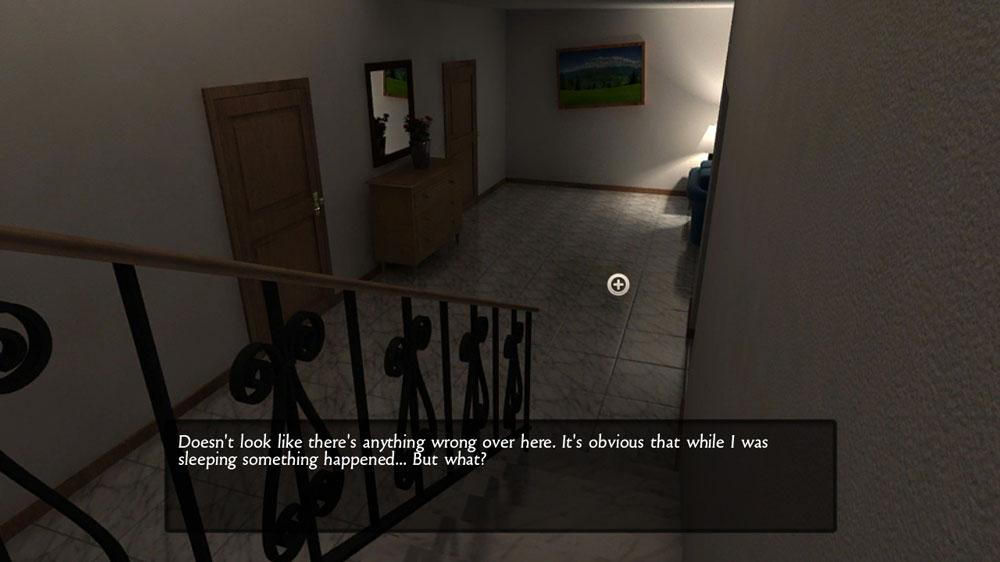
I can’t really complain all that much, because this happens in every point and click game.  I can complain about the graphics.  The screen is too dark and you can’t adjust the settings for it.  In some rooms, the back walls are nearly completely enveloped in darkness.  After much complaining from Brian, I finally relented and adjusted the brightness on my television.  It didn’t help.  Stuff was still not viewable.  Stuff that apparently should have been.  I clicked in the darkness and my dude described a painting to me that I couldn’t see. It’s really annoying.

The ending is fucking abysmal too.  The game sets itself up as a psychological breakdown, but ends up going a bizarre Sci-Fi route involving the destruction the entire universe and you being handpicked to build the next one.  It makes no sense at all why they would choose to fuck with you the way they have.  Whatever.  The story sucks, but the game doesn’t really suck any more or any less than the average point and clicker.  If you’re into this type of thing, you’ll probably enjoy this.  If you’re like me and think they’re fucking stupid, it won’t change your mind.  Now if you’ll excuse me, I have to go hide my father’s car keys again.

Without Escape was developed by MaikelChan

80 Microsoft Points inch closer towards their inheritance, one “misplaced” set of car keys at a time in the making of this review.

See those buttons below that allow you share this review with the world?  If you enjoy my stuff, do me a favor and use them. 

Indies in Due Time: Easter Special – April 8, 2012

Happy Easter, and surprise!  Indie Gamer Chick and Brian are here with some new XBLIG trailers for your consumption.   Hit it!

Read more of this post

Choc-a-riffic

Easter is upon us, so I figured I would review a game based on the Easter Bunny.  Even though I’m still not sure what bunnies with colored chicken eggs has to do with the death and resurrection of Jesus Christ.  Quite frankly, a zombie game review would be more appropriate.  Actually, the explanation for bunnies and Easter is kind of comical.  Apparently people in the middle ages were stupid and assumed that rabbits were self-reproductive.  Thus, they would give birth as virgins and had some kind of connection to the Virgin Mary.  Okay, so I’m still not sure how this ties to the death and resurrection of Jesus Christ.  Screw it, let’s play Choc-a-riffic.

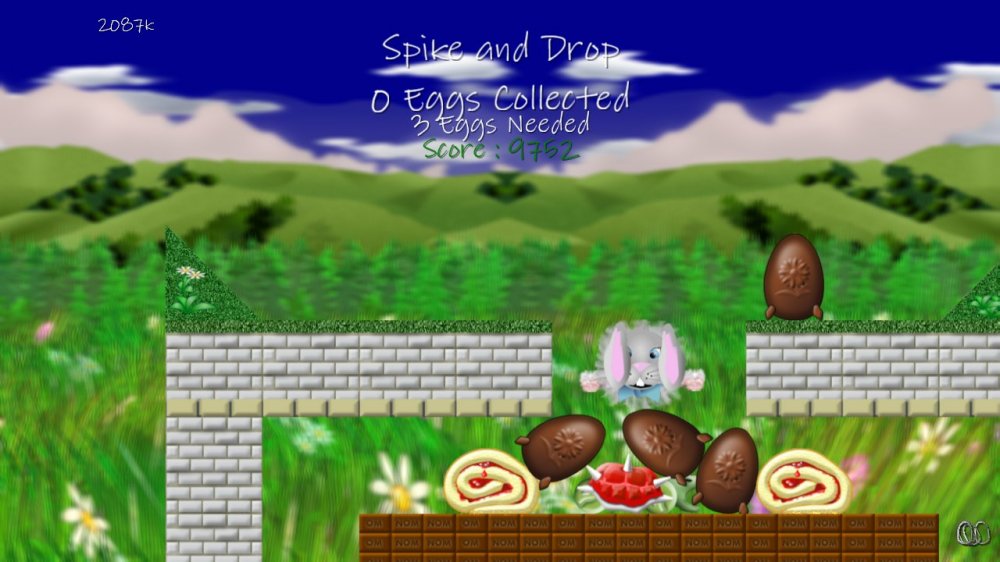
It’s a physics-puzzler where you play as a rabbit that has to push chocolate eggs to an exit.  You do this by pushing them with your body, or shifting the position of your arms with the right thumb stick.  You jump with the right bumper, because the developers decided to make things as inconvenient as possible.  And, well, that’s pretty much it.

Here comes Peter Cottontail, hoping down the bunny trail.. and he's coming for your immortal soul.

Choc-a-riffic is crap-a-riffic.  Hopefully everyone understands that I’m trying to convey that it’s terrible.  The physics are unstable.  A few times I pushed an egg, saw it bounce into another egg, and then launch into the air.  Other times, I would try to jump in the air and fling upwards like I had just huffed two condensed tons of helium.  The controls are crap, and the main character is a little creepy.  Based on the subject matter, I’m guessing Choc-a-riffic is aimed at the kiddie set.  If so, they should be warned that -I- was almost traumatized when I “accidentally” steered the rabbit into a fire, then left him there just to see what would happen.  I figured he would eventually do what every video game character in the situation would do: a backflip followed by laying down.  Instead, the little fucker caught fire and continued to walk around in screaming agony, like he was the bunny version of Freddy Krueger.   Wait a minute, Freddy kept dying and coming back from the dead.  Just like.. oh my God, IT ALL MAKES SENSE NOW!

Choc-a-riffic was developed by Projector Games

80 Microsoft Points said Father forgive me for I have sinned.  It has been seven days since my last confession.  Well Padre, I believe I screwed the pooch this time.  I compared my Lord and Savor Jesus Christ to Freddy Krueger.  No, it wasn’t exactly directly.  More in a roundabout kind of way.  It’s not that I believe that Jesus would knife kids in their dreams or anything like that.  Wait, just to make sure, Jesus didn’t do that, did he?  Father?  Father?  In the making of this review.  God, I hope my parents never read this one.

Gameplay footage courtesy of Fredrick.

48 Chambers

48 Chambers received a Second Chance with the Chick.  Click here to read it.  Consider the new review the definitive one.

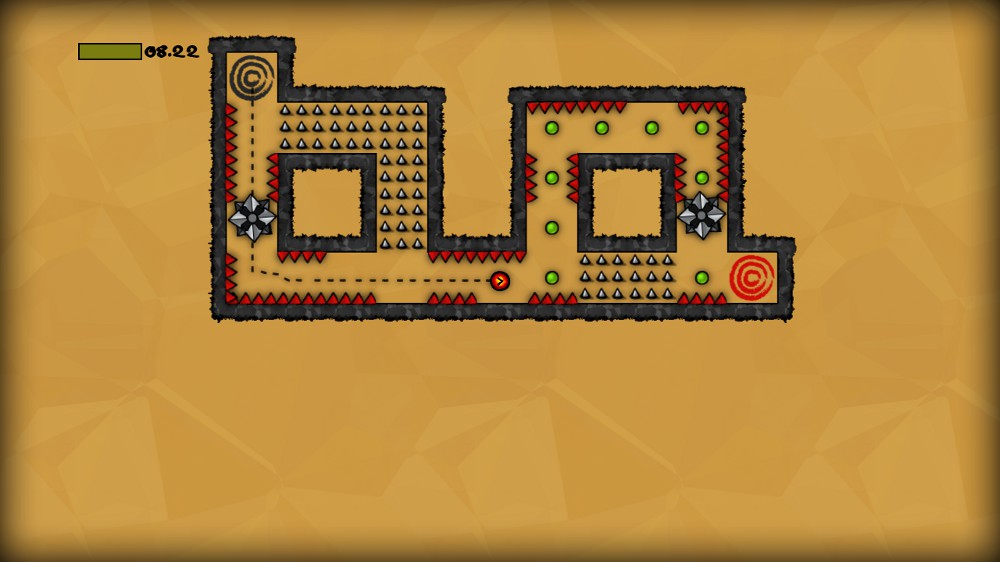
48 Chambers is kind of fun.  It can also fuck off.  I don’t take telling stuff to fuck off lightly.  I reserve it for things that I might care about.  In the case of 48 Chambers, it has clean graphics and an interesting hook.  Think of it as a top down dexterity-tester, sort of like N or maybe a little like a previous game I reviewed here, Crazy Balloon Lite.  The idea is to navigate a ball past obstacles and to an exit before you run out of time.  If you pick up any dots along the way, they add to the timer.  Sometimes you have to first pick up keys that open doors.  All really straight-forward maze type of stuff.  But it can be fun.  I actually wish I could try it with an old-timey trackball like coin-ops had back in the day.  Apparently I could, if I bought the PC version.

But I didn’t buy the PC version.  I bought it on Xbox Live Indie Games.  And it can fuck off.  Not because of the controls, which surprisingly work well on a joystick.  When Brian and I previewed this for Indies in Due Time, my biggest fear was having loose control that would render the game unplayable.  Totally unfounded.  The controls actually lean towards the heavy side, and this works.  It makes it very unlikely that you’ll accidentally skid off into a spike.  It’s not a perfect solution to a mouse, or especially a trackball, but it does the trick.

No, the game can fuck off because it lacks two very key ingredients.  One, there’s no continues.  Once you game over, you get to start all over from level one.  I’m not a big fan of this concept for gaming.  Continuing is kind of a big deal to me, because I have an aversion towards playing things I’ve already done before.  I want to finish something and be done with it.  I don’t want to keep starting over from scratch.  48 Chambers is a game that relies somewhat heavily on trial-and-error, yet if I run out of lives twenty levels in, I have to play the previous 20 levels before I can continue to trial and error my way any further.  Fuck that.  It’s 2012.  The concept of being able to continue a game was kind of established around 1980.  I don’t see how it makes me a bitch to expect a gaming convention that has proven to be effective and valuable for over thirty fucking years.

But, I could have put up with that if 48 Chambers had online leaderboards.  Which it does.  If you have the PC version.  Which I don’t.  The excuse for the lack of one on XBLIG is the same old shit.  It’s not a real leaderboard, it’s a crappy peer-to-peer one, blah blah blah.  Who cares?  Ghettoized XBLIG leaderboards are better than none at all.  In some games, like for example the #1 game on this site, the presence of one can make the difference between being a leaderboard game and myself arranging a picket at the developer’s house.  With no continuing, the only reason I would have to press forward and continue playing the game is trying to land a spot on that board.  So 48 Chambers can go fuck off.  No continues.  No leaderboards.  It needed one or the other, and it has neither.  Why would I keep playing?  Pride?  Right, because being able to beat a video game that will have a user base somewhere south of the membership of the Mother Teresa Erotic Fan-Fiction group on Google will provide me with a real ego boost.

48 Chambers was developed by Discord Games

80 Microsoft Points would have rather had DLC for Take Arms in the making of this review.

Arkedo Series

Thankfully the code-giveaway portion of this feature is over with.  I had a total of nineteen entrees.  Nineteen.  That’s over the course of a month.  Well, like the old saying goes, you can lead a horse to water, but you can’t make him vote for a chance to win Microsoft Points.  Sigh.

Well, I’m not going to let you non-voting types spoil my fun here.  Oh no.  The voters already did that themselves with all the mediocre games they picked for me.  Sure, I liked Breath of Death and Cthulhu Saves the World, but the thing is, I already liked them, on account of having played them before I started Indie Gamer Chick.  On the other hand, I thought Lumi was fucking terrible and the Decay series was kind of a mixed bag.  A mixed bag containing dead plague rats and tampon run-off.  This week, we have the Arkedo Series.  Three games with nothing in common except they’re all XBLIGs by the same developer and they cost 240 Space Bucks each.  Oh, and they’re boring as fuck.

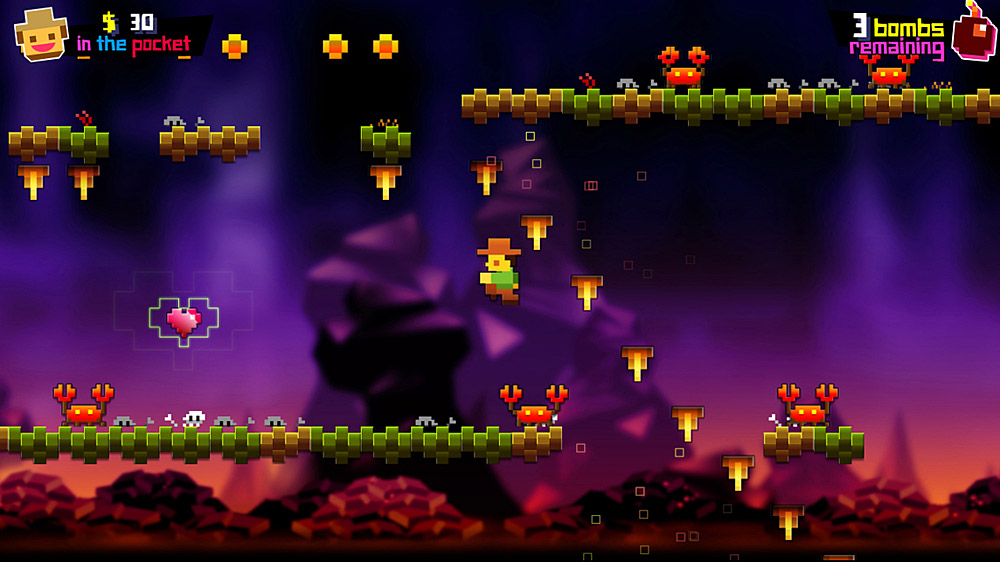
Well actually, JUMP! isn’t.  The first game of the series is also probably the best.  It’s a neo-retro platformer where you play as a guy that in no way resembles Indiana Jones.  There are various bombs scattered throughout the stage and you have to collect them before the timer on them reaches zero.  Once you have all the bombs, you make your way to the door.

Despite JUMP! priding itself on being old-school, it has a modern-style of pixelated graphics that looks really slick.  It also seems to want to feel like an old timey punisher, but it’s not overly difficult.  Maybe it gets that way later, but I won’t be around to find out.  You see, JUMP! also brings over a couple antiquated game mechanics, such as a lives system.  I didn’t think much of it, until I ran out of lives and the game popped up a message that said something like “Doesn’t it suck how old-school games don’t let you continue?”  At which point I sighed and declared to Brian “call for a penis-shaped U-Haul because I believe a dick move is coming.”  Indeed, JUMP! has no continue system.  When you run out of lives, you get to start the whole thing over.  And thus it can officially go fuck itself.

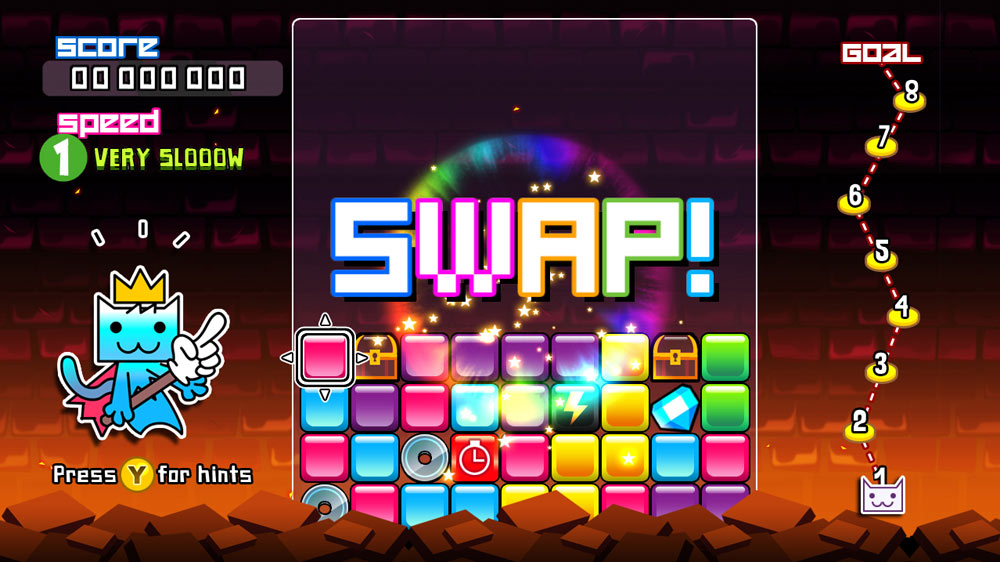
The second game is SWAP!  It’s a Pokemon Puzzle League sort-of clone where blocks rise from underneath the screen and you have to clear them by lining up four of them.  That’s pretty much it.  I have to say, SWAP! is well made in terms of graphics and controls (mostly), but it’s just really boring.  This same kind of game has already been done better for decades now.  Because you need to line up four blocks, it doesn’t leave you enough room to set up the types of insane combos a game like this needs to hook me in.  It doesn’t even have a versus mode.  I’m not sure why so many people assured me I would enjoy SWAP!  Yea, like all the games in this series, it has a level of sophistication typically unseen on Xbox Live Indie Games.  I just feel that it’s dull compared to other puzzlers.  Hell, it’s dull compared to that annoying kid that lives next door.  The one that chews the plastic tips of his shoelaces.

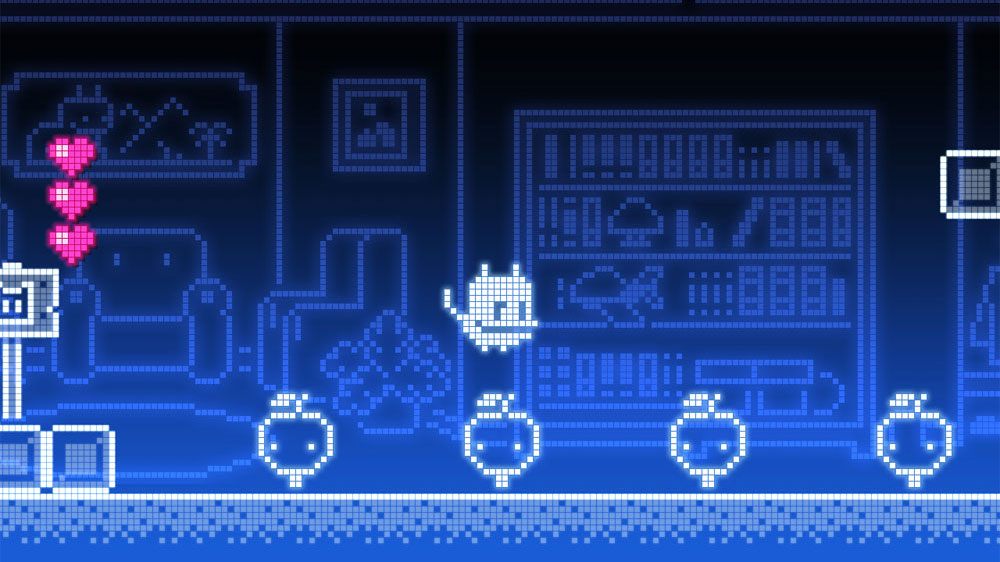
Finally, there’s PIXEL!  Before trying it, I figured I already had played it on account of it having the same character and graphics style as a PSP Mini called Pix’n Love Rush, but the two games aren’t similar at all.  Love Rush was neat variation on the endless-runner genre.  PIXEL! is an incredibly generic platformer that’s only original idea is ruined by shitty play control.  You play as a cat that has to hop and bop enemies.  The actual platforming follows every convention of the genre, stupid or otherwise.  Like SWAP! the game is competent but boring.  You’ve played dozens, maybe hundreds of games like this in your life.  PIXEL! has no potential to land itself anywhere near the top of that list.

The one original idea is being able to freeze the game with the left trigger to open up a magnifying glass.  If you click special blocks with it, you enter a maze mini-game, where you steer a cursor around looking for an exit.  Typically, you have X amount of seconds to find it or you return to the main game and lose a tick of health.  This would be fun, except the cursor is so damned sensitive that it’s easy to skip right past the exit and hit a block that will push you away from it and back to beginning.  Even as I got late into the game, I never quite got the hang of it.  Other mystery blocks involve silly things like press the A button to cut a tree down, or answering questions to get to the next area of a stage.  My gut tells me PIXEL! was meant to be a Nintendo DS game (the developer had made some games for that platform) and these were supposed to be touch-screen events.

Either way, PIXEL! is completely boring.  It’s slow-paced, it’s repetitive, the levels are clichéd, the enemies are stock, and it just isn’t any fun.  Yes, it looks really good, sounds really good, and plays really good (outside of the mazes), but it’s less than the sum of its parts.  That’s pretty much true of the series as a whole.  JUMP! might have been worth recommending, but the one problem it has is big enough to be a deal breaker.  As far as SWAP! and PIXEL! go, all I can say is they are good-looking, well made sleeping pills.

Arkedo Series – 01 JUMP!, Arkedo Series – 02 SWAP!, and Arkedo Series – 03 PIXEL! were developed by Arkedo

240 Microsoft Points apiece do recommend Pix’n Love Rush on both PlayStation Network and iPhone in the making of this review. 

Thank you to all my readers for helping to keep me motivated.  This marks the 198th, 199th, and 200th games reviewed at Indie Gamer Chick!  Here’s to 2,000 more!

Indies In Due Time IS BACK! April 3, 2012 Edition

Welcome back to Indies in Due Time.  It been a few months but we’re back.  For those new to the format, my boyfriend and I sarcastically comment on upcoming Xbox Live Indie Games.  Not really all that complicated.  Hard to believe this is the most popular feature on my site ever.  We gave up on getting enough people to contribute so we just scoured Youtube for trailers on our own, and we found eight pretty good ones.  Let’s roll.

Read more of this post

You Are Nothing Special (But You Can Be)

I can’t tell you how many times I’ve been told by some extremely enthusiastic indie developer “the difference between indie games and mainstream games is indie games are made with passion.”  No.  It’s just not true.  Although I do not deny that indie developers are overflowing with so much passion that they cause all surrounding dust mites to hump like bunnies, it’s not a trait unique to them.  Simply put, if you work in the game industry, you probably have a passion for video games.

Yes, even crap like Duke Nukem Forever was made by a crew who have a love of video games. Who would take this job if they didn't have it?

Here’s a story for you.  There was this guy named Larry who did an internship at our office.  Larry was an accounting major at Stanford.  Larry was a really cool guy.  Funny, worked hard, and he was really smart.  Also, Larry thought accounting was fucking boring as hell and dreaded the tedium his job would no doubt bring him in the future.  I’m not the most talkative person, but I had to ask him why he would want to go to a prestigious school like Stanford on his own dime to study for a job he knows he would hate.  Larry was intelligent enough that his options were, in my opinion at least, limitless.  But Larry chose accounting because it’s a career that pays well and typically has a high degree of security.

Nobody who works in the game industry is like Larry.  There’s nobody going to school who has aspirations for a job in game production who dreads the concept of their chosen career path.  And that’s before we talk about the wages.  Although some people can make exceptionally good salaries in gaming, most jobs in the industry typically pay less than what comparative jobs in different industries make.

Indie game developers are a proud group of people, and they should be.  But when it comes time to describe what makes them unique, passion should be left off the table.  No matter what anyone believes, I promise you that almost every schmo working at Electronic Arts, Activision, or any other major gaming company has a true passion and love of video games.  They have to, because who would choose a career in an industry with below-average salaries, long hours, and job security that is often shaky at best?

So no, you are not special because of your passion.  Quit bringing it up every interview.  Mainstream writers need to quit using it as their all-encompassing adjective to describe the scene.  It’s simply not true.  Stop it.  Please.

But, indie developers have something amazing that does make them unique.  It’s precious enough that it should be the centerpiece of the entire indie development scene.  The thing people point to that sells newcomers on why indie gaming is so important.  Yet, for whatever reason, I rarely see developers talk about it.

Freedom.

You, the indie game developer, have it.  Those people at EA or Activision that are every bit as passionate as you do not.  You’re free to experiment.  You’re free to get weird.  You’re free to make mistakes.  You’re free to try something that has never been attempted before.  Why is this not the biggest crowing point on the scene?

Stuff like DLC Quest would never get made by a major studio.

When you make an indie game, you’re limited only by your imagination.  Well, that and any technical limitations, but my point still stands.  You can do anything you want with your game.  They can’t.  This is why you are special.  So take advantage of that, and brag about that, and be proud of that.  Go ahead, rub it in.  But above all else, use it.  One of my biggest disappoints since starting my site is how devoid of originality the indie scene at large seems to be.  I’m sure the lure of making an easy couple grand on yet another zombie TwickS or Minecraft clone is tempting, but it won’t get you any attention.  You could be the next big thing in gaming.  I mean, whose to say you don’t have it in you?  But the only way you can get there is by taking advantage of the one thing you have that they don’t.  Yea, you’re also free to play Follow the Leader if you so desire.  Just remember, there’s only one winner in that game and it already isn’t you.  They’ll still get all the attention.  All you’ll get is familiarity with the scent of the leader’s ass.

Super Ninja Warrior Extreme

Usually when people accuse me of having a bias against punishers, I point to Aban Hawkins & the 1000 Spikes, the second game I ever reviewed here and an original member of the leaderboard.  Of course, that review was done on July 2, and I haven’t been exceptionally kind to any of its kin since then.  Well, now I have another one I can point to and say “I didn’t hate it.”  Well, except the name.  It’s called Super Ninja Warrior Extreme.  Thankfully they tacked on “Extreme” to the end of the name, because I can’t picture myself playing a game called Super Ninja Warrior.  Maybe if it was just Ninja Warrior, but I think we’ll all agree that a ninja warrior who is super but not extreme must be some kind of pussy.  The whole point of being super is so that you can also be extreme.  Of course, the flip side of that is being an extreme ninja warrior that is not super is just needlessly reckless and wrong.

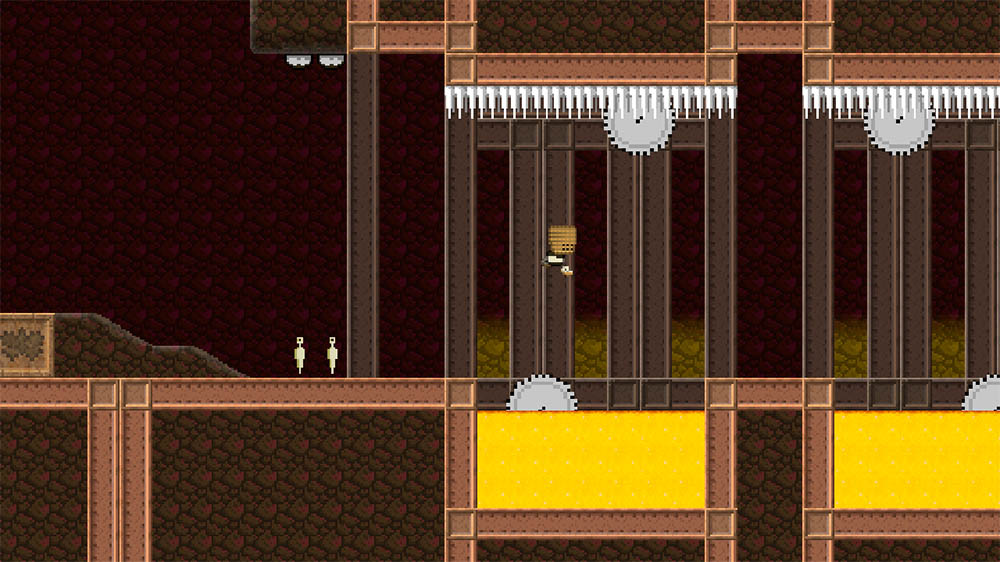
The only explanation I have for why the dude has a beehive on his face is he's EXTREME!

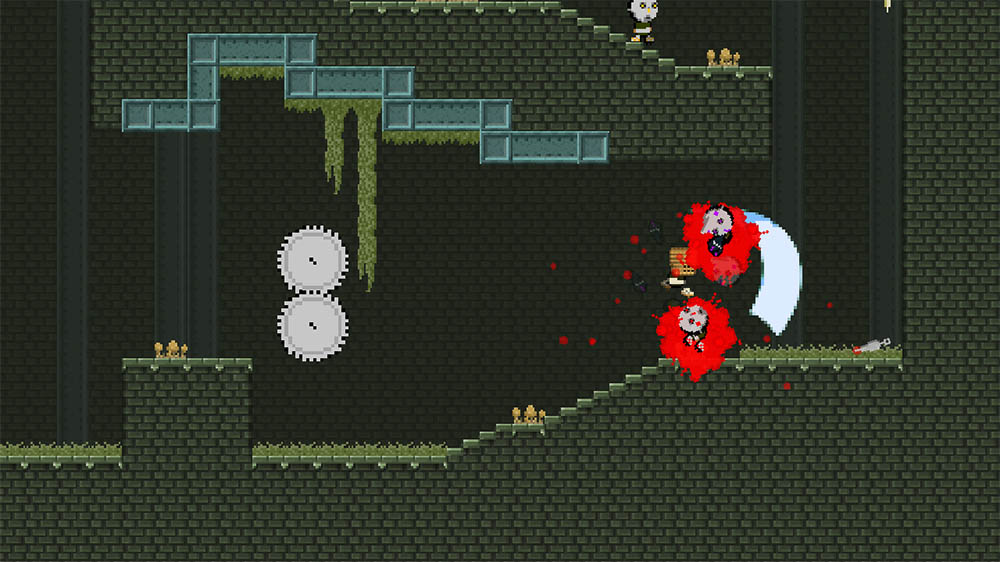
Actually, I think the “super” part of the equation is misleading.  If your ninja dude brushes up against a spike, he explodes instantly into a mass of limbs and blood.  Yeesh.  I would hate to think of what would happen to him if he used a back scratcher.  Actually, all enemies and projectiles result in instant death.  To balance things out, you have a sword with a decent amount of reach and the ability to wall jump.  And, well that’s pretty much it.  Thirty levels, go.

I’m not really sure if being a punisher was the aim of Hyper Samurai Soldier Supreme.  I say this because most of the 30 levels aren’t really all that hard to beat.  More than half of them I finished on my first try, and that doesn’t just include the opening stages.  There were levels that left me temporarily agitated, but they are immediately followed by levels that can be solved in around fifteen seconds.  This happens even late in the game, resulting in a difficulty curve with more dips than a roller coaster.

I saw this same scene when I took that tour of the jerky factory.

Otherwise, it’s not a bad game by any means.  It’ll take an hour to finish, and that’s fine.  That means it doesn’t stick around long enough to wear out its welcome.  The controls are pretty good.  A touch sensitive, maybe.  In a few later stages, you’ll have to nudge the stick with a degree of delicacy that rivals giving CPR to a butterfly.  Oh, and every stage ends with the same boss that takes two hacks to kill, no more, no less.  Even the final stage has this dude in it, and thus things end without feeling climatic in the least bit.  I had planned on bitching about Super Ninja Warrior Extreme using a four-digit password system instead of saving, but given how quickly it can be finished, any save system at all is as unnecessary as a driver’s manual written in Braille.

Super Ninja Warrior Extreme was developed by Ho-Hum Games

80 Microsoft Points wonder why there is no game called Tepid Ninja Warrior Mild in the making of this review.

Did you know I’m giving away 1600 Microsoft Points on Thursday?  Oh, you did.  You don’t care.  SighWell, you can at least humor me and vote for next week’s game.  Just follow the link for a list.

Video footage courtesy of Aaron the Splazer