The World Really Isn’t Flat: Xbox Live Indie Games & Pricing

Believe it or not, there are people out there still who insist the Earth is flat.  As in, they still exist.  Today.  In 2012.  I’m not joking.  They have a website and everything.  This is not a tongue-in-cheek movement.  These guys really, truly believe that the entire population of Earth has been bamboozled into believing the world is round.  This an example of a phenomenon in society called “denialism.”  Denialism is defined as a conscious rejection of an indisputable fact to avoid an uncomfortable truth.

Denialism is practiced among some Xbox Live Indie Game developers.  They still cling to a belief that selling their games above the minimum price Microsoft requires is a viable strategy.  Despite overwhelming evidence to the contrary, they truly believe that their game will be the exception to the reality of the marketplace.  In essence, they are telling people that the world is flat, and they’re willing to throw themselves off the edge of the Earth to prove it.

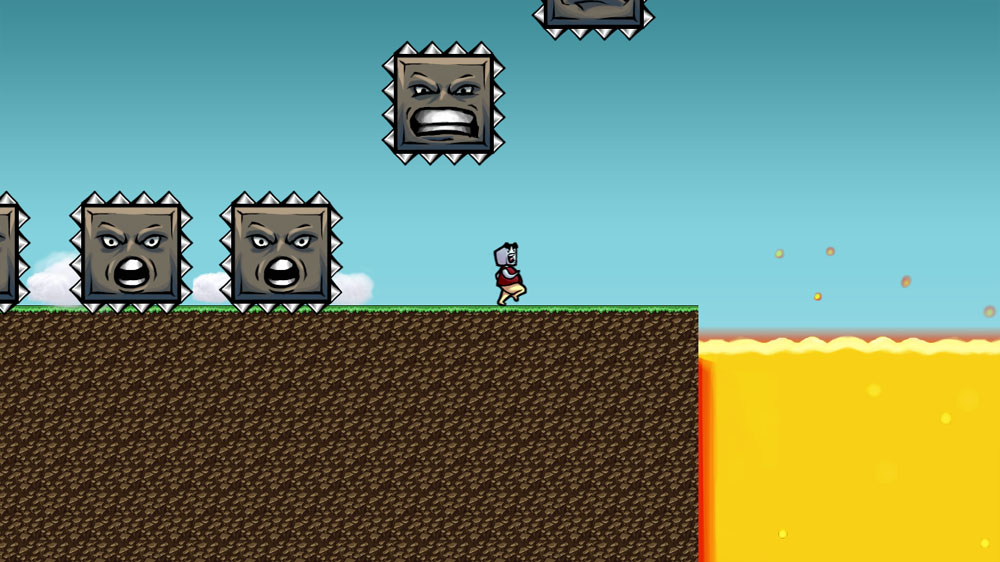
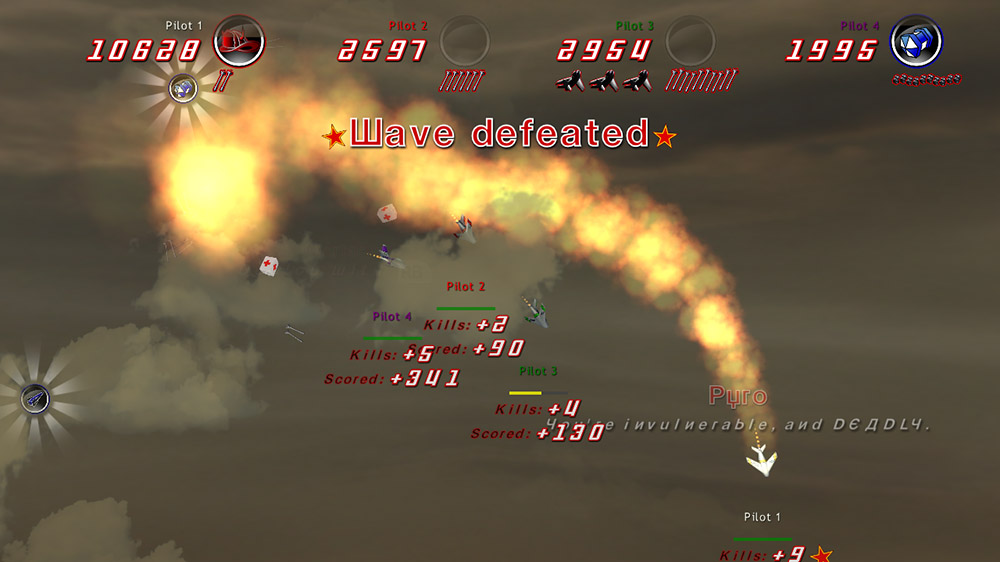
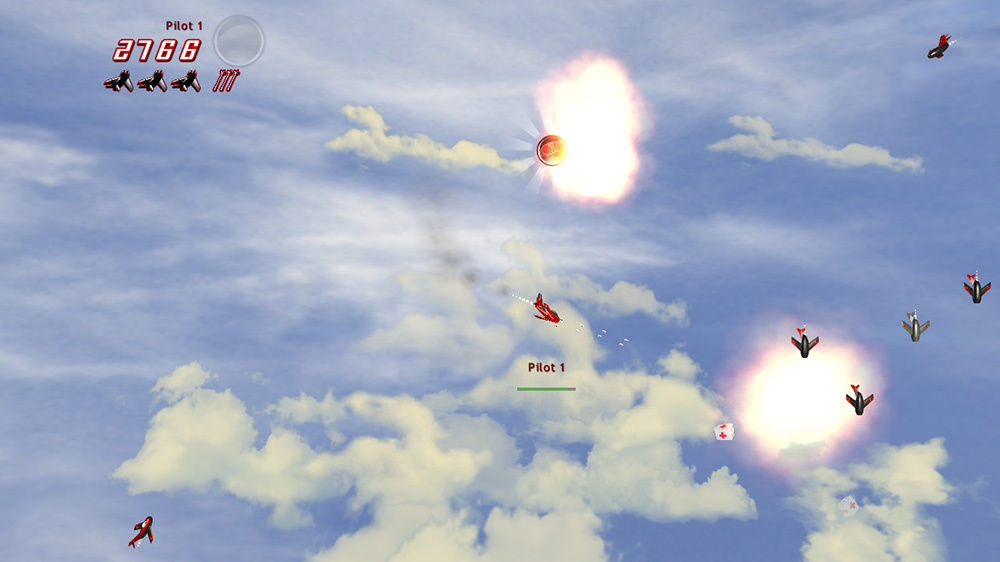
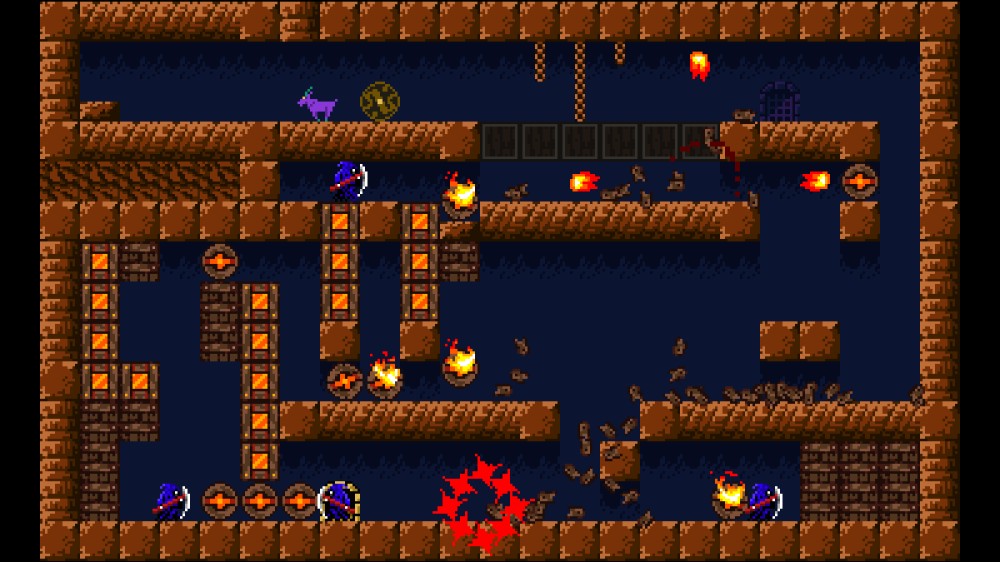
Imagine how Ian Stocker, creator of the sublime Escape Goat, felt when he discovered the world was not flat.

It was announced today that pricing policy has once again changed for Xbox Live Indie Games.  As of this Wednesday, developers can change their prices once every seven days.  The immediate reaction this?  “Finally, we can have sales!”  Oh dear.

Here is the reality that you, Xbox Live Indie Game developers, have been dealt.  You have no marketplace share.  You have less representation on the Xbox 360 dashboard than accessories for avatars.  There is no tab that announces when an indie game’s price has been changed.  There is no tab that announces when a game has been patched.  XBLIG sites do less than a fraction of the traffic of mainstream gaming sites.  In short, you probably have a better chance of being struck by lightning than having a hit Xbox Live Indie Game.

I’m going to pull a number completely out of my ass and guess that 99.9% of all XBLIG sales come from impulse buyers.  People who have just a few spare points left and would rather have a game than a sombrero for their avatar.  The games they purchase are selected directly from the dashboard, not from reading sites like mine.  When they go to the marketplace, there are four tabs for indie games: sort by genre, sort by name, best-selling, and new releases.  New releases and best-selling are the key here.  This is where almost all decisions to buy an Xbox Live Indie Game are made.  It’s not on Xbox.com, it’s not from Kotaku, and it’s not from Indie Gamer Chick.  It’s on the dashboard.  The point of sale.  Xbox Live Indie Games are a pack of gum next to the cash register at a grocery store.

This is why temporary sales on Xbox Live Indie Games won’t work.  Because  most consumers don’t pay attention to the scene.  They select games based off the available tabs on the dashboard, and that does not feature a “recent price drops” tab, at least for XBLIGs.  It probably never will.  Without that, a price drop means diddly squat to consumers.  If they see a game that is 80MSP that normally sells for 240MSP, they don’t know they’re saving points.  Consequently, they have no way of seeing if a game they were previously interested in has gone on sale, unless they gain that knowledge directly from the developer or from following the scene.  As I’ve previously established, there’s very little interest from consumers in taking the time to do so.  The scene is so small that calling it niche almost feels like a stretch.  If you price at anything above what your minimum requirement is, you miss that one chance.  If you’re lucky enough that someone takes the time to look at your game on the marketplace, it’s probably off of the new release tab.  Once that 240MSP price tag is spotted by the consumer, your game’s hope of being purchased by that individual is likely gone.  Forever.  After all, you’re competing directly against hundreds of games that will price at 80MSP.  Consumers get four screen shots and a brief description of the game to go off of.  Maybe your 240MSP title is better than the three 80MSP titles that person has their eyes on.  But is it one-for-the-price-of-three better, when you have so little info of the game there to base your decision on?  I really hope this is sinking in.

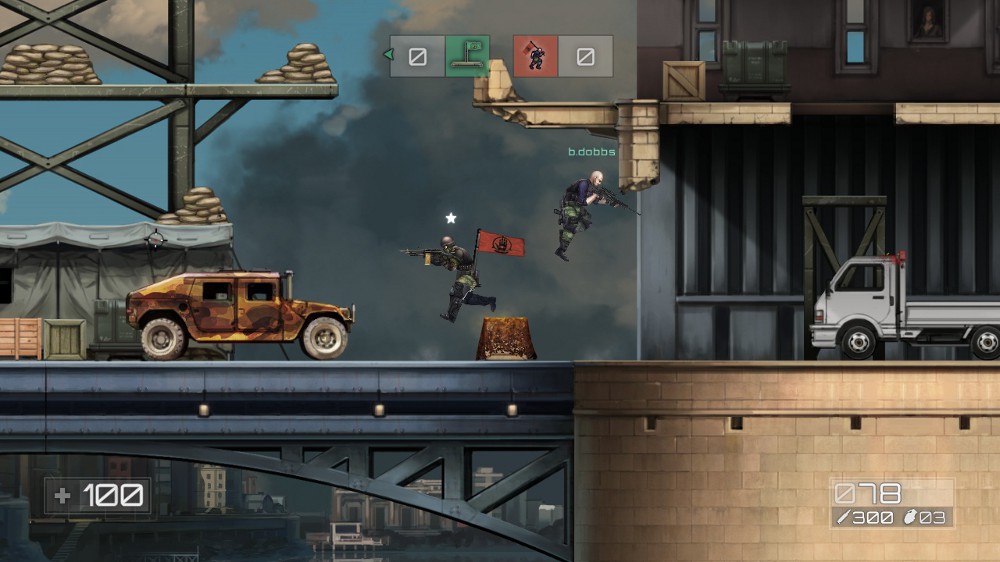
“Hey wait, FortressCraft and TotalMiner has grossed over $1,000,000 and they’re priced at 240MSP!  See, the world is flat!  I told you so!”  Um, no.  The world you’re living in really is round.  Those guys live in an entirely different universe altogether, where your laws of physics don’t apply to them.  Which is ironic given that the physics in such games are typically way fucked up, but that’s beside the point.  Minecraft just became the best-selling Xbox Live Arcade Game in record time.  Before it came to the platform properly, the original PC game had spawned an entire cottage industry of clones, mods, and communities.  It’s fair to say that the genre is trendy right now.  The games that climbed the best-selling charts did so because there was an immediate demand for that type of game on a console.  Period.

Pictured: A really good game that did not have tens of millions of people drooling over the prospect of it.

Of course, sometime soon one or both of those games will probably have a special one-week-only 80MSP sale, which will cause a spike in their sales figures, and this will be all the proof that XBLIG flat-Earthers need that sales can work.  They’ll probably also point to games like Escape Goat and Take Arms, which started at 240MSP and then caught on fire after their prices dropped.  But that’s also a little different, because both games dropped their price around the time that Microsoft’s original price-change policy went into effect.  It got mainstream attention and larger sites covered it.  Escape Goat and Take Arms happened to be two of the best games that took advantage of that, even though both games were small enough to have been priced at 80MSP from the get-go.  Ask those guys what they would do.  If they knew then what they know now, they would have priced their games at 80MSP.  They’ve both said so on this very website and elsewhere.  Hell, if some misguided developer had a wonderful game and plans to overprice it, they would probably get on their hands and knees and beg the person to reconsider.  Why?  Because they care about the community, and they know the reality they live in.  It might not be fair or just, but it is the cards you’ve been dealt.  You can keep trying to prove the world is flat, but the only thing that is going to fall off the face of the Earth is your game’s sales figures.

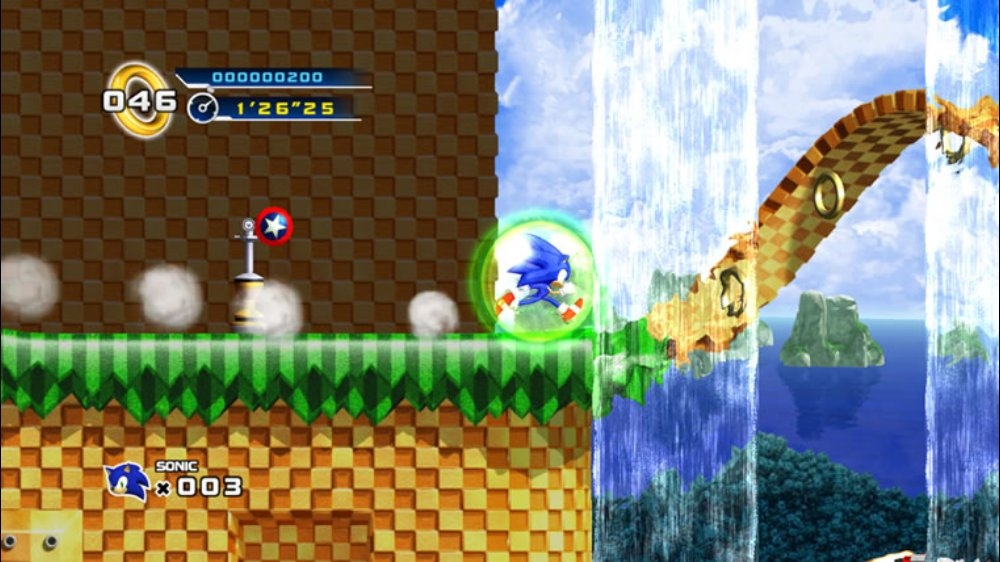
Sonic The Hedgehog 4 Episode I

My intent here had originally been to review both parts of Sonic 4. However, after slogging through Episode I and encountering the single most boring final boss in the history of video games, I don’t think I have the strength in me to even try it. It doesn’t help that most people are telling me that some of the stuff I will be complaining about below got fixed, yet the game is still worse. How is that even possible? It’s like unclogging a toilet by blowing up the building and calling it a job well done.

Long time readers probably expected me to hate Sonic 4 before I even started it. Whether it was my hate-article against Sega, my review of Sonic CD, or the fact that my Twitter picture was typically me figuring out different ways to torture and kill a stuffed Sonic The Hedgehog doll, I think the message is clear: fuck Sonic. By the way, I would have kept up with the Sonic killings, but wood-chippers are shockingly expensive and there’s a bullshit 7-day waiting period on flame-throwers. To me, the franchise represents everything wrong with gaming: generic character with committee-designed personality that’s best viewed through nostalgia goggles. Sonic is the gaming equivalent of Poochie. Every attempt at modernizing Sonic has failed, with fans rightfully bitching that they suck and they just want an old-fashioned 2D Sonic game. The only problem is, those old-fashioned 2D Sonic games weren’t really all that good to begin with. As a child, they were neat for you because they pushed new technology and did stuff games hadn’t done to that point. Today? They don’t hold up, and neither do attempts at recreating the magic. Stuff like Sonic Colors and Sonic 4 continue to get lambasted. And whenever something with Sonic that is borderline not shitty comes along, like Sonic Generations, fanboys treat it like Jesus just emerged from his tomb. You guys are easier to please than my dog, and all I have to do to make her happy is throw her a teeny piece of pizza crust.

I honestly don’t even think the graphics look that good.

I had only played the demo of Sonic 4 Episode 1 (which ought to have been subtitled The Phantom Appeal) when it came out back in 2010 and I honestly thought it was just a remake of one of the earlier Genesis games. Can you blame me? Same stupid opening level, same enemies, same rings, same abilities, same loops, and same power-ups. I imagine anyone with just a passing interest in Sonic would think this was just a graphical upgrade of an existing title. The full game’s other worlds include a casino, an underwater temple, and an industrial zone. I mean come on, Sega! This is like trying to rob your own home.

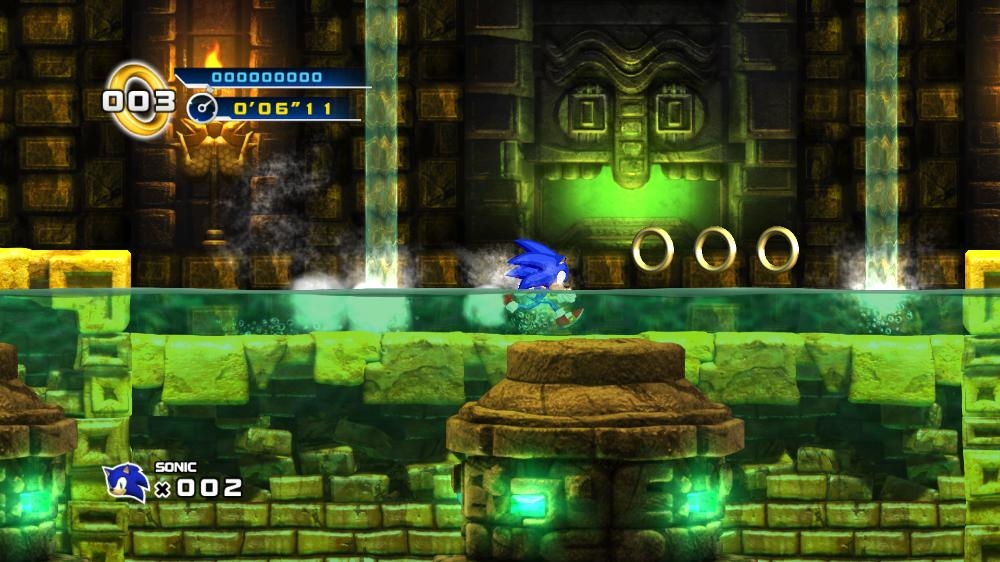
Everything bad about Sonic games is also here. Same cheap ass enemy placement, same “gotcha!” level design, and every single thing people never liked in Sonic games to begin with. I have never once met a person who said they enjoyed the water stages in Sonic The Hedgehog. I’m sure there might be one or two stragglers out there who insist they’re brilliant, just like I’m sure that there’s one or two people out there who genuinely enjoy squirting wasabi up their nostrils, but it doesn’t mean anyone else would want to do it. The water levels here are particularly painful because of how bad the controls are. Sonic runs like he’s wearing concrete shoes, so building up speed becomes an issue. Once you actually get some momentum going, good luck stopping when you need to. I tried holding back on one of those accelerators just to see how long it would take me to stop and go back to it. I had to press the left directional button nearly 100 times to get there. Granted, nobody is going to play the game like that, but when you design a game around something that is moving fast and then punish people playing it the way it is intended, you’re a colossal asshole.

Of course, things are totally the opposite in the water stages. They give you a game where you’re supposed to run fast, then submerge the character in maple syrup. It becomes so slow and clunky that I honestly wonder if they keep putting these fucking stages in these games hoping that fans will start taking their own lives in protest. I’m telling you, I think I’m on to something here. There are parts in the industrial stages where you have to outrun a giant, um, not sure what it is besides a hunk of metal, and if you die you go back to a check point. From there, you have about two seconds to run up a series of slopes or risk dying. The problem is, you’re not given the ability to build up the required speed to get up them. I had to spin-dash up one, hope to stop, do it again, hope to stop again, and then do it one more time. Once you get past that, you basically just have to hold forward and wait for the game to start playing itself for you like every Sonic game seems to do. Once again, I took a running count. Not sure how accurate it is because I think I might have accidentally counted a couple of sections twice after dying, but regardless, I counted 77 times where I could advance forward in a level without pushing anything. That’s over the course of only twelve stages. Whether it’s bouncing off springs, rolling through tubes, or running past accelerators, Sonic games sure have a hard-on for not letting you play them. As I pointed out in my last review, Sonic was originally designed by Sega to be Mario for idiots, but game design like this strikes me as Sega having outright contempt for its own fan base. Are you getting the message Sega is sending you, Sonic fans? THEY HATE YOU!  What do you think they were trying to tell you with all those 3D Sonics? They weren’t fucking Valentines!

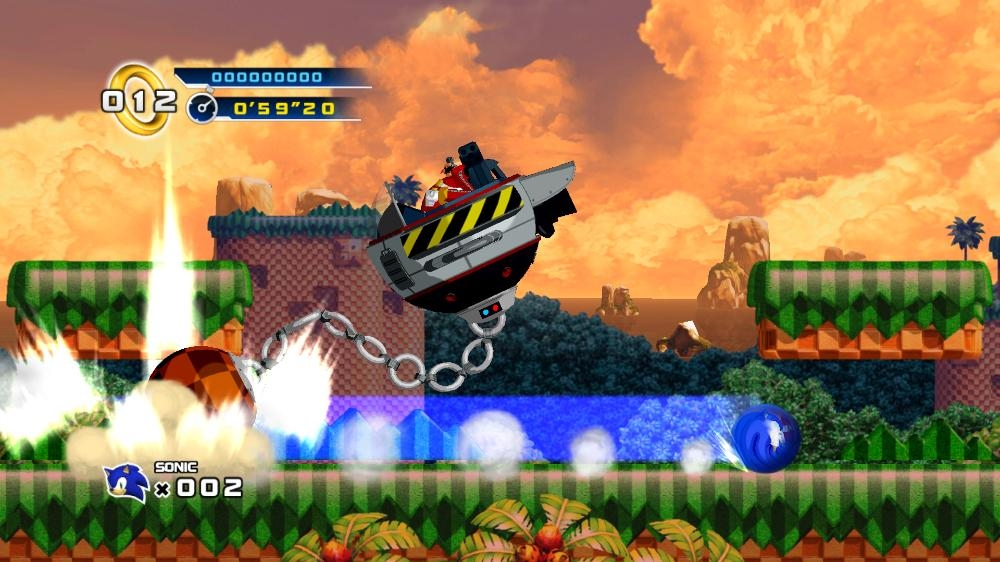
Come on! They didn’t even change the first boss from the first Sonic game! Short of knocking you out with chloroform and shitting in your mouth, what else can they do to show you they don’t like you anymore?

I pressed forward and eventually got to the last boss. Well actually, before you fight it, the game ends with a boss rush. I guess Robotnik felt that all those previous attempts at murdering Sonic with various contraptions that often failed within twenty seconds were worth a second look. Once you dispatch them, you’re placed against one final, giant robot. At first, it didn’t seem like such a big deal. It was slow. It was easy to attack. So I started to bonk it. And then I kept bonking it. It would fly up in the air, crash down, and I would keep bonking it.  After EIGHTEEN coma-inducing bonks, the boss finally entered its second phase. It takes eighteen hits to get there!  Mind you, this thing doesn’t put up anything resembling a real fight. It just sort of lumbers around, waiting for you to smack it. In the second phase, you can’t attack its body directly, so you have to wait for it to fire one of its arms at you. Once you avoid it, it floats downwards, and you have to bonk it back to the robot to stun-lock it. Of course, the game is kind of fickle about when something constitutes “hitting it” versus “getting hit by it.” The arms have spikes on the bottom, so I would wait until I could attack it at a downward angle, hitting the top of the arm and thus avoiding becoming a Sonic Skewer. This worked, oh, about half the time. The other half the time, I would do a lock-on attack directly to the top of the glove and still die. Grrrrrrrrrr.

Once you die, you get to go back to the 18 bonks before reaching the second phase and hoping like hell your lock-on attack doesn’t crap out on you, forcing another restart. Well, on one such attempt, luck was on my side, because I had kept all three rings I got at the checkpoint, I had gotten to phase two, and I was able to successfully attack the boss another dozen or so times. I’m not sure how many shots are actually required to kill it. Possibly it’s some hypothetical number, like a quajillion, but I won’t know because the game had one final dick move supreme to pull off on me. You have exactly ten minutes to beat every stage, including in boss battles. I had eaten up about four minutes getting to the last encounter, and another three minutes getting to phase two of the final boss. Well, as it turns out, the last boss has random attack patterns, only one of which opens itself up to attack. After getting a bunch of hits on it, with about two minutes and change left until time expired, the game flipped me the bird and never again did that one attack I needed it to do. You have got to be fucking kidding me. Time expired, life lost, back to the start of the fight, cuss words screamed, controller thrown, power off, and Sonic 4 and go fuck itself.

“Dear Sega, less water stages in Sonic games please.” “Did you say more water stages?” “No, less. Preferably none. Nobody likes them.” “More water stages it is!”

And that is when it hit me: the guys Sega stuck this project with hated making it as much as I hated playing it. They just didn’t care. That’s the only explanation I can think of for sticking such a tediously boring boss at the end yet another redundant Sonic game. Maybe this was their attempt at killing the franchise once and for all. Maybe this was their attempt at trying to avoid drawing the Sonic assignments any further. Maybe they were outright trying to get fired. Whatever the explanation is, Sonic 4 Episode 1 is one of the worst pieces of shit I have ever played. But the games sell, so they’ll keep making them. I bought this one and I just bought Episode II, so I’m part of the problem. Excuse me, I need to go flog myself now.

Sonic The Hedgehog 4 Part I was developed by Sega

I honestly don’t remember how much I paid for this. I think it was like $1 at Christmas on PlayStation Network or something like that. Quite frankly, I can’t justify spending any amount on this game.  
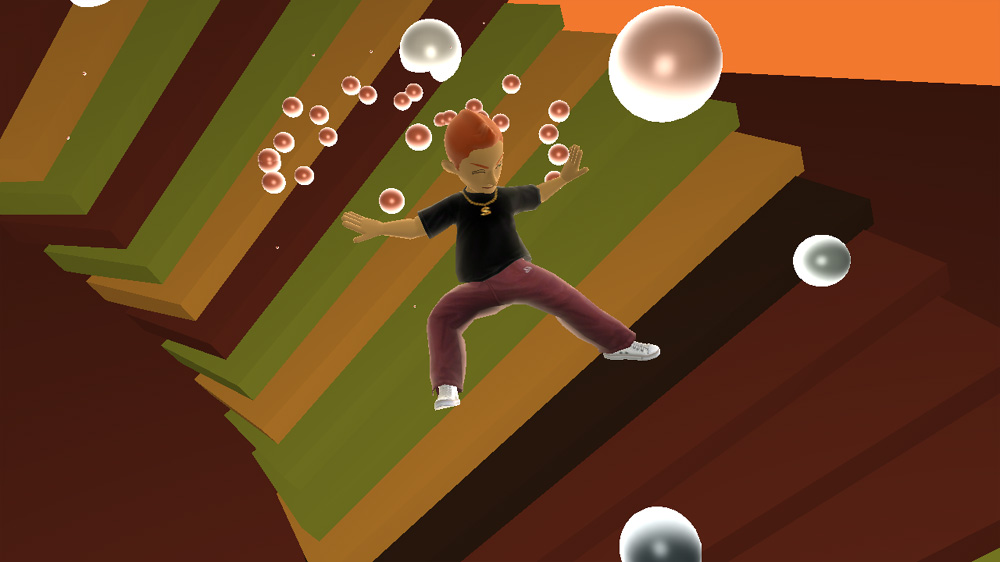
Indies in Due Time: May 19, 2012 I Love the Polish Edition

Well I do.  They gave us Polish Dogs and.. um.. I’ll come up with something later.  To the trailers.  I seriously think this is the best collection of trailers ever done for Indies in Due Time.  I’m not saying that to hustle you.  If you’re reading this, you’re already here.  But really, these are five pretty dang good-looking games.  And the last trailer is mind-blowing.  Are you hyped yet?

Read more of this post

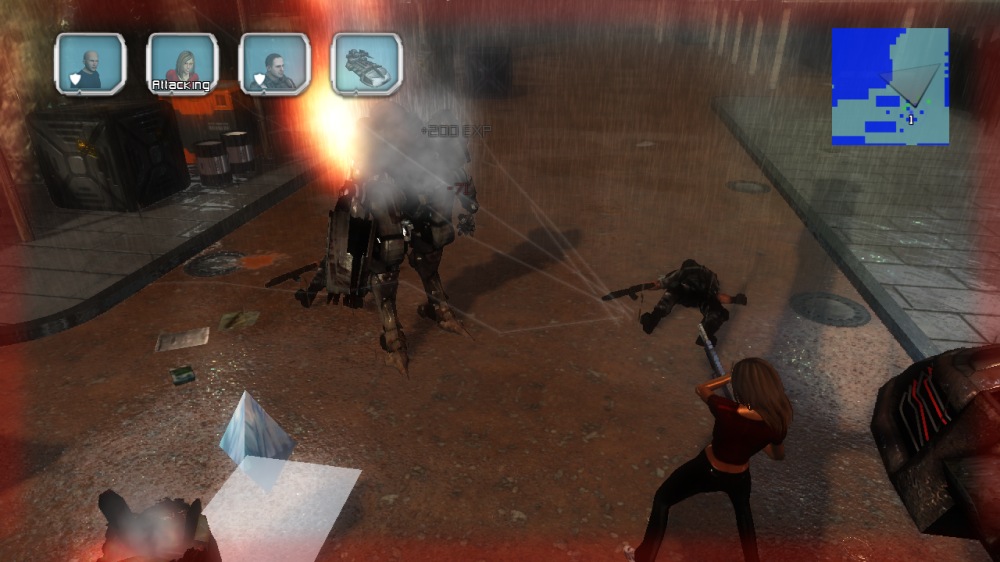
Miasma 2

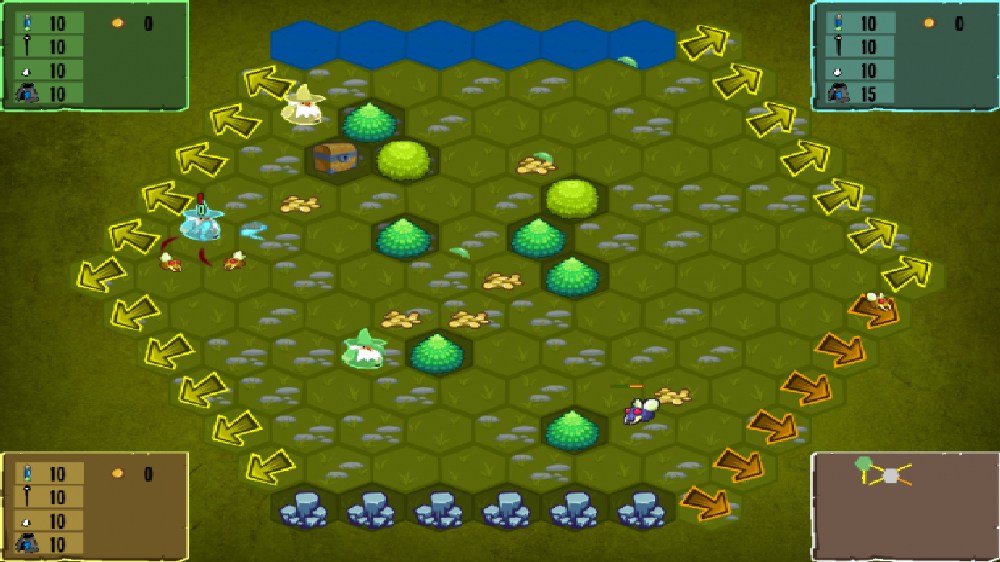
Having never played the original Miasma, I wasn’t sure if this would be one of those instances where I would feel like a party crasher.  But, the developer sent me a review request, the trailer looked slick, the graphics were really good-looking for an XBLIG, and I think it’s probably a good idea to only piss people off every 48 hours.  Thus, I shelved my planned Sonic 4 review again and bought Miasma 2.  I mean, how bad could it be?

Well, it’s not that Miasma 2 is bad, or at least it probably isn’t if you’re into turn-based tactics games.  I wouldn’t say I hate them, but I rarely get into them.  I finished Final Fantasy Tactics and a couple of the Advance Wars games, and I kind of, sort of dug Valkyria Chronicles.  But I wouldn’t describe my relationship with Tactical games the same way I would with Tower Defense, where I never think about them but tend to get hooked on them when I actually play them.  Tactical shit generally has to be exceptionally good for me to get into it.  Or so stupidly idiotic, like Valkyria was, that I keep playing just to ogle the train wreck.

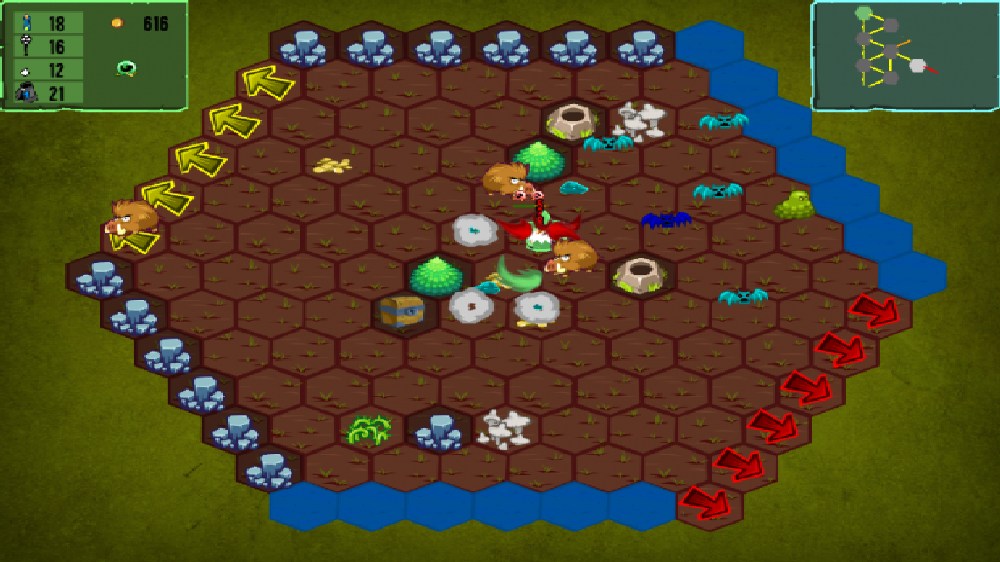
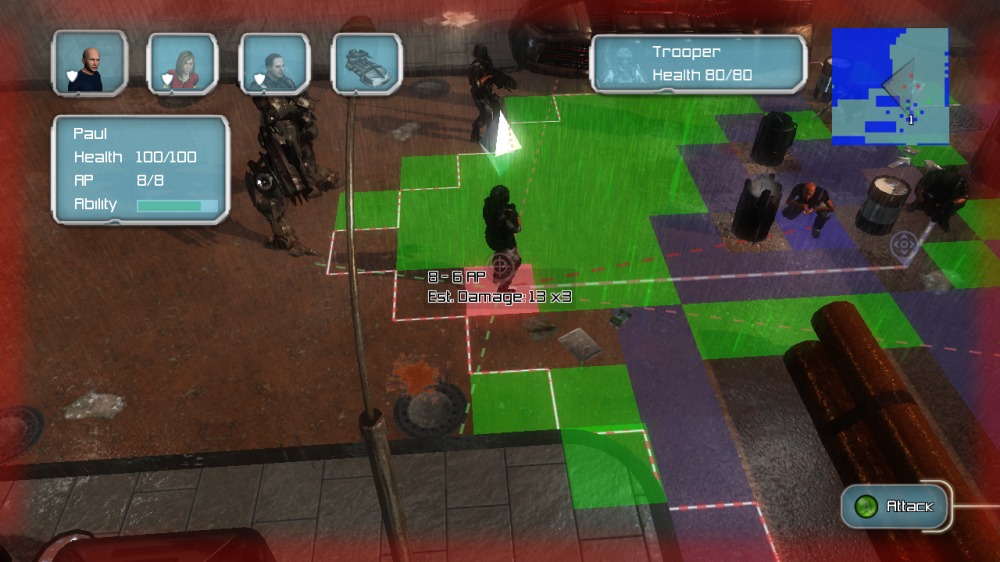
For what it’s worth, the game really does look this good.

So I struggled with Miasma 2, because I just found the whole thing to be so damn bland.  Everything here is generic.  The character designs, the enemies, the backdrops, and especially the story.  The game allows you to choose between playing as a chick or a dude, so I chose the chick.  The opening tutorial stage requires you to take out a couple of enemies and rescue your husband.  Right from the get-go, Miasma 2 doesn’t do a good job explaining the play mechanics.  All movements and actions feel overly complex and unintuitive.  Special abilities aren’t well explained, damage ratios barely get mentioned, and it ended before most of my questions were answered.  It’s like getting swim lessons from an instructor that is secretly taking bets on what child will be the first to drown.

The tutorial ended with me saving my husband.  And then there was the story.  Lots and lots of boring story.  And inconsistent story too.  So the dude I rescued is my husband.  At some point, he asked me why I saved him, if it was because he was a soldier or if there was more to us than that.  And then you get to choose which one it is.  Well, this is kind of fucked up on account of it already being established that we’re married.  God, it would suck to serve with these two.  They’ve already tied the knot and yet all their conversations still sound like the clumsy small-talk of two preteens with puppy love in their eyes.  I only played a few levels before getting bored and quitting, so I’m trying to picture what kind of dialog I’m missing.  I would not be surprised if at some point the wife turns to her husband and asks if he wants to go steady with her.

Between levels, you navigate a small hub world from a first-person perspective, and it’s pretty well done.  I almost wish they had figured out how to add guns to that and just turned this into a Perfect Dark clone.  Once things get back to the battlefield, the tedium returns.  In the second level, you are given a tank-thing that you can barely move, a couple extra guys to move around, and some frag grenades, which I quickly used to take out a couple grunts and a mech-thingie.  Then more baddies came in, and I was already dying on account that I didn’t grasp the concept of hiding behind shit to avoid getting shot.  I decided to restart the level.  Except this time, the game forgot to give me my grenades back.  I don’t know if I somehow walked over something that picked them up and didn’t realize it, or if the game glitched out, but I had no grenades.  I also was so bored out of my fucking skull by this point that Brian suggested it might be on account of me needing a nap.  So I took a nap, woke up, restarted the game, got my grenades back somehow, finished the stage, and it still wasn’t fun.

Thankfully, you can make the whole stage’s grid visible in the options menu. Why on Earth would you want to play with it turned off?

I did try the third level, but I realized quickly that there was no potential left for myself to have any entertainment with Miasma 2, so I bailed on it.  I’ve done that a few times here at Indie Gamer Chick, but this time it really wasn’t out of spite.  I just didn’t enjoy anything at all and I saw no potential for it to get better.  I’m not one of those critics who will say “yea, it wasn’t for me, but the graphics were really well done and they obviously put a lot of work into this game, so you should try it.”  I can’t do that.  I didn’t even hate Miasma 2.  I just don’t want to ever play it again.  I can say firmly that if you enjoy Tactical stuff on the same level I do (which is barely at all), this game won’t cause an epiphany.  If you’re a fan of the genre, I honestly don’t think you’ll get any amusement out of it besides the fact that it’s $1 and functional.  I might be wrong.  Maybe Alan, Tim, or Tristan will say otherwise.   I would like to see something else by ESP Games, because they clearly have the technical chops.  Now they just need to figure out how to nail down that whole “don’t make a boring game” thing and they’re set.

Miasma 2 was developed by ESP Games

80 Microsoft Points said the only thing they could have read on my mind while playing this was BLEEEEEEEEEEEEEHHHHHHHHH in the making of this review.


A Madman’s Guide To Happiness.

Trying to keep regular updates on my site can be a bit of a bitch at times.  Clearing 200+ reviews in under a year was probably not the best idea, because finding time to keep up that established pace can be trying.  I had to put a slight delay on my planned massacre of Sonic The Hedgehog 4, and here it is, 11:00PM and I still haven’t done a review today.  Thank Christ for Xbox Live Indie Games, where titles that can be beaten in five minutes or less are as abundant as McDonalds, although not nearly as healthy for you.

Well, it is Thursday, and thus it’s time for a Katch-Up.  I had been given a heads-up that A Madman’s Guide To Happiness was short, shitty, and insane enough for me to get a good review out of it.  Well, they got two out of the three right.  I wouldn’t go so far as to say it’s shitty.  That’s mostly because it doesn’t last long enough to leave any impression on me at all, really.  I hate to call any game I play a Mulligan, but Jesus, five minutes isn’t a lot to go on.

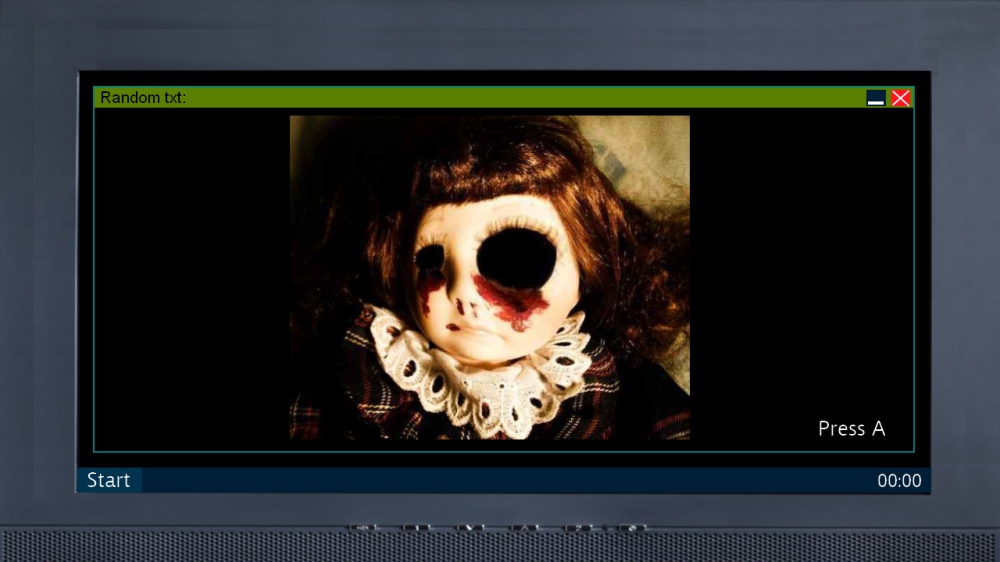
Are there any annoying kids in your life that you never want to have to speak to again? Show them that picture, tell them you turn into that whenever there’s a full moon, and you won’t have that problem ever again.

The basic idea is you’re reading the computer of some psychotic dude who sets up a couple of puzzles for you to solve.  And by puzzles, I mean stuff that seems like it was copied straight out of Highlights for Children that had its innocence stripped away by being forced to watch Nicolas Cage’s snuff film collection.  Basic math questions, a trick-question style riddle, and even one of those “count the triangles pictured, but don’t forget that small triangles make big ones” things.  It’s as if John Wayne Gacy was forced to repeat the first grade.

Between all these brain teasers that are about as stimulating as a medically induced coma, you get to read these rambling, incoherent ravings by the titular madman.  I have to say, at first I figured the game was trying to be weird for the sake of being weird, but actually I was sort of taken in by the creepiness of it all, the same way I was with Silver Dollar Games’ Fatal Seduction.  I became a little invested in it.  And then it ended in roughly half the time my average bowel movement takes.  The really weird part?  Like a good bowel movement, it was oddly satisfying.  I don’t know if that makes it worth the $1 it costs, but hell, people pay more than that for X-Lax.  Sometimes you just need a nice, satisfying dump.

A Madman’s Guide to Happiness was developed by Jaded Horizon

80 Microsoft Points honestly, truly cannot believe I ended up liking this weird ass piece of shit enough to give it a positive review in the making of this review.

Pendulous

I’m sure there are games out there similar to Pendulous, where the idea is to swing from pendulum to pendulum trying to reach a goal in the shortest time possible.  I already had someone tell me that it’s not all that different from Jungle Hunt, a game I never played.  Jungle Hunt was a product of the Golden Age of Arcades, circa 1982.  I’m a product of unprotected sex, circa 1988.  However, as it turns out, Jungle Hunt is included in Tatio Legends for the original Xbox, which I actually own.  So I fired it up and discovered that the person was totally wrong.  Well, that was a waste of an opening paragraph.

The idea is you swing from spot to spot as a little cog thing, latching onto the nearest swing-point automatically.  Using the left and right triggers (or the stick if you’re an idiot, more on that later), you build up momentum to launch yourself to the next spot.  As you progress through the meager fourteen stages, various traps and obstacles pop up, including one annoying section featuring a red gunky sludge stuff that seemed to bubble up at random and was the only bit of  true frustration in the game.  Well, that and the fact that the developers made a liar out of me.

Dear Datura loving twats: that shit was NOT art. Now THIS is art.

When I reviewed Cuddle Bear, I noted that I would immediately discontinue playing any game at the first instance of a leap-of-faith moment.  So naturally Pendulous was full of those types of moments.  Only I didn’t quit the game.  I kept going.  And thus I’m a big liar.  At least my excuse is good one: Pendulous is a really well done game.  The problem is, there was no need to map the swinging mechanics to both the sticks and the trigger buttons.  The triggers work just fine, so the stick should have been used to move the camera.  There’s just too many spots where you can’t see the next object you’re swinging to.  Or traps that move up and down are off-screen, so you can’t possibly calculate when the appropriate time to jump is.  This was probably related to the porting of this game over from Windows Phone, which the developer noted to me had been the cause of a few issues.

This is where being The Chick is tough, because I have to say something that is probably devastating for a developer to hear: this game was so good that it had a spot on the leaderboard all locked up.  I really loved it.  This is exactly the kind of original, quirky type of game I expected to find in the XBLIG channel when I started this site, and it’s worth your money right now.  The length of the game didn’t bother me at all.  Fourteen quickie stages that are sublime (plus another 14 mirrored ones, snore)  is preferable to a four-hour game that struggles to tread water.  But that damn camera issue was like the iceberg to Pendulous’ Titanic.  Its chances were sunk.  All is not lost.  They already planned to add more levels, and Do Better Games are aware of my concerns, because I sent them a singing telegram.  Only I misread the job description.  It was actually a singeing telegram, who knocked on their door and proceeded to set himself on fire.

Well, they got the message.  The game needs a camera, and then they need to issue what could be the most important Second Chance with the Chick challenge in the history of this site.  They would probably get to it sooner, but because of my screw-up, they first have to clean up a hell of a mess on their porch.

Pendulous was developed by Do Better Games

80 Microsoft Points noted Polish is a nationality, not a race, so that technically makes me xenophobic, not racist, in the making of this review.

You can also read my buddy Hurley’s review at Gear-Fish for this very title.

What I Learned From James Petruzzi

Long before I asked James Petruzzi, developer of Take Arms and 48 Chambers, to do his excellent Tales from the Dev Side editorial for my site, I sought out his help for a planned article that never really panned out.  Although that didn’t come to pass, the hours Brian and I spent talking with James completely altered my perception of how certain Xbox Live Indie Games should be judged.  Before that conversation, I didn’t appreciate the absurd difficulty and almost unbelievable sounding limitations that Xbox Live Indie Game developers are saddled with.  As someone who has never developed games, I couldn’t grasp just how hard it was.  Mind you, I was (and really still am) new to the XBLIG scene.  I was told that XNA was one of the simplest development tools many long-time indie developers had worked with.  So it was like “well if that’s the case, why is putting online in your game such a big deal?”

Well, obviously I was wrong.  I quietly backed away from my “games should have online functions” policy.  Sure, I will still say that games can benefit from online play, or having online leaderboards, but I’m not going to let that be the focus of any review, which I had done in the past.

I’ve reviewed multiple games with online functions, and about two months ago, Brian and myself came to a realization: not a single online XBLIG we’ve played has ever been without some really serious glitches.  That is without exception.  It is universally true.  Most of these games I review shortly after their release, and it’s not unusual for me to have to accept a review code to give to someone else to test the online feature because of the lack of other active players.  This is  only time I do accept review tokens.  The code is given to someone else, while my copy is purchased by me.

Bug Ball was the game that created a change in my online review policy. It’s a good game, but networking issues greatly hampered its online playability.

I have a reputation as being the harshest critic on the XBLIG scene, and I’ve certainly earned it.  I’ve been told I’m overly brutal, too nit-picky, and sometimes even mean.  That might all be true, but there is one thing you can’t deny: I’m fair.  Every game I review starts with a clean slate.

Back in February, a developer requested that I play their latest game, Bug Ball.  A review code was provided, which I gave to Brain and his roommate.  We really enjoyed the game, but unfortunately, it was riddled with multiple glitches related to online play.  Characters would disappear from one player’s screen, the ball would disappear from one player’s screen, or sometimes the game would just stop working on one of our sides.  I believe this was the first online game I reviewed following my conversation with James, and thus it was the first time I was aware that the developer had no way of knowing that these kind of glitches were happening.  After all, they could not truly test the game over Xbox Live.

Brian and I talked about it, and we both decided that if I was to publish a review noting the glitches and how it ruined the experience for us, it would eliminate my right to claim that, no matter what I’m accused of, I’m always fair.  Because slamming a game for issues a developer could not possibly have been aware of would not have been fair.  Thus, we decided it was time for a change in Indie Gamer Chick policy.  I contacted the developer and told them what issues we had, and that I would hold off on my review until they had a chance to fix the problems.  Shortly there after, I added this policy to my FAQ.

I am often asked if I could help playtest games, or join the AppHub.  I’ve had more than a dozen people generously offer to stake my XNA membership fee.  But it’s not something I’m interested in, nor is it something I think I should be doing.  As a critic, I feel it’s important that I stay separate from the development process.  Although I understand that developers do want honest feedback in their games before they reach the marketplace, and I really do sympathize for them when they can’t get that, it shouldn’t come from me.  Doing so would compromise the entire point of my site.

I had a lot of fun playing Spectrangle360, but multiple issues with online play has caused my review of it to be delayed while its developer works to figure out what is going wrong.

But, I am willing to help once the game reaches the marketplace.  I am aware that, for many games, I’m the first person that will play it once it goes on sale.  Since I’ve never talked about this policy outside my FAQ, I want to lay it out here.  It goes as follows.

What I will do.

  • I will contact the developer and list all glitches related to the networking parts of their game, explaining as clearly as I can what happened, both on my end and on the end of whoever my playing partner was.
  • I can take any follow-up questions asking for clarification if necessary.
  • I will leave it up to the developer whether they want me to go forward with writing the review immediately or if they would like me to hold off on it until they have a chance to fix the game.
  • If the developer asks for me to hold off on the review, I will not count that as their Second Chance with the Chick, and they retain the right to request a second review once the original review is published and further patches are added to the game.

What I won’t do.

  • I’m not willing to try an re-create any issues I come across for the developer.  Besides, I usually play the game long enough to see the same glitch happen multiple times.  Once the game returns to development, it’s up to them to figure out how to test it.
  • I’m not willing to test the game with the developer to try to set off the issues.  Again, once I’ve sent the information back to the developer, I consider the game to be back in development, which I should have no part of.
  • I’m not willing to continue to play the game some more to try to find even more issues.  Once the game is in the market and thus playable by the developer on the network it was designed for, they should be busy themselves looking for issues.  Asking me to do your work for you takes time away from me being able to play games from other developers who are eager to get their games reviewed here.
  • Once the developer tells me they’ve fixed the problems and are ready for the game to be replayed for its review, I will not inform them of any further glitches that come up.  The game will be reviewed as is, and any further fixes will have to use up your Second Chance with the Chick.  So make sure that when you tell me the game is ready, you’ve tested it thoroughly and are sure it’s as ready as it can be.

By the way, I certainly hope nothing here or in James’ Tales from the Dev Side discourages developers from trying to add online components to their games.  Yes, doing so is extremely challenging, and maybe even not worth the effort.  However, if you came to the scene looking to challenge yourself, why sell yourself short?  It’s almost like what John F. Kennedy said of going to the moon.  You choose to put online in your games.  Not because it is easy, but because it is hard.  A developer who can make a game with online play on Xbox Live Indie Games is a skilled developer indeed.

I have nothing but respect for the Xbox Live Indie Game community, and I’m always willing to offer advice when someone wants it.  I know a lot of you wish I was willing to help more in the development process, and given how crappy the playing testing and peer review system you guys have to deal with is, I can’t blame you.  Because I feel that doing so is a conflict of interest, I regretfully have to turn you down.  But, when it comes to online play, I am willing to lend you a teeny tiny hand.  I’m still the same Indie Gamer Chick I’ve always been.  I call it like I see it.  I’ve absolutely demolished games here.  I show no mercy.  But with online XBLIGs, I’m willing to cut you some slack and give you a chance to make things better.  Why?  Because it’s the right thing to do.

SEAL Team 12

SEAL Team 12 comes to us via Social Loner Studios, the nutjobs behind the hilariously absurd Bird Assassin.  I have to admit, I didn’t think SEAL would be any good.  I think my exact words to Brian were “oh great, another TwickS on XBLIG that tries to ape some 80s shooter I never played.”   Plus it was overpriced at 240 Microsoft Points, because some developers hold on to their belief that their game will sell despite that price point.  It’s kind of cute in a demented “twenty-year-old still believes in Santa Claus” kind of way.

So I was pleasantly surprised to find SEAL Team 12 to be a pretty decent game.  The idea is the world is being threatened by the Guardians Of Devastation, or GOD for short.  Ah, I see what you did there, Social Loner Studios.  Actually, Stevie Wonder can see what you did there on account of the joke being run into the ground about half-way through the game.  Sure, there’s enough anti-GOD puns to make Christopher Hitchens’ corpse obtain the rare status of “double rigor” if you catch my drift, but damn do they lay it on a little too thick.  The rest of the humor mostly works.  Every stage begins with an NPC character (that is wearing a red-shirt for double the geek points) being killed by whatever is the newest enemy added to the game.  This actually caused me to laugh out loud a few times.  The only time it fell flat was when the dead man walking was named Kenny.  I accurately predicted a horrible “oh my God, they killed Kenny” joke, and then watched in disgust as the prophecy was fulfilled.  Jesus Christ, people!  When the guys who created the joke realize it’s not funny anymore and drop it, maybe it’s time to get a fucking clue.

The game itself is a typical Commando-style “walk upwards, kill dudes, walk upwards a little more, kill more dudes” twin-stick shooter .  If this was done straight-laced, it would have been boring.  Thankfully, the game has what so many XBLIGs don’t: personality.  The witty dialog that opens every stage, the moments where you see enemy conversations, and the well done cast of characters.  Considering that the genre couldn’t possibly be more tired if it took an entire bottle of Valium, the effort to dress it up is admirable.  When you strip away all the ascetics, SEAL Team 12 is as generic as it gets.  Walk, shoot, throw grenades, pick up weapons, occasionally hop in a tank, fight a few bosses, end credits.  Quite frankly, everyone should approach a game like this with skepticism.

And it’s not like what is here is done perfectly either.  There are a few problems.  The weapon selection is limited and clichéd.  All weapon pick-ups are done via duel-wielding, mapped to the left trigger to fire, while your right hand always retains the default machine gun.  The setup works, but there’s not enough weapon drops, and what is here is limited.  Some of the guns, particularly the flame-thrower, are worthless.  You get an unlimited amount of normal grenades, but you can’t stack any special ones you pick up.  Given how outlandish the plot and characters were, they should have gone nuts with the variety of guns.  But they didn’t, and the game suffers a lot for it.

A bigger problem is the game becomes a bit of a bullet-hell in the final stages.  Let’s be clear about something:  bullet-hells work in space-shooters when you’re a nimble ship and the battlefield leaves plenty of room to maneuver.  They tend not to work if you’re a clunky, slow-moving steroid freak that has various obstacles you have to walk around.  The game got so ridiculous at the end that we had to swallow our pride and set the difficulty to easy.  Shameful for sure.  Not as shameful as, say, announcing a fake contest for a popular new release on Twitter, then creating a fake account designed to be the “winner” five minutes after you announce the contest.  Then retweeting posts from people your original account follows to pad things out.  And not remembering to try to type different than you typically do.  Or even more brazenly, only retweeting one person’s “wow, I’m so excited, I hope I win!” tweet out of the dozens you receive from gullible people who think you actually have something to give away, and having it be from the fake account you just made five minutes after your fake contest began, making the fix so obvious that a person could accurately predict to multiple witnesses the outcome of the “drawing” for the second straight contest you’ve held.  I mean, theoretically, if your contest was a real random drawing, nobody could possibly predict the outcome of the winner once, never mind twice in a row.  Finally, as soon as your fake contest is over, you never Tweet from that fake account again, just to finally and officially confirm what an oblivious loser you are for thinking nobody would catch on.  Hypothetically speaking, of course.

Despite a few hang-ups, SEAL Team 12 is really well done. Yea, it offers nothing new as a game, but it’s still fun.  In fact, I’m kind of surprised at how well it works in both single player and co-op.  Yea, the price point is kind of stupid.  Sure, some of the jokes fall flat.  You know, Social Loner Studios have been off my radar, but they’re actually 2 for 2 here at Indie Gamer Chick.  But, they haven’t made a leaderboard contender yet.  They probably have the talent to do so, so I’ll be keeping an eye on them.  Well, I’m also doing that because I think they’re fucking insane and might kill and eat me if I turn my back on them.

SEAL Team 12 was developed by Social Loner Studios

IGC_Approved240 Microsoft Points noted that nobody’s fake contest was mentioned in particular, so if you think I’m talking about you, that really says more about you than me in the making of this review.

SEAL Team 12 is also available for PC on Desura for $2.99.  This version is unverified by Indie Gamer Chick.  The XBLIG version is Chick Approved and Ranked on the Indie Gamer Chick Leaderboard.

Tales from the Dev Side: Making a Multiplayer XBLIG by James Petruzzi

The first time I had a chance to make a noticeable impact on the Xbox Live Indie Game scene, it was during the 2011 Indie Game Summer Uprising event.  I just didn’t play the part I had in mind.  Perhaps my expectations were a little too high, because what followed was one bad review after another.  I believe the term Cute Things Dying Violently developer Alex Jordan used was “assassinations.”  He then went ahead and had a panic attack when his game was up for review.  Okay, so the event wasn’t all that good, but there were a few shinning gems in it.  Cute Things Dying Violently was pretty good, and so was online shooter Take Arms by Discord Games.

I met James Petruzzi through Twitter, and our relationship got off to a rocky start in the form of a shouting match between us.  He didn’t like how rough I was being on his fellow Uprising comrades, and I didn’t like how crappy the games were so I was in a foul mood.  Needless to say, I don’t think he liked me very much.  However, we patched things up like two reasonably mature adults, and I think mutual respect for our roles in the community has been established.

I want to say this for everyone to see: of all Xbox Live Indie Game developers, the person I learned the most about game development from was James.  Long-time readers will remember that in the early days of Indie Gamer Chick, my policy when it came to multiplayer was “online or nothing.”  It’s one of the few positions I’ve backed away from since starting my site.  This came about after I had a conversation with James that lasted several hours, in which he educated myself and my boyfriend Brian on just what kind of bullshit a developer has to go through to get Live multiplayer on their XBLIG.  To say it was enlightening was an understatement.  So when I noticed a recent trend of players and critics commenting on the lack of Live support for the format, and I knew just the guy who had to tell everyone exactly what is up.  This is not your typical Tales from the Dev Side.  It’s highly technical.  It’s very complex.  It’s HUGELY educational.  Fans of the Xbox Live Indie Game community owe it to themselves to read this, just so they know what a developer goes through.

Read more of this post

Curse of the Crescent Isle

Do you know what the key to critical acclaim is on Xbox Live Indie Games?  No, it’s not having a good game.  Don’t be silly.  It’s having a retro-style graphics and gameplay that borrows mechanics from a popular 80s NES hit.  If you have that, you have a game that will have more praise dumped on it than a parrot that sings Let the Bodies Hit the Floor.  Which is ironic given that most of these new-retro titles just poorly mimic the classics the same way a parrot mimics a song.  Sometimes praise is deserved.  Stuff like Escape Goat or Aesop’s Garden comes to mind.  Most of the time, the end result is cute and charming but ultimately just kind of exists as a weird novelty.

Take today’s Katch-Up game, Curse of the Crescent Isle.  It has pretty good NES style graphics without the slightest taint of anything modern to ruin the effect.  The story is appropriately insane.  You take the role of a King who has to save the people of his land from a, um, something or another that has turned them into, some.. things.  Honestly, I’m not sure what the fuck happened, but who cares?  I couldn’t figure out why anything happened to anyone in any 8-bit game, so why should I expect to start now?  It’s all about the gameplay, which is modeled after the platforming and lifting mechanics of Super Mario Bros. 2.  Only here, the enemies you pick up can be used as tools.  It’s a sensible evolution on the established concept.

It’s hard to lift with your knees when all you have is a beet-red anus for legs.

Here’s the problem: the game sucks.  Allow me to elaborate.  Super Mario 2 overall controlled decently, as long as you picked the right character.  I never used Mario, because his jumping was too weak.  I stuck with Luigi, who wasn’t quite as pitifully slow as the Princess, but could also jump higher and further than her.  In a game that is all about jumping, it made sense to me.  Unfortunately, Crescent Isle is all about jumping too, but you’re stuck with someone who controls like Mario did.  Oddly enough, the gravity feels strong, but the controls overall feel way too loose.  I can’t tell you how many times I would jump for a vine, grab it, but then coast straight off the side of it.  It was like the King lubed his hands up with Vaseline before jumping.

The biggest issue with Crescent Isle is how badly implemented the mechanics are.  The control scheme is very clunky.  You pick up enemies with the X, but you also use X to switch between lifting them over your head or putting them below your feet.  You jump with A and throw with B.  It’s messy and never feels intuitive.  There’s also problems with the physics of lifting and throwing.  Enemies can’t really die.  If you throw them into each-other, it just knocks one out.  Once they hit each-other, they ricochet back and typically cause damage if they float anywhere close to you.

The only thing Crescent Isle does well is puzzles.  There are some clever ones that make neat use of the enemies’ skills.  Sadly, the impact of those puzzles is lost due to the lack of check-points combined with the horrible play control.  And that’s not even taking into account when the game glitches out on you.  During the second stage, there are puzzles that require you to use an ice monster to freeze fireballs shot out of a pipe, then use them as stepping-stones.  It was clever the first time they used it.  After a dozen times, it was tedious and lame.  Especially since the fireballs sometimes would just go away instead of staying in place as a block.  Or there was the time that I froze a fireball, it disappeared, and the pipe never spit out another one.  I was stuck there, and that fucking sucks.  Sure, you can pause the game and restart the level, but it had taken me around ten minutes to get to that point.  And that was just that one attempt, not counting all the lives I lost trying to get there before that.  The puzzles lose their zing when the game’s lack of debugging causes you to replay them over and over again.  Hell, I lost count of how many times an enemy pushed me through a solid wall and to my death.  No wait, I didn’t.  It was ELEVEN FUCKING TIMES!

Why does the King always look like he’s constipated?

Ultimately, Curse of the Crescent Isle just isn’t that fun.  The controls are bad, the levels are too sprawling, and the concept is just kind of boring.  Of course, Crescent Isle has 8-bit style graphics and is almost kind of like Super Mario 2, so it got critical acclaim.  When I read how this was received by other critics, I was kind of flabbergasted.  You know, there was another 8-bit clone of Super Mario 2 once upon a time.  It was called Bible Adventures.  I never played it, but I certainly know of its reputation.  I have a theory that if that game came out today and was on Xbox Live Indie Games, it would be considered really good.  Why?  Because it meets all the criteria for critical acclaim on the platform.  8-bit?  Check.  Clone of a flagship title?  Check.  Actually fun?  Who cares?  Oh, don’t scoff!  You know I’m right.

Curse of the Crescent Isle was developed by Adam the Otaku

80 Microsoft Points never played Duck Tales on the NES so I can’t accurately compare this to that in the making of this review.