Super Mario RPG Platform: Nintendo Switch Released November 17, 2023 Directed by Ayako Moriwaki Developed by ArtePiazza Published by Nintendo Listing at Mario Wiki $59.99 is never going to get 100 jumps in the making of this review.
SPOILERS AHEAD for a nearly three-decade-old video game. You’ve been warned.
This is going to be a largely whinny, negative review focused on the changes (and lack of changes) from the original, so I wanted to state right here and now: this is some of the most fun I’ve had in the last couple years playing a game. I loved this remake. I recommend even non-fans of RPGs who have held out on Mario RPG check it out. But, it’s a remake and I have a lot of opinions on it, and remakes in general.
If you think this looks bad for our heroes, you should see what happens when they say “I don’t know!”
I have a bonkers conspiracy theory about Super Mario RPG: Legend of the Seven Stars that is 100% for sure not what really happened (based on the concept art that you can see at Cutting Room Floor), but I’m sharing it anyway. I think the game was originally going to be Mario fighting a demented mechanical Santa Claus who, instead of making fun toys for good girls and boys, made weapons that caused kids to turn violent. The whole “machines want to take over the world” thing is a little too Power Rangers Zeo for me, but is it just me or do these weapons look a little.. toy-like? They crash into Bowser’s castle for no reason, and when you finally enter the thing that crashed into the castle, it turns out to be a factory of these toy-like weapons. A workshop, if you will. Perhaps the story was about saving Christmas and Santa Claus, or maybe even saving ALL the holidays. And what does the final boss look like? EXACTLY like an evil Santa Claus.
“MECHA-SANTA WANTS A HUG! HUUUUUUUUUUUUUUG ME!”
I’m telling you, I’m on to something. Or on something. Either/or.
Regardless, this is probably the first Mario game where the story matters. I really don’t want to play an RPG with a paper-thin story, but here we are with a story so thin it’s measured in atoms. I played Mario RPG for the first time when it debuted on Virtual Console in 2008, and writing in RPGs had come a long way from the 8-bit/16-bit era. *I* grew up on the PlayStation Final Fantasy games, which were essentially the bridge to the modern well-written/well-translated era of RPGs. Going back to play games with blunt, on-the-nose writing is something I struggle greatly with when I do these retro reviews. I’ve liked a couple old school RPGs, but that’s usually based on the gameplay merits. Like, Final Fantasy VI? AKA the one the generation before me was told was Final Fantasy III? It’s fine but it didn’t “move me” because, again, a different time and era.
“Okay, I found a scenic cliff. Now, according to Simon Belmont, if I just stare at the castle with triumphant satisfaction, it’ll crumble. Okay, HMMPH, there. Okay, crumble. Any second now..”
I won’t say the plot of Mario RPG is deep, and hell, most of the actual writing is just okay. It is somewhat cleaned up in limited areas, but most of the script carried over from the original game. When I first played it in 2008, even though the dialog often had me cringing, I thought it was one of the funniest games I’d ever played. They would NEVER call it a “comedy RPG” but it clearly is. Playing this now, in 2025, most of the jokes still hold-up. That’s why I’m kind of puzzled as to why they ruined the best gag in the game: the introduction of Geno. In the SNES game, when Mario is shot by the child with the Geno doll, it’s a really violent impact with a rocket. In the remake, Mario is shot with what looks like a few Nerf balls. It completely ruins the entire bit. Why’d they do that? Ugh, you just know someone said “we can’t have a child violently shoot Mario! Someone will say we’re being insensitive towards people who are shot by children who fish their daddy’s pistol out of his sock drawer.” YOU KNOW IT’S TRUE! That’s probably why they changed it and it’s stupid. On the other hand, there’s this:
Jesus mother of God. Okay, maybe I’m wrong.
Otherwise, most of the humor still lands. It is somewhat lacking the charm, because it no longer feels like it’s squeezing the most out of the limited technology. Like how the heroes change into other characters to act out the story for new characters? That was done that way because it was a novel and entertaining way to do expository dialog using the limited space of the SNES. They did add a few brief and context-limited cutscenes that are mostly used for major character introductions (and boss introductions). They look great! I mean, like this:
Christ, can you imagine the fan fiction this led to?
Actually, bad example because that was a cutscene in the original game. Okay, the part where Peach joins the team by jumping out the window. That’s a pre-rendered cutscene now.
That looks like it’s straight out of a modern Mario game! Fine with me, but there’s just not nearly enough of it, and the timing of when to use them isn’t exactly perfect. The above whining about ruining the Geno gun gag? Wouldn’t that have been an awesome time to cut to a pre-rendered cutscene? If my hunch is right they were really worried about the visual of a child accidentally no-scoping Mario, change the gag! Have the rocket knock a statue over that falls on Mario. I also found it annoying that they have to spell out that you’re not really joining Bowser’s minions. In fact, they continue to spell out that you’re only pretending to believe Bowser’s bravado basically every time the character is given dialog. It’s kind of condescending, but I assume that’s because the script was written in 1996. I’m surprised Square didn’t have the characters look into the camera and say “DO YOU GET IT?” So, while the humor still works, the writing typically doesn’t. Too on-the-nose, too clunky, and it really doesn’t have a lot of faith in people to get what the intent is.
“Sir, I keep trying to tell you that you can’t always get what you want.”
Okay, so the plot and writing wasn’t fated to age perfectly, but do you know what did? The combat. I re-played the SNES game back in 2021 and by that point, you’d think Mario RPG’s peppy timing-based combat system would have started to show its age. Well, it didn’t at all. Twenty-five years after the game’s original release and I found myself grinding XP just for fun because menu-based combat had never felt so impactful. If there was one aspect of the game that nobody could possibly complain about being copied and pasted as it was to the remake, it’s that battle system. Well, besides the graphics themselves, ArtePiazza barely changed any aspect of the main game. The dialog, script, mini-games, enemies, bosses, etc. are mostly unchanged, with the small exception of the names of a few basic enemies and items. If they’re leaving that much alone, why rock the boat by changing the most famous, celebrated, and evergreen aspect of the game?
Hell, for the Beetlemania game, they didn’t even change the graphics.
But they did change the combat system. The balls on them for doing that, too. The riskiest change to make, easily, and if it sucked, you could insert the Stan Lee “broke, or made better?” meme from the Simpsons and call it a day. Thankfully, that’s not the case at all. The combat is even faster paced and more rewarding, with attention to the little details. I really don’t think there’s any aspect of it that isn’t better in this version. Like, it didn’t bother me but the SNES game paused a little bit when enemies cast spells. In the remake, the pause is briefer and feels like it flows directly into the attack. A small change, but one with profound gameplay results. Most of the special effects for unblockable enemy spells are faster. They turned one of the speediest combat systems in RPG history into an even peppier one. It’s a pretty remarkable achievement.
In the remake, it’s a LOT easier to time the “LUCKY” shell game and double your earnings. Once I figured out the timing and how the game occasionally does a little sleight of hand at the climax of the shuffle, I never lost once. Combined with the Exp. Booster you can buy with frog coins in the back half of the game, I was basically maxed-out going into the final two game worlds.
By far the biggest change is the addition of splash damage. If you hit the timing perfectly on basic attacks, it creates a shock wave that has a high chance of damaging all other enemies. Not as much as if they were attacked directly, but it still made the basic battles and even a few boss fights fly by. This also made backtracking a lot less annoying. If you’re searching for stuff you missed in previous stages and have leveled-up enough, instead of having to fight every enemy, a single basic attack might wipe out the entire battlefield. If the splash damage isn’t the biggest change, it’s the combo system. There’s now a meter for stringing together both offensive and defensive timing. This not only buffs your characters but builds up a new triple-team special meter. The triple teams can be devastating attacks, create unbreakable shields, etc., and each three-character combination has their own unique move. Assuming one of the three characters is KOed, the special is replaced with Toad providing a roulette wheel to buff you in the battle. That roulette single-handedly saved me from defeat in the final-final battle of the game against the 3D Culex.
This is the “!” warning that helps players get the timing down. If you want, you can opt to play “breezy” mode, which gives you a much bigger grace period on the timing-based stuff. This can be toggled on and off any time.
There’s even more changes to the battle system. KOed/transformed characters are allowed to be swapped out mid-battle for a reserve character. And yes, if the situation provides, you can swap one KOed character for another KOed one. The game also now tells you what magic attacks from enemies can’t be blocked, something the original game never stated. There’s also a visual cue of when to hit the action button for both attacks and defense. BUT, here’s the thing about that cue: once the game is satisfied you have the timing down for the thing triggering the action, the game stops doing it, like training wheels. Later on, if your timing gets out of whack, the prompt returns. It’s SO SMART. The whole combat system is!
The improved battle system is also the reason why I can’t overlook all the changes they didn’t make. Jeez, and I thought the Link’s Awakening remake was stubborn about fixing stuff. Like, the lame puzzles in the sunken ship or in Bowser’s Keep are copy and pasted wholesale from the original 1996 game, including the solutions to those puzzles. In the sunken ship, you’re trying to ascertain a six-letter secret word. The answer is the same in the 2023 version as it was in the 1996 version. Would it have really killed them to change it to something else? Some of the puzzles in the first version were just plain not very fun. Like this one:
This is a blind jumping maze. Behind those boxes, you have to randomly jump around until you find your way through it. No visual clues to help once you’re behind the stack. No real way to logic through it besides the abstract shape of the maze. It’s so inelegant, especially for such a rich and layered game. This is scraping the bottom of the barrel. So, like.. replace it! How the hell do you justify so many additions and enhancements to the BEST part of the game while leaving the gameplay elements that were kind of the f*cking pits the same? And I’m only bitching about it because they proved their bonafides with the battle system. The remake designers clearly could recognize areas where quality of life could be seamlessly applied. They’re just too talented to leave the bad parts bad. And by the way, there’s also parts that are significantly worse. Remember this mini-game:
I found it to be a lot more sensitive when turns are made. I never cared for this part to begin with, but I didn’t *hate* it. But in the remake, I really didn’t care for it at all. Or how about the Goomba Whack-a-Mole game with the pipes? I found it to be a lot less precise and I’d never want to play it again. That was actually true of most of the mini-games this time around. I remember grinding-up frog coins by doing the waterfall/river mini-game over and over. Something about it in the remake just didn’t “do it” for me. Very few areas where an improvement NEEDED to happen were actually improved, while the thing nobody would have expected to be overhauled was overhauled dramatically. It’s F*CKING WEIRD! It’d be like bringing your car into the shop because it has faulty brakes, and when you pick it up, the mechanic says “we decided not to fix your brakes, but hey, we installed heated seats and a sat-nav for you!”
They didn’t fix the Yoshi race, either. It’s still one of the most unnecessary and ultimately boring parts of the game.
Speaking of the frog coins, that’s another change to the battle system and overall game that wasn’t capitalized on. In the remake, 20% of enemies will now be “special enemies” that hit harder and have more HP, but when you defeat them, you get double the coins, double the experience points, AND a frog coin. Awesome, except one little problem: they didn’t really create more situations that require frog coins. They’re basically only good now for finishing your journal 100%. There’s a detailed list of monsters in the game that, when you use Mallow to read their mind, get a check mark on the list. Some of these are one-off beasts, and if you aren’t using Mallow, you have to pay a guy hidden in Booster’s Pass three frog coins, and you don’t even get to choose which one he checks off. I’m pretty sure it’s done randomly.
It IS a cool feature. You can watch every attack animation, spell animation, etc.
And, that’s basically it for the frog coins, other than the stuff that was already in the game. I never liked the items sold in the tadpole pond, so the frog that sells accessories like the Exp. Booster in Seaside Town is really the only legit use of frog coins, and in the new system, you’ll be able to buy out his full inventory pretty fast. That’s the extent of ways to spend this massive windfall of what had been a rare and desirable currency in the previous version. Sorry, but you just can’t do that! If you add more of a LOT more of a currency, logically you have to add a LOT more ways to spend it, and they didn’t. So, while I enjoyed the special enemy encounters quite a lot, all they ultimately do is take all the risk/reward out of how you spend frog coins.
If you’re into soundtracks, that also gets unlocked post-game. Not only that, but it comes with a fully decked-out player that also lets you listen to the original versions and even do random play.
I swear I’m done bitching. Well, mostly done, but now, here’s the good stuff. Super Mario RPG Remake is, no doubt about it, an easier game than the SNES one, so, I didn’t know what to expect from the post-game content. The framing device is that, once you restore the Star Road and wishes can be granted again, seven previous bosses had THEIR wishes granted. Now, getting this unlocked is busy work on top of busy work. Toad gives you a voucher for the honeymoon suite in Marrymore. When you use that, Geno looks longingly out the window. You have to go a couple screens into Star Road, and there you’ll discover the boss wishes. Unfortunately, instead of just clicking them and going to the new boss fights, you actually have to make your way to the original chambers where you fought them. Sigh. Okay, so that’s the bad news. Here’s the good news: most of these fights are legitimate RPG challenges, and lengthy battles to boot. The first one, a rematch with Belome, took me over twenty minutes to finish. In the second one against “Leveled-Up Punchinello”, the first thing that happened was he one-shotted Mario to death.
I guess he played Mike Tyson in Punch-Out!! before making his wish.
Actually, the Punch-Out!! comparison is pretty accurate, because the best way to describe these bonus fights is to think of the rematches from the Wii Punch-Out!! Only the final fight against 3D Culex is a normal punch-for-punch RPG battle. The other six all have some kind of twist to them, and for five of them, it’s a twist that makes them almost puzzle-like. Belome clones one of your party members, like in his previous fight. Only, this time you HAVE to fight the clone, because the clone’s first act is to cast a shield that deflects everything. Do you know how I won this fight? HE RAN OUT OF FIRE POINTS! I didn’t even realize enemies had FP, but the fight dragged out so long that he ran out of them.
You even fight Booster in the post-game quest, which never happens in the main game. He’s seen here, about to one-shot my entire party for the second and final time in this fight. Yep, I game overed against Booster, who is, for lack of a better term, a “special” individual. This is one of those “sit in the corner and think about what you’ve done” moments of my gaming life.
Now, these seven extra fights don’t scale correctly at all, at least in the order the page on the Wiki said to tackle them. The rematch against Johnny Jones, the 5th fight, is a one on one, no items allowed Mario v Johnny fight, and I won it on my first attempt when Johnny offered to let me swap my party members (who give you buffs even if they’re not part of this fight) and equipment. I put the best armor on Mario and just whittled him down. So that one kind of sucked. On the other hand, the final battle with Culex 3D took me a whopping 40+ minutes to finish. It has 9,999 health, and the crystals are beefer too AND killing them causes the crystal to buff whatever is still alive as it dies. And IT WAS AWESOME! Besides the Johnny Jones fight, all the bonus bosses were! The best part of the game for me, easily.
There’s still a hard cap on leveling-up. 30 is the max.
Two things annoy me about the bonus bosses. First is that there’s only seven of them. Seriously, they’re SO fun that I wish they had done one for EVERY boss. All-in, I spent about two hours locating them and fighting them. Two hours of additional content sounds like a lot, but this is a nearly three decade old game. Come on! The second annoyance is that this type of post-game beef is entirely limited to those seven boss fights. They didn’t enhance the overworld basic enemies post-game at all. Why not? Now granted, they added fast travel via the map, so it doesn’t take THAT long to reach them, but there’s also the emphasis on finding all the enemies you didn’t use Mallow to read the mind of. Post-game, those fights are spent having everyone else do nothing but defend while you wait for Mallow’s turn to read another mind. Had the developers added some muscle to the post-game overworld enemies, I honestly ain’t sure I’d be writing this review right now. I think I probably would have felt compelled to go out and fill out the whole monster checklist. So, I’m pretty frustrated with Mario RPG Remake. In fact, I don’t remember a game I liked that disappointed me off more. That KEPT disappointing me consistently.
Spent a solid 20 minutes trying to jump from the yellow vine to the green one, kept grazing it, but I couldn’t hold my grip on it. I was getting angrier and angrier, until my father asked “are you sure there’s not a platform there?” I said “I checked” and I truly believe I did, but yea, there was a platform there. So embarrassing.
But, even through all the disappointment, I never had to remind myself “this is one of the best video games ever made.” It never lets you forget that. It absolutely holds up to the test of time, changes or not. I guess that’s a big part of why I’m so frustrated by leaving so much of the game unchanged. Because there aren’t a lot of games out there that are honest-to-God contenders for the title of greatest of all-time. Mario RPG surely isn’t in that discussion. There’s just too many head-scratching decisions that were no doubt compromises based entirely around what could and couldn’t be done with the limitations of the Super NES. But, it feels like what’s already in the game could be tweaked slightly and transform Mario RPG into that legit GOAT contender. There’s a big difference between “one of the all-time greats” and “THE all-time greatest.” As much as I loved playing this remake, there’s something heartbreaking about a culture of development where “the greatest of all-time” is on the table and they don’t go for it, Verdict: YES!
“You’re sure he said ‘triumphant satisfaction?’ Sounds like baloney to me! If this worked, why would he go through all the trouble of fighting Dracula? Logically, wouldn’t he just need to stare at the castle whenever Dracula resurrects? Okay, I’ll go back to staring. Just had a thought is all.”
Super Mario 64 Platform: Nintendo 64 Released June 23, 1996 (JP) September 29, 1996 (US) Directed by Shigeru Miyamoto Developed by Nintendo Included with Switch Online Expansion Pack Subscription Listing at Mario Wiki
Mario, the fearless hero to end all video game heroes, sucker punches sleeping enemies, and it’s seriously the most hilarious thing. The piranha plant death animation is probably the best in the entire Mario franchise. “WHY?!”
As a kid, I got a Nintendo 64 for my 9th birthday in July, 1998, and that’s when video games became my obsession. Well, technically basketball was already my obsession, but I didn’t want to play basketball at all. I just wanted to watch extremely tall people play the sport at a high level. It sure wasn’t because “my” team, the Golden State Warriors, was hot at the time. We were terrible back then, but that worked out for me because it made me a fan of the sport itself first and foremost. I’ve never understood why basketball clicked with me the way it did, but for whatever reason, I was totally hooked. I guess the video game obsession is equally inexplicable. I’d previously gotten the original PlayStation with Crash Bandicoot for Christmas in 1996, and, you know, I enjoyed it fine. Played Crash a lot, at least when the PlayStation was new in my house. Then it sort of drifted to the background, like most of my other would-be interests, and I had so many of those. Card collecting. Legos and K-nex. Then my parents took me shopping before my birthday and they had a Nintendo 64 kiosk, and for whatever reason, gaming finally clicked. This despite the awkward N64 controller, doubly awkward for a soon-to-be 9 year old with small hands. But, something about the analog stick (once I figured out how to hold the controller) and the fully 3D environment just GOT me this time. This wasn’t Crash Bandicoot, which really only gave the illusion of being 3D. The game that Toys R’ Us had in the kiosk was like a doorway into another world. But, that game wasn’t Mario 64. It was Banjo-Kazooie.
I’ll get to this eventually.
Fast forward to around mid/late October-early November of 1998, and I had gotten every single Jiggy (puzzle piece), music note, and even Mumbo token. I had squeezed Banjo-Kazooie for everything it had to offer, and I didn’t feel accomplished at all. I guess I was convinced that once I finished 100% of the game, it would just load more content or something. It didn’t, and I was heartbroken. It wouldn’t be inaccurate to say I was practically in mourning. How could there be nothing left? THIS WAS A WHOLE NEW WORLD! WHERE’S THE NEW HORIZONS TO PURSUE?! I was sad to the point of being listless. It freaked my parents the f*ck out, because I wasn’t that type of kid, so they took me to the mall to get a new game, thinking, no joke, “maybe it’s got a sequel!” when it had just come out a few months ago. Hey, they were new to this phase of my life too! Well, the guy at Gamestop (or maybe it was Software Etc. or perhaps Electronics Boutique back then) asked if I had Super Mario 64. I didn’t. The only other game they got me on my birthday was Mario Kart 64, which I think had spent maybe an hour in my N64 compared to the hundreds of hours I spent with Banjo, which basically taught me how to play games. I swear to God, the clerk said something to the effect of “well, if she liked Banjo-Kazooie, she’ll LOVE Super Mario 64! It’s the same type of game, but it’s way better than Banjo!” Boy, was he wrong.
I distinctly remember thinking the first level was so empty-feeling and boring.
For whatever reason, Mario 64 didn’t “do it” for me. I was just really bored with it. It felt smaller. Emptier. Less alive. The stars weren’t as satisfying to get as the Jiggys had been, and there were more Jiggys than Stars. The only thing that the clerk wasn’t wrong about was Mario 64 being the same type of game as Banjo. You know how I’m always talking about shared DNA? Mario 64 and Banjo-Kazooie could be siblings, and that’s made me wonder for a long time if my opinions of the two games would have been different if it had been Mario 64 that I played first and not Banjo. It’s not inconceivable that, had I been a little older when the Nintendo 64 came out, it would have been it and not Banjo-Kazooie that I played on a kiosk and told my parents “this is what I want for my birthday.” Or, maybe if I had played the Nintendo 64 kiosk and not the PlayStation kiosk that was running Crash, I would have asked for that for Christmas of 1996. I’ve thought about that a LOT over the years. They were right next to each-other, but I didn’t even touch the N64 kiosk. I think the Nintendo 64 controller intimidated me. It looked so big, unwieldy and complicated. Whatever was the reason, Banjo hooked me and Mario 64 bored me. Had Legend of Zelda: Ocarina of Time not been the next game I got after Mario 64, I might not be here today. It was Ocarina that let me (and my parents) know that Banjo wasn’t a fluke, because it utterly hooked me in the same way Banjo did, and gaming was here to stay.
Anyone else throw the baby off the ledge during the next star? Just me?
In terms of how close the two games are, it’s stunning to me that Banjo-Kazooie doesn’t use Mario 64’s engine. Hell, as far as I can figure, it didn’t use a single solitary line of code from Mario 64. That’s insane, because they’re really close in so many ways. Movement. Jumping. Level design mentality. The look. The silliness of it all. The camera. You’d swear they were made by the same people. Something I could NEVER have appreciated as a 9 year old newly obsessed with games. Mario 64 is the greatest prototype in gaming history. And it really is kind of a prototype. It had a fraction of a fraction of the content Miyamoto wanted. Now granted, that’s true of basically every game he’s ever done (he wanted Mario to ride a flying dinosaur in the original Super Mario Bros.) but the scale of what had to be cut from Mario 64 is kind of mind boggling. Oh, don’t worry about Nintendo restoring the cut puzzles. You’ve probably already played them, since a lot of the puzzles and concepts that were cut from Mario 64 were moved over to the game that was developed side-by-side with it: Ocarina of Time! Mario 64 was the prototype that led to that too. The ultimate proof of concept for what a 3D video game can be. Where every possible lesson was learned. And it feels like a prototype too, especially with its most notorious shortcoming: the camera.
If I could have kept the camera like this for everything, I honestly think I could finish with 100+ stars in a couple hours.
Most of my play session this week was spent fighting the camera. The N64 lacking a second analog stick and instead having four “C” buttons came with a hefty cost to gameplay. Buttons just aren’t that great at operating a camera. I’d say that, 75% of my time, I was using an angle that I settled for because it was the best of several terrible options. Every time that I heard that “nu uh” noise when the camera couldn’t be moved any more, I wanted to f*cking scream. Hell, just getting the damn camera to sit still so I could time when to enter Tick Tock Clock was a struggle. It kept wanting to slowly pan over so I couldn’t see the minute hand. And then there’s the instances where I barely landed on the edge of a platform and it was like Mario couldn’t decide if he stuck the landing or was still falling, and the camera started to have a seizure. Or all the times where I just started sliding because the tiniest amount of contact with any slope caused Mario to slip, so I tried to move the camera around to get a better sense of depth and I couldn’t because there wasn’t enough room. Mario 64 often feels like a game that’s barely working, and in many ways, that’s actually the case. Remember, it only came out when it did because Nintendo’s president told Miyamoto and his team the game was good enough and they needed it NOW for the launch.
When I saw this camera angle, and how far back this specific segment is shot from, I nearly fainted. Who knew this game could be so cinematic?
But, now that I’m 35 instead of 9 and no longer hoping for a Banjo-Kazooie expansion pack, I can kind of see Mario 64 for the masterpiece that it is. Well, at least as far as proof of concept templates go. Hell, on those terms, Mario 64 might actually be Tetris-levels of formulaic perfection. Everything I loved about Banjo-Kazooie is here. A wide variety of levels and ambitious set-pieces. The sense of exploration and discovery. Moments of triumph, and high anxiety. Even a sense of vertigo so immersive that you can practically feel the wind on your skin. It’s not just Banjo-Kazooie, either. Every 3D platformer or adventure game built off the same basic formula that Mario 64 created. When I started replaying it, I expected to feel THAT. The prototype element. What stunned me is how much of it held-up. The sense of exhilaration whenever I grabbed a star, or sense of accomplishment when I nabbed the sixth and final “stage” star? I didn’t expect that to linger, but it did right up until I nabbed star #106, which was the final star on Rainbow Ride and the last of the ninety stage stars I needed. I even considered whether I wanted to get all 100 coin stars, but then I remembered that I didn’t love every stage and the thought of having to play them until I nabbed enough coins, even with save states at my disposal, sounded boring.
Ahem.
Like the swimming stages? I didn’t even have a little bit of fun. The swimming controls are really bad, and the sense of depth, distance, and angles were all skewed. Easily the hardest stars for me to get in this play session were any of the ones that required me to touch the treasure chests underwater in the correct order. Over a quarter-century of gaming and I still couldn’t get myself to touch the front of a treasure chest underwater without drowning. Stuff I struggled with as a kid were mostly non-issues for me today, but not the swimming aspects. I was so relieved when I realized I wouldn’t need to get in the water again. On the other hand, the snow levels weren’t as dull as I remembered. I’m surprised there were two of them, but I didn’t mind them so much, mostly because they tended to have some pretty decent stars in them. Like this one:
This snowman blows.
I literally let out a cheer when I somehow screwed up what I was trying to do (land on the penguin’s head, which is why it’s there) and overshot my target by a country mile only to realize my f*ck up had actually worked out because I was past the part where you get blown off the platform. The ice levels provided moments like that a lot, and I hate ice stages in games. Mario 64 has two decent ones. That punches its ticket to Cooperstown by itself, as far as I’m concerned, but it shouldn’t surprise me. Actually, when it was all said and done, I felt most of the stages did hold up. That’s why it pains me to stand by my belief that Bob-Omb Battlefield is a boring opening stage and possibly to blame for Mario 64 letting me down as a kid. It’s one that doesn’t feel like it’s as optimized for education as, say, level 1 – 1 in Super Mario Bros. The battle with King Bomb, where you just pick him up and throw him? Not so thrilling. The foot race with the Koopa? Pretty dull. It takes too long to unlock the flying hat. They should have pulled that out early, like the raccoon stuff in Mario 3, which happens right at the start of stage 1 – 1. I get that it was the first 3D Mario and they were afraid of throwing too much at players early. They should have had more faith than that.
I remember really struggling with the flying aspect as a kid, but at some point during this play session, it just started to make sense to me and I was able to hit everything I aimed for. I even got the eight red coins out of the stage with the flying cap switch. I know for certain I never got that star as a kid. By the way, I finished with 108. I got this one when I needed another picture of Mario flying.
The first level also doesn’t make the best use of real estate, but that’s true of most of the levels. I was surprised at how many stages have a lot of space that is so unessential towards any of the goals. There’s a level called Tall, Tall Mountain where nearly every star on it felt kinda samey. I remember thinking “you built this big ass mountain and this is the best you can do with it?” The same for Tick Tock Clock (I was kind of surprised by how small that stage felt), and Jolly Roger Bay. Far too many stars boiled down to “do the thing you just did, only go slightly further.” This isn’t Mario Odyssey, where there’s so many Power Moons that you’re practically picking them out of your ear with a cotton swab. There’s only six per stage (seven if you count the 100 coin challenges) plus one on the DS (which relies on three new characters with different abilities to freshen up the experience). Yet, I was constantly walking away thinking “why didn’t they do more with this area?”
They also didn’t really incentivize long jumps, but the most fun I had by far was from trying to circumvent the level design by going for long-shot leaps of faith. I fully admit that I wouldn’t have been inclined to do that if not for the fact that the emulator uses Save States. A lot of Mario 64 boils down to climbing higher and higher, and sometimes it feels like busy work. I think emulation makes the game better, because I would NOT have played it the way I did otherwise.
It’s like they couldn’t figure out how to wring enough challenge out of the levels they built, but they were happy with one specific segment, so they just put more stars around it. That’s why getting a star sends you back to the hub world. That really hard part that took you ten lives to get past? Now you get to do that again! That aspect is kind of the pits, but it also doesn’t feel like there’s much room to change the game. Mario 64 DS had to introduce new characters to do that. So, as fun as the levels can be, they’re also far too limited. I wouldn’t be shocked if Nintendo remakes this eventually, or even just remasters the Nintendo DS version. But I don’t want a remake of Mario 64. Even with lots of dead space in the levels, I still walked away with the impression they got everything they could out of what they built. Sure, they can add more stuff. Mario 64 DS did that, but it’s still just sort of repainting a glorified prototype, right? Gaming has come far, and it came far BECAUSE of Mario 64. Let it be.
This was really the only boss fight I enjoyed in the entire game, and honestly, I don’t remember fighting this boss as a kid. I hated the desert stage back then, so maybe I never got this far. And then there were the Bowser fights, all of which felt the same and none of which I enjoyed at all. I thought it was really lame that you fight him the same basic way you fight the first boss: running around him in circles until you can grab him from behind. Actually, yeah, I sort of think I hated them. They were just parts of the game I had to get out of the way to do the enjoyable stuff. BUT, all of the Bowser stages were pretty strong so I’ll let it slide.
But, almost three decades later, the positives do outweigh the negatives. It would have been so easy for them to just have stages with different themes and be done with it. But details like having it matter how high or low you jump into the painting for Wet-Dry World, or what time you enter the clock in Tick Tock Clock? You wouldn’t expect that from a first-of-its-kind experience. That’s like the type of game design that you come up with for the sequels, but here it is, in a pioneering game. This isn’t just a 3D space to run and jump around in. This is a fantasy universe with mysteries and secrets for you to uncover. The graphics might look pretty silly, and maybe even a little grotesque today, but then there’s the occasional surface texture or enemy design where I stop and think “jeez, that kinda holds up.” The humor mostly lands. The flying cap legitimately does a better job of making you feel like Superman than the actual Nintendo 64 Superman game does. Mario 64 is full of moments so breathtaking they make you forget how experimental this was.
Like this. I mean, that doesn’t look too bad to me. It also helps that the N64 emulator in the Switch Online has improved the performance and smoothed out some of the textures.
I walked away sensing that nothing was phoned-in here. They never settled for “eh, it works and it controls well enough.” They really did the absolute best they could with the tech they were given and, when they found places to go the extra mile, they probably did. From the baby penguin’s mother scowling at you if you pick up her baby after you rescued it to the lullaby that starts to play as you tip-toe next to the piranha plants, this is actually pretty layered. Could they have done more? Sure.. if this hadn’t been a launch title. Why do you think Mario games no longer come out the day a new Nintendo device does? If Miyamoto had gotten his way, they might have delayed the Nintendo 64 another year. That’s the other thing I kept shaking my head in disbelief about. THIS is the game that we got when he ran out of time? THIS? This is pretty damn refined. I played a lot of BAD Nintendo 64 games as a kid, never mind the test of time. I just made a Superman 64 joke, but *I HAD* Superman 64. It was bad, people. Space Station Silicon Valley was bad. Quest 64 was bad. Earthworm Jim 3D was bad. But this? Super Mario 64? This is a damn good video game even today in 2025.
Moments like this are getting trickier for me to do, but man, that sense of vertigo in gaming. I crave it.
God, I can’t imagine what playing this must have been like for kids who grew up with an Atari or NES. It must have been mind-blowing. For that generation, I imagine they felt the way I felt playing Banjo-Kazooie. Video games make a promise to players: a temporary journey into a world different from the one you live in, where you’re the hero and what you do matters. We know it’s make believe, but if the game is made well enough, it can bring us into that world. The controller disappears in your hand and you are that hero until the credits roll. You don’t need a fancy headset for it, either. There’s no formula for assuring the game keeps the promise, but you know it when you feel it. Mario 64 doesn’t hold-up quite well enough three decades later that the whole game is like that. It never stood a chance at that. But the fact that it still can still make good on the promise at times is maybe the most remarkable achievement in Miyamoto’s career, and Nintendo’s entire catalog. Even when the graphical limitations or the camera or the spotty collision detection do something that pulls you out of the experience, Mario 64, a gloried set of blueprints, can STILL, nearly three decades later, pull you right back in. Okay, it’s a prototype, but it’s also THE standard bearer of gaming’s promise finally being fulfilled in three dimensions. Verdict: YES!
Do you think the little Mario decoration had to go on an adventure to save the Peach decoration? This is the sh*t that keeps me up at night.
This the first Definitive Review I’ve done since Able To Play started presenting my Retro Review Index. This is an amazing idea and a great cause. They’re creating a game accessibility database, so that people like me can look up what games have epilepsy risks, or so colorblind gamers can know what games might be more difficult or impossible for them to play, and every other game accessibility necessity you can imagine. Make sure to sign up for their list and start to contribute! I’m proud to use my platform to promote them, and I wanted to start that with a game I’ve wanted to review for a long time.
Not every in-depth look at a game has to be complicated. Kung-Fu Master is a very uncomplicated game. Six total basic enemies and five unique bosses. As far as action games go, it really doesn’t get less complex. Yet, few games are as famous as it. It’s based on the Jackie Chan movie that’s only called Spartan X in Japan but Wheels on Meals everywhere else, but it’s so disconnected from the movie that it’s not even worth mentioning. Especially since it’s really based on Enter the Dragon, a totally different movie. Then, in 1988, it had a completely different movie based on it that was made in France! Bet you didn’t know that! The French Kung-Fu Master movie, based on the game where you punch and kick people to rescue your girlfriend, is the story of a middle-aged housewife and mother who falls head over heels for a 14 year old boy and, um.. wait, WHAT?! Am I reading the right synopsis? Wait, the kid plays the arcade Kung-Fu Master in the movie, so they named a movie about a woman heartsick over a child Kung-Fu Master? You’re kidding me, right? Where’d they even get the idea for that?
Oh. Yea, probably that. Sh*t, based on that description, Kung-Fu Master might be closer to the source material than the 1993 Mario movie.
Well, anyway I’ve wanted to do Kung-Fu Master for a while. I decided, while I’m at it, why not give it the Definitive Review treatment and check out ports of it? And hell, while I’m at that, wouldn’t it be neat to look at the games that rode its coattails? So, here are the 28 games included in this feature! I hope everyone enjoys!
My Hero (Sega Master System, 1986) aka Seishun Scandal
FlashGal (Arcade, 1985)
Kung-Fu Master (Commodore 64, 1985)
Lady Master of Kung Fu (Arcade, 1985) aka Nunchackun
Kung-Fu Master (ZX Spectrum, 1986)
Mr. Goemon (Arcade, 1986)
Black Belt (Sega Master System, 1986) aka Hokuto no Ken/Fist of the North Star
Kung-Fu Master (Amstrad CPC, 1987)
Kung-Fu Master (Atari 2600, 1987)
Kung Fu Kid (Sega Master System, 1987) aka Sapo Xulé O Mestre do Kung Fu
China Warrior (TurboGrafx-16, 1987) aka The Kung Fu
Kuri Kinton (Arcade, 1988)
Vigilante (Arcade, 1988)
Splatterhouse (Arcade, 1988)
Kung-Fu Master (Atari 7800, 1989)
Jackie Chan’s Action Kung Fu (NES, 1990)
Kung Fu Master (Game Boy, 1990) aka Spartan X
Jackie Chan’s Action Kung Fu (TurboGrafx-16, 1991)
Spartan X 2 (Famicom, 1991) aka Kung Fu 2
Splatterhouse 2 (Sega Genesis, 1992)
GAME REVIEWS
For those not familiar with my way of thinking of how retro games should be reviewed, I take NO historical context into account, at least for the games themselves. I don’t care how important a game was to the industry, because that doesn’t make a game worth playing today. The test of time is the cruelest test of all, but every video game must face it. I might not be here if not for Pong’s success, but I wouldn’t want to play it today. Not when there’s better options. Therefore, when I review retro games, every game gets either a YES! or a NO!
YES! means the game is still fun and has actual gameplay value when played today and is worth seeking out.
NO! means the game didn’t age gracefully and is not worth seeking out, and certainly not worth spending money on.
IN CHRONOLOGICAL ORDER
Kung-Fu Master aka Spartan X Platform: Arcade Released November 24, 1984 Designed by Takashi Nishiyama Distributed by Irem (Japan) Data East (US) No Modern Release except Antstream
Am I the only one who thinks the less detailed NES one looks better? Oh this animates better, but in screenshots, I kind of like the simpler NES game.
It’s really easy to understand why Kung-Fu Master ended up one of the most famous and legendary games ever made. It’s one of the more simple and straightforward games of its era, but with such a nice, snappy attack that it’s impossible to not get some satisfaction out of the combat. Most of the combat is based around two types of enemies who walk onto the screen and then fall off the screen with a single attack. It’s staged in a way where it really does feel kind of like a cheap, cheesy, but ultimately entertaining martial arts movie. It barely beat Karateka to the market, but despite having somewhat similar gameplay, this is a much more energetic, arcade-like experience that is a little more nuanced than it appears at first glance.
OOMPH is the term I use to describe video game violence having the look, sound, and feel of real weight, velocity, impact, and gravity. With that said, Kung-Fu Master’s OOMPH is unlike any other game’s OOMPH. It’s very subtle, but it works so well because of the pitch-perfect death sprites of the enemies, which fall off the screen in a swooping, “out cold” type of way. Spot on, and one of the best death animations of the 80s.
Like, for example, the difference between punches and kicks. I don’t know if this is simply the placebo effect, but I find the slightly faster punches to be more effective at handling timing issues that happen when enemies come at you from both sides. I figured that’s why they were added to the game, since the kicks are more viscerally satisfying and punches have a LOT less range. BUT, there’s more to it, because punches are worth more points than kicks. That means that arcade goers with dreams of high scores in the 1980s had actual risk/reward factors to consider. That doesn’t matter so much for people with nobody to challenge today, and I never used to consider scoring at all. These days, hey, I like to see what scores I get. It matters a little.
It’s also a shockingly hard game. Not so hard that you can base an entire movie around a teenager struggling to beat the game, but to that film’s credit, he was boinking a married woman. He probably had a lot on his mind.
Kung-Fu Master is a very short game. The full five level cycle can be beaten in under ten minutes by even an average player. But the pacing of those five levels is nearly perfect. When fighting endless waves of “Grippers” and “Tom Toms” with the occasional knife thrower starts to get repetitive, BAM, jars falling from the ceiling with various contents in them. When that gets old, back to the guys in level one. When that starts to get old again, how about moths? Okay, so it’s weird most of the baddies that act as the cannon fodder opt to hug the life out of you. Maybe they smell bad. Like, really bad. I’m talking “old man wearing aftershave” bad. I don’t know why they opted not to have strikes be the primary enemy attack. Maybe it didn’t cause enough damage and made the game too easy. Maybe it caused collision issues. Who knows?
Knife guys who back away from you combined with the Grippers make for a quick loss of life.
But the hugging-to-death stuff is pretty frustrating. First off, being forced into wiggling the controller in a strike-based game makes the offense and defense feel disconnected. This isn’t helped by the fact that you can’t do things like, say, punch the knives out of the air. It’s also surprisingly hard to do a jump kick in a way where you move forward. I was mostly familiar with the NES game, where it’s significantly easier to pull off. Hell, I wouldn’t be surprised if that, by itself, is why many consider the NES game superior. Your health drains relatively fast, too, and sometimes there’s so many enemies it’s hard to shake them off, and like in the picture above, later stages have an uncanny knack for unleashing the knife guys at the worst times. This is why games of Kung-Fu Master can turn on a dime. I think I got pretty good at it, but in over a dozen play sessions, I never came close to finishing the second cycle, which spawns basic enemies during boss fights. Speaking of which, the bosses are easily the highlight of Kung-Fu Master.
This slideshow requires JavaScript.
If I had to guess why Kung-Fu Master was uniquely memorable, I think the bosses are probably the biggest part of it. Hell, I dare say that Spartan X cemented what a boss fight should be. It’s not the first game with boss fights, but it is among the first that had unique bosses for each stage. I have this theory that boss fights are like a game’s metronome. They don’t exactly set the tempo, but they do maintain it. This might actually be the first release that my theory applies to. It’s not just in appearance, but in personality and strategy. They nailed the scaling too, and the five boss fights all feel both unique and climatic. Besides final boss Mr. X being a little too block heavy (hell, I once timed-out against him on the first cycle), they’re genuinely fun to do battle with. Kung Fu Master certainly isn’t a perfect game. The grabbing aspect is just not exciting, you know? But, the offensive game is so very, very strong. Irem and their business partners need to figure the rights issues. Maybe try to get them in perpetuity, because this should be celebrated in the 2020s. Verdict: YES!
Kung Fu Master Platform: MSX Released in 1984 Developed by Mass Tael Published by ASCII Entertainment NEVER BEEN RE-RELEASED
Um, wait a second..
Um, wait a second..
Yea, this isn’t Spartan X. As it turns out, an entirely different game called Kung Fu Master (no hyphen) was already out on MSX. Hell, my emulator said this came out in 1983, but all other sources say this came out in 1984. Either way, it almost certainly beat Spartan X to the market. Oh, the real Spartan X is coming, but with a different name. And then there’s this piece of crap. Holy cow, this is awful. It does have a similar punch/kick mechanic to the more famous Spartan X, only you have to fight robots. Blue ones can only be punched. Red ones can only be kicked. There’s an actual goal for each of the two levels. In the first, you have to walk into the background until you reach the end point, and to assure you don’t avoid combat, you must also kill X amount of baddies. That rule applies to the second level as well. How do you finish that level? I honestly don’t know. I never got past it. The combat is simply terrible. It’s one of those games where the challenge comes from getting on the correct plane to line-up with the enemies. I never got a feel for it. It never felt consistent, frankly. Neither did the collision for when the baddies got me, and I just gave up. This doesn’t really belong in this feature, anyway. It’s hard to imagine I can possibly find a worse game in 2025. (Cathy from the future here, and I really have to learn to stop saying that, because boy, was I wrong). Verdict: NO!
Seiken Achoo aka Kung-Fu Master aka Spartan X Platform: MSX Released in 1985 Developed by ASCII Entertainment NEVER BEEN RE-RELEASED
This slideshow requires JavaScript.
Here’s the real Spartan X for MSX. Real in the sense that it resembles the game you’re hoping for. Not so real in the sense that it’s a good port. Maybe it’s not their fault. They seem to have sneezed while typing in the title, so maybe they were sick at the time. The combat’s satisfaction is dramatically scaled-down. Your health drains so much faster than in the arcade, which gives you very little wiggle room to make mistakes. I went from full health and next to a boss to “dead” in the blink of an eye because enemies spawned on both sides at the same time. On the plus side, the bosses are nearly as fun to fight in the MSX version. Of course they don’t quite feel the same as the coin-op, but given how poorly done the feel of the normal baddies are (especially the jars), I was stunned that all five bosses were such close approximations. Mr. X especially, the final boss, is really close. Well done, whoever did this.
Grrrrr.
Grrrr.
Easily the hardest level is the second. It’s because the jars take half your life. So do the snakes, which somehow do as much or more damage than fire breathing dragons. The moths in level four also take half your life bar, but you see them coming, and they have very predictable patterns. I legitimately beat that part on my first try (oddly enough, I also beat the 4th and 5th bosses on my first attempt as well). The second level’s jars can drop on you in the same spot back-to-back, with not enough warning to avoid them. Since they take half a life bar, two jars, or a snake then a jar, if my math checks out is, you know, death! So the pitch-perfect scaling of the coin-op is lost in translation, and that badly hurts Kung Fu Master. A ROM hack that balances the damage would probably tilt this into the YES! column. Maybe. Hell, it took me a dozen or so non-cheating games just to reach the first boss thanks to the timing issues. I discovered a nifty trick that helped me out. I found making progress impossible until I started ignoring the knife throwers who were behind me. That ended any timing issues of being attacked by grippers from both sides and, all by itself, cut the difficulty in half. When they do attack from both sides, there’s often so many enemies that even making the screen scroll a step forward is a chore.
The moths are heavily changed from the coin-op. They don’t spawn out of chutes and are already on the screen. The ones above your head almost never do u-turns directly into you, and instead won’t change directions (and lower themselves) until you’ve passed them. That made level 4 the easiest level in the game. It wasn’t even close, actually. Again, they completely screwed up the scaling. Normally I wouldn’t hit a game as hard for that, but given the perfection of Spartan X’s scaling, it actually is kind of a big deal.
Unlike some MSX ports, Kung-Fu Master wasn’t a disaster by any stretch. In fact, it’s probably the best version of the game that I’m giving a NO! to. I put a LOT of stock in how well the bosses were made. Seriously impressive effort, given the limitations. Sigh. I really hate doing this because MSX fans are just first-rate fans who did a lot for this blog in 2024, but the lack of difficulty balance and the muffled satisfaction of the attacks really brings down this version of Kung-Fu Master. Reworking the damage would probably push this into the YES!, but I can only play the game I was given. This scales as badly as any action game I’ve ever played. It’s not an impossible game and, with practice, I could make it to the end without cheating. Fans of the coin-op in 1985 who were lucky enough to have an MSX weren’t entirely hosed, but this is a mere shadow of the coin-op. Kung-Fu Master as a coin-op holds up to the test of time, but this port doesn’t. Verdict: NO!
Knuckle Joe Platform: Arcade Released in 1985 Developed by Seibu Kaihatsu Distributed by Taito NEVER BEEN RE-RELEASED (?)
It looks fun. I mean, it looks like a complete and total rip-off of Fist of the North Star, but still, it looks like it’s going to be a good time. But there’s a reason Knuckle Joe faded into obscurity, unlike his brothers G.I. and Cotton Eye.
From the studio that eventually birthed the Raiden shmup franchise comes this horrible wannabe. Instead of scrolling towards a goal, you’re placed into an arena where the object is to defeat X amount of enemies. It uses the same basic concept as Spartan X: a punch and a kick, both of which can be done while jumping or kneeling. Interestingly, holding the attack buttons causes you to hold the attack outward. Interesting in the sense that it’s different. There’s no point to it. I mean, it doesn’t really do damage and leaves you open to attack, plus you look silly doing it. Like you’ve just sh*t yourself and decided in the moment if don’t move, nobody will notice. On the other hand, Knuckle Joe (no relation to the Kirby character) could do a slam dunk from the NBA three point line from how far he can jump. And hey, this is the first game in this feature where you can block, which is done by holding both jump and kick at the same time. So, it seems like everything is here for a decent game. Well, except the combat is a wet fart. Oh, maybe I was onto something with the holding attack.
See how far the hero is (on the left in the blue pants) from the baddie on the right? That’s roughly the distance of a knock-back from being hit. Yes, some attacks knock you back that far.
Knuckle Joe is one of the worst games in this genre, ever. Enemies block and/or counter attack nearly every attack, so even basic enemies are spongy and sloggy to fight. There is absolutely zero OOMPH to the attacks, so the only way to know that something is actually making contact (as opposed to being blocked, the sprites of which look too similar) is a barely visible point marker appearing when a strike lands. Non-basic enemies take even more hits and counter-punch right to the frame. This has HORRIBLE programming, because it’s literally trading punches with frame-perfect baddies. Go ahead and block enemy attacks. Most of the time, as soon as you release the block, they’re going to hit you anyway. There is no gameplay elegance to the attack. The CPU is just too damn perfect. Consequently the gameplay isn’t exciting. It’s just demoralizing with no upside. And I haven’t even gotten to the worst part yet.
Again, look at the knock-back length. I was right next to him, close enough to attack, just a split second earlier.
I couldn’t make any progress at all. I watched Let’s Plays trying to figure out how to not go punch-for-punch with enemies and really tried, for hours, to finesse my way through this with all the settings on the easiest. Couldn’t do it. It’s just a terribly programmed game that gives too much advantage to the frame-perfect enemies. Thankfully, this is one of those games where one of the dip switch toggles is a cheat that gives you infinite health. Okay, so at least I can get media for the late game. Well, even when I can stand and throw hands with the enemies without risk of losing my health, I still suffered GAME OVERs, because I timed-out several levels in a row. Had the progress on reducing the enemy count not carried over between lives, I wouldn’t have beat the game even with cheating. In addition to perfectly counter-punching/blocking, enemies use the timer and avoid contact with you. I seriously want to ask the people who made this “did you really have fun play testing this?” I don’t think they did. Knuckle Joe is as bad as any coin-op gets. One of the worst I’ve ever played in my life. It’s one of those games that I would say is so bad that it’s practically a scam, except for the “unfair arcade game” scam to work, the game has to be fun enough for a player to reload quarters. The core gameplay is a total bore with some of the most weak violence in any punch ’em up I’ve played. Knuckle Joe deserves its place in gaming oblivion. Verdict: NO!
Shao-Lin’s Road aka Kicker Platform: Arcade Released March 23, 1985 Developed by Konami Sold Separately on Arcade Archives ($7.99)
Okay, so, this recommendation from my unofficial-official curator Dave Sanders really doesn’t belong in a Kung-Fu Master feature in terms of gameplay. I’ll buy that the theme was inspired by the success of Kung-Fu Master and the ultra-satisfying kicks from that game. BUT, Shao-Lin’s Road’s connection to Spartan X stops at the theme and attack. It actually shares much more DNA with something like the original arcade Mario Bros. It’s a wave-based platform game where the object is to eliminate all the enemies with well-timed kicks. The basic enemies take a single kick to knock out. “Bosses” for lack of a better term (the stage doesn’t end when you beat them) take four kicks. When you defeat a green enemy, it throws out limited-use items like fireballs, deadly shields, and spiked balls. Besides the items, it’s all kicks, all the time. You have to press UP to jump high enough to reach the next platform while the jump button is really only effective for jump kicks or to jump across gaps. If you walk off the ledge of a platform instead of jumping, fall onto your head, and lose one of three hits that reset every stage. And, that’s pretty much the whole game.
Happy I didn’t have to bet my life on who made this without knowing, because I would have guessed this was a Sega game. AM I WRONG? Doesn’t it look like it?
Whether it’s called Shao-Lin’s Road or Kicker, the game is as shallow as a puddle of spit. And yet, I’ll be damned if it isn’t a lot of fun. The kicking action is solid, and it really helps that the pace is quick. Well, at least when you’re not down to the final enemy. Sometimes the last baddie seems more concerned with switching which platform they’re on than trying to kill you. This continues even after you’ve completed a cycle of levels. Hell, if anything, it feels like it increases as the game goes deeper. Kicker is also probably one of the easier coin-ops I’ve reviewed in recent years. I made it through the full cycle of levels on only my second game. This is the rare arcader where I felt compelled to beef-up the difficulty in the dip switches, as the default medium was a little too easy and low-stakes. I’m also hugely bummed-out that there’s no co-op. You would think this would be perfect for that, and maybe even with a Joust-like “kill the second player” twist to it. Alas, it’s alternating players only. Shao Lin’s Road is one of those ultra-simple titles that just plain works because sometimes a core gameplay concept is so foolproof it can’t go wrong unless you’re REALLY bad at making games. Will it be a game you go back to? Nah. It’s good for an hour at most, but it’s a pretty dang solid hour. Verdict: YES!
Kung Fu aka Spartan X Platform: Nintendo Entertainment System Released June 21, 1985 Designed by Shigeru Miyamoto Developed by Nintendo NEVER BEEN RE-RELEASED
Only two of the global top twenty-five selling NES/Famciom games have never been re-released since the retirement of the console. #16, World Class Track Meet (originally released as Stadium Events, which is THE holy grail of officially released NES games), has a perfectly good excuse: it requires the Power Pad, a precursor to dance pads. That makes Kung Fu, #13, the only one that requires no accessory that has never been celebrated with a re-release. 2025 marks the 40th Anniversary of it. Let’s do the right thing here.
Like I said above, Kung Fu is the thirteenth best-selling game on the NES, and the best seller most lost to history. This is largely based around being a Nintendo-developed title of another company’s game. A company that, until recently, really had mentally checked-out of the video game business. Now that Irem and ININ’s partnership is seeing the re-release of multiple games, they need to figure out something with Nintendo. I’m not sure if I would call this “superior” to the coin-op, but at the time it came out? Probably one of the ten best arcade ports ever made. I found the kicks a little more effective on the NES despite them allegedly having a smaller collision box. The most obvious change is to the 4th boss, the Black Magician, who is missing his spell that creates a clone of himself. On the second cycle (or B-Game), I found him to be the hardest boss because, when he teleports, you’re left frozen while the basic enemies are still free to move. There’s a BIG window before you get the controls back, and it doesn’t take long for a Gripper to kill you, especially if you’re already damaged going into the fight. You need luck against him.
Well, look at that.
UPDATE: The Magician DOES clone himself on the NES, but the circumstances that seem to generate this are ones I can’t imagine any player would do unless you’re deliberately chasing a high score. You basically have to not try to win the fight and just kick his fireballs and stall until the timer reaches a certain point. I was certain that I had timed out against him, but there’s no way I did because the clone always shows up at around 880 seconds. So, my new operating theory is that I just won every fight against him too fast. I maintain he’s the most dangerous boss in the game because of the fact that he can prevent your movement while the rest of the game, including any normal enemies, don’t pause around him. You wouldn’t want to stall for time with him. Thank you btribble3000 for sending that in! But then, after I wrote this update, I tried it again to show off to my family and..
HE NEVER F’N CLONED HIMSELF! Now my family thinks I’m cray-cray. Why does it have to be so weird? Why can’t it just be a move he does regularly like in the coin-op? ARRRRRRGH!
This slideshow requires JavaScript.
Otherwise, the NES game is pretty spot on. It’s such a simple game, but Kung Fu, be it arcade or the NES, is one of the most cathartic games of its era. The bosses are still every bit as satisfying as before, even if the Magician’s attack pattern doesn’t quite match the coin-op. It never gets dull knocking the basic enemies off the stage no matter how many times you do it. The sound design plays a lot into that, not to mention the genuinely hilarious death sprites. There’s plenty of little details that help a lot, like when the little Tom Toms jump at you, you just have to stand up to kill them. Hell, why stand up when you can jump and score double the points? And, you can also set your own difficulty. The B-Game is no slouch, but don’t discount the A-Game. I never got past Mr. X on the 3rd cycle, which takes less time to reach than the length of a typical sitcom.
You know what would be really funny? If Thomas died right here. I mean, hugging is one of his weaknesses!
Now of course, what makes this version of Kung Fu a genuine historic curiosity is that it was designed and developed by the legendary creator of Mario, Shigeru Miyamoto. The volumes it speaks to how amazing the foundation of Kung-Fu Master is: a guy widely considered game development’s G.O.A.T. took such a shine to it that he wanted to personally oversee its transition to the NES. Even more profound? He did it to educate himself on how to make an amazing side scroller. This was the game that taught Big Shiggy Style how to make Super Mario Bros., and that means we owe everything that followed in its wake to Kung Fu. Wow. So, while I might give a slight, teeny tiny gameplay edge to the coin-op, there’s no doubt about it: the legend of NES Kung Fu will continue long after we’re all dust. Figure out the rights on this thing, Nintendo, and start celebrating it. Hell, carve a spot for it in Nintendo World Championships. It would be PERFECT for that, especially with the bosses! Some form of celebration is long overdue, because Kung Fu absolutely holds up to the test of time. Verdict: YES!
Dragon Wang I’m not giggling. You’re giggling. Seriously, stop giggling. Platform: Sega SG-1000 Released July, 1985 Developed by Sega NEVER BEEN RE-RELEASED
This is the first Sega SG-1000 game to get the full IGC review treatment. Fascinating platform. Basically the closest Japan got to the Colecovision, sharing similar stats and thus having games that look similar. There’s not a lot of SG-1000 games. Seventy-five, in fact, and while this is the first I’ll review, it’s not the last.
At first glance, Dragon Wang looks like a stripped down but otherwise shameless Kung-Fu Master ripoff. The first thing you’ll encounter is identical basic enemies that take one shot to kill, knife throwers that take a couple shots, and a boss that uses a stick to attack you. But, cancel the cease and desist letter, because there’s a little more to Dragon Wang than just copying Spartan X. See, when you beat the stick guy, instead of going to the next level, it drops a key, and then you have to turn around and go searching for the next boss. There’s gaps in the ceiling and floor that you have to jump up and down. Yep, this is an exploration game with maze-like levels. The object is to find the bosses, slay them, and gather all the keys. Also, only the two basic enemies and the first boss copies Kung-Fu Master directly, so while this shares a TON of DNA, it’s also a new experience. One ruined by a single gameplay mechanic: false floors.
Dragon Wang has a strict timer of 8 minutes to finish every stage (says this FAQ), but movement is slow and exploration takes a while, so having these booby traps that can reset your progress quite a bit, with no warning and no means of evading them once activated, is just stupid. I’ve never liked the idea of no-clue/no warning false floors anyway. It’s one of those underrated gaming pet peeves that nobody would say is the absolute worst, until they happen. They always cause the same problems too, no matter the game. They add too much downtime, backtracking, and tedium. In the case of Dragon Wang, all of those issues apply to what is an otherwise genuinely decent combative game. One that, unlike Kung-Fu Master, had a tougher challenge when facing the test of time. The only attack is kicking, but it’s nowhere near as satisfying as the kicks in the game that inspired it. Not only is the collision detection fickle, but enemies poof out of existence instead of having a visually-pleasing death.
This slideshow requires JavaScript.
Sega seems to have grasped that Kung-Fu Master’s memorable bosses were largely responsible for that game’s success, so Dragon Wang leans very heavily into them. In the first level, you have to find and slay three bosses. Each of the next three waves has you repeat each of those fights, plus adds one additional boss. The combat against the bosses is clearly the highlight of Dragon Wang. Even though one of them is just a basic enemy’s sprite that teleports around, the fights feel different from each-other and wisely restore your health to full upon completion. While the actual battles aren’t as dynamic as Kung-Fu Master’s, they do work and provide the necessary big moments that make Dragon Wang come close to making it just over the YES! line. Of course, they’re not all awesome. The last boss is named “Jonathan” and is, I’m not kidding, a disembodied pair of legs. It’s such an unimaginable letdown that I have to wonder if there was some kind of programming error that they didn’t catch until production. Dragon Wang isn’t a complete abomination, but alright combat and an alright concept doesn’t quite make up for some shoddy game design. This was closer than I expected, but it’s still a NO! Albeit it, a NO! done with a heavy heart. This is dying for a remake. Verdict: NO!
My Hero aka Seishun Scandal Platform: Arcade, Sega Master System Arcade Released July 10, 1985 SMS Released January 31, 1986 Arcade: Designed by Kenichi Kuma SMS: Designed by Kotaro Hayashida Developed by Coreland (Arcade) Sega (Home) Published by Sega Arcade version Included in the Astro City Mini Master System version: NEVER BEEN RE-RELEASED
(Arcade Pictured) You know, this Definitive Review made so much more sense on paper. In reality, most of these games don’t feel that related, but eh, I played through them.
My Hero combines Kung-Fu Master’s cannon-fodder enemies with set pieces and some not-so-mild platforming elements. Tale as old as time: your main squeeze gets kidnapped and you have to rescue her. It’s one of the most hilarious kidnapping scenes in gaming history. It should be a meme to rival “shocked Pikachu face.”
“Can you believe that guy? The audacity!”
Combat features one-shot kills that consist of punches, ducking kicks, and jump kicks. Interestingly, every jump is a jump kick and your foot doesn’t even have to be extended in the sprite for it to kill the baddies. It’s highly cheesable, which is kind of surprising for a coin-op. While it does make the basic baddies little more than cannon fodder, My Hero makes up for it tons of secondary hazards, some of which are flagrantly cheap. Bombs are thrown in from the side of the screen that are pretty hard to avoid, and the collision detection for them isn’t perfect. Thankfully, those rarely show up. There’s other quick-reaction traps too, but it never feels too much like a GOTCHA.
(Arcade Pictured) The most annoying part of My Hero is the start of the second level, where these ninjas spawn and respawn to such a degree that you basically inch-forward for the entire opening section of the stage. No elegance to it. It practically rains them.
The other annoyances are a few enemies that you have to jump over rather than kill and the fact that there’s only three levels that loop to infinity. Three levels, even ones that are slightly above-average in length, isn’t a lot. Thankfully, there’s three decent bosses in the mix. When you reach them, suddenly the one-hit deaths end for both sides, and it’s instead first to score ten hits wins. They’re decent enough battles that feel more like Konami’s Yie Ar Kung-Fu than Kung-Fu Master. There’s also a nifty “power-up” where you basically rescue your pink-wearing twin brother, who follows you along until something hits him. There’s a few timing-based hazards that sure seem to mostly exist in order to prevent you from making it too far with the duplicate, but eh, it’s fine. I was told not to expect to like My Hero, but I’ve seen a LOT worse and was never bored, at least for the entire first cycle. This would make a good +1 for a collection. I wouldn’t call My Hero phenomenal, and I shouldn’t have picked this game for this feature at all, but it’s okay and that’s all I really ask for.
This slideshow requires JavaScript.
And I really, REALLY shouldn’t have picked My Hero for the Sega Master System.
In a screenshot, hell, that doesn’t look bad or stripped down at all. In practice, this is historically stripped down. Now THAT would be a fascinating feature if someone is looking for content: the most stripped down arcade ports ever made. I don’t do those kinds of features. I’m strictly a full-scale reviewer who likes to do themes. Whoever wants that idea, all yours, and I’ll be the first to read it.
My Hero on the SMS is incredibly stripped-down from the coin-op, likely to accommodate the Sega Card file size limit. It only has one level theme that changes the color of the sky and slightly alters the basic layout. The main cannon fodder enemies never change after the first level, and there’s only one boss that’s fought at the end of every round. The arcade game was largely carried by the set pieces that gave a sense of freshness to go with the breezy, light-hearted action. This is really just the action, and that’s not enough. Not even close. Oddly enough, the console game uses a lot more cheap shots with the obstacles and timing-based hazards, and collision is really bad on the SMS too. Admittedly, sometimes it’s to your advantage. At one point, an RC car shot up at me and hit my sprite dead-on, but since I was in the middle of a jump kick, I survived. Even though I died the next time it happened. My Hero was a launch game for the Sega Master System in the United States that was meant to showcase quality gaming at a lower price point for consumers. Now I’m starting to understand why nobody wanted those stupid Sega Cards. Verdicts – My Hero in Arcades: YES! – My Hero on the Sega Master System: NO!
Flashgal Platform: Arcade Released November, 1985 Developed by Kyugo Published by Sega (JP) and Romstar (US) NEVER BEEN RE-RELEASED
I wonder if this was based on a certain woman?
Unlike My Hero, which was likely made not to ride the high tide of Kung-Fu Master but rather to be easy to adapt to the Master System, Flashgal was no doubt about it made to be Sega’s Kung-Fu Master. A faster, more action-oriented Kung-Fu Master with a female hero and lots of big action set-pieces. It’s an early example of a genre-mashup: a game with a Wonder Woman-like rip off (you think the sprite is bad? Look at the American marquee for it!) who auto-scrolls through a variety of simple set-pieces, sometimes punching and drop kicking, and other times riding vehicles or shooting guns. Hell, in one stage, you even get a sword. They really threw everything at the wall for this one, but nothing stuck. More like it oozed down the wall, probably staining it badly too.
The helicopter is the only typical side-scrolling shmup. Meanwhile, the motorcycle pictured above and the jet ski only allow you to shoot missiles at targets above you. For anything on the ground, instead of destroying it, you have to jump over it. Yes, this includes seemingly basic enemies. No shooting straight ahead. So frustrating. Also, she looks like she’s jumping over half a can of Coke. OR, maybe it’s really JOKE, the comical off brand of Coke that never fails to spray in your face.
Most jack of all trades, master of nothing games struggle to have any one aspect stand out, and Flashgal is no exception. The combat is okay, and the vehicle stuff is okay. The first thing that struck me about Flashgal was how strangely generous it is with health. If you take any damage, restoring it doesn’t take long. There’s no health refills to collect because slaying enemies does it. It wasn’t until the game showed its teeth near the end of the cycle of levels that I realized “oh, I get what’s supposed to make it hard now.” It’s the way enemies hit you. When you take damage, the knock-back is pretty violent, but you also don’t blink. Like, at all. More than once, a single hit during an especially crowded screen was enough to juggle me to my doom. It happened just enough times to verify it wasn’t some weird, unlucky fluke where the stars lined up perfectly. In later stages, the screen is so spammed with enemies that it’s clear Flashgal is going for the unadvertised one-shot KO. The vehicle sections aren’t as subtle about it. In those, one hit usually does result in a kill. I hate it when games do that. The rules are never consistent.
The gun, dropped every couple levels by an enemy, is one of the most overpowered weapons in gaming history. I don’t know if it’s possible to drop it, because once I had it, I was mowing down enemies and bosses with ease. It has unlimited ammo until the end of the stage and bullets quickly travel the full length of the screen. Hell, you can even be knocked down while carrying it and not immediately drop it. It didn’t take me long to figure out why this never got a home port. I bet arcade operators hated this one, and I bet gamers hated the instakill traps of the vehicle levels.
Most of my deaths happened when water mines or various other instakill hazards were spaced out perfectly during vehicle sections, which feature fixed-jumping. Those portions were so incredibly strict with the timing and jumping that they feel like traps designed to result in a game over by any underhanded means necessary. Granted, they don’t really start until you’ve gotten some decent time into Flashgal, but they feel like outright cheating on the designer’s part to force players off the machine. They look like this:
Or this:
And mind you, all the projectiles being dropped on you are also one-shot deaths. I’ve not seen many games that alternate between too easy and unfairly hard quite like Flashgal. And honestly, while I didn’t hate the experience by any stretch, I was often bored with it. The bosses especially are dumb. This fat gangster guy shoots you with a ray gun that freezes you like stone, so you really have to just kick him a bunch of times without letting him get a shot off. Since the bosses suffer knock back too, this usually means the fight ends with the villain dying out of frame. I *hate* that. It’s one of my biggest pet peeves with any game. It wasn’t just the ray gun guy, either. Nearly every boss I beat without seeing them die on the screen. Sigh.
Lots of violence against animals, too. Hell, when you kill these emus/peacocks, they turn into roast chicken.
I don’t think the “jeez, that’s really close to Wonder Woman” aspect is why this was vanished to gaming’s cornfield. I really think it’s just because it’s not that good. The punching/jump-kicking aspects and the helicopter section were as strong as it gets, but the combat lacks a nice snappiness to it and the helicopter section is a bare-bones space shooter painted as a helicopter game. Flashgal might be worth looking for a completely middle-of-the-road coin-op with serious tonal issues that, for whatever reason, never saw the light of day again. A weird historical curio for sure, but not one that’s worth playing deeply. Second game in this feature that is so close to a YES! it can taste it that ultimately came just short. See, this Definitive Review does make some sense. Verdict: NO!
Kung-Fu Master Platform: Commodore 64 Released November, 1985 Designed by Chris Hawley Developed by Irem (?) Published by Data East NEVER BEEN RE-RELEASED
This slideshow requires JavaScript.
“Five levels of adjustable difficulty? Sweet!” Wrong. There’s one difficulty level. All the adjustable difficulty does is change which level you start on. Want a “harder” version? You have to beat Mr. X. So, Kung-Fu Master on the Commodore 64 is the game you all know and love, only much, much slower. It does a lot of things right. The Black Magician does his duplicate spell. You can stand up to kill a jumping Tom Tom. The scoring difference between punches and kicks is present. It also has graphics that do a pretty good job of feeling like the coin-op. Kung-Fu Master on the Commodore 64 is a seriously impressive effort for its era. Also, I think I made a little poo in my panties when I saw the size of the 3rd boss. There’s a ton to admire about this version of the arcade classic, but it’s just not really fun.
This slideshow requires JavaScript.
The jump kick is far too floaty and covers too much distance to be effective against most basic enemies, and having to press a button to alternate between using punches and kicks is very frustrating. The bosses are all push-overs, especially the boomerang fighter since his weapon is so slow now. Okay, one time the Giant beat me in a couple seconds, as his shots seem to be vastly overpowered. Oh, and Mr. X isn’t easy, and in fact, I couldn’t beat him until I realized the rules had apparently been changed. He requires two kicks, two punches, and two jump-kicks to beat. He’ll block every type of shot after the second. It’s not the worst idea, but it doesn’t fit with any other Mr. X fight. There’s also a whole ton of downtime. The first time I played, I rewound the first level to count the amount of basic grippers I encountered. It was seven. And I simply walked past the jars on level 2 like they meant nothing, and since they fell so slowly, they really didn’t. Only the moths and Mr. X put up a challenge. The C64 build of Kung-Fu Master is proof that a game can be incredibly impressive for its time and still not hold up to the test of time even a little bit. Verdict: NO!
Lady Master of Kung Fu aka Nunchackun Platform: Arcade Released December, 1985 Developed by Kaneko Distributed by Taito (JP) Magic Electronics (US) NEVER BEEN RE-RELEASED
It’s like the opposite of Kung-Fu Master: fun basic enemies, boring bosses.
Sort of like Elevator Action meets Kung-Fu Master, Lady Master/Nunchackun had me sit up in my chair for most of the first level, totally ready to crow about finding a hidden gem. The object is to go up and down elevators and walk through hallways searching for doors that contain mini-bosses. Defeating them gives you an item. Once you collect all four items and locate the final door for the level, you move onto the next stage. The normal basic combat is a quick, snappy nunchuk smack that does manage to satisfy well enough. In the overworld, you can also attack enemies above and below you. And, that’s where the fun ends, because once you beat one level, the bosses become both spongy and experts at avoiding your attacks, while the damage they deal is multiplied and the damage you deal is significantly shrank. It’s clear the developers really only wanted players to last one level and didn’t care if they were obvious about it. They already got your quarter, after all!
They jump the full length of the room too, with one shot, while spamming attacks.
“One level is long enough. We’re not running a charity over here.”
Come on, next person put a quarter in. Money to be made!”
Kaneko has a loyal cult following, but it’s also not hard to see why they never made the leap to an elite developer with crap like this. I accept that some coin-ops play a little dirty with the difficulty scaling, but this isn’t a little dirty. This is flat-out bullsh*t. Even activating the 200+ life toggle didn’t do much to help me, because the health of the bosses resets between lives. I’m capable of having a high tolerance for cruel bosses if I have a good time while dying. But that’s not the case at all here, because these are not fun or exciting battles. They’re the embodiment of mind-numbing tedium that spam range attacks and force you to ping them to death while heel-toeing your way through battle. The only way to make any progress at all is to play Lady Master of Kung Fu as slowly and cautiously as possible. Nobody wants an action game like that. And now I understand why nobody bothered to port this to home PCs or consoles. Ever. Might be best to keep it that way. Verdict: NO!
Kung-Fu Master Platform: ZX Spectrum Released in 1986 Developed by Americana Published by US Gold NEVER BEEN RE-RELEASED
This slideshow requires JavaScript.
I’m sorry, ZX fans, but Kung-Fu Master is too stripped-down on the classic European PC. The charm is gone. The violence is muffled and flyweight. It’s slow. It’s clucky. The ZX Spectrum is capable of running some outstanding games, but a snappy coin-op probably wouldn’t be my first choice. The game resembles a terrible version of the arcade game until the 4th level, which I couldn’t get past even with cheating. Remember the moths? Ever wonder what it would be like to fight them while Grippers, Knife Throwers, and Tom Toms attack you at once?
And they even spawn right on top of you too, so you’ll just see nothing but the impact sprite and your health tick down a bit. Dave, my unofficial curator of the Definitive Review game pool, declared this so badly programmed that it feels like deliberate sabotage.
I tried save states. I tried rewinding. I couldn’t get past this part. It’s hardly the only problem, either. The dragons can fire off one-hit kills, and the jars can drop in a way where you can’t possibly avoid them. I’m sure someone who had no other option could force themselves to finish this port of Kung-Fu Master, but this is the first version I didn’t finish in this feature. What drew me to the coin-op and NES game was the cathartic action. This is just interminably slow and clunky and one of the worst ports I’ve seen. Needless to say, I don’t recommend it. Verdict: NO!
Mr. Goemon Platform: Arcade Released May, 1986 Developed by Konami Sold Separately by Arcade Archives ($7.99)
This is the first game in the Ganbare Goemon franchise that’s better known in the US as “Mystical Ninja.” Thanks to Dave for cluing me in on the history of the person this is based on: the legendary Japanese bandit Ishikawa Goemon. “The real Ishikawa Goemon was a Robin Hood-style outlaw rather than a ninja; the enemy grappling makes sense as they’re trying to subdue and take him into custody. Folklore also greatly exaggerates his ‘ninja abilities’, the whole game knows this and is presented as a comedic kabuki theatre. (Boiling alive not depicted).” Yea, he was boiled alive for his crimes, along with his son. That’s awful. I mean, you can’t even make a stew out of two people. A broth, maybe. Like, a really thin broth. Oh and the whole Robin Hood thing explains him showering houses with money after every stage.
Think of Mr. Goemon as Kung-Fu Master meets Capcom’s Son Son (see my review of Capcom Arcade 2nd Stadium for that). You have to hop up and down four channels of action while whacking up to four enemies at a time with your pipe. This was one of Dave’s recommendations for this feature, and it only took me about five seconds to figure out why. Like Spartan X, the enemies mostly attempt to grab you. Unlike Spartan X, you don’t have a life meter, and so when they tie you up with a hug, you only have a second or two to free yourself by wiggling the controller before a KO registers. While it’s fundamentally the same principle as Kung-Fu Master, the hugging feels more like sumo wrestling with a greater sense of urgency. Well, except for the fact that it seems a lot easier to free yourself in this game. Until the enemies gain projectiles in later stages, Mr. Goemon is a touch on the easy side, even on the normal setting. Even late in the game, I don’t remember ever dying from the jostling with enemies. I won’t say winning the shoving matches isn’t satisfying, but it’s perhaps too subdued.
There’s “bosses” that you can either throw projectiles at or just ignore until you reach the stage goal. I found these to be more like nuisances than actual boss-like enemies, and that’s all that kept Mr. Goemon’s YES! from being easy.
There’s also projectiles that are scattered throughout the stages that come in a wide variety of shapes, but they all function more or less the same: a straight shot that clears everything in front of it. There’s barrels that you can shove in front of you that also kill every enemy in their path, but because they move much slower, you can follow them down the screen for quite a ways before they leave the screen. Finally, golden mallets grant you star-like invincibility for a brief period, and any enemy you kill while flashing scores a lot more points than normal. Hard as it is to believe, this is even simpler than Kung-Fu Master. The strength of Mr. Goemon is largely that it cuts a peppy pace. This is an action game that doesn’t let up. Kill an enemy? You don’t have to wait long for one to take its place. It’s never boring, but it’s also not very exciting or deep. Frankly, I didn’t like Son Son, the game it shares the most DNA with, but this is fine. A lot of people think I’m hard to please, but really, sometimes an okay game is a-okay with me. I don’t know if I’d say it’s worth $7.99, but if it’s half off, eh, might be worth $3.99 Verdict: YES!
Black Belt aka Hokuto no Ken, aka Fist of the North Star Platform: Sega Master System Released July 20, 1986 Designed by Yuji Naka Developed by Sega Black Belt: NEVER BEEN RE-RELEASED Hokuto no Ken: NO MODERN RELEASE*
Of all the games in Kung-Fu Master/Spartan X: The Definitive Review that aren’t part of that series, Black Belt/Fist of the North Star is easily the closest to that game. Oh and it’s by the creator of Sonic T. Hedgehog Esq. Cannon fodder enemies that you slay by throwing punches and kicks, ducking punches and sweeping kicks, and jump kicks. No jump punches, though. The combat is pretty basic, but the game makes up for it with a wide variety of mini-bosses. It also does a neat thing where the big bosses cut to different, larger sprites. So this:
Which is how it looks while you’re in the scrolling part of a level, changes when you enter the boss chamber into this:
I, for one, think that’s neat. And hell, the bosses aren’t just wildly throwing hands with reckless abandon. They usually have one specific pattern or weakness that you have to suss out. One boss can only be hit by a counter punch. Another requires a specific sequence of hits in order to drain their health. So, while it absolutely does copy the core gameplay of Spartan X, this is no run of the mill rip-off. This is a fresh experience that absolutely holds up. In fact, had this kept the Fist of the North Star license for North America, it’s arguable this would have been the first good licensed game on the Master System that wasn’t based on an arcade property.
And hell, it’s even cinematic. After draining a boss down to their final bit of health, the game takes over for a finishing maneuver, which is usually just an over-the-top series of repetitive strikes. But I get what they were aiming for, and it’s delightful in how campy it is.
Okay, so I’m not the biggest fan of anime or manga and I don’t have a clue about the property this is based on. But, I think that’s another point in the win column for Black Belt, because you don’t need to be a fan of Fist of the North Star to enjoy this. While it lacks the personality of Kung-Fu Master in terms of the character design and sprite work, the combat is pretty equal. I love how enemies break apart upon being punched. I love that there’s items to collect, which requires a high jump (you duck, then jump to do the screen-high jumps), and I love that you get a full slate of health for the boss fights. I love that there’s a ton of mini-bosses that are all unique. Hell, this is an under-the-radar contender for the best game in this entire feature. And to think, I almost missed it! I was this close to not including it because it just slipped everyone’s mind until the eleventh hour.
I think this is the only mini-boss that repeats, as you fight these twins twice. I might be wrong though. Really, the big bosses are where this game really shines.
Now, I do have to render two separate verdicts because the Japan and US versions aren’t merely a re-spriting. These two ports are very close, but not quite the same. If you’re an American, EU, or Brazilian gamer who LOVED Black Belt, boy, are you in for a treat with Hokuto no Ken. The challenge is much greater in the Japanese game, for one thing. The level design in Black Belt is really flat, with nothing but straight corridors like in Kung-Fu Master. In Fist of the North Star, there’s the occasional platform in the layout to add a little bit more interactivity and immersion. On the SMS, the second level looks like this:
Flat and boring. I’d say it’s North Dakota but it’s not THAT boring.
And here’s the same level in the Japanese game.
I did my best to measure out roughly the same spot, but it’s tricky to do so. I can’t say 100% for certain, but I think the Japanese game has longer levels. Perhaps a little too long, as the second level was the first time playing either game that I died fighting basic enemies just from the sheer volume of them.
The basic enemies are tougher too, but they have a little more personality to go along with it. As stated in the above caption, they even managed to kill me, whereas the American version’s basic baddies never really put up a fight. The bosses play differently as well, and in fact, I struggled greatly to beat the first level’s final mini-boss, which every gosh darn strategy guide claims is the easiest. Well, that’s humiliating. I couldn’t figure out how to hit him. Maybe he’s just spongy, but he was nothing compared to the third big boss. In the Japanese version, its jumping attack is a one-hit-kill.
This slideshow requires JavaScript.
The crying shame is, unless Sega adapts Fist of the North Star to the United States, players will likely be forever denied the full experience, at least by a legal means. But even the unlicensed version never got a Virtual Console release in the United States. It did come out for Wii in Japan, but that hardly helps most of the world. There’s a lot of mediocre Kung-Fu Master ports out there. This isn’t mediocre. It’s actually one of the best of its breed, and it even does it twice! The Japanese version is a little more interesting than the US version, but this should really get a full international re-release. I had a lot of fun playing this. Probably as much fun as Kung-Fu Master. Further proof that the base formula Irem created is foolproof as long as you copy the right elements. And with this, the Sega Master System losing streak at IGC is over! Verdicts: YES! and YES!
Kung-Fu Master Platform: Amstrad CPC Released in 1987 Developed by U.S. Gold Never Released Outside of Europe NEVER BEEN RE-RELEASED
I didn’t ever manage to defeat Mr. X in this version, either. He blocks everything!
My first ever review for the Amstrad CPC, and at first glance, I figured this was a better, faster version of the Commodore 64 port of Kung-Fu Master. I was 50% right. Faster? Sure, and smoother too. The character models are nearly identical, including the jaw-dropping size of the Giant in level #3. But, this port has whole new problems. The collision detection is, simply put, awful. Especially for kicking, where the “sweet spot” where you can score a hit is actually just in front of the sprite, which means there’s zero OOMPH. What’s the point of playing a martial arts game without the violence feeling, you know, violent? Like many PC versions, you have to hit the spacebar to change whether you’re throwing punches or kicks. The knife guys are especially hard to kill thanks to this, because they back away constantly. Of course, that prevents the Grippers/Tom Toms from spawning in that direction. All the bosses were too easy until I got to Mr. X, who I landed one total shot against even when I reloaded save states. He blocks everything and seems to always land a shot when you attempt to give yourself enough space to throw an attack in the damage zone. You know, I never landed a single jumping attack against anything but a single jar in the entire playthrough. I’ll take the C64 version over this. Verdict: NO!
Kung-Fu Master Platform: Atari 2600 Released May 12, 1987 Designed by Dan Kitchen Published by Activision NEVER BEEN RE-RELEASED
This slideshow requires JavaScript.
The Atari 2600 version of Kung-Fu Master is famous for packing a lot of the coin-op into a tiny, under-powered Atari cart. Maybe it was impressive for 1987 on the Atari 2600, but my review system doesn’t take technical achievements into consideration. All I want to know is, simply put, “is it fun?” And the answer is “nah.” The core gameplay might remain intact, but there’s only one boss who changes its attack. Arguably, only the second boss and the basic strategy of the fourth boss carries over from the coin-op. The first boss doesn’t have a stick. The third boss isn’t giant-sized. The fifth boss doesn’t block, or if it does, it didn’t block me. You can’t jump forward and there’s no jump kick. No jump kick means the moths are lame to fight. To punch you have to press the joystick and the button, which is required for the 4th boss. Standing up doesn’t kill the Tom Toms. You have to jump to do that. Enemies just blink out of existence with no death animation, muffling the exhilaration of the violence. I do think Dan Kitchen is underrated (and in the interest of full disclosure, I consider the Kitchens friends) as I enjoyed Bart vs. The World, along with Bartman Meets Radioactive Man and Swamp Thing, but this was just too tall a task for the 2600’s capabilities. It’s not hard to see how a kid stuck with an Atari 2600 in the late 80s could have enjoyed this, but it doesn’t hold up. Verdict: NO!
Kung Fu Kid aka Sapo Xulé O Mestre do Kung Fu (Brazil) Platform: Sega Master System Released May 17, 1987 Developed by Sega NEVER BEEN RE-RELEASED
This guy was the one I struggled the most to beat.
The direct sequel to Dragon Wang from above, only it doesn’t really feel anything like that game. Oh, it’s better for sure. A fairly basic My Hero-like kick-a-lot platformer where you traverse seven worlds, kicking basic enemies, throwing cards at others, and fighting bosses. There’s not a whole lot of depth or even meat on this one. It’s really simple, but it works. Eventually you do have to jump up gaps to reach above platforms like in Dragon Wang, and sometimes they’re so high up you have to do a wall jump. You can also use wall jumps to fight the bosses, but you’ll never need to. I didn’t.
The white card in front of me cuts through enemies. If you can find cards with a hint of red in them, they’re even better and fly across the full screen. The game probably drops too many of these, but they’re not effective against most bosses.
I won’t say the OOMPH is fantastic or anything, but it’s there. You know what? Let’s uncapitalize it and call it oomph, in lowercase. What’s most notable is you jump really high, and with that comes the ability to aim your jump kicks. Okay, so it’s not THAT exciting, but it puts the emphasis on that flying kick to do most of the work. Especially since you’re usually safer mid-air than you are on the ground. Like with Kung-Fu Master, basic enemies are one-shot kills. And also like Kung-Fu Master, it’s all about the boss fights. I think Sega grasped this too, since the sixth level is just a boss rush with five new bosses. So in a game with seven levels, there’s 11 bosses, all of which are decent fights. It never feels that connected to Dragon Wang, which was unquestionably a Kung-Fu Master rip-off. With the emphasis on high jumping, this kind of feels a little more like Legend of Kage (see Taito Milestones 2: The Definitive Review for my review of that), but hey, I like that game. In a guilty pleasure kind of way, but it counts! And I kind of liked Kung Fu Kid too. Not a fantastic game by any stretch, but a decent way to use-up half an hour. Verdict: YES!
China Warrior aka The Kung Fu Platform: TurboGrafx-16/PC Engine Released November 21, 1987 Developed by Hudson Soft NO MODERN RELEASE
Seriously, they’re throwing twigs at the hero? TWIGS? Throw a Twix instead and hope he’s a diabetic. I mean, why not?
First off, yes, I know about the 1986 arcade game Gladiator, which China Warrior more directly takes inspiration from than Kung-Fu Master. I thought about doing that too, but this feature was getting bloated enough. I imagine China Warrior, aka THE Kung Fu, was pretty impressive as a launch title in 1987 in Japan for the PC Engine. In fact, it released just three weeks after the console debuted there and wouldn’t have the Mega Drive (Sega Genesis) to compete with for nearly a full year. Hey, the Famicom didn’t do sprites this big. And that’s basically all China Warrior has going for it. It’s like a crappier version of Altered Beast if every molecule of personality was surgically removed from that iconic Sega game. Well, since this came out before the coin-op Altered Beast, perhaps Altered Beast is this with a personality transplant. You auto-scroll to the right and punch or kick whatever gets in your way. Mostly one enemy sprite that’s color-swapped for variety, along with twigs, rocks, fireballs, and knives. Then there’s three bosses in each of the four levels that are just about the most stiff fights of any of these games. Plus, they recycle the bosses multiple times, INCLUDING ones that use the hero’s sprite. See?
Do you know what China Warrior is? It’s an LCD game that wished upon a star and became a video game. Big sprites are only great if they’re animated great. These aren’t. Ideally you’d want a lot of OOMPH to go with the action, and while it’s not totally non-existent, it’s well below average. The real draw of the game, the boss fights, really have no finesse to them at all and feel like they come down to button mashing. I was really half-joking about the LCD thing. China Warrior was obviously meant to be a tech demo that could show off the graphic capabilities of the PCE. It’s one of those soulless, cynical games made only to look good in screenshots. It’s also one of the most critically lambasted games ever, and yea, it sort of deserves it. I’ve played a lot worse, but there’s something sinister feeling with this one. It wasn’t a legitimate attempt at making a cutting edge game. If it was any other company, I’d let it slide. But Hudson Soft in 1987 was better than making such a horribly boring game that really doesn’t do anything right INCLUDING the graphics. Ignore the big character sprites and it’s rather plain looking, ain’t it? That’s where my anger comes from, because do you know who wouldn’t look at these screenshots and have alarms go off? Well-meaning parents looking at the back of the box at a store, shopping for a game for their martial arts loving child. This is designed to stand out TO THEM, and not a kid who knows their games. And that’s just not cool. Verdict: NO!
Kuri Kinton Platform: Arcade Released in 1988 Designed by Kei Shimizu Developed by Taito Sold Separately on Arcade Archives ($7.99)
It really does have anime-like sprites. This looks ahead of its time.
Kuri Kinton is “let’s make Spartan X look like a cartoon!” And it does look good. While the character models are generic in a way where they look like no anime and every anime, they’re loaded with personality. So, why aren’t they fun to battle? The combat tries to be more fluid and fast-paced, but the decision to have spongy mini-bosses (functionally full bosses) give chase to you through the levels until you whittle their health away was foolhardy. The mini-bosses aren’t exactly the most thrilling fights, as whatever OOMPH the basic enemies had doesn’t carry over to them. The fights are just low-impact and drag out too long, all while basic enemies continue to spawn to cheap shot you from behind.
Oh hey, a cameo by Don Flamenco as a mini-boss! I mean, they wanted King Hippo but he already had a contract with DIC to star in Captain N: The Game Master.
The more of these Kung-Fu Master coattail riders fail, the more it becomes clear to me that having a snappiness to the action and non-spongy bosses with distinct personalities is what put that original game over-the-top. It seems like it should be an easy formula to copy. For the basic enemies, Kuri Kinton does a dang good job. The enemies go flying when you smack them. The bosses don’t go flying, but I could deal with that if the battles felt unique and satisfying. All but one of the bosses feel samey, and when they die, they feel more like they’re pausing to think over all the decisions that led to this moment. Kung-Fu Master’s bosses instantly enter an ultra-satisfying death sprite and fall off the screen in the same way the basic enemies do. Combined with excellent sound design, it makes for, you know, really fun and cathartic combat. As great as the sprites are in Kuri Kinton, the sound design is bad and the victory sprites don’t give that instant sense of closure or accomplishment.
This slideshow requires JavaScript.
There’s five end of stage bosses, but only one of them stood out: the third, which clones itself like the Black Magician. Only it does so many more clones. It was a genuinely decent fight, but that’s really it. I guess the fourth boss looks kind of like Dr. Doom and the Mummy had a baby, but the fight itself is dull. You know, I just played through Kuri Kinton twice and I don’t know what to say. There’s no level design moments that I can recall besides a couple points where the ceiling is too low to jump forward. That tells me the designers caught on to the fact that most players will opt to jump ahead since it’s faster than running. The level design, while offering more variety than the flat corridors of Kung-Fu Master, feels arbitrary and bland. I found myself legging it for the exit and then fighting the mini-bosses next to the elevators. Any purely combative game where my instinct tells me to forget the combat seems like a game that fails. Mind you, Kuri Kinton isn’t putrid or anything. It controls well enough, looks great, and has a relatively fast pace. It’s just very, very bland. Some games are more than the sum of their parts, but this one is far less. Verdict: NO!
Vigilante Platform: Arcade Released in 1988 Developed by Irem Distributed by Data East (US) Sold Separately on Arcade Archives ($7.99)
How much fun does it sound to need to punch a downed boss that isn’t defending itself roughly eleven trillion times to defeat them? Because it sounds f*cking boring as all hell to me!
After so many spin-offs and wannabes, I thought it would be so refreshing to play the actual direct sequel to Kung-Fu Master. Hah. It even started development under the name “Super Kung-Fu Master” and then “Beyond Kung-Fu: Return of the Master” and made it to route testing before someone said “eh, this sucks” and the game was cancelled. It was then slightly retooled and turned into this absolute slog of an experience. My god, what a bore is Vigilante, which is basically Kung Fu, only spongy. Like, so insanely spongy that it feels like it’s trolling players. The combat is a near copy of Kung-Fu Master. You punch and kick, both of which can be done while jumping and ducking. You can even pick up nunchuks. So far, so good, but my enjoyment didn’t even last a fifth of the way through the first level. Enemies quickly go from taking single shots to kill to taking three, four, or even five shots. With the damn weapon, too! What was even the point of it? I was already bored and I hadn’t even reached the first boss yet.
Later on, enemies with weapons hit you just out of sync. The blond guy has a pipe while the other two have chains. There’s no invincibility frames, either. This is basically a slow-moving instakill.
First off, the bosses regain health. Second, the bosses actively run away from you, just like the knife guys from Kung-Fu Master. How far do they run away from you? The second boss is really two bosses, and after scrolling all the way to the right to reach them, the fight went all the way back to the left before wiggling a little bit to the right before I finally won the fight. I want to say the bosses were so successful in avoiding my attacks, but they didn’t actively block them or anything. My punches and kicks mostly just went right through their sprites. THEY get undeclared invincible frames. Ain’t that peachy keen? The only way I could get damage without taking an unsurvivable amount of counter damage was to employ a boring stick-and-move strategy that further slowed the action down. Then, by the time I won the fight, I only had eight seconds to get back to the end of the stage, but I didn’t of course. You know, because the fight went the full length of the level to the left, and the spongy normal enemies started spawning again as soon as the fight was over.
Maybe the worst boss fight in the history of gaming. Boring to such a degree that it’s practically a holistic lobotomy.
Do you know what’s fun about Vigilante? NOTHING! This is both one of the worst sequels and one of the worst coin-ops I’ve ever played. Want to see how much damage a shot with the weapon does to the 4th boss? Here’s the boss, with a single hit off its life bar.
And as a reminder, bosses get their health back. Oh, don’t worry. Eventually he gets down from that perch to walk backwards towards the start of the stage while two out of three of your attacks are shrugged off. All while he gets his health back. The one positive thing I can say about Vigilante is that Irem divorced it from Kung-Fu Master. It deserves no tie to that game’s legacy. Kung-Fu Master is fun and holds up. Vigilante is basically a scam game that doesn’t play fair and it absolutely doesn’t give a f*ck if anyone has fun playing it. The blistering pace of Kung-Fu Master is completely gone, replaced by a snail’s pace that literally erases progress as a boss strategy. Who wants to play a combat game where characters shrug off the majority of your attacks? That’s not fun. I can’t believe I even have to say that. I absolutely cannot believe this piece of crap gets good reviews. One of the worst games I’ve ever played in my life. Verdict: NO!
Splatterhouse Platform: Arcade Released in November, 1988 Directed by Shigeru Yokoyama Developed by Namco Sold Separately on Arcade Archives ($7.99) Included in Namco Museum (Nintendo Switch, $29.99)
Friday the 13th if sponsored by the hard working people at BALCO.
I was confused why Dave was so insistent that Splatterhouse be included in this feature. I’d never really put significant playtime into Splatterhouse, but I remember thinking in my limited sample of it that it was shallow and cynically gimmicky. It only took me about ten seconds into my latest play session with the game to get why Dave wanted it here. It’s clearly “Kung-Fu Master, if gory and gross.” Levels are short and based around simple attacks. Even less attacks than Kung-Fu Master, actually. There’s a punch or a swing/shot of the weapon you’re holding, a jump kick, a ducking kick, and a somewhat hard to pull off standing kick. That’s it. Despite being four years older, the gameplay is even more simple than the game that inspired it.
This is where you can tell the game is a work of fantasy. A dude that muscular wouldn’t be able to fit his finger over the trigger.
Splatterhouse has an emphasis on weapons, and as long as you remember to swing a little earlier than you think, you should be able to keep the oversized meat cleaver or the stick that you pick up. One level has a pair of shotguns to pick up that each have eight shots. It’s okay, I guess. Nice change of pace. I also got a kick out of how the board that you pick up splatters the enemies against the background wall. Odd as this word is to use in a game like this, there’s charm to Splatterhouse. The sprite work is first rate, especially as a pioneer for M-rated gaming.
Oh great. Go to all this trouble of rescuing your girlfriend only for her to start her period as soon as you reach her. Pssh, typical.
It’s actually not as bloody as you would think. This is more like HP Lovecraft or House on Haunted Hill more than Friday the 13th. But, I’m fine with that. Blood for the sake of blood is really just a strange form of pandering. The lack of blood actually gives Splatterhouse a sense of authenticity to it. They really did seem to want to make a spooky game and if they had to sacrifice the gore for it, so be it. They succeeded, too. There’s some genuinely creepy sh*t in this. But, there’s one thing I didn’t like. It’ll probably get me in trouble with fans of the franchise, but think the hockey mask thing is uninspired and desperate. Surely they could have come up with something more original for a hero, especially since they actually did pull out some cleverness many times.
For a 1988 game, this is a little more ambitious than meets the eye. See those gaps in the floor? They’re actually pseudo-branching paths. As a veteran of Ninja Turtle games, I figured they were either instakills or cost a hit point. No, actually they take you to different sections of the levels, adding replay value. Very nice.
The most clever aspect are the bosses, mostly because they’re often not bosses in the “big boss” sense. It turns out, when I played the NES cute-em-up Splatterhouse: Wanpaku Graffiti (see my review in Namco Archives Vol. 1: The Definitive Review), it was following in the footsteps of the coin-op by having non-traditional bosses. The first boss is a series of worms that attack you. The second boss is a haunted room that shakes so violently that it probably should be listed at Able To Play, and you have to fight various furniture that’s thrown at you by a malevolent spirit. It’s different, but it’s a welcome change of pace because at least the battles are exciting. I’ll take a series of silly chairs and paintings being thrown at you over a monster as long as it’s more exciting every day.
The last boss I found to be uninspired in its design and a little too spongy.
That leads me to the biggest flaw with Splatterhouse, and nearly the fatal flaw: the collision detection is just awful. Not the worst I’ve seen (just wait until Spartan X 2) but it’s not even close to sprite-accurate, with your hit box a little bit wider than the already large character. Even after two full sessions, I never got a feel for the safe distance of enemies and projectiles because my brain just refused to make the adjustment. What’s especially frustrating is the enemies design seems tailored specifically to go for the fringe of the hit box. It completely deflates the game, and it’s such a kick in the ass because I want to love Splatterhouse. But the violence is significantly hurt by the lack of contact, and elite-level OOMPH can’t exist when it only works one way. If enemies aren’t actually hitting you, it still creates a sense of disconnect between the player and the action regardless of how accurate your own attacks have to be. With that said, I still liked Splatterhouse more than my previous sample of it led me to believe I would, but it’s just okay instead of as good as its legend suggests it should be. Verdict: YES!
Kung-Fu Master Platform: Atari 7800 Released in 1989 Developed by Imagineering Inc Published by Absolute Entertainment NEVER BEEN RE-RELEASED
Starring Comic Book Guy as Boomerang Fighter
And featuring Moe Szyslak as Black Magician
The 7800 version of Kung-Fu Master is more like the 2600 with more accurate sprites and the actual bosses from the coin-op. Sadly, besides those improvements, all the same problems from the 2600 build are here. To punch, you have to lean forward into the punch. A standing punch requires you to press up diagonally towards the thing you’re punching. You can’t jump forward and, if a jump kick is possible, I never managed to even throw one. Enemies just poof out of existence, and I died more times from getting killed by the knife guys AFTER I’d beaten the boss but before I could walk off the screen to finish the level (three times) than I did the bosses themselves (zero times). The bosses are total wimps, while the knife guys usually throw their knives in pairs at a high velocity, especially if you don’t dodge the first one. So, there’s no charm, no OOMPH, and no version of the standard game’s most fun attack. Also, this came out a full five years after the NES version. Why would anyone want to play this in 1989, let alone 2025? Verdict: NO!
Jackie Chan’s Action Kung Fu aka Jackie Chan (Japan) Platform: Nintendo Entertainment System Released December, 1990 Designed by Haruo Chatani Developed by Now Production Published by Hudson Soft NEVER BEEN RE-RELEASED
This was the final addition to this feature, and boy, am I happy I didn’t skip it!
I should make it a policy that whatever game I think should be skipped due to the redundancy is one I should probably do. I figured “well, I’m doing the TG-16 version of Jackie Chan’s Action Kung Fu, so I really have no reason to do the NES version.” And that was wrong, because the NES version is one of the most underrated games on the platform. Seriously, how come nobody talks about this one? It’s delightful! A smooth-controlling action platformer with fun combat, fast-paced level design and fun bosses to battle with. Oh, and it’s loaded with personality. Probably the worst part of this is the fact that it’s Jackie Chan’s Action Kung Fu, needlessly tying a licensing anchor around the game’s neck.
See, this is why I couldn’t give Hudson Soft a break earlier with China Warrior. They know what they’re doing, including the equal balance of combat and platforming. Especially important on the NES due to the limitations of the console.
The biggest weakness of the NES version is the lack of enemies. You usually only fight one or two at a time. While the scale is larger than most NES games, the game does have a tiny bit of an empty vibe to it, which prevents the higher stakes of something like, say, a Super Mario game. On the other hand, the combat is varied and satisfying. Smacking a frog causes it to spit-up a seemingly random special attack, usually some form of a spin-kick that does extra damage. You also get a limited supply of fireballs that you get from charging-up the attack button. The variety assures that the combat never gets boring, even if there aren’t quite enough baddies to dial-up the excitement.
The final level contains an extended stretch of one of my least favorite tropes: lights-out platforming. While there’s no instakill pits (thank God), there are some pretty hard to suss-out platform arrangements. This has never impressed me. It’s a lazy, desperate design mechanic that never has a sense of elegance. Thankfully, while the TG-16 build does this too, in that version the lights are merely dimmed, with platforms still visible.
One oddity of Action Kung Fu is that the levels are not even in size. The first level is one of the longest opening stages in any game. In fact, it’s so long that I was legitimately startled when I reached the second boss much more quickly. Action Kung Fu has a total lack of tempo. It’s as if the team didn’t quite know how long to pace out the stages. Later, there’s an extended rafting/platforming section that wears out its welcome, but that’s probably the only “down time” the game suffers. Well, besides the bonus stages that tend to drag a little bit as well. On the other hand, the bosses are all really fun to fight and are the highlights of the game, as any self-respecting boss fight should be. Well, okay so the last two bosses don’t stick the landing. Going off the TG-16 game, I think they WANTED bigger bosses and this is what they could settle for. Neither are particularly good fights, either, but the NES game is still 4 for 6 on fun bosses. That’s a win in my books.
This slideshow requires JavaScript.
Also, I feel like I should remind you (and myself) that last bosses can only let you down if the ride there is a fun one. Jackie Chan’s Action Kung Fu has got to be one of gaming’s all-time underrated platformers. Simple as it is, it’s genuinely one of the most fun platformers I’ve played on the NES. I can’t stress enough how well it controls. This thing is Mario-like in its movement accuracy, intuitive jumping, and the collision detection. Even with the inconsistent pacing, I would have been good to go another five levels. When the biggest knock on a game is that it leaves you wanting more, hell, that’s a problem I wish more games had. It also is a little on the easy side, but that’s fine, and actually, this might be a good game to introduce a young child to combative platformers. It’s always preferable for a game to be too easy than too hard, because at least with too easy, everyone of all skill levels can experience the full game. In the case of Action Kung Fu, that’s a positive, because this is a game that everyone should experience. Konami needs to figure out the rights issues on this, and if they do, I’d strongly advise they bundle both the NES and the TG-16 version, which offers slightly more bite than this. Combined, they would make a hell of a retro release. This is a game that appears on a ton of hidden gem lists. It deserves it. Verdict: YES!
Kung Fu Master aka Spartan X Platform: Game Boy Released December 11, 1990 Developed by Irem NEVER BEEN RE-RELEASED
“Awww. How’d you know I like to get black-out drunk when I rescue my girlfriend?”
Despite having the same name as the arcade classic, the Game Boy version of Kung-Fu Master is a full-fledged sequel that’s FINALLY what I’ve been waiting twenty games to play. A legit evolution of Spartan X with the same basic combat, only with different bosses and better level design, and I’m there for it. This is a fantastic sequel that is also fantastically glitchy. Sometimes enemies shoot projectiles that don’t get drawn, be it bullets from a sniper or ninja stars thrown by a boss. I tried a couple different emulators and it’s present on all of them, so I guess it must be a thing. Fair trade because, in this version of Kung-Fu Master, you can do a MID-JUMP FLIP KICK! And it’s awesome!
That enemy looks like he’s standing on my floating lifeless body, but he’s about to become the lifeless body because I’m in the middle of my mid-air flip kick animation. Oh and this is the Japanese version, which you can tell because the US version has one big life bar and the Japanese version has segments.
The flip kick, combined with a ton of health refills and even throwable bombs, makes the Game Boy Spartan X even breezier than the NES game was. In fact, I only died once, during the third boss. He shoots bombs at you that can hit you multiple times before they hit the ground, at which point they blow up for additional hits. You don’t blink when you take damage, so it’s this one weirdly brief section where the difficulty radically spikes, but then returns to “could probably learn to beat this blindfolded” levels of cinchy.
This is him. What’s especially startling is the original Spartan X has some of the most pitch-perfect difficulty scaling in gaming history. That’s certainly not true of the Game Boy version. I literally couldn’t believe the last boss was the last boss.
Besides a few different sprites, the biggest difference between regions is the US version has a brief final stage, whereas the international version goes straight to the push-over final boss. Besides the occasional hidden projectiles (seemingly caused by the screen having too many moving sprites already), the biggest weakness is the bosses don’t have the personalities of the original game. A few are barely distinguishable for normal baddies. But, they’re not too spongy and fun to battle, just like the original game. The basic enemies are back to being satisfying and cathartic to fight. Every wrong from the failed would-be sequel Vigilante is righted here. It feels like the true sequel to Spartan X. Technically THAT sequel is still coming for the Famicom. Spoiler alert: that game really sucks. So, for all intents and purposes, this is the only good sequence to Kung-Fu Master, and what a sequel it is. For a second year Game Boy title, this ain’t bad at all. Verdict: YES!
Jackie Chan’s Action Kung Fu Platform: TurboGrafx-16/PC Engine Released January 17, 1991 Designed by Haruo Chatani Developed by Now Production Published by Hudson Soft NEVER BEEN RE-RELEASED
Same basic gameplay, but with bigger stakes.
The TG-16 build of Jackie Chan’s Action Kung Fu has more.. well, action! The biggest advantage the PC Engine offers over the NES is the ability to have more sprites on screen at once. That means more enemies, more challenge, and less downtime. The levels aren’t exactly the same, though the same uneven pacing and length of stages carries over from the NES. That’s fine, because all the positive aspects also carry over. A wide variety of enemies that are so satisfying to slay, along with solid level design and set pieces. Weirdly, a couple of those are dialed down from the NES. For example, the final level on Nintendo’s platform has a super-speedy auto-scrolling section near the final boss. The TG-16 build still auto-scrolls, but at a normal speed. Weird. Thankfully, for every baffling change there’s several positive ones, including plenty of segments not included in the NES game, like this:
This doesn’t appear on the NES. There’s plenty of reason to play both versions.
The enemies aren’t just increased in volume, but also in their strategies. The NES game’s limits means that enemies can mostly be dealt with one-on-one. Consequently, there’s no close calls. I never died once from combat in the NES game, and for the most part, my health was nearly always full. I don’t recall having to be careful with enemies at any point (except the Ninja Turtle-like baddies in the river). That certainly wasn’t the case with the TG-16 build. It’s much more intense, with not just enemies but set-pieces like the above dragon. It can’t be killed and has to be avoided. You can’t just plow through this game with reckless abandon like the NES game. While the platforming elements are more or less unchanged, the TG-16 game certainly has a greater emphasis on combat. But, with the near-perfect controls and enjoyable fighting mechanics returning from the NES game, it really is more of a good thing.
This slideshow requires JavaScript.
The sublime boss fights also return, and they’re far more ambitious and grand than in the NES game. Even the final boss is slightly improved, and while I still think it’s lacking in the type of climatic feel you want from a last boss (it really feels tacked-on), it’s more enjoyable. I suppose it’s fitting that the difference between the two Action Kung Fu ports reminded me a lot of playing Bonk’s Adventure for the TurboGrafx-16 and NES. Hudson really knew how to play to a console’s strengths and lessen the impact of their weaknesses. Unfortunately, the Jackie Chan likeness, secured before he became a worldwide A-lister, probably makes this cost prohibitive for a re-release. So, like, file off the serial number, Konami! I’ll tell you what: give me a dollar, do a gender swap and call it Cathy Vice’s Action Kung Fu! Come on! My name even sounds like an action star! Verdict: YES!
Spartan X 2 aka Kung Fu 2 Platform: Famicom Released September 27, 1991 Developed by Tamtex Published by Irem Never Released Outside of Japan NO MODERN RELEASE
LADIES AND GENTLEMEN, I’M EMBARRASSED TO PRESENT.. THE WORST COLLISION DETECTION IN GAMING HISTORY!
Think I’m exaggerating? I’m not. This is the worst, at least in a way that benefits a player. Take a look:
Or how about this? By the way, this right here I think is legitimately a record.
And yes, even the last boss is affected by this.
Look at how far he is.
Magic!
Do I even need to continue the review? I mean, of course I do because I have too much dignity to phone it in. But holy hell, am I pissed at this Japanese-exclusive bastardization of one the Godfathers of OOMPH. Legitimately angry. HOW DARE A SEQUEL TO KUNG-FU MASTER HAVE THIS PATHETIC OF COLLISION? I’m so f*cking angry I could spit nails. It didn’t need to be this way, either. Just shrink the collision boxes! Why are they so big? It’s not like this would have been fantastic without the awful collision. Spartan X 2 is pretty generic, especially compared to the original game. Spartan X is dripping with charm. Spartan X 2 has the personality of drywall and some of the least memorable character sprites on the NES. This could be any game. It certainly doesn’t look like a sequel to Kung-Fu Master. It doesn’t look like it shares any connection at all, and even with the same basic attacks and enemies that take one hit to kill, it doesn’t feel like it either.
To the game’s credit, it seems to have gone all-in on the bosses, but the poor collision ruins them too.
Spartan X 2 does try to evolve the formula somewhat. If you duck for two seconds, the character begins to blink, Super Mario 2-style. Pressing punch once you’re blinking unleashes an uppercut, while UP plus punch at the same time throws a flying uppercut. This would be great, if not for the comically large collision boxes. With them, the uppercut makes bosses absurdly easy to beat since you don’t have to worry about actually connecting with what should be a high-risk timing-based attack. It’s really hard to get excited about a game where the OOMPH is so poor that it’s actually Dark OOMPH. It’s sort of like dark matter, only instead of annihilating normal matter that it comes in contact with, it annihilates the concept of fun without any contact required.
These guys rain continuously from the sky during this segment. No finesse or pattern to it. Just kill one, another falls.
The funny thing is, when I played Spartan X 2 a few years ago, I remember enjoying it. I have no idea what I was thinking. Perhaps it was the novelty of playing a Famicom exclusive based on a game I admired. Replaying this today, oh my God, what a piece of crap. Had the collision been better, I would have still liked the Game Boy version better, but this would have been a decently bland sequel. Instead, it feels like a game so poor that it killed the franchise for good. Like the original game, there’s only five levels that go by really quick. The whole thing takes under half-an-hour to finish. But, even though there’s set pieces and environmental traps, this feels like a rip-off of the original rather than a sequel. Sometimes the rest of the world is hosed by games staying exclusive to Japan. But with Spartan X 2, fans of the NES game dodged a bullet. Verdict: NO!
Splatterhouse 2 Platform: Sega Genesis Released July 3, 1992 Developed by Now Production Published by Namco Included in Sega Genesis Mini 2/Evercade’s Namco Collection 2
This has to be the most shallow franchise in classic gaming.
I wish I had a better game to end this feature on, but Splatterhouse 2 is just a total bore. Two straight games with absolutely no personality. What the hell? Even stranger is this from the same team that did Splatterhouse: Wanpaku Graffiti (again, see Namco Archives Vol. 1: The Definitive Review for my coverage) You know, a game that was carried entirely by personality and charm. I guess they decided this had to be all ooze and no fun, because Splatterhouse 2 has all the charm of a sack of flour. No, wait. Flour can be thrown on someone, which is both silly AND makes them look silly. That sounds fun. This isn’t fun at all. This is a spoonful of flour. Just enough flour to make you question your life’s choices, but not enough flour for comedic purposes.
There’s significantly less weapons this go around. My favorites were probably these beakers, which are functionally bombs. And I probably only liked them because they perma-kill these mud creatures. Normally they come back to life, but not with the beakers. You also get a chainsaw for one boss, which is the closest this game ever comes to feeling like a sequel.
Splatterhouse 2 shouldn’t have a number attached to it. This feels like a glorified remake. In the 2020s, this would be DLC. Like, bad DLC. It offers nothing new and removes all the originality. Not that Splatterhouse had a ton of that to begin with. I mean, come on. But this has even less. It also has no OOMPH at all, but that’s not a collision thing this time. Actually, it’s a sound design issue. My longtime readers will note that I notoriously play most games muted. MOST, but not all. Music screws with my concentration because I’m tone deaf, but sound effects are a different beast. Those usually help with OOMPH, and in a combative game like Splatterhouse, I’ll put up with an irritating chip tune if the sound design will enhance the feeling of violence. This is missing a lot of sound effects. I even checked YouTube videos to make sure it wasn’t my emulator, and it wasn’t. The music isn’t really good anyway, so they should have focused on developing crunchy/smooshy sound effects to complement the violence and grossness. Instead, what’s here sounds like someone just picked whatever was available out of a sound library. It’s embarrassing. One of the worst sounding games of this type ever made.
This fight was so tedious. I was close to quitting after a few hits. I just wanted it to end.
When it comes to these older games, I usually wait until after I finish my play session before I see what contemporary critics had to say. My jaw literally hung loose when I saw some of the scores thrown at this thing. 5 out of 5 from Game Pro. 9 out of 10 from Game Informer. Are you f*cking kidding me? This is the exact same game from the first one, with nothing really new and every single good part gone. When it tries to straight-up copy the original, it feels muffled. The clever boss fights against several smaller enemies? It tries that (the above mentioned chainsaw bit) but it just doesn’t work this time. It’s not scary or spooky. Oddly, it doesn’t come across like it’s trying too hard, either. Instead, it feels like someone trying to copy a game they’re not passionate about. Maybe that’s what happened. Splatterhouse always has a touch of cynicism to it, but this one feels wholly cynical.
Props where it’s due: that’s creepy. Rest of the game blows, though.
The basic enemies are a bore. The bosses are a REAL bore. There’s not a single memorable design in any of them except the second boss, which is pictured above. Even that kind of sucks, because it’s fought in a black void, like the Genesis version of Altered Beast. I get why it’s like that. A boss that big has to remove the background or the Genesis can’t do it, but it also makes it hard for me to get emotionally invested in the setting. Also, unlike Altered Beast, Splatterhouse relies heavily on the setting for the chills. You can’t just take that away. The setting is the whole crux of the game! Of course, for the most part, this feels like the setting is the same as well. The two locations that feel new-ish, the library and the portal, both fail. The portal has you falling down a shaft, but your character’s walking animation stays the same. It looks incredibly silly.
Seriously, you’re supposed to be falling. Would it have REALLY killed them to do a different sprite in order to sell the falling aspect?
And the library does the “things in the foreground block you from seeing the baddies” shtick that I’ve never cared for.
I think I might have injured myself from rolling my eyes so much.
The sum total of entertainment for this sequel to Splatterhouse is one single decent boss fight. One. I have to assume that all the critics that were falling over backwards to heap praise on this thing were coming off of recent dental surgery or something. I’ve played worse games in this feature, but the sheer length of boredom that Splatterhouse 2 subjected me to makes it one of the worst in this feature. Hell, it only gives you one shotgun in the entire game and they didn’t even make a satisfying BANG noise for it. When a dude is jacked the way Rick is (that’s not-Jason’s name), punching something should feel impactful. Here, it feels like he’s punching a series of oversized novelty pillows. Splatterhouse 2 is a game that feels like it intends to coast on the first game’s reputation and notoriety, but like with Kung-Fu Master, it’s now clear the franchise died for a reason: because they didn’t have a clue what they had in the original. Okay Dave, now I get why you insisted I include these. Verdict: NO!
Is he peeing?
“Thanks for leaving me in hell for three months you bastard!”
Super Mario Land Platform: Game Boy First Released April 21, 1989 Directed by Satoru Okada Developed by Nintendo Included with Switch Online Subscription (Standard) Listing at Mario Wiki
I used the “Game Boy Pocket” screen filter in the NSO Game Boy app.
2025 is just starting and I’ve got Nintendo launch games on my brain. I can’t imagine why. Now that I’ve reviewed the Game Boy Tetris in Tetris Forever: The Definitive Review, I wanted to look at the road not traveled. The game that was developed to be the pack-in for the Game Boy, until Henk Rogers and Bullet-Proof Software convinced Nintendo that Mario Land would make Game Boy a children’s product, while Tetris would make Game Boy an EVERYONE product. The end result? Tetris became a global mega hit, Game Boy went from black and white curio to genuine gaming powerhouse, and Mario Land did okay. And by “okay” I mean it’s the #2 selling original black and white Game Boy title that wasn’t a pack-in (only Pokemon Red/Blue/Yellow’s combined sales are greater).
To the game’s credit, especially since the guys behind it weren’t exactly Nintendo’s varsity team, it looks great given the limitations. Nowhere near as silly as the Game Boy version of Batman: The Video Game looked.
In fact, Super Mario Land outsold Super Mario Bros. 3. Yep, really! It’s astonishing, isn’t it? This little, unassuming tech demo, the first Super Mario game made without Shiggy’s involvement, defeated a game that many would consider to have been the most anticipated sequel in gaming history, and certainly a game that actively reigns as one of the most cherished and beloved video games ever made. Is it really all those things just because it wasn’t packed-in with the Game Boy? I mean, duh, along with coming out the day Game Boy did as well. Mario Land is fine, but it’s not amazing. It’s not even so good that being one of the best selling games of all-time makes any sense outside the context of being a launch title for a relatively cheap, yet scorching-hot platform. I’d love to see what the attach rate was for the Game Boy and Mario Land through the first two years of Game Boy’s existence. It had to be in the high 90 percentile. It’s a strange game for someone of my era to look back on, because Mario Land is incredibly weak compared to other Super Mario games. Yet, I honestly don’t remember meeting anyone who was around for the Game Boy launch who had anything but glowing memories of it. Mario Land is as beloved as any other 80s Mario title. And it’s SO WEIRD.
I accidentally beat the third boss in about a second, before I even realized I was fighting a boss. Just one running jump, then walking off a platform onto a switch was all it took. I had been prepared to whine about this more, until I remembered that the Bowser encounters in the original Super Mario Bros. ended when you hit a switch at the end and weren’t exactly epics.
Mario Land is certainly the jankiest Super Mario game. It’s the movement physics that threw me off. There’s absolutely no sense of inertia at all. Whether running or landing from a jump, Mario stops on a dime. Hell, he stops on the rivets at the edge of the dime. You would think this would make platforming much easier, since it turns every jump from a calculated, athletic type of action that has to account for momentum into just a matter of raw distance. But, you do have to continue to hold the movement, because you can stop in mid-air too. My brain couldn’t adjust to this, I died just as much from screwing up otherwise basic jumps as I did misjudging enemies. I’m not trying to sound like an amazing gamer or anything, but I suffered the type of deaths playing Mario Land that I haven’t had playing a 2D platformer in a LONG time. I’m talking about screwing up some very basic stuff, and I felt so awkward when it happened. Like “jeez, I know that was on me, too. Yeesh.”
On the other hand, the lack of weight and momentum does make any interval-based enemies easier to get past. No worries about skidding INTO these fish. There’s no skidding! So, the physics engine isn’t totally challenge-creating. It’s just as often challenge reducing. Compare this game to the Cheep Cheep bridges in Super Mario 1, such as level 2-3. It’s not just that they fly out from the ground from underneath you, but it’s just as much your own momentum that makes those some of the hardest sections in Mario games. But, if the levels based around Cheep-Cheeps controlled like Mario Land does, I don’t think they’d be that hard at all.
Presumably, the lack of sliding was done to accommodate the motion blur issues in the early Game Boy screen. It’s also safe to assume that the length of the game was based around being a fraction of the OG Game Boy’s battery life, since there’s no means of saving. Not that you need it, as at only ten standard levels and two shmup levels, Super Mario Land is the shortest of any Super Mario game (at least when playing EVERY level, start-to-finish). Should take you 45 minutes, tops. When I first played Mario Land years ago, I didn’t like it at all. Now, eh, it’s fine. The ten normal Mario-style levels are decent enough. They’re a few steps above “basic” Super Mario gameplay, with things like hidden elevators or invisible floors that don’t really do all that much, but are fun to discover. And yet, outside of the question mark blocks and general hop ‘n bop gameplay, it never feels entirely like a Mario game. It feels like a Mario knock-off. But, like, a really decent, really flagrant knock-off.
You get to where I am by an invisible floor. If you’re not Little Mario, you have to deliberately take a hit, or you can’t go this way and have to fight the robots directly. There’s a couple areas like that in Mario Land.
I have two big problems with Mario Land. While I enjoyed the shmup stages well enough (hey, I like shmups!), ending the game on one was a massive downer. But, all credit where it’s due: this is the rare “let’s add a shmup to a platformer” game where the shump section doesn’t feel completely divorced from the rest of the game. They do a good job of making it feel like it’s the same character in the same world. The other big problem is the game is just too easy. Despite some pretty humiliating deaths, I never had to sweat a game over because there’s too many coins, extra lives, and short-cuts. I won’t say that it crosses the line or anything, because I did lose like six or seven lives along the way, including four to the final boss, but I still finished with around two dozen lives to spare. And when I threw on toruzz’s excellent Super Mario Land DX ROM (review up next), I finished the game with 58 lives. FIFTY-EIGHT! There’s only twelve levels, for Christ’s sake!
I don’t think ending a Mario game with a shmup boss is the wisest choice, but apparently this was the original intent by Miyamoto, who wanted something like this to be the finale for the original Super Mario Bros.
The best thing I can compare Mario Land to is watching the first season of The Simpsons. Everything is alright and certainly the product you’re familiar with, yet somehow also somehow so horribly wrong that it’s kind of a little spooky for it. Weirdly, it’s for the same reasons as the Simpsons, too: everything is off-model, including the locations, and very against the established canon. In the case of Mario Land, it’s full of one-off settings and enemies that never showed up in the franchise again and often feel like they belong to an entirely different franchise. Hell, the first three bosses can be defeated in the same way you beat Bowser in Super Mario 1, AND EVEN THEN, it never feels like they’re Mario villains, and the last boss sure as sh*t doesn’t. But ultimately, Mario Land doesn’t last long enough to bore, or even really to frustrate. I imagine a child in 1989 was probably thrilled that they had something that was a LOT better than the Super Mario Game & Watch for a portable Mario experience.
The most remarkable aspect of the game is it actually does make you feel like you’re in different worlds instead of against a static screen. It’s immersive, and in a way that holds up well in 2025. I didn’t expect that at all.
I played Mario Land twice in black & white and twice on DX (coming up), and I never shook the feeling that I was playing a glorified tech demo. That’s not necessarily a bad thing. It’s the reality of a launch title. When I look back on those Mario games that served as springboards for new platforms, most are pretty rough. Even Super Mario 64 feels like the whole engine could collapse at any time. Which makes sense, because they had to cut a ton of content from the game to make the release date, and even then, Miyamoto kept asking for more time to polish it, until Nintendo President Hiroshi Yamauchi told him the game was good enough. What strikes me most about Mario Land is, yea, it’s only twelve levels long, but there ain’t a stinker in the bunch. Every level is solid. Hell, you can’t even say that about every level in New Super Mario Bros. U Deluxe’s first world. So, maybe Super Mario Land hasn’t aged particularly gracefully in terms of its build. This is the roughest game in the entire franchise, and really there’s nothing even close to it in that regard. But, they still managed to show that the Mario formula is so airtight that it’s almost impossible to screw-up. Mario Land is solid, and as the Grand Marshal of the Game Boy, it’s hard to imagine getting the platform off to a better start. Verdict: YES!
Super Mario Land DX Platform: Game Boy Color Latest Release: April 20, 2022 Unauthorized ROM Hack of Super Mario Land Developed by toruzz Link to Patch at ROMHacking.net I use THIS tool to apply patches.
Super Mario Land DX isn’t merely a colorization of Mario Land, but that part certainly stands out the most. I’d previously played toruzz’s colored version of Super Mario Land 2 (which I will do a review for both the original and the DX version at some point in 2025), but Mario Land DX is equally impressive. The new sprites for Mario and enemies look great, and the whole game POPS as it never has before. It’s so visually pleasing that you really wish Nintendo would just buy this build and make it official. It’s beautiful, and Mario games should be beautiful, right? Plus the notorious slowdown in the hard mode (IE the replay of the game after you beat it) is gone too. I’m pretty sure the version on Nintendo Switch Online also corrects the slowdown issue but don’t quote me on that.
Yep, that’s Luigi. Yep, he controls kinda like you think he will. No, it’s not as cool as it sounds.
Mario Land DX’s big-big-big addition is Luigi, which is done in the same style as Luigi in the Japanese version of Super Mario Bros. 2 (aka The Lost Levels). He moves looser and jumps higher. However, it’s just not as fun as it sounds. I think it’s too loose. It’s probably best to think of Luigi as “Mario Land if the controls weren’t as good.” Unlike Mario, Luigi does have a little momentum. It makes lining up with the tiny blocks pretty hard. There’s a few sections in the game where you can smash a block between other blocks to reveal a hidden elevator. It’s insane how long it took me to line up Luigi to get that. I also went back to skidding off platforms. Yea, I wasn’t building up 50 lives in this run. Nope, not happening. With Mario’s platform games, for me, what makes them stand out in the genre is precision controls and precision movement. Mario took off as a franchise because, above all else, they control the best. Turn those controls rotten and Mario games wouldn’t be the biggest franchise in the genre. There’s a reason why Alex Kidd isn’t an icon, folks.
This took FOREVER for me to get.
I’d only recommend the Luigi quest if you’re a REALLY big fan of Super Mario Land and want to experience it in a new way. I’ve never been a fan of games that use deliberately bad (or if not bad, difficult) controls for challenge. This is NOT made for me. But, it’s super easy to recommend Super Mario Land DX to anyone who wants to dip their toes in the wonderful world of ROM hacks because, golly, what an effort. And if you like color but really hate the new sprites (and some people do), you can toggle them off. There’s a few ROM hacks out there that change the levels, but I really sort of get the impression that the original design team already wrung every single drop of gameplay out of the limited Super Mario Land engine. I don’t really want to play more levels of it, especially when the only option left is to become trollish with the stage design. What toruzz has done here is EXACTLY what I want, and all I want, from a Mario Land ROM hack. Good job. Verdict: YES!
Tetris Forever: The Definitive Review took hundreds of hours of gameplay and writing. If you enjoy this and want to show your support, please consider a donation to your local food bank. If you’re in the United States, you can find your closest food bank using the tool provided by Feeding America. I’m also a big fan of Direct Relief and the Epilepsy Foundation. And just remember that there’s nothing that improves lives and costs nothing quite like kindness. Be kind to each-other.
Everything you need to know about Tetris can be summed up in the language used to describe its creation. Games are something that are usually “made” or “developed.” Super Mario was made. Minecraft was developed. But Tetris? It’s so ubiquitous that it was “invented” just like indoor plumbing or the light bulb. I’ve been really excited for this interactive documentary because I have much love for Tetris. What’s not to love? When the first chapter of Tetris Forever declares Tetris to be the “perfect game” it’s not hyperbole. It IS the perfect video game. Perfect for all ages, skill levels, and levels of interest or disinterest in video games. Even the shapes themselves are perfect. When other games (including ones that wear the Tetris label) try to tinker with the roster of seven blocks, the result is almost always disastrous. Not that the core gameplay by itself is perfect, as you’ll learn from my reviews of the actual games, including the bonus reviews of titles not included in Tetris Forever. But, the basics of Tetris are certainly the perfect foundation to build an amazing game on.
Tetris Plus might not be in Tetris Forever: The Definitive Review, but only because I found so many amazing Tetris games that I have to do a Part Two with around 45 more bonus games. Tetris Plus WILL be in Part Two, along with games like Tetrisphere, Tetris DS, and more.
There’s not very many games that I would consider to be absolutely perfect. Tetris, Pac-Man, Portal, a strange NES one-off indie called Böbl, the pinball table Attack From Mars……. and that’s the list. Well, at least MY list, and only two of those are really perfect for everyone. If you don’t love pinball, AFM isn’t going to “do it” for you. Böbl is a one-and-done 30 minute experience, and let’s face it: Portal is perfect for gamers, but if my mother tried to play it, it wouldn’t be pretty. Tetris is clearly the most perfect, because I’ve met plenty of non-gamers who love it. That’s why it’s the ideal game for the Gold Master Series, because it’s not just the perfect game, but also a perfectly fascinating game. Who needs an in-game story when no other game has a legend quite like it? Or, to put it another way, Pac-Man is awesome, but it didn’t signal the end of the Cold War. Of course, as I found out playing the nineteen games in the collection, and the slew of extra games I added for funsies, Tetris as a concept is inherently perfect, but the execution matters a great deal more than I realized. This was probably my favorite review process ever, because I think I walked away with an understanding of what makes Tetris great.
Tetris Forever retails for $34.99 and therefore needs to create $35 in value to win my seal of approval. After I finished reviewing the games, I assigned extra value for the emulation quality and the quality of what would be called “extra content” or “bonus content” in most other collections. For Tetris Forever, that content is equal to the games themselves, but I’m still going to treat the games like they’re the reason people would buy this. I’m not setting fixed value on any YES! game, but I’m limiting the max value to 50% of the goal.
The guided tour menu that Digital Eclipse created for Atari 50 returns, and that’s fine with me because it’s pretty much the greatest interface in gaming history. Someone had to say it, and it might as well be me. This is perfect. Perfect, perfect, perfect. Guys, it’s impossible to improve upon this. Don’t even try to. In 2094, when you do a Gold Master Series based around the first batch of games developed by heads in jars, so help me mother of God, you better be using the same menu or my jar is going to bubble so much at you.
What makes the story of Tetris so amazing is that these two are just about the most likable game developers out there. Alexey Pajitnov is like a big ‘ole friendly St. Bernard. This is shallow and superficial, but I’ve always thought that Pajitnov has the kindest eyes of any major gaming pioneer, and whenever he talks about the story of Tetris, even when I know his story and I know it has a happy ending, I find myself pulling for him as if it’s the first time I’ve heard it. His eyes are so soulful and deep, but above even that, his eyes are filled with gentle kindness. It’s in the eyes. It’s ALWAYS in the eyes. Then there’s Henk Rogers, who dresses like Willy Wonka crossed with Al Pacino, and I mean that in the most flattering way possible. He oozes charm and tells his story with such passion that I found myself saying “thank God the right guy found Pajitnov.” The story works because of them. Tetris will always be Tetris, but I don’t think the legend of Tetris would be what it is today without Rogers being the one who found it.
But, Tetris Forever isn’t just the Alexey Pajitnov story. It’s equally the story of Henk Rogers, who is also a fascinating character. He basically invented the JRPG with his bestseller The Black Onyx. Granted, the emergence of JRPGs was inevitable, but someone had to be first! Rogers transitioned to game producing, and proved to be a savvy, intelligent businessman with a keen eye for both talent and trends. He recognized the value in Tetris and he just so happened to have a direct pipeline to Nintendo thanks to his love of the game Go. Everything you need to know about how personable and friendly Rogers is can be summed up with his unlikely friendship and relationship with Nintendo’s famously private President, Hiroshi Yamauchi, which is touched upon in Tetris Forever. One important note that Rogers rarely got proper credit for before Tetris Forever: he’s basically the co-creator of Tetris as you and I know it, because the scoring system was totally different before Henk’s first builds. As you’ll see in the game review section, you originally didn’t score points for creating lines. Scoring was based entirely on speed (how fast you drop the blocks) and how high the stack was in the well. Tetris was a game based around efficiency, and consequently there was absolutely no risk/reward dynamic to it. The multipliers for doubles, triples, and Tetrises was Henk’s idea, and that’s what opens up Tetris as a proper video game. I honestly didn’t know that about Henk Rogers. So, there’s a lot new info to be found in Tetris Forever even for those familiar with the story.
When Henk Rogers says that Tetris is the video game that will outlast all other games, I believe it. It’s easy to imagine Mario, Link, etc. getting lost to time eventually, but people will still be playing Tetris in a thousand years.
Tetris Forever features more interviews than any previous Gold Master release, and, in my opinion, it has the BEST interviews they’ve ever done. Even if you lump-in Atari 50 (which isn’t TECHNICALLY a Gold Master Series release), the interactive documentary/museum aspect of Tetris Forever is far and away the best this emerging genre has seen. The full story is covered, from Tetris’ creation in Russia to the insane publishing rights fiasco up to the modern game of Tetris and how protective they are of what a Tetris game must be. The interviews are riveting, and I could honestly say that they make up nearly the entire value of Tetris Forever by themselves. Digital Eclipse has really figured out this format and realized their audience is made up of people like me, who want to hear the stories and not just get the broad picture of history.
I want to scream about that one damn hair that is so distracting. You’re very successful now, Digital Eclipse. Hire a mustache groomer for future Gold Master Series installments.
Tetris Forever discusses a LOT more than I thought it would, and I’m blown away by the pacing and the amount of people they get involved. Despite his heavy Russian accent, Pajitnov is a compelling speaker. We’re forty years removed from the creation of Tetris, but he still has this sincere humility, like he can’t believe that he made this thing that is so beloved the world over. Rogers and his daughter Maya are equally well spoken and clearly passionate about gaming and Tetris, and it just makes for a wonderful interactive museum. I found myself wiping tears frequently and at one point even openly weeping because this is the rare story where you can cheer almost every aspect of it.
I went bug-eyed when I saw that there were three versions of Hatris in this release, but then I found out each version plays differently enough that it really is like three different games. The PC Engine and Arcade versions of Hatris aren’t in Tetris Forever, but I reviewed them in the bonus section.
Tetris Forever features seemingly every single print advertisement of Tetris ever made, along with items like box art, instruction books, and more. To give you an idea of how far this went, among the treasure trove of box art and magazine ads, Tetris Forever includes the full instruction manual for a never-released Genesis port of Tetris. There’s also a video covering Tengen Tetris and the litigation surrounding it, which to be honest, I thought that would be so radioactive that Digital Eclipse, Atari, and the Tetris Company wouldn’t touch it. I’m happy to report I was wrong. As with Making of Karateka, if you have no interest in box art or advertisements, you can safely knock at least $5 off the value at the end of this section.
The Simpsons is nearly as old as Tetris. I’d be weird if they hadn’t mined it for a joke at some point.
What’s missing? The most obvious answer is “games” since the Game Boy version is cited in the feature itself as the most famous (and maybe the best) version of Tetris. This is one of those situations where you wish Nintendo would allow at least the Game Boy version of Tetris to appear in this, even if it’s going to be on PlayStation, Xbox, and PC. I’m pretty sure the Nintendo “brand” wouldn’t have been damaged if they allowed a 35 year old port of a game that has appeared on over a hundred platforms to appear in an interactive documentary that celebrates two of their most important partners. Hell, what a flex that would have been! “Our brand is so strong that we can put one of our catalog titles on PlayStation, Xbox, and Steam!” It would also do wonders towards building goodwill for a company that isn’t considered very fan-friendly at times. But, Nintendo stuff isn’t the only games missing. They have several Spectrum Holobyte games, but there’s no Faces, Super Tetris, etc. Hell, I would have wanted to try them, even if they sucked. I’m not deducting any value for missing games, but they’re the elephant in the room for sure.
Why didn’t Digital Eclipse/Atari include this? You cheap ass mother f*ckers! I paid my $30 and I want a twenty-nine story tall version of Tetris that has to be played a mile away from the site! I fine Tetris Forever one hundred bazillion dollars! Everyone bang their spoons on the table until they patch this is! Boooo!Boooooo! ATTICA! ATTICA!
Another aspect of the Tetris mythos that’s mostly ignored is Vladimir Pokhilko, for obvious reasons. I’m 100% totally fine with that part of the legend being left out. The story of Tetris is a feel-good story, and there’s nothing good about the ending of Vladimir Pokhilko, his wife and 12 year old son. I can tell you that I was 9 years old and lived just a few miles away from where those murders happened, and it was terrifying. People here still talk about it all the time. If it still leaves a scar on our community a quarter of a century later, yea, I don’t want it to scar the story of Tetris. Good call, Digital Eclipse/Atari. I would have also liked to have seen more games that Pajitnov designed that aren’t Tetris on here, which is why I opted for an extended bonus section for this review feature. He didn’t just make Tetris. He’s done a lot more games than people realized. Have you ever played Hexic on your Xbox 360? That was Pajitnov! Come on! Certainly Bullet-Proof Software, or “The Tetris Company” owns more than just Hatris. But, beyond that, this section is specifically about the feature, and I wish they had at least an interview on all the non-Tetris stuff he’s done. But, overall, Digital Eclipse really has outdone themselves with this format. For all the features of the interactive documentary, I’m awarding Tetris Forever $25 in value. If you’re really not into box art or old advertisements, knock $5 off that.
The Game Boy titles offer Super Game Boy enhancements, but you have to select it before starting the game. There’s also a variety of looks if you opt to play the Game Boy titles colorless.
EMULATION
Tetris Forever features a nearly full-powered Infinity Gauntlet of Emulation for most (but not all) games. Two gems are missing entirely from the gauntlet, though there’s a good reason for it. There’s no optional hardware enhancements, but this is Tetris we’re talking about. Overclocking would likely have unintended consequences, and it wasn’t ever really necessary anyway. There’s also no full gameplay videos with jump-in. Again, it’s Tetris, not a linear game, so that wouldn’t work even if they wanted to include it. All seventeen emulated games have screen filters and size options. Some of the games allow button remapping, including the infamous Famicom Tetris, though that’s a monkey’s paw “be careful what you wish for” type of deal that I’ll get to in that review. For all the emulation features, I’m awarding the max $10 in value to Tetris Forever. HOWEVER, The biggest problem with Tetris Forever is games that featured battery back-up, such as Tetris 2 + BomBliss/Super Tetris 2 + BomBliss, sometimes just plain didn’t save my progress. I thought it never did, but then I went back and played a couple games, and the save files were there. (Shrug) If you want to keep your progress, remember to use save states, and never hit “reset game” because I think that might have been my problem.
When the games have mapping, I appreciate that the menu is as clean as it gets. The menus are accessed by right-clicking, by the way. It took me a while to figure that out. My dear friend Elias didn’t tell me how to do it. Why would you think that? I found it all on my own.
GAME REVIEWS
For those not familiar with my way of thinking of how retro games should be reviewed, I take NO historical context into account, at least for the games themselves. I don’t care how important a game was to the industry, because that doesn’t make a game worth playing today. The test of time is the cruelest test of all, but every video game must face it. I might not be here if not for Pong’s success, but I wouldn’t want to play it today. Not when there’s better options. Therefore, when I review retro games, every game gets either a YES! or a NO!
YES! means the game is still fun and has actual gameplay value when played today and is worth seeking out.
NO! means the game didn’t age gracefully and is not worth seeking out, and certainly not worth spending money on.
Quick warning: there’s no translations for the Japanese games. Brush up on Japanese, or have a translator ready on your smart devices. Any games that have Japanese menus, there’s a walk-through in the menu (it’s titled “HOW TO PLAY”), so I don’t think you’ll ever need a translator outside of Tetris Battle Gaiden, which has some Japanese that appears in real time.
Special Note: I am NOT an expert at Tetris. Part of the reason this review took so long to finish wasn’t just the volume of games, but rather because I quickly realized that what makes or breaks Tetris isn’t the core gameplay. It’s the idiosyncrasies like rotation of blocks, whether you can perform “wall kicks” and the drop algorithm (literally called THE RANDOM GENERATOR or the 7-Bag, which is what I’ll call it from here out). I wanted to discover those things for myself through gameplay and not look them up. That takes time. I approached this feature the same way I did Pac-Man/maze chases or LCDs: I don’t know what I’m doing or what I’m looking for, but I want to know those things. I did the best I could to familiarize myself with what is and isn’t expected of a Tetris game or a falling block game in general, and I’m pretty happy with how this turned out. I hope you are too!
ALL 19 GAMES INCLUDED IN TETRIS FOREVER
Tetris (Electronika 60 recreation, 1984)
Tetris (MS-DOS Prototype, 1996)
Igo: Kyū Roban Taikyoku (Famicom, 1987)
Tetris (MS-DOS, 1988)
Tetris (Apple II, 1988)
Tetris (Famicom, 1988)
Welltris (MS-DOS, 1989)
Hatris (Famicom, 1990)
Hatris (Game Boy, 1991)
Hatris (NES, 1992)
Tetris 2 + BomBliss (Famicom, 1991)
Super Tetris 2 + BomBliss (Super Famicom, 1992)
Tetris Battle Gaiden (Super Famicom, 1993)
Super Tetris 2 + BomBliss Genteiban (Super Famicom, 1994)
Super Tetris 3 (Super Famicom, 1994)
Super BomBliss (Game Boy, 1995. Okay, I sort of skip this one.)
Super BomBliss DX (Game Boy Color, 1999)
Super BomBliss (Super Famicom, 1995)
Tetris Time Warp (2024)
IN ORDER OF RELEASE
Tetris Platform: Simulation of Electronika 60 Recreation Developed for Tetris Forever Originally Released June 6, 1984 Recreation Released November 12, 2024 Designed by Alexey Pajitnov Developed by Digital Eclipse
Can you tell that I forgot “hard drop” means “HARD DROP” and not “speed-up the fall?”
Much like how there’s really no emulated version of Pong in any collection, it’s impossible to directly play the real version of the original Tetris that started it all. But, a perfect recreation works fine. While the core gameplay is still Tetris in all its glory, the scoring and rules will be unfamiliar to anyone who played the more famous wide release versions. The most obvious example is that the idea of doubles, triples, and Tetrises scoring more points wouldn’t be invented for another four years after this. All this version of Tetris does is keep track of how many lines you’ve cleared, while “scoring” is based on how many hard drops you make. The higher up in the well the block is when you press the hard-drop, the more points you score. And it makes a BIG difference, fundamentally changing the feel of Tetris as you or I know it. It practically swaps genres and becomes a quick-draw type of game.
This incoming Tetris is worth nothing but a +4 to my line count and whatever the hard-drop scores. Huh.
Tetris without dynamic scoring is a game with almost no risk/reward factor. There’s no incentive at all to stack the well in any way but the most efficient, line-for-line manner. The one exception is that, the taller the stack is in the well, the more points hard drops score. It’s a lousy risk/reward element because of the figurative low ceiling for strategy the literal low ceiling creates. Trust me when I say, it’s something you have to experience to appreciate, especially if you’ve played a lot of Tetris over the years. My instinct told me in my first game to play Tetris the way I always have. Create a “dam” leaving a single-segment gap between the pile and the wall to slide the Tetris Makers into. It took me a couple games for my brain to not go straight to my Tetris muscle memory, but I wanted to play along. Without dynamic scoring, why bother to try for a Tetris? Since the points are awarded by quick drops, I tried to stack as flat as humanly possible. I was convinced I’d be bored. I wasn’t. It speaks volumes to how addictive Tetris is that, even with a completely inferior scoring system, my brain still went into Tetris mode. I would never want to play this version again, but as the first game in the collection, this really warmed me up for the better stuff yet to come. Verdict: YES! – $2 in Value added to Tetris Forever
Tetris Platform: MS-DOS Developed in 1986 Unreleased Nearly-Completed Prototype Designed by Alexey Pajitnov Ported by Vadim Gerasimov Developed by AcademySoft
This slideshow requires JavaScript.
Ironically, what will likely be the worst game included in Tetris Forever (Cathy from the Future: HAH, wrong!) is also the version of Tetris we wouldn’t be here without. This port, made in less than a week by a teenager, spread like wildfire through Moscow and ultimately throughout the Soviet Bloc, where a version in Budapest caught the attention of a western game developer. We owe EVERYTHING to this version of Tetris, but I don’t factor history into my game reviews. And, as far as Tetris goes, this is one of the weakest builds I’ve ever played. The scoring system from the Electronika version returns, which is fun once, but only once. I’m too spoiled by modern Tetris scoring to get excited for it a second time. But, it all comes down to the lack of responsiveness. I’m one of those people who likes to start on level 0 and build up from there. Level 0 on this version of Tetris is ultra-laggy. Tetris with lag is unplayable. It just is, and that’s enough to earn this a NO! by itself. That’s before I get into the tiny little idiosyncrasies common to the Tetris I grew up with that aren’t here. Like having the walls of the well block rotation is tough. I was raised on Tetris with “wall kicks.” I can adjust to the lack of that, but it combines with the lag and the hard drop to make Tetris so much less intuitive than I’m used to. The lag is better on higher levels, but it’s never perfect. I’m very happy this version is included, because it’s an important stepping stone to Tetris becoming the game we all know and love. But, I wouldn’t want to ever play it again. Verdict: NO! But, I will be awarding bonus value following the Spectrum Holobyte version.
Igo: Kyū Roban Taikyoku Platform: Famicom Released April 14, 1987 Designed by Henk Rogers Developed by Bullet-Proof Software Never Released Outside of Japan
What the hell just happened? Did I win? Did I violate one of the 103,719,406,297 rules and/or etiquette of the game of Go? I have no clue! You mean to tell me Digital Eclipse, the greatest retro game compilation studio in the entire world, couldn’t do an English ROM hack of this?
The game above was my first game of Igo. I won before a single piece was captured. The computer just surrendered to me. That was nice of it, especially since I lost the next dozen or so matches. Igo: Kyū Roban Taikyoku is a simplified version of the game Go. For those unfamiliar, Go is the oldest continuously played recreational game in human history. There are older games, and tools like dice easily predate Go, but no specific game has an unbroken link of continued popularity. By the time Jesus was born, there was twice as big a gap between his birth and the creation of Go than your birth and the creation of the United States. So, it’s a pretty old game. Even more astonishing is that, in its 2,500+ year history, Go’s basic rules appear to have remained, more or less, unchanged. Most ancient games we lost the rules to, but Go’s popularity and the fact that it wasn’t something played exclusively by the ruling class (which was common practice for ancient board games) creates an uninterrupted connection from the ancient game to the modern day. It’s only the standard size of the board that has verifiably changed. Most ancient Go boards and writings confirm that it was played on a 17 x 17 grid. Today, Go’s standard playfield is a 19 x 19 grid. This Famicom game is the first console version of Go, and the grid is 9 x 9 because Go is so complex that the Famicom, at least at the time, couldn’t have hoped to calculate a 19 x 19 board. It’s included in Tetris Forever because it was Bullet-Proof Software’s foot in the door for Nintendo. And here’s the English instructions in their entirety:
This slideshow requires JavaScript.
Even with the simplified 9 x 9 board, Digital Eclipse and Atari seem to be taking it on faith that anyone who boots up Igo will be familiar with Go, and there’s no logical reason to assume that. This is supposed to be an interactive museum, right? Educate us! I have no idea what the rules are, or if I’ve won or lost a game. Did I win this game?
I don’t know what a winning condition is. I don’t know how scoring works. Maybe Igo: Kyū Roban Taikyoku was an excellent teaching tool for a Japanese child in 1987. This is probably one of the best looking board game adaptations up to this point. The presentation is good. The ninjas are a fun touch, and the interface is clean and simple, but visually satisfying. I’m sure Henk Rogers, a competitive Go player, was very happy with this. But, I’m playing this on a collection of games in 2024. Not only do I have no clue what I’m doing, but there’s nothing in Tetris Forever that can help me to figure it out. If I want to learn this, I have to go somewhere else to figure out the rules. There’s a reason why people need teachers to learn Go! Because the written rules are so vast and complicated that, when I attempted to read them, my tear ducts started pouring blood. I expect better from Digital Eclipse. Verdict: NO!
Tetris aka “DOS Tetris” Platform: MS-DOS Released January 29, 1988 Directed by R. Anton Widjaja Developed by Spectrum Holobyte
This slideshow requires JavaScript.
For 1988, and for the types of games that could be popular on computers during this era, I’m sure the first commercial Tetris was fine. The presentation is fantastic. There’s no music, but hey, I’m notorious for playing most games muted anyway (I’m tone deaf, literally. It’s called amusia, which is funny because there’s nothing amusing about the isolation that comes from not hearing most music the same way everyone else does). It’s like this version was made for me! The decision by Spectrum Holobyte to lean heavily into the Russian theme was indeed a wise one. But, with all that said, I’m still not feeling this build of Tetris. It lacks dynamic scoring, as your points are only based on both hard drops and how high in the well the drop is made. Granted, scoring multipliers based on doubles, triples, and Tetrises wasn’t the original intent by Pajitnov, but it opens up Tetris as an actual video game instead of a glorified fidget spinner. I’m going to repeat myself a lot in this feature, but that’s the nature of the beast, so I’ll say it again: there’s no incentive to go for Tetrises, because you are not rewarded for them in any way. It turns an intense game of quick decisions and calculating risk/reward into a game of efficient stacking, and nothing more.
I was constantly finishing in the 90 to 95 range, but in probably fifty or more rounds, I never got over the hump and got 100 lines. This game looks like it’s going to happen, but I was dead not long after this screenshot. Tetris is famously a game where good games go south quickly. MS-DOS Tetris really exemplifies that more than most.
I could still get behind that because the core Tetris gameplay is as rock solid as any foundation in gaming history. But, the rebuild of the original Electronika that led off the feature is the only game so far with one-to-one movement accuracy we all want from a game of Tetris. DOS Tetris isn’t quite there yet. MS-DOS Tetris has a speed issue that greatly affects the long game. Once the stack reaches a certain height in the center, there’s simply not enough time to rotate AND move. The point of no return is lower in the well than you really need to maximize excitement. One of my favorite aspects about the modern game of Tetris is close calls and last second saves. Well, that’s not really possible in this build because movement isn’t fast enough. There’s no 7 bag generator in this version, which is the algorithm that assures even distribution of the seven blocks. Multiple times I got situations like four or five squares in a row, or even four Tetris Makers in a row. This game of Tetris was certainly good enough to launch the craze in 1988, but it doesn’t hold up today. Verdict: NO! But, I’m awarding $1 in bonus value for including the MS-DOS games because of the extra effort (and headaches) I know Digital Eclipse and Atari had to jump through to get these games in the collection and make the story of Tetris as they are able to tell it that much more complete. Happy they’re here as bonus features. Doesn’t mean I want to play them.
Tetris aka “Apple Tetris” Platform: Apple II Released July, 1988 Programmed by Dan Geisler Developed by Spectrum Holobyte
This slideshow requires JavaScript.
Jeez, and we think the Nintendo Switch has hung around for a spell. That’s nothing compared to the Apple ][, which was eleven years old when Tetris landed on it. Sadly, this port comes from the same company that did the MS-DOS version, and thus it has the same scoring as the previous game. No bonuses for lines, and no incentive to go for anything greater than a single. Scoring is based on hard drops and how high the stack is in the well. So, I hated Apple Tetris, right? Well, it’s a lot more complicated because the controls are much more responsive. You have more time to save a game at the top of the well. Even with graphics so blurry and bright that they made my eyes water (seriously, switch to the monochrome version), Apple II completely annihilates the MS-DOS build. I peaked at 90 to 96 lines in my best games on MS-DOS, but my scoring average was higher than that on the Apple II because I had enough time to cover for mistakes or make tight squeezes. I still think the scoring system is lame as all hell, but this is the best way to experience an authentic emulated (oxymoron) classic PC Tetris. Verdict: YES! – $1 in Value added to Tetris Forever
Tetris aka “Famicom Tetris” Platform: Famicom Released December 22, 1988 Programmed by Bob Rutherford Developed by Bullet-Proof Software Never Released Outside of Japan
Dynamic scoring! WOOO! And.. lives? What the f*ck?
The first ever console version of Tetris (assuming you don’t count MSX as a console) is also one of the weirdest builds of Tetris I’ve ever played. First thing’s first: I love how Digital Eclipse felt compelled to put a warning that the controls are so stupid that players will want to change them. It doesn’t say it like that, but it’s not wrong. In this Tetris, pressing DOWN rotates the blocks, while the buttons do hard drops. I assume they did it this way because people hit DOWN accidentally. I sure have, but I’d prefer doing that sometimes to how the controls are set up. It’s worse because the only remapping is via the emulator itself, and while it is an option, remember that changing what button is the hard drop means that new button, presumably DOWN, is now “enter” for the menus, and now you can only scroll one way when you enter your name. So awkward, but the weirdness of Famicom Tetris is just getting started.
Dad called this “Christmas Tetris” because of the color scheme.
So yes, dynamic scoring is here and players FINALLY have some measure of risk/reward to deal with instead of just stacking for efficiency. But, there’s a catch: this Tetris is played in 25 line intervals. There’s no uninterrupted marathon mode, and also I might have a concussion for banging my head on the desk. It’s honestly incredible how many versions of this game needed to happen before the Tetris we all love emerged. I’m six games into this feature, five of which are Tetris games, and I’ve still not reached a Tetris that feels like my Tetris. And the weirdness keeps coming in the form of lives. You get to fail three times, and when you die, you still get all the points you earned for this 25-line interval, but then you restart with a new 25 line target. You also don’t get to know how well you’re doing until the breaks, as the score isn’t tallied until you die or reach 25 lines. It’s like Game Boy Tetris’ B-Mode as a solo game.
My motto of “find the fun” took a little longer with Famicom Tetris. The 25 line or bust gameplay engine put up a fight. But then I realized, screw it, embrace it by jacking up the handicap to the max. And lo, the fun was found.
Not strange enough for you? If you play with handicap and clear 25 lines, whatever progress you’ve made is retained for the next 25 line batch. But if you die, you start from scratch with a fresh pile of garbage blocks on the playfield. I don’t recommend playing on level 0, as it’s just not fun. Even if you use handicap, start on at least level 5 for speed. This is one of the rare Tetris games where the garbage blocks are the best part of the game. Without a marathon and a much slower sense of progression, challenging tall stacks of garbage is the best thing Famicom Tetris has going for it. What stood out to me the most about Famicom Tetris is how everyone involved still had no idea what they had with Tetris. I appreciate that they realized what they were doing, and what Spectrum Holobyte had done, was certainly not maximizing its potential. This was a big step, and while they had a ways to go, I did manage to “find the fun” by treating this as a hybrid of a logic puzzler and Tetris. BUT, if you just hate the standard Tetris B-Mode, feel free to imagine this verdict flipped, because this is ALL B-Mode. Verdict: YES! – $2 in Value added to Tetris Forever
Welltris Platform: MS-DOS Released November, 1989 Concept by Alexey Pajitnov & Andrei Sgenov Designed by Dan KaufmanPublished by Spectrum Holobyte
It’s really hard to explain how the gravity works. The best way I can explain it is “imagine the bottom is a continuation of any wall.” So a block that enters the well from the left wall will slide all the way to the base of the right wall. It’s not intuitive and takes forever to get used to. Hey, maybe that’s why the set is called “Tetris Forever!”
It took me about ten seconds to figure out why Welltris didn’t “take” as heir to Tetris. Tetris conquered the world because it’s one of the few abstract game concepts that both offers instantly intuitive mechanics and instant gratification. Neither of those are true of Welltris. Movement, the drop mechanics, and how the well reacts to cleared lines? Not one single aspect of it is intuitive. It takes a long while to get the hang of Welltris, and even when you have it, jeez, this is one slow and clunky game. The idea is simple: the walls are where the blocks enter, but they’re not part of the playfield. The bottom is the only playfield. There’s no layers, and if a block is, ahem, blocked and gets stuck on the wall, you lose that wall for a few turns. Lose all four walls and it’s game over. Even after hours of playing, my brain refused to adjust to the transitions from wall-to-wall. I was constantly seeing blocks get hung-up on the corners. Of course, I was also doing things like changing the shapes of blocks in the corners as well, and the Digital Eclipse-provided “how to play” tab didn’t tell me why. I had to revert to prehistoric gaming and use the instruction manual like a savage, presumably read by whale blubber candlelight in my cave while the men hunt a woolly mammoth for supper. There, I learned how to use the corners to distort blocks. Like in this slide show, you can see me turn a “T” block into an “L” block.
This slideshow requires JavaScript.
How’d that happen? I didn’t have a clue at the time, but it wasn’t intentional. Truth be told, I panicked! I wanted to stick the block in one of the corners and accept that I was going to lose another wall. But then, as the block entered the playfield, it seemed to warp and distort, and by the time I was out of my panic attack, the block suddenly had a different shape and fit perfectly in the spaces around the corner. What the fudge? Well, the manual describes it as “its segments go in a direction appropriate for the wall” which now I think I understand.
In other words, since each wall has a different “bottom of the well” on the playfield, having the blocks fall in the corners, with pieces on both sides, creates two simultaneous bottoms that essentially divides a single block into two or more pieces. It’s something I never got a real feel for. Also, when the blocks enter the playfield properly, the wall is capable of creating an overlapping situation, and in such an event, the extra block is just deleted from existence. Again, none of this is intuitive and I never quite got the hang of it. To be perfectly frank, even after many, many hours spent trying, I never could DELIBERATELY make the corner move work out as well as it did that first time, which was an accident. Actually, when I was trying to use that technique, I mostly ended up screwing things up worse. By the way, is anyone else getting a “it’s not a bug! It’s a feature!” vibe out of the whole corner thing? Because I sure am! I have a sixth sense about these things.
To the best of my knowledge, this is the Tetris game that introduced the strange shapes (like the Plus Block, the Staircase Block, etc.) to the franchise. I hate all the non-standard seven blocks. But, they’re fully optional.
Welltris has other problems. It doesn’t control smoothly at all, which combined with the speed increases that come through the progress AND the latency inherent to MS-DOS emulation, makes Welltris’ mid-to-late game pretty miserable. There’s a noticeable unresponsiveness in movement and especially in rotating the blocks (in fairness, most MS-DOS games in any Gold Master Series thus far have lag). It’s always there and it’s very frustrating. I also found the score sheet to be too conservative. The scoring is a mix of the original Tetris’ emphasis on fast drops and the later games’ emphasis on lines and combos. I’d love to play this with a more logical, elegant scoring system. Oh, and like many early Tetris games, this one charges a semi-hefty tax for having the “NEXT BLOCK” feature turned on. I think Pajitnov’s heart was in the right place with that idea, but all forms of Tetris are better mental exercises with the next block feature. Is Welltris any good? I think it could potentially be. The roughness of this build, with the latency in movement is what ultimately pushed my opinion into the NO! column. But, Pajitnov did right the wrongs here with the coin-op version (reviewed in the bonus section down below). Welltris MS-DOS is boring, but as a proof of concept for a better game, I’ve seen a lot worse. Verdict: NO!
Hatris (JP Version) Platform: Famicom Released July 6, 1990 Designed by Alexey Pajitnov and Vladimir Pokhilko Programmed by Akira Kobayashi Developed by Bullet-Proof Software
This slideshow requires JavaScript.
If I didn’t know that Hatris was designed by Pajitnov, I’d have guessed it was one of the dozens of “gimme some of that cheddar” games that followed in Tetris’ wake. Jeez, can you imagine having to follow up Tetris? Whatever sequels followed in its immediate wake were certain to disappoint. In fact, the game is so different in every way but the well and gravity that they should have divorced it entirely from the franchise. “Hatris” sounds like a parody of Tetris, impossible to take seriously and certainly not a game one should expect to pay good money for. It’s an unfortunate name, because honestly, Hatris is decent as its own game. Well, actually some versions are, but not this one. The object is to create stacks of five hats. The hats enter the playfield in pairs and you have to sort them in a way where the pile doesn’t become too high. What complicates things is that, while matching hats take up minimal space, mismatches eat up space. The playfield is only six columns wide, so mismatches become inevitable. A final twist is that if one hat binds to any stack, the second hat can still be moved independently until it reaches another stack.
I tried to play on higher levels, with stacks of garbage blocks already on the playfield. I used this specific level ten times and the closest I got was six matches from the shop.
While the type of hats in the games changes in each separate version of Hatris, what really differentiates each port is how it handles special powers. The Famicom Hatris is the most conservative among the ports included in Tetris Forever. After collecting twenty five matches, you get to enter a shop and remove any one hat from the board entirely, but once a hat is chosen from the shop, you can never pick it again in future visits. While it does add a layer of strategy, it’s just not enough help. Once you reach the full variety of hats, there’s seemingly nothing resembling the modern Tetris’ “7 Bag” algorithm to assure that luck doesn’t completely screw you over. Six channels is not enough when you get no extra help until you pull-off 25 matches. And you know what? I think BPS and everyone involved agrees with me, because the Game Boy and American NES versions of Hatris give you many more options that open-up the gameplay beyond luck-based stacking. Good for them, too. Because what’s here isn’t completely abysmal, but you never shake the feeling that it’s entirely luck-based. Verdict: NO!
Hatris Platform: Game Boy Released May, 1991 Designed by Alexey Pajitnov & Vladimir Pokhilko Developed by Bullet-Proof Software
This slideshow requires JavaScript.
Much like the trajectory of Tetris, Hatris needed time to figure out how to make the gameplay more dynamic and video-game-like instead of “Busy Work: The Game.” Game Boy Hatris’ addition of two gameplay mechanics opens-up a more arcade-like risk/reward feel. In the Famicom version, there’s no reward for creating two set matches from a single drop. On Game Boy, it earns you a fireball. The fireball can then be used to clear any one hat that’s on the top of a stack, with the exception of the fireproof crowns. If you build up a stockpile of three fireballs, they’re automatically used up to create a helmet that can crush an entire stack down to the bottom of the screen, with the exception of crowns. These two additions alone yank Hatris out of the cellar and make it a genuinely decent game.
This slideshow requires JavaScript.
However, there’s a big catch to the helmets: they remain on the playfield and require four additional helmets to clear. Logically this means that having to (1) create, at the barest minimum, fifteen total fireballs (2) crush the same pile five times, since there’s no diagonal matching. It’s too big of a commitment, and the shame is, there’s multiple ways they could have changed this to work. Make special rules for the helmet that make it three to clear instead of five. If it was three helmets, the temptation of clearing a stack versus getting rid of the dead weight of the used helmets would be agonizing, and awesome. If Digital Eclipse is reading, what you guys could do is create a new Hatris that has a bigger playfield to accommodate wide screen TVs, and then use our space age, futuristic computing power to allow different match requirements for different hats. Hatris has so much potential thanks to the unusual way pieces stack into each-other. The concept has legs, but unlike Tetris, Hatris was abandoned before it ever reached its fullest potential. Flawed and limited as Hatris for Game Boy is, I put a lot more time into it than I figured I would. Verdict: YES! – $2 in Value added to Tetris Forever I’m going to go out of order and wrap-up Hatris for Tetris Forever. There’s two more Hatris games in this feature but they’re in the bonus section.
Hatris (US Version) Platform: Nintendo Entertainment System Released April, 1992 Programmed by Akira Kobayashi Developed by Bullet-Proof Software
This slideshow requires JavaScript.
Unbelievably, Hatris for the NES regresses from the Game Boy version and goes back to the Famicom’s system of not giving bonuses for clearing matches with both pieces of a single drop. There’s no incentive at all to do anything besides stack and clear hats with as much efficiency as possible, and thus there’s no risk/reward. Which isn’t to say that this version of Hatris is the same as the Famicom, because it ain’t. The “clear all of one type of hat” bomb is replaced by the characters Alexey and Vladimir. Alexey allows you to remove any five hats from the playfield, with the only catch being the options are limited to the bottom of each stack. It’s still a very valuable power-up. Vladimir allows you to swap the positions of any two stacks, which is less valuable, but there’s one final bonus: if the current piece dropping is set to screw you thanks to the lack of matches, activating a helper removes it from the game. After the power is used, gameplay resumes with whatever was the next piece in line. I found myself using the helpers (especially Vladimir) just to junk the current piece as often as I was because I needed their powers.
My first game felt like it took hours to finish.
This is the Hatris that offers the most power-ups of any of the three Hatris games in Tetris Forever, and it’s not even close. Each character has specific hats that charge their meters. It only takes five matches of their hat types to score one use of a helper, and you can bank up to eight usages. Consequently, this is probably the easiest of the three versions of Hatris, as the long game is more survivable if you play your cards right and save-up your powers for the end game. Did I have fun? A little. More than enough to score a YES!, but I’m still pretty baffled by the lack of incentive to go for doubles. It’s such an obvious oversight, but oddly one that would be repeated in the coin-op and PC Engine ports. Without question there’s SOMETHING here with the Hatris formula. The varying sizes of the hats and how they interlock and stack is unique and novel. Yet, none of the versions I’ve played feel specifically optimized for maximum gaming pleasure. The same was true of early versions of Tetris, but lots of people kept working with it until they got it right. That ain’t happening with Hatris. I’ll still give the edge to the Game Boy version, even if the ideal Hatris is probably a mix of this version and it. Verdict: YES! – $2 in value added to Tetris Forever
Tetris 2 + BomBliss Platform: Famicom Released December 31, 1991 Directed by Koichi Nakamura Developed by Chunsoft Co., Ltd. Published by Bullet-Proof Software Never Released Outside of Japan
The “C” Mode debuts in Tetris 2, where garbage blocks rise up out of the ground in regular intervals. I was constantly dying at 60 – 70 lines on it. Once you get too close to the top, you’re likely to lose your ability to rotate the block. Whenever I died, it was almost always from a situation I would have survived in a modern Tetris game.
The “Tetris 2” in this title is not related to the Nintendo-developed game we call “Tetris 2” in the west, which is called “Tetris Flash” in Japan (reviewed below, in the bonus section). This sequel is labeled “Tetris 2” specifically in terms of the Famicom’s Tetris, and it’s a marked improvement over the original. This is the first Tetris game in the collection with left and right rotation instead of single-direction rotation. That alone makes a huge difference. But, I still wasn’t in love with this version of Tetris. Last second saves are hard because your ability to rotate is limited. The block must be entirely on the screen to be able to turn, and it must have clearance to turn. So obviously advanced moves like t-spins wouldn’t be possible in this build. The biggest innovation here is that blocks make a noise when they land, but they’re not locked in yet. You still have a grace period of being able to move then until they settle. Tetris 2 is actually okay, but Tetris still had a long way to go. You really can’t appreciate how much the 7-bag algorithm transforms the game of Tetris until you get a string of four square blocks followed by three more after a break of one other block. So, the only reason to play this is BomBliss.
I sure hope you enjoy BomBliss as much as I do. Otherwise, Tetris Forever’s lineup might not “do it” for you.
In the west, we know BomBliss better as “Tetris Blast.” Classic Nintendo consoles only ever got one version of it in the West, so it’s a bit startling that there’s six total versions of BomBliss in Tetris Forever. Six!! For those not familiar, it’s basically Tetris, only some of the individual segments are bombs. If you make a line, it doesn’t necessarily clear that line. But, if there’s bombs in that line, the amount of lines you clear at once increases the explosive powers of the bombs. You really don’t want to get just singles, as a single might leave behind garbage in the line you cleared. Only bombs clear the blocks, so you have to cluster them up in 2 x 2 squares to create bigger bombs and/or strategically align all the bombs to maximize explosive power. After a while, the game starts utilizing new shapes of blocks besides the standard seven block roster. I couldn’t put BombBliss down. I don’t recall ever playing Tetris Blast, and I figured there had to be a reason why this was such an uncommon game today. I have to assume it vanished due to oversaturation (six versions?! That’s more than Hatris WITH THE BONUS REVIEWS), because actually, I really liked this. I’ll get more into it in the next review. I wasn’t going to issue a verdict because the next game is essentially the same game, only in 16-bits. HOWEVER, the next game’s Tetris I don’t feel is entirely on the up-and-up, so.. Verdict: YES! – $2 in value added to Tetris Forever
Super Tetris 2 + BomBliss Platform: Super Famicom Released December 18, 1992 Directed by Masayoshi Takatori & Toshihiko Kitazawa Developed by Tose Co. Ltd Published by Bullet-Proof Software Never Released Outside of Japan
This was my best game because I kept things nice and flat. But I was done after just one screw-up soon after this pic was taken. Once things start flying, the rotation begins to feel unresponsive, and without wall kicks, it’s too easy for a block to get jammed by the stack and be unable to rotate.
Let’s get this out of the way first: I have never in my life seen the likes of a game of Tetris like. One that just refuses to spawn Tetris Makers like this version does. I’m convinced that some kind of rigging is going on. This is a Tetris game made before 7-bag. Tetris Forever talks about how 7-bag is required if you want to become a Tetris licensee (one of the video segment subjects is essentially about how protective of “the brand” they are). You can feel the lack of 7-bag in many of these early Tetris games, but it’s taken to a whole new level here. I had multiple instances where the game started me with two or three Tetris Makers in a row, at a point when I couldn’t possibly have made a Tetris, then never gave me another one. Ever. Now sure, the odds are theoretically 1-in-7 that any given block will be a Tetris Maker, but over the course of a game, even random chance should level out. That almost never happened. It was specifically Tetris Makers the game would not give out. Okay, so rotten luck, right? I shouldn’t be surprised, because having historically bad RNG is probably the biggest running gag in Indie Gamer Chick history. But, I’m not entirely sure it’s really legit 1-in-7 RNG. I think Super Tetris 2 is cooking the numbers a little bit.
This was basically the highlight of Tetris 2/Super Tetris 2 for me. This was the only Tetris I ever got this high up the well. That’s partially because Tetris Makers become impossible to rotate after a certain height.
Please note that everything I’m about to say absolutely can be chalked up to rotten luck, and not EVERY game had me get hosed. But, it did happen consistently enough to talk about. First, there’s just the obvious observation that it’s specifically Tetris Makers the game often refused to spit out. If I had perfect L-shaped gaps, the game gave them to me about the rate you would expect. No unexpectedly long gaps between the necessary fit. Same with perfect gaps for any other shape. No, it was only the Tetris Makers, and it wasn’t just one game that I filled the well to the top and never got them. It was several games. But thanks to the magic of rewind, I noticed one really peculiar quirk with those games. As long as I kept the gap open, the odds that I got a Tetris Maker were very slim.
But, with UNCANNY consistency, if I opted to clog the hole, creating a layout where a Tetris Maker was the least-optimal block for the current stack, suddenly the RNG wasn’t stingy with the Tetris Makers. Rewound again to unclog, and the game would go back to not passing out Tetris Makers. It didn’t happen every game, but it did happen a lot. This is in addition to a bad “random generator” that tended to do things like start games with twelve-straight Z/Reverse-Z blocks, or four Tetris Makers in a row. And hell, that’s not even talking about Super Tetris’ uncanny ability to give you the worst block for any situation. No place to fit a Z block? HERE’S FIVE OF THEM IN A ROW! Combine that with the lack of a wall kick and how bad the top of the stack plays in the late game and I gotta say, I didn’t care for Super Tetris 2 at all. Also, this is nitpicky but there’s no wrap-ups telling you how many Tetrises/Triples/etc. you got each round.
I was nearly as addicted to BomBliss as I’ve ever been to Tetris. This is a seriously underrated game.
Once again, Bombliss carries the day. There’s two ways to play it, though games have the same object: clear the screen entirely. In Mode A, there’s a starting pattern, and you’re given 100 randomly-assigned blocks to clear the field. Scoring is based around how quickly you’re able to clear the screen. The second mode is a puzzle mode where you have a limited supply of specific blocks spit out in a specific order. Both modes I found to be every bit as addictive and satisfying as the main Tetris. BomBliss is no second banana, but it does have a sharp learning curve to it. It took me a while to be able to judge how much damage and range any bombs bigger than singles would get me. It’s worth getting good at though. Realistically, you can skip the Famicom game and just play this one. It’s the same game, more or less. Combined, they’re worth about five bucks, so I’ll say.. Verdict: YES! – $3 in value added to Tetris Forever
Tetris Battle Gaiden Platform: Super Famicom Released December 24, 1993 Directed by Richard Rogers Developed by Bullet-Proof Software Never Released Outside of Japan
You’re going to have to trust me: this makes sense.
If I had to guess which review will be the most controversial among the Tetris Forever titles, it’s a sure-fire bet this is it. Because I really didn’t like Battle Gaiden at all. If you have people near you of roughly equal skill level, take this whole review with a grain of salt, because Tetris with local-only multiplayer isn’t worth much to me. Among other things, and this isn’t trying to sound like a flex but there’s nobody in my home who can possibly hope to take me. Dad and my nephew TJ, who have each both won exactly 0 games of Tetris 99, were told to practice specifically at this game. I annihilated both of them so fast their heads were spinning. Mind you, when they played each-other, it was exciting to watch as they were, more or less, evenly matched, and a couple of their bouts went pretty long. If one best of three series didn’t go fifteen minutes, I’d be stunned. That wasn’t the case with me, and although it gave me a tiny hit of self-esteem to hear my father mutter “holy crap” when I played the first match against TJ, the reality is I’m a 35 year old defeating an 11 year old who didn’t play his first game of Tetris until I basically paid him to last month. My best chance at giving Tetris Battle Gaiden a YES! was against the computer, but it quickly became clear a YES! was not happening.
At first, I thought if Tetris Battle Gaiden’s extracurricular ideas had a little more pep in their step, I’d probably have given it a YES! anyway. But the deeper I looked at the character roster, the more I realized where Tetris Gaiden REALLY goes wrong.
There’s four major problems with Tetris Battle Gaiden. The first is that the power-ups completely interrupt the gameplay. There’s too much non-gameplay graphics involved. If the powers worked with a quick, snappy effect, it would have been so much better. But the characters linger on the screen too long, and the effects they create can take too long to apply. This leads into the second problem: there’s just too many power crystals available. Instead of basing the power-ups on how well you play, the game comes down to waiting for blocks that have the crystals and entering into a series of staring contests with your opponent, trying to time it so you’re the one getting the blocks with the crystals. This is caused by the third problem: you both share one pool of blocks. Normally, this would be a good idea. Hell, a GREAT idea, but it doesn’t work with the crystal system. The superpowers they unleash are so potentially devastating that even a novice player knows to base their actions around trying to get blocks that have the crystals, which you get just by clearing single lines. You get them regardless of whether you create gaps in the stack. They’re far too common and far too easy to get, and their presence absolutely murders the flow of Tetris Battle Gaiden. The game never recovers. “Staring Contest” is wrong. It’s a game of chicken, but a slow one. Really slow.
Even on the default difficulty, I lost a lot of matches to the AI with some of the characters. But, with the Princess, I flew through the game undefeated, and never came close to losing a single match. I wouldn’t normally consider one overpowered character to be a deal breaker in a local-only multiplayer game, because anyone can make house rules (show of hands, who here has uttered the phrase “no Oddjob!” in their lives?). But Tetris Gaiden was already not a good game. This just seals it.
The three issues above would be enough to lock-in a NO! for Tetris Battle Gaiden. Where it becomes historically inept is in the characters themselves, and more specifically, their game-breaking superpowers. Each character has four unique powers that cost between 1 and 4 crystals to use, and the one good thing I can say about Tetris Gaiden is it doesn’t let you carry more than four crystals at a time. Hell, the actual Tetris playing would just stop if that were the case. I found one character specifically to be so overpowered that I told my family “you better ban me from using her.” It’s the Princess. Only her first power is balanced: clearing a 3-segment long column from the stack, basically creating a giant canyon in it. That’s fine. It’s the other three that are absurd. Her level 2 power is a shield that not only blocks the next use of a superpower by an opponent, but actually reverses it onto them. This was especially effective when playing humans, who might not glance over to your side of the screen to see you’ve used a power.
Hope you can read Japanese, because otherwise you won’t be able to read this curse by a boss. It randomized the buttons, so up might rotate, and left might use your superpower. There are NO English ROM hacks in Tetris Forever. Brush on your Japanese, folks. It’s fun!
Her third power is more useful than pretty much everyone else’s most expensive power. For the low cost of three crystals, you can prevent your opponent from being able to rotate pieces for the next three blocks. Her final power is the ability to turn your stack into an exact copy of your opponent’s stack. When a superpower is activated, both players lose their next block, and the player who activated the power gets whatever is the next piece in the chute. So if your opponent is about to hit a Tetris, not only do you block that from happening, but YOU GET THE TETRIS. It’s too much, but I already hated Tetris Battle Gaiden anyway. It takes away from Tetris gameplay instead of enhancing it, which makes it one of the worst versions of Tetris I’ve ever played. I take a lot of comfort from the fact that Alexey Pajitnov agreed, saying that they rushed this out without balancing it. Oh god, don’t tell me they were trying to beat the release before the Street Fighter II craze ended. Man, talk about misreading the moment. They completely misjudged who their market was on this. They were essentially creating a new genre, along with Puyo Puyo’s emergence as a multiplayer favorite. Crying shame. Verdict: NO! But good job on the instruction screens, Digital Eclipse. The best ones in Tetris Forever, in my opinion.
Super Tetris 2 + BomBliss Genteiban Platform: Super Famicom Released January 21, 1994 Directed by Shunichi Nanto & Shinichi Oguri Developed by Tose Co. Ltd Published by Bullet-Proof Software Never Released Outside of Japan
Same old rigged game of Tetris. Bleh.
This is a limited edition reprint of Super Tetris 2 + BomBliss. It’s the exact same crappy version of Tetris and the sublime BomBliss, only there’s new puzzles for BomBliss. I chose a couple random puzzles and each time the puzzle was different from its Tetris 2 + BomBliss counterpart, so that’s a good thing. Hey, I like BomBliss’ puzzle mode. I like it a lot! However, no improvements were made to Super Tetris 2. In my one and only game of it, the game started with three square pieces, and the stack was well over halfway full before I got my first Tetris Maker, then I didn’t get another until my stack was practically reaching the ceiling. If Digital Eclipse had included a list of which puzzles had been changed or added to BomBliss, or more importantly, what puzzles in this game ONLY appear in this game and none of the three versions of BomBliss still remaining in this collection, I’d been more inclined to play it more. I suspect some of these “limited edition” puzzles will be recycled in the coming games. Verdict: YES! – $1 in value added to Tetris Forever
Super Tetris 3 Platform: Super Famicom Released December 16, 1994 Directed by Shinichi Oguri & Tarou Matunaka Developed by Tose Co. Ltd Published by Bullet-Proof Software Never Released Outside of Japan
Look how big the stack is. Look how many blocks are clustered together. Folks, that Tetris Maker is the first Tetris Maker I got in that round. It spit out doubles of identical blocks six times leading up to that, including three squares back-to-back-back.
For games with “super” in them, the Super Famicom versions of Tetris sure are middling versions of the game. I’m not even sure why they bothered with Super Tetris 2 or Super Tetris 3. Like the two previous Super Famicom “Super Tetris” games, the Tetris game is mediocre at best, at least in comparison to other Tetris games. Boring look. Boring backgrounds. No advance moves, or 7-bag algorithm. The best thing I can say about it is at least the B-Mode (called “classic mode”) has a wrap-up between stages telling you how many Tetrises you got. Of course, it’s all based 100% on luck, assuming the game isn’t outright rigged. There’s a four player game of Tetris called Familiss that I barely got to play. It, along with a Tetris variation and a BomBliss variation, would barely be noteworthy as modern DLC, let alone starring in a full release.
This slideshow requires JavaScript.
“Sparkliss” is just BomBliss, only if the bombs exploded very slightly differently. Instead of being explosions with a blast radius, the bomb blocks in Sparkliss explode more like bombs do in Bomberman games, in straight lines. In fairness, some of the stages and puzzles feature blocks that now require two blasts to destroy. I enjoyed this fine, but goddamn this is weird. A solo BomBliss game would release for the Super Famicom (and the Game Boy) almost exactly three months after this. Why wasn’t this game saved for that? It would have made sense in Super BomBliss. Magicaliss is probably the worst Tetris variation in Tetris Forever, or second worst, depending on how you feel about Tetris Battle Gaiden. The fact that anything can compete with that trash fire is sad, indeed. What an airball Magicaliss was.
Meh.
The idea is that there’s three colors of blocks: red, blue, and green. There’s also steel blocks that are made only of single, double, or triple segments instead of the standard seven blocks of Tetris. Steel blocks can contribute to a line, but they don’t shatter when you make a line. There’s also wildcard blocks, and the big twist is if you can make a line out of a solid color (including wildcards but excluding the steel blocks), that entire color is cleared from the board, then all the steel blocks are converted into the color that was vanished. It just doesn’t work, folks. It’s BORING. While the blocks come out random in colors, you can change them into the color you want by rotating them 360 degrees (or a single twist counter-clockwise). When I realized that, in my next game I cleared 300 lines. Even then, I never got a feel for the gravity. I’m pretty sure the stack falls after matching single-color lines, but I wasn’t 100% certain on that, and the English instructions Digital Eclipse included don’t mention cascading at all. Either way, this is a slow, boring version of Tetris. The standard 25-line B-Mode was closer to decent, keeping Battle Gaiden in Tetris Forever’s cellar, but it’s closer than it should be. Super Tetris 3 is the first game in Tetris Forever that screams “soulless cash grab.” I feel bad for people who bought this in 1994, but as a +1 to Tetris Forever, eh, at least Sparkliss has the same type of puzzle mode as BomBliss, with 100 unique puzzles to solve. Verdict: YES! – $1 in value added to Tetris Forever
Super BomBliss aka Tetris Blast Platform: Game Boy Released March 17, 1995 Directed by Shinichi Oguri Developed by Tose Co. Ltd Published by Bullet-Proof Software
There really is no reason to play the original Game Boy build of Super BomBliss. The DX version is identical to it, only it has more colors (the original has an optional Super Game Boy-style four-color mode) and a puzzle mode that’s copied, puzzle-for-puzzle, from the Super Famicom game. I make a lot of jokes about sets like Tetris Forever having games for the sake of a +1, but this really is a case of this being a meaningless +1. Verdict: NO!
And I’m going to go out of order again.
Super BomBliss DX Platform: Game Boy Color Released December 10, 1999 Directed by Shunichi Nanto & Takashi Tanaka Developed by Tose Co. Ltd Published by Bullet-Proof Software Never Released Outside of Japan
This slideshow requires JavaScript.
There IS a reason to play the Game Boy Color versions of Super BomBliss. And really, the only actual difference between it and the Super Famicom game, besides the graphics, is what’s called “Fight Mode.” It’s actually a very clever idea that should have been a slam dunk YES!, but haphazard coding and one really bad idea complicates that. Fight mode is essentially “what if there were boss fights?” You fight eight different characters who are physically on the stack, trying to either win by blowing them up enough times to eliminate their health bar OR to completely clear the entire stack, which is an automatic win. This is a GREAT idea I’d love to see explored more, but there are issues. Mostly based around this guy:
Each of the eight characters has a variety of moves and attacks that complicate the game. They might raise the stack, drill through existing blocks, or eat bombs. That’s in addition to the starting configurations of the stacks never being optimized for creating lines, so those moves are challenging enough. But, the 7th boss has one additional ability that was absolutely infuriating. He has the ability to stun-lock your movement for several seconds. ONE SECOND would be brutal enough, but having to wait four or five seconds before you can move again, when the drop speed is already pretty fast (probably level 7 speed), meant the move often gave the thing an automatic win. I couldn’t even cheat to beat this f*cking thing and lost multiple times. I had quit, and it was only when I went to grab a better screenshot of the “haha you lose” move that I finally won. When it happened, it feels like the only reason I was able to win was the game randomly spit out the right blocks for me to not get clogged up immediately. That should have been the last boss, because I beat the actual finale on only my second attempt.
I think this guy must be my mascot Sweetie’s ex. She refused to look at the screen.
A problem with the Fight Mode in general is that scoring hits never feels entirely accurate. I only ever scored a hit with singles if it happened at the bottom of the well. Anywhere else, singles almost always missed, even if the blast radius was (apparently) in the center of the enemy’s body. Hell, this happened a lot even with doubles that blew up with larger blasts. The bombs could explode and cover 90% of the baddie’s body and still not register a hit. For a while, I thought maybe it was required that you stun-lock the enemies before blasting them. This is done by dropping a piece on them, at which point this turns into Dig Dug, where the baddies become a pair of eyeballs that migrate through solid surfaces to the top of the stack. While they’re easier to hit this way, it turns out that it’s not necessary. It’s just sloppy coding and inconsistent collision detection, as sometimes I could damage anywhere, and other times I couldn’t. That, along with the unoptimized starting stacks makes Fight Mode an extremely frustrating experience. And yet, there’s something here. I’d love to see this explored more with better collision and more characters. Because this game is SO MUCH better than the god awful Super Famicom version of Super BomBliss, I’m giving it more value that I probably should. Verdict: YES! – $2 in value added to Tetris Forever If you’re REALLY nostalgic for Game Boy’s look, add $0.50 in Value for Super BomBliss
Super BomBliss Platform: Super Famicom Released March 17, 1995 Developed by Tose Co. Ltd Published by Bullet-Proof Software Never Released Outside of Japan
Very funny.
Super BomBliss’ only unique feature over the Game Boy Color release is that it replaces Fight Mode with a versus mode, including one where you fight the computer. What ruins it is the starting positions. They would be bad enough in single player, but as a competitive game, it’s awful. The computer moves at superhuman speeds, so you can’t really use the “next piece” to plan ahead since both players share the bag. But, against the computer especially, the starting stacks are some of the most trollish, counter-intuitive arrangements, like something out of a sadistic ROM hack. These starting stacks would be difficult enough to work with if you had the standard seven Tetris blocks, but there’s multiple gigantic pieces, and since it’s totally random, I found even the computer was unable to make more than single lines in the Jason Voorhees level. LOOK AT IT!
Kiss my f*cking ass, game.
Why even bother with a versus COM mode if you want to be a complete c*nt about it? Games of it are slow, boring, and usually end when the computer tops out even if you never do anything. Which you really can’t in most of the stages because they didn’t build starting levels around exciting gameplay. They built them to be as obnoxious as possible. The only time I ever did well was when I got lucky with the blocks it gave me. Some levels, that’s not possible on. How did I beat the Jason Voorhees level? I dunno. I never made a single line. The computer died because it dropped blocks faster, but it never was able to arrange a bomb in the right position to drop the stack. HORRIBLE! This was not a game designed to be fun. Super Bombliss is a game that’s actively hostile towards players. It’s reprehensible. Since all the puzzles are in the Game Boy Color game, there’s really no reason to recommend playing a game that seems to loath itself like Super BomBliss SFC does. Okay, this time for real: THIS is the worst game in Tetris Forever, and I’ve never said this before about a retro collection, but Digital Eclipse should patch it out and leave the space that occupied it blank. Stick with Super BomBliss DX. Verdict: NO!
Tetris Time Warp Exclusive to Tetris Forever Released November 11, 2024 Designed by Jason Cirillo
I imagine I saw this right before I was born.
I have much, much love for Jason Cirillo, designer of the best reason to own Atari 50: Neo Breakout. Knowing Jason, I suspect that doing a Tetris game was on his bucket list and getting the call to make this was a dream come true for him. With that said, Tetris Time Warp, made with the best of intentions, was just sort of alright for me. Oh, it wins “best in set” easily. That seems like a tradition with the Gold Master Series. The Digital Eclipse originals show these old games what’s what. Time Warp is the only MODERN Tetris in this collection, IE holds, ghost pieces, wall kicks, T-Spins, etc, etc. And it’s a pretty good version in terms of play mechanics. There’s enough time for me to spend a solid minute sh*tting my pants and holding on for dear life near the top of the stack during the end game, which is my personal favorite aspect of modern Tetris. I wish someone could make a game that was ONLY that. Call it “Tetris Crush” or something. All yours, whoever wants it! If it makes you a billionaire, kick some bucks to epilepsy research or something. But, let’s say you really wanted the old version of Tetris for the Game Boy. Jason built a tribute to that build with a 150 line marathon mode. It’s very convincing, and while it’s not exactly the game everyone was hoping for, it’s pretty close, you know?
For everyone complaining about the lack of Game Boy Tetris, this is “1989 Marathon” mode. One of four single-player modes in Tetris Forever. It’s the physics of the Game Boy game, but the blocks aren’t exact matches (notably the Tetris Makers), and cleared lines are swiped out instead of blinking out. But the music and sound effects are mostly accurate. Also, the game ends after 150 lines. There’s no other modes, so it’s NOT the Game Boy Tetris, as there’s no “B Mode.” But, it’s pretty close, and more importantly, it’s pretty good. I’m awarding $2.50 in bonus value just for this.
Time Warp mode is sort of like Tetris meets WarioWare. It’s a mostly a standard modern game of Tetris, with the twist being “time warp blocks.” Every time you reach ten lines, the next block will be a time warp block. These blocks cannot be held, but otherwise they function exactly like Tetris blocks. However, when you clear any one part of them, you “time warp” to one of three different eras: Electronika, some bomb-based Tetris that’s kind of like BomBliss, and the Game Boy release. You’re not just playing those eras like normal Tetris, either. There’s one specific goal for each. The Electronika version is always “get four lines.” The Game Boy version is always “score a double.” The bomb Tetris that isn’t quite BomBliss is always “detonate a big bomb.” You have twenty seconds to finish each of these goals, and completing them scores a lot of points. It’s a fun idea, but the problem is that you only can play all three modes if you drop the time warp block when it’s in its Electronika configuration. Drop it in the Game Boy configuration, and you get to play two. In the bomb configuration, and it’s only that one mode. My gut feeling is that, with only three destinations, this was an ambitious idea that didn’t quite pan out as the developer hoped. It’s just too limited, to the point that I began opting to use the gold part of the time warp blocks, which doesn’t “send you back in time” and instead creates a cascade that, more importantly, erases all the gaps you’ve left.
This slideshow requires JavaScript.
Nearly every game I played of the marathon mode lasted roughly twenty minutes and ended around level 15. I just couldn’t get further than that. It becomes too hard to time the time warp blocks to get the gold side, but the crappy part is, the blocks go too fast to really play the Electronika version. By the time the game started, the first block had already dropped and screwed me up. A single half-second long grace period would probably fix this, and it would do wonders for the long game. It might very well save the endless version of the game. The best part of Tetris Time Warp for me was the three minute mode. With it, I found the potently addictive side of Time Warp that makes Tetris work. It’s not as fun to marathon the Time Warp mode as it should be. But, once everything became a race against the clock, suddenly Time Warp found its groove. Wisely, the primary timer pauses when you activate a time warp, so three minutes is really like four or five minutes, but that’s perfect for this format. I really hate to come across like I’m disappointed in Time Warp, because I really did enjoy it a lot. What a tall task Jason Cirillo had: not only paying tribute to Tetris’ past, but making a game that feels slick and modern while doing so. He certainly didn’t fail, but it’s not exactly a rousing success, either. Again, this is the best part of Tetris Forever’s game lineup. But I don’t think Time Warp will be a Tetris I come back to after this. Verdict: YES! – $5 in value added + $2.50 Bonus for the Game Boy rebuild – $7.50 Total
FINAL TALLY – NINETEEN GAMES (following 12-20-24 update) YES!: 11 games totaling $26.50 in overall value (including bonus value). NO!: 8 games. + $35 for Main Feature & Emulation GOAL: $35 in Value FINAL VALUE: $61.50 $29.74 (normally $34.99) fell down a well in the making of this review.
BONUS REVIEWS
THESE ARE NOT INCLUDED IN TETRIS FOREVER! THESE DO NOT AFFECT THE FINAL VERDICT! THIS IS JUST FOR FUNSIES! IN ORDER OF RELEASE
And I want to thank my friend Dave Sanders who acted as my special consultant for the bonus reviews. Meaning he found roughly 25% of the games featured here and shot me puppy dog eyes until I agreed to review them.
BONUS REVIEWS OF GAMES NOT INCLUDED IN TETRIS FOREVER
Tetris (MSX, 1988)
Tetris (Atari Games – Arcade, 1988)
Tetris (Sega – Arcade, 1988)
Tetris (Sega Mega Drive, Unreleased)
Tetris (Tengen – NES, 1989)
Tetris (Game Boy, 1989)
Flash Point (Arcade, 1989)
BlockOut (Arcade, 1989)
Tetris (Nintendo – NES, 1989)
BlockOut (NES, Unreleased)
Nintendo World Championships 1990 (NES, Competition Cartridge)
Pyramid (NES, 1990)
Tetris (Nintendo Game Watch, 1990)
Pipe Dream (Arcade, 1990)
Bloxeed (Arcade, 1990)
Klax (Arcade, 1990)
Klax (Atari Lynx, 1990)
Columns (Arcade, 1990)
Hatris (Arcade, 1990)
Klax (Atari 2600, 1990)
Knight Move (Famicom, 1990)
Klax (NES, 1990)
Dr. Mario (NES, 1990)
Dr. Mario (Game Boy, 1990)
Klax (TurboGrafx-16, 1990)
Columns II: The Voyage Through Time (Arcade, 1990)
Pipe Dream (NES, 1990)
Klax (Tengen – Sega Genesis, 1990)
Klax (Namco, Sega Genesis, 1990)
Welltris (Arcade, 1991)
Gorby no Pipeline Daisakusen (Famicom, 1991)
Hatris (PC Engine, 1991)
Puyo Puyo (Famicom, 1991)
Yoshi (NES, 1991)
Wordtris (SNES, 1992)
Oh My God! (Arcade, 1992)
Dr. Robotnik’s Mean Bean Machine/Kirby’s Avalanche (Sega Genesis, 1993/SNES, 1995)
Poto Poto (Arcade, 1994)
Tetris 2 (SNES, 1994)
Tetris & Dr. Mario (SNES, 1994)
Bust-a-Move (SNES, 1995)
Baku Baku Animal (Arcade, 1995)
V-Tetris (Virtual Boy, 1995)
Virtual Lab (Virtual Boy, 1995)
3D-Tetris (Virtual Boy, 1996)
Tetris Platform: MSX2 Released in 1988 Developed by Rowan Software Ltd. Published by Mirrorsoft NEVER BEEN RE-RELEASED
THAT is a damn good looking game of Tetris right there.
UPDATE: I messed up and credited this as an original MSX game, but this is, in fact, the MSX2 version of Tetris. I will try to include the original MSX Tetris in Part Two.
Now that MSX is starting to get some modern love, hey Digital Eclipse, Atari, and The Tetris Company: if you keep updating Tetris Forever with more games, or even if you just want a +1 for DLC, this version is absolutely worth a look. Okay, it’s just Tetris and a close cousin to the Famicom version, but judging purely by the look, this is the better game. Annoyingly, it has a similar control scheme to the Famicom Tetris. You press DOWN to rotate while the face buttons (or space bar) are hard drop. My brain couldn’t make the adjustment and so I kept clogging up the damn playfield. This is basically a more colorful version of the Famicom game where the “B-Mode” is the only mode. You’re clearing 25 lines per a round and you have lives. One slight idiosyncrasy: MSX Tetris appears to be a 10×22 grid, but the blocks spawn at the 3rd segment from the top, making this a more common 10×20 grid. The first two rows are inaccessible and will lead to you dying. So the top of the well is NOT the top of the well. Otherwise, if Tetris worked for you on the Famicom, you might want to give this version a try, because it’s more or less the same game but more beautiful, in my opinion. Verdict: YES!
Tetris Platform: Arcade Released in 1988 (?) or February, 1989 Designed by Ed Logg Distributed by Atari Games NEVER BEEN RE-RELEASED
Don’t listen to anyone who says this is, more or less, the same as the NES game. It’s not. At all.
I almost skipped this, and in fact, I’m writing this review a few days after having played and reviewed Tengen Tetris for the NES (coming up soon). I barely liked Tengen Tetris and hung my YES! purely on its co-op mode. I decided, for the sake of thoroughness, I better boot-up Ed Logg’s coin-op original, just to make sure. Thank God I did. This thing has a lot more going for it, and in fact, is not just Tetris. The game is broken up into bite-sized chunks that end after X amount of lines. After just a few levels of normal Tetris B-Mode, twists start coming. Actually, one is there right from the start: this is the first Tetris to incentivize having the stack be as low to the floor as possible when you clear the final line, for bonus points and a celebratory Russian dance. Then, after a few levels, Atari Tetris becomes a more refined, quick and punchy version of Tetris’ B-Mode, with garbage blocks. Okay, so what? I’ve played that mode in over twenty different games now. Then, this happened:
I’ve circled the “magic garbage pixel.”
Brand new garbage pixels appear every few block drops. Just one at a time. Okay, THAT is a one-off twist that I’d like to see explored more. The placement of them does seem to be completely random. If I rewound and did it again, it would appear in a different spot, with the only rule seemingly being the pixel always appears on top of whatever is the highest block in a column. It’s a super small change, but as I learned when I reviewed From Below, tiny changes in Tetris can yield big gameplay results. What I liked about it was that the pixels can both help and hurt you, depending on blind luck. I might have had no “clean” area to place the Z block or even the square block that was next, but then the game randomly bailed me out by placing a pixel in a way that saves me from needing to create a gap. Sure, it screwed me sometimes, but I still totally dig this idea and would like to see more of it. In fact, that gimmick isn’t in this version of Tetris enough! It only happens in a few stages. Atari Arcade Tetris also has levels where the blocks rise up, and the garbage block patterns aren’t random. This is a strong, varied build of Tetris, and I really liked it.
FOUR Tetris Makers in a row. You absolute bastard.
Even the pace is better than most Tetris games. The Atari Games build gets some pep in its step much faster than its NES little brother. You’re going to see this regularly in this feature with arcade games. They need to make money, and players camping on them for hours on a single quarter isn’t a viable business strategy, so they have to kick you in the ass. My father and I placed bets on how long my average first game in arcades would be, no cheating allowed. I said twenty minutes. Dad said seven minutes. In this version of Tetris, I would have lost under Price is Right rules, as I lasted about thirteen minutes before the blocks started coming out too fast for me to work with. BUT, you can continue by ponying up another quarter. Good call that was. You’re reading this second in the bonus reviews, but I’m writing this part last: having gone through all these different Tetris games, Ed Logg’s arcade build scales the best of all the coin-ops, and maybe the best in all of Tetris. The only thing it’s missing is the usual stuff: missing 7-bag, left/right movement late in the game, shapes falling in clusters. At least the blocks are more colorful than the bland NES ones, and the cane coming out and grabbing the dancer cracked me up. I’m about to be pretty hard on the Tengen Tetris, or as hard on it as YES! games get. But for the coin-op, I didn’t even have to think about my verdict. All parties involved really need to figure out the rights situation with this, because this build deserves to be celebrated in the 2020s. Verdict: YES!
Tetris Platform: Arcade – Sega System 16 & Sega System E Released December, 1988 Developed by Esco Boueki NO MODERN RELEASE*
*Included in Sega Ages 2500 Vol. 28 for the PlayStation 2 exclusively in Japan
31 lines. Goddamn, Cathy. Yikes.
Yep, this is a hard version of Tetris. It’s also practically deified by Japanese Tetris players. There’s a LOT of lore surrounding Sega’s Tetris. For example: it’s one of the few Tetris games that players can form a concrete strategy for. Why’s that? Because it will give you the same order of bricks every time you turn it on. It’s called the Power-On Pattern. They have a list of the first 1,000 blocks you’ll get! Whoa! It’s also probably the first Tetris with “lock delay” meaning you get a grace period to move a landed block around before it fuses to the stack. No lock-delay = no ceiling crush, which is my favorite part of Tetris. So, you know, thanks Sega for accidentally inventing the part of Tetris I like most! But, I really don’t get the worship of this version of Tetris. Sorry, fans. Yea, I’m resigned to the fact that this is the review that’s going to get me skinned alive.
SPLIT DECISION – Sega System 16
This slideshow requires JavaScript.
Again, this is the first version of Tetris that is basically “Tetris – Hard Mode.” Even on easy, the gravity feels heavy and sluggish with the lock delay, and the speed picks up very quickly. Too quickly, for my tastes, but then suddenly slows down, too. Weird. I like to start on level 0 and tapper-up gradually, but there’s none of that in Sega Tetris. Whether you’re using the legendary starting seed of blocks or not, I found this had one of the worst block algorithms. There’s just too many runs of nearly identical blocks, or large runs of only two types of blocks. Want to know why Tetris Time Warp scored $7.50 in value? In large part it’s due to the 7-bag algorithm. It quickly became apparent to me in the main Tetris Forever review that it was an invention almost equally as important as the game itself. Tetris before then could be pretty demoralizing, and I found Sega’s arcade Tetris, cherished and beloved by generations before me as perhaps THE iconic Tetris, to be not very fun. Verdict: NO!
SPLIT DECISION – Sega System E
The Sega System E version has the same rhythm and similar whiplash-like speed, only with much older-looking graphics. And it’s a better game of Tetris.
Sigh. Yea, this is going to get people mad at me, since I know the reputation is this is the “inferior” version of Sega Arcade Tetris. But, whereas I barely didn’t like the System 16 build, the System E build is a little more kinder and thus I liked it just enough to push it over the threshold. The punishing gravity takes a bit longer to kick in. Whereas I was constantly being wiped-out in 60 lines or under on the System 16, I could get to 70 or 80 consistently on this one. The problem is, by that point the blocks won’t even turn most of the time. Not EVERY time, which is weird. It makes me wonder if I broke something. It’s certainly a blander presentation, but actually I think I prefer the stark, colorful presentation of Tetris – System E to the photographic backdrops of the System 16 version. In my heart, it feels like the two versions are neck-and-neck, but the reality is I wouldn’t hate playing the System E version again, whereas I’m never playing the System 16 version, and that’s about as clear a win as it gets. Verdict: YES!
Tetris Platform: Sega Mega Drive Completed Unreleased* Prototype Intended for Release April 15, 1989 Programmed by Naoki Okabe Developed by Sega NEVER BEEN RE-RELEASED**
*Less than ten copies are known to exist of Tetris for the Mega Drive. The carts on the collector’s market were created for press/media to evaluate and review for magazines ahead of release. Carts manufactured and distributed to press/media should not count as “released.” **The version of Tetris included in the Sega Genesis Mini is NOT the same game.
This was with “items turned on” though it doesn’t tell you what they do. It’s just a blinking block that randomly gives an effect if you make even a single line with it. By the time I got to around 260, I couldn’t really get full rotations. Thankfully this game gave me an absolute ton of reverse L blocks that I could lay down. Well, until I couldn’t rotate them even once.
Genesis/Mega Drive fans: if I were you, I’d save your $30,000. The holy grail for Sega collectors is this cancelled at the last possible moment version of Tetris that never got past the first push of the manufacturing button. I assume there’s a button and a machine with a speaker that plays Powerhouse. And if that’s not true, please don’t tell me. I need this to be true. Anyway, “under” ten copies are known to exist. The version that’s on the Sega Genesis Mini is NOT related to this. That version is basically a direct port of the System 16 coin-op I just reviewed. For all of this version’s problems, it IS a home port that scales properly instead of needing to knock you out in ten minutes or less. The only similarity that the holy grail version has to the Mini’s Tetris is that it uses the “Sega Rotation System.” That’s described on the Sega Retro page as “rigid” and I’d agree. MD Tetris has some of the most wildly imbalanced block drops I’ve experienced. One game I got so hosed on Tetris Makers that, even after 100 lines, the meter for it was nearly at the bottom. In the above game, the reverse-L blocks lapped the damn meter with plenty of room to spare. I found this Tetris to generally be unresponsive and poor with its rotation mechanics. Sega rushed this one through production, and it shows. The Tetris created for the Genny Mini is superior, for certain. Verdict: NO!
Tetris Platform: Nintendo Entertainment System Released May, 1989 Designed by Ed Logg Developed by Tengen (Atari Games) NEVER BEEN RE-RELEASED
In the game of Go, “Atari” roughly means “check” but my understanding is nobody actually says it except novices. I think it’s actually a social taboo to declare “Atari.” Rude, or something like that. Either way, Atari Games originally had been the arcade division of Nolan Bushnell’s Atari until Warner Bros. sold the company to Jack Tramiel. It’s really best to think of it as Warner split the company into two, selling the home video game and computer division to Tramiel while retaining the coin-op division, which was called “Atari Games” in arcades. But, they couldn’t call themselves that for home video games, so they needed a new label, and thus TENGEN was born. In keeping with the Go theme, Tengen is the center of the Go board. After he was fired from his own company, Nolan Bushnell started a new company named Sente, the equivalent of “checkmate” in Go.
Tengen Tetris is one of the most (in)famous games ever made, and one of the biggest casualties of the whole rights fiasco with Tetris. In a nutshell: Atari Games sure thought they had the rights to Tetris via a flow chart’s worth of sub-licensing. To this day, people who were at Atari Games at the time insist the Russians knowingly double-dipped, but the facts don’t back that up. It turned out, the guy who started this whole sub-licensing tragedy, Robert Stein, only *thought* he had the world-wide rights to Tetris. Why did he think that? Well, it’s because he had the “computer” rights. And, because technically all video games are computers, that essentially means Stein had all the rights, right? From there, Stein licensed the rights to Tetris to Mirrorsoft, who then sub-licensed portions of the rights all over the world. Often, those sub-licensors then ALSO sub-licensed their sub-license. For example, the Sega arcade Tetris came about from them getting the license from Atari, who believed they owned the worldwide arcade rights. The thing is, all Stein really had, in the most generous interpretation of it, is a letter of intent and not a contract like you or I would recognize as a standard contract. What he had, issued from Soviet Russia, would never have been considered legally binding in a million years. Whether or not Stein knew that isn’t entirely clear. Through all of this, the Russians had no idea about any sub-licensing or that Tetris was a hit, and possibly didn’t even realize that their royalties on Tetris were downright lousy. They needed more practice at capitalism. They were about to get it.
Stein comes across as a buffoon in the film, and even a villain if you just read the plain text of the story of Tetris. Like some kind of greedy miser who did nothing but sub-lease a game like a digital slumlord or something. From everything I’ve heard, nothing could be further from the truth. One of the best privileges I’ve had at Indie Gamer Chick is I’ve gotten to befriend a LOT of gaming legends, a few of whom crossed paths with Stein over the years, and they all really liked him. My friends who met him all said Robert Stein was a good man. And he did find Tetris.. for all of us. So, I’d like to ask everyone reading to take a moment and lift a glass to Robert Stein, who passed away in 2018. 🍺 Cheers to Robert Stein! Thank you for bringing Tetris to the world! 🍻
And then, Henk Rogers showed up in Russia to personally negotiate and secure the HANDHELD rights to Tetris for his partnership with Nintendo. See, Rogers had already been burned by Tetris, believing he had secured the arcade rights in Japan from Atari via Mirrorsoft via Stein (you really need a flow chart). But then Sega came in and, going over Atari’s head, undercut him with a bid to Mirrorsoft for Japanese arcade rights. Rogers had already started development of the arcade game, but it was dead. All he had was PC and console rights in Japan. Rogers wanted to ensure that couldn’t happen with Game Boy Tetris, so he would get the rights directly from the Soviets. By the way, you absolutely could NOT just go to Russia at the time to talk shop. You needed diplomatic permission and lots of other paperwork that he didn’t have. He knew he could have been arrested straight out of the airport and detained without trial, maybe even get accused of being a spy, but he went anyway. When Rogers dies, they’re going to need a forklift to stand-in as a pallbearer due to the weight of his massive balls. Once there, Rogers brought to the Soviets’ attention the existence of consoles and the differences between them and home computers.
YOU ABSOLUTE BASTARD OF A GAME! Seriously, how did it take Tetris so long for anyone to invent 7-bag?
This is where the story gets so insane that they made a movie about it: unknown to Rogers, Stein showed up the same day Rogers did in Russia, hoping to have the Russians clarify the terms of his contract, unaware Rogers was just a few rooms over. With help from Rogers, the Russians drew up a new contract on the fly that unambiguously defined the differences between computer, console, and arcade games, and then pressured Stein to sign it. They also changed a few of the numbers around, which is all Stein really focused on. He was pissed, but he needed this signed, sealed, and delivered. Everything depended on it, because he had already sub-licensed Tetris so many times, so he signed it. What Stein didn’t catch was the new definitions of what a computer game was, so when he signed the papers, he didn’t realize he’d essentially admitted the only rights he’d ever held were PC rights. With the stroke of his own pen, Stein invalidated nearly every sub-license he AND Mirrorsoft had ever sold. AND THEN, a third guy, Kevin Maxwell of Mirrorsoft, the #1 sub-licensor of Tetris, showed up AT THE SAME TIME, again without the other two being aware of it. He was trying to secure the handheld Tetris rights from Stein with the intent to then sub-license that sub-license to Atari for the Lynx. The Maxwells recognized Stein’s contract wasn’t legally binding, and Stein was already delinquent with the Russians on royalty payments because the Maxwells were broke and not making payments to him. Kevin Maxwell was there to grease the skids with the Soviets to make sure everything became official. Mirrorsoft was offering the Soviets $1,000,000 Maxwell didn’t have as their company was insolvent at the time and soon to be charged with massive fraud. The movie implies that the Soviets would understand the money would never come to them because capitalism = evil and it was really a trade of Tetris for the Russian publishing rights to Collier’s Encyclopedias. I mean, JESUS CHRIST, what a clusterf*ck!
How Tengen Tetris handles scoring is weird. You don’t get any consequential points during live gameplay for lines. But, in thirty-line intervals, you get a wrap-up bonus, then return to the stack you had. The problem is, as you level-up, the values for things like Tetrises don’t increase. It’s better than the old computer scoring systems, but not THAT much better.
When the Russians showed Maxwell a copy of Bullet-Proof Software’s Tetris for Famicom, he told them he didn’t authorize it or know about it and “it must be a bootleg!” With just that statement, Maxwell inadvertently proved to the Russians (1) that Mirrorsoft considered consoles separate from computers (2) that they had no clue what rights they or anyone else held to Tetris (3) had been offering licenses they never had in the first place (4) had very little product knowledge of the worldwide Tetris market and (5) were actively undercutting other good faith licensees, which even the Russians could grasp was bad for business. Because Henk Rogers brought this whole situation to Soviets’ attention and presented himself as an honest guy who genuinely knew and cared about the game, the Russians shocked him by offering him a chance to bid for the worldwide VIDEO GAME rights to Tetris, which he secured with an assist from Nintendo. And that was the end of the story. Oh, wait a second..
Uh oh.
Atari Games thought they already had the video game rights via Mirrorsoft via Stein, and had already essentially finished their own NES Tetris to be published under their Tengen label. Nintendo and Atari Games were already in court over Atari’s unauthorized NES carts when they had to go to court over Tetris as well. Nintendo wanted Atari to stop making their version, since they had the rights. One thing not mentioned in Tetris Forever is that Nintendo’s licensing agreement, straight from the Russians themselves, was so irrefutable that the judge took one look at the contract and immediately cancelled the entire trial, declaring Nintendo the sole owners of the Tetris license. Tengen Tetris had to be recalled, making it a cherished collectable today. The shame is, a lot of people considered Tengen’s build of Tetris to be superior to Nintendo’s.
I’m not among those people. In fact, I think this is one of the weaker console Tetris games. While it has a few bells and whistles, like telling you how many of each block you’ve gotten, there’s no 7-bag algorithm to keep it balanced. I was constantly getting clusters of the same blocks. It’s also one of the uglier games of Tetris. Just very bland on the presentation thanks to the limits of the NES forcing the stack to turn gray instead of the blocks remaining colorful after being locked, like in the coin-op. Worst of all, while this Tetris might offer more flexibility with its modes, the lack of progressive scoring hurts greatly in my opinion. A Tetris is worth 2,500 points whether the speed is at 1 or 9, and that just isn’t interesting for me. Neither is the versus mode. It’s really just two players doing their own games side-by-side, each interrupting the other whenever they reach the thirty line break period.
Now THIS got my attention.
Cooperative mode is the real treasure of Tengen Tetris. Both players control their own block as they place them in an extra-wide well. Actually, it’s 12 segments wide instead of 11, so one segment wider. I’m not sure if that counts as “extra wide” but it’s nice. You can play with the computer, but the AI is absolutely moronic, only going for singles and constantly getting in the way. But, with a second player? It’s an interesting experience to say the least, especially if you’re both game. If you don’t have a second player, I think Tengen Tetris is massively overrated. It comes with the pedigree of being made by the guy who made Asteroids and Centipede, but this is a very boring version of Tetris. Boring scoring. Boring presentation. It also takes FOREVER to get going. In my first game, I scored the most tedious 371 lines I’ve ever had in a game of Tetris. I genuinely can’t believe a lot of people consider this superior to Nintendo’s. I think people want to cheer for it, myself included, because of the story behind it. Everyone loves a plucky underdog, but gun to my head, I’d rather have the Nintendo version. Cooperative is the only aspect worth a look, but in fairness, it is worth a look so.. Verdict: YES!
Tetris Platform: Game Boy Released June 14, 1989 Designed by Masao Yamamoto Developed by Nintendo Included with Nintendo Online Subscription (Standard)
7 Tetrises is enough for you. Die now.
It’s the most famous version of Tetris. It’s one of the most famous video games EVER. It’s likely the most played version of Tetris ever made. It’s Tetris creator Alexey Pajitnov’s favorite version of his own game. It’s also the last game in this feature that’s older than me, by only 27 days. For many people, THIS is Tetris. And it’s one of the most frustrating versions to review, based on that towering history. Is it good? Sure. If this had been Tengen Tetris, with its ultra-bland presentation, nah. We wouldn’t be here today, talking about Tetris as one of the all-time greats. I’d be reviewing Tetris for the Game Gear or Lynx, saying it’s fine but nothing special. Nintendo was really the first studio to bring out the best in Tetris. That said “yea, blocks can have personality!” That it’s not just the Russian angle, but the kinetic energy of Tetris that makes it work. With that said, this certainly isn’t a perfect game of Tetris.
My best game, and note that I started this one on Level 9. The T block on the bottom right side was the end. My highest total of lines was 212. It’s worth noting that the world record is 441. HOW?!
I tried to play as many games of as many versions of Tetris as humanly possible for this feature, and the Game Boy Tetris was one of the absolute worst for simply not giving enough Tetris Makers. There are versions of Tetris where I walked away convinced that the game was rigged, and GB Tetris was worse about distribution than they were. I don’t think it’s rigged, though, because when I used rewind, I noticed that it gave the same blocks. It just doesn’t evenly distribute the blocks. Regardless of the game, Tetris Makers are just distributed less. This combines with some of the hardest left-right movement in the franchise. In my best game, I was very happy to keep the stack low, and after a certain point, I just couldn’t get the blocks down into the right wall, even if the stack was nearly empty. I got good enough that, with conservative play, I could reach 200 lines or close enough every time. 202. 208. 205. But, I never got more than 212. I don’t remember the left side ever giving me problems, but my trick of flipping the block to get it to the right side of the board stopped working, and as soon as I got an assortment of blocks that I would need to eat more than a couple gaps, the game was over.
This slideshow requires JavaScript.
The first time I played the B-Mode on level 9-5, I thought “there’s no way I’m going to finish this.” I even wrote a note that I’d have a section in the review discussing it. But then I got both a favorable arrangement of garbage blocks AND the right assortment of blocks. Happened quickly too, on only my third game. But, make no mistake: I did get lucky. I’m convinced that 9-5 can spit out arrangements that are unbeatable. You just can’t move left/right fast enough. Really, that’s the Tetris Game Boy experience in a nutshell: you’re going to need luck. It brings all the best traits and worst traits for those early Tetris games. It has personality, with charming graphics and music, along with satisfying effects for line clears (my father says that the Tetris noise “sounds like an elephant stepping on a nail”). It’s also one of the few Tetris games in this feature that routinely saw me die at under 50 lines. I was convinced I’d never be that bad at Tetris again. If you only like the modern version of Tetris, you’ll probably hate this game. The blocks lock faster than any other version I’ve seen. It’s the cruelest of all those early versions. That’s why I think fans of modern Tetris should lift a glass to Game Boy Tetris. I have no doubt it inspired the modern game through the sheer volume of people whining about the same things I just did. That has to count for something! Verdict: YES!
Flash Point Platform: Arcade – Sega System 16 Released July 28, 1989 Developed by Esco Boueki Distributed by Sega NO MODERN RELEASE*
*Included in Sega Ages 2500 Vol. 28 for the PlayStation 2 exclusively in Japan
I was excited to play Flash Point in multiplayer, but it’s actually not head-to-head multiplayer. It’s just two separate games played side-by-side. Smart, I guess. It means one machine can accommodate two separate single players at the same time, though I imagine that was crowded. With that said, I gave my father a five minute head start and said I’d race him to level 10. I forgot how damn hard level 9 is.
You know what’s neat? This has a 1 in 31 chance of having been released on the day I was born. So much for that. Missed my birthday by 17 days. Anyway. I didn’t enjoy Sega’s legendary Tetris arcade game, but this spin-off that uses the same engine? I enjoyed it well enough, warts and all. Flash Point (and its sibling Bloxeed) is certainly one of the most underrated games in the Tetris “franchise” for lack of a better term. It shares a lot of DNA with Nintendo’s Tetris 2, aka Tetris Flash (review coming up), but with smarter patterns and the standard roster of seven blocks. Each level has a starting stack with two “flash points” and the object is to knock them out as fast as possible via traditional Tetris mechanics. I’m pretty sure that each level gives you the same blocks in the same order every time, as even when I died, the next virtual quarter I inserted led to the same blocks being spit out in the same order. That’s fine with me. This is a Tetris game where the emphasis is on puzzles. It’s also got a lot more personality than many early Tetris games, featuring cameos from Alex Kidd, Opa-Opa (the ship from Fantasy Zone), Flicky, and Ninja Princess. Hey, this might be the best game Alex Kidd was ever in.
I had played this stage for over four-and-a-half minutes before winning. I literally cheered when I finally got it. The next level I beat in 24 seconds. Flash Point’s difficulty curve is all over the place.
What I wasn’t fine with is Flash Point’s tendency to spit out strings of similar blocks. It’s one of the most prone to “block parades” in Tetris history. Since each level has blocks that come out in specific orders, I have to imagine it’s intentional. With that said, the biggest issue is probably the up-and-down nature of the difficulty. Granted, I didn’t always make the best decisions, but some levels took me quite a bit of work to dig myself enough space to create a line that could clear the flash points. It was uncanny how I could spend four minutes on one level and beat the next stage in a few seconds. But, it was always exhilarating either way. I have one more game in the trilogy of Sega Tetris games to go in this feature, but seriously, Flash Point is good enough that I want to appeal to my friends at Atari and Sega: call each-other, sit down, and figure this sh*t out, because Flash Point (and Sega’s contributions to the legend of Tetris in general) deserves to be celebrated. If it takes doing a $9.99 or even $14.99 DLC set that only has the three arcade games and the unreleased Genesis game, plus a couple Sega-based interviews, I think it’s worth it. Please, figure it out. Verdict: YES!
BlockOut Platform: Arcade Released October, 1989 Designed by Aleksander Ustaszewski & Mirosław Zabłocki Developed by California Dreams Distributed by American Technos Included in Technos Arcade 1 for Evercade
Man, the surprises keep coming with this feature. I would totally recommend anyone who’s skeptical that a Tetris/falling block marathon like I’m doing wouldn’t get old fast, try it for yourself! You’ll be stunned at how rewarding it is to feel the incremental evolution of not just Tetris, but all the games based around it. This is my favorite feature EVER in the history of Indie Gamer Chick. I’m just so happy I don’t know what to do with myself! There’s a reason why I kept adding games. It ain’t for you guys. It’s for me! I’m having the best time and I can’t believe it! LOOK AT ALL THE YES! VERDICTS IN THIS FEATURE! I’ve died and gone to gaming heaven.
At the beginning of this project, I was completely certain that no 3D Tetris would score a YES! And I’m not counting Tetrisphere as a 3D Tetris game. I mean this, Welltris, the Virtual Boy game, etc. Hey, I keep an open mind and give every game a clean slate, but my prior experiences with any attempts at 3D Tetris games was a total disaster of unintuitive controls and incomprehensible wire-frames. Well, here’s the first of its breed, beating even the first official 3D Tetris, Welltris, to the market. Barely, but barely counts. As both a high concept puzzler AND an early attempt at 3D gaming, I did not, would not, and could not believe that this could possibly hold up. And I was wrong, wrong, WRONG! BlockOut is fantastic, even with some of the more common problems of 3D falling block games. It’s hard to adjust to the controls. Even after a few hours, I *still* didn’t have an intuitive feel for the rotation, which is why I struggled on harder stages. The wire-frame problem also happens, and when BlockOut starts dishing-out twisty-turny blocks that poke in different directions in multiple dimensions, that’s when I really struggled. Tetris might be the perfect game, but BlockOut surely isn’t.
This is one of the twisty-turny blocks I’m talking about. I really think that if they had stuck to primary shapes and just increased the speed, BlockOut might be remembered as one of the all-time greats today.
Now, with that said, BlockOut is a very good video game. I think the secret sauce is in the wide variety of wells. Instead of one standardized playfield, there’s a huge variety of wells of different sizes and shapes, so any strategy you have doesn’t apply across the board. Despite being an arcade game, it doesn’t go for the throat immediately, like most of the coin-ops in this feature do. I wonder if this was unpopular among arcade operators, who tended not to like long plays, and I can’t imagine someone lasting under fifteen minutes once they get, at minimum, a feel for the controls. Hell, if the game becomes more instinctive for them than it does me, I could imagine a player lasting quite a while on a single quarter. Makes for a good game, but maybe not a good business model.
That’s nightmare fuel. My sister called it “The Lawnmower Man starring John Malkovich.”
BlockOut does bite off more than it can chew in later stages. A problem in general is that it’s hard to know where you’ve left gaps or not. Some kind of stain on the top block of a column to alert you of a gap would help. The limitations of the graphics are BlockOut’s weakness in general. They just aren’t detailed enough to pull off some of the more advanced shapes. The wire-frames are made of a single, solid color with no shading. A sense of depth only really happens via rotating, and it works fine when the blocks all have flat sides to them. When you remove those flat sides from the equation, it’s the death knell for BlockOut’s appeal. By the time those blocks are introduced to the game, the blocks are also dropping pretty dang fast, so rotating doesn’t help all that much. The best way to describe BlockOut’s place in history is “astonishing for its time, and tragically ahead of its time” Shading, almost by itself, would have fixed every problem with BlockOut, but the tech wasn’t there yet. It’s nothing short of miraculous that, for all its problems, it still manages to outclass many of the early 3D Tetris games that followed in its wake. Verdict: YES!
Tetris Platform: Nintendo Entertainment System Released December, 1989 Developed by Nintendo Included with Nintendo Online Subscription (Standard)
I was happy to make it to 150 lines and astonished that I still got a Tetris. It would be my last one, as I was dead not long after this screen was taken. Looking at this screen, I realize I had remarkable luck with block balance.
The long game of NES Tetris is one of the shorter ones if you’re not using a classic NES controller and capable of doing one of the advanced controller methods, like “speed-tapping” or more recently “rolling” which is like using the controller as a reverse drum. See, Tetris on the NES is notorious for its slow left and right movement speed on the higher levels. Even a non-hardcore Tetris-head like me could literally feel the difference while playing it. I made it to 100 several times, but I didn’t get to 150 until I played very conservatively. Then I got bored with that and went back to trying to make Tetrises. Got one, but then I screwed up a single brick, and I did it in a way where I couldn’t possibly hope to get a brick over the right of it. The drop was faster than the horizontal movement speed, which was fine if I kept the stack low enough. This was no longer “low enough” and that was all she wrote. So, this is a tough cookie, especially compared to the wimpy Tengen version. I spent the better part of a day trying to get 25 lines in the notorious B-Mode’s level 9, height 5, and the biggest problem was simply getting the blocks against the walls when I needed it.
And this is why Nintendo would never in a million years let their version be on Tetris Forever. Though the Bowser, Link, and Donkey Kong in this look, well.. we’ll say “off-model.”
For a Tetris with no 7-bag, no wall kicks, and near instant brick locking, I’m surprised this is one of the most revered among Tetris fans. By the way, there IS a bag, but the bag has 224 pieces, an even mix of the seven blocks except for one less Tetris Maker. For the purposes of strategy, it’s like having no bag at all. I think it’s the stellar presentation combined with the necessity for unorthodox controller skills that makes this an elite game of Tetris for some. It’s probably the single most studied version of Tetris ever made. These days, it’s probably more famous for how the game begins to break on higher levels in ways the developers never intended, like turning the color contrast of the blocks down to being nearly invisible. This is one charming game of Tetris. But, I don’t think it’s the best 8-bit console game of Tetris out there. Hell, I think the Famicom sequel Tetris 2 + BomBliss is better. Not by much, and it’s certainly not as captivating, but it does ultimately play better, I think. It doesn’t matter much to me, because this isn’t my style of Tetris. But, even I admit this version oozes with charm, has one of the best Tetris themes on the planet (it’s Dance of the Sugar Plum Fairy!) and cameos by Nintendo stars for clearing the B levels on level 9. Everything is polished here except the gameplay, but at least it’s endearing for it. Verdict: YES!
BlockOut Platform: Nintendo Entertainment System Nearly Complete (?) Prototype Targeted for release in Winter, 1990 Developed by Technos BlockOut at Lost Levels NEVER BEEN RELEASED
Well, it wouldn’t be a Definitive Review without at least one unreleased completed prototype.
A few years back, someone shopping at a Goodwill found this never released prototype of the surprise arcade gem BlockOut. Wow! It was actually the second known prototype of BlockOut for the NES, but the first one was not complete. This one appears to be. The Goodwill buyer sold this to a game collector for a cool $2,000, and that guy, Steve Lin, immediately dumped this ROM, preserving it forever. Class act, right there. Thank you, Mr. Lin! Unfortunately, it’s clear why BlockOut was never released. This is a case of an arcade game with a technology weakness suffering further technological downgrades in the journey home. The coin-op also had three face buttons to control rotation and a fourth button (located on top of the joystick itself) to activate a hard drop. For whatever reason, the designers opted not to utilize select for the third rotational axis. Too much is sacrificed, and it’s actually remarkable how much quality game is left intact. Shocking, really.
Underutilized buttons is one of the worst gaming problems of the 90s. I constantly encounter games that have multiple actions mapped to two buttons on even the Genesis and SNES, leaving one or more buttons completely unused. Not even START or SELECT. Face buttons! I know so many developers from that era and I’ve still never met anyone who can explain how this kept happening in a rational way. Developers of the era (or at least their bosses) seem to assume that gamers were idiots. Like they think their players would have panic attacks if they had to use more than two face buttons. “Studies show even monkeys can use three buttons, even without opposable thumbs!” “Yea? Well give them $50 and see if they spend it on Bill Laimbeer’s Combat Basketball.” “We already tried that, and they bought Super Metroid instead.” “I rest my case!”
BlockOut on the NES doesn’t scale remotely close to the coin-op, where the object is to get X amount of “faces” (completed floors). The game has two modes, each with three sets of maps and three block sets that the player chooses. Mode A is your typical marathon mode, while the object of Mode B is to have an all-clear, however long it takes. The A mode is fatally flawed thanks to the lack of buttons. It just takes too long to rotate the blocks using only two buttons, and once the stack gets to a certain height, that becomes impossible. Like in the arcade game, the blocks “clank” against the stack, and blocks that could be inserted into a gap in two rotations or less in the coin-op take a LOT of work on the NES. Why didn’t they just use select? Sigh.
The B-Mode works better.
It’s not a total wash, because I think the B-Mode is a little stronger. Trying to score an all-clear in this format is tougher than it sounds. Although I had a tiny bit of fun, I have to concede that it often comes down to luck of getting the right blocks when you need them. The best thing I can say about BlockOut in general is it’s easier to work with blocks you don’t need in a 3D space. There’s more room to stack and strategize to get rid of those blocks later. Honestly, I thought the two button set-up, even though it was slower, worked well to start. Strong enough that I thought “maybe they should have released this!” But as the game sped up, it became clear that this just wasn’t going to work. Good try.. really good try, actually. But cancelling BlockOut on the NES was the right call. Verdict: NO!
Nintendo World Championships 1990 aka “NWC 1990” Platform: Nintendo Entertainment System Released in 1990 Developed by Nintendo NEVER BEEN RE-RELEASED
COME ON YOU F*CKER!
Got five-to-six figures in cash lying around to spare? The Nintendo World Championship cartridges are the holy grail of game collectors. Personally, for six figures I’d rather buy ten brand new Stern pinball tables, but to each their own. I think when the Nintendo World Championships: NES Edition launched earlier this year, based on the name, most people were hoping for something more like this than NES Remix with all the non-speed running stuff removed. The Nintendo World Championships was part of a traveling Nintendo-themed convention, and for extra money you could try your luck to become the World Champion of Nintendo. I’m friends with the guy who won it, who has the greatest name of any of my friends: Thor Aackerlund. You hear that name and you feel like you can punch through a safe. Which is funny because Thor’s a sweetheart. As for the game, what can I say? You have to speed run through three games, one of which is so random that I honestly can’t believe it’s part of this.
I finished Super Mario 1 on this screen almost every time, unless I screwed-up earlier in the run. I was pretty much hosed when that happened and reset the game.
First, you have to collect fifty coins in Super Mario Bros. After this, you jump to Rad Racer, which.. huh? It’s not exactly a game that makes you think “iconic Nintendo game.” It’s not even developed by Nintendo. It’s a Square game that was only published by Nintendo in North America. Square handled it themselves in Japan, where the game is known as Highway Star. After you complete the first course, you jump to Tetris, which is where all the points are really scored due to the imbalanced scoring rules. Your Mario scores are whatever you get. Rad Racer’s scores are multiplied by 5, while Tetris’ score is multiplied by a whopping 25. The carts had arcade-like dip switches that set the timers, with the standard challenge being 6 minutes, 21 seconds. I don’t know how they came to that number. I thought maybe 21 seconds burned up from the buffer-screens, but they’re a lot longer than 21 seconds combined. Also, I found out I initially didn’t have the correct 6:21 timer. It was five minutes and a couple seconds, which hey, my 500K game feels a lot better now. Regardless of which setting you use, the sheer amount of downtime is beyond annoying. It eats up roughly a minute by itself. Here’s the complete list of unskippable down time.
The “GET READY” followed by the “PLAY SUPER MARIO” screens that start it.
The title screen of Super Mario Bros.
The “Level 1 – 1” title card.
The level wrap-up and point accumulation when you get the flag in Super Mario Bros., including fireworks if you touch the flagpole at the right time (in this case, at the wrong time).
The Level 1-2 title card.
Entering the pipe to actually get back to gameplay in level 1-2.
Playing the “Mario Victory Theme” when you reach 50 coins.
A screen saying “GOOD JOB!” with your score.
A screen that says “PLAY RAD RACER! COMPLETE THE COURSE!”
Rad Racer’s title screen.
Rad Racer’s course map.
The red light/green light countdown before you can actually start racing in Rad Racer.
The car slowly brakes and runs off all its momentum when you finish the course in Rad Racer.
A screen saying “GREAT RACING” with your score for Rad Racer.
A screen that says “PLAY TETRIS! (Type A) GET HIGH SCORE!”
Tetris’ title screen.
This slideshow requires JavaScript.
That’s a hell of a lot of downtime. SIXTEEN separate stoppages that a player will encounter, and that’s not even factoring in how screwed you are if you lose a life playing Mario or crash the car in Rad Racer. I crashed so badly once in Rad Racer where it took about ten seconds for the car to finish tumbling, roll back over, then slowly move to the middle of the road. So agonizing. But, the biggest problem by far is how unoptimized NWC is. The first two segments are essentially a race, and then with all the time you have left, you have to score as much as you can on Tetris. Why not be more optimized? Have the game logos in the transition screens instead of showing them separately?
This was my best game. Not bad for five minutes instead of the standard 6:21.
I have two big issues. The first is that I found the version of Tetris on this specific build to not be as smooth as the normal Nintendo NES build. I thought something had gone wrong with my controller and swapped it a few times. I changed emulators. The problem was there every time: it was like there were invisible brakes being applied to the blocks. I have no clue what that’s about. A much bigger issue is that you’d think they’d rig it so everyone gets the same blocks, but it seems to change from game to game. I experimented with this, and I noticed the blocks came out the same every time as long as I rewound up to the Rad Racer-to-Tetris transition screens, but if I went to Rad Racer, the blocks would change. There’s no 7-bag, and during a few sessions, I simply didn’t get a favorable arrangement of blocks. There’s only once where I got hosed on Tetris Makers, but still, imagine paying money to compete in a world championship only to get hosed by the algorithm. Out of thousands upon thousands of participants, at least a few of them must have had bad luck. God, I can’t believe people pay six figures for this thing. Verdict: NO!
Pyramid aka Pyramid II* Platform: Nintendo Entertainment System Both versions released in 1990 Designed by Ma Li-Cheang Developed by Sachen Pyramid Published by American Video Entertainment Inc. Pyramid II released only Asia NO MODERN RELEASE
*I’m not playing the adult-oriented “hacked” version. I still have SOME dignity.
Oh how I hated these C-shaped blocks. BUT, once I figured out how to build for them, it wasn’t THAT bad. Some dude on GameFAQs did an extensive mathematical theory based on this game, and it’s worth a read even if you’re not a math geek.
Pop quiz: which developer was the single most prolific maker of NES games during the natural lifetime of the Family Computer/Nintendo Entertainment System? Nintendo? Capcom? Konami? Well, obviously you can guess the answer based on why I’m asking it here. It’s Sachen, a company located in Taiwan that produced games at a high rate and sent them out into the market, often unfinished. While some games made it to the US, they were mostly either sold in flea markets or through non-traditional means, but others were published by companies who refused to cooperate with Nintendo. American Video Entertainment Inc. was one such company, and while Pyramid is not among their most famous games, it’s certainly the most interesting to me. This is a very original take on the Tetris concept, where all the blocks are, in some way, triangular. You’re still trying to make lines, but it’s significantly more complicated thanks to the wide variety of sizes and potential angles you can rotate each block.
This is Pyramid II, which I couldn’t figure out how to turn off the multiplayer for. The game doesn’t end when the other player tops out. It’s just a game two people can play, independent of each-other, on the same TV at the same time. It’s the same gameplay, but with more options and a couple more power-ups. Most importantly, it also seems to spit-out a lot less of the C-shaped blocks that annoyed the hell out of me.
I can’t give Pyramid a YES! because it’s such a sloppy mess. One of the most inelegant falling block games I’ve seen when it comes to how compatible the blocks are with one another. And yet, there’s something oddly satisfying when you do manage to fit the pieces together. You know how it feels when you carve out the perfect gap for an L-block in the stack on Tetris, and then you actually get the L-block? It’s SO SATISFYING! Well, Pyramid is full of moments like that. Seriously! Maybe it’s because, with all the different sizes and angles, actually finding the perfect spot for any given brick feels like a big moment. But, it takes quite a while to build up the lines (which are just normal Tetris-like lines even with the triangles). You do get a few missiles that can be used to break the stack if you leave a gap, which get refilled if you score the max amount of line clears possible with a single brick: two. In an hour of gameplay, I only pulled it off once, but thankfully the game starts you with five missiles. Once I figured out when to use them and when not to, I wasn’t bored with Pyramid. Don’t mistake that for liking it. It completely lacks excitement. Still, I think this game gets a bad rap, as most people talk about it like it’s one of the worst “Tetris Clones” (I hate that term) but I’ve played a lot worse. Clearly there’s SOMETHING here. Had this been a modern indie game, I would have begged the developers to keep working on it, because I think there’s not just a good game buried in this tomb, but maybe even a GREAT game. Shame that we’ll never know. Verdict: NO!
Tetris Platform: Nintendo Game Watch Released in 1990 Developed by Nelsonic Industries Published in Partnership with Nintendo Available to play at RetroFab
One of two Tetrises I got over the course of thirty minutes.
I’ve already reviewed one LCD Tetris, and a recreation of a never-released Game & Watch Tetris at that. Had that been released, a Tetris game with a clown theme would have been the final Game & Watch release, but Nintendo cancelled it. My hunch tells me it was because it was no good, with too short of a well. See Game & Watch: The Definitive Review for that review. This is the Nintendo-branded LCD Tetris that actually made it to shelves, and instead of having a wide but short well, this time it’s a tall well that’s narrow. In fact, you have to press a button in this wearable game of Tetris to see the top of the well. But, it’s a little more complicated than that. Even though the well is two screens tall, if you top-out on the bottom screen, you still game over, but it’s easy enough to swap screens.
Sigh.
Not that it matters. A six-segment-wide well is a very unplayable game of Tetris. The seven pieces work great, assuming you have 10 or 11 spaces to arrange them. Six spaces just isn’t enough. No 7-bag either, so runs of three or four Z blocks or square blocks are particularly destructive in such a narrow well. When I first booted this up, I thought “okay, well, I guess it’s kind of cool that kids could play Tetris on their wrists” but it became clear really quick this is one of the worst games of Tetris ever. It makes me appreciate the value of well width. Verdict: NO!
Pipe Dream Platform: Arcade Released in 1990 Directed by Jun-ichi Niwa Developed by Video System Distributed by LucasFilm Games NEVER BEEN RE-RELEASED
I wish I could lay pipe faster, because the game climaxes too quickly for my tastes.
I liked the coin-op Pipe Dream more than I thought I would. Whether it’s called Pipe Dream or Pipe Mania, I’ve not enjoyed my previous (albeit limited) experience with the series. I’m wondering now if I even realized you could throw a block on top of another block, destroying it. It eats up time to do it, but you don’t have to perfectly place every block you get. For the unwashed masses, Pipe Dream’s object is to connect a starting pipe to a finishing pipe. The catch is that there’s a minimum number of pipes, but in this arcade version, it’s called NORM here instead of MINIMUM. At first, I was confused about that and was really proud of myself when I finished the level more efficiently than normal. Nope, I died. You must use the minimum number of blocks, and that usually means using the cross-shaped sections that allow you to double back and zig-zag around the playfield. You get bonus points for every cross-shaped piece that is fully used vertically and horizontally, and then get penalized for any blocks you place on the playfield that aren’t part of the network of pipes the sludge passes through.
I literally cheered when I finally beat this one. Sadly, the game kept going.
Pipe Dream isn’t a falling block game, but it has the same problem those have: you’re completely at the mercy of the random assortment of blocks you get. Nearly every time I died, I had constructed an elaborate arrangement of pipes, but it never fed me a piece that I could connect to the finishing piece, or anything that could have eventually led to that piece even in a roundabout type of way. There’s nothing to rig the drawing to assure an equal mixture of pipes that go up, down, or sideways. I was stunned at how far back I could rewind and see how many elbows I would get that pointed down or sideways pipes, but nothing that pointed upward.
I’ve been playing video games daily since I was 7 to 9 years old, and Pipe Dreams exposes my weaknesses as a gamer just about worse than any other game.
That type of thing sucks in Tetris, but it’s ruinous in Pipe Dream. The late game is especially broken once it introduces one-way pipes, which is where the upward block drought I was given happened. This adds more blocks to an already bloated block roster. Before the one-way pipes, I think Pipe Dream wasn’t half-bad. I also fully concede that Pipe Dream is a game that doesn’t play to my strengths. I have a poor visual imagination, and Pipe Dream is a game where your ability to imagine something before it’s there is an absolute requirement. My father is a big fan and he told me that this plays better with a mouse. Noted. This was a tough call for me to make. I think a similar algorithm to 7-bag would make Pipe Dream not just a good game, but a great one. Verdict: NO!
Bloxeed Platform: Arcade – Sega System 18, Sega System E Released January, 1990 Designed by Esco Boueki (?) Distributed by Sega NO MODERN RE-RELEASE*
*Included in Sega Ages 2500 Vol. 28 for the PlayStation 2 exclusively in Japan
Unlike Flash Point, the final game in the Segatris Trilogy features competitive head-to-head play. Sadly, as a coin-op, there’s no handicap to even the odds between two players of varying skill. Also worth noting is, unlike Sega’s Tetris, the different arcade models don’t make any game play difference. Or at least that I noticed.
Man, did Sega stretch their Tetris license to the absolute breaking point. Realistically, both Flash Point and Bloxeed would be separate modes in a normal game. This is Tetris meets Arkanoid, with a very heavy emphasis on power-ups to complement the standard seven block roster, and I’m there for it. This is also one of the better head-to-head Tetris games. Not only do you send garbage blocks to the other side, but scoring a Tetris costs the other player whatever their current dropping block is. Unlike Tetris Battle Gaiden, this doesn’t slow the pace to a crawl, but enhances it. Instead of a staring contest, it creates multiple moments that feel like a race. That’s in addition to the power-ups, which can wildly swing momentum in games, but never in a way that feels overpowered, like Battle Gaiden. The power-ups are assigned frequently within the blocks themselves, and come out in regular intervals regardless of what you do.
This slideshow requires JavaScript.
The sheer variety of power-ups surprised me, and they add so much excitement to Tetris’ mid-late game. The weakest is the bomb, which is still effective for digging to a gap that’s nearly the top of the stack. There’s a satellite that slowly falls towards the stack, but you can move it back and forth and shoot away any individual segments you want until it crashes. The opposite is a Flicky, star of the 1984 Sega coin-op, that behaves like the satellite, only it drops individual segments of blocks instead of shooting them. A sixteen ton anvil clears a three-column wide section of the playfield, while the final power-up just clears four lines in the stack at random. Again, it’s a Arknoid-meets-Tetris, and that’s a team-up I’m down for. Even with the power-ups, this is still Sega Tetris, which speeds up quickly, then weirdly slows down. The blocks are still a little too heavy, too. I’m giving the slight edge to Flash Point as the best of the Sega Tetris games, but Bloxeed is right behind it, and it’s EASILY the best competitive Tetris in this entire feature so far. Verdict: YES!
Klax Platform: Arcade Released February, 1990 Designed by Dave Akers & Mark Stephen Pierce Developed by Atari Games NO MODERN RELEASE
My God!!
Klax doesn’t get a lot of love, historically speaking, and part of me gets that and part of me doesn’t. It’s one of the best looking games of this breed in this era. It’s gorgeous. It’s also certainly the most intense of the games that followed in Tetris’ wake. It’s a coin-op and it’s the first of the arcade games on this list that feels like it doesn’t pretend like it’s just a kind-hearted little puzzle game. The arcade Tetris’ and Sega’s Trilogy do become intense. Like I noticed that I could last about ten minutes or so regularly on Sega’s games before the drop becomes super fast. But Klax? It goes for the throat sooner than I expected. You know the “next block” window in Tetris? Klax feels like the first game built around the concept of the next block. You watch the blocks flip down a conveyor belt, and you can hold five pieces at a time. In theory you can match three to five pieces vertically, horizontally, and diagonally. In practice, each level has specific conditions that must be met in order to move on. Some levels might be creating five diagonal matches. Others might be “deal with 50 blocks, by whatever means necessary.” That was probably wise, because that was the only thing that kept me going after the gameplay steps on the gas.
The scoring is incredibly imbalanced. You only get 50 points for a vertical match, 1,000 (20x the value) for a horizontal match, and 5,000 for a diagonal match (100x the value). Ridiculous, especially considering that you’re lucky to even get a vertical match in later rounds. If anything, vertical is the hardest to do. I was ACCIDENTALLY getting diagonal matches all the time, but you basically cannot accidentally get a vertical match. Klax, in my opinion, has the worst scoring of any “major” game in this genre.
I’m much more interested in the home versions of Klax, because the coin-up becomes out of control far too quickly. The paddle you move back and forth can store five blocks, and you drop them in reverse order from when you caught them, IE the latest block you caught is the first that you will drop off the stack. You really have to plan out moves ahead of time, and your only defensive option is the ability to throw the top most block halfway up the chute, but that’s just delaying a problem. I found that if I leaned too heavily on tossing blocks back, I almost certainly died from it. The blocks come out in a way where you can pretty much always catch them, but that ain’t the case with throwing one back. In fact, on later levels where the whole chute is covered in pieces, it all but assures two blocks will reach the end of the chute at the same time, forcing you to drop one. However, throwing blocks back was a highly effective way of making your final move. Plus, there’s only five channels that can be stacked five high. It’s just not a big enough playfield, especially since the game scales-up the amount of blocks to unimaginable levels. Klax coin-op has unlimited continues, and part of me thinks that the draw is rigged if you die and reload a quarter, because I noticed that I almost never needed more than one second chance to beat any level, no matter how badly I screwed the pooch in the first attempt. I think maybe only twice I died a second time. But, by the end, I was beating levels one at a time. But, the question isn’t “how hard is Klax” but “how much fun did I have?”
You’re kinda at the mercy of the random draw, but in the case of Klax, since you have so many options to clear the blocks, it doesn’t feel as luck-based as, say, getting a drought of Tetris Makers does.
And you know what? As crappy as Klax’s scoring system is (and it’s an F – people, as bad as scoring in a video game gets), the objectives were good enough to keep me interested. Klax is one of the most unsung games of the early 90s. Yea, the words “Klax” almost always appear alongside Tetris, but this bears little resemblance to Tetris. I talk a lot about “shared DNA” of games, and taking the analogy further, Klax shares DNA with Tetris in the same way humans do with shrews. It’s there, but pretty far down the line. Klax’s closest gaming relatives are actually the type of spinning plate games more commonly found in LCDs. It’s not enough to stack the blocks correctly. That’s actually the easy part. The challenge is that you’re managing the stack on your paddle while also keeping your options open in the playfield’s stack WHILE you also watch the blocks making their way down the chute. Again, no game in this field is more intense, but breaking Klax into bite-sized chunks makes it work. The funny thing is, Klax wasn’t even part of Midway Arcade Origins. In fact, it’s only gotten one official release since 2003, which was as part of Lego Dimensions of all things. Assuming that Digital Eclipse gets the Midway license, I would love for their Gold Master of Midway (which includes Williams and Atari Games) to focus on wide-screen remakes of classic games. I want to play Klax with a bigger playfield. I think it would be transformative. Verdict: YES!
Klax Platform: Atari Lynx Released in 1990 Designed by Greg Omi Developed by the Atari Corporation NEVER BEEN RE-RELEASED
This is played exclusively in the Lynx’s vertical configuration. I think, at least.
Atari Lynx fans, I haven’t forgotten about you, even if I really have no reason to include Lynx Klax in this feature. It doesn’t give me anything to complain about! It’s one of the best games on the Atari Lynx, and if it isn’t the platform’s single best coin-op port, I’d be floored. Klax is one of the most popular Lynx games, and for a good reason. The Lynx version of Klax is a remarkably arcade-accurate port, right down to the voice samples. It seems to have the same levels, the same scaling issues, and even the same phenomena of me only needing a single replay to beat most stages. Also, like the coin-op, you get unlimited continues. For the time and the platform, this is really well done. It’s colorful, controls well, and it shows off the vertical angle of the screen perfectly. What I really want to ask is “what if they could have packed the Lynx with this instead of California Games?” Not that I think Klax is as strong as Tetris. It’s just not, but it would make a hell of a pack-in. Of course, Klax came out about a year after Lynx, but the safe bet for Atari would have still been to swap out California Games for this, or even do what Sega did with Sonic The Hedgehog to great success: offer a free mail-in copy to Lynx owners who bought the Lynx before Klax. This was their best bet, and they didn’t take the bet. Now, the Lynx had a LOT of problems besides a weak pack-in, but still, it makes you wonder “what if?” Verdict: YES!
Columns Platform: Arcade – Sega System C Released March, 1990 Based on a Concept by Jay Geertsen Designed by Takosuke Developed by Sega Included as bonus game with Sega Ages: Columns II ($7.99)
The cascades often felt like dumb luck.
Columns is Sega’s answer to Tetris, and it has its fans. When I was younger, I thought this formula was hella boring. Now that I’m decrepit, hey, it’s okay. Three-segment-tall blocks fall into the well and you can only change the order of the colors. There’s no rotation at all, which makes planning for moves tough. While matches can happen in any direction, including diagonally, there’s not a whole lot of flexibility to plan for complicated chain reactions. I’m not amazing at well puzzlers, but I can hold my own. With Columns, every big combo I got was unplanned. I basically tried to keep colors somewhat close to each-other and hope for the best. Whenever I attempted to make any kind of plan, it fell apart. Six colors is quite a lot, and since you’re completely at the mercy of the random drop, all the best moments in Columns happen incidentally. With that said, Columns is fine. When the big chains happen, planned or otherwise, it’s always a thrill. This is right on the border of being decent or bland, and sometimes that goes against a game. This time, I’m giving it the faintest hint of an edge. I’m curious to see where the franchise goes from here. There’s a LOT of Columns games. How much can they squeeze out of this formula? I guess I’m about to find out. Verdict: YES!
Hatris Platform: Arcade Released June, 1990 Developed by Video System Distributed by LucasArts NEVER BEEN RE-RELEASED
Blue fire makes all the difference.
I have no clue why the arcade and PC Engine builds of Hatris were left out of Tetris Forever. Weirdly, this is yet another version of the game with a tiny but profound change. Well, actually it just combines two power-ups from existing versions: the Game Boy’s fireball along with the Famicom’s “shop” that clears an entire type of hat every X amount of matches. Unlike with Game Boy Hatris, you don’t need to do something amazing to earn a fireball. They just appear randomly in the mix. Sometimes it’s stingy with them, and other times you get a run of having a heavy mix of them. The fireballs burn every matching hat in a stack until it reaches a new type of hat. But, there’s also now a blue fireball which is very rare. In my best game, I only got three of them. Again, I think it appears randomly, and it will burn the entire stack. Or, at least the stack until it reaches a crown, which is fireproof. Every problem inherent to the Hatris formula is still lingering, though you do get points for doubles. On the other hand, even after messing around with the dip switch settings, I struggled greatly with separating the dropping hats. I never got a feel for moving an individual hat after stacking the first. Honestly, Hatris is never going to be a fantastic game by any stretch, but this version was okay. Verdict: YES!
Klax Platform: Atari 2600 Released June 4, 1990 Designed by Steve DeFrisco Published by Atari Never Released Outside of Europe NEVER BEEN RE-RELEASED
Thank you, Atari 2600 for laying the foundation for one of the greatest passions in my life. Cheers!
Behold: history! Klax was the final game ever released for the Atari 2600 during the console’s “natural lifecycle.” Technically the 2600 wouldn’t be discontinued for another two years, but Klax was the last game developed and released, and hell, it never even made it out in America. That’s a damn shame, too. Some of the later arcade adaptations for the VCS are pretty painful. Double Dragon, Rampage, etc. That’s why I’m nothing short of astonished that Klax is a damn good effort. I’m flabbergasted, really. So very little concessions had to be made. This plays just like the arcade game, with the same waves in the same order as the arcade game. You can toss blocks back onto the chute. You have unlimited continues when you die, and hell, “easier after death” seems to be present too, assuming that’s even meant to be a thing and I’m not imagining it.
What a hell of a game to turn the lights out on one of the most important consoles of all time.
The only change is as positive a change as any game can get: the scoring is improved. 50 for a vertical match, 100 for a horizontal, and 500 for a diagonal. SO much more balanced, creating proper risk/reward metrics instead of the outlandishly unbalanced arcade scoring. Thus, if you’re anything like me and you put a lot of stock in scoring systems, then you’re looking at the best version of Klax, even with simplified graphics and sound (no voice samples). The graphics look exactly like I imagined they would in my head, BUT, I imagined that blocks would just poof out of existence instantly from a match. No, they blink out with different sound effects, depending on the type of match it is, just like in the arcade. What Steve DeFrisco achieved here belongs in game design school. I was literally wiping away tears thinking about how fitting an ending this was for the Atari 2600. A console that blew up based on quality, albeit stripped-down ports of coin-ops, and destroyed by poorly made ports of coin-ops, ended with one the most accurate and incredible ports on the entire console. It’s unfathomable that a game like Klax would be this good on this platform, but it is. The fact that it didn’t get a global release sours it somewhat, but Klax is the perfect series finale for THE Atari. Verdict: YES!
Knight Move Platform: Famicom Disk System Released June 5, 1990 Designed by Alexey Pajitnov Developed by JV Dialog Published by Nintendo Never Released Outside of Japan NEVER BEEN RE-RELEASED
“BOO!” indeed. I’m so frustrated right now I could spit nails.
If you’re curious which game I played the least in this feature, this is it. For all the wrong reasons. I’d never heard of Knight Move, a Famicom Disk exclusive by Alexey Pajitnov himself. When I was coming up with a pool of games for the bonus reviews, I thought “I have to include his non-Tetris games, and this one was published by Nintendo themselves!” But, it turns out this game is completely unplayable for me and probably anyone who is even a little photosensitive. That’s because this simple, otherwise charming high-concept puzzler is also possibly the single most strobe-heavy video game I’ve seen on the Famicom/NES, and that includes the Jetsons. I’m not exaggerating. If you play the game well, the flashing seen in this video (HUGE epilepsy warning) happens every.. single.. goddamned round.
That’s five uninterrupted seconds of an intense, violent strobe happening as often as every thirty or so seconds. This goes beyond epilepsy, because even people who don’t have seizures are at risk to get a headache or any number of side effects from this. The idea is, you’re a constantly hopping chess knight and you have to use the L-shaped movement of a knight to hop around a board until you land on a heart. If you land on a single tile on the floor three times, it breaks the tile and scores you points, but you die if you land on that space again in the same round. The knight has serious hang time, but its speed increases as you go along, and you have to aim the cursor to the right square. It seems like it’s going to be a really fun, quirky game. At first, I thought “oh my God! Now THIS is a hidden gem!” And then the strobes started, and they kept happening in increasingly faster intervals thanks to the game’s natural speed-up. I played this three or four minutes before my family yanked the controller away. My father played it for about ten and he complained about his eyes hurting. What were they thinking? Were they even thinking at all?
Whether you play the A-Mode or B-Mode, the insane strobing happens. It might happen a little less in the B mode, but it’s basically guaranteed that the strobes will happen every minute. Unreal.
Since breaking as many tiles as you can without dying is the object of the game and the only way to rack-up serious points (including combos for breaking two or more floor pieces in a row), you cannot avoid the strobe effects. It only takes breaking a single tile to trigger the end-of-round strobe effect. Rounds are short too, even in the B-Mode, so the strobing will repeat every few SECONDS, not minutes, and last a few seconds when it happens. The gameplay speeds up, but not the agonizingly slow and ultra-flashy round wrap-ups. Just, f*cking wow. I can’t believe Nintendo allowed this, even in 1990. I’ve never said this about any game, but in the case of Knight Move, I’m thrilled that it seems to have flopped in sales. It deserved it. Knight Move seems like the type of game I’d have a ton of fun with, and in case you can’t tell, I’m pretty angry that nobody put a stop to that insane strobe effect. Awesome job, developers. Just what everyone wants when they play simple, quirky little action puzzle games: a headache. And that’s at the very least. The best thing I can say about Knight Move is it reminded me how far we’ve come, because this sh*t wouldn’t fly today. Knight Move is beyond the f*cking pale and everyone involved in the production of it should be ashamed of themselves. Verdict: NO! and had this been in Tetris Forever unaltered, I would have been furious. Seriously, I’d love a remake of this that isn’t trying to kill me.
Klax Platform: Nintendo Entertainment System Released July, 1990 Designed by David O’Riva Developed by Tengen NEVER BEEN RE-RELEASED
Wild how the Lynx version looks so much better than the NES one.
The NES version of Klax includes a game called “Blob Ball” for absolutely no reason. It’s a broken single player version of Pong, more or less. Not hidden or anything. It’s in the options menu. I’m not even sure why. Meanwhile, the version of Klax included is certainly one of the uglier versions of Klax I’ve played. I also found the timing of when to catch the blocks coming off the conveyor to be, for lack of a better term, off. I have no clue why I struggled in this specific version and not the coin-op or Lynx. Those had a learning curve, but I adjusted. I never got a feel for the NES drop. But, that one little niggling annoyance notwithstanding, this is still Klax. Klax is a good game. It was never a great game, but it’s enjoyable in spurts. What I find equal parts annoying and fascinating is that none of the home versions rebalanced the difficulty for the home game (except the 2600 build, go figure). It makes sense for the coin-op to become diamond-hard quickly. It’s trying to earn quarters. Why be so vicious with the home versions? A slower build-up would be preferable. Weirdly, you can disable difficulty ramping on the NES, but I think this takes it too far and nerfs the difficulty. Apparently, Klax is a hard game to balance. Verdict: YES!
Dr. Mario Platform: Nintendo Entertainment System Released July 27, 1990 Designed by Takahiro Harada Developed by Nintendo Included with Nintendo Online Subscription (Standard)
They make me jack up my handicap. They wouldn’t play against me otherwise. So unfair.
Dr. Mario is one of the greatest concepts of all time. Match four segments of the same color, be it a pill or a virus, to score a clearing. There’s three color pills that match three viruses. It’s so simple, but genuinely one of the most elegant game designs in this entire genre. Dr. Mario started as a game called “Virus.” While Mario was still the pitcher and dressed like a doctor, the game had a lot less personality. But, the three-color scheme was apparently there from the start. Blind luck on Nintendo’s part? Because it can’t be self-evident. My problem with Columns was there’s too many colors. Six is too much. Hell, five would have been pushing it. It’s amazing Nintendo settled on three right from the start. Three colors gives you the flexibility to form strategies, but is still barely enough to assure that the luck of the draw and having to think on your feet still factors into the gameplay. Apparently, three was just the magic number. “I don’t think it’s serendipity,” my father said, “I think it’s because they knew Game Boy was coming and they could only create three shades for it.” Crap, I didn’t think of that. Anyway, Dr. Mario is one of the all-time greats. I have three more games to explain why. Verdict: YES!
Dr. Mario Platform: Game Boy Released July 27, 1990 Designed by Takahiro Harada Developed by Nintendo Included with Nintendo Online Subscription (Standard)
Pretty good use of shading to create distinctive pills and viruses.
Pretty good use of shading to create distinctive pills and viruses.
I found Dr. Mario on the Game Boy to be a very impressive effort, at least in audio/visual terms. Oh, this is absolutely the worst game of Dr. Mario ever, period, end of story. Do not mistake this as being 100% identical to the NES game, because it’s certainly not. In addition to the timing feeling entirely different, there’s one tiny change that yields profound results: the playfield is shrunken. Barely, but that barely matters a great deal. Dr. Mario on the NES uses a 16×8 playfield. The Game Boy’s Dr. Mario is 15×8. I would never have even thought to count it out except I kept losing immediately on the high levels. Sometimes there’s not even enough room to fight the viruses at all. You absolutely feel the crunch, and for a good reason: despite having a smaller playfield, the game deals you the same amount of viruses as the NES on the max level, only you have one less row to fight them. Thank god, too. That justified my time put into this. Hooray, Dr. Mario on the Game Boy sucks, at least if you want the maximum possible challenge. Verdict: NO!
Klax Platform: TurboGrafx-16 Released August 10, 1990 Programmed by Jun Amanai Developed by Tengen NEVER BEEN RE-RELEASED
I could swear this is the most rigged version of Klax.
In true-to-the-arcade fashion, the TG-16 build of Klax is really stingy with giving you the colors you need. Every time I attempted to build a five-across anything, diagonal or horizontal, the game would stop giving me that color. It was uncanny. After finishing Columns and now Dr. Mario too, it got me thinking about Klax. Would the game be better with fewer colors? Klax becomes so overwhelming, so quickly. The TG-16 version seems fine, but I still think the Lynx version looks better. This one’s graphics just don’t POP like the coin-op or Lynx builds. The colors almost look muffled. But, it’s fine. The timing issues that plagued me on the NES aren’t present, and the “throw back” was easier and more intuitive to clock than any console version except the Atari 2600 build. Another solid Klax release. Verdict: YES!
Columns II: The Voyage Through Time Platform: Arcade – Sega System C Released September, 1990 Designed by Hisaki Nimiya Developed by Sega Sold Separately on Nintendo Switch ($7.99)
The three missing gems in the stack are actually there. They’re the target blocks.
Sigh. I probably shouldn’t have included so many sequels in this feature. It would have been less work for me, but it’s also fascinating to witness and, more importantly, feel the progression, even if it really is only incremental. Columns II didn’t even get its first release outside of Japan until 2019 on the Nintendo Switch. It offers two games: a super boring competitive game of Columns, and “Flash Columns” which is just Columns where you only have to eliminate the blinking jewels already on the stack. I literally told my friends that using target blocks is “as bullet-proof a sub-genre as there is in gaming.” Impossible to screw up, or so I thought. Columns II proved me wrong. It’s just not fun, dammit. Like with this:
I wish I could claim some kind of meticulous master plan that set that up, but it’s Columns! As always, I got lucky. All the limitations of the original formula are in full force, and having a goal in the form of the flash gems doesn’t improve that. If anything, it sort of makes the situation worse, since that means creating levels, which means having starting stacks of increasing size, and of course, increasing numbers of target gems. You can smoothly, logically escalate a game like Dr. Mario, with its three colors in a 16×8 well. Columns is a 12×6 playfield. Significantly smaller, but with twice as many colors, and as if that’s not bad enough, the game added randomly generated skull blocks. When matched, accidentally or intentionally, the skull blocks shrink the height of the playfield by raising the stack one story. An already too cramped, too luck-based game has its cruelty amplified, not its difficulty. I barely tolerated the first Columns. This one? Too hard and too reliant on stupid, blind luck for its own good. Verdict: NO!
Pipe Dream Platform: Nintendo Entertainment System Released September, 1990 Developed by Distinctive Software, Inc. Published by Bullet-Proof Software NEVER BEEN RE-RELEASED
This slideshow requires JavaScript.
Pipe Dream on the NES really has no end point. It removes the goal entirely and instead challenges you to simply make as long a pipe as possible. As a (mostly) blank canvas game, I enjoyed it well enough. Even after the one-way pipes were introduced, which is where the arcade version started to lose me, I stuck it out with the NES. At the same time, it feels like a rudderless game concept that runs out of steam. Once you get the hang of the different pieces, all that’s left is being entirely at the mercy of the random draw. That’s because Pipe Dream really doesn’t give you a lot of time before the sludge starts flowing through the pipes. Even though you can see five pieces ahead of time, there’s really not enough time to move the pieces around the board, even if you have the type of visual imagination that Pipe Dream requires (and, as stated before, I do not). The NES version of Pipe Dream also includes this God awful drop-puzzle type of bonus round where you stack the pieces, but can’t destroy them. A dumb concept that fails in every imaginable way that’s thankfully just a bonus points thing. NES Pipe Dream is so stripped-down that I *want* to give a NO! to because it just doesn’t do anything. The same thing over and over again. But I also wanted to put an hour at most into Pipe Dream and I ended up playing a few hours. That blank slate-style of gameplay clearly works, dull as it sounds on paper. Verdict: YES!
Klax (Namco) Klax (Tengen) Platform: Sega Genesis Released Sept. 6 (Tengen) Sept. 7 (Namco) 1990 Developed by Namco and Tengen Namco Port Released Outside of Japan NEVER BEEN RE-RELEASED
Tengen Klax
Namco Klax
Goddammit, Klax!! You just had to go out of this feature being weird. This is one of the strangest cases I’ve come across since I started doing retro reviews. Two completely different versions of Klax, made completely independently from each-other, by two completely different companies, released on Sega Genesis in back-to-back days in 1990. What the f*ck?! It’s so weird! These are the final installments for Klax in this feature. While the fear that I’d run out of things to say pretty much came true, one other fear didn’t: I never got bored with Klax. Sure, the unbalanced scoring frustrated me. Something that Dave insisted I was just plain wrong about. “Klax’s scoring imbalance is entirely deliberate and there to prove a point. Go for the ‘safe’ option of nothing but verticals and you should get peanuts because you can’t achieve anything else with them, and can’t plan ahead to any real extent with a well only five tiles deep. This is especially true for the points stages; you should be dissuaded from trying or having to rely on verticals. It’s the default ‘ohcrapcrapcrapcrapcrap’ option when you’re in a panic, or refusing to play Street Fighter with anyone other than Ryu, you BORING BASTARD.”
Tengen’s version.
I absolutely don’t agree with him, because the game already incentivizes other match-options via the levels. Some levels force the diagonals. Some levels force you to simply deal with X amount of blocks. That’s all you need! Overloading the scoring system towards diagonals is overkill. My father offered a second theory: overvaluing the high-risk, harder-to-set-up diagonals provides insurance against skilled players. Klax is a coin-op, and coin-ops make no money if a professional parks on one too long. Forgoing balance and loading the points by several factors onto the diagonals goes a step beyond incentivizing high-risk gameplay. It makes it a virtual requirement. Fine, and I’ll accept that excuse for the coin-op. But for the home version? It’ll always irk me how unbalanced a scoresheet Klax has.
(Namco)
The strange case of Genesis Klax doesn’t have any weird twist of one version being lightyears ahead of the other. The Tengen version has more options. The Namco version has a versus mode that’s just a race, that nobody in my family could hope to touch me on even if we jacked-up the handicap. Personally, I thought the Tengen version’s timing was a little harder to clock than the Namco build’s, though it occurs to me that whether or not that’s a good thing or a bad thing is in the eye of the beholder. Some people might want it to be harder to juggle the tiles as they come off the conveyor. Others might want the challenge to be focused on the stack and not the coming blocks. It’s kind of neat that the Genesis is the only console that offers both. So, while *I* give the edge to the Namco version, I totally understand why classic gaming fans often consider the Tengen build to be superior. Really, the winner is Klax fans, because it just ran the table. Seven total versions of it. Seven YES! verdicts. That’s damn impressive. Verdicts: YES! and YES!
Welltris Platform: Arcade Released in 1991 Directed (?) by Alexey Pajitnov & Andrei Snegov Developed Video System Distributed by Bullet-Proof Software NEVER BEEN RE-RELEASED
See, I knew Welltris had potential.
Unlike the MS-DOS original, the coin-operated Welltris is instantly, classically intuitive, just like Tetris should be. That’s why I totally recommend game design schools use Welltris in their courses. Show students the MS-DOS version, then show the coin-op. There is so much educational potential that can be learned from studying the two games. The coin-op retains nearly identical gameplay and objectives from the original build, yet it couldn’t feel more different. So, how did the coin-op pull off making Welltris an instantly understandable experience? The answer is so easy that I overthought it at first and needed my friend Andrew to set me straight. In the PC version, you cannot control the direction of the block once it leaves the wall and enters the playfield. However, you continue to steer the block in the coin-op even after the transition. It’s really that simple, and the reason it’s intuitive is because the player isn’t disconnected from the stack in the coin-op. They directly interact with it.
Hey hey! I scored a Tetris! I never came close on the MS-DOS build!
I could see this when I tested the MS-DOS and arcade versions on my family. I had them play games of both, with some playing the PC build first and others the arcade. The arcade players learned the game faster, and the PC players didn’t “get it” until they had their turn on the arcade. The only part that still made no sense to the new players was the corner warping/distorting. Which, as I stated in the MS-DOS review, gives me a “it’s not a bug! It’s a feature!” vibe. But, in Dad’s first game of Welltris on MS-DOS, he had seven lines. It was thirty-nine on the coin-op. Everyone enjoyed the arcade game. Nobody enjoyed the MS-DOS version.
As much fun as I had, it’s not hard to figure out why Welltris flopped in arcades. This really should have been on platforms like the SNES instead.
By the way, while the game does step on the gas a little too quickly, it’s one of the most shockingly generous coin-op puzzlers I’ve seen. There’s “bonus blocks” where making even a single line with them clears the entire playfield, essentially giving you a full reset, only with your score intact. The rules of screwing up are changed, as the segments that stay on the wall are deleted, and instead of losing whole walls when you screw up, you lose layers to the walls, giving you less room to maneuver blocks. It makes for an exciting, fast-paced game that’s IMMEDIATELY intuitive. Which is the literal complete opposite of the MS-DOS version. It’s FASCINATING!
This slideshow requires JavaScript.
Assuming it was Pajitnov who directed this, then Welltris coin-op is where his bonafides as a game designer and not a one-hit wonder are proven. Welltris for arcades is one of the best arcade drop-puzzlers ever made. After spending an entire day with a bad build of Welltris, it was such a joy to play a good version of it. I have no idea why Atari/Digital Eclipse and the Tetris Company couldn’t include the arcade build in Tetris Forever. My friends, you need to figure this out, because EVERYONE should get to celebrate Welltris. I was absolutely convinced that Tetris as a 3D experience could never be fast or fun. Welltris is both, and one of the best games to wear the “Tris” name I’ve played. I have no problem eating crow if it’s served to me deliciously. Verdict: YES!
Gorby no Pipeline Daisakusen Platform: Famicom Released April 12, 1991 Designed by Yukinori Taniguchi & Takashi Shibuya Developed by Compile Published by Tokuma Shoten Never Released Outside of Japan NEVER BEEN RE-RELEASED
Thanks, Dash! I had never heard of this game, and I almost didn’t include it in this feature. I’m really happy I did, because this is one of the strongest of the early high-concept falling block games that tried to ride Tetris’ coattails. Gorby no Pipeline Daisakusen (Gorby’s Pipeline Mission) actually got diplomatic permission from the Soviet Union’s embassy to use the likeness of Russian leader Mikhail Gorbachev. The USSR wasn’t long for this world by the time this was released, but if the story of Tetris is one of the power of video games as diplomatic tools, then this game deserves to be part of that story. And it helps that it’s a pretty dang great game, too! This hybrid of Tetris and Pipe Dream has players trying to simply connect a water supply from one side of the screen to the other, which is supposed to represent a pipeline from Japan to Russia. Two linked blocks fall at a time and can be rotated clockwise and counter-clockwise. There are no gaps allowed, so if you drop a block on the top of the stack in a way where the other block is hanging above the stack, it breaks free and you continue to control its descent and still rotate it. The right side only has one source of water which starts at the bottom corner. If at any point the pipe you’re working on is blocked, it becomes plugged and the next available source from the bottom becomes active. If the stack tops off, or if all available sources of water are lost, game over. To win, twice a level you have to do this:
It’s not just enough to make a line. You have to bring that line into one of the green pipes on the wall. There’s going to be a lot of garbage on the screen when you’re done. This is a game where I would be VERY impressed by anyone who can create pristine well conditions, like you can in Tetris. Good news is, you score a lot of points doing this. Any blocks that are underneath the pipe become blue blocks that score points after you finish the stage.
I don’t think Gorby does enough to help players clean up the playfield. I also think the game gives you too many elbows and not enough flat pieces. Based on rewinding, blocks are randomly generated, apparently including the valuable (and occasionally disastrous) items. The straight pieces (or the L/reverse L pipes) are more valuable but come out less frequently because there’s more ways to configure elbows. The items aren’t exactly balanced, either, nor is there any apparent way of triggering getting them. They just end up in the draw, every bit as randomly as the blocks do but with much less frequency. The drill allows you to remove one column from the stack. Mind you, if you choose a column that has your current pipe, that pipe will be cut in half and have to either be reconnected or abandoned for a new pipeline. A water bottle (which can only be used by smashing it directly in front of the front of the current pipe you’re building) fills the playfield under the pipe with water blocks that can’t be used and eats up a ton of the playfield. But, they score a lot of points when you complete the pipe. Finally, there’s what I call the “automatic win” item. It’s a drop of water, and if the pipeline is currently facing a wall with a pipe and you place the drop of water in front of the end of your pipeline, you not only get credit for a pipe but you get a mostly clean playfield. On the negative side, by using it, you don’t score as much as you could. But it will bail you out.. literally, and it saved me more than once. It’s too overpowered, in my opinion.
This slideshow requires JavaScript.
Even without balance to the block distribution and one ridiculously overpowered item, I was completely hooked on Gorby. If you want to know why this feature took so f’n long, lost treasures like Gorby no Pipeline Daisakusen are a big reason why. I didn’t originally have this as one of the 6, 20, 40, or 70+ games I had intended to cover in this review, but part way through my work, Dash really pushed hard for it to be included. Boy, I’m happy he did. This was fantastic! I intended to play Gorby for an hour or so and it cost me nearly an entire day. It’s almost every bit as potently addictive as Tetris is, and every bit as rewarding. It is such a thrill to see a particularly zig-zaggy pipe finally complete. Is it a bit janky? Sure, but not like Pyramid was. This is the “we’re onto something and we know it, we gotta get this out NOW” jank. They were trying to strike while the Tetris iron was hot, so it lacks the polish it would get today.
If you think this is a weird geopolitical game connection, just wait until you hear about Wordtris!
Also, had this come out today, Gorby would have no-doubt included some form of an algorithm and more balanced items, including more stuff to help clean up the playfield. With that said, wow, what a genuine hidden gem. If anyone from the Tetris Company is reading this feature, I would advise you to track down whoever owns the rights to this (presumably D4) and buy it. I’m sure you’re thinking “DLC” for Tetris Forever, and if you go the Atari 50 route for DLC, one of the bonus chapters has to be about all the wannabes that followed in Tetris’ wake. A lot of them were derivative and uninspired, and I expected that from Gorby. Hell, I LOVED this game, but even I concede the use of Gorbachev’s likeness feels like a desperate ploy to make the game more closely resemble Tetris’ heritage, as if being tied to Russia was the sweet sauce that made Tetris a global hit and not, you know, historically amazing gameplay. That’s cynical and I hate cynicism, but it’s so obviously true, too. Either way, Gorbachev isn’t the star of the game. Charming gameplay is, and I think it would be a great fit for a legitimate release in Tetris Forever’s DLC. I doubt it would be that expensive, and Pipeline could be a big franchise with today’s audiences. It never had a real chance, and that’s a bonafide gaming tragedy. Gorby no Pipeline Daisakusen isn’t just a great game, but one of the best games in this entire feature and it deserves a second chance on the perfect stage for it. Verdict: YES!
Hatris Platform: PC Engine Released May 24, 1991 Developed by Micro Cabin Never Released Outside of Japan NEVER BEEN RE-RELEASED
Thank God. I’m finally done with Hatris.
I’ve played enough Hatris to last a lifetime and I’m never playing it again after this. Ever. Hatris is the absolute middle of the road falling block puzzler. Five f’n games and not one of them has been an outright GOODgame. As a series, it’s barely okay at best. The PC Engine version is basically the arcade version I reviewed above, with both the shop element and the red and blue fireballs. But, this version also is much easier to separate the hats after dropping one, so this is probably the best version of Hatris. That’s like being the best slice of Wonder Bread in the loaf. Even though I’ve now played Hatris to death, I was never really good at it. But, I must have practiced enough to become okay at it, because for the first time, I actually saw something resembling an “ending” once the crowns were introduced. Look! Here it is!
As far as accomplishments go, I was about as excited as I normally am when I treat my garbage can like a basketball hoop and make whatever I’m throwing the first time. Not elated. Not even a sense of accomplishment. Content, but only because I don’t have to bend over and pick up whatever I threw now. That’s really the closest analogue.
And I’m not even really sure *I* did it so much as I got lucky with the random drops. Dave told me “keep the big hats on the sides” as if it’s THAT easy. My main strategy was “when the crowns are in the playfield, keep them together, even if you ruin a stack of four doing it.” Like all other versions that use fire, the crowns can’t be burned. Since crowns stack the thickest out of all the hats, whatever damage I do to myself by wrecking any other stack will be nothing compared to the damage the crowns do by becoming garbage. It helps that it takes a while for PCE Hatris to get going. Hell, if you start at level 0, it doesn’t even add the fourth hat (the top hat) to the assortment until two visits to the shop. That can be adjusted, but I’m one of those people who like to start at the bottom and build-up from there. From that sense, Hatris might be the slowest-building game in the entire genre.
The blue fire is probably over-powered, but the PC Engine version is as stingy with it as the arcade game is. It’s 100% totally random. The red fire is generous enough. I don’t know how I feel about having this stuff be random, but at least it helps with the tempo.
I’ve played five versions of Hatris now, and not one of them is in the least bit exciting. Relaxing? Maybe. I suppose I did “zone out” playing Hatris every time I booted it up. But it never stops feeling like Busy Work: The Game. Its only contribution to the genre, the ability to separate blocks by breaking one off at a higher point on the playfield, is nice. But, that sort of feels like an inevitable evolutionary step. Before Tetris Forever, Hatris had sort of slipped through the cracks of history, and it’s easy to see why. It’s not dynamic. It’s not fast-paced. If you crank-up the speed, it feels artificially quick, but not “up-tempo.” The most remarkable thing about Hatris’ entire existence is that it IS just a boring idea that, through sheer force of will, was turned into a passable game. On one hand, I’m bummed that Digital Eclipse didn’t take a pass at remaking it. On the other hand, what could anyone possibly do to make this better? It’s not my job to answer that. All I’m supposed to do is say if a game is good or not. With that, the PC Engine build is, by the tiniest fraction of a unit of enjoyment, the best game of Hatris I’ve played. And it’s not in Tetris Forever, go figure. Verdict: YES!
Puyo Puyo Platform: Famicom Disk System Released October 25, 1991 Directed by Masanobu Tsukamoto Published by Compile Never Released Outside of Japan NEVER (?) BEEN RE-RELEASED
The personality was still being worked on.
Puyo Puyo is one of the most famous games in the entire genre, and that’s why I think its fans are going to have heart attacks when they find out I’m not the biggest fan. But, I wanted to include this original release because it’s such a neat story. In Japan, there was a magazine dedicated to the Famicom called “Famimaga” that periodically included free games. Famimaga published six total games between March of 1990 and December of 1992. I thought of including some of them in this, especially “Clocks.” Which is a drop puzzler with minute/hour hands.
I uh.. have no clue what I’m doing.
Clocks (or “Clox”, as it’s called both sometimes) was the 4th game in that series. Puyo Puyo was the fifth. Yep, one of the most famous puzzle franchises started life as a throw-in for a magazine. I still have a lot of indie developers who read IGC, and I tell them this: you never know. You can very much feel that this game is a prototype/low budget affair. Clearly Puyo Puyo was NEVER meant to be a big franchise, and to hammer that home, they weren’t even certain it was going to use slimes as blocks (taken from an RPG called Madō Monogatari) or humans who stood on shoulders and linked hands. Because, get this, that’s in this game!
Yikes!!
Now, Puyo Puyo is going to evolve A LOT over the coming years, with a heavy emphasis on the versus matches. Which I totally get after playing this Famicom Disk System game solo. I’m just not a fan. I think Puyo Puyo is really boring and I don’t get it at all. I think the well is too small, and I think the cascades aren’t as exciting as some people think. It’s not a total wash, because I really like how many options this comes with. You can change how many colors there are, and you can even change whether you want a giant slime as a bonus item (which crushes two columns) or if you want a Pikachu-looking thing that changes the colors in the stack to create a match. I also deeply admire the effort here. As a proof of concept that was never meant to be anything but an advertisement for your RPGs in a gaming magazine, jeez, this is a pretty amazing story, isn’t it? But it’s safe to say that the early versions of Puyo Puyo aren’t for me. Verdict: NO!
Yoshi Platform: Nintendo Entertainment System Released December 14, 1991 Directed by Satoshi Tajiri Developed by Game Freak Published by Nintendo Included with Nintendo Online Subscription (Standard)
Do you know what strikes me most about Yoshi? This could have been the PERFECT falling block Game & Watch. I mean besides Tetris, which obviously was practically made for LCDs, but Yoshi isn’t too far behind. It requires very little animation (hell, the blocks here fall in a way that looks LCD-like) and not much in the way of graphics. It’d probably be a little hard to get four distinct characters + the eggs into cells, but see, I have faith someone could come up with it, and it’s basically idealized for the format.
I’ve reviewed two games already from Satoshi Tajiri and Game Freak. Mario & Wario, a Super Famicom-exclusive puzzler that used the SNES Mouse, was alright but certainly not some amazing hidden gem. His first game was his real masterpiece: Mendel Palace, a one-of-a-kind action arcade game, which I covered in Namco Museum Archives: Volume 2: The Definitive Review. I named it both “Best in Set” for Volume 2 and ranked it #1 among the twenty-two total games between the two collections. Plus, of course, Tajiri invented Pokémon. In fact, this is the game that bankrolled the development of Pokémon. Nintendo had passed on Mendel Palace, but they wanted to work with Tajiri and Game Freak, and they reached out saying “we need another puzzler, ASAP!” Sadly, the game isn’t as interesting as the story behind it.
It’s not a bad looking game, but I think I would have preferred a plain wall to a checkerboard one.
The concept, simply put, doesn’t work for the marathon mode. In Yoshi, players have to shuffle four different channels while icons featuring four enemies from the Mario franchise fall onto the playfield. Those are Goombas, Piranha Plants, Boos, and Bloopers, and while matches can only be made vertically, it only requires a pair to clear them from the stacks. The placement of where pieces fall is totally random, but there’s no limit to shuffling the stacks. The twist is that two halves of Yoshi eggs randomly fall alongside the blocks. The bottom halves will join the stacks (and can also be cleared with a simple match) while the top halves vanish if there’s no bottom half of an egg on the stack they land on. The object is essentially to make sandwiches with the eggs, and the more enemies you stack between the bottom and top pieces, the more points you score. The problem is, if the game doesn’t spit out the top halves of the eggs, you’re hosed. It’s totally random, and you’re at the mercy of pure random chance.
It makes for a frustrating marathon mode, and I thought this was going to be one of the easier NO! games in this feature. And then I played the B-Mode, and things got complicated. The B-Mode plays the same, only your goal is now to get an all-clear. It took a little while, but eventually it became clear to me that Yoshi works better as a level-based game. The same RNG problems plague B-Mode, but having a clear end-goal adds layers of strategy and, consequently, excitement. Especially on later levels, where it is genuinely thrilling to start with a large pile of debris on the playfield and whittle it down to nothing. I still found myself getting screwed by runs of non-matches or not spitting out the tops to the eggs. What I’d really like to see is this game redone as a widescreen game, with more channels. That could be said about a lot of games, but four just isn’t enough for Yoshi’s format. But either way, Yoshi still won me over. My motto is “find the fun” and I found the fun in the B-mode. Barely, but barely counts. What a turnaround, because I thought for sure after a couple marathons this was heading for a NO! See, it ain’t over till it’s over. Verdict: YES!
Wordtris Platform: Super Nintendo Entertainment System Released November, 1992 Designed by Sergei Utkin, Vyacheslav Tsoy, & Armen Sarkissian Developed by Sphere Published by Spectrum Holobyte NEVER BEEN RE-RELEASED
I totally meant to do that. Planned it out and everything. I didn’t fall ass-backwards into it. Why would you think that? I use “EIO” in conversation every day. I bring up Old McDonald a LOT. (nods)
Wordtris has a unique distinction: it’s the only video game co-developed by someone who went on to become a head of state. Armen Sarkissian was elected President of Armenia in 2018. Presumably this was done to keep him from making another game. Wordtris is, simply put, a bad idea that should never have been released. First off, the playfield is too small, and even though this is the only game in this entire feature that goes “below the stack” it’s still not enough room. Especially when there’s blocks for every single letter (including Z, X, V, Q, etc), plus items like bombs and dynamite. Also, the game is a bit of a prick about certain things. Like, I spelled “ZEBRA” for 425 points. Awesome, right? But the game insisted on giving me more Zs, and what can you do with a Z? So I spelt ZEBRAS with an S for a measly 240 points. Oh, come on!
Presumably I scored less because I used a ? block, though once you place one of those, it doesn’t remind you which one was originally a ? block. This game B-L-O-W-S.
Another problem is that the game automatically scores words. This might sound like a weird complaint, but there’s so many three-letter words. Thousands of them, actually, and bigger words are typically made of smaller words. Anyone who plays Scrabble knows this. To counter this, the game uses combos that allow words to be created when you make a word and the under-stack raises up. The amount of luck, three-dimensional planning, and the sheer EFFORT required isn’t worth it. And then you have things like words not counting. RUM doesn’t count, because I guess alcohol is offensive? But there’s other forms of rum, you know? Butter rum? That’s one of my favorite flavors of Life Savers. You know, a candy eaten by children? Rum cake? Rum doesn’t have to be devil’s brew, you know?
Look at that board. At this point, I went a LONG time between vowels. It had given me something like four Ps in seven drops. Wordtris isn’t the worst drop puzzler ever made, but it’s close.
Of all the games in this feature, I think Wordtris has the lowest overall potential. I’ve reviewed some pretty bad Tetris-inspired games, but I think most of them could have been tinkered with and made fun, or at least tolerable. I don’t think Wordtris could have ever been fun. I think the concept is dead on arrival. Maybe a widescreen format with a bigger well could have helped. Maybe a more consistent, predictable dictionary. Maybe a 7-bag style algorithm (which I presume there IS a method to the madness since I didn’t get difficult-to-work-with letters very often) that assures the ability to make words, or maybe not scoring a word until you manually hit a “score all words” button. Hell, it’s not my job to figure out how to fix games. I just care whether old games stand up to the test of time, and in the case of Wordtris, I can’t imagine anyone ever had F-U-N with this. I think it’s a terrible game. A-W-F-U-L. In a universe where there’s no Virtual Lab, this is the worst falling block game ever made. Verdict: NO!
Oh My God! Platform: Arcade Released in 1993 Directed by Kazutoshi Ueda Developed by Atlus Never Released Outside of Japan NEVER BEEN RE-RELEASED
Why did they pick that name? It’s a snake-based puzzler! They couldn’t come up with a name? Oh and that sign that’s displayed? If you slither the blocks like that, it activates a special move.
This is yet another Dave Sanders choice, and one of the rarest coin-ops out there. Only four copies are known to exist, all of them as circuit boards instead of dedicated units. There’s a reason for the rarity. Unlike a lot of the games Dave recommended, he knew this one was no good. Certainly not the trash fire I initially had it pegged as, but it’s pretty unintuitive, which is typically the death knell for any game like this, and Oh My God isn’t good enough to overcome that. Think of it as Puyo Puyo if the blocks had to be slithered across the screen, like a snake. Almost like a train of segments that you have to curve around. It’s also the puzzler that has the longest grace period before the blocks lock to the stack. Thank god for it, because there’s a HUGE learning curve to the movement. This is one of those games where managing the physical shape of the stack is every bit as important as matching the colors, since you can create a dead end that prevents you from being able to align the blocks.
My family didn’t want to play long enough to learn the movement. They just straight-up hated this game.
The biggest lesson I’ve taken away from Tetris Forever: The Definitive Review is that the quicker a game is able to be learned, the better it usually is. I had to play several games of Oh My God to get the hang of it, but once I did, I didn’t hate it as much as I initially did. I still didn’t like it, but I respected that they tried something better. I can also understand why some studios rolled the dice on anti-intuition games. How the hell do you stand out in THIS genre? Especially with these match three games! I mean, how many different ways can that be changed up? You have to create some kind of gimmick with the blocks, and you can’t really know if the gimmick works until the game is done. You don’t become one of the rarest games ever made by bombing in sales. You get there when the studio themselves recognizes that the game isn’t good. So, I admire that Atlus was willing to experiment. It didn’t work, but as far as failed experiments go, I’ve played alot worse. Verdict: NO!
Dr. Robotnik’s Mean Bean Machine aka Kirby’s Avalanche aka Super Puyo Puyo Platform: Super Nintendo Entertainment System Genesis ver. Released December, 1993 SNES ver. Released February, 1995 SNES ver. Directed by Kazunori Ikeda Developed by Compile and Banpresto Published by Sega and Nintendo Included with Nintendo Online Subscription (Standard)
(Kirby’s Avalanche)
The first American version of Puyo Puyo is one of those games I’ll never understand the appeal of. The playfield is too small for the amount of garbage blocks that combos drop. The playfield is only 12×6, making Puyo Puyo both too short and too narrow. The first moderate-sized combo you make is going to essentially end the other player. The chances for comebacks are slim, since you still (1) need the game to give you the right colors (2) need to create whatever matches you can get around the garbage blocks (3) do all this before the other player, who has a full playfield, makes even a single chain or combo to further plug-up your efforts.
(Dr. Robotnik’s Mean Bean Machine) I honestly think the SNES version looks better. More colorful. Sharper. It’s an overrated game either way.
Not that I think every single puzzle game needs the same ebb and flow, but whether it’s called Super Puyo Puyo, Kirby’s Avalanche or Mean Bean Machine, I find Puyo Puyo to be too small and too fast paced. The only way I can spin it in a way that makes sense is that the race to hit that knockout punch that’s nearly impossible to recover from holds appeal to some. I don’t get it, but I’m nowhere near a pro. I won my fair share of Tetris 99 games, but I’d get tuned by legit pros. With Kirby’s Avalanche (and later with Puyo Puyo Sun), I played with my family, just like I did with nearly every multiplayer game in this feature. To say the least, Puyo Puyo, in every form it took, was not among their favorite games. “Would you guys believe that, in Japan, this franchise is every bit as big as Tetris is?” Their reaction was universally “this?” I took some comfort from that. If you’re in disagreement, leave a comment and explain it, because I’m trying to figure it out. It can’t just be because it has Sonic characters, right? Verdict: NO!
Poto Poto Platform: Arcade – Sega System C2 Released March, 1994 Designed by Makoto Yamamoto Developed by Sega Never Released Outside of Japan NEVER BEEN RE-RELEASED
Sega could have sold a sponsorship to Spree. You know, the candy?
I’d never heard of this one. Chances are, if a game in this feature is really obscure, it was recommended to me by one of my best friends, pinball designer Dave Sanders. It’s almost a punch in the gut how many unique block puzzlers sit on the edge of oblivion. My instinct tells me to describe Poto Poto as a sort of reverse Bust-a-Move crossed with the Price is Right game Plinko, but that description doesn’t do the game justice. While the object is to match four same-colored hexagons, how you’re dealt the blocks is unlike pretty much any game ever. For better AND for worse. A character with a wheelbarrow walks back and forth and tosses the pieces onto the stack. You can slide a block across the stack, but as soon as it reaches an empty cell, it falls into the cell and locks into the stack, unless it’s part of a match-four, in which case it clears. If any other blocks aren’t attached to the stack or a wall, they collapse, attacking the opponent in a fashion that will feel very familiar to Bust-a-Move/Puzzle Bobble fans.
You’ll want to do standard, no-frills clears in order to spawn bombs that blow-up the cell they’re above plus all the cells around them, potentially dropping a massive part of the stack on your opponent.
The twist.. well, actually this whole game is so weird it practically is a twist, but regardless.. is that the person throwing the pieces doesn’t wait for you to position one before throwing the next. There’s a chance you’ll have multiple pieces sliding on the playfield, and you only control the lowest one. It’s pretty hard to get the hang of Poto Poto. The sliding-based movement is certainly not elegant, and it’s really easy to accidentally have the piece you’re guiding end up in a cell you weren’t aiming for. It’s also one the strangest tempos for a versus-style puzzler. While games can turn on a dime, it’s too dramatic. I went from “in complete command” to “instantly dead before I knew what hit me” more than once. Other times, games were over in under a minute and totally one-sided. The big problem with Poto Poto is that exciting, give-and-take matches were very, very rare. This was one of the few puzzlers where I didn’t have an insurmountable advantage over my family thanks to having the most experience. I lost as many games as I won. The lack of excitement had nothing to do with the ability gap. Playing against the AI was the same thing: one-sided until the victory, or one-sided until the surprise instant loss. Poto Poto’s formula just doesn’t inherently lend itself to exciting competitive gaming. It’s either total domination or a complete blind-siding. And now I know Poto Poto fell into obscurity for a reason. Verdict: NO!
Tetris 2 aka Tetris Flash Platform: Super Nintendo Entertainment System Released July 8, 1994 Directed by Masao Yamamoto & Hitoshi Yamagami Developed by Tose Published by Nintendo NEVER BEEN RE-RELEASED
You know how I talk about gaming DNA? Well, Tetris 2 only shares DNA with Tetris in the same way a human being is technically a distant relative to the fungus that causes athlete’s foot. I originally put down that this is the bastard love child of Tetris and Dr. Mario, but that isn’t the case either. Tetris 2 is Dr. Mario’s offspring that he and Nurse Peach gave up for adoption to avoid triggering a scandal at the clinic. Lines do nothing for you here. You have to match three same-colored segments. Instead of taking out viruses, you have to take out personality-free target blocks. The catch is that, at the bottom of every stage, three of the target blocks, one of each color, shimmer. Breaking one of the shimmering blocks destroys all the blocks of that color. So in theory, the first to clear those three wins. In practice, it can be tough. Some of the blocks have disconnected segments that can be separated and moved independently. Depending on how congested the stack is, this can make even higher levels end in seconds. It should be hell of satisfying, but Tetris 2 is so subdued that this is the first Nintendo-published game that feels graphically comatose.
In the two player mode, in addition to matching blocks, you have to maintain a water level. In several games, only once did we feel the water level REALLY decided who won or lost. What a waste of a mechanic.
Nintendo really shot themselves in the foot by using the Tetris name and license for this, and why the hell would they invoke that game to begin with? Tetris 2 never feels like Tetris except only in the most vague sense. Like, a couple blocks are similar to Tetris blocks, but really, they should have just made this a Dr. Mario sequel. Dr. Mario was over three years old by the time the NES version of Tetris 2 came out. Just call it Dr. Mario 2! Granted, Dr. Mario is better than Tetris 2, but there’s legit value here. The multiplayer mode is a little misguided, especially with the water level concept. The instruction book promises it makes things “like a tug of war!” That’s code for “so back-and-forth that it’s basically useless.” But, Tetris 2 has quality puzzle mode to make up for the mediocre multiplayer game. It’s one of those BomBliss style puzzlers where you have X amount of blocks to clear the entire screen. I always dig those. Hell, they single-handedly carried BomBliss to a YES! more than once. Tetris 2 is fine. Nothing special, but still a damn shame about the Tetris license being a pair of concrete shoes weighing it down. Oh, and Debbie.. pastels? Verdict: YES!
Tetris & Dr. Mario Platform: Super Nintendo Entertainment System Released December 30, 1994 Developed by Nintendo NEVER BEEN RE-RELEASED
This is the closest Nintendo has ever come to a commercial release of the Nintendo World Championships from 1990.
Tetris & Dr. Mario is Tetris and Dr. Mario. I mean, duh. In North America, this was the only way to get Dr. Mario for the SNES. It was a solo release in Japan, both as a cart and as the final ever game broadcast on the Satellaview accessory. And, you know, it’s a good version of Dr. Mario with the standard 16×8 well. The version of Tetris included is also decent but unspectacular. It doesn’t have 7-bag, that’s for sure. During a two player mixed-match, the game seemed almost deliberately trollish, giving us somewhere around seven Z-blocks. In a row. The same block. I mean, come on. But, that’s not a rarity. It CONSTANTLY identical blocks in clusters. Maybe more than any other game. Otherwise, eh, it’s fine. But the real main event is mixed matches. They’re structured like the NWC 1990 trio. First, you do the B-Mode in Tetris, setting the amount of lines required to anywhere between 1 and 30. Then, you do Dr. Mario, and with all the time remaining, you just score as much as you can in Tetris. Unlike NWC, there’s no multipliers for the stages, and winning/losing is decided by your raw combined point total. The only penalty for dying on any stage is losing all the points you had and having to start that stage over. I couldn’t really experience a good match. Even when I jacked up my family’s handicap, I still whooped them. But, the concept is fine. I mean, in theory. Verdict: YES!
Bust-a-Move aka Puzzle Bobble Platform: Super Nintendo Entertainment System Released January 13, 1995 Directed by Shōji Takahashi Developed by Taito Sold Separately on Nintendo Switch
Whether it’s called Bust-a-Move or Puzzle Bobble, there’s so many different versions of it that it would put the overabundance of Klax ports to shame. So, I decided to focus on this first home port which is, you know, fine. Aim a pointer that fires bubbles that ricochet off walls. The bubbles stick to the stack, and a match-3 clears them. There’s a million sequels that are essentially the same game, only the developers slapped a progressively higher number on the title screen. Yea, yea, there’s more to it than that, which is why I have the sequel in coming in Part Two of this feature. But there’s not that much more to it. As a single player experience, there’s no doubt that there’s something serene about Bust-a-Move. It’s low-frills but satisfying enough. The special bubbles are what I found strange. Instead of matching them, you only have to shoot them. Something about that took the satisfaction away. Bust-a-Move is at its best when you have to twist the pointer to a really sharp angle to squeeze a matching shot in. Hitting those shots is gaming nirvana. It’s one of the most simple games on here, but in this genre, simple works. Verdict: YES!
Baku Baku Animal Platform: Arcade – Sega Titan Video Released April, 1995 Directed by Yasushi Watanabe & Yuri Usami (?) Developed by Sega NEVER BEEN RE-RELEASED
Hey! A gimmicky puzzler that actually works! By the way, Sega Titan is basically a cartridge-based Sega Saturn. Why carts instead of discs? My father guessed heating issues, which Dave confirmed. “Cooling is an unnecessary expense. Baku Baku doesn’t require CD-quality music. It doesn’t require streamlined cutscenes. The system wasn’t powerful enough to need fans, and optical drives fail. It’s a puzzle game, not a technology showcase.”
In this feature, I’ve played some pretty high-concept puzzlers that were simply too complicated to be enjoyable. Baku Baku is the rare high-concept game that keeps things so simple and so peppy that you can’t help but like it. Blocks are dropped in random pairs. The twist is that sometimes a block is food and sometimes it’s an animal, and if an animal is linked to its food source, it eats the entire cluster. Baku Baku shares DNA with Pac-Attack, but unlike Pac-Attack, the eating is less restrictive. The food source doesn’t need to be in a straight line to be collected, like Pac-Attack. If the animal is touching a misshapen-but-touching cluster of their food, the whole cluster gets eaten. Smart, especially since it opens the door for ultra-satisfying cascade-style combos. I just wish that kind of thoughtful design was all over Baku Baku, but it’s not.
My father said “it looks like a cardboard juice commercial from 30 years ago.”
As far as YES! games go, few are as problematic as Baku Baku. There’s seemingly no 7-bag-style algorithm. Sometimes it was astonishing how long the game would go spawning food blocks for a specific animal without spawning the animal to eat them. One time I had just about the most elegant stack of blocks I’d done in Baku Baku. A mountain of bananas that would have given Donkey Kong heart palpitations, and I ended up dying because it never gave me the monkey the entire game. It also speeds up faster than any coin-op I can remember. By the fourth stage, the blocks are almost instantaneously on the floor, assuming you haven’t lost a match. If you die, the speed resets. I’m frustrated by Baku Baku Animal, because it’s such a clever idea, but the end result is just okay. The concept is so much more fun than the execution. It is fun enough to get a YES!, but not as enthusiastic a YES! as it should be. Baku Baku desperately needs an algorithm. Fingers crossed for the Game Gear version coming up. Verdict: YES!
blash
V-Tetris Platform: Virtual Boy Released August 25, 1995 Directed by Norifumi Hara Developed by Locomotive Published by Bullet-Proof Software Never Released Outside of Japan NEVER BEEN RE-RELEASED
With this Tetris, I finally did what I never thought I’d be able to do.
Of all the versions of Tetris for me to check off one of my gaming bucket list moments, it would be the one that gave me bloodshot eyes. Indeed, the Japanese-exclusive V-Tetris became the first ever game of Tetris where I maxed the scoreboard out. All 9’s, including 999 lines. It helps that the game never became impossibly fast, capping-out long before I was finished. Now, my eyes are killing me. Worth it. What’s really strange is that V-Tetris really is just run-of-the-mill Tetris. I guess when you clear lines, they pop out of the screen. Who the f*ck would want a normal Tetris on the Virtual Boy? Well, there is one slight variation that’s basically Tetris wrapped in a cylinder. The gag with it is you can create full lines that don’t get cleared if you rotate them off the screen before the line “settles” to the stack. When you rotate already completed lines onto the screen, they don’t disappear until you make at least one line.
Mode C
Mode C
It’s actually not as interesting as it sounds. In fact, it’s pretty boring. There is a twist to keep players from treading water: the game penalizes you for making singles. If you clear only a single line at any point, it drops a block on the opposite side of the stack, where it will likely create a giant gap in the stack. Of course, thanks to the cylinder, clearing gaps has never been easier. There’s almost always a place for the next block, which completely neutralizes the challenge of Tetris. Technically, V-Tetris is fine. It’s a boilerplate, completely pedestrian form for the game that has absolutely no reason to exist. I should have saved this version for last because my eyes are just on fire right now. This isn’t a comedy bit I’m doing over here. My eyes are legitimately f*cking throbbing. What the everloving hell were they thinking with the Virtual Boy? Thanks for letting me pop my perfect game cherry, V-Tetris, but I didn’t need to pop my eyes while I was at it. Verdict: NO!
Virtual Lab Platform: Virtual Boy Released December 8, 1995 Developed by Nacoty Published by J-Wing NEVER BEEN RE-RELEASED
This MIGHT have been okay if not for how the drops work. Three blocks at once? THREE? Why?
Virtual Lab is largely considered the worst Virtual Boy game. Now there’s a truly pitiful title. Okay, so I haven’t played every Virtual Boy game, but I’m still guessing the title is accurate, since this is also the worst game in this entire feature. Granted this is one of the only games in this feature that is essentially an underdeveloped prototype made in eight days that was sent to manufacturing without bug testing. I want to say “hey, a playable game in 8 days isn’t bad” but, well, I’m not sure I’d call this “playable.” What I assume are intestines fall from the sky that have between one and three openings. You have to keep building off them until you’re able to cap every end with the single-opening blocks, at which point they clear from the stack. The only kindness the game offers is that the floor and walls count as “caps.”
You can see that I had multiple large structures, but you have to deal with the blocks you’re given. By the way, what the HECK is even remotely 3D about this game? What the heck is this doing as a Virtual Boy game?
It’s actually a neat idea. Really! At least it’s different, but the concept is ruined by the game dropping two or three blocks that are often incompatible at a time. Even though you have the ability to shuffle the order of the blocks and rotate them, you have to move them together until one of them settles, and that almost always means permanently ending the “match” potential for some part of the stack. See, any opening that faces a non-opening of another block becomes essentially impossible to get rid of. This means that even perfect play can see you hosed by having three blocks spawn at once, since it could inevitably lead to a single blocked pathway, which is all it takes to ruin an entire structure you’re working on with no hope of recovery. And again, that’s assuming you make all the right moves, because on top of all this, the controls are the absolute loosest I’ve ever experienced in this genre. Calling Virtual Lab “broken” feels too generous. The worst game in Tetris Forever: The Definitive Review? Yep, and it’s not even close, in fact. Could something be made from this idea? Well, yea. In fact, it already kind of happened. Gorby no Pipeline Daisakusen for the Famicom or hell, any version of Pipe Dream is basically the same idea done better. This is just those games without any sense of fine tuning. Verdict: NO!
3-D Tetris Platform: Virtual Boy Released March 22, 1996 Developed by T&E Soft Published by Nintendo NEVER BEEN RE-RELEASED
Those Tetris characters are nightmare fuel only made worse by the all-red color.
3D-Tetris is an eyesore, but it’s Virtual Boy so that goes without saying. It’s actually not all that different from BlockOut, to the point that it’s really best to think of 3D-Tetris as an evolution of that game. The only difference is this is a legit 3D game with a camera that automatically spins around the playfield. My big problem with Blockout was it wasn’t easy (if possible at all) to know where you screwed up and where the gaps were. The well itself had no sense of depth to it. That’s not the case here, as there’s five “maps” on the side of the screen that show the current stack’s layers. There’s also a wider variety of modes, including one where you have to build around the dead center of the well, because the stack is only cleared once you insert a block on top of that center square.
I’m pretty sure the absolute limit is a triple instead of a full Tetris. Which is fine because I never came close to it anyway.
My problem with 3D-Tetris is that it’s an unintuitive nightmare. Classical versions of Tetris work because it’s a concept that takes all of twenty seconds to “get.” Hell, if that! But, I played 3D-Tetris for several hours and still had no feel for rotation or block movement. And that’s before I get to the whole symmetry rule thing for the “center fill” version of the game, which is one of the most convoluted, confusing and overly complicated game mechanics in the history of video games. This is a prime example of developers who completely lose the plot. “Let’s take one of the most easy to understand video games ever created and give it rules that, when read out loud, makes it sound like the person is speaking in tongues.” Enjoy making sense of this sh*t:
I stuck to trying to simply craft lines. You know, that thing that people play Tetris for? On those terms, honestly it really is just a more complicated version of BlockOut. But, even with three different buttons to control the rotation (one of which would normally be a second D-pad, so you’ll want to tinker with your emulator mapping to find a comfy configuration), I never reached the point where manipulating the blocks felt natural. I don’t know if it’s because the camera is always slowly rotating around or because the blocks are wireframes, but it just felt like I was disconnected from the game. It doesn’t help that the blocks can take on some difficult-to-process shapes. This Tetris even has blocks that come out in pairs or even four small blocks at a time, but it’s really difficult to “separate them” like in games such as Hatris or Tetris 2. I wanted to break apart the single-blocks and slide them into the gaps, and I don’t think I pulled that off even once.
The closest 3D-Tetris comes to being “fun.”
Now, 3D-Tetris isn’t a total flop thanks to the “puzzle mode” which is the closest any Tetris game has come to mimicking the Tetromino Box-style puzzle that was Alexey Pajitnov’s direct inspiration for Tetris. The game presents you with a 3D shape and X amount of blocks to create that shape. There’s no easing players into it, either. It was a true brain-bender right from the start. Ironically for a game that was basically limited to one player shoving their face into an eyeball air-fryer, this was a game that I enjoyed playing with my family. We worked together to solve a few of the puzzles before everyone started complaining that the game was hurting their eyes. Jeez, if Virtual Boy games on a television cause eye strain, just imagine what it did to people who stuck the monitor next to their face. What were they thinking? I don’t think 3-D Tetris is worth playing in the 2020s, but there’s probably legs for the puzzle mode to be expanded upon. With colors besides red, hopefully. Verdict: NO!
I’M NOT DONE YET!
PART TWO WILL INCLUDE THESE GAMES!
Puzzle & Action: Tant-R (Arcade, 1993)
Yoshi’s Cookie (SNES, 1992)
Pac-Attack (SNES, 1993)
BreakThru! (SNES, 1994)
Puzzle & Action: Ichidant-R (Arcade, 1994)
Taisen Puzzle-dama (Arcade, 1994)
Wario’s Woods (SNES, 1994)
Super Bomberman: Panic Bomber W (Super Famicom, 1995)
Panic Bomber (Virtual Boy, 1995)
Magical Drop (Super Famicom, 1995)
Tetris Attack (SNES, 1995)
Puzzle & Action: Treasure Hunt (Arcade, 1995)
Tecmo Stackers (PlayStation, 1995)
Baku Baku (Game Gear, 1996)
Tetris Plus (PlayStation, 1996)
Bust-a-Move 2: Arcade Edition (PlayStation, 1996)
Super Puzzle Fighter II Turbo (PlayStation, 1996)
Tetris Plus 2 (Arcade, 1997)
Columns ’97 (Arcade, 1997)
Money Puzzle Exchanger (Arcade, 1997)
Tetrisphere (Nintendo 64, 1997)
Puyo Puyo Sun (Nintendo 64, 1997)
Star Sweep (PlayStation, 1997)
Tetris: The Grand Master (Arcade, 1998)
Wrecking Crew ’98 (Super Famicom, 1998)
Kirby’s Super Star Stacker (Super Famicom, 1998)
Wetrix (Nintendo 64, 1998)
Tetris DX (Game Boy Color, 1998)
Magical Tetris Challenge (Nintendo 64, 1998)
Gunpey (Wonderswan, 1999)
The New Tetris (Nintendo 64, 1999)
The Next Tetris (PlayStation, 1999)
Tetris: The Grand Master 2 – The Absolute PLUS (Arcade, 2000)
Merry Christmas, everyone! I wanted a Christmas surprise and I have a feeling that a lot of readers probably got a console packed with a light gun under the Christmas tree at some point in their lives. Now, I’ve never played authentic versions of these games with one exception: I played Duck Hunt a couple times as a kid. However, in my pre-epilepsy days, I absolutely loved House of the Dead and had a light gun for my Sega Dreamcast to play House of the Dead 2. It was the best accessory Mad Catz ever made. Also, I’m pretty sure it was the only gun made for House of the Dead 2. That was back when I was 10 years old. Now, I’m 35, and light guns are a thing of the past. Or are they? Well, kind of. In making this feature, I couldn’t play any of these games on authentic hardware even if I wanted to. Hell, even owning the consoles and accessories wouldn’t be enough. I’d have to buy an old fashioned cathode-ray-tube television, because old light guns won’t work on modern televisions. But, there are now some pretty damn good light guns that work with emulators.
The big question is latency. Folks, I’ve consulted with people I trust on this, including pinball designer/my arcade guru Dave Sanders and Youtuber/dear friend of mine Retro Ralph. After talking with them, I’m confident enough to say as plainly and matter of factly as possible: all light gun games have at least some lag. “Even Operation Wolf, possibly the highest earning arcade light gun game of all-time, still had a subtle but noticeable lag” said Dave. “It’s like the controller is doing the opposite of the Atari 2600 racing the beam. Shoot the gun, get the screen flash (one frame), the gun reads the flash, the game updates based on what it saw, you see the results with no flash (another frame).” LCD screens have more lag than CRTs, which is why a satisfactory light gun took a while. LCD emulator gun solutions from about a decade ago were bad. Ralph described one model as “feeling like it dragged the cursor across the screen.” Clearly the tech has improved, because with the Sinden, most games worked fine, and the exceptions probably wouldn’t have been very good anyway. The reviews note which games had issues, but in general, the games we felt the gun didn’t work perfectly almost all had objects that moved too fast. Usually it wasn’t even the full game, either. Just situational issues.
The flash boxes for Operation Wolf on the NES, which are atypical of most NES Zapper games.
For the most part, I didn’t notice any lag in most games, and neither did my father. But I had done a lot of research on latency, and Dad knew about the past problems with LCD guns as well. That could have potentially colored our impressions or expectations. Thankfully, everyone else was totally unaware of how light gun tech works (or that the gun they were holding was really just a camera) and what problems are inherent to the format. Angela, Sasha, and the other members of my family who jumped in and out of the sessions became our control group. If they were complaining, then we made note of it. The only time complaints really happened were in some instances where the screen was moving. It was almost never a deal breaker, since YES! recipients like Gotcha! for the NES and SNES games Battle Clash and Metal Combat: Falcon’s Revenge got the most feedback. Machine guns usually did, but Yoshi’s Safari, a 100% machine-gun based game, didn’t at all. And we dropped one game, To The Earth for the NES, from this feature because none of us were able to hit anything. But, out of 22 total games in this feature, most worked without continuous incidents. After we finished our play session, we let the kids in on the latency history with light guns. They were surprised, because they didn’t really notice it except during Battle Clash and Metal Combat. That’s pretty good.
I’ve never really reviewed hardware before, but hey, if you’re really into classic light gun games yeah, the Sinden is a pretty good solution. There are others. I am NOT an expert on these, so do your research before buying, because they’re damn expensive. If you don’t know how to set up stuff like this, maybe give it a pass. If you’re only casually into light gun games, having a nice light gun for your emulators isn’t going to blow your mind and make you completely reevaluate the genre, so don’t waste your money. Get a nice arcade controller instead, because you’ll get a LOT more play time with that in the long run. For everyone else, especially hardcore arcade fans or home light gun game fans, consider the Sinden to be Chick-Approved.
There’s some games in this feature where guns are totally optional. The reviews featured are NOT just for the light gun gameplay. These are full game reviews for titles that happen to use light guns. I really do hope everyone enjoys!
A second after this screenshot was taken, Captain N shot off his left hand.
THE EPILEPSY SITUATION
And of course, I’m photosensitive. Even though I have my epilepsy mostly in-check, I can still be triggered and suffer not only seizures but effects like dizziness, headaches, nausea, and more. Even if the guns no longer use the same technology as they used to, the flashing when the trigger is squeezed remains in the games, assuming it is THAT type of light gun. Some aren’t. The Super Scope used no flashing at all. Others, like Gumshoe or Baby Boomer, were often so flashy that my play time might have been limited to only a couple minutes, and for the NES version of Operation Wolf, they just said “you’re not playing” altogether. In the making of this review, I took as many precautions as possible, including being as distant from the screen as I could while having the gun still work, which admittedly was still too damn close. If you are photosensitive, do not do this. Just play something else. I probably shouldn’t have done this, but I’m likely going to reach the point sometime in the not too distant future where my hands will tremble too much to play light gun games well, if at all. It was now or never. If you’re reading this, obviously I made it out of this alive. If not, yea, I’m that Darwin Award winner that you saw on the news that reviewed light gun games to death. If you enjoy this feature and want to show your support, make a donation to the Epilepsy Foundation!
Ironically, I was going to do a Definitive Review of every black box game, but I put a pin in that because of Gumshoe. It’s a game that, as recently as a couple weeks ago, I said I would never review. Too intense with the flashing. I couldn’t even watch the gameplay of my family, but my amazing sister Angela did finish the whole thing and filled in the blanks for me that I needed for this feature. In fact, my family did that for a lot of games. I feel confident that I played each title enough to know what the gameplay was like without missing anything, with one exception: difficulty scaling. Because usually scaling in a light gun game means just adding more and more targets, which means more and more flashing. But, I think this came out pretty good given my limitations.
I’ll note in each game’s header how limited my light gun time was. And for God’s sake, if you’re photosensitive, do not use my limitations to calibrate your own. Consult with your doctor before playing any video game. I had a LOT of help from my family for this one, and I’d like to thank Angela, Sasha, and Dad. Without their help, this feature wouldn’t be as comprehensive as it is. Because they played with the Sinden so much more than me, I also let them render their own individual verdicts on most games. I love them all so much, and I’m so grateful I got to do this project with them! On with the reviews! Here’s what’s in this feature!
The Adventures of Bayou Billy (NES) aka Mad City (Famicom)
Baby Boomer (NES)
Barker Bill’s Trick Shooting (NES)
Battle Clash (SNES)
Bazooka Blitzkrieg (SNES)
Chiller (NES)
Duck Hunt (NES) and Vs. Duck Hunt (Arcade)
Freedom Force (NES)
Gotcha! The Sport (NES)
Gumshoe (NES)
Hogan’s Alley (NES)
Mechanized Attack (NES)
Metal Combat: Falcon’s Revenge (SNES)
Operation Thunderbolt (SNES)
Operation Wolf (NES) Operation Wolf (PC Engine)
Shooting Range (NES)
Super Scope 6 (SNES)
T2: The Arcade Game (SNES)
Tin Star (SNES)
Wild Gunman (NES)
X-Zone (SNES)
Yoshi’s Safari (SNES)
I’ve already done one NES light gun game: The Lone Ranger, where the gun is optional but very much recommended. Let’s do the rest! And by the way, THANK YOU, Angela! My sister generated most of the screenshots for the NES games in this feature, which we redid outside our gunplay sessions, with a mouse subbing for a gun.
GAME REVIEWS
For those not familiar with my way of thinking of how retro games should be reviewed, I take NO historical context into account. I don’t care how important a game was to the industry, because that doesn’t make a game worth playing today. The test of time is the cruelest test of all, but every video game must face it. I might not be here if not for Pong’s success, but I wouldn’t want to play it today. Not when there’s better options. Therefore, when I review retro games, every game gets either a YES! or a NO!
YES! means the game is still fun and has actual gameplay value when played today and is worth seeking out.
NO! means the game didn’t age gracefully and is not worth seeking out, and certainly not worth spending money on.
IN CHRONOLOGICAL ORDER
Wild Gunman Platform: Nintendo Entertainment System Released February 18, 1984 Designed by Makoto Kanoh Developed by Nintendo NO MODERN RELEASE Cathy’s Gunplay: Mildly Limited
Honestly, if they had packed the NES with Wild Gunman instead of Duck Hunt, I think almost nothing would have changed.
Before it was a video game, Wild Gunman was a trailblazing 1974 Japanese coin-op that essentially created the Full Motion Video genre AND the light gun genre. You’ll want to watch the NES Works episode for Wild Gunman by Jeremy Parish, the most underrated person in gaming media. Ten years later, it became the original signature light gun game. And it’s really the most simple game in this entire feature. Even more simple than Duck Hunt. It’s an old timey showdown modeled after the classic spaghetti western gun duel. The more guys you defeat, the faster the five different opponents draw. That’s it, at least in the first two modes that can be played with one opponent or two. Mode B is the strongest of the standard showdown modes. There’s a chance one of the guys won’t say “FIRE!” and shooting the one who doesn’t is a foul. HOWEVER, the round instantly ends if you shoot the one who says “FIRE!” and that saved my bacon more than once because I would have shot both guys. In fact, that happened to everyone in the early games, before we got the hang of Wild Gunman. The game also tells you exactly what your opponent’s draw time will be. Okay, so it’s still just pressing the trigger twice fast enough and accurate enough, but we enjoyed it quite a bit and only wish it could have done at least one more character on the screen.
It’s funny that the one black box Zapper game that wasn’t part of the Nintendo VS. System lineup was the one chosen to be a coin-op in Back to the Future II. No, it doesn’t exist. It’s a special effect created for the movie.
The final mode is a five-position saloon where you have fifteen bullets per wave. The gunman will emerge from the windows at random. Weirdly, the scoring seems random too. If there’s any rhyme or reason to the points system, we couldn’t make sense of it. This mode takes quite a while to ramp-up in difficulty, but eventually the guys shoot almost as soon as the doors open. While GANG still retains the “quick draw” gameplay, it just isn’t as fun or immersive as the old fashioned gun fights. Like the other two games in the original Zapper Trilogy, Wild Gunman relies heavily on personality to carry the day, and it mostly does. While the gameplay is limited, so is the appeal of light guns. In Japan, the game came with a proper Colt-style gun and a holster. I suggest playing it with the gun at your side for the full, immersive effect. We all had a great time! Thanks to Wild Gunman, I knew using my family to make this feature would work. And honestly, if there was lag, we didn’t feel it. By the time we lost, it seemed like it was going so fast we would have with or without the real hardware. But, this might be a good game to test your LCD light gun with. Verdicts – Indie Gamer Chick: YES! – Angela: YES! – Oscar: YES! – Sasha: YES!
Duck Hunt and Vs. Duck Hunt Platform: Nintendo Entertainment System, Arcade NES Released April 21, 1984 Arcade Released April, 1984 or May, 1985 Designed by Shigeru Miyamoto and Hiroji Kiyotake Uses the NES Zapper NO MODERN RELEASE Cathy’s Gunplay: Limited
Duck Hunt Mode B
Duck Hunt Mode C
What can I say about Duck Hunt? It’s one of the most famous video games ever made, and it didn’t age at all. Which isn’t to say it’s some kind of historically transcendent title, because there really wasn’t much to age. In the A game, one duck flies up in the air. In the B game, it’s two. In the C game, the ducks are replaced with clay pigeons. If you’re playing with a group, one player can control the duck with the port one controller, at least in the A mode. I wish I could say it was like playing dodgeball with photons, but you only have about 50% control over it, so it’s more like you’re influencing it rather than directly controlling it. Like Wild Gunman, Duck Hunt is almost entirely reliant on personality, and after two games in a row (and one more coming up) that fall into that category, it made me realize that it’s not Super Mario Bros. that established Nintendo’s identity. It’s the Zapper games that went the extra mile and distinguished themselves from all other home games that came before them. Realistically, NES owners kind of got hosed since Vs. Duck Hunt, built on modified Famicom/NES hardware has more content. It has this:
In addition to the fact that the B mode and C mode alternate levels, after completing the two-level cycle, you enter a bonus game where many ducks fly up at once. The ducks have an entirely new sprite AND death animation, plus the dog runs interference on the whole thing. Vs. Duck Hunt is no doubt the source of the “shoot the dog” urban legend that follows the NES game around. But, you really don’t want to shoot the damn mutt. Satisfying as it might be, it ends the bonus round. The scoring of the coin-op is much more dynamic, too. Like in the skeet shooting rounds, you get more points for shooting the clay pigeons as soon as they’re pulled. On the NES, the skeets have fixed values. We all liked Vs. Duck Hunt more, to the point that the kids swapped out their YES! ratings for NO!s for the home version because the NES build is so limited, at least compared to the arcade game. Dad and I thought the bonus round went too long, but yea, the scoring is better on the coin-op. HOWEVER, only the NES game offers bonus points for perfect rounds. The coin-op also has a lives system instead of a par for each level. We adjusted to three lives to prevent games from going on forever. Assuming that the next Switch’s pointer technology is improved, Hamster might want to consider porting Vs. Duck Hunt to the Switch 2. NES Verdicts – Indie Gamer Chick: YES! – Angela: NO! – Oscar: YES! – Sasha: NO! Arcade Verdicts – Indie Gamer Chick: YES! – Angela: YES! – Oscar: YES! – Sasha: YES!
Hogan’s Alley Platform: Nintendo Entertainment System Released June 12, 1984 Designed by Shigeru Miyamoto Developed by Nintendo NO MODERN RELEASE Cathy’s Gunplay: Limited (Especially GAME C)
GAME A
GAME B
Hogan’s Alley offers the most variety of the entire Zapper Trilogy. Each of the three modes feels different, with the C mode being totally different from the core gameplay. The A mode is a standard three-channel shooting gallery with three possible gangsters and three whammies that feels a lot like the showdown games of Wild Gunman, only with a different theme. You get a whopping TEN screw-ups before you game over. It’s too much, especially considering the fun runs out long before the lives do. Only Sasha enjoyed the A game better. B mode features the same targets, only it’s on a street. In GAME A, you know when the shooting is going to happen, but targets can appear anywhere at any time in GAME B. It just makes for a more exciting game, and a much harder one. You still get ten misses, though. Even with nice looking character models, the animation is very limited since these are supposed to be cardboard cutouts. Though having the wires that connect to the sensors, just like a real police trainer (this is based off the 1957 version of the FBI Hogan’s Alley), was a nice touch, but this IS a video game and I’d prefer animation to just spinning targets.
The walls matter, since the cans bounce off them.
The unanimous choice for best overall game for the original Zapper Trilogy was Hogan Alley’s GAME C: Trick Shot. The idea is simple: a series of cans enter the playfield from the right side of the screen and you have to shoot them, which pops them higher in the air. Using this, you have to guide them to the scoring zones. This is the only part of the original three Zapper games that has elements of risk/reward gameplay instead of just raw timing and accuracy. Oh, that stuff still matters, but there’s actual strategy at play here. You have to make your shots, but if you want to score big points, you have to allow the cans to be somewhat near the bottom of the screen since the 5,000 zone scores many multiples more than the others combined. Now, the scoring is for sure not balanced, and we all thought that only getting 100 points for landing a can on the relatively narrow platform was a bit of a rip-off. We were also disappointed that the layout never changes. It would keep you honest if the sizes of the scoring zones grew or shrank, or even if the values and location of the 100 point platform jumped around. But, we had a ton of fun playing Trick Shot. To put it in perspective, the rest of my family, IE the ones who didn’t help me with this feature, all wanted a go with Trick Shot. Even Duck Hunt didn’t get that. Again, ten misses is too much, but this concept seems like it could be built upon to create the perfect light gun mini-game. Verdicts – Indie Gamer Chick: YES! – Angela: YES! – Oscar: YES! – Sasha: YES!
Gumshoe Platform: Nintendo Entertainment System, Arcade NES – Released August, 1986 Arcade – Released May, 1986 Designed by Yoshio Sakamoto Developed by Nintendo NEVER BEEN RE-RELEASED Cathy’s Gunplay: Very Limited
I didn’t get to finish the first level.
Stupid epilepsy. I figured Gumshoe was probably a bad game, but my family liked it, or rather, liked its potential. They split on whether it’s fun or not. I could barely play the damn thing, but I’m getting a kick out of their feedback. Heh, now you guys know what I go through. Gumshoe is a sort of pioneer that’s often cited as one of the first endless runners. The titular Gumshoe is always moving, and shooting him makes him jump with nearly the same height and velocity as the cans from Hogan’s Alley’s GAME C. Hell, I wouldn’t be shocked if a lot of cutting and pasting was done between the two games. Of course, Trick Shot took place on a single screen. This is a side-scroller with tons of obstacles and enemies to overcome. You know the Death Blocks from the Angry Video Game Nerd games? This is where they come from, and they’re all over. My family couldn’t agree what was worse: those, or the bottles that are thrown straight across the screen, usually at the worst times.
As if the normal light gun flashing wasn’t bad enough, when you defeat this boss at the end, the game does an extended, ultra-violent strobe. Angela’s advice: don’t game over. “I kept my ammo in the 150 to 200 range, but the balloons weren’t as frequent on the last level, so I ran out of ammo fighting the boss.” During this fight, Gumshoe has a machine gun that shoots automatically, so all you do is shoot him (which costs no bullets from your stock) and shoot the fire projectiles the boss spits, which come in at a steady clip. After Angela ran out of shots, her strategy was to keep Gumshoe high in the air. It still took her multiple attempts. By the way, she had to play through Gumshoe a second time with a mouse in order to get this screenshot. It means the world to me that you went through the effort.
Gumshoe requires a LOT of shooting, and every shot is a full-screen flash. So, I didn’t get to see sections of the game that my loving family called “Cathy Killers.” That would be level design that veers heavily into tight squeezes between platforms and pits that require players to turn their Zapper into a manually-clicked machine gun. And that’s just to keep the hero afloat! While you do all that, you also have boulders falling from the sky, enemies flying across the screen, and death blocks to avoid. They all agreed that Gumshoe is exhausting, and goes for cheap shots. In the water level, sharks sneak up on you quickly and require two shots to kill, but while they’re coming at you, there’s other stuff going on. “Even if you shoot flawlessly, it’s still really hard.” Angela, who took the role of main player for this review, ultimately did like Gumshoe. “I’ve seen games like this on my phone, only this time, instead of tapping the screen, you shoot a gun. Sometimes it feels unfair, but I liked this. Different from the other games we’ve played.” Sasha thought it was too unfair and that jumping sections should have kept non-jumping hazards minimum. Dad said he needed a nap. Verdicts – Angela: YES! – Oscar: YES! – Sasha: NO! – Indie Gamer Chick: Didn’t Play Enough to Rate
Gotcha! The Sport! Platform: Nintendo Entertainment System Released August, 1987 Designed by Junzo Shimada Developed by Atlus Published by LJN Uses the NES Zapper NEVER BEEN RE-RELEASED Cathy’s Gunplay: Limited
Simmons, get the warthog.
I’ve wondered why more games don’t use a combination of controller and guns? Wouldn’t it create a more immersive experience? Isn’t that the whole damn point of having a gun-shaped controller that you point at the screen in the first place? Well, Gotcha! The Sport was the first console game to do that. Here it is! Numero uno! And honestly, despite LJN’s scathing reputation, Gotcha is actually an early Atlus game. Themed around a one versus ∞ game of capture the flag paintball, you have to scroll with the controller while firing at anyone you see. You also capture the flag by shooting it, but on the return home, the other team will have no doubt gotten your flag. At some point, you’ll cross paths with their flag runner, who you must shoot and/or win the sprint to your base. Unlike the flag you’re trying to capture, you don’t have to also shoot your flag to return it to the base. Capping the flag runner will do it automatically. After three levels (there’s also three adjustable difficulty levels) the game repeats with enemies reacting faster to you every new cycle.
An annoying chime sounds when enemies are actively targeting you. It’s a couple levels below Baby Mario’s crying on the “oh god, make it stop” scale, which I guess makes it an effective alert.
The only thing I know about paintball is that they’ll eject you from a paintball arena if you shoot the attendant in the eye while he explains to you how your equipment works, and they won’t even concede that it was a good shot. But that’s fine, because there’s only the smallest hint of a sporting element to Gotcha anyway. Mostly the flag mechanics and the timer, which gives you 45 slow-counting seconds to retrieve the flag and return to the start. Otherwise, the gun action itself closely resembles any other military-themed light gun game from this era, like Operation Wolf. Enemies never run AND shoot, so when you see them moving, they’re not yet a danger to you (unless they’re taking your flag). If you’re playing on Beginner or Intermediate, you can leg it past most enemies, at least in earlier stages. Not so much Advanced, where we lost by timing-out more than once.
The guy with the flag is always as deep in the background as the game goes, and he’s also a bit sneaky, slowing down a bit before speeding up and sprinting. You can barely see him in this screenshot. He’s those black spots behind the waterfall. Thankfully, the radar shows his location.
If not for the way you move, Gotcha! wouldn’t have won me or anyone else over. Where we found most of the fun was using the mechanics as an unintended co-op game. One person took the controller, the other the gun. EVERYONE had a good time doing this, making this one of the surprise hits of this entire feature. Gotcha isn’t amazing by any means. The three different maps offer no hidden secrets, no power-ups, and no variety of enemies. Level 2’s stages look different, but they don’t behave differently. Gotcha! is as shallow as a drop of paint, but we did have some brief fun thanks to the control scheme. Worth noting: this was the most unenthusiastic clean sweep in this review. Even though everyone gave it a YES!, their reaction was “wait? 4 for 4? Hey, it’s not MY fault!” No joke, we all voted YES! thinking at least one of the others would vote NO! But, nobody wants to change their vote either, which I suppose says more about Gotcha than this review does. Verdicts – Indie Gamer Chick: YES! – Angela: YES! – Oscar: YES! – Sasha: YES!
Freedom Force Platform: Nintendo Entertainment System Released April, 1988 Designed by Richard Robbins & Michael Mendheim Developed by Sunsoft Uses the NES Zapper NEVER BEEN RE-RELEASED Cathy’s Gunplay: Limited
This slideshow requires JavaScript.
Freedom Force is basically yet another Hogan’s Alley-like “shoot the bad guys, not the innocents” type of game, only this one has a story. And gore. So much gore. My jaw literally dropped when I saw the first person die in Freedom Force. I think I literally gasped, because it was just so unexpected! I thought Nintendo had a “no blood” policy before Mortal Kombat II in September, 1994. Apparently not, because a HOLY SH*T is Freedom Force violent! It predates the great Nintendo cave-in to Mortal Kombat II by a full six years and five months. It really has to be seen to be believed. This isn’t just little trickles of blood, either. This is squibs, people! Blood literally bursting from characters, including the hostages that you’re not trying to shoot. On top of that, the animation is shockingly well done for an NES game, as the blood drips and characters recoil before slumping over. Some of the hostages look like you’re taking their head off if you accidentally shoot them. I assume Freedom Force must have bombed in sales, because it sure seems like this should have been a more controversial game. I even checked to make sure I didn’t unknowingly get a ROM hack that I then accidentally loaded. Nope. This is real. And awesome!
Well, it IS Christmas in two days, so I suppose it’s fitting that I’m fighting bad guys with ugly sweaters. Or possibly bull terriers in sweaters stacked on top of each-other to pose as humans. You can never trust bull terriers. Truly the most shifty of all dogs. By the way, see the “HARDER” thing in the corner? You really don’t want to shoot that. It increases the game’s difficulty on the fly. Sometimes weapons, health, or ammo briefly appear in that spot. Putting a whammy there (and it does seem to be 100% random what appears and when) was actually not the worst idea since the whole point of Freedom Force is making snap decisions.
Freedom Force consists of five levels (and two games of hangman. Yes, the letter guessing game) where you have to shoot the bad guys and not shoot the hostages. Again, think “Hogan’s Alley with gore” because enemies appear in preset channels instead of running across the screen. Freedom Force doesn’t pussyfoot around with enemies, either. When they appear, you better be ready to shoot them. They don’t give you a very big window of time before they open fire themselves, and they can drain your energy really quickly. Some also throw some of the hardest-to-hit grenades or rockets in a light gun game. Health refills appear and disappear quickly in the corner. As far as we could tell, there was no way of continuing when you die, but that’s fine. There’s no bosses and nothing that changes up the gameplay besides the appearance of the hostages.
Surely they could have come up with something more inventive instead of just repeating the same gameplay five times over with different facades.
The main complaint from everyone was the random nature of the ammo and health refills. Everyone ran out of ammo at least once. Even though we had a good time with Freedom Force, it feels a little too luck based. Plus, some of the sprites are confusing. One shows the terrorists holding a gun to a hostage, and all four of us forgot “oh right, NES light gun” which isn’t accurate enough to shoot the bad guy in the head. Shooting that sprite kills the hostage, so, when you see a terrorist holding a hostage in one of the channels, that’s a “DO NOT FIRE” foul. You get five fouls before you game over. And no, the Speed “shoot the hostage” strategy doesn’t work either. I tried that too, both intentionally and unintentionally. So, this is a pretty basic game. With the exception of the grenade launcher, all the weapons you can get feel about the same. That’s assuming I got them at all. The weapons and items needed to linger a LOT longer in the corner. Angela couldn’t beat the final level because the health refill never stuck around, or it only appeared when she had a shootout going. BUT, the excellent animation and gory, borderline realistic blood squibs make this one stand out. Another clean sweep! Verdicts – Indie Gamer Chick: YES! – Angela: YES! – Oscar: YES! – Sasha: YES!
The Adventures of Bayou Billy aka Mad City Platform: Nintendo Entertainment System/Famicom Released August 12, 1988 (Famicom) Designed by Nakamoto Ichigou, Moon Nakamoto, Susumu Kusaka, & Azusa Fujimoto Developed by Konami Uses NES Zapper (Optional) NEVER BEEN RE-RELEASED Cathy’s Gunplay: Limited (2nd segment, boss fights)
Crocodile Dummy. By the way, this is the only game in this feature where I’m the sole verdict.
Light gun games make fine coin-ops because a limited shelf life doesn’t factor in. By the time the gameplay gets old, you’re out of quarters. Again, hypothetically, at least. With home games, however, you need something a little bit more meaty. More substantive. Hypothetically, Bayou Billy is the ideal use of a light gun. Same with Lone Ranger. The combination of traditional gameplay and controls that also includes the situational use of the light gun by all rights should make for a more immersive experience. And yet, very few games tried this with light guns. In fact, only Konami really went all-in on this with a few games, and to their credit, they kept trying over and over to make it work. Bayou Billy is essentially the first game in a trilogy of genre smörgåsbord, followed by Laser Invasion (which I opted to drop from this feature, but everyone else was game for) and then Lone Ranger. It’s astonishing that they attempted what they did with Bayou Billy again, because folks, this game is absolutely f*cking terrible.
This is the light-gun section, which is probably the gameplay highlight as it rises to the level of average. Now, this is very important: in the US version, Bayou Billy’s controller + zapper game is A MODE, but in Japan, Mad City’s controller + zapper is B MODE. I have no clue why they changed it.
And mind you, I’m playing the kinder, gentler Japanese ROM. You’ll want to visit Cutting Room Floor’s page that’s dedicated to the regional differences between the two versions. It’s been through even more extensive changes than Castlevania III: Dracula’s Curse. For the United States, Bayou Billy is the first game verified to have been beefed-up in order to “rental proof” it. In other words, they scaled up the difficulty to an insane degree so that children couldn’t beat the game and be done with it in a weekend rental, hypothetically forcing them to buy the game in order to put enough time into it to conquer it. I played the US build years ago and it’s so prohibitively difficult that there’s no potential left for fun. It’s weird to me that developers/publishers couldn’t comprehend that they were subtracting fun while adding cheapness. So, I’m opting instead for a modified Japanese ROM. The version I’m playing was the original intention of the designers, and what’s left is a game that both seems ambitious and too conservative. How’s that possible? Those are two contradictory development mindsets.
You can’t really see me in this picture so I put an arrow. This is the safe spot for hitting enemies. If you throw a punch from the normal, expected distance, enemies will likely counter attack immediately. Throw punches from where I’m standing in this picture and they’ll just sit and take them. It looks terrible and isn’t great for immersion, but it works.
Well, that’s because the ambition stopped with the scope itself. Every component of Bayou Billy is a lesser version of a better game. There’s a Double Dragon-like brawler, only it’s extremely limited. You get a punch, a kick, and a dropkick. That’s it. No throwing. No blocking. Even worse is that the combat lacks OOMPH. The NES Double Dragon has many flaws, but the violence feels authentic. Bayou Billy feels stiff and the actions disconnected from the consequences. Plus, even in the nicer Japanese ROM, the enemies have a fairly inelegant strategy of just matching you punch-for-punch unless you fight the way I did in the previous picture. That’s the only method that keeps them from counterattacking. Moving up and down might work but eventually they will get shots in. Or you can just throw hands and hope for health refill drops, which do happen. There’s also a tiny assortment of weapons, but the fun ones, like guns? They’re far too rare. I spent most of the time with throwing knives which have to be retrieved before you can use them again. But, when enemies drop items, they also try to retrieve them, and so they’re right there to hit you when you go for them. Collision is really bad, too. I could swear my hit box grew bigger when I picked up a whip, because a couple times I got punched by a guy halfway across the screen. I’ve played much worse brawlers, but few that are as limited and flavorless.
First driving segment.
Second driving segment.
There’s also back-to-back driving segments that are a typical car-based shooter with the usual oil slicks or canisters of fuel just laying on the road. You get both a limitless machine gun and a limitless supply of dynamite to throw at airplanes. Hell, why would Billy even get out of the car to fight people at all? The next two levels take place on Bourbon Street. Just run people over, Billy! Don’t you want to save your girl? I have no idea what possessed them to do the driving segments as consecutive stages, unless they were as bored playing them as I was and decided to unload them all at once. They’re as bare bones as it gets and made worse by the complete lack of a sense of speed. Some games successfully create the illusion of velocity. Not Bayou Billy. I could have imagined a little old lady in a walker flipping me the bird as she passed me.
Thus, the highlight of Bayou Billy was the light gun stages. At the time of its development, Taito’s Operation Wolf (the NES version of which is coming up later) was one of the top-earning arcade games in the world. Bayou Billy does a fair job of capturing its style of gameplay while also offering absolutely nothing new. Shoot baddies before they shoot you. Shoot bullets to shore-up your ammo. Shoot health kits for life. It’s exactly what you expect, but it’s decent enough. I think the stages are too long in general. Bayou Billy would have benefited from breaking the existing stages into bite-sized chunks and shuffling them around to more evenly distribute the car, gun, and brawling parts. In case it’s not obvious, Bayou Billy is a mediocre-at-best game. But, you can mitigate that somewhat with a proper structure that cuts a good pace. Bayou Billy didn’t even get that right. It’s a very strangely ordered game.
You can practice the modes off the main menu. For this review, Sasha, Angela, and Oscar didn’t render verdicts because they didn’t play the whole game. But, they all got to use the practice round, and they all thought the gun segments were pretty good.
As decent as the gun action is, both light gun segments overstay their welcome, just like everything else in Bayou Billy. Plus, the difficulty spikes quite a bit in the second Zapper stage, to the point that I had to hand off the gun and tag back in during the boss fight. It was just too intense. There weren’t enough ammo drops, either, and running out of ammo is an instant life loss. I also replayed the game with the cursor instead of zapper, and the experience was more or less unchanged with one major exception: items. I struggled greatly to have enough time to collect item drops while also shooting the enemies. It might be the placebo effect, but I do think they slightly adjusted the enemies for the cursors. Even if they did, that second Zapper level was the toughest segment in the game, easily.
While I was playing this, I was jokingly calling it “Single Dragon” to my family. I had forgotten that the game ends fighting twins dressed in blue and red. I don’t know if Konami is invoking Double Dragon deliberately or not, but if they are, you can’t do the shots fired thing when the game you’re challenging is better than your game by several orders of magnitude. By the way, I beat them by walking around in a circle and smacking them once with a whip each full cycle. What a boring finale to end a boring game. However, I did legitimately LOL that you can get a “bad ending” by refusing to hug your lady love when she’s recused. Then I thought about it and was like “wait, you programmed that kind of thing in a game THIS bad? Wouldn’t that time have been better spent adding fun elements to the gameplay?”
It’s hard to say that I admire that Konami tried to make “the everything” action game, because Bayou Billy really does nothing right. It’s a game that feels like it settled for competence, and that’s frustrating. I can’t even say the concept is sound, because it’s really just a dollar store Crocodile Dundee knock-off crossed with a dollar store Indiana Jones knock-off. Look, action games of the era copied what was trendy and popular, and I can dig it if the gameplay is good. But, when it’s not? Well, then it’s really just a cynical cash-grab, right? I’m not sure why Konami even bothered beefing the game up to the degree they did. There was nothing all that likable about it in the first place. There were better options for all three genres featured in Bayou Billy, and claiming to be a three-in-one game is disingenuous. It’s one game that’s consistently below average except maybe a pair of light gun levels that barely qualify as “okay.” Konami has made worse games, but few are as soulless as The Adventures of Bayou Billy. Verdict: NO!
Baby Boomer Platform: Nintendo Entertainment System Released in 1989 Designed by Jim Meuer Published by Color Dreams Uses the NES Zapper (Optional) NEVER BEEN RE-RELEASED Cathy’s Gunplay: Limited
This was the first game we played in this feature, and it took about twenty seconds for me to say “well, this feature is off to a flying start.” After all the prep work that went into this project, we really thought our light gun was broken thanks to that urine rain cloud. The gun works fine, but that target is just awful. We pumped so many bullets into it, but it never actually activated via the light gun until it was too late. We shot it and shot it and shot it but it would not drop the ice that creates the bridge until the baby was under it. As the calibrating game for this feature, this showed us right away the gun was fine because of the targets that we could shoot anywhere. Only that yellow target failed. Well, eventually we did figure it out. The target isn’t the whole cloud. You want to only shoot a little right to the center. Where exactly to shoot to create the snowflake that fills-in the gaps is a consistent problem.
Baby Boomer is apparently one of the more (in)famous unlicensed NES games, as it’s one of the only two unlicensed games that uses the NES Zapper. At first, I thought it was going to be something like Gumshoe. However, unlike Gumshoe, you don’t have to shoot the character to platform around. Instead, this is basically what the Super Famicom mouse game Mario & Wario was originally going to be before they replaced the Super Scope with the SNES Mouse: protecting a helpless person by clearing their pathway. In this game’s case, it’s a hapless baby crawling along various playfields. While the targets are mostly smaller than a lot of light gun targets, we had no problem shooting most of them. The radioactive snow cloud above was one of the very limited problematic targets, and it only seems to be yellow to give you awareness that some clouds can be shot. Later in the level, the necessary clouds are now white. A bigger problem is you often have little to no warning of a target, and because the baby’s death collision with the elements isn’t sprite-accurate, you might have only a split second. Like this cat:
This would be a great target if the collision were 1 to 1. It’s not, and it’s sprung on you too quickly. This is the first level, mind you! And that’s before I get to the problem of some of the fastest moving targets in any light gun game. The first stage, I could pretty much play without any epilepsy risk once my family told me what the targets were, which were predictable enough and usually based around having to just react fast. That’s not the case in the second level, where a dog that appears to have snorted all the cocaine in the world is bouncing around. It’s so inelegant and bad, and I couldn’t do it, at least with the gun. But hell, my family who could fire the gun so much it made the screen look like a rave struggled to hit it too. Angela, while grabbing screenshots, couldn’t click it with a mouse! This is bad, folks!
And then the game goes truly nuts from the third level, which can be heaven or hell, until the credits roll. There’s so many different things coming at you all at once, and in many cases, you have a split second to react. Whether you play by yourself or with help, you have unlimited bullets, but it’s just a matter of how fast things come at you from different directions. Plus, you have to shoot the milk bottles, because you run out of energy and somehow shooting the bottles magically teleports it to the baby’s stomach. In addition to all that, there’s things you don’t want to shoot. In the Hell section (I assume it’s hell, though I don’t see any copies of Baby Boomer laying around so I couldn’t be sure) there’s torches on the screen, and shooting them causes them to start generating an endless stream of tiny little sentient sparks with smiley faces that chase you from the front and back. Accidentally shoot a torch and you have to continuously shoot the sparks until the torch scrolls off screen. This is in addition to shooting a lot of enemies on short notice.
“This would really play better with a machine gun!” was said by everyone in the group about 500 times. I honestly don’t remember any 2D light gun gaming having so much stuff to shoot all at once. You’ll want to play this co-op.
I think that Baby Boomer’s problem is it doesn’t take into account whether you’re playing solo or co-op. Yep, co-op! One player controls the cursor while the other has the Zapper. My unofficial motto at Indie Gamer Chick is “find the fun” and if there is fun to be found in Boomer, it’s probably in the co-op. Because of the volume of targets after the second world, I couldn’t play co-op on the harder stages. While it took the edge off having someone else to cover targets, it still becomes overwhelming. The general problem with Baby Boomer is the concept is solid but the sprites aren’t big enough and where exactly to shoot some targets isn’t clear. Technically you can see all targets whether the special effects are showing them or not, since all potential targets have their target frame exposed every time you pull the trigger. While the enemies are (mostly) easy enough and the “good” parts of the game, the clouds or tombstones or stalactites that you have to shoot to create bridges across the gaps are just too damn fickle. Angela and Sasha became dead eyes with the gun, but they still struggled to shoot the parts that activate the droplet that creates the bridges across the gap. And while I’m on the subject, you absolutely have to create those with plenty of room to spare. Even if the bridge is CLEARLY formed before the baby starts crawling across it, if it’s remotely close, the baby will still fall through the bridge. It’s infuriating.
Tie does NOT go to the runner
Tie does NOT go to the runner.
For the sake of being thorough, I played solo with only the cursor, which thankfully doesn’t flash like the light gun does. If the game had multiple modes that changed depending on if you’re using the gun or not, it would be more helpful. The problem is that the game still resorts to spawning enemies next to him in a way that normally needs to be dealt with via a quick draw, which is fine if you’re aiming a gun. It’s as fast as you can move your wrist. But with the cursor, you have to keep the cursor by the baby to guard against enemies, but also shoot clouds or other bridge-building targets that might be well away from the baby. Honestly, I expected Baby Boomer to be a lot worse than it actually is, given its reputation. This was actually a closer verdict for all of us than I figured going into it. I think had they done the same game with better tech, it’d actually passed. I’m disappointed it didn’t because it was close to me being able to make an “okay Boomer” joke. I was also going to say “someone ought to remake it” but apparently a sequel did come out this year on PlayStation and PC. That’s strange because I was certain this baby was aborted in 1989. Verdicts – Indie Gamer Chick: NO! – Angela: NO! – Oscar: NO! – Sasha – NO!
Operation Wolf Platform: Nintendo Entertainment System Released March 31, 1989 Developed by Taito Uses the NES Zapper (Optional) NEVER BEEN RE-RELEASED Cathy’s Gunplay: Did not use a gun at all.
This is one ugly game, too.
Operation Wolf was the only game in this feature my family said “no” to me playing. “No debate. You’re not doing this one.” All light gun games flash, but Operation Wolf’s NES flash was the most violent by far, and that was that. My family didn’t like the Zapper gameplay at all, saying that the shooting never felt accurate. “They didn’t calibrate the gun shot frames right. The boxes are too big.” And besides that, this one bothered THEIR eyes. Yikes. Playing with the cursor wasn’t much better-sounding than their experience. The movement speed was mostly fine, but there’s absolutely no POW to the shots. It’s hard to tell what’s going on because there’s so little detail, and what’s here is too blocky and ugly. I can deal with ugly graphics if the gameplay is fine, but Operation Wolf feels like it was thrown together in a month.
I died just as often from running out of bullets as I did taking damage.
Hell, it’s hard to tell when you’re being shot at all. Not that I would prefer violent strobe lights, but the sprites are too small and the effects too subtle, making it too difficult to figure out which block of sprites is the most immediate threat. There’s far too many whammies, too. The stupid idiots that run across a live battlefield, right down the center, and because collision boxes are so big, it’s too easy to hit the innocents. Now, Operation Wolf is an arcade conversion, and I was curious how bad a job they did. But, I couldn’t play the coin-op version either. I needed some help. Thankfully, I found it.
Operation Wolf Platform: PC Engine Released August 31, 1990 Developed by Taito Never Released in America NEVER BEEN RE-RELEASED
Much better.
Okay, so this has no place in an NES/SNES Definitive Review, but this cursor-only Japanese exclusive TG16 version of Operation Wolf successfully pulls off what its NES little brother can’t. The cursor works pretty good and even has three adjustable speeds. My only problem there is that you can only adjust them at the start of the game. I mean, that’s not my only problem with the game. I was pretty annoyed with enemies who linger at the edges of the screen, where the cursor can’t reach. It’s not good for immersion that the smaller soldiers take multiple hits to kill and pose a bigger threat than the gigantic helicopters and boats. There’s also not enough health refills, especially considering that there’s situations where you just have to accept that some damage is inevitable.
I offered to let my family try playing this version with the cursor, but they all declined. We’ll be doing the coin-op in the not too distant future, and they’re waiting on that.
But, Operation Wolf PCE is nowhere near as hard as its NES counterpart. When I changed my strategy from “use the bombs on the big vehicles” to “use the bombs on the clusters of smaller soldiers” I flew right through Operation Wolf. Did I have fun? A little bit, I guess. The collision is vastly improved, and while it’s still somewhat lacking in satisfactory violence, this is basically as good as it gets when you replace the gun with a cursor. Why anyone would want to play that type of game in the first place, I’m not entirely sure. But, if you were a BIG fan of the coin-op Operation Wolf’s action and not just its gunplay, this was fine. My family saw me play this and they were bummed there was no light gun for the PC Engine. In 2025, we’ll look at arcade light gun games, but for now.. NES Verdicts – Indie Gamer Chick: NO! – Angela: NO! – Oscar – NO! – Sasha: NO! Indie Gamer Chick’s PC Engine Verdict: YES!
Shooting Range Platform: Nintendo Entertainment System Released June, 1989 Developed by Tose Published by Bandai Uses the NES Zapper NEVER BEEN RE-RELEASED Cathy’s Gunplay: Limited
It turns out, we didn’t play Shooting Range the right way the first time. Somehow, none of us thought to see if the game scrolled. So, I junked the previous review and started over, and Shooting Range was transformed from “possibly the worst game I’ve ever played” to merely a mediocre light gun game. Unlike Gotcha, where scrolling gave the game an unintended sense of cooperative progression, the controller gameplay here doesn’t really add a lot. Without a radar or any means to know or even logic-out where the targets will be, the ability to scroll doesn’t add anything. The levels are still small and still only spawn a couple targets at a time. The backgrounds don’t seem to be interactive at all, so it really is just a series of facades that have characters with pinwheels (the actual targets) scroll back and forth. There’s also a bottle-shooting “bonus stage” and a party game mode where you shoot lights to raise up targets like whack-a-mole.
The way the bottle shooting mini-game is set up is so stupid. Some of the bottles light up white, which are when you can shoot them. Except, they don’t stay white long, sometimes only being lit for a split second. There’s also no logical pattern to them.
Apparently it is still possible to not see enough targets that generate enough points to clear a stage, which is what led to me declaring Shooting Range the “worst NES game.” I thought scrolling fixed that, but Angela again didn’t see enough total targets to have defeated the Haunted House stage. She never got the targets that generate hour glasses that increase your time. It wasn’t as consistent as our previous session (the one where we somehow never attempted to scroll), but the fact that it still happened once is damning. Plus, some of the targets are also exceptionally hard to hit, especially these little nose-creatures on the Haunted House stage that wiggle back-and-forth, where we presume the light gun’s latency factors in. Shooting Range still isn’t very good, but I’ll grant it this: it’s not the absolute worst NES game I’ve ever played. Oh, it’s up there, but not THE worst. Verdicts – Indie Gamer Chick: NO! – Angela: NO! – Oscar: NO! – Sasha: NO!
Chiller Platform: Nintendo Entertainment System Released in 1990 Designed by Christopher Erhardt and Scott Schryver Developed by American Game Cartridges, Inc. Uses the NES Zapper NEVER BEEN RE-RELEASED Cathy’s Gunplay: Mildly Limited
If you think this is bad, you should see the stage I can’t post here. Even though the NES version is so ugly that you can’t really see small details, we decided not to let 9 year old Sasha play this one.
The original 1986 arcade version of Chiller was one of the first gratuitously gory video games. Far more violent than the first few Mortal Kombat games. This includes scenes of systematically dismembering humans in torture devices with a gun. It’s truly horrific, especially by the standards of 1986. When Chiller came out, the violence in it would likely be considered too extreme even for an R-rated movie. So, why wasn’t it subject to the type of congressional hearings violent games of the 1990s got? Because the majority of arcade owners wouldn’t buy it. Hard to be outraged about kids playing a game that was self-censored by the industry at large. The NES port is tamer, but only by virtue of how ugly it is. So ugly that my dad said “this isn’t an Atari 5200 game?” Oh, there’s blood and torture, including squashing someone’s head in a vise. It doesn’t start out that way though. Actually, that’s what’s most strange about Chiller. It starts as a gory but otherwise mundane Haunted House type of shooter. This is the first two levels.
Level One
Level Two
So, it’s quite strange how the game loses its mind in the third and fourth levels, taking the game from something which is shocking for its time but nothing too scandalous to outright torturing and murdering humans in genuinely sadistic and cruel fashion. Oh, it’s absolutely cynical. Exidy was clearly courting controversy, which to their credit, is a viable market strategy. Mortal Kombat proved that, but MK pulled it off because it gradually built the degree of violence up each installment. Chiller is jaw-dropping extreme right from the get go. But, the NES can’t do the detailed graphics of the coin-op, which removes whatever sick satisfaction that’s presumably the point of playing a game like this in the first place. Chiller is basically like an old fashioned boardwalk or carnival shooting gallery. You have about forty-five seconds to shoot X amount of targets. It’s called the “Monster Meter” but any target counts (except the dog in the second level). This was the rare game in this feature that we’re fairly certain wasn’t working correctly. Strangely, the flash point is a red light instead of a white flash. I don’t know if that’s why this barely worked, or maybe the collision boxes are too small. I strongly doubt anyone bought the Sinden to play the NES version of Chiller, but beware with this one. Verdicts – Indie Gamer Chick: NO! – Angela: NO! – Oscar: NO! – Sasha: Didn’t Play
Mechanized Attack Platform: Nintendo Entertainment System Released June, 1990 Designed by Tara Chan Developed by SNK Uses the NES Zapper (Optional) NEVER BEEN RE-RELEASED Cathy’s Gunplay: Very Limited
“A better version of Operation Wolf” is how my family described Mechanized Attack, one of the games I got the least light gun time with. Like, a minute or two. My family, who had never heard of the game, correctly guessed that, like Operation Wolf, it was meant to be played with a machine gun. “Why the hell would you do a machine gun game on a console that can fire one bullet every second at most?” Good question. Mechanized Attack has too many people attacking from too many different spots on the screen for a gun that has to be fired one pull of the trigger at a time. In arcades, this happens because there’s two machine guns for co-op. You can’t just copy THAT gameplay to the NES. And then the bosses fire machine guns that you can’t defend against, so damage really IS inevitable. They got me to a spot with only a couple enemies to let me squeeze the trigger a couple times, and yea, the enemies take too many shots to kill from too many spots on the screen. Awful. Sasha disagreed, saying “I think if I practiced I could probably beat this. It’s tough, but it shoots well!” Fair enough.
I’ve really not been impressed with any SNK NES games, but this one is especially frustrating.
My consolation prize was getting to play the game with a cursor, which wasn’t any better. NO adjustments were made, so enemies shoot you from opposite sides of the screen. Sometimes several spots at once, like a boat that has machine guns on it. Okay, that would be fine if the game had some kind of balance with items, but it’s VERY stingy with health refills. I also ran out of bullets on pretty much every level. When this happens, you still get to fire about one bullet every couple seconds, which can be used to pick up items. But hell, the odds are so stacked against you with the cursor instead of a light gun that the game would have GREATLY benefited from unlimited ammo. Especially considering that many enemies take multiple hits to kill. I have nothing positive to say about Mechanized Attack, and they really were foolhardy trying to port machine gun games to the NES. I did this review before I did Operation Wolf on the TG-16, and before that, I said “it’s not possible” but that game proved it did. So while I still think it’s a bad idea, it can be done in a playable way. This just didn’t care, and it’s one of the worst games I’ve ever reviewed. I’ve said that a lot during this feature. Verdicts – Angela: NO! – Oscar: NO! – Sasha: YES! Indie Gamer Chick (Controller-Only): NO!
Barker Bill’s Trick Shooting Platform: Nintendo Entertainment System Released August, 1990 Developed by Nintendo Uses the NES Zapper NEVER BEEN RE-RELEASED Cathy’s Gunplay: Mildly Limited
Balloon Saloon
Flying Saucers
Window Pain
Trick Shooting consists of a few mini-games that we were originally going to review game-by-game, like we did for Super Scope 6 (which we did before this, before I decided to order the games chronologically). However, the games here are too simple and limited to really justify individual reviews. In fact, they’re so simple that even the original Zapper Trilogy probably had more depth. In Balloon Saloon, you have to shoot balloons that emerge from a center platform that zig and zag randomly as they rise out of the playfield. The catch is that sometimes the Duck Hunt dog (it’s named Duck Hunt, right?) pokes his head out of the platform, so you can’t shoot too close to where they emerge. Flying Saucers is a plate shooting game where Bill and his assistant each throw a plate. You get bonus if you shoot both plates with one shot, which isn’t always possible, and you also have to avoid shooting a parrot that sometimes flies in front of the plates, and other times will grab one and fly off. In Window Pain, you have to shoot random objects as they fall down one of six channels, with each channel divided into five segments. The catch is that you can’t shoot any segment that has a covered window, with a random pattern each session. The fourth game is really a marathon of the three modes above, plus three more games, one of which might not work great with an LCD light gun.
Trixie’s Shot
Bonus Game
Bill’s Thrills
Trixie’s Shot and the Slot Machine appear after a complete cycle of games. In Trixie’s Shot, you just shoot the diamonds she presents, again avoiding the parrot and shooting the diamonds it tries to steal (but not the parrot itself). During the second cycle, she throws the diamonds out, making this require a fast draw. The slot machine has reels slow enough that you can time them, shooting each real when you’re ready to stop. After two full cycles, you play Bill’s Thrills, where he throws an object high in the air, above the screen, and you have to shoot it before it lands on her head. This is the one we all struggled with, as the object comes down pretty fast, and none of us hit it until we started spamming shots. We believe it’s a To The Earth-like situation where it’s fast enough for the latency to affect it. Not that it would have made a difference. One thing we REALLY liked about Barker Bill is that this is the first game that tells you what your shooting accuracy was after each game. How on Earth did it take this long for any game to figure that out? Trick Shooting was the final Zapper game from Nintendo, and their “so long and farewell” to the Zapper, eh, it’s fine. The kids thought it was boring. Verdicts – Indie Gamer Chick: YES! – Angela: – NO! – Oscar: YES! – Sasha: NO!
Super Scope 6 aka Blastris & LazerBlazer Platform: Super Nintendo Entertainment System Released February, 1992 Directed by Yoshio Sakamoto Developed by Nintendo and Intelligence Systems NEVER BEEN RE-RELEASED Cathy’s Gunplay: No Limitations to Very Limited(specifically Engage and Confront)
More like Super Scope 2×3.
Before starting this review, I just want to say you can’t appreciate what an enormous pain in the ass getting the Super Scope games to work was. We’re not even sure what we did that started them working right. Anyway, this is six different mini-games, three of which are part of “Blastris” and the others in “LazerBlazer.” The three LazerBlazer games are essentially the first in a trilogy of Super Scope games by Intelligence Systems, followed by Battle Clash and Metal Combat: Falcon’s Revenge. We briefly became excited when we saw a couple two player games, assuming that they would be controller/gun combos. They’re not. They’re hot seat games and not worth the time or effort of setting up the two player experience. Since the games are mostly dissimilar, we’re breaking this up into six separate reviews.
SPLIT DECISION: Blastis – Game A
Getting a Tetris is often luck, and it’s not even scored like a big deal anyway.
Despite using the standard 7-block Tetris roster, Blastris is a Tetris game in name only. You have no control over where the blocks fall. Instead, you use the gun to shape the blocks wherever they’re randomly assigned to drop, with the stack being turned on its side. As long as block segments in the stack aren’t touching any others, they’ll fall to the bottom. Oh, and you only get two bullets for every falling block, making this the only game in Super Scope 6 with any limit to your ammo. However, you bank any and all unused bullets until you die or create five lines, and can even use bullets to shoot blocks already in the stack. The only goal is always to get five lines per stage no matter how deep your run goes. Being at the mercy of random positions in a well that is only ten segments tall was a deal breaker for me. Had this same game been made with today’s wide screens, it would have been better. But, too often, the game got stuck giving me blocks on one side while I waited for something, ANYTHING to fall where I had a gap waiting on the other side. So, I didn’t really like Game A, but Nintendo really ought to consider a Blatris remake, because there’s undeniably something here. A bigger playfield and modern drop algorithm might make this work. Verdicts – Indie Gamer Chick: NO! Angela: NO! Oscar: YES! – Sasha: NO!
SPLIT DECISION: Blastris – Game B
Before this orange block landed, I died because a second block fell on the left stack.
As with Blastris A, Blatris B’s random nature is the ruinous aspect. In this version, individual cubes that each have all three colors fall randomly on one of the seven channels, and you have to shoot the cubes to rotate them. A match three type of game with unlimited ammo in any direction, including diagonal, clears the blocks. There’s two versions of this, and in the A mode, you’re basically playing Dr. Mario with hot spots that you have to clear, while the second version is just “make matches” and is pretty boring. But, the hot spot game can be exciting and can be a lot of fun. You know, when it’s not screwing you over by dumping all the metal blocks onto one side. Like with Blatris A, there is SOMETHING here, and I’d even say that Blatris B is significantly better than the A game. Like the best falling block games, the potential for combos is here, especially with only three colors. I’ve seen some MASSIVE cascades and it’s always exhilarating to see a big stack get narrowed down. Try playing on the highest difficulty. A diagonal match might clear nearly half the playfield from the cascade that follows.
Notice that there’s not much in the way of non-hot spot blocks on this playfield. I played just about as well as one could and still lost.
With that said, once again, you have no control over WHERE the blocks drop. This is significant thanks to the metal blocks. These are only one color, and since they drop randomly, they can absolutely ruin your game. The playfield is only eight blocks tall, and if any part of the stack reaches that 8th spot, game over. I’ve had games shift on a dime because the game rained metal blocks on one side of the playfield that I had no option to defend against that blocked every possible way of clearing it. Even if you have the right strategy and your aim is true, you still can lose, and that’s just not very fun. It’s worth noting that this is one of the closest verdicts I’ve ever had at IGC, but it’s just too damn hard for me to endorse a game that you can lose by luck. Everyone else thought this was the second best game in the collection. Of course, they didn’t just review dozens of Tetris games and I did. This desperately needed a bigger playfield or some kind of help clearing the metal blocks. Again, Nintendo should REALLY consider a remake. Verdicts – Indie Gamer Chick: NO! Angela: YES! – Oscar: YES! – Sasha: YES!
SPLIT DECISION: Mole Patrol
Why didn’t they do Duck Hunt? I mean, seriously, how many games are THE icon of their genre? How many forms of gaming even have one genre-defining icon at all? Light gun games do, and Nintendo created it. Wouldn’t the Super Scope have had a better chance at success if they had included at least one Duck Hunt game? Shouldn’t Super Scope 6 have had new versions of Duck Hunt, Hogan’s Alley, and Wild Gunman?
Mole Patrol is whack-a-mole with a gun. This is as simple as it gets: shoot the blue moles only. The pink ones are friendly and tagging one will cause the game to briefly speed up, to the point that I would be surprised if even the fastest player can use them as a strategy. Once in a while, a blue mole will fly across the sky for massive points. There’s not a lot to Mole Patrol, but it really does nothing wrong either. It’s also got a lot of personality. Shooting the moles is hella satisfying, especially since they have an evil little grin before they take their positions. They had it coming. Verdicts: Indie Gamer Chick: YES! – Angela: YES! – Oscar: YES! – Sasha: YES!
SPLIT DECISION: LazerBlazer – Intercept
Shooting the Koopaling down recovers a miss. Shooting down Mario gives you one. The game REALLY needed to spawn these two more often. In some sessions, they didn’t appear at all.
Intercept is another game that feels like it’s more or less in the same style as classic light gun games. This is a light gun take on the classic periscope-style arcade games. You have to shoot down a surprisingly large variety of missiles that are at various distances in the background. The further in the background they are, the further ahead you have to shoot the gun. Your ammo travels somewhat slowly into the background, so you have to measure out your shots. Some of the missiles take so long for the interceptors to reach them that you have to shoot about a third of the screen ahead of your target.
If not for Sasha, this would have been the unanimous choice for “best Nintendo light gun game.”
I was really bad at Intercept. Like, embarrassingly bad, especially considering the game does give you a teeny tiny amount of grace going up and down. But, this was my choice and everyone else’s choice for the best game in Super Scope 6. Hell, the rest of the family all wanted turns, too. Intercept is both exciting and well executed, and the cameo by Mario adds just the right amount of flavor to it. We all walked away from it wishing we could have played it with the real bazooka for true immersion. Real crowd pleaser too, as we were actively cheering each other on the tougher levels. Hitting the deepest shots is so satisfying, even after you have them well clocked. As simple as the concept is, Intercept is my choice for the best overall game on the entire SNES Super Scope, and maybe Nintendo’s best light gun game ever. It has my vote. Verdicts – Indie Gamer Chick: YES! – Angela: YES! – Oscar: YES! – Sasha: YES! Unanimous Choice: Best Game in Super Scope 6 Cathy, Angela, and Oscar’s Choice for Best Overall Game in this Feature
SPLIT DECISION: LazerBlazer – Engage
Booooooooooooooring.
Okay, maybe I was wrong about Mole Patrol being the most simple game in Super Scope 6. My time with Engage was very limited because when a missile makes it through your defenses, it results in a fairly violent strobe effect. Thankfully, I didn’t need much time. Engage is kind of like intercept from a first person perspective, only with significantly less variety. You have a limited amount of fuel, but really that’s going to run low no matter what you do. You have to shoot enemies with the same type of shots that you get in Intercept, anticipating the position the enemy will be in by time the bullet reaches them. The object is killing X amount total enemies to clear a stage before fuel runs out. You also then have to shoot a refueling ship between levels, but to the best of our knowledge, it never gets tougher than a single shot on one large stationary target every time. We only found out you can screw that up because we were bullsh*ting between levels and then it was “whoopsie, ye dead.” I guess this was added for immersion, but all it does is increase the break between the action. The enemies don’t shoot back, and instead, the danger comes from the incoming missiles that were the cause of me not getting to play this more than five minutes on later stages. The missiles sway back and forth and, in later levels, my family had to spam the screen to have any hope of hitting them, which cost bonus points at the end of stages. Engage isn’t awful or anything, but it’s pretty damn uninspired. Maybe the single most generic thing Nintendo has ever published. Verdicts – Indie Gamer Chick: NO! – Angela: NO! – Oscar: YES! – Sasha: YES!
The final two games in LazerBlazer are nothing special, but this one is “nothing special” on the right side of the fence.
SPLIT DECISION: LazerBlazer – Confront
Confront isn’t all that different from Engage, only now the bullets are fast moving ballistics instead of slow-moving interceptors. Now, you can tag enemies off into the distance as soon as they appear, even if they’re up by the score. We all went several levels where the enemies were mostly nothing more than dots. Also, this time it’s the enemies themselves that shoot at you, and they have much more complex attack patterns. Unfortunately for me, when enemies land a shot on you, it features the same violent strobe effect as Engage. However, Confront just works better in every way and is my pick for the runner-up of the collection. Not only does it have a LOT more personality than Engage (so does your average piece of plywood) but the gameplay is better. Enemies have more complex attack patterns, but there’s also massive satisfaction to be had by going on an extended streak of hitting far away targets. Since this is the last game in the set, I figure I should note that none of the Super Scope 6 games have dynamic scoring. The same games done today would probably have combo effects and bonuses instead of keeping everything in the wrap-up. Not every light gun game needs that stuff, but Super Scope 6’s games probably could have. Verdicts – Indie Gamer Chick: YES! – Angela: YES! – Oscar: YES! – Sasha: YES!
Battle Clash Platform: Super Nintendo Entertainment System Released October, 1992 Directed by Makoto Kano & Masao Yamamoto Developed by Intelligent Systems Published by Nintendo Uses the SNES Super Scope NEVER BEEN RE-RELEASED Cathy’s Gunplay: No Limitations
A couple games in Super Scope 6 had me wondering if I would have enjoyed the experience more if I had the real bazooka on my shoulder. Intercept for sure. Mole Patrol? Probably not. Well, either way, I don’t question that with Battle Clash. I imagine it would have been exhausting, and probably cause for a sore neck. This thing was made for the boilerplate arcade light gun, like the Sinden. Think of Battle Clash (and its sequel, Metal Combat) as something like Punch-Out!! or even Cuphead with light guns. A boss-only game where you have to shoot down a series of nine giant robots by finding the weak spot in their armor while also defending yourself by shooting down their attacks.
The difficulty scaling is the turd in Battle Clash’s punch bowl. It’s not even close to right. This here should have been the second to last battle, or even half of the two-part final battle. Instead it’s smack-dab in the middle of the game.
Getting to the bad part first: you will feel a tiny hint of latency in Battle Clash. Not a constant, niggling lag. A few brief but pronounced moments that are actually ALWAYS there, but you won’t notice until some kind of quick movement happens. Because the bosses are staged with attack patterns that cause the camera (which you don’t control) to swing wildly, you’ll feel latency. It’s not a deal breaker and it’s easy to course-correct thanks to the game’s machine gun. Except, the machine gun doesn’t do a ton of damage. Only the charge shots do, but we all struggled to hit those. You charge-up the gun by not shooting at all, so it’s impossible to swap directly from the machine gun to the type of blasts that inflict real damage. Frankly, the machine gun is basically useless as anything but a means of calibrating your aim. This might be a game where, if your emulator features a crosshair on the screen, you might want to consider turning it on, even if it does nerf things. We didn’t use those, but that’s because my father went on a tirade about how he didn’t spend $100 just to have a gun be aimed for him. I’m about to shower Battle Clash and Metal Combat with praise, but a faint hint of lag is there no matter what you do and this probably isn’t as good now as it was on the SNES.
And yea, the designs are a little generic and forgettable.
The good news is there’s really nothing quite like Battle Clash in the light gun genre, except its sequel. It’s not amazing or anything. I think it could have been, but the characters are all so damn generic, as are most of the boss designs. But with that said, the trial-and-error gameplay actually does work pretty good and it’s satisfying to blow apart the gigantic bosses piece by piece. The best thing I can say about Battle Clash is that it’s one of the few linear-style games in this feature that everyone wanted to play through to the end. Even Yoshi’s Safari, which was the game that everyone thought had the best raw gameplay, didn’t have everyone wanting to sit and finish it. Yoshi’s Safari is too repetitive getting to the bosses, which is the real meat of the game. Battle Clash is sort of like that, only it cuts the fat and can be finished in about a half hour, and that’s perfect. Plus, there’s time trials too, which we got some bonus enjoyment out of. The sequel is better (and that wasn’t universally agreed upon), but experiencing both games back-to-back is probably the perfect way to enjoy a console light gun. Verdicts – Indie Gamer Chick: YES! – Angela: YES! – Oscar: YES! – Sasha: YES!
Bazooka Blitzkrieg Platform: Super Nintendo Entertainment System Released November, 1992 Developed by Tose Co. Ltd Published by Bandai Uses the SNES Super Scope NEVER BEEN RE-RELEASED Cathy’s Gunplay: No Limitations
Maybe the Super Scope did so badly because so many of the early games so completely lack personality. I didn’t think Battle Clash was that memorable either.
When I sampled nearly two hundred SNES games in 2021, I put Bazooka Blitzkrieg in the bottom 13%. If you have a light gun, it’s not THAT bad, but it’s pretty awful. The problem is that BB is one of those games that gates based on difficulty. Play the easiest mode and you only get three levels before the game says “your training is complete! GAME OVER!” Oh, eat a butthole, game. Bazooka Blitzkrieg is one of the most half-assed, generic games in this feature. Weirdly, it seems like they were trying to fill the gap left by Terminator 2: The Arcade’s absence. At this point, that hadn’t gotten a home port. The best thing I can say about BB is that I think it’s probably better than T2 was, at least on the SNES. T2 was easily the most bored I was making this feature, to the point that I considered cutting it AFTER we’d finished playing it. Blitzkrieg was pretty boring too, but at least it has some really big annoyances to talk about. Like, for example, this:
Can you see the two robots? Well, the guardrails block your shots, so in order to kill the ones hiding behind the scenery (and THEIR bullets get to hit you), you have to shoot the very corner of their shoulders or arms, which barely stick out. Who was the complete f*cking moron that came up with that as a gameplay concept? Nobody wants to play a gun game that incentivizes grazing enemies. It’s just so stupid that it shouldn’t even have to be said, right? And it doesn’t even make sense logically. They’re robots, for god’s sake! They can’t take a scratch to their shoulder? Are you kidding me? Or the fact that you only get one life per run, though there are continues. Or, how about an item that costs you so much life it’s often an instant game over if you shoot it? By the way, that skull is always dropped in a way where it crosses in front of an enemy. Trollish for the sake of it.
What absolute garbage.
The verdicts on Bazooka Blitzkrieg were, to say the least, not unanimous. Actually we got into a really big argument over it. Sasha, being the wise for her age child that she is, was in agreement with me: BOOOOORING. See, that’s why she’s getting IGC when I quit. I had disinherited her after Mechanized Attack, but she got the train right back on the track. Dad and Angela thought this was fine, and actually, Dad thought this was really good. “What’s your problem? The targets are big and they don’t move so fast that it throws the gun off. The game isn’t stingy with missiles. The bosses don’t take a billion shots. This seems like something you should like!” Maybe, but I think personality matters. I think the setting and theme matters more, because all these light gun games bleed together. You all are reading this 16th, but this was the last game we did because I really thought it was going to be awful. In fairness, I was wrong, and for all my bitching, Bazooka Blitzkrieg is probably okay from a gameplay perspective. If you’re into the Operation Wolf or T2 style auto-scrolling gunners, you’ll like this a lot more than me. I admit that even its mistakes aren’t that offensive. My NO! isn’t with malice, but this feels like Bandai’s Power Ranger efforts: rushed, efficient, and dull. Verdicts – Indie Gamer Chick: NO! – Angela: YES! – Oscar: YES! – Sasha: NO!
X-Zone Platform: Super Nintendo Entertainment System Released November, 1992 Developed by Kemco Uses the SNES Super Scope NEVER BEEN RE-RELEASED Cathy’s Gunplay: Very Limited
Wow, another vanilla paste sci-fi shooter.
X-Zone is yet another generic shooter with absolutely no personality. Jeez, there were a lot of those for Super Scope. This one has some mild Mode 7 effects, but the real problem is the difficulty. On Normal, the game spams the screen with so many different projectiles from so many different directions that you’re basically always playing defense. There’s no power-ups to the gun and enemies are pretty damn spongy. You can lock on for homing missiles (four at a time) but those were worthless. I only got to play the first stage and part of the second stage of X-Zone. Even though the Super Scope doesn’t use flashes to calculate the aim of the gun, developer Kemco decided the only way to represent damage from a first-person perspective was to have the screen flash white. As a result, this was more intense than most Zapper games.
The item pick-up is a health refill that gives you a whopping four bars back. You’ll be paying that many bars and more from unavoidable shots. Even on EASY, X-Zone does that thing where enemies that are spongy immediately begin firing a machine gun that you can’t defend against as soon as they appear. If you’re doing a game like this, shooting down missiles defensively is fine. At least that’s something that gives you a fighting chance to prevent. But so many things shoot guns, which you can’t even see the bullets for. The screen strobes immediately, because it’s just a damage tax. Why do so many light gun games do this? I guess it makes sense if you’re making an arcade game. A cheap, unimaginative one that doesn’t pretend to be fair. If X-Zone were based on a coin-op, that’d be one thing. But, it’s not! That tells me Kemco were just copying what other, more popular games did because the designers were creatively bankrupt. There is not a single shred of inspiration in X-Zone. The only positive thing I have to say about it is I’m happy I couldn’t play it very long. Verdicts – Indie Gamer Chick: NO! – Angela: NO! – Oscar: NO! – Sasha: NO!
Yoshi’s Safari Platform: Super Nintendo Entertainment System Released July 14, 1993 Developed by Nintendo Uses the SNES Super Scope NEVER BEEN RE-RELEASED Cathy’s Gunplay: No Limitations
Certainly some of the best character models on the SNES.
Yoshi’s Safari is sort of like House of the Dead meets Mario. A Mode 7 Super Scope adventure where you go through all the expected Mario themes, shooting a handful of enemies and fighting bosses. The levels themselves are honestly mediocre at best. If you play two players, one player steers Yoshi, but they “steer” him in the same way you “drive” at the Autopia at Disneyland (I was stunned to find out they’re really gas cars, at least until 2026). Which is to say you can move about an inch or two to the left and right, apply brakes or do the jumping. Nobody wanted to sit and do it because there was no point at all to it. It was so boring. Hell, you can’t even eat enemies. With Yoshi! That’s literally the character’s defining trait! It’s so stupid! Meanwhile, the enemies are cannon-fodder and nothing more. They pose little risk, come in clusters of the same type instead of mixing it up, and at worst will knock you off the course in levels where that’s possible (like ones set above water or lava). There’s also the occasional jumping segments. “This is like Mario Kart if you had no control over the car!” said Sasha. She’s kinda right, too. Yoshi’s Safari is a bit overrated in terms of the overall game, because I thought the levels were samey and boring.
There’s several branching paths during the levels. What do they change? Who knows?! You’re not given any clue which is the “good way” and which is the “bad way.” It’s random chance, though one usually gives you a chance at an item. But, the levels are so interchangeable that it adds nothing to the experience. If anything, it feels like a relic of a more ambitious-but-deleted play mechanic that was left in because it was easier to do that than remove it from the game entirely.
But then you get to the bosses, and they’re some of the best ones ever in a Mario game. Yoshi’s Safari could have deleted all but one or two of the levels and left only the boss fights, including mini-bosses, and the game would have been so good that it’d be a contender for most underrated Mario game. Sure, it would have probably been too short as well, but I don’t really want to sit and point a gun at my TV for longer than thirty minutes at a time anyway. I can’t imagine who would, but I guess I should note that there’s no save files. This is a “beat it all at once or not at all” type of game. Twelve levels of this is too much, but if it had been a boss rush game with a pair of levels to break up the monotony, hell, this might have been the best light gun game.. well, maybe ever! There’s about twenty total bosses and mini-bosses, nearly all of which are genuinely exciting and satisfying to battle with. It’s basically just Battle Clash or Metal Combat, only without the latency and with the difficulty scaled back and a Mario theme added.
This slideshow requires JavaScript.
On the downside, there’s not nearly enough power-ups. You have one kind of bullet, and one only. The game requires players to turn on Super Scope’s turbo function, but then penalizes you for holding the fire button down, as it will slow your rate of shots. Thankfully, the power meter refills quickly. Yoshi’s Safari isn’t a very challenging game. Only Sasha and I played this all the way through to the end, and neither of us lost a life when we used the gun. I had to replay it with a mouse to grab screenshots, and even with an unoptimized controller, I only lost one life. There is a harder mode (hold X+Y+L+R and press START on the title screen) but all that does is add enemies and spawn them closer to you. It’s still not enough, though. I don’t think Yoshi’s Safari’s reputation as the no-questions-asked killer app for the Super Scope is accurate at all, because the levels themselves are so repetitive that they’re exhausting. But make no mistake: there is a LOT of fun to be had with the bosses. What I found most telling is that neither Dad nor Angela wanted to play Yoshi’s Safari all the way through. Oh, they wanted to fight all the bosses, so we used save states to let them replay them. As much fun as they had, they did want to beat Battle Clash and Metal Combat all the way through on their own. That says it all to me. Verdicts – Indie Gamer Chick: YES! – Angela: YES! – Oscar: YES! – Sasha: YES!
Metal Combat: Falcon’s Revenge Platform: Super Nintendo Entertainment System Released December, 1993 Directed by Toshitaka Muramatsu Developed by Intelligent Systems Published by Nintendo Uses the SNES Super Scope NEVER BEEN RE-RELEASED Cathy’s Gunplay: Mildly Limited
Both games have tons of dialog and a semi-elaborate story. It’s not the worst writing, but the characters are so hard to tell apart that it’s tough to get invested. Plus when the dialog is often longer than the gameplay, it almost becomes annoying.
Well, the annoying part of Metal Combat is that it has a seemingly unskippable seven-part tutorial that largely covers the same stuff you would already know from Battle Clash. The only new thing, besides new secondary weapons, is that the charge shot now has three tiers. If you’re anything like us, this will likely lead to you firing significantly less shots. “I wouldn’t have wanted to use the bazooka for Battle Clash, but this one, the big shots would probably mean more if you were shooting from the actual Super Scope,” said my father. Maybe, but what I found more annoying is how the game’s difficulty spikes suddenly during the final two bosses, both of which are basically 2 in 1 fights. Difficulty spike? It’s more like a difficulty mountain. The second-to-last boss’s second form scored multiple ten to fifteen second knockouts. I couldn’t put a dent in it. Well, it turns out, you have to bank the bombs that the game has provided you up to this point. THOSE don’t reset between matches. How embarrassing for me that 9 year old Sasha beat the game with ease while I never got past the boss below. Dammit, she learned it from me. I’m calling this the gaming version of loosening the mayonnaise jar for her.
Jeez Louise, this is tough. Even with a mouse, this was brutal.
When I ran through hundreds of SNES games in 2021, giving each a brief (hour or so) sample, I ranked these games #49 (Metal Combat) and #50 (Battle Clash) among the nearly 200 games I played. I’m not sure how much those rankings would change if given a full playthrough, but having now played these with an actual light gun, I absolutely got the Battle Clash games right. They’re top of the line.. for home light gun games. Don’t get me wrong: I’d still probably rate something like Time Crisis, Point Blank, or House of the Dead higher. But, as a unique-to-the-SNES experience, yea, these games are pretty good, but not great. I think these lacked staying power because these are some of the most uninspired giant robot designs I’ve ever seen. They’re barely a step above the exploded junkyard look of the Transformers movies. I previously gave the slight edge to Metal Combat, but for the purposes of this feature, eh, play both back-to-back. Metal Combat’s difficulty curve and boring secondary weapon design frustrated the hell out of me, but we still had a lot of fun. Feels like I’m missing something, though..
This is the two player mode.
Ah yes, Metal Combat’s got a two player game. Technically, so does the first game, but that’s just the one player game with alternating players. For Metal Combat, one player uses the controller and can pick from most of the bosses, while the other shoots them with the Super Scope. Remember that hint of lag I talked about in Battle Clash? Well, that applies to Metal Combat, and the player controlling the robot can absolutely use the latency to their advantage. THEY control the camera movement, and the obvious strategy was just to whip the camera around. Of course, to actually attack with the robot, you do have to sort of sit still. Sigh. I’m sure they had the best intentions making this, but it’s just not that fun. Nobody wanted to control the robots. EVERYONE wanted to be the gun shooter. We used a rotation system to assure everyone got a go with three robots and three gun sessions, and the robot people all got bored eventually. So, the two player mode is just not good. However, Metal Combat overall is pretty fun. Even with the difficulty spike, it’s a thirty-minute special, if that. Hell, a lot of the early bosses last well under a minute. For all of Battle Clash’s problems, the battles feel more meaty. Metal Combat feels like DLC for it, but really good DLC. What a strange pair of games. Verdicts – Indie Gamer Chick: YES! – Angela: YES! – Oscar: YES! – Sasha: YES!
T2: The Arcade Game aka Terminator 2: The Arcade Game Not to be Confused with Terminator 2: Judgment Day Released February 24, 1994 Developed by Probe Software Published by Acclaim Uses the SNES Super Scope or SNES Mouse (Optional) NO MODERN RE-RELEASE Cathy’s Gunplay: No Limitations
Fun fact: most of the pictures of T2 in this feature were taken during a play session where I used the SNES Mouse instead of the Super Scope, though the review covers all facets of T2 for the SNES. Oh, and if you buy the Arcade1Up version of T2, the guns used to make that work are basically the same we used for this feature: the Sinden! Terminator 2’s Arcade1Up is out of print though.
T2: The Arcade Game isn’t only based on the events of the movie, but also the lore that led to the events of both movies. Instead of fighting a single robot in the present day.. well, of 1991, the game mostly takes place during the assault on Skynet that led to the total human victory in their war against the machines. A raid that’s set to take place on July 11, 2029. Which is going to be, no joke, my 40th birthday and thus proving July 11 is indeed the coolest day of the year. Babe Ruth made his Major League debut on July 11th. The Marines were established on July 11th (or rather re-established). The Hollywood Bowl opened on July 11, and To Kill a Mockingbird was published on July 11. And this next year a Superman movie is coming out on my birthday. I thought THAT would be hard to top, but the total liberation of humanity from our machine overlords? Pretty damn sweet. I’d like to think John Connor rallied the troops by noting it was my birthday. “It’s Cathy’s birthday! Do it for her! (dead silence) Um.. alright, screw it, do it for Babe Ruth, who debuted for the Boston Red Sox on this day in 1914! (Thunderous cheering, total victory over Skynet)”
Seeing my birthday on the screen was the only entertainment I would ever get out of T2: The Arcade Game. I’m often left baffled by the popularity of some games, but my bewilderment of T2 is on another level. Seriously, THIS is beloved? REALLY? I think T2 is a miserable slog of a game that always manages to turn any situation boring. It’s like that right from the start. “Ooh, shooting the robots from the Terminator movies. That could be fun!” Then the game said “oh yea? Well, how about I put four moronic humans right in front of you that you’re penalized for killing?“
Down in front, you stupid bastards!
“Well, at least the humans won’t also block the boss fight!” Then the game said “oh yeah? Well, now they are! And also we’ll make bosses the bullet sponges to end all bullet sponges!”
First boss? Took forever.
“Well, at least the humans only take up the lower half of the.. you know, I really need to learn to shut up.” “OH YEA? TAKE THIS, BITCH!”
Yep, you can’t shoot the truck. If it dies, you have to start over. Look how big that f*cking thing is.
There’s exactly two good ideas in T2. One level has you destroying equipment at Skynet in 1991, and the other has you trying to defeat the T-1000 by freezing it to death. Of course, both of those are rendered crappy, too. The Skynet segment basically requires perfection, and everything you destroy repeats about ten trillion times. The T-1000 regains heat as the battle goes along, and it vanishes from the screen to assure that it has plenty of refill chances. So, the battle drags out and becomes one of the longest boss fights I remember playing.
I had to do at least two different play sessions per game to make this feature work. I dreaded replaying T2. Absolutely f*cking dreaded it. I will never understand the appeal in this. Maybe the strength of the movie has made this more popular. Or maybe it was a game you put a dollar into during a simpler time and you never played it enough to realize how damn slow and boring it is. But seriously, holy crap, what a terrible game. Even playing with two players, where player one gets a cursor, is miserable. “Would you believe this is one of the most popular light gun games ever made?” I said to my family, and they really couldn’t believe it. It’s not just boring, but actively bad. The targets are not fun to shoot, and the SNES game is pretty low-res and ugly. Now, we did play the coin-op briefly, or rather THEY did, and Dad and Sasha think it’ll get a YES! from them when we do light gun coin-ops in 2025. Maybe the arcade version is better, but the SNES game has no PING to the bullets or BANG to the explosives. Everything about this is slow, grindy, and boring. A light gun doesn’t improve it. A mouse doesn’t improve it. It’s just bad. Good movie, though. Verdicts – Indie Gamer Chick: NO! – Angela: NO! – Oscar: NO! – Sasha: NO!
Operation Thunderbolt Platform: Super Nintendo Entertainment System Released October, 1994 Directed by Masayuki Suzuki and Daikoku Hisaya Developed by Taito Uses the SNES Super Scope or SNES Mouse NEVER BEEN RE-RELEASED Cathy’s Gunplay: No Limitations
Jesus, and I thought the hostages in Operation Wolf were stupid and annoying.
This sequel to Operation Wolf is one of the roughest SNES games I’ve ever played. Rough as in completely lacking in smoothness. The scrolling is so terrible that it almost feels like stop motion animation. I’m not sure why that’s the case, either. Operation Thunderbolt isn’t exactly a launch window SNES game. This came out just weeks before Donkey Kong Country. And hell, launch window games played better and looked better than this. The graphics are pretty bad. Hell, even the PC Engine version of Operation Wolf looks nicer, animates smoother, and plays better, all without a light gun too! This is a shameful effort that nobody wanted to play. The hostages just sort of block the screen and wave while wobbling back and forth. I think you’re supposed to kill the people behind them but aiming is tough since you can’t get rid of the crosshairs. If this is the best effort they could make during the prime of the Super NES, Taito should have just cancelled this. Verdicts – Indie Gamer Chick: NO! – Angela: NO! – Oscar: NO! – Sasha: NO!
Tin Star Platform: Super Nintendo Entertainment System Released November, 1994 Designed by Marcus Lindblom, Ste & John Pickford Developed by Software Creations Published by Nintendo Uses the SNES Super Scope or SNES Mouse NEVER BEEN RE-RELEASED Cathy’s Gunplay: Mild Limitations (only the last boss, go figure)
The Super Scope has largely been defined by games that lack personality. It’s odd this feature ends with a game that often feels like it’s trying too hard to be wacky and quirky. Especially since the gameplay is pretty good.
This is going to sound incredibly petty, but I was so annoyed by how long it takes to count up the score between stages in Tin Star. I figure I should bring that up since that’s my only major complaint about it. I was dreading doing this game, too. It’s from the same guys that made Ironsword: Wizards & Warriors II, which I just reviewed and still have nightmares about. Well, my worries were for naught, because Tin Star is a contender for the best light gun game on a Nintendo platform. Hell, it was Sasha’s favorite game in this entire feature. It’s sort of like a series of bite-sized old west tropes starring a bunch of blue robots where the objective changes from level to level. One segment, you’re in a first-person shooter where you have to stop the bad guys from blowing up a jail, and the next you might be in a showdown on the streets.
For the most part, you “draw” in the shootouts by shooting the chamber of a revolver wherever it appears on the screen, THEN you shoot the boss. It’s not a one-shot standoff, either. You have to do this a few times. To Tin Star’s credit, it does change up the formula for this as the game goes along.
Tin Star consists of seven “days” (levels) that are each broken-up into three segments. The game does run out of ideas before running out of days, but unlike many light gun games (looking at you, Yoshi’s Safari), this one does have save files and isn’t meant to be played all at once. It’ll still take you only a little over an hour to finish the whole thing. Unlike Yoshi’s Safari, everyone wanted to finish Tin Star. But, it’s certainly not perfect. Sometimes enemies don’t give you very long before they open fire. Sometimes it’s not obvious where they are. The problem with the exaggerated, cartoony graphics is it’s sometimes hard to figure out who poses a threat, and when, where they’re at. Take a look at this screenshot. Do you see the enemy damaging me right here?
No, not the two guys at the bar. Those are just for funsies shots. The guy damaging me is in the bottom left hand corner, above just above the Tin Star icon. That’s a BIG yikes right there, but Tin Star is full of that type of design. We got into a big disagreement about whether that’s a good thing or not. I thought it was too early in the game to pull that type of dirty pool. Sasha’s big complaint was on that level too, but slightly different. At one point, guys walk into the room with hostages saying “HELP” and naturally your instinct is to shoot them.
Note the guy is about to shoot me again, too.
But, doing that immediately, when you see the HELP word balloon, kills the hostage. And no, aiming for the head of the guy holding him isn’t the correct rescue method, either. Instead, you have to wait for the bully to hold the victim in front of him, THEN you shoot the bully. Sorry, but that is just awful design. Deliberately counterintuitive without any benefit except to troll players. What’s especially frustrating about the developers pulling that kind of shenanigans is that Tin Star proves again and again it doesn’t need to resort to dirty tricks. This is not a bad game, but golly, it sure does seem like it wants to toe the line on that, and to nobody’s benefit.
Some parts are staged like a platform game being controlled by an unseen partner. I mean, it really looks like a typical hop ‘n pop shooter, but it never is. If you’re not using the Super Scope, you use a cursor with a controller or even the SNES Mouse.
As the final game in this feature, I just wanted to be clear that I think this is probably the game that had the most potential of any of the 22 games to be viable as a modern release. Tin Star’s closest cousin isn’t any game on this list. No, actually, it’s kin to games like Dragon’s Lair or Mad Dog McCree. Really! Tin Star’s framing devices are the type of thing you’d normally expect from a LaserDisc game, only instead of using full motion video, it just uses what looks to be a boilerplate platforming engine with an NPC character as the driver. Except, Tin Star does a lot more than its gaming relatives do. The entire direction, with the fake platforming, shooting ranges, and showdowns absolutely works. There’s nothing quite like Tin Star on Nintendo platforms. I still give the slight edge to Super Scope 6’s Intercept as the best overall light gun game ever on a Nintendo platform. But if Tin Star had access to more colors, more frames of animation.. if this had been an arcade game from the same era instead of being limited by the SNES, this probably could have walked away the greatest light gun game EVER. The spirit was willing. The flesh was weak. And bazooka-shaped, but weak nonetheless. Verdicts – Indie Gamer Chick: YES! – Angela: YES! – Oscar: YES! – Sasha: YES! Sasha’s Choice for Best Overall Game in this Feature
To all my friends, and to my readers everywhere: Merry Christmas to all, and to all, a good LIGHT!
Parasol Stars: The Story of Bubble Bobble III
Platforms: Nintendo Switch, Xbox, PlayStation Original Platform: TurboGrafx-16 Released February 15, 1991 Designed by Kataru Uchimura Developed by Taito
Re-Release Port byRatalaika Games
$9.99 opened an umbrella indoors in the making of this review.
Unlike Bubble Bobble, this isn’t a split decision based on co-op. But seriously, if you get a chance, play this co-op.
One part I missed in the Rainbow Islands review (as featured in Taito Milestones 3: The Definitive Review) is how it really doesn’t feel all that much like a sequel. The Bubble Bobble connection feels forced. Something added after the fact, even if that’s not the case. It doesn’t have enemy-based end-goals and it doesn’t even have co-op. Weirdly, the shoe item, AKA the thing that I hated, is the one and only aspect that feels tied to the first game. But, in the case of Parasol Stars, it’s unambiguously a Bubble Bobble sequel/spin-off. We’re back to room-based, enemy-eliminating gameplay and it’s actually really good. Before I get to the gameplay, the package by ININ and Ratalaika is pretty dang solid, with five out of the six gems in the Infinity Gauntlet of Emulation. The only thing missing is a full tool-assisted gameplay video with optional jump-in. Every other feature is there. Button mapping? Check. Save states? Six slots available (though no quick save/quick load). Rewind? Yep. Hell, Parasol Stars includes some of the more impressive screen filter options I’ve seen. I don’t award “bonus value” for single reviews, but I would be VERY happy with these options if I saw them in a compilation. There’s also an Arcade Archives-like online scoring mode that prevents cheating. I’m 22nd in the world as of this writing. Go me.
There’s also a few quality of life features (which I consider “hardware enhancements, the 5th gem), including cheat toggles and a “fix” for the umbrella. If you play with the toggle off and hold the umbrella out, you walk backwards instead of turning around. It’s much more difficult than it sounds because it’s not really intuitive. An outstretched umbrella basically acts as a shield, and if you’re playing a game and something is shooting you from behind, it’s not instinctive to let go of the button, turn around, then push the button again. I tried Parasol Stars the original way back when the TurboGrafx-16 Mini came out (has it really already been almost five years? Jeez!) and it really is unintuitive. Good call, everyone involved in this release.
I only have one question: where’s the instruction book? This is a pretty abstract game, especially getting the secret doors if you want to play without the cheat codes on, but as far as I could tell, there’s no instruction manual. Again, I don’t do bonus value for single releases, but this is the type of oversight that would earn a game a fine that negates probably around half the bonus value. I can’t stress this enough to developers of commercial emulation releases: DO NOT assume we can find the stuff online! EVER! Neither of my two go-to sites for this type of thing, GameFAQs and StrategyWiki, had anything substantive on the TurboGrafx-16 build of Parasol Stars featured in this release.
And there’s extensive cheat codes. When I played with Angela, I used infinite lives and automatically getting the doors. We weren’t looking for a challenge. We already knew we’d mostly be throwing each-other with the umbrellas. That’s challenge enough. And I didn’t use multi-jump out of respect for Rainbow Islands, which I murdered with it.
So, in Parasol Stars, the object is to use your umbrella to defeat enemies, and as silly as it sounds, it’s one of the most versatile gaming weapons ever created. Like Bubble Bobble, defeating enemies is a two-step process. First, you must stun them, then you can either pick them up and throw them to ultimately defeat them, or throw other enemies into them for more points. Smaller enemies can be stunned directly with the umbrella, but there’s a wide variety of larger enemies (including an entire world based around them) that need to be defeated either by throwing multiple enemies at them or by using special bubbles. Oh, and in co-op, if there’s no downed enemy to use as your projectile, you can always use the other player.
This slideshow requires JavaScript.
And, I’m still not done with the umbrella’s abilities. As I said earlier, it acts as a shield, but it also slows your fall in the classic gaming tradition. But, the main thing you need to learn to do is catch little droplets that appear on most of the stages. You need five droplets to create a giant bubble that provides an extra weapon. There’s four, three of which are the old school Bubble Bobble elemental bubbles of fire (that sticks to the floor), water (that cascades down the playfield and sweeps up everything in its path) and lightning (which travels in a straight line across the full length of the playfield). A new element, the star, sends a spiral of death out that’s hard to aim but it takes care of enemies all over the screen and is a little too overpowered in my opinion. In addition to all that, the droplets themselves can be used as weapons. And I haven’t even mentioned all the level-clearing items. Parasol Stars is one of the most flexible combative games ever made. None of that would matter if the combat was no fun, but actually, I liked it so much more than Bubble Bobble, and by a big margin.
The new addition to the formula is enemies that generate other enemies. By the way, this was the level that took Angela and me the longest to defeat, and our accidental ruining of each-other’s attacks was only half the reason.
Parasol Stars just plays better in every way, and I think that’s largely because it’s not an arcade game. It didn’t have to ever be cruel just for the sake of making money. Which isn’t to say that it’s sunshine and hugs. Like Bubble Bobble, some stages are based around figuring out how to reach certain enemies at all, let alone kill them. But, I think the formula works a little better here as the environments of Parasol Stars usually offer many more options, or if not options, clues to the solutions. The most I ever got frustrated was when sometimes the drips of the power bubbles just stopped, seemingly for no reason. I think it was because too many drips were lingering that hadn’t been picked-up. Other times, Parasol Stars becomes absurdly busy, with so much stuff on the screen that it’s hard to keep track of. As more and more enemies start firing projectiles, it can become almost like a mosh pit of a game. Absolute chaos, but it never stops being fun.
Bosses all play out similar to the Super Drunk battle at the end of Bubble Bobble. Hell, Super Drunk is a boss in this game. Grab a bottle to grant you the ability to generate the elemental bubbles. Since you’re not blowing bubbles, you have to hold the umbrella up, which magically conjures the droplets. You can either charge-up for the full elemental attack or you can just throw the droplets themselves. Really, either way works. I don’t think the difficulty of the bosses scales right, and some of them are really tough (and seem like they take more hits than others) but they’re all fun to do battle with, and that’s all I ever cared about.
In the original Bubble Bobble, co-op was transformative, turning a mediocre and over-aggressive experience into a much more enjoyable one. What makes Parasol Stars unique is the game was already a good one, but the co-op is still transformative in a different way. This time around, most of the levels are bigger than the screen itself. But, Parasol Stars is not a split-screen game. Moreover, no one player is “the main player” that controls how or when the screen scrolls. Whoever moves to the edges first scrolls the screen. But, the level design presents roughly the same kind of challenges (only significantly toned-back) as Bubble Bobble, with the same “hold the button to hop on the droplets” gameplay as the first. Oh, and this time you can use each-other as platforms. This turns Parasol Stars into a game where communication and teamwork is absolutely required, especially late in levels. You can be cutthroat with each-other if you wish, but it won’t get you anywhere. On the other hand, having two players flinging enemies often results in levels being beaten without even realizing it. Several times we had to work together to scroll the screen only to see that the enemies were already knocked-out and waiting to be finished-off.
I didn’t remember to get a picture of a level that was bigger than the screen that we got the bottle on. Maybe because we lost and who needs the reminder?
Unlike Bubble Bobble, Parasol Stars’ chaotic nature makes the whole experience inelegant. Even when you really try to work well together, there’s no way of assuring that you can’t interfere with each-other’s work. You can accidentally shoot a player with an item, which will knock the droplets off their umbrella. You can accidentally prevent them from climbing by hitting them with your umbrella. In the heat of battle, you can accidentally stop someone who’s trying to collect an item that will clear the screen. Like my sister did to me. Many, many times, in fact. This wasn’t a situation like Vs. Balloon Fight where we were deliberately betraying each-other. It’s just a very intense action game. It doesn’t look like it, but it doesn’t take long for the screen to become totally full of items, enemies, and droplets. “Move towards me” must have been shouted dozens of times in the hour or so it took us to beat it.
Which isn’t to say we didn’t work well together. For a non-regular gamer, Angela’s score isn’t too far below mine, and we were able to quickly do things like have her help me bounce up to get this bomb here with minimal attempts needed.
That picture there tells you everything you need to know about Parasol Stars. Much like Bubble Bobble, the fact that the non-hardcore gamers in my family could pick-up and play this game, even with its plethora of offensive options, says it all! Maybe we wouldn’t have had as much fun if eating game overs was on the table, but that’s why they put those cheat options as toggles to begin with. They also included options to forgo needing the secret items to get the doors at the end of stages, and I’m all for that. Angela and I played a full session of Parasol Stars and finished it in roughly the same time or maybe even a little sooner than we did Bubble Bobble, and we had a great time. Again.
I’ve decided not to do the European exclusive NES port of Parasol Stars. Oof.
And we both agreed that Parasol Stars stood head and shoulders above Bubble Bobble. Seriously, it’s going to be difficult for the other games in this franchise to defeat it. As much fun as I had playing with my family and especially Angela, Bubble Bobble has some bullsh*t level design that occasionally leads to moments where the fun is gone and frustration and/or annoyance is all there is. But that’s almost never the case with Parasol Stars. Even the tricky stages are typically exciting until you clear them. This is a game that makes very few mistakes, and a game that shines whether you play solo or with friends and family. Parasol Stars is the first Bubble Bobble game I outright love. Verdict: YES!
From what I’ve seen, this is one of the most hyped releases of 2024 for my readers, and there are two main reasons: Bubble Bobble and Rastan. Over half the games in Taito Milestones 3 belong to those franchises (assuming you count Cadash as a Rastan spin-off, and I do). So, let’s get to this review. Taito Milestones 3 retails for $39.99 (digital pre-order price of $35.99) and contains ten games, and so it has to create $40 in value to get my seal of approval. Since all ten games are all sold separately for $7.99 via Arcade Archives, each YES! verdict has a fixed value of $8, meaning Taito Milestones 3 must score five YES! votes out of ten games to break-even and earn my seal. Following the ten games, I’ll tally-up the numbers and render my final verdict. Originally, I had plans for bonus reviews following the ten included games. I’m going to post those separately over the course of this week, including my review of ININ and Ratalaika Games’ re-release of Parasol Stars.
Update: At the time of Taito Milestone 3’s release, Dead Connection, Thunder Fox, and Warrior Blade were exclusive to this collection, but each game has since been released separately for $7.99 with all the bells & whistles of a solo Arcade Archives release. This development does NOT affect my ultimate verdict or the YES!/NO! status of any game in this feature.
You can remap the buttons if you wish. For all my bitching about Arcade Archives, they do handle controls pretty well.
EMULATION & FEATURES
Taito Milestones 3 is the latest collection of somewhat stripped-down versions of Arcade Archives releases from ININ and developer Hamster. The games themselves aren’t the stripped-down part, only the Arcade Archives side of things. If you buy these piece-by-piece, you get two extra modes with each game, at least with most of their releases. This is kind of a big deal, since Hi-Score Mode and Caravan Mode are cheating-proof. In those modes, if you so much as pause the game, the entire run is scrubbed. Taito Milestones 1 – 3 only includes the basic, normal mode for each game. While the games have the full assortment of dip-switches and difficulty settings, and also allow for gaming’s most roundabout save states, Taito 3’s online leaderboards don’t factor any of that stuff in. In my opinion, since the leaderboards never take into account how those scores came about, that makes them completely worthless.
I did create a ton of save states using the interrupt feature, and I did use them to refight a couple bosses I’d already beaten. But otherwise, my 20th is a pretty legit score. I did game over multiple times leading to it, so I was really spared from NEEDING save states, even though I kept generating new save points, I never needed them. I just didn’t die. Actually, come to think of it, all my scores except Bubble Bobble are legit.
I have already reviewed both Taito Milestones 1 and Taito Milestones 2, but this one feels different in terms of star power. Without exaggeration, I heard from some readers they were more excited for Taito 3 than they were Tetris Forever. Whoa. That speaks to how fondly these games are remembered. But, it’s 2024 and we’re still using the same outdated Arcade Archives emulator. There is NO rewind. There is NO quick save or quick load. The effort just isn’t here. I’m a big fan of the Taito Milestones franchise because of the convenience of having ten games in one package, most of which are under-the-radar stuff that you wouldn’t expect to be part of relatively small retro collections. For all my whining for the lack of features, I want to make it clear: I admire ININ’s lineups a hell of a lot more than I do Namco Museum with its endless recycling of Pac-Man and Galaxian. Seemingly no consideration is given for a game’s level of fame, and I admire that. It paid off, too. Volume 2’s most famous game was either Darius II or NewZealand Story, neither of which are exactly globally famous releases. The best game in that set, Liquid Kids, I’d never even heard of before, but it succeeded in being an anchor game good enough to be the star of a ten game coin-op collection. That’s how these things should work, right? Hidden gems become hidden no more if given the chance to shine in a collection. Taito Milestones excels at that idea, and Taito 3 is no different. The best game in THIS collection has never been in a globally-released retro set before. Neato.
Dead Connection allows players to toggle a secondary display for their ammo. I didn’t find it useful.
But, given the fact that these are mostly under-the-radar games, you really want the publisher to put forth their best potential package. Games are NOT made to be timeless. They’re meant to commercially appeal to gamers at the time of release, and if they end up holding up to the test of time, that’s a bonus. But, things can be done to enhance their chances. Coin-ops are often brutally difficult, so giving options like save states or rewind take the edge off. Bubble Bobble doesn’t offer unlimited continues.. or ANY continues, in single player. There’s nothing inherently sacred about the decisions made regarding Bubble Bobble. It’s the way it is because it’s trying to earn $0.25 per play and it needs players to lose in five to ten minutes or less, in order to be profitable by the standards of 1986. But save states would fix that. Rewind would fix it better. But that’s not here. Hamster’s save state methodology is the worst I’ve ever seen, requiring you to exit the game entirely and return to the main Taito Milestones menu. It takes forever.
There are some screen filters, such as scan lines, but there’s no artwork from the original cabinets for wallpaper, with one exception that I’ll get to. For 9 out of the 10 games, the only wallpaper is functionally useless. It’s on right now, in this screenshot. A bland ass gray ribbon. Did you even notice it? I mean come on, Hamster. Once more with feeling, please.
And the weird thing is, they’re NOT lazy! Some of the games have tons of features. I don’t always like using the dip-switch options in MAME, but the menus for what each option does are clear in Hamster’s emulators, so checking the options and applying them is super easy. But, because of the individual release nature of Arcade Archives, not every build in Taito Milestones 3 is given equal consideration. Even something like autofire isn’t consistently an option in every game. Most have it, but Bubble Bobble doesn’t, and I would have liked to have had it. Thankfully, most games do have all the options you absolutely need. Every game supports full button mapping and plenty of display options. This is especially important for a game many consider to be the true crown jewel of Taito Milestones 3, including myself. I’m talking about Warrior Blade: Rastan Saga III, a double-screened release.
This slideshow requires JavaScript.
While not as impressive as the triple-screened Darius II from Volume 2, they included a ton of options unique to this title. Do you want arcade-like jankiness to the two-screen effect, which was done using mirrors? Or maybe you want one screen to have more color than the other? If that’s something you’re nostalgic for, you’re weird, but you can do that. It’s also the only game in Taito Milestones 3 that includes the original bezel. For $40, you’d really hope for more bezels than 1 out of 10 games. The wallpaper the other 9 games use is pathetic. Why is it barely better than no wallpaper at all? These games had art assets, flyers, and logos. Couldn’t you cobble something, ANYTHING together? In general, the quality of the options depends on how far back the original Arcade Archives title was released. Bubble Bobble was released way back in 2016, so it doesn’t get a very inspired set of options. However, Rainbow Islands just came out this year, and it’s loaded, and so are the three exclusives to Taito Milestones 3. This is why I’ve decided to note the original Arcade Archives release date of each game. It does matter.
There’s also instruction screens, and like with the options for each game, the more recent the release, the more clear and thorough the instructions are. Bubble Bobble gets six pages that glosses over lots of stuff. Like, it literally doesn’t tell you a single thing about any item. Hamster has gotten MUCH better at their instruction manuals over the years. Rainbow Islands has more pages devoted to the items than Bubble Bobble has pages altogether. Seven pages just for the items, including the conditions you need to meet to spawn them. I give Hamster a lot of crap for what I feel is an outdated emulator, but in recent years, I honestly think they’re better at instruction screens than Digital Eclipse. I don’t take statements like that lightly. They’re currently the cream of the crop for detailed instructions, and that makes the inconsistent quality from game to game that much more frustrating. Well, except for the three exclusive games, all three of which get really tiny and not so helpful instruction books. I had a LOT of Warrior Blade questions and the instruction book answered almost none of them.
For the price you’re paying and the fact that you’re getting significantly less content (a full two modes missing per release), would it have really killed Hamster to update the options for every game included for ININ’s compilations? Treat every game included like it’s a 2024 release! Either way, Taito Milestones continues to leave a LOT to be desired, but there are some quality of life options, so I’m awarding at least $5 in bonus value for all the options included, the most important of which is button mapping and the nearly full range of dip switches. That’s $0.50 per game, times ten games. That seems fair to me for what this offers. If any of these games offered quick save/quick load, I’d probably go $7.50 to the max $10. Taito Milestones 3 has a chance to earn a couple more bucks in bonus value via Rainbow Islands, which has a pretty impressive quality of life menu, including buffing up the game’s responsiveness over the arcade build. If the game gets a YES!, I will add more bonus value.
Having tried Rainbow Islands with the “Improve Game Operation” toggle off (which is the default), honestly, I couldn’t tell the difference. The second line is very cool. Both Bubble Bobble and Rainbow Island are the rare coin-ops that have console-like cheat codes that you can input in the title screen. In Taito Milestones 3, you have to manually put in Bubble Bobble’s cheat codes, but they do work. In Rainbow Islands, the “Preference Settings” menu allows you to auto-input the cheat codes. Very, very cool. I opted to play with the unlimited continues and turning food into money bags.
GAME REVIEWS
For those not familiar with my way of thinking of how retro games should be reviewed, I take NO historical context into account. I don’t care how important a game was to the industry, because that doesn’t make a game worth playing today. The test of time is the cruelest test of all, but every video game must face it. I might not be here if not for Pong’s success, but I wouldn’t want to play it today. Not when there’s better options. Therefore, when I review retro games, every game gets either a YES! or a NO!
YES! means the game is still fun and has actual gameplay value when played today and is worth seeking out.
NO! means the game didn’t age gracefully and is not worth seeking out, and certainly not worth spending money on.
IN ALPHABETICAL ORDER
Bubble Bobble Platform: Arcade Released June 16, 1986
Arcade Archives Debut: January 29, 2016 Designed by Fukio Mitsuji Developed by Taito
Also Included in Bubble Bobble 4 Friends: The Baron is Back!
This is one of my most requested reviews EVER, and I’m so happy to finally do it.
What is the second most famous Taito game? Obviously Space Invaders is first, but what’s #2? It’s probably either Arkanoid or Bubble Bobble, with Jungle Hunt, Darius, Rastan, or Elevator Action FAR behind them. Between Arkanoid and Bubble Bobble, I think the edge goes to Bubble Bobble, a game I’m declaring to be “King of the B-Listers.” It’s a game everyone knows in the same way everyone knows who Billy Zane or Kato Kaelin are. Were it a person, it’d be the biggest name on any given season of Dancing with the Stars, but it’s still only that famous. Center square on Hollywood Squares level of famous. The very definition of a gaming B-Lister. Games like that thrive on retro collections like Taito Milestone 3, because the unstated part of the classic gaming B-list is that their best days are behind them. Every Bubble Bobble game released in my gaming lifetime, IE 1998 onward? “Eh, it’s okay. I guess.” Yet, when Taito Milestones 3 was announced with Bubble Bobble being the anchor game? People got excited. Maybe Bubble Bobble is washed-up, but there’s still love for it out there. And yet, it didn’t take long for me to realize why Bubble Bobble never lasted as an elite gaming franchise.
I want to say that Bubble Bobble would have made a better home game than an arcade game. Removed from the pressure of having to earn $0.25 every five minutes or so, this might have been one of the all time greats. When Bubble Bobble cooks, it REALLY cooks. But when it’s trying too hard to kick players off the cabinet or make them drop another quarter? It becomes one of the most unlikable games out there.
I thought Bubble Bobble was held in high esteem in the same way Battletoads is: an impossibly difficult game built specifically for two players that’s legitimately fun when it’s still warming-up. But, once it gets warmed up, it actually becomes an actively bad game. At least when you’re playing by yourself. It turns out that, unlike Battletoads, co-op will save the day here, but I’m getting ahead of myself. The core gameplay is positively inspired. Spitting bubbles at enemies, then bursting them for the kill (presumably via decompression) is one of the most satisfying combat methods of the era. Moreover, Bubble Bobble does a fantastic job of incentivizing bursting enemies in clusters with the E-X-T-DIFFERENT E-N-D letters. When you actually spell EXTEND, the over-the-top animation that follows is nothing short of breathtaking.
And it’s an automatic warp to the next level, a fact that bailed me out at least twice in my full solo 100 level run.
Then you take into account how far ahead of its time Bubble Bobble is. Each room has its own “physics” for lack of a better term. There’s an invisible air current in every level that affects the drift of the bubbles. Being invisible, it’s something you have to discover and ultimately use. Your bubbles can act as platforms if you hold down the jump button, and about one-third of the way through Bubble Bobble, the game completely shifts in its tone and turns into a jumping puzzle/escape room game where the challenge isn’t generally the enemies, but rather how you reach them at all. The first stage indicative of tonal shift being level 35. It looks like this:
The stage only has a few of the most basic enemies, but they’re not the problem. Getting to them without accidentally jumping into them is. From this point onward, Bubble Bobble will regularly drop you off in stages that are genuine puzzles when it comes to how to make progress at all. And in those rare stages that are still entirely combat focused, the combat isn’t anything like how things were when the game started. In early stages, when you trapped enemies in bubbles, you had time to burst them before the enemies “hatched” and reemerged in ultra-fast “pissed-off mode.” But, that doesn’t last long.
I get why the coin-op is stingy with fun items like the “spit fire” cross, but once or twice in 100 levels just isn’t enough.
For the midway point of the game to 99th and final “normal” level, most stages see the enemies almost immediately hatch from trapped bubbles. Most of my deaths were from attempting to burst an enemy I just caught, only the physics don’t cooperate. Instead of the bubbles reliably popping, they might recoil ever so slightly, which gives the baddie trapped within enough time to hatch, meaning I’m dead since I’m still mid-jump and right next to the bubble. That would be annoying enough, but combined with level design that feels optimized to kill you by either timing-out or funneling you directly into the bad guys, it sure seems like Bubble Bobble is done with the fun and is now doing everything in its power to get you off the machine so the next person drops a quarter in it. There are NO continues if you’re playing solo, meaning if you lose all your lives, it’s game over no matter how far you’ve made it.
It was Thanksgiving Day when I played this level, and after an hour trying to beat it and god knows how many times quitting to the title screen and reloading the “Interrupt Save” that I’d generated, I slapped a $20 bill on the table and said if anyone could get this, the money was theirs. But, nobody did because nobody had played Bubble Bobble yet. I did eventually climb up.. and overshot the landing, ending up in the letters where I couldn’t get down. Twice. After about four or five rage quits, I finally wiggled up and out of the starting box. The secret is to just spam the bubbles while changing directions as fast as you can. It’s also easier to do it without the shoes. I’m pretty sure they just doubled the movement values for your character instead of making elegant, logical speed-up. Oh, and the shoes make jumping weirdly heavy. I hated them.
Again, this would make for a great home game, but this Bubble Bobble isn’t a home game. In fact, the home games tried to copy the arcade design, so even most home versions aren’t much better. Eventually, Bubble Bobble’s level design and cheap tactics had almost completely drained the fun out of the experience. I think when people say they adore Bubble Bobble, they’re either talking about the first thirty stages or they played co-op. Famously, you can only get the “happy ending” in co-op, but I got it playing 100% solo just by hitting Player 2 start when I knew the death of the final boss was imminent. It worked, but the ending I got wasn’t even the legitimate real good ending. It turns out that Bubble Bobble shares a lot of DNA with Tower of Druaga and features tons of hidden secrets. Like, if you don’t die once for the first 20, 30, and finally 40 levels, the special items in those stages are replaced by doors that take you to hidden rooms. I didn’t get any in my first play-through, but I did during a second run.
But, I didn’t actually beat the game twice, at least by myself. Actually, I was pretty miserable by the time I finished the game for the first time. If Bubble Bobble had kept the same core gameplay from the first couple dozen levels but just upped the movement speed of the enemies, I probably would have liked the game a whole lot more. I probably rage quit a dozen times when I played with the attitude that Bubble Bobble ought to be a cutesy game about dinosaurs blowing spit bubbles at enemies. But, when I looked at the levels like 8-bit miniature escape rooms, well.. I won’t say I had more fun, because I wasn’t having any fun at all. Instead, I was less annoyed, mostly because I was too preoccupied with the escape room mentality to be annoyed. Even then, when I see levels like this one:
I think the line is crossed from “genuinely trying to be fun” to “trying to trigger a game over by any and all means necessary, including outright underhanded tactics.” By the time you reach the last ten levels, Bubble Bobble is one the most shamelessly money grubbing in terms of its level design and punishing anyone not playing with a second player. It’s actually not a surprise that the franchise didn’t have staying power given the shift from quirky, novel fun to wanton cruelty. The concept of Bubble Bobble works, but the game is so mean-spirited by the end. When the difficulty started ramping-up, I was cheering every time I beat a tough stage, but after a while, cheers were replaced with sighs of relief. 100 levels is too much, too, especially since the back half of them are so brutal that they feel like a sadistic ROM hack of the game you had been playing. Imagine Super Mario Bros. if the Lost Levels were just the back half of the game. Yea, you’re doubling the level content, but it’s not fun, so who cares? The most annoying thing of all is it didn’t have to be this way. EVERYTHING I’ve written about would have been fixed by modern emulation options. Quick save/quick load and/or rewind would have been transformative of Bubble Bobble while not in any way hurting it. Some games don’t need crutches, but Bubble Bobble does. Or, at least it does if you’re flying solo.
SPLIT DECISION – SINGLE PLAYER BUBBLE BOBBLE
Since I beat this ten days before Taito Milestones 3 released, I assume this leaderboard must be the standard Arcade Archives leaderboard. That or they sent out TONS of review copies. Either way, I wasn’t exactly collecting every item and I still finished 59th all-time, on a leaderboard that you can absolutely cheat on and still make it.
Sadly, Taito 3’s inconvenient save state method means Bubble Bobble has to stand on its own, with no help. As a single player game, it doesn’t do it. And honestly, I think I’m the easiest game critic out there, because I have the lowest threshold to earn a positive review. The rule to getting a YES! is “I have to have more fun than not.” 50.01% fun to 49.99% awful? That’s a YES! Bubble Bobble wasn’t even close to the line. In my single-player run, it was about 30% lots of fun and 70% pain and suffering. Really, the only good thing I can say about Bubble Bobble’s endgame is the final boss is pretty dang good. It makes me wonder why they didn’t have more bosses? But, that was the lone shining highlight for the back half of the game. So, at this point, I’m going to do something unusual. I’m going to render two separate verdicts for one game. If you have NOBODY to play with.. Verdict: NO! But this review is not over.
SPLIT DECISION: CO-OP BUBBLE BOBBLE
The “MTJ” here is the initials of Bubble Bobble designer Fukio Mitsuji, who tragically died at only 48 years of age in 2008. For all my whining about the solo-mode, there’s no question that Mitsuji made a sublime multiplayer game. So, I’d like everyone to lift a glass. 🍺 To Fukio Mitsuji, a real one, taken too soon, who left an indelible mark in gaming. Thank you for the creation of Bubble Bobble & Rainbow Islands. Cheers to you! 🍻
Let’s talk about co-op. Bubble Bobble’s two player game is clearly its strongest aspect. How strong? I played three multiplayer sessions. In the first session, my playing partner was Sasha, my 9 year old niece who is not versed in classic gaming beyond what she’s seen me play. She’d never even heard of Bubble Bobble when I told her a few months ago I’d need someone to play this with. After giving me the runaround for a couple days, probably due to my annoyance at the single player experience, she finally sat down to play this with me and.. she loved it. Not only did she enjoy the game, but she became really excited when she found out there’s a bunch of Bubble Bobble games out there. “Are you doing those too? Can I play too?” And, even though I was “grouchy” while playing in single player, yeah, I had a great time too. My unofficial motto at IGC is “find the fun” and Bubble Bobble is one of those games where I absolutely NEEDED a second person to help me with that.
Even with 100 levels, it’s not a long game with a second player. Angela and I did a complete 100% playthrough, and even with a couple breaks, we didn’t make it through two episodes of Angela’s new favorite show, Boardwalk Empire. Good show, by the way. No clue why I kept starting it and stopping it. Finally watched it all the way through. For sure worth a look. (Happy, Sis?)
Even funnier is that once the rest of my family saw how much fun we were having, we started over and played a second time, where players who ate a game over passed the controller to the next in line in a way where everyone got paired with everyone else at least once. The last time we did that with a game in our house, it was Three Stooges on December 6 of last year, and it was one of the most memorable and joyous days of my gaming life. Almost exactly a year later, Bubble Bobble did that for us. Tis the season, I guess?! But, to be clear, everything I wrote above in the single player section is still true, with two exceptions. The first, and most important, is that you get unlimited continues in co-op, provided both players are on-the-ball and immediately come back to life upon dying. If you both game over at the same time, I’m pretty sure there’s no grace period and the game truly is over, so don’t mess around. If you want to be extra certain, just lay down save states once in a while between stages.
I actively wondered if we broke the game here. The HURRY UP!! warning never came, and neither did the lightning bolts that I figured you needed. We never made it this far when the whole family was playing because the difficulty spike led to levels designed for pain and not pleasure. We made it into level 72 as a family, aka HI-TECH with the jails in the corner pictured above. I made it roughly the same distance with Sasha, and the fun stopped when we got stuck on some of the more, ahem, ridiculous designs. But, when it was just me and Angela, without the chaos of family yelping and hollering, we could better coordinate. I recommend that, when possible, you designate one player the bubble blower and one the jumper. I was the jumper since my sister couldn’t seem to grasp the concept of holding down on the jump button to ride the bubbles. It didn’t help for HI-TECH, but wouldn’t you know it? I got out in like five seconds that time. Weird. It’s also worth noting that level 99 is so ridiculous that I had to use my controller and hers and beat the stage all by myself since it’s not tailored to novice gamers.
Like the single player game, the fun still has a chance of eventually trickling away, but there’s also a lot more moments that shine very bright thanks completely to co-op. Levels that I was breathing out a sigh of relief in single player saw us cheering and slapping high-fives in co-op. More often than not, it’s based on climbing. It’s hard to both spit a bubble, then turn around and climb it. It’s so much easier when one player is designated the jumper and the other is the bubble maker. There’s so much more flexibility you have, depending on the stage and the current. There’s also a LOT more stage-clearing items. It’s very noticeable and it absolutely made a difference for the first, oh, 90 levels in my run with Angela. But, the home stretch started giving us shoes or candy instead of the valuable bombs. We still got very frustrated on a few of the levels. The stage pictured above? #97? That took us about ten minutes by itself to get those last two enemies. We really thought we broke the game.
The “race to get the most items” bottles REALLY appeared more frequently. Which was fine with us since you automatically win the stage whether you collect all the items or not.
Bubble Bobble’s endgame isn’t cheerful or friendly at all, and that doesn’t change in co-op. BUT, without exaggeration, this feels completely different with a second player. Remember the family session I talked about above? That speaks to the greatest strength of the game: anyone can learn it really quick. Some players weren’t getting turns until we were dozens of levels into the game, but when it was their turn, they were up to speed and contributing REALLY fast. And that says it all. Usually, the only co-op games where someone can jump in with no experience and not be a drag are brawlers. Bubble Bobble is in a unique class. For all the sloppiness, and all the jank, its reputation as one of the greatest co-op games of all time is completely legit. So yea, if you’re playing by yourself and there’s little to no chance of finding a playing partner, I don’t recommend Bubble Bobble. It’s pure gaming agony solo. But in co-op? It’s easy now for me to understand why it’s considered one of the greats that came at the end of the Golden Age of Arcades. I don’t think it’s “great” and hell, I’d still call Bubble Bobble “overrated.” But, it’s still a solid co-op game nearly forty years later, and yes, still worth a look in 2024 and beyond. Verdict: YES! – $8 in value added to Taito Milestones 3
Cadash Platform: Arcade Released September 4, 1989
Arcade Archives Debut: August 31, 2023 Directed by Hiroshi Tsujino Developed by Taito
There’s a lot to like about Cadash, including some damn good combat. It’s a good looking game, too.
I was very skeptical of Cadash. Of all the coin-ops I’ve reviewed, or even console ports of coin-ops, it’s easily the one that goes the deepest into full-fledged RPG mechanics. Forget Tower of Druaga, which really isn’t an RPG anyway. THIS is the most RPG-like so far. Experience points? Check. Currency and shops? Check. Lots of NPCs to talk to, most of which have nothing of substance to say? Check. Having to purchase weapon upgrades? Check. Magic? Check. This isn’t something vaguely resembling an RPG. This is the real deal. Cadash’s closest kin is probably Zelda II or the Wonder Boy in Monster Land games that I’ve never played (except the third one, a home exclusive). So, how much fun did I have with Cadash? I had such a good time that I bought the Wonder Boy Anniversary Collection with the intention that it’ll get the full IGC Definitive Review treatment in 2025. I’d skipped it because I had no interest in arcade RPGs. I think the greatest possible compliment someone like me can give any game is that it stokes more than a passing interest in its genre. So yea, Cadash is pretty good. Sometimes. Other times, Cadash seems to be trying really hard to be unlikable.
Hell, even the bosses aren’t too spongy. That’s a place anyone would expect a game to be a butthole, but Cadash isn’t at all. Depending on if you do just a little bit of grinding, most can be defeated in just a few seconds.
Cadash is one of the more up and down games I’ve played. When it works the way you want it too, it’s undeniably fun. I’m playing this directly after finishing Rastan Saga II, aka the worst game in this set. THIS should have been Rastan Saga II. There’s four characters you can choose from, and if you play as the fighter, Cadash’s gameplay will feel VERY familiar if you play Rastan first. From the ropes to the stiff movement to the jumping physics and platforming, Cadash is basically Rastan, only with better combat and a better variety of enemies. Oh, it can be frustrating for sure. A lot of the enemies seem like some damage is unavoidable when dealing with them. This applies to indestructible background stuff, like giant hands that smash out of the floor. The safety zone for them is very small, but you simply don’t move fast enough to avoid them without a lot of luck. Later on in the graveyard, lightning strikes with almost no warning. When I fell into fire pits, I found the only way I could climb out was to turn the opposite direction and allow myself to keep getting knocked back from damage in the direction I wanted to go. I had to remind myself constantly that Cadash is trying to suck quarters, and more than a few times, it’s pretty shameless about it.
If you only play as one character, I easily had the most fun with the Priestess, who has a whip-like chain mace that has reach and can attack diagonally. Oh and don’t ask what that little version of me running around is. One of the most silly power-ups I’ve ever seen.
Thankfully, there’s unlimited continues. Plus, the downtime when you need to start a new life is as minimal as I’ve ever seen in a game like this. Almost instantaneous, though that comes at a big cost: no swapping characters between credits. A bigger problem is there’s no map, and I think you need one. There’s some backtracking, especially at the end of the game. I almost feel like I lucked into picking the correct directions more than once. I’m guessing NPCs were supposed to be more clear than they are about where to go. While I never came THAT close to timing-out (a timer is running the whole time, but it resets when you die and come back to life), the backtracking was the closest I came to being bored. Hell, I’m not embarrassed to admit that, even after beating the game with the “Fighter” (I kept calling it the Warrior), I still found myself going around in circles in some areas. Of course, that wasn’t entirely my fault. See, Cadash has a bit of a problem handling talking-based events, and it nearly ruins the entire game.
Fighting the kraken took me FOREVER with the fighter, since I’m pretty sure the down thrust attack won’t reach its body. You have to instead target the tentacles. I beat it in about ten seconds with the Priestess.
The timer never stops when you talk to NPCs, and near the end of my first playthrough, a couple different talking moments were supposed to trigger an event, but it didn’t happen the first time. At one point, I was stuck in a house for several minutes because I didn’t talk to the NPC the “correct way” I guess. I genuinely thought there was a chance I’d soft-locked the game, because I talked to the woman a few times, but it wouldn’t let me leave the house. After listening to her full dialog repeat multiple times, I finally was lined up with her in a way where I got an item that let me out of the house, but over two minutes had been eaten up. Later, it was a headstone that I had to talk to a couple times to activate. In my fourth and final playthrough, it was the gate after beating the first boss that wouldn’t activate, then later the gravestone glitch happened even worse than before. It played the “you got the item” music indicating I’d gotten the item that turns you into Dr. Doolittle. But, when I went to talk to the dog, it didn’t work. I thought I missed something and spent quite a long time going around in circles, talking and re-talking to every single person until I determined that the gravestone “moment” which had already f*cked up once on me had f*cked up again. And I was right. Had I not found a guide that told me I had to strike the grave a few times to force getting the pendant, I’d have never finished my final run.
What’s really infuriating about this is I believe these specific issues were deliberately left in the game in order to squeeze more quarters out of players. This feels like the type of thing that any amount of play testing would eliminate. They’re just too easy to trigger and happen constantly! There’s no way this was a simple oversight. But, it’s always the house that benefits from these “incidents” and I genuinely feel like someone in charge said “leave ’em in! Operators will love us for them!” They eat up time, cause people to run around trying to figure out what they missed, and ultimately shake the player down for more quarters. “You have to listen to ALL the dialog” isn’t good enough. I did listen to all the dialog! But maybe I wasn’t standing in the right spot or maybe I pressed the wrong button. I’ve been playing video games since I was 7 and I’ve never seen a game that f*cks up such a simple mechanic as handing you the key items when you talk to the right people like Cadash does.
Ignore the timer. You’ll die from combat damage long before it runs out.
Given the circumstances and Taito’s track record, yea, I think it’s deliberate. Just having unlimited quarters is the ultimate quality of life improvement. Had I been reviewing a game that cost $0.25 per life, I’d give Cadash the biggest NO! I’ve ever given. This is an arcade game that actively grifts players. But, removed from the arcade environment and given unlimited time and continues, these problems just become massive annoyances. It’s certainly not “charming” or homespun or anything like that. These aspects straight-up suck and there’s nothing redeeming about them. Cadash as a game in Taito Milestones 3 is a good game despite those things, and not because of it. Of all the games in this collection, this is the one I’d love to see a modern remake of the most. Everything that’s fun about Cadash would be more fun with modern gaming conveniences. Take casting spells, for example. In order to activate them with the wizard or priestess, you have to hold down the same button that’s a melee attack. A little word bubble pops up and begins cycling through the spells you’ve learned, and when you see one you want, you let go of the button. I’m sure in 1989 this was a pretty good solution, and I especially like that, the next time you cast a spell, it’s already on the same spell you last used. But, these days you’d have shoulder buttons to scroll with and more face buttons to activate.
I didn’t mind that it scrolled a little too fast when casting a spell. At least that felt like a proper timing-based challenge. I should also note that I died so often that I never ran out of magic points until the end of the game either time I played.
And while I’m on the subject of magic, if you’re going to have a spell-casting character, making too many enemies immune to magic is just a prickish thing to do. I really enjoyed the combat of Cadash, but that’s entirely situational. I didn’t enjoy using the ninja or his throwing stars at all, and the wizard just isn’t fun to play as. If you’re going to try Cadash, and I’m giving it a YES! so obviously I think you should, I recommend you play as the fighter or priestess. With either of those characters, Cadash is a haphazard, deliberately sloppy action-RPG carried by some damn satisfying combat. It’s short. A full run through will take about an hour, even if you stop to grind-up a few levels. Since the combat is enjoyable enough, grinding never feels like a grind. The RPG notes it HAD to do right, IE the weapon upgrades and sense of progress, are well done. It doesn’t always play fair, but since you’re not ponying up a quarter a play, technically you aren’t either. So, Cadash is the rare game that’s better today than it was upon release. It doesn’t happen a lot, but it’s nice to see. Verdict: YES! – $8 in value added to Taito Milestones 3 And no, you can’t do the linked-cabinet thing. Two players only. Sorry.
Champion Wrestler Platform: Arcade Released August, 1989
Arcade Archives Debut: September 8, 2022 Designed by Atsushi Iwaoka Directed by Takeshi Murata Developed by Taito
I think most wrestling fans my age or older will agree that games that used the AKI Engine, which started in America with WCW vs. nWo: World Tour in 1997 and ended with WWF No Mercy in 2000, was the height of video wrestling. I’ve met the occasional outlier who says Fire Pro Wrestling, but I never really liked those all that much, or really, any wrestling games except AKI developed ones. They felt like they best replicated the give-and-take nature of pro wrestling that makes you build up to the big, strong moves with striking and weaker grapple attacks, leading to matches that looked more like what you saw on TV than any other wrestling game. I bring this up because I suspect the team behind Champion Wrestler was trying really hard to get the little details right without consideration for the big picture. I was immediately amused by seeing wrestlers stomp the mat as they threw punches. I mean, come on! I’ve never seen a wrestling game do that before, and it has the right sound effect and everything! I think it’s safe to say that Taito deliberately leaned into the simulated violence aspect of pro wrestling, as you don’t have to make contact on punches and kicks at all, but in a good “yea, that’s wrestling!” type of way. Not only does it not feel like “bad collision” in the traditional sense, but it also never feels like it’s mocking the source material. To Champion Wrestler’s credit, it’s completely sincere. And it should be, because that’s what makes wrestling fun, right?
Occasionally, managers will throw weapons into the ring, and the referee starts counting against you (or the CPU) when a weapon is used. I tried to deliberately get disqualified, but you automatically drop the weapon on the count of four. There’s also illegal choke holds and even biting that, again, the referee gives you a four count before the move is automatically broken. So, there’s no disqualifications, but there is a 20 count rule outside the ring. Champion Wrestler is really fickle about other rules, like rope breaks. They do happen, but I won a lot of matches when my opponent was practically under the bottom rope. Weirdly, rope breaks happened more during cage matches, where logically there should be no rules.
The in-ring action of Champion Wrestler probably does a better job of feeling like wrestling than any game had up to this point, but there’s still a big limit to that. You can run the ropes by tapping a direction twice, but you can only hit the ropes moving left and right. You can’t hit the ropes up and down, even though you can run up and down. Weird. You can climb the ropes, but in the entire time I was playing, I never hit a move off the top rope on a down opponent, and when I hit one on a standing opponent, it didn’t do enough damage to make it worth the risk. Actually, consistency was a big issue in general. Even with one of the best instruction manuals in Taito Milestones 3, I couldn’t really pull off any specific move with any consistency, including pinning. Sometimes I would just stutter-step around an opponent. Sometimes I instead attacked. Other times, I would perform a diving pinning attack only when the opponent got up. The same goes for grappling, or even just initiating the act of grappling. I ran through the game with each character, plus all the multiplayer we did, and I still never could do anything with any consistency except basic striking moves. The CPU was constantly able to switch from a front grapple to a rear grapple, but I don’t recall me or the kids ever doing that once. I was startled when I saw it was even possible.
When *I* was a kid, unless it was a Hell in a Cell match or a War Games match, cage matches were won by whoever escaped the cage first. If a gigantic wrestler cut a hole in the ring, crawled through it, and threw you into the cage so hard the cage broke and you landed lifelessly outside the ring, you still won the match. Here, it’s functionally a normal match where you just can’t run the ropes. Try to do that, and you’ll brain yourself on the cage. But otherwise, it’s still pins and submission to win. There are a couple little touches to make cage matches stand out, especially if you do a move in a way that the wrestler hits the cage. A few of the wrestlers do the “giant swing” where you grab someone by the feet and spin around, which is apparently a submission hold in this game since you can tap out to it. But, if they’re next to the cage, the same move just bangs you into the cage once. It looks kind of silly when it happens, but again, I mean silly in an authentic pro wrestling way.
So, what I’m saying is that my success or failure in Champion Wrestler came down to good ole’ fashioned button mashing. To my credit, Taito makes it clear this is the object. In addition to a normal health meter, you have a power meter that charges via movement of the stick (or d-pad) and button mashing that increases the damage done by all moves AND increases the likelihood of a pin or submission being successful. The submissions are the game’s weakness. You would think that if someone grabs a submission hold and it doesn’t work, the other person would at least get to stand up. That’s how the AKI games I was raised on work, and it makes sense because that’s proper risk/reward gameplay, right? It discourages spamming those moves, because if you don’t get a submission, your opponent gets a virtual reset and a chance to come back. Unfortunately, Champion Wrestler has no such buffer in place. You can put someone in the same hold three, four, or even more times in a row without giving them a chance to defend themselves. And it has nothing to do with how much life they have, either. It makes sense you can’t scrape yourself off the canvas if you’re completely drained of energy, but what if you still have most of it when this sequence of consecutive submission holds begins? In fact, this is how the CPU often beat me, not just when I had the game on the default difficulty setting, but even on the easy setting in later matches.
There’s also not enough penalty for missing running strikes or diving strikes on downed opponents.
If all that sounds discouraging, don’t let it be, because honestly I had more fun with Champion Wrestler than I have in my limited experience with other 80s/90s arcade wrestling games. I did something a little different with Champion Wrestler than my normal review process. My nieces and nephew, ages 9 to 13, are all big wrestling fans and, the day I played this for review, their friends were coming over for a viewing party for the latest WWE event on Peacock. I thought “getting them to play Bubble Bobble might be like pulling teeth, but I bet they’re all primed for an old school wrestling game!” The kids agreed to give it a shot, and I just watched, curious to see how quickly they all wanted to quit, but that never happened. Instead, Champion Wrestler’s pick-up-and-play action meant that everyone could immediately have fun and not have to ease into the game. The learning curve is nearly non-existent, and at first, they only complained about the time limit after the first couple matches ended with time running out. Thankfully, not only can match time be increased via the dip switches, but the actual speed the clock counts down can be adjusted too. I highly recommend that players do not use the default settings with Champion Wrestler.
I asked the kids if they could guess who each wrestler was supposed to be based on. I was surprised that the kids correctly guessed two of the eight wrestlers, though they had heard of Ricky “The Dragon” Steamboat as well. I’m giving them credit for Road Warrior Animal, even though the kids got into an argument over whether it was Hawk or Animal. It’s Animal. Hawk had a reverse mohawk. The one they unambiguously got right? Andre the Giant, of course!
How did it go after I made the adjustments? Well, I asked the kids for “just a few minutes” and they kept playing it right up until the show started. Hell, their parents wanted to play too. And everyone had so much fun that they asked me to pencil-in doing reviews for other retro arcade wrestling games for Wrestlemania week this next year, even though I couldn’t promise they’d like them as much. “You know, if they’re bad, we still have to play them! That’s how reviews work!” They were down! So, yea, apparently they liked Champion Wrestler a lot, with my nephew saying he thought it was almost as fun as WWE 2K24. I wasn’t sure if that was a good thing for Champion Wrestler or a bad thing for WWE 2K24, and he told me that’s his favorite PS5 game. Mind you, none of these kids had EVER played a 2D wrestling game, but they really liked this one, and when I asked what was their favorite thing, they said they thought it was “like wrestling.” Apparently I wasn’t the only one who thought stomping while punching was a nice touch. “It’s funny” was another common complement, and indeed when any two players got into an extended sequence of missing pin attempts, everyone laughed. It looked exactly like a comedy wrestling match. We also were ALL freaked out by the twisted static screens between rounds, one of which has the words KILL YOU written in blood behind the wrestler, whose manager is handing him a gun. What the hell? Seriously, IS IT IMPLYING WHAT I THINK IT IS?
This feels like the start of an episode of Dark Side of the Ring. Or the ending of one.
The complaints were also pretty universal, and besides the lack of tag team matches, the most common one was there was no finishing move meter. Each wrestler has unique moves, but they’re not necessarily devastating finishers. One of the wrestlers’ big moves is just a small package, which for the unwashed is a fancy type of pin that isn’t supposed to hurt at all. Another complaint was nobody could figure out how to throw a wrestler into the ropes. Not that it mattered, because the wrestler being whipped can still do their flying attack on the rebound. It also became clear really quick that Champion Wrestler doesn’t have the type of balance you want from a fighting game. The running attacks are the easiest to perform, and for one character in particular, the Samurai, the flying attack is a Liu Kang-like flying dropkick. It not only covers the full length of the ring if your power meter is fully charged but it’s also probably the fastest move in the game. It was so annoying that we agreed to ban the character because there’s really no way to block, and it was too easy for someone to spam that move. In general, the kids would have preferred a bigger roster and more ease of grappling, and I agree with all of that. But, we had so much fun that my nieces and nephew wanted to play it again the next day.
Good move. Too bad I couldn’t pull it off with regularity. To Champion Wrestler’s credit, all the wrestlers feel different from each-other. They have varying levels of speed and strength, and different moves. Even their strikes and diving attacks are different. This is impressive for the time period, even with the short roster.
We didn’t have as much fun on the second day. To be clear, we still had fun, but we also were unable to get any better than we were the day before. After we all got sick of button mashing, we tried to actually be able to pull off moves with consistency, and none of us were able to. The two-button gameplay is just too limited and too inconsistent. Even when we played by ourselves against a standing-still second player, it still felt like pure luck when we pulled off a good move twice in a row. As fun as Champion Wrestler can be, you never forget that this was made to be just good enough to keep kids pumping quarters into it for fifteen minutes at an arcade in 1989/1990. It plays the way it does because it needs players to be able to walk up to the machine and play well enough to see moves right away, in your first match. It’s nothing short of remarkable that it holds up as much as it does in 2024. It aged well enough that kids who watch the modern wrestling product and play modern wrestling games couldn’t put it down. But, the lack of refined controls, inconsistent grappling system, and exploitable submission holds will eventually cause the fun to wear off. Champion Wrestler is the rare game where we didn’t have as much fun when we tried to play it “right.” But, in small doses with the right audience? You don’t need to know how to play it right to have a good time. If that’s not the mark of a solid arcade fighter, I don’t know what is. Verdict: YES! – $8 in Value added to Taito Milestones 3
Dead Connection Platform: Arcade Released July/August, 1992 Arcade Archives Debut: February 27, 2025 Directed by Masaki Ogata, Ichiro Fujisue, and Hidehiro Fujiwara Developed by Taito
I can’t remember playing a game that I had an easier time losing my place on the screen, and that was in single player! When I tried playing this in co-op, I suddenly felt comfortable declaring Dead Connection to be the worst “lose your place” game I’ve ever played.
I’ll give this to Dead Connection: at least it’s totally different from any other Taito coin-op I’ve reviewed so far, and I think that’s probably a good thing. It’s a single-screen at a time action game where you’re dropped off in the middle of the action and have to take out wave after wave of baddies. You really want this to be Taito’s answer to Robotron: 2084, Berzerk, or similar arena blasters. But, even if the core gameplay is like those games, it never feels like it belongs to the same genre. Hell, Dead Connection feels more like a light gun game without the light guns. Five years earlier, Taito had seen great success with Operation Wolf, and it’s a safe bet they always had their eye on further arcade shooters along those lines. I wouldn’t be surprised if Dead Connection started development with that intention, possibly as a hybrid game where you provided cover to the on-screen hero instead of having enemies attack you directly, only Taito abandoned the light guns to turn this into a 360° wave shooter. I hope so, at least. It would explain why this is so bland.
Even with only eight levels, there are some set pieces. Like in this stage, you can set off a bomb by shooting the switch up against the wall. At least, I think it was me doing it. It’s hard to tell. There’s a chance it was just something that happened in regular intervals. Also, it was this game and not Growl/Runark that was the most intense for my epilepsy.
Dead Connection’s biggest problem is the action just isn’t very fun. It is incredibly busy, and while it’s satisfying to pick up a shotgun and blast a huge cluster of enemies, the fun doesn’t last. The presence of bosses who don’t look like gaming “big bosses” takes a tommy gun to immersion. Most enemies are dead in one shot. You know, like how guns are supposed to work, but then guys who look almost indistinguishable from normal baddies will take a shotgun blast to the body. Then they get up and take another, and another, and another, and MAKE IT STOP! It’s ridiculous looking when it happens, too. It looks like the boss is doing the worm, but eventually they’ll get shots off too. In over half of the eight levels during my first playthrough, I died at the same time as the boss did and pressed start just in time to see the LEVEL CLEAR graphic. There wasn’t a single decent boss fight in this whole game. They’re all lame as hell, and all of them feel like spongy normal enemies.
Honestly, besides the immersion-busting bosses, Dead Connection doesn’t exactly do anything wrong. It even has some aspects I enjoy. The environments are interactive, so if there’s doors somewhere on the screen, you can walk into a building and open fire on any enemies hiding within. It doesn’t change the screen or anything like that when it happens. Actually, you can’t really see what you’re doing, but it’s still a neat idea. My father thinks that I’m wrong about the light gun thing and that the real inspiration was “that game show game.” He’s talking about Smash TV, and perhaps he’s right. But, that’s the thing, you see. That game is a twin stick shooter, and Dead Connection isn’t. If you want to aim, you have to move the way you’re aiming. It’s such an outdated way of handling this type of wave shooter.
This.. totally normal looking person is the final boss. And I’m almost certain he got stuck on the scenery. This was probably the easiest battle in the entire game. The dude couldn’t move! It was fish in a barrel!
I loves me some good twin stick shooting action. Who doesn’t? I think that if Dead Connection had gone that route but changed nothing else, it would have been just good enough to squeak by with a tiny YES! Without twin stick gameplay, Dead Connection is actually a stunningly bland game that relies too heavily on set pieces to make up for some of the most boring enemies I’ve ever seen. Pretty ho-hum weapons too, actually. The best part of its offensive game is a satisfying dodge maneuver, but even that was only really effective against bosses. Weirdly, Dead Connection is the simplest game in Taito Milestones 3, and that’s stunning because it’s the newest game on here, releasing a few months after Warrior Blade. I suspect that it’s a game Taito gave up on, but one that made it too far along in development to outright cancel. Whatever the reasons why this didn’t work, Dead Connection is just not that fun. Verdict: NO!
Growl aka Runark (its name in Taito Milestones 3) Platform: Arcade Released in 1990
Arcade Archives Debut: July 27, 2023 Directed by Hidehiro Fujiwara Developed by Taito
Indiana Jones and the Quest for Intellectual Property Protection.
Oh, thank God. Finally, a relatively uncomplicated review. Growl is a mostly boilerplate beat ’em up with the amount of moves and OOMPH you would expect from this era. The big twist is this one has an environmental theme about the evils of poaching attached to it. It’s also a game that I got a ton of potential epilepsy warnings about. Thankfully, the flashes are brief and usually predictable. In fact, the heroes of this game will literally duck and cover when an explosive is thrown. In terms of presentation, Growl/Runark has more personality than almost any brawler had up to this point. It’s genuinely laugh-out-loud funny at times, to the point that it feels like a deadpan satire. You know the trope of scrolling along while playing a brawler and someone breaks through a door to join the fray? When that happens in Growl, the baddie falls through the broken door. How can you not laugh? And then, right before I fought the final boss, get this, the game began to glitch out before freezing entirely. As far as comedic timing goes, it was perfect. For a second, I really thought I broke the.. game.. hey wait, that’s not a joke, is it?
What you’re not seeing after that clip is the game really was frozen solid, and my run was over literally right before the last boss. Couldn’t move. Couldn’t do anything except insert quarters. Actually, it caps you at nine credits, but when I froze the game, I could put in more. So yea, that part wasn’t so funny. Okay, it was a little funny. And, it only happened that one time (I beat it three times total), though that was my only session that would have cracked the leaderboard so I’m slightly annoyed. Otherwise, Runark is fine as a two button brawler that goes just a little beyond the extra mile. As you go along, you get a chance to directly save animals from poachers. If you do so, the animals will help you later on, and it’s genuinely thrilling when it happens. Runark has more enemies on screen than almost any brawler I’ve ever seen, but typically when the game goes nuts with enemies, it pays it off by sending in your animal friends to help. And it’s always exciting when it happens!
This slideshow requires JavaScript.
Now, with all that said, the combat is really limited and basic, with all attacks mapped to one button, though this game does the “hit both buttons at the same time for a special move” thing. Is there a name for that? It doesn’t even cost you life to do it, either (apparently the Genesis version added that), but the catch is you have to be close. As long as there’s an ample supply of weapons, Growl’s combat doesn’t get boring, but it’s not amazing, either. The violence isn’t lightweight, but it’s also not always as impactful as it should be. There’s four characters to choose from, but really it feels like two characters who each have their own variant. However, each character has different jumping, strength, and health. You can swap between them each life, but in the case of one of the characters, I ate a game over in about ten seconds or less after using them. Health should not be something that has variables in a brawler. No matter who I was using, I found the jumping attacks to be ineffective and dull to use. The best thing I can say about the jumping is there’s a brief platforming level that comes out of nowhere near the end of Growl, and it’s better than the platforming bits in Double Dragon. Faint praise, perhaps, but it makes for a welcome break even if it just sort of ends unceremoniously.
Let me get this straight: in a game based around fighting poachers, the last boss is an alien worm? So, is it REALLY still poaching if it’s an alien species? If their normal behavior is to journey from planet to planet eating whatever life is on it, that’s not poaching. That’s just, you know, their nature. It’s like accusing a lion of poaching a gazelle. Not only is it a pointless twist just for the sake of a twist, but the last boss isn’t any fun to fight at all. Then again, neither is the evil clown that it’s disguised as.
Whether you call it Runark or Growl, full sessions take maybe thirty minutes, if that. So it doesn’t exactly have enough time to be boring. But, the game also doesn’t stick the landing. The difficulty suddenly spikes during the final level. Growls offers no buffer in the time between getting knocked down to getting back up. In multiple play sessions, this never factored-in until the final stretch, where every game except the one I crashed saw enemies counter every move I made and catch me in a cycle of knocking me down before I could even move. The second-to-last boss, the evil clown form of the alien worm you’re fighting, is one of the cheapest (and most boring) final bosses I’ve seen in a brawler. It’s a slow, tedious grind to get any damage at all on it. The entire final level cost Runark in my rankings, though I think what’s here is still barely good enough to get a YES! It’s not a spectacular game, but there’s just enough here to make it worth playing a couple times and enjoy the gags and some perfectly fine bland brawling. Verdict: YES! – $8 in value added to Taito Milestones 3
Rainbow Islands: The Story of Bubble Bobble 2 Platform: Arcade Released in 1987
Arcade Archives Debut: January 25, 2024 Designed by Fukio Mitsuji Developed by Taito
It’s all fun and games until someone turns on autofire. By the way, I was so disappointed when I found out Rainbow Islands isn’t a co-op game. How the hell do you make a sequel to Bubble Bobble and not have it be co-op?
In my first run on Rainbow Islands, I made it to the first boss and got a game over quickly. I lasted just a few seconds each life. In my second run I, um, beat the entire game without losing a single life, or using save states. I mean, I was laying down save states because I thought I could turn into a pumpkin any second, but it never happened. I couldn’t believe it. If you’re thinking there has to be a catch, well, define “catch.” I turned the setting down to EASY, but hell, I did that for games like Bubble Bobble and I couldn’t play the games perfectly. Maybe because Rainbow Islands offers to let you input cheat codes automatically. You just pick what you want from a menu, and there are some item-based ones. But, I used a code that allowed me to continue after the 5th level (or 8th, I’m hearing conflicting stuff on where is the normal point of no return) instead of permanently giving me a double or triple rainbow. I also toggled on “IMPROVE GAME OPERATION” which is basically “remove input lag” or at least I think it’s supposed to be. At first, I thought it worked, but when I replayed Rainbow Islands with it turned off, I honestly couldn’t tell the difference.
Here’s a neat optional feature that you can toggle on and off in real time. The REAL object of Rainbow Islands is to get the full assortment of seven different colored diamonds in every world. There’s another hidden layer to this, as the real REAL object of Rainbow Islands is getting the diamonds in sequential order. I didn’t even catch-on until nearly the end of the game that what diamonds are dropped isn’t random. It depends on where the dead enemies land when they’re defeated, and it’s a little trickier than it seems. Many levels go extended stretches without platforms in certain positions on the screen, and if there’s nothing for the enemy’s corpse to land on, it means you don’t have opportunities for diamonds.
I don’t know if any of those things factored-in, but there was something in Taito Milestones 3 the original arcade version didn’t offer that was unquestionably responsible for my ability to cheese the game like I did: autofire. Well, autofire combined with a couple in-game items. For the Taito Milestones/Arcade Archives build, you can map jumping and rainbows to one button, then crank up the autofire to the max and basically fly straight up the center to the goal. Well, provided you pick up the wings, which are a permanent upgrade (as long as you don’t game over) that allow you to jump in mid-air. I also got a fairy that spins around you that was so effective. The collision isn’t pixel-perfect, but in a way that benefits you, and as I scrolled the screen up, my first sighting of enemies was often their now dead bodies flying from being hit by the fairy. Enemies were literally dying as soon as the stage turned-on. Who needs save states? This was a cinch!
See the top-center of the screen? That enemy was instakilled the very microsecond the level loaded. By the way, that’s the 8th world, which is based on Fairyland Story, making Rainbow Islands the best thing to come out of that game.
I was curious if it was autofire or all the other options that Hamster/ININ included, so I took a scientific approach and started turning them off and restoring default settings. I *FINALLY* died on easy mode for the first time in the fourth world, and to my astonishment, I basically suffered no penalty at all. When I came back to life, I still had the wings and the fairy. The only penalty was my triple rainbow was downgraded to a double rainbow. After that slap on the wrist, I decided to abandon that run and restore all the default settings except the 10 figure cheat code (hell, if I’m going to keep playing this, I want to try for the leaderboard). Now on the default NORMAL setting with only three starting lives, surely the game will penalize me for dying. Nope. I only had one death going into world 6-4, when I dropped three consecutive lives. And there was no penalty beyond losing my triple rainbow the first time. I still had my shoes, double rainbow, fairy, and wings. Of course, I’d built up a stockpile of lives by this point (you get one every time you get a full set of diamonds, plus a couple scoring-based ones).
There might have been more enemies on NORMAL, or enemies moved faster, or they were more aggressive with their attack patterns, or all of the above. My strategy of “let the fairy take care of what was above me” was clearly less effective this time. It was usually a projectile that got me instead of the enemies directly. Either way, as long as I came back to life with the wings and the fairy, the odds were always in my favor.
In my very first game, the one where Rainbow Islands annihilated me, what killed me more often than not was accidentally walking up a rainbow I just made that took me directly into an enemy. In my unexpected no-death run on EASY, my strategy was initially to keep my distance. Once I had the triple rainbow, I had enough reach to take out almost everything without getting close. Once I got a feel for how the fairy works, my strategy changed to stay low and let the fairy take care of the stuff above me, which changed to “stay high” on the bosses. I figured they would put up a fight, but I beat ALL of them in a few seconds, a feat I repeated once I switched over to the default settings, though in my NORMAL run I did die once. It was the 8th boss, fittingly a devil that spawned basically on top of me. I suppose they were fun while they lasted.
This slideshow requires JavaScript.
Actually, that could be said about Rainbow Islands in general. For as breathtakingly overrated as Rainbow Islands difficulty is, I was never bored. There’s a lot of really fun set pieces, including four worlds themed after other Taito games. You know what’s weird? The only stage that didn’t “do it” for me was the one themed around Bubble Bobble that acts as the finale (provided you get the big diamonds in each of the first seven game worlds). The level design was a little too repetitive and boring in that one. Everything else flew by so fast I didn’t really have time to be bored by it. The combat is satisfying. The graphics are really nice and colorful. Collecting the diamonds added just the right amount of nuance, especially once I realized the screen was divided into seven columns. There’s obviously a lot of flexibility for different ways to tackle each stage. Rainbow Islands might be a little too easy with autofire, but it’s never really dull. My biggest complaint is that it feels like it gives you the bum’s rush. Too many stages give you the “hurry up” warning too quickly, which further compounds how difficult getting the diamonds in the correct order can be. Part of that is waiting for the right moment. Or maybe you have to wait for the wrong diamond to vanish, since if you come near it with a rainbow, even a broken and falling one, you collect it. Rainbow Islands might have taken the hidden content a little too far, but eh, I had fun. That’s all I’ve ever cared about. Verdict: YES! – $8 in value added to Taito Milestones 3
And I’m awarding $2.50 in bonus value for all the extra options that go beyond common emulator options. More of this type of thing, please.
Rastan Saga aka Rastan Platform: Arcade Released March, 1988
Arcade Archives Debut: May 2, 2024 Directed by Yoshinori Kobayashi Developed by Taito
Do you know what Rastan’s biggest problem is? It’s not the endless cheap shots, because in fact, there IS an end to them. This is a coin-op. It’d be weird if it didn’t have those. I’ll get into what I mean by that, but for me, far and away the #1 problem Rastan has is that the bosses don’t scale right. I died plenty on bosses 1 – 3, but then I started wasting bosses in a few seconds. The last boss took me all of six seconds to defeat. I beat a couple other bosses that quickly.
My friends and I determined that Conan the Barbarian was the property that has had its serial numbers filed off for purposes of gaming the most in the 80s and 90s. The shirtless, beefy barbarian was such a recognizable gaming staple that Ironsword: Wizards & Warriors II, a game based entirely around a fully-armored knight, put a shirtless barbarian beef boy on the cover. Someone at Acclaim’s marketing had to see the gameplay of Ironsword and say “yea, armor is great and all, but do you know what boys really want to see in their gaming heroes? Pecs and glam rock hair!” When I showed my family Ironsword’s cover, they were baffled, but while I played Rastan Saga today, they weren’t anymore. “Was this popular?” they asked. “It’s not NOT popular! Also, Rastan was never on the NES. It was exclusive to Sega’s platforms” was my reply. “That explains (Ironsword).” Hell though, Rastan isn’t even the first of its kind. Namco’s Dragon Buster came out over three years before it, and Rastan feels like it’s an attempt to improve upon that game specifically. Taito made the most of that three years, because Rastan is superior to Dragon Buster in every imaginable way.
After Volume 3, the biggest Taito game that’s part of Arcade Archives that isn’t in one of the Milestone collections yet is probably Jungle Hunt (the Atari 2600 and 5200 versions of which I reviewed in Atari 50: The Games They Couldn’t Include Part Two). It would have fit in perfectly here, because Rastan genuinely feels like someone said “Jungle Hunt was a big hit for us. What if we did that, only as a combative game?”
I think that a lot of people expected Rastan to receive an easy NO! I think the reason so many people were eager for me to play it is because they expected it to be a prime example of games that were fine at the time but aged badly, probably due to cheap shots. After all the things I heard about it, I expected something much harder than this. But really, Bubble Bobble is far worse in terms of dirty pool from a coin-op. I went as far as to call Bubble Bobble “underhanded” and I stand by that, but Rastan is just good old fashioned cheap. Like with Bubble Bobble, after an initial run where I played on the default settings, I upped the lives to six per quarter and set the difficulty to the lowest setting. With that, Rastan was still cheap, BUT, it was cheap within the acceptable parameters.
I’m almost certain enemies are chosen at random and it’s only the amount that’s consistent.
It helps that Rastan only has a handful of tricks up its sleeve that it repeats constantly. For example, when there’s a slope, you’re almost certain to have either rocks falling down on you or instakill gaps with fireballs on the slope. Once I got the timing down (and once my muscle memory got used to holding UP when I jumped for added lift) I never died on another slope. The challenges based around the slopes were really predictable after a certain point, and it was just a matter of where the enemies would be when I got to the bottom. That’s the Rastan experience in a nutshell.
Rastan suffers the same problem SO MANY action games do: it has these terrifying, imaginative enemies that you would drop dead of a massive heart attack if you encountered in real life. So, what is far and away the most dangerous enemy in the game? Why, it’s the smallest, most insignificant creature that’s an actual real life animal, because OF COURSE IT IS! In Rastan’s case, it’s bats. I never clenched my butthole while fighting manticores or skeletons or medusas, but when I saw bats, I was terrified. It’s because they swarm you and end up binding to your sprite, quickly draining your health. They’re hard to shake off, too. The swarms seem to only happen when you wait around too long, but that wasn’t consistent. Either way, with all the fantastical creatures in the game, it wasn’t exactly good for the immersion that a non-imaginary fruit-eating mammal poses the biggest threat. For the love of God, can’t anyone at least make them look like they’re made of fire or something?
Needless to say, Rastan’s difficulty didn’t live up to expectations, but that’s a good thing. The ropes all behave with the same speed, so it’s just a matter of waiting and not rushing through them. The same goes for the fireballs that bounce up and down the fire pits. It’s the same pattern every time, and once you know it, you know when you can move or not. Hell, even the instakill spikes that pop out of the ground have consistent speeds and become predictable. You never feel like the rug is pulled out from underneath you in Rastan. If you pace yourself and don’t just stomp through the levels with reckless abandon, there’s really no GOTCHA! type of stuff. There’s no last-pixel jumps, not even with the ropes. There’s a couple nearly blind jumps, but none that I remember that were legitimately blind luck.
The closest thing to a “GOTCHA” is water seen here. Between where the rocks are? Yea, that’s an instakill. While the collision detection is fine, it’s not perfect, so you do need to make sure you give yourself as much room as possible when jumping. Believe me, it will become second nature before the credits roll.
And the combat isn’t so tough either. Most enemies die in only a hit or two, and your jumping strike does three times the damage. There’s a decent variety of enemies that come out in seemingly random pairings, but they’re not too tough. A few have projectiles, while others are able to initially block you, but jumping attacks work on most the first time. Hell, one time there were so many enemies when I climbed a rope that I climbed down the way I came, then back up and they were gone. Scrolling is practically your secondary weapon in Rastan. Everyone warned me how hard the final level was, especially since the unlimited continues vanish on it. Die on level six, and it’s game over. But, Rastan had run out of ideas before the finale and, since it keeps going back to the same handful of predictable enemy patterns and obstacles, I ran through the final stage making save states I never needed. This isn’t THAT hard. Even better is that, while it does run out of ideas, it doesn’t overstay its welcome. The whole thing should only take you, even if you die a lot, under an hour.
Here’s one quality of life enhancement that Taito Milestones 3 does have: all the games but Bubble Bobble have autofire. At first, I figured “why’d they even bother with Rastan?” Nothing in the game seemed to require it, and I want to actually press the buttons for the repeated sword strikes anyway. But then I came across this puddle of quicksand. I think this might be the only one in the entire game, too, unless there were others I jumped over. Without autofire, I’d certainly have been stuck in it. Even cranking the autofire up to the max, it took me a while to work my way out of it. I think it’s safe to say I would have lost a life without it here, so hey, good inclusion.
Ultimately, Rastan was always going to live and die based on how well the combat was. I’d heard words like “rigid” or “stiff” and even “awkward” used to describe it. I’ll use a different word: ActRaiser. You know, the SNES game. That’s what Rastan reminded me of. If I asked you “what’s the first game you think of with a beefy dude using two-handed broadsword combat while making his way through basic set pieces that were cutting-edge for their time using stiff movement and heavy jumping while fighting a hodge-podge of assorted beasts taken from various mythologies from all around the globe?” what game would YOU think of? You know how I talk about some games sharing DNA? Well, this doesn’t just share. In the case of Rastan, it feels like ActRasier’s long lost gaming sibling. Not even a prototype, but rather a legit prequel. It’s that close, and if you’re a fan of ActRaiser’s 2D segments, I think there’s a chance you’ll really dig Rastan. I really thought I’d get annoyed that enemies chime when defeated (I think it’s supposed to sound like the clink of a sword), but the combat does have a weight to it. I wish it did more than it does. The best thing I can say about Rastan’s combat is they tailored the game to assure plenty of usage out of the vertical attacks, be it above or below you.
I was lucky enough to carry the axe, which does triple damage, into the final boss fight. For a coin-op where you lose weapons after a certain amount of time, Rastan was surprisingly generous with the weapon drops. The three weapons are placed in the levels in strategic locations and often come with some form of risk/reward to get them, like hovering over a pit. Everything else is dropped by enemies. The ring I have in this shot increases my attack speed, while the armor allegedly prevents damage, though I could swear I saw it decrease anyway a couple times. Also, remember not to drink the red potions. I finished 20th on the Rastan leaderboard I think because I was too stupid to realize the red potions were taking away my health. But you get a big scoring bonus for them. Presumably Rastan was the kid in the school yard who would eat bugs if you paid him enough.
Okay, so Rastan is repetitive, lacks dazzling set pieces that I figured a game like this would absolutely need, and the gameplay is basic. But, it doesn’t matter, because I still have fun. Yea, it feels more antiquated than some games. Side scrolling sword & sorcery games have come a long way in the last thirty-five years. But, what makes Rastan work is it has the perfect tempo for a game like this. There’s no down time at all, but never in an overwhelming “this is TOO intense” type of way. Rastan’s greatest triumph isn’t anything it built, but rather the fine tuned balance. It’s equal parts platforming and combat, and the transition from one to the other is seamless. To steal a pinball term, it has good flow. And here’s why that matters: graphics can age badly and advancements in game design theory can turn a once elite game into something too basic to be enjoyable compared to modern games. But, flow is immune to any aging factors. Good flow in 1988 is good flow in 2024 and beyond. I thought Rastan would be lucky to squeak by with a YES! And I was wrong, because this verdict wasn’t even close. Verdict: YES! – $8 in value added to Taito Milestones 3
Rastan Saga II aka Nastar or Nastar Warrior Platform: Arcade
Arcade Archives Debut: June 20, 2024 Released March, 1989 Designed by Hisaya Yabusaki Developed by Taito
A walking steroid advertisement foiled yet again by a tiny little turtle monster with a spiked shell on its back. That sword should be able to cleave Everest in half, but it can’t kill these things? Then logically shouldn’t the forces of evil have duct-taped these to themselves?
Holy moly, wow. Rastan Saga II is one of the worst sequels in gaming history. Despite having a similar control scheme, limited weapon upgrades, and nearly equal parts combat and platforming segments, it never feels like it’s tied to the first game. So bad is this that, if I didn’t know the story behind it, or its name, I’d think this was a rip-off of Rastan that mandated bigger character models. Instead of sharing DNA with the original, Rastan Saga II’s closest gaming cousin is Haunted Castle. You know, the Konami arcade version of Castlevania that overdid the character sprites, opting for big, detailed models at the cost of everything enjoyable about playing Castlevania. Rastan II is that for Rastan I.
The shame is, these ARE great character models, and the sound design is pretty good too. You hear the elephant’s trumpet, and then a goddamned skeleton riding a war elephant rides in. This should be awesome, and it’s annoying that it’s not.
The first game wasn’t exactly high art, even for its genre. But the combat and platforming bits were just good enough to let the sublime pacing carry it over the finish line with plenty of room to spare. Rastan II is “what if you did that again, only it’s shorter now. And the combat is flimsy and lightweight while being even more stiff than the original. And what if we made the platforming bits unworkable?” People think the first Rastan is stiff? Try this one. THIS is stiff! I think King Rastan lifted one too many weights, because the guy moves like he’s barefoot on a frozen kitchen floor. That doesn’t matter so much for the action bits, but the platforming wants to do things like ducking while jumping. The designers included plenty of tight squeezes to justify adding that mechanic, but they didn’t polish it at all and it’s awful.
The ropes only work if you grab the base this time. I died five times before I beat this by just walking off the ledge at the right time. Oh, and the only ropes are swinging ones. There’s no climbing ropes. The levels are only as big as the screen, and you just scroll right until you reach a boss.
But, it’s the combat that’s the deal breaker for me. While the character sprites are massive, they have limited movement and there’s no sense of weight or impact to anything done by heroes or enemies. Well, with one possible exception. Inexplicably, Rastan II replaced the axe and the mace weapons with Wolverine-like claws. As silly as that is, it’s the only attack that feels like it has OOMPH to it, but not much more. Since there’s limited animation, it doesn’t matter how imaginative things like war elephant-riding skeletons are. They all feel like cardboard cutouts. Even Haunted Castle didn’t have that problem. It’s so bad that all the sprites feel like they exist in their own dimension. I’ve never seen anything like that in a video game before. It’s so weird! Unlike Rastan Saga, the sequel feels stingy with the power-ups. In the entire play session, I got a flaming sword one time and lost it seconds later, while the worthless gigantic sword I got multiple times.
I beat this guy and then went to the bathroom. I returned to the game, satisfied that I staved off peeing on the couch and ready to continue, only for the end credits to roll. I’d been playing maybe twenty minutes and change of total game time. It doesn’t feel climatic. It just feels spongy.
The only improvement over the first game is that Rastan Saga II has unlimited continues. There’s also a quality-of-life toggle that allows you to turn on the ability for enemies to continue to drop items in the fifth world, so hey, the effort was there. Not that it matters. There’s NOTHING fun about Rastan Saga II. Okay, so the first game didn’t exactly have amazing bosses, but I’d prefer flaying them in four seconds and cheering to myself over slashing mindlessly at one for a minute with no end in sight. Suddenly, I realize why Rastan died a miserable death as a franchise. The only value I see in Rastan II is to game design students. I’m not even joking when I say I think there’s value in having them play both games. Because the sequel really does hit most of the same beats as the original, and I’d even argue the pacing is spot-on. The problem is that, this go around, the individual components are terribly done. We need a destroyer for this barbarian. Verdict: NO!
Thunder Fox Platform: Arcade Released June, 1990 Designed by Hiroyuki Maekawa Arcade Archives Debut: January 30, 2025 Developed by Taito
Oof. This was so close to getting a YES! that it was right there, and the bosses threw it away. Thunder Fox is so generic that it feels like a joke. I kind of admire that they wanted to cram as many action tropes as possible into a relatively short game. There’s side-scrolling levels where you can hijack cars. There’s a brief side-shmup segment, and once it’s over, you can continue to ride your hovercraft into the normal part of the level until it’s too damaged to go on. There’s a Metroid-like “escape the base” segment in the middle of the game, and that’s followed by a jet skiing section that ends on a submarine and, Christ, this is starting to sound like a Fast & Furious movie. Thunder Fox is Generic Action Man’s Action Game, and it’s trying so damn hard, but it’s just not good. Like, come on, Taito! You went to all this effort and you couldn’t even include an upward attack?
This lasts maybe a minute and only has one type of enemy. This kind of genre mash-up used to impress me, but the more that I think about it, the more I hate it when games do this. If you’re going to shoehorn a shmup into your non-shmup game, at least have some variety to it! Because here’s the thing, developers: WE ALL PLAY THIS GENRE TOO! If someone has put money up to play Thunder Fox, you can bet that money that we play every other action game. You’re not blowing our minds because one second, we were slashing guys with knives and now we’re flying in the sky. This sh*t is old hat for everyone, so you might as well go all-out for the minute your game is a shmup. Why bother doing this if you’re going to be conservative about it? You’re not impressing us with a single enemy type and one background. Not that I think Thunder Fox needs more bosses, because they were the bad parts of the game, but hell, do a shmup boss! Otherwise, we’re going to walk away from the segment thinking “well, that was boring. I hope it doesn’t do that again.”
If Thunder Fox had controlled more like Contra, it probably could have overcome the ruinous bosses and still squeaked by with a tepid YES! But, the combat is downright bizarre. This is the rare Taito Milestones release with three buttons. One is jump, naturally, while one is the knife/melee attack and the other is firing the guns you pick up. If you pick up a gun but want to save your ammo, you can beat people with the butt of the gun. However, this isn’t as fast as the default weapon: a Rambo-like knife that’s easily more effective than any gun except the flamethrower. I didn’t like using any of the bullet-based guns. Why? Because in Thunder Fox, firing a gun is a slower way of mowing down enemies than swiping with the knife, which allows you to cut through swarms of enemies. Whose bright idea was that?
I got a bit of a chuckle out of the jet ski section, where a helicopter rains enemies down on you who don’t seem to care whether or not they miss. I wonder how that meeting went? “Phil, you’re flying the helicopter. Carl, you’re on a jet ski. Brad, we’re giving you a knife and pushing you out of the chopper. Try to hit the guy before the impact shatters your body. If you do manage to connect, our experts estimate it’ll decrease his life by three full bars!” “And I’ll die?” “Yes, you’ll die.” “On impact?” “I mean, hopefully!” “Well, if it was only two bars of health, I’d probably have more questions, but if it’s three bars, what the hell, I’m in!”
And guns are spectacularly worthless against bosses, assuming you even have one when you enter the battles. A few of the bosses are armed themselves, and they literally hold their weapons as shields to block EVERY shot you fire. Not just some shots. ALL OF THEM. I never hit a single one with a bullet. Not even once. I had to use the knife and accept a ton of damage. That’s where the game falls apart. I’m pretty sure I spent more time fighting bosses than I did playing the game. One in particular was where I drew the line. It’s a wrecking ball where you have to hit a tiny gun that pokes out once in a while for about a second. While this is happening, two lasers shoot you from the ceiling. In previous stages, the same lasers could be destroyed with a few knife whacks, but these two are indestructible and move around, with the left one parking right under the thing you have to hit. And while this is happening, the wrecking ball drops, causing bits of the ceiling to cave in. You can’t get on the structure, then duck and hit it. Your knife goes right over the target, which is where immersion dies. I mean come on, the guy can’t aim a little lower? This is the worst boss I’ve ever seen in a game like this. Even with the game set to give me five lives per credit, I still had to reload five or six times playing this thing. The window to actually cause damage is so small and so covered by crap from all angles. This is a legit quarter shakedown at this point, and it’s beyond shameful.
Not that Generic Action Man was a great game up to this point, but it was okay. The enemies are a little too repetitive, and the guns weren’t worth using with the exception of the flamethrower, mostly because it had coverage and didn’t wear out too fast. I also liked that one boss and one mini-boss required you to use grenades dropped by enemies in order to damage them. There’s some legit good stuff here, but everything that comes after the jet ski section is a slog, especially the bosses. A few of them barely move. They just wait for you to attack so they can counter attack. And hell, if you don’t beat the last boss fast enough, you have to start the fight over from the beginning. When I finally beat him, I did it by dropping any effort at elegance and finesse and just spamming the attack button, hoping to do more damage than he did, and it worked. A lot of times, I get frustrated with bosses but I can look the other way if getting to them is good, but in the case of Thunder Fox, they just took the shameless money grubbing too far. If Taito hadn’t been so f*cking greedy, maybe they would have had their own version of Contra and Thunder Fox would be remembered as one of the more decent games in this oversaturated genre. But, they just had to make the bosses so cheap and boring that it ruins the whole game. Verdict: NO!
Warrior Blade: Rastan Saga Episode III Platform: Arcade Released May, 1992 Arcade Archives Debut: December 19, 2024 Directed by Kenji Kaido Developed by Taito NEVER RELEASED OUTSIDE OF JAPAN
Whoever did this sequence is obviously a big fan of Jason and the Argonauts. I was so impressed. This is a 1992 game, yet these skeletons are animated with a sort of stop-motion-like movement to make it look just like the famous skeleton fight from the movie. It’s wonderful!
Note: I wrote this review before the Arcade Archives release, which happened ten days after the publication of this review.
If I were ININ, I’d fight tooth and nail to keep Warrior Blade from getting an Arcade Archives release. Not only is it the killer app of Taito Milestones 3, but it’s the best game in the entire Taito Milestones franchise. I assume at some point they’re going to do a Taito box set, and this right here is your anchor game. As much fun as I had with Liquid Kids in Volume 2, that had several moments of brutal difficulty spikes. I’m not quite sure that Warrior Blade ever reaches the peaks of Liquid Kids, but I give it the trophy for “best game ever in Taito Milestones” by a pretty big margin because there’s no down time at all. Warrior Blade is always fun, from start to finish. It’s seriously one of the best arcade brawlers I’ve played, and I’ve done quite a few. For a while, Indie Gamer Chick was practically a brawler review-centric website. What can I say? I love a good ole fashioned brawler that puts the focus on wacky fun. Warrior Blade does exactly that. Best of all, the difficulty settings in the dip switches are, you know, accurate! Often, “EASY” in coin-ops means “still so brutal that it’s practically hateful” but not Warrior Blade. In fact, I recommend that beat ’em up veterans leave it on NORMAL, only adjusting to EASY when you play with newcomers to the genre. Even on NORMAL, this is never unfair. No cheap shots. No GOTCHAs. No sponge. I literally can’t believe this is a Taito arcade game.
If Warrior Blade had twelve characters to choose from, I’d have beaten it twelve times and never got bored. Sadly, it only has three. Also, this is two player only, which I made a mistake during my co-op sessions and conscripted Sasha and Angela, only to find out that I only needed one. So awkward.
On the plus side, each character feels COMPLETELY different from the others. It’s not simply a few sliders being adjusted, like with Growl/Runark. I’d go so far as to say they all three characters radically change the feel of the game. Sophia, who uses a whip, was my least favorite of the three. Whips are a brawler stalwart, but they’re usually temporary weapons that you pick up and eventually lose. That’s fine, by the way, because it becomes a big deal when you get one. Sophia’s whip is permanent, and it’s oddly not very satisfying. Either Rastan or the ridiculously named Dewey are much more fun to use. But, even the worst character in Warrior Blade has value. I played with Sasha, who is still getting used to brawlers. Sasha tried playing as both Rastan and Dewey, but she was much more effective with Sophia. That character is excellent for beginners because she has range, making it much easier for a novice to contribute without having to directly enter the mob. And by the way, my biggest knock is that this is a two player game. There’s three characters and a HUGE playfield, but only two players? Lame.
“What’s up with the screen?” Yea, this is one of those wacky Taito widescreen games. Not nearly as big as Darius II’s triple screen. This is only double. ININ and Hamster included a ton of options, including allowing users to add all the true-to-arcades misalignment of the screens or having the colors not match jank that they want. I got asked a few times if there’s a two monitor option. There is not, though hopefully the next Nintendo device uses this.
Rastan himself is the typical side-scrolling beat ’em up character. Cut and paste from any game, really, but obviously the closest comparison is Golden Axe’s main character. Dewey, meanwhile, is like a cross between a Ninja Turtle and a tweaker. He moves super fast and does flippy moves and feels so completely out of place in this sword & sorcery setting, and I love it. I thought I’d hate playing as a ninja in this game and instead I ran through Warrior Blade twice with him, once solo and once in co-op. You can also swap characters between lives. There’s one unique setting I should note: Warrior Blade is normally a branching-paths game. When a game is this good, I hate that. I want to experience EVERYTHING in a single playthrough. When I reviewed Castlevania III: Dracula’s Curse, I used a ROM hack that had every level. I suspect I would get along just fine with the original developers of Warrior Blade, because they actually have a toggle that lets players go through all 14 stages in every session. Turn it on! As soon as you boot it up, go to the options and set “Total Stage No.” to “14.” You’re only adding a couple minutes to the overall runtime, but every single minute of Warrior Blade is sublime, and you don’t want to miss it.
You want set pieces? Here’s your set pieces! I officially want the team who made this to reunite for a Game of Thrones brawler.
I was stunned by how much action they squeezed out of two buttons. The attacks feel nice and OOMPHful, though not quite Capcom-levels of impact. But, there’s lots of little details to make up the difference and some of the best animation I’ve seen for a game from this era. The character models are especially impressive, and even normally generic baddies have attention to detail. During the horseback set piece, I was pretty impressed that they even took the care to have the horses collapse the right way. It’s a violent game, but that’s what I want from this genre anyway. If I’m disappointed about anything, it’s that almost every basic enemy has the same tiny, subtle blood-swipe effect when they blink out of existence. I’d prefer if they collapsed first, then vanished. It’s nit-picky, but it stood out to me. Hey, don’t look at me like that! The game calls attention to it! When most enemies die and vanish, they let out a scream that sounds exactly like Cobra Commander if he stepped on a tack. You think I’m joking, but listen to it!
I seriously looked up to see if it really was Chris Latta‘s voice! I don’t care what anyone says: that is definitely Starscream, and it gets a little distracting that one specific “YAAAHHHH” is heard pretty much continuously throughout the entire game. Well, provided you actually fight the enemies. Yea, that’s Warrior Blade’s big twist: combat is optional. I mean, you have to fight the bosses of course, but before them? If you want to lay waste to their minions, have at it! If not, run! Unlike most brawlers, there’s no invisible crosswalk light that activates as soon as you beat the latest wave of enemies. If you want to just ignore the baddies, you can. And you won’t even have to run that far to get to the boss. Levels are very short. The first stage is maybe thirty seconds long. Forty seconds. Somewhere in that ballpark. In my first couple sessions, I was always caught off guard by how soon bosses appeared in levels. This is one of the fastest-paced brawlers I’ve ever played, easily.
One of my biggest pet-peeves is characters in brawlers lingering to the edge of the screen. Warrior Blade’s ahead-of-its-time widescreen mostly prevents that. Instead, the playfield is a little squashed, and so sometimes you miss seeing stuff because of the status bar. This is especially true of a couple bosses. Kinda annoying but I prefer this to most brawlers, especially since the action flocks to the center of the screen instead of the fringes.
So, why even engage at all? Well, because enemies drop items and currency that you automatically cash in after every stage for a health boost. I’ve never seen a brawler structured like Warrior Blade, but it speaks volumes to how solid the combat is that I never wanted to skip it. It’s fun, plain and simple. Nothing too spongy. Nothing overwhelmingly dangerous. But, if you’re going for a high score (and points don’t carry over between credits), the fight or flight option adds strategic flexibility, which means this is the rare brawler where you can develop your own game plan. Hell, after the quick intro stage, you can even take the four main three-part levels in any order, and each offers a pair of unique permanent buffs for completing. My longtime readers know that, when it comes to coin-ops, I put a LOT of stock in being able to come up with your own strategies. This is the rare brawler that leans heavily into that. It’s refreshing!
Whereas the first two games were equal parts platforming and combat, Warrior Blade is very clearly a brawler. The platforming stuff is kept to a minimum, but when it shows up, I was pretty impressed at how well-timed it was implemented. The segments that are “traditionally Rastan” for lack of a better term, IE hopping over gaps or climbing on ropes, are spaced out when you need something, anything, to break-up gameplay that could devolve into mindless button mashing. It might only be two or three jumps, but I’ll be damned if it doesn’t always happen at the right moment. And, you can incorporate the environment into the combat. Throwing is easy, and I had a lot of fun throwing guys into gaps or timing-based traps. This game slaps.
The weakest link in the game is easily the magic. It’s also the strangest way of handling it I’ve ever experienced. You don’t cast spells yourself. An NPC wizard waddles behind you, sometimes. Actually, it’s even weirder because this is a dip switch setting, where you can make the wizard an item that’s found via a crystal or just have him automatically show up at the beginning of stages. I played most games with him as a crystal because the thought of having him around full-time was nuts to me. When you want to cast a spell you, ahem, hit the wizard. I’m not joking.
“Hey old timer, what are you standing around for? Kill these guys for me!”
It’s so weird, and it gets weirder. For the most part, Warrior Blade isn’t one of those brawlers where the main challenge is getting yourself on the same plane as the enemies. One boss is like that, but otherwise, lining-up with your foes isn’t an issue. But, it is for the wizard. Half the time, when I really needed a spell to bail me out, I swung and missed for my first several attempts at smacking the guy. Even though the same strikes would have hit an enemy with the same alignment, I totally whiffed the wizard. Maybe it’s for the best. His spells are so far beyond over-indulgent. There’s a couple that don’t pause the game, and I only saw him actually hit one of those once. Usually when he shot those, he was facing the wrong direction. But, if you have plenty of magic, he casts spells that come complete with a lingering title card and a dramatic special effect. It’s going to be several seconds before you get to resume playing the game. It’s awful.
Six times. I played this game six times, and this was the only time I cast this spell. If there’s a way to control what he casts, I haven’t figured it out. I know there’s an item that causes the “valuable” meteor show, but I don’t see what’s so valuable about it. The bombs that freeze enemies or put them to sleep are still functionally “clear all” spells, only you have to manually resolve them.
I’d be fine with these spells if they ate up the entire magic bar. That’s how it should be, because they’re basically bombs, right? That’s another brawling staple that’s time-tested, and the reason they work is they’re used sparingly. But, these big spells might only take a quarter of your magic bar, and refills are all over the place. So, when the wizard is around, the game is constantly pausing for the same two or three spells cast over and over. That’s fine, though, right? Just don’t cast spe….. oh wait, that’s right. It’s not a button. It’s a dude in the middle of a battlefield that does this. While I was constantly struggling to hit the guy on purpose in two or fewer swings, the wizard was constantly getting hit by accident, especially in co-op. It’s the worst, and I wish they’d done anything else because it absolutely murders the pace of the game. What were they thinking? Tone back the casting phase, which takes quite a while, to a second or so and this wouldn’t be so bad. Hell, if it was nearly instantaneous, I’d probably have done a paragraph on how much I loved the wizard and what a great idea it was. Instead, it’s the one blemish on an otherwise genuine beat ’em up masterpiece.
This boss wasn’t exactly epilepsy friendly. Looks cool, though.
Again, I think Liquid Kids’ highest highs were greater than Warrior Blade’s. But, few games are as consistently good as it. Remove the wizard and I think we’d be talking “greatest arcade brawler of its time” here. It’s a damn shame this never came out in America. Do you know what’s really funny? The Taito collections of MY childhood were Taito Legends. There were two of them plus another for the PSP, over seventy total Taito games, and Warrior Blade wasn’t one of them. Wild! People are going to be buying Taito Milestones 3 for Bubble Bobble and Rastan, but I really think this is the one that they’ll keep coming back to. I think this is the one they’ll show friends. It’s fantastic. Yea, it’s probably just a more souped-up version of Golden Axe and now I have to review all those in 2025 now to keep the cosmic scales balanced. But, this was the last game I played in Taito Milestones 3, and I couldn’t put it down for a full day. Great controls. Awesome combat. Varied combat, which really surprised me. Tons of personality. It’s a damn good looking game too. Warrior Blade should not be a lost treasure. It should not be a hidden gem. Maybe now, it’ll finally get its due, because folks, this was a truly great video game. Verdict: YES! – $8 in value added to Taito Milestones 3
Winner: Best game in Taito Milestones 3 And I’ll throw in a $1 bonus for all the video options.
FINAL TALLY
YES! – 7 games totaling $56 in value. NO! – 3 games Bonus Value: $8.50 Goal: $40 in value Actual value of Taito Milestones 3 – $64.50
$39.99 smacked a wizard in the making of this review.
A review copy was supplied by ININ for this feature so it could be up before the release date. I’ve purchased a full physical copy which I’m giving to my niece.
COMPLETE TAITO MILESTONES RANKINGS
Warrior Blade (Taito Milestones 3)
Liquid Kids (Taito Milestones 2)
Metal Black (Taito Milestones 2)
Darius II (Taito Milestones 2)
Elevator Action (Taito Milestones 1)
Rastan (Taito Milestones 3)
Bubble Bobble* (Taito Milestones 3)
Qix (Taito Milestones 1)
Rainbow Island (Taito Milestones 3)
Cadash (Taito Milestones 3)
Kiki KaiKai (Taito Milestones 2)
Champion Wrestler (Taito Milestones 3)
Legend of Kage (Taito Milestones 2)
Runark/Growl (Taito Milestones 3)
Halley’s Comet (Taito Milestones 1)
Alpine Ski (Taito Milestones 1) TERMINATORLINE
Thunder Fox (Taito Milestones 3)
The NewZealand Story (Taito Milestones 2) *Single Player Bubble Bobble goes here.
Dead Connection (Taito Milestones 3)
Gun & Frontier (Taito Milestones 2)
The Fairyland Story (Taito Milestones 1)
Chack’n Pop (Taito Milestones 1)
Space Seeker (Taito Milestones 1)
Front Line (Taito Milestones 1)
Rastan Saga II (Taito Milestones 3)
Ben Bero Beh (Taito Milestones 2)
Wild Western (Taito Milestones 1)
Dino Rex (Taito Milestones 2)
The Ninja Warriors (Taito Milestones 1)
Solitary Fighter (Taito Milestones 2)
What is the best Taito Milestones set?
Here are the average rankings for each set! Taito Milestones 1: 19.0 Taito Milestones 2: 15.5 Taito Milestones 3: 12.0
Castlevania Chronicles
aka Akumajō Dracula Platform: PlayStation Released May 24, 2001 Directed by Masayuki Umasaki Developed by Konami NO MODERN RELEASE*
*Castlevania Chronicles appears to be fully delisted from all global PlayStation platforms, but I was unable to confirm this.
Hey, if the Simpsons can get away with Halloween in November, why can’t I?
I nearly did Castlevania Chronicles for Halloween, but I lost interest thinking it was little more than a remake of the first game. Hey, I have much love in my heart for the first Castlevania, but I’ve already reviewed it, so I chose to do Dracula X instead. Besides, I didn’t even have a PlayStation emulator up and running, so all I had was my Vita, wherever the hell it is. I bought Chronicles (or got it with PS+, I don’t remember which) but I don’t remember ever booting it up. Well, Chronicles has a lot in common with Dracula X. They’re both remakes of the original Castlevania. I know that Dracula X is supposed to technically be an alternative take on Rondo of Blood, but I mean.. come on. It’s a back-to-basics Castlevania, only with new level design and “fancy” graphics that are actually pretty damn bland. That sentence is about Dracula X, but it PERFECTLY describes Chronicles, except the bland part. This isn’t just a graphical overhaul along the lines of what Super Mario All-Stars did for the NES Mario games. This has new set pieces, new bosses, removes other bosses (or demotes them to one-off mini-bosses), and features seven entirely (or almost entirely) new levels. And that’s a real pain in my ass because I thought this would be a fun little quickie review to buy me time while I work on the bonus reviews for Tetris Forever: The Definitive Review and it turns out this is a whole new game that I’ve never played before. Well f*ck.
There’s something about fighting a normal Merlin-like wizard that feels completely out of place in a Castlevania game. This is like the type of boss you’d expect in one of the Game Boy Castlevanias, and in fact, this is apparently the same boss from Belmont’s Revenge. Hell, the thing in the center of the screen, which is just an attack by the wizard, should have been the boss.
Actually, it’s worse than that, because this game was first released in July of 1993 for the Sharp X68000 exclusively in Japan as Akumajō Dracula. Castlevania Chronicles is a remake/reimagining of a remake/reimagining of a game that’s then re-remade/re-reimagined a third time. You can play the “original” game from 1993, which I was certain was going to be a beat-for-beat remake of Castlevania 1. It’s not. Then you can play “Arrangement” which I figured would change up the level design. It doesn’t. Both games are, more or less, the same game, though Arrangement’s difficulty is rebalanced. The only other difference is your character’s appearance and the final boss’s appearance. They didn’t even change the backgrounds. Here’s nearly the same screenshot above, only it’s taken in the “normal” mode.
I played this version first, by the way.
Only a few special effects have been added. The giant bat you fight at the end of the first level plays identically, but now it has a spooky motion blur when it moves. I mean, sometimes, but not all the time. Oooooh. The arrange mode is a lot easier, too, though I’d be hard-pressed to explain why. The original game ate me for lunch so badly that I opted to play with save states instead of lives, but I ran through Arrange mode only losing one life the entire time. Maybe I was taking less damage, but if that’s the case, the effect is so subtle I didn’t instinctively notice. Apparently this mode has adjustable difficulty, but I have more Tetris to play and I really thought I was playing a remake of Castlevania 1 that I could knock out in a few hours, so I never experimented with the difficulty settings. Whatever was the default is what I played on. I know that I unlocked concept art when I finished, and there’s also an interview with producer Koji Igarashi, making this one of the first games with DVD-like extras (Digital Eclipse was doing this too with their Arcade’s Greatest Hits line).
If you think this is grainy, try imagining it on the Sega CD.
Only the first level and the final battle with Dracula resembles the original Castlevania, but besides those, only tiny chunks of stages show up. The “Infamous Hallway” leading to the Grim Reaper fight is here, only it takes place in front of a crumbling mural and other spooky paintings. Fun fact: the mural can be any of the four seasons, depending on the X68000’s internal clock. The original PlayStation doesn’t have a clock, but a code can change the date, which changes the mural. The section of the final level where you have to jump over pits while fighting and/or avoiding multiple giant bats that you fought as the first boss? That’s here. And.. actually, that’s about it. In fact, all the other levels feel completely different from the original game, and so do the bosses except Dracula. Medusa is no longer just a giant head. The mummies are gone completely. Frankenstein is a one-off set-piece mini-boss (I wanted to see how many hyphens I could get in a row). The Grim Reaper is a total push-over, and Dracula isn’t far behind him. Hell, the holy water isn’t the be-all, end-all to beat the game anymore. The boomerang is much more effective than it ever has been, as it does more damage than the whip, easily.
Calling “The Creature” a mini-boss is a little unfair. He might not have a life bar or the boss music, but he IS a boss that takes about the same hits (or maybe just a little less) than a normal boss. The timing of when the electrodes wake him up is totally off, though. You don’t see it come to life, but otherwise, this is functionally a mid-level boss battle that’s more exciting and intense than a couple of the real bosses, even including the Grim Reaper. There’s other mini-boss set-pieces. A stained-glass window shatters and comes to life, Young Sherlock-style (it’s so close that it’s a safe bet the producers of Chronicles were big fans of the film), and you fight a giant skeletal spider at one point.
The biggest problem with Chronicles is it has a massive tone problem. Yes, Castlevania is inherently silly, but what I think makes the original games work is they never say “oh, we know it’s ridiculous.” All those early games, including Super Castlevania IV, are totally sincere, so what should be an absurd farce actually does become genuinely scary at times. Castlevania never gets enough credit for that, but all that crap is out the window in Castlevania Chronicles. At one point you enter.. um.. what the hell is this?
Dracula’s day care center? I guess? A gigantic play room that sees you fighting dolls and toy soldiers. Dolls can be creepy, and the dolls in Chronicles are actually some of the tougher normal baddies to deal with in the entire game. But, stylistically, it didn’t work the way they dressed it up. It feels like a satire of Castlevania, but this isn’t the only part like that. In the second-to-last level, my jaw literally dropped when skeleton jump ropes appeared. Not just skeleton jump ropes, but DOUBLE DUTCH-STYLE skeleton jump ropes. Maybe these would have been fun and frisky set pieces for the early parts of the game, but they come in the last third of Chronicles, and they’re just too absurd to hold the mood Castlevania aims for. What was the pitch meeting the monsters made to Dracula for the jump rope? “Okay, we know that the Belmonts have defeated us for, like, century after century, but hear us out! We have a plan that will surely prevent this Simon character from ever making it to you. You know how nobody likes exercise, right? Well, what if..”
This was apparently not a fever dream I had. I double-checked and everything! This is real! That or I just uploaded a picture of a blank screen and my readers are checking with friends to make sure I’m okay.
If I didn’t know better, I’d think this game came out in the 2020s. It’s Castlevania based around subversion of expectations. Like you know the first piece of meat you find in the first Castlevania game? I gave that a whole paragraph in the Castlevania review because it was the perfect example of how to educate a player. They put a bat in front of it in order to assure players whipped the wall, revealing the meat and showing that Castlevania is a game with breakable walls. Well, that wall is back in Chronicles, only when you whip the wall, this happens now:
Since it’s hard to see them, yes, those are the jumping men. An endless stream of them, and that’s not an exaggeration. Tons of them keep spilling out until you leave the room.
That’s just a dick move extraordinaire right there. What’s frustrating about stuff like that is Castlevania Chronicles is, more often than not, pretty dang clever with its level design. This isn’t a half-hearted assortment of platforms and staircases, like Dracula X. Chronicles is solid from start to finish. I just beat it twice, and I could have kept going and challenged the time attack modes (unlocked after beating Arrangement) without being bored. It’s certainly not perfect. The difficulty curve is all over the place and some needless last pixel jumps somewhat spoil the fun. The new bosses are a little on the generic side, with the exception of the best werewolf fight in Castlevania. It takes place in front of a clock, and it actually throws the numbers off the face of the clock at you, then grabs the minute hand and uses it as a melee weapon when it’s down to its final ticks of health.
The remake of the original final battle with Dracula includes no real surprises, which was a bit disappointing. Hell, the final form doesn’t even have a different sprite in Arrangement, like the first does. However, I love how big the boss is, so I’ll let it slide.
I won’t say that Chronicles has a bad reputation, as contemporary reviews I think were more middling thanks to the timing of release. People wanted new in 2001, not old. The PlayStation 2 was already out by the time Chronicles was released, and the GameCube and Xbox were literally just about to come out, but Castlevania wasn’t so old that it qualified as “retro.” Had this come out today, in 2024, I honestly think it’d get 9s and 10s from critics. Instead of a “bad reputation” I’d argue that Chronicles has the WRONG reputation. It’s just not a remake, period, end of story. Try to imagine it as the REAL Castlevania II that happened just before Dracula’s Curse. On those terms, Chronicles is actually kind of the perfect sequel.
It also makes a lot of bone-headed decisions, like having the skeleton spider, a one-off set piece, be obscured by the status bar. We might reach the remake singularity, but screw it: someone really ought to remake this again, because this is easily the most underrated of the linear Castlevanias.
If this had an entirely different first level, they could have done exactly that, retconning Simon’s Quest out of existence and substituting Chronicles as “Castlevania II: Simon’s Chronicles” or something like that. There’s more levels (eight instead of six), better combat (you can whip downward and down-diagonal when you jump) and bigger set-pieces, but there’s still a direct line between the first game and this one. A subtly of evolution that makes it succeed in a way the Dracula X could never have hoped for. I wanted a little review to buy me time while I work on Tetris, and instead, I found one of my favorite Castlevania games. Chronicles isn’t just underrated, but CRIMINALLY underrated, and worth a look, even if it’s too silly for its own good. Verdict: YES!
Ironsword: Wizards & Warriors II Platform: Nintendo Entertainment System Released December, 1989 Designed by Ste Pickford & Steve Hughes Developed by Zippo Games via Rare Ltd. Published by Acclaim NEVER BEEN RE-RELEASED
Oh, thank heavens that all the good stuff was removed from the first game and all the crap stuff was left in, like sliding-based punishments for platforming f*ck-ups. I was worried this wasn’t a sequel!
Look, I can’t argue that Wizards & Warriors was some kind of amazing platforming adventure. It’s probably one of the worst games I’ve ever given a YES! too. The main criticism was as follows: “Most damning of all is that Wizards & Warriors has one of the most flimsy and unimpactful primary weapons in the history of gaming. A sword so weak that it’s genuinely embarrassing.” That returns for the sequel, and this time, there’s no permanent boomerang-like weapon to supplement it. I suspected the “Dagger of Throwing” single-handedly saved Wizards & Warriors from being flushed into the sewers of gaming history, and Ironsword confirmed that I was mostly right. Hell, I wouldn’t be surprised if that dagger is a big reason why Ironsword sold well enough that it got yet another sequel. The third game, Kuros: Visions of Power was the end of the franchise. I honestly wonder if people who bought Ironsword felt like they got ripped-off when the best part of the first game wasn’t in the second and “noped” out of the franchise for good. Because Ironsword, a game with SWORD right in the title, has the worst sword combat I’ve ever seen in a video game. It’s awful.
The only attack resembling one with any reach is to duck and attack. This allows you to poke at enemies like you’re checking to see if they twitch. This is the only range you get for at least half of every level.
I’d call this “flail-based combat” but that seems far too generous. Flailing implies some sort of striking attack, but almost all your moves stay close within the character sprite box itself. Because of the complete lack of range, your sword is little more than a glorified shield that you have to just wait for enemies to run into. It really, really doesn’t help that most enemies are optimized to work around the sword by circling around you and coming in at you from below, which there’s really no way to defend against. As the game progresses, you can pick up shields and helmets that I assume shrink your collision box, but even late in the game there were enemies that could take an entire life bar down to a sliver or worse from a single hit. But even in instances where they’re coming right at you in a straight line, swinging the sword is ineffective, and there’s never any OOMPH when you actually do successfully land a blow. Oh my God, I figured out the word I’m looking for! “Shoo.” That’s it! Ironsword is shooing-based combat! “Shoo, get away from me, bat! I’m only wearing F*CKING ARMOR!” And by the way, how the hell does a bat flying into a knight’s armored knee do a one shot kill?!
I knew Ironsword was heading to the dump when the second area in the game was a cloud-based trampoline park where you have to hop around to explore. That’s a mid-to-late game trope, not something you can pull out as early as Ironsword does.
By the way, you do get projectiles, but how Ironsword does it is kind of strange. The first four game worlds are divided into two areas, the second of which will always contain a spell that you need to shoot the boss with. Once you have the spell, the projectile can’t be turned off. If you want to use your sword to defend yourself against basic enemies and your magic meter is anywhere but empty, you HAVE to shoot them and waste what can be a precious resource. Disappointingly, none of the four magic spells you pick up feel themed to the stages. They’re just four different types of basic video game peashooters, and you lose them as soon as you beat the boss. There’s apparently a way to trick the game into keeping them, but I never pulled it off, and I was trying to! I also didn’t really care for the projectiles because it didn’t feel like it fit the vibe the game was going for. They’re guns, more or less. This is Wizards & Warriors, right? It doesn’t FEEL like magic. The air one shoots in front of you. The fire one is lobbed in a way that reminded me of a grenade. The best one was probably that fire one, but only because the boss was built specifically for it. I would normally compliment that, but it was hard to take it seriously when it looks like something drawn by a 6 year old with MS Paint.
(blinks) Seriously?
The best thing I can say about Ironsword is that the exploration is fine. The emphasis is kept squarely on locating stuff and plotting your jumps to avoid slopes that cause you to slide and lose progress. In the first half of each world, you have to find some kind of golden doodad to give to an enormous animal, who will give you passage to the second half of the world where the attack spell used to beat the boss is. Along the way, you can find (and buy) keys to open chests, some of which have treasure and some of which have single-use spells that can give you temporary buffs or alternative means of slaying baddies. There’s also permanent upgrades to your sword, shield, and helmet (along with a single movement upgrade that you find in the final level).
This is in the shop in level 2-1. You get what sure seemed to me like the most effective melee weapon in the game barely one-fifth of the way into Ironsword, which means it’s not exciting to find swords afterwards.
The way the upgrades to the sword were scaled didn’t work because the best weapon can be gotten in the first part of the second level. I got this lance-looking thing in from the shop above, the Diamond Sword, that sure felt more effective than the shorter-range swords. The most effective “attack” in the game is jumping into things because, like the first game, you stiffen-up when you jump and hold the sword upright, like you’re skewering enemies. Don’t mistake this for feeling good. It’s got no weight or OOMPH at all. Again, the sword is a glorified shield itself. That’s why having a lance that extends beyond the sprite itself is especially valuable because the best you can hope for is to position yourself in a way where enemies fly into it without having to press the attack button. Attacking is more likely to expose you to damage than sitting still. By the way, I was crushed when I saw that I’d assembled the titular Ironsword after beating the fourth boss, because it meant I had lost the more effective diamond sword. Sure, the Ironsword has the permanent ability to fire, but it was the final level and enemies had an easier time getting through my defenses with the Ironsword than they did the Diamond Sword. What the ever-loving hell were they thinking?
It looks SO FUN in screenshots, but Ironsword isn’t even a tiny bit fun.
Anything else I can say about Ironsword is immediately overridden by how historically terrible the combat is. While the jumping physics and level design, along with all the sliding, might not be everyone’s cup of tea, it does work. But, the combat is the worst, so who cares? The bosses do feel.. large, I guess. I mean, the game ends with you fighting the four LOGOS of the bosses (one at a time, mind you), which are smaller than your sprite, and then the game just ends after you beat the last one. It’s one of the worst last bosses I’ve seen, but the other four bosses are alright, I guess. At least you can shoot them. Too bad the combat along the way is the worst. And the game looks gorgeous, with some of the best sprite work on NES. Who cares though, because the combat is the absolute worst!
This slideshow requires JavaScript.
And hey, no grinding-up gems to get past toll booths this time. Crying shame that the combat is the worst. Also, and people might disagree, but I think the color-coded keys and treasure chests from the first game were that game’s strongest concepts. They just worked for me and made for an effective primary driver for the entire game, but that’s COMPLETELY gone in the sequel. Doors never require keys, keys only come in one flavor, and keys are ONLY used on chests. There’s no permanent secondary items, an aspect of Wizards & Warriors that made it so weirdly compelling, like the Boots of Force or Feather of Featherfall. How the hell did they maintain the emphasis on exploration while surgically excising almost every exploration element from the original? It’d be an impressive feat if Ironsword wasn’t so f*cking horrendous.
If you’re low on money, you can gamble. I most certainly did not cheat using save states and rewind at any point in this review to build up my loot and make shopping go quicker. Why would you think that? DAMN YOUR ACCUSING EYES!
Everything comes back to the combat, and the ultimate deal breaker was how inconsistent and awful your defensive collision detection is. Ironsword is probably one of the most fascinating games to experience with modern emulation tools, especially rewind. Because there was never any consistency to when I did or didn’t take damage. Enemies that scored one-shot kills in one instance took only a tiny sliver of health the next time from nearly the same angle. HUH? This was constant throughout Ironsword, to the point that I started laughing hysterically at it. It reduces the defensive game of Ironsword into something that feels like real-time Dungeons & Dragons-like probability. Sometimes enemies would hit me in the feet and die, and other times I’d start to blink from damage. WEIRD! But it makes Ironsword a game where you can’t properly gauge risk when you’re dealing with enemies. I assume all this was intentional, but I’m not sure why anyone would make a game that plays like Wizards & Warriors does have combat like this, because it doesn’t make for a fun game! It’s all frustration and no reward.
Believe it or not, that little smiley face is one of the last bosses. I told you that you’re fighting logos!
I’m not sure what the point of Ironsword was. It seems that almost everything that made Wizards & Warriors ultimately work was dropped from the sequel. Wizards & Warriors is sloppy as all hell too, but it had moxie, for lack of a better term. Like the Dagger of Throwing, the Potion of Levitation, and the Feather of Feathered Feathery Feathers were there because the designers were bound and determined to take the abject disaster of a game they built and shove it, kicking and screaming, over the finish line of decency by sheer force of will. That’s ALL gone from Ironsword. It’s everything bad about Wizards & Warriors with none of the good. It’s fascinating! Like someone saw the sales figures of the first game and wanted to convince themselves that the core swordplay and jumping physics were the real reason for the success and not everything else that had to built around that sh*t to make it worthwhile. I’ve never seen a sequel like Ironsword, and that’s a statement that everyone should celebrate. Verdict: NO!
And yes, I can totally believe it’s not butter. It’s margarine. I know what margarine tastes like.
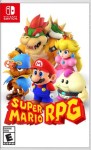 Super Mario RPG
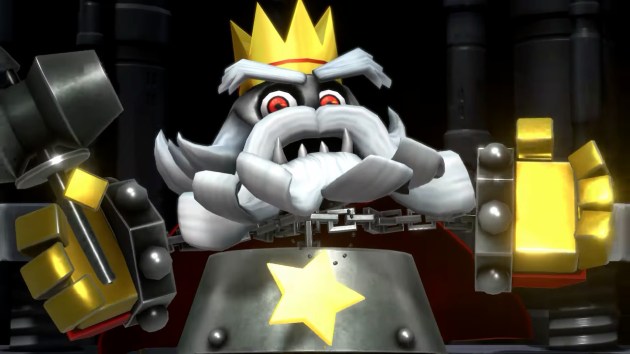

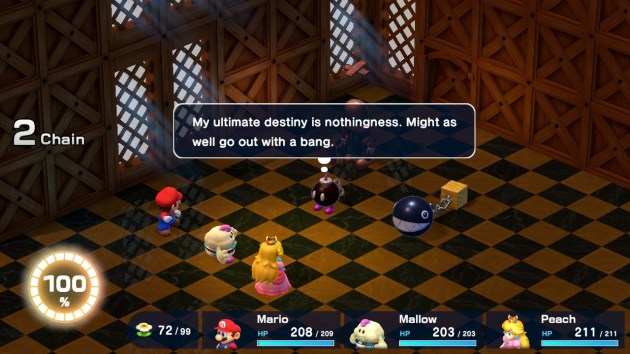

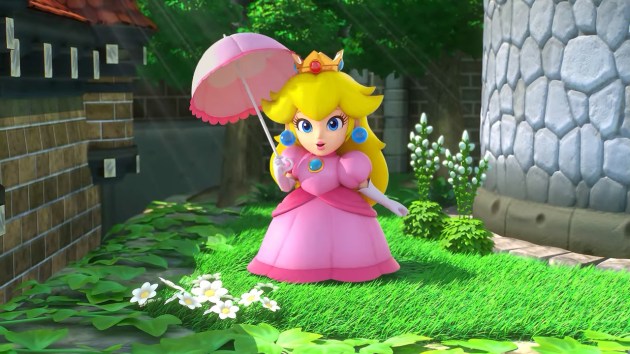
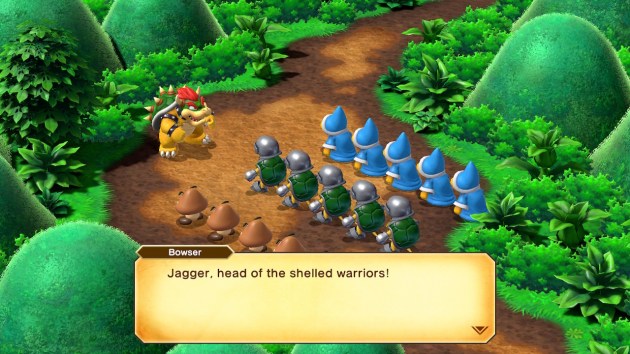
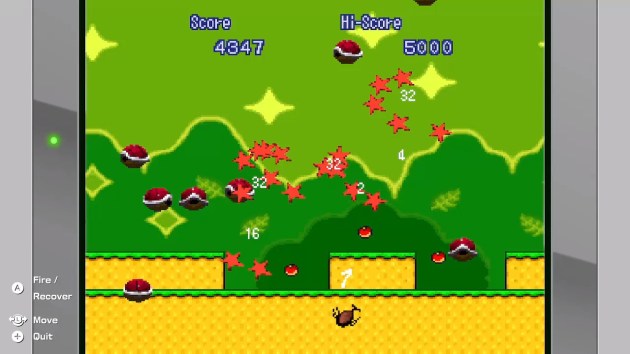


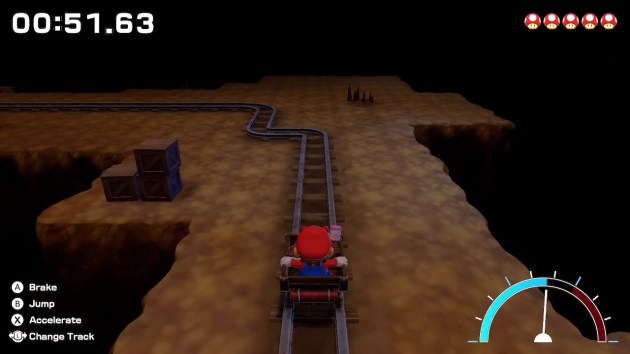
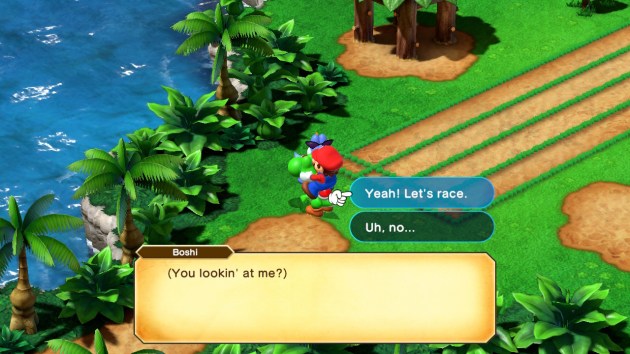


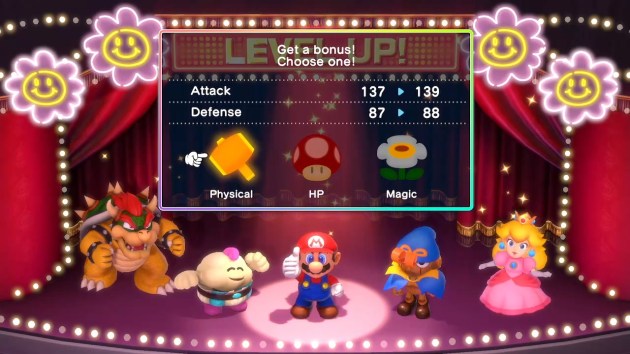
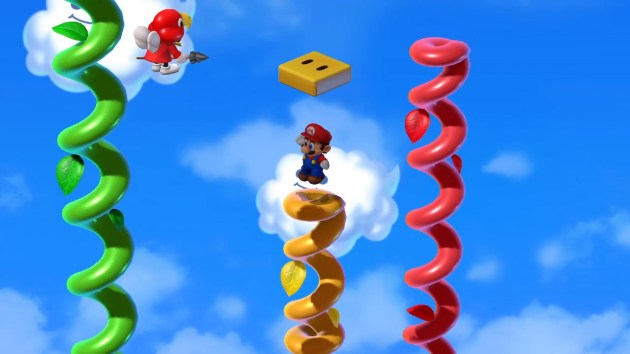

 Super Mario 64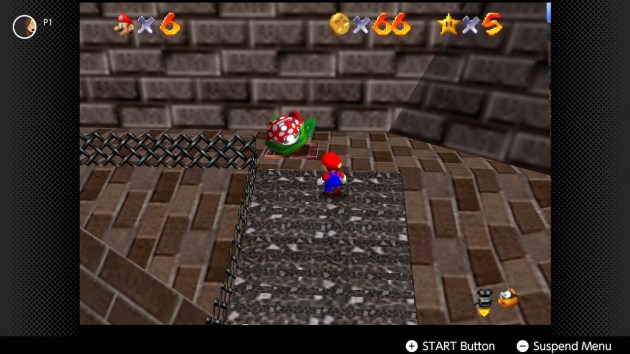


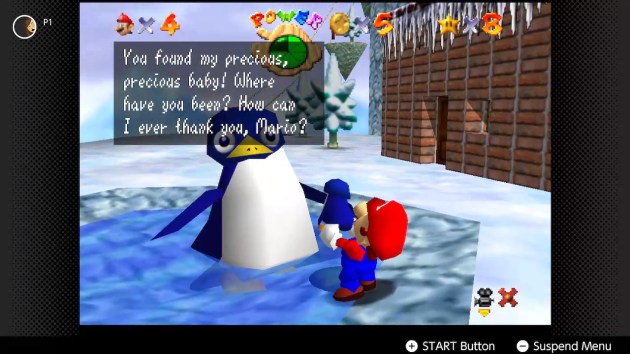


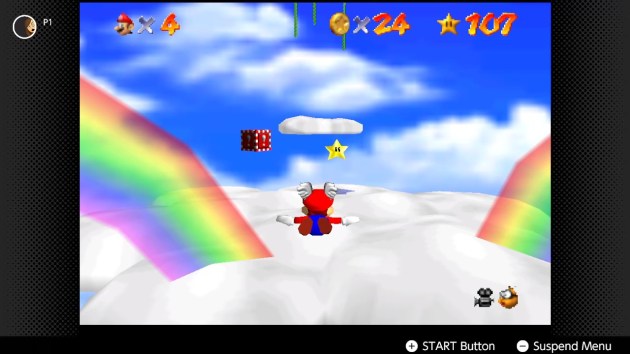
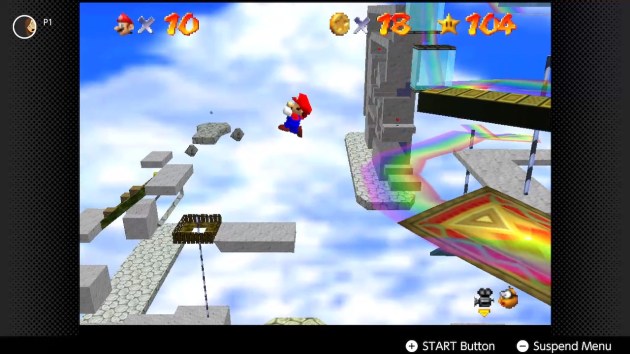
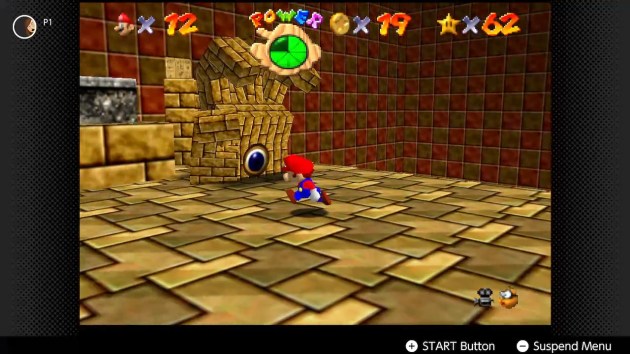


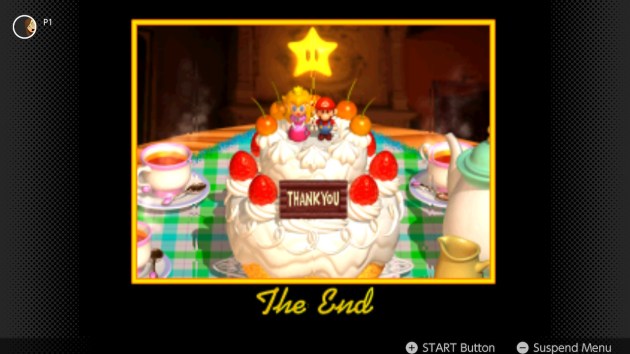


 Kung-Fu Master (Arcade, 1984) aka Spartan X
 Black Belt (Sega Master System, 1986) aka Hokuto no Ken/Fist of the North Star
 Kung-Fu Master


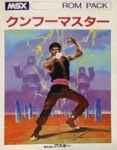 Kung Fu Master

 Seiken Achoo


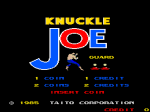 Knuckle Joe


 Shao-Lin’s Road


 Kung Fu


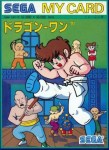 Dragon Wang


 My Hero

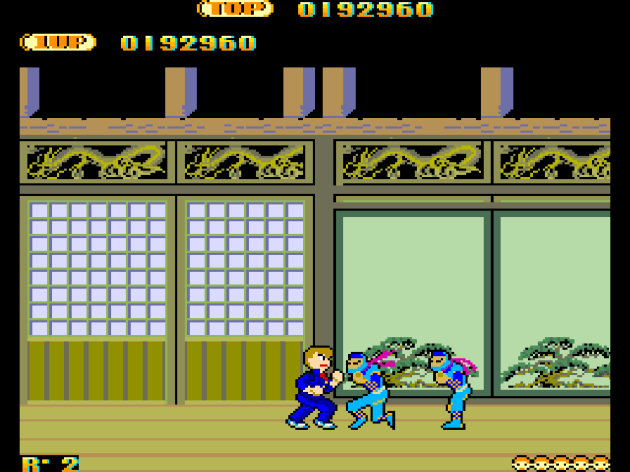

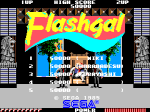 Flashgal


 Kung-Fu Master
 Lady Master of Kung Fu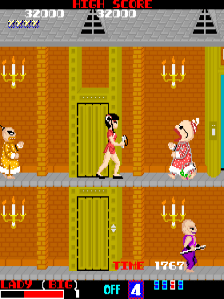


 Kung-Fu Master
 Mr. Goemon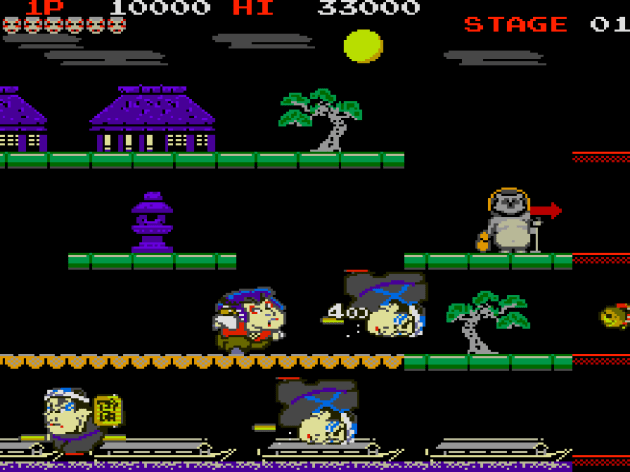

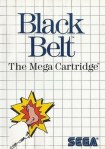
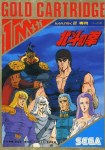 Black Belt


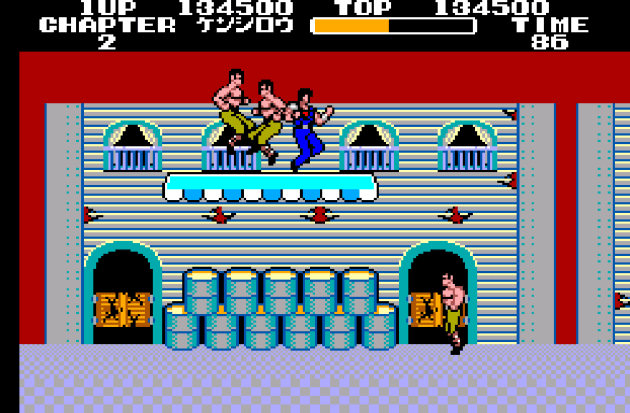
 Kung-Fu Master
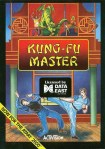 Kung-Fu Master
 Kung Fu Kid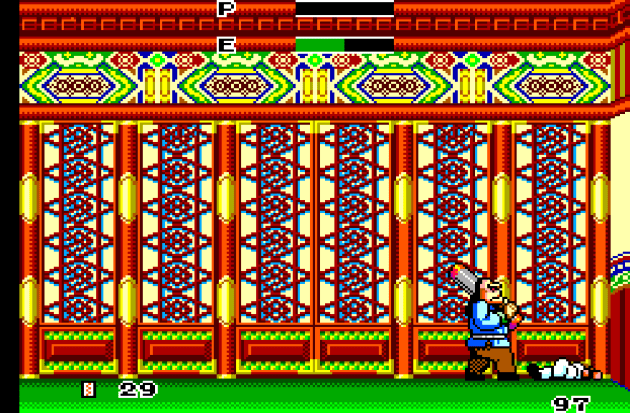

 China Warrior


 Kuri Kinton
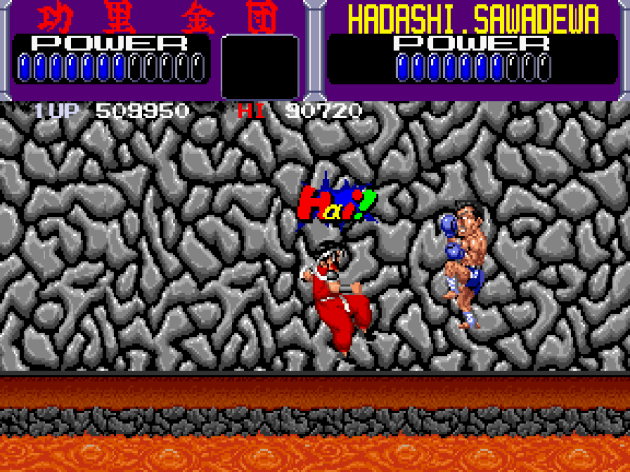
 Vigilante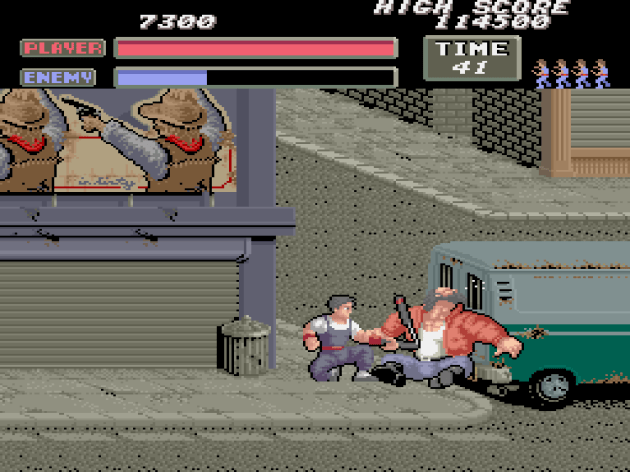


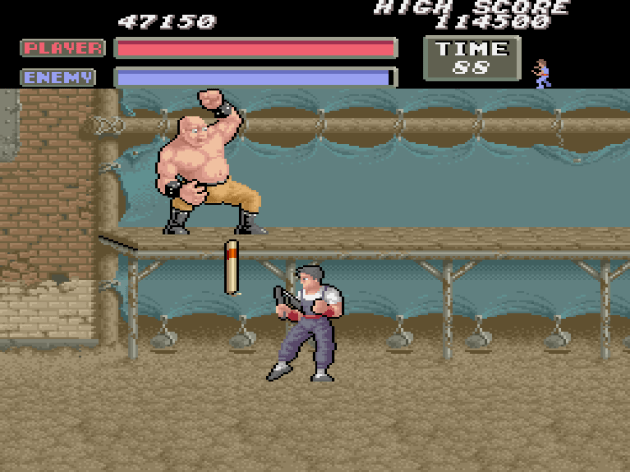
 Splatterhouse


 Kung-Fu Master


 Jackie Chan’s Action Kung Fu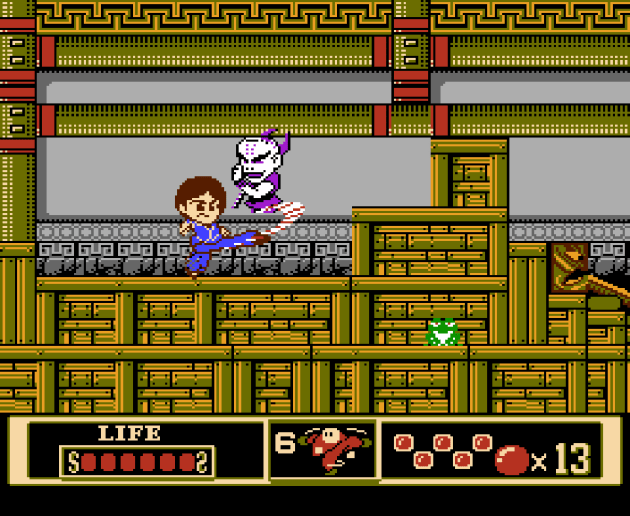


 Kung Fu Master


 Jackie Chan’s Action Kung Fu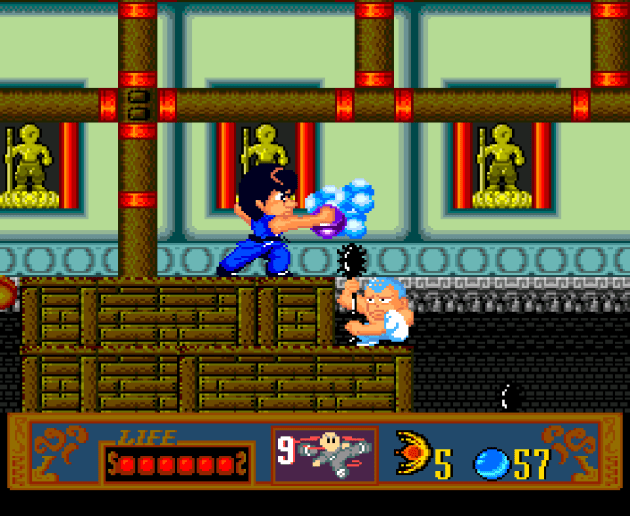

 Spartan X 2


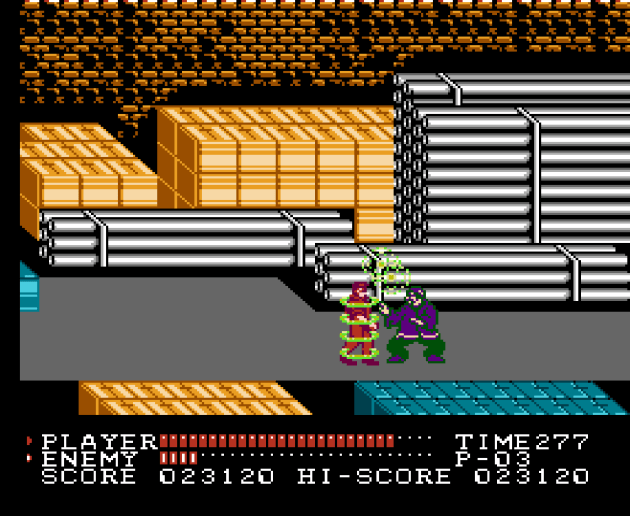

 Splatterhouse 2

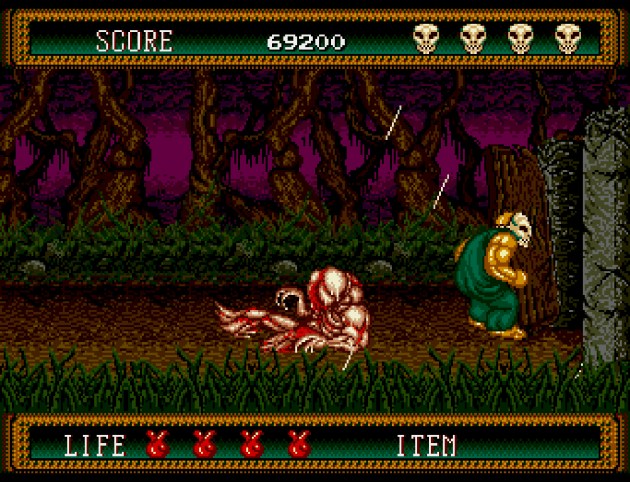


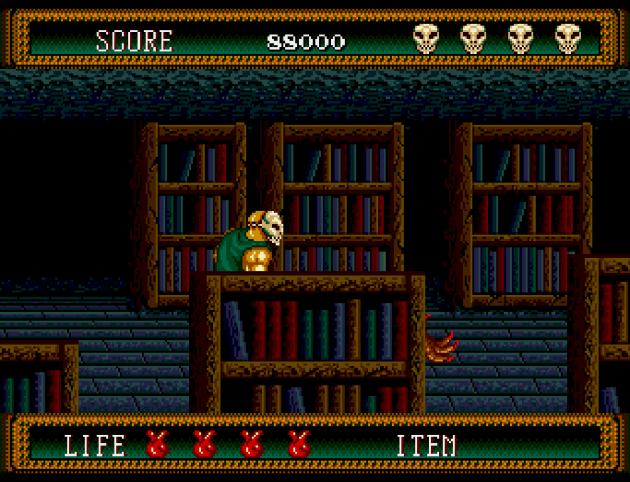


 Super Mario Land




 Super Mario Land DX


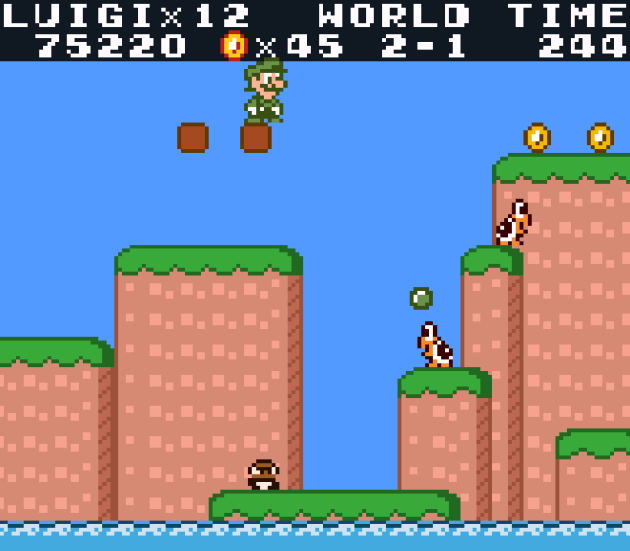
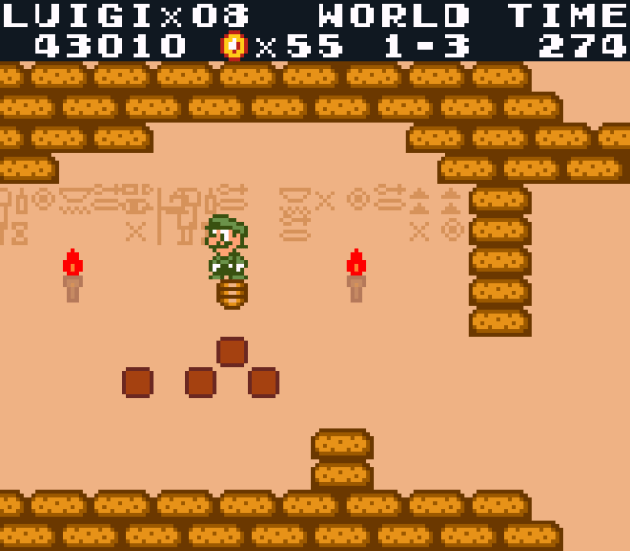





 Tetris
 Tetris
 Igo: Kyū Roban Taikyoku
 Tetris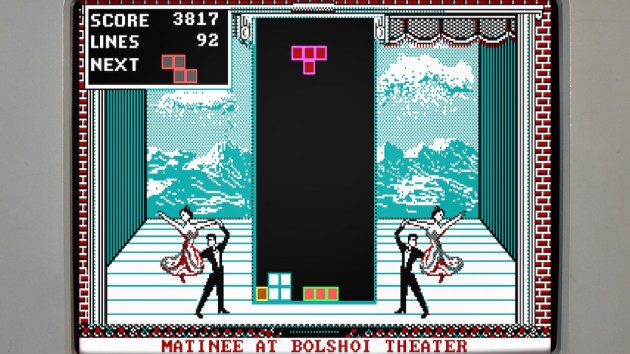
 Tetris
 Tetris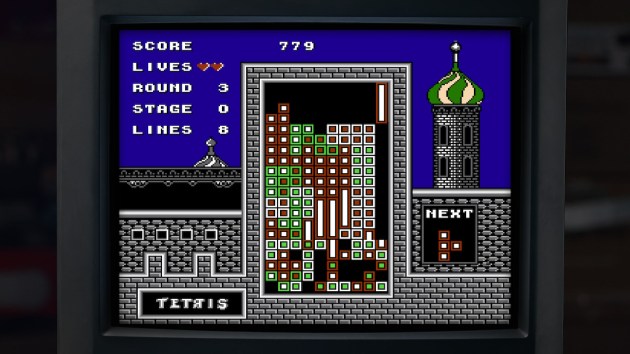
 Welltris
 Hatris (JP Version)
 Hatris
 Hatris (US Version)
 Tetris 2 + BomBliss
 Super Tetris 2 + BomBliss
 Tetris Battle Gaiden
 Super Tetris 2 + BomBliss Genteiban
 Super Tetris 3
 Super BomBliss
 Super BomBliss DX
 Super BomBliss
 Tetris Time Warp
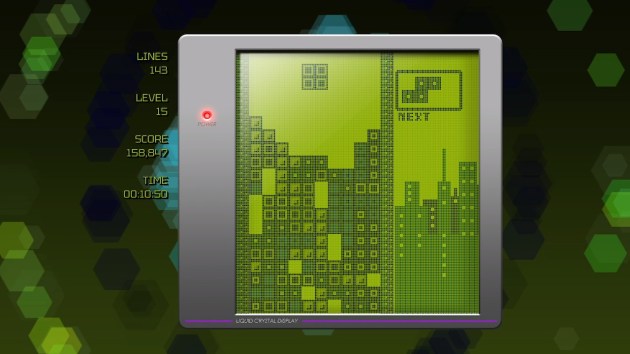
 FINAL TALLY – NINETEEN GAMES (following 12-20-24 update)
 Tetris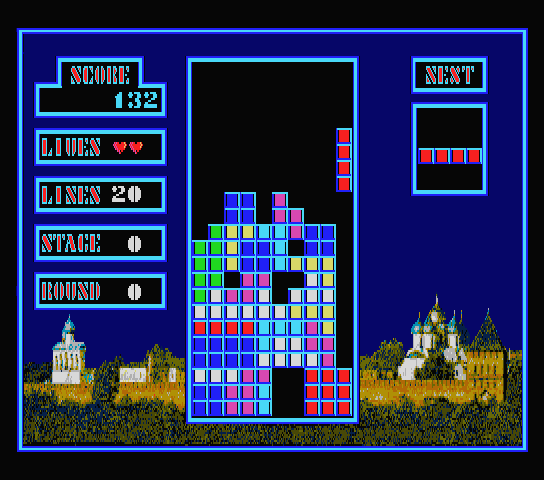
 Tetris

 Tetris
 Tetris
 Tetris


 Tetris
 Flash Point
 BlockOut

 Tetris
 BlockOut
 Nintendo World Championships 1990
 Pyramid
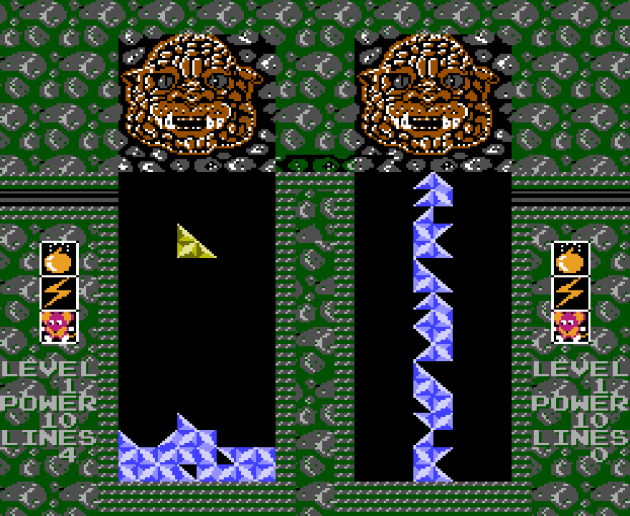
 Tetris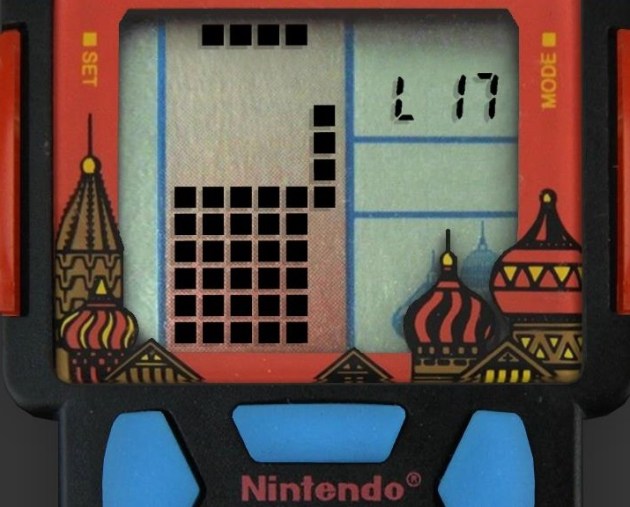
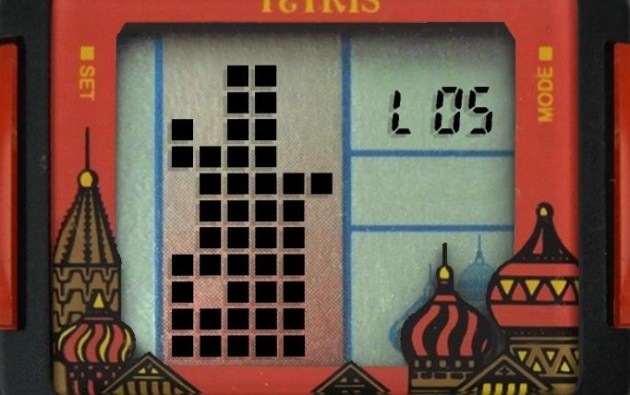
 Pipe Dream
 Bloxeed
 Klax
Klax
 Klax
Klax
 Columns
 Hatris
 Klax
Klax
 Knight Move
 Klax
Klax
 Dr. Mario
 Dr. Mario

 Klax
Klax
 Columns II: The Voyage Through Time
 Pipe Dream
 Klax (Namco)

 Welltris
 Gorby no Pipeline Daisakusen
 Hatris
 Puyo Puyo
 Yoshi
Yoshi
 Wordtris
 Oh My God!
 Dr. Robotnik’s Mean Bean Machine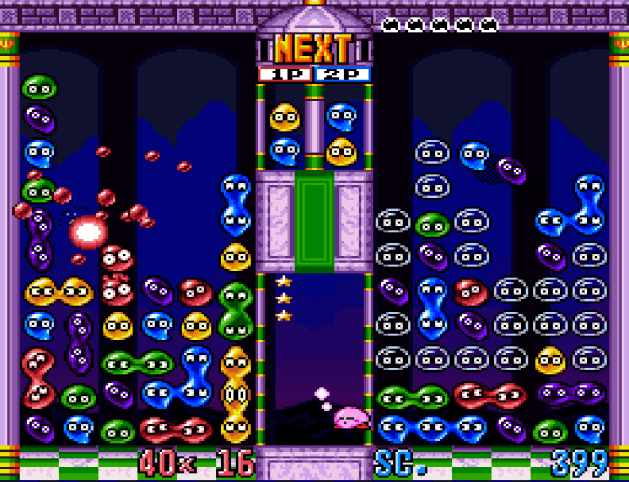
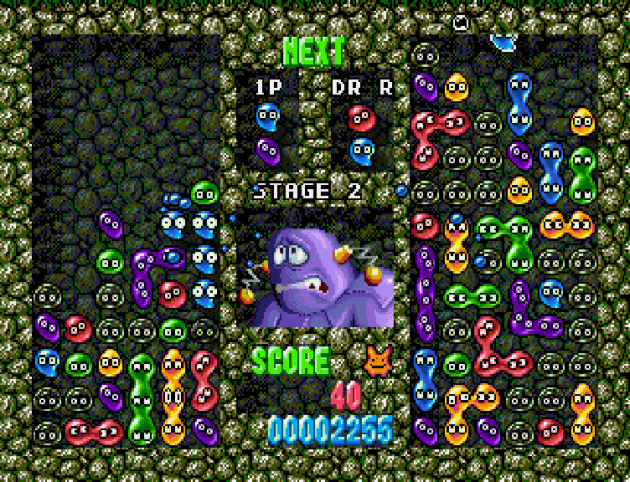
 Poto Poto
 Tetris 2

 Tetris & Dr. Mario
 Bust-a-Move

 Baku Baku Animal
 V-Tetris


 Virtual Lab
 3-D Tetris




 The Adventures of Bayou Billy (NES) aka Mad City (Famicom)
 Gotcha! The Sport (NES)

 Duck Hunt and Vs. Duck Hunt


 Gumshoe
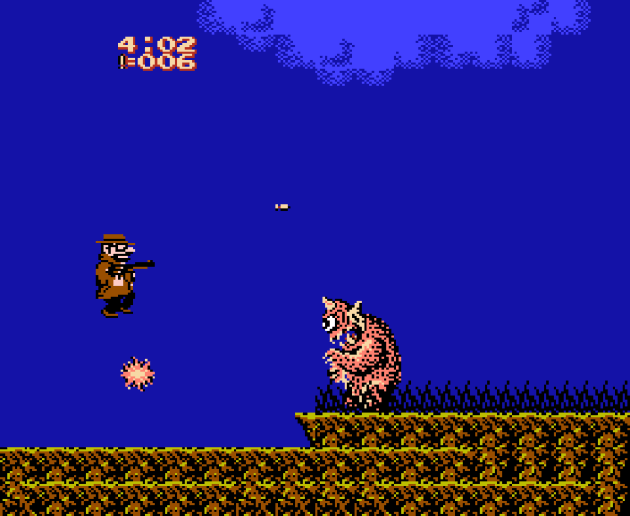
 Gotcha! The Sport!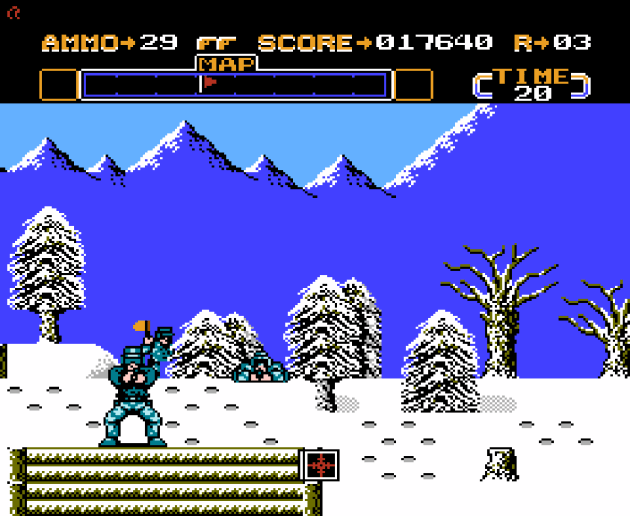


 Freedom Force

 The Adventures of Bayou Billy


 Baby Boomer


 Operation Wolf

 Operation Wolf

 Shooting Range


 Chiller


 Mechanized Attack
 Barker Bill’s Trick Shooting


 Super Scope 6





 Battle Clash

 Bazooka Blitzkrieg


 X-Zone


 Yoshi’s Safari
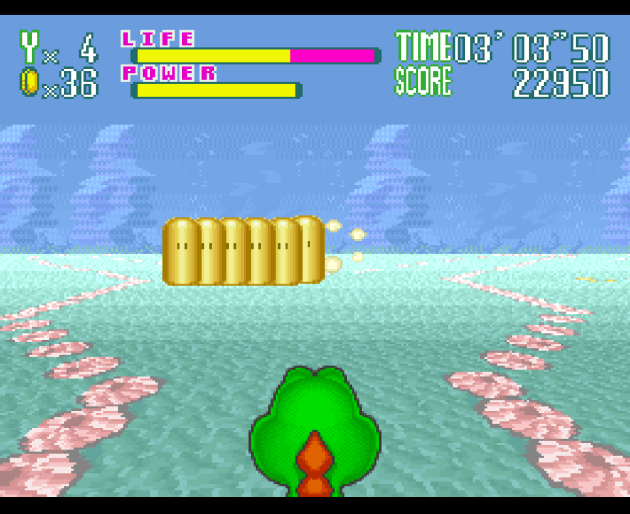
 Metal Combat: Falcon’s Revenge


 T2: The Arcade Game


 Operation Thunderbolt
 Tin Star
 Parasol Stars: The Story of Bubble Bobble III




 Bubble Bobble




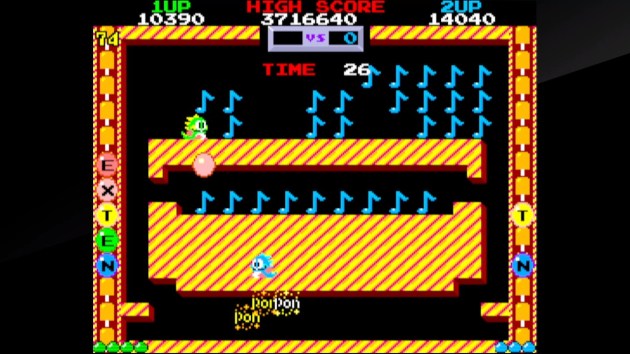
 Cadash


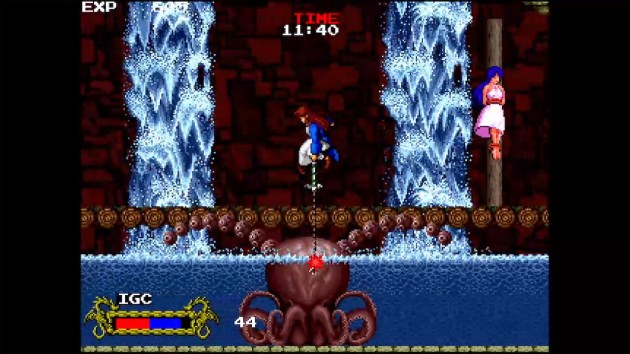


 Champion Wrestler


 Dead Connection

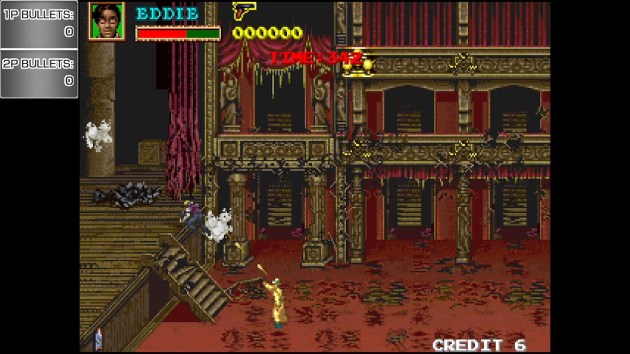
 Growl
Growl
 Rainbow Islands: The Story of Bubble Bobble 2


 Rastan Saga




 Rastan Saga II


 Thunder Fox

 Warrior Blade: Rastan Saga Episode III


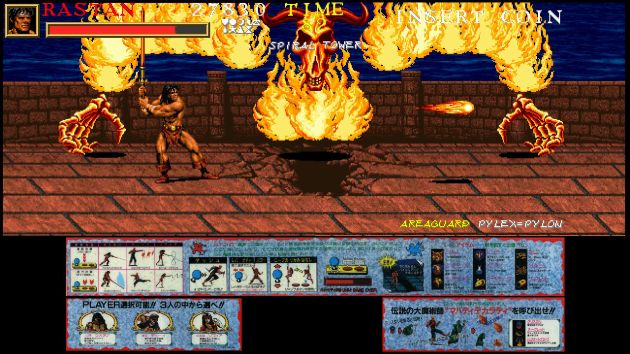
 Warrior Blade (Taito Milestones 3)
 Qix (Taito Milestones 1)
 Alpine Ski (Taito Milestones 1)
 Front Line (Taito Milestones 1)
 Castlevania Chronicles


 Ironsword: Wizards & Warriors II





 Indie Gamer Chick
You must be logged in to post a comment.