Tales from the Dev Side: Screw XNA

The last month on the XBLIG scene has been an interesting one.  Since word broke that XNA would be phased out, I’ve been witness to public mourning, disbelief, and nostalgia.  XNA created a community out of dreamers, some of whom wonder where their future will be.  Others have been looking to the future.  At Indie Gamer Chick, we’ve had the guys behind MonoGame offer their version of a lifeboat to the marooned XNA development community.  This was followed up by a pitch that Unity is the way to go.  DJ Arcas, the man behind the million dollar-generating FortressCraft, is throwing his hat into the Unity ring.  And, almost uniquely among his fellow XNA developers, he’s not exactly grieving for the loss of the platform.

Screw XNA

by DJ Arcas

I’ve been programming for a very long time, and almost all of it was writing games. I cut my teeth on BASIC, went onto compiled Basic, learned Pascal, then started to use x86 assembler, to squeeze every erg of performance out of my games. Mind you, that was on a 486.  There wasn’t a great deal of performance in there! That was the way you had to do it; you sacrificed a control, flexibility and development pace, but gained a lot of performance. That was 1992.

When I professionally entered the industry, it was during the death-throes of the PS1, and the rise of the PS2. For the PS2, everyone was using the new-fangled C++. Many of the old-hands decried the use of this language – “It’s too slow!”. And, in a way, they were correct.

Poorly written, massively-inherited C++ is slower than a sloth covered in treacle. Well-written C++ has a tiny margin of difference. The real difference, of course, is how much you can achieve in the same time frame. We never went back, by the way. C++ stayed. Admittedly, you had to change the way you worked; you gained a lot of flexibility and control, but you were sacrificing performance. Still, the Xbox was a 700mhz machine, and we needed a game written in one year, not three!

I first saw XNA during the development of Burnout 3; there was an amazing demo doing the round, showing a car crashing into a wall at high-speed and crumpling. We were impressed, but dismissed it, as it was a PC-only technology. Microsoft promised Xbox, PS2 and GameCube versions. They never appeared, however.

I started with XNA shortly after the launch of XNA for XBLIG, or “Community Games” as it was called back then.  Can you believe it?  It took me seven days from first getting my hands on XNA, to my game being available for download on XBLIG. FallDown, it was called. I believe it was the 74th game on the service.
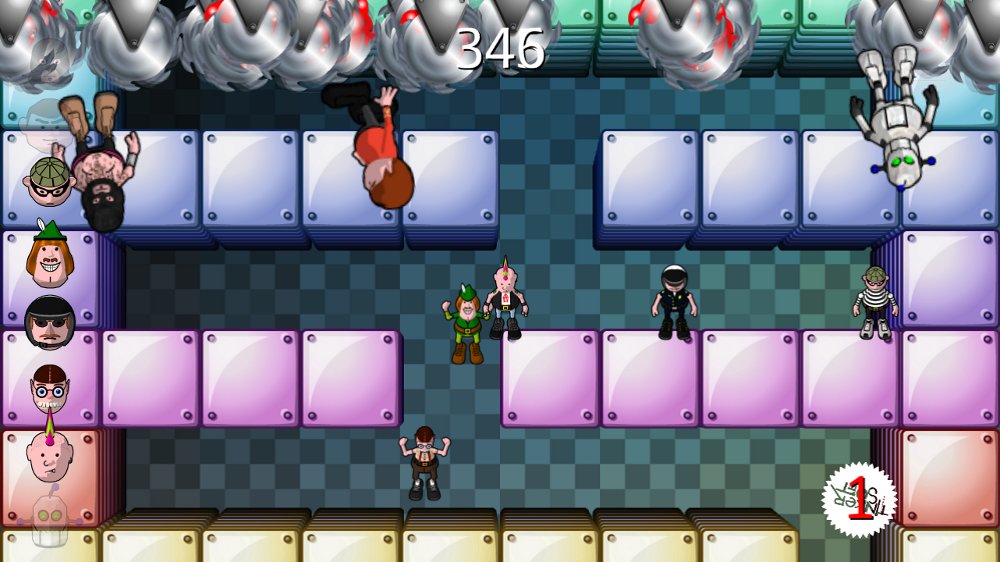
screen1

This is FallDown. Rats. I was hoping it would involve Michael Douglas somehow.

From then on, I reveled in C#; whilst I had to use the much sleeker, yet clunkier, C++ at work, at home I could write code at a rate five to ten times quicker than I could at work. C# allows you to create working systems much quicker, but at a slight cost in CPU time. You gained a lot of flexibility and power, but you had to work the way that C# wanted you to. Sound familiar? Of course, there was no way that a AAA studio was going to consider using C# on a AAA game. It’s far too slow, surely? The fact that you could write the same game in half the time; or a game that’s twice as good in the same time; never seemed to cross anyone’s mind.

I released many XNA games onto XBLIG, eleven in total. Some did very well (FortressCraft), and some did very badly (Steam Heroes). But each game was a step forwards; I took what I’d learned in the previous games, and applied it to the next one. Particle engines were written. Wrappers for physics. New and improved shaders. But these things took time, so much time, and weren’t always optimal. For instance, in FortressCraft, I developed a way of drawing meshes on the GPU, as opposed to uploading them at render time; many hundreds of times faster. If I’d known that whilst writing Stunning Stunts, I would have released a much better looking game; or the same game in a shorter time frame. Who knows how much better things might have gotten if I’d spent another four years working with XNA?

And now we move onto the end of XNA. What’s next? Quite unsurprisingly, many people are sticking with what they know, and are moving onto MonoGame, which is basically XNA all over again. When asked why, well, anything more advanced would be slower, wouldn’t it? and you’d lose control, and would have to do it the way they told you? All these things, sound awfully familiar to my ears…

Always been one to try out adventurous new things (You should see the bottom drawer in my bedroom!), I decided, at the end of last year, to try this new-fangled Unity everyone had been going on about. It had just gained Linux support, and was destroying the competition in the mobile arena.

Five days later, AndyRoo and I had put together an underwater deathmatch game, in steam-punk, animated submarines, where you could fire physics-based torpedos through thick foliage, and dive in and out of shipwrecks, in a game that has full configurable controls, massively scalable detail, and would ‘just work’ on almost every platform under the sun.
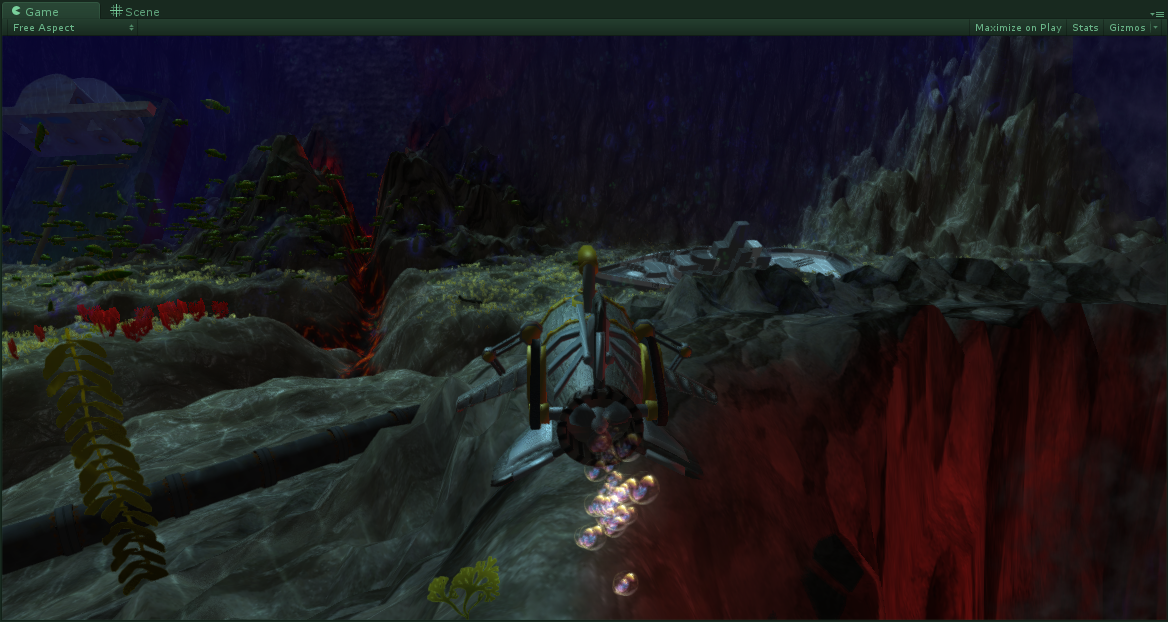
Now. let’s just write that again. I wrote a game with the approximate gameplay complexity of Doom, with substantially better graphics, in 5 days flat, in an engine I had never seen before.

Now, XNA could most certainly have done that, barring the multiplatform stuff (MonoGame solves that tho), but I really can’t begin to imagine the timeframe it would have taken me write it. And in that timeframe, who knows what Unity would have added? Having a tech team of a few hundred people writing amazing new features for you really does help you stay on the cutting edge!

The real beauty of Unity, to my mind, is that you can try out advanced tech, and see if it fits your game. For instance, should your game have edge detection? In XNA, you’re looking at a few days of different ways of writing the shader, considering normal or luminance-based edge detection, optimizing, and then deciding that, actually, it looks crap.

In Unity, you simply drag the shader onto the camera, and comes fully configurable.. It comes with dozens of shaders like this, allowing you to quickly prototype up how it should look.

So you’re talking about several days of work, played off against several seconds. I already know where my vote is heading…

This is the usual point where people leap in and go “AH HAH! Whilst Unity is better for prototyping, it’s no quicker for writing a full game!”

This sort of comment is really self-evidently false; if you have a fixed timeframe in both systems, you’ll either finish in a 20th of the time in Unity, or end up making something substantially better looking in Unity. The fact that, in Unity, everything inherits from a generic object, meaning you can manipulate everything quickly; re-use of scripts, code and objects in Unity is truly incredible; from having actually used both systems, I can say that writing gameplay in Unity is much, much faster. I’ve never heard this from anyone who has ACTUALLY used both XNA and Unity, mind you.

“Oh, but it’s slower!”

True! Unity is slower. Is a LOT slower? No. A few percent, perhaps. Are you confident that your cascading shadow engine, which you wrote from scratch, is faster than Unity’s one? I wouldn’t be. Will your physics engine be faster than PhysX? Almost definitely not. Will you be able to optimised your graphics engine for the iPhone better than the Unity guys did? No chance.

“Ah, but once you try to do something Unity doesn’t want you to, it’s way easier in an API like XNA!”

I’m glad to say this isn’t true. If you try to do something Unity doesn’t want you to, you end up in exactly the same boat as you’re in with XNA; having to write it yourself, and wishing it was already written for you. You can even interface with C++ DLLs, meaning that, WORST CASE, it takes exactly the same amount of time.

That’s what really does it for me; if I want to mess about with their state-of-the-art lighting engine, I can. I don’t have to spend 3 years writing it first. If I decide that I need to implement some new, hitherto unheard of technique in my game, then that will take the same amount of time; but every other facet of my game will be done faster.

But I think the main thing I love about Unity is that if you make a variable public, a designer can then edit that from the WYSIWYG interface. That right there is a mountain of work in XNA.

For me, it boils down to a simple choice. Do you want to write a good game, or a good engine? FortressCraft was, really, a good engine, designed with the future in mind, and the much more complicated and in-depth Chapter 2.

But I managed to write this in 4 weeks:
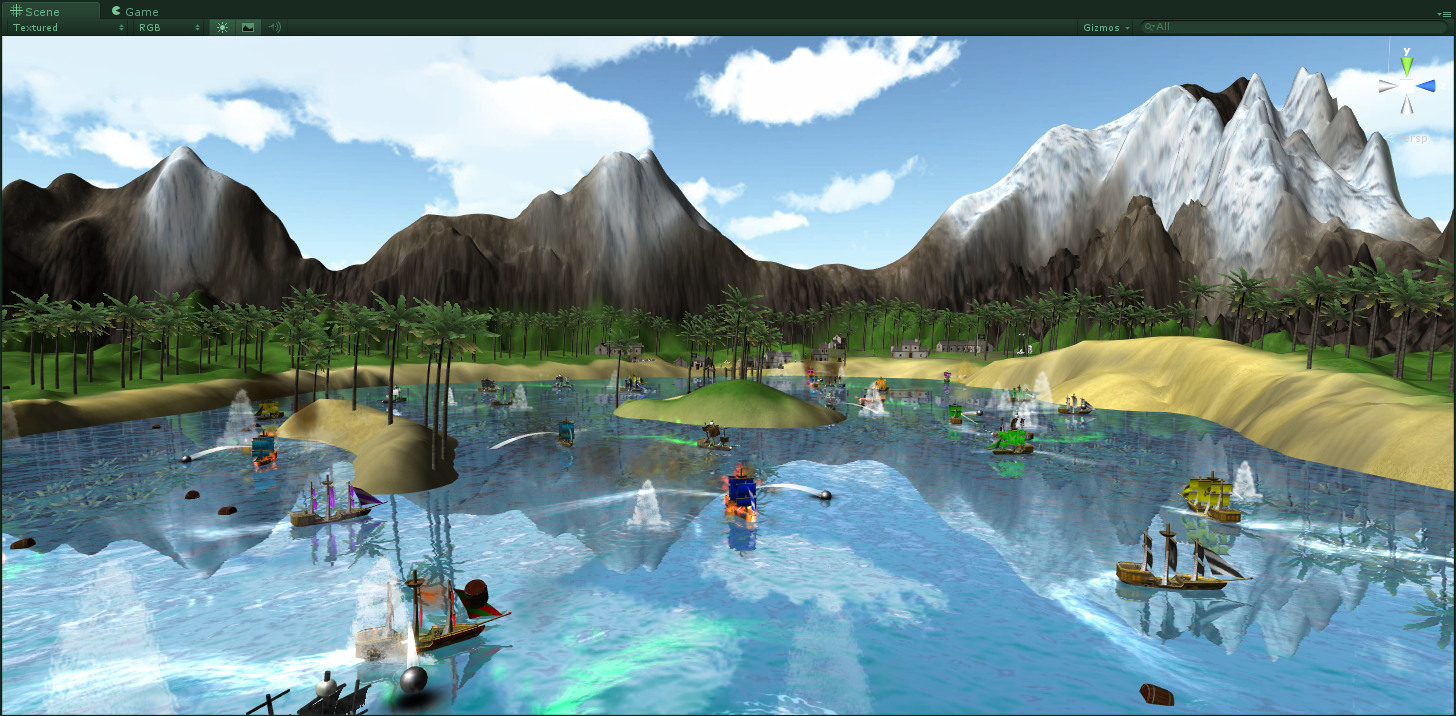
And this in a few days :
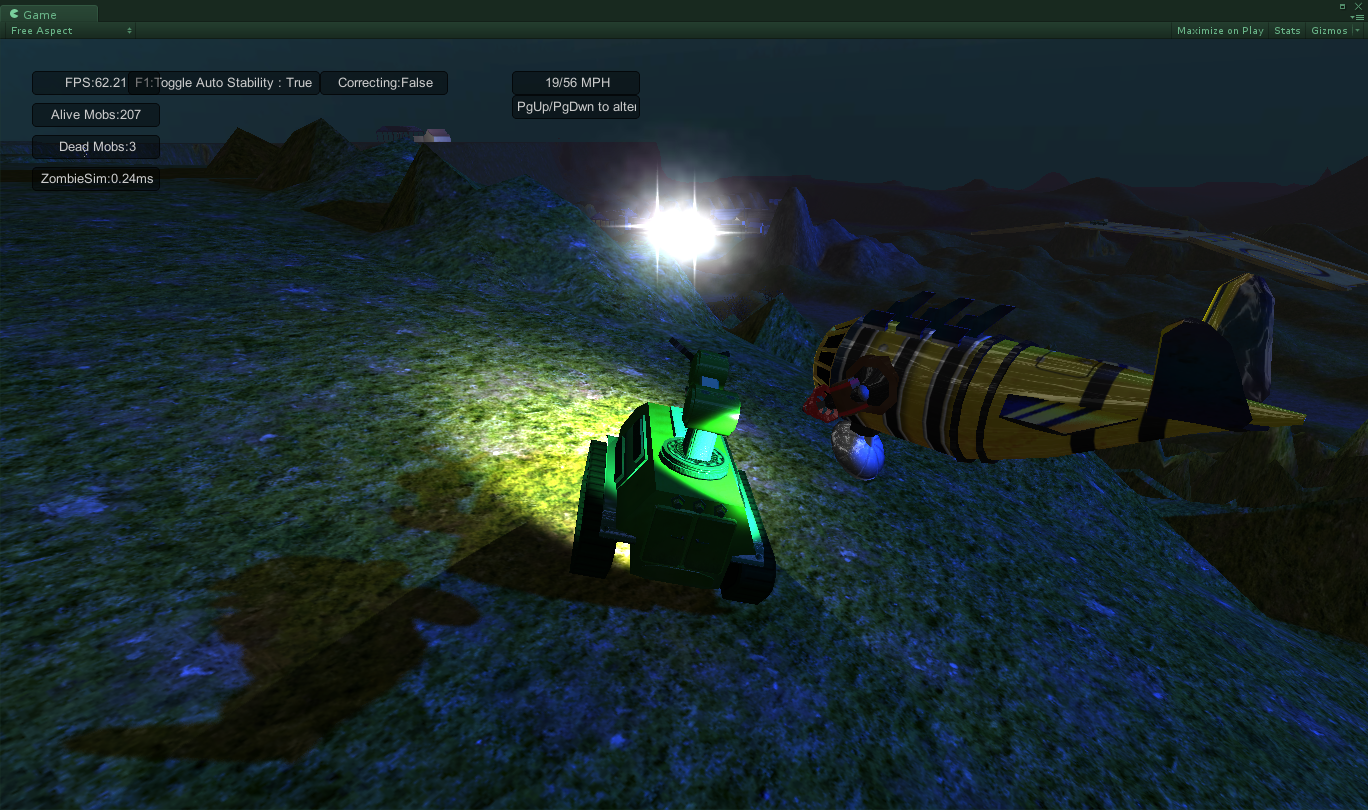
Why would I want to order a bunch of parts from a garage, when I could pay someone to fix my car for me? Fixing your own car only has 2 real reasons; either you love it, or you’re trying to save money. If your goal is to have a car to actually drive on the road, you’d pick the garage option every time.

And that right there is the only – only – advantage I can see that XNA/MonoGame has over Unity. It’s free. (as the old adage goes, anything free is worth what you paid for it). Mind you, Unity has a free version; you miss out a bunch of the extras, but you can decide it’s for you (Slender was written using Unity Free, for instance)

If your game isn’t going to make $1,500, then Unity Free or MonoGame might be more suited for you. Go for it. Great stuff was written using free tools. But if they don’t work, or you need help? There’s almost  no support for free software, and you need to rely on the community.

If you want to spend a huge amount of your available dev time re-inventing the wheel, go with XNA. Go with MonoGame. Enjoy scratching your head about calculating tangents for reflections, wondering how cascading shadows work, and if you should implement A* or Dijkstra’s for route-finding. Me, I’ll be busy getting on with writing the game.

Fuck XNA. Long live the future.

Tales from the Dev Side: Unity in a Splintered Industry

As word hit that XNA was being faded out, non-developer me was curious where else the community that I’ve downright fallen for with would turn to next to create the games I both love and loath.  And the community has responded.  First, the guys at MonoGame hit me up with a semi-well-received, semi-controversial editorial touting their platform as the next big thing.  While a direct response to that from the mad bastard behind FortressCraft is still coming, industry veteran-turned-indie Scott Tykoski wanted his chance to sing the praises of Unity.  As always, I understand almost none of this.  But Scott’s a gifted writer and not prone to panic, so you should give him a read.

UNITY IN A SPLINTERED INDUSTRY

by Scott Tykoski

As the death knell rings for XNA and my Xbox Indie pals pay their respects on twitter, a question hangs in the air – “Where do we go next?”

And by we I mean the group of developers that got excited at XNA as an inexpensive multi-platform solution. We bet YEARS of development energy on a system that looked so promising, yet let us down in so many ways.

“Where do we go next, now that XNA is dead?”

We also have to deal with the “gold-rush” mentality that has come along with the mobile gaming boom. Indie/Hobbyist game developers are everywhere, and worse, most of them are making very similar games (take hit game, change the theme, rinse, repeat), intensifying player dissatisfaction with titles that don’t push any significant boundaries.

“Where do we go next, now that the world is oversaturated in unsatisfying games?”

And heres another challenge to overcome: our industry is undergoing HUGE, seemingly random marketplace shifts. Phones streaming games to tvs. Consoles putting games on the backburner to focus on movies and television.

“Where do we go next when there are so many platforms and nothing is certain?”

The honest answer? We go away. We give up and we move on.

Goodbye, friends.


UH…WE’RE NOT REALLY SCREWED, RIGHT?
No, sorry, I’m kidding…we’re totally fine. 🙂

Actually, being in the Indie gaming scene has never been more exciting – even with app stores overflowing with crappy titles (we’ve fought that battle before, right XBLIG guys?). You see, every studio – from the one-man operations to the largest gaming conglomerates – is facing the exact same conundrum: “What platforms do we focus or development energy on?”

This universal need for multi-platform tools means we now live in an ecosystem ripe with ‘Make Once – Play Everywhere’ solutions. Unreal for the big spenders. Adobe Air for the Flash experts. Gamemaker Studio, GameSalad, Stencyl, & Construct for folks unfamiliar with code. And of course the mega-versatile MonoGame for anyone fully invested in XNA (Rest In Peace, sweet prince).

But while all these solutions have their disadvantages, be it price or flexibility, one toolset has them beat on all counts: UNITY.

What once was a fun little tool for prototyping, Unity (now at v4.0) has matured to the point where you can make some pretty amazing games, like the beautiful Kentucky Route Zero or the 4x Epic Endless Space.

Kentucky Route Zero

With Unity, developers can now rest assured that core engine systems are covered and they can focus on the most important task: DESIGNING A GREAT GAME!

But first..

THE BASICS OF UNITY
At its core, Unity is a 3d game engine where the developer can script using C# or go straight into scene creation using the fully featured editor, which feels a lot like using 3DMax or Maya (where you move game objects around in 3S space). While it may seem daunting at first, the toolset gives a great entry point for either artists or developers to start working on their game.

While the amazing editor would be reason alone to use Unity, the real selling point is the admirable cut of its cross-platform jib (ie: it can export games for every friggin’ platform). Titles for PC, XBox360, Wii, Web, Android, and iOS have all been made and released using the Unity, proving itself on multiple devices many times over.

It should also be noted that you can make a Ouya game RIGHT NOW using Unity. That’s pretty amazing cross-platform support, if I do say so myself.  Which I do.  Obviously.

SO MUCH 3D GOODNESS
While modeling, texturing, and animation have to be done in a traditional 3D program (3DMax, Maya, Blender, etc), Unity does all the heavy lifting when it comes to importing and rendering those assets. Lighting, post processing, shadows, and animation are all available out of the box.

I remember trying to get a distance blur effect hooked up for battles in Galactic Civilizations II but it was a huge pain and never happened. In Unity.. it’s as simple as dragging a effect script onto the camera object. Most effects are drag-and-drop ready…it’s simple to the point of sickening.

And lets talk for a bit about asset pipelines. The amount of raw data that goes into defining meshes, bones, UVs, and animations is staggering, and have given rise to third-party frameworks that manage this deluge of data. The fact that Unity makes the asset import and management process a two click process is a testament to the overall ease-of-use the editor provides.

THE JOYS OF C#
Anyone familiar with XNA is also familiar with the beautiful C# coding language. I won’t pimp that here, but Unity uses it, and it’s awesome.

Coding is as simple as writing your code, making a few public variables to use as dials, then attaching that script to your game objects. Those variables can then be tweaked in the editor, so writing modular code is buttery smooth.

The editor also has its own scripting API, so you can easily extend the editing tools as necessary.

THE ASSET STORE
Another notch on Unity’s belt comes in the ‘Asset Store’, where you can buy or sell anything game related.

Lets say you want a ‘Plants vs Zombies’ look to your game and need to animate several of 2D characters. You can go into a separate 3D program, rig and bind 2D planes, export the data, then use a 3D animation object to render your characters. OR you can purchase SmoothMoves, an in-editor 2D animation solution for 75$.

It’s the best 75 bucks you’ll ever spend, I assure you.

Chances are, if you need a game-related subsystem, someone already has a solution available on the asset store: just purchase, plug, and play!

NOW FOR THE BAD NEWS
Instead of a proper point-counterpoint, I decided to bottle up ALL the negative stuff to dump on you at the end. I know…I’m an a-hole.

First and foremost, the cost. Good news here is that a free version can be used by most Indies. Once you start making more than $100,000 a year, however, it’s time to go PRO, which will cost you $1500. Exporting features come in the form of add-ons, so exporting to iOS from the free version will run you $400, from PRO it’ll cost $1500.

Unfortunately, all the R&D testing I did was with a PRO version with a PRO iOS exporter, so some of my exuberance may come from using a super-slick $3000 version. You can dig around in the Unity Store to get some charts comparing features of the different versions.

Also, debugging was a bit more painful than in XNA and traditional IDEs. My testing of the tool was mostly on the art side, however, with a full-time developer testing out the coding front, so my pains could have simply been lack of experience. My fear is that you’ll be spending more time with print statements and less time with breakpoints.

Another issue, for those of us that love our retro graphics,the 3D environment can make 2D game creation tricky. It’s doable, but definitely less intuitive than making a proper 3D game.

The biggest drawback to Unity – as with any third-party engine – is the lack of control you have on the last 10%. You’ll always encounter areas where you want the engine to do something that’s just not possible (for one reason or another). While the main 90% will be smooth sailing, compromising on the last 10% of your vision may be too steep a price.

UNITY & MAKING GAMES WORTH PLAYING
So I started this editorial with that stupid ‘we should give up’ gag. It was mostly for fun, but there’s a legitimate feeling of helplessness that comes when your platform of choice is discontinued. There were too many crunch weeks spent on games using XNA to shrug it off as a necessary loss.

And while it sucks to see an amazing framework put to pasture, we are now drowning in possible alternatives. Alternatives that not only allow you target multiple platforms, but that alleviate the burden of creating the subsystems that your game will depend upon.

It’s for the sake of quality gameplay that I fully endorse Unity, and really any 3rd party engine. The overwhelming majority of your audience could care less about the underlying engine.. all they want is a new experience, something that’s not ‘Angry Birds with Zombies’.

Creativity on the Indie scene is a talk best left for another time , but always remember: originality is your key competitive advantage over the AAA studios. Use it! The less time you’re making engine systems that never excite the player, the more time you can devote to making original gameplay systems that will excite yourself, the player, and perhaps even our entire industry.

Tales from the Dev Side: MonoGame is The One

XNA, which my non-developer readers will note is the development framework of Xbox Live Indie Games, is being put out to pasture.  It’s not quite dead yet.  Put it this way: the family has been notified and doctors are starting to determine what organs are viable for transplant, but the plug is not completely pulled yet.  Although I’m confident indies will exist in a similar (but hopefully better) form on the next generation Xbox, creating games for the platform will be a much different experience.  I’ve been seeking out possible XBLIG alternatives.  MonoGame isn’t necessarily what I had in mind, but the more I read and heard about it, the more I saw the potential in what they offer.

I should probably preface this editorial by noting that I have absolutely no clue what any of this means.  Like traveling in a country with Romance Languages, I’m at best picking out an odd word here or there, but otherwise it’s all Greek to me.  Which is weird because Greek is not a Romance Language and doesn’t fit into the metaphor at all.

Read more of this post

The Future of Indie Gamer Chick

It’s been 580 days since I started Indie Gamer Chick.  In that time, I’ve reviewed 352 games, 327 of which are for Xbox Live Indie Games.  My participation in the XBLIG community has been nothing short of life changing for me.  Sometimes my reviews aren’t exactly nice, so being embraced by developers was not something that I expected.  I feel like I’ve been adopted by a loving, nurturing family.  Yea, Xbox Live Indie Games don’t always produce the highest quality of titles, but that’s the price you pay for having an open platform.  For all the bitching people (including myself) do about some truly abysmal games that were intended to be bad from the get-go, it’s all worth it.  It created a place where talented, enthusiastic dreamers could create and market their very own video games.

Proof that XBLIG isn't dead: there's some very exciting looking titles still on the horizon.  This is Ring Runner, coming this Summer.  Click the picture for a trailer.

Proof that XBLIG isn’t dead: there’s some very exciting looking titles still on the horizon. This is Ring Runner, coming this Summer. Check out their YouTube channel by clicking the picture.

Unfortunately, word from Microsoft leaked this week that XNA, which is the sole development language of Xbox Live Indie Games, has begun to be phased out.  While not discontinued, XNA is now classified as “no longer under development.”  Along with this, all current XNA MVPs will be relieved of their duties on April 1, 2014.  This has caused widespread mourning among the XBLIG community.  Mind you, we’re over a year away from the date that MVPs are being let go.  Still, the future of Xbox Live Indie Games, which was always shaky at best, now seems downright bleak.

To clear-up some misconceptions for those non-hardcore XBLIG fans that read me, Xbox Live Indie Games are, to the best of my knowledge, not being removed from the Xbox 360 Marketplace at this time.  In fact, it’s a safe bet that they’ll be around for at least another year.  If the time comes where membership to the App Hub is stopped, then you can feel free to panic.  However, there’s no question that XBLIGs as we know them today will cease to exist sometime in the future.  Hopefully some questions will be answered with the next generation Xbox is unveiled in the coming months.

Another reason to stay excited about Xbox Live Indie Games: DLC Quest has a sequel on the way.  It's called Live Freemium or Die and it's coming "very soon" says creator Ben Kane.  Click

Another reason to stay excited about Xbox Live Indie Games: DLC Quest has a sequel on the way. It’s called Live Freemium or Die and it’s coming “very soon” says creator Ben Kane. Okay, so I’m the one and only person who begged him to NOT do a sequel, but if anyone can prove me wrong, it’s him.  Click the picture for the trailer.

The end of XNA is not the end of Xbox Live Indie Games.  Indies will factor into the next generation Xbox.  Not because Xbox Live Indie Games was a rousing success, because it wasn’t.  It’s because the game industry is trending this way.  iPhone has become one of the most successful gaming consoles in history.  Sony has created its own open-to-anyone platform.  This is the direction the industry is heading.  Microsoft won’t keep indies around because they’re trendy or because they’re artists.  They’ll do so because it’s sound business sense.

In the meantime, my fans on Twitter want to know what this means for Indie Gamer Chick.  Well, since Xbox Live Indie Games aren’t going anywhere in the immediate future, I’m not going anywhere either.  Yea, I suffered from a bit of burnout earlier this month, but then a couple of games came along that reminded me why I’ve stuck by this platform for the last eighteen months.  Of course, I can’t say what the future holds once XBLIGs begin to roll out on the next generation platform.   Whether they remain the focus of my site will depend on how open the platform is and the volume of games released on it.  If it sees the same amount of games as PlayStation Mobile, I obviously wouldn’t be able to center my site around it.  Thankfully, my name is Indie Gamer Chick, and thus I’m not tied down to anything.

Heh, sorry Tim.

Escape Goat 2 might not come to Xbox Live Indie Games, which is exactly why I need to start paying more attention to other avenues of indie gaming.

Escape Goat 2 might not come to Xbox Live Indie Games, which is exactly why I need to start paying more attention to other avenues of indie gaming.  You can head to the developer’s website by clicking the picture and threaten bodily harm if he doesn’t release on XBLIG.  Or, you know, ask politely.

I am announcing that I’m going to include more coverage of non-XBLIG platforms.  Until recently, reviews of games on Xbox Live Arcade, PlayStation Network, iOS, and Wii U eShop were rare here.  That’s going to change.  Xbox Live Indie Games will remain the primary focus of my site until Xbox Live Indie Games cease to be.  But I’ll also make a good effort to have one non-XBLIG review weekly.  Along with this, you can also expect features like Indies in Due Time (returning soon) and Tales from the Dev Side to look outside of Xbox Live Indie Games.  In fact, the MonoGame Team will be doing an editorial sometime in the near future.  There might also be changes in the Leaderboard in July in time for my second year anniversary, so that it includes iOS and PlayStation Mobile titles.  I’ll keep those elitist PlayStation Network and Xbox Live Arcade games off it.  Snooty bastards.  And don’t even get me started on Wii U’s eShop.  It seems to have suffered some kind of gaming version of Sudden Infant Death Syndrome.

Developer Interview: James Petruzzi – Developer of Chasm

James Petruzzi of Discord Games is an Indie Gamer Chick all-star.  He has two games on the Leaderboard, the writer of the most popular Tales from the Dev Side editorial that’s been published here, and now he’s chosen to sponsor the new (and still unfinished due to laziness) XBLIG Developer Index, kicking in a whopping $200 towards Autism Speaks.  He also happens to have a very interesting looking Metroidvania coming later in 2013.  James is here to talk about his new title, called Chasm, and the trials and tribulations of making games for XBLIG.

chasm_logo_big

Cathy: Chasm is not coming to XBLIG.  Et tu, Brute?

James: Right off the bat, I haven’t decided yet.

Cathy: Oh?

James: It runs on my Xbox 360 right now, and I’m planning on keeping it that way.   But whether I release it or not, I’m not sure.

Cathy: Why not?

James: I’m not going to release it for a dollar.

Cathy: Oh.

James: My only option I feel is 400MSP, but whether people on that market would spring for it, I have no clue.

Cathy: So?

James: So?  I hear you boil developers who release games at 400MSP in oil.

Cathy: As a point of order, I did place Bleed, a 400MSP game, in my Top 10.

James: Yea, but you also boiled them in oil after that.  They’re still in bandages.

Cathy: Good game though.

James: Did the Bleed guy ever release numbers?

Cathy: Um yea, actually I just asked him.  He told me it sold 900 units on XBLIG.

James: Those numbers show the problem with XBLIG.

Cathy: Net gross of about $3,150 for the developer. Sad thing is, can’t prove it, but I bet it would have sold a couple thousand copies at 240.

James: Either way it’s still terrible for a game that high quality.

The awesomely fun Take Arms was a critical hit, but about as well received by Xbox owners as a bagpipe simulator.

The awesomely fun Take Arms was a critical hit, but about as well received by Xbox owners as a bagpipe simulator.

Cathy: What about PlayStation Mobile, where developers have huge flexibility on prices?

James: I haven’t really researched it to be honest, and I’m not sure whats all required to even get on there.

Cathy: It’s supposed to be a relatively open platform.  I don’t know.  Sony had said they would get back to me and never did.

James: So I’m just squarely focused on PC for now, I want to launch on Win/Mac/Linux and then go from there.  But if it makes money, I’ll port it to everything under the sun with a D-pad.

Cathy: I’ll look forward to the NES, Master System, and 3DO releases.

James: Hahaha!  Well, I’d consider PlayStation Network, Wii U,  and maybe 3DS or Vita releases.

Cathy: Take Arms was pretty well received by critics, but it kind of flopped in sales. 48 Chambers was good, but again, didn’t really sell well.  Is that why you’re trying to more traditional game with Chasm?

James: No, I’m actually just making it because it’s the game I’ve wanted to make since the beginning.  If you watch the Evolution of Take Arms video we put on YouTube, you’ll see that started as a Castlevania type game.  We were way too inexperienced though to deal with that much content, so we decided to make it a multiplayer game instead.  Obviously something flopped with Take Arms that’s beyond the amount of content or anything.

Cathy: Maybe it was difficult to articulate that it was a multiplayer game. There’s obviously SOME interest for those on XBLIG, as seen in the success of Shark Attack Deathmatch.  Maybe “Take Arms Deathmatch” sells 10,000 units and has a robust user base to keep it going?

James: Yea that’s definitely a possibility, but at the same time, I think you must have the right product at the right time.

Cathy: I think the big sticking point is the amount of people who play it daily. I reviewed Shark Attack Deathmatch in late December. I checked it last night, and there is still a wide variety of people playing. Then I tried Take Arms and found that nobody was playing.

James: If I would have kept up with content updates we probably could have grown a community or something around it.  But that’s the hard part with multiplayer games, and why I will probably never do one again.  With them, the community of people playing it is what gives the game value.  If you take that away, it’s basically worthless.

Cathy: I would rank my play session with Take Arms against the other XBLIG critics as one of the best times I’ve had since starting Indie Gamer Chick. Do you think maybe some form of organized tournaments might have caused it to catch on?

James: We should have focused on organizing community play dates and doing more  with it, but yeah, I guess we were just done after two years.

Chasm looks awesome.

Only the most secure-in-their-manhood blacksmiths dared to use a pink anvil.

Cathy: Okay, onto Chasm. It looks really good.  You originally intended Take Arms to be a Metroidvania, and now you’re finally doing one.  What made you decide that now you’re ready?

James: Well, to be honest, it was a last-ditch effort.  I quit my corporate job last May to focus on my next title full-time, Tim and I were talking again about doing something, which turned into this sci-fi Terraria-like called Solus.  We worked on that through may and part of June, and Tim decided he wasn’t having fun anymore and was done.  So we parted on good terms, but I was left with a big game to do by myself.  In July I basically decided to scrap it, and started working on the original version of Chasm, which was basically going to be a cash in I guess for XBLIG.  It was going to be a mining game like Miner Dig Deep, but with combat, weapons, some bosses and stuff to fight.  I mean don’t get me wrong, I’ve wanted to do a mining game for a while, but I couldn’t really tell you what I liked about them, but I think I somehow managed to cut all the fun out of it.  At some point by like September I had the engine pretty far along, but I was just hating it, I had completely forgotten why I started doing this stuff in the first place.

Cathy: What about the engine was off?

James: The engine was fine, I just couldn’t figure out a good formula for the game.  Nothing ever felt right, like I was battling it constantly.  And at some point I just began to resent it.  All the fun was gone.  That was definitely my lowest point in a long time.  It was nervous-breakdown type levels for a while.  So I scrapped it all.

Cathy: Do you know how many developers I’ve met since starting my site that I honestly feel would scrap something if they weren’t comfortable with it?  Probably not a lot.  I take it the current build you’re much more satisfied with?

James: Oh my God, yes!  It was like the next day I made a new project, started coding shit all over, and man, I was like in love immediately.

They eyes have it!

The eyes have it!

Cathy: So how far along is Chasm now?

James: Very early.  I started fresh October 25 or 26 I think.  I’m shooting to have it done in a year from then.

Cathy: You guys are on Steam Greenlight.  Most developers I’ve talked with who have listed their games on this have been, ahem, humbled by the, ahem, polite discourse on it.  How has the feedback for Chasm been?

James: Well first let me tell you, I put Take Arms and 48 Chambers on there immediately when the service first went up.  It was free for a while if you remember, so I was like why not?  48 chambers did incredibly poorly, as you can imagine.  I finally took it off there last week after being up since launch and it was at like 23% I think.  Almost every comment called it a mobile game and said it would be perfect on iPhone, which is funny since the entire game is designed around a thumb-stick, but okay.

Cathy: I do get their point, but yea, can’t imagine playing it with touch or tilt controls.

James: Take Arms did a bit better, but not very. At its highest point it was 52% to top 100, 48% when I pulled it off last week.  Now that, on the other hand, was called a “flash game” in a snobbish way.  Apparently there are a couple of flash games that are similar, so everyone on PC absolutely hated it.  I think Alex Jordan got same kinda criticism about Cute Things Dying Violently.

Cathy: Yea.  In fact, he did a Tales from the Dev Side on it.

James: Yea, so PC gamers are very weary of anything that looks like a flash game that they might have once saw.

Cathy: But then you put up Chasm, and it’s doing well to say the least.

James: I put it up just for the hell of it after we put up the new video on the 11th.  It’s now in the top 100 on Steam Greenlight.

Cathy: Very nice!

James: That’s with no major media support whatsoever, its purely from Greenlighters.

Cathy: I’m not major media?

James: Were you pimping it?

Cathy: That’s what I’m doing now.

James: Too late!  I’m top 100 now.  You get no credit.

Cathy: Awwwwwww.

James: I’m not sure where these votes are coming from, we’ve had 20k unique hits since then.  I didn’t realize that many people even rated Greenlight games for the hell of it.  So it’s a little surprising thinking I’m going to have to work my ass off to push traffic to it, when in reality i did nothing, just put a video on and answered people’s questions.

Cathy: I think now that it cost money to list your game, you’re seeing more dedicated, anxious fans, instead of haters and trolls.

James: Ya think?

Cathy: That’s my best guess.

James: So yea, the response has been overwhelmingly positive.  Which is crazy for something only two months into development.

Cathy: It’s a Metroidvania, but it’s also a Roguelike. Were you beat on as a child?

James: Ha ha, no.

Cathy: Hey, I still remember the original build of 48 Chambers.

James: Before you jump to conclusions, the Roguelike influence is more from Diablo than anything.

Cathy: Oh good, so Roguelike for pussies.  Noted.

James: I didn’t say that.

Cathy: The headline from this shall read “James Petruzzi, developer of upcoming game Chasm, calls all Diablo fans pussies.”

James: Are you trying to get me in trouble?

Cathy: Always.

James: I wouldn’t call it for-pussies! I think permadeath is pretty harsh punishment for failure.

Cathy: So when can we expect Chasm?

James: Hopefully late 2013.

Cathy: Come on, 400MSP XBLIG release?

James: Man I still like XBLIG, it’s a love/hate thing you know?  I love it for being an open marketplace, but I hate it for being an open marketplace.

Seriously, James. You've got to come up with more exciting screens than these.  This is your big moment!

Seriously, James. You’ve got to come up with more exciting screens than these. This is your big moment!

Cathy: Hey, some neo-retro games are getting full XBLA releases. Spelunky for example.  Why not try to secure a publisher?

James: Honestly, it’s really nice not having anyone to answer to.  Only problem is always money, you know?

Cathy: Which I hear you’re thinking of solving by going through Kic..kic..kic..

James: Cathy, you okay?

Cathy: Excuse me, you’re thinking of going through Kic..kic..kic..

James: Kickstarter?

Cathy: Yea, that.

James: You seem to have a little bit of blood coming out of your nose.

Cathy: Yea, that happens whenever I hear or say that word.

James: I don’t think that’s healthy.

Cathy: Tell me about it.  After writing that last editorial, my office looked like the Crazy 88s scene from Kill Bill.

James: Yea I’m thinking about Kickst.. that.  I’m thinking about using that.

Cathy: Nice save.  Gives me a chance to clot.

James: I’m also thinking about alpha funding, or even selling out to Microsoft.  I’ve considered it all, and I’m still not sure what the best route is.  We’re going to Game Developers Conference in March to show off Chasm, hopefully get some people interested.

Cathy: Might help to wear a tee-shirt that says “will sell my creative vision for food.”

James: I’m not THAT desperate yet!

Cathy: You’re thinking of using Kickstarter.  You ARE that desperate.

James: Cathy, your nose.

Cathy: Well shit.  Better wrap this up.  I’ve got to go to the hospital again.

Be sure to check out the official Chasm page at DiscordGames.com

Jumping the Kickstarter-Gun

Chick SpeaksKickstarter is not venture capital.  It’s not angel investing.  Pledgers are not looking for a monetary return on their investment.  I do understand this.  And yet, I’m still not a supporter of Kickstarter, because I think it sends the wrong message to potential developers: money is easy to come by.  I believe it’s irresponsible to teach young entrepreneurs that money should be given to them based on a concept and raw enthusiasm.  Funding should only be given on the grounds of actual ability, a proven track record of completed, competent projects, and the willingness to personally sacrifice for the benefit of your project.  It’s shocking to me how people fund games from people who meet none of that criteria.  I’m even more shocked when a developer reaches their Kickstarter goal, gets the money, and within weeks has another ask posted for even more funding.. and gets it.

I’ve already offered advice to would-be developers who wish to use Kickstarter to fund their projects.  I’m not against the idea of start-up developers seeking funding, and I have no problem with an established developer (indie or otherwise) using Kickstarter.  But I’ve also made it pretty clear that my blog doesn’t exist to plug Kickstarters.  In April of last year, shortly after Double Fine’s then record-breaking Kickstarter got huge publicity, I received over fifty requests to pledge and plug the Kickstarters from developers of all skills and backgrounds.  It got to the point where I added “Kickstarter” to my spam filter.  It doesn’t always work.  Last week, someone with no history in game design at all who read my blog sent me a request asking me to look at their concept art.  They beat my spam filter by spelling Kickstarter “I < ickstarter.”  The ask was in the five-figure range.  Grotesquely appalling to say the least.

I do not want to discourage dreamers from attempting to create their own games.  Far from it.  I encourage everyone who’s ever considered making a game of their own to give it a shot.  But there’s many options to make your games without spending thousands of dollars of other people’s money to do so.  Xbox Live Indie Games, for example.  For $100, give or take, you not only get the tools needed to develop a game, but you’re guaranteed to have your game be available commercially on the Xbox Live Marketplace.  Well not 100% guaranteed.  There are rules against games with sexual, racist, drug, or Nazi themes to them.  So if your dream game was “Smoke a Blunt with that Homo Kraut Hitler” you’re shit out of luck.

More importantly: if you decide game development isn’t for you, or if you run out of time to do it, or any of the hundreds of things that could possibly go wrong, you’re only out $100 and nobody else is out anything.  I went back to look and see what progress has been made on some of those fifty Kickstarters I got requests for back in April.  Of the seven I checked that got their funding (amounts between $600 and $3,500), exactly zero actually put the games out.  Three of the seven blogs haven’t updated in months, and one other no longer has a website.  One of the developers that hasn’t updated in months also had a second Kickstarter that didn’t meet its goal.  I’m not saying those projects will never come out, but I wouldn’t bet on it.  Sadly, many people did bet on it.

The game that started the Kickstarter plague. I'm actually excited to play it, even if my spam inbox is quite bloated from it.  I legitmately have more Kickstarter pitches in it currently than offers for boner pills or Nigerian princes.

The game that started the Kickstarter plague. I’m actually excited to play it, even if my spam inbox is quite bloated from it. I legitimately have more Kickstarter pitches in it currently than offers for boner pills or Nigerian princes.

Besides the things I noted in my previous Kickstarter piece, there are lots of things that people do wrong.  It’s stuff you also see in legitimate investing too.  Like promising stuff you can’t really promise.  I’ve taken pitches from software developers who believe if they receive funding, they will get a contract from a company to adapt their software.  As if the mere presence of a backer will push them through regardless of the quality of the final product.  The old “it’s about who you know” adage that isn’t as true as most people believe.  Obviously things don’t work that way.  If it were true, there would be no room for start-ups in this world.  For start-ups, it’s almost always about the talent on display and the quality of the product.

The Kickstarter version of that is games from start-ups who say they are aiming for, or outright guarantee, a release on platforms like Xbox Live Arcade, PlayStation Network, or Steam.  All those platforms are pretty exclusive and extremely difficult to get listings on.  A pitcher can no more promise that than a theologian can claim to prove the existence of God.  It’s okay to aim high, but be realistic about it.  Your chances of getting listed on a platform like XBLA is slim to none.

Another common problem is having a pitcher use their attempt at receiving funding to prove if there’s interest in a product.  The idea being that if someone is willing to invest money in something, obviously it’s a good idea and will catch on, sell well, and make all involved wealthy.  On the flip side, if nobody bites, obviously there’s not interest in it and it’s not something worth doing.  For some businesses, this is actually valid.  Some.  Not all.  For gaming, I don’t believe it is, and here’s why: not every concept sounds like a winner on paper.  I would think a game like Shadow of the Colossus would be a tough sell on most consumers, at least on the drawing board stage.  On the other hand, a game like NeverDead sounds fun and quirky on paper, looks good from screenshots, and seems downright fun when you watch the trailer for it.  The game itself was an unplayable piece of shit.  If I had taken a pitch for Shadow of the Colossus, I would have passed.  An experimental game formula, from a developer with a history of production delays and heavy employment turnover, whose only previous title underperformed in sales?  It would have been an easy pass.

A large-scale developer, like Double Fine, can legitimately use Kickstarter to find out if there’s interest a game.  They did, there was, and they’re making it.  But a small-time indie developer?  If I heard from one of them that they were only interested in making a game if people pledged money, I would assume they don’t have the type of passion I require to invest in someone.  Indies should make the games they want to play, not the games others want to play.  As much as I bust on punishers (as I will in my next review), if that’s where someone’s passion lies, that is what they should be developing.  Period.  End of story.

Here’s a question that is almost never asked, but it really ought to be: “have you ever had this much money?”  It’s a question that can appear to be condescending or invasive, but it’s actually a very important question to ask to anyone seeking any form of investment.  Does this person have the ability to manage money wisely?  Money spends quickly.  Typically it’s a lot quicker than anyone asking for funding realizes.  When a person receives the payment, it feels so large at first, like it will never run out.  Before you know it, it’s gone, and you haven’t accomplished any of the goals the money was obtained for.  Given the amount of developers who post additional asks, it shows that a lot of them aren’t good with money.

In my previous Kickstarter piece, I said that pitchers should get price quotes and state exactly what the money is being spent on.  Believe it or not, this point was the most contested of the entire feature.  But the reason I included it is because not having those quotes can come back to bite you in the ass.  Let’s say you ask for $10,000, with 25% of that being put towards hiring an artist.  You get a rough quote from the artist before the Kickstarter for $2,500, so you think you’re set.  But once you have the money and you sit down to hire them, they find out the project requires much more time, and thus their fee goes up.  You shop around and find similar prices from other talented artists.  Now you’re forced into either paying a talented artist more, or hiring an inferior artist, which goes against the principle of the pitch you used to get the funding in the first place.  Most start-ups are horrified to discover how little they get for what seems like an extravagant amount of money.  Small-time game developers are no different.

Star Trek

This is a great example of using Kickstarter right. The guys behind The Pinball Arcade asked for exactly what they needed to acquire the license for Twilight Zone and Star Trek: The Next Generation. The rewards they offered were good rewards. Most importantly, they had a track record of making very good conversions of classic pinball machines. Follow their lead.

If you’ve never made a game before, don’t use Kickstarter.  Visualizing a game, drawing concept art, and planning it out are the easy parts.  Once you receive funding, you actually have to make the game.  It’s a slow, tedious process that is anything but smooth.  Even if you have artistic gifts, making a game that looks good is complex.  Making the game play well is even tougher.  Assuming you don’t just want to rush the game out, having a game that is playable and fun requires fine tuning, concessions on your vision, and many hours of frustration.  Almost any independent developer will tell you that their final products never come out exactly how they planned.  Sometimes for better, sometimes for worse.  Others get so discouraged by the whole process that they quit.  Why do you think so many people start games that they never finish.  I promise you one thing: for most, it’s not because they run out of money.

Finish a project.  Finish multiple projects.  Learn to compromise.  Learn to take feedback.  More importantly, find out what you are capable of doing as a developer.  Find your strengths and your weaknesses.  And finally, be ready to admit if you don’t have the level of talent that someone asking for donations from strangers should have.  Not everyone has the talent to make a good game.  No amount of money will change that.  You either have talent or you don’t, and this isn’t one of those deals where you can inject talent to get ahead.

And for God’s sake, don’t open a Kickstarter with the intent of using it to quit your job to develop games.  People who have never attempted to make a game do this.  There’s no nice way of saying it: if you try that, you are a jumbo-sized stupid fucking moron.  It would be like someone who has never picked up a golf club deciding to leave their job to join the PGA tour.  You wouldn’t give them money.  You would call for the nice guys with the straight jackets to come take him to the, ahem, country club.

The Big Bullshit Outrage of the Day

Something that I never realized until I started Indie Gamer Chick and started reading people on Twitter and Facebook and shit is, get this, video games can be sexist or misogynistic at times.

The hell you say!

Although, to the game industry's credit, you could probably get more teenagers interested in history if you told them Joan of Arc dressed like this.

Although, to the game industry’s credit, you could probably get more teenagers interested in history if you told them Joan of Arc dressed like this.

I generally try to stay out of gaming politics, because you really can’t win.  It’s just like real politics.  If I was to go on here and say that I think Barack Obama is a socialist twat, I’ll have liberals mad as hornets.  If I say I think Barack Obama is a moderate pussy with no backbone, it will piss off the moderates, who would then go so far as to rip their own backbones out of their body and raise them up triumphantly to say “see, we’re not like Obama, we have backbones.”  And then they would die because you can’t live without a backbone, the fucking idiots.  And if I say I support Comrade Obama and his socialist paradise, the conservatives would lock and load and ask me to present my birth certificate to prove I’m not a Cuban socialist who plans to enslave mankind with such evil acts as health care and healthy food.  Like I said, you can’t win with this shit.

There’s been a few “games are anti-XX chromosome” controversies in the short time I’ve been writing this shit.  One involved a girl who got some threats because she wanted to do a Kickstarter to raise funds to do a study on how women are portrayed in a sexist way in games or some such thing.  People asked for my opinion on the matter.  I honestly didn’t have one, except “you needed money to study this.. why?”  She could have accomplished the same thing by being blindfolded, pin-the-tail-on-the-donkey style, turned loose in a Gamestop, and then have her pick any random game off the wall.

Oh sure, the one female character is a pig!

Oh sure, the one female character is a pig!

Here’s a thought: list every person you know that owns, say, a dedicated gaming console that belongs to them and nobody else, and has at least five games for it.   Alright, how many of them are men?  Write it down.

Now, how many of those people are women?

No, you don’t really know her.  Has she ever said more than five words to you?  No?  Then don’t list her.

Hey you, I said gaming console, not cell phones.

Yea, I guess you can count PCs, but NO expansion packs.  If she played the Sims for 10 years and only bought expansions for it, that’s one game, not 30.

Okay, got a number?  Now subtract that from the number of men you know who fit the same category.  Pretty big number, huh?  And that is why gaming caters to men.  It’s just smart business.  Me?  Not only am I very much a minority as far as gaming goes, but I don’t even feel I represent a demographic with the potential to own more than a 20% market share within the next ten years.  (Edit: According to the ESA, 40% of all gamers are female. Doesn’t really sound right. I’m more curious how many of those are console gamers, but I’ll give that point up). I’m not looking to change the world here.  All the economic and social studies show that gaming is a man’s world.  That’s not very women’s lib, but it is reality.

The most successful “girl games” are really fairly gender-neutral stuff, while games that I would think cater 99.9% to guys do whatever is necessary to get sales, and often do get said sales.  Not every idea is a winner, such as today’s Big Bullshit Outrage of the Day: a pair of plastic tits.  Oh thank God, you mean guys are no longer okay with fake boobs?  Well that’s a good thi.. oh.  Oh this.

Zombie-Bait

Seriously?  This is what’s causing guys to flip the fuck out?  And it typically is guys, because you know, the gaming industry caters to men as we previously established and thus girls are busy doing other things like, I dunno, watching awful romantic comedies starring Katherine Heigl or something and thus aren’t checking game sites for the latest Big Bullshit Outrage of the Day.

I don’t get it.   I don’t get why anyone would want to own that God-awful piece of shit.  I’m talking about Dead Island, not the bust, though I don’t know why anyone would want to own that either.  Then again, I’m not really into having gaming clutter piling up.  Some people are.  Some people collect the shit.  But, I also don’t get the outrage.  What else are you going to have represent a game like Dead Island?  The most fitting thing I could think of is a colostomy bag on account of it being a steaming slurry of liquified turd.  But then people would probably be outraged at how anti-geriatric games have gotten.

So while it’s not my personal taste, I could see how a developer could figure that most gamers wouldn’t be offended by it.  Look at what gamers are into.  What are the three most popular shows among gamers?  Well, going off the 700 or so people I follow on Twitter, 99.9% of which are men who play a shit load of games:

-Walking Dead.  While my non-horror loving boyfriend was on vacation, his non-zombie loving girlfriend finally broke down and watched the pilot of the show.  It was alright, but I would like to point out that the first thing that happens in the first five minutes of the first episode of the series is a little girl (can’t be older than 10) gets her head shot off by a police officer.  Oh, but that doesn’t count, because she’s a zombie now.  Well, whose to say that the chick in the torso wasn’t a zombie too?  Or maybe the girl wasn’t a zombie, but just in really bad need of dental work.  Ever been to the UK?  That little girl would have blended in just fine there.

This is the picture you show children that are scared to get braces.

This is the picture you show children that are scared to get braces.

-Wrestling.  Every fucking day with the wrestling on Twitter.  And wrestling typically includes scantily clad women who stage play fights for the amusement of men.  Where are the positive female role models there?  What message does this send to young girls?  You get ahead in life if you paint hand-prints on your tits and strut out naked in front of fifty thousand live people and millions watching at home?

-Mad Men.  I’ve never seen it, but a critic from the Los Angeles Times wrote that, exact quote here, “the sexism, in particular, is almost suffocating, and not in the least fun to watch.”  Again, never seen it, don’t really think it would be my thing, have nothing against it at all, but it’s a very popular series among gamers.  How come this form of sexism for entertainment is alright but gaming sexism for entertainment isn’t?

And that’s not counting other ultra-violent, blood and guts movies and television series.  Because I have no life, I went through some of the twitter feeds of those who are bizarrely outraged by a plastic bust of a pair of boobs and saw fanboy gushing for such properties as Dexter, Saw, or gaming properties like Mortal Kombat.  Mortal Kombat, where you can actively do this to a woman:

Jesus fucking Christ dude!!  I mean, holy shit, that’s awful!  Where was the outrage for that shit?  Not that I was personally offended.  I wasn’t.  I wasn’t offended by that, or by the bust, or by Walking Dead, or by wrestling, or by Mad Men, or by Dexter, or by any other thing that people could be outraged by.  I wasn’t even offended by the E3 footage of Lara Croft getting the full torture-porn treatment.  Was it a little unnerving?  Yea.  Actually a lot unnerving.  I’m not really sure I want to play that game.  But I honestly don’t see the difference between that and a slasher movie.  I don’t know what that says about me or society, that we’re that desensitized, but I’m not going to fake outrage that I don’t personally feel.

I started playing games when I was seven years old, but I only started writing about games within the last two years.  And to be honest, I’m not sure I’ve ever truly been offended by a game.  Alright, maybe the Houchi Play, which was a game where you played as a horny Japanese guy trying stalk and goose unsuspecting women.  That was creepy and extraordinarily fucked up, and I truly believe anyone who could find it fun is probably a giant-sized creeper with a microscopic pecker.

I can’t explain why that makes my skin crawl, yet I don’t wince at the thought of guys laughing their asses off at blowing away hookers in Grand Theft Auto.  I would like to say that, yea, it’s kind of disappointing that there aren’t more positive female characters in games, but you can’t say that the industry doesn’t cater to the right (IE profitable) demographics.  Grand Theft Auto sells boatloads.  So does Mortal Kombat.  That next Tomb Raider game is going to make so much money they could build a fifty-foot tall statue of Lara getting impaled on a wooden post out of the stacks of cash it will earn.  I’m not even interested in it (seriously Crystal Dynamics, that video was pretty fucked up), but I’m not offended by it.  Do you know what offends me?  It’s always guys who squeal the loudest and rush out to defend womankind when the Big Bullshit Outrage of the Day happens.  As if we can’t speak for ourselves.  That is so sexist.

Wii Y?

Chick SpeaksThe Wii U.  I was not interested in it.  Then I was.  Then Target accidentally sold the one I had pre-ordered.   Then it came back in stock.  But one of my secretaries wanted one for her kid for Christmas, so I let her buy it instead, figuring that it would be impossible to find over the holidays.  I then went shopping and saw no less than five of the deluxe models at each store I went to.  The little impulse-buy voice in my head taunted me with chants of “come on Cathy, you know you want it.”  Even though I’m not sure I wanted it.  But that’s the funny thing about the impulse-buy voice.  It’s loud, annoying, and won’t shut up until you do what it tells you to.  It then goes away, only to be replaced by the buyer’s remorse voice, which will serve as my co-writer for this feature.

Unpacking a new console is always a treat.  Some websites generate tens of thousands of views doing just that.  For me, I like the smell, but a video of me sniffing my new console would be, well, weird.  But seriously, that “new console” smell.  It’s way different from new car smell.  It fades the moment you plug-in your first game.  Or, in the case of the Wii U, the moment you realize you’re about to wait two hours for a system update for features I don’t even want, like MiiVerse.  While I waited for this, something hit me about the Wii U Pad: it’s enormous.  “No shit, Sherlock” you’re thinking.  But really, the fucking thing is huge.  As in, I can’t believe this is a new electronic device made in the year 2012 huge.  Then again, this is Nintendo we’re talking about here.  When it comes to trends, they always seem at least ten years behind the times, at least in terms of actual technology.  They probably still picture the world as being full of rear-projection TVs and Humvees and Rosie O’Donnell talk shows.  Bigger is better, so let’s give people a portable television set that can be used as a second screen.

Dig those HD visuals.

Dig those HD visuals.

And that’s what the Wii U Pad feels like: a bulky portable TV straight out of 1999, essentially turning their newest console into a giant Nintendo DS.  The thing is, I always kind of pictured Nintendo consoles as being aimed at children.  Sure, most of their hardcore fans are actually thirty-year-olds who have the stunted brain development of a child, but from a marketing perspective, stuff like Nintendo Land seems made to appeal to the kiddie set.  Or, since my parents and their elderly friends (hi AJ!) had fun with it, the young at heart.  Well, hopefully those children can palm basketballs, because otherwise I’m not sure the Wii U Pad will ever feel truly comfortable.  Me?  I have teeny, tiny hands.  Assuming I never use the touch screen, I would still have a tough time adjusting to the Wii U Pad, the way it’s meant to be held.  Once you ask me to start using the touch screen, especially with the stylus, I simply couldn’t figure out a way to hold it without my hands cramping up.  I can’t imagine how children are going to ever enjoy this cumbersome thing.

But, the real problem with the Wii U pad is it just doesn’t add any play value.  The Nintendo DS and the 3DS work because the two screens are right next to each other.  The Wii U involves moving your eyes up and down a lot.  Or alternatively, not using the TV screen at all.  Take Scribblenauts.  Yea, I took a chance on it, despite the fact that the series has lived up to expectations about as well as Challenger did for NASA.  And actually, I still probably enjoyed it more than any other game in the series.  But the thing is, you never actually need to look at the TV when playing Scribblenauts Unlimited.  Everything can be done on the Wii U Pad.  So why make it a $60 console release when a $40 3DS release makes more sense?  The answer is because, um, schooba dooba schimander incoherent under-the-breath mumble.

I try not to be a doom-sayer when it comes to new console launches, and I always look for a silver lining.  I just don’t see one with the Wii U.  Granted, I didn’t really put the console through the type of wringer that I should have.  But that’s because all the games that are getting huge critical acclaim are just “special editions” of shit I just played this last year.  Mass Effect 3.  Arkham City.  Trine 2.  Critical marks for the Wii versions of these titles are great, but I already played them when they first came out, on account of them getting great critical marks back then on other machines.  And, let’s face it, I’ve already played the other “must have” titles that I did pick up.  Scribblenauts Unlimited does add some new ideas, but it’s still basically the same Scribblenauts that I own on my DS, or that I recently paid a whopping $1 for on my iPhone.

That just leaves New Super Mario Bros. U.  First off, I only played it single-player.  The reason being that nobody I know was actually interested in playing it.  What did I think?  Well, it’s easily better than New Super Mario Bros. or New Super Mario Bros. Wii, or New Super Mario Bros 2.  In fact, it’s the first game in the series that feels like a true continuation of the 80s and 90s Mario series, instead of a tribute to those games.  And that’s great, but shouldn’t that have been made, oh, twenty fucking years ago?  How come it took twenty years to get a proper 2D follow-up to Super Mario World?  Maybe they could have existed on the Game Boy Advance, but no, Nintendo decided to cheaply port existing games to the platform instead of attempting anything original.  So while I did have fun with Brand New Mario You, it feels more like playing a mid-90s game with remade 2005 visuals.  In 2012.

Like I said in my piece on the end of the Wii, I don’t buy Nintendo consoles to play third-party games.  I buy them for Nintendo properties.  That’s why I don’t give a shit if the Wii U is already being mocked for its lack of horsepower.  You don’t buy hybrids to win drag races, and you don’t buy Nintendo machines expecting the visuals to knock your socks off.  You buy them expecting the type of entertainment that only Nintendo seems to provide.  In that sense, I guess the Wii U is a winner by default.  I did have fun with Mario U and Nintendo Land, in the same way that I had fun with the original Wii right out of the box on launch day with Wii Sports and Twilight Princess.  But, and here’s  the difference between it and every other Nintendo launch: I don’t see why I needed a new console to have that fun.  With the exception of Nintendo Land, nothing I’ve played on my Wii U over the last couple weeks couldn’t have been done at least equally as fun on the 3DS.

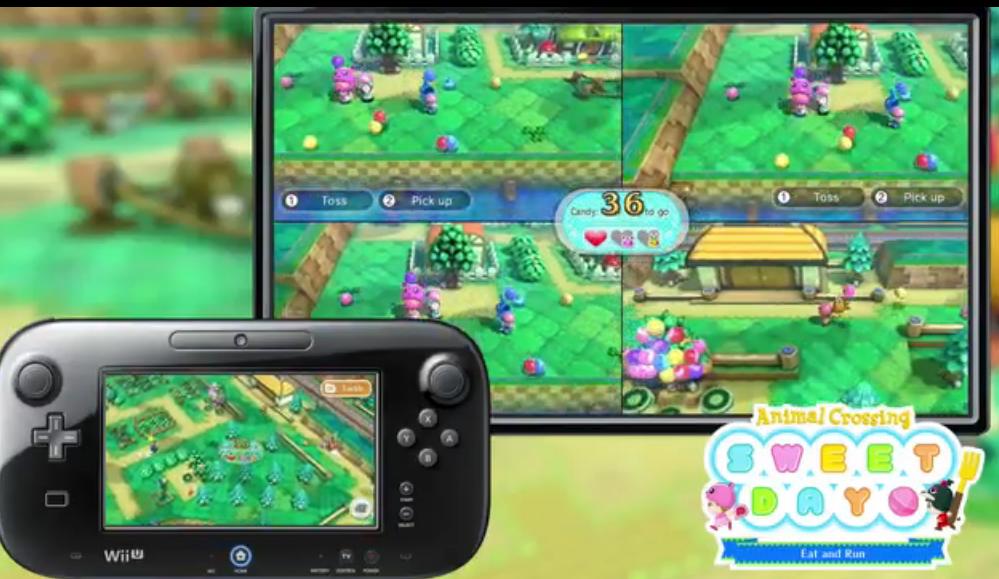
Silly as this sounds, the Animal Crossing minigame in Nintendo Land was the honeypot for entertainment for me.

Silly as this sounds, the Animal Crossing minigame in Nintendo Land was the honeypot for entertainment for me.

I think that’s why I’m still a cynic when it comes to the Wii U.  With the exception of its potential for party games, I don’t see how this bulky ass controller is going to revolutionize gaming.  Maybe it’s not meant to.  Maybe this is just the latest in a long line of machines designed to showcase the best Nintendo’s first parties can come up with.  I guess launch isn’t the best time to talk about a system’s potential.  I would say that if you’re skeptical of the Wii U, nothing at launch will change your opinion about it.  If you’re a raving Nintendo fanboy, you probably stopped reading when I complained about the controller.

As always, the worst thing about any Nintendo launch is dealing with Nintendo fans.  Even Peter Pan would look at Nintendo fanboys and be like “damn, you guys really ought to grow up!”  Yea I know, Nintendo did more to raise you than your parents did.  You ate Nintendo cereal, carried a Nintendo lunch-box, read Nintendo comics, watched Nintendo cartoons, wore Nintendo pajamas, slept in Nintendo bed sheets, and if time allowed, played Nintendo games.  But this whole brand-loyalty thing is just absurd.  Nintendo wasn’t your best friend growing up.  It was a company that targeted you because it could make money off you.  Yea, I know people fall in love with specific brands, but Nintendo fans have kept this childhood obsession going.  As kids, they picked fights with the Genesis crowd.  As young adults, they tried to claim with a straight face that the GameCube was every bit as cool as the PlayStation 2.  And now, as adults, they say anyone who has even the slightest negative opinion of the Wii U is a hater.  STOP IT!  Mature people don’t do this!  Brand loyalty is one thing, but you don’t see Marlboro smokers hacking up phlegm on Camel enthusiasts.

Interview with Adam Spragg – Developer of Hidden in Plain Sight

Three developer interviews in three weeks. Is this going to be a new regular feature at Indie Gamer Chick? Maybe. I consider myself a mediocre interviewer, but I offer interviews as a perk for sponsoring the Indie Gamer Chick Leaderboard or Review Index. Adam Spragg, creator of the cult-hit Hidden in Plain Sight, became the second sponsor of my leaderboard when he donated to Autism Speaks. I couldn’t have been happier to have him aboard, because Hidden in Plain Sight is one of the true hidden gems of Xbox Live Indie Games. An extraordinarily fun multiplayer experience unlike anything I had played before. It’s also one of the rare XBLIGs that has had great success spreading by word-of-mouth. I was anxious to ask Adam how he feels about the response to his game, which is one of the most critically acclaimed on the platform.

Read more of this post

Developer Interview: Aeternum

Aeternum.  I didn’t love it.  Couldn’t even beat the first stage.  So why am I talking to the developers?  Well, because they’re my friends.  And, let’s face it, in this crazy modern world, cronyism is the glue that holds everything together.  Besides, it was late Friday night and after having a nuclear-level seizure, I figured games would be semi-off limits for the weekend.  I needed something to post, and my friends were in to lend me a hand.  It’s enough to make you cry tears of blood, is it not?

aeternum-logo Read more of this post