The Legend of Zelda (NES Review)

The Legend of Zelda
aka Zelda no Densetsu: The Hyrule Fantasy (Japan)
Platform: Nintendo Entertainment System, Famicom Disk System
First Released February 21, 1986
Directed by Shigeru Miyamoto and Takashi Tezuka
Developed by Nintendo
Available with Switch Online Subscription (Standard)
Listing at Zelda Wiki

There should be a law that any game where you swing a sword must have a multi-headed dragon. Actually I’m fine with that law being for any video game. Madden would be at least 3% better if a multi-headed dragon interrupted field goal attempts, with the percentage going up depending on the number of heads, naturally.

For this review, I played Legend of Zelda between sessions of Legend of Zelda: The Wind Waker on my Switch 2, and two things stuck out to me. The first is that I couldn’t forget that the gap between Zelda 1 and Wind Waker is five years shorter than the gap between Wind Waker and right now, today. That’s insane! Like, where did my youth go? Wind Waker released when I was 13 and it was one of those benchmark games of my childhood. I was a HUGE Ocarina of Time and Majora’s Mask fan and I couldn’t wait for Wind Waker. I didn’t give a squirt if they changed the graphics style because *I* thought it looked really cool and was confident I would love the game, and I did. But the 2D Zeldas seemed different enough that they might as well have been a separate series to me. At the age of 13, the first Zelda game was so old and primitive that it might as well have happened in the stone age. Like so many Nintendo milestones, I didn’t play it until years later when it was on a GBA cart. You can imagine my surprise that I really enjoyed it a lot. Zelda 1 is right up there with Super Mario 2 and Castlevania as far as NES games I’ve played the most times.

From the time I launched IGC in 2011 and continuing to the present day, the average age of my readers is around ten years older than me. It’s actually closer to seven-to-eight years older now, but amazingly, even though I’m now 36 years old, they’re still older than me. Well, this summer I’ve done a ton of games from the childhoods of my readers, with only WarioWare being a pivotal game of my own youth, and I don’t think anyone would call that a major milestone game. So, one of my next reviews will be for Wind Waker, which I first played at the age of 13, because MY childhood matters too, dammit! By the way, I used to make fun of people who used their shiny new $500 game consoles to play retro games and now I’m one of them. Remember kids, you will grow up to be that which you mock now, so try to mock lovingly. You’ll feel like less of a horse’s ass in the future.

The second thing that stood out was how, of all the NES games that serve as launching points for franchises, the first game in the Legend of Zelda series is easily the title that aged the best. Playing it now, in 2025, I admit I was a little surprised by how much of the core Zelda formula has remained unchanged from this first game. The overworld format with distinct areas like lakes, deserts, graveyards, coastlines, forests, mountains, rivers, etc? It all started here. Really, the only major area not debuting is any form of a town. The dungeon format is in the same boat. The map, compass, enemy pacing, and goal of finding the key items and slaying a boss to collect the macguffin? It all started here too. A lot of the enemies that would be Zelda staples are introduced here, as well. Mummies? Here. The centaurs that are major characters in Breath of the Wild? They debuted all the way back here. So did Octoroks, Moblins, Zoras, Tektites, Wizzrobes, and Darknuts. Some have evolved more than others, so maybe the roster isn’t as close to modern counterparts as, say, a Mario game, but they all feel kin to their modern counterparts. For a series as complex as Zelda, that’s pretty remarkable.

Actually, the weakest enemy to battle with in all of the original Zelda is easily Ganon himself. The gimmick with him is he becomes invisible and teleports around the room, and the only way to beat him is to just mash the attack at NOTHING and hope he eventually teleports his intestines into your sword, then after the fourth hit (assuming you have the magic sword), you have to finish him off with a silver arrow. That part is fine, especially since the silver arrow is hidden within the final dungeon itself. But the fight up until the killing blow? What were they thinking? Who the hell wants a final boss that’s beaten by stabbing blindly at air? Ganon, as generically evil as he is, is still one of my favorite gaming villains and he would eventually go on to become a great final boss (Ganon > Ganondorf IMO, the human version of him is TOO generic), but his debut is one of the very worst boss battles Nintendo ever did. Actually, I think it might be at the bottom. A terrible idea executed horribly.

I played both the first and second quests of Zelda 1 for this review, and in the case of the second quest, I had never played it past a few minutes. It really was like a brand new experience, and it was refreshing given what happened in the first game. In the first quest, I had doubled my hearts from three to six and acquired every item you could get out of the overworld or purchase in shops (except the Magic Sword and two heart containers) before I ever played the first dungeon. You can’t exactly tackle the levels in ANY order because one requires the raft to reach and others require the ladder to win (assuming you’re not using glitches), but there’s still a lack of tightness of design. Really, the modern Zelda format as seen in Breath of the Wild and Tears of the Kingdom feels closer to this original game than the Zeldas of my childhood, in that both lean into a sense of overwhelming vastness.

LOOK AT THAT ARTWORK! I want an anime that looks like that! Now, I grew up in the tail-end of the instruction book era, BUT I STILL READ THEM! Instruction books have since gone the way of corded controllers and game rentals. Mention instruction books to my nieces and nephew and they’ll sort of cock their heads to the side and say “in….truck…..shun…… books? What’s a book?” Kids these days, I swear to God. But I checked and if you bought this game for the NES back in the day, the book would give you pointers to get to the first level and then a map of where the second level was, but THAT WAS IT. While researching this feature, I also found out that Nintendo published a pocket-sized guide to Zelda called “Tips & Tactics” that also says “instruction book” on it. I’m not sure if this was sold separately, bundled with the game, or originally sold separately but then bundled with later pressings. If you had Tips & Tactics, let me know in the comments! I want to hear if you remember how you got it! I’ve mostly heard from readers that they got their Zelda maps from Nintendo Power or the precursor to Nintendo Power, the Nintendo Fun Club Newsletter. So, I went through those. The third issue of the newsletter has a complete overworld map and maps for the first four levels. The fourth issue has a guide to the bosses. NOTHING offered a complete walkthrough, though the first issue of Nintendo Power did include complete maps for the second quest’s first six levels and the overworld. If you truly got stuck, you had to call a 900 number to have someone walk you through it. “What’s a 900 number?” Kids these days.

On the other hand, nobody can bitch about Zelda 1 getting off to a slow start. My Wind Waker review will probably contain a lot of complaining about how damn long it takes for the game to feel like you’ve actually finished the tutorial section and are now playing the game properly. Seriously, it could take hours. Zelda 1 just kind of drops you off into the world with no real direction on what to do or where to go. In the above caption, you can see the lengths gamers had to go to in order to find help with Zelda. If you didn’t have access to those things, well, you’re on your own. I only played the first quest as well as I did because this was like the fourth or fifth time I beat the game. The first time? Oh, it’s overwhelming. But, that loose structure also opens up the possibility to make a mockery of the developer’s intent.

In the Famicom Disk original build of Zelda, you can use this heart container, combined with the whistle, to max out your health early. By blowing the whistling and summoning the whirlwind while standing next to this heart, you’ll collect it, but when you return, it’ll be back. I SHOULD have played the FDS build but instead I played the US game, where the only glitch I activated was the famous Level 1 door glitch.

This especially extends to the dungeons. You can purchase keys for locked doors within the dungeons in the overworld’s shops. That’s weird enough on its own since the dungeons provide more than enough keys that nobody should have to search too far to find one, which was a mechanic MY era’s Zeldas leaned heavily into. In playing Wind Waker, I realized the small keys play a larger role in maintaining the game’s tempo than I initially realized. When you get a key in that game, or any of the future Zelda games, it’s a MOMENT. That is not the case in Zelda 1 at all. The original game might have incentivized exploration, but it didn’t put a premium on maximizing the real estate. You actually don’t need to fully explore the overworld OR the dungeons. When I did the second quest, I realized there were large parts of the game, especially in the upper left-hand corner of the overworld’s map, that I had never been to in any of my previous play sessions.

Amazing how many icons of the franchise are in Zelda 1 and FEEL like prototypes for the ones I played as a kid. Gohma, who is the first boss in both Ocarina of Time and Wind Waker, debuted in Zelda 1 and is probably the scariest villain. A gigantic one-eyed crab that spits fireballs? Jeez, that’s nightmare fuel.

The keys show off this haphazard use of space the most. By the second level of the first quest, there are so many alternative routes within dungeons that you can completely circumvent MOST of the locked doors. As a result, I had collected so many keys that went unused that I decided to not grab the magic key in Level 8. I had eighteen keys going into Death Mountain and was curious if I could still beat Death Mountain, and if so, how many would I have when I rescued Zelda? Would I need to use ten keys? Five? Would I finish with a dozen keys? Because surely Death Mountain won’t drop keys when a magical unlock-all key is one of level eight’s items. Well, to my surprise Death Mountain also drops normal keys, and like any other level, it had pathways I didn’t need to take. I ended up finishing +1 over what I had when I entered the level and beat Zelda with nineteen total unused keys (having bought none in stores). It’s safe to say that what evolved in Zelda wasn’t so much the sublime combat or the format as it was the tightness of design.

Zelda is probably wondering who the f*ck is this locksmith that rescued her. I assume the keys in the shop thing was some kind of holdover from an earlier build that was put into the game as a means to prevent a soft-lock if a player (1) used every key as soon as they found it and (2) picked the wrong sequence of locked doors. Perhaps at some point, it was possible to pick the wrong door to unlock and end up with no option but the shop. But given the layouts of the final game, with the sheer amount of destructible walls, I can’t imagine it’s possible to do that now. Even if you somehow found yourself stuck or missing a key, it’d be quicker and cheaper to grind Moblins until one drops a bomb pick-up than it would be to spend $100 on a key.

Don’t get me wrong: most of Zelda’s play mechanics hold up to the test of time. It might have the best offensive mechanics in the entire NES library. The sword is VERY satisfying and the concept that it shoots a laser out when you have full health is both bonkers and inspired. Unlike the majority of classic gaming tropes where you say to yourself “someone WOULD have come up with something like this eventually” I don’t think the laser-shooting sword is the type of idea that was inevitable, you know? And honestly, I still think the NES version of it is the best one in the franchise. It’s kind of weak in future games, but here, it feels powerful and cathartic, with perfect sound design and that little explosion it makes at the end being the chef’s kiss.

In the second quest, these things that you can grease with one arrow show up long before you get the bow. In the Famicom Disk version, you can blow into the microphone to kill them. In Zelda’s second quest, you have to just hack at them with a sword for a few hours until they croak. HAVE FUN!

To go with the excellent sword, the enemies are generally well made. Probably the best roster of enemies of any early NES game, if not the best overall roster on the entire platform. Given the limitations and the overall experimental nature of the game, the cast is HUGE, but the enemies do feel distinct. Okay, so the mummies are kind of just the skeletons with more hit points (well, at least until the second quest) and the bosses are a little too cinchy. Actually, with the exception of the multi-headed dragon, I found the Wizzrobes and Darknuts to be worse to deal with than ANY boss. Like, they certainly overuse the dinosaurs and the four-headed Manhandla. Uh, this thing:

Overused or not, one-shotting it with a bomb is one of those “stand up and cheer!” moments.

But they utilize the enemies in a way that gives both the dungeons and especially the overworld personality. Zoras always show up in the water to give those areas a sense of menace. The moblins rule the forests, while the centaurs control the mountains, and the spider-like Tektites only appear where it’s rocky. Forty years later and Hyrule STILL feels like a real, living world because of where they put the enemies. It’s just so smart. The Legend of Zelda’s offensive game gives you everything you would want in combat with no real downside besides not getting the best out of the roster of enemies (see the below caption). Nearly forty years later and the combat STILL isn’t boring. What else can you say at that point?

I don’t think they maximized the potential of the roster at all. There’s a lot of repeat bosses, some of which are just baffling. The dragon that’s at the end of the first level also shows up as the boss of the seventh level, but without being buffed-up. By that point, he might die in two shots. Why not replace him with one of these things, called Patras, that are only found in Death Mountain? I get that they wanted that level to feel climatic by having some dangerous creatures, but the Patra feels like a boss. Hell, there’s even two types of them, one of which has the orbiting eyeballs curve differently. There’s also fast moving, dangerous worms called Lanmolas that feel like bosses that are exclusive to Death Mountain. If I didn’t know better, I’d swear that they intended for these creatures to show up earlier and then lost their nerve because they didn’t want the game to be too hard.

However, Zelda’s defensive game isn’t as strong. It feels arbitrary when the magic shield works or not. Like, it’ll shield you from the blasts of the Zoras in the water but not from identical looking blasts from bosses. So frustrating, especially since hearing that PING of a shot successfully deflected is just delightful. Also, the difficulty scaling is pretty bad in general. Level seven could have easily been level three for how much of a cinch it is. I assume they placed it near the end on the assumption players would be hard up for the cash to buy the enemy bait since it’s the only time you NEED it in the first quest. Meanwhile, levels five and six feel like they could be bumped up a slot or two.

“Hey bats, if you have a moment I’d like to have a word with you about our lord and savior Jesus Christ.” “Ugh, someone hit me with a boomerang, already.

They also ran out of ideas for useful items to fill out the stages. The magic wand and book are just about the most useless items in any Zelda game. One of those “sh*t, we gotta put SOMETHING here for the players to find!” And there were other options. Hide the letter to the lady in a level! Hide the arrows! Hide the ability to carry bombs in a level! Hide the power bracelet in a level! That one really befuddles me. It’s found in some arbitrary spot on the map under one of the statues that comes to life in both quests. It’s so subdued for such an important item. Except, it’s not really important. All the power bracelet does is make it so you can shove rocks that reveal warp zones, at least in the first quest. They could have changed it so you need the bracelet to shove anything in the overworld, making it essential towards getting the magic sword out of the graveyard. My point is, they had better options and the wand sucks. But Legend of Zelda doesn’t suck. It’s one of the best 8 bit games ever, to this day.

The second quest doesn’t f*ck around. Yes, you permanently lose a heart container if you choose the first option.

Even with the rough pacing, sloppy difficulty scaling, and somewhat underwhelming boss roster, it goes without saying that Zelda is a masterpiece that leaves the test of time laying dead with a sword through its heart. There’s nothing I can say that you’ve not already heard before, and the world certainly wasn’t aching to hear what Cathy Vice thinks of the first Zelda game. Finding something unique to talk about was tricky. And then I beat the game, saw that Link was now holding up a sword, and I remembered that Zelda had a second quest that rearranged a lot of the locations and order of the items and upped the difficulty. This is so underplayed that the famous wiki Zelda Dungeon doesn’t even have a walkthrough for it. Until I started this review, I genuinely don’t remember hearing anyone really talk about the meat of the second quest in features or casual conversation. Even the GOAT of NES coverage, Jeremy Parish, pretty much glosses over it. So let’s talk about it!

Famously, you can also enter “ZELDA” as your name and skip right to the second quest. If you’ve never done it, trust me, it’s worth a look.

The second quest of Zelda is a completely different beast. Of the nine dungeons, only the first one remains in the same location. The other eight? They’re somewhere out in the world. Good luck! Some are where dungeons were already previously located, though in different orders. Level four in the first quest is still a dungeon, only now it’s level five. Other levels are in such arbitrary locations that I would never have found them without a guide. Level eight especially is insanely well hidden. The starting sword, white sword, a couple of the heart containers (including the ladder one and the raft one), the bracelet, and some of the burnable bushes are the same. But, the item order is totally different. The bow? You don’t get it until the fifth level. The whistle you normally got in the fifth level? It’s now in the second level, and there’s a LOT more hidden stuff to uncover with it in the overworld, in places you wouldn’t normally think to look. You don’t even get the ladder until the sixth level, and it’s impossible to grind-up heart containers and get the white sword before you start gathering the Triforce pieces.

Even the letter from the old lady that you need to buy medicine isn’t found until VERY late in the game. It was literally the last thing I found before entering the new Death Mountain. In the first quest, it’s in the above door, but it ain’t there anymore. Instead, this is just a shop now. I did manage to grind up enough money to get the Blue Ring before playing the first stage. The shop that sells it I found by accident, as it had previously been a location of a high-yielding coin drop.

And then there’s the dungeons, which have an entirely different vibe to them. They’re MUCH more maze-like this time and some are pretty hard to find their way through. That’s not just because a lot of them put tougher enemies much earlier than you previously encountered them, either. It’s how you find your way through them. Instead of just having a ton of bombable walls (dear auto-correct: bombable is a word, dagnabit), you might have to just walk THROUGH the walls, like this:

The design logic dives really hard into the invisible doors. In fact, a key item is hidden in one of the levels BEHIND the Triforce piece. The second quest’s progression is based more around confusing players after the first quest and having no real rules or flow to the progress, though it mostly works. Mostly, but the level design itself can be problematic. The layouts of the first five stages spell out the word E-A-L-D-Z. I have no clue why the letters are not in the correct order. I assume they were at some point in development and it was changed due to the difficulty, but either way, the third level, the “L” is probably the single worst dungeon in the entire history of the franchise. Hell, it doesn’t even climax with a boss battle. You know those things that throw boomerangs? The big finale to the third stage is a room full of them.

The locked door? It’s the Triforce room. Yes, really! The room on the right directly across from the Triforce room on the map contains the blue boomerang, and you have to use the enemy bait to get it. So these things are the bosses. They’re not even the tougher blue versions! I thought this was supposed to be the harder second quest?! She said after already dying once.

Okay, so when the second quest is bad, it’s REALLY bad, but it never gets worse than that third stage. Other levels have several clever twists to them. The skeletons? Their swords shoot lasers now, just like Link’s does when you have full health. Full sized bosses appear more frequently in dungeons (in fairness, that happened in the first quest too, but not to this degree). There’s red herring keys laying around that there’s hypothetically no way to get since you won’t have the ladder yet. I mean, unless you return to the dungeon at some later point in the game to collect them. It feels like the second quest’s main objective is to trick players and take away any sense of predictability. Some of the staircases might send you to a room that doesn’t have a return staircase, and it becomes easy to get lost or go around in circles.

The “staircase drops you off in a room without a return staircase” gag that I found hugely annoying is paid off in a big way during the game’s climax. It’s actually the key to solving Death Mountain in the second quest.

While some aspects of the second quest can be taken out of order (for example, I beat level four before level three), it’s a lot harder to cheese by getting the sword upgrades or other key items before the game wants you to have them. It wasn’t long into the second quest that I started to wonder if some of the locations and dungeons were actually the original concepts for the main quest that were moved to the bonus after-game content because they were too hard. Like the mechanic with the bubbles in the caption below? That just feels like something that was meant to be in the game all along. It’s too elaborate to have been an afterthought. The same with the walking through the walls bit. While the Z-E-L-D-A shaped dungeons probably weren’t part of the main design, I think most of the gameplay mechanics from the second quest likely were. Maybe. The story behind the second quest is kind of one of those “spilled mold into bacteria and it killed” moments.

Like (like) I’m pretty sure I can’t reach this key yet. I think they did these things to send players on wild goose chases.

Because of how the memory on the NES worked, all the Zelda maps had to be made to fit like a jigsaw puzzle on a grid, and the second quest only exists because Takashi Tezuka only used up half the available space for the nine dungeons of the first quest. Okay, fine. It was a happy accident. But I’m still willing to bet that they used the opportunity to dump gameplay ideas that were deemed “too hard” and deleted from the original build back into the game. These are just too elaborate, too thoughtful, and dare I say it, too elegant to have been throwaway bonuses that only happened because someone only used up half the memory they were supposed to.

The biggest change to the monsters is with the bubbles. In the first quest, if you touch a bubble, you temporarily lose your sword. In the second quest, bubbles come in three colors: the normal ones that shift between red and blue that temporarily take away the sword are still around. But now, there’s also ones that are always red and ones that are always blue. The always-blue ones are harmless and have no negative effect on Link besides causing him to recoil as if he’s taking damage. The always-red bubbles are by far the most dangerous and annoying things in the entire game. If you touch one, you lose your sword permanently until you do any one of the following things: (1) touch a blue bubble (2) visit a fairy fountain, and yes, the effect will linger even if you leave a dungeon (3) use a potion or (4) get a Triforce piece. This isn’t a rare thing, either. Many rooms will have multiple red bubbles and a single blue bubble, while others might have quite a journey between rooms that have red bubbles and rooms that have the blue bubbles you need to regain your sword. There’s a couple REALLY annoying rooms full of red bubbles where you have to hug the wall and there’s no room to dodge in any direction. Since the bubbles have no preset attack pattern and can change direction without any warning, they’re very, very dangerous.

And it’s not a throwaway bonus. In the second quest, there’s an undeniable method to the madness that should make it a stronger experience for veterans of the franchise. I’m SO happy I finally played it. Again, nobody needs me of all people to recommend playing one of the most famous games ever made. BUT, I suspect a lot of my readers have never tried Legend of Zelda’s second quest. It’s not just more of the same. There’s hints of that, but what the second quest really has going for it is that sense that the gameplay is what Zelda 1 would have been like all along if they didn’t have to consider how new this whole idea was. Because there had never been a game like Legend of Zelda (well, except Tower of Druaga, the NES version of which I reviewed for Namco Museum Archives Volume 1), I’m guessing they had to significantly tone back aspects of it. The speed of the darknuts. The red/blue bubbles. The skeletons shooting swords. I suspect that somewhere between the first and second quests is the definitive version Big Shiggy Style and Tezuka WOULD have made if they weren’t breaking new ground. And I think you’ll get that vibe too if you give it a try.
Verdict: YES!

The Legend of Zelda: Link’s Awakening (Switch Review)

Here’s a thought exercise for everyone. Ask yourselves how any group of gamers would react if you told them that a 1993 Game Boy release that originally retailed for $29.99 USD would be remade in September of 2019. But, the game would only receive a novel facelift to its appearance. A successful facelift, one that makes it look like no other game before it.. sorta like the LEGO Movie, but with Fisher Price figures instead.. BUT, the actual content would mostly remain intact. What was there in 1993 would still be there, functionally unaltered, in the 2019 release.

The characters that were created during an era where depth and nuance were not normal for game writing? Unchanged.

The world map, which, although ambitious for its time, was largely a result of concessions that had to be made for the limitations of the 1988 Game Boy hardware? Unchanged.

The story, thought-provoking then and now, but left largely unexplored? Unchanged.

That’s the proposition: would they bite at a re-release of a 1993 game, with 1993 gameplay, 1993 storytelling, and all the limitations of 1993 Game Boy development intact, only with 2019 graphics technology..

But, it now costs $59.99 for that 1993 $29.99 Game Boy game. Would they buy it?

I’d think most gamers would decline that offer without thinking about it twice. Yet, here we are. Link’s Awakening for Switch is a huge hit. Nintendo has paid close attention to what Disney is pulling off with its live action remakes and said “why not us?” Those movies make incredible money with the bare minimum effort, and so too is Link’s Awakening, with the bare minimum effort.

This is not a good thing. Also, having good graphics doesn’t change the fact that this is a hugely lazy remake.

To be perfectly frank, I wasn’t blown away by the graphics most of the time. BUT, sometimes they left me gobsmacked. The Face Shrine area is one of the locations where I put my Switch down to just gawk at how nice it looked. Like a diorama.

Now, this opinion is not flying with most Nintendo fans. So many are besides themselves with the mere suggestion that efforts could have been made to improve what was already a very solid Zelda game. If you say “they could have reworked the script. Dialog has come a long ways since 1993” they scoff. If you say “some of the level design is nonsensical or overly-simplistic, even for its era. Maybe they could have sharpened it up for a new generation of gamers” they balk. And they always say the same thing with these suggestions: “it wouldn’t be Link’s Awakening then!”

I have to say the same thing I said about the ToeJam & Earl remake: why didn’t you fucking people just keep playing the originals if you don’t want anything changed? If they make a REAL remake and not just the facade of one, it doesn’t erase the existence of the original games. You can still sit down and play those if you’re nauseated by someone trying to make something good even better or more relevant in 2019. Hell, you can still buy Legend of Zelda: Link’s Awakening DX for $5.99 on your 3DS! And I guarantee you almost everyone rejecting making changes still has a 3DS. Then again, they probably still have their original Link’s Awakening carts and working Game Boys. What the FUCK is wrong you people? Are you stunted?

She’s making a face like Link copped a feel. Maybe that’s why this is Link’s Awakening. He’s going to be woke when Twitter gets a hold of him.

Okay, let me set aside my dumbfoundedness for a second and tell you the good stuff: Link’s Awakening is an incredible achievement for its time. Given the limitations for the Game Boy, some of the levels are absolutely inspired. Ironically for a game based around waking up, it’s a slow riser. After a nifty introduction to the shield and sword, momentum grinds to a halt with a plodding first couple hours and two of the most boring 2D Zelda dungeons ever. But, around the time of the third level, things start to pick up. By level 4 and onward to the end game, Link’s Awakening is not merely good for its time. It’s good on its own merit. Occasionally, it’s even great, like having to move a giant metal ball around a stage to collapse pillars of a level to cause the tower to collapse by one level. THAT is fucking genius and maybe the best 2D Zelda Dungeon ever. Sadly, things crater out a bit in the eighth and final proper level, Turtle Rock, a miserable slog of a stage. And the Wind Fish egg itself is nothing more than callback to the Lost Woods from the original NES Zelda, only with more directions to memorize, followed by the final boss fight.

BUT, this is a good Zelda. And the Switch version has advantages to it. While the maps remain the same as the DX Game Boy Color version (including the lame ass color dungeon, still every bit as pandering and phoned-in here), Nintendo added more pieces of the heart and secret seashells. They’re absurdly easy to find and add fuck-all to the game, but they’re there if you care about that type of thing. By far the biggest improvement is the elimination of tediously fumbling with the menu to change items around. This time, the sword, shield, power bracelet, and pegasus boots are always equipped once you have them. This cuts down on so much bullshit. Having said that, they should have also always had the Roc’s Feather equipped too. You’ll be using it so much that there’s really never a time it’ll go too long without having to take up one of the two item slots. If it had been, the item equipping would have been such a non-factor that it would become the single most desirable reason to own this version of the game.

The Dungeon Maker stuff is one of the absolute worst disasters in recent memory. It’s horrible. You can’t even change the room themes. It feels exactly like what it is: a series of rooms not compatible with each-other being interlocked. It’s crazy limited. You can’t alter the rooms. You can’t even ROTATE the rooms. This is dog shit. The worst idea Nintendo has actually gone through with releasing since Wii Music, easily.

And it IS totally worth owning.. the Game Boy Color version for $5.99 on 3DS Virtual Console. I really can’t recommend the Switch version at full price. Especially when the standards of remakes have come so far. Nintendo fans justify Link’s Awakening by noting that they Nintendo did the same thing with Super Mario All-Stars back in the day (ironically, it came out the same day as the original Link’s Awakening did in North America) and nobody thought it was a ripoff. This might be the dumbest argument since “because the Bible says so.” Super Mario All-Stars had FOUR games in it. And, you know, it came out in 1993. Gaming has come a long ways since 1993.

The issue is, Nintendo fans just never challenge Nintendo to aspire higher. I once joked about Dr. Luigi, literally just Dr. Mario but you throw bigger pills into the jar, and Nintendo fans responding to this absolutely half-assed idea by saying they hoped it came out on both Wii U and 3DS so they could pay for it twice. Nintendo doesn’t support cross-platform eShop downloads. If you bought a Virtual Console game on Wii U, you didn’t get the same game on 3DS. Why would they do that? They have a fanbase that still has their original game consoles but will gladly keep paying new money for old games. Do you realize there’s people out there that already owned the NES Balloon Fight cart who also paid money for..

-Balloon Fight on Wii Virtual Console
-Balloon Fight on Wii U Virtual Console
-Balloon Fight on Game Boy Advance
-Balloon Fight on eReader Cards
-Balloon Fight on 3DS Virtual Console
-An NES Classic Edition, which has Balloon Fight

(And hell, they probably worked to unlock Balloon Fight in Animal Crossing and play it on there)

It begs the question: why do you need so many copies of the same game? Why do you PAY for so many copies of the same game? Because it is the same game. While this doesn’t represent all Nintendo fans, or even most of them, there’s enough people doing this type of thing that Nintendo has never had an incentive to change their business model. “Hardcore” Nintendo fans behave like naive religious fanatics being grifted by a televangelist into sending more and more money to earn God’s favor.

And they didn’t really fix the stuff that was dumb in the first place. Allegedly there’s a rhyme and reason to how rolling these chess pieces works, but I threw them from every angle and every square and they didn’t lock into the desired spot as they should have every time.

Of course, with Switch Online’s $20 a year fee that includes NES and now SNES games, it would appear Nintendo knows they’ve milked that cow for all its worth. But, with all the partners Nintendo has, they now have enough resources accumulated that they can pivot to re-releasing old stuff with new graphics. This has been worth, as of this writing, nine *billion* dollars for Disney with their live action remakes. Functionally, the Link’s Awakening remake copies that model. It’s the same game with different graphics and minimal additions that they really could have done without and nobody would have said anything. When I say “it’s the same game” I get thrown back at me “they added more hearts and seashells!” I ask you, do you really think these fanboys wouldn’t have bought the game if they didn’t add more hearts and seashells to find? Of course they would have still bought it. It’s what they do.

The combat mechanics are now wonky and getting timing down on some enemies and bosses is different now. The Ganon nightmare was the moment in the game that I came the closest to losing a fight. I went through two fairies and Tracy’s secret. Well, that’s because they kept the fight basically the same but it’s harder to judge the angle with the new tilted camera. This isn’t even the final form. It should have been, because the final one is a total pansy.

The shit thing is, Link’s Awakening is probably the most high-concept of all the Zelda games. None of them have THAT deep of stories. But Link’s Awakening has a universe with complex moral implications and consequences that are begging to be explored. I once again have to go back to this old chestnut: gaming has come a long ways. Look at something like Undertale, which explores morality in a way that has captured the imagination of gamers of all generations. Link’s Awakening’s framework has potential to surpass Undertale’s examination of the nature of morality. Instead, it retains the minimalist, on-the-nose writing of a typical 1993 game. Marin is crushing on Link, but we don’t explore why. When Link wakes the Wind Fish, he wakes-up floating in the middle of the ocean, hears the song he first heard from her, and smiles contently. He just blinked her out of existence! Yea yea, she turns into a seagull. Because that was her dream. KIDS DREAM FOR STUPID SHIT! I wanted to be a Power Ranger as a kid. In reality, being a Power Ranger would suck. You’d cause forty 9-11s a year fighting giant monsters with your Zords. Stepping on pedestrians would be inevitable. It’s be awful to be a Power Ranger. And Marin turning into a seagull is NOT a happy ending! He killed her! He killed them all! He did it with a smile on his face! At no point in Legend of Zelda: Link’s Awakening is the hero tasked with the conundrum of consequence. His mission is to wake the Wind Fish. All his interactions with beings are treated as distractions in that quest.

And I’m sorry, but that’s insanely fucked up. Because there’s some damn emotional moments in Link’s Awakening. I got choked up when Marin and Link share a moment on the beach. Marin talks about her hopes and her aspirations. They share a moment, and it’s beautiful. It has an innocence about it that made me think of how a first crush is handled in Charlie Brown’s world, or like the interactions between Vada and Thomas in the film My Girl. But when it’s over, Link doesn’t carry a burden of what succeeding in his quest means for her. Monsters taunt you that you’ll vanish too, but we know that’s not the truth. We know it’s not Link’s dream. Part of the problem is Nintendo is still obsessed with keeping Link as blank a slate as possible, so that any little boy or girl can insert themselves into his shell. It becomes THEIR adventure, not his. But, give children a little credit. When little kids play Star Wars, sometimes they pretend they’re Luke, and something they’re Darth Vader. A child’s imagination is vivid enough that they don’t need a character to be an empty vessel to explore them. But, it’s Zelda. Link is a silent protagonist and that’s just how it has to be. What a missed opportunity.

I was so touched by the authenticity of the connection between Marin and Link that I was fighting back tears. And given how little there is with it, that really says something about how big a lost opportunity it was to not develop this further. Shame on you, Nintendo. You might as well of had ads for AT&T if you’re going to totally phone it in like this. At least that might have knocked Link’s Awakening down to a reasonable price for a twenty-six-year-old game.

There’s tons of ways you can interpret Awakening, and apologists will say that they like how open-ended it is. I find it hypocritical that these guys like the idea of having so little actual plot that you can fill in the blanks with almost any headcanon, yet they lack imagination to such a degree that they can’t fathom the game existing with spruced-up, modernized storytelling and dialog. I said it about Sonic fans, and I have to say it to Nintendo about your fans: if they demand so little of you, you need to go out and get better fans. My review system isn’t set up to account for over-pricing, so I have to award Legend of Zelda: Link’s Awakening my Seal of Approval. It’s a good game, old or not. But unless you can get it on sale, I don’t recommend anyone purchase it. If you’re happy with the remake, great! But don’t talk about what a “slippery slope” it is to bring everything but the graphics into the 21st century. Your old carts wouldn’t just vanish if they TRULY remade Link’s Awakening. They didn’t even bother removing it from the 3DS eShop. It’s still there, and it’s still the same Zelda. Of course, Nintendo fanboys are gatekeepers operating under the delusion that Link’s Awakening is THEIR Zelda, and doesn’t belong to anyone of any other generation on any term but their own. If you want depth or complexity, go play something else and leave their precious 1993 portable Zelda product alone. I don’t get it. If you want to play the same old game, play the same old game. That way you never have to grow up or challenge yourself. The rest of us should be challenging Nintendo to challenge us.

The Legend of Zelda: Link’s Awakening was developed by Grezzo
Point of Sale: Nintendo Switch

$59.99 never was bothered by the frame rate hiccups, which seems to be everyone’s #1 complaint in the making of this review.
Legend of Zelda: Link’s Awakening is Chick-Approved. Non-indies aren’t ranked on the IGC Leaderboard.

For those that already played the Link’s Awakening on Game Boy or Game Boy Color, or own a port of it, it’s worth about $30. If you’ve never played it, $40 is a good price for it. Or $5.99 for Link’s Awakening DX on Virtual Console for 3DS. It’s also Chick-Approved and I recommend it without reservation.


Shipwreck

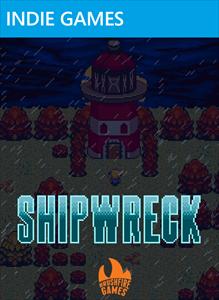
If you’ve been browsing the Xbox Live Indie Game marketplace, there’s a chance you might have noticed a fairly convincing Zelda clone pop-up over the last month. That is, if you can see past the dozen or so Flappy Bird clones littering the new releases. Then again, you might have missed it. After all, it has box art that looks like this:

Insert Tom Hanks and/or Gilligan's Island joke here.

Insert Tom Hanks and/or Gilligan’s Island joke here.

And it has a name that isn’t likely to inspire thoughts of the game whose legacy it tries so very hard to invoke. Shipwreck? Seriously? Still, it caught my attention, even though I’m not all teary-eyed nostalgic over Zelda. Chances are, it meant more to your childhood than it did mine. Don’t get me wrong. I love the series. Link Between Worlds was my favorite game of 2013, which I’m just as shocked by as anyone else. And I admit, the thought of a really good Zelda clone had me a bit excited. But it was all for not. My rule is, if I like a game 50.1% more than I dislike it, it gets my seal of approval. Shipwreck hovers around 40%. Maybe 45%. Close, but no cigar.

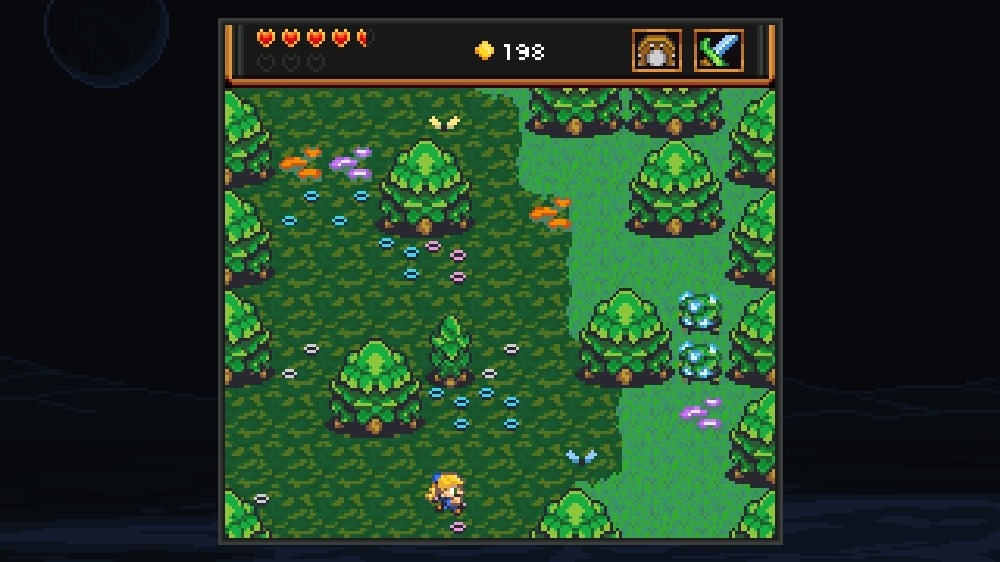
But I’m getting ahead of myself. The idea is, you’re a chick whose ship crashes and you have to gather four magical elements and defeat a ghost inside a lighthouse so that you can get a new ship and return home. The graphical style, sword-swinging animation, and castaway theme of the game is clearly aimed after Link’s Awakening, which I’ve always felt was one of the more overrated Zeldas. Still a solid game, mind you, but just not all that. Shipwreck still does a good job of emulating the feel of it. But then some glaring flaws pop up.

Credit where it's due: it looks the part.

Credit where it’s due: it looks the part.

For starters, the overworld has no enemies in it. For real. You just wander from place to place, looking for the next dungeon. There’s also no hidden caves, secret passageways, or surprises of any sorts. It’s an empty, sprawling, lifeless world. That worked in a game like Shadow of the Colossus (which mind you, still had SOME collectables, like the fruit or lizard tails), but in a 2D Zelda style game? It’s just so boring. Given the fact that Zeldas have been based around secret doors from the very start of the franchise, neglecting to include them in a Zelda tribute seems to miss the point of the series entirely.

There’s also not many items to collect. I got a shield (which you have to equip and activate, just like in Link’s Awakening), a crossbow, a lantern, and a pick-axe. That’s it. The game’s dungeons (one starter, four “gather the holy trinkets”, and one finale) don’t contain special items that you need to solve puzzles or advance further. Really, the more you play Shipwreck, the less tributey this Zelda tribute feels. It’s missing so many key elements of the formula, with only the boring stuff that anyone can do left in. It would be like if at Shaquille O’Neal’s hall of fame induction, they left out his four championships and focused on Kazaam and his free-throw shooting. Why would you even do that? And why would you leave the best parts of Zelda out of a Zelda tribute?

It does a lot of other fundamental stuff wrong. There’s no overworld map. The enemies “blink” when they take damage and don’t recoil enough. They also all seem to take two shots to kill. Except the boring bosses, which are spongy as hell. Oh, and you know how in some Zelda games, in order to get to where you’re supposed to go in a dungeon, you have to fall through the floor? Yea, Shipwreck does that too. Only in Shipwreck, you take damage for it. What a horrible idea! And why the FUCK does it only use two equip buttons when there are four face buttons on an Xbox controller? No, it doesn’t matter if you’re paying tribute to a two-button game. Not using all the resources at your disposal is just obnoxious.

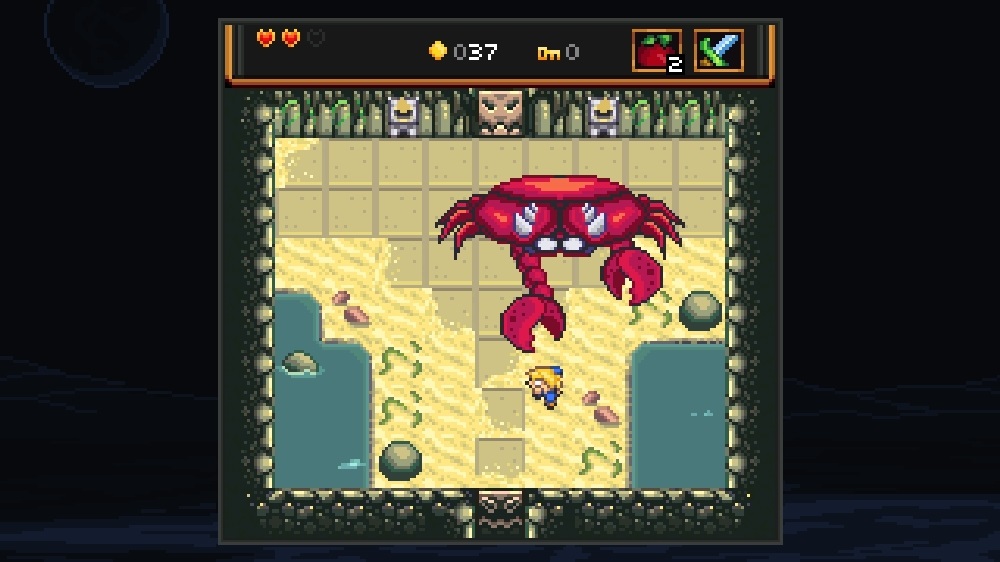
The first boss is a giant crab monster. Of course it is.

The first boss is a giant crab monster. Of course it is.

Yes, Shipwreck does a lot of things right. I like how, instead of enemies dropping hearts (even when you have full health), they drop apples that you can save and use later. Now that’s a good idea. I liked the desert dungeon. And…….. well actually that’s the only stuff that really stood out to me. Everything else never got brutally awful or anything, but Shipwreck was bland and boring from the start and never really picks up steam. It will find an audience because it looks Zeldaish enough to warrant a purchase. I’m also not this game’s target audience, and I’m sure children of the 80s will probably enjoy this a lot more than I did. But, taken on its own merit, Shipwreck is just a dull video game experience. And taken as a Zelda clone? No secrets. No clever puzzles oriented around items found in dungeons. All that’s really left is the combat and some aspects of dungeon exploration, and even those are quite a bit off. Let Shipwreck be a lesson to everyone: when paying tribute to your favorite childhood classic, looking the part should take a back seat to feeling the part. Shipwreck is to Zelda what Lucky Charms would be without the marshmallows.

xboxboxartShipwreck was developed by Brushfire Games

$2.99 really did enjoy the desert dungeon quite a bit in the making of this review.

My amigo Tim Hurley really disagrees with me on this one. Read his review.

It’s the Age Thing

Some people chalk up my site’s growth to what is called “The Girl Thing.”  I don’t agree with that, because I don’t really play the gender card too often.  And when I do, it’s usually self-deprecating and done for laughs.  I’ve had a couple of people tell me my site’s name is cringe-worthy, or “atrocious” as one fan described it.  Yikes.  Look, it’s really simple.  We came up with a list of names, and Indie Gamer Chick seemed like the most memorable.  That’s all.  It was almost Indie Game Stuff.  That would have sucked.  So would have Random Game Crap.  Indie Gamer Chick was catchy.  That’s why we chose it.

I’ll admit, people might be more likely to give my writing a look over because of The Girl Thing.  But landing a long-term reader requires more than that.  It takes a unique point of view, and I’m not really interested in looking at gaming from the point of view of a female.  But gaming from the point of view of someone from my generation?  Now that is something I want to communicate.  I turned 23-years-old today.  On average, that’s eight to ten years younger than my typical reader.  That doesn’t sound big, but in terms of how far games had progressed from their childhoods to mine, it’s humongous.  My average reader grew up in the era of Atari or the NES.  I grew up with PlayStation, Nintendo 64, and Sega Dreamcast.  While your teen years were spent with Sega Genesis or Super Nintendo, I spent my teens on PlayStation 2, GameCube, and Xbox.  Needless to say, I think that gives me a different perspective.

Memory is a funny thing. I honestly don’t remember my childhood looking this bland.

My older readers had it easier than me, because gaming evolved with them.  They were there as games transitioned from large sprites to complex open 3D worlds.  On the other hand, I have to look back on gaming’s history without the benefit of nostalgia.  Thankfully I did have a Game Boy Advance, and as everyone knows, 90% of the really good games on there were just ports of SNES games.  So I don’t go into shock every time I play something from gaming’s past.  In fact, I’m quite fond of several Golden Age coin-ops.  But, I do have to admit that I can be mortified by some of the games you guys consider classics.  I also can’t put myself in your shoes and try to picture a game like, say, Manic Miner, at a time when it was considered good.

People get weirdly over-protective about nostalgia.  Some people have told me that when they have kids, they won’t be allowed to play modern stuff until they learn to have an appreciation of their classic games.  Scary.  Do you know what a normal person would call that?  Brainwashing.  And the whole concept is fucking absurd as hell.  It would be like saying your kid can’t watch 30 Rock until he sits through the entire series of Mork & Mindy whether he likes it or not, but he damn well better like it.  What that attitude does is turn gaming from a pastime into a cult.  If the child catches a whiff of what modern games are like from one of his friends (assuming he has any friends left after his father is done fucking him up), he’s not going to have an appreciation for his daddy’s era of games.  He’s going to think his dad is off his fucking nut.  Every form of entertainment his father pitches to him from that point forward will carry the taint of that time daddy sat him down and forced him to play Golden Axe.

The thing about nostalgia is it’s always in the eye of the beholder.  The childhood favorites I have played as an adult, even HD ports of them, haven’t aged well.  Xbox Live Arcade has brought me re-releases of Banjo-Kazooie and Perfect Dark.  These were two of the defining games of my childhood, and yet after an hour spent with each of them today, I would rather be dead.  Games have come so far, and I can’t pretend they haven’t for the sake of feeling like a child again.  I don’t even like Modern Warfare 3, but I would rather play that today over Perfect Dark, which was probably the definitive game of my childhood.  Despite that, saying that I have no interest in playing it anymore in no way tarnishes my memories of Perfect Dark.

Portal 2 is amazing to you and I, but our children could very well prefer cutting their own fingers off to playing it. Only time will tell.

Which is not to say nostalgia is wrong.  You should feel proud of your gaming heritage, and there is nothing wrong with replaying your childhood favorites and not cringing at them like I have mine.  Perhaps your classics have aged better than mine.  What I’m saying is don’t try to convince people of my generation that those games are relevant to us.  They’re not.  Most of the games that were legendary at the time of your childhood are probably going to be torture to people my age.  Very few games are truly capable of withstanding the test of time and becoming masterpieces.  And really, shouldn’t it be that way?  There’s no 30-something trying to convince me of the greatness of Pauly Shore’s filmography, yet plenty are trying to tell me that I have it all wrong about Manic Miner.  Here’s the thing though: Pauly Shore was HUGE for a time, a tremendous box-office draw.  Nobody would dare call In The Army Now or Bio Dome timeless masterpieces.  That would be silly.

Yet, every rinky-dinky game from the 80s that wasn’t a total abomination is somehow just as good today as it was when you were a kid.  And it might be, but for you.  For me?  Not so much.  I think the original Legend of Zelda is lame.  I can’t honestly believe anyone would still want to play that over almost any triple-A game released over the last five years.  I certainly can’t believe anyone would say it’s still the best Zelda ever!  To me, guys who say that sound like fucking raving lunatics.  Then again, when I say I don’t think it’s any good, people say I’m the raving lunatic.  Which side is right?  Both.  Or neither.  I guess.

On the other hand, I think Link to the Past holds up almost flawlessly, and that’s a game that I didn’t play until it had been out for over a decade.  I think it’s fitting that the first game in the series doesn’t hold up as well.  It demonstrates progress.  Why do we have to pretend that people my age will find the original Metroid good?  Super Metroid is right there, and there is a chance they will find that good, on account of it actually holding up.  Don’t get me wrong, a game doesn’t have to be an absolutely flawless diamond to still be good today.  I played the Adventures of Lolo since starting this site, and I thought it was perfectly swell.  Is it an all-time classic?  No.  And neither was Boulder Dash, a game I tried after reviewing an XBLIG clone of it, just to see if I was missing some perspective.  I wasn’t.  Judging a game’s merits by today’s standards in no way takes away from its accomplishments at the time it came out.  Would anyone want to play Space Invaders today?  Of course not, unless you’re really desperate to be bored.  Does that take away from what it has meant to gaming history?  No way.  Would I like to play Pac-Man today?  No.  Would I like to play Pac-Man Championship Edition DX?  Fuck yea.  Does that mean Pac-Man Championship Edition is more important to the history of gaming than the original?  Of course not.  Having an appreciation of history and wanting to experience history are two very different things.  I don’t need to infect myself with the black plaque to grasp how bad things were in 14th century Europe.

I’m not a big fan of Frogger, but I really want to try Frogger: Hyper Arcade Edition. By the way, it is my birthday, Konami. Hint, hint.

It’s this perspective that makes me unique.  Gamers of past generations need people my age to tell them where gaming is now.  Just like my generation needs yours to give us a sense of where gaming has come from.  Somewhere between the two, we might get a sense of where gaming is going.  Here’s a preview: your kids are going to be even more mortified by your stuff than I was.  And their kids?  They’ll end up passing laws saying that anyone with a Pac-Man tattoo or a Donkey Kong cabinet in their garage just opted out of Social Security.  It will make you long for the days when that miserable Indie Gamer Chick was simply saying “you know, I do believe The Simpsons Arcade Game was kind of shit.”