Gaming Magazines
August 27, 2012 13 Comments
Back when I turned nine-years-old, the Birthday Badger was kind enough to bring me a Nintendo 64, along with Banjo Kazooie. Having fallen head-over-heels for the game while sampling a demo of it at Toys R Us, I just had to have it. And I got it, because I was (and still am) a spoiled rotten little brat. But the Birthday Badger still had some tricks up his sleeve, because I also got a strategy guide to Banjo and a subscription to Nintendo Power magazine. Oh, and a T-Shirt. I guess it was some kind of bundle the store my daddy bought the console from had to offer. Either way, I was the proud owner of an extremely wrinkly shirt and a Nintendo 64. I didn’t really put much thought into the Nintendo Power subscription until I got my first issue of that the following month. And then I did get it, and I didn’t care. Because I was already a subscriber of the Official PlayStation Magazine, and it had demo discs. Nintendo Power didn’t. It also offered nothing that I couldn’t find online. And it never did.
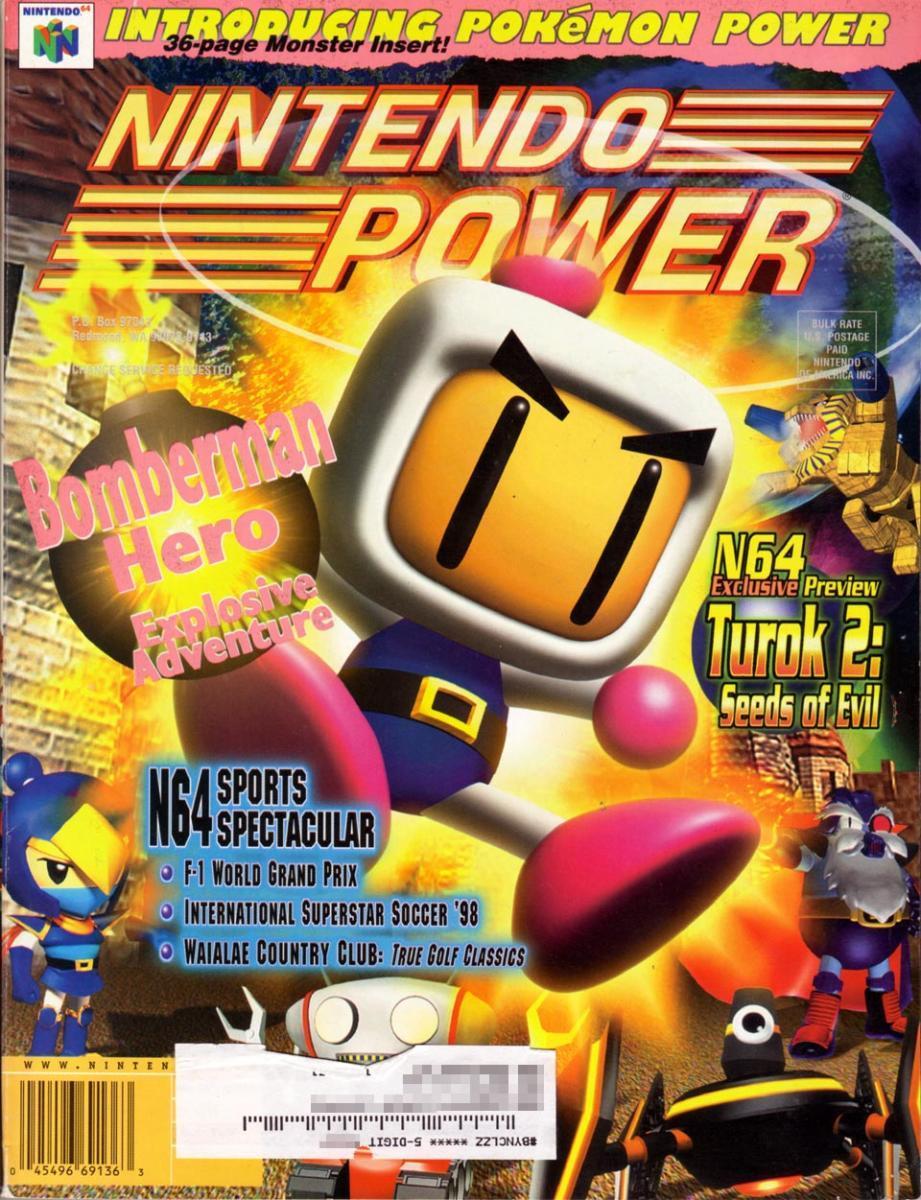
My first issue of Nintendo Power. It had the truly, truly awful Bomberman Hero as the cover game. It was an omen.
The recent news that Nintendo Power is ceasing publication has been met with universal sadness from bloggers and Twitterers. I’m not sure I’m capable of understanding it. I didn’t grow up in an era where magazines were the only resource for getting news on gaming. GameSpot (or videogames.com as it was back then, at least if you wanted console news) and IGN were already up-and-running by time my gaming life began, plus dozens of other sites that offered breaking news and previews. Breaking news for a gaming magazine means you read it three months after it happened. Sometimes only two months later if the stars were lined up properly.
In a different era, I could understand why Nintendo Power, Gamepro, EGM, or other gaming magazines could be popular. But once the internet came around, wasn’t that the ball game? What could you get from those magazines at $6 an issue that you couldn’t get from the internet, for free? I guess the same argument applies to newspapers as well. I know that many people are leery (perhaps rightfully so) at the prospect of a world without newspapers, but that time is coming. It’s coming faster than you want.
But, this is about gaming magazines, and specifically Nintendo Power. Now even as a nine-year-old, I wouldn’t expect Nintendo to package a Nintendo 64 cartridge with every issue. That wouldn’t be cost efficient. But then, Nintendo consoles moved towards disc-based stuff. And yet, they still refused to get with the times and include the one feature they could do that websites couldn’t: demos. As a kid, every new issue of the official magazines for PlayStation, Dreamcast, and Xbox were practically events for me. And the demos actually worked towards selling me games that I probably wouldn’t have picked out of a line-up at Toys R Us if I had the choice. The Dreamcast magazine sold me on games like Chu Chu Rocket, Crazy Taxi, and Rush 2049. I played the demo of the stunt course on Rush 2049 so much that by time the game was released, I was already bored with it. That’s how much play value I got out of it. They also packed in a free “full” game, Sega Swirl, that I burned many hours playing against my father with. Without hyperbole, the Official Dreamcast Magazine was probably my favorite thing in the whole world.
And then the final issue hit. It had no demo disc. This was mostly because Sega had thrown in the towel for console development and had decided to quit supporting the Dreamcast. Still, not even getting a demo as a send off would be like not getting a final meal for an execution. Sure, by this point Xbox was on the horizon, and with it a new shiny magazine no doubt chalked full of demos. But at the time, I was inconsolable, like a friend had just died or something. No more Dreamcast demos. None. Gone.
Which brings me back to Nintendo Power. They never got with the times. No demos. Mediocre writing. Nintendo Power to me always felt more like a promotional brochure than a true, critically thinking publication. As a kid, that was fine with me. Gamepro was more or less the same way. Once I grew out of it, I only kept getting it because we never remembered to stop the auto-renewal of it. Incidentally, that’s the same reason I still get Highlights for Children.
When news hit that Nintendo Power was toast, people started reminiscing about the good times, like when they got a free copy of Dragon Quest (or Dragon Warrior, because questing is for weirdos or something) just by subscribing to the magazine. Or about features and comics in the magazine that are no longer a part of it and haven’t been for decades, such as Howard & Nester. Or about the batshit insane covers some of the early issues had. Like this one.
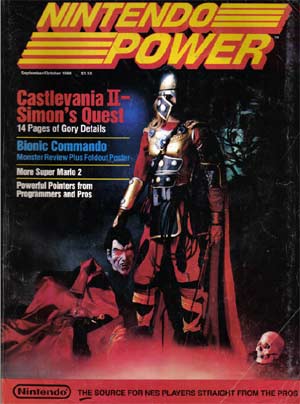
Jesus Christ! I mean.. Jesus Christ! Isn’t this supposed to be a children’s magazine?? That shit is going to give me nightmares.
That’s just the second issue! I mean, good lord! I can’t believe it made it another twenty-four years after that. And yet, it survived. I wonder why other kiddie mags never tried the “scare the ever-loving shit out of them” approach.
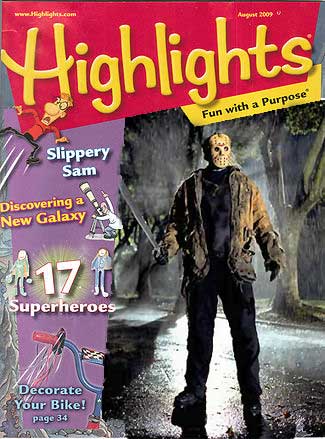
Turn to page 14 and try to find all nine dead teenagers in the hidden picture. I would SO buy this issue.
Oddly enough, most of these things happened either before I was born or long before I was into gaming. To me, Nintendo Power was always that strange little magazine that I got for my birthday one year and it just kept coming, month after month, with stuff I had already read about online months earlier. The best stuff to come out of Nintendo Power was their strategy guides, but they discontinued them in 2007, with Prima Games taking over duties. Which was fine with me. The last time I really used a strategy guide was for Star Ocean: Till the End of Time. Fucking guide for that thing would rival mid-range city phone books in girth. But, by that point, GameFAQs had evolved to the point of being the more convenient means of getting help with a game.
Really, isn’t it just time to let this era go? Gamepro is dead. Nintendo Power is dead. EGM is back from the dead, but it’s not the same. Soon, all that will be left is, shudder, Game Informer, which I’m pretty sure you get a free subscription to just by parking your car at a GameStop. All the Nintendo Power stories I’ve been hearing are twenty or more years old. So it’s not really about the magazine, is it? It’s about nostalgia. So I pose this question: how does Nintendo Power shutting down affect your childhood memories of reading the magazine? People have taken my stance on this to mean that I’m against print media. I’m not really. I just don’t see what printed gaming magazines have to offer me. Crazy talk? No, paying $10 an issue to read shit I already know, now that is crazy talk.

 Indie Gamer Chick
You must be logged in to post a comment.