The Legendary Axe (TurboGrafx-16 Review)

The Legendary Axe
aka Makyō Densetsu
Platform: TurboGrafx-16
Released September 23, 1988 (JP) August 29, 1989 (US)
Designed by Tokuhiro Takemori and Keisuke Abe
Developed by Victor Musical Industries
Published by NEC (US)
NEVER BEEN RE-RELEASED

You’re going to notice a LOT of straight line levels in screenshots of this game that took home actual Game of the Year awards the year I was born.

It was pretty stunning that Legendary Axe wasn’t included in the TurboGrafx-16/PC Engine Minis. It’s probably the most high profile game that was left out of the lineup, and hell, it never even got a Virtual Console release on the Wii either. What makes that strange is that Legendary Axe won a lot of awards and was even named 1989’s Game of the Year by some publications. How did that happen? I’m going to take a stab in the dark and guess it’s because the check cleared? (shrug) I literally cannot believe a group of people who play video games for a living collectively decided that this was better than any other game they played that year unless they were paid to say it. The only other option is that group of people was so impressed by the smallest hint of an audio-visual upgrade over the NES that they have probably since perished from sensory overload when they saw the PlayStation’s loading screen for the first time.

Woo hoo! More straight line level design! You know, I think a jump is going to happen soon. Whoa, slow down, buddy. A jump? You don’t want to overwhelm people. Keep it straight and slow.

But the accolades kept coming years after the fact. Electronic Gaming Monthly named it the 80th best video game ever made in 1997. How did THAT happen? I assume that list was compiled by people who played exactly eighty video games in their lives. Seriously, you guys could only find seventy-nine better video games than this? Really? Or were you so embarrassed that you once named this TurboGrafx-16 game of the year instead of Alien Crush that you just went along with naming it a top 100 game ever as some kind of weird sunk cost fallacy? I found the list and, besides sports games like MLB 98 (hell, even I named NBA 2K1 on the Dreamcast to my original top 10 all-time list in 2012), I cannot stress enough how much Legendary Axe sticks out like a sore thumb among other games on it. This ahead of Bonk’s Adventure? Are you kidding me? Ms. Pac-Man? Oh come on!

As far as I could tell, this is the only thing in the game that feels like a kind of 1989ish level of gaming evolution. It’s a key that opens up a handful of extra health refills and an attack meter increase. It’s like they knew they had to do more than the straight line, but that was too hard so, after programming this, they said “alright, now it’s a ‘real’ game. Back to the straight lines!”

It’s not that Legendary Axe is bad. I mean, it is, but mostly because it’s boring by design and the object of game development is to create a means of escaping boredom, not causing more of it. At best, it’s a run-of-the-mill flat arcade-like combative game. But even those types of games normally had evolved well past gameplay this rudimentary by 1989. This feels like an NES game from two or three years earlier, only with SLIGHTLY updated 8-bit visuals. I just reviewed Cadash in Taito Milestones 3: The Definitive Review. That was another 1989 release that feels like THIS specific genre. That arcade platforming/hack ’em up genre, only that was so much more ambitious than this. Legendary Axe is so BASIC that it’s a nothingburger of a game. This should not have felt like a big deal even in 1989. So what gives?

The final level of the game? Straight lines, but fashioned like a maze. I genuinely can’t believe anyone of any era would give it any award except “most generic” and “most walking in a straight line” and “most time spent waiting around for your weapon to charge-up.” I checked. There aren’t awards for those things except “most generic” only it’s instead called “The Golden Globe for Best Motion Picture – Musical or Comedy” and it’s reserved for movies.

In Legendary Axe, you mostly walk in straight lines and swing your axe at enemies. Occasionally you have to jump over a pit or swing on a vine, but the overwhelming majority of the game is walking in a straight line and fighting spongy enemies with very basic attack patterns. When a game plays out like that, the combat better be phenomenal. Legendary Axe’s is not. Actually, it’s pretty dull in design logic and amateurish in execution. From an execution point of view, collision detection is terrible. Your own box seems to grow by quite a lot when you swing your weapon. Since it’s literally the only form of attack, with no sub-weapons or items helping you, you’ll spend a lot of time getting smacked by enemies who didn’t even come close to having their sprites hit your sprite. Maybe they have REALLY bad breath or something?

This brief section in the third stage is the game’s platforming at its most complicated. Sometimes you have to jump to a higher series of platforms, but that’s fairly rare. There’s no moving platforms and, at most, you have to time a jump after a fireball or enemies has flown up from the pit you’re crossing. There’s just no imagination at all in Legendary Axe outside the final boss. It’s a remarkably uninspired game. Sadly, some decent jumping physics go to waste.

From a logical point of view, Legendary Axe is a game that forces players to spend a lot of time waiting around. The gimmick is your axe has a meter that empties every time you swing it, and a full-powered swing takes a while to charge up. Just mashing the attack button does hardly any damage at all, and so you’re highly incentivized to wait for the axe to charge-up at least half-way. As you go along, enemies become spongier and spongier, but you’ll eventually be able to locate four upgrades to the meter’s size. These give you more powerful attacks, but with them comes a meter that takes a LOT longer to fill up.

“We need to do something besides straight lines and rudimentary platforming.” “I GOT IT! False floors! Everyone loves those!” At least these ones are easy to spot once you know what to look for, I guess.

By time you have all four upgrades, which you ABSOLUTELY NEED if you don’t want most enemies to shrug off your attacks and immediately counter-attack you until you’re out of life, you have to wait a couple seconds for the meter to charge up.  You can’t swing upward, and when you’re ducking, your attack becomes a horizontal slice instead of the normal vertical one. Your axe also only does the full damage on the first thing it touches, so if an enemy shoots projectiles right before you land your hit, you waste your charge shot on it. For many of those types of enemies, I honestly couldn’t figure out a way to avoid taking damage. I’m pretty sure a couple of them are life slaps because they spam their projectiles in uneven patterns. This combines with collision issues and enemies that typically counter-attack. You don’t exactly have a lot of range, so all combat is close-quarters. It gets old really fast.

Like these chicks here who look kind of like Marge Simpson when she lets her hair down. They continuously throw three balls and immediately throw again as soon as you land a hit on them. One time I thought I’d avoided the balls and successfully slayed her only to then have a ball spawn mid-air after she was dead and ping some of my health.

Maybe their hearts were in the right place with the meter, but logically, the combat of Legendary Axe is completely reduced to needing to back up, wait for the meter to fill up all the way (which takes quite a while even after getting items to boost the speed) then make your move and hope the thing doesn’t fire a projectile to essentially block the attack you waited several seconds for. You HAVE to do it this way. If you try playing by any other means, you will die from the counter-attacks slowly pinging you to death. To show you what that’s like, watch this clip. In it, I fight a room full of enemies the only way that makes sense if you want to win. THEN I rewind the room and fight the final guy over again, only this time I don’t wait for my meter to fill up.

Mind you, that’s after picking up the items that increase the speed of the meter filling. 1989’s Game of the Year, everyone. I don’t get it. It’s such a basic, unexciting, repetitive nightmare. None of the drawbacks are done in a way that it could be considered a balanced risk/reward equation. A lot of enemies take so many shots that it’s no longer satisfying when it finally dies. You’re just happy it’s over with. And it keeps getting worse from there. A lot of the time, when a game’s collision is bad, it works both ways and you can cheese enemies the same way they do with you. That’s not the case with Legendary Axe. YOUR box is huge, but not the enemies or bosses. Also enemies and bosses seem to have more invincibility frames than you do. So while you can’t let this boss’ fireballs anywhere near you, your axe better be well onto its sprite, and you better not have just hit the thing. I’m not scoring a hit in either of these two pictures.

So, why the hell did Legendary Axe really win all those awards? Was gaming media of 1989 really that f*cking shallow that slightly better graphics overrode all gameplay merits? Because if that’s the case, I honestly think Altered Beast for the Sega Genesis, a game I didn’t like at all, was better than this. The combat was more impactful. The enemies are more imaginative. The bosses are more memorable. And the graphics, true 16-bit graphics and not just a rewarmed NES with a couple extra features, are far superior to the graphics of Legendary Axe. Altered Beast is a better game in every way a game can be better, and it came out exactly two weeks before Legendary Axe did in North America. Look at each game’s first bosses. Legendary Axe’s accolades couldn’t be just because “wow, look at the pretty graphics!”

I don’t even think this looks that good. It only looks good in comparison to the limits of NES games. How about one final comparison? On the left this time is Legendary Axe. On the right is what is essentially the NES version of Legendary Axe. A game called Astyanax that has a similar “wait for the meter to fill up” axe-based combat in a rudimentary platformer. Look, you even fight green eyeball monsters that float just above your axe’s reach in both games! Peachy.

But, nobody named Astyanax game of the year or one of the 100 best games of all time. I guess it really was about a slight audio/visual upgrade. I’ll never understand it. There’s just nothing to Legendary Axe. It features a limited variety of enemies. The level design and stages all feel samey. There’s no exciting set-pieces. The most complex thing in the game are vines you swing across or the occasional ladder that gets you out of a pit. I find it hard to believe that people awarded THIS piece of garbage Game of the Year in 1989, and I really can’t believe it would make a top 100 games of all time list in 1997. Is it REALLY just because of the last boss? Oh God, it is, isn’t it?

I guess this is technically the best part of the game because it’s actually a little fun to play, I think. Anything is better compared to what came before it.

I mean, it’s a cool looking boss and it plays a lot better than the rest of the game. But it’s not that hard. I beat it on my second attempt and probably would have won on the first if I had full life. The boss I fought right before the finale put up a bigger fight, mostly because against it, only one in three direct shots actually counted as hits. For the final boss, you can even strike it in the foot and get credit for a hit every time. I find that when a game responds to my actions, I usually have more fun than I do when it doesn’t, you know? It’s like they put everything into this one encounter. Even with a sweet final boss, Legendary Axe is basic even by the standards of 1989. I don’t think this is a game that sucks now because it aged badly. I cannot believe anyone could ever shower this clunky, unimaginative Conan wannabe with praise.

This is a boss fight. Legendary Axe does that thing where a boss of a stage becomes a basic enemy afterward.

Shame on me for assuming that Keith Courage was a lesser game before even playing Legendary Axe. At this point, I’m starting to understand how the TurboGrafx-16 failed in the United States. If Legendary Axe really was the killer app of the platform, that doesn’t bode well for it. Of course, the real killer app was Bonk’s Adventure, and Legendary Axe just further proves to me NEC made a big mistake not throwing every resource in their vast company towards making sure it was ready by the US launch. But, if given a choice between the pack-in game they chose or their big critically acclaimed game Legendary Axe? I’d much rather have Keith Courage. Like, by a big margin. And now I know why the curators of the TG16/PCE Minis didn’t lift a finger to secure this dumpster fire.
Verdict: NO!
By the way, the creator of Bonk worked on this game too. I stand by venom.

It’s a rock. I can’t wait to tell my friends. They don’t have a rock this big. Actually he looks like he’s chewing her out for getting kidnapped, doesn’t it?

The Adventures of Tom Sawyer (NES Review)

The Adventures of Tom Sawyer
Platform: Nintendo Entertainment System
Released February 6, 1989 (JP) August, 1989 (US)
Developed by Winkysoft
Published by SETA
NEVER BEEN RE-RELEASED

So much for “let he who is without sin cast the first stone” because this is a sin against gaming.

There are, in fact, two Tom Sawyer NES games, but I’m not reviewing the Japanese-exclusive RPG by Square, and not even because it has some seriously questionable content. It’s Tom Sawyer. “Seriously Questionable Content” is basically the novel’s 21st century title (and also makes for a great metal band name). I just don’t want to play a Japanese RPG. In fact, I only picked this platform game because I wanted a game I could knock out in under an hour that was bad in an uncomplicated way. And hey, for once I got what I wanted with that. The Adventures of Tom Sawyer is certainly not a good game. It has loose controls, unfair enemy placement, and some boring level design.

It’s so generic that it almost feels satirical.

To be honest, I’m not even sure what the point was in making a Tom Sawyer game in 1989. I know kids in my lifetime (which, granted, started in 1989) didn’t give two wet squirts about Tom Sawyer (and Huckleberry Finn was always cooler anyway), but did the generation before me care, either? I know there was a Disney movie with the kid from Home Improvement, but that was years later. I guess this exists because, for whatever reason, Tom Sawyer is popular in Japan. Who knew? But, this is as generic as a game gets. Well, with the exception of the river rafting sequence that makes up the entire second stage. It’s basically a shmup with jumping, and while the stage overstays its welcome by quite a margin, it’s also easily the highlight of the game. Well, except for how it handles jumping. When you jump, you can move around mid-air, except the raft doesn’t stay under you. I lost most of my lives on this part until I figured out to just not move mid-air at all. Otherwise, this feels like it could have been the whole game and it would have been much better off.

When you jump on the river rafting level, for god’s sake, don’t move after pressing the button until you land.

The rest of the Adventures of Tom Sawyer features boilerplate platforming gameplay from the era. You scroll. You jump. The hitch is that the game is more combat focused. You have an unlimited supply of rocks that you lob at enemies. Well, unless you pick up a slingshot, which I found to be mostly useless. Upon pick-up, your projectiles will travel straight across the screen for a limited time. Except, the enemies seem more tailored for the normal attack, so lining up to hit them is significantly harder with the item, and a couple bosses I’m pretty sure can’t be hit at all with it. Go figure. The combat is all the game has going for it. Besides that second level and a segment in the cloud section of the game where you ride the world’s worst controlling cloud, the level design couldn’t be more phoned-in. Not that I think it would be better if it changed-up the formula more. Your sprite barely “binds” to ladders when you start to climb them and falling off the sides is too easy. There’s some very mild climbing sections, but otherwise you just scroll and engage enemies, some of which spawn literally right on your sprite. Like this part:

I fully admit, I used rewind in this section.

I died the very instant a fish appeared on the screen multiple times while climbing up this waterfall. Now that’s the last level of the game, so maybe they felt the pressure to increase the difficulty in order to feel more climatic. But the actual result is this GOTCHA! crap forces players to heel-toe their way up the waterfall to “tempt” the enemies into spawning away from you. It totally ruins what should be Adventures of Tom Sawyer’s grand finale. This is level design 101 type of stuff and it shouldn’t be that hard to grasp why that type of design mentality is a terrible idea. Then again, by the third level of the game, I was already so bored with the combat that I was ignoring enemies and legging it for the finish. Maybe their play testers were too. Maybe that’s why the home stretch before the last boss does that. Wouldn’t surprise me, especially since most of the development energy seems to have been put into the boss fights, all of which feature gigantic sprites.

This slideshow requires JavaScript.

They look great, but in terms of gameplay, they’re not that they’re much better. Both the first and last bosses only managed to fire off one single attack before I won. The fourth boss was a total slog that continuously summons demons you have to jump up for your rock to reach, and only when it’s lower to the ground too. The more interesting boss was a multi-tiered battle with a blimp that felt more like a shmup boss if, instead of a spaceship, you were piloting a shopping cart with a broken wheel. Please note that I didn’t say “good” but interesting. Then the game ends with Injun Joe riding the Loch Ness Monster, because at this point, f*ck it, why not? I just played through Tom Sawyer twice and my brain is already hard at work deleting my memory of it. There’s really nothing to it, and while it’s not putrid by any means, it also really doesn’t feel like it’s trying to stand out in any way. Paint by numbers levels (and a single last-pixel jump before the final boss), easy bosses, overrated graphics (it’s not ugly, but it’s not THAT amazing looking), loose controls, and even forgettable chiptunes. What was the point of this? Is there such a thing as anti-ambition? If there is, I think the Adventures of Tom Sawyer has it.
Verdict: NO!

“Oh my God! It wasn’t a dream! I performed a hate crime!”

LCD Games XI: The Quest for the Crystal of Liquid Displayfulness

Haven’t done one of these since Christmas of 2023. We’re overdue, and since Super Mario Wonder is taking me forever and I’ve also been binge-playing our AtGames Legends Pinball with Sasha the Kid and the rest of my family, I’ve not been posting enough updates to IGC. When in doubt, LCD games to the rescue. So, for the first time since 2023, here’s some LCD games of the 1980s and beyond. From here on, LCD features will include six games per feature. All of these are done by Itizso. If you have any mint condition LCDs laying around that haven’t ever been translated like this, you should hook him up and preserve them FOR EVERYONE. Trust me, the nostalgia for these is off the charts. My LCD features are among the most read here. Even after taking a year off LCDs, I’m still “that girl who reviews LCD games.” I had someone tell me “you should do another spin-off. The LCD Chick!” Yea right. I need LCDs for THIS site. They’re the best pinch hitters I got! Make sure to check out my retro review index for a full list.

Go play some LCDs. Retrofab has tons, and even more coming!

But, when you look at all the LCDs that have ever been made, even with as many as I’ve done, I’ve not come remotely close to scratching the surface of this genre of games. I’ve taken atoms off the surface at best. There’s tons of LCDs I’d love to do. There’s an Attack From Mars LCD! Are you kidding me? It’s pretty rare too, so rare most databases for LCDs don’t list it. The Handheld Museum doesn’t. This one doesn’t either. That should be f’n alarming. As much as it makes Nintendo furious, I think it’s nothing short of miraculous that ROMs for every classic game console, complete libraries, are readily available. I see zero evidence it affects sales of classic games or even the second hand market. But, with LCDs, 99.9999% of them will never be in compilations. Digital Eclipse will never do a Gold Master Series release on them. When they’re gone, they are GONE, and only a handful have been preserved by translating them into digital form like the ones reviewed in these features. If you happen to own LCDs that you cherish? They’re rotting. There is nothing you can do about it. The plastic will last essentially forever, but the game stored inside it will last about as long as your average human being, give or take. The majority of video games are preserved forever. The majority of LCDs are in danger of being lost for all time. If that doesn’t make you sick, I don’t know why you even clicked this feature. So, donate your LCDs to wizards like Itizso, which is basically giving them to the entire world.

Anyway, on with the feature. And yea, two of these I’ve already posted in my daily updates that I abandoned. Whoever guessed those would last a month wins a smack in the face for being right.

SPLATTERHOUSE!!
Varie/Namco (1988)
Gameplay Type: Cross-the-Road/Combative

This slideshow requires JavaScript.

I just reviewed the arcade classic Splatterhouse and its not so good Sega Genesis sequel as part of Kung-Fu Master: The Definitive Review (it makes sense, trust me). So, why not start my first LCD feature in fourteen months with the handheld version many (including myself) didn’t even realized existed? Well, it’s not famous for a reason. I don’t know if Itizso’s port plays right or not, but without exaggeration, this was easily the fastest game over I ever suffered on an LCD in my life. If it was even two seconds, I’d be surprised, and the next several games didn’t play out much better. Even after ten or so games, I spent more time listening to the intolerable opening chiptune than I did actually playing Splatterhouse. To help you visualize this, here’s what that was like in game review form. The object is to catch DEAD. The Object is DEAD. The DEAD GAME OVER. Want to try again? The object is to catch laddDEAD. ThDEAD are you f*cking kidding me on that one? The object is to catch the ladders in order to DEAD GAME OVER. Excuse me, I’m going to go have a cry now.

Seriously, that’s what it’s like when you first start. There’s no grace period for enemies, and the knives that come in from the bottom left of the screen basically spawn on the same space you occupy, meaning some double kills are inevitable. The object is, in fact, to jump up and catch ladders so that you can zig-zag three stories and fight a boss to rescue your girl. The combat and safe zones are NOT intuitive, and it takes a lot of practice to figure out the timing. It doesn’t feel even a little like Splatterhouse and actually would make for a better Donkey Kong game, but after an infuriating start, I admit, there’s SOMETHING here. It took me a long time to get the timing down for the enemies, and I’m still not comfortable describing how to beat the boss. Basically.. stand back and don’t attack when he does, I guess. I can’t say I had a good time because it’s a busy game with tiny enemies, quick deaths, and one of the most ridiculous jump animations I’ve seen, but it wouldn’t take much fine-tuning to make this worthwhile.
Verdict: NO!

BURGERTIME!!
Bandai (1982)
Gameplay Type: Cross-the-Road

On the most basic level, this plays like Burgertime. Preschool Burgertime that completely misses the point of the genre, but Burgertime nonetheless. You shimmy up and down ladders and knock exactly two patties and four buns to the bottom of the screen, and then you do it over and over again. There’s one enemy patrolling every floor that you can pepper when they’re next to you. After one level, a little bar warps around and might temporarily block a ladder. At first, I wondered how this could feel like a maze chase since there’s no maze. The answer is “they didn’t even try to replicate that.” Instead, you basically play Red Light-Green Light with the enemies and wait for them to waddle away from the burger parts. Well, unless you kill them, and you might as well do that. Unlike the coin-op, you get all your peppers back between stages. If you can’t even wait that long, you get refills from ice cream and coffee mugs that appear on the first and second floors. So unless you screw up the timing of when to use the pepper, this is just too easy. I don’t even know why they bothered releasing this if this was the best approximation they could do of Burgertime. Um.. seriously? Two channels? TWO? Wouldn’t it have made more sense to turn the screen on its side so the playfield could be bigger?
Verdict: NO!

WESTERN BAR!!
Casio (1984)
Gameplay Type: Shooting Gallery/Quick Draw

How many games have you play as an alcoholic sheriff who gets ashtrays thrown at them? At least one! And actually, Western Bar is one of the better shooting galleries I’ve played in this format. You can tell the designers took a long, hard look at the Game & Watch franchise, because this is very Nintendo-like, and I mean that in the best way. Levels are divided into two parts. In the first, you have to shoot targets that pass from the right of the screen to the left while dodging objects thrown by two patrons. From the second cycle onward, sticks of dynamite are thrown from the left of the screen that you do NOT want to shoot (when are you ever going to learn to read the instructions, Cathy?). From the third cycle onward, the bartender will catch the sticks and toss them onto the playfield, and you have to walk next to them to dump your whiskey out on the fuse. I spent far too much time on Google trying to find out if that would actually work or just blow you up faster. I never got a clear answer. Either way, the second part is a quick draw match against an outlaw. You hide behind a table. He hides behind the left of the counter, and when he pops out to shoot, all you have to do is press the fire button. But, he’s capable of faking his move, so make sure not to draw until he’s actually in his shooting cel. Western Bar is a busy game (you’ll want this on full screen) but it’s genuinely a lot of fun and one of the best LCDs I’ve played that isn’t from Nintendo.
Verdict: YES!

WESTERN SHERIFF!!
Casio (1987)
Gameplay Type: Shooting Gallery

It even looks boring.

I had high hopes for this pseudo-sequel to the previous game, but Western Sheriff has none of the intense gameplay or charm of Western Bar. You gallop automatically on a horse and when bandits pop out, you shoot them. As you ride, if you hit a barrel, your horse loses 3 out of its 10 energy points, but they can be refilled with carrots. There’s tons of carrots. Far more than enemies, actually. From the second cycle onward, enemies throw dynamite from houses that have to be avoided. So, a fairly generic, mundane LCD experience, but there is one novel twist. Despite only having left and right directions, your gun can aim in multiple different channels. So, for example, if you move left, your gun will remain pointed the same way, but then moving left a second time will adjust your gun, then moving left again will move to the next space. So, that’s interesting, I suppose. But Western Sheriff is a total slog to play. If you want a good multichannel gunslinger, Konami’s Lone Ranger is so much better. and it’s on Retrofab.
Verdict: NO!

BEAUTY SHOP!!
Bandai Electronics (1981)
Gameplay Type: Spinning Plate

This slideshow requires JavaScript.

Well, this is a different theme, at least. In Beauty Shop, you have to cut and shampoo hair. While there’s only three spinning plate channels, there’s seven movement “stations” in the game. Two of them are essential towards maintaining the spinning of the plates, while two of them can score optional bonus points: a tea tray on the left of the screen and a cash register on the right. These both blink in and out of existence rapidly, though you can actually get a rhythm for when they will appear. The sheer amount of movement for a three channel game is staggering, and this is further compounded by the fact that the customers won’t always get up as soon as you perform the action. They could require multiple button presses to satisfy. The game wisely created indicators to let you know which of the three is the one about to cost you a miss. The customers raise their hands, then get “steamed” if they wait too long. Beauty Shop is a shockingly intense game, but a flawed one. I feel that I only lost after 3,000 points because I kept making plays for the cash register and tea tray. Had I ignored them completely, I really think it’d be easy to just maintain the plates indefinitely. The two bonus channels don’t really score enough to justify their risk. I hate it when LCDs do that. Beauty Shop does a better job than most at the genre, but the risk/reward balance is completely wrong.
Verdict: NO!

CUPHEAD!!
“Homebrew” by Itizso
Gameplay Type: Spinning Plate

This slideshow requires JavaScript.

Cuphead is an original creation by recreation master Itizso. While it’s a typical six-channel spinning plate game disguised as a gallery shooter, there’s a big twist to this one: you’re not scoring points. Instead, you’re just trying to survive for as long as you can, with scoring measured in minutes and seconds. Unfortunately, there’s no auto-fire here. You actually do have to mash the shooting button. This isn’t a game I could put extended playtime into without annihilating my hands. I suppose the question is “does it feel like Cuphead?” And the answer is “not even a little bit.” The pea shooter’s noise, that now apparently iconic clicking sound, is here for the LCD, but otherwise, nah. I think most fans of the franchise would be disappointed that the LCD is themed more after one of the platforming segments instead of an encounter with one of the humongous, transforming bosses. But, while I don’t think this necessarily works as a Cuphead game, the addition of leaderboards makes this a one-off spinning plate experience that I enjoyed, in small doses.
Verdict: YES!

Mickey to Donald: Magical Adventure 3 aka Magical Quest 3 (Super Famicom/SNES Review)

Mickey to Donald: Magical Adventure 3
aka Magical Quest 3
Platform: Super Famicom
Released December 8, 1995
Developed by Capcom
Originally Never Released Outside of Japan – Ported to GBA in 2005
No Modern Release

How many trilogies have the first game end up being the best one? I can’t think of many.

I hated the Great Circus Mystery, which had nothing inspired about it. That’s not exactly the case with this third and final Magical Quest game. Hell, I even think they could have released this in America and saw roughly the same success as MQ2. I get why they didn’t. While Mickey Mania didn’t exactly block the release since Traveler’s Tales and Sony didn’t own exclusive Mickey Mouse rights for any window, Magical Quest 3 looks kind of fuddy-duddy when put side by side with Mickey Mania. Regardless of whether or not Magical Quest 3 is the better game, Capcom had experience with one of their sprite-based games getting smashed by a game promoted by cutting edge cel-graphics: the Aladdin fiasco with the Capcom SNES game and the Virgin Sega Genesis game. They didn’t want a repeat, and Mickey Mania was even better looking than Aladdin, on the Nintendo platform as well, and critically acclaimed, so they said “nah.” Yea, that’s almost certainly why this didn’t come out in America. Sad, huh? Especially since Magical Quest 3 is no-doubt-about-it better than the SNES version of Mickey Mania. Whether or not it’s better than the base Mickey Mania that I gave a YES! to on Sega CD wasn’t as clear, at least immediately.

Unlike Magical Quest 2, where you can choose to play as Mickey or Minnie but it doesn’t make any gameplay difference, Mickey and Donald are unique characters with unique costumes and abilities. Well, “unique” is a bit a stretch, and I’m almost certain the climbing costume has the same abilities despite having a different look. Both characters each have a knight-like combat costume. In water, Mickey sinks in his suit of armor while Donald, who looks like a complete tool in his barrel, can float. See, Mickey? You should have dressed like a tool. Of course, in the underwater stage, you can’t use Donald’s suit at all since it takes you to the top of the screen.

One HUGELY annoying aspect of the game is just the act of turning around, because you don’t just turn and face the other way. You also move a character segment forward. That makes avoiding boss attacks a huge pain in the ass.

In the knight costume, Mickey follows in the footsteps of Green Arrow and uses a lance with a boxing glove on the tip, while Donald uses a hammer. BOTH are hugely satisfying and probably the best costumes in the entire franchise. No notes. The problem instead is the magician costumes and the randomly-generated refills for them. Mickey is CLEARLY a comic fanrat since he throws playing cards like Gambit. Donald wears a fez and uses a lamp with a genie to cast spells. Mickey’s costume allows for rapid fire, while Donald’s projectile has a pronounced delay for the animation. When I fought this mini-boss as Donald:

I had to hold down the fire button to successfully score hits. The boss is immune to all attacks BUT the magical costume, since it’s shooting fast moving cannonballs at you that you have to deflect. TECHNICALLY you can use two costumes with Mickey, but with Donald, you can only use the magic costume, and it makes for a slow, agonizing fight. Early on, I thought they corrected the problem with spongy bosses, but they didn’t. There was a boss fight with a giant flower that died so quickly that I couldn’t believe it, But, by the halfway point of the game, boss fights once again dragged on so long that it sucked all the excitement and joy out of the battles. Even the mini-bosses are total slogs to fight. On the plus side, collision is better than the SNES Great Circus Mystery, but if the gameplay isn’t fun, that’s not much of a consolation prize.

The final battle against Pete did ALMOST put a smirk on my face since he changes costumes like the player. Cute idea, but the animation is so limited and sloppy that it’s like amateur hour. He just sort of waddles back and forth, and when he attacks, it doesn’t do a convincing job of creating the illusion that it’s one sprite doing all the work.

I’m genuinely fine with extended boss battles. I just drooled all over the fact that I spent nearly an hour battling a boss in Super Mario RPG, and I could totally be on-board for a platform boss being along those lines, but only if the fight is kept exciting. That requires changes of tactics, but most Magical Quest bosses have one form of attack and maybe some kind of rushing move, so two total gameplay elements that are then repeated randomly over and over and over. They also usually have some kind of interval when they’re vulnerable, so the fights feel like you’re just waiting around for something to happen. These are BAD boss fights, and they didn’t have to be. Cut the damage required in half and they would have been fine, and maybe even fun.

The first boss is actually a massive tease because he’s the type of boss I want. He has two distinct forms that feel different and take the correct amount of shots to pass. I have no idea why all the bosses aren’t like this.

Like Great Circus Mystery, I assume a lot of the decisions made were done to accommodate co-op play. This time, I *did* play a limited amount of co-op, but it’s just a slower experience that mostly comes down to one player creating a platform for another player. It’s the same problem World of Illusion had: the original game was fine, and you don’t need to build a co-op game out of that. You need to build UP, and co-op inherently prevents that. Part of me has always wondered if that’s why the New Super Mario Bros. games never “did it” for me. How many things have to be sacrificed so the co-op design can work, which has a NICHE audience as opposed to the all-encompassing one of the original game? With that said, the levels are significantly improved over the second game, but they’re still not as good as the first. There’s also some problematic elements related to the climbing gear. It’s done like a lumberjack, with a rope around the thing you’re climbing that you use to sort of scoot upwards and fling yourself. But things like these:

I really struggled greatly to “bind” myself to, even with practice. It’s certainly not intuitive or smooth-flowing. There were multiple moments in the game where I was stressing that a soft-lock was in play and ultimately only barely got past because an enemy appeared that I could use to bounce off of. There’s an overall lack of elegance, and lots of situational issues where if you run out of ammo for the magic, you probably will get stuck. The refills are random, even if they’re inside blocks. A couple times, I had to rewind the game and break blocks a couple times to assure I got refills so I could use the magic to create a platform to scale over a structure and continue the level. Well, the obvious answer is that these segments were made, you guessed it, for the co-op. If they feel that strongly about co-op, stand by your conviction and have no single player. Because all the uninspired design made for a co-op experience that between 5% and 20% of all players will probably use really seems to be the root cause for all the conservative level design.

Well, the climbing stuff isn’t great in general, single or otherwise. It’s slow and clunky, and so when they do the rising fire trope in the final level based around it, it doesn’t land at all. You can’t do that gimmick if it’s based around unreliable controls.

Or how about this one part where there’s switches and you have to use the climbing rope to drag a barrel over to them. Except, you don’t actually DRAG the barrel. Even though they’re placed quite a distance from the object, you have to throw the rope out and catch it, then drag it one single space, then repeat until it’s on the switch. Look how far away it is! How stupid! It’s actually breathtaking how consistently the Magical Quest games consistently manage to add busy work and subtract fun from so many aspects of gameplay, from bosses to platforming segments to even the act of putting a barrel on a switch. Did they sit around with a stopwatch and try to find places they could add seconds to the gameplay, so that nobody could accuse them of making a game that can be finished in an hour?

I actually thought this was going to get a YES! by virtue of being closer to the first game than the second, but when it was all said and done, I actually had to ask myself “did I really have fun with that?” At the start of the game, I did. The first couple levels were pretty good, but the fun stopped soon after. I played Magical Quest 3 twice, once with Mickey and once with Donald. The two characters weren’t so different that it felt necessary. When the credits rolled on the Donald game, I said “well, that was a colossal waste of my time.” And that’s when I knew my verdict. Unlike Great Circus Mystery, Magical Quest 3 isn’t entirely a wash. There’s a couple really good levels, but the majority of the game is a slow, clunky bore. I was bored playing it, and I was bored writing about it. There’s a reason why this franchise died the death it did. The first game was the best, and it felt like it left so much on the table. The ideal Magical Quest game would be one that takes the first couple levels from Magical Quest 3 and somehow cuts them and pastes them into the middle of the first game. Magical Quest 3 isn’t a dumpster fire, but it’s not good, either.
Verdict: NO!

At least this one has an air meter.

The Great Circus Mystery Starring Mickey & Minnie (SNES and Genesis Reviews)

I’m going to do the SNES game, then the Genesis one. Can you tell I wrote the full SNES review before I touched the Genesis version?

The Great Circus Mystery Starring Mickey & Minnie
aka Disney’s Magical Quest 2 Starring Mickey & Minnie
Platform: Super Nintendo Entertainment System
Released October, 1994
Developed Capcom
Re-Released for the Game Boy Advance July 18, 2003
No Modern Release

Well, it looks good. I guess.

If I didn’t know better, I’d guess that the second game in the Magical Quest trilogy was made up entirely of ideas, levels, and costumes rejected from the first game for being too boring. Mind you, for all the whining I did with my review of the first Magical Quest, I also said in no uncertain terms I thought it was “one of the better SNES mascot platformers.” So, what happened to this piece of crap? How’s this for a bonkers conspiracy theory: I think they dropped the “Magical Quest” name from the US version of the game and changed it to the Great Circus Mystery (despite having only ONE LEVEL related to the circus) because Capcom’s US branch recognized what an absolute failure the sequel is. Folks, this is a TERRIBLE game.

What a strange name. “The Great Circus Mystery” when none of the enemies outside of the first area, none of the costumes, NOTHING is circus themed. It’s not even a well done circus themed level, either. It’s entirely superficial.

The core pick-up-and-throw gameplay returns for the sequel with basically no changes, so the new content is entirely based around the three new costumes. The first one is a vacuum cleaner, which is basically the fireman’s suit from the first game in reverse. It’s easily the most satisfying costume in the game as well, but even it’s boring. Instead of sucking up enemies which can then be shot, it eats the enemies and poops out coins, and it does it in a way where the coins go FLYING behind you so you have to scramble to get them. How stupid. A couple bosses are fought using the vacuum gun, and while I think all the bosses are, simply put, boring, the least boring ones usually involve the vacuum. There’s also some very limited (and entirely optional) platforming bits that require you to use the vacuum to pull a block closer. As in, I did it exactly twice, back-to-back. That tracks with the unimaginative level design in general. The only costume that gets extended use for platforming is the explorer costume, which is basically Mickey with a hook. It’s used for swinging off pegs, scaling walls, and occasionally sliding down vines. That doesn’t sound TOO bad, right?

Behold, the best part of the entire game. This is like a better version of Super Castlevania IV‘s rotating room. It lasts under a minute. So, the sum total of the entire game’s entertainment value is maybe 45 seconds of someone else’s idea made marginally better. Being a Mode 7 segment, this room is not in the Sega Genesis build.

Even the explorer costume is as boring as possible. First off, there’s NO offense with this thing besides enemies who can be jumped on. You can’t even pick up a downed enemy and throw them with this costume, nor can you pick up any blocks at all while wearing it. Because there’s a huge delay when you’re swapping costumes, this costume alone causes a much slower pace than the previous Magical Quest game. The level design that takes advantage of it isn’t much better. In the first stage based around the explorer costume, there’s an extended section where you have to climb up trees. As if to really stress how much contempt the designers of this game had for players, the things you’re waiting on are actual snails that move as fast as you would expect, which is so goddamed slow that I wanted to throw my controller through the screen.

Platforming done at a literal snail’s pace.

The third costume is one of the worst power-ups I’ve ever countered. It’s “Cowboy Mickey” which sees Mickey bouncing up and down on a hobby horse. All movement with this is bounce-based, and it’s SO inelegant. If you want to jump higher, which is the theoretical advantage of this costume, you have to time it based on when the up-and-down hopping is currently down. Since the hopping is so quick, it’s really not easy to actually jump or do anything with this costume. It also shoots, but not straight in front of you. The corks you shoot are a little bit high and then arc slowly. It’s literally custom designed to be hard to shoot anything with, and when games do that, that’s not really a challenge. That’s just being trollish. It also has a dash move, but that seems like a hold-over from the Genesis game, as there’s no place where it was useful in the SNES game. The poor controls with the cowboy suit make it one of the most unresponsive, unintuitive gimmicks in any platforming game. The whole idea should have been killed on the drawing board. It should NEVER have made it to the finished game.

Imagine if you could only jump randomly 1 out of every 3 times you pressed the button. That’s sort of what using the cowboy costume is like.

I wasn’t doing a comedy bit in the first paragraph. I genuinely think Great Circus Mystery is composed entirely of concepts rejected for the original game. There is just no way that everything sucks as much as it does. The first game was too well made. Hell, even the bosses fail. They’re a total slog, all taking too many hits to kill without changing up their attack patterns. “Why be four hits to kill when it can be six? Why six when it can be eight or more?” Well, because if you’re not throwing more twists into the fight, you’re really just making the bosses an endurance test, right? And it’s really not helped by the fact that the collision detection this time around is really bad. There were multiple points in the swimming stage where I used rewind just to search for the thing that damaged me. The closest enemies were so far above my sprite that I couldn’t believe that it was the cause, but it must have been unless you just randomly take damage while swimming. Look at this. The answer seems to be “the jellyfish” but you’ll note that it’s not even a little close to me.

UPDATE: Actually, you have to breathe air underwater via bubbles. They just forgot to have an air meter, which I assume was an oversight since the sequel has such a meter. Every time I took damage, it was close to an enemy, and since the collision is bad outside the water, I just assumed the damage was caused by the enemies since there was no indication on-screen that this was one of those “need to breathe” games.

Non-swimming collision is never THAT bad, but it’s never consistent. Some enemies are 1-to-1, but others aren’t. Most of the boss attacks sure aren’t. With the SNES version of Magical Quest 2, you can’t ever really use the sprites to suss out the safe distance. By this point in the SNES’ lifecycle, anything but 1-to-1 sprite collision is lazy and unacceptable. Every single boss had at least one moment where I had to jump over something and my sprite clearly, unambiguously missed the danger sprite with a full character length between us and I still took damage. NOTHING in gaming breaks immersion quite like bad collision detection, and it was the final straw that ruined Magical Quest 2 for me. Look how much clearance I had over the thing the boss is throwing at me here:

The whole game is like that, but the bosses are where it’s the most damning. Bosses are like double-or-nothing for mediocre platformers. Really good boss fights can absolutely turn a meh game into a decent one, but bad ones can confirm it as an all-time stinker. The Great Circus Mystery’s bosses do the latter. You know, there’s a third Magical Quest game that remained a Super Famicom exclusive until the Game Boy Advance re-releases in the mid 2000s. I’m starting to figure out why that never came out in America. The Great Circus Mystery killed the franchise, dead. I have no idea what the contemporary critical reception was to this, but I genuinely feel this is one of the worst sequels I’ve ever played and I can’t imagine what a let-down this must have been for kids of that era. It’s REALLY bad. The levels are dull and lacking in memorable set-pieces. The combat is dull. That cowboy costume is genuinely embarrassing, and hell, I even think the graphics are pretty lackluster. And now I know what the great mystery REALLY is: why this wasn’t cancelled before release.
Verdict: NO!
No, I didn’t play this co-op. Absolutely nothing I said above would be fixed by having a second player suffer with me.

The Great Circus Mystery
aka Mickey to Minnie: Magical Adventure 2

Platform: Sega Genesis
Released June 2, 1994
Developed by Capcom
NEVER BEEN RE-RELEASED

For Sega Genesis fans, the collision detection in the Genny version of Great Circus Mystery is VASTLY improved. It doesn’t make it a YES! game. The costumes, level design, and spongy bosses are all still so terribly boring. But, my final big complaint was fixed in this version. If you only play one version of Magical Quest 2, fire up the Genny version. It’s MUCH improved and rises to the level of a standard boring platformer.

I wasn’t originally going to do this review, but right before publishing, curiosity got the better of me, and then I saw that the Sega Genesis game released before the Super NES game did. Hmm, I thought. I think I figured out what happened with the SNES game. Funny enough, I think it’s the same thing that happened to another Mickey Mouse game, Mickey Mania. I think the developers built a Sega Genesis game that they then had to port to the SNES. The collision detection for Mickey Mania was historically awful on the SNES. It was almost a non-issue on the Sega CD build that I played. In the case of Mickey Mania, it led to a split-decision, with the Sega CD build coasting to a YES! and the Super NES getting the NO! hammer dropped on it. Well, Great Circus Mystery is now the second Nintendo versus Sega game starring Mickey Mouse where the Sega version is better based on collision detection. Remember this?

Here’s the same boss on the Genesis, doing the same attack. Look where I am.

I’m LITERALLY TOUCHING THE SPRITE and I’m not taking damage. While it makes a monumental difference in terms of playability, it was also never Great Circus Mystery’s biggest problem. The levels are largely the same, with the only noticeable difference being the lack of the rotating room. No Mode 7 on the Genny, so they couldn’t do it. That’s where the cowboy dash move comes in. Like with the vacuum’s ability to draw blocks closer to you, they created a couple situations where it’s necessary to use it to justify its existence.

Right here. You have to hold the fire button down, which means shooting a bullet in order to perform this

The Great Circus Mystery on the Sega Genesis at least rises to the level of competently boring. I totally stand by my theory that this game is made entirely out of ideas for the original game that were shot down. The best costume in Magical Quest 2 is worse than the worst costume in Magical Quest 1. The weakest level in that original game is also better than this one’s strongest level. There is NOTHING memorable here. It’s so paint-by-numbers basic and predictable. I assume it was done that way to accommodate co-op gameplay that nobody asked for. Technically, the level design is microscopically worse on the Genesis. At least the SNES game had a forty-five second segment that outclassed one of Super Castlevania IV’s most memorable sequences. The Genesis version doesn’t even have that going for it. Meanwhile, a couple of the bosses on the Genesis game, even with better collision detection, last longer. Like this boss fight on the back of a dinosaur:

On the SNES, I could occasionally hit it twice a pass, which is nice because the bosses are so unbearably spongy that it sucks all the excitement out of the fight. On the Genesis, you’re limited to one shot per pass, which makes the fight drag on so much longer than any sense of fun lasts, then it keeps going until you actually regret turning the game on at all. None of the bosses are memorable in the least bit. The first game had a giant Pete Spider. In the sequel, the final boss is a giant, generic looking Pete Dragon. Not Pete’s Dragon. That would be lame as f*ck too, but not as lame as it turned out. I’m just in a state of shock over here because the original game was such a quality title that absolutely did not get the most out of the costumes it had. They could have done more levels with THOSE and ended up with a better game than this. While I give the nod to the Genesis version, it still really does nothing right. Ease back on the sponginess of the bosses and the levels are still bland. Make better use of the costumes and they would still be uninspired. Magical Quest 2 feels like a sequel they didn’t want to make. Nothing more than an arbitrary +1 for the release schedule. Magical Quest deserved a better sequel.
Verdict: NO!

(SNES Version) This DOES NOT pull off the “use background sprites to create the illusion of the boss being bigger than it actually is” trick. That’s actually laughably pathetic. What a farce of a game.

What I’m Playing #21 – Henk Rogers and The Hair of Extreme Distraction

Banzai Run has been confirmed as the next Williams table for Pinball FX. With this announcement, every Pat Lawlor table from the arcade era of pinball is now in Pinball FX. There’s still one table left to be announced, and the only hint is it’s from 1989. No other hints were given and if I were to spoil it, Zen Studios would no doubt call the POLICE on me, but that’s fine, hopefully we don’t have to wait 2000 years for the PARTY (monsters) to start. I know I’m doing a scattershot of potential table teases. What can I say? I’m a BAD CAT. So, what am I playing?

GODDAMNIT LET ME YANK THAT F*CKING THING OUT!

Oh, for the want of a pair of tweezers. I’m totally digging Tetris Forever except for one hugely distracting lip hair on Henk Rogers. It’s like gravity reversed on his face, but only for one specific hair follicle. I’m told a patch is coming to fix this, and they hired the same guys who took out Superman’s mustache in the Justice League movie so you know that no expense is being spared.

“Tell me Henk.. do you tweeze? Well you will!”

Otherwise, yea, Tetris Forever is fantastic. Mostly. The lack of English ROM translations is a pain in the ass, especially for the included game of Go by Bullet-Proof Software. It’s called Igo: Kyū Roban Taikyoku, and I hope you know how to play Go and/or read fluent Japanese. If neither of those apply to you, this is not going to help you learn the game.

It’s hard to say I’m disappointed because there’s 18 games, but this is one of those bad habits I don’t want Digital Eclipse/Atari to get too deeply into. Up to this point, language barriers haven’t factored into any of the games in the Gold Master Series. That’s certainly not the case with Igo: Kyū Roban Taikyoku. Even a totally unnecessary +1 to a game collection becomes a drag on the whole package if it feels like the extra effort wasn’t there. Part of me wonders if the language barrier is why Black Onyx wasn’t included. I’m grateful it wasn’t. The time I could spend doing a JRPG I can instead put towards the growing list of bonus reviews I’m including. So, I’m going to go until this Tuesday, a week after Tetris Forever was released. If I have more time, more bonus games will be added. Remember, I can’t include EVERY version of Tetris, including your favorites. In addition to the eighteen games included Tetris Forever, all of which get a full review, here are the twelve bonus reviews included in Tetris Forever: The Definitive Review.

Tetris
Platform: Arcade
Released December, 1988
Developed by Sega
NO MODERN RE-RELEASE*
*The version in the Genesis Mini doesn’t count.

Tetris
Platform: Nintendo Entertainment System
Released May, 1989
Designed by Ed Logg
Developed by Tengen (Atari Games)
NEVER BEEN RE-RELEASED

Tetris
Platform: Game Boy
Released June 14, 1989
Designed by Masao Yamamoto
Developed by Nintendo
Included with Nintendo Online Subscription (Standard)

Tetris
Platform: Nintendo Entertainment System
Released December, 1989
Developed by Nintendo
Included with Nintendo Online Subscription (Standard)

Hatris
Platform: PC Engine
Released May 24, 1991
Developed by Micro Cabin
Never Released Outside of Japan

NEVER BEEN RE-RELEASED

Tetris 2
Platform: Super Nintendo Entertainment System
Released July 8, 1994
Directed by Masao Yamamoto & Hitoshi Yamagami
Developed by Tose
Published by Nintendo
NEVER BEEN RE-RELEASED

Tetris & Dr. Mario
Platform: Super Nintendo Entertainment System
Released December 30, 1994
Developed by Nintendo
NEVER BEEN RE-RELEASED

V-Tetris
Platform: Virtual Boy
Released August 25, 1995
Directed by Norifumi Hara
Developed by Locomotive
Published by Bullet-Proof Software
Never Released Outside of Japan
NEVER BEEN RE-RELEASED

3D-Tetris
Platform: Virtual Boy
Released March 22, 1996
Developed by T&E Soft
Published by Nintendo
NEVER BEEN RE-RELEASED

Tetrisphere
Platform: Nintendo 64
Released August 11, 1997
Designed by Steve Shatford
Developed by H2O Entertainment
Published by Nintendo
NEVER BEEN RE-RELEASED

Magical Tetris Challenge
Platform: Nintendo 64
Released November 20, 1998
Directed by Hidemaro Fujibayashi
Published by Capcom
NEVER BEEN RE-RELEASED

Hexic HD
Platform: Xbox 360
Released November 22, 2005
Designed by Alexey Pajitnov
Published by Microsoft

What I’m Playing Right Now #13 – Mighty Taito Tetris Rangers Starring Kid Dracula

It seems like November/December is going to be one of those times when tons of stuff I plan on covering releases all at once. The next update to Atari 50 is going to hit. Tetris Forever is going to launch in two weeks and I’m doing it. Taito Milestones 3 has been dated for early December, as has the new Power Rangers game from Digital Eclipse. Good lord, I’m going to be swamped.

Of course, I’ve reviewed all the classic games that bore the name “Mighty Morphin Power Rangers” plus the two Super Sentai games that came before them. I just missed that review beating the announcement for Rita’s Rewind, and the truth is, that review had an audience of one: Digital Eclipse. I’m friends with most of their producers, and I have much love for them. They’re me. They’re gamers, and it’s so easy to get along with someone that you can connect with on that level. But, when the time comes to do game reviews, that friendship sh*t is out the window. But, I have faith. The benchmark for being THE BEST Power Rangers game is very, very small, but Digital Eclipse doesn’t aim for “good enough.” They clearly understand that this is a maligned franchise full of lazy, half-assed cash grabs, and they have a fanbase starving for the first unambiguously good Rangers game (don’t tell me the fighting game is. I played it. I was bored.)

I really don’t know if I’ll ever get around to doing the rest of the Power Rangers games. They’re not better. They really are all middle-of-the-road at best, and there’s SO MANY games I want to cover.

How many media properties have had dozens of games and not a single stand out in the pile? Has any media property EVER had so many games that were mediocre or worse without at least one game that everyone can point at and say “at least we got that one”? Or, to put it another way, if my analytics are any indication, the main lure of Power Rangers: The Definitive Review was the Sega CD review. The one EVERYONE knows is a trash fire. Y’all are weird, but I love you for it. So, it’s not like Digital Eclipse has a tall mountain to climb, but I have confidence they’ll knock it out of the park. This will be one of the first non-compilations I’ve reviewed of theirs. I think the only other one I’ve reviewed is Alice in Wonderland, which turns 25 next year. I really hope that Digital Eclipse, Nintendo, and Disney can work things out so that game can get a re-release.

Taito Milestones 3 hits at the same time. Jeez. The time hasn’t even arrived yet and I’m feeling the crunch of all these games I planned on reviewing hitting at the same time. Now, last time around, my review copy of Taito Milestones 2 came pretty early, but I was still late because I was completely unfamiliar with the included games. That won’t be the case with Volume 3. My readers seem more interested in this collection than they do Tetris Forever, which really speaks to how beloved Bubble Bobble, Rainbow Islands, and the Rastan games are. Actually, going off feedback, it sure seems like people are a lot more interested in how my Rastan reviews will go than the Bubble Bobble franchise. I’m especially proud of my Taito Milestone reviews. Here’s Volume 1 (with Elevator Action and Qix) and Volume 2 (with NewZealand Story and Liquid Kids). My review copy could arrive any time now.

I’m really hoping Tetris Forever won’t require 60+ hours of gameplay to review. I haven’t used emulators to “cheat” on any compilation I know is coming. Not Atari. Not Taito, and Not Tetris Forever. Man, it was tempting with Tetris, but I want to be icy cold going into it, and I only checked the lineup so that I could decide which games to use in BONUS REVIEWS that will be a staple of the Gold Master Definitive Reviews from here on out. In addition to the Tetris games included, I’m adding a small handful of extra reviews that go after the main feature. I did this with Making of Karateka, where I also included reviews of the NES and Game Boy versions of Karateka that I’m guessing they wouldn’t have included even if they could have. In the case of Tetris, there’s a lot of games they couldn’t use because of, let’s face it, Nintendo. There’s so many options for me to go with, so I decided to limit myself to five. Or six, since one of those will include two versions.

This slideshow requires JavaScript.

  • Tetris (Tengen – NES)
  • Tetris (Game Boy)
  • Tetris DX (Game Boy Color)
  • Tetrisphere (Nintendo 64)
  • Magical Tetris Challenge (Nintendo 64 & Game Boy Color)

MY EYES! THE GOGGLES DO NOTHING!

The one that came the closest to making the cut? The Virtual Boy version. And it wasn’t because it was frying my eyeballs. It was just not that interesting. With all five versions above, it’s not just the gameplay that interests me. Tetris should be, in my opinion, fascinating to discuss. Few games have a mystique to them like Tetris does, and any game that loses that isn’t worthy of the discussion. This won’t be the first Tetris review I’ve done. I reviewed Tetris 99 back in the day. I basically had to since it owned my life for a few weeks in 2019. I pulled off a few miracle comebacks, like this one below. I also had a rare “no badges” win. Meaning I made the final two without ever knocking a single person out, so the person I was up against had all the attack power of all 97 other players, and I still won anyway. So, I think I was pretty good at it. I was also so addicted to it that I had to delete it from my Switch.

I also reviewed an indie version of Tetris called From Below that I’m completely heartbroken isn’t in Tetris Forever. It’s Tetris set during a giant squid attack. One tiny change yields HUGE gameplay results.

So, what AM I playing?

475 lines, 698,026 points on Tetris DX.

I did that today. And I think that’s pretty impressive for THE MOST RIGGED TETRIS GAME EVER dagnabbit. Yep, I stand by that, and I’ll talk about it in the Tetris Forever review. It’s weird they couldn’t get the Game Boy games since it’s basically the most famous version of Tetris. Yea, yea, I have to get back to Castlevania, but I realized I’m running out of time to do the bonus reviews for Tetris Forever as well.

The Kid Dracula Famicom review will hit in a couple hours, followed by more Castlevania goodness. I’ll be looking at the other two Game Boy releases, Dracula X for the SNES, and the MSX game before Halloween.

What Am I Playing Right Now #10

Hey everyone. I want to once again say THANK YOU for following me at Indie Gamer Chick. You’ve made this week awesome. Thanks for everyone sharing links to my latest reviews on social media. Closing any social media is tough because you’ve all been so good to me for over thirteen years now. It means THE WORLD to me that you stuck around anyway. And it’s worked out great for me because I’ve been a lot more productive here. I have some FUN projects I’m working on. Contra Force’s review will probably hit Monday, and then Contra III: The Alien Wars. I know that’s the one everyone wants. Sega fans, you’re not left out. I’m doing Hard Corps too. I will have some scary games for Halloween too. Well, Castlevania. I dunno how scary that is to you. I’m doing the family thing this weekend. It’s one of those pinball-centric weekends in the Vice Household. So, what AM I playing?

Pinball

That’s the AtGames Legends Pinball Micro. This last Christmas, myself, Angela, and Sasha each got one from Santa Claus. Or a fat man who dressed like Santa but looked suspiciously like my father. Weird. It’s long overdue we look at some of the exclusive tables that can only be found if you own one of the now army of Legends Pinball models. I suspect in the near future we’ll finally take the plunge on one of the 4K models. When they first launched, flipper lag was brutal, and frankly, you never know if that will get fixed or not. Well, a lot of people insist it’s been fixed. People I trust. AtGames has multiple models and I think it’s likely we’ll be picking one in the near future. You can only play Zen Studios’ output on 4K, so for god’s sake, please don’t buy the standard “HD” tables thinking Zen’s work will eventually find its way to them. It won’t. Ever. BUT, here’s some good news: Zaccaria Pinball is on there. Magic Pixel’s engine for Zaccaria Pinball is Oscar and Dave’s favorite pinball physics engine. Yes, it’s basically the same as the versions of Zaccaria for Nintendo Switch, Xbox, and Steam, only with a lot fewer options but a REAL pinball feel, with a table that you lean over. The lack of bells & whistles is slightly disheartening. As far as we can tell, you can’t do five ball games or change the rules. No special challenges either. It’s just one single build of each table. That’s FINE, by the way, because they’re optimized for the digital pins. Aerobatics shoots just like a real table, with the exception of a teeny tiny stutter at the start of the first ball of each game. I have no clue why it does that.

We keep our pinball ratings sheets live for everyone to view, even when it’s a work on progress. I’ve added a tab for this Legends Pinball Micro project, if you want to keep up with us, or if you want to see our ratings for other platforms like Zaccaria. We know that many of my readers are casual pinball fans who still would like some form of pinball in their family rooms/man caves. Sasha and myself are working to get short-form reviews of all 50 tables that are built in to every Micro PLUS the AtGames exclusive tables with themes like Dr. Seuss, Natural History, and Taito.

Because Zaccaria’s pins, along with 21 tables created by Farsight Studios’ for their Pinball Arcade (which are the built-in tables for the full-sized Legends HD Pinball) are nearly identical to the tables from the Console/PC versions, we’re using the existing ratings for Pinball Chick team members Jordi and Dave (aka Dave Sanders, creator of Alien and Full Throttle for Heighway) for this project, BUT, they don’t own an AtGames device. They’re in Europe, so I’m not even sure if it’s an option where they live. The Vice Familiy ratings will ONLY be from AtGames devices, and we’ve started the review process. We hope to have it done very soon, for those who actually considering it for the holiday season. The Legends Pinball Micro retails for about $500 shipped, and it goes on sale all the time. It’s only $400 right now on Amazon. Here’s a sneak peak of the review, the first alphabetically. The picture is from Zaccaria Pinball but it’s literally the same table.

Aerobatics
Type: EM
Set: Zaccaria Pinball Pack 1
FREE WITH EVERY LEGENDS PINBALL MICRO

Based on “Aerobatics” by Zaccaria (1977)
Vice Versus Winner: Sasha (9,065,700 – “KID”)

We LOVE Aerobatics in the Vice Household. Don’t think of this as a typical EM. It’s more like a high-concept early Solid State. This has some very unusual game flow, with two spinners that feed a saucer, which in turn lights targets on the playfield or advances the bonus. The inlanes are semi-open and a ball is capable of rolling up them and out of play. To make up for this, both outlanes are easily lit, and if the ball falls down a lit outlane, you get an extra ball. Not only that, but every outlane has a puncher’s chance of bouncing back into play, something you can affect directly with a well-timed nudge. Aerobatics can get repetitive, no doubt. Our duels usually devolve into who can get the most extra balls, but it’s every bit as exciting as it is strange. This is the only Zaccaria I’ve given MASTERPIECE status to for a reason. In my opinion, this was their finest hour and one of the most underrated pins ever.
Cathy: MASTERPIECE (5 out of 5)
Angela: GREAT (4 out of 5)
Oscar: GREAT
Sasha: GREAT
Jordi: GOOD* (3 out of 5)
Dave: MASTERPIECE*
Scoring Average: 4.16CERTIFIED EXCELLENT
*Played on Zaccaria Pinball for Consoles/PC

Gun Commando, Samurai Beatdown, Cubixx, and OMG-Zombies!

Today we’re playing the Lightning Round of game reviews.  I played four PlayStation Mobile games this week in a quest to find something fun and original that justifies the existence of the platform.

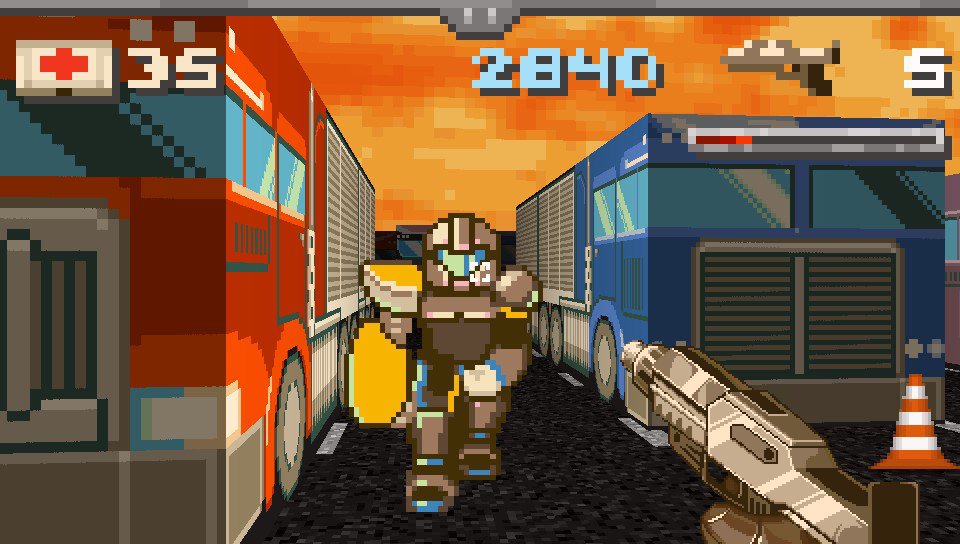
First up was Gun Commando, a neo-retro Doom clone.  I have no idea why such games fascinate me, considering that Doom was well before my time.  I don’t know.  It just seems to me like the classic formula should be able to lend itself well to hit neo-retro indie titles in 2013.  However, Gun Commando is not that game.  It feels like Doom, what with brain-dead enemy AI, retro graphics, and labyrinthine levels.  Where it falls apart is the God awful controls.  Adjusting the sensitivity settings doesn’t seem to fix button-based controls, and thus lining up enemies to shoot is damn near impossible.  You’re forced to do everything on the touch screen, and this would work except any slight twitch of your finger forces you to fire your gun.  This is combined with enemy fire that is nearly impossible to avoid, dull weapons, and an absurd difficulty spike about halfway through.  It looks the part, but in truth, Gun Commando was doomed from the start.

Yea, that was lame.  I’ll move on.

Gun Commando was developed by Green Hill Games ($2.79)

If Doom was set in a trucking scrapyard and demons were replaced with angry football players.

If Doom was set in a trucking scrapyard and demons were replaced with angry football players.

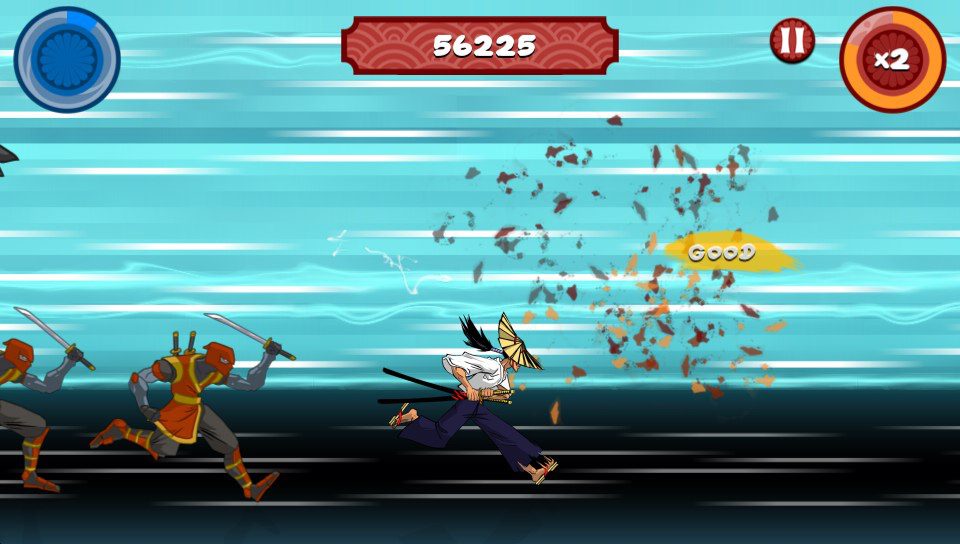
Up next was Samurai Beatdown, which was free last week, normally priced at $0.99.  It’s alleged to be a rhythm game, but I found the actions on screen rarely seemed to synch up to the generic beat.  The concept is operating-a-light-switch-simple: enemies run at you from both sides.  Tap the left side of the screen to kill enemies running at you from the left, and the right side to kill enemies running at you from the right.  Again, even when you’re perfect, the enemies don’t seem to match up to the beat of the music.  I’m not musically inclined, so that was fine with me, but even on the hardest difficulty setting, Samurai Beatdown is so easy that it’s insulting, and it gets boring quite fast.  Not really worth the bandwidth when offered for free, I can’t even fathom paying money for it.

Samurai Beatdown was developed by Beatnik Games ($0.99)

You can enter an indestructible mode if you're running out of health.  This will never happen.

You can enter an indestructible mode if you’re running out of health. This will never happen.

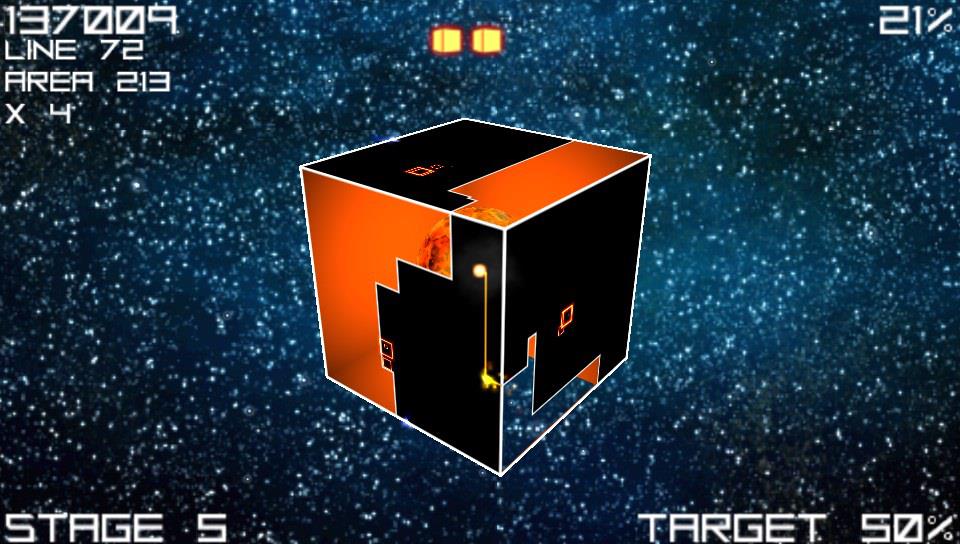
As it turns out, the best PlayStation Mobile games are actually ports of existing PlayStation Mini titles.  Cubixx is free this week on Mobile.  It’s basically the exact same game as the PlayStation Mini title from a few years back, only the graphics are ever so slightly improved and it weighs less (22MB) than the original Mini version (29MB).  If you don’t already own it somewhere, shame on you.  It’s a fantastic take on the classic Qix formula.  I would actually recommend Cubixx HD on PlayStation 3 first and foremost, but Cubixx on Vita for free isn’t a bad alternative.  Draw lines on a cube, avoid enemies, fill in as much area as possible, move on to the next level.  It sounds dull, but if you’re gutsy, it can be an intense, extremely rewarding experience.  However, I can’t really get too excited over it, because I’ve played Cubixx to death over the last four years and it has nothing new to offer me.  If you haven’t already played it, it’s one of the best neo-retro games of the last generation.  If you have, there’s absolutely nothing new here.

Cubixx was developed by Laughing Jackal ($2.99, free right now)

Probably the most unenthusiastic I've ever wrote about a game I loved. Sorry, but after four years it's tough for me to get excited about the same game.

Probably the most unenthusiastic I’ve ever wrote about a game I loved. Sorry, but after four years it’s tough for me to get excited about the same game.

Finally, OMG Zombies, by the same guys that made Cubixx.  It’s also a PSP Mini port, but I somehow never played it despite apparently owning it.  The only explanation I can think of is I must have gotten it for free with PlayStation Plus and never touched it because I avoided zombie games like the plague before I started Indie Gamer Chick.  My loss really, because OMG Zombies is fucking awesome in a time-sink kind of way.  The idea is a field of zombies shamble around aimlessly, and you have a limited number of shots to pick them off.  Shooting a zombie causes them to explode, and if another zombie is close by, it detonates them too.  You have to set off a chain reaction that clears as many of them as possible.  There’s five classes of zombie.  Normal ones explode, fat ones explode bigger, cop zombies shoot bullets in a straight line when they die, commando zombies fire off a round of Uzi bullets when they die, and acid zombies turn into a pool of acid.  As you beat levels, you accumulate money that you can spend to upgrade the strength of your gun, or the potency of the damage zombies do to each other.

Where's Waldo has gotten pretty dark lately.

Where’s Waldo has gotten pretty dark lately.

OMG Zombies is so smart, because you can’t abuse the upgrade system with random grinding.  You can only earn each stage’s  four monetary rewards once.  It makes the gameplay so very engaging and rewarding that I almost forgot that OMG Zombies is much more based on luck than skill.  I would often restart levels multiple times because the exploding barrels were randomly placed together instead of spread apart.  Or there are stages where every enemy is one of the cop zombies, where no amount of skill is going to help you make sure that when the bullets start flying, they fly in the correct directions.  It can be frustrating for sure, but I never grew bored with it.  Everything you need to know about OMG Zombies can be summed up with the following two statements.  #1: I ran out my Vita’s battery twice playing it.  #2: I can’t even remember the last time I felt compelled to achieve 100% completion of a game, but I simply had to here.  I would say that qualifies OMG Zombies as a worthy use of your time.  My boyfriend might disagree.  He says with the amount of time I spent with it, it qualifies more as a hostage situation.

IGC_ApprovedOMG-Zombies! was developed by Laughing Jackal ($2.99)

Cubixx and OMG-Zombies! are Chick Approved.