An Untitled Soapbox on Game Difficulty
April 10, 2012 25 Comments
I want to once against note before I begin this monologue that I’m not a game developer. I’m just a chick who plays games. Because of this, I’m not sure how well any advice I offer towards the process of development will be received. That’s especially true when you consider that I haven’t been involved in Xbox Live Indie Games for a full year yet. However, I have something I think needs to be said and I have reviewed nearly 200 XBLIGs. That’s probably more than most developers have played. So I feel somewhat qualified to offer you advice in the politest way possible. Let’s see, how should I start this?
You guys are stupid dickweeds.
That’s usually what I think when I play a game where the difficulty curve spikes straight up out of nowhere like it just popped some digital Viagra. I won’t go so far as to say it’s the biggest problem on Xbox Live Indie Games, but it is the one that has ruined the most good games. This also isn’t a plea to dumb down your titles. I like a challenge as much as anyone. But I like a fair challenge, one that I feel tests me on the level of which I have progressed. Often, XBLIGs play out at a rate equal to instructing a child on proper cap-gun safety, then shipping them off do front-line infantry duty in Baghdad.
Games should challenge a player. A game that is too easy has to be exceptional to leave an impression on the player. On the flip side of that, a game that is too hard is more than likely to leave impressions on a player. And also the player’s controller, couch, television, walls, etc. Now granted, some gamers want that. But those that do have a genre all to their own for that. This isn’t an editorial on punishers. I’ll leave them out of it. This is about any average game where a developer loses track of reality.
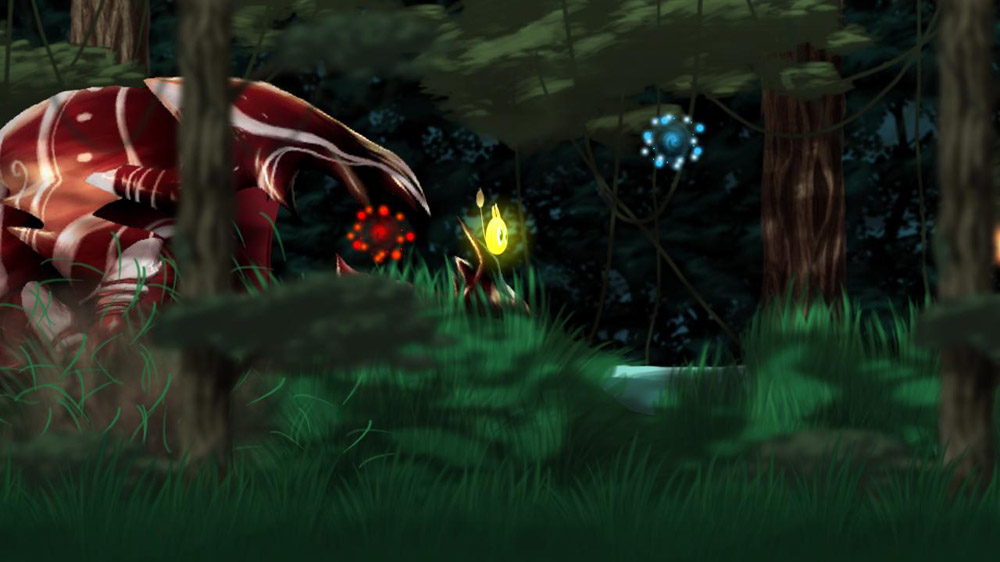
Lumi's difficulty curve could be more accurately described as a straight horizontal line immediately followed by a straight vertical line, and it ruined the game.
I’ve spoken with many guys on the XBLIG scene, and we all agree that developers often forget that they are the best player at their own game. What happens is they play the game themselves hundreds of times, to the point where they know every little nuance about it. They know the best ways to defeat enemies, the best angles to clear jumps, the best places to camp, or the best places to situate your defenses. In no time at all, the game suddenly seems too easy. The worried developer tries to correct this by beefing up the difficulty in a way to challenge themselves. As a result, the finished project is an impenetrable mess fueled by swearing and rage quits. The perplexed developer doesn’t realize this, because they could still beat the game, so everyone else should be able to as well.
Of course, the developer forgot that they were making a game to challenge everyone. That’s really what it boils down to. They created a game that was challenging for them but not impossible. By time the game enters peer testing and peer-review, the developer is (perhaps rightfully) full of pride. After all, they just made their very own video game. Unfortunately, the resulting ego trip usually makes them oblivious to real concerns of difficulty that are brought up.
From what I’ve gathered from my time on the scene, there seems to be three types of peer-review testers in existence. The first is the genuine tester who will play a title all the way through and give honest feedback. The second is the cheerleader. These are the guys who are just a little too in love with the scene and treat every game they come across like the mother of a spoiled child with a sense of entitlement. They offer no constructive criticism, because that might hurt someone’s feelings. Chances are they probably don’t even play a game all the way through to begin with, and if they dislike it, they’ll still slap on the pom-poms and congratulate you for whatever miniscule thing they can come up with. “Way to not misspell the title of your game. Man, XBLIG’s fucking rule!” The third is the kickback reviewer. They also probably don’t play games all the way through, nor do they offer any feedback. They’re simply trying to pass games so that when their title is up for review, they can get it passed with minimum resistance.
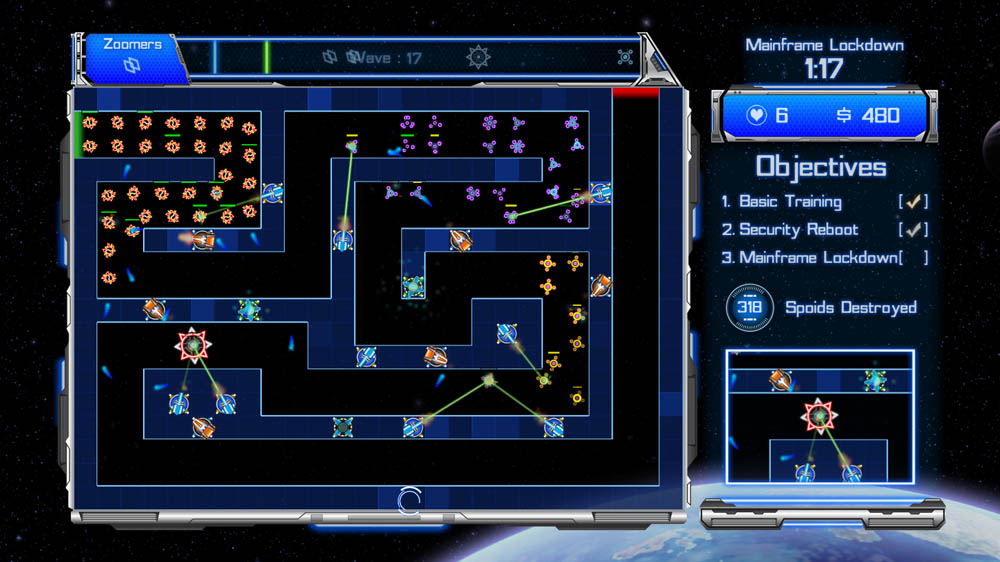
The next-to-be-reviewed Spoids is a genuinely fun game that morphs into a lump of digital hatred for humanity in its final act.
So basically, two-thirds of peer-reviewers out there don’t actually do any work. If someone with real concern over a game’s difficulty says something, the developer ignores it. After all, nobody else said anything, and they were still able to beat their own game. Maybe the guy who said the game is too hard simply has no skills. I’m guessing there is also the occasional tester that’s too embarrassed to admit they found a game overly hard. Guys, don’t worry about it. I admitted I couldn’t throw a Dragon Punch in Street Fighter II and was able to weather the gentle barbs that followed.

Dragon Punch? Ha Ha!
Developers often don’t realize how difficult their games are. It comes down to play testing for this to sort itself out. It also comes down to expecting straight-forward honesty in the process. Do your due-diligence in the testing process. How reliable are the testers you’re getting? If they lean too much towards the cheerleader set, make note of it, and don’t look to them for the real answers to the questions you should be asking. Stuff like “is my game too difficult?” or “do the controls feel right?” Don’t rely on just your fellow developers either. Bring your friends into it, and be clear to them that they can’t possibly hurt your feelings if they think your game sucks. Even if that’s not true. I concede that getting people outside of the scene to play an XBLIG is tough. But hell, you’ve already spent X amount of dollars. What’s spending $20 more on a pizza and some soda? Gather your friends. Gather their friends. And when they play the game, keep your mouth shut and your eyes open. Don’t offer any tips or pointers. If possible, don’t even tell them that it’s your game. Just watch it play out. You’re about to find out exactly how good it is.
There are some developers out there who truly don’t give a shit what anyone has to say and want no feedback outside of kudos and congratulations. There’s no point in reaching out to them, because there is no helping them. This goes out to everyone else: you can do better. You deserve better too. Developers need to ask for blunt honesty before their game goes on the marketplace, because the last thing they want is to hear it first from me.
See those buttons below that allow you share this review with the world? If you enjoy my stuff, do me a favor and use them.

 Indie Gamer Chick
You must be logged in to post a comment.