McDonald’s Classic Video Games: The Definitive Review – Full Reviews of 8 McGames for NES, Game Boy, Sega Master System, Sega Genesis, and Game Boy Color
July 17, 2024 15 Comments

There’s a surprising number of McDonald’s-based games out there, and none of them have gotten a modern re-release. What would an all-encompassing McDonald’s compilation look like? Well, it would require multiple acquisitions or licenses from publishers. I think it’s much more likely we’ll see a couple of these games get a modern solo re-release in the near future. But, where’s the fun in that? So, I’m creating an imaginary compilation called McDonald’s Classic Games and setting an imaginary MSRP of $29.99 for that set. That seems like the hypothetical price if this set were to really happen. These eight games have to equal $30 or more in total value for this nonexistent collection to get an overall YES! Is McDonald’s secretly one of the great classic gaming franchises? Let’s find out!
GAME REVIEWS

As far as I could tell, the only non-PC game missing from this feature is McDonald’s Story, a Japanese-exclusive RPG for the Game Boy Color. I thought about it, and I can read SOME Japanese, but I’m too rusty to suss through an entire RPG.
For those not familiar with my way of thinking of how retro games should be reviewed, I take NO historical context into account. I don’t care how important a game was to the industry, because that doesn’t make a game worth playing today. The test of time is the cruelest test of all, but every video game must face it. I might not be here if not for Pong’s success, but I wouldn’t want to play it today. Not when there’s better options. Therefore, when I review retro games, every game gets either a YES! or a NO!
YES! means the game is still fun and has actual gameplay value when played today and is worth seeking out.
NO! means the game didn’t age gracefully and is not worth seeking out, and certainly not worth spending money on.
 Donald Land
Platform: Famicom
Released January 29, 1988
Directed by Hiromichi Nakamoto
Developed by Data East
Japanese-Exclusive
NEVER BEEN RE-RELEASED
In Japan, Ronald McDonald is called “Donald McDonald” because of quirks related to Japanese pronunciation. Thus, a game that would have probably been called “Ronald Land” in the US is “Donald Land” in Japan. This was never released in the United States, and I’m baffled as to why. Mind you, the first McDonald’s game Americans got, M.C. Kids (up next) is pretty good, but McDonald’s brass apparently was under the mistaken belief it was mediocre at best and limited their own promotion of it. Maybe they felt the same way about Donald Land? There has to be some reason why a trendy game like this didn’t come out in the US. During this time period, Nintendo of America had a strict limit of five games per publisher per year (this is why Konami published games like Teenage Mutant Ninja Turtles under the Ultra Games label. It was their workaround for the limit) and I figured maybe Data East was over the limit. Nope. They had plenty of chances to release it between 1988 to 1990. I also considered whether McDonald’s wasn’t comfortable with their famous mascot playfully tossing bombs at enemies. But, nah, I think the deal breaker for them was the spooky imagery in the game. There’s some nightmare fuel in this one.
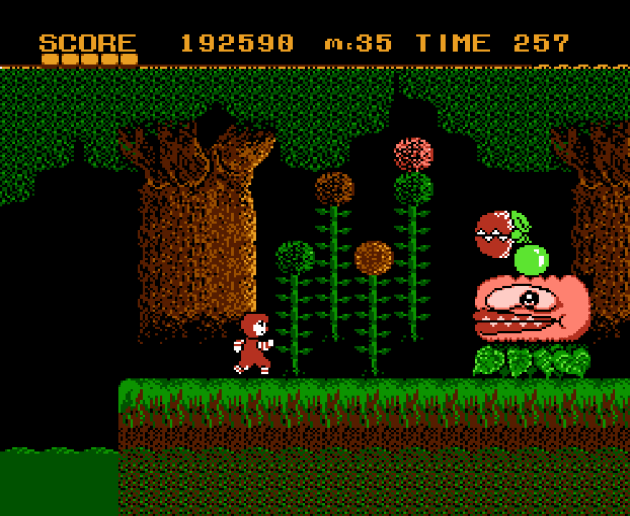
Jeez.
The shame is, had this come out in America in 1988, Donald Land would have been a lock for “most underrated NES game” and “best licensed NES game” discussions. Or it would have been paired with Yo! Noid in articles highlighting games starring fast food mascots. I can’t see it being a big hit, necessarily, but Donald Land could probably make a compelling case for consideration for being the best licensed Nintendo 8-bit game up to this point, alongside something like Goonies II, before Capcom took that crown with their Disney games. It’s actually a solid platformer. One that completely shirks the type of abstract design that a lot of games from this period got muddled-in. There’s none of that crap here. This is very much a “move right, jump over pits, avoid and/or kill enemies” platformer with nothing hidden, as far as I can tell. You don’t have to lap the game four times and find the mysterious objects that require you to walk into a wall when the timer reads 222 during the winter solstice to get the true ending. Just finish it before running out of lives. These guys knew they were making a Nintendo game in 1988, right?

This level was one of two stages, along with the required-by-law swimming stage, that changed the traditional platforming formula. I wish I could say they were welcome changes of pace, but these were the lowlights of the game, easily. The swimming stage has the worst swimming movement I’ve seen in a long time. The balloon stage just has too high of gravity. It should ideally control like a shmup where you just move around freely, but it doesn’t. It’s even weirder, because Donald Land has B-run, like so many platform games. BUT, it’s A to move faster with the balloon. It’s just a slog of a stage. Then the swimming is even worse, as sometimes I could mash the buttons and not move forward at all. I’d hope a re-release would clean up the play control of those two levels.
With most enemies, including bosses, you can stand on their heads and escape damage-free, at least for a second or two. There’s sections of the game built around this, where the enemies act as de-facto platforms, BUT, touch them from any angle but the top and they damage you. For bosses, you might only have a window of under a second to make your move and plant a bomb on their noggin before a hit happens. And you do want to avoid taking hits, because if you get the power-up that allows you to throw up to two bombs at once, you lose that power when you get hit. While the double-bomb item can be found all over the levels (two at a time is the limit), there’s never one on the boss’s screen. Being able to throw two at a time makes a BIG difference during those battles. The bombs stick to all enemies, including bosses, but the game is fickle about when the bombs stick. The collision box seems especially small for some bosses. Like, for example this:
As I was making my final edits for this feature, my sister proposed another possible reason why this didn’t get a US release: it doesn’t look much like Ronald McDonald. The build and color are all wrong. It’s not inconceivable that, if this had the serial numbers filed off and was re-sprited as a generic platform game, you wouldn’t even have to alter the hero sprite at all.
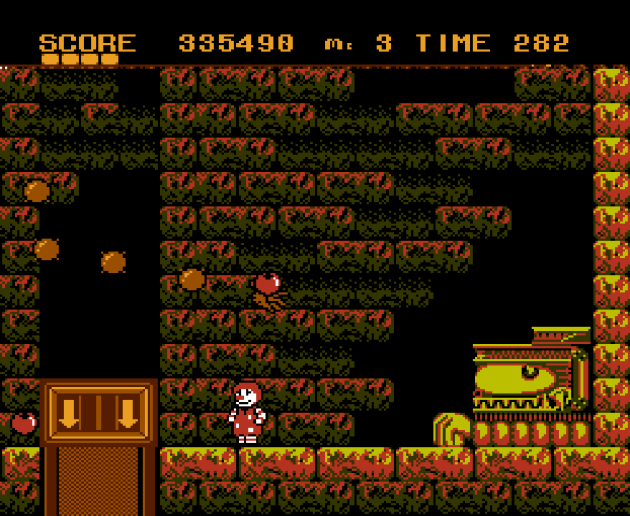
It looks like it should be a direct-hit, but actually, this bomb passed right through the hand EVEN THOUGH the boss’s sticking point, the thumb, is literally engulfed by the sprite for the bomb. Being able to throw two at a time turns an otherwise potentially long and frustrating battle into a quicker, easier one. My biggest criticism of Donald Land is easily the throwing of the bombs. It’s not intuitive, and even after the full twelve levels, I never got the hang of it. You sort of lob the bomb underhanded, and it matters if you’re moving or jumping when you do it. Of course, enemies move, and so do you, so it’s not the most reliable means to attack. You can also jump and aim downwards so as to rain a bomb on the enemy, which I found to be the only consistently reliable way to do it.

The first boss takes one hit to kill and becomes a basic enemy the very next stage. I was like “oh, this is going to have crappy boss fights.” Nope. Donald Land eventually brings the goods with huge big bosses and even a couple large-sprite enemy set-pieces. Sure, this is a facade, as the arm and face don’t move. But, the mouth does close, and best of all, this dragon-like monster has GOOGLY EYES! Everything’s better with googly eyes!
Either way, these are some of the worst bombs in gaming. They have NO splash damage, so anything that isn’t a direct hit doesn’t work. Assuming you don’t stick the bomb to an enemy, their sprite has to be touching the explosion, which is basically as big as the bomb itself, to kill it. Even though the basic enemies typically are easy enough to stick the bombs to, they’re pretty flimsy and unsatisfying to use. They have no BOOM to them. Ideally, I’m thinking along the lines of Mario 2‘s bombs, only without the strobey flash. Nah, these aren’t even a firecracker, and it just is so frustrating because this was right on the verge of being an elite NES game and it has one of the least satisfactory primary attacks I’ve seen in a good game. Not quite as bad as Wizards & Warriors‘ pathetic sword, but close. Very close, actually. I wish this had come out three or four years later, because they would have wised up and included a butt-stomp. Butt stomps are shockingly effective towards fixing OOMPH issues. Oh, and one other thing about the bombs: they are also the game’s double jump. Kinda. You can throw a bomb high in the air, then spring off of it when it’s coming down. They only require you to do this twice. The first time is in the game’s sixth level, and there’s nothing really that builds to it. It’s out of the blue. This is what it looks like.
UPDATE: There is a b-run and apparently if you time it right, you can clear this gap using that. I couldn’t pull it off, but what’s seen in this video is apparently not the only way to get past this.
Sorry for the rewind, but the controls are spotty. Much like using the bomb, I never quite got completely confident in my movement and usually slammed the brakes before any jump to make sure I was ready for it. As much as I enjoyed Donald Land, at least some of that was the “ooh, a Japanese exclusive!” factor. In reality, this is barely a little better than an average late-80s platformer. One that does often struggle to keep its head above the water. Take that bomb-assisted jumping section. The only clue anything like that is coming is a single out-of-reach 1up in the game’s second stage, which isn’t much of a trainer for that challenging of a jump. Then, after you make that one big jump, I think you only NEED to use that trick once more, and maybe a third time if you get lost in the final stage, which does the “climatic maze” trope. It’s just baffling to go through the effort of such a design, only to under-utilize it as much as Donald Land does. I wouldn’t be surprised if this was their big, ambitious idea and it just kind of fizzled in development when THIS is the best they could get it to work, so the developers largely cut its usage from the level logic. The rest of the game, sans the two extracurricular levels, is fine. Decent jumping. Decent level design. Decent bosses. It ends with a decent enough two-in-one final boss fight involving the Hamburglar and an evil clown. No, not you. A different one.

Between each stage, you visit a McDonalds where you can buy chances to win free lives and items. OR, you can buy the same things for slightly more than random chance. It’s not the worst idea I’ve heard of for adding risk/reward, but there’s no point in it for this specific game. There’s 1ups and the bomb-boost literally just laying around all over the stages.
Okay, so Donald Land is a little bit on the generic side. It does ALL of platforming’s greatest hits. Fire stage. Ice stage. Haunted House stage. Sky stage. Cave Stage. Underwater stage. Forest stage. Castle stage. But, while the platforms are arranged differently, it never really feels like set-pieces. They might dress the basic baddies differently, but they don’t behave differently. The only REAL set pieces were balloon and swimming stages, and those turned out to be the worst parts of the game. Don’t get me wrong: Donald Land is drop-dead gorgeous, especially for January of 1988 on the NES. And, it’s, you know, fine. Should it have come out in the US? Yep. Is it a major loss that it didn’t? Nope. It’s okay. As far as Famicom-exclusive platforms go, I liked it better than, say, Splatterhouse: Wanpaku Graffiti. Donald Land offers more gameplay and a lot less cheap shots. But, they’re in the same boat: basic, low-frills platforming with disappointing combat that never got a US release. Donald Land gets the edge, but not by much.
Verdict: YES!
$5 in value added to McDonald’s Classic Games
 M.C. Kids
aka McDonaldland
Platform: Nintendo Entertainment System
Released February, 1992
Designed by Darren Bartlett and Gregg Tavares
Developed by Virgin Games
NEVER BEEN RE-RELEASED

Enemies are using sparingly. This is a PLATFORM game in all caps.
Ask nearly any NES fan what one of the biggest surprises or most underrated games on the platform is, and M.C. Kids is almost certain to come up. It sounds like a joke, right? It’s a game based on McDonald’s, only there’s no food anywhere to be seen. It’s strange, isn’t it? It’s the most obvious thing to do in a game like this, and yet, there isn’t a burger or soft drink to be found anywhere. Instead, standing in for Mario-like coins is the McDonald’s arches, and you’re rescuing the various Muppet-like characters from McDonald’s advertising. Otherwise, M.C. Kids could have been any game. Nothing about it screams McDonald’s, and apparently this was by design, as they didn’t want the game to be “too obvious an advertisement for McDonald’s.” Uh, fellas, I’m pretty sure that ship sailed the moment you based a game around helping Ronald McDonald. At the same time, as a reader of mine speculated, maybe they’d learned their lesson from the infamously bad McDonald’s-sponsored film Mac and Me and decided these types of mass media advertising required something a little less in-your-face. I could never have imagined as I bemoaned the lack of food or menu items featured in the game that the decision to not include them came straight from McDonald’s themselves.

The goals at the end of each stage are like a finish line’s tape with a twist: there’s an M that goes back and forth on them. It’s sort of like Mario World’s end goals, only laid on their side. The further to the right you hit it on, the more bonus arches you get. Hitting the M actually DOES matter, too. During the final boss fight, there’s a stack of blocks that makes the fight easier. You get one block for every M you hit on every level goal throughout the game (limit one per level) regardless of where you hit it. I like that. It gives the act of hitting the goal stakes and risk/reward factors. What a good idea. No notes.
Their remarkable restraint is both a positive and a negative. M.C. Kids as a product feels like it took on a sponsorship more than it was specifically created to advertise McDonald’s, even if that’s not the case at all. But, for what it’s worth, it doesn’t feel like a soulless corporate product. It feels like someone took the base concept to McDonald’s, who said “here’s 50% of the budget. Put some arches in that f*cker.” But, the downside is the game might be too conservative. There’s no power-ups, or even health refills. You get hit points back by killing enemies, which isn’t as satisfying as you’d hope. The combat cribs from Rescue Rangers‘ notes and is entirely box-throwing based. The game limits the number of enemies and mostly avoids cheap placement of them, but the combat is never emphasized or highlighted. With the exception of the last “boss” (really a sequence of enemies), it never once feels like any situation was specifically designed around defeating enemies. Actually, the enemies often feel like they’re only there because video games need enemies. M.C. Kids’ isn’t built around them. It’s built around the level design.

This picture encompasses everything you really need to know about M.C. Kids.
Merely finishing a stage in M.C. Kids doesn’t do anything to advance the game. Instead, you have to find a specific number of cards that are hidden in the levels. Each level has at least one card, but there’s no guarantee each card you find is tied to the specific world you’re in. A card found in the first world, Ronald McDonald’s, might actually belong to the Professor’s world, which is world #4. It feels like an ahead-of-its-time concept. Like the type of design Rare Ltd. would refine with Banjo-Kazooie or Donkey Kong 64 later in the decade. M.C. Kids’ emphasis on exploration was wise, as the cards aren’t too obscurely hidden (assuming they’re hidden at all and not in plain sight) but it always feels good to grab one. The game doesn’t have a whole lot of twists from its base formula, and instead, it squeezes all the potential out of what little they created. The most notable gameplay feature is the upside-down sections. They’re done by running off the edge of a platform with what looks like the end of a clothesline. The concept works and M.C. Kids probably does upside-down gameplay more intuitively than any other game from this era. Hey, I liked the upside stuff in the Game Boy Jetsons, but M.C. Kids does it in a much more exciting way.

Good thing it’s intuitive, too. In the final game world, you’re introduced to these tracks where you control the direction and speed of their movement by walking on them. They’re so simple, but again, their controls were refined to be intuitive, so when you have to do them upside down, and the final card in the game must be gotten upside down, it’s AWESOME! Seriously, M.C. Kids delivers highlights at a consistent clip from start to finish.
When I saw this was a Virgin Games production and it was based on level exploration, I admit, I was nervous. I’m not a fan of their Disney games at all. I think they’re pretty much all boring, with sloggy level design that feels arbitrary and inelegant. Well, the two guys who led the design efforts of M.C. Kids weren’t involved in any of those, and it shows because the level design is stellar. They really did get every drop of potential out of the mechanics they built. Okay, so the set pieces aren’t very creative at all. Most of the classics are here: forest stages, lava stages, and cloud stages, with nothing unique or special to make them stand out. Thankfully, there’s no swimming section. Instead, water is perhaps the most dangerous obstacle in the game, as an instakill piranha stalks you as soon as you come close to the edge of the water. Thank god for rapid fire, which I used to cheese these sections and barely avoid getting chomped.

Mario 2-like digging factors in, but again, CLEVER use of it, as you have to create a pathway that works when you flip yourself.
Basing the game around finding the hidden cards instead of traditional level-beating was inspired, but there’s an annoying oversight based around it. As far as I could tell, the stage select screen has no indicator that you found all the cards in any given level. By this point, Super Mario World had been released, and it shows you whether or not you got everything out of each stage. M.C. Kids doesn’t offer that, which became a major pain in the ass for me late in the game when I was missing a single card to open up the special world. It contains three extra stages that are similar to Mario World’s “SPECIAL” zone. I nearly skipped them, except someone had told me they were the best stages in the game. And they totally were. They also gave credibility to my suspicion that M.C. Kids was meant to have no enemies at all and instead be an entirely exploration-based platformer, because the three special levels have zero enemies. And they are genuinely some of the best designed levels on the NES. Special 1 made me sit-up, gobsmacked by its originality. The entire stage is based around false-finish lines that lack the bouncing “M.” Breaking the tape on any “beats” the stage, but really it doesn’t. You just have to start over. It made for some intense, hold-your-breath jumping, and I loved it.

Such a great concept.
Sure, it’s a lot of effort to unlock a measly three stages, but as far as rewards go? Yea, do this type of thing, game developers. Take your base mechanics and lose your f’n mind with them. The stuff you’d NEVER put in the main game. Really, I would have been good for another ten stages like the three special ones. The one gameplay knock I have on M.C. Kids is that high jumping can be hard to pull off. There’s many jumps in the game where I struggled to build-up the momentum needed to get the maximum height. Sometimes I was in the zone and clearing multiple tricky leaps in a row, and sometimes I was just stuck in one spot leaping and re-leaping while trying to get over a single platform. You can’t stack blocks like Super Mario 2 to aid yourself in these sections, nor can you use the space-filling block. That the other relatively novel mechanic the game brings. It can’t just be any block. There’s a space-filling block that creates a moving platform, like so:
It works great, but like the upside-down gameplay, I think it’s underutilized. That would be my other big knock on M.C. Kids. The upside-down stuff is the highlight of the game, and clearly the team at Virgin Games grasped this since, even up to late in development, the first level didn’t exactly showcase it in a rewarding way. The sky functions as a pit when you’re upside-down, and even in a late-cycle prototype, there’s nothing to catch you when you flip in the first stage. They added the ceiling so players wouldn’t be killing themselves with it right off the bat, setting it up as M.C. Kids’ most enjoyable feature. The designers fundamentally understood this was fated to be the game’s signature gameplay mechanic. But then, there’s a couple large stretches where it completely vanishes. Should it have been in every level? Maybe. Or, maybe they decided to not push the limits too hard. That might be the case. A near-finished prototype of M.C. Kids exists, and via the always helpful Cutting Room Floor, you can see that the development team eliminated what would have been some maddening level design. This is a game that showed remarkable restraint for the era.

The most under-utilized mechanic is actually the Ronald McDonald platforms shown here. They only appear in the Special stages. I suppose functionally they do what the moving blocks do and are just a fancier sprite for an existing mechanic. Still, you’d think they’d want to show off the McDonald’s connection more.
The controls aren’t exactly perfect, but they’re not difficult to work with, either. I just never got completely comfortable with movement. But, that doesn’t matter as much as it normally would, because I wouldn’t describe any moment as “intense” except maybe a couple sprints in the Hamburglar stages. Otherwise, it’s fairly low on urgency as far as hoppy platformers go. Yet, it’s never a slog either. The levels are mostly small, with lots of really well-planned jumps. And it’s not totally devoid of set pieces. The lunar stages feature one of my favorite underrated gaming tropes: low gravity. It always puts a smile on my face when this shows up in a platform game. M.C. Kids’ various springboards and moving platforms lend themselves perfectly to it, as well. The one and only knock I have is, for some reason, they decided to litter the lunar landscape with these instakill tentacles that can stretch further than the screen can see. It’s a cheap shot, but by this point, I’d built up so many lives that a game over was never in play.
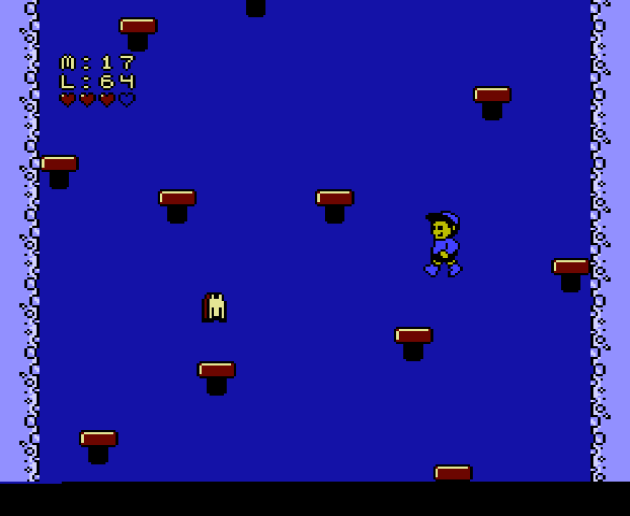
The low-gravity in this section should have been annoying, but I couldn’t stop smiling. HOWEVER, I have no clue how anyone is supposed to get the “M” at the bottom of this tunnel. It’s under a row of trampolines, and even just a tap of the jump button sends you flying.
As a smaller criticism, the game has kind of an anti-climatic finish with the Magic Bag, which sends a series of smaller enemies at you instead of having a traditional “big boss.” As for the test of time, I’d describe this as “solidly well-aged.” Again, I wish the combat either was handled differently or removed altogether. It wasn’t until the end of the game that I died via enemies. It was almost always an errand jump that did me in, and that’s fine. This feels like one of the most pure platforming experiences on the 8-bit Nintendo. Underrated? No, actually I think history has caught up to M.C. Kids and everyone at this point kind of knows it’s a quality game. It still sucks that it never found its audience upon release. Someone asked me if it would have been better off without the McDonald’s license, and I said “depends!” M.C. Kids on the Game Boy (up next) became a 7-Up game in America, and how’d that work out for it? I’d never even heard of it or a GB M.C. Kids until I started this project. Actually, M.C. Kids was shunned thanks to the association with McDonald’s, but not in the way you’d think. Apparently McDonald’s decision makers believed the game was no good, so they didn’t throw their weight behind it. I mean, it’s only in the upper echelon of licensed NES games. Unbelievable. If this gets a re-release, I hope they at least make Happy Meal toys to go with it.
Verdict: YES!
$10 in Value added to McDonald’s Classic Games
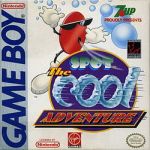
 McDonaldland
aka Spot: The Cool Adventure
Platform: Game Boy
Released in 1992
Designed by Cary Hammer
Developed by Visual Concepts
Published by Ocean (EU) Virgin (US)
NEVER BEEN RE-RELEASED
While McDonaldland features the stars of M.C. Kids, this isn’t a port of the NES game. The box-throwing mechanic carries over, but otherwise, this is an entirely new experience. And, frankly, not a very good one. Every concept that stood out about M.C. Kids has been removed from the Game Boy version. There’s no upside-down sections. There’s no breaking through the tape at the end of levels. There’s no hidden cards to find. In fact, there is ZERO exploration at all. The object is simply to reach the exit of each stage. In a way, I get it. Movement and jumping in McDonaldland is much more sluggish than M.C. Kids. The gravity feels much heavier (well, except in a single high-jumping lunar level) and there’s an unresponsiveness to it. Thus, they couldn’t get too ambitious with the platforming, which allowed for the fantastic level design of the original game. But, the search for the cards is what kept me interested in M.C. Kids. Losing the exploration immediately sucked all the wind out of my excitement for the Game Boy version.

I couldn’t get up onto that middle platform for a while. It turns out, if you duck before jumping, you jump a little bit higher, allowing you to get up onto this ledge. This is the only stage I had to do that on.
Bless its heart, it does try to make-up for the lost mechanics with a bigger emphasis on quick reaction times and precision platforming. So, it’s not a total wash, as GB McDonaldland adds a few moving platform gimmicks that are at least interesting enough that I kind of wish the NES game had them. There’s several platforms that can be lifted and placed wherever you want them. Awesome idea, but it’s underutilized. In fact, there’s several sections where such a platform shows up, only with no apparent use of it beyond maybe getting a couple extra arches. The only new concept that feels like it got used properly is having switch tracks for some of the moving platforms. It works, and once or twice you even have to pick up the platform that runs along the track. But, there’s no tension to this. I opted to play the game on hard mode, which starts you with only three hearts and adds a timer to the stages, but I never came close to timing-out. Levels are relatively short, and even on stages where I had to take my time and carefully align my jumps, I don’t think I used even half the clock.
Whether it’s called Spot: The Cool Adventure or McDonaldland, the whole game should only take even a new player around a half-an-hour to finish. The “hard mode” is hard in name only, as I died twice the entire time, from falling in a pit. But I’d built up plenty of lives. So devoid of tension is McDonaldland that I stopped caring about getting pinged by enemies halfway through. I had built-up so many hit points that I could have super glued an enemy to me and still not die. The best thing I can say about McDonaldland is that, up until the final level, it’s not outright boring. It maintained a consistent clip of interesting jumps and arrangements of platforms. It does a good enough job that I imagine this probably would have felt better in 1990 than it does in 2024. There’s a surprising amount of one-off gimmicks too. There’s one single shmup stage. There’s one stage with an umbrella you use to float across a long gap. These all worked well enough that I’m not sure why they didn’t bother trying to squeeze as much gameplay out of them as they could. But, McDonaldland certainly doesn’t phone it in, even if I think it ultimately failed. Hell, it doesn’t really last long enough to bore. At least until the last stage.
Few games crater as spectacularly as the Game Boy McDonaldland. The last level starts with the most toothless, boring speed tunnel section in gaming history. If you hit any of the barriers, you don’t die or even take damage. Again, I played on HARD. This tunnel goes on FOREVER before you finally reach the final (and only) boss, all while a cold and dead disembodied head of Ronald McDonald watches. The boss takes 11 hits to kill, but when you use up the one and only box, you have to wait around quite a while for another to appear. To put it in perspective, I reached the boss chamber with a little over 9 minutes left on the timer. I struck the killing blow with 6 minutes and 32 seconds left. I never missed once and never had any significant delay in picking up the next box that appeared. The boss has no complex attack pattern. He just wanders and hops around aimlessly. If you added-up all the time I spent waiting for a box to appear, that combined time was probably more than any individual level, most of which give you 4 minutes and most of which I finished at around 2 minutes, 30 seconds. I have no clue what they were thinking. So, the Game Boy McDonaldland isn’t what you’re hoping for: a portable M.C. Kids. It just never really comes together. While it might not bore, there’s no excitement either. It’s middle of the road, and sometimes games like that end up barely a YES! This one ends up barely a NO!
Verdict: NO!
 Mick & Mack as the Global Gladiators
Platform: Sega Genesis
Released November, 1992
Designed by Dave Bishop
Developed by Virgin Games USA
NEVER BEEN RE-RELEASED
Despite starring the M.C. Kids, Global Gladiators has nothing in common with that title in terms of gameplay. Take any of Virgin Games’ eventual Disney output and add a gun with unlimited ammo and you essentially have Global Gladiators. In fact, this is the game that got them the job on Sega’s version of Aladdin, which I hated. This game is arguably the birthplace of what I’ve termed the “Virgin Style” of level design. Levels that feel samey, zig-zagging through a series of highly repetitive platforming segments where slight alterations are made to change things up, but with no real design logic or stand-out moments. They’re also usually littered with cheap enemy placement and blind jumps galore. Level layouts that feel completely arbitrary, with no ebb and flow to them. Empty calories level design. All style and no substance. Is that the case Global Gladiators? Yes, and also no. It’s more complicated than a typical Virgin Games release.

Again, pretty.
What stands out about Global Gladiators is this isn’t purely a platformer. The environmental message reads more like Captain Planet with the serial number filed off, but in terms of gameplay, It shares more DNA with something like Contra or Metal Slug. The emphasis isn’t on the hopping around so much as it’s on generic run-and-spray combat. It also seems to be built for speed, as the heroes eventually gain a lot of velocity without holding down any run button, ala a certain blue rodent’s recently released Sega Genesis game. I didn’t even pick-up on this until the third of four worlds, and I only discovered it because I was so bored that I just wanted the game to be over with. Up to this point, I’d been taking my sweet time setting-up my jumps and pacing myself, worrying about taking damage trying to get a good shot off at enemies. Apparently, this was the wrong attitude. Score one for those people who scream “YOU’RE PLAYING IT WRONG!”

This is the only boss in the game, because Global Gladiators is creatively bankrupt. Well, technically there’s another boss literally below this one. You have to kill two ice faces and then the game ends with Ronald implying the kids imagined the whole thing.
During the third world, I decided to just ignore finesse and sprint for the finish line. Then, it happened: the true gameplay value of Global Gladiators revealed itself. It’s basically Sonic the Hedgehog with a gun. (No, not that one. Though you could file the serial numbers off and turn this into a 2D Shadow game, easily!) The level layouts provide plenty of straightaways to build up speed, and you have unlimited ammo. Once I started to hold right on the D-pad and mashed the attack button, it was like I’d booted-up an entirely different game. It was exhilarating sprinting right through massive waves of enemies while occasionally glancing down at my health bar and saying “wait, I didn’t get hit at all there? Holy cow, this is awesome!” You get a lot of hit points and health refills are spaced out just right, so even though I was plowing through levels with reckless abandon, I never died once I started doing this. I’ve always said my mission in these reviews is to “find the fun” and once I started trying to floor-it through Global Gladiator’s levels, I had a really good time, actually. Then I went to replay it to see if the first two worlds were better playing it this way. They were, until this happened:
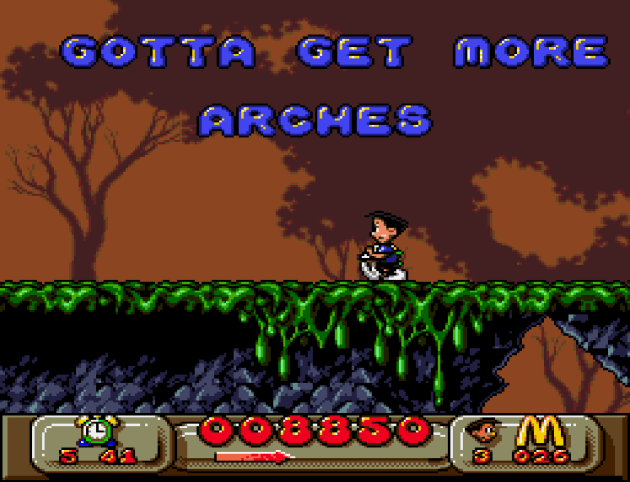
In order to beat the stages, you have to grab X amount of the arches in each stage. I didn’t even know this was a thing until my second play-through. I never once had this happen the first time, even when I gave up on exploration and sprinted through the game’s third and fourth worlds.
So basically, play at a faster pace, but not so fast that you don’t pick-up any of the arches, and Global Gladiators is fun. In a guilty pleasure sense, because what’s here certainly isn’t amazing or anything. The enemies are some of the most poorly designed I’ve ever encountered. There’s no grace or nuance to them at all. Any of the ones that fire projectiles, which seems to be most of them, shoot those projectiles too fast. It’s a literal continuous pulse of enemy fire that you can’t physically avoid via jumping or acrobatics. Try jumping over a bullet and the next one is already on its way before you land, so you’ll have to jump again right away. Despite there being a variety of different looking enemies, all the projectile-spitting ones do this same thing right from the start. Boring. Lazy. Awful. And then, most of the non-projectile-spewing enemies just make a brain-dead beeline for you. This becomes VERY annoying if they can fly, like the ice bats can in the final level. Boring. Lazy. Awful. The message is clear: mash that attack button and spray bullets as fast as you can since they intercept projectiles, because the enemies in Global Gladiators are cannon fodder, and nothing more. This game might be a looker, but it’s one of the more inelegant “big deal” games I’ve played.

And actually, I don’t even think it’s THAT impressive, visually. Sure, the animation is great, but look at all those backgrounds. It’s a f’n downer of a game with constantly murky, drab, practically dystopian settings. It’s so bleak looking that it’s exhausting.
The funny thing about Virgin Games’ library is they usually get off to a hot start. No matter the title, I’m always taken back by the ahead-of-their-time graphics and the highly-animated character sprites. Virgin could do some damn pretty games, but once you get over how beautiful they are, you’re stuck with a repetitive, cheap-ass slog through levels that all feel samey. I don’t know what it says about Global Gladiators that, once I ignored the level layout and enemy placement and just ran like a bat out of hell for the finish line, I finally had a good time. It’s one of the sloppier games from this era that I’d still be inclined to give a YES! to. But, I did have fun. Certainly not as much fun as I had with M.C. Kids or even Donald Land. I would have preferred a 16-bit version of M.C. Kids to this, easily. Global Gladiators is pretty overrated. It’s NOT an all-timer. It’s fine, and that’s fine, by the way. Especially in a collection where it’s not alone.
Verdict: YES!
$5 of Value added to McDonald’s Classic Games
 McDonald’s Global Gladiators
Platform: Sega Master System, Game Gear
Released June, 1993
Developed by Virgin Games
NEVER BEEN RE-RELEASED
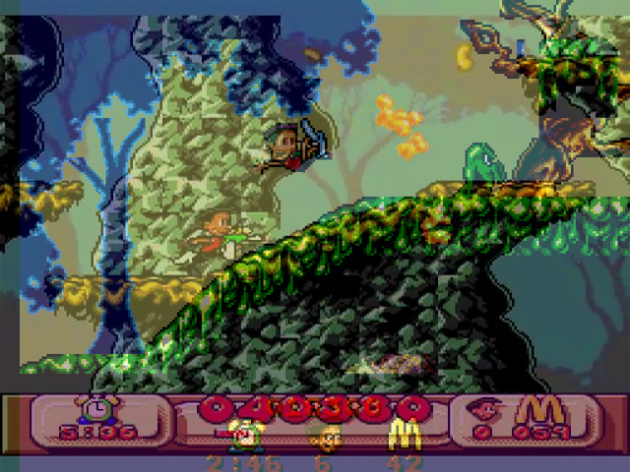
Thank you Dave for this comparison pic showing how hard they tried to replicate the Genesis game in 8-bits. This was NOT a wise decision.
Do you like blind jumps? Well, you’ll love the 8-bit version of Global Gladiators, which is basically all blind jumps, all the time. Even if that wasn’t the intention. While the level design, enemy design, action, and core gameplay remain the same, movement now feels sluggish as all hell regardless of whether you choose Master System or Game Gear. But, that’s nothing compared to the change in the jumping. Your ability to leap is practically superhero-like in the 8-bit port. So high that, consequently, you can’t see what’s above you or to your sides, making every single leap a leap of faith. It’s awful. Global Gladiators makes the same mistake so many Sega Master System games do: trying to keep more technologically advanced gameplay in-tact, no matter how lost that gameplay gets in translation. Is it any wonder the best Master System games, Castle of Illusion and Land of Illusion, gave 16-bit gameplay the middle finger and opted to go an entirely different route? They should have ported M.C. Kids and called it “Global Gladiators. I mean, why not? But no, they wanted the 16-bit stuff. Hell, they even wanted to keep the speed. So, how’d that work out?
See, the problem is you can’t shoot anywhere near as fast as you could on the Genesis. You move so fast.. even faster than the Genesis game, mind you.. that you’re practically outrunning your own bullets. In this build, the kids’ already slow bullet spray from their Super Soakers is now especially slow, and enemy bullets are faster AND smaller than your own. They’d be harder to intercept just from that, but since they kept the boring, lazy, awful “enemies shoot like they’re machine guns” thing from the Genesis that begins firing the moment you’re in range, you’re constantly just running into their bullets, or the enemies themselves. Oh, and the game has the world’s slowest and most agonizing knock-back. Awesome. So, you jump too high and run too fast while firing too slow and recovering too slow. We’re starting to enter “contender for worst port ever” territory, here.
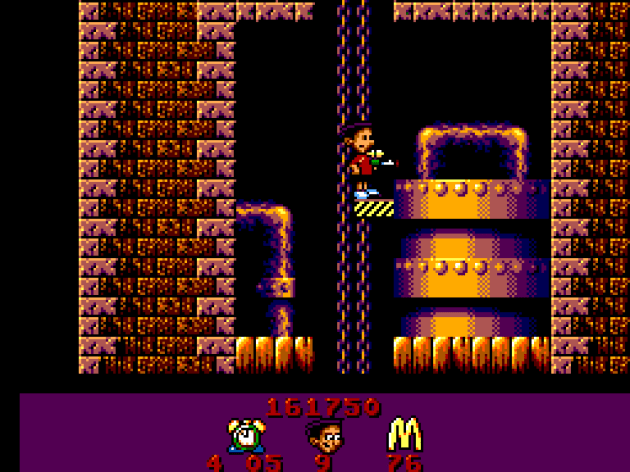
In the third world, there’s these moving platforms that go up and down chains. There’s only one to each chain, which pretty much runs the height of the entire stage, so you might end up waiting a long time for it to show up to go in the direction you want it.
It begs the question “did anyone bother to fine tune Global Gladiators 8-bit” or was this after fine tuning? Or is this a ploy to sell more 16-bit consoles? After a while, when you play these 8-bit games that fail so spectacularly at 16-bit gameplay, the cynic in me wonders if they were made this way to shame people into upgrading their hardware. Of course that’s not the case, but still, insanity is trying the same thing over and over and expecting a different result. So many of these 8-bit Sega games are just lesser, crappier, clunkier copies of 16-bit games. There’s no upside to this for gamers. It’s just a very bad version of the other game. In the case of Global Gladiators on the Master System/Game Gear, it’s a game that literally does nothing right. Nothing! You can’t even call it charming. The glorious animation and personality of the baddies and heroes can’t be done in 8-bits. Virgin Games rely heavily on that charm to make up for a lot of gameplay shortcomings. It’s why I dread playing the 8-bit versions of Lion King, Aladdin, and Jungle Book. I don’t see a happy ending for them.

This is the end of the game. It doesn’t even have the bosses 16-bit version ended on. It just stops. By the way, both versions end on the ice-covered levels. It’s one of the very worst settings you could end a game on. It feels like a mid-game setting, not a climatic one.
On top of all the major gameplay failures, the 8-bit Global Gladiators does a lot of little things wrong. Like, you take falling damage, just like in the 16-bit game. But in this version, for whatever reason, they decided to not make the character blink while you recover from the fall, so you’re vulnerable to attack when you land, meaning you’re going to get knocked-back. This is a game with more blind-jumps than any game I’ve ever played in my entire life. If it’s a stage with a lot of climbing.. and most stages involve a lot of climbing.. you’re certainly going to fall even further, either via direct contact with an enemy or from their projectiles. Most of the deaths I suffered in this game were not from the first fall but from being knocked-back into a pit from something afterwards. Sega Master System’s Global Gladiators is remarkable for all the wrong reasons. The rare game that I have nothing positive to say about. The only value this version offers to gaming is as a lesson in how not to do a platforming-based shooter.
Verdict: NO!

Real quick on the Game Gear version: it seems to avoid the cramped-screen problem that plagues so many handheld games, both Nintendo and Sega, from this era. It might be slightly less sluggish, but it’s still Blind Jumps: The Game and would never get a YES! from me in a million years. I’m not counting it as a separate game, but since it seems to have the same layout, my verdict would be a NO!
 McDonald’s Treasure Land Adventure
Platform: Sega Genesis
Released September 23, 1993
Directed by Koichi Kimura
Developed by Treasure
Published by Sega
NEVER BEEN RE-RELEASED

It looks like Ronald McDonald got lost in Sonic’s game.
Talk about a miscarriage of justice. Treasure Land Adventure is the other Genesis game based on McDonald’s. The one that isn’t Global Gladiators. Unlike many historically underrated games, it’s not hard to figure out why this one has slipped under so many radars. Ronald McDonald is a character designed to appeal to young children, which was not who most of Sega’s marketing was aimed at. The box art alone makes this seem like it’s going to be a game for the under 8 set. A 1st grader’s game. Ignore all that, and it’s still a McDonald’s game. Has any licensed game had a taller mountain to climb? I figured the same thing affected M.C. Kids’ sales and historic standing. The reason it has that “hidden gem” quality is because a game based around the world’s largest fast food company feels like it’s going to be soulless, cynical, and half-assed. The type of game that has to be discovered, because no matter how good it looks in screenshots, it can’t possibly be halfway decent, right? A McDonald’s game? Nah. Not likely. It’s the type of game only a clueless parent buys for their kid. Except, if that game is M.C. Kids, the child lucked out, because it ain’t bad at all. And if that game is McDonald’s Treasure Land Adventure, the child is very lucky indeed, because folks, Treasure Island Adventure is absolutely phenomenal!

The best part is, if you actually do want this to be a children’s game, it can be. It has three difficulty settings and NO GATING! One of my unstated rules for IGC is I usually play whatever the default setting is, but the default setting for Treasure Land is “Beginners” which someone clued me into not playing. So, for my first play session, I bumped it up to Normal, which I still felt was very mild up until the final level. I didn’t even lose a life until the final boss. If you’re reading this review and want to give this a try, I’d recommend going straight to Expert. It bumps the enemy count significantly and gives enemies more complex attack patterns. Even then, it feels like this would be the “normal” mode in any other game. I also tested this on my nieces and nephew, and Normal was too easy for the older kids. While nobody in my immediate circle is the right age range for Beginner difficulty, it seems like it be great for a young child’s first complicated jumping game.
Alongside Gunstar Heroes, this was the world’s introduction to legendary game developer Treasure. Gunstar Heroes might be the game that solidified their reputation, but this is where they really proved they weren’t f*cking around. A fantastic 2D platformer with non-stop memorable set-pieces. Compare this to Global Gladiators. In that game, after about, oh, thirty seconds into the first stage of any of the game’s four worlds, you’ve seen almost everything that world has to offer. Then there’s Treasure Land Adventure, which is also limited to four worlds, but where no two stages feel alike. In the hour to ninety minutes it takes to play through, I never got bored. I almost can’t believe it, because the gameplay is relatively slow and simple. You can’t even run! It’s astonishing that the Sega Genesis, birthplace of Sonic The Hedgehog and its BLAST PROCESSING™, has blown-me away with two slower-moving platform games. First Castle of Illusion Starring Mickey Mouse, and now this. Is this Mickey’s cousin? No, actually Treasure Land Adventure’s closest DNA match is Bionic Commando. Yes, really!
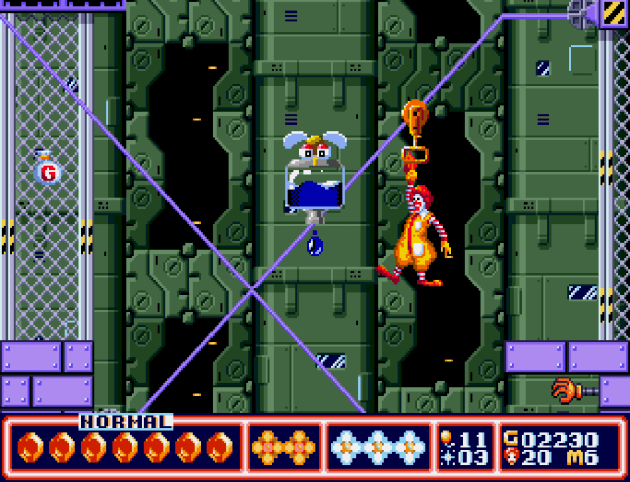
It’s not that big a stretch, actually.
The big hook of the game is, well, a hook! Ronald has a scarf that functions as a grappling hook when thrown at designated latch points. This isn’t a sideshow gimmick. The entire game is built around this, and it works wonderfully. In fact, it wouldn’t be absurd to call this Bionic Commando with a jump button and a simplified hook mechanic. There’s shooting and everything, only instead of a gun, it’s a beam of magic stardust. But, functionally, it’s the same thing, ain’t it? The shooting combat is as simplified as it gets. Straight ahead of you, Mega Man-style. No aiming. Nothing. The range of your magic can be upgraded three times, and the scarf is basic. There’s no swinging with it. It doesn’t double as a weapon. It can’t be aimed. It can be only thrown directly upward. But, once you’re attached to the hook, you can move up and down on it, which is utilized in the level design a few times. More importantly, when you reach the top of the hook, you spring upward onto the platform it’s attached to. Combined with some of the most well-measured platform placement in 16-bit gaming, it makes the act of playing the game an absolute joy. Who needs a run button with level design this good?

These things chase you down this short hill and then never show up again. The sheer amount of one-off moments is staggering for a game from this era.
If I had to complain, and I do, it’s that there’s a few blind jumps here and there. Hey, I called Global Gladiators out for its blind jumps, and fair is fair. Treasure Land does it too, though there’s no falling damage this time. Also, I can only think of one instance late in the game where the jump was near a bottomless pit. At the same time, Treasure Land even covers its ass, and yours, with its blind jumps. Let me first say that I’m not excusing Treasure Land. I don’t think genuine blind jumps, IE ones with no architecture or clues that a blind jump is actually safe, are ever justified. With that said, you’ll occasionally find balloon icons. As long as you have one of these, if you fall into a pit, you’re saved and have a few seconds to lift yourself out and find a platform to land on. I only used it once before the final world. That’s when the platforming/grappling hook gameplay really shows its teeth. I went through several balloons, including one instance where I used up two in a single mistimed jump.

It’s not that rare an item in gaming. Kid Icarus introduced the idea of a safety net for bottomless pits in 1986. But, this is probably the easiest-to-use version of the idea I’ve seen, as it has the right speed, with no drag towards movement. It might actually be too easy to use.
But, when the credits rolled, I still had 15 balloons in reserve, along with 23 lives and 7 continues. Keeping it real, anyone who wants a challenge in a game probably won’t like Treasure Land Adventure anywhere near as much as I did. Take those balloons, for instance. They aren’t just found in levels. There’s also shops within the levels that you can purchase them, along with the jewels that represent hit points, jewel containers that increase your max health, extra lives, extra continues, and the flowers that refill your health. Occasionally, you’ll also find a room where you can earn items by playing.. no joke.. Columns, the puzzle game. So, you can quickly accumulate TONS of hit points in any level, and on top of that, there’s tons of ways to reload your health. A set of three white flowers or two orangish-yellow flowers will restore one point. Oh, you already have full health? Don’t sweat it! The game banks up to one full set of each type of flower, functionally turning a complete set into two additional health points, for a total of nine hits. I think every enemy drops flowers, and the jewels themselves, jewel containers, extra lives, and even the extra continues are found in the stages. It wasn’t until the last boss that I even came close to dying, where he was hard enough that I gave up one life learning his attack pattern. When I played the game on Expert afterwards, now that I knew what to expect from the last boss, I didn’t even lose one life.
So, even on its hardest difficulty, Treasure Land is a really easy game, and a very forgiving one at that. It’s almost hard to believe these guys would go on to make Ikaruga. Treasure was founded by Konami vets who got sick of endless sequels or Ninja Turtle games, so really, it’s not like they were a bunch of nobodies who built this game on a wing and a prayer. They knew what they were doing, which is why I feel comfortable saying not every decision Treasure made was wise. The balloons, for example. They could have differentiated the modes by capping how many you could stockpile, limiting you to one balloon max in Expert. But they didn’t. There were opportunities to buff up the game that weren’t taken, perhaps because they knew in their heart of hearts that 95% of Treasure Land owners would be young children. I can’t imagine teenagers of the 1990s who discovered the greatness of this game saying “do you know what’s a really great game? This one starring Ronald McDonald on the Sega Genesis!” So, I’m assuming ALL the difficulty levels are aimed at young children. Gaming veterans should be able to shred Treasure Land with little to no resistance. It controls great, and it has one of the most overpowered-yet-satisfying abstract attacks I’ve seen. This might be the easiest to beat 16-bit platformer I’ve reviewed so far.

How the bosses work is kind of genius. They’re all invulnerable at first. How do you lower their shields? Well, you need Jeff Goldblum and a laptop. Actually, you have to let them damage you. All four fire this tractor beam that steals one of your jewels. When the beam ends and they start chewing on the jewel, you can hit them with your magic stardust beam that acts as your one and only offensive move. Each boss also has basic enemies that drop flowers that restore health, and each boss chamber has health refills, even on expert.
So, the question is, what do you look for in a video game? I can’t speak for anyone else, but *I* don’t need to be stressed out by a game in order to enjoy it. From day one, my stance has been that it’s always better for a game to be too easy than it is to be too hard, because at least an easy game can be experienced by anyone. It’s revealing about what I cherish most: the experience. An easy game I enjoy in the same way I do a Disneyland dark ride. It’s not a challenge to get on a ride and experience it. It’s only there for the sake of having fun. And McDonald’s Treasure Land Adventure is a LOT of fun. It packs so many memorable sequences into such a relatively short play time that it feels like one of the more recent Mario games. Mario Odyssey moved into my #1 spot for my favorite game ever by virtue of dazzling me with one original set piece and gameplay concept after another, with pitch-perfect control, for several days. This is like a much shorter version of that, in 2D, and with McDonald’s branding. It’s a game so good that it actually kind of sucks that this is a McDonald’s game, because I think there’s people who would be inclined to skip it just for that. And it’s one of the best 2D platformers I’ve ever played.
Yea, I’d go that far. I was actually disappointed when I saw this wasn’t on either version of the Sega Genesis Mini. That’s the other reason that it sucks that this is a McDonald’s game: it’s a licensed product, and that means jumping through hoops for a modern re-release. If Sega were to release a third and final Genesis Mini consisting of everything important that’s been left out of the previous two, I genuinely believe this would be good enough to win best game in that collection. It’d probably run away with it, in fact. Hell, I’d put this game up against any in the first or second Genesis Mini. McDonald’s Treasure Land Adventure might not be THE best Genesis game, but it at least makes it into the discussion, along with such lists as “most underrated” and “best licensed game.” If a collection of Treasure’s works ever gets made, I hope they remember this one and do whatever needs to be done to include it. This includes filing off the serial numbers if it comes to that. The funniest part of this whole game is that there’s nothing inherently McDonalds about it. Like M.C. Kids and Global Gladiators, this could have been any property. There’s no hamburgers or menu items in it. Hell, the only arches you collect are the ones that represent extra continues, which is the rarest item in the game. So, I say re-sprite this as Earl from Toejam & Earl, and re-release it as an Earl game. Earl’s Treasure Land Adventure. Whatever it takes, because this is a masterpiece. Maybe the most underrated 16-bit game ever made.
Verdict: YES!
$15 in Value Added to McDonald’s Classic Games. If such a set is ever made that includes at least M.C. Kids and 16-bit Global Gladiators, this is worth 50% the price of whatever that set costs by itself, which is the highest I go. If a $100 Genesis Mini 3 comes out that includes this game, I’d cap Treasure Land Adventure at $30 in Value.
 Donald no Magical World
aka Ronald in the Magical World
Platform: Sega Game Gear
Released March 4, 1994
Directed by Tsukasa Hiroshi
Developed by SIMS
Published by Sega
Japanese-Exclusive
NEVER BEEN RE-RELEASED
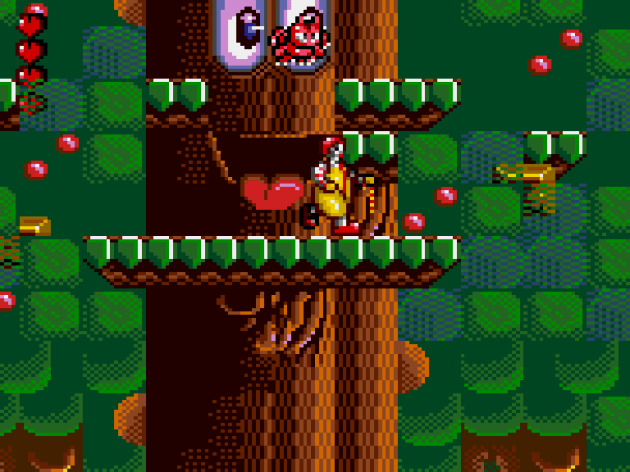
This is supposed to be the 8-bit tie-in with Treasure Land Adventure, but the two games have little in common.
Magical World feels like the stereotypical smaller, low-frills, Game Boy-style platforming game I’ve been reviewing a lot of in 2024. And it’s fine, really. Utilizing smaller character sprites is probably the wisest decision any handheld from this era makes. Sometimes Game Boy and Game Gear titles feel cramped. That’s not the case at all here. SIMS maximized the area available and made the adventure feel bigger than it actually is. The game itself is a very basic platformer. Instead of firing magical stardust at enemies, you whack them with your umbrella. Even though it can be upgraded three times, this doesn’t change the visual at all. It’s essentially a sword that doubles as, well, an umbrella that lets you glide. It even allows you to open the umbrella first, before jumping, which should make jumping a breeze. But then you have a handful of situations like this:
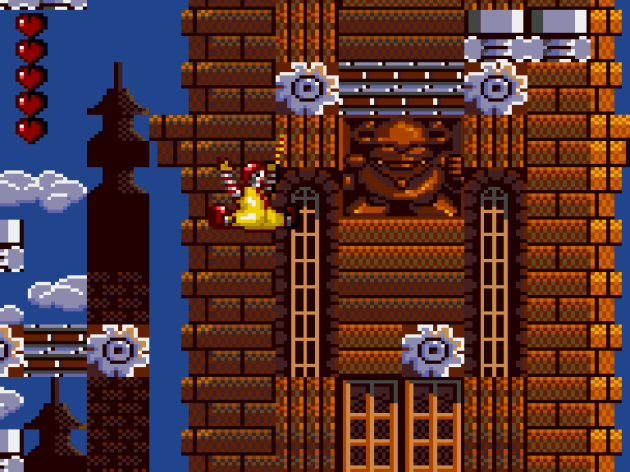
You can’t see it, but there’s a hard surface above me that causes the umbrella to collapse.
Donald no Magical World has fixed jumping, and late in the game, it leans a little too heavily into last pixel jumps onto first-pixel landing zones. If your open umbrella hits a hard surface or an enemy, it collapses. You can let go of the button and draw it out again in a single jump, but the timing is very tricky. There were a couple jumps near the end that took me so many tries that I quit attempting them under the mistaken belief I must be jumping from the wrong spot. I wasn’t. The jump above was onto a treadmill-like platform too, and one pushing the opposite direction I was coming from. So, it wasn’t enough to hit the jump, but I also had to be able to immediately move forward, or I’d fall off and have to start over. Mind you, this is literally the only challenging aspect of the game. This is even breezier than Treasure Land Adventure. At least I died in that one. I never did once in Magical World. The closest I came was losing three of five hearts.
Unlike other games in this feature, there’s really not a lot to talk about with Donald no Magical World. There’s quite a bit of slowdown, especially in the final lead-up to the last boss. Go figure this doubles as the game’s most memorable set-piece, where you open your umbrella and let the air carry you up the sides of a castle. Other attempts at set pieces mostly whiff because the overall level design is decent but unspectacular. It’s often nonsensical too. You’ll encounter a locked door, so you have to go find a key, but the path to the key might be relatively straightforward and devoid of enemies. It’s padding, plain and simple. They might have done a good job towards building around the Game Gear’s screen size, but what they filled that screen with often isn’t that interesting. Hell, I circumvented one locked door entirely late in the game, and not even intentionally. The path I took led me past it. Don’t get me wrong: I wouldn’t call this boring, but this is clearly a game designed for younger children. I suspect even they might find it too easy, except for a tiny amount of jumps. Health refills are everywhere. Bosses are very simple. This is the prototypical competent licensed game, with no bells and whistles. FINALLY this feature has a McDonald’s game that matches up to the expectations.
Verdict: YES!
$3 in Value added to McDonald’s Classic Games
 Grimace’s Birthday
Platform: Browser, Game Boy Color
Released June 12, 2023
Designed by Tom Lockwood
Developed by Krool Toys
Play For Free HERE
I don’t know what I expected when I heard of Grimace’s Birthday, a 2023 platforming game built using Game Boy Color development tools. It has its own Wikipedia page where critics at major websites said it was good. I certainly wouldn’t go THAT far. For starters, it’s not a full-sized game. There’s only four normal platforming-length stages total, then the game ends with you blowing out candles for bonus points. Second, what little game is here would pass for a run of the mill 1998 – 2000 licensed Game Boy Color game: competent but bland. The first two levels feature you skateboarding, but the theme is mostly limited to automatically sliding across some platforms. You can do a kick-flip too. There’s no reason to besides points. Then there’s a basic platforming section and finally one where you’re trapped in a bubble. Fifteen minutes tops, with a little more if you want to do the time attack mode that’s just repeating the very limited selection of skateboard tricks for points. I didn’t enjoy that at all. (shrug) I spent most of the main game’s run time assuming it would keep up at a steady but bland pace. Then, it ended with your choice of facades for a final brief “blow out the candles” birthday cake. I had to ask myself if I even had fun at all, and honestly, I didn’t. Too basic. Too bland. Grimace’s Birthday feels like an unfinished proof of concept that wouldn’t be missed in this hypothetical set.
Verdict: NO!
FINAL VERDICT
 Value Target: $30
Three NO! Games
Five YES! Games Totaling $38 in Value
It turns out, McDonald’s might be one of gaming’s most underrated franchises. My imaginary McDonald’s Classic Game would actually be a pretty dang good collection. Realistically, getting the Famicom’s Donald Land would probably be the hardest one, but subtract it and the set still wins. If I brought down the collection to only three games: M.C. Kids, 16-bit Global Gladiators, and McDonald’s Treasure Land Adventure, and kept the price at $30, the set still wins again. I can’t stress enough how much I enjoyed Treasure Land. But, if that game is missing, then things get sketchy. A two pack that contains M.C. Kids and Global Gladiators wouldn’t be worth $20, at least in my opinion. But, it’d be one to at least keep an eye on for inevitable sales and discounts. If this were to ever happen, they absolutely should try to work things out with Sega and score both their games. Treasure Land is the quintessential anchor game, and Donald no Magical World would be a fitting bonus throw-in. Donald Land would be the game you get to show you really cared about an all-encompassing effort. Should this set happen? Absolutely! Will it? Actually, I think so, though I’d be stunned if it looked like the eight game set I presented here. Actually, I wouldn’t be shocked if digital downloads of these games were included as Happy Meal toys at some point. Maybe that would be the best means to finally get these wonderful games the historic clout they deserve.

Chicken nuggets, or poo emojis?

 Indie Gamer Chick
You must be logged in to post a comment.