Cabbage Patch Kids: Adventures in the Park, aka Athletic Land (Colecovision/MSX Reviews) Plus Bonus Reviews of the Unreleased Atari 2600 Version and Athletic World – The Indie Sequel for Game Boy!
January 26, 2026 Leave a comment
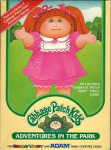
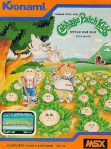 Cabbage Patch Kids: Adventures in the Park
aka Athletic Land
Wait! Don’t Go! I swear this isn’t a joke review!
Platform: Colecovision and MSX
Released in 1984
Developed by Konami
NEVER BEEN RE-RELEASED
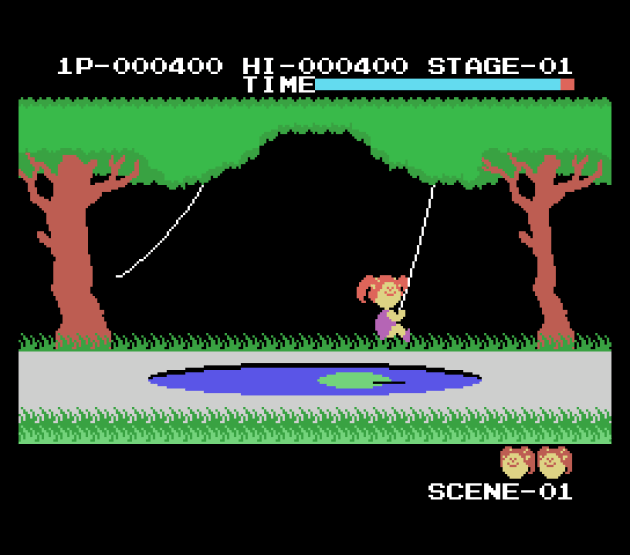
(Colecovision) Can you tell how deliberate I was in picking this picture first? By the way, Cabbage Patch Kids was the first toy that caused Black Friday riots. Not stampedes, but actual f*cking riots! The dolls were the biggest hit Coleco had EVER had in their entire company’s history. Far more profitable than Colecovision (it’s not even close), but they’re also proof positive that Arnold Greenberg was one of the worst CEOs in the history of gaming or toys. He was awesome at “step one” and not so awesome at any step that followed. Every single hit product Coleco had once he took over in 1975 he eventually turned into a loss leader. Colecovision gave birth to the Adam Computer, the business Greenberg REALLY wanted to be in and pushed hard for even though they had no infrastructure for home computer development or manufacturing (it’s not remotely close to the same infrastructure a game console utilizes). Then he ignored engineers who told him it wasn’t ready or any good and pushed it into production. Today the Coleco Adam is largely considered the one of the worst computers ever. Cabbage Patch Kids went from BILLIONS in sales to record-setting inventory crush in a three year span when he ignored established toy trends. Coleco was the #1 toy maker in the world in 1984 and bankrupt by 1988. The guy who greenlit all those hit products also didn’t have a clue about managing them. But hey Arnie, thanks for Colecovision. I do loves me some Colecovision.
You’d probably figure Cabbage Patch Kids would be a game for young children. An “edutainment” game along the lines of Reader Rabbit, right? Nope. Cabbage Patch Kids: Adventures in the Park is basically the Colecovision’s version of Pitfall!, the David Crane classic (yes, I’m aware Colecovision does have a real port of Pitfall! too) mixed with a little bit of the reality competition Ninja Warrior with challenges like skipping across pillars and trampolines. It’s also one of those games people like me discover and are always shocked to find out it’s “really good!” that, upon revisit, I’ve dropped down to “it’s fine.” It’s still a remarkable achievement given how early this was in the genre though and an underrated showcase for what would soon be gaming’s #1 genre.
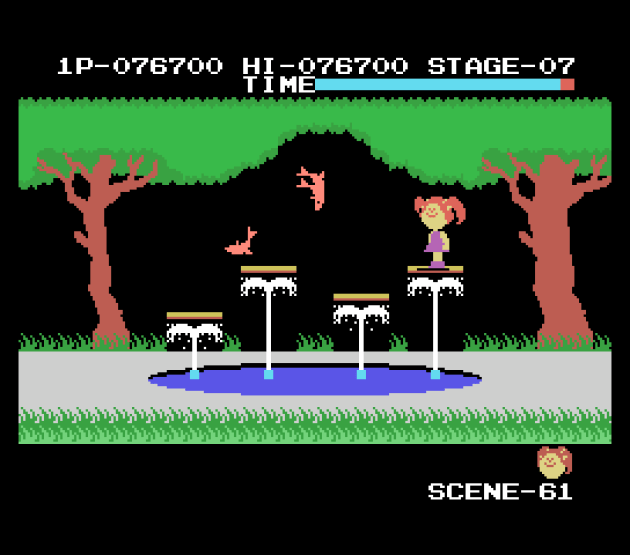
(Colecovision) That is one smug looking main character. If this game had been more popular, the fish would have gone down as one of the most notorious gaming antagonists. Trust me on this. I’ll also note that the last jump is one of the most deceptively difficult challenges in gaming. Any attempt at jumping off when the platform is anywhere but the lowest it gets or maybe one tick above the lowest will result in a death. Now a modern game would probably do a better job of conveying that and maybe have a line or maybe the platform itself lights green for jump and red for don’t jump. But for a platformer made early in the genre’s learning curve, this is impressive.
In the game, you scroll one screen at a time to the right and jump over and across different things. Make no mistake about it, this is a shameless Pitfall! rip-off, in style and substance. And, like Pitfall!, Cabbage Patch Kids’ problem is the genre has come so very far from the trail that it helped blaze. As an early platformer, there’s only a handful of challenges here that are mixed and matched, but they’re not always optimized for maximum gameplay. Actually, “a handful” isn’t entirely accurate, because when I actually counted-up the amount of things Cabbage has that can kill you, I was kind of stunned. By my tally, there are ten possible primary hazards (eleven if you count the timer) and seven supplementary hazards that can be mixed-and-matched with them. In the above screenshot, in addition to the moving platforms, I had to avoid the dreaded fish. In a screen with the trampolines, I might be hopping across mini-ponds that have the fish while also avoiding spiders that fall from above.
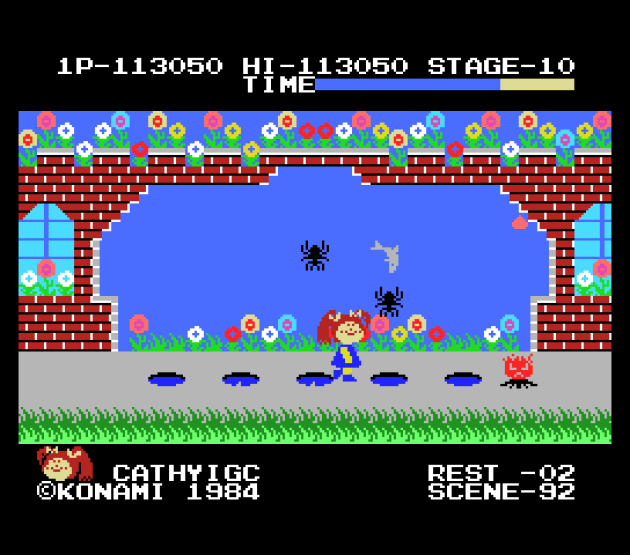
(Cabbage Patch Kids: Adventures in the Park for MSX) This is a “sock it to you” level: water to jump over with fish jumping out of the water, spiders raining down on you, and a camp fire right at the end that you have to jump over (a tight squeeze between it and the final pond) that also spits fireballs at you.
So they actually squeezed more millage out of the obstacles than I realized and props to them for that. But, once you have the timing down, Cabbage Patch Kids is really just requires patience. With the fish, the fire, the ropes, the spiders, and the moving platforms, it’s just a matter of waiting for an opening. Within an hour of starting, the only obstacle that consistently got me killed was the fire, and only when it’s positioned like it is in the above screenshot, where there’s barely any room to jump over it. Because it fires projectiles, the timing of when it’s even safe to stand on the space between it and the water is tricky. Maybe that’s where the Cabbage Patch Kids license actually factors in and this is baby’s first platformer. Probably not since some of the screens are pretty hardcore in the amount of stuff they throw at you. They also missed several chances for risk-reward temptations. Plus there’s the occasional head-scratching empty screen. Those really weirded me out, because the empty screens happen even deep into the game. Here is one on the 68th screen of the game.
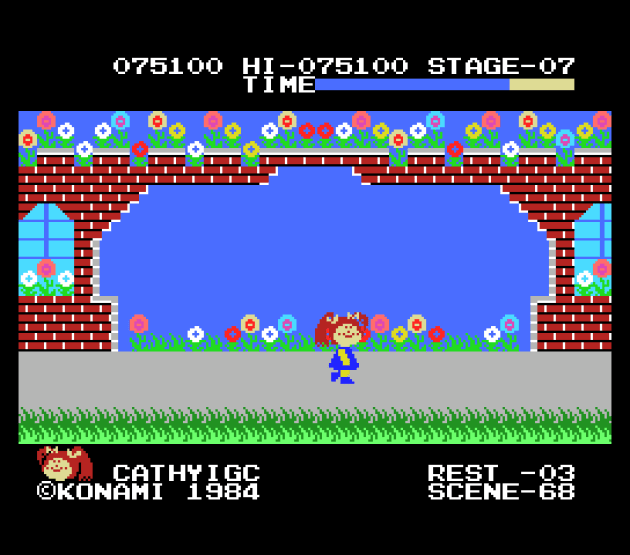
(Cabbage Patch Kids for MSX) There was literally no challenge on this screen. Just walk right and don’t stop to smell the flowers since the timer is still running. Or maybe the challenge is sensory deprivation, and the object is to not be lost in isolation of your own internal madness. Probably not since I didn’t die on it once.
Sometimes my readers get angry or confused by my constant usage of “it’s fine.” Which is strange because “it’s fine” always means, at the very least, “I had more fun than not” which is an automatic YES! because that’s my criteria at its most basic. And Cabbage Patch Kids is fine, truly! I’m giving it a YES! and everything. But yeah, I mostly use “it’s fine” for games that I or others have overrated. In the case of Cabbage Patch Kids: Adventures in the Park, it’s a solid platformer that was ambitious for its era and does a good job with the limits it had, but the fun isn’t endless and it’s certainly not an all-time great. Even if it’s not making gameplay mistakes, it’s just too limited and too easy to clock. My only real gameplay annoyance was how rigid the trampolines are to use. You want to hold RIGHT and press the jump button when your feet are about to make contact.
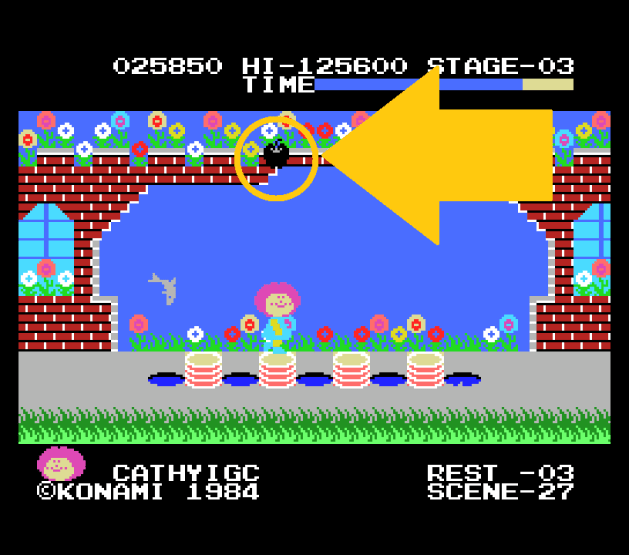
(Cabbage Patch Kids for MSX) This apple is the only bonus points item in the game and it only appears in trampoline levels. It only scores 200 points, which is nothing when you consider you get 2,000 points just for finishing a group of ten stages. Hell, sometimes I genuinely think the apple is impossible to get if it’s in the wrong position on screens with spiders/coconuts. I’m kind of fine with that too because it feels like it’s there to tempt players. What the game could have used to give it some extra score-chasing mileage is more risk-reward chances. Honestly, I wouldn’t mind if every screen had a fruit. Having only one feels like it was there because an executive said “add some items to collect! Kids love that sh*t!”
At first I thought Konami realized they burned a pretty damn decent action game on Cabbage Patch Kids of all things because they re-released this for the MSX under the name “Athletic Land.” Except it appears to be the other way around. Athletic Land was either already out or already nearing the end of development (release dates for MSX being fickle) and Coleco had a good working relationship with Konami, plus the MSX and Colecovision are very, very compatible. To put it in perspective, the MSX emulator I use is also my Colecovision emulator. Either way, Konami just quickly flipped Athletic Land to Cabbage Patch Kids, and it’s a good thing they did because that gives this a fighting chance at a modern re-release if Konami ever decides to put out another MSX collection. Three volumes of ten MSX games were released for the original PlayStation exclusively in Japan from 1997 to 1998 (that were combined and released as one big set for the Sega Saturn) and Volume 2 has Athletic Land. Great sign that this is a modern re-release candidate. The problem is that Athletic Land is visually just a minor upgrade of the Colecovision Cabbage Patch Kids game while the MSX Cabbage Patch Kids has some pizzazz and is the only game that lets you custom-create your character. In the three screens below, Coleco Cabbage Patch Kids is on the left, the MSX version is in the center, and Athletic Kids is on the right.


Note that all three of those screenshots were taken on level 36. Now, I’m not sure if it’s just the placebo effect, but I think Athletic World might be slightly, slightly harder than the other two in terms of timing, but if it actually is, it’s negligible. Overall, for such an early platformer, Athletic Land/Cabbage Patch Kids aged remarkably well. Plus it controls a little better than the original Atari 2600 Pitfall!, though it’s very picky about what jumps land and which ones don’t. I jumped a little too early once hopping onto the first log on a screen and died from the jump somehow. It probably counts as walking into the log, which is fatal. I only did it once and never again because I learned my lesson. So while it’s not age-proof, Cabbage Patch Kids: Adventures in the Park/Athletic Land is fun enough for thirty minutes, making it an ideal addition to a compilation. Not an all-time classic, but for sure one of the all-time hidden gems. I kind of feel sorry that the game is tied to Cabbage Patch Kids. I imagine a lot of kids who were too cool to play a game based on dolls never bothered to give it a try. Their loss.
Verdict: YES! YES! and YES!
BONUS REVIEWS
 Cabbage Patch Kids: Adventures in the Park
Platform: Atari 2600
Unreleased Completed Prototype
Designed by Ed Temple
Developed by Coleco
NEVER BEEN (officially) RELEASED
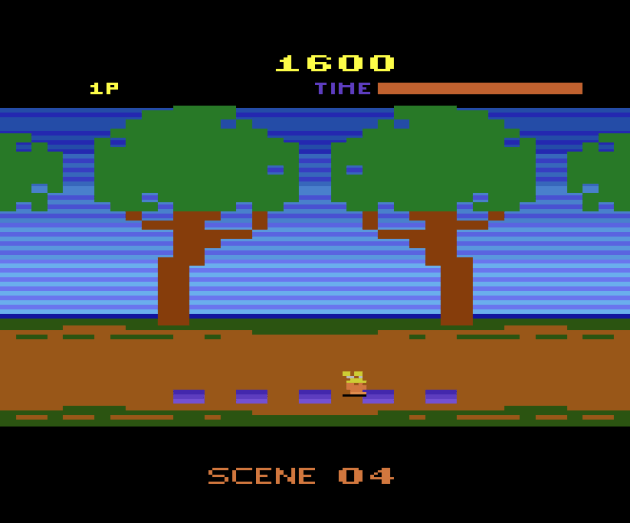
My first GAME OVER came on the 4th screen of the game. Yeah.
Oh the Atari fans are going to hate this review. Apparently Cabbage Patch Kids is considered one of the best unreleased prototypes, but I’m not there. It IS impressive, don’t get me wrong, but the jumping physics are very strange. Like, some of the weirdest I’ve ever played. You don’t actually have to press a direction when you jump. You’ll move forward automatically, but the actual trajectory of the jumps are these high, shallow arches. It’s so weird. You kind of have to just play it to appreciate it. The game is certainly tailored around it, though. All the platforms or waterholes are spaced correctly to accommodate the actual length you travel, and you can change direct mid-jump too. That’s the only way you can do a straight up-and-down jump.


While all the obstacles are here, the trampolines are much harder to use, and there’s less of them (thank god). The character looks like someone wearing bunny ears, the sound effects and music are a dental drill to the eardrums and the bees look more like the disembodied torsos of women. Plus, collision is a little bit on the picky side, but on the other hand, you can get away with some things you can’t get away with in the other versions. Like at one point during the log platforms, I jumped directly from the second-to-last log to the ground and didn’t die. Also, you don’t die from jumping off too high a point on the moving platforms. But what really killed Cabbage Patch Kids 2600 for me was that the angles of the gaps are much easier because of the automatic movement. Once I stopped trying to move on my own and realized the game did the hard part for me, I went from losing all my lives on the fourth screen to barely needing to do any work at all, and I just stopped having fun. It’s a good effort, truly, but I didn’t like this at all. Sorry, Atari fans, but Alligator People is still the superior 3rd party unreleased Atari prototype.
Verdict: NO!
 Athletic World
Indie Remake of Athletic Land/Cabbage Patch Kids
Platform: Game Boy – Super Game Boy Enhanced
Released April 12, 2023
Developed by MHZ Games
Download the ROM – Pay What You Want
Link to Store for Physical Copy
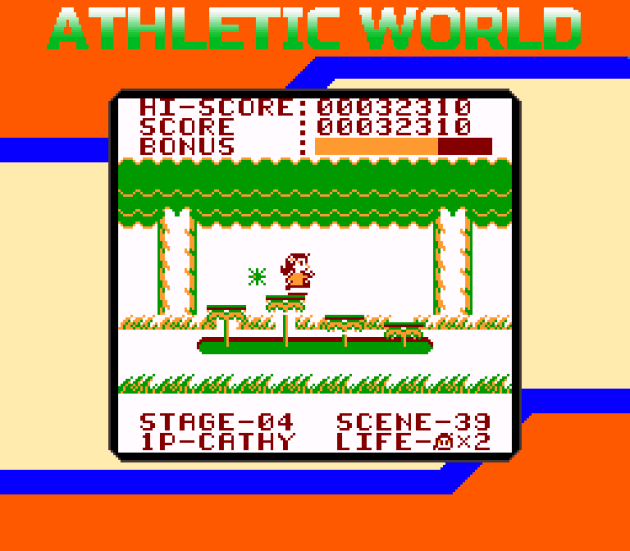
Leave it to an indie developer to make the greatest game in this series!
What a damn impressive effort Athletic World is. The name is a bit confusing since Athletic World is also the name of an unrelated NES game that was designed for use with the Power Pad. But, make no mistake, THIS Athletic World is exactly what an early-era Game Boy port/sequel of Cabbage Patch Kids/Athletic Land would have been, and it’s an outstanding game that would make the original designers proud (at least I hope so). It adds new obstacles, and the timing of the moving obstacles is much, much more fine-tuned to create an optimized challenge. So, I want to get the message out there, to anyone who aspires to make a modern tribute to a classic game, download this ROM, get a pen and paper, and start taking some notes.
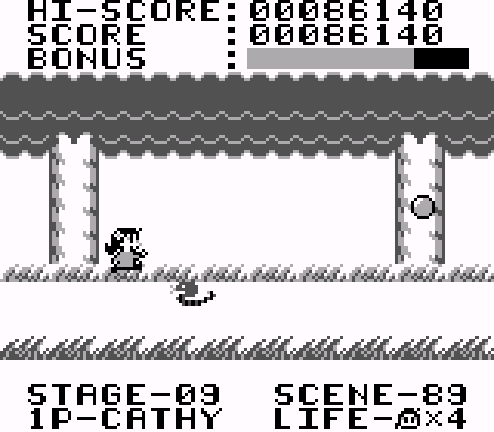
Athletic World kept surprising me. After over 80 stages and having gone a while before any new obstacles were introduced, I was organizing my thoughts and shaking my head at how well made this was and BOOM, another new obstacle: a snake. Huh.
First off, the authenticity of an early-era Game Boy title is astonishing. Every aspect of this feels exactly like a launch-window game for that platform, but in a good way. Athletic World has charming sprite work, sound effects, and a good chiptune. The designer didn’t take advantage of having more resources available to them than a designer at the time might have had. I’m not some kind of purist and often point out that there’s nothing inherently noble or sacred about the limits developers had because, make no mistake, studios of that time frame would have crawled on shards of glass to have higher storage capacity. But because Athletic World is such a simple game, I think it actually lends charm to the experience. Other than including Super Game Boy features, Athletic World has a small file size and feels the part, but it works because it’s the gameplay that’s optimized, not the appearance.
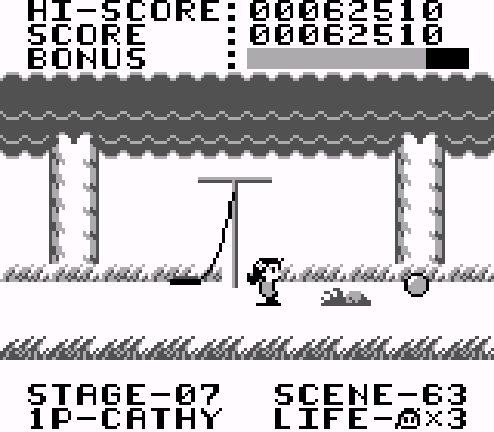
This is one of the new obstacles and it looks so simple. It’s just a tiny little stick on a rope that swivels (right before I hit publish Angela said “I think it’s supposed to be a tire swing.” Maybe?). If you can actually hop on it, I never figured out how (and not for a lack of trying, I assure you). It’s really hard to clock by itself. It’s rarely by itself, too.
All the obstacles of the original games are back, but the jumping physics aren’t. Jumping is much shorter and stiffer in this one. The bouncing balls and other obstacles can’t be survived just by jumping straight up and down. You have to be moving forward or backward, and the obstacles take advantage of this. The biggest change isn’t the new obstacles, but how fine-tuned all the obstacles can be. I said about the Coleco/MSX games that once you have the timing down, it’s just a matter of waiting for an opening. While the same theory applies here, that window is much shorter. The genre might be platforming, but the action feels more like a Frogger-style cross-the-road game at times and you’ll likely find yourself wiggling back and forth waiting for things to line-up in a way that you can make your short jumps.
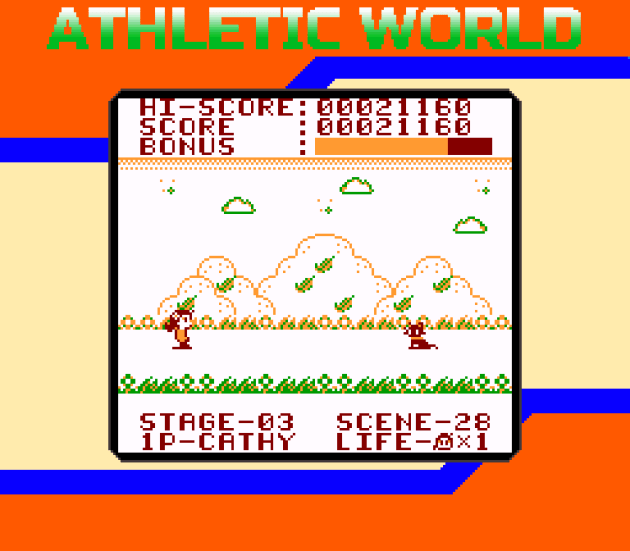
Weirdly (perhaps sadly) the blank screens return, only instead of being absolutely nothing, your cat (or a dog if you play as the boy) is waiting for you. Sometimes it leaves a bonus fruit for you, and sometimes it takes a sh*t and if you step on it you lose 700 points. I’m not joking. Cute clapback to the original, I guess, but I wish these would have been dumped altogether. Heh, dumped. It’s funny because you’re jumping over sh*t.
The new obstacles are mostly winners. One of them sees you clinging to the side poles that you slowly start to lose your grip on. I never died on that screen or even came close and had to deliberately wait and see how long it takes to lose your grip, so perhaps that should have been reworked. The swinging stick I already showed off is the hardest new challenge, and there’s also disappearing platforms and a new style of dive-bombing bird. This game also has a climax too! After 99 screens, you have to follow your pet and rush as fast as you can through ten screens (just don’t try to copy the pet, since they can jump on things that kill you. Learned that the hard way). You can’t wait for an opening because you’re being chased by bees, but this is where the fine-tuned design shines brightest. And after you finish this and get the game’s ending, guess what? There’s a second quest that’s much harder. Hot damn, this developer went all-out. My biggest complaint is that, once you reach second quest, there’s no option to skip straight to it if you turn the game off. If the developer reads this and there’s a cheat code, you need to alert GameFAQs.
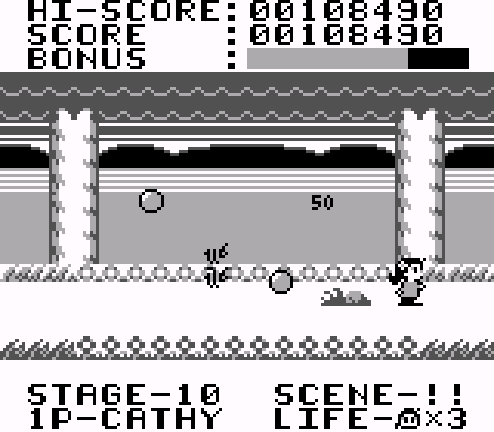
It’s actually well done. Again, he did a great job of fine-tuning.
So, this really is everything you’d want a sequel/remake to Athletic Land if the franchise had lasted past the MSX. It even has the Konami code in it! While I was playing Athletic World, I kept thinking “I really hope the developer is proud of this game.” I mean, I sincerely hope that about every indie game I play, even the ones I don’t like, but Athletic World succeeds on so many levels and is probably doomed to remain obscure. Why wouldn’t it? A fan-made Game Boy tribute to a game already deeply under the radar? Christ, I’d be stunned if this sold 100 copies (my friend Saud ordered one of the physical carts right before I published this, so make it 101). Yet, its existence fills me with joy. Athletic World is, no joke, one of the best Game Boy titles I’ve reviewed yet. It makes very few mistakes, pays proper tribute to an older game, and it does all that while perfectly mimicking a specific style of game on a black and white platform. Most importantly, Athletic World remembers that there’s no better way to show your love for a game than making a better version of it. CELEBRATE THAT! How can anyone who loves gaming not feel a little warm inside that something like this could exist? Athletic World is everything good about indie gaming tributes with none of the bullsh*t, and I love it.
Verdict: YES!
And seriously, give it a try and if you enjoy it, kick the dev a few bucks, or hell, order a physical copy!


 Indie Gamer Chick
You must be logged in to post a comment.