Super Real Baseball ’88 Platform: Famicom Released July 30, 1988 Developed by Pax Softonica Published by Vap Never Released Outside of Japan NEVER BEEN RE-RELEASED
The second baseman wasn’t at second base to turn this double play and I threw the ball into the outfield. This game tries SO HARD to be immersive, but it forgot to make the players, you know, know where to f*cking stand on defense!
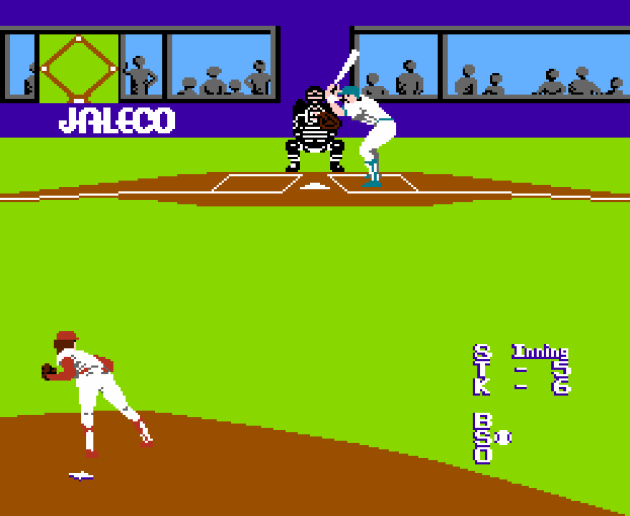
Yep, this is an ambitious game of baseball that tries to earn the “real” in its name. Oh, it doesn’t, but I do admire the effort. I should probably note that this game comes from Pax Softonica. You might not recognize the name, but NES sports fans will recognize a game they worked on for Nintendo: Ice Hockey. Yea, the skinny/medium/fat one. That’s a really good game, as are games like the Game Boy Donkey Kong and Earthbound franchise launcher Mother for Famicom (if you’re into that sorta thing). Pax Softonica didn’t design those games but they helped build them. So Super Real Baseball comes with a legitimate pedigree. Part of me wonders if they pitched this to Nintendo and Nintendo was like “nah.” It does have the Nippon Professional Baseball license and, I assume, accurate rosters for the time period. It also is the first baseball game on the NES that feels like it’s trying to be a simulation of athletics and not a “video game.” What do I mean by that? Well, it’s an attempt at 3D gameplay where literally everything is done manually INCLUDING your batting stance.
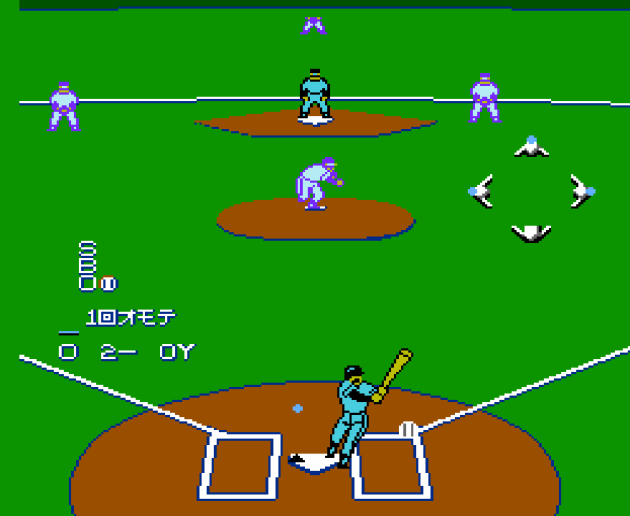
Every batter who steps into the box already has their bat halfway through a swing and you have to manually complete the swing to take a normal stance in the two to three seconds before the pitch is thrown. This has to be done EVERY SINGLE PITCH! If you want to bunt, you just hold the A-button down without finishing the half swing you enter the batter’s box with.
Unlike other games where you just have to align a player sprite with the ball sprite and the player sprite takes possession of the ball, here, you have to press buttons to do everything. Buttons presses to pick up the ball. Button presses to throw the ball, and another button for the basemen to catch the ball. So throwing out a chopper to the shortstop requires you to (1) move towards the ball (2) press the A button when the ball is near you to catch the ball (3) hold left and press the A button to throw to first base (4) press the B button to catch the ball with the basemen. This is double the steps of any previous baseball game I’ve reviewed, which is normally just (1) move to the ball until it touches your player (2) hold left and press the throw button.
When you make a play, it sounds like an alarm. So far most of the NES baseball games I’ve reviewed have had terrible sound design, but this one is right up there with Major League Baseball in being outright annoying.
Okay, I get what they were aiming for and why they were trying it. I really do, and again, I tip my hat to them for trying to make it work. I assume the theory is that the more complicated the mechanics are, the more skill is required to master them, meaning the more it feels like a sport being played at the highest level, right? It’s not a terrible idea and, if they could have pulled it off, in theory it should enhance the immersion? Remember: sports games are fantasy games, the fantasy being you’re a real professional athlete. You’re not some lazy ass holding a game controller, or even someone pretending to be one ball player. Oh no, you’re every player having to actually work for your outs, gosh darn it! Too bad the batting is significantly easier than the fielding, so the immersion only works one-way and runs are too easy to get. In one game, I scored four runs on bean balls alone.
FOUR bases loaded plunks in a single game. Four. That’s not baseball. That’s a pitcher retiring in a blaze of glory.
But outs? THOSE you have to work for. Again, great.. if it works. It doesn’t. There’s an on-again/off-again pronounced lag between catching and throwing that I had to have my family test just to make sure it wasn’t something I was imagining. By the way, you can’t appreciate what a pain in the ass THAT was to set up. I had to wait for the ideal hit that could be thrown out, then use save states, teach them these relatively complex controls, then keep reloading the state for them to try to field the test. I did ALL of that for them to shrug and say “I dunno. Maybe?!” Thanks a ton, Fam. Very helpful.
The B-Button does this weird diving catch that has a massive delay. When the CPU hit shots that I knew damn well hadn’t bounced off the ground first, I tried using save states to catch the ball using this. Not only did it not call it an out but there was a massive delay in being able to throw. Stick to the A Button.
Super Real’s most stand-out feature is the illusion of a truly 3D game. For 1988 on the Famicom, it’s actually much more convincing than you would expect. When a batter hits the ball, the camera stays as far back towards the plate as it can while doing a television-like zoom. I had to double check with my guru Dave to make sure I understood how this was accomplished. It’s actually done using a pair of classic NES illusions: reloading an entire new screen while changing sprite sizes (pay attention to second base in the below clip) and having the background act like a matte painting. “When it ‘zooms’, it simply snaps to a different point for the camera. And the player sprites, ball and boundary action sell it,” Dave explained. Old tricks, but the classics are classics for a reason: they work, and Super Real does successfully create a sense of depth within a wide ballpark (with playfield dimensions modeled after, I kid you not, the brand spanking new-at-the-time Tokyo Dome). Take a look!
This came out before I was even born! That’s pretty dang good looking given the time frame. This is no half-assed effort, folks, and that’s why it pains me so much that nothing is fun about Super Real Baseball ’88. Defense has too steep of a learning curve. The steepest of any game baseball game I’ve reviewed so far, with nothing even close. But it wasn’t worth the effort to learn it. Even in my first game, I managed to shut out the CPU. Want to know what’s REALLY remarkable about that? I didn’t catch a single fly ball. I didn’t in the second game either, or during my warm-up. Every out I made, with the exception of one or two tags and one or two strikeouts was a force-out at bases. There were some infield “catches” that sure seemed like they should have been a fly out that weren’t. Here’s my first ever fly ball catch, all the way in the bottom of the 5th in the third game I played.
Same game where I’ve scored four total runs from getting hit by a pitch with the bases loaded.
How did I do it? You have to hold the button down. That.. makes sense, actually and I’m not sure how it took me three games to figure that out. Unlike the pitching, which is most certainly not intuitive. The normal D-pad assignments of “hold towards the plate for a fastball, away from the plate for a change up, or side-to-side for breaking balls” applies. But, in Super Real Baseball, you have to also tap the button while throwing the pitch. Do it too little and the ball will be low. Do it too much and you’ll throw too high. Again, their heart was in the right place and I appreciate that they didn’t just want players wiggling the D-pad. It just wanted to do too much for an NES game. I imagine this was probably better at the time it came out, but there’s also a reason why Super Real Baseball was one and done. It just doesn’t make for a fun game. For all its complexity, I had it clocked enough to win the third game 26 to nothing while holding the computer to only six hits. I respect ambition, but ambition isn’t fun all by itself. Verdict: NO!
I had planned to do Baseball Games for NES & Famicom: The Definitive Review and made it ten reviews into a 40+ game feature when, frankly, it just became kind of exhausting. I do plan on finishing a lot of the games featured, but the reviews that are finished are going to be posted as normal reviews. I’ve already done the Nintendo version of Baseball, but all my Definitive Reviews have re-reviews, and Nintendo Baseball was no exception. And I was REALLY happy with the re-review, so why let it go to waste? So, following my review of Bases Loaded, be sure to check out that re-review. It’s all-new. I hope everyone enjoys!
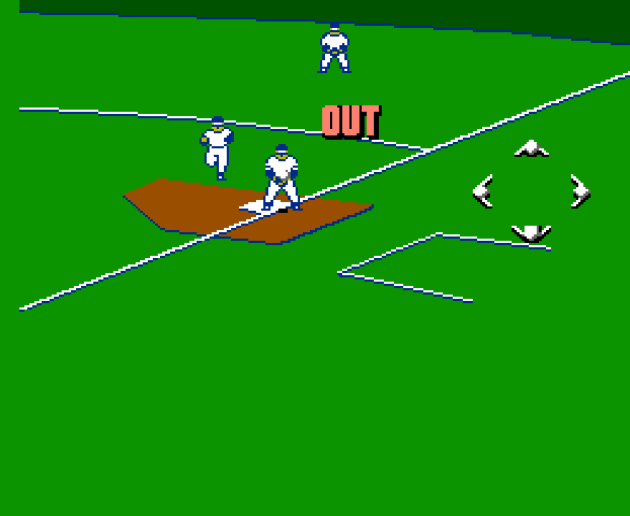
I laid down a sacrifice bunt here. You can CLEARLY see the runner beat the ball to second base with time to spare, but the umpire called this an out. And you can’t even coldcock them.
Golly, my decision on Bases Loaded was a tough one. I don’t even know why I’m surprised. There were a whopping FOUR games in the Bases Loaded series on the NES alone. You don’t get THAT many sequels unless the original game had a solid foundation to build off of, right? And Bases Loaded is solid. In fact, I thought it was a much better simulation of baseball than the more iconic RBI Baseball. It’s certainly smarter, at least from player behavior. Defensive is handled semi-automatically, so routine situations like most pop flies allow you to just sit back and enjoy seeing the fielder catch the ball. However, you can take control at any time, and fielders move faster if you directly control them. If it’s questionable whether or not a fly ball is playable, you probably should be proactive in going for it, and you HAVE to go for any balls hopping along the ground. I like that method for hybrid defense, though. It keeps you honest. The way defense is handled here will be the gold standard for all future baseball game reviews, actually.
It didn’t take me very long in RBI Baseball to realize how easy it was to manipulate the CPU into chasing down a runner instead of getting the automatic out. You can’t do that in Bases Loaded. Here, the third baseman and catcher have caught my runner in a routine trap play. It’s not EXACTLY like real life baseball since the two defenders don’t (can’t) close the gap. They just throw back and forth until they get you from a stationary position. But, if it’s possible to fool them or inch your way back to the safety of the base, I never got the timing of it right. I tried, too. The next logical evolution of this leap forward is the defenders closing the space, so I’ll be on the lookout for that.
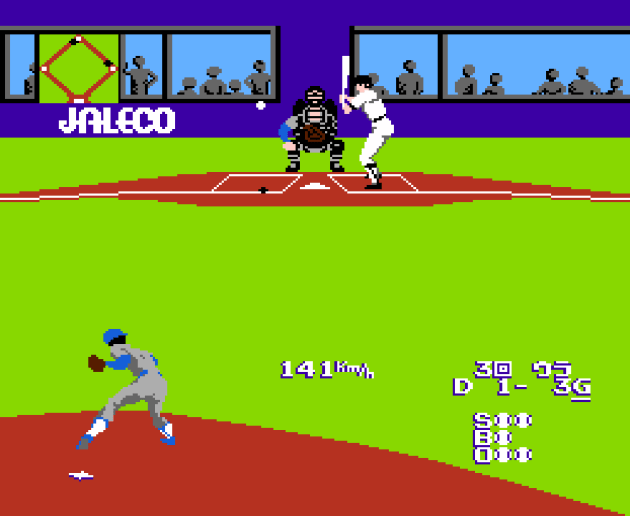
Why I’m struggling with my verdict is because my stated rule for earning a YES! is “I have to like a game more than I dislike it.” For everyone who thinks I’m an ogre, I really think I have the lowest hurdle of any “major” publication to get over. I just want to have more fun than not! And I DID have more fun than not with Bases Loaded. I really enjoyed the pitcher/batter duel, which I know Jaleco took inspiration from Intellivision’s World Series Baseball (1983) and Accolade’s Hardball! (1985). The pitcher is essentially given an invisible tic-tac-toe grid to throw at, and the batter has to swing at the square the pitcher selects. It’s really well done. I loved it, except I wish there was a little less delay between the moment of impact and the transition to running/defense. But the system feels true to the psychology of the pitcher/batter dynamic. It also highlights the problem with Bases Loaded. In this screenshot, taken a single frame before the umpire makes his call, you can see the pitched ball is literally encompassing my stance. It looks like a white wristwatch on the batter.
That was called a strike. So was this one:
This is the first game in this feature where you can’t move around the batter’s box. The pitcher can adjust their position, but not the batter, and there were plenty of high pitches that were called strikes that were, ahem, suspect. I rewound and examined a few, and even attempted to swing at them, where I literally don’t think I could have done anything to hit them. I know that you’re supposed to actually watch the catcher’s mitt and not the ball (the mitt is actually just floating there like it’s being held by a g-g-g-ghost!), but even then, it still didn’t always seem to match. But that’s nowhere near as frustrating as some of the basic baseball rules that Bases Loaded doesn’t have right. In real baseball, if the ball bounces inside the diamond but clears first base OUTSIDE the diamond in foul territory, the hit is a foul ball and a strike. This is an INCREDIBLY important rule because hits down the foul line are almost always doubles or more, since defenders are not in position to make a play. The rules are rules for reasons. With that said, take a look:
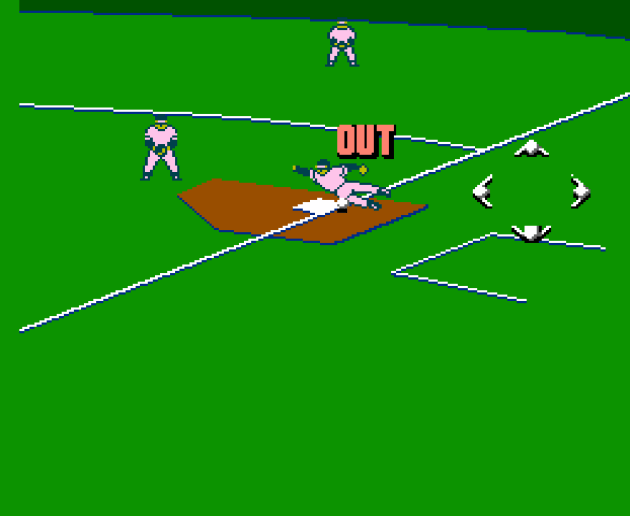
That’s actually me hitting, but with these baseball games, bad programming works both ways. In my first game, a similar occurrence happened with me on defense. In the clip, you can clearly see this is a foul ball. There’s no doubt about it: the shadow is on the wrong side of first base. I didn’t even bother to run because I was waiting for the pitcher/batter duel to restart and was caught off guard when the fielder was chasing the ball down. Since it happened twice, it’s not a fluke. It’s a thing. Even worse is how much extra time defenders have to make outs when runners sure look like they’re safe. In fact, the act of a runner sliding into base seems to add more time to reaching base than it shaves off, which defeats the point of sliding at all, right? Over three games and a twenty minute warm-up, I never saw a single runner who slid into base actually be called safe when an attempt at a play was made even if they CLEARLY beat the throw. Again, this is me playing defense turning a fly-out into a double play. The runner on second had to return to second. They slide in and beat my throw but are called out. I rewind to show you what being called safe looks like.
Basically, the person sliding has to also then stand up on the base for it to count as safe. Which would, you know, negate the whole point of sliding into a base in the first place. This applies to home plate as well. This time, it’s me getting thrown out. You can see, without a shadow of a doubt, I’m scoring here. I beat the throw and touched home plate, then the person catches the ball, then I’m called out, then I’m given the electric chair for the murder of the umpire. Okay, not that last one, only because I suppose Jaleco had to save something for the sequel.
At first I thought “well, maybe they programmed umpires to make mistakes.” I hate it when sports games do that (unless they make it a toggle you can turn on and off), but that’s not the case in Bases Loaded anyway. This is what happens whenever a player slides. It’s very frustrating, and the only silver lining is that no advantage is given since this type of thing happens consistently. My anger is more about the loss of immersion. For all the sh*t we give umpires, none are THIS bad, and so these simple baseball rules and standards not being correctly implemented screws with my suspension of disbelief, thus breaking the golden rule: all sports games ARE fantasy games. The fantasy is you’re playing the sport at a professional level. For the fantasy to work, the rules and behavior have to resemble the real rules of the sport. I can’t make believe that if the game is calling foul balls as fair, balls as strikes, or calling players who beat the throw to a base “out.” The shame is, Bases Loaded gets more right than any baseball game before it.
SPLIT DECISION – Moero!! Pro Yakyuu (JP)
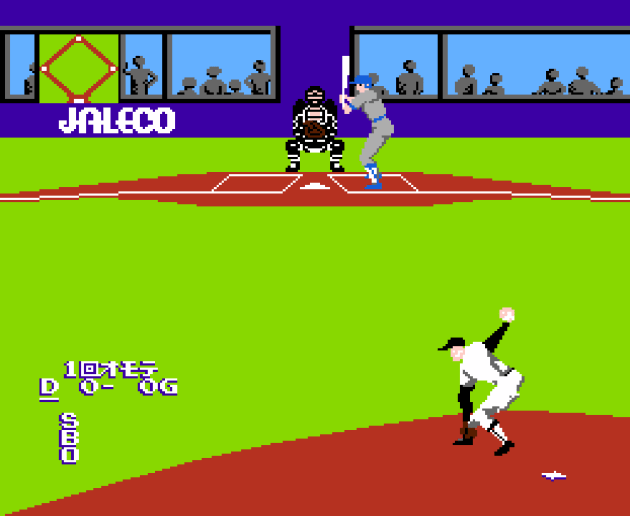
When I threw my first pitch in the Japanese version and saw that the pitcher I’d picked was throwing a SUBMARINE, I was so overjoyed that I was practically doing cartwheels. Non-baseball fans will recognize the submarine from the Brad Pitt flick Moneyball, where Pitcher Chad Bradford’s “defect” was that he “throws funny.” I don’t even remember if they identified “funny” as “the submarine” which literally every single baseball fan knows about, but that’s what it was. There’s nothing funny about the submarine though. Ask any player if they would want to face a submarine thrower who has a change-up in their arsenal and they’ll tell you “no way!” Especially if it’s a same-side batter (IE a right-handed pitcher going against a right-handed batter). The amazing thing about Bases Loaded is that they animated the delivery of the submarine nearly flawlessly, and it legitimately creates the timing-based optical illusion the pitch is intended to create. It’s not 100% perfect. I imagine it wasn’t possible to create the “sink” that the real life submarine relies on with these physics, but the illusion of the delivery is convincing.
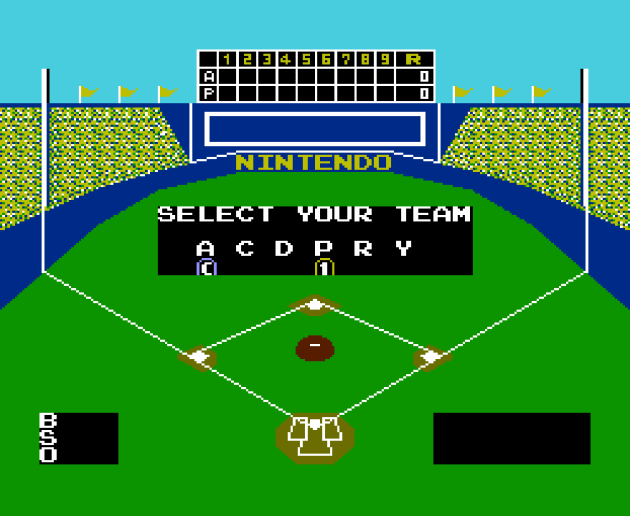
Unlike RBI Baseball, these aren’t characters that look like Fisher-Price figures. They LOOK like human baseball players, and they even have personality. Bases Loaded features a wide variety of batting stances and pitching animations that make the roster look and feel like a team of ballplayers and not toys. The US version controls really well. So, I want to give Bases Loaded a YES!, but I kind of want to give it a NO! too. Why not both? I have a valid excuse to, as well. For the Japanese version, I couldn’t get base runners to retreat on fly balls, leading to double plays galore. The runners wanted to go and all my instruction to return to base did was make them freeze-up on the baseline. It happened EVERY SINGLE TIME, and I couldn’t figure out why. I checked my settings and nothing was wrong. This didn’t happen on the US build, so I’m giving the Japanese build a NO! Also, this is nitpicky but the Japanese version is missing a lot of key sound effects that make it feel unfinished. Verdict: NO! but this review is not over.
Interesting choice of uniform colors, Jaleco. What’s this team’s name? The Jaybirds?
SPLIT DECISION – BASES LOADED (US)
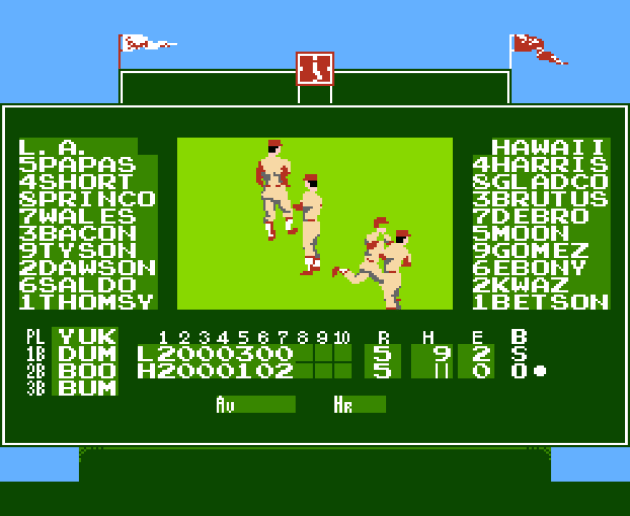
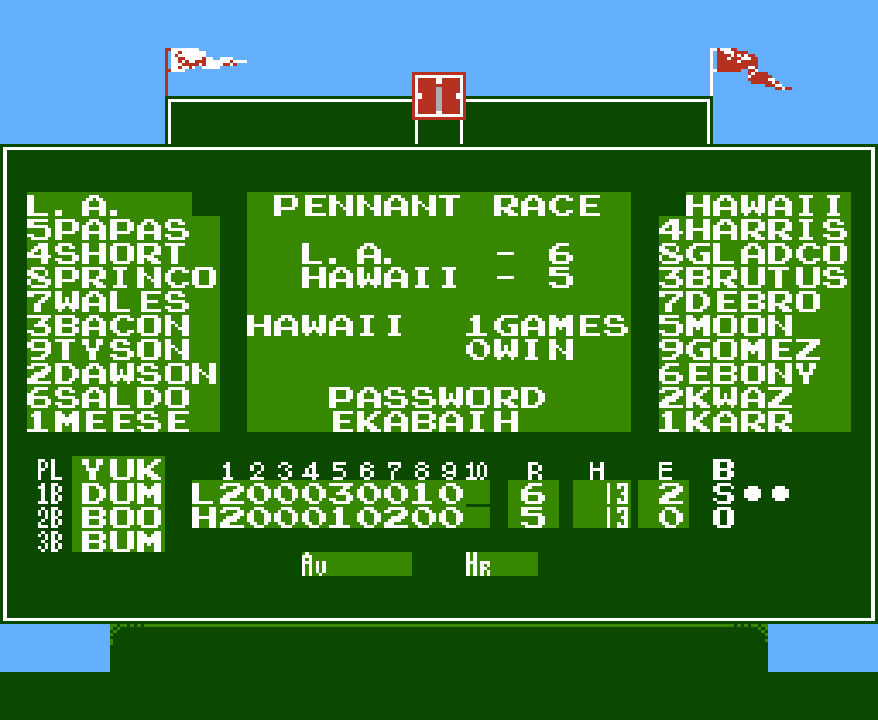
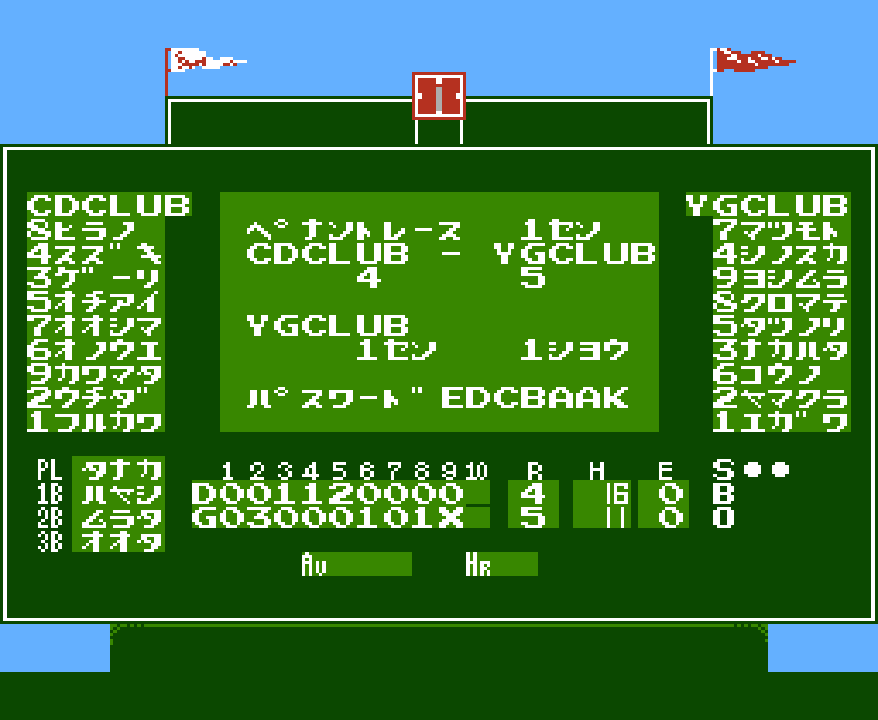
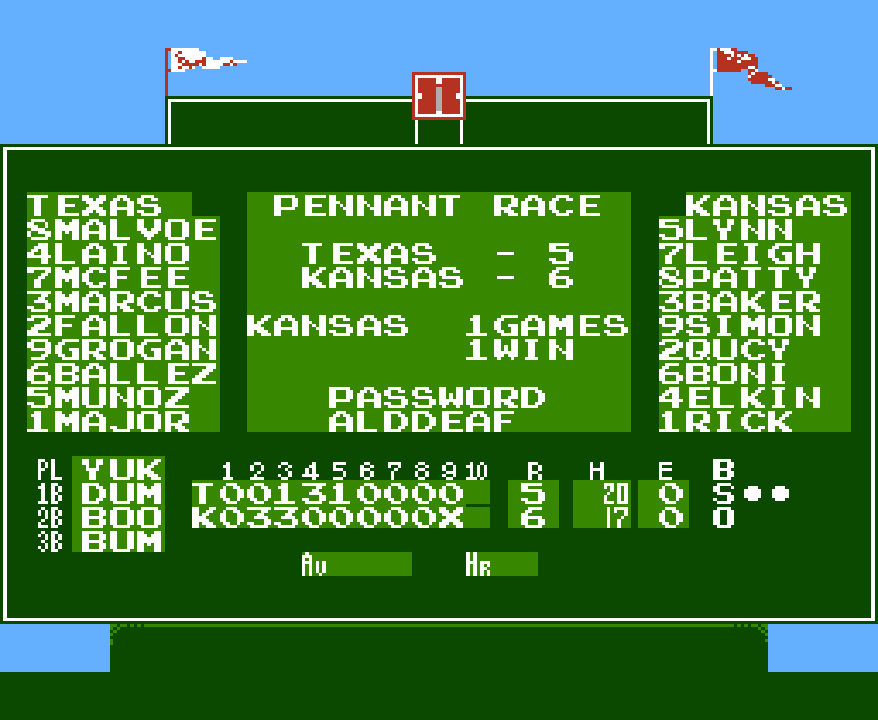
For the US version, there’s no getting around the issues with sliding into base or the rules not being correct. Bases Loaded’s numerous problems are unavoidable and maddening. But, I don’t think they ruin the experience. They’re blips on an otherwise pretty dang fun game of baseball. The battle/pitcher dynamic is much harder to clock than previous games. You have to work for runs in Bases Loaded. I even lost a game for the first time in this feature, and the games I won were all by a single run. In order to win, I had to use actual baseball tactics. I stole a base at one point. I sacrificed with a bunt. It DOES make the fantasy real, with the occasional sh*ting of the bed. If my review criteria were based only on games not needing a change of bed sheets, Bases Loaded would be a NO! and that would be all there is to it. But I don’t review that way. I just want to have fun, and Bases Loaded’s actual baseball mechanics are solid and the batting/pitching/running system is hard to clock and not so easy to learn to cheese that it can be done near-instantly. I had fun. I cursed a blue streak. Well goddammit, one of those things should be more important than the other, shouldn’t it? Verdict: YES! Final Score 1 (US): Cathy 5, CPU 6 (Home Runs: Cathy 1, CPU 3) BOX SCORE Final Score 2 (JP): Cathy 5, CPU 4 (Home Runs: Cathy 3, CPU 2) BOX SCORE Final Score 3 (US): Cathy 6, CPU 5 (Home Runs: Cathy 3, CPU 2) BOX SCORE
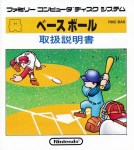
Baseball Platform: Famicom Disk System (Famicom and NES) Famicom Build Released December 7, 1983 Designed by Shigeru Miyamoto Developed by Nintendo Available with Switch Online Subscription (Standard) Read the Original IGC Review
I just reviewed the Nintendo version of Baseball, which inspired this feature. But, as always with Definitive Reviews, every previously reviewed game gets a new play session for me to look for new talking points for a fresh review. So what if I cancelled the feature? I did this re-review and I’m posting it. This time, I played the FDS build and I swear the fielders had a full frontal lobotomy. In the first inning my defense let slow moving grounders go right between their legs. This culminated with the CPU hitting a three-run inside the park homer for what should have been a routine ground-out while I watched in stupefied awe. If you’re going to have automatic defense, it has to be good, you know?
Nice hustle. Not.
Re-reading the first review, I don’t think I stressed enough how ineffective Baseball’s defense algorithm is. Fielders don’t really move diagonally and they rarely take the most efficient straight line path to the ball. Especially the outfielders, as sometimes two will run to one ball and then suddenly the closest one to the ball will stop chasing it and just sit there and stare at it like the thing just pulled a gun on them. In these three screenshots, pics 1 & 2 show the center fielder chasing the ball that’s clearly in his defensive territory. After the ball hits the wall (the ball originally touched down inside the diamond, mind you) he still goes for the play, but in pic 3, he’s now just watching while the right fielder runs for the ball even though he’s clearly not closer. There’s NOTHING you can do about this! It’s all automatic! All you do is wait to throw the ball.
Now that might have screwed me, but it works both ways. Here’s the CPU’s shortstop running away from a little blooper I hit to left field. If you’re not a baseball person (and if that’s the case, seriously, thanks for reading this) I can’t stress enough this is the most trained defensive angle in the sport, by far. If you watch practice at any level, little league to pros, this is the type of hit that fielders are given to warm-up with. It’s THAT routine. The shortstop had actually started in position to make the play, but it’s like their ability to predict where the ball is going for anything but a pop fly is broken. As if the players are running to where the ball will ultimately end up when it comes to a rest and not where it will be in a few frames relative to its position NOW, because it sure looks like the shortstop could have moved one direction, grabbed it, and prevented extra bases. Instead, he moved away from the ball’s trajectory (Pic 2). It then slowly rolled up into left field, including past the fielder until three f*cking players converged on it. Look where the ball lands (Pic 1), look where the shortstop was, and look where the play was ultimately made at (Pic 3). It’s like they based the AI on those children in little league who’re afraid of the ball. Again, players are totally helpless to prevent this. A semi-automatic scheme (like the upcoming Bases Loaded has) would have prevented this.
There’s no adjustable difficulty, either, and I have to assume there’s some kind of switch the CPU throws where they put on their rally caps and will light you up. BUT, even that works two ways. I noticed during this session and the session I put in for the original review that both myself and the CPU tended to get specific styles of hits in clusters. We’d trade the occasional one run inning, but then suddenly, BAM, one extra-bases shot after another for a massive scoring spurt. As soon as I noticed this phenomena, I even began to recognize rally innings were in progress as they were just starting, and I was almost always right. There’s also a few eye-opening quirks that don’t feel like a coincidence. In my full game, I hit six home runs. Four out of those six happened immediately after the pitcher threw a ball. In my sole grand slam hit during the original review, I remember it happened after watching a ball because my father said “see, the game rewarded you for a good eye.” (shrug) Maybe he was right.
Ultimately, I go back to what I seek out: just the basics. If the basics are good enough, I can make believe I’m playing real professional baseball. Sometimes there’s a moment that’ll make me tilt my head like I just saw something that looks borderline realistic. For example, pitchers can’t just throw smoke the entire game. There’s a noticeable cool down for the fastest fastballs, so you’ll lose them and regain them throughout the game. It almost feels like phantom calls to the bullpen are happening. As for play-making, both me and the CPU successfully sacrificed to get a runner from first base to second, and it looked just like the real thing when it happened. Too bad second base doesn’t feel like scoring position, which takes all the urgency out of trying to reach it and negates the value of bunts. Over both play sessions, none of my attempts at a sacrifice fly worked. The ball travels too quickly and base runners are too slow and too unresponsive to pull it off. Finally, the game doesn’t tell you how many hits you got in the box score. Nit picky, I know, but NOW I think I’ve covered everything. Hey, thanks for helping launch the NES in North America, Baseball. But I’m happy I never have to play you again. Verdict: NO! Final Score (Only Game): Cathy 16, CPU 6 (Home Runs: Cathy 6, CPU 2) BOX SCORE
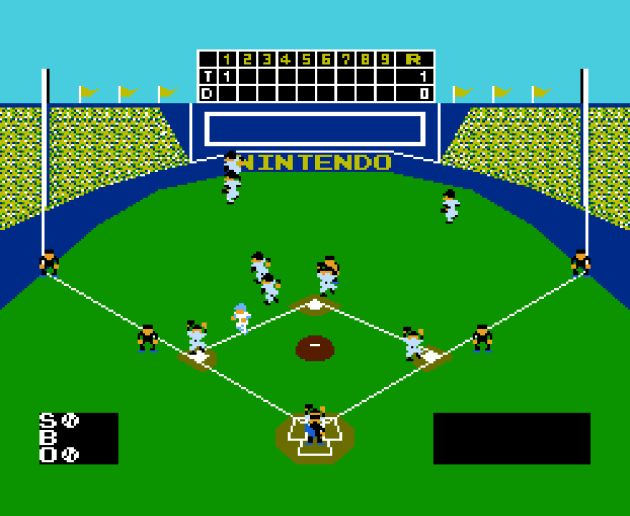
R.B.I. Baseball aka Pro Baseball: Family Stadium Platform: Nintendo Entertainment System/Famicom First Released December 10, 1986 Designed by Yoshihiro Kishimoto Developed by Namco Published in North America by Tengen NO MODERN RELEASE (?)
Licenses: Major League Baseball Player’s Association
If you have a runner on third in a non-bases-loaded situation, you can EASILY turn what should be routine outs into hits. Runners go automatically in RBI Baseball for any contact with the ball, even obvious pop flies. But if it’s a short hit into the infield, the CPU will throw to home for the tag out the runner heading for home plate. If you turn the third base runner back to third, the catcher will try to chase you down instead of throwing you out, allowing the batter to reach first.
If my verdicts were based on historical significance, R.B.I. Baseball’s YES! would be as easy to award as a game like Super Mario Bros. or Legend of Zelda. There’s a reason this spawned a tentpole franchise that lives on to this day, at least in Japan. In 1986, if you had a home console, there were only two games to compare it to. Nintendo’s 1983 Baseball and the 1985 Sega Mark III game Great Baseball that had a nearly identical gameplay concept to Nintendo’s Baseball, only with significantly less personality (the US version of Great Baseball would add a picture/batter duel similar to Bases Loaded but that didn’t come out until after Famista). These weren’t alone, as Hardball on the C64 and World Series Baseball for Intellivision also tried to build around the pitcher/batter duel. None of those games felt like they got enough of the core basics right. Family Stadium/R.B.I. Baseball mostly does.
Not trying for realistic graphics certainly freed the developers to focus on what was important.
Family Stadium’s pitcher/batter duel dynamic that uses a split screen to show first and third base was revolutionary. Okay, so the characters all look very cartoony, but the gameplay is unmistakably compelling. There’s a sense of depth that’s impressive for the time period. Unlike Nintendo’s Baseball, you have to do more than just get the ball over the plate on a pitch. Balls can also be called if a pitch is below the strike zone. Okay, so it’s not THAT complex. It’s either strike or it rolls across the plate with no middle ground as far as I could tell, but hey, they were getting there. You can even substitute pitchers, as well. Batting is even better, as there’s a lot of room in the batter’s box, with a nice PING to connected swings. Initially, I thought home runs were too easy to come by as I blasted four long balls in my first ever full game. But then the next two games, I didn’t hit a single one. Actually, it was kind of five home runs in that first game because this happened:
Yeah, time for the bad news: for as big a leap forward as R.B.I. Baseball makes, it’s also highly exploitable and pretty janky. For whatever reason, the CPU fielder there simply could not pick up the ball and didn’t attempt another angle. Since the ball isn’t touching the wall, I assume the fielder is just not programmed to take any route but the closest line, only the angle of the wall prevented him from being able to reach it and he got caught in a chase cycle (a fan on Facebook confirmed this happens enough to be a known glitch, along with another janky thing I never witnessed). For what it’s worth, I hit a dinger with the next batter, so those bases were getting cleared either way. At least that glitch only happened once. More problematic was that it only took me halfway through the first game to clock the batting. Over the course of three games, I hit twenty-nine doubles and a whopping fourteen triples. FOURTEEN! Only one of those fourteen felt like it would have been a real life triple. The reason is simple: the base runners are too fast while fielders and their throws are too slow.
What you’re seeing right here is an error, which happens at random. It never happened to me but it happened at least once a game to my opponents. The first time it happened I didn’t realize it COULD happen and rounded first base during the fly ball, so even though the guy dropped it, he picked me off at second.
So R.B.I. Baseball is unmistakably baseball, but it’s not INTELLIGENT baseball. Things like every runner going on every hit is especially annoying because you have to manually retreat them. But, once I got a feel for it and realized what an enormous advantage the runners had, I won the next two games via mercy. Hell, the second game ended in the fifth inning. After I got the hang of pitching and proper defense (I allowed a lot of hits off what I think were likely playable fly balls) well, there was nothing left for R.B.I. Baseball to offer me. The last game was a shut out. In only three games, I knew how to cheese the offense to the point that I don’t think I could lose a game of this. I could see how Family Stadium was a big deal in 1986. No doubt about it, this is the foundation for video baseball from here on. The measuring stick, at least until the polygon era. But once you know how to really play R.B.I. Baseball, it’s too easy. At least now I’m genuinely excited for the rest of the Famista franchise. Verdict: NO! Final Score 1 (US): Cathy 15, CPU 7 (Home Runs: Cathy 4, CPU 3) BOX SCORE
Final Score 2 (US): Cathy 21, CPU 5 – Mercy Called in the 5th (Home Runs: Cathy 0, CPU 3) BOX SCORE
Final Score 3 (JP): Cathy 15, CPU 0 – Mercy Called in the 7th (Home Runs: Cathy 2, CPU 0) BOX SCORE
Baseball Platform: Nintendo Entertainment System/Famicom Released December 7, 1983 Designed by Shigeru Miyamoto Developed by Nintendo Available with Switch Online Subscription (Standard)
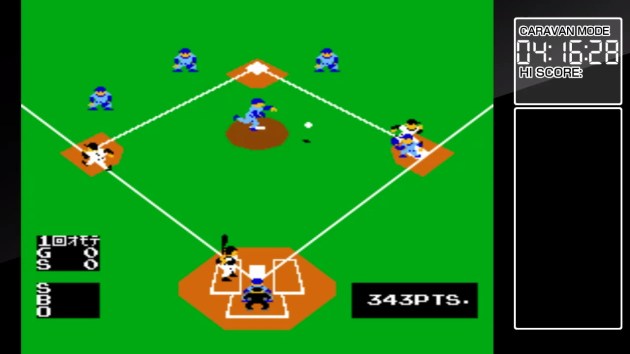
Arcade Archives: Vs. Baseball Platform: Nintendo Switch Original Platform: Arcade Released June 19, 2020 Arcade Release: April, 1984 Originally Developed by Nintendo Re-Release Published by Hamster $7.99 struck out in the making of this review.
No infield fly rule. That’s just peachy.
“Seriously, Cathy?” Yep, seriously. Hey, I’m sporty! And by that I mean I watch sports. Play? Hah. I actually had to stop and think if I’ve even run once in the entire 21st century. Running? That sh*t looks positively exhausting! I used to golf. You know, the sport where you’re allowed to bypass the overwhelming majority of the “moving around” part of the game and instead drive a motorized carriage right up to the ball. Or, if you’re especially lazy, pay someone to drive the cart for you (thumbs up). Really, I’m only doing Nintendo’s 1983 baseball game because it was designed by Big Shiggy Style and it’s probably his worst game ever. I mean, it has to be, right? I’ve heard people say Baseball was good for its time. Was it, though? I wouldn’t be born for another five-and-a-half years after it came out so I’m just guessing over here, but I can’t imagine people in 1983 would be fine with how this plays. This is pretty frick’n horrendous.
Exclusively on the coin-op, the defense changes camera angles. The NES/Famicom version doesn’t do this. BTW, this is the only game I won of Vs. Baseball. Every time I scored a run, the next batter the CPU got immediately hit a dinger on the first playable pitch I gave. Okay, not every time but it felt like it.
The one thing that kinda, sorta feels okay..ish? The batting. It’s fine, really! I’m guessing the majority of video baseball games from the golden age focused on batting, and I could see how maybe in 1983, this felt like a close approximation of America’s pastime. You can scoot around the batter’s box and there’s a nice crack when you make contact. It feels appropriately impactful. So, that’s nice. Nothing else is even in the ballpark, though. Like base running? The AI runners are woefully stupid and heavily unresponsive. See these two screenshots where I got what should be an extra bases hit? Well, for whatever reason, even after the ball hit the ground, the runners tagged back to the bases during a live ball then sat there and stared like dumb sh*ts while the fielder limped to the ball, ignoring my “RUN MOTHER F*CKERS!” command that I was giving the entire time. What should have scored the runner on second base ended up instead being a double play for the other team. If players pulled that sh*t in real life, any manger would have rushed the field and murdered them with a bat. No jury would convict them.
Another example of the brain dead base running: if there’s a man on first and second and the batter hits a ball that IMMEDIATELY touches the ground in front of home plate, the runners will tag-up before running. This is a force-out situation, so why the goddamn f*ck is the first instinct of the runners to tag-up before they start to run to the next base? It’s not humanly possible to react fast enough to give the command not to do this. This is basic, BASIC baseball stuff that has to work every single time, and it doesn’t. I don’t even know why they bothered with running controls because, half the time, the runners don’t listen. They certainly don’t when it comes to sending them to specific bases. They seemed more likely to listen when I gave the “all runners advance” sign. Even then, OBVIOUS ROUTINE doubles and even triples were ignored by the base runners, or even worse: they’d literally run the other way, back to the base they were on and tag up first. Mother f*cker, it’s a base hit! RUN! Little kids playing tee-ball aren’t this inept at the sport! By the way, the CPU opponent’s runners DO NOT have this base running problem. They know when it’s safe to run. That proves it can be done, even in 1983.
There’s no cap on the amount of times the CPU can attempt to pick-off a guy on base, even if you’re not doing anything. I literally pressed no buttons, but it’s baseball and guys step off the base. You would think the arcade game would have a peppier speed, but actually, I think Vs. Baseball tries to pick off runners even more. How many times in a row? I counted nine consecutive attempts four separate times. That’s nine times where not a single button was pressed but the CPU did something besides throw the next pitch. You know Hamster, maybe you shouldn’t have included the five minute caravan mode. It’s not really suitable for it.
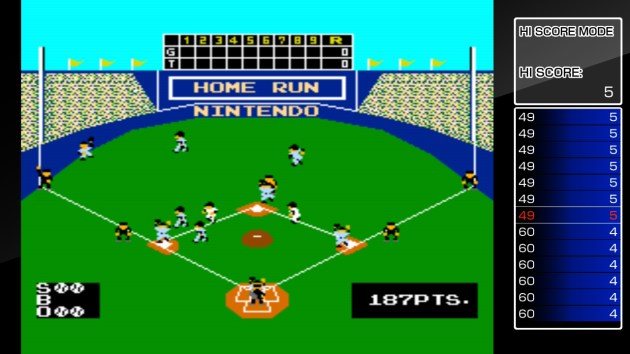
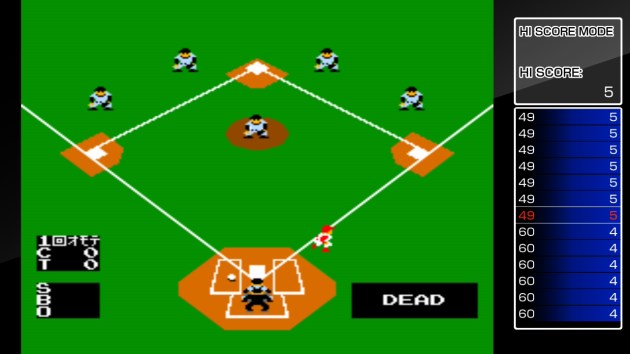
What’s with the points you see on the Vs. Baseball screenshots? It’s how the game decides when a player needs to pay to continue. You don’t get a full game per quarter, but instead of having you pay every three innings (which would make sense) every single action in the game (except an attempt at a pick-off) eats up points, on both offense and defense. Are you playing defense and throwing a ball to a base to prevent advancement? That’ll cost you points. On offense and swinging the bat? That takes points too. Foul balls? Yep, both offensively and defensively. So does running the bases, while you get 30 points back for scoring a runner. Then again, you lose a lot more than 30 points when the other team hits a bomb out of the park. I gave up a two-run homer and it deducted 90 points.
There’s no license but the uniforms actually match the colors of six MLB teams (NES) or six Japanese baseball teams (Famicom), including the Chunichi Dragons, who I recognize from Mr. Baseball, a genuinely underrated sports film. If you can find it, check it out. The funny thing is, I don’t LOVE baseball (it’s fine) but I love baseball movies. I’ve lost count of how many times I’ve told people that the ending of A League of Their Own makes zero sense. The climatic game, I mean. There’s two outs, two on, and up to the plate steps Dotty Henson, the best hitter in the league. Yeah, she gets walked. 100% of the time, especially since the Peaches’ second best hitter, Marla Hooch, got married and didn’t play in the post season. They needed to create a situation where Dotty’s sister Kit, the plucky pitcher who got traded from the Peaches, almost gave up the game to her sister. But having Dotty blast an empty-bases homer would have been better than what they actually did, because what they wrote, simply put, would NEVER HAPPEN! Dotty would never ever ever get pitched to in that situation. They would have juiced the bases to create a force-out situation at every corner. I might have wrote this review just to have an excuse to talk about that on my blog.
If you were playing this on a real cabinet, it would take about a dollar to finish, and after a certain benchmark, the points go away and it lets you finish the game. To put it in perspective how STUPID this system is, right before going to press I played one last game using Arcade Archives’ Hi-Score mode (default settings, no pausing allowed, cheating impossible). On the literal first pitch I was given, I hit an inside-the-park home run. I might have scored a run, but I still had less points (238) than I started with (250) when the first batter stepped up to the plate. Dumb.
Note: In this clip of the inside-the-park homer, you can also see the lengthy pauses at each base. I’m LITERALLY giving the go sign the entire time. The runner should never have stopped! I was waving them forward right from the start!
While the base running and unresponsiveness is enough to assure a NO! by itself, the defense would have earned it too. All the fielding is done automatically. All you have to do is throw the ball. That’s fine with me, actually. I did the same thing when I played Ken Griffey Slugfest on my N64 as a kid. But, because the field is built to scale, the fielders run like they have each foot caught in a bear trap. Okay, I get it. They’re trying to simulate their approximate location if it were a full-sized baseball diamond. I’d be fine with that if the defense was reliable. It’s not. The defense’s judgement in general is pretty bad, so even something as routine as a pop fly could be dropped. The foul line is especially dangerous, as players often have to move up and and down to line up with the ball. This is where the slow speed of the fielding really screws you. However, unlike base running, this one works both ways. The CPU drops fly balls all the time too, and when it happens, it’s almost like they lose track of where the ball is in the sky. At least the pitching is fine. There’s four pitches, all controlled with the d-pad, though I couldn’t get screwballs across the plate. I’d prefer a little more room to mess with the ball, but eh, the base running is what kills Baseball. The runners are constantly tagging-up when they don’t need to, and there is literally no basis for this in baseball. I’ve never seen any game at any level that looks like this. They could have done better, even in 1983.
For whatever reason, I hit a LOT more home runs in Vs. Baseball than I did standard NES/Famicom Baseball.
Okay, so this review MIGHT seem silly to have done. But $7.99 is not an insignificant amount of money. You can buy a LOT of games for under $8 on the eShop these days. If Hamster had bundled it with Tennis, Soccer, and maybe even Golf, that would be one thing. $8 for THIS? And one of the special modes doesn’t REALLY work because the CPU might guzzle most of the five minutes trying to catch a runner stealing. You can’t stop the runners from getting leads, so there’s really no way to prevent getting caught in an agonizing cycle of pick off attempts. Both it and hi-score mode are certainly luck-based. It’s kind of nauseating. I know that the real goal with Baseball was simply to look and play better than any home video baseball did in 1983. Okay, MAYBE mission accomplished there. For that reason, some would say it’s unfair to call this Miyamoto’s worst game. It’s not an invalid argument. And for what it’s worth, I’m not calling this Nintendo’s worst game. The batting works fine. That raises it just out of the WOAT discussion all by itself. I’d rather play THIS than Ice Climber.
In Vs. Baseball, getting beaned is labeled “DEAD.” Jeez, how hard was that ball thrown? Only one person has ever been killed by getting hit by a pitch in major league history. His name was Ray Chapman. I can’t believe I know that guy’s name off the top of my head but I can’t tell you any of my nieces or nephew’s middle names.
The only reason I think Baseball is fair game in the “worst Nintendo game” discussion is because Nintendo keeps re-releasing it, which is a constant reminder that this is a BAD game of video baseball. Slow. Unresponsive. The behavior from the CPU fielding or base running doesn’t resemble what you expect from people who are in baseball uniforms. That’s what kills it for me. I might have joked about it earlier, but all my longtime readers know I legitimately love sports. The reason is simple: I love seeing athletes compete at the highest level. For whatever reason, it captures my imagination. That’s why, for me to really enjoy video sports, I need the fundamentals perfect. The GAME doesn’t have to be perfect, but the basics do. There’s no fantasy without that. No immersion. With Nintendo’s famous Baseball? I can’t suspend my disbelief, unless I’m pretending this is a celebrity softball game played with a three drink minimum. Hell, even then I think the players ought to be able to tell the difference between a line drive base hit and a pop fly. Verdict: NO! and NO!
No, it’s not an indie. But, I’m not exactly known as someone with a particular fondness for NES “classics” that grew stale before I was even born. When Nintendo surprised everyone Wednesday by debuting NES Remix and announcing it was out right now, it was bizarre. Almost as if they had no confidence in it. But, it looked vaguely like the 9-Volt stages in Wario Ware, which is pretty much my favorite game ever. And my Wii U was starting to get dusty again after I finished Super Mario 3D World. So, $15 later, I was going to see what this game Nintendo was so nervous about hyping for more than a few minutes was all about.
NES Remix is made up of micro-sections of sixteen early first-party NES games, most of which are no fucking good today and probably wouldn’t have been all that fun even back in the day. Look, I appreciate the historical significance of the original Donkey Kong, Super Mario, and Legend of Zelda. But the same franchises have been done better so many times since the 80s. To pretend otherwise seems kind of crazy. Meanwhile, the majority of the games in NES Remix really just aren’t any good at all. Baseball, Pinball, Tennis, Urban Champion, and Golf should be locked in a box and thrown in the middle of the ocean. And Ice Climber? I swear to God, I think it might legitimately be the worst game Nintendo ever made. Not only does it control like it was designed by someone who hates video games, but it also has a tendency to have players fall through the platforms because you’re “too close to the edge.” Even though you’re more than a full character-length on the platform. If there’s a worst first-party game Nintendo has ever put out, I haven’t played it.
Funny enough, it’s actually easier to do the bouncy-turtles shell-lives trick in Super Mario 3D World.
So, a collection of sixteen games that I either hate or am totally indifferent to? Games which have not been blessed with the gift of graceful aging? Games which I would never pay the price for off Nintendo’s Virtual Console if they were sold alone? Obviously, we’re talking a real game of the year contender, right?
Well, actually.. yeah.
NES Remix utterly owned me. I got it Wednesday morning, and I played it so much that I ran out the battery on my Wii U pad three times in a single day. Never mind how pitiful it is that a console could have the battery run out that much in a single day. I also will try not to focus too much on how there is absolutely no reason why NES Remix has to be exclusive to the Wii U, or that Nintendo unquestionably lost out on millions in revenue this week alone by not having a 3DS version launch alongside it. Okay, so that’s a lie. It’s kind of the elephant in the room and it requires scrutiny. Nintendo fanboys are saying it’s because Wii U needs exclusive software to justify owning it. That’s a fucking cop-out excuse if I’ve ever heard one. NES Remix is the perfect portable game. Pick-up-and-play mechanics, small goals, a large variety of gameplay styles, and no consequences if you think you have time to kill, turn on your device, then suddenly become busy and have to turn it off. Tethering this diamond to the Wii U would be like hiring Michael Jordan to be on your golf team. I’m sure he’s a damn fine golfer, probably better than your average schmo, but wouldn’t he be better suited on your basketball team? And NES Remix would be better suited on the 3DS. It just would be.
But, the decision was made, and NES Remix is slumming it on the wrong console. Fine. It doesn’t change the quality of the game at all. NES Remix is, as of this moment, the best digital-exclusive Nintendo has ever produced. Like Wario Ware, Nintendo has taken gameplay, stripped out most of the bullshit, then weaponized what was left into the most potently addictive micro-gaming chunks seen since, well, the original Wario Ware. This is gaming in its purest form. Scoring and/or speed based, no frills, white-knuckle gaming. And I love it.
Sorry to disappoint white supremacists , but the game is called “Clu-Clu Land”. With a “C”. Just go back to playing Uncharted.
The NES games are divided into sections by game, which have anywhere between seven to over twenty levels per game, though I don’t believe every game has its own unique stage selection. Baseball, Tennis, Urban Champion, and Donkey Kong 3 seem to have drawn the short straw and don’t have their own sections, and that’s just fine with me. There’s also fifty “remix” stages that do something wacky with the gameplay or graphics, plus twenty-five “bonus stages” that seem more like deleted scenes, cut from the game for a reason. Each stage is scored on a scale from one-star to three-stars, plus if you do really good, a meaningless rainbow star thing appears that doesn’t seem to unlock anything.
The remix stages are treated like the meat of the game, but really, I enjoyed all the non-psychedelic challenges presented here. Stuff like trying to catch 1-up mushrooms in Super Mario, or fighting bosses in Legend of Zelda, one ten-second stage at a time, was hugely satisfying. It even managed to make games like Golf and Balloon Fight more than enjoyable, something I never imagined was possible. I knocked out most of those before I ever started on the Remix stages, which were often pretty cool too. You might have to play a full stage in Super Mario where the game auto-runs for you. As it turns out, Super Mario makes a great auto-runner. Who would have thunk it? Other challenges might be related to the presentation, like having the camera pull back, showing multiple, progressively smaller screens. When I played these stages, I would then look away from the Wii U pad, where my room now seemed to be pulling back and shrinking. It was trippy. And awesome.
Not all the remix stages were well conceived. A couple of them involve you playing Donkey Kong using Link. No, you can’t use your sword for some fucking stupid reason. Also, you can’t jump. Ever tried to beat the first stage in Donkey Kong without jumping? It’s way tougher than it sounds. You’re basically left up to the whims of fate, hoping against hope that the barrels don’t go down the ladders you’re about to cross, since you have no way of defending yourself or otherwise avoiding them. My gut instinct tells me they originally planned to let you use the sword for these sections (since it makes no fucking sense to have Link in Donkey Kong and not be able to swing your sword) but they couldn’t do it right (it’s really just a ROM hack, with Link painted over Mario), so they just left it the way it was. Of course, the whole ROM hack theory doesn’t explain why you can’t jump. Other ill-thought-out stages include Pinball (a crap game on its own, like most of the games in this collection) where the flippers are invisible, an Ice Climber stage where the only hook is the graphics become Game Boy-like (and this one screws up sometimes by having the mono-Gameboy sound be present during the NES part, and vice versa), or fighting “imposters” in Balloon fight that are the exact same enemies you already take on, re-skinned to look like you. Really, some of them are just plain lazy. But this is the same company that has put out roughly fifty-billion ports of the 75% complete NES version of Donkey Kong. I’m almost convinced that Nintendo is the Japanese word for half-assed.
The biggest problem with NES Remix is these are the exact same games that they’ve always been, only broken down into microscopic chunks. Although this makes some of the games more palatable, all their original control flaws are still present. I mentioned Ice Climber above, which is probably Nintendo’s most broken controlling game. But actually, the original Mario Bros. is nearly as crippled. The jumping physics are horrible, requiring you to build up momentum to make a jump. Only sometimes this doesn’t seem to work. Plus, landing on a platform above you requires you to land perfectly flush on it. If a micro-pixel isn’t on, you fall through the platform. In games scored entirely around timing, shit like this is fucking maddening. Additionally, Baseball, Tennis, and especially Clu Clu Land (my buddy Cyril’s choice for Nintendo’s worst first-party game) control the same as they always have: like shit.
One of the Zelda stages (not the one pictured) required me to use the candle to burn a tree down and reveal a hidden staircase. As God as my witness, I burned every God damned tree on the screen at least three times each and the staircase never appeared. I restarted the stage and the next time the very first tree I torched revealed the staircase. I’m not sure if it was a glitch or not. I never bothered to replay it after that. I had already ripped out enough of my hair by that point that my scalp was bleeding.
Another issue, which is kind of minor, is that the difficulty of each challenge, in terms of what will give you a three-star rating and what won’t, varies wildly. In one of the Super Mario levels that is divided into three sub-stages, the object is to enter a warp pipe. The target time for three stars was 30 seconds. Getting this required near-perfect runs. I twice finished at 30.1 seconds because I had trouble lining up in the under-water pipe or something. Eventually, I did get the three-star rating I had coveted, clocking in at 29.6. No rainbow stars though, and I’ll be damned if I can guess where I could possibly make up the time for it. Edit: Oh my God, I am such a fucking idiot. I thought I had attempted to enter all the pipes in the second stage. It turns out there was a much, much closer pipe I could have entered than the one I was going into. I just finished in 24 seconds and rainbowed. I suck. But then I would play multiple other stages where I could die three or four times and still score three-stars with rainbows even though my performance could best be summed up as “pitiful.” There was no consistency from one stage to the next, and it takes the oomph out of the sense of accomplishment I sometimes felt.
Despite those issues, NES Remix is honest-to-God my new favorite Wii U game. Certainly Nintendo’s best digital-exclusive in their history. I was utterly hooked for three solid days on it. It even did the impossible and made Urban Champion fun for like five seconds, which by my count, is three seconds longer than Wario Ware accomplished. (UPDATE: I hadn’t ever played Urban Champion by this point, and eventually gave it the IGC Seal of Approval. Go figure!) Although I have no fucking clu-clu why this is exclusive to Wii U, this is a must own. At least, I think it is. Opinions are hugely divided here. One trend I’ve noticed: older gamers that played the originals to death in the 80s seem to like this a lot less than myself and younger gamers have. I’m guessing if you’ve played the original Super Mario Bros. once a week for the last thirty years, you probably would be bored by some of the “challenges” here, like playing level 3-3 with all the platforms invisible. See though, I don’t have every nuisance of these games committed to memory, and probably for that reason, this could very well end up being my Game of the Year. So a word of advice to the younger Nintendo fanboys out there: don’t schedule a monthly play-through of New Super Mario Bros. or Pikmin 3, or else when Wii U Remix comes out in 2043 for the Nintendo Wii UeumI3, you’ll be sorry.
 Super Real Baseball ’88

 Bases Loaded

 Baseball



 R.B.I. Baseball


 Baseball
 Arcade Archives: Vs. Baseball







 Indie Gamer Chick


You must be logged in to post a comment.