NEScape! (NES Indie Review)

“Oh GOD, she’s doing another escape game.” Yea, in case you haven’t noticed, my family is obsessed with escape rooms, including mail-order “escape crates” and board games that are functionally single-use mysteries that may or may not be destroyed in the process of playing them. Hell, they even make Clue-branded ones now. Of course, our favorites are the actual brick & mortar ones. They’re like real life video games. It’s you, your friends and/or family, and a room full of puzzles. The object is to just get out the door, typically within a one hour time limit. Taking an experience that’s supposed to replicate the feel of a video game IN REAL LIFE and putting it in, well, a video game, seems redundant, but I’m so happy they exist. Escape Rooms can be hell of expensive (we spend usually $100 to $150 per one hour session). Not only do video escape rooms let people test the waters to see if this is the type of thing they’d like to go try, but they’re cost-efficient too! But, they have to be done right. Escape Simulator has shown how (just stay away from the user rooms unless you like old-school adventure video games since that’s what users tend to do with the engine). And hell, they don’t even need to be truly 3D or “high tech” to do well. Look at Cape’s Escape Games on Nintendo Switch. We’ve enjoyed them all, along with the Japanese Escape Game series that uses basically the same interface but is apparently a different company. There’s also tons of 3D escape rooms of, shall we say, less than stable build quality. About the only thing the Vice Family has not attempted is an 8-bit escape room. Until now.
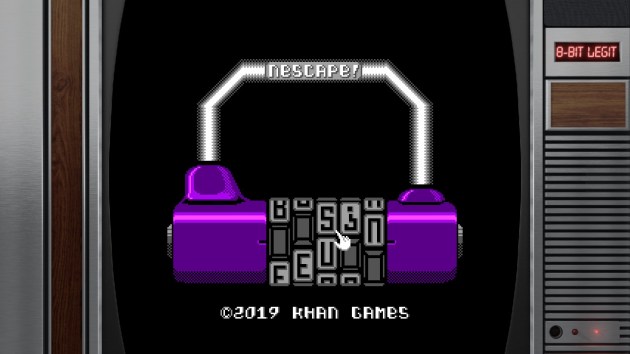
Even the title screen is a puzzle. Thankfully, you can skip it if.. likely WHEN.. you need to replay the game.

I wanted to like this so much. Going into NEScape, I figured it’d be a novelty-at-best experience. Hey, it’s the Escape Room phenomena, only as a Nintendo Entertainment System cartridge. But, my expectations were quickly tempered. There were a few warning signs, the first of which was the hideous cover art that looked like absolutely no thought or consideration was put into it. At the point of sale, your first impression is the cover/logo for your game. You’re not supposed to judge a book by its cover, but when the cover art looks like this:
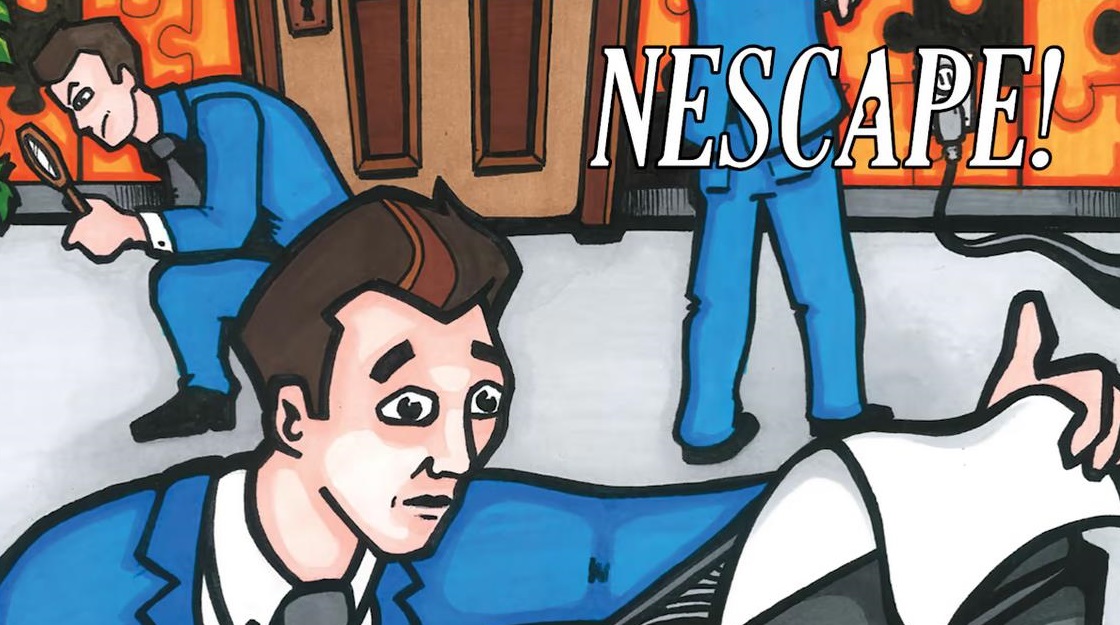
.. yea, that’s a red flag. Why not have 8-bit pixel art showing escape room elements? That’s the point of the game, right? The only reason you’d want to play it: an 8-bit escape room on the NES. Not only that, but there are people who specifically like pixel art style games. I’m one of them. But, if I had seen this on the store page, I’m not entirely sure I’d of clicked the page to see what the graphics actually look like. Not with this cover. Just having “NES” in the name isn’t enough. Yes, that’s an incredibly nit-picky thing to whine about, but a pet peeve of mine is bad cover art. It bothers me even for games I don’t like. You went through all the effort of making a video game, and THIS is the first impression you want to make at the point of sale? NEScape actually has really good graphics as far as NES Indies go, but you wouldn’t know it from this.

So, that was ominous sign of the type of consideration that went into making this. But the real canary in the coalmine was the instruction book’s warning about time running out and how not to give up, because you’ll make it a little further every time. Oh dear. Yes, hour time limits are the primary challenge in real escape rooms. But, strict time limits should not carry over to video game escape rooms. Among other reasons, real rooms have a better user interface. It’s called reality. You don’t have to figure out the controls of reality. You just act. You can pick stuff up and examine it with your own hands. You can move about freely. You can focus on whatever you want to without having to move a cursor around to switch rooms or click on objects to get a close look. Escape Rooms also need the time limit because they’re a business that has to do multiple sessions every day to be economically viable. On days where they’re not jam-packed or have no walk-ins, most generally allow players to continue past the time limit if they fail (especially if they’re close to the end). Strict time limits only make sense in real rooms on busy days.
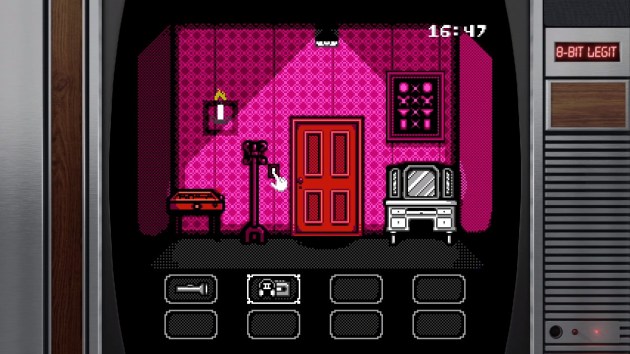
There’s four “rooms” to look at (hypothetically one room with four sides. This house wasn’t made by Thomas Jefferson). There’s a curve to figuring out where to click to advance to the next room.

In the non-corporeal world of video games, you DO have to fumble with interfaces. You DO have to fumble with a cursor. You DO have to fumble with navigation, like where exactly on the screen you click to change rooms. You DO have to fumble with item usage. You DO have to fumble with what’s clicklable and what isn’t. Video games are always going to be more clunky, and you have to take that into account. NEScape doesn’t at all. It seems to expect players to fail and then start over from the beginning. That’s why the instruction book says this:

By the way, that design logic is fine.. provided you make a game that’s fun to get back to the part you died on. An escape room is almost never going to be that, randomized puzzles or not. You already know what item you use on what thing, and that part doesn’t change. Even the random elements won’t matter because it’s not WHAT the solution is but how to come to that solution that’s the fun part. Staring over from the beginning and working your back to the part you lost on is just a chore, and it’s going to be a longer chore every single time you fail. Well, NEScape goes strictly by the timer. The moment it runs out, you return to the title screen. They didn’t even do an alarm or a gong or anything. I mean, come on! It’d be like a Mario game without the death animation and fail music. Have a little pomp to your game! I’m surprised they didn’t have a buzzer, because the one good thing I can say about NEScape, besides having good graphics, is that it has pretty good sound design too. I really liked that the game changes to a different chip tune every time the lights dramatically cut-out to signify a major turning point in the ultimate puzzle. That’s a great idea and I hope other video escape rooms do something similar. But, that’s where my complements end.

Ah, video game logic. There’s a piggy bank and you need to open it. In the wacky world of video games, you need to find a hammer. In real life, piggy banks have a cork in the bottom that you can use to get the money out. Everybody knows this. Also, the ground exists. Why bother with a hammer when you’re presumably a person and not ghost. Just pick it up and throw it against the ground, right?

Another red flag was that the press kit I got for this game also included a complete walk-through, along with the solutions to every puzzle. Uh.. seriously? You don’t have to use it. We didn’t, and in fact, full disclosure: we didn’t finish the room. We played the game earlier this week and quit on the sliding puzzle when we got into an argument over what moves to make (yes, the guide has literal step-by-step instructions on how to solve that part, too). We fired it up a second time last night, but timed out late into the game. Look, I’m not above using a guide to beat a game. I do all the time. But it’s really, really rare for a developer of a game to send a step-by-step guide on how to beat the game to the people they’re presumably asking to evaluate it. Especially when that game has no action. They’re just puzzles, and when you tell someone how to solve the puzzle, that defeats the whole point of it, right? One of the most common mistakes indie developers make is telling play-testers how to play the game. Especially if they see the players get stuck or confused, or if the design is too obtuse. The correct way to do it is to just stand and watch, and not offer assistance even if the players ask for it, and then making adjustments based on OBSERVATION. Many people consider Portal to be the greatest video game ever made, and it got there because they watched play testers but offered no help to them. If they had done play testing THAT way, it wouldn’t be the intuitive masterpiece it is today. Unfortunately, many developers tend to hover over players and basically Mommy-them through the game. In eleven-and-a-half years of doing Indie Gamer Chick, I can’t remember a puzzle game developer sending me the game AND the solution to the game. “Ooooh.. that doesn’t sound promising” I thought when I saw that. And I was right.
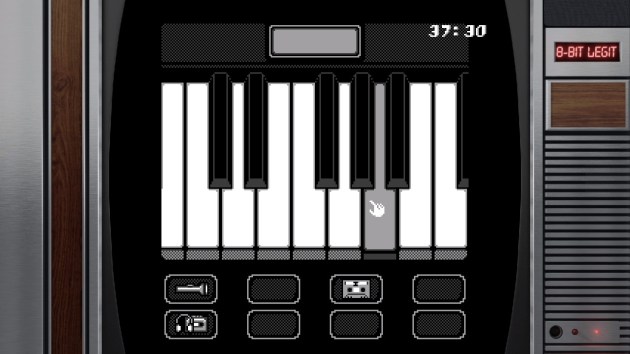
If you’re deaf, you’re going to need the guide (in fact, I think the game should have a disclaimer saying as much on the store page). Some of the puzzles are based around sound, including digital voice samples that tell you the password for certain things. I don’t think any of the “random” elements are musically based, so you should be good there. In fact, having now read the guide (since I’m never playing this again, so screw it, why not?) the only random element is apparently a Simon game near the end.

NEScape isn’t exactly the most original escape game. The classics are all here. A puzzle where you have to tap the right piano keys? Check. A puzzle where you have to move the hands on a grandfather clock? Check. A puzzle where the solution is based on assessing the correct order of picture frames? Check. That’s not a knock, by the way. The classics are classics for a reason: they work. Hell, they’re probably the best puzzles in the game. If NEScape stuck to these, it’d make for a neat novelty game. Because that was the ceiling here. The creativity begins and ends with “..only this time, it’s for the NES!” And it’s not a particularly strong game on its own merits. There’s no story besides “I woke up in a room” which, fine, whatever. The puzzle is the attraction. But, instead of focusing on typical escape room logic, you also have to solve mini-games, and this is where it really falls apart.
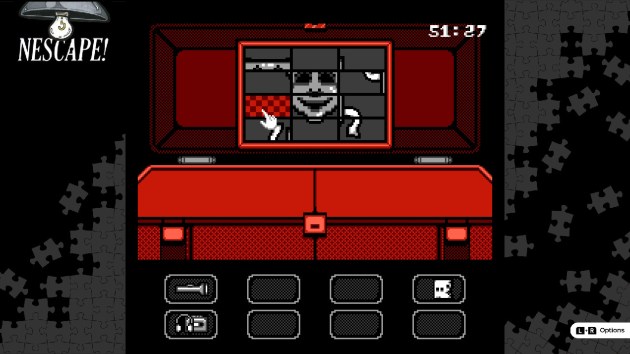
It’s never a good thing when a game causes my normally docile family to erupt into a screaming match. The magic of sliding puzzles.

Like, early on, you have to do a sliding puzzle. For me, the attraction of escape rooms is doing them with my family. We all have a notepad, and we cooperate to solve the puzzles. You can’t do that with a sliding puzzle. You also can’t do that with a ball-in-a-maze tilt puzzle (one that even the guide advises you go slowly on). There’s even a “spot the difference” puzzle in this, and it’s one of the dumbest things I’ve seen in any game. For god’s sake: it’s 8-bit graphics and collision boxes in tiny windows we’re dealing with here. It wasn’t exactly QuickSpot. Like the other non-escape room stuff, it just stinks of busy work made to shave time off the clock and force replays. We still might have beat the clock, but during the fourth chapter, we ended up spending too much time trying to solve frame-swapping puzzle. At more than one point, we knew we must have solved it, but nothing happened. The design of it was.. well.. 8-bit enough that we weren’t 100% sure, so we kept tweaking it over and over.
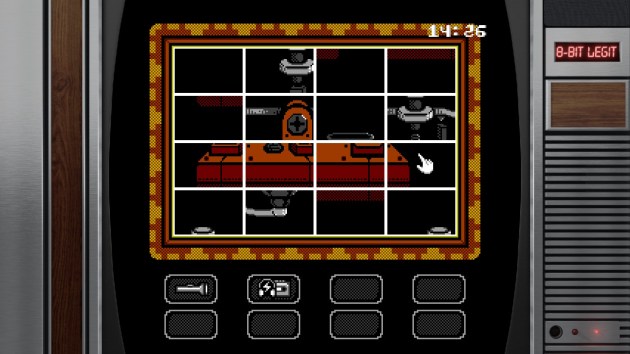
This is the swap puzzle in question, which should not have been clickable until it was the next puzzle in the sequence.

Well, it turns out, that wasn’t supposed to be the next thing we did. What happened was the lights went out, and when they came back on, there was this nonsensical gibberish on the typewriter. We knew there was a clue in it, so Mom and Angela took a pic on her phones to study it while I exited the screen to explore. Upon exiting the typewriter, the telegraph tile-swap puzzle was right there and opened in the same room we were already in, so we worked on that. Unknown to us, a hammer had spawned in another room during the last interval, and the puzzle associated with THAT was the next puzzle we were supposed to do, with the telegraph not working until that part was completed. It’s the type of design logic that’s there to deliberately mislead you and shave time, which is what bad escape rooms do. Granted, this was made in 2019, where what’s called “red herring design” was more common. It’s a design trope the industry has largely phased out, because they learned people are more likely to become repeat customers from winning and not timing-out and coming back to do the same room again. But, for us, it was the final straw. You can do this type of “not this puzzle YET” design in real escape rooms because your party can split up. Divide and conquer. In video escape rooms, everyone is tied to one screen. Should we have explored first before wasting time on the puzzle? Maybe. But, that’s the risk the developer took on when they designed it that way: that they’d piss off the players for deliberately wasting time with the obvious attempt of forcing a restart.

Well, it does.

Do you know what I’ve noticed? My friends who actually liked NEScape were not escape room fans. Indie Gamer Team’s Aki liked it. My friend Daria liked it so much she considers it one of her favorite NES Indies. If you’re a fan of games like Shadowgate or Uninvited or Deja Vu, where dying and starting over is expected, you might like this a lot more than we did. Meanwhile, my family hated this so much that we went to an actual escape room this morning just to get the nasty taste of NEScape out of our mouth. This is a terrible video escape room. There was no point in the strict time limit. Hey chaps: the game wasn’t very fun to begin with. Forcing a from-the-start replay was going to be especially annoying with all the busy-work you created between the puzzles. WE considered restarting. In fact, Angela worked out the game’s typewriter puzzle while we sat around bitching about the red-herring, time-eating sequence issue. She was going to get us back to the spot we were on, but when she got to the sliding puzzle, she said “oh right.. I forgot about this stuff. Yea, I don’t want to do this stuff again.” C’est la vie!

This isn’t a puzzle. It’s a time sink. One that you have to heeltoe your way through to avoid having to restart it. These mini-games are what ultimately sealed NEScape’s fate for us. I can deal with clunky interfaces, and I can even deal with having to redo puzzles (stupid and self-destructive as that idea is). One thing I can’t deal with is being bored, and the greatest sin of NEScape is the padding it chose is BORING!

So, that was that. If the thought of replaying the same puzzles over and over again until you finally open the ultimate door sounds like a good time to you, hey, you might enjoy this, ya weirdo. We didn’t. If it had just stuck to the puzzles, this would have been fine, I guess. Certainly not great. The interface was too clunky to rise to that level. Unfortunately, NEScape set itself up for failure with the strict time limit, which forces you to replay mini-games I didn’t even want to do one time, let alone multiple times. And FYI, a strict time limit would have likely sunk Escape Simulator or the Cape’s Escape Games as well. This is especially true of Escape Simulator, which has a short timer. But, that game doesn’t end when you time out, nor are you penalized for it. It’s more of a high score or time trial type of thing. The mini-games weren’t the deal breakers by themselves, but they did make me dread that replay. When Escape Simulator, Cape’s Escape Games, or Japanese Escape games do mini-games, I find them annoying too.. BUT I’M NOT FORCED TO REPLAY THEM! Escape Rooms require a different mentality from other games. They’re one-and-done. Replay value is not expected, and I’m not sure the developers understood that staple of the genre. BUT, if you want replay value, the way to do it is by adding hidden objects. It’s not by forcing you to redo the same puzzles with the same solutions over and over. That’s not fun, and NEScape isn’t fun. Lock this one in a room and throw away the key.

NEScape is not Chick-Approved

NEScape! was developed by KHAN Games
Point of Sale: Nintendo Switch, Xbox, NES Cartridge (Coming Soon?)

$4.99 timed out in the making of this review.

A review copy for Nintendo Switch was provided for this review. Upon the game’s release, an Xbox copy was purchased by Indie Gamer Chick.

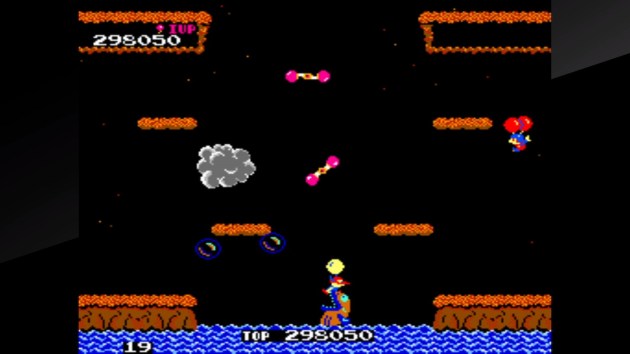
 

Arcade Archives: Vs. Balloon Fight (1984 Arcade Review)

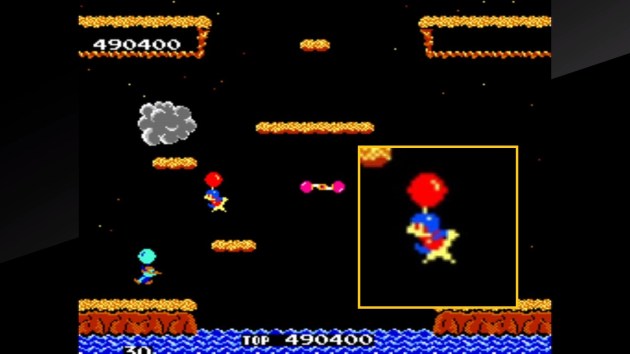
Owwww. Ow ow ow ow ow. Owwie. My hands. My beautiful, bony hands. What the hell were they thinking with this one? Look, I’ve never been the biggest Balloon Fight fan in the world. Admittedly, I’m not a fan of Joust, either. So here’s a warning to fans: maybe take this review with a grain of salt. Balloon Fight has never been for me. But, it could be with enough twists to the formula, which is why Vs. Balloon Fight got my attention. Of all the Nintendo Vs. System coin-ops, Balloon Fight has the most profound change to the NES counterpart. Well, besides Vs. Duck Hunt, where you can shoot the dog in bonus rounds (though you’re not supposed to). It’s the same concept: flap your arms to fly, and then come crashing down on top of enemies to pop their balloons. After that, you then can hit them a second time as they parachute down, or kick them off the ledge once they land, Mario Bros.-style. So, yea, in a nutshell, Balloon Fight is really just Joust with an extra hit-point and parachutes instead of eggs. The big difference over its NES counterpart, besides having a lot more levels, is that Vs. Balloon Fight is not a single-screen game. In the coin-op, the size of the playfield is doubled vertically and you have to scroll the screen upwards. It makes for a more exciting, intense experience. Enemies might come flying out of nowhere (especially when bumpers are added after six stages) creating a chaotic atmosphere that somehow never feels cheap because you ought to know better than to leave yourself wide open from the unseen menaces above. It should be great!

Sigh.

Here comes the “but..” Like the Starks say: nothing counts before the “but.”

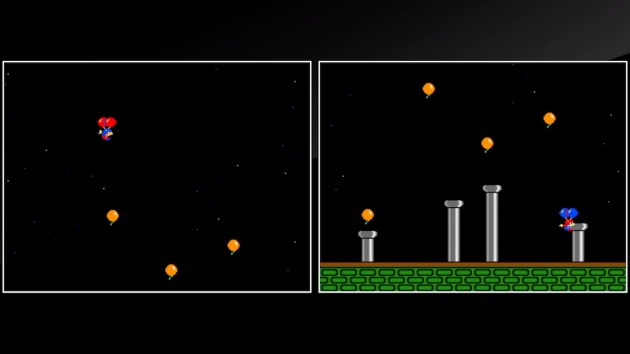
Vs. Balloon Fight has absolutely brutal gravity. The amount of flapping it requires is completely unreasonable by any standard. The NES version allows you to maneuver with a steady pulse of tapping the button. But, for a game that you’re expected to pay two bits per session, that won’t do at all. You have to absolutely button-mash to maintain your flight, Track ‘n Field-style. I’m not having a pity-party for myself here, but I literally physically cannot button mash to this degree anymore. Thankfully, my family, including my 12-year-old sister, also couldn’t believe how furiously you had to tap the buttons to maintain your flight. Again, I’m not a fan of the NES version, but I think I’d remember if this was one of the reasons why. Just to make sure, I threw on the home version on Switch Online, and it took me only a few seconds to verify the gravity for the arcade version isn’t like the NES version at all. The worst part of this whole issue with Vs. Balloon Fight is, if you start to come down, the gravity seems to further intensify, requiring even faster flapping to regain your momentum. Maybe that’s more “realistic” but it’s a frick’n video game about a guy in a balloon dueling to the death with birds using balloons themselves. To hell with realism! And why the heck didn’t anyone care this much about realistic gravity when it was Pinball? The gravity especially affected me in the wide-open bonus stages, which require you to chase down balloons that rise out four chimneys. I would inevitably lose my strength, and any attempt at recovery was hopeless and I’d crash pathetically to the ground with balloons still rising.

In addition to the crushing gravity, the walls and ceilings seem to have a lot more bounce to them. This can be problematic near the water. The enemies tend to do what I call “ride the current” and drift across a straight line, going through one side of the screen and coming out the other, and this will likely include one that hovers just above the water line, where the big fish will jump up to snatch you. Since there’s often platforms right above you, I tended to bounce off them and make myself hover too close to the water. I lost more lives to falling in the drink than I did to the enemies, easily. Well, partial credit for the bumpers. Those things ought to have warning signs. And yes, the fish will eat the enemies too, and it’s ALWAYS hilarious when it happens!

On the NES, you can hold the B-Button to autoflap. Thankfully, Arcade Archives games almost always have an option on the button mapping menu to turn-on autofire. Even better is that you can set the speed, and this is one of those games where that matters greatly. In fact, I took advantage of it and set a different flap speed to each face button (kinky, right?). It works great! Hey, the game’s now completely playable, and you get to appreciate what is actually a massive improvement on the Joust formula. Fun characters. Lots of charm. The combat has weight and my beloved OOMPH and it feels impactful to crash a balloon, complete with satisfying POP sound! It always brought a smile to my face seeing the sad look of an enemy as it slowly drifted to its potential doom. Of course, they can turn the tables on you if you wait too long, pumping a new balloon and upgrading to a more aggressive level of AI. There were also moments I got sadistic glee out of. Like having a stage with lots of bumpers, and I’m at the top of the level and suddenly I hear the fish jumping up and down, and then a few seconds later a bonus bubble starts to rise onto the screen, meaning an enemy just got eaten off-screen. Side note: I’d like to think that the bubbles are the enemy souls going to Heaven and bursting them sends them straight to Hell. Or maybe it stops them from being resurrected. Either way is bliss!

I did NOT die from this. When you take too much time to finish a stage, the clouds tap three mountains and cast Ball Lightning at you. It bounces around the stage and is an instakill even if you have two balloons. But, right here, more than half of it hit my body and I survived. That might be the most generous collision box I’ve seen in an arcade game.

Now, here’s why the gravity should be a deal breaker: because in the two modes designed specifically to compete for online high scores, you can’t turn on autofire. Yes, there’s online leaderboards in the main mode too, but you can cheat like you’ve been made an honorary Houston Astro in those. In addition to all scores counting no matter what adjustments you make to the game’s default settings (including giving yourself extra lives), you can use the interrupt save state feature. Until you game over, you can keep returning to the main menu and restarting from where you last saved. I used this to put myself 4th on the all-time leaderboard, because screw it, why not? Meanwhile, if you so much as pause the game in Hi-Score or the five minute Caravan mode, the game is over. You can’t just continue and must restart the game. While future releases of Arcade Archives would allow autofire in Hi-Score/Caravan, since it makes no sense to ban them when everyone has the option to turn them on and thus it’s a level playfield, they’re disabled here. So, 66% of the game requires you to mash buttons more than any game not based around the Olympics should, and those are that have protection from cheating. I figured this was an easy NO! Well, no, because it’s not 66% of the package where autofire is disabled. It’s 50% of it.

Let’s talk about co-op.

My promise to my readers in 2023: I will make a good faith effort to take the multiplayer for a test drive in games more often.

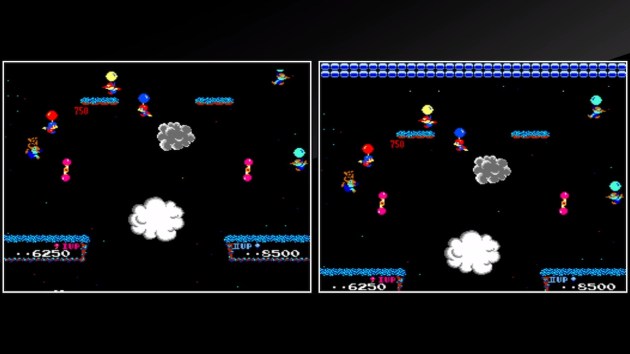
Being a Nintendo Vs. System release, a real Vs. Balloon Fight has two screens, which allows for two separate games to be played at once OR for a two-screened co-op experience. On a single Nintendo Switch, this is represented by two side-by-side mini-screens. Or, if you each own a separate copy of Arcade Archives: Vs. Balloon Fight, each player can have their own screen with one of the players hosting a game. I wasn’t willing to spend $16 on this, so Angela and me played on one screen “cooperatively” in quotation marks that feel ashamed to be associated with such an obvious lie. The only cooperation we showed was our mutual understanding that the two of us would be spending the next hour trying to assassinate each-other. Oh sure, we were bound to kill a few enemies would die along the way too. You know, in the crossfire. But really, once the game started with me immediately making a beeline for her and popping one of her balloons, sh*t was on. And guess what? It was a lot of fun, but it also further exposed some obvious weaknesses in Vs. Balloon Fight.

YOU MURDERER!

If a player runs out of lives, they can’t just re-up without issue. When either player has a game over, the action pauses and goes to the continue screen. If a player continues, the level restarts from the beginning. Since the other player was likely to be on their last life, we took to just feeding ourselves to the fish as soon as the game restarted so that we’d both have full lives to continue the fratricide. I get that it was 1984 and jump-in continues weren’t the commonplace practice yet, but it really hurts the flow of the multiplayer mode, especially when you’re having a blast killing each-other. It also sort of renders competing for points completely pointless. If you’re losing, pull a Tonya Harding and whack the other player. Your score resets to zero if you die. If you got a high score, too bad. That’s fine though. We had a jolly good time playing aggressively against each-other while also dealing with the enemies. We came to appreciate a comically well-timed betrayal when one of us was actually dealing with the baddies.

We’d actually work together best during bonus stages. I credit the cheerful music. Also, just so we’re clear: there’s no Balloon Trip mode in this. With the gravity it has, it’d basically be impossible anyway.

Even my parents got in on the action, and watching my Mom avenge me by taking out Angela about three seconds after Angela respawned from the previous murder will go down as an early highlight of 2023 for me. So, was this multiplayer mode enough to save Vs. Balloon Fight? Surprisingly.. yea! Barely, but barely counts. While I’m still pretty peeved that the modes I cared most about going into this are basically unplayable by me, fun is fun, and with autofire and a second player, Vs. Balloon Fight is a lot of fun. It could be more fun with some adjustments, like letting players reload without the level restarting. Especially since you’ll be draining each-other’s lives. Or, if you want to legitimately cooperate, that’s also fun. Of course it is! Trying to make homicide look like an accident is always fun.

Angela: “I KNEW IT!” Oh, like you weren’t doing it too!

Arcade Archives: Vs. Balloon Fight is Chick-Approved

Arcade Archives: Vs. Balloon Fight was developed by Hamster
Point of Sale: Nintendo Switch

$7.99 burst your bubble in the making of this review.

Arcade Archives: Golf (1984 Nintendo Arcade Review)

I used to golf quite a lot. I grew up literally right next to a country club that we were members of, but we never went next door to do anything but eat. Then my father had a mild heart attack and the doctor suggested he needed to take better care of himself and take-up a nice, relaxing physical hobby. Guess what he chose? Heh. Yea, because golf has NEVER been known to cause stress, right? I was 11-years old and, content that my father was on the mend and not, you know.. dead.. I went back to my normal routine of staring blankly at the screen while playing video games. I was on my brand-spanking-new PlayStation 2 when my Dad said I was coming with him to take-up golfing too. I refused, and he threatened to repurpose all my disc-based games as drink coasters. I said “you wouldn’t do that” and turned around to find my copy of Eternal Ring sitting under his mug. So, bitching and complaining the entire walk over to the clubhouse, I took-up the sport with my old man. Like most middle aged men suffering a midlife crisis, Dad overdid it with all the best equipment money could buy and lessons from the club pro, and whatever he bought for himself, he bought for me too out of guilt. It didn’t help him at all. His swing is such a disaster that I wanted to learn to play the violin and strum out Nearer, My God, to Thee after every tee-off. “It’s been a pleasure playing with you, Pops.”

Like Satan himself, this goes under many names. It could be called just Golf. It could be Vs. Golf. It could be Stroke & Match Golf. Hell, there’s even a re-sprited version with women called Vs. Ladies Golf that has different holes. Why wasn’t that included in this set? Because it’ll be an extra $7.99 when it inevitably lands on Nintendo Switch. Duh!

Meanwhile, given my size, strength, and complete lack of coordination and athletic ability, I wasn’t too bad a golfer. At my best, I was a 14 handicap. Which, for you non-duffers out there, that means if I were to play a full eighteen hole round of golf with a score of -14 to start, you would expect that I’d finish the round at 0, or even par. In essence, I got good enough where you wouldn’t expect me to bogey every hole. Dad was a 29 handicap. He couldn’t even get halfway to me, and if you don’t think I didn’t take a moment to rub that in his face every single time we hit the links, you don’t know me. None of that has anything to do with golf video games, but what do you want? They’re usually games about stopping a meter on time. YOU try to make it interesting! Really, the only reason to put all this here is to make it clear: I know my golf, and even though I consider myself a mediocre-at-best video game player, I usually annihilate golf games. I played Mario Golf on Switch Online a few months ago, a game I played a lot as a kid, and it was like putting on a comfy pair of old shoes. After a brief warm-up period, I was draining eagles and holes in one like there was no tomorrow. I even had an elusive albatross! It was like no time had passed at all. Mario Golf for the Nintendo 64 shockingly holds up very well to the test of time. I wish the same could be said about the one that started it all.

If some of these holes seem eerily familiar, they should. If you played golf on Wii Sports, you played these holes too. They just took the NES/Arcade Golf course and made it 3D. Yep, really.

Golf was one of the most successful of Nintendo’s Vs. System arcade games, so much so that they had one in the country club before I was born. I’ve heard from people who bought an NES just to have it. So, this is a little more historically big than I thought. And man, talk about a pedigree! Golf was designed by Shigeru Miyamoto, directed by Kenji Miki (who also directed NES Open Golf and Wario Woods before going on to be a very prolific producer at Nintendo), and programmed solely by Satoru Iwata. Apparently, Miki got deeply into golf during the Japanese golf boom of the 80s. You wouldn’t know it from this. I know a lot of my readers get annoyed when I talk about the dribblty-ball or other assorted sportsballs, but this is where I have to let the sports nerd in me come out. Because this is a golf game that basically does one thing right, and everything else horribly wrong. And, by the way, if you don’t know anything about golf, you’re going to need time to read the manual and memorize the max shot length. There’s no computer assistance with choosing your club, nor anything on-screen that tells you how much yardage you get out of each. If you don’t know the difference between a 3 Wood and a 6 Iron, you’re on your own to figure it out. There IS a chart in the instruction manual but you have to pause the game for it (which will automatically end your game if you’re playing Caravan or Hi-Score mode), but still, it’s not the most user-friendly golf game. You also always default to the driver at the start of every new hole, even if it’s not a hole where you’d want to bring the thunder. This is golf played exactly like everyone who steps onto the links for the first time: hammer always in hand.

One of the golden rules of golf is it’s better to undershoot than overshoot. A wise man once said you’re not likely to hit a parked car by undershooting.

So, here’s the thing about golf that matters most: any idiot can do a tee shot with a solid 80% accuracy if they practice it enough. It’s not even that much practice you need to learn to drive well enough to not embarrass yourself. In golf, real or video, it’s the short game that makes or breaks you, and Match & Stroke Golf has a pretty abysmal short game. Especially troublesome is chipping. In real life, if you ask any professional golfer what’s the most important club in their bag besides the putter, they’ll almost all agree it’s the pitching wedge. In Vs. Golf, the club is just not calculated right and it makes it unsuitable for chipping and other assorted short-distance shots. In fact, they seem to have designed it to play like a lob wedge, which is not the same thing. A lob wedge is designed to make high-arcing drop-shots that have less bounce and roll. They also allow for more control over the spin if you want to angle it. In Vs. Golf, the wedgie launches the ball high into the air with a tall arc, even if you chip. In a game where there’s no topography outside of the green and you can’t put English on the ball, that kind of shot is totally unnecessary.

The bunkers might as well be repainted fairways for all the challenge they pose in this game.

Yet, if you’re right by the green, you don’t want to use the wedgie. Even with a very light powered chipping stroke, the ball gets too much distance. I found myself using the sand wedge, which I suppose was a satisfactory enough chipper for the purposes of this game. Yes, many people, including pros (famously Phil Mickelson) use the sand wedge on the fairway because of its large-angled face which is great for a variety of different spins. You know what? I honestly found it was a lot safer and accurate to just putt from the fairway if I was 30 yards away. The game at least tells you how far you are from the hole, and anything less than 30, screw it, I putted. Sometimes it would even go in the hole, though this felt entirely like it was luck-based. This doesn’t seem like that big a deal, right? But, it sort of is.

Putting is annoying at first, but you can get SOMEWHAT used to it. The arrows on the green clue you into the slope, and it’s just a matter of figuring out the power to use. But, it’s not a good system. There’s no adjustable power and judging the speed and roll and distance is completely guesswork. Also, sometimes you’ll get a lie that I’m almost entirely certain isn’t possible to make in a single stroke. That happens in situations where you’re putting directly against the slope from a long distance. I had full-powered strokes come to a stop before they reached the hole. Golf doesn’t do any of the short game in a way that feels good, but putting is the worst. It never feels comfortable. Annoying you can learn to deal with it just enough to not be a deal breaker, but you’ll NEVER like it. Okay, maybe this really IS accurate to the sport.

See, you’re not going to be shooting holes-in-one or ironing-out eagles from 150 yards out as anything but dumb luck in Vs. Golf. It’s just not a precise enough game. BUT, you also can’t just chip-in either, and that’s where it crosses the line for me. Putting from a pixel or two off the green isn’t the same as knocking-in a forty-yard chip, and you can’t do that here. 99% of the best moments in golf, real or digital, are not shots off the tee. The most exciting and satisfying shots almost always come after that, and that can’t happen here. Not with these mechanics. Thus, you’re left with a game of video golf that lacks the potential for the most exciting shots. It’d be like a basketball game without dunking or a three point line. That’s the fun stuff! Remember, Golf is the one sport where “close enough” can be exhilarating. One of the single most incredible moments of my life was the first time I shot a ball from a bad lie in the rough and put it about five feet from the hole. Mind you, the putt was for a double-bogey, but I didn’t care. I was 12 years old and it was the first time I’d ever done anything that resembled good golf.

I had to rewrite a few parts of this review because I didn’t even think to pause the game to check and see if there was a shot chart to help newbies. I hate that I keep picking games I ultimately don’t like. I can see why Hamster wouldn’t want me to get review copies. They have a bad winning percentage with me. BUT, I will always give them props for their instruction manuals. They’re never half-assed and I really do appreciate the effort for clear instructions.

Well, the Nintendo Golf doesn’t really capture that spirit well because the short game just isn’t exact enough, and while “close enough” is a staple of golf, it’s also a game of precision. The strongest aspect about Vs. Golf is easily the shots off the tee. This was a pioneer of the standard triple-click swing mechanic that’s so ingrained into the video golf genre that the recent EA PGA game brought it back. It works here, and thank god for that. You can only shoot in sixteen exact directions and have to learn to utilize the slice (curving the ball right) and the hook (curving it left), which is simple to remember: left is right, and right is left. On the final click, if your meter is left of the white target, the ball will slice right mid-flight. If you’re right of the target, the ball will hook left in the air. You have to learn to use this, because sometimes you absolutely just can’t aim at the green the way you want to and have to sort of guestimate the hook or slice. There’s no flight trajectory or any method of helping you. I suppose, once again, it’s true to real life golf: you have to practice to get a feel for it.

Stupid as it is, I did enjoy the standard Arcade Archives five minute Caravan Mode. Yes, it’s even part of Golf. My best was shooting -4 after five minutes. I only barely finished the 6th hole when time expired. My best in the standard mode was shooting -10 for 18 holes. Not too shabby. In my recent Mario Golf session, I shot a 51, or -21 under par for the second-to-last course. My best as a kid wasn’t far off that. I think I did -25 under once. In real golf, one time at a par-3, nine-hole pitch & putt, I shot +1. At the course I played most on, my best ever for a day was +7 scratch. Sounds not too bad, but I was only +1 after nine holes. I gagged away the best nine holes I ever shot in my life, and Dad was calling me “Shark” after famous choker Greg Norman.

Another problem with Vs. Golf is every single shot is essentially a clean lie on the fairway. If the ball lands on a tree, it’s out of bounds and a penalty. Otherwise, even if you’re facing a tree, you don’t have to do anything different. It’s as if the trees aren’t there. There’s not even a rough in this golf game. Rough, aka the tall annoying stuff which is the thing that you’re desperately trying not to hit in real golf. No worries about that here. Instead, you’re playing all-or-nothing golf. It’s feast or famine: you’re either on the fairway, bunker, or green, or you’re out of bounds (or in the water, but at least there you get to take a drop). There’s wind, which barely manipulates the ball at all unless it’s over 10mph. Even sand traps don’t really factor in all that much. I never once hit one that wasn’t right by the green, which would be the only time that would actually hurt. The ball doesn’t get buried in sand, and you don’t have to do anything special besides switching to the sand wedge, which makes them kind of toothless, which defeats the point of having them in the first place. If anything, they’re just a brown-colored fairway that’s easier to chip off of. They’re the one element where it IS safe to chip and not worry about overshooting.

The little fist-pump Mario does when you sink a birdie managed to bring a smile to my face. Sadly, I never shot an eagle this entire review process. Not one. Came close only once, and yea, that was cool. It’s golf! Those moments would be cool no matter how antiquated the actual game is.

So, what do I make of this? Because golf should be frustrating, right? It’s golf, named as such because all the other four letter words were taken (yes, I stole that from Leslie Nielsen). It’d be weird if there wasn’t a steep learning curve. But, I think that this does little more than serve as a good first step towards making video golf a legitimately fun and viable genre. I’m totally certain this was groundbreaking and probably very fun in the mid-80s, like Golden Tee was in the 90s. Nintendo’s Golf is ultimately a very stripped-down game of golf, and while it isn’t totally crap by today’s standards, it’s just not that fun anymore. Vs. Golf is hurt badly by what it doesn’t do. Despite the lack of complex terrain, it lacks for assisted club selection, thus making it not so newbie friendly. But, veterans of video golf will find it too basic. What is Match & Stroke Golf? It’s a really good proof of concept for where video golf would go over the coming decade, and that’s awesome and admirable. But, now it really only has value as a historical curio. Then again, there’s people buying this because this version has music and the NES version doesn’t. Do I recommend it? Well.. no. But, with handicap, it could be a yes.

Golf is not Chick-Approved.

Golf was developed by Hamster Corp.
Point of Sale: Nintendo Switch

$7.99 triple-bogeyed in the making of this review.

Arcade Archives: Kangaroo (Review)

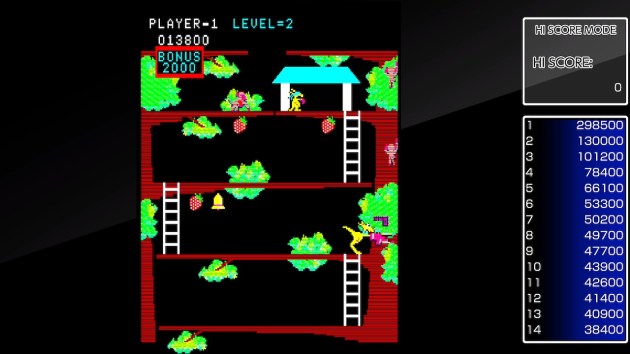
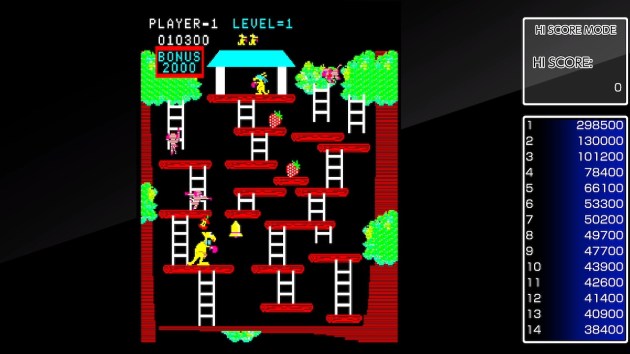
This week, I’ve looked at the maze chase. I’ve looked at the gallery shooter. I looked at.. whatever the hell Journey was aiming for. But, what about the Donkey Kong-like platformer? How about Kangaroo? It was released in 2020 as part of the Arcade Archives lineup too, so no need to dip into MAME this time. Believe it or not, Kangaroo was not some kind of historical curio. Despite being made by Sun Electronics, who would go on to be Sunsoft, maker of Blaster Master and the NES Batman, Kangaroo was distributed in America by Atari. Thus, a lot of people think of this as an Atari game, and one that could have gone into my Games They Couldn’t Use feature. Indeed, you’ll be seeing Kangaroo for the Atari 2600 and 5200 in part two of that very series. It was a moderate hit for Atari, and in fact did well enough that it was even adapted into an animated short as part of the legendary Saturday Supercade cartoon block. But, as an Arcade Archives release, Kangaroo deserves its own look. While I’m grateful that Hamster released this as a solo-effort, holy smokes, this is a terrible game. Anyone who thinks I’ve gone too easy on the retro games this week, just wait. I’m going to have a Kangaroo burger here.

Literally the only stage that works without MUCH of a hitch, and it couldn’t be more bland, basic, and boring.

I’ve nicknamed Kangaroo “Sloppy Joey” because that’s how Kangaroo feels. Like a game that wanted to ride coattails, but was made by people who had no clue what they were doing. Kangaroo is made-up of three levels where the object is to climb to the top of the stage to reach your joey, and one level where you can bring the joey to you. It wants to be Donkey Kong so bad it can taste it (what does Donkey Kong taste like? The answer is “chicken” because most everything tastes like chicken, which is why you should NEVER TRUST THE CHICKEN!) but it didn’t seem to understand how to do any of the things Donkey Kong did in terms of movement or level design. I’ll start with the movement, where jumping is mapped to UP but so is climbing ladders. It makes jumping over gaps a pain in the butt. If you fall or jump down even an inch, you die.. in some parts. In other parts you still can’t fall even a single pixel length, but you can jump down to a lower ledge. There’s no consistency except anytime you step off a ledge, you die. Even if the ledge is literally the size of your foot. At that point, it isn’t a ledge, is it? It’s a step, right? But it kills you like you just fell off the Grand Canyon. In general, the movement just feels sluggish and unresponsive. The best thing I can say about it is it’s not as bad the level design, which very much incorporates that death-by-gravity inconsistency.

This slideshow requires JavaScript.

The stages of Kangaroo are some the most bizarrely constructed I’ve ever seen. They’re so weird. After a conservative first stage, the second stage begins with having to hop-up a series of uneven platforms, and this is where the game’s biggest flaw reveals itself: the rules are inconsistent. When you ring a bell, it spawns more fruit, though most of it is below you, and you will die if you even attempt to jump lower once you ring the bell in level two. The fruit DOES carry over if you lose a life, but actually going to retrieve it is apparently not possible. I tried it, and if there’s a spot where it’s safe to do it, I couldn’t find it. Normally I’d check YouTube clips to see if I’m missing something but then I was like.. why would they make it so the fruit respawns below you anyway? Wouldn’t it make sense to have the bell on the first floor, with some kind of extra risk element blocking it, and put players at a choice? See what I mean about how this makes no sense? I imagine even in 1982 or 1983 that risk/reward design was a known thing, right? Which again makes this feel like a game by people who were just sticking things on a screen and crossing their fingers that they could reach the goal, sort of like me when I make a Mario Maker level. I did make a good faith effort to try to go lower and get the fruits, but the moment I went any bit lower than the platform I was on, I went into the death animation. BUT, then you get to level four, and there’s a series of ladders and gaps, and sometimes you do have to jump to a lower platform, which is now safe to do. Just what everyone wants from a video game: one that changes the rules as you go along.

Specifically it’s the spot by the broken ladder in the right-center of the screen. You can jump down to the platform left of it. The same drop, even off a jump, will kill you in level two. Kangaroo plays Calvinball. It just makes up the rules as it goes along.

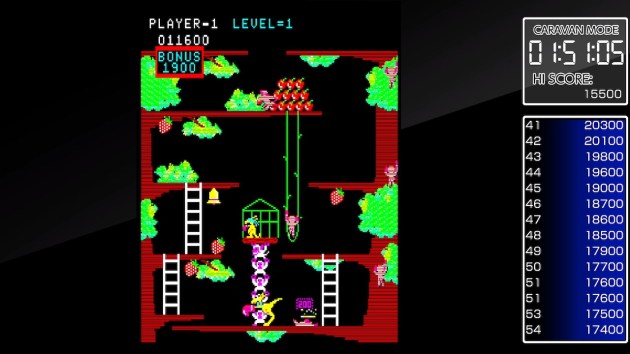
Nothing goes right in Kangaroo. I’ve had moments where I punched an enemy that wasn’t even in its throwing animation and we both died. The collision is bad, especially on the third stage. It wanted SO DESPERATELY to be the non-conventional Rivet Stage in Donkey Kong type of twist. In it, there’s a stack of monkeys holding the platform that the joey is on and you can punch the monkeys out from the stack to keep lowering the platform. You’ll be dodging apple cores dropped from above or thrown at you from the side this whole time, and other monkeys will come and try to join the stack or push back. It takes several punches to successfully dislodge a monkey, but if you’re not lined up right, you’ll punch right through them. Even though logically it should still be a punch. While alone it wouldn’t be a deal breaker, Kangaroo is a series of little annoyances that add up to one hugely crappy game. Like, you jump high enough that you’re clearly above platforms and should land on them, but you don’t. You go through them unless you jump on them from the correct platform. What was even the point of being a kangaroo then?

Also why is THIS the third stage when it has a climatic feel to it? It should have been fourth. It’s like they wanted to make a Donkey Kong-like game without taking any time or effort to figure out why Donkey Kong worked.

Sloppy Joey is ugly. It’s glitchy. It flickers like an Atari 2600 game, which is especially off-putting for an arcade game. It controls like crap. It has illogical design and scoring, especially with how the bell works. It’s also a game that defies challenging for high scores because you’re at the mercy of dumb luck. There’s a giant ape that shows up to box you and, if it scores a punch, you lose your boxing glove. But, it appears seemingly at random. I’ve had multiple instances where I’d go several games without seeing it once. Of course, it yields a high score if you punch it first. Like all Arcade Archives games, the main reason to own this would be to compete on online leaderboards. My high score was the only one in over a dozen attempts that had the great ape appear. So the one element that would make this engaging in 2023 is based on pure random chance. Most annoying: it has legitimate charm that makes you want to like it. Little touches like how, a second after you duck, the kangaroo pops its head up as if to peek and see if the coast is clear. I mean, come on! That’s adorable. And it pisses me off even more because instead of refining gameplay, they wasted their time and energy on crap like that. Of course, that little extra detail is probably what scored this a spot on Saturday Supercade. Fun fact: despite Atari’s status as the undisputed kings of video games during that show’s run, Kangaroo was the only Atari-published game to be part of Saturday Supercade’s lineup. What, they couldn’t come up with Missile Command cartoon? Which, going off how the rest of Saturday Supercade “adapted” video games (such as Q*Bert being basically Happy Days or Grease), Missile Command would probably be set during the Great Depression and be about sentient missiles running a news stand. Well.. okay, I’d totally watch that.

Kangaroo is not Chick-Approved

Kangaroo was developed by Sun Electronics
Point of Sale: Nintendo Switch, PlayStation

$7.99 got pounced in the making of this review.

Popeye (1982 Arcade Review)

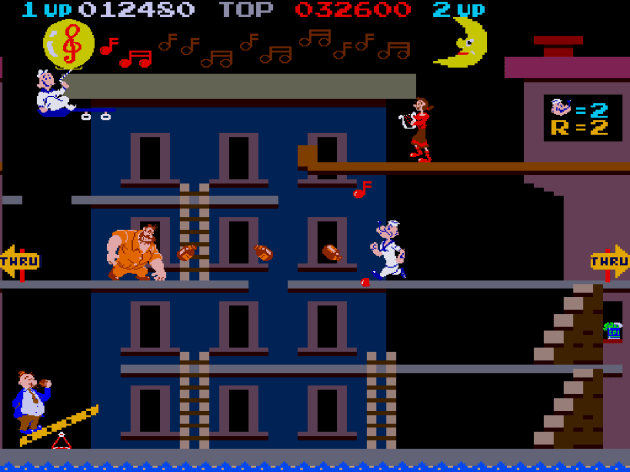
As the story goes, Nintendo attempted to take a license on Popeye 1981. King Syndicate approved the license.. after the game was too far into production to be reworked. You know that game as Donkey Kong. That’s right: had King Syndicate not dragged its feet, there would be no Mario, no Donkey Kong, and no Pauline. They would have been Popeye, Bluto, and Olive Oyl respectively. Just imagine.. a video game world without Pauline! What would have happened to the Super Mario Odyssey song? Oh and the video game landscape as we know it would look totally different. King did eventually grant the license, but by that point, Nintendo had no clue what they would do with it. It was too late to pull back Donkey Kong and turn it into Popeye, and they also had nothing on the drawing board. All they had was a license. The rest of Popeye’s development is shrouded in mystery, but about a year-and-a-half after the license from King Syndicate arrived, Popeye reached arcades. Sometime between their “oh crap, they gave us the license!” moment and November of 1982, Nintendo somehow managed to make what I feel is the best of their early arcade output.

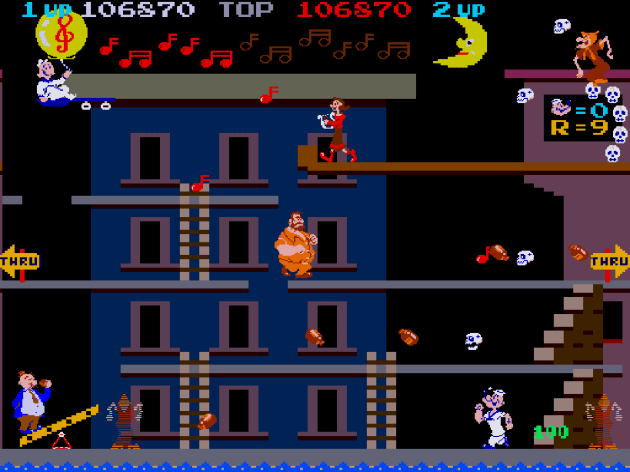
No early 80s game had such cartoon-like graphics. Well, yea. Shigeru Miyamoto literally watched Popeye cartoons while drawing the sprites. Of course, the backgrounds look more like Sky Skipper’s, which is not a very pretty game.

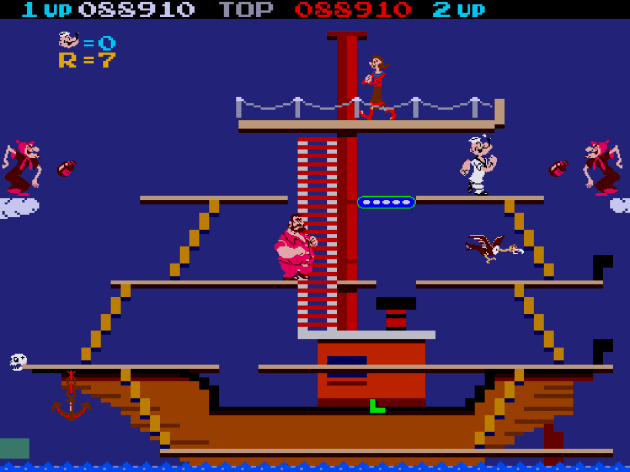
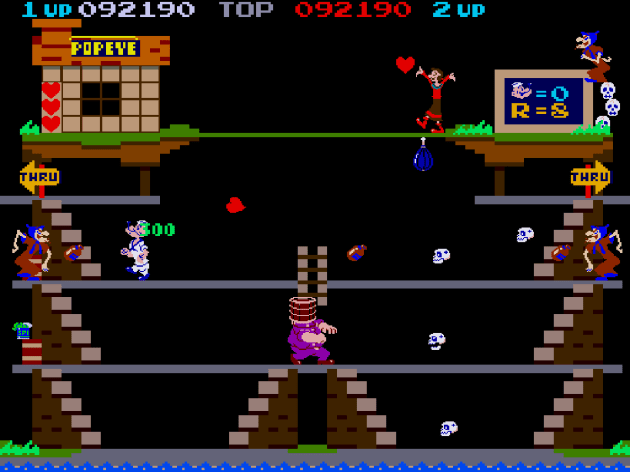
Popeye is one of those games that grew on me. As I started getting into playing retro games, I began to better appreciate what it accomplished in 1982. It’s the best maze chase I’ve played that’s played from a side-view, and Bluto is the best pursuer the genre has ever seen. You could just as easily retheme this as a Terminator game and it’d work. Bluto stalks you and isn’t limited to the platform he’s on. He can reach down to the platform below him. He can jump up to swipe at you. If you’re two stories below him, he’ll jump down two stories to come at you. If you’re across the screen he’ll throw bottles at you. He will not stop, until you’re dead. He’s an ever-present menace that makes Popeye one of the greatest maze chase games ever. This is a game of close calls, tight squeezes, and a surprising amount of action. As you move about the stage, the Sea Hag throws bottles at you too. Sometimes she does it from both sides at the same time. You have a punch move that doesn’t work on Bluto but it can break the bottles and the bouncing skulls (introduced after a complete level cycle) that come your way. In a maze chase with one of the most relentless pursuers the genre has seen, those moments where you’re forced to stand still and smash bottles become some of the most nerve-racking in all of classic gaming. And it’s awesome!

After completing one cycle of Popeye’s levels, the game goes truly bonkers. You still have Bluto and the Sea Hag to watch out for, but now you also have ANOTHER Sea Hag throwing skulls that bounce randomly around the level. Oh and you lose a life if any of the stuff Olive Oyl throws lingers on the bottom stage too long. It’s Nintendo’s way of saying “okay, you had your fun and rescued Olive Oyl. Now, please get the fudge off the machine so someone else will pay a quarter to play it.”

Popeye also works because you can’t create some kind of a preset strategy to walk the maze. Olive Oyl throws the collectables onto the playfield, which sorta float about. Their speeds and trajectory are completely random. Much like I do through life, they just sort of drift aimlessly until they reach the bottom. Improvising is the name of the game. You have to constantly fight to scratch-out a safe distance between you and Bluto, but you also have to chase down the hearts/notes/letters that your main squeeze tosses down at you, and they constantly shift directions. You can let them reach the bottom floor, but once there, they’ll slowly start to sink into the floor. If they linger there too long, you lose a life. This will lead to moments where you’re making squeeze-plays right by Bluto trying to get to the basement and collect the items with the urgent DU-NU-LUNT-LUNT-DU–NU-LUNT-LUNT music playing that’s right up there with Baby Mario’s crying from Yoshi’s Island in the “MAKE IT STOP!” Hall of Fame.

Despite my attempts to learn the idiosyncrasies of these classic games and what makes them work or not, I’m rarely any good at them. But, in gathering media for this review, I reached the seventh screen for only the second time on the arcade version. I shouldn’t really get nervous because who gives a crap about a high score of a forty year old game played on an emulator that doesn’t count anyway? But, in fact, I ultimately broke for 100,000 points (without cheating!) for the first time playing this and my hands were sopping with nerve-sweat the entire time. It was both disgusting and glorious.

Being Popeye, you can also grab a can of spinach from the edge of one of the screens. When you do, all the action on the screen stops. Everything except Bluto, who will try beat-feet-it away from you. But, annoyingly, you can’t just give chase. You have to do the HE’S POPEYE THE SAILOR MAN! HE LIVES IN A FRYING PAN! TURN-UP THE GAS AND BURN OFF HIS ASS HE’S POPEYE THE SAILOR MAN posing. By time you actually can move, Bluto usually has distance on you. My strategy was to put myself in a do-or-die situation where Bluto WOULD kill me coming up or down the stairs. It might have worked, but I had to pay attention to what position the spinach was in, and how long it’d been there. And I have the attention span of a housefly. My personal best game ever, which I actually had while making this review, would have been even better but I lost two lives mistiming the spinach. When I went to grab it, it was gone, and I had SUCH egg on my face.

About a half-second after this was taken I finally game-overed. I was ten times more excited to have broke for 100,000 than any functioning adult should be.

The three levels are fun and unique, and they each have their own gimmick. In the first level, you can drop a bucket on Bluto’s head. In the second level, you can use Wimpy to launch yourself from the basement to the top floor. The third stage has a moving platform near the top of the screen, and it introduces the Sea Hag’s buzzard, which you can just sock right in the beak for easy points. Of course, three levels makes this the shortest game of that initial Donkey Kong trilogy and leaves you wanting a lot more. But, this is also the Nintendo coin-op with the fewest weaknesses in that initial run. There’s no jumping physics to learn. There’s no objects to jump over. It’s you, a 2D landscape, projectiles flying in from the sides, and the best chaser in the genre. In only three levels, Popeye provides more close-calls and nail-biting moments than any maze chase that’s done from a side angle. Shame about the license, though. It means Popeye is the one Nintendo coin-op that gets no love these days. We were THIS CLOSE to Nintendo’s most important game ever being forever shackled by a license from a company with no passion for gaming. Everything you need to know about how lucky we all are can be summed-up by Popeye being a non-entity in 2020s. For the want of a signature, it could have been Donkey Kong. Then again, maybe this game would have featured a carpenter gathering hearts while being pursued by a gorilla and everyone would celebrate it today while Popeye Kong would be buried, never to show its face again. Life finds a way, right?

Make sure to check out my review of modern Popeye tribute Gon’ E-Choo! It’s so close to Nintendo authentic that you’d swear it really was a 1983 sequel to Popeye that was reskinned.

Popeye was developed by Nintendo

Popeye is Chick-Approved

King & Balloon (1980 Arcade Review)

UPDATE: King & Balloon has been released to Nintendo Switch and PlayStation as part of the Arcade Archives franchise. Read my review of the $7.99 package here.

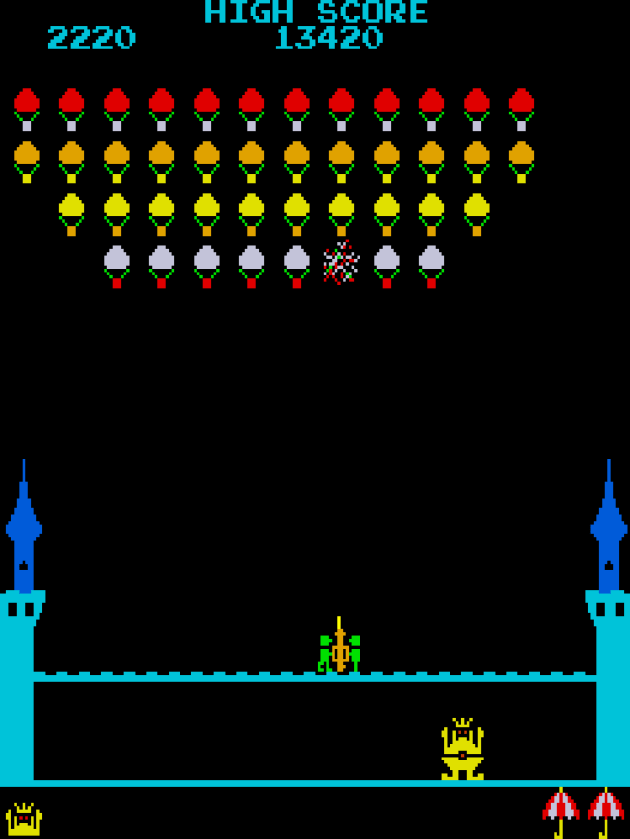
Yesterday, I looked at one of the two Golden Age gallery shooters that I actually liked. Here’s the other, though it’s nowhere near as complicated. Weirdly, King & Balloon also came out in 1980. It isn’t all that different from Space Invaders, only with a tiny hint of Galaxian thrown-in. Rows of marching enemies with limited attack patterns to shoot (in this case, murderous hot air balloons instead of aliens, which don’t scoff, because people have fought hilarious duels to the death in them), with the same formations restarting after you clear every screen. Besides having enemies dive down at you like in Galaxian, this could have been SO bland and boring. It almost was, but two wonderful twists in the formula turn this into one of the most satisfying and intense gallery shooters to follow in Space Invaders’ footsteps.

It looks like it’s going to be old and dull. Never judge a book by its cover. Except Twilight. Judge that like you’ve never judged before.

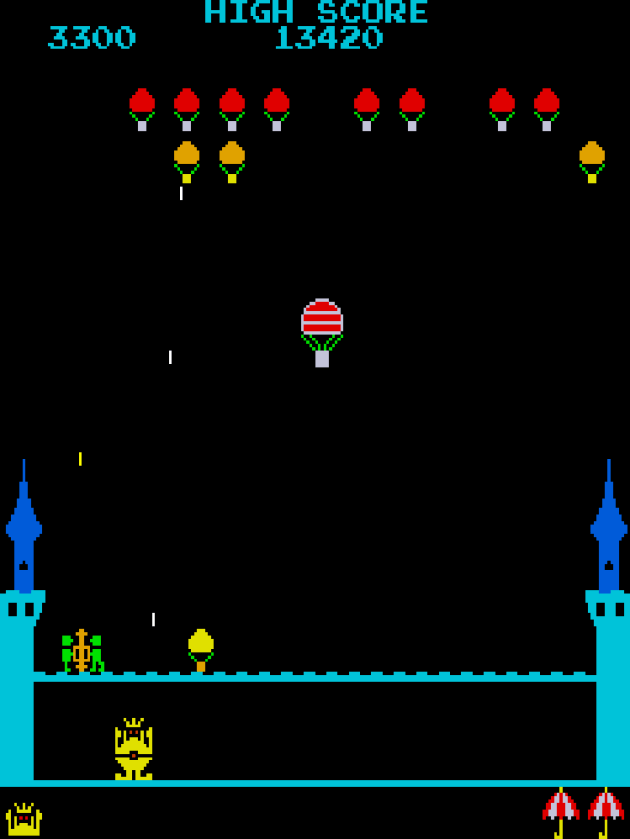
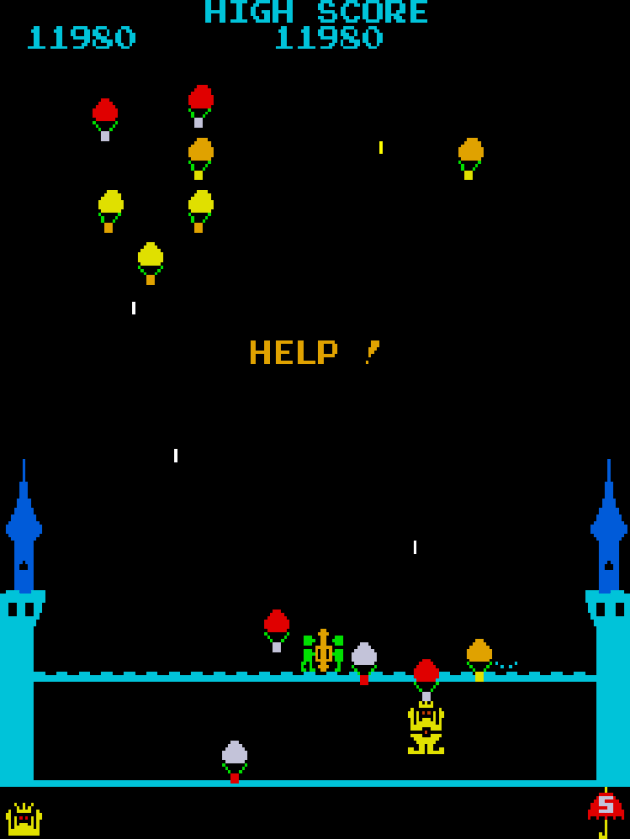
Twist #1: If your cannon gets shot, or an enemy lands on it, you don’t lose a life. Your cannon is destroyed but a new one will spawn after a couple seconds. Twist #2: That’s because the object of the game is to protect the King. He’s positioned underneath you and mindlessly walks back and forth, and while the balloons are shooting at you, they’re really trying to kidnap him. They’ll dive down and perch on the platform he’s walking on, and if he crosses paths with one, they’ll start to fly away, with the King literally screaming “HELP!” in one of the first uses of voice synthesis in a game. If you can shoot the balloon that’s got him, he’ll float safely back down to the platform. It’s a formula that makes for a genuinely exciting experience that, to the best of my knowledge, really hasn’t ever been replicated since.

This slideshow requires JavaScript.

One thing I’m big on with classic coin-ops is games that allow players to come up with their own strategies. That’s certainly the case with King & Balloon. When the balloons perch to kidnap the king, whether they snatch him or not, they don’t kill you if they touch you as they return to the playfield. So, it’s actually a totally valid strategy to focus on the balloons that remain in their formation while ignoring those who swoop down to take position to snatch the King. Then, you can just pick them off once they grab the King or return to their position, which they eventually will whether they grab the King or not. I found my best games took an offensive minded approach until the enemies become more aggressive, at which point I just focus on dodging bullets and letting the balloons try to grab the king. Since the balloons are harmless when they leave their perch, with or without the King, your best chance at picking them off is during their return. It’s like getting free shots at them. There’s also moments where you can allow yourself to be shot or have a balloon crash into you if you’re confident that you’ll have enough time to respawn and get a shot off to save the King as he’s being carried away. For a shooter with such limited gameplay, King & Balloon is deceptively layered.

Sometimes the enemies Voltronize themselves and make a bigger balloon that takes more shots to kill. If you miss it, it turns into three small balloons to attempt to kidnap the King

Does it get old? Sure. I wouldn’t want to play it for hours and hours on end. But, for a limited burst session when I have a few minutes to kill? I actually have busted this out just for fun, and I have a lot of options for King & Balloon to compete with, so that really says something. If there’s a problem with it, I think the lack of variety in enemies, along with their tactics and formations, hurts to some degree. Really, King & Balloon does one thing, and while it does it really well, it is still just a one trick pony, and one that can get old quickly. That’s why I suggest this for people like me who like to have games on standby to kill small amounts of time with. I also think King & Balloon escalates too quickly. The odds become pretty overwhelming after two screens, and by the fourth, you’ll remember that the point of this was to earn quarters and it’s high time you move off the machine and let the next player have a turn.

save

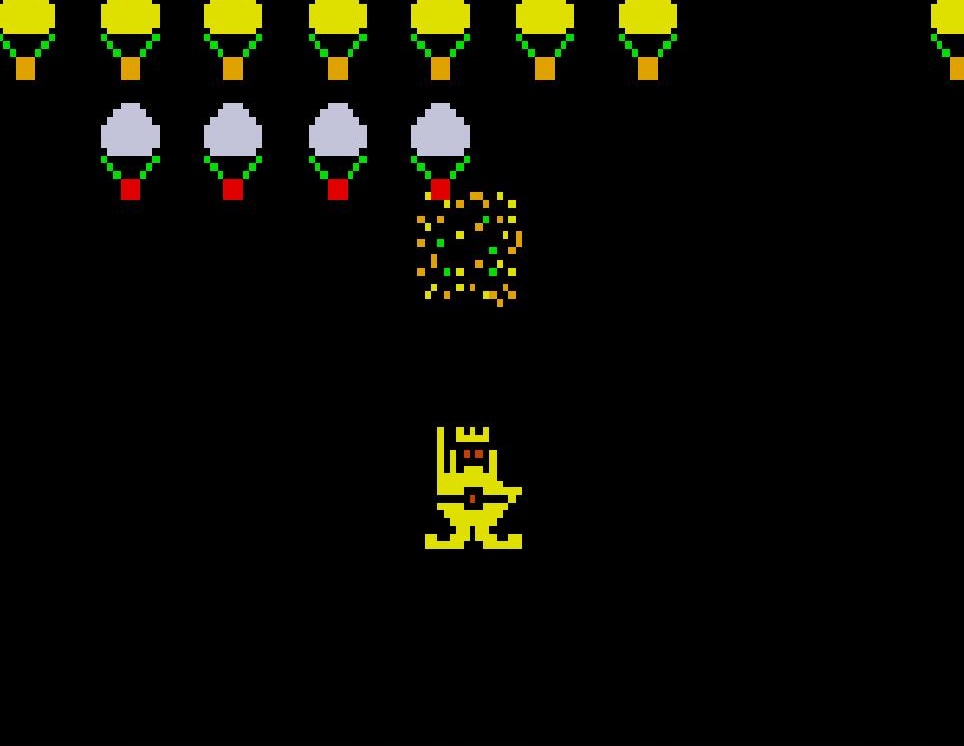
When you successfully make the save, it might be the most satisfying shot in gallery shooter history.

Still, this is a very fun game.. and yet, King & Balloon got NO home adaptations except on the MSX of all things. Even Carnival was on every major early-80s platform and was a modest hit on the Atari 2600 and Colecovision, at least enough to make copies of it not remotely rare or valuable. Meanwhile, not a single console got King & Balloon. As far as my research could find, nobody even considered it. Remember Sky Skipper? The cancelled Nintendo arcade game? EVEN THAT got an Atari 2600 port that actually was released. What the hell happened?

Atari owned the rights to King & Balloon through the same deal that scored them Pac-Man for pennies on the dollar, but they did nothing with it. Not even a prototype or anything. And don’t tell me it was the Zilog Z80 processor, because Atari took a crack at adapting-for-home many games based around that. Pac-Man and Galaxian used it, and they’re on the Atari 2600. This genre was smoking hot during this time frame and I think King & Balloon would have found an audience in 1981 or 1982 on the 2600. So, what gives? After pondering this for a while, the only theory I could come up with that made any sense is that they didn’t want to cannibalize Space Invader’s earnings potential. Either that or Taito had a deal that prevented Atari from porting King & Balloon because it was too close to Space Invaders. Or, if not Space Invaders they wanted to shore-up, perhaps it was Galaxian, which Atari did port in 1983. What a shame that is, because Galaxian was fated to be swallowed up by the test of time. King & Balloon meanwhile is one of two arcade gallery shooters from 1981 or earlier to successfully pass that test. At least from what I’ve played. It’s a very good game in 2023 all on its own, without a single “for its time” asterisk. And nobody cares, because it’s been completely shut-out historically.

Of course, when you miss a wide open shot and the king escapes, it’s the stubbed-toe of gaming. Nothing feels worse.

Hell, it didn’t even make any of the original five PS1 Namco Museum releases, being relegated to the Japanese-only Encore before becoming a plus-one to the weird Namco Museums on PSP and Wii. Damn, that’s cold. Maybe because they felt the only worthy aspect was the synthesized voices. No, actually King & Balloon is another contender for most underrated game of its time. I’d even say it’s worthy of a remake. It won’t get one. This is the unloved child of Namco’s lineup. How in the hell is Galaxian in so many of these sets.. even sets that have Galaga.. but this can’t get any love? That they keep bringing back Galaxian anyway is like one of those families that has two kids: one incredible and the other a sleazy ne’er-do-well, and the parents still love the sleaze more just because they’re the first born. My sister is eyeing me with contempt right now. She knows what’s up.
Verdict: YES!

King & Balloon was developed by Namco
Be sure to check out Paul Hammond’s excellent King & Balloon tribute on Pico-8. It’s free to play HERE!

Carnival (1980 Arcade Review)

Now that I’ve gotten deeply into exploring games from before my time, I’ve played a lot of games that existed only trying to ride the wake of whatever the flavor of the month was at any given time. The dozens of maze chases that followed Pac-Man. The dozens of platformers that followed Donkey Kong. The worst for me are those gallery shooters that rode Space Invaders’ coattails. First, there’s tons of actual clones that copied the game beat-for-beat, changing only the name. Those make searching through my MAME library such a delight. Not. But, even after those, there’s games like Galaxian, Galaga, Radar Scope, etc, where gaming has come so far that I just can’t get into them. But, there are two gallery shooters from 1980 that are actually pretty good, so much so they hold up to the test of time without several BUTs or IFs or other assorted asterisks. I’ll get to the next one tomorrow, but for today, let’s look at a gallery shooter themed like.. well.. a shooting gallery. And one that I think is the best in the entire genre for its era.

This is a tribute to the old-timey shooting galleries where you would shoot glass pipes and workers had to repaint the targets every day. I’ve always wondered if anyone was hurt from ricochets or shattered glass from the pipes or if anyone ever shot one of the attendants in the balls, Home Alone-style. We’re an awful species so it’d be right up our alley.

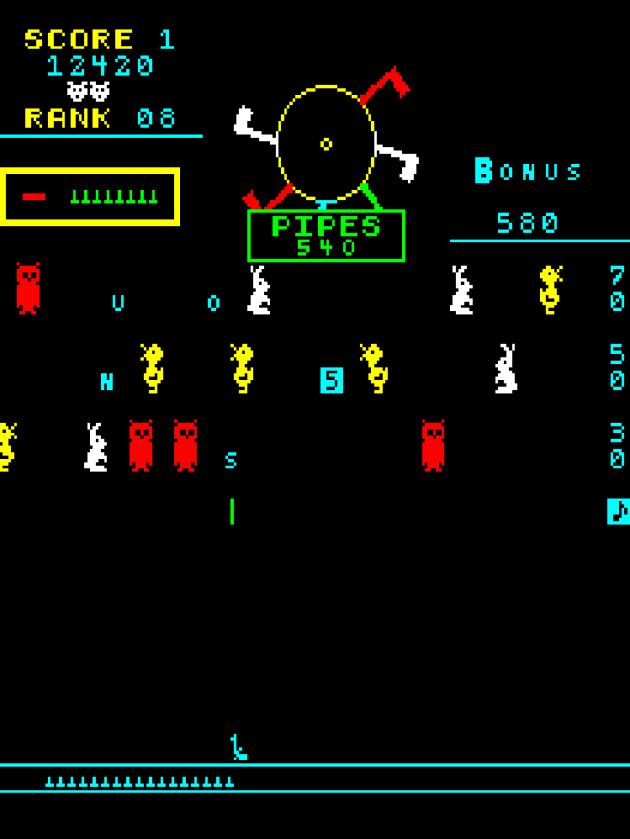
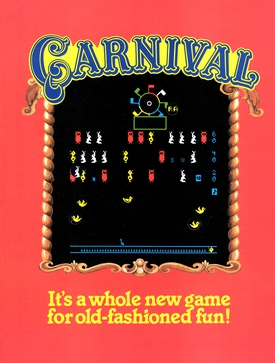
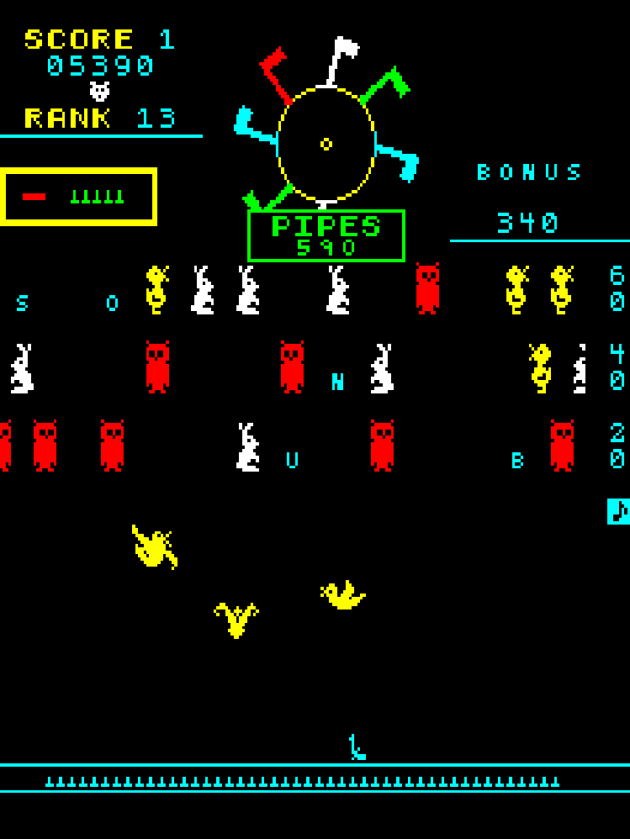
Carnival by Gremlin/Sega has not been re-released since 1982, when it was ported to the Atari 2600, Intellivision, and Colecovision. In a way, I get it: it wasn’t the biggest hit to begin with. Perhaps the lack of remakes or re-releases is why this might be the most timeless of its breed from this time period. In Carnival, there’s three rows of targets to shoot, with a sliding scoring-scale that goes from the top row to bottom row, and you have a limited amount of ammo. Shoot all the targets and you collect a 50 point bonus for every bullet you have left and move on to the next stage. If you allow too many targets to pass through all the rows, more targets will spawn. The game keeps going until you run out of ammo. It sounds simple, and it is, but for such a mundane-sounding game, it throws in more twists than any other gallery shooter would have for a couple YEARS. Like, seriously, this might be the most deceptively complicated game of the early 80s.

I *HOPE* it’s pipes and not some madman shooting people off a Ferris Wheel. Again: awful species.

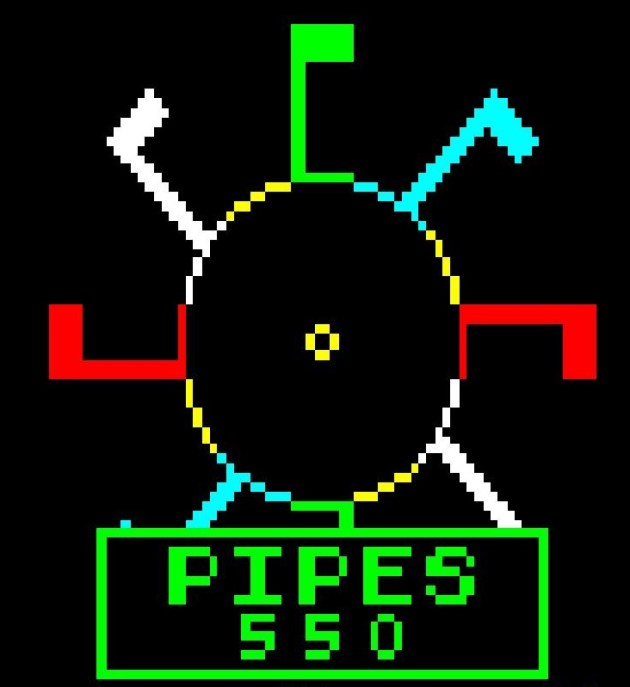
First off, you have to shoot all the pipes that are above the playfield. This is the trickiest part of the game because there’s only a small space to the left and right where they’re open to be shot, and the cylinder holding them never stops rotating. Carnival is a high-score chasing game that makes you WANT to post a top-three score, and the key to that really is getting these pipes early. At the start of a stage, their value begins to shrink, so you need to quickly position yourself to pick these off. Of course, there’s going to be three rows of targets in the way as well. While it should be annoying, the difficulty in lining-up, the stuff in the way, and the duck problem make successfully shooting the pipes early-on in a round of Carnival perhaps the most satisfying targets to hit in the entire genre. That’s not hyperbole.

“Wait, what’s this about a ‘duck problem’ Cathy?” Oh, did I forget to mention the ducks?

And you thought Adventure’s ducks were bad! Not until Adam Banks, Charlie Conway, Fulton Reed, Goldberg the Goalie, and Julie “The Cat” Gaffney would ducks be this deadly again.

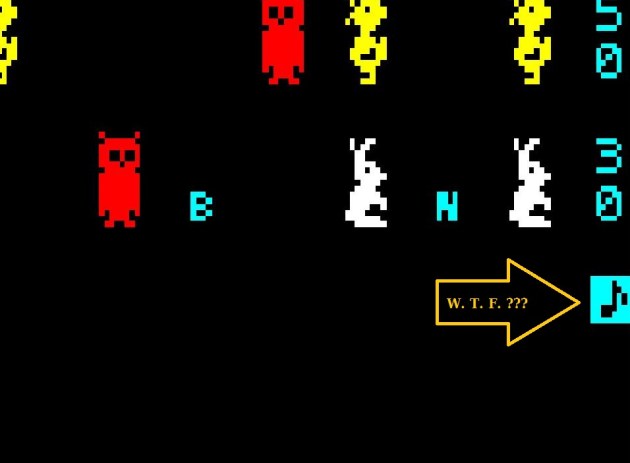
All the targets in the three rows just scroll-on-by, including the ducks. But, the ducks will randomly come to life and sort of glide back and forth down towards the bottom. If they reach it, they eat some of your bullets. And it’s so spooky when they begin to glide down at you. Seriously, they’re one of the most unnerving Golden Age of Arcade enemies that nobody talks about. Well, nobody talks about them because nobody talks about Carnival. It’s one of the poster children for slipping through the cracks of history. And I haven’t even covered all the twists yet. There’s bonus points to be had if you shoot one of the B-O-N-U-S letters in the rows. In the upper-left side of the screen, there’s the bar-bonus, which can also be the bar-penalty. Sometimes it has extra bullets, but sometimes it subtracts bullets, so you have to shoot especially accurately on that side of the screen. It might also be point based, and again, you could gain or lose points, depending on what it is. It’s also the biggest target in the game and whatever the bonus/penalty is shrinks as it lingers on the screen. I can’t tell you how many times I screamed in agony when I fired a wayward shot that went right through three full rows of targets and hit the damn whammy bar when nothing was there only to have a fully-charged bullet penalty spawn and cost me a good chunk of my remaining shot. At least my family found it funny, the jerks.

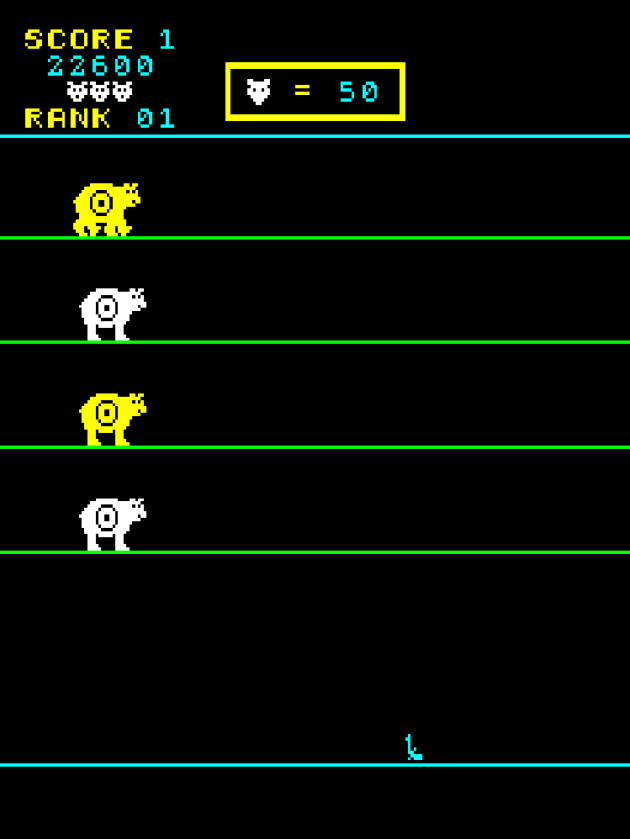
Between each stage, you have to shoot bears back and forth. Another bear is added after every round. Every shot is worth 50 points, and I think you can only do like ten shots before they move so fast you can’t possibly hope to get more points. By the way, this is the furthest I ever managed to make it: to stage four. Carnival is not an easy game at all. It’s got teeth.

It sucks that Carnival is apparently lost to history. Maybe there’s some kind of rights issue. I have friends at Sega who weren’t even aware this existed, let alone how good it is. While I admit that it’s kind of cool that I turned them onto it and heard back from almost all of them saying “seriously, where did you find this game? It’s so addictive!” it’s also painful that Carnival isn’t a bigger part of gaming history. It’s not perfect. I think the game tends to go a little overboard with respawning more targets, which is a reminder that this IS trying to make money $0.25 at a time. You’ll have one more target to shoot and then suddenly there’s like five more things that start scrolling onto the stage, which is hugely annoying. I think it’s tied to missing targets after so many passes on the playfield but I couldn’t tell with certainty. Granted, when you’ve reached the phase where the game goes nuts, you’ve been playing around 10 minutes, which means the game has gone ten minutes without being fed a quarter.

You’re not going to believe what this does.

Of course, you could be a jerk and just insert another quarter, which would restart the game to the title screen even if a person was in the middle of the game. Oof. I wonder how many fist fights broke out over that? You know it happened at least once. Anyway, that’s hardly the only problem. I think the random spawning of bullet refills (which come in supplies of five and ten) factor too much into high scores. Oh, and this has the absolute weirdest design with its music I’ve ever seen. If you shoot a bullet on the far right of the screen, it disables the music. Wait.. what? They put the volume muter on the playfield as a target that interacts with your projectiles? In a game where you’ll be chasing targets towards the edge of the screen? WHO WOULD EVEN THINK TO DO THAT? It’s so random and weird. It’d be like if there was a plunger on Donkey Kong that muted the game if you grabbed the hammer and smashed it. Whatever. Carnival is still a lot of fun and long overdue to get the respect it deserves. Or else the ducks might seek revenge. Creepy, CREEPY ducks.
Verdict: YES!

Update: Pico8 legend Paul Hammond created a remake of Carnival, and it’s AWESOME! It’s free to play, too. Go play it!

Carnival was designed by Gremlin
Published by Sega


Devil World (NES/Famicom Review)

UPDATE: Devil World finally debuted in North America! It was added to the Switch Online NES lineup on October 30, 2023.

When I recently did my in-depth review of the infamous Atari 2600 disaster Pac-Man, I noted that without the chase being fun, maze chases don’t work. I then asked myself if there’s any maze chase game that isn’t true of? I couldn’t think of a single example. The only one that came close is Nintendo’s Devil World, where the chase elements eventually add to the excitement, but they take a while to get warmed-up. Devil World is the 1984 Shigeru Miyamoto classic that was his very first console-exclusive and also the only game of his that still, to this day, has never officially been released in North America. Why’s that? Well, allegedly Nintendo had a strict probation on religious symbols being used in their games, which meant no crosses or bibles. Devil World is a game based entirely around those things. It was too religious for Nintendo of America and thus it never came out stateside. Europe? They got it, because they all live in hedonism and are doomed to burn anyway, I guess. They even got it on the Wii’s Virtual Console in 2008. But, while Nintendo of America re-released many formerly Japanese exclusives, Devil World STILL was kept out of the New World. It’s funny that so many gamers make a big to-do about games that never came out in America. Often, they don’t live up to expectations. But, Devil World is one of the exceptions. Had it come out in the United States when the NES launched, it’s arguable that it would have been the second-best Black Box game behind Super Mario Bros.

I think the Devil is due for a comeback. Make a Yoga game with him! He’s used to doing the poses anyway!

Even by 1984, the maze chase genre was very tired. Nobody really had any fresh ideas and lots of games just recycled the same formula. Pac-Man begat Lock ‘n Chase, K.C. Munchkin, and others. Then someone had the idea of adding gates and turnstiles, and thus games like Super Pac-Man, Lady Bug, and Mouse Trap came along. Having played a lot of these, it’s remarkable how samey they all feel. They all sort of blend together. Then came Nintendo with this maze chase and there’s never been anything like it since. Anyone who has played Smash Bros since assist trophies became a thing will recognize the Devil and the twist in formula he brings. As you roam the level, the maze itself scrolls independently, and you’re at the mercy of it. Also you can now become crushed by the scrolling, which can lead to nail-biting close calls of nearly getting stuck between walls and the edge of the screen. The maze is only slightly bigger than the screen, so as the Devil scrolls the action from, say, left-to-right, if the last dots you need are on the edge of the right side of the screen, in a second or two they’ll pop-out the left side of the screen. It’s a BRILLIANT, one-off twist that has never been replicated and it works wonderfully (well, most of the time). In years and years of playing this genre, this is the only good maze chase where the maze itself is the highlight.

You actually only control the direction of the maze during bonus stages. I really suck at this part and it makes me grateful this isn’t part of the main game.

Mind you, the actual CHASE aspect of this maze-chase game can also be exciting, but at first, it feels like a secondary element. You start with two pursuers, both of which can be easily dispatched. Eventually one of the monsters is replaced by a mini-Devil that can’t be killed (though he’s not on every stage). Finally, after three cycles, one of the green monsters is replaced by a red one that more actively chases Tamagon, the hero of the game. Normally, I’d find the slow escalation of the pursuit to be annoying. But, Devil World’s one-of-a-kind gimmick actually needs to ease you into it. A big part of that is the game is one of the slower-paced maze chases. Tamagon sort of waddles through the stages, and while it’s never too slow, it’s a noticeably more leisurely pace than maze chase fans might be used to. You feel it right from the start too, which I think is another reason why this might never have caught-on the way it should have, and possibly the reason why Nintendo chose not to bring it out to the cocaine-filled masses of North America.

When you’ve messed up, you see it coming. And sometimes, you have to wait.. very.. slowly.. for your death by smooshing.

There’s three alternating level types in Devil World. The first is a traditional “collect the dots” challenge, but even that has a twist to the gameplay. There’s no power-pellets like in Pac-Man, but you also can’t just scoop-up the dots willy-nilly. There’s various crosses scattered around the maze. You have to get one of the crosses to begin collecting dots. While you have a cross, you can also defend yourself by spitting fireballs that turn the enemies into delicious fried eggs that you can eat for points. Eventually the crosses will wear off, but they respawn, and they’re also scattered all over so locating them isn’t really that big a deal. You have to eat all the dots to clear the stage. Despite Devil World nearly being forty years old, and the dot-collecting formula being well-over forty now, this still feels fresh because of the scrolling mechanic. Plus, the characters are loaded with charm and you can make believe like Tamagon is the dinosaur from Bubble Bobble after he goes to Hell for all the cold-blooded murders he committed in that game.

Admittedly, sometimes Devil World can be pretty frustrating. The devil shifts the scrolling at random, and sometimes the screen becomes oriented in a way where you literally can’t do anything except wait for the Devil to pick another direction. Here, I can’t get the final bible into the slot because I physically can’t fit into the gap. What you’re not seeing is the Devil kept scrolling up and down, but not side to side. I had to wait quite a while for the tide to turn even after I shot this screen cap.

The second level is a completely new take on the genre. There’s four bibles that sort of just hover in the corners of the screen. You have to retrieve them and insert them into the four sides of a base that’s usually guarded by a mini-devil (they can leave the interior of the maze, but usually they stick to the base). There’s no dots or crosses in these stages, but the bibles grant you the same fireball ability as the crosses do. You can only take one bible at a time, and because you have to get to the very edges of the screen to collect them, these stages are the most exciting. There’s only three stages Devil World cycles through, and when I say the third stage of that sequence is probably the most intense maze the genre has ever seen, that’s not hyperbole. You have to pick-and-choose your spots to make your move, especially since large sections of the maze feature long straightaways and the high potential for getting squashed. This formula works so well they could have honestly skipped the dot collecting and based the entire game on this. It’s a lot of fun and it’s so satisfying every time you lock a new bible into its spot. After that, you play a bonus stage with six mystery boxes, one of which will have a free life. After you’ve cycled through the three mazes, the game loops until you game over.

This slideshow requires JavaScript.

I adore Devil World. It’s everything you want from an early Nintendo Entertainment System release. It certainly does a much better job of creating a fun and exciting take on the maze chase than Clu Clu Land did. Yet, Nintendo of America wanted nothing to do with it, claiming religious symbolism was off-limits. I don’t get it. I really don’t. There’s tons of religious symbols in US Nintendo games, even ones made by Nintendo! They were all over from the start. Link’s shields on the NES Legend of Zelda have crosses on them. Castlevania has a famous cross too. It’s that thing that clears the screen of enemies. As for the Bibles, again, Legend of Zelda has a book with a cross on it that adds a flame to the end of the otherwise totally useless Magic Wand. “Okay, so it’s the Devil that got this ixnayed, right?” Then how do explain all the devils and a final boss literally named Lucifer in Ghosts ‘n Goblins being a-okay? You know what *I* think? I think Nintendo just didn’t want the NES to be seen as too Atari-like. Devil World is the most Pac-Man like game, and people would associate Pac-Man with Atari and the old guard of home gaming. The only other option is falling in line with the Satanic Panic of the 1980s. Which again, would hold water if a game like Ghosts ‘n Goblins was banned in the United States. But it wasn’t, so I think my theory is accurate. I wish Nintendo would finally put out Devil World for North America. It’s long overdue. Besides, we’re all going to Hell anyway.

Devil World was developed by Nintendo

Devil World is Chick-Approved

Journey (1983 Arcade Review)

No, not THAT Journey. I already did that one.

This is one of my all-time favorite stories from the Golden Age of Arcades. Between 1982 to 1983, Ralph Baer, creator of the Magnavox Odyssey and thus video games as we know them, more or less, was working with the famed toy maker Marvin Glass & Associates. They were the creators of such legendary playthings as Rock ’em Sock ’em Robots and board games like Operation and Mouse Trap. They had recently become a partner of Bally-Midway and created video games like Tapper. Baer had already partnered with MG&A to create the legendary electronic game Simon, and he was with them again for a new project. Baer, always the engineer, invented a relatively low-cost digital camera that could be installed in arcade games to take pictures of players who got high scores. Midway loved the idea of having actual pictures of players. It’s the perfect special attraction for a game, right? Bally-Midway installed a prototype into a game (I couldn’t find confirmation but I believe it was Marvin Glass’s Domino Man) and put it on a popular route they used for testing. As the story goes, day one, the test went great! An otherwise under-the-radar game drew an audience and the test looked to be a success.

On the second day, someone pulled up a chair and stood on it, dropped their pants, waved to the camera, and the test was over. It was the most obvious result in human history, but the contracts were already signed and they had to use the camera somehow. And, it just so happens, Bally-Midway had just made a deal with the band Journey. So, they used the camera to digitize the likeness of the band and shoehorn them into a genre Smörgåsbord that’s recognized as one of the worst games of the Golden Age of Arcades.

Full disclosure: I’m not a Journey fan. My expertise on the actual band begins and ends with the finale for the Sopranos.

Journey is one of those games that’s historically-maligned. I don’t think it’s really good, but it’s also not that bad. It’s one of those “we couldn’t figure out what kind of game this would be, so we just did every game!” situations that produced a jack of all trades, master of nothing game. In it, you select one of five levels, each of which is divided into two parts. In the first part, you must guide one of the band members to their instrument through some kind of unique gameplay mechanic. In the second part, you gain the ability to shoot and you have to blast a path to your spaceship. Or, sometimes you can ignore the enemies and just sprint for the literal finish line you need to reach to beat each stage. I found that was often just as effective. So, let’s look at the five mini-games.

This slideshow requires JavaScript.

Neal Schon: This is one of those “lightly feather the joystick with a jetpack” games. You have to carefully navigate a cave to grab your guitar while the “song” Chain Reaction plays. Actually it’s an almost unrecognizable chiptune that neither of my parents, both of whom listen to Journey, could tell what it was supposed to be. As the stage begins, you have to begin to thrust right away, because once you start to have any speed, the gravity is too heavy to really stop you from crashing into the sides or the ground. Once you have the guitar, bugs come out of the sides of the wall and you have to navigate your way to the line at the top of the screen. Once you get the hang of how heavy the gravity is, this isn’t too bad as far as games like this goes. Plus it does give you a teeny bit of mercy, as your collision box isn’t quite as big as you head. Once you’ve run through a cycle, you have to go lower and deeper into the cave to retrieve the guitar. It’s not awful but it’s pretty bland. Actually, that really could describe all five games.

This slideshow requires JavaScript.

Steve Smith: While listening to Wheel in the Sky, you must bounce off each trampoline that’s randomly floating around the screen at least once. The trampolines turn blue after you’ve done one bounce and disappear after a second bounce. After you’ve turned them all blue, you get your drums back and have to blast your way to the finish line at the bottom of the screen. I found this to be the most interesting of the five mini-games, and it gets BRUTAL on the second cycle. The thing that bugs me is Journey is such a slow game, with jumping that feels like moon physics. If I hadn’t seen gameplay footage from a real coin-op, I’d have thought my emulator wasn’t handling it well. Is it fun? Not really, but I did have to think about it this time. I mean, not too long. It’s just south of dull, but dull nonetheless.

This slideshow requires JavaScript.

Steve Perry: While an alleged version of Don’t Stop Believin plays, you have to first make your way through deadly turnstiles to grab your microphone. Then, the turnstiles turn into full-scale walls that also scroll across the screen and you have to blast your way through them. They spawn really fast, and creating enough distance for your body to squeeze through is probably the toughest challenge of all the games in the first cycle. As you complete more cycles, more get added during that second wave that spin faster in the first part and respawn faster in the second part, and I never finished it. The cynic in me noted how it’s funny the lead singer’s stage is clearly the hardest. Seems like people would be more inclined to choose the singer’s level first, and what do you know? It just so happens to be the one most likely to eat lives and thus force players to drop more quarters! Fancy that.

This slideshow requires JavaScript.

Ross Valroy: Probably the most original idea in the game. You start on these boxes that have.. uh.. rainbow-colored robotic dongs that launch you upwards, and you sort of have to spring up to the top of the stage to grab your guitar while listening to the MIDI version of Keep On Runnin’. Once you reach the top, the platforms spring cannons and the game becomes an almost bullet hell, but the point is the same as all the other games: shoot your way to the finish line. It took me tons and tons of tries to get past the cannons on my second cycle, and that was after missing the platforms on the way up. Journey gets teeth after you finish each round once, that’s for sure. Oh, and even though you can literally destroy the platforms the cannons sit-on with enough shots, even those begin to respawn. Okay, maybe this is a terrible game.

This slideshow requires JavaScript.

Jonathan Cain: While listening to a bastardized version of Stone in Love, you play a mini-game that’s like a combination of reverse Donkey Kong meets the hurdles event in Track ‘n Field. While automatically running down a series of slopes, you have to press UP on the joystick to jump over miniature lightsabers. Once you reach your piano, you have to shoot your way through a series of balls to reach the finish line. During the second cycle, the bottom row of hurdles starts moving so comically fast that, even while cheating, I couldn’t get past it. There’s so many points during this whole game where I was like “jeez, they ran out of ideas.” Then I came to realize that, there’s only five games and yet I had to say “they were out of ideas” like six or seven times. That really says it all about Journey, huh?

This slideshow requires JavaScript.

Journey certainly doesn’t belong on any WORST ARCADE GAMES list. It doesn’t play bad enough for that. It doesn’t control bad enough for that. Okay, maybe it sounds bad enough for that, which has to be embarrassing since the only reason anyone in their right mind would be interested in playing this is because of the musical ties, and it failed completely at that. Going into this, I wondered why they didn’t try to tie this more into some kind of musical gameplay, but the answer became obvious quickly: it couldn’t even if it wanted to. Not with this technology. So, instead we got a really uninspired hodgepodge of mini-games that feel like they’re deleted scenes from Bally-Midway’s Tron game. None of them are offensively bad by any stretch, which by itself is disqualifying for WORST GAME status or even consideration of it. Hell, this doesn’t even feel like a typical music act’s ego-stroking video game. It’s a stupid collection of unrelated game tropes that, together or separate, just plain ain’t fun. I don’t even really think it had potential for fun, either. This feels like a game nobody wanted to make and had no idea what to do with it. Really, the only interesting aspect is the Ralph Baer camera story. Sure, it’s a boring game, but it’s also a game that only exists because someone stood up on a chair and flashed their privates at the first digital camera they ever saw in their lives. Come on, that’s objectively hilarious!
Verdict: NO!

Journey was developed by Marvin Glass and Associates
Published by Bally-Midway

Fire and Rescue (NES Indie Review)

Yea, it only took me to the second installment of New Arcade Mondays to wildly stretch the definition of “New Arcade” but hear me out. The launch-window NES library, AKA the thirty Black Box games, were all basically arcade games at home. If an indie developer wanted to make an authentic Black Box-type game, the only way to make it convincing is to have a tunnel-visioned arcade concept. One novel play mechanic that the whole game is based around. It’s tougher than it sounds. Actually, the most common mistake made by games that try to recreate the look and feel of Black Box releases is being too ambitious in their gameplay. The most advanced game in that series is the original Super Mario Bros. If you’re going to make a platformer, skip that Black Box malarkey, because you won’t stand out in that genre if you don’t go bonkers. For all other developers, if you want authenticity, you have to keep it simple. Of course, that also means you’re married to one gameplay mechanic, and if that mechanic isn’t very fun or exciting, you’re kind of screwed.

“Fire and Rescue? Wasn’t that one of the Fisher Price games?” Actually, no. I was thinking of Fisher-Price: Firehouse Rescue.

Fire and Rescue.. actually FIRE AND RESCUE in all-caps like you’re yelling it, but I think it’s a crime to yell “FIRE AND RESCUE” in a crowded review blog.. does authentically feel like an NES Black Box game in terms of graphics and gameplay. Well, sort of. It uses realistic 2D logic of, gasp.. having to actually walk through the threshold of the building you’re entering! So in this game universe, there’s genuine architecture to buildings. When this review is done, you’ll understand why most games toss that kind genuine logic out the window. The object is to put out all the fires and rescue people trapped inside the houses. There’s five levels that keep repeating while slightly escalating in difficulty every time you restart the cycle until you reach Level 7, at which point it just keeps going back to stage 71 until you get bored. Don’t worry, you’ll already be bored and ready for it to be over by that point.

Do you know what breaks the illusion of being an authentic lost Black Box game? Had this been a real Black Box, that would have totally been Mario fighting the fires.

While I admire the authenticity Skyboy Games achieved, Fire and Rescue is a complete snoozer. This is mostly due to the constant need to weave in and out of the building to refill your water. If you correctly line yourself up with the fires and time your release perfectly, you can stretch the water out, but you’ll still need to refill. Thankfully, you can jump out windows without dying as a shortcut. It’s the only concession the game really makes to avoid the busy-work. You can only rescue one person at a time, and when you do, you have to bring them all the way back to the start of the stage. I couldn’t believe they didn’t include more means to enter the building. Even after playing thirty levels, I was convinced I was just doing something wrong when I tried to enter through the bottom right window of levels. Apparently you can’t. Plus, these are buildings that don’t have fire escapes being fought by fireman who don’t have fire hoses or fire ladders. Maybe this was set in the 1920s?

Stage 4 and 5 on each level has the water source on the opposite side of the screen, for even more winding-around. Sigh. Also, note the the bottom of water left of the center in this pic.

Sometimes rescuing a person also gives you a water refill. But, the refill spawns where they had been in the stage, and only after you’ve dropped the person off at the ambulance. In three of the five stages, the hydrant is right there anyway. It’d be nice to leave the refill there so you can grab it as needed later, but the only stage you might want to do that, it appears right in a door frame, where there’s no means to jump over it. Only in the two stages where the hydrant is on the other side of the screen do the water refills provide any real usage. But, in those stages, they’re practically laid-out in a way where it’s impossible to miss them. You’re going to have to rescue the first guy, then it’s going to spawn the refill. It’s also possible I was just plain good at this game. So, the item is functionally useless. The whole refill system and the way it was implemented seem to have been a decision made only in service to the co-op mode that I didn’t play. Also, it’s not always a refill. Sometimes, the rescue will spawn a helmet that restores you hit point if you’ve lost it, or give you points if you haven’t. And.. that’s the whole game. As a single player experience, there’s absolutely zero excitement or tension in Fire and Rescue. None.

The closest it comes to that would be the timer. Unless you’re really taking your sweet time, it doesn’t matter early on. Eventually, as in after several cycles of the same five stages, the timer starts low enough that you’ll be tidying up the final aspects of the stage with twenty or so seconds left. Tense? Well, no. I have no problem with recycling stages, but the peril of doing so is players should be able to quickly figure out how much time it takes in each stage to get from Point A to Point B. By the point where levels had a shorter timer, I’d played the stages enough times that I knew how much time I needed, and I knew I’d be fine. And I was! Even playing extremely recklessly, I never came closer to timing-out than in the above clip. This really compounds the biggest issue: the gameplay feels like busy-work after a while. The one-at-a-time rescue situation could mean that, after you’ve put out all the fires, you have to grab one of the people, jump out a window, then return to the building, weave your way through it to the last person, and jump out the window again. It becomes less a game and more of a chore. Gremlins on Atari 5200 had the same “run out of action before you run out of objectives” issue, but at least there the gameplay was fun before the action ran out. Fire and Rescue is a game that is technically fine and works but just plain isn’t fun.

See what I mean? The fire is all out, but I still have to make my way through the whole level, going up a ladder, a room left, up a ladder, two rooms over, down two ladders, grab the guy, then jump out the window and walk the length of the screen. For god’s sake: didn’t anyone issue this firehouse a frick’n axe? We’re fire fighters dog garn it, and we’re allowed to chop through people’s houses to rescue them! It’s heroic destruction!

Fire and Rescue needed to do a lot more than it does. There’s a downward spurt move that I never even needed to use once and I still could breeze right through the levels. I don’t even know what the point of it was. For a moment I was like “oh, this is how you jump up through the window to get into the building and save time.” But that’s apparently not the case either. It’s also actually a pretty easy game. After a cycle or two, one of the fires in a stage will start spitting projectiles at you, but the spitting rate is slow enough that it just becomes a minor annoyance. The only life I lost was from not scooting backwards to give myself enough clearance from a fire after climbing up a ladder. As far as I can tell, there’s no ticking clock element with the people you’re rescuing. Sometimes they appear to be standing right in a fire, but I could still take my time getting to them. This really should have removed the “deliver the people” element and just had the homeowners vanish when you collect them. Turn Fire and Rescue into a puzzle game based on conserving resources or a more action-oriented game where the fires can kill the people and spread more aggressively. Apparently this was made mostly for score chasing in mind, but as an NES game (one that you can literally order as a physical cart) there’s no online leaderboards, so what’s the point? Besides, if a player can make it to level seven without dying, it’s unlikely their game would end at all. Don’t get me wrong: Fire and Rescue isn’t atrocious by any means. It’s just boring. How do you even make fire boring? That shouldn’t be possible!

Fire and Rescue is not Chick-Approved

Fire and Rescue was developed by Skyboy Games
Point of Sale: Itch.io, NES Cartridge
$5 died in a fire in the making of this review.