Luigi’s Mansion Platform: Nintendo GameCube Released September 14, 2001 (JP) November 18, 2001 (US) Directed by Hideki Konno Published by Nintendo Available with Switch Online Expansion Pack EXCLUSIVELY on Switch 2
I ain’t going to win any friends with this review.
My first day one Nintendo console was the GameCube. I was SO excited, even though 2001 had already broken my heart twice with new game machines (and the early demise of Dreamcast). The Game Boy Advance’s screen was like playing video games with three pairs of sunglasses on and the Xbox’s controller was NOT made for the hands of an already-small-for-her-age 12 year old girl. But that’s okay because that GameCube controller felt custom built for me and there’s no way Nintendo would ever bungle a launch lineup. All I can say is THANK GOD for Super Monkey Ball and Star Wars: Rogue Leader. And then Super Smash Bros. Melee came out a few weeks after launch and THAT dominated my next couple months of playtime and was everything I wanted from a new game on a new machine and more. So my GameCube worked out just fine in the end, and so did the Xbox and GBA (just not THAT GBA). Eventually, I did finish all those 2001 day one launch games. All except one. I never got around to finishing Luigi’s Mansion until I did this review. I’m not even sure I beat the second boss.
This is either the first boss fight or how fans of Luigi’s Mansion will react to this review.
I remember Electronic Gaming Monthly had an Xbox versus GameCube issue and someone actually gave Luigi’s Mansion a 5.5, which was jaw-dropping for a Nintendo-published game. Literally shocking. But it only took me about an hour of playing Luigi’s Mansion to get where they were coming from and, actually, I thought a 5.5 was generous. As a 12 year old, I thought Luigi’s Mansion was a boring all around experience, and now as a 36 year old, I feel the same way. It feels like a ten second long proof of concept hardware trailer that was stretched into a full length game. Because that’s exactly what this is. They took the 10 seconds of Luigi in a haunted mansion footage from Spaceworld 2000’s GameCube tech demo (the same one that got people hyped for Zelda before the cel-shading) and turned it into a full-length game. It’s kind of stunning that Nintendo didn’t throw every resource they had at making sure a Mario game was ready for launch. Apparently Hiroshi Yamauchi’s last request before stepping down as president of Nintendo was “make a Mario game for our new game machine!” Presumably he also asked “why don’t you have one already? Are you f*cking stupid? Don’t you remember how Virtual Boy did with no (real) Mario game to send it off?”
I thought “Game Boy Horror” was trying to play a launch day Game Boy Advance.
But hey, I liked the idea of Luigi in a haunted house as a kid. I was as hyped for that Spaceworld footage as anyone else. I wasn’t expecting a Mario game, and good thing for that because there’s no running or jumping in Luigi’s Mansion and the primary method of combat is basically tug-of-war. So much tug-a-war. First, you have to stun-lock the ghost by pointing a flashlight at it, and when its heart dings, you have to suck it up with a vacuum by holding the opposite direction the ghost pulls. And, well, that’s basically the whole game. Just do that over and over and over and over and over again. If you don’t like the combat, you’re going to be bored with Luigi’s Mansion. If you like it, you won’t be. It’s really that simple. I thought it was boring as a kid and I still think it’s boring now.
God, the Nintendo fans are going to have aneurysms with this opinion, but, yeah, I think the character designers are really forgettable and generic. I just didn’t like anything about this at all. And before you burn down my house, remember that I’m not a Nintendo hater. Read some of my other Nintendo reviews. Try Mario Wonder, the Switch remake of Mario RPG, Yoshi’s Island (from the same director as this), and hell, just go to my retro review index. I even gave the lazy as all f*ck Nintendo World Championships: NES Edition a YES! because I had more fun with it than not. So I think Luigi’s Mansion has no redeeming qualities. So what? It’s okay to not like one Nintendo game, you know?
There’s just not enough twists on the ghost catching formula. The idea is supposed to be that the “portrait ghosts” take extra steps to expose their weak spot. Like the guy in the above chair? He’s not visible if you face him. You have to turn around and wait for him to yawn, and when he does, THEN you can stun lock him and suck him up the same way you do basic enemies. All the portrait ghosts have 100hp and could take multiple stun-locks and suckages to capture. And again, the actual combat is exactly the same as it is for the basic enemies. It just gets so old, so quickly, and that’s before you factor in things like poison mushrooms. They spawn spontaneously during boss fights (and are also hidden in some fixtures in the rooms) and shrink you in size. I don’t care so much about the health ping. It’s easy enough to get health back. But you can’t operate your vacuum while shrank. It’s not hard to avoid damage once shrank, but it takes too long to grow back. It’s one of many, many aspects of Luigi’s Mansion that feels like it only exists to pad out the run time.
Safe bet that the team behind this were gigantic fans of the Haunted Mansion rides at Disney theme parks. Many of the gags are straight from the ride, including this candle bit. There’s also the whole mansion setting and portrait theme, a fortune teller with a crystal ball, dancing ghosts, a graveyard, a music room, suits of armor, and ghosts seen through shadows. Really, all that’s missing are the busts and the stretching room. This isn’t a knock on Nintendo, BTW. So, in a way this is kinda the third game I’ve reviewed based on that ride, including Adventures in the Magic Kingdom for the NES and the Super Famicom exclusive Mickey no Tokyo Disneyland Daibouken. So does this mean in another twenty years we can look forward to Waluigi’s Pirate Adventure? Because that would slap. And if you’re a Nintendo fan who has never rode the Haunted Mansion and are rolling your eyes at me right now, Disney+ actually has the full Haunted Mansion ride point of view. Watch it and tell me I’m wrong. Yes, the Tokyo version of the ride is basically identical. Hell, even the music is kind of similar to Luigi’s Mansion at times.
Every ghost portrait ghost is caught by the vacuum and the sucking mechanic. No exceptions, not even the bosses, whether it makes sense or not. At one point, you meet a fortune teller and the object is to retrieve five of Mario’s personal items and bring them to her. When this is done, she asks you to use your vacuum and suck her up. “All right! At least with this one I won’t have to watch the number 100 tick off yet again.” Wrong. She still resists the vacuum and still has 100hp. Why? She literally instructs you to capture her. She’s going willingly. Shouldn’t the gag be that she has 1 hit point, or none? It makes no sense.
Maybe this is how ghosts do foreplay.
And that’s what my general problem with Luigi’s Mansion is. Anything potentially clever is kind of ruined by reverting back to the same, tired mechanic that’s used on all enemies great and small. Plus, on the Switch 2, I’m not entirely sure it worked as it’s supposed to. I was constantly getting the dings for stun-locking ghosts and then immediately cuing up the vacuum, only the ghosts vanished in the transition to the vacuum. Maybe that happened when I was 12 too and I forgot, but once I switched off a GameCube controller (a $70 accessory, mind you) and moved to the Joycons, it didn’t happen as much. Oh, it still happened. It happened a lot. This isn’t the “pulling back to suck them in” part but just initiating the combat itself. For whatever reason, the flashlight felt less effective than I remember it being.
I do have one nice thing to say: for such a darkly-lit game, it’s not as flashy as you would think.
And what I said about the flashlight above really only applied to the generic basic enemies. I don’t remember it ever being a problem for any of the “portrait ghosts” that are the main objective of the game. In general, I assume the combat is supposed to feel very frantic and wacky but I thought it was underwhelming and repetitive to the point of exhaustion. Eventually the basic enemies can be dealt with by using the different elements you can suck up into the vacuum: water, fire, and ice. Some enemies require one of those three things, but when it was optional, I preferred using the elements because it worked every time, unlike the vacuum. The problem with that is there’s no PUNCH to using those elements. No feeling of doing damage. You just watch a number count down and then the ghost dies when it reaches zero. They don’t even really react to it. They just kind of stop and fade out with no satisfying death animation.
I’ve jokingly called this “Luigi’s Tech Demo” for years but that’s really what it is. It’s meant to show off how cool the GameCube is. And this IS a massive upgrade over the jaggy Nintendo 64. I actually was surprised by how low resolution this looked. I hadn’t played a GameCube game in a long time. This certainly didn’t hold up as much as Wind Waker did. I mean, it’s not a deal breaker or anything. It looks fine.
And then there’s the Boos. One of the main objectives of the game is to unleash a cluster of fifty boos into the mansion, then find them and suck them up. They don’t put up fights as much as the other ghosts (some of the Boos don’t attack at all), but they can have as much as 300hp. That sounds like busy work by itself, and that’s before you get to what they CAN do: run away, leaving the room entirely. I was using save states to reload them, but eventually I gave up on that and started chasing them into hallways and other rooms. A ghost that has 300hp might require you to follow it back and forth into a room over a dozen times. It just creates more busy work, and again, it’s the same thing you’re already doing with basic enemies and portrait ghosts.
I think the vacuum could have been satisfying if they significantly dialed back the HP on the ghosts. If there was a quick, snappy pace to it, hell, for all I know this could have been one of the best games ever made. But the way they did it just makes it feel like a grindy slog, especially since the ghosts just reset if you don’t catch them in a single pass. The only positive thing I can say is “at least they don’t require you to repeat every single activation step.” Faint praise.
If the mansion offered anything but the combat, like a genuine sense of exploration or getting lost or hidden things, I’d have liked it more. But it doesn’t. The “puzzles” in Luigi’s Mansion are really rudimentary stuff, and there’s really no room puzzles at all in the “you’re locked, how do you get out?” sense. Everything is based around the ghosts. But haunted mansions are almost never JUST about the ghosts. There’s two “hidden” rooms. One of them you fall into from the roof and the other you enter by scanning a mouse hole with the Game Boy Horror, which is like the game’s radar.
Besides the “speedy ghosts” I did get everything in the game, including all 50 Boos. Initially I finished the game with 49 out of 50. There was a hidden room I missed and my OCD got to me while writing this review. Worth the effort? Not really, but at least I’ll have this to figure out how much the sequels improved the game. Which I assume they must have because it can’t get much more boring than this.
But activating the ghost battles isn’t exactly something that requires you to have a seat on your thinking couch. Move a curtain with the vacuum. Move an airplane on the ceiling with a vacuum. Spray a sleeping ghost with water. Spray a bathing ghost with ice. Spray a frozen ghost with fire. Even late in the game, there’s a ghost that you just have to wait for it to basically say “boo.” Activate all the musical instruments or clocks in a room by pressing the A button next to them. The engine is just too limited to do anything more complicated or clever. If you can’t manipulate it with the vacuum or with a single press of the A button, the game can’t handle it. That’s probably just as well. The most complicated enemies require you to clog the vacuum with a ball that you then can launch back at them, it’s pretty haphazard. The controls in general are. Even then, I wish each ghost had a unique capture method instead of vacuum.
Like, these guys WOULD be fun battles since they fight back and feel boss-like (but they ain’t bosses). Except the method of capture is the same for them as it is everyone else. It gets old.
I guess I pictured in my mind a Clue-like mansion (or maybe the Winchester House, which I totally recommend visiting at least once) with lots of hidden rooms, secret passages, booby traps, and puzzles. Instead, it’s the facade of a haunted house, with all the expecting trappings but barely any of the interactivity I would hope for. A lot of the rooms look interesting and have lots of furniture and fixtures, but you don’t really do anything with them but shake them (sometimes it looks like he’s dry-humping them. At least I hope it’s dry). If they have money or health refills in them, it flies out inelegantly. Maybe a drawer or door opens or a chandelier sways, but that’s basically the extent of what you can do with the setting. At one point, I had to walk on a treadmill to get a key and the moment stood out so much I couldn’t believe it because so much of it just sits there doing nothing.
Another weird thing, at least for me, is how the Boos are the central focus of the game, yet they don’t look like the portrait ghosts at all. The portrait ghosts are the only eventful parts of the game, so when you think about it, shouldn’t the portrait ghosts be Boos playing dress-up instead of being humanoid ghosts? Especially since the last boss is also just an ordinary looking Boo with a crown on his head. Maybe his expression is a little more sinister, but he’s just a Boo, right?
So, I thought Luigi’s Mansion was a mostly empty game with boring combat and a plodding pace. I literally didn’t like anything about it. Even the bosses were snoozies. The first one, a giant baby, was probably the most memorable. The second one I honestly thought looked just like the basic enemies, and the third one IS just a giant Boo that you have to lure into the spikes of unicorn statues. Then the last boss is also a Boo but he’s the last boss because he has a crown on his head. Well Boos are like 94% head anyway and it’s not like he’s going to wear the crown on one of his flippers, but at least he also operates a robotic Bowser so that the game can feel climatic.
That’s the second boss. Brought to you by AT&T because they phoned that sh*t in.
I was wrong though about Luigi’s Mansion being cynical. Hey, I can admit when I’m wrong. No, I think the problem is the game was rushed out because they didn’t have a Mario game or anything remotely Mario-like for the GameCube launch. Luigi’s Mansion is a very simple game. Simple combat. Simple puzzles. Nothing too complex. Nothing ambitious at all, really. Maybe the least ambitious Nintendo launch game ever made (well, besides Mario’s Tennis on Virtual Boy). One of the biggest general complaints about Luigi’s Mansion is that it’s too short. That’s kind of bonkers because it’s one of the most artificially padded games from Nintendo I’ve played. If not for the poison mushrooms or tedious life bars, this might have only taken a couple hours to finish.
Honest to God, this guy felt more boss-like than two out of the four big bosses. He also had one of the more involved “puzzles.” You had to suck up the foot he was eating, then capture the waiters who would bring him more food, and THEN dodge his attacks when he had a tantrum, and THEN he was ready to be captured. Hell, I thought he WAS that floor’s boss. It felt like an event.
I don’t happen to think the layout of the mansion was optimized in the way, say, a Zelda dungeon is. But even if I ignore that, the game does so many things that grind the tempo to a halt. After you beat the giant Boo boss, it takes you back to the lab to turn the portrait ghosts into paintings. The next thing that happens? You have to manually walk back to the spot where you just fought the giant Boo on the third floor, at which point lightning strikes the mansion and knocks the power out. This is done as an excuse to restore basic enemies to the floors you’ve already cleared (basic enemies stop appearing in any room with the power restored), at least temporarily. You can go to the basement and restore the power. Why couldn’t the lightning strike have been a cut scene after you beat the Boo? Or why couldn’t the circuit breaker to the house be somewhere else? I guess the reason I found Luigi’s Mansion to be so boring is because nothing about it feels optimized. If you enjoyed it, hey, it’s okay. I like plenty of things that people find to be boring. I watch competitive ballroom dancing and everything. Verdict: NO!
They went to all the effort of programming these upside-down gravity swap panels that you can step on and then they totally underutilized them. I think like two rooms in the entire game use this. To me, this is the prime exhibit in “they had a lot more plans that had to stay on the drawing board.” And really, I think this is the only time that you use this to reach something. You have to drop down on a table to reach a chest. Wait, isn’t Luigi the better jumper of the two? You mean to tell me he can’t reach up and open a chest on a table? Yeah yeah, I know, because then it wouldn’t be a game. But this upside down mechanic could have made for some interesting maze-like design. There’s none of that type of thing in Luigi’s Mansion. Rooms are just boxes that you wander around in. There’s no sense of a labyrinth of mystery. It’s just a shell. I expect more from Nintendo by 2001. This came out after Mario 64, Ocarina of Time, Majora’s Mask, etc. And even 2D games had evolved past this by this point. (shrug)
Marvel Cosmic Invasion Platform: All Current Platforms Released December 1, 2025 Directed by Fred Gemus Developed by Dotemu Published by Tribute Games $29.99 Hulk-Smashed baddies in the making of this review. This review was played on a Nintendo Switch 2.
SOME SMALL ROSTER/BOSS SPOILERS AHEAD
Yeah, don’t sweat it. You’ll get lost in the fog of war playing this. I must have attacked my own teammates once or twice every stage. And that’s to say nothing of how many times I walked off the goddamn Bifröst.
Yep, this unofficial sequel to Teenage Mutant Ninja Turtles: Shredder’s Revenge is everything you want in a Marvel brawler. Old school fisticuffs with new school sensibilities. The fifteen starting characters (you know DLC is coming) all feel completely different from each-other and have unique fighting styles and move sets. HUGE move sets. It could take you a while just to get the hang of one character, let alone fifteen. But even if you have no gaming skill at all, it’s okay. This game’s a cinch for everyone! During a recent get together I threw on Marvel Cosmic Invasion, handed out four controllers, and mostly just watched. I wanted everyone to get a turn, and the sheer joy that everyone had was something to behold. There were a lot of kids and their parents, and what made it cool was the parents recognized the gameplay from their own childhood while their kids were hyped because Marvel is scorching hot right now. Frankly, this feels like a better use of the genre than Ninja Turtles because there’s just so many superheroes to choose from and such a wide variety of superpowers to mine for moves than you can get from four nearly identical reptiles.
After the big group-wide session was finished, we had knocked out this much of the unlockables.
Technically, you don’t just pick one character in Cosmic Invasion. You take two characters and can swap to your second superhero on the fly at any time AND you can execute double team moves with the press of a button. Each character has their own life bar too, so it’s really hard to die. Unless some twerp you’re playing with takes all the health even if they’re full, DAD! Sure, you can mash buttons if you want, but it only takes a little practice to be able to pull off combos. In theory if you’ve got the right group of people, you should be able to easily juggle enemies from one player to another like no brawler ever before. I do have one petty complaint about that: the juggling can continue long after you’ve inflicted lethal damage on an enemy. That sounds like it could be fun, but it eventually became obnoxious while playing with psychotic children who thought it would NEVER get old to keep bouncing the lifeless carcasses of enemies while everyone else waited for them to actually walk forward and continue playing the rest of the game. There was at least one kid every stage who did this, to the point that everyone waiting for their turns had to yell “STOP JUGGLING AND MOVE!” It should never have come to that. Again, cute in theory, but annoying as all hell in practice.
For the most part, MCI (what an unfortunate acronym) avoids having enemies linger on the edges of the screen, which is my #1 brawling pet peeve. But, it does still happen, and a couple bosses even feel tailored around it, like Thanos Finnegan. He has a ballsack on his chin-e-gan. Killed half the universe but they came back again. Poor old Thanos Finnegan-egan-egan.
Other than the juggling stuff, if there’s a means to keep the beat-em-up action from becoming stale, it was probably done here. I can’t stress enough how unique each character in the game feels, which is especially impressive given the roster size. However, I’m not the biggest fan of upgradable stats in arcade-style brawlers. For something like Castle Crashers? It’s fine, I guess. For stuff like this? The problem with them is that upgradable stats discourage players from swapping characters in the middle of a quest, which means it has the exact opposite effect of what a large roster of characters is meant to do: keep things fresh. Go ahead and swap, but you’ll be playing level six or seven or eight with a character still on their base stats. GO AHEAD! SWAP! What, you don’t want to anymore?
Some of the dialog is so self-referential and fourth-wall breaking that you would swear it was meant for Deadpool.
And also, I guess I have to mention that the roster was very disappointing for basically everyone. Missing from Marvel Cosmic Invasion: Thor, Hulk, Captain Marvel, Bucky, Doctor Strange, Falcon, Blade, Starlord, Groot, Gamora, Deadpool, Daredevil, Punisher, Ant-Man, Vision, Black Widow, Colossus, Nightcrawler, War Machine, Beast, Drax, Cyclops, Gambit, Wasp, Shang-Chi, and the entire Fantastic Four, among others. Kind of annoying since characters nobody wanted like Nova, Phyla-Vell (well Sasha the Kid liked her at least), and f*cking Beta Ray Bill (are you kidding me? Over Thor?) are in this. I’m not entirely sure how balanced the characters are. Whoever used She-Hulk seemed to have had the most fun, as she has a wide range of attacks while also having some of the hardest-hitting moves. In general, the whole game does an excellent job of feeling like strikes are impactful and violent. Now, there is a catch: some characters fly, and some don’t. Sometimes enemies feel like they’re tailored for flying heroes, but if nobody is using a flyer? It can get a little frustrating. They kind of reminded me of the Baxter fight from TMNT in that it was hard to line-up with the flyers properly.
There were like twenty people over at our house during that first play session, and two things happened that broke my heart. This isn’t a bit I’m doing as a joke. I literally mean “I got a pit in my stomach” heartbroken. The first thing was that several kids opted out of playing because they had already watched their favorite Twitchers or YouTubers playing Marvel Cosmic Invasion and somehow had gotten everything they needed out of this without ever picking up a controller. Why have fun playing a game when you can watch someone else have fun? I couldn’t believe it. It actually made me almost sick to my stomach that a lot of kids would rather watch some idiot play games instead of playing themselves. By the way, those kids then went on to smugly spoil all the hidden characters, level details, and boss fights for everyone else. They were the absolute worst, to the point that my normally jovial father, seriously the nicest guy in any room he’s in, said something to the effect of “no more games when these Twitch kids are around. They can’t take a hint to not ruin it for everyone else.” And they really couldn’t. Not little kids, mind you. Ages 11 to 14 or 15, and I guess it was their way of showing how smart they were to everyone else that they remembered what happened in a video they saw that week. They kept it up the entire time and simply didn’t give a sh*t how annoying it was. The second heartbreaking thing was that every single kid saw the missing characters as the cynical cash grab for future DLC packs that it was. There’s interviews with the development team that say they really just wanted some oddball selections, but why do that at the risk of alienating fans of MAJOR comic characters unless you were certain you could make up for it later with DLC? For the kids, there was literally no question in their minds that both the missing heroes and the missing supervillains (no Doctor Doom, no Green Goblin, etc) were missing because they’re going to be up-sold later. Again, not a bit I’m doing. There is something tragic that kids are that jaded about why games are the way they are. If that doesn’t hurt your heart, I don’t know what will. I hate cynicism, but it was totally justified and likely accurate. Gaming shouldn’t be cynical for children. It should be magical. I hate that it’s come to this. I know that it’s a business and they have to make money, but don’t turn kids into cynics. It’s not cool.
So what’s there to complain about? Well, besides the juggling and some of the weird character selection options? Honestly, I don’t know what more anyone could want out of a brawler. I guess the tutorial took forever and almost caused the game to get shut off during that party. And some of the extra goals in the game aren’t awesome. Hitting X amount of a specific move using a specific character on a specific level being a check mark? What if nobody picks that character? Or sometimes the goal is not taking any damage from a swarm of enemies. Those goals became so distracting, especially since you have to pause the game to see what the goals are, that we all voted to not attempt them anymore. We also took that pledge when it was just me, Dad, and Sasha the Kid replaying this for this review. And everyone seemed to agree that some of the bosses were letdowns, especially the final boss. I think everyone was so unimpressed with Annihilus as the finale that they really thought someone else would be the final boss (except my nephew who thought he was “very Shredder-like”). Oh and the whole battle against Silver Surfer was a groan-inducing slog that had everyone listless. Actually, none of the bosses that become characters are exceptional. BUT, there’s also a ton of fantastic boss fights in this. I can’t stress enough: we were NEVER bored playing this. It was just so good.
I guess I kind of wish there had been more things like these turrets that you can smack to take out waves of enemies. For the most part, the environments are REALLY well done. I don’t think any 2D game EVER has as many one-off visual gags as Marvel Cosmic Invasion has. There’s so many little winking nods to famous Marvel stories and characters. And luckily we had a few kids who told us when those things were coming before they showed up on the screen. Even after we asked them not to. All while their witless parents had a thousand yard stare, hopefully contemplating all their birth control choices that led to this.
Probably the strangest thing I can say about Marvel Cosmic Invasion is that I was kind of over it as soon as I finished. That seems weird, because while I was playing it, I was thinking “this is probably the best brawler ever made! It does everything right.” I mean, it doesn’t, obviously, but it comes close enough that it’s hard to imagine how anyone could hope to top this take on a 90s style brawler. It’s like an all-star game of all your favorite arcade fist-throwers. Yet, now that I’ve kind of played it twice (during the party I only played two or three levels), I don’t really want to play it ever again. I have no interest in more levels or DLC. I’m good. I had a great time while it lasted. Me, Dad, and Sasha the Kid had fun running through it so I could actually do a proper review. I usually enjoy competently made brawlers, and this goes far beyond competently made. It’s a masterclass in cathartic beam ’em up action.
“MJ is going to be SO MAD when she finds out what we’re about to do. This is her thing. Meh. Maybe she’ll be down with it.”
But it’s also an empty calories game. This genre was perfect for arcades for a reason. It’s video game junk food. That’s fine, by the way. Gaming is a big tent and there’s room for brawlers. For a while, this genre was the dominant genre at this very blog because they’re really easy to review. Give me a variety of eye-catching set-pieces (even if they’re facades), a variety of moves, and OOMPHful hits that feel legitimately violent and I’m a happy camper. The only way you can screw it up is not enough variety, or moving off the formula too much, like what happened with the Digital Eclipse Power Rangers brawler that I didn’t like. Even then, their heart was in the right place. Brawlers can get tiring. I enjoyed playing through Invasion’s fifteen levels. Doing that twice sounds exhausting to me. Maybe that’s why the genre works. I guess that’s why I’m annoyed by upgradable stats in games like this. Who on Earth would want to play this over and over again? It’s perfectly fine for a game to be a one-and-done. Besides, you need good games like that to make those good games you do want to replay again and again mean something. It should be special when a game has replay value. It should be equally special to play a game that’s fantastic, tons of fun, and has no replay value at all. Verdict: YES! This is Cathy Vice reminding you to help control the annoying child population. Have your mate spayed or neutered! Whether they like it or not. Merry Christmas, everyone!
I like Jeff Minter. We both come from very different generations, and in fact, at the time I wrote this, you can reverse our ages. I’m 36. He’s 63. I’m an American. He’s English. He’s a game maker. I’m a game critic. But I firmly believe any two people who genuinely LOVE video games can strike-up a friendship. I got to talk with him a lot over, oddly enough the long lost Atari coin-op that he recently remade: Akka Arrh. I even got to find out about his remake before it was announced. I was puzzled by Jeff’s selection of Atari projects. “Really, Akka Arrh? You’re doing a reclamation project of….. THIS?!” I had just started Akka Arrh and my initial impression was that I was going to give it a NO! Now Jeff wasn’t arguing with me that anything I said bad about the game was necessarily wrong. But he still predicted it would grow on me even though it seemed unlikely. Guess what? HE WAS RIGHT! “How the hell did he know that?” I’ve asked myself. Then it hit me: it probably happened the same way for him.
Jeff Minter, pictured here with his pet human. (whisper) Wait, HE’S the human? No. No, it’s called Llamasoft. (whisper) Awww. Well, that sucks. I thought all of these were the first video games programmed by a llama. I mean, they’re okay games. For human-made games. 🙁 I guess.
I learned from this documentary that he and I look at games the same way in that we’re seeking experiences. It’s not about rules or objectives or reaching an ending. It’s the road traveled. “The actual playing of the game should be the reward in and of itself” he says, and I feel exactly the same way. Jeff wants to make games where the fun comes from the experience of playing. Perfect. That’s the type of games I want to play. He calls it “the feedback loop.” I call it “the tempo.” It’s the same thing, people. That’s why it’s easy to connect to Jeff. He’s a gamer who makes games and has no ambition greater than to make an experience that puts a smile on your face. So yeah, I like Jeff Minter. I like him a lot. I’m happy he has his own set. A set that retails for $29.99 and therefore Llamasoft: The Jeff Minter Story has to make up $30 in value to win an overall YES! from me. I approached this the same way I did with Making of Karateka and Tetris Forever. I went through the documentary feature and played the games in the order they were presented (though I did go off the path a couple times). I had literally never played 40 out of 41 games in this set before. The only one I’ve previously played is Tempest 2000. So this is almost all brand new to me.
This review was made using a Nintendo Switch/Nintendo Switch 2. It should be mostly valid for all versions of this collection.
A WORD ON EPILEPSY & PHOTOSENSITIVITY
Before I get to the feature, I do have to mention something troubling about this set. Digital Eclipse’s heart was in the right place by including the following disclaimer that you see every time you boot up Llamasoft: The Jeff Minter Story:
The problem is that they promise to warn players which games are bad with an icon. It’s a BIG problem for reasons I’ll explain. For readers finding me for the first time, I have epilepsy and I’m photosensitive. So warnings like these potentially help me a lot. Ironically, 2025 marked the 20th anniversary of my first seizure, which you can read about here. I don’t speak the King’s English, by the way. I’m from California. I think that’s the opposite of British, but I did that feature with Epilepsy Action in the UK and they ran my editorial through a filter that, among other things, turned the word “mom” into “mum.” Now my mom insists on being called “mum” and I hate you people for it. 🖕HATE!🖕 Either way, I was SO excited that Digital Eclipse included that icon. Except, they couldn’t have bungled it worse. You see, only two games in the entire collection are marked with that icon. It’s the two light synthesizer games Psychedelia and Colourspace. Needless to say, there’s many, many more games that have strobe effects that aren’t marked. One in particular, a collection of six mini-games called Batalyx, has a built in “strobe” toggle that was there in the 1980s that implies it removes the strobe effects:
There’s a few games that do this. Ancipital does as well. Though Ancipital did a better job of removing the strobes, it also wasn’t perfect about it.
But that toggle only removes a couple strobe effects, leaving the vast majority in the game, including ones far worse than the ones removed. I’ll give Jeff a pass because I’m going to assume in 1985 Jeff, like so many developers, assumed that people with photosensitivity didn’t play video games. But in 2023, when this set was first released, Digital Eclipse clearly did know that wasn’t the case. Now you would think a game that has a toggle specifically marked with “Stroboscopics” that still produces violent, frequent strobe effects would have the photosensitivity icon that, again, you see every time you boot up Llamasoft: The Jeff Minter Story, plus an additional warning that the game offers a built-in strobe toggle that doesn’t remove ALL the strobe effects (not even close). But it doesn’t. For either. None of the games in this collection besides the two VLMs have that icon.
Here’s why it matters: when you have an icon to warn people of potentially risky games, games NOT marked with that icon are implied to be safe by omission, and that’s insanely dangerous. That icon suggests to someone who isn’t aware of the risk factors associated with Jeff Minter’s catalog that someone carefully went through the catalog and made a list of risky games and not risky games. That’s clearly not the case. There are SO MANY games in this collection that strobe. I didn’t count them, but it might be as many as half, or more. People like me take calculated risks when we play video games. What this inaccurate, functionally useless warning icon does is screw with a person’s ability to calculate the risks. Let’s say you’re in a plane and the engine goes out and you’re crashing. You’re given two options: jump out of the plane using the parachutes or take the controls and attempt to land it. Obviously you jump for it, because having parachutes implies they work. But what if you’re not told the parachutes are every bit as faulty as the airplane’s engines were, and someone knew that and didn’t say? That’s what I mean by screwing up a person’s ability to assess risk. Here’s a clip from Batalyx.
In this clip, the “stroboptics” toggle starts ON, but then I restart the game and turn it OFF. Do you notice any difference? EPILEPSY WARNING to say the least.
Again, no icon for the above game, or any game but Psychedelia or Colourspace. That’s why I’m going to suggest that developers working on game collections should only issue one blanket warning for the entire collection and leave it at that. Don’t try to say which specific games are risky and which aren’t because stuff will get missed and then it’s kind of on you and not the person playing the games. By having a warning icon, you’re saying “we’re aware this is a problem for some people, but don’t worry because we’ve got your back.” And you don’t. I’m lucky because my doctors made it clear to me, in no uncertain terms: gaming will always be a risk for me, for the rest of my life. You don’t want someone who had a doctor who didn’t spell that out for them to get hurt playing your game. I know I have to take precautions like playing in a well-lit room and having distance from the screen, or in the case of this collection, playing on a Nintendo Switch 2 in handheld mode with the screen brightness turned so far down that it probably affected my overall experience.
Precautions that work for me *WORK FOR ME* but anyone who is or suspects they are photosensitive should talk to a doctor before playing any games instead of trying what I do. Seriously, I’ve had twenty years of figuring this stuff out, but no two photosensitivity cases are the same because brains are kind of unique. The bug zapper in my head? Custom made, bitches! Seriously, be safe and talk to actual experts and don’t do things because some idiot on the internet does it too. I shouldn’t even have to say that but apparently people will swallow spoonfuls of cinnamon or eat Tide pods because they saw someone else do it online.
For the majority of games, I played with my screen brightness toggle set to here and placed my Switch 2 a couple feet away from me. By the way, since distance from the screen is such a key to my safety, it forever makes VR out of reach for me, which means a lot of Jeff’s modern games are ones I can never play.
One final point of photosensitivity: it’s a misnomer that seizures are the most common side effect. In fact, they’re one of the rarer ones. A lot of people are photosensitive and don’t even know it. Ever gotten a headache from strobe lights? Congratulations: you’re likely photosensitive! You should seriously talk to a doctor because it can get worse (and more sensitive) over time. The overwhelming majority of people who are photosensitive never get diagnosed, but one of the most common ways people who suffer migraine headaches experience their first one is through being triggered by light stimuli. I’ve never had a migraine headache, but I’ve heard stories. Strobe effects trigger migraine headaches and other side effects such as nausea, loss of balance, blurred vision, ringing in ears, loss of appetite, confusion, and tons of other things. Nobody should have to stress about those things while playing video games. So be more mindful in the future, please. I’m all about a developer’s creative vision coming before my needs. I’m grateful every time these effects can be turned off with a toggle. If no such toggle exists, I can play a different game. There’s thousands of options. But I do have to draw the line at toggles that don’t work, or icons that don’t accurately identify all the risks thus implying safety where there is none.
And this isn’t anger at Jeff. Guys, Jeff and I are cool. He even gave me a quote for this feature. And I’m cool with the Digital Eclipse guys too. I’d even say I’m friends with all these people. I just don’t want anyone to get hurt playing a video game. Games are people’s escape from the harshness of reality. You don’t want to take that away from anyone, so be smart and be safe, whether you’re a game player or a game maker. It’s OUR pastime. All of ours.
Alright, enough of this serious crap. Let’s talk about llamas and camels and sheep, oh my!
PRESENTATION & FEATURES
Seconds after this photo was taken, Jeff slipped and fell into the waterfall only to be rescued by Superman. Jeff then said “again! Again!” but Superman told him there was a limit of one flight to a customer. True story. They put it in a movie and everything!
Jeff Minter is the original indie developer. Arguably THE face of indie gaming for an entire era. If there were an indie game hall of fame, it’d be housed in a building called the Minter Center or something along those lines. There’s a lovable sad sack quality to his story. The man took forever to make the jump to video game consoles because they weren’t big in the UK. When he finally did, he hitched his wagon to such failed consoles as The Atari Panther and Konix Multi-System. The latter of which eventually evolved in a roundabout kind of way into the Atari Jaguar. Later still, he ended up developing Tempest 3000 for Nuon-abled DVD players. Aww Jeff. Jesus Christ, man. You wouldn’t want to stand next to this guy in a lightning storm. By the way, Tempest 3000 isn’t in this set because Nuon was “a bridge too far” from an emulation point of view. Wait, there actually IS a Nuon? I assumed it was a Sidd Finch-like inside joke among gaming media. Huh. Learn something new everyday.
This feature uses the same engine from Atari 50, Making of Karateka, Tetris Forever, etc. This is my yearly reminder to Digital Eclipse that if you EVER move off this engine, I will muster an army of mutant camels to storm your offices. I KNOW HOW TO NOW! I LEARNED IT FROM THIS COLLECTION, GODDAMMIT! That was dumb of you to teach a nut like me how to do that! Seriously, this formula is just perfect. It’s a guided museum tour and it’s perfect. No notes. Well, actually I guess it would be nice to be able to reset the “percentage seen” stuff. Or having a quick list of video interviews. Okay, well, there is room for improvement BUT KEEP THE STYLE! (points at the mutant camels) They’re hungry for Digital Eclipse flesh. Don’t make me feed them.
But Jeff’s story is a cool one. I kind of wish this was a more comprehensive look at his life, in the same way Tetris Forever was for the guys behind Tetris. There’s fewer interviews than in other Gold Master releases, and the interviews do have some audio/volume inconsistencies. Nothing as bad as, say, Henk Rogers’ rogue mustache hair that was so distracting during Tetris Forever. Let’s see that again, for old time’s sake.
I still can’t believe they let that hair host the 2025 Game Awards. I wonder if Henk got a finder’s fee?
Seriously though, the audio levels in Llamasoft needed correcting, but the actual content in them is really good. Some of them I really didn’t expect, but once again, Digital Eclipse scratched off the taboo stuff. Like the famous tiff between Zzap! 64 game critic Gary Penn and Jeff Minter? That gets a full video that’s pretty frank for a set like this. Especially one that actually includes the offending game, Mama Llama. But I’m happy it’s in there because it shows Jeff has gained maturity as a game designer in the years since then. It gets even better because, alongside the normal box art and advertisements you expect in a collection like this, Llamasoft: The Jeff Minter Story contains the full review from Gary Penn that sparked this whole feud, along with angry letters from fans. This led to Jeff working as a part time columnist for Zzap, and some of those articles are included as well. Full magazine features. Very cool. More of that in future sets please, Digital Eclipse.
What Gary Penn said here really landed with me because I’m kind of in the same boat. I like half of Jeff’s games and didn’t like the others. If you’re a prolific game maker, batting .500 ain’t bad. In the case of this collection, a LOT of my NO! verdicts were based around input lag that’s part of the ZX Spectrum experience. I just can’t deal with it. Subtract those from the tally and Jeff did PRETTY GOOD in this set, I think. UPDATE: I really didn’t mean to offend ZX Spectrum fans with that “part of the ZX Spectrum” line. I guess I’ve had bad luck with ZX Spectrum games and input lag (and in fairness, I felt lag on other computer platforms in Tetris Forever and Making of Karateka) but I’ve been assured that it’s not a universal thing. And yeah, Sinclair computers weren’t the only ones with input lag in this set (Ratman for example).
In total, there’s twelve video interviews that do a good enough job of covering the story of Jeff Minter in a general way that it’s hard to be disappointed in what’s here. I’m more disappointed in what’s not here, IE more interviews specific to the lineup. Additionally, there’s a sizzle reel of all the light synthesizers that Jeff developed over the years called “VLM, Through the Years” that was SUCH a tease since this package only contains two VLMs (well, three if you count the stripped down version of Psychedelia in Batalyx). There’s also a “Gameography” that features Jeff Minter’s game catalog of 61 total games that has at least one screen shot for each game, including ones that aren’t playable in this collection. Again, more teasing (though not as bad as the one in SNK 40th Anniversary, also by Digital Eclipse. HEY, I should do a Definitive Review of that one sometime soon, hint hint).
You also get basic primers on all the platforms that Jeff worked on. Again, I appreciated these. And yes, I already have a picture of the ZX81 with the same text taken from the menu. I didn’t want to post too many “spoilers” from the feature.
Outside the interviews, there’s several little text snippets called “Minter-Views” that were sometimes insightful, sometimes funny, or sometimes taken as a quote from long ago. He cracked me up pretty badly by describing Defenda as “cack.” I need a British word-of-the-day calendar. Apparently that means “sh*t.” You know what? I totally agree with you, Jeff: it IS cack. I admire that he’s tough on his original games. Trust me, I’ve come across plenty of developers who think their cack don’t stink. Jeff is easy to cheer for because he recognizes his own learning curve. Anyway, “Minter Views” are fine but I still would have preferred more videos, even short ones, where he talks about each game in detail, especially since he’s such a great storyteller. He’s personable and charming and easy to root for. Don’t get me wrong: you get a LOT of Jeff’s opinions in other ways. This collection has many of the newsletters that Jeff published called “Nature of the Beast.” Issues 1 – 10 are included EXCEPT Issue #7, which I assume is the controversial issue where Jeff proclaimed that alpacas are just llamas that lack ambition. He didn’t really say that. I did.
There’s SO MANY magazine features in this thing. Now yeah, you can go to the Internet Archive and find all of these, but as a curated list of articles focused on Llamasoft, I enjoyed the inclusion of these quite a lot. And yes, you can zoom in on these. Again, I didn’t want to spoil their special features.
I’m guessing (only guessing) one of the reasons why the documentary stuff isn’t more comprehensive is because this was apparently made in collaboration with another documentary currently in production called “Heart of Neon” that’s about the life of Jeff Minter and his partner Ivan Zorzin, aka Giles the Goat. (I typed that as “Heart of Nuon”.) Maybe Digital Eclipse didn’t want to usurp Heart of Neon’s (yep, did it again) momentum, but what’s here feels like just a sample of a bigger story. With that said, in terms of variety, this offers a pretty dang good cliff notes museum look at the life and times of Jeff Minter. It’s a feel good story. Like, I literally started weeping at one point when Jeff got choked up talking like he couldn’t believe how happy some of his games made people. That really got me. You’re a good man, Jeff Minter.
What’s missing? Well I almost said “Giles the Goat” but he does show up in the final non-Heart of Neon (AHHHHHHH! Mother f*cker, Cathy! There is something wrong withyou!) trailer in timeline, called “Llamasoft’s Later Years.” But the timeline is missing a few things that I would have enjoyed a lot. One of my favorite features in Making of Karateka were the audio commentaries. Now those would be harder to do in non-linear games. No doubt about it, and the majority of games in this collection are arcaders. But, I have faith that Digital Eclipse could come up with a solution anyway. Maybe situational things where the actions pauses to load the commentary when, say, a new enemy first appears or when a level theme changes. Then the action resumes afterward with the commentary playing, then it pauses the game if you finish the stage before the commentary finishes. See, those commentaries not only provide game-specific history lessons for people interested in such things (raises hand) but also can serve as inspiration for the next generation of Jeff Minters out there. Plus they’re just plain cool.
Why did they film this so creepily? I thought Michael Myers was going to pop out and stab someone. Or, what if this machine is actually THE BISHOP OF BATTLE?! And now I kind of want Jeff to make a Bishop of Battle game. Actually he’d probably make it VR and then I couldn’t play it. F*ck it, he should do it anyway. As if *I* could beat the Bishop.
And yeah, there’s a lot of missing games. I’m not the first critic to note that Jeff’s entire post-Tempest 2000 career is missing. And, since I consider this a thing on Digital Eclipse’s end, I would have preferred more Remastered games. The one we got, Gridrunner: Remastered, is really good. Most Digital Eclipse Remastered games are. This formula has literally never gotten a NO! from me. Two games stand out that would have been perfect: Laser Zone and, (sigh) Attack of the Mutant Camels. I didn’t like a single Attack of the Mutant Camels game, but this set wasn’t made for me, either. It’s fan service. There’s also some missing games from platforms they did include like Atari ST that I would have enjoyed playing, even if they were crap. As strong as the documentary was, it’s still clearly the weakest of the entire Gold Master Series yet. I expected to give it less than $20 in value, but I found myself enjoying going through it a second time while I edited this feature. The rich variety of magazine articles and his behind the scenes notes which seem to be written in the same language my hand also writes 😛 were more than enough to satisfy me, even if it left me wanting more. So, for all presentation and features, I’m awarding $20 in value to Llamasoft: The Jeff Minter Story, which you can subtract $10 from if you have no interest in old ads, box art, concept art, etc. Even if you’re not into print ads/concept art, don’t forget to read the magazine features included. They’re often pretty interesting.
EMULATION
This slideshow requires JavaScript.
As expected, Llamasoft: The Jeff Minter Story offers a nearly fully-charged Infinity Gauntlet of Emulation. Rewind, save states, button mapping, screen filters, etc. There is a catch: not every platform is capable of pulling off every emulation trick. Most of the games you’d want to have rewind have it. Only one lacks save states, and that’s the unfinished proof of concept for Attack of the Mutant Camels ’89, which is a prototype for the never released Konix Multi-System. There’s literally no reason to need save states for that one (the game is like 40% finished), but like all other games, it does have full button mapping. Some games even have cheat code toggles, though some games don’t offer this despite those games having cheat codes for infinite lives.
You can absolutely feel the difference when you turn on Tempest 2000’s 60FPS option. By the way, Atari 50 also offers this for Tempest 2000.
One interesting tidbit is that Atari ST games are actually ports of ST games running on a Jaguar emulator. There’s a lot of extra-effort bells & whistles. Llamatron: 2112 offers twin-stick gameplay. Tempest 2000 offers analog controls and hardware overclocking, bumping its performance up to 60fps. But, as a reminder, if you want to preserve your high scores between play sessions, you have to lay down a save state after you enter your name into the game’s leaderboard and then reload the state when you return. That’s annoying but, in my opinion, not worthy of a loss in value. I do have one major problem: I found out that at least one ROM, for Iridis Alpha, crashes when you reach the bonus stage. Jeff later corrected this, but Digital Eclipse used the original, faulty ROM. I can’t just let that go. (UPDATE: Apparently Batalyx also misbehaves, not allowing you to transfer seamlessly from game to game.) Even if I didn’t like the game, some people did, and those fans deserved the best possible version of it. Actually, collections should contain EVERY version of each game and notes on what was changed from version to version. It is supposed to be like a museum, after all. For all the emulation options, I award the max $10 in value to Llamasoft: The Jeff Minter Story, but I’m fining $5 for not including updated ROMs that fixed crashes/bugs. Thank you to my friend Jason for calling this to my attention.
UPDATE: I’ve heard some things about Llamatron: 2112 having issues with sound and just not being a good version of the Atari ST original. I made a note in the review. I can only review the game in the collection and not the game they didn’t include, but in the not too distant future, I’ll revisit the ST games in this set.
I would love to have had a video just about all the failed machines that Jeff was tapped to develop for. The Konix Multi-System especially. It looks like the thing from one of the bumpers in Starship Troopers. “A murderer was captured this morning and tried today. Sentence, death. Execution tonight at 6:00. All net. All channels. WOULD YOU LIKE TO KNOW MORE?”
“INSTRUCTIONS? WE DON’T NEED NO STINKIN’ INSTRUCTIONS!”
Llamasoft: The Jeff Minter Story features some pretty damn complex games paired with some of the most useless instruction books I’ve seen. Okay, so the plots contained within those books are cute and wacky and I enjoyed them well enough. But instruction books should, you know, teach you how to play a game. Gaming is a visual medium, but most instruction books in this set are text only. Frankly, I don’t think that’s acceptable for any video game that isn’t a 100% sound-based game. But plain text explanations of some of these games really isn’t enough. No screenshots. No context. Just words to explain games like Mama Llama or Iridis Alpha. I had to look up YouTube videos of people who understood how to play these games, and when I did, I noticed those videos tended to have a lot of comments along the lines of “I’ve had this game for thirty years and I never understood it until now! Thank you!” If people who are home computer game fans couldn’t figure these games out in literal decades, why the hell would you rely on only them for any generation of gamers? It’s either cruel or lazy. Take your pick. Here’s the Mama Llama instruction book:
This slideshow requires JavaScript.
For such a complex, original game, it’s not helpful. At all. That doesn’t have to be a problem. As I type this, I’m playing Jeff’s remake of Akka Arrh and he does now understand how to do tutorials and have proper instruction. Awesome. But just because Jeff didn’t know that in 1983 – 1991 doesn’t mean a collection in the 2020s should leave it that way. Digital Eclipse could have included modern explanation screens like they have for other collections. They didn’t, and this is a collection with a lot of games that are, by design, unintuitive. The games are certainly not presented in a way that maximizes their potential enjoyment. Jeff Minter fans will probably scream bloody murder about that, but imagine this wasn’t a Jeff Minter set. Imagine this was a chess game that offered only text instructions and feels like it’s rolling its eyes at you if you don’t just somehow read the plain text and understand how Chess works. Imagine explaining the concept of castling with just plain text, or how pawns capture, or how knights move. If that’s not cool for chess, why is it okay for a video game? Because the guy raises llamas? Hardly seems right.
(blinks) Okay Cathy, say something nice or the bearded man will transform you into a Human Centilama. Um………. Oh, the story about why the hamster is named “Rory” was adorable. Seriously, no joke, I got a tiny bit teary eyed just because it’s such a sweet little thing Jeff did for a kid out there. What a sweetheart. Well, unless the girl wanted Rory to be the hero and later saw that Jeff made Rory into an evil, malicious bastard. Then the story is kind of hilarious. So, does this mean I won’t have my mouth sewn to the business end of a llama? Cool. (wipes sweat)
I don’t get why a collection that’s trying to honor a person would take such a hostile stance towards having the games make sense. By the way, almost none of these games have a presence on GameFAQs or StrategyWiki either. I’m so disappointed because sets like these should be accommodating to gamers of all skill levels and should be as accessible as humanly possible, and this feels like it’s only for fans Jeff already had who know how to play these games (or maybe don’t, going off those YouTube comments). Even though, logically, those people already own the games and don’t need a collection like this. I’ve been debating what to do about this for weeks, and it’s moot since even if I fined the full price of the set, the documentary and the games make up the lost value. So far, Jeff’s fans have been great, but the lack of modern instructions made me feel like an unwelcome party crasher. So, let’s do this: 41 games times $0.25 a game, round to the nearest dollar. I’m fining Llamasoft: The Jeff Minter Story $10 in value for poor instructions. And I’ll be using that standard from now on with every collection.
FINAL VALUE BEFORE PLAYING A SINGLE GAME: $15
Whoa. Usually these Digital Eclipse sets already have earned the cost by this point. This is kind of weird. Thankfully, there’s forty two games to play. Or, technically 41 + 1 unfinished prototype.
GAME REVIEWS
For those not familiar with my way of thinking of how retro games should be reviewed, I take NO historical context into account, at least for the games themselves. I don’t care how important a game was to the industry, because that doesn’t make a game worth playing today. The test of time is the cruelest test of all, but every video game must face it. I might not be here if not for Pong’s success, but I wouldn’t want to play it today. Not when there’s better options. Therefore, when I review retro games, every game gets either a YES! or a NO!
YES! means the game is still fun and has actual gameplay value when played today and is worth seeking out.
NO! means the game didn’t age gracefully and is not worth seeking out, and certainly not worth spending money on.
VALUE DISCLAIMER: The value I award any game in any collection, be it a real collection or a hypothetical one, should NOT be compared to the values I award games in other Definitive Reviews. All values are only relative to the other games in the collection I’m reviewing.
Please note that games are presented in a different order in the documentary. These reviews are presented in the order they’re listed in the collection’s game menu.
3D 3D! Platform: Sinclair ZX81 Year: 1981 Designed by Jeff Minter
It’s actually impressive for the era. I mean, wow, look. That’s a legit 3D game that takes place in a 3D space. In 1981. Wow!
Like many millennials, my gaming life started at the dawn of the modern 3D gaming era. The first video game assembled by Santa’s elves specifically for me was Crash Bandicoot, which I got for Christmas in 1996, the same year Super Mario 64 released. Fifteen years before that, Jeff Minter made this elaborate 11x11x11 3D maze. And 3D 3D! really is just a maze. No ghosts chasing you. No locked doors. No mystical treasure to find. Just “find the exit.” A pioneering 3D game was never fated to age gracefully, but Digital Eclipse did their damnedest to prove otherwise. They added completely optional modern first person 3D controls using dual sticks and hardware acceleration, almost completely eliminating the “draw time” that the original hardware would have required for shading the walls (which you have to turn on manually). And they do help, actually. My biggest problem with playing 3D3D was, shaded walls or not, I found myself constantly becoming disoriented while playing it. It’s hard to retain the concept of forward, up, down, and behind you. It was only when moving left and right that I didn’t feel like I had completely lost my sense of direction. I imagine it would be like trying to navigate one of those McDonald’s style tubes and tunnels playgrounds in zero gravity.
You’re trying to get the lowest final score possible. Every time you use the map, you add ten points. Then, while using the map, any time you ask where the shafts that transfer you upward are, you get pinged another ten points.
The lack of equilibrium made it especially hard for me to cheese 3D3D by just following the traditional “keep your hand on a wall and follow it” rule for solving a maze. Even if my inner compass wasn’t on the fritz, the “hand on wall” rule wouldn’t work without slight modification. The cube twist prevents that. If you choose to use the map, only the shafts that transfer you up a floor are marked. Of course, you’ll want to be moving up and down through the maze. Some of the floors are entirely made up of dead ends on all sides. After I spent the better part of a day having my family scream directions at me while I basically ran laps between the 6th and 8th floors, I started over and fell ass backwards onto the solution. “Jeez, it seems like I went up a lot of floors there. Let me check the map and ARE YOU KIDDING ME?”
I wonder if Jeff is reading this and starting to convulse as he realizes the game lacks llamas.
The fact that I actually felt compelled to finish 3D 3D! at least once for reasons besides the sake of this review probably speaks louder to its value than anything I could write. It’s the type of novelty experience you want to say you completed, just for the sake of it. Yea, it’s an old computer maze game where the bells & whistles are the ability to shade a solid wall in. I don’t really factor a game’s historic status as a curio into my verdicts, but once a game gets that YES! on its gameplay merits, I admit that I’m always a little happy when a pioneering game exceeds my expectations of what can and cannot survive the test of time. I literally can’t imagine what 3D 3D! must have been like for gaming fans in 1981. A taste of things to come? Maybe. I’m just happy that I never got bored. Once I got the hang of the concept of looking up before moving up and then turning my head back to a forward facing position, I actually did have fun. If I’m disappointed by anything, it’s that Digital Eclipse didn’t slap together one of their Reimagined games for this. Otherwise, I have to admit I thought this would certainly be a NO! when I fired it up, and it’s not. We’re off to a good start. Verdict: YES! – $1 in value added to Llamasoft: The Jeff Minter Story
Centipede Platform: Sinclair ZX81 Year: 1981 Designed by Jeff Minter
It’s like playing a game on one of those pocket calculators not made for games.
“Likely fated to age badly” is going to pop up a lot in these early reviews. Forget the test of time. This take on Centipede, with its complete lack of colors and sound effects that the coin-op relies on for all of its charm, probably had little chance of surviving the test of next year in 1981. There’s one gameplay twist to Llamapede that I did find genuinely fascinating: misfired bullets can functionally act as blocks that impede the pedes. In other words, if your timing is just off and your bullet passes just in front of a centipede, it functions like the mushrooms and causes the centipede to drop a level and change directions as if it ran into a wall on the playfield. It’s actually an interesting concept that I’d like to see future games based on Centipede explore further. Unless they already do that and I somehow never noticed.
This whole idea might make for a fascinating Game Jam concept. Have the host DESCRIBE an imaginary game, and then everyone at the Game Jam competes to see who can make the closest to what the host is describing. My review system is not designed to take a bow, but seriously, I’m taking a bow right now to Jeff Minter because, given the circumstances, this is kind of insane, people. He came REALLY close to Centipede without ever having seen it in motion.
Sticking to this version, I just didn’t like it. Even after adjusting to make the game faster or slower, this Centipede has too slow of bullets and demands too much accuracy in your firing. The bigger historic “twist” for this edition of Centipede is that Jeff created this unauthorized port based on screenshots and second hand accounts of what the gameplay was like. He’d never actually played Centipede or even seen it in motion. THAT is amazing and I take my hat off to him. While my heart gives him historic points for one of gaming’s greatest examples of the telephone game (it’s remarkable how close he came to the real deal), this take on the Atari classic isn’t very fun at all. Verdict: NO! But a very, very impressed NO!
Deflex V Platform: Commodore VIC-20 Year: 1981 Designed by Jeff Minter
It ain’t much to look at, but I’ll be damned if this isn’t one of the most addictive games I’ve played in one of these sets.
Although it won’t win any awards for presentation, Deflex V sure is a charmer. It’s such a stupidly simple concept: a ball is bouncing back and forth, and you have to lay down walls to deflect it into a target on the screen. Each wall is dropped to cause an immediate deflection of the ball, which makes things a little tricky, as there’s only two dropping buttons: left and right, but they don’t really reflect which way the ball will deflect. since where the ball will go depends on which direction the ball is traveling. I can’t remember the last time such a simple game had such a sharp learning curve. The longer the game goes, the more clogged up the screen gets with walls. The playfield can have a max of twenty walls total. Attempt to lay more than that and a potential seizure-causing penalty screen appears. I’m not sure what’s worse: the screen flashing or the sound it makes when it happens. It sounds like a duck being electrocuted. Not that I would know what that sounds like. 😶 Okay, I do know. I had a weird experience once in Chile. But I don’t like to talk about it.
Remember what I said earlier about how more than just two games should have had that warning icon? Yeah, this is one of them. It only took three games to get there.
The game can be played two ways: with stationary targets and with moving targets. Oddly, when you play the moving target mode, the ball travels at a high speed no matter what difficulty you cue up. Honestly, I felt the stationary target was the stronger of the two modes. There were multiple times in the moving target mode where the ball seemed to hit the target but I didn’t get credit for it. Oddly, the target also disappears for a fraction of a second when that happens. Besides, the stationary target mode felt more like a video sport. By the time I finished my session with it, I was actually kind of stoked to check out the updated versions on this concept still to come in this collection. The only reason I didn’t put more value on this is because it was, in fact, replaced by better versions later on. Verdict: YES! – $1 in value added to Llamasoft: The Jeff Minter Story
Ratman Platform: Commodore VIC-20 Year: 1982 Designed by Jeff Minter
This slideshow requires JavaScript.
My expectations for Ratman were set pretty low. Why’s that? Because the feature itself has Jeff talking smack on his own game. I thought “well, we’re our own worst critics. How bad can it be?” The answer is pretty f’n bad. Ratman is a game that I would describe somewhere between the words “unplayable” and “broken.” After Making of Karateka, I thought my days of playing games with super-extreme unresponsiveness were over, but this is on an entirely different level. At its (cold black evil little) heart, Ratman is a whack-a-mole game that has more in common with LCDs than most PC titles from this era. The catch is there’s a hole in the ground that doesn’t seem to kill you, but any mice that make it through become “devils” that poke you with spears. The problem is the game simply does not listen to your commands most of the time. I’d say as much as 90% of your inputs go unregistered. I’d tap the button like crazy to swing a hammer, sometimes pressing the button as many as a dozen times (I counted) before the hammer would actually swing. Holding down the button didn’t improve the massive delay in this, or in steps taken. This might be the worst video game I’ve ever played. It’s completely, utterly broken. It’s okay though, Jeff. The Ratman forgive you.. this time. Verdict: NO!
Superdeflex Platform: Sinclair ZX Spectrum Year: 1982* Designed by Jeff Minter
*In the documentary, the games are featured in a different order but, in this feature, they’re listed in the order they’re presented in the games menu.
Like the previous Deflex game, only a lot more complicated and a LOT less responsive.
A potentially superior take on the previous Deflex concept, Superdeflex retains the basic “ball bounces non-stop, drop walls to deflect into targets” concept, but with a few twists and, unfortunately, one major drawback. Here’s the good news: this time, the ball is an alien that you’re guiding to 10 exits per level. Each new level adds extra challenges such as enemies, pits, walls, and clusters of existing walls that can cause domino rally-style chain reactions. The toughest of the obstacles was easily the lightning strikes. At first, I thought they were totally random. They’re not, but you have to look closely to know where they’re aimed. Two tiny little bumps in the north and south walls act as the lightning rods. It’s tough to see them, but once I did, dodging them could have been a lot of fun. Now, for the bad news: like many games in this collection, the concept is failed by laggy, unreliable controls. Timing-based games like this have to either be perfect or, failing that, have a predictable lag that you can clock and account for every single time. Unpredictable and inconsistent lag is something I don’t think I can ever have fun with. It’s just not an enjoyable challenge to overcome because, frankly, you don’t “overcome it.” You just luck out when it doesn’t screw you. Tragically, Superdeflex also had several instances where pressing a button didn’t lay a wall at all. I’m sorry to say it, but for a game like this, that’s a deal breaker. Verdict: NO!
It was at this point I quit working on this Definitive Review for a year-and-a-half. I figured most games would be laggy like these. Thankfully, that’s not the case. Oh, a few more games are ruined by the unresponsive button presses, but it will come to an end eventually. Surely there has to be a way to make these better. You mean to tell me we can explore Pluto but we can’t make a computer game from 1982 not lag?
City Bomb
aka Bomber Platform: Sinclair ZX Spectrum Year: 1982 Designed by Jeff Minter
I got to the point where I could semi-consistently beat the first stage on the lowest setting, but it’s hard to play a game like this when you press the button to drop a bomb and the game is like “fill out these forms and we’ll need two pieces of ID. You can expect a decision on whether or not you dropped a bomb within seven-to-ten working days.”
Based on the famous Atari game Canyon Bomber and the 1982 Falklands War, Bomber was originally titled, and I’m not joking, “Bomb Buenos Aires.” Jeff’s sentiment was actually satirical and anti-war, but that doesn’t translate at all to a game title. It reminds me of a famous Kevin Smith story where he joked to New York Post film critic Lou Lumenick about how he was thinking about suing Tim Burton for ripping off a visual from a comic Smith did in Burton’s Planet of the Apes remake. Smith’s tongue was firmly in his cheek and he was giggling the whole time. The context that he was clearly joking was lost along the way, so the blunt print where it said “he’s currently contemplating legal action” came across as dead serious and caused a little bit of a problem for Smith. And that’s basically what happened here. “Bomb Buenos Aires” is stark and blunt and sounds pretty heartless because there’s no context. Thankfully, this happened in 1982 and not 2025. Jeff was a 20 year old kid in 1982 and, get this, 20 year old video game makers aren’t media savvy.
I’m bummed out because I’ve really grown to dig Canyon Bomber’s gameplay format. It’s addictive.
Meanwhile, I’m thinking “all this hubbub over a terrible Canyon Bomber knock-off?” I can sum up this review really easily: you need games like this to be responsive, and Bomber is not. Sometimes the button to drop the bomb just plain doesn’t work. If the lag was consistent enough that you could adjust to it, that would be one thing. But the delay is unpredictable. It can happen even if you wait a while between bomb drops. I wish when it comes to these old PC games that have lag that, in addition to the original game file, they’d create an idealized approximation of what the intent was. Thankfully, I’ll get to review the real Canyon Bomber (or at least David Crane’s 2600 port of it) when I review Atari 50. Which I swear to God I will eventually. Verdict: NO!
Rox III Platform: Sinclair ZX Spectrum Year: 1982 Designed by Jeff Minter
A great metaphor for the set as a whole.
Well, if nothing else, Rox III provided my family and I with fits of laughter that I’ll never forget. This is sort of like a stripped down version of the Atari 2600 “classic” Atlantis in that you’re trying to intercept incoming enemies from a stationary position. Instead of three different defensive positions, all your missiles are launched from a central platform in three directions: left, straight up, and right. The enemy asteroids, on the other hand, have a few different channels they can travel down and they can change speeds and eventually even lanes. The timing is unpredictable to the point of feeling luck-based. I broke my family because I had an uncanny knack for near misses grazing the target before going right past them. For god’s sake, people of Earth, do not ever put me in charge of planetary defense.
You don’t die immediately if an asteroid hits the ground, as it’s only when they punch through the ground that it’s game over. The distribution is based on pure chance. I had a game where I missed everything but the sky itself in the first wave and still survived to the next round because the asteroids were distributed across the playfield, but I also had a game where I was killed in the first round because the rocks seemed to be aimed at one spot. Where Rox III really confused me is sometimes I missed but the asteroids seemingly did no damage at all to the terrain. A bigger problem is, once again, we’re playing a timing-based game that has unpredictable input lag that sucks all the fun out of a potentially addictive idea. My family did enjoy laughing at me, but that’s not included in the Llamasoft package. What is included in the package is a much, much better version of Rox, coming up in a little bit. Verdict: NO!
Turboflex Platform: Atari 8-Bit* Year: 1982 Designed by Jeff Minter
*They seem to have forgotten to include a portal to this in the documentary. The cover art is part of the timeline, but not a way to play the game. You have to access it from the game menu. A last second addition, perhaps? If so, good call including it.
You’re probably reading this just a few minutes after my last “Flex” review, but I played Turboflex a year-and-a-half after Superdeflex, and I had no muscle memory from my prior experiences. Thus, I had to once again rewire my brain to know which way the ball would bounce. Once I did, yep, this is the superior version of the Flex series thanks to having the most responsive controls. Guide a ball to an exit with two buttons and nothing else. This is bare-bones basic, with each loss of life bumping you to the next difficulty level. If you play on the lowest setting, the exit is stationary at first, then it starts to move after you die. Eventually the ball moves faster and the exit will reverse directions when you lay down a wall. It’s the type of simple but potent time waster that works around the weaknesses of hardware instead of trying to brute-force overcome it. While it doesn’t have all the additional features or obstacles seen in Superdeflex, I prefer this optimized version by a big margin. It’s the best game in the collection so far. One final thought on the Flex series: Jeff was so ahead of his time, because this would have been the ideal mobile game thirty years later. You know, I typed that, then I thought “how would that work?” Suddenly I don’t think it would. Okay. Move along. Verdict: YES! – $2 in value added to Llamasoft: The Jeff Minter Story
Abductor Platform: Commodore VIC-20 Year: 1982 Designed by Jeff Minter
My best game came from me defending this one guy on the far right of the screen with my final life. I ended up with 11K. The instruction manual says that super players should be able to get 15K, so I really did try but never came that close.
You know what I love about this set devoted to the games of one single developer? You can literally feel the learning curve if you experience these games in sequential order. Like someone trying to scale the warped-wall in Ninja Warrior who is so close that they’re getting their finger tips on the top. Abductor is a NO! game that can catch the faint aroma of a YES! I enjoy a nice, old school fixed-screen shooter, and Abductor has potential for that. Waves of fast-moving enemies fly onto the screen in single-file formations that twist and turn around. You have to gun them down before they kidnap six humans at the bottom of the screen. The twist is that, for the first three waves, you’ve only got a small gun, but after that, you automatically, and permanently, power-up into a double gun. Yeah, that’s really weird. Even if you die after that third wave, you come back to life as the double. Never seen THAT before. So, what’s the problem? Well, instead of enemies just spawning from the top of the screen, they can also spawn from below, killing you before you can even see their sprite.
Now the patterns aren’t random so you can brute-force memorize Abductor, but I’m still ain’t a fan of that design mentality. I’m also not a fan of the odds that your bullets will randomly fail increasing as you go along. That’s literally a feature in the game, as the manual says “the probability of shots ‘bouncing off’ the Alien ships’ hulls increases (as you progress).” Well fudge, that’s just a very, very bad idea on so many levels, most of all because the enemies in this game are so damn fast moving. The rescue idea is also a little bungled. When the aliens capture the humans, you can have a small window to shoot them down to return the humans to the ground. Well, except during the first three waves, where your starting ship’s bullets literally cannot reach the furthest left and furthest right humans. Hmph. The best thing I can say about Abductor is there’s no lag to movement or shooting, which I wasn’t expecting at all for this phase of the set. This is a very important step towards better games, but this doesn’t hold up. Verdict: NO!
Alright, enough of this crap. Let the masterpieces start to flow, baby!
Gridrunner Platform: Commodore VIC-20 Year: 1982 Designed by D.J. Jazzy Jeff. No wait, Jeff Minter.
Ahhhhhh. This is the good stuff.
Gridrunner is arguably Jeff’s most famous game, but I’d never played any version of it. My first thought when I booted up this first of multiple versions of it was “another Centipede? Good God, I’m never going to escape this game.” That lasted, oh, about fifteen seconds. Gridrunner ain’t Centipede. Well, not exactly, but “not exactly” in the best ways. This is one of the most intense and rewarding arcade-style games I’ve ever played, and it’s so good. There’s four versions of the original Gridrunner in Llamasoft: The Jeff Minter Story so I’ll try to be brief and specific to each port after this overview. The basic idea is that Gridrunner is a more “aggression from all-sides” take on Centipede. The most noticeable difference between this and the Atari classic are the two lasers that prowl the sidelines along the left and bottom walls outside the playfield.
Ded.
This is the “grid” part of Gridrunner, because the left one will place a “pod” on the playfield relative to the position of the bottom laser. The pods are the game’s stand-ins for Centipede’s mushrooms, but they’re not just barriers that redirect the ‘Pede. THESE mushrooms will quickly mature into bombs that drop downward. So when the screen fills up with pods, it can be a lot to keep track of, and you still have to watch the lasers too. While the left wall’s laser that places the pod can’t kill you (this changes in other versions), the bottom one’s screen-wide laser will. There’s SO MANY THINGS to keep track of, and for your first couple games, expect it to be overwhelming and maybe even a little demoralizing. At one point I dropped four lives on the first level after a good run, for f*ck’s sake Catherine how could you do that. But thanks largely to some damn impressive-for-the-era scoring balance that makes high score chasing genuinely thrilling, Gridrunner is incredibly fun. Now, everything I’ve just said applies to basically all the Gridrunner games with only minor changes (except the left laser not being lethal). Let’s get to the VIC version.
On every version of Gridrunner, I often had a bitch of a time trying to get the last segment on any stage. That happened more on the VIC-20 build than others thanks to the loose controls. I usually found myself using the right wall to finish off those pesky last segments. It worked so well that I put a note on my phone to try this with Centipede as well.
For the VIC-20, there’s thankfully no lag at all. Gridrunner’s controls are responsive and the graphics are distinct enough that you can tell everything apart. My one and only issue is that the controls are a little loosey-goosey in this build. While it’s difficult to line up with the pods in each build (no analog controls), this is easily the hardest of the Gridrunner games in that regard. Even that has a silver lining of adding both strategic layers and additional risk/reward factors, intentional or not, since avoiding the pods and the points they bring altogether is viable even late in the game. I used a hybrid strategy of not attempting any subtle movements and trying to align my shots by sweeping into place from further away, but if I didn’t get positioned correctly, I didn’t try again and just avoided that pod. Coming up with that was satisfying too and worked for my best scores. Don’t get me wrong, I’d take tighter controllers over this, but it’s not a totally bad thing. The VIC-20 also has the smallest playfield, but again, that might be a plus since it adds to the claustrophobic feeling. The weakest version of Gridrunner still was something I walked away from saying “surely this has to be the best VIC game ever, right?” Jeff would have a couple more of those, though. Verdict: YES! – $4 in value added to Llamasoft: The Jeff Minter Story
Andes Attack
aka Defenda Platform: Commodore VIC-20 Year: 1982 Designed by Jeff Minter
Jeff is in good company, because a lot of people tried to get the feel of Defender on home platforms and didn’t quite get it. Also worth noting if this looks a step above other VIC-20 games, there’s a good reason: this utilized a RAM expansion. Most of the games Jeff made didn’t utilize this, as he mostly focused on games that could be bought by every VIC-20 owner and not the fraction of owners that had the expansion.
My longtime readers know that I cherish Defender. If they ever get around to releasing another Midway Arcade Treasures set (my #1 Gold Master Series wish list item), I’ll finally do a review of the coin-op. The fact that Jeff was skilled enough to create a functioning tribute to Defender on the VIC-20 that looks the part speaks volumes to his ability. Sometimes it even comes close to passing the smell test as well. In fact, it’s close enough that I’m guessing huge fans of the Williams arcade classic who owned VIC-20s in 1982 were tickled pink by Andes Attack’s existence. It DOES get a lot right, too. The “defending” part and the consequence of the aliens merging with the people (or, in this case llamas) are here. The mountainous terrain is here. The satisfying bullets that feel like powerful, destructive energy blasts are here. He even has the different enemy types, like the bombers (though they don’t behave the same as the coin-op). This is, frankly, damn impressive.
It’s worth noting that the instructions are missing pages. Digital Eclipse didn’t write their own. Also, there’s no hyperspace as far as I can tell.
Unfortunately, a stunning effort for the limitations and era were fated to age badly. The act of turning around has too big of a delay to it, and the collision detection is not great. I had plenty of instances of bullets seemingly going right through enemies. The worst part was things like starting a new wave or even a new game only to have a bullet or enemy that’s literally right in front of me kill me. As a +1 to this museum of one of the most important people in the history of the medium, I’m happy this is here. Hell, let me be clear: I’m happy ALL these games are here and wish all the missing games were here. I’d given them all a chance. But, is Andes Attack fun in 2025? Not at all, and that’s okay because I learned the word “cack.” I’m guessing, like me, Jeff would probably rather play the real Defender. I’ll whoop your ass at it, Yak. Yeah, no I won’t. Verdict: NO!
Rox 64 Platform: Commodore 64 Year: 1983 Designed by Jeff Minter
This wasn’t due to lag. Nope. This was ALL me, baby!
Like with the Flex games, I’m grateful this set includes a good version of a game where my NO! verdict was decided solely on the basis of input lag. This is the same gameplay concept as Rox III, minus the input lag. It’s NOT the same game, however. In Rox 64, every game is played with a strict sixty-rock limit. In theory, you can play a perfect game of Rox 64 in the same way you can shoot a 300 in bowling. Ooh, that is an interesting idea to really up the addiction factor, and it works. At this point in my review process, I knew I was spending too much time with each game and I needed to speed things along. I told myself “get what you need and move on.” So much for that (in fact, the total playtime of this set ended up being over 160 hours, though it’s closer to 150 since I left the game on without doing anything a few times). I spent two hours with ROX 64 when, realistically, I knew the YES! was locked-in after thirty minutes. That’s despite some very eyebrow-raising warts. Like, sometimes a new game starts and you just spontaneously die.
This happened to me the first time in my second or third game, and I didn’t know what happened. Was I supposed to press buttons during this sequence? This is why scanning instruction manuals instead of assigning someone to type in new instructions is a bad idea. The next game, I just mashed every button during the landing and I survived, so I kept doing that each game afterward. But eventually I spontaneously died at the start again. Now I’m not sure if this is a bug or a practical joke by Jeff. Seriously, would you put it past him? At least it never happens in the middle of a live game. A bigger potential issue is that sometimes the asteroids enter the playfield on a trajectory where seemingly no angle can possibly intercept them at any point, so you either have to use one of your three bombs or, new to this game, you can abort at any time and cash-in for 5,000 points. I’m not a fan of unavoidable enemies in games like this. With that said, the abort idea is actually pretty smart and added a unique layer that turned Rox 64 into a competitive hit in my house. I didn’t expect any game in this collection to be one of those “everyone gathers around and takes turns” games, but Rox 64 was and everyone had fun. When they didn’t die right out of the starting gate, I mean. Verdict: YES! – $2 in value added to Llamasoft: The Jeff Minter Story
Gridrunner Platform: Commodore 64 Year: 1983 Designed by Jeff Minter
Lovely game, even if your ship looks like the tip of the Jolly Green Giant’s favorite play thing. Can’t be unseen. You’re welcome.
The best of the trilogy of old school Gridrunners included in this package, this is the first Gridrunner where the left laser can kill you while it’s producing the pods. Besides that, the biggest change is that the playfield feels huge even if it’s only marginally bigger than on the VIC-20. The movement is also a lot less loose. It’s still tough to align shots, but hell, I suck at getting the last segment on Centipede and basically every Centipede sequel and/or knockoff that lacks power-ups. The last subtle change is that the overall speed is turned down a very small but noticeable notch. I think that’s to the game’s advantage, as none of Gridrunner’s intensity is loss. If anything, I think it allows you to pay closer attention, and this in a game where there’s so much to watch out for. It became apparent to me very quickly why Gridrunner is held up as one of the classic arcaders of the Commodore 64. It’s brutally difficult, but that fine-tuned scoring and pitch perfect enemy balance makes it a fair challenge, and a damn fine one. This might be my new favorite old school Centipede-like (spoiler: it won’t hold that title long). It was also yet another game where I told myself “get what you need” and ended up playing for hours trying (and failing) to break 100K. I never got bored for a second. Some reputations are justified. Verdict: YES! – $4 in value added to Llamasoft: The Jeff Minter Story
And as a reminder, value is relative to other games in the set. For Gridrunner, it will matter.
Attack of the Mutant Camels Platform: Commodore 64 Year: 1983 Designed by Jeff Minter
In the timeline feature, Jeff makes fun of his camels for not looking like camels but instead “two fat men in a pantomime mutant camel suit.” Jeez, we really are our own toughest critics, aren’t we? I look at the above screenshot and, like, to me that’s a pretty good camel for the limitations. Maybe it looks more like an alpaca. But a mutant alpaca. “Or a pregnant kangaroo!” says Sasha the Kid. Well that can’t be unseen either, can it?
Attack of the Mutant Camels: the game that did what Spaceballs did four years before Spaceballs even released: parody Star Wars. My spoilsport father said “Mad Magazine beat them both to it.” Of course they did. Still, of all the randomly weird things I’ve played, this is certainly one of the weirdest. I’d heard of Attack of the Mutant Camels, but I’d never played it or even seen a screenshot of it. When I saw WHAT it was, I was legitimately startled, and then I thought “why would anyone ever copy Empire Strikes Back?” For whatever reason, Jeff decided that the 1982 Parker Bros. game for the Atari 2600 (and later for Intellivision) had gameplay worthy of attempting to replicate and graphics worthy of satire because a magazine called Computer & Video Games famously described the AT-ATs as looking like camels.
Do they though?
(Empire Strikes Back for the Atari 2600) In this picture, the AT-AT really has to go pee.
(squints and tilts head) I guess they KIND of look like camels, except, no, not really at all. They’re too leggy. No, those look like 2600 versions of AT-ATs to me, and Jeff’s camels look like camels. The funny thing is, Jeff didn’t see the camel connection either, but he still turned a throwaway joke in a famous gaming magazine into one of his most famous games. One that I was fated not to enjoy because, frankly, I thought the Empire Strikes Back 2600 game was REALLY boring (I reviewed it in Atari 50: The Games They Couldn’t Include Part Two). This isn’t a clone, though. Actually, a lot of features are missing. As far as I can tell, there’s no Force bonus if you stay alive long enough. You can’t land to repair your ship and get hit points back. The camels have no specific weak spot for quick take-downs like they do in the Atari game. On the other hand, the Camels’ shots are easier to get a feel for but still tricky enough to keep you honest. Unless you just scroll in a way where the camel’s ass is showing but not its head, like so:
As long as the camel’s head isn’t on screen, they’ll never fire at you. It’s not an entirely safe method since you have to keep a screen-wide distance, which slows your rate of fire, which allows the camels to advance much further towards the base, which applies to the whole herd and basically increases the odds that you will fail. But it does work if you’re low and life and.. oh hey, is that a risk/reward factor? Well I’ll be damned, it is! And I like the scoring system of each camel doubling in value until the end of the level, a combo system which is reset if you die. There’s also a wave of missiles between each stage that you have to dodge (no shooting allowed) instead of just jumping straight to another wave of camels. So it’s not a total wash and if I had to choose between this or Empire Strikes Back, I’d take Mutant Camels for the more nuanced scoring system which should give it more replay value. But, this is still a pretty boring gameplay concept. And they do actually look more like pregnant kangaroos. Darn it Sasha, I hate you. Verdict: NO!
Headbanger’s Heaven Platform: Sinclair ZX Spectrum Year: 1983 Designed by Whatshisface. You know, the bearded guy.
I could totally see myself playing this as a time-waster game with five minutes to kill. I mean, if it worked.
Headbanger’s Heaven is an LCD-like cross-the-road game that actually made me get so angry that I had to stop and count to ten. The object is to get from the left of the screen to the right, grab the money, and bring it back to the left side for 500 points. While this happens, hammers rain down from the ceiling, and if you take a direct blow to the head (not shoulders or arm, but head) while NOT MOVING, you score points and the pain meter fills by one. You can fill the pain meter all the way to nine, but you will die on the tenth one, or if you’re moving at all when the hammer registers. If you take a red hammer to the head, your pain meter is reset. This could have been AWESOME. You know, if your movement registered every single time you pressed the move button, and also if you were guaranteed to move when you pressed that button without delay. I mean, read the description I just wrote. Sounds exactly like a game that 100% no questions asked REQUIRES precision movement, right? Look how full the screen gets!
I should note that my spiritual big brother Dave said that this would have sucked even with perfect controls because the difficulty scaling is ridiculous. See all the hammers above? That’s after just three passes. “What do you mean I would have said it sucked, Cathy? It DID suck! I was THERE! You get to a point not far in where you absolutely can’t move for hammers. It sucked to play, but it was a game meant purely as a joke. I mean it’s pure early Jeff that way and nobody else was doing it, and that joke lands better as a curio in a compilation. Not on a tape you paid six quid for in 1983 money though.”
But, like so many other games in Llamasoft, and I know I’m sounding like a broken record here, the movement can have lagginess, or just as often, pressing the move button doesn’t work on the first time. Or the second. Or the third. Yeah, one time I tapped “LEFT” three times and nothing happened and I died. Again, look how full that screen is. This is not a game where you always want to hold a button down. You’re going to be inching your way across the screen, and that means you need those button presses to work every time. Your window to move forward might only be the time you can press the button once. If you press it and nothing happens and you die, that’s not fun. And I’m getting so sick of this sh*t at this point. I don’t care if the ZX Spectrum does this with most games. I’m not really playing this on a Spectrum, am I? We live in an era where a random guy who isn’t even a professional game designer took the NES disaster Super Pitfall and turned it into a borderline masterpiece. You mean to tell me that’s possible but Digital Eclipse, with their hundreds of collective years of experience, can’t take a forty year old game and make it so when you press a button, something happens every time? THAT’S a bridge too far? Wishful thinking? Impossible? That? Really? Verdict: NO!
Gridrunner Platform: Atari 8-Bit Year: 1983 Designed by Jeff Minter
One of those “you won’t get the gameplay from seeing a screenshot of it” games. Jeff made a lot of those, actually.
Hey, I ain’t going to complain about more Gridrunner, though this was my least favorite of the trilogy. Easily. Actually, this is the rare comparison situation I’ve done where my final preference came down to the visual differences. Atari Gridrunner’s gameplay is closer to the C64 build than the VIC-20 game, with only negligible timing differences. It was maybe a little easier to use the walls to pick off the last segments in the Atari 8-Bit build. Maybe. On the other hand, the graphics of the VIC-20 and Commodore 64 versions of Gridrunner POP. Ain’t no popping in the Atari 8-Bit build. The blue sprites don’t stand out enough. It’s not an entirely superficial problem, either. Gridrunner is a game where the challenge comes largely from giving a player so many different things to keep track of that it becomes overwhelming. This is difficult enough when the graphics stand out. Here, the blue enemy sprites blend a little too well. This makes the pods especially problematic, as their sprites lack the details that give you an instinctive feel of when they’re about to ripen and drop. It’s STILL Gridrunner and Gridrunner is awesome, but there’s two better builds to play in this set. The Atari 8-Bit build is really just a bonus curio. Verdict: YES! – $1 in value added to Llamasoft: The Jeff Minter Story
Laser Zone Platform: Commodore VIC-20 Year: 1983 Designed by Jeff Minter
I could never rub my head and pat my belly (or is it supposed to be the other way around?) at the same time so I was NEVER going to be good at this game. But I did like it a lot.
When it comes to white-knuckle arcaders, Jeff Minter came up with some great designs. Laser Zone is a gallery shooter played from two simultaneous angles. LEFT and RIGHT controls the bottom turret while UP and DOWN controls another along the right wall, and a life is lost if EITHER turret dies. There’s a lot more to it than that, as you can actually shoot diagonally as well, though there’s a steep learning curve to it. Oh, and friendly fire is turned on and I had an uncanny knack for shooting the other turret. The turrets will come out the other side if you travel as far as you can, which can be used for defense if enemies reach the walls. You also get bombs, with one added to your stockpile for each wave. The most complicated aspect of VIC-20 Laser Zone, and my biggest knock on the game, is WHEN you can shoot. See the little notches under the walls? Those actually matter. I’ll just post the instruction manual screenshot to explain it.
Hey, this is one of the rare instruction books that was actually kinda helpful. No, I’m not giving back the $0.25 fine for this game. Any value semi-decent instruction booklets like this made up was lost by the poor instructions for games like Mama Llama or Sheep in Space, which deserve bigger fines than the $0.25 I pinged them for. That’s why I lazily averaged it out.
Since this shooting limitation isn’t in the Commodore 64 build, I assume this is some sort of bug that became a feature. Regardless of whether that’s true or not, I *never* felt comfortable with lining up my shots the correct “armed” way. Maybe that’s in-part because the movement isn’t quite accurate enough. I wish I could play this with Tempest-like dial controls (seriously, that’d be so sweet). It’s not a deal breaker as I really did enjoy Laser Zone. It’s one of those games that can turn on a dime. I had many instances where I went from being in complete control of the playfield to letting one enemy through my defense and suddenly I was overwhelmed while playing defense and trying to find a diagonal angle to pick off the enemies so I didn’t have to use a bomb. I’ll talk more about Laser Zone in the C64 review but for now, this VIC-20 port is solid and even has an advantage over the C64 version: the playfield feels bigger. I certainly shot my own turrets far less in this version, and it wasn’t even close. I’d still give the edge to the C64 build. Can I just say that I admire that Jeff kept supporting a weaker platform even after the Commodore 64 came out. That’s a “for the love of the game” designer right there. Verdict: YES! – $2 in value added to Llamasoft: The Jeff Minter Story
Matrix: Gridrunner 2 Platform: Commodore VIC-20 Year: 1983 Designed by Jeff Minter
Centipedes AND camels? I mean, if they were centipedes made of camels, the nightmares that would cause would be so collectively traumatizing we might have to just cancel civilization. So, you know, thanks for not doing that, Jeff. Good looking out.
The original Gridrunner might be the lure of The Jeff Minter Story for fans of classic computer games, but Matrix is so clearly the stronger game and one of the absolute best arcaders in PC gaming history. The most important change, at least in my opinion, doesn’t involve a new play mechanic or enemy. It’s the limit of how high you can move up the playfield. I’m going to include screenshots for both versions of each game. For the original game, you’re capped at moving this high (VIC-20 on Left, C64 on Right):
Gridrunner (VIC 20)
Gridrunner (C64)
For the sequel, the invisible barrier is now almost near the top of the screen:
Matrix: Gridrunner 2 (VIC-20)
Matrix: Gridrunner 2 (C64)
This seemingly small change yields massive gameplay ramifications. The dirty little secret of arcade shooters like this is that, as counterintuitive as it seems, the shooting isn’t actually the fun part. It’s the defensive side of the equation that generates most of the excitement. Without the close calls and the bobbing and weaving through enemies and obstacles, all you have left is accuracy of your own shots to generate the fun. That means the entertainment value is totally dependent on how well YOU play the game. But a game with a strong-but-fair defensive design is fun at all skill levels, regardless of how good a player you are. As long as the game keeps the pressure of avoidance going in a fair and logical way, the excitement never lets up. If you don’t believe me, play Gridrunner 1 and 2 back-to-back. In the first game, your defensive space is limited to the lower third of the playfield. It’s still well done, but it limits your flexibility and discourages improvisation. In many situations, your defensive choices are made for you. But with double the space, not only do you have more room to avoid enemies, but you have more options to blend avoiding enemies while attacking others. Matrix has essentially limitless strategic options, and I love it for that because I put the highest stock in games like this allowing players to come up with their own strategies.
This is a very interesting idea. Some of the levels are stampedes of camels. The camels can’t hurt you, but in these levels, you bleed points, earning back only 106 points per camel while your score ticks away. In other stages, the camels remain harmless but can get in the way of the centipedes or pods.
The playfield movement alone would have been enough for me, but I’m playing a compilation of forty games in 2025. I admit that it would make for a lousy sequel in 1983. It’s not exactly something that looks great in an advertisement. So Jeff did what Jeff always does: add camels (see the above caption). He also added shot reflectors and an indestructible little guy at the top of the screen who actually costs you points if you shoot him. I figured “well that must be the guy you’re rescuing” at first. Except, no. He’ll stop and wave if you cross paths with him, and if the bottom turret is under you, it’ll fire. It’s yet another thing you have to keep an eye on, but it totally works!
I was actually kind of nervous going into Matrix. Unlike the original Gridrunner, I’d never heard of it. I figured there had to be a reason for that, but playing it, I couldn’t find one. Gridrunner 2 is so good that it kind of broke my heart that it has no clout in modern gaming. How absurd! It’d be like if Super Mario Bros. 3 was totally engulfed by the original game to the point that hardly anyone talks about it. Surely THIS has to be the best VIC-20 action game, right? And it certainly has a place in a wide assortment of “most underrated” discussions, including “most underrated game EVER made.” It controls fantastic. The enemies sprites are clear and distinct, which I appreciate a LOT more now that I’ve played the 8-Bit Atari version of Gridrunner. I can’t think of anything really to complain about except maybe I think the camels should be worth slightly more points in order to incentivize not letting them escape, which could in theory dial up some minor risk/reward factors. Oh who am I kidding? If there’s such a thing as a perfect action game, this is it. At least on the VIC-20. Indeed, I believe this build is far superior as an OVERALL gaming experience than the Commodore 64 version. Wow, VIC-20 won a head-to-head? Huh. I didn’t see that coming (spoiler: it won’t be the last time). Verdict: YES! $6 in value added to Llamasoft: The Jeff Minter Story
Matrix: Gridrunner 2 Platform: Commodore 64 Year: 1983 Designed by Jeff Minter
If you can get the hang of using the reflectors, I think sideways-traveling shots are better for picking off the last segments of the pedes than the normal vertical shots.
Unlike the original Gridrunner, an argument can be made that the VIC-20 version of Matrix bests the graphically superior Commodore 64 version in every other way that matters except “potential challenge.” I’m prepared to make that argument: the Commodore 64 version is too damn intense. Matrix 64 is much faster in every way, including your own controls. Precision aiming is slightly harder, but that “slightly” is amplified when you consider how fast the enemies can move AND attack. Both versions have centipedes that drop missiles like the pods, but that attack on C64 comes especially quickly. Even the little man at the top that triggers the bottom cannon follows you more closely. This all makes the C64 version of Matrix: Gridrunner 2 the unofficial “hard mode” of what is an already very difficult game. Please don’t mistake that as a deal breaker. Matrix on C64 is also one of the best games in this set. It just doesn’t, in my opinion, offer the balanced challenge that the VIC-20 version did. It makes me happy for those players that didn’t upgrade to the C64. They might not have had the horsepower, but they had the best version of one of the best action games ever on a Commodore platform. Verdict: YES! – $4 in value added to Llamasoft: The Jeff Minter Story
Laser Zone Platform: Commodore 64 Year: 1983 Designed by Jeff Minter
Some games are hard to appreciate from screenshots, so you’ll have to take my word that this is fantastic action right here.
The C64 build of Laser Zone has larger, more detailed graphics, but at a cost: the playfield feels smaller. A lot smaller, actually, and certainly more claustrophobic. This also led to me shooting my own turrets a lot more than I did on the VIC-20 build. There’s a HUGE learning curve to the movement, especially as it relates to diagonal shooting. For my first half-hour or so of gameplay, I died just as much or more from shooting myself than I did from enemies, and that’s no exaggeration. To make up for all of this, the “you can’t shoot unless lined-up with the notches correctly” mechanic was dropped entirely. A wise decision, indeed, because the end result is one of my favorite games in this set. Laser Zone 64 is a seriously addictive shooter. It’s fast-paced, white knuckle, but it also has a lot of risk/reward factors related to the bombs and, yes, the diagonal shooting.
If you did this same game without giving players an additional bomb every time they finish a wave, nah, this wouldn’t have been anywhere near as good. I think this is Jeff’s SMARTEST action game so far, and maybe in this entire set. This for a game with absolutely no modern clout. Why isn’t Laser Zone a bigger deal? It’s wonderful!
I do have two complaints. The first is that you have to shoot enemies dead-solid in the center. Otherwise, bullets pass through them. I’d prefer sprite-based collision. Second is a weird one: the scaling seems kind of off, but not in the way you would expect. Around the eighth wave, it felt like things got easier for a couple waves, and the waves felt shorter before the difficulty ramped up again. It was weird. At first, I figured I just had a lucky run, but it happened again when I nearly broke my high score. “The calm before the storm, perhaps?” my father suggested. Maybe, but it still felt jarring. That’s a REALLY minor complaint though, because I really loved Laser Zone. It’s so good that it made me feel bad that the world never got a Jeff Minter coin-op during this era. Imagine what he could have done in arcades in 1983. Final thought on Laser Zone: Gridrunner is fantastic, don’t get me wrong, but Laser Zone is, at the bare minimum, just as good. Yet, I’d never heard of it before this set. It doesn’t even have a Wikipedia page for f*ck’s sake. Laser Zone being relegated to historic footnote is one of the biggest miscarriages of justice I’ve experienced as a critic. This is why comprehensive sets like the kind Digital Eclipse does are so important. Verdict: YES! – $4 in value added to Llamasoft: The Jeff Minter Story
Hover Bovver Platform: Commodore 64 Year: 1983 Designed by Jeff Something
There’s a decent game somewhere in here, but this ain’t it.
The idea of Hover Bovver is that you’ve borrowed (“borrowed”) a neighbor’s lawnmower, but he wants it back, so you have to cut all the grass without him catching you. You also can’t touch the dog, which, yeah, that’d make quite the mess and, assuming it survives, it’d probably walk funny afterwards and swear vengeance. “Who’s the no good son of a bitch that ran over my paw?” But I digress. The twist to the game is the neighbor can walk through the flowers, but if YOU mow a flower, an angry gardener will come at you. He’s got essentially the same attack pattern as the neighbor, which is to say he just inelegantly heat seeks you. So does the dog when he grows tired of your noisy lawnmower, though the dog can’t go through the flowers. Also, technically the dog works for you, and you can sic ’em on the neighbor up to a certain point. But eventually the dog will become annoyed by the lawnmower and attack it, which means running it over.
It’s kind of insane how many different complications are added. Even the lawnmower itself can overheat and freeze you if you mow too much grass in a row without taking a break. This game feels like a victim of the classic case of a developer who forgets that, during development, they’re the best player in the world at their own game so they keep upping the difficulty to challenge themselves forgetting that everyone else didn’t build the game and thus know how to beat it. Even the best designers do it.
You don’t die if you run over the dog, which wanders around randomly until you call for an attack or run out of “dog tolerance” points. But it was the dog that led to most of my deaths because you’re left stun-locked for quite a long time if you touch it. It’s too stiff of a penalty for a game with such inelegant enemy attack patterns. Sometimes I recovered from the penalty only to immediately hit the dog again because it’s right f*cking there. Although the neighbor can become trapped behind a wall, so can the dog that you might need to fend him off. Later levels have fewer walls and, elaborate as they might be, they don’t feel optimized for exciting gameplay. I think it would only take a few minor tweaks to make Hover Bovver a decent game. Ditch the mower overheating mechanic and the ability to speed-up as you mow, and shorten the penalty for hitting the dog. Maybe. Or maybe I’m wrong. Hell, I dunno. I just play these things, but I know that I really couldn’t wait to be done with Hover Bovver. I also know it’s one of his most popular games but I found it to be really boring. I would’ve liked to have seen this remade with a bigger playfield and smarter enemy/dog behavior, but there’s only one Digital Eclipse “remake” in this set. Verdict: NO!
Metagalactic Llamas: Battle at the Edge of Time aka Meta-Llamas Platform: Commodore VIC-20 Year: 1983 Designed by Jeff Minter
This slideshow requires JavaScript.
Jeff calls this “possibly the most stupidly named game of all-time.” I mean, I’ve played through like a dozen Legend of Zelda games and Zelda Fitzgerald hasn’t shown up a single time, but sure, it’s Meta-Llamas, Jeff. 🙄 Okay, so this is sort of meant to be another gag game as the premise sounds like it’s going to be some kind of epic, but it’s really just a very simple arcade shooter. But the joke’s on Jeff…… I think but it’s hard to tell with him…… because Meta-Llamas is actually a solid arcader. It’s neat, as it’s a simple shooter with the twist being that shots are always diagonal and you have to ricochet them to find the angle to zap the spiders. To further aid you in this, you can raise and lower the ceiling. It also has an intelligent scoring system with historically good risk/reward balance. THIS is a joke game? It’s really good! Maybe the best game I’ve ever assigned only $1 in value to. I should also note that the shooting angle on VIC feels completely different from the C64 game. In a shooter based on banking your shots, that’s a big deal because it does authentically make both versions of Meta-Llama worth a look. Verdict: YES! – $1 in value added to Llamasoft: The Jeff Minter Story
Revenge of the Mutant Camels Platform: Commodore 64 Year: 1983 Designed by a fever dream, I’m guessing.
These enemies are called “Aggressive Australian Alpinists.” Jeff, what the HELL happened to you while skiing that inspired THIS?
Revenge of the Mutant Camels is a satire of a satire, and also a pseudo-sequel to Attack of the Mutant Camels. Spoiler: there’s a sequel to this coming up. Admittedly, I’m afraid of booting that game up. I’m terrified that it could unleash the dreaded satire-sequel-satire-pseudo-sequel-satire-satire singularly and destroy the entire universe, leaving nobody alive to hear the Big Rim Shot that expands out to form a new satire-based universe shaped like a pie-to-the-face where all physics and matter is governed by Mel Brooks. What I’m saying is, yes, Jeff Minter might possibly kill us all. (nods) In this game, YOU control the camels and have to survive waves of increasingly wacky enemies, including Pac-Man and the Ghost Monsters and even clones of Jeff Minter himself. SEE! HE’S TRYING TO KILL US ALL! Oh wait, the camel in this is probably evil. It’s one of those “play as the villain” games, isn’t it?
And I didn’t even get an energizer.
In all seriousness, this is one of Jeff’s more famous games, but I didn’t like it at all. Going back to what I said about Gridrunner 2 and how action games are dependent on a strong defensive game, Revenge of the Mutant Camels could be exhibit A of that argument. I really like side-scrolling shmups in case you haven’t noticed, and the idea of one where you run around the ground and have to jump to avoid things instead of flying all over the screen? It’s been done well before, but you need good physics and nimble movement. This has neither. The camel handles slowly and awkwardly. I get the sense that you’re not expected to avoid all damage and maybe barely hold on for dear life before reaching the end of a wave, where you get SOME life back. While I like that there’s tons of enemy sprites with different attack patterns, frankly I didn’t think the shooting felt great either. This was probably my least favorite C64 game in the set. Verdict: NO!
Hellgate Platform: VIC-20 Year: 1984 Designed by Jeff Minter in collaboration with Satan himself.
You, sir, are a filthy, stink’n liar! You sleep on a bed of lies! And memory foam! But memory foam that’s also made of lies!
I sincerely admire that Jeff experimented heavily with his games. A lot of the focus goes on the silly llamas or camels, but the truth is, he did do some bold experiments. Some worked better than others and Hellgate is with “the others” in that regard. The idea is you control four turrets at once that have to shoot at enemies that spawn in the center of the screen. The turrets are controlled in pairs. You move the side cannons with UP and DOWN while the top and bottom turrets are moved with LEFT and RIGHT. You can’t sit still or you’ll overheat. Since this is a lot to handle, the game offers one kindness: bombs are fired automatically when an enemy touches you. Okay, now kill all baddies and enjoy the pounding headache that comes with keeping track of all these things.
For what it’s worth, this will EVENTUALLY make sense, but it takes practice. Lots and lots of practice.
Hellgate on the VIC-20 might actually be the single most intense arcader I’ve ever played. At first, I was certain this would get a NO! I’m happy I stuck it out because I slowly started to improve to the point that rounds were enjoyable. Oh, never to the point I was “good.” Even my best rounds never passed the 80K mark. I think some players might legitimately be physically incapable of playing this well. The problem isn’t just the four turrets but the fact that one side moves the opposite direction of the other, IE moving the left turret up also moves the right turret down. It’s overwhelming. I do think Hellgate is a worthy experience for anyone who enjoys arcade-style action games. I make no guarantees you’ll actually have fun, but as a test of the absolute limits of your hand-eye coordination? If you’re ready to really find out, this might be the game for you. Verdict: YES! – $1 in value added to Llamasoft: The Jeff Minter Story
Hellgate Platform: Commodore 64 Year: 1984 Designed by Jeff Minter
One single speed adjustment sucked all the fun out of the C64 build.
Hellgate 64 is yet another Commodore 64 upgrade that seems to provide a kinder, gentler experience over its VIC-20 counterpart. I mean relatively speaking, of course. This is still a MADDENING game that requires a full rewiring of your gray matter if you hope to fully control all four turrets. But the movement is a little more accurate on C64 while the pace of the enemies being released is a little slower, allowing for quicker adjustments and, in theory, more time to set your shots. Okay, so it should be the better version, right? Not so fast, because you sure seem to overheat a LOT more quickly on the C64. Now in theory you can prevent this by staying in constant motion, because you don’t gain heat if you keep moving. In practice, all that does is leave you open for enemies. Most of my deaths on the VIC were via running out of bombs and dying to the enemies. The overwhelming majority of my deaths on the C64 were due to overheating. This really was one thing too many to keep track of. As if having to move four things to control at once (two of which have the controls inverted, mind you) while having enemies come at you from all sides wasn’t tough enough. I learned to live with it on the VIC-20, but here it proved to be ruinous for any and all entertainment value. Verdict: NO!
Sheep in Space Platform: Commodore 64 Year: 1984 Designed by Jeff Minter
See, when I took LSD, the walls melted. No flying camels.
Sheep in Space is a more complicated version of Defender. So complicated that I was worried I would never have that “ah, I get it” moment. It took a while (seriously about an hour of playing and dying) before I “got it” because I wasn’t sure if I was supposed to bomb the power generators or guard them. It’s guard them. Again, modern instructions would have been nice. Sheep in Space has the same basic concept as Defender: kill all the enemies in a large battlefield by using radar to hunt them down. Instead of kidnapping people, enemies take power stations to charge what’s essentially a bomb that will blow up the planet. So far, so Defender, but the complications are about to start. The playfield, which is much, much larger than Defender’s, is divided into different speed zones. If you’re in the center of the screen, your sheep does an impression of a bat out of hell. But, the further away you are from the center, the slower you travel due to the planetary gravity. It’s SUCH a neat idea. Hell, even your shots become drawn to the floor and ceiling due to gravity.
I never survived the penalty for not killing all the enemies before they blew up the planet. It’s a punishment for a reason.
It sounds great, and it can be! I’m giving it a YES! along with one of the highest values in this set. I really had fun. But there’s one mechanic in this that I wish I had a time machine so I could go back in time and knock Jeff over the head with a shovel before he added it to the game. While you do all the combat, your sheep becomes progressively more hungry and requires you to stop and land to feed it. There’s designated grasslands on both the floor and ceiling that the sheep will eat at what could generously be called a “leisurely pace.” It takes FOREVER to recharge its hunger status and it just sucks the f*cking excitement out of what is otherwise one of the best twists on Defender I’ve seen.
You can’t defend yourself while you’re eating, either. Put a little pep in your step, buddy! Don’t savor it!
The good news is, in counter to the ridiculously slow feeding stuff, there’s some additional mechanics to help increase the tempo of the action. At first, I thought the planets were too damn big. Make no mistake, they’re HUGE, especially compared to Defender. But Jeff built in not one, not two, but THREE hyperspace options that are different from any other game in this genre. In games like Asteroids or Defender, hyperspace usually places you in a totally random spot that could be lethal. You only use hyperspace out of desperation when you’re out of options. Here, the hyperspace is designed specifically to speed-up gameplay by warping you to a random enemy, with two additional styles of hyperspace that specify targets on the ceiling or floor. It works without feeling like too much of a shortcut since you still often have to give chase to the baddies.
Screenshots don’t really do this justice. It’s a lot of fun.
The best way I can describe Sheep in Space is “what if most Defender encounters felt like drag races?” The different speeds of the screen WORK and there’s few things as satisfying as running down an enemy in the center of the screen, then doing a u-turn and shooting it. Or even colliding with it, since unlike Defender, you can absorb damage and get so many hits before you die. Most of my deaths were a result of the planet blowing up and being unable to survive the manic wave of enemies that you get as punishment for allowing it to happen. So don’t mistake Sheep in Space as a copy of Defender. It’s a love letter to it. It’s one of the reasons I’m not deleting Llamasoft from my Switch after I finish this. I think it’ll be Sheep in Space that I come back to when I have a Defender itch and want something different to scratch it. It’s a lot of fun. I just wish the sheep ate quicker. Verdict: YES! – $5 in value added to Llamasoft: The Jeff Minter Story
Attack of the Mutant Camels Platform: Atari 8-Bit Year: 1984 Designed by Jeff Minter
This camel is second only to Joe Camel in the annals of evil camels.
One of the best games in the set is immediately followed by possibly the worst game in the set, at least among the games where the controller actually listens to you. Although this is structured like the previous Attack of the Mutant Camels and remains a satire of the Atari 2600’s Empire Strikes Back game, this plays far, far worse than either of those games. Unlike the Commodore 64 game, you can’t disable colliding with the camels. The playfield is more compact and the controls are VERY touchy. This is supposed to be much more inertia-based than the original Attack of the Mutant Camels build and closer to how the Star Wars game played. Except impacting a camel sends you flying like both the camel and the ship are made of flubber. Same with the bullets. EVERYTHING sends you flying quickly backwards with extreme violence. Because of how little room you have to dodge anything combined with the insane knock-back, an already mediocre-at-best gameplay concept is rendered completely unplayable. Maybe Jeff just hated Atari’s home computer line. (Cathy from the Future: if that’s the case, he had a funny way of showing it.) Verdict: NO!
Metagalactic Llamas: Battle at the Edge of Time aka Meta-Llamas Platform: Commodore 64 Year: 1983 Designed by Jeff Minter
Two levels into my second game and I found a “sweet spot” to stand that allows for easy cheesing of Meta Llama’s first eight or so stages. Call this the conservative strategy designed to preserve lives (no extra lives in this game) for later levels. Just position your Llama above the O and U in “BONUS” then lower the ceiling a little bit and hold the fire button down. You won’t die for the first few levels and you’ll not completely be hosed on points, though you certainly won’t earn what you CAN earn. Once you can no longer stand still, don’t sweat it. You’ll only have to move a little bit for the next few levels after that. I didn’t have to be more careful until a dozen or so levels in. In literally only my second game, I put up a score of 149,467 and made it all the way to level 18. In my third game, I got to level 19 and 167,084. Each of Jeff’s instruction books have a target score for “good players” and for Meta-Llamas, it’s only 100K. In my sixth game, I broke for 211,796. Good for me, but six games to DOUBLE the stated target score? Yikes.
(spikes football, moonwalk in end zone) I’m going to Disneyland!
Now, here’s the good news: like the VIC game, Meta has a very well-crafted scoring system that discourages what the above video showed. If you shoot the spider directly off its web, it’s only 100 points. The web scores between 700 and 200 points, depending on how quickly you shoot it, and landed spiders score 600 points. So each enemy, all-in, is worth potentially 1,300 points. This is a fantastic risk/reward design because, once those spiders land, it’s hard to find a good angle for them. Close range ones are especially tough. I often finished levels doing a little dance of wiggling from the left to right sides of the screen using the screen-wrap. Once I understood that…….. I died more quickly. Never did end up topping that 200K game. Oh well. Like the VIC game, this is fun in small doses. Oddly enough, if I had to pick one or the other, I think I’d take the VIC version. Thankfully, I don’t have to make such a choice. Verdict: YES! – $1 in value added to Llamasoft: The Jeff Minter Story
Ancipital Platform: Commodore 64 Year: 1984 Designed by Yak the Hairy
“Not a breadhead.” (Googles “breadhead”) You know what? I believe you, Jeff.
It’s bonkers how many games in this collection had “all-timer” potential that’s squandered for no good reason. Ancipital is in the same boat as Sheep in Space in that it’s got so much going on that it’s overwhelming at first, but it eventually reveals itself as one of the most unique games in the set. The idea is that you’re in a gigantic maze with one hundred rooms. In each room you have to manipulate enemies in a way that transforms the walls into pathways to the next room. The actual action is a frantic shooting/platforming hybrid where you have to swap gravity on the fly. You can walk on all four walls and I loves me some anti-gravity games. However, Ancipital has a very steep learning curve to its gravity gameplay. You have to swap direction mid-air, and the speed of movement is too damn quick. Plus you can NEVER touch a wall with anything but your feet. This means you have to practically avoid the corners altogether. It’s an instakill otherwise. It’s really touchy too, so I admit this was the game I cheated with the most. Even cheating, I couldn’t survive long enough to beat the game (maxed out at like 65% of the maze) because the enemies pull some damn dirty pool.
The three yellow walls are pathways to the next room. BUT, you can’t actually use them until the timer for the room (represented by the T in the status bar) runs out. A lot of games in this collection have that “minimum indie badness” to them, but this crosses the line. This feels like a game with contempt for players.
By far the biggest problem with Ancipital is there’s often no elegance at all to the enemy attacks and no means to defend yourself. Even spamming attacks doesn’t work because the enemies will still hit you. Around the time you have knocked-out about a third of the maze, the enemies become far too aggressive. Too many rooms have the enemies either heat-seek you in a way that you could never hope to avoid, move too quickly to reasonably dodge, are unaffected by your weapon, outright life-slap you when you spawn in a room, or some combination of those. While the game offers life refills when you open up a wall, it doesn’t really matter because a game that’s focused on combat has boring combat. Fighting enemies that behave the way these ones do isn’t fun. Again, defense is where the excitement is, and this game feels like defense takes a back seat to trollish design. Consequently, what should be an engaging, addictive concept for a game that appeals directly to my escape room fandom actually isn’t fun at all. It gives me no pleasure to say this, but I really thought the action in this was too frustrating to be enjoyable.
This was my best non-cheating run. I got 40% of the maze and two of the hidden goats. I wanted to at least finish the maze, cheating or otherwise, but then I saw in the instruction book that even Jeff only finished 86% of his own f*cking game. That didn’t clue you in to maybe dial back the cheap shots, Jeff?
You can’t just have enemies rain down on the player like Ancipital does constantly. The nail in the coffin was the room timers are too long and tick away too slowly. What should be a fast-paced action game grinds to a slog when you have to just avoid enemies that resist being avoided in underhanded ways while the clock its ass off at you. Removing the clock alone would have probably turned Ancipital into a contender for best game in this set. With a slow clock and enemies THIS punishing? I didn’t think it was fun at all. The shame is, the basic navigation concept had me sit up in my seat. Hidden somewhere within the maze are five magical goats and camels that act as keys that unlock solid walls. This is one of those “you’re expected to make your own map” games and I intended to play along until I realized that the action was not getting better. I’d love to play a remake of this that has more reasonable difficulty. Mind you, I played this on easy. There’s not only a good game in here but possibly Jeff’s best game. No other NO! in this set hurt more than this one. Verdict: NO!
Hover Bovver Platform: Atari 8-Bit Year: 1984 Designed by Jeff Minter
Three times in a row. The dog froze me three times in a f*cking row right here. All dogs BETTER not go to heaven.
Hover Bovver on the Atari 8-Bit is a slight improvement over the C64 build. It’s a little easier to scratch-out distance between you and the neighbor and the controls are slightly but perceptively better. It still suffers from all the same problems of inelegant enemy design and too stiff a penalty for touching the dog. In this version, the dog tolerance seems to run out faster, too, and when that runs out, the dog beelines for you. Actually, the best thing I can say about the 8-Bit build is that it made it more clear the “dog tolerance” mechanic is the problem. The neighbor and a randomly moving dog is tricky enough to avoid without the dog turning on you having an insanely long stun lock to worry about. I think a better way to have balanced the challenge was to just shrink the amount of attack time you get with the dog. Either way, I didn’t like either version at all. Verdict: NO!
Psychedelia Platform: Commodore 64 Year: 1984 Designed by Jeff Minter
Look! I made a jackalope!
I didn’t see this one coming. Psychedelia is NOT a video game. It’s the first of two “light synthesizer” programs in Llamasoft: The Jeff Minter Story. You can use a variety of tools and preset shapes to create a pattern of colored lights. These days, this would be like a mini-game in an art-based game. Like I could totally see something like this being in a modern version of Mario Paint. It’s easy to use, too. Keyboard functions were mapped to a menu using the trigger buttons. It’s very intuitive, which I didn’t expect. I messed around with it for a couple minutes and, while grabbing screenshots, I got the above picture and was satisfied enough. You can see the jackalope too, right? See, it’s got a bunny face and antlers. “It looks more like a devil version of a beaver or some kind of rodent to me” said Sasha the Kid, who I’m THIS CLOSE to renaming “Sasha the Killjoy.” Fine, it’s a beaver with devil horns. Whatever. What I didn’t expect was, when I showed Psychedelia to my family, everyone wanted a turn.
Look! I made a Galaxian! Or maybe Galaga!
From 10 year old Sasha the Kid (“you know I’m not 10 yet, right?” I’m rounding up. I totally know your birthday. Nod. Just don’t quiz me on it!) to my godfather, AJ. He’s pushing 80 years old and he’s not a “gamer” but he took a turn, and everyone in all ages in between. Everyone took a turn, and everyone loved it. It reminded me of the Rotoscope Theater feature from Making of Karateka. Less a game than a digital toy. I watched as the controller got passed around and everyone fiddled with it for a minute or two, giggling and enjoying it. It’s not going to be like Hidden in Plain Sight or Chompy Chomp Chomp, IE games we bust out during the holidays. But for fifteen-to-twenty minutes, my family enjoyed making pretty lights dance on our TV, laughing and smiling the entire time and I watched, realizing “I’ll look back on this moment someday and smile, and I think the kids will too.” You know what? Dammit, that counts for something in my book. Verdict: YES! – $1 in value added to Llamasoft: The Jeff Minter Story
I would have added more but Colourspace offers the same concept with more options.
The next game was so critically lambasted that there’s a video about the negative response to it in the feature. Additionally, the negative review that sparked the controversy is included in the documentary timeline in its entirety. Wow. You know what? Props to Jeff and Digital Eclipse for keeping it real. Okay, let’s do this! My body is ready!
Mama Llama Platform: Commodore 64 Year: 1985 Designed by Jeff Minter
This looks kind of complicated. That’s okay, though. I’ll just open up the trusty instruction book that no doubt clearly explains what this is and how to use it, especially since nothing like this has been in any other game. I mean, can you imagine if it didn’t explain how to play this with visual aides? You know, since gaming is an all-visual medium? But nobody could possibly be reckless enough to make a game like this without giving clear, unambiguous instructions on how to play it, and especially nobody could possibly take it personally when people don’t “get it” and think the game is, at best, frustrating and boring and, at worst, convoluted and outright pretentious as all f*ck. (nods) Okay, I’m opening the instructions now and………
My body wasn’t ready. I spent the better part of a day trying to make sense of Mama Llama. I read the instruction book (as a reminder, the original books are the ONLY instructions offered in this collection) but it didn’t have a single gameplay visual aid. It’s almost beyond belief considering Mama Llama one of the most convoluted games I’ve ever seen. It’s totally inexcusable and grounds for a NO! by itself. Imagine any instruction book for something that’s not a video game. Let’s say it was a ham radio kit with all the parts to build the radio, a fairly complicated piece of machinery. Only instead of telling you what each of the components in the kit is, the instructions just described all the different parts. There’s no diagrams of what goes where using which screw or fastener and the kit just expects users to somehow know based on words with no context. Anyone would be f*cking furious about that. It’s frustrating that Jeff took negative reviews so personally once upon a time given how overly complicated the game is versus the amount of proper instruction players were given. Taking the ham radio thought experiment further, it would be like the person who made the prototype of the ham radio saying “how come YOU can’t build the thing? *I* know how to build it!” Well no sh*t you do! You made it! But you didn’t do a whole lot for everyone else playing it!
After all that, it’s like………. A point and click shooter kinda? But also kind of an avoider? And it’s played with a cursor, but it doesn’t use a mouse?
If figuring out how to play Mama Llama was fun or rewarding by itself, I wouldn’t complain. Nor would I complain if the gameplay itself or the objective were intuitive. It’s not at all. I THOUGHT I had figured it out, but then I ultimately needed to find a YouTube video that clarified the gameplay. I was also relieved to see a couple comments in that clip of people saying they’d tried for years to make sense of the game and couldn’t until they found that clip. Even after I realized that you’re going through waves with different gravity and objectives and using a cursor to kill enemies while trying to keep your baby llamas alive, I didn’t think it was worth the effort or fun at all. Like Ancipital, the attack patterns lack elegance. Also like Ancipital, some of the rooms require you to figure out the actual objective, IE how to kill the enemies. Jeff seemed to have understood how unintuitive some of the rooms in Ancipital were and included help screens. There’s no such thing in Mama Llama. There’s no help at all really. Whatever. I thought the action was sloppy and boring and the controls were some of the worst in this entire set. I wish I had just abandoned ship and moved on to the next game sooner than I did. Any critic who shat upon this in 1984? You’re vindicated. This was crap. Though I’m happy Jeff came to terms with it. I’ve met plenty of developers who never have that come to Jesus moment with their bad games. You’re a good dude, Jeff Minter. Verdict: NO!
Colourspace Platform: Atari 8-Bit Year: 1985 Designed by Jeff Minter
Take everything I said about Psychedelia and multiply it by three or four. Jeff famously visualized colors and shapes moving to the beat of Pink Floyd. I speculated that he had an experience with what’s called Chromesthesia as a child but Jeff disagreed that it was anything neurological and actually gave me a quote for this feature (I added some commas only).
I think it was just that the synth riffs and filter sweeps of some of Floyd’s music inspired in me abstract dynamic geometric visualizations in my imagination, and I’d lie in the dark listening and imagining this stuff. And as I grew up, whereas most kids daydream about playing guitar in a band or whatever, I would imagine that one day someone would make some kind of “instrument” to externalize these things and I’d be “playing” that. It was only years later having learnt to code and started making games I realized that I could use those tools to try making such a thing myself.
In a way I consider that my real life’s work, as it goes back deeper than before I ever saw a video game, and I am still developing the idea to this day, and always will be, until I’m planted. In later years the games stuff and the lightsynth stuff have drawn closely together, and in my new engine they pretty much fully intertwine.
-Jeff Minter
I’ll tell you this: Jeff wanted to give people an experience like he had. He succeeded. Even if Jeff’s motivation for these wasn’t to make a video art toy, that’s what they are, and damn fun art toys at that. Like, I got a Spirograph for Christmas one year. I bet a LOT of you reading this did as well, and, of course, Jeff had one too. These light synthesizers are essentially video game versions of a Spirograph type of toy. Only I never could quite get things to look good with my Spirograph. Mostly I just made bland circles and had no clue what I was doing. I equally had no clue what I was doing with Colourspace but it’s a lot easier to “make art” with it. After watching everyone in my family take their turns, I used the built-in music overlay, tweaked a few of the options, and got this thirty second clip. Okay, so it’s not going to be played on loop in the Louvre, but I was pretty happy with it!
And if that looks too good to be Atari 8-Bit, you’re right. Digital Eclipse added a few options, something that’s not advertised anywhere in the package, as far as I could tell. They then used the updated Colourspace to generate all the backgrounds in The Jeff Minter Story’s menus. It’s hypnotic and beautiful. Simply beautiful. Okay, so there’s a LOT more options for Colourspace, even a two player mode. More options means a steeper learning curve than Psychedelia. But after playing Mama Llama, trust me, this thing is Pong levels of intuitive in comparison. Besides, the learning process is fun by itself since you get to see the effects of each toggle play out in real time. Most importantly, everyone had a great time with this, from children as young as Sasha the Kid to my nearly 80-year-old godfather. Again. Jeff gave me two experiences with a family of non-gamers who were smiling and laughing while complementing each-other’s efforts, and I’ll never forget it. Will I ever play it again after I finish this project? Maybe not, but at the same time, I wouldn’t be surprised if I busted this out from time to time to show people how easy you can make art with a mere “video game.” Deciding the value relative to the other games in this collection was hard, so I decided to go off the fact that Colourspace made everyone I love happy, and dammit, that matters a whole lot to me. Verdict: YES! – $4 in value added to Llamasoft: The Jeff Minter Story
Batalyx Platform: Commodore 64 Year: 1985 Designed by Jeff Minter
This is six different, smaller games, so I’ll just treat this like six separate reviews. And I’ll note that you’re apparently supposed to be able to switch to different mini-games on the fly and that was lost in translation. I can only review the game I’m presented with, not what I’m supposed to be able to do. But take this review with a grain of salt because apparently Digital Eclipse messed this up.
The rare game where I had to deliberately die off and I almost gave up on that, except I wanted my high score 😛
SPLIT DECISION: Hallucin-O-Bomblets
Have you ever blown up a balloon then let go of it and watched it fly around the room as the air let out of it? Okay, Hallucin-O-Bomblets is like that if you put a gun on the balloon. Which I tried once, and my parents are still pissy with me. Oh come, Mom! You can barely notice your limp! H-O-B is not the deepest game but it’s enjoyable enough as a time waster. The idea is you only move via the blow back of your gun, so you’re pushed in the opposite direction you shoot. I had enough fun that I have to give it a YES! but I need to also point out that, in only my second round, I seemingly built-up so much life from playing well (and I played kind of conservatively) that I basically couldn’t die. I think that’s what happened, anyway. Once I reached 4.7 million points, I noticed that I wasn’t dying from crashing into enemies. Oh I was losing more progress, but I could get that right back. In fact, my “health” was barely ticking down at all. I still have a ton of games left to review and I needed to move on, so I gave up on playing carefully and just held diagonally on my controller. Despite crashing into one enemy after another, it took me over five minutes to game over and I finished with 4.9 million points. IN MY SECOND GAME! There’s an excellent arcader in here but the challenge and health system needs to be completely retooled. Verdict: YES! – $1 in value added to Llamasoft: The Jeff Minter Story
The camels can lay down. Yeah, smart move to not put this as a solo release.
SPLIT DECISION: Attack of the Mutant Camels II
For what it’s worth, this sequel does somewhat improve the combat of the Attack of the Mutant Camels/Empire Strikes Back formula because the camels do something besides lumber forward. They also now jump, duck, and sometimes new ones fall from the sky. It’s raining camels, which is ridiculous. It’s like Moses’ brother wanted to one-up him for the frogs and gnats and just took it too far. “For f*ck’s sake, brother! God was planning on wiping out the first born of each Egyptian and you somehow did worse THAN THAT! AND THERE’S CAMEL JUICE EVERYWHERE!” Anyway, their projectiles are also much more balanced instead of being too quick to reasonably avoid. So yeah, this is an overall improvement, but the problem is, it’s the same formula for Empire Strikes Back that I found to be really boring. And that part is unchanged. Verdict: NO!
You’re supposed to light up the pyramid. Bad idea. People will strip the surface for its precious, precious limestone.
SPLIT DECISION: The Activation of Iridis Base
This is kind of like a Dragon’s Lair type of game. You’re given a direction to push, and you have to push it. It mostly didn’t seem to respond to my button presses. Especially with the fire button. I tried holding the button and pressing the direction. I tried pressing the direction and the fire button at the same time. I’m almost certain I NEVER succeeded when the fire button was involved. Then again, I’m pretty sure most of my left-directions also failed. I had a couple other people in the family try this one out and they experienced the same thing: the fire button stuff never seemed to work. Maybe we’re playing it wrong, but if that’s the case, maybe you should have included better instructions, Digital Eclipse. We tried rewinding the fire button stuff and redoing it every possible way and it still failed. Whatever. I doubt anyone is buying this collection to play this. Verdict: NO!
Babe Ruth was famous for saying “I hit big or I miss big.” I feel that’s where Jeff is with the weird, experimental stuff. The big misses like Mama Llama I’m fine with never playing anything like them again. The big hits, stuff like this? I’d like to see it explored a lot more.
SPLIT DECISION: Cippy On The Run
Easily the most compelling game in the set and one of the most original in the entire Llamasoft collection. Using the same gravity engine that Jeff previously implemented in other games, the object is to guide a goat across a floor and a ceiling. Walking on any gray tiles turns them colorful. The object is simply to change all the gray tiles to colored tiles. The enemies don’t actually screw with you but they can cost you by changing the tiles into the dreaded green-blue titles (anyone who plays Magic: The Gathering knows that green-blue players are inhuman creatures made not of flesh and blood like you or I but instead out of pure, unadulterated evil) that cause you to reverse gravity. Or they do other undesirable and seemingly random effects like send you away from the section you’re working on. It’s actually totally possible to play this without shooting and still have a good time.
Maybe this goat is the inventor of Samus Aran’s speed booster?
The only way you can die is by falling in a pit. At first, I thought you moved too quickly for a game with pits, but then I noticed the radar that gives you more than ample warning that they’re coming. When I kept an eye on the radar, I suddenly felt this exhilarating rush as I was able to run without stopping, swapping from the ceiling to the floor and experiencing a sense of speed that few games of this era offered. The controls are responsive enough that Cippy almost feels like a precursor to a certain blue hedgehog in terms of the velocity at which you can play this. Cippy feels like a prototype for a potentially historically awesome game. I wish it did more, but what it does was pretty addictive, actually. I’d like to see this concept explored more. A lot more, actually. Verdict: YES! – $2 in value added to Llamasoft: The Jeff Minter Story
Best Game in Batalyx
What’s with the “II” you ask? Apparently the original was included in a magazine called Commodore Horizons.
SPLIT DECISION: Syncro II
I can honestly say I’ve never seen a concept like Syncro II. You have a 8×5 grid of mats that are functionally like treadmills that you can set to move in eight different directions. Moving one of a color moves ALL of that color (and matching patterns). While you do this, orbs are bouncing around the playfield, and the object of the game is to simply get the orbs to stop moving. It’s a really neat idea that’s failed by some maddeningly loose controls. It’s too damn hard to move the cursor one space. This in a game where you probably want to make small movements since the idea is you’re trying to create a pathway that will guide the orbs into a treadmill that is the exact opposite speed and trajectory they’re moving, which is what stops them. If movement was accurate, I’d given this a YES! in a heartbeat for pure, charming originality. Instead, pressing a direction pad might move two or more spaces in that direction instead of one. It’s too loose for a game where precision is so necessary. Verdict: NO! Seriously, redo this with better controls and I’m in.
These things are kind of like a Rorschach test, huh? Well, let’s put that to the test. I asked everyone what they saw. TJ: “the Predator.” Angela: “a spider.” Dad “a bug.” Sasha: “a bug shooting laser eyes.” Mom: “like something in Avatar.” AJ: “a perched dragon fly.” Shay: “a monster with (laser) eyes.” Sarah: “a dream catcher.” My friends Saud and Oz said “a spider or scarab” or “a GlaDOS-like robot.” I have to say, I don’t see a spider, Angela and Saud, but I can see everyone else’s things. Sorry, Sis. Sorry, Saud. I think Oz was the winner, though he picked the wrong fictional robot. “See ya later, Navigator!” (smiles) YOU SEE IT!
SPLIT DECISION: Psychedelia
The only reason I’m giving this a NO! is because this version of Psychedelia has a lot fewer options than the other version of Psychedelia. You can sort of see the “horizon effect” here that you can adjust to look a variety of different ways. It’s fun for a minute or two but nothing compared to the full Psychedelia release, and coming after Colourspace, it’s really got nothing left to offer. Tellingly, nobody really wanted to play this build. They wanted more time with Colourspace. Actually, I kind of think I could go back and change the original Psychedelia to a NO! as well since NOBODY wants to go back and play it, but everyone kind of wants to replay Colourspace. I’m not going to retroactively drop the original build’s YES!, but really, if you play with just Colourspace, you won’t miss out on anything. Verdict: NO!
Total Value for Batalyx: $3
Iridis Alpha Platform: Commodore 64 Year: 1986 Designed by Jeff Minter
Apparently Uses Incorrect ROM
Oh thank God. This is the final game in the collection with a reputation for being confusing. Thankfully, I found a YouTube video that did a pretty good job explaining it. Good job, Highlander71. Hey, wait. How can you be the seventy-first highlander? I was told there could only be one! You ruined the canon for me forever! YOU SON OF……
The game that I kept calling “Idris Elba” is yet another experimental, high concept shooter that I thought just wasn’t worth the effort of learning. The idea is that you control a ship in two channels at once and have to transfer energy between the two. It’s kind of like Defender in that each wave requires you to destroy X amount of ships, but it’s not “Defender-like” in the same way that Sheep in Space was. Since the playfield is split in two AND has to accommodate a status bar, the playfields are really cramped and I felt that made the action pretty bland, actually. It’s too hard to avoid enemies or things you don’t want to collect. Unlike Llama Mama, I decided to not spend an entire day trying to force myself to understand what exactly Jeff was aiming for here. Iridis Alpha made me appreciate what a vast, open playfield does for games like Defender, because I thought this was difficult to the point of being demoralizing and f*cking boring as an action game. When I reached the fourth level and died, respawned and immediately died again, I thought “I have never enjoyed a game that does that type of design. What am I doing with my life?” Not playing this anymore, that’s for sure. Thankfully, the end of the convoluted games has arrived. Verdict: NO!
Revenge of the Mutant Camels II Platform: Commodore 64 Year: 1987 Designed by Jeff Minter
Mutant camel? Bullsh*t! I know the Loch Ness Monster when I see it.
Holy smokes! I like a Mutant Camel game! This is a BIG improvement over the original Revenge of the Mutant Camels. Movement is still stiff, but it’s not as sluggish as it was. Most importantly, you move faster and the enemy attack patterns are much more elegant. This is what I think he wanted Revenge 1 to be and it wasn’t. Plus, you’re not stuck to the ground with only a heavy jump at your disposal. This time, the camel can fly. It’s a little awkward to get the hang of, but after a few minutes I was able to bob-and-weave around enemies, and the eight-way shooting is more responsive too. Don’t get me wrong: this isn’t exactly Konami SHMUP levels of satisfying. But it’s still a vast upgrade, and there’s even more.
On one hand, those eyes are crossed. On the other hand, this color scheme made me think of Tales From the Darkside, a show that I was TERRIFIED of as a child. The theme music scared me so badly I couldn’t be alone in a room until I was like 30 years old. And now I’m hearing that music in my head. Well I’ll be hiding under the blankets for the next few weeks now, thank you so much Jeff.
You can enter a shop between stages to buy extra lives, health refills, or temporary upgrades to guns. Two of those upgrades I wasn’t impressed with: heat seeking bullets that you don’t even really shoot and ones called “yo-yo bullets” that return to you. Hell, some levels you can’t even use the heat seeking ones because you don’t actually want to kill some things, but you can’t know that until you go into the stage. Seems kind of like a dick move to even include that option but whatever. I didn’t like using them anyway. The gigantic bullets, on the other hand, were really satisfying. Honestly Jeff should have considered making them permanent.
I was kidding about the Tales from the Darkside thing before! This is literally the next stage! IT’S EVEN WORSE! I WAS KIDDING! (hides under blanket)
Now, the catch to the shop is that you only get a limited amount of currency even if you play the levels well, and each time you buy something, the price goes up for the next time. This means you’re incentivized to use the shop sparingly, since nothing besides lives and health carry over between stages. I don’t know if the prices are necessarily properly balanced, but the idea does work. Yet, I kind of wish the big bullets were just a thing the game did. I was even able to test this.Revenge of Mutant Camels II is one of a handful of games in Llamasoft: The Jeff Minter Story that offers cheat code toggles. The toggle for this game? Unlimited currency. So after trying (and failing) for several hours to beat the game on its terms, I decided to turn on the toggle, crank up my lives, and see how much fun I could have with just the big bullets. And I had a LOT more fun with those bullets. I also still died a whole lot. The game would have sacrificed essentially nothing by just making them THE bullets. Either way, I liked this. Verdict: YES! – $3 in value added to Llamasoft: The Jeff Minter Story
At this point, the documentary had a clip for another light synthesizer called “Trip-a-Tron” that’s not included but it looks positively tantalizing. I’m guessing this is one of those “only works with a mouse and keyboard” things, except the documentary says it works with a joystick. Awwww. What a tease.
Voidrunner Platform: Commodore 64 Year: 1987 Designed by Jeff Minter
Yet another game where screenshots don’t do it justice. Trust me, this is the good stuff.
As the finale of the Commodore 64 era of this set, it’s hard to imagine a more fitting swan song than Voidrunner. The third game in the Gridrunner series is the best yet and, yet again, one of the best arcaders ever on a home computer. Don’t worry though, because Voidrunner has enough newness to not give me “broken record” syndrome. Actually, it feels very modern in many ways. Take the existing Gridrunner formula and sprinkle a little WarioWare on it. Just a little. Voidrunner’s twist is that you control four ships at once. For the first level, they’re lined up with the middle two ships together and two more flanking their corners. All four are pointed at the ceiling and you just fire away at the standard Gridrunner/Centipede arrangement with four times the firepower. Okay, that alone is interesting for a minor upgrade, though I admit at first I was like “that’s grasping at straws for a sequel.” But then the second level had the same aligned formation, only with the ships pointed downward, and I sat up in my chair. Then in the third level, this happened:
You got my attention, Voidrunner!
And yes, the formation changes every level. Like I said, it makes Voidrunner feel slick and modern in a way few games from this era do. Hell, Voidrunner could have stuck to the same enemy attack formations and it would still feel fresh from the player formations alone, but Voidrunner doesn’t do that. Each stage genuinely does feel like it tailors the enemy attacks to the stage’s formation. There’s no sense of being arbitrary. I thought “surely it’ll run out of steam at some point.” It doesn’t because there’s so many twists along the way. Some stages have ships that can be separated, with one or more ships moving the opposite direction the primary ship (which is always green) does. Sometimes the ships are arranged in pairs that face each other with only a tiny gap between them that requires you to sandwich enemies.
You’d think this would be frustrating, but I enjoyed this level. I’ve never played an arcader like it.
Now, there is one annoyance: I hated the static-like background. THAT’S NOT A VOID! It’s too visually loud, and having the pods match the color of the little static dots in the background can be very annoying. A lot of Jeff’s games, especially these days, tend to be “graphically noisy” for the sake of punishing players for not paying close enough attention. Voidrunner feels like the first game in this collection where that idea is leaned heavily into and, maybe, is meant to be the main challenge. It was an idea too ahead of its time, as I really think I would have liked the game more if I could have turned this off. That’s little more than a nitpick though. Honestly, I feel like Voidrunner is the game where Jeff Minter proved that Gridrunner or Laser Zone weren’t flukes. With Voidrunner, he proved beyond any lingering doubt that he’s an ELITE game designer. It’s not even as hard as you would think, either. It’s one of his most balanced games. It’s like everything that I’ve played so far led up to this: a game with all of the best action and none of the garbage. A pure action masterpiece and a killer app for this package. Verdict: YES!– $8 in value added to Llamasoft: The Jeff Minter Story
Awarded “Killer App” Status for Llamasoft: The Jeff Minter Story
Super Gridrunner Platform: Atari ST via Atari Jaguar Year: 1989 Designed by Jeff Minter
Yeah, this is fun. Very hard. Very, very hard. But fun.
When Jeff’s in the mood to make an intense game, he really puts his back into it. Among the YES! games in this collection, this is probably second only to Hellgate in terms of difficulty. This is the result of having a much more compact playfield. There’s not a ton of room to dodge, and after just a few levels the enemies can fly onto the screen VERY fast. Like, I’ve used fast forward on some emulators before to get past boring parts in games and the fast forward wasn’t as fast as the enemies in this game. I’m not a fan of that, by the way. I really think the status bar at the bottom is too big at the cost of the playfield. It’s a claustrophobic game, and sometimes that works out, but I don’t think it’s to Super Griddy’s benefit. Again, look how fast enemies can enter the screen.
And mind you that, when you kill enemies, they become pods that eventually drop missiles. But the pods also become solid surfaces that can change the direction of the other enemies. When they move that quickly, it’s asking a lot from players since they inevitably deflect off their deceased comrades. I could have used a bomb there, except, there’s a catch. Smart bombs in Super Gridrunner are called in the game’s instruction booklet, I sh*t you not, “Voluntary Martyrdom.” You lose a life, your ship turns into a ghost for ten seconds, and all enemies on the screen are turned into bonus points, you don’t have to restart the stage, and you get to keep your multiplier. Thankfully, the game offers a lot of flexibility to make up for the tomfoolery in the form of being able to turn the nose of your ship into a turret.
How come the nosecone fires bigger shots than the ship? Just make the ship out of nosecones! DON’T YOU WANT TO WIN THE WAR?! (I presume there’s a war)
Inspired by R-Type, the nosecone function can be used two ways. You can either set it up as something that you shoot to “augment” your bullets and launch them in different directions that you manually set. The other option is what I mostly opted for: placing the nosecone on one half the screen while I stayed in the other half. There’s a sharp learning curve to positioning it, but it works and is a nice touch. Sigh. Honestly, the gameplay is probably the most flawed of any game that put over $2 in value into the pot because I really do think that some of the enemy patterns and especially their speed is trollish. But the action is also REALLY good in this, and it certainly offers the most intense challenge in the franchise yet. I think Voidrunner was more worthy of the “Super” title but this version of Gridrunner is fine. Verdict: YES! – $3 in value added to Llamasoft: The Jeff Minter Story
Attack of the Mutant Camels ’89* Platform: Konix Multi-System Unreleased Work-in-Progress Prototype* (Ver 0.4) Designed by Jeff Minter
*Because this is so early into production that it doesn’t have win/fail conditions or even a title screen, I’m not issuing a verdict for it. It’s in the proof of concept stage of development, so please consider Attack of the Mutant Camels ’89 to be a special bonus for the collection and not a featured game.
This slideshow requires JavaScript.
The Konix Multi-System was an ambitious and powerful game machine designed by some Sinclair castaways who founded a company called Flare Technology. The Konix started life as a platform/standard called “Flare One” that was used in a handful of unsuccessful arcade units before it became the Konix Multi-System. After the Multi-System was cancelled, the team didn’t give up and developed the Flare II, which did eventually get bought and released under a different name. You know it now as the Atari Jaguar. My sister said it best: “these guys should sell their life’s story. There’s a wacky dramedy in there somewhere.” Yeah, especially since at least one of them didn’t recognize Tempest 2000 as a good game. That actually explains a lot, come to think of it. Jeff developed this updated Mutant Camels game for it, but what’s here isn’t even close to a finished game. Be warned: I died just seconds into my first game when I got hit by a rocket. Not that it matters. There’s no lives and no limits to how often you can switch your guns. A BIG variety of guns, mind you, most of which are satisfying to use. It also controls well, but this isn’t close to finished. It makes for a one-of-a-kind curio though and is worth a look. I’m awarding $1 in bonus value to Llamasoft: The Jeff Minter Story for it.
Llamatron: 2112 Platform: Atari ST via Atari Jaguar* Year: 1991 Designed by Jeff Minter
*UPDATE: I’ve gotten a few people who noted that this version is not a very good approximation of the ST original. Specifically the sound is considered exceptionally bad in this build. For collections like this, my review is for the version IN the collection. Sometime in the near future, I will try to play the original Atari ST build via an ST-specific emulator.
I wish every good game was also “uncomplicated good” like this.
Aww jeez. While watching the shareware portion of Llamasoft: The Jeff Minter Story, Jeff choked up when he talked about Llamatron, and that had me wiping tears. Unlike many shareware products of the 90s, Llamasoft just gave away the full Llamatron game and said “if you like it, please register it for £5.” Approximately eight hundred people did, but some didn’t just send him a “fiver.” They thought it was an underpay and sent him more. I didn’t know what to expect except a game that directly satirized the legendary Williams arcade classic Robotron: 2084. And it’s basically that, only with power-ups, warps, and a ton of wacky humor. There’s some genuinely inspired twists on the formula. Even environmental ones, despite keeping strictly to the Robotron formula. Like this:
The raindrops are lethal, but if you touch the closed umbrella that bounces around the stage, it stops raining. And if you find a pair of toe socks on your roof, please mail them back to me because this charmed my socks off.
Now, all is not perfect, as I don’t think the difficulty curve is well balanced at all. It starts off pretty good and feels like it scales properly, but then at level 18 (which you can warp to from level 13) the game straight up says “alright, you’ve had your fun. Now you must die.” I thought it was because I had warped, so on my second playthrough, I wasn’t going to…… only the damn item to warp sort of drifted over to me and I did it anyway. AND THEN IT DID IT AGAIN IN THE THIRD GAME! In the fourth game, I cheated and used save states to make sure I could finally play levels 14 – 17, and my hypothesis was wrong. Those levels scaled, more or less, how they should have, and then level 18 is just a gigantic wall with the words F*CK YOU! written on them.
If you’re playing on a console, yes, you can use classic Robotron twin-stick gameplay. Evercade users are kind of SOL there.
The good news is you get three continues, so it’s not like I *died died* on Level 18. I just burned through all the lives I built up, and then everything after level 18 feels like the game spontaneously switched from NORMAL to EXTRA HARD. As frustrating as that is, holy cow, Llamatron has a legitimate argument for being the best game in this entire collection. I’m not quite going there because I think Voidrunner and Tempest 2000 are exceptionally strong games, but please don’t mistake this as a Robotron clone (and actually please delete the word “clone” from your gaming vocabulary unless you’re talking about a literal carbon copy clone). But Llamatron is clearly in the top three. I wish there were a little more in the way of power-ups and I wish some elements didn’t flash as badly so I could have seen things better, but I really enjoyed this a lot. And by the by, since I know you’re reading this Digital Eclipse: will you get off your butts and get the Midway/Williams/Bally license so we can get a modern Midway Arcade Treasures? Please? Pretty please? Verdict: YES! – $8 in value added to Llamasoft: The Jeff Minter Story
Awarded “Killer App” Status for Llamasoft: The Jeff Minter Story
Revenge of the Mutant Camels Platform: Atari ST via Atari Jaguar Year: 1991 Designed by Jeff Minter
That’s supposed to be Jeff Minter throwing llamas at me. I thought this was supposed to be a game about Mutant Camels, not based on the story of this Definitive Review.
I’ve heard that some people aren’t thrilled with the Atari ST emulation in this set, which runs through the Atari Jaguar’s emulator. For Llamatron (shrug) I pointed at something and it died. But for this final Mutant Camel game in the collection, there’s a pronounced sluggishness. Maybe that’s on brand for the Mutant Camel franchise, but jumping almost straight from Llamatron to this game, I felt the difference in responsiveness and wasn’t happy at all. So I must have hated Revenge of the Mutant Camels ST, right? I did at first, but once I got over the controls, I have to admit that I went from wishing to be done with it so I could FINALLY play Tempest 2000 to not being sad that I needed a few more rounds. The twist: an NPC helper (that can double as player two’s character if you go that route), worked well. I like how it works too: you can leave it to its own devices and let it just wander around and shoot things. Or, you can lay down and the goat will ride you, and it’ll target things more smartly.
The power-ups can become screen-filling if you upgrade them enough. By the way, those apples are shield refills. Apparently twelve is a full shield. I think it’s too small of increments for a game that controls this stiff and has this much action without this much movement flexibility. A division of eight would have been preferred.
The items did too, including some pretty inspired ones. Some items even do things like speed up the scrolling, which is useful in a game that’s about distance covered and not enemies slain. There’s even layers to the NPC too, since it can collect items independently that benefits you both. I still preferred having the goat ride me, but I’m all about player decisions and strategic flexibility. Meanwhile, while the level themes from the original Mutant Camels return, they just play better here, with more elegant enemy attacks (though not as good as Revenge II in my opinion). I’m still not happy with the movement, and there’s too many whammy items that screw with that movement, but the final computer game of this collection is a good finishing note. Verdict: YES! – $2 in value added to Llamasoft – The Jeff Minter Story
Tempest 2000 Platform: Atari Jaguar Year: 1994 Designed by Jeff Minter
Also Included in Atari 50: The Anniversary Celebration (Core Set)
I’m a fan of Tempest already, but this? It’s addictive in a way the original game isn’t. I also didn’t think I’d ever have a game this good (level 32, baby!) but this is easier to get the hang of than I expected.
When Jeff Minter met one of the architects of the Jaguar hardware, they were apparently unaware he was the designer of Tempest 2000 and proceeded to slam the game to him, saying it didn’t show off the potential of the Jaguar and was a “make-weight game” which I didn’t know what that meant but apparently it’s the same as me saying some games are +1s to collections, only without any potential for positivity (hey, I’ve praised many +1s). Anyway, the Jaguar designer wasn’t done, telling Jeff he thought it was “rubbish.” This isn’t one of those situations where I’m clutching my pearls saying “I can’t believe someone who was responsible for the Jaguar said that about Tempest 2000!” Actually, I could believe someone responsible for the Jaguar would say something so clueless because, going off the architecture of the Jaguar, it’s clear the people behind it wouldn’t know a decent video game if it sat on their face and had a little wiggle. Tempest 2000 is a bonafide masterpiece, Jeff’s finest hour, and one of the greatest video games ever made.
And the best part is, if you want just the original, no frills Tempest, only updated for the Jaguar (and without the spinner, obviously), that’s here too. Or, you can play Tempest Plus, which also offers features like a permanent CPU assistant. I thought this made the game a little too easy since the CPU is one of the better independent CPU drones in an action game. It IS reliable and doesn’t just blindly follow you around. But really, the meat of the game is the Tempest 2000 mode that has power-ups. The main one is a gun that’s better at carpeting the channels with bullets while moving. One brings back the drone from Tempest Plus and it’s just as useful and intelligent as it was in that game. And then one grants you the ability to jump. A jump with TONS of hang time that allows you to rain bullets on enemies that have reached the surface. I loved this jump. I’d put it right up there with Pac-Mania’s jump in the annals of all-time underrated gaming jumps.
Some of the shapes are hard to know which channels the things are on. Thankfully you can pull the camera back, but I rarely used it.
Even better is you get a bomb EVERY stage, and you also get an extra life every 20,000 points. You can even build up more lives than the game is capable of displaying. It’s one of Jeff’s most generous games, and it’s not as hard as you would think. It does eventually show its teeth, but it takes a while to get there. Maybe a couple dozen levels, but it’s never boring even when you have to start over from the beginning. I mean, you don’t HAVE to start over. The game offers a “key” system that allows you to continue from a previous point. Honestly, I preferred just to start over. The action in Tempest 2000 is just amazing. It’s so much more balanced than the coin-op original. This is the rare arcade-like game that remembers that it already has the player’s money and isn’t trying to siphon as many quarters as possible. It’s balanced, and it’s so fun. Believe all the hype on this one. Well, almost all of it.
Somewhere in Titus’ headquarters, their executives were playing Tempest 2000 and someone actually liked the bonus stage and said “I feel like Superman flying through these rings.” And then a light bulb went off. A horrible, horrible light bulb. Yes, I’m blaming Jeff Minter for Superman 64. I blame Jeff for everything. I stubbed my toe while waking up this morning and shook my fist. “GODDAMMIT JEFF!” I don’t know why my family is looking at me like I’ve lost my mind. There really is a Jeff Minter! He lives on a magical llama farm and he makes pretty lights flash on the TV screen! “Sure he does, sweetie. You’re still taking your medicine, right?”
Yeah, the two bonus stages I managed to find weren’t very good at all. One of them involved flying through rings while the other involved staying on a green road. Neither of them feels at all connected to Tempest in any way, shape, or form. The cynic in me figured these were mandated by Atari to show off the 3D capabilities of the Jaguar but Jeff told me I was wrong and that he just figured players would want a break. I’d preferred bonus stages that were still twists on the shooting action. But it’s not a deal breaker. Tempest 2000 is the rare shooting gallery-style game that feels like it’s fun for everyone. And hell, if *I* could get nearly 500,000 points (though I never did end up getting #1 on the leaderboard, which is that 500K mark) anyone should be able to. Llamasoft: The Jeff Minter Story even allows you to overclock the Jaguar emulator to play at 60fps AND you can turn on analog controls. It’s never looked or played better. What more can I say? Sometimes, legends live up to the hype. Verdict: YES! – $15 in value added to Llamasoft: The Jeff Minter Story
But, if you already own Atari 50, you can remove this entirely from the tally. It won’t matter. WINNER: Best Game in Llamasoft: The Jeff Minter Story
Gridrunner: Remastered Platform: Reimagined Year: 2023 Designed by Mike J. Mika Published by Digital Eclipse
I wish I had cut straight to this game after finishing the original Commodore 64 Gridrunner, which this game utilizes the code for. It would have been a delight if I had put my whole play session with it immediately following the C64 game. But, after playing Matrix and Voidrunner, it feels like a reduction.
Yeah, this is weird because it wouldn’t have been my first choice to get the full remastered treatment among the games in this set. I’d preferred something like Sheep in Space, Voidrunner, or even Laser Zone for that. Hell, even Hellgate would have been preferred. Don’t get me wrong: this is the best version of the original Gridrunner in this collection and a damn fun game in its own right. It’s much easier to tell when the lasers are going to fire. It’s much easier to tell when the pods are about to ripen. I was even able to deal with the last segments of the centipede better. It looks fantastic and modern. Getting the kids to try the “old” games in Llamasoft: The Jeff Minter Story was challenging, but if you paint over that old game with new graphics, it’s a cinch. I know this because the kids wanted to try it, and they liked it. A lot. Much like the Yars’ Revenge remastering in Atari 50, there’s nothing inherently sacred about the way the game looked in 1983. If Jeff could have made it look like this, he would have. Hell, he would have made it even more trippy. But a fun game is a fun game. That’s all I care about. Verdict: YES! – $5 in value added to Llamasoft: The Jeff Minter Story
One hundred and sixty-one hours of gameplay later and I’m finally done. Sigh. I made it.
*I* thought Tempest 2000’s versus mode was a lot of fun. In theory at least, but nobody else in my house liked it so I couldn’t get quality time with it. I was stunned because this seemed like the type of pick-up-and-play game that I can usually get at least a half-an-hour out of them with. The idea is you’re on opposite sides of the tube and you can either win by shooting them down OR generating enemies that eventually get them. Again, I’d have loved to have played more but I had no willing opponents. Maybe I’m wrong because literally nobody else in my house liked it. Jeez fam. And people think *I’m* hard to please.
FINAL TOTAL
YES!: 25 NO!: 16 Total Game Value: $92 (including the $1 bonus for the Konix prototype) Features & Emulation: $30 Total Fines: $15 Target Value: $30 Actual Value of Llamasoft: The Jeff Minter Story: $107
This is one of the best collections in terms of value for your dollar I’ve reviewed so far. Let’s play around with the combinations. As I noted above, if you already own Atari 50, go ahead and cross out $15 for Tempest 2000. Even removing the highest earning game in this set and you’re still at three-times the value of the price. And let’s say you really don’t give a squirt about old magazine ads or concept art. Drop the Features & Emulation total from $30 to $20. You’re still at $82 in value. God damn! Okay, let’s add back that $10 because you SHOULD think concept art and magazine ads are cool. What if this was “Gridrunner: The Jeff Minter Story” and it only featured games from that series? The Gridrunner franchise by itself earned $35 and made up the price of the setby themselves.
Since Tempest 2000 is in the best-selling Atari 50, I gave Voidrunner and Llamatron separate “Killer App” status awards. If I had only picked one, I would have gone with Voidrunner because I think it offers a more elegant twist on Centipede than Llamatron does with Robotron. And ultimately, Voidrunner is the reason why I’m not deleting the collection from my Switch 2 to save space. I’m not entirely sure I would fire up Llamatron again.
Commodore 64 games earned $35 in value. Commodore VIC-12 games earned $15 in value, for a combined value of $58. Sinclair fans, please don’t hate me. These were not the best games to show off your favorite 80s PC. The ZX Spectrum earned $0 while the ZX81 at least got on the scoreboard with $1. Atari platforms earned $35, with the ST putting up $13 of that, $15 from Tempest on the Jag, and Atari 8-Bit computers getting $7. So what if you’re NOT a fan of old computers? Uh, hello! Guys, I’m 36! I grew up with Windows. I’ve literally never touched a real Commodore computer. If I can enjoy these games, anyone can. Almost all of them are arcade games in everything but name. This isn’t a set for old timey computers. It’s a set for great video games that anyone can enjoy. It’s a fantastic set made by a fantastic designer of games, and I’m happy to have finally played through it.
The Rocky Horror Show Game Platforms: Nintendo Switch, PlayStation, Steam Released October 20, 2024 Developed by Freakzone Games $9.99 kept incorrectly adding the word “Picture” in the making of this review. It’s JUST “The Rocky Horror Show Video Game.”
The Nintendo Switch version was played for this review.
OH MY GOD! It’s…..It’s….. It’s the villain from Congo! Get ’em away from me! Yuck! I hated that f*cking movie!
In the interest of full disclosure, I’m friends with Freakzone Games, which is one guy: Sam. Now, I never factor friendships into the verdicts of my reviews, but I figure you should know that I like Sam as a person and as a game maker, in that order. That’s in contrast to the 1975 motion picture The Rocky Horror Picture Show, which I don’t like at all. It bores me, but it’s nothing personal. I just don’t like musicals. I usually don’t watch them unless they involve Disney animation or, more rarely, giant carnivorous plants and evil dentists. Now I’m from a family of cinephiles and the lone hold out in my family for Rocky Horror fandom, so it’s not like I’m unfamiliar with it. Rocky Horror Picture Show for me is in the same boat as other “cult” movies like The Room or Manos: Hands of Fate (ironically another flick that Freakzone adapted) in that I have tried so many times to sit all the way through it and have never come close to finishing the film in a single sitting. It’s not for me, which in theory means the game isn’t for me, right? Well, it’s not that simple. Even if you’re not a fan, I can explain why you’ll want to keep reading with a single screenshot. This one:
Actually, change that, because I meant “it’s actually a satire of games using a Rocky Horror foundation.” Don’t mistake this for Castlevania because it doesn’t play anything like any of those games. The gameplay is more like the Sega Master System/Game Gear classics starring Mickey Mouse that I genuinely think are some of the best 8-bit games ever. Specifically the 8-bit Castle of Illusion and Land of Illusion games (Legend of Illusion sucks) where you pick up crates that can be thrown at enemies or stacked for platforming. Take that gameplay concept and turn it into a death-count punisher and you have The Rocky Horror Show Video Game. The best thing I can say about Rocky Horror is that it confirmed to me that throwing crates at things is just about the most satisfying attack method a 2D platformer can have. It’s hard to screw up, and Sam didn’t. It controls great too. The two biggest things that he had to get right, action and play control, he nailed.
I died about, oh, one microsecond after this picture was taken.
The gameplay is little more than a skeleton for plenty of saucy humor and a satire on classic gaming at large. Yep, like his (fantastic) Angry Video Game Nerd games (has it really already been four years since I reviewed those?), Sam used Rocky Horror to poke those precious, precious memberberries with a stick. The Rocky Horror Show Video Game is overflowing with gags and direct homages on video games and game design. It apparently even kind of takes shots at the culture surrounding the Rocky Horror film. Sometimes it’s really subtle. I’m tone deaf so take this with a grain of salt, but I could swear I heard a tiny riff from the soundtrack of the Capcom NES classic Chip ‘n Dale: Rescue Rangers at one point.
There’s six of those disco balls in the game, which I think can become permanently out of reach if you die trying to get the crates to build a ladder to them. I got 3 out of 6 in my two sessions.
Now any satire like this is ultimately going to devolve into “hey, you know that thing you know about? I too know about that thing you know about and I made reference to it in my thing!” Sam isn’t THAT lazy about it and puts a small little twist on his references, but they are still just references at the end of the day. If you’re someone who laughs at those types of jokes without fail, you’ll probably like Rocky Horror even more than I did. That stuff doesn’t really land with me, but that’s kind of liberating because it allows me to focus on JUST the gameplay. For the Rocky Horror references, my sister Angela, a fan of Rocky Horror, was kind enough to watch me play and, while she had a valid criticism that I’ll get to later, she said that fans of the film will recognize lines, and the timing and delivery of the Rocky Horror-related humor was, more or less, on par with the film. Now whether fans of the film would want to play a punisher-platformer is another matter altogether. Angela was stunned by the genre. She thought the game would resemble something like Undertale, which would lend itself more to the film. “I don’t want to play a hard game where I’ll die a lot. I want a Rocky Horror video game experience. I won’t be able to finish this!”
I’m pretty sure there’s only three basic enemy types: the skeletons pictured here, brains that float at you, and ghosts that have what I assume is a famous scream from a sound library. It’s not a very big variety which is a bit of a bummer since the combat is satisfying.
As a raw video game, Rocky Horror is good but not great. It’s not at all gripping like the Angry Video Game Nerd 1 & 2 Deluxe was. The gameplay and level settings are too repetitive for that. Unlike AVGN, I really think the license here was too limiting for anything really imaginative. This is a standard point-A to point-B game with no items to find. There are health upgrades but they’re literally given to you at the start of stages or during one boss sequence. Only one boss is really played differently from the others, as it’s done like an avoider (this was the joke that landed best with Angela, though she missed the Donkey Kong joke that was attached to it). There’s no lives and no fail conditions. You can’t game over, so if you die, you restart from a nearby checkpoint, and the game is VERY generous with checkpoints. Rinse and repeat until you defeat Tim Curry three times and the credits roll.
After beating the game once, you unlock “new game plus” which pays homage to the midnight screening culture of Rocky Horror where people dress up and scream things at the screen. As far as gags go, I suppose this is a pretty fitting one. If you’re into that sort of thing. Angela suggested a “fill in your own dialog” option to be a true tribute to this culture.
My biggest knock easily is that the game gets off to a slow start. The structure of the film had to be obeyed, so the game starts with one character (representing two characters) hopping through some shockingly bland level design. That part had me very worried. The twist is that Rocky Horror has three playable characters, but while the gameplay is identical with all three, you’ll eventually replay some of the levels you already experienced, only with additional obstacles or enemies. For what it’s worth, that opening level that I thought was BORING actually becomes a very good stage when you factor-in all the stuff that will eventually be added to the replay later on with a different character. But this also means Freakzone Games sacrificed the first level to this concept. You can’t do that sh*t! The first level IS your first impression, and if it’s too bland, it could be the only impression you ever make. There’s nothing stopping a player from turning off the game and never turning it back on.
Sam, do you see me making games? No? Then DON’T DO MY JOB FOR ME! You stay in your lane, and I’ll stay in mine.
It’s also a really short game. Like, you should be able to finish your first play session in a couple hours at most, even if you die a lot, with a lot of that time eaten up by unskippable cut scenes. I died over 100 times and I still finished it in less time than it took to watch three episodes of Welcome to Derry, aka “why did we pass on Stranger Things?” Most of the level design comes down to stacking blocks to jump over walls or reach staircases or timing-based traps. Most of the obstacles aren’t enemies but rather spikes. Spiky balls that appear and disappear. Bigger spiky balls that fall from the ceiling when you get near them. The bosses are Mario 2/Castle of Illusion “throw the crates at the thing until you win” fights. Boilerplate stuff, but well-made boilerplate stuff. Seriously, if you want a perfectly decent platformer that costs $10 or less and will eat up three hours or less of your life (in theory I bet a person could beat this in an hour on their first try if they play well enough), this isn’t a bad choice for that just on its gameplay merits. The Rocky Horror theme or video game parodies that didn’t land with me could be the icing on the cake for you.
The other big “obstacle” is limiting the visibility to a spotlight that follows the player. I’ve never been a fan of this, but it’s fine here. It didn’t change my mind about this overused and overrated trope. It’s okay, or more accurately, tolerable in Rocky Horror.
Did I have fun? Yes, and since this wasn’t made for me, I guess that speaks volumes to how good Sam is at this, right? That’s assuming my original “not made for me” hypothesis is correct. But what would a Rocky Horror fan say about this? “I don’t get it,” said Angela. “Rocky Horror is defined by being a musical. Making a game that’s anything BUT a musical means it’s not really Rocky Horror, is it? It’s just something that looks like Rocky Horror.” But Angela isn’t a gamer and has no real vested interest in gaming history or culture. And NOW I get it. I was wrong about not being this game’s target audience. I either am or I’m a generation shy of that audience. What Sam did here isn’t made for Rocky Horror fans first and foremost. It’s a game for people like me who wonder “whose bright idea was it to make a Back to the Future NES game? That doesn’t work as an action game! It’s a f*cking fantasy romance! The structure is complete f*cking wrong for the type of game they made!”
And that’s really the thing about the Rocky Horror game. These sprites could have been for anything, for any movie license, and the same applies for the video game reference jokes that were made. The same jokes could have been made if this was a platformer based on It’s A Wonderful Life or Earth vs. The Flying Saucers. Why not? The sprites just happen to look like Rocky Horror sprites because that’s the license Sam was using. I did have fun. I really did. But the actual gameplay of The Rocky Horror Show Video Game is as generic as it gets. Sorry, Sam. I hope you know I love you. Seriously folks, Angela and me have been working on a superhero TV show concept for years now, and if it were to actually get made as a TV show and we were to ever license it for THIS type of platform game (even though it wouldn’t work as that but this is a hypothetical), Sam would not only be my first choice for developer, but he would be my only choice. If we offer him the license to make our superhero show as this type of platforming game and he says no, the game doesn’t happen. Ever. That’s how much stock I put in his ability.
The joke is that if they had made a Rocky Horror game in 1988 to 1991 at the peak of the NES, it’d be like this, only without the swearing and innuendos. As a quick aside, I hate it when games like this cuss. I know that sounds weird coming from me, but it breaks my immersion that I’m playing a lost game from that era. Either way, Rocky Horror doesn’t fit the platforming genre at all. THAT’S THE JOKE. The fact that a decent game is attached to that joke is just a bonus. Rocky Horror didn’t sell well, but I think it could be rescued because point-of-sale eShops are not the way to sell this thing. What Sam and his partners on this project need to do is find a publishing partner who will distribute physical copies of this in places like Spirit Halloween or Spencer’s Gifts. Spencer’s actually has a board game section with satires like Tipsy Land (a drinking game version of Candy Land). Why not video game satires? At least, that’s how you land casual fans. For everyone else? Yeah, it’s going to be problematic.
I didn’t want to spoil this but I think I have to. The opening dialog is framed like Legend of Zelda, right down to the music sounding just similar enough to fire-up your memberberries. It’s well done. I think people who see THIS would immediately get “oh, this isn’t a Rocky Horror game. It’s a game satire with a Rocky Horror theme.” But it doesn’t mean squat if you can’t even get the target audience to view a trailer or click the eShop page. Even media coverage won’t make a difference with non-fans because, AGAIN, the non-fan still has to click through and stay focused long enough to find out IT’S NOT JUST ROCKY HORROR GAME! I don’t know how you do that. A different logo maybe? Maybe it can’t be done.
So like, how do you get the word out on games like this? How do you get someone who would like this type of parody but not a Rocky Horror game to click the game’s page on an eShop? How do you get someone who isn’t a Rocky Horror fan to click a trailer? Because, gang, those are the questions that need answers if we want this to be a viable genre, and I think we do, right? More importantly, if you want rights holders to famous non-gaming IPs to give small developers like Sam these big licenses to work with, SOMEONE has to figure out the answer to that, because I really want more indie devs to land these famous licenses. I want stuff like this to keep coming out. But if I hadn’t been friends with Sam, I’d never even given this game a second thought. A license by itself is only going to appeal to the fans of the license. That’s why you get the f*cking license in the first place, right? But, depending on the license, it can be just as much a barrier to your target audience as it is an attraction. With all due respect Sam, it’s not up to me or anyone in gaming media to get the word out that Rocky Horror isn’t ROCKY HORROR in capital letters. You have to do that……… somehow. How? I dunno. Hey, you’re the one who wanted this license. You figure it out.
I hope what I wrote about the game doesn’t make it sound bland or anything. When Rocky Horror finds its teeth, it’s a damn solid platformer. It’s not amazing, but it’s not average, either. Especially the home stretch with the wheelchair guy. FYI, it controls exactly the same. There’s no skidding or anything like that. It’s just a different sprite, but the challenge is pretty high once he shows up, and I enjoyed it very much. Sometimes I just want a simple, stupid, no frills platformer that controls perfectly, you know?
Every single maker of games who nabs a famous but audience-specific license, from AAAs to small indie studios, is going to face the same “getting the word out that our game is actually FOR EVERYONE” problem. The recent Garbage Pail Kids game certainly struggled with that. I have no idea how well GPK sold, but I don’t think it did great, even though it’s a very good video game. I LOVED IT, and I’m not a fan at all of Garbage Pail Kids as a franchise. For the studio and publishers behind Garbage Pail Kids, that sounds like a dream scenario, doesn’t it? Even a non-fan loved it! But the truth is, if I had not been a game critic, I would have never played Garbage Pail Kids. Judging by how the review has done, I don’t think many non-GPK fans have read it, either. I only started playing it because I thought I could get interesting content out of it. I had no clue how much I would like it. Maybe they’re proud I liked it and gave it a glowing review, but 99.99% of your audience isn’t making content. They just want a fun game for their money, and maybe your license isn’t the blessing you thought it was. How do you get someone who thinks Garbage Pail Kids are stupid but loves NES platformers to play a really well made NES platformer with a GPK license? Good question, and I don’t have the answer.
Same with Rocky Horror. If Sam and I hadn’t been friends for over a decade (he even put an IGC easter egg in his Spectacular Sparky game), I wouldn’t have played it. I had fun with these games, so presumably gamers like me, and I consider myself the average gamer, would enjoy them too regardless of their love or hate of the IP. I feel horrible that this didn’t find its audience, because I know that the potential pool of satisfied customers is massive. A solidly designed platform game? Excellent play control? Fantastic chiptune soundtrack (UPDATE: Angela could easily recognize several chiptune renditions of film’s songs, which this review originally mentioned but I accidentally cut that line. My bad!). Decent enough combat (wish there had been a bigger variety of it). Good challenge? Doesn’t wear out its welcome? Yeah, this is a good, solid game. I don’t even mind the length since the amount of obstacles and enemies is so limited. If he wasn’t going to add more, I’m happy he didn’t just keep recycling for the sake of padding the playtime. The worst thing I could say about Rocky Horror is that it’s a bit of a slow riser, which hurts a little since it’s such a short game, but that’s not a deal breaker. I liked this regardless of the license, but that might not be the win for Sam that it sounds like on paper. The license doesn’t target everyone, does it? It targets Rocky Horror fans. A movie famous for taking a long time to find its audience and not doing well upon release. I’m guessing Sam wasn’t aiming for THIS direct of a tribute. Verdict: YES!
Mighty Morphin Power Rangers: Rita’s Rewind Platforms: Everything. I think even refrigerators have it. Released December 10, 2024 Developed by Digital Eclipse $34.99 has a headache in the making of this review.
The Nintendo Switch version was played for this review.
That’s not Zordon. That’s the sit-up champion of the 27th century. Hold on, this DOES have time travel! Holy sh*t, is this a Bill & Ted game? HOLD ON, Bill and Ted are teenagers with attitude too! Dude. Someone make this crossover happen.
Last year, I reviewed all twelve Mighty Morphin Power Rangers games of the 1990s. Of those twelve games, two out of twelve scored YES! votes and ten scored NO!s. And hell, one of those YES! votes was for Jetman, a Super Sentai with no ties to the “Mighty Morphin” era that I only included because “why not?” So the bar to clear for “best Mighty Morphin Power Rangers game” is set so low that I’m pretty sure the Tyrannosaurus Zord breaks through the bar when Jason summons it. There’s NO WAY Digital Eclipse could screw this up. They’re Digital Eclipse! They ran the table for original games in Atari 50! They did Alice in Wonderland for the Game Boy Color, a difficult movie to translate to video game form, and they nailed it! They seem to know what they’re doing! Sigh. After playing Rita’s Rewind, I’ve come to the conclusion Power Rangers is a cursed video game franchise. There’s no other explanation. I would have bet all the money in my pocket against all the money in yours that Digital Eclipse would have knocked this f*cker out of the park and created the hands-down best Power Rangers game of all-time beyond any dispute. They didn’t, and I’m still going with the Game Gear release for that title. What happened?
Oh right, that happened. And a lot of other “that happened” happenings happened.
When it sticks to the brawler parts of the game, Rita’s Rewind is mostly okay. Mostly. The combat, borrowing liberally from the classic arcade Teenage Mutant Ninja Turtle games, has a nice high-impact OOMPHfulness to it that feels weighty and violent. The puddies make for good Foot Clan stand-ins and come in a wide variety, including three-headed giant-sized ones. They could have done the whole game like this with a single Megazord sequence and I think the reception would have been much more enthusiastic. By that, I think people would have universally said “meh, it’s fine” and yeah, it probably would have been the best Rangers game. Don’t get me wrong: Rewind’s brawling segments are nowhere near as good as Shredder’s Revenge. Don’t expect that. Not even close. The level design isn’t as strong, the combat is a step below, and some of the level settings are pretty damn dull. The best stage is easily one set in a carnival. As for the rest? Well, um…….. Oh boy, that carnival level was nice!
The big hook, the “time disruptors” are bombs you have to ping to death before they blow up. When they do, the action is rewound and you have to do everything in that screen again, only the damage you caused to the jar remains. The good news is, if you used a bomb before the explosion, you get the bomb back. Either way, the kids hated this part. Even Sasha the Kid says if she could cut one thing, this would be it, even more than the instakills or the length of the zord levels.
And there’s some really irritating decisions that were totally unnecessary, like losing every drop of your bomb charge if you fall off a pit. That’s too damn stiff a penalty for such a mundane thing. If your meter is charged all the way and you fall into a pit, you lose the bomb. F*ck that sh*t! Just take a tick off health! That’s tradition! Sucking possibly a whole bomb bar dry is borderline player abuse. Digital Eclipse made a big mistake there, because, get this, BOMBS IN BRAWLING GAMES AREN’T JUST BOMBS! They’re monotony breakers. When the same old fisticuffs start to wear thin, the meter is charged and you can unleash a satisfying, screen-clearing mega shot, and suddenly the punching and jump kicks aren’t as dull as they felt a second ago. Taking THAT away from your players as a penalty for such a run of the mill screw-up as falling into a pit is absurd, especially when a health slap makes sense on every possible level. Why would falling into a hole take away power from the f*cking Power Rangers?
And the bombs are SO cool too.
Having a variety of rangers doesn’t help thanks to an especially annoying level-up system. Their heart was in the right place, but if someone doesn’t finish a stage, they earn no XP and thus no upgrades. The system also discourages switching characters between levels because the stats are linked to the characters and not the players, which in essence blocks players from freshening up the experience. I know Sasha and I wanted to change rangers BUT we didn’t want to reset our stats, locking us into the Pink and Red Rangers for the full length of the quest. So an element that in theory should keep the game fresh and engaging instead does the complete opposite. Again, great in theory, but not so great when you factor in the ramifications of it.
There are a few cute touches, like if you smack a swing hard enough, it’ll go around the top bar. Cool.
But the brawling is still the main attraction, warts and all, and sometimes it does rise above average. There’s plenty of health refills and just enough moves to change things up. Decent boss battles with plenty of platforming-like timing attacks. The final boss, Robo Rita, incorporates the classic “knock the enemy’s energy blast back at them” trope, which I’ve never seen done in a brawler before but it worked wonderfully. In general, the brawling is never bad, but it never wowed me, either (outside of the Robo Rita fight. A very well done final boss). On the other hand, there’s tons of hidden stuff to find. Stuff that’s more well hidden than in Shredder’s Revenge. In that game, only once did we have to replay a stage to find something we missed. In this game, we never found everything, so they must have actually put effort into it. If you have a better time than I did, that should add to the replay value.
I really did enjoy most aspects of the brawling bosses, which often lean heavily into forcing players into timing-based jumping sequences to avoid their hits. Like here, Turkey Jerk spins around with this laser and it’s like the Sweeper event from Wipeout. I do think some of the attack sequences went too long or had too many invincibility frames but, meh, the brawling bosses are fine. They just never “do it” for me the same way TMNT does.
If they had just left it at the brawling, I could end the review here and call Rita’s Rewind a YES! and maybe, possibly, the best Power Rangers game ever. But the game does a lot more than brawling. There’s multiple other gameplay styles in Rita’s Rewind, and not as mini-games. Oh no. We’re talking either full levels or extended sequences within levels. The best of them is probably a section on a roller coaster fashioned like a shooting gallery. You move crosshairs to blast puddies out of the sky and ultimately fight a version of Eyeguy on the ride. Even though it lasts longer than I expected, it’s fun. The one kid who stuck with me for the full length of the game, Sasha the Kid, also enjoyed it the most of any of the non-brawling stuff. It controls great and there’s no sponge to the enemies. The roller coaster setting worked. This was arguably the highlight of the game.
Everything else is kind of a (day of the) dumpster fire. The Zords sequences had me so pumped the first time they started-up, a feeling that intensified when I felt how good they controlled. It’s basically Star Fox 64, only with Power Ranger zords. The excitement didn’t last very far into the first stage, though. These three levels are just not exciting at all and go twice the length or longer than they should. That’s not to mention that the Star Fox 64 comparison only applies if you’re using the Pink Ranger and flying the Pterodactyl Zord, which is, more or less, a stripped-down Star Fox Arwing. Since she flies, it makes for a much more fun, combat-focused experience where you don’t have to worry about, you know, dying instantly. If you’re curious how the other zords work, well, you have to jump like an endless running platformer mixed with Star Fox 64. This is pretty important, because the level design incorporates the occasional gap or narrow bridge you have to cross, and if you use any other character but Kimberly, you run the risk of falling into the pit. In the Zord stages, falling into a pit doesn’t just take off a tick of health and reset you. You lose a life.
The Zord levels have their moments, but those are few and far between.
Between this and losing your bomb meter from pits in the brawling stages, most of the kids said “peace out” and refused to continue even when we reached the Megazord sequence (more on that later). I did convince them to come back for the next brawler level, which was followed by a motorcycle level that’s sort of like Road Rash with Power Rangers. It seemed fun at first, until even more instakill traps that come on faster and are harder to spot arrived. The kids’ lives drained out and it was at that point they were done for good. And I mean for good, as they didn’t even want to hop on and off for the brawling levels because they were furious about the penalty for the pits. Sasha and I started over with me as the Pink Ranger and her as the Red Ranger and we did finish the game, and it was just barely okay as a two player experience from start to finish. “Are you giving it a YES!?” she asked, and I honestly didn’t know until I went back to playing single player to gather media for this review. I was thinking of giving it a split decision.
I didn’t discover until I switched over to a different save file that Sasha and I, by beating the game, unlocked a bunch of bonus options that include, among other things, eliminating the time disruptions that *I* thought was the game’s most clever twist but the children HATED. Perhaps the most important unlock is “Equal Rangers” which eliminates the poorly thought-out level-up system that really doesn’t mix well with levels that can end with one player dying via pits, meaning they don’t earn XP to upgrade their stats. I made one final pitch to bring the children back to the game with these options and they declined, saying “let us know when you’re ready to play Marvel Cosmic Invasion.”
Playing Power Rangers solo was a total f*cking slog that made it feel like I was watching my own green candle burn out. The game is too optimized for multiplayer, yet the Zord levels really, really don’t lend themselves to multiplayer either. One person will have the desirable Star Fox-like Zord, and everyone else has to deal with jumping on stages where jumping ain’t fun. There were only two aspects of the game that worked better while playing solo. In my opinion, the two motorcycle levels were much, MUCH stronger playing them alone. Far less chaotic, which made it easier to keep track of the barriers that are instakills. Hell, I’d even say they were the best stages in the entire solo game, like those levels were meant to only be single player all-along. The other strong design is the first-person Punch-Out!!-like Megazord sequences. Those really are just like Punch-Out!!, only from first person and with the ability to move forward and backward.
Telero-Megazord.
“How does it work in multiplayer?” You take turns. None of the kids liked that format at all, but I’m really not sure what else they could have done. When I played with Sasha the Kid, rather than alternate so we’d both be half-invested in the action, I just let her take both controllers and do the Megazord stuff herself. The format causes several extended breaks in the action and screws up the tempo because there has to be a pause to switch players. Then, after you fill up all four Power Sword meters, you have to button mash to charge up the energy of the power sword, though this seems to be a “for funsies” thing that doesn’t make or break you if you fail to score the killing blow. The stage ended either way and we still got an “S” ranking one time when we failed to destroy the boss. Let it be said we both kind of liked the Megazord stuff, especially the third and final one, which I won’t spoil for you but you can probably guess what it is. Here’s a hint: do…do-do…do-do-do.
The settings for the Zord sequences are pretty dull. I wish there had been one running through the city.
This was so tough to come up with the verdict for because it was either going to just barely be a YES! or just barely be a NO! After careful consideration, I’m going with the NO! I didn’t have more fun than not with Rita’s Rewind. Its lows are easily lower than the highest highs, but it was the mostly valueless single player side of the equation that was the deciding factor. Rita’s Rewind is one of those Jack of All Trades games that has strong aspects but, unlike Megazord, it just never comes together. Every aspect that works is rendered a little less potent by all dull sections, and NONE of the gameplay types, even the shooting gallery stuff that we enjoyed, mixes well with any other gameplay element.
Ugh, I mean look at that. It LOOKS boring doesn’t it?!
The Zord levels needed their length cut by at least half, and even then, they lack the interesting settings. They’re even more boring in single player. Like in the first Zord level, it feels like it takes FOREVER to drain Goldar’s health, turning the first Zord encounter into a chore. There’s other things that held me back. In the brawling sections, the rangers never feel distinct enough, something that could have been fixed with some unmorphed sequences. If you use the power weapons, I never noticed it, or figured out how to. There’s no Dragonzord in Fighting Mode with his sick ass drill sword. There’s no Ultrazord. There’s no Power Blaster. In the zord mode, the items wear off too quickly and having one character who flies and four who don’t feels like a good way to start fights among friends. The biggest problem of all is you need multiple people for maximum enjoyment, yet the Zord levels and the motorcycle levels are noticeably less fun because of how visually loud the explosions are. We ALL struggled to keep track of where we were in the Zord levels, even me and I was flying. Yet, YOU NEED EXPLOSIONS or it ain’t Power Rangers.
You remember how the Juice Bar had arcade machines? Yeah, you can play those. They include a combative racing game, a game I will talk about after the verdict, and this knock-off of Time Pilot (which I reviewed in Konami SHMUPs: The Definitive Review) that I didn’t really like at all. Two of the three games were really dull and one led to the absolute stupidest hour of my entire life.
I think there’s a problem inherent to Power Rangers as a franchise that prevents it from being a great video game. It’s not the cheese or being a children’s show. It’s all the crap you have to include to make it feel like a Rangers game. To Digital Eclipse’s infinite credit, they did try to fit it all in here, but Star Fox 64-like gameplay is not compatible with a brawler. Not even in a wacky juxtaposition type of way, especially if you have a multiplayer focus because some players will inevitably prefer one style of game over another, and possibly dislike another style so much they no longer want to play. That’s what happened at my house. A developer’s only other option is to, in theory, optimize to one specific aspect of the show for a game, except it’s been tried before, and it doesn’t work either.
The Zord sequences where you have to blow up these bases didn’t go over well with anyone.
There was a Power Rangers Dino Thunder Gamecube game that was pretty mediocre that was just the Zords. It was boring. The SNES disaster Mighty Morphin Power Rangers: The Movie: The Game: The Ride: The Broadway Musical was just the Rangers with no Zord gameplay at all and it was heartbreaking to the point that any lingering goodwill the game might have earned from previous highlights was totally erased. Famicom’s Zyuranger didn’t have Megazord stuff either. You kind of NEED the Megazord stuff, or it won’t feel like Power Rangers. But you also need the weapons and you need the rubber suit monsters and you probably even need the teenagers with attitude unmorphed for that sense of empowerment. They’re kids turning into superheroes, but if you don’t actually get to proactively make that change, it’s not really like the show then, is it? Hell, even Digital Eclipse skipped that part. There’s no unmorphed action at all in Rita’s Rewind. Even if it had just been at the start of first level, just for contrast’s sake, it would have been preferred to having no unmorphed action at all. So, I don’t think Rita’s Rewind is more fun than not. It’s a slightly better than average brawler with multiplayer, but it’s not JUST a brawling game. Add up all the ways this does work and subtract all the ways it doesn’t and you end up with more boredom than fun. Maybe that’s because Power Rangers just doesn’t lend itself to gaming. Verdict: NO!
And by the way, the most fun I had with this set was one of the three arcade games in the Juice Bar, Karate Chopshop. You have to karate chop a variety of objects by using up as little of a meter as possible. Digital Eclipse could probably make some decent scratch by releasing this as a stand alone mobile game. It’s pretty addictive. It was the most fun I had with Power Rangers, even more than the peaks of the brawling sections. I couldn’t put it down. But, come on, it’s not worth close to $34.99 or even 80% off that by itself.
Hey gang! I wanted to provide a quick update since it’ll be a few more days, maybe a week, before the next IGC review is posted, but it’s going to be a big one. I’m currently working on Llamasoft: The Jeff Minter Story – The Definitive Review. It’ll contain full reviews for all forty-two games in the collection plus my review of the documentary and emulators. This review is over five-hundred days in the making since I started it in May of 2024 and abandoned it, but those completed reviews were still there, and now I’m finishing it. I’m happy I am, because Gridrunner? Ah, so good. No seriously, guys, SO GOOD. But I still have over two-dozen games left to play and write-up. It’s slow going because Jeff’s games often have hidden layers of complexity and nuances that take a while to get a feel for. But it’s great! I’d never played Gridrunner or Mutant Camels or any of his stuff besides Tempest 2000, even though I’ve known Jeff for a while. So this has been fun and I’m happy to finally knock this set out. After experiencing Gridrunner, safe to say this $30 set is cruising to one of the easiest overall YES! verdicts I’ve given. The documentary portion is probably the smallest of the Gold Master series so far, but it’s solid.
There’s an alternative universe where Jeff instead wrote down “Alpacas!” And that’s literally the only difference between that universe and ours as far as I could tell. Somehow, the company is still called Llamasoft too. Weird, right? Like, as far as alternative realities go, pretty disappointing, really. Oh and they spell “Tuesday” differently. It’s “Twosdays” there. So Jeff wrote “ALPACAS!” and Tuesdays are “Twosdays” and that’s it. No different world leaders or anything. Finland wasn’t wiped out by a zombie virus, at least in that universe. The one I was at before that? Well, I mean, I don’t want to think about it, but this last one still had Starbucks on every corner. F*cking Golden State Warriors are having a disappointing season there too. Even the coffee tastes the same, and coffee always tastes different in alternative realities, but not this one. I was there. Hardly worth the trip through time and space.
After I finish Llamasoft, I’m honestly not sure what comes next. BUT, it’s the holiday season and in recent years I try to have special features that feel like celebrations of gaming. Back in 2022, someone told me that Atari 50: The Games They Couldn’t Include made for great airplane reading during his holiday travels. Made my day, totally, and I’ve heard similar stories from other holiday features, like Game & Watch: The Definitive Review. I f*cking hate boring airplane rides, so the idea that someone wasn’t bored because of my work? God, that made my year. Well, I mean, what was left of it. A week or so was made, but it was MADE dammit. I’ve been really proud of my holiday features too. They’ve been some of the work I’ve been the most proud of, and I want to keep being proud of them, but that requires games that capture my imagination. Last year I had Light Guns and Tetris Forever. This year it’s Llamasoft and whatever comes next. I really want to do Atari 50 (especially since Part One, with all the new games or modern takes on old games, has been up for a while) but I’m going to guess knocking out all 160 retro games in Atari 50 and its DLC sets isn’t going to be possible in the time span I have. I do have other Definitive Review options, including some oddball choices like SNK 40th Anniversary, which I have covered at IGC but not as a full fledged Definitive Review. Gosh, I should have saved Konami SHMUPs for Christmas. Alas.
If I do SNK 40th, I would probably throw in at least some reviews of the games mentioned in that collection’s timeline that weren’t actually included as playable games in the set, such as Vanguard II.
I have Marvel vs. Capcom Collection. I could do the original Capcom Arcade Stadium since my Definitive Review for 2nd Stadium is one of my most popular features ever. I could grab the new Mortal Kombat set. I’m open to ideas. There’s so many collections out there that I could cover. For the first time in a couple years, I don’t have a Taito Milestones set to do at this time of year so my schedule is open. Or, I can do a make believe set. In 2025 I’ve done Kung Fu Master and games inspired by it, I’ve done Adventure Island, and I even did Kid Niki of all things. I could do something like that with another forgotten franchise. Or I can go back to knocking out Nintendo classics just so I have those reviews up for reference for the under the radar stuff. I’m open to ideas. One idea that’s likely a non-starter is a follow up to 2024’s light gun feature as I need the stars to align perfectly to have my family there to play it with me and I can’t guarantee it. But if I were to do it, would you rather have Sega Light Phaser for the Master System or classic coin-op light gun games?
Colecovision: The Definitive Review could be fun.
In 2026, I’m hoping for a lot more inspiring sets. I’m guessing an Intellivision collection is coming from Digital Eclipse and Atari, but I’m only guessing. I would REALLY hope for a modern release of Activision Anthology, only using the Gold Master format with interviews from the people who were there. I’ll even settle for a hefty ($30 or more) update to Atari 50 for it. It fits, right? Or a modern Midway Arcade Treasures. My dream Gold Master release is Dragon’s Lair, even though I already have a review up for Dragon’s Lair Trilogy. But we don’t have a collection for Dragon’s Lair that has all the important behind the scenes features, and I can’t imagine a game that would have more interesting details. I want that, and more importantly, I think gaming needs it, but the window for it is closing. It’s a morbid thing to think about, but it has to be said that a lot of golden age developers are getting up there in age and when they’re gone, that’s it. The window is closed forever on hearing their stories directly from them. This is why I’m hoping other companies get their rears in gear and do their retro sets using similar formats to Digital Eclipse, with interviews and behind the scenes stuff. Look, collections are great, but if you really want to erase the cynical cash grab vibe that can come with them, you need those extra features. That extra effort shows it’s a labor of love first and a money-making venture second, which ironically probably will make more money. Dear publishers: I’m on your side here. I’m your target audience, a totally average gamer. If that’s what I’m into, it’s what everyone is into. We’re looking for inspirational stories, and the golden age of games are full of those stories.
Super Real Baseball ’88 Platform: Famicom Released July 30, 1988 Developed by Pax Softonica Published by Vap Never Released Outside of Japan NEVER BEEN RE-RELEASED
The second baseman wasn’t at second base to turn this double play and I threw the ball into the outfield. This game tries SO HARD to be immersive, but it forgot to make the players, you know, know where to f*cking stand on defense!
Yep, this is an ambitious game of baseball that tries to earn the “real” in its name. Oh, it doesn’t, but I do admire the effort. I should probably note that this game comes from Pax Softonica. You might not recognize the name, but NES sports fans will recognize a game they worked on for Nintendo: Ice Hockey. Yea, the skinny/medium/fat one. That’s a really good game, as are games like the Game Boy Donkey Kong and Earthbound franchise launcher Mother for Famicom (if you’re into that sorta thing). Pax Softonica didn’t design those games but they helped build them. So Super Real Baseball comes with a legitimate pedigree. Part of me wonders if they pitched this to Nintendo and Nintendo was like “nah.” It does have the Nippon Professional Baseball license and, I assume, accurate rosters for the time period. It also is the first baseball game on the NES that feels like it’s trying to be a simulation of athletics and not a “video game.” What do I mean by that? Well, it’s an attempt at 3D gameplay where literally everything is done manually INCLUDING your batting stance.
Every batter who steps into the box already has their bat halfway through a swing and you have to manually complete the swing to take a normal stance in the two to three seconds before the pitch is thrown. This has to be done EVERY SINGLE PITCH! If you want to bunt, you just hold the A-button down without finishing the half swing you enter the batter’s box with.
Unlike other games where you just have to align a player sprite with the ball sprite and the player sprite takes possession of the ball, here, you have to press buttons to do everything. Buttons presses to pick up the ball. Button presses to throw the ball, and another button for the basemen to catch the ball. So throwing out a chopper to the shortstop requires you to (1) move towards the ball (2) press the A button when the ball is near you to catch the ball (3) hold left and press the A button to throw to first base (4) press the B button to catch the ball with the basemen. This is double the steps of any previous baseball game I’ve reviewed, which is normally just (1) move to the ball until it touches your player (2) hold left and press the throw button.
When you make a play, it sounds like an alarm. So far most of the NES baseball games I’ve reviewed have had terrible sound design, but this one is right up there with Major League Baseball in being outright annoying.
Okay, I get what they were aiming for and why they were trying it. I really do, and again, I tip my hat to them for trying to make it work. I assume the theory is that the more complicated the mechanics are, the more skill is required to master them, meaning the more it feels like a sport being played at the highest level, right? It’s not a terrible idea and, if they could have pulled it off, in theory it should enhance the immersion? Remember: sports games are fantasy games, the fantasy being you’re a real professional athlete. You’re not some lazy ass holding a game controller, or even someone pretending to be one ball player. Oh no, you’re every player having to actually work for your outs, gosh darn it! Too bad the batting is significantly easier than the fielding, so the immersion only works one-way and runs are too easy to get. In one game, I scored four runs on bean balls alone.
FOUR bases loaded plunks in a single game. Four. That’s not baseball. That’s a pitcher retiring in a blaze of glory.
But outs? THOSE you have to work for. Again, great.. if it works. It doesn’t. There’s an on-again/off-again pronounced lag between catching and throwing that I had to have my family test just to make sure it wasn’t something I was imagining. By the way, you can’t appreciate what a pain in the ass THAT was to set up. I had to wait for the ideal hit that could be thrown out, then use save states, teach them these relatively complex controls, then keep reloading the state for them to try to field the test. I did ALL of that for them to shrug and say “I dunno. Maybe?!” Thanks a ton, Fam. Very helpful.
The B-Button does this weird diving catch that has a massive delay. When the CPU hit shots that I knew damn well hadn’t bounced off the ground first, I tried using save states to catch the ball using this. Not only did it not call it an out but there was a massive delay in being able to throw. Stick to the A Button.
Super Real’s most stand-out feature is the illusion of a truly 3D game. For 1988 on the Famicom, it’s actually much more convincing than you would expect. When a batter hits the ball, the camera stays as far back towards the plate as it can while doing a television-like zoom. I had to double check with my guru Dave to make sure I understood how this was accomplished. It’s actually done using a pair of classic NES illusions: reloading an entire new screen while changing sprite sizes (pay attention to second base in the below clip) and having the background act like a matte painting. “When it ‘zooms’, it simply snaps to a different point for the camera. And the player sprites, ball and boundary action sell it,” Dave explained. Old tricks, but the classics are classics for a reason: they work, and Super Real does successfully create a sense of depth within a wide ballpark (with playfield dimensions modeled after, I kid you not, the brand spanking new-at-the-time Tokyo Dome). Take a look!
This came out before I was even born! That’s pretty dang good looking given the time frame. This is no half-assed effort, folks, and that’s why it pains me so much that nothing is fun about Super Real Baseball ’88. Defense has too steep of a learning curve. The steepest of any game baseball game I’ve reviewed so far, with nothing even close. But it wasn’t worth the effort to learn it. Even in my first game, I managed to shut out the CPU. Want to know what’s REALLY remarkable about that? I didn’t catch a single fly ball. I didn’t in the second game either, or during my warm-up. Every out I made, with the exception of one or two tags and one or two strikeouts was a force-out at bases. There were some infield “catches” that sure seemed like they should have been a fly out that weren’t. Here’s my first ever fly ball catch, all the way in the bottom of the 5th in the third game I played.
Same game where I’ve scored four total runs from getting hit by a pitch with the bases loaded.
How did I do it? You have to hold the button down. That.. makes sense, actually and I’m not sure how it took me three games to figure that out. Unlike the pitching, which is most certainly not intuitive. The normal D-pad assignments of “hold towards the plate for a fastball, away from the plate for a change up, or side-to-side for breaking balls” applies. But, in Super Real Baseball, you have to also tap the button while throwing the pitch. Do it too little and the ball will be low. Do it too much and you’ll throw too high. Again, their heart was in the right place and I appreciate that they didn’t just want players wiggling the D-pad. It just wanted to do too much for an NES game. I imagine this was probably better at the time it came out, but there’s also a reason why Super Real Baseball was one and done. It just doesn’t make for a fun game. For all its complexity, I had it clocked enough to win the third game 26 to nothing while holding the computer to only six hits. I respect ambition, but ambition isn’t fun all by itself. Verdict: NO!
Once Upon a Katamari Available on All Major Platforms Played on an Xbox Series X Released October 24, 2025 Developed by RENGAME Published by Bandai Namco Entertainment $39.99 smacked into a wall in the making of this review. This Review was played ONLY on an Xbox Series X.
IMPORTANT: As I was finishing this review, it was announced that UPDATES AND DLC ARE COMING, but unless they add more original, fresh level concepts, it won’t flip my verdict. The DLC is just more music and accessories. Nope, that won’t be enough. But, I try to be fair so I will play post-patchwork and write an update in the near future. This is why you stopped reviewing new games, Cathy, ya dummy.
SPOILER WARNING THIS REVIEW DISCUSSES LEVEL THEMES, THE END GAME, AND SPOILS THE PLOT SHORT SUMMARY: AN UNSATISFYING REHASH MY VERDICT IS A FIRM NO!
Party like it’s 2005! Let’s all wear Ugg boots and gossip about Paris Hilton! In fairness, this is one of two new concepts I really enjoyed. The innovation? Wind. The theme? Tumbleweeds. That’s not a bad idea. There’s a lot of “not a bad idea” ideas in Once Upon a Katamari. I can’t believe I didn’t like this more.
“I hope the next Katamari isn’t a REROLL, but a completely modern Katamari that feels modern. I say that because I can’t say I’ve played a game that maximizes the Katamari concept’s potential. I don’t think it exists yet.“
That’s what I said in my review for We ♥ Katamari: REROLL. Cue the sad trombone noise, because THAT game still doesn’t exist. Once Upon A Katamari, the first brand new Katamari game on a console since 2009, still looks and feels like a game from twenty years ago. It’s not like Katamari Damacy ever felt cutting edge to begin with (even if it actually was), but it could get away with it because it was such a novel concept of a game. Now it’s 2025, and Katamari as a gameplay mechanic is established and even part of pop culture. So my demoralizing disappointment in Once Upon a Katamari mostly confirmed my suspicion that I would not be nostalgic for the way games looked in the PS1/PS2 era. But it’s not just the outdated graphics that deflated my experience. I was enjoying the new game when I first started playing it. The idea that I would be writing such a largely negative review never entered my mind, but as the game went along, I realized I wasn’t having as much fun as I thought I would be. Finally I had to admit that this is too much of a rehash and I’m kind of over the same old thing.
I did plow through to get 100% of the achievements. The final unlock was a second stage based around rolling up the cousins, and ONLY the cousins. Those were both two of the most boring Katamari stages I’ve played. You can also see my create-a-cousin at the bottom. That was the best I could do at making a cousin who looks like Sweetie, my mascot.
Now, I really, really love the core gameplay of the Katamari Damacy franchise. I was VERY excited when it was announced. I want you to keep that in mind because I didn’t expect to be as unhappy with Once Upon a Katamari as I am. I’m so frustrated that, rather than rebooting the franchise with a much-needed graphics overhaul and a greater emphasis on high-score chasing and speed running, they just made a glorified level pack. One that, frankly, doesn’t care all that much about scores or times and is still as self-congratulatory about its characters as every other game in the series after the first one. What used to be a charming and addictive experience is now shackled by a publisher and developers that dig their heels in and refuse to evolve Katamari past its original style.
Never change. Seriously, never change and continue to be a B-list game with middling sales. I feel like an idiot for caring. Here’s a thought: for those fans who buy these games because they think the obnoxious characters are the bees’ knees, make them optional. Let players who only care about high scores and fast times toggle-off the pop-up dialog.
The time travel theme had me hyped, and while it proves that it can work at times to freshen up the concept in a “whole new settings” kind of way, the gameplay is firmly stuck in 2004-2009. The different eras rarely feel utilized to their fullest effect, with levels that often don’t play up to their strengths and instead just recycle the same old gimmicks. Rolling up dinosaurs? Sign me up! Using that setting for the dull-as-hell “collect only 50 objects” level? Not so much. Besides, after over two decades, the camera and the physics just are not getting better, which is going to override any sense of newness the time travel theme could have added. The action is constantly being obscured by walls, with many stages being worse about that than others. Too many indoor settings are based around closed-in spaces, which doesn’t really work in a game where you continually grow in size and are incentivized to grab everything in sight, including stuff stashed against walls.
Even when the ball is small and you’re inside areas that are hypothetically vast and open, it doesn’t matter because things will inevitably block the camera, and that’s not even counting all the pop-up texts that happen dead center in the middle of the playfield. If you don’t think cameras have come far in games, try playing Super Mario 64 and Mario Odyssey back to back. Camera development in 3D games has come a long way since 2004, and that’s why Once Upon a Katamari’s style of throwback is obnoxious instead of nostalgic.
Like, hey, there’s a level set in ancient Egypt where you have to roll up mummies? That sounds awesome! Crying shame about how they closed in the walls so tight that you’re constantly unable to see what you’re doing. Characters and moving objects are still set along tracks and have no complicated behavior and look as blocky and ugly as they last did in 2009, and all those problems ultimately work against the satisfaction of rolling mummies up. It’s weird that they didn’t comprehend that things that weren’t big problems from 2004 to 2009 are going to be big problems in 2025 because gaming has come so far.
Even the “roll-up the planets you made/meteors you earned/stardust” is back and basically the same as before. I’d say they pulled a Star Wars Episode VII: The Force Awakens but even that at least felt like a rehash that utilized modern technology.
There is no better feature a sequel can have than embracing innovation. We’ve already experienced Katamari with all these problems. You know what we haven’t experienced? Katamari WITHOUT these problems. That’s what they should’ve done to freshen up the gameplay. They could have recycled the same old gimmicks until the cowbears come home and it still would have felt new and modern if they had fixed all the problems that have been part of this franchise from the start. Give us the smoothest, most intuitive and hang-up-free Katamari of all-time. They didn’t. Don’t get me wrong: new levels and themes are great, but if all the bad parts come along for the ride and some of the levels are so similar to old ones that they feel more like remixes than outright new stages, well, then it’s just an expensive level pack, isn’t it?
And the objectives mostly are direct rehashes (like Cowbear) or variants of old ones (instead of a sumo wrestler, it’s now a Samurai). Very few feel genuinely original.
I don’t know if the problems are genuinely worse than ever, or if it only seems like it. A good example of what I mean is the act of climbing. Climbing has always been hit or miss in Katamari. You won’t know until you reach the top of what you’re climbing if you’re going to be knocked-back off by an invisible wall or a tiny bump in your Katamari ball. This has been a part of the franchise since the beginning and it seems to be even worse now. I was constantly banging and recoiling off the top of all walls great and small, including ones I should have been big enough to climb. In the old west level, one of the crowns is hidden on a roof. I needed to replay the stage three times because I would bang off the top of the ladder and get knocked back down. Since the knock-back when you bang can be brutal, sorry but after twenty years, they needed to fix it. Even WHEN you need to climb feels inelegant or outright wrong. Topography that by all rights should be small hills, bumps, lips, or ramps aren’t, even late in the game. Like this:
You can see the 12M checkpoint barrier a little in front of me. You’ll also note I’m close to 2M bigger than the checkpoint AND EVEN THEN I have to slow-climb up this tiny little bump in the terrain that outright failed to activate more than once. It’s terrible level design.
What you’re seeing in that picture should be a bump or a slope, but it’s a wall that requires you to press up against the surface and slowly push up it. I mean, if you’re lucky. Sometimes the climbing mechanic just straight-up doesn’t activate. This is one of those situations where I thought maybe my controller was broken (I did end up wearing out an analog stick playing this game, but that controller was old). I had tons of moments where I attempted to climb a small hill or a ladder and the damn ball just idled without moving at all despite the fact that I was doing what I was supposed to be doing. I could excuse crap like that for twenty year old versions of this game, when the idea and gameplay was still new. Katamari ain’t new anymore. How could they not fix anything after twenty-one years? Arguably the only improvements are the draw distance is well done, at least on Xbox, and there’s now a single button you can press to dash. However, if you dash too many times in a row you lose it for a stretch.
I don’t know what the answer is, but I know that in 2025 it should be possible to have action not be obscured like this.
I also don’t remember getting jammed as much in any Katamari game. It’s not just because of the items, the magnet and the rocket, either. The magnet has a similar effect to the King Shock from Katamari Forever, and it can absolutely trap you in areas, especially if you grow big enough to no longer be able to squeeze past any exits. It happened a few times, because the magnet has range and is able to pull things past gaps the ball already can’t fit past. While it’s still very fun to use and adds a lot of post-game high score chasing, it also is capable of ruining your run and has an undeniable inelegance to it. But again, at least that backfire effect feels kind of like a video game type of hazard. Getting stuck between two objects though? Not so much, but it happens enough to be notable. In Once Upon a Katamari, I got stuck in ways that I literally couldn’t believe I couldn’t wiggle out of, like this:
Yeah, I’m really stuck there on basically nothing, and remained stuck long after that clip ended. I have no clue how I did it. Oh sure, the one time it feels like my Katamari doesn’t bang off something I can’t roll up and I become ensnared by it. Maybe it’s just a product of poorly thought-out layouts. While wrapping up this review, I realized only two stages made me sit-up in my chair. In the biggest Katamari game ever. There’s like fifty stages, give or take, and two really stood out. Two. And I had a week to think about that, too. Sigh. The best parts of Once Upon a Katamari are undeniably addictive in that “just one more game” kind of way, but they’re also unmemorable. The best levels are, you know, fine. The magnet is fun and probably the highlight of the game because it added the most value to the experience. There’s also a time-freezing stopwatch that, yes, also stops the timer and adds some much needed strategic flexibility. Though I’m not entirely convinced that the locations of the items were precisely chosen to maximize player options and decision making, the game is better off for having them. The other two items are nowhere near as fun. The rocket just led to a whole lot of banging into things and the radar lasts too long.
Here’s a tip for those who actually give a squirt about your scores: any item you haven’t used when you finish a level will carry over to the next stage you play, no matter which stage it is. After I finished all the levels and found all the hidden crowns/cousins/presents, I would play Make It Bigger 1 and bank a magnet, then go play the level I’m score chasing. Additionally, if you reset the stage or finish it and choose to replay it instead of banking the final result, you’ll get the item back! You can replay it as many times as you need with that starting item.
Also, while the radar item remains valuable in levels where you’re searching for specific items (like “Tag You’re It” Cousins-search levels or Pharaoh’s Request), for other levels, it’s rendered useless once you’ve found the present, crowns, and cousins. The game could have rewarded players for 100%ing those stages by replacing the now useless radar with another magnet or rocket, or hell, player’s choice! That’d be cool! But nope, the radar remains and since it takes a while to wear off and you’re capped at one item at a time, it becomes another thing you actively want to avoid. It’s just another sign of how little thought was given to the big picture of the player’s experience. Hell, the level layouts feel like that in general. They might as well just make the stages randomly generated for how inelegant the object placement is. And while I’m whining about items, the camera pulls away when you grow enough to reach a checkpoint to show the physical location of it, and it doesn’t instantly teleport back to you. It moves through the playfield while the timer is going and the game is live. It only takes a split second, but if an item is active, you might lose some of the time you get with it.
I thought all the “find all the specific things” stages were middling at best. In Ancient Rome, you have to locate eight philosophers. If their locations were randomly generated, I might have liked these more. But they’re not, and there’s also no online leaderboards. Once I got an S ranking for this stage and all the items out of it, there really was no point in coming back to it since it just isn’t very fun after the first time. The layout is later recycled for “collect roses” which is much more enjoyable.
Everything about Once Upon a Katamari reminds me that Namco is the same company that didn’t understand why Pac-Man was a hit and bet on the wrong aspects of it for the first couple sequels. The gameplay and the high score/fastest time chasing are why Katamari is a viable release for Namco in 2025, and they didn’t even know that. You can’t see what your high scores/best times are or even what your rankings on levels are from the quick travel menu. That really solidifies my theory that neither the developer nor the publisher understood what keeps players coming back to Katamari. I mean, to not even have the rankings listed? To have no quick access list of what levels you’ve S-tiered or gotten the three benchmark coins from? Here’s what the quick travel menus look like:
You have to manually go to the level, and not just the level, but then you have to click the level and do a “skip dialog thing” to load the “confirm you want to play this level” pop-up and THAT’S what lists your scores. You can also go view “the cosmos” but that’s several steps as well. What the hell? There’s also nothing that lists which levels you’ve earned meteors on, or if you even can earn a meteor at all on a level. I *love* getting those meteors. It always feels like an accomplishment. That they’re not even listed in the cosmos screen, a “bonus feature” in the hub world’s “S.S. Prince” spaceship is just mind blowing. There’s no leaderboards at all, local or online so you can only see your absolute #1 biggest size or fastest time, assuming you didn’t trade a best time for a lower score for whatever reason (you can do that). Hey Namco, you might not realize this, but you have the perfect old school arcade scoring game here. Twenty years later and you still don’t see that?
I earned multiple meteors on some stages. Before I got down to 16 seconds, I got meteors with different names (I think) for slower times. So, like do they ALL count? Only the best one? I’d like to see a list of which ones I got, but Namco and RENGAME seem to believe nobody cares and people are just here for the soundtrack (and I thought this was the weakest soundtrack of any of the console games, easily) and the self-congratulatory story.
Once Upon a Katamari is the least concerned with your best and worst times of any game in the franchise so far. There’s not even an achievement for getting all S-rankings either, which, hey, I guess that means you don’t have to stress doing good on stages that aren’t fun, which is like half the stages anyway. The one thing they did add is three tiers of object-collecting benchmarks for most stages that earns you coins that you can spend to get new facial expressions or gestures for the create-a-cousin feature. The currency system is fine but benchmarks are just dumb and you can only earn the lowest available in each run, plus it only starts after you beat a level for the first time. I would have preferred hiding the coins in the stage. Oh and, once again, you can’t check and see what levels you have or haven’t got the coins from using the quick travel menu. It gets worse. The big climatic stage where you roll up the universe and all the stars? That has no recorded score attached to it at all. I’m not kidding! Oh, there’s a score. Look, it shows it and everything!
Look, a score! There it is, in the corner!
But it doesn’t record that score. It just lists the level. Who cares? It’s only the climax of the f*cking game, with a level populated by objects YOU created. Why would you want to keep track of how well you’ve done with that? Pssh, what are you, some nerd who actually cares about scores? AND IT GETS EVEN WORSE! Three eternal stages are included, like in past Katamari games. In older games, while they were “just for funsies” levels, they still kept track of your high scores. Once Upon a Katamari’s eternal stages don’t. Again, they tell you a score, but they don’t record it. Not only that, but I’m pretty sure that you can’t complete the object catalog using eternal levels. I mean, unless I rolled up everything in Eternal 3 and somehow didn’t get a single new object for the catalog. So the eternal modes serve no purpose at all except to create stardust that will be inserted into a level that also doesn’t keep track of high scores. WHY EVEN INCLUDE THEM THEN?
They really leaned heavily into the action-blocking dialog in this one.
The poor menus, lack of caring about the actual scores, and baffling DLC model that’s focused almost entirely on music instead of gameplay makes me think that Namco and RENGAME are operating under the mistaken belief that people play Katamari for anything but the gameplay. That the real appeal is limited only to the famous soundtracks or the “humorous” and/or “quirky” King of All Cosmos. The music of this Katamari is the least catchy in the series so far. Not a single earworm. Nothing like, say, Katamari on the Swing from We Love. As for the King? Holy f*ck. Okay, maybe he was cute and funny in the first game, but he’s since become the single worst character in the history of video games. He just ruins everything. His bullsh*t isn’t funny. It’s just obnoxious. It’s 2025 and the King of All Cosmos still has dialog blocking the screen. If you don’t move your hands from the dual stick tank controls (in a game where you usually don’t want to stop moving, mind you) to skip the dialog that blocks the screen during live gameplay, it might linger on the screen for quite a while. Here’s me beating As Fast As You Can 2 in sixteen seconds.
See how much of that sixteen seconds had text blocking the screen? It begs the question, ahem, WHAT THE ACTUAL F*CK IS WRONG WITH YOU DEVELOPERS? Did you not get attention as children? This is about as charming as a clown honking a horn, spritzing water, and pieing people in the face at a mass casualty funeral for stillborn puppies! People have been complaining about this since 2004 and they just keep doubling down on it like it’s the thing that got the game to 2025 and not, you know, the ball and the rolling stuff up part! Like every other Katamari game, the same dialog repeats every single level. Whether you’re rolling up cousins or ninjas or bowling pins, you will see the same dialog block the screen every single goddamned replay, and this in a game that heavily encourages replaying levels. The only exception are the presents since, once you have found them, they don’t return in each replay.
And in this game, it’s not just the King of All Cosmos that blocks the action. For whatever reason, they placed the “your Katamari is as big as…..” boxes in the center of the screen even though there’s plenty of non-action-blocking room at the bottom of the screen. What the actual f*ck? What….. the actual…… f*ck?!
Speaking of doubling down, levels that completely go against the frantic nature of Katamari are still here and horrible as ever. Cowbear, the level that ends the very first time you roll up a cow or bear because ain’t that quirky is back. Just like previous games, the developer’s definition of what constitutes a cow or a bear is trollishly open to interpretation. Run over a single carton of milk that you couldn’t see because the camera is still one of the worst of any 3D action game? The level is over because a carton of milk counts as a cow, even though there isn’t a cow on the package. Well that’s just ridiculous. Saying a carton of milk counts as a cow is like saying a yeast infection is a baby. What’s really infuriating is that the king states the rules require you to catch a cow or a bear. Um, milk isn’t a creature. You don’t “catch” it, nor is it caught in the “catch!” sense. They’re sitting on the ground. YEAH, I’M BEING THAT PETTY! This gimmick f*cking sucks and they keep bringing it back! Petty disappointment is all I’ve ever gotten out of it.
How does touching a piece of cardboard with a picture of a cow or bear on it constitute catching a cow or bear?
Either way, the fast-paced, intense Katamari gameplay is dropped and you’re forced to inch your way through the level while trying to avoid signs that have pictures of cows or tiny little bear wind-up toys, because those count. It wasn’t fun the first time in 2005, and twenty years later it’s still a slog. The best thing I can say about it: at least the level layout isn’t as bad as it was in We Love Katamari or Katamari Forever. BUT, it’s still a pretty boring layout and it’s just not fun. It was never fun, and I don’t get how anyone could enjoy it. It feels like a completely different game. Other returning stinkers include several “only pick up 50” levels. Again, you have to heel-toe your way through the levels despite spotty physics and a terrible camera, trying desperately to avoid the tiny things. I don’t like them, but I could have tolerated having one in the game. There’s (checks notes) more than one, so now I hate the whole concept of 50-only because too many of them replace the type of levels I want to play, which were really just “as big as you can” or “as fast as you can” levels.
It looks like a Koosh Ball but actually it’s just one of the laziest levels in the history of Katamari, where the object is to roll-up icicles. It’s also one of the smallest levels ever in a Katamari game. This was so uninspired that I was genuinely embarrassed for the developers after playing it. It was kind of sad, really.
Sadly, it’s not the only “high concept” stinker. New to this game (I think, at least, my brain seems to have deleted all the handheld games from memory) is a level where you have to roll up sweet, sugary food objects and avoid non-sweet foods. Instead of just trying to create a large ball, you’re trying to maximize the sweetness of the ball to 100%. The setting is a vast open air market and food court, and things like plates don’t count towards the objective.
The drinks? They’re like milkshakes or something. Those are what you want. The things with the caps? That’s mayonnaise. Not sweet, and they come with a hefty penalty. Okay, now go have fun with this totally well thought-out level!
That doesn’t sound like a terrible idea at all, but such a specific concept requires beefing-up the graphics, play control, and camera so that it’s easier to tell things apart and you’re not constantly getting screwed by a camera. Oh and maybe ditch the King of All Cosmos for levels like this since this requires closely paying attention to what’s in front of you instead of just rolling up everything tinier than you. And this is why doubling down on boxy retro graphics, the same 2004 “enemy” behavior patterns, and the screen-blocking text of the King of All Cosmos crosses the line from a bad idea to outright self-sabotage.
In America, ketchup is legally a vegetable.
What could have been a highlight in a modern game is a terrible level when you’re a glorified expansion of a 2000s game. Telling sweet things apart from non-sweet things isn’t intuitive. You have to replay the level and brute force memorize a good portion of the items to know what column they count in. Telling a pepper apart from an apple would be easier if you used that space age technology to actually look good. Not only that, but the scoring system sucks, because most of the sweet things only cause an incremental bump in the sweetness of the ball (with exceptions, like the shaved ice), but the wrong foods come with a harsh penalty. So while building the sweetness is slow, losing it happens too quickly. You know, I wish I could play this layout without the gimmick. It would have been one of the more fun layouts.
Yeah, yeah, you’re supposed to play it multiple times and get a feel for what’s sweet and what isn’t, but nuts to that. The “tofu” looks like a dessert to me. Also, would this be a good time to point out there’s tons of sweet variants of tofu. I once had a tofu custard that was one of the most delicious things I’ve ever had, then I forgot the specific name. I think it was Douhua. Try it if you ever see it on a menu! It’s fantastic! It also kind of proves that this whole “sweet/not-sweet” formula needed to be completely unambiguous. How about adding stink lines to the wrong stuff? Oh wait, that would probably somehow ruin the retro look.
Not every new concept is a dud, though most of the “new” gimmick stages are just reworked versions of old stages. Remember the snowman level? They took the same basic “cover as much of the ground as possible” concept and made it worthwhile by theming a stage around rolling a water ball around a desert. The hook is that you have to continuously dunk the ball in water sources to keep it moist. While it diverges from the core Katamari gameplay and that normally annoys me, it’s fine as a one-off side quest. The racing stage that I loved before returns, only this time it’s a boat race, and it’s just as fun and just as easy. Come to think of it, the whole game is crazy easy. I only failed on one level in my entire week-long play session, and it’s another returning stage: the fireball that you have to build up to light a central end-goal fire, which might be the single worst-designed layout in any Katamari game, and given how lazy that Koosh Ball level is, that’s saying something.
The only bright spot is I’m pretty sure the fire can’t just spontaneously go out. But I died multiple times on this stage from running into water. I never once lost on any other stage and usually got the S ranking within three attempts.
The “light the fire” stage takes place in Roman times and has a coliseum setting. But, they fashioned the layout like a maze, and I don’t mean like a Pac-Man style maze, but an actual “how do I get out of this thing?” maze, only while using the people in the audience as the walls. You have to build up the ball as big as you can and find your way to the center to light a fire. I’m almost certain you won’t ever be able to get big enough to roll people up and the object is to wiggle around the maze. It’s a really boring idea because there’s no room for spontaneity or to really even create your own strategy. It’s too narrow and too railed. It’s a f*cking maze, and Katamari is at its best when you’re in a big, open area where all the corridors are wide. The type of stages that are so vast that it’s overwhelming at first and you have to discover the best path to grow the ball. Also, the thing about mazes is they don’t usually offer replay value once you know the solution. This one is no different. Once you know the routes, the thing that made the stage “special” is over, but unlike other stages, the act of collecting isn’t fun. The pathways are too compact.
In this level you have to not only make the ball bigger, but you need to score X amount of beverages. Other stages have you grab coins or wooden objects and you can still fail if you don’t get the minimum, regardless of the ball size. This isn’t a horrible idea to evolve the gameplay. I still never lost from it, but there were a few close calls. Like “one over the number I needed at the last second” close. It was exciting, and that’s when the game works. They didn’t do that enough to justify $40 or even $20 in my opinion. If I had paid $15 for this, I don’t think I’d be as disappointed. Frustrated and angry? Sure. But not disappointed.
The things that would make up for what the game doesn’t do aren’t here. Again, no online leaderboards. No local leaderboards. The “take a picture of the Namco characters” thing from We Love Katamari REROLL that completely hooked me is gone. Each stage has three hidden crowns but they’re stupid easy to find. The cousins are too, while the presents offer a bit more of a challenge sometimes. For one, I had to look up the location, and it’s because it’s buried in an arbitrary spot on the snow level and only occasionally pops out like a prairie dog. We Love Katamari REROLL and 2009’s Katamari Forever’s hidden trinkets were so satisfying to find. The crowns aren’t, and I know they could have done a lot more. Like, why not hide record albums that unlock the legacy soundtrack? That would have kept everyone, including myself, playing after the credits rolled. Well, there is a legacy soundtrack, but sold separately as a fairly expensive DLC set that doesn’t even add new levels. Right before I published this, updates with new DLC were announced, but they don’t add new levels or new hidden items.
The coin stage is an example of a potentially fun level that keeps tripping over its own feet.
Let me be clear: Once Upon a Katamari isn’t some kind of face-palming disaster. If you’re incapable of getting bored playing this series, this is the biggest game in the franchise yet. There’s tons of levels and all the hamfisted quirkiness that’s been so awkward and exhausting since the second game was a love letter to itself is still here. If you just want a time travel-themed expansion pack of We Love Katamari or Katamari Forever, that’s basically what this is. And actually, I still think you’ll be disappointed. The main “As Big As You Can” or “As Fast As You Can” levels are limited to one setting, Japan, where it scales five times over the course of the game. Other themes might have “As Big As You Can” levels, but they usually don’t scale, and certainly don’t five times. Among the gimmick levels, I’m pretty sure only the returning “feed someone to make them fat but really it’s just an oblong starting ball” has three distinct tiers that open new areas. It really makes it clear that the theme is mostly skin deep, because the primary “as big as you can” or “as fast as you can” levels are so similar that I couldn’t really tell a difference between the new one from Once Upon and the old ones from past games. The big climax is rolling up the King, Queen, and the King’s father. It’s been done.
For what it’s worth, I did enjoy these levels, even if they have frequent camera issues because this time around, the settings are mostly indoors and involve going up and down flights of stairs. The “feed someone” theme is also kind of messed up when you think about it. Like, imagine if, instead of a sumo wrestler or a samurai warrior, it was a goose and the object was to force feed it to create foie gras. It would be the single most controversial game of the decade. But it’s a human and they’re asking for it so it’s okay. I mean, unless you intend the human to be foie gras, because that’s just delicious wrong. I meant wrong! Really!
Even the plot of the King of All Cosmos accidentally blowing up the Earth is here. “OMG he did it juggling a relic and being a show off! LOL, right?” Yea, I guess? I mean, that’s almost the exact same joke as the first game, ain’t it? I don’t get it. To me Katamari Damacy as a series is no different than one of those stand-up comedians who has used the same fifteen minute set for their entire careers. When your job is to literally make jokes, why are you telling the same jokes after twenty years? It gets old. And the joke of the Katamari games really isn’t funny when the characters and their “quirks” cost the actual gameplay so dearly.
A stage in the “present day” time era is basically “roll up all the food stuff, then roll yourself into a deep fryer.” This was the best level in the game, and the most fresh-feeling. What made it stand out is that it’s almost laid out like a platform game, with timing-based moving platforms and a heavy emphasis on very narrow pathways and pits that reset you beneath you. There’s never been anything quite like it from this franchise, and it feels fresh, and they decorated it in a way that’s memorably bonkers without feeling like they’re trying too hard.
Why does Katamari Damacy as a gameplay mechanic even need a plot? The Mario Kart games don’t have a plot. They didn’t come up with a reason for all the Mario universe characters to race. They just do it, and Katamari could be that way. Why not? You don’t have to drop the characters. Just drop the bullsh*t around the characters. Let the players play the game. Focus on high scores and fast times. That’s the fun, not the plot, and if after twenty years they don’t get that, they’ve lost the plot. Hell, they might as well have done this as DLC for We Love Katamari REROLL because, mechanically, the differences are so subtle that nothing really stood out to me, and I played the sh*t out of both. You’re also not appealing to anyone new to the franchise. This is made only for the fans, and that’s no way to grow a brand.
This release makes no sense at all. I was hyped for this, maybe too much. A big reason why this review took me forever to finish was I was genuinely stressing whether or not my disappointment was because I gave my hopes up for something better. My family didn’t help. The kids, the oldest of whom is 14, think Katamari looks fun, but not in a “drop what you’re doing and try it out” type of way. They actually thought I was weird for being so excited about Once Upon A Katamari during its introduction during the July 2025 Nintendo Direct. It’s just not a big deal to them. None of them needed to play it the way my generation did. I didn’t get a straight answer on why, either. They all agreed it looked fun, but not enough that any of them wanted to play it with me. That tells me the freshness is gone for good as long as THIS is Katamari. But, creatively dead doesn’t mean dead-dead. Katamari is still the PERFECT format for a raw, no-frills high score driven, fastest time franchise. If arcades could do games like this in 1980, Katamari’s gameplay would have been a Pac-Man level hit. Don’t be old school in body. Be old school in the soul. That’s where the good stuff comes from. Verdict: NO! *If you can get it for $14.99 or under, and you lower your expectations, and you have plenty of disposable income, meh, whatever, it’s fine for that. $40 for the same old game and very few bells & whistles like leaderboards or even proper menus and high score tracking is a slap in the face.
Mega Man aka Rockman Platform: Nintendo Entertainment System Released December 17, 1987 Directed by Akira Kitamura Developed by Capcom Included in Mega Man Legacy Collection
This is only the second time I’ve ever really played through the first Mega Man game. Other than a few memorable elements, it was essentially playing it fresh. So when I encountered an ambitious-for-its-time set piece like this, I was taken back. That’s not too bad looking at all, gives Fire Man’s level’s a distinct personality, AND it works from a gameplay perspective.
The first Mega Man game isn’t exactly one of the most beloved installments in the franchise. It shares more in common with something like Metroid than it does Super Mario Bros. or Legend of Zelda in that people admire it from a distance for the groundwork it laid but stick to playing the more beloved sequels. But is that totally fair? I used to think so, but now I’m not so sure. I’m not going to argue that Mega Man 1 can go punch-for-punch with any of the future releases that followed it. They’re better games, period. What I’m saying is that, upon closer examination, Mega Man isn’t the black sheep I think a lot of people peg it as, myself included.
Because of how the graphics are handled, it’s kind of hard to get perfect screenshots of Mega Man. But, when I got ones I wanted, I had to admire how gosh darn good looking this is for a 1987 game. Jeez.
In terms of establishing a franchise formula, I dare say the original Mega Man does an even better job than the game I usually hold up as the gold standard of franchise starters, which is the first NES Castlevania. Mega Man is much more ambitious than that game, but not in a way where they bit off more than they could chew. Each of the six main levels has a unique theme that never feels like empty facades. Hell, they never even feel all that generic, even though they totally are boilerplate level themes when you get right down to it. That’s an INCREDIBLE accomplishment, especially for a 1987 game.
Okay, they weren’t TOTALLY successful in avoiding outright generic design. I guess there isn’t much you can do with an ice theme other than penguins, polar bears, and slippy-slidey ice physics, which are the bane of my existence. Hell, this didn’t even have the polar bears. Weirdly, Flash Man, which would also be an ice-themed level, would avoid feeling generic by going with a much more visually-striking “hi-tech ice factor” vibe in Mega Man II. So it CAN be done.
Elec Man’s level has architecture and challenges that feel hi-tech. Cut Man’s level takes place in a forest because, uh………. (checks) Apparently he’s a logger and he cuts down trees. Okay, that one is slightly forced. The Ice Man and Fire Man stages lean very heavily into temperature-based challenges. What’s more important is that the levels feel like quests specifically tailored to their end bosses. Even Castlevania doesn’t pull that off. Like, why does an underground cavern culminate in fighting Frankenstein’s Monster? I always thought the Grim Reaper and Frankenstein should have been swapped. Of course, that would wreck the scaling, proving that juggling themes and balance is tricky business. Mega Man’s non-linear gameplay didn’t have to stress that, but it’s non-linear with a method to the madness. You and I can look up the correct order you’re supposed to tackle levels, but kids in 1987 couldn’t and were expected to experiment to figure it out. It totally works, too.
I kind of like how there’s just a box here that spits out these cutting blades in the most inelegant fashion. It feels like a malfunctioning machine. It’s great!
Well, except in one aspect that has always bugged me about Mega Man: the boss balancing. Oh I love the idea that certain bosses are weak to certain types of attack. That’s one of the all-time great contributions to action games right there. It’s the amount of damage I object to. I expect this will be one of those opinions that gets me in trouble, but I don’t like the idea of being able to beat a boss in two or three shots if you use the right weapon. It takes the stakes out of the fight, and there’s really no benefit to the gameplay. I’d argue it would be more satisfying to see a health bar reduced by 1/8th instead of 1/2. That way, you still get the satisfaction of using the correct gun but you also get to, you know, FIGHT a boss instead of flattening it like it’s nothing. I’d also argue it’s more immersive if bosses, who are supposed to be world-threatening entities, actually require effort. The fact that Elec Man can be killed by three shots with Cut Man’s gun makes me believe that, if Mega Man weren’t available, a hyperactive third grader armed with a pair of scissors and a sugar rush could handle things just fine.
Bomb Man was originally going to be called “Bomber Man” but SAG rules require using different names. Peyton List Man from Mega Man 11 had a similar issue before changing his name to Tundra Man.
Everything I’ve talked about in the last few paragraphs could apply to the larger franchise, which tends to nail level themes and struggle with satisfying boss balance. But what about the very first game? Well, it’s rough. No doubt about it, there’s a lot of room to improve. But as a prototype of better things to come, it’s actually not that bad. Going into this review, I really expected Mega Man 1 to be a lot worse than it actually is. Where I think a lot of the dislike comes from is in its penchant for cheap shots and poorly balanced basic enemies. Like the the Big Eyes take a whopping 20 hit points to kill and can’t be jumped over, but they also don’t necessarily jump high enough for you to go under them. The area they’re placed in usually isn’t optimized to fight them, either. It’s an example of not getting the most out of their potential, especially when they gave me more problems than most of the bosses.
I’m surprised these didn’t become bigger icons of the franchise. The design is great. They look genuinely scary!
And then there’s lots of little moments of “well, maybe this is a good idea.” Like there’s a “magnetic gun” that allows you to create platforms and is necessary to complete the Dr. Wily stage. It’s just stuck in an arbitrary location in Elec Man’s stage and can only be obtained if you have Guts Man’s item. It’s so weird, and if nothing else, Capcom seemed to recognize how bad of an idea that is. In future Mega Man games, the items would usually be acquired by taking the heads of the correct Robot Masters. In this one, it’s literally just laying around and since you NEED IT to beat the game, that left a bad taste in my mouth. There’s also some really janky level design. Like these jumps here.
You can’t see me behind the block, but the important thing is the narrow jumps under the fire columns.
I think in 1987 it was too soon to know that there’s a difference between “challenging” and “awkwardness” and those jumping angles are just very awkward. There’s also a lot of life slap enemy placement when you enter new rooms. Thankfully, life refills are plentiful, both in the form of placement along the levels and random item drops from slain enemies. BUT, you can’t count on life drops quite as often as you can in future Mega Man games because of the oddest part of the original Mega Man: the scoring system. It sure seems like most of the basic enemy drops are points instead of the health or item refills you actually want. Item refills seemed especially rare, and since I heavily relied on Cut Man’s ultra-satisfying weapon in the levels, I had to actually stop and think about whether I really needed it while navigating Wily’s stages. Hell, maybe that’s actually a good thing in disguise. Something tells me I won’t think too hard about whether or not I need Metal Man’s weapon equipped while I play Mega Man 2.
You know Dr. Wily, maybe instead of sending an army of robots that just ultimately make Mega Man more powerful, you should make just one named “Tsar Bomba Man” that just blows up whatever continent Mega Man is on as soon as he enters its chamber. Oh who am I kidding? You’d probably also send in “Nuclear Test Ban Man” alongside him. Wily is one of those villains I’m convinced subconsciously wants to fail.
If I had to guess, I’d say the development team probably fell victim to the same pitfall so many indie devs in my lifetime have. A phenomenon where, while creating and testing a game, the people who make it forgot that they’re the world’s greatest players at their own game, so they kept adding stuff to challenge themselves, forgetting that others would play it and not have devoted the last year of their lives to placing enemies or rearranging the maps. I tend to think that’s the case with pretty much any game where enemies slap your lifebar as soon as you enter a room in a way that’s all but unavoidable, and Mega Man does it a few times. It’s also a safe bet that not every aspect of the game was given equal weight and consideration. Like, I really enjoyed Guts Man’s weapon, but it’s so underutilized that I can’t help but wonder if the devs didn’t enjoy it as much as I did.
Or maybe I’m wrong. After all, Guts Man’s weapon is the key to beating the first usage of a “Dr. Wily uses a hoard of generic machines” boss fight that a lot of future Mega Man games would utilize.
The good news is, as far as glorified prototypes for better games yet to come, I think there’s still a lot of fun to be had in Mega Man. I thought the first game would be “the bad one” but instead, I found it to be a damn charming experience, warts and all. Plus, most of the problems with it don’t give me a mean-spirited vibe, but rather felt like a product of a development team that didn’t have a clue what they were doing. Thankfully, Capcom probably recognized they had a winner as soon as the movement physics and pea shooter were finished. Some of the level design might be a touch on the cruel side, but hey, I love the original six robot master designs, and I love that Elec Man’s weapon is just this gigantic, messy spray of electric beams in three different directions. For a 1987 game, this sure looks and sounds beautiful. The sound effects especially are probably the best on the NES this side of a Mario game. Most importantly, they made a game that you could easily build upward from. Mega Man 1 is a fun game, but it’s also the blueprint for a fantastic format. And, unlike Konami did with their first Castlevania sequels and spin-offs, Capcom didn’t immediately screw up their new tentpole franchise. Verdict: YES!
AND NOW GENERIC ACTION ONE-LINER THEATER
“Don’t blow your stack!”
“Cut it out!”
“You’re fired.”
“You’ll never get ELEC-ted dressed like that!”
F*ck you, Batman & Robin for taking the fun out of this one.
Castlevania Legends Platform: Game Boy – Super Game Boy Enhanced Released November 27, 1997 Directed by Kouki Yamashita Developed by Konami Available with Switch Online Subscription (Standard)
There’s a couple spots in the game where you get locked in a room and have to defeat waves of enemies until they stop spawning. Then, late in the game, there’s a spot where you’re frozen in place and have to defend yourself from ghosts. At least they tried to find ways to freshen the experience.
My 2025 Halloween Castlevania marathon has been full of “weird ones.” Simon’s Quest, Vampire Killer, and Haunted Castle? Pretty weird. Legends isn’t really “weird” in the same way previous Game Boy titles Castlevania: The Adventure and Castlevania II: Belmont’s Revenge were, though it maintains a lot of the gameplay. The ropes are back. The big upgrade for the whip being a fireball projectile is back. There’s a lack of skeletons. But, of the three Game Boy titles, this one seems like it’s trying the hardest (and failing, but trying nonetheless) to feel like the console games. They wanted this so much that this was set up to be the ultimate origin story. The game’s heroine, Sonia Belmont, is implied to be the mother of Castlevania III hero Trevor Belmont. If you get the best ending, it’s also kind of implied Alucard is his father, which makes Dracula’s Curse really awkward, doesn’t it? Well, thank GOD that they erased that idea from existence and declared Legends to be non-canon. We wouldn’t want to spoil the integrity of a franchise that features skeletons doing double-dutch jump roping, would we?
“One potato! Two potato! Three potato! Four! Simon’s great-great grandmother was a filthy whore! Five potato! Six potato! Seven potato! Eight! Alucard slept with Sonia after their date! Nine potato! Ten potato! Eleven potato! Twelve! Now Belmont blood is tainted and you’re stuck in helloooo operator! We’re playing Simon’s game! He’s stuck fighting us because of Sonia’s secret shame!”
Actually, maybe the weirdest part of Legends was that it was one of the most negatively-received Castlevanias upon its release. It had FAR worse reviews than Adventure got upon its release, which blows me away. Seriously, if I was put on the spot to name the worst games I’ve ever played in my life, Castlevania Adventure would be one of the first titles to pop into my head. So Legends feels like it got hosed, because honestly it’s not that bad. It’s SLOW in terms of movement, but lots of Game Boy action games feature slow movement, presumably to accommodate the blur factor of the Game Boy screen. But, action isn’t about raw speed. It’s about tempo, and I think Legends maintains a fairly consistent tempo of quality combat and quality platforming, even if it botches most of the Castlevania elements, and it does. But hey, the whip feels pretty good, and they packed a lot of fun layouts, enemies, and boss battles into this thing. Then they sort of screwed it up, but not in a way that completely ruins things.
So long, ropes. We hardly knew thee. Legends added moving ropes, but they’re not as exciting as you would hope because they’re too short to really be anything but transportation.
In a truly bizarre decision, Legends doesn’t have any subweapon pick-ups. Instead, you get subweapons after beating bosses and can select which one you want to use, Mega Man-style. Okay, that doesn’t sound too bad, except only one of the standard Castlevania subweapons was used in this game: the stopwatch. And it’s not even presented like a stopwatch. For some reason, it’s a tornado. I’m not sure why a tornado would freeze all non-boss enemies. Either way, you get the stopwatch from the first boss. Then the second boss is a full life refill for only twenty hearts. This in a game where, if you have a full whip upgrade, candles only contain either hearts or, occasionally, health refills. You’re practically picking hearts out from the webbing between your toes in Castlevania Legends. The only way it could be worse is if they made the third item essentially be a cross and work to clear the screen of the bats that become annoying. You see where this is going.
Those had been bats a second earlier.
Now, that bomb is relatively expensive at five hearts and it only does as much damage as the fireball your whip throws, which is half-as-strong as a direct hit with the whip. So it’s not like you can just plow through levels with it because it can’t one-shot anything stronger than a bat. But the bats were one of the main challenge elements, and they’re rendered completely toothless by this upgrade. To really make it obvious how little they thought this whole thing out, the fourth item you get is a weak-ass projectile that seems like it does as much damage as a fully-upgraded whip’s projectile. It’s a little wider than that fireball and only costs one heart to use, but if you’re going to do that, you might as well use the whip and enjoy the satisfaction of one of gaming’s best weapons, right? I never found a good usage for it. So like, why wasn’t THAT the first thing you get? The scaling is all wrong.
This WOULD have been the part where I died if not for the health refill subweapon. Seriously, this was the toughest boss in the game, easily, and it exists in a goddamned bonus stage hidden in the fifth and final level.
And where the hell are the traditional Castlevania subweapons? There’s no axe, knife, boomerang, or holy water. Don’t tell me the Game Boy couldn’t handle them, because they were in the previous Game Boy title (depending on which region you played). Well, their sprites are in this game, but not as items you use. Instead, Legends has hidden them as magical trinkets, one per stage, and if you find all five, you get the fifth subweapon. I should note that the way they’re hidden isn’t very satisfying, as each stage has a few forks in the road, and the hidden item is just in one of the forks. There’s no way to logic out which one. Presumably this whole idea is in there to add replay value, but it’s not creative. I would have rather hidden them in walls along a strictly linear route that was more optimized.
Exploration is great, but there has to be logic behind it, even if I think the level design is good. Legends has probably the strongest level design of the three Game Boy titles, but I’d still call Belmont’s Revenge the best of the trilogy because of the subweapons.
Is finding all five hidden trinkets worth the effort? Well, in addition to getting a better ending that was so nonsensical they struck it and the entire game from the canon, you get a fifth subweapon that might as well give you a free pass to the last boss. Remember how I said the bomb can’t one-shot anything bigger than a bat? The final item is a screen-clearing bomb that takes out everything but Dracula himself for the same cost as the previous bomb: five hearts. Yep, it makes the home stretch before you reach the final boss a cakewalk. So none of the subweapons are particularly satisfying to use. I have no clue what they were thinking with any of this. It’s not imaginative and it’s not fun. The whole system adds nothing to the game at all and feels like it belongs to another property entirely. The funny thing is, the subweapons were always kind of nerfy to Castlevania, and getting rid of them could be a positive thing if what replaces them is more balanced. Replacing boomerangs and axes with any-time-you-need-it full health refills and screen-clearing bombs isn’t exactly balanced, is it?
Honestly, the graphics ain’t half bad, but I still think Belmont’s Revenge looks nicer.
BUT, for what it’s worth, I felt Legends had pretty dang decent level layouts and enjoyable enough boss battles that made Castlevania Legends worth playing at least once. I expected so much worse based on its reputation, and now I’m sitting here puzzled because it’s not a bad game. As of this writing, it’s part of the Switch Online lineup, and if you’ve skipped it because of its critical reception, yeah, take a chance on Legends. It’ll take you a little under an hour to finish, and it’s fine. Just don’t expect one of the stronger Castlevania games, because Legends feels more like a ripoff of Castlevania most of the time.
(shudder) It even gets creepy, something the other two Game Boy Castlevanias didn’t come close to doing.
Really, this feels like its closest kin is Haunted Castle because a lot of the enemy attack patterns are based on crowding you and keeping the combat at closed quarters. Bats and spirits attack in a way where they swoop in from above you. This makes scratching-out distance to get your attack off without taking damage the primary challenge. I hated that for Haunted Castle, but it feels like it works here because there’s a sense of claustrophobia. Otherwise, besides the whip and candles, it never really feels like it belongs in the franchise. But, if you imagine Legends not as an actual Castlevania game but rather as a Castlevania-inspired action tribute that had no clue how to implement subweapons, it’s fine. Really, Castlevania Legends only sucks in comparison to its console big brothers. But so what? What halfway decent Game Boy title that’s part of a legendary action franchise is that not true of? Verdict: YES!
Dracula never got over losing to Wolverine in the first X-Men movie.
Awww, Trevor Belmont was adorable. Who’s the little vampire killer? You are!
 Luigi’s Mansion


 Marvel Cosmic Invasion


 Even then, their heart was in the right place. Brawlers can get tiring. I enjoyed playing through Invasion’s fifteen levels. Doing that twice sounds exhausting to me. Maybe that’s why the genre works. I guess that’s why I’m annoyed by upgradable stats in games like this. Who on Earth would want to play this over and over again? It’s perfectly fine for a game to be a one-and-done. Besides, you need good games like that to make those good games you do want to replay again and again mean something. It should be special when a game has replay value. It should be equally special to play a game that’s fantastic, tons of fun, and has no replay value at all.


 3D 3D!


 Centipede

 Deflex V

 Ratman
 Superdeflex
 City Bomb

 Rox III
 Turboflex


 Abductor

 Gridrunner


 Andes Attack

 Rox 64
 Gridrunner
 Attack of the Mutant Camels


 Headbanger’s Heaven

 Gridrunner
 Laser Zone

 Matrix: Gridrunner 2


 Matrix: Gridrunner 2
 Laser Zone

 Hover Bovver

 Metagalactic Llamas: Battle at the Edge of Time
 Revenge of the Mutant Camels

 Hellgate

 Hellgate
 Sheep in Space


 Attack of the Mutant Camels
 Metagalactic Llamas: Battle at the Edge of Time
 Ancipital


 Hover Bovver
 Psychedelia

 Mama Llama

 Colourspace

 Batalyx


 Iridis Alpha
 Revenge of the Mutant Camels II


 Voidrunner


 Super Gridrunner

 Attack of the Mutant Camels ’89*
 Llamatron: 2112


 Revenge of the Mutant Camels

 Tempest 2000


 Gridrunner: Remastered


 The Rocky Horror Show Game


 Mighty Morphin Power Rangers: Rita’s Rewind


 Super Real Baseball ’88


 Once Upon a Katamari


 Mega Man


 Castlevania Legends


 RSS - Posts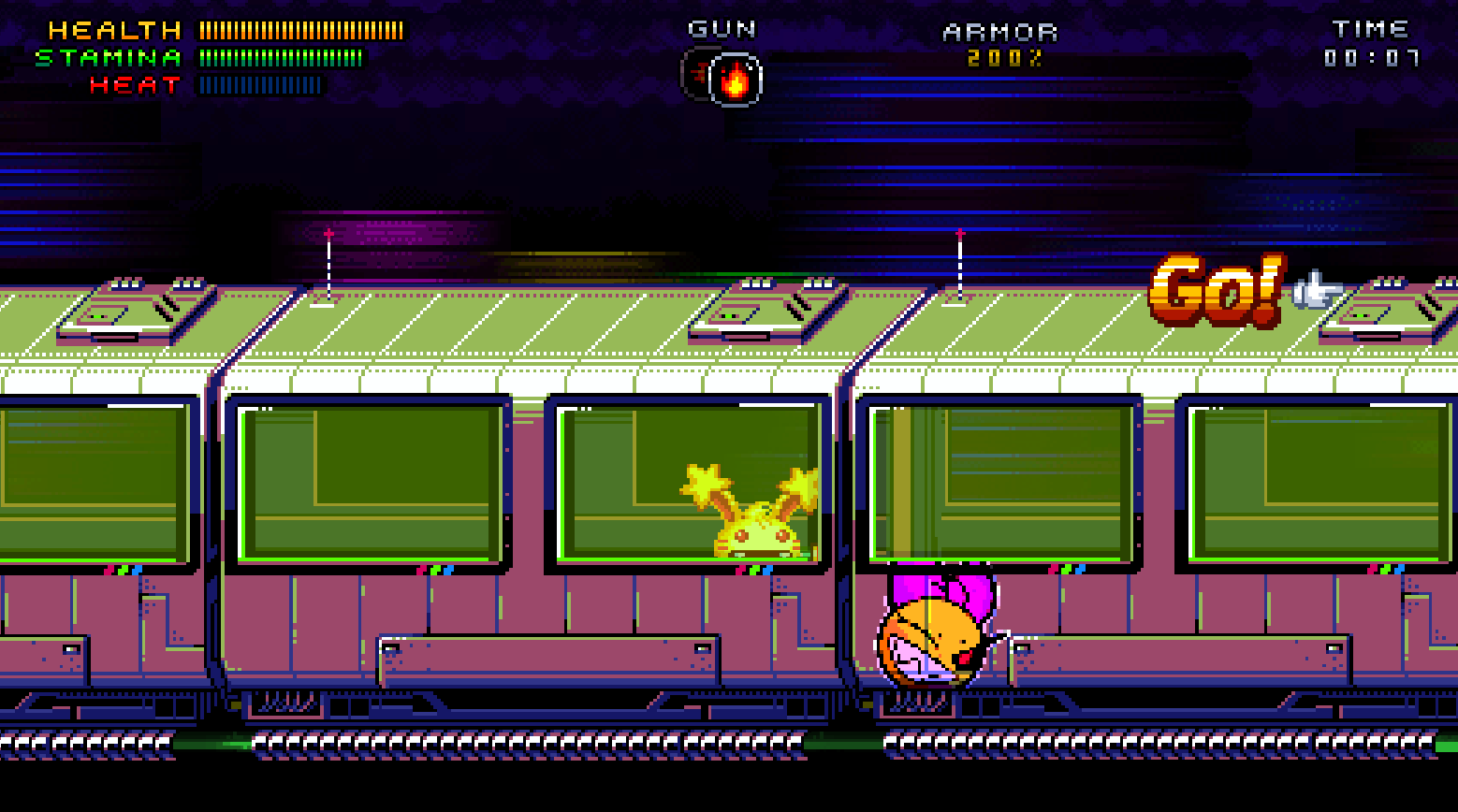
You must be logged in to post a comment.