A Charlie Brown Christmas (Pinball FX Table Review)

A Charlie Brown Christmas
aka Charlie Brown
Pinball FX Debuting Pin
First Released December 7, 2023

Main Platform: Pinball FX
Switch Platform: Pinball FX
Designed by Zoltan “Pazo” Pataki
Stand Alone Release ($5.49)

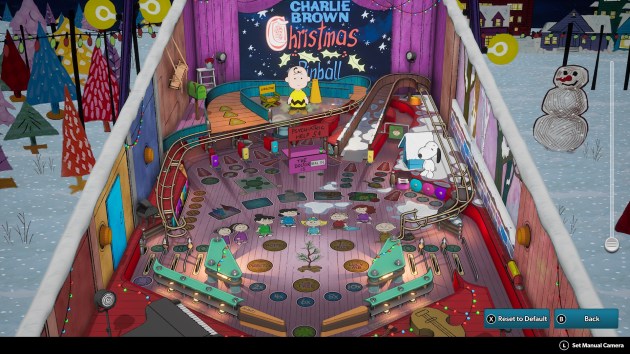
The second floor you get to via a jump ramp that you activate by smacking Lucy’s booth. Making the ramp shot is SO satisfying. It also activates during the “collect snowflakes” mode.

I nearly had a cow when I found out Charlie Brown’s pitiful Christmas tree wasn’t a target you shoot. My father gave me one of those “I’m not mad, just disappointed” glares as he asked if I really wanted to shoot a sickly tree that nearly died from having a single bulb hung on it. Well, yea, Pops. It’s pinball! Hell, the ball itself should have been the bulb that killed the tree (maybe a magnetic target?), and then after you do that, have the table light various other targets representing the rest of the Peanuts Gang to perform their magic hand wave that heals the tree and turns it into a beautiful, fully-decorated Christmas tree. It’s so obvious and such a missed opportunity. You do decorate the tree in the wizard mode but, frankly, we couldn’t reach it even after twenty-five combined hours of playtime. It’s too much work for what is a fairly tough-shooting table. Charlie Brown is a very good table that comes just short of legendary, with fun angles and excellent scoring that make-up for relatively basic targets, some ho-hum modes, and some eye-popping shot requirements. The lack of pizazz I suppose is befitting of the Peanuts franchise, as is the hidden skillshot: the ball going straight from the plunger to the left outlane. That’s genuinely funny.

Signature Element – False Outlane: It seems like such a small thing, but the way Pazo implemented the right side of Charlie Brown’s rails is probably the most exciting aspect of the table. The O is the inlane that feeds the flippers. No explanation needed. The P is the outlane. You lose the ball, and there’s no kickbacks to be had for it. The twist is in the Y lane: a no-work-needed return to the plunger lane, at which point the ball is auto-plunged back onto the table. That’s right: you don’t even even have to light it. It’s always active, and it’s awesome. It makes the table’s defensive game every bit as thrilling as the offensive side. The only downer is that it’s an auto-plunge instead of a Bride of Pin⋅Bot-like multiple-skillshot generator. I think they probably intended that and cut it, possibly because it was too easy and threw the balance and pace off. I love the element in general so I can’t really complain that there isn’t more to it. I’d love to see Zen do more of this.

Be warned: this is actually one of the hardest shooters among new tables. The director saucer is one of Zen’s most deceptively difficult shots. Lucy’s booth is situated in a way that the ball will just barely clip the corner of it. Thus, what should be the simplest angle in the game is rendered the most challenging. Even more frustrating is that the ball must pass through a gate before reaching the saucer, and if it loses too much momentum it’ll roll-out to the mailbox orbit. This caused some major problems on Nintendo Switch (see below). It’s worth the challenge because the table has such a unique flow, but it’s also a shockingly hard table to clock. The bat flipper is especially difficult, as there’s two possible lanes to hit with it, but aiming at them is quite hard since you can’t really see what you’re shooting. None of us got a feel for it. It’s pretty clunky and likely the main reason why this is the rare table that mostly scored GREAT ratings without anyone even thinking about going MASTERPIECE on it. With that said, we all had a good time and, yea, I could see where people might consider pulling this pin out during the holiday season.

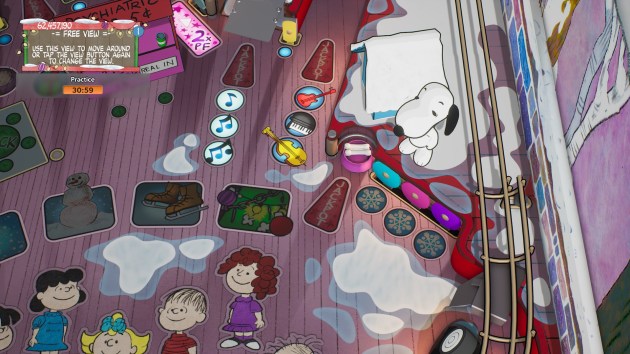
Persistent Problem – Shot Requirements: When you read our Pinball FX reviews, you’re going to hear us complain a lot about grinding and ridiculous shot requirements. I imagine Zen’s designers will tune out really quick, so I wanted to put this in the first review alphabetically. To reach the wizard mode in A Charlie Brown Christmas, you have to play every mode once (win or lose), activate Lucy’s multiball, start all three “design and play” modes, and start the two ball “decorate Snoopy’s house” multiball, which specifically requires you to score five different jackpots to earn its check mark. Activating that mode by itself requires you to repeatedly shoot the target pictured here, which is far and away the most high-risk target on the table. One of the main modes is also shooting the dog dish about four or five shots too many than reasonable. The amount of work your tables expect, WITHOUT failing is so beyond reasonable that I wouldn’t be shocked if only a couple dozen people ever reach the wizard outside of the practice. The problem is, seemingly no consideration is made for how high risk the targets are. Designers just place a target wherever there’s room, bump up the requirement on it until it becomes boring, and then move on to the next table. Another example of bonkers requirement: a twenty-five hit combo is what earns you an extra ball. Twenty-five. WHAT THE ACTUAL F*CK IS WRONG WITH YOU DESIGNERS? It’s Charlie Brown, for Christ’s sake! You can’t even drop this batsh*t mind-numbing grind for a Charlie Brown Christmas-themed table? You have all the talent in the world, and you squander it by turning your fun designs into mind-numbing slogs. There are multiple Pinball FX and Pinball M tables we should be holding up as triumphs of modern pinball, and instead we hold up only a fraction of that because of the rules, not the tables themselves. You are the one who is both building the Porsche and puncturing the tires. I don’t think any of you suck at designing pinball. That’s why it hurts that the tables aren’t as good as they can be. Because you’re so much better at this than the actual final product suggests.

Special Consideration – Nintendo Switch: On the Switch build of Charlie Brown, the Grinch is the director’s chair shot, and it steals Christmas. Even high-speed direct shots right down the middle of the director’s chair target stop and miss after passing under the metal gate. There’s just too much resistance on that gate, as if it’s grabbing the ball by a tail and yoinking it away from the target. It’s weird. Since that shot is the mode start, it’s pretty ruinous. This culminated in a game where Oscar hit the director’s chair shot over a dozen times before it finally registered and started a mode. For this reason, and this reason only, we have to consider A Charlie Brown Christmas on Switch to be ⚠OUT OF ORDERfor the time being, but if they fix this one thing, it should easily cruise to a Certificate of Excellence.
Cathy: GREAT (4 out of 5)
Angela: GREAT
Oscar: GREAT
Jordi: GREAT
Dash: GREAT
Sasha: GREAT
Dave: Projected to be GREAT on Switch after fix.
Elias: Projected to be GOOD (3 out of 5) on Switch after fix.
Primary Pinball FX Scoring Average: 4.0
📜CERTIFIED EXCELLENT📜
Switch Scoring Average: ⚠OUT OF ORDER
Some review copies were provided in this review, others were paid for.

Pinball M: The Definitive Review & Table Review Guide – UPDATED to include Camp Bloodbrook

Our Pinball FX and Pinball M reviews took a lot of playtime and revisions. If you enjoy what you read, or even if you hate it, please consider making a donation to your local food bank. For my American readers, you can find your closest one by using the search tool at Feeding America. A cash donation to your local food bank buys exponentially more food than donating canned goods. I also support Direct Relief, and in the aftermath of Hurricanes Helene and Milton, they could use some help. They have a page up just to explain their hurricane response. They’re worth it. Thank you, and enjoy the review. Or hate it.

PLEASE NOTE THAT NINTENDO SWITCH’S VERSION OF PINBALL M ISN’T SPECIFICALLY INCLUDED IN THIS FEATURE YET. WE WILL UPDATE BEFORE 2024 IS UP WITH ANY IMPORTANT NOTES ABOUT PINBALL M ON NINTENDO SWITCH. THIS FEATURE WILL BE UPDATED AS MORE MEMBERS OF MY TEAM SUBMIT THEIR RATINGS. THANK YOU FOR YOUR PATIENCE AND ENJOY THIS FULL REVIEW GUIDE TO PINBALL M!

LAST UPDATED – November 5, 2024
Camp Bloodbrook’s review is up!
Jordi’s rating for The Thing and Camp Bloodbrook are in.

A NEW GOLDEN AGE

For all the bitching and whining I’m about to do, we’re sort of in a new golden age of pinball. Pinball tables are probably second only to pool tables in terms of the most desirable high-end furniture-like gaming devices for family rec rooms or man caves. The problem is real pinball tables cost a LOT of money. Thousands and thousands of dollars for a noisy, heavy gaming device that plays one game, and one game only, forever. And that’s before you get to the hidden costs of owning a pinball table. They require maintenance. Waxing. Replacement of the rubber rings. And if something breaks down and you don’t know how to fix it yourself, it could cost quite a lot. They wear out too, and if something happens and the playfield is damaged, you either have to live with the damage or replace it entirely. That’s what our very own Dash had to do with his Swords of Fury table. He picked it up for $3,500, then needed to put an additional $1,500 to restore it. Pinball is a very expensive hobby.
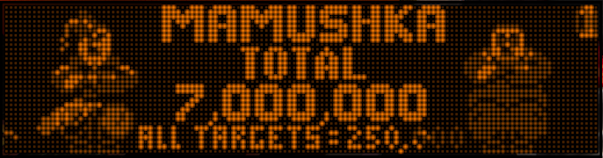
Average cost of repairs for an old table, give or take.

With digital pinball, anyone can afford the fun of pinball without the cost or hassle. You can spend $7,000 to $12,000 to score a mint condition real life Addams Family table, or you can buy the digital version in Pinball FX for $9.99 that has the same playfield, same targets, same call-outs, and same ROM, and the physics are 85% to 90% there, and hopefully climbing (no Christopher Lloyd though, much like Pinball Arcade). To put this in perspective, a rubber ring replacement kit for a real life Addams Family will cost you over three times the cost of Addams Family on Pinball FX by itself. So, how much is that final 10% to 15% difference in realism worth to you? And I’ll sweeten the deal for you. In Pinball FX3, you could only play with true-to-life table dimensions on PC or Nintendo Switch. With Pinball FX and Pinball M, no matter what platform you’re on, vertical screen options are available and so easy to set up. So your $9.99 game of Addams Family goes from looking like this:
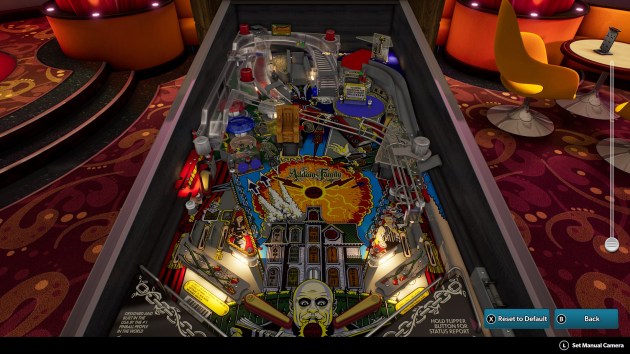
To looking like this:
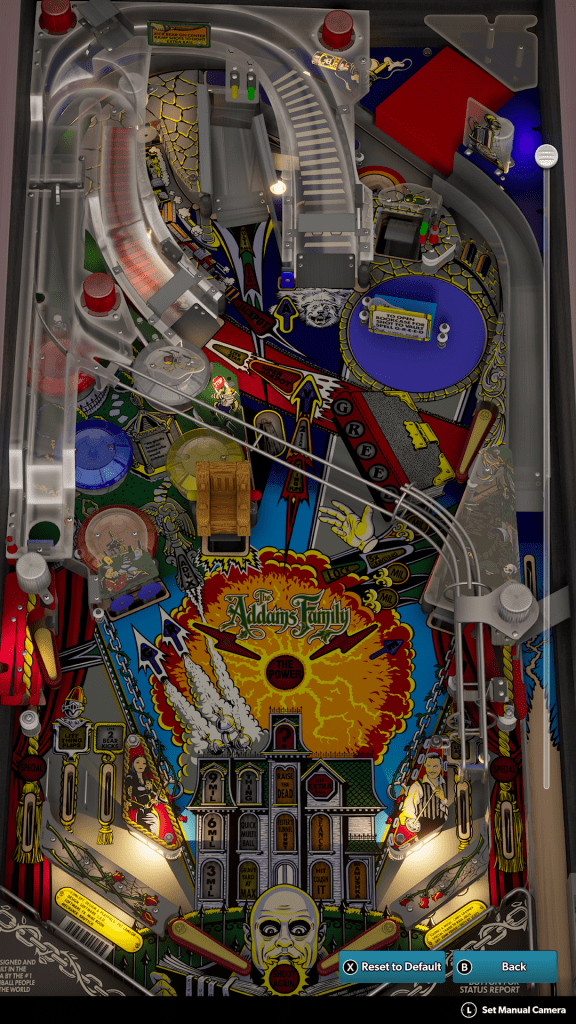
Those screenshots both come from the same copy of Pinball FX on an Xbox Series X. Wow! As of this writing, there’s over 135 tables in Pinball FX and Pinball M, and while we rate five of Pinball FX’s tables OUT OF ORDER (none for Pinball M), every table can be played vertically. You can absolutely feel the difference, especially in shooting accuracy and timing. You don’t need an expensive digital table to do this, either. Just turn any TV or Computer monitor on its side and use any game controller. It works with Steam, Epic, PlayStation, Xbox, and Nintendo Switch and every table can feel like you’re viewing a real pinball table. And, if you want the full DIY digital table with arcade flipper buttons, Pinball FX and Pinball M are excellent starting points. There’s a LOT of problems with Pinball FX and Pinball M, but the addition of universal vertical access overrides all of them and makes Zen’s output our favorite digital pinball experience. I’ll talk more about the problems with Zen’s adaptations of real life tables in the Pinball FX review, but all you need to know is by turning your monitor on its side, this:
Becomes this:
And you don’t have to spend a penny more to do it. Very cool.

WHY PINBALL M?

Zen Studios wanted blood, guts, and swearing in pinball. I mean, those things are already part of pinball when I play.. one way or another. But, adding those things to Pinball FX not only bumps that to an M rating, which I’m guessing almost certainly violates contracts they have with Disney regarding the Marvel/Star Wars licenses, but it would outright prevent release in some countries due to censorship laws. You’ll note that many of Pinball FX3/Pinball FX’s Williams pins have had superficial alterations to the artwork to remove anything risque. If I have to choose between them making changes so minuscule that neither Dad nor Angela could spot changes without being told what they were or not having the Star Wars/Marvel pins, I’ll take the Star Wars/Marvel pins and the “censored” artwork every time. But, making new pins that would potentially breach existing contracts they have AND cut off their ability to sell family-safe tables in some markets wasn’t an option until now. Zen’s solution is an entirely different pinball platform. The advertising and table selection suggests that this is really a horror-themed pinball program. As of this writing, 6 of the 8 available tables are themed around horror, with only Duke Nukem’s Big Shot Pinball and System Shock representing traditional M-rated games (and System Shock is pretty much horror too).

Is this necessary? Probably not, and weirdly enough, it’s Zen that proved that. A sanitized version of Pinball M’s best table, System Shock, is also on Pinball FX and plays identically. Wrath of the Elder Gods is also on both platforms, but.. well, one works and one doesn’t. We’ll get to that. But really, it’s just tables with cussing, boozing, and red paint smeared all around. In the case of a table like The Thing, it isn’t even all that gory and wouldn’t have taken that much modifying to earn a T rating or even E rating on Pinball FX. Just change the B-O-O-Z-E name to T-H-I-N-G, remove the red, beep the cussing, and it’s the same table. Even the Duke Nukem table isn’t that risque. We’re comfortable letting my 9 year old niece Sasha, heir apparent to this very blog, play everything on Pinball M so far. There’s nothing that isn’t too intense for a child to play while supervised by a grown-up. It’s pinball, for god’s sake. So, what other differences make Pinball M worth the download?

This slideshow requires JavaScript.

SPRUCE-UP YOUR COLLECTION

As you play and make progress, you earn in-game currency that can be used to buy custom upgrades to tables that have no effect on gameplay. You can change some of the sound effects, the look of the ball, the appearance of the motion trail that follows the ball, the room lighting, and the look of the cabinet housing the table (which only matters in the menu). I was slowly making progress on these until I posted a seventeen-trillion point game of Texas Chainsaw Massacre, which gave me enough currency to buy everything (and level up my profile to the max level of 120) with 1,015 currency points to spare for Camp Bloodbrook later this month. If you’re into customizing pins, you’ll dig this a lot more than me. The only knock I have is that there’s no option to randomize the balls or sound effects. That would be nice.
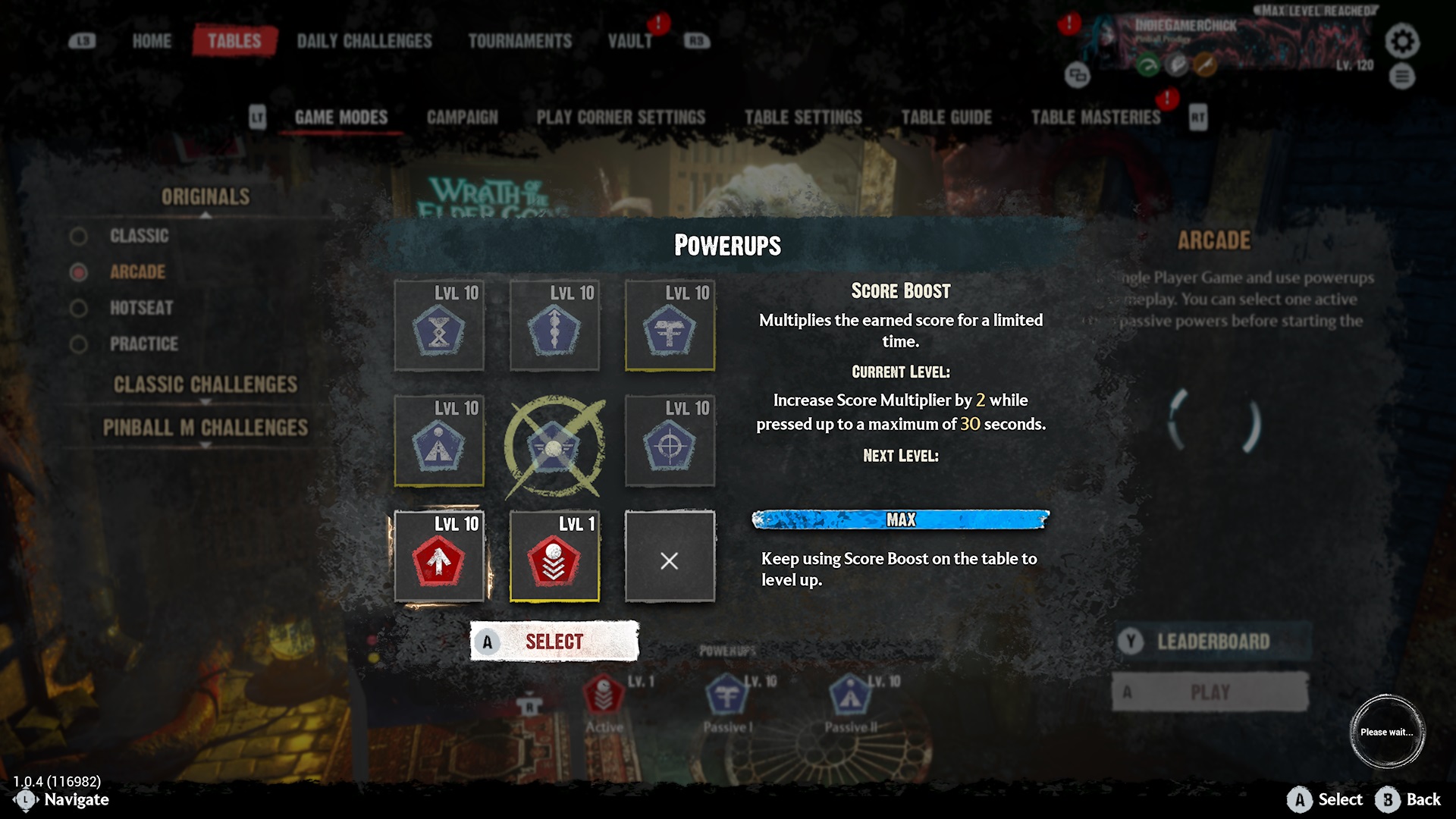
There’s also power-ups for the arcade and campaign modes that, in a return to how they worked in Pinball FX3, require leveling-up. That means grinding. My family and I agree that we prefer Pinball FX’s way of doing it, where power-ups have a fixed value that doesn’t slowly upgrade as you accomplish menial tasks in the tables. It means we can compete on a fully level playfield right out of the hypothetical box without having to spend what could take over an hour to build up the boosts we want to use. This is one of those things that feels like it’s done to boost “engagement” without thinking of the ramifications that 99.999% of all owners will never bother and some might feel the work required isn’t worth the time or effort and give up on Pinball M altogether. The customization stuff is a good idea, but leveling-up boosts is forcing players to do busy work in order to be competitive on some leaderboards.
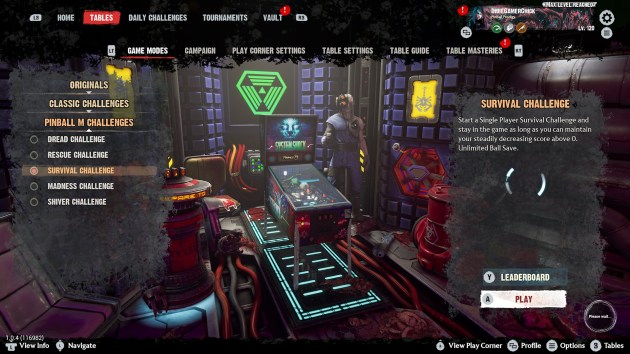
Five new challenges, three of which are fine, one of which is silly, and one of which is dumb.

NEW CHALLENGES/FEATURES

In addition to the usual rigmarole of 200 flip challenges or five minute challenges, Pinball M adds a whopping five new challenges to compete on. In Dread, you have one minute to score a benchmark of points. Reaching the benchmark adds a minute to the time and sets a new benchmark. This goes on until you run out of time. This is one of the good ones. So is Rescue, which is a race to see how fast you can reach a lone benchmark. Times, not scores, are posted to the leaderboard. The same goes for Survival, but that’s the worst of the five challenges, easily. In it, you have so much time to start building up your score before you start “bleeding points.” IE your score begins trickling away at an increasingly faster rate. Eventually, you’re bleeding points by the millions and games end in seconds. It’s just not fun. Madness has more going for it. It’s a unique multiball challenge that utilizes whatever the table’s max is, but it’s NOT a quick pass to the wizard mode. Instead, the more lights you shoot, the faster the values of jackpots increase. This is insane, chaotic, and everyone’s favorite new challenge. Yes, even me. And then there’s Shiver, which is “pinball in the dark. Practically blind!” Here’s what it looks like:

This slideshow requires JavaScript.

Pretty lame, Millhouse. Now, your mileage may vary depending on how bright your settings are, but since the table’s lights still work, come on, you’re not going to miss much. But hey, three-for-five ain’t bad. The challenges are also part of the new campaign mode. The campaign missions are mostly easy (some can be finished in literally under one second), and they’re not that hard to complete. In fact, we’ve only missed getting one completed on the high level. It’s a Survival challenge for Texas Chainsaw Massacre that requires you to stay alive for four minutes. By time you reach 3:30 – 3:50, you’re bleeding MILLIONS of points every second. I shot the lights out one game and still came four seconds short. Dad and Sasha both put up similar numbers when THEY shot the lights out. Under 20 people in the world have cleared this, according to the leaderboard. We will. We just have to wait for Angela. Anyway, it’s all about the tables.

TABLE REVIEWS

Our system is simple.
MASTERPIECE – Our best score. 5 out of 5.
GREAT – Better than GOOD, not quite a MASTERPIECE.
GOOD – Even though this is the lowest passing grade, it’s still a passing grade.
BAD – A table that particular rater thought wasn’t deserving of an overall positive rating.
THE PITS – The reviewer felt the table has little to no redeeming qualities.
I then average the scores, and if the average is 3.6 to 4.5, the table is awarded a Certificate of Excellence. My team has agreed a Certificate of Excellence winner is worth the price of a $14.99 set by itself. If it’s a stand alone table that costs $14.99, get it, because it’s a very, VERY fun table. A table that scores higher than 4.5 enters the Pantheon of Digital Pinball. These are the cream of the crop. The elite. Very few tables make it in. As of this writing, Zen has only made four non-Williams tables that entered the Pantheon. They are Star Wars: Battle of Mimban, Star Wars: Clone Wars, Epic Quest, and Fear Itself, with Mimban being our near-unanimous choice for Zen’s best table ever. Their versions of Attack from Mars, Medieval Madness, Getaway: High Speed II and the Pinball FX3 build of Monster Bash are also Pantheon Inductees. But, one more Zen creation might enter the Pantheon today, hint hint. A table that receives all positive scores but isn’t good enough to be certified excellent is still awarded a Clean Scorecard, which is pretty hard to get. A Clean Scorecard means we think it’s a safe bet the average player will enjoy the table more than dislike it. And finally, a table that scores an average of under 1.5 is declared a Certified Turd, but as of this writing, no Pinball M table is even that close to it.
Camp Bloodbrook
Coming October 24, 2024
Designed by Daniel “Dolby” Vigh
Stand Alone Release ($4.99)
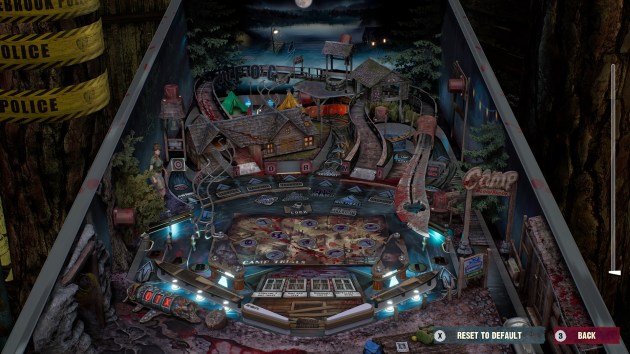
They should have armed the killer with a nail file because this sucker can file off serial numbers like no other.

I assume that Zen Studios started preliminary work on a Friday the 13th table only to find out they weren’t getting the license. Instead of repurposing it, Police Force style, they just made a generic masked slasher table set at a lake. I’m all for it, and my only question is why didn’t you do that with Jaws? Without the music, hell, it could be ANY shark attack table, right? Anyway, Bloodbrook is Dolby Vigh’s best table yet and one of Pinball M’s best tables. While we currently consider the Pinball FX build to be so busted that we classify it OUT OF ORDER, the Pinball M version works great. The difference is in the mode start locker.
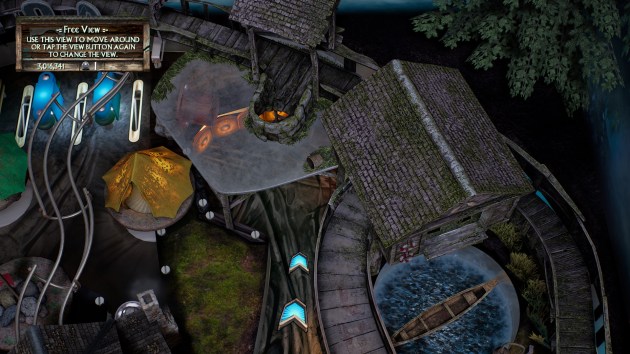
Signature Shot – Mode Start Locker: In Pinball FX, in “realistic physics” mode, this locker will drop the ball straight down the middle, right between the flippers, with alarming consistency. That doesn’t happen in Pinball M. In fact, this is a good shot in Pinball M.

Ignore the name. This IS the Friday the 13th table everyone has expected since Pinball M was announced, and it does a much better job with theme integration than anything in the Death Save Bundle. In fact, as far as horror goes, only Texas Chainsaw Massacre is better at matching a pinball layout to movie theme. The use of two dead end lanes on a single table, one for starting modes and one themed as a lake (it’s so small it looks more like a kiddie pool) adds to a sense of claustrophobia, but in a good way. This layout slaps, as the kids say. A multitude of good to great shots, but the fun stops there. Camp Bloodbrook speaks volumes about how far you can get simply by having a mistake-free layout. Pretty dang far. As if it’s channeling the spirit of 90s Gottlieb, it’s the ROM and the scoring system that nearly takes a machete to Camp Bloodbrook.
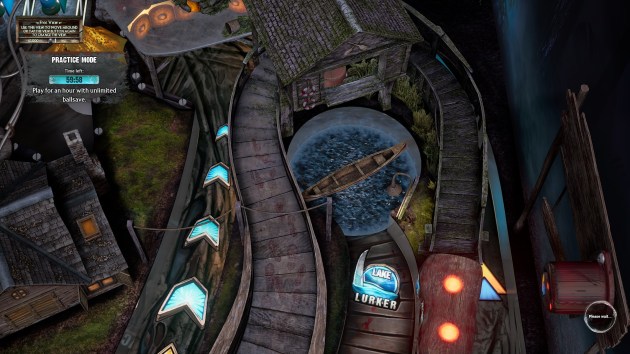
Signature Shot – The Lake: I get that the lake shot has to be round for the canoe spinner to work, but how many lakes are perfectly round? Immersion BROKEN. I kid. Actually, it IS satisfying to spin the canoe, though like so many aspects of Camp Bloodbrook, it’s underutilized. It’s just a glorified ball lock that doubles as a lane shot for the various modes. If you’re going to have water on a table, you need a satisfying splash down, or what’s the point? Zen has done it well before, or at least I think so. I personally find Pacific Rim’s splash down satisfying, something my family vehemently disagrees about. We’re all in agreement that Camp Bloodbrook’s water is missing something. Having Not-Jason snatch the ball would be nice for a third ball lock, but I don’t think it works for the first and second. It would be neat if each of the three ball locks did something different. Also, the release for Lake Multiball is lame too, but the actual shot itself is nice. One of the few Zen Studios shots where a backhand is consistently effective.

Bloodbrook’s modes are pretty average and underwhelming overall. This table reminded me a LOT of Chucky’s Killer Pinball. It’s so close that, if it were a cookie, it feels like it was made out of the same batter. It even has the mode where the antagonist walks onto the table and you have to shoot lanes without accidentally shooting him, only it’s a poorer version of it. Unlike Chucky, “the killer” of Camp Bloodbrook takes quite a while to lumber into place before the shot becomes lit. It’s annoying. This happens in the wizard mode too, where the instructions specifically tell you the object is to shoot him, but he’s not, for lack of a better term “lit”, until he waddles to his designated spot. There’s four main modes, one of which is shooting the bad guy, followed by a final mode where you once again shoot the bad guy, followed by a wizard multiball. The modes are NOT balanced, so they probably should have been forced to be played in sequential order. In fact, the fourth mode, Escape Plan, pays off so much and has so many lit shots (where even the false lights are worth a million points) that all four Vices play it first.
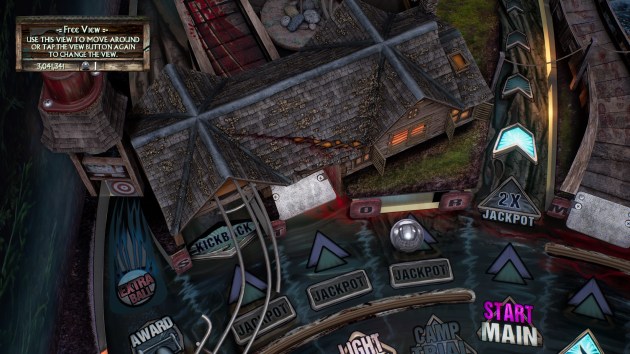
Signature Targets – STORM! Targets: Angela said the placement of the live multiplier targets and the ease of use makes these shots “like rewarding bricks.” It’s absolutely true that you can light these mostly via missing the actual lanes themselves. BUT, I like that for a reason. Sometimes I’ll find myself at the end of a mode and I’ll notice that I’m only one or two of the S-T-O-R-M-! targets away from activating the 3x scoring multiplier. It becomes mighty tempting to try and activate the multiplier before completing the mode for a windfall of points. Dolby’s Thing table has a similar set-up, but the table doesn’t blow wind that messes with the ball in Camp Bloodbrook. Also, it’s much easier to activate this multiplier because the lights don’t turn off if you shoot them a second time. We were split on if this was a good choice, or if it’s TOO powerful. Oscar really thinks x3 was too much and a progressive that starts at 1.1 to 1.5 and grows with each new STORM! activated would have been preferable. I agree that x3 throws the balance off too much, especially since the modes themselves aren’t even close to balanced, and would have been fine with it being x2 scoring. But, x3 it is, and I enjoyed the targets more than I disliked them.

The live multiplier is pretty much it for high scoring. There’s no progressive scoring for completing the modes, and doing well in the modes doesn’t enhance scoring in the wizard. In Angela’s Xbox world record-setting game (2,311,291,577), she completed multiple full mode cycles, and was scoring the same throughout, and part of the reason why she started playing recklessly (she had earned four extra balls on her third ball), was she just got bored. The shame is, this is probably the least difficult of any of Dolby’s pins too, but without dynamic scoring mechanics, it gets old. Even x3 scoring gets boring if the modes pay off the same whether you’re on your first cycle or seventh. The only progressive-scoring mode seems to be Lake Multiball. And that mode only consists of two shots: the lake and the ramp directly left of the lake. They probably kept the overall scoring low and non-progressive because the STORM! x3 buff isn’t very hard to trigger. By the way, for all my complaints, we all REALLY liked Camp Bloodbrook. While I didn’t love the rule sheet, there’s no grinding and it doesn’t fundamentally feel like it takes forever to do anything. All the side-modes go super fast. The pace works, if not the scoring itself. I might not consider Bloodbrook to be Dolby’s best, but by scoring average, it easily is.
Cathy: GREAT (4 out of 5)
Angela: GREAT
Oscar: GREAT
Sasha: GREAT
Jordi: MASTERPIECE (5 out of 5)

Scoring Average: 4.2CERTIFIED EXCELLENT

Chucky’s Killer Pinball
Released November 30, 2023
Designed by Zoltan Vari
Set: Death Save Bundle ($19.99)
Links: Pinball FX Wiki
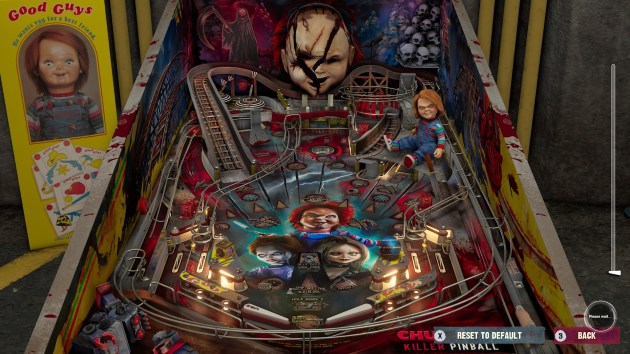
Kickback – Jordi: As Chucky says: “If they don’t let us play, they all go away.” This table doesn’t let me play. The skill shot makes no sense since it’s undervalued and overly risky, but it’s only the first of many killer issues on this table, and I don’t mean that in the “killer, dude! Radical!” way. The central Voodoo targets are designed to return the ball straight down the middle, and the right orbit is absolutely lethal if the ball doesn’t make it all the way up there. So many balls go just over the right flipper and down the drain, and with how unreliable nudging is with the new engines (shared by both Pinball FX and Pinball M) defense is nearly impossible. I really wanted to like this table. When a mode works well, it is not a grind unlike in most of Zen’s new tables, the theming is spot on, and there are so many references here that just work. Sadly, Chucky is let down by a table that refuses to let me play even a single session without stealing a ball or two. “Are we having fun now?” No.

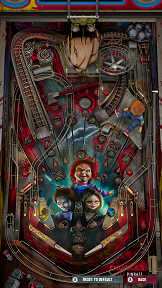
Despite the blood, swearing, and innuendos, Chucky’s Killer Pinball feels like it could have been an ideal trainer table. Chucky is a smooth shooter with multiple satisfying shots, the greatest of which SHOULD have been a humped ramp themed like a roller coaster that’s always a thrill to complete. The problem is it doesn’t always complete, and there’s no rhyme or reason why sometimes it doesn’t make it over the second hump or not. Since it’s the finale of the Tiffany mode, and completing the full circuit is the first jackpot in multiball, it’s kind of important that you can’t count on a shot working every time. The weird thing is, we weren’t 100% sure whether or not the point was to create a ramp circuit that could only be completed off a batted shot or not. If it was deliberate, it’s a very bad idea. If the intent was that the ball should finish the circuit every time, it’s just a run of a mill fail. What a shame. That should have been a historically awesome shot. To make up for it, the sequence shot used to lock balls is one of Zen’s finest ideas. You have to shoot the left side’s locker, which triggers a razor blade flipper that then bats the ball up into the lock. SO satisfying to hit, except it goes back to that circuit that doesn’t always complete. PLEASE fix that, Zen. It needs it!
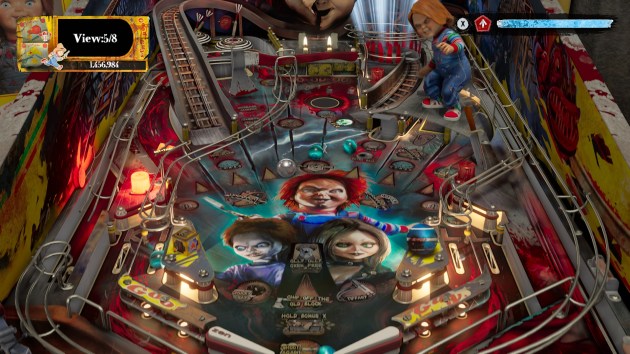
Signature Mode – Marble Prank: I don’t know what to make of this multiball mode. The concept is unique: after so many bangs of the bumpers, a jar full of marbles rises onto the playfield near the Voodoo targets. When you break the jar, it releases five glass marbles onto the playfield that behave like faster mini-balls. If you can hit the marbles hard enough with the pinball, it breaks them for a million points each plus a million for each marble broken so far. The other extermination method is to use the razor flipper to fling them at the multiball lock, which is 10M + 10M instead. It sounds great, but the problem is the jar hangs directly over the drain, and it’s not rare for several of the marbles to immediately drain. While the pinball has ball save the entire time the mode is going, the marbles don’t. A neat mode but not worth the effort, really.

Originally, the Vices all had Chucky’s Killer Pinball rated at GREAT, but the more we played it, the less we liked it. While the roller coaster not working every time is what sealed Chucky’s fate, all it really did was make all the little annoyances stand out that much more. Like the VOO-DOO targets resetting if you accidentally start another mode. I already hated them anyway. Vari-targets are my least favorite type of pinball shot, and this has not one, not two, but THREE that act as the mode start and hang right over the drain. Yes, there’s a ball save that protects you, but only if you push one in all the way. There’s repetitive callouts galore (we adore Brad Dourif and Jennifer Tilly, but even they become annoying after saying the same stuff over and over) or blood splatter blocks your view during the Marble Prank. Most of all, Chucky’s Killer Pinball features scoring so imbalanced that it assured Oscar cement his rating to GOOD even if they fix the coaster. Jordi was right about the skillshot leaving a lot to be desired. Going off his body of work, I suspect Zoltan Vari isn’t a big fan of skillshots in general. Chucky’s is a difficult to clock, super high-risk skillshot, and when we actually got it, we were stunned by how little value it is for the challenge and risk it involves. It certainly tracks with the rest of the table’s poor factoring-in of risk and reward. Dad ain’t wrong about that.
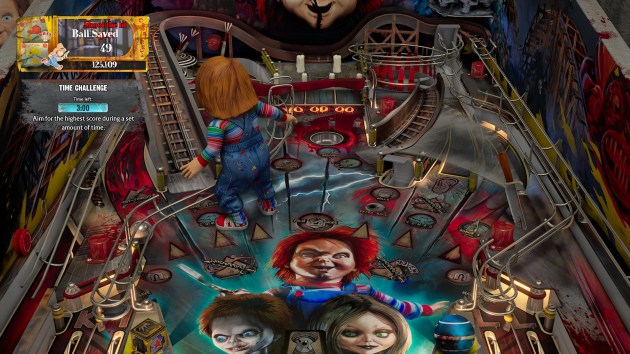
Signature Mode – Olly Olly Oxen Free: Of the three main modes, this is the worst, easily. In it, Chucky jumps onto the playfield and you have to avoid hitting him. A single hit ends the mode. This is potentially problematic because the game doesn’t just give you the ball to start. It kind of sideswipes it towards players, so that it reaches the flippers as chaotically as possible. Because, say it with me, “Zen Studios’ designers are hostile towards ball control.” Well, sometimes the ball might hit the slingshots and violently fling around the table until the ball pops up and hits Chucky, ending the mode before you even get your first shot. Yea, getting hit by the slingshots counts as “shooting him.” To the game’s credit, this is extremely rare, but it’s a completely unnecessary thing to happen in the first place. Just give players the ball! I’d say half the time the ball ends up in the drain before your first shot, though it doesn’t instantly kill-off the ball save. I have a feeling they realized how badly some aspects of Chucky handle and used ball save as a band aid instead of a feature. System Shock is like that too.

Other than the mode in the caption above, Chucky’s modes are pretty well done. No grinding. They make use of the full table. If there’s a downside, it’s that each of the three main modes is a “tour the table” type of mode, only done slightly differently. “Chucky Says” is just “hit the lit shot” and nothing more. It’s not timed differently. It doesn’t play differently. It’s too simple. I would have preferred the modes play out sequentially like Getaway: High Speed II, but I’m not going to complain too much about a table that does what we want: have fun, non-grindy modes. And the wizard mode is a ton of fun. Spoiler: you hack Chucky up bit by bit, and it’s awesome. Chucky’s table is really well done in many aspects, so we REALLY want to give this table higher scores. But, until the coaster’s fix is in, we really can’t. If it was intentional, GOOD is Chucky’s ceiling (unless you’re Angela. She LOVES that it’s hard to complete the circuit. She insists it makes it more exciting). Also, yea, I’m pretty peeved that this is one of the few tables I put a MAJOR marathon into with a world record pace only to have the game glitch out and start taking away points from me instead of adding them. I wouldn’t have reconsidered my score, but my GOOD would be a very enthusiastic one. Even though this wasn’t our highest-rated pin, we want to make it clear: the lack of grinding and quick modes are a very positive thing. More of THAT please, Zen! The best thing I can say about Chucky’s Killer Pinball is it feels like the prototype that gave us System Shock. Worth it!
Cathy: GOOD
Angela: GREAT
Oscar: GOOD
Jordi: BAD
Dash: GOOD
Sasha: GOOD
Elias: BAD* (Nintendo Switch)

Overall Scoring Average: 3.0 – GOOD
*Nintendo Switch Scores not factored into average. This will be updated at a later time.
Dead by Daylight
Released November 30, 2023
Designed by Gergely “Gary” Vadocz
Set: Death Save Bundle ($19.99)

Is it ironic that this is a pinball table licensed on one of the most license-heavy video games ever made?

Dull by Daylight, according to Angela and Oscar, is the worst Pinball M table so far. Hell, it’s the only table among the original five launch tables that doesn’t have its own Pinball FX Wiki page as of this writing. It’s second-to-last for me. A slog of a pin in desperate need of some spit shine. On literally our first shot ever taken on this table, Angela valleyed the skillshot, and no amount of nudging could free it. Even after patchwork, in the final sweep of tables before we published this feature, we valleyed balls on the tall ramp, and the only difference seemed to be a gentle nudge dislodges the ball now. While it might not break the table, it speaks volumes to how unpolished this one is. Plus it has some of the most frustrating rails and outlanes around. Even when the ball seems like it doesn’t have the energy to carry on, it still manages to crawl across the rails and slither down the outlane. This on a pin where nudging feels especially ineffective. But, none of that matters, because Dead by Daylight has a much, much bigger problem: it’s just a boring table. One of those instances where the shot selection is less than the sum of its parts.

CORRECTION: In the original review, I said the patched table valleyed the skillshot. That was wrong. Originally, we were valleying (coined by Oscar from a term borrowed from roller coaster lingo meaning “gets stuck midway through the circuit” that we’re trying to add to the pinball lexicon) on the skill shot, but that doesn’t happen anymore. Instead, the valleys happen at the top of the tall ramp. Sorry for the mix-up.
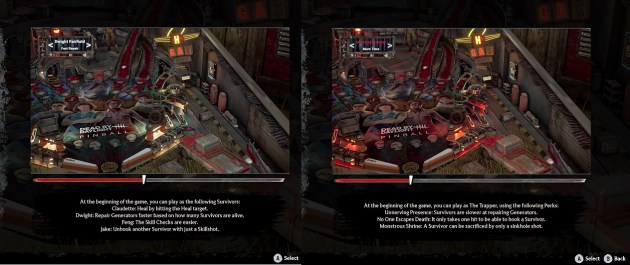
Signature Feature – Survivor/Killer Loadouts: Dead by Daylight is one of those tables where you choose a buff before the game starts, just like the video game it’s based on. Survivor mode has four, while Killer has three. Oscar is a big fan of the concept of loadout buffs, provided they’re balanced enough that there’s not one logical choice. The loadouts you can choose for every Pinball M’s arcade mode (IE enhanced multiball, bumpers, ball save, etc.) have this problem. According to Dad’s theory, if you had a 100 different buffs and 98 were weak and only two were beneficial but equally balanced, it’d still be worth it because it means players have a legitimate choice with pros and cons that can be tailored to the player. On the flip side, if you have seven choices, six of which are equally balanced with each-other while one stands out as the no-brainer choice for all players of all skill sets, it wrecks the whole concept. With that in mind, myself, Oscar, and Sasha decided to play a bunch of games with every load out, and all three of us consistently had our best standard games (Classic/Arcade) using KILLER – EASY SACRIFICE as our buff. I should note the one exception to this was I put up the #6 all-time arcade score with SURVIVOR- EASY SKILL CHECKS. This feels like a one-off fluke as my other games were all on the lower side with it. The other exception is the special challenges, where putting up points fast matters, in which case we all scored higher using SURVIVOR – FAST GENERATORS.

Dead by Daylight’s biggest problem is there’s just no good shots on the table and no sense of flow. Maybe that makes sense since the shots mostly represent distance closed in a cat and mouse chase regardless of which side you pick. This is what we call a “pick ‘n flick” because, despite the heavy use of hurry-ups, this is a game where you’ll want to trap the ball and aim carefully, because accuracy and not volume of shots will win the day. But, a pick ‘n flick table absolutely needs thrilling shots to succeed, and that’s not here. The closest it comes is smacking crates to increase your distance if you’re playing as a survivor, while the killer has a giant bear trap that you want to shoot before you start shooting orbits, since it leads to a faster capture. But even the bear trap is a massive let down. It’d be more fun to build a two ball multiball around it where it captures the first ball and then you have to smack it several times to open it back up. Oddly enough, the limited shot selection would make for a better multiball table if not for the aforementioned outlanes and rails. Oh and you have to shoot very bland drop targets that appear in the center of the table to score a capture.
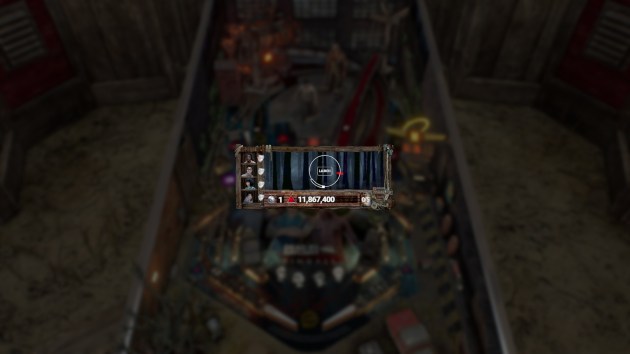
Signature Mode- Survivors: It seems fairly unanimous in my house that playing as the Survivors instead of the Killer turns Dead by Daylight into a more well-rounded pinball game. There’s five generators that require a full table tour. They are (1) the spinner (2) flashing lanes (3) the marked sinkhole (4) the flashing lanes, again (5) the bumpers. What becomes annoying is the video mode “Skill Check” pauses a live ball. The video mode itself is quick. You just have to stop a meter in time, with a zone close to the edge scoring more points. But, the mode can interrupt play, and it’s even happened to us when the ball is on a flipper. When this happens, it can screw with your timing when the mode ends and play resumes. We’re honestly not sure if this was a deliberate choice or something that needs to be patched out, but assuming it’s a bug, it wouldn’t change any of our ratings.

The center loop that acts as the skillshot, the multiplier increase, and sometimes the key shot for modes is just too clunky to be satisfying. We split on whether the tall ramp in the center was too rejection-heavy or not. Actually, the argument was more about whether the rejections were based in reality or if it was just Unreal Engine living up to its name and throwing back shots that had the angle and velocity to complete the ramp. Unlike some faulty ramps in Pinball M or Pinball FX (the teardrop from Texas Chainsaw for example), I didn’t feel it was clear one way or another. I’m open to the possibility that the design is inherently flawed. Either way, this became one of Angela’s least favorite pins and she can’t believe we don’t consider Dead by Daylight to be Han Solo/Safe Cracker levels of bad.
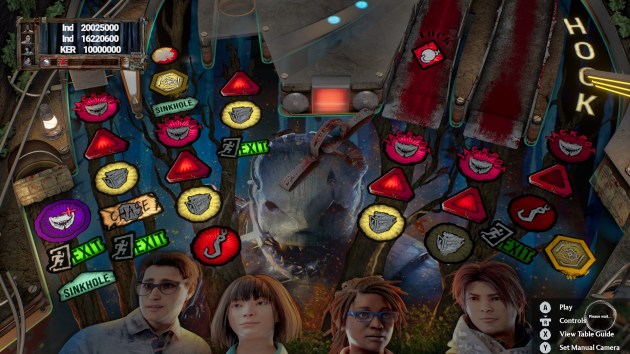
Signature Shot – Bear Trap: Talk about a letdown. When we saw the bear trap for the first time, we were imagining the possibilities of how this could be used as a sick M-rated ball lock. Nope. You just clank it a few times until it opens, then you shoot lanes before it closes. That’s it. It’s not a ball catch. It’s not a decorated cellar. It’s a bland digital target, and nothing more.

The lack of targets and poor flow from shot to shot means that Dead by Daylight was fated to grow old quickly. Our suspicion is the limited shot selection was done to make the differences between Killer and Survivor more pronounced, and to Gary’s credit, the two modes do feel different enough, but Killer offers a lot less flexibility since it makes logical sense to arm the bear trap before shooting any other target. Individual strategy for that side of the equation begins and ends with what loadout you want. We spent the better part of two days playing this and trying to find the fun. Sasha liked it, as she felt the chase aspect worked well regardless of what side you choose, plus she liked the shot selection more than we did. The rest of us were just really bored. Dead by Daylight probably does an admirable job of feeling like the video game, but as a pinball table, it was dead on arrival.
Cathy: BAD
Angela: THE PITS
Oscar: BAD
Jordi: BAD
Sasha: GOOD

Elias: GOOD* (Nintendo Switch)
Scoring Average: 2.0 – BAD
*Nintendo Switch Scores not factored into average. This will be updated at a later time.
Duke Nukem’s Big Shot Pinball
First Released November 30, 2023
Designed by Grego “Rockger” Ezsias
Set: Death Save Bundle ($19.99)
Links: Pinball FX Wiki
Full Review at The Pinball Chick

Angela has dubbed this “Duke of Whirl” because of the merry-go-round. She’s a fan of rotating targets in general and thinks it’s one of the most underused concepts by Zen Studios. I pointed out that it wouldn’t be a big deal if it showed up regularly as a featured target. She said “why would the best type of target stop being fun?” We dueled to settle who was right. She won 4 to 0. She always wins.

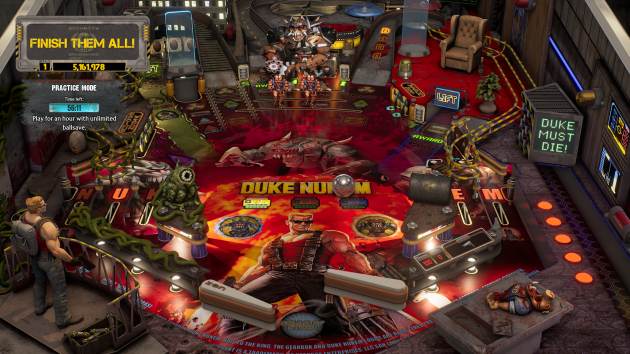
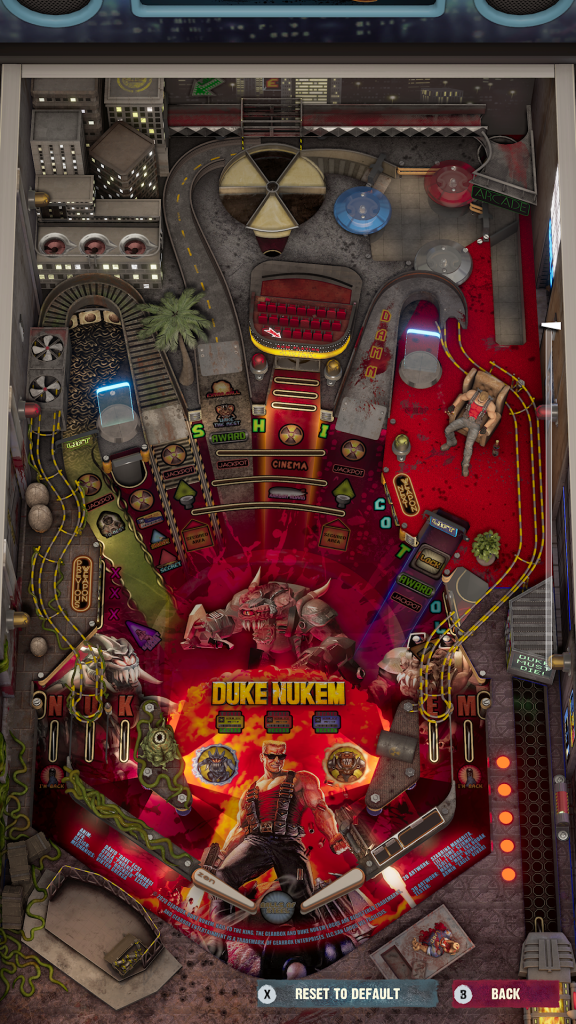
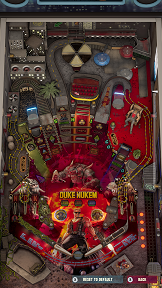
Duke was a sort of breaking point for me, where I’d had all I could stand and I could stands no more. Zen has a tendency to go overboard with shot requirements, and they finally crossed the line of reason with Duke Nukem’s Big Shot Pinball. It’s as if someone at Zen is saying “why have a mode require five shots when it could instead require ten? Or hell, why not twenty?” And the answer is “because you also want to have hyperactive slingshots that are aimed right at the outlane and it’s not reasonable to expect someone to keep the ball alive during this.” I think Duke Nukem is a terrible table. Serial killer slingshots with hair triggers aimed right at the outlanes combined with modes that need their shot requirement clipped by 80% at least. A typical game consists of the ball hitting the slingshot and going into the outlane about six times, or possibly ricocheting off one of the many cardboard targets, skipping across the rails and going down the outlane. It’s all defense, all the time and it’s SO exhausting and boring. Every mode is that way.
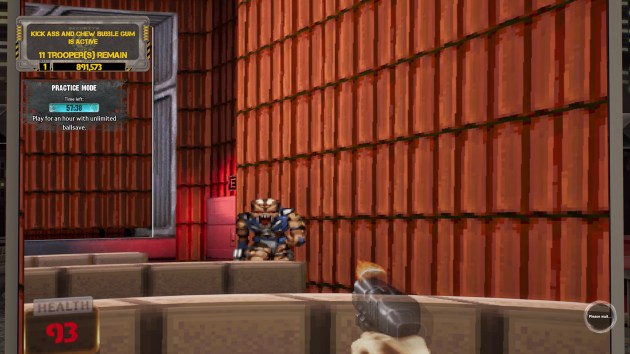
Signature Mode – Kick Ass and Chew Bubblegum: In this video mode, you have to alternate between four channels and press the launch button three times when a target pops up. Do this twenty times. It’s not exactly a first person shooter, and the novelty of it looking like Duke Nukem 3D wears off pretty quickly. There’s no tension at all. Even when we’ve played it poorly, we’ve never fallen under 60% health. I imagine if someone had a stroke while they were playing this, or if they were attacked by swarms of murder hornets in the middle of a game, they might lose it. Maybe. Some of Zen’s video modes aren’t so bad. This thing is such an unfathomable slog to get through, and it has nothing at all to do with pinball. You know, that thing we’re here to play. I wouldn’t mind this if it lasted only a few seconds and involved shooting one enemy and maybe avoiding its fire, but it’s nothing like that. It’s just a shooting gallery with a generous amount of wiggle room.

By reputation, Duke Nukem is one of the hardest tables Zen has ever made. I have no problem with a hard table if it’s fun, but Duke Nukem also requires a massive grind to accomplish anything. Want to get an extra ball? Hit the NEST targets 100 times, which can only be shot off a toe shot right next to the drain and in which case the ball is likely to go off a slingshot and die, or get into the secret room ten times. How do you get into the secret room? Well, first you need a pipe bomb. How do you get a pipe bomb? You have to complete one of the three side modes. Oh, side modes? That sounds quick. What do you do? Well, for “I’m The Cure” you have to score 6 sinkholes in the merry go around, which has six slots, half of which don’t feed the sinkhole. You then enter an “alien nest” where you have to get 60 spins of the spinner. Then you get the pipe bomb? No, 60 spins spawns four more targets which raise up and down. THEN do you get the pipe bomb? Well, maybe. It’s a random award. Could be the pipe bomb. Could be something else. Doesn’t that sound like boring ass busy work? Uh, yea? And if you want that extra ball from the secret room, you only have to get lucky with the random award for all that work ten times over. You won’t be able to. See, the designer thought it would be hilarious if he aimed the slingshots at the outlanes and gave them a hair trigger. And also have the ball return sometimes come in from the side at a sharp, sideswiping angle that could go down the outlane or onto the slingshots which can also send the ball into the outlane. Having fun for your $19.99 for the Death Save Bundle yet?

Signature Shots – Cardboard Targets: The soldiers in front of the boss targets take multiple shots to kill, then the boss takes a ton of shots to kill. Hypothetical future bosses past the first one are even spongier AND and they have more minions in front of them AND those minions require more shots. Let’s pretend that Duke Nukem doesn’t have extremely lethal slingshots and kickbacks that require five shots each to light. Let’s pretend that you have a ball save lit the entire fight and instead the only factor during the boss fights is your health. That’s a thing that exists on this table, by the way, but don’t worry because you’ll die long before your health runs out anyway. But, pretend that health was the only factor and not the drain or outlanes. Wouldn’t shooting these static cardboard targets get boring anyway? It’s not like it’s two or three hits on each. The bosses can take as many as 18 shots to kill, and that’s after you get through the spongy minions in front of them. No shot on a boss counts until the minions are clear. Didn’t anyone stop and say “wait.. is this fun?” Because it’s not! It’s such a mindless chore that it’s practically a holistic lobotomy.

I’m sure that someone has gotten in the ear of Zen’s design team lineup and told them “making tables harder is good! Making it take as many shots as possible to get anything going is good! It increases engagement!” It actually doesn’t. At all. It just makes your table boring, so that people who aren’t in the pinball bubble like me, my family, and my friends won’t want to spend their time with it. So, how’s Duke Nukem’s ruthless difficulty working out for it? Well, a few minutes ago, I had a game of Duke Nukem’s Big Shot Pinball where I beat the first boss. So basically I finished a single mode. I completed zero side modes and made only one skill shot. That game, where I barely accomplished anything, is the 17th highest score on the Duke Nukem arcade mode leaderboard right now. Not for the week. It’s #1 for the week. It’s #17 all-time. One boss alone got me a top 20 all-time score. That’s engagement? Because to me, that sounds like Duke Nukem is a barren wasteland of non-engagement. BAD was too generous for a table that I’ve honestly never had even a tiny bit of fun on. I can’t rate a table based on the fun I could have had if its designer hadn’t made it such a slog to make anything happen. I can only rate the table as it exists, and I think Duke Nukem is currently the worst Pinball M table. I stand alone in my group on that opinion, but hey, I’m used to it. Just wait until you see the Knight Rider review.
Cathy: THE PITS
Angela: GOOD
Oscar: GREAT
Jordi: GOOD
Dash: GREAT
Sasha: GOOD
Elias: GOOD* (Nintendo Switch)
Scoring Average: 3.0GOOD
*Nintendo Switch Scores not factored into average. This will be updated at a later time.
System Shock
First Released February 15, 2024
Designed by Zoltan Vari
Stand Alone Release ($5.49)
Links: Pinball FX Wiki
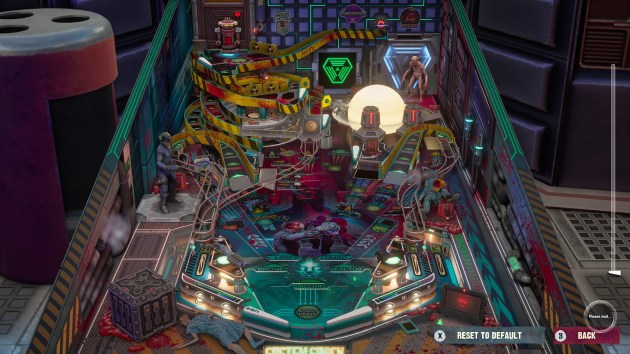
If the mark of a truly magnificent licensed pinball table is one that makes non-fans of the featured property interested in finding out more about it, System Shock must be one of the very best digital pins ever. My father, now in his mid 70s, purchased the recent remake based on his experience playing Zen’s tribute to it. Fans will appreciate that they nailed the creepy menace of SHODAN and the sense of isolation, but you absolutely don’t need to be a fan of 1994 PC classic to enjoy the thrilling shots of what is easily Zoltan Vari’s greatest triumph (sorry Fear Itself). While the build we played had that expected launch-window Zen clunkiness, we still couldn’t put down our copies of Pinball FX and Pinball M, playing nearly a full week of duels. Eight months after its release, in October of 2024, we again couldn’t put it down. Few tables from Pinball FX or Pinball M are easily classified as a modern pinball triumph. System Shock is. In fact, there’s only one thing that takes it out of the conversation for best Zen Studios pin ever. So, let’s do a caption and get that out of the way.
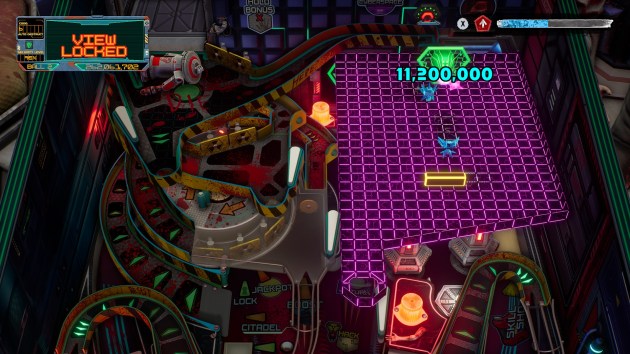
Signature Brain Fart – Laser Mode & SHODAN Battle: In the annals of “what were they thinking?” this one is the most peculiar, because it’s so silly that I literally laughed. First off, let’s talk about Laser Mode. It’s one of four checkmarks players must knock out before the final battle with SHODAN. Getting to Laser involves completing the harrowing three-shot journey up the spiral tower (maybe add a fourth shot if you haven’t hit the Serv-Bot yet), at which point you play a brick breaker style video mode. That’s fine. It’s a fun mode. Well, it’s also the wizard mode and the final battle with video game icon SHODAN. The only difference is instead of killing two enemies, you have to hit SHODAN twenty times with the puck before you drop the puck twenty times. Yep, really. That’s the wizard mode. Presumably Zoltan Vari won a bet.

Oof. On a table where every angle, orbit, and ramp is fun to shoot, not having a tour-the-table wizard is almost beyond belief. Zen has a history of bad mini-tables, but given how amazing the layout and the shot selection is for System Shock, it’s a safe bet that ZV was on a roll and he could have pulled off a sick boss fight mini-table for this one. And yea, SHODAN’s value is potentially so high if you hit all nine targets (“collecting items”) on the roto target that it negates the rest of the table. BUT, since the Wizard is easy to get, we’re cool with it. Oddly enough, this might be the most generous Zen table ever. Not only are extra balls plentiful, but so are ball saves. The tower is the obvious center piece, but get this: there’s a target behind the entrance to the tower that activates a magnet that assists in teeing-up the ball for the bat flipper that shoots the tower AND gives you a split-second ball save if you drain within the next second and a half. That feature was hotly debated in the Vice Household regarding whether or not it nerfed the table too much. Oscar was THIS CLOSE to dropping his vote to GREAT. The fact that every Vice ultimately rated System Shock a MASTERPIECE should make it clear it wasn’t a deal breaker even for the challenge-frothing Oscar or Angela.
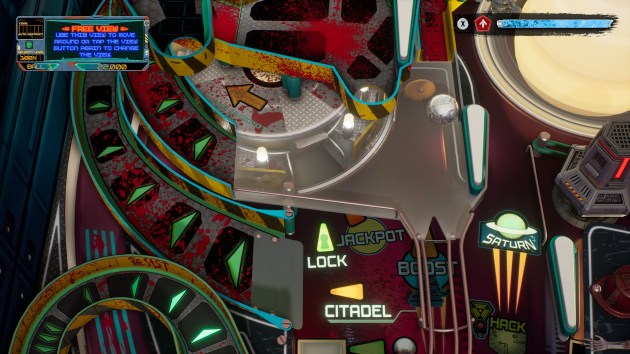
Signature Shots – The Tower: Actually, every Vice had their own “I almost dropped this from MASTERPIECE” feature. This was mine. Specifically, the second level of the tower. This both doubles as the super jackpot in multiball while also functioning as a crank which rotates the base of the tower. The base features stand-up targets that function as the tools you collect to increase the value of multiball and the final battle with SHODAN. There’s 9 total targets and 3 cellars that are the ball lock. The reason I almost dropped the score from MASTERPIECE is the crank has a tendency to go nuts. In theory, it should only do one quarter rotation when you hit it. But, it frequently goes more than one crank, or sometimes it’ll crank forward and then backwards. When you create experimental targets, things go wrong. It wasn’t a deal breaker by any means, and the more I thought about it, the more I questioned whether I was even frustrated by it. So, while it didn’t factor into my rating, I wouldn’t shed a tear if they fixed it so it was always a quarter-turn of the base. Also, and this is very nit-picky but I wish there was better representation of the nine tools you collect. Better use of lights that tells you which targets you haven’t hit, because you do have to hit all nine specific stand-ups on the roto-target, whereas any of the three sinkholes count towards a ball lock.

System Shock is that rare table where nearly every shot is thrilling. This is further enhanced by the fact that the four “modes” you must complete to open the SHODAN fight require minimum grinding. The one that requires the most work is probably “COMBO” where you have to shoot the front-right ramp several times, which places three unique balls as targets just above the flipper zone. Two are fakes that explode on contact while one is a real “rubber ball” with its own unique physics that must be sunk in the sinkhole above the right flipper. This lights the two front ramps, at which point a single crisscross combo gives you the COMBO light. It’s a lot of work and probably the toughest light to get, but it’s also a light you can get through natural progression instead of grinding. Oddly, after you’ve finished the wizard, you can skip all the steps I listed above except the single crisscross combo to relight it. The second wizard takes a LOT less time to reach. There’s a small but very annoying (not to mention potentially game ruining) glitch attached to it if you’re playing one of the modes that allows you to use the Ball Save buff. If you screw up hitting the real ball before time runs out and you have a maxed-out Ball Save buff, it could take five or more minutes before you get another shot. Another annoyance is sometimes, when shooting the final shot that earns you the “REACTOR” light, the ball begins slowing down as it starts to “complete the shot” only for it to fall back down. In theory, you should be home free once it reaches the point where it slows down since it seems to be something that the game does and not the physics of your hit.
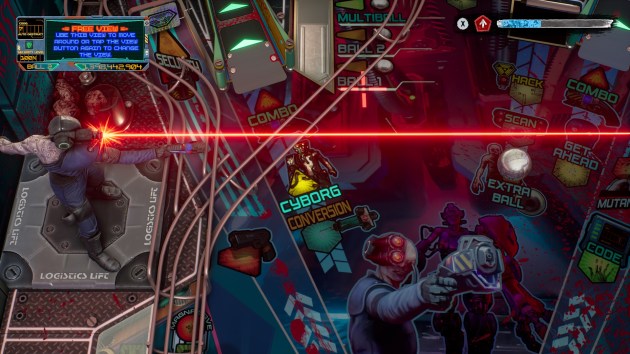
Signature Mode – Cyborg Attack: I have a gut feeling that it didn’t used to be four checkmarks before fighting SHODAN. My hunch tells me it started as five, and this was the fifth. In it, you have to just shoot the same front-left ramp you’ve shot multiple times to activate it. This also happens to be the hardest mode in System Shock. Nothing else is even close. Oscar calls this a Fastest Gun in the West type of mode because you don’t really have time to set-up shots. You have to ready and aim yourself in a split second, because when the cyborg locks onto your ball, it fires a laser at the ball which sends it flying. Try trapping and even if you begin the shot by letting go of the flipper, the Cyborg will hit the ball, which is a big outlane risk at that point, and it also halts all other modes while the attack is going. Cyborg Attack only awards a nominal amount of points. but the real reward for it is it lights valuable magna saves. This is a prime example of well thought out risk/reward. It was wise to have this be separate from the main modes thanks to the difficulty spike, as was attaching a genuinely desirable award to it. You can even earn the right to stack additional magna saves if you complete mode. Fantastic. More of this type of thoughtfulness with side modes, please.

The worst thing most of us accuse System Shock of is being a flawed MASTERPIECE. That still makes it a MASTERPIECE and, statistically speaking, the best table in Pinball M so far. The only other table in Pinball M that has even a MASTERPIECE vote from anyone on my team is Texas Chainsaw Massacre (two of them, in fact). Only System Shock stands tall as a table entering the Pantheon of Digital Pinball. Oscar said that System Shock reminded him of the pace Getaway: High Speed II has, only if the modes were non-linear. He’s not wrong. Not that System Shock shoots as well as Getaway, but what does? I want to stress once more that you certainly don’t have to be a fan of the original game to enjoy this pin. My father had never played System Shock and Angela and Sasha had never even heard of it. If you feel old now, you’re having the right reaction. But, this is exactly the type of licensed table Zen should be doing. Non-punishing. Easy to understand objectives. No grinding. A table even an average player should be able to finish. But also a table with strategic flexibility and options that measure risk and reward. Sure, you can postpone getting multiball until you collect all nine tools, but if you drain, game over. System Shock offers that constantly. It’s Zoltan Vari’s best table and, indeed, the best Pinball M has offered yet. So naturally it’s also on Pinball FX as well. Go figure.
Cathy: MASTERPIECE
Angela: MASTERPIECE
Oscar: MASTERPIECE
Jordi: MASTERPIECE
Dash: GOOD*
Sasha: MASTERPIECE
Elias: MASTERPIECE** (Nintendo Switch)
Scoring Average: 4.71 🏛️PANTHEON INDUCTEE🏛️
*This feature will be updated as soon as Dash gets time to explain his GOOD rating. He’s been swamped with work stuff.
**Nintendo Switch Scores not factored into average. This will be updated at a later time.
Texas Chainsaw Massacre
First Released June 6, 2024
Designed by Zoltan “Hezol” Hegyi
Stand Alone Release ($5.49)
Read the full review at The Pinball Chick
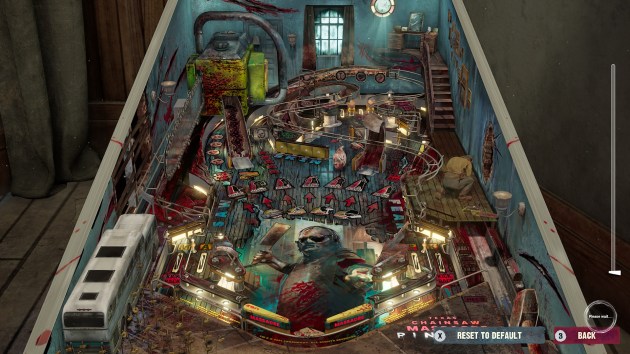
John Larroquette’s opening narration from the original movie is here. They got that, so how come they couldn’t get him to do the callouts, too? Just call his cell and ask “hey, can you say MULTIBALL into the phone and maybe MULTIPLIERS INCREASED? What’s this for? We’re doing a pinball table based on Night Court and you’re the only cast member still alive. No, we’re not counting Karen Austin. Hello? Helllllo?”

Texas Chainsaw is currently the #2 ranked Pinball M table, and it’s certainly worth the $5.49 asking price because it’s not possible to get bored with it. The longest single game of pinball I’ve ever played in my entire life was on Texas Chainsaw Massacre’s arcade mode. I gamed the boost level-up system by maxing-out BALL SAVE, then I reached the wizard mode. With the fully-charged ball save boost, I only needed to convert one shot every ninety seconds or so to keep the ball save lit. After a ten hour long wizard mode (including all the breaks I took to ice my hands, and I’m not even kidding), I was the world champion, and then I laid down the next four balls instead of risking Pinball M crashing. There’s not a lot of tables I would play for ten hours straight. It’d be boring, even if I was on a world record pace. That alone speaks volumes to how amazing Chainsaw’s shot selection is. We were rough on newcomer Hezol’s first table, A Samurai Vengeance, but you could see this guy was going to be legit too. Chainsaw proves it.
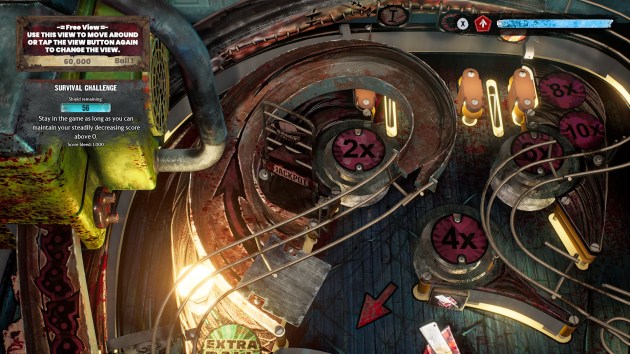
Persistent Problem – Physics: When ramps in Pinball M or Pinball FX go bad, it’s usually very bad. For example, the teardrop ramp, which is a pretty big shot on this table. It opens a mode and it’s the skillshot. But, the ramp doesn’t work sometimes. I don’t know if it’s too steep or too tight a curve, but we’ve broken it more than once, and thankfully we got a clip of it. Not only did the ball get stuck when it should have had the speed to clear the ramp, but the ball began wiggling. How does a ball wiggle on an incline? It never stopped, either. The clip doesn’t show it but the ball was stuck wiggling at roughly the same speed for quite a while. The wiggle prevented the ball from resetting, and it was jammed so badly that nudging wouldn’t knock it loose. I almost tilted trying to. In fairness, this happened during a silly challenge in the game’s campaign mode. Had this happened during the (former) world record game, I’m not even sure I would have remembered it.

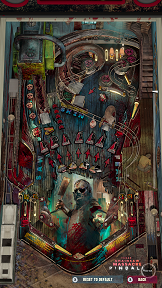
Besides the teardrop ramp, every shot is well-placed and properly satisfying. The highlight is the subtle but sweet chainsaw ramp. It’s one of the shorter ramps in Pinball FX or Pinball M, but it’s also brilliantly angled and works as both a traditional shot and as a toy. The severed head moves along a diagonal track but never feels like it’s angled in a trollish way. The “set ’em up, knock ’em down” modes where you bank points that you then earn via a “massacre” jackpot is an inspired concept, and the only downside is that they don’t pay off enough. Oscar wasn’t a fan of the score imbalance, as he feels the modes were a little more than checklists to get you to the high scoring multiball and wizard modes. When I countered “so does every table, including System Shock” he said fired back with “the shots aren’t as good as System Shock.” They’re really not, but it’s a safe bet that some people will find the shots too conservative and bland. Thankfully there’s minimal grinding and Chainsaw has one of the easier-to-reach wizards Zen has done. That was very wise, given the lack of value for standard modes. Had the scoring been more balanced, this would be a contender for the Pantheon. I think that Hezol is going to work out just fine.
Cathy: GREAT
Angela: GREAT
Oscar: GOOD
Jordi: GREAT
Sasha: MASTERPIECE
Elias: MASTERPIECE* (Nintendo Switch)

Scoring Average: 4.16 CERTIFIED EXCELLENT
*Nintendo Switch Scores not factored into average. This will be updated at a later time.
The Thing
First Released November 30, 2023
Designed by Daniel “Dolby” Vigh 
Set: Death Save Bundle ($19.99)
Links: Pinball FX Wiki
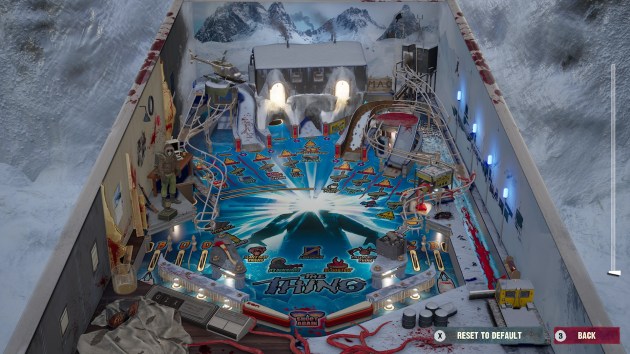
The weirdest thing is that Zen’s Godzilla table looks colder than this table that’s literally surrounded by ice. Oh and please note that, right now, only the ratings for the main version of Thing are from the four Vices. This review will be updated in late October, 2024 when the review for Camp Bloodbrook is added.

The consensus seems to be that either Thing or Dead by Daylight was the worst table of Pinball M’s launch. Personally, I’d rather play either of those over Duke Nukem, but to each their own. I don’t think Thing is that bad. It’s a very frustrating table, and one I’m not enthused enough with to argue too passionately in favor of, but bad? Nah. My pops and I are in total agreement: Thing has something going for it, though it’s hard to pinpoint exactly what that is. One thing about THE Thing that we all agreed on was the layout didn’t do the movie justice. A traditional Japanese fan layout probably wasn’t the right way to go for a pin based on this specific flick. The 1982 John Carpenter film is one of the most imaginative horror movies of all time. How does it do it? Claustrophobia. What is the Thing pinball table? A vast, wide open playfield where every made shot can be followed-up by almost any other orbit. In pinball terms, that’s the literal opposite of claustrophobia. Hell, the Dead by Daylight table would have been a more accurate representation of The Thing’s tone than this. I get a lot of guff from my friends, family, and readers for not putting more stock into theme integration. I think it’s rarely notable unless a table does exceptionally good or exceptionally bad. Thing is exceptionally bad, at least in terms of replicating the emotions of the film, and I say that while noting that I think it’s an okay pinball table.
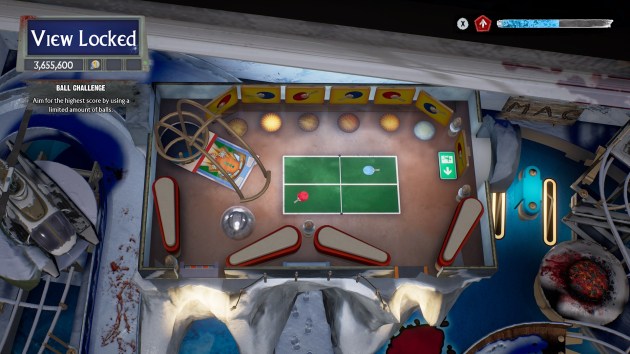
Persistent Problem – Bad Mini-Tables: Zen Studios has a mini-table problem, and the only good thing I can say about Thing’s mini is that at least it’s not another bland-ass circular table. I get that Dolby was probably aiming to replicate the tight, claustrophobic vibe of the movie with this mini’s shots, but it’s too tight, too limited, and over too fast. If Zen is going to keep insisting on having mini-tables, they should allow players to practice them off the menu instead of having to play a practice game and grind your way to them. Actually, I wish they overhauled their practice mode altogether. Basketball players looking to improve their free throw shooting don’t have to play entire games for the opportunity. They just go up to the line and shoot during practice. Let us do that for all your modes and shots. Do that and you’ll see scores increase across the board.

The real problem with Thing is basically the same problem all tables by Daniel “Dolby” Vigh have, to the point that I could probably cut and paste this review from any other review of his tables: punishing difficulty to the point that it becomes exhausting instead of exciting. Slingshots with hair triggers that only need a single pop to send the ball flying into outlanes faster than you can nudge to defend against it, not that the nudge is all that effective. A ramp’s wall hover directly over the drain in a way designed to funnel balls from the bumper zone straight down the drain, and since it’s right over the middle, often a nudge can’t save you anyway. Sharp toe shots being too essential to the gameplay. Rails where the ball constantly gets cruel bounces instead of kind ones. Modes that take far too many shots to complete given the extreme difficulty. I’m talking about The Thing, but that could apply to Snoopy, Kong, World War Z, Terraforming Mars, and Princess Pride. All middling tables at best, but in six tables he’s not yet gotten his first Certificate of Excellence, and World War Z we consider one of the worst tables in Pinball FX, and I think Princess Bride is just a boring slog. The shame about all this is I think Dolby has the chops to craft great shots. I think Terraforming Mars is far and away his best pin, but I’m not finishing modes on that either. Going off the leaderboards, not many people are. If players are quitting before accomplishing anything in your pin, that shouldn’t be a badge of honor. They’re not giving up because of the difficulty. It’s because it’s boring.
Persistent Problem – Blocked Shots: The physics engine of Pinball FX and Pinball M is far from perfect. The bounce you get off objects never feels quite natural. Often the ball just goes limp, as if the target was heavily padded. Consequently, it’s unpredictable what even an aimed shot will do. This becomes a problem when any Zen designer creates a table that’s ultra-punishing of missed shots, then has modes where targets block the orbits. When you really think about it, it’s a rejection that counts as make, isn’t it? But, logically wouldn’t the ball be likely to react the same way as the average miss or rejection? Uh, yea! If a table has angles and shot placement designed to increase the likelihood of a near-miss draining or outlaning, it feels like digital targets are artificial difficulty taken to an extreme degree.

The thing with Dolby’s pins is that high scores feel lucky instead of skillful. Like after dozens of games, I finally had one where the bounces fell my way. Maybe if the physics were completely overhauled, this wouldn’t be so bad. But Thing even has a mode where wind pushes the ball left and right. A table like Zen’s own Jaws can get away with that, but not a table like Thing that’s specifically meant to be as punishing as humanly possible. I don’t think Dolby is completely misguided in this stuff. For all the sh*t I’ve given him over this mentality, he’s only made one table that’s unambiguously a trash fire: World War Z (and likely Princess Bride too, but we’re waiting for patches before writing-up the final review). My team has awarded CLEAN SCORECARDS to Kong, Snoopy, and Terraforming Mars, meaning those pins didn’t get a single negative rating. I even gave TM a rating of GREAT, and so did Angela. He’s not a hack. But he has to decide if he wants to be the guy that makes tables so difficult the ceiling of enjoyment is low or if he wants to be elite. Nobody accuses Steve Ritchie of making soft tables, but they didn’t feel like they only exist to ice players right out of the starting gate.
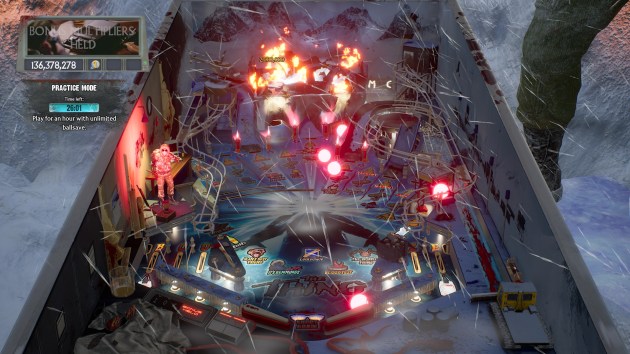
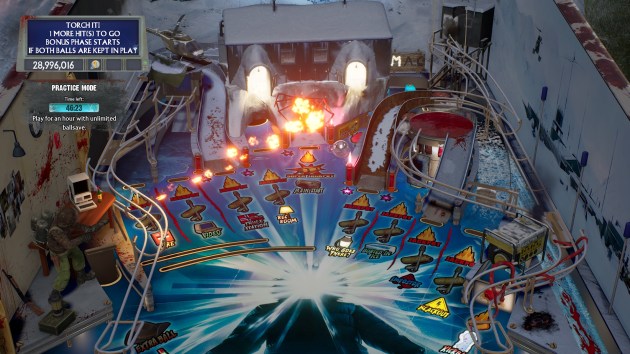
Persistent Problem – Out of Reach Wizards: It’s not hard to figure out how many players have reached the wizard mode in any given pin. You just reach the wizard in the Practice Mode, look at your score, and see how many players are in the ballpark of that score on the leaderboard. The above screenshot is Thing’s Wizard, and you can see I have about 136M, so if you give me 30M to account for extra stuff I did, we’ll say 100M is the “range.” For The Thing exactly 20 players EVER have scored over 100,000,000 points in Classic Mode, and not all of them presumably reached the Wizard unless they both somehow shot VERY efficiently while also losing their balls immediately after completing modes. If I had to guess, I’d say it’s 12 to 15 wizards and 5 more who were close. Out of everyone who has bought the original bundle of table. That shouldn’t be a positive thing for designers. Oh, and you can’t use the achievements as a barometer because they were broken for a long time and didn’t work, but for what it’s worth, 0.02% of all players on Xbox have the achievement for the wizard mode in Thing. We don’t have it. Comparatively, that’s exactly the same percentage for Pinball FX’s Xena: Warrior Princess, Battlestar Galactica, and Knight Rider, all of which we have earned. This should be alarming. Again, I assume their designers had it pounded into their skulls “extreme difficulty and mind-numbing grinding is good for engagement” when all evidence says that’s just not the case and you’re boring players away, and when they’re bored away, they probably ain’t coming back for non-Williams pins no matter what license you guys score. I want Pinball FX and Pinball M to stick around, but stuff like this worries me.

The main modes last so long they become boring, and if you fail them, they don’t stay lit. On a table with so many drain angles, that’s a recipe for a middling pinball experience. The side modes aren’t much better. Like there’s a mode where a fire spreads from lane to lane and hitting shots puts the fire out. Only it might relight less than a second later. I can’t imagine why people are frustrated with Zen Studios pins lately. People like challenges, myself included, but after a while it just becomes demoralizing and a downer to play. I was sure I’d be giving this a score of BAD, but once I moved off the standard CLASSIC mode and onto ARCADE, the table had a lot less lethal angles and the outlanes weren’t so murderous. Was it actually fun? It was okay, and I’ll take okay. Now if Zen Studios is happy with okay, that’s troubling. Also, while stringing together the orbits was satisfying, that’s always satisfying regardless of the pin. Modes are what makes each table unique, and Thing’s modes are just alright. Dolby, you have got it in you to go down in history as one of the best pinball designers of the 21st century. You don’t suck, but some of your tables do, and they didn’t have to. It speaks volumes that a table as unlikable as Thing still won me over because it shoots pretty good. I think you have a gift, Daniel. And if you squander it, it’s on you, because everyone is waiting for you to make a table that cares more about being fun than it does being hard.
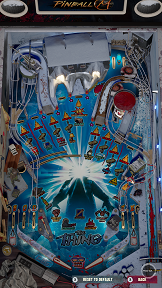
Cathy: GOOD
Angela: BAD
Oscar: GOOD
Sasha: BAD
Jordi: GOOD

Elias: BAD* (Nintendo Switch)
Primary Scoring Average: 2.6OKAY AT BEST
*Nintendo Switch Scores not factored into average. This will be updated at a later time.
Wrath of the Elder Gods: Director’s Cut
First Released November 30, 2023
Designed by Gary Vadócz
Links: Pinball FX Wiki

Free to Play with Pinball M Installation
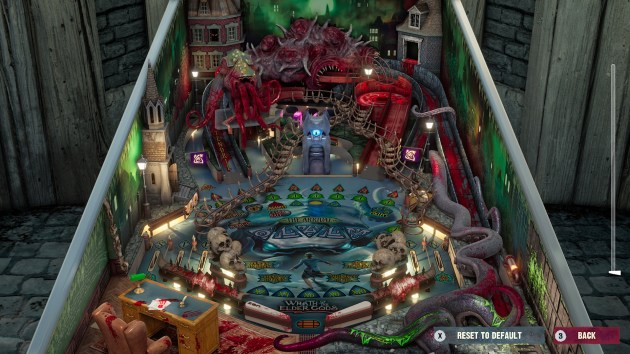
Kickback – Angela: Elder Gods just edges out Chucky to earn my vote for the second best Pinball FX table so far. And it’s free! What’s unique about this pin is that Wrath of the Elder Gods feels much more like a modern Stern-era arcade release in terms of the pace of the modes. Nothing lasts too long, and the table is equal parts offense and defense. Although the left outlane is a touch on the gnarly side, Elder Gods has an effective nudge and kickbacks that aren’t a chore to light, so playing defense isn’t fighting windmills. I really don’t get everyone’s problem with the multiball. So what if it’s a snap-shooter? It’s a shooter’s table! How else would you wizard it? Wrath of the Elder Gods proves Zen can still make fun-for-everyone pinball tables when they don’t go overboard with grinding or shot requirements. It might not be the best table in Pinball M right now, but I think it better represents their potential than System Shock.

The paid version of Wrath of the Elder Gods on Pinball FX has physics and orbits so busted that it’s one of only five tables on Pinball FX we’ve declared to be OUT OF ORDER. Thankfully, the free-to-play, M-rated version of Wrath of the Elder Gods mostly works. And it’s, you know, fine. I think they were aiming for “eerie” and did a good enough job with it. Oddly, you’d expect a Lovecraft-themed table to be a little slower and more deliberate, but the opposite is true. This could have just as easily been themed around the Road Runner because the ball runs so fast. It’s what we call a “Kinetic” pin because the speed and the angles are designed specifically to make snap shots instead of trapping and shooting. In recent years, Zen Studios’ design mandate seems to be that ball control is the absolute worst thing a designer can allow. It’s frustrating as all hell, but in the case of Wrath of the Elder Gods, at least the table makes sense to be anti-ball control.
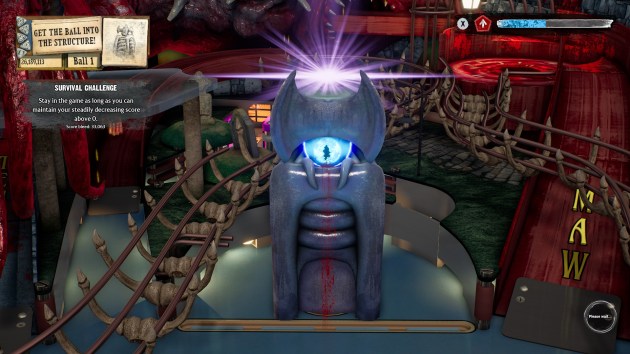
Signature Shot – Strange Structure: Doesn’t this look like a fun front-and-center target along the lines of something you would expect from Brian Eddy? This COULD have been an all-time great toy target, but it’s too conservative in its design. There’s little to no feedback when you hit it. A moan. A weird chant in an alien language. Something. ANYTHING. Occasionally, it opens up, but even hitting it doesn’t do anything. The eye creepily follows the ball, and that’s fine, but it’s not enough. This table needed its own version of Raul Julia’s callouts from Addams Family. It should have been wickedly over the top. For what it’s worth, the u-turn surrounding the Strange Structure is fine. I like u-turns in pinball. Always fun to shoot.

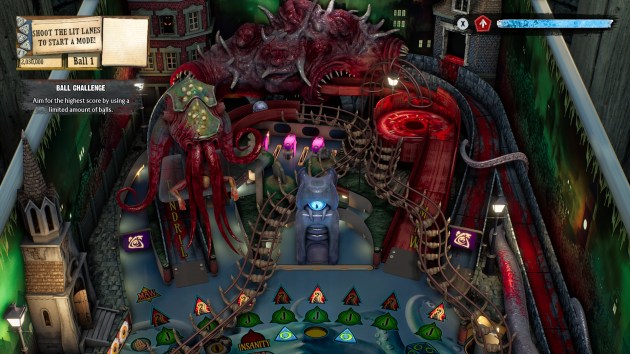
The biggest problem with Wrath of the Elder Gods is that it wants to both be a multiball-heavy table while also making multiball as difficult to enjoy as humanly possible. In the wizard mode, balls fly onto the playfield at the speed of light, and there’s just so many balls that you can’t possibly hope to juggle them since the auto plunge is tailored specifically to interfere with shooting. The balls are likely to bounce back in the direction they came too, making shots on the left side of the table especially difficult. Five balls total, on a table that runs fast and has fairly dangerous outlanes. Oh, and what lane is one of two lit during the first part of this insane five-ball multiball? The one that the balls are auto-plunged onto, on the left side, which of course prevents the shot from being made if you’re not in complete control of all five balls at once. God, I really hope the giggles Gary had in Zen’s offices when he came up with that outright trollish crap was worth it. I’m sure the excuse was this would come across as chaotic madness in line with the Lovecraft theme. Instead, it’s the total opposite, because when you can’t get a shot off in pinball, the table becomes really boring. Wrath of the Elder God’s wizard mode is basically like a five year old child trying to shoot a basketball, only to have Shaquille O’Neal slap down every attempt and then taunt the child to “git gud.” Well, at least while the ball save is lit. Oddly enough, the best strategy is just flick away while ball save is going, but then settle it down to a two-ball multiball after the protection fades. I should note that Angela LOVES this style of multiball. She’s adopted, in case you couldn’t tell.
Thanks everyone for reading the Pinball M feature here at Indie Gamer Chick or The Pinball Chick. Whichever you’re using!

Wrath of the Elder Gods has the theme, layout and modes to be an all-timer. It’s the mechanics that ruin all the fun. The slingshots are SO violent. The kickbacks are SO violent. The auto-plunge is SO violent. Anytime the table itself takes over the ball movement, the fun stops and the recovery process begins. The end result is a table that’s both fun and a trash fire. Despite what Angela insists, there’s too much defense on Wrath thanks to the fast speed, violent slingshots, and bouncy rails. Balls are so drawn to that area around the left flipper’s lane rails that you’d swear there’s a vortex there from another dimension. I guess I can’t rule out that’s actually the case with this table, but the table isn’t better for it. I’d also like to note that any goodwill this table built up by being the freebie of Pinball M is burned away as long as the paid version on Pinball FX is unplayable. It literally just drops the ball right between the flippers. This does NOT happen on Pinball M’s free to play version. This is weird, Zen! You know, it’s been almost 600 days since Sky Pirates came out and it still hasn’t been patched. Do you really think fans are still angry over Pinball Pass or not getting legacy tables they already paid for once for free on the new platform? Maybe the anger is more about the feeling that you’re giving us a giant middle finger with the lack of urgency to fix stuff people already paid for, or the overall direction your original pins have taken. You recently re-released Super League Football, and it got everyone excited. Maybe it’s because that table comes from an era where your designers weren’t obsessed with trolling players and just wanted to make fun shooting tables. You need to call a meeting of your designers and remind them that you’re making pinball, not Dark Souls.
Cathy: GOOD
Angela: GREAT
Oscar: GOOD
Sasha: GOOD
Elias: BAD* (Nintendo Switch)
Primary Scoring Average: 3.25 🧹CLEAN SCORECARD🧹
*Nintendo Switch Scores not factored into average. This will be updated at a later time.

REVIEW COPIES WERE SUPPLIED FOR SOME MEMBERS OF THE PINBALL CHICK TEAM WHILE SOME TABLES WERE PAID FOR OUT OF POCKET BY THEM OR BY A MEMBER OF THE VICE FAMILY. PINBALL M TABLES PLAYED BY MY FAMILY WERE PAID FOR BY OSCAR, WHO IS VERY CROSS WITH ME FOR MEMORIZING HIS CREDIT CARD NUMBER. FOR BOTH PINBALL FX AND PINBALL M, WE LIKELY PURCHASED BETWEEN 2 TO 3 VERSIONS OF EACH TABLE, IF NOT MORE. WE ALSO PURCHASED A FULL YEAR MEMBERSHIP OF PINBALL PASS. IT TURNS OUT WE SHOULD HAVE SPENT THAT MONEY ON TABLES INSTEAD.

Cash Cow DX (Indie Review)

Cash Cow DX
Platform: Nintendo Switch, Steam
Released February 16, 2024 on Steam
Released September 26, 2024 on Switch

Developed by Pixel Games
Published by Flynn’s Arcade
$4.79 (Normally $5.99) had a cow in the making of this review.

Weeeeeeeeeeeeeeeeeeee.

I sure loved Donut Dodo. Boy, what a fun game that was. Not just one of the best indies I’ve ever played.. not just one of the best neo-retro games I’ve ever played.. one of THE best games I’ve ever played in my entire life. Cash Cow DX is by the same developer (who also developed the middling, decent but bleh Sigi) and.. boy, I sure loved that Donut Dodo. I don’t love Cash Cow DX. Or like it at all, really. It’s just an endless series of cheap shots and dick moves that might work if this was an authentic 80s arcade game trying to earn $0.25 per play. Or would it? If I game-overed twenty seconds into my first play of a coin-op, and had no fun at all during that twenty seconds, I think I’d be unlikely to put a second quarter in it. The biggest mistake developers designing ultra-challenging games make is assuming the challenge is the attraction. It’s not. Do you know why someone in 1980 put a quarter into Defender, lasted only a minute, and then put another quarter in it? Because during that one minute, when they weren’t dying, they were blowing sh*t up and having the time of their life. Cash Cow DX, which mashes up elements from Mappy, Mappy Land, Popeye, and Pac-Man, gives players a high body count and plenty of aggravating moments, but without any dynamic gameplay. It’s just flailing against overpowered enemies with too much to collect and not enough means to defend yourself. It feels like a game that forgot somewhere along the way that it’s supposed to be fun, and consequently it’s one of the most miserable experiences I’ve had reviewing an indie game in recent years. A big reason why I’ve moved away from reviewing indies is I don’t like doing reviews like this. It’s not fun for me to tell someone I respect that I hate their game.

In fact, I wouldn’t have even played enough to go forward with the review if I hadn’t taken a review code weeks ago. I played it for a few minutes, hated it, and thought “okay, maybe I’m not feeling it today.” After a few weeks of this, I thought “oh crap, I really am stuck having to play this thing enough to review it.” I couldn’t even get my niece to play the game with me and she’s been asking to help with an indie review for weeks.

Mind you, all this stuff I have talked about and will talk about is on the mode labeled “EASY.” As opposed to what? What could possibly make this harder? Presumably on NORMAL the enemies have projectiles and on HARD the game lights your hands on fire. How the hell did anyone put this down as an EASY mode? I’m guessing that Cash Cow DX is one of those games where the developer forgot that, while they’re in the process of making their game, they’re the best player in the world at their own game. It happens all the time. Developers don’t realize that it makes perfect sense that YOU, the developer, can easily beat a level YOU created that YOU’VE tested 5,000,000 times. Or maybe they only have one or two play testers and they watch them beat stages too easily during their 50th hour of playing. Because they forget that, they begin upping the stakes to make it harder, as if the game was easy in a vacuum. This continues until your own game is fun for you, the developer, who knows exactly what to do, where to go, and what enemies will do. But, you’re going to eventually hand it off to consumers who haven’t devoted their entire lives to the game, and you expect them to have as much fun as you did? Yea, no.

The deaths happen so quickly and so out of nowhere that it’s hard to learn from them and improve. When you’re about to die in a game like Mappy or Pac-Man, you see it coming, and that gives you a chance to imagine where you went wrong. That anticipation is part of the excitement of the genre. The chase matters most. The “chase” elements of Cash Cow DX are limited to tiny bursts due to the most of the things that you die from having been off screen a second or two before you died. This should be re-themed as a horror game because, without hyperbole, I experienced more jump-scares playing this than I did that Blair Witch game. Other times I had to record a clip to figure out where I could have dodged.

The biggest problem with Cash Cow DX is the cheap enemy placement and abilities. I’m guessing most players will die within the first second or two of their first play session when they’re killed by a green fireball that, like you, has the ability to jump across platforms. Players are wired to move right when they start a level. And what do you know? The first enemy is timed to be synced perfectly with the very first platform 90% of players will jump to, in a way that you can’t anticipate even with an arrow warning of it. It screams of a developer who said “this part is too easy. I’ll fix it” for every square inch of the game. No, you didn’t fix it. You broke it, and immediately set a tone of hostility towards players. This feels like a game that isn’t meant to be fun, but rather simply be as difficult as possible.

I’m on one story. The enemy was down on a different story and can’t jump up to my story. I died anyway because it can jump just high enough to kill me from below, and that blue thing next to me is a wall, so I can’t dodge left. Scratching out distance often isn’t even enough. The rules and mechanics are stacked too much in favor of the enemies. Imagine if Pac-Man’s ghosts or Mappy’s cats could kill you when there’s a literal wall and/or story separating you and them. Popeye does it, but you can always see Bluto and work around him, whereas here, enemies move fast and come from off-screen.

I have nothing positive to say about this one. Even the graphics aren’t a net positive because the character sprites are too big, the visible playfield too cramped, the platforms often too small, and the enemies (and you) too fast, which means that almost every death will be something you couldn’t anticipate. When you fall through the floor, you get a very brief grace period of invincibility, but that hardly matters when enemies (who can jump, mind you) are placed on the shallow platforms you’re going to land on (and they can fall through the floor too) and the level layouts are tailored towards trapping you in situations where avoiding enemies is unlikely. The game counts on springing enemies on you when you’ve already committed yourself to an action. Actually, this game shares a lot of DNA with Sonic The Hedgehog. You might not move Sonic-fast, but you’re pretty fast, and so are the enemies, only there’s nothing like Sonic’s rings that allow you to continue when you run into enemies. You die and get moved back to the starting space. So, this is kind of like Sonic as a maze chase, without rings. That sounds awful, and it is.

The worst part of all of this is I genuinely think Cash Cow DX would have been a lot of fun if the game had eased you in during the first cycle of levels instead of just immediately going for the throat. Imagine any of your favorite maze chase games, only if the first couple cycles of levels never existed. Imagine Donkey Kong starting on the third or fourth cycle of levels, with the barrels coming at a continuous stream, or the springs, or the fireballs. Does Donkey Kong still become an all-time cherished classic? Probably not to the same degree. There was absolutely nothing to gain and everything to lose by making Cash Cow DX so punishing right from the start. It just turns a likely good game into a historically bad one. I’ve been reviewing games for over thirteen years now, and I’ve never played a game with so much potential, with so many seemingly fun ideas that went so far out of its way to prevent fun right out of the starting gate. It made me sad, because it didn’t have to be this way.

And even after factoring-in the fast movement and shallow jumping, Cash Cow DX continued to pile on limitations to further up the challenge. Like, say you’re on a ledge and there’s a ledge below you and you want to, without jumping, just run off the ledge you’re on and fall at an angle to the ledge below you. Well, when you get to the edge, your character will automatically hesitate for a split second, losing most of their forward momentum and preventing you from getting to the platform you wanted. It’s subverting a player’s instinct for the sake of making the game harder, but without adding anything positive to make up for it. Ain’t nobody allowed to have fun on their own terms with this one. It feels like there’s limited potential to craft your own strategies. Again, everything here could have been fun if the difficulty had been toned-down and scaled like a normal coin-op does. Each stage has its own unique gimmick, all of which would normally be a ton of fun, but the enemies have too much of an advantage while you have every conceivable movement disadvantage except the ability to barely jump over an enemy. Frankly, I’m surprised they didn’t work falling deaths into the equation. Because the difficulty is so relentlessly intense, there’s not enough breathing room to actually study and learn the rules to the movement and enemies. This game does not scale. It’s an immediate brick wall that’s presumably followed by taller and thicker brick walls.

Found a bonus stage. Didn’t even realize the game had bonus stages, but it transitioned quickly from the main stage to this before I even realized it happened and then I died in about 0.1 seconds from walking off the edge.

Cash Cow DX is one of the most unlikable indies I’ve ever played in my life. Movement is too loose, jumping too shallow, and there’s not enough “turn the tables” elements to make the chase part fun. One per stage. ONE. Good lord. It’s like the polar opposite of Portal, where its designers used play-testing to fine-tune it to intuitive perfection. Cash Cow feels like it was fine-tuned so that every platform, jump, enemy and obstacle is as mean-spirited as possible. Let’s game this out: what was the benefit to all this? What the f*ck did Cash Cow DX have to gain by making the first series of five levels this ridiculous? Nothing. I have no objection if the second wave of levels was this hard. But the first wave? The best case scenario is that you’ve made a game that fits a VERY small niche market of people who want a Dark Souls-like challenge in every genre. Where “fun” for them is to never be able to relax and smile for a single damn second. If you want an arcade punisher that isn’t specifically enjoyable on its gameplay merits but offers the satisfaction of just surviving, you might actually like this. For everyone else, the GOTCHAs and cheap deaths just make the whole thing pretty boring. I don’t want an arcade game like this where I have to constantly be in a state of caution. Even games that eventually become hard like Pac-Man or Popeye aren’t 100% all intensity all the time right from the start. They ease you into it. There’s no sense of that here. This is like teaching a kid to ride a bike by plopping them on the seat and pushing them into rush hour traffic. Donut Dodo wasn’t easy either, but everything could be seen on screen at once. You were almost never blindsided. This is a game of constant blindsiding, and that’s actually not exciting. It’s just very boring.

I wouldn’t have even seen the last two levels (of five total) if not for the game’s “practice” mode which still uses a life system anyway. Normally I’d keep playing until I finished the whole game, or at least a full cycle, but I actually didn’t feel I was close even after a couple hours of gameplay and I want to be done with this and go back to the projects I’m actually having fun with.

And if I seem mad, I’m really not. I just know Pixel Games is better than this. You can’t make a game as good as Donut Dodo by accident. It has to come from a place of genuine talent. I also know that maze chases are a tougher genre to pull off than people realize. That genre has become such a major part of my gaming existence that, for my site’s 13th birthday, I reviewed 40 different versions of Pac-Man games. I LOVE a good maze chase, but Cash Cow DX violates just about every rule that goes into a fun maze chase. I actually wonder if a Defender-like radar instead of the almost-worthless arrows would have made a difference. Or maybe if the game had utilized a wide screen. Or maybe if the game had not had a confusing “Inertia Mode: Modern/Classic” option. Instead of making two versions of one game, just get one version right, for God’s sake. I don’t know what the difference is between the two. The default is “modern.” I switched to “classic” and it seemed like maybe movement was a little easier, but all the blind jumps and OP enemies were still there. It’s a massive dick move to put an enemy who jumps towards you on a platform with a gap so big that you can’t see what’s on it. The warning arrows were often only indicators I was about to die because they showed up too late. It’s a mean game, and I’m so glad to be done with it. But, for all the hatred I just showed on Cash Cow DX, it was classy that Pixel Games put an option to disable screen flashing. Their next game is a cartoonish tribute to Lunar Lander, one of my all-time favs. Will I be there for it? Yep. Sure, Pixel Games has gone 1 for 3 at IGC, but so what? Do you know what you call someone who bats 1 for 3 in baseball? An all-star. And Pixel Games is an elite developer who made one amazing game and one terrible one. They’ll be back, and I’ll be there when they are.
Verdict: NO!
A Review Copy was supplied for this review. Today, a copy of Cash Cow DX was paid for by me at the discounted launch sale price of $4.79. I also bought my niece Donut Dodo so that she’d have a game that’s fun too.

Fox’s Peter Pan & The Pirates: The Revenge of Captain Hook (NES Review)

Fox’s Peter Pan & The Pirates: The Revenge of Captain Hook
Platform: Nintendo Entertainment System
Released January, 1991
Developed by Equilibrium
Published by THQ
NEVER BEEN RE-RELEASED

Peter Pan v. Rambo? Nah. That’d actually be fun.

Based on the Fox Kids cartoon Fox’s Peter Pan & The Pirates, Fox Kids Presents Fox’s Peter Pan & The Fox Network Approved Pirates: The Revenge of Captain Hook (sponsored by Fox) is a legit contender for the worst game on the NES. A game with absolutely no grace, no finesse, and especially no polish. It’s one of those rare titles that I have nothing positive to say about it. One of the most lazy and soulless games I’ve ever played in my entire life. It’s actually kind of astonishing how out of f*cks it is. A sloppy-ass platformer where the object is to kill X amount of pirates before exiting the stage. I didn’t even realize that was the object at first. I beat stage one in about ten seconds when I jumped on a mushroom near the start of the level that flung me all the way to the end of the stage. It was quite a distance too. Mind you, it only took me those first ten to twenty seconds to realize how unresponsive and awful the controls were. So when I saw the points of my surprise victory start to be tallied-up, my jaw literally dropped. “Maybe this won’t be so bad!” I thought. Then I did it again in the second level, only I hadn’t killed enough pirates. “Maybe not.” When I went to replay the game, I’m honestly not sure how it happened since I couldn’t have possibly killed enough pirates to beat the stage. I went back and looked at my screenshots, and it says there were 7 left. This never happened again, and in fact, the second time I played it, the mushroom did not throw me the full length of the stage. What happened? I still don’t know.

This is one of those games where the weapon barely extends past your body. I can’t think of any game like that I actually enjoyed. At least Wizards & Warriors added the throwing weapons.

By 1991, I don’t think there was any excuse for a game that can’t even do jumping or platforms right, but Peter Pan & The Pirates screwed up both. Jumping is super sluggish and quite worthless. There’s a handful of environmental hazards, and most of the time, your jump isn’t good enough to clear them. It’s also often unclear what is or isn’t a platform. My family, because they like to dabble in trash TV, recently binge-watched a Netflix game show called “Is It Cake?” where you have to guess which thing among a handful of objects is actually a cake decorated to look real. Yes, I watched it too. I’m doing MY part to inch us closer to full-blown Idiocracy. ARE YOU? Anyway, I’d like to propose a spin-off show called “Is It a Platform?” Can you tell me..

IS IT A PLATFORM?

THAT’S A BIG JUMP! SURELY IT MUST BE..

WRONG! NOT A PLATFORM!

TRY AGAIN! IS IT A PLATFORM?

I MEAN, THERE’S NO LITERALLY REASON FOR ONE TO BE THERE SO..

WRONG AGAIN! IT’S A PLATFORM!

Yikes, right? But that’s okay, because this is Peter Pan, and Peter Pan can fly. To do it, you just hold up when you jump, which transitions you to flying mode. There’s no actual flying animation or anything. That would have been a LOT of work. Like, at least an afternoon. Maybe two. MAYBE EVEN THREE! So you just lock into your jump sprite.. a single gosh-darned sprite.. and move around with the most sluggish, unresponsive air hockey puck movement imaginable. It feels like they just turned the debugging tool into the flying mode, but it’s even worse than that sounds. You collect fairy dust as you go along, which always tops you off at 250 points, but it drains really quick while you fly. You’d think letting go of a button or something is what would turn the flying off, but it doesn’t. You have to push yourself down onto a platform to end the flying. And it gets even worse than that, because you can be knocked out of the air if you clip into any solid surface like, say, a platform. And the platforms are often smooshed together, so when you NEED to fly with the cement hockey puck physics, if you hit anything, you could very well fall into a pit. It doesn’t even need to be that way. Even graze a platform you’re trying to fly up onto and you’ll fall. This is one of the worst controlling platform games I’ve encountered.

And of course there’s instakill gotchas in the form of these cages.

You’d probably think Peter Pan & The Pirates must be impossibly hard, but actually, you get so much life that I never came close to dying from enemies. Each treasure chest you collect gives you two points. I finished my non-cheating round game with 65 health, with a high of over 110. Oh and it turns out the pirate that I was killing with one or two hits at the end levels WAS Captain Hook, but in the finale, the rules change and you have to knock him off the plank. They couldn’t even be bothered to do a unique Captain Hook sprite for the finale to signal the change in rules. But in that entire cleanly-played session, I never died once via enemies. All my lost lives were falling deaths. Thanks to the magic of rewind, I also discovered a lot of weird things, like how sometimes enemies spawn and sometimes they don’t. Remember how I beat the first stage from what must have been some kind of glitch? Well, the game got its revenge in later stages. More than once, even though I killed every enemy I passed, I’d reach the end of a level and still have not filled my dead pirate quota. I’d have to walk back until another one finally spawned. But it wasn’t just the pirates. The booby-trapped cages didn’t always fire, or sometimes a gotcha-placed spider wouldn’t show up.

Weirdly, this is the second awful licensed game I’ve reviewed this year with a final “boss” defeated by knocking them off a cliff. Wolverine for the NES did the same thing.

What else can I say? The level design is basic, uninspired, and bland. The combat is inconsistent, unsatisfying, and somewhat glitchy. It’s one ugly sucker, too, with little in the way of convincing sprite work or even thoughtfulness about what colors to use so as not to totally confuse everyone. After playing through it twice (which didn’t take long at probably an hour combined) I honestly wonder why Fox’s Peter Pan & The Pirates isn’t up for “worst NES game.” It has to be close, and I really think if this had been released a year or two earlier or gotten a wider release, it might be universally regarded as one of the worst video games ever made. Absolutely miserable to play from start to finish with no redeeming qualities at all. A game that actually made me really angry. Peter Pan & the Pirates was before my time, but they showed reruns on Fox Family when I was a kid. It actually had something resembling a soul. It didn’t FEEL cynical. It had Tim f’n Curry as the voice of Captain Hook. Enough said. I’m sure it doesn’t hold-up today because it’s basically a typical 80s/90s animated cartoon designed to sell merch, but it’s also not hard to imagine that the cartoon had a lot of fans who might have been excited to play a video game based on it. And this is what they were given. A game so terrible that it practically holds the kids who would be inclined to want a Peter Pan & The Pirates game in contempt, as if they’re idiots for being fans in the first place. Not every bad licensed game feels like it comes from bad faith. This one does. It’s so obviously rotten that it feels hateful towards potential buyers, and if that isn’t grounds for being a contender for the worst game ever made, I don’t know what is.
Verdict: NO!

I wouldn’t know. BTW, this is not doctored. It really looks like that.

The Lone Ranger (NES Review)

The Lone Ranger
Platform: Nintendo Entertainment System
Released August, 1991
Developed by Konami
Utilizes the NES Zapper (Optional)
NEVER BEEN RE-RELEASED

The Lone Ranger is a top-down action adventure that shares DNA with Metal Gear and the original Konami Ninja Turtles game. Well, sometimes.

The Lone Ranger is also an action-platformer that shares DNA with Contra and Castlevania. Well, sometimes.

The Lone Ranger is ALSO a first-person exploration game that shares DNA with the Goonies II an Operation Wolf.

Oh and it uses the Nintendo Zapper if you so wish. And sometimes it’s an auto-scrolling shmup. There’s even shooting galleries and video poker games too.

Yea, Lone Ranger on the NES is a directionless mess. If I didn’t know better, I’d swear it’s Konami’s answer to Nintendo’s StarTropics. Like StarTropics, Lone Ranger was designed specifically for an American audience. The game was never released outside of the United States, and it feels like it throws everything at the wall hoping something, anything, will stick. The StarTropics comparison also applies to the sheer amount of busy work you have to do to open up the game. Like in the sixth level, there’s two towns you have to visit. The first one requires you to find an empty building where, upon leaving it, you see a note that the woman who lives there has been kidnapped. Then you have to make your way to the second town and find a room full of people sitting at tables. One of the people will tell you that the office in the previous town will tell you how to get to the mine. You then have to return to that town and find the office, which opens up the actual level for you. BUSY WORK! Even worse is that it’s not immersive at all. The dialog just plain isn’t good enough for immersion. It didn’t even matter that the side-scrolling segments that followed were by far the strongest the game had seen up to that point. I was already annoyed at all the hoops it made me jump through leading up to it.

The levels aren’t equally as engaging, either. The fifth level features the mass extermination of Native Americans followed by retrieving a magic egg as a “my bad” token of affection towards them. I’m only half-kidding, by the way, but regardless of the theme of the level, it’s just not that exciting of level design.

In fact, level six mentioned above, for all of its frustrating busy work, was the turning point in the game. Up to that point, I thought Lone Ranger was very “mid” as the kids these days say. The problem with being a “jack of all trades” is the less often said rest of that title. “Jack of all trades, master of none.” No one aspect of Lone Ranger stood out as particularly strong. Adding genres doesn’t add gameplay value if every example is average-at-best. Average is average no matter how many twists you take along the way. Easily the worst parts were the first-person segments. I found all of them to be pretty boring, even if you use a light gun. But, if you go that route, having a light gun takes the edge off the difficulty and I regret that I didn’t choose it for my full play-through.

The problem with the shootouts is that there’s only two types of them; indoors and horseback, and they repeat constantly. The enemies for the indoors shootouts attack in roughly the same positions and attack formations. The horseback ones are the same way, and after you’ve done each version once, with the exception of a lone boss battle that’s boring as hell, you’ve seen everything that gameplay style has to offer. But, each is going to repeat several times over the rest of the game.

First person segments involve the type of single-screen scrolling that games were limited to back then. As you explore, you’ll occasionally be interrupted by shoot outs. What makes it neat is even with a gun, you still need a controller since attacks happen from all sides. You get a warning light when enemies enter from one side. If you only use a controller, it’s all done by cross-hairs. While I always had enough time to pick off the enemies with the cursor, sometimes I had to switch screens before being able to pick up the loot they dropped. With the light gun, I never had that problem, and the shootouts also went quicker which is a good thing because they’re all samey. The only exception is the lone boss fight done from the first-person perspective. In that boss’s case, having a light gun makes it almost trivial.

For light gun games, I use the Sinden, which I also used in my Safari Hunt review. It’s compatible with most emulators. They’re pretty spendy and the optional foot pedals for games like Time Crisis cost a LOT extra, so I’d only recommend getting one if you’re REALLY into light gun games. There’s tutorials for most popular emulators to get them up and running, but for this review I couldn’t get it to work on RetroArch and ended up using a solo-build of Mesen for it. I used a passcode to skip to the more “exciting” first person sections. 0810 7830 3251 2 is the level select code. You have to leave the last few spots blank.

Up until the last three (of eight) worlds in the game, I would have insisted the top-down segments were the best parts in the game. The side-scrolling level design was too short and too basic up to this point, with little to no environmental hazards. Really, the problem with Lone Ranger is that it just takes too long to get going. While the game isn’t ever really bad per se, it’s often very bland. There’s not enough variety in the action. You only get one type of gun that fires two identical-looking bullets. The only thing that changes is the range: short barreled, medium barreled, or long barreled. You don’t feel a difference, even if you’re shooting longer bullets. The silver bullets do more damage and pierce through enemies, but they cost more. I’m not sure why silver bullets would be more powerful than lead bullets. Ever hear of someone dying from silver poisoning? Either way, there’s never a sense of empowerment. Also, you have to manually reload your gun, something my brain just would not remember to do. You can also buy sticks of dynamite which blow up enemies, but I can count on one hand the amount of times I actually found them more useful than just shooting my gun. There’s also no hidden walls to blast through or, as far as I could tell, any secrets at all. Despite all the mixed-up genres, Lone Ranger is a surprisingly shallow game.

The “overworld” segments don’t get beyond basic until right near the end of the game.

For the first five (of eight) levels I’d been quite annoyed by the top-down stuff leaning a little too heavily on empty “red herring” type of buildings that have nothing but enemies in them. It reminded me a lot of Konami’s Teenage Mutant Ninja Turtles NES game, but Lone Ranger’s red herrings are even worse than that game’s. At least in TMNT the non-essential buildings had things like valuable items or health refills in them. For Lone Ranger, they’re just fake-outs that pad the game time, and nothing more. In a game where players are often forced to talk to everyone in a village to open up progress, all these red herring buildings are especially tiresome. It got to the point where I began using save states and would just exit the structures by reloading my state to save time instead of walking back out. And ultimately, none of them ever had anything valuable in them. Not a single one. At least it was kind of predictable which ones were the decoys, since they usually have the same appearance on the inside. Eventually, I cracked open the guide at GameFAQs to shave off all the busy work. Much like with the light gun, I wish I used this from the start, since I didn’t really start having fun until I cut out all of Lone Ranger’s gristle.

Look familiar?

Even while skipping all the BS, Lone Ranger was a game I couldn’t wait to be over with. But then something happened that complicated my review. The level design got good. Really good. The side-scrolling segments went from basic hoppy-shooty-climby type of action to the type of well thought-out layouts and set pieces you would expect from Konami at their 8-bit height. And the top down stuff added things like landmines, turrets, and spikes, and the layouts became more maze-like in a way that reminded me of Sunsoft’s Blaster Master or Gremlins 2. The enemies became more than cannon fodder. The platforming was on par with the type of layouts you’d expect from Castlevania (and that franchise’s staircases are even along for the ride). This was suddenly a really fun game. The question is, did it take too long to get there?

None of the bosses are really memorable. Appearance wise, they usually don’t look that much more distinguishable from basic enemies.

Actually, yea. Taken as a whole, Lone Ranger is pretty boring. Those early levels are just such a slog to get through, and all the RPG-like “talk to the townspeople” stuff whiffed completely for me. I wasn’t invested at all. Had this come out five years later, the writing might have been better or there might have been more character-driven stuff that would justify it. All those bits did was create too big of a pause between the action, but the action that followed was very basic and very bland for over half the game. Having baddies in some of the towns helps a little, but they’re the same basic enemies with the same attack patterns. After a while, they feel like they’re working with the talking bits to do nothing more than pad out the game.

There’s a good game here, but it’s smothered to death by overindulgent world building.

If the entire game had been of the same quality as those last three levels, I think Lone Ranger would be in the discussion for the most underrated game on the NES. The action is going to become repetitive either way, but the gunplay can be satisfying enough. Enemies crouch over before blinking away when you shoot them, but there’s only so many variations you can do with that while keeping with the wild west setting. This could have really used some supernatural stuff or more anachronistic things. Machine guns show up, but only bosses get them. Turrets show up and you can take them over, at which point enemies rush onto the screen just to be mowed down by you. It’s fun for a few seconds, until you realize the enemies aren’t stopping, but YOU’VE stopped moving. Adding a bigger variety of weapons or maybe hiding stuff in the levels could have gone a long way towards making the sloggish parts more tolerable. They also underutilized Silver the horse. There’s one auto-scrolling section where you control the horse while shooting enemies (not to be confused with the horseback shootouts), but it’s bland and boring too. It would have been cool if you could ride horseback in the towns, or maybe even in some of the side-scrolling sections. Or maybe have stealth sections where you play as Tonto. For all the different gameplay types Lone Ranger throws at players, it’s insane that it still feels so lacking. This one was close, but the Konami losing streak at IGC continues.
Verdict: NO!

Robble Robble

Cursed Crown (NES Indie Review)

Cursed Crown
Platform: Nintendo Entertainment System
Released January 28, 2024
Designed by Martin Reimer
Free to Play – Pay What You Want at Itch.io

It looks the part. The mechanics are there to play the part. So, what happened?

I like the Adventures of Lolo. There’s a franchise that’s screaming for a comeback. Apparently I’m not alone in that belief. Despite having no presence in modern gaming at all (besides Lolo and Lala being semi-regular bosses in the Kirby franchise under the names), the franchise known as Eggerland in Japan is one of the most influential on the indie scene. Cursed Crown is a little different because it’s actually on the NES and free to play if you have an hour to kill. There’s no deaths and the game has simple puzzle rules that mostly revolve around gaps and the things that can be used to fill the gaps. Puzzle games without tension are fine. Sokoban (aka Boxxle for Game Boy owners) is in that category and if that floats your boat, so be it. For me, I don’t need action, but if the puzzles don’t challenge me, I just become kind of bored. That’s sadly what happened with Cursed Crown.

This is one of the final levels of the game, and there’s really very little “puzzle” here. This is like a world one level in a normal puzzle game, only it’s appearing in the home stretch of this game. It really feels like the puzzle logic just sputters out during the end game.

Now, developer Martin Reimer is a hell of a guy, but Cursed Crown needs a lot of work. When it plays well, and by that I mean it has puzzles that you actually have to study the screen and plot out your moves, it’s a damn good game. Unfortunately, there’s maybe 3 or 4 levels in a 41 stage game that are like that, where I had to actually restart the stage because I made the wrong moves. Most of the other stages feel either like tutorial levels or opening world stages. You play as a prince turned into a frog that has to collect gems and enter a door. You move one full character space at a time and the main puzzle element typically involves gaps. The gaps can be filled with both pots and blocks. Some of the spaces become gaps after you step on them once. These are all boilerplate Lolo-like tropes for a reason: they work. So do levels with ice where, once you step on the ice, you can’t stop yourself from sliding in a straight line until you hit something. Again, old hat but a classic for a reason. Sometimes there’s locked doors (but not THE door) that you have to get a key. More than once, I finished a stage with spare keys. A lot of the levels have multiple outs, which works for a game like Baba is You, but here, it’s just too loose of puzzle design.

Again, this would be fine for an early stage. This is level 28 of 41, and there’s NO PUZZLE! It’s just an unobstructed path to the finish line. A puzzle game can’t do that type of thing.

The biggest letdown is that Cursed Crown doesn’t save its hardest puzzles for the end. In fact, the homestretch was so easy that it kind of feels like the game was rushed along to the conclusion. I went backwards to see which was the last level where I had to stop and think about what I was going to do. It was level 29 of 41, and even that stage wasn’t that hard. Cursed Crown is like playing a decent proof of concept that has multiple placeholders for rooms that are still being workshopped. The good news is the game is free to download, and the mechanics are solid enough that the potential is here for something really good. It’s just not there yet. What’s out now is too easy, and easy puzzle games are just boring. I’m sure it can’t be a cinch to create elaborate puzzles with one specific solution. But, as an indie game that has no fixed release date, Martin has all the time in the world to come up with them. He’s clearly capable, since a handful of levels in Cursed Crown are genuinely solid. He might want to rethink some of the mechanics. Like how both jars AND blocks can permanently fill a gap in the floor. What if one was a permanent fill while the other was only a temporary one? Or what if the lily pads moved when you stepped on them? Again, this feels like a good proof of concept, but it never evolves past that.

There’s too many tutorial levels as well. I would condense them into a single room that queues you through each gimmick.

The other possible way to look at Cursed Crown, and I don’t mean this as an insult at all: this is actually pretty good as a younger child’s first puzzle game. I had Sasha, my soon to be 9 year old niece, give Cursed Crown a shot. In the event I die, I’ve told my family that Sasha gets Indie Gamer Chick and The Pinball Chick. Don’t roll your eyes. Sasha is already a multi-time Pinball FX world record holder on a variety of tables, including some of the more competitive Williams tables. With Aunt Cathy’s help, she’s even written a few parts of our Pinball FX reviews. She’s also been my playing partner for brawlers lately. So she’s no slouch at games, but she’s also never played a game like this before. So, I passed her the controller, then just sat back and watched. She liked Cursed Crown. She liked the Prince Charming angle. She liked the simple mechanics that didn’t overwhelm and were easy to understand. For her, Cursed Crown worked as a good confidence builder to ease her into a new-for-her genre. That’s not nothing, at least in my book. I can’t give it YES! because I spent most of my playtime waiting for the game to beef-up and it never really happened. The best thing I can say about Cursed Crown is that I enjoyed watching my niece work out the simple puzzles and was happy that it ultimately stoked her interest in one of my favorite genres. That counts for something, but it’s not something I can really take into consideration when making a decision based on my experience. I hope he keeps working on it. We need more Lolo-likes in the world.
Verdict: NO!

Space Raft (Nintendo Switch Review)

Space Raft
Platform: Nintendo Switch, Nintendo Entertainment System
Released August 15, 2024
Designed by Jordan Davis
Published by Nami Tentou
Point of Sale: Nintendo Switch, NES

$9.99 wore a Space Life Preserver in the making of this review.

I feel like Alice in Wonderland here, and I don’t mean the Digital Eclipse Game Boy Color game that was published by Nintendo. As in “I’m in a strange place where nothing makes sense and everything is over my head.”

In the interest of full disclosure, I’m friends with Safe Raft designer Jordan Davis and programmer Dale Coop. That doesn’t really help either of us in Space Raft’s case. A game that promises, quote, “recognizable people and places from the Milwaukee independent music scene, including DMR alumni!” I know of Milwaukee, but I honestly have no clue how big its music scene is, and so I have no idea how much inside baseball is being played here. I’m sure there’s a lot of gags that are destined to sail over my head and probably the heads of 99% of the world’s population. But, this isn’t a music game. It probably should be. I know I just said that about the Blues Brothers and in retrospect I should have said it when I reviewed the coin-op based on the band Journey. But, for what it’s worth, this is the best “should have been a music game but isn’t” title I’ve done at IGC. Space Raft is part auto-scrolling shooter (in the form of scenes with the band’s SUV) and part maze chase played without fixed movement. And apparently all the chip tunes are by the band. They’re decent enough.

I could have done without the van segments.

I should point out that if you buy the Nintendo Switch version, you’re getting two very different versions of the game in one. There’s a special arcade cabinet that was created specifically for a legendary arcade, the very famous X-Ray Arcade. I got a giggle because they’re located in a place called Cudahy, Wisconsin. There’s only one other Cudahy in the United States and it’s right here in California as part of the Greater Los Angeles area. The two cities are named after different brothers, too. Small world! Anyway, you get that game too in this package. The games play out quite a bit different, as well. In the NES version, now called “Space Raft Deluxe”, you must collect every chicken sandwich in each stage, and then the game switches genres entirely with a more open-world type of search for missing car keys and roulette tables. The arcade game is only single-screen-at-a-time collecting sessions where you can skip straight to the exit without collecting everything. The catch there is your health is based on the chicken sandwiches you collect and not normal hit points. The NES version has fixed hit points and scrolling through screens. Both games have levels that start with driving segments too, but they’re functionally side-scrolling shmups with the occasional ramp to go off. The bosses of these parts are fine, but overall these go a little too long for my taste and are a bit samey. They’re always scrolling right, too. It’d been neat if each of the driving segments had a different direction you were going. Something to break up the repetitiveness.

This slideshow requires JavaScript.

The collecting parts are the highlight of the arcade game, sorta. Sigh, this is where it gets frustrating to review a game like this. I think that a lot of the segments are supposed to be wink-wink nods to famous Wisconsin area hangouts and local celebrities, so it’s okay if the gameplay isn’t the greatest. Well, if you’re from Milwaukee, which I’m not, and there’s no references to Giannis Antetokounmpo or the Bronze Fonz, which means this game excludes everything I know about that city. Oh, and Red Letter Media, but they don’t show up either. What is here is a fairly basic arcade scoop-em-up where you have to collect all the items. There’s usually one antagonist on the screen who spits fireballs at you as you do this, along with what I think are birds. You can switch between any of the four band members on the fly, and here’s where things do get unique: each of the four members has unique movement speed and a unique weapon. But, I only found two useful. The red one can throw bowling balls the full length of the screen, while the blue one only throws a close-range punch, but his attacks are instakills and he has the most accurate play control. Everyone else moves too loosely for my taste, including the bowling ball guy. The other two guys drop bombs and spit fire that I found ineffective, at least at first.

The arcade game. You can tell because it says credits up in the top corner.

The movement can be so touchy that there were multiple times where I walked into the stage exit when I didn’t intend to. The arcade game is short and fine for what it is. It’s not amazing. It’s okay. It’s rough, though. None of the movement is “fixed” and it’s inevitable you’ll get hung-up when attempting to turn corners or walk through gaps that are a single character length. Even the computer AI seems to have problems with it for the enemies. None of the baddies had anything resembling patterns that I could make out. This feels a lot like a prototype that has placeholder algorithms for most NPC movement. I couldn’t decide if my #1 “want” for this game was more elegant enemy attack patterns or better movement parameters, which is probably not the best sign, since those two things are really important to games like this. I’ll settle on “I wish movement was better.” Actually, I kind of wish this moved more like something like, say, The Adventures of Lolo where you move a half-space at a time. But, for all of its faults, I had fun with this. If we’re splitting the two games included apart, I’d give the coin-op a very mild YES! because it’s not boring and I feel there’s just enough intense chase moments to make this worth a play.

This slideshow requires JavaScript.

Initially, I liked the coin-op more. I even quit the NES game a little too early to skip over to it, and I’m happy I did. If you end up picking up Space Raft, play the arcade game first, then play the main Space Raft Deluxe game (technically they’re both NES games, but that’s neither here nor there). When I returned to the Deluxe, something I didn’t expect happened: I liked it a lot more now. All the problems of the coin-op are here. The movement sucks, and the enemies can be kind of nonsensical in their behavior. It’s also still “inside baseball” but at least in Space Raft Deluxe, Bernie Sanders and the Green Bay Packers show up, so I’m not completely staring at the screen blankly thinking “I have no idea what’s happening.” But, it’s also clearly the better game. I think the only area where the arcade game is superior is in the driving parts, which are my least favorite sections anyway. Deluxe lives up to the name. The level design is better. The bosses are better. It also does a lot more to change-up the formula. Some rooms might not have you collecting anything at all and instead just clearing a path to the next screen. Hell, the genre itself changes in the third world for two levels and feels more like Legend of Zelda dungeons. Best of all, this more expanded Space Raft made me nostalgic for the type of smaller, more heartfelt personal game that is weird and means more to the developer than it ever could to the player.

See, stuff like this is strange for me. I feel like I’m almost reading a person’s diary or something. This game has a lot of call backs to the good ole days. They’re just not MY good ole days. I’ve always had this belief that if there is such a thing as Heaven, then it’s probably reliving the best, most happy days of your entire life on an endless loop. Space Raft is like someone took that and made a game based loosely on it. By the way, the next graphic is of the Mistreaters standing in front of their burning van. Who are the Mistreaters? (shrug) No clue. In my headcanon, they’re to Space Raft what the Misfits are to Jem and the Holograms.

Space Raft isn’t a fantastic game by any stretch. The movement is frustrating and the enemies feel like they just sort of wander aimlessly. Plus, all the inside jokes were overwhelming for me. Have you ever been to a party where there’s a group of people listening to someone tell a story, and they’re clearly hanging on the person’s every word, but you missed most of it. Then, when everyone laughs at the resolution, you feel awkward but laugh anyway? Yea, that’s where I’m at with Space Raft. I feel like these jokes and references might kill with the right crowd, while I’m just nodding along and feigning a smile. But hell, I used to play games like this ALL THE TIME in my first few years of Indie Gamer Chick. This is exactly the type of personal experience I want to see translated more to games. It’s a quirky game created for the amusement of a small group of people that the developer had the guts to put out for the masses, even if they won’t understand most of the bits. I just wish I felt more invited into this world. Maybe this is the best you can do with 8-bits. A lot of the gags in the game feel like they’d make for a better sitcom than a video game. Something for these guys to think about.

This slideshow requires JavaScript.

As a trip down memory lane from the developer’s point of view, I’m not sure it hit the right notes to leave me charmed. All I have is the gameplay stuff, and it’s fine. I can’t say it makes for a convincing NES game because it has swearing and battles against sentient dog sh*t. I always prefer when developers follow the restrictions studios had in the 80s and 90s and see how close they can come to crossing the line without actually crossing it. But the level design is decent enough and there’s an effort to change up the set pieces and create a sense of adventure. The emulation package is decent, too. No rewind, but it’s not exactly the world’s hardest game. Save states are here, along with concept art and the original NES instruction book and box art. Nice.

This is the part I lost the most lives on in the game, by far. All the van parts are auto-scrolling, and it’s too easy to get hung up on the barrels and unable to move unclip yourself before the scrolling kills you.

If I have one last gripe, it’s that they didn’t quite stick the landing on ending the game, as the worst driving sequence in Space Raft is actually the grand finale. They should have recognized the Zelda-like sequences were their bread & butter and finished on one of those. There’s a LOT of room for improvement, but as a 2019/2020 first game from the guys involved, guys who are getting a LOT better at making games, I’ve played a lot worse. Most importantly, what’s here is a little more fun than it is frustrating, and fun is all I’ve ever cared about. But, realistically, this should be a game that’s made as a limited-quantity physical release that’s sold in Wisconsin gift shops. I don’t even mean that as a negative, either. I think it’s wonderful that an indie game can celebrate local culture. Seriously, if *I* were to make a game, I’d probably be something like this, only it’d be about Emperor Norton and you’d only be able to find it in mom & pop shops in the Bay Area. Put that game on the eShop and people would be like “who the f*ck is Emperor Norton and what the f*ck is Original Joe’s?” It’s inside baseball.
Verdict: YES!

The Blues Brothers (NES Review)

The Blues Brothers
Platform: Nintendo Entertainment System
Released September, 1992
Developed by Titus
NEVER BEEN RE-RELEASED

I will never know joy again.

I go through extended periods of melancholy. If my rate of game reviews slows down, that’s probably a sign that I’m currently having an extended case of the blues. I try to avoid reviewing games when that’s happening because it’s just plain not fair to the games. The bitch of it is, it’s never clear when it’s over. It’s the most quiet recovery phase imaginable, and it’s so frustrating. You can imagine how tough it is to play a bad game when this is happening because it’s never clear if it’s ME or the game. Thankfully, Blues Brothers on the NES is so bad that I don’t have to guess. I used my emulator to select a random game and it gave me Blues Brothers, making me believe the universe really is a simulator and the person playing the Cathy game is trolling me in the same way I did when I fenced in people while playing the Sims. It took about a minute of playtime with Blues Brothers before I said “even my emulator hates me.” Blues Brothers is absolutely abysmal. A series of cheap shots, GOTCHAs, unavoidable damage moments, last pixel jumps, and terrible level design.

This is one of those games that looks fine in screenshots. But playing it is the pits.

The problem is Blues Brothers wants to have sprawling, labyrinthine level design, but it doesn’t quite understand how to go about doing that. There’s so many sloppily-executed jumping puzzles that make no sense, with no semblance of elegance to their design. There’s far too many moments where it’s not even clear what direction you’re supposed to be going. In place of cleverness, Blues Brothers keeps going to the same handful of unimaginative tricks. There’s too many blind jumps, which is probably my least favorite type of bad design. Blues Brothers relies so heavily on blind jumps that eventually I don’t think you could consider the jumps blind anymore. I was able to anticipate when they were coming. Not so much with the other trope: last pixel jumps. It’s not unusual for both types of crap jumping segments to be combined: last pixel blind jumps. Oh, and don’t forget that they often end those necessary blind jumps with enemies placed at the end that you can’t see coming and that you can’t really avoid. Often, it’s possible those blind jumps, when missed, could result in you falling back to the beginning of the level and having to start all over. Thank god for save states and rewind. I’d never had the patience to finish this otherwise.

I think there were maybe two parts in the entire game where riding animals worked the way I think it was supposed to. Mind you, there’s a lot more of these creatures you can piggyback onto, but they didn’t do anything and often just dropped dead.

And it’s kind of glitchy, too. There’s a few animals you can “ride” but they don’t really do anything when it happens and just as often just immediately die and fall off screen. Sometimes the enemies seem like they get caught on a pixel and wiggle back and forth in place. None of the enemies feel specifically themed to the IP, though. The levels I think try to be as there’s a jailbreak scene, but they look so drab and plain. It’s not exactly an ugly game, but it often feels like this could have been anything. Oh, and moving platforms aren’t synced right, but this does contribute to the one semi-clever bit in the entire game. There’s a moment in the final level where there’s multiple moving platforms that all intersect with each-other, and you have to figure out which is the right one. Okay, that was cool, but the moment passes quickly and then it’s back to the same blind jumps and last pixel jumps. You have to use B-run/B-jumping, but you move too fast and the controls are too loose for a game that demands this much accuracy. Having the game end with moving platforms surrounded by spikes before the non-ending ending was the final slap in the face. This is one of the worst games I’ve ever reviewed.

This is how the final level of the game starts. Your minimum jumping height is more than enough to hit those spikes. I spent several minutes rewinding and replaying this, jumping from every angle trying to avoid the spikes, and I came to the conclusion this is just an automatic loss of a health point. It just sucks. This game is horrible.

I don’t have much more to say about Blues Brothers as a game. They weren’t even trying to be fun. They were being sadistic just for sadism’s sake. Five terrible levels of lifeless, boring blind/last pixel jumps, with pretty much nothing else. You can’t defeat enemies. There’s no trinkets to find. Just find the unmarked exit to the level and that’s it. It’s really lazy, actually. There’s no bosses, either. Levels and the game itself just end anticlimactically. I have nothing positive to say here. It doesn’t even really work as a Blues Brothers game. It feels like a completely generic template that an out of touch producer got the license for. “Guys, you won’t believe this, but we finally outbid Konami, Capcom, Nintendo, Sega, everyone, for a hot ticket license that kids will love!” “What is it? Disney? Nickelodeon? Disnelodeon?” “Blues Brothers!” “As in.. Blues Brothers? The Saturday Night Live sketch starring a guy who died before most NES owners were even born?” “Did I say kids will love it? Sorry, my dentures got caught in my throat. I mean their parents will recognize it as a thing they enjoyed when they were stoned on Saturday nights in college and buy it for their kids, because kids always love the outdated pop culture their parents enjoyed in their youth.” See also 20th Century Fox’s Atari 2600 output. That mentality lived well into the NES era.

This slideshow requires JavaScript.

My question is why would you get this license only to do a lazy platform game? If you’re going to make a game based on a comedy music act, shouldn’t that game be, you know, musical and funny? Why would you just make sprites based on the characters? Besides music notes restoring your health, there’s no music theme to this, nor are there any sight or sound gags. None at all. Maybe the bad design was meant to be ironically funny. Nah, that’s far too clever for this. I’m not going to say “this license deserved better” because I don’t know it all too well. I only recently saw the 1980 film for the first time, and I’ve never been able to make myself watch Saturday Night Live from before I was born. I feel like most of the sketches are “you had to be there” in nature. My experience was limited entirely to the sequel, which I saw once, when I was 8 years old. I was bored with Blues Brothers then. I was bored with it now. But, if you’re going to make a Blues Brothers game, I would think the first two steps were “be musical” and “be funny.” This is just generic template 385-B, with sprites made to look like John Belushi, who I imagine is spinning in his grave, though that could be residual from the speedball that killed him. So much for being out of my melancholy phase, but with a game this bad, how the hell can I tell?
Verdict: NO!

Panic Restaurant (NES Review)

Panic Restaurant
Platform: Nintendo Entertainment System
Released April 24, 1992 (JP) October, 1992 (US)
Designed by Kenji Eno
Developed by EIM Group
Published by Taito
NEVER (?) BEEN RE-RELEASED

It’s a looker, but those excellent (and large) sprites come at a steep cost.

A few months ago, I posted a fairly scathing review of Sunman, aka the Superman game by Sunsoft that lost the Superman license, then ultimately never released. I’ve wanted to review this game ever since because it’s probably the best 8-bit title developed by Kenji Eno. The man who would later go on to develop the landmark survival horror D games had tragically died in 2013 at only the age of 42. I didn’t want the only game of his covered in my little corner of the internet to be something I was so highly negative on. I want to celebrate the legacy of a man who devoted his life towards creating entertainment for others and who left gaming better than he found it. Maybe someday I’ll do a review of D, but today, I’m looking at his first unambiguously good game. Panic Restaurant isn’t important to the history of games. It’s just a short, solid hour-at-best hop ‘n smacker where you play as a chef who has to stop an evil Waluigi-looking chef. Which is strange because pop culture has taught me that all chefs are inherently evil.

You automatically lose weapons between each stage. Had this not been the case, I’m not entirely sure I’d have taken a hit in many areas. The spoon is the most common pick-up and is effectively a ranged longsword that I thought was the best weapon in the game.

Okay, so the premise is slightly generic, made even more so by the fact that, while the last boss is an evil chef, almost all the other bosses and basic enemies are food items. Because it’s a restaurant, you see. A gigantic one that has its own forest and ice caverns, I guess. It’s not the most inspired idea, but at least the action is good. Instead of jumping on enemies, you whack them with a weapon. You start with a skillet that has limited range, but alternatives are everywhere. The catch is you can only have one at a time, with no sub-weapons. In addition to the sword-like spoon, you can get unlimited plates that you can throw at enemies like freebees and a fork that works like a fairly hard to control pogo stick. The first time I went to use it, I took damage and reverted back to the frying immediately because I didn’t jump as high as I thought I would. It’s easily the worst weapon in the game. The combat in general is never as impactful as you would hope, and really is just barely decent enough to satisfy.

Getting a pot makes you invisible for a short amount of time, but you don’t move as fast as you’d want. There’s no run button, either.

While Panic Restaurant’s sprite work is charming, the limitations of the NES probably prevented better death animations or OOMPH to the various weapons. That sprite work also comes with a massive downside: massive amounts of slowdown. Panic Restaurant suffers from a ton of frame rate collapse, and unlike titles like, say, Mega Man 2 or 3, it never works in service to the action. It just causes an already somewhat slow game to come dangerous close to plodding. That was sort of the theme for my play sessions. Every bad element is just barely tolerable enough to not hurt the overall experience, while every good element is just barely good enough to carry the game over the finish line. It’s kind of remarkable how consistent that was. Five out of six levels were okay, but nothing special. The boss fights too, and the combat, as previously stated. This game is DECENT in gigantic capital letters, in a way few games really are.

The fifth level, set on slippery ice because that’s required for all platformers, was easily the worst part of the entire game.

Meanwhile, with the exception of the slowdown, most bad things only happen once. One cheap shot from an enemy placed just above a ladder you MUST climb, without being given enough room to avoid it, then it never happens again. One last pixel jump. One bad level. One bad boss fight. Sadly, that bad boss fight happened to be the last boss, where the game decided the only way to feel climatic was to give you a unique weapon (eggs) and have both you and not-Waluigi in the sky riding flying pans. It wasn’t very good, and then the game just ended. If not for the unskippable end-of-stage slot machines, segments that take FOREVER (and I barely ever won on them unless I was already maxed out on health) I think I could finish this in under thirty minutes.

Yet another game that has more McDonald’s menu items than all the McDonald’s games put together. This boss was the closest I came to dying, as I ultimately was down to my final heart.

I didn’t find any of the “hidden” mini-games fun.

It’s also one of the easier games I’ve reviewed in 2024. I never died this entire playthrough, even with a few cheap hits. This feels like a game with a much younger audience in mind, at least until the ice level, which has some brutally unforgiving timing-based sequences. Thankfully, the ship is righted for the final level, unlike Taito’s sequel to their first Flintstones game, where an excellent children’s game becomes insane in the final challenge. Otherwise, this kind of feels like it’s in the same boat as Surprise at Dino Peak, where I suspect that if Panic Restaurant had come out a year or two earlier than it did, it would be remembered as one of the better NES games. Even if I don’t necessarily think it is that good, it has broad appeal with lots of charm. Yea, so it’s not the most complicated game, but Panic Restaurant is solid thanks largely to level design that is just varied enough that it never gets boring and just challenging enough that you can’t play completely on cruise control. Besides the pogo-like fork, the collision is pretty good, enemy designs are mostly good, and it certainly doesn’t overstay its welcome. It’s a reminder that Kenji Eno was the real deal. Had he been alive today, you can’t help but wonder if he’d see a movie like The Menu or TV shows like The Bear or Hell’s Kitchen, then remember that weird NES platformer he once made about a chef fighting sentient food and say “hmmmm.. what if I turned that into a horror game?”
Verdict: YES!

“I’ve got to find a better agent. I wonder who Wario used?”

Streets of Rage 1 & 2 – Sometimes It’s Just Hard to Review Video Games

I intended for this to be a Definitive Review on the Streets of Rage series, but I pulled the plug after playing six games when I intended to review nine total (with Comix Zone and a Streets of Rage mod thrown in). I’m just here to have fun and find neat things about games to talk about. But, I also accept that not every game is worth reviewing because I might not have anything particularly interesting to say about it. This can apply to good games and bad games. Perhaps it was an ominous sign that the original Streets of Rage wasn’t included in any global version of Sega Genesis mini or its sequel mini-console, but that’s not a sign I got. After I played it on my computer, I dusted-off my mini-console and grabbed my nephew to play co-op with me. And then I was stunned and confused when it wasn’t on the Genesis Mini. Wait, there’s no way they left Streets of Rage off the lineup.. right? Yep, they did. The first one at least. Streets of Rage 2 is in the first Mini while Streets of Rage 3 is the Genesis Mini 2. The first game, which launched what is one of the most recognizable classic Sega franchises, didn’t make the cut. Now granted, Sonic the Hedgehog 3 isn’t in either mini, and Michael Jackson’s Moonwalker didn’t make it in for licensing reasons. But, really? No Streets of Rage 1? And then I played it, and I was just very, very bored. Including only Streets of Rage 2 in the first mini was probably a wise choice. It is the good one.

I’m still nothing short of flabbergasted that Streets of Rage isn’t included in either version of the Sega Genesis mini. I literally plugged mine in without checking the lineup first, CERTAIN it had to be in it. It’s Streets of Frick’n Rage! Even if it aged badly, so what? One of the most jaw-dropping snubs in the relatively recent mini-console fad.

I don’t have a lot to say about the first Streets of Rage. There’s just not a lot to it, you know? There’s three characters, each with a limited move set, traversing mostly bare-bones levels while mostly fighting the same handful of enemies in unmemorable settings. During levels, I counted a total of three extracurricular elements in the entire game: a brief series of gaps that you can throw or knock enemies into, a half-elevator that you can maybe throw your enemies off of but it’s hard to do without them simply hitting the rail, and a stage with hydraulic presses. All the stages are straight lines, too, unless an elevator is involved, and that’s functionally just a static room, right? I’d say the best part is that you can grab enemies from the front, flip over them, and suplex them, but all the characters have that move. This might have been better when it first came out, but today, in 2024, Streets of Rage feels like little more than a proof of concept for Streets of Rage 2. Solid violence, but done in the most boring and basic of ways. Really, that’s my review in its entirety. It’s just a nothing game. And one that I wasn’t done with yet, because I had two mediocre 8-bit ports of an already mediocre game to go, not to mention two sequels and the two 8-bit ports of the first sequel.

This slideshow requires JavaScript.

Of the six games I played, ONE was pretty dang good: Streets of Rage 2 for the Sega Genesis. Universally held-up as an all-timer, and it deserves it. Four characters instead of three, with a much larger variety of moves, and the ridiculous bomb is replaced by two health-draining special moves (one done while standing still and the other done by moving). By the way, Streets of Rage’s bomb is the most flow-killing bomb I’ve seen in a game. When you activate it, you summon a cop who drives a police car a distance behind you, who then steps out of the car and fires a rocket launcher from a distance to blow up the screen. Funny the first time because it’s just so corny, but less funny with each subsequent usage because it just stops an already sloggy game dead in its tracks. The smartest thing Sega did with the sequel was kick it to the curb, and with all the additional characters and moves (plus the fact that I could play it co-op on the TV with my nephew), I had fun with Streets of Rage 2.

I typically like using large guys in games like this, but they also tend to break my immersion when they’re able to use weapons like metal pipes or even goddamned swords. Max is twice as big as most enemies and built like the Incredible Hulk completed 95% of his transformation but the part where he turns green failed to load properly. By all rights, when he strikes an enemy with a gigantic metal pipe, it should reduce that enemy down to a puddle of sticky wet molecules. And the sword? It should cleave the poor SOB he hits in half.

But, the second Streets of Rage still suffers from being really generic. Don’t take it personally, Sega fans. I feel the same way about Violent Storm and Final Fight. All these games are kind of samey with enemies and set pieces that feel interchangeable. Streets of Rage is more famous for its soundtrack than its gameplay, and yea, the soundtrack is good. But, I don’t find the characters particularly memorable. I think if you gave a controller to someone who couldn’t see the title screens and had them play the Streets of Rage games, the Final Fight games, and Violent Storm, they could very well believe they’re all from the same series. My brain is already mixing them up, and I literally just played through six variations of two Streets of Rage games. I don’t think I could name every boss fight. Hell, the one character in the whole Streets of Rage series that stood out the most was a boss that literally looks exactly like the famous professional wrestler the Ultimate Warrior, face paint, tights, and all. I almost said “that’s really random and unexpected” but then I remembered that Final Fight had an Andre the Giant lookalike and Violent Storm had characters with face paint and spiked shoulder pads that looked exactly like the Road Warriors (aka The Legion of Doom). It feels almost like a running gag, except for the fact that none of these games are produced by the same company, and it ultimately just further serves to make all these games kind of blend together. The cities look the same. The bosses behave similarly. The destructible objects, weapons, and health refills are similar, if not the same.

Streets of Rage 2 even redoes the first game’s last boss fight, and it feels almost exactly the same: generic business guy with a machine gun. The sprites are bigger and enemies keep attacking during the battle this time, but otherwise, it feels like they just remade the climax. While I’m on the subject, didn’t Double Dragon have a guy with a machine gun at the end of the game?

Now, I like brawlers. When you absolutely NEED a cathartic game, nothing tops a side-scrolling beat-em-up, and they’re normally the easiest games to review, too. Is the violence good? Is there a decent variety of moves and/or weapons? Are the set pieces fun? Does the AI cheap shot you too much? The problem with Streets of Rage 2 is that it feels too close to other games, without any truly memorable characters or set pieces to make-up for it. That goes for both the first games in the series. Much like with the bosses, I can’t recall half the levels and I just played SIX of these games. I found settings to be really dull and forgettable. The only one that stood out was one from Streets of Rage 2 that had the strangest parallax scrolling I’ve seen, to the point that it made my sister and at least one reader of mine get a tiny bit of motion sickness. For what it’s worth, I’m not penalizing these games for being similar to Final Fight or Violent Storm. It’s the nature of the genre, and hey, I’m giving a very easy YES! to Streets of Rage 2 on the Genesis. I don’t think a game needs to be memorable to be recommendable. But, it does need stand-out moments to make for a compelling retro game review.

In the Master System version of the first game, Mr. X looks like Rudy from Funhouse turned into a real boy.

I tried to make this review work with funny anecdotes, like how I died more times from timing out in the Master System version of Streets of Rage than I did all other deaths I suffered from the Game Gear and Genesis versions combined. But after a few days of trying to write a normal review, I threw in the towel. Partially because myself and my entire family are really sick right now (as bad as I feel, I’m heartbroken for the kids, since this ruined their last two weeks of summer vacation) and I just want to sleep until I feel better, but mostly because I attempted to write multiple reviews and it became like a broken record. The four 8-bit Streets of Rage games all suffer from the same problem most bad Master System/Game Gear games have: trying to copy the 16-bit Genesis gameplay on 8-bit platforms. That mindset will always result in a lesser game, and I can’t stretch that critique into four different reviews. Back in my XBLIG days, for every game I reviewed, there were five more than I bought, played through to the end, and never wrote-up a review. I’m even worse with retro games. It’s why I have half-finished reviews for games like the Asterix coin-op, Virtual Boy’s Galactic Pinball, and Flintstones on the Sega Genesis. Sometimes a game being good or bad doesn’t matter at all because the words simply do not come to me. I shrug and move on.

The Game Gear version of Streets of Rage 1 is actually not a bad port, all things considered. But the Genesis original is such a mediocre game that it doesn’t even matter how good this port does at copying its gameplay. Even a perfect copy would still be a NO! And it’s not a perfect copy. The OOMPH is significantly dialed-back, it’s too easy to grab, and the collision on the hydraulic presses are awful.

I’d promised Streets of Rage for the Genesis’ 35th birthday, when I really should have just shrugged and moved on. Maybe someday Streets of Rage 3 will provide me with plenty to talk about (I might eventually do every Genesis Mini game), but after six games, only one of which I had fun with, I’m too burned out on Streets of Rage to play another. Even Streets of Rage 2 isn’t so interesting that I could do a typical review. Don’t mistake that for me saying it’s bad or overrated, because Streets of Rage 2 is actually really good, with my only major complaint being “the flying guy isn’t fun to fight. He’s just very annoying because he’s hard to line-up with.” At least I still had fun with it, because it’s one of the most polished and enjoyable 90s brawlers. Well, at least until the final boss fight with Mr. X on account of being a repeat of the first game. Hey, wasn’t Mr. X also the name of the final boss in Kung-Fu Master? GODDAMMIT, see what I mean? They’re all the same*.
YES! to Streets or Rage 2 for the Sega Genesis
NO! to Streets of Rage on Genesis
NO! to Streets of Rage on the Sega Master System
NO! to Streets of Rage on the Game Gear
NO! to Streets of Rage 2 on the Game Gear
NO! to Streets of Rage 2 on the Sega Master System
*They’re not.

“Is he dead this time? Get some gasoline just to be sure.”