Developer Interview: Cute Things Dying Violently

The Summer Indie Uprising is coming up and developers are anxious to show off their projects before the developer voting deadline on July 18.  It’s in that spirit that I sat down with Alex Jordan, developer of Cute Things Dying Violently.  After viewing the trailer, I figured I would be chatting with a barely literate teenaged sociopath.  Imagine my shock when Mr. Jordan turned out to be a federal employee working for the Department of Labor in Washington DC.  Well actually that might not disqualify him from being a sociopath, but at least he seemed nice.

Kairi Vice: What is it you have against cute things?

Cute Things Dying Violently designer Alex Jordan

Alex Jordan: (laughs) Funny you should ask, I actually SPARED a lot of cute things when designing the game.  The initial design document called for squirrels and bunnies and stuff that would be a lot more, ah, sympathetic.

Kairi Vice: Cute Things Dying Violently is a physics based puzzler, of which there are roughly a zillion of on XBLIG.  What sets your’s apart?

Alex Jordan: I sincerely hope the answer lies with its execution and sense of humor. You’re right, it’s a pretty over-represented genre, but I’m hoping that the good execution of the core gameplay elements and the half-sarcastic, half-belligerently enthusiastic tone will make players want to keep plugging away at it.

Kairi Vice: Another over-represented aspect of the XBLIG marketplace is what I call “punishment-platformers.”  Stuff like The Impossible Game, Aban Hawkins & the 1000 Spikes, etc.  With a name like “Cute Things Dying Violently” do you fear that maybe people will confuse your game with that increasingly lambasted genre?

Alex Jordan: No, not really. The combination of the four words that make up the title are meant to pique the interest of potential players, not suggest some form of difficult gameplay. That, and the fact that I’ve worked carefully to make the game’s initial difficulty arc relatively easy on the player. There are a lot of straightforward puzzles to solve and many situations where the player might accidentally kill a Critter or two, but can quickly learn from their mistakes. Only later on in the game does it get truly challenging to reward persistent players.

Kairi Vice: How many people are working with you on this project?

Alex Jordan: I represent 99% of the work that’s gone into the project, although I’ve received some graphical help from my brother, who’s got a better 2D sense than me. (He’s the one who designed the layout for the box art.) I also had Ryan at VVGTV alpha test an early build of the game and give me some pointers.  Besides them and the close friends of mine I’ve recruited/shanghaied into testing, I do all the programming, art, and voices, and sourced all the other sounds and music from royalty-free third parties.

Kairi Vice: You’re one of the 25 finalists in the Indie Games Uprising.  You’re listed alongside some games that are being produced on large budgets with development teams of ten or more.  Do you find this intimidating?

Alex Jordan: Incredibly! Everyone I’ve talked to thus far has just oozed talent, and their games look amazing. I’m sincerely hoping that Cute Things Dying Violently will stand out for being a game apart from the other platformers and twin-stick shooters and what have you in the Top 25, but if I don’t make it in, I’ll know that I was beaten out by some damn fine designers.

Kairi Vice: On that subject, what other games are you most impressed with that made the top 25 list?

Alex Jordan: All The Bad Parts has me intrigued, since its based on merely growing up instead of the gaming world’s usual plots. Cell: Emergence looks phenomenal. City Tuesday looks really interesting, as does T.E.C. 3001. And Speedrunner HD looks like a complete adrenaline rush.  I’m also very disappointed that Windhaven withdrew from the original batch of contestants and that Blossom Tales withdrew from the Top 26 (which is now the Top 25).

Kairi Vice: Did any games directly influence CTDV?

Alex Jordan: I think the funnier story is what games DIDN’T influence CTDV, since there’s a lot of crazy similarities.

Kairi Vice: Such as?

Alex Jordan: For instance, Super Meat Boy has the same wanton violence and sardonic tone, but I hadn’t actually heard of it until right before its release, when I was many months into development. Also, the maneuvering of the Critters has been compared to the original Lemmings, which I still haven’t played. And the voices that I recorded for the Critters… well, tonally, the original recordings had a little more bass to them, but they were hard to hear over the music and sound effects, so I upped the pitch… and wound up with voices that sounded uncomfortably like those found in the Worms games.

Kairi Vice: I actually thought of Lemmings first as well.  That mixed with Gerbil Physics.

Alex Jordan: I also haven’t played Gerbil Physics. I saw some videos of it a few months into development, and I was a little uncomfortable with some similar gameplay elements (like bombs, if I remember correctly), but other than that, I couldn’t tell you any similarities.

Kairi Vice: As noted, there’s a lot of physics based stuff on XBLIG, most of which ironically have terrible physics engines.  How much of the production time went towards fine-tuning the physics of CTDV?

Alex Jordan: A hell of a lot of time, but not for what you think. The general in-game physics that you see – Critters, objects, etc. – rely on simple rectangular bounding box collisions which I based largely on some XNA tutorials and some platforming physics I wrote for an original game idea that I had to euthanize late in 2009. So, the basic physics came together in the first month or two. The really tricky stuff was with the particle system physics, which are entirely cosmetic. They work on the same theory as the regular item physics, but it took me at least three months to get the game to efficiently handle upwards of 1,200 physical particles on-screen at a time.

Kairi Vice: So the game is very violent.  In fact it could very well be the most sickening violent game I’ve seen on the XBLIG marketplace.  Obviously the game will get attention for that.  Was there anything that had to get cut because it was too over-the-top even for you?

Alex Jordan: Well, I briefly considered adding bones and a little more viscera to the particle system, but it seemed a bit much, in addition to being anatomically incorrect. Obviously, I’m very concerned with the anatomy of my fictional Critters. It’s not my job to go around considering people’s’ opinions as invalid, so it’s entirely possible some people will find the violence sickening and be turned off by it. That said, the combination of the cute Critters with the ridiculous blood and mayhem is a juxtaposition I consciously sought, as I wanted the game to be funny and over the top. That’s also why the Critters chat with the player at the start of each level and say incredibly idealistic things like “It’s a beautiful day” and “I have a great many ambitions.” And when you kill of a lot of them, they start saying morbid, pessimistic things in the exact same cheery tone. I’m hoping a lot of people will get a good laugh out of the mashup of violence and misplaced enthusiasm.

Kairi Vice: In my blog I’ve repeatedly stated that I think puzzle games belong on portable platforms, as they tend to lend themselves better to shorter playing sessions.  Why is it you feel that CTDV is more suited for the Xbox 360?

Alex Jordan: CTDV is more suited for the Xbox 360 because of the controller’s dual thumbstick setup. The player can accurately control the position of the Target with one thumb and the angle and power of flicks with the other. Aside from grabbing Critters with the Left Trigger and the occasional use of the face buttons, the game can be played entirely with your thumbs. Also, the Xbox has a ton of power under its hood, which allows me to have hundreds of particles on-screen at a time and allows me to pull off silly custom effects like the magnification of things caught in bubbles and the heat rippling that fire causes.

I wouldn’t mind ditching some of the superfluous stuff for mobile devices with touch screens, but there’s a major problem with that: In CTDV, you need to be able to see the Critter or item you’re flicking. On a mobile phone, you’d be obscuring the Critter or item when you put your finger on the touch screen to manipulate them. You’d lose sight of a non-trivial portion of the viewable screen. There are certain ways around this (such as a stylus), but exploring those options will come at a later time. And in addition to all that, the Xbox is the only console that has an environment as open and easy to use as XNA.

Kairi Vice: You’ve been developing Cute Things Dying Violently for over a year, whereas many XBLIG feel like they were rushed out the door as soon as the developer finished drawing out the plans on a cocktail napkin.  Now that you’re part of the Summer Uprising, is the pressure on to finish the game, maybe before it’s done being play-tested throughly?

Alex Jordan: Oh absolutely. CTDV’s development time frame has gone on and on, so much so that I initially flirted with trying to join the Winter Uprising, only to realize that the game wasn’t anywhere near presentable enough. I was incredibly lucky that the game was close to being done when the Summer Uprising was announced. As it is, I’ve been working like a madman on it since June. One of the most important things to do – the art – was largely done in the past two weeks. People watching the game’s progress and the materials that were submitted at various stages to the Summer Uprising must have noticed that I was creating new content at a frantic pace AND trying to improve my art skills at the same time. That said, I’m not concerned about the lack of playtesting…

CTDV is on its second playtest in as many weeks, and I’ve been having friends (and Ryan at VVGTV) alpha test the game for the past six months. The major aspects of the game – especially the gameplay – are more or less where I want them. My only concern is that all major and minor bugs are found and squashed before the game goes into peer review.  I certainly haven’t been shy about playtesting. In fact, I’ve been systematically luring my friends into my apartment with promises of beer and pizza, only to make them sit on my couch and play the game while I take notes like some demented psychologist.

Kairi Vice: Is beer and pizza a wise choice for playtesting a puzzler?

Alex Jordan: Tragically, I was born without tact or patience. My friends just wait me out (on puzzles) until I screamed the answer at them in disgust.

Kairi Vice: Do you feel there needs to be some form of quality control to prevent developers who phone in every game (Silver Dollar Games for example) from saturating the market and bringing everyone else down with it?

Alex Jordan: I think XBLIG has quality control issues, but I don’t think the solution lies with barriers to entry. There’s nothing like XBLIG when it comes to learning the ropes of game development, and I don’t begrudge other developers the right to release crappy games on the system as a learning experience. I don’t even begrudge developers the right to release their 1000th zombie, massage, avatar, farting, or sexy game on the system. If developers like Silver Dollar Games have a good business model going, hey, more power to them. But…

What I would like to see is better recognition of the really quality games that pop up on the platform, preferably from Microsoft. MS has already buried the Indie section way away in the dashboard, so it’d be nice if they rectified that with some promotions and some ads for hand-picked quality titles from time to time. In lieu of that (and I’m not holding my breath), we need better coverage in the gaming news community. Joystiq and Kotaku do a bit (and Kotaku’s Picks is awesome), but they need to be more aggressive in their coverage instead of just responding to press release emails as an afterthought.

Kairi Vice: What are your favorite XBLIG titles?  Your least favorite?  Which game is least deserving of its sucsess? What is the most overlooked game?

Alex Jordan: Oh man, I dearly love Zeboyd’s retro parody RPGs, Breath of Death VII and Cthulhu Saves the World. They’re really talented developers, and I think the idea of using Cthulhu – a non-copyrighted intellectual property – as the titular character of their second game was a stroke of genius. A Game With Zombies constantly gets played at my apartment when friends are over. I also loved My Owl Software’s Apple Jack, which was just so lovely and charming. It got a bit of attention, but was more overlooked than it had any right to be. My least favorite games are the pretentious platformers that aspire to be Braid that come out every now and then.

Kairi Vice: What is the most difficult aspect of working with the XBLIG platform?

Alex Jordan: The most difficult aspect is knowing that I could put my heart and soul into Cute Things Dying Violently and it still might not do well on XBLIG because of the nature of the market. If the game fails and it’s because few people liked it, that’s fine… that’s my responsibility, and I can accept that. But if it gets strangled because of lack of market interest… well, porting it to PC would then become my number one priority.

There are more smart phones on the market than there are Xboxes. And only a fraction of Xboxes wind up with internet connectivity. And only a fraction of that fraction buys games. And only a fraction of that fraction bothers to look through the Indie section. The limiting factors pile up very quickly in a way that casual PC game purchasers and mobile game purchasers don’t even consider.

Kairi Vice: I was going to say, even though you admit it would be difficult to port the control scheme to touch-screens, Cute Things Dying Violently seems like a no-brainer for the Android market.  I can practically see the USA Today blurb “It’s Angry Birds meets Mortal Kombat!”

Alex Jordan: Well, I’m keen on supporting the Xbox version with new levels and new items if its popular enough. That’s where I’d prefer to put my effort. But lots of people are begging me (they’re biased, probably) for a mobile phone or PC port, so I’ll look into that. I’ll also look into regaining some sanity from the constant pressures of development, but that’s overrated.

Kairi Vice: If you could change one thing about XNA or the XBLIG platform, what would it be?

Alex Jordan: If I was stuck with just one thing to change, I’d say: allowing XNA games to have achievements. Or at least a higher tier of them (240msp or above) being allowed to have achievements.

Kairi Vice: I think if Microsoft doesn’t want them to count towards the main gamer score, how about a separate category just for indie games?  An entirely different gamer score.

Alex Jordan: Well, you’ll have to have a whole new level of scrutiny that MS hasn’t been willing to invest in thus far. After all, they farmed things out with the peer review system. That’s why I think the best alternative is to only have achievements in games that are 240msp and higher, so that the potential buyer automatically scrutinizes it because it’s more expensive. And maybe a caveat in the Evil Checklist that says that if Achievements are used, they must have a documented difficulty curve to them.

Kairi Vice: And of course, not force every game to have them.  I mean the massage ones would be awkward.  *ACHIVEMENT UNLOCKED* Get girlfriend to orgasm by inserting vibrating controller into her twat.  Ten Points!!  Anyway, so Cute Things Dying Violently is set to cost 80 Microsoft Points, correct?

Alex Jordan: Feel free to quote yourself on the girlfriend -> orgasm -> twat progression, above.  And yep, 80msp. I briefly considered charging more than that, but I knew sales would drop off a cliff and the revenue wouldn’t match up. Besides, so many other developers are making brilliant 80msp games. I can’t call my own game “brilliant” without sounding like an egotistical prick (which may or may not be the case), but if 80msp is good enough for them, it’s good enough for me.  I was frightened by the poor performance of Zeboyd’s Cthulhu game at 240msp, to be honest.  It was so well executed and had a waiting fan base. So what went wrong? Overall poor market penetration, I imagine.  You gotta have a game that reaches Malcolm Gladwell levels of self-perpetuating excitement and interest, like FortressCraft, to really get some sales going.

Kairi Vice: I think parody games don’t do well in general.  You’re targeting a fraction of a market of a fraction of a market on, as you said, multiple fragmented markets.

Alex Jordan: Well, it was an RPG first and a parody second, but you’re undoubtedly right.

Kairi Vice: JRPGs do need the piss taken out of them, but Xbox is completely the wrong platform for that market to begin with.

Alex Jordan: I’m hoping that CTDV will take off, but with only one other game (Around The World, an unqualified flop) under my belt, I’m not prepared to risk it at a higher price point.

Kairi Vice: Speaking of your previous game, what did you learn from that experience?

Alex Jordan: I learned a ton from Around The World. Most of the relevant lessons pertained to the ebb and flow of designing an XNA game and getting it approved for sale. I picked up a ton of invaluable technical tricks too, like learning High Level Shader Language. But the most important lesson I learned was this: XBLIG will not support many game genres, especially edutainment. I had actually begun working on an engine for a horror game after Around The World went to market, but after I saw how badly AtW performed, I quickly scrapped that idea, took a careful look at what kind of games the market supported and rewarded, and came up with a new concept that I wanted to execute in that vein.

Kairi Vice: Excellent, very capitalist of you.

Developer Interview: Speedruner HD

Casper van Est has a challenge on hand.  The 26-year-old game design teacher at the University of Applied Science in Amsterdam is converting his smash-hit browser game Speedrunner for the Xbox 360 indie marketplace.  The flash-based version has been played over three million times since it’s launch earlier this year.  Now van Est and his DoubleDutch Games studio are hoping to hit big in the 2011 Dream-Build-Play contest and the Summer Indie Uprising.  I spoke with him today.

Kairi Vice: Speedrunner HD started life as a free flash-based browser game.  Do you think the stigma of the quality of such games (IE they usually suck) will hurt it’s sales?

Casper van Est: Hopefully not of course! To the contrary, we actually think that the flash game will help the sales of the full game. We feel that the reason a lot of XBLIG games haven’t been selling as good as they could is because of lack of promotion. It’s really difficult to get noticed in a crowded marketplace, even when you have a great game. The positive thing about flash games is that they can reach a really big audience. In the first month after its release, the flash version of Speedrunner has been played over 3 million times, and it’s still getting around 50,000 views each day. That’s a lot of players who’ve been in contact with Speedrunner. Now we just hope that a decent percentage of those players who liked the game also own an Xbox, or know somebody who owns an Xbox.

Kairi Vice: I played the free online version and I must say my first thought was “this would be so much better with a controller.”  So how much difference does the controller make?

Casper van Est: The controller definitely makes a difference, I can tell you it works a lot better. The quality of games like Speedrunner is heavily dependent on the controls, so it’s not a surprise it feels better with an actual controller in your hands. The game was designed with a controller in mind, and had to be simplified a bit for the browser. You see, in a flash game it’s important not to confuse the player with a lot of buttons, so I had to limit myself to using only two buttons; jump and shoot (the grappling hook). On the xbox, with a controller, the average gamer is more used to using 4 or more buttons, so that opens up a lot of actions that can now be performed. This especially helped in the multiplayer mode of the game, which has much deeper gameplay than the flash version.

Kairi Vice: A lot of entrees in the Summer Indie Uprising really think your game is something special.  How cool is that?

Casper van Est: It’s awesome! We’re really happy with the feedback we’re getting so far, both positive and negative. We’ve spent a lot of time developing this game and a lot of that time went into improving all the small details that separate good games from really good games. There are still a lot of those types of improvements to be made, but we’re confident that we can deliver a great game by the time it’ll be released. The development and release of the flash game really helped in this respect as well, as we’ve received a lot of feedback from actual players, and we gathered a lot of statistics on how they played. The lessons we’ve learned from the flash game really helpen in improving the XBLIG game.

Kairi Vice: I can practically picture the critics saying “It’s like Sonic the Hedgehog mixed with Bionic Commando.”  What really were your inspirations for Speedrunner HD?

Casper van Est: Speedrunner was inspired by a lot of other games. Sure, Sonic and Bionic Commando come to mind, but I haven’t actually played either of those games very often. It is however the best way to describe the game, or maybe “Sonic mixed with Spider-Man” would be even better. Anyway, I think Canabalt was actually a bigger inspiration; Adam Atomic (the developer of Canabalt) released his actionscript game engine Flixel, which he used to develop Canabalt, for free. We used Flixel to build the flash version of the game, and without that the game might not have existed in the first place. Using Flixel, I literally had a prototype of the game up and running within a day, so that helped enormously in the early prototyping stages of development. Other games that inspired us were Super Meat Boy, for it’s tight controls, and VVVVVV for how well it explored the use of it’s main game mechanic.

Kairi Vice: What development challenges have you faced with doing Speedrunner HD as both a flash based game and an XBLIG release?

Casper van Est: The development of the XBLIG version started when we were around 75% finished with the flash game. Because XNA is quite different from actionscript, we basically had to re-write the game from scratch. However, since the flash game was nearing completion, we already had a good idea of what we were going for, so this didn’t prove to be too difficult. While I continued finishing the flash game, Gert-Jan worked on developing the XBLIG version. This did however mean that the project would be taking a long time for it to complete. As of now, we’ve already been working on this project for about a year and a half, which is quite long for a flash or XBLIG game. So this was quite a risk, but we feel it’s been worth it so far.

Kairi Vice: I don’t know if it was my personal system or not, but I had some issues with glitches in the flash-based version of Speedrunner.  I had instances where my character would not stop rolling, some huge slowdown, and one or two questionable issues with collision detection.  How fine tuned will the XBLIG release of Speedrunner be?

Casper van Est: True, we’ve heard a lot of those types of complaints. As I said before, the XBLIG version was developed from scratch, using our own Chameleon engine. This means that all those technical issues that are in the flash game are not in the XBLIG version. I can honestly say the game runs really smooth at 60 fps without any weird collision or input malfunctions. We’ve received quite a lot of negative feedback on the flash game because of these technical issues, so we’re making especially sure that this doesn’t happen again.

Kairi Vice: As a superhero fan I love the theme for Spacerunner HD.  Did any comic artist or title influence the design of your character?

Casper van Est: The art for Speedrunner was done by Gerrit Willemse, and was definitely influenced by the Incredibles. Working with Gerrit was really awesome, as he was really quick to come up with interesting sketches and ideas. We’re definitely hoping we can work with him again on our next projects.

Kairi Vice: You’re up against some stiff competition in the Summer Indie Uprising.  What games are the ones you’ve enjoyed playing the most, and what are you most looking forward to playing from the group?

Casper van Est: I quite enjoyed playing T.E.C. 3001, a sort of 3D version of Speedrunner. For me it was especially interesting to see the similarities in their game design choices, but even more the difference in some of the choices they’ve made. I haven’t played City Tuesday yet, but I’m looking forward to seeing what that’s all about, and Train Frontier Express looks very interesting as well. It’s not the type of game I would normally play, but it looks like it’s a real quality product for their target audience.

Kairi Vice: What has proven to be the most difficult aspect of creating Speedrunner HD?

Casper van Est: Everything! Speedrunner is the first game we’ve developed as DoubleDutch Games, and there’s just so much that you have to deal with as an indie game developer, from programming and technical issues to taking difficult game design choices, running a company and doing promotion stuff. With such a small team, you really have to do everything yourself and that can be quite challenging, especially when you also want to have a social life. However, it’s all really fun to do as well, and with all the positive feedback we’re getting, I’m one of the happiest people in world right now.

Kairi Vice: How has working with the XNA platform been?  Any complaints?

Casper van Est: Working with XNA is great. Despite all the ‘issues’ surrounding the XBLIG platform, Microsoft has given developers like us a real opportunity to just go ahead and develop games! It’s so much easier now for people like us to try it out and actually have a chance at being successful at it than it was a few years ago. With competitions like Dream.Build.Play, the Winter and Summer Uprisings, review sites like yours, and the overall increased interest in Indie Games (also by the more mainstream press), the games are also receiving quite a bit of attention. This in turn allows the top developers to get a chance at developing games for XBLA or Steam and really step up their game.

Kairi Vice: If you could change any one thing about the XBLIG platform, what would it be?

Casper van Est: I think it would be nice if the platform was available in more countries. Right now, XBLIG is for instance not available in the Netherlands, and I have my doubts that it will ever be available here. Unfortunately, this means that our friends and family can’t download the game. In my eyes, there’s also no reason as to why XBLIG isn’t available in countries such as ours; so we’re just missing out on a big chunk of the market for no apparent reason and that’s a shame.

Developer Interview: Dragons vs. Spaceships

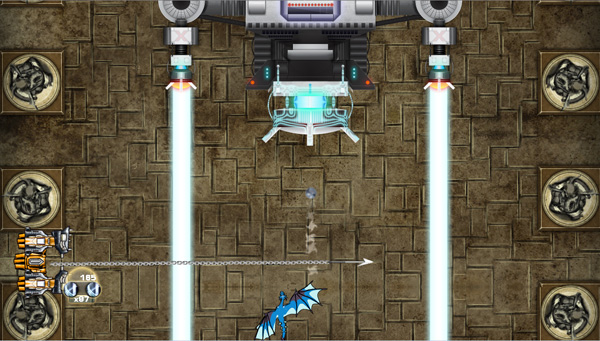
Shoot’em-ups have a rich tradition in video games, but in recent years innovation in the genre often gives way to just spamming the screen with more bullets.  Chris Brousseau of Game Production Studios is hoping he can rise to the challenge of differentiating with his Dream-Build-Play and Summer Indie Uprising entry Dragons vs. Spaceships.  Although the concept of using dragons in a shump isn’t entirely original, Chris promises key innovations and easy accessibility in his game.

Kairi Vice: Vertical-scrolling bullet hell games are all over the marketplace, indie or otherwise.  Why choose such an over-represented genre for your entry in Dream-Build-Play and Summer Indie Uprising?

Chris Brousseau: I believe that the best way to making video games is to make a game that you yourself will enjoy.  If someone else likes it too, then that’s fantastic, and if not, then at least you’ve made one person happy. So when my buddy or my siblings came over and we were bored, I would always browse the Arcade section for co-op games.  There’s some cool ones out there, but sometimes I don’t want to spend 10 bucks for a few hours of fun.  So that’s when I started going to the Indie section.

I found Zombie Estate and loved it, so I thought, there’s gotta be more cool 2 player co-op games that are good on here!  No such luck, there were a few but none that I was interested in. Yes, the market is over-saturated with shmups, but really, what I wanted was to just blow some things up with someone, while listening to some awesome music and using some cool powers.  So that’s what we did.

Kairi Vice: You’ve promised that DvS would “put a new spin on old conventions.”  Can you explain what that is?

Chris Brousseau: Sure, the spin is, the drops that come down work basically like Gunstar Heroes, so you have 3 different elements, and you can combine 2 of them to create your special for a total of 6 different specials.  One of the specials is you grab a ship in this electric grip and you can swing them around in circles and throw them at other ships, its actually really fun.  So for that skill you would combine say Electricity and Metal.  The fun people have been having with it is experimenting with which special they like in certain situations, and then trying to make sure that once they get to that part again in the game, they are ready for the situation, equipped with the best special ready to unleash complete destruction.

And then the other part of the game that makes it conventional is that you always have 2 weapons, a primary weapon and then your special.  So your primary weapon is based on your first element.   Let’s say its electricity and metal, the A  button will shoot a forward firing weapon, an electrical one, that can upgrade by picking up level up drops.  So this makes it so you always have a neat special and a forward firing weapon to unleash carnage with. Its also very easy to play if you are new to the genre or old.  If you are new then the A button shoots forward and B is for special, simple enough.  But if you know the genre and want the highest score possible, then you have to learn which combinations make which special, and then which ones to use at the right times.

Also the game is 2 player co-op which is always fun.  I know its been done before, but I haven’t played a good 2 player Shmup since Ikaruga so it was nice to make one that we actually like to play.

Kairi Vice: I assume someone on your staff played the 1987 arcade “classic” Dragon Spirit?  You know, everyone in the media is going to call Dragons vs. Spaceships a “spiritual successor” to it, whether you like it or not.

Chris Brousseau: That would be great!  It was a great game at the time, and its a classic so we would be honored to be called its spiritual successor, we actually went back to that game to see how they did certain things.  Like collision, at first we counted the wings as a hit, but then the game was ridiculously hard, so we took a look at what Dragon Spirit did, and they didn’t count the wings.

So we tried the game without the wings being collidable and even though it was still hard, we could actually get passed the first level, so that was a good change.

Kairi Vice: An eight-person staff is working on DvS.  What challenges did you face putting your team together?

Chris Brousseau: Who makes the decisions.  It’s definitely a struggle when you have eight people, and all eight have their own opinions.  In the end, the way we figured things out was the only way we knew how, try it, prove if it works or not, and then move on by either implementing that change, or just ripping it out.

Kairi Vice: How long as DvS been in production?

Chris Brousseau:  Since about January 2011, but that’s all of us working part-time on it as we all have full-time paying jobs as well.

Kairi Vice: With so many original concepts entered into Dream-Play-Build and Indie Uprising, do you believe having something from an over-represented genre like Dragons vs. Spaceships might hurt your chances at recognition?

Chris Brousseau: Probably, but we think the game is pretty fun and polished so we will see. As I stated earlier, all I wanted was to make a cool and fun game that I would enjoy, and we accomplished that together, many of the other members in the group also enjoy playing the game with their siblings or friends.

Kairi Vice: You previously have released a game for Windows Phone called Crescer. What lessons did you learn in it’s development?

Chris Brousseau:  The WP7 game called Crescer was actually built by 2 of our members in the team, and the one thing that we all learned from that, is that making a game with 2 people, is much easier than making a game with 8.

Kairi Vice: Assuming you don’t win Dream-Build-Play and all the publicity from Microsoft (ha) that comes with that, do you feel that long term DvS might find a better market and earn more money on the wireless market?

Chris Brousseau:  Not on the Windows 7 Phone market, I actually think it could do alright on Steam.  We’ve talked about it.  We will see what the reception is on the Xbox first.

Kairi Vice: You’re part of the Summer Indie Uprising, so I have to ask what games you’re most looking forward to playing, or what are your favorite games that you’ve already played from it?

Chris Brousseau: That’s easy, I’m a big fan of Mario Kart and Dirchie Kart – World Tour looks pretty fun, another good one is The Jump Hero, I just love those games and that one looks pretty neat.

Kairi Vice: Were there any games that didn’t make the cut that you felt deserved a spot in the top 25?

Chris Brousseau: All Your Creeps.  That game looks pretty cool, I like those types of games so I would probably want to try that one out.

Kairi Vice: What is the biggest challenge with working with XNA and the XBLIG platform?

Chris Brousseau:  Optimizing, first time we put DvS on the Xbox it ran at 2 frames per second, what a nightmare.  But we got it going at a full 60 now so its all good.  But those were a terrible 2 weeks, we learned a lot during those 2 weeks getting the game to run at 60 FPS.

Kairi Vice: Do you feel that issues with quality control on the indie marketplace (for example, anything from Silver Dollar Games) drags down the entire platform for everyone that actually puts effort into making good, professional quality games?

Chris Brousseau:  Yes and no, there’s the Top Downloads section and Highest Rated, so the great games are usually in there.  Some people just want to make money on the platform, and some people want to make cool games.  Hopefully some people get to make money from making those cool games.

The only way around quality control is for people to speak with their wallets really, buy the good games, don’t buy the ones you think are terrible and those bad games will just stop being made.

Kairi Vice: If you could change one thing about the XBLIG platform, what would it be?

Chris Brousseau:  More advertising of some sort.  We would love to see Microsoft do what Steam is doing for the Indie guys.  Every week the Xbox has a “Deal of the Week” so why don’t they try to put one Indie game in there every week, picked by Microsoft, and make sure its a game that’s good?  That’s all they really need to do.

I know people say Achievements, but that would be a disaster, if Microsoft added achievements to the Indie section then it would get abused.  Maybe if they added achievements but they weren’t worth points, that would be neat.

Developer Interview: Progenitor

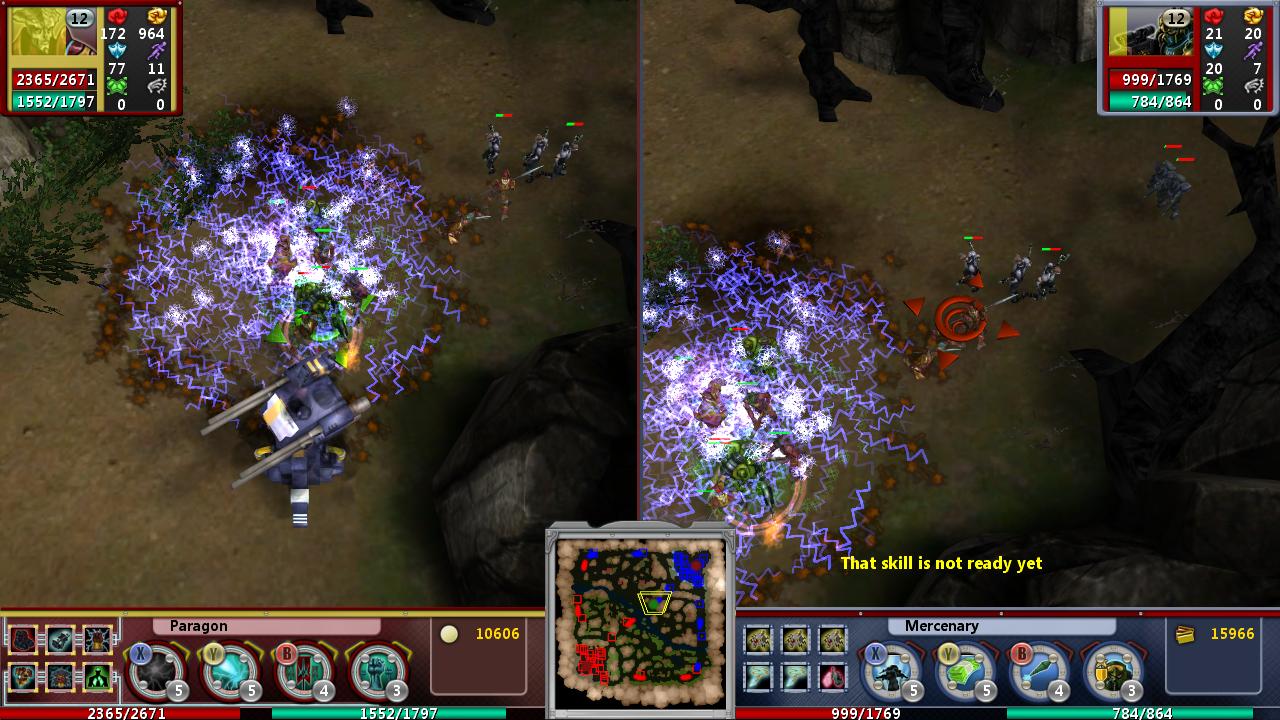
Few games on the indie marketplace strive to be truly original.  As the parade of would-be game developers jog leisurely behind the bandwagon, John Getty and his team at Exato Game Studios are exploring new territory by releasing the first MOBA (Multiplayer Online Battle Arena) ever on a gaming console.  Entered into both the Summer Indie Uprising and the 2011 Dream-Build-Play contests is his game Progenitor: Prologue.  Getty, along with business partner Alex Schlee, have completely self-funded this highly ambitious project.  I sat down with John for his thoughts on the indie scene and why gamers should not ignore Progenitor.

Kairi Vice: The indie marketplace has traditionally not fared well with online multiplayer games and maintaining enough user support.  What can you do to combat this issue?

John Getty: We hope significant visibility and the loyal MOBA crowd will deal with this. There are games that fare well on XBLIG as multiplayer only games. Zombies & Pterodactyls 20XX immediately comes to mind in that area. I haven’t checked their user support lately, but when I last played, it was very easy for me to find a game.

As far as visibility goes, we hope to get a lot of media coverage to make people aware of our game. Then there’s the vast MOBA crowd that already exists. Unlike most multiplayer centric games that die out quickly, MOBA games tend to hold onto their audience for a lot longer. I regularly see ~20k users on at one time in Heroes of Newerth and I read a moderator’s post, a while back, for League of Legends that said they maintain over 50k users on average. This might change with the recent uprising of newer, unknown MOBA games, but we have the edge over them because we are on console. We are relying on that crowd to fill up the initial user-base and keep the support at a stable level while the casual users come and go.

Kairi Vice: Strategy games are not usually successful on consoles, so why bring Progenitor to the Xbox 360?

John Getty: Well I would say we don’t really fall into the category and doom that most strategy games have to deal with (like Supreme Commander, Command & Conquer, LOTR: BfME, etc…). Since we are a MOBA game with strategy roots, I feel our chances of success are higher, especially since our controls are much easier to get used to.

We will also be the first of our kind on any console. We hope that advantage helps us get our game put on the map as well.

Kairi Vice: Obviously the biggest hurdle with any console-based strategy game is the control scheme.  Big name developers with development teams in the dozens struggle to get satisfactory play control.  How has your team handled this burden?

John Getty: Like I said before, we aren’t a traditional strategy/RTS game. In MOBAs you only control a single character, which makes a control scheme much easier to come up with. We utilize a mix of dungeon crawler and RTS control mechanics to make our game as intuitive as possible. Our biggest hurdle has been getting the targeting system down perfectly. We have had both positive and negative reviews about it. I think what we’ll inevitably end up doing is allowing for alternate control schemes or user-made control schemes. The latter depends on how much time we have available to us come August.

Kairi Vice: Progenitor’s trailer really left myself and my friends impressed.  It looks at least like a mid-budgeted title from a name developer.  How important was it for your studio to put a game out that looks like a legitimate commercial game?

John Getty: Thank you. We are always happy to hear people like our trailer. It is actually very important for us to look like a commercial game. Our ultimate goal is to be on XBLA, so we wanted our game to contend with the powerhouses that live in that distribution channel. We are realllllllly hoping we win Dream, Build, Play, and get the XBLA contract, but it looks like Orbitron: Revolution is going to give us a run for our money. May the best game win!

Kairi Vice: XBLIG has a 150MB limit on games, which is the reason Progenitor will be released in chapters.  Do you feel the platform is too restrictive? 

John Getty: I understand the reasons that XBLIG is restricted the way it is, so no, I don’t think it’s too restrictive. We wouldn’t release Progenitor as a full game on XBLIG even if we had an unlimited size limit and could price it at $15. The market just isn’t ready for games priced that high, so we believe creating chapters is a much more reasonable way to get the game out there.

Kairi Vice: Progenitor went through some major overhauls, as it originally started out as a mix of real-time strategy and a tile-puzzler.  This build of the game was met with sharp criticism and you were told that it was too complicated.  Was this a bitter pill to swallow?

John Getty: Yes it was tough at first. There were mistakes made and I know what I would change in order to make the game less complicated, but it was definitely not something we could continue with after the things we were told. No one likes to hear that their game idea wasn’t a good one, especially from the people that matter in the industry. However, in hindsight, we are glad it happened. Progenitor 2.0, as we call it, is a far superior game than our original concept and we are vastly more excited about it coming out than we ever felt about the original.

Kairi Vice: You guys seemed to have taken the advice and recommendations of the gaming community to heart and worked to make a better game, whereas most indie developers just continue to push out their games, broken or otherwise.  Does this alone set you guys above the rest of the community?

John Getty: I’m not sure it sets us above the rest, but I do believe that drawing from the gaming community does help in generating a better game. Some people underestimate the contributions the gaming community can make to a game. They have pointed out numerous things that we never would’ve seen without their help. They’ve been a tremendous asset to our development and we appreciate all their support now and in the future.

Kairi Vice: By my count, Progenitor has a ten person staff working on it, whereas the average XBLIG has less then half of that.  What went into putting your team together, and what advice do you give to other studios looking to put a staff together?

John Getty: Well to be fair, most of our staff doesn’t work full time. We had, at one point, 4 full time staff members, but are down to 3 (not including myself). Those people work in house. The rest are out of state contractors that work only when we need them to.

Easily one of the biggest hurdles we faced when we first hired on people was determining who was qualified. Anyone can make a good resume and get good grades in school, but that doesn’t mean they have what it takes to be in the industry. You really have to do most of the work in the interview. REALLY drill the candidate for questions that only a truly skilled person would know the answer to. Also, don’t cut corners. We’ve had to redo things because we tried to keep our expenses as low as we could. It ended up costing us more than it would’ve if we didn’t try to cut corners.

My last piece of advice would be, if you are brand new to the industry and are looking to make a game at our level, spend the extra money to hire on a veteran programmer. This department is especially important to not cut corners in, more so if your game is in 3D. There are just a million extra things a veteran programmer knows how to do that people without LEAD industry experience won’t and they can help train any new programmers you bring on board. We came to this realization at a good time in our development and to date, it has saved us thousands of dollars.

Kairi Vice: Most speculate that Prgenitor will carry a 400 Microsoft Point price tag.  Indie games at this range have not been big sellers, due to being in direct competition with many Live Arcade game that have all the bells and whistles such as achievements and download content.  Do you feel pressure to price lower and find a larger audience?

John Getty: That is a very good point and one we are struggling with.We think our game qualifies to be sold in the 400 point range, but at the same time, we are a multiplayer centric game, so pricing lower is advantageous in order to get a larger user base, as you said. We’ll have an official price by the end of the month.

Kairi Vice: Progenitor is clearly a very ambitious game.  Many teams working on titles with this level of detail and complexity abandon ship early on when the project becomes too overwhelming.  Has your team had any “we’re in way over our heads” moments?

John Getty: In the very, very early days when Alex and I were completely novice at this whole thing, we had concepted up an idea for a console-level game. However, at the time, we didn’t see it as console-level and we thought it was manageable by a small team of people who had no idea what they were doing. We definitely had a “we’re in way over our head” moment then. That didn’t stop us though. We hadn’t spent any money at that point, so we just shelved that game for a much later time and worked on concepting Progenitor 1.0. Since then, we have haven’t had any of those moments.

Kairi Vice: You’re entered in the Dream-Build-Play contest and in the Summer Indie Uprising, both of which are fast approaching.  Do you feel pressure to maybe release the game before it has been completely finished, or are you guys steadfast in only releasing the game when it is done and thoroughly play tested?

John Getty: With a game like this (and any other game similar), it will never be done being playtested. Balancing will always be an issue we have to deal with and will deal with after release. We are definitely feeling the pressure to release in time for DBP and SIU, but we believe the game will be ready and bug free. In the chance that it isn’t ready enough for a release, we won’t release it. We would never put out a super buggy game that lacks the basic features we intended to put in. That’s not the way any company should work. It will hurt the customer and it will hurt us and our reputation as developers and professionals.


Kairi Vice: Obviously getting attention outside of the niche indie community is one of the biggest challenges for any developer on the XBLIG platform.  Do you feel there needs to be some form of quality control to prevent developers who phone in every game (Silver Dollar Games for example) from saturating the market and bringing everyone else down with it?

John Getty: I do personally wish that we could see less shovelware and more quality games on XBLIG. I think that is part of the reason it doesn’t do as well as some of the other indie channels. People jump into XBLIG for a second to see the new lineup and when they see games that lack quality and polish, they get a bitter view in their mind about the whole of the community. It’s a shame really, since there are so many great games on there.


Kairi Vice: Having a MOBA (Multiplayer Online Battle Arena) on a console is fairly unique.  Why do you feel the genre hasn’t been given much of a shot on consoles?

John Getty: MOBAs are a new genre to gaming. There are very few out there that are actually released and even fewer that are doing well. I could probably count the successful ones off on one hand. Because of this, I just don’t think that there’s been enough time for developers to think about risking a console build, so they play it safe with a PC version.

Kairi Vice: What are your favorite XBLIG titles?  Your least favorite?  Which game is least deserving of it’s success? What is the most overlooked game?

John Getty: I think my favorite XBLIG games are Breath of Death and I Made a Game With Zombies. They are always games I recommend to my friends. I don’t really have a least favorite, but wish people would stop making “massager” games.  I don’t think any game is not deserving of its success. They figured out what XBLIG gamers were looking for and capitalized on that. It’s just good business strategy.

As far as overlooked games, I think just about all of them (laughs). It’s hard to pick just one when the majority aren’t making the kind of money they deserve because XBLIG doesn’t have the market it needs to allow people to make a living off of it. There are obviously some exceptions, but for the most part, a lot of the good XBLIG games are underrated.

Kairi Vice: What are the games you’re most excited to play in the Summer Indie Uprising?  What games got the shaft that deserved a better look?

John Getty: So far my favorite game I’ve played, that’s been up for playtest, has been Speed Runner HD. I love the hook shot mechanic. It all plays very smooth and multiplayer is a blast. There’s nothing like hooking your friend who’s ahead of you and beating them. It’s a great game and I could even imagine it on XBLA. Other games I’m looking forward to are Redd: The Lost Temple and Cute Things Dying Violently. I was surprised by the latter. The graphical style turned me off at first, but after playtesting it, it was a blast. The gameplay is very challenging and the little creatures are pretty funny. (Editor’s Note: Following this interview Mr. Getty contacted me to note that he also feels TEC 3001 is one of the top games of the Summer Indie Uprising).

I would’ve liked to see Last Dragon Standing make the cut. I played the game and it was a lot of fun. Short, but fun. Seems to have a lot of good multiplayer replay value. I was disappointed to not see it in the top 25. 

Kairi Vice: What is the most difficult aspect of working with the XBLIG platform?

John Getty: Nothing so far, but I suspect when we get to peer review, it will turn around. I strongly dislike the 7 day turnaround time between peer reviews. I understand that Microsoft doesn’t want people to just keep pushing their game out there until it gets passed, but it sure doesn’t allow for much improvement on a game up to the last minute, in fear of failing review.

Kairi Vice: If you could change one thing about XBLIGs, what would it be?

John Getty: Achievements. People have said it before and I’ll say it again, XBLIG needs achievements. I don’t think 80 point games deserve them (since we will then just be flooded by “earn easy achievements” games), but 240 and 400 point games should be allowed to have them.