I started Indie Gamer Chick with the enthusiastic encouragement of my kinda-sorta boyfriend, Brian. And Brian has really gotten into my new hobby. In fact, he’s acted as my unofficial chief gaming scout. While I concentrate on reviewing new games that just hit the market, Brian cruises Youtube looking for trailers of older stuff that I missed before I discovered Xbox Live Indie Games. I can always tell when he’s found something because he tells me “check this one out, it looks like something you would like.” And when he picks a game like Bird Assassin, I’m not sure what that says about me.
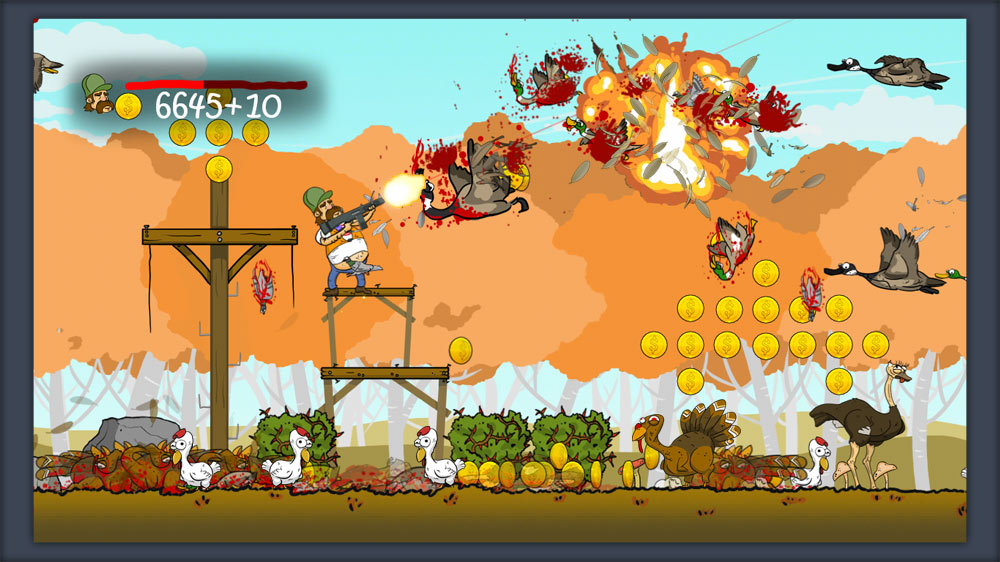
In Bird Assassin, you play as a redneck who’s wheelchair-bound father gets capped gangland-style by an evil ostrich. I can’t believe I just typed that sentence out. You decide to get revenge on the birds and grab your Pa’s hunting rifle. You make your way through nine stages, shooting anything that moves, which is convenient because everything that moves is a bird. Along the way there’s some light platforming and a few traps to jump over. It’s very minimalist and basic, but shockingly it’s a lot of fun too.
Along the nine missions, you’ll earn money that you can use for gun upgrades, bullet upgrades, and armor. Once I saw how quickly I was earning money on the fourth stage, I just replayed it until I have enough dough to purchase the mini-gun. At this point the game was effectively over. Using this, along with the laser sight for the gun, I turned into a one girl poultry holocaust.
It’s not a particularly challenging game. I played on normal difficulty and finished it in roughly a half-hour. But I really enjoyed playing it. It’s the perfect length to not get boring and the humor really is well done, if a bit cringe-worthy. The graphics are distinctive and memorable. The sound effects are good, with really over-the-top hillbilly accents providing some laughs. My only complaint is extremely minor: the default control scheme has your gun firing automatically. You can change this in the options, and make sure you do so. Oh, and you face the same boss three times. That was a kind of weak.
Bird Assassin isn’t a deep gaming experience, but sometimes you don’t need that. Sometimes you just need to unwind with a quick, immature blood-and-guts game. Sometimes you just need to have a couple quick laughs. Sometimes you just really need to piss off PETA.
3D Dot Game Heroes was a fucking awesome game. A loving tribute to the classic 2D entries in the Legend of Zelda series with some new conventions like level upgrading and swords the size of the screen.
On the flip side, Lootfest is a clunky, broken, unfinished piece of shit vomited out by a group of gamers who have about as much shame as a pick-pocket at the Special Olympics. The only positive thing I can say about it is the graphics do their job, IE, they look like they were lifted right out of the 3D Dot Game Heroes alpha build. Everything else is unrealized and unfinished.
In Lootfest, you play as a swordsman who must slay three boss monsters. The world’s map is randomly generated so on the off-off-off-off-off chance you actually find something of value here, you can play it as many times as you want and will have a different map to get bored with every time. There’s a small handful of enemies types that you can kill with your sword. They drop money, which you use to buy a bow necessary to defeat bosses. There’s also sword upgrades and shields. I found once I had the level 3 sword, which takes about five minutes to get the gold for, everything that followed was a cakewalk.
Since the game is entirely focused on combat, with none of those pesky puzzles or dungeons to explore like a real game, you would hope they at least got that right. Not so much. With only a small handful of enemies to deal with, you’ve pretty much seen the whole game after only two minutes. There are three bosses, but the first two more or less look alike and all of them are defeated in the same way. Your sword feels a bit on the clunky side, thanks to collision detection being a bit off. This applies to enemy projectiles too, as sometimes I would dodge a fireball and it would register me being shot anyway.
Finding the three dungeons is actually done in a novel manner. You purchase a hawk from a store and then release it. It flies in the direction of the next boss and you have to follow it. This idea worked, but with everything else being a miserable failure it’s like your child showing you his report card full of Fs with one B in the middle for P.E. I completed the whole game in about 45 minutes so it’s really short too.
Lootfest is truly a tragedy because they DID have something going here. While playing the game, I repeatedly told my boyfriend “I think I might recommend this one.” By game’s end, I realized that doing so would be a sin against gaming. Lootfest is an unfinished mess. Enemies get stuck in walls. Enemies can walk through walls. The sound effects are straight out of the Atari 2600, and you can literally see that they had plans for stuff but never got around to it. Upon completion of the game, a sequel is promised. “See you at Lootfest 2.”
Um, no you won’t. You couldn’t bother to debug the game the first time around before you kicked it out onto the marketplace. Why should I or anyone give you a second chance? The indie market reminds me of one of those families where the parents count down the days until their kids turn 18 so they can unceremoniously boot them out of the household whether they’re ready for it or not. Designing video games requires patience. You can’t just put something out there for sale as soon as you have a playable build working. Yea, I’m sure it’s exciting to have something that resembles a game that you created all on your own, or in this case thoroughly plagiarized from someone else. But it doesn’t mean you have to lose focus and put it out there for consumers to get cheated by while you begin work on a sequel. Stay focused, damn it! It makes me think every subscription to XNA should come with a free bottle of Ritalin.
Ninja360° is a mix between Bomb Jack (a 1984 coin-op created by Tecmo that predates my birth by five years) and the Japanese television series Ninja Warrior. Lots of games on the indie market place offer high-end difficulty in the realm of platforming, but few of those titles succeed in being fun. Ninja360° does.
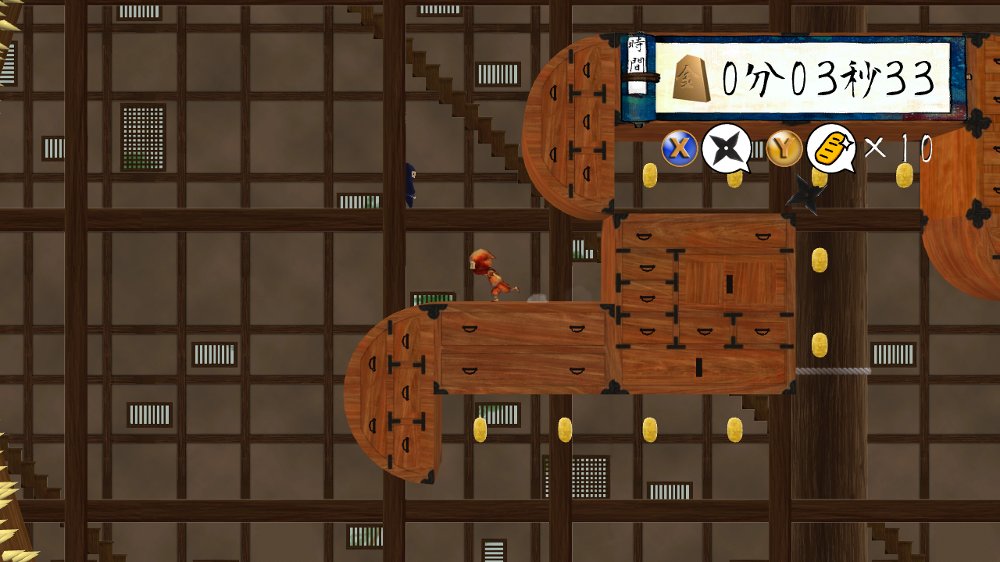
Ninja360° is contains 99 levels, each of which should take on average of twenty seconds to complete. Many of them take substantially less. In fact, many will be finished in under five seconds. To complete a stage, you have to collect all the coins in it. To do so, you jump, wall jump, and glide from platform to platform in very ninja-like fashion.
The defining gimmick of the game is that anytime you walk on a curved platform, the entire level rotates. Some have compared this to Super Mario Galaxy, but I find that to incorrect. In Mario Galaxy, you remain fixed to whatever platform you are on, with gravity adapting to whatever angle you’re walking on. In Ninja360°, the level changes angles but the gravity always remains pushing from top to bottom. Thus you can’t walk upside down on platforms and you’ll fall to your death in many situations. Having said all that, the gimmick works and adds a small puzzle-twist to the experience.
The controls are smooth, if at times a touch on the sensitive side. My biggest gripe with the game is the medal system. Ninja360° is designed with speed runs in mind. Every stage has gold, silver, and bronze time goals. Obtaining the bronze medals sometimes can prove to be a light challenge but very possible. Silver medals usually require more advanced techniques and different route planning. Meanwhile, Gold Medals might as well be stored in Shangri-La because they are fucking impossible to get and might even be a thing of myth.
This is, I feel, an example of a developer who got too good at their own game and lost sight of reality. This happens quite a lot in the indie marketplace, and I’ve even discussed this with some developers who feel the same way. In some games, like A Hard Game Without Zombies, the insane difficulty curve crippled whatever fun could be had out of it. Here, the ability to unlock the next stages only collecting the lowest-level medals takes a lot of the sting out. The guys at Doerai Games included videos of their speed runs that you can watch upon completing the level, to learn how it’s done, but I found these to be not always so useful. The truth is, getting gold medals requires a degree of absolute flawlessness that almost nobody will try to achieve. To get there you would practically have to dedicate your entire life for several months to Ninja360°. I would think Ninja Warrior training might be healthier.
For a while I felt I was in danger of getting bored, but once I gave up on pursuit of perfection I actually had a really good time playing Ninja360°. It’s fast paced, challenging, handles well, and is shockingly loaded in content for an 80MSP title. Sure, it’s a less acrobatic version of N, but I feel this is actually the better game and it’s priced to move. Besides, who doesn’t love ninjas? Besides the Shredder I mean. Oh Victor Ortega. And that pony-tailed dude from 3-Ninjas. And Rita Repulsa. Basically anybody evil. I bet Rupert Murdoch really hates ninjas.
Ace of Dynamites sat so inconspicuously on the marketplace that I nearly missed it. The screen shots looked drab and the blurb read like something slurred out by an adolescent who just found the key to the liquor cabinet, but maybe it was trying to camp it up intentionally. Who am I to prejudge something? That would be awfully rude of me. My face would be so red when the game turned out to be the biggest thing to hit the indie scene since I Made a Game With Zombies in It!
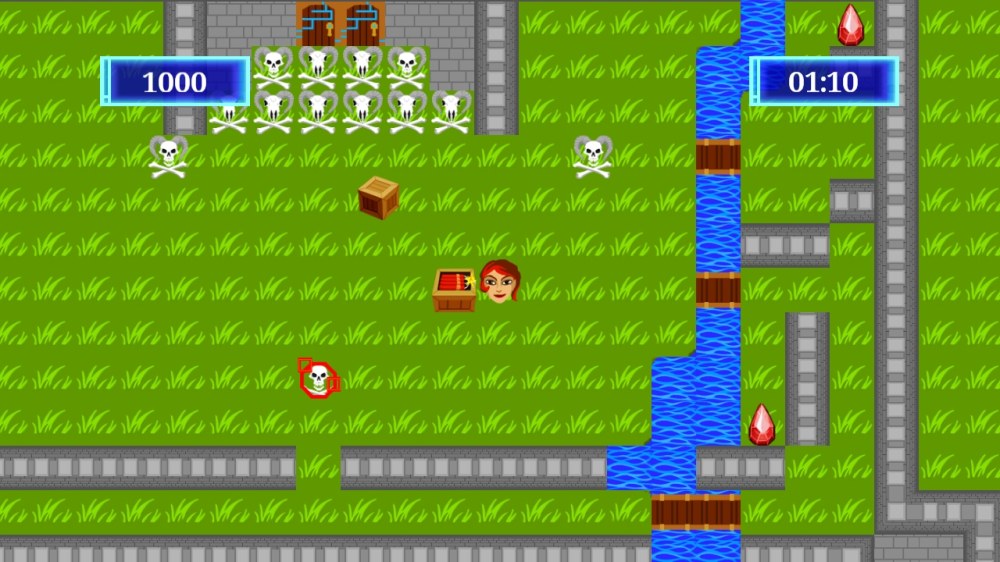
As it turns out, prejudice is sometimes a good thing. Ace of Dynamites is so awful they might have to invent a new form of science just to study it. It’s a puzzle game in the very loosest sense of the term. I could explain in detail the play mechanics but doing so will result in my boredom induced headache returning, so I’ll try to sum them up as cleanly as possible.
You control a head. You try to find a door. There are many doors. Collect three diamonds per a room. Or not, if you wish. I don’t care and neither does the game. There’s skulls along the ground. Don’t touch them. There’s skulls chasing you. Run away. There’s boxes. Push them around. There’s dynamite boxes. Blow them up. Stand next to them and detonate? Go ahead, it won’t hurt you. Oh screw it, my headache came back anyway.
Fairy Engine LLC cut every corner possible developing this poop sandwich. The graphics are ugly, flat, unanimated, and cheap looking. What few sound effects there are annoy my eardrums worse then having an earwig burrow into them. There’s no music, but given how bad everything else turned out that’s likely a blessing. The menus are either stock or look enough like it to embarrass. And then there’s the play control, if you can call it that. Lining up your character to push boxes is the biggest challenge in the game. Well, next to walking through an opening in a wall, or across a bridge. The lack of setting parameters for movement means you’ll die more by walking into stationary skulls then anything else. The face thingy glides around like it has tunnel vision. It’s lazy and sloppy, maybe even a little insulting.
There’s only twenty levels, along with a few tutorial levels that serve to teach you how bad the game is. Each stage has three degrees of difficulty. The easiest setting would be useful to determine which kids should be riding the short bus to school. The other two offer some extra baddies chasing you around, but you can’t play on those settings until you beat the game on Spectacular Retard mode. Following that, you’ll be looking for something else to do that will be a welcome alternative to playing Ace of Dynamites some more. Dig out that pesky ingrown toenail with a rusty monkey wrench. Anything.
Playing Ace of Dynamites will be the worst thing to happen to you this week. Even if your brand new puppy dies from choking to death on a winning lottery ticket, you would still be ahead on points. It’s so bad I think it could make my personal short list of worst video games I’ve ever played. The only redeeming value I could think of was somehow weaponizing it for use in the War on Terror. Maybe not that either. I’m sure the Geneva Convention would object.
Explosive Gas is both the name of the latest game I played on XBLIG and the end result of eating an entire El Grande meal at Taco Bell by yourself. The latter is clearly the more healthy option here. It’s a shameless rip-off of Bomberman minus decent play control, charm, or fun. It supports custom map creation, a feature that would be awesome if the game didn’t blow like a vacuum cleaner designed by a dyslexic.
I attempted to play online and was relieved that there was nobody playing, thus giving me an excuse to end the review after about ten of the most godawful matches imaginable against the worst possible AI since the Speak & Spell. Why does this game even exist? You can pay $1 for this low-grade knock-off and hate yourself or you can pay $10 for the significantly better real deal Bomberman Live. You might even find some actual opponents in it. If you own an Xbox 360 and an Xbox Live account, you can certainly afford it. Leave this kind of broken, generic bullshit for those poor kids on skid row who are currently playing Mario the Hedgehog on their Gamestation 360.
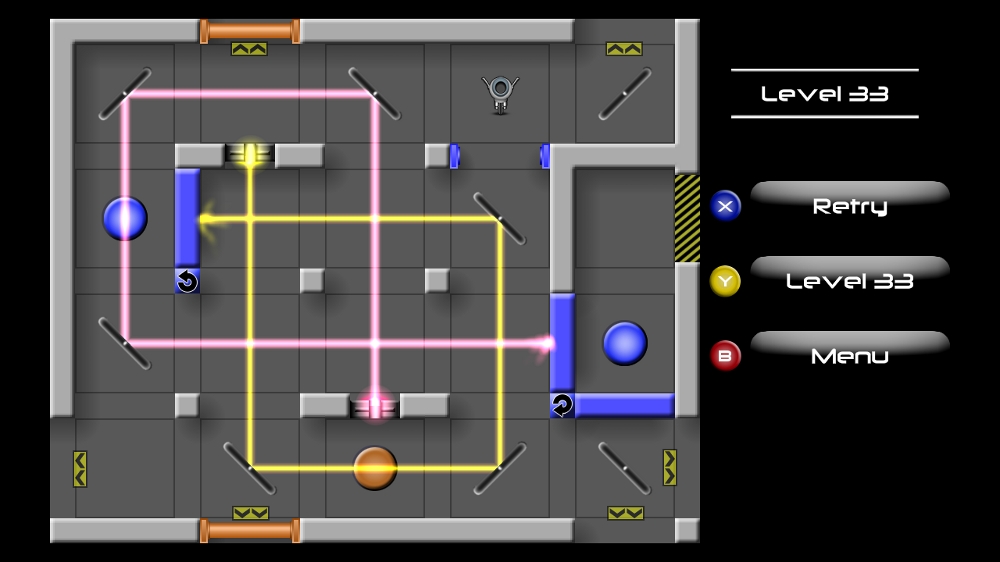
Limiting myself to Xbox Live Indie Games might not been the smartest move. One of my favorite genres is puzzle games but they fit in on consoles about as well as my kindergarten crayon drawings would have at the Musée du Louvre. Today’s square peg going into my round hole.. you heard me.. is Block the Laser. It’s a logic based puzzler where you play as a small robot trying to walk out the exit of fifty different rooms. Along the way, you’ll have to avoid lasers, hit buttons, and position mirrors. It sounds very dry, but it’s actually a lot of fun.
The concept works well. It plays like a 2-D version of the mirror puzzles from Legend of Zelda: The Wind Waker. Only here, objects cannot be moved, only manipulated. The learning curve is near-flawless, with each new element being slowly introduced throughout the opening fifteen levels at just the right intervals. The challenge doesn’t really gather steam until you’re thirty levels in, at which point you’ll be well served to stand back and study the layout before making any moves. The average gamer can expect about two to three hours of playtime here and the final puzzles are difficult but not overwhelming.
The only flaw is the control design. First off, I recommend using the D-Pad, preferably the silver one with the more traditional pad if you have that as an option. If not, it’s marked down to $50 now and is worth every penny. Even then, it might at some times not help much. You move the robot one square at a time, but the spaces he can move aren’t always clearly defined and sometimes it will result in death. I also had slight issues with manipulating the mirrors, thinking they would rotate one way and instead accidentally pushing them in the wrong direction and getting my robotic flaps zapped off.
I really did enjoy Block the Laser. Two minor design flaws can’t change the fact that this is a clever and original puzzler that I never got bored with. Thus, it should come as no surprise that I advise gamers to completely and utterly avoid buying this XBLIG title. I firmly stand by opinion that games like this belong on portable devices. The guys behind Block the Laser seem to agree with that because it’s also available in the iTunes store at the same price point as it’s Xbox cousin. And that’s the one to get. It’s $1 and it works. Which by my count puts it $99,999,999,999 ahead of Ronald Reagan’s Strategic Defense Initiative program.
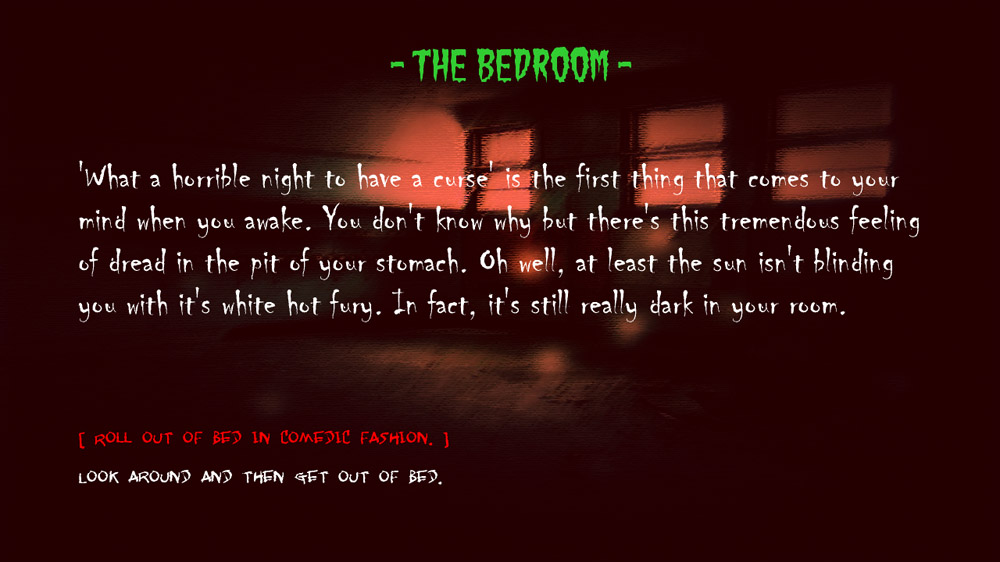
Kairi woke up to find she had purchased a strange text-based game called House of 1000 Demons off the indie marketplace for 80 Microsoft Points.
(X) Play the Game.
Watch reruns of American Pickers.
Kairi heard her father talk about games like this. They were apparently huge in the 70s. “Big deal,” she thought. “So was LSD and Disco. It doesn’t mean in the year 2011 I should be listening to the Bee Gees and watching my hand move.” Regardless, she pressed on and followed the humor-based story.
Hilarious plot.
Light chuckles but too referential.
(X) A bunch of talentless monkeys throwing darts at a list of pop-culture references and shoehorning them into the most half-assed game since the Press Start simulator.
Kairi slogged through the text, often holding the B button to make it scroll faster. After choosing the wrong option while dealing with a headless body sitting in a closet, she learns she has to start the entire experience over. From the beginning.
A fine way to pad out a game that would only last roughly ten minutes if played in full.
(X) Dick move.
After nearly dying from boredom from the incredibly unfunny plot, Kairi completes the game on her third try, shaking her head in disgust at how they couldn’t even write a satisfactory conclusion to their amateurish story. But the important thing is they got a reference to Army of Darkness in there at the end because, by God, there’s a movie that doesn’t get quoted enough. In the end, Kairi recommends that prospective Xbox owners who are considering buying House of 1000 Demons should…
Buy it.
(X) Fire a staple gun into their own scrotum instead.
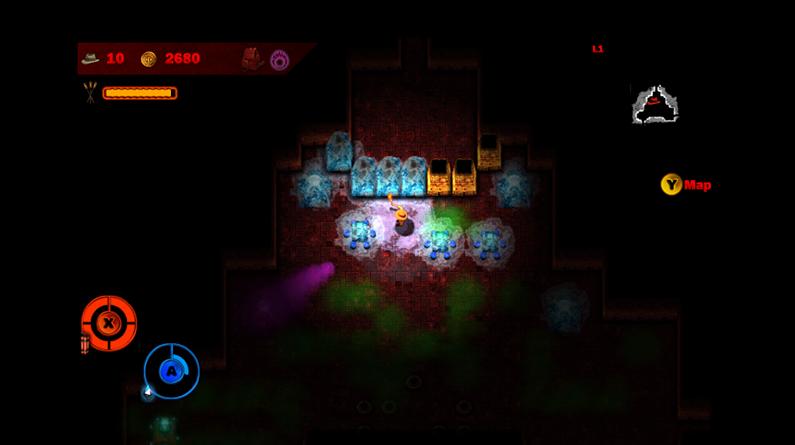
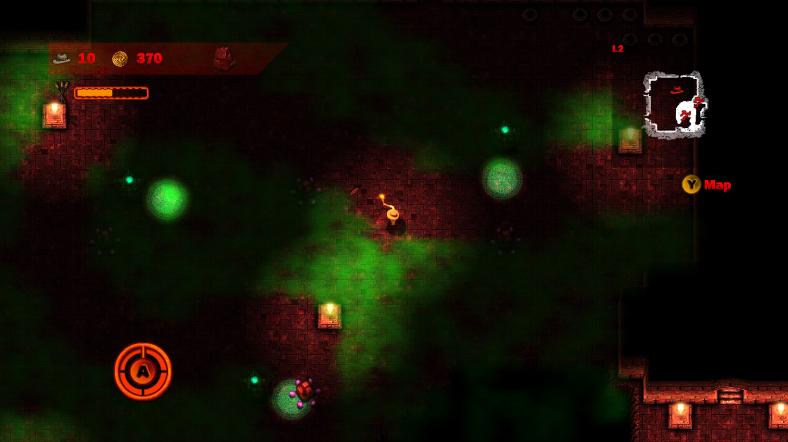
Zombies. Avatars. Punishment platformers. Twin stick shooters. Dating simulations. Wikipedia for Xbox. I’m sick of these kind of games. I want something different. So, like superheroes to the rescue come a trio of guys from Blazing Forge Games. Their entry in the Summer Indie Uprising is Redd: The Lost Temple. After ignoring my natural instinct to run away from any Texan, I decided to instead sit down with Nathan Smith and Josh Addison of Houston to discuss the development of this awesome looking top-down adventure game.
Kairi Vice: Upon viewing your trailer, my first thoughts were “Zombies Ate My Neighbors” followed by “Zelda dungeons.” Maybe even a little Bomberman too. Was that the vibe you were going for with Redd: The Lost Temple?
Nathan Smith: I feel our game is a cross between Zelda and Metal Gear Solid in a weird Indiana Jones style environment where magical items are the norm. It didn’t start out this way but that is what has evolved as we expanded Redd into an adventure game. We really wanted to get away from your typical hack and slash game and make it more about survival and being more diligent with your “attacks” a la MGS. Even though we were influenced by Zelda we definitely didn’t want to make a Zelda clone because what would be the point? We aren’t going to make a Zelda game better than Zelda! I could just go play the originals. As we expand the series further we have some really cool plans for Redd’s dynamite and several unique magical items as well as some awesome bosses so stay tuned!
Kairi Vice: Creating an enticing adventure is a huge undertaking. How challenging has the production of Redd been for you?
Nathan Smith: Very difficult, we’ve redesigned this game several times over the course of production. The biggest problem from a design standpoint is to make a game like this fun you need tons of features, a huge world to explore, and a solid enough story to convince players to keep playing. I can’t count how many times we had to step back and say “this game is missing _______, we need more ________.” The initial scope of the project was nowhere near what it turned out to be. The other problem we constantly faced was the limitations of 2D art. There is a lot we wanted to do as a 3D game (especially the size of enemies, bosses, and quality of animations) and about ¾ of the way through we almost decided to start over in 3D but decided against it.
Kairi Vice: I have to say, after countless platformers, puzzlers, and twin-stick shooters this is exactly the kind of game I’ve really been itching for on the indie marketplace. Do you feel Redd‘s chances for success hedge on player burnout of those over-saturated genres?
Nathan Smith: It’s great to hear that! We’re hoping this as well but I honestly can’t gage the indie market. There are some very unique aspects to Redd but it is still more traditional compared to what is usually out there on XBLIG. I do think Redd is better suited for a competition like the Indie Uprising where the objective is luring the XBLA crowd over to the indie side instead of trying to get noticed by a niche audience where quirky or odd games rule the day.
Kairi Vice: Redd started as a strategy game for Windows Phone 7 but the XBLIG build looks like an entirely different beast. Was this always planned or was Redd originally going to play more like its wireless namesake?
Nathan Smith: Our problem from day one at BFG has been we take a game idea and then expand it to the point that we can’t realistically start it with our current team size. Every project always ballooned into this massive multi-year thing from the design end and we had to shelve several projects for later. So we did a couple of smaller games as side projects like BlurBall and Redd: Mobile but when we decided to do a port of Redd to the Xbox it grew just like everything else. Our original intent was to make a XBLIG version of Redd using the same art and gameplay of the mobile version and adding a few features including multiplayer Bomberman style versus modes. In its current form the only thing that is the same are the Redd sprite sheets. That’s it! It is a completely different game in every way and much, MUCH bigger.
Kairi Vice: What is the most significant difference between building a game for phones vs. for the Xbox?
Nathan Smith: I’ll let Josh answer the technical side of things but for me personally making a console game just feels more exciting. It’s probably because I didn’t grow up playing games on a phone instead I held a controller with a TV in front of me. From an art standpoint the biggest difference for us was the smaller file sizes required for the phone.
Josh Addison: I would have to say hardware limitations. Besides a better CPU, GPU, and more memory on the Xbox, the use of a game controller had the largest factor in changing what we could do with Redd: The Lost Temple. Also, at the time we made Redd: Mobile we were not allowed to use custom shaders on WP7 which killed most of our ideas for the game.
Kairi Vice: A common problem with this type of game is having the difficulty curve suddenly become a straight vertical line pointing upwards with the words “FUCK OFF!!” on it. Metaphorically of course. What can you do to prevent this with Redd?
Nathan Smith: More play-testers! I’ve played this game so many times that it feels very easy to me. Then someone new sits down and they die 3 times in a room we could play blindfolded. Now, we want the game to be a challenge but in a, “Oh, I can get this!” kind of a way. The problem which you alluded to is transitioning between early game play and a very difficult last quarter of the game which we are still tweaking. I believe that when people finish Redd: The Lost Temple they will be very satisfied with the type of challenge we created.
Josh Addison: A lot of indie game developers start off by choosing an educated guess of difficulty and then slowly tighten the difficulty until it feels hard to them. This happens over several months. What the developer does not realize is that they have been constantly getting better at their own game. It is almost like the developer becomes a machine gear to playing their game. What we try to do to fix this is get playtesters who know nothing about our game and have them play it as we watch and take notes. We take those notes and make modifications to our game and repeat.
Kairi Vice: It seems almost criminal that a game with this much effort will be listed side-by-side with stuff like Why Did I Buy This? or anything else by Silver Dollar Games and other developers with half an ass and the brains to match. Do you think the XBLIG platform needs better quality control?
Nathan Smith: The obvious answer is yes, there needs to be some sort of quality control. Unfortunately I don’t see how that would be possible with the current set up from Microsoft. I think our best hope is to build quality control organically outside of the marketplace using events like the Indie Uprising that gives us more exposure, essentially creating a middle ground between Indie and Arcade.
Kairi Vice: What other games are you most interested in playing during the Uprising?
Nathan Smith: On an objective overview of the games there are several that look very good but they just aren’t my thing (I personally love strategy games like Civilization). However, I can see myself playing Take Arms the most out of all these titles.
Josh Addison: I enjoyed playing Take Arms, Tec 3001, and Doom & Destiny. I would like to try out Cell: Emergence to see what it is like.
Kairi Vice: Are there any games you think missed out on the top 25 cut that should have made it?
Nathan Smith: There were a few games that would have made it if they weren’t re-releases. I think once the Uprising becomes more established the stronger developers can plan their production schedules around specific times and problems like this will be less common.
Kairi Vice: What has been the biggest challenge developing with the XNA platform?
Josh Addison: I guess dealing with the Garbage Collector and its random collects, but that really doesn’t have a lot to do with XNA but more with C#. I personally feel that the XNA framework does a good job of giving me what I need but still leaving plenty of room for customization.
Kairi Vice: If you could change one thing about the XBLIG platform, what would it be?
Nathan Smith: We’ve already touched on this earlier and it would have to be quality control! Once people expect to see good games the barrier to buy is much lower. I’m less likely to buy something from a store that has a bad reputation even if it’s a lot cheaper. Once you have some sort of expectation of the quality available you get a completely different type of buyer looking at your games. The same person that won’t spend a dollar now to buy an indie game is spending $60 on another game because he is comfortable with the source of the game. I would love to see small teams actually make a living in the Indie market one day.
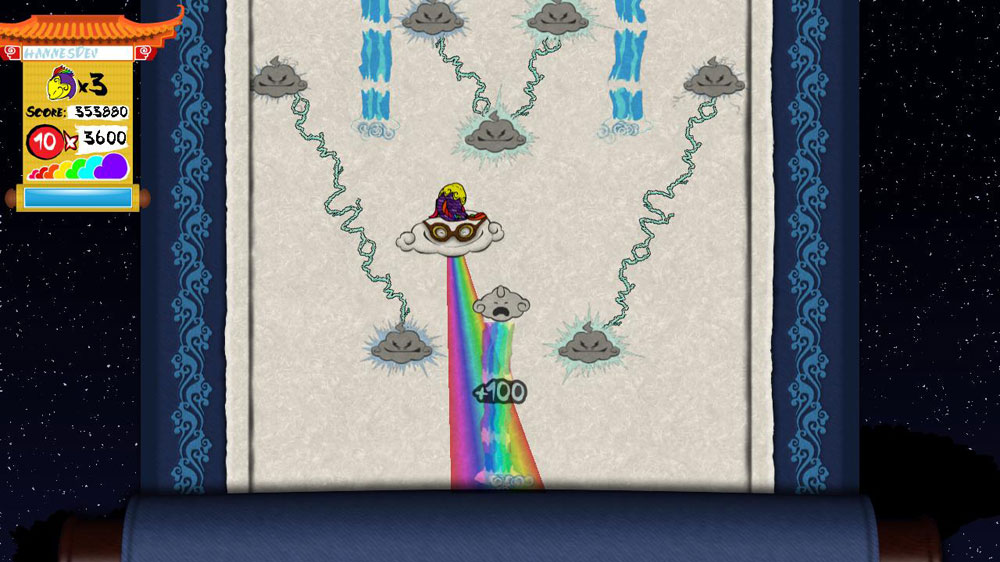
This is going to be one of the tougher reviews of mine to write because, quite frankly, I don’t know what to make of Niji. It plays like an old-school arcade title where the only challenge is to survive as long as you can and rack up a high score. You play as Niji (Japanese for “rainbow” but as a name it only works in feminine form, a “hmmm” moment for me), a fish (a rainbow fish if you catch my drift) out to rescue his girlfriend (wink wink) from some evil storm spirit thingy.
Story is entirely inconsequential to the gameplay. You have to move vertically up an endless column jumping from waterfall to waterfall, occasionally avoiding thunder clouds that get in the way. While in the water you have to tap the A button to swim. You only have a limited amount of stamina and if you swim to fast, you tire out and fall off the screen, costing you a life. You can regain stamina by doing a flip mid-jump by pressing the B button, which also earns you combo points.
There’s a lot of problematic things in Niji. Tapping A to swim is tiring. The flip mechanics don’t always seem to work. Sometimes when you build up a rainbow burst (done by passing enough clouds) it drops you off in a place with no waterfalls, costing you a life. Sometimes there’s so many storm clouds on screen that there seems to be no way at all to survive unless you’re on a rainbow burst. In short, there’s a lot to not like about Niji.
And, quite frankly, I didn’t like Niji. Whatever they were pitching here didn’t work with me. It’s quirky enough that I’m sure it could find an audience much like Techno Kitten Adventure did and has beautiful graphics that look like they were lifted out a mini-game from Okami. But the gameplay is where it counts and in that regard Niji can hop into a deep fryer and turn itself into fish sticks.
Why would anyone name a 2-D action-platform game “Grand Theft Froot” when it in no way resembles the name sake it’s clearly evoking? Since this is an action-shooter, wouldn’t “Call of Frooty” or “Frootroid” have been better? Feel free to use those names in the future, Frooty Game Studios.
So the name didn’t inspire confidence but my optimism rose upon booting up the game. You play as a girl who wakes up with no memory and must traverse a series of sprawling labyrinths for a mysterious element known as “Froot.” Every level has a different amount and all the Froot must all be obtained to complete the stage. You’re armed with a gun that has a limited charge and the ability to fire at two different strengths. You can press Y to fire a fully-powered blast or you can press X if you are a fucking moron. Weaker blasts have no strategical advantage over stronger ones except they take up less of the gun’s energy, which gradually recharges automatically. There’s very few instances where you won’t have enough power to fully dispatch all the enemies on screen. It seemed like a waste of a button to me.
I wanted to enjoy GTF a whole lot, but every time I felt like I was about to have a good time, something happened that zapped all that away, like an Indian-giver dispensing fun. The story was well thought out and had some interesting plot points, but you’re told it by a series of pop-ups that happen right in the middle of the action. And I mean that literally. You’ll be hopping around trying to avoid pits or enemies or cannon fire when all of a sudden a window will pop up, obscuring the entire screen and causing you to lose health. This was a dick move extraordinaire. It also doesn’t help that the studio behind Grand Theft Froot sent me a request to review this along with the big plot twist being spelled out for me. Thanks guys. By the way, Harry marries Ginny at the end of the last Harry Potter.
Every step forward by GTF was followed by a step backwards. The levels are well designed but there’s no checkpoints so if you die you go back to the start, retaining any XP you get but losing any gold. Upgrades to your character are done through experience-grinding, which any rational person recognizes as the most boring thing to happen to gaming since Pictionary. You can buy items that help you out but once you own the shielding unit and the regeneration unit the game is pretty much over. The level-up system is lifted straight from Castle Crashers (is this the grand theft they were talking about?) and allows you to upgrade your health, gun strength, gun-charge rate, and agility. Of these, you’ll need the health only until you have enough money to buy either the shield or regeneration unit. A gun upgrade can also be bought but I found just putting it high enough to pick off most of the early creatures in two shots worked best. And I never upgraded the gun-charge until I had nothing else left to put points into.
Navigating the boards is a bit tricky. Some of them are downright huge, but without a map system or checkpoints you can end up with lots of boring backtracking or replaying. The standard enemies all offer a fair challenge, and the boss battles are fun if a bit flat. The biggest problem I had was with the wall cannons. These are the primary obstacle of the game. They’re all over the place, indestructible, and it’s nearly impossible to get their patterns down. Sometimes it feels like they’re placed perfectly to offer the right degree of difficulty to clearing a gap or platforming section and keeping the player on their toes. But often there’s just too damn many of them and it turns GTF into an almost bullet-hell situation. Your character also has that annoying Castlevania-like thing where you fly backwards after being hit. Thus sometimes you’ll be on a moving platform only to get shot by an off-screen cannon or enemy, fly backwards and into a pit of acid that you can’t reasonably escape from, forcing you to restart the level. I rolled my head towards the ceiling in frustration so much I was able to count the amount of tiles just from doing that.
You know what’s a real crying shame? Somewhere in here is a really great game. Dare I say that if only two or maybe three of the problems were fixed it would be one of the better games on the marketplace. The concept is good, the story is very well told, the level design is very clever and they got the “feel” of everything just right. But the flaws are so deep that I can’t in good consciousness recommend Grand Theft Froot… for now.
You see, this is the first game by Frooty Game Studios, which is made up of a husband-and-wife team. They have talent. It shows in every level and every new piece of the story. Grand Theft Frootis a functional, playable game, just a deeply flawed one. Talent is not something that can be learned. You either have it or you don’t, and these guys do. Now they just need to learn to build a better game. Maybe following their next release I’ll tell people “go buy it and go buy Grand Theft Froot to see how it’s possible to learn and improve in an industry where few do.” Unless of course it turns out to be Froot Nukem Forever.
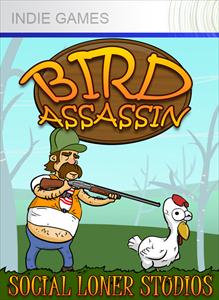 Bird Assassin was developed by Social Loner Studios
 80 Microsoft Points avoided making a Duck Hunt joke in the making of this review.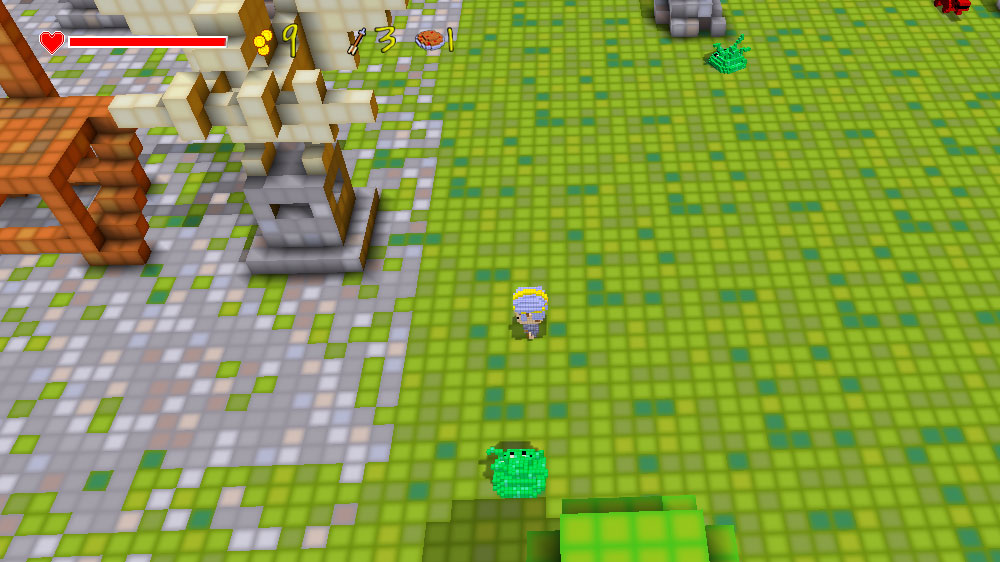


 RSS - Posts
You must be logged in to post a comment.