bumblepig

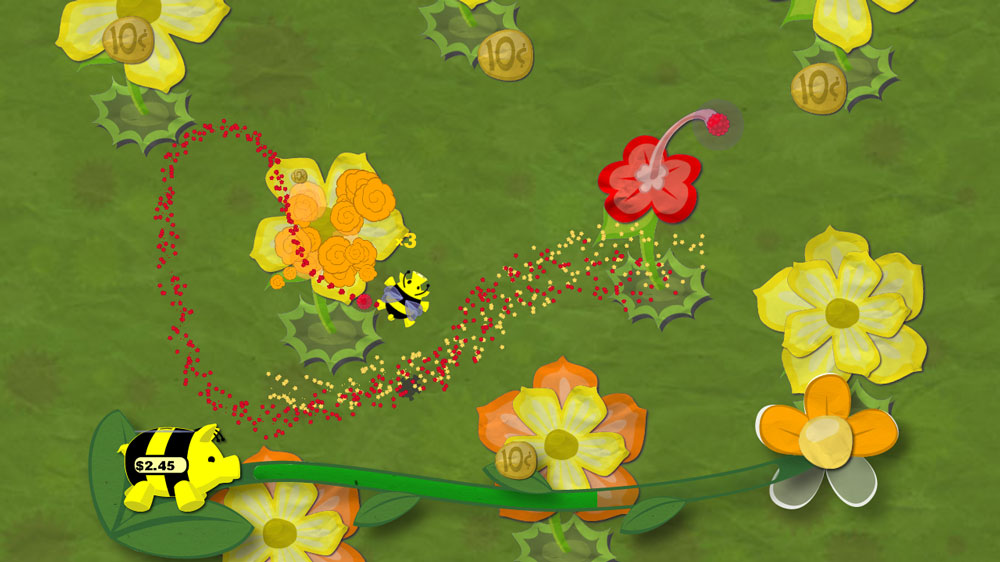
bumblepig by Kindling Games is perhaps the oddest challenge I’ve received from a developer yet.  I feel like I’m firmly outside it’s target demographic.  It plays sort of like a vertical shooter mixed with Rainbow Brite.  You’re a flying pig-bee thing that has to gather pollen balls and spread them on various flowers to spread color to the land and make pocket change to decorate yourself in various get ups.  Maybe I should be wearing PJs and have my hair in pigtails for this one.

For 80% of the game, things feel very Nickelodeonish.  You can carry two different pollen balls at once and you must shake them over flowers with the trigger buttons.  There’s a color mixing system in place here.  For example, if you sprinkle red pollen on a blue flower, the petals will be purple.  Creating five of the same color in a row makes your money meter fill up faster, which causes the flowers to spit out higher-valued coins.  The object of the game is to collect enough money to unlock the next stage.  There are fifteen stages, twelve of which are cakewalks.  The final three enter bullet-hell territory, which is a little jarring.  Every time a bug flies into you, it drops your meter down, decreasing the value of the coins you can collect.   If you want an extra challenge you can switch to nighttime, which features more bugs and limited visibility.  Like a retirement home hooker.

I have to be honest: bumblepig bored me stiff.  I don’t think anyone over the age of seven would really like it too much.  It looks fine and it controls well, but it’s just so vanilla ice cream.  Kids might like it.  Maybe.  Don’t quote me on that.  If you’re a parent and you buy this for your child I’m not responsible if they snap and murder you by shoving crayons up your ass.  That doesn’t sound lethal?  What if I told you the crayons were.. wait for it.. MADE IN CHINA!  Muwahaha!  Enjoy your wax-lead enema, mom!

bumblepig was developed by Kindling Games

80 Microsoft Points watched The Wuzzles as children too in the making of this review. 

Sequence

At the time I was challenged to review Sequence, I hadn’t yet reviewed an RPG from the indie scene.  I used to be huge into the genre so it’s a bit strange that it took me this long to play one for review.  The only previous one I bought was Breath of Death VII, which was well before I even thought of Indie Gamer Chick.  I thought it was pretty good.  I’m kind of surprised I never went back to see what other stuff people cooked up.

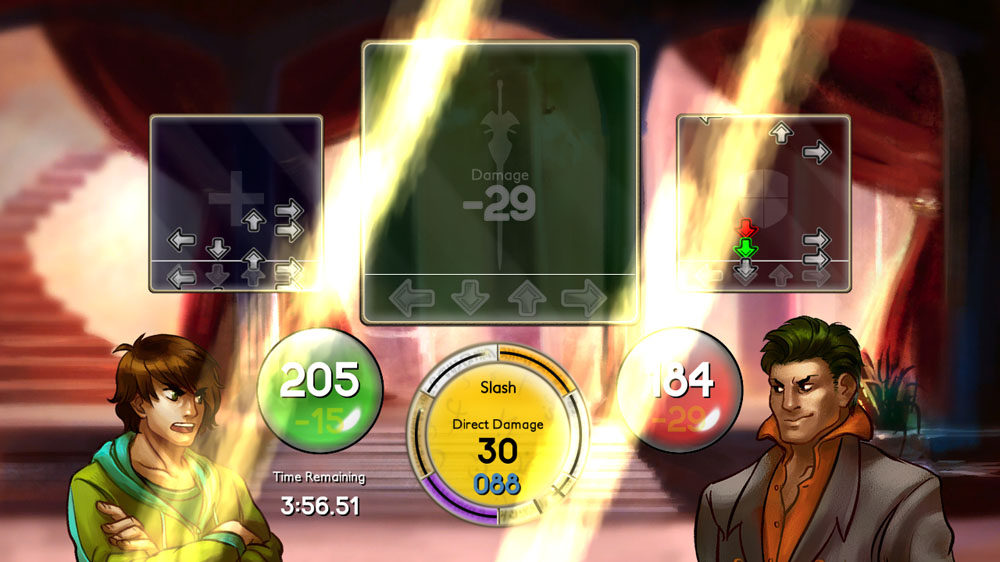
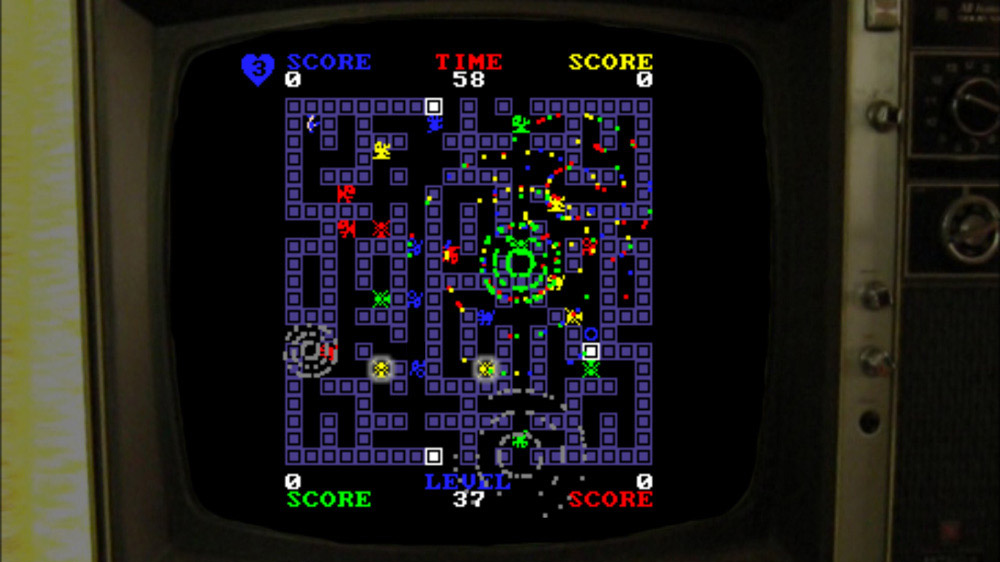
Sequence is a bit of an oddball because it mixes rhythm games like Dance Dance Revolution with RPG elements.  You play as a dude who wakes up in a tower and has to fight monsters and historical figures.  You’re aided by some chick on an intercom who talks you through the whole thing.  The highlight of the game is the banter between the two.  Well maybe “highlight” is too strong a word.  I’ll say that it’s the best part of the game, sort of like how getting stabbed by Longinus was high point of the crucifixion for Jesus.  The dialog is just too obsessed with being referential and sarcastic.  It speaks in what I call “Sitcomese.”  It renders both characters completely unlikable by the midway point of the game.  They also drop the smugness at random intervals and get all touchy-feely.  It’s bizarre, like watching a funeral in the middle of a circus.

The gameplay is fairly messy.  There’s three grids where notes drop in and you have to shuffle between them and match arrows using the D-pad or face buttons.  One grid is defensive, one restores mana, and one casts spells.  Your only offensive options are spells.  Once you cast one, you go to the spell grid and hit the notes.  Miss just one note and the spell fails.   While you’re doing this, the other grids keep dropping notes, leaving you open to take damage.  There are spells that allegedly can slow down the defensive grid, but I found them to be miss-or-miss bigger.  Whenever I tried to cast a spell, it seemed like only then did the defensive grid light up with notes.

About halfway through I had an epiphany that in RPGs you can’t prevent all damage.  Once I figured out that I would just have to take it like a champ, it did improve the game.  Marginally.  The biggest flaw with Sequence is the item creation system.  You synthesize items using materials dropped by baddies.  Only thing is, you have to use up experience points to do it, and it’s not guaranteed to work.  You have to spend more XP to increase the odds of successful creation, resulting in you deleveling.  And you can never reach 100% odds.  This was a dick move supreme with extra dick sauce.  And I swear to God this game hated my guts because I failed more at 75% odds than I did at 50% odds.  It’s completely transparent that this was done to pad out the game.  But a dick move is still a dick move and in the case of Sequence I found this to be the fatal blow towards any hope I would recommend it.

The sad thing is the storyline is good enough that I wanted to push through to its conclusion.  Sequence is written well enough that I did finish it, and found the ending to be satisfying.  It damn well better have been.  After ripping my hair out from failing to create items even with the odds pushed to 80% (the highest I went on principle), and multiple rage quits, I was pretty pissed off by time I reached the finale.  I also was deeply embarrassed for myself that I had chosen to set the game to easy and forgot to switch back before I left the third floor, which is the point of no return for adjusting the difficulty.  I meant to.  I really did.  What?  Stop looking at me like that.  Stop, stop, stop!

I’m not sure I could really recommend Sequence to anyone.  The RPG elements are too shallow and annoying for fans of that genre.  The music is, quite frankly, pretty horrible.  It’s generic and rarely fits the personality of the monster it’s supposed to represent.  Most of it sounds like something you would hear in an elevator.  In Hell.  Overall I just didn’t dig the concept.  What’s next, mixing pinball with real-time strategy?  Who would be that stupid?

Sequence was developed by Iridium Studios

240 Microsoft Points got the beat, they got the beat, they got the beat, yeaaa, they got the beat in the making of this review.

Apple Jack

When I decided to include a top-10 feature on Indie Gamer Chick, I knew that doing so this early into my blog’s existence would cause a lot of crying foul.  Relax, guys.  I just got this place started, and I wanted to have a feature that would give developers something to aim for.  I know there are many well-respected indie titles that have been around for a while and I’m late to the party.  Guess what?  I want to play them.  I want every game, deserving or otherwise, to have a shot at making the leader board.

One game that kept coming up over and over was Apple Jack, a 2010 title by My Owl Software.  Everyone assured me it would not only land a spot on my top ten, but would be a contender for the #1 spot.  I consider the gauntlet laid down.

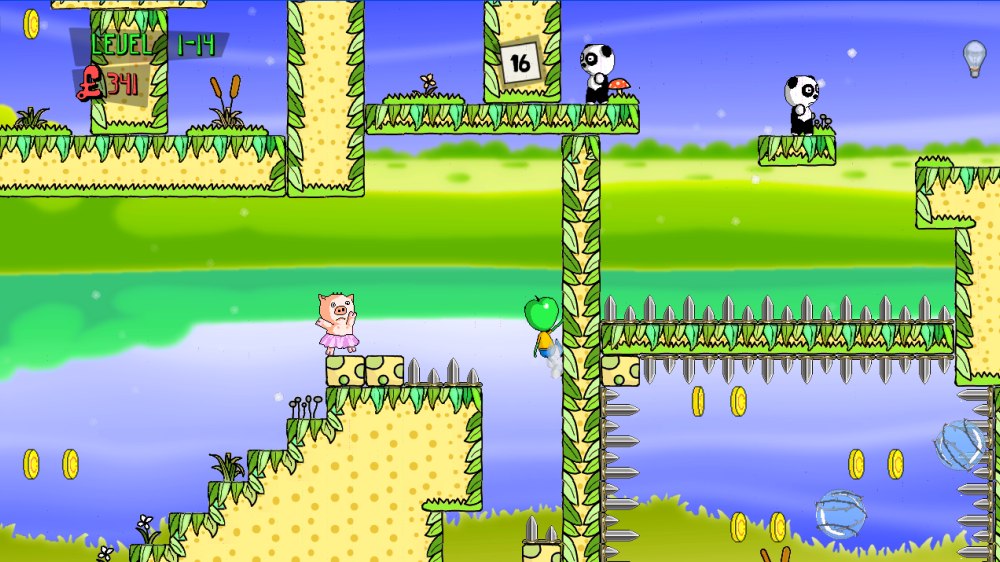
I booted up Apple Jack and was instantly amused when it told me that the story was a dude with an apple for a head out to rescue his dog.  That’s it in its entirety.  “Goody” I thought,  “no bullshit cut scenes!”  I was taken in by its colorful hand-drawn graphics and lighthearted music.  I also loved the concept of a platformer with no level end-goals.  Just kill all the enemies by throwing them into each other.  It gave it an almost Bubble Bobble like feel.

I made my way through the first few levels.  I felt the game was positively enchanting.  And then I lightly bumped into a baddie and died.  “Hmmm, no life bar.  How weird” I thought.  This was followed by a giant notice in big black letters that said “YOU ARE DEAD!”  “That seems out-of-place for a game this whimsical and friendly.”

I pressed on and noticed that the levels were suddenly ramping up in difficulty  By only fifteen boards in, I was actively cussing like a sailor who just slammed his hand in a car door.  Then the penny dropped.  “Wait a second.. THIS IS A PUNISHMENT PLATFORMER!” I blurted out to nobody in particular.

And boy, is it.  It’s a well-developed one, but it still hates you and wants you to suffer.  Ignore the whole “platformer” thing.  At its heart, Apple Jack is a puzzle game.  Figuring out how to make the most of the enemies you’re given to clear each stage is the true challenge of this game.  They threw in some spikes just to be spiteful dicks, but this is still a title where intelligence and planning will lead you to the promised land.  Getting there took me about seven hours of play time.  There’s 100 levels, each one trying to push you closer to heart failure.

Going back to the graphics, they look really great.  In fact, all the audio-visual stuff is among the best done of any game in the indie scene.  The developers kept the look clean and distinctive, so that nothing can be confused with anything else.  And the controls are really tight and accurate.

So I loved Apple Jack, right?  Wrong.  I fucking hated it.  Hated it, hated it, hated it!  It’s just too damn aggravating to be enjoyable.  Like nearly any other punishment platformer, fun gives way to frustration long before the game is over.  By level 20 I was nearly reduced to tears, literally collapsing to the ground after a bad jump led to me dying for the fiftieth time.   And then came the owls.  How I hated the fucking owls.  They shoot lasers at you, turning this already dead-in-one-hit game into the bullethell from hell.  I didn’t think it could get worse, and then came the eyeballs.  You know what, fuck it.   Just thinking about it brings me close to rage-quitting this review.

And honestly, although the level design can be very clever, it can also be extremely tedious and boring.  Sometimes stages feel like they just drag on and on, sort of like this review is doing.  I noticed about an hour in that I was having absolutely zero fun.  I have no clue why this kept coming up among games that are supposed to be heads and shoulders above the rest of the indie pack.  Maybe its graphics.  Maybe its concept.  But NOT its execution.  My policy is to not read outside reviews of games before I finish them myself.  I broke that rule for Apple Jack because I simply had to know what everyone else said.  And I want to drop the giant bullshit card on most of those reviewers who threw this vile thing high scores.  In my heart of hearts, I don’t believe more than ten percent of them actually finished the game.

Apple Jack seems like it’s going to be excellent when you first start.  I fell into that trap.  I told my boyfriend that it was going rank high on my top ten list.  In case it’s not obvious by now, it will not rank at all.  I firmly disliked 95% of my time with it.  It’s not that I can’t enjoy a good challenge, but that challenge has to be tempered with some level of entertainment.  Apple Jack simply proves so repetitive that it runs out of steam.  It’s ironic that it shares its name with the breakfast cereal Apple Jacks.  Because, like the cereal, Apple Jack is artificially sweetened and will leave you bleeding from your mouth.

Apple Jack was developed by My Owl Software

80 Microsoft Points were part of a complete breakfast in the making of this review.

Random the Dungeon

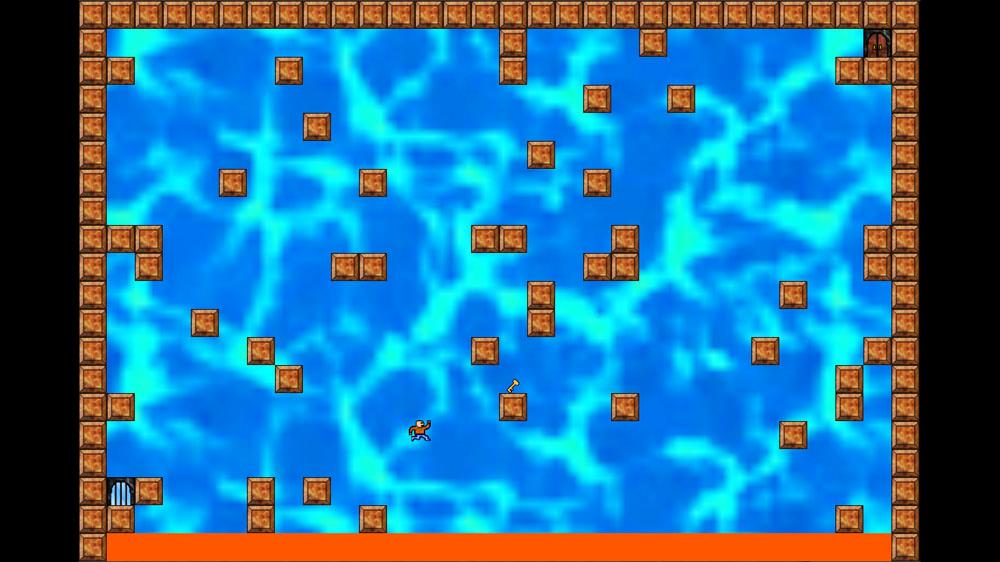
Random the Dungeon sounds like a rougelike but actually plays like a cross between Solomon’s Key and Corky from Life Goes On.  You’re a dude who must hop across various blocks to get a key.  Once you have it, you must get to the door.  The gimmick here is that if you can’t find a pathway to where you’re moving, you can switch the entire arrangement of blocks on the screen to a new, completely random alignment.

The game starts off pretty simple.  There’s a key, there are blocks, and there’s a door.  Get the key, get to the door.  You hop from block to block until there’s no room for progression.  At this point, you hit the X button or either of the shoulder bumpers and all the blocks change to new, random positions.  This can include the block you are standing on, or even the block the key sits on.  If either you or the key touch the lava at the bottom of the screen, you’re dead.  Thankfully the key falls slowly, as if it was made of Styrofoam.

There are eighteen stages here.  I figured the gimmick would get stale after one or two levels, but developer Last Man on the Sun actually came up with some pretty clever ways to implement it.  Sometimes only some of the blocks will change.  Sometimes there’s no block to catch the key and you have to race across the screen to grab it before it falls into the lava.  By the end of the game you’ll start to teleport randomly, along with the key AND the door.  Every new twist is sure to have you cursing more than competitors in the Toe Stubbing Competition at the National Center for Tourette Syndrome.

Random the Dungeon makes several mistakes.  Like many 2D platformers, it maps digital-style controls exclusively to the analog stick, sucking some much-needed precision out of the movement.  The jumping can be a bit floaty as well.  The X button also works too slowly when you need to quickly get multiple sets of new blocks, so I recommend using the bumpers.  The biggest problem is the random nature of the game means luck greatly outweighs skill while progressing through it.  No matter how well you might play, you’re at the mercy of whatever alignment of blocks the game gives you each time you randomize.

If this all sounds horrible, trust me, it is.  And yet, it’s still fun.  Random the Dungeon defies all convention by managing to be fairly entertaining despite a concept that shouldn’t work, game play that is entirely up to chance, and less than perfect controls.  I told myself all that would matter on recommending a game is whether or not I had a good time with it.  I had a good time with Random the Dungeon and thus I do recommend it.  It’s annoying, frustrating, stupid, and charming.  It’s the Anne Hathaway of the indie market.

Random the Dungeon was developed by Last Man on the Sun

80 Microsoft Points can’t tell Italians apart from Spaniards in the making of this review.

Turtle Casino

I’m actually at a loss for words on where to begin.  Turtle Casino by Spanish developer X25 Entertainment is so broken on so many levels that I’m having difficulty choosing just one point to get us started.

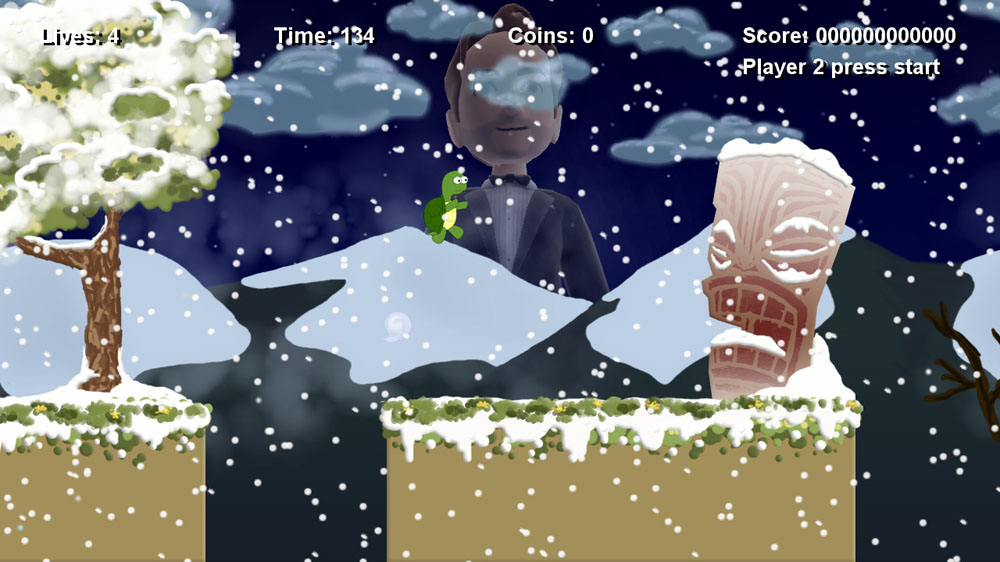
Well, I guess I should get the ball rolling by describing this abomination.  You play as someone who wins big at a casino and gets turned into a turtle as a result.  Maybe this game is based on Darvin Moon.  Hell, I don’t know.  As a turtle, you have to hop around 40 platforming levels.  Yep, this “casino” game is a platformer.  And a damn awful one at that.

Movement physics are 75% of a platform game.  If they suck, nothing else matters.  In Turtle Casino, they are beyond terrible.  Jumping is floaty and landing is slippery.  Your character moves slow, which I suppose is fitting.  In order to run, you have to hold the X button.   This is also used for long jumping.  The problem is there is NEVER a spot in the game where you don’t want to be running.  The normal speed has no value what so ever.  If you want to save your thumbs, do what I did and tape the X-button down.  Damn Spaniards.

Your ghostly avatar always hovers in the background. You will grow to hate your own digital reflection.

The worst offender is the collision detection.  It’s more off than any game I can remember.  A fireball will miss you by two or three character lengths and you will still die.  You’ll miss landing on spikes with plenty of breathing room and still die.  You’ll miss being impaled by other spiky things and still die.  You’ll jump over a bad guy, land five feet directly behind it, and still die.  Who did the mapping for this?  Ray Charles?

Or since these guys are Spaniards, I should say, Andrea Bocelli.

Level design is bland.  Every generic platforming convention is here.  You’ve all done these same type of levels in dozens of games thus far.  Here they’re pretty much the same, only you can’t be within spitting distance of anything that kills you.  There’s a lives system in place for no reason at all.  If you game over you can start again right where you died.  Sometimes a level has a checkpoint and you might miss out starting from it.  But this also doesn’t make a lot of sense because the checkpoints are usually not that far away from the beginning of the level.  And if you game over you retain whatever points and coins you had earned.

Oh yes, and there’s casino stuff in here too.  I only remembered this because when you game over, instead of it highlighting “continue” on the menu, it highlights the casino games.  So even the game itself knows that the platforming sucks and tries to steer you away from it.  There’s only two casino games.  One is Blackjack.  It’s Blackjack.  You’ve played it a million times and it’s pretty much the same here as it is everywhere else.  At least it works, I suppose.  There’s also Roulette.  It’s Roulette.  A wheel spins.  Yippie.  I spun it once and the game didn’t crash, so I’m satisfied that it likely works, but don’t quote me on that.

There is absolutely nothing decent about Turtle Casino.  Everything about it is way less than mediocre.  The graphics, the controls, the level design, and the concept are all flawed beyond repair.  There’s even some fun glitches too, like respawning inside walls and being trapped in them.  Even if they manage to fix any of the major issues, it would still be among the bottom-tier of games on the marketplace.  It’s the worst thing to come from Spain since Torquemada.  Or Mexico.

Turtle Casino was developed by X25 Entertainment

80 Microsoft Points didn’t actually think Mexico is as bad as Torquemada in the making of this review.  Cuba, on the other hand..

Who is God

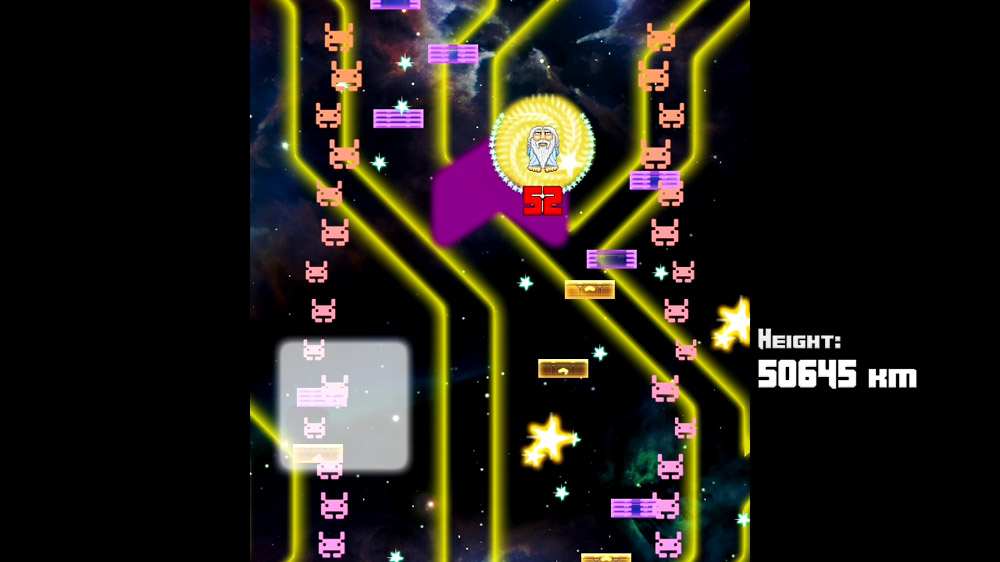
Who is God?  Well I thought the answer was obvious: Jeremy Clarkson.  But apparently the guys at Magiko Gaming disagreed.  The latest game by the guys behind the Platformance series is one of those annoying “climb as high as you can” games that are all over the cell phone market like pimples on a teenaged Hershey enthusiast.  I’ve already played a similar title, Niji, and felt it stunk like rancid tuna.  Expectations were set low.

In Who is God you play as one of four deities who must hop from platform to platform on their way towards Heaven.  Jumping is done automatically, so all you really have to do is move the character.  Along the way, you collect stars which can be used to give you a boost, potentially saving you from death or just flinging you higher.  There’s a few different types of platforms to land on.  Some of them disappear once you hop off.  Some of them make new platforms appear.  Some of them steal precious star power from you.  I’m guessing those are called “WELL FUCK!” because that is what I often blurted out when I landed on one.

And that’s pretty much it.  You just climb as high as you can get and try to land on the high score list.  I’m currently #15 on the list and I’m sure everyone else will have the courtesy to not beat my score of 68,868 feet.

Actually by the time I started writing this review, I had already dropped to 18th.  Man, these high score lists can be humbling.  I want another crack at it.

Okay, 72,364.  I moved to 17th at least.  I might actually give it another chance later, but one of the problems is the maps are randomly generated.  Thus there’s always a degree of luck that sometimes outweighs any skill involved.

Who is God has no alternative modes of play right now.  Magiko does have a tendency to patch-in extra stuff later on, so that might change, but for now what you see is what you get.  And what you get is actually a surprisingly fun experience.  If you’re looking for something deep and complex, go read some Melville.  Who is God is pure, stupid bliss.  It’s one of those games that makes your palms sweat and your fingers twitch.  I can’t even tell you what I thought about the graphics or the sound because I was so sucked in to it that I didn’t even notice.  I told my boyfriend I would play it for thirty minutes and I ended up playing for nearly two hours.  That is the mark of a good game.  My only petty complaint is the name.  Who is God.  What is this, Jeopardy?  Otherwise, I really enjoyed it.  And hey, since it seems like the average Xbox 360 owner’s only goal in life is to see how high they can get, this should fit them like a glove.

Who is God was developed by Magiko Gaming

80 Microsoft Points were children of lesser Gods in the making of this review.

Millennium Man

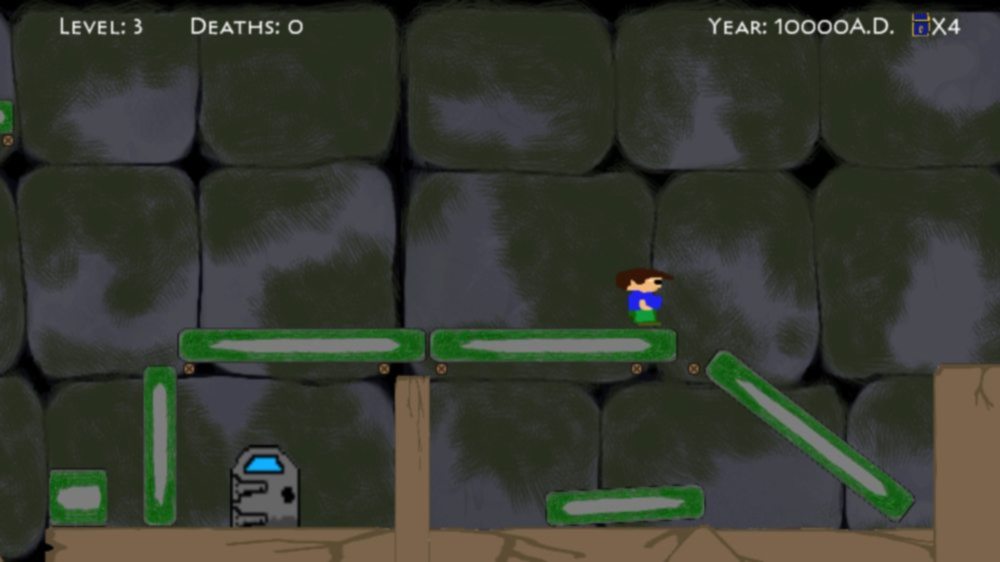
Millennium Man is a 2D platform-puzzler where you play as a dude trying to escape from jail.  The gimmick here is that you have the ability to manipulate time.  It’s an idea that’s been done before, but never quite like this.  At least I don’t think so. I’m sure there will be tons of lifeless douchebags lining up to correct me on that.*

There are ten stages and the object of each is to simply get to the door.  However, the door is often blocked or inaccessible.   This is where  the time gimmick comes into play.  Using the X button, you open up the time device which you can then shift back and forth until the terrain is altered.  It’s kind of like The Time Machine, just without the Morlocks.

Going off the screen-shots, I didn’t expect much from Millennium Man.  It looks like it was drawn using Kid Pix.  And while the gimmick is used decently, my suspicions were mostly correct.  The puzzles are very basic in design, so much so that what’s here feels more like a tutorial.  Given that the whole game takes about fifteen minutes to complete, I think I might be on to something there.  Everything here seems like it’s in an embryonic stage of development.

The graphics are bland, but the real problem was the play control.  This is a platformer, after all.  And once again, we have a game that needed the precision of the digital pad but failed to map to it.  Instead, the analog stick controls everything, and that’s a major flaw.  Without actual analog controls, it makes movement feel slippery and inaccurate.  The jumping is also way off.  The physics are a touch on the floaty side, while some platforms are needlessly placed at the maximum allotted distance, allowing no room for error.

The idea behind Millennium Man feels like the basis for a great game.  Witnessing the environmental changes happen while paused mid-jump is a wonderful thrill.  The final jumping puzzle of the game might be my favorite one yet of any indie game.  And yet all the problems are too much to ignore.  This is under cooked pork.  It’s palatable but you could get worms from it.   Even the control bits don’t up the difficulty here.  You should breeze through the puzzles.  And if you don’t, I’ve included a handy FAQ for Millennium Man.

Q: How do I beat this puzzle in Millennium Man?

A: The average six-year old should be able to beat every puzzle in Millennium Man, Trailer Park King, or Tourist Trap.  If you can’t figure these out on your own, perhaps you should go smoke the tailpipe of your own car because you are officially a Paris Hilton-level functional retard.

Millennium Man was developed by Fixed-Point Consulting LLC

80 Microsoft Points thought Jeremy Irons was sexy as the king of the Morlocks in the making of this review.

*Not everyone who points out every little mistake made in my reviews are lifeless douchebags.  Some of you are mere losers while others just need to get laid.

The Chick’s Monthly Top 10 Update: July 2011

Forty-one games and 4080 Microsoft Points later, Indie Gamer Chick has finished its first month.  And all I can say is this: WOW!  Thanks so much everyone.  I figured maybe a handful of people would stumble upon this place.  Instead, I started on July 1st with four readers and finished the month with thousands.  THOUSANDS!!  Holy shit!!  I’m flattered, I really am.

Before I give out the first of my monthly top 10 updates, allow me to give the overly obnoxious Oscar speech.  I want to especially thank my friends Brian and Syd for your encouragement.  Brian, you rock.  You’re my best friend, and your suggestions, disturbing as they sometimes are, have all resulted in my best writings.  Syd, you don’t even play games and you’ve been awesome.  Bryce, I didn’t forget you.  You were the first guy to take my suggestions on game purchases and one of my direct inspirations for doing Indie Gamer Chick.  You guys are all so cool.

And of course there’s the XNA and Indie community.  Most of all to MasterBlud who has been ultra helpful while making suggestions.  Along with Kris Steele, who was a HUGELY good sport about the borderline snotty interview.  Those guys suggested I set up a Twitter account, which paid off huge.  MasterBlud also did the new banner I’ve had for the last couple days and, I think we all agree, it looks better than what I had.  Big props to Dave Voyles as well, who got me involved in interviewing developers for the Summer Indie Uprising.

I promise I won’t get this gushy every month.

Anyway, onto the monthly top..

Well actually I do get gushy every month, but not this kind of gushy.

Where was I?

And now, without further ado, it’s time to get to my Top 10 list.  Inspired by the power lap boards from Top Gear, my top 10 list is my way of publicly tracking the ten best games I’ve reviewed since starting Indie Gamer Chick.  Since this is the first month and only forty-one reviews have been done, this is NOT by any means a definitive list.  Over the first few months I have it up, I expect it to wildly change, especially once I start going back and checking out some older XBLIG titles that are reputed to be the best of the best.  Once the dust settles my hope is developers will look at having a game in the top ten as a huge source of pride.  I’m just that egotistical and delusional.

#10 Crosstown (Studio Hunty)

A fast paced and shockingly deep classic action game with an old school coat of paint.

#9 Pixel Blocked (Daniel Truong)

An original, simple, fast-paced logic-puzzler that could easily be mistaken as a first-party Nintendo game.

#8 Platformance: Temple Death (Magiko Gaming)

A punishment-platformer that works because it’s short enough to not bore but challenging enough that you’ll want to replay it to challenge your own best times.

#7 Lair of the Evildoer (Going Loud Studios)

A modern version of Zombies Ate My Neighbors with a huge assortment of guns, upgradable stats, randomly generated levels, and some of the best action gaming on the indie scene.

#6 Ninja360° (DoeraiGames)

Think N with less acrobatics but more fun.  Collect all the coins to beat the stage as fast as possible.  Only some really insane time target times hold it back.

#5 Aban Hawkins & the 1000 Spikes (8-Bit Fanatics)

The best punishment-platformer on the indie market.  It’s hugely challenging but with tight controls and awesome NES-style graphics to keep you begging for more like the pussy that you are.

#4 Antipole (Saturnine Games)

The inspiration for my XNA Peer Review challenge, Antipole was still good enough to land high on my list.  Antipole has an awesome gravity gimmick and inspired level design.

#3 Star Ninja (Bounding Box Games)

Did you like Angry Bird?  Well then, Star Ninja is a better Angry Birds.  Awesome puzzle design, hilarious sound effects, and lots of hidden depth here.

#2 TIC: Part 1 (RedCandy Games)

Nintendo-style platformer with the best graphics I’ve yet seen on the indie marketplace.  Despite being only the first chapter of a four-part series, there’s enough added challenges here to make this one of the best games on the scene.

#1 LaserCat (MonsterJail Games)

To be honest, I’ve yet to play anything that has come remotely close to matching the enjoyment I felt playing LaserCat.  A Metroidvania adventure with classic graphics straight from an 80s computer title, it’s two hours of simple, straight-forward, and spectacular game play.  It’s deserving of this spot and will be the game to beat for the foreseeable future.

Now that the Summer Indie Uprising games will be hitting the market, I’m sure this list will look VERY DIFFERENT next month.  Until then, congratulations to all those who made the list.  Thanks everybody for reading.  You may now return to your normal random surfing.  I sadly have to return to my e-mail so that I can see how many sub-retarded douchebags out there are still asking me for solutions to Trailer Park King.  Jesus Christ people, seriously.  You would have to be a total braindead, gun-toting, tobacco-dipping, sub-literate moron to not be able to figure out this game.  Damn.  Props to Freelance Games for knowing their target audience.

Fatal Seduction

I’ve busted on Silver Dollar Games a few times since starting Indie Gamer Chick, but I haven’t yet reviewed one of their titles. Oh, I’ve played a few of them, and found them all to be unmitigated pieces of shit. The only one that I thought had any remote value was Try Not To Fart, which is absurd and unfunny but it does serve as a functional game of video Twister.

I was guessing they wouldn’t ever contact me requesting a review of one of their games. And then came the e-mail asking me to check out Fatal Seduction. “Well fuckberries!” I thought. My policy is I can’t turn down a review request so I had to put on the proper manure-handling gear and plunge in. I braced myself for what was sure to be the worst fifteen minutes of my life since I got temporarily paralyzed on the couch while watching America’s Got Talent.

Fatal Seduction is a truly bizarre platforming game. You play as a girl who narrates her story to a psychiatrist in a mental hospital. The game play is incredibly simple. Walk, double jump, stab things, or shoot fireballs at ghosts. Meanwhile, the story is some seriously demented shit. The girl tells the shrink that an angel has told her that she must murder all of her fathers girlfriends to prevent the Antichrist from being born. This leads to three boss encounters with fetuses. I’m not making that up. Go back and read that line. The bosses in this game are demon possessed fetuses that you must stab to death. It’s like Rosemary’s Baby as told by Planned Parenthood.

And I seriously fucking loved it.

Oh I hated the game play. It was boring, repetitive, poorly controlled, badly designed, and as shallow as anything else Silver Dollar Games has turned out. But holy crap, that was a seriously captivating story. And I don’t know who they got to do the voice acting of the girl, but standing ovation for her, the creepy little bitch. If only they had taken this plot and given it to a studio with actual talent in game design, it might have set a new benchmark in excellence on the indie marketplace.

So yes, the actual “game” part of the game sucks, but I do recommend purchasing Fatal Seduction. It only takes fifteen minutes to complete and the narrative more than makes up for any flaws it has. It also might come in handy some day if you want to explain to your significant other why you don’t want to have any kids. It can be your go-to “they could turn out creepy, like this girl” argument. Previously I used the Olson twins.

Fatal Seduction was developed by Silver Dollar Games

80 Microsoft Points embraced contraceptive sponges in the making of this review.

Crosstown

It’s been pointed out to me that I’m a total hypocrite.  I just dumped on Retrocade: DataStream Y2K600 for being “retro” and yet my #1 game is LaserCat, which has a bit of an old-school vibe going for it.  But that doesn’t make me a hypocrite.  It makes me complicated.

I found Crosstown just by cruising randomly through the indie marketplace.  Having been released in 2009, it’s the oldest game I’ve subjected to review thus far.  And it’s actually really good.  You play as this dude with a gun who’s stuck in some crazy town populated by monsters.  The object is to grab four rings in each of the forty stages.  You can shoot the enemies, but you really don’t have to.  For the most part they’ll leave you alone if you leave them alone.  You also can use your gun as a drill to break through walls and get to the rings faster.

Crosstown looks like it will be slow-paced and plodding.  After only a few levels the craziness starts to begin.  Enemies are all over the screen, so much so that they begin to attack each-other.  It opens up multiple options for strategy.  You can go on the offense and gun down as many guys as you can to clear sections of the screen.  Enemies do respawn, but I found this tactic to be effective, especially against baddies that lay extra walls down.  Alternatively, you can try to be a sneak and just go after the enemies who pick up the rings.  I found this usually resulted in beating levels quicker, but at greater risk due to having more monsters on-screen at once.

You’re given a few marginally helpful tools.  Every time you grab a ring, you can spend it towards upgrading your gun, your ability to drill blocks, or your speed.  If you do this, you lose the ring and it will respawn on the board.  For the most part I never needed to use these boosters, although they did come in handy during a boss battle.

IGC_ApprovedI wholeheartedly endorse Crosstown.  It looks old school but at its heart is an awesome action game.  The difference between it and something like Retrocade is here the Jurassic graphics are just dressing for a game that feels like it would fit in during any era.  It’s one of those titles where a simple design can lead to complex game play.  Besides, sometimes retro can be good.  Party like it’s 1983!  Let’s all do cocaine and vote for Ronald Reagan!

Crosstown was developed by Studio Hunty

80 Microsoft Points said “forget it Jake, it’s Crosstown” like a dope in the making of this review.